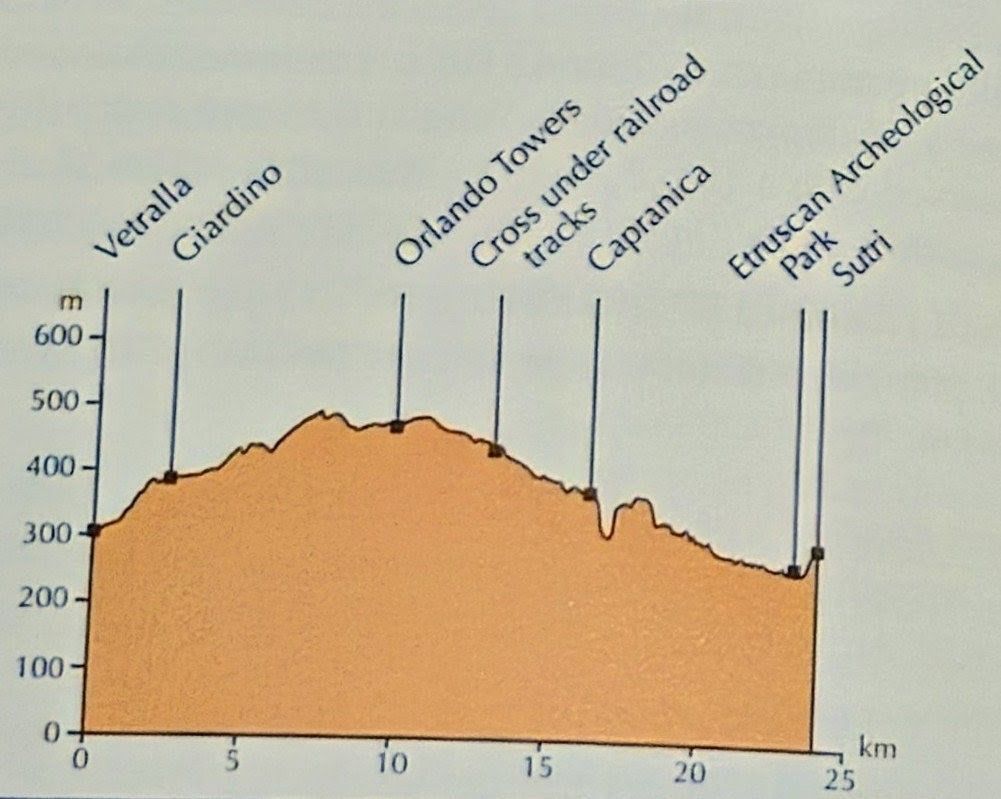
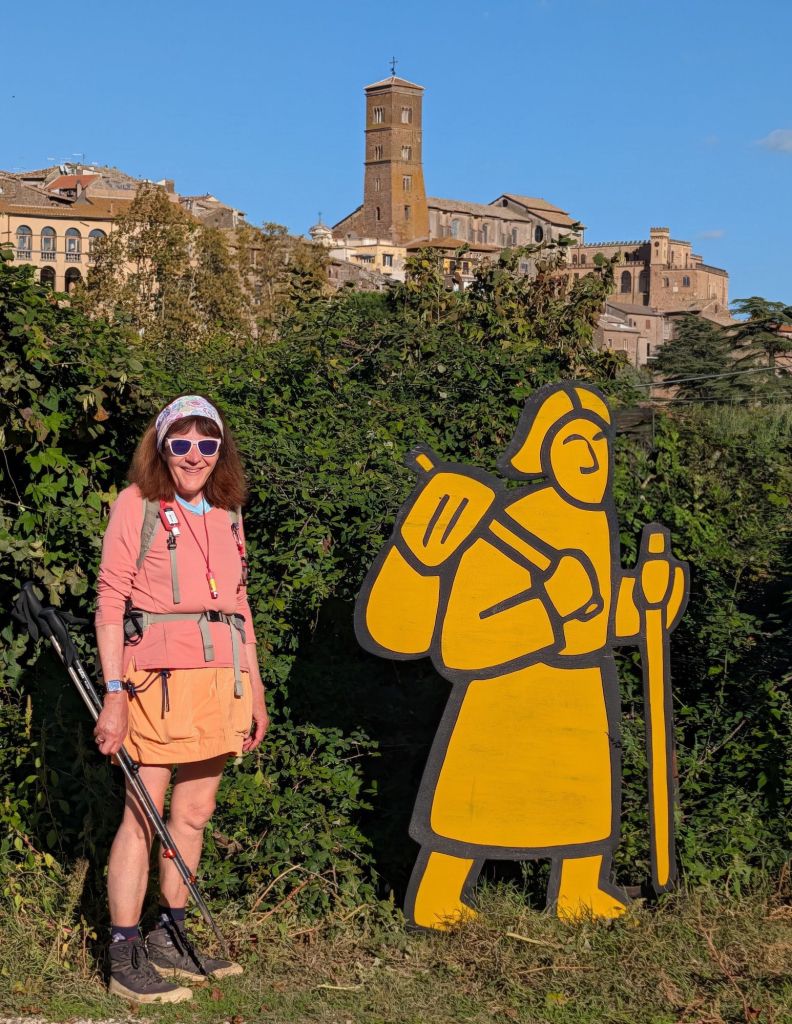
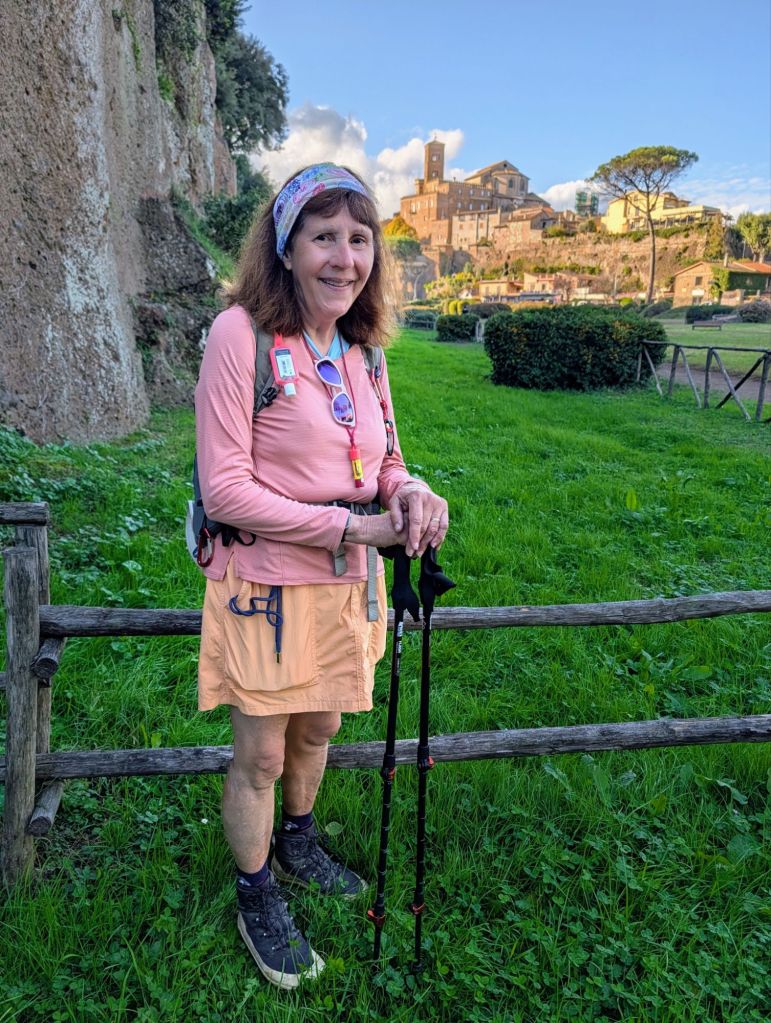
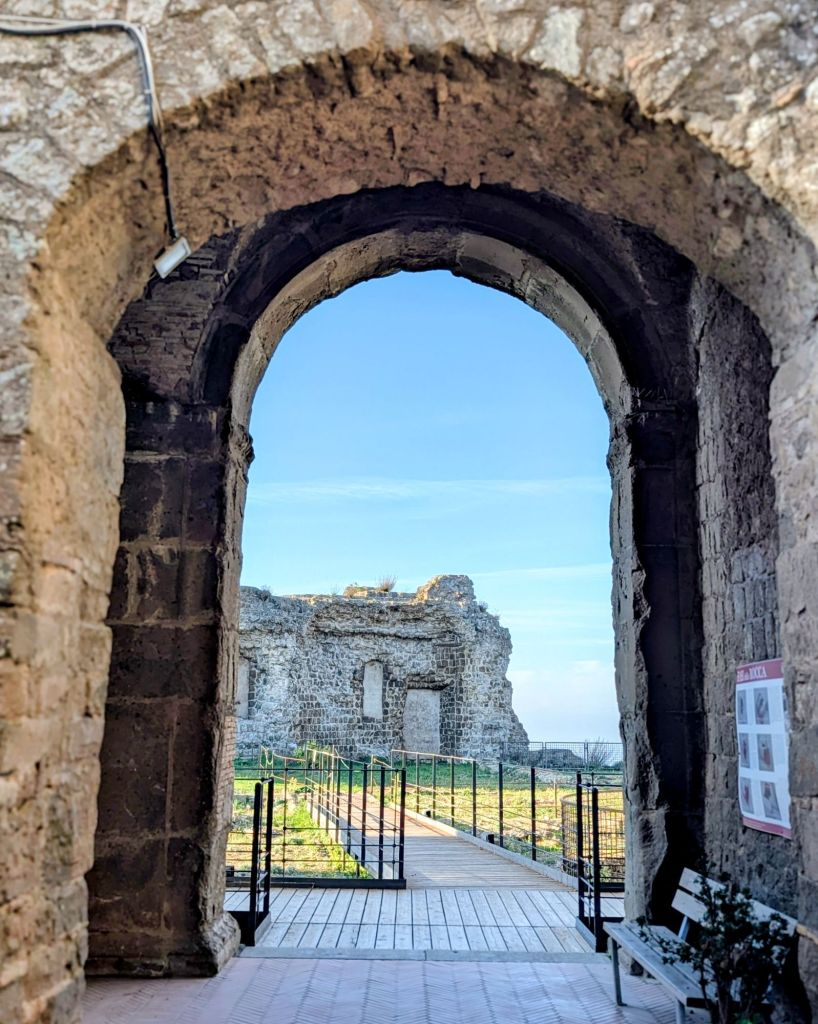
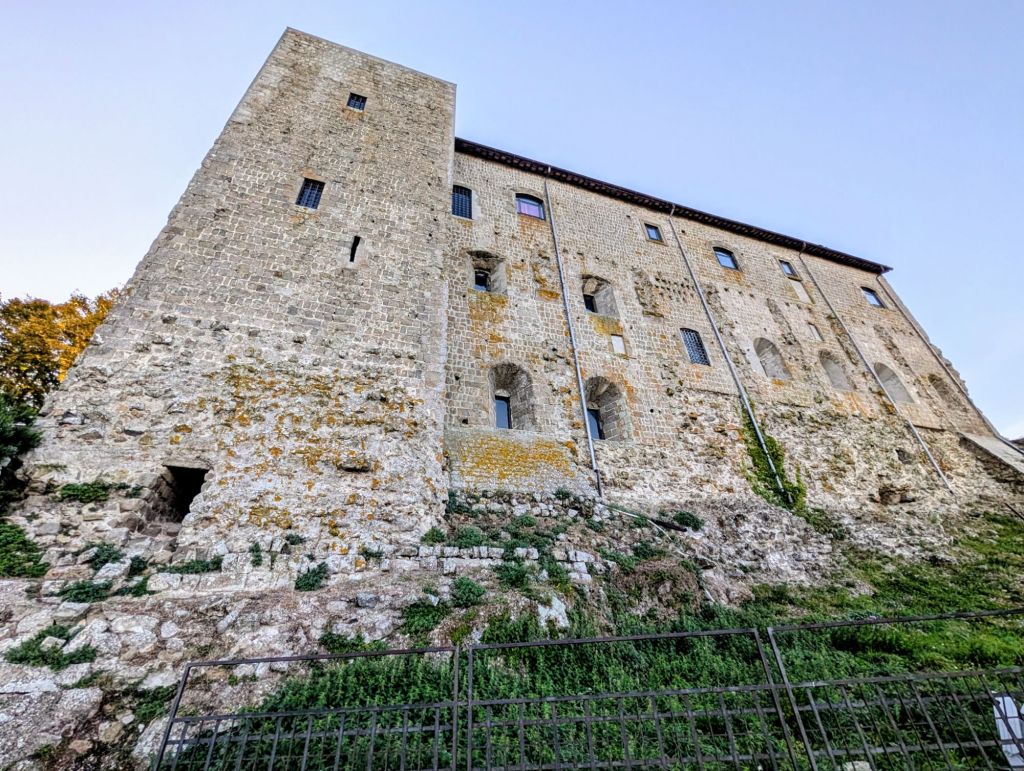
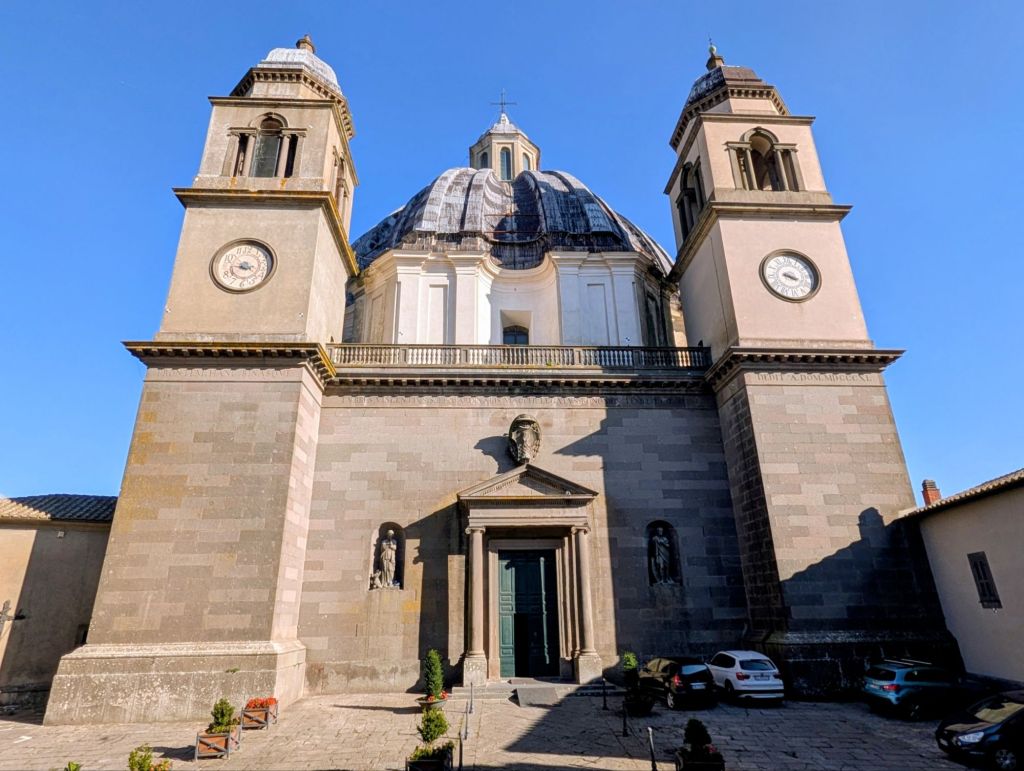
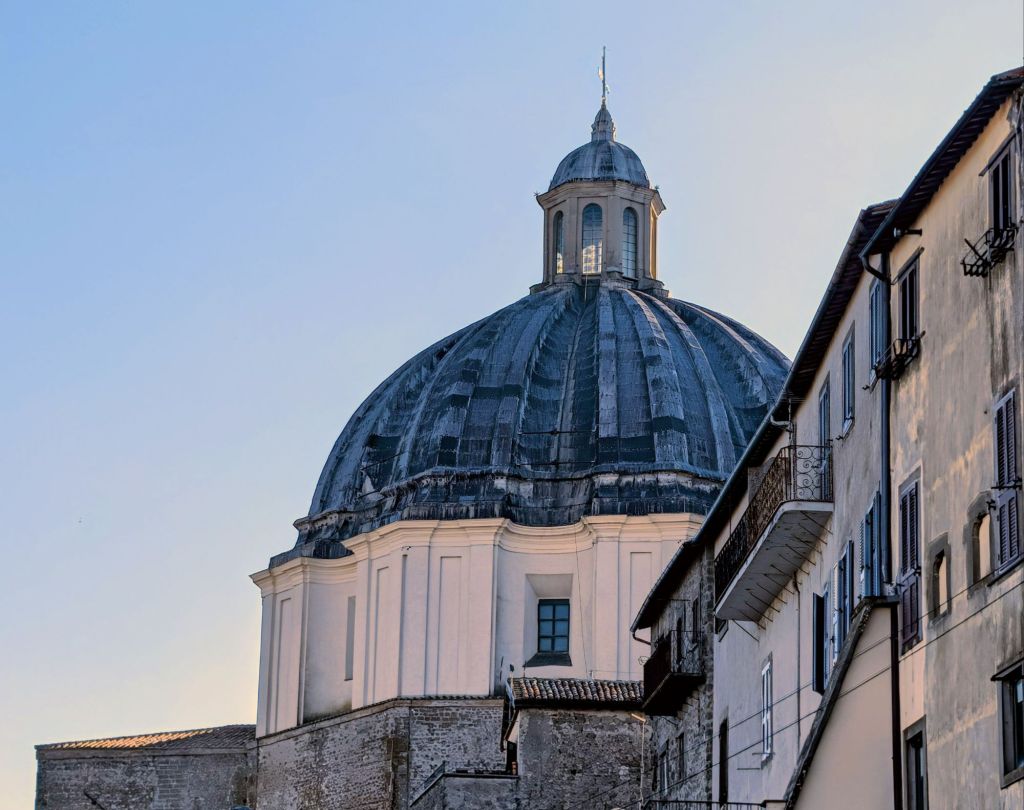
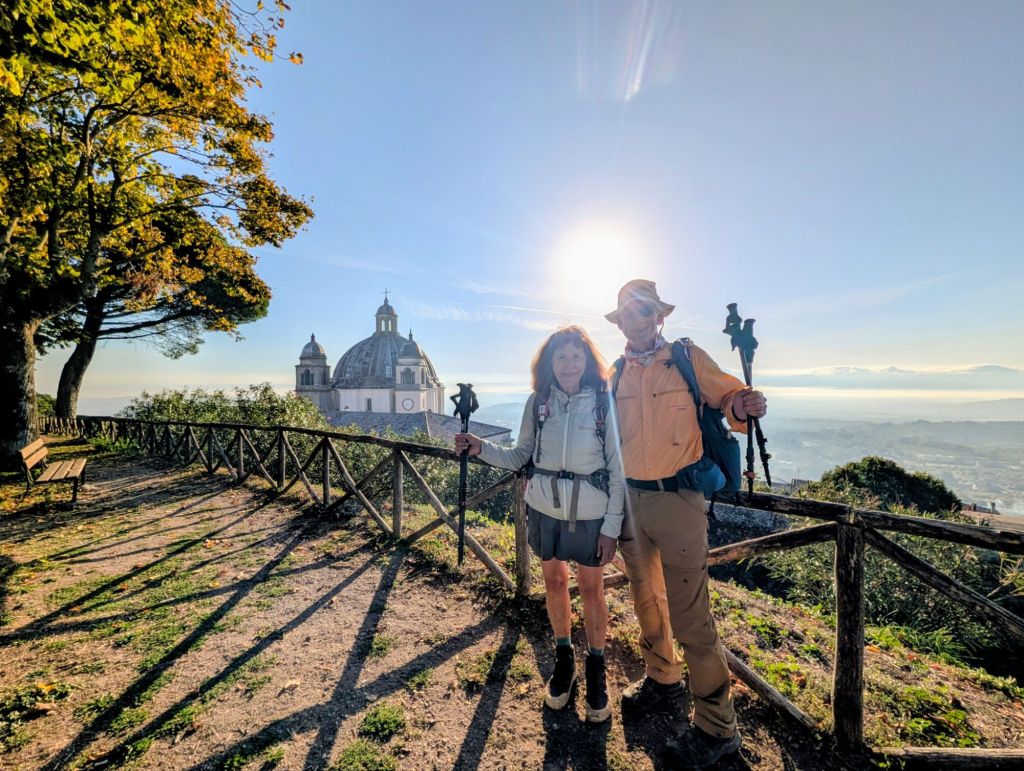
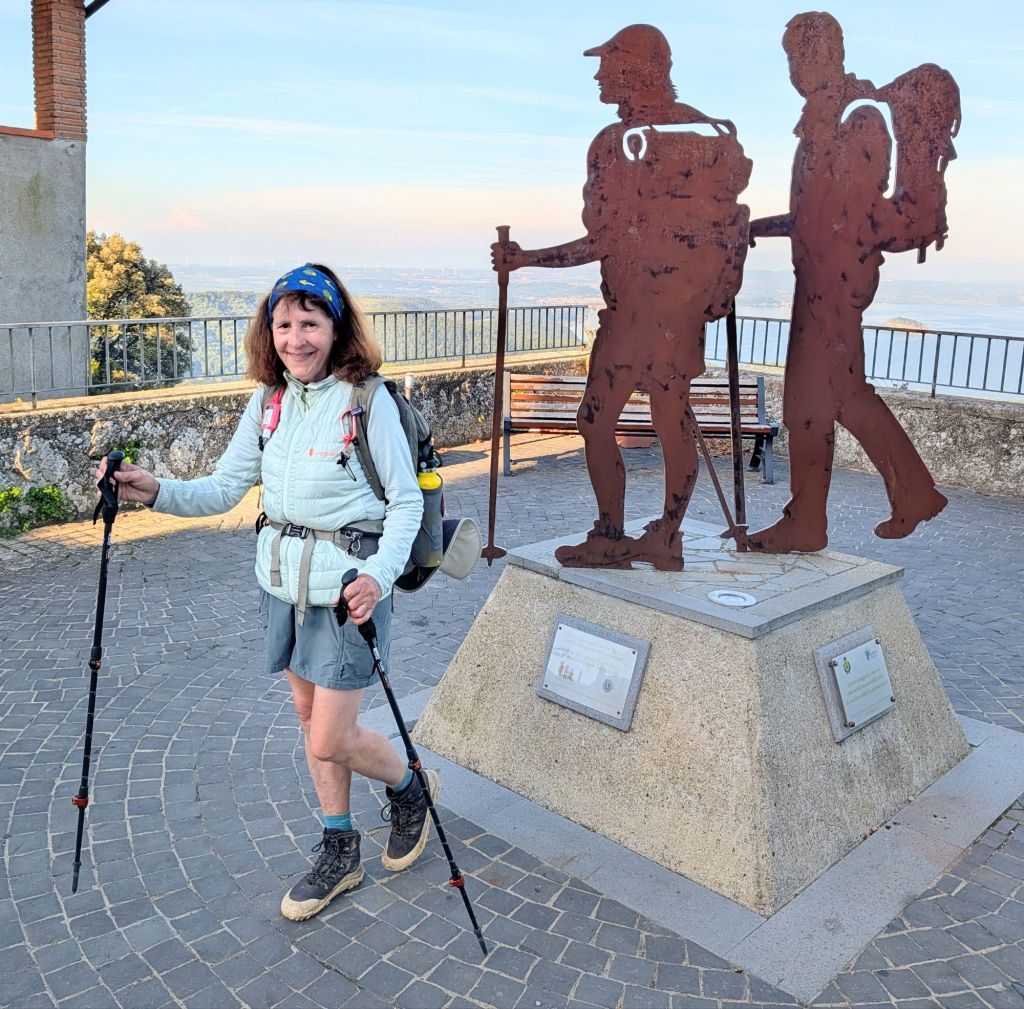
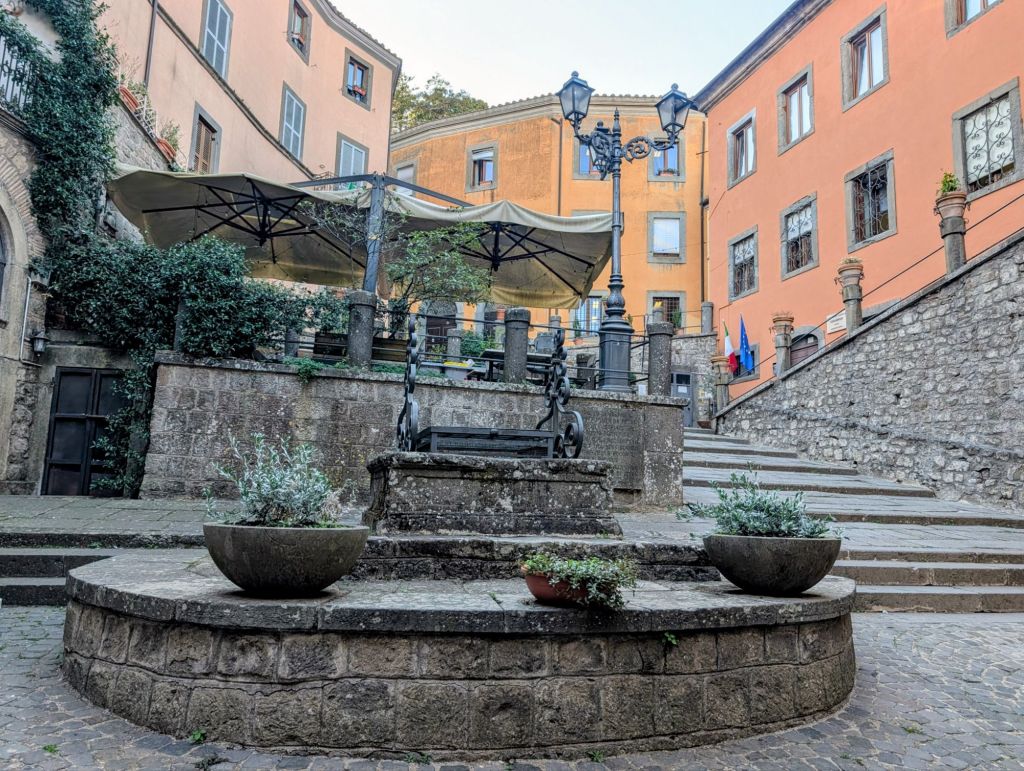
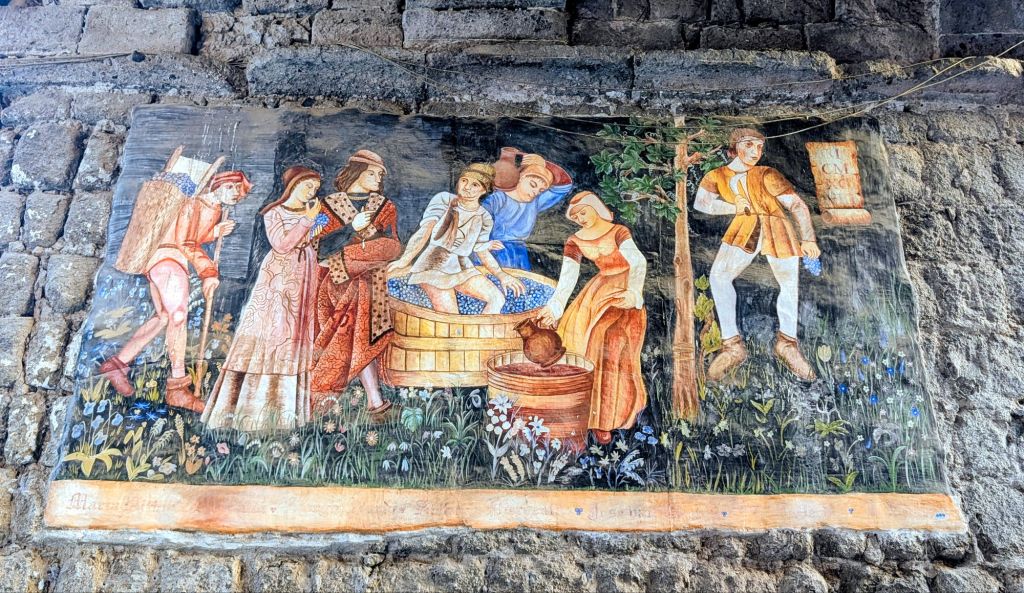
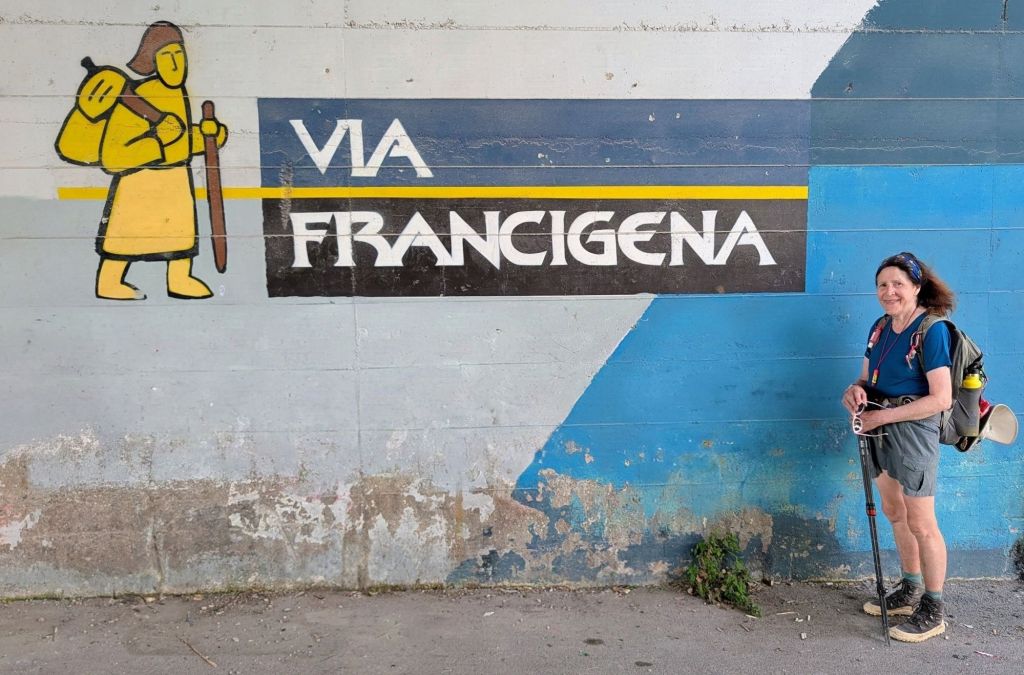
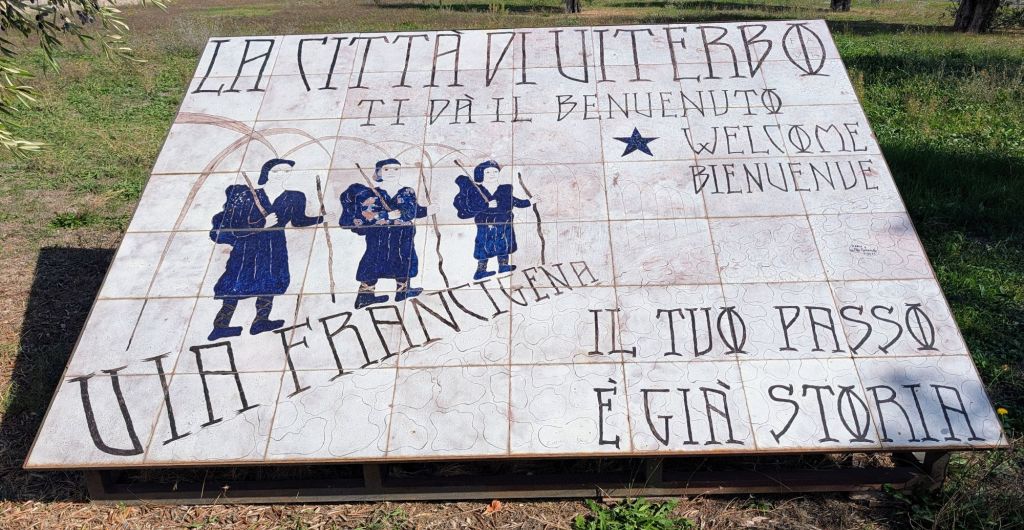
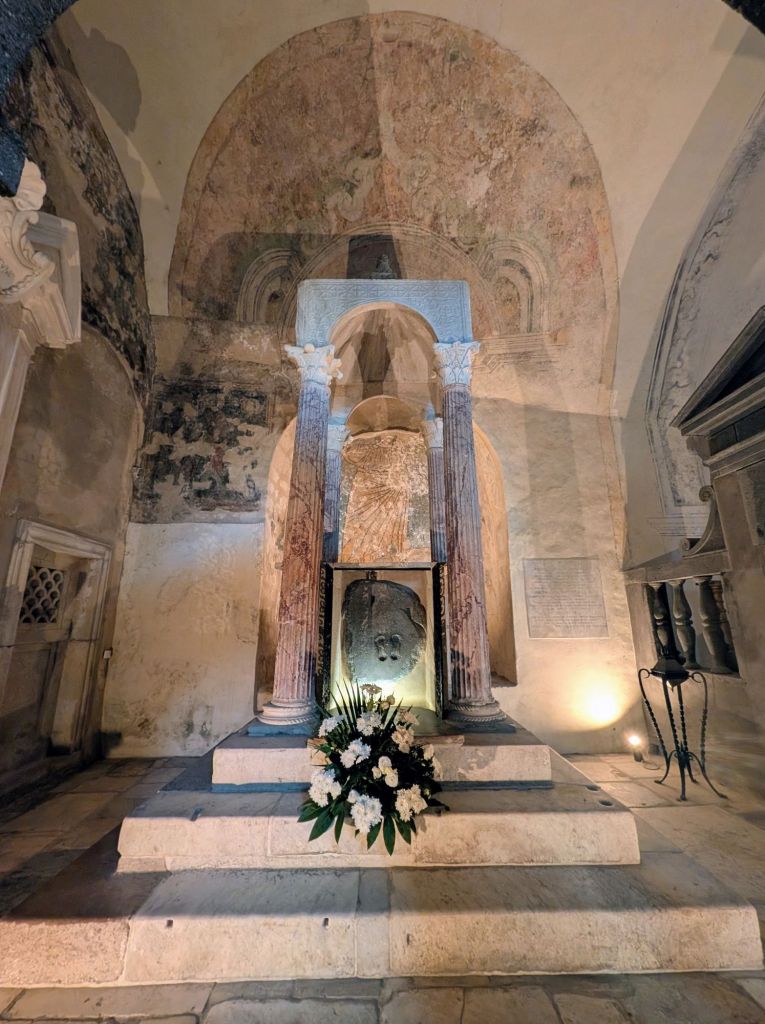
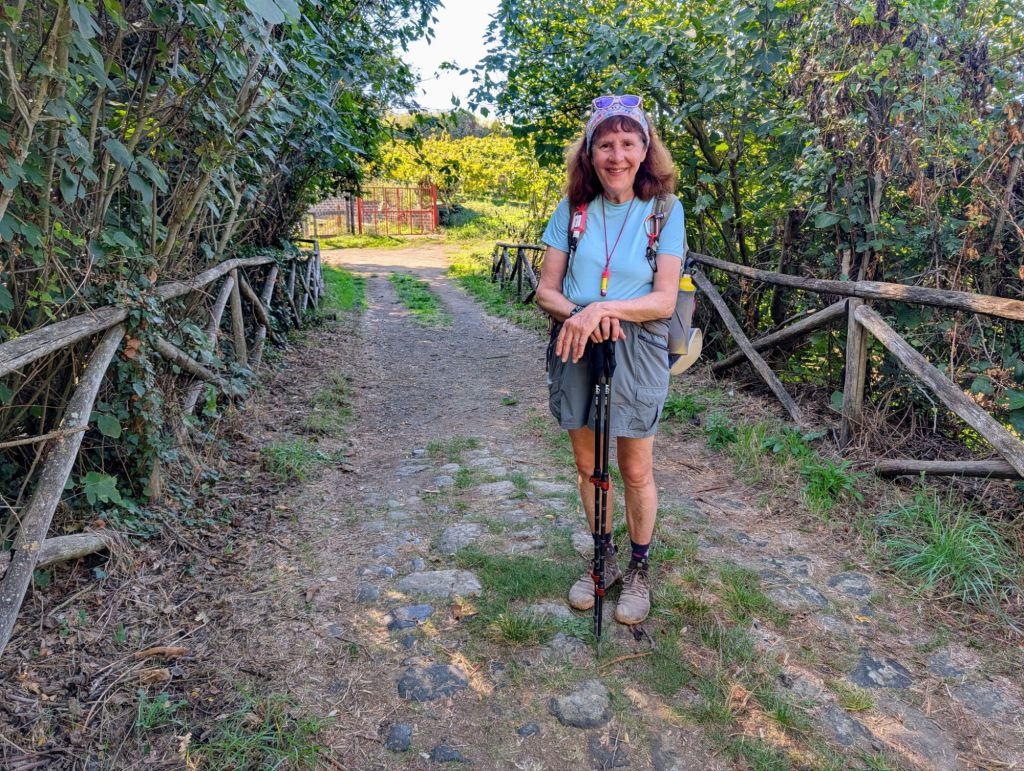
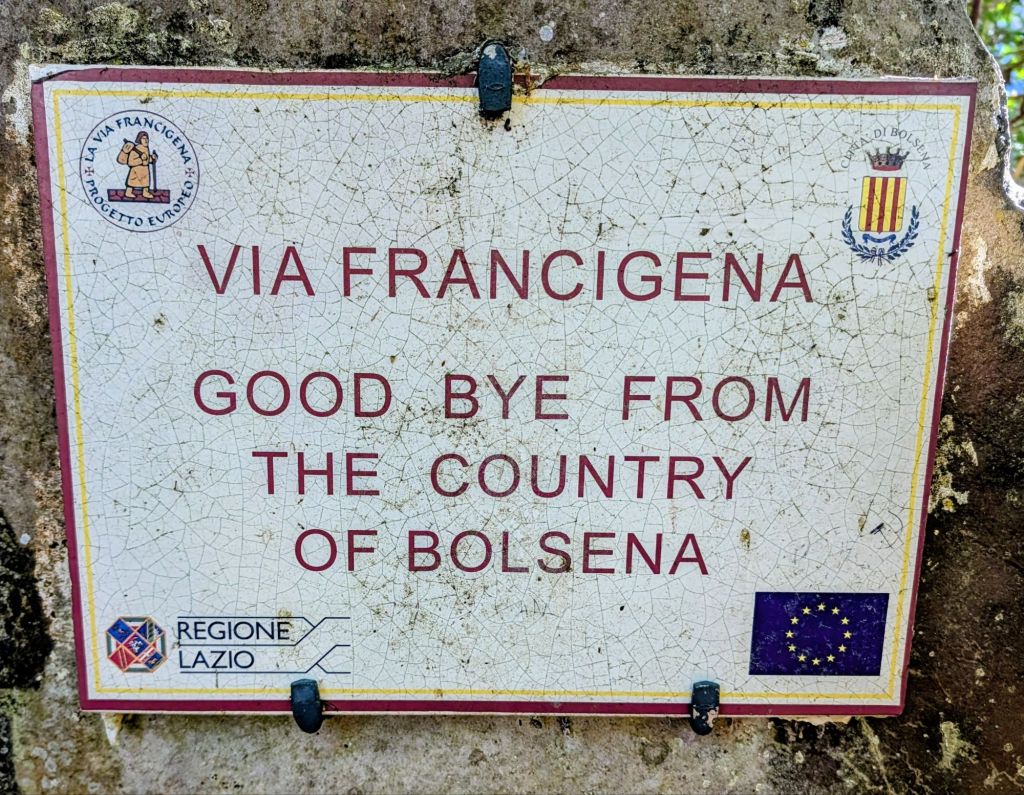
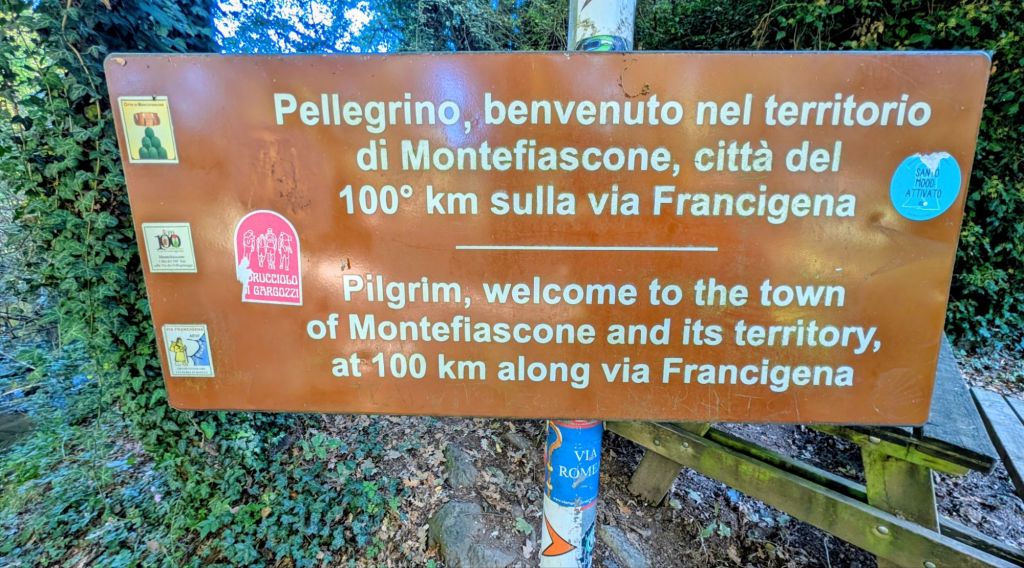
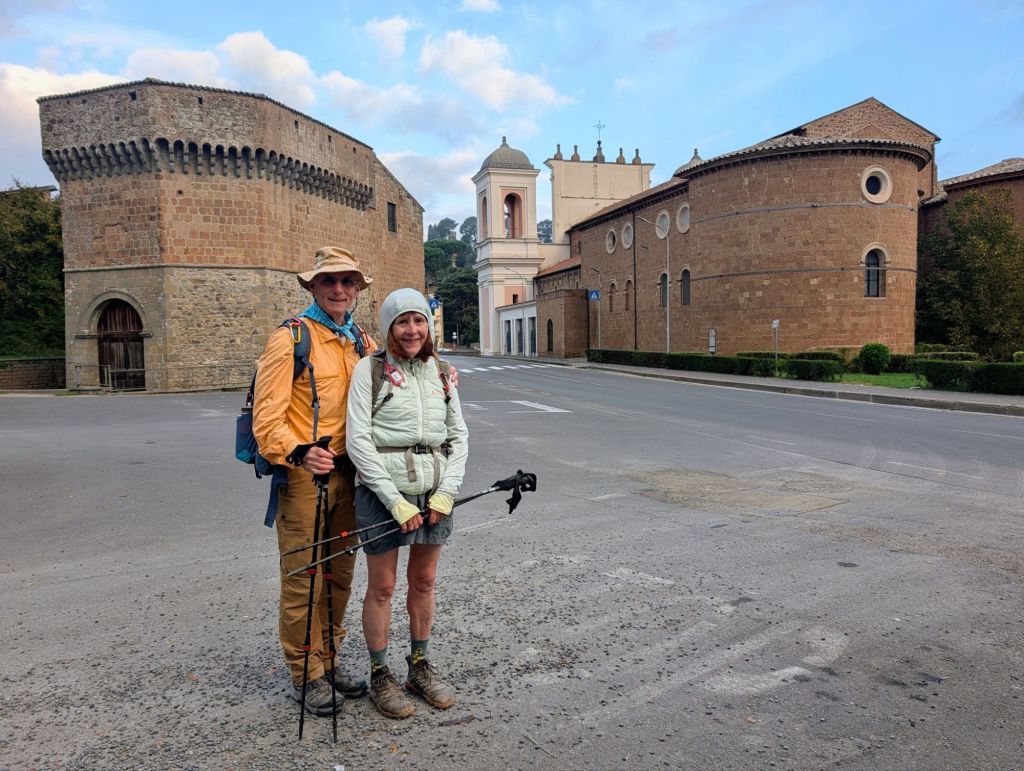
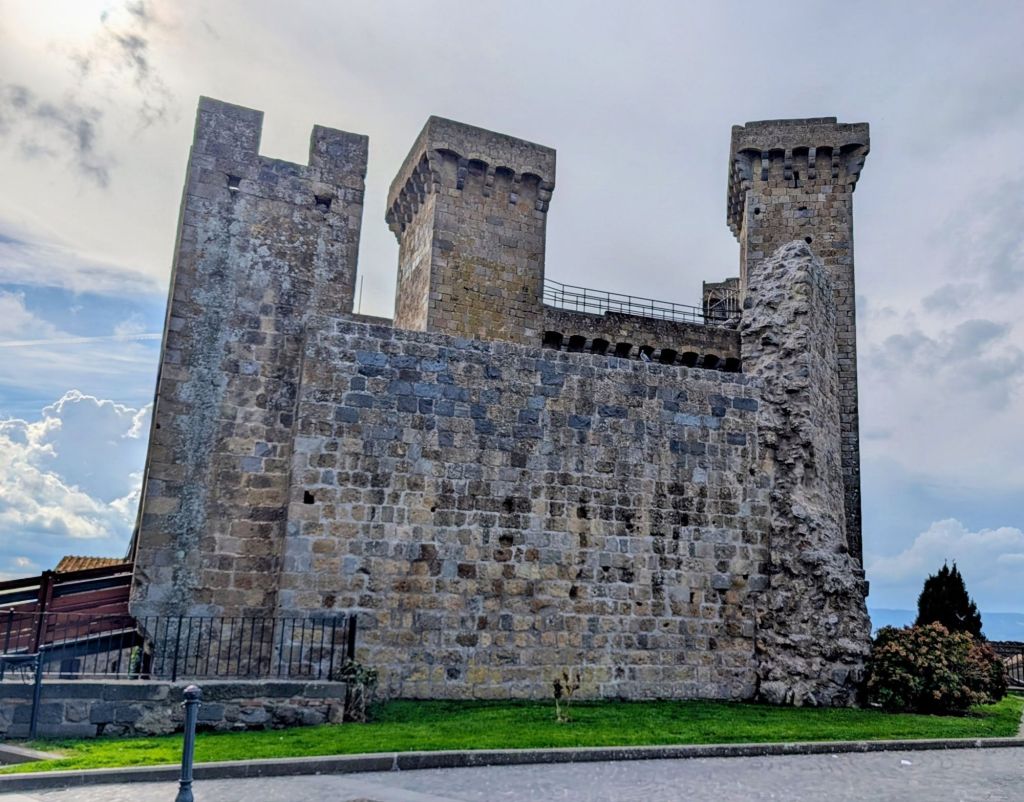
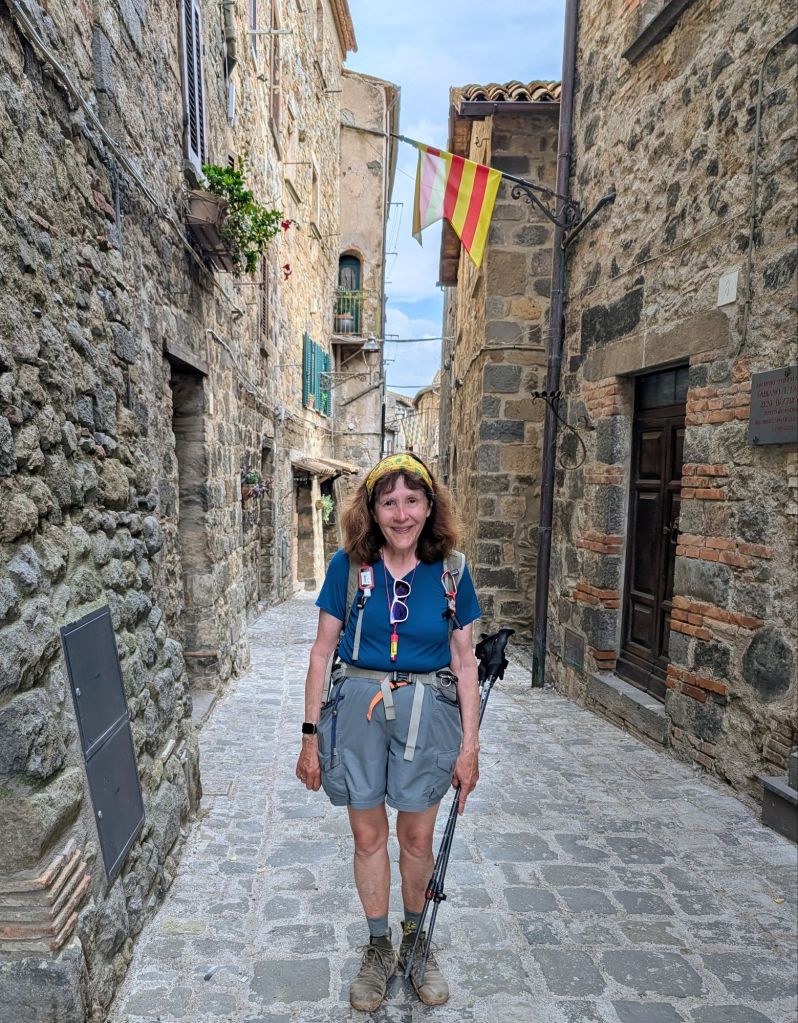
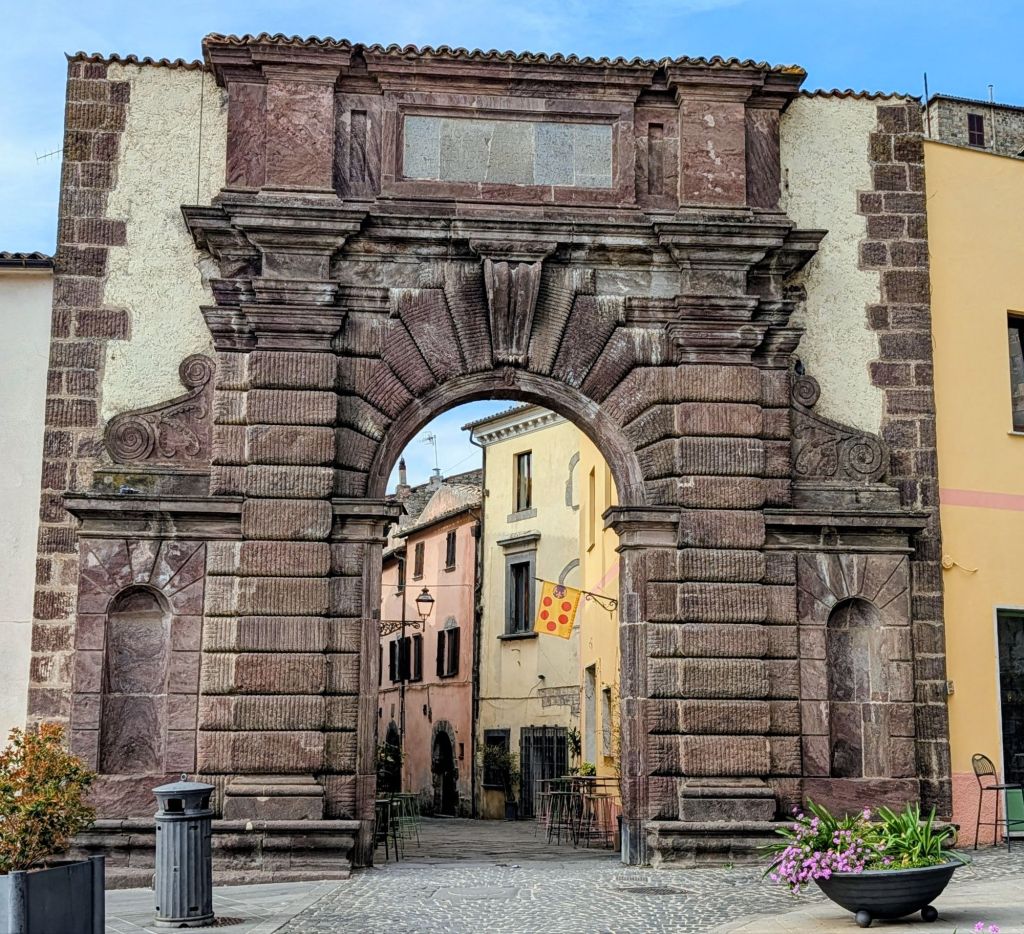
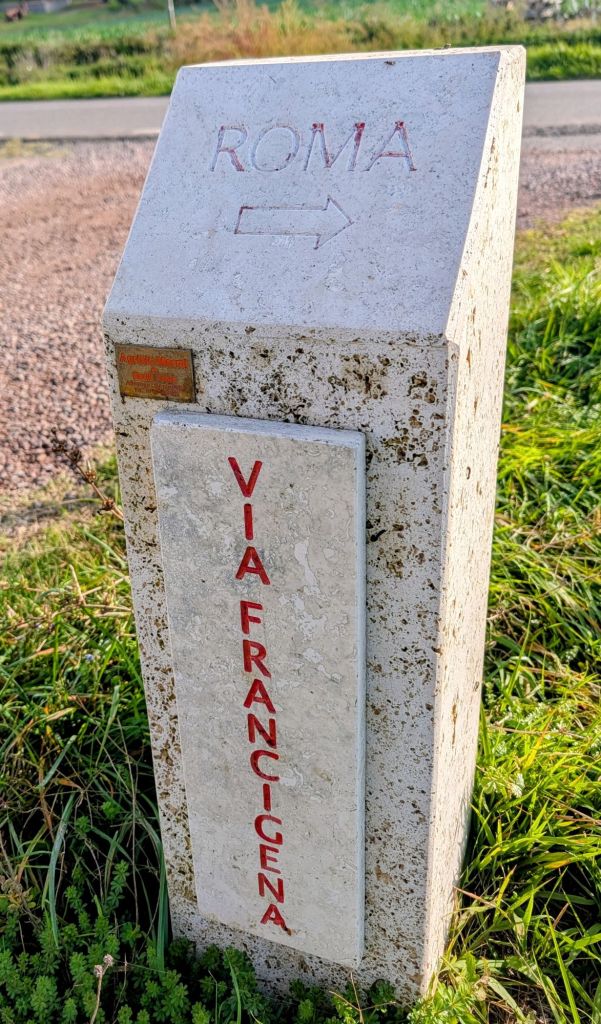
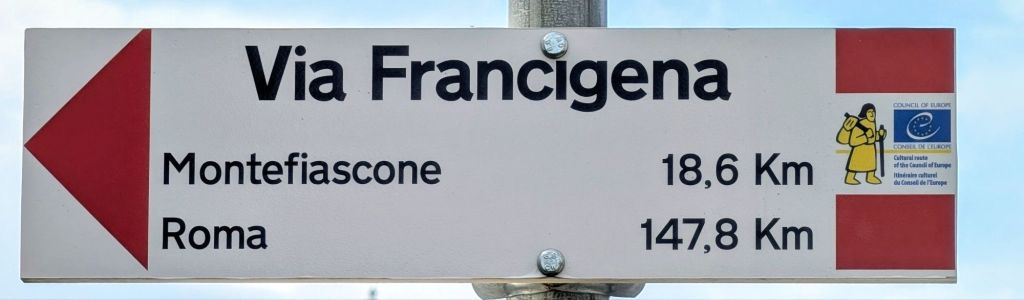
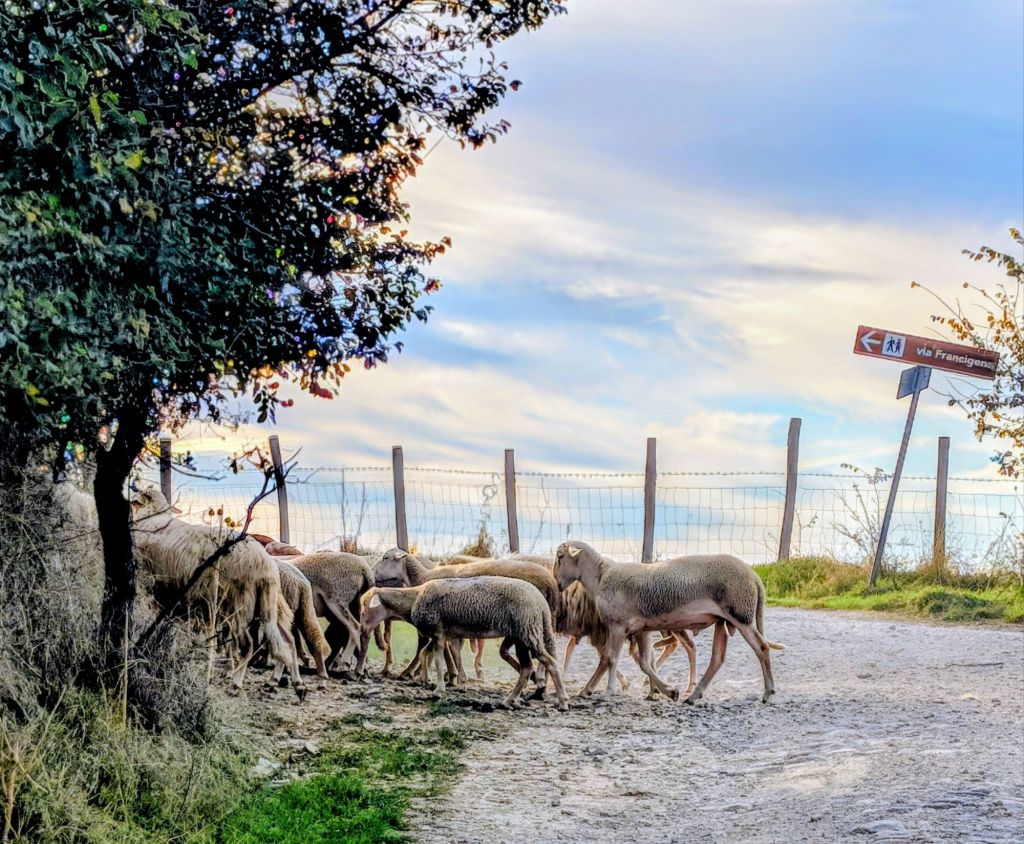
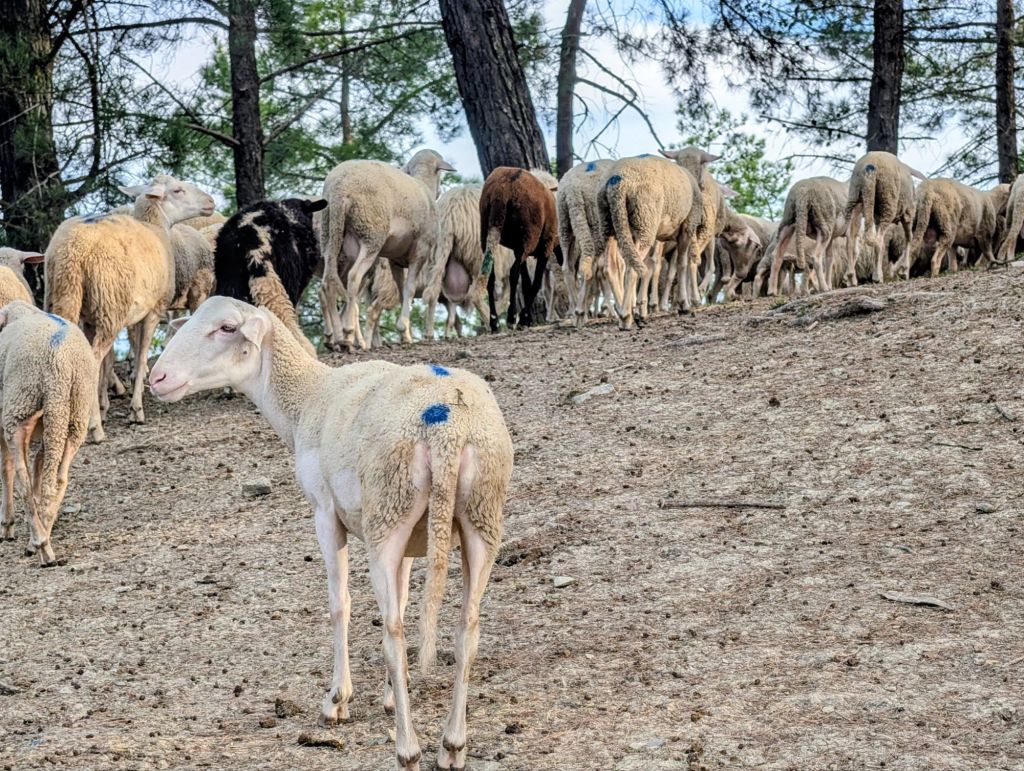
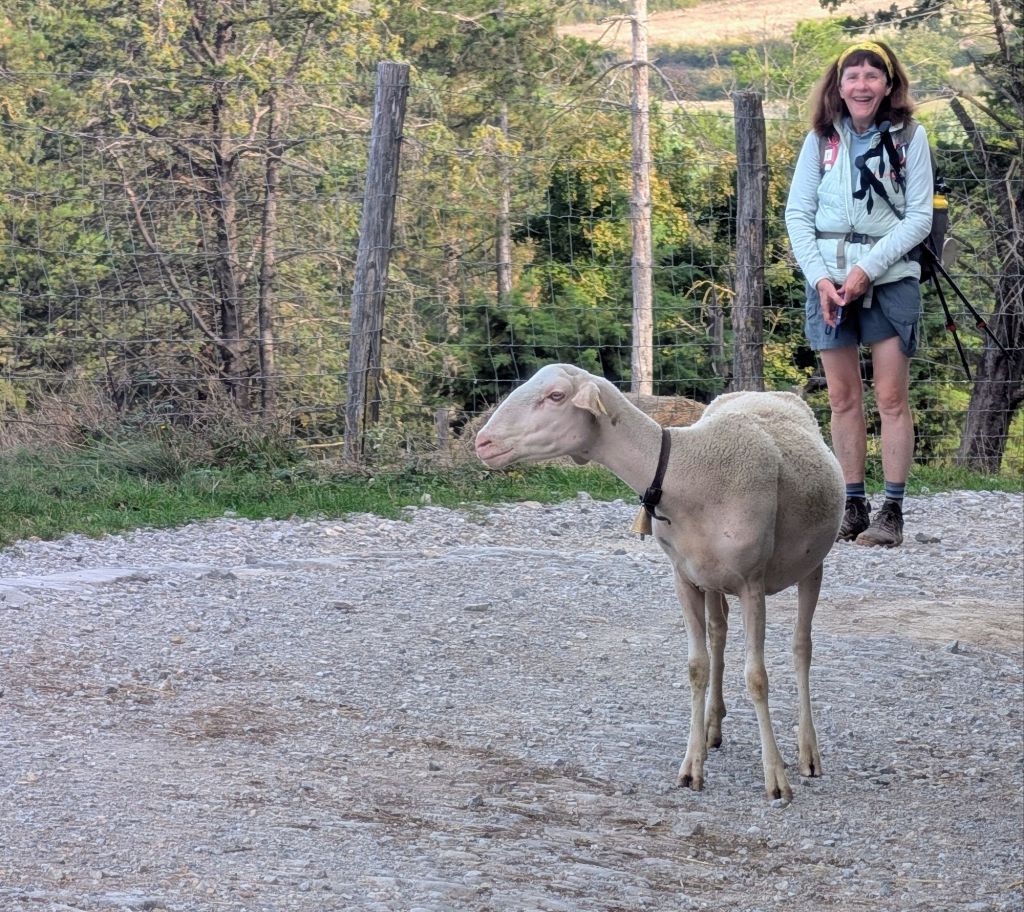
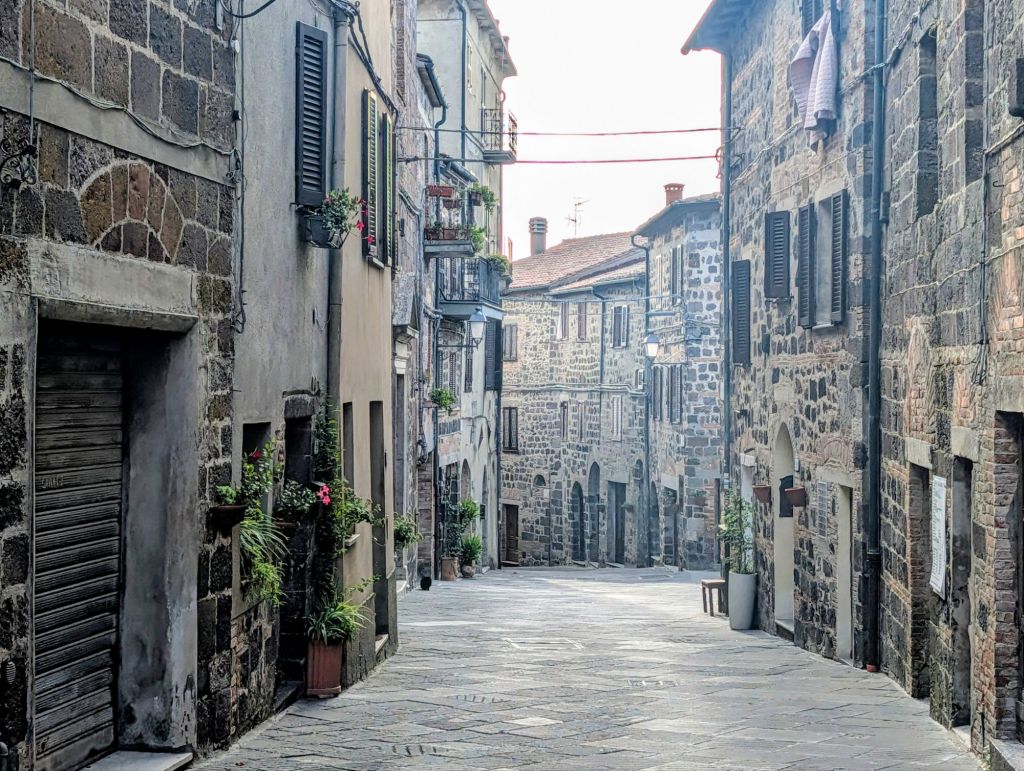
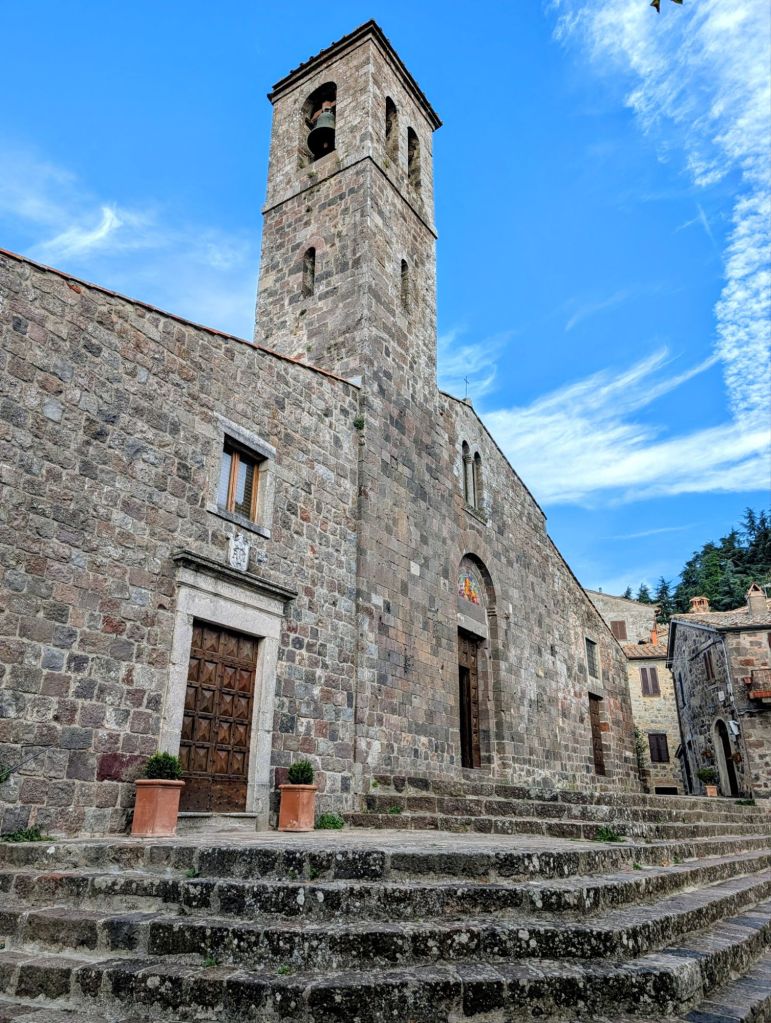
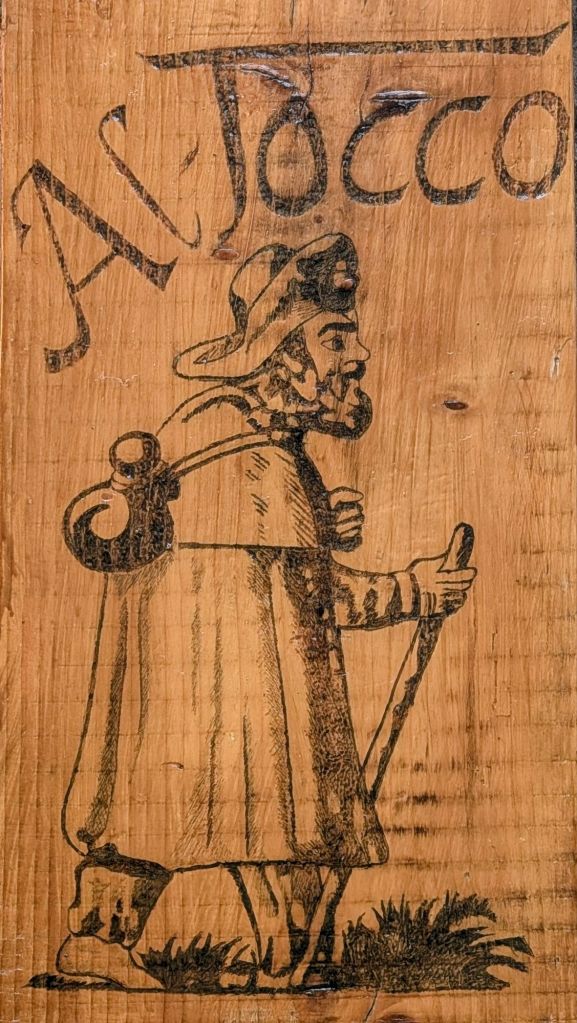
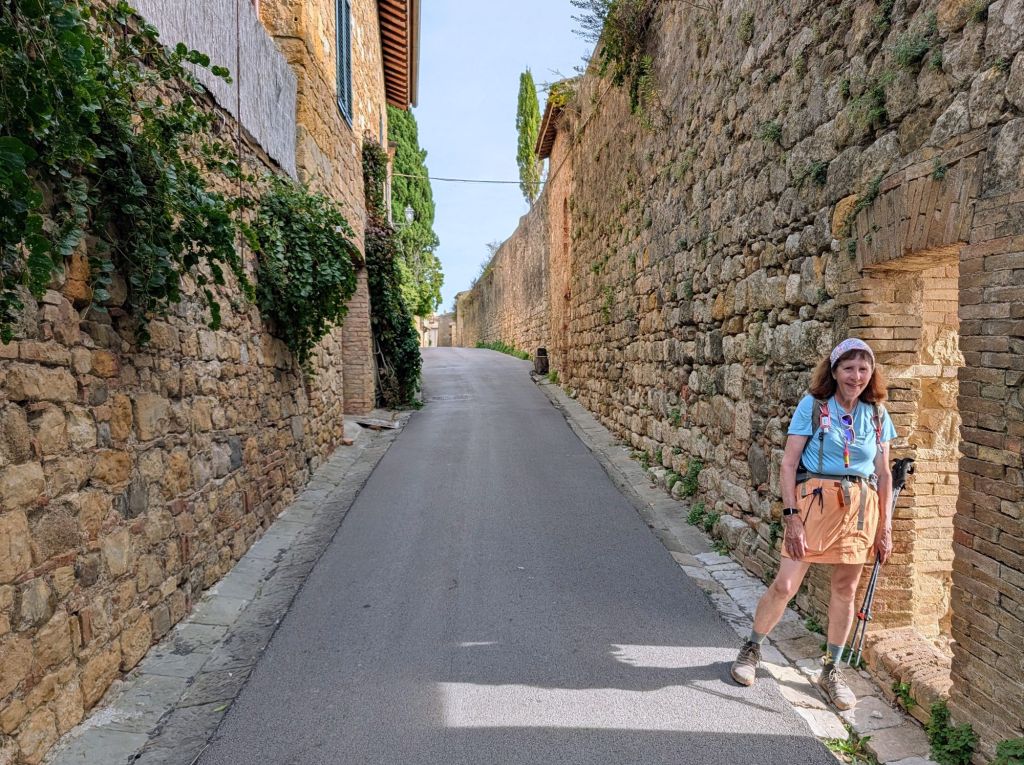
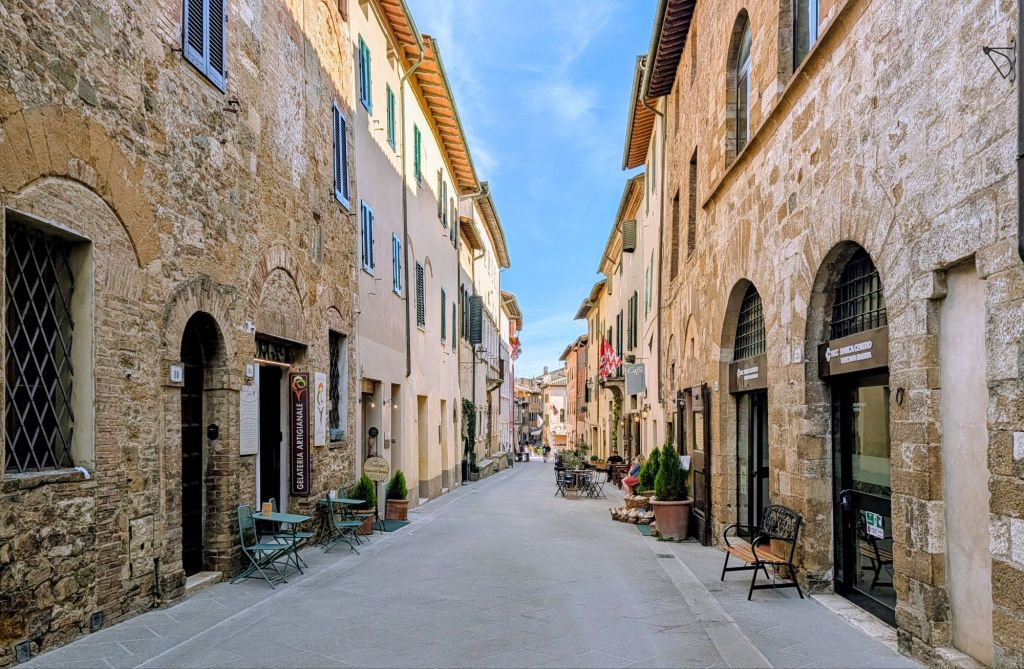
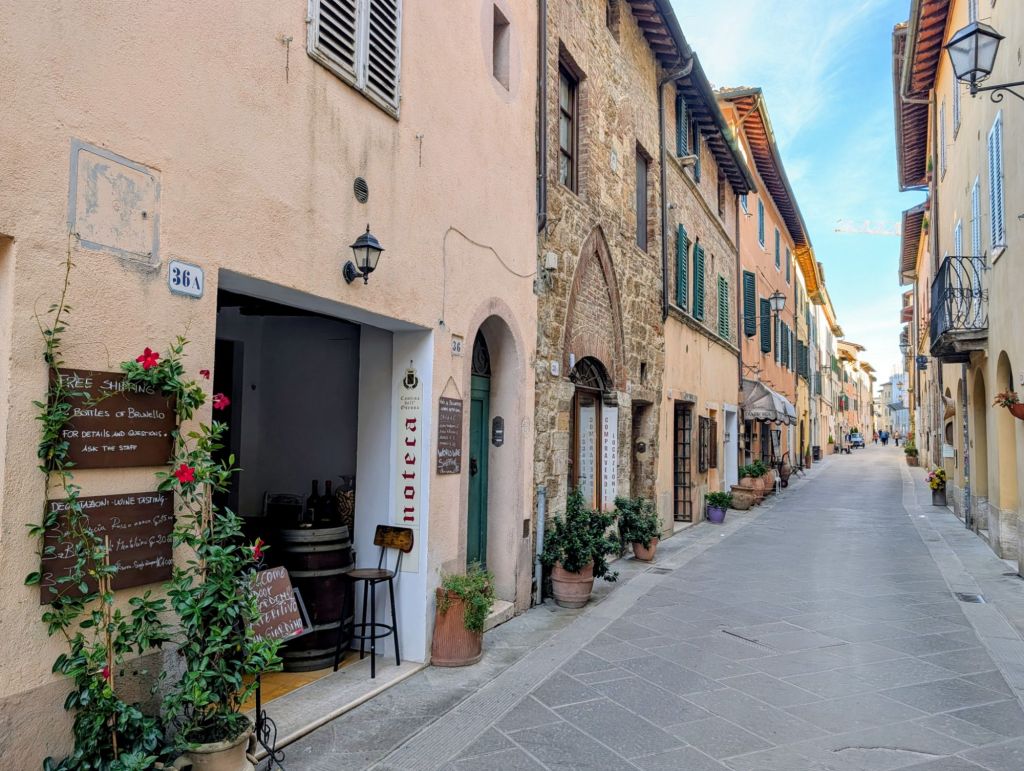
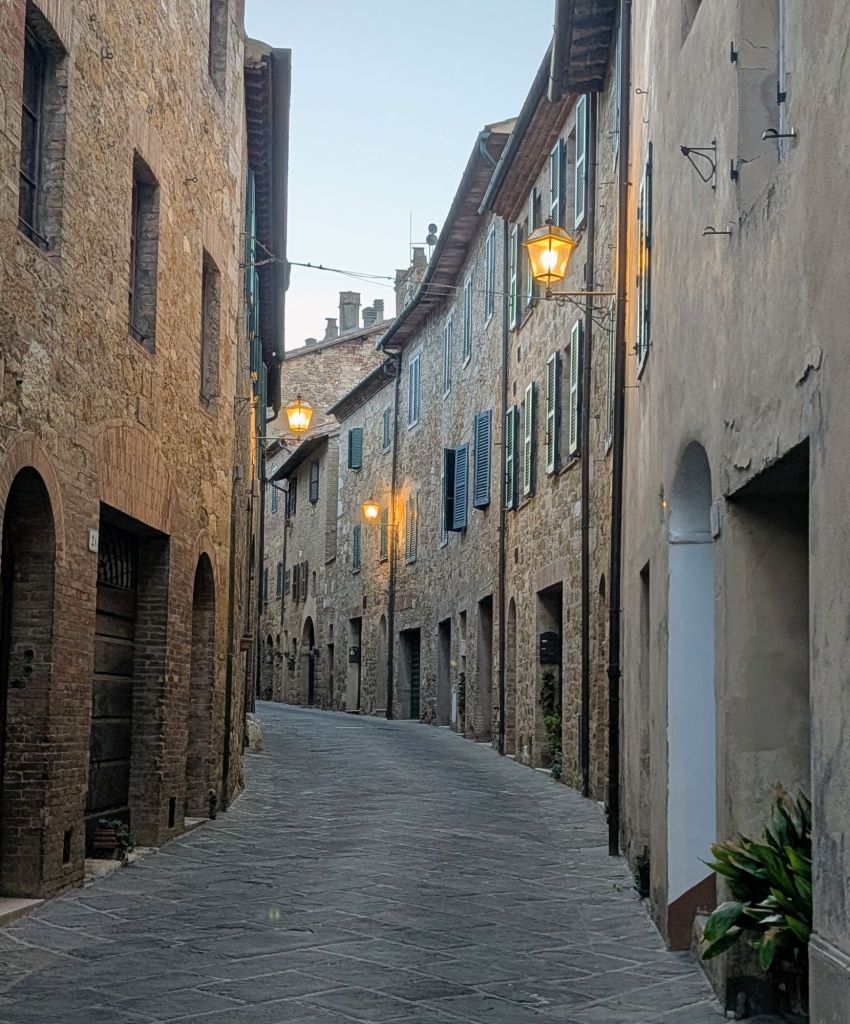
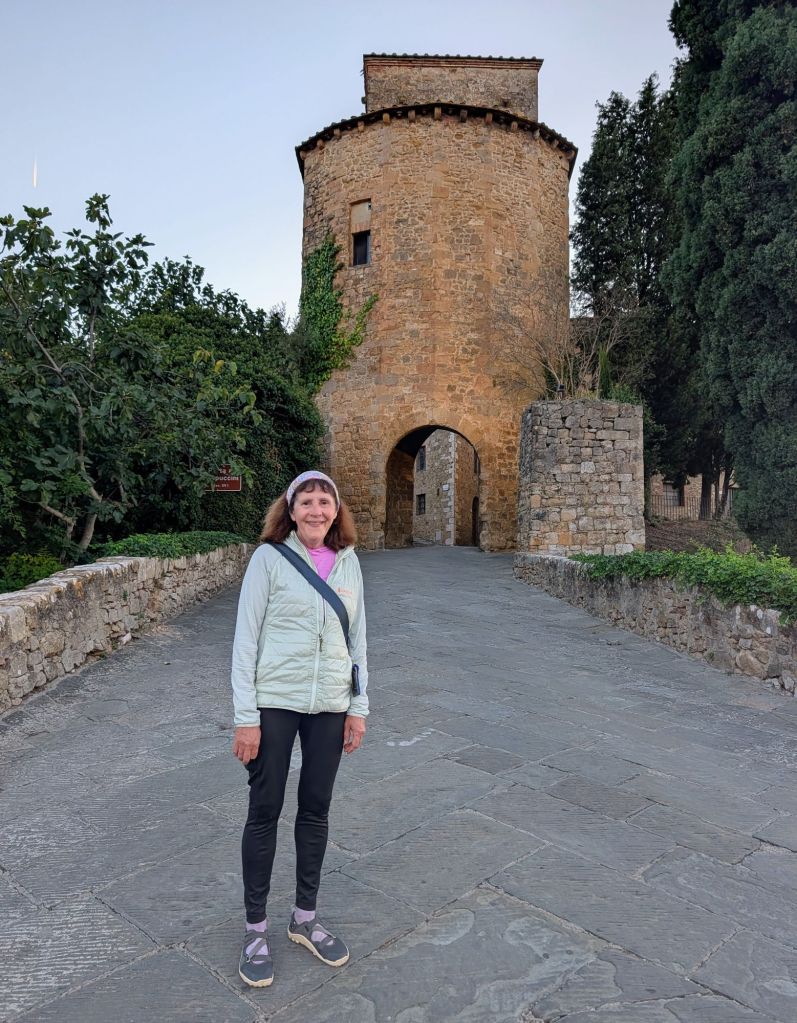
Vetralla to Sutri 16.1 Miles; 8 Hours on the trail (Cumulative: 216.3 Miles; 118.4 Hours on the trail)
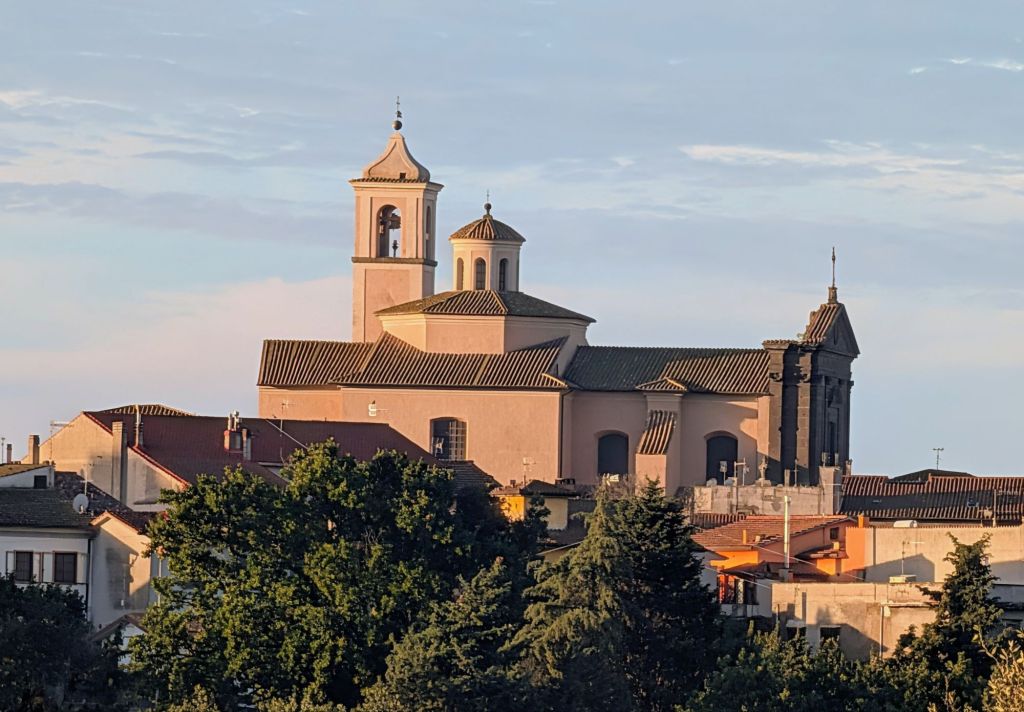
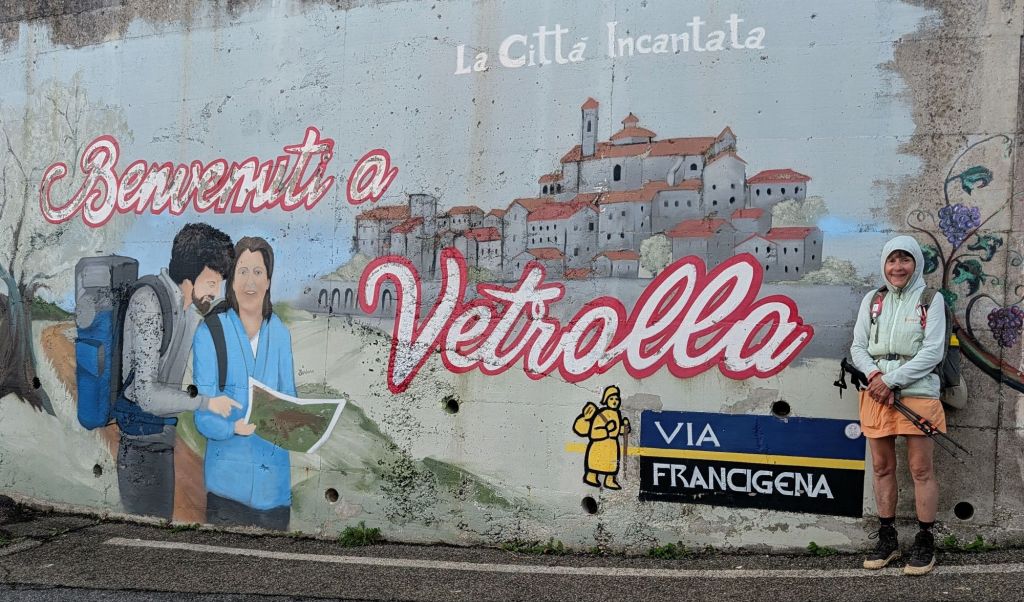
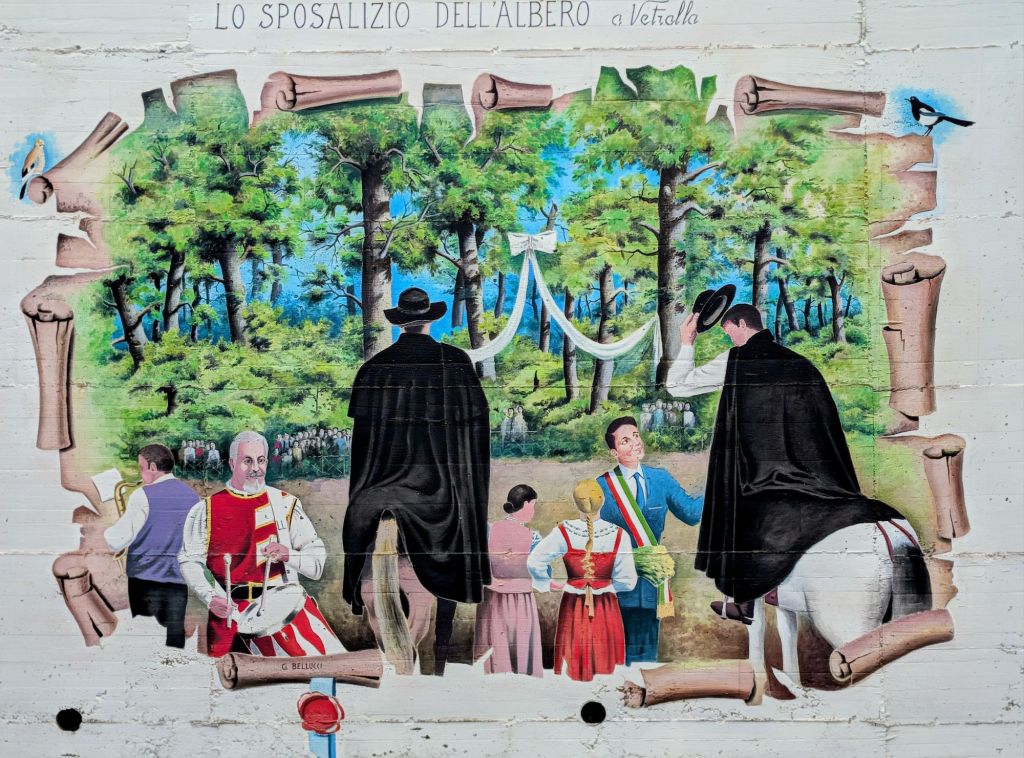
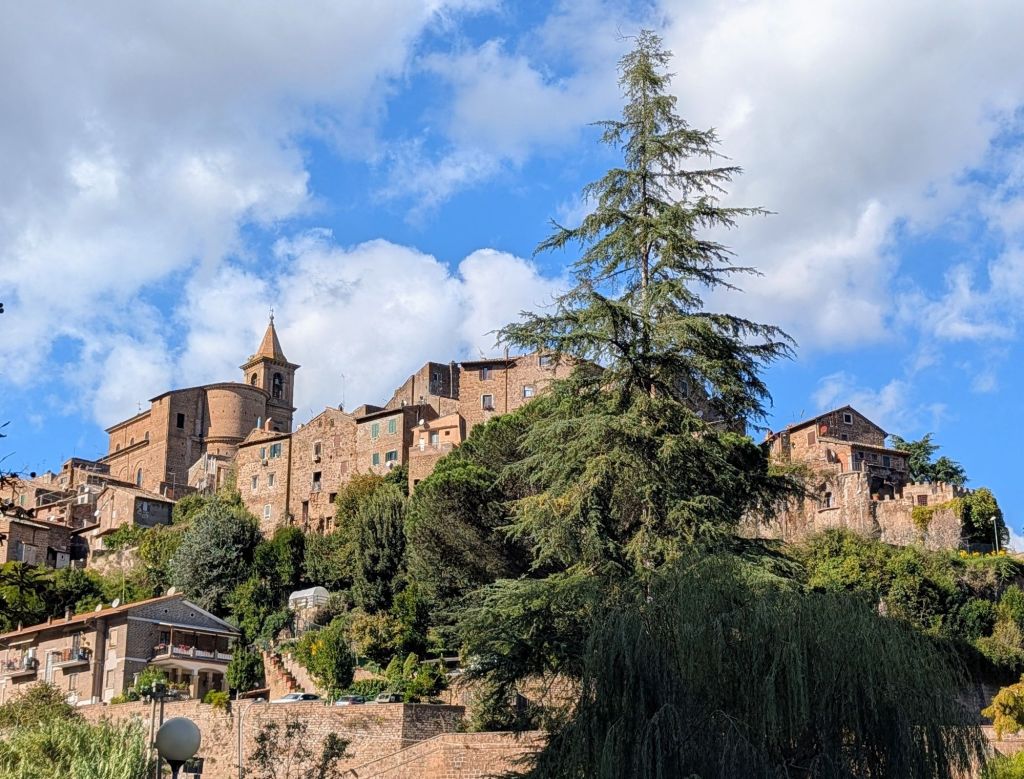
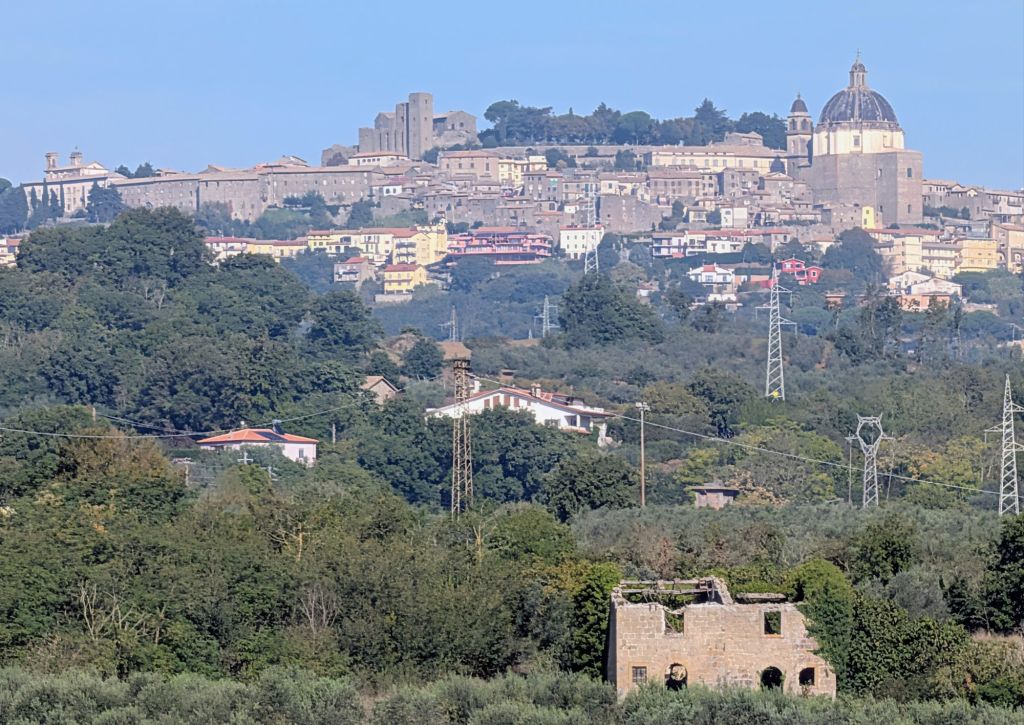
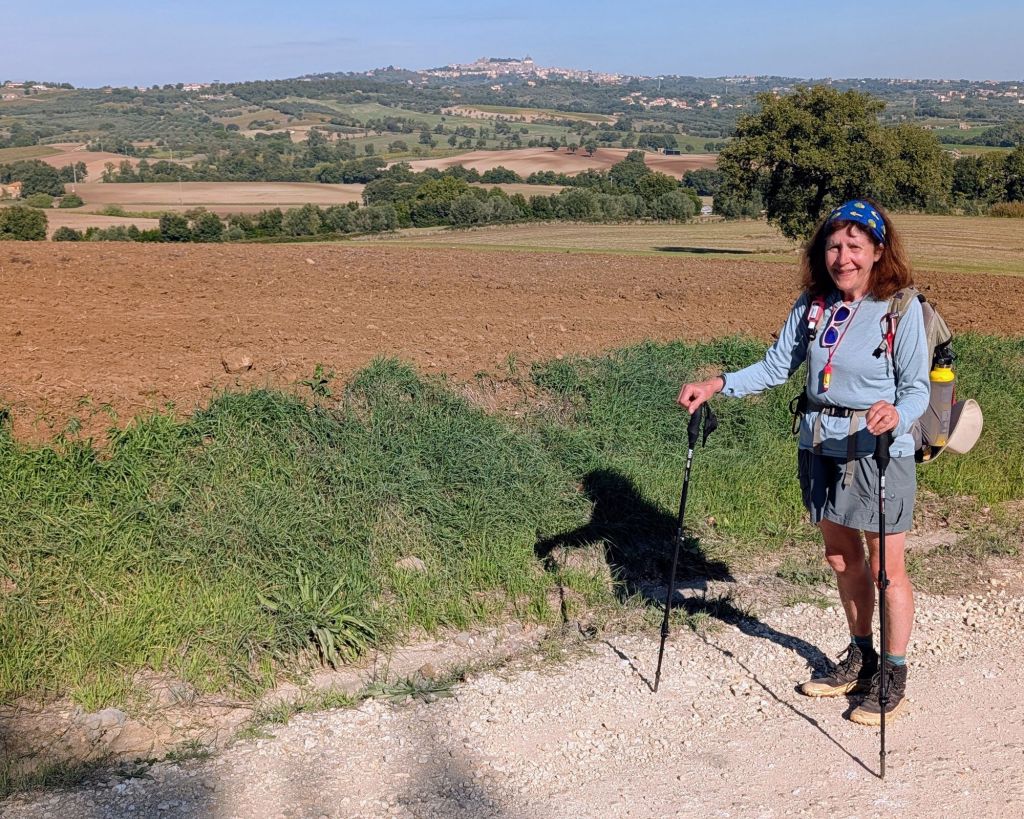
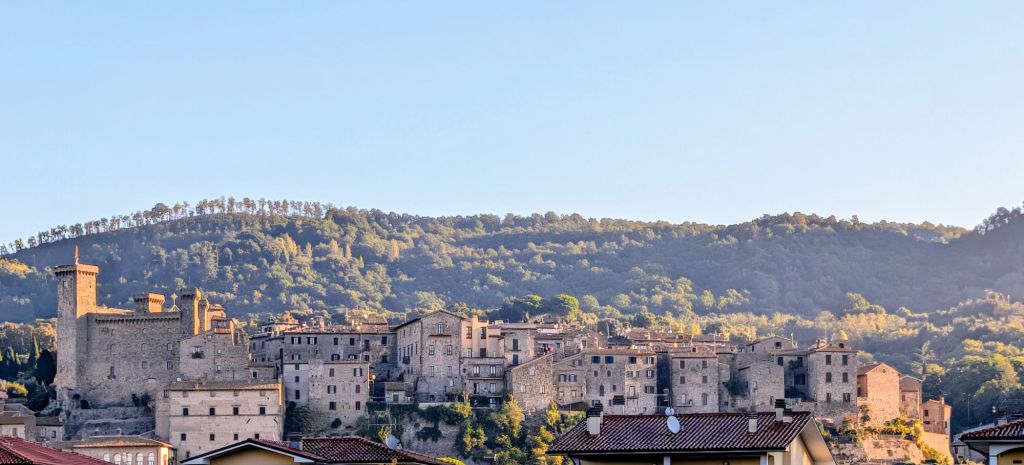
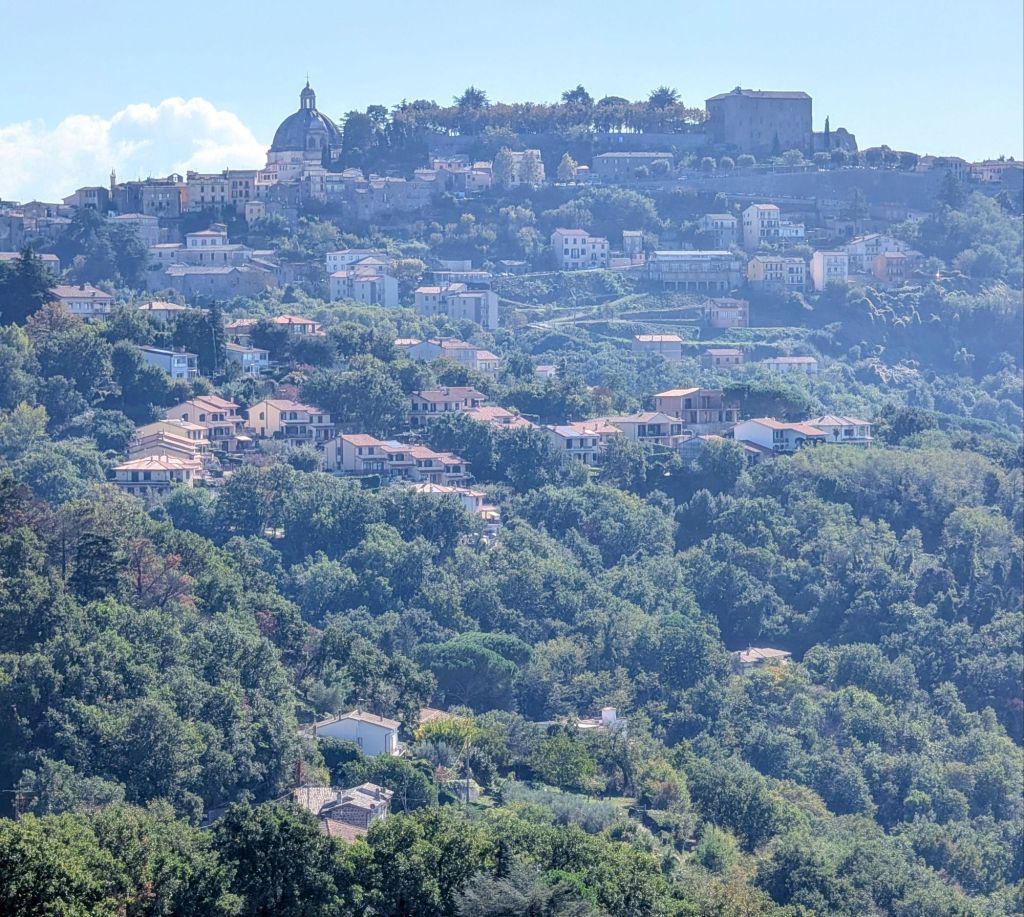
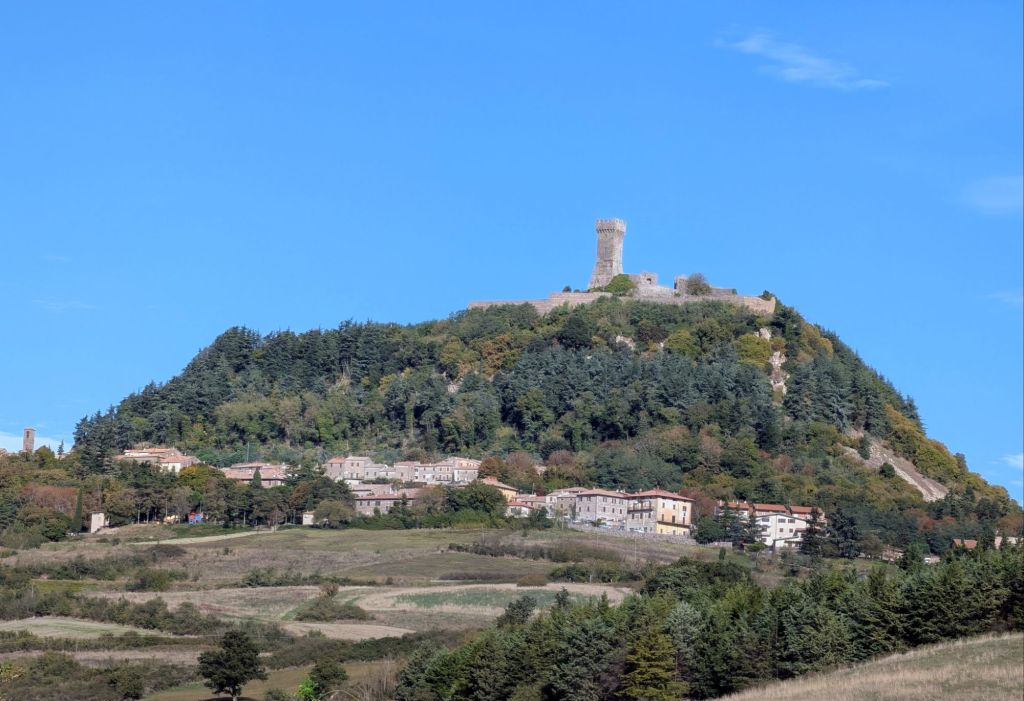
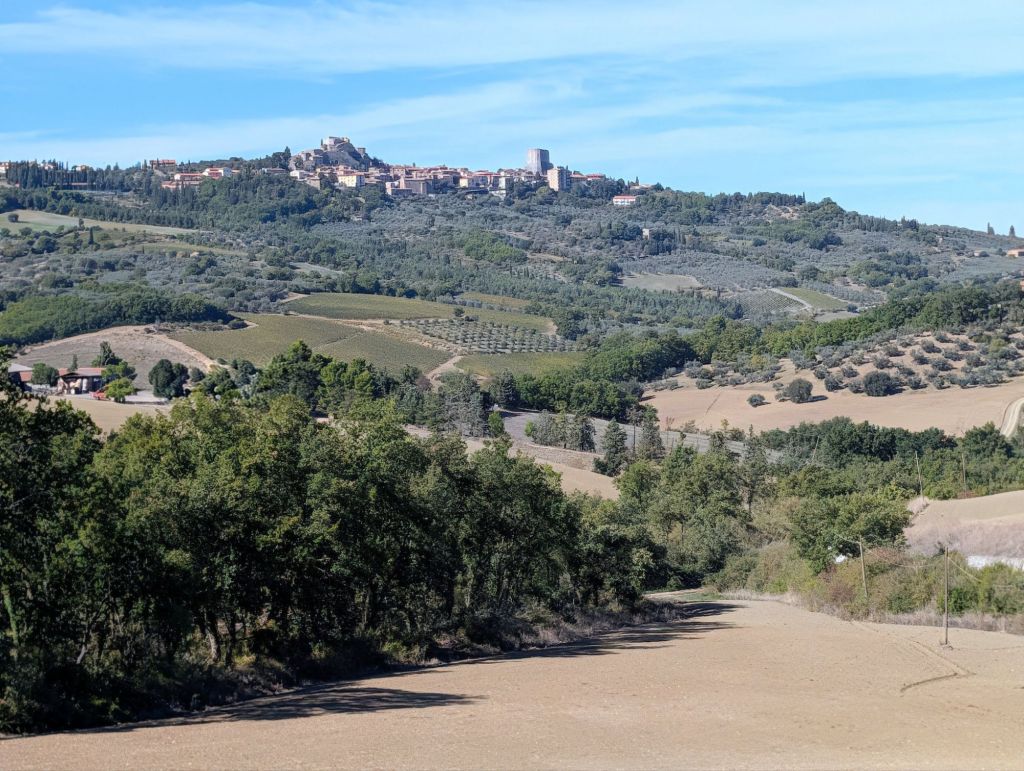
Vetralla in the distanceWelcome to Vetralla The Wedding of the Trees in Vetralla
The Wedding of the Tree (Lo Sposalizio dell’Albero) is an ancient & unique tradition celebrated every May 8th in Vetralla.
The ceremony symbolically reaffirms Vetralla’s historic claim & ownership rights over the Monte Fogliano forests which dates back to 1432 when Pope Eugene IV granted the land to Vetralla.
The “Bride & Groom” are a Turkey oak (bride) & an English oak (groom) which are carried by the locals to the Sant’Angel monastery to be wed.
The trees are symbolically decorated with spring flowers like primroses & daffodils including a white tulle bridal veil.
The mayor recites the formal marriage words & then signs a notarized document making the ceremony official.
According to the custom, should this annual ceremony ever not be held, then the rights to the forest revert to neighboring Viterbo
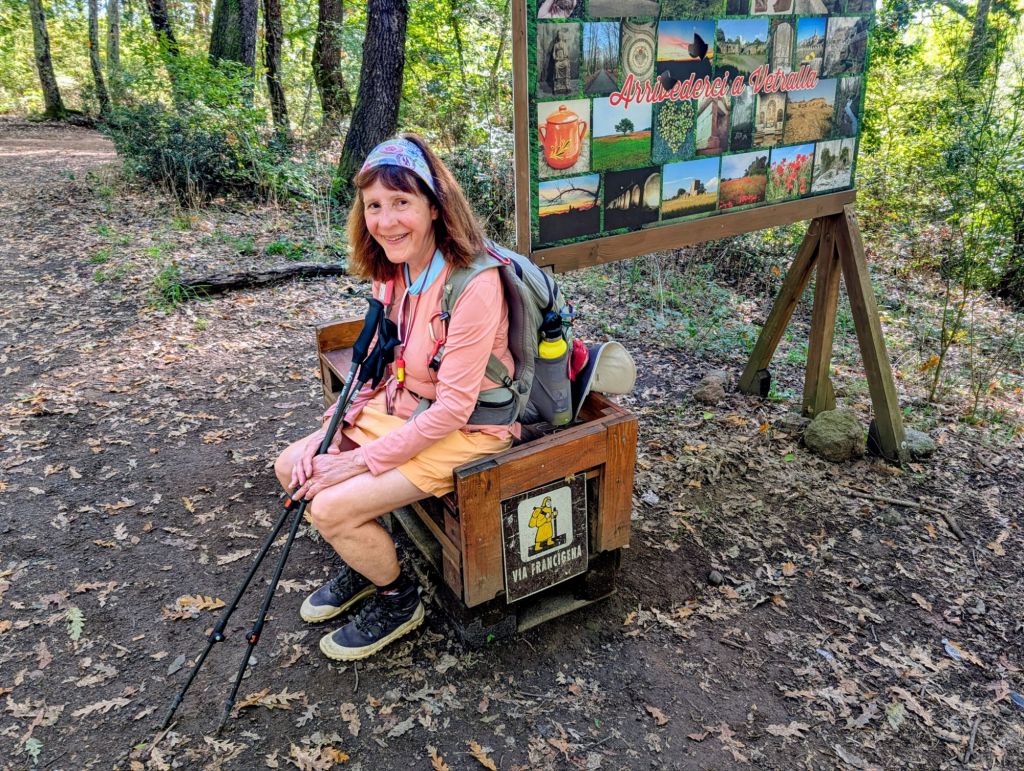
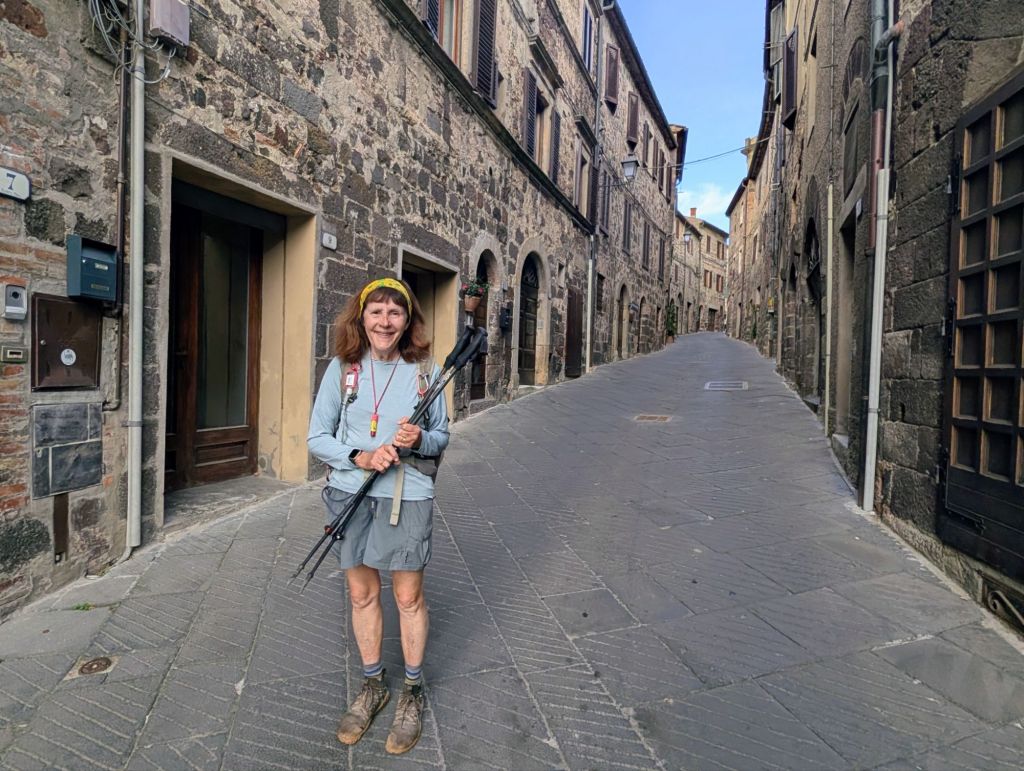
Arrivederci Vetralla
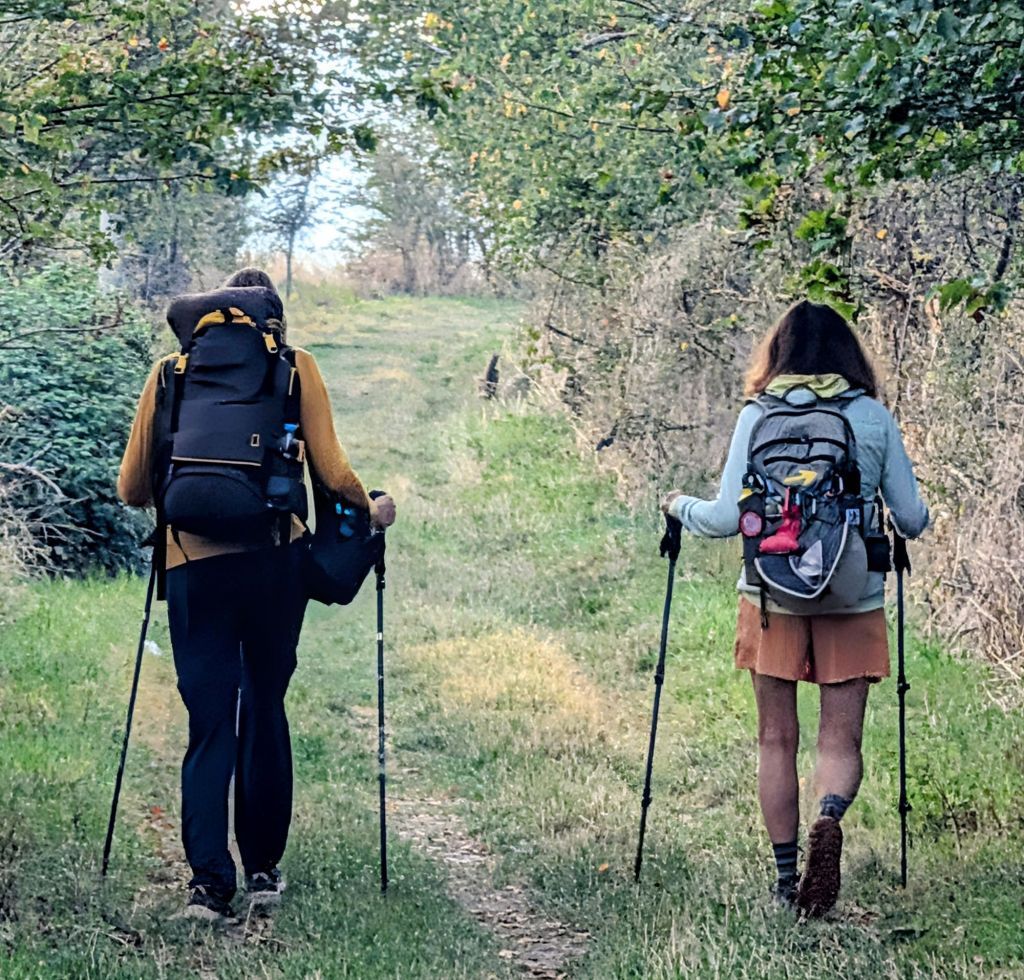
Today’s hike was mostly in forested areas.
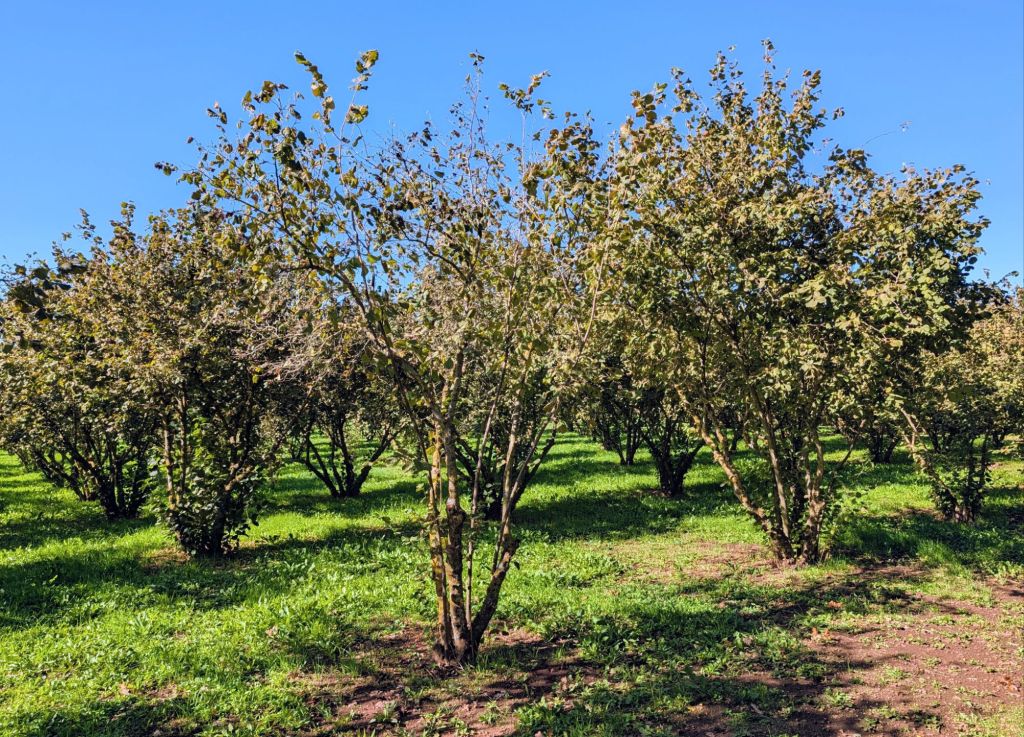
After leaving Vetralla, we walked through extensive hazelnut groves.
Hazelnut trees were planted in the area replacing all the dense vineyards & wheat fields that were destroyed during WWII.
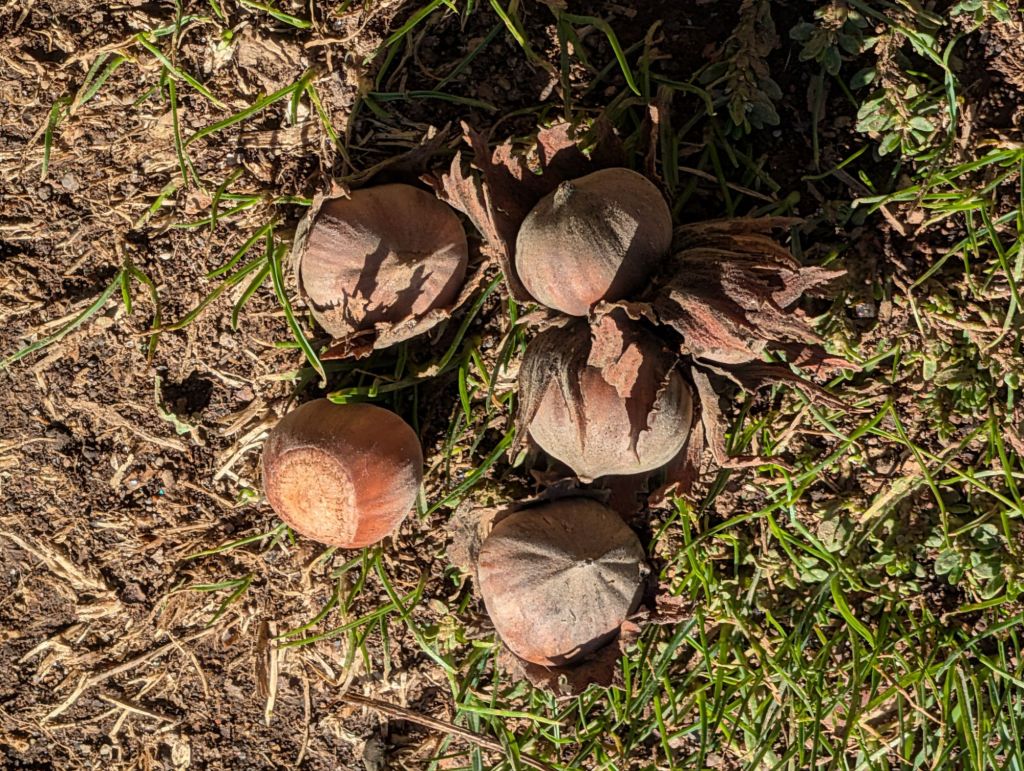
Hazelnut TreesHazelnuts
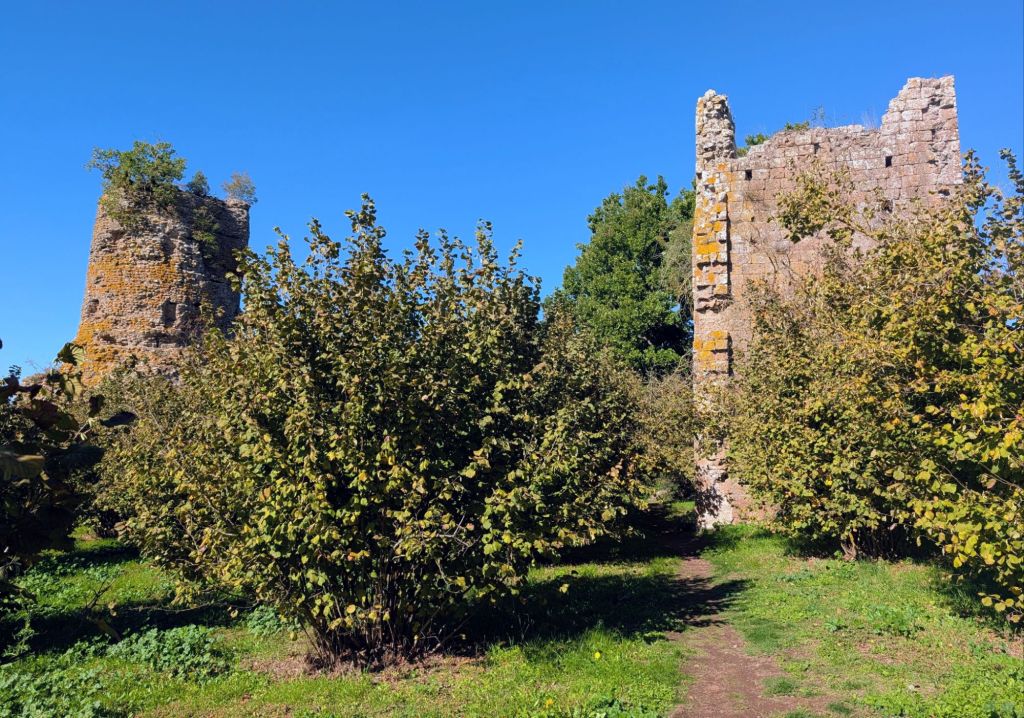
We passed the Orlando Towers located amidst monumental oak trees & hazelnut trees.
Roman Monument on the left; Bell Tower remains on the right
There are two funerary tower monuments from the Roman era dating back to the 1st Century BC & a bell tower belonging to a 10th Century Benedictine church Sancta Maria in Campis which is 16 meters high.
According to legend, Roland who was the valiant paladin of Charlemagne, King of the Franks, wandered these lands in medieval times searching for adventure & when he tired, he loved to rest with his comrades in the shade provided by the great oak trees growing near these towers.
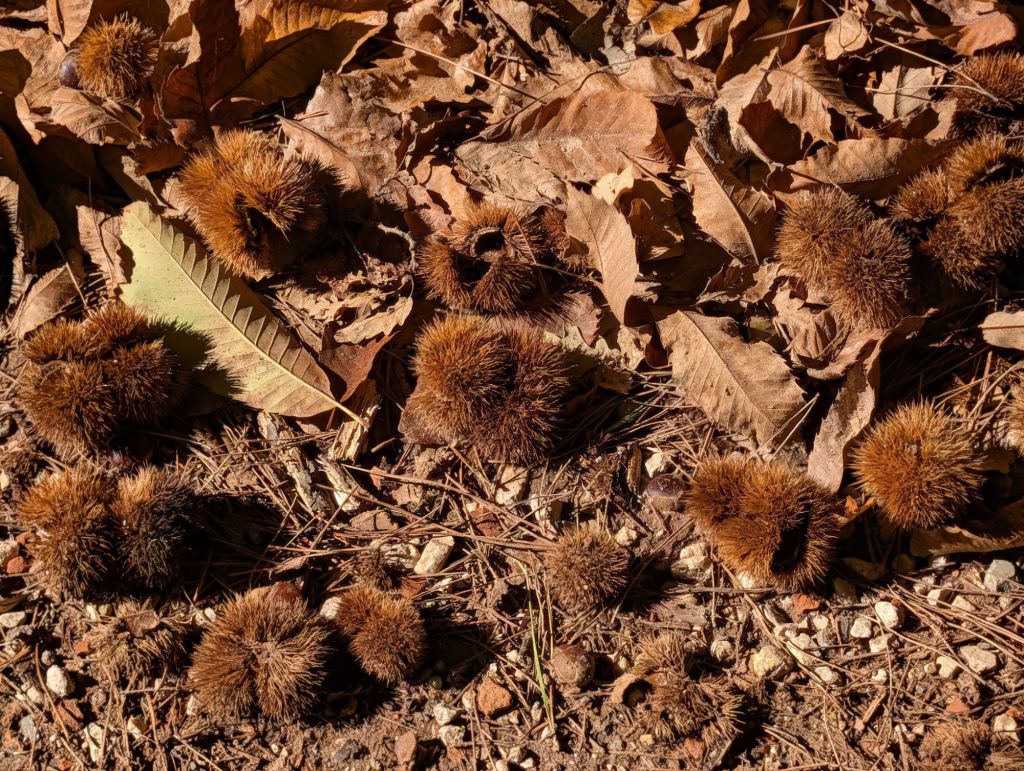
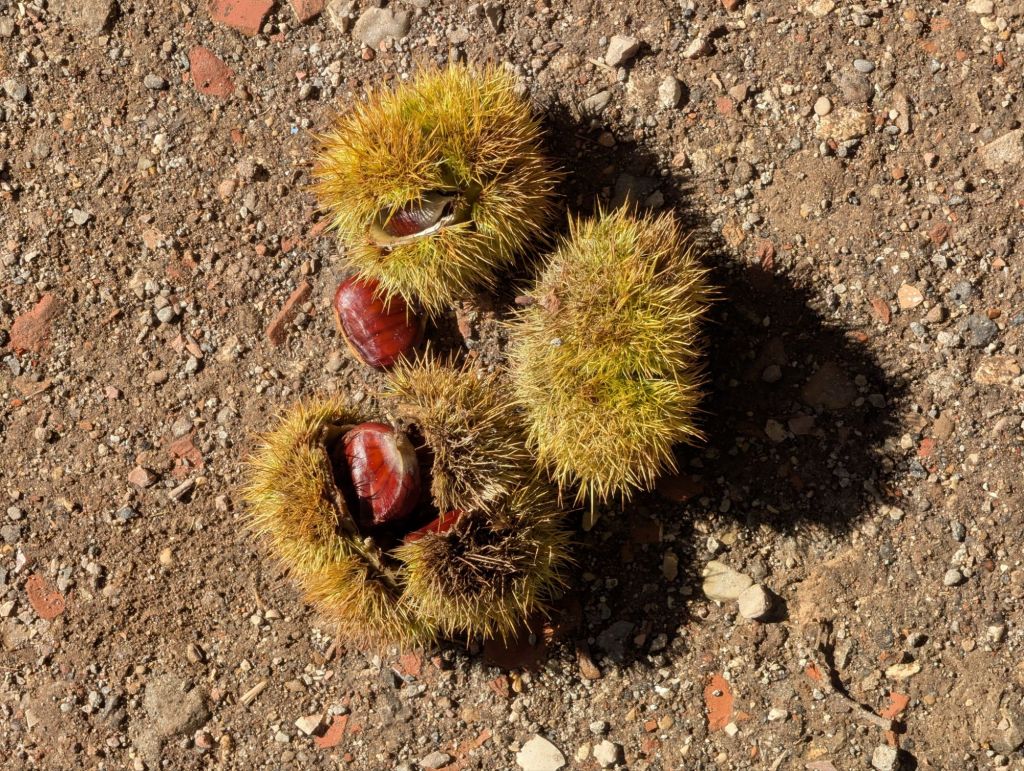
Along with acres & acres of Hazelnut trees, we walked through forests filled with Chestnut trees.
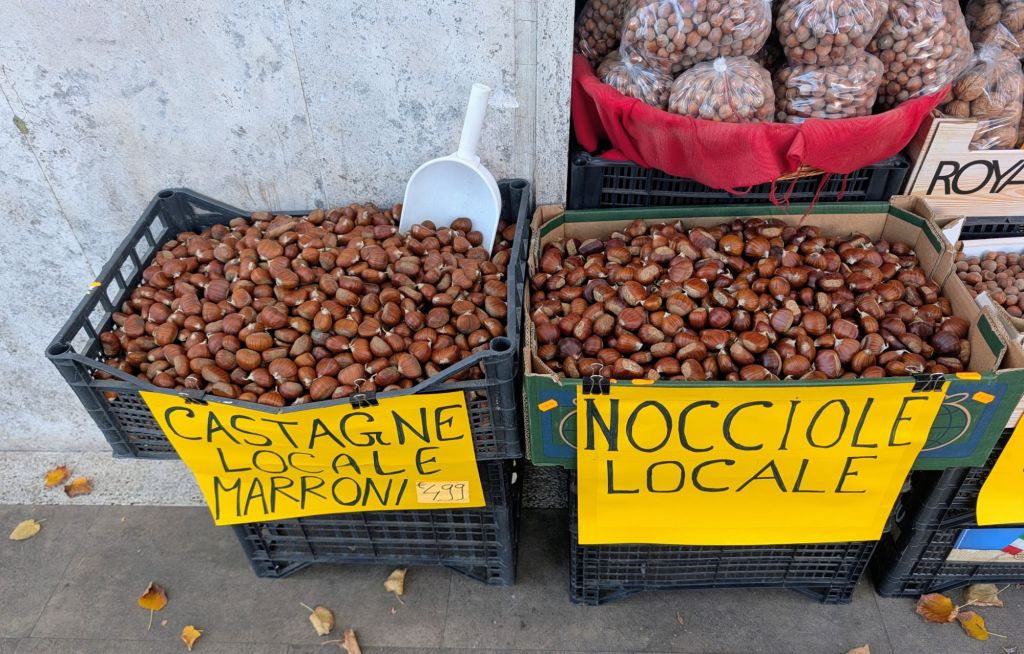
Both Hazelnuts & Chestnuts are sold in local stores.
Chestnuts on the left; Hazelnuts on the right
After the towers, we stopped in the charming town Capranica.
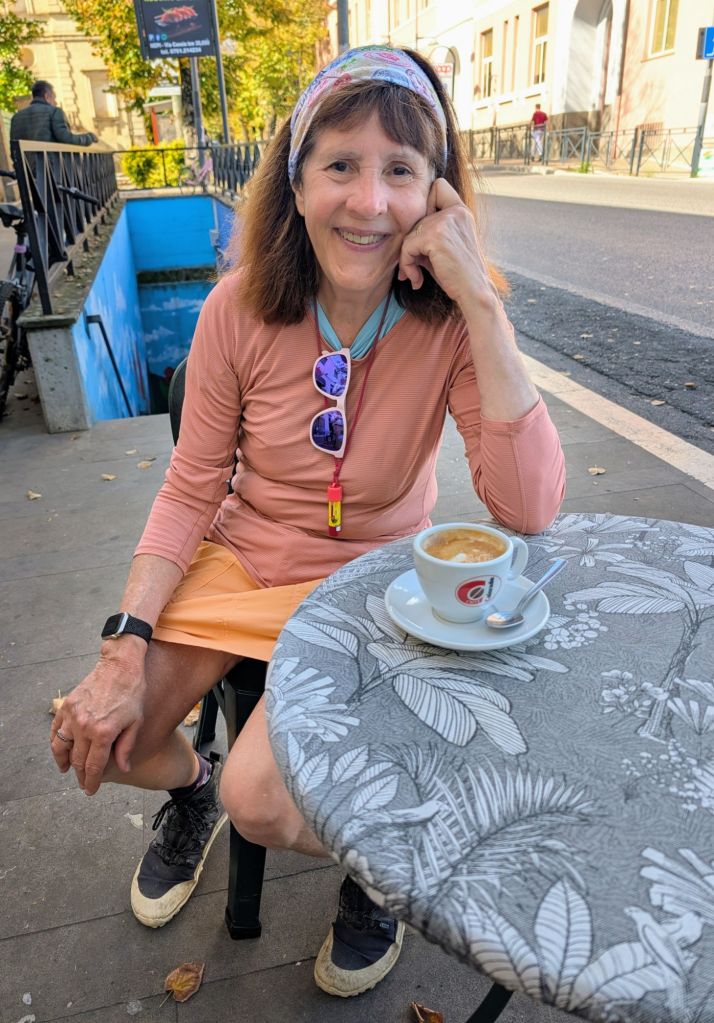
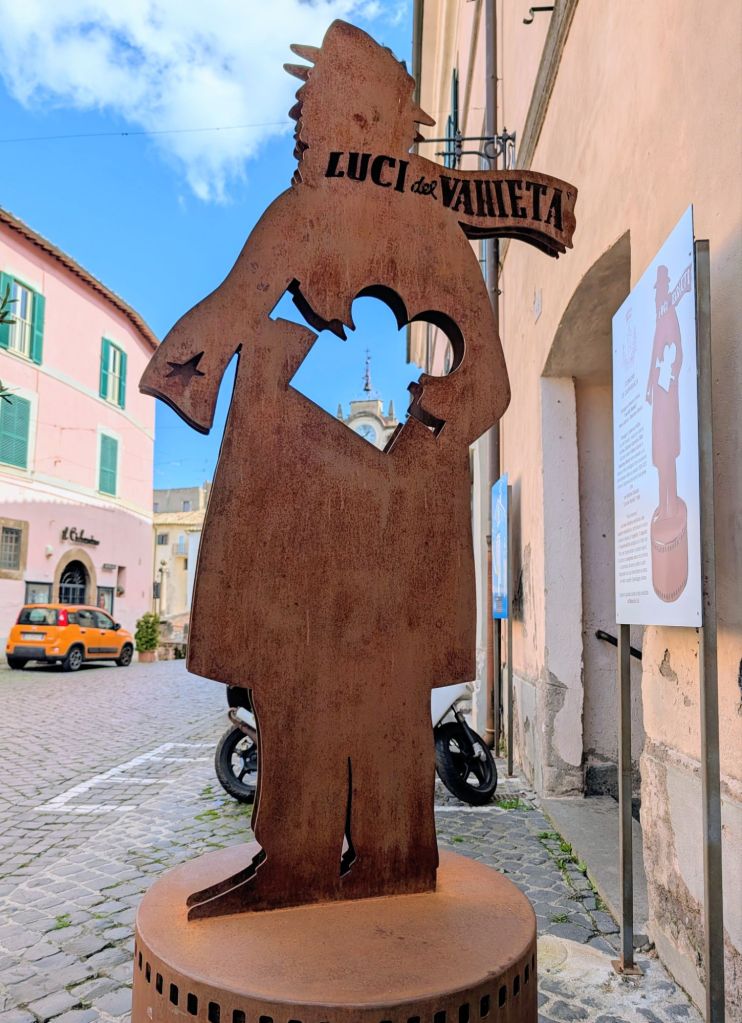
CapranicaCappuccino in Capranica Tribute to Italian direct Frederico Fellini who made his first movie in Capranica
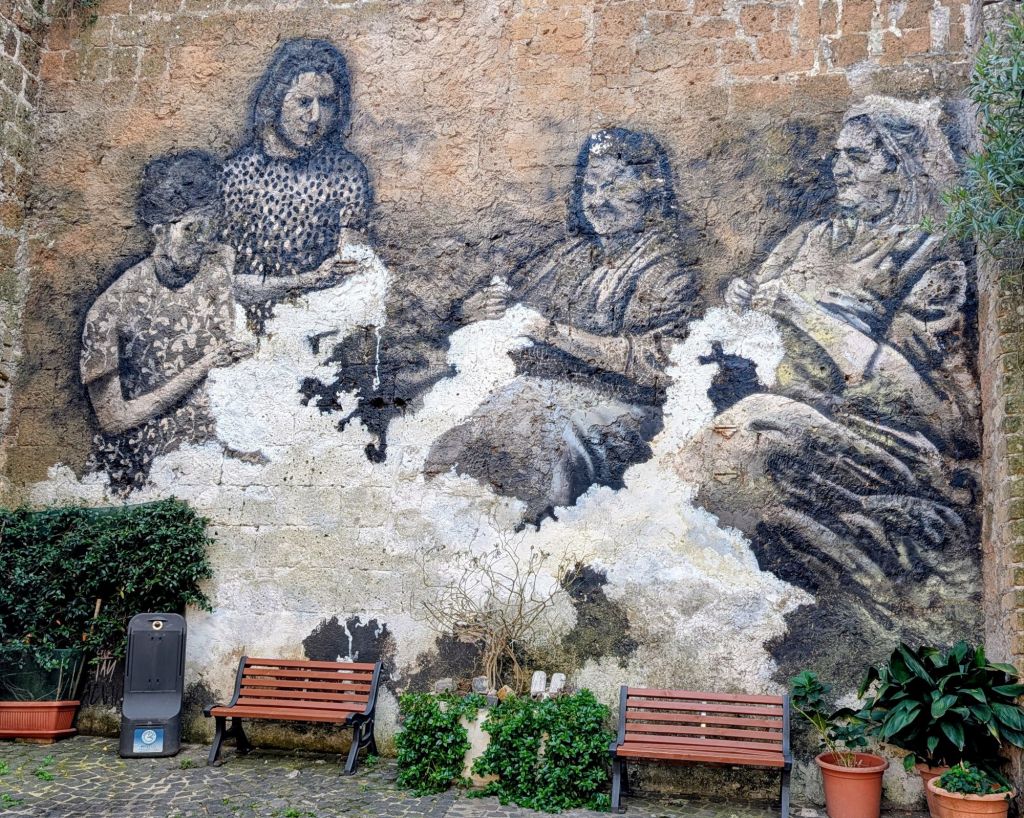
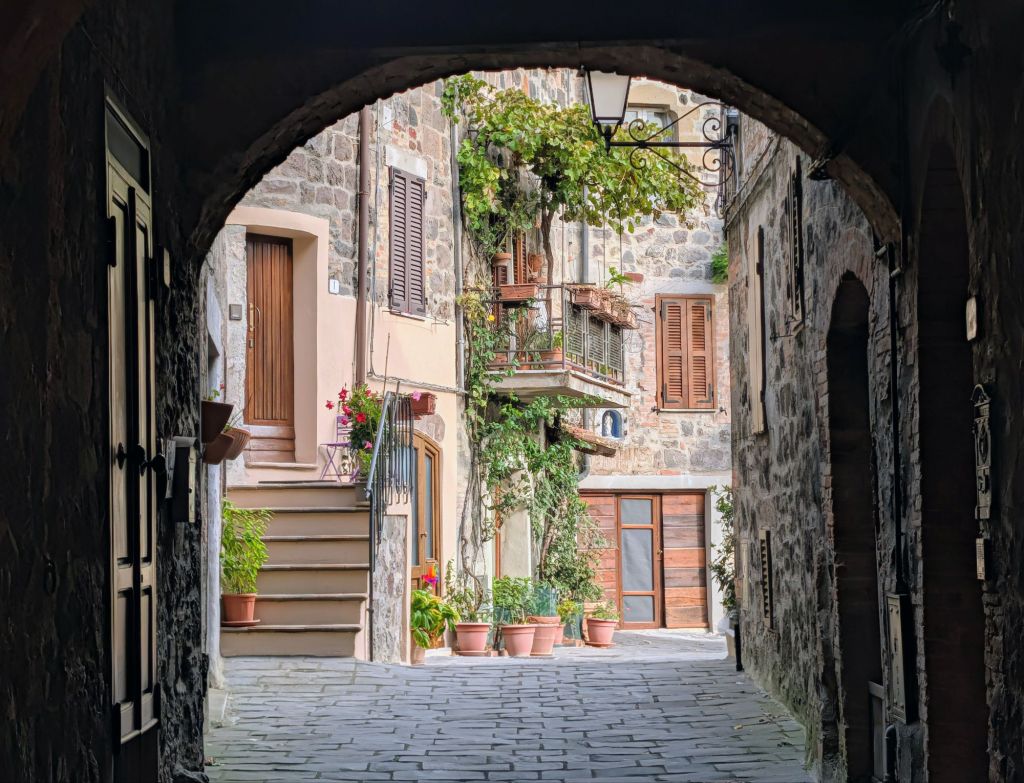
Capranica images:
After Capranica, we walked in a deep forest to Sutri.
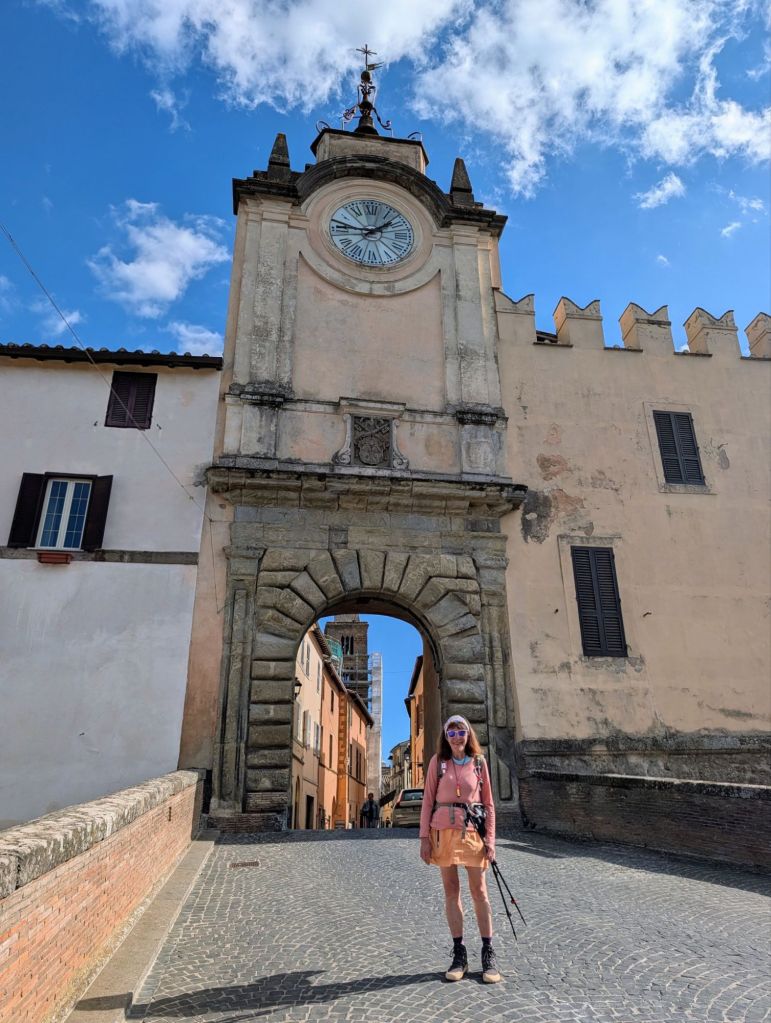
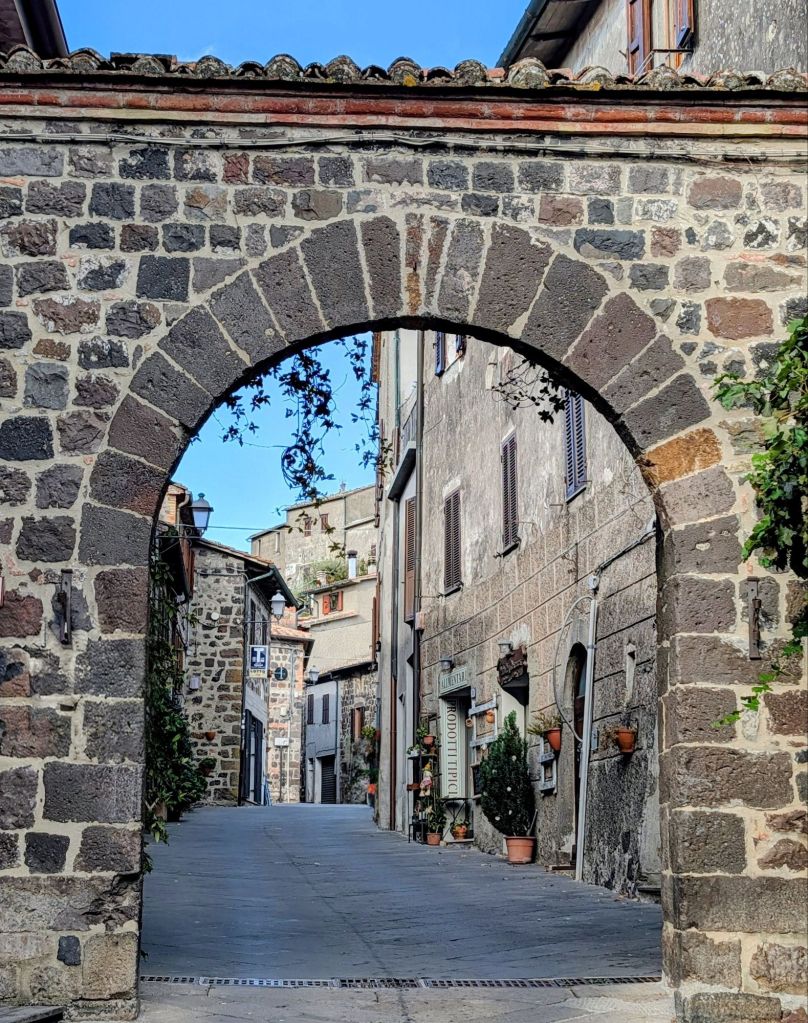
Entering Sutri
According to legend, Sutri was founded by the god Saturn who was father of all the gods.
The Etruscan name for this town “Sutrinas” is said to have been derived from his name.
It has been written that Saturn conquered all the lands in Latium & hid here from his son Jupiter who eventually deposed him & then became the king of all gods.
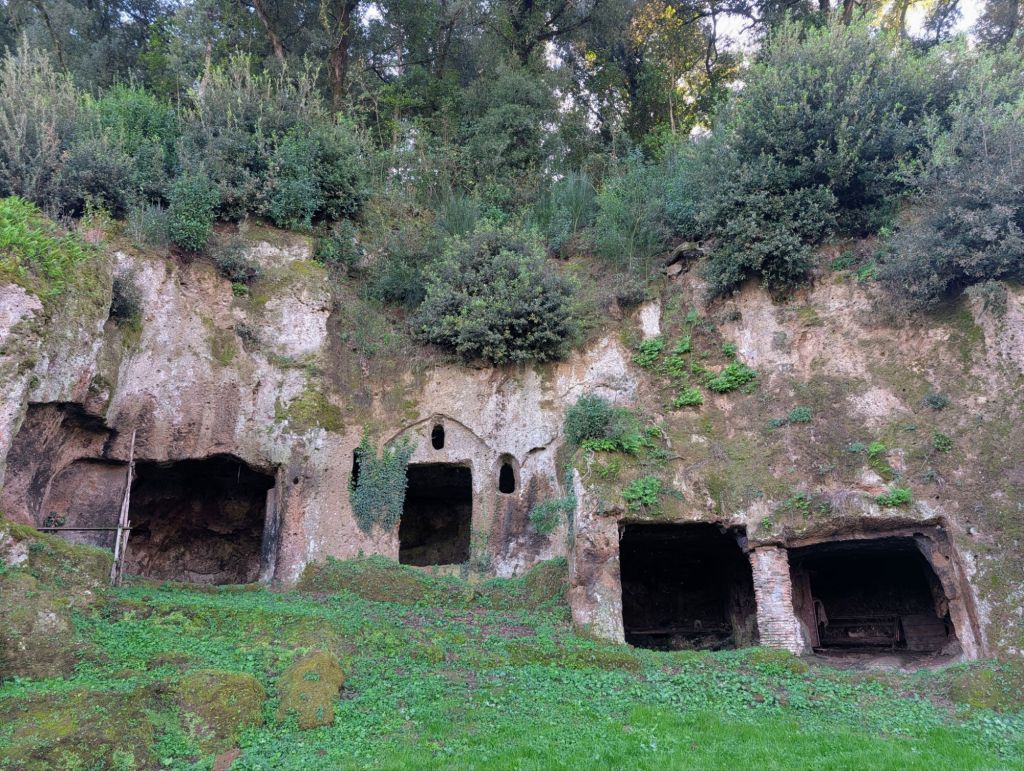
Sutri’s Etruscan & Roman tombs were carved into the soft, volcanic tufa stoneThere are 64 tombs along a 180 meter long bluff forming Sutri’s Necropolis
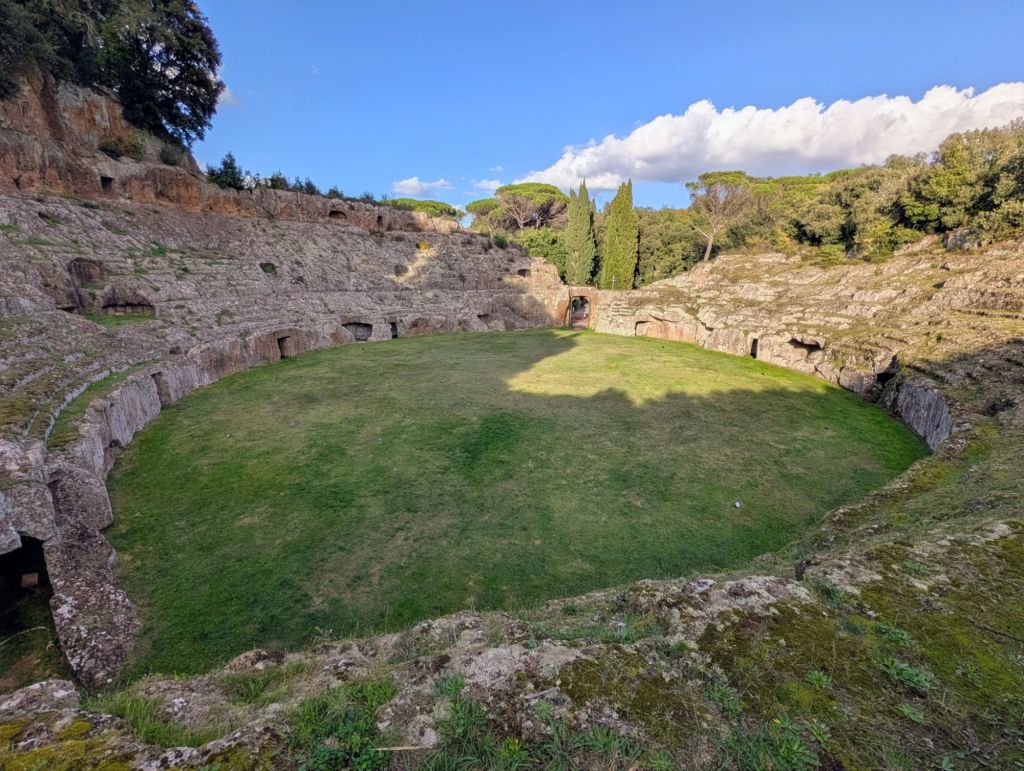
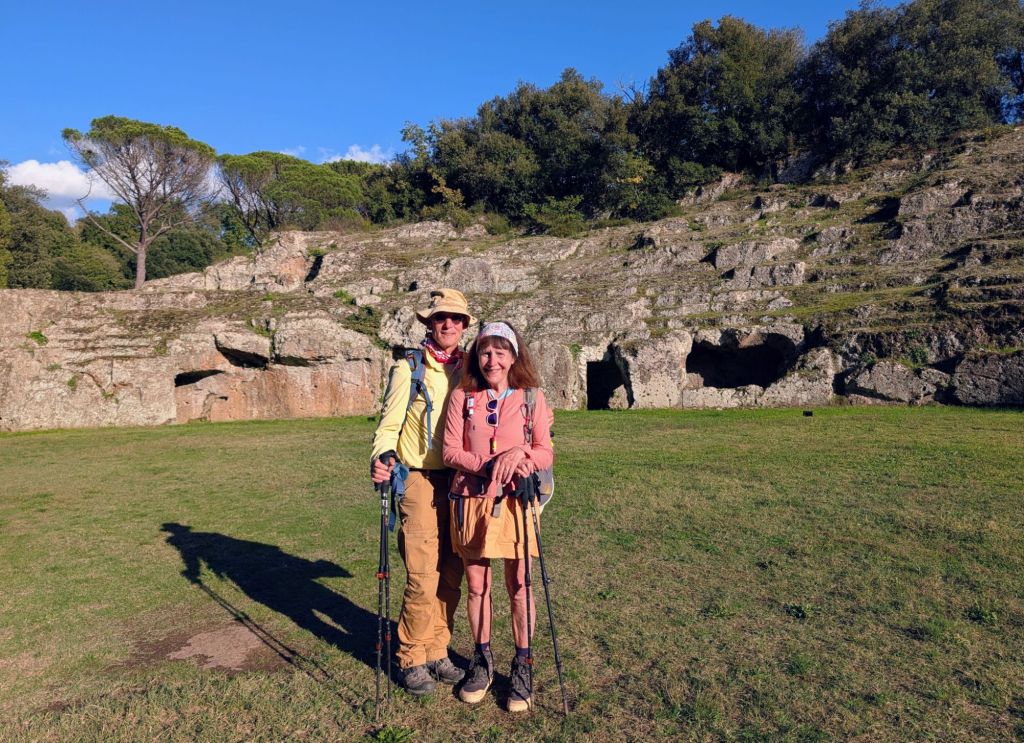
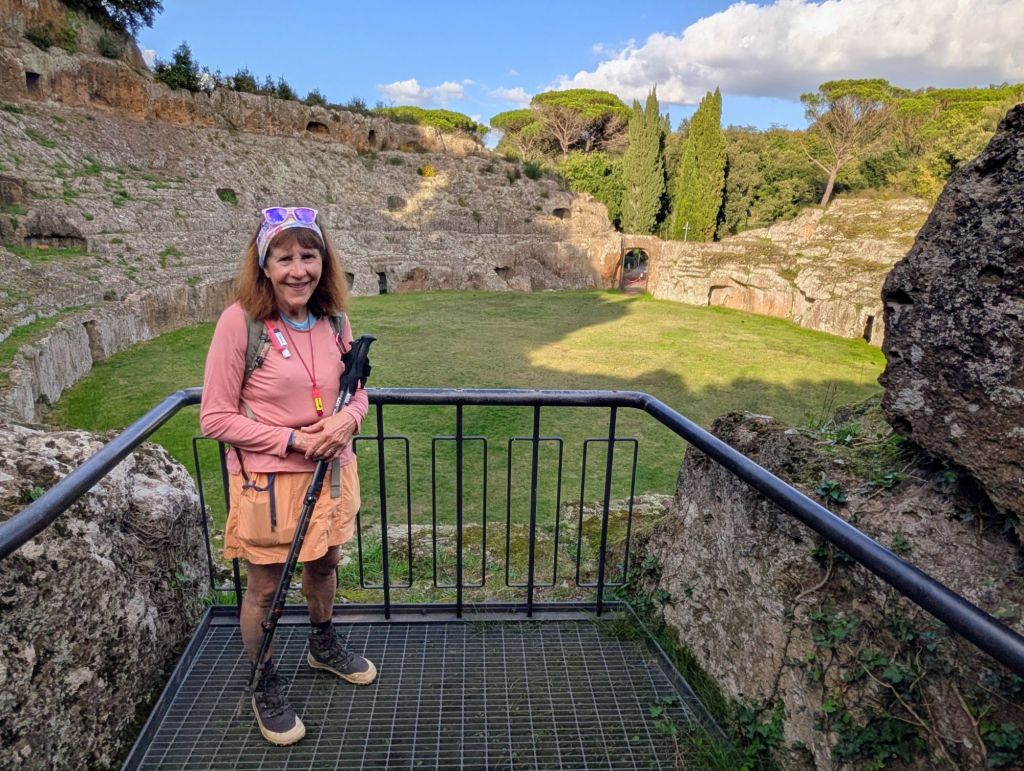
Sutri’s Roman Amphitheatre (Anfiteatro Romano di Sutri) is a unique ancient arena carved directly out of a single hill of volcanic tufa rock without using a brick or masonry wall.
Sutri’s Amphitheatre with its unique elliptical shape
Unlike traditional Roman arenas which were built by stacking stone blocks or concrete which was the technique used to build the Colosseum in Rome, the Sutri Amphitheatre was built entirely by hollowing out the volcanic rock hill.
It was built approximately between the 1st Century BC to the 1st Century AD.
It features an elliptical arena measuring roughly 49 by 40 meters with three seating tiers capable of holding over 9,000 spectators which was a very sizeable public space for the inhabitants in ancient Sutrium.
Two gates on the ellipse’s opposite ends allowed access to the arena.
The main spectacle held here was gladiator fights.
Images from today’s trail:
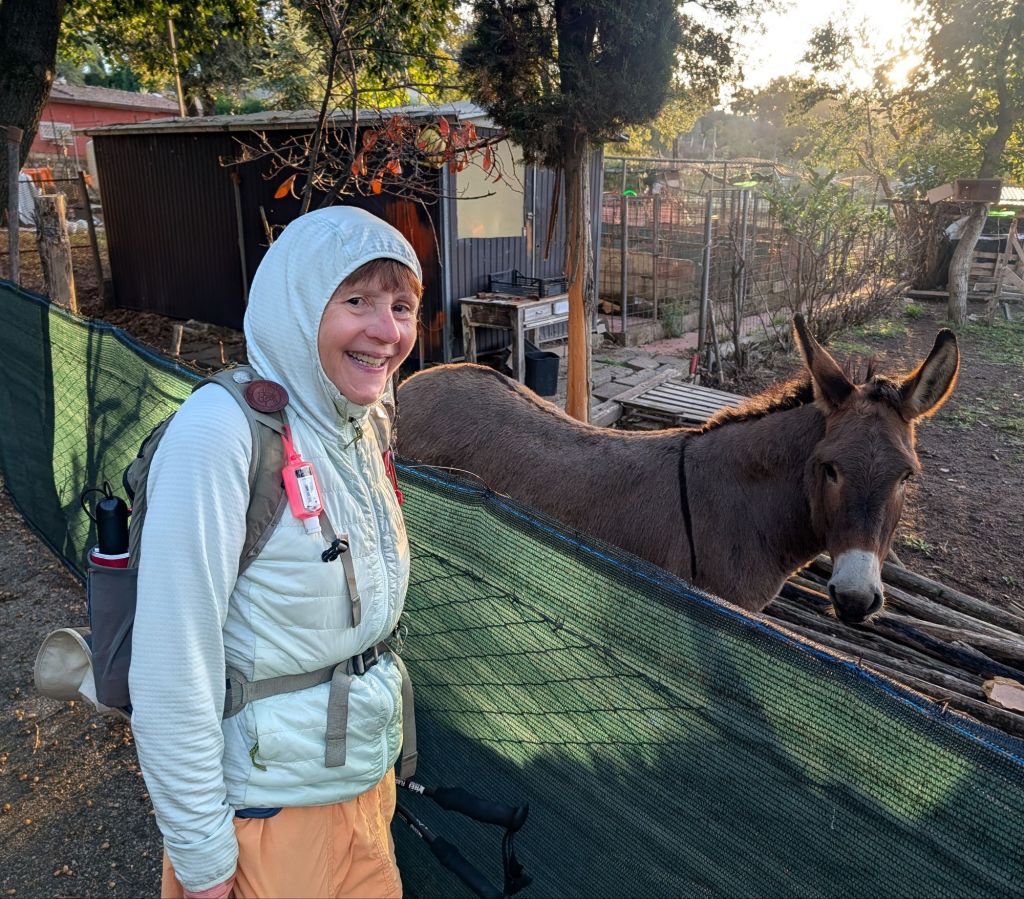
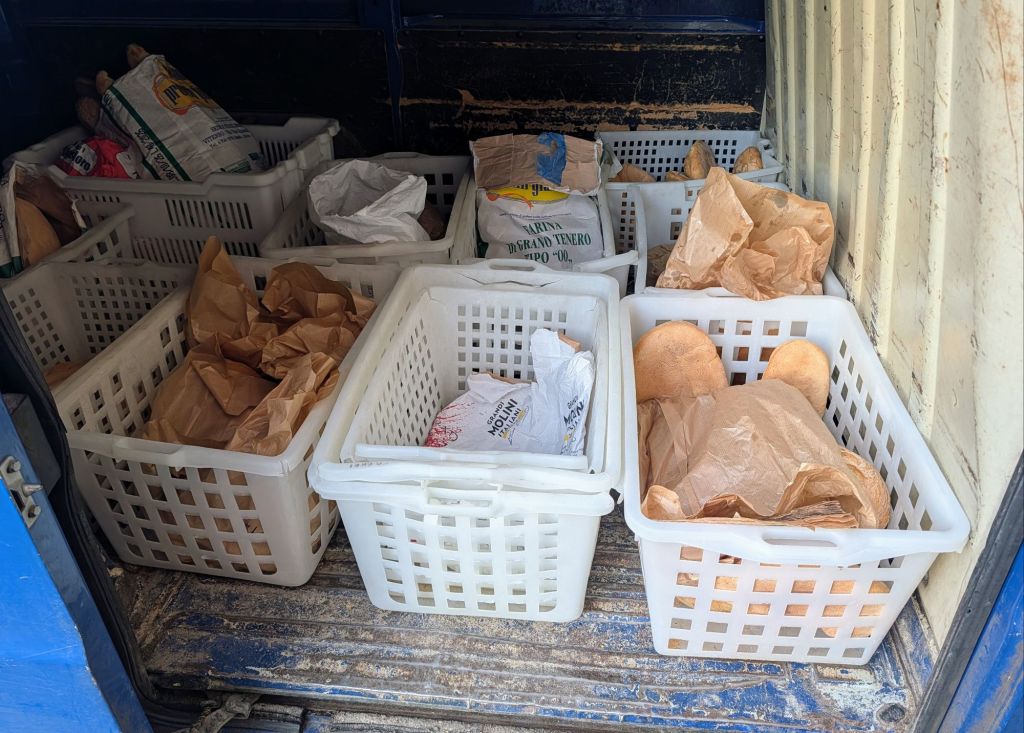
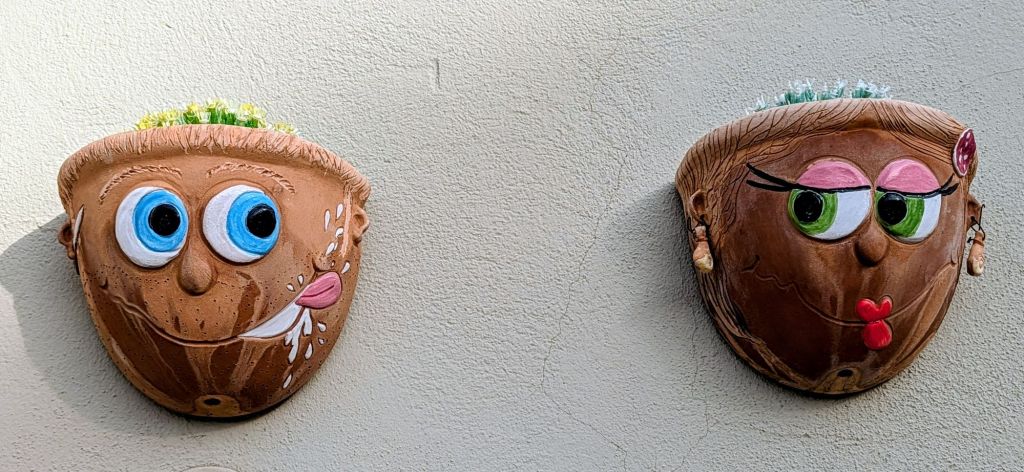
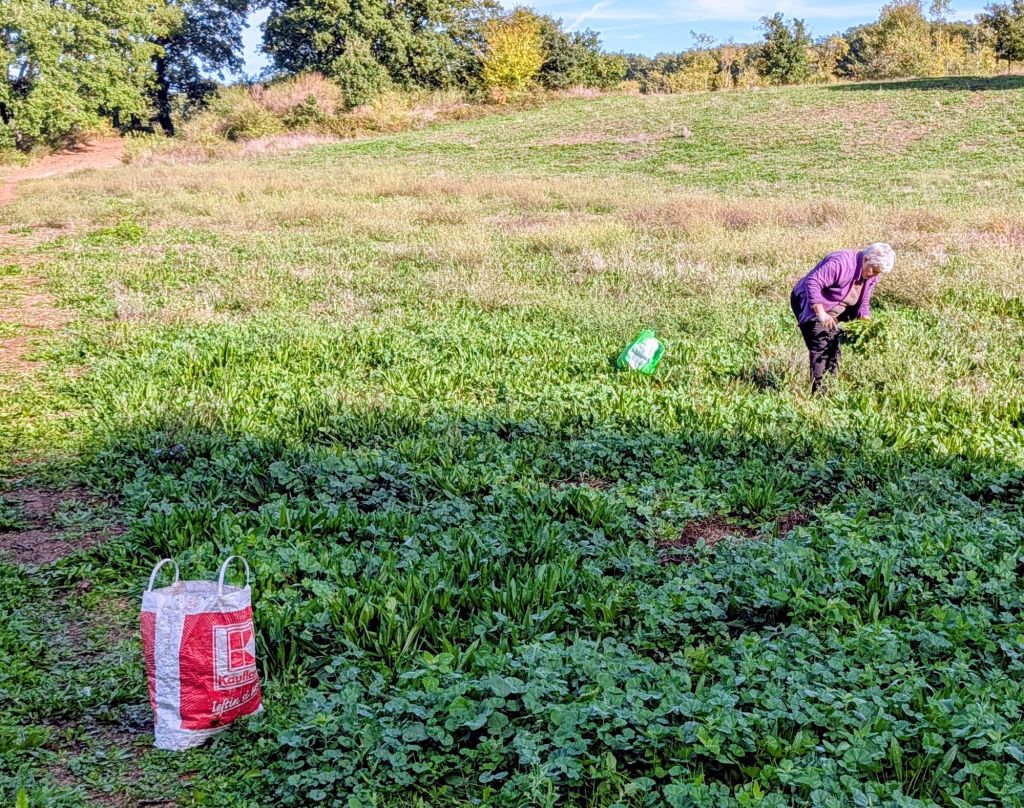
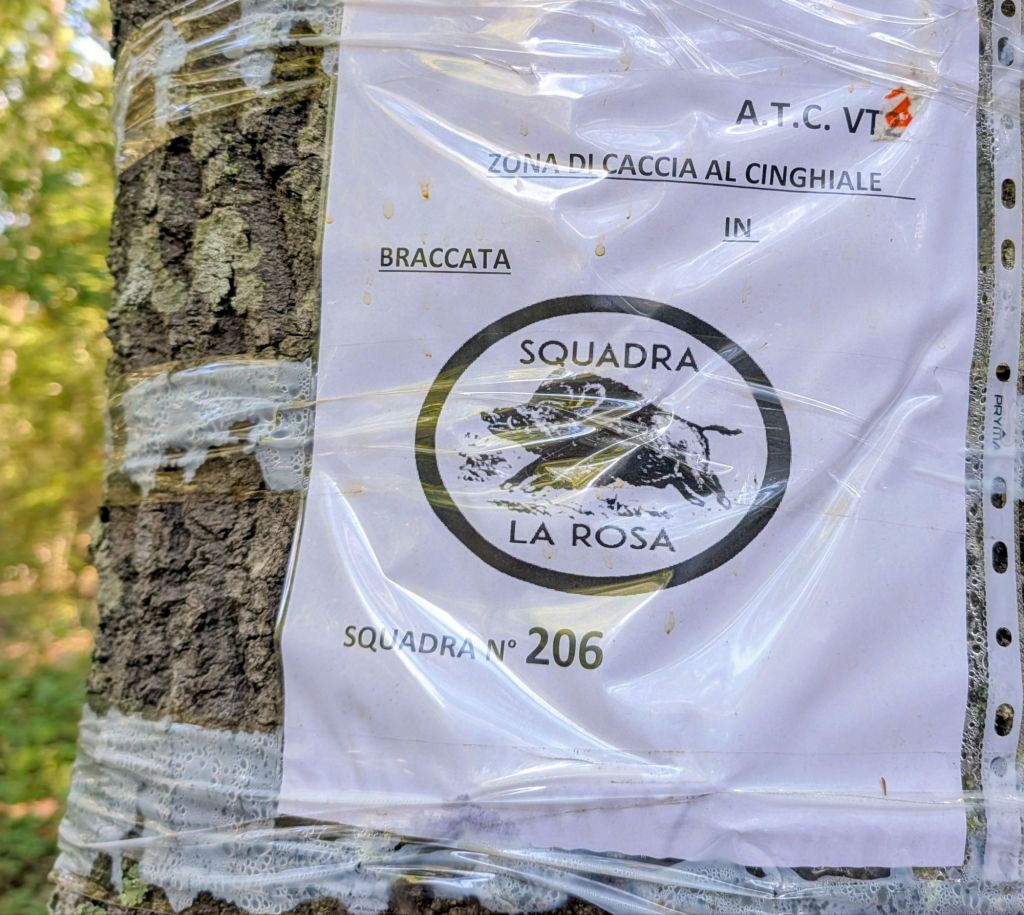
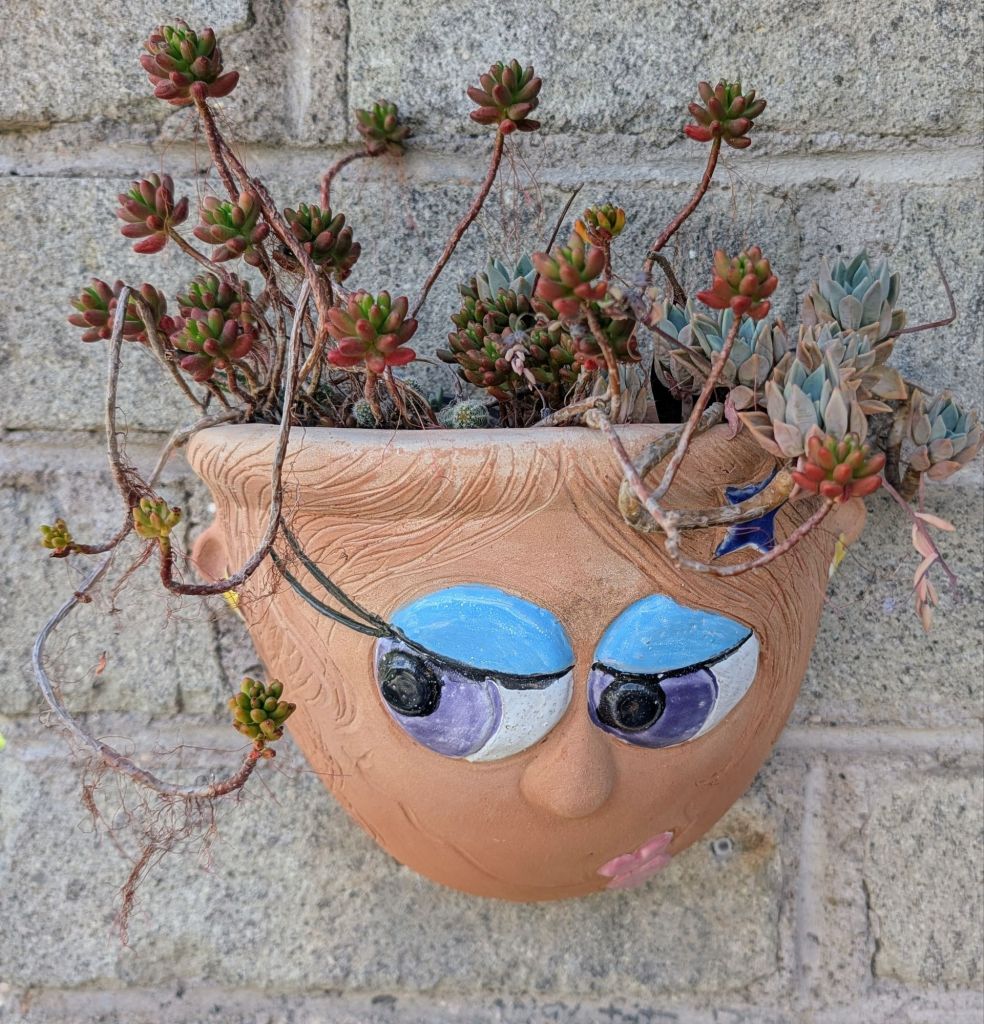
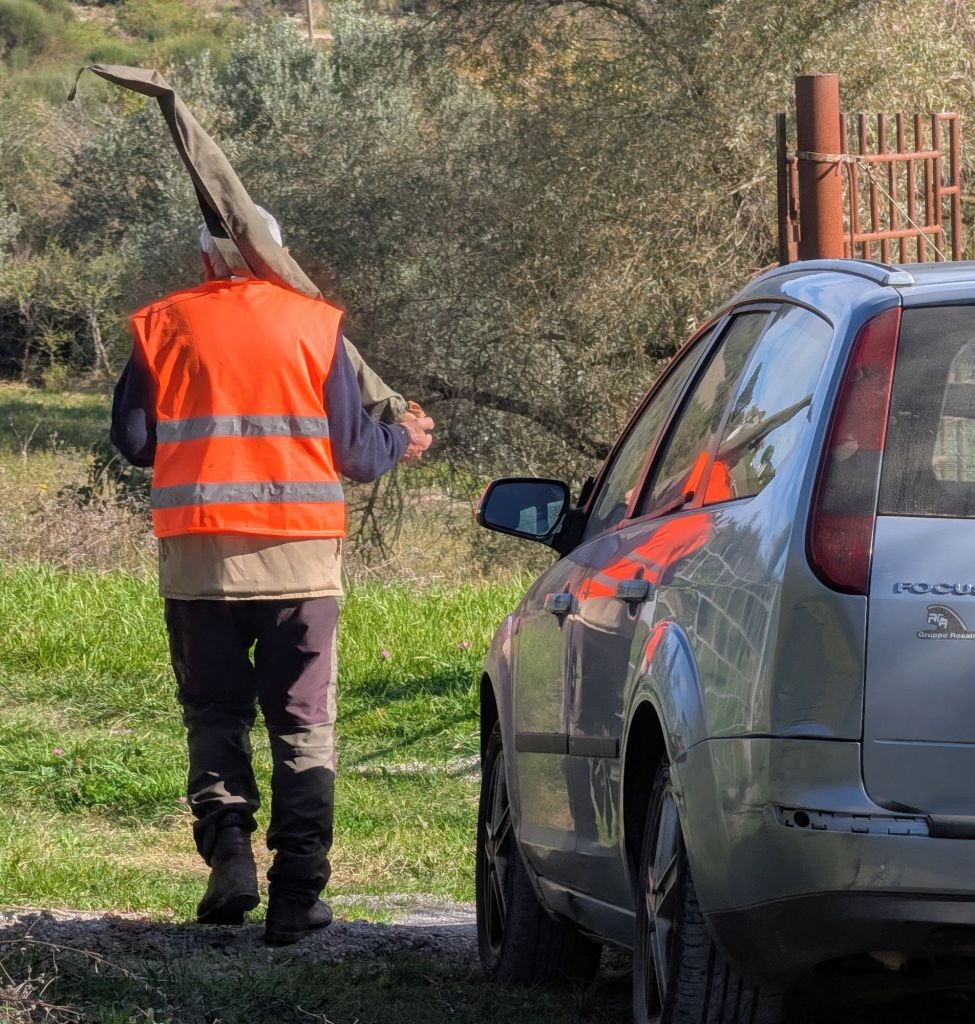
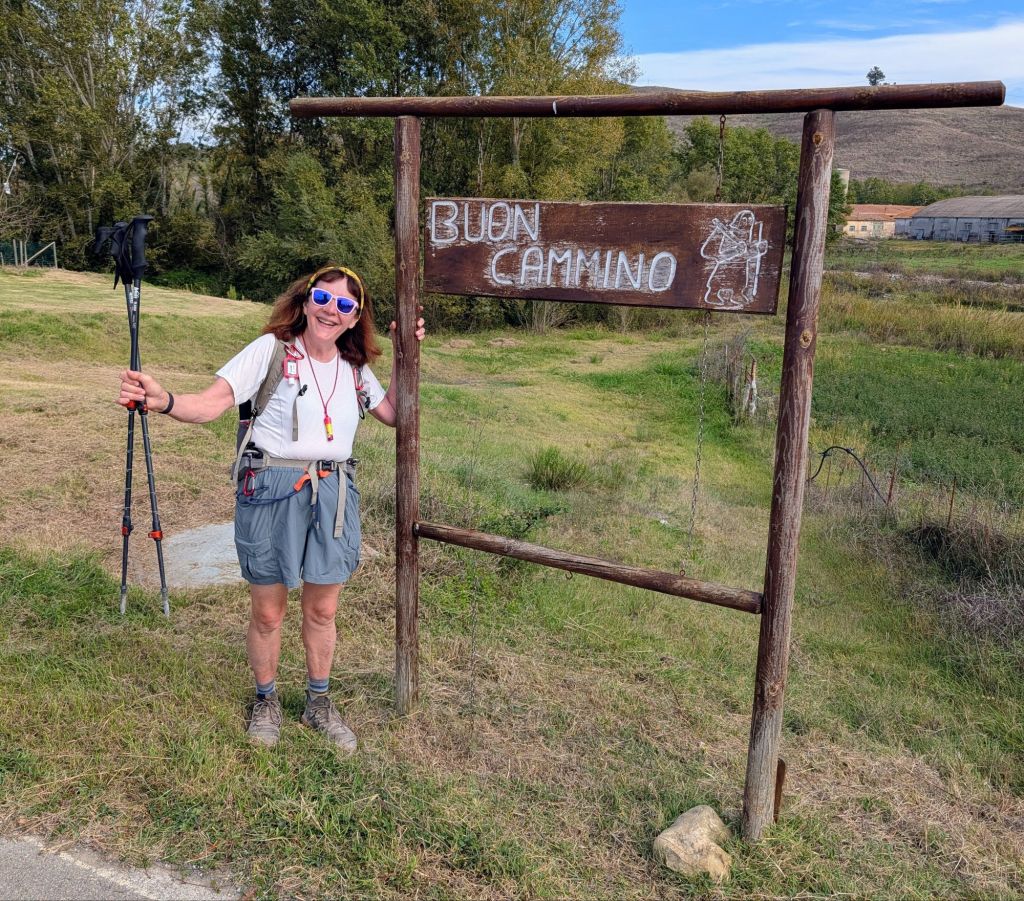
Gina in the cool morning with a trail buddyBakery Truck with daily bread delivery More funny plantersLocals picking greensWild Boar Hunting Area
10.4 Miles; 5.25 Hours on the trail. (Cumulative: 210.2 Miles; 110.4 Hours on the trail)
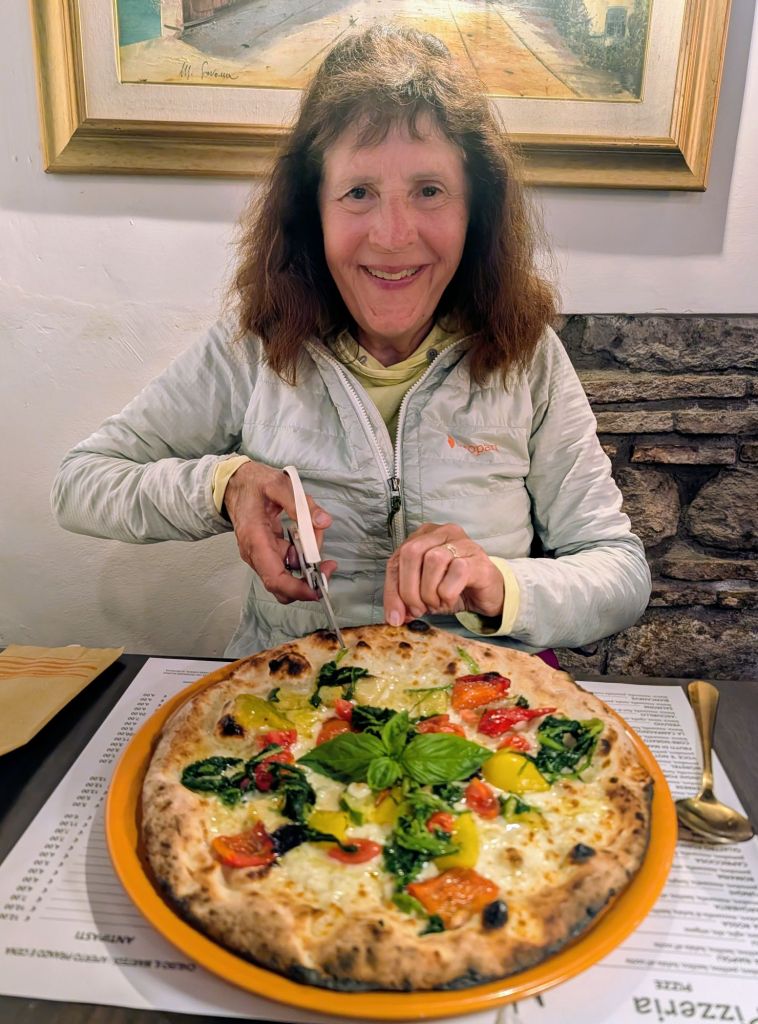
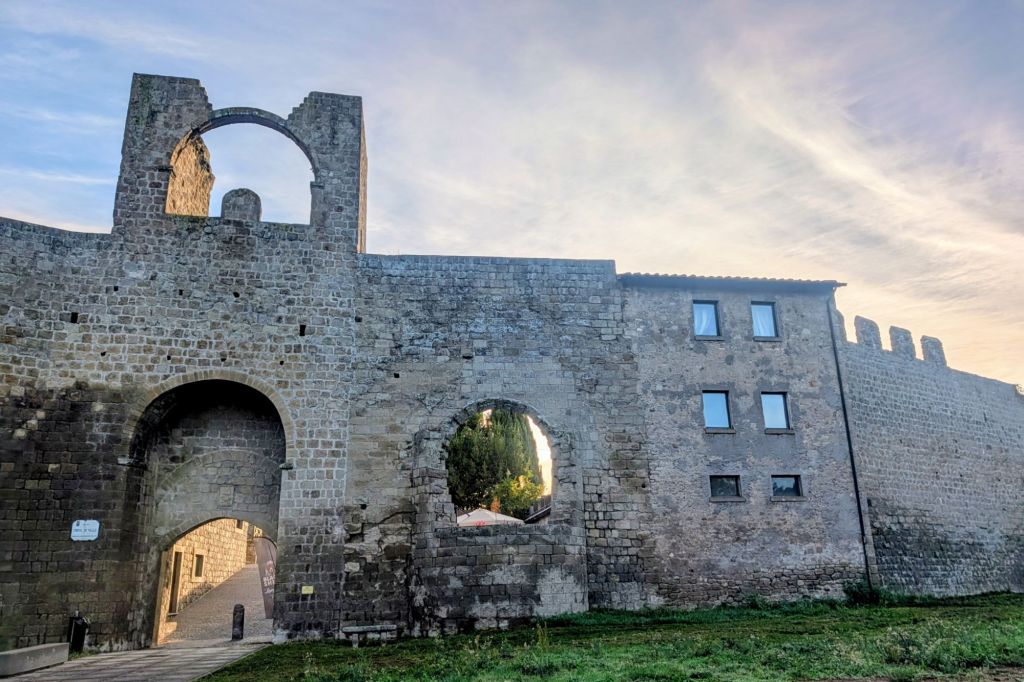
Used scissors to cut pizza slices at dinner last night We left Viterbo through the Porta di Valle which was built on the 12th Century
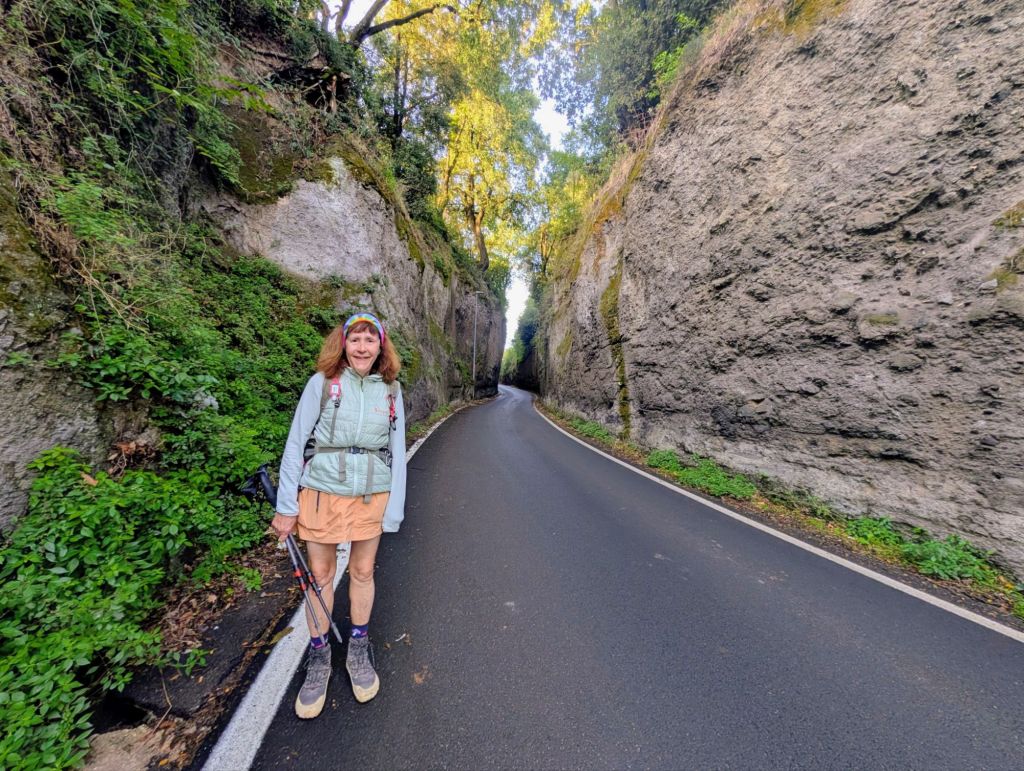
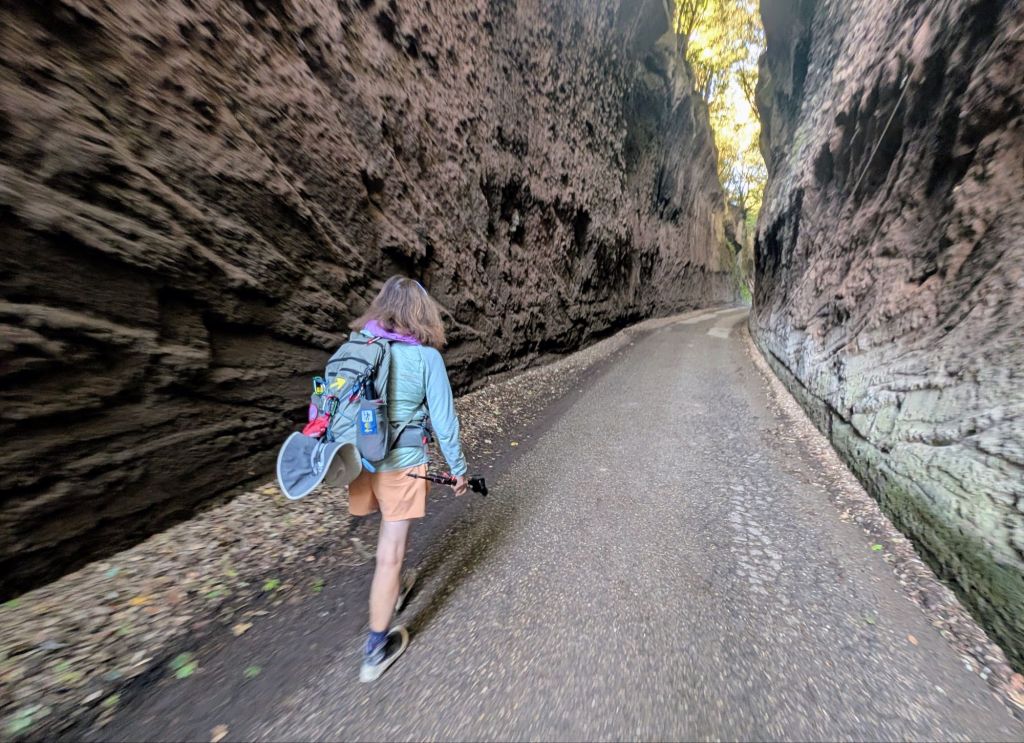
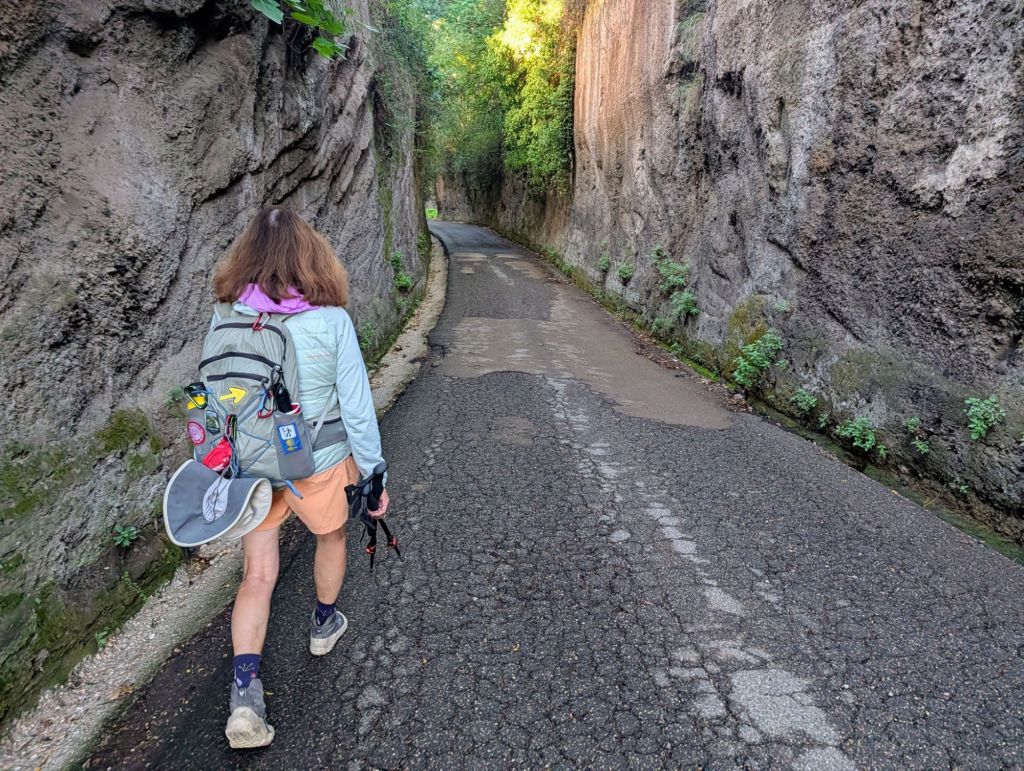
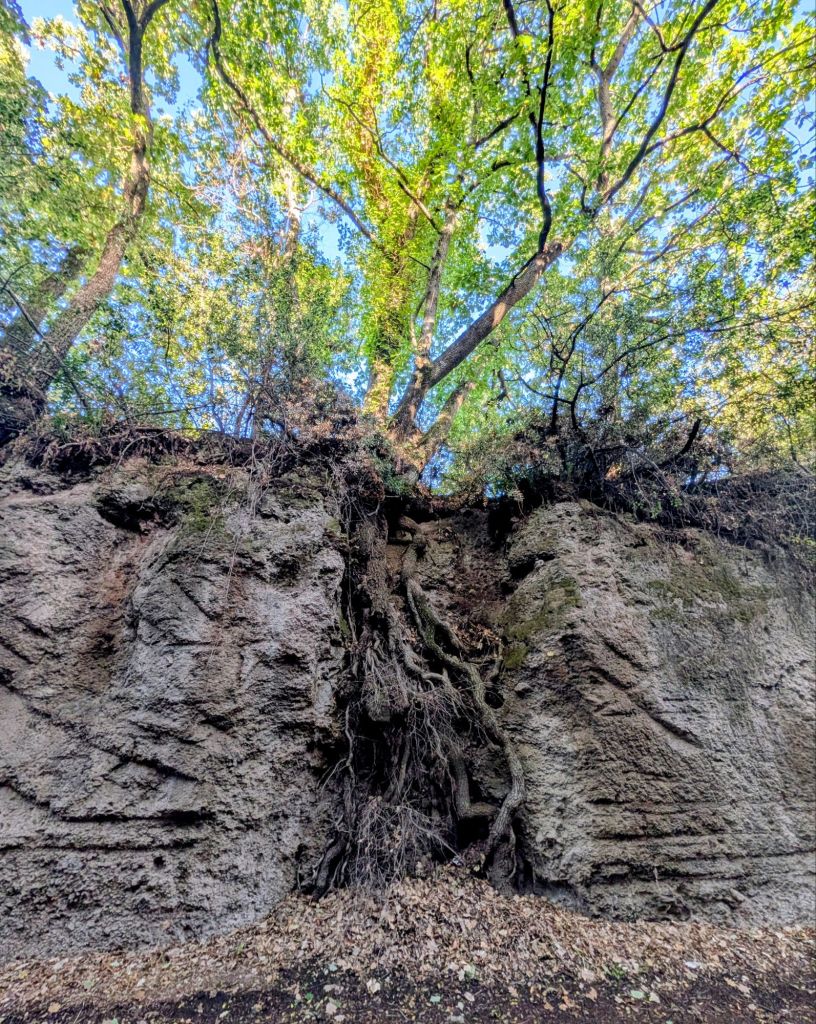
Just outside Viterbo are the Etruscan Via Cava (Excavated Roads) which are narrow roadways cut like gashes into the soft, tufa stone over 2,500 years ago.
They usually lead from Etruscan settlements to nearby necropoli (cemeteries).
Scientists suggest they were cut because the ironclad wheels used on their wagons made such deep depressions in the soft tufa stone that the Etruscans had to keep excavating the stone to allow clearance for their wagon axles & bottoms from hitting the ground.
The Via Cava in this section are up to 12 meters deep; but, in other locations in the region, they can be nearly twice as deep.
Life finds a way
Once past the Etruscan Via Cava, we walked on country lanes passing through some beautiful landscapes filled with vineyards & olive groves.
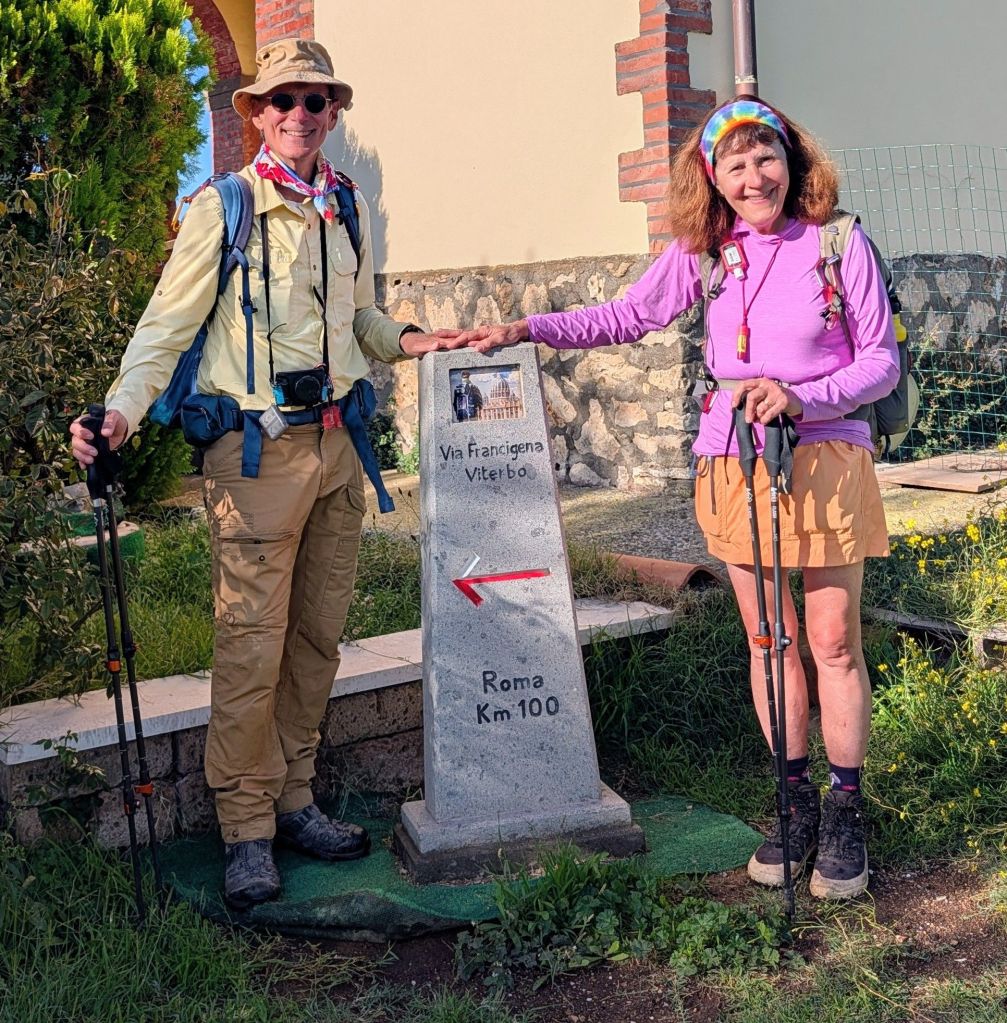
Officially 100 KM from Rome
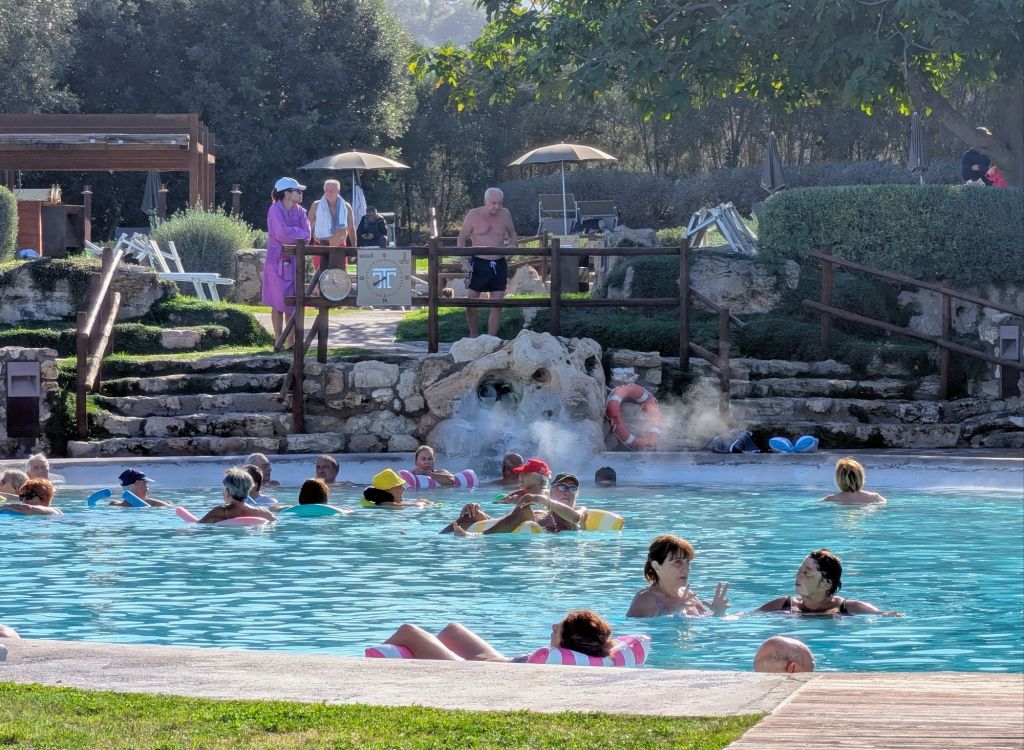
We stopped at Tuscia Terme which is a thermal park with 5 ea. pools at 58° Celsius (136.4°F) fed directly by a natural hot spring whose sulfurous waters are among the richest & most beneficial in Europe.
Tuscia Terme- notice the vents with steam
Tuscia Terme is located in a thermal area called “Masse di San Sisto”. Roman aristocrats built villas here to use & benefit from the warm mineral waters from the hot springs. The Etruscans inhabited this land before the Romans so they called it “Terme Etrusche”.
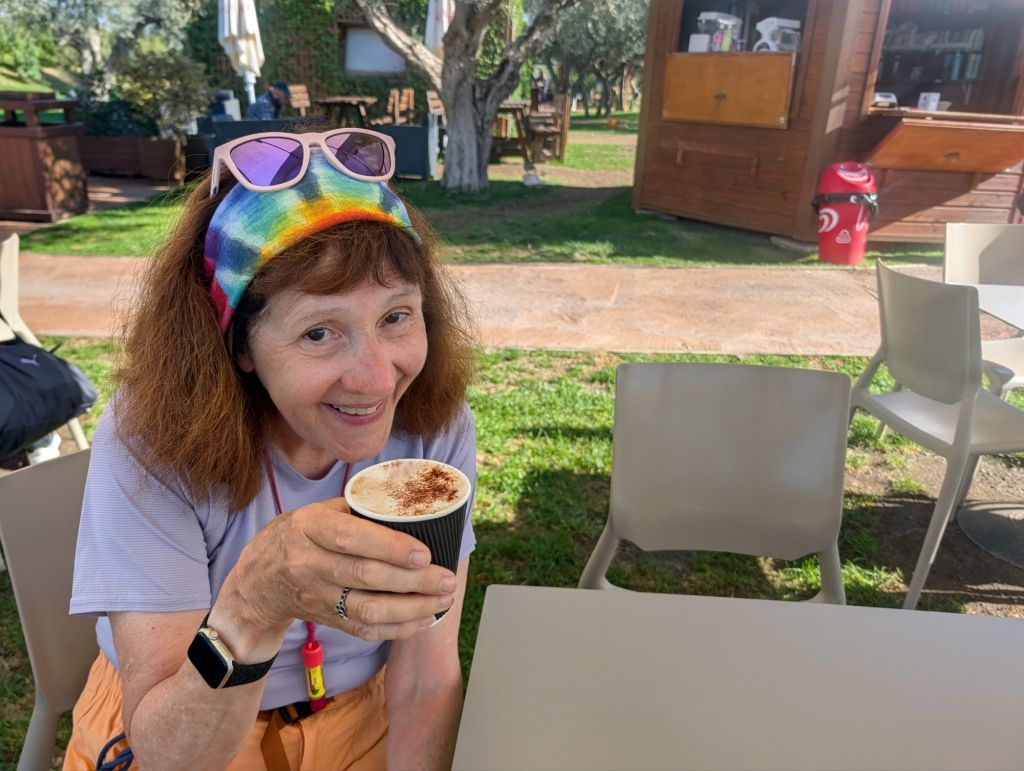
Gina’s cappuccino break at Tuscia Terme
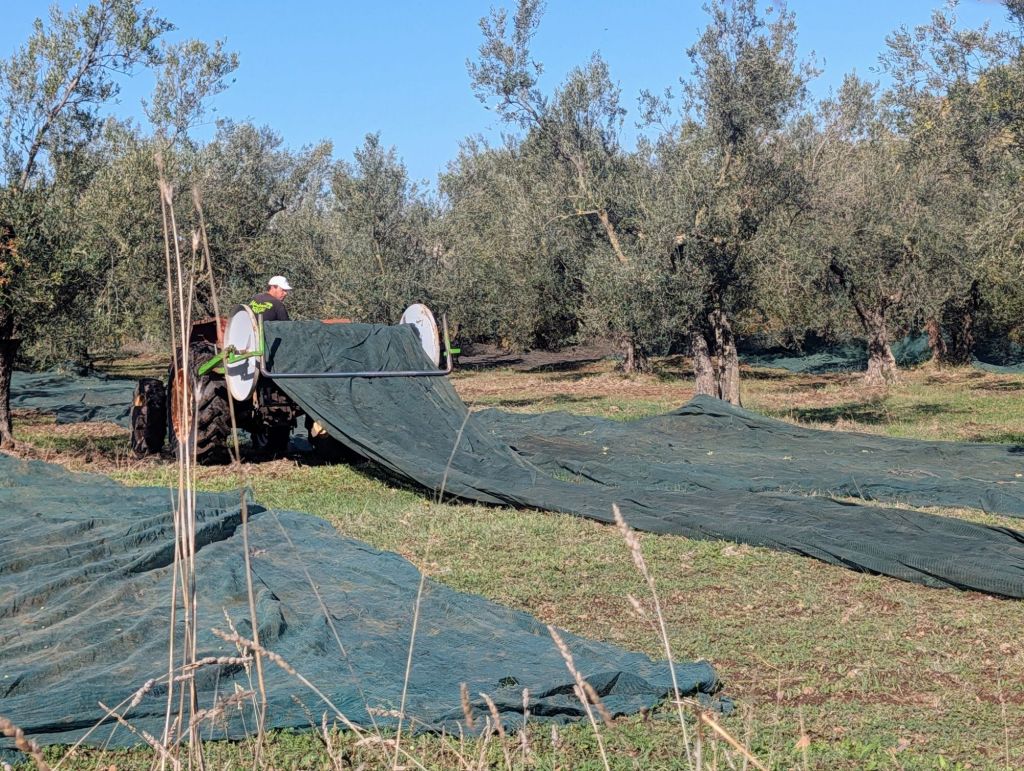
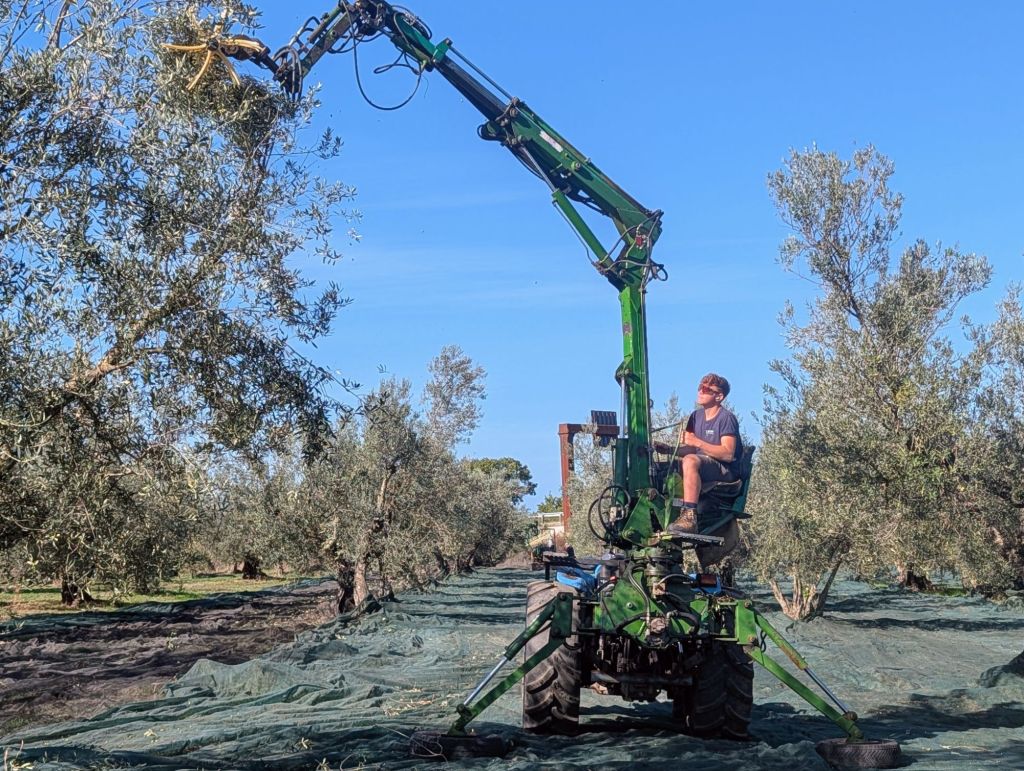
We saw the olive harvest starting with workers laying the vast netting to catch the olives which are shaken off the tree with a special threshing machine
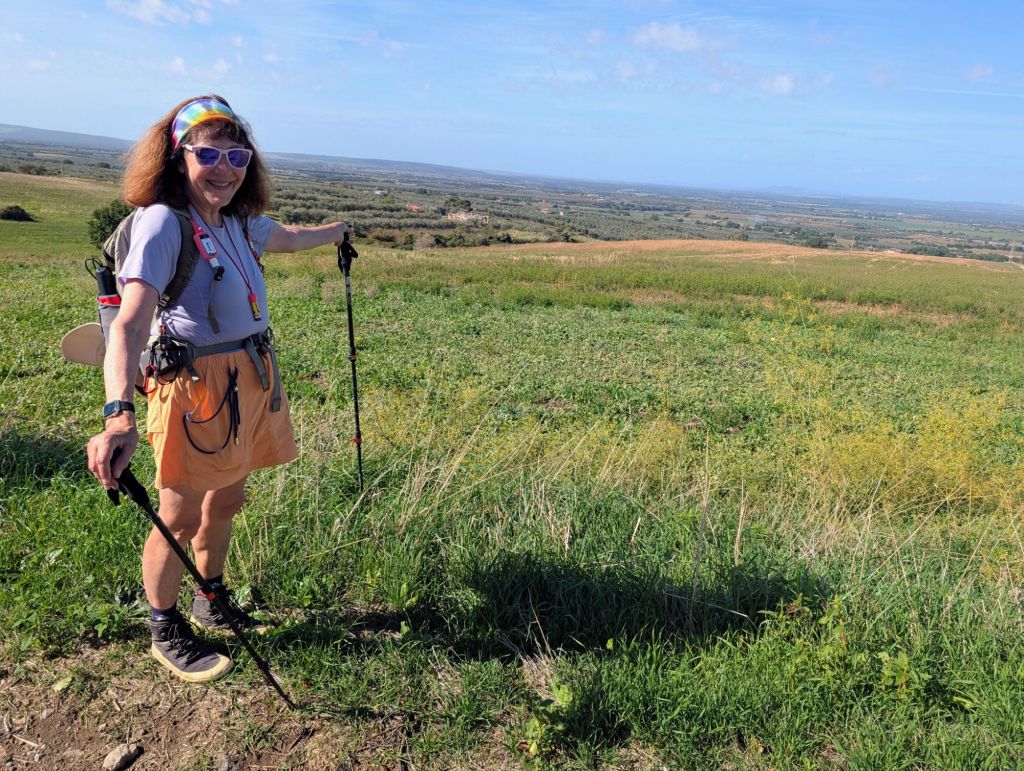
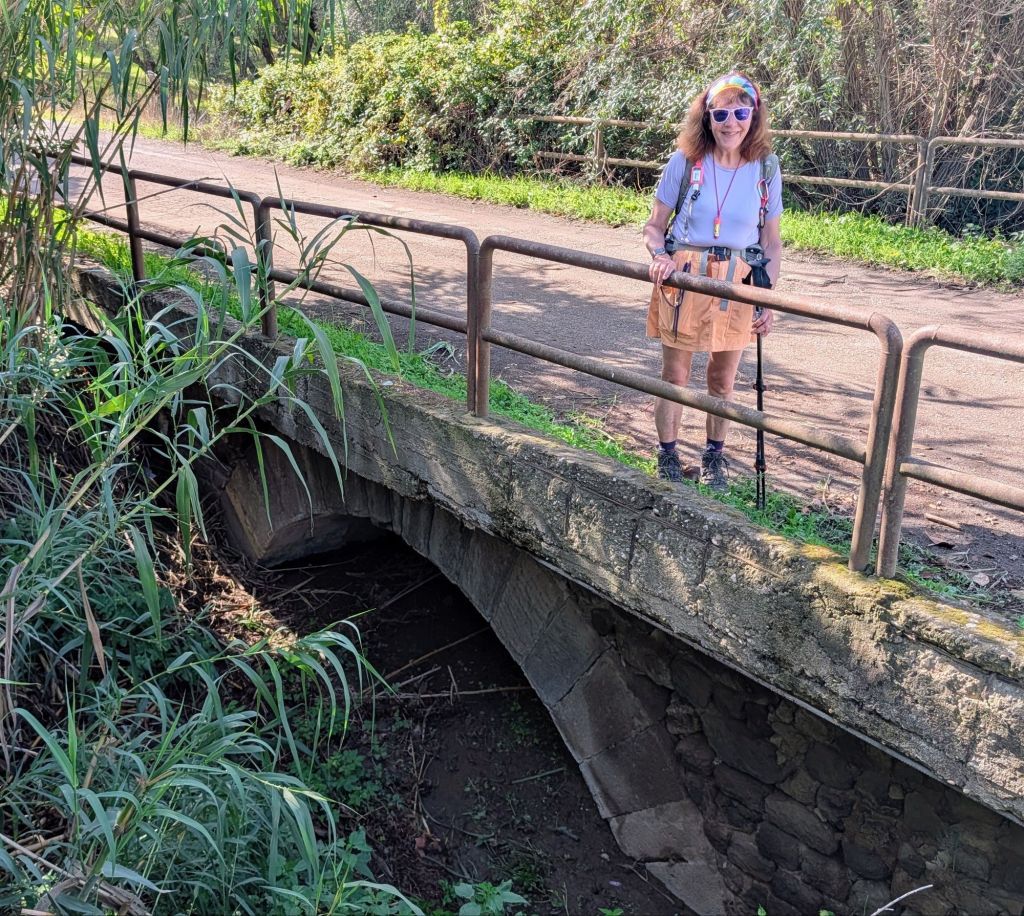
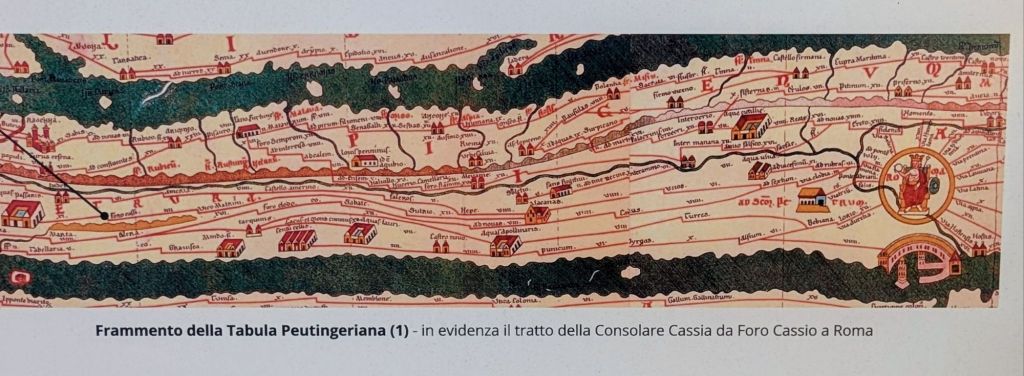
Gina on the vast seaside Maremma Plain pointing to the ocean in the distance Gina on the Pontarello bridge. The foundation for this modern infrastructure is a 2nd Century BC Roman arched bridge. Tabula Peutingeriana excerpt showing where we are indicated by the black line & dot & the remaining route to Rome.
The Tabula Peutingeriana is the oldest surviving Roman map. Created in the 4th Century AD to show the military roads in the Roman Empire, it survived as a copy made in the 12th Century & was discovered in the 15th Century. It is now preserved in the Vienna Hofbibliotek.
The approach to Vetralla is uphill & local legend says that in Biblical times when Noah was escaping the flood, he ran his Ark aground here to enjoy the area’s excellent wines before casting off.
It is said due to this legend, grapes figure prominently in Vetralla’s municipal coat of arms.
Here are some scenes from the trail today:
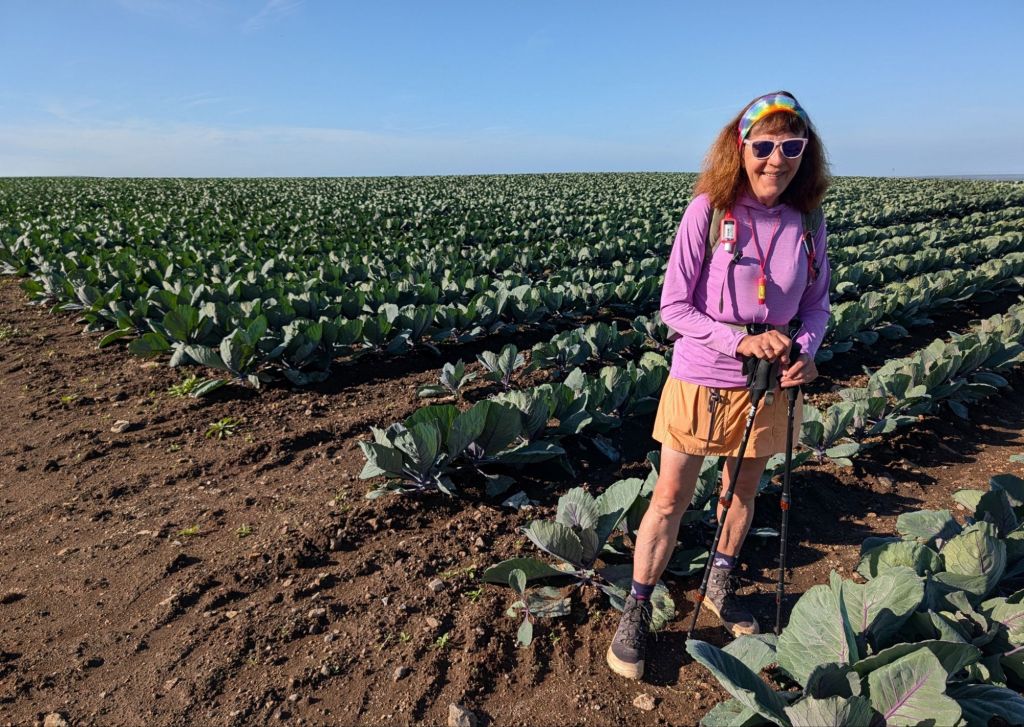
Acres upon Acres of Cabbage fields
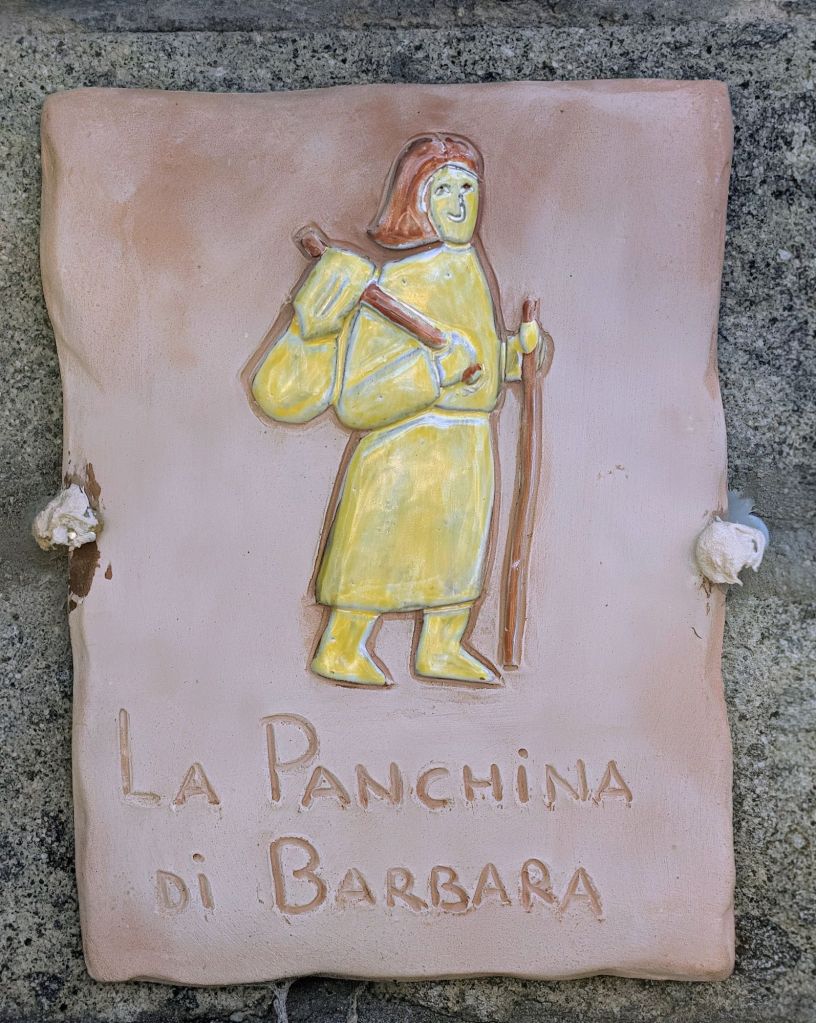
Barbara’s Bench for pilgrims where we had a short rest
Today is our last rest day on our trek to Rome which will take us 5 more days to reach.
Our planned rest day timing was fortunate because it rained hard all night & into the morning, so we didn’t have to hike in the rain like other pilgrims did.
An added benefit will be the rain should tamp down the dust on the trail.
Viterbo is a beautiful city from ancient origins with historical traditions & a very beautiful old town.
Its highlights include the Papal Palace, San Lorenzo Cathedral, & the medieval San Pellegrino quarter with its towers & city wall.
Built by the Etruscans, then later taken over by the Romans, Viterbo developed into a huge medieval trade & culture center. It also served as the seat of the Papacy for a time.
Large rectangular blocks from ancient Etruscan wall serves as base for buildings in Piazza San LorenzoPiazza San Lorenzo
Although its history stretches back thousands of years, the “new town” of Viterbo dates back to the 8th Century AD when it was called Castrum Viterbii.
The town was fortified in 773 by the Lombard king Desiderius during his unsuccessful attempt to conquer Rome.
Following this event, Viterbo began flourishing as a stronghold in the medieval era.
Archbishop Sigeric of Canterbury recorded Viterbo as his 6th stop when returning to England from Rome in 990 AD.
Due to its location on the Via Cassia, Viterbo became an important stop on the Via Francigena.
In 1095, Viterbo became a free commune which was an independent city-state based on a form of democracy.
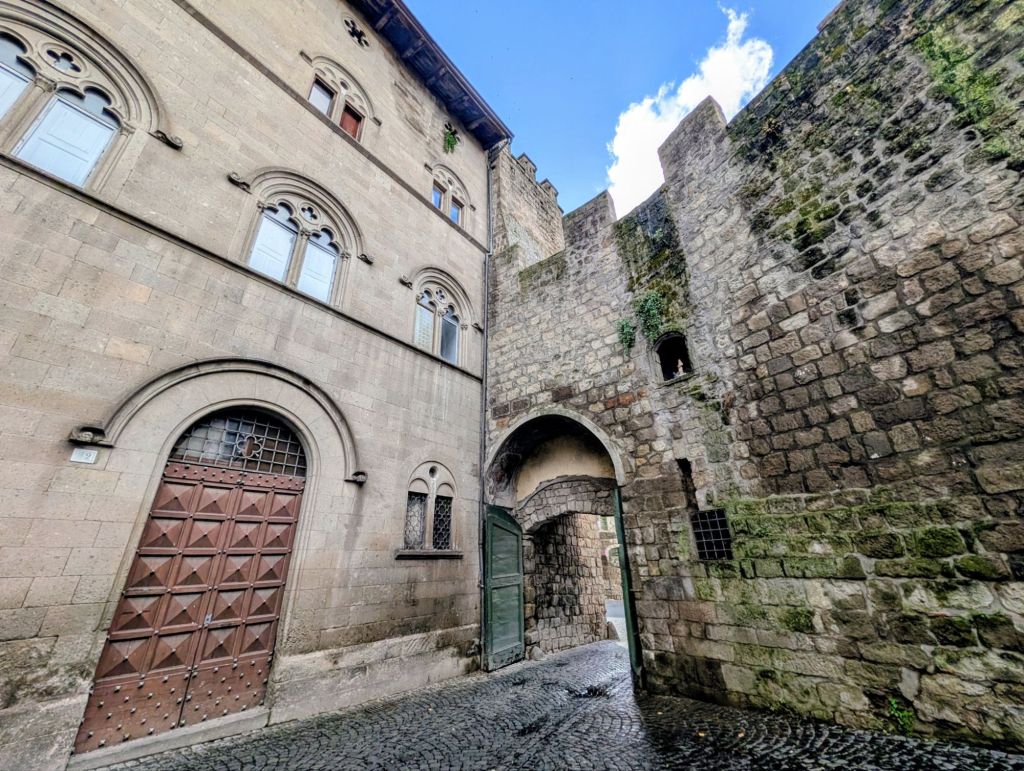
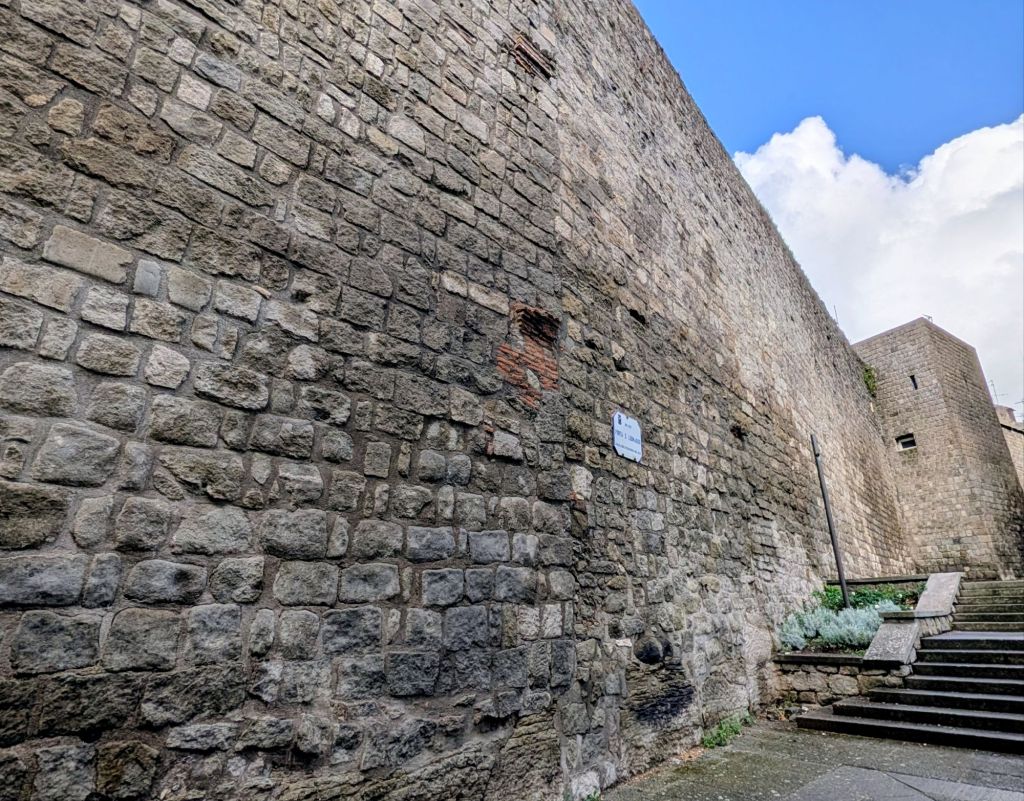
The medieval city walls built between the 11th- 13th Centuries still completely encircle Viterbo.
Porta San Pietra (Saint Peter’s Gate)
The city wall was damaged during WWII; but, was rebuilt.
Old City Wall along with City Wall reconstructed after WWII
Around 33% of the city was heavily damaged during WWII; but, most of historic Pilgrim’s Quarter with its winding medieval lanes & buildings from another age survived
Viterbo had turbulent times with sieges occurring as the Papal States attempted to assert their dominance.
Due to the Popes’ inability to exert full control over Rome, Viterbo not only was absorbed into the Papal States; but also, the Pope’s actually favored the city.
Viterbo was used as the Papal residence for two decades during the 13th Century.
During the 13th Century upheaval & subsequent flight from Rome, the Papal Palace in Viterbo served as the home to the Popes from 1257 to 1281 before they moved to Avignon, France.
Once the Papacy moved to Avignon, Viterbo fell out of favor relegating it to become a minor city.
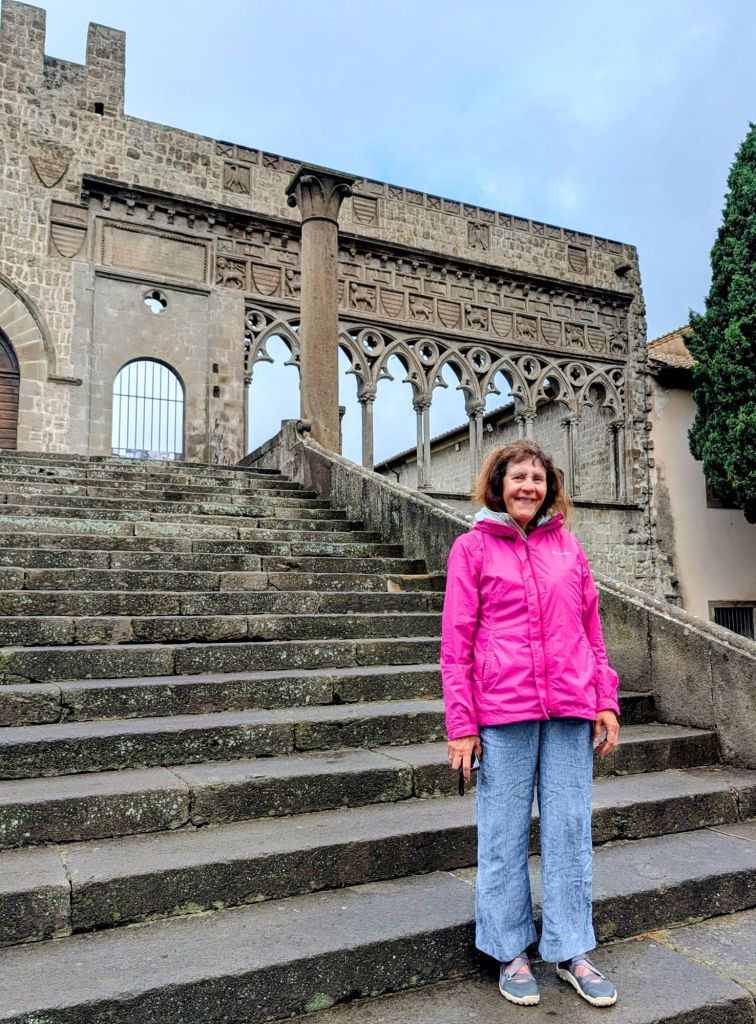
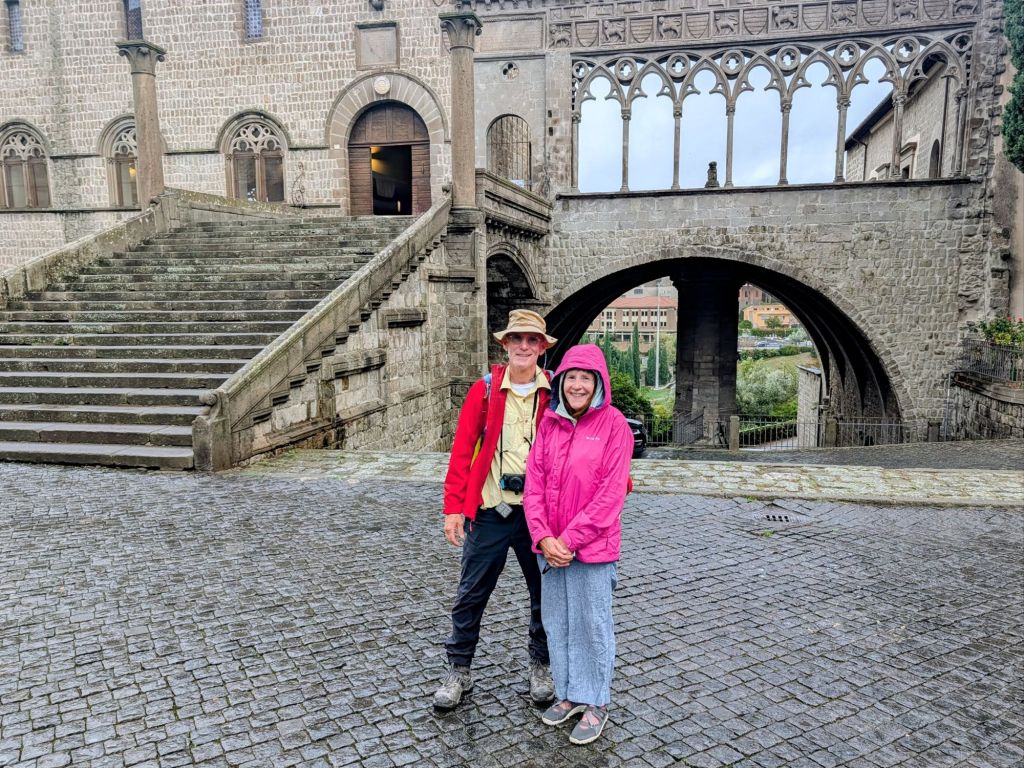
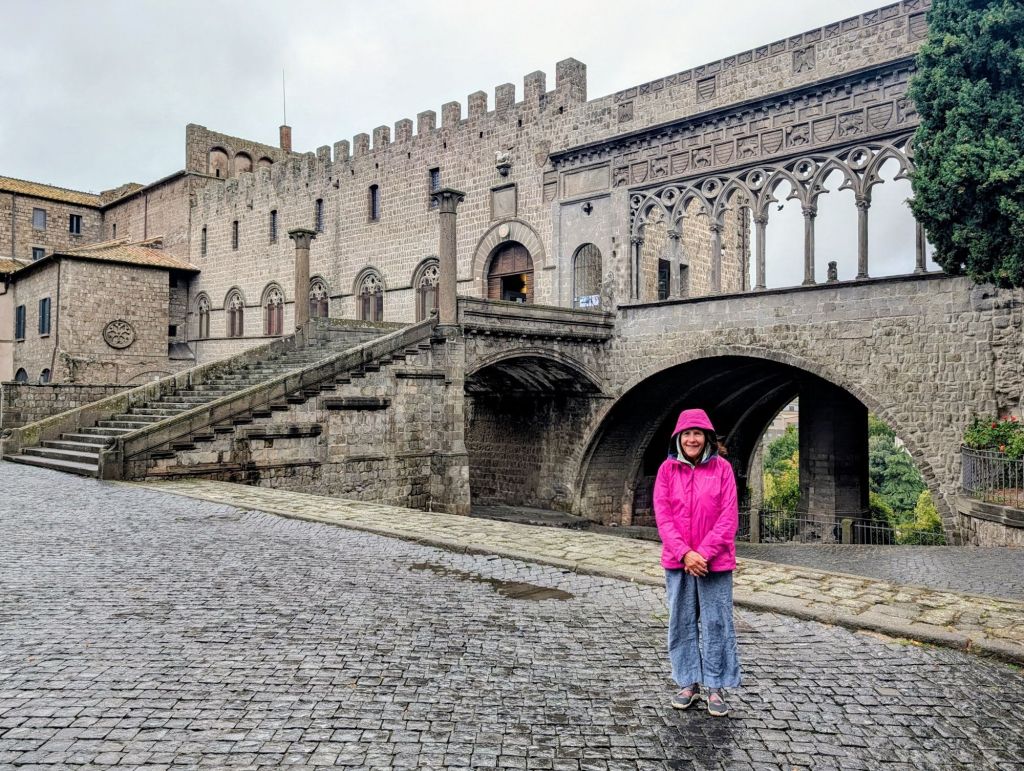
The Palazzo dei Papi (The Palace of the Popes) is a beautiful structure supported by a series of columns & arches.
Loggia della Benedizione balcony Papal Palace & the Loggia della Benedizione in Piazza San Lorenzo
This Palazzo was the original location where the Catholic Church’s “Conclave” tradition started.
The word “conclave” is taken from the Latin “cum claves” meaning “with keys”.
Following Pope Clement IV’s death in 1268, the cardinals were going on three years to pick a new pope & that their presence was bankrupting local businesses.
This drove the infuriated locals to lock the cardinals inside the palace.
Then, they removed the palace’s roof exposing the cardinals to the elements forcing them to make a decision.
They only put the slates back on the roof & unlocked the door once the cardinals had reached a decision on who would be the new Pope.
In 1271, the cardinals finally made a choice electing Pope Gregory.
The Loggia della Benedizione is the balcony from which newly elected Popes would appear to the public after being selected during the Conclave.
Papal Palace & Loggia della Benedizione
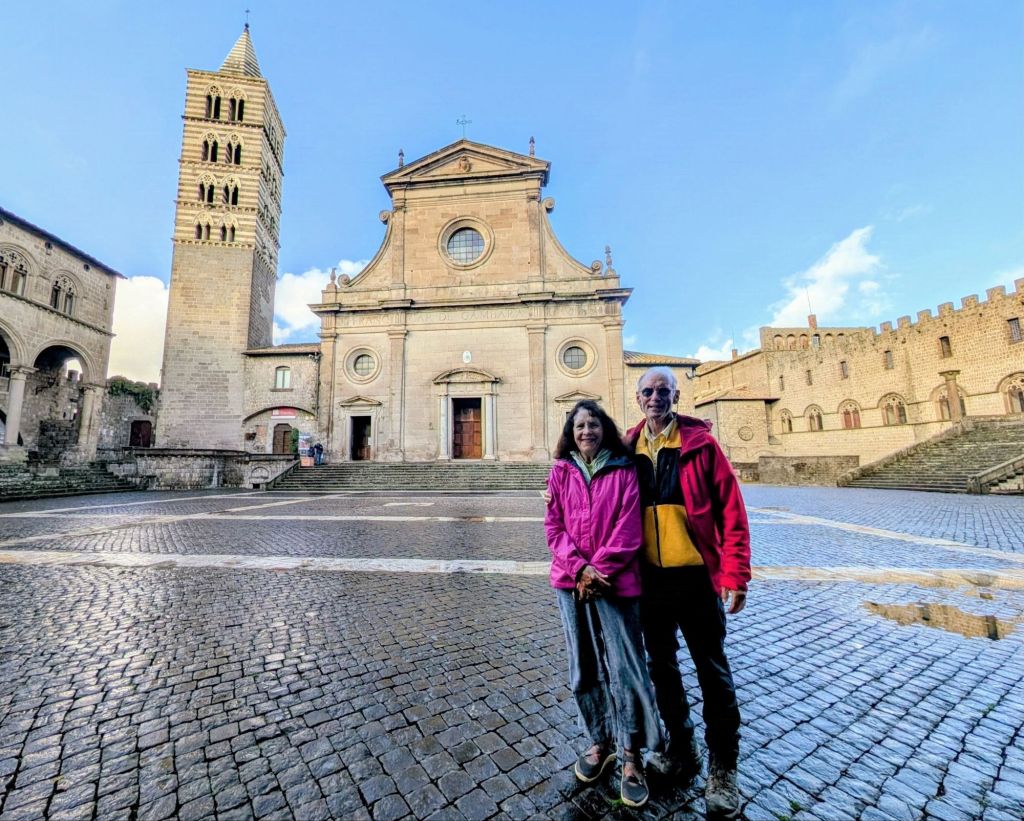
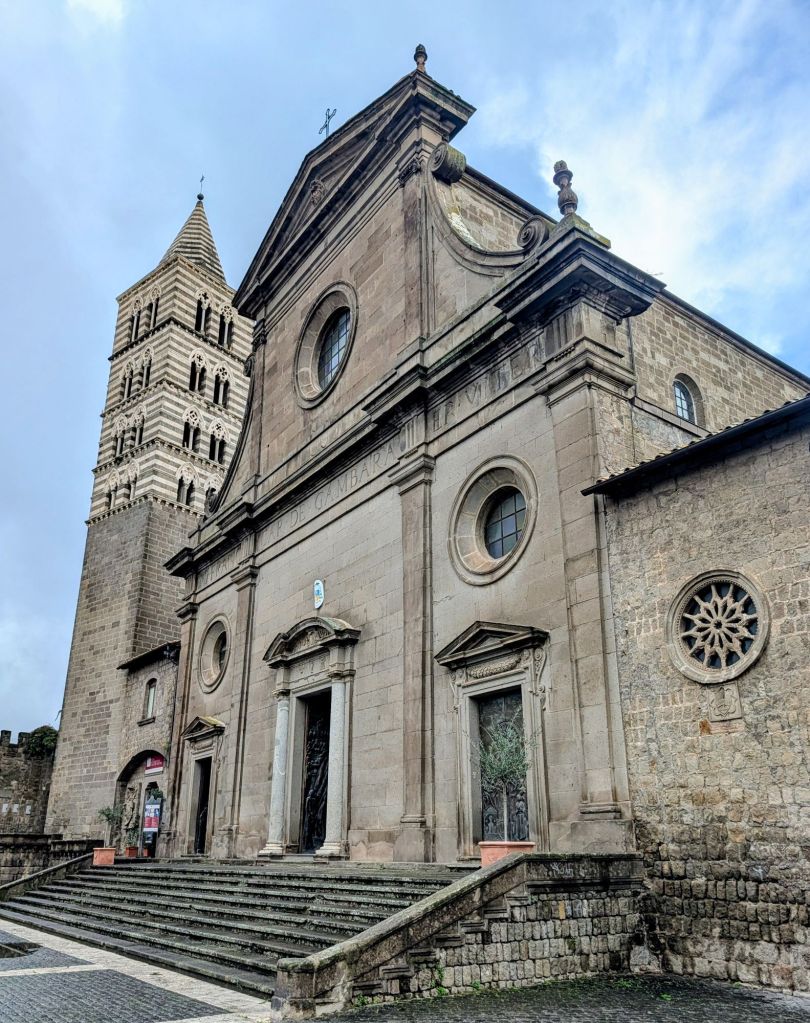
In Piazza di San Lorenzo is the Duomo di Viterbo (Cathedral of Viterbo) which is an imposing Romanesque church dating back to the 12th Century.
Duomo di Viterbo (Cathedral of Viterbo) in Piazza San Lorenzo
Legend has it that the cathedral was built upon the Temple of Hercules which was an ancient Etruscan religious site.
The cathedral was once elaborately decorated, but a 16th Century reconstruction removed all the ornate features. However, the structure is still impressive.
Duomo di Viterbo (Cathedral of Viterbo)
The Duomo is where two 13th Century Popes are interred. – Pope John XXI (died 1277) He is the only Portuguese pope. – Pope Alexander IV (died 1261) He was originally buried in this cathedral, but his tomb was demolished during the 16th Century renovations & his remains were lost.
Two other popes are also interred in Viterbo – Pope Clement IV (died 1268) – Pope Adrian V (died 1276) Both their tombs are in Viterbo’s Basilica of San Francesco alla Rocca.
Here are some Viterbo images:
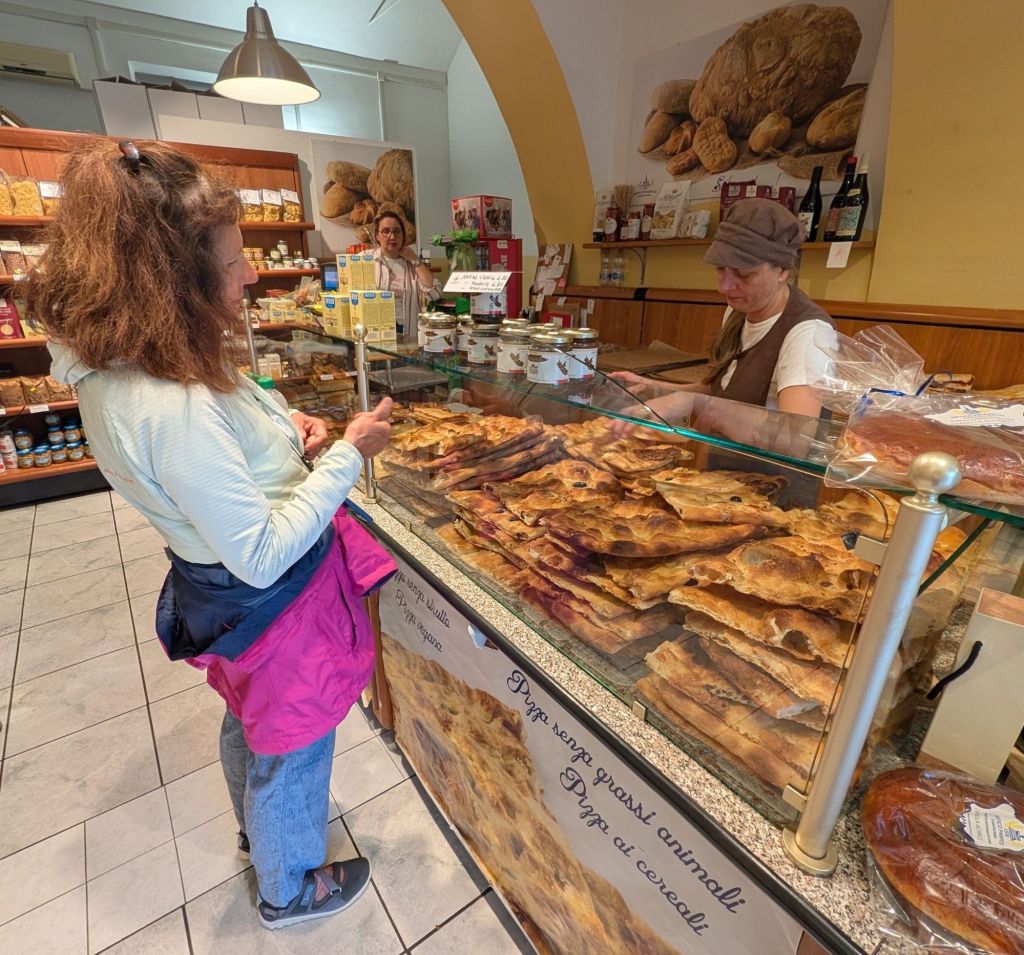
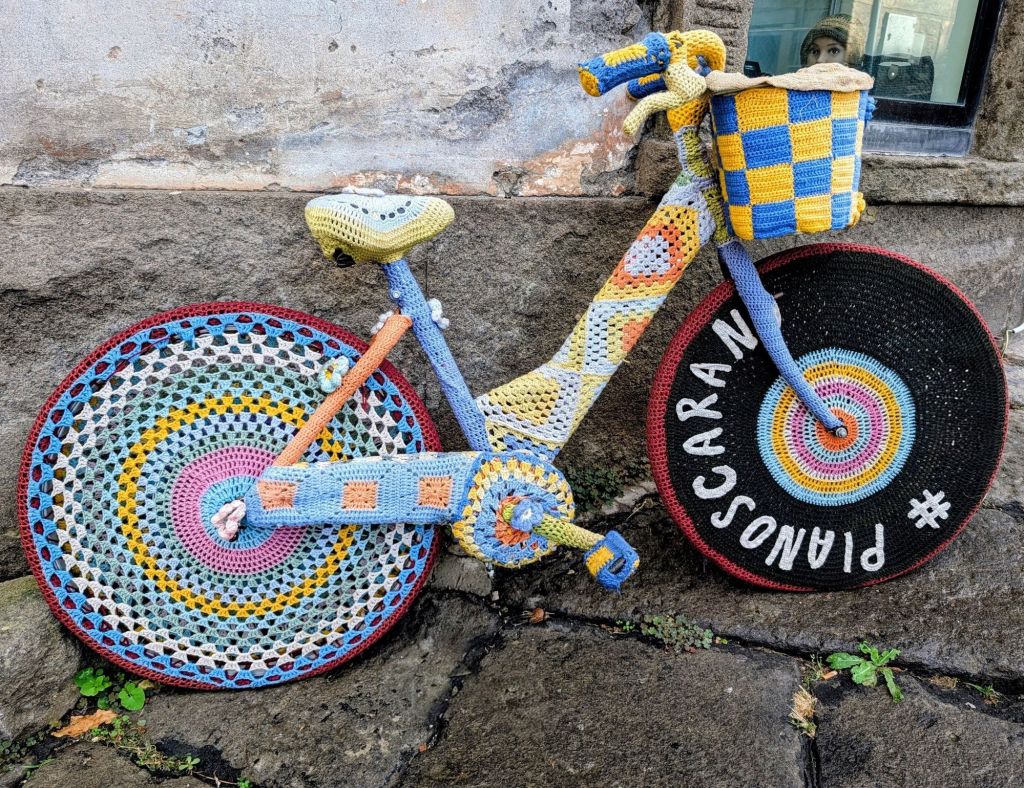
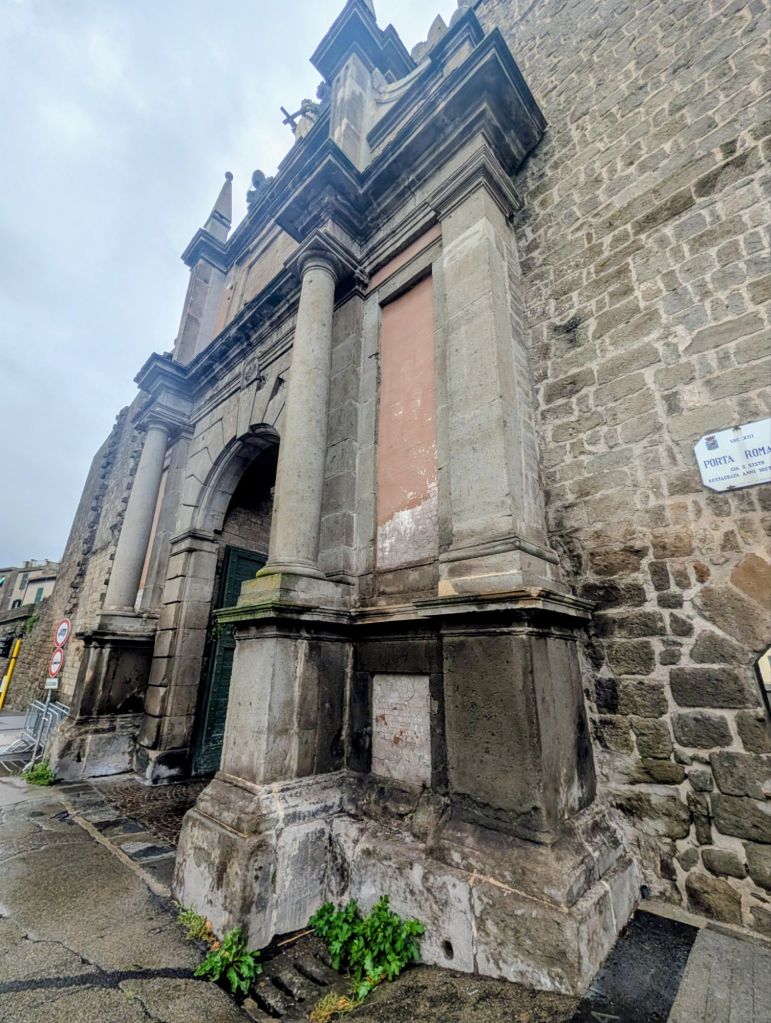
Gina using her time tested, tried & true method communicating with hand gestures to buy foodBicycle in front of a yarn shop in the Pianoscarano districtPorta Romana Built during the 13th Century, it was Viterbo’s southern gateway allowing access from the road coming from Rome.
12.5 Miles; 6 Hours on the trail (Cumulative: 199.8 Miles; 105.2 Hours on the trail)
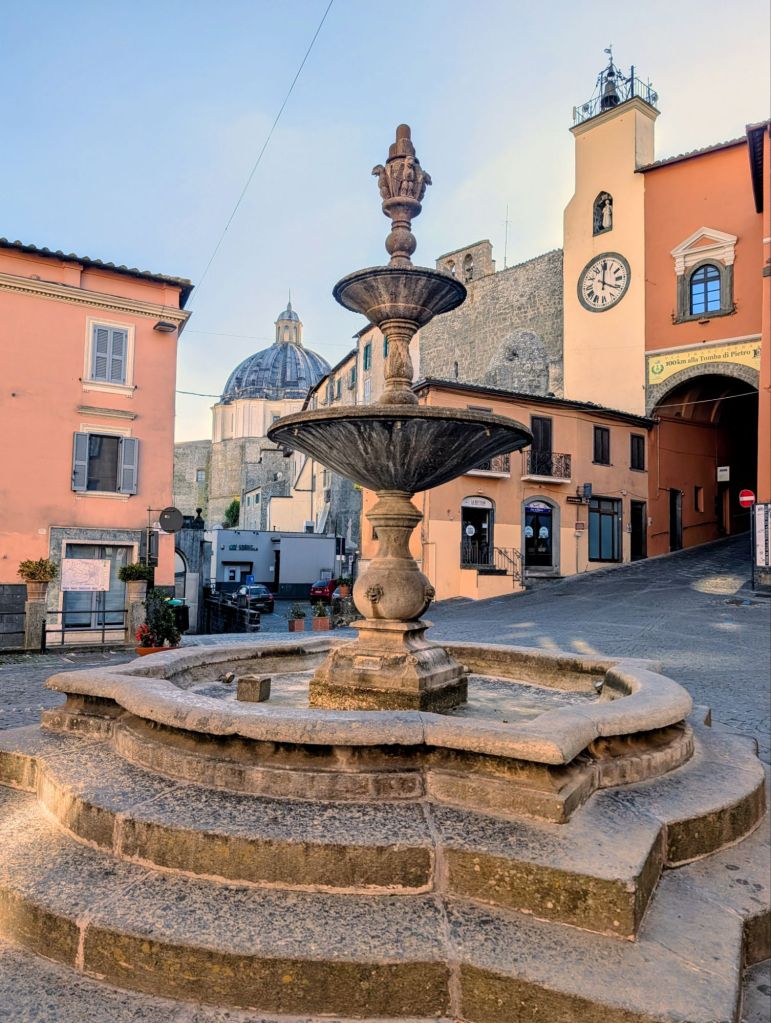
Montefiascone is first mentioned in documents in 853 AD although the Etruscans first settled the region at least a millennium earlier & then the Romans occupied the area.
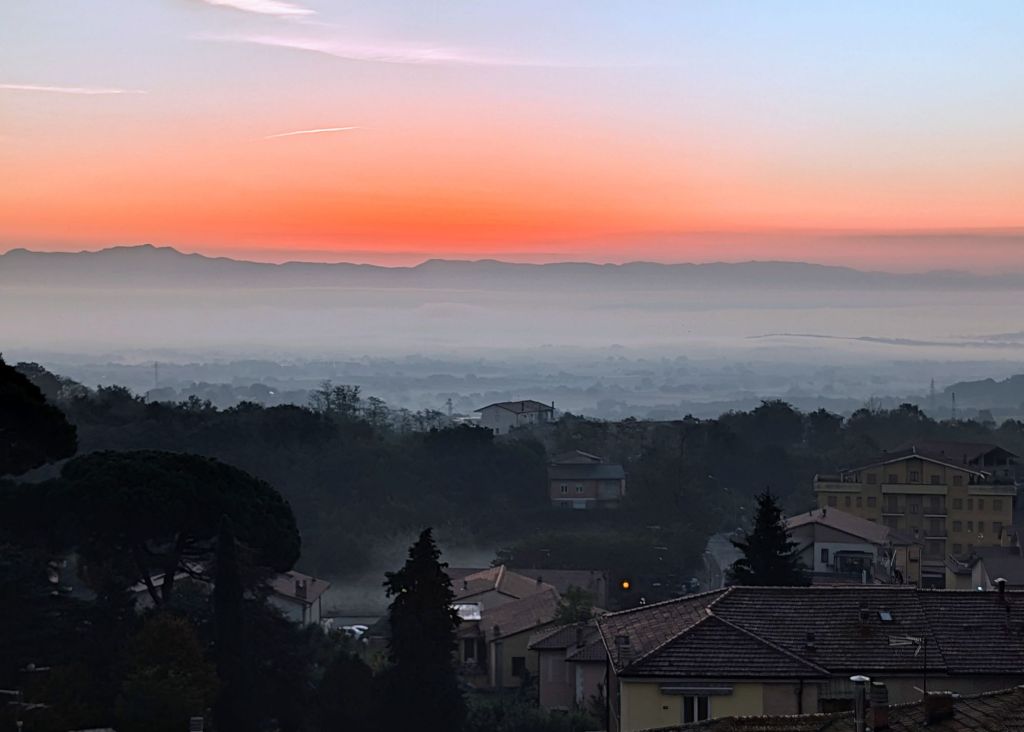
Montefiascone Dawn
Its commanding position on the highest point near Lake Bolsena & being located on the Via Francigena close to Rome made Montefiascone an important stronghold for the papacy who built the Rocca dei Papi (The Pope’s Castle).
Montefiascone reached its zenith in the 13th & 14th Centuries as the residence for Popes & papal legates. Its decline was accelerated by a plague in 1657 & a massive earthquake in 1697.
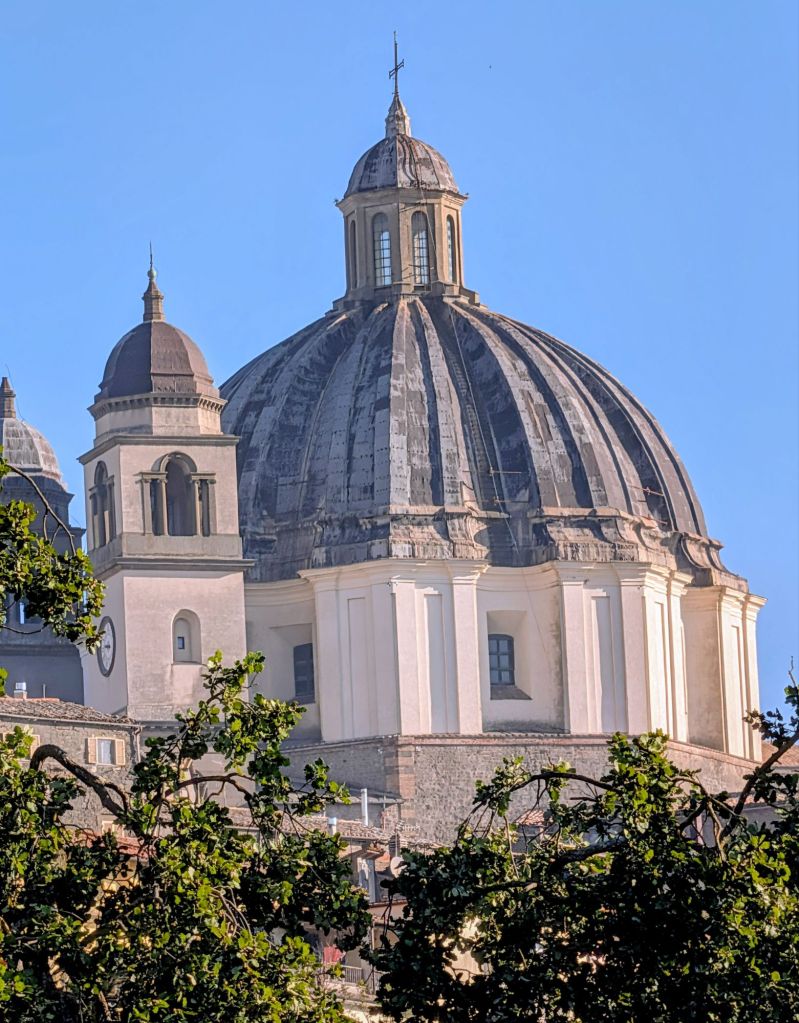
The Basilica Cathedral of Santa Margarita
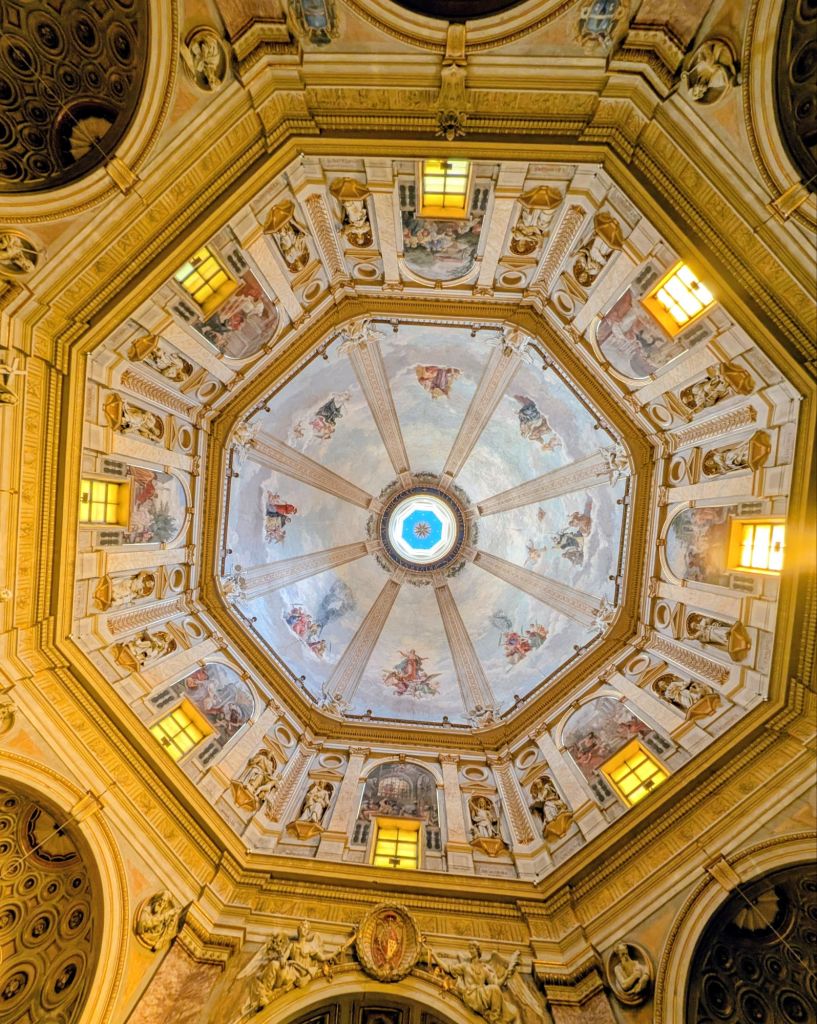
The Basilica Cathedral of Santa Margarita has one of the largest domes in Italy. It can be seen for many miles around in all directions.
This cathedral houses the remains from the 4th Century martyr Margarita of Antioch who is among the saints Joan of Arc mentioned in her visions.
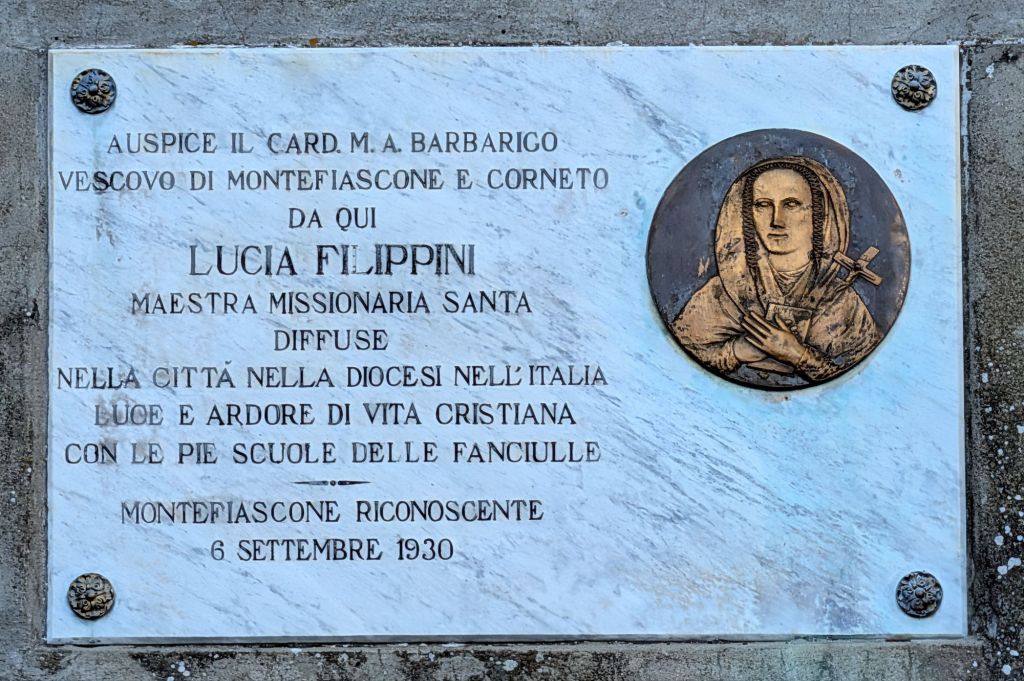
It also holds the relics from Santa Lucia Filippini who was an educator who established 52 ea. schools for girls in the 17th & 18th Centuries.
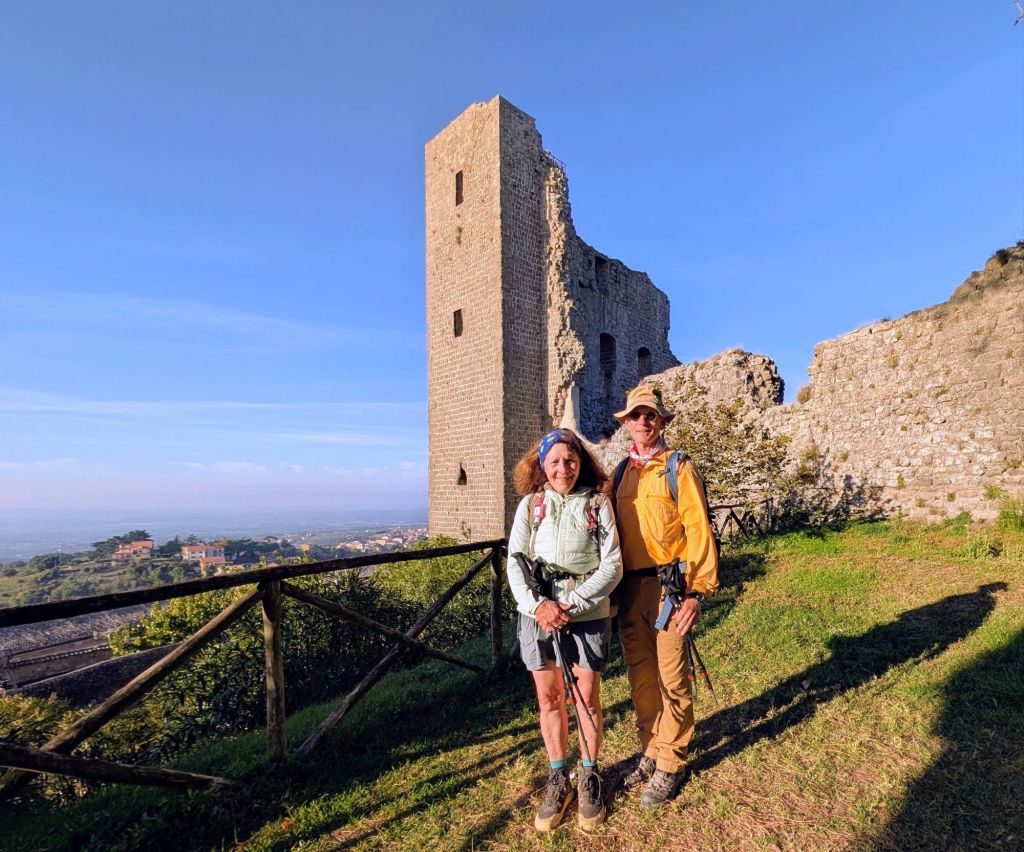
The Torre del Pellegrino (Pilgrim’s Tower) is located on the highest point in Montefiascone inside the Rocca dei Papi.
Torre del PelegrinoAt the Rocca dei PapiThe Monument to the Pilgrim
Sights in Montefiascone
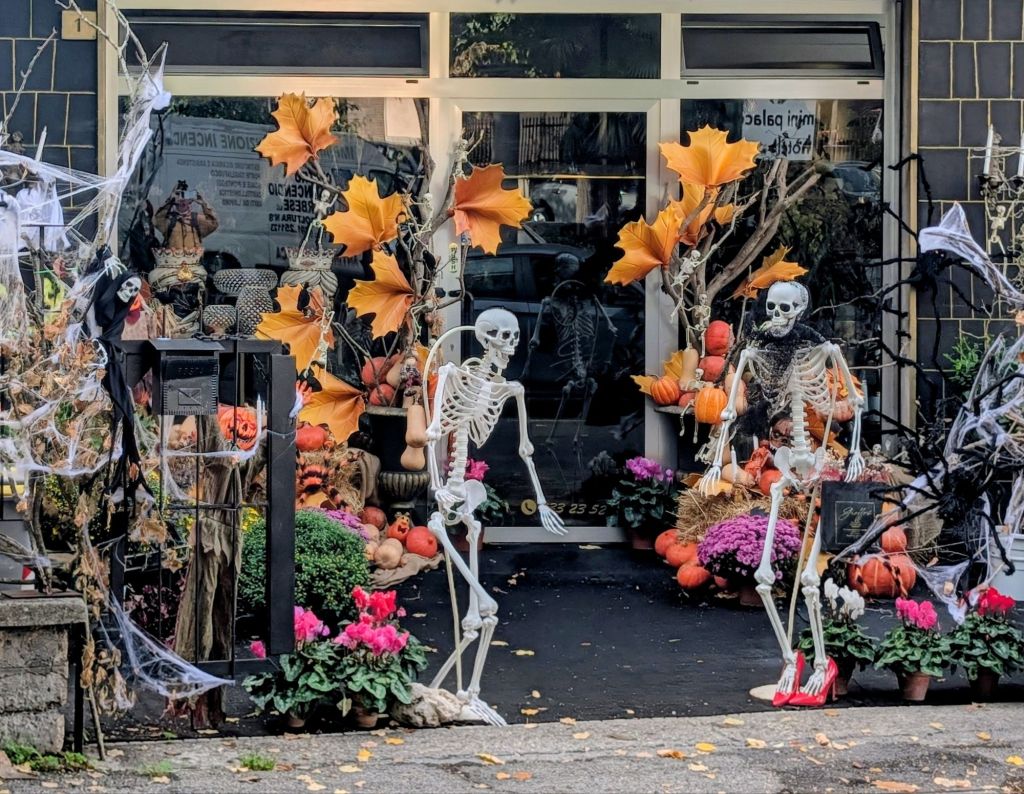
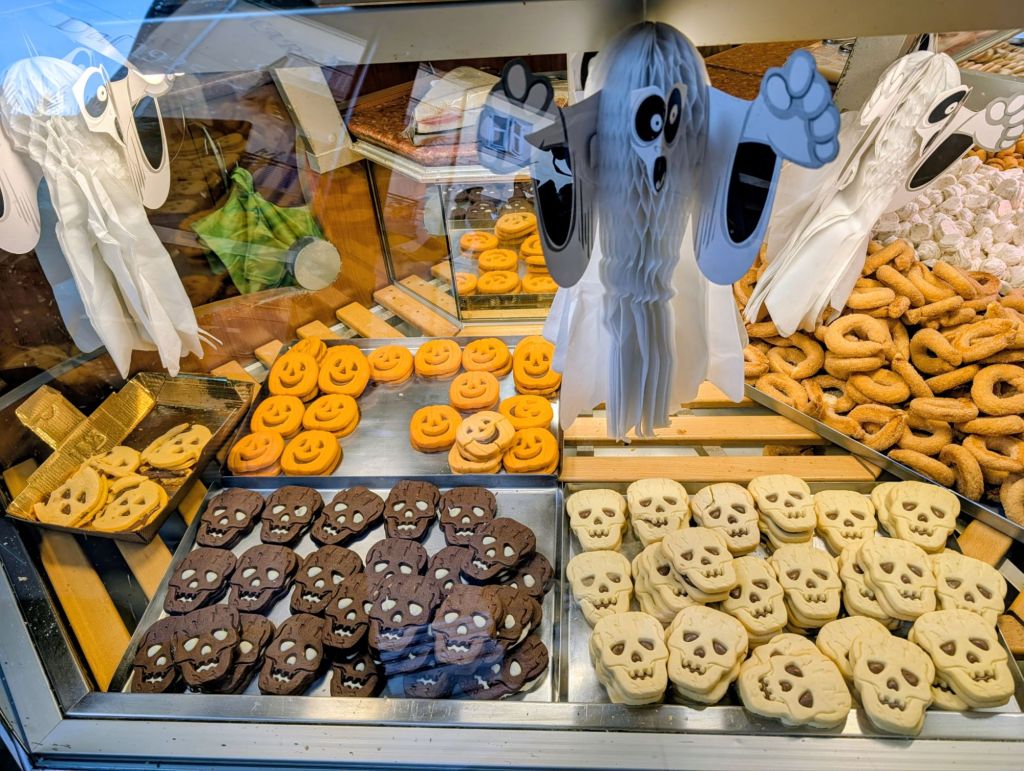
Even in Italy, they are getting ready for Halloween
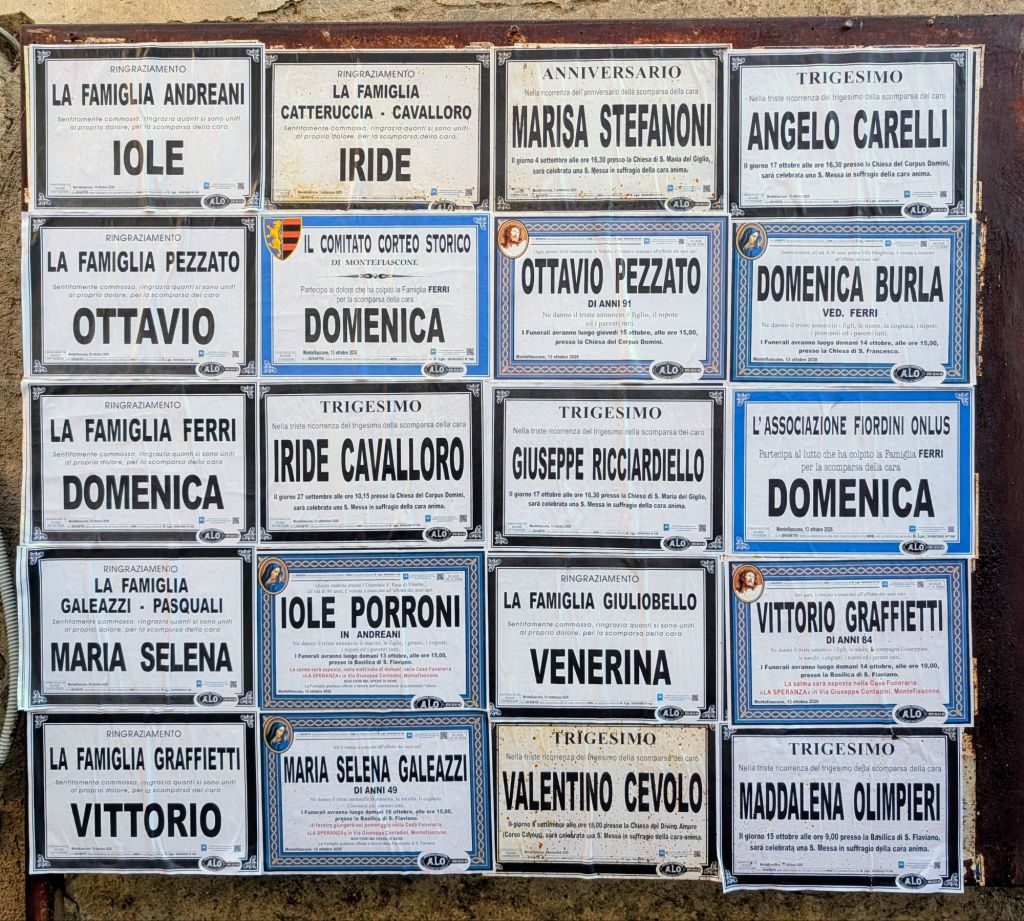
In small towns & villages in Italy, death notice boards, known as funeral posters (Manifesti Funebri), are still used to announce a death publicly & share details about the funeral.
The notices are also used to give info on annual memorials or commemorations for loved ones who have passed.
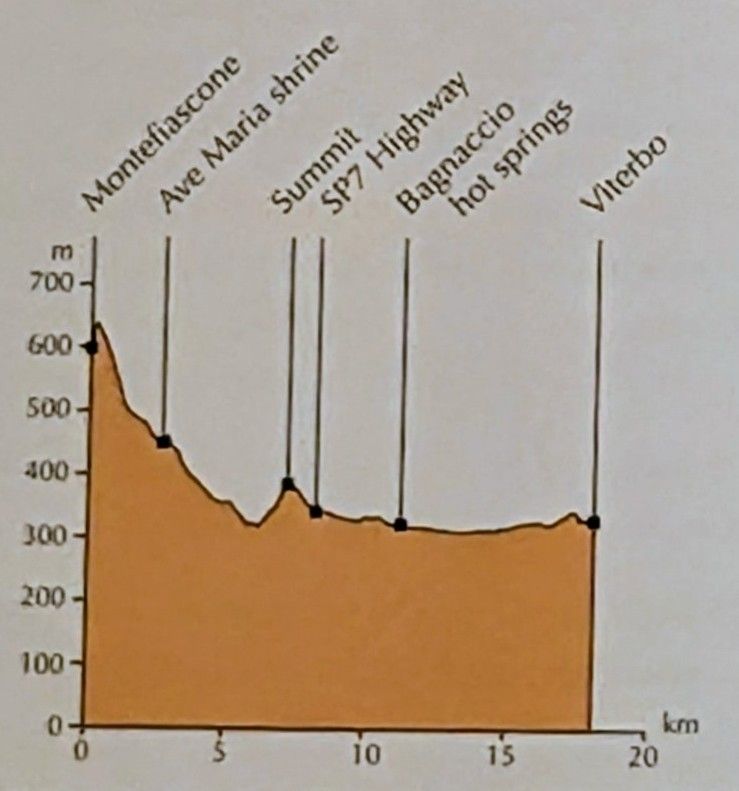
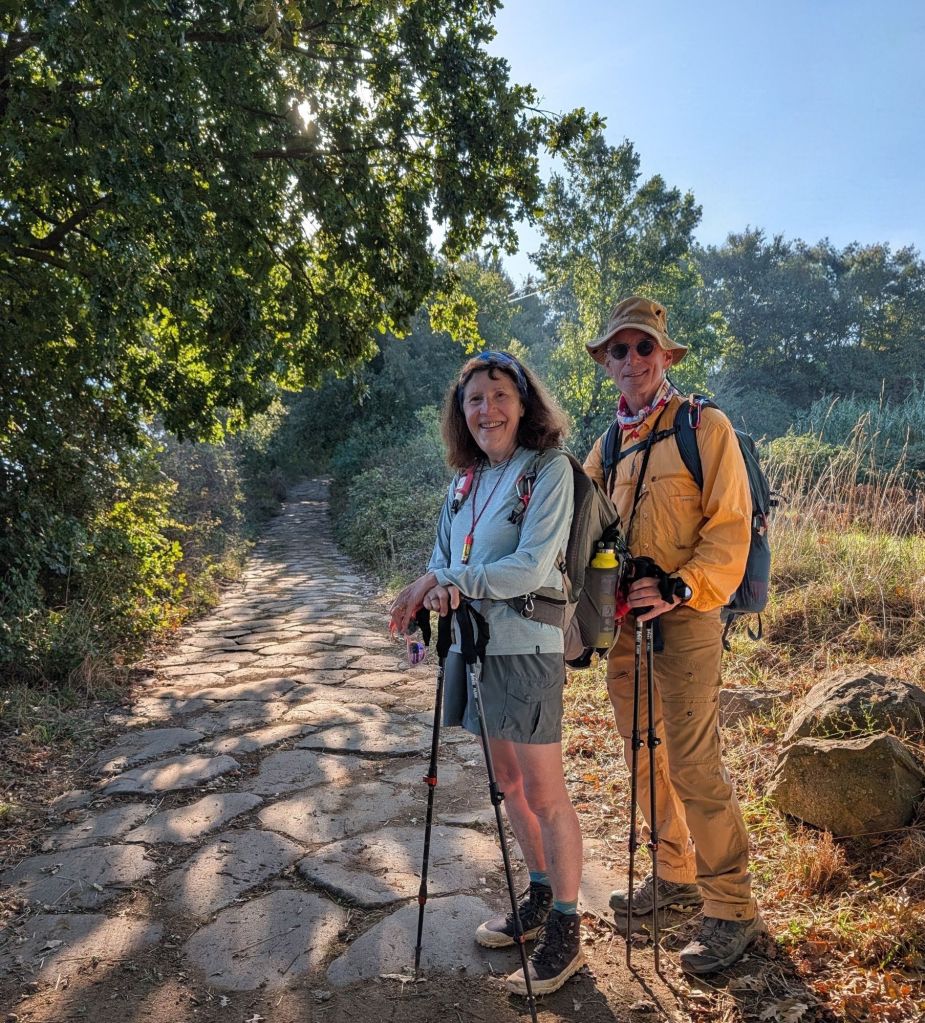
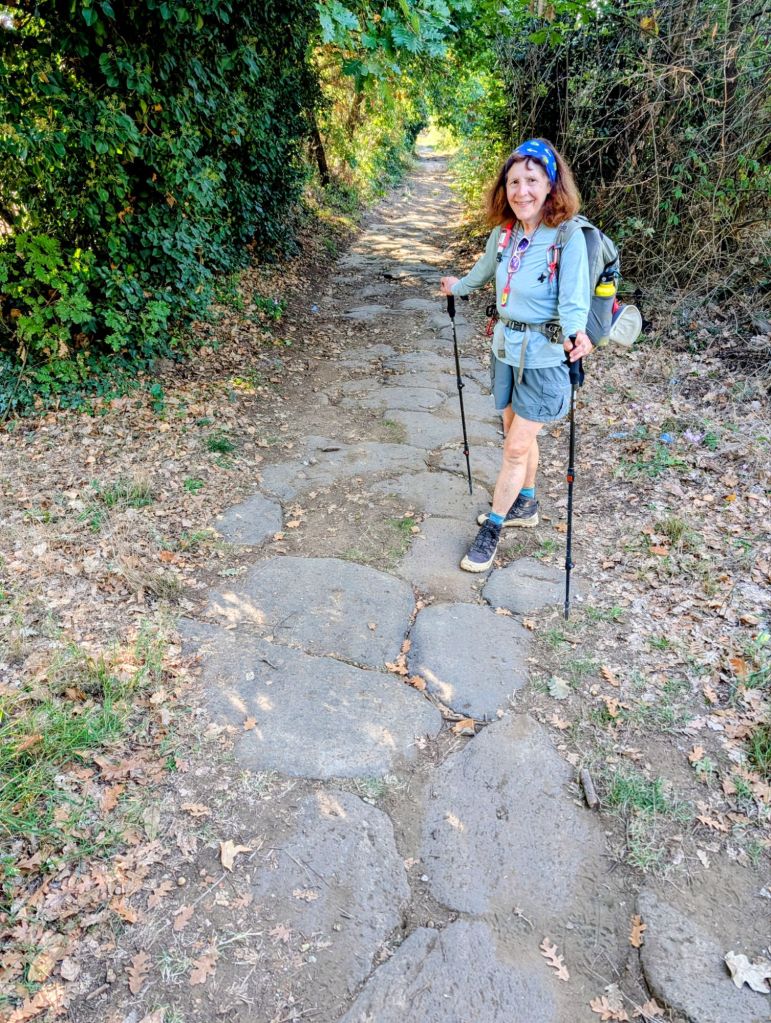
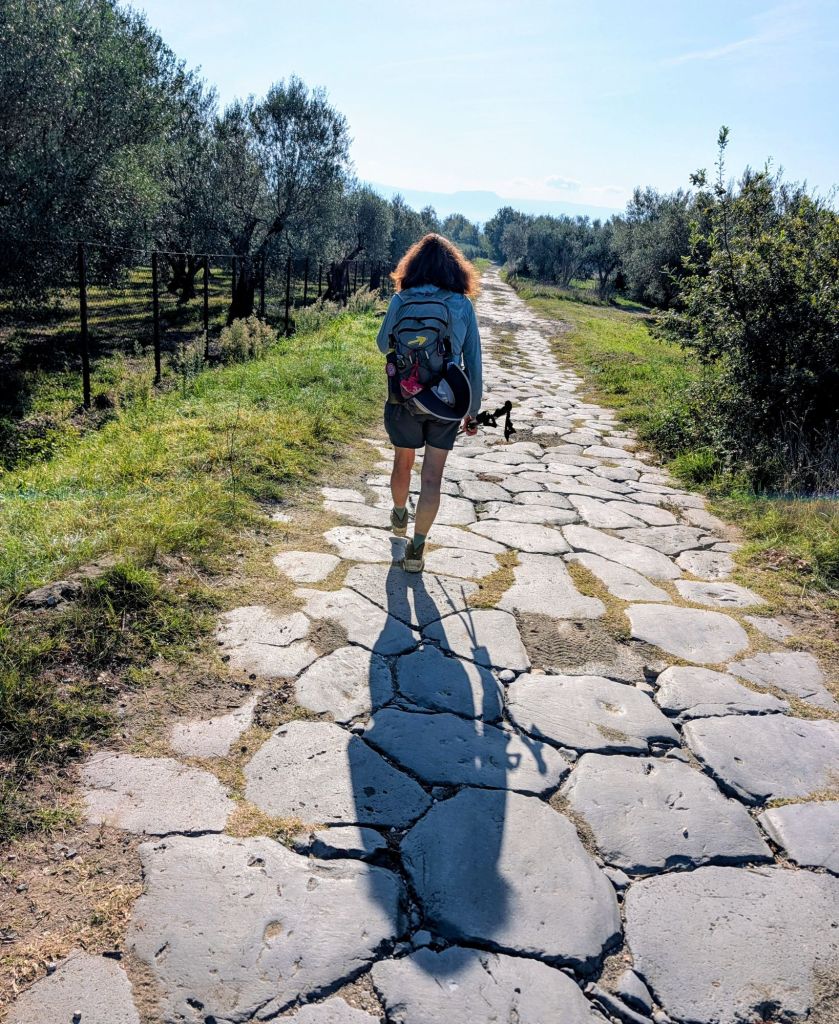
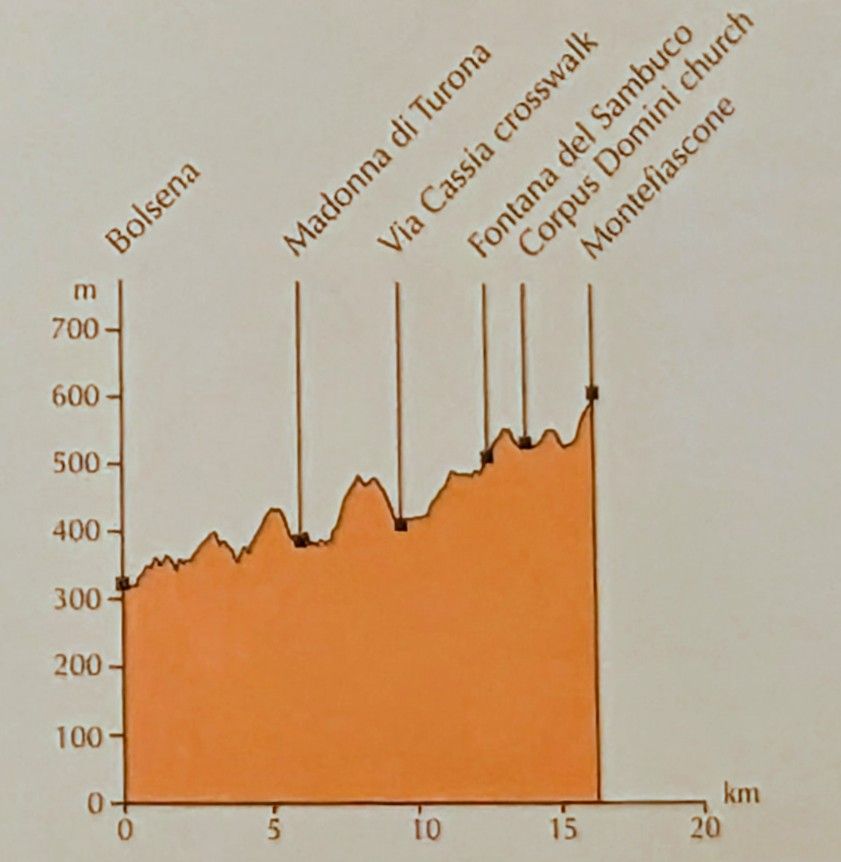
Just south outside Montefiascone is one of the longest, best-preserved stretches on the 280 KM long Roman road called the Via Cassia.
Via Cassia
Named for Cassius Longinus who was an important Roman official, the Via Cassia was built by the Romans in the 2nd Century BC to link Rome with Florence.
Sigeric, the Archbishop of Canterbury, traveled this road in 990 AD establishing it on the Via Francigena.
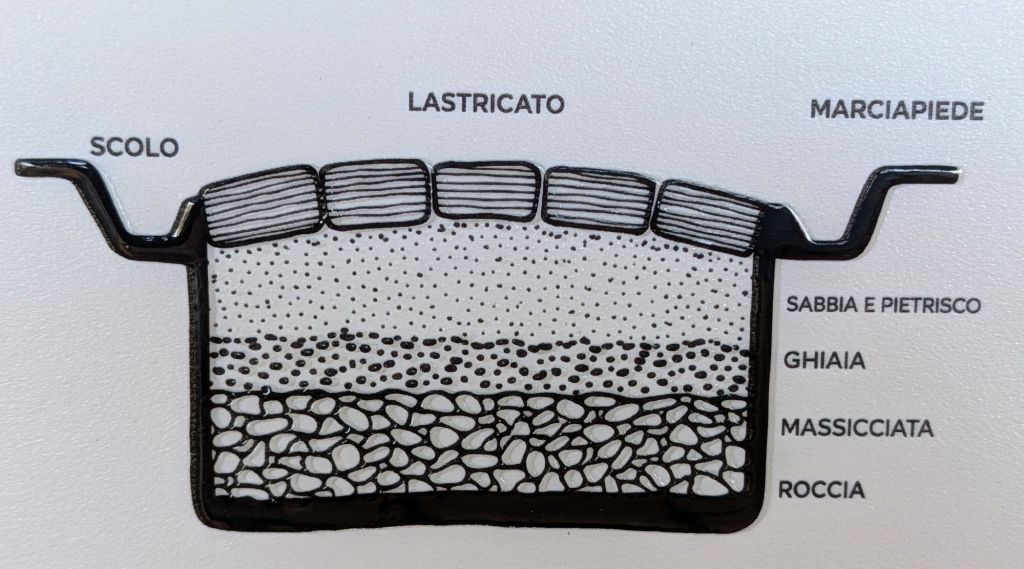
Documents recorded it was built to the Roman Empire’s uniform road width of 13 Roman feet (3.9 m; 1 Roman foot= 29.6 centimeters). Its engineering & construction techniques resulted in many stretches of this Roman road still being used today by pedestrians & motor vehicles.
Via Cassia to ViterboMontefiascone behind usMontefiascone on the hill on the distance
Entering Viterbo
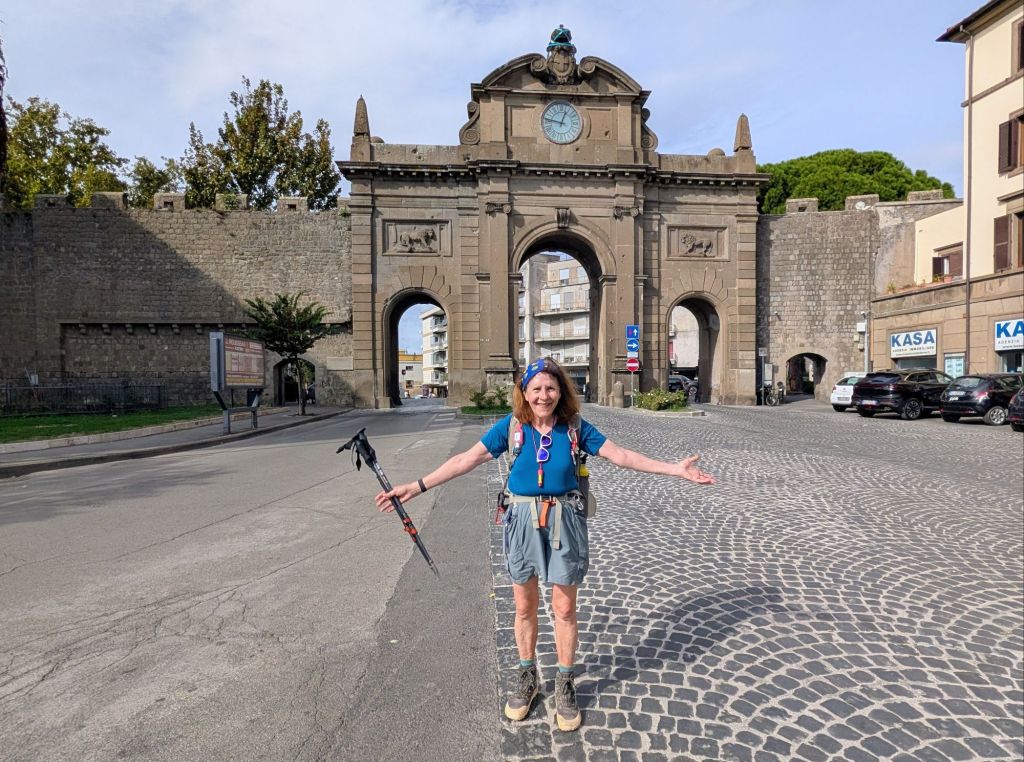
Pilgrim symbol on light poles along the route Porta Fiorentina As its name suggests, it was the gate built in 1768 through which people arrived from Florence.
11.5 Miles; 5.5 Hours on the trail (Cumulative: 187.3 Miles; 99.2 Hours on the trail)
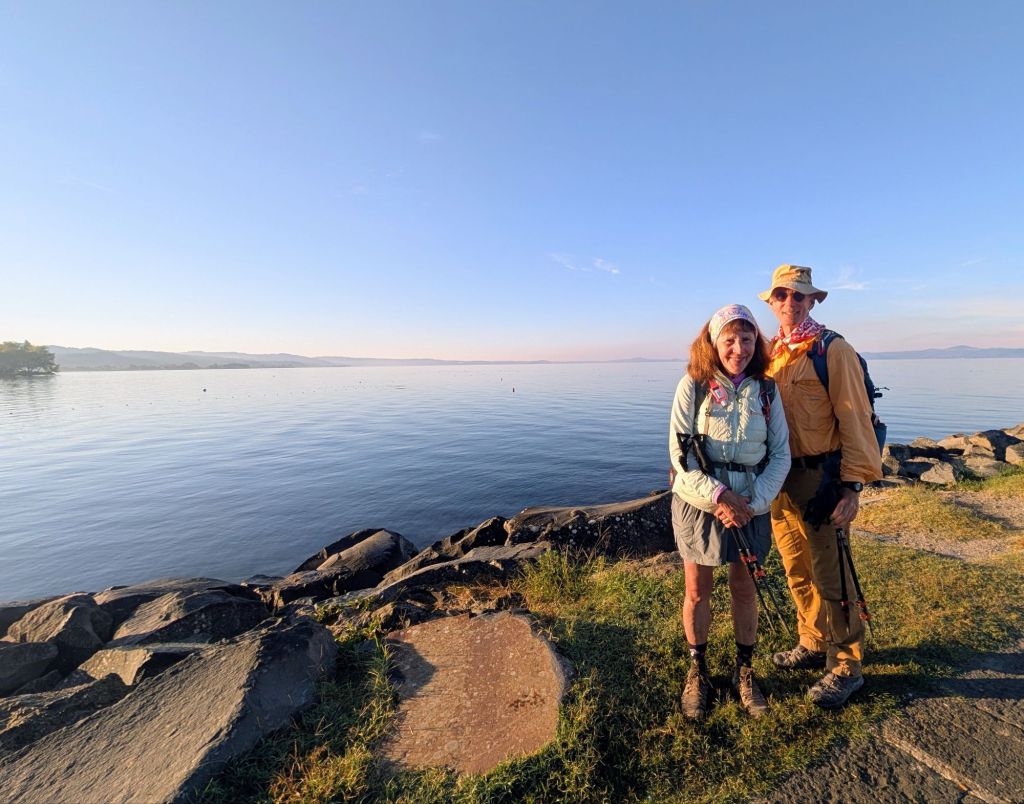
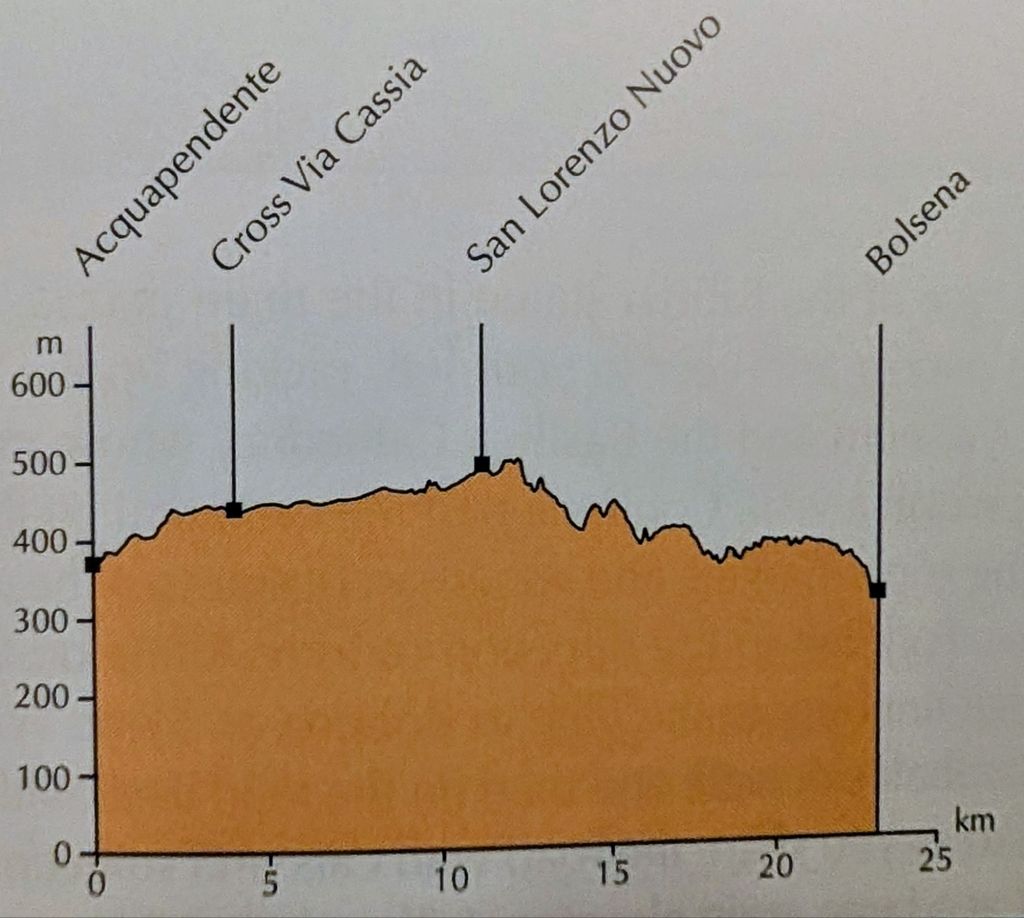
A relatively short hike today with beautiful lake scenery but, it was not easy with many ups & downs over more rolling hills as well as across farmlands & forests.
Leaving Bolsena in the broad daylightBolsena Medieval Quarter
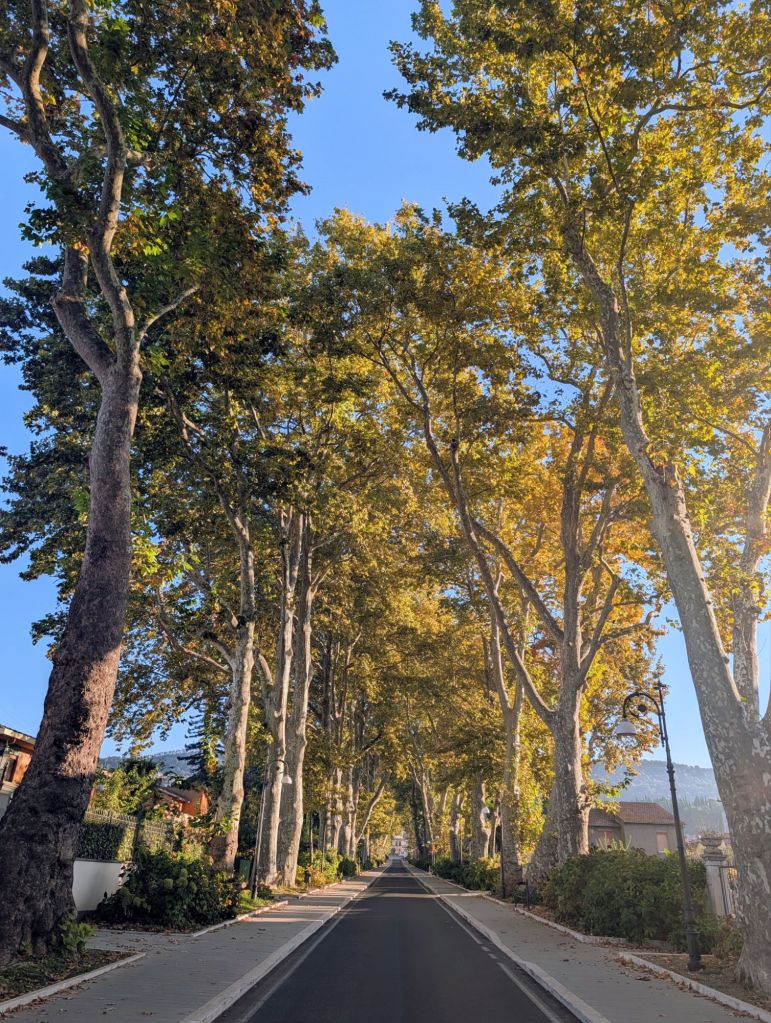
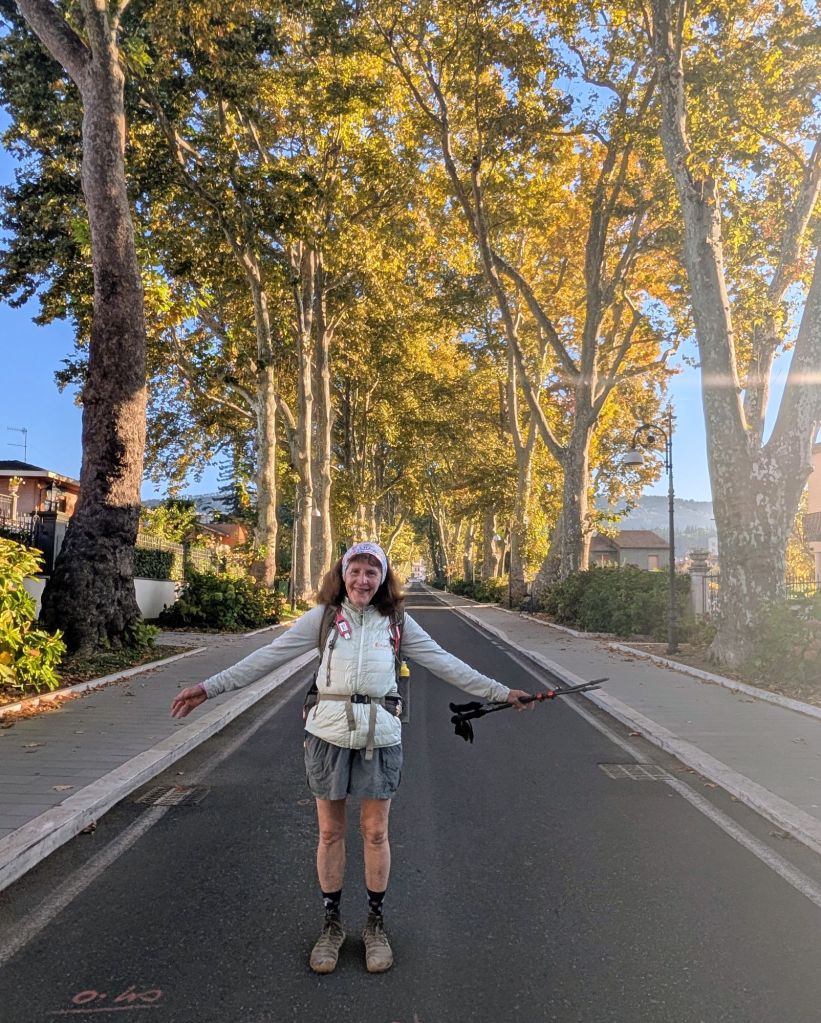
Viale Colesanti (often referred to locally as La Via dei Platani) is a straight, tree-lined avenue that connects Bolsena’s historic center to Lake Bolsena’s shore.
Viale Colesanti or La Via dei Platani
It is lined with Plane trees that are a hybrid of Platanus orientalis (oriental plane) & Platanus occidentalis (American sycamore) trees.
The tree planting started in July 1871 & the avenue was inaugurated around 1873.
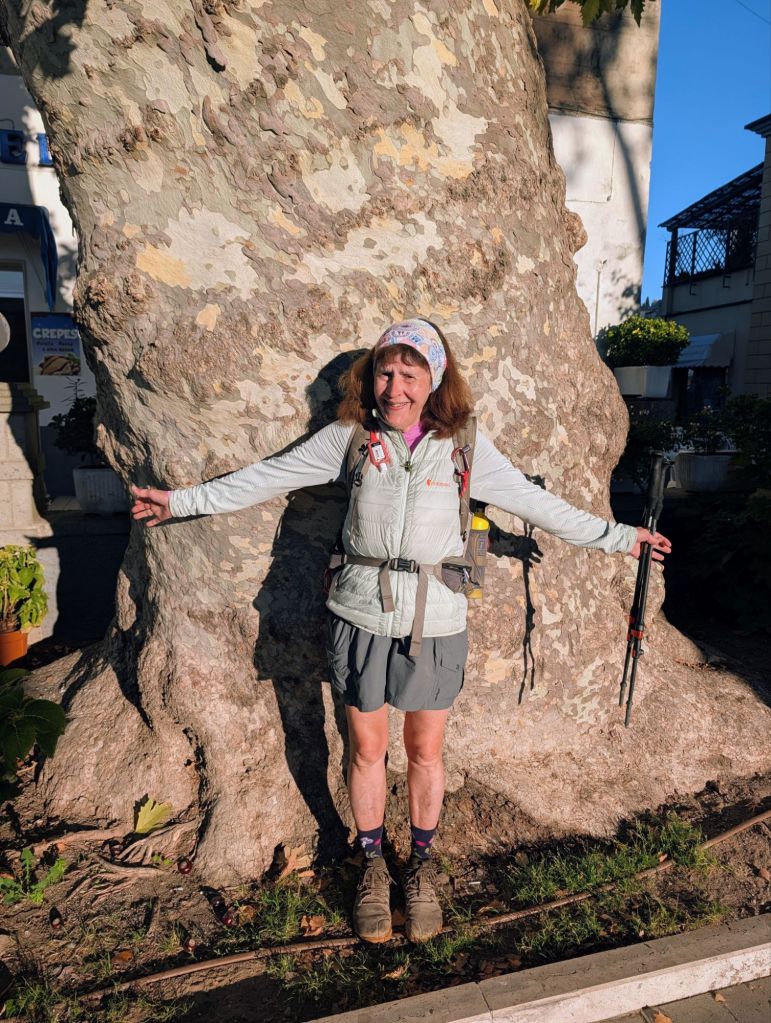
There are roughly 38 ea. Plane trees on each side along the avenue. Many feature massive, twisted trunks with circumferences ranging from 6 to 7 meters and up to nearly 10 meters in places.
The sidewalks & road were specially designed to accommodate their colossal, bulging roots so they don’t buckle or crack.
The Platano del Blu Bar’s trunk exceeds 10 meters in circumference. This tree got its name because it is in front of the Blu Bar
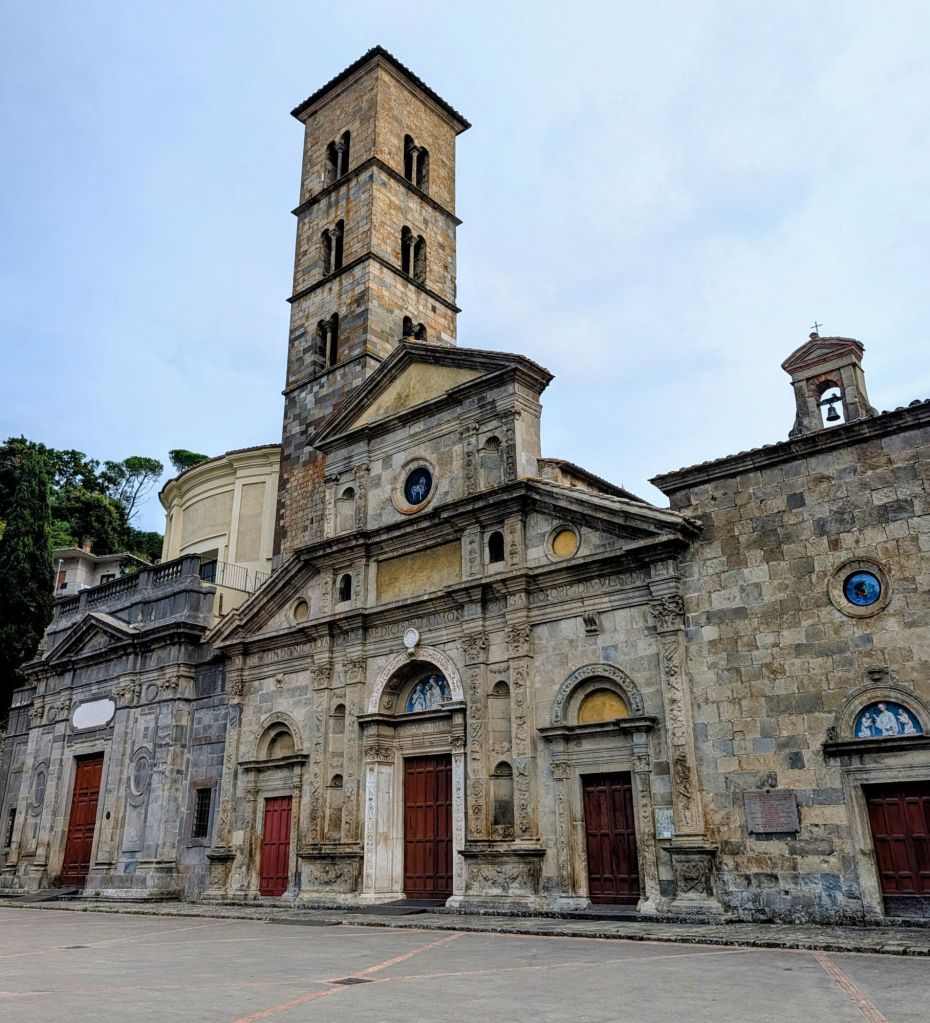
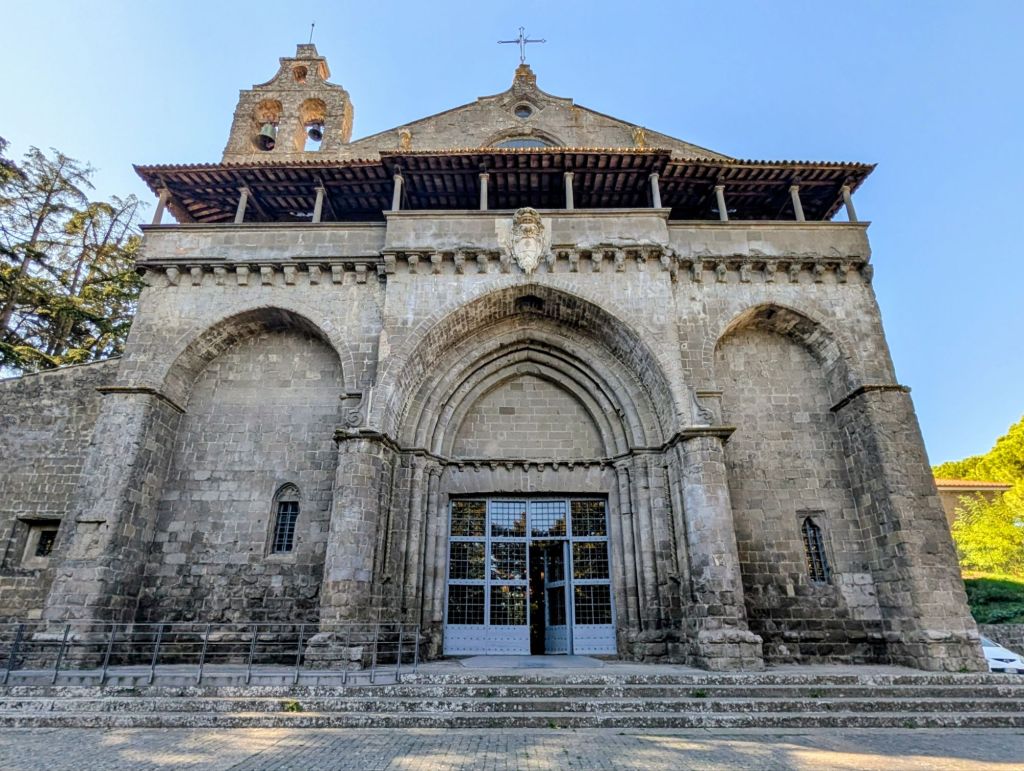
The Basilica of Santa Cristina in Bolsena was consecrated in 1077 & is best known as the site for the Eucharistic Miracle in 1263. It is also the burial site for the martyr who became Saint Christina of Bolsena.
The Basilica of Saint Cristina
Cristina was martyred in the 3rd Century AD at age 12 by her own father & is Bolsena’s patron saint.
Cristina was introduced to the Christian religion by a servant at the palace working for her father Urbanus who was the Prefect representing Roman power in the area. Her father tried very hard to make her renounce her faith in God.
In 295 AD, Cristina was stripped of her clothes, publicly flogged with rods, & had her head shaved Next, she was covered in oil, stretched out on a wheel, & set afire. The fire injured her; but, did not kill her & everyone was unsettled by what they saw.
Cristina’s father then threw her in a dungeon for the night to decide what to do next.
The following day, Cristina’s wounds were healed, yet this did not soften his heart towards his child or convince him of her faith.
Next, her father gave orders to take Cristina to the middle of Lake Bolsena & throw her overboard with a huge stone fastened around her neck. However, not too long afterwards, she reappeared coming on to the shore.
Cristina was hauled from Lake Bolsena, tied to a stake, & then shot with arrows which killed her. During her ordeal, she never renounced her Christian faith.
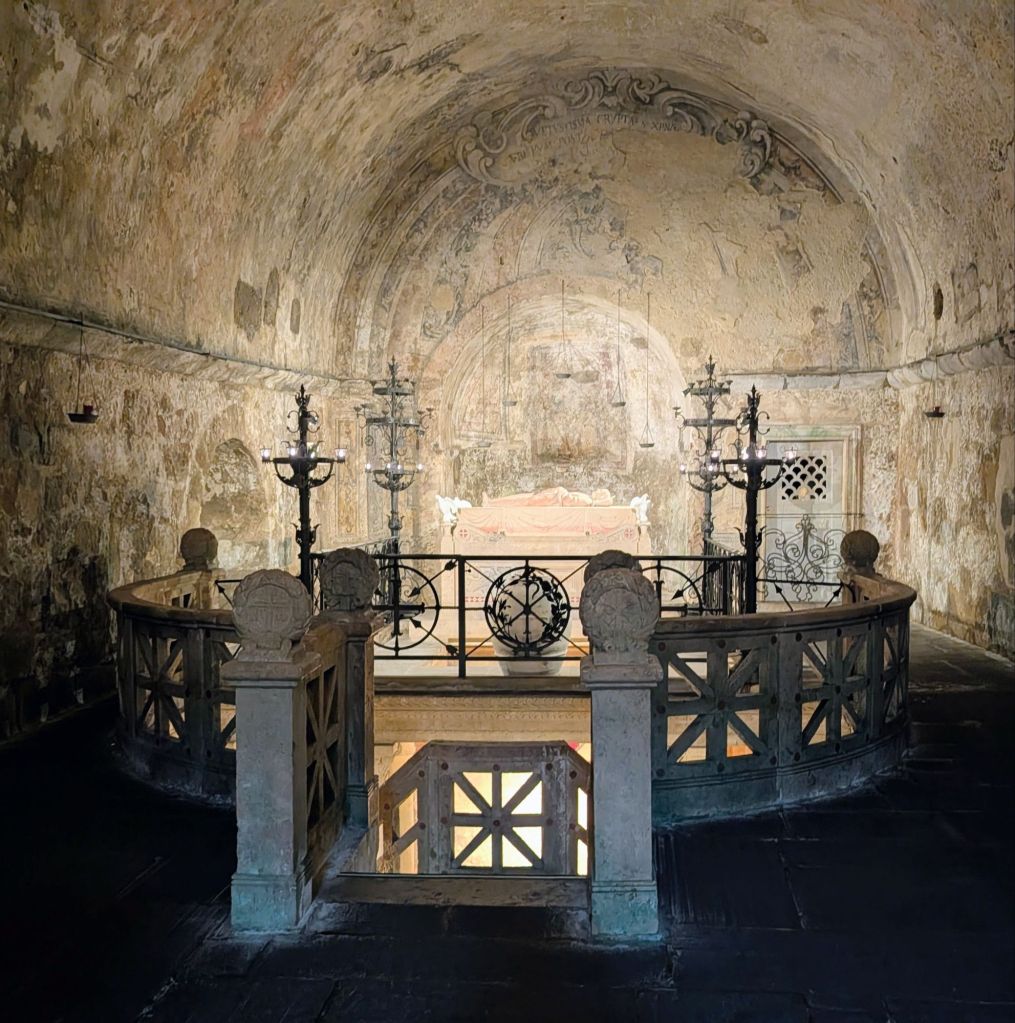
Saint Cristina’s Crypt
Saint Christina of Bolsena is known as the patron saint for archers, millers, & sailors.
She is often invoked by millers because she survived being thrown into Lake Bolsena with a heavy stone which resembled a millstone tied around her neck.
She is the patron saint for archers because she was martyred by arrows killing her.
Sailors look to her for protection at sea & protection from violent storms.
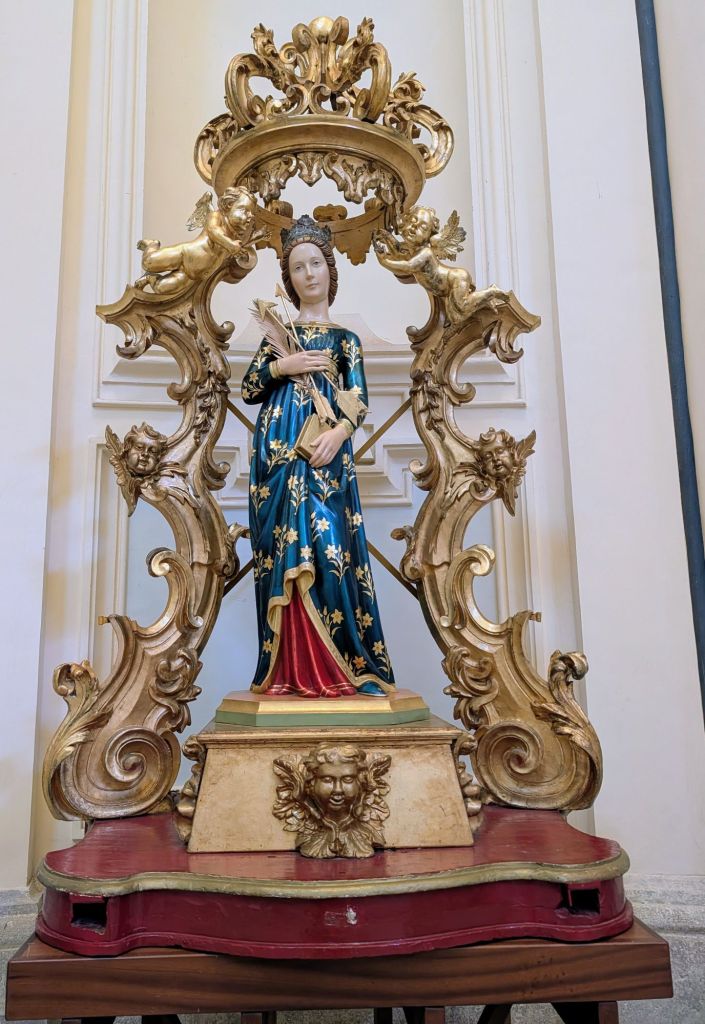
Saint Cristina Note the arrows in her grasp
The Eucharistic Miracle of Bolsena occurred in 1263 when a consecrated communion host miraculously bled onto a sacred altar cloth during Mass.
Father Peter of Prague who was a German priest had lingering doubts about the Catholic transubstantiation doctrine which is the belief that the Bread & Wine at Mass truly becomes the Body & Blood of Christ.
For his penance, Peter traveled the Via Francigena to Rome to ask for forgiveness at the tomb of St. Peter & St. Paul.
On his way back home in 1263 again traveling the Via Francigena, he stopped at the Basilica of Saint Cristina & asked for permission to lead the Holy Mass.
During the liturgy of the Eucharist, Peter still had doubts about transubstantiation, so he asked Jesus to give him a sign of his presence in the Host.
As he recited the words of consecration, blood began to drip from the consecrated Host onto Peter’s hands & onto the Corporal which is the small linen cloth placed on the altar. Blood also dripped onto the altar stones.
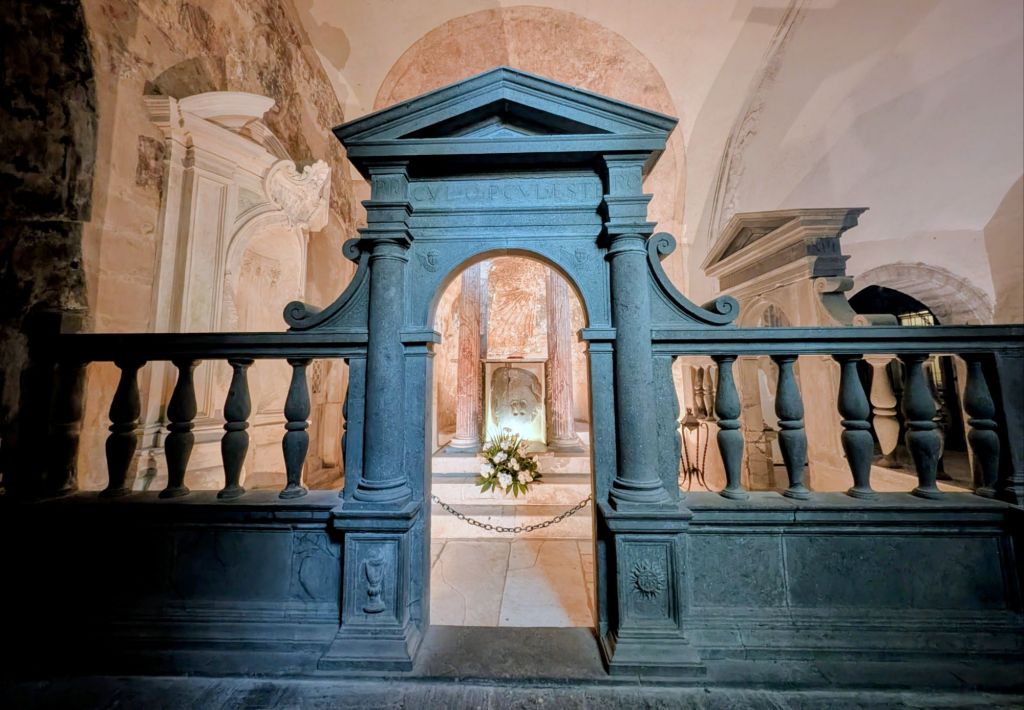
Altar of the Miracle inside the Grotto of Santa Cristina
Father Peter reported this event to Pope Urban IV who was residing nearby in Orvieto.
The Pope sent an investigative team to Bolsena who verified the account, so he ordered the sacred linens to be brought to Orvieto in a solemn procession.
Altar of the Miracle
Convinced by this miracle, Pope Urban IV issued a Papal Bull in 1264 establishing the Feast of Corpus Christi as a universal celebration for the Catholic Church.
The Pope commissioned Thomas Aquinas in England to compose the official liturgical prayers, office, & hymns for the feast.
The blood-stained Corporal of Bolsena is preserved & displayed inside the Cathedral of Orvieto (Duomo di Orvieto).
Here are some images from the hike to Montefiascone.
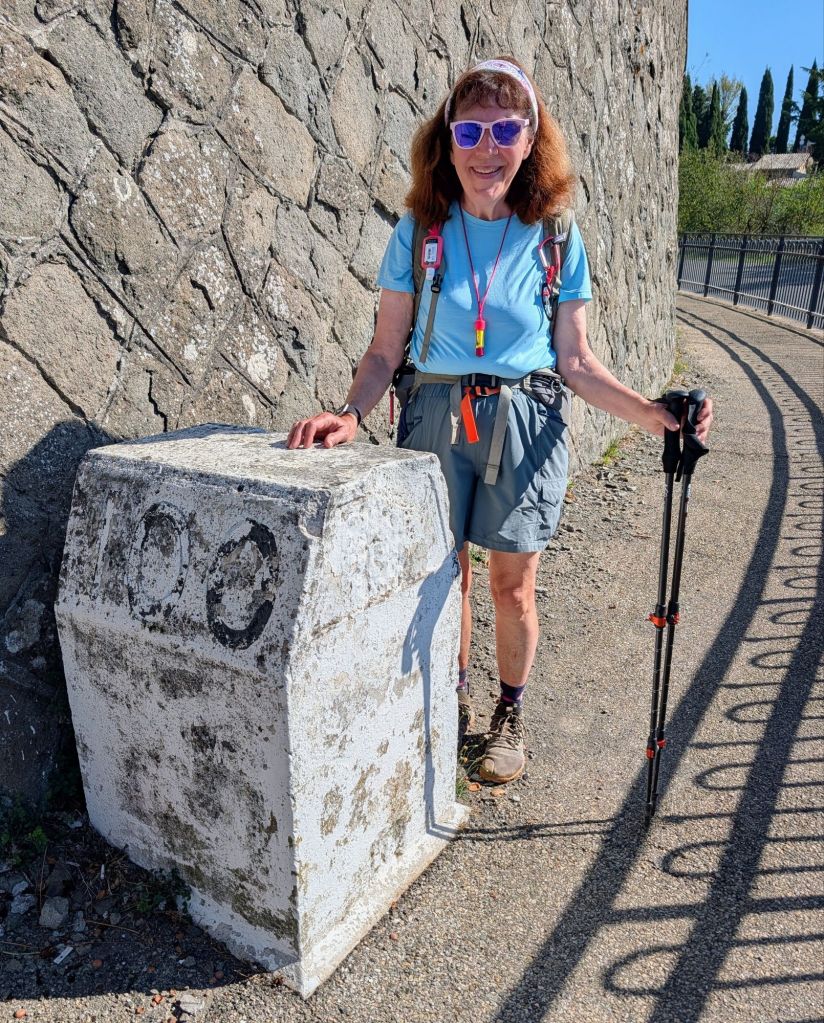
We hiked over a small bridge built by the RomansMontefiascone in the distanceIn Montefiascone, we saw the marker indicating only 100 kilometers more to Rome; but, that is by the road, not by the Via Francigena. We still have 133 KMs (83 miles) to walk to Rome.Montefiascone is famous for its Est! Est!! Est!! wine
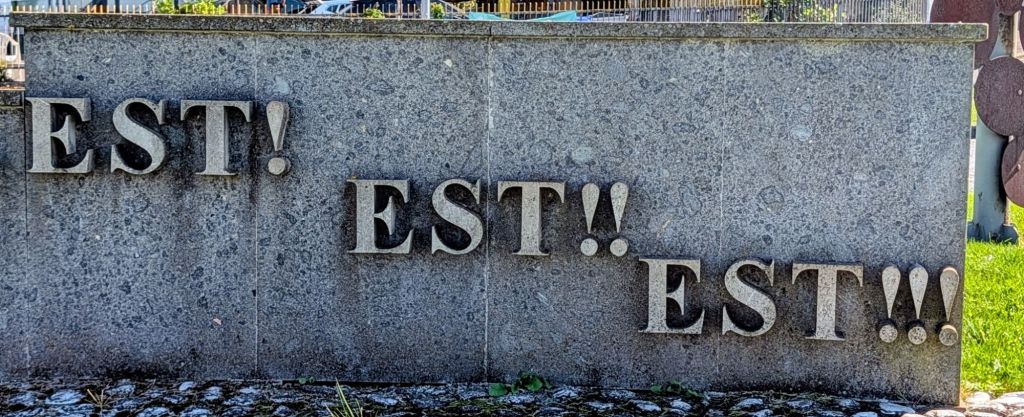
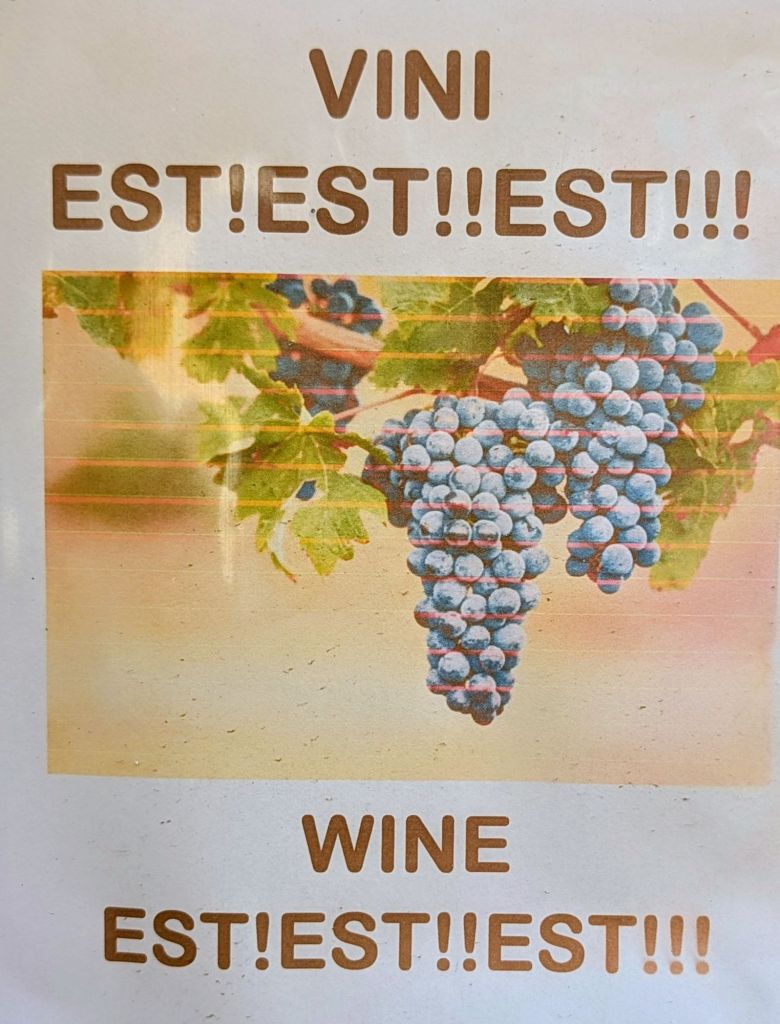
Montefiascone is famous for its Est! Est!! Est!!! di Montefiascone white wine which is only produced here.
The wine is a blend of Trebbiano & Malvasia grapes. Since they are grown on volcanic soils near Lake Bolsena (terroir), the grapes yield a light, straw-yellow wine featuring a bouquet with fresh aromas of green and golden apples, peach, white flowers, & citrus which are also grown in the area.
The Legend of Defuk tells the story of how the famous Est! Est!! Est!!! di Montefiascone white wine got its name.
In 1111 AD, German Bishop Johannes Defuk (sometimes spelled Fugger or Deuc) traveled towards Rome alongside Emperor Henry V who was going to be crowned the Holy Roman Emperor.
Defuk always sent his cupbearer & servant Martino ahead of their entourage to scout local taverns & test their wines.
Martino used a simple grading system by writing the Latin word “Est” (meaning “it is” or “there is”) on tavern doors to signal a place which served good wine.
Upon reaching Montefiascone, Martino found the local vintage so extraordinary that he wrote the word multiple times with increasing exclamation points: “Est! Est!! Est!!!”.
Est! Est!! Est!!
Defuk arrived, agreed with his servant’s judgment, made his home here, & stayed to drink so much of this wine that he died from overconsumption around 1113 AD.
Defuk was buried inside the Basilica of San Flaviano in Montefiascone.
The Basilica of San Flaviano built in the 11th Century
His ever faithful servant Martino had a tombstone made for Defuk.
His tombstone famously bears a Latin inscription lamenting his fate: “Per il troppo EST EST EST qui giace morto il mio signore Johannes Defuk” (Because of too much Est, Est, Est, here lies my master Johannes Defuk dead).
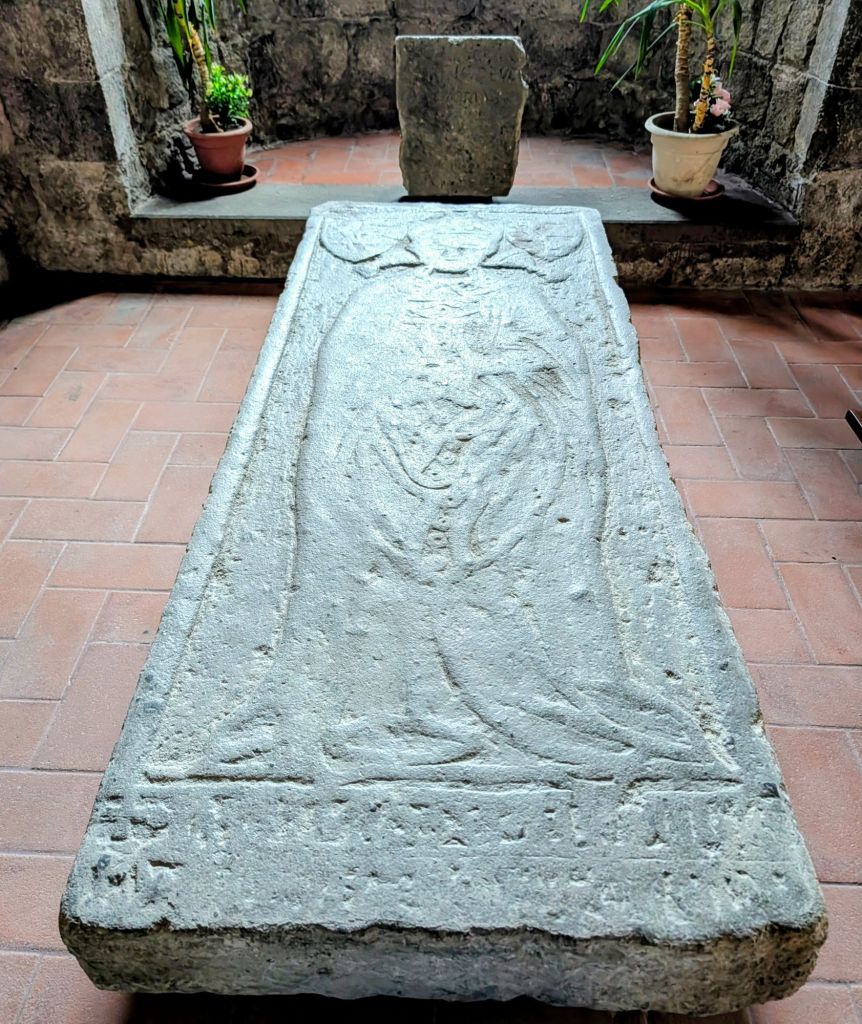
Johannes Defuk Grave & Tombstone in the Basilica of San Flaviano
According to tradition, Defuk left a generous endowment of 25,000 coins to the town on the condition that a cask of Est! Est!! Est!!! wine be poured over his grave every year.
Montefiascone continues that request & commemorates his legend through its annual historic celebrations & wine events each August.
15.6 Miles; 7.5 Hours on the trail (Cumulative: 181.8 Miles; 93.7 Hours on the trail)
Leaving Acquapendente
Cathedral of the Holy Sepulchre & Julia de Jacopo Tower
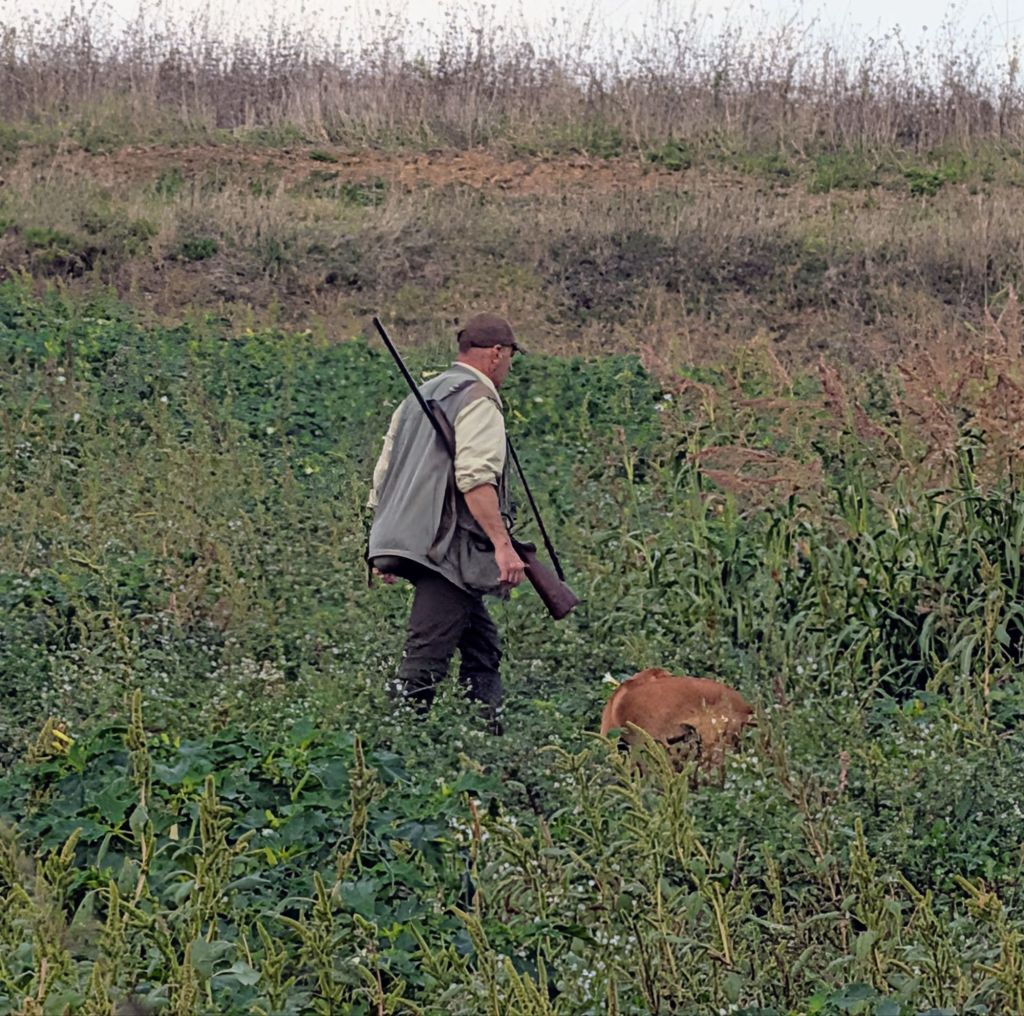
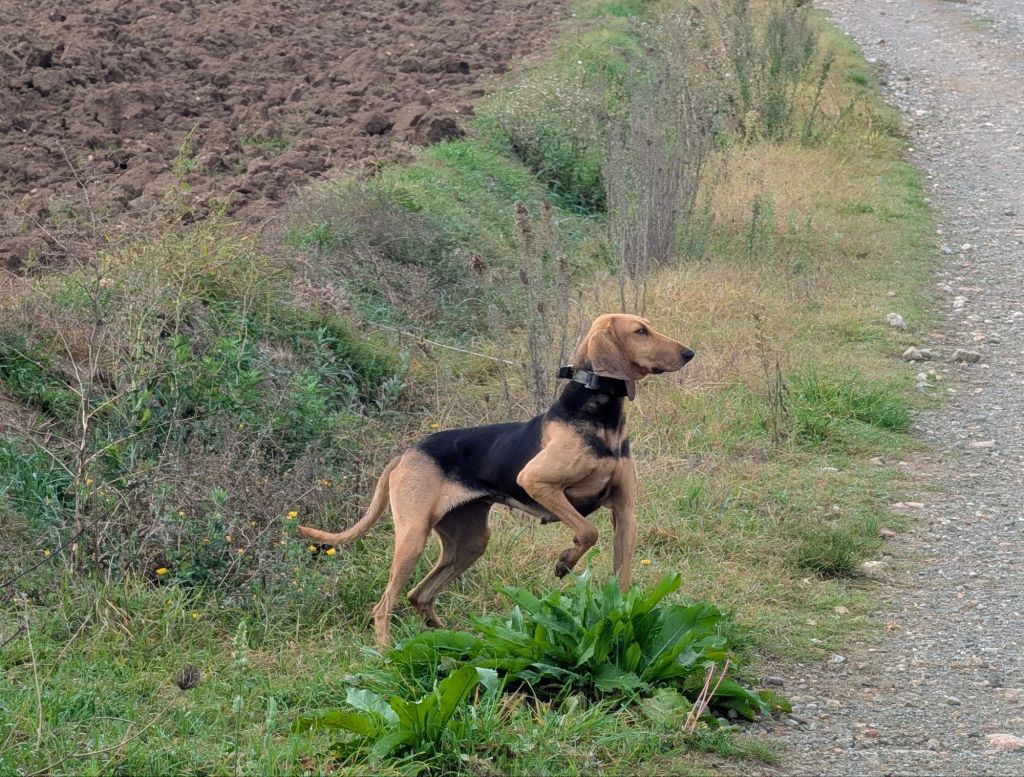
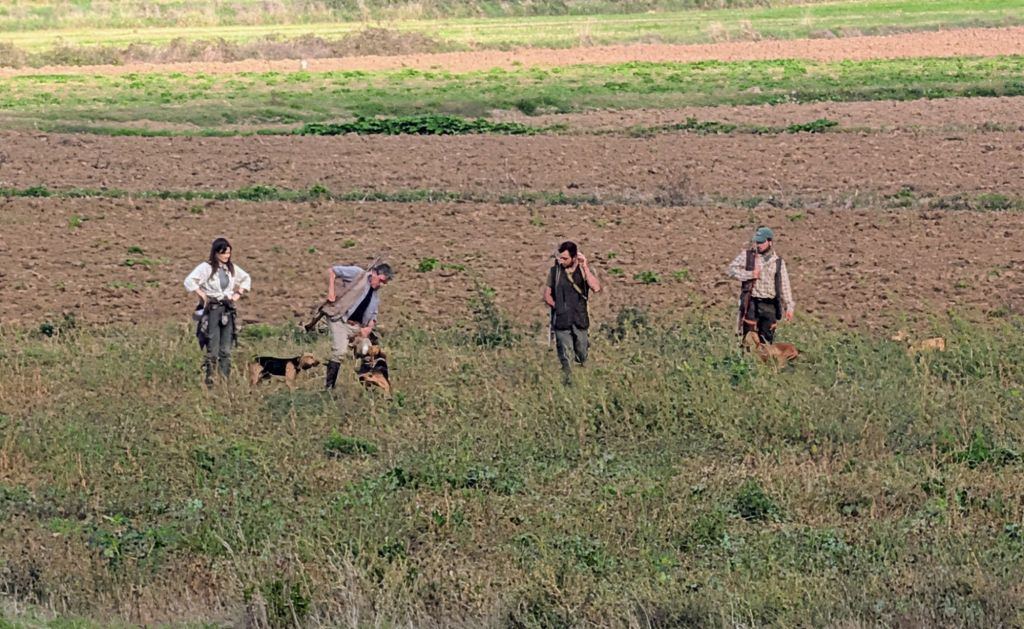
Today we saw many bird hunters & their dogs in the fields.
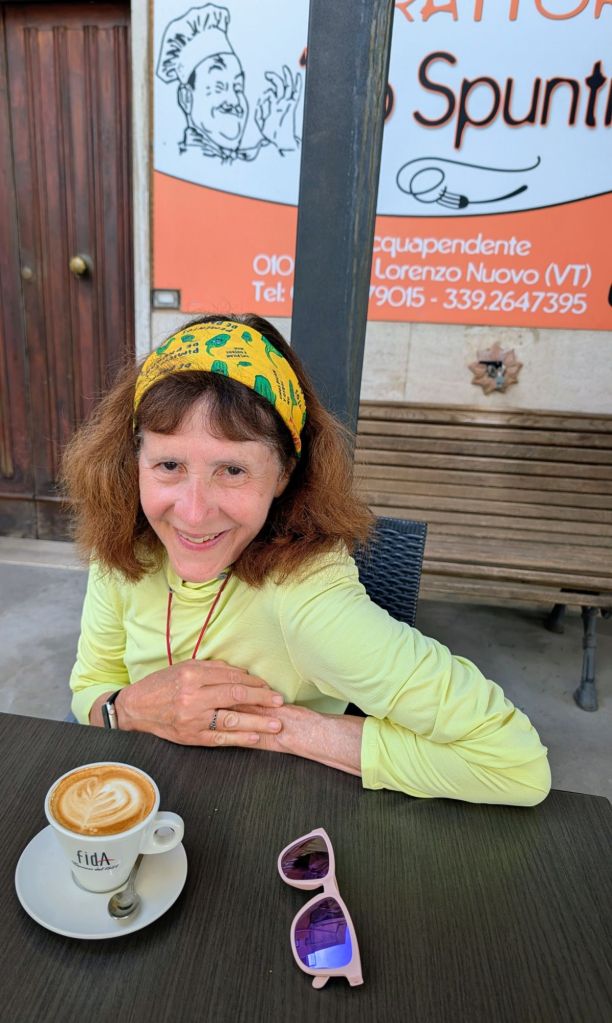
Gina had a cappuccino pick-me-up in San Lorenzo Nuovo.
Lake Bolsena is Europe’s largest lake created by a volcanic eruption & is Italy’s 5th largest lake. It is considered among the cleanest lakes in Europe.
Lake Bolsena view from San Lorenzo NouvoLake Bolsena
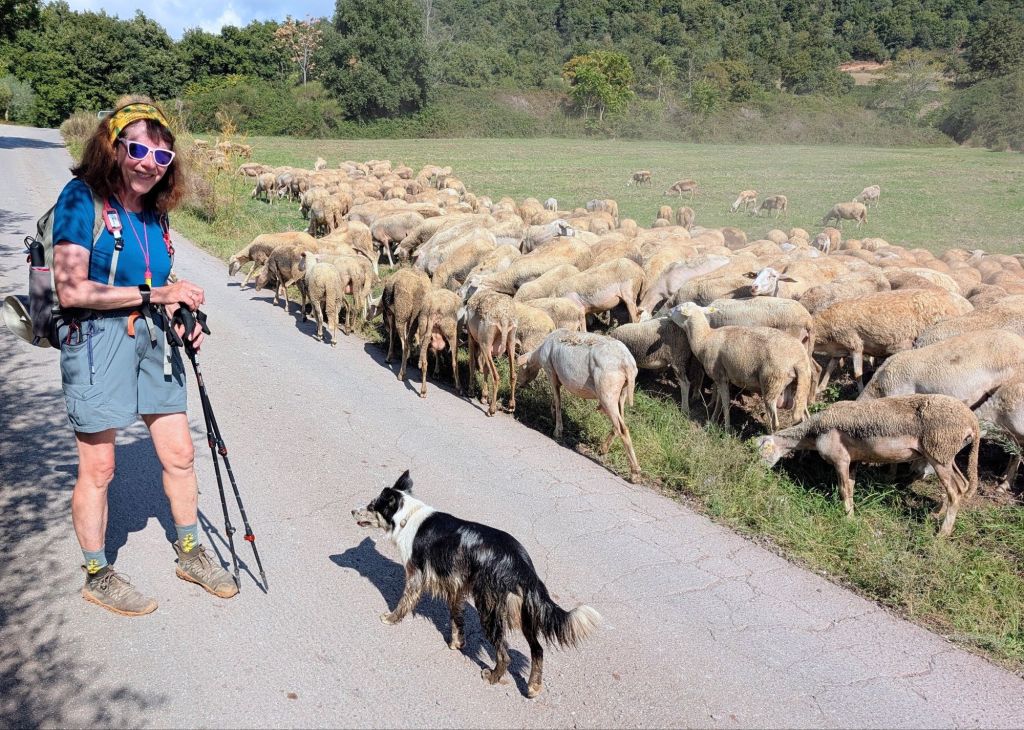
Saw another shepherd moving his flock today; but, he had 3 ea. well- trained dogs helping. He commanded them by whistle calls.
Taking a break in the shade
The shepherd couldn’t speak English; but, through gestures & making a chomping sound, we figured out he was moving his flock to a different field to eat.
Other sights on the trail today:
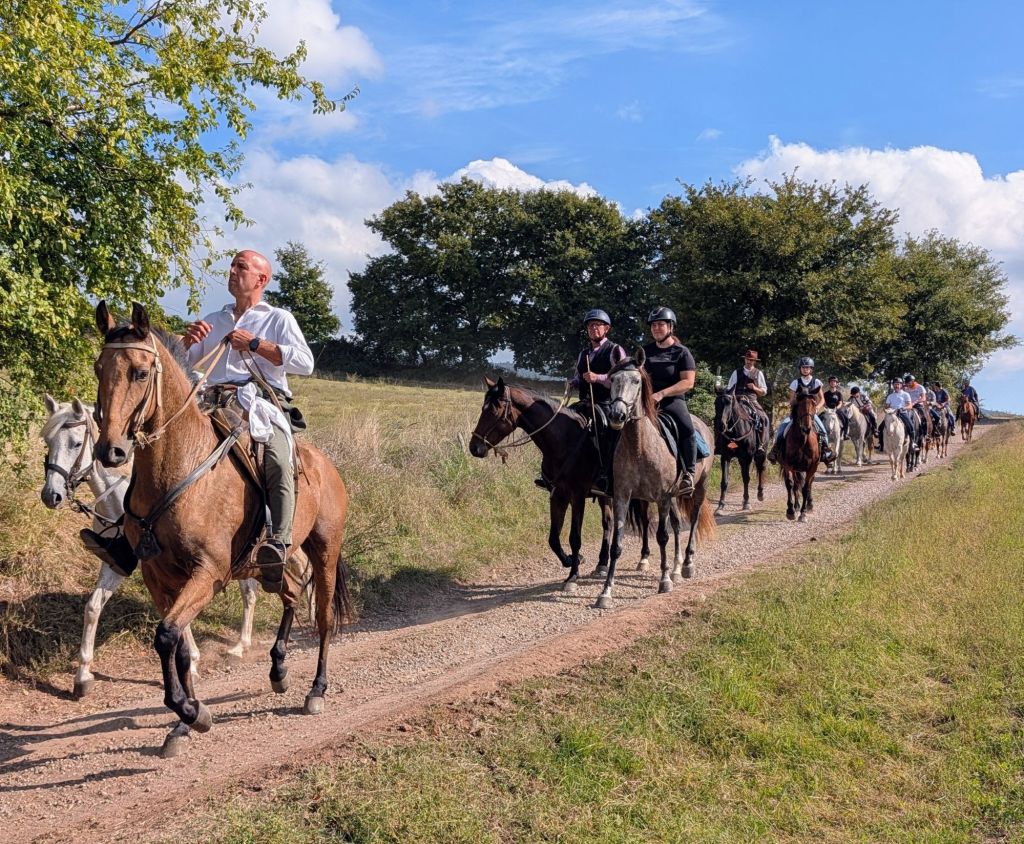
Encountered a huge horse riding party on the trail.
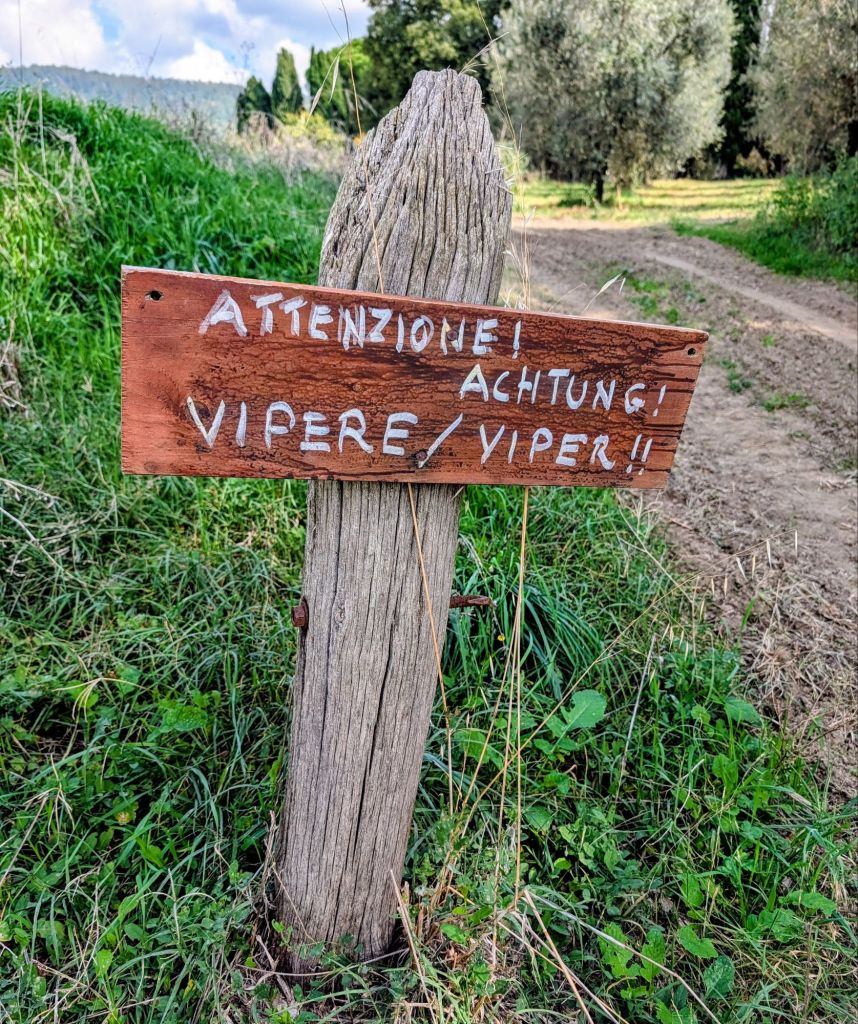
This photo is only 1/3 of the horse train that passed usItaly has 4 ea. poisonous snakes; Most common is the Asp Viper.
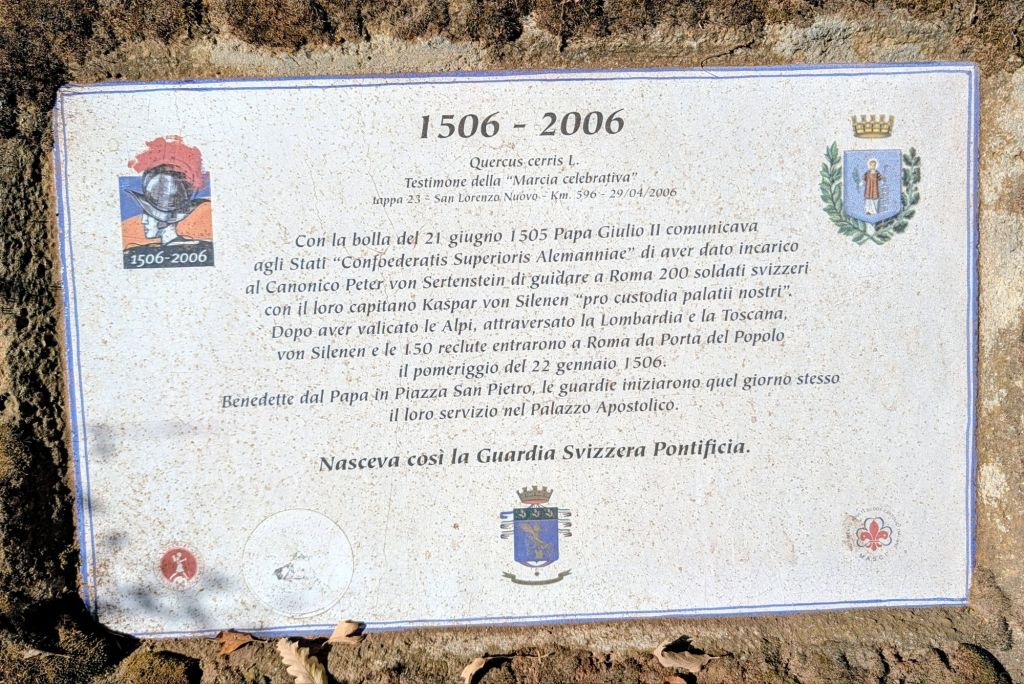
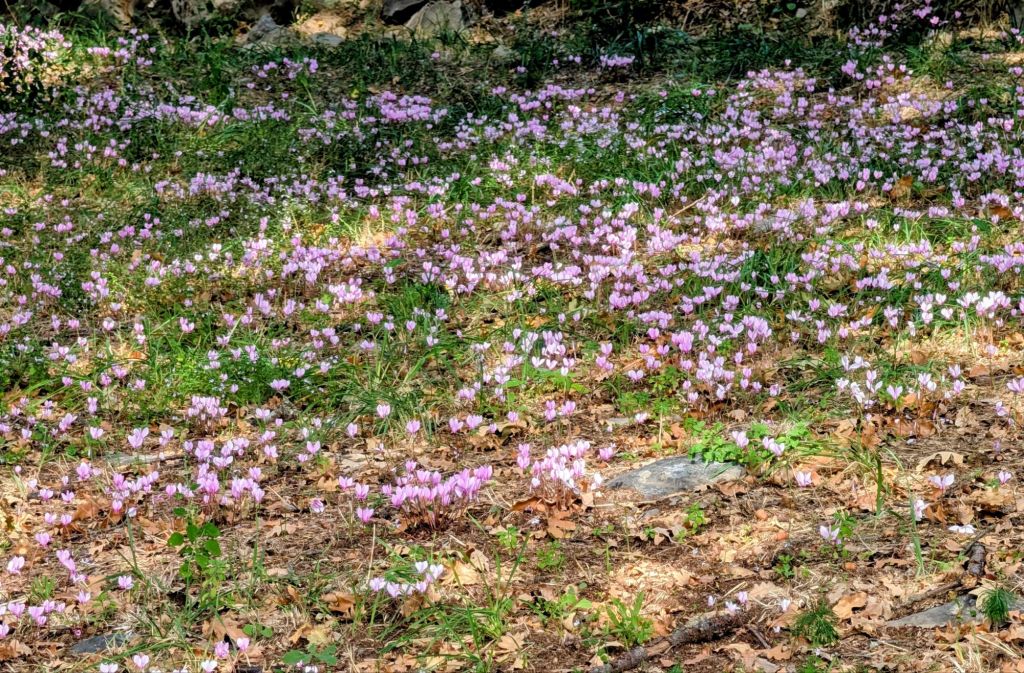
This marker commemorates the 500 year anniversary from when Swiss soldiers passed this spot in San Lorenzo Nouvo on their way to Rome to become the Swiss Guard defending the Pope & the Vatican.Wild Autumn Crocuses
Bolsena is a beautiful little lakeside town with a charming medieval quarter.
Entering Bolsena, we passed Rocca Monaldeschi della Cervara (also known as Castello Monaldeschi).
Built between the 11th & 14th Centuries, this fortress was the powerful Monaldeschi family’s residence. They ruled Bolsena until 1451.
Scenes from Bolsena’s medieval quarter:
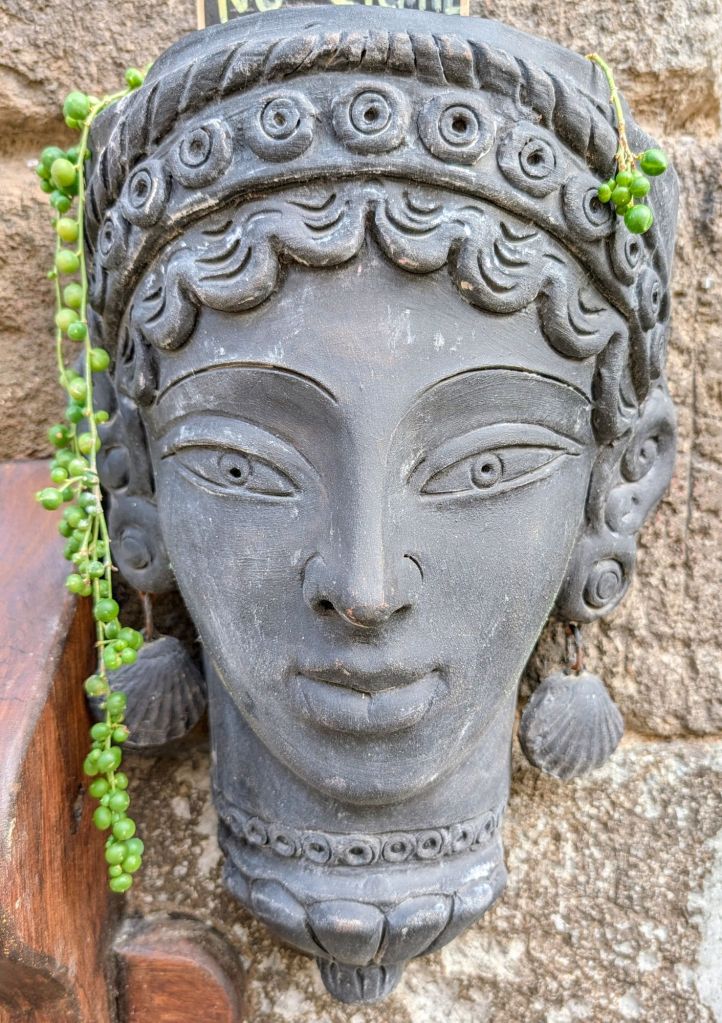
Porta San Francesco (St Francis Gate) is the entrance to Bolsena’s medieval village for travellers coming from RomeThis sculpture shows sea shells being worn as earrings. A sea shell is the Camino’s symbol because it is carried by pilgrims.
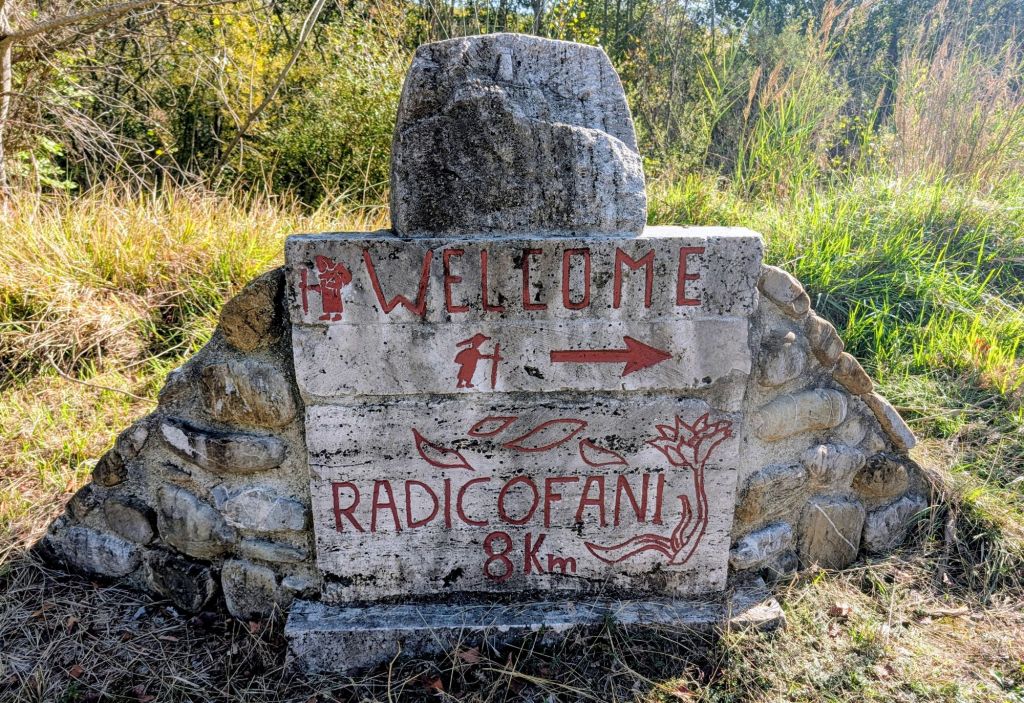
Radicofani to Acquapendente 14.7 Miles; 7.5 Hours on the trail (Cumulative: 166.2 Miles; 86.2 Hours on the trail)
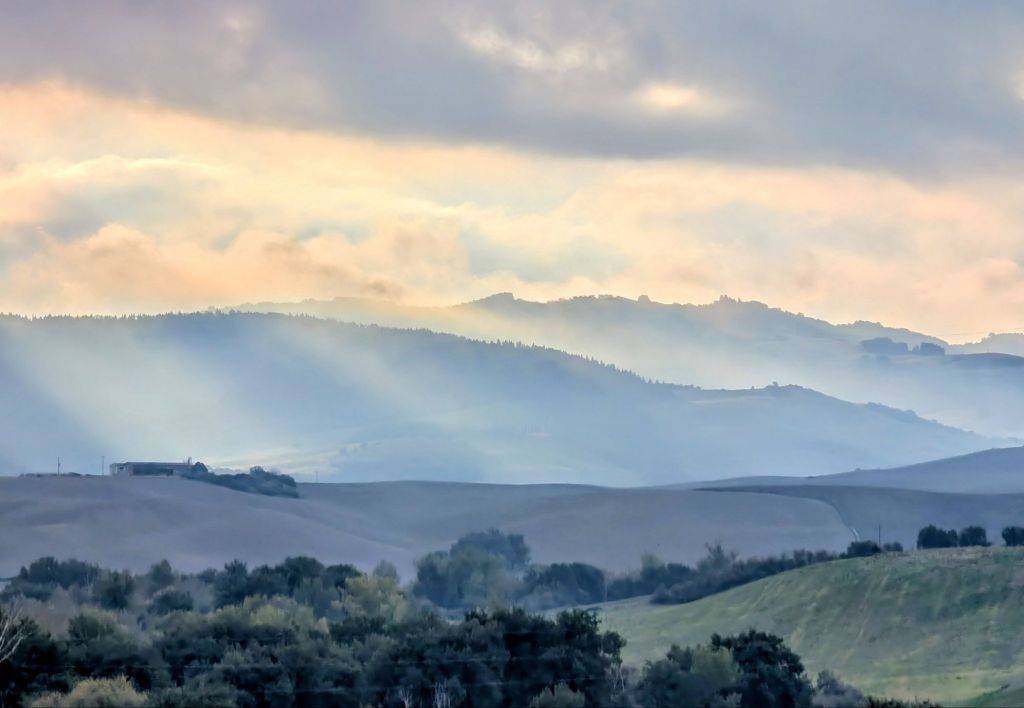
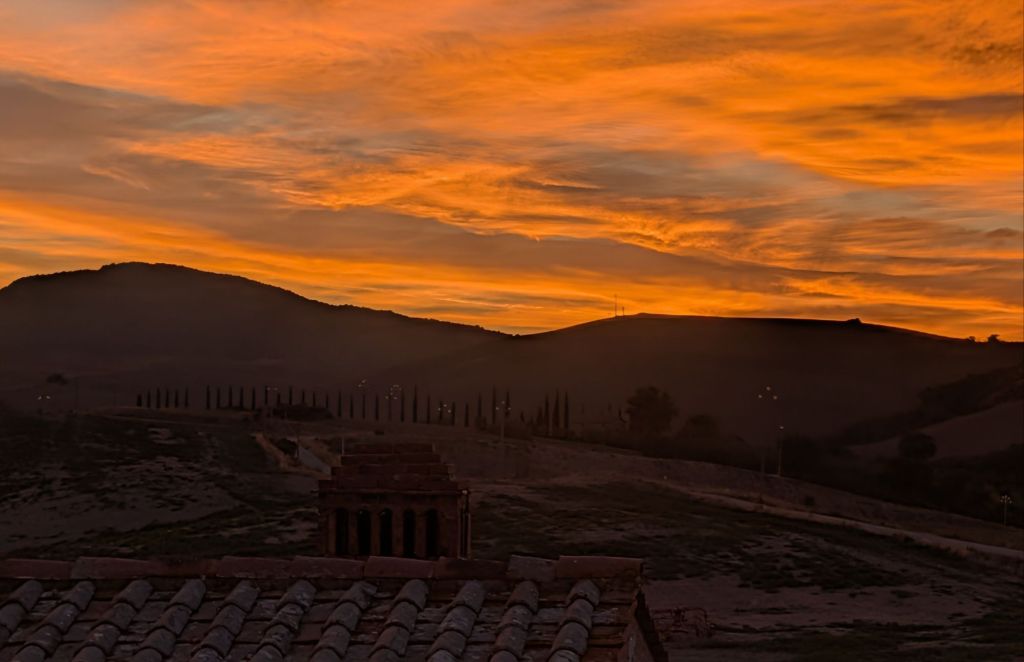
Today was our final day hiking in Tuscany & our last Tuscan sunrise was spectacular.
As we hiked up to Radicofani, we saw a shepherd moving his flock in the fields.
However, he had one stray who got away, so we helped him wrangle it back into the flock.
Radicofani & its surrounding area is dominated by its Rocca (castle) with its impressive tower. The Rocca of Radicofani rises atop a volcanic basalt rock formation 896 meters high.
The mighty Rocca of Radicofani & Radicofani town below
Radicofani itself is a charming medieval town built on an ancient volcano’s remains.
According to beliefs, Saint Agatha protects the city from volcanic eruptions, so naturally the town has a church dedicated to her.
The Church of Saint Agatha
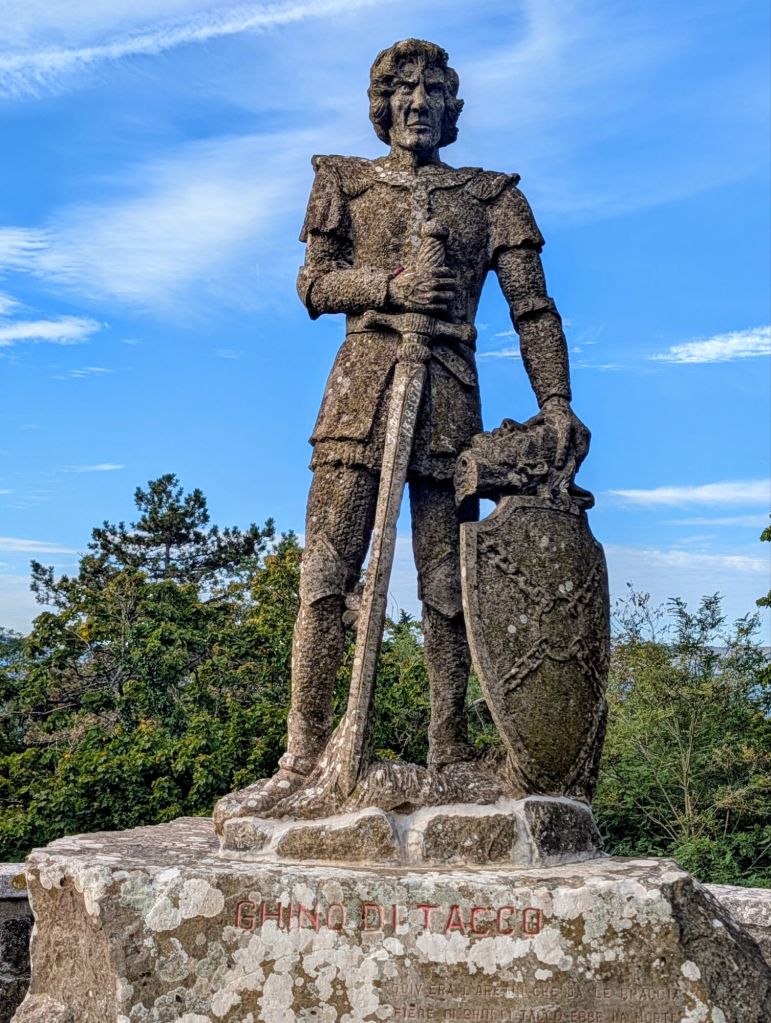
Ghino di Tacco, the “Gentleman Bandit” who robbed from the rich; but, spared the poor is known as the “Italian Robin Hood” & he came from this town.
Ghino di Tacco also known as “Ghinotto” was a lawless nobleman from Siena who flourished in the late 13th Century.
Ghino di Tacco
It appears crime was a family business for Ghino because some of his relatives were also notorious bandits who operated in Tuscany.
However, Ghino had higher ambitions than a highwayman’s petty crimes.
In one of his most famous heists, he occupied Santafiora Castle in Tuscany’s Maremma region.
By seizing the castle, he drew the wrath from the powerful Aldobrandeschi family who owned the fortress & this crime ultimately caused Ghino to be exiled from his home in Siena.
His father Tacco di Ugolino was executed in the Piazza del Campo in Siena; but, somehow, Ghino managed to escape the same fate.
Forced to relocate & lay low, in 1295 the bandit fled to Radicofani which was perfectly located along the lucrative Via Francigena between Siena & Rome.
It is said that he stripped rich wayfarers of all their possessions minus necessities & if the pilgrims were poor, he simply let them go.
This story was summarized by Giovanni Boccaccio in his Decameron:
“Giovani di Tacco, whose feats of daring and brigandage brought him great notoriety after being banished from Siena and incurring the enmity of the Counts of Santa Fiora, staged a rebellion in Radicofani against the Church of Rome; and having established himself in the town, he made sure that anyone passing through the surrounding territory was set upon and robbed by his marauders” (Tenth Day, Second Story).
Ghino di Tacco & his crew managed public relations by generously dolling out their ill-gotten gains to their host community.
Nevertheless, the law, the nobles, & his theft victims could not be placated.
Ultimately, several of Ghino’s relatives were arrested & hauled off for trial.
A judge in Arezzo ordered these captured family members to be executed. When this news reached Ghino, he vowed revenge.
The vengeful bandit tracked down the judge & stabbed him to death in front of many witnesses.
After this murder in broad daylight, Ghino continued his banditry unabated & he abducted the Abbot of Cluny.
The Abbot was traveling back from Rome after giving Pope Boniface VIII money collected from taxes collected by the French Church.
On his way back to France, he decided to take a cure at the San Casciano Bagni thermal spa for his liver & stomach which were suffering from all the banquets he had attended.
Knowing about the Abbot’s arrival at the spa, Ghino planned an ambush & kidnapped him.
Ghino locked the Abbot in his tower in the Radicofani fortress giving him only bread & dried beans to eat and Vernaccia di San Gimignano to drink.
This dietary regimen “miraculously” cured Abbot’s stomach pains & he convinced the Pope to grant a pardon to Ghino di Tacco for murdering the judge.
After his Papal pardon & allegedly being inducted into a holy order, Ghino di Tacco could not escape his criminal life.
Around the late 13th Century or early 14th Century, Ghino was killed by an unknown assailant.
For his fame or infamy or both, Radicofani has a statue in his honor.
Ghino di Tacco statue in Radicofani
Here are some sights from today’s trail.
Wild Boar Hunter
Since it is the weekend, the hunters were out again. This time they were hunting wild boar. They had many tracker dogs & spotters in the area with walkie- talkies to tell the hunters where to find their prey.
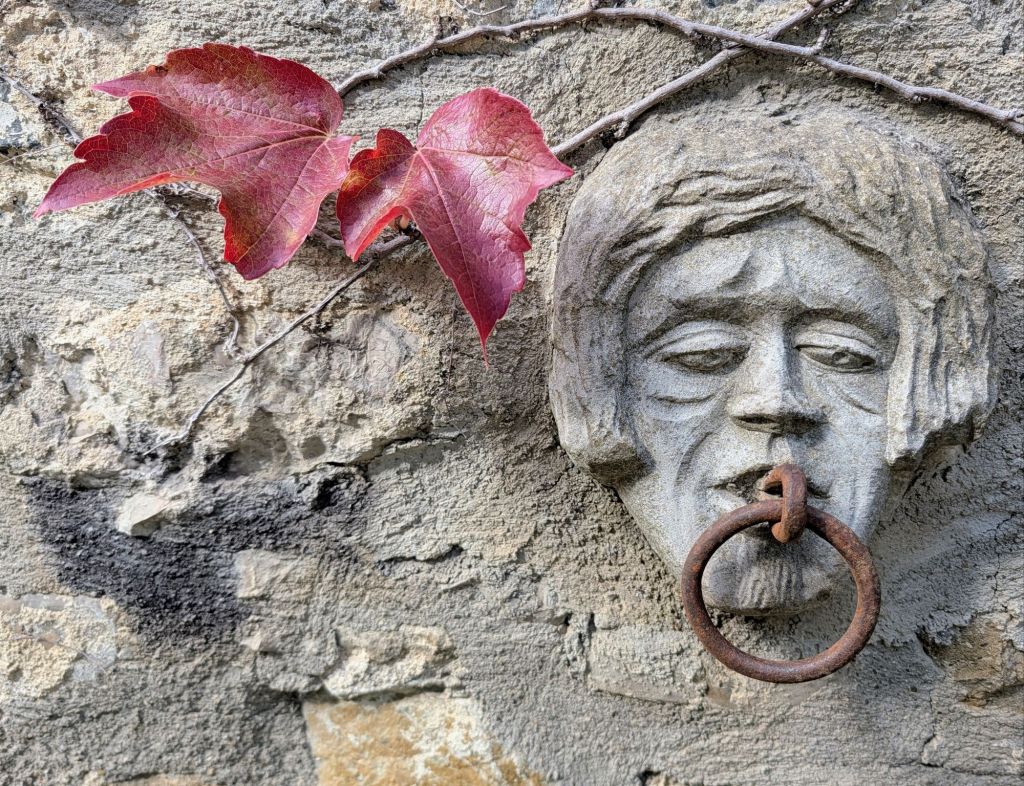
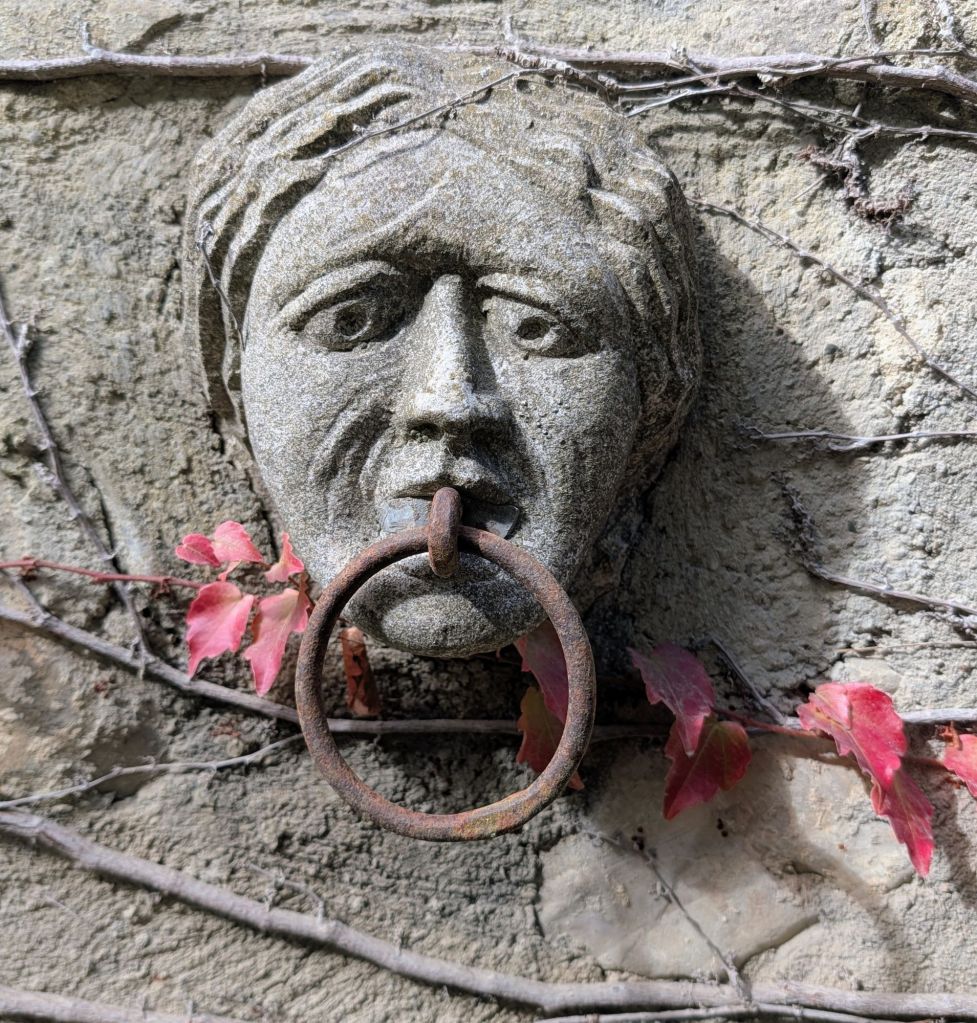
Saw some interesting “personalized” hitching posts on a house along the trail.
The M87 marker on the Via Francigena refers to Segment 87 (Tappa 87) on the historic pilgrim route.
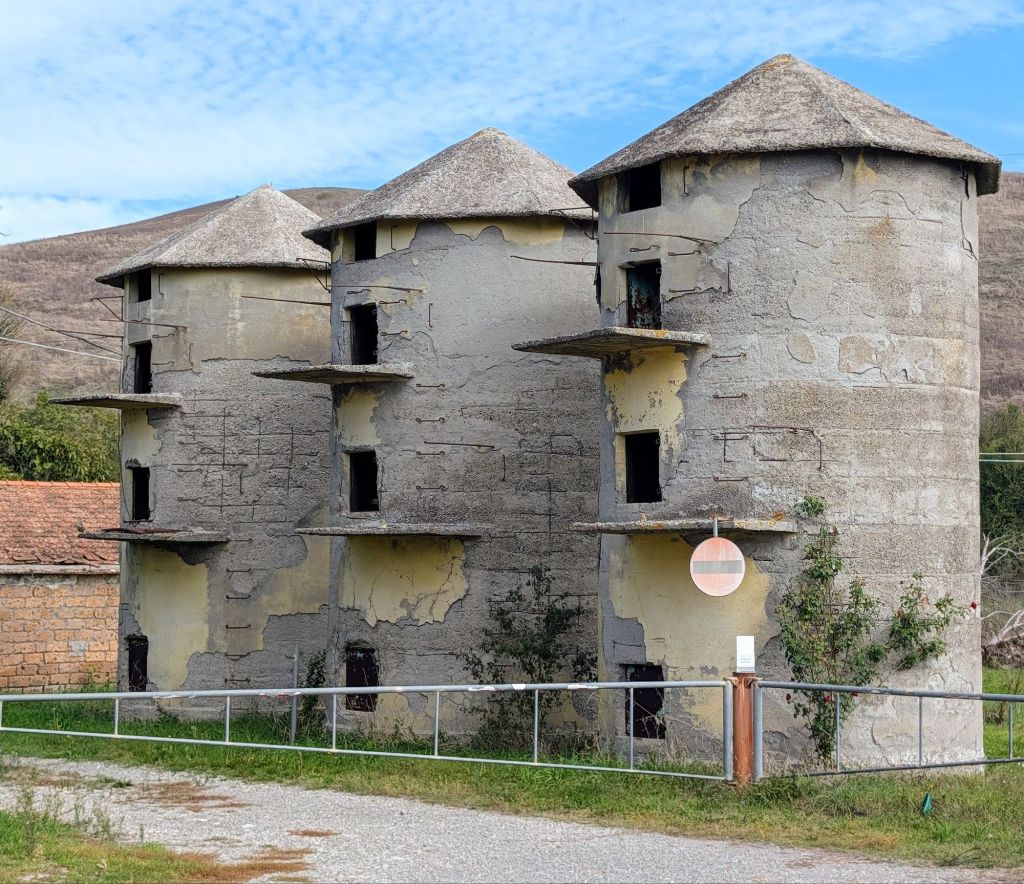
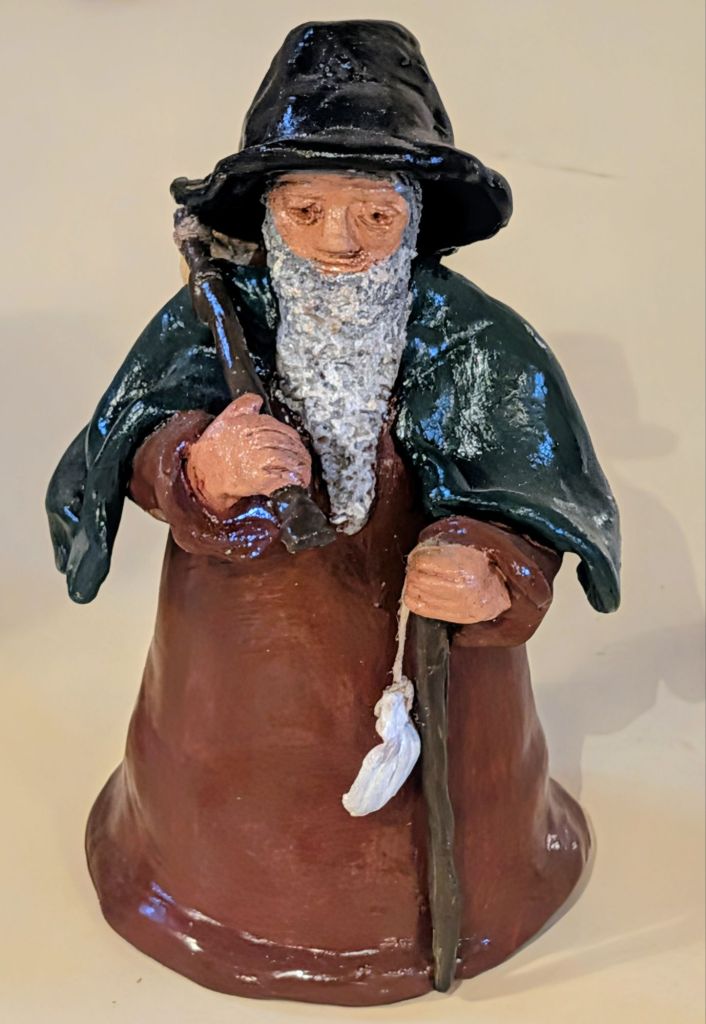
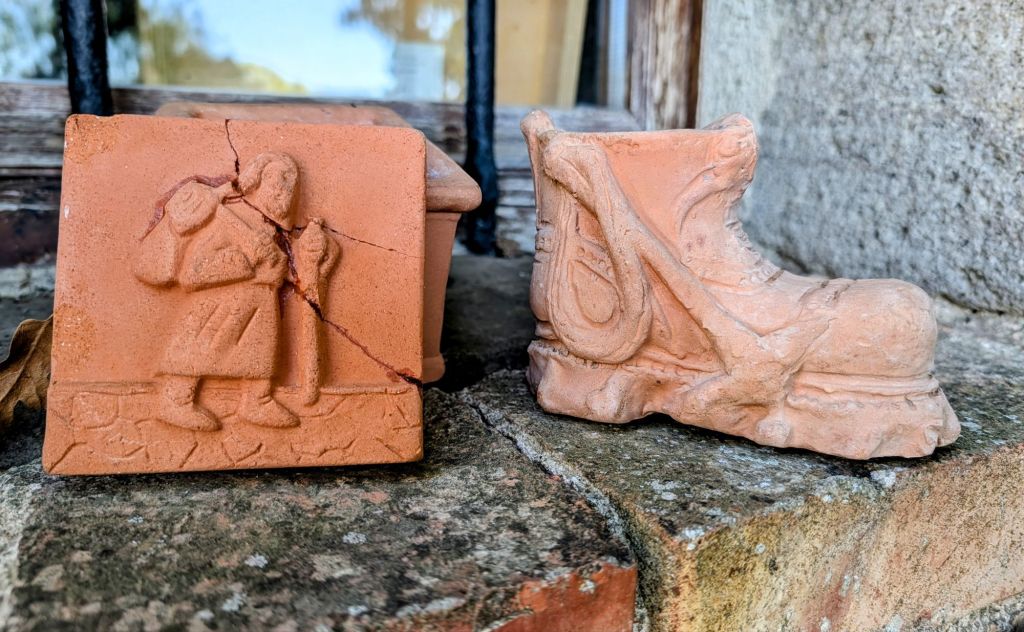
Via Francigena Segment 87 MarkerBuon Camino!Old Grain SilosPilgrim Pottery
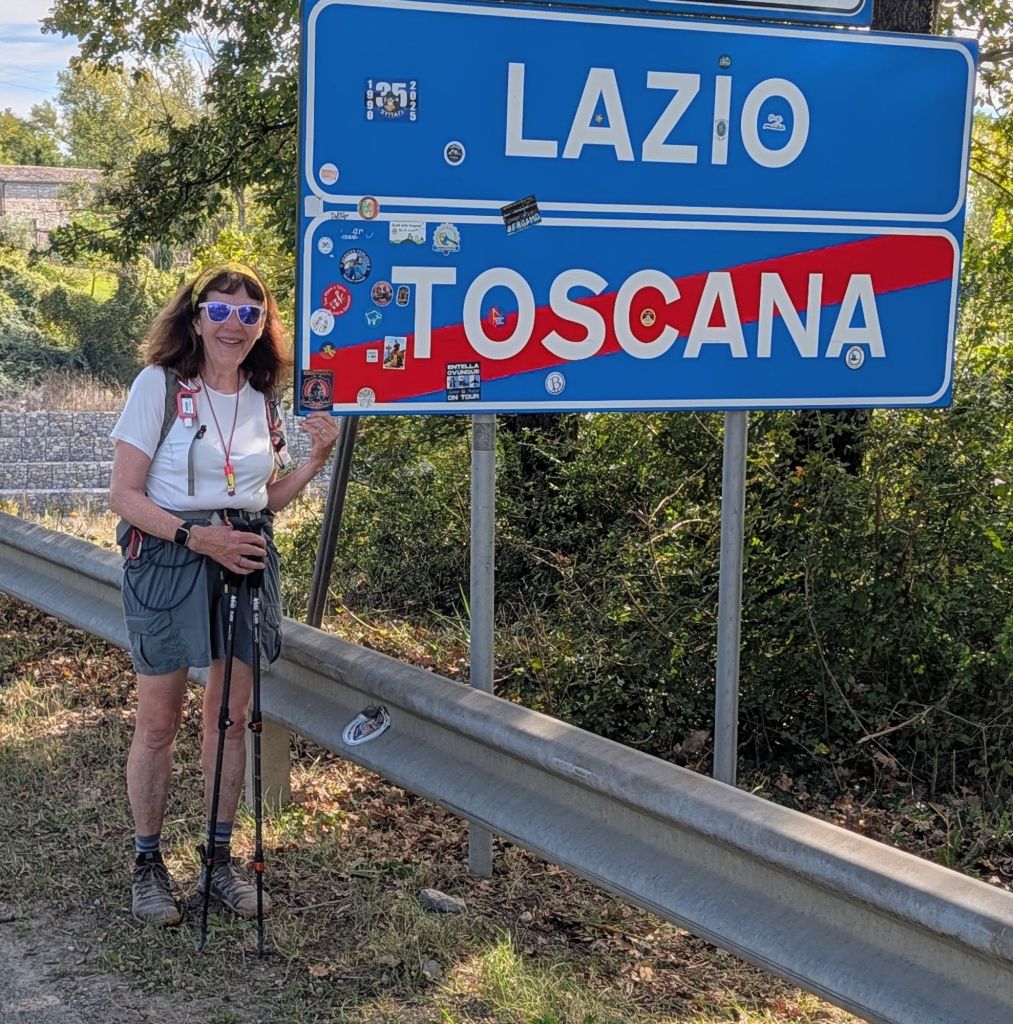
After many days, the trail left Tuscany bringing us into Italy’s Lazio region.
Goodbye Tuscany, Hello Lazio
The hilly Tuscany landscape almost immediately transformed into flat terrain through the Paglio Valley into Acquapendente
Acquapendente is surrounded by rivers & lakes as well as some waterfalls from which its name is derived. Its name comes from the Latin “Acquipendium” which means “Hanging Waters”.
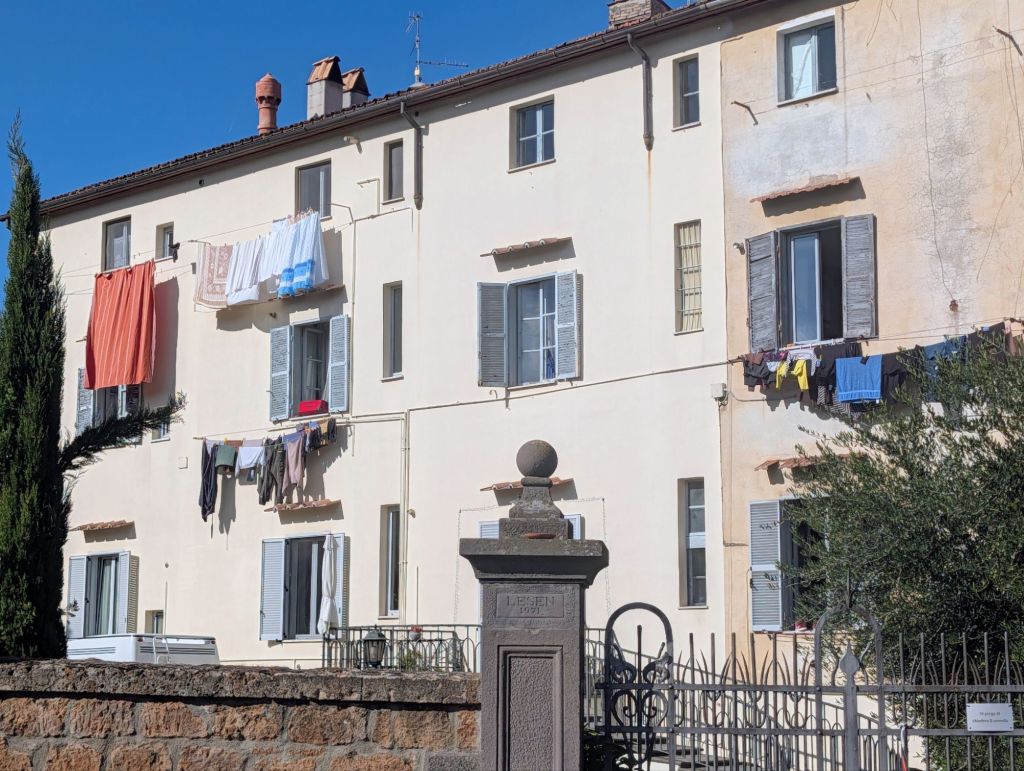
Laundry Day scenes in Acquapudente
In the Middle Ages, Acquapendente was established as a village & a monastery by the Benedictine Order due to its key position on the Via Francigena.
The Cathedral of the Holy Sepulchre
The Cathedral of the Holy Sepulchre was built in the 10th Century & is linked to a legend according to which Matilda of Westphalia, mother of Emperor Otto I, was traveling from Germany to Rome to build a church dedicated to the Holy Sepulchre (tomb) in Jerusalem.
However, she was forced to stop in Acquapendente because the mules carrying the gold needed to pay for the construction would not continue.
The empress then had a dream explaining what had happened: She said the mules were stopped by divine will, so the church was to be built in Acquapendente.
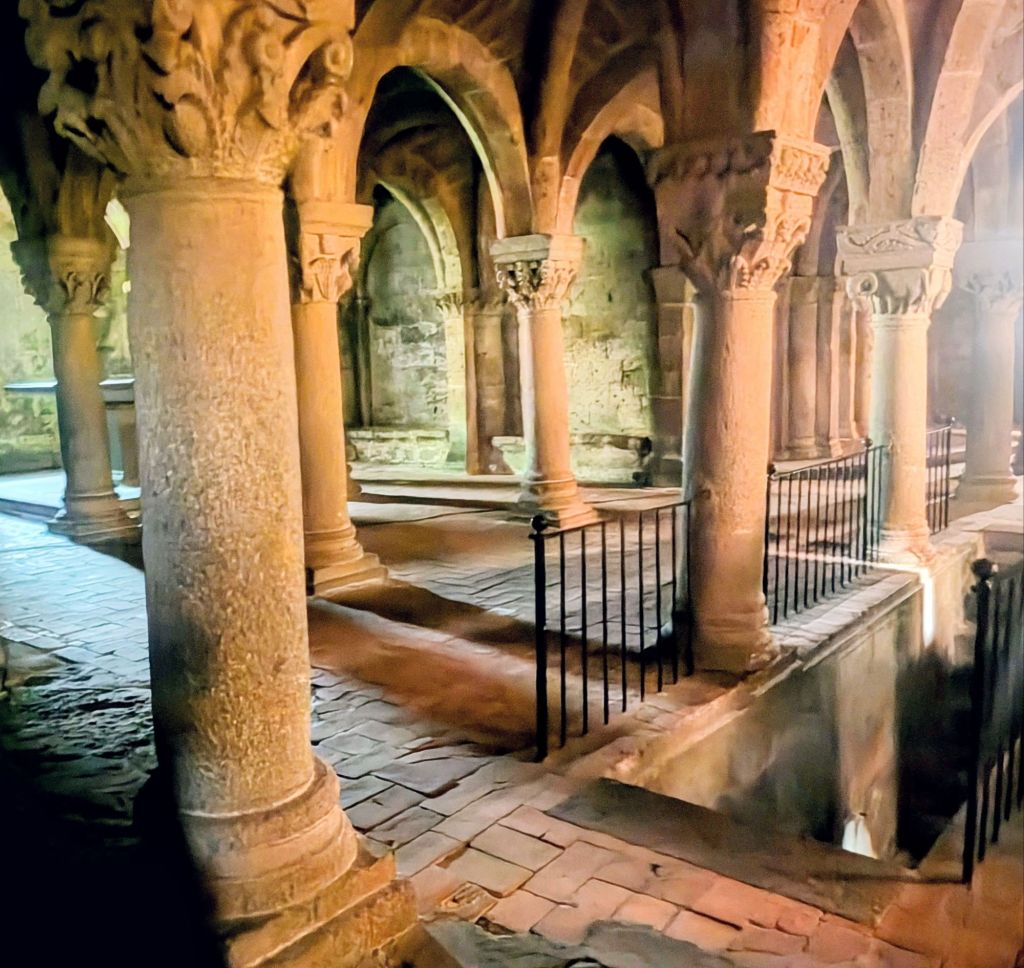
The crypt under the altar houses the shrine containing the relics from the Holy Sepulchre in a structure that replicates in miniature the Church of the Holy Sepulchre in Jerusalem.
Altar over the crypt in the Cathedral of the Holy Sepulchre
The crypt contains a blood-stained stone with Christ’s blood which according to tradition comes from the Holy Sepulchre in Jerusalem.
10th Century crypt housing a stone that has drops of Christ’s blood on it
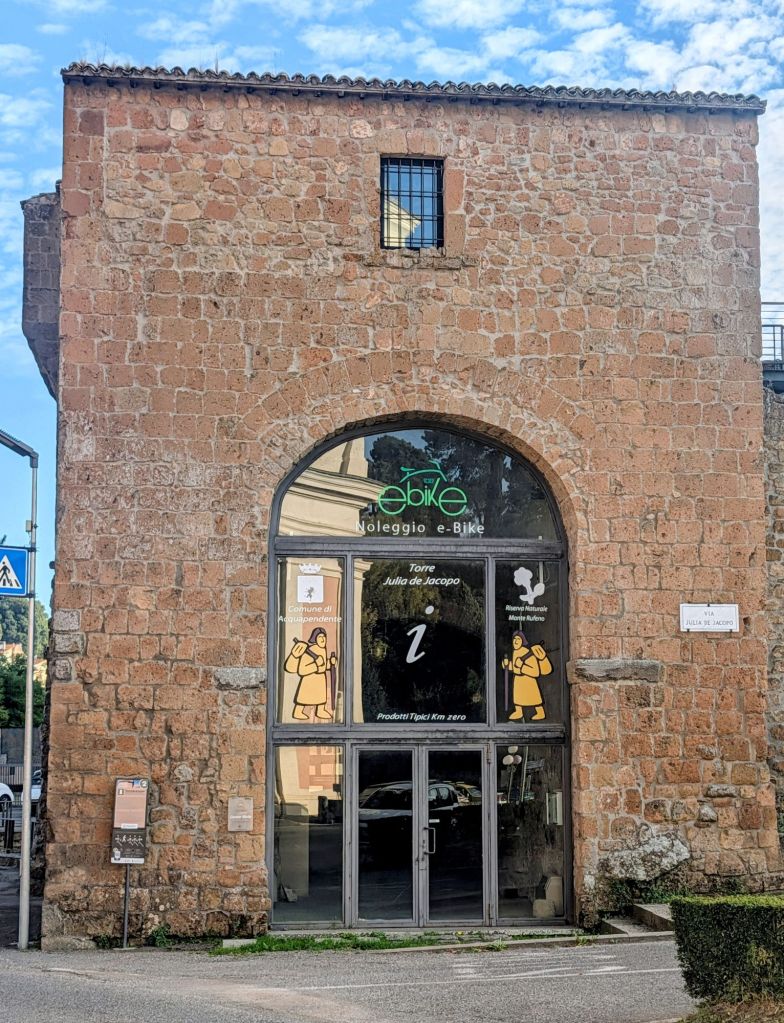
Across the street from the cathedral, the town’s tourist information center is located in a structure known as the Julia de Jacopo Tower. In 1550, a gate in the city walls was left open by defenders & Julia courageously closed it saving the city from its attackers.
Julia de Jacopo Tower
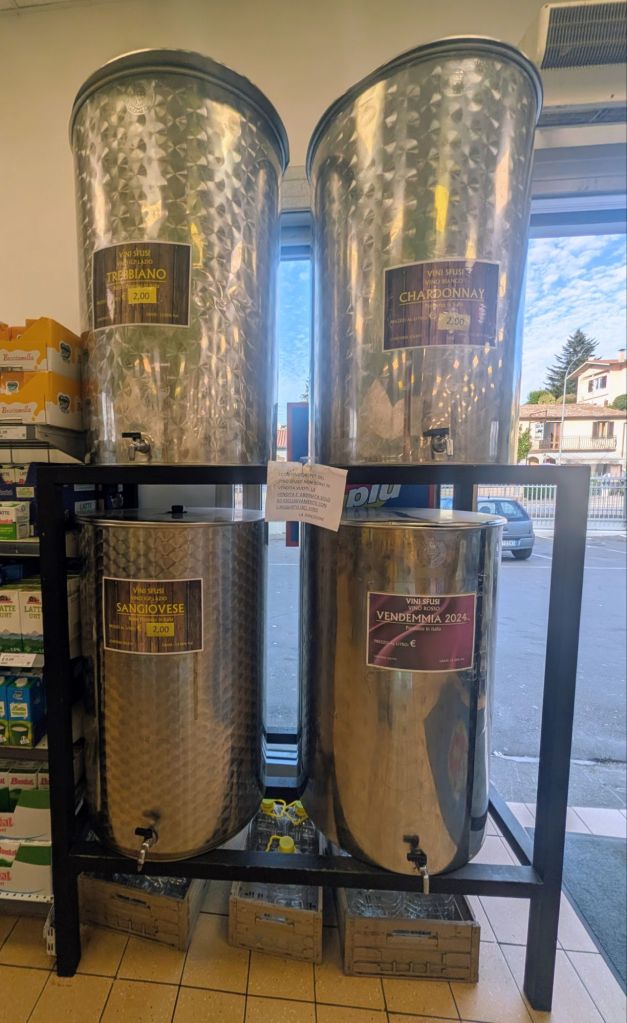
Check out the bulk wine station at the local supermarket with the plastic jugs below the vats to fill with your selection.
8 Miles; 3.75 Hours on the trail (Cumulative: 161.5 Miles; 78.7 Hours on the trail)
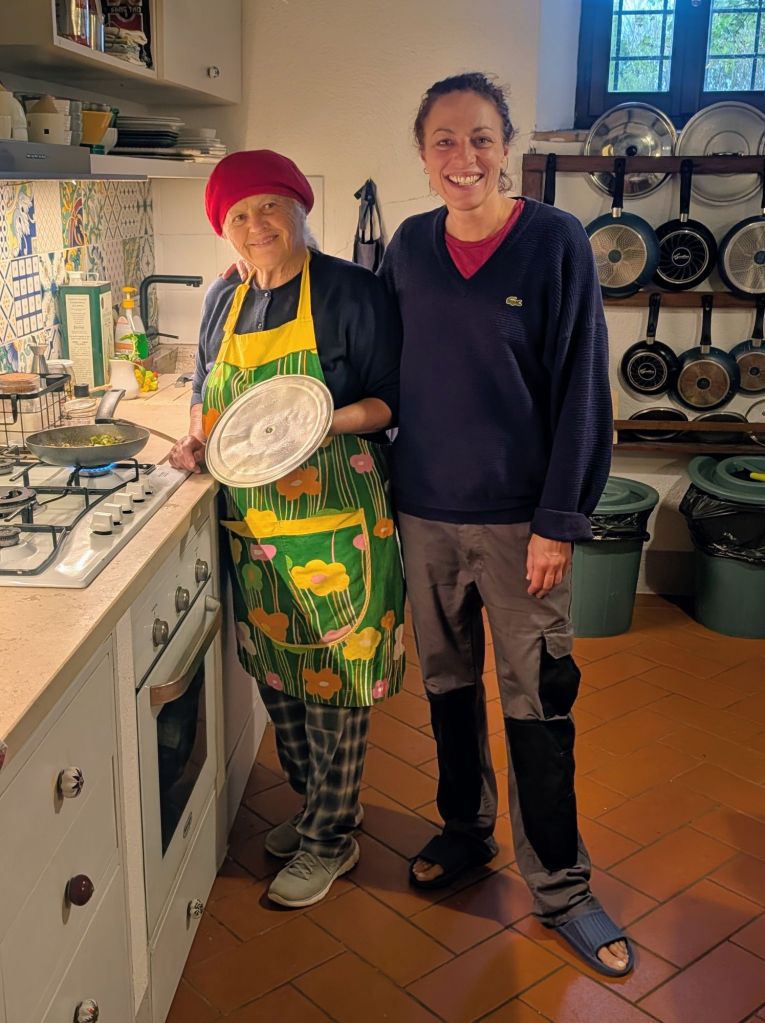
Before leaving Passalacqua, Elena & her mother Miranda prepared us a delicious breakfast using vegetables from their big garden & fresh eggs from their chickens.
Miranda the Chef & Elena the Hostess
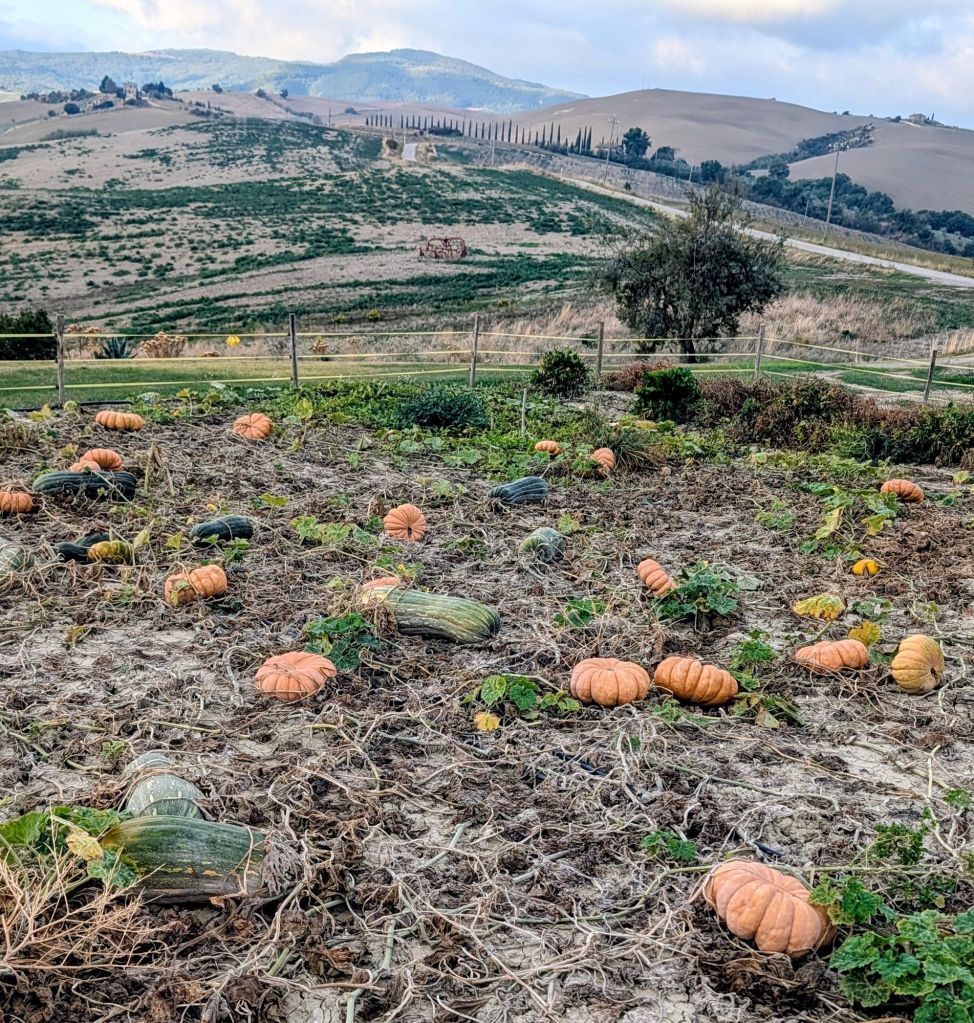
Their garden has 70 pumpkins which they said they will use for Halloween.
Pumpkins & Squash
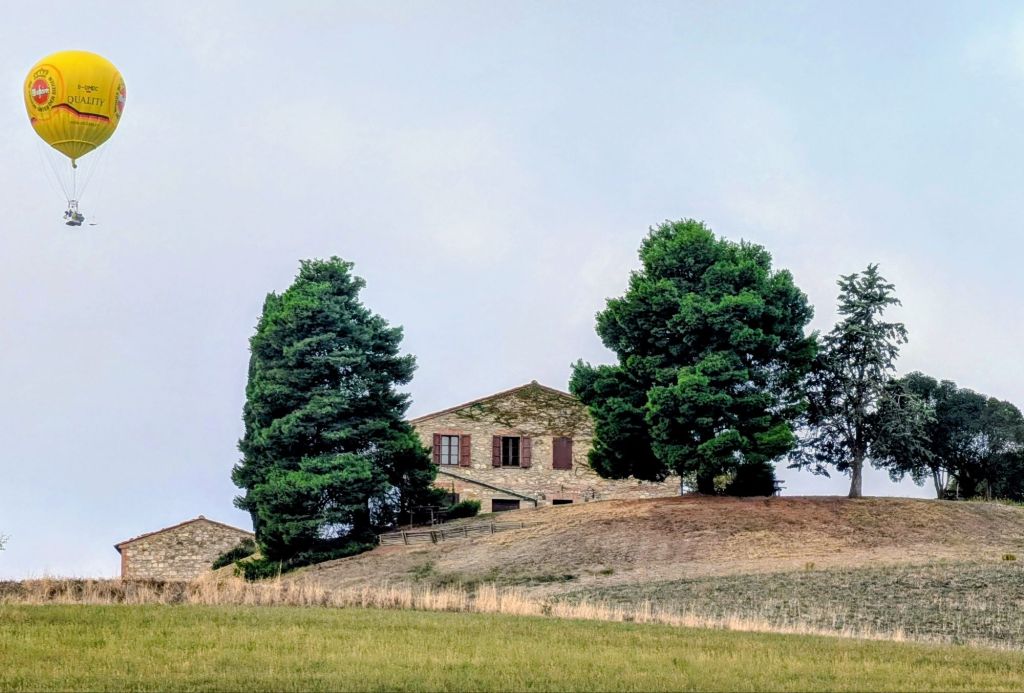
As we were left Passalacqua, a hot air balloon floated overhead.
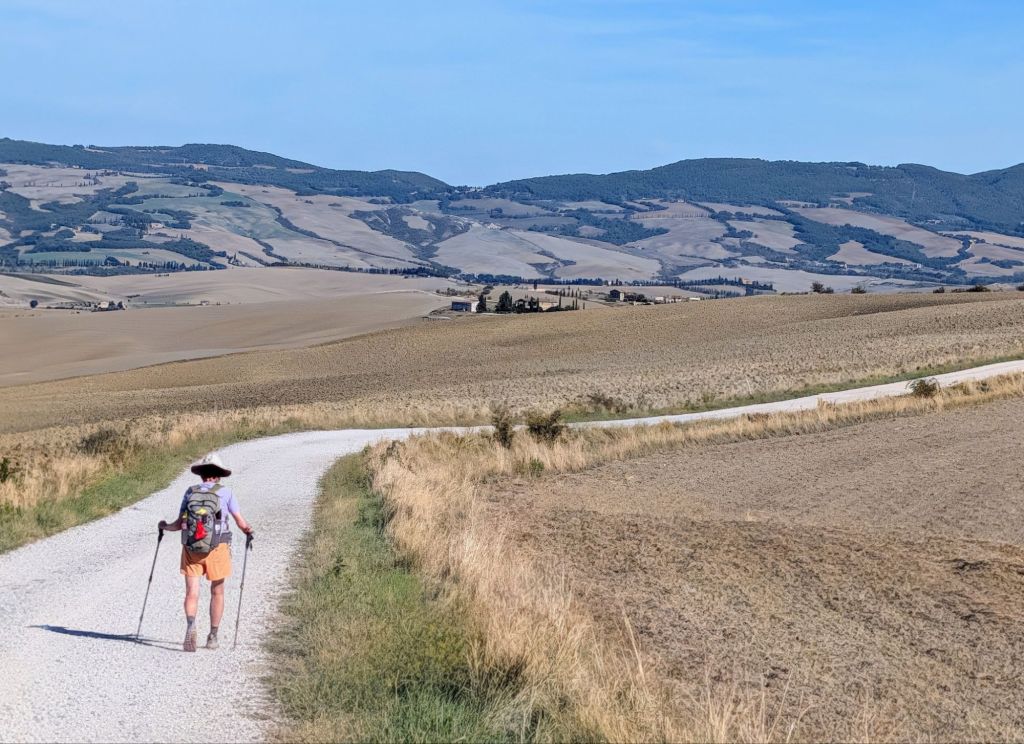
Our short walk today started on gravel & grassy tracks meandering through fields going up & down hills before starting a prolonged climb to Radicofani.
On the trail
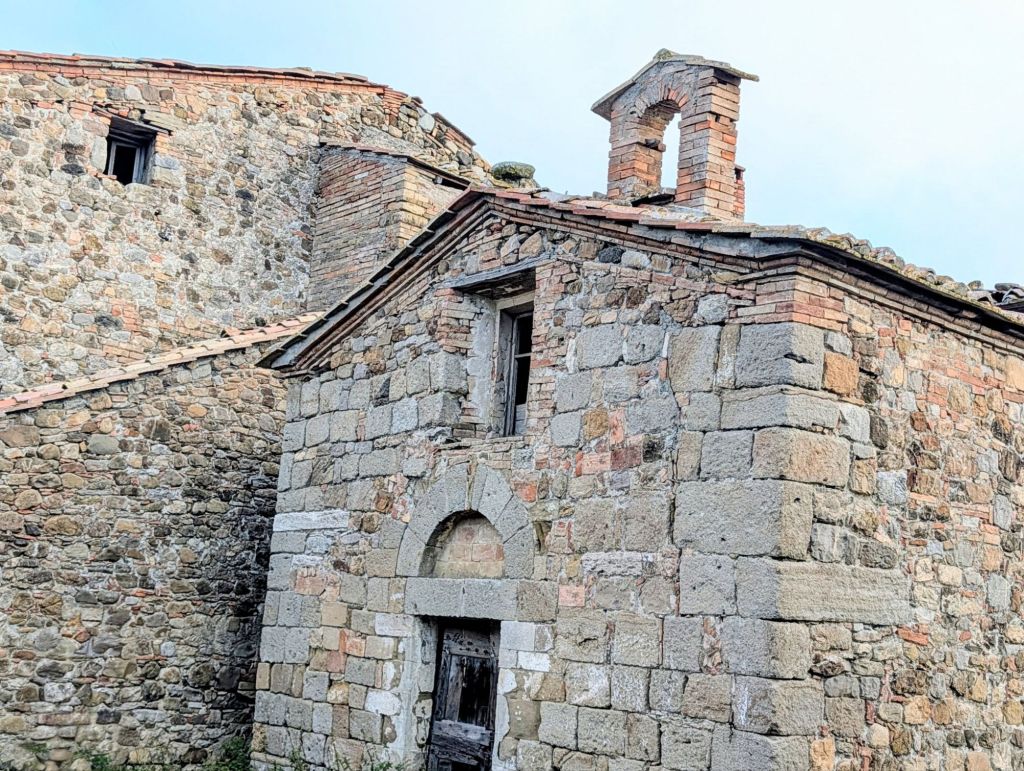
The Chiesa di San Pellegrino alle Bricole is a historic medieval Romanesque church & former pilgrim hospice located in Bricole near Gallina.
Chiesa di San Pellegrino alle Bricole
Abricula is the name of the 11th station in the travel diary of Sigeric, Archbishop of Canterbury, who was returning to England from Rome where he had gone to receive his mantle directly from Pope John VI in 990.
The name “Abricula” derives from the Latin adjective “Apricum” meaning “a sunny spot”.
Early in the 13th Century, King Phillip Auguste of France stayed here.
Late in the 13th Century, it was known as Ospitale San Peligrini de Obricolis when it was a prosperous pilgrim hospital along the Via Francigena. The resident monks sold the buildings & surrounding land to the wealthy Salimbeni family who presumably made even more money from pilgrims.
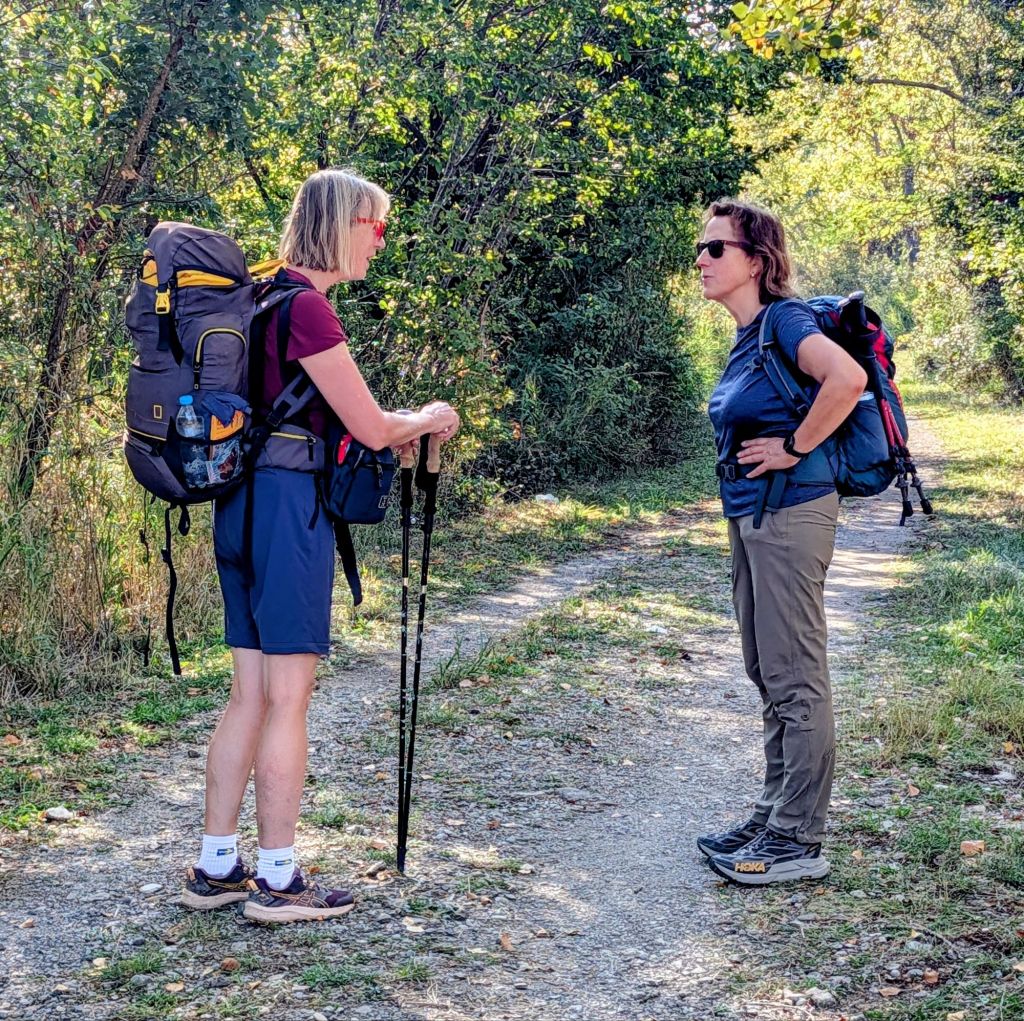
On the trail we met two German ladies who are walking the trail separately by themselves. Birgit is from Hannover & Angelika is from Kiel.
Birgit & GinaBirgit & Angelika
Here are some more images from today’s short trek:
11.9 Miles; 6.5 Hours on the trail. (Cumulative: 153.5 Miles; 74.9 Hours on the trail)
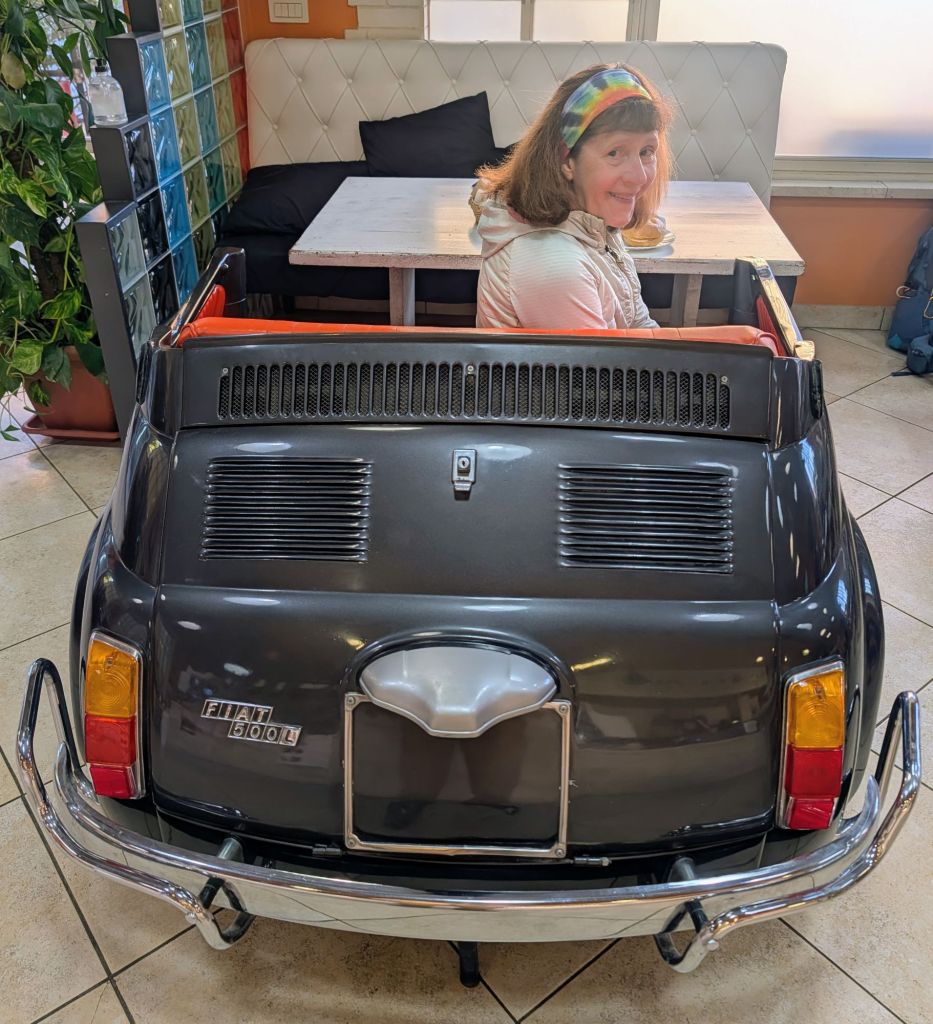
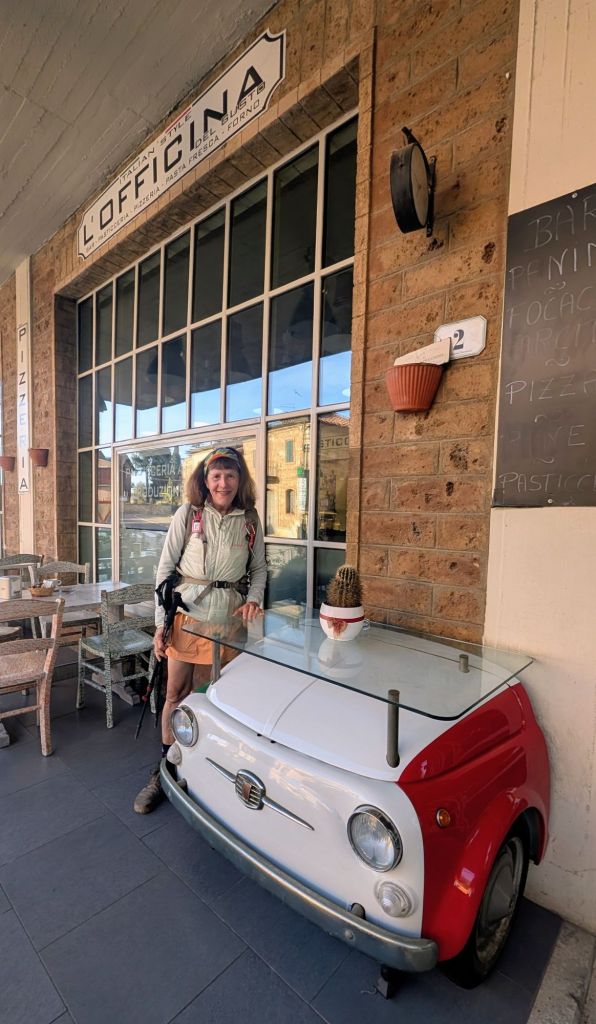
We had breakfast at this little place which had an Italian vehicles motif.
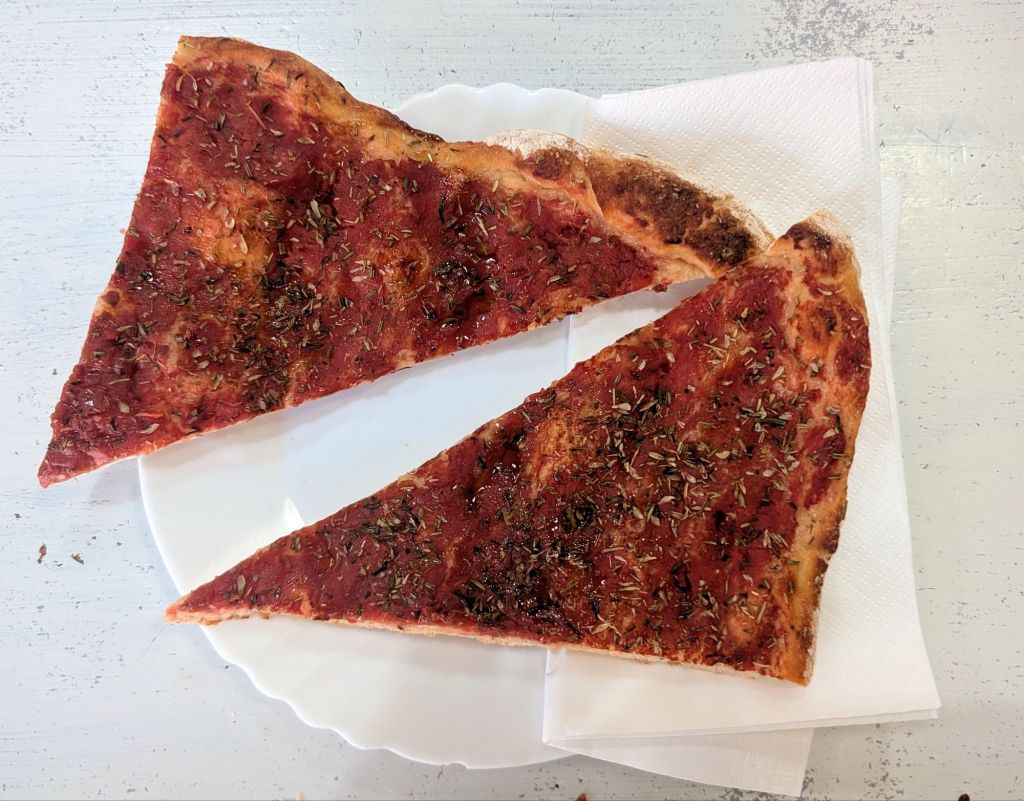
Can you say Pizza for breakfast? Sure, I knew you could.
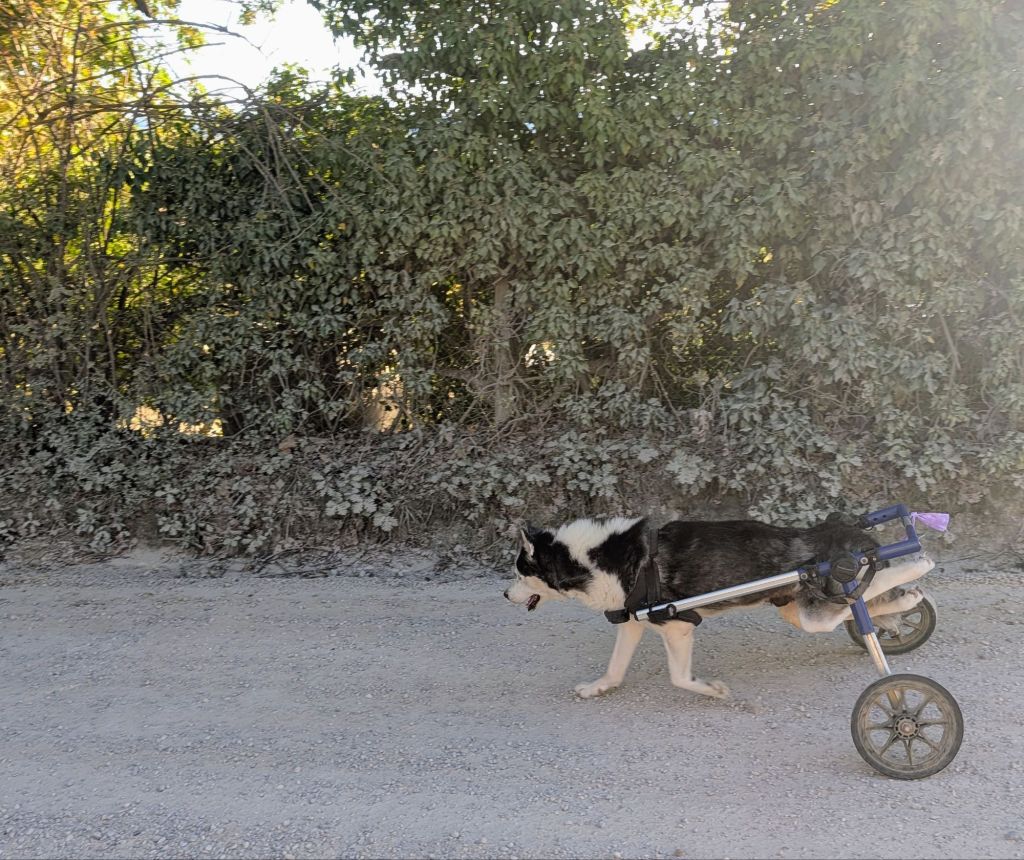
Not too far outside town, we saw this little guy out for a spin on the trail.
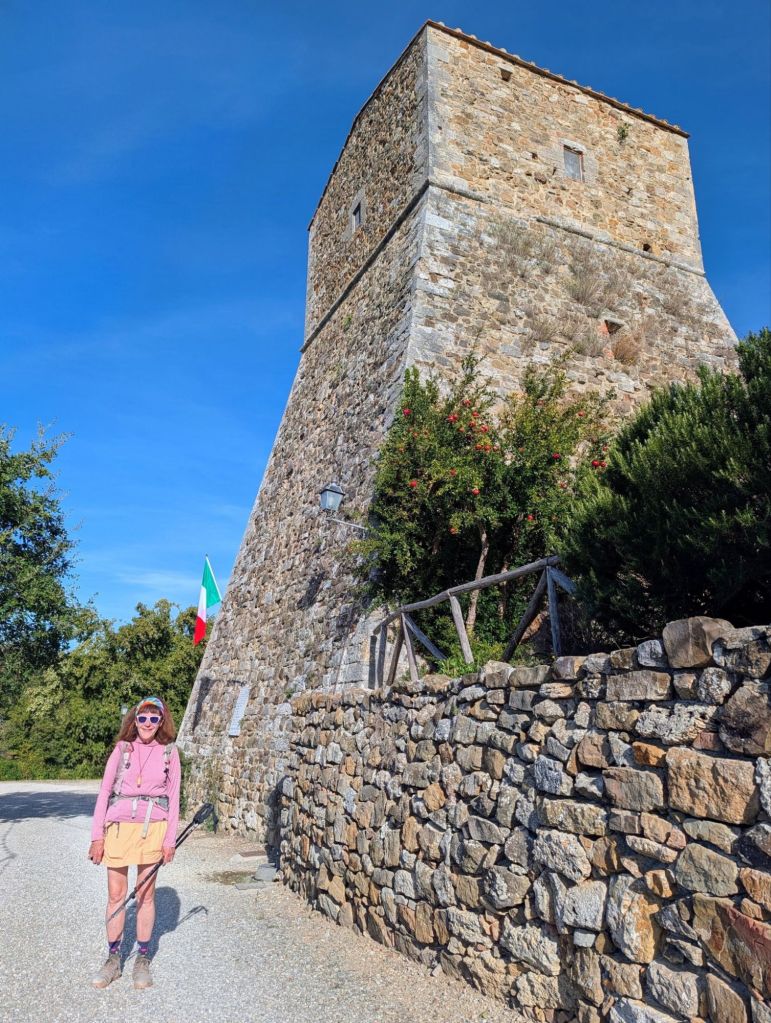
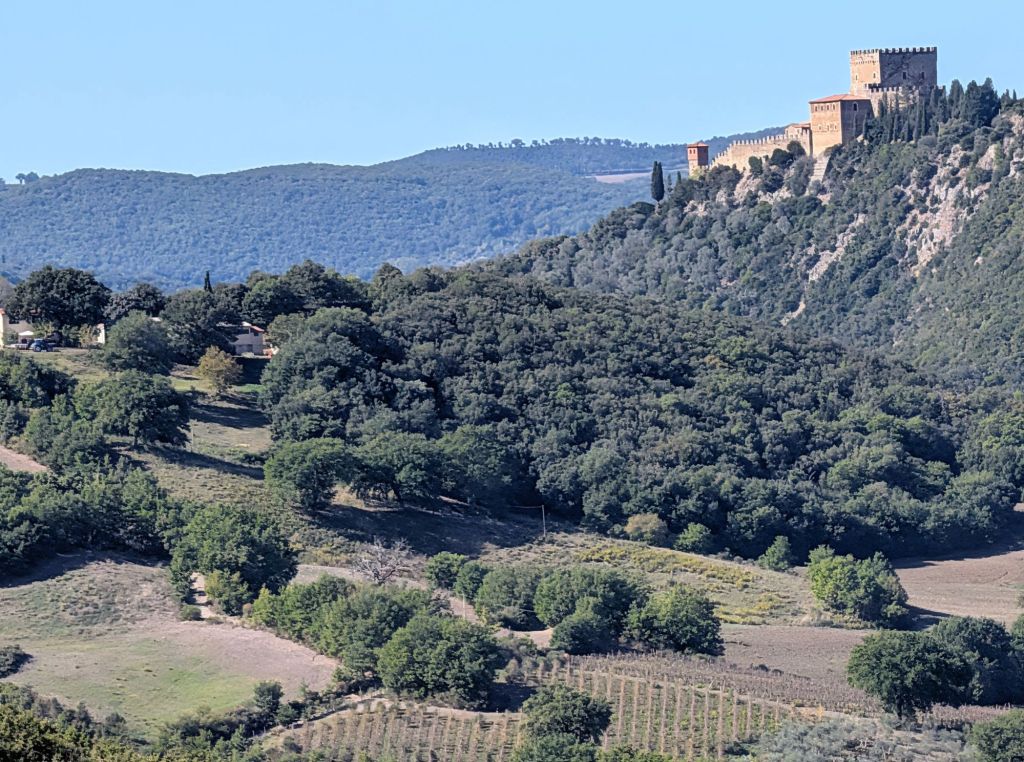
We walked to Castle Vignoni which dates from the 11th Century & was once key to a fortified medieval village.
A truncated tower remains which was the castle keep, or the castle’s heart, where defenders would make their last stand. Also, one gate to the walled enclosure is also still perfectly intact.
We also saw a nice shop there. Two ladies make hand painted table placemats & runners as well as custom aprons & belts.
We bought two hand- painted placemats to use at home when Gina makes her own Italian food creation “Pasta alla Gina”.
Not too far below Castle Vignoni is Bagno Vignoni.
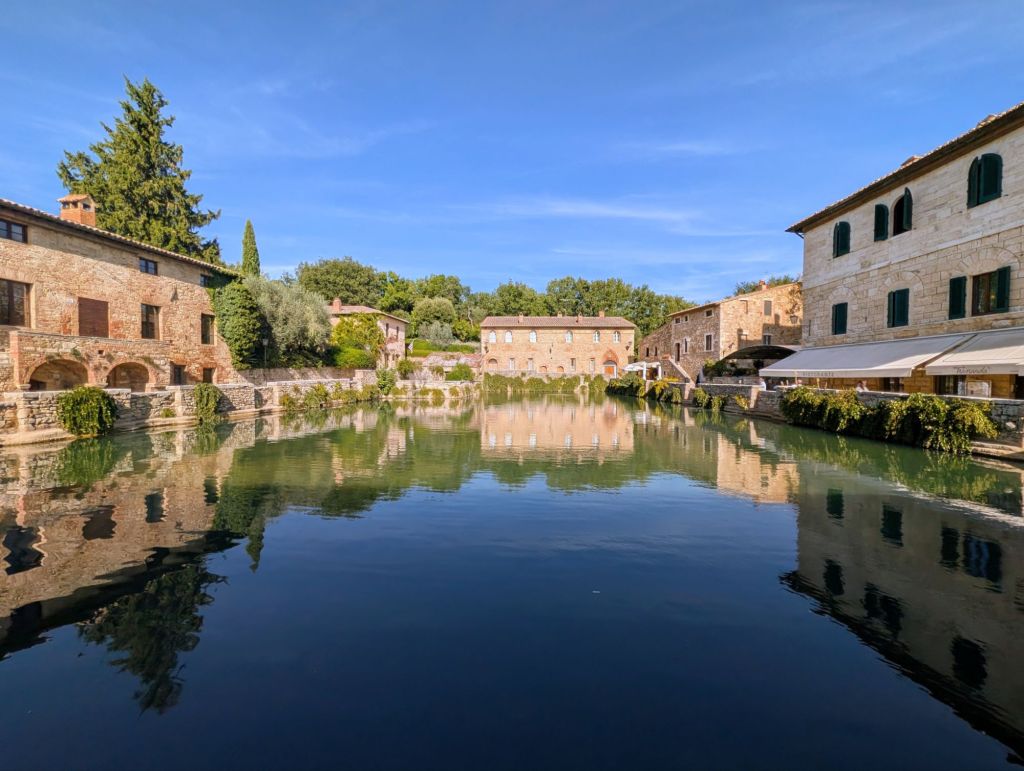
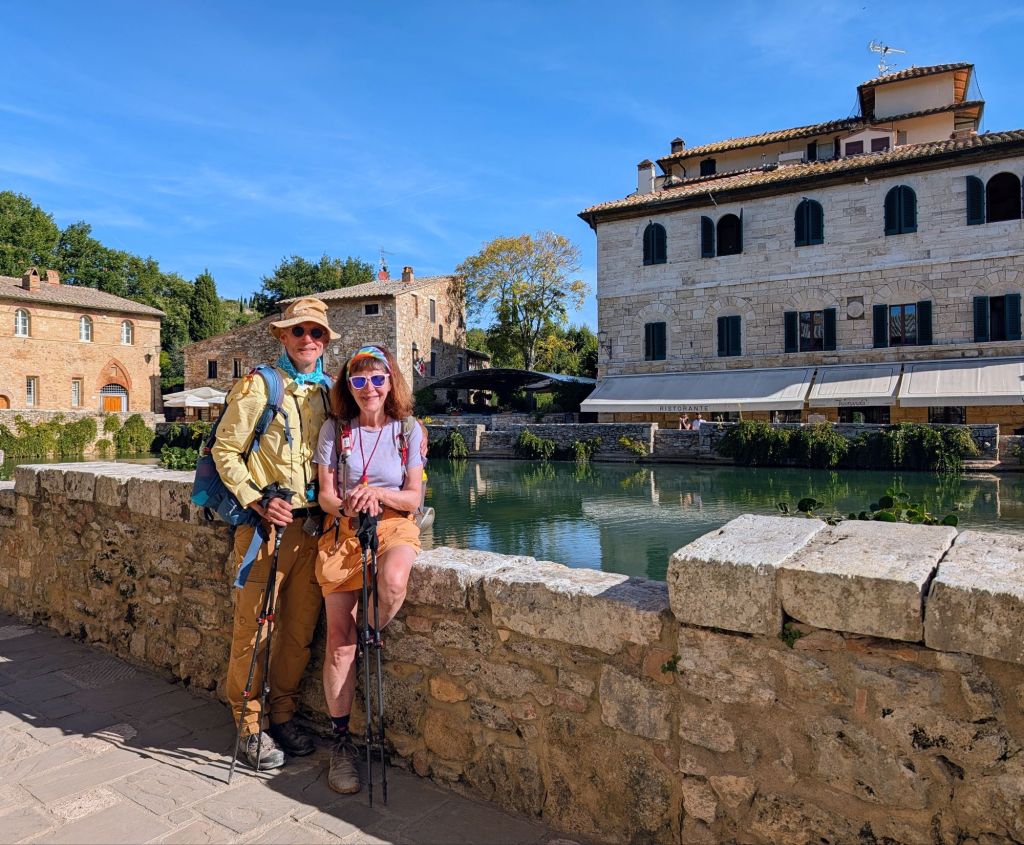
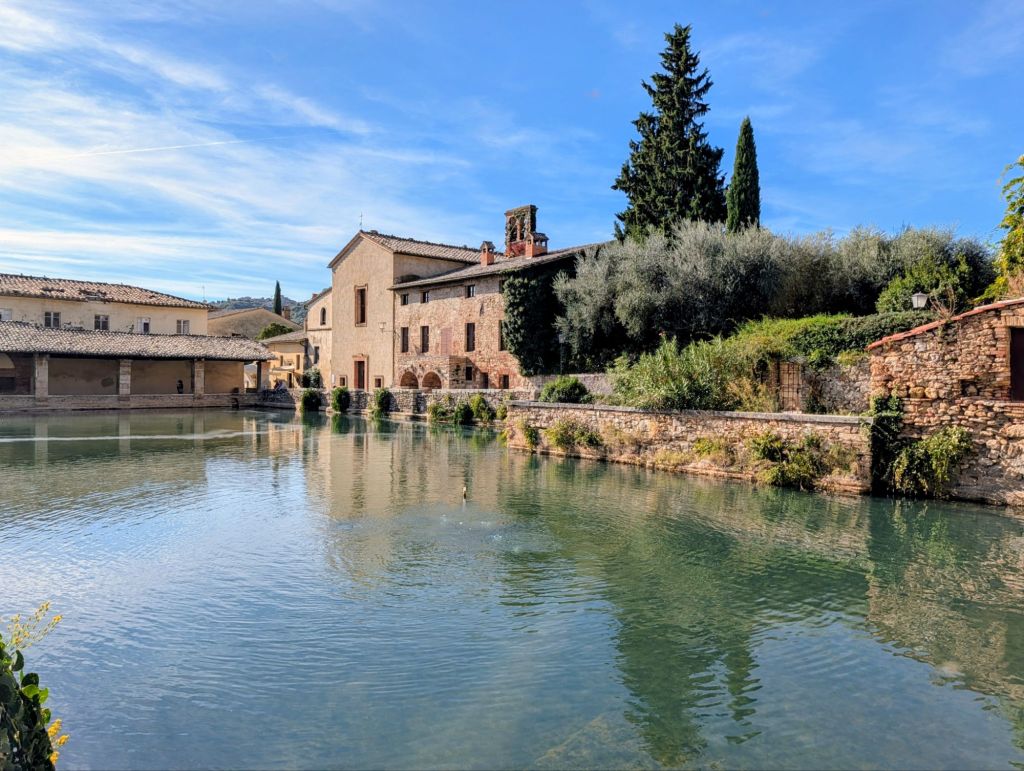
It is a historic thermal village famous for its central square which is not a plaza; but, rather an open- air stone basin dating from the 16th Century which is 50 meters x 30 meters & is filled by naturally hot, mineral-rich water at around 125°F.
The hot water is due to the area’s volcanic geology.
The Etruscans & Romans both used the thermal springs here. In medieval times, Bagno Vignoni was used by pilgrims along the Via Francigena for a rest & relaxation stop.
Here are some images from today’s long & winding road.
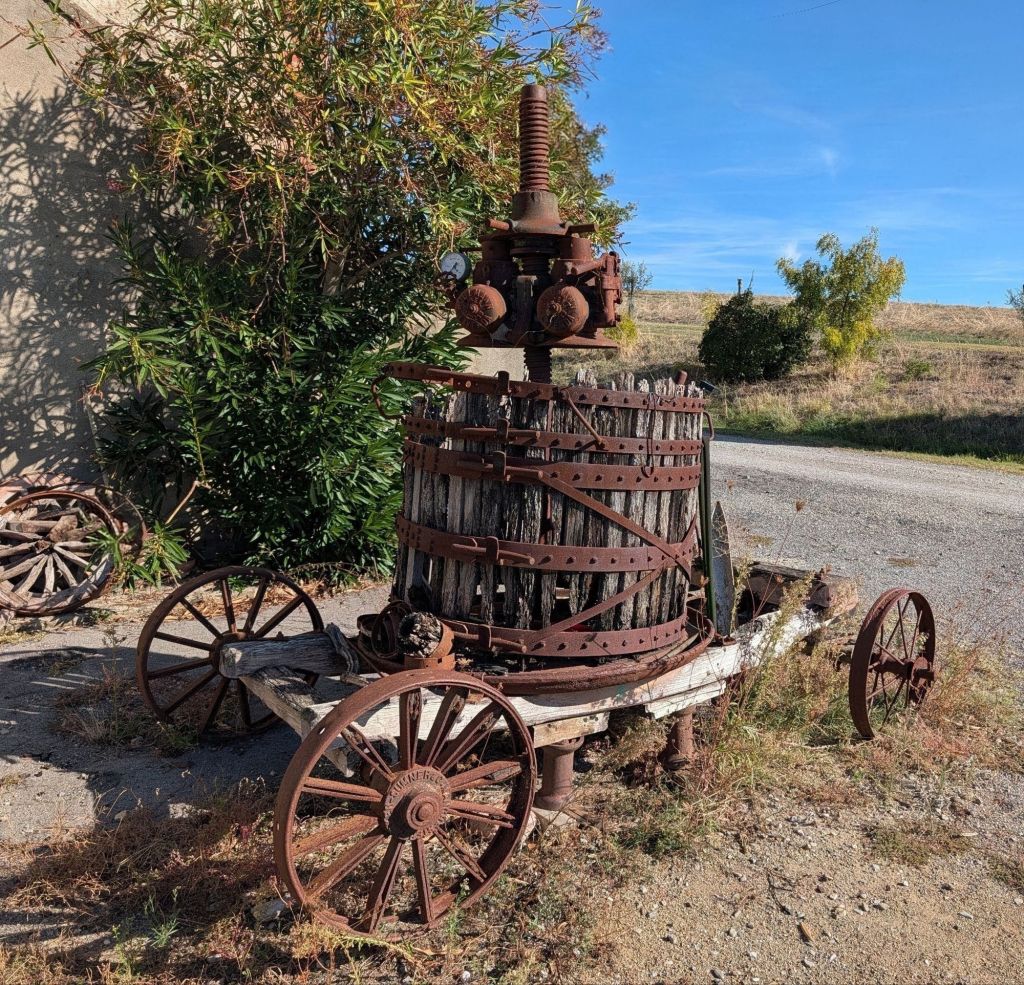
Castiglione d’Orcia on the hill Afternoon Break in any available shade Old Portable Wine Press
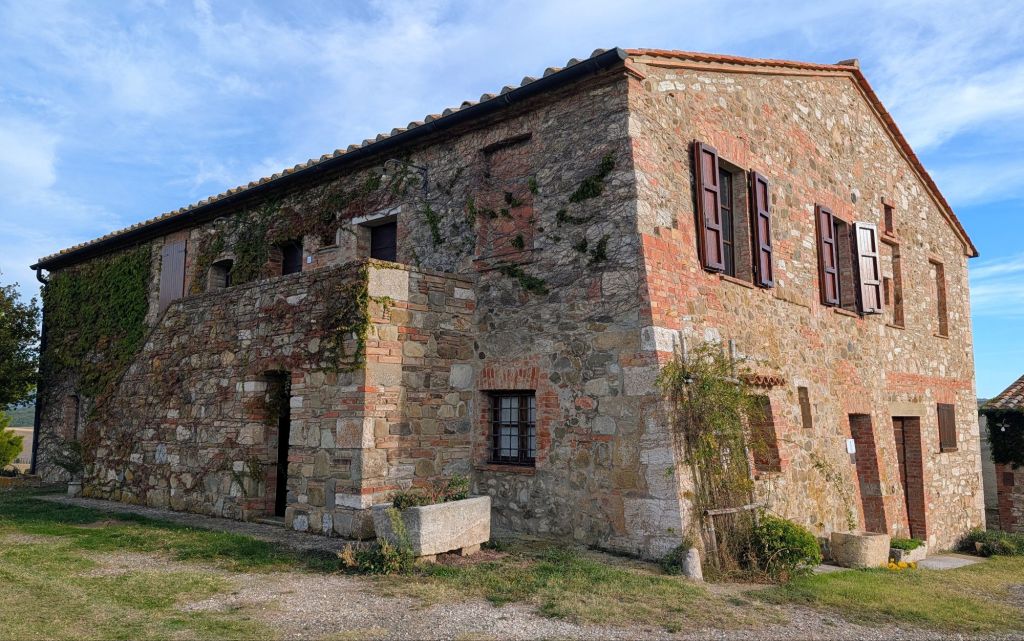
We are staying in Passalacqua which was founded in the Middle Ages on the Via Francigena adjacent to the 11th stage noted by the Archbishop of Canterbury Sigeric in 990AD.
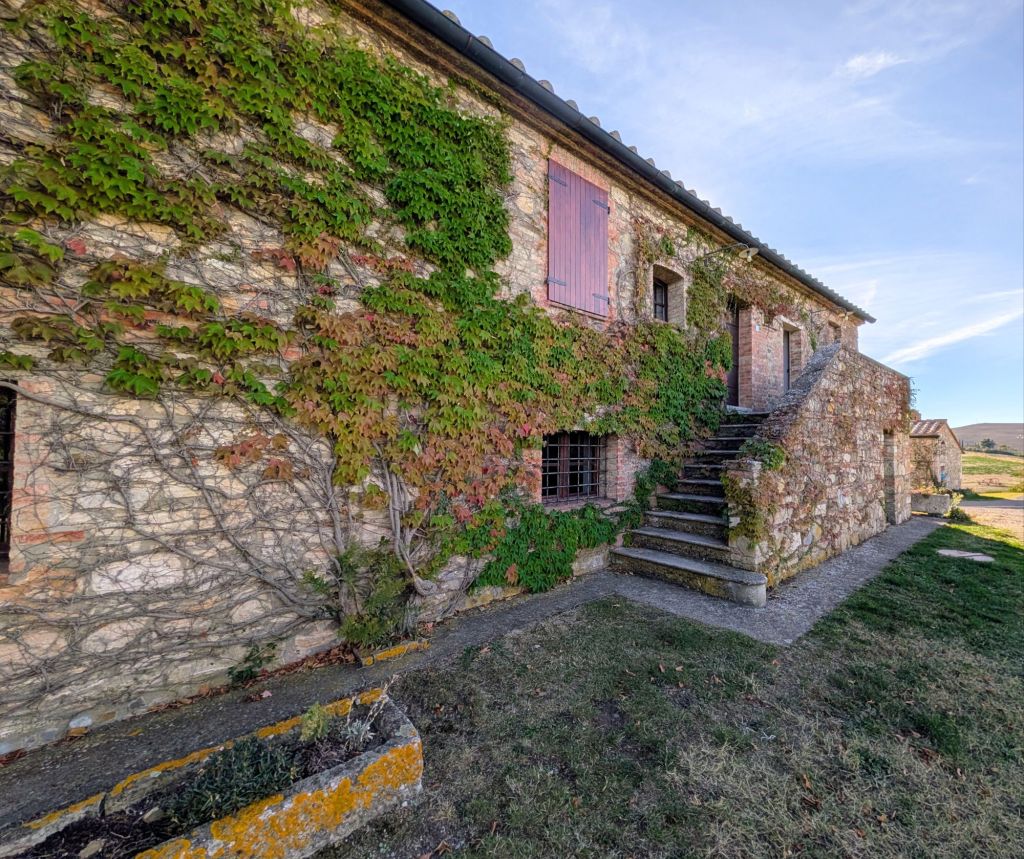
The stone farmhouse in which we are staying was built in the 14th century by the Salimbeni family.
Agriturismo Passalacqua
The Salimbeni were a powerful Ghibelline dynasty in Siena during the 13th & 14th Centuries.
In Italy, the Ghibellines represented the faction who supported the German/Holy Roman Emperor’s authority over Italian city-states & feudal domains.
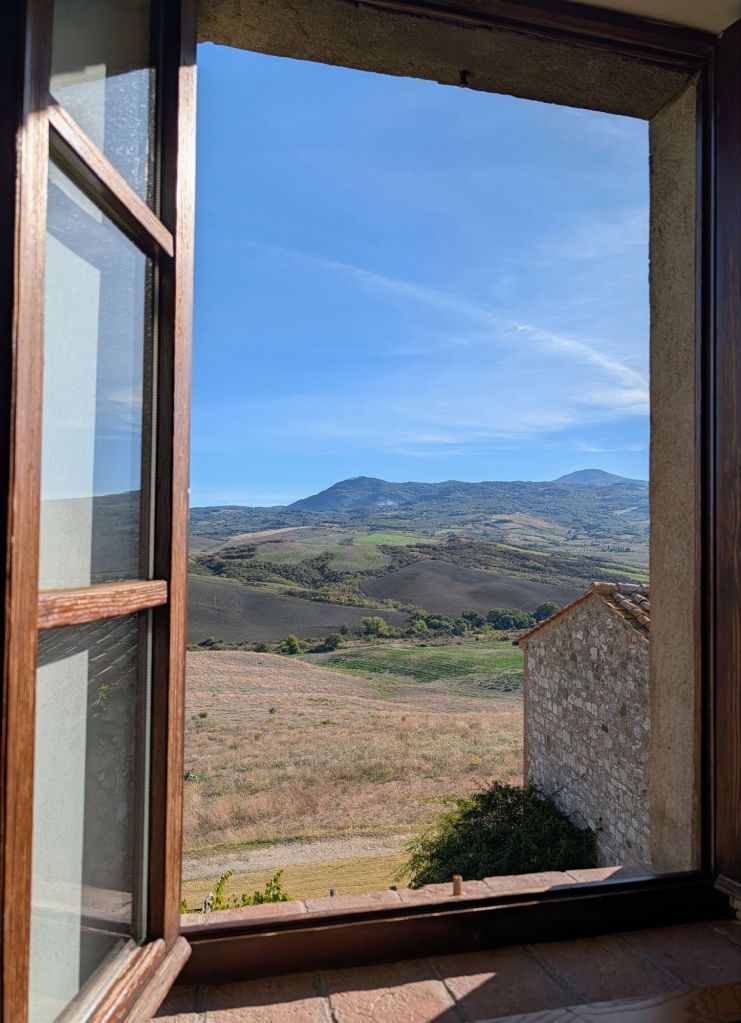
View from our room
The Salimbeni family built & owned all the castles in the above photos. They also controlled Bagno Vignoni with its thermal springs from the early 1300s until the early 1400s.
In 1472 in Siena, the Salimbeni family founded the Banca Monte dei Paschi di Siena. It was originally called Banca Monte di Pietà (Mount of Piety) to help the needy. It still exists based in Siens & it is the world’s oldest bank still in business.
Tomorrow’s destination Radicofani is the extinct volcano in the distance topped by a tower.
18.8 Miles; 8.5 Hours on the trail (Cumulative: 141.6 Miles; 68.4 Hours on the trail)
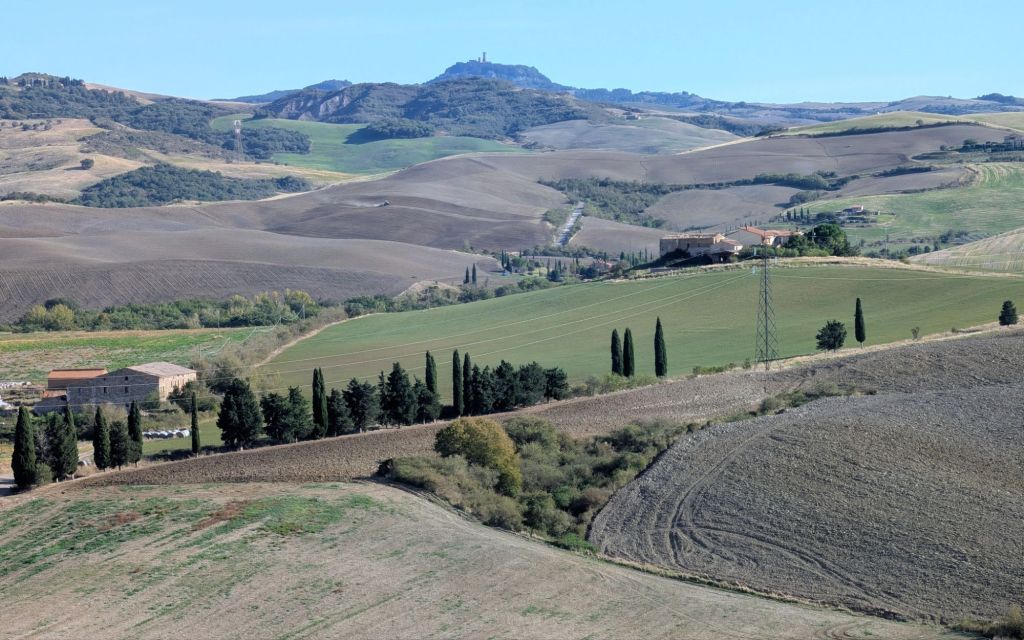
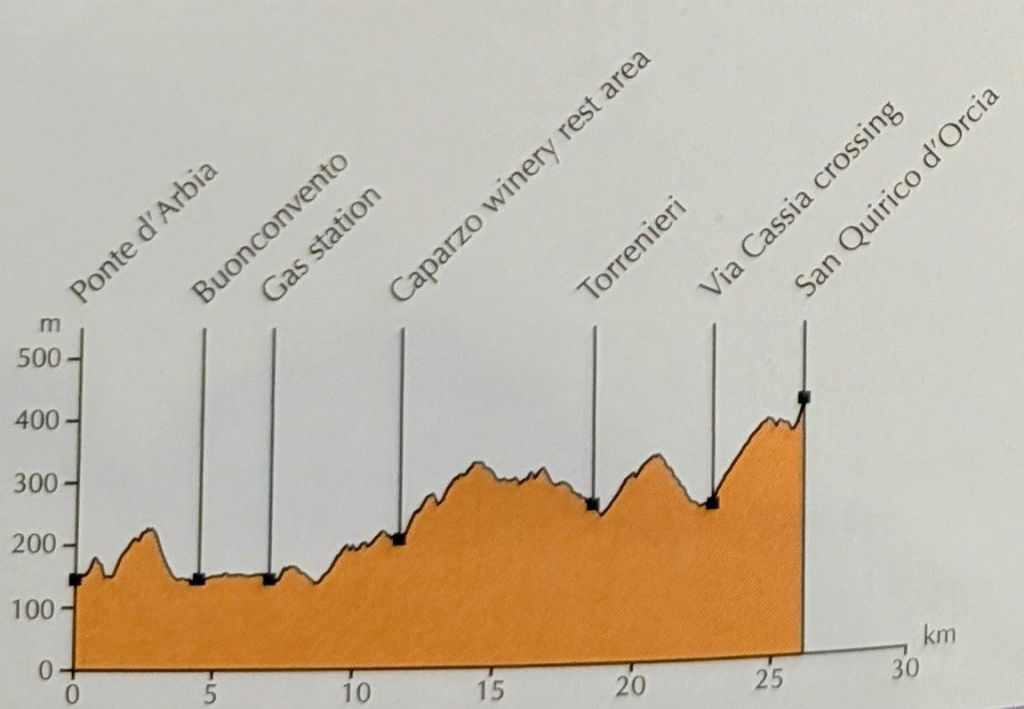
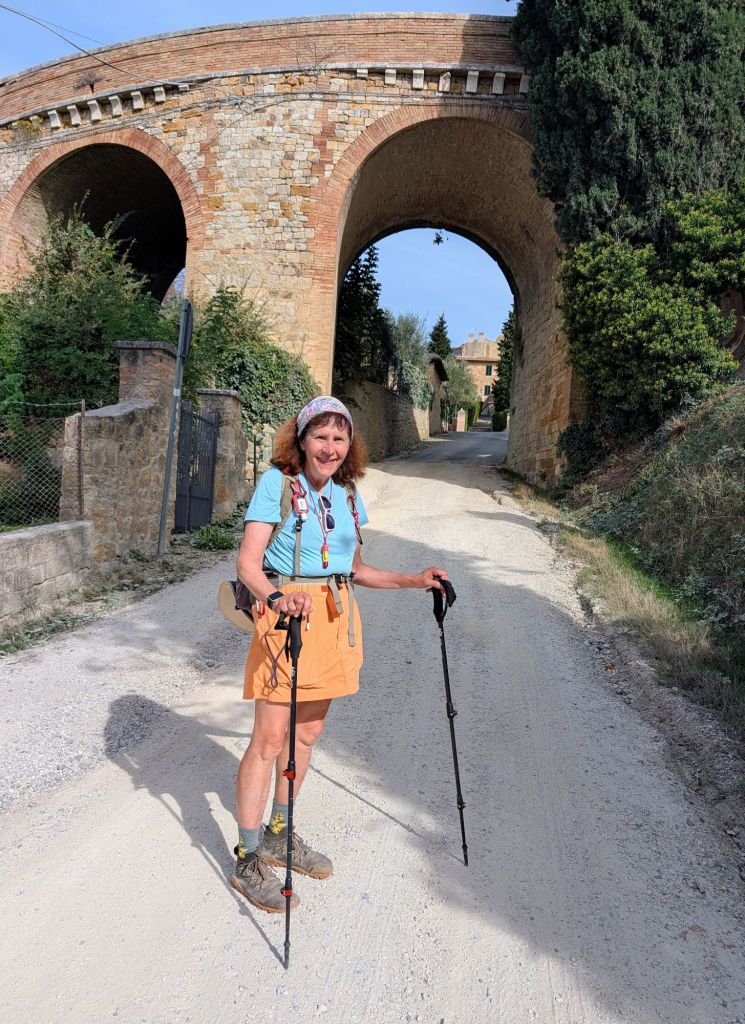
The walk to San Quirico d’Orcia was quite a mix of uphill & downhill slopes in the rolling hills along earthen tracks known as the famous Tuscan “white roads” which are also called caliche roads in other places.
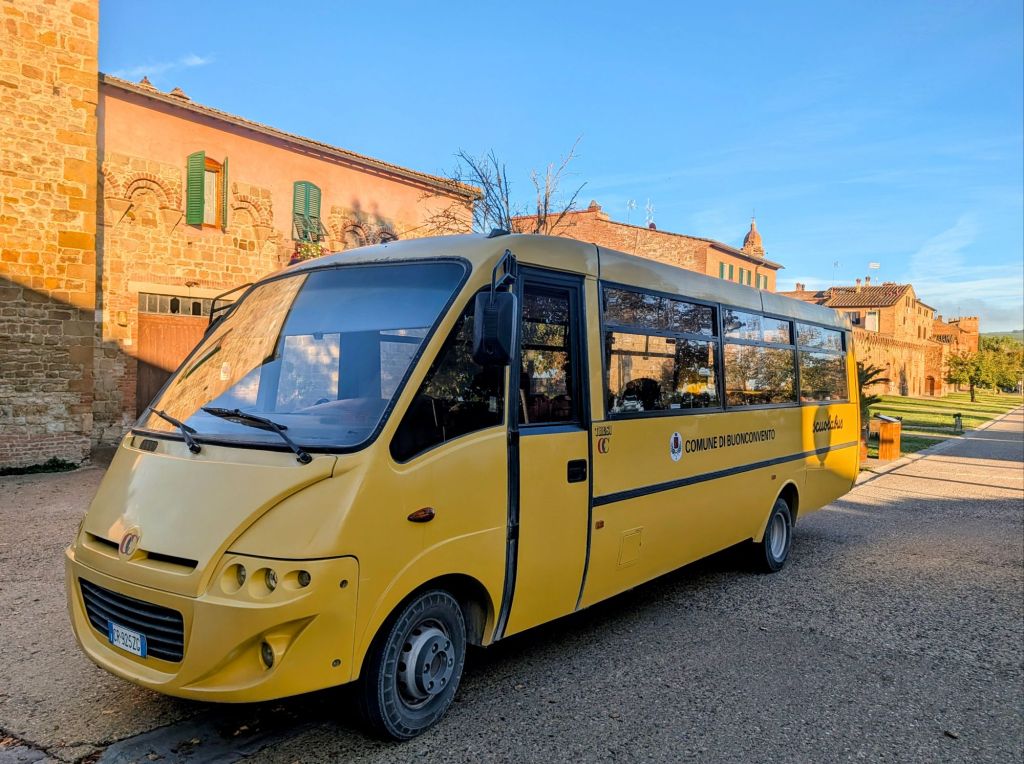
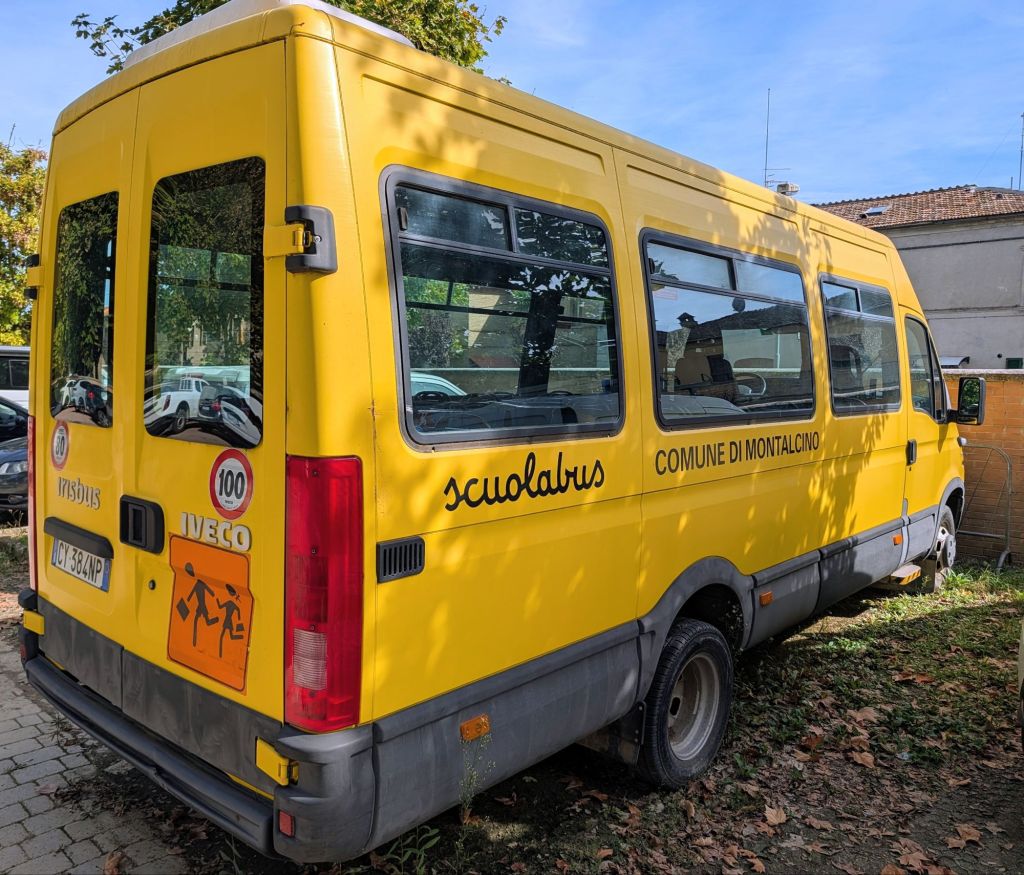
Starting in the morning, we saw a couple yellow school buses like America has. Most countries use public transportation to get kids to school. Italy is one of the few places we have ever seen that has dedicated school buses.
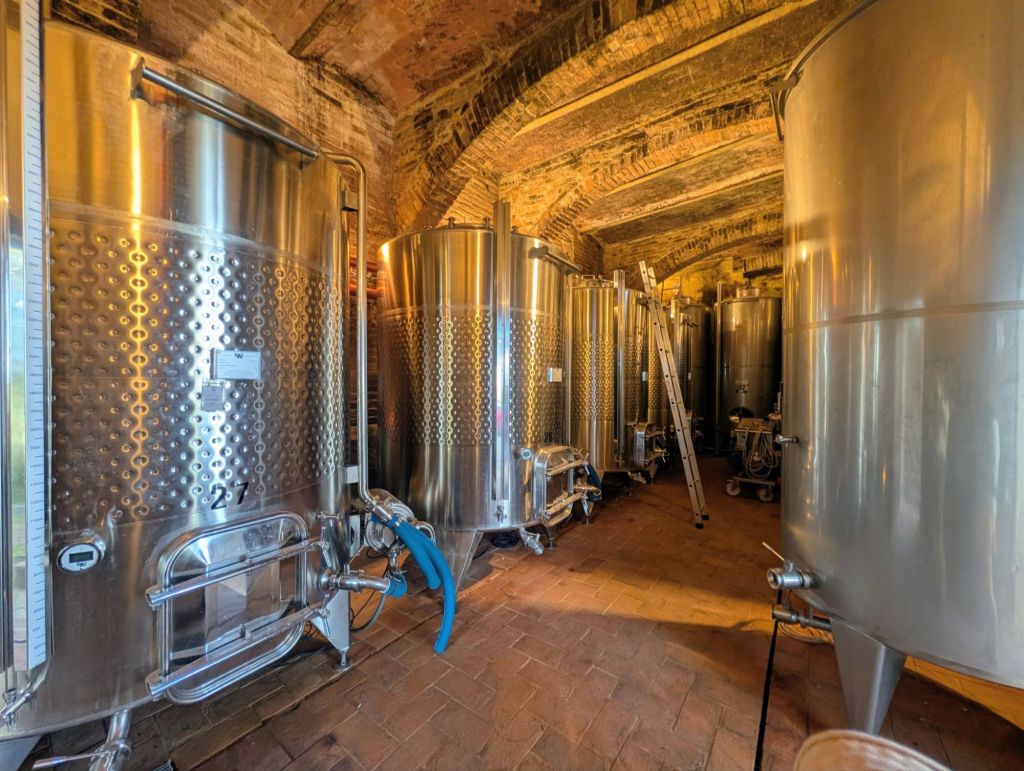
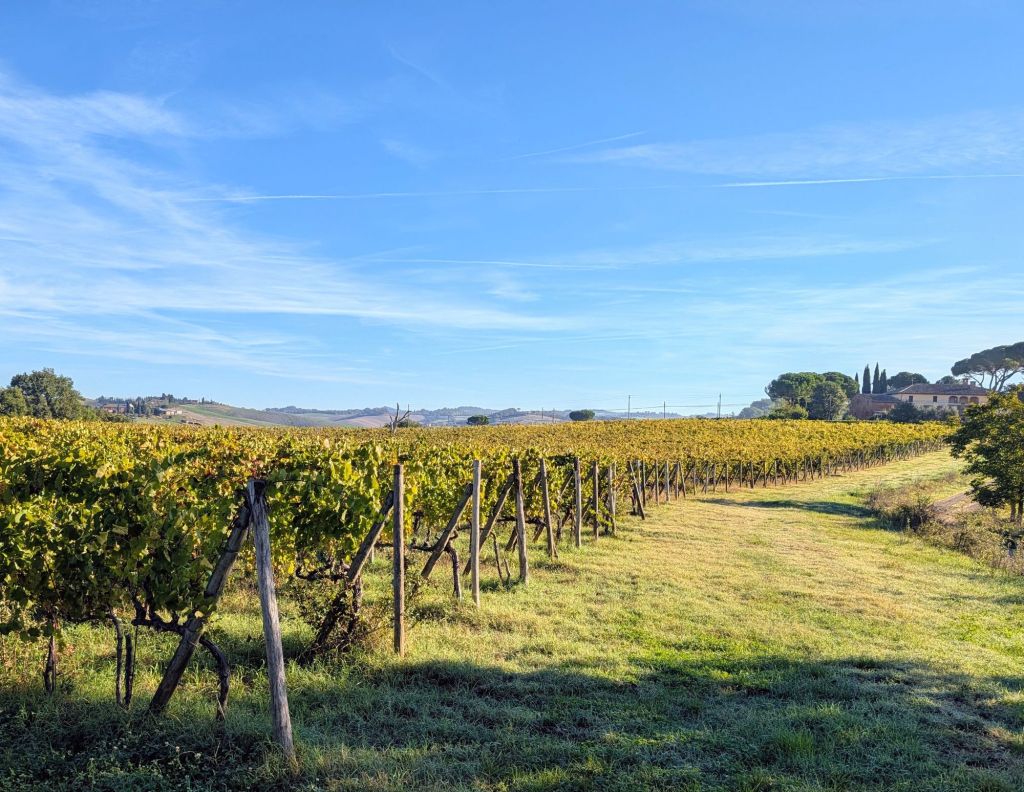
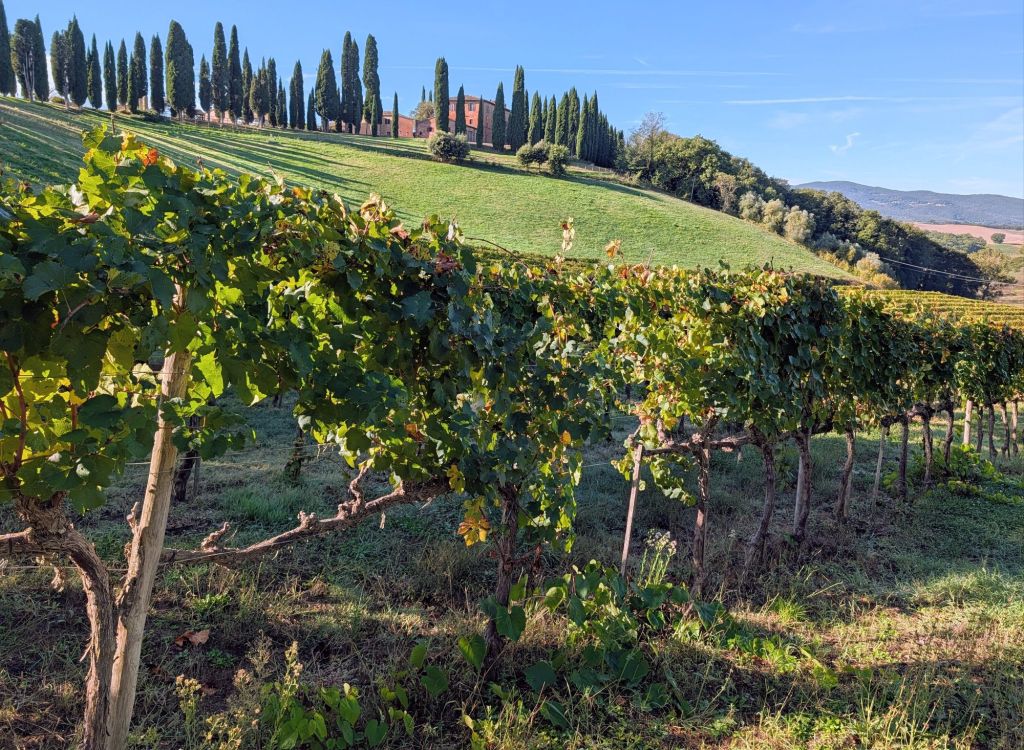
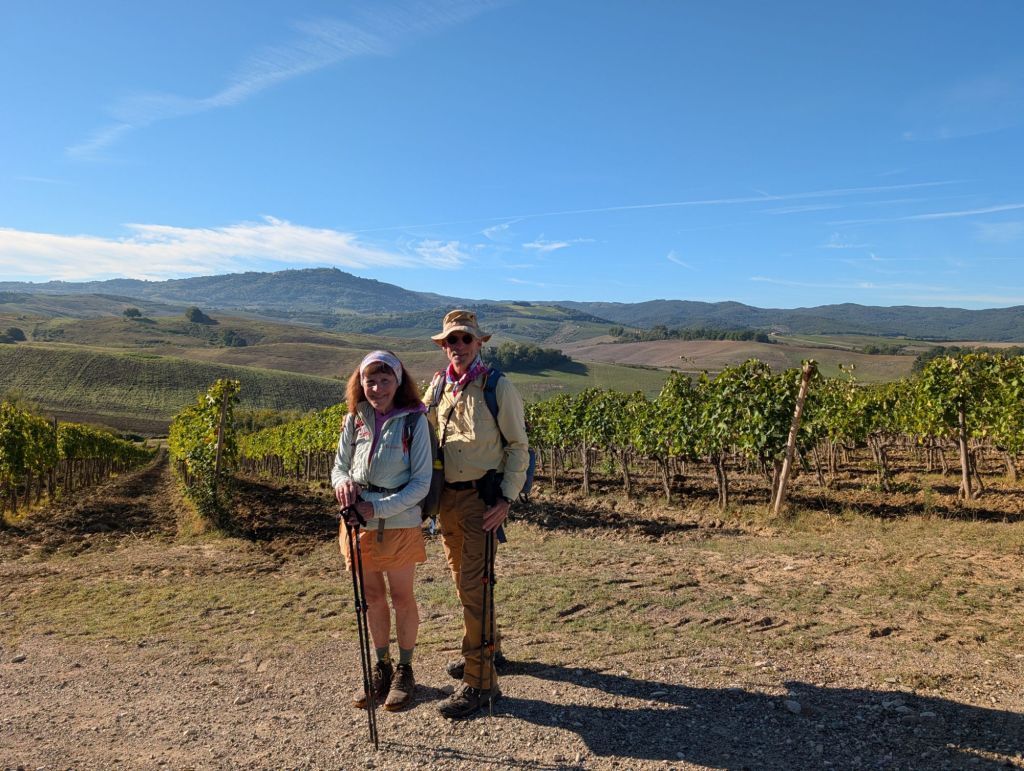
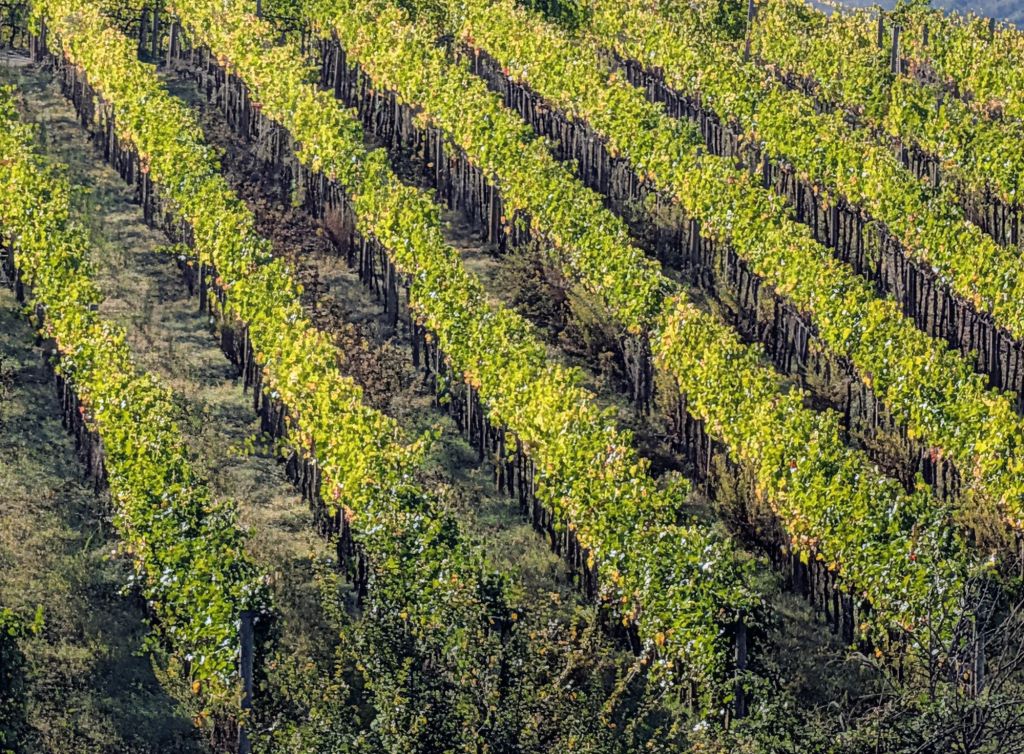
We walked past several huge wineries in the Montalcino hills with large vineyards growing Brunello di Montalcino grapes. There was a strong wine aroma wafting in the air from a good distance away from each winery.
Brunello di Montalcino wines are rated among Italy’s best wines & certainly its most expensive wines. They were first mentioned in the 14th Century & thought to be a separate grape variety; but, in 1879, it was determined that Brunello vines are actually Sangiovese.
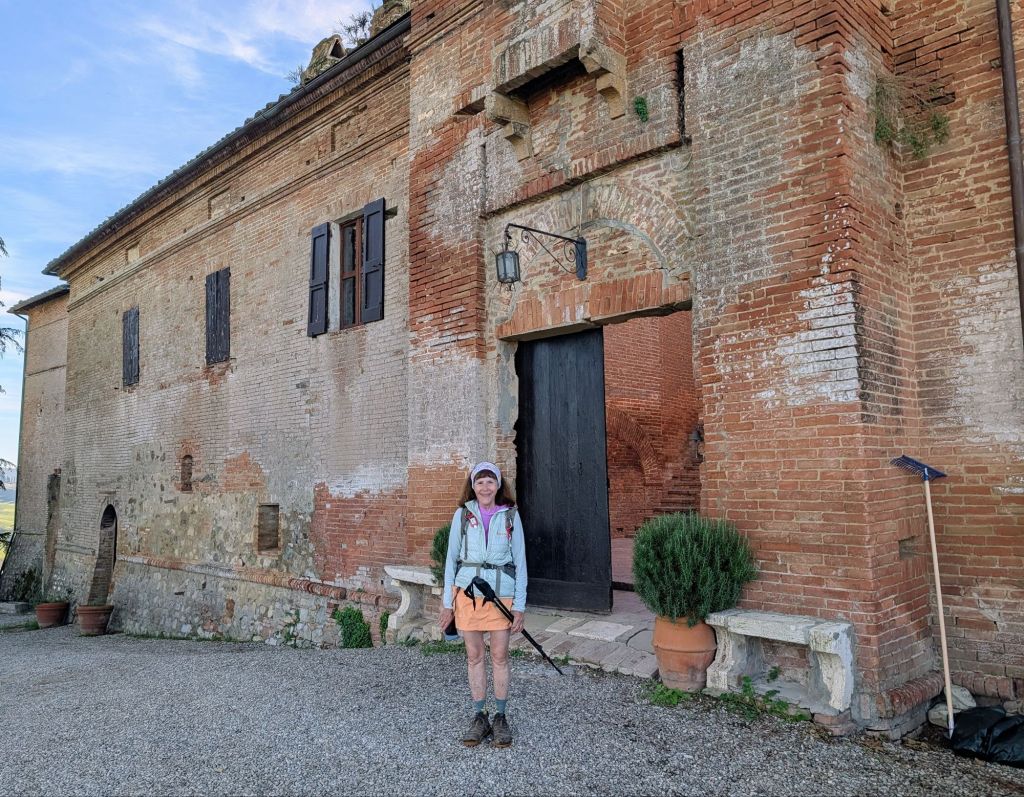
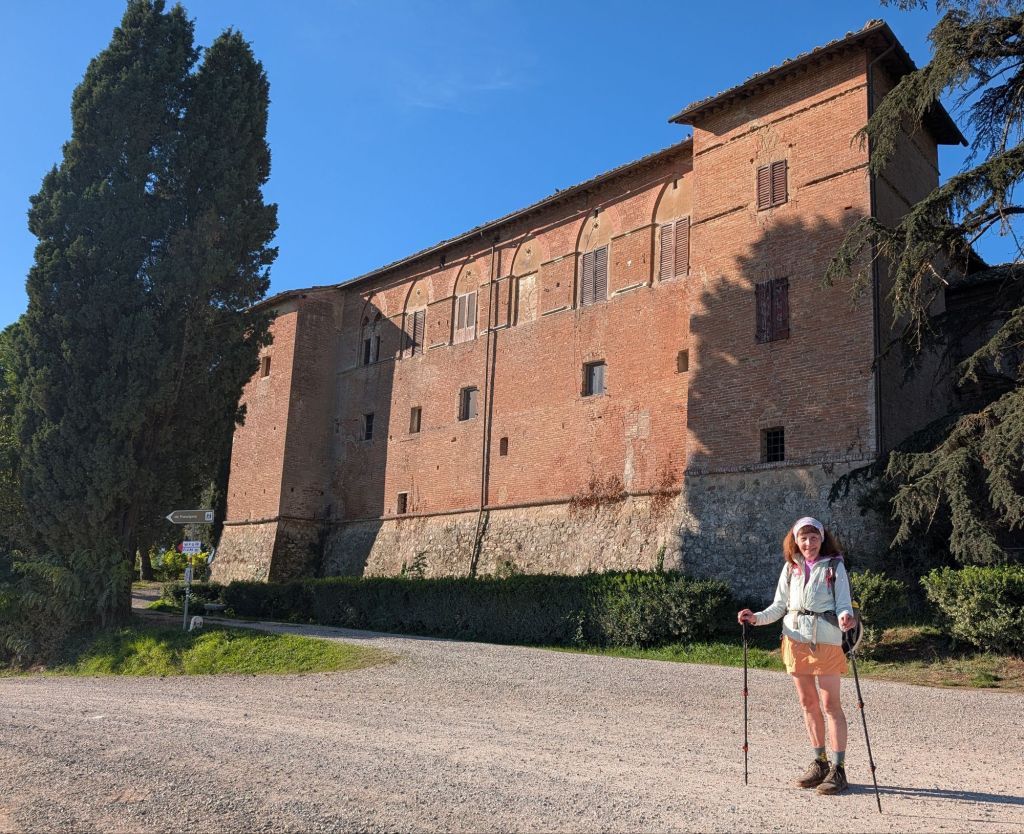
The first vineyard belonged to the Tricerchi Winery. The Castle Tricerchi is named for the family who built it in 1441 & whose family ancestors still own it. This winery is 400 hectares in size which is almost 988 acres.
The next winery along the way was Altesino which is housed in the 15th Century Palazzo Altesi which was also built by the Tricerchi family. It is 100 hectares in size which is about 247 acres.
Altesino’s Palazzo AltesiHiking through Altesino’s vineyardsAltesino’s vines
The third winery we passed was Caparzo. The origins for the place name Caparzo are still unknown. According to some, the name is derived from “Ca’ Pazzo” which is shown on ancient maps. According to others, the term derives from the Latin “Caput Arsum” which means “a place touched by the sun”.
In any case, Caparzo winery dates back to 1960s when a group of friends who were fond of Tuscany & of wine, purchased an old ruin with vineyards in Montalcino & turned it into a very successful business.
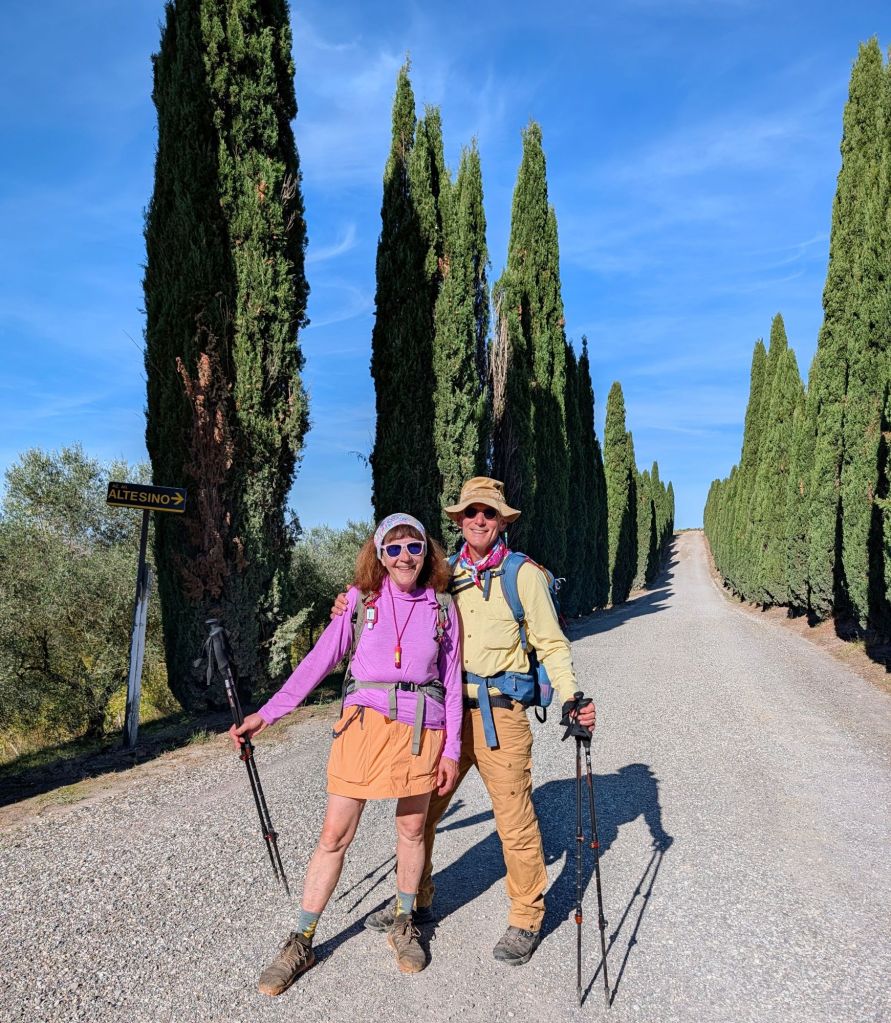
Cypress Trees lining the road to Caprazo
Caparzo is 200 hectares in size which is about 494 acres. Their grape vine density is 5,000 plants per hectare on average.
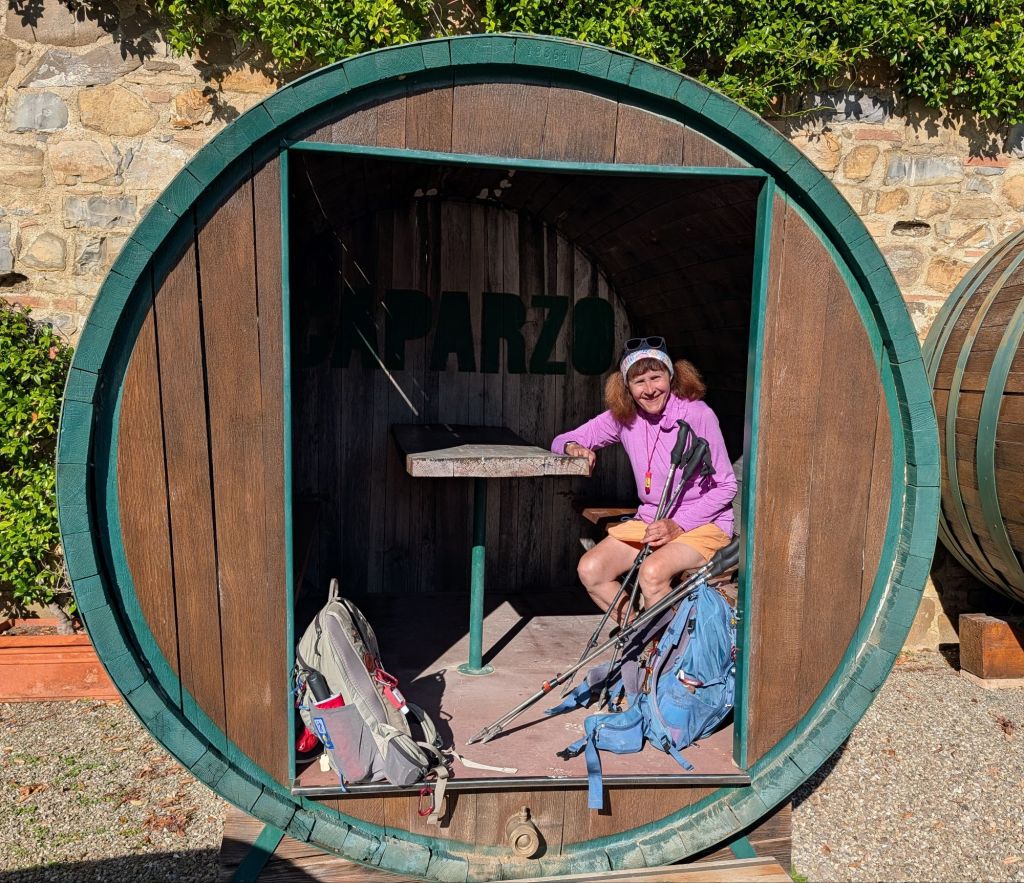
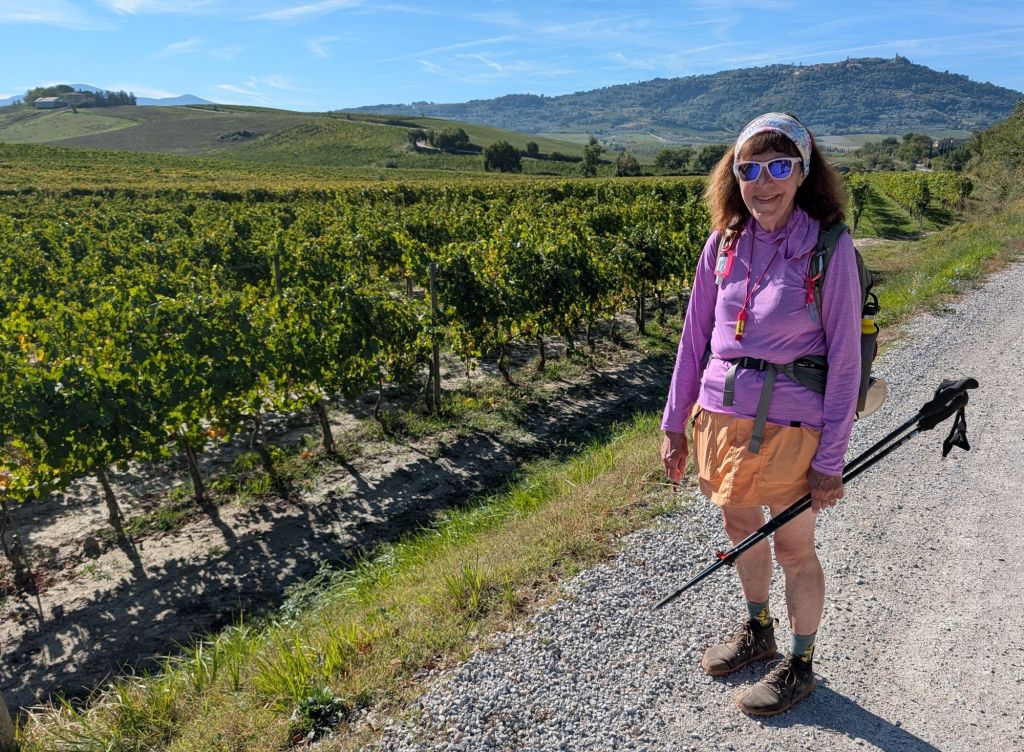
Taking a break in a Caprazo wine barrelCaprazo vineyards
Some images from the trail:
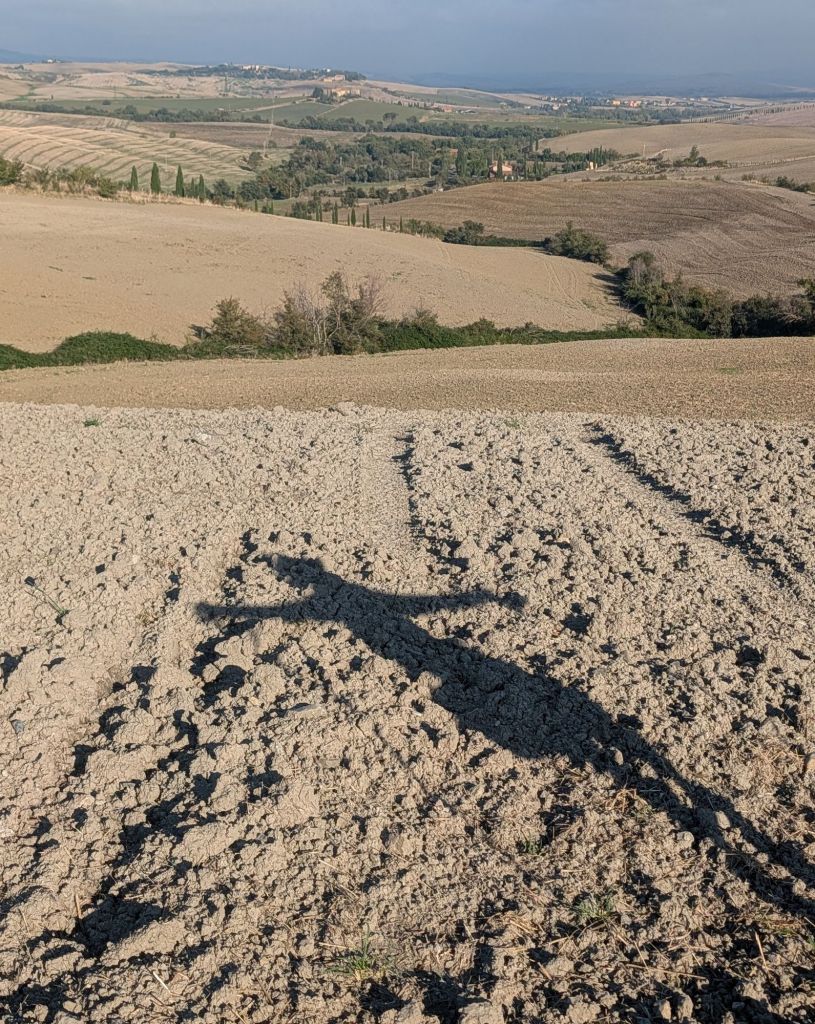
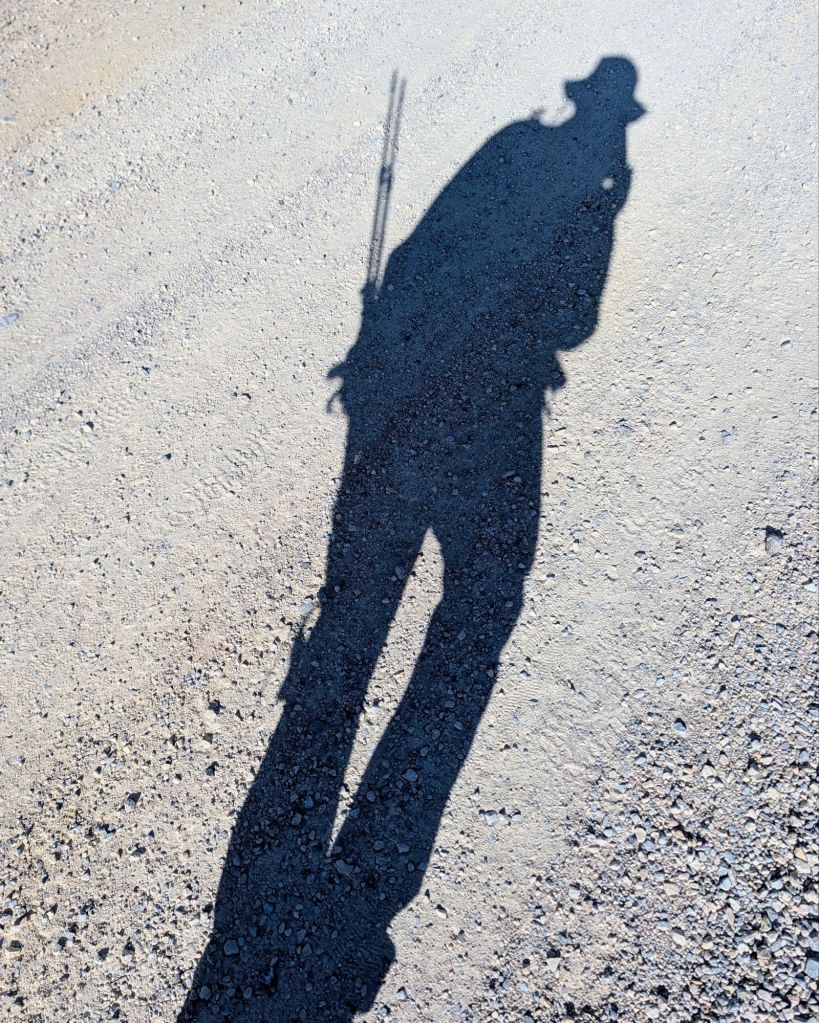
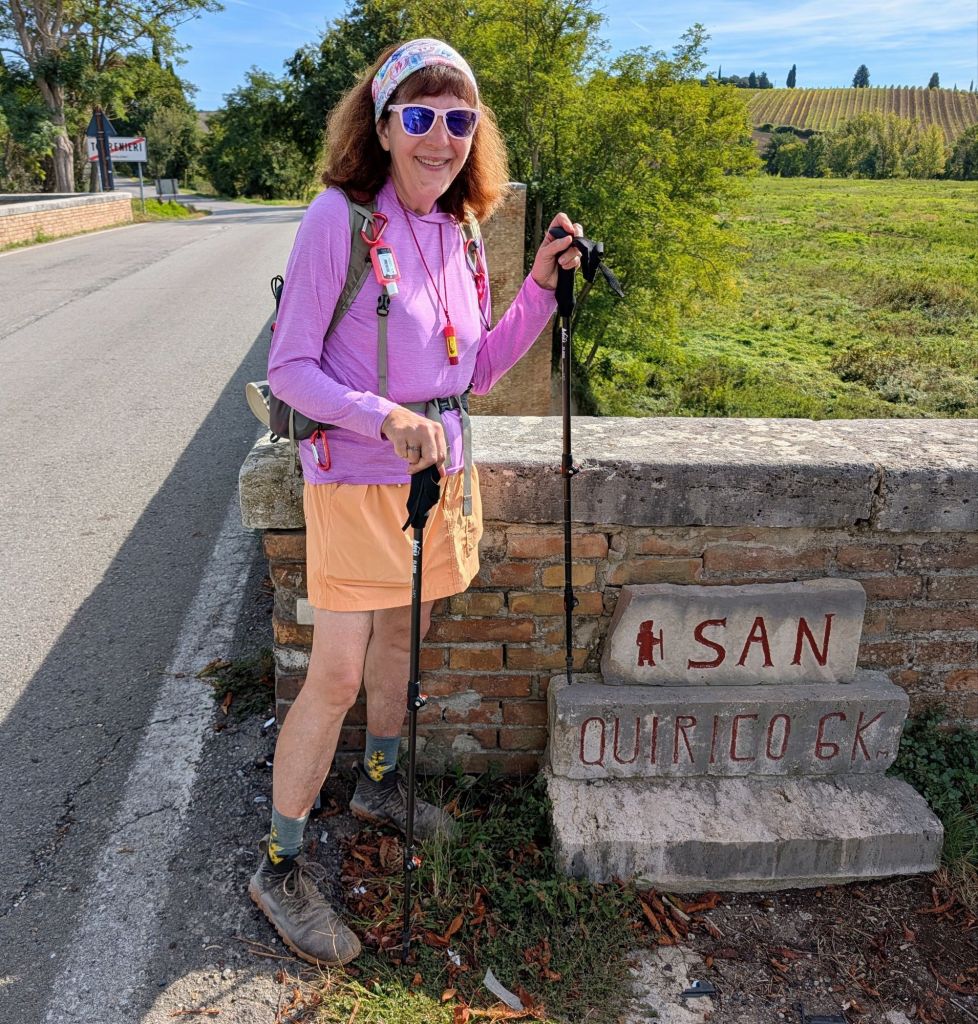
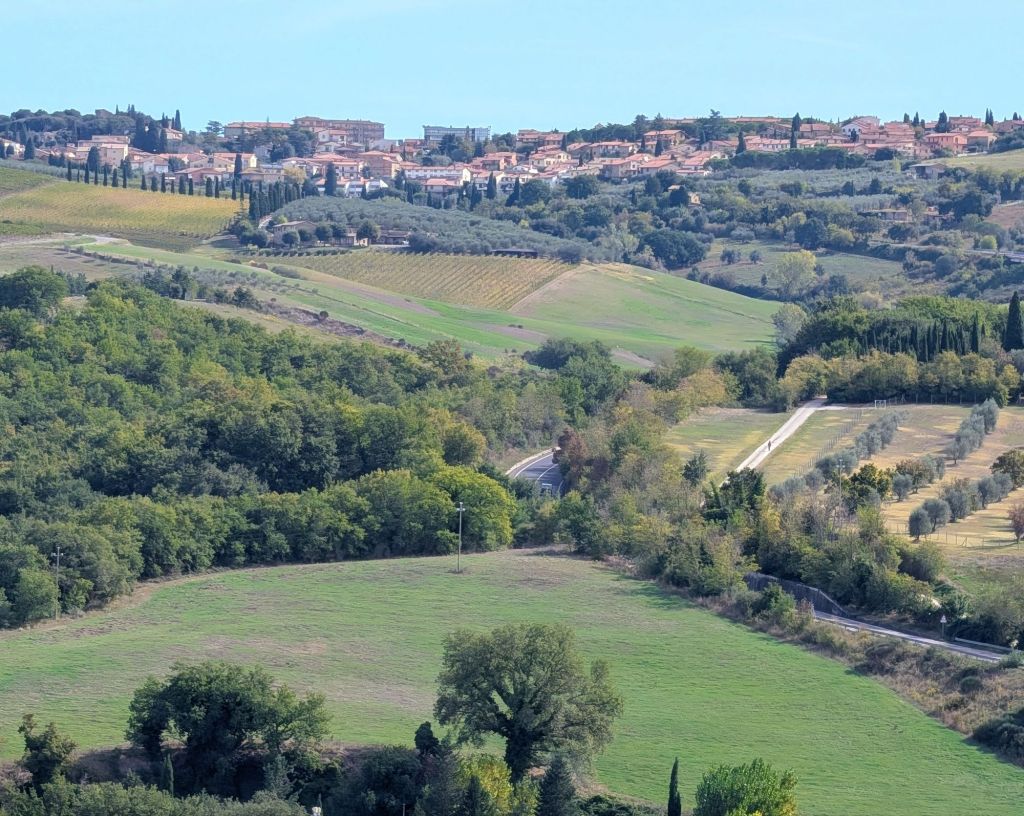
Still on the way to RomeTuscany’s White RoadShadow selfieOn the way to San Quirico House on a Tuscan hillSan Quirico d’Orcia in the distance about two hours away
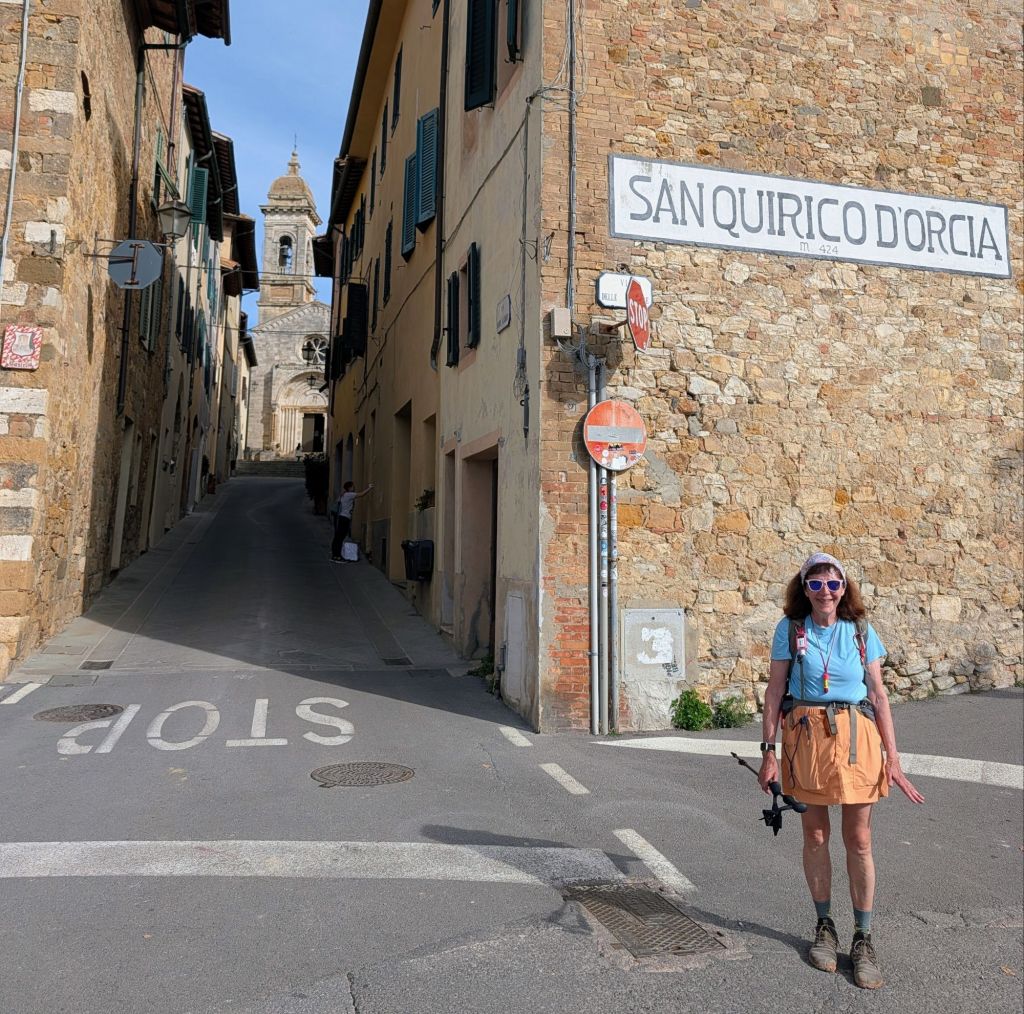
San Quirico d’Orcia is a historic walled village in Tuscany’s Val d’Orcia region famous for its Renaissance gardens, medieval architecture, & iconic surrounding countryside.
Entering San QuiricoIn San QuiricoSan Quirico City Wall
The town is named for the Syrian Saint Cyricus whose name in Italian is Quirico. He along with his mother Julitta were martyred in the 4th Century.
The Collegiate Church of Saints Quirico & Giulitta
The Collegiate Church of Saints Quirico & Giulitta is first mentioned in documents as far back as the 8th Century. The current church dates from the 12th Century. It is named for Quirico & his mother.
Porta Nuova & Piazza della Liberta
San Quirico streets
Porta ai Cappuccini
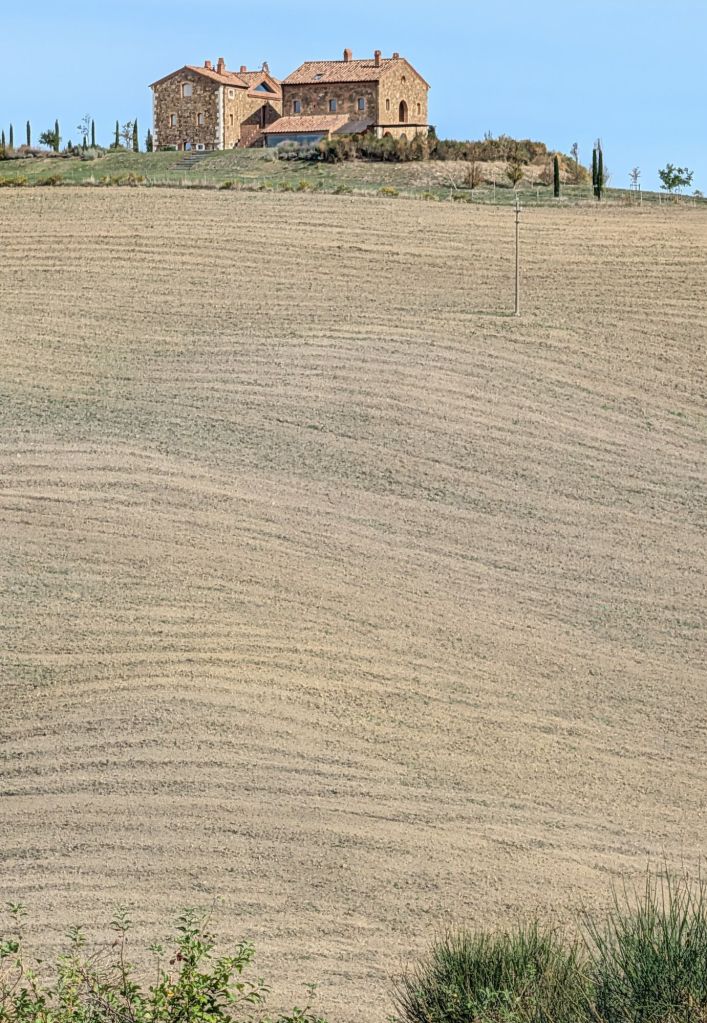
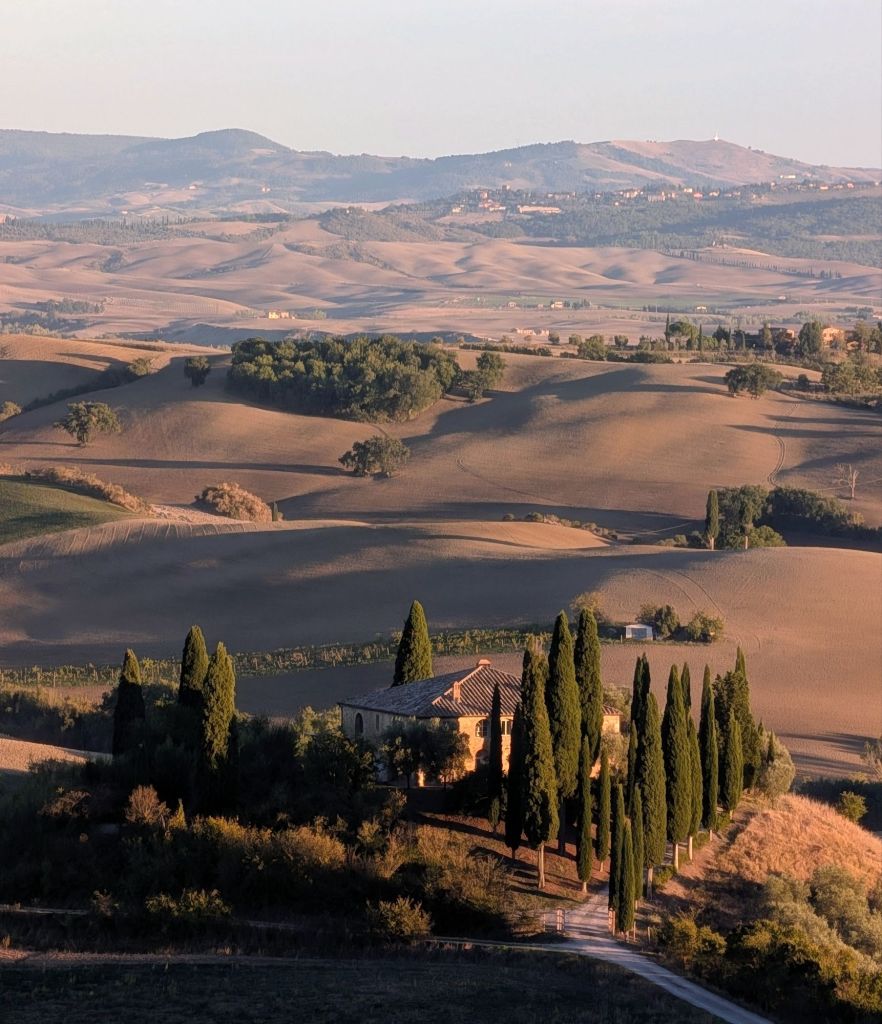
After exploring San Quirico, we walked a little farther outside town to see Podere Belvedere which rates among Tuscany’s most famous stone farmhouses.