
Bolsena to Montefiascone
11.5 Miles; 5.5 Hours on the trail (Cumulative: 187.3 Miles; 99.2 Hours on the trail)
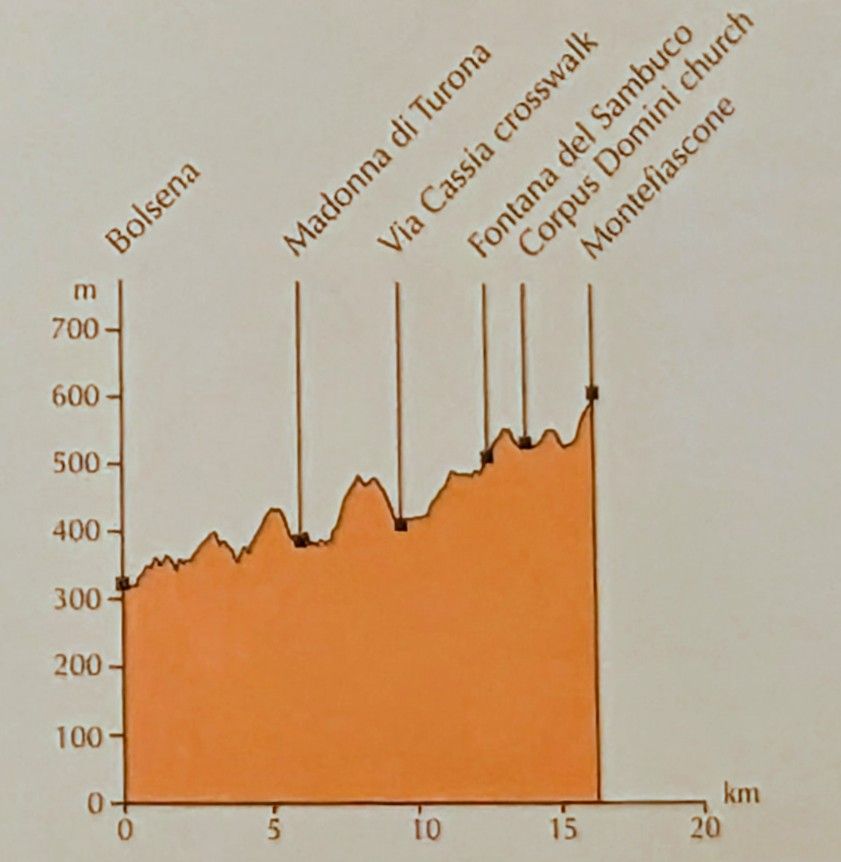
A relatively short hike today with beautiful lake scenery but, it was not easy with many ups & downs over more rolling hills as well as across farmlands & forests.

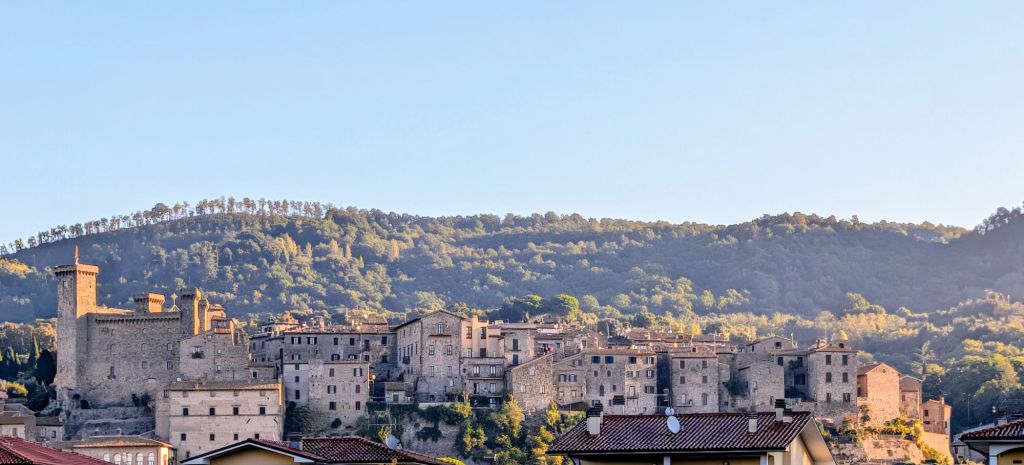
Viale Colesanti (often referred to locally as La Via dei Platani) is a straight, tree-lined avenue that connects Bolsena’s historic center to Lake Bolsena’s shore.
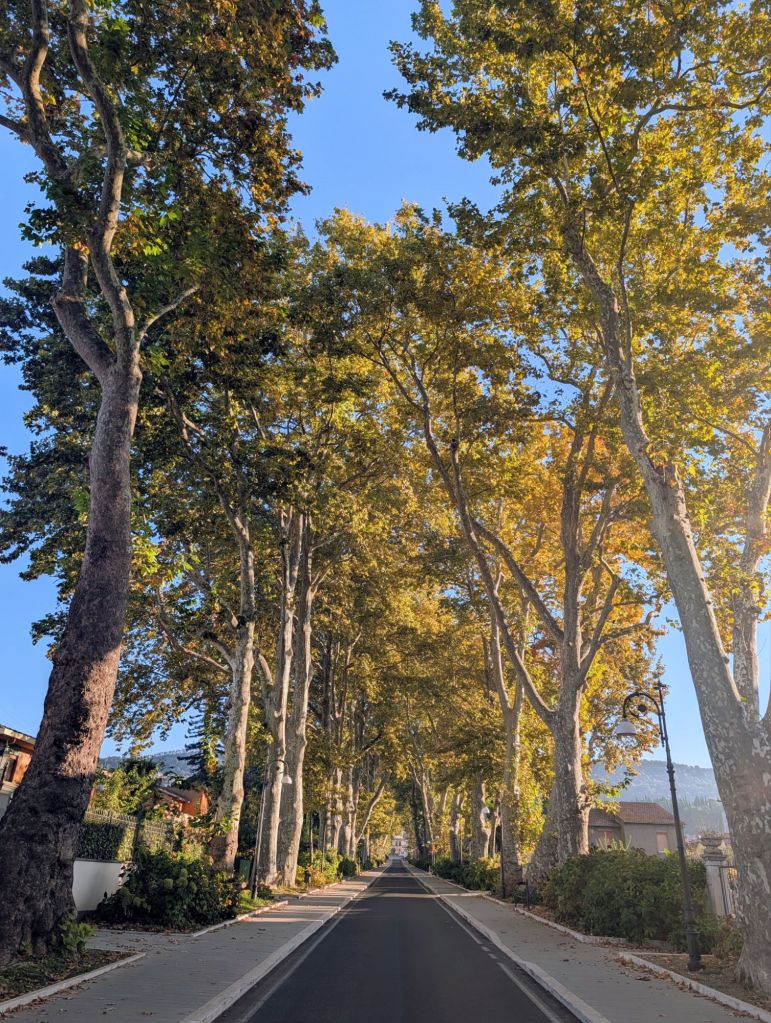
It is lined with Plane trees that are a hybrid of Platanus orientalis (oriental plane) & Platanus occidentalis (American sycamore) trees.
The tree planting started in July 1871 & the avenue was inaugurated around 1873.
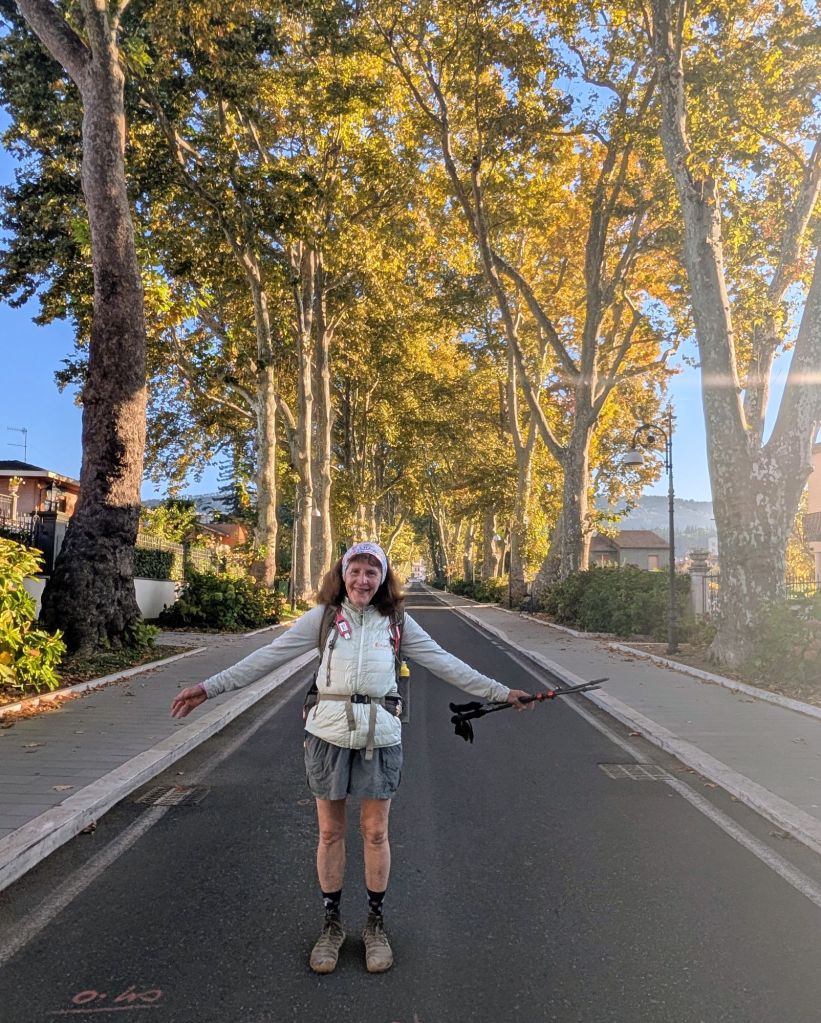
There are roughly 38 ea. Plane trees on each side along the avenue.
Many feature massive, twisted trunks with circumferences ranging from 6 to 7 meters and up to nearly 10 meters in places.
The sidewalks & road were specially designed to accommodate their colossal, bulging roots so they don’t buckle or crack.
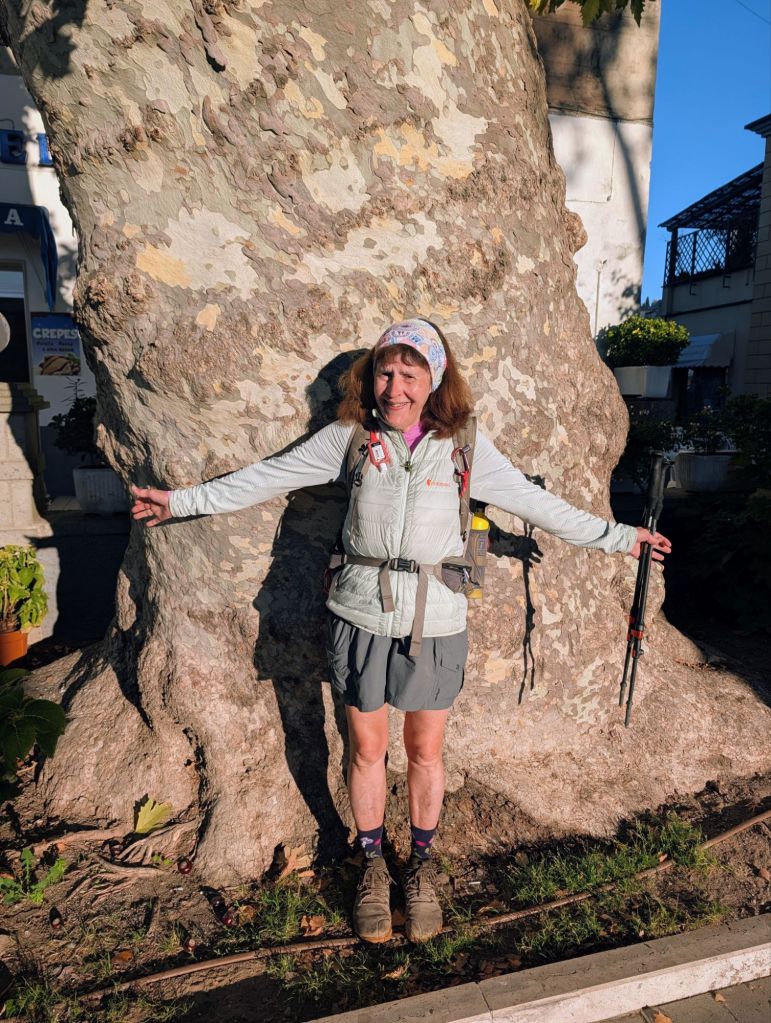
trunk exceeds 10 meters in circumference. This tree got its name because it is in front of the Blu Bar
The Basilica of Santa Cristina in Bolsena was consecrated in 1077 & is best known as the site for the Eucharistic Miracle in 1263.
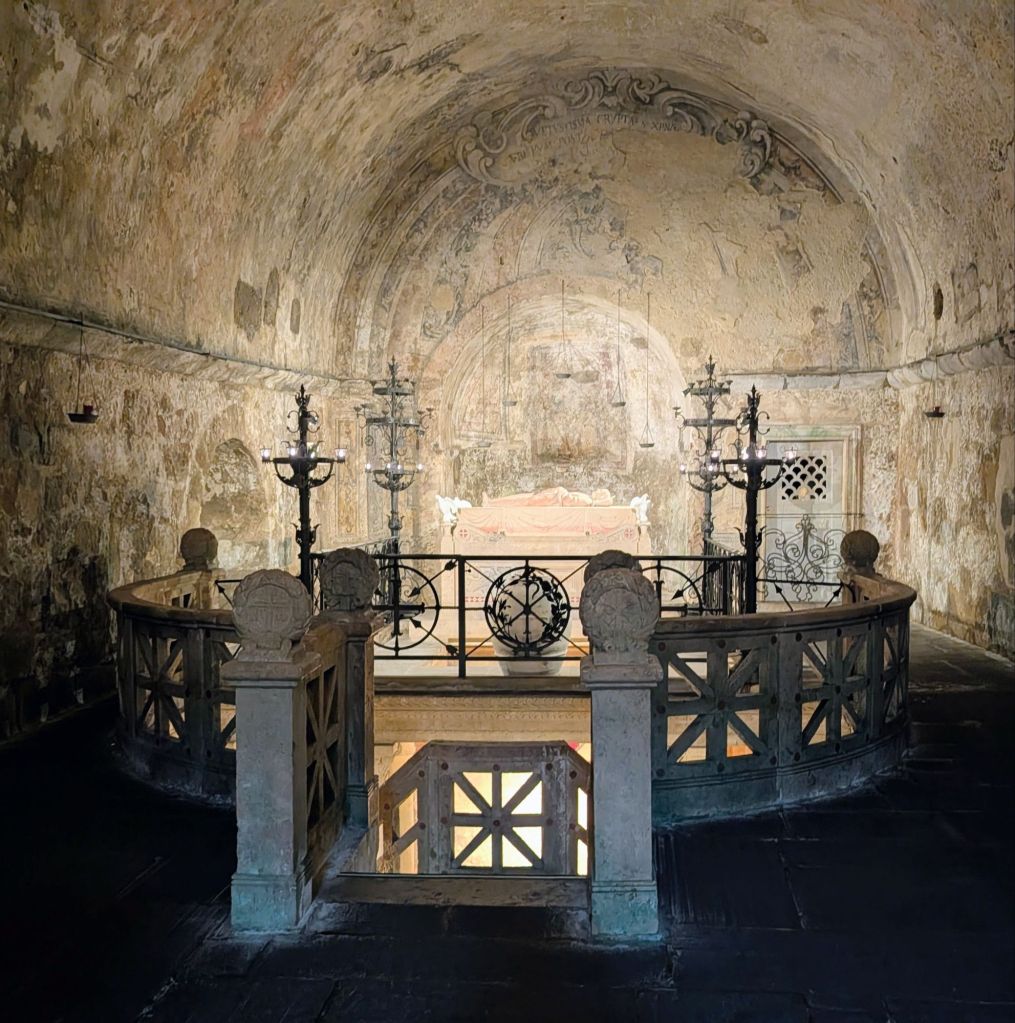
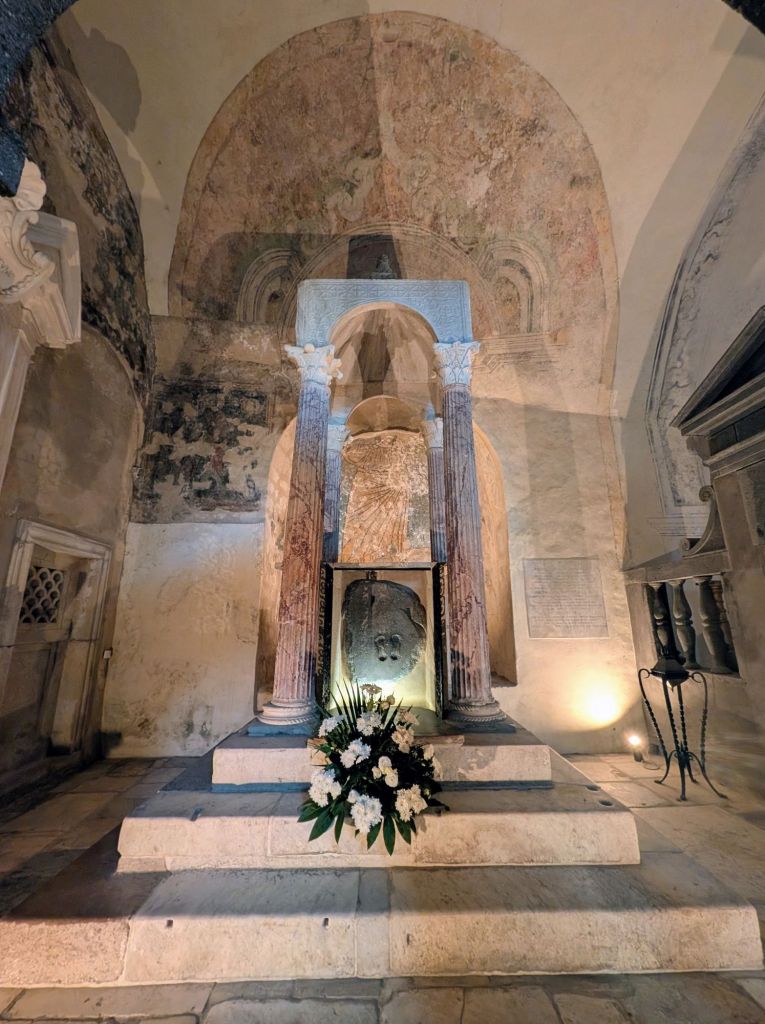
It is also the burial site for the martyr who became Saint Christina of Bolsena.
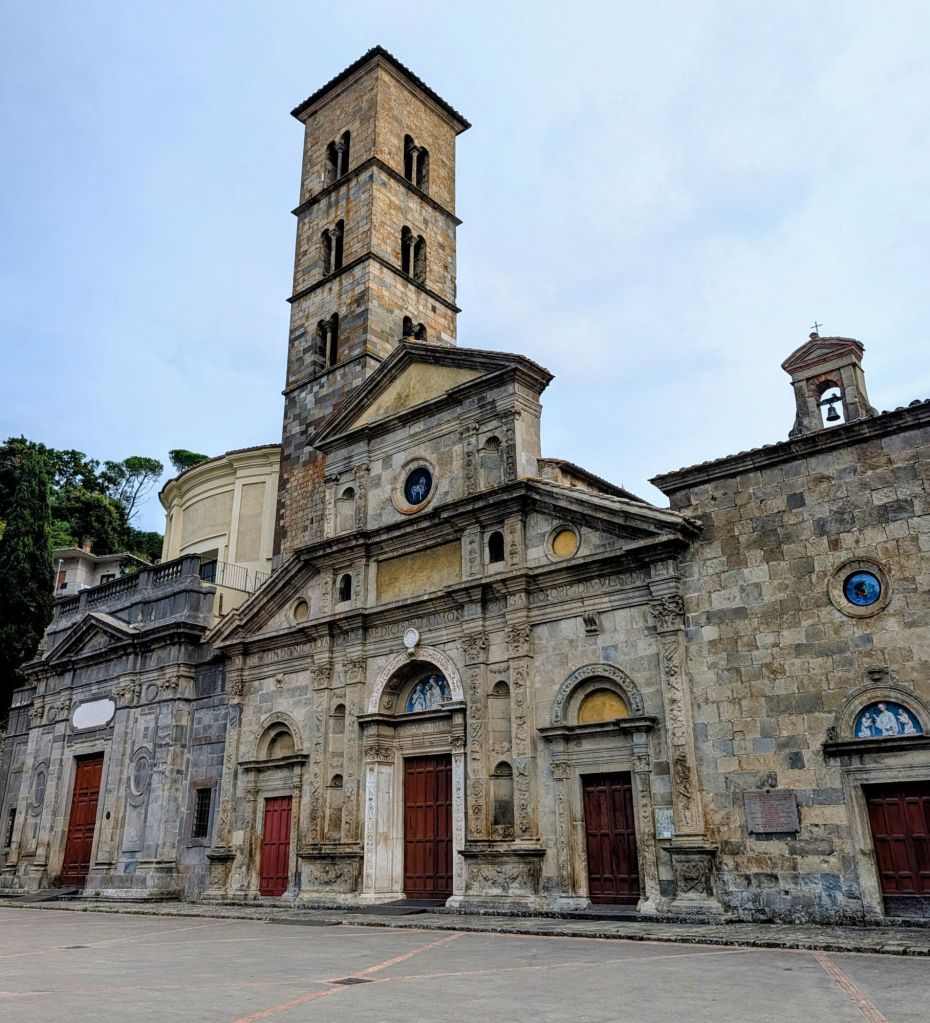
Cristina was martyred in the 3rd Century AD at age 12 by her own father & is Bolsena’s patron saint.
Cristina was introduced to the Christian religion by a servant at the palace working for her father Urbanus who was the Prefect representing Roman power in the area.
Her father tried very hard to make her renounce her faith in God.
In 295 AD, Cristina was stripped of her clothes, publicly flogged with rods, & had her head shaved
Next, she was covered in oil, stretched out on a wheel, & set afire.
The fire injured her; but, did not kill her & everyone was unsettled by what they saw.
Cristina’s father then threw her in a dungeon for the night to decide what to do next.
The following day, Cristina’s wounds were healed, yet this did not soften his heart towards his child or convince him of her faith.
Next, her father gave orders to take Cristina to the middle of Lake Bolsena & throw her overboard with a huge stone fastened around her neck.
However, not too long afterwards, she reappeared coming on to the shore.
Cristina was hauled from Lake Bolsena, tied to a stake, & then shot with arrows which killed her.
During her ordeal, she never renounced her Christian faith.
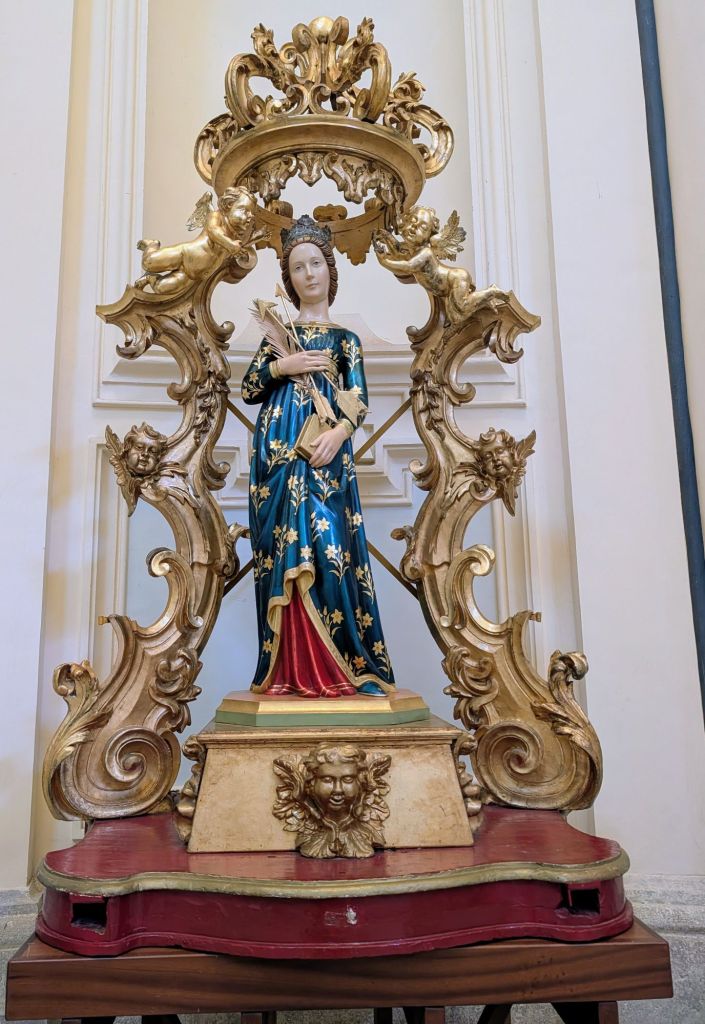
Saint Christina of Bolsena is known as the patron saint for archers, millers, & sailors.
She is often invoked by millers because she survived being thrown into Lake Bolsena with a heavy stone which resembled a millstone tied around her neck.
She is the patron saint for archers because she was martyred by arrows killing her.
Sailors look to her for protection at sea & protection from violent storms.
The Eucharistic Miracle of Bolsena occurred in 1263 when a consecrated communion host miraculously bled onto a sacred altar cloth during Mass.
Father Peter of Prague who was a German priest had lingering doubts about the Catholic transubstantiation doctrine which is the belief that the Bread & Wine at Mass truly becomes the Body & Blood of Christ.
For his penance, Peter traveled the Via Francigena to Rome to ask for forgiveness at the tomb of St. Peter & St. Paul.
On his way back home in 1263 again traveling the Via Francigena, he stopped at the Basilica of Saint Cristina & asked for permission to lead the Holy Mass.
During the liturgy of the Eucharist, Peter still had doubts about transubstantiation, so he asked Jesus to give him a sign of his presence in the Host.
As he recited the words of consecration, blood began to drip from the consecrated Host onto Peter’s hands & onto the Corporal which is the small linen cloth placed on the altar.
Blood also dripped onto the altar stones.
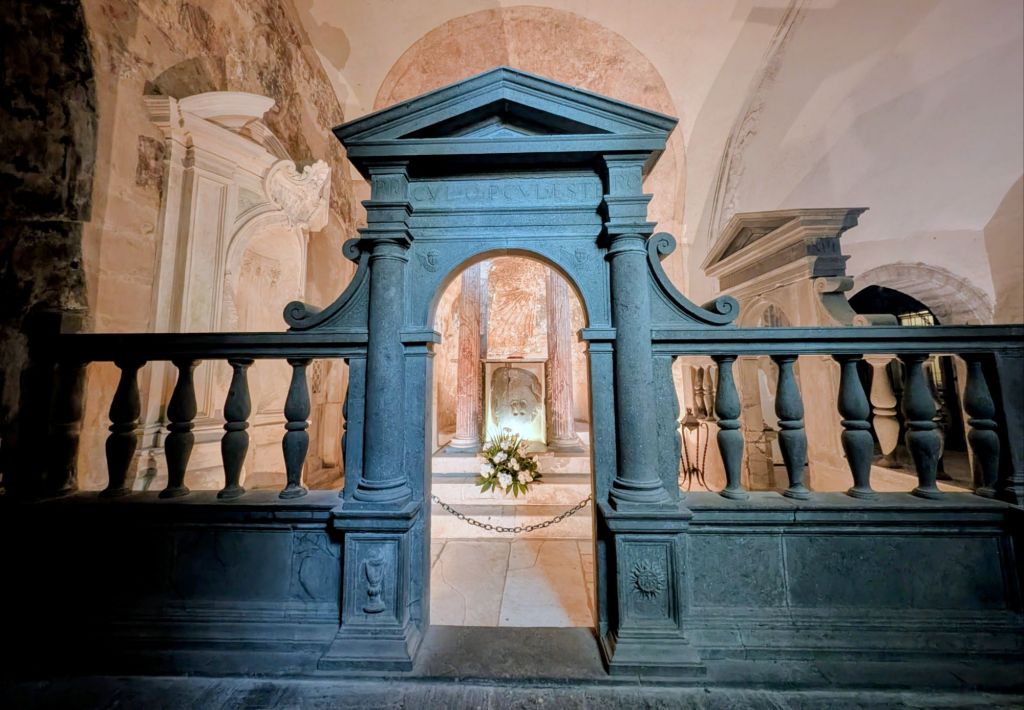
Altar of the Miracle inside the Grotto of Santa Cristina
Father Peter reported this event to Pope Urban IV who was residing nearby in Orvieto.
The Pope sent an investigative team to Bolsena who verified the account, so he ordered the sacred linens to be brought to Orvieto in a solemn procession.
Convinced by this miracle, Pope Urban IV issued a Papal Bull in 1264 establishing the Feast of Corpus Christi as a universal celebration for the Catholic Church.
The Pope commissioned Thomas Aquinas in England to compose the official liturgical prayers, office, & hymns for the feast.
The blood-stained Corporal of Bolsena is preserved & displayed inside the Cathedral of Orvieto (Duomo di Orvieto).
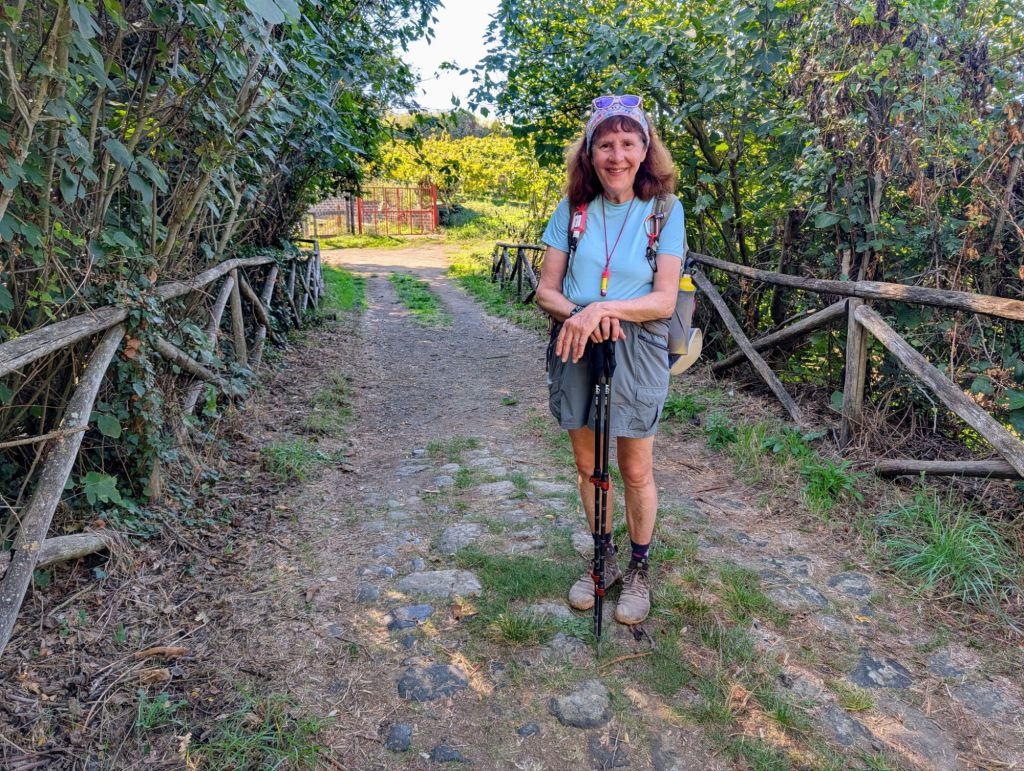
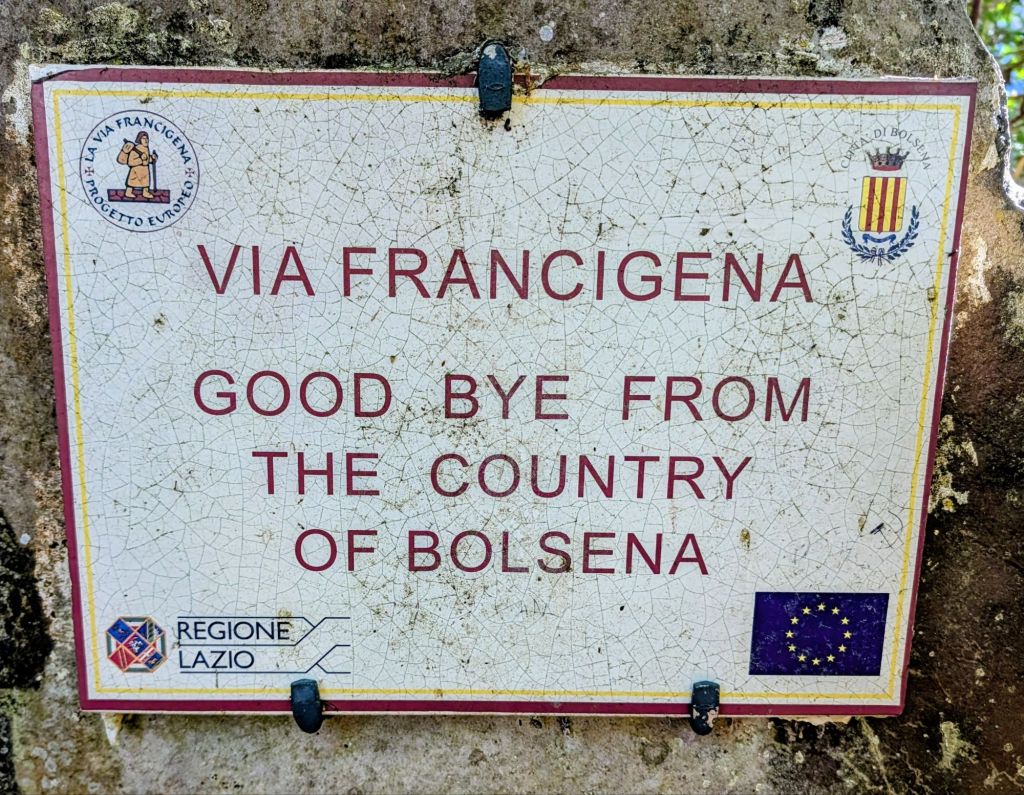
Here are some images from the hike to Montefiascone.
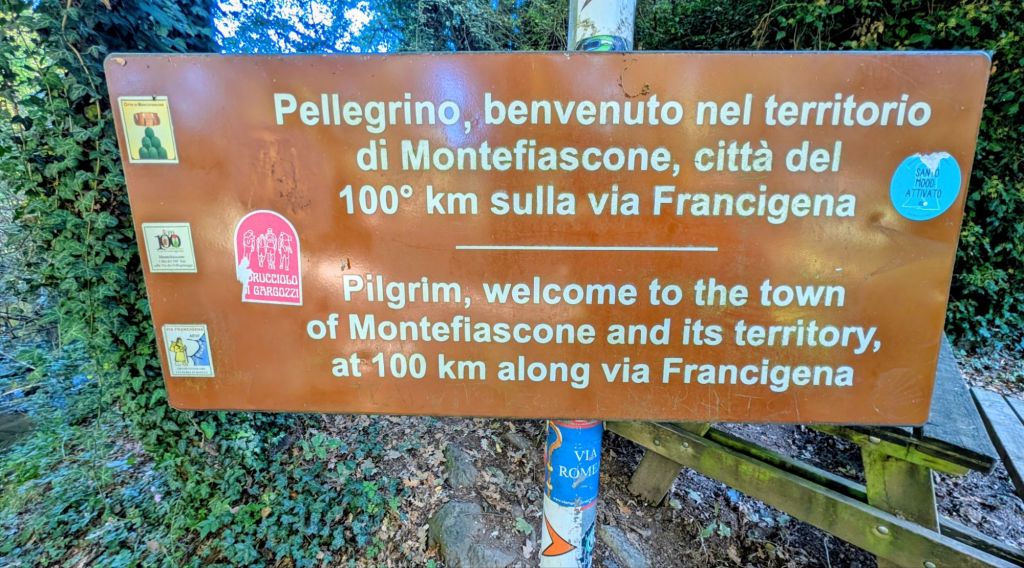
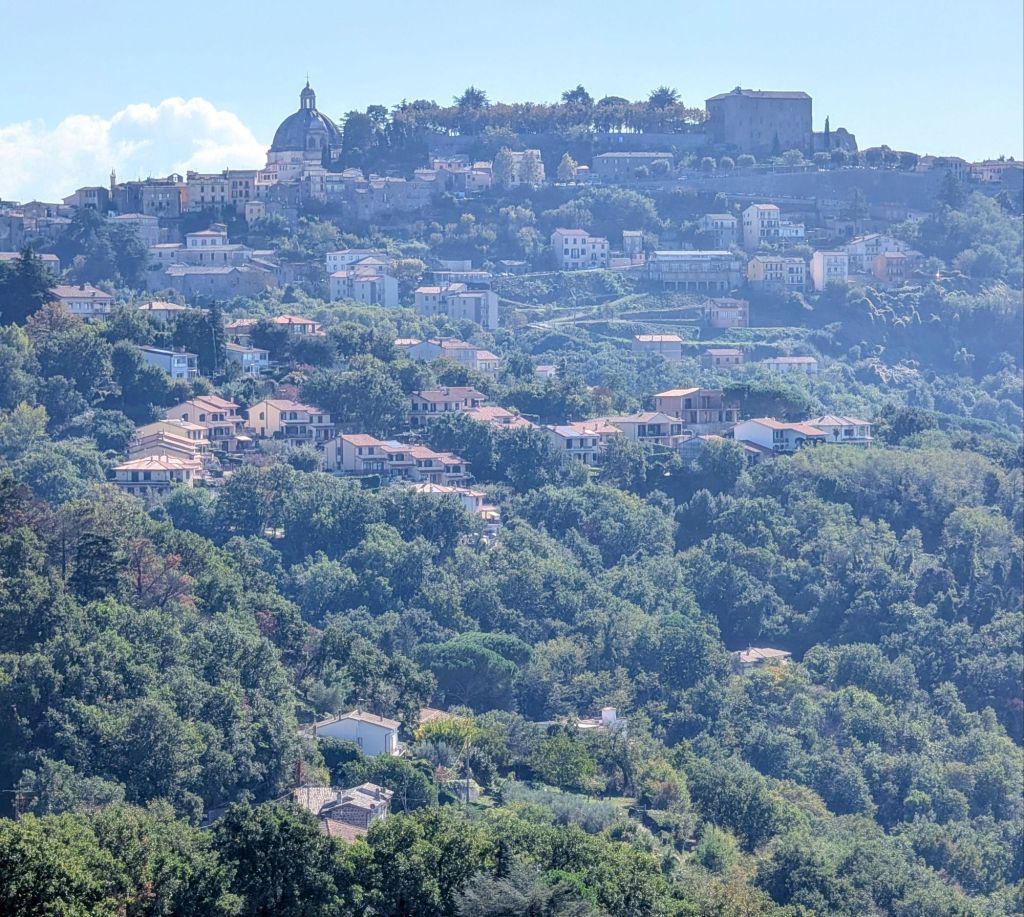
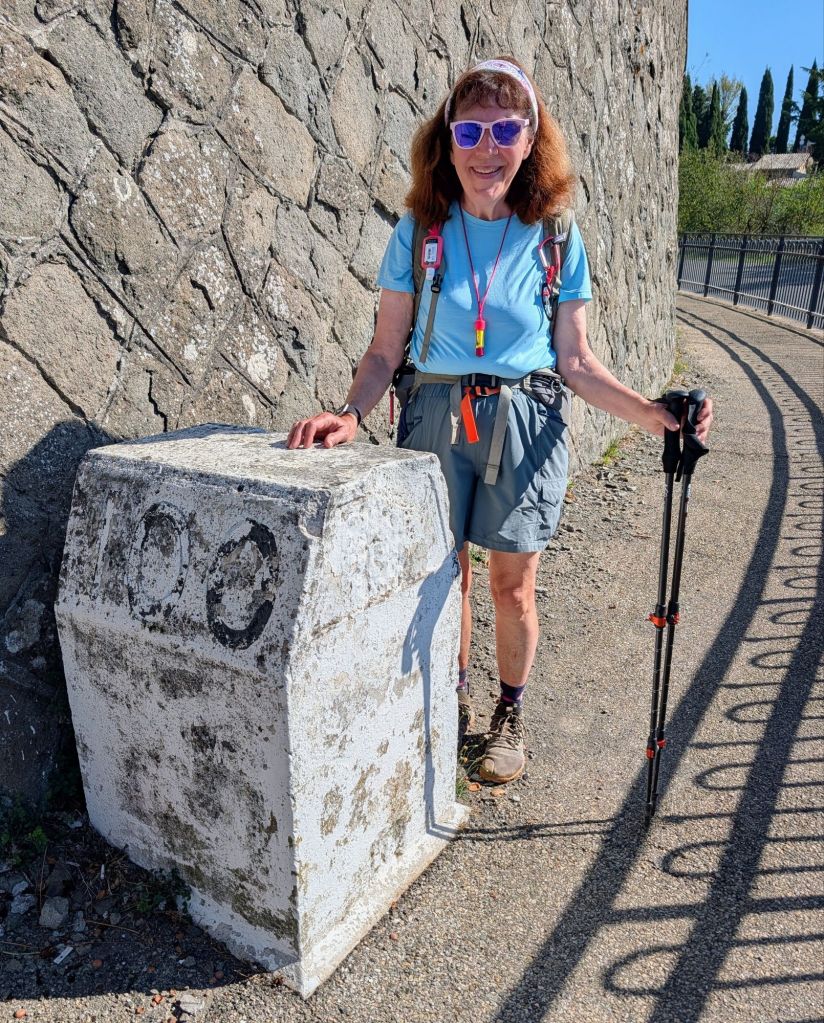
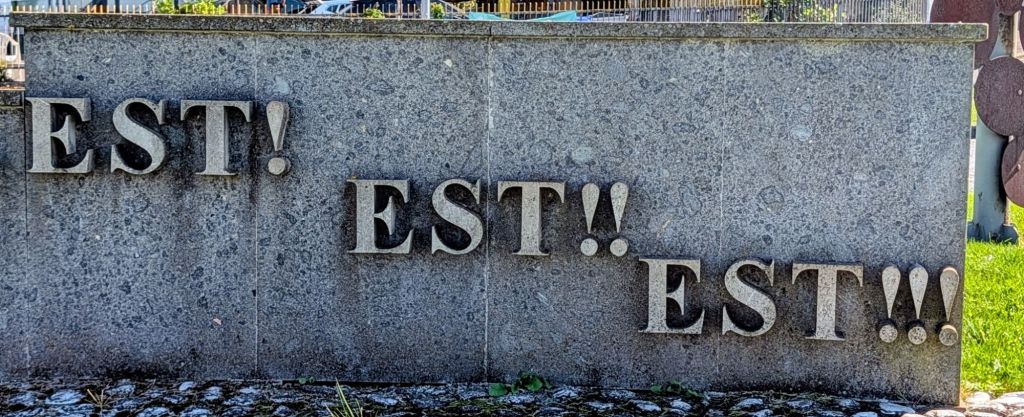
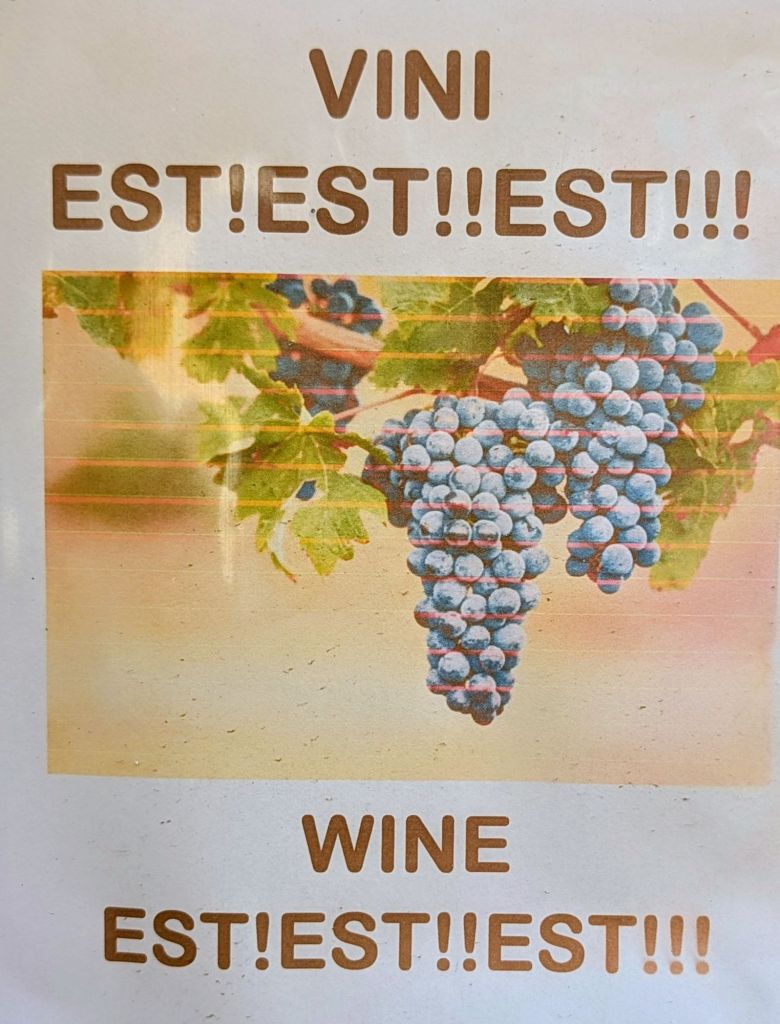
Montefiascone is famous for its Est! Est!! Est!!! di Montefiascone white wine which is only produced here.
The wine is a blend of Trebbiano & Malvasia grapes. Since they are grown on volcanic soils near Lake Bolsena (terroir), the grapes yield a light, straw-yellow wine featuring a bouquet with fresh aromas of green and golden apples, peach, white flowers, & citrus which are also grown in the area.
The Legend of Defuk tells the story of how the famous Est! Est!! Est!!! di Montefiascone white wine got its name.
In 1111 AD, German Bishop Johannes Defuk (sometimes spelled Fugger or Deuc) traveled towards Rome alongside Emperor Henry V who was going to be crowned the Holy Roman Emperor.
Defuk always sent his cupbearer & servant Martino ahead of their entourage to scout local taverns & test their wines.
Martino used a simple grading system by writing the Latin word “Est” (meaning “it is” or “there is”) on tavern doors to signal a place which served good wine.
Upon reaching Montefiascone, Martino found the local vintage so extraordinary that he wrote the word multiple times with increasing exclamation points: “Est! Est!! Est!!!”.
Defuk arrived, agreed with his servant’s judgment, made his home here, & stayed to drink so much of this wine that he died from overconsumption around 1113 AD.
Defuk was buried inside the Basilica of San Flaviano in Montefiascone.
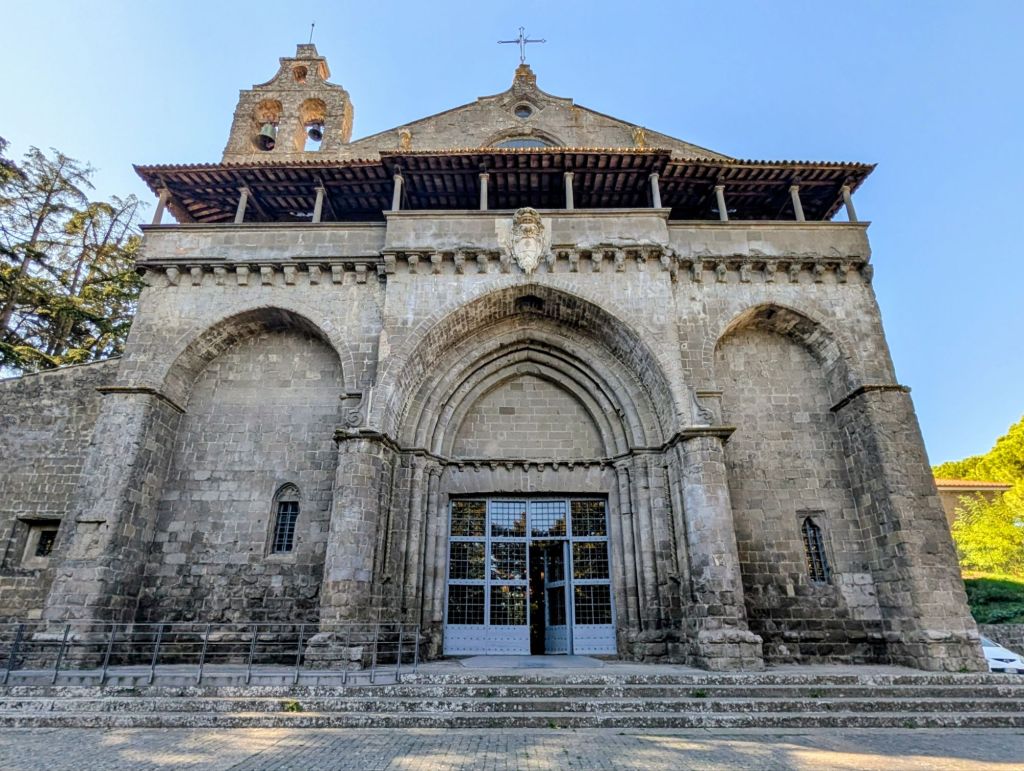
His ever faithful servant Martino had a tombstone made for Defuk.
His tombstone famously bears a Latin inscription lamenting his fate: “Per il troppo EST EST EST qui giace morto il mio signore Johannes Defuk”
(Because of too much Est, Est, Est, here lies my master Johannes Defuk dead).
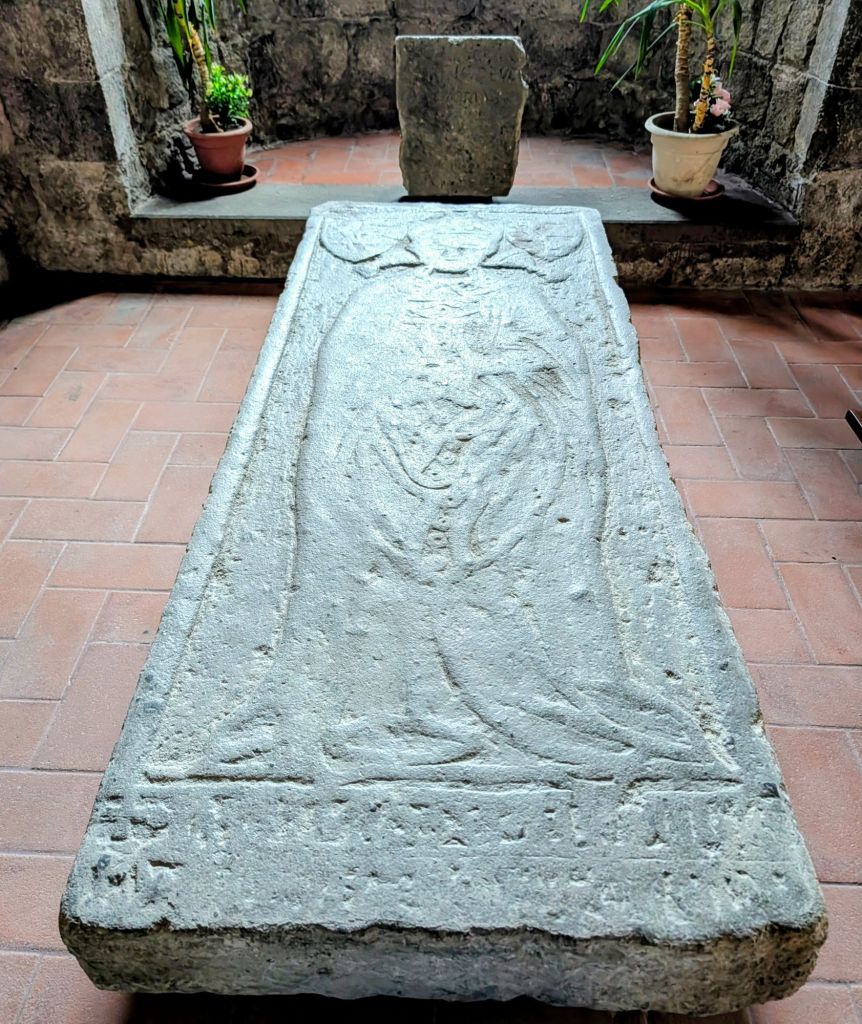
According to tradition, Defuk left a generous endowment of 25,000 coins to the town on the condition that a cask of Est! Est!! Est!!! wine be poured over his grave every year.
Montefiascone continues that request & commemorates his legend through its annual historic celebrations & wine events each August.

