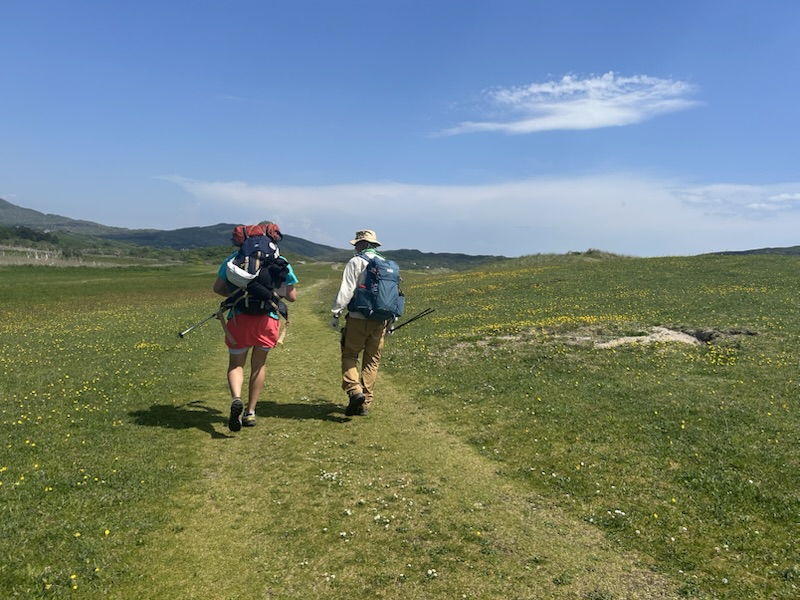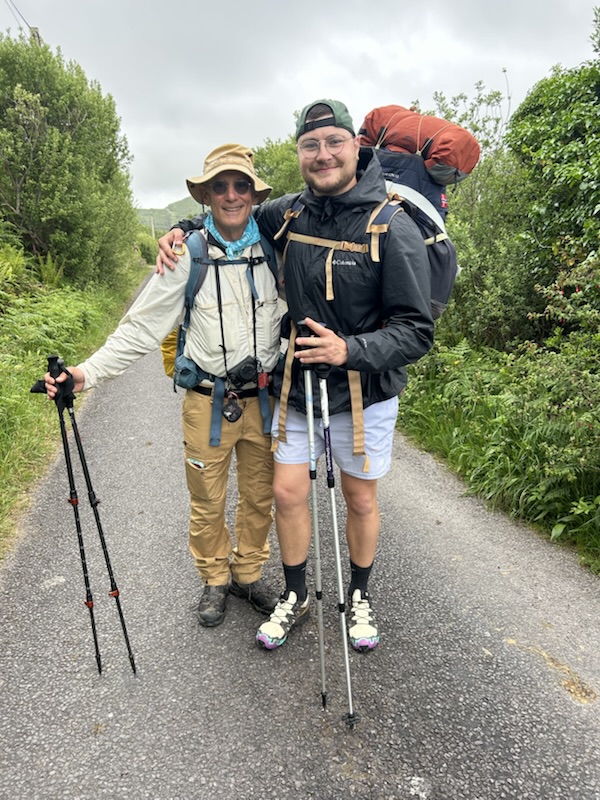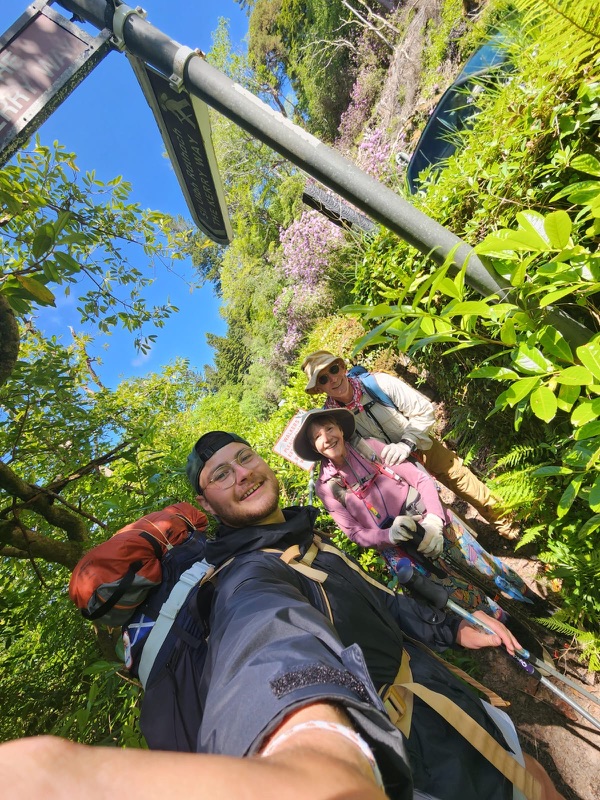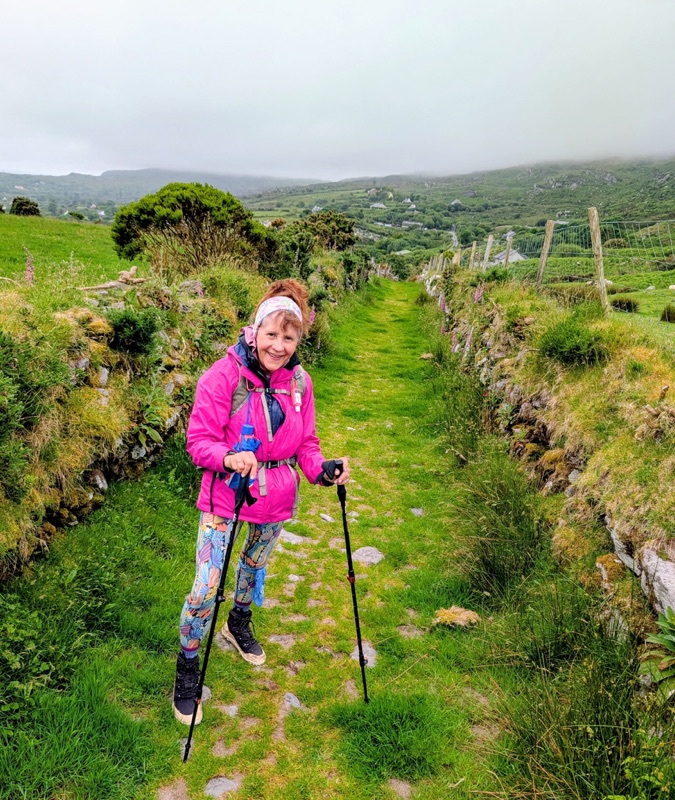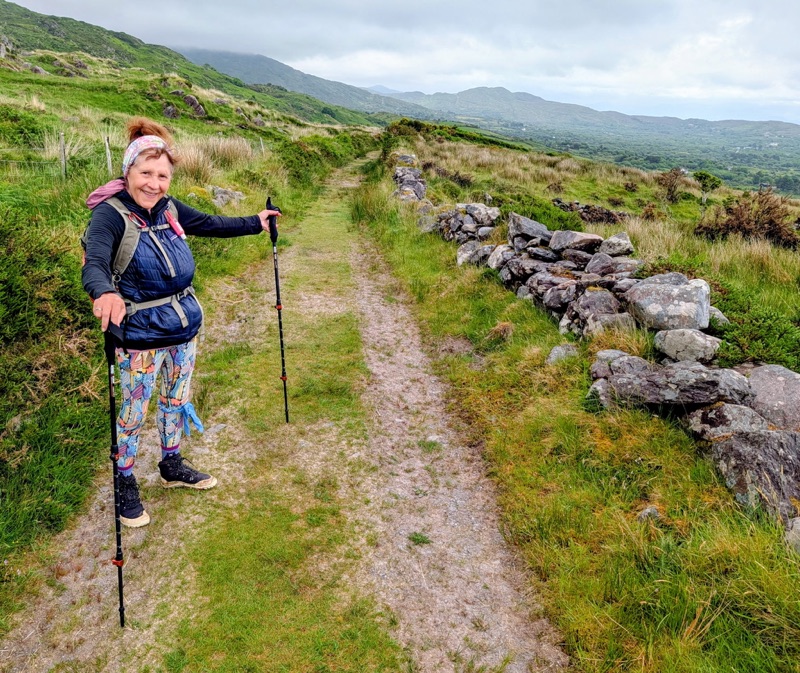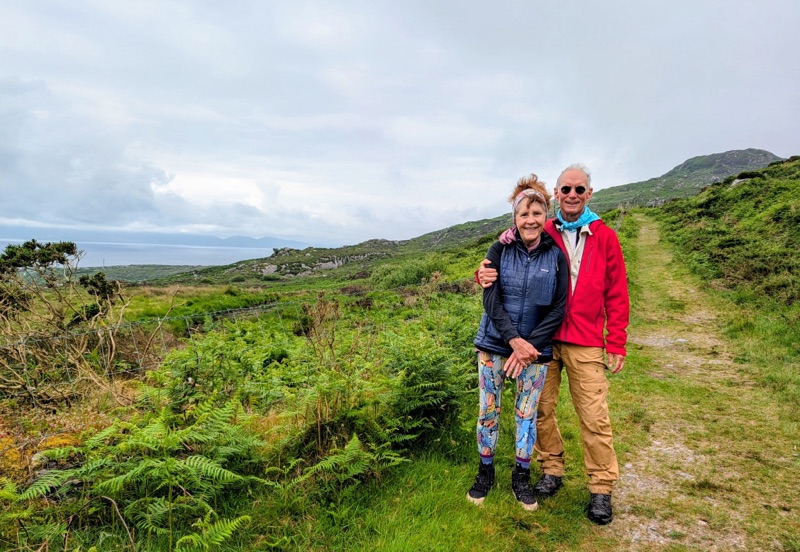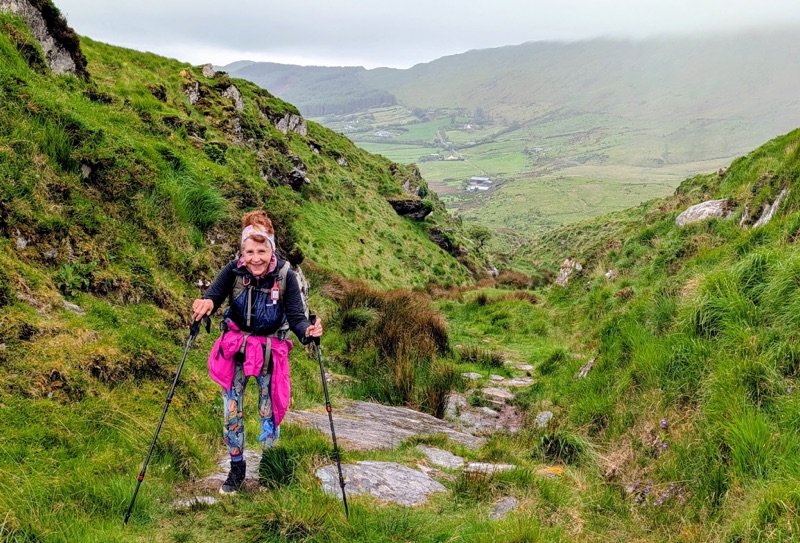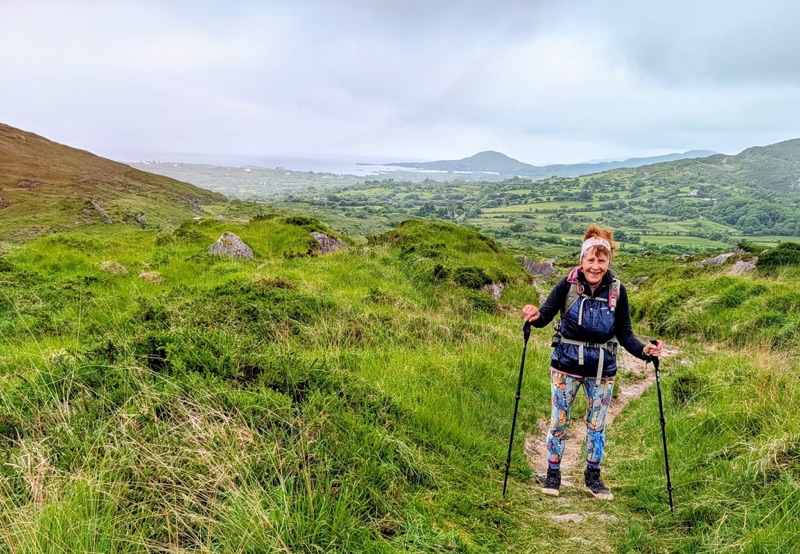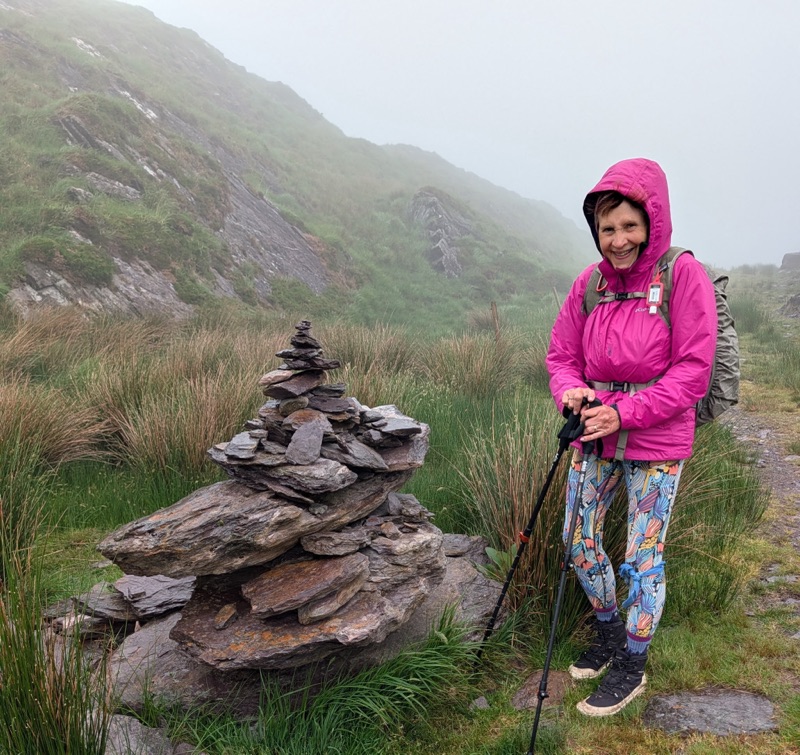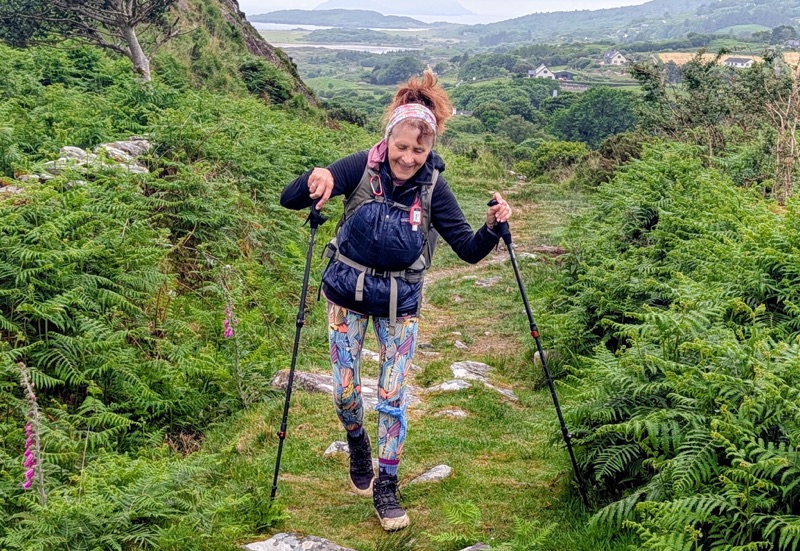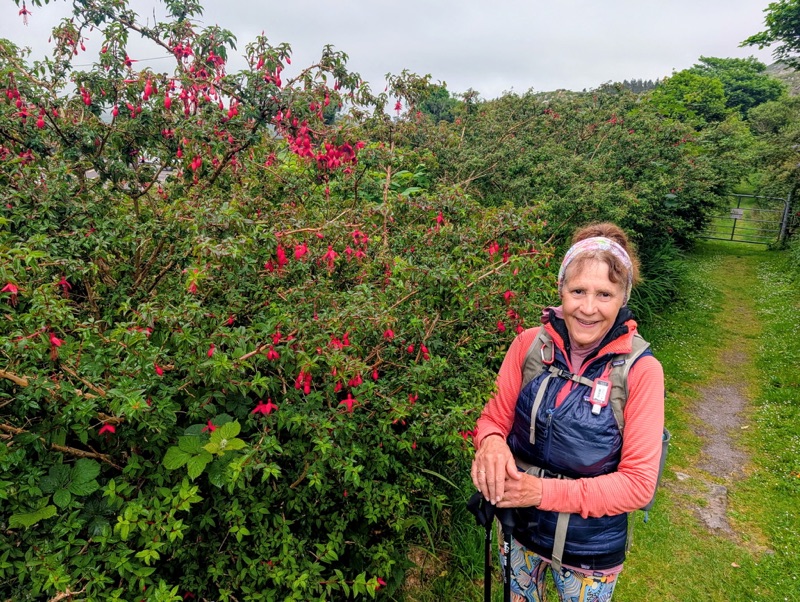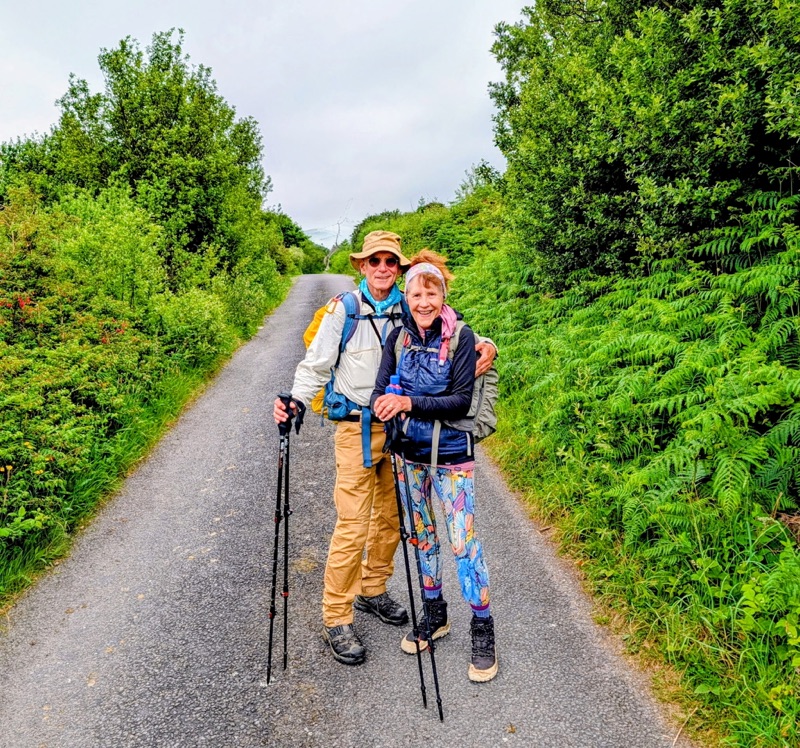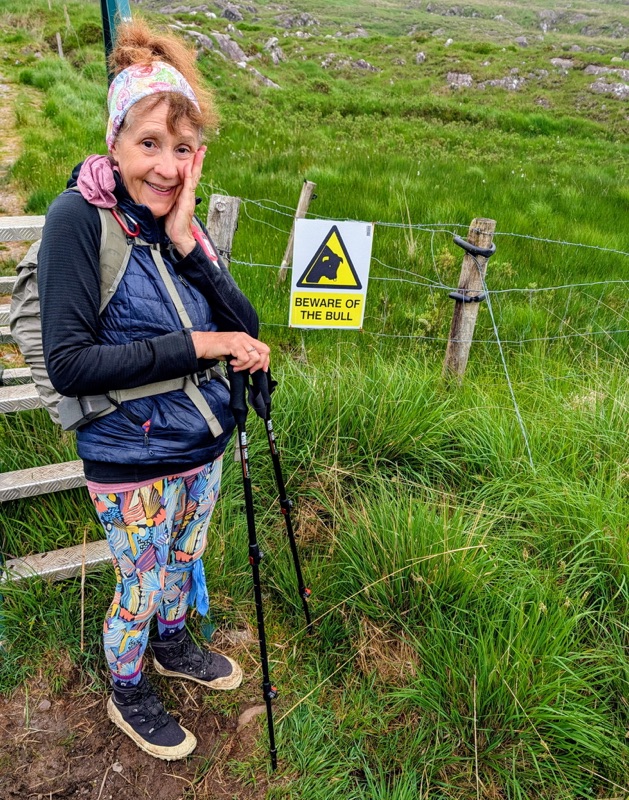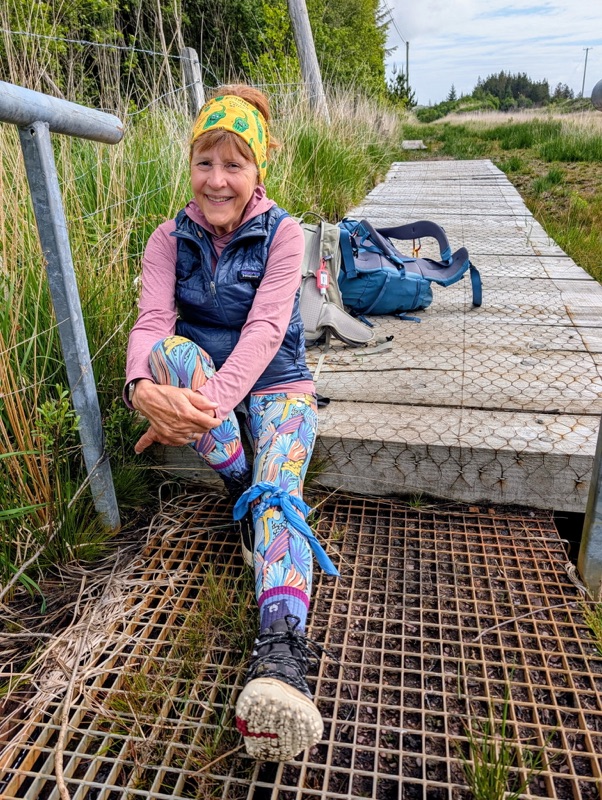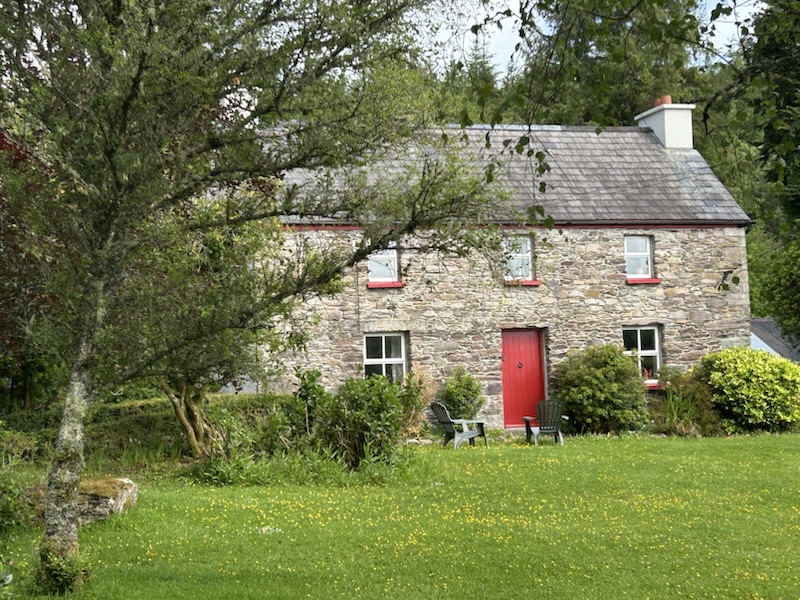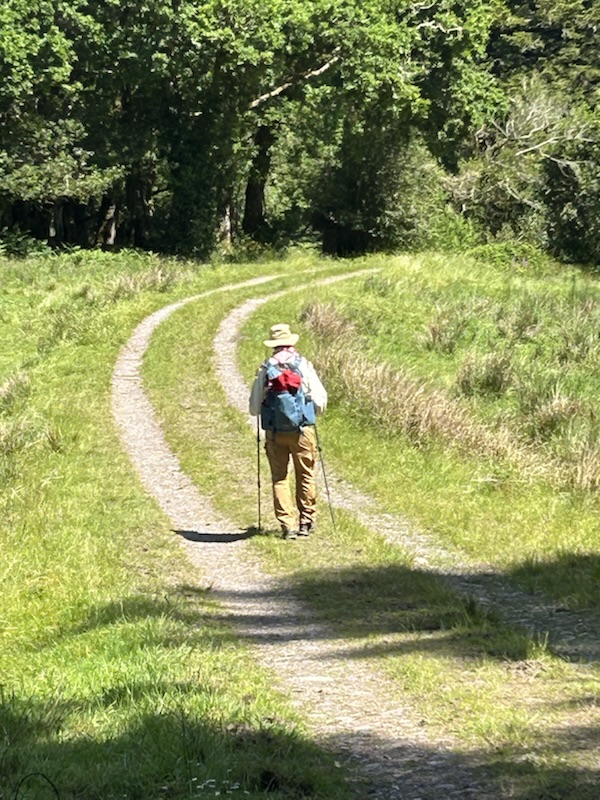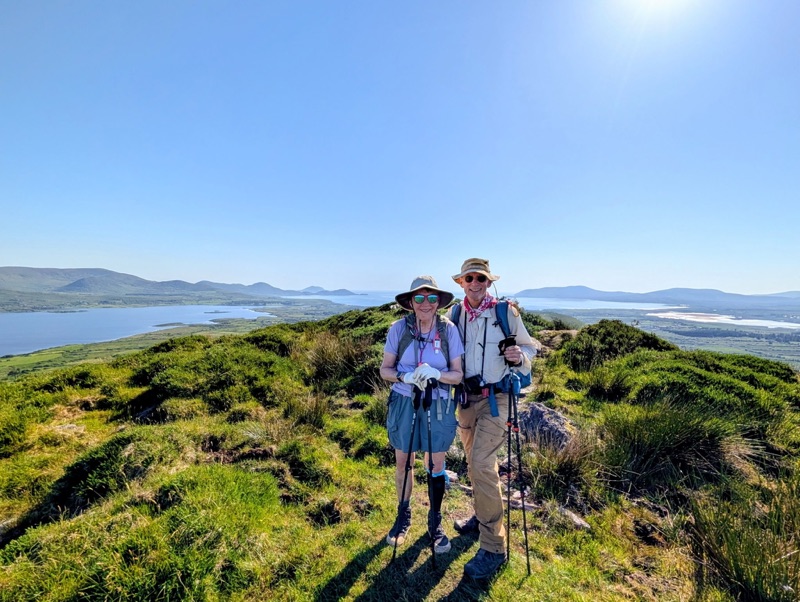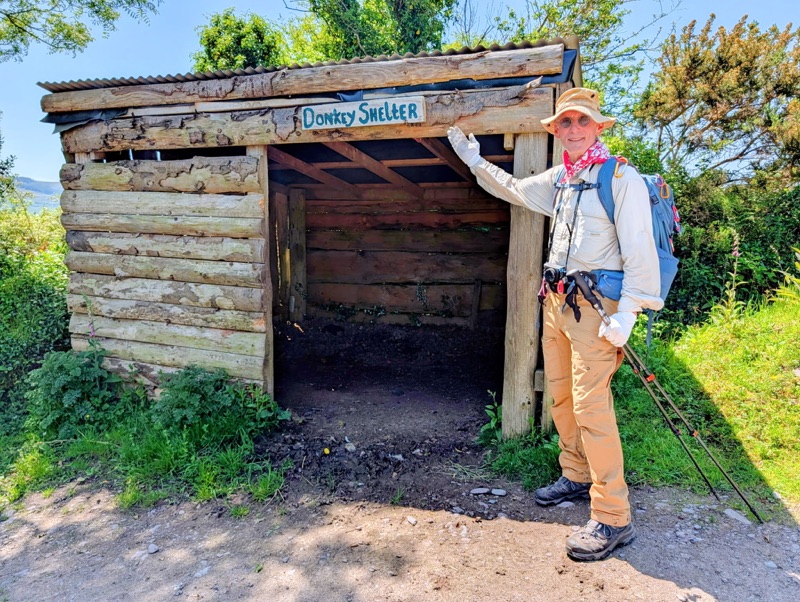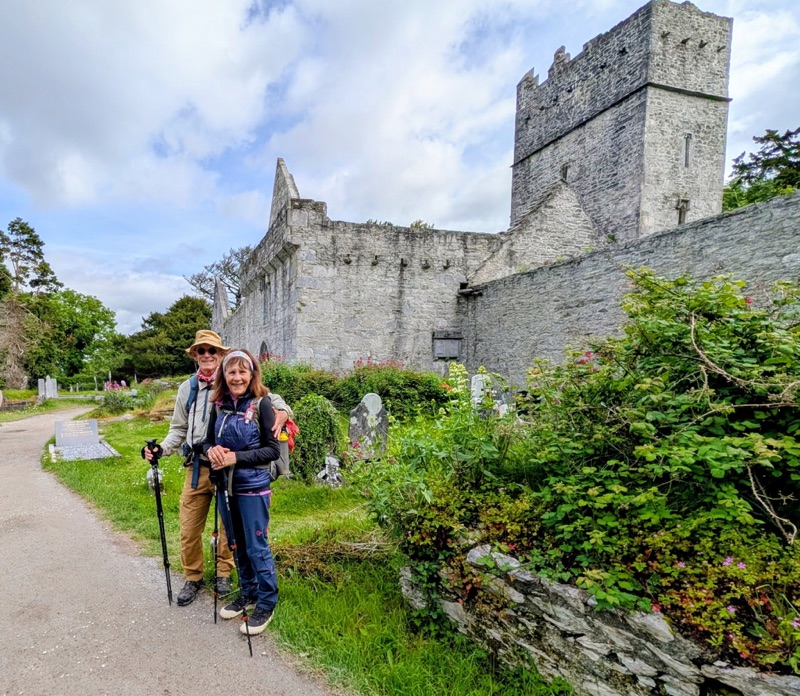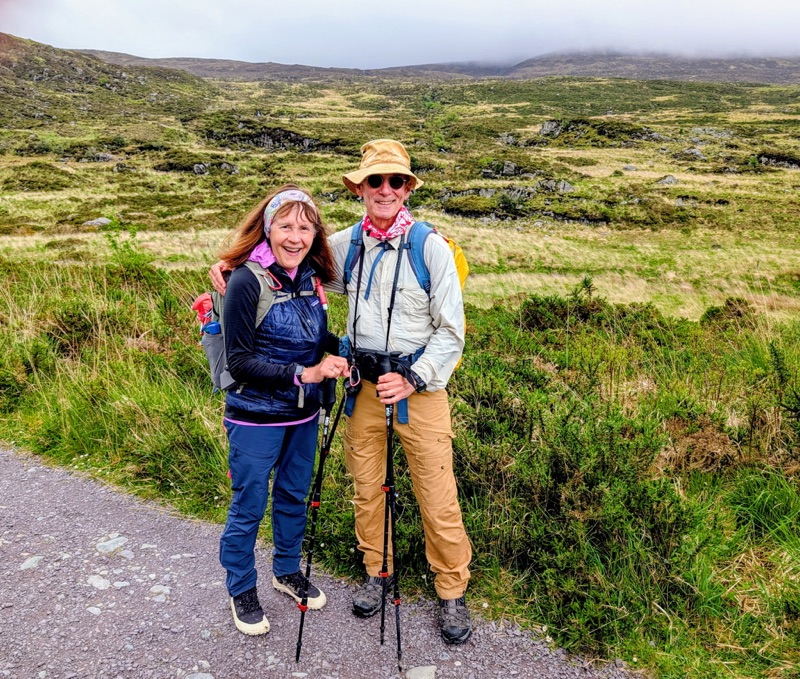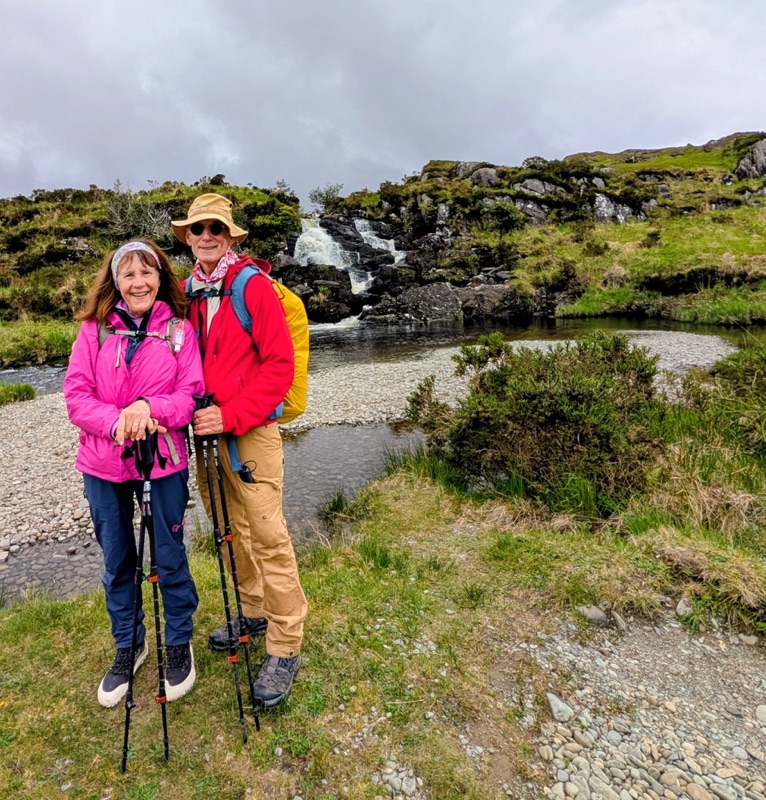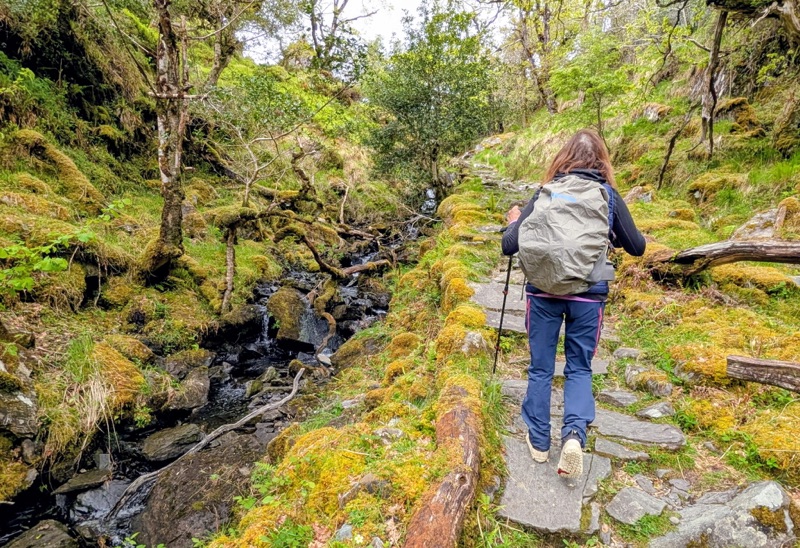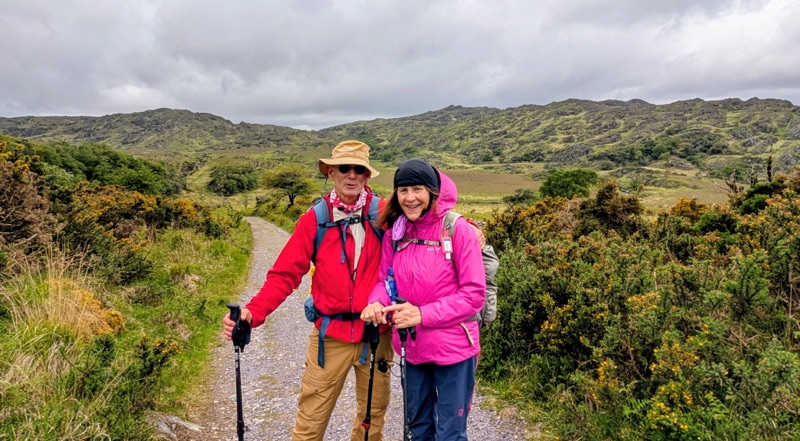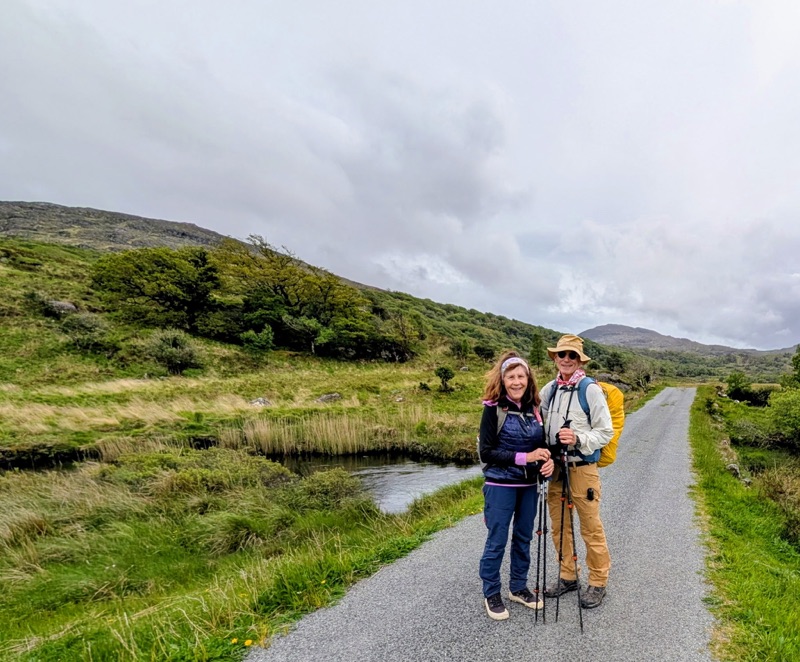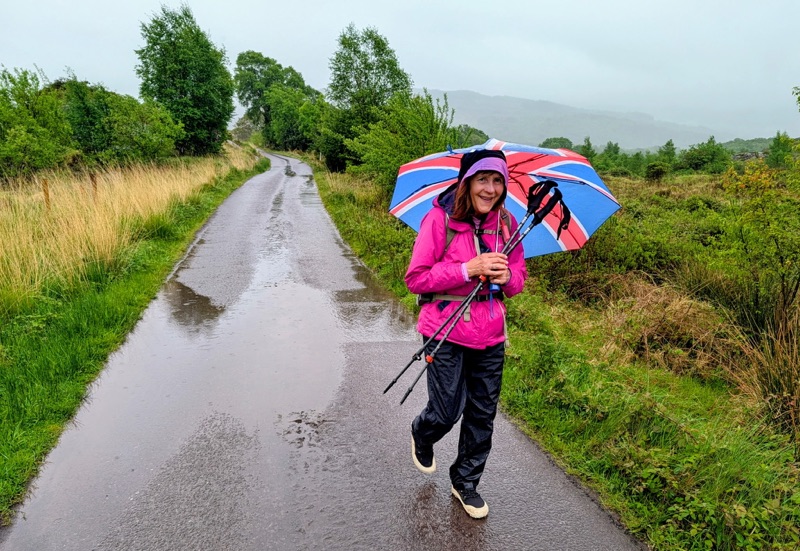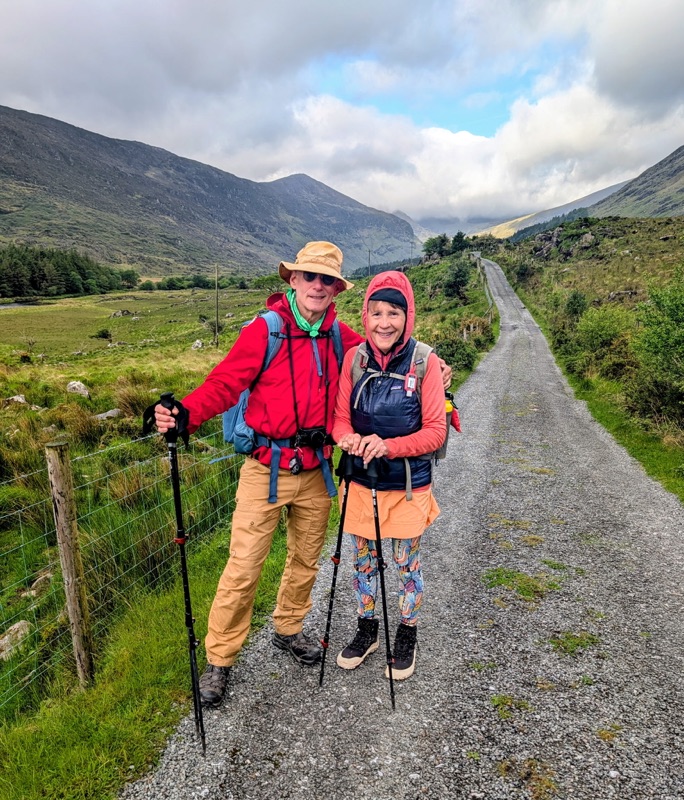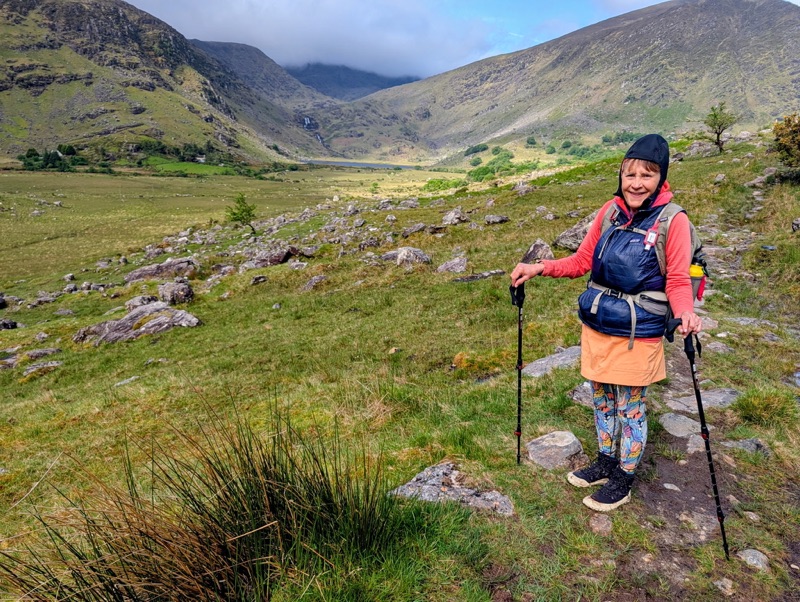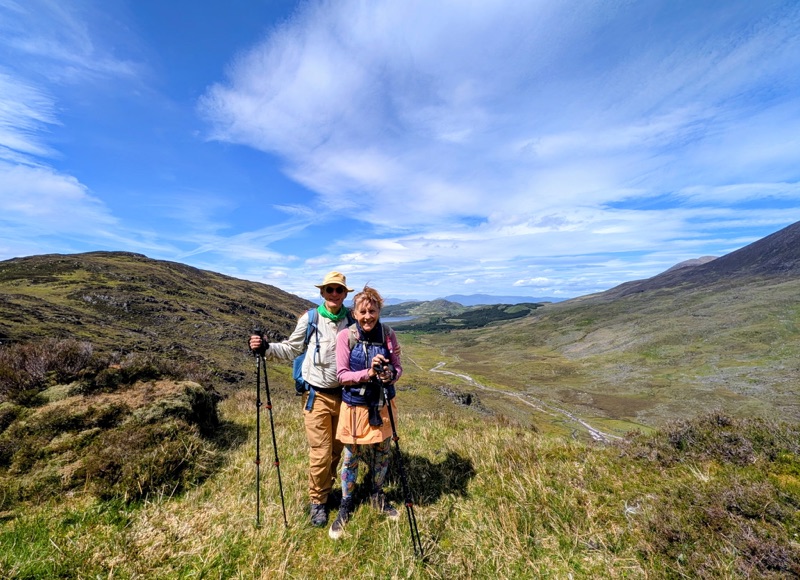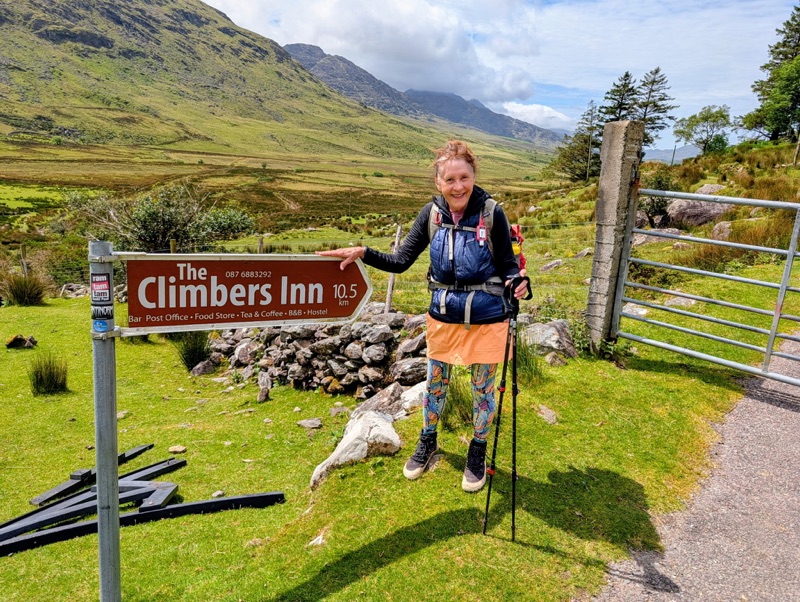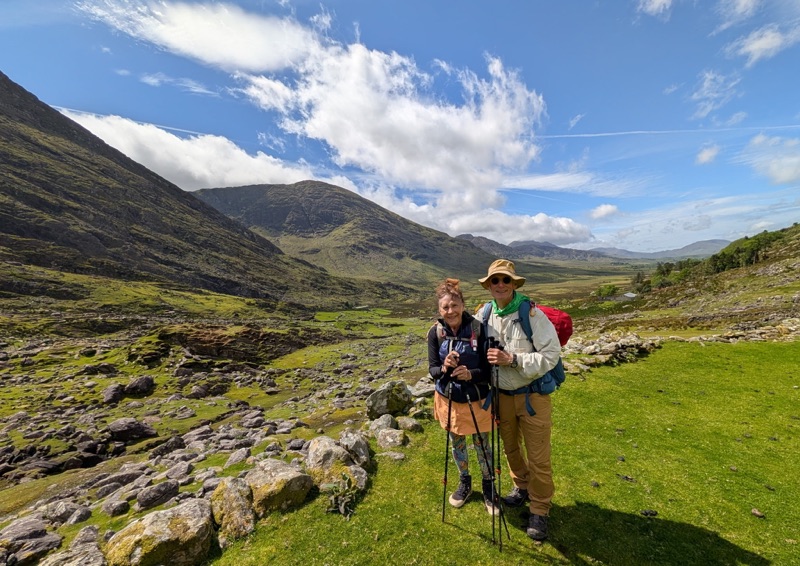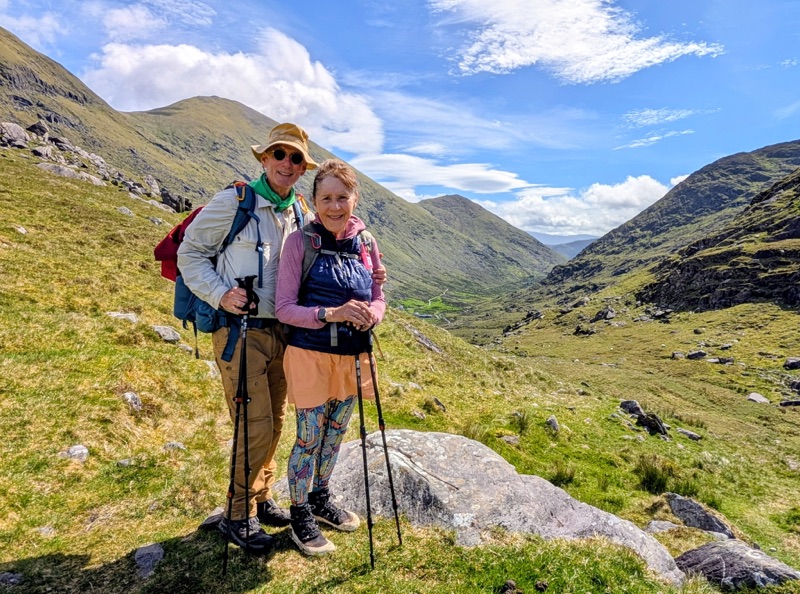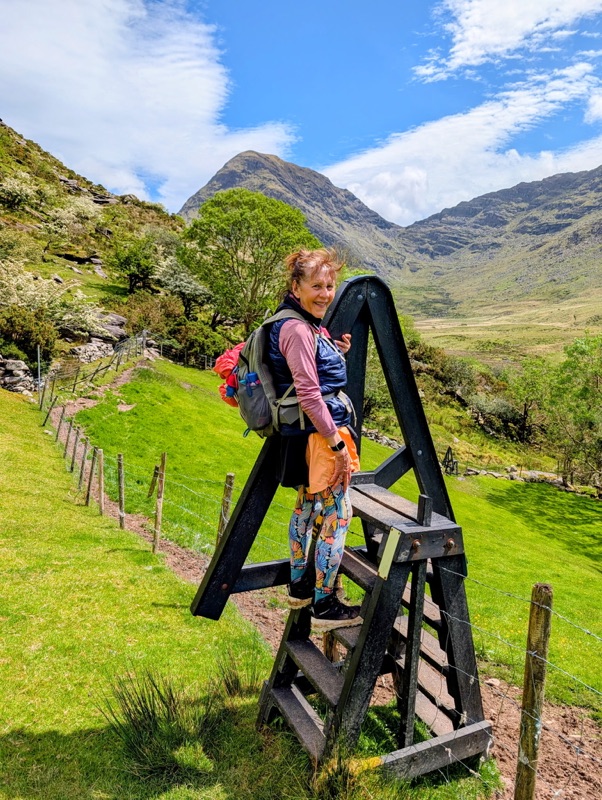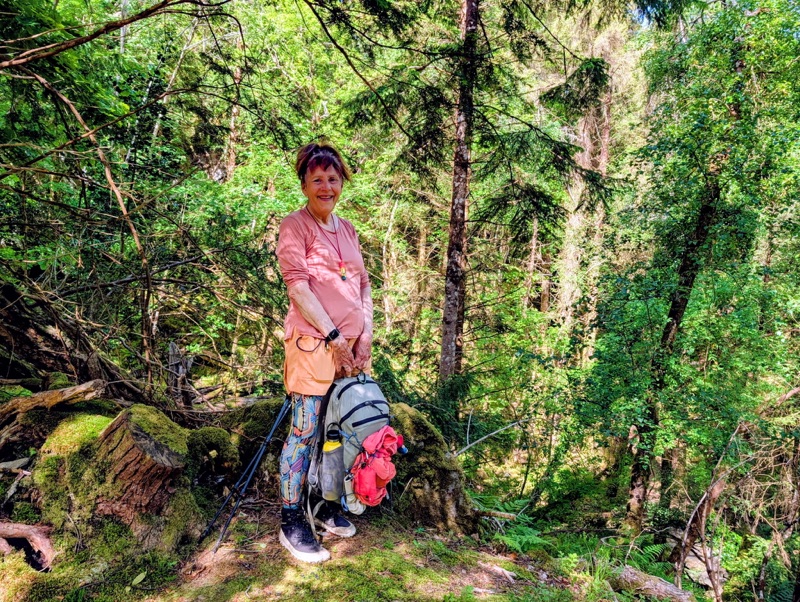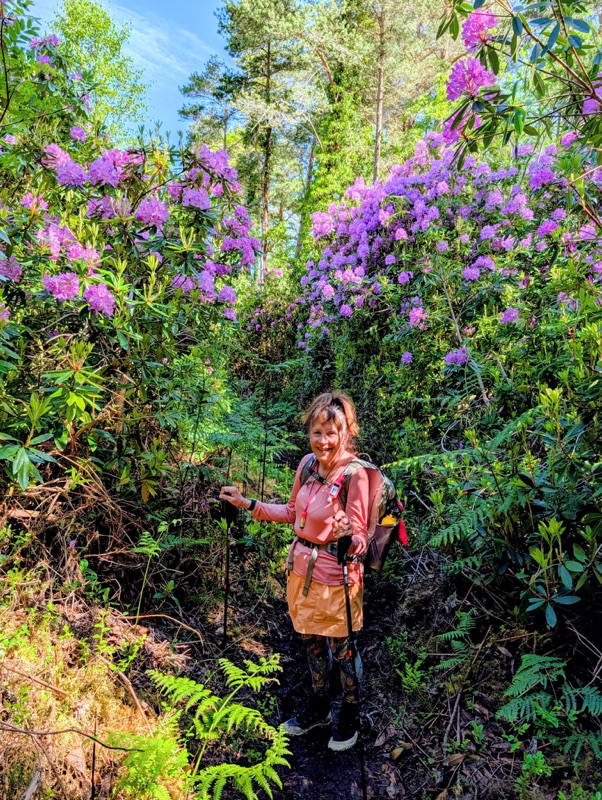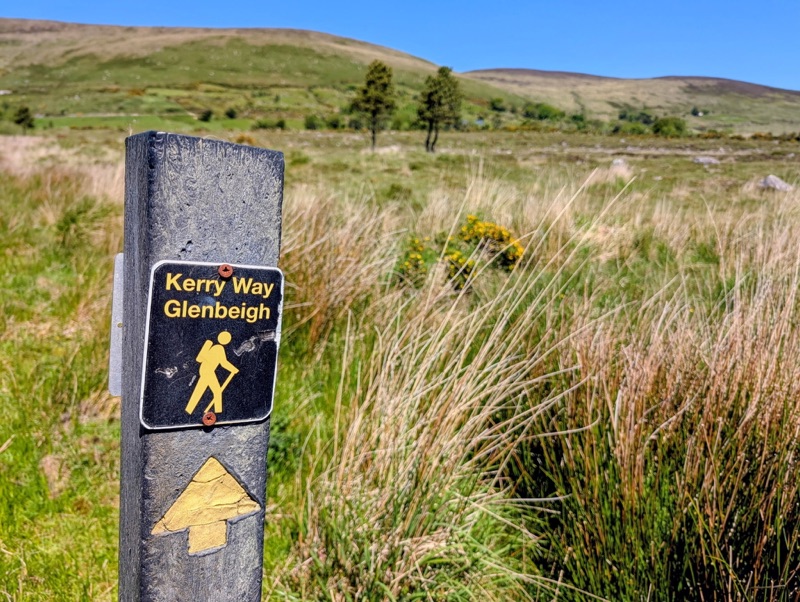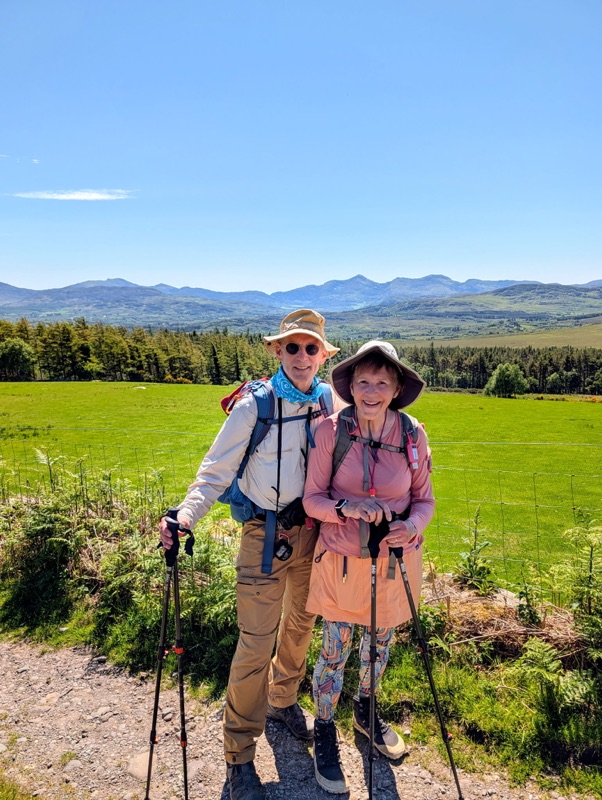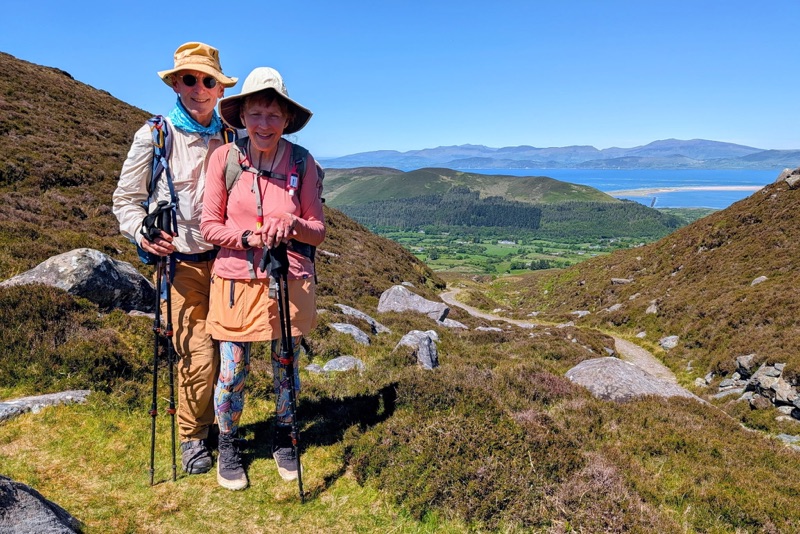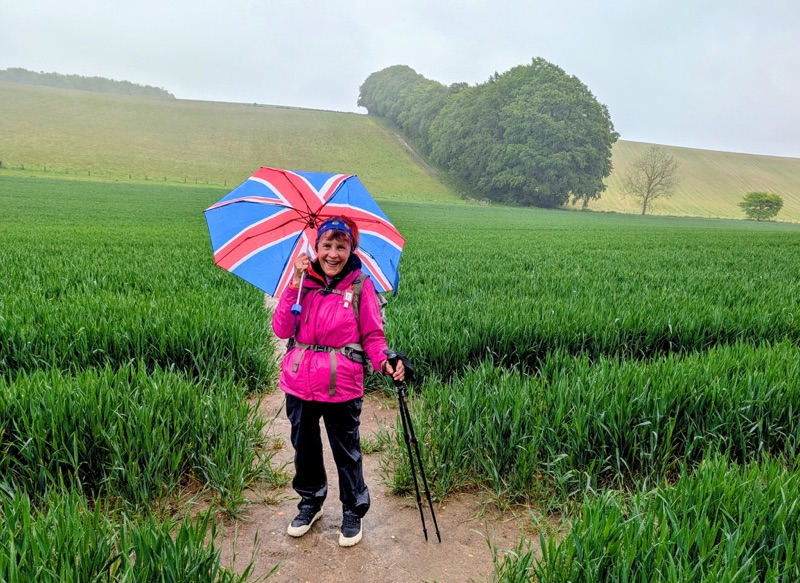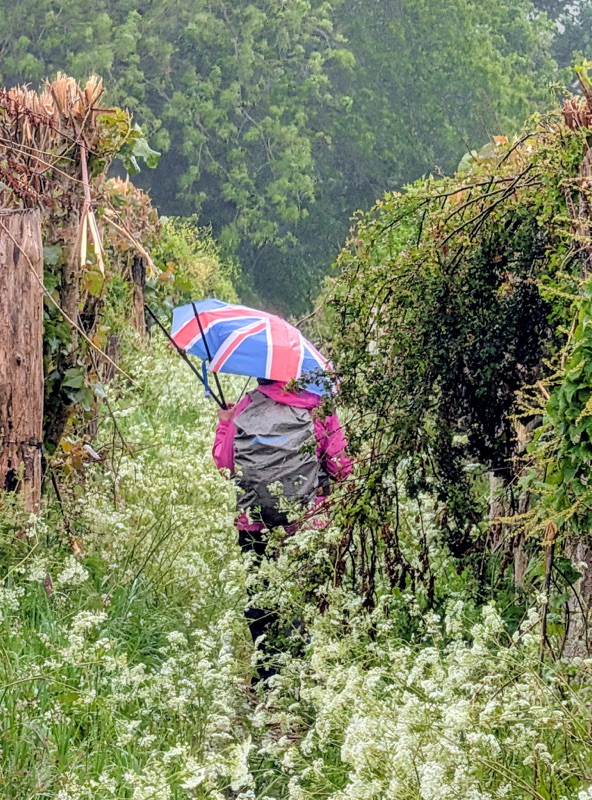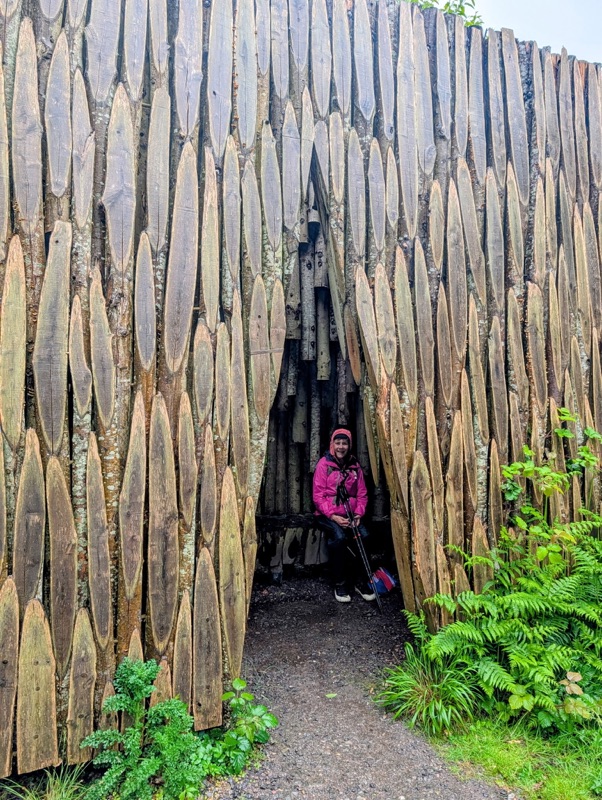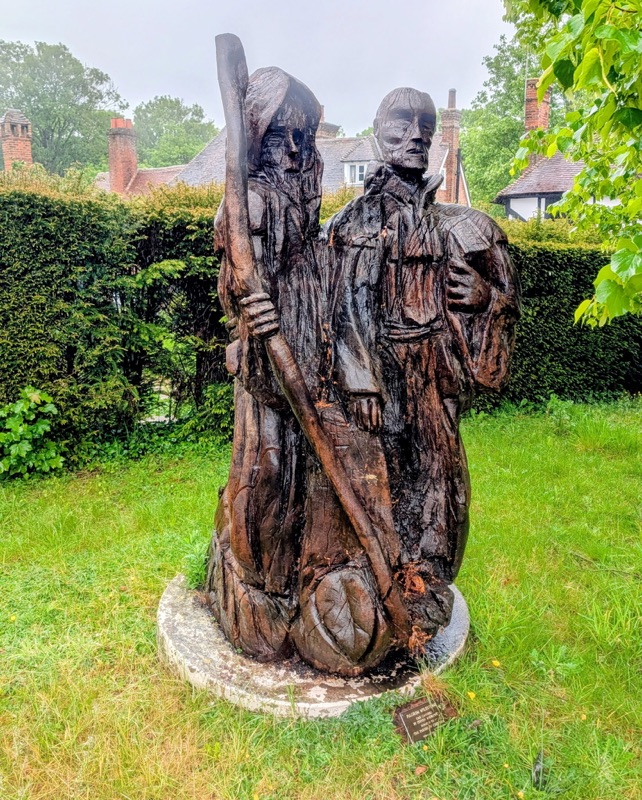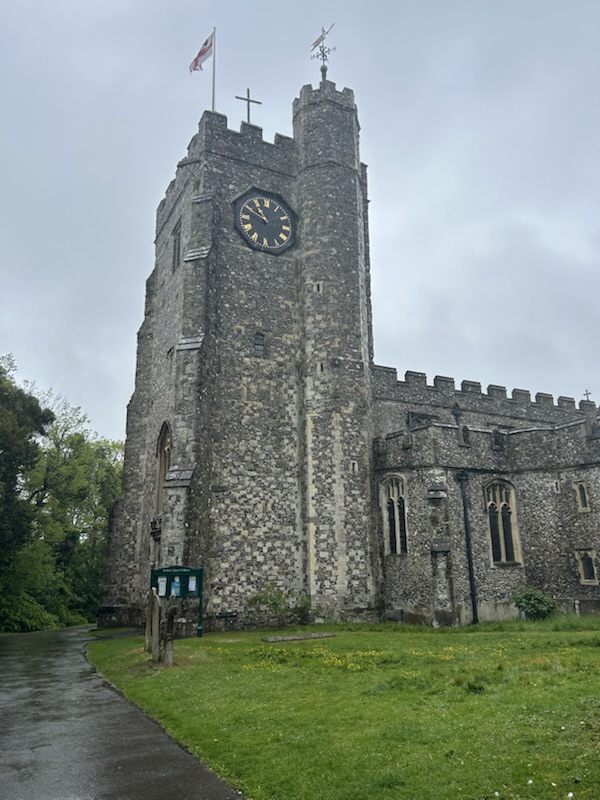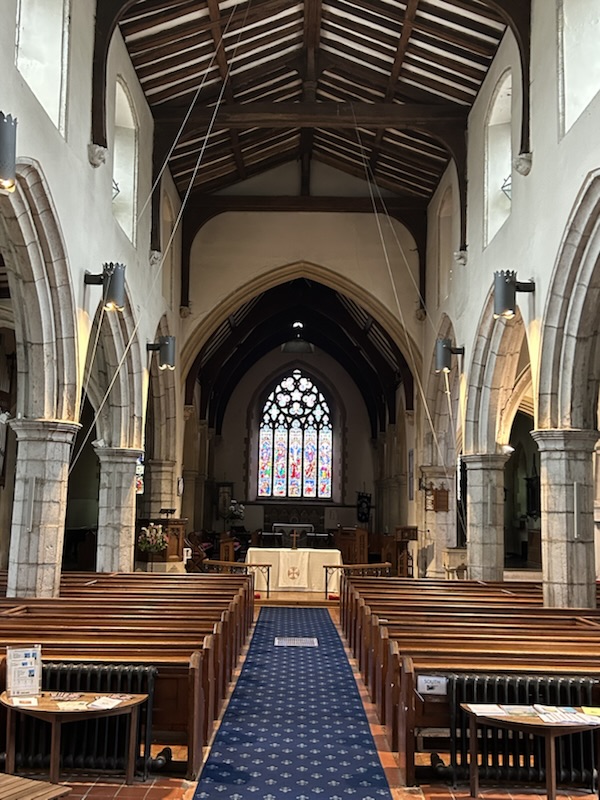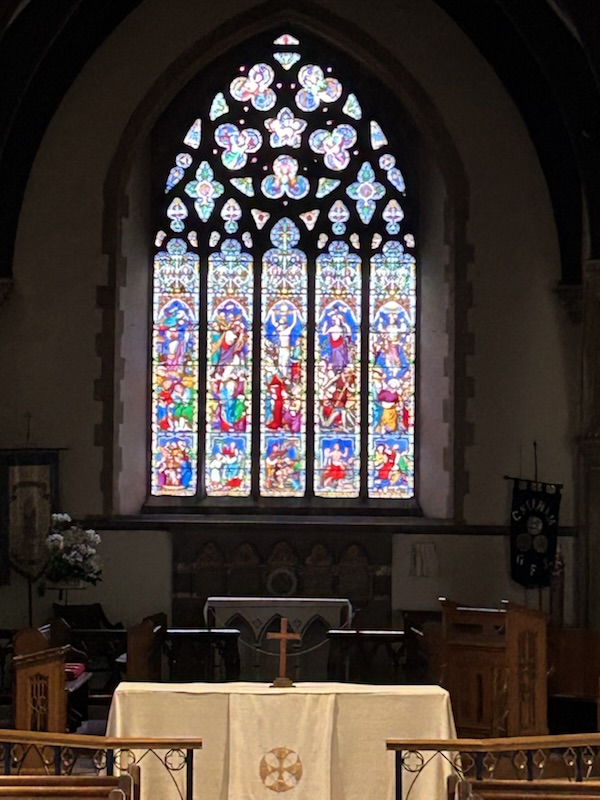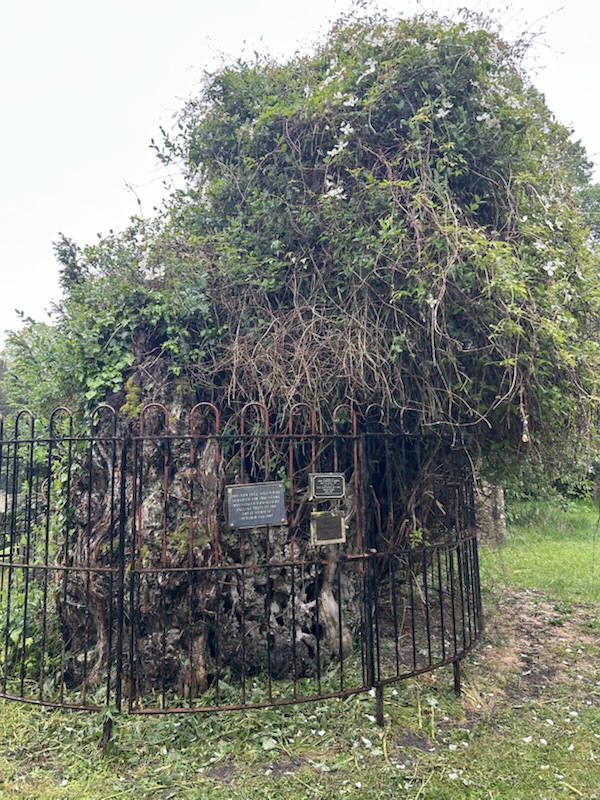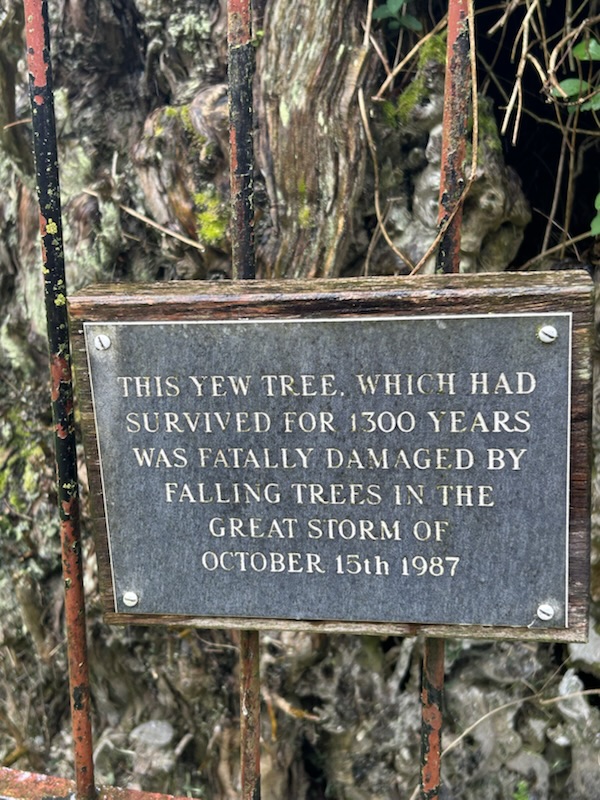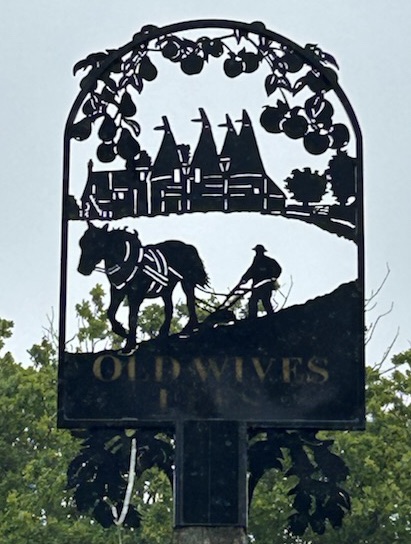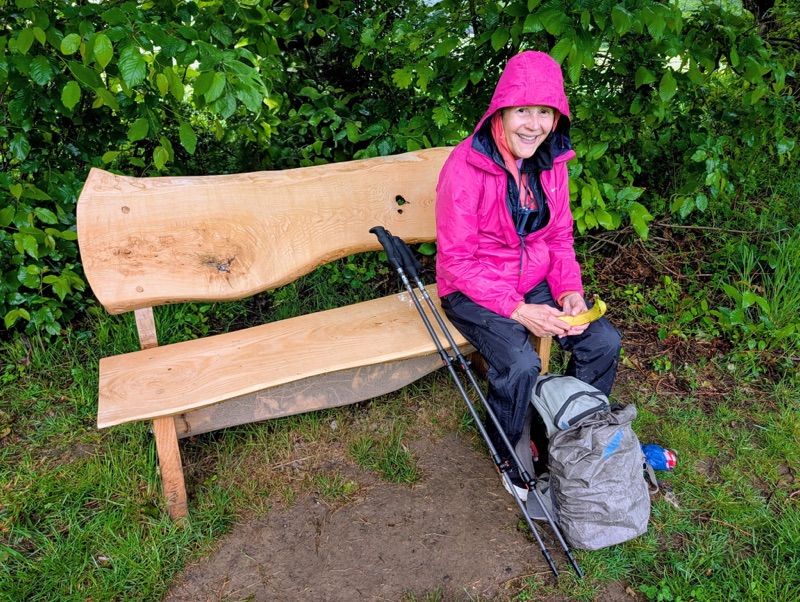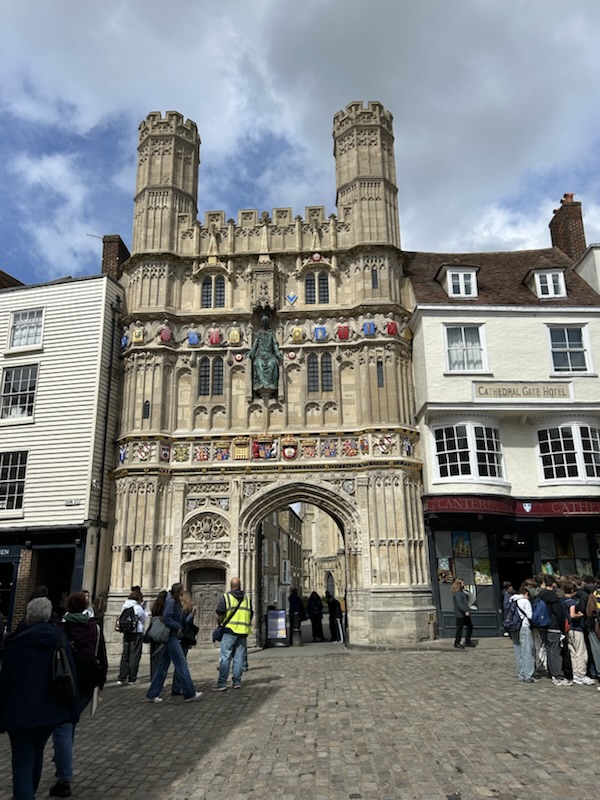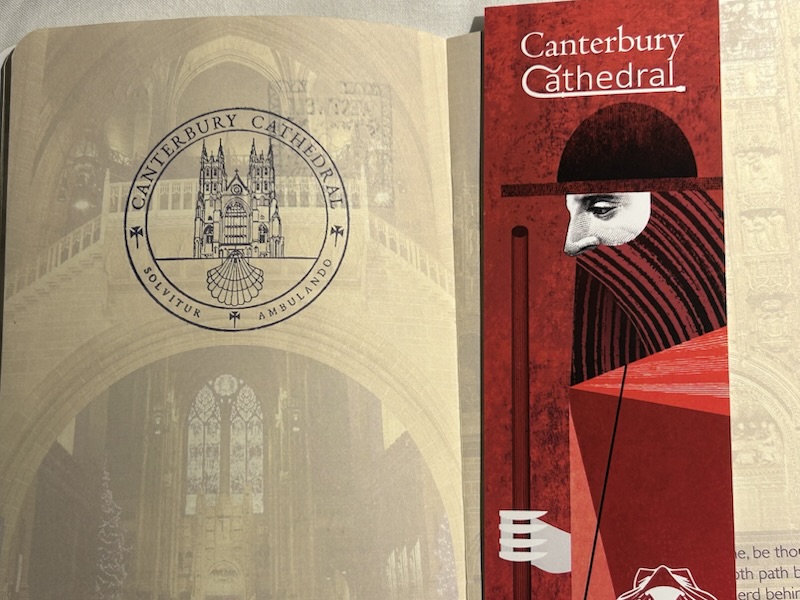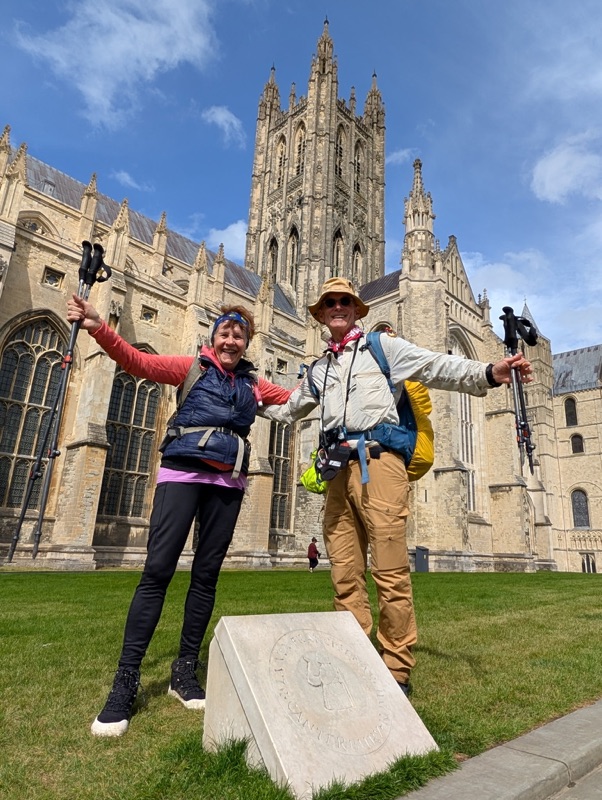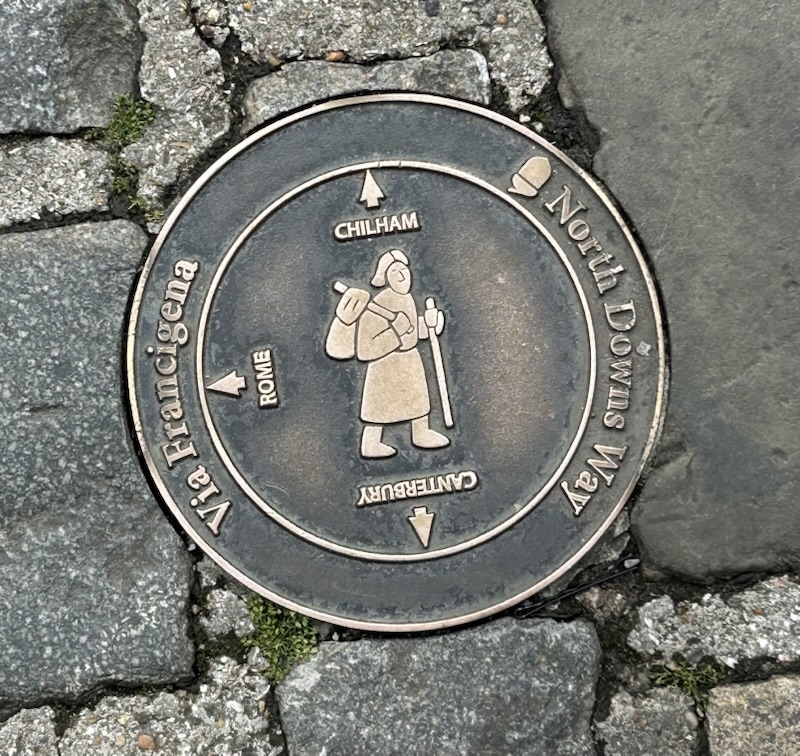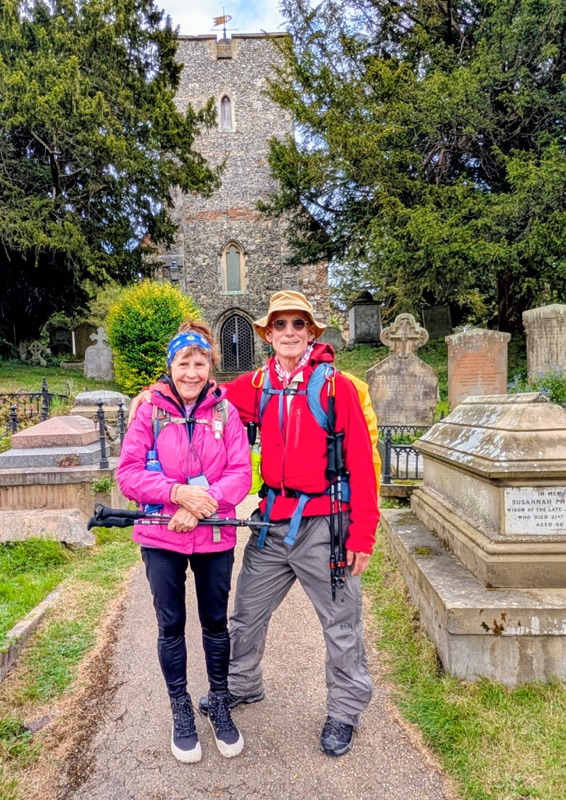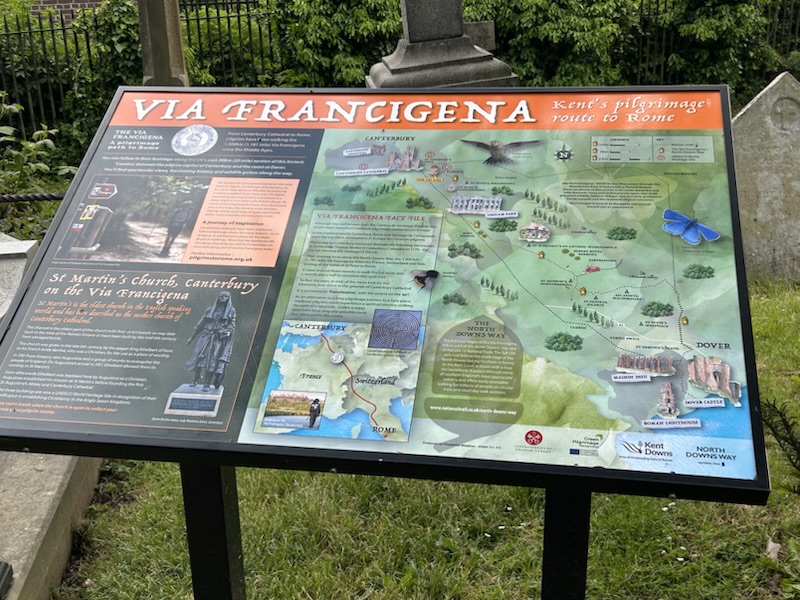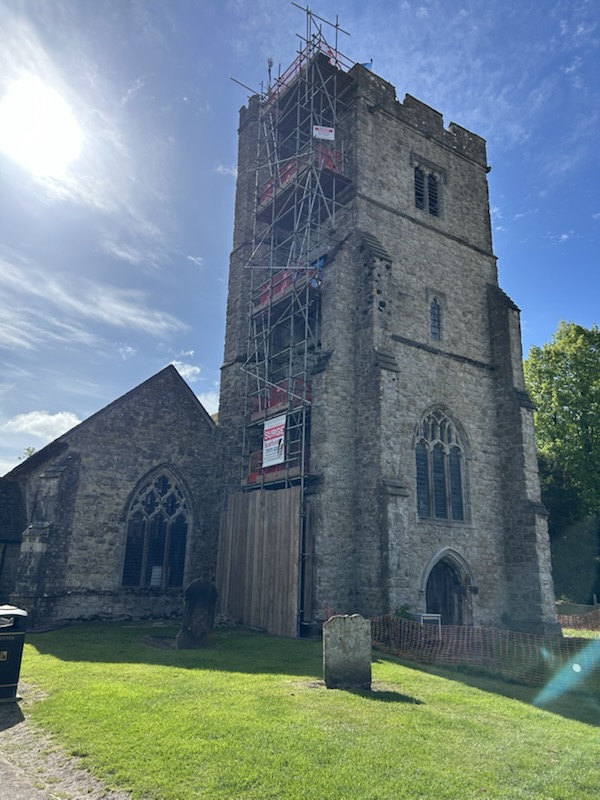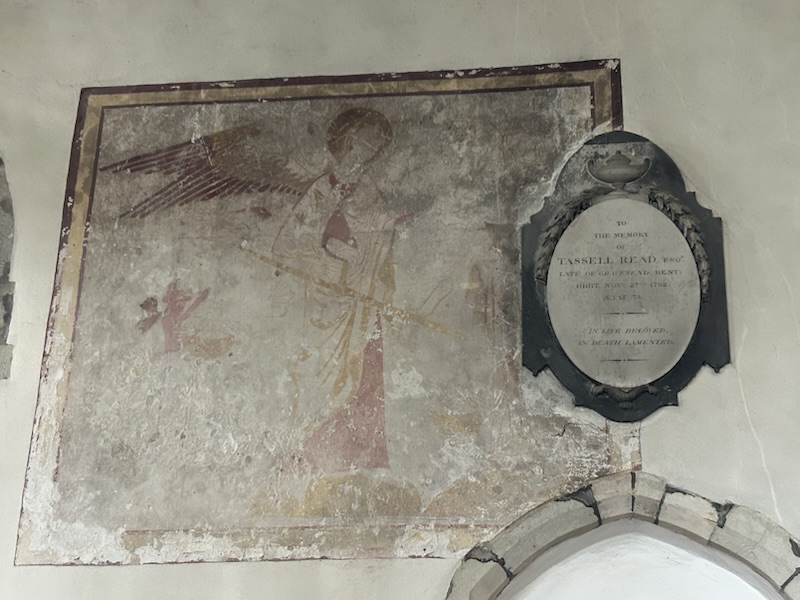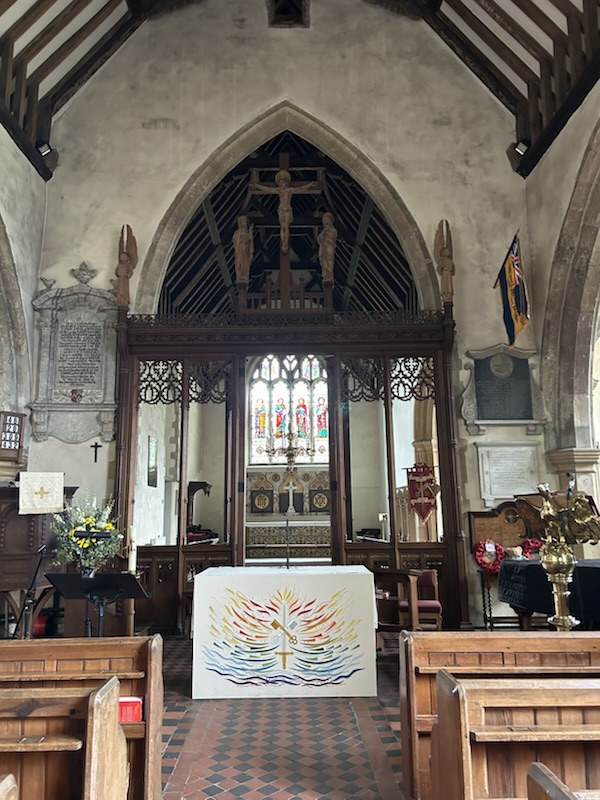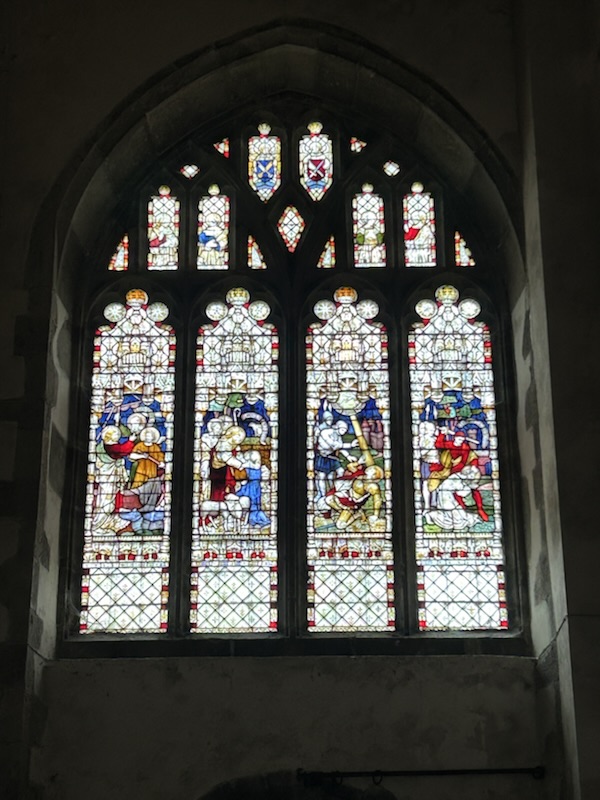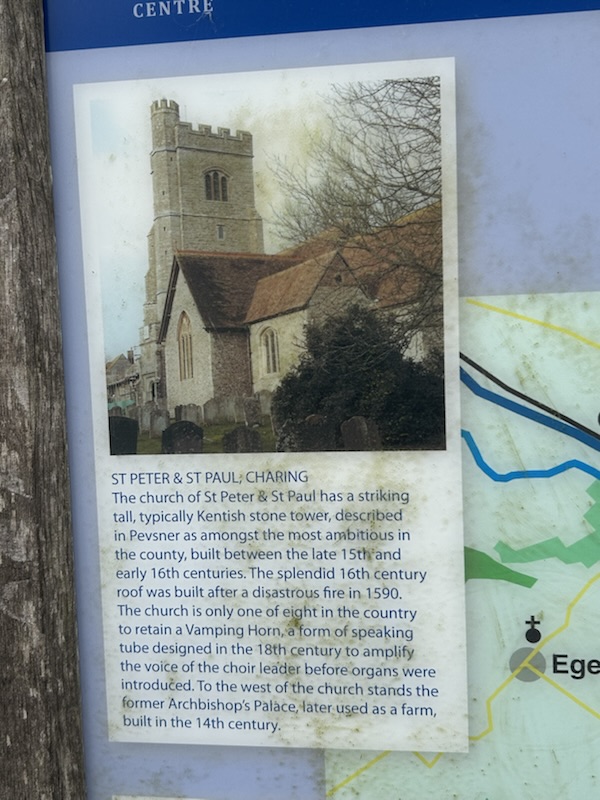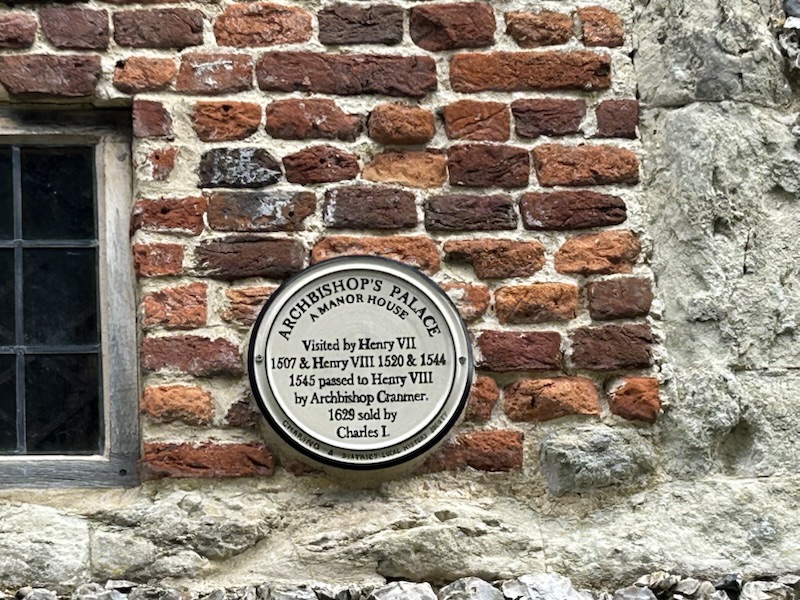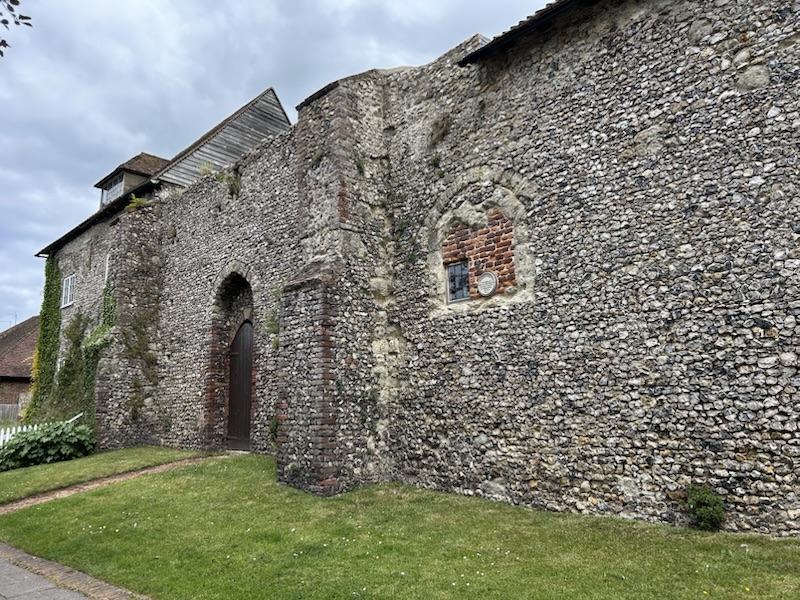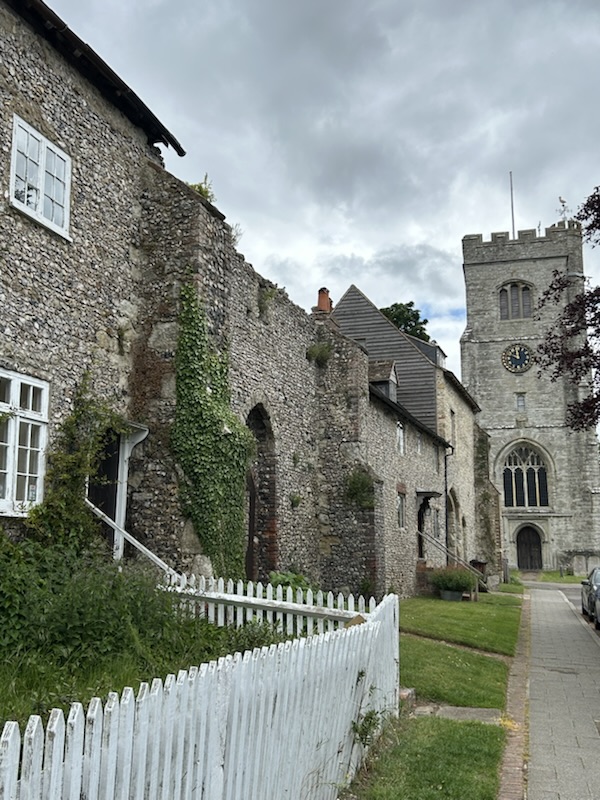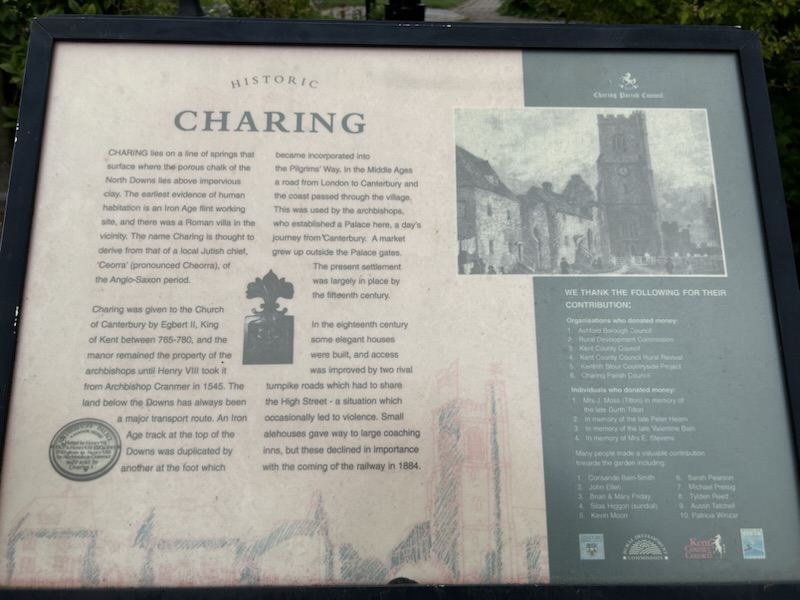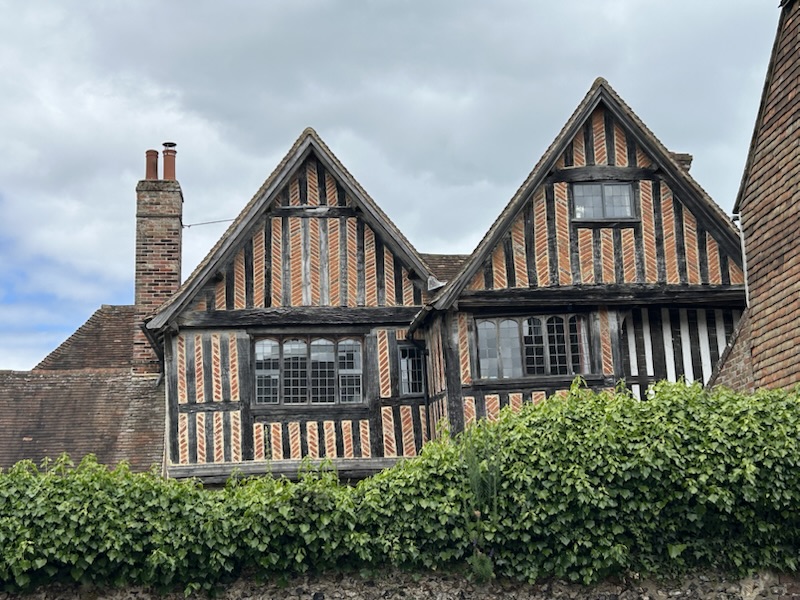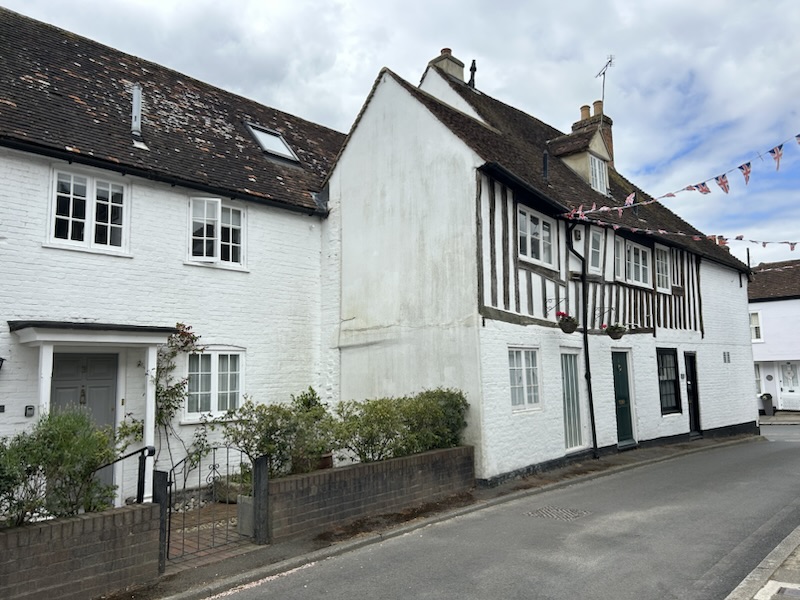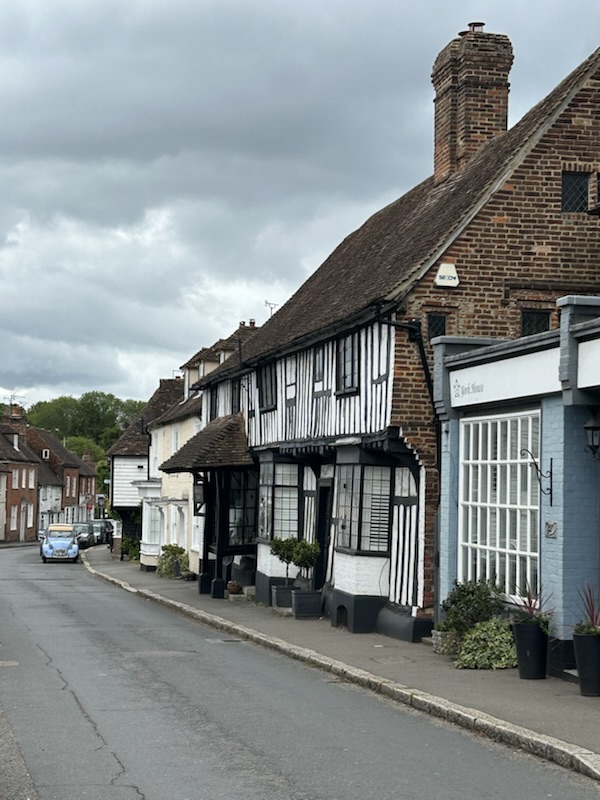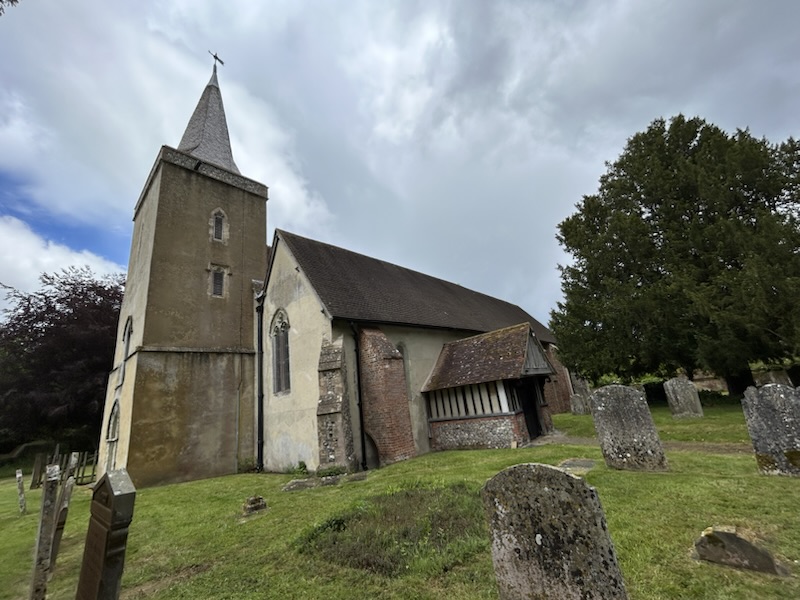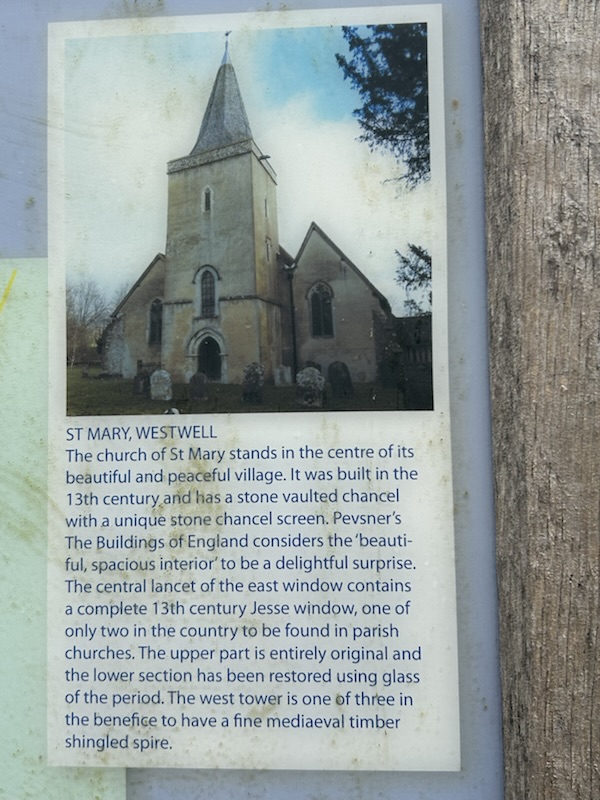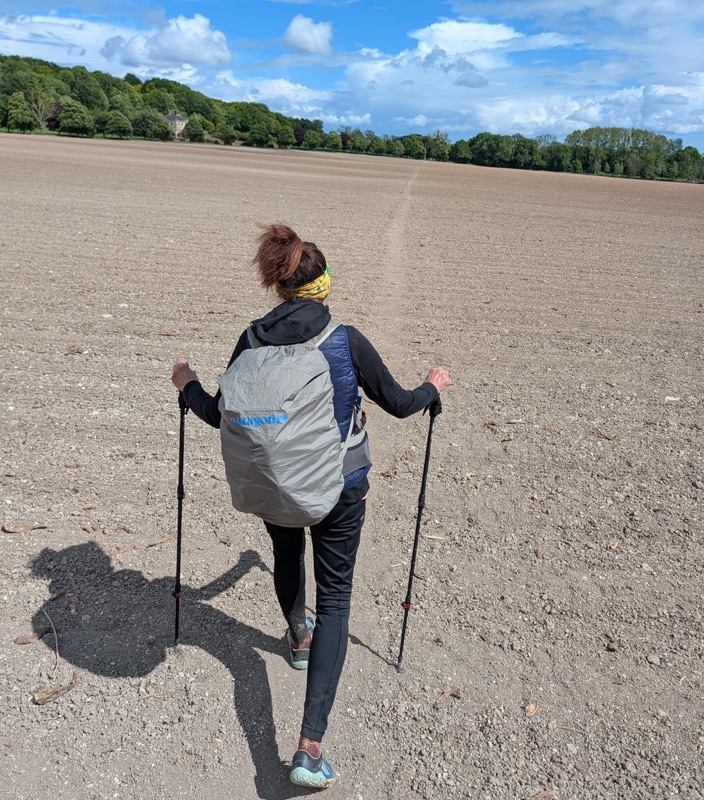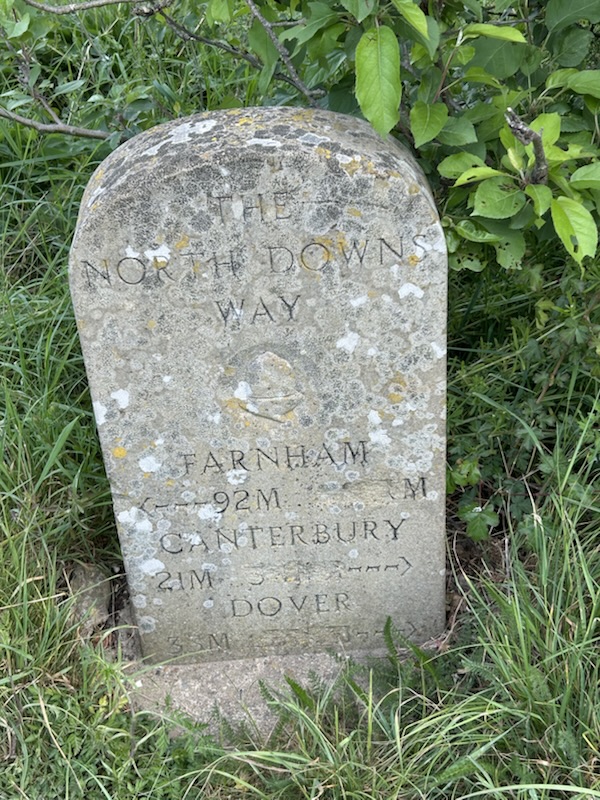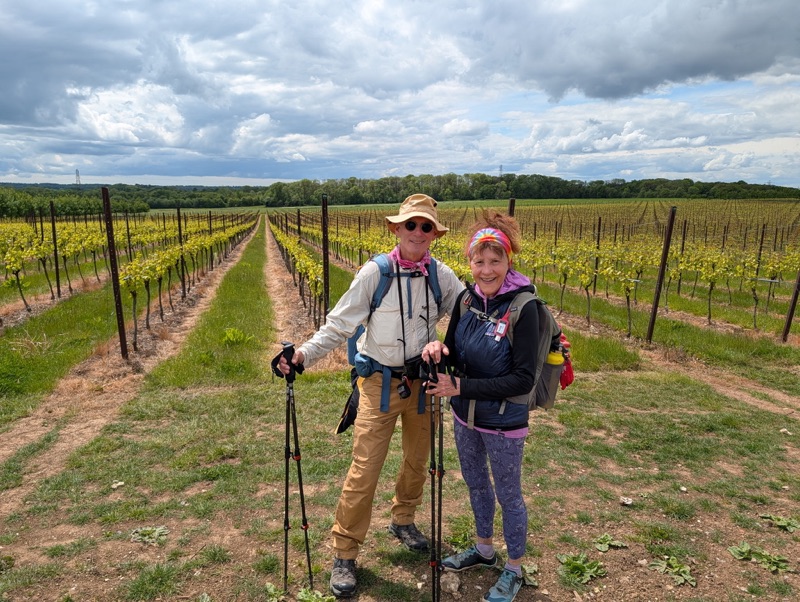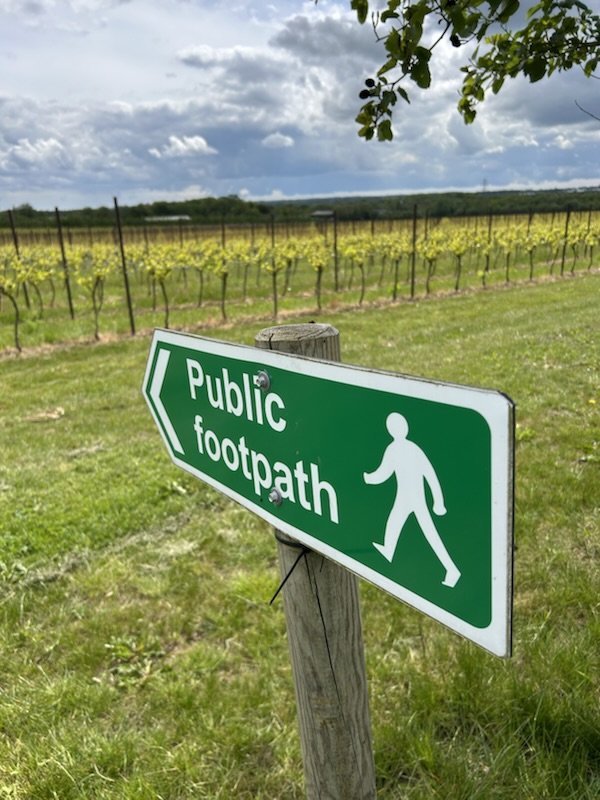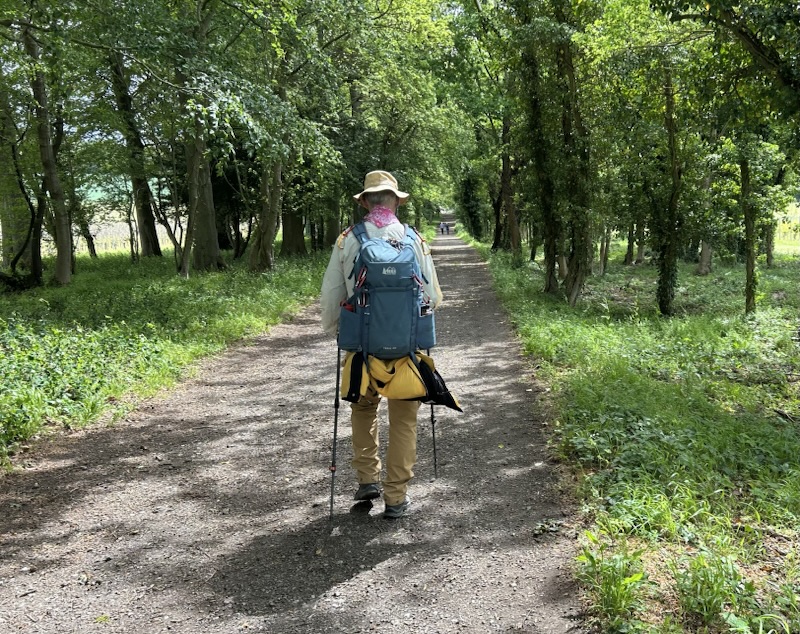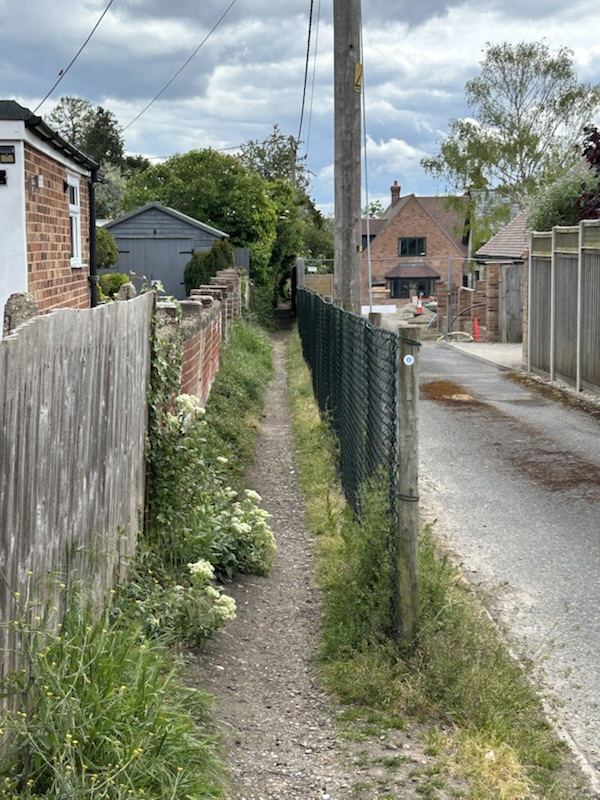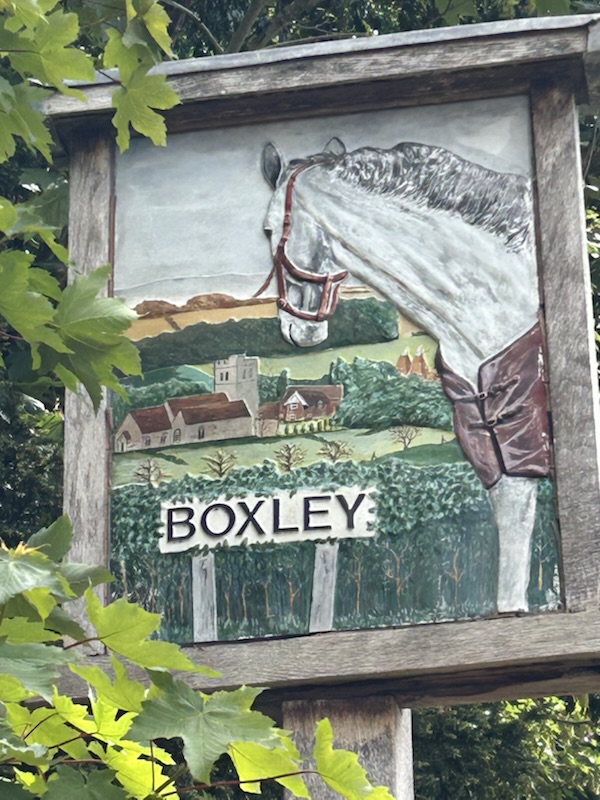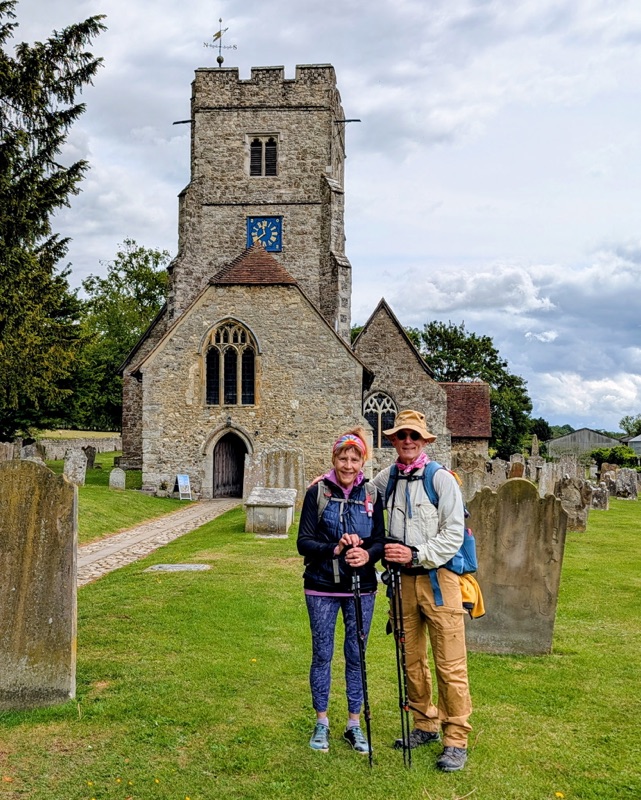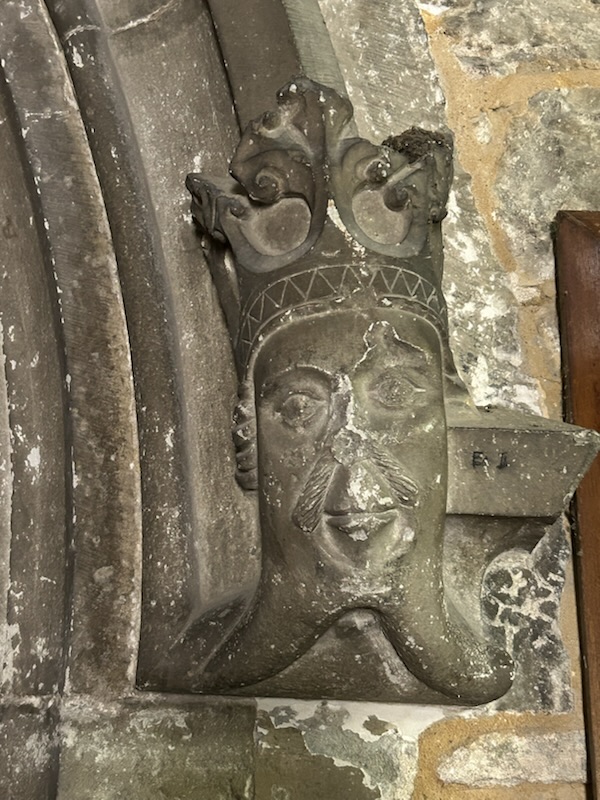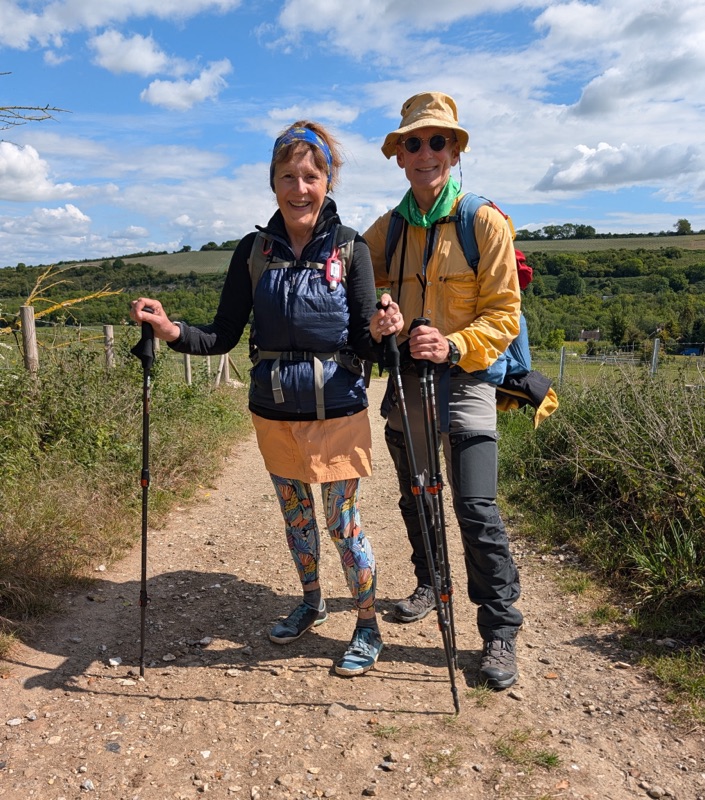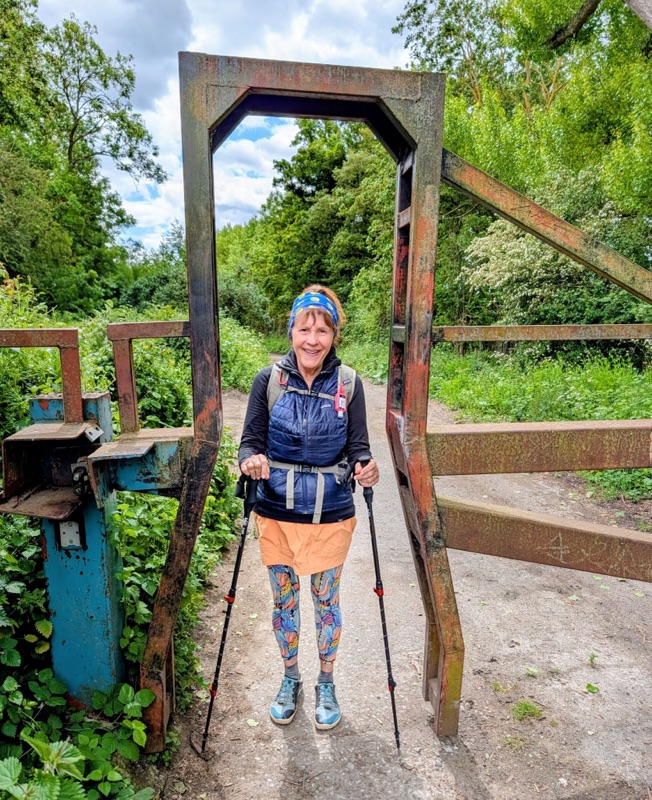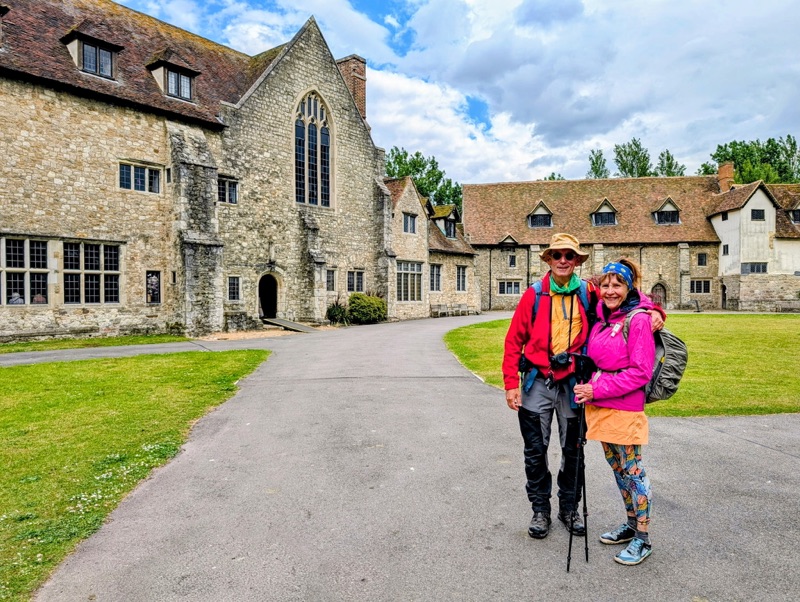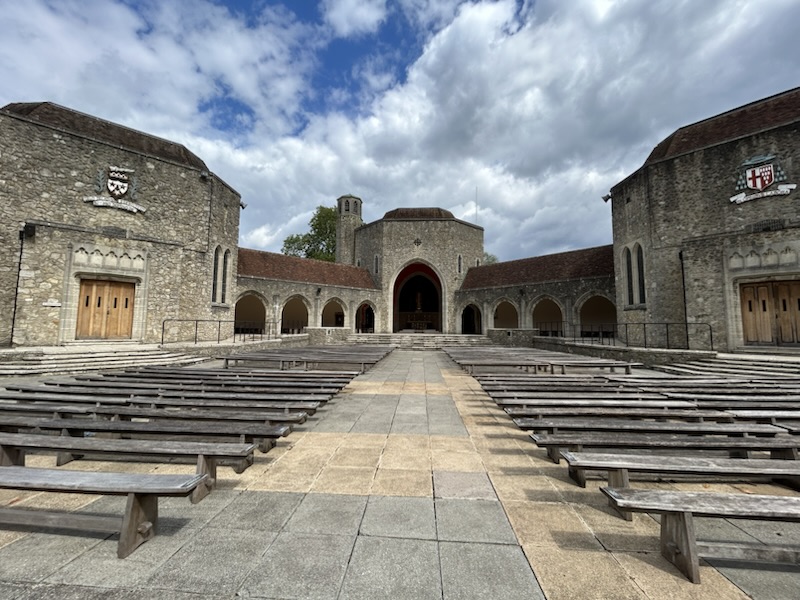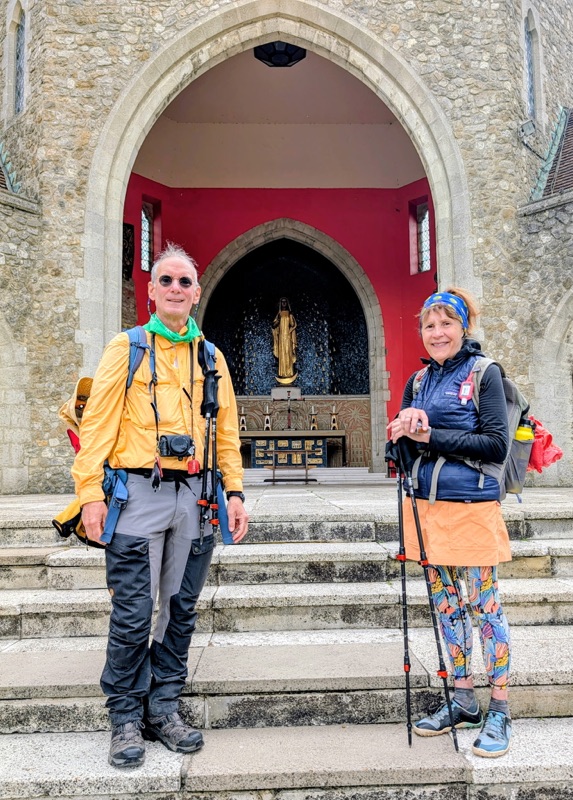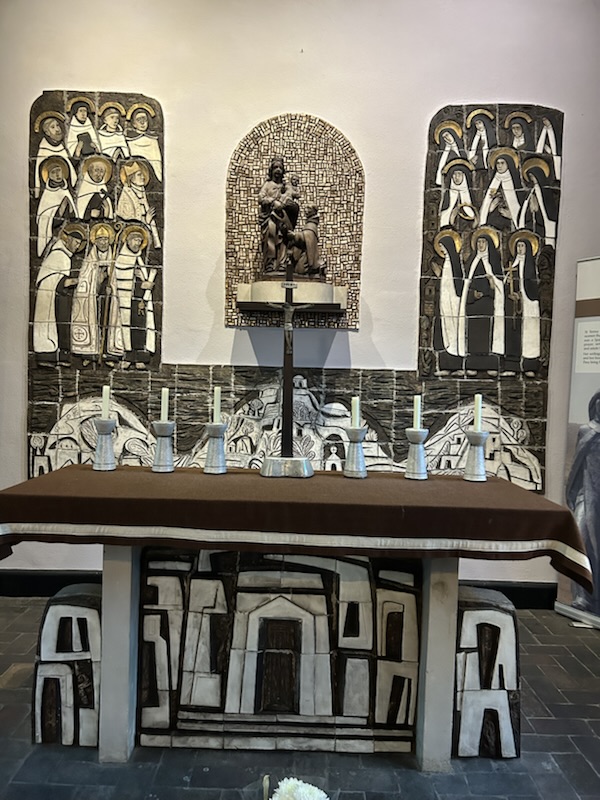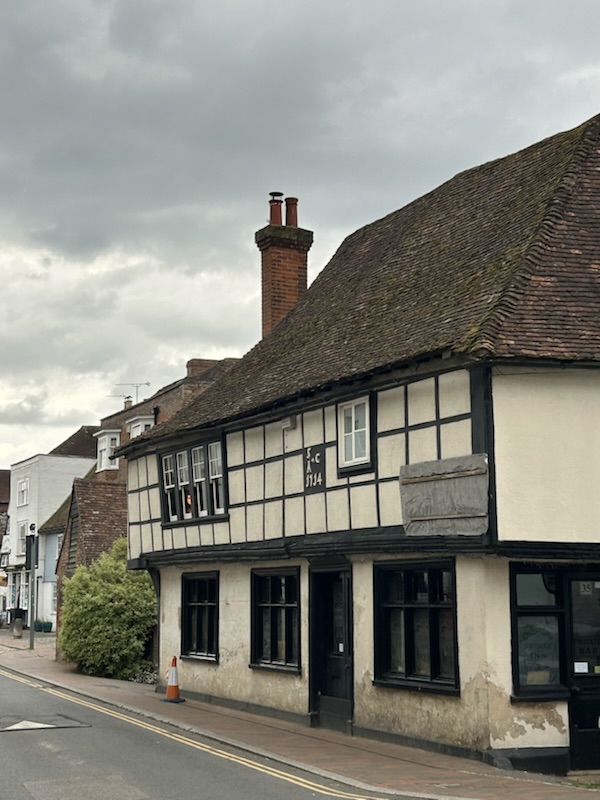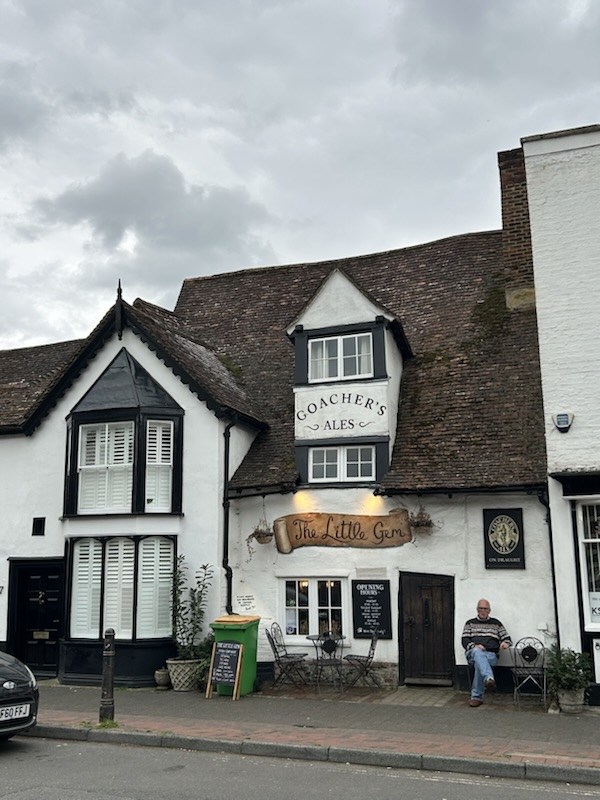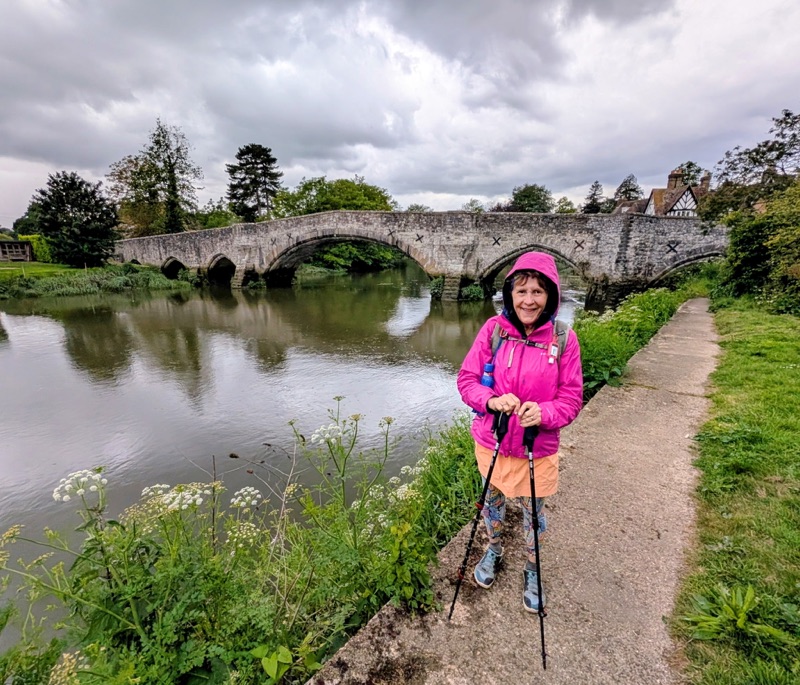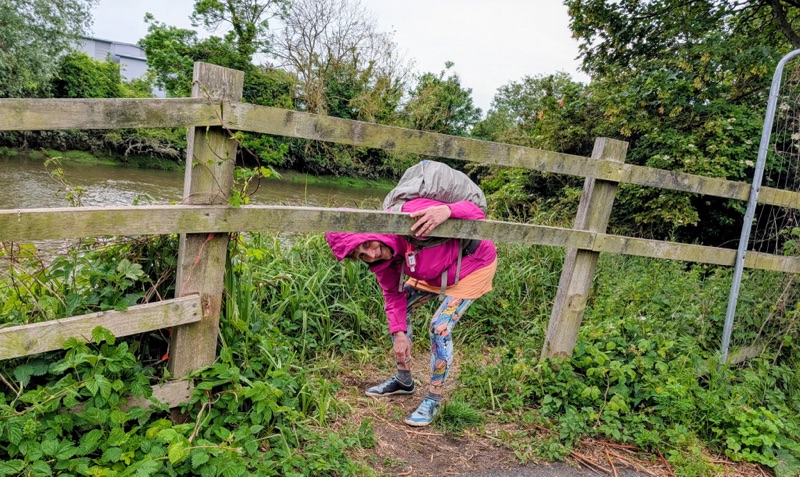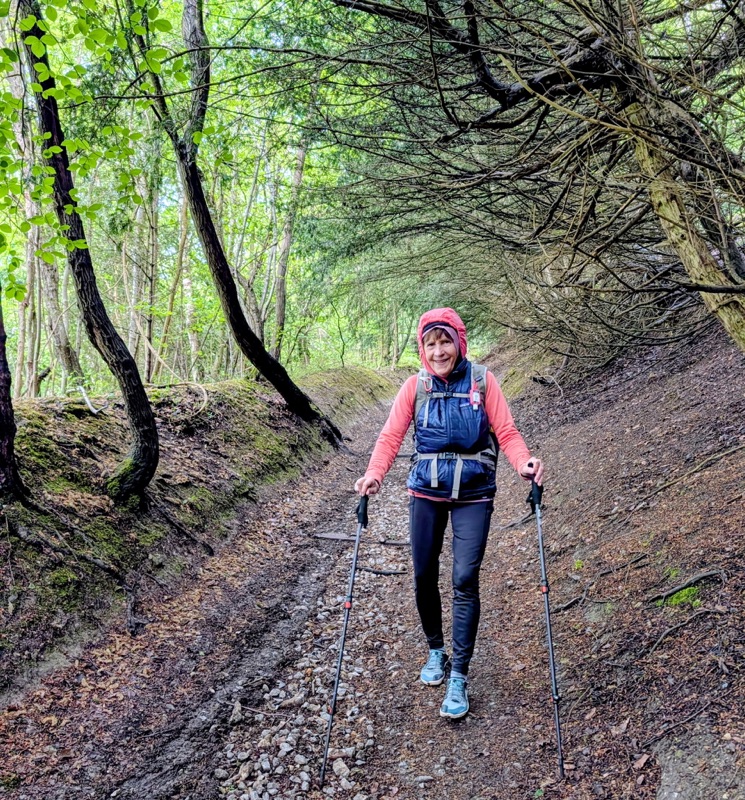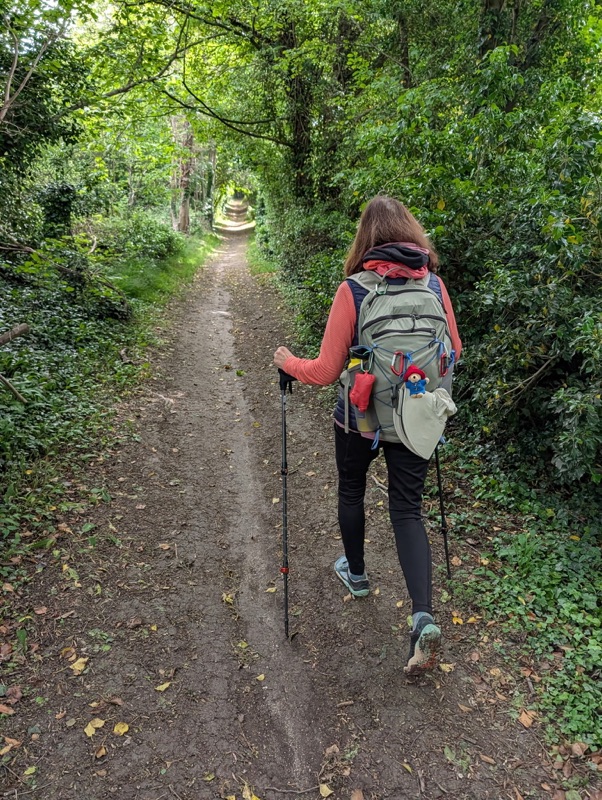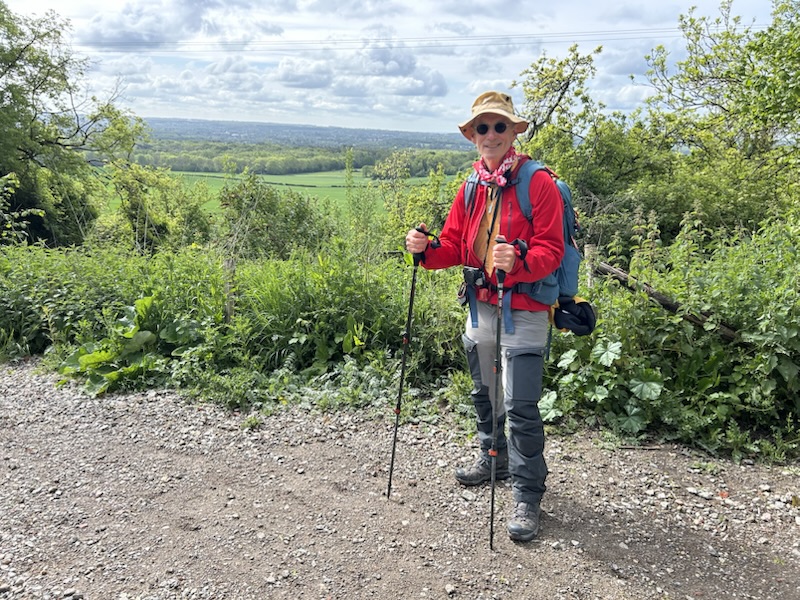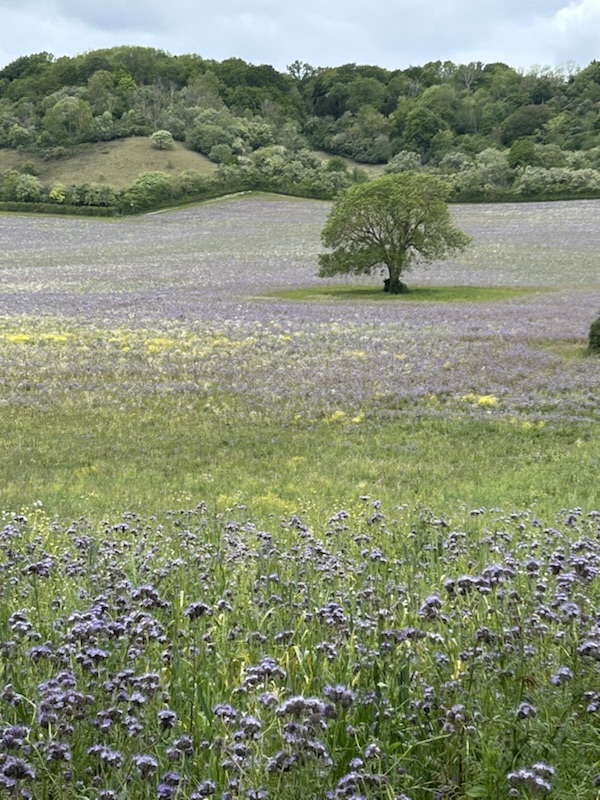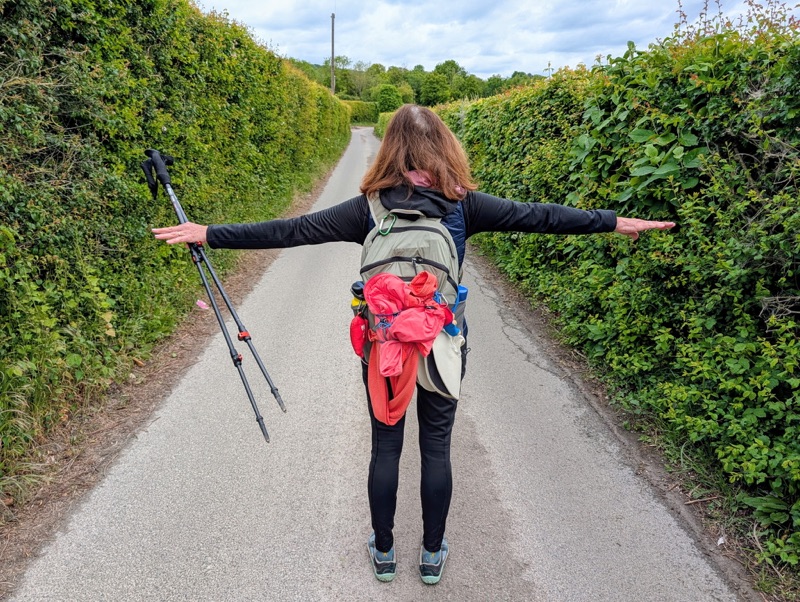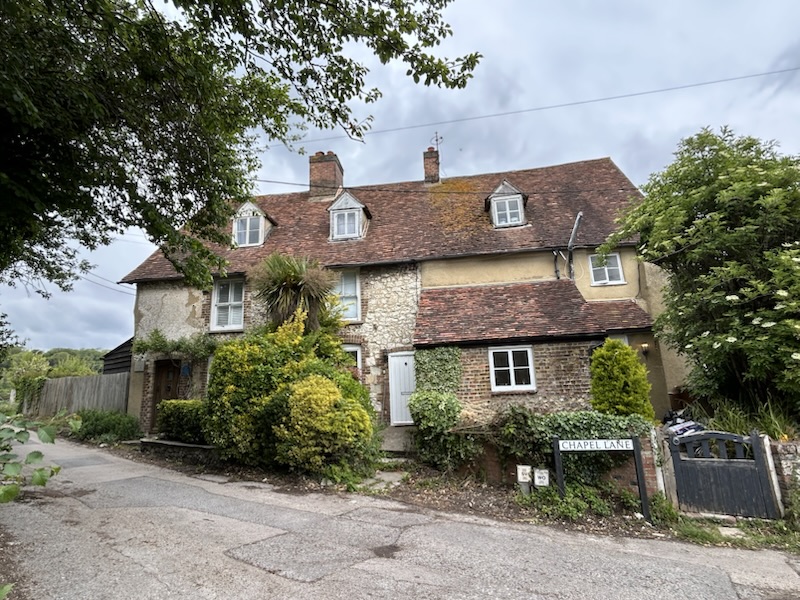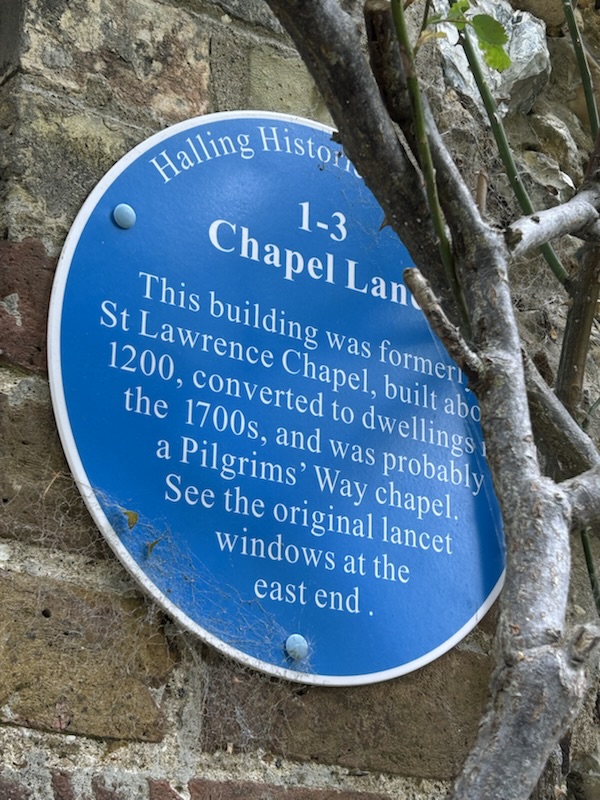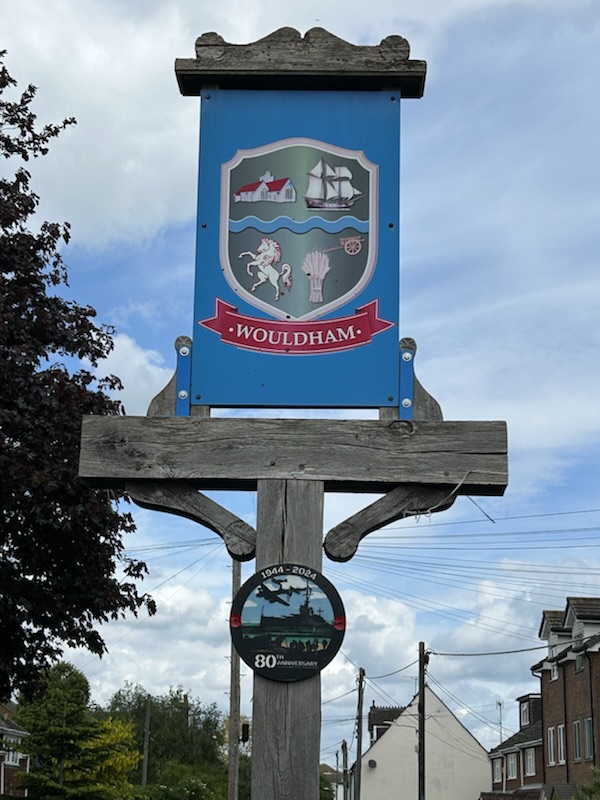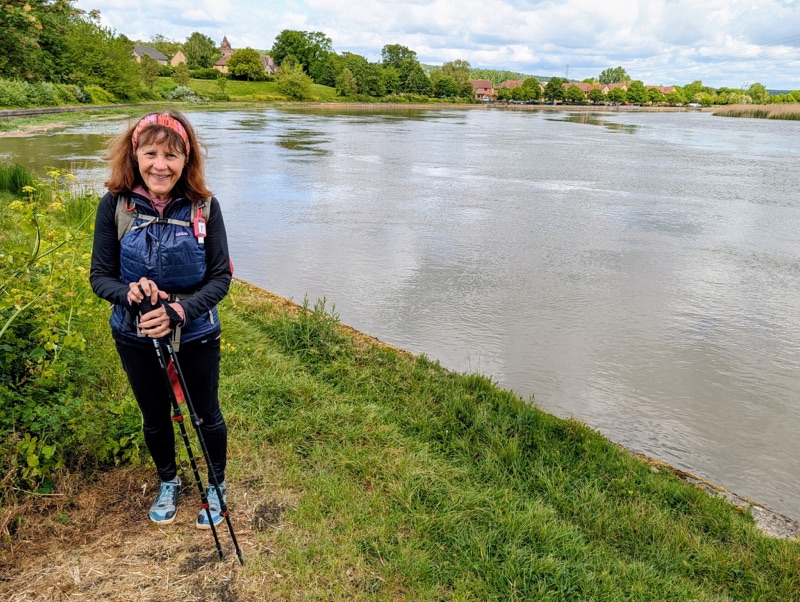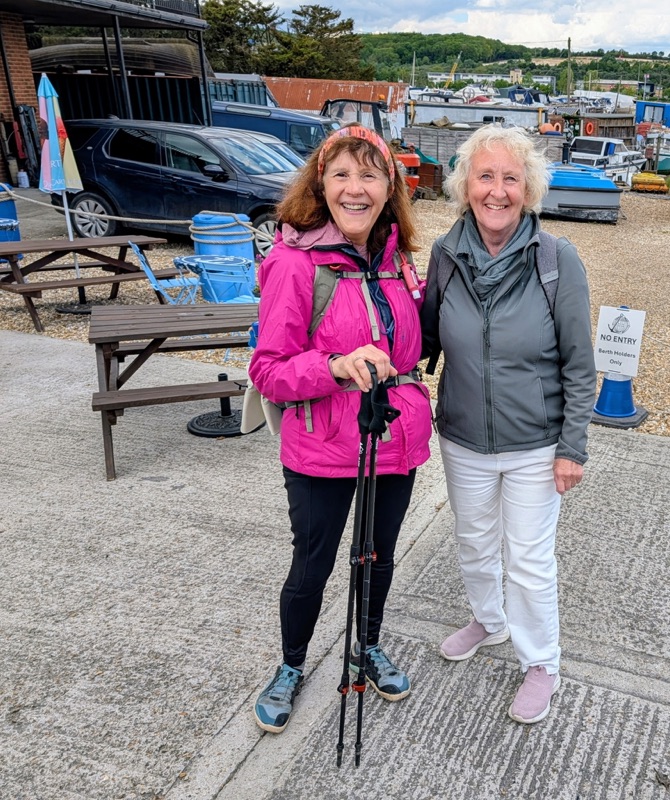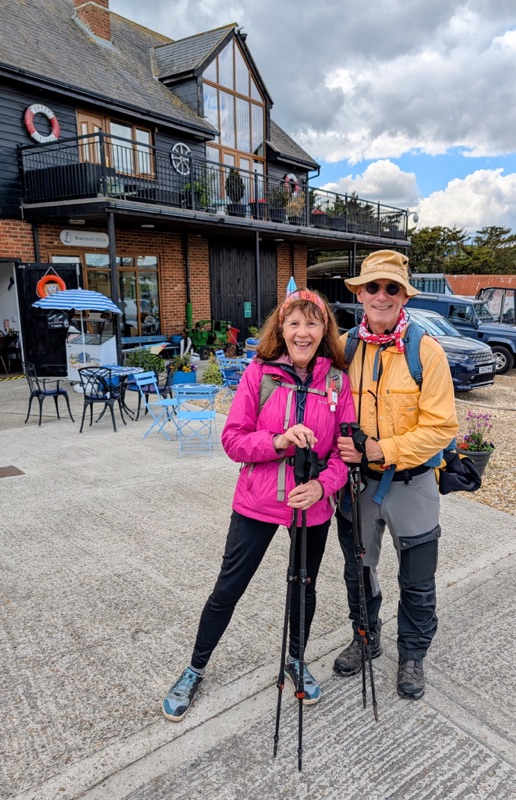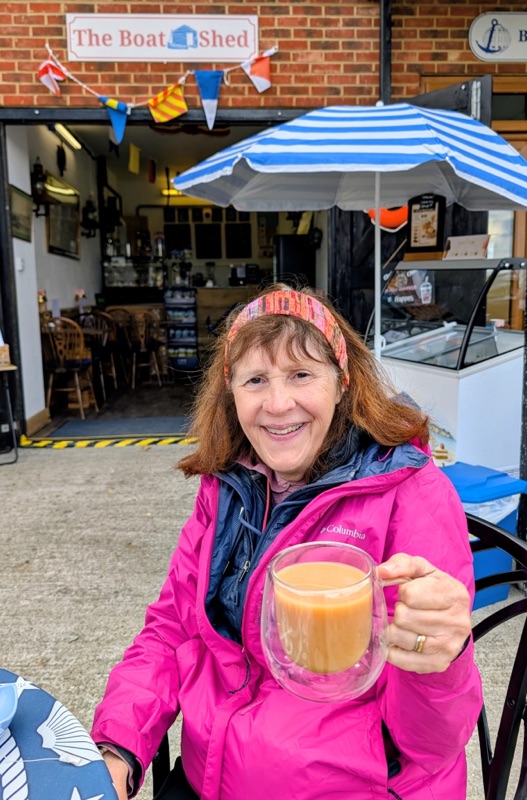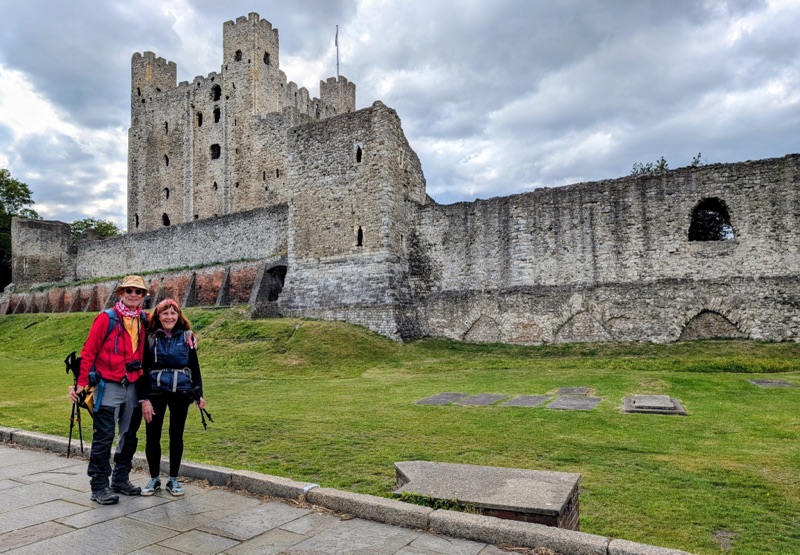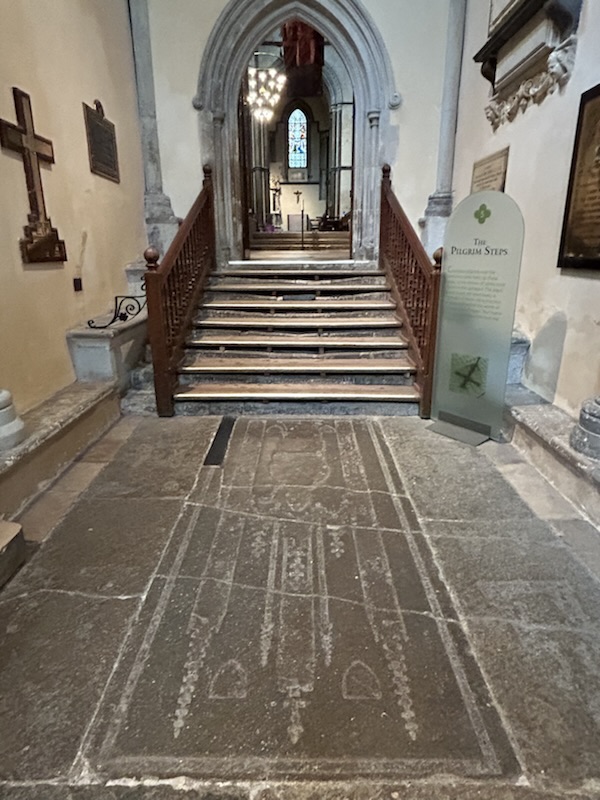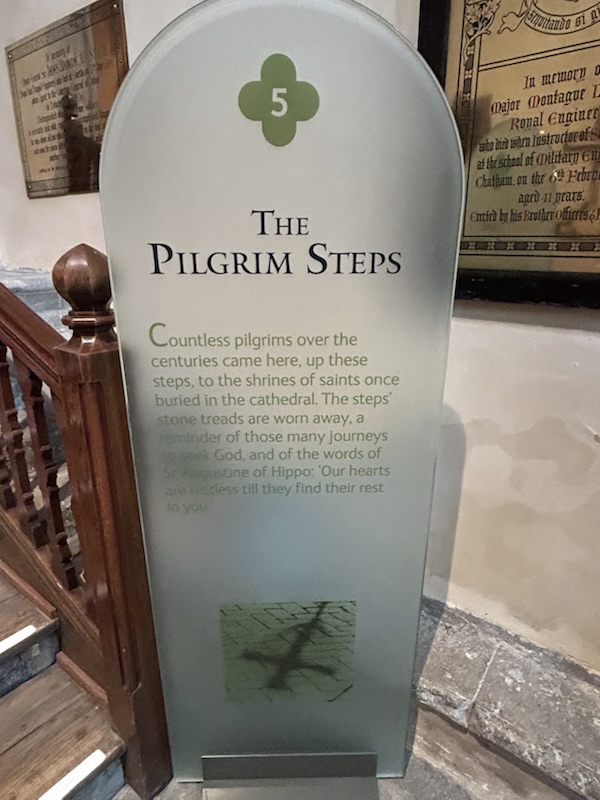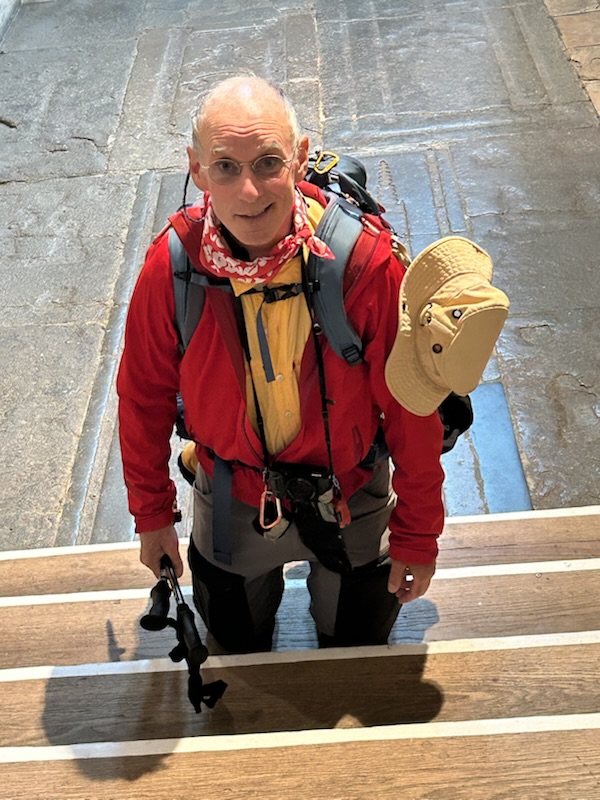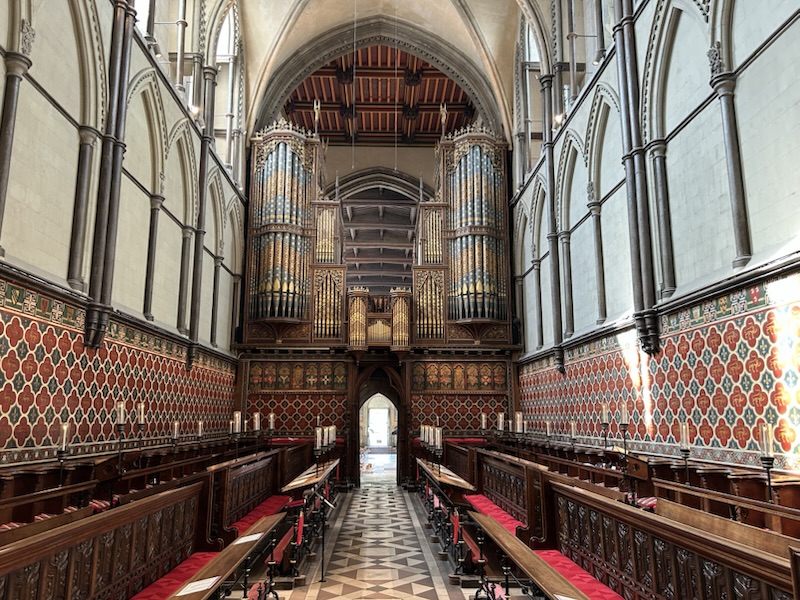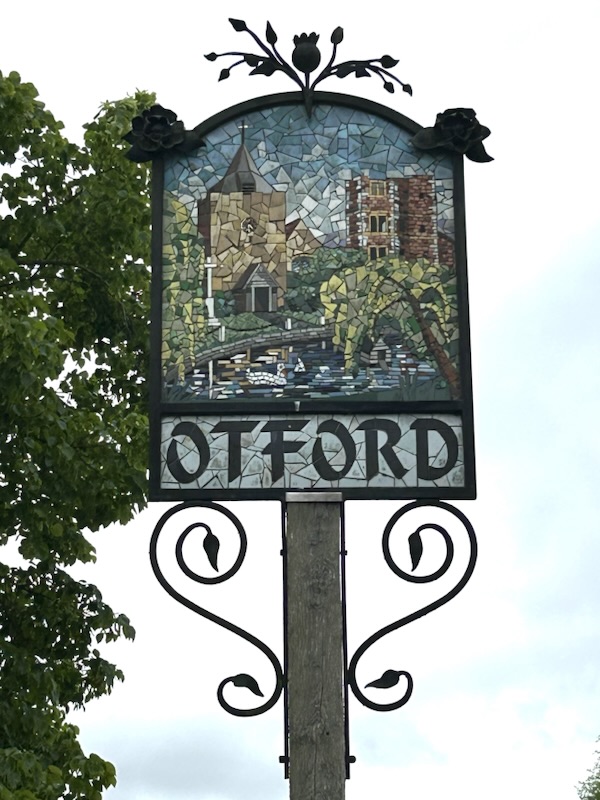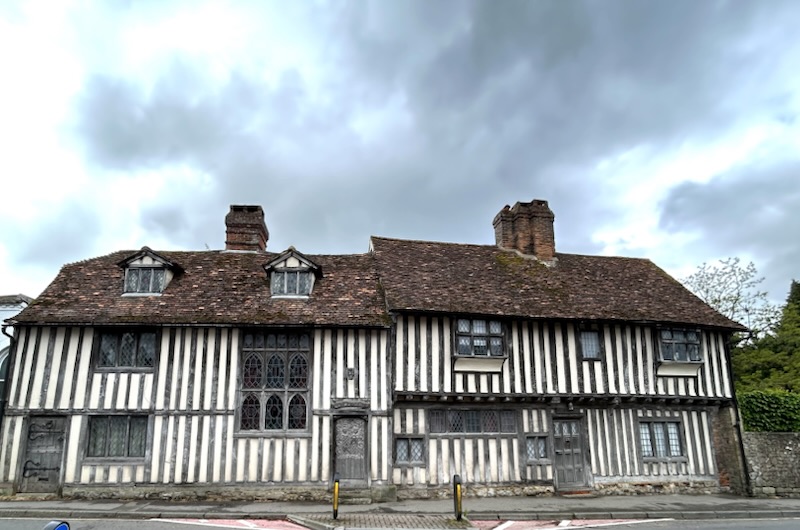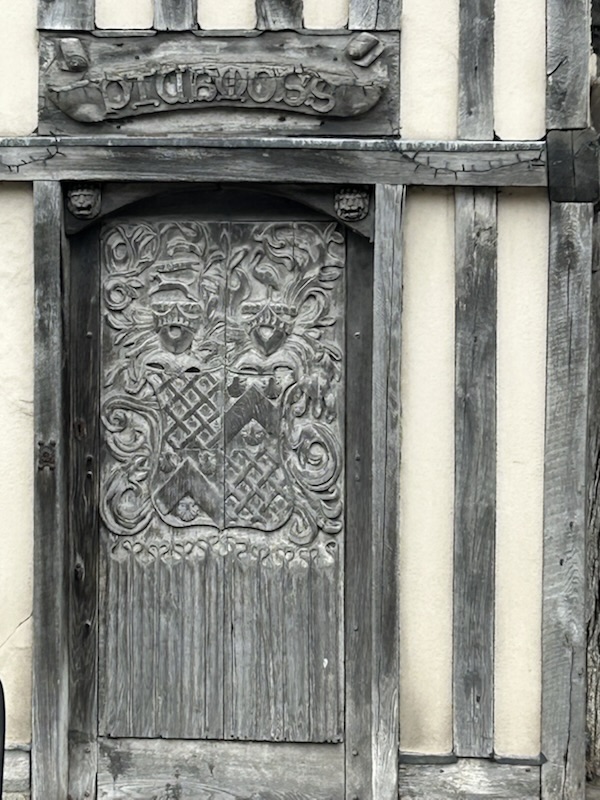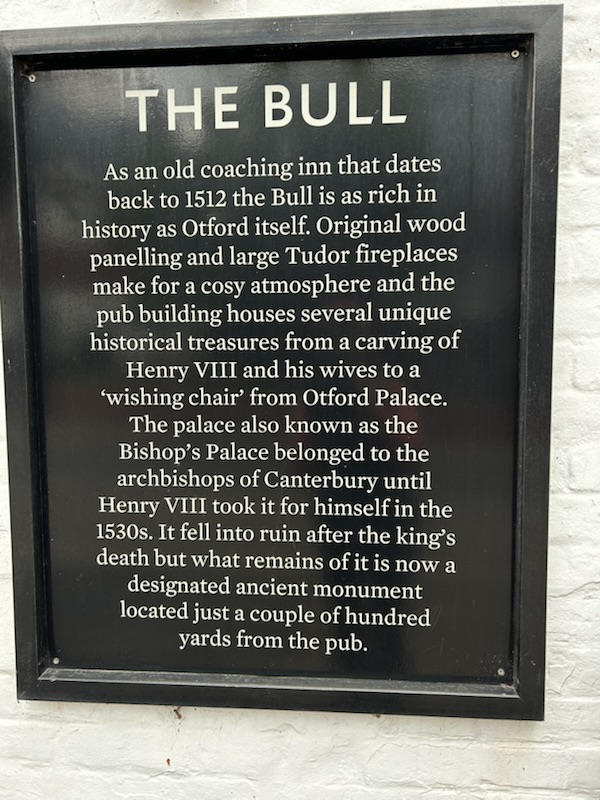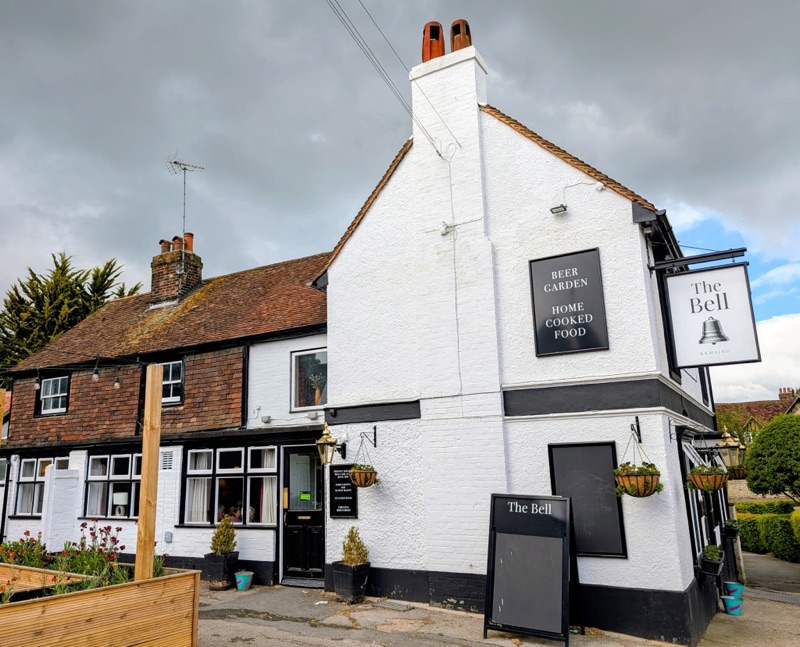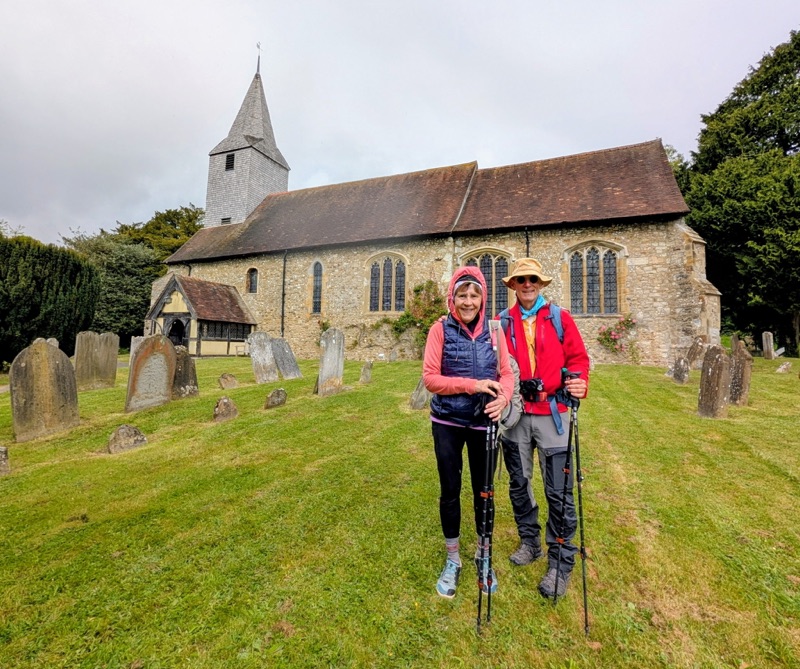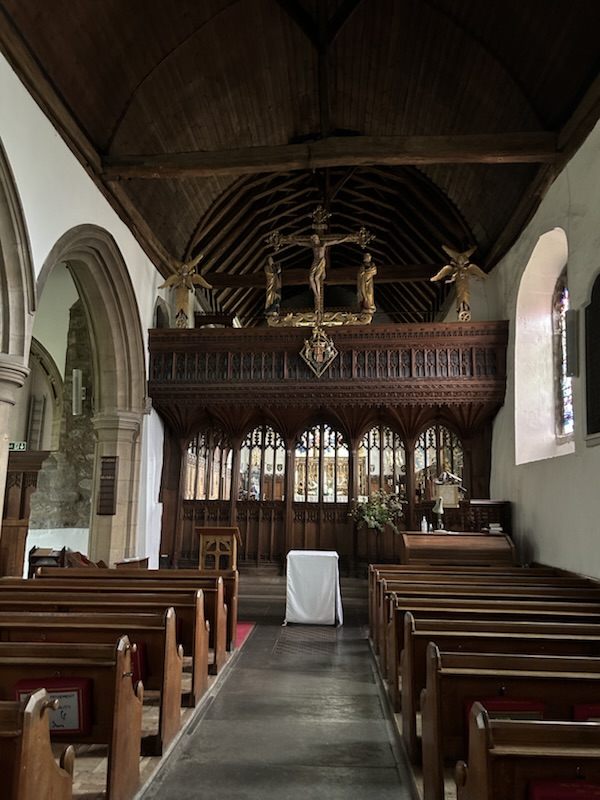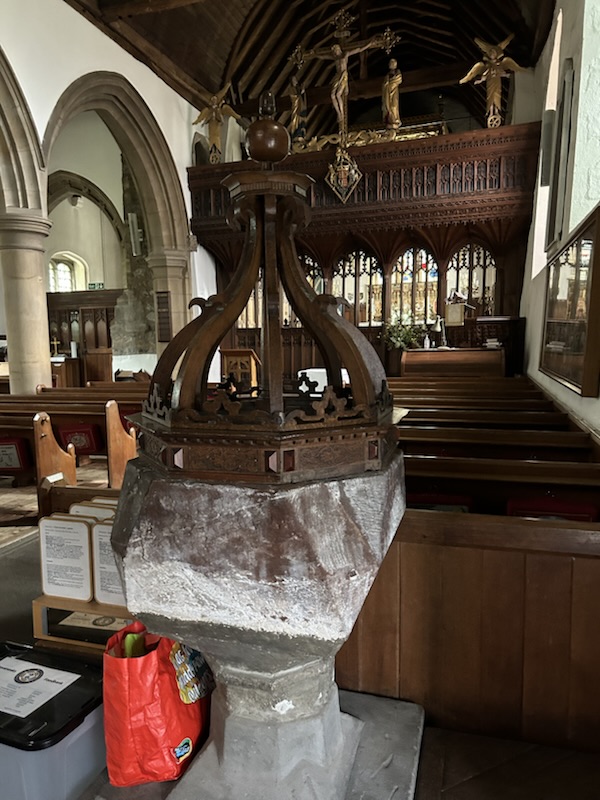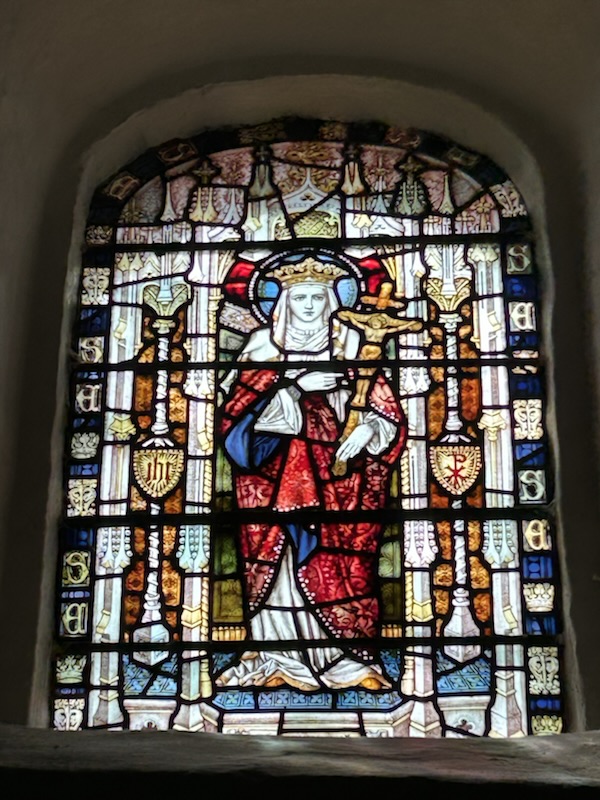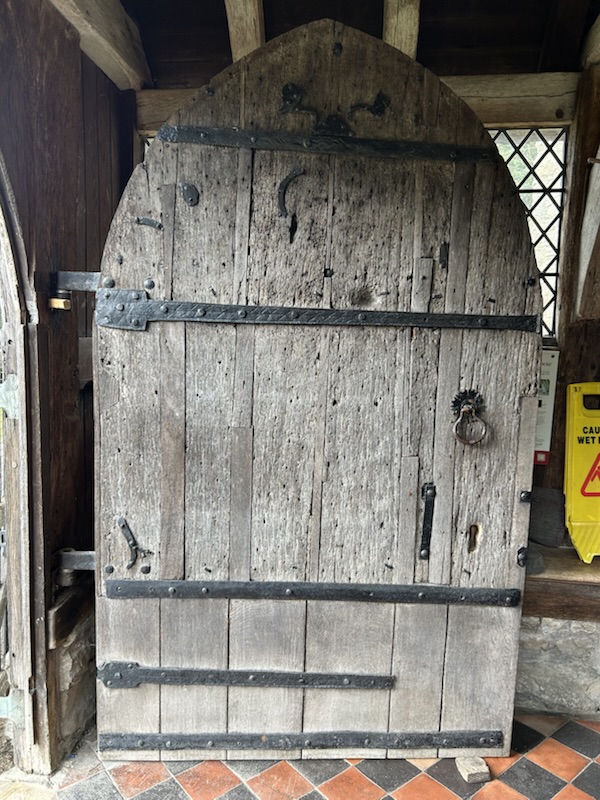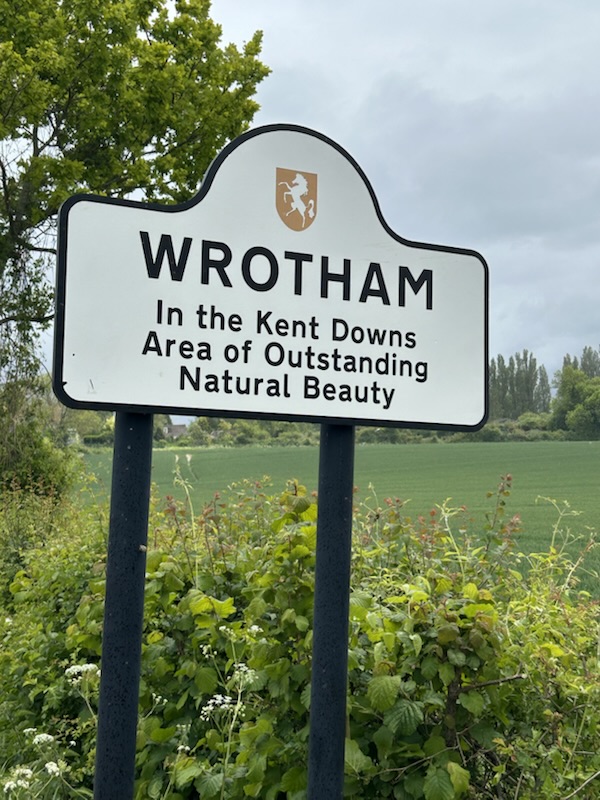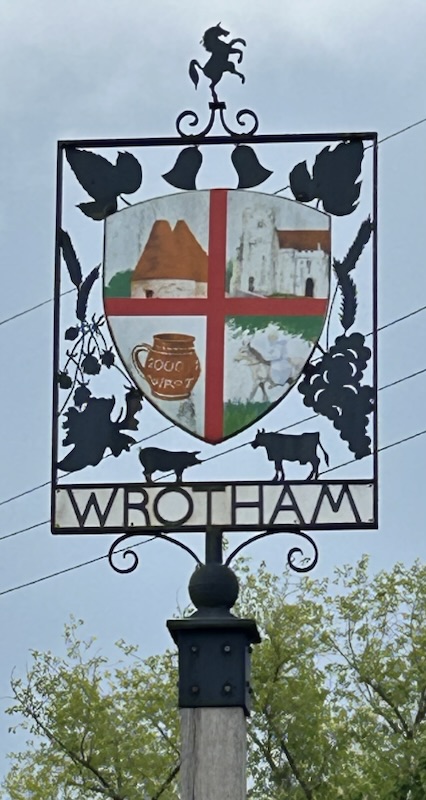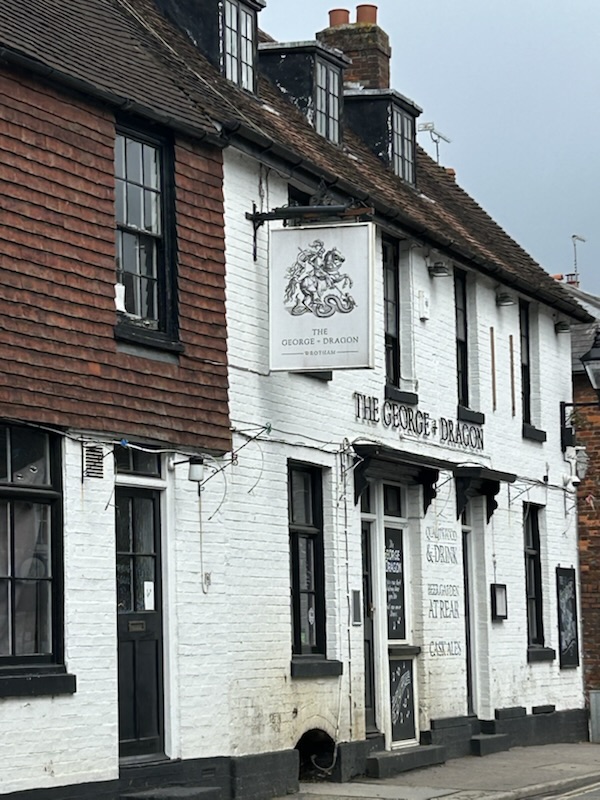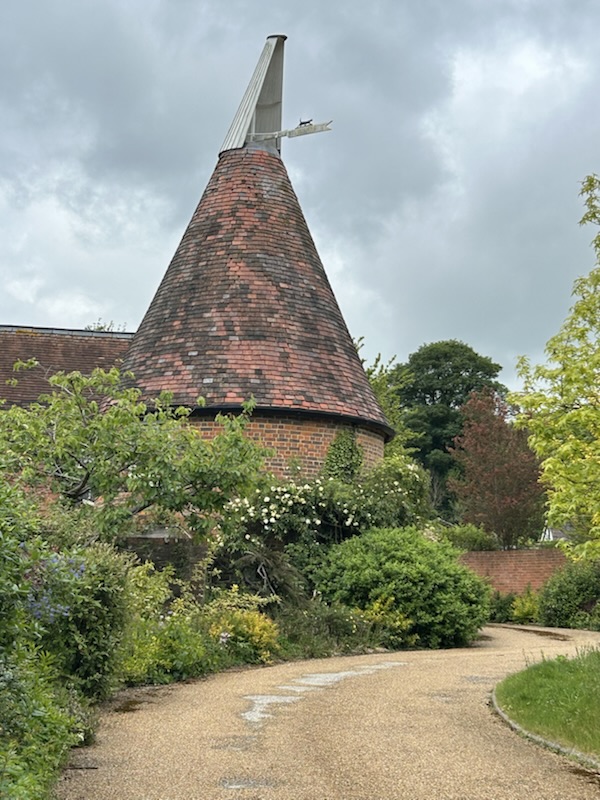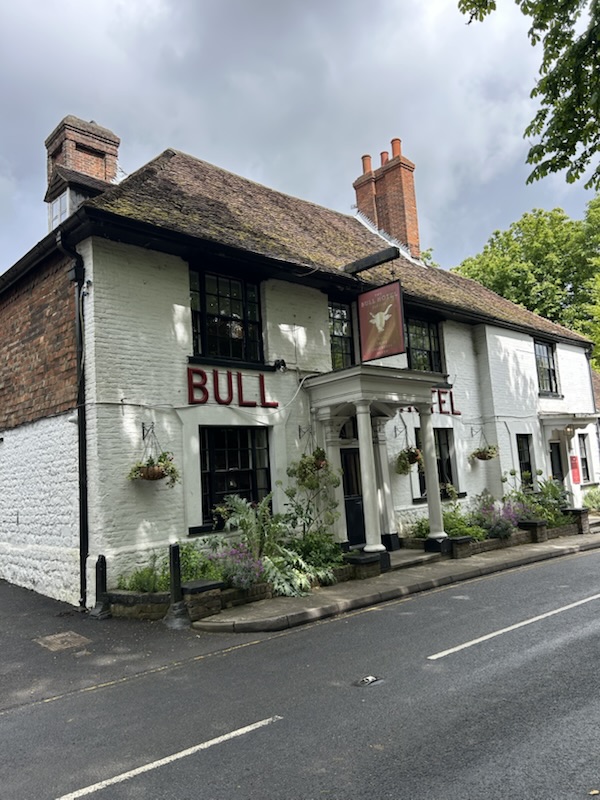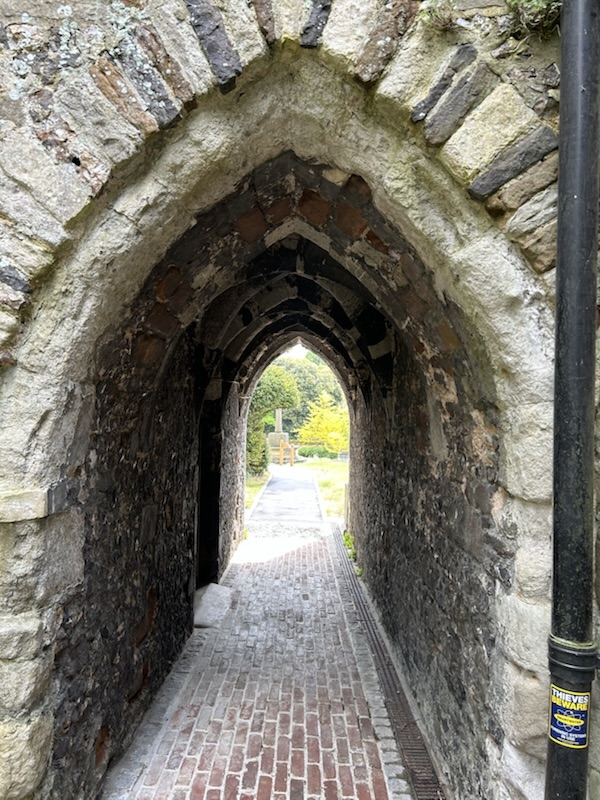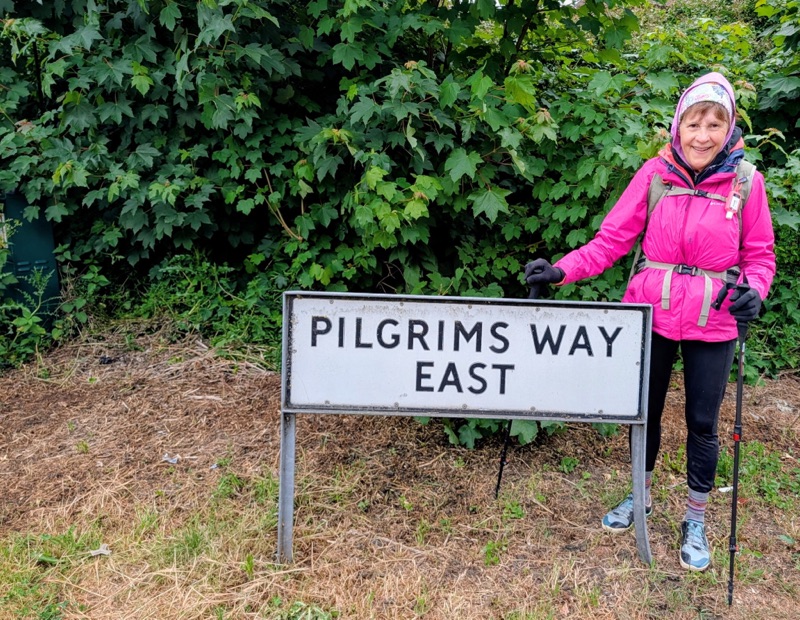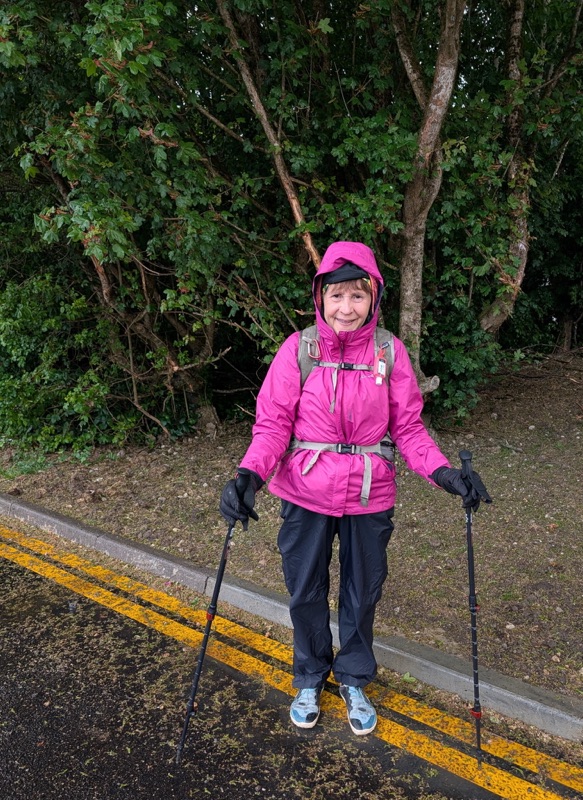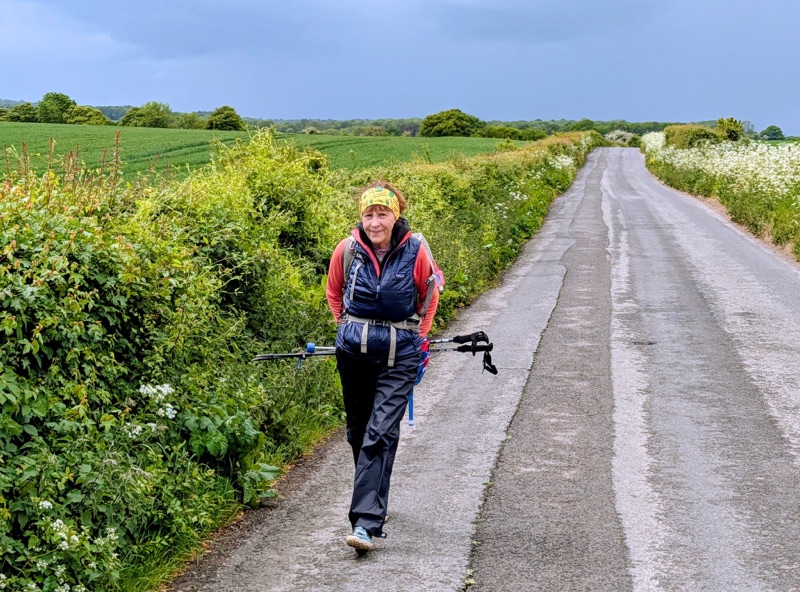
After yesterday’s 19 miles & 11 hour walk, it was very nice only to walk for 4 hours.
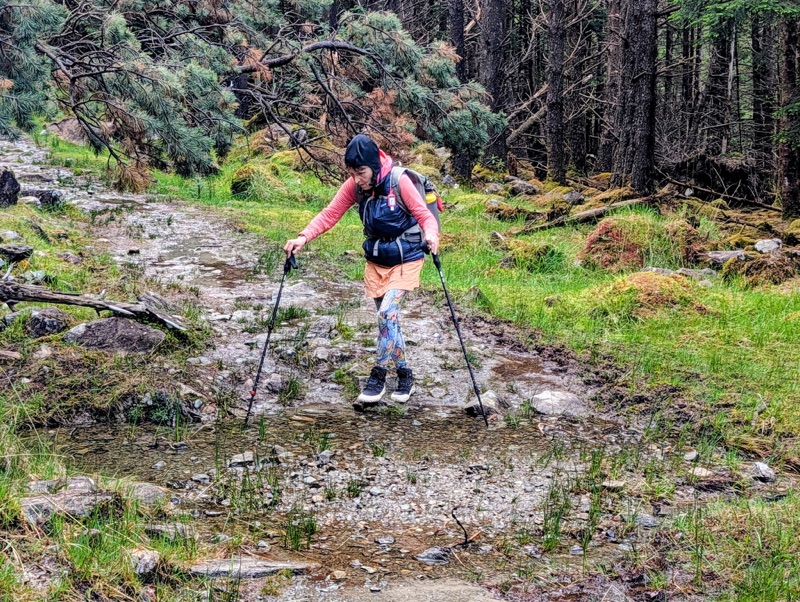
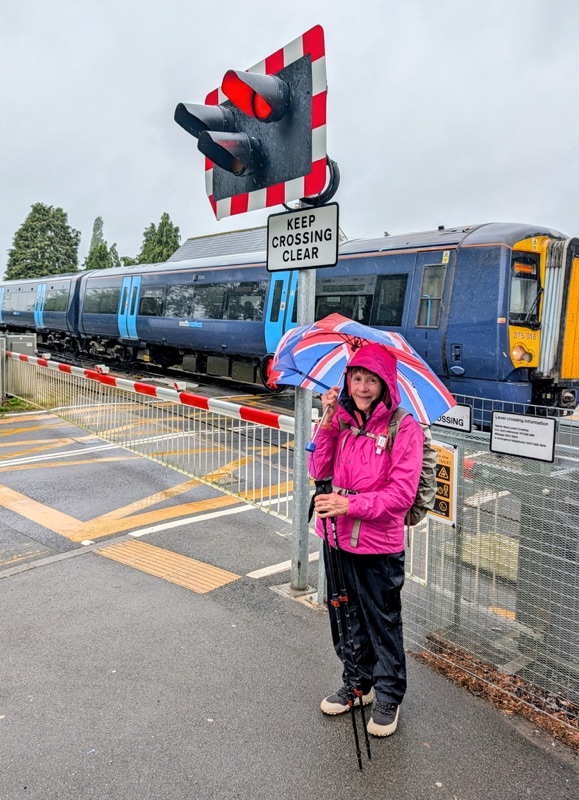
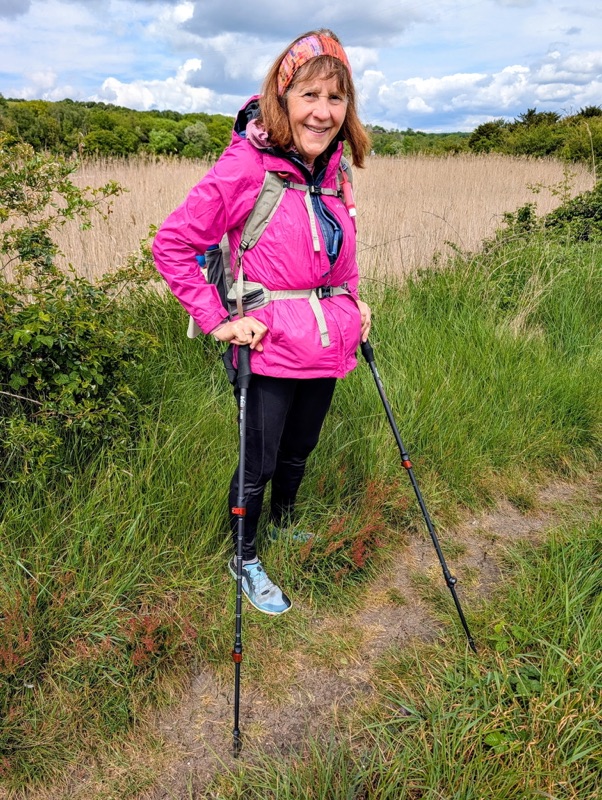
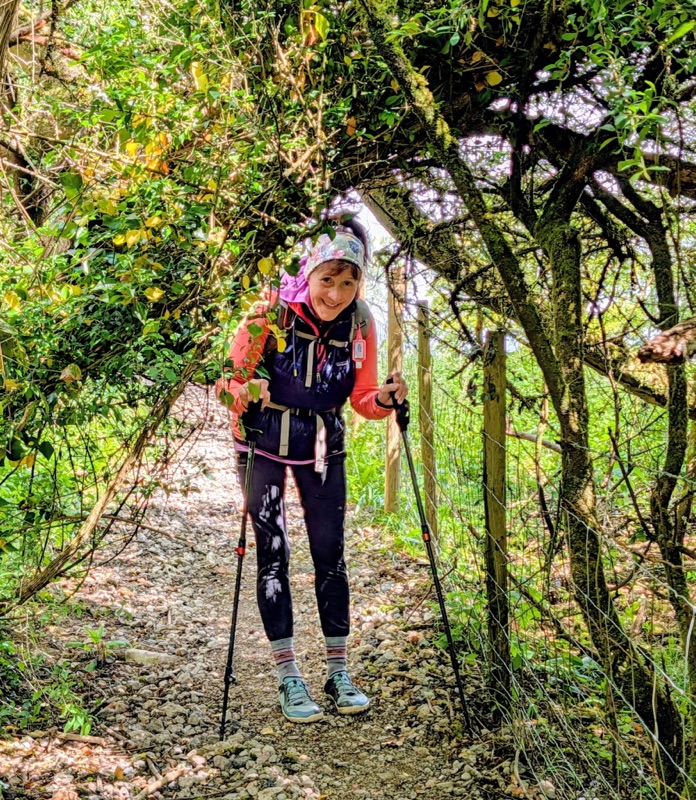
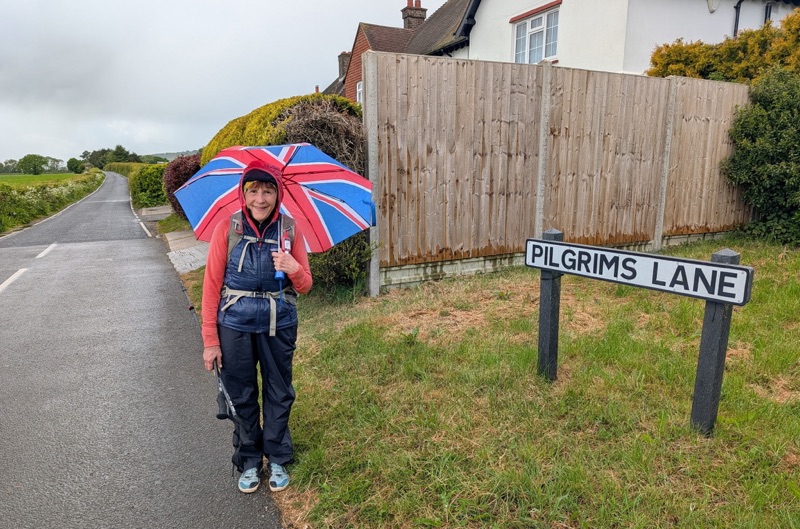
The weather was rain with hail, sunshine, rain, sunshine, etc. all day. I put on my rain pants for the first time during the hike.
Full rain gear readyNot raining
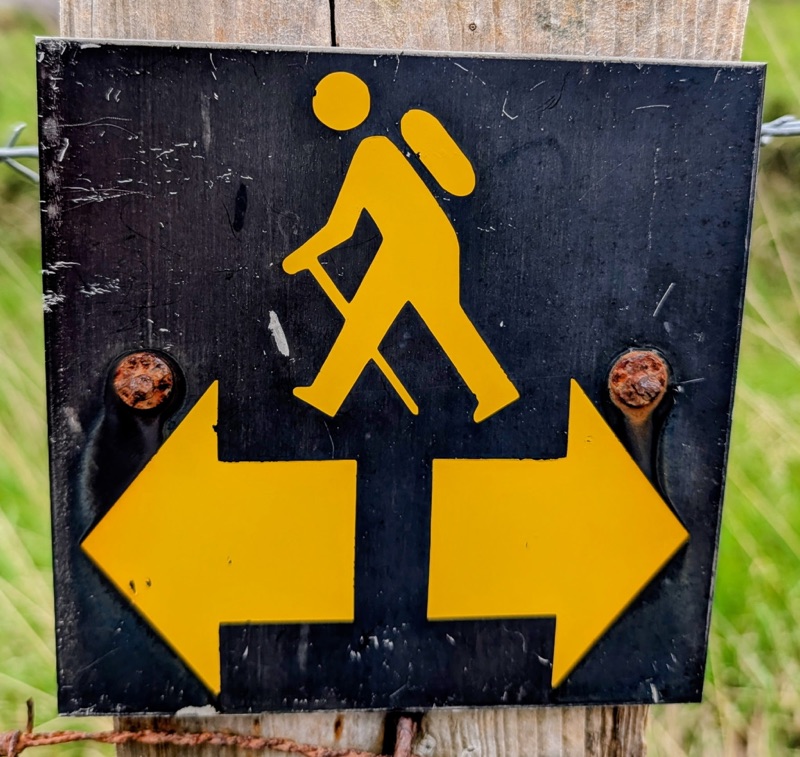
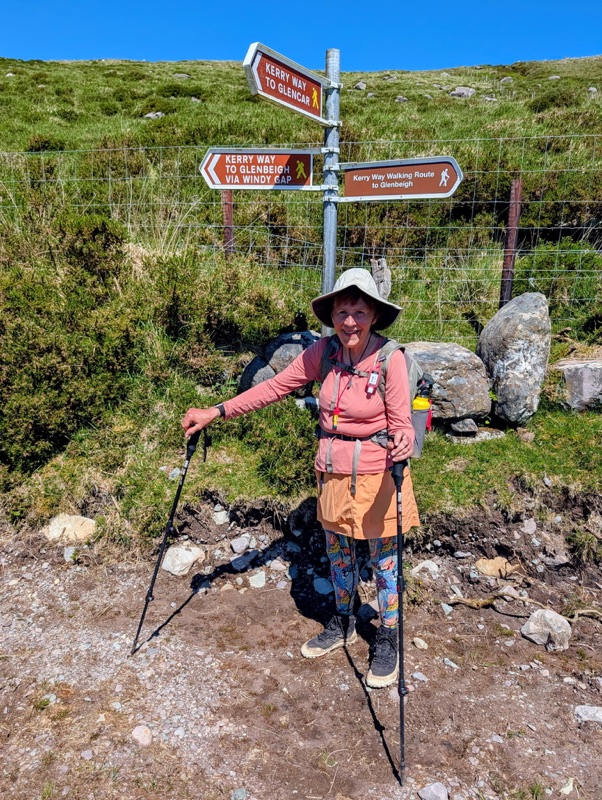
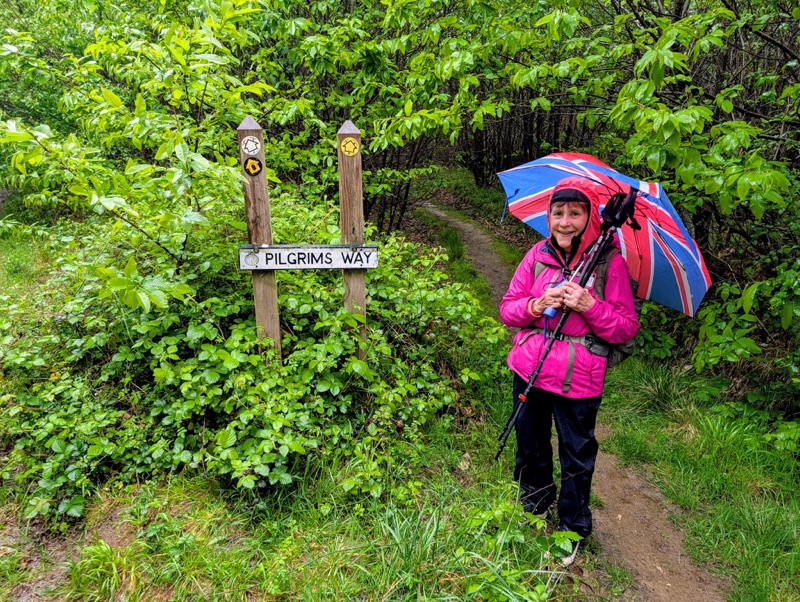
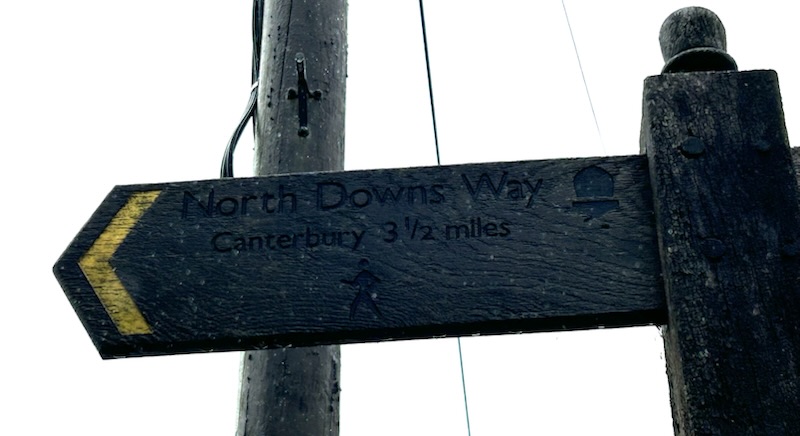
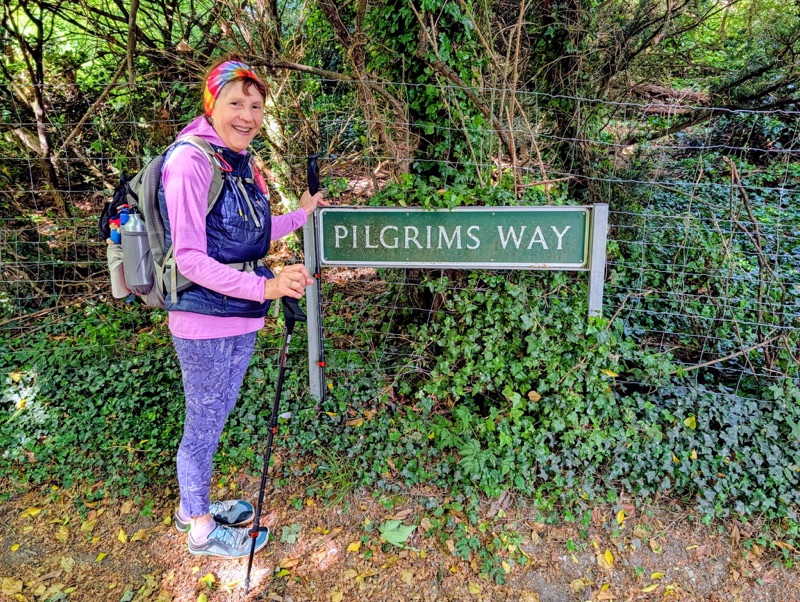
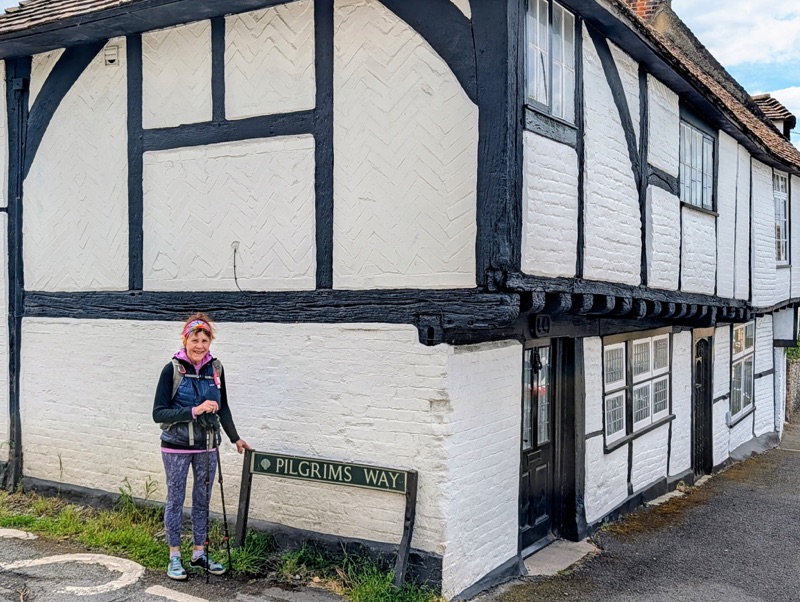
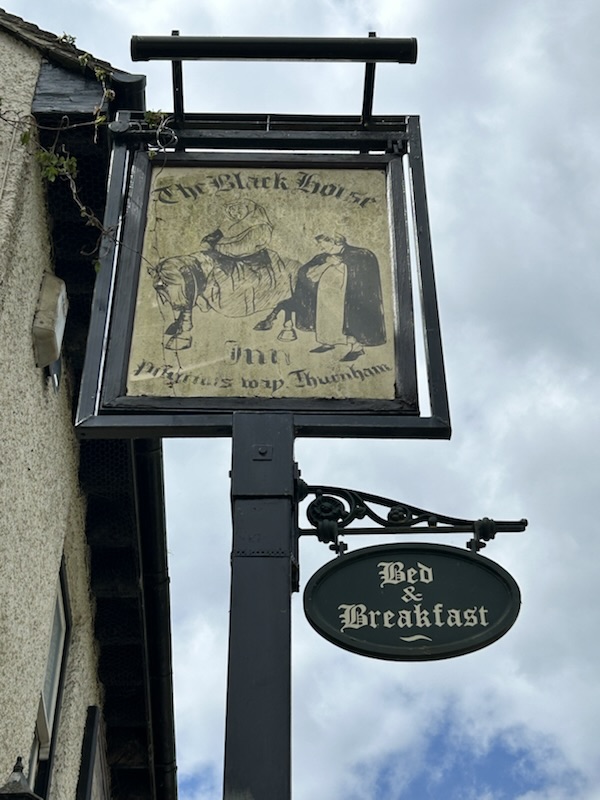
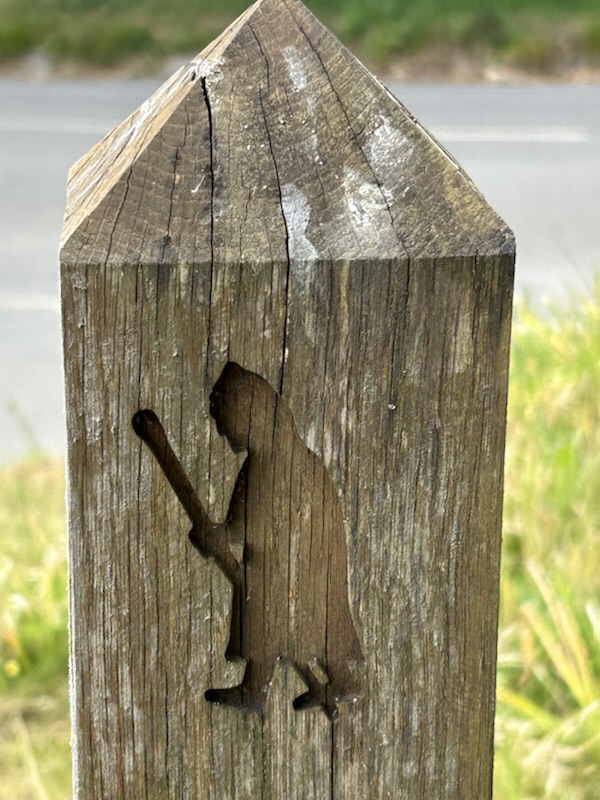
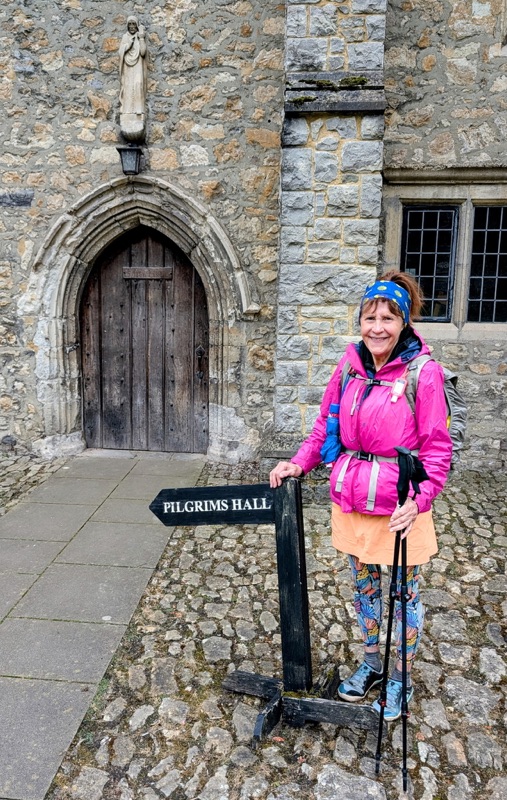
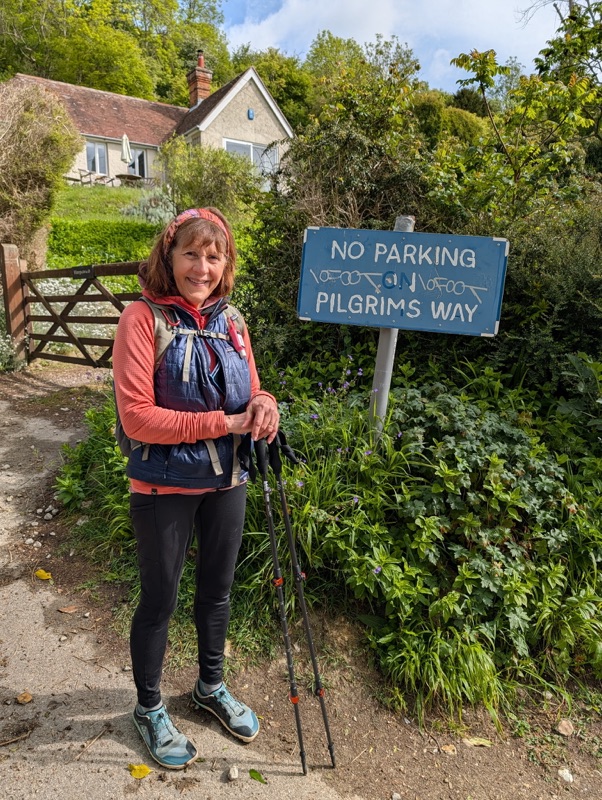
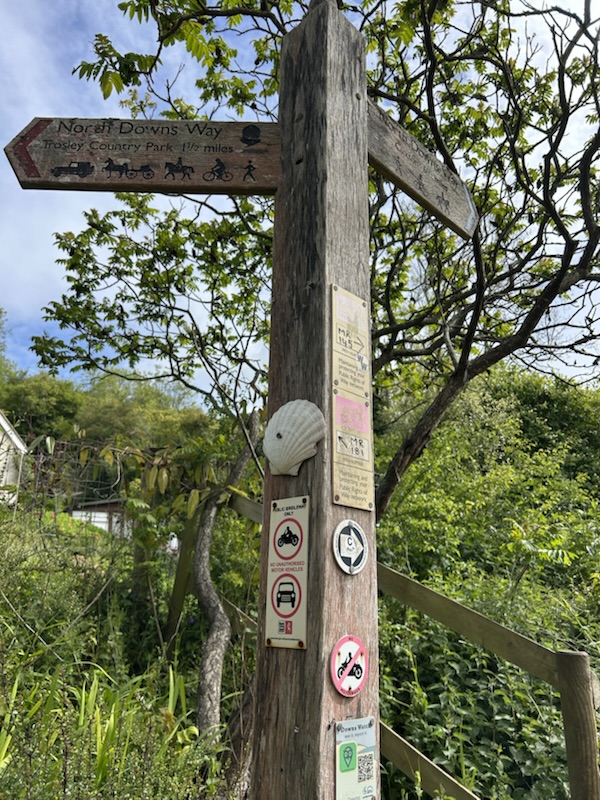
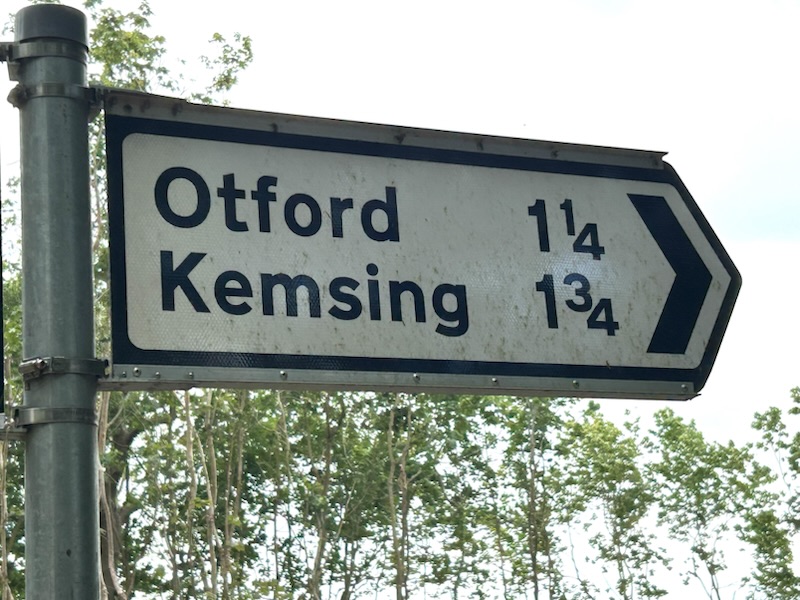
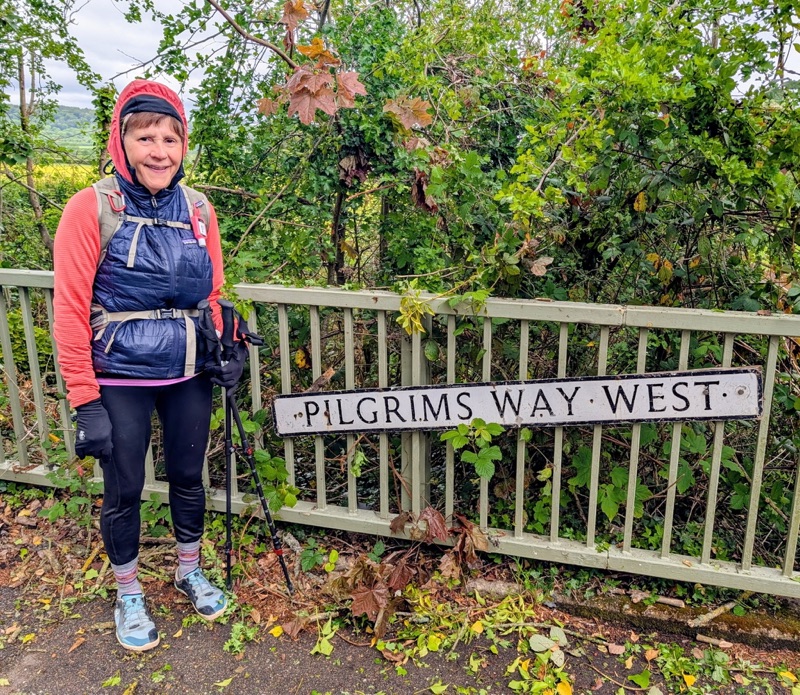
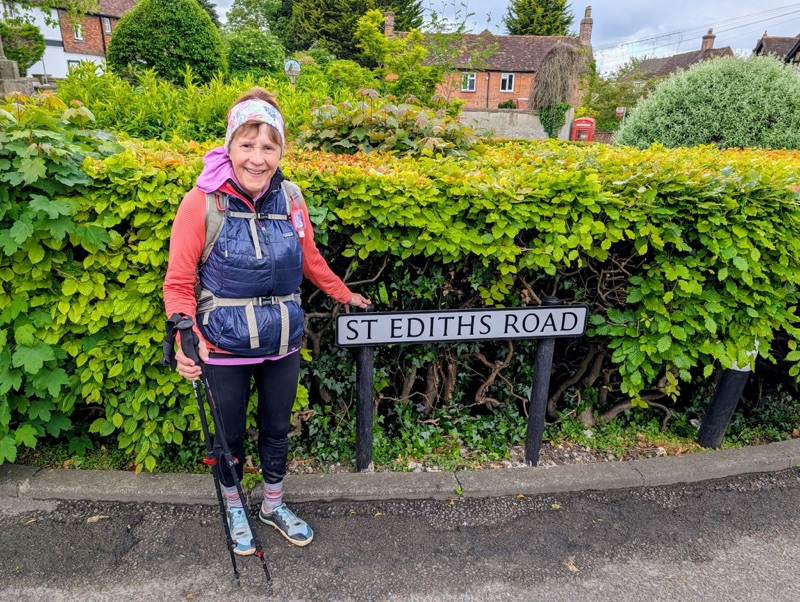
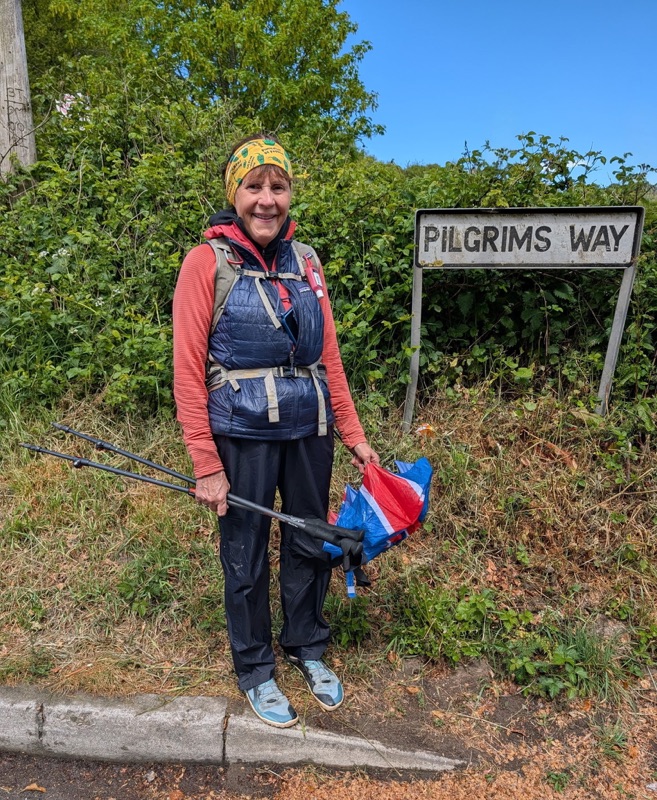
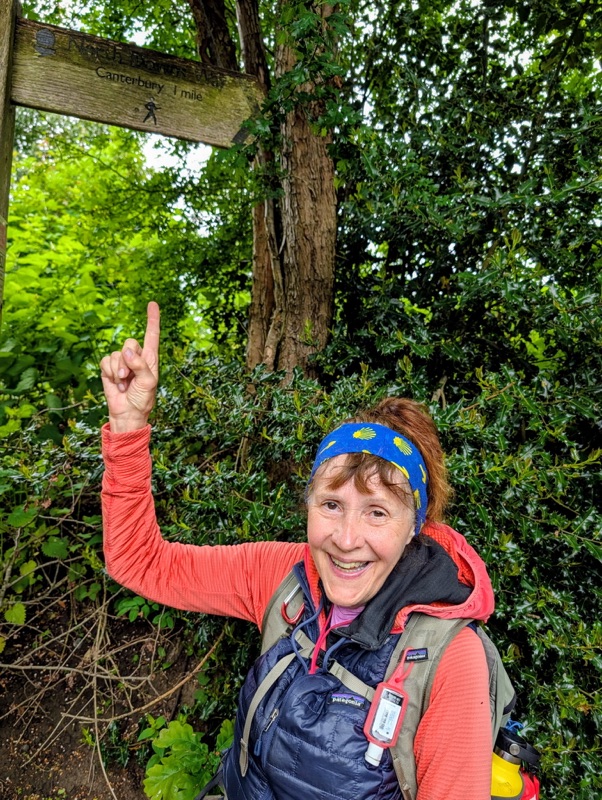
We were directly on the old pilgrim route for part of the day as shown by these signs.
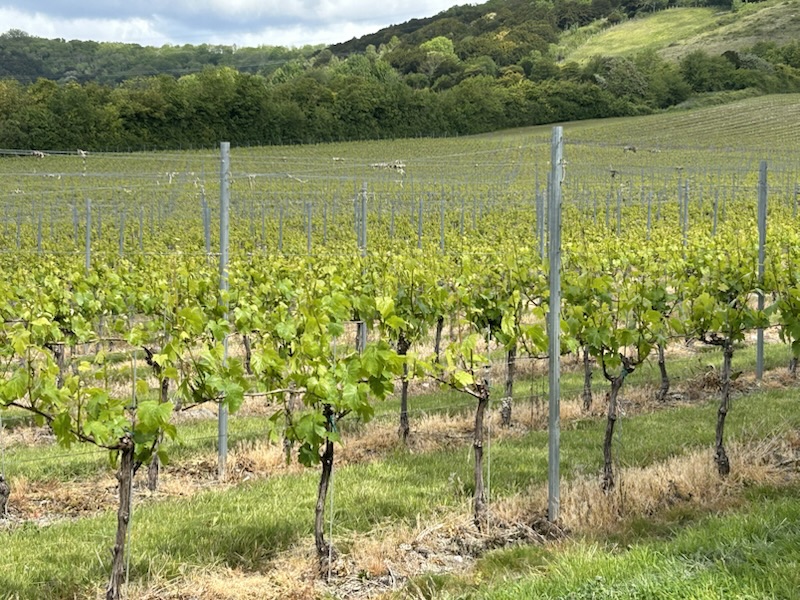
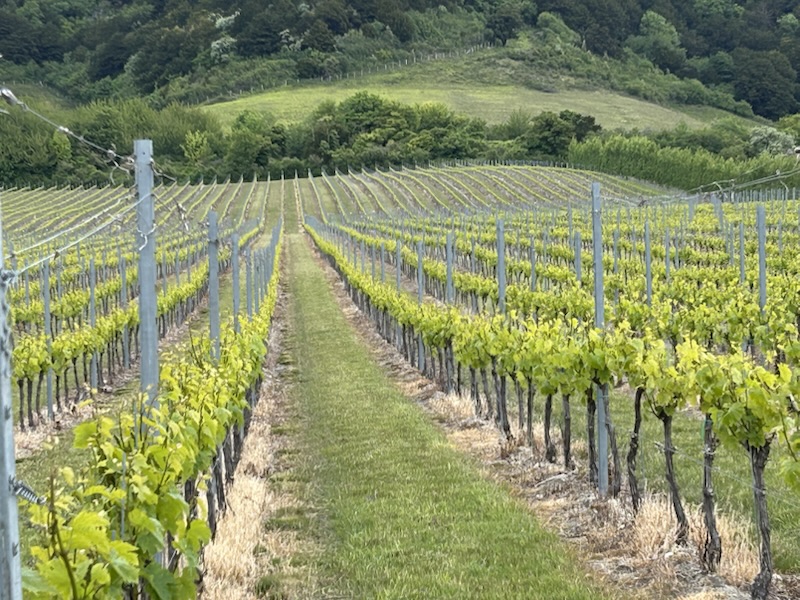
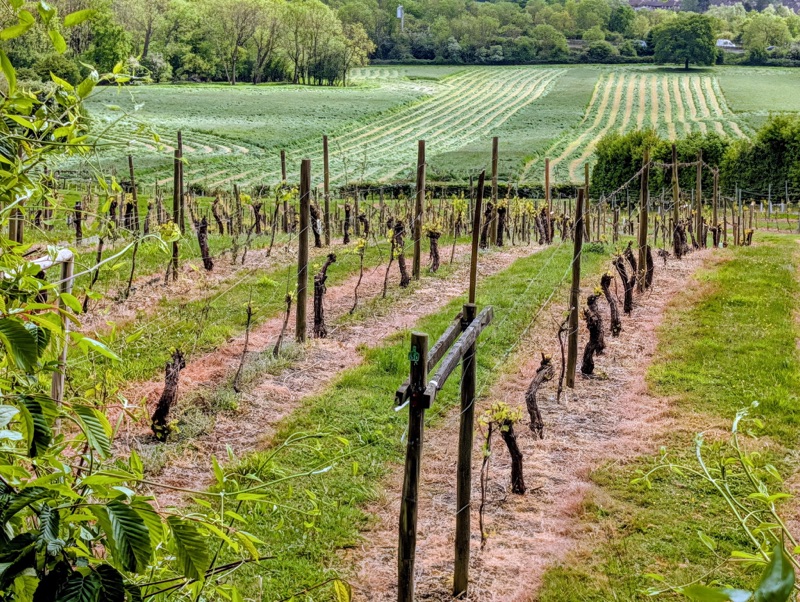
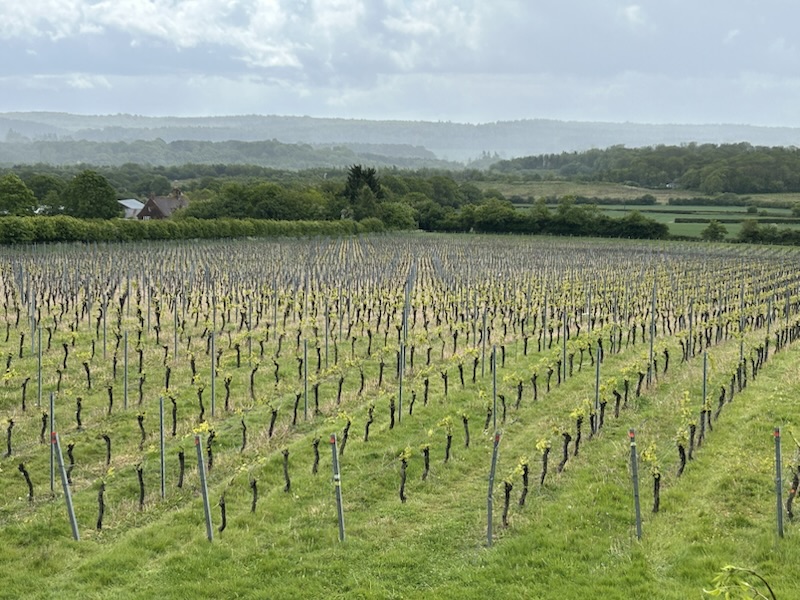
England now has vineyards. I knew this from listening to NPR’s Market Place.
We walked next to some vineyards yesterday & today.
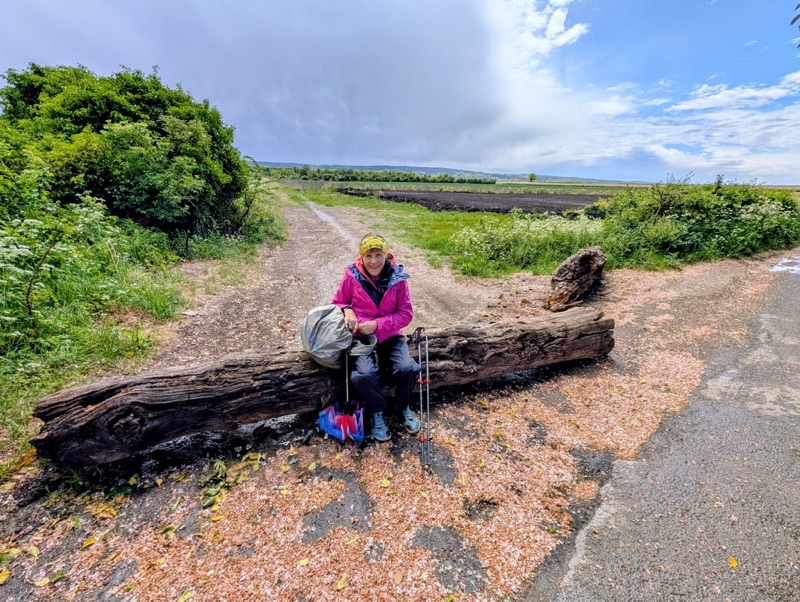
Took a break about half way on the route.
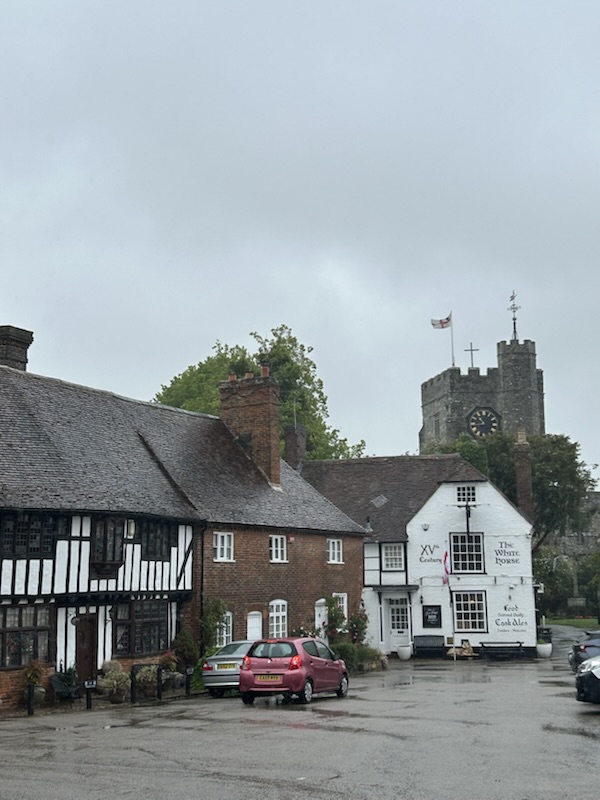
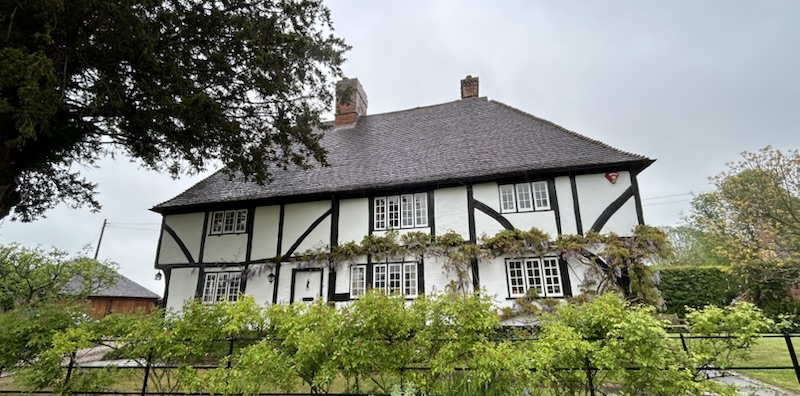
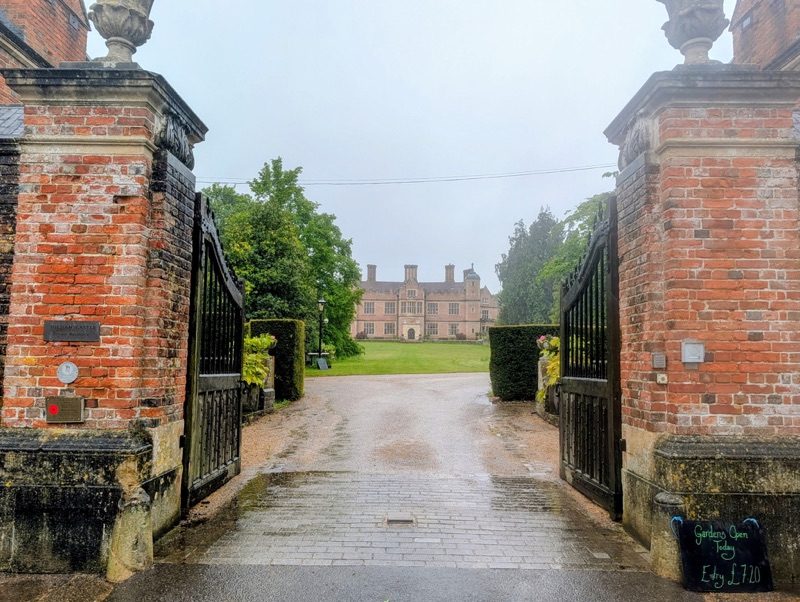
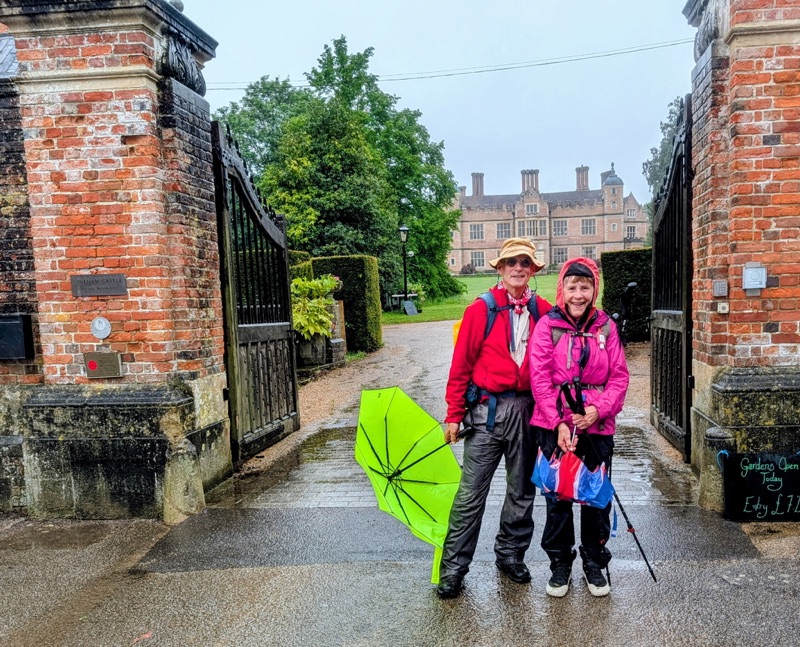
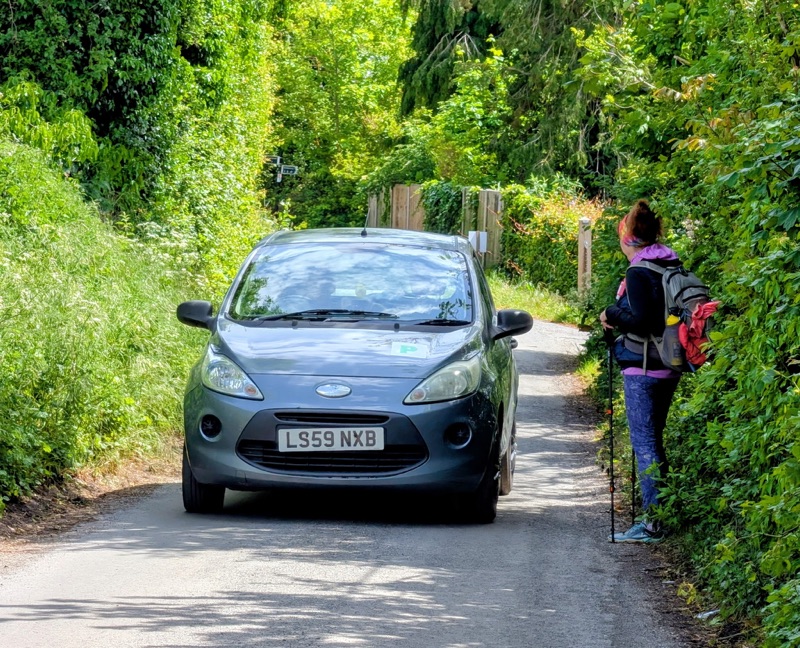
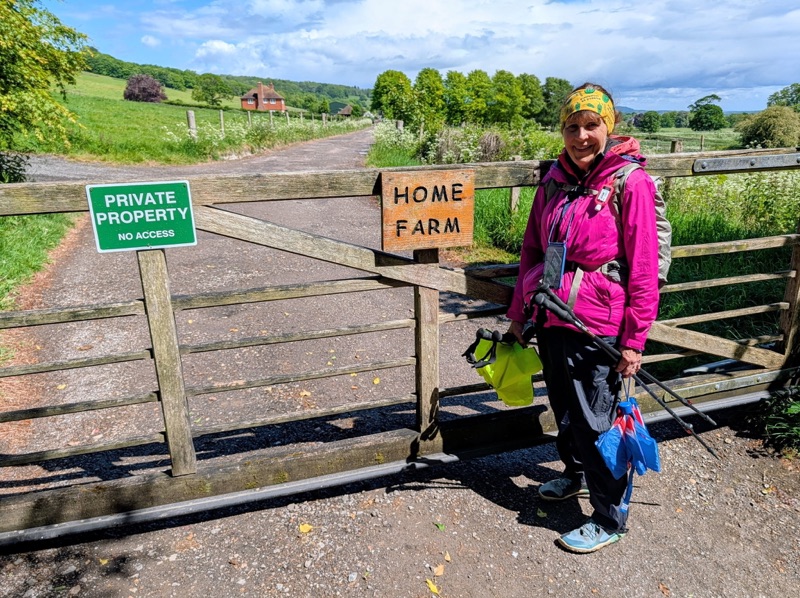
Just like yesterday, we hit a road block on our route because estates do not want people passing on their property.
Behind this gate is the very nice trail that Google Maps & Trail apps show available to walk… but, it is not open.
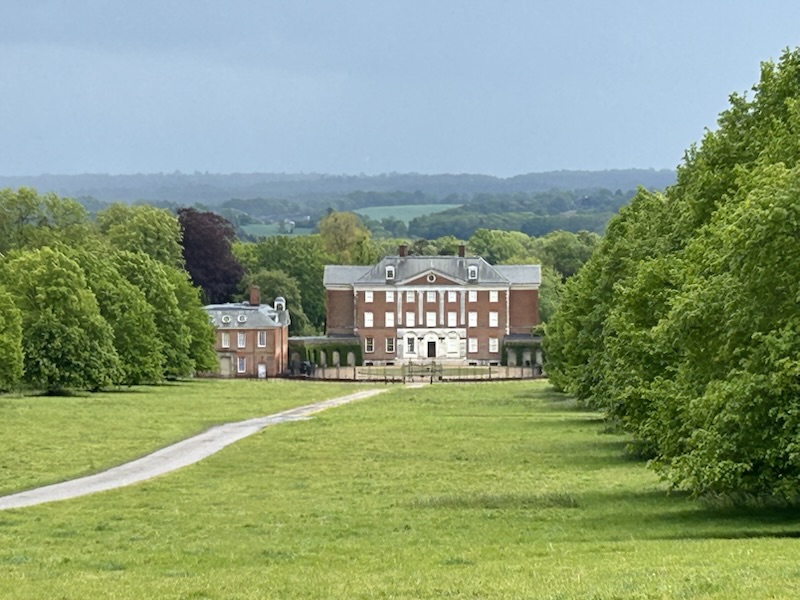
After a detour uphill, we circled around & saw the home in the distance.
Chevening House was built in the 1630s with the side wings added in 1717. In 1792, the family closed the Pilgrims’ Way section on their grounds to stop travelers from passing the house.
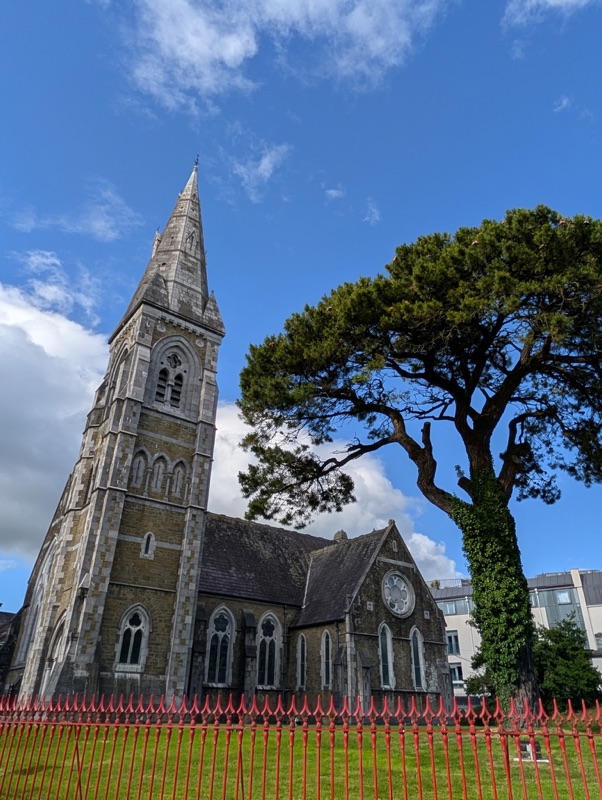
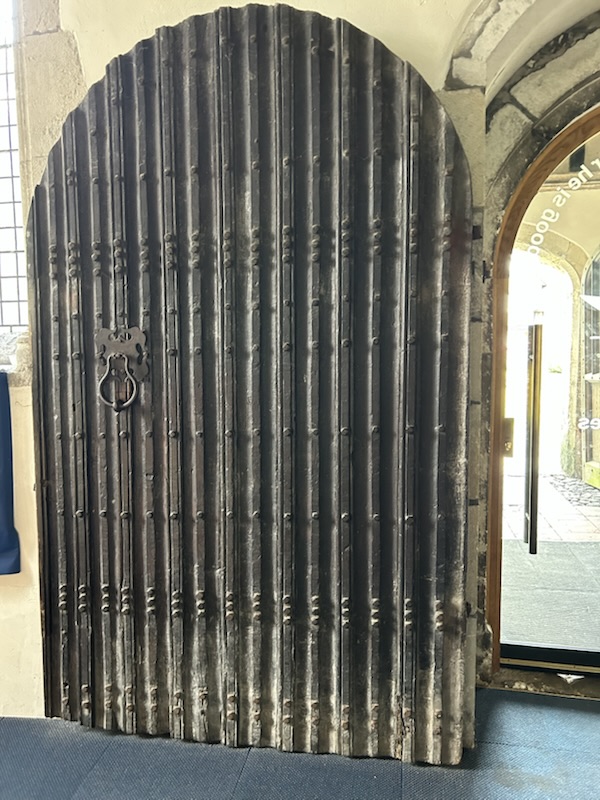
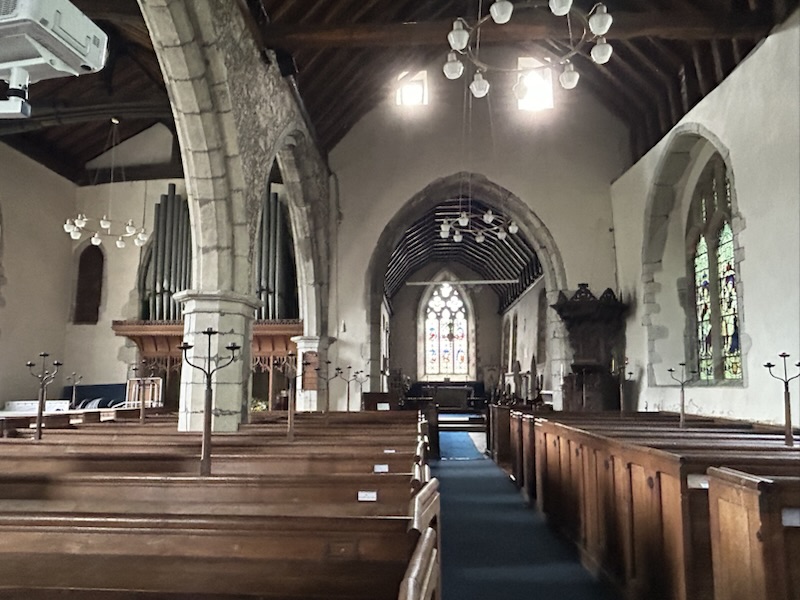
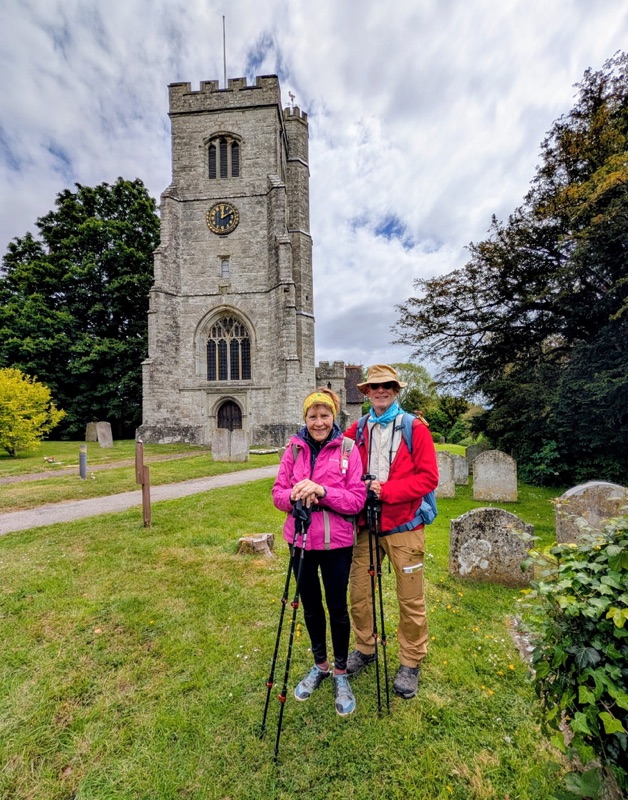
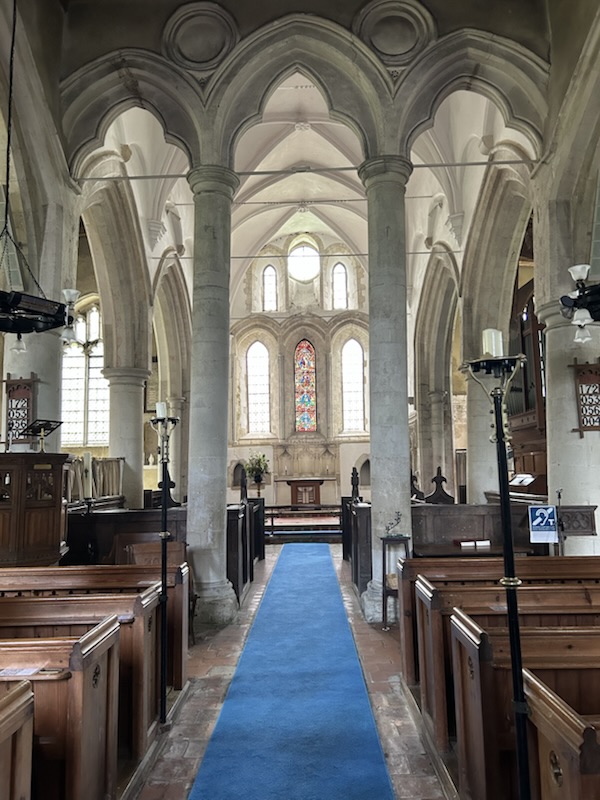
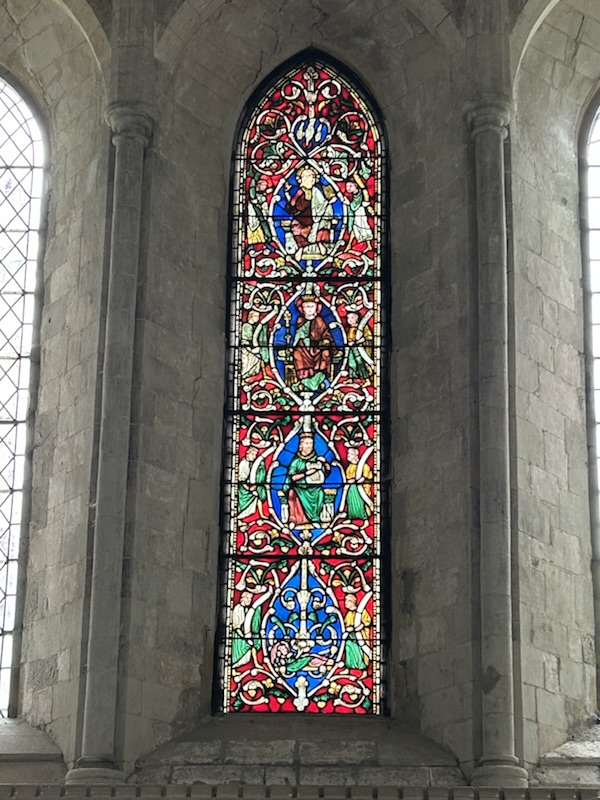
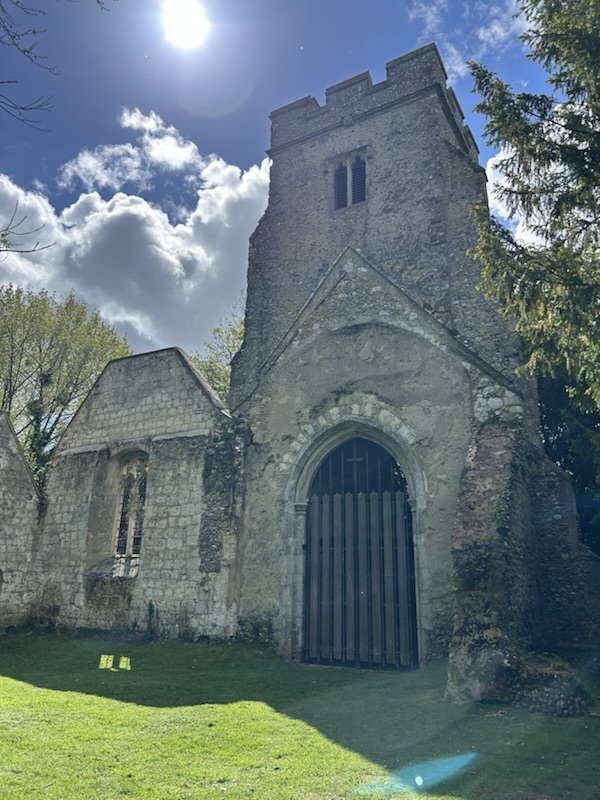
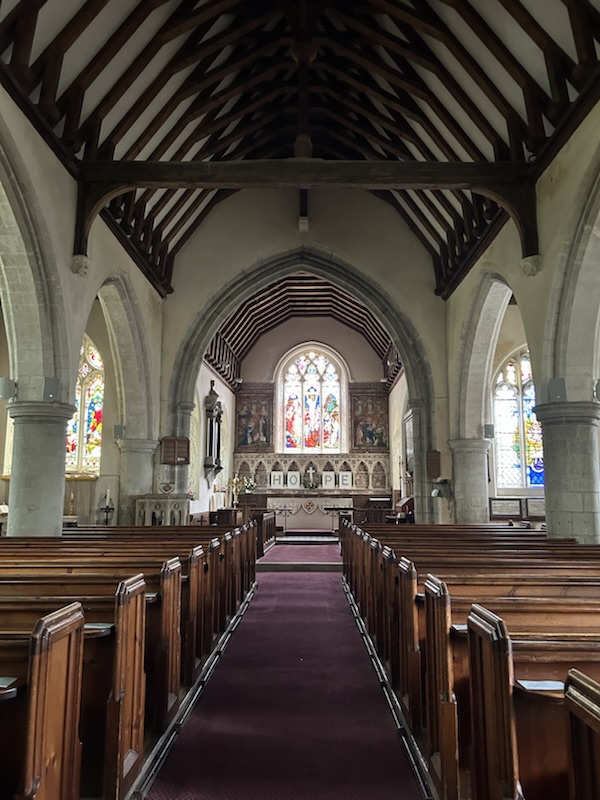
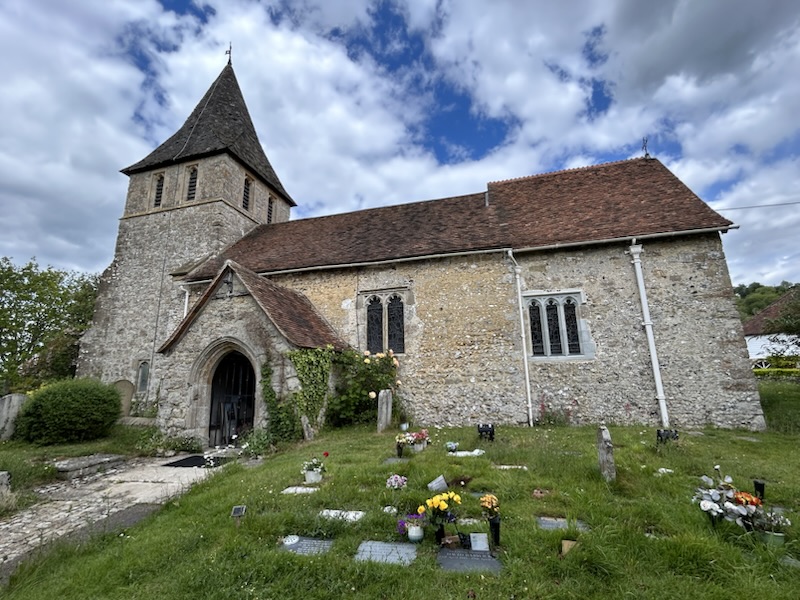
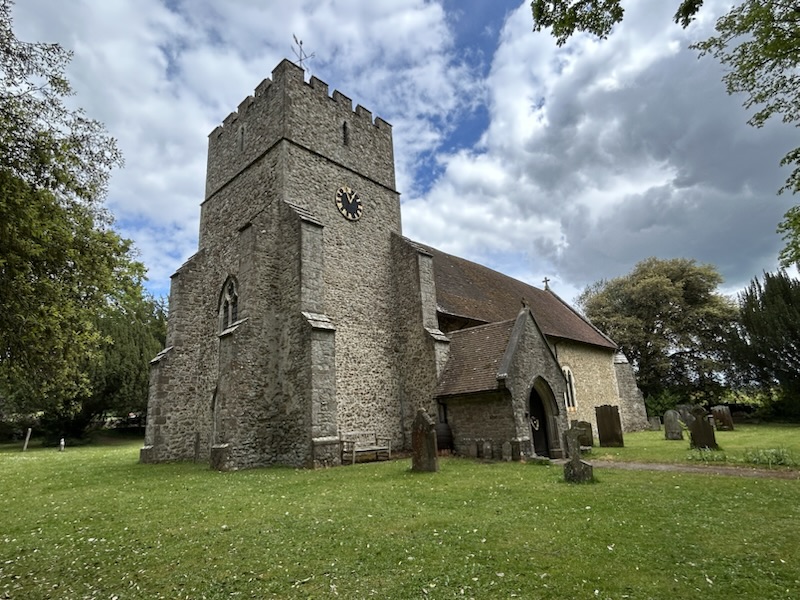
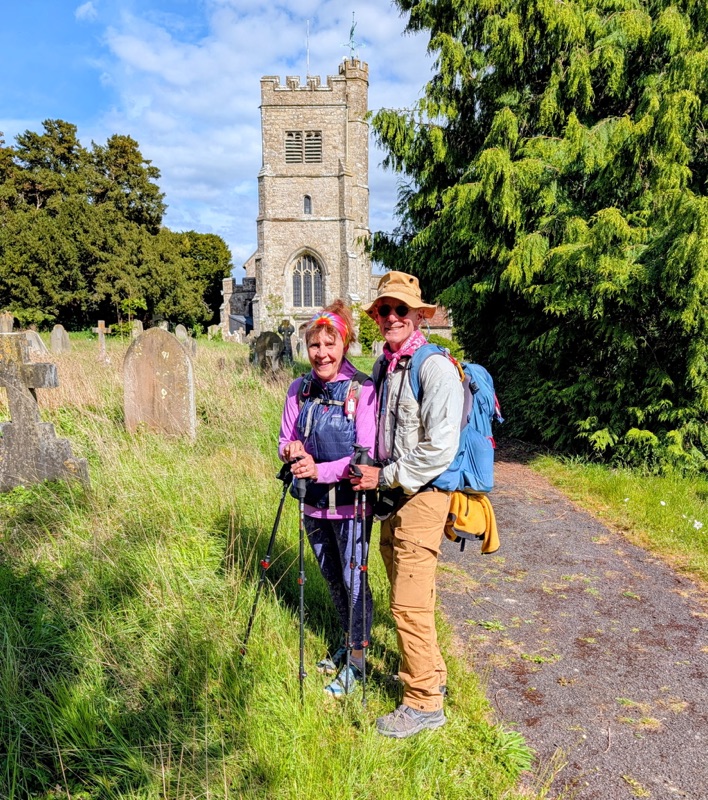
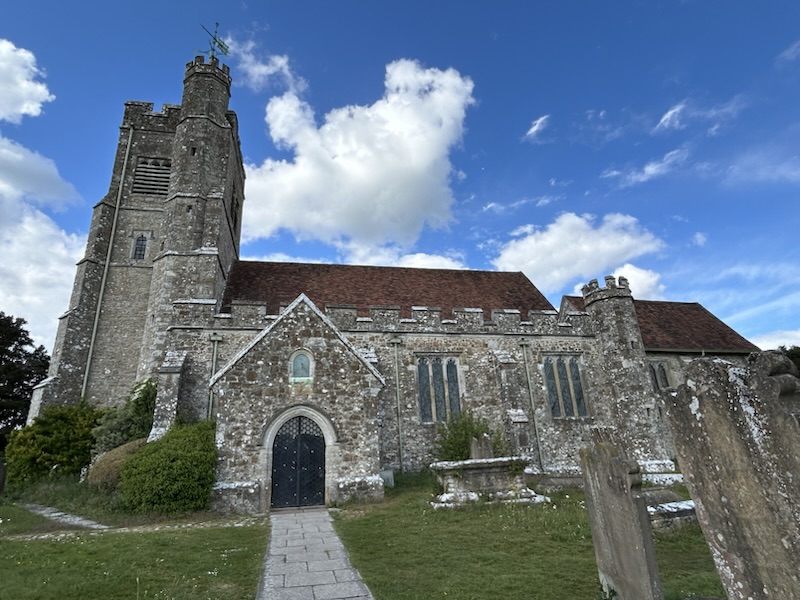
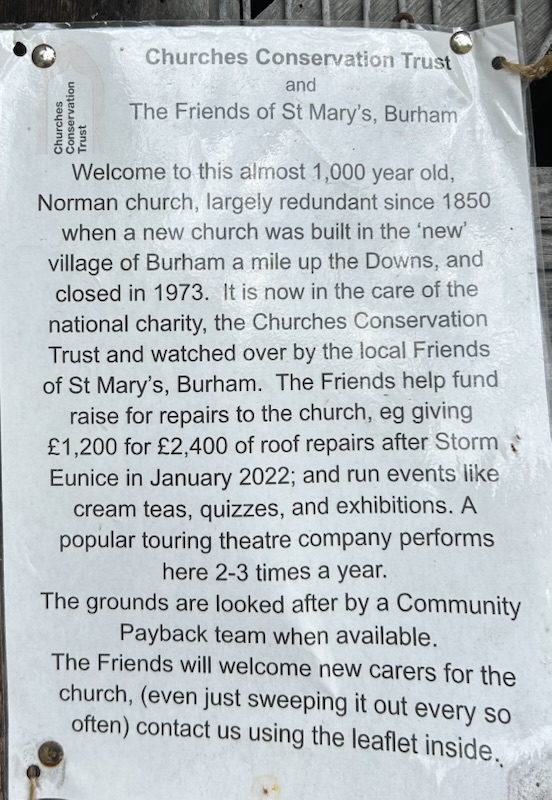
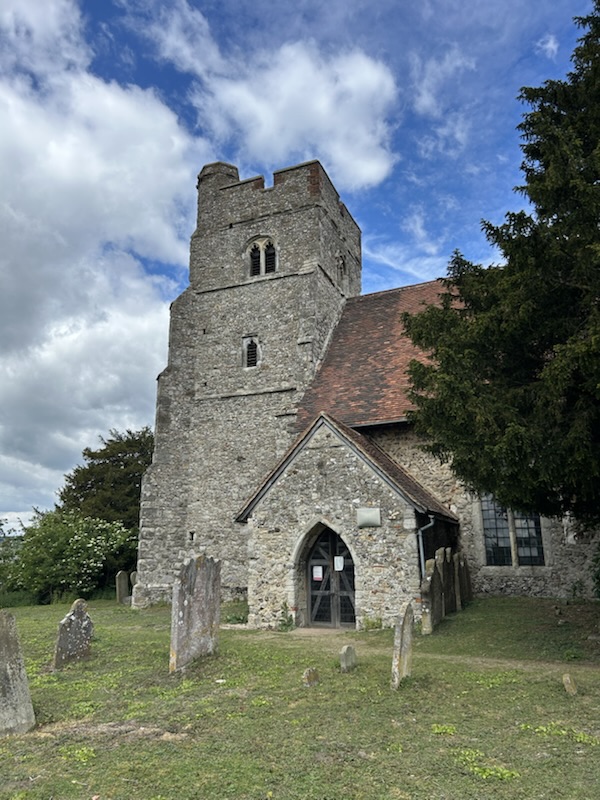
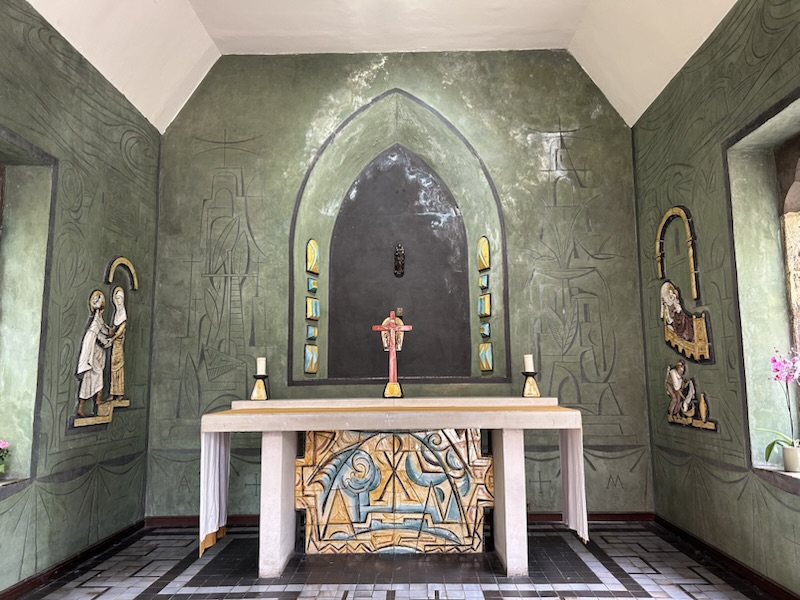
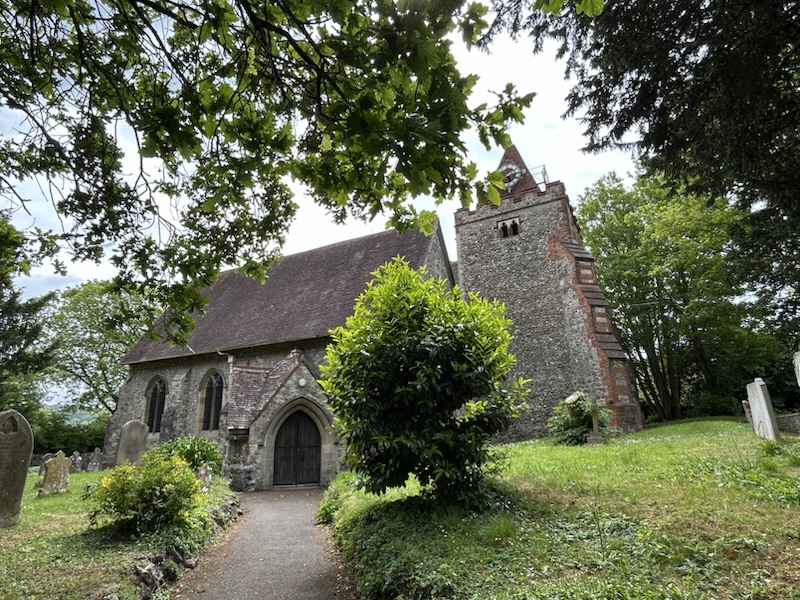
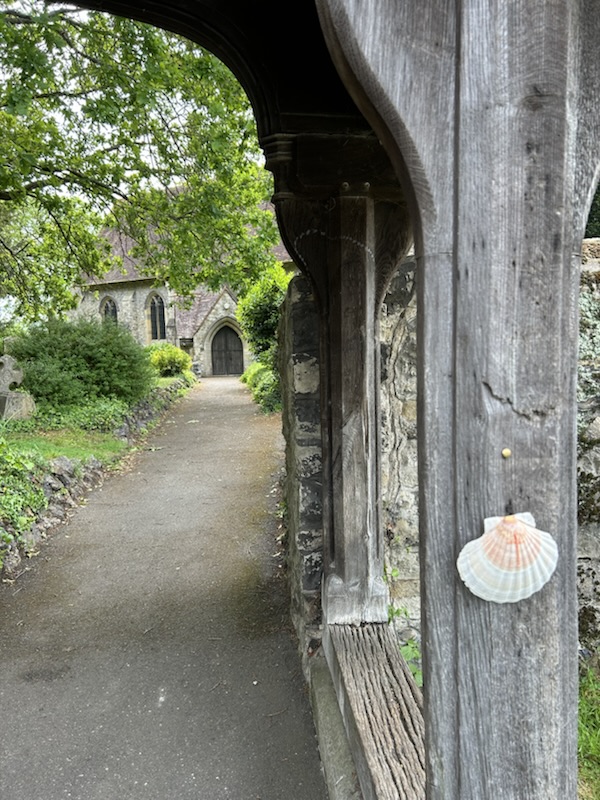
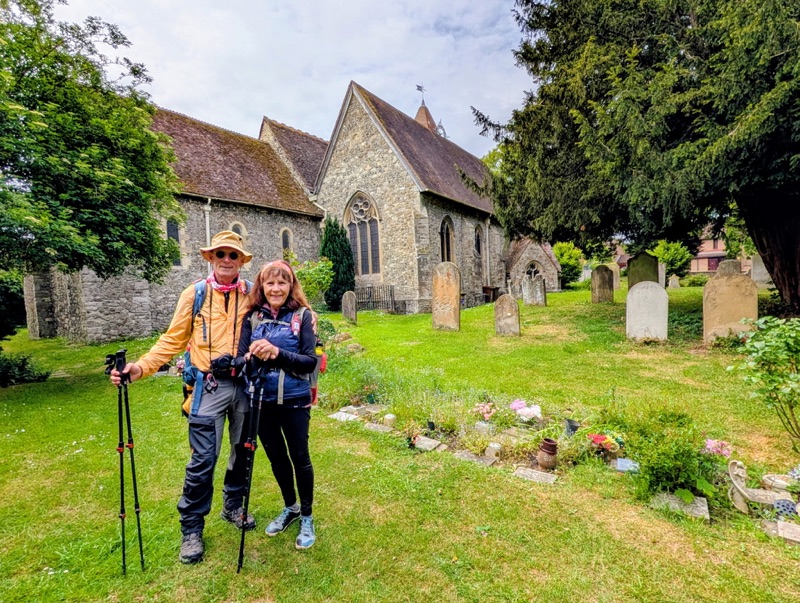
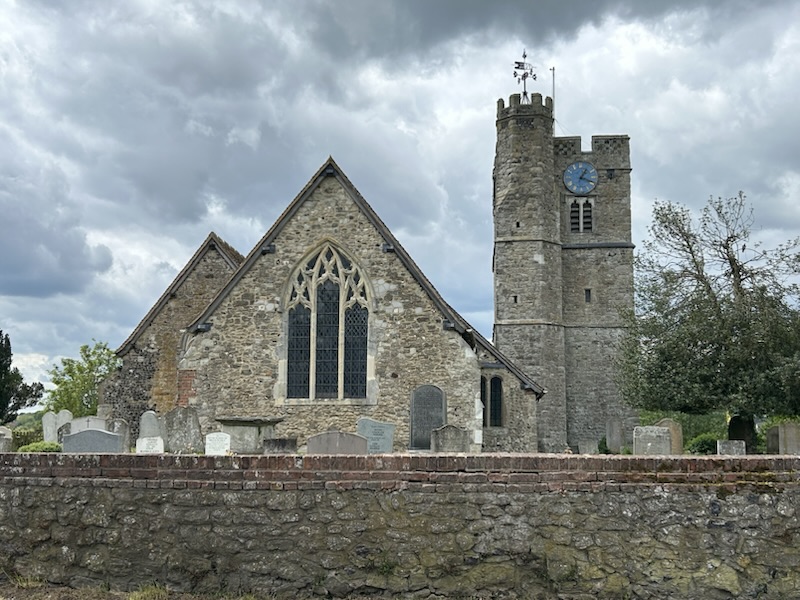
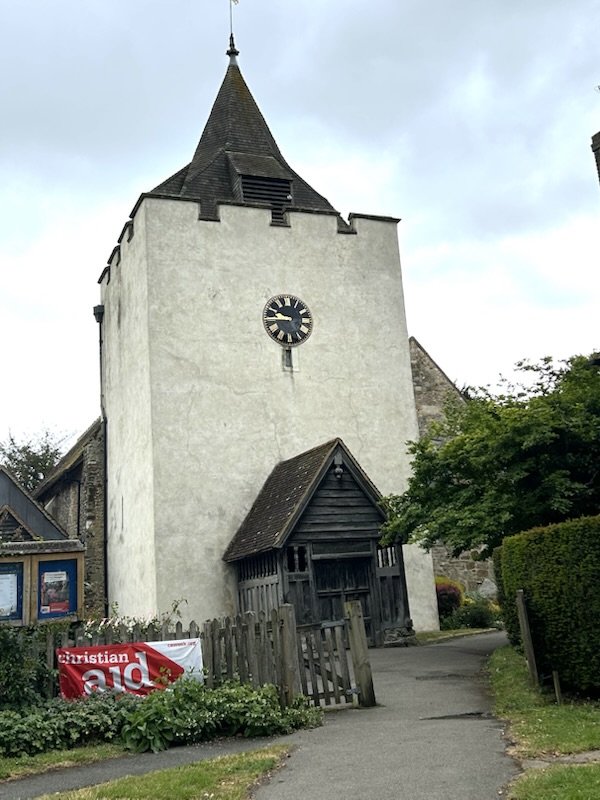
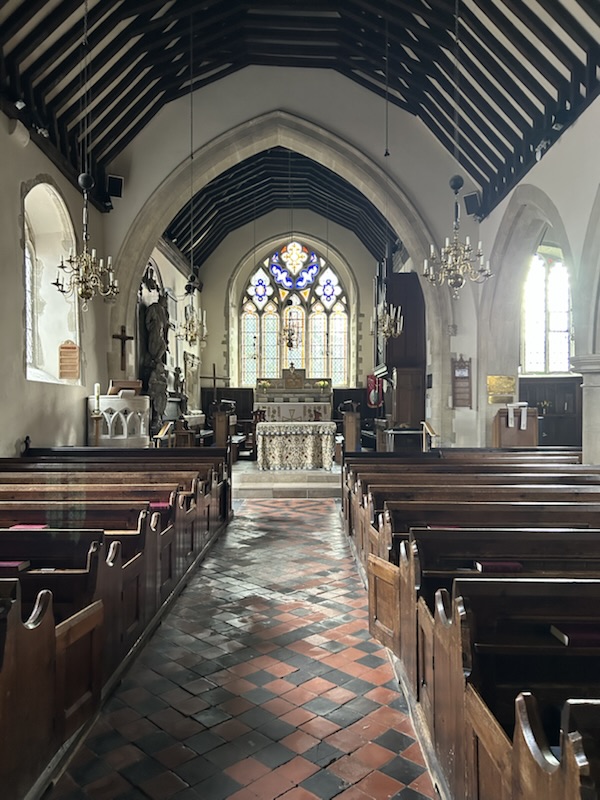
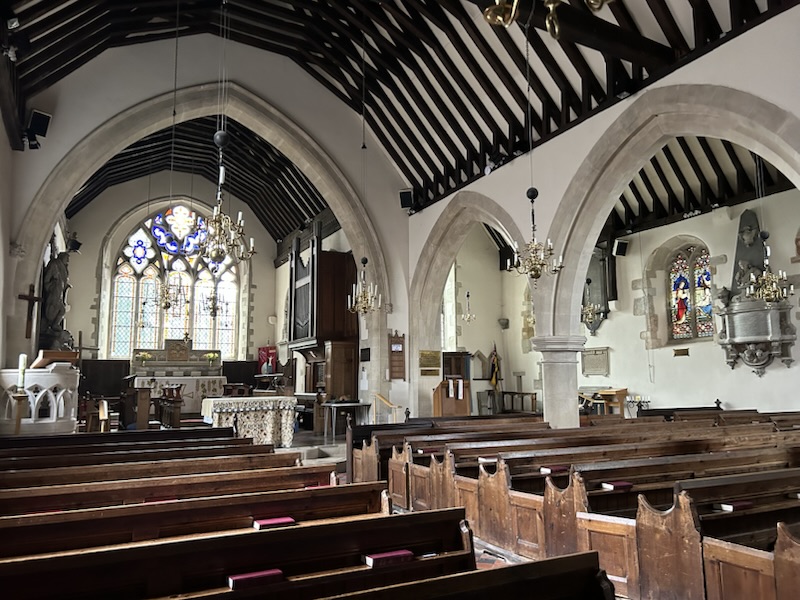
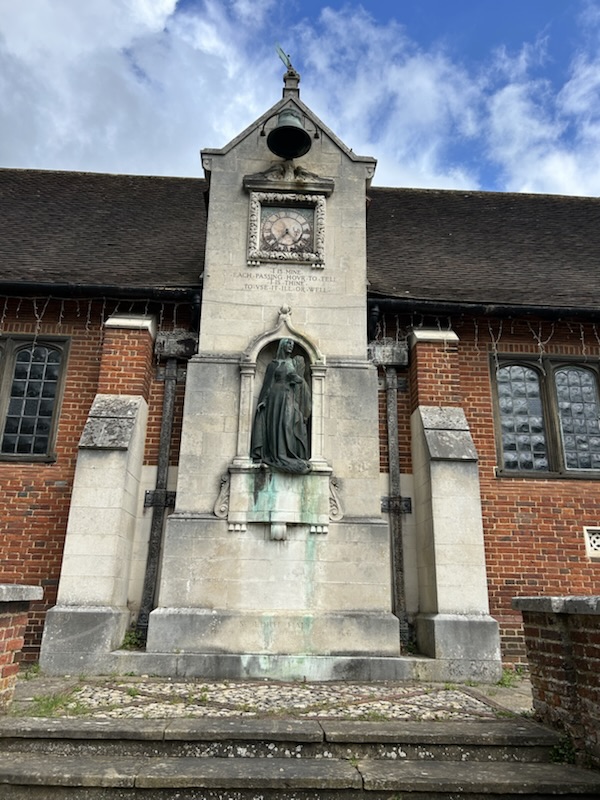
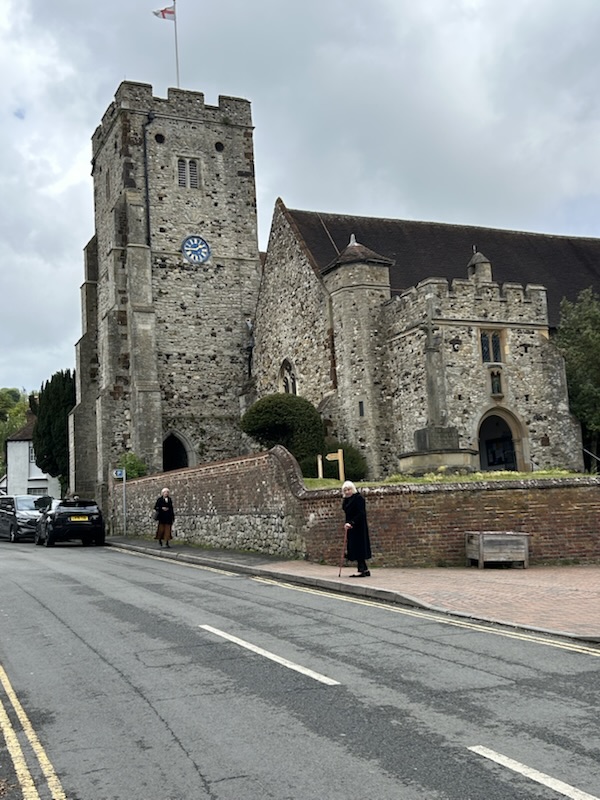
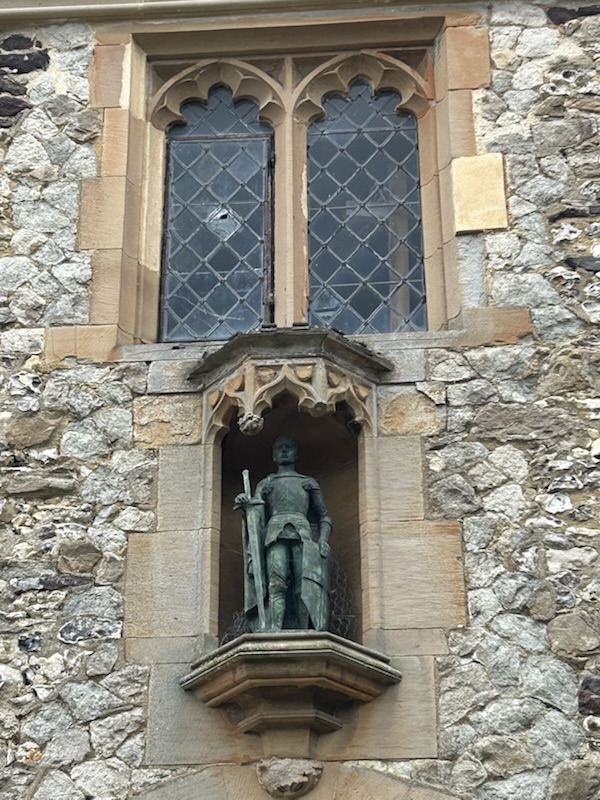
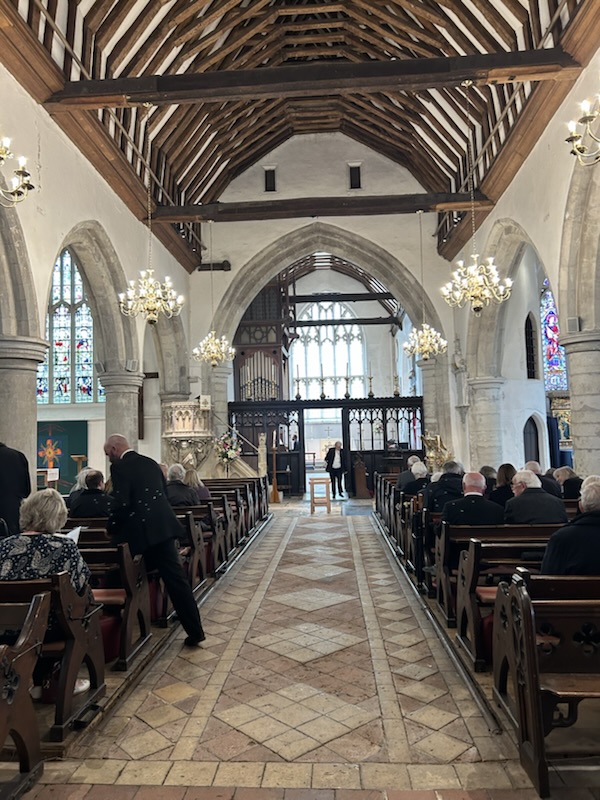
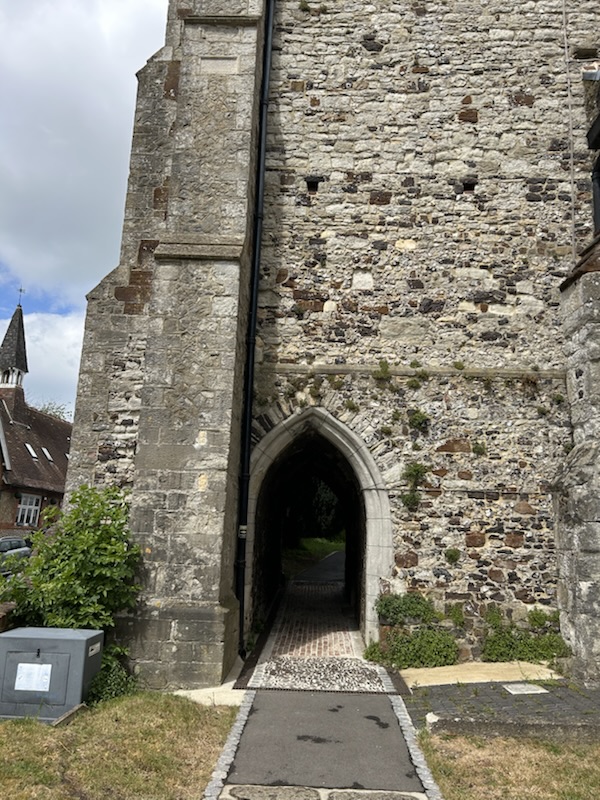
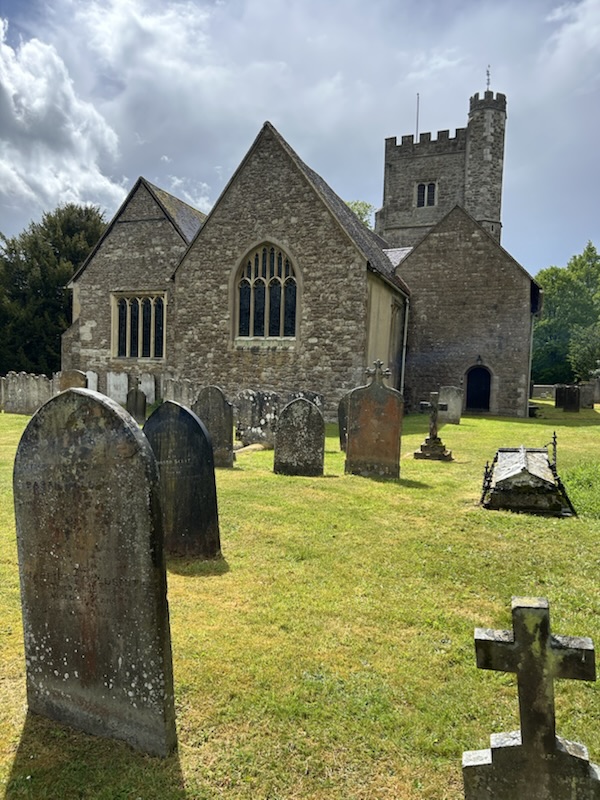
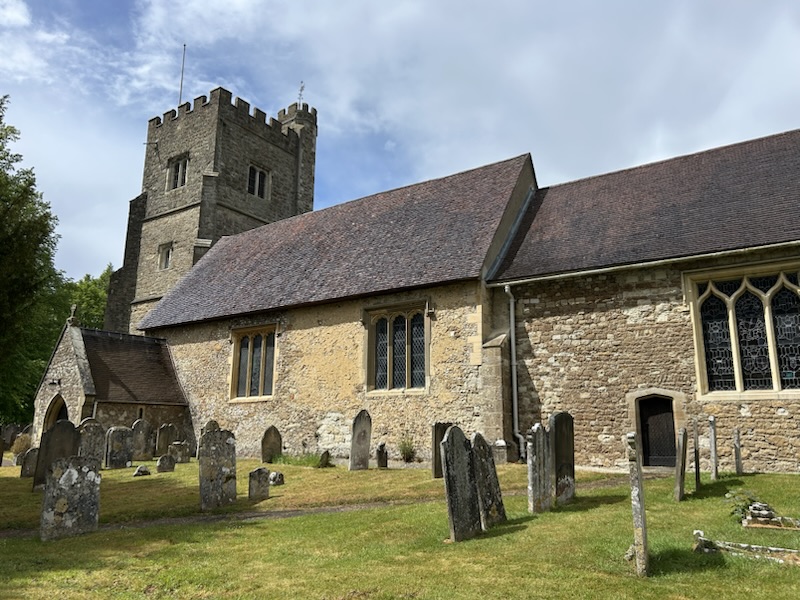
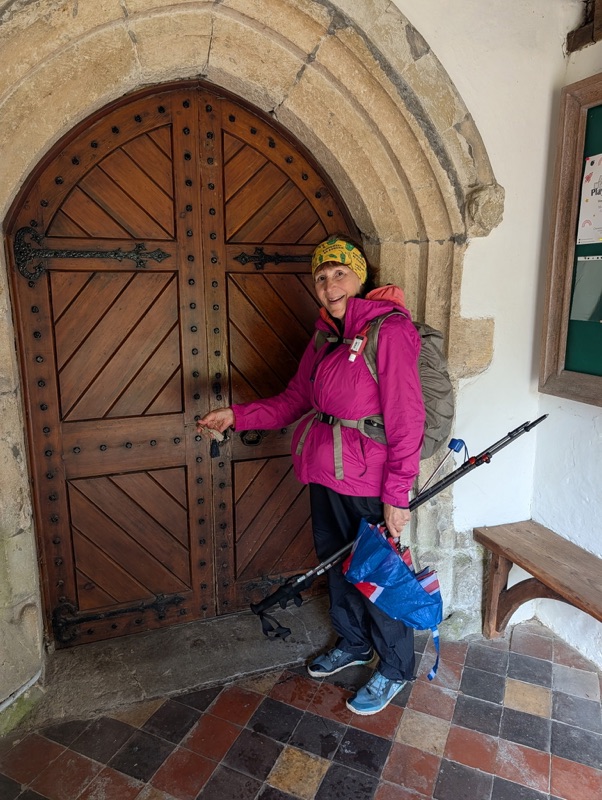
We visited one church today called St. Botolph’s Church; but, unfortunately, it was closed. We hoped a key we found in the vestibule would work to open the door; but no luck. So no pilgrim stamp. 😔. It would have been nice since he is the patron saint to travelers & good to have him with us in spirit. 👼
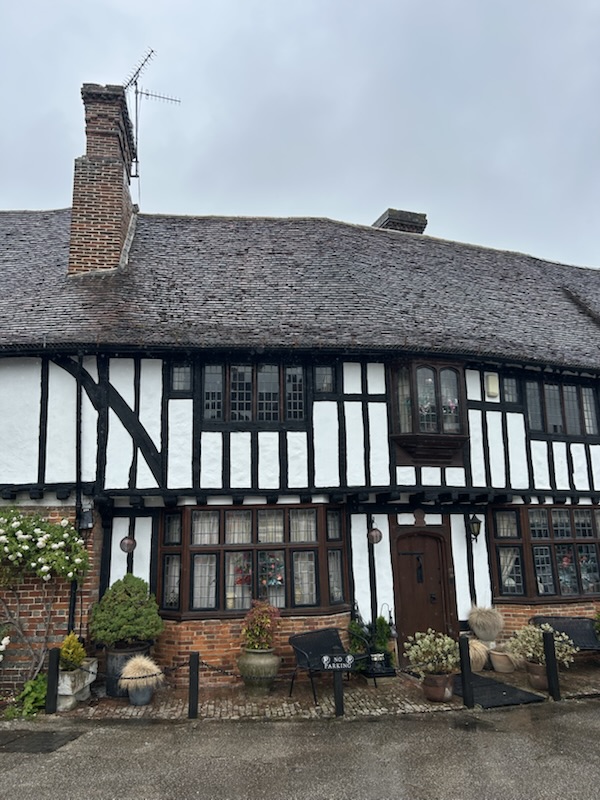
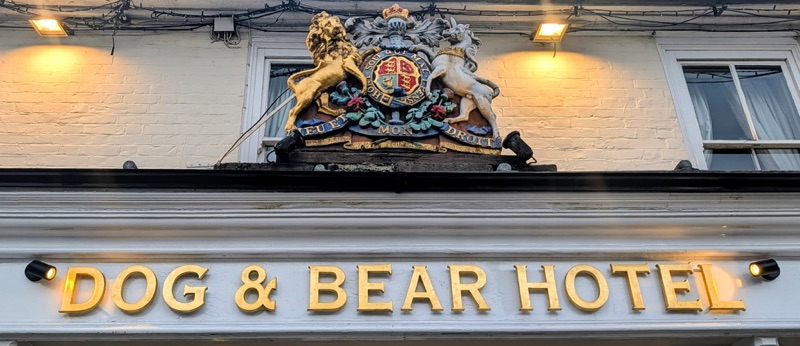
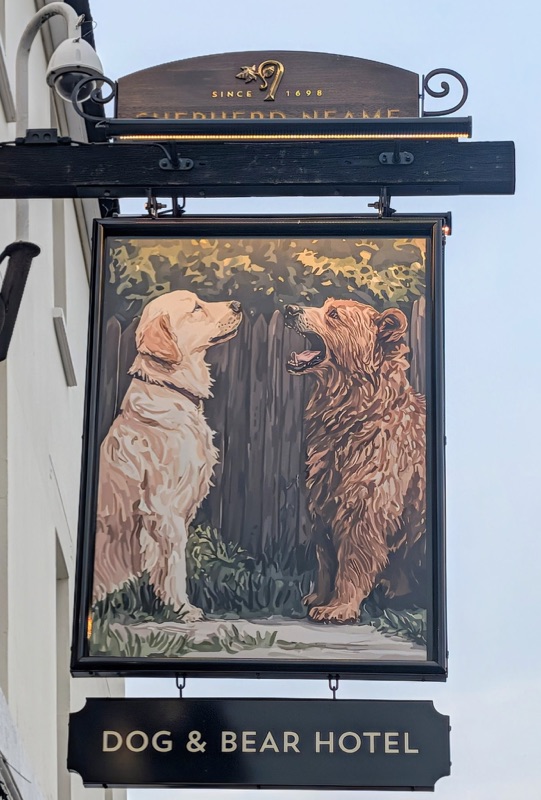
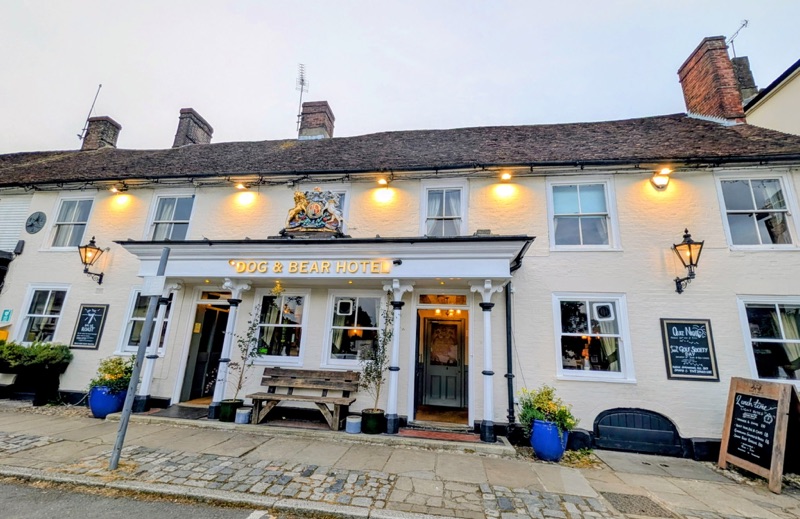
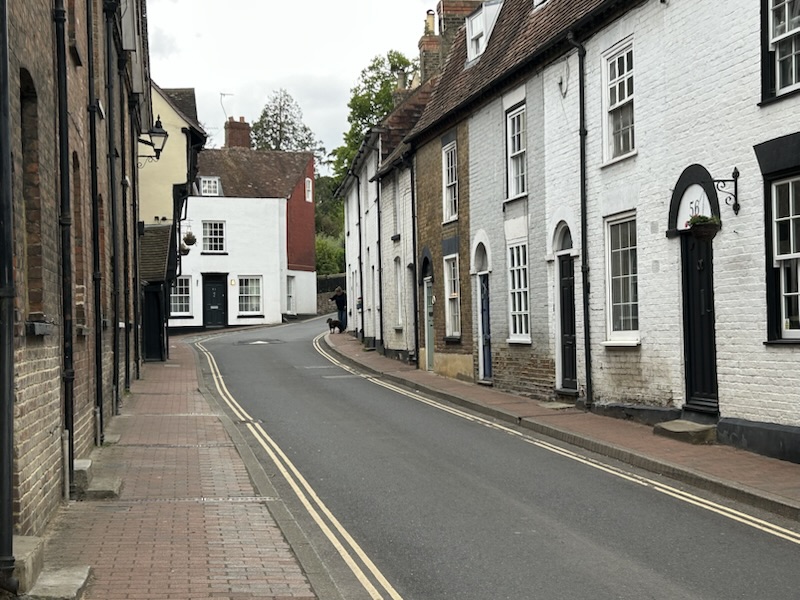
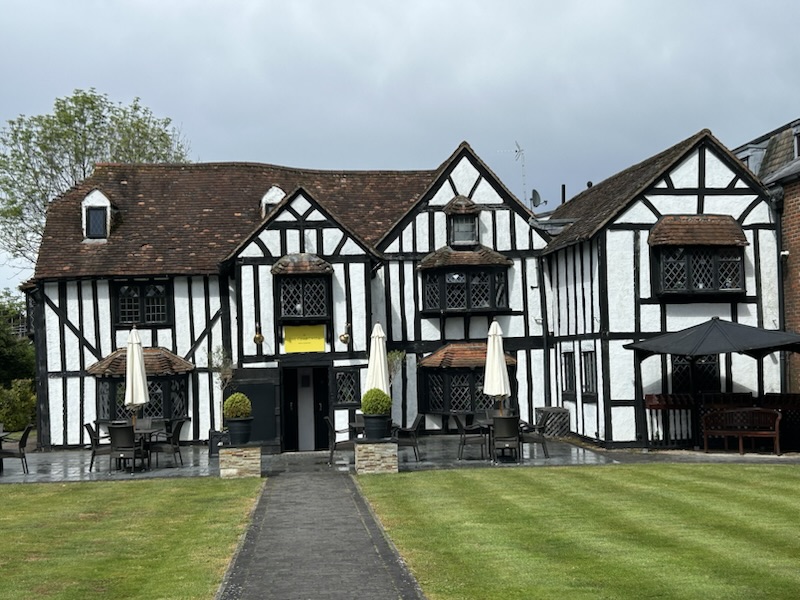
After more rain, wind, & sunshine, we arrived at our cute hotel.
Day 7 – Walked 19 miles. Yikes, that was a long way!
Enjoyable day with near perfect weather. No rain & it was never very warm. Once again, followed signs for the North Downs Way trail.
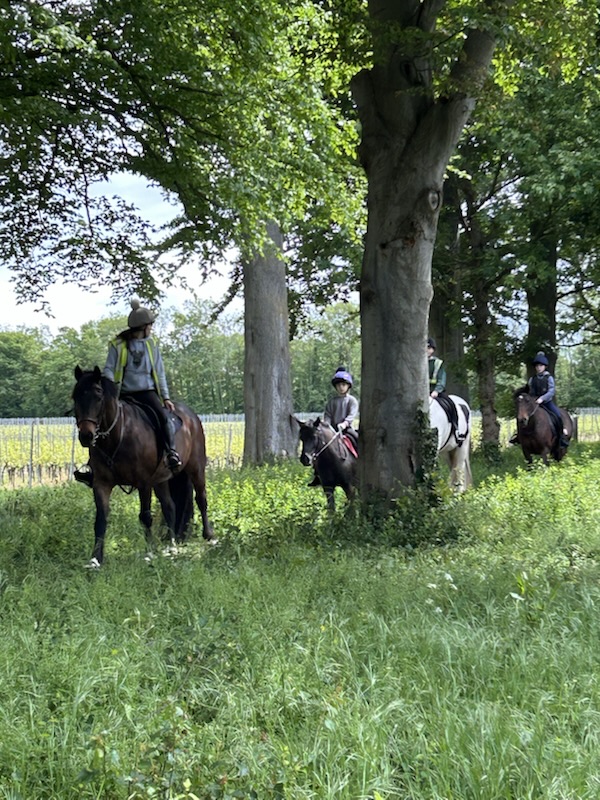
We shared the path with riders & their horses again.
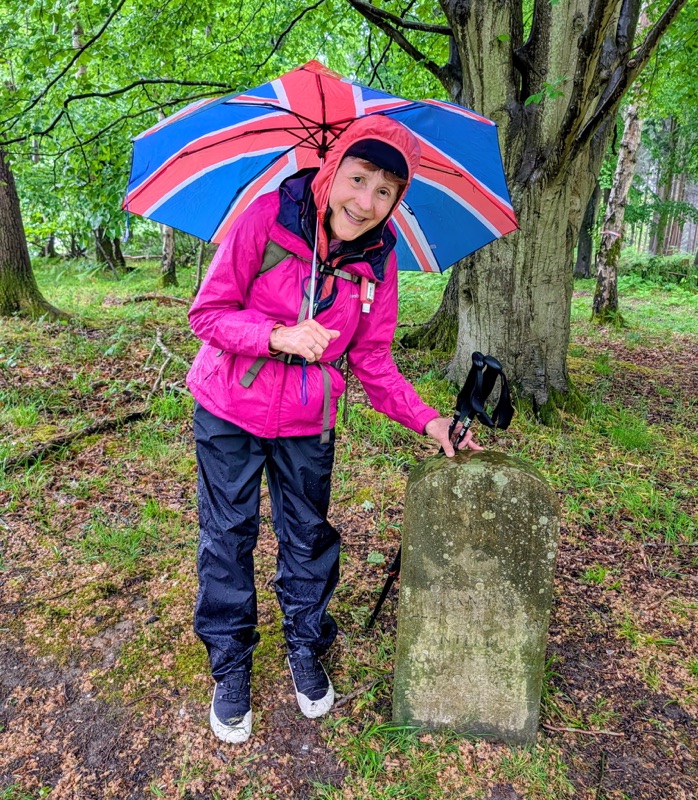
Came across these Millennium Stones on our way to Merstham.
We are only able to walk exactly on some sections from the original Pilgrims Way from Medieval times. At times, we see signs saying we are on the old road where pilgrims passed for centuries,
Today, We visited two very old churches today dating back to pre-Norman Times. The first was St. Katharine’s Church which has existed for 1,400 years & still has the original baptismal font in it.
The church vicar & priests had just finished their daily meeting & welcomed us heartily. A Priest is an ordained minister who can perform sacraments while a Vicar is specifically a priest in the Church of England (Anglican Church) responsible for a parish. So, all Vicars are priests; but, not all priests are Vicars.
At the door, one priest told us the church’s history. He said it is believed that Roman ruins are under the church, so the church has ruled out any new construction or renovations requiring digging because dealing with antiquities requires too many reviews & approvals by multiple agencies. As we entered, he pointed out St Katherine over the door.
After stamping our pilgrim passport, we were greeted by the Vicar who was a woman. She was so happy we were visiting the church & kept apologizing for her appearance since she had recently gone for a swim in the nearby lake. (Brrrr)
She offered us a prayer for a safe journey & allowed us to get a picture with her.
The next place a few miles down the road in Chaldon was the Church of St. Peter & St. Paul. To see this church we knew we would add 2 extra miles to our journey; but, we felt the extra distance would be worth it to see its famous wall painting.
This church is from Saxon origin & is recorded in a 727 AD charter. The present church was started in the late 10th or early 11th century before the Norman conquest in 1066. The vividly colored wall painting is known as the “Doom Mural” because it shows the biblical Day of Judgment. It depicts the “Purgatory Ladder”, the “Tree of Knowledge” along with scenes showing heaven & hell, including the devil, other demons, & tortures for committing various sins. This painting in dark red & yellow ocher was done around 1070 making it the oldest intact wall painting in England. I I also included an index explaining the mural’s scenes
I also included a photo showing a “T” inscribed in this church’s pillar centuries ago representing Thomas Becket for whom this pilgrim trail honors.
Back on the trail, we saw one of the very few Pilgrim Way signs, a glimpse of downtown London in the distance & a historic stone house.
We also stopped at small pub called The Harrow which has some WWII history.
This 400 year old pub was the headquarters for the British Home Guard during World War II. When it was thought the ridge on which it was located may be used to defend against a possible Nazi invasion, fighting positions were built just in case. There is a map on wall showing the local defense plan. At 718 feet in altitude, it is also the highest pub along the Pilgrim Way near the trail’s highest point at 787 feet.
Compared to walking the Camino de Santiago where you meet a different pilgrim almost every hour, on this path we have basically met no pilgrims. However, today we met a family of 3 doing a small section on the route walking in the opposite direction. We enjoyed swapping stories & giving each other tips.
Our path took us up long hills,
Back down again
and across the motorway more than once.
Very late in the day, we were forced off the trail due to it being closed by private residences across whose land it normally passed which caused major backtracking & a huge detour.
The last mile was was a struggle for me; but, we finally arrived after 11 hours on the trail to our lodging which was a Days Inn. (Yes, the same as in the States.)
Happy to say we are more than half way now. Seven more days to go!
Today’s highlights were stepping stones, a few up & downs on steep hills, & a church.
Not long after leaving our hotel, we crossed these strategically placed Stepping Stones on the River Mole.
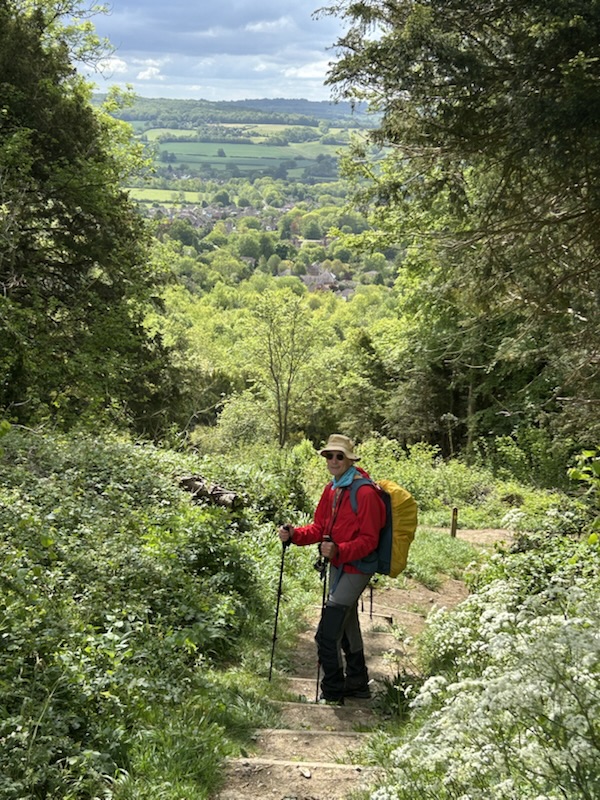
After this river crossing, we had a long climb up to the view point on Box Hill. It is a nice place to rest & enjoy the view. The view from here was believed to have been enjoyed by Jane Austen.
From there we took a detour off the path to Betchworth to visit another old Norman church called Saint Michael’s. It has another claim to fame by being the church for Wedding #1 in the movie “Four Weddings & a Funeral.”
In case you don’t remember, this is the wedding at which Hugh Grant’s character is the best man & at the altar he realizes he forgot the wedding rings during his great haste to get to the wedding on time after having over slept.
His buddy at the church bails him out by handing him a gaudy colorful plastic ring for the bride & a heavy metal skeleton head ring for the groom that he scrounged from the wedding goers.
That movie came out in 1994 & the docent at the church said there was a big party at the church two years ago to celebrate its 30th anniversary.
Even though it is well off the pilgrim trail, a nice woman at the church found a stamp for us to use in our trail passport books.
Homes near the church can also be seen in the movie.
It started to rain a little, so our lunch stop was at a convenient little bus stop in Betchworth.
Over the next few hours we did our best to stay dry as we climbed once again into the chalk hills & made our way along the wooded trail.
Not a lot to share from this trail segment; but, it is hard to beat a nice walk in England.
Day 5 – Official distance 13.5 miles; We walked 16 miles.
Not long after we started today, we met some women who told us that our hotel The Angel in Guildford was haunted!
In 1973, Roger Moore who played James Bond in the movies spent a few nights at the hotel. He said he was awoken each night at 2 AM by a spectral Victorian chambermaid cleaning his room.
There have also been sightings of military men appearing in the mirror, shadows pacing along the walls, & hearing loud noises in rooms in which nobody was staying.
A soldierly figure appearing in a foreign uniform has been sighted in the bedrooms & in the cellar. During one appearance, this spirit lingered long enough for a guest to sketch it.
Alas, we seemed to have been ignored by all the ethereal spirits.
Today was much colder than yesterday. , I didn’t remove any layers & even added a rain jacket during the last few hours on the trail when it rained. Given the choice, I will take cooler temps over warmer ones for hiking.
Once we left Guilford, our walk took us through the lovely Chantry Woods. Its name originates from 1486 when the Guildford mayor bought the forest & gave it as an endowment for a “Chantry” which is gift or trust to the church.
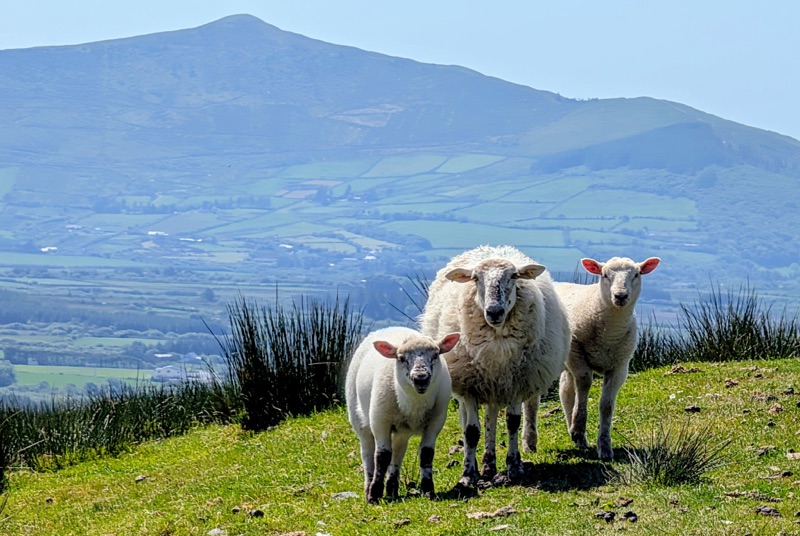
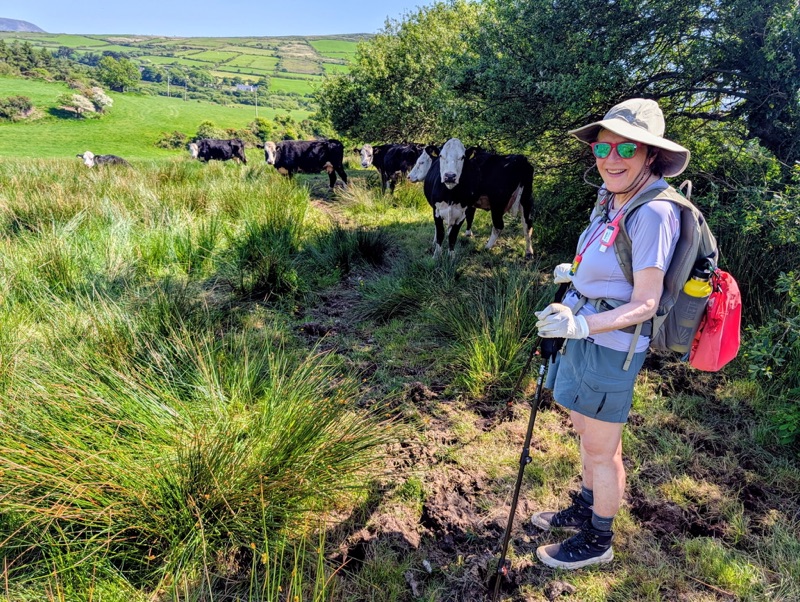
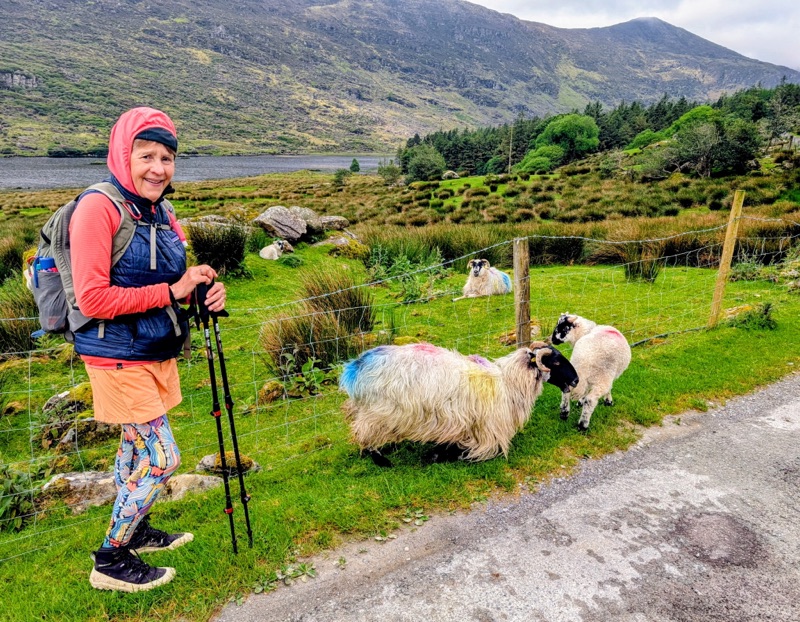
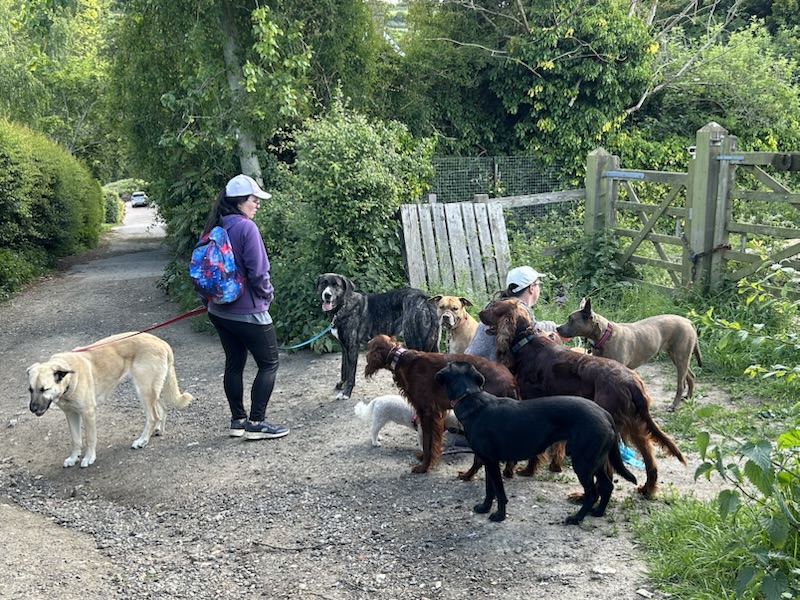
Needed to share the trail today with some 4 legged friends
After climbing Saint Martha’s Hill, we were rewarded by seeing another old Norman church which dates from 1190. We met a woman there preparing the church for Sunday services.
Even though the church suffered a tower & roof collapse, worship continued in the church’s usable part with weekly services never having stopped in almost 1,000 years,
Images showing the church in semi- ruins before it was rebuilt Font left from the Norman church View from the topLearning to ring the bellThat’s not how you do it… this is more like itRuth was very kind to tell us about the church Tea towel
The next highlight was the lovely town Shere which has been used as a location in many movies. The popular rom-com movies “The Holiday” & “Bridget Jones: The Edge of Reason” were filmed here. It is indeed very quaint & quintessentially British.
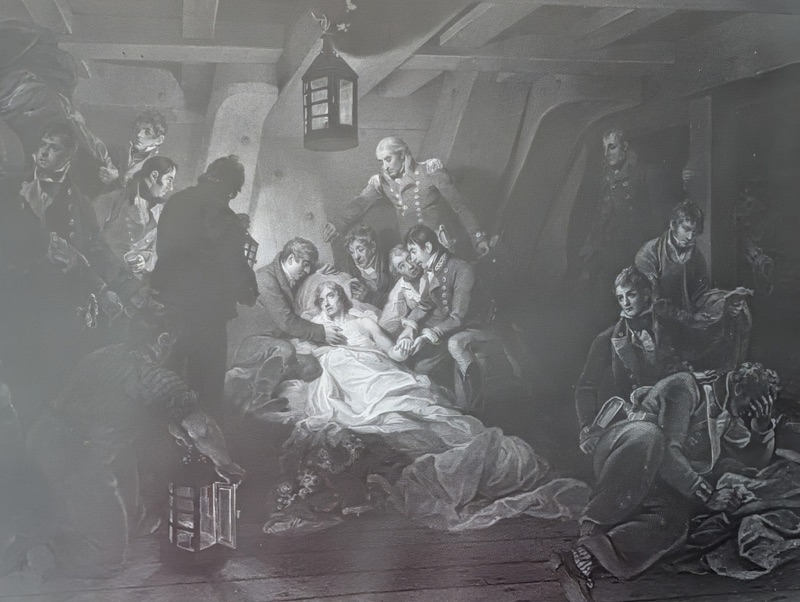
Downtown ShereWhite Horse Inn was built in 1425. Timbers from Lord Nelson’s flagship HMS Victory are believed to be used in the restaurant’s beams.
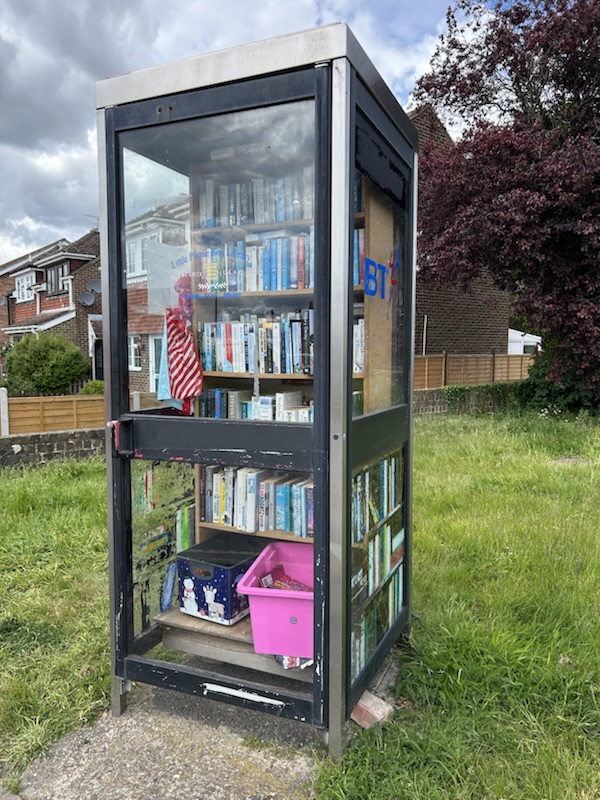
Reading books is very popular here.
Small library box with a clever aphorismCheck out the titlesBus Stop library
We enjoyed several hours walking through the woods before reaching our hotel in West Humble.
Day 4 – Distance officially listed at 10.5 miles. We walked 11 miles in 6 hours 45 minutes.
It felt great finally to walk the official distance listed in the book with only adding the mileage needed to reach our hotel which is off the trail.
Today was by far our warmest day at 70 degrees & towards the end, I wished I wasn’t wearing tights.
All morning the path took us beside a road. (Maybe why the mileage was correct.) We passed one beautiful home after another, each with flowers in full bloom. Without a doubt, May is the time to be in England.
Our first stop was at the St. John the Baptist church in Seale.
On the table where you get your pilgrim stamp there is always a guest book to sign. Today I noticed what someone had written from New Hampshire USA saying their parents were married in the church in 1942. Maybe an American WWII GI with a British bride?Lunch outside the church. Look closely, I brought my Trader Joe’s peanut butter with me. 😋🤣
Other interesting sites along the way.
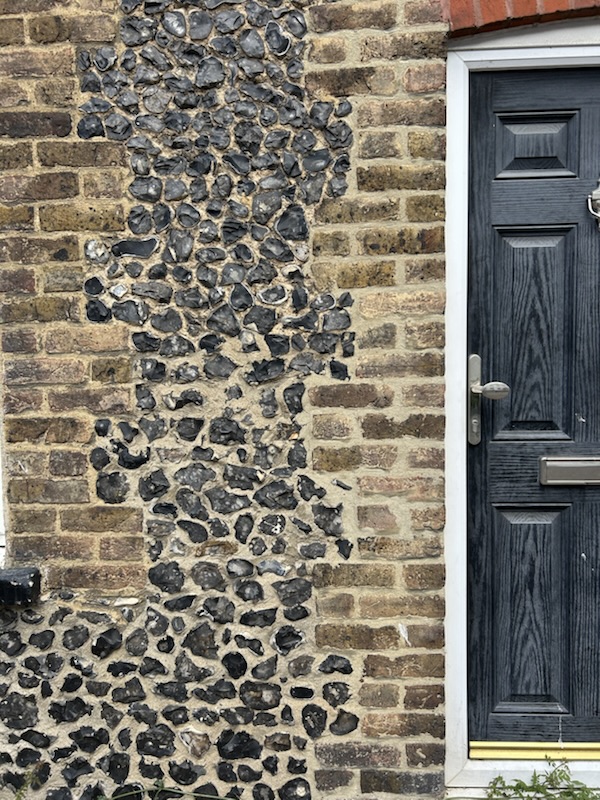
Brick shingles On a sunny Saturday many many bicyclistAn old classic phone booth repurposed as a DefibrillatorAlmost every town has a WWI Memorial Hops have been grown for centuries in Puttenham for local breweries
Our sign posts have now changed to North Downs Way. The rest of the way was through some nice shady woods.
Our next stop was a art gallery/tea shop where we enjoyed some ice cream.
Physical Energy statue at LimnersleaseLimnerslease gardenLimnerslease- Home to artists George & Mary WattsLimnerslease history
The last 2 miles are always tough.
That’s me!
Almost at the end we visited this ancient church ruin just outside Guildford.
We left the Pilgrims Way path to enter Guildford along the River Wey to make our way to our hotel.
Guildford is another gem of a charming British town. Our hotel The Angel was once the stagecoach stop between London & Portsmouth.
The hotel’s oldest part is its stone vaulted undercroft that dates to the 1300s & still retains some of the original spiral staircase. It has been a hotel since Henry VIII’s reign in the 16th Century.
It has “Posting House” on its facade because it was a place where mail carriers changed horses. Initially, the Royal Mail was carried by boys on horseback who “Posted” meaning they changed their tired horse for a fresh one every 10 or 12 miles. That is why we still refer to the mail as “the post”.
Travelers could leave their personal horses to be cared for & kept at the “Livery Stables” also advertised on the facade.
The Act of Parliament or Tavern Clock hung in the lounge dates from 1688. It would have been very important both to hotel staff & guests as they awaited the arrival for scheduled stagecoach service; basically it served much like a station clock today.
Famous guests who stayed here include Charles Dickens, Lord Byron, Jane Austen, & Lord Nelson.
George Abbot from Guildford was among the translators who worked for King James I to make his Bible version. He funded building the town hospital in 1619.
Other charming sights in Guildford. So glad the Pilgrim Way brought us here. Otherwise, we would have never known to visit this picturesque & historical place.
Day 3- Distance officially listed as 11 miles; We walked 15 miles yet again in 7.5 hours today
Beginning to see a trend now- Take the official mileage & add 3+ miles. 🤣
We keep stay on the trail using three different ways. First, we use the official Pilgrim’s Way book that has generic directions like, “walk through the field to the kissing gate and turn left at the White House.” Secondly, we rely on the arrows posted on the footpath posts for direction. Third & the most reliable navigation method is the All Trails app that has the Pilgrims Trail. But, even using this app we still sometimes miss a turn & have to backtrack.
However, today we stayed exactly on the trail & still walked an extra 4 miles over the listed distance!
Regardless, we still enjoy the countryside & the various historical sites along the way.
This was the first day we had to use our umbrellas due to light rain.
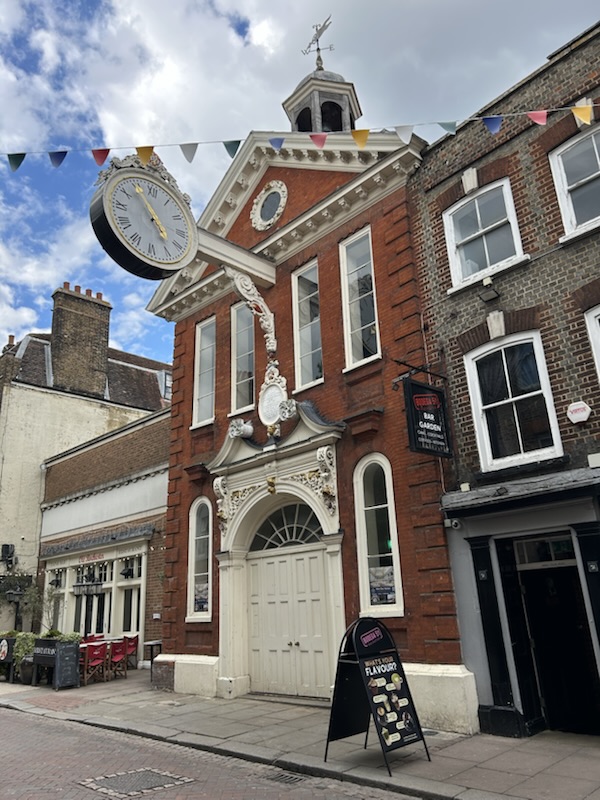
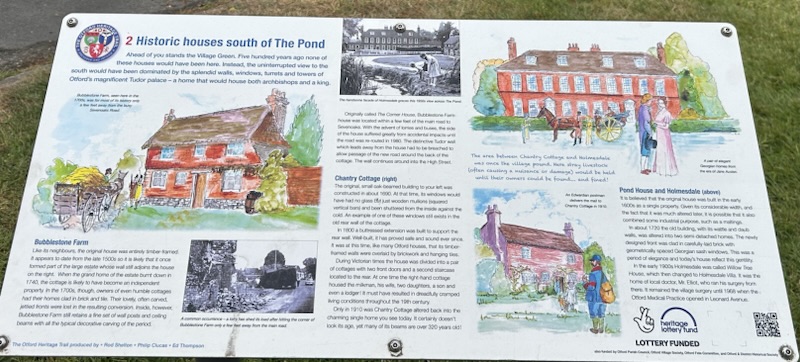
Before leaving Farnham we passed this historic building.
Today’s highlights were old churches.
Church #1- Holy Rood in Holybourne
The church wasn’t open when we arrived, so we enjoyed a short rest outside sheltering from the rain in a rather unique spot.
Holybourne gets its name from the Old English “ Haligburna” meaning “Sacred Stream”. The church’s foundation & entry archway date from the Normans in the 12th Century.
Church #2 – Church of the Assumption of the Blessed Virgin Mary in Upper Froyle
This church was owned by the nuns from St. Mary’s Abbey in Winchester & it is highly likely that its name stems from them. The present church dates from the 14th Century although there was certainly a church located here before this one.
Still raining.
Fields are often lined by hedge rows, small bushes, & sometimes a small narrow forest.
Church #3 – Church of Saint Mary the Virgin in Bentley
Bentley’s history can be traced back to the Romans in the 1st Century AD. This church was founded in 1175 by the Normans.
Yew trees estimated to be over 600 years oldCollecting many stamps todayConsecration Maltese Cross inscribed in pillar in the year 1400Blessing Symbol inscribed in pillar after the Black Plague in 1349
The rain finally stopped and we enjoyed lunch in front of Lord Baden Powell’s house at Pax Hill. He started the Boy Scouts in 1907. After he died, his wife Olave gave the house to the Girl Guides who are known as the Girl Scouts in America. It is now a rest home.
Much of the route took us through barley or wheat fields. We also saw young men exercising horses along with more unique homes.
Resting logLovely farm homeThis is not a church.. it is someone’s home
Farnham is a nice college town. It has a castle that is now closed for repair & was known for hosting Queen Elizabeth I.
FarnhamApproaching Farnham
Church #4 – St. Andrew’s in Farnham
A church has stood in Farnham since the 7th Century & one was mentioned in the Domesday Book in 1086 in which William the Conqueror ordered a survey to be done accounting for his kingdom.
Day 2 – Officially listed as 12 miles; We walked 15.3 miles ( Hotel was a mile from the trail, major construction in Alresford forced a long detour to get back on the trail, & we lost the unmarked trail a couple times forcing us to backtrack).
We started our day with a proper English Breakfast minus the sausage.
When leaving Alresford, I saw these two people. This was Polling Day & they were the voting officials at the door.
This area is also known for its old railway called the Watercress Line which still uses steam locomotives. The line gained its name when it was used to transport watercress grown in this area to markets in London. This train # 35005 is an SR Merchant Navy Class “Canadian Pacific” engine built in 1941. Despite regularly being able to travel at over 100 MPH which was very fast for a train back then, only 30 of these engines were built. We heard its classic steam train whistle blowing in the distance announcing its presence before we were fortunate to see it pass by us.
“ I hear the train a- comin’, it’s rolling ‘round the bend…”
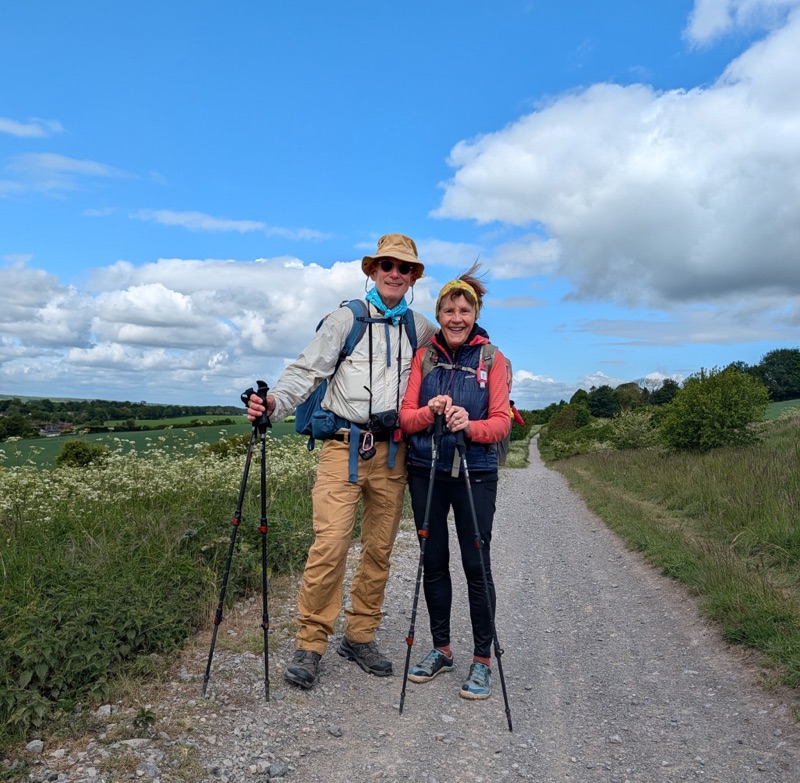
Unlike the Camino in Spain, we almost never meet other pilgrims here; but, occasionally we do meet other walkers who are happy to snap a picture for us. Even though England has thousands of miles of public footpaths & walking is extremely popular among locals, we have met very few people so far on our trek.
Today’s route took us through pastures & woods, by more thatched roofed homes, & through fields with spring lambs.
We enjoyed a quick lunch in a field with some sheep.
Final push into Chawton.
After over 6 hours & 14 miles, we reached Jane Austin’s home in Chawton which is only a mile from Alton where we stay tonight.
Front of Jane Austen’s homeInfo about her homeRoom where she read from her books to her familyWhere she played each morningHer Dining RoomHer tiny writing table which could be easily moved depending on which room had the most sunshine for best lightingHer Turquoise RingHer bedroomView from her bedroom into the garden & back of her house
The Greyfriar pub is right across the street from her home.
Before walking our last mile to our hotel in Alton, I enjoyed a proper cup of afternoon tea in a china teacup. 🥰
This tea house across the street from Jane Austen’s home right next to the Greyfriar is called “Cassandra’s Cup” after Jane’s sister Cassandra. In 1804, Cassandra Austen became the first person known to mention “afternoon tea” in writing.
Follow the red line for the Pilgrim’s Way from Winchester to Canterbury
Day 1 – Officially listed as 9 miles; We walked 13.3
This is now our third Pilgrimage Trail walk. We hiked the Camino Santiago de Compostela in Spain, the Camino Portugués in Portugal & Spain, & now our first pilgrim trail in England. However, this our 3rd long distance hike in England.
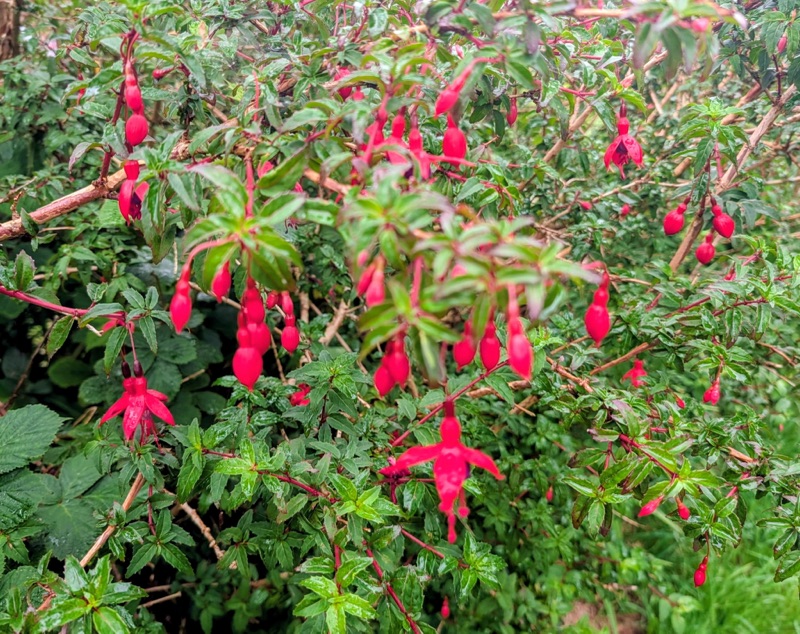
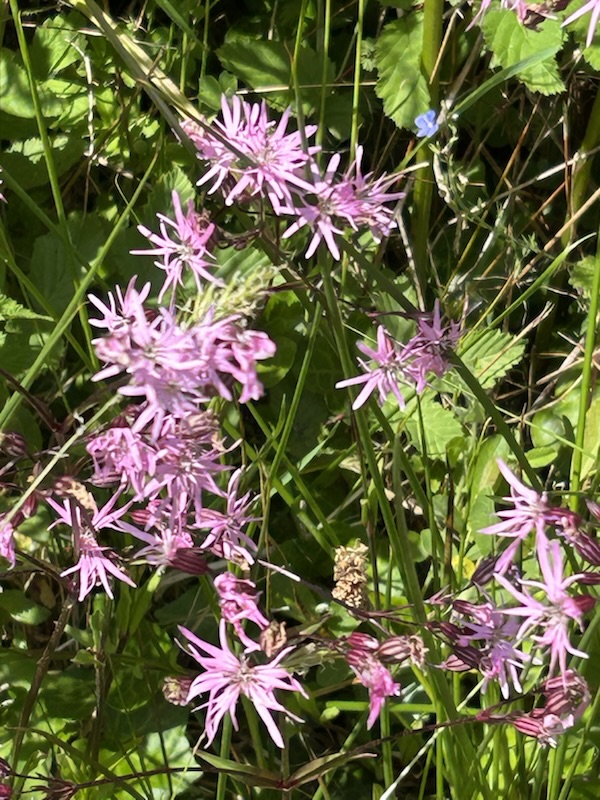
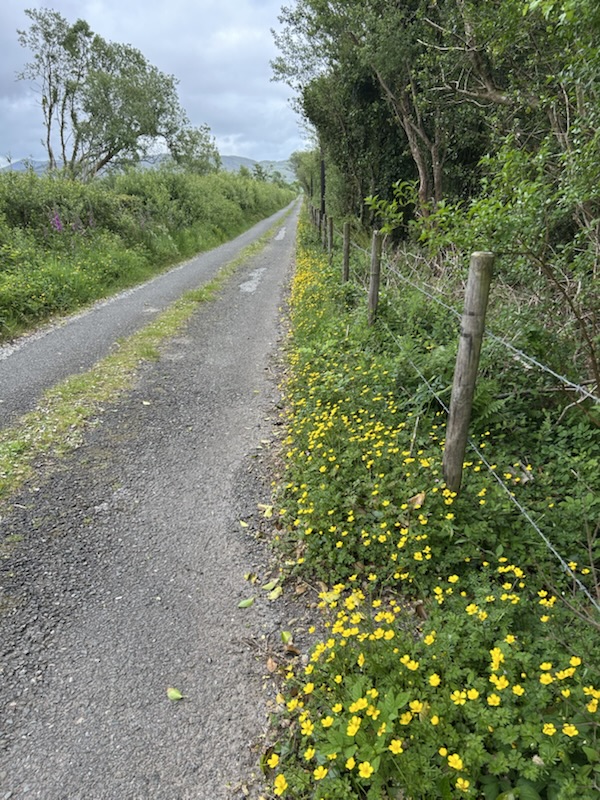
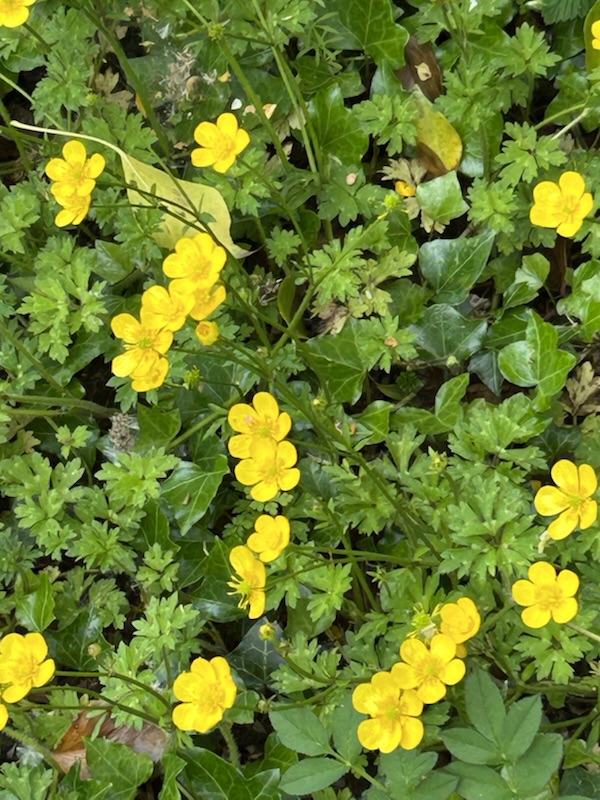
It’s hard not to love the English countryside in May. The temperatures are mild, wildflowers dot the hillsides, & lush green forests are brimming with green leaves.
Like our St James walks in Spain & Portugal, you buy a Pilgrim Passport at the beginning & slowly collect stamps at various places along the way to the finish.
Stamping our Pilgrim Passports
Today we started at the Winchester Cathedral which at 558 feet long is the longest medieval cathedral not only in England; but also in the world.
The cathedral also contains the writer Jane Austin’s grave. She was initially interred with no honors; but, later a brass plaque & some stained glass were installed to honor her.
Canterbury Trail Start Point at the Winchester Cathedral Winchester CathedralThe Nave- it is among the widest Gothic naves in England & the longest nave of its kind in EuropeJane Austen sectionJane Austen plaqueJane Austen grave Jane Austen MemorialStained glass commemorating Jane Austen in Latin
You can also see Saint Swithun’s grave in the cathedral. He died in 863 & a century after his death, he was chosen to be this place’s patron saint making him the first minister in Winchester.
In the early 1900s, huge cracks, started to appear in Winchester Cathedral as it started sinking & moving, so it was dangerously close to collapsing completely. Early efforts to reinforce its waterlogged foundations failed until deep sea diver William Walker descended into the flooded ground wearing a primitive 200 pound diving suit to level the area.
He started by removing the peat soil & then laid cement bags to plug the rising water. Bodies which had floated from graves, made the water toxic in which he worked.
William Walker worked underwater every day for 6 to 7 hours a day for six years from 1905 until 1911.
 Walker single-handedly laid more than 25,000 concrete bags, 115,000 concrete blocks, & 900,000 bricks to support the cathedral. There is a small statue portraying him in the rear of the cathedral honoring him as “ the man who saved the cathedral with his own hands” as well as a local pub commemorating his memory.
Not far from the church the pilgrim trail takes you past the Hyde Abbey ruins. Alfred the Great who united England refounded the royal city Winchester around 880. This Abbey was completed in 903. Today all that remains from the Abbey is the gatehouse that commanded the entrance between the large Abbey’s inner & outer precincts. Alfred the Great was buried here, but his remains as well as other famous ancient Anglo-Saxons are now apparently lost to the ages. At one time Hyde Abbey even owned the tavern where the old English book “The Canterbury Tales” was said to begin.
Hyde Abbey Gatehouse in Winchester
Today we passed two old churches where we collected stamps for our passports.
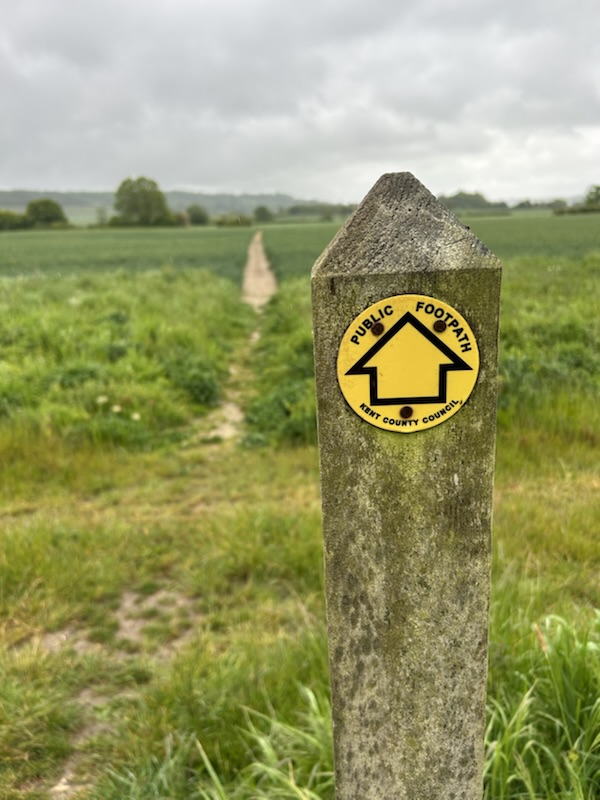
The path here isn’t marked as well as the Camino in Spain, but from time to time we do see emblems letting us know we are going in the right direction.
It was a beautiful day to walk & we enjoyed meeting the local cows along with walking past many thatched roof homes & old cottages. Classic English countryside!
We arrived in Alresford around 5:00pm. I was a little sore & tired, but it was a great day to begin our latest pilgrimage.