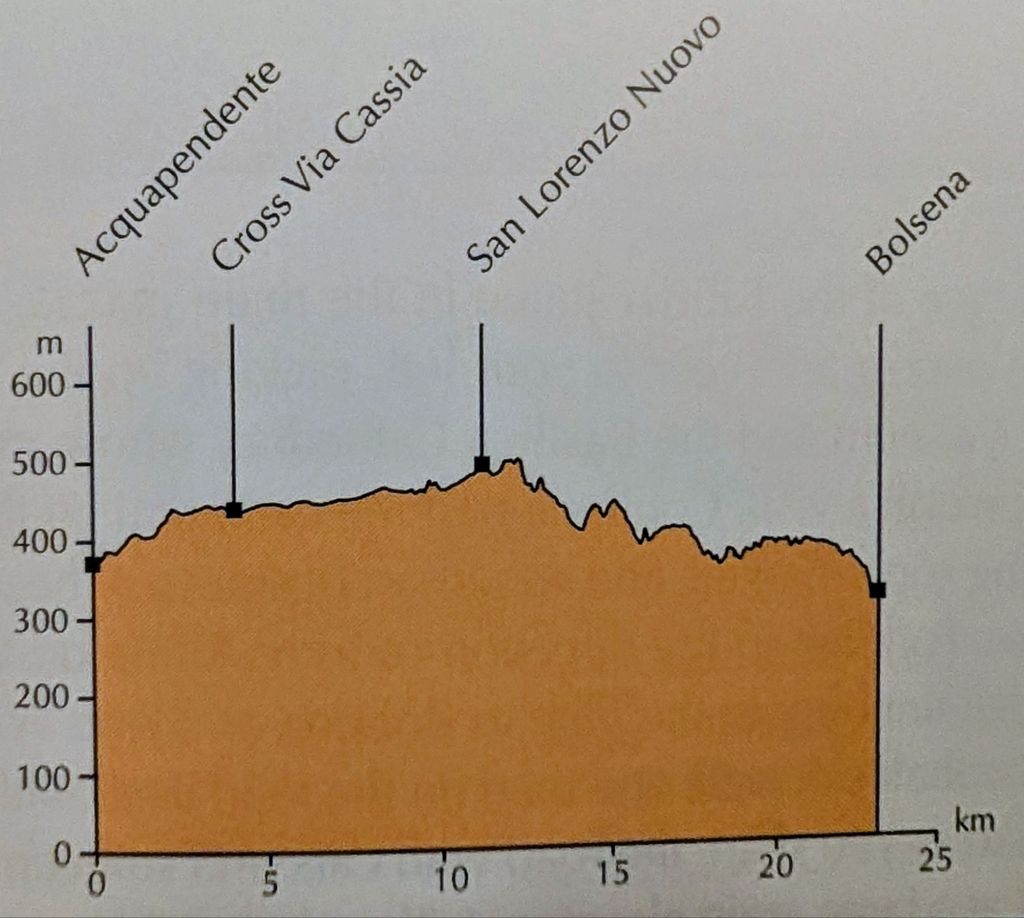
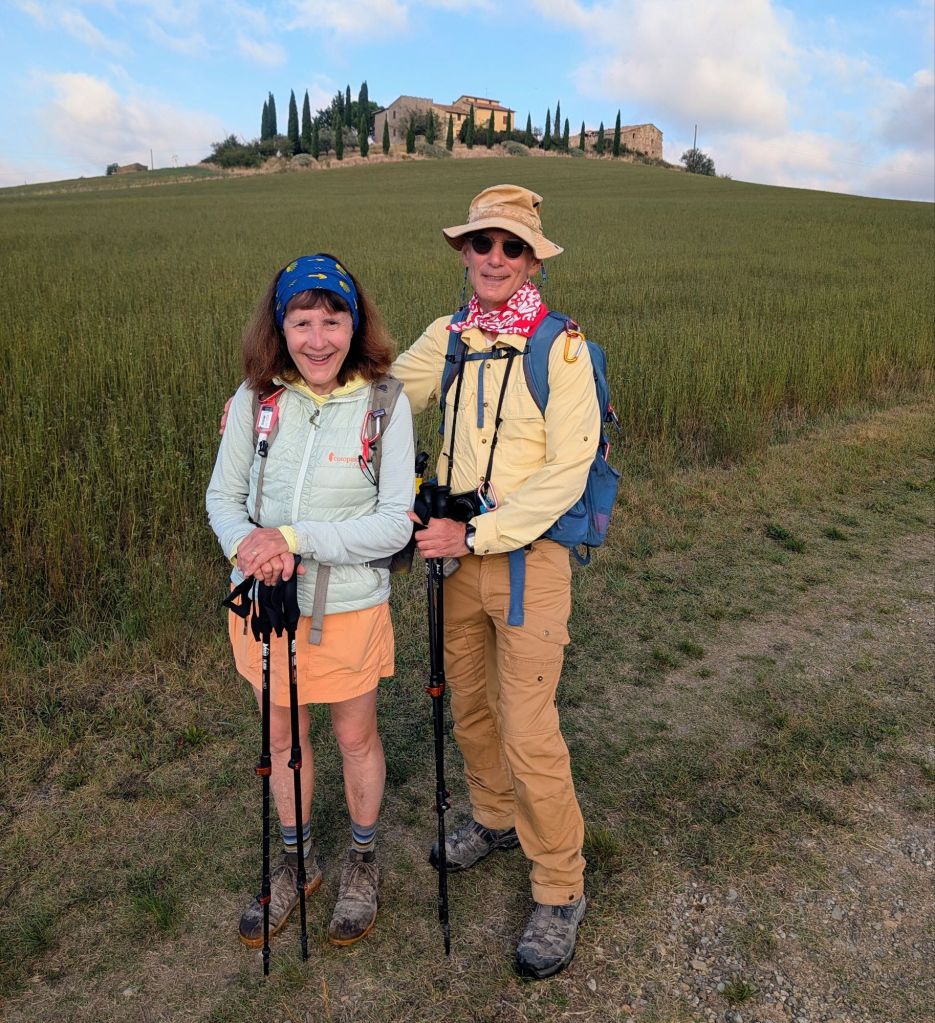
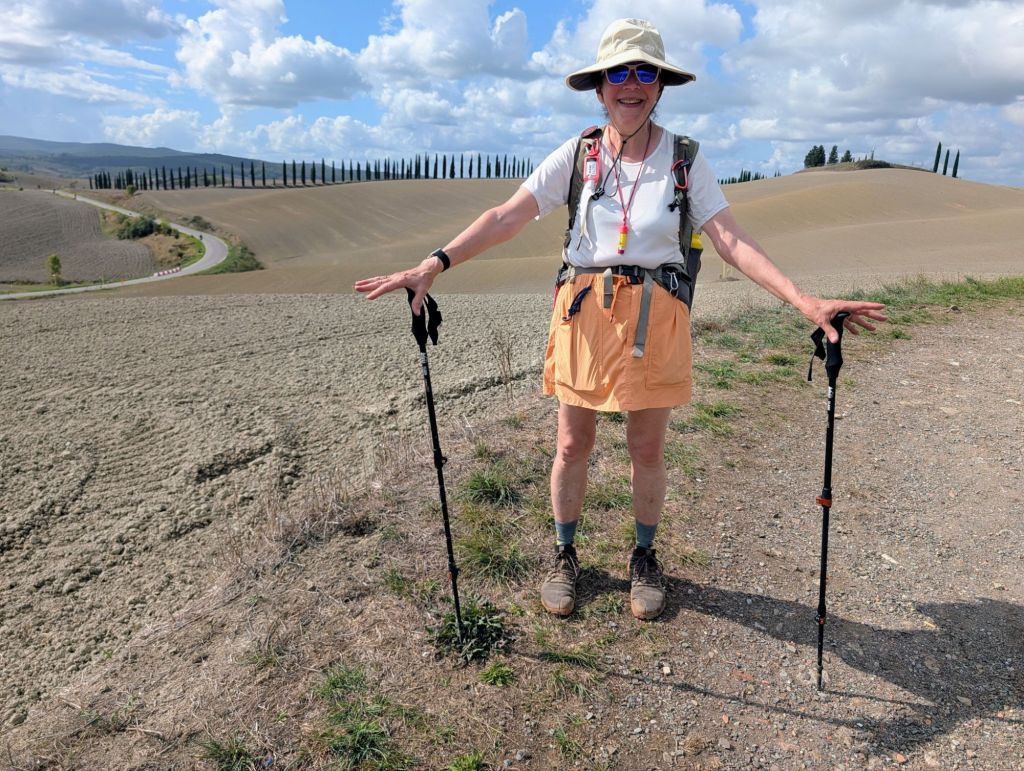
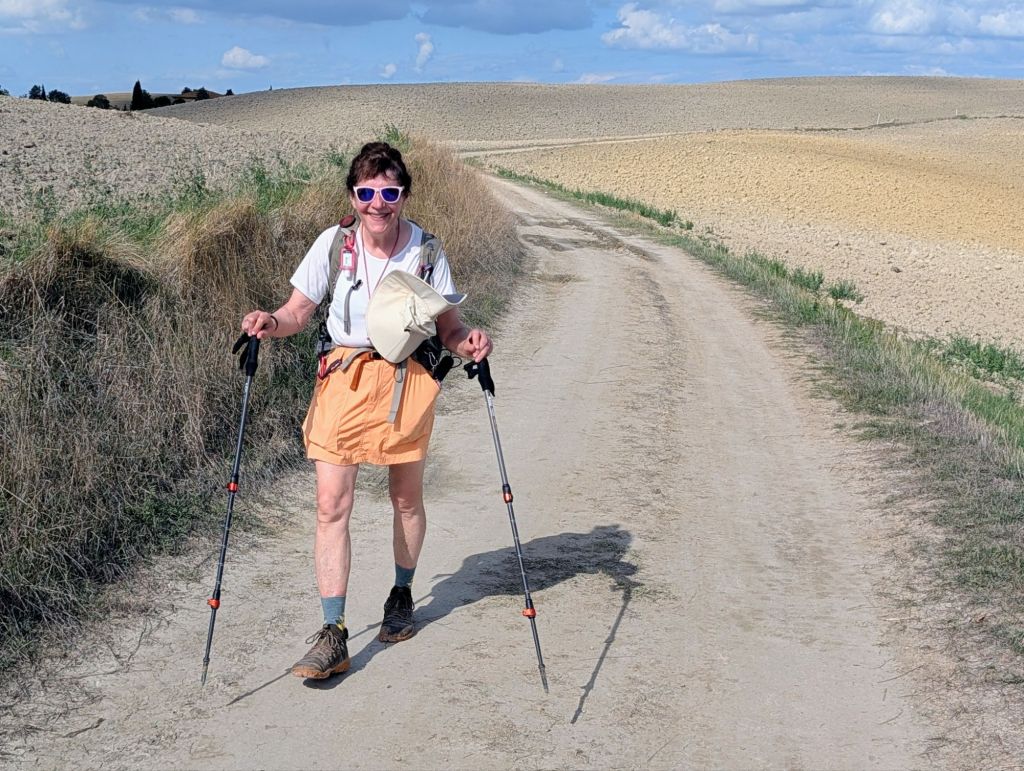
15.6 Miles; 7.5 Hours on the trail (Cumulative: 181.8 Miles; 93.7 Hours on the trail)
Leaving Acquapendente
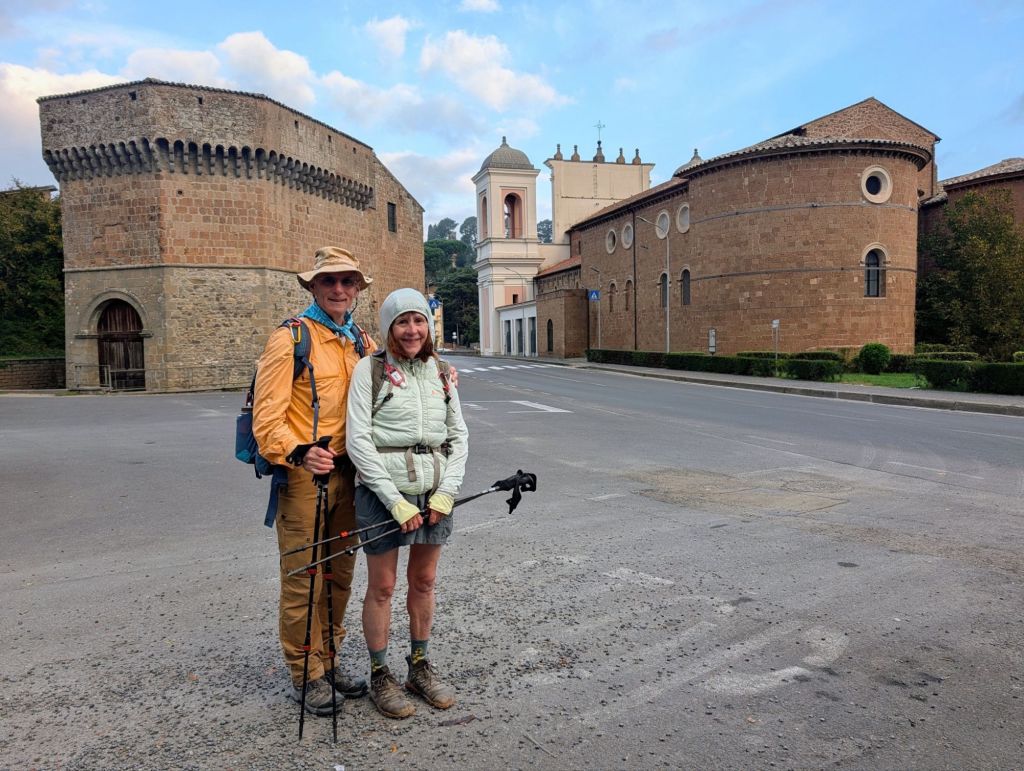
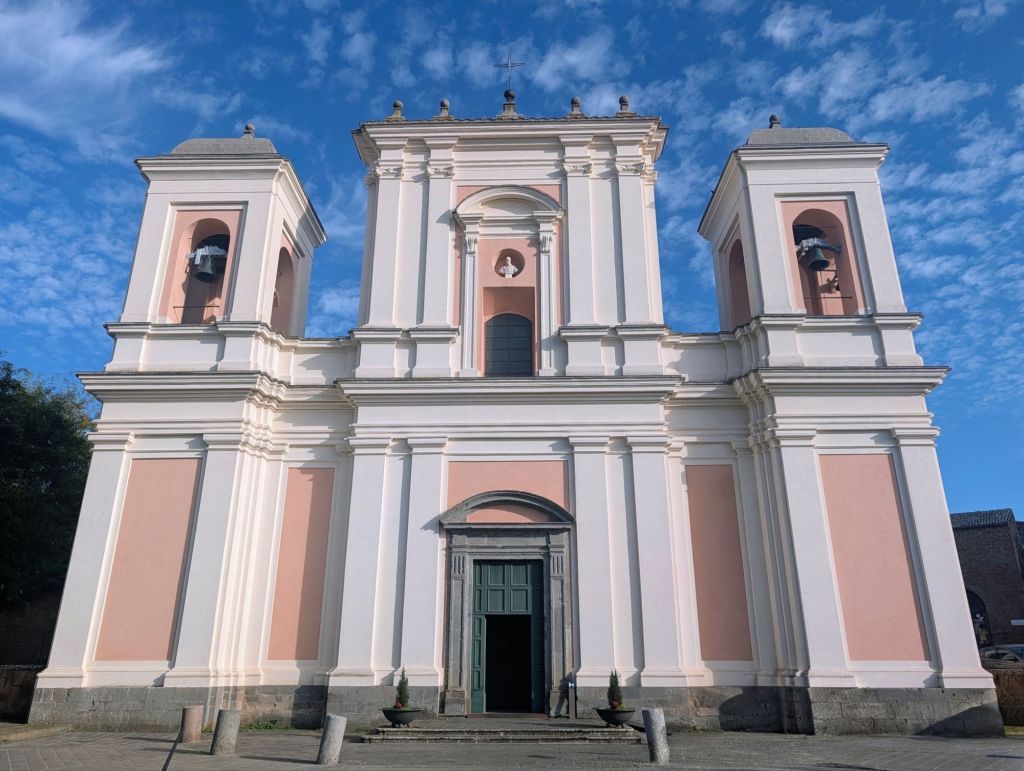
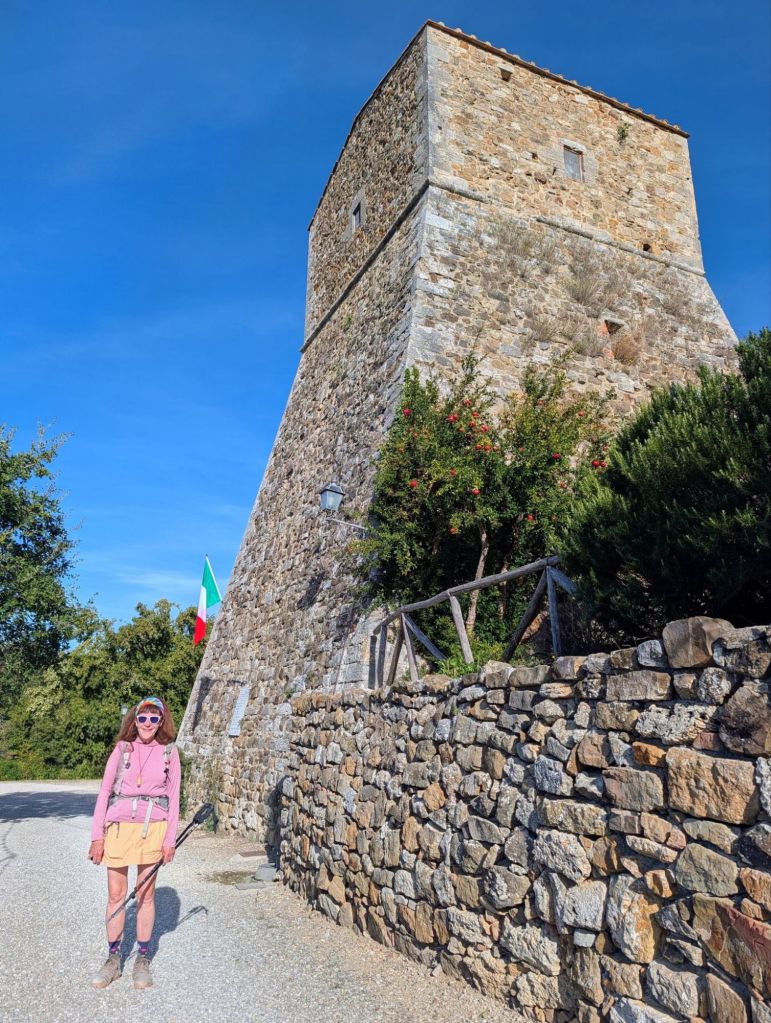
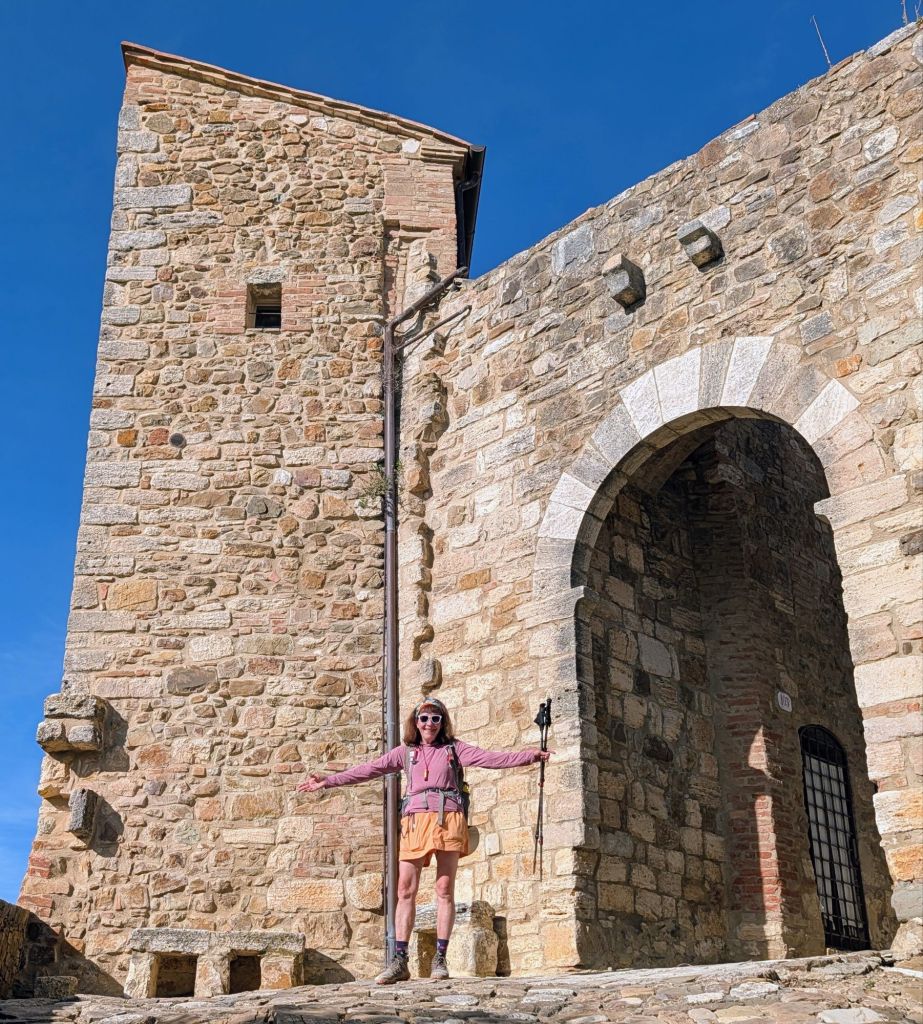
Cathedral of the Holy Sepulchre & Julia de Jacopo Tower
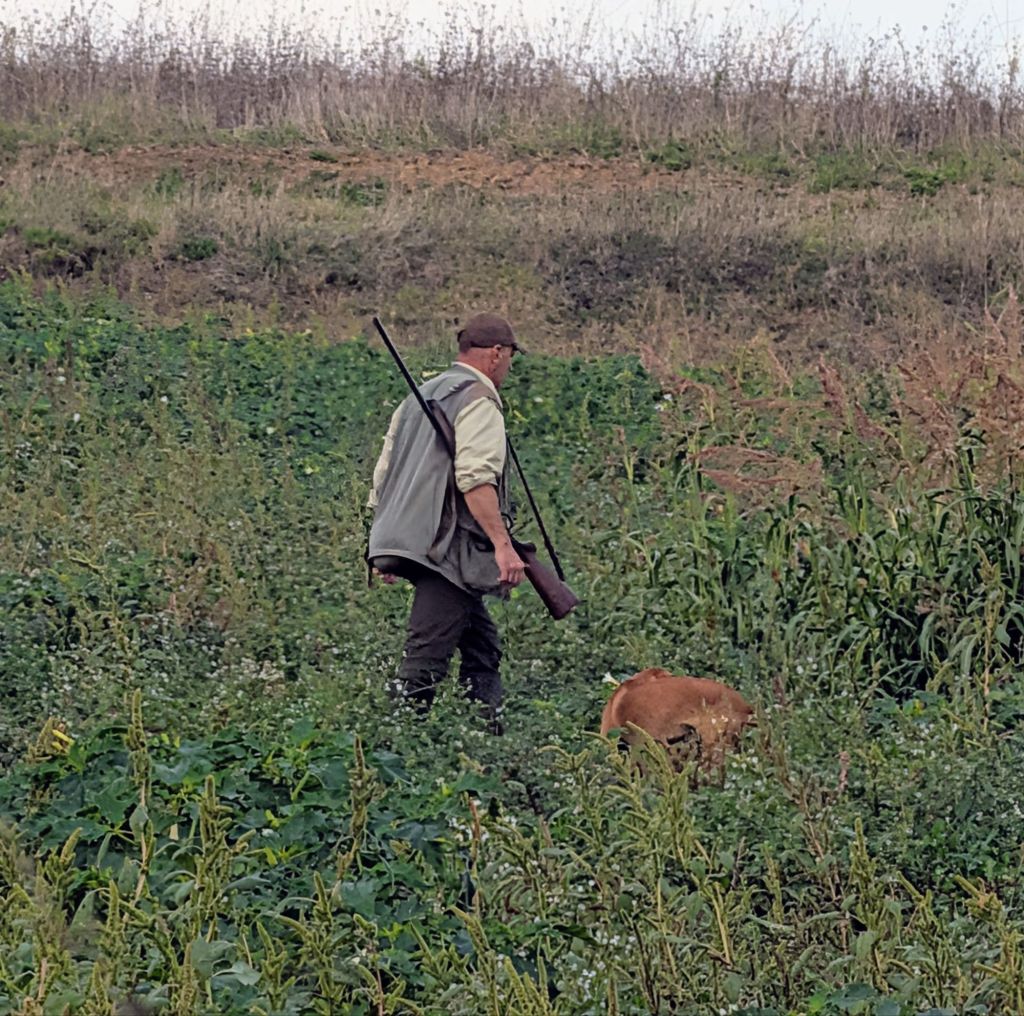
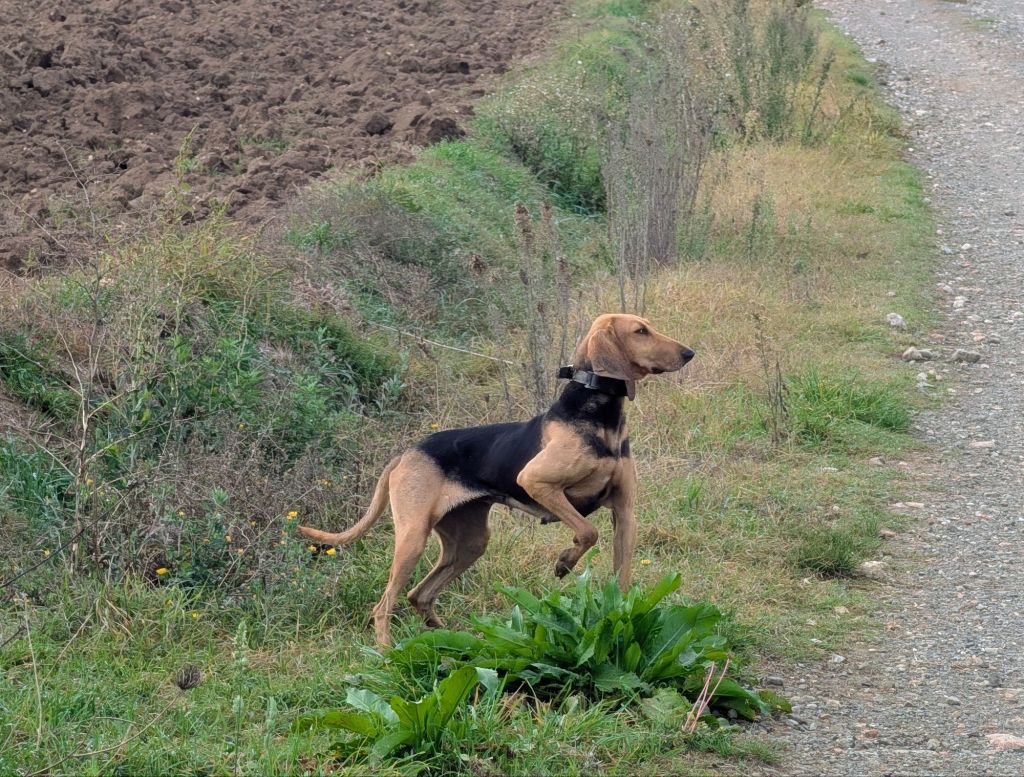
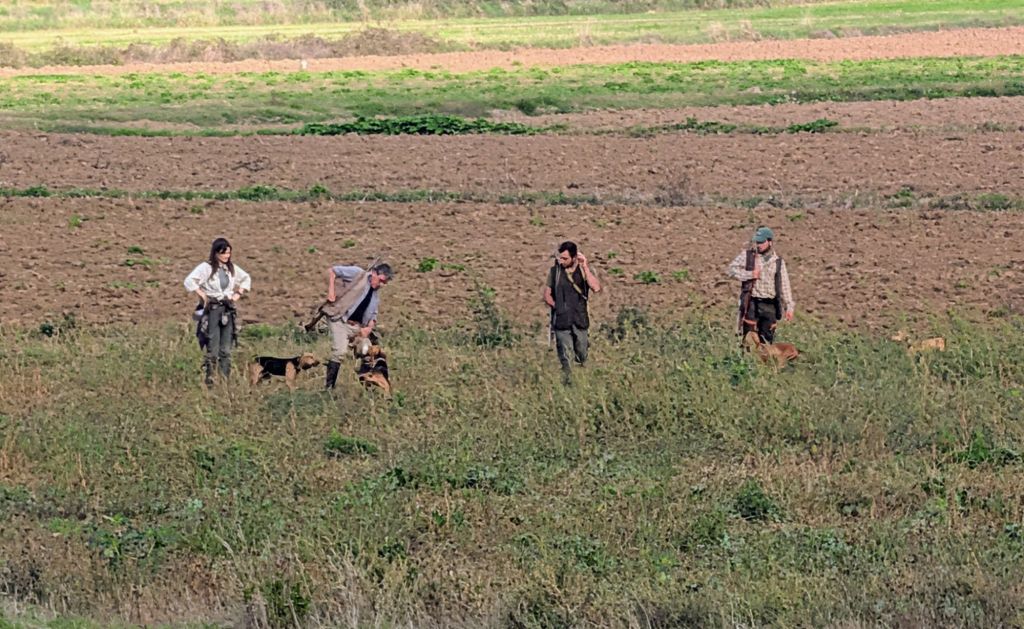
Today we saw many bird hunters & their dogs in the fields.
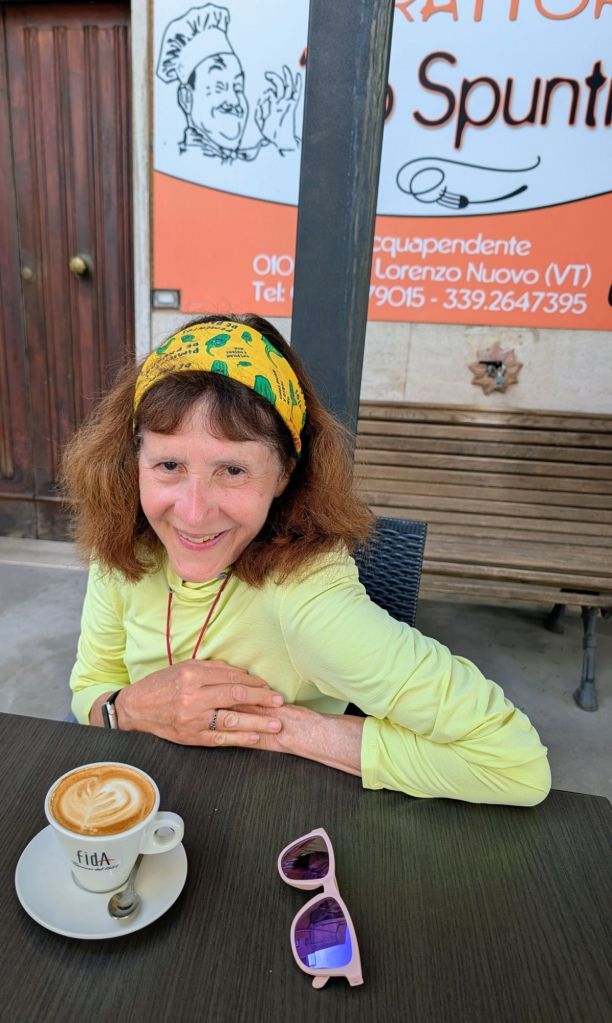
Gina had a cappuccino pick-me-up in San Lorenzo Nuovo.
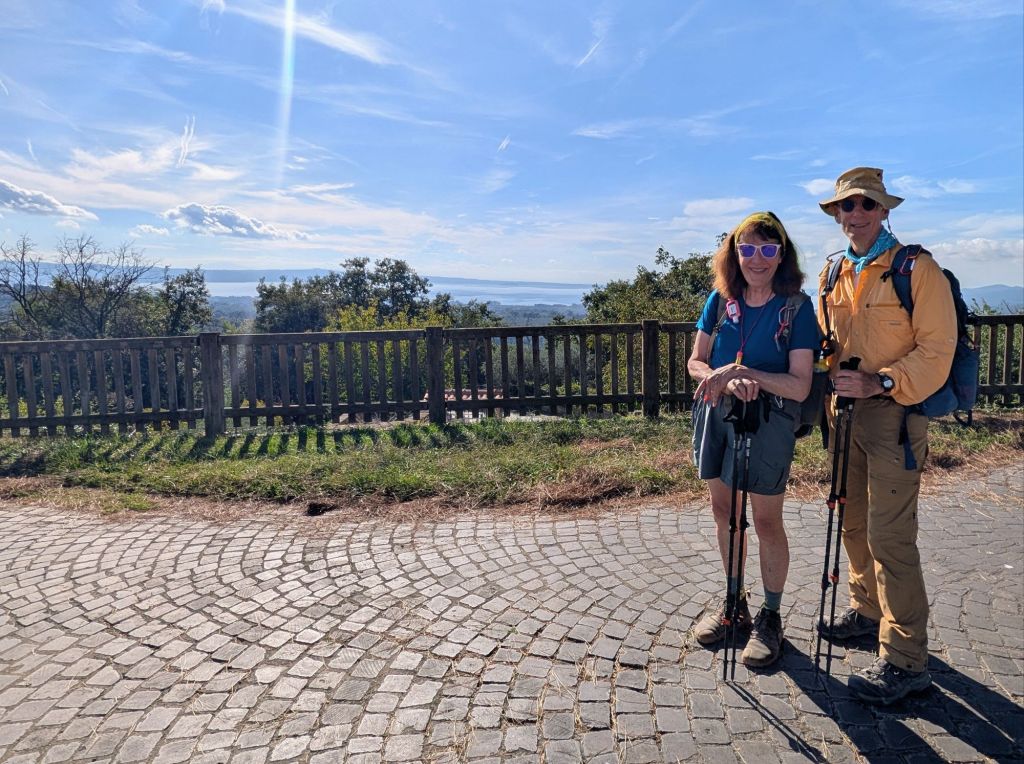
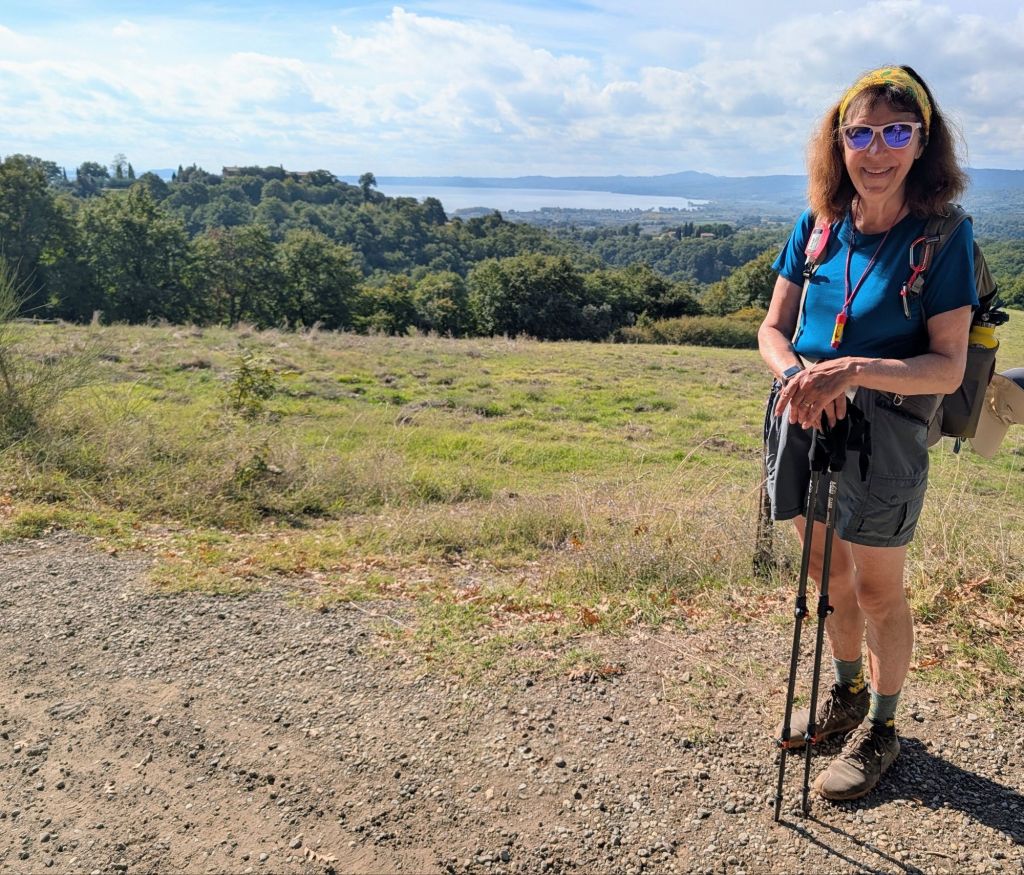
Lake Bolsena is Europe’s largest lake created by a volcanic eruption & is Italy’s 5th largest lake. It is considered among the cleanest lakes in Europe.
Lake Bolsena view from San Lorenzo NouvoLake Bolsena
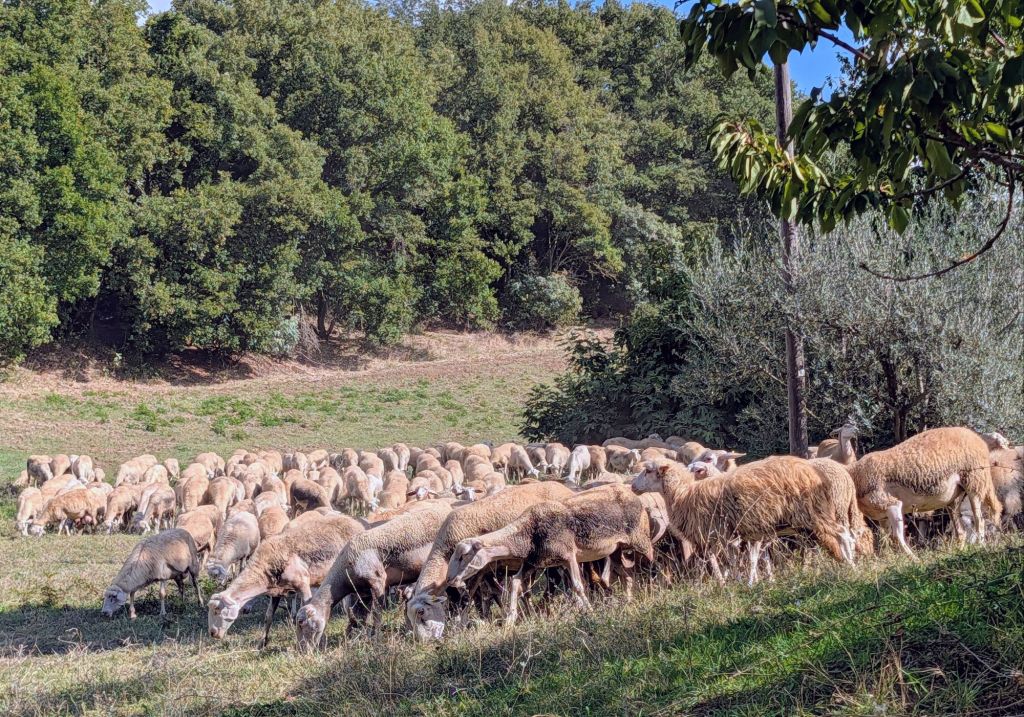
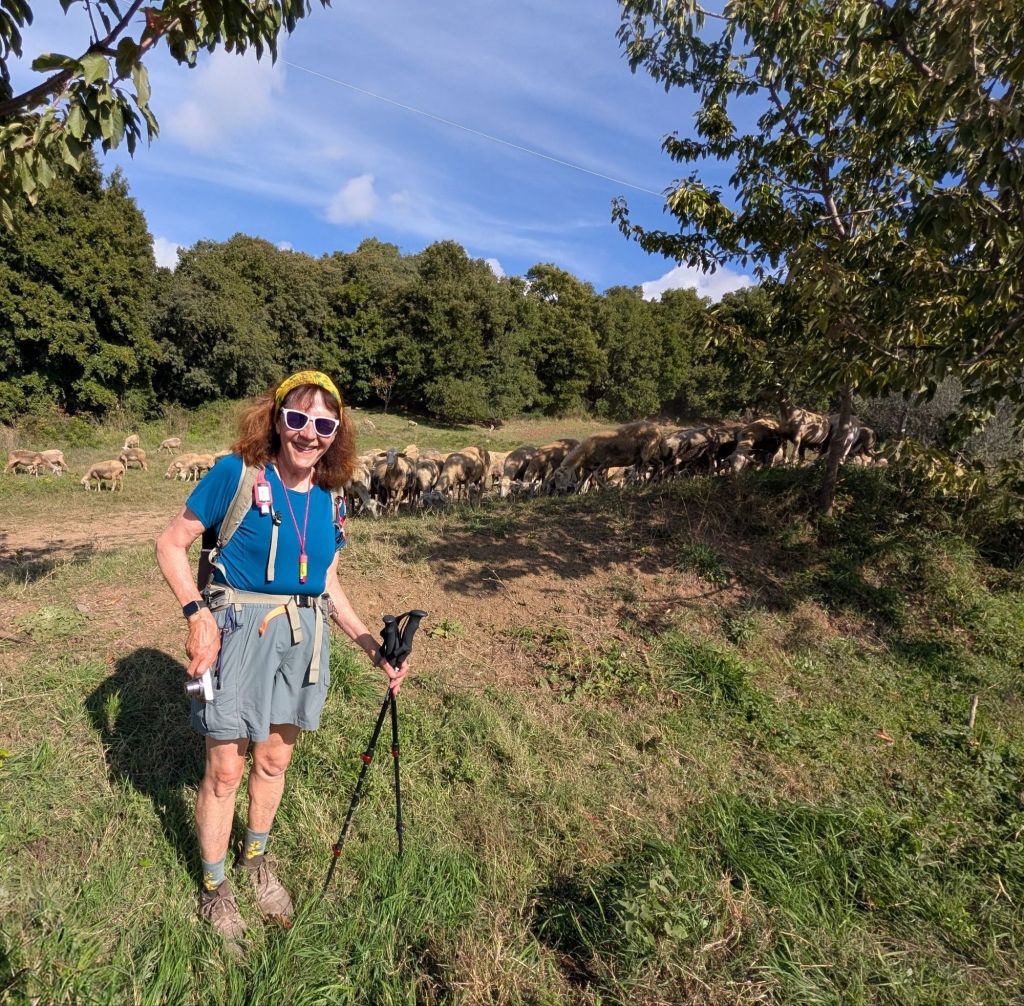
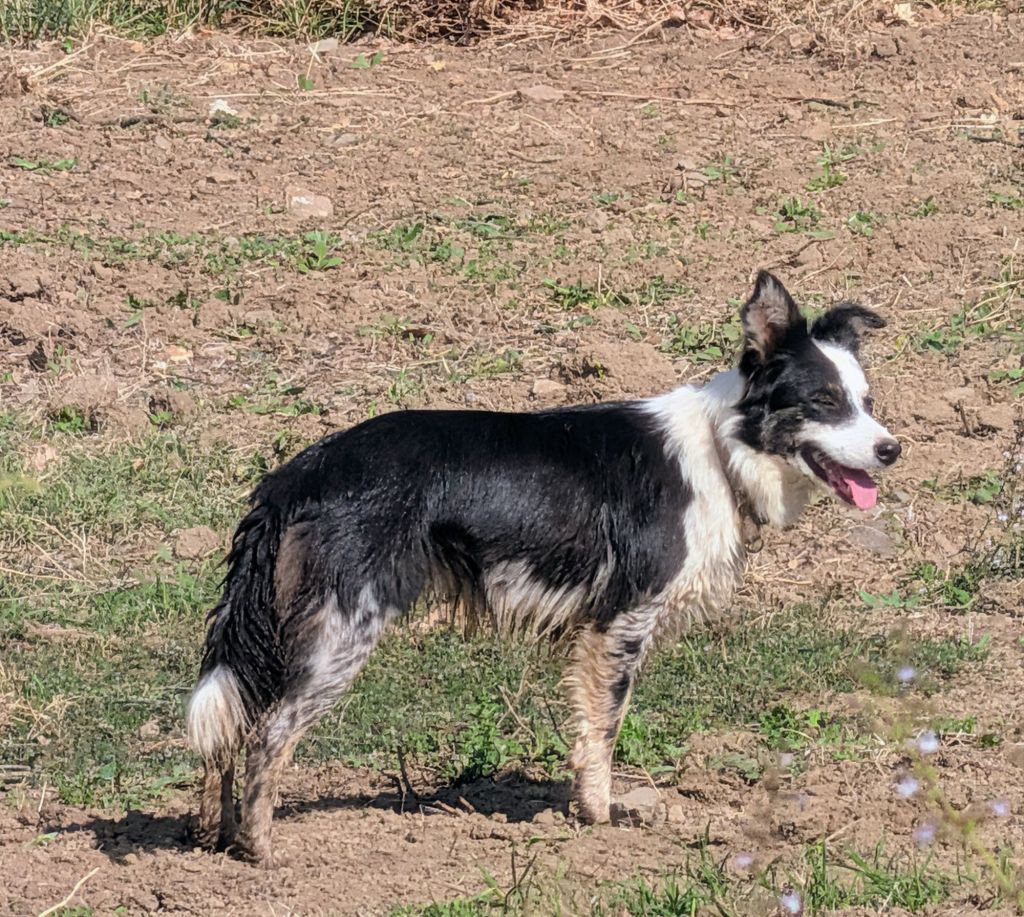
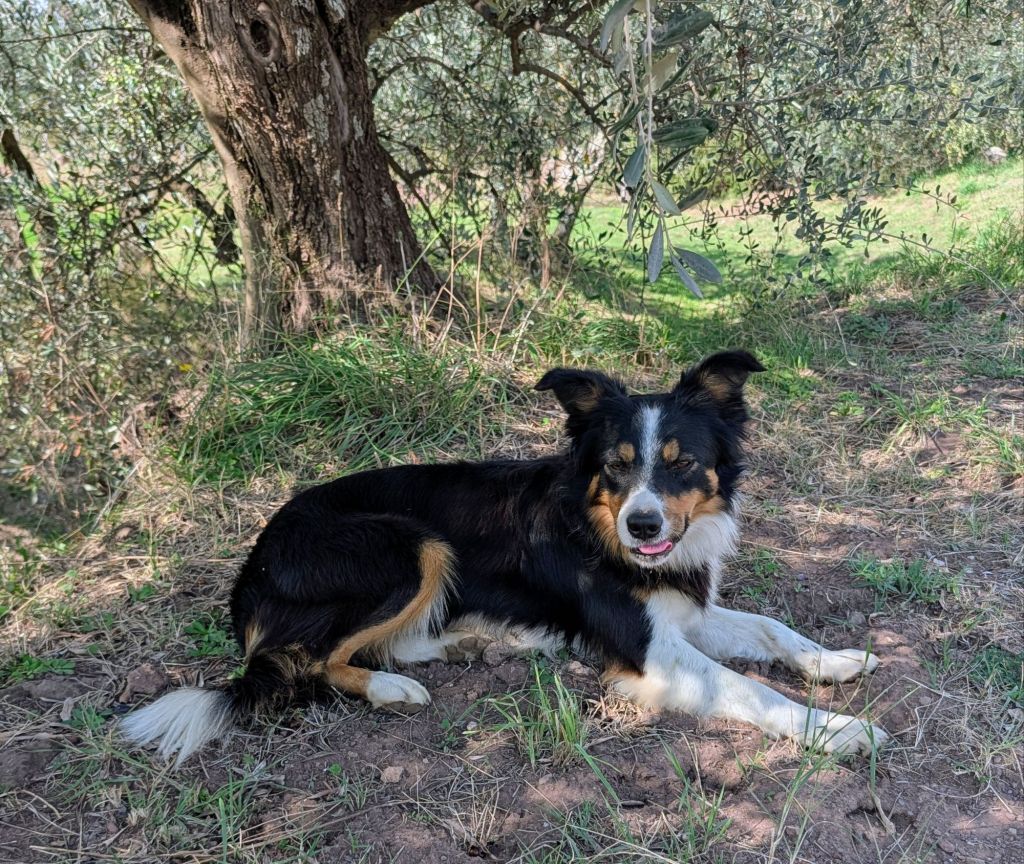
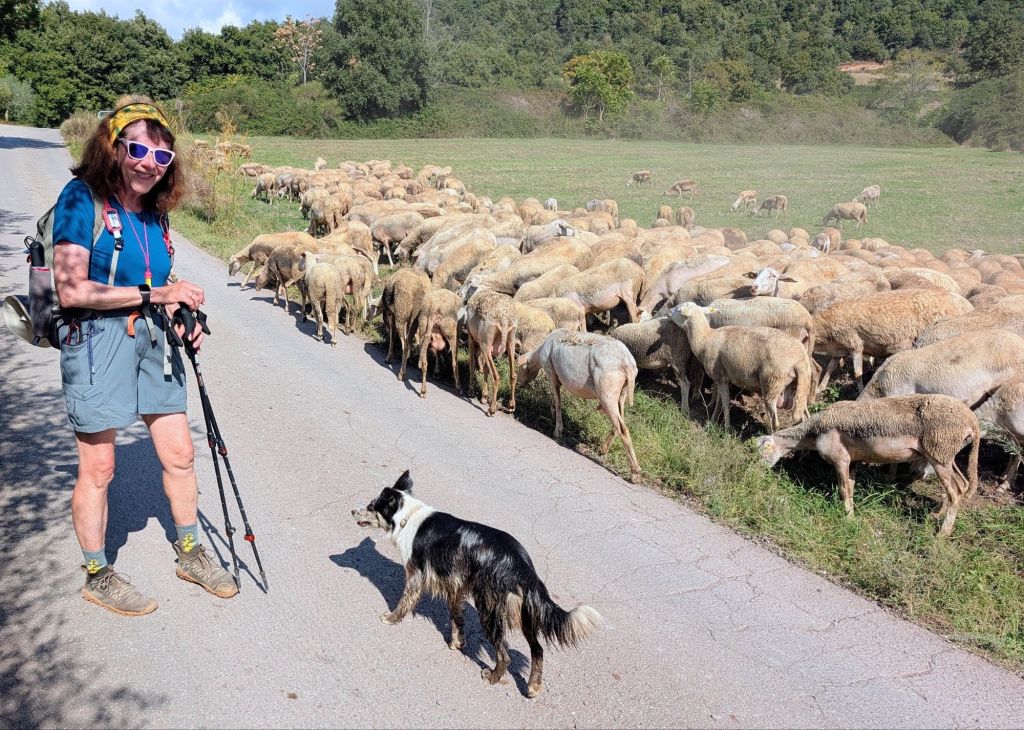
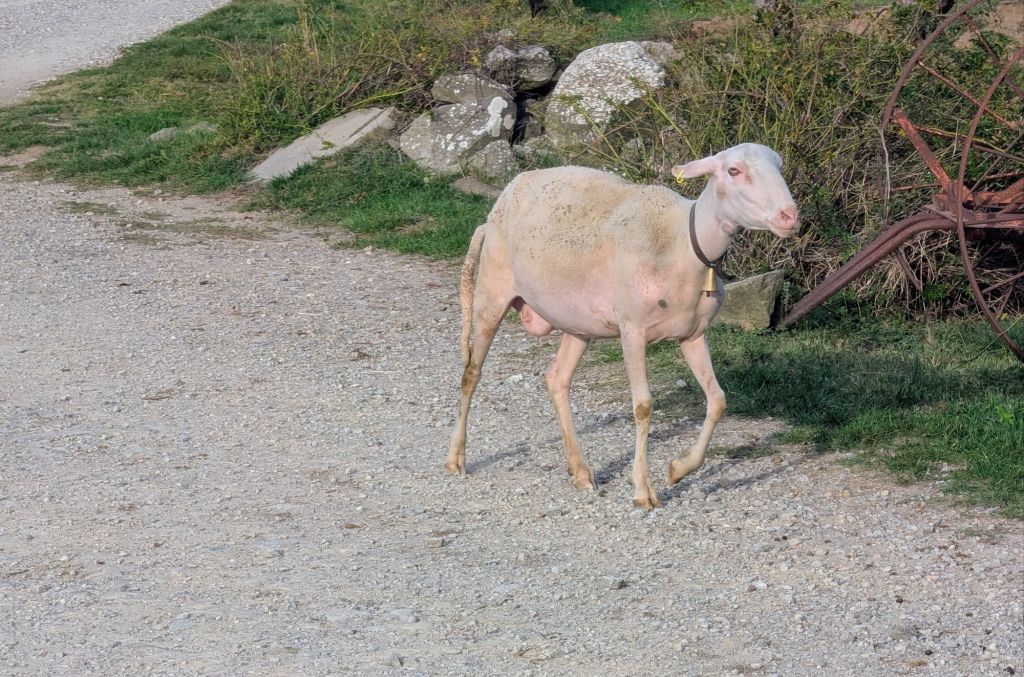
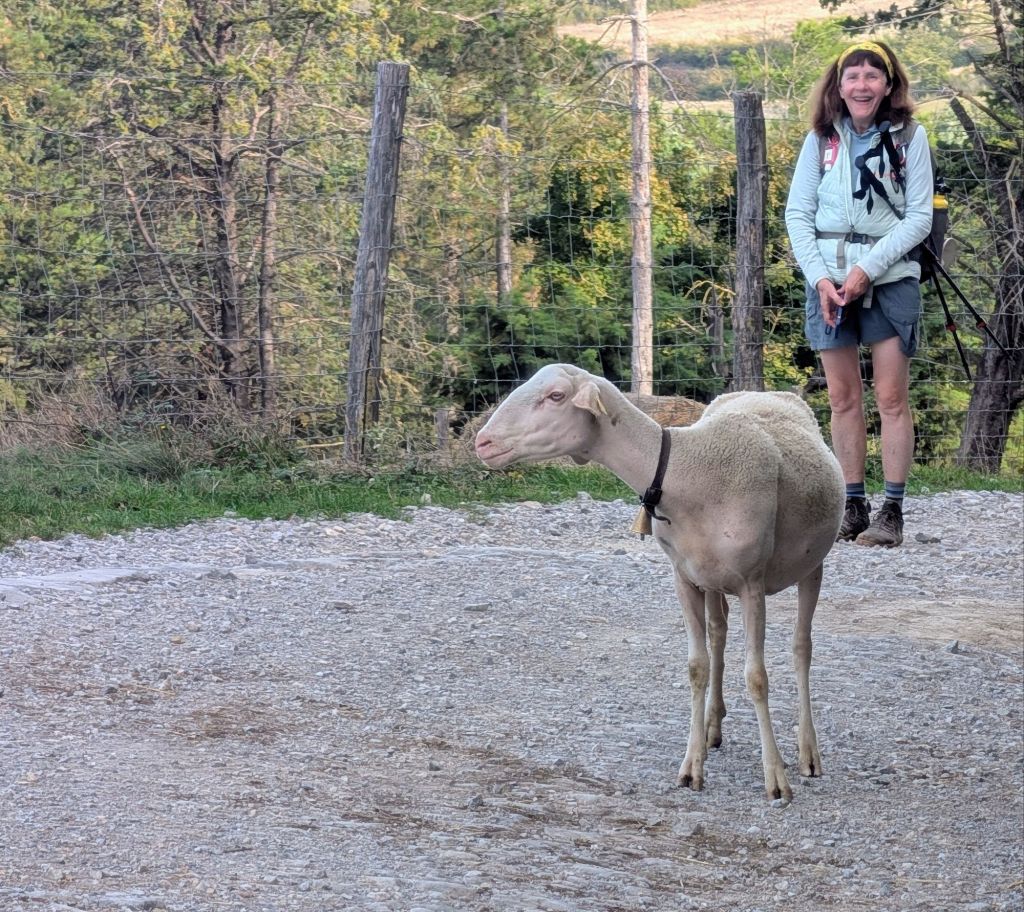
Saw another shepherd moving his flock today; but, he had 3 ea. well- trained dogs helping. He commanded them by whistle calls.
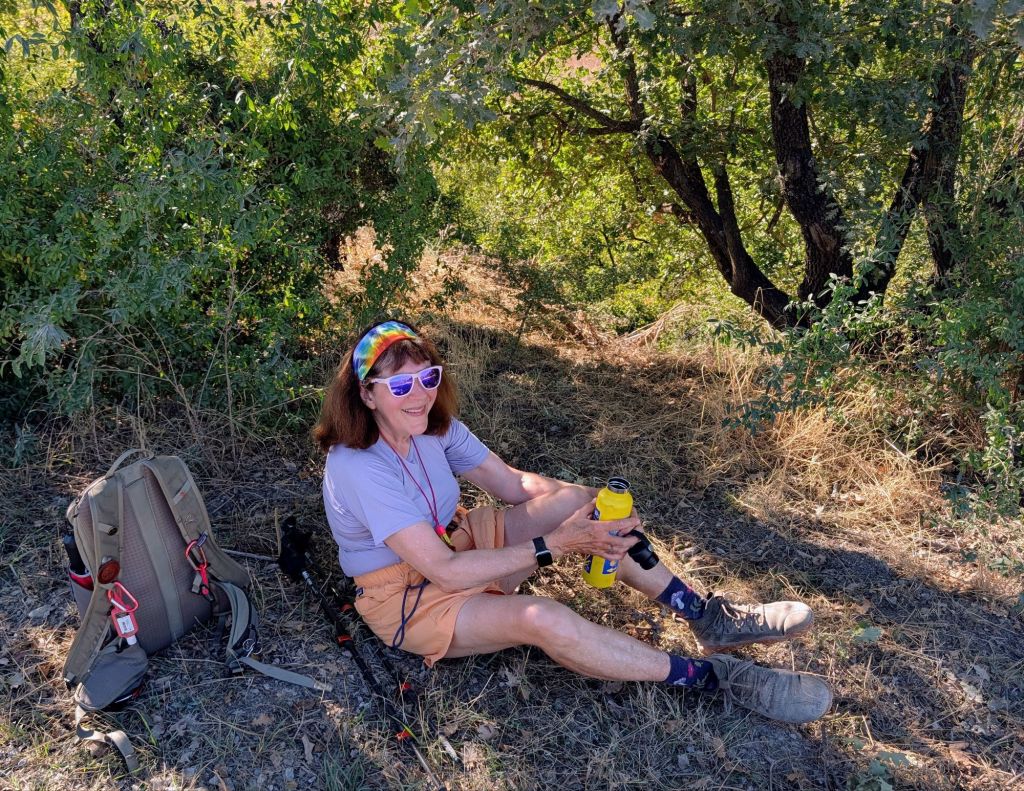
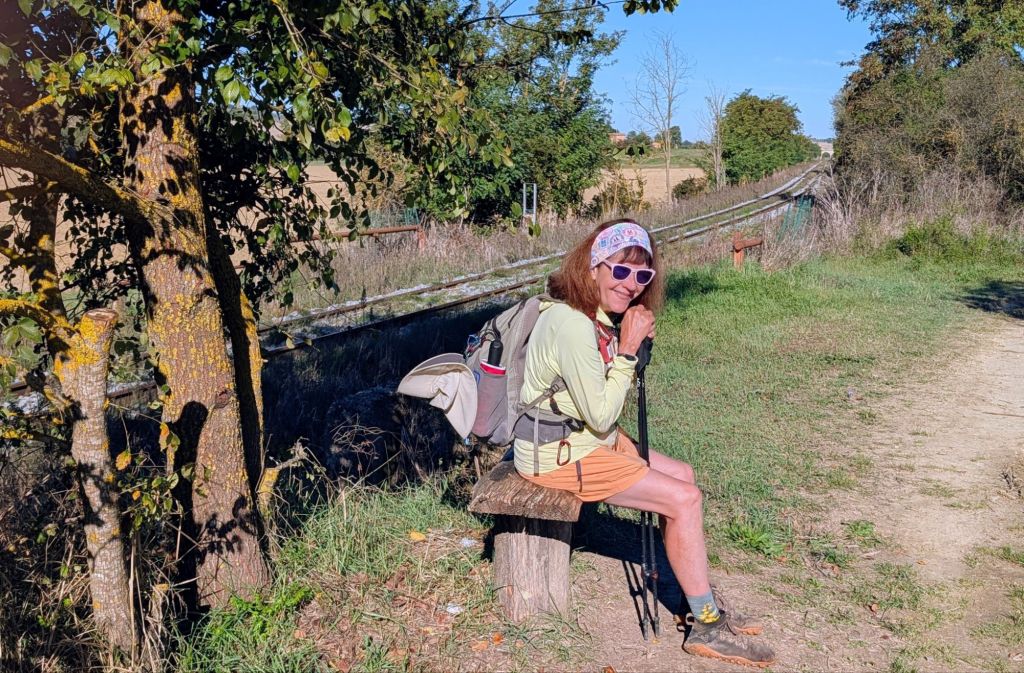
Taking a break in the shade
The shepherd couldn’t speak English; but, through gestures & making a chomping sound, we figured out he was moving his flock to a different field to eat.
Other sights on the trail today:
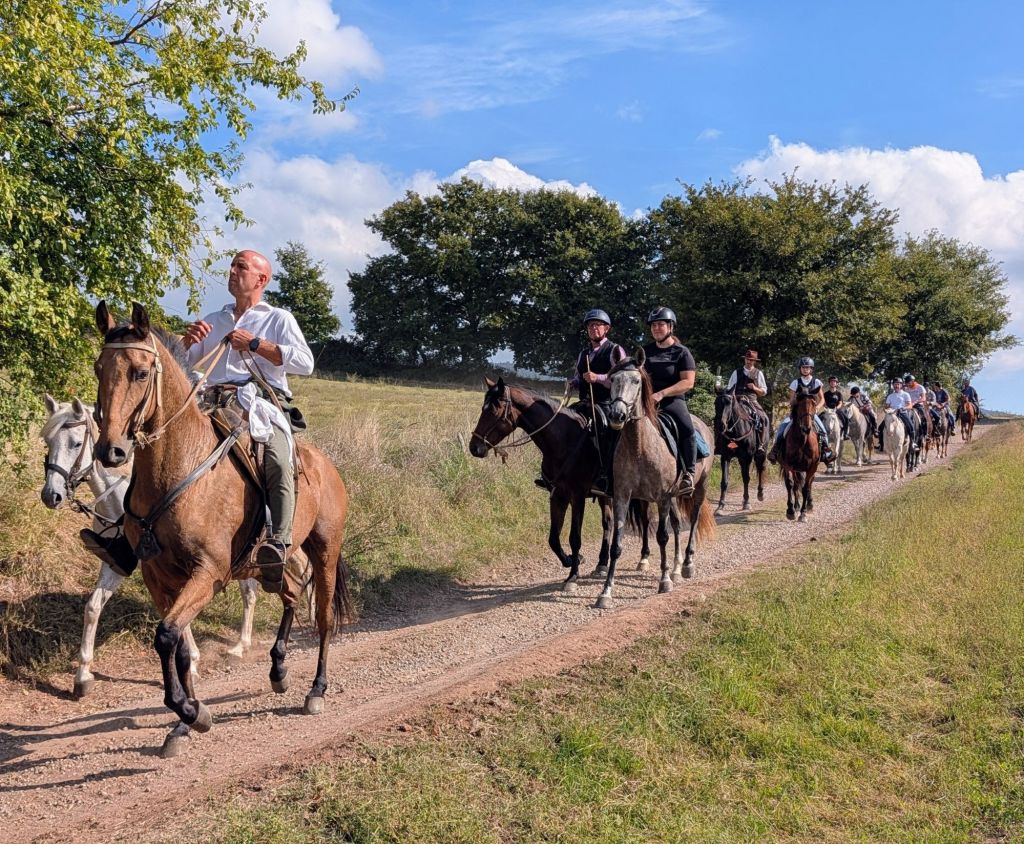
Encountered a huge horse riding party on the trail.
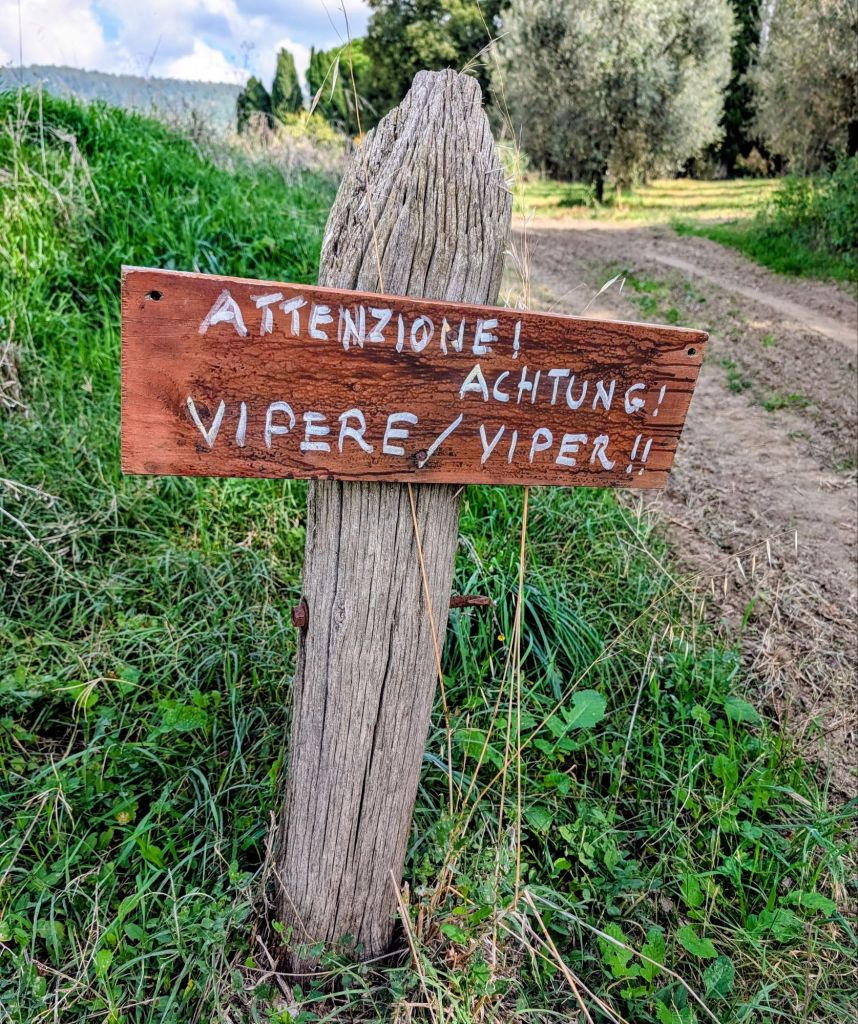
This photo is only 1/3 of the horse train that passed usItaly has 4 ea. poisonous snakes; Most common is the Asp Viper.
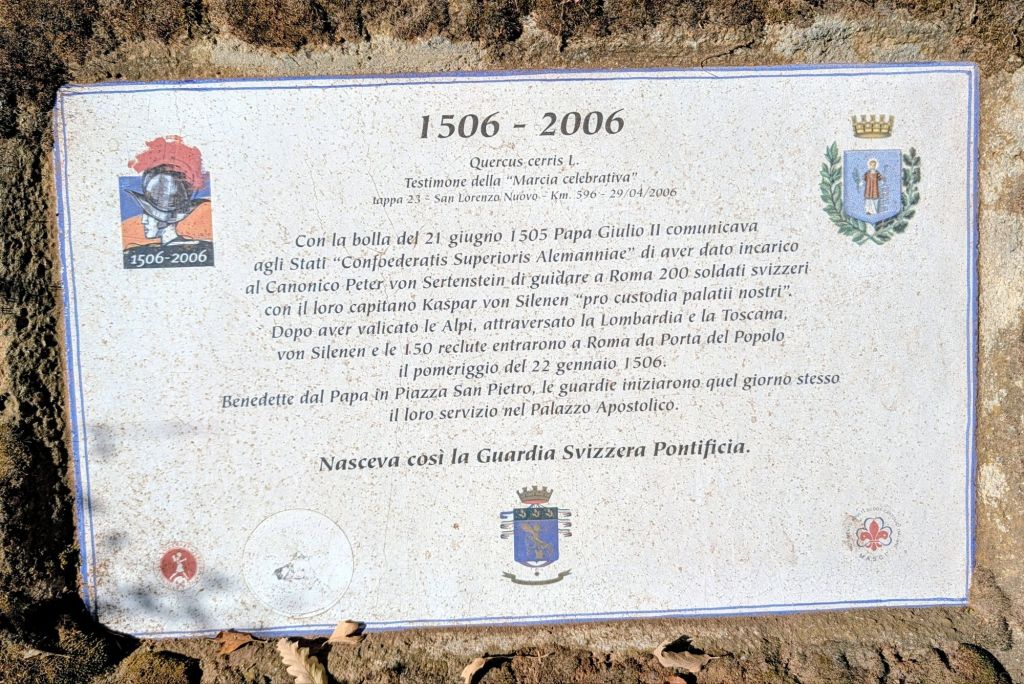
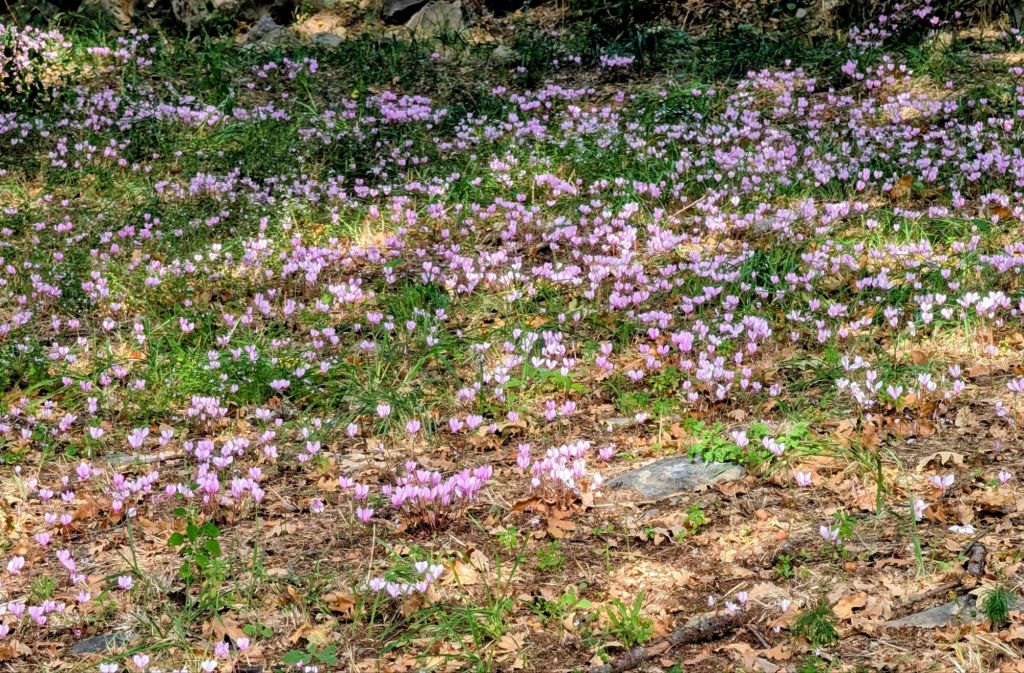
This marker commemorates the 500 year anniversary from when Swiss soldiers passed this spot in San Lorenzo Nouvo on their way to Rome to become the Swiss Guard defending the Pope & the Vatican.Wild Autumn Crocuses
Bolsena is a beautiful little lakeside town with a charming medieval quarter.
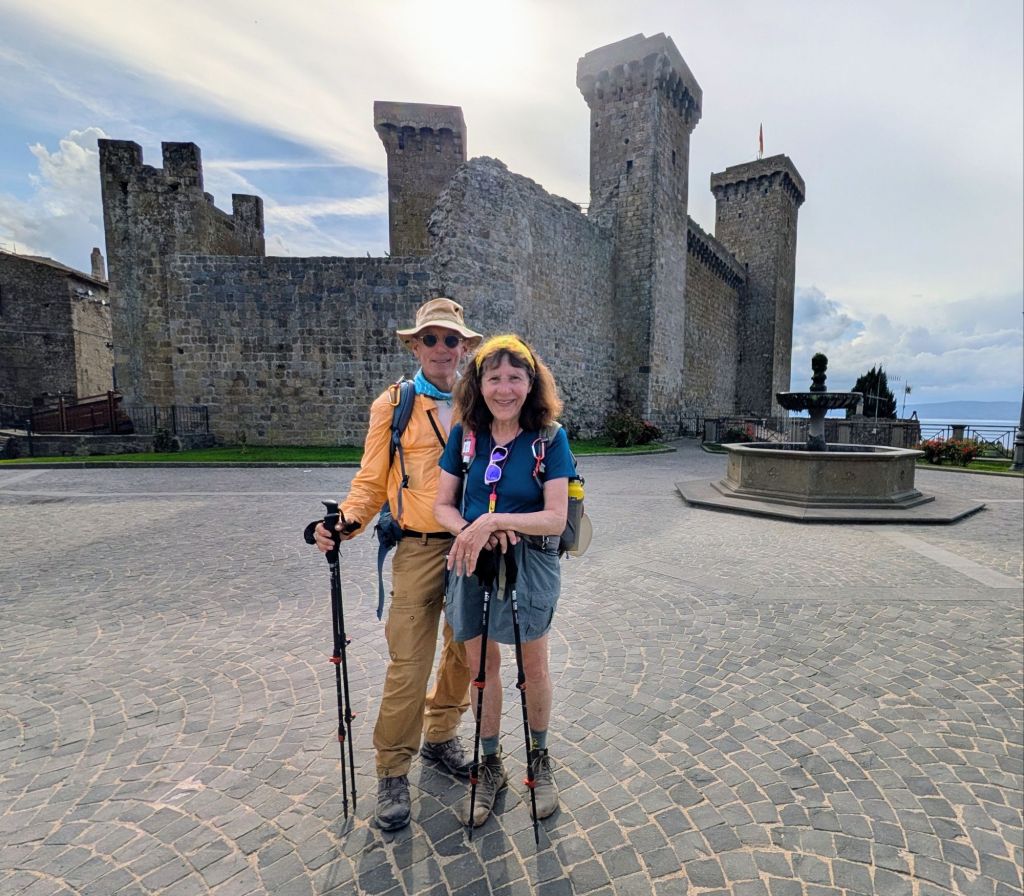
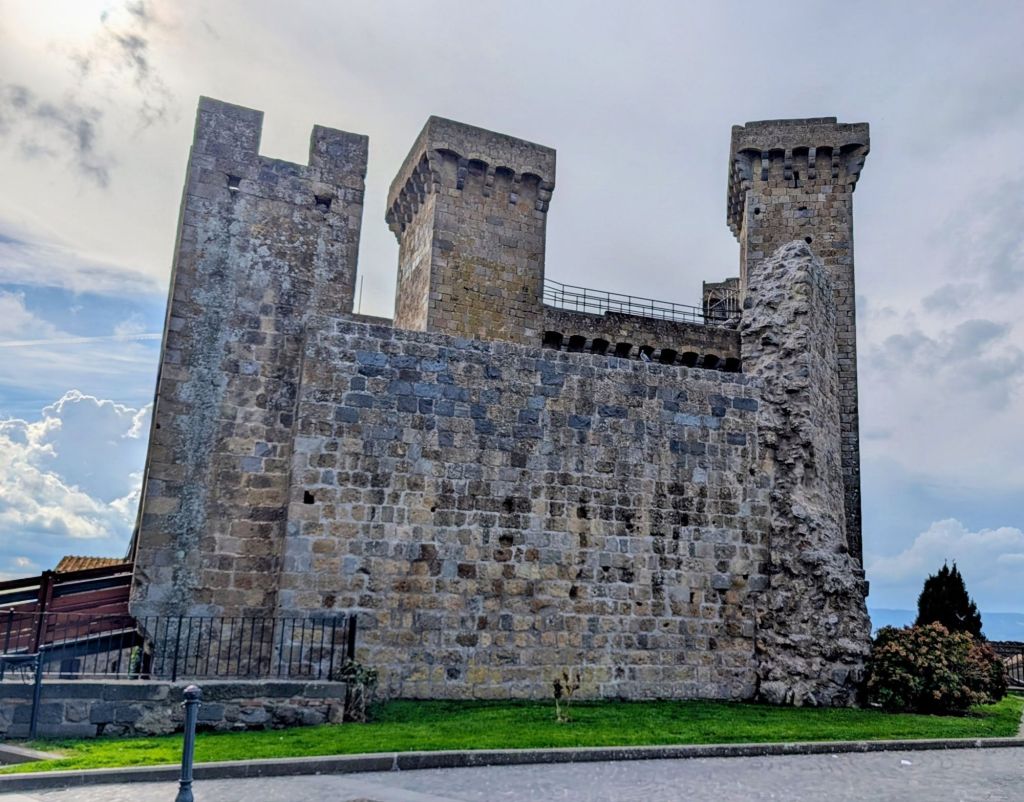
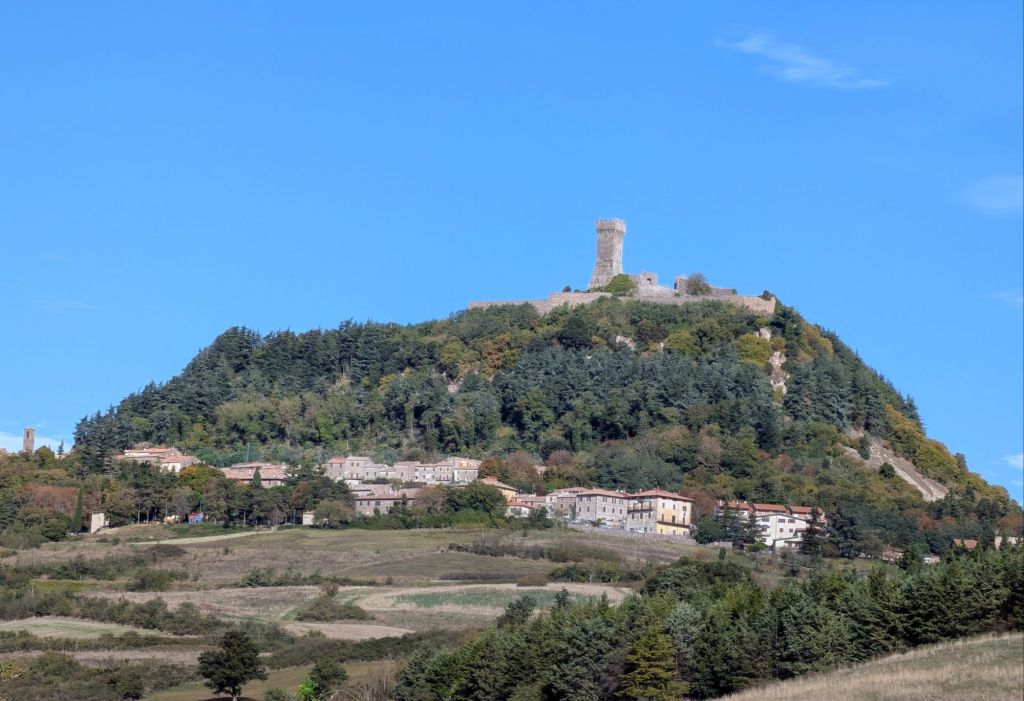
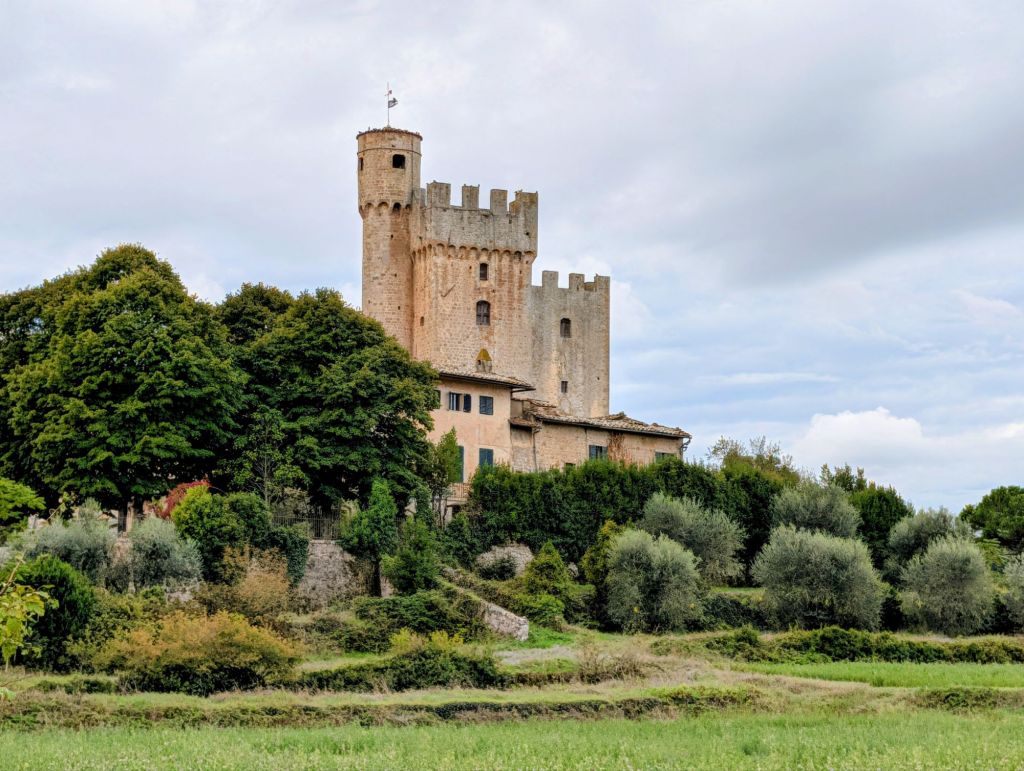
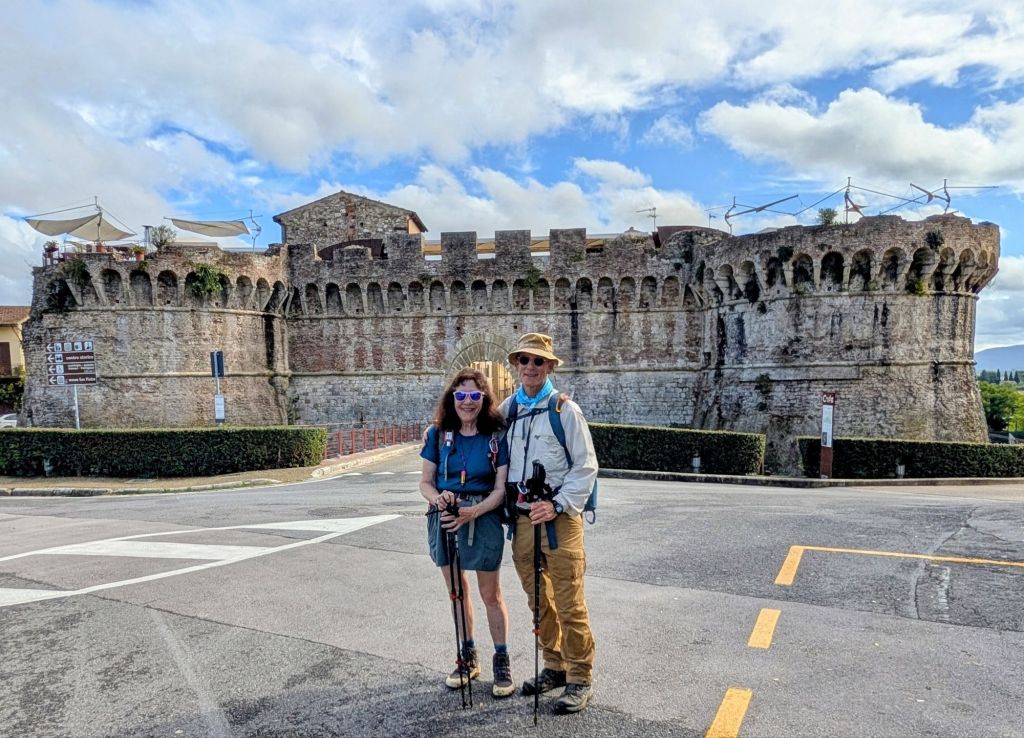
Entering Bolsena, we passed Rocca Monaldeschi della Cervara (also known as Castello Monaldeschi).
Built between the 11th & 14th Centuries, this fortress was the powerful Monaldeschi family’s residence. They ruled Bolsena until 1451.
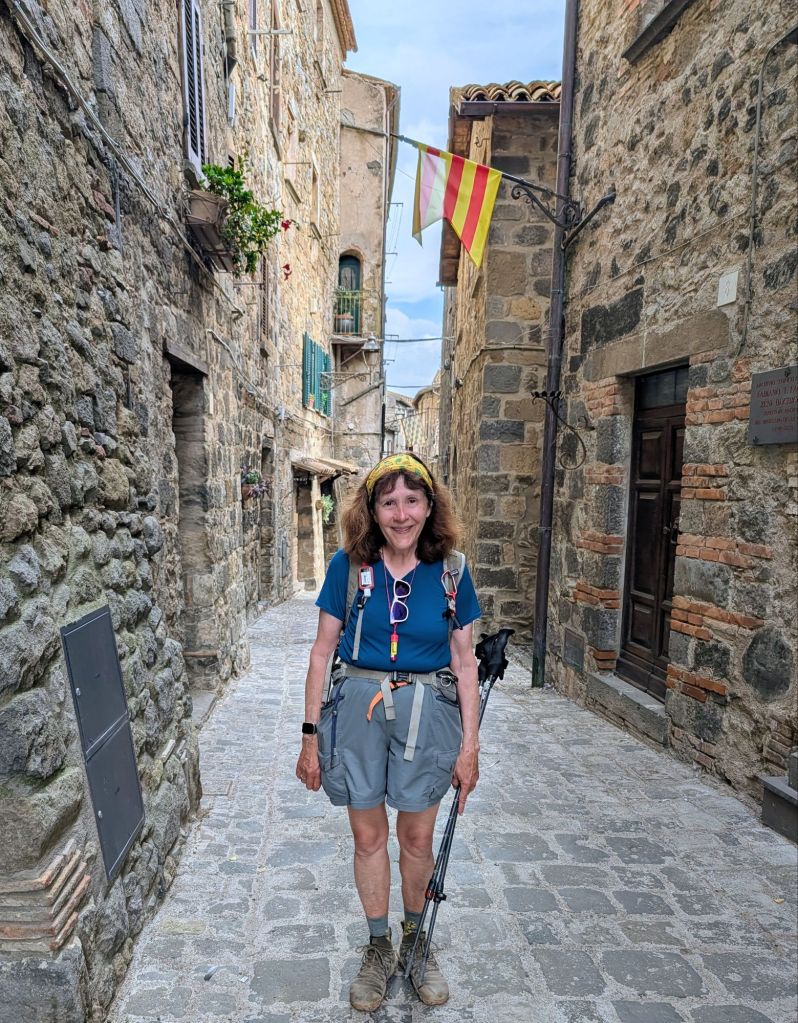
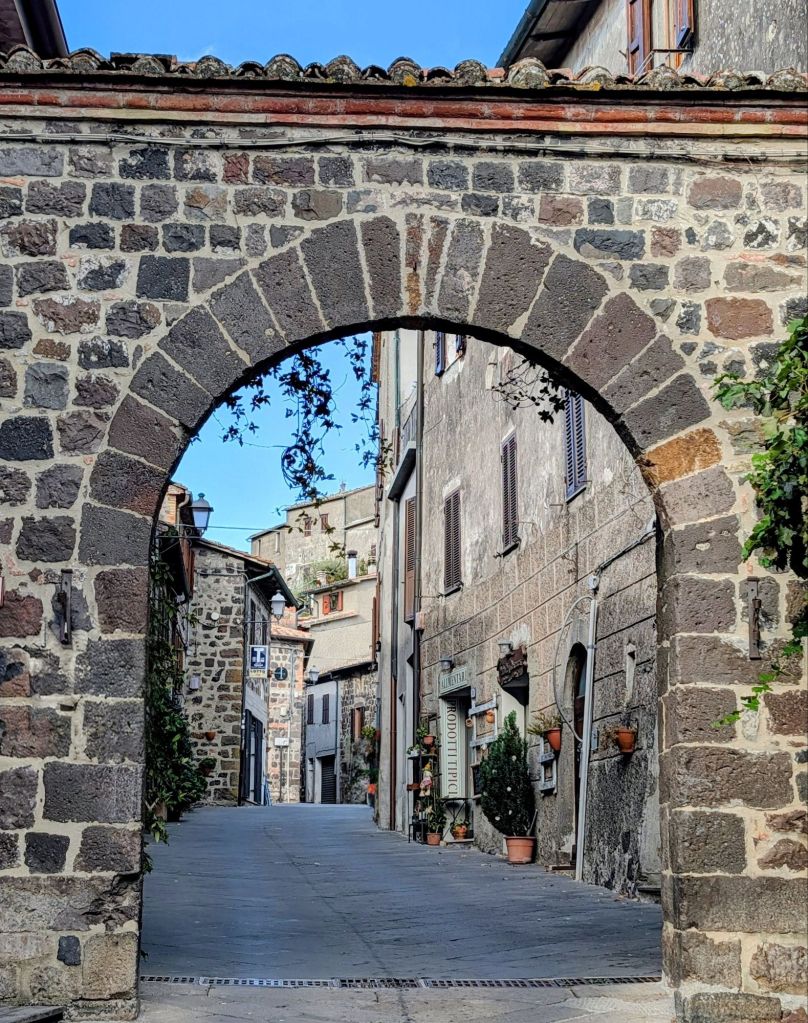
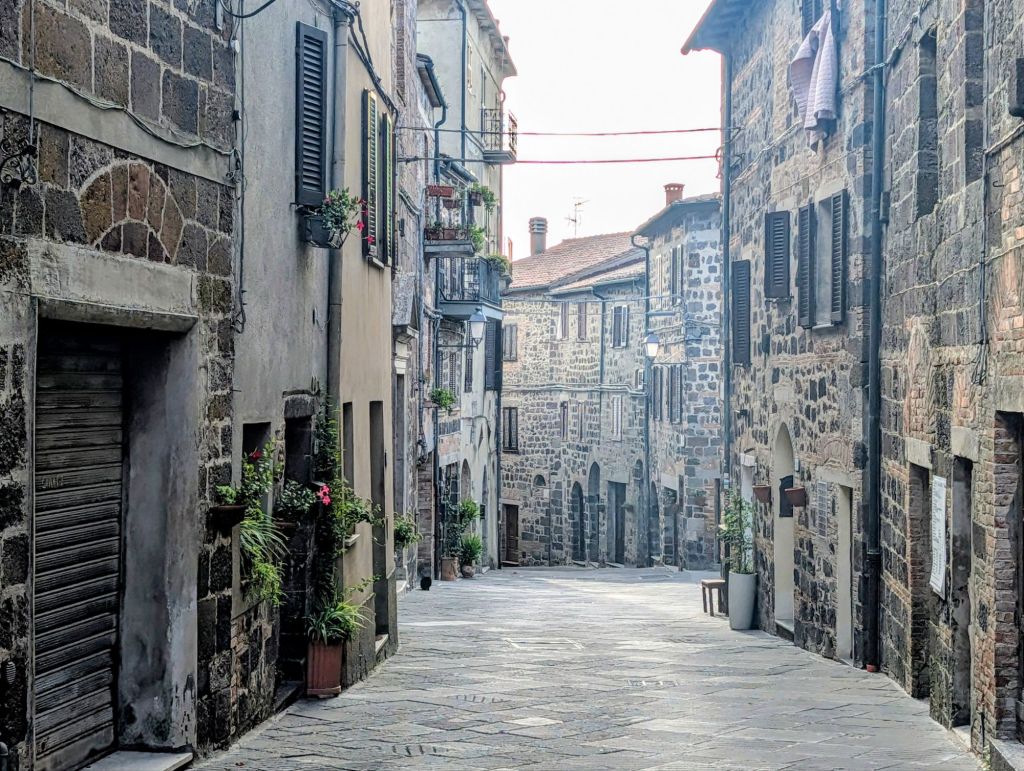
Scenes from Bolsena’s medieval quarter:
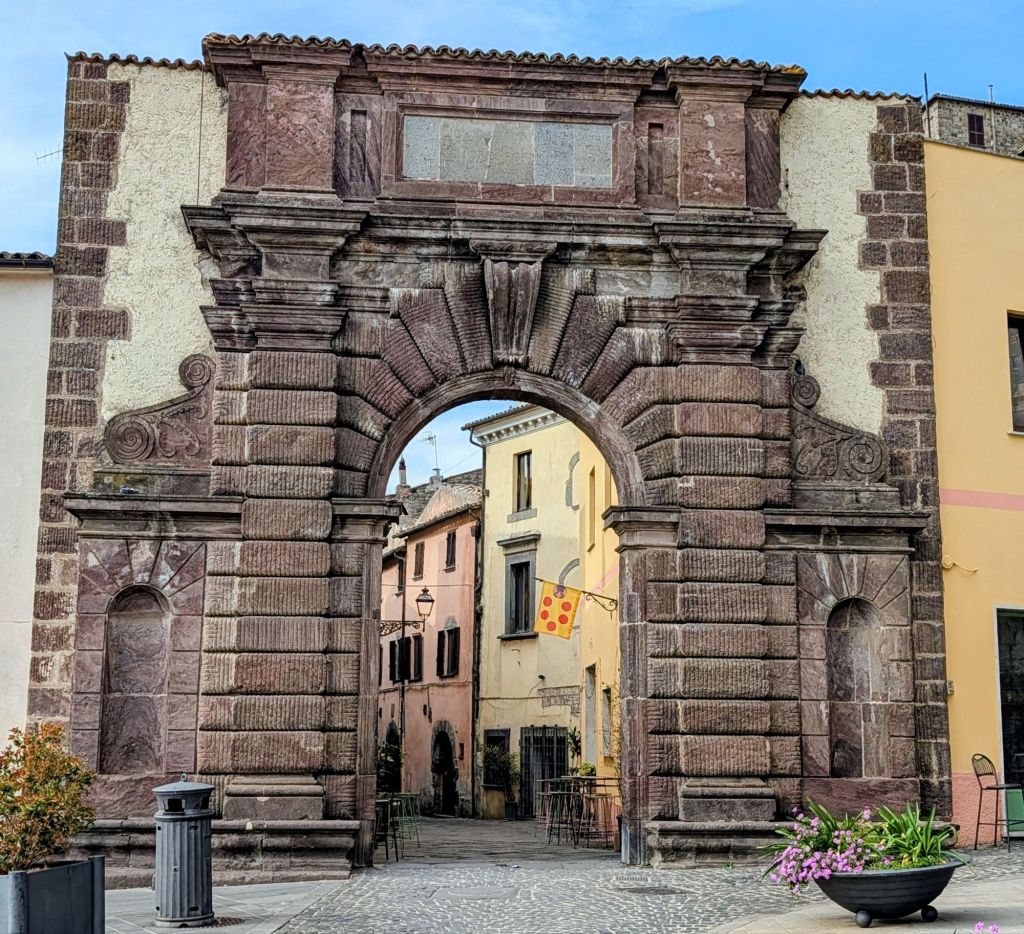
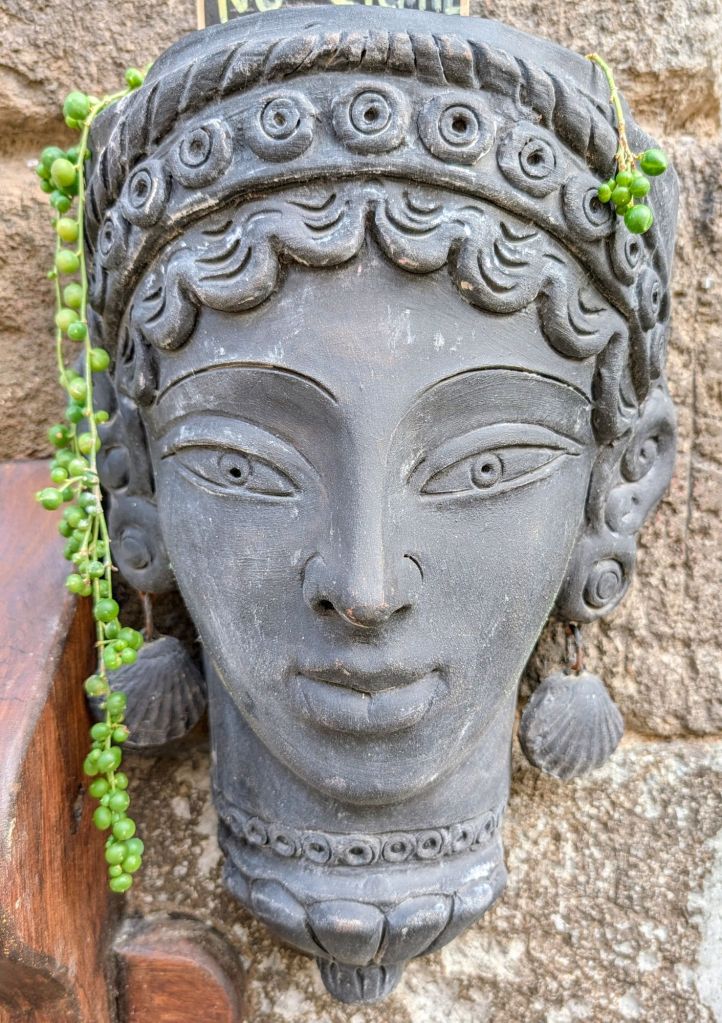
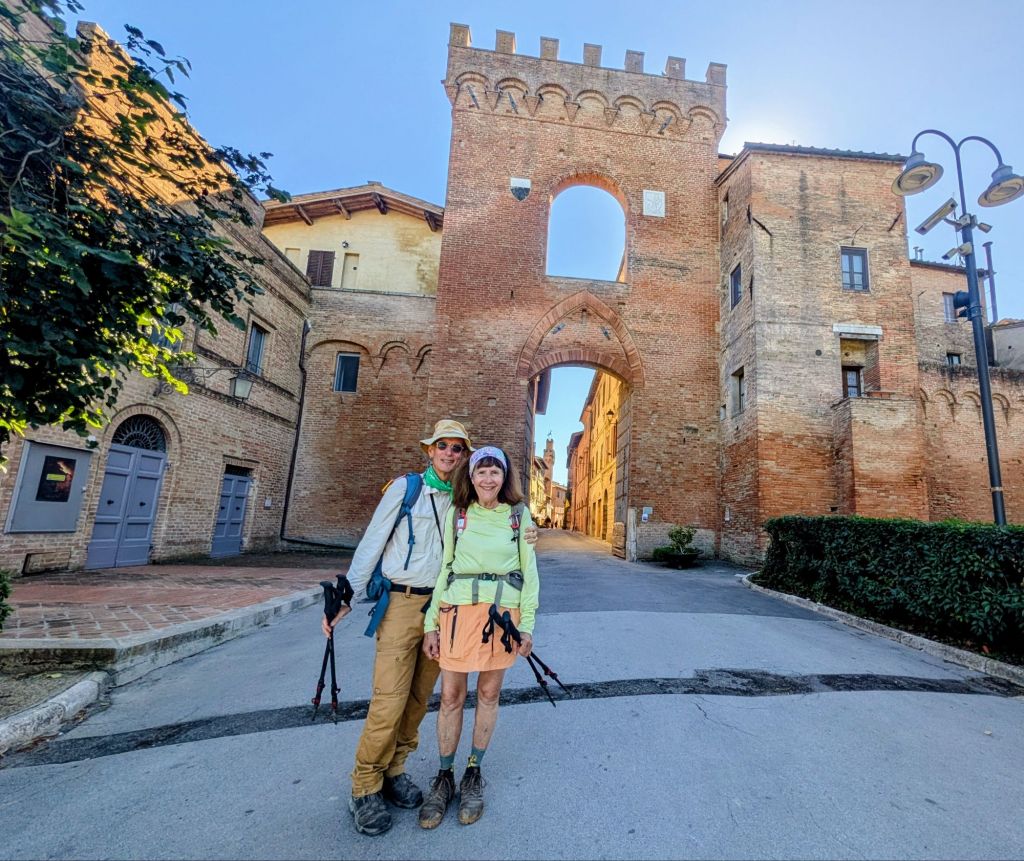
Porta San Francesco (St Francis Gate) is the entrance to Bolsena’s medieval village for travellers coming from RomeThis sculpture shows sea shells being worn as earrings. A sea shell is the Camino’s symbol because it is carried by pilgrims.
Radicofani to Acquapendente 14.7 Miles; 7.5 Hours on the trail (Cumulative: 166.2 Miles; 86.2 Hours on the trail)
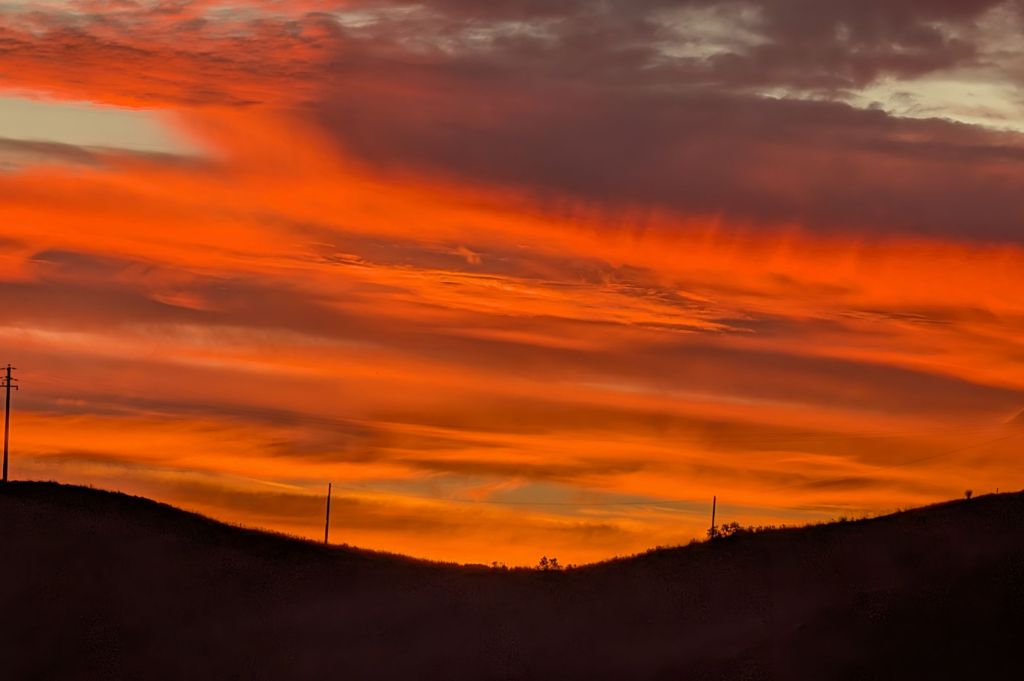
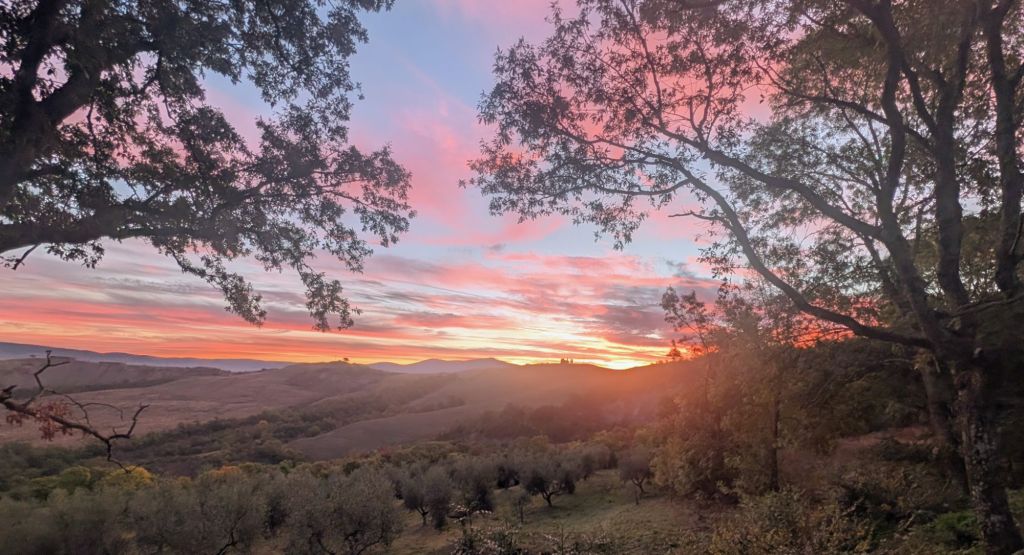
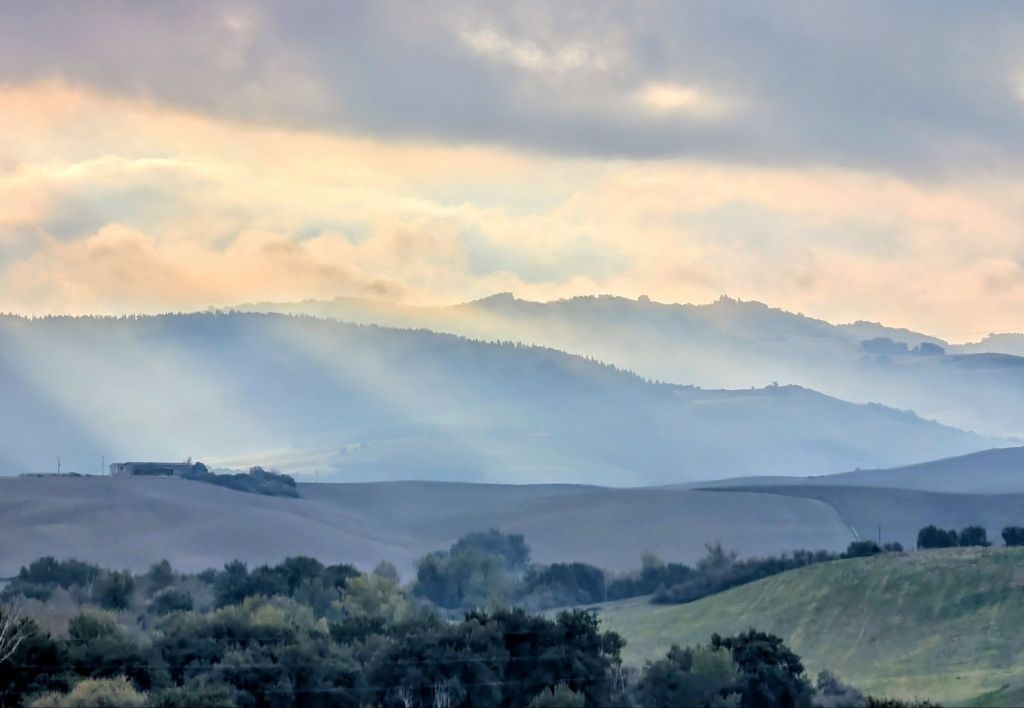
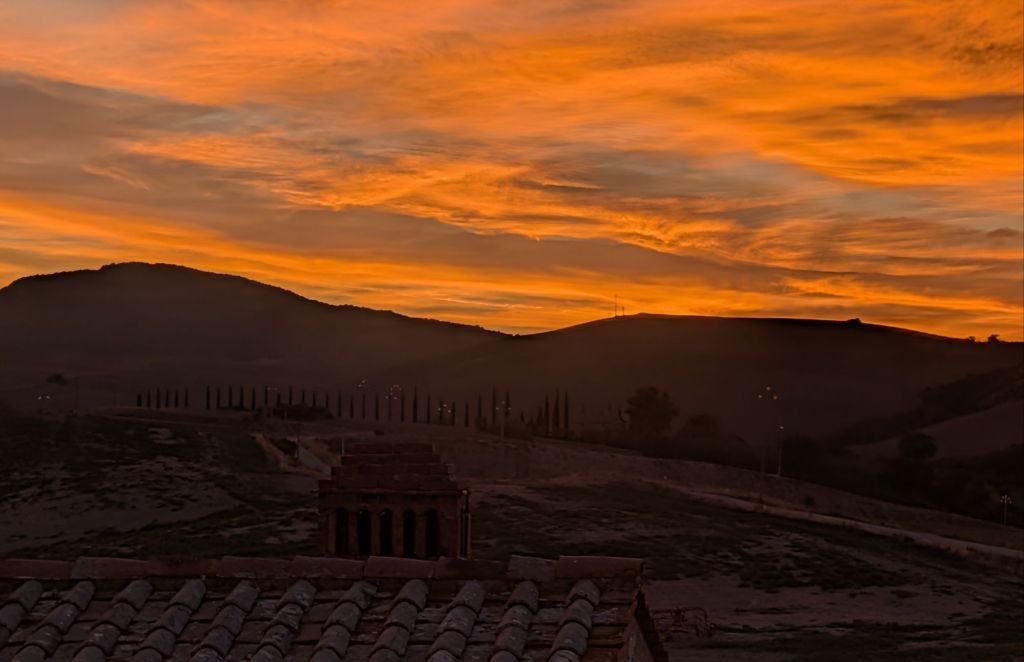
Today was our final day hiking in Tuscany & our last Tuscan sunrise was spectacular.
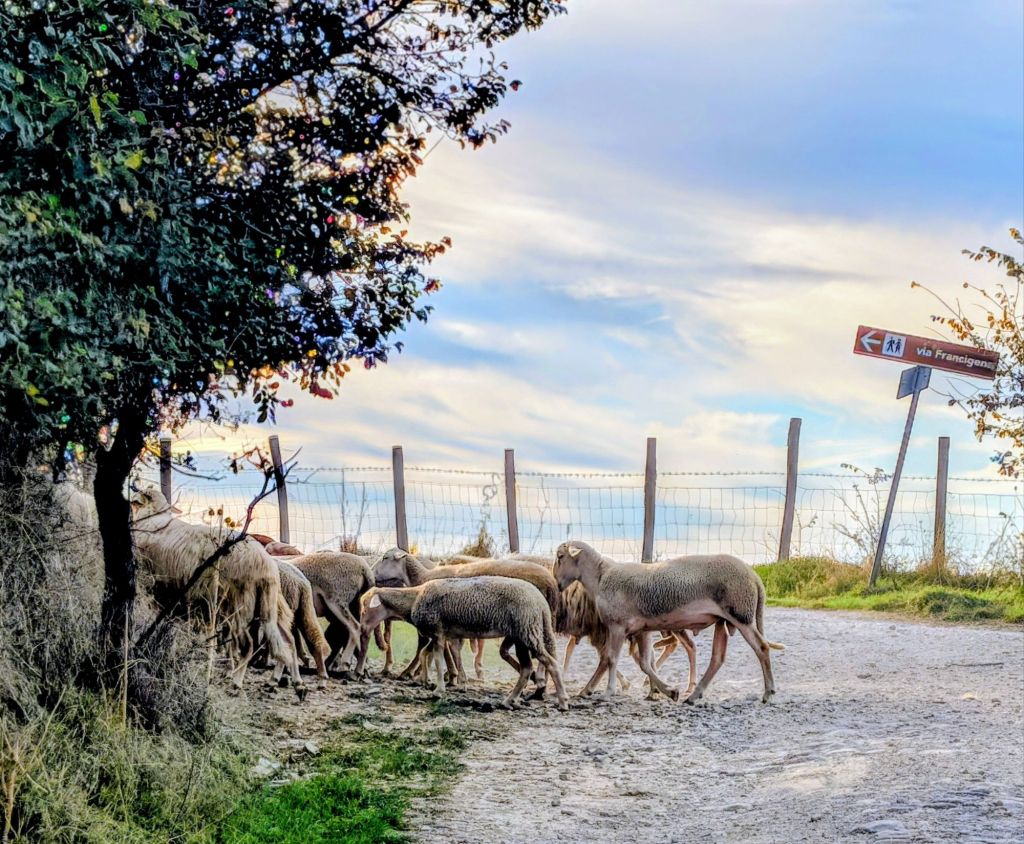
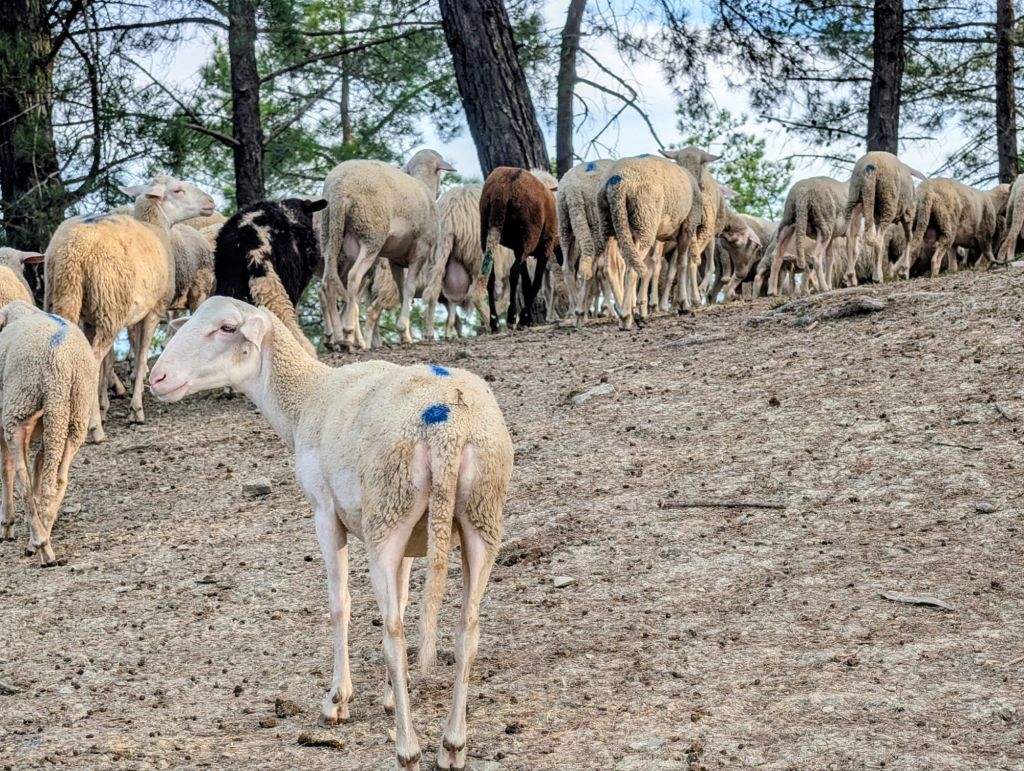
As we hiked up to Radicofani, we saw a shepherd moving his flock in the fields.
However, he had one stray who got away, so we helped him wrangle it back into the flock.
Radicofani & its surrounding area is dominated by its Rocca (castle) with its impressive tower. The Rocca of Radicofani rises atop a volcanic basalt rock formation 896 meters high.
The mighty Rocca of Radicofani & Radicofani town below
Radicofani itself is a charming medieval town built on an ancient volcano’s remains.
According to beliefs, Saint Agatha protects the city from volcanic eruptions, so naturally the town has a church dedicated to her.
The Church of Saint Agatha
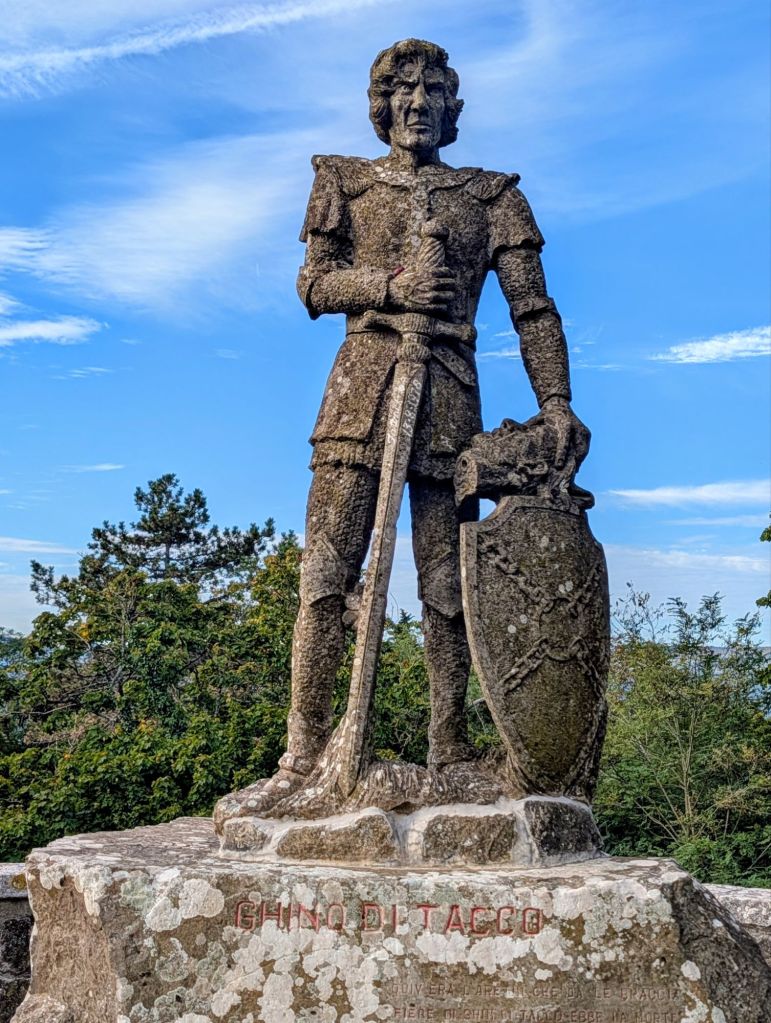
Ghino di Tacco, the “Gentleman Bandit” who robbed from the rich; but, spared the poor is known as the “Italian Robin Hood” & he came from this town.
Ghino di Tacco also known as “Ghinotto” was a lawless nobleman from Siena who flourished in the late 13th Century.
Ghino di Tacco
It appears crime was a family business for Ghino because some of his relatives were also notorious bandits who operated in Tuscany.
However, Ghino had higher ambitions than a highwayman’s petty crimes.
In one of his most famous heists, he occupied Santafiora Castle in Tuscany’s Maremma region.
By seizing the castle, he drew the wrath from the powerful Aldobrandeschi family who owned the fortress & this crime ultimately caused Ghino to be exiled from his home in Siena.
His father Tacco di Ugolino was executed in the Piazza del Campo in Siena; but, somehow, Ghino managed to escape the same fate.
Forced to relocate & lay low, in 1295 the bandit fled to Radicofani which was perfectly located along the lucrative Via Francigena between Siena & Rome.
It is said that he stripped rich wayfarers of all their possessions minus necessities & if the pilgrims were poor, he simply let them go.
This story was summarized by Giovanni Boccaccio in his Decameron:
“Giovani di Tacco, whose feats of daring and brigandage brought him great notoriety after being banished from Siena and incurring the enmity of the Counts of Santa Fiora, staged a rebellion in Radicofani against the Church of Rome; and having established himself in the town, he made sure that anyone passing through the surrounding territory was set upon and robbed by his marauders” (Tenth Day, Second Story).
Ghino di Tacco & his crew managed public relations by generously dolling out their ill-gotten gains to their host community.
Nevertheless, the law, the nobles, & his theft victims could not be placated.
Ultimately, several of Ghino’s relatives were arrested & hauled off for trial.
A judge in Arezzo ordered these captured family members to be executed. When this news reached Ghino, he vowed revenge.
The vengeful bandit tracked down the judge & stabbed him to death in front of many witnesses.
After this murder in broad daylight, Ghino continued his banditry unabated & he abducted the Abbot of Cluny.
The Abbot was traveling back from Rome after giving Pope Boniface VIII money collected from taxes collected by the French Church.
On his way back to France, he decided to take a cure at the San Casciano Bagni thermal spa for his liver & stomach which were suffering from all the banquets he had attended.
Knowing about the Abbot’s arrival at the spa, Ghino planned an ambush & kidnapped him.
Ghino locked the Abbot in his tower in the Radicofani fortress giving him only bread & dried beans to eat and Vernaccia di San Gimignano to drink.
This dietary regimen “miraculously” cured Abbot’s stomach pains & he convinced the Pope to grant a pardon to Ghino di Tacco for murdering the judge.
After his Papal pardon & allegedly being inducted into a holy order, Ghino di Tacco could not escape his criminal life.
Around the late 13th Century or early 14th Century, Ghino was killed by an unknown assailant.
For his fame or infamy or both, Radicofani has a statue in his honor.
Ghino di Tacco statue in Radicofani
Here are some sights from today’s trail.
Wild Boar Hunter
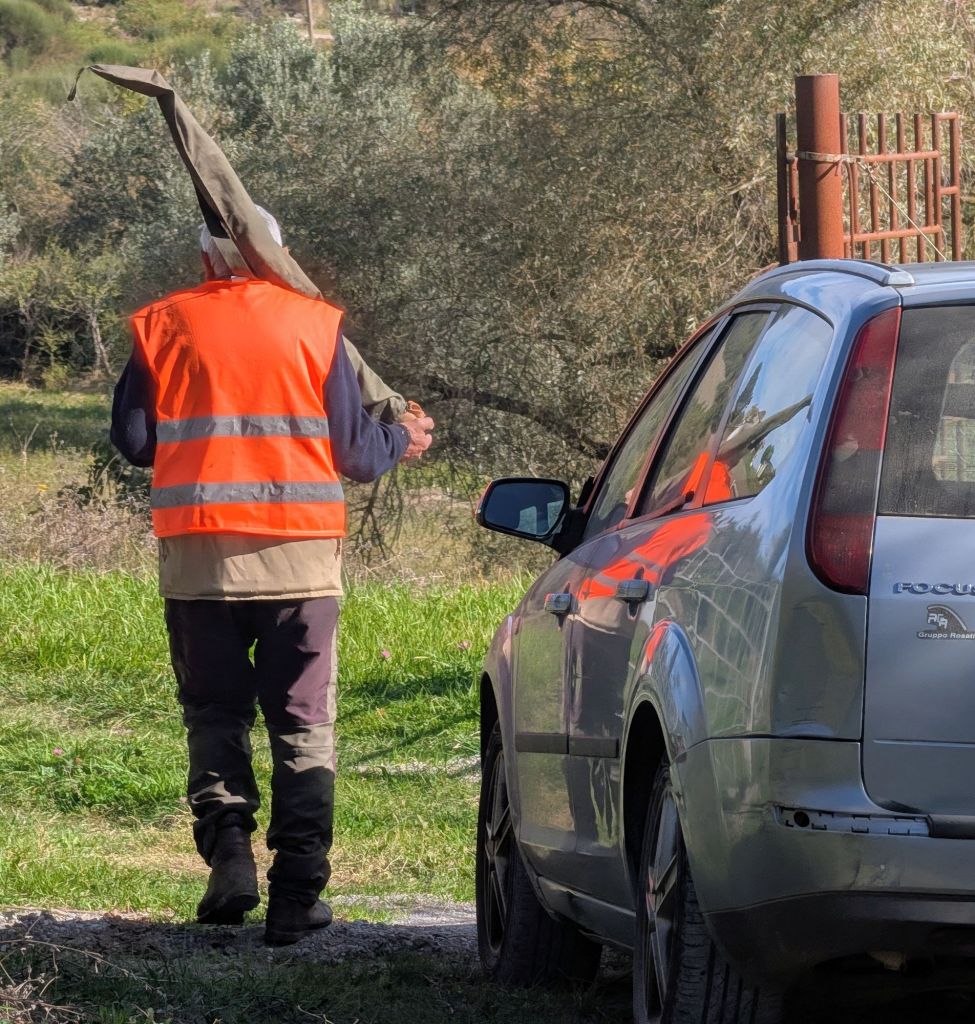
Since it is the weekend, the hunters were out again. This time they were hunting wild boar. They had many tracker dogs & spotters in the area with walkie- talkies to tell the hunters where to find their prey.
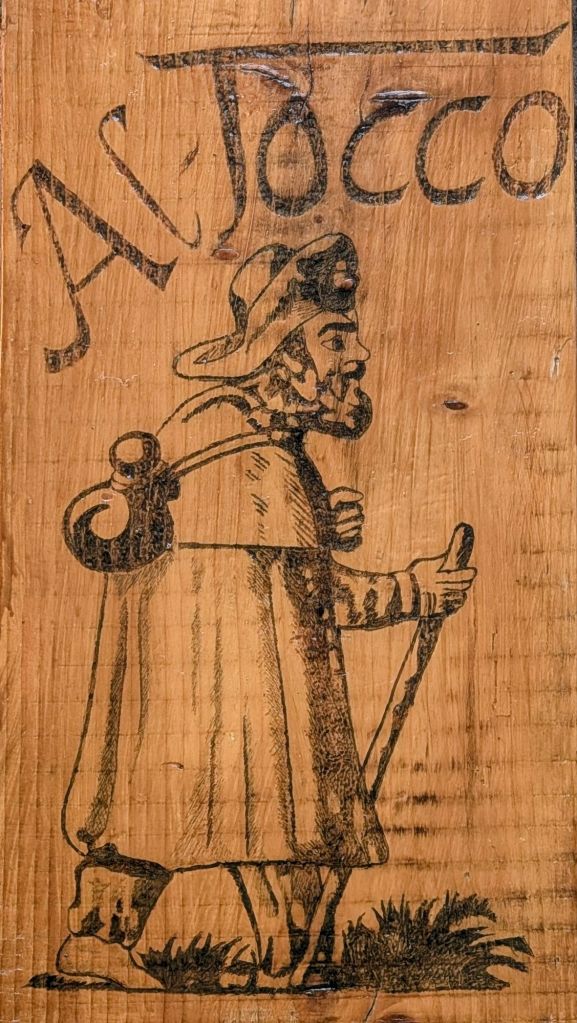
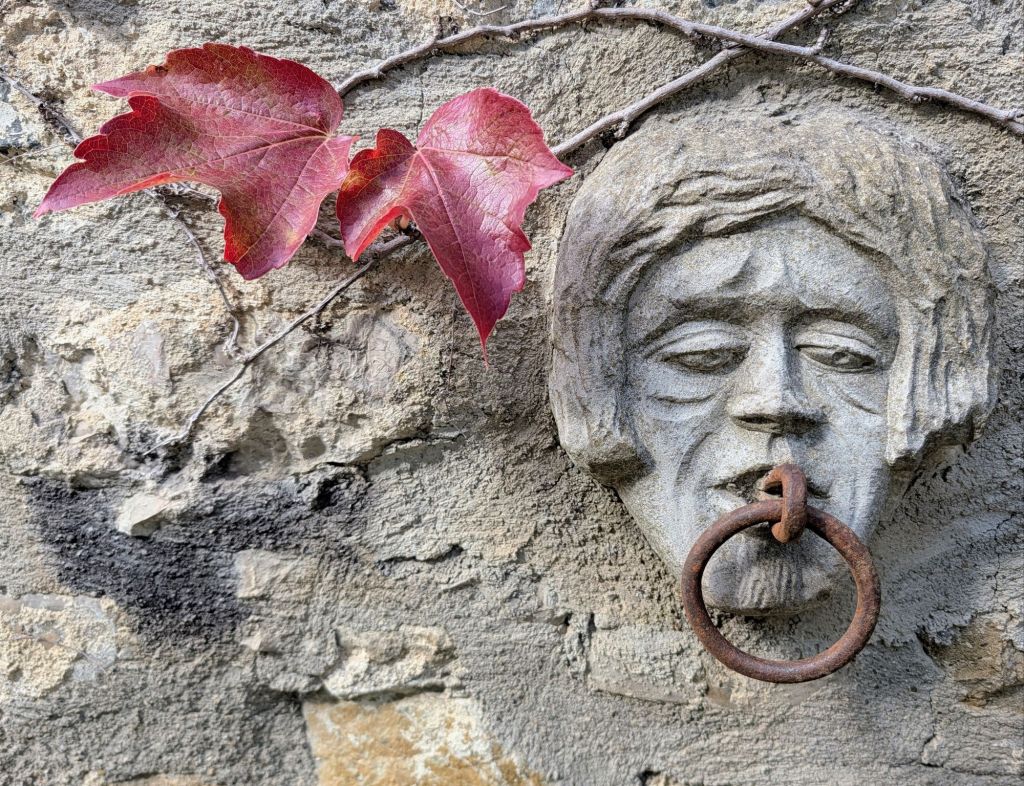
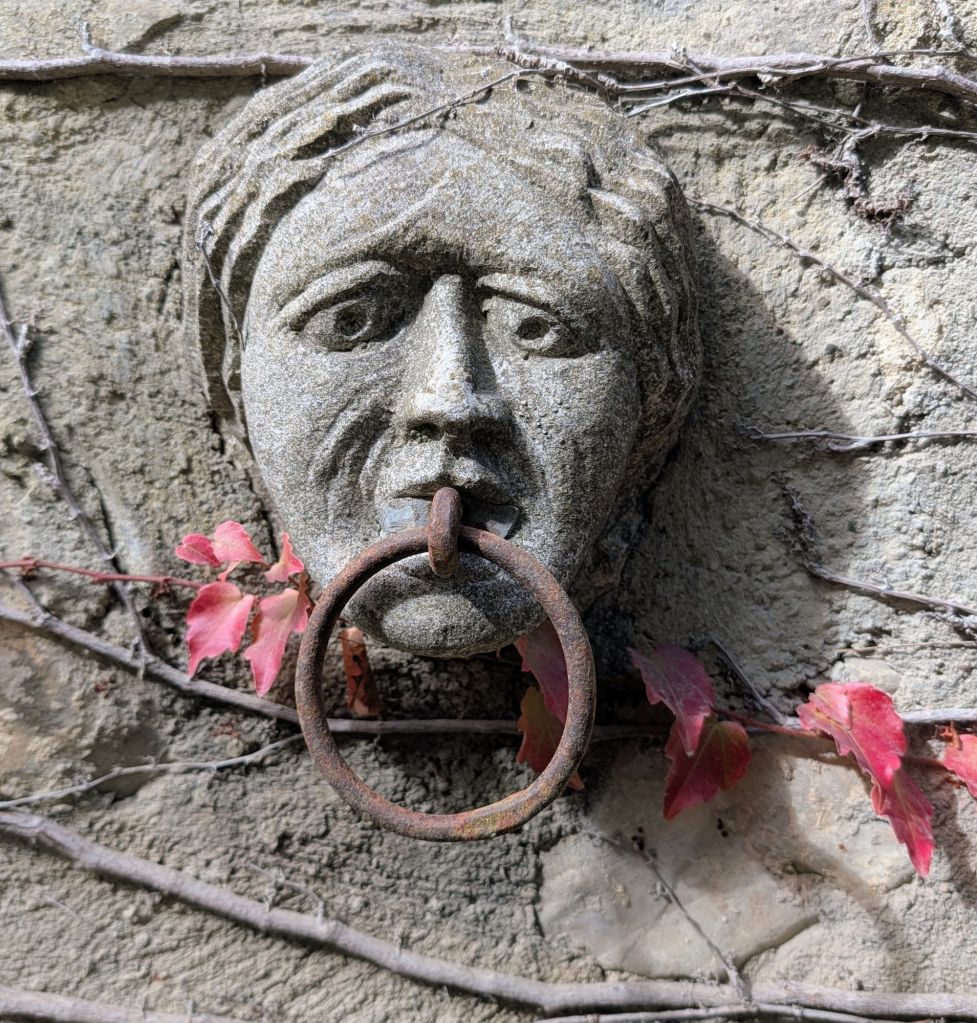
Saw some interesting “personalized” hitching posts on a house along the trail.
The M87 marker on the Via Francigena refers to Segment 87 (Tappa 87) on the historic pilgrim route.
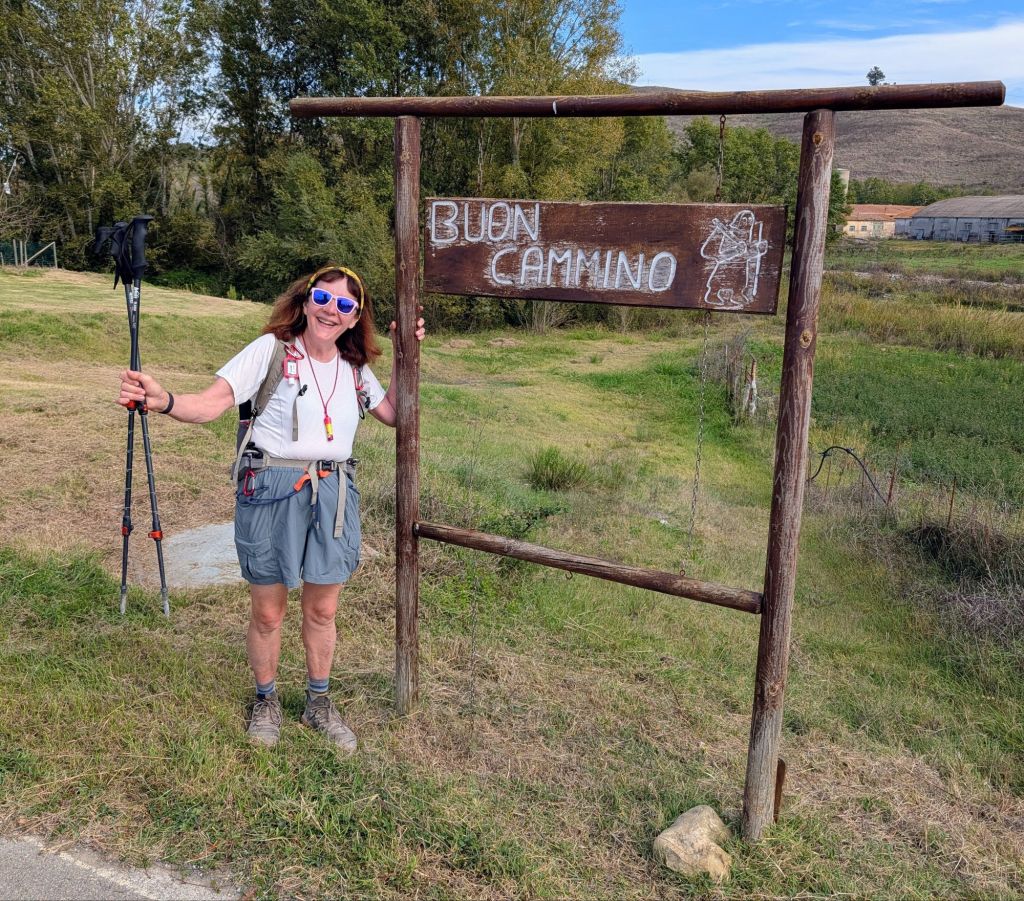
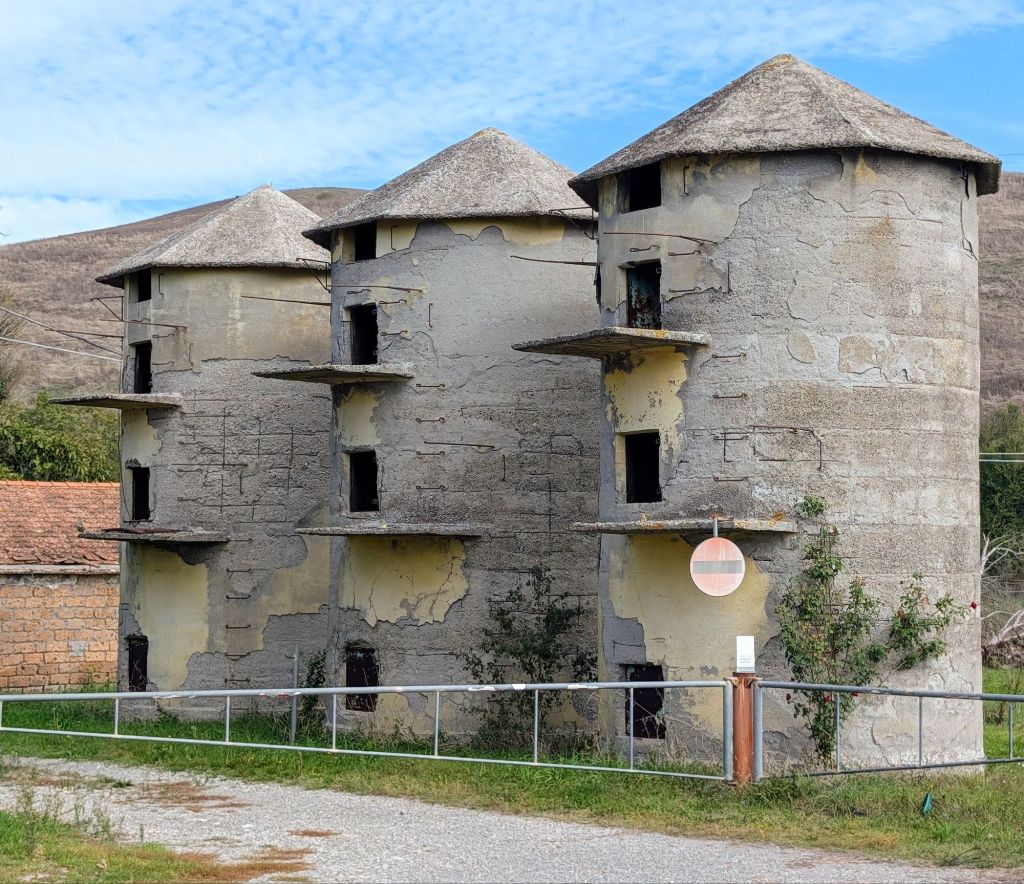
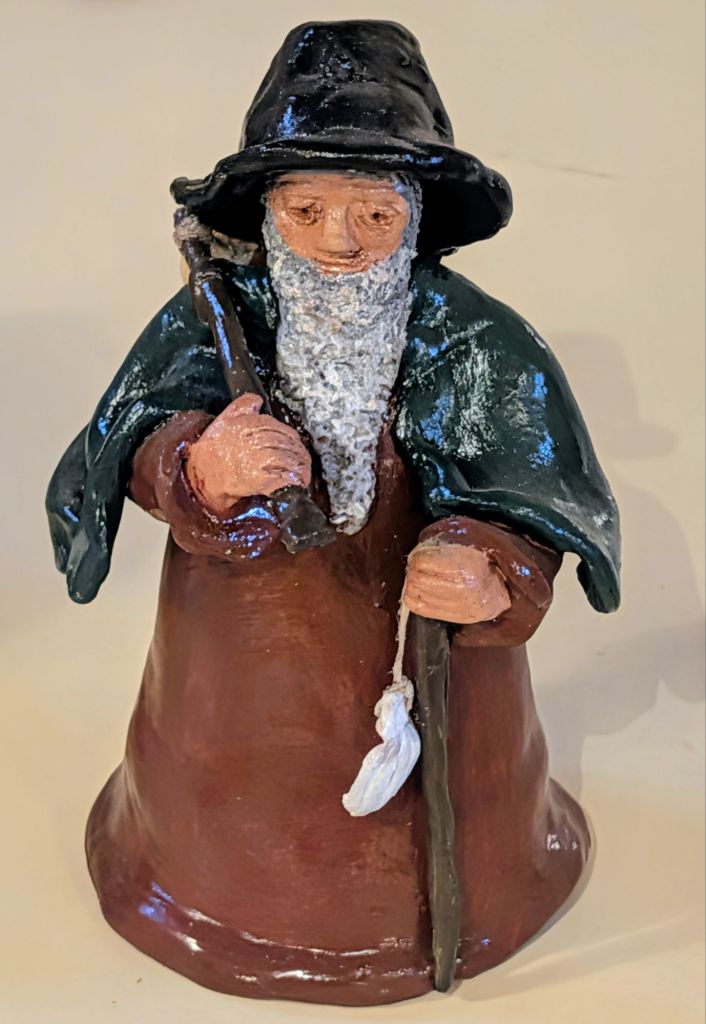
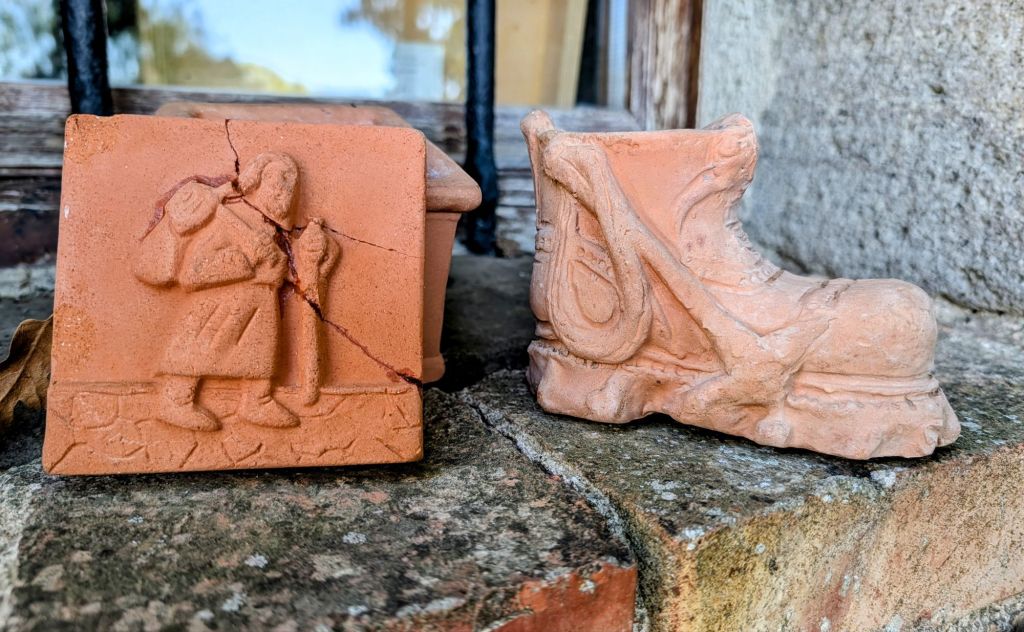
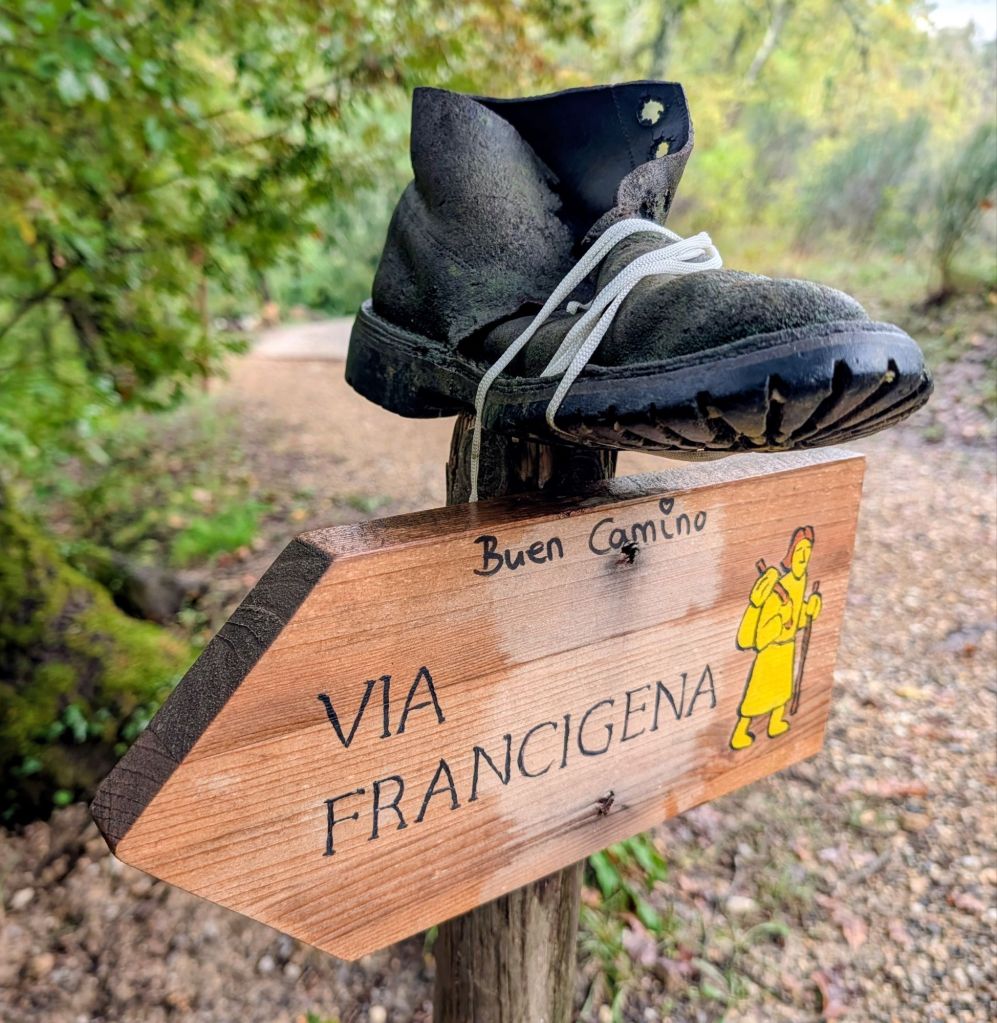
Via Francigena Segment 87 MarkerBuon Camino!Old Grain SilosPilgrim Pottery
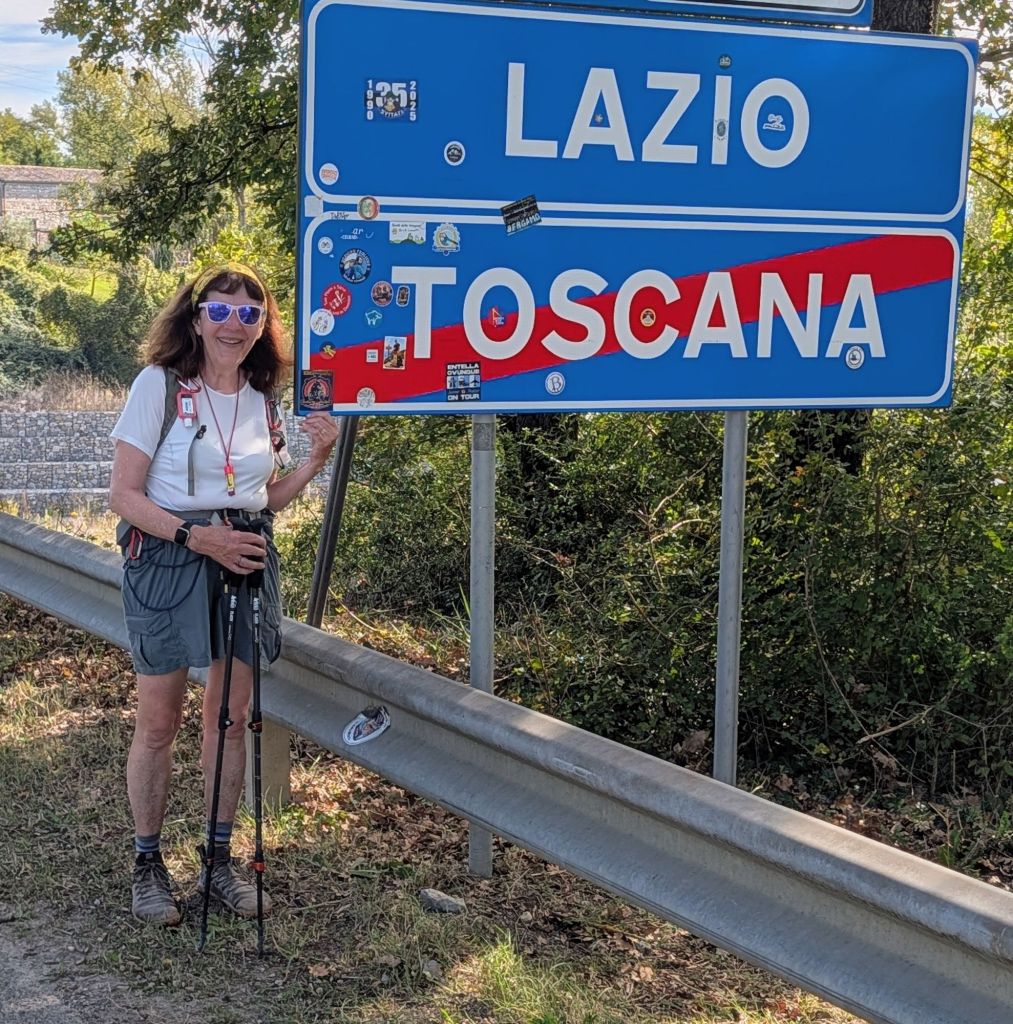
After many days, the trail left Tuscany bringing us into Italy’s Lazio region.
Goodbye Tuscany, Hello Lazio
The hilly Tuscany landscape almost immediately transformed into flat terrain through the Paglio Valley into Acquapendente
Acquapendente is surrounded by rivers & lakes as well as some waterfalls from which its name is derived. Its name comes from the Latin “Acquipendium” which means “Hanging Waters”.
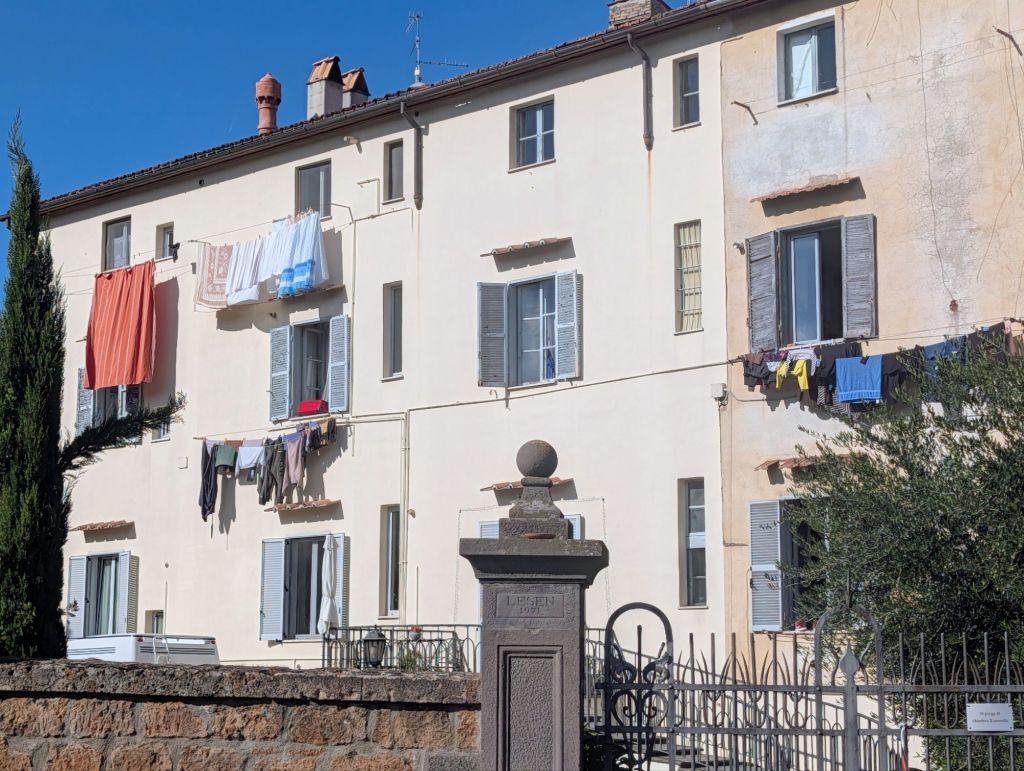
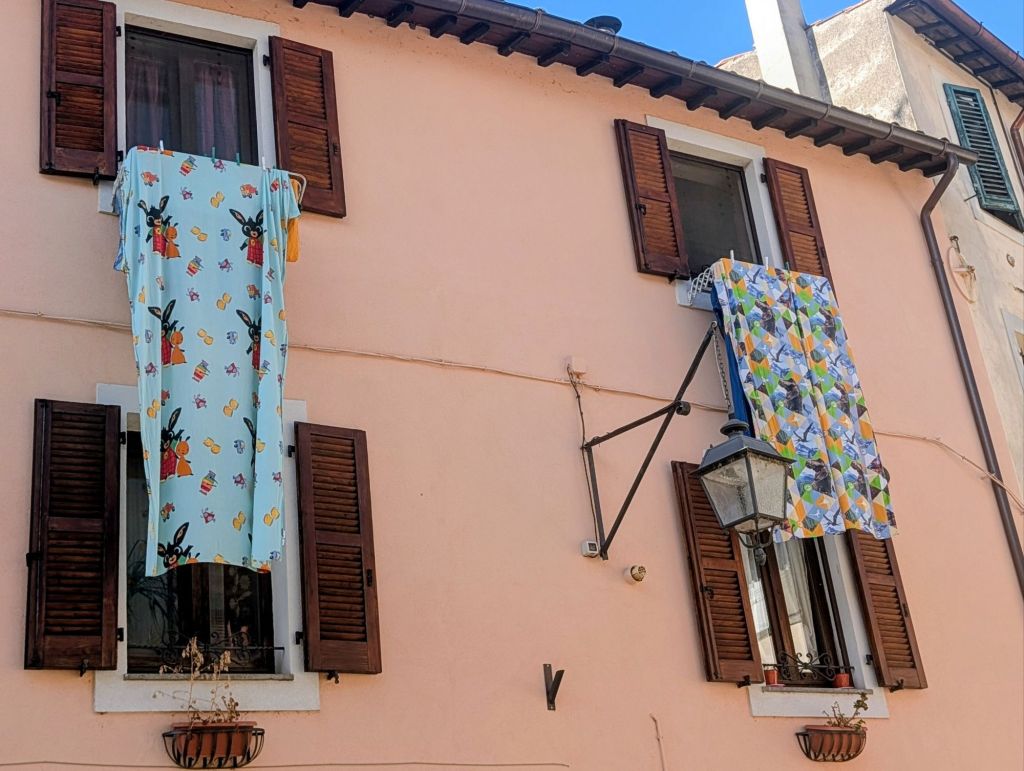
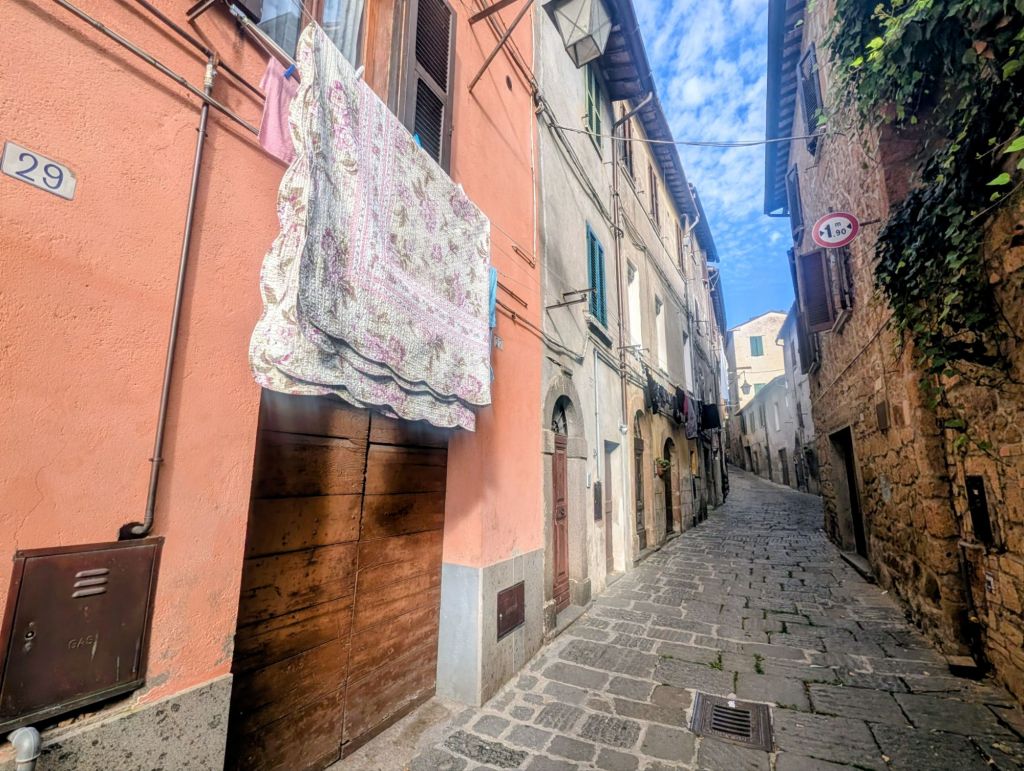
Laundry Day scenes in Acquapudente
In the Middle Ages, Acquapendente was established as a village & a monastery by the Benedictine Order due to its key position on the Via Francigena.
The Cathedral of the Holy Sepulchre
The Cathedral of the Holy Sepulchre was built in the 10th Century & is linked to a legend according to which Matilda of Westphalia, mother of Emperor Otto I, was traveling from Germany to Rome to build a church dedicated to the Holy Sepulchre (tomb) in Jerusalem.
However, she was forced to stop in Acquapendente because the mules carrying the gold needed to pay for the construction would not continue.
The empress then had a dream explaining what had happened: She said the mules were stopped by divine will, so the church was to be built in Acquapendente.
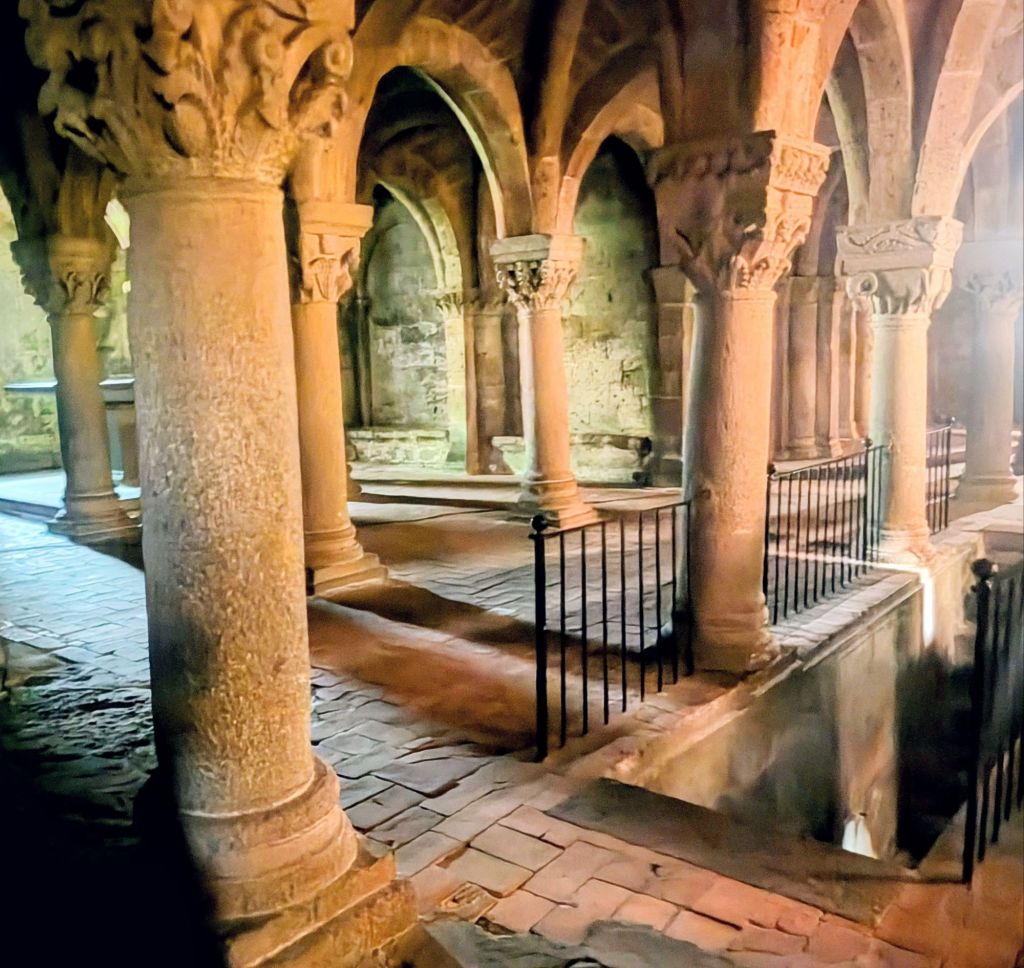
The crypt under the altar houses the shrine containing the relics from the Holy Sepulchre in a structure that replicates in miniature the Church of the Holy Sepulchre in Jerusalem.
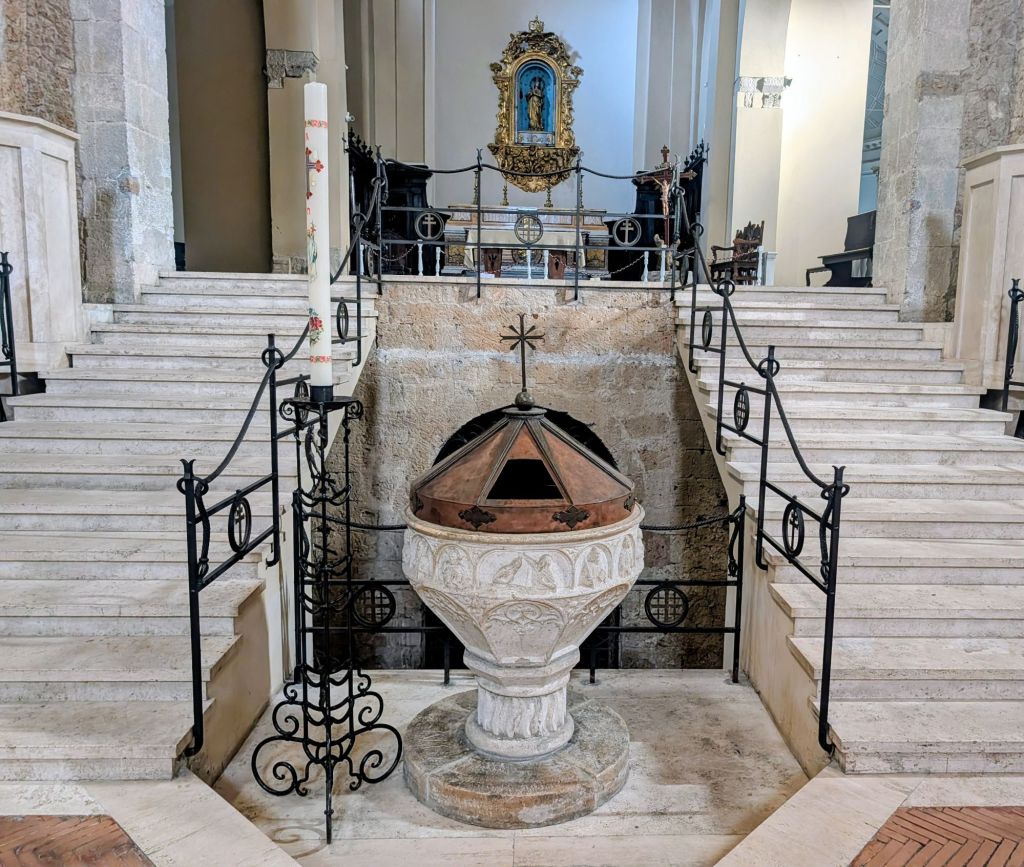
Altar over the crypt in the Cathedral of the Holy Sepulchre
The crypt contains a blood-stained stone with Christ’s blood which according to tradition comes from the Holy Sepulchre in Jerusalem.
10th Century crypt housing a stone that has drops of Christ’s blood on it
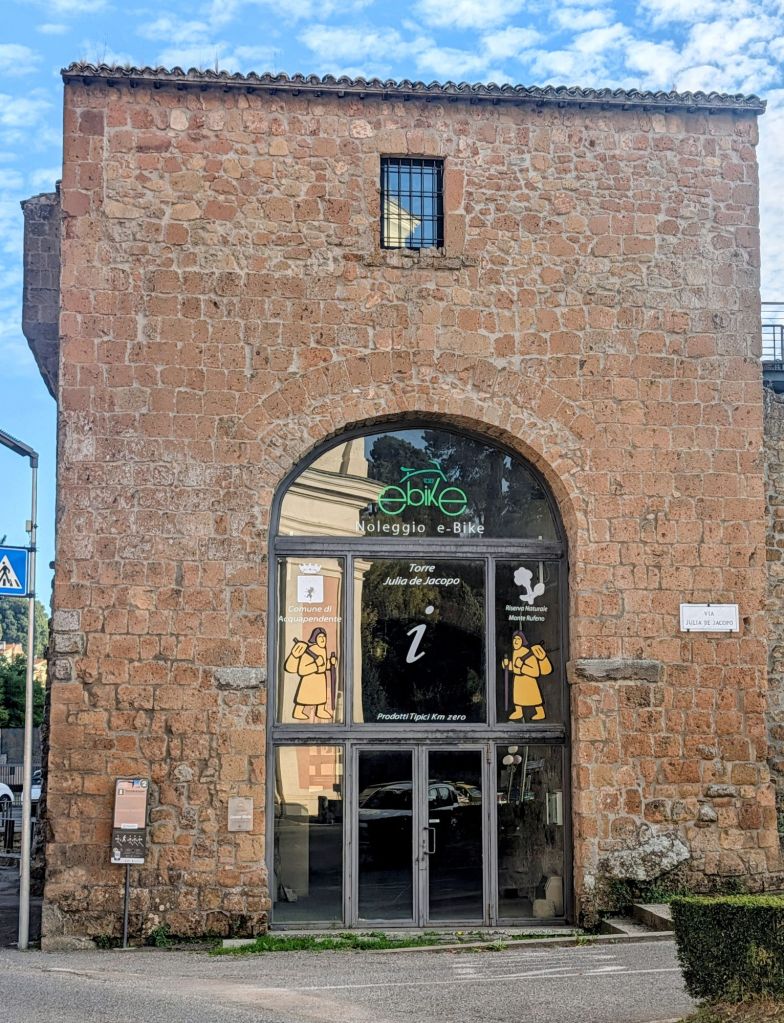
Across the street from the cathedral, the town’s tourist information center is located in a structure known as the Julia de Jacopo Tower. In 1550, a gate in the city walls was left open by defenders & Julia courageously closed it saving the city from its attackers.
Julia de Jacopo Tower
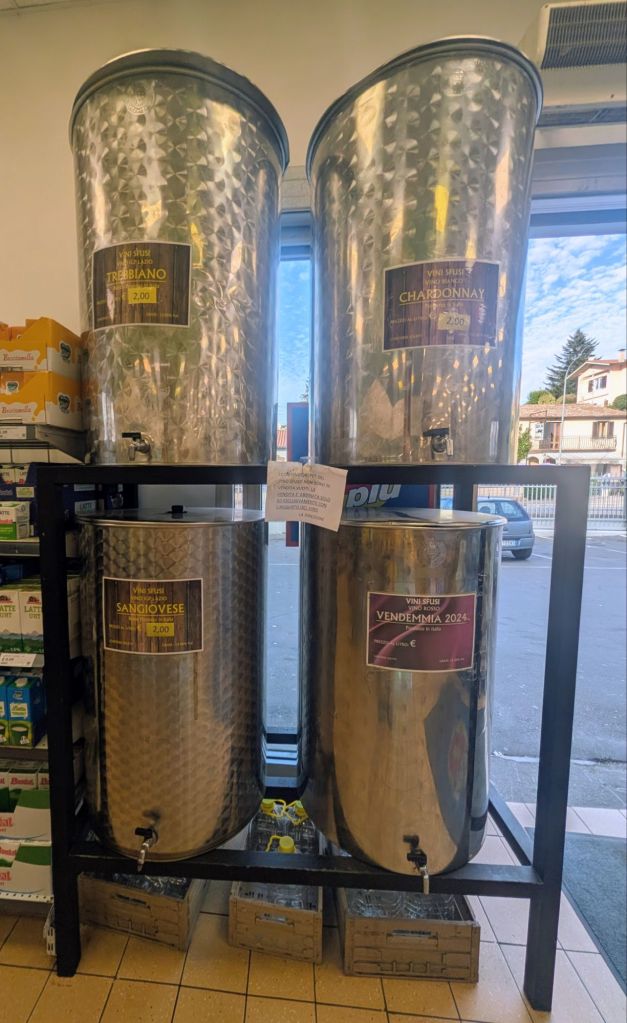
Check out the bulk wine station at the local supermarket with the plastic jugs below the vats to fill with your selection.
8 Miles; 3.75 Hours on the trail (Cumulative: 161.5 Miles; 78.7 Hours on the trail)
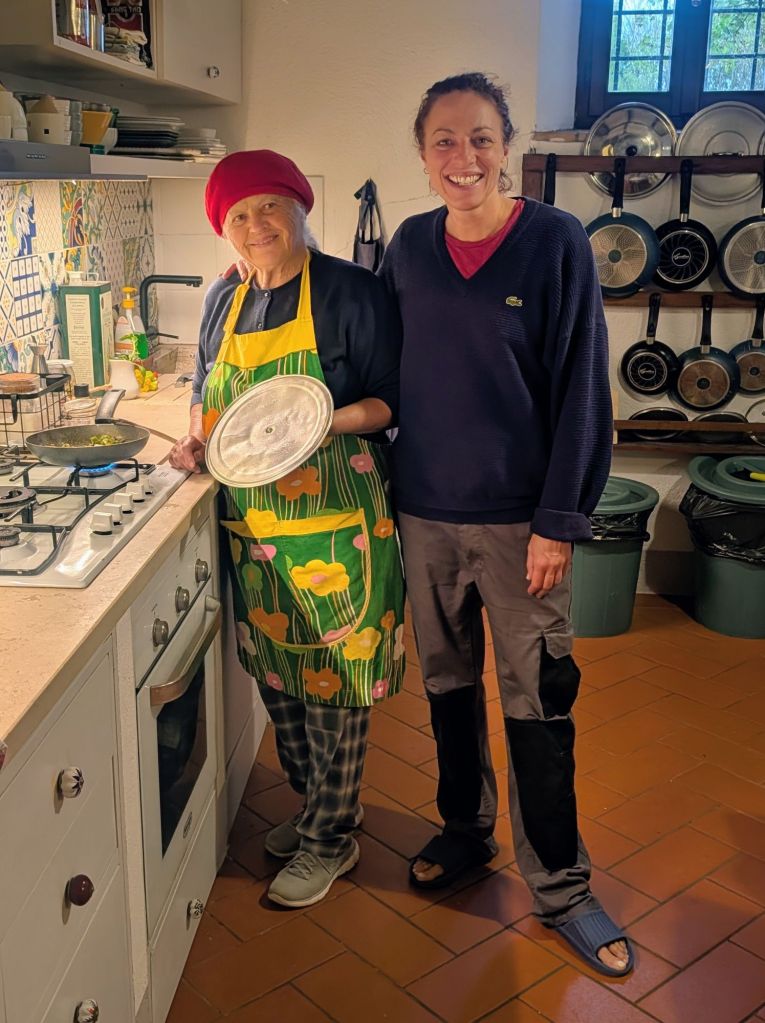
Before leaving Passalacqua, Elena & her mother Miranda prepared us a delicious breakfast using vegetables from their big garden & fresh eggs from their chickens.
Miranda the Chef & Elena the Hostess
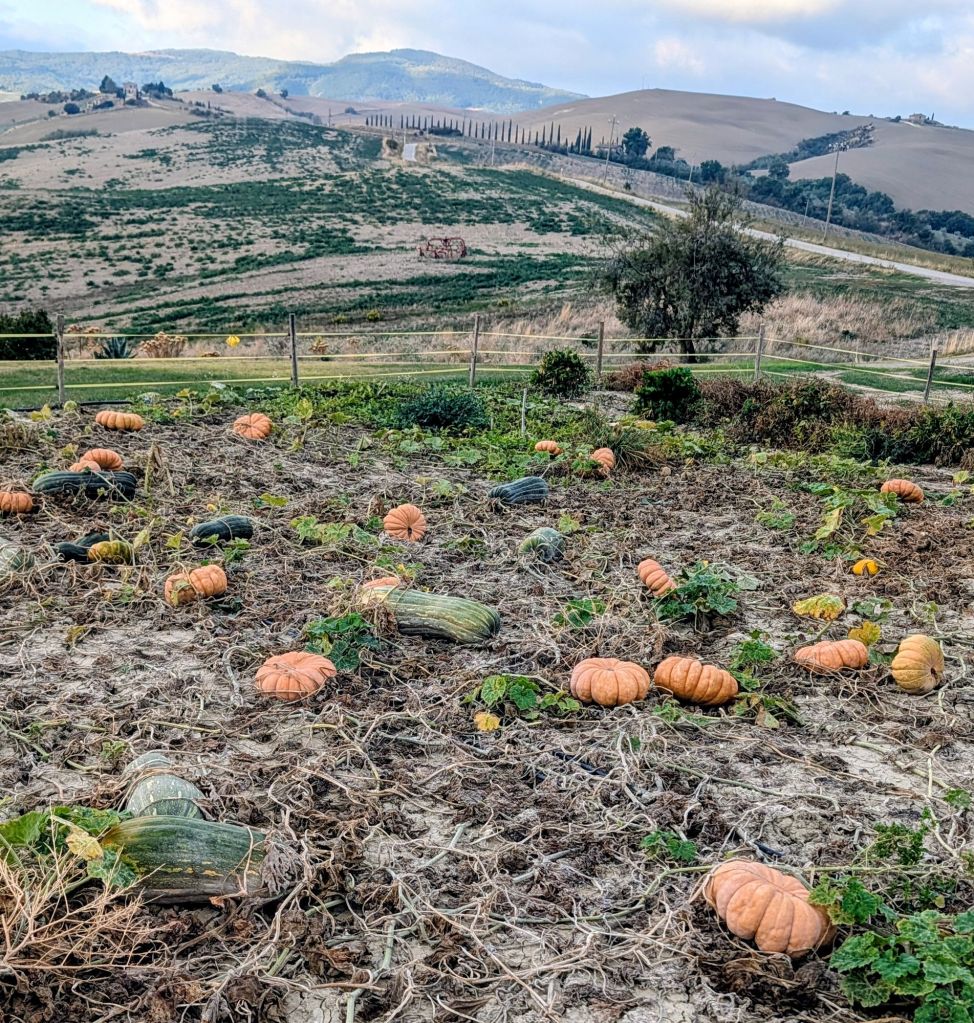
Their garden has 70 pumpkins which they said they will use for Halloween.
Pumpkins & Squash
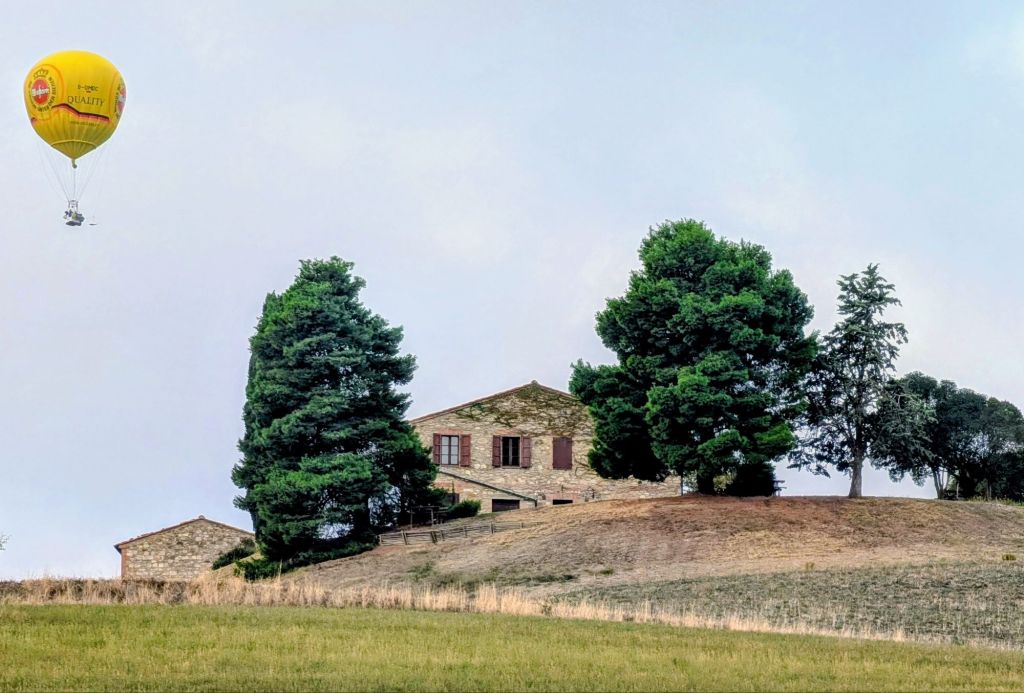
As we were left Passalacqua, a hot air balloon floated overhead.
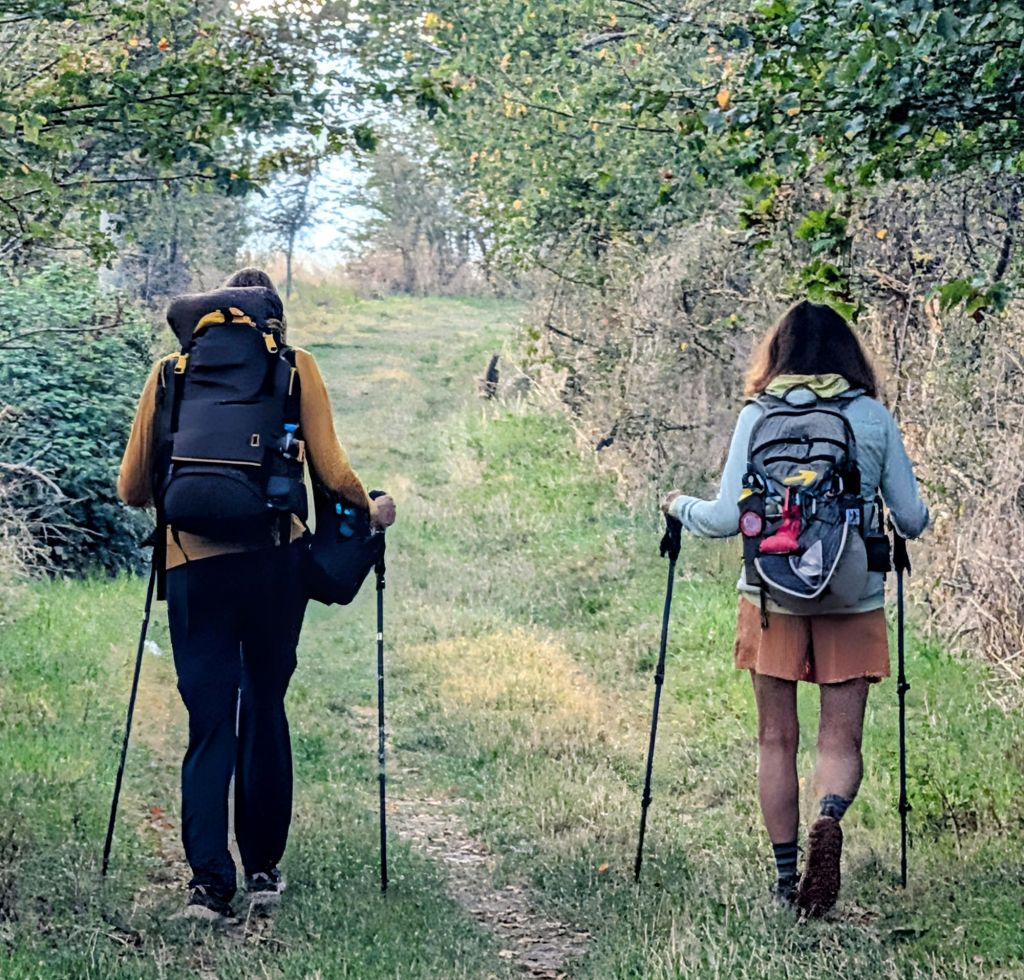
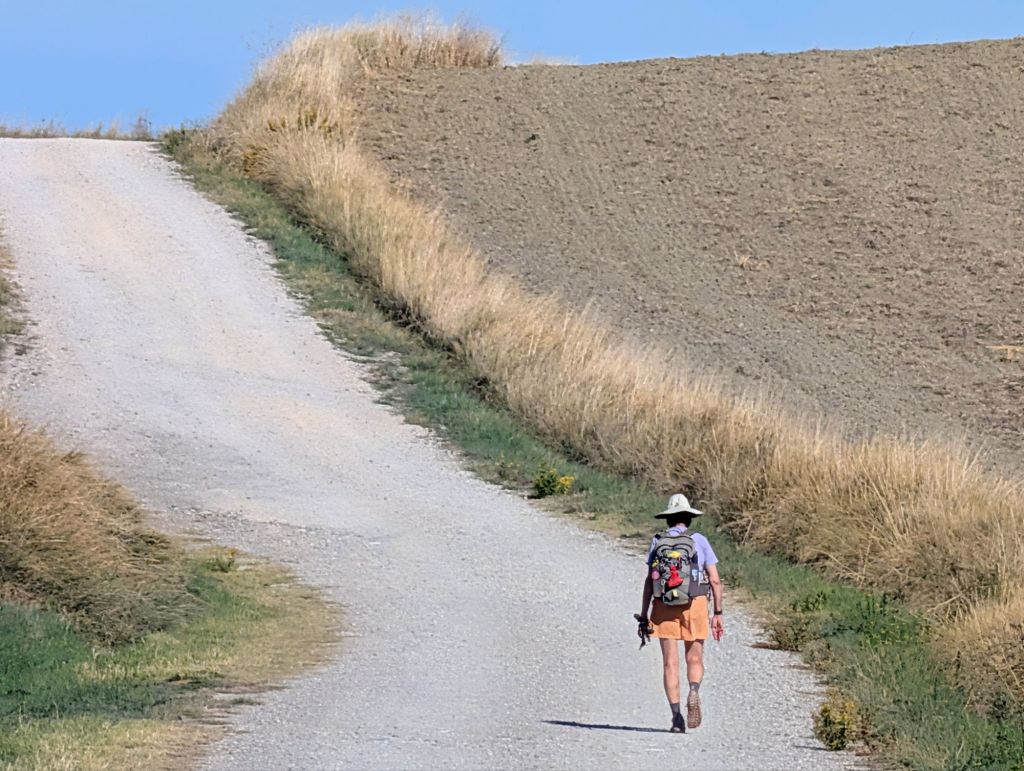
Our short walk today started on gravel & grassy tracks meandering through fields going up & down hills before starting a prolonged climb to Radicofani.
On the trail
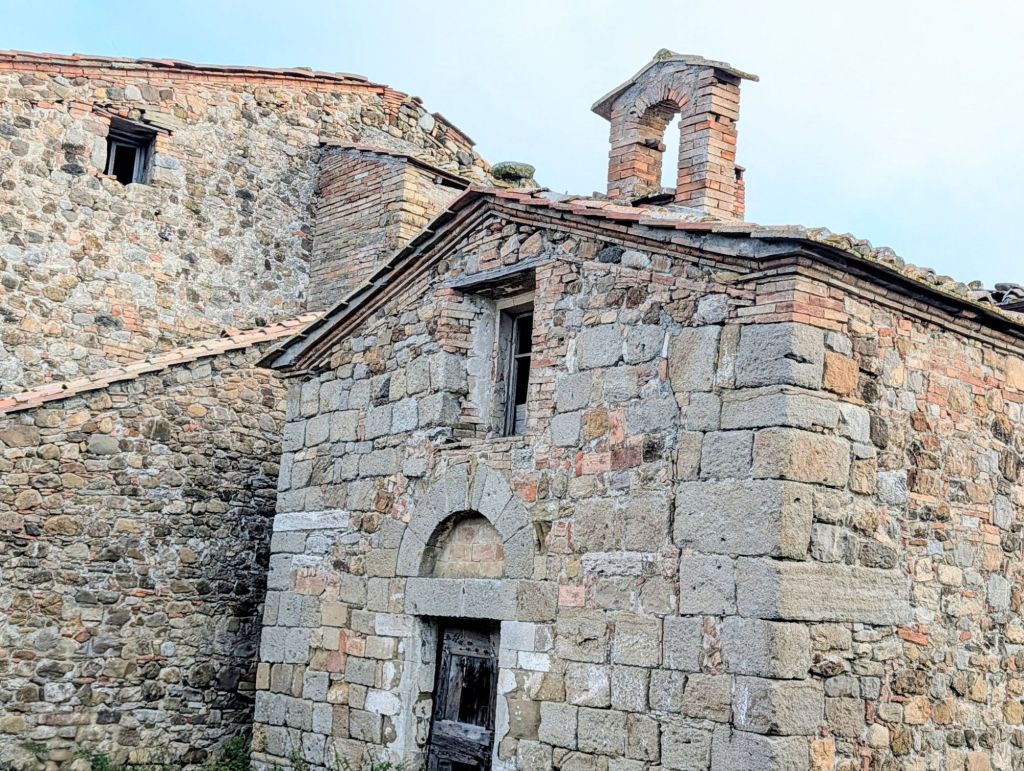
The Chiesa di San Pellegrino alle Bricole is a historic medieval Romanesque church & former pilgrim hospice located in Bricole near Gallina.
Chiesa di San Pellegrino alle Bricole
Abricula is the name of the 11th station in the travel diary of Sigeric, Archbishop of Canterbury, who was returning to England from Rome where he had gone to receive his mantle directly from Pope John VI in 990.
The name “Abricula” derives from the Latin adjective “Apricum” meaning “a sunny spot”.
Early in the 13th Century, King Phillip Auguste of France stayed here.
Late in the 13th Century, it was known as Ospitale San Peligrini de Obricolis when it was a prosperous pilgrim hospital along the Via Francigena. The resident monks sold the buildings & surrounding land to the wealthy Salimbeni family who presumably made even more money from pilgrims.
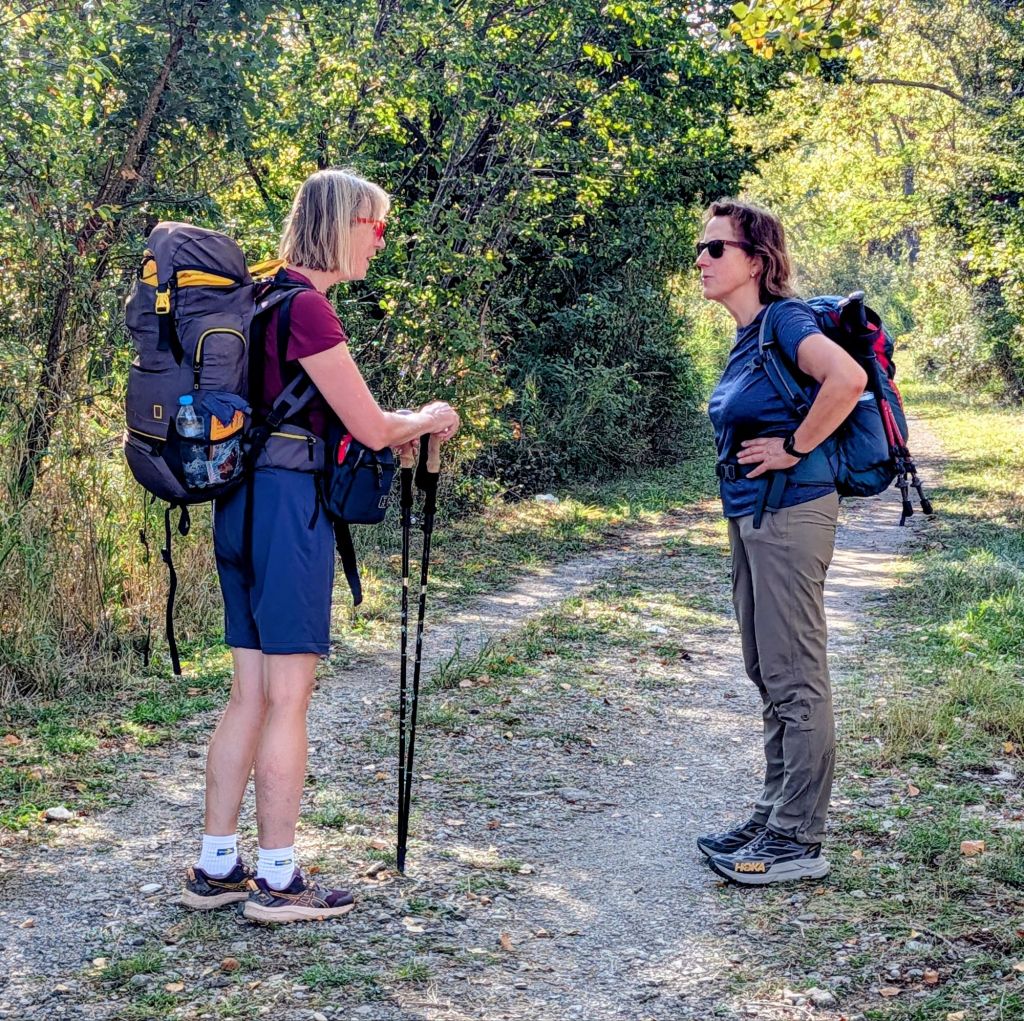
On the trail we met two German ladies who are walking the trail separately by themselves. Birgit is from Hannover & Angelika is from Kiel.
Birgit & GinaBirgit & Angelika
Here are some more images from today’s short trek:
11.9 Miles; 6.5 Hours on the trail. (Cumulative: 153.5 Miles; 74.9 Hours on the trail)
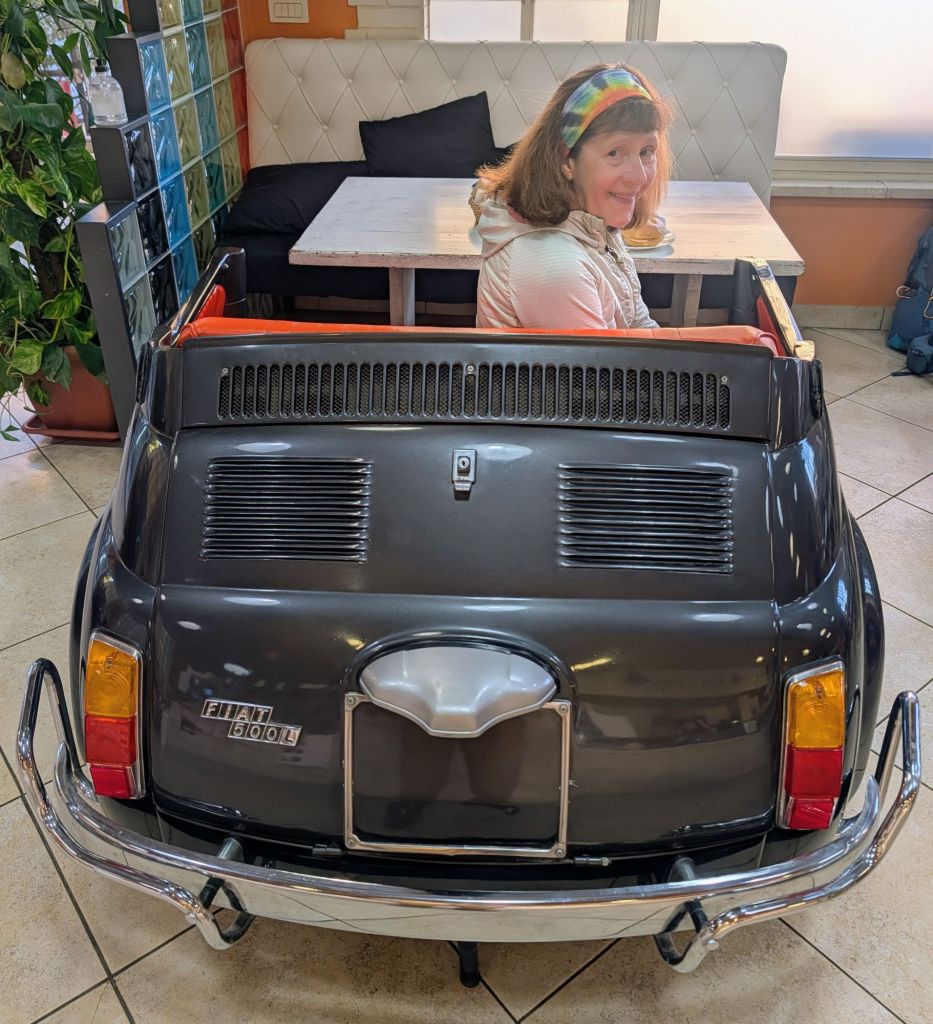
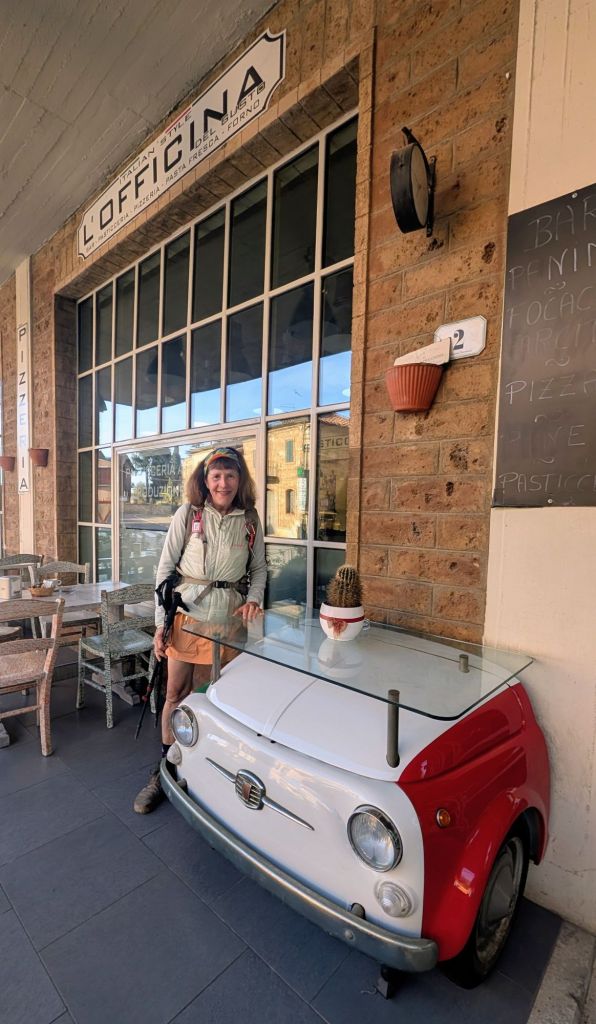
We had breakfast at this little place which had an Italian vehicles motif.
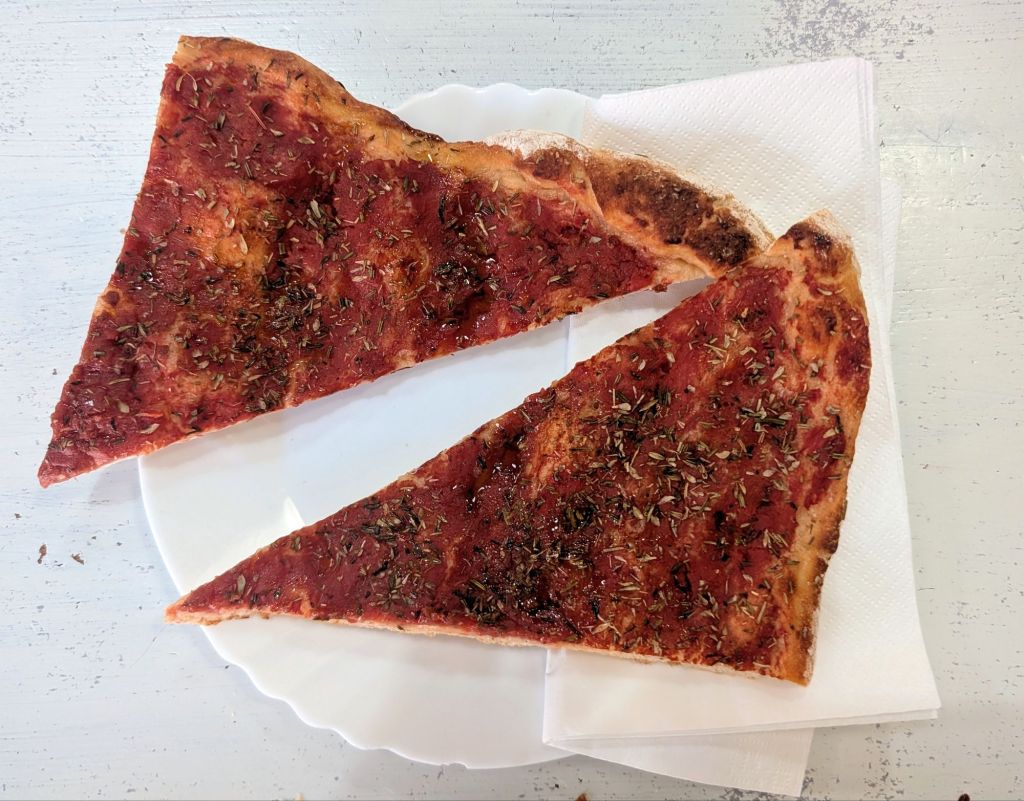
Can you say Pizza for breakfast? Sure, I knew you could.
Not too far outside town, we saw this little guy out for a spin on the trail.
We walked to Castle Vignoni which dates from the 11th Century & was once key to a fortified medieval village.
A truncated tower remains which was the castle keep, or the castle’s heart, where defenders would make their last stand. Also, one gate to the walled enclosure is also still perfectly intact.
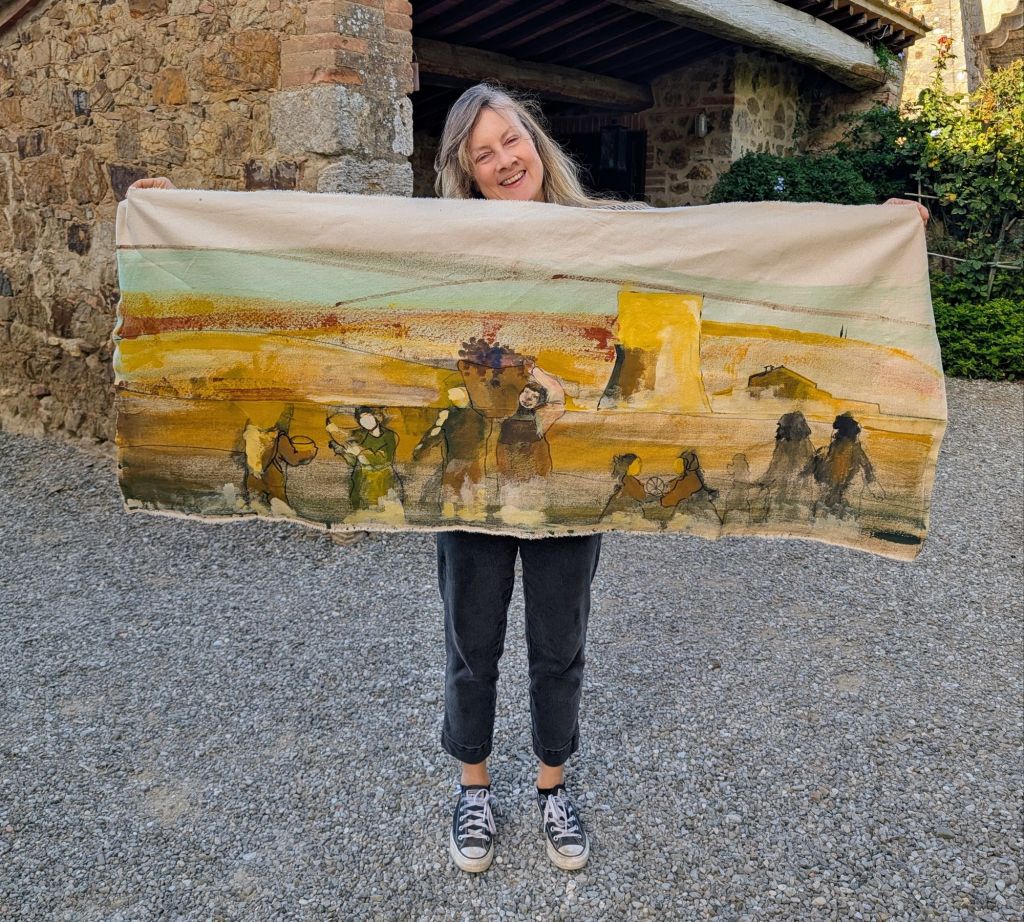
We also saw a nice shop there. Two ladies make hand painted table placemats & runners as well as custom aprons & belts.
We bought two hand- painted placemats to use at home when Gina makes her own Italian food creation “Pasta alla Gina”.
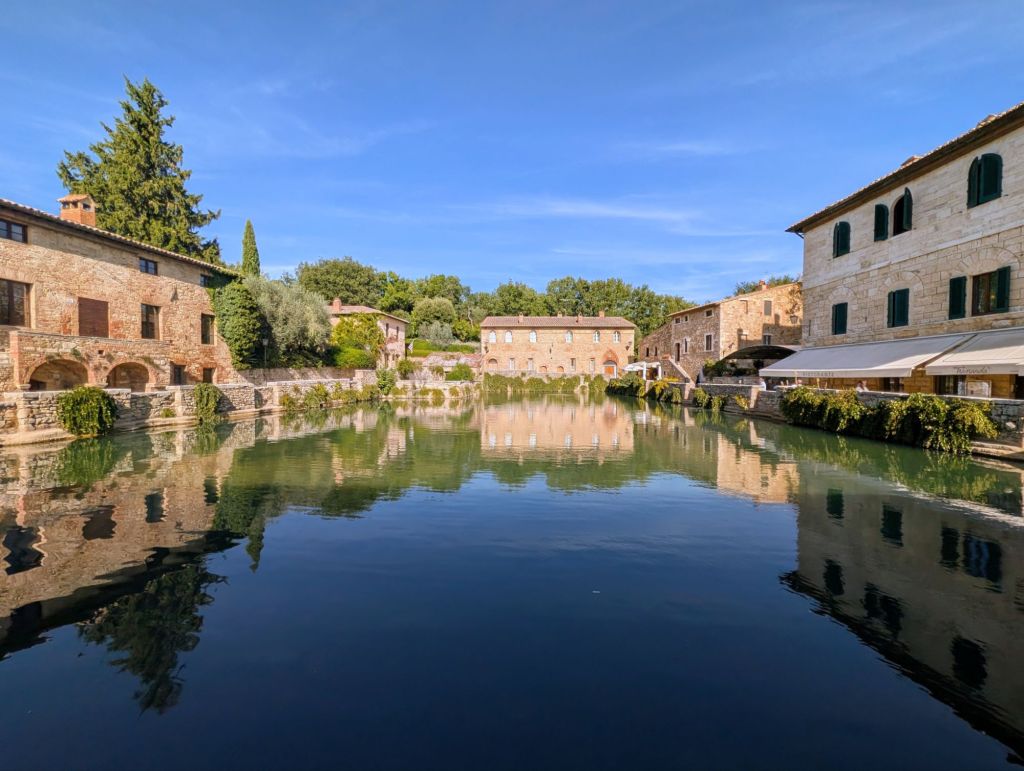
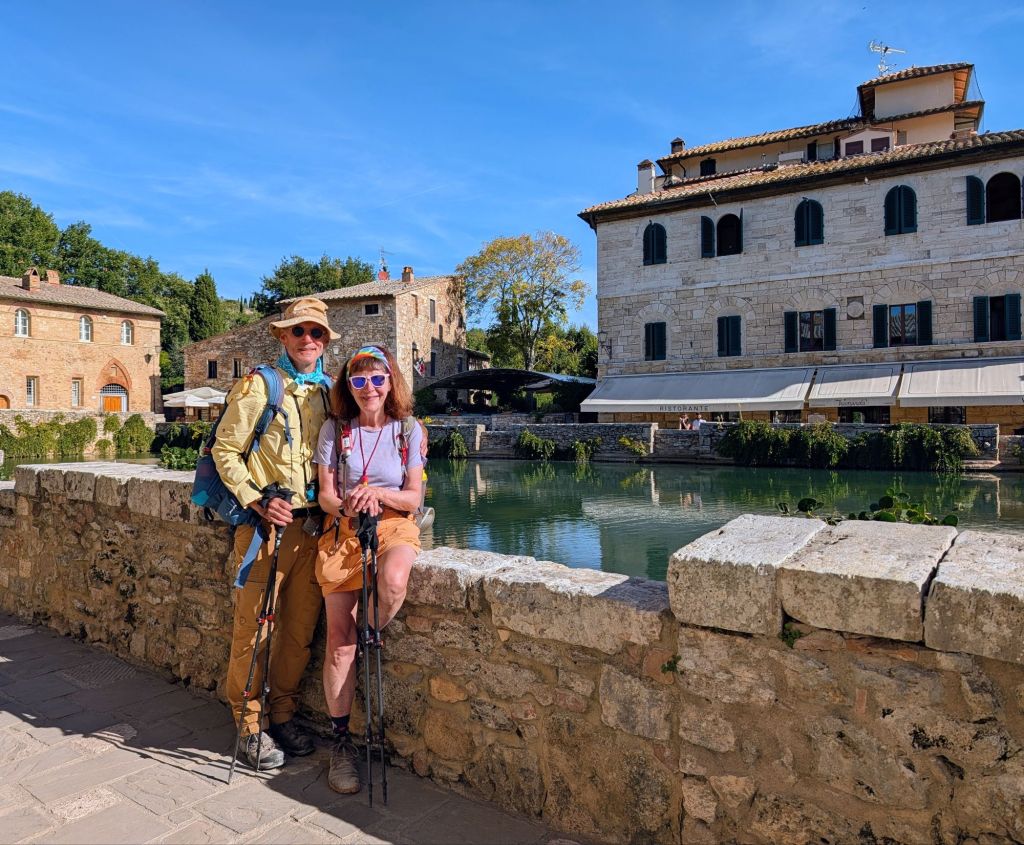
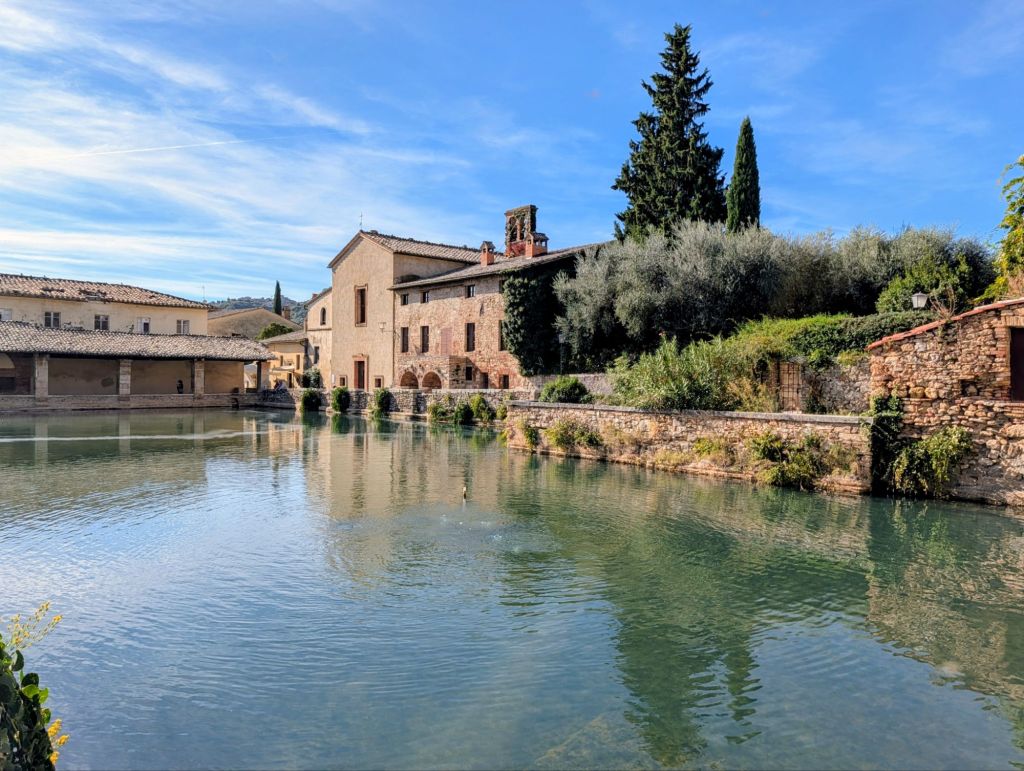
Not too far below Castle Vignoni is Bagno Vignoni.
It is a historic thermal village famous for its central square which is not a plaza; but, rather an open- air stone basin dating from the 16th Century which is 50 meters x 30 meters & is filled by naturally hot, mineral-rich water at around 125°F.
The hot water is due to the area’s volcanic geology.
The Etruscans & Romans both used the thermal springs here. In medieval times, Bagno Vignoni was used by pilgrims along the Via Francigena for a rest & relaxation stop.
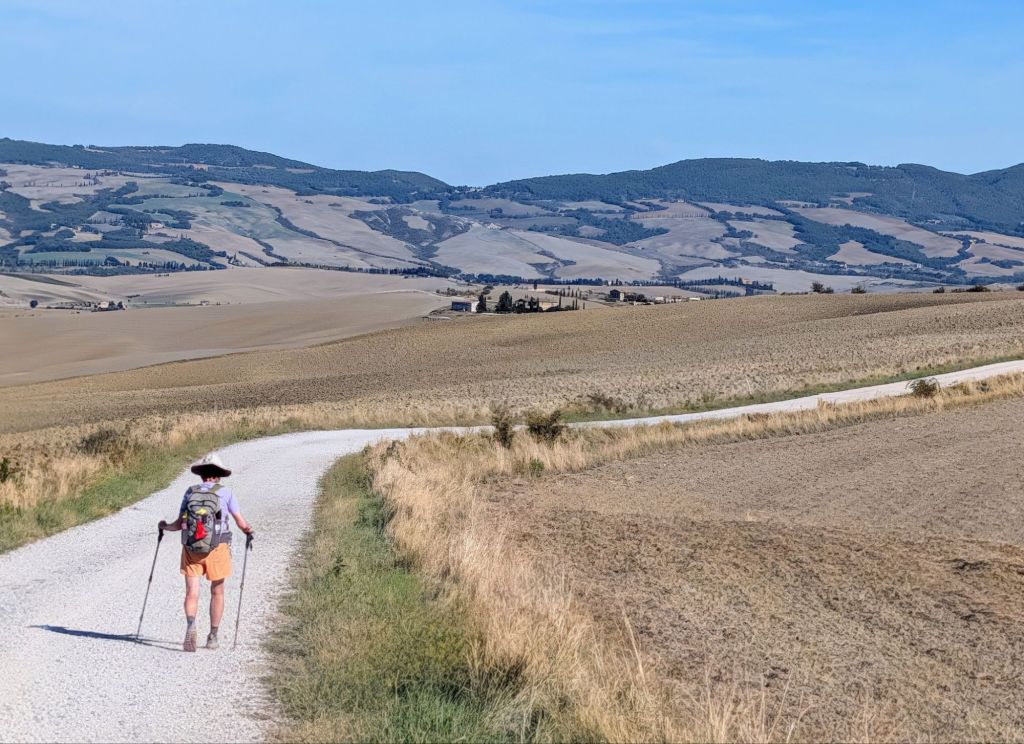
Here are some images from today’s long & winding road.
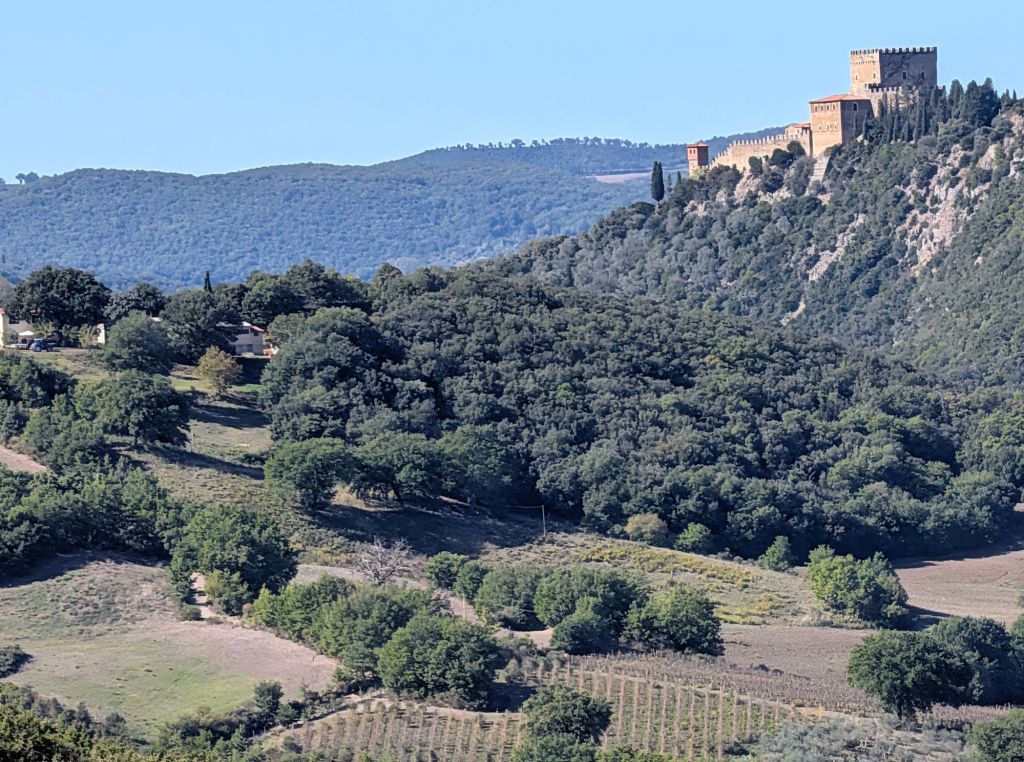
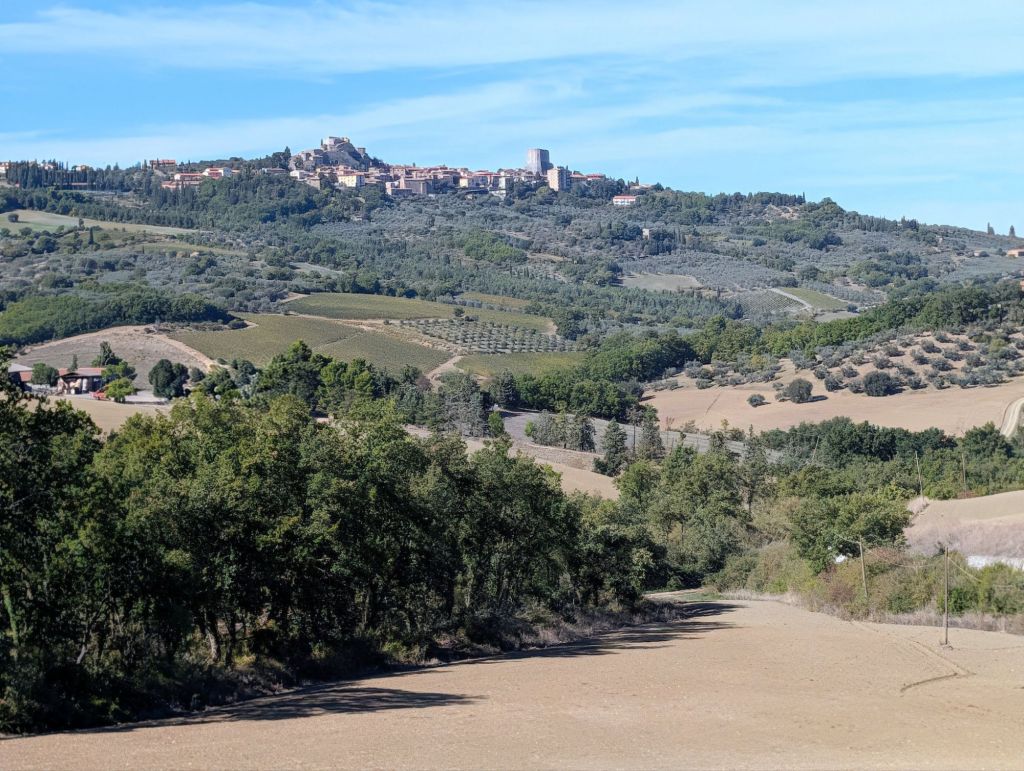
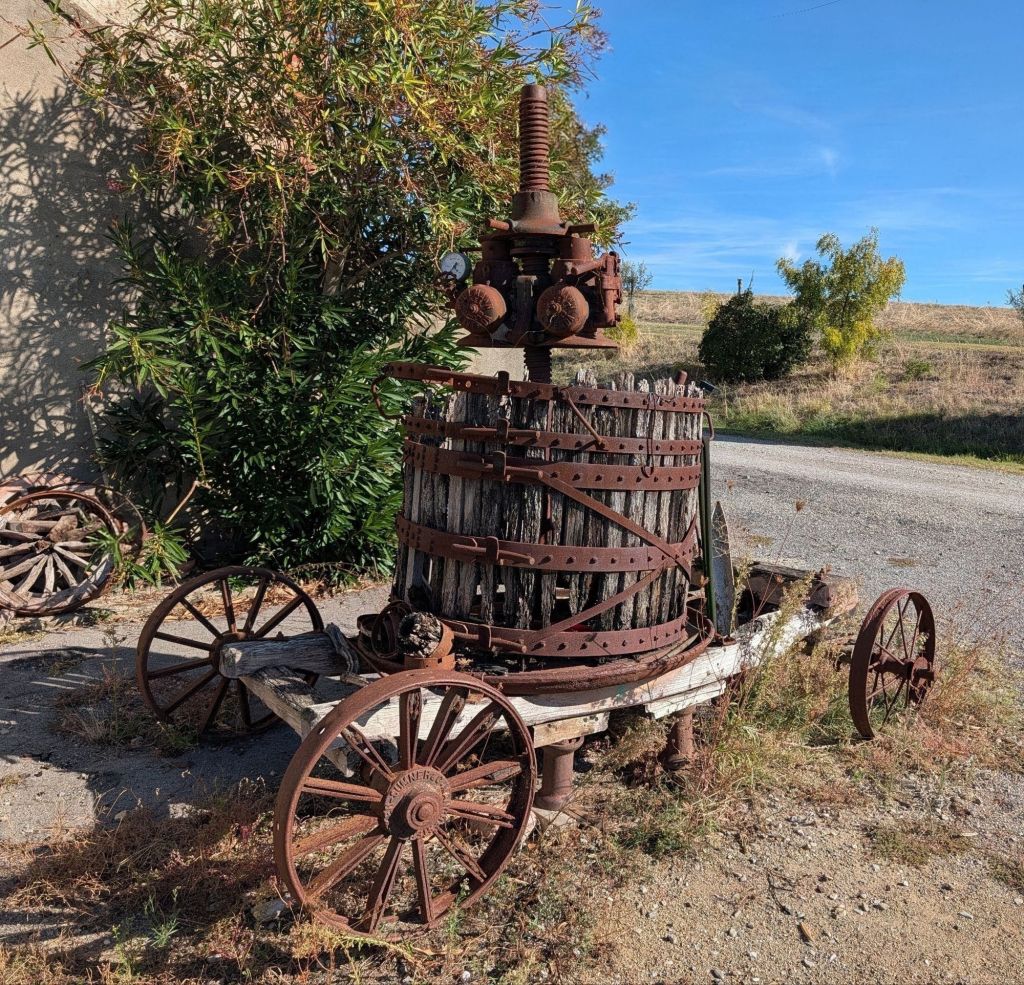
Castiglione d’Orcia on the hill Afternoon Break in any available shade Old Portable Wine Press
We are staying in Passalacqua which was founded in the Middle Ages on the Via Francigena adjacent to the 11th stage noted by the Archbishop of Canterbury Sigeric in 990AD.
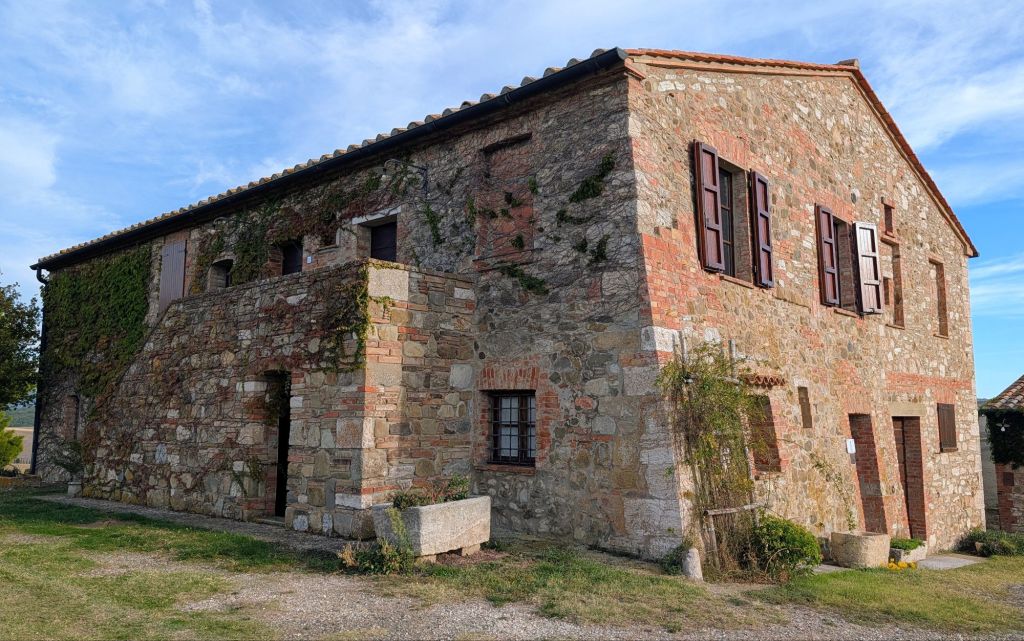
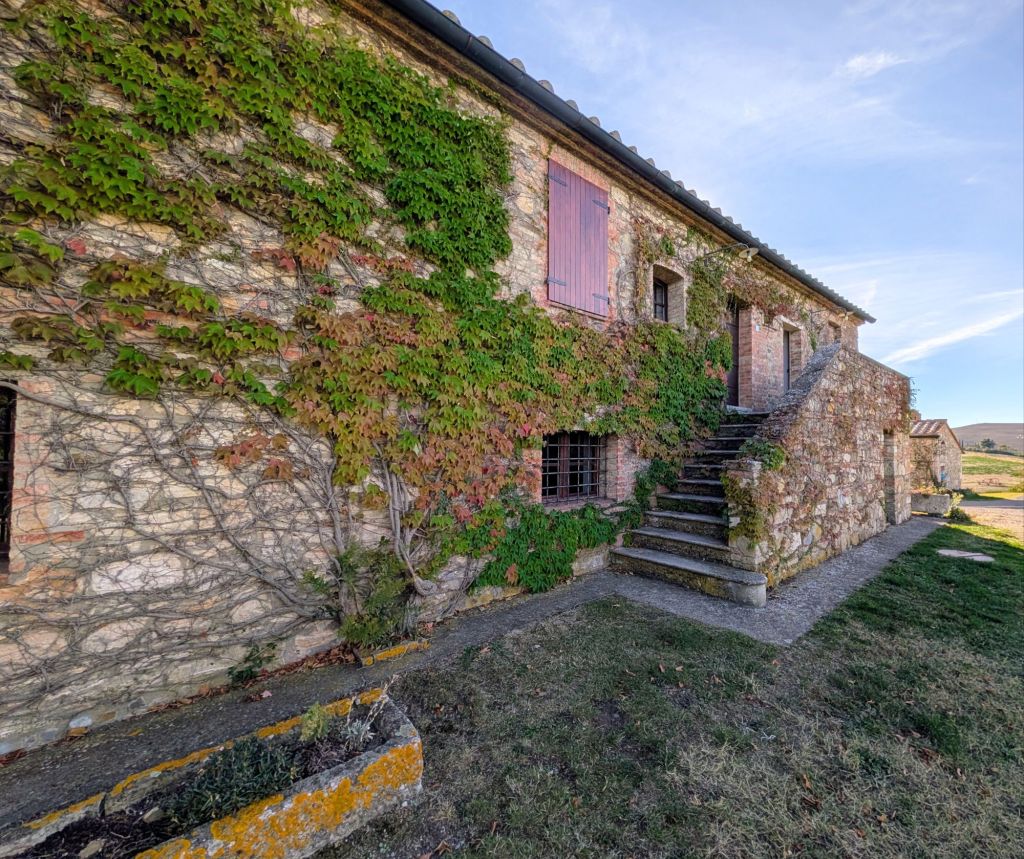
The stone farmhouse in which we are staying was built in the 14th century by the Salimbeni family.
Agriturismo Passalacqua
The Salimbeni were a powerful Ghibelline dynasty in Siena during the 13th & 14th Centuries.
In Italy, the Ghibellines represented the faction who supported the German/Holy Roman Emperor’s authority over Italian city-states & feudal domains.
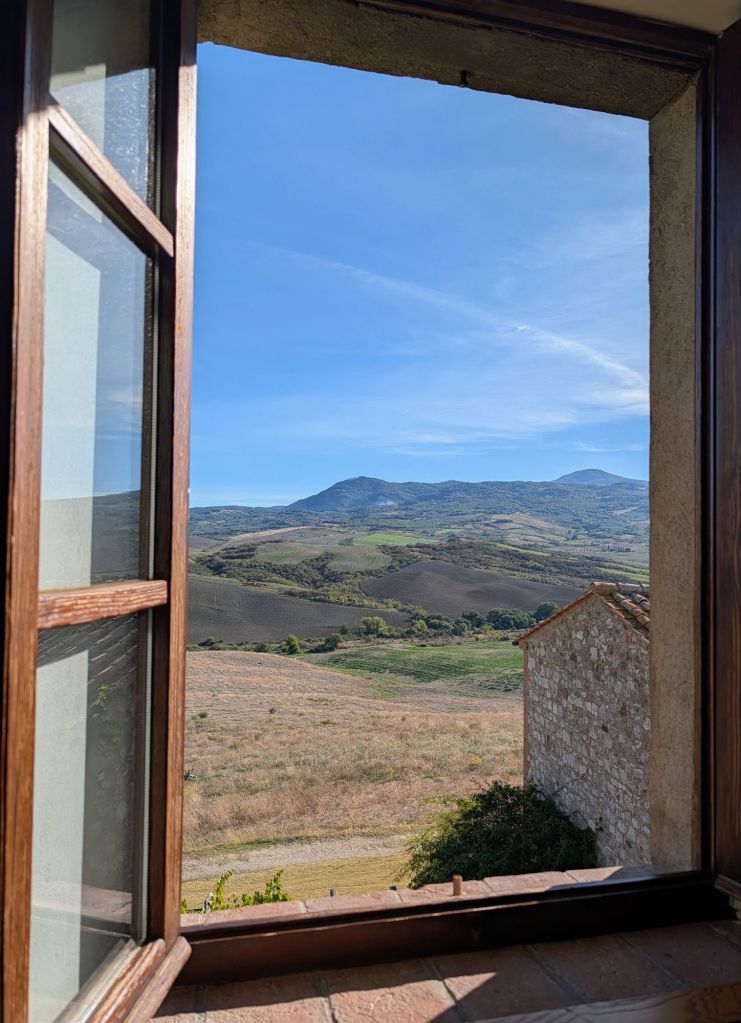
View from our room
The Salimbeni family built & owned all the castles in the above photos. They also controlled Bagno Vignoni with its thermal springs from the early 1300s until the early 1400s.
In 1472 in Siena, the Salimbeni family founded the Banca Monte dei Paschi di Siena. It was originally called Banca Monte di Pietà (Mount of Piety) to help the needy. It still exists based in Siens & it is the world’s oldest bank still in business.
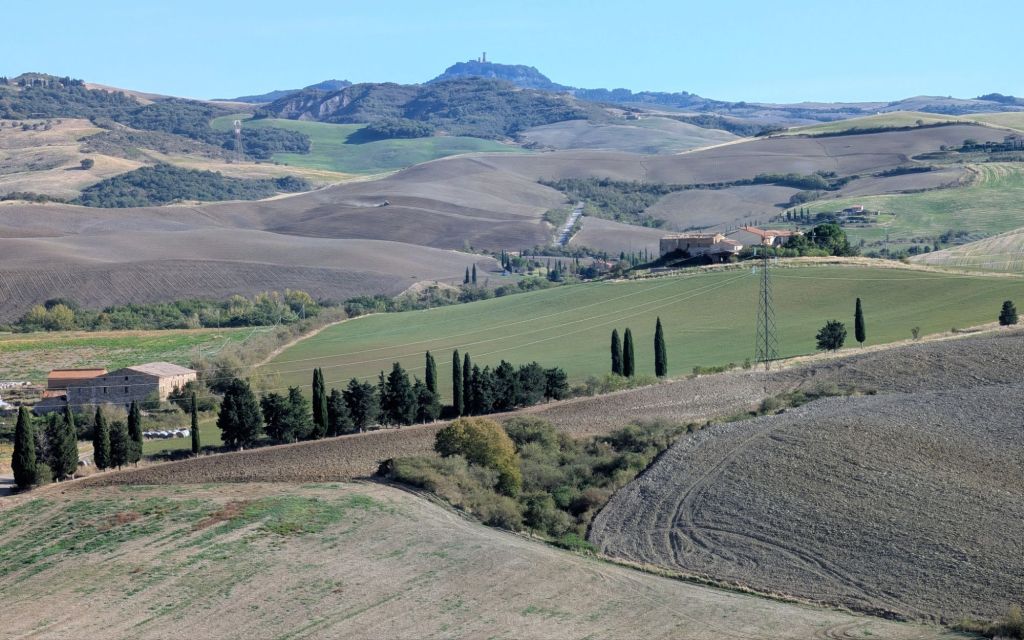
Tomorrow’s destination Radicofani is the extinct volcano in the distance topped by a tower.
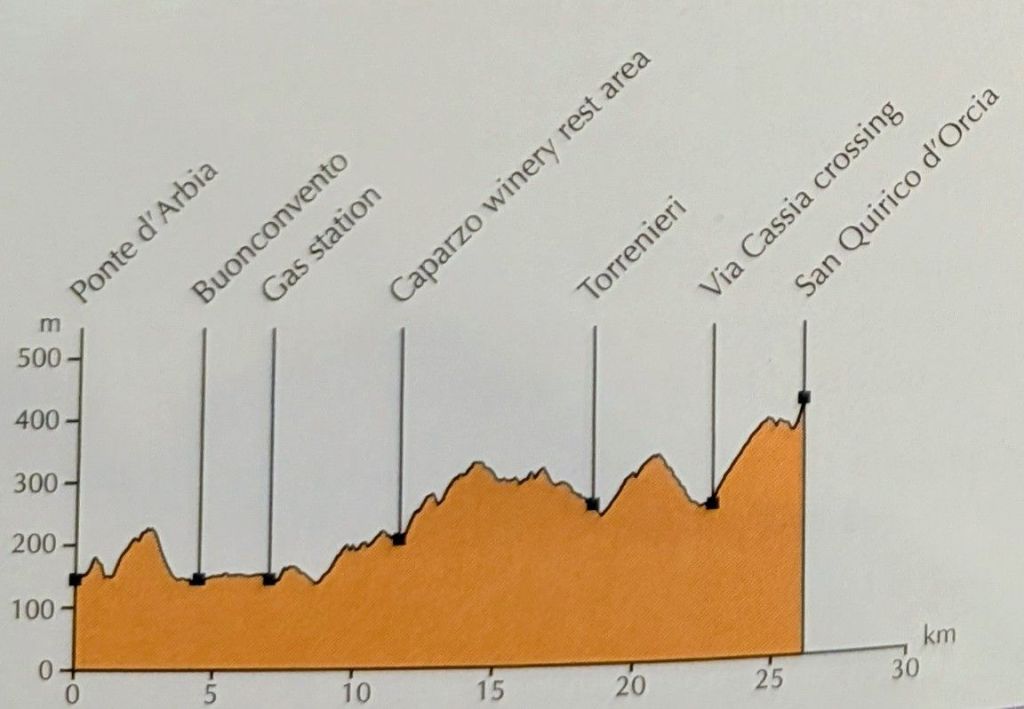
18.8 Miles; 8.5 Hours on the trail (Cumulative: 141.6 Miles; 68.4 Hours on the trail)
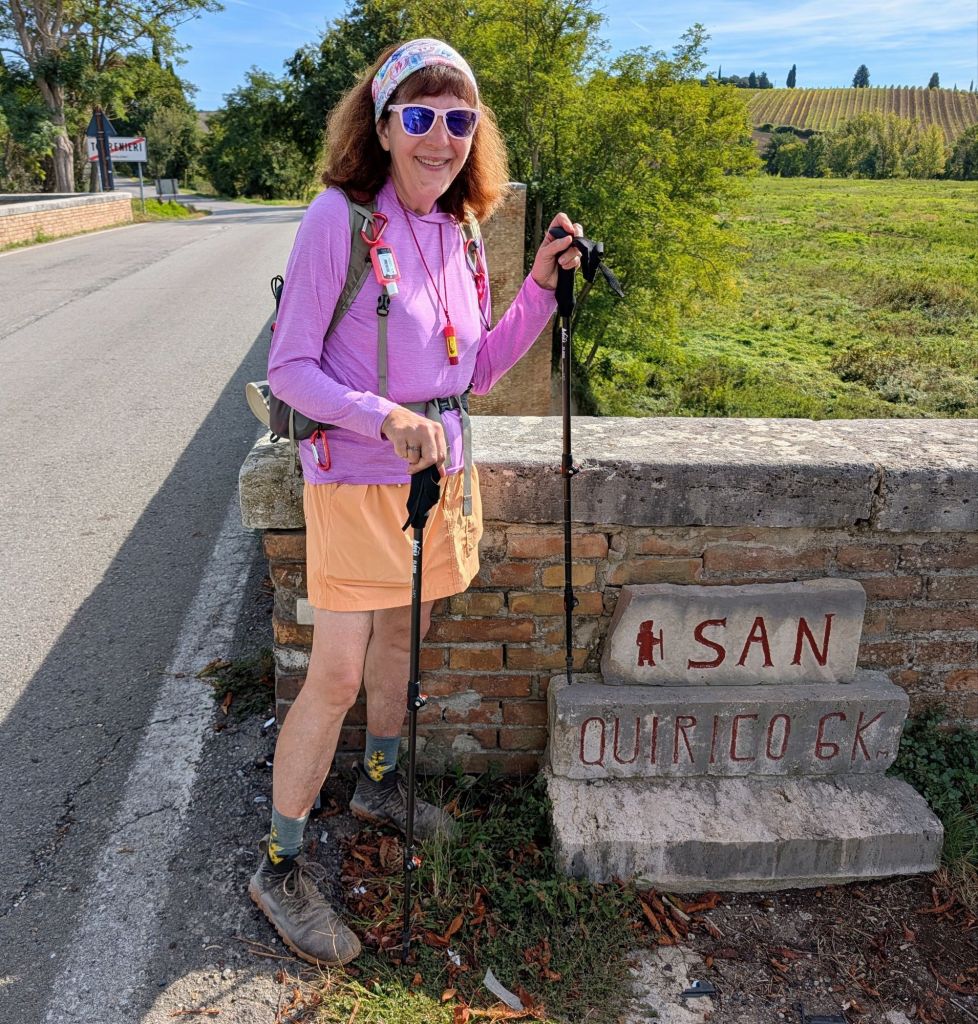
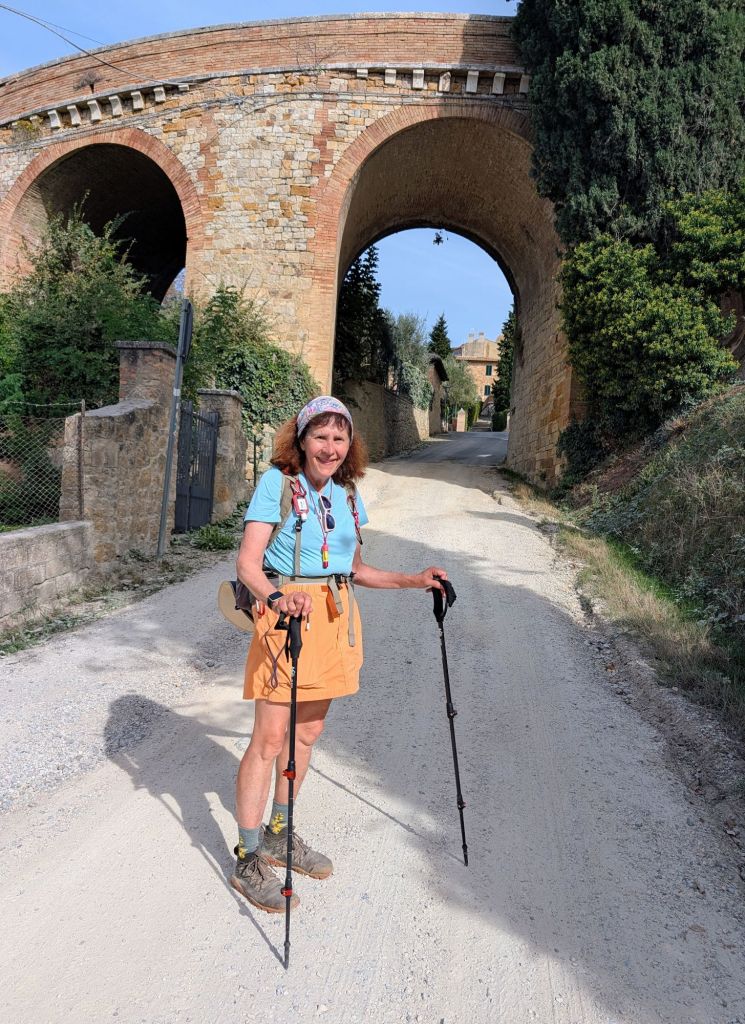
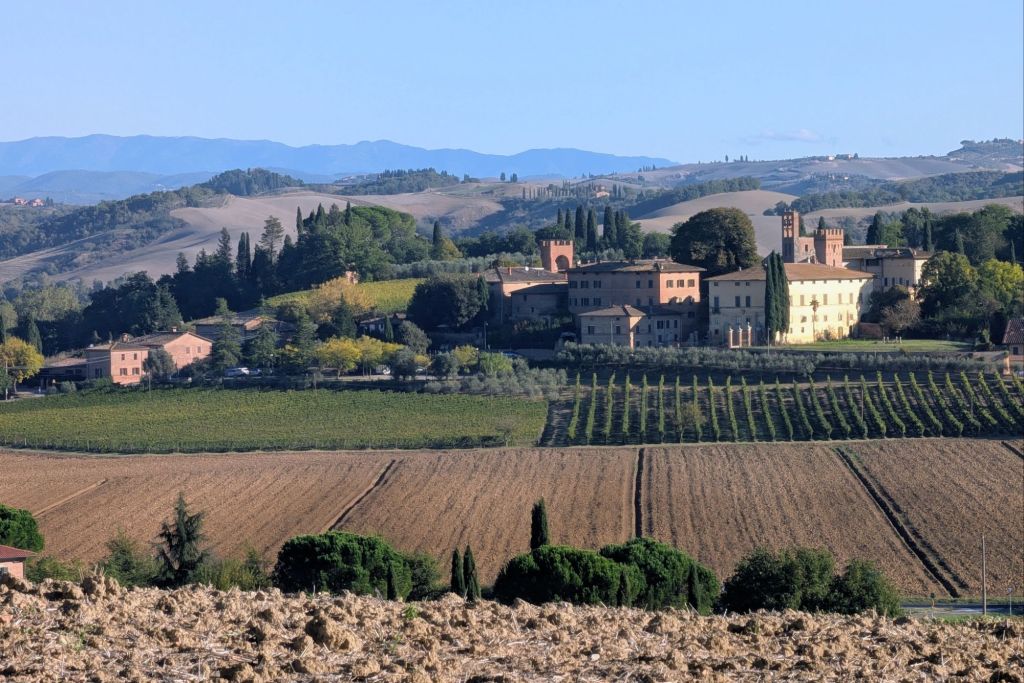
The walk to San Quirico d’Orcia was quite a mix of uphill & downhill slopes in the rolling hills along earthen tracks known as the famous Tuscan “white roads” which are also called caliche roads in other places.
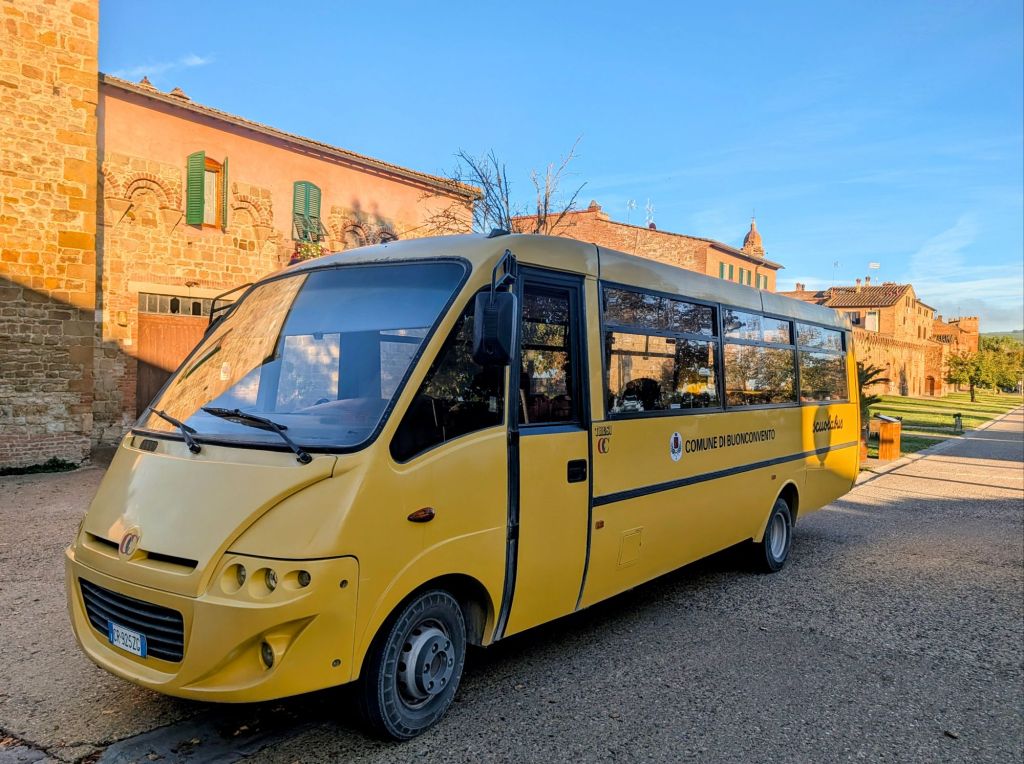
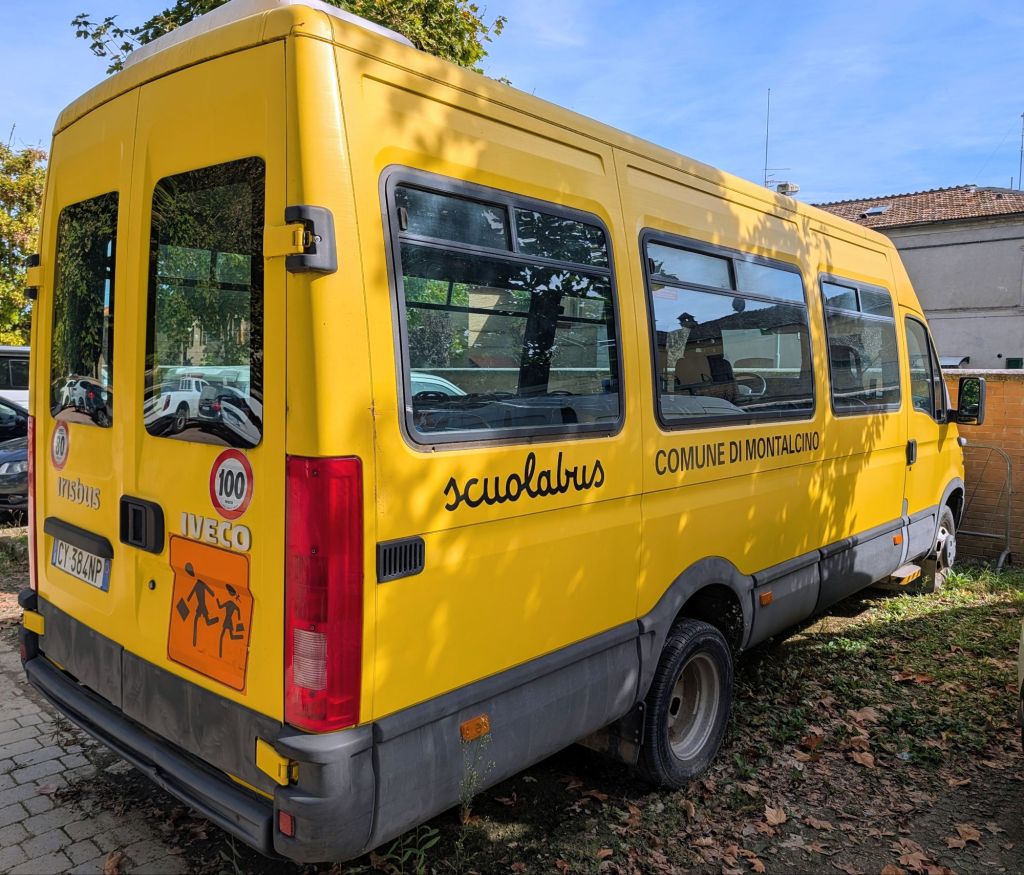
Starting in the morning, we saw a couple yellow school buses like America has. Most countries use public transportation to get kids to school. Italy is one of the few places we have ever seen that has dedicated school buses.
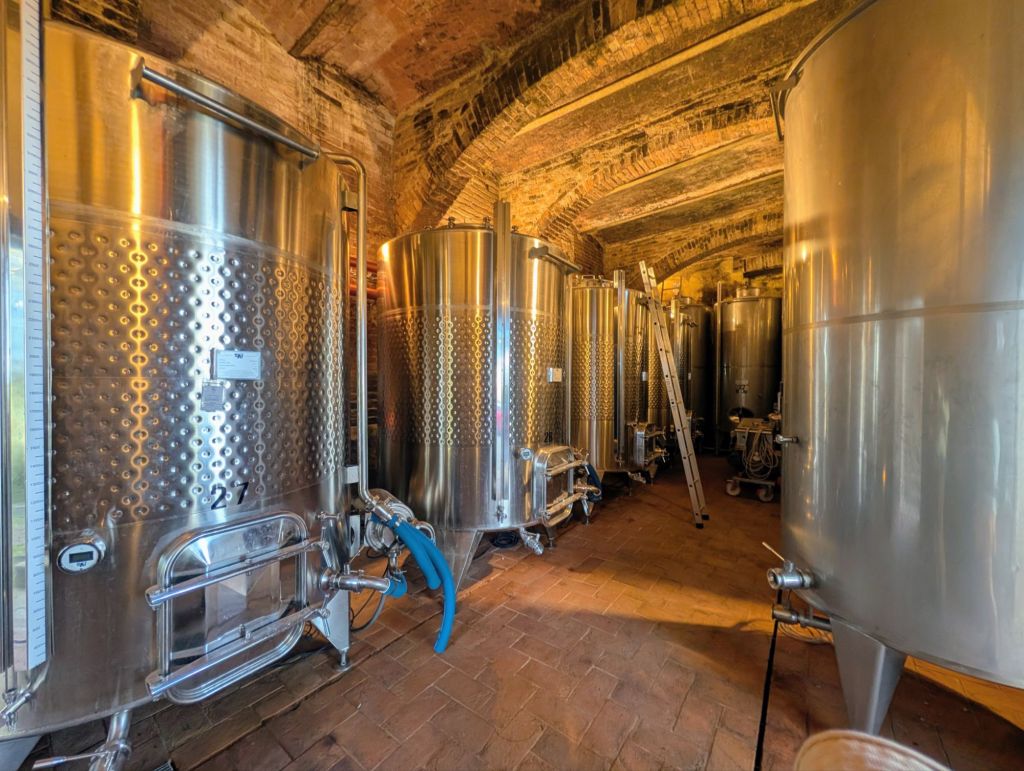
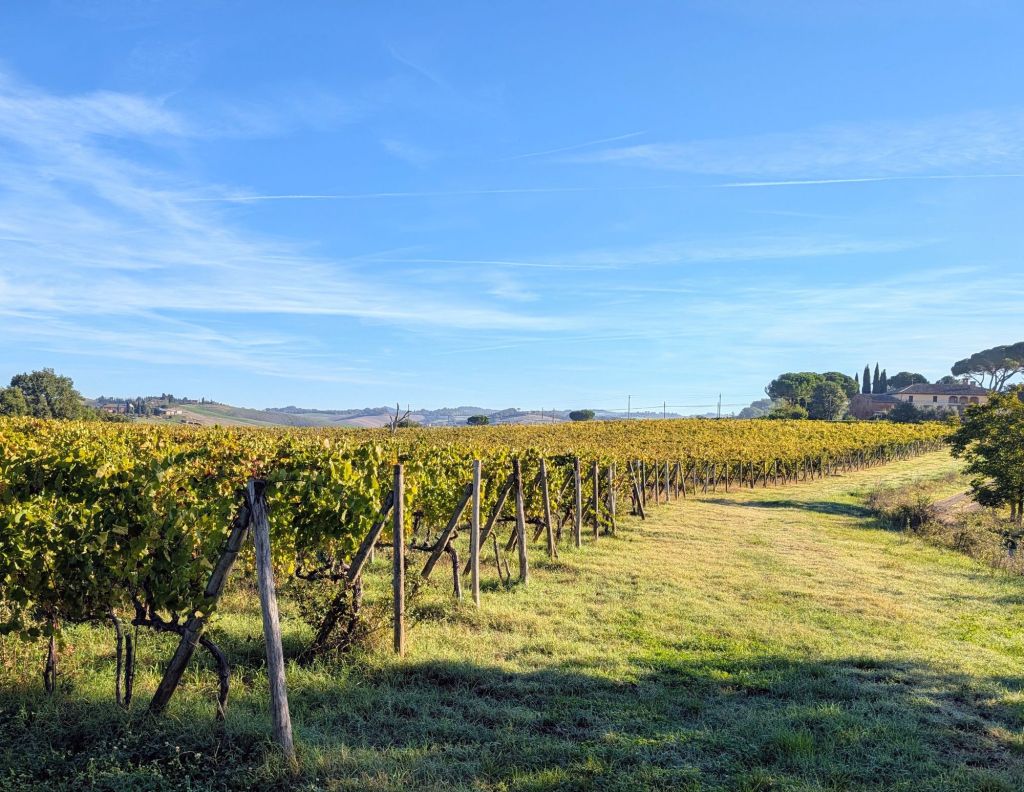
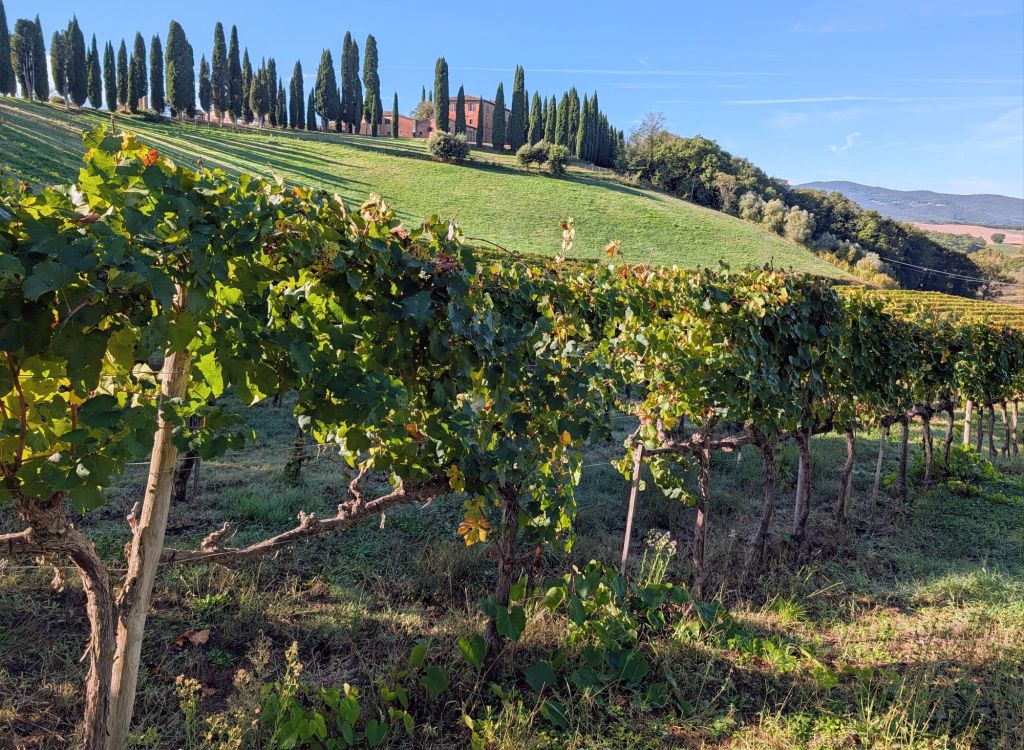
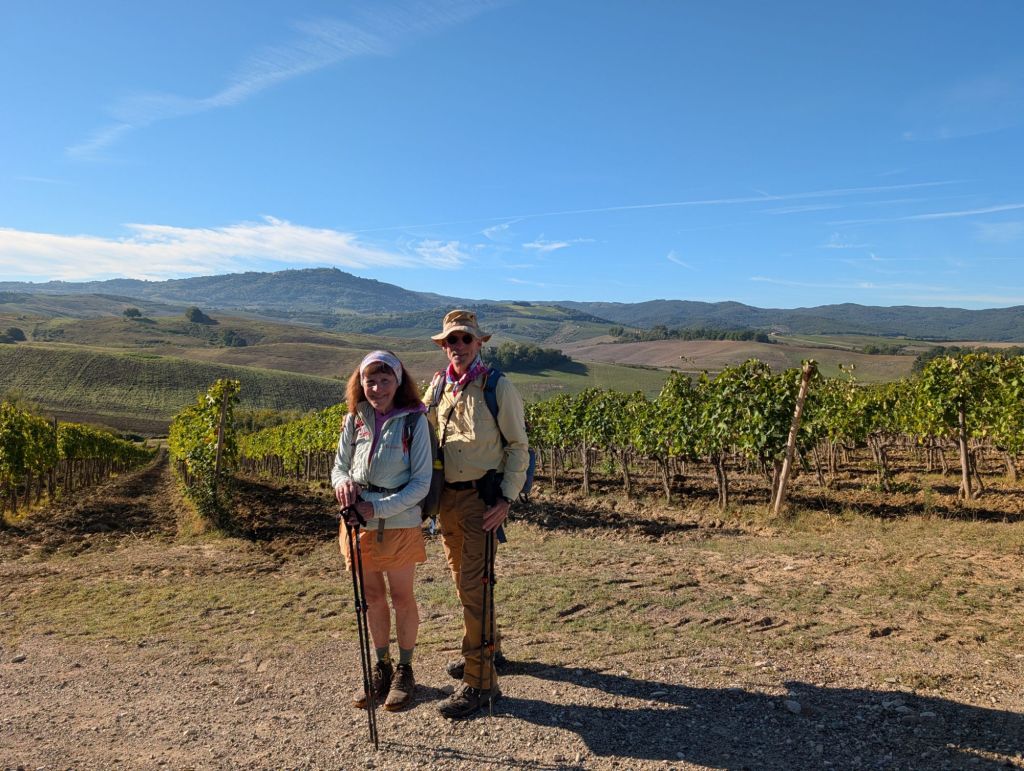
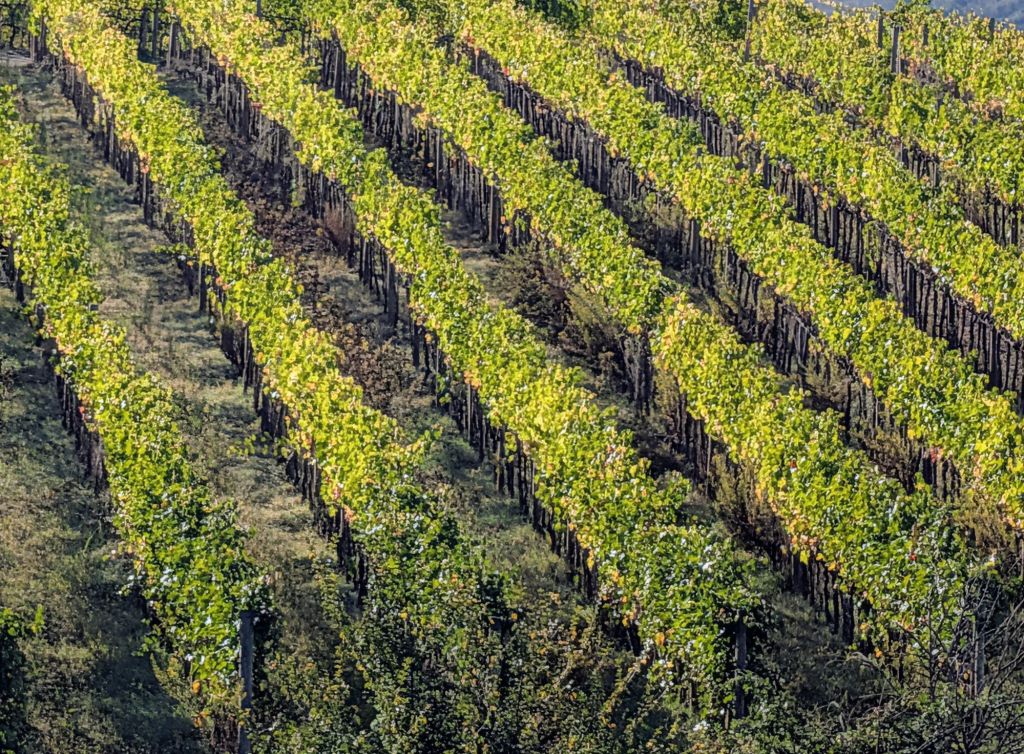
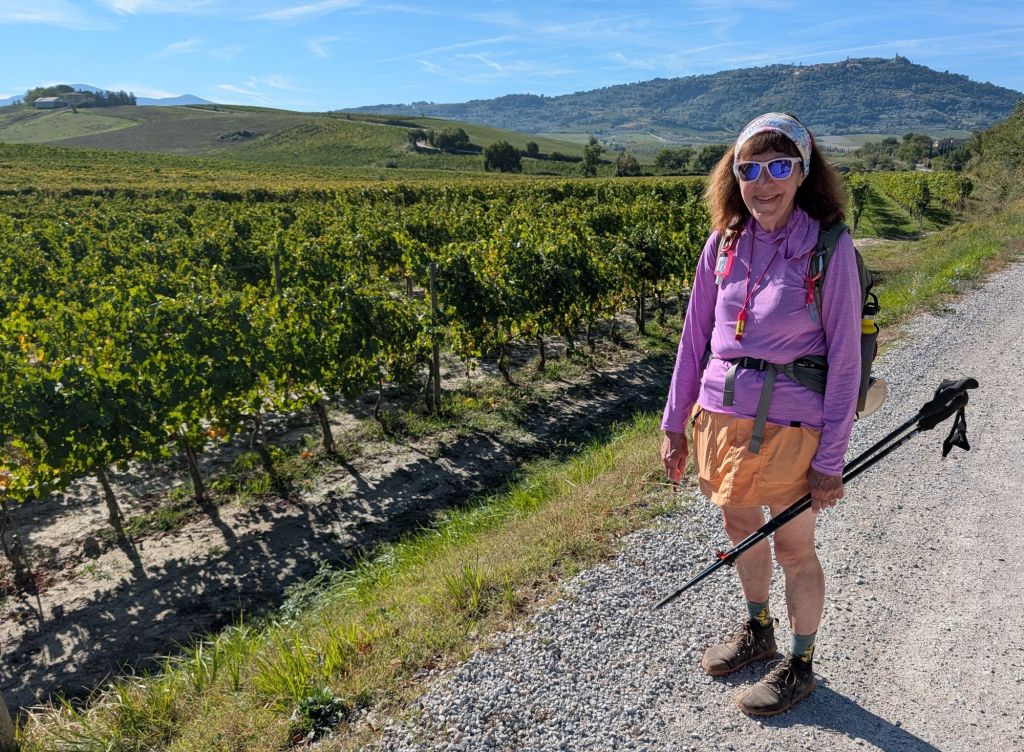
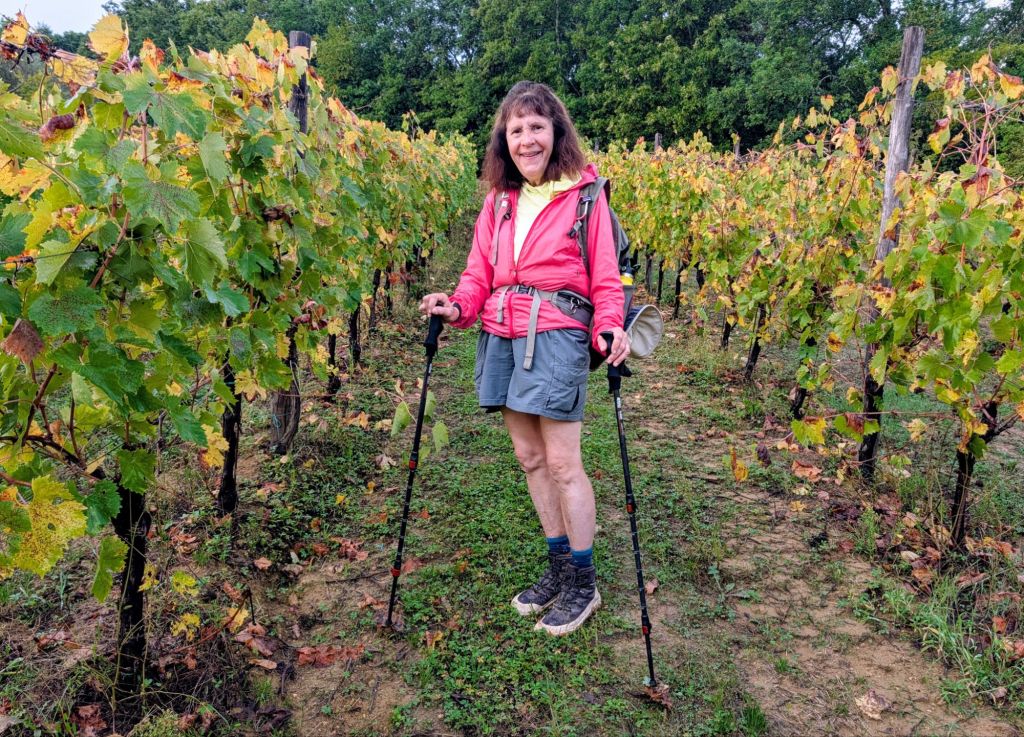
We walked past several huge wineries in the Montalcino hills with large vineyards growing Brunello di Montalcino grapes. There was a strong wine aroma wafting in the air from a good distance away from each winery.
Brunello di Montalcino wines are rated among Italy’s best wines & certainly its most expensive wines. They were first mentioned in the 14th Century & thought to be a separate grape variety; but, in 1879, it was determined that Brunello vines are actually Sangiovese.
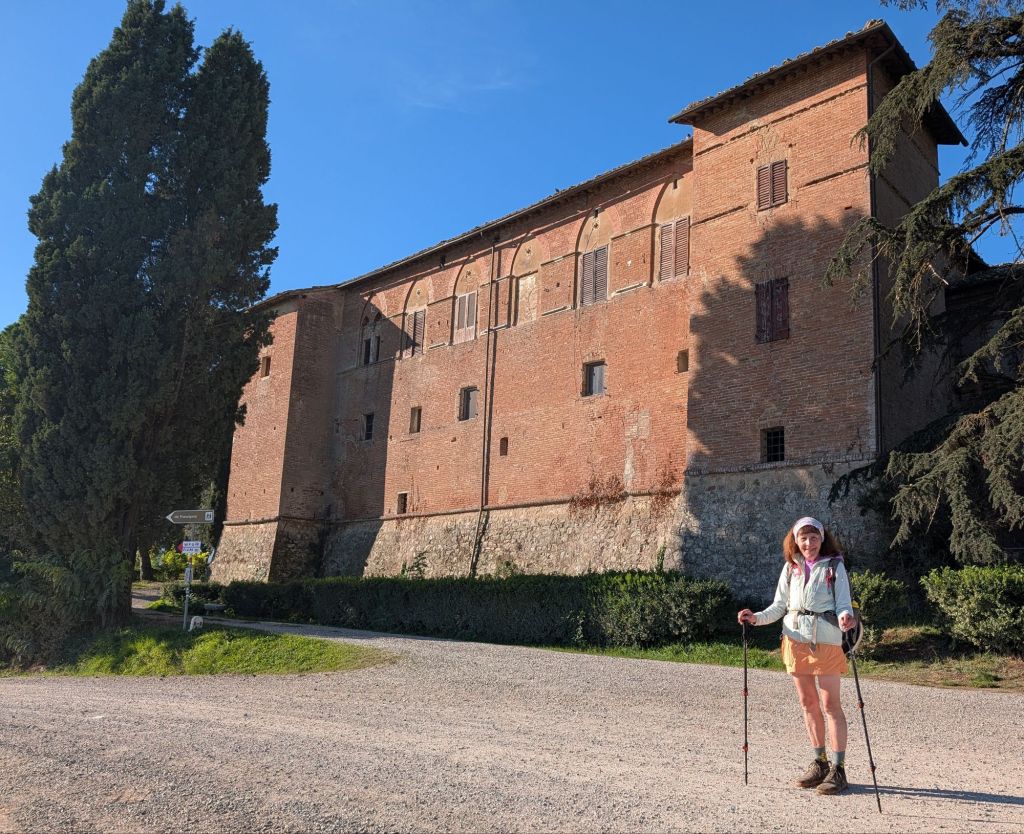
The first vineyard belonged to the Tricerchi Winery. The Castle Tricerchi is named for the family who built it in 1441 & whose family ancestors still own it. This winery is 400 hectares in size which is almost 988 acres.
The next winery along the way was Altesino which is housed in the 15th Century Palazzo Altesi which was also built by the Tricerchi family. It is 100 hectares in size which is about 247 acres.
Altesino’s Palazzo AltesiHiking through Altesino’s vineyardsAltesino’s vines
The third winery we passed was Caparzo. The origins for the place name Caparzo are still unknown. According to some, the name is derived from “Ca’ Pazzo” which is shown on ancient maps. According to others, the term derives from the Latin “Caput Arsum” which means “a place touched by the sun”.
In any case, Caparzo winery dates back to 1960s when a group of friends who were fond of Tuscany & of wine, purchased an old ruin with vineyards in Montalcino & turned it into a very successful business.
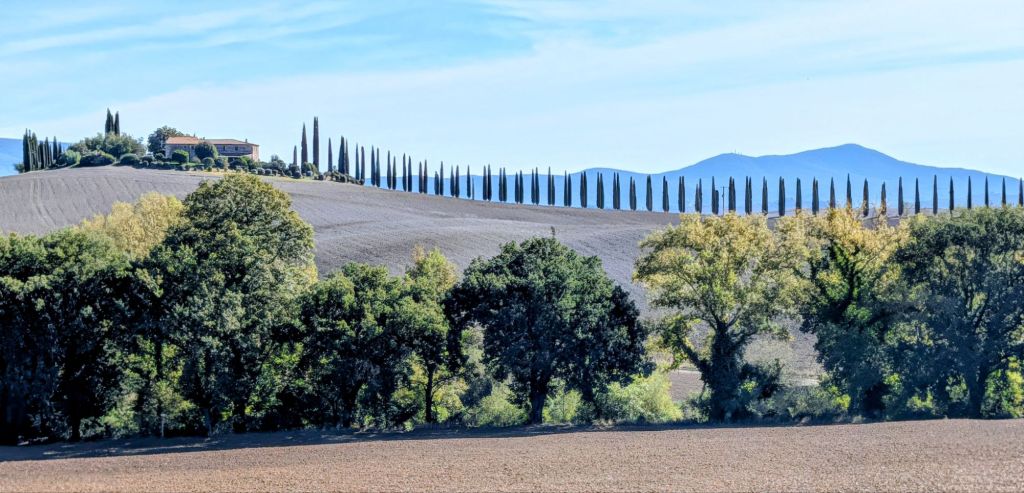
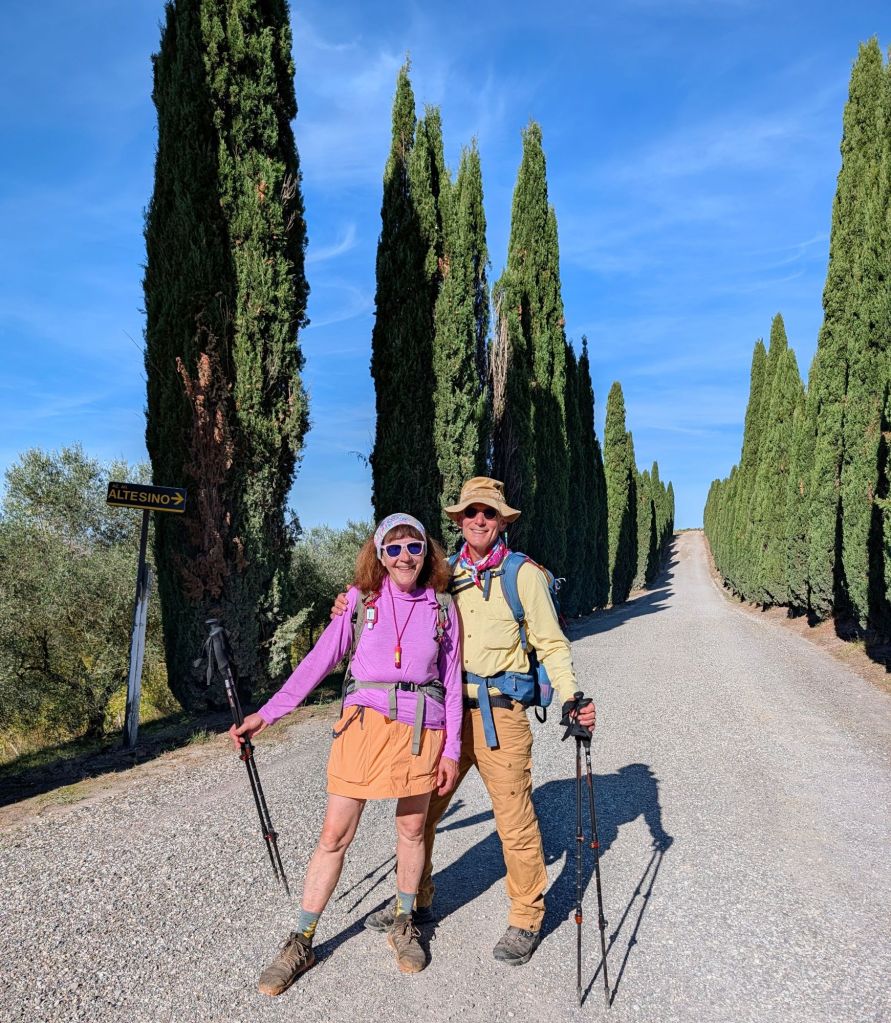
Cypress Trees lining the road to Caprazo
Caparzo is 200 hectares in size which is about 494 acres. Their grape vine density is 5,000 plants per hectare on average.
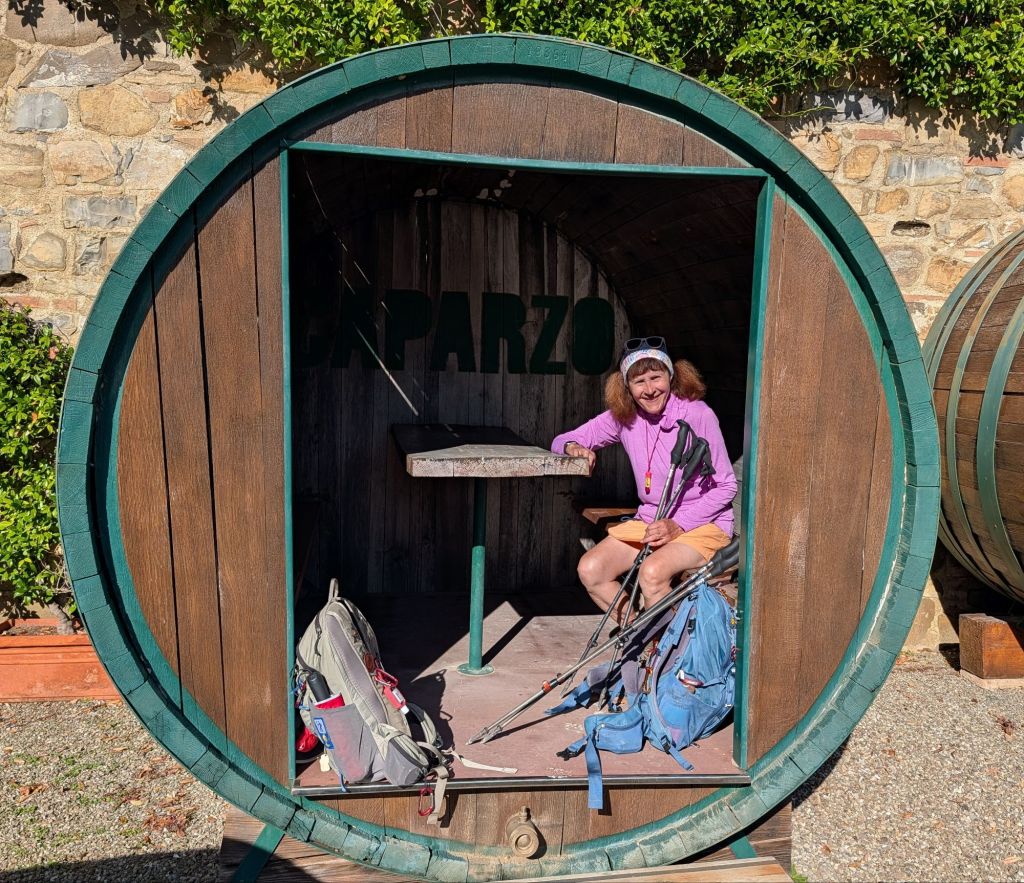
Taking a break in a Caprazo wine barrelCaprazo vineyards
Some images from the trail:
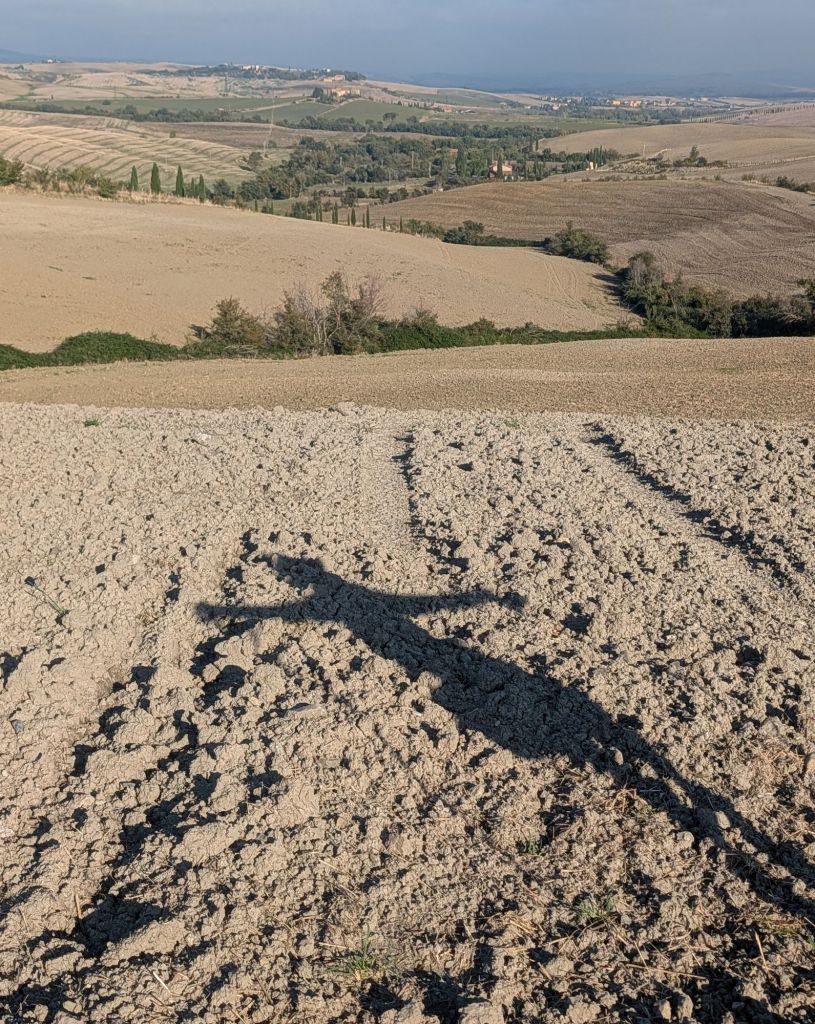
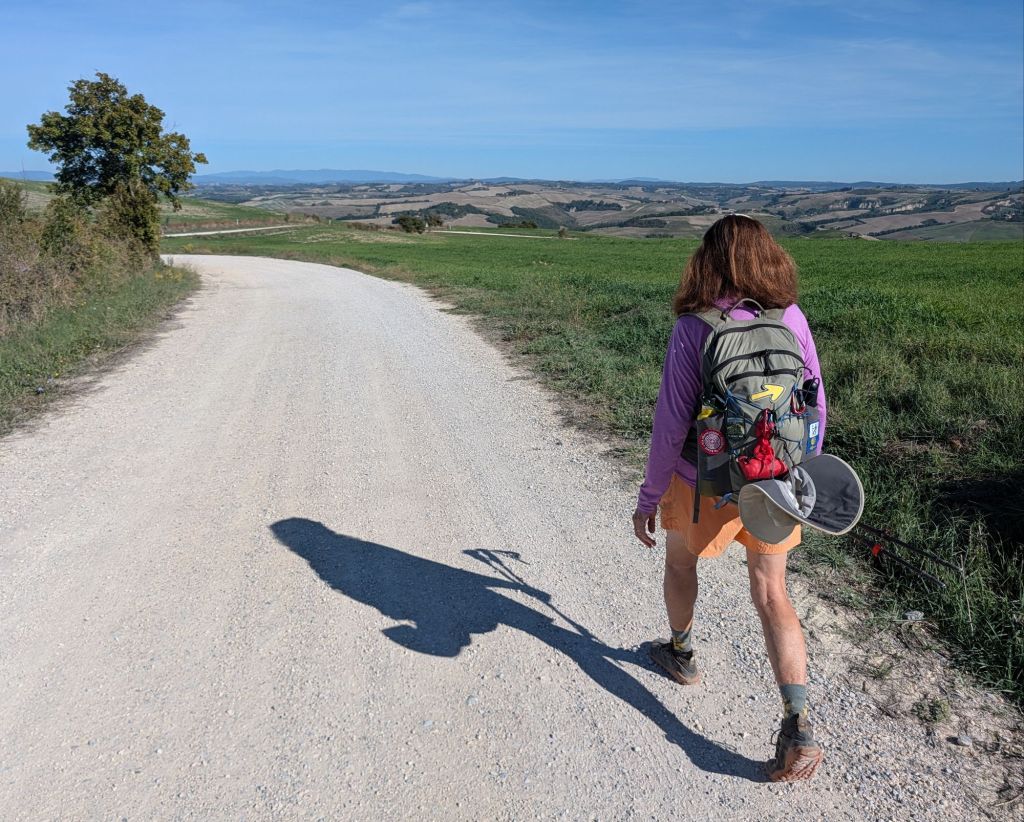
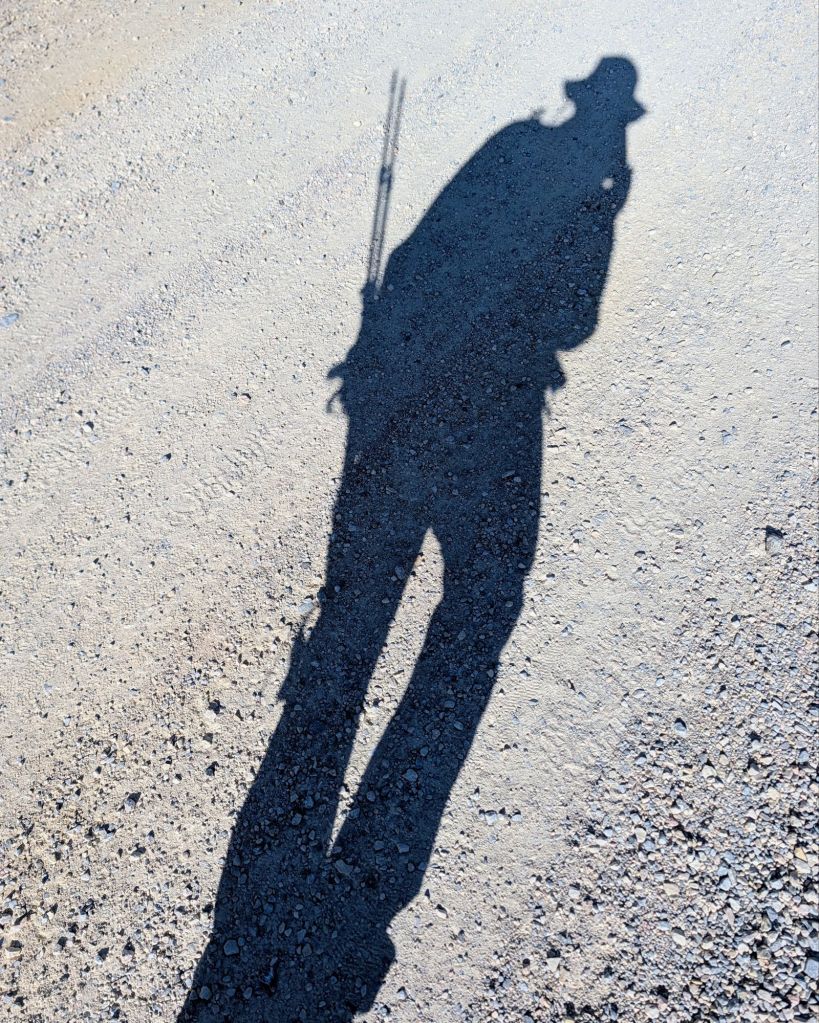
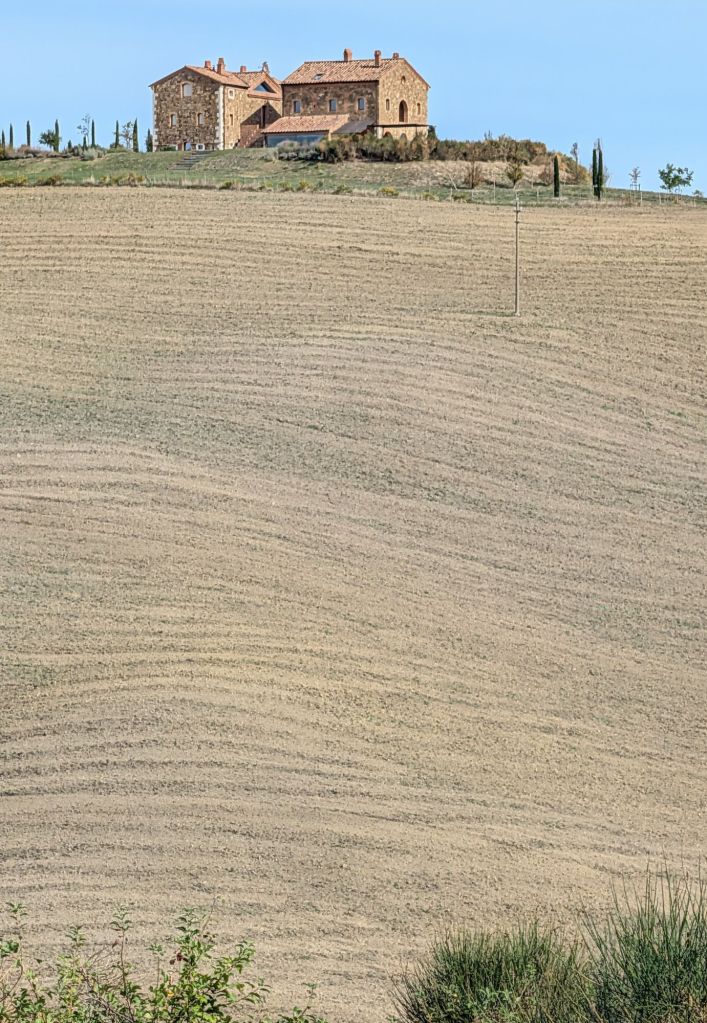
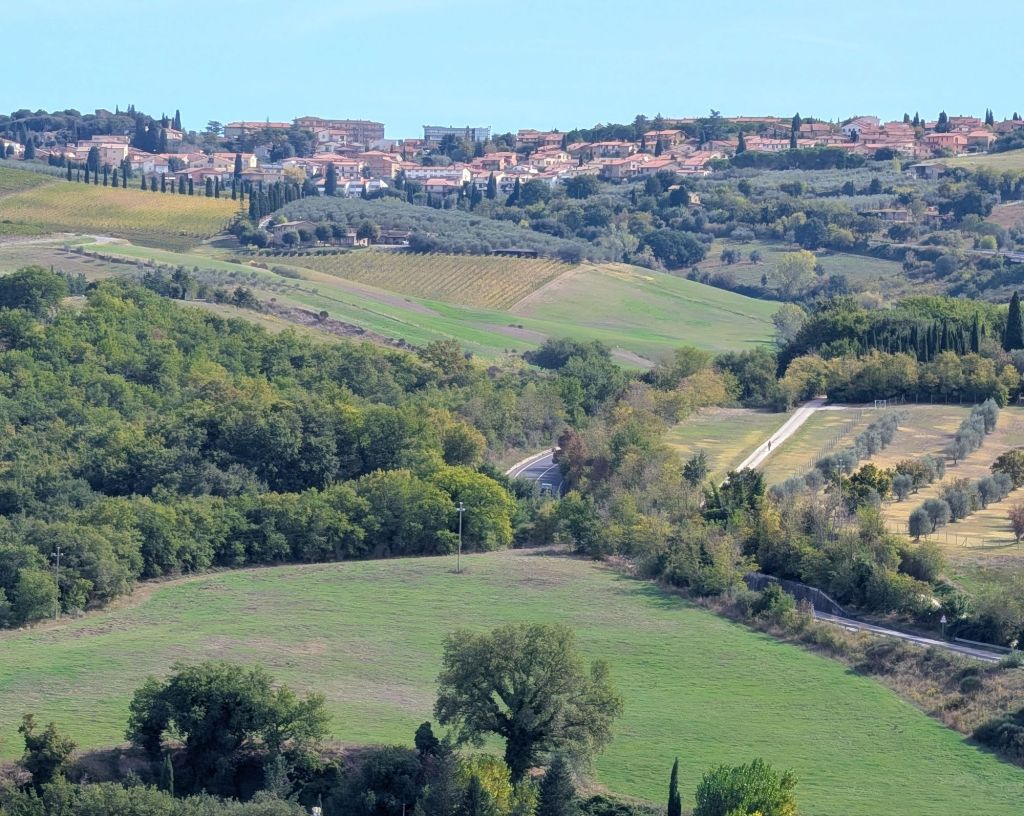
Still on the way to RomeTuscany’s White RoadShadow selfieOn the way to San Quirico House on a Tuscan hillSan Quirico d’Orcia in the distance about two hours away
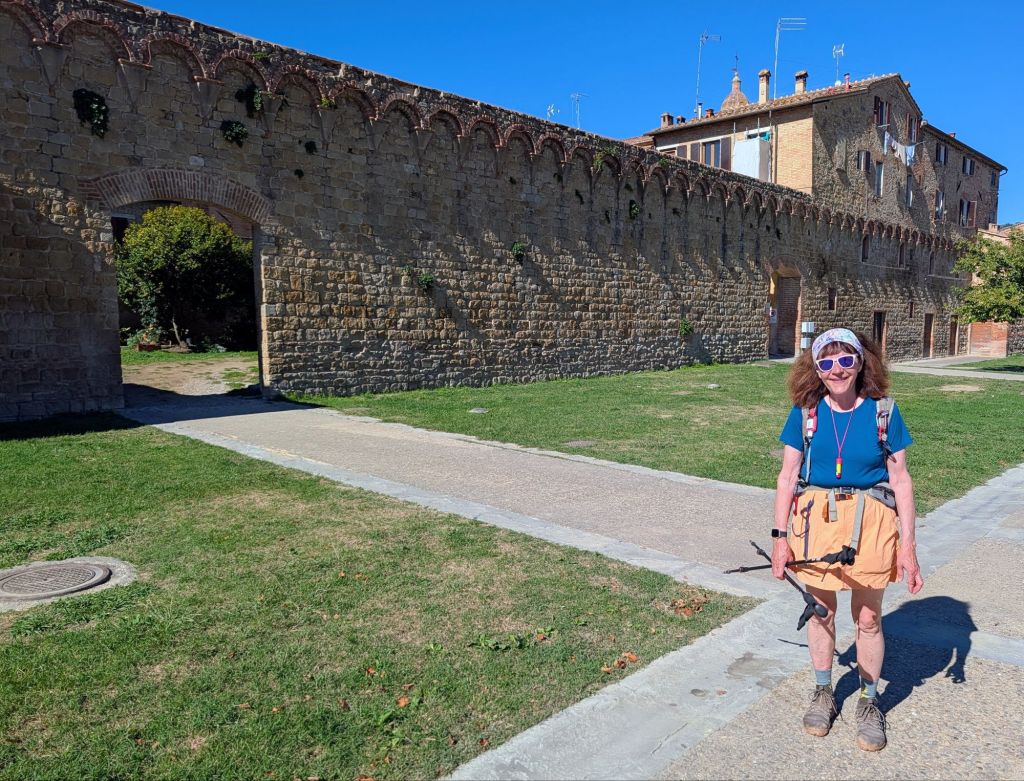
San Quirico d’Orcia is a historic walled village in Tuscany’s Val d’Orcia region famous for its Renaissance gardens, medieval architecture, & iconic surrounding countryside.
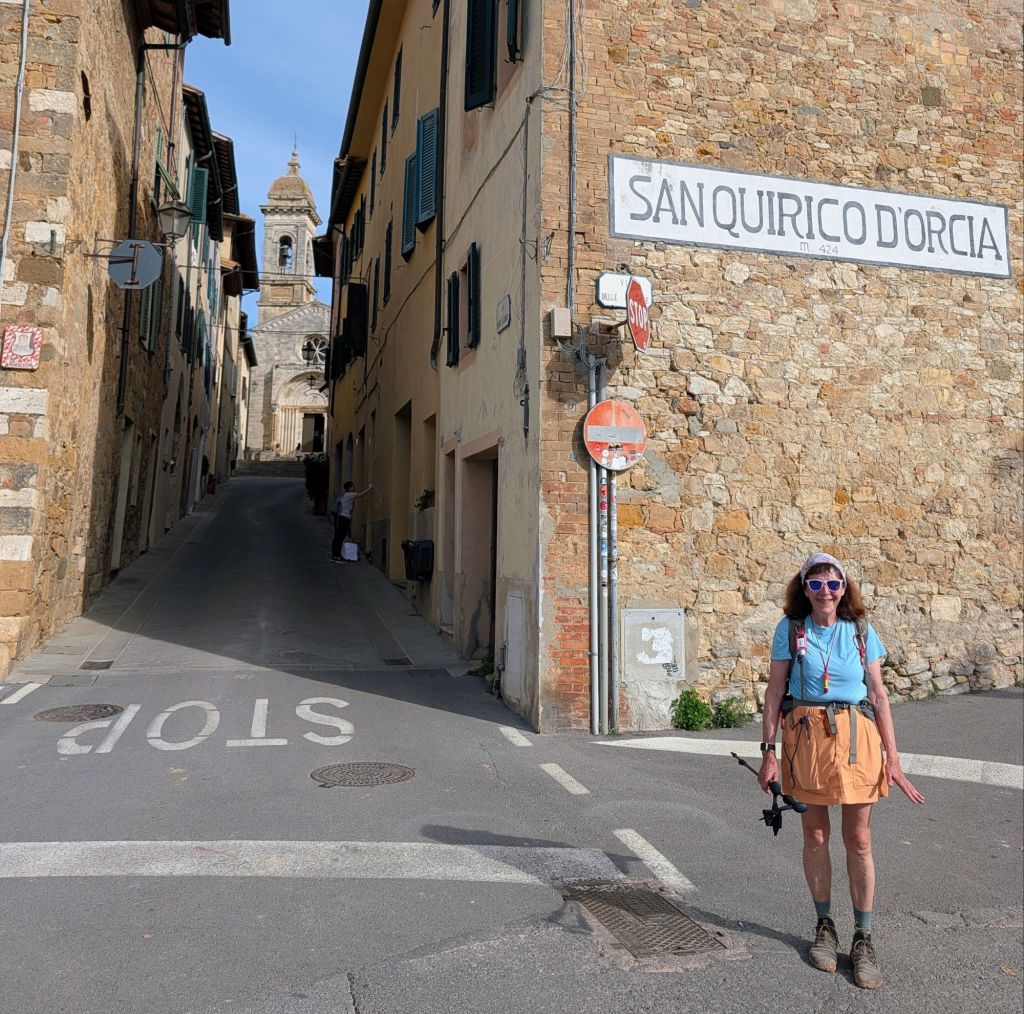
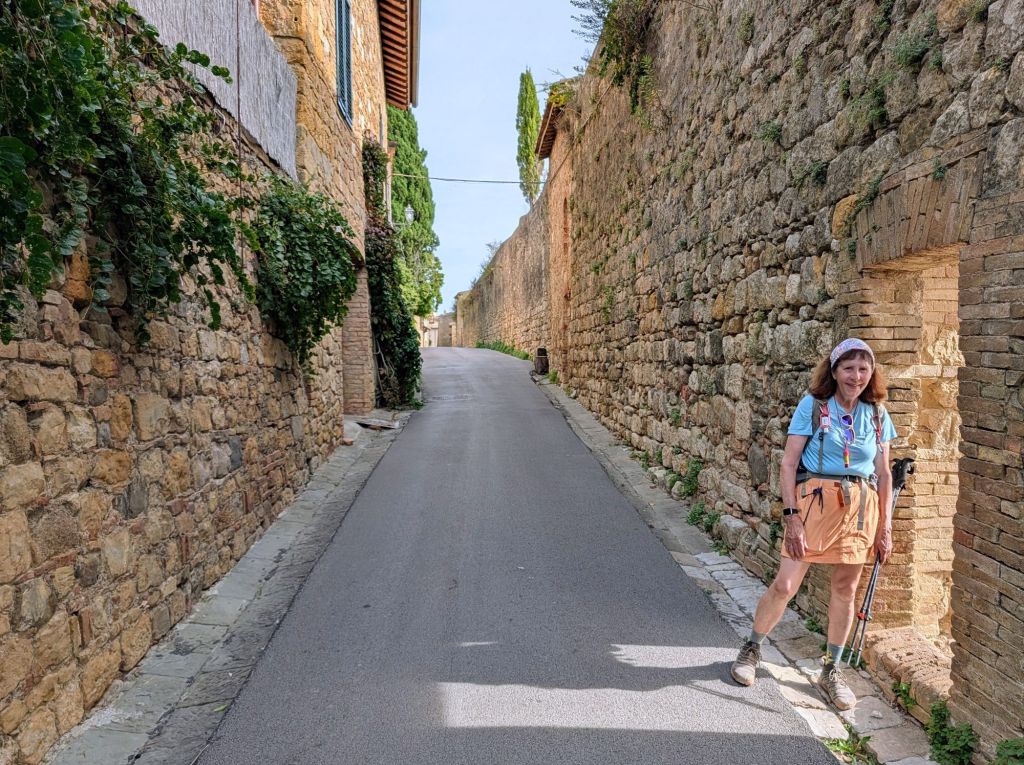
Entering San QuiricoIn San QuiricoSan Quirico City Wall
The town is named for the Syrian Saint Cyricus whose name in Italian is Quirico. He along with his mother Julitta were martyred in the 4th Century.
The Collegiate Church of Saints Quirico & Giulitta
The Collegiate Church of Saints Quirico & Giulitta is first mentioned in documents as far back as the 8th Century. The current church dates from the 12th Century. It is named for Quirico & his mother.
Porta Nuova & Piazza della Liberta
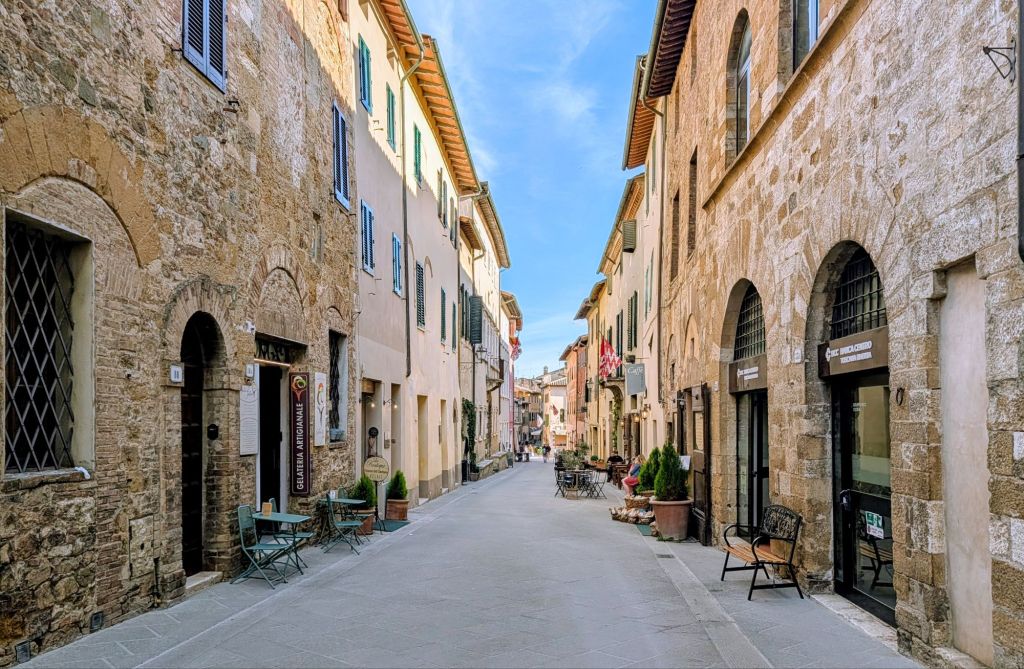
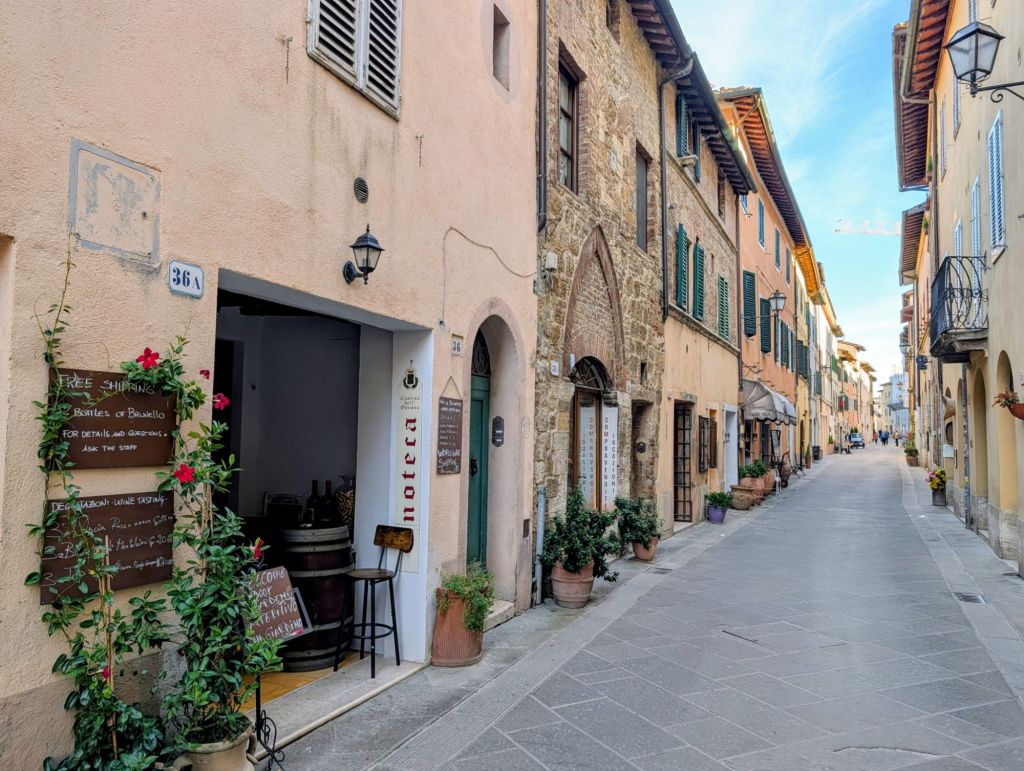
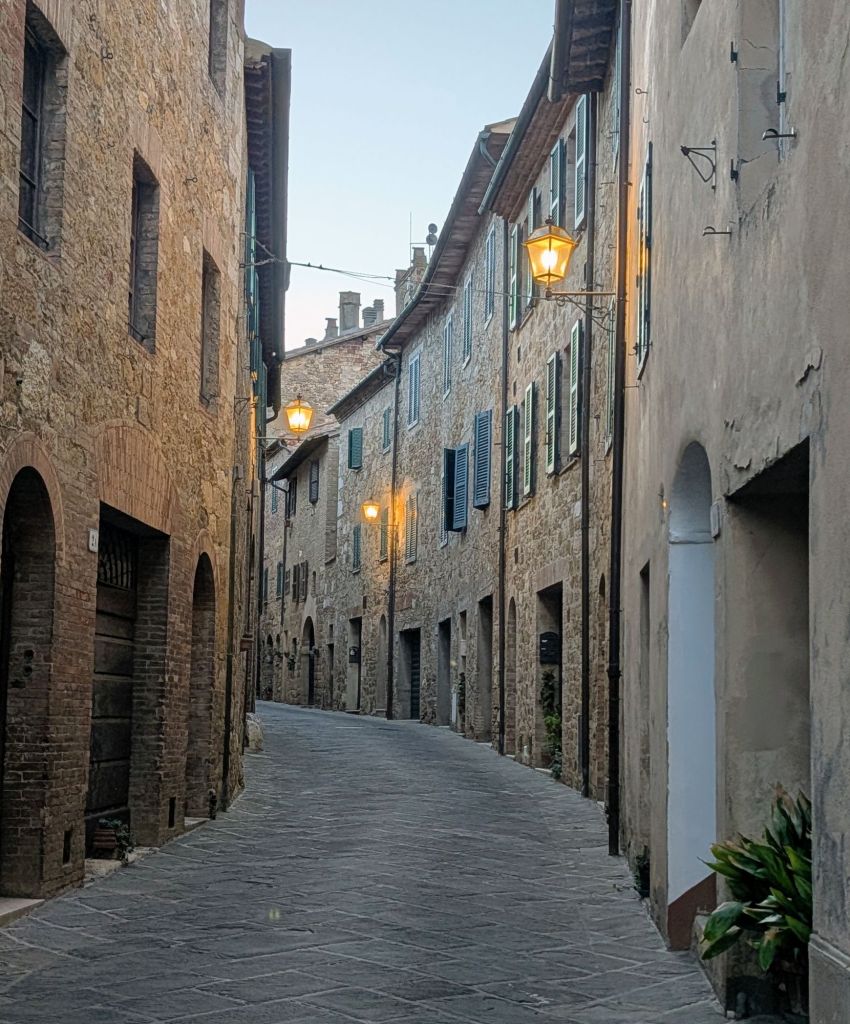
San Quirico streets
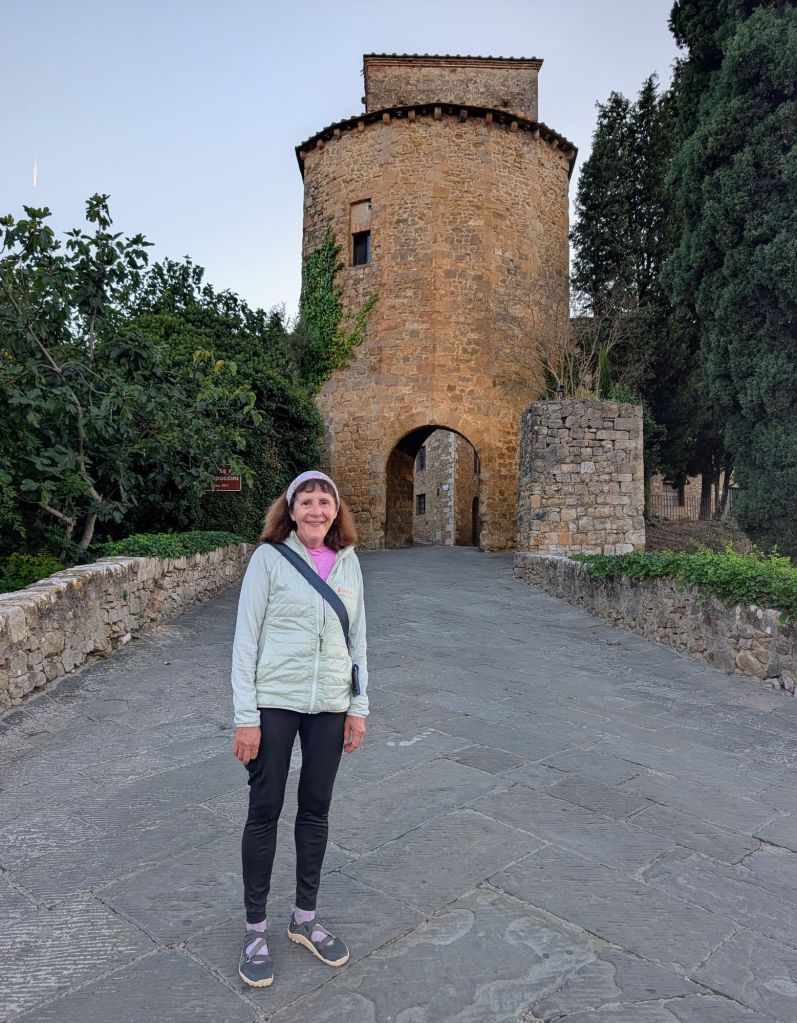
Porta ai Cappuccini
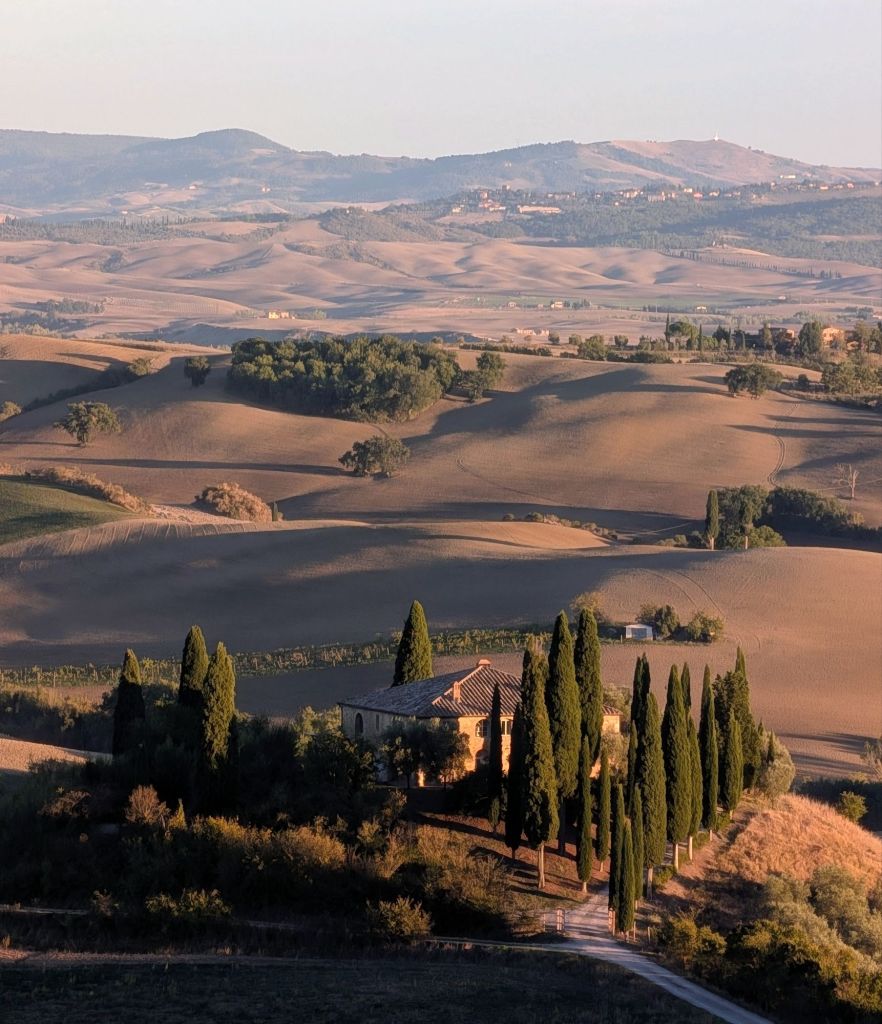
After exploring San Quirico, we walked a little farther outside town to see Podere Belvedere which rates among Tuscany’s most famous stone farmhouses.
9.2 Miles; 4.5 Hours on the trail (Cumulative 122.8 Miles; 59.9 Hours on the trail)
Lucignano d’Arbia
Today’s hike started with a little nip in the air because the temperature was 46 degrees.
Almost as soon as we departed, we walked up a big hill, so we warmed up very quickly.
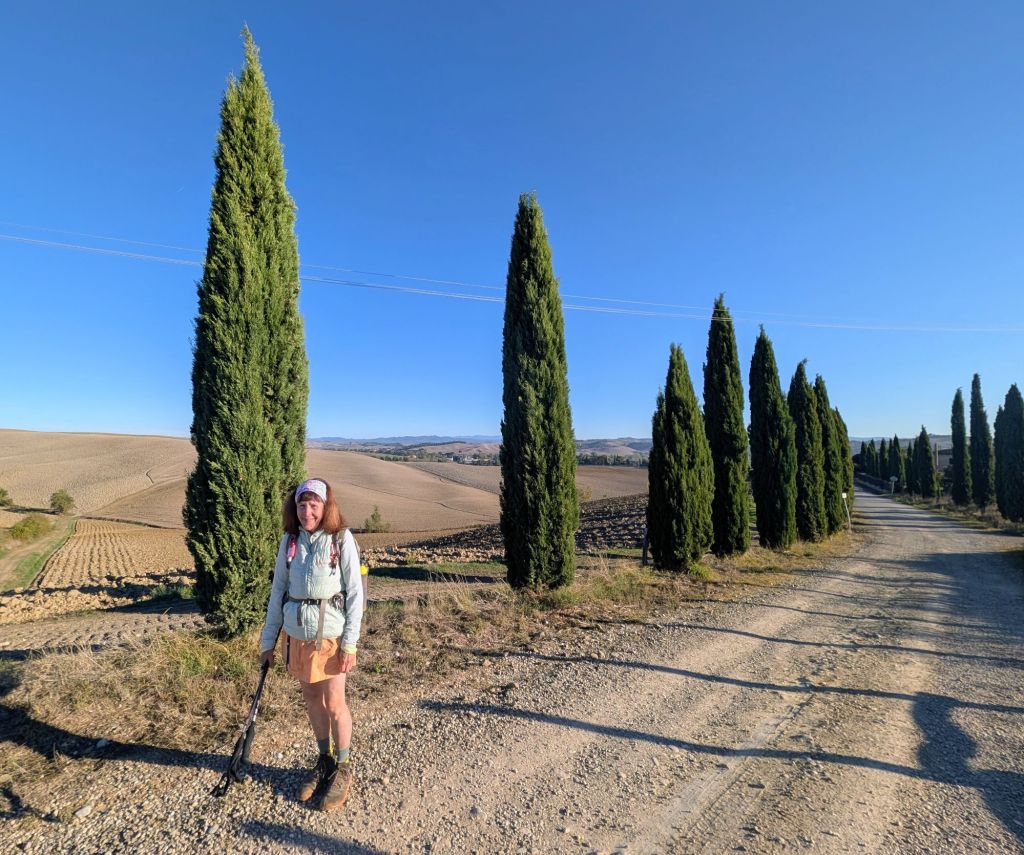
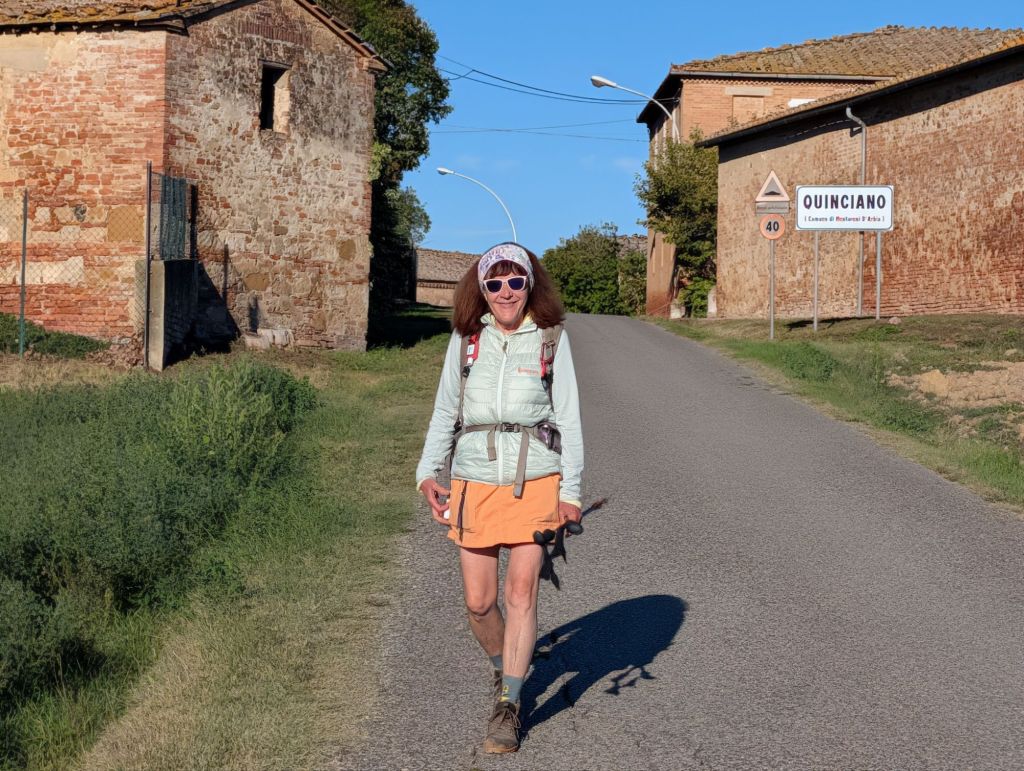
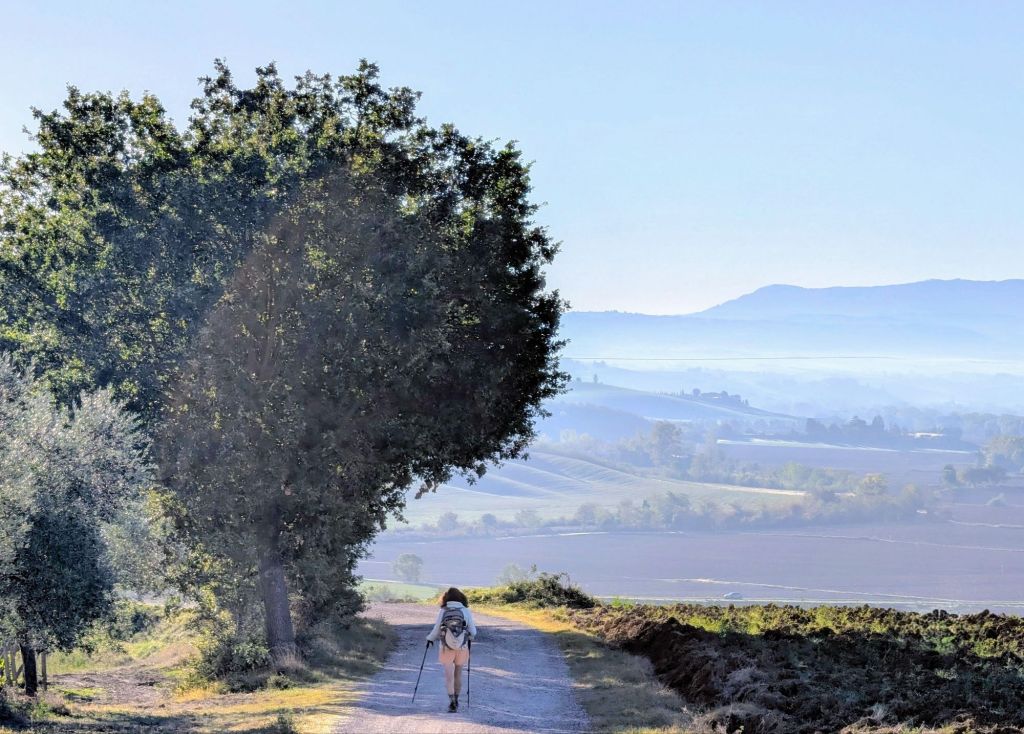
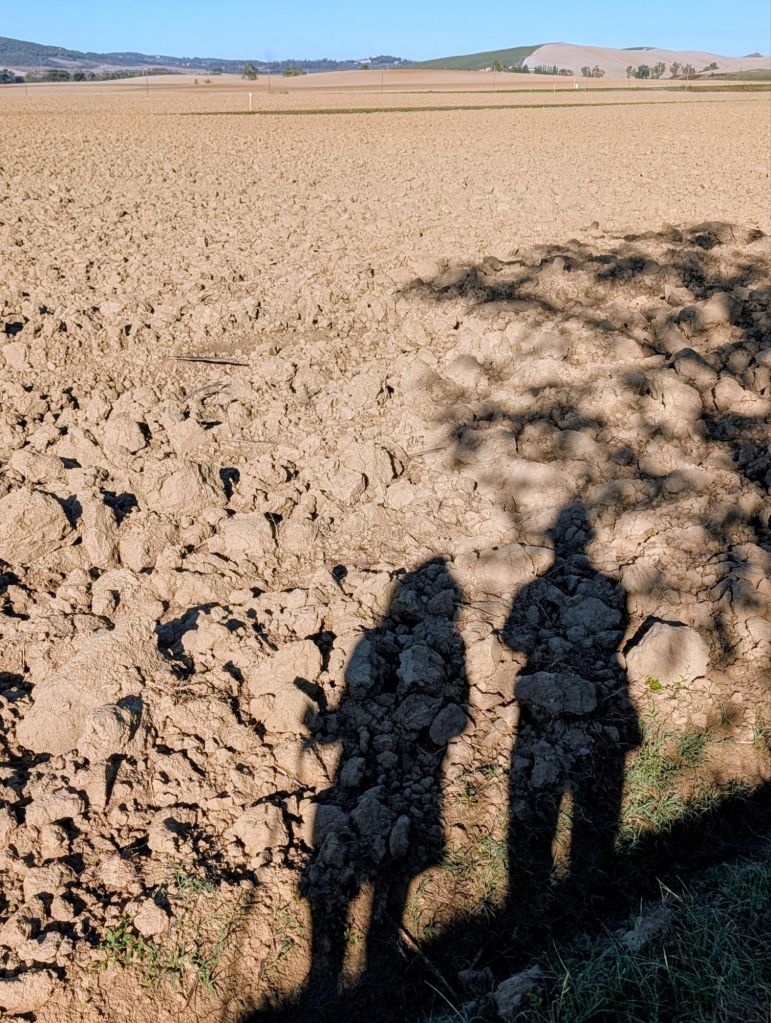
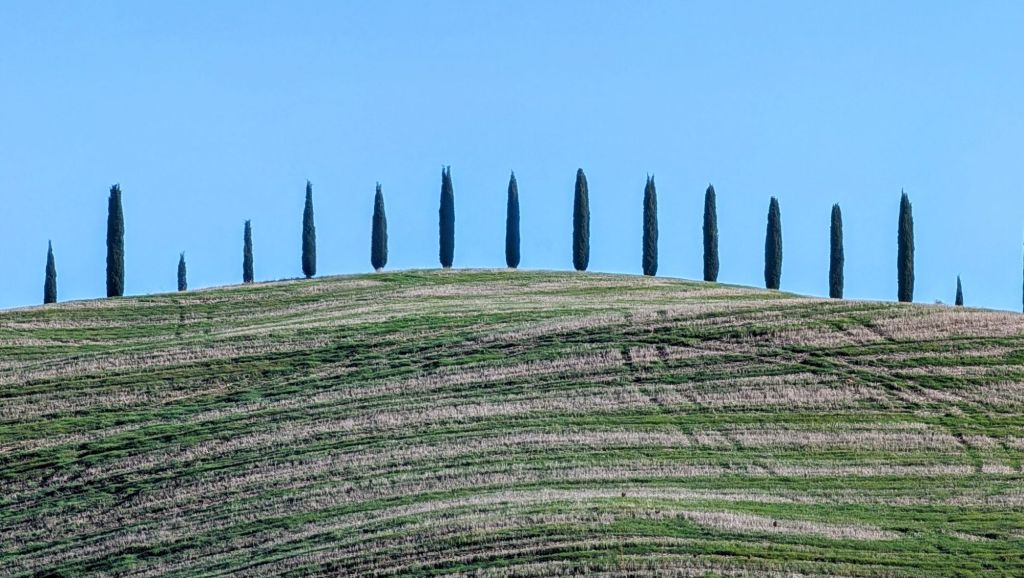
Cypress Trees lining the trailLeaving QuincianoMorning fog in the distanceShadows on the field
We had a relatively short walk today at 9.2 miles. It was mostly flat with a big hill at the start & a couple steep hills towards the end.
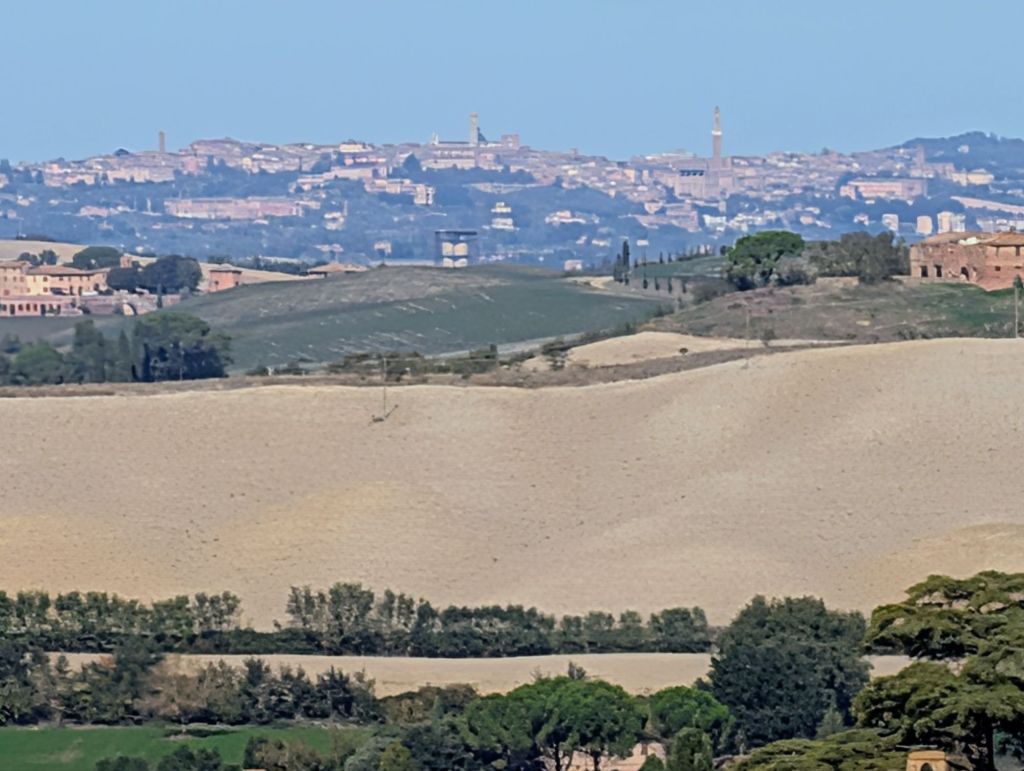
Cypress Trees on the horizonShort breakSiena in the distanceMan not at work
Saw some neat art pieces on the trail.
Pilgrims
Today’s destination was Buonconvento.
Its name comes from the Latin “Bonus Conventus” which means “Happy Place” reflecting the serene atmosphere here.
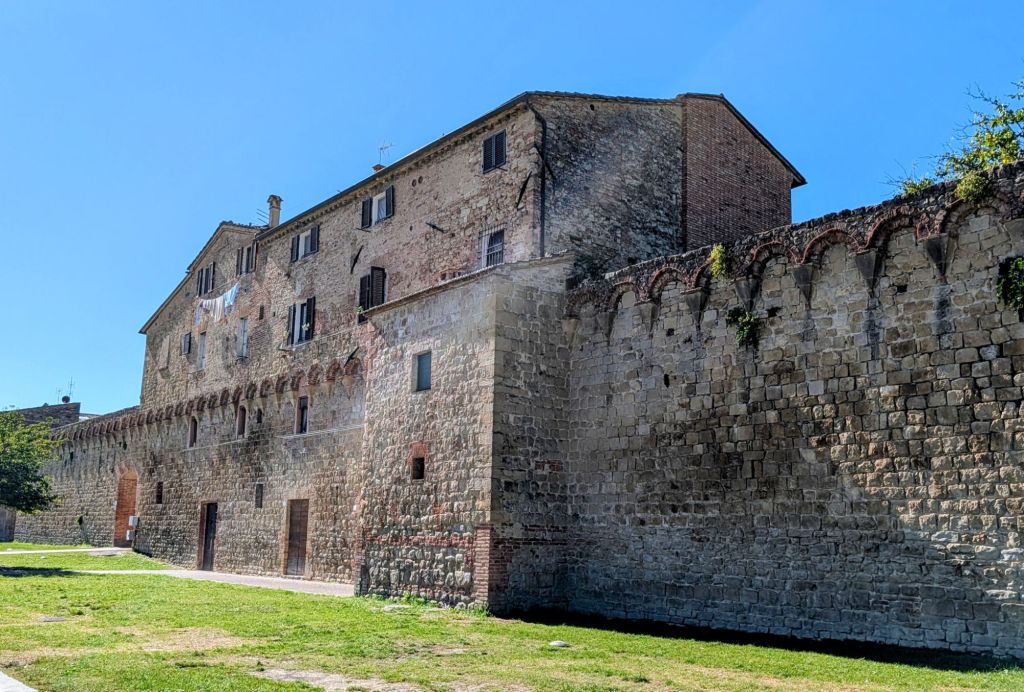
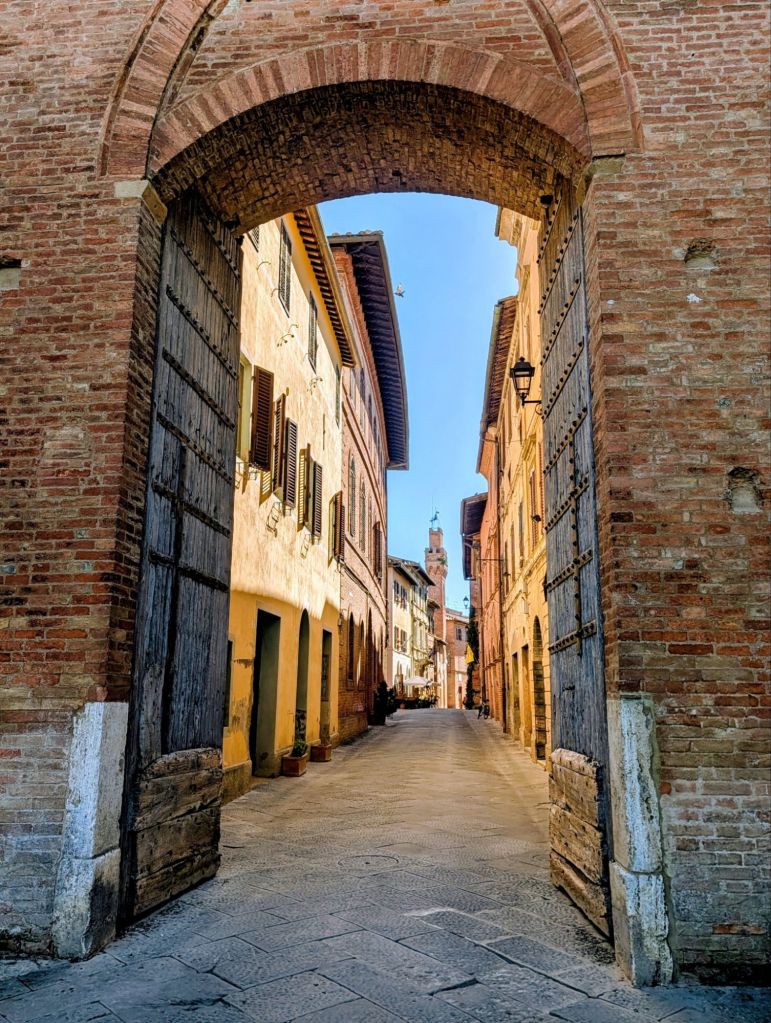
Listed among Italy’s most beautiful villages, Buonconvento is enclosed by walls built in 1379 that are still largely intact.
Historically, the village had only two gates: Porta Senese to the north which still has its original 14th Century wooden doors & Porta Romana to the south which was destroyed in WWII.
Porta SenesePorta Senese with its original doors opening to Via Soccini
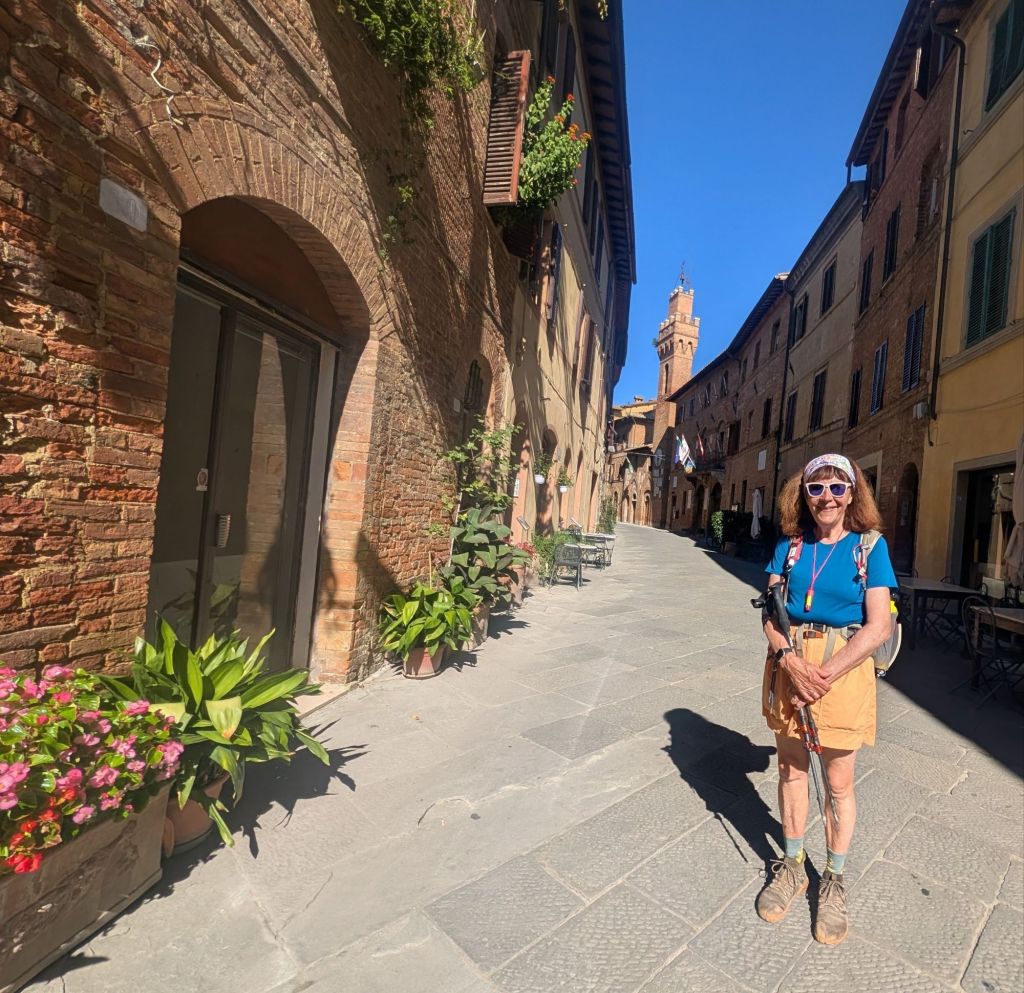
Via Soccini runs right through the historic city center. It is lined with Gothic palazzi, flower-boxed windows, local artisanal shops, & cafes.
Via Soccini
This street is named for a local family whose members included illustrious jurists as well as some heretics who organised various doctrinal Socinianism movements that developed during the 16th Century.
Socinianism is a Christian movement that rejected traditional church dogmas favoring human reason & moral behavior.
Buonconvento street scenes:
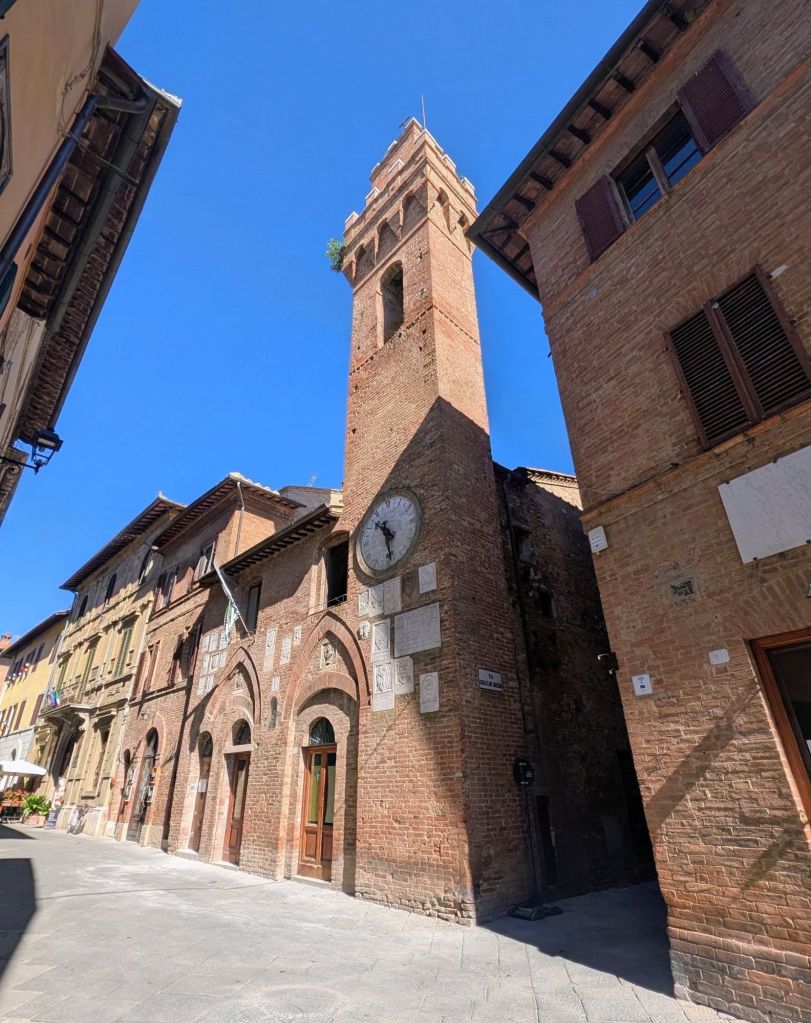
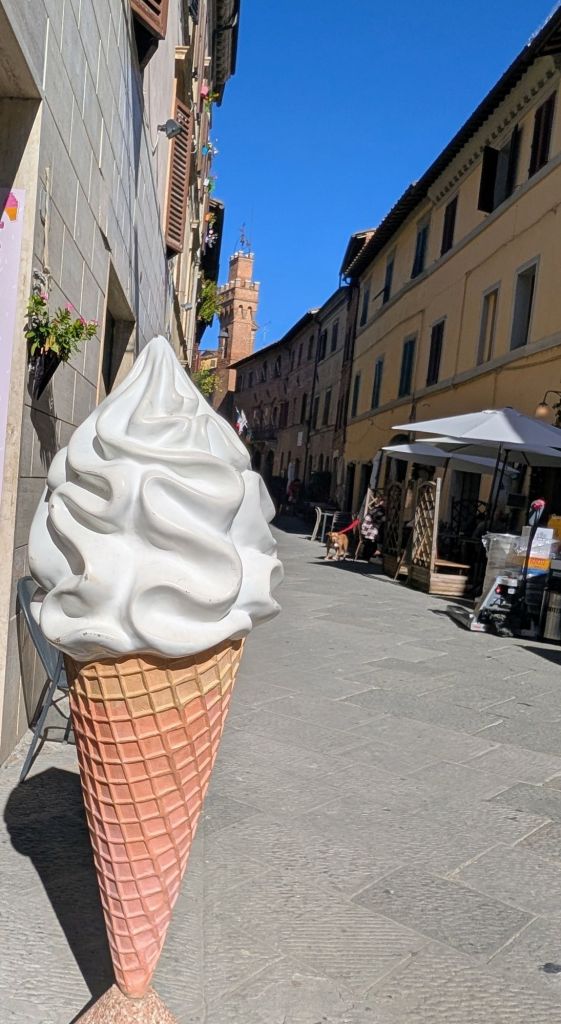
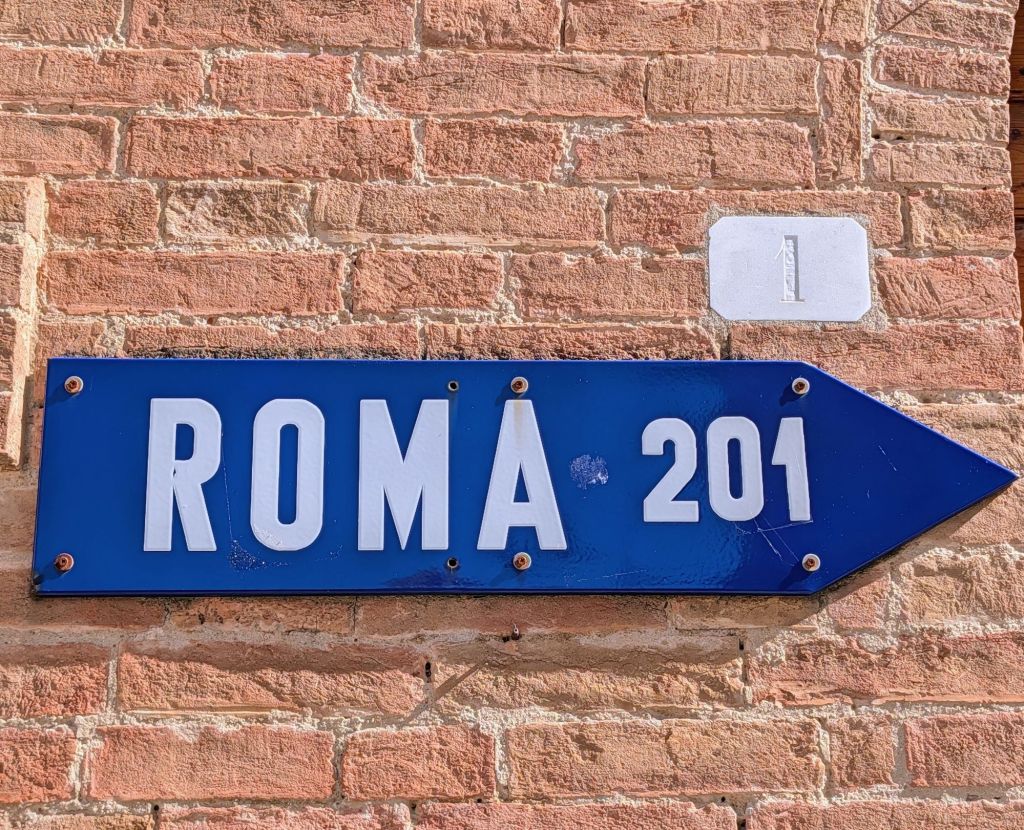
Palazzo Pretorio on Via Soccini with clock tower from 1589Gelateria on Via SocciniRome 201 KM to the southwest
13.2 Miles; 5.75 Hours on the trail (Cumulative: 113.6 Miles; 55.4 Hours on the trail)
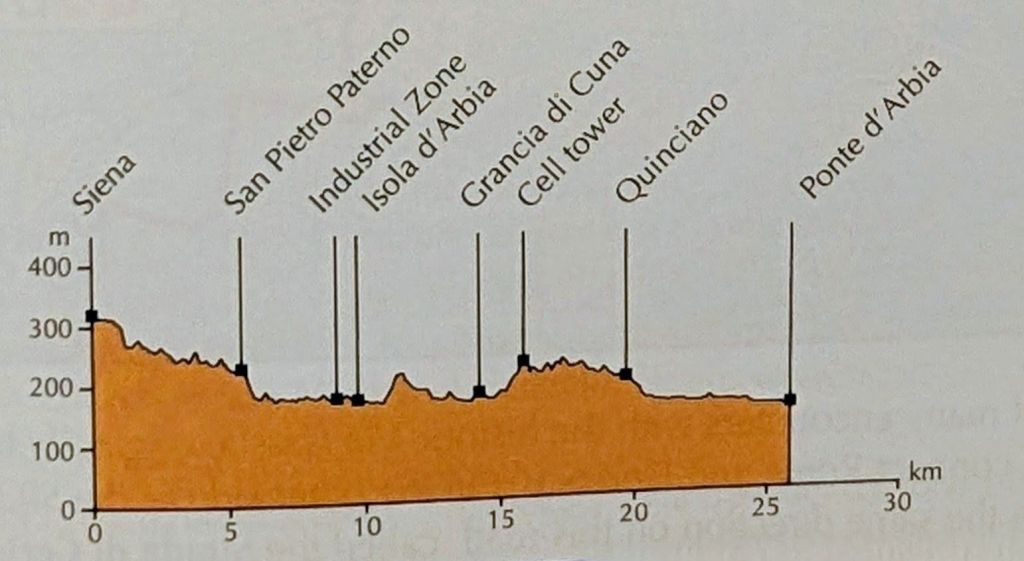
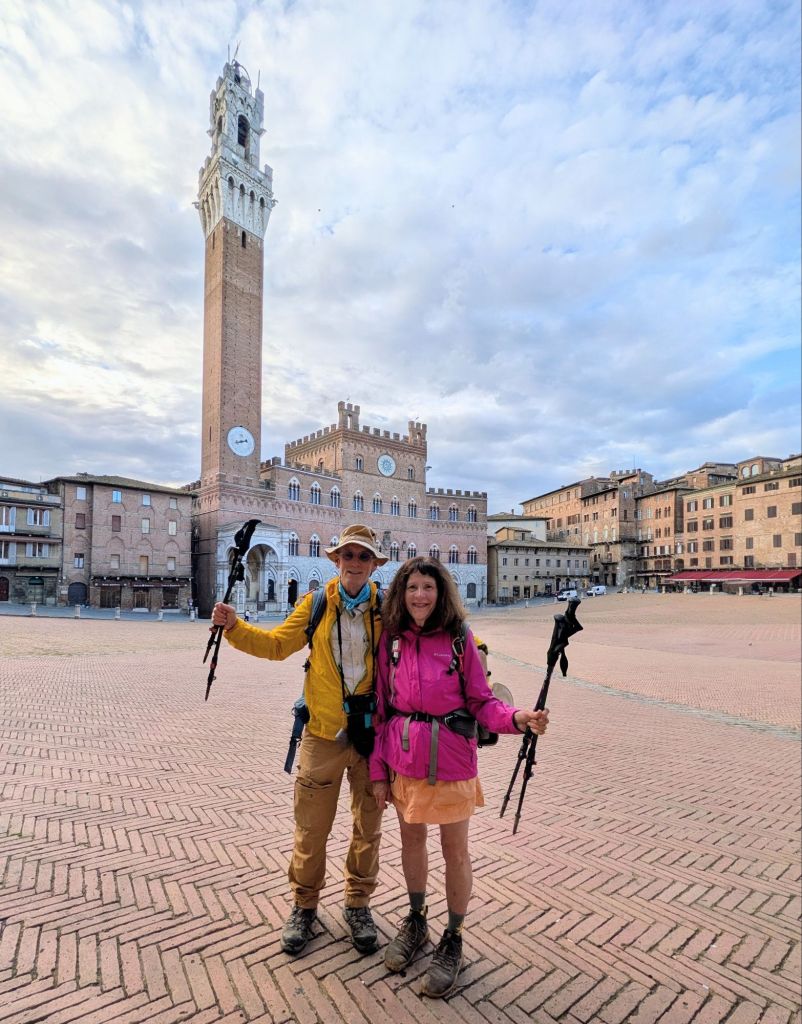
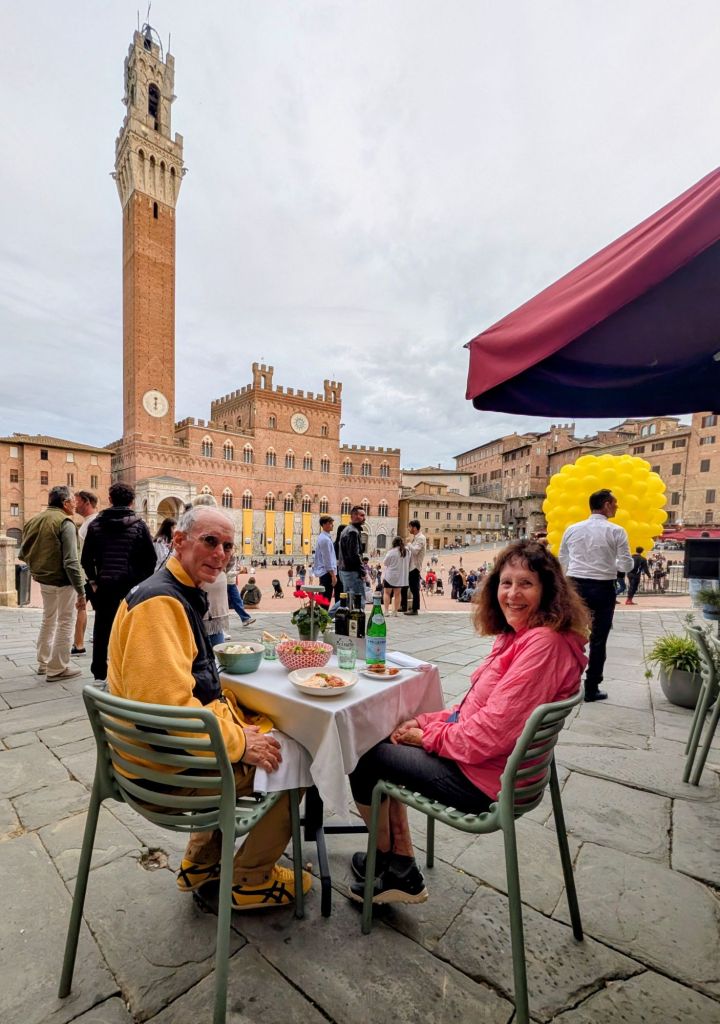
Leaving Siena, the Via Francigena took us through the Piazza del Campo one last time.
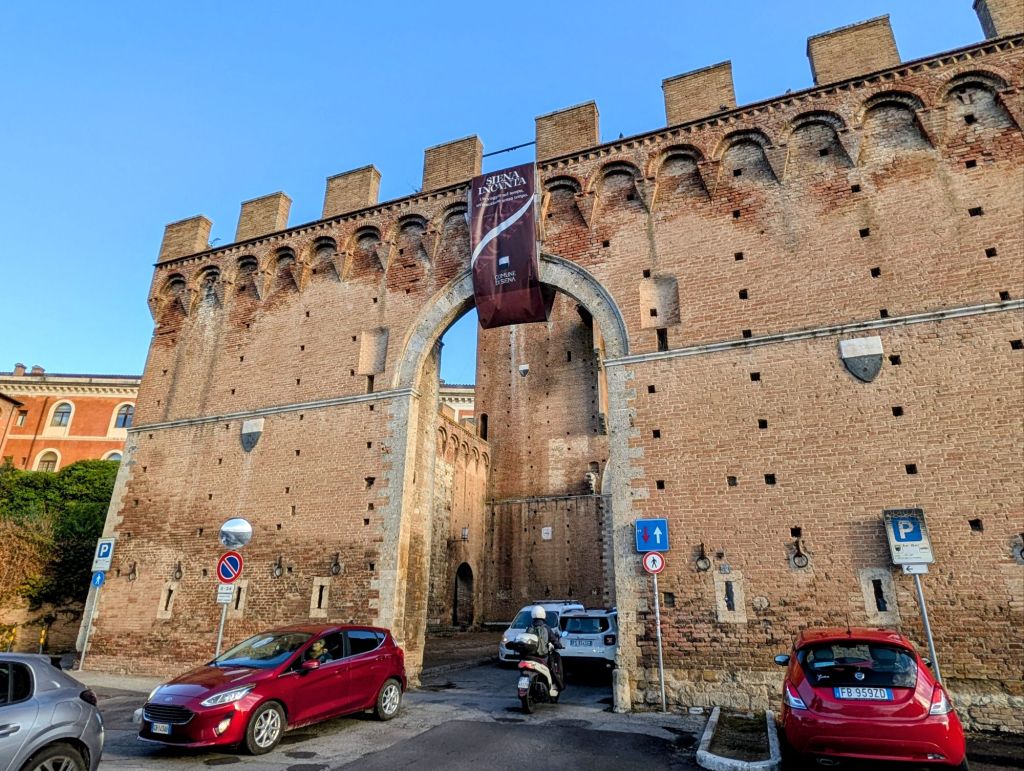
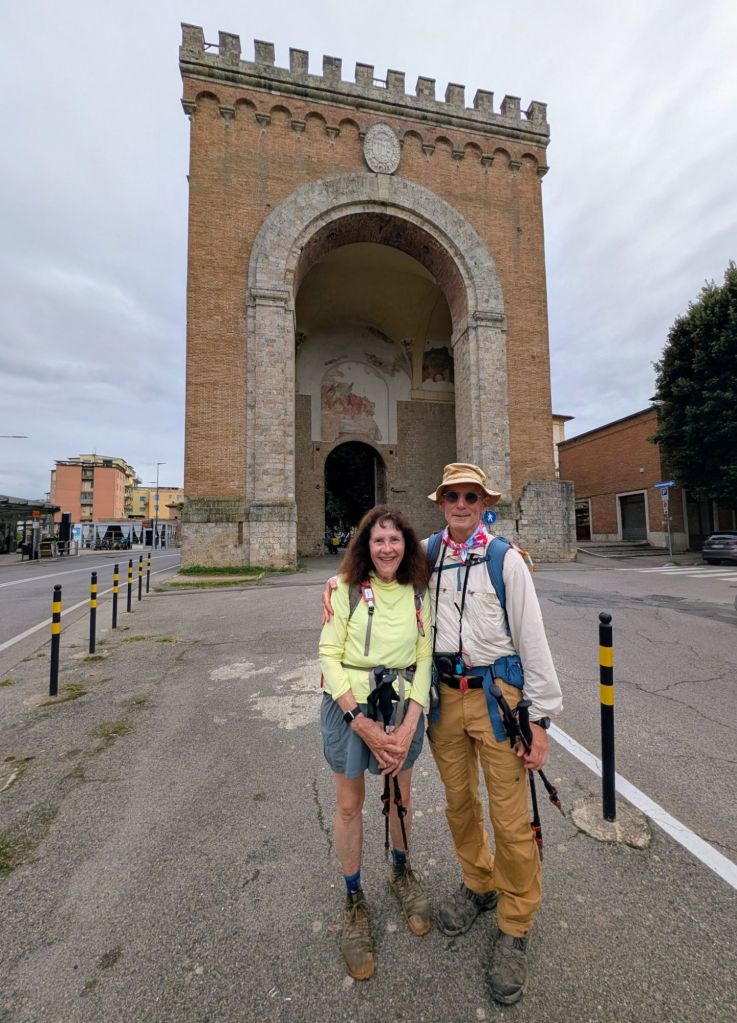
We headed south leaving Siena through the Porta Romana (Rome Gate) which was built in 1328.
Siena Monday morning rush hour traffic through the Rome Gate
After a bit, we hiked a short section along a busy road, then the Via Francigena put us on farm roads almost the entire time today.
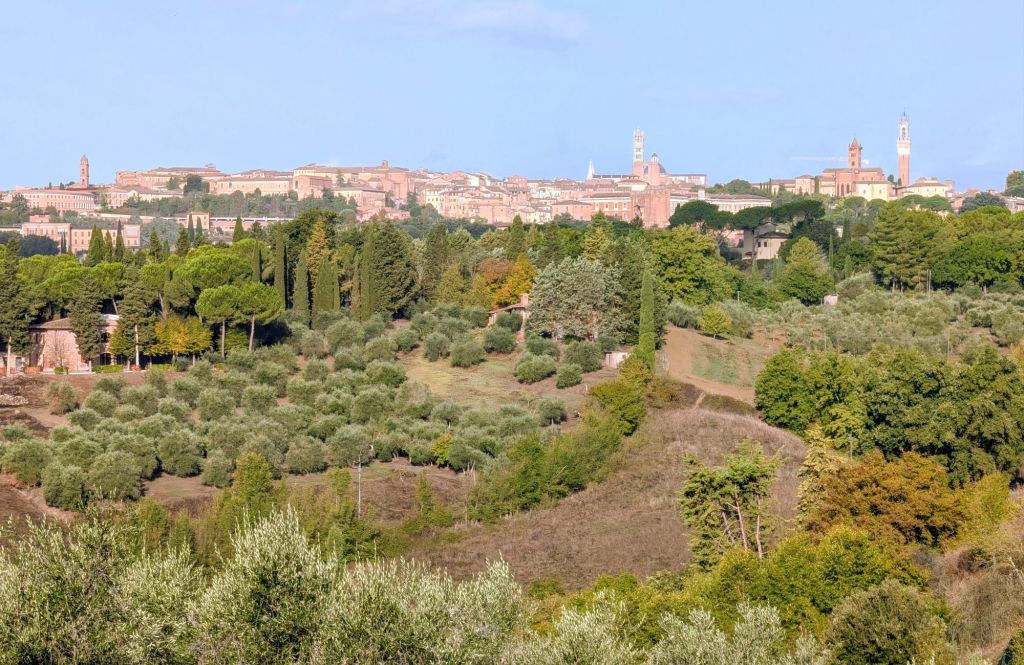
Looking back towards Siena in the distance
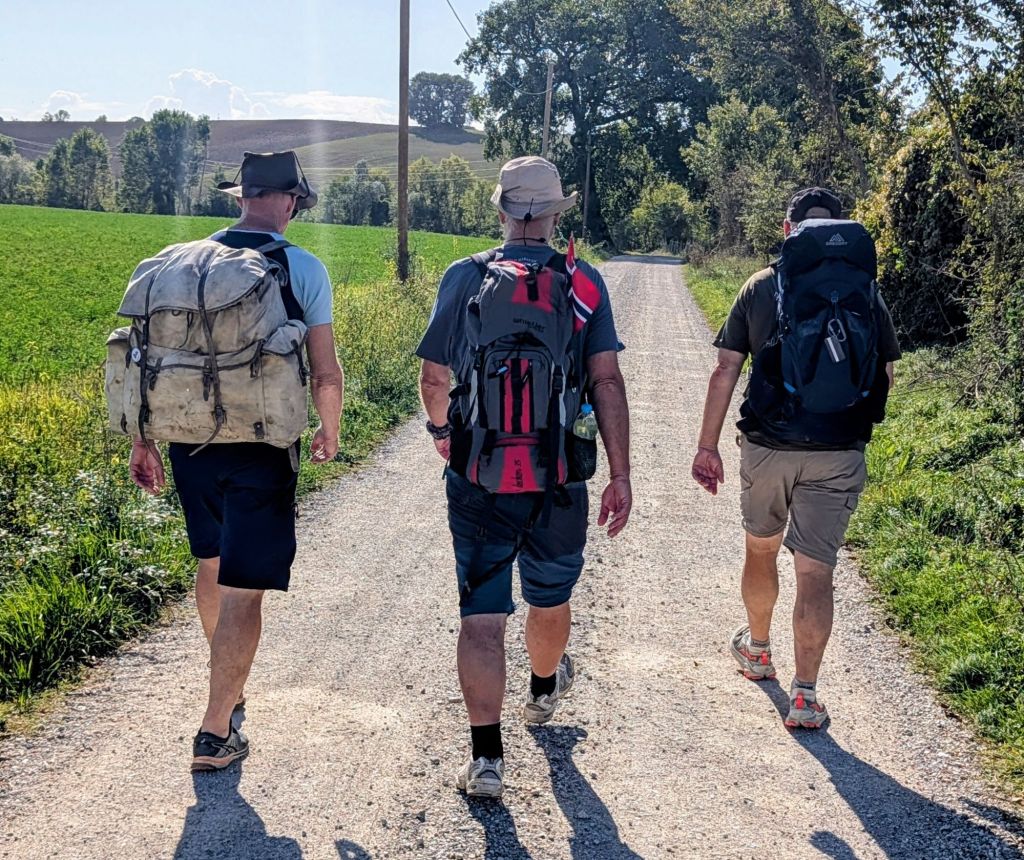
Along the trail, we met three men from Norway. They are hiking the entire Via Francigena from Canterbury to Rome; but, in sections.
On this trek, they started in Switzerland & are going to Rome.
They want to hike the rugged Pacific Crest Trail in America, then buy a boat to sail back to Norway.
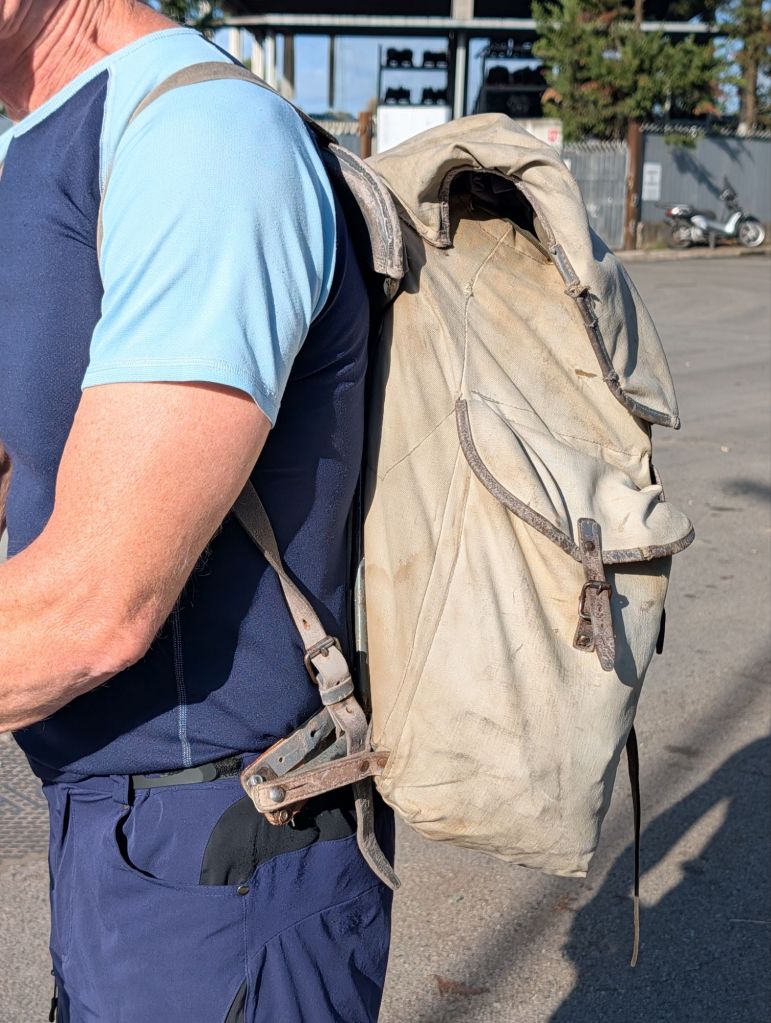
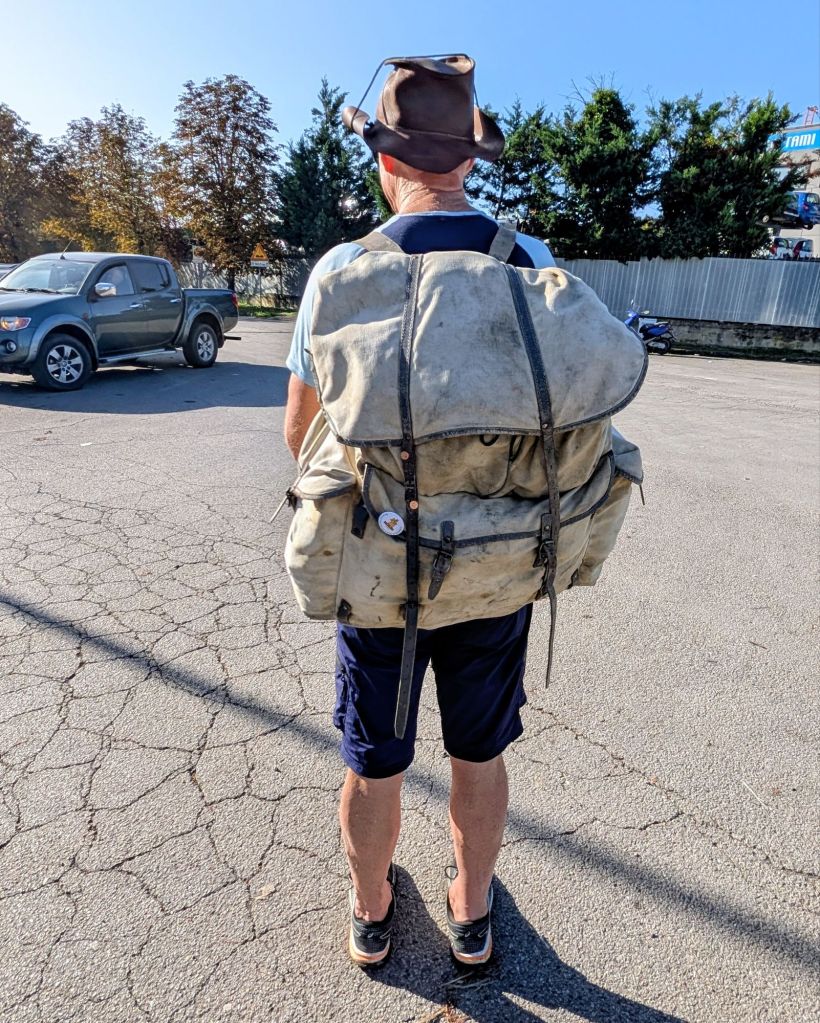
I noted to one man that I saw his pack had a metal frame, so it must be very old. He told me it was from WWII.
Notice the metal pack frame on his waistWWII Norwegian Army Pack
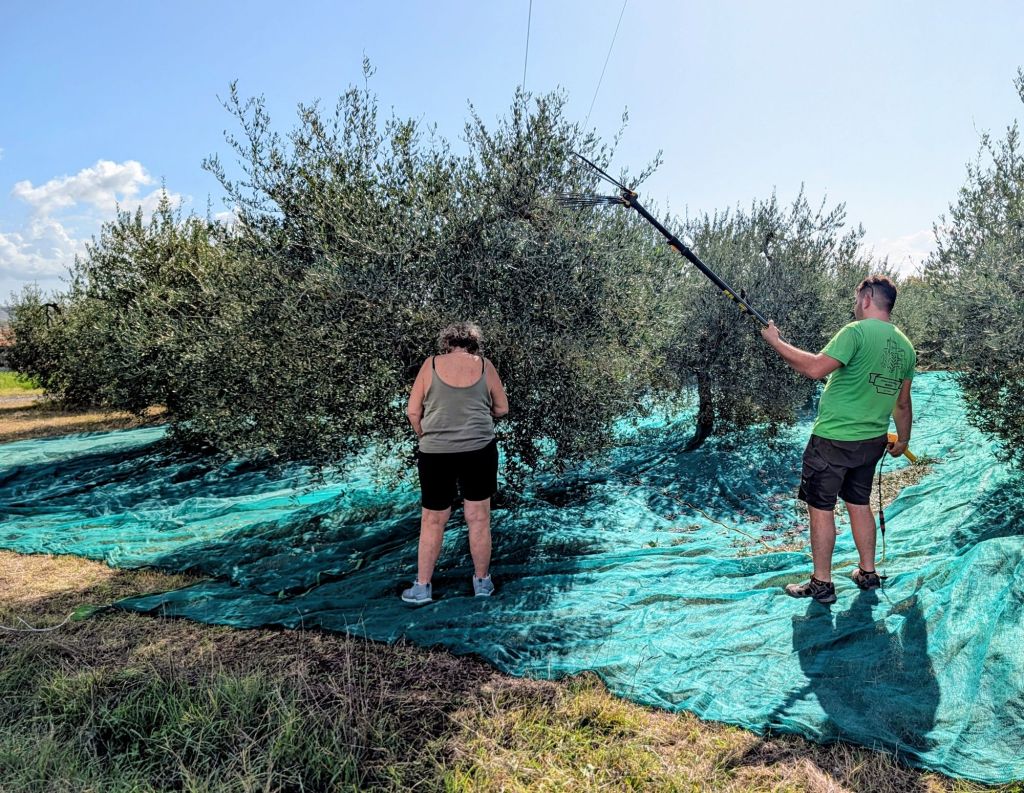
We walked by a couple starting to harvest their olives. The man is using a portable handheld device to shake the branches to get the olives to fall into the nets on the ground to be collected.
Olive Harvest
Lots of wide open spaces & rolling hills today.
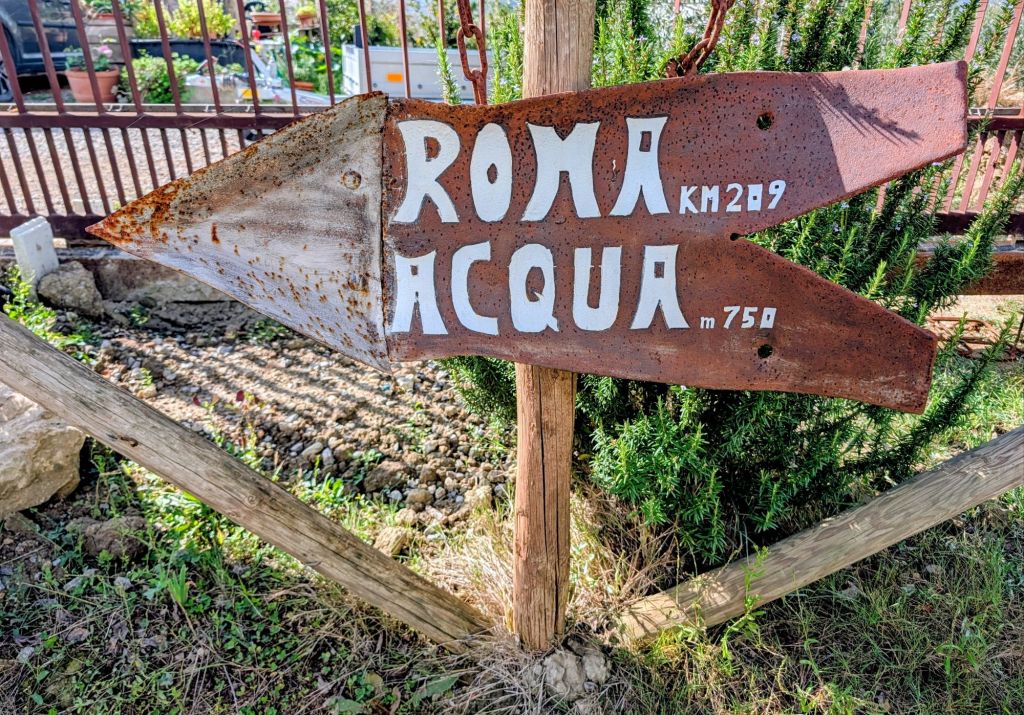
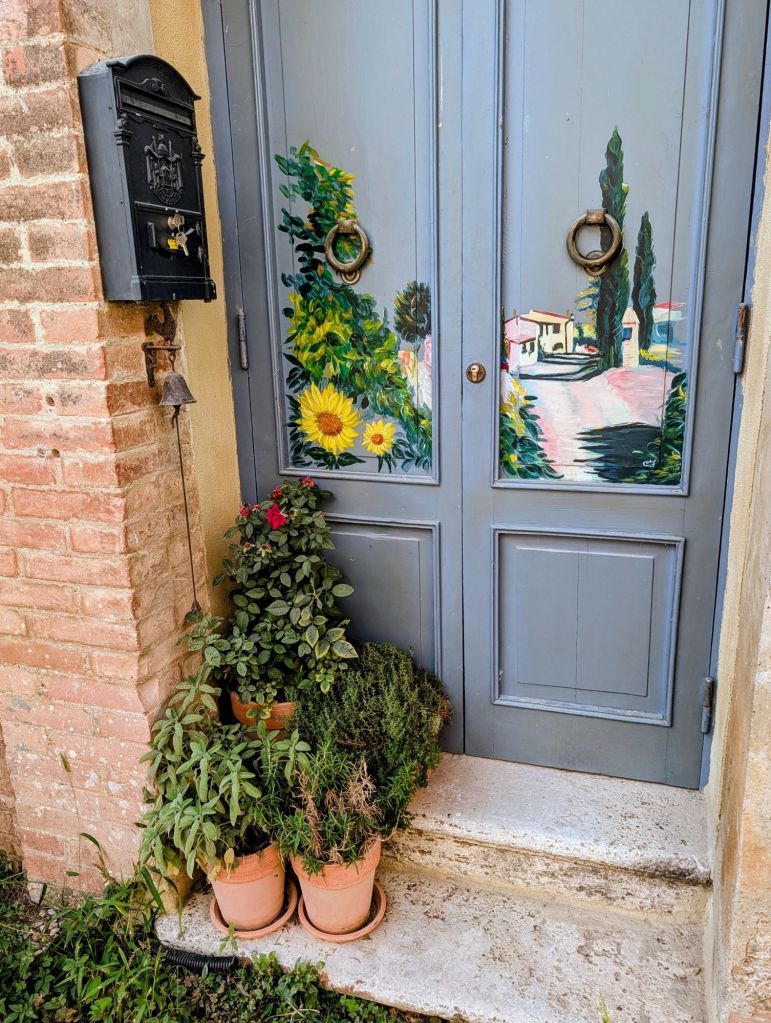
Saw this sign by a house with cute decorations.
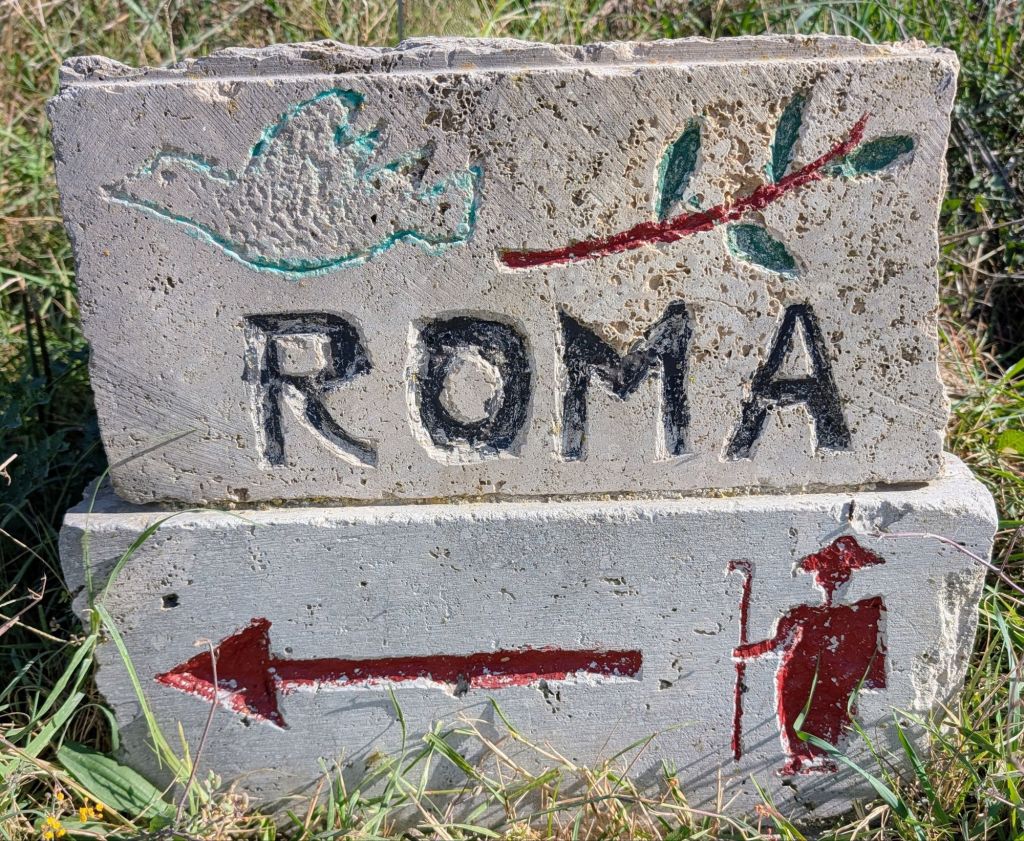
Only 209 more kilometers to RomeNotice the doorbell is a bell under the mailbox
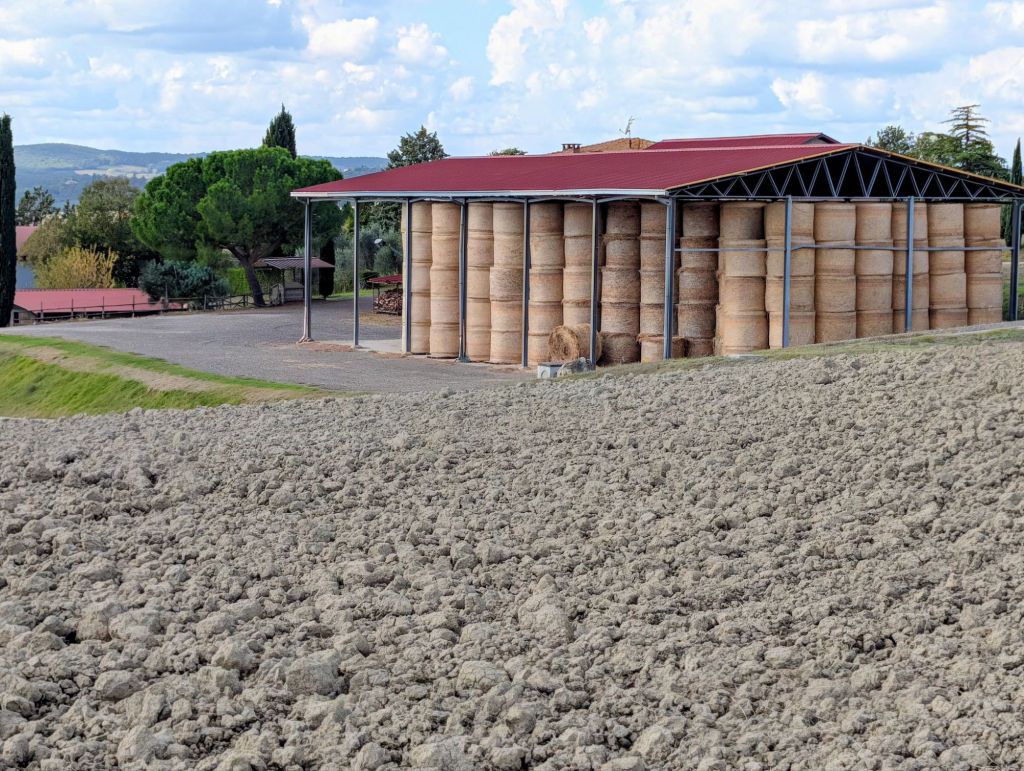
Some farmers have cut, dried, & baled their hay & put it up to store for the winter.
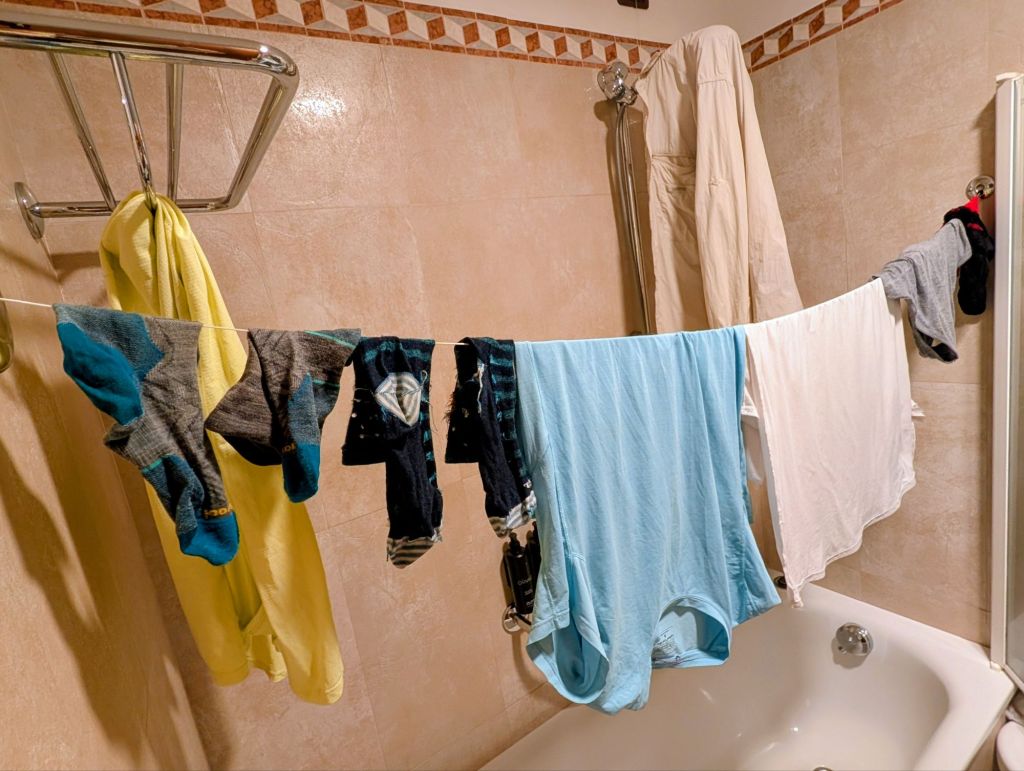
Today is a rest day during our Via Francigena hike which means sightseeing & doing laundry.
Rest Day= Laundry Day
Siena is a UNESCO World Heritage Site & ranks among the most visited places in Italy.
Siena is known for its numerous monuments & Gothic architecture.
It rivals Florence in historical significance & architectural beauty.
According to legend, Siena was founded by the sons of Rome’s co-founder Remus: Senius & Aschius.
They fled Rome after their father Remus was killed by his brother Romulus.
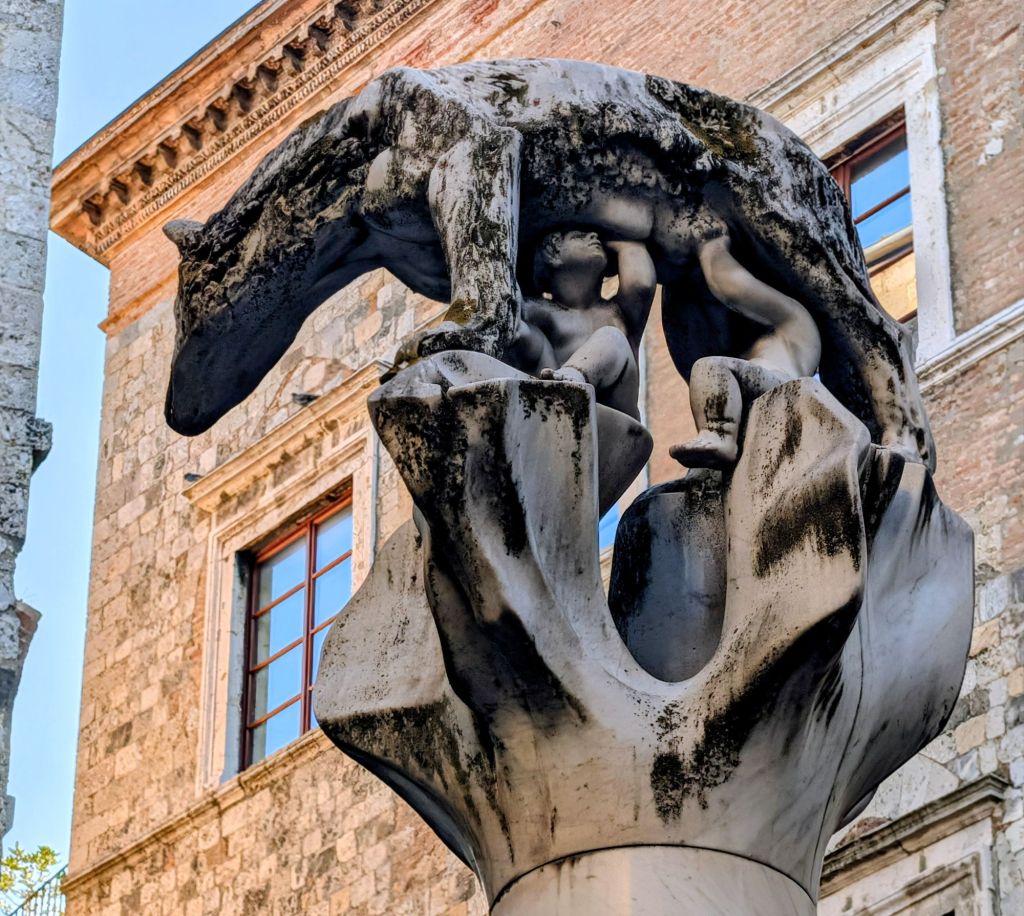
When they left, they stole the Capitoline Wolf statue showing Romulus & Remus suckling a wolf.
Capitoline Wolf
Furthermore, they rode black & white horses which gives Siena’s coat of arms its striking colors.
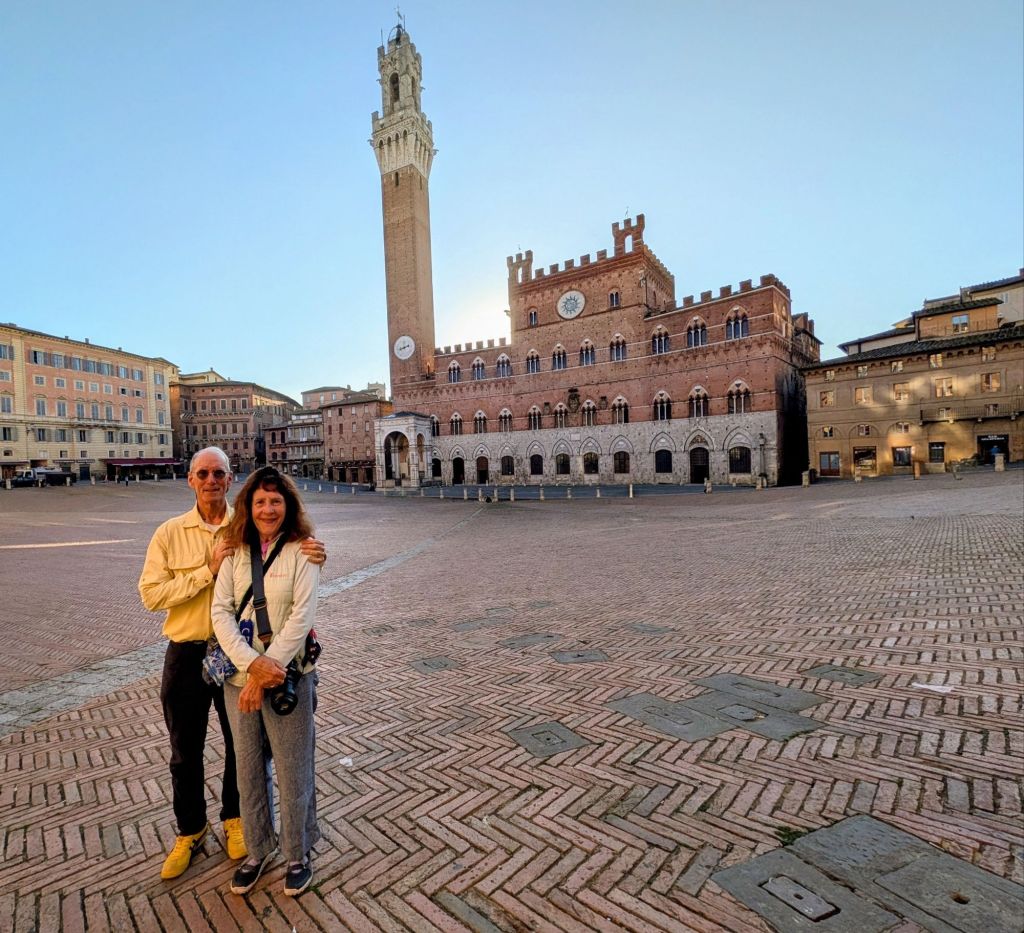
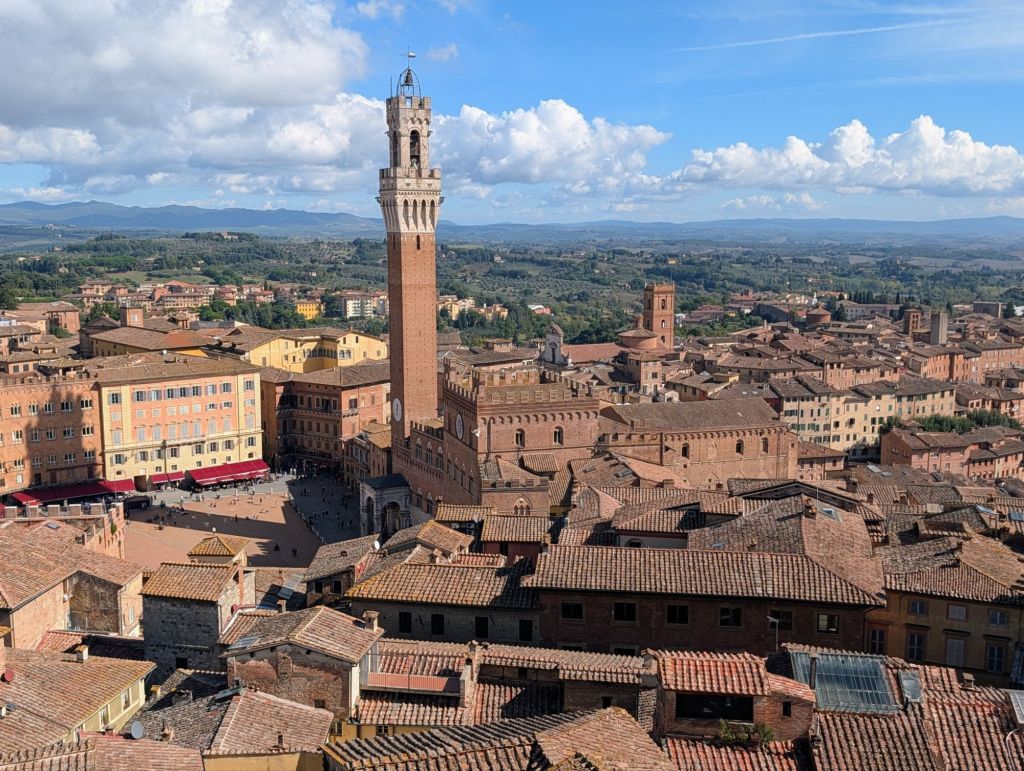
The shell-shaped Piazza del Campo ranks among Europe’s greatest medieval squares & hosts the famous Palio horse race twice annually.
The square’s unique design & surrounding Gothic buildings create an unforgettable setting.
Piazza del Campo
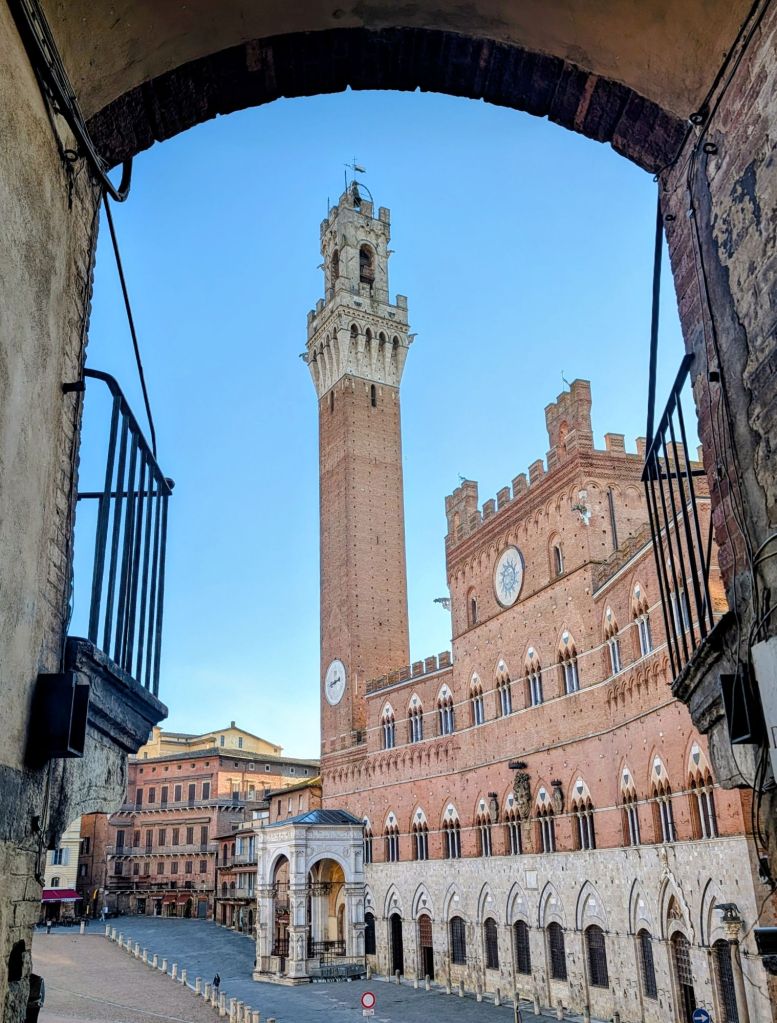
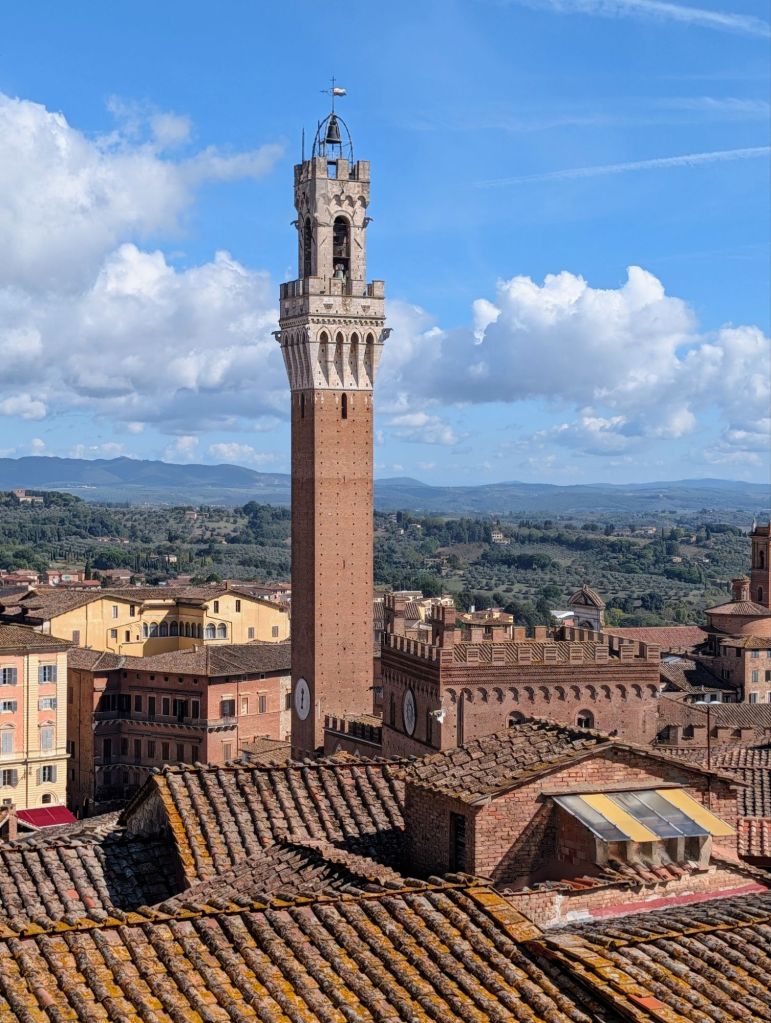
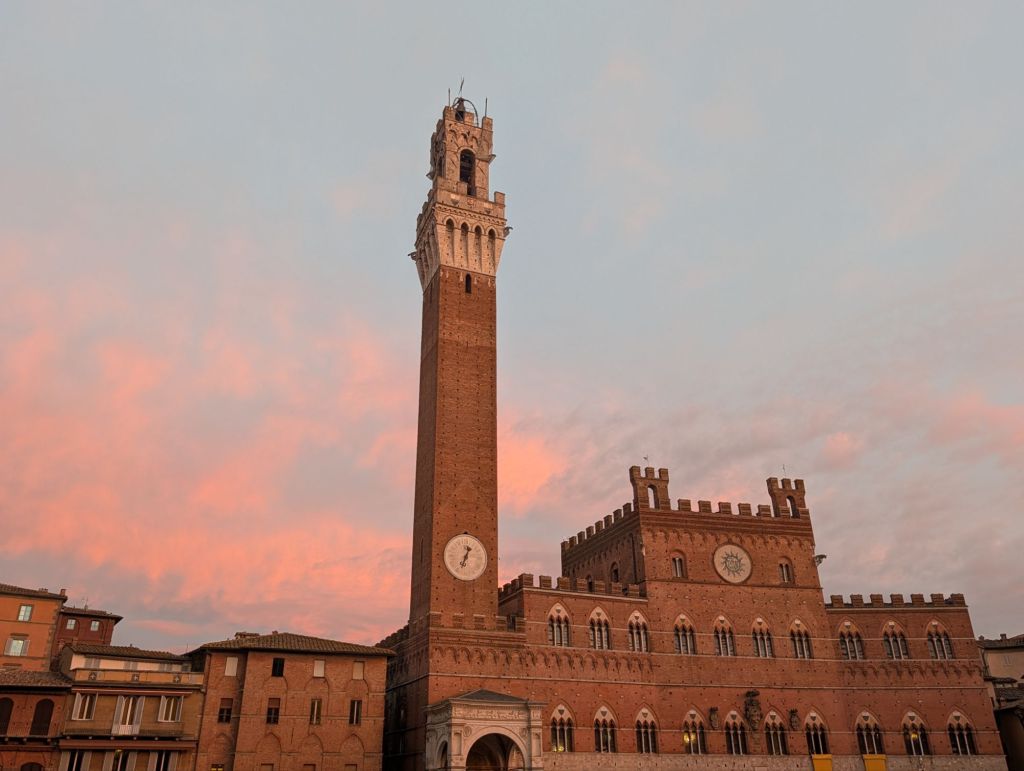
The Torre del Mangia which was constructed from 1338- 1348 rises 289 feet high above the square.
Torre del Mangia
The Sienese people have always attached nicknames as well as epithets to people or things. Among the first bell-ringers assigned to strike the bells on the hour was Giovanni di Balduccio who was known for his gambling vices. His wasteful habit earned him the nickname “Mangiaguadagni” (Earnings Eater”) or simply “Mangia”, so the tower got its name from his nickname.
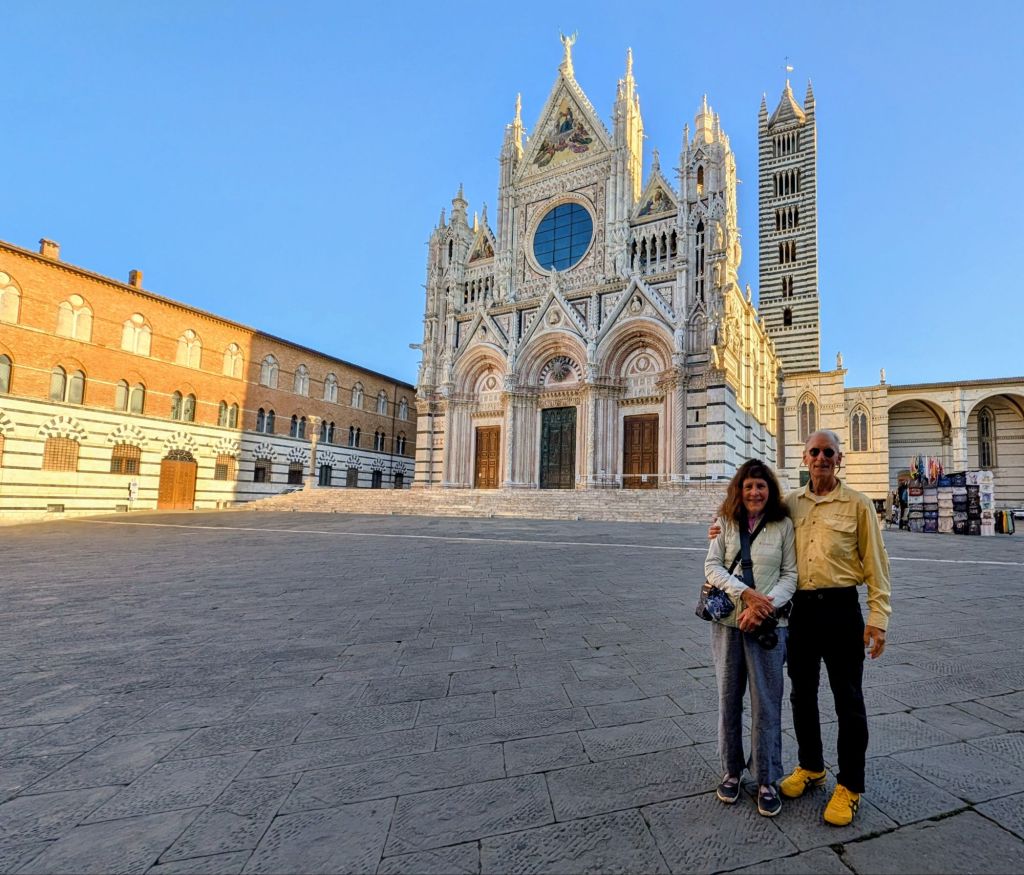
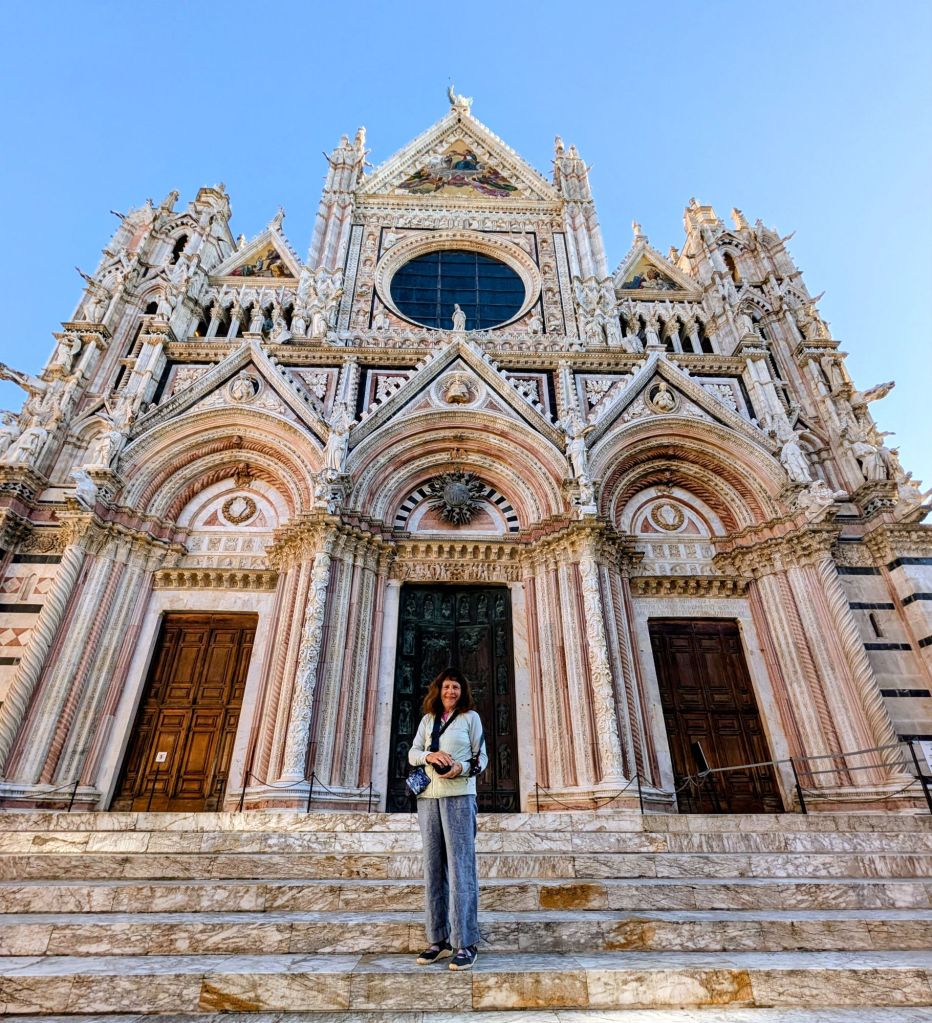
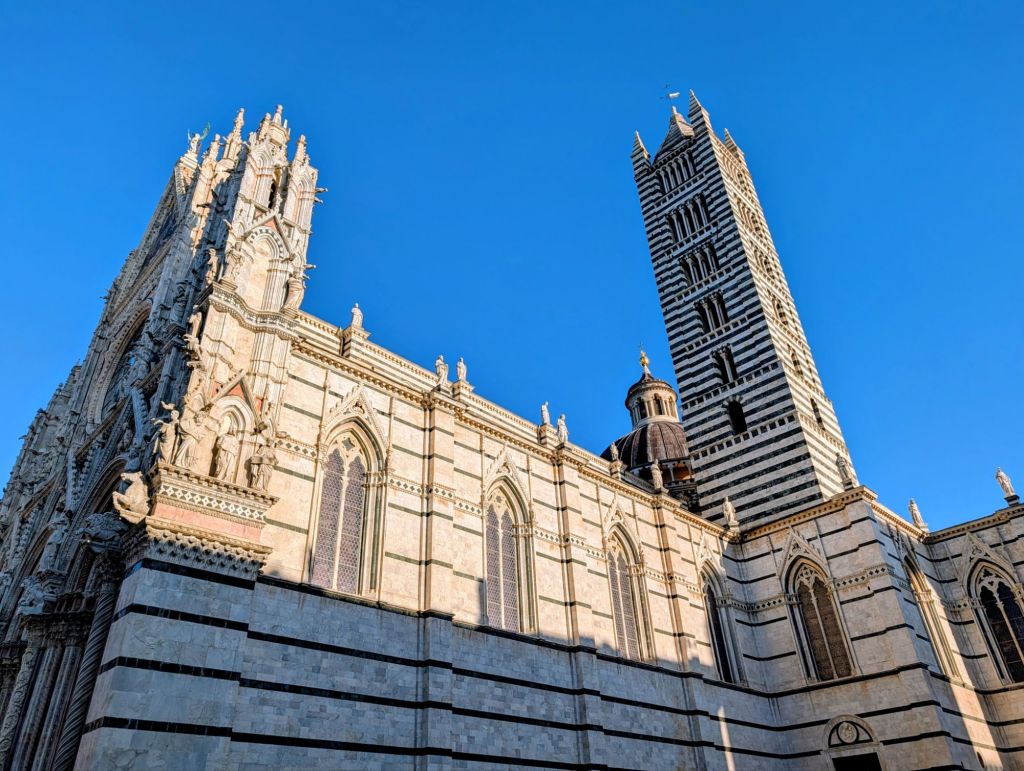
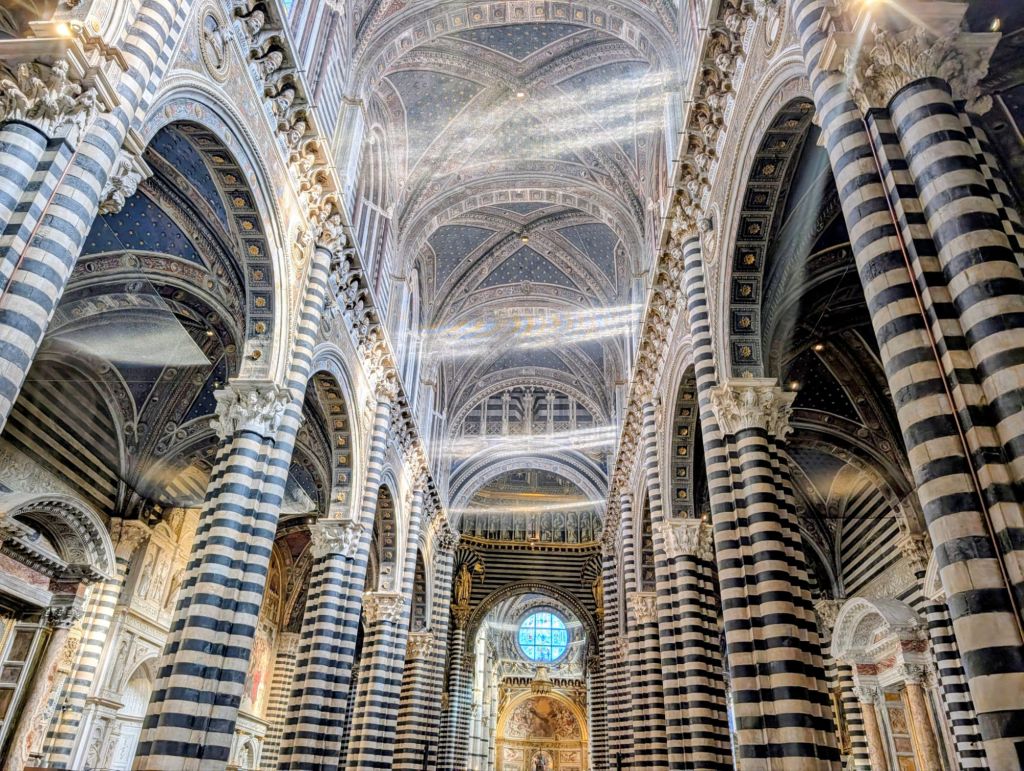
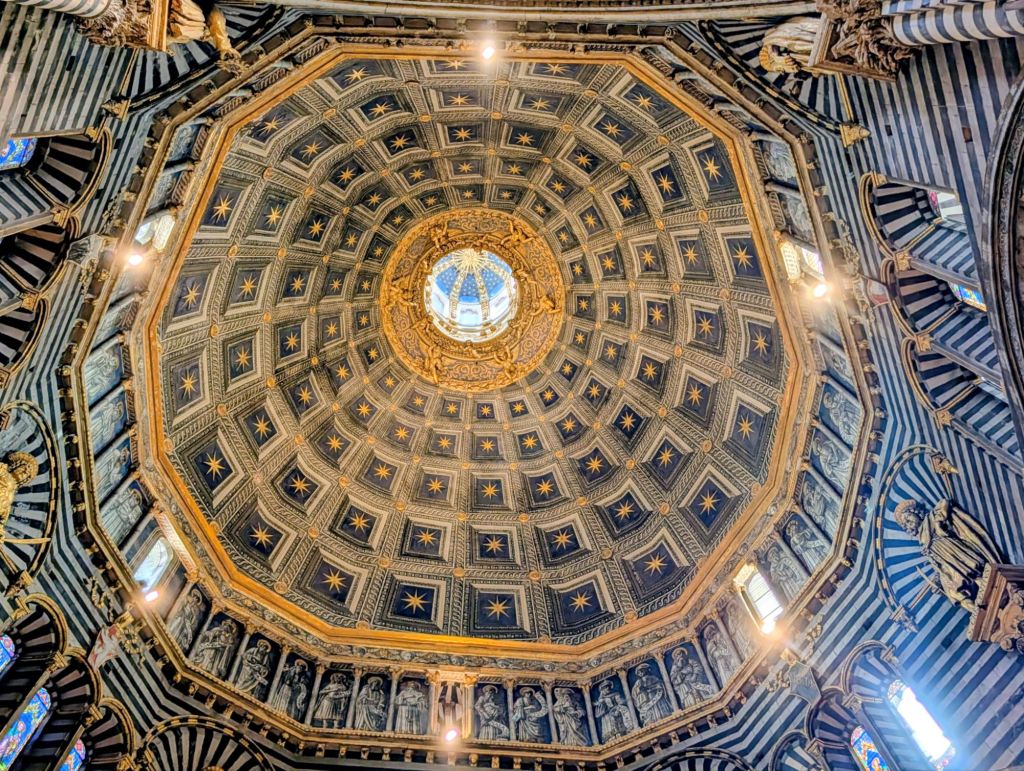
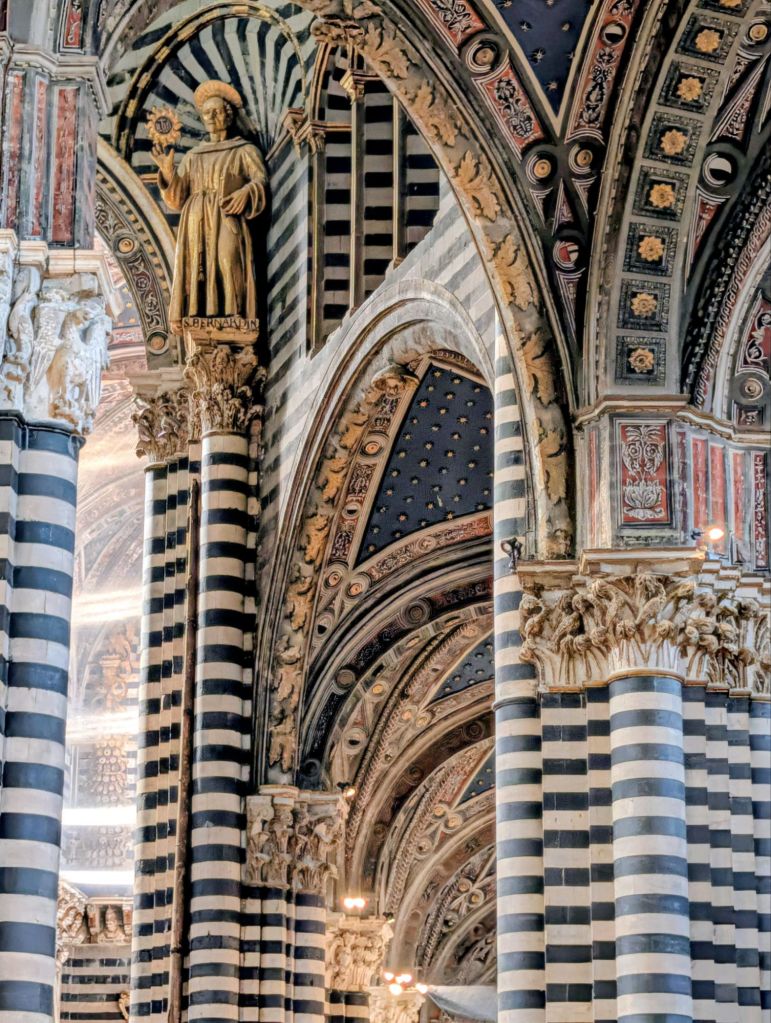
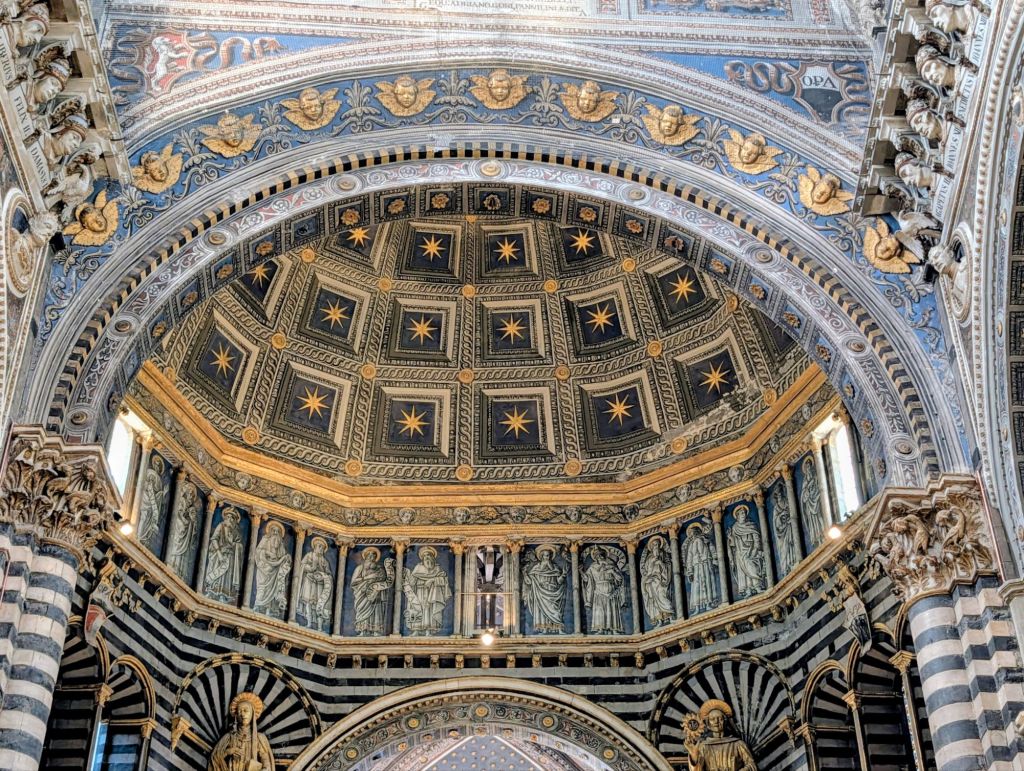
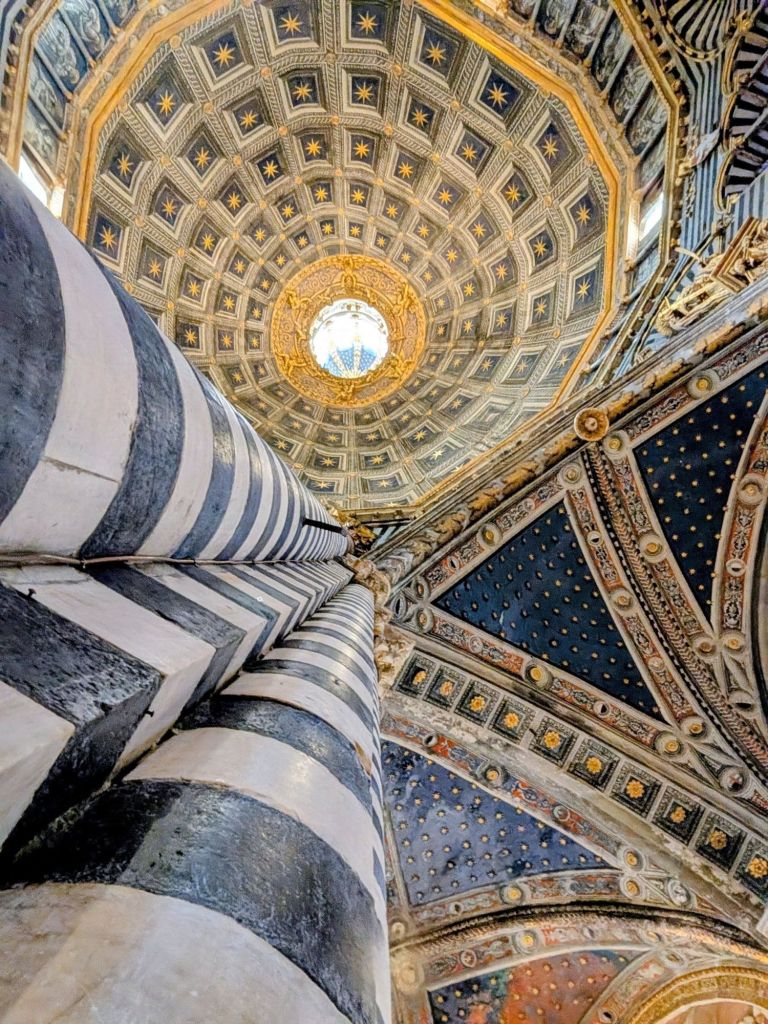
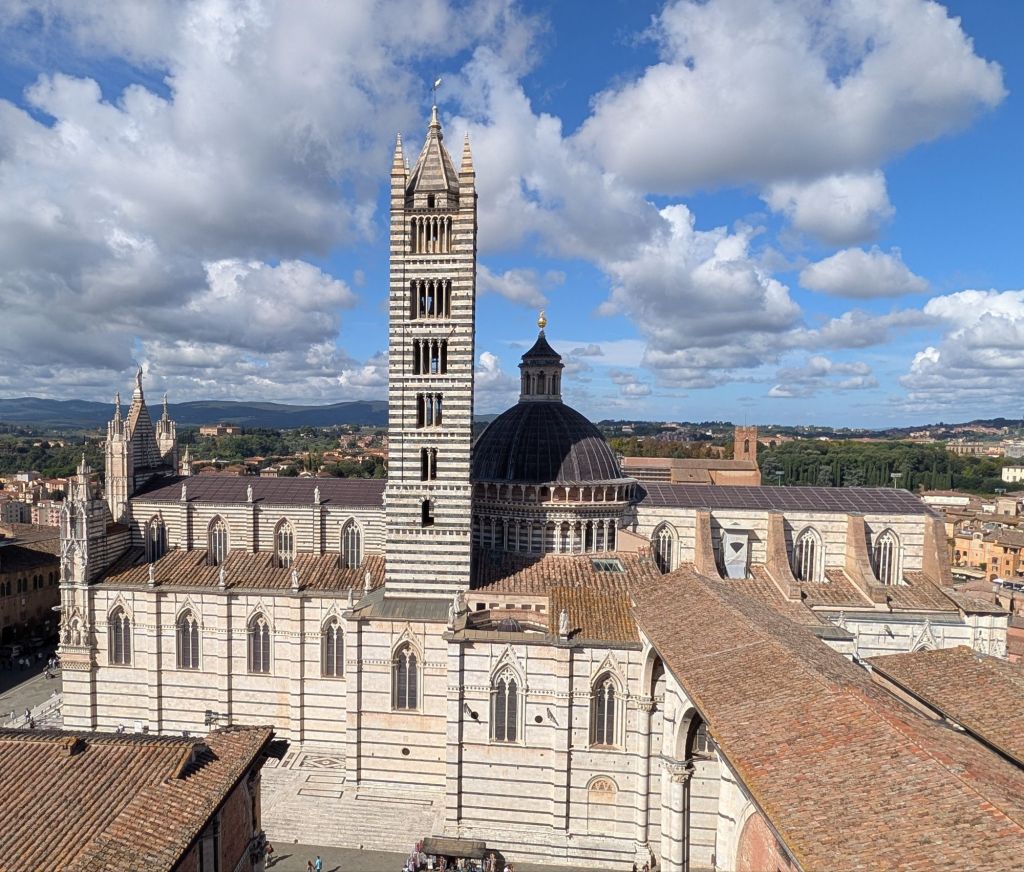
A main Siena sight is the incredible black & white striped Duomo (Siena Cathedral) from the 12th Century.
The cathedral is an Italian Gothic architecture masterpiece with its distinctive striped marble exterior.
The intricate details & stunning interior took more than 50 years to complete making it one of Italy’s most impressive churches.
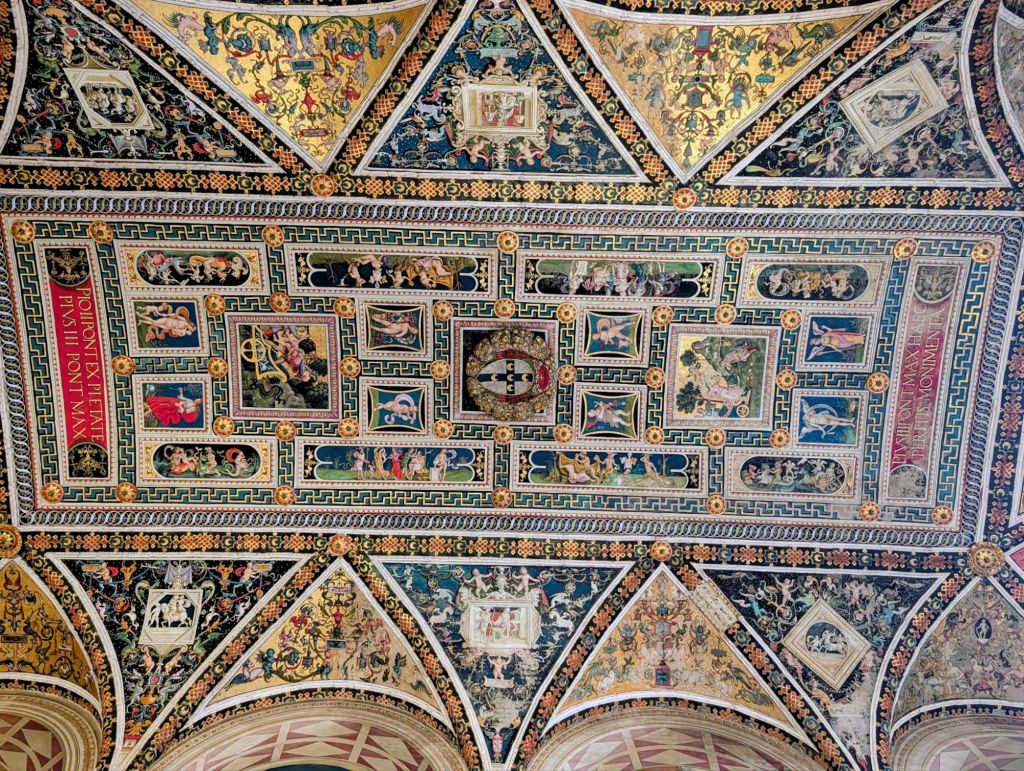
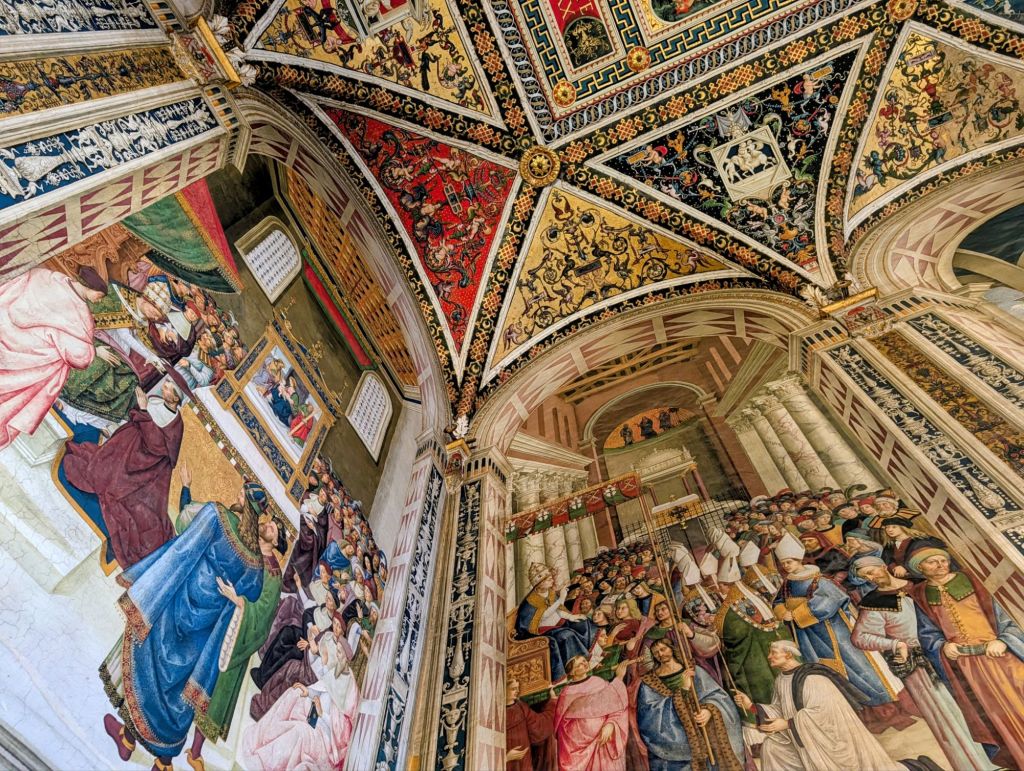
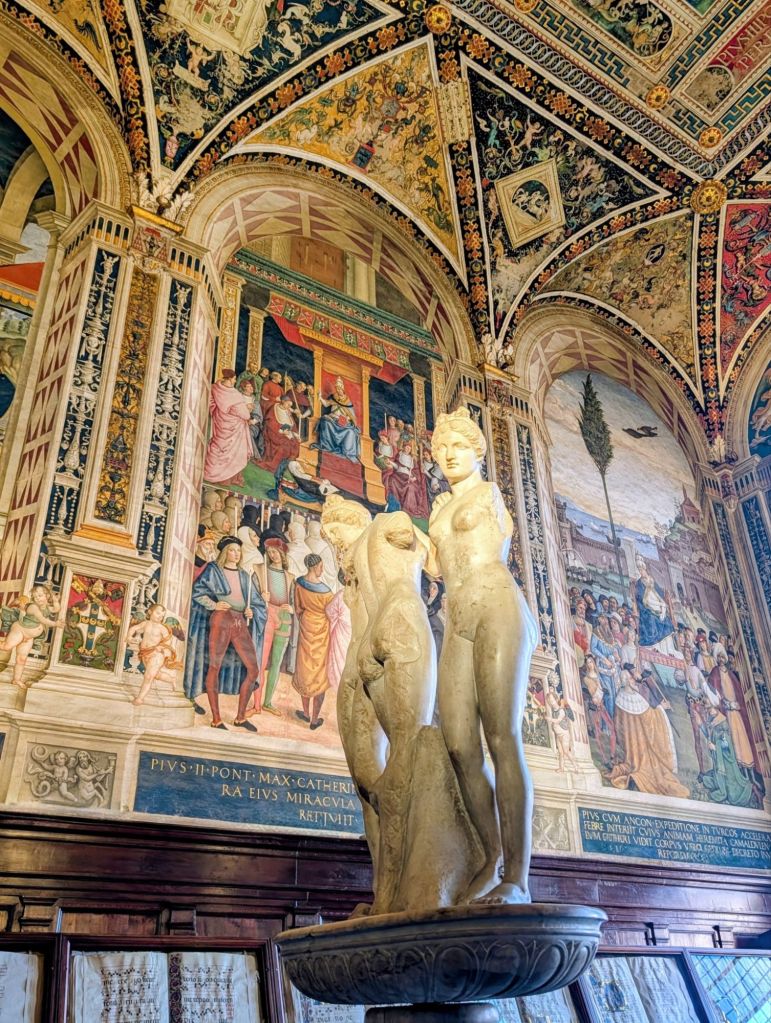
Inside a cathedral nave is the majestic Piccolomini Library which is named for the wealthy family who financed its construction. The library holds preciously bounded manuscripts & is known for its soaring, vibrant frescoes & intricate ceiling.
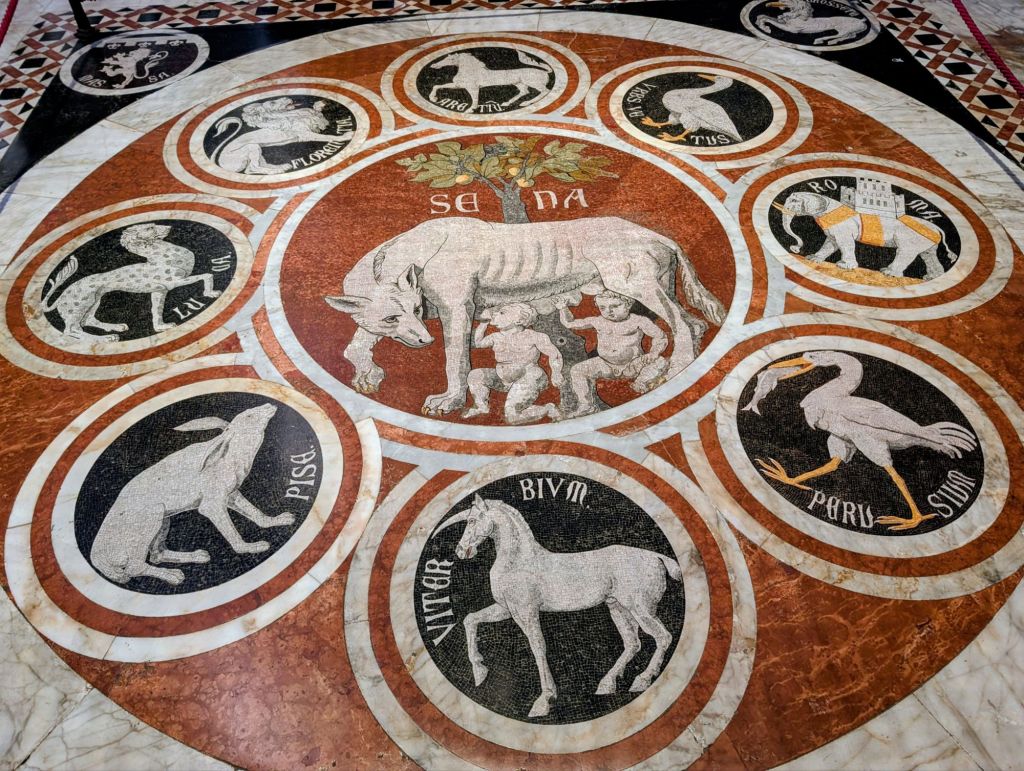
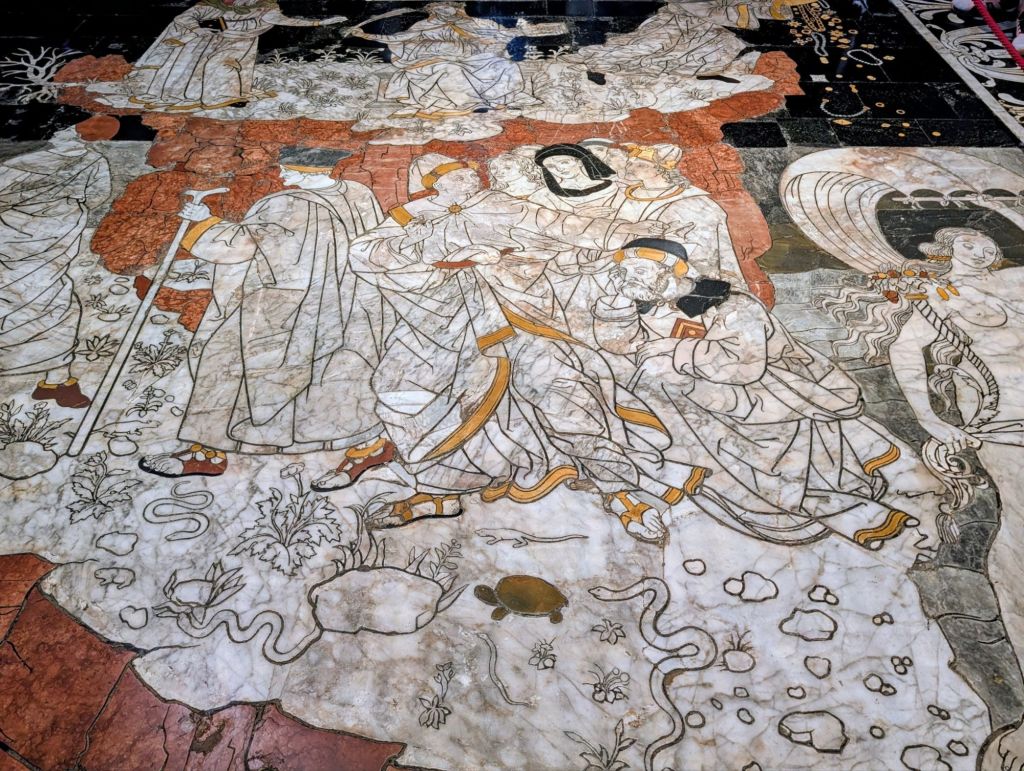
The Duomo’s floor has incredibly beautiful marble intarsia pictures.
Intarsia is a decorative inlay technique used in which different colored or different material pieces fit together like a mosaic or jigsaw puzzle.
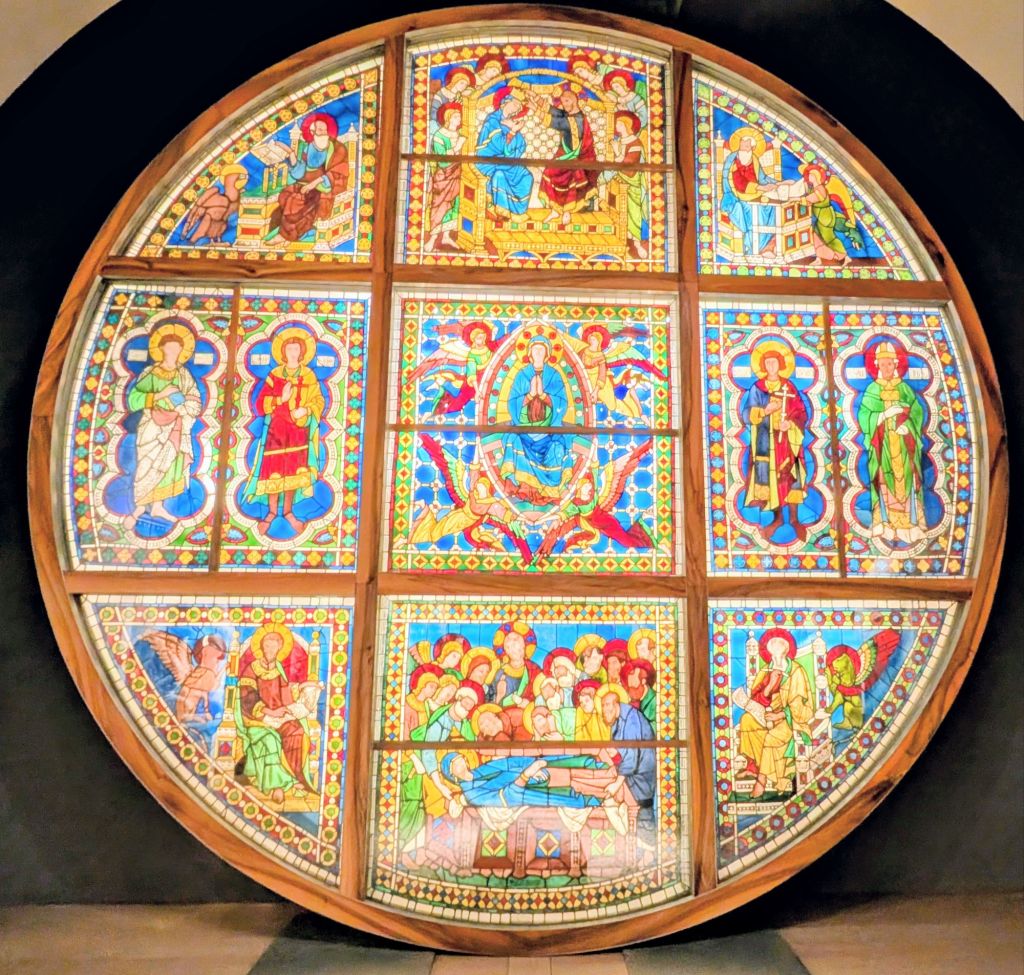
In the cathedral museum, we saw the original oculus that was installed in the Duomo in 1248. In 1943 during WWII, it was removed to keep it safe. Its diameter is six meters & its surface area is thirty square meters which depicts the Burial, Assumption, & Coronation of the Virgin Mary.
In 1339, Siena was at its height in power & influence. City authorities decided that the already constructed cathedral that is admired today should be lengthened & enlarged beyond measure to create a building with epically colossal proportions.
Work began & continued for over 18 years; but, not without setbacks. The project was ambitious & also extremely complex. Work was interrupted & restarted several times due to collapses.
However, the Black Plague decimated Siena’s population & effectively marked the project’s end as well as Siena’s decline.
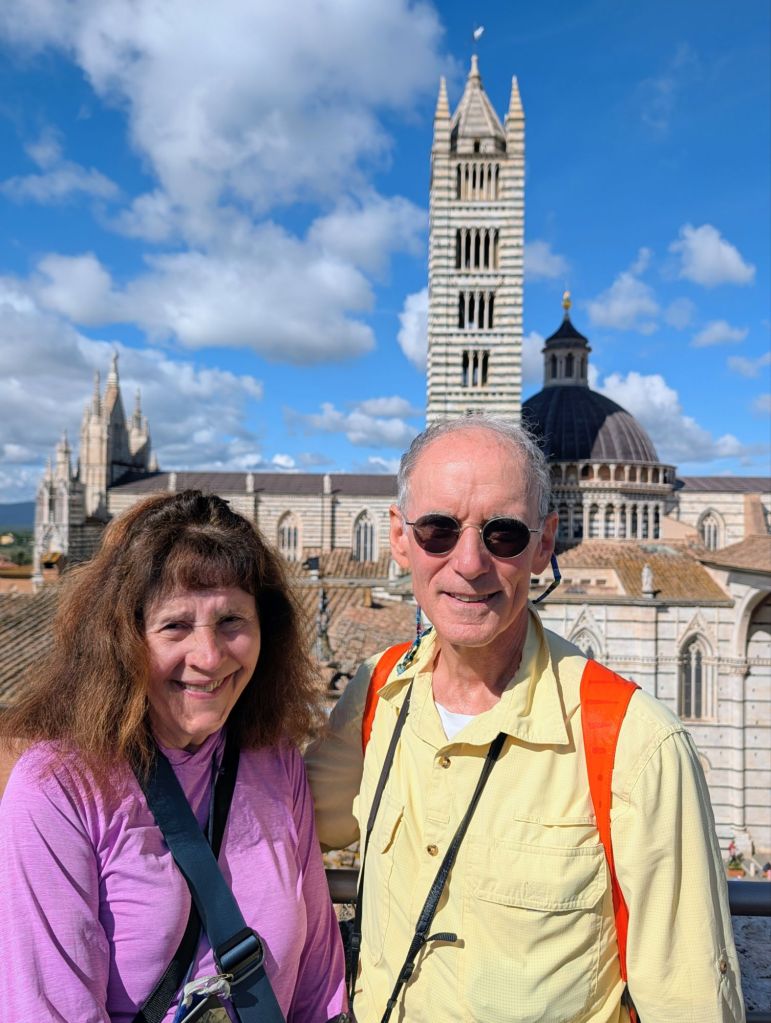
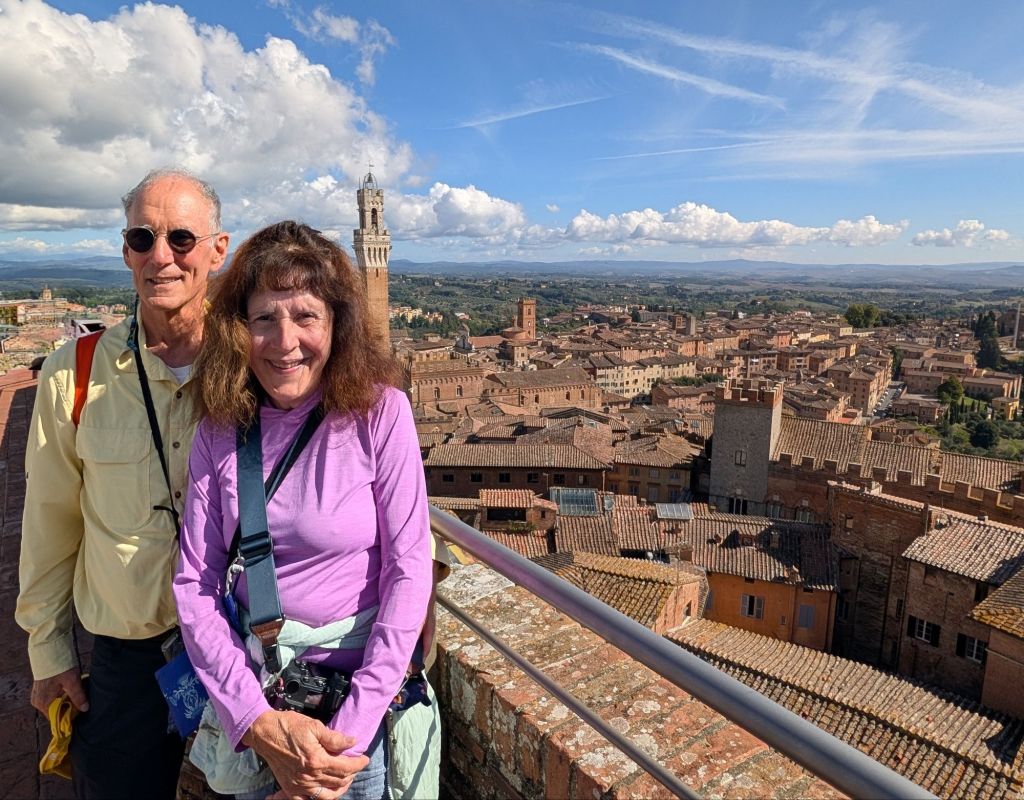
We climbed the remnant known as Il Facciatone (“Big Face”) which is what was supposed to be an even larger version of the Duomo to get nice views over Siena.
There is a famous horse race here called the Palio di Siena which is a historic medieval tradition held twice a year in the central square Piazza del Campo.
It is held on 2 July (Palio di Provenzano to honor the Madonna of Provenzano) & 16 August (Palio dell’Assunta to honor the Virgin Mary’s Assumption).
During these races, the Piazza del Campo is covered with a packed layer of dirt & clay.
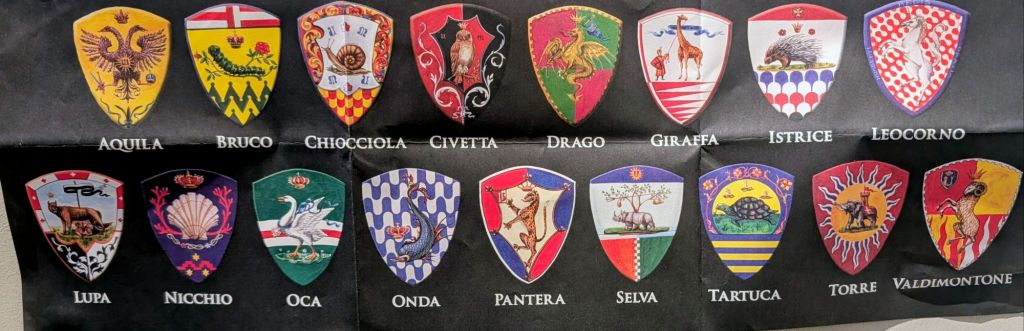
Siena has 17 historic neighborhood districts (contrade) with 10 competing in each race (7 returning districts plus 3 chosen by lottery).
Siena’s 17 Districts & their Crests
Jockeys ride bareback for 3 frantic laps around the square, lasting roughly 90 seconds.
A horse can win even if its jockey falls off as long as the horse is still wearing its contrada’s colors when it crosses the finish line.
First prize is a painted silk banner called the Drappellone or Cencio dedicated to the Virgin Mary.
A horse can win even if its jockey falls off as long as the horse is still wearing its contrada’s colors when it crosses the finish line.
The Palio is held over four days.
The first day is for assigning horses to each district.
The second day allows the district to choose their jockey.
The third day is when the big race is run.
The fourth day everybody celebrates the race & the winner. Every district performs a different ceremony for its horse & joins the big parade in historical costumes.
This is a link to a BBC video showing the Palio (Highlight & Click on it to view)
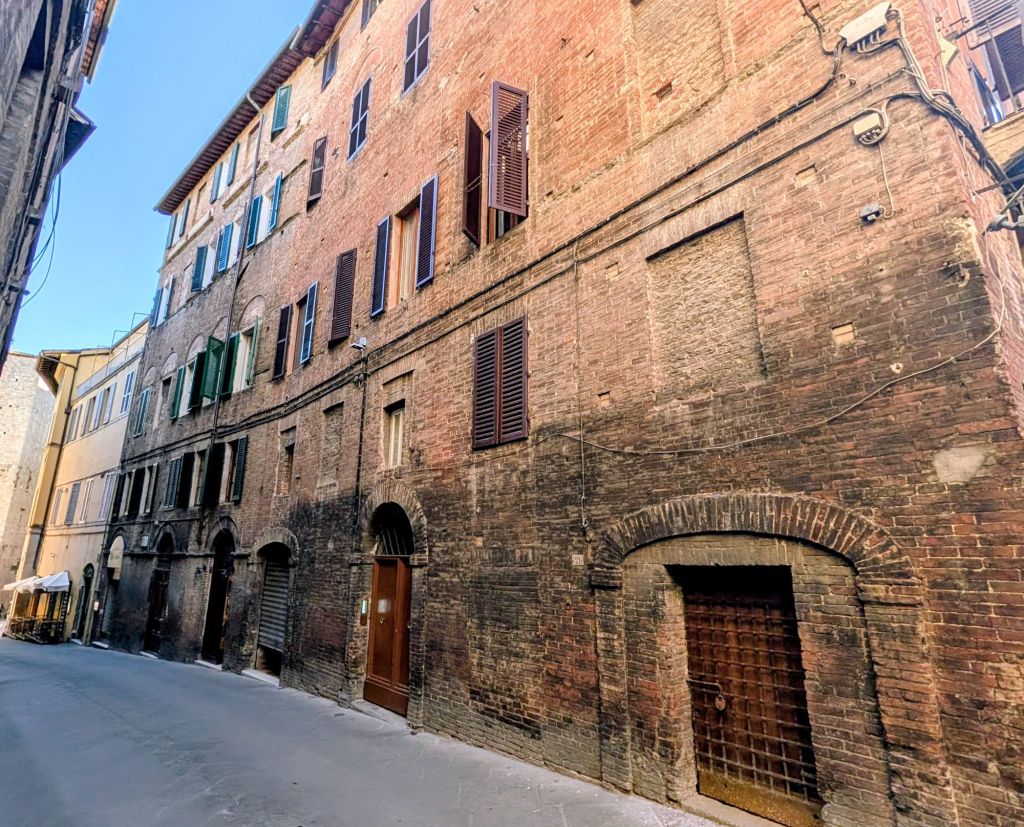
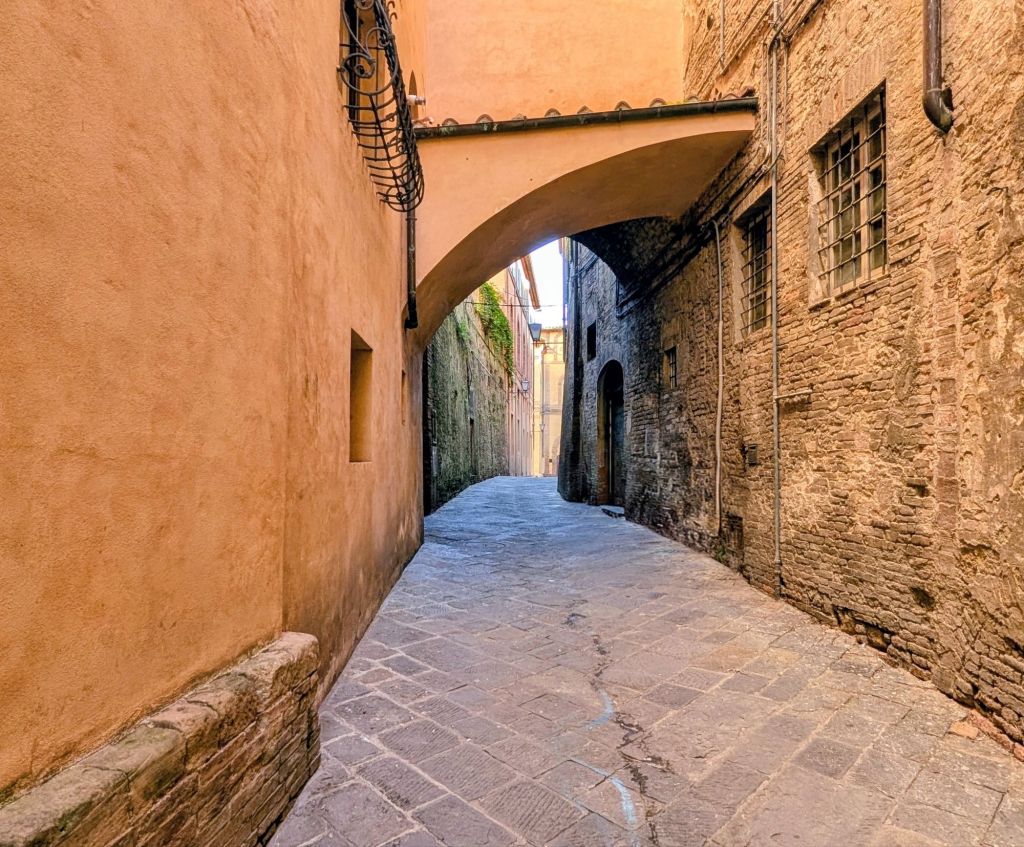
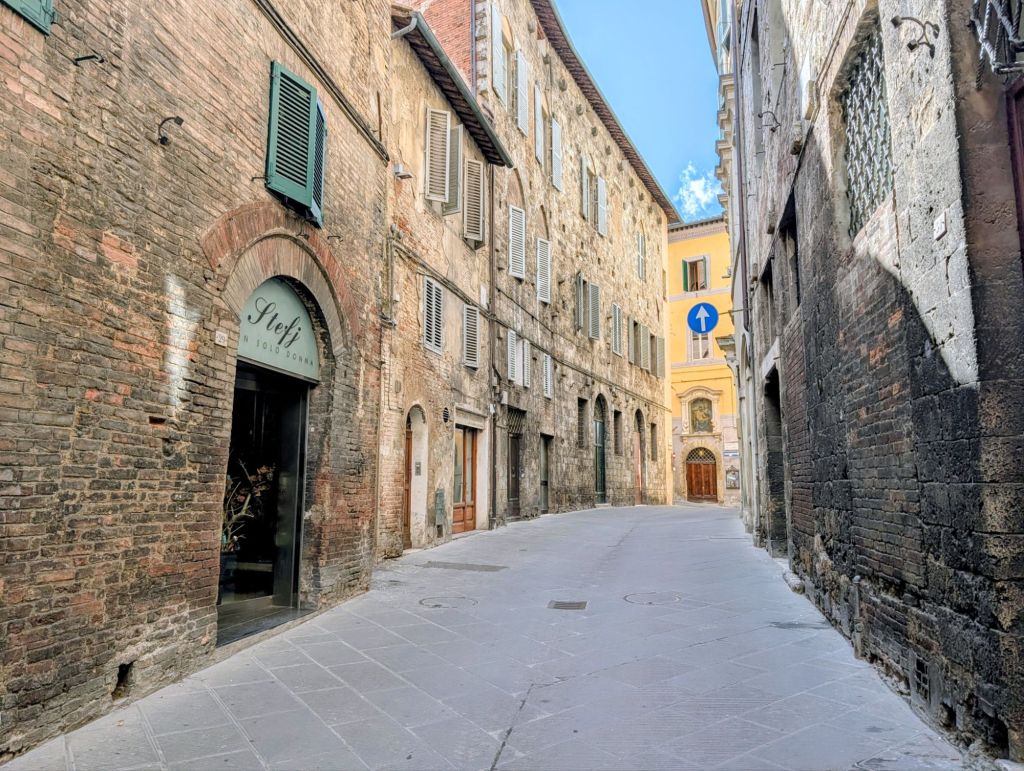
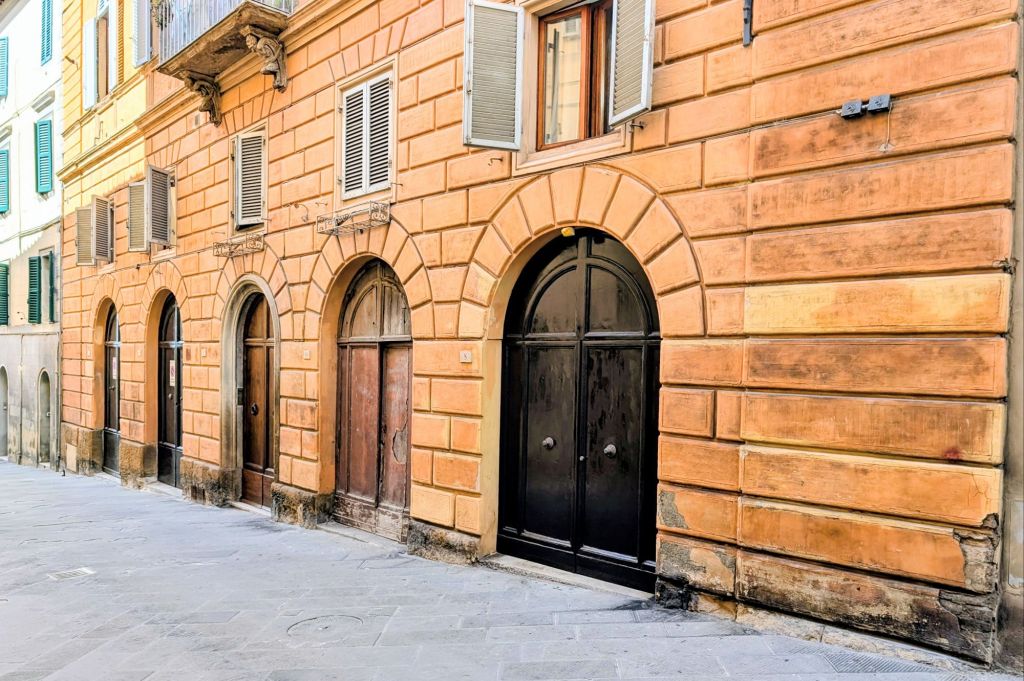
Here are some Siena street scenes:
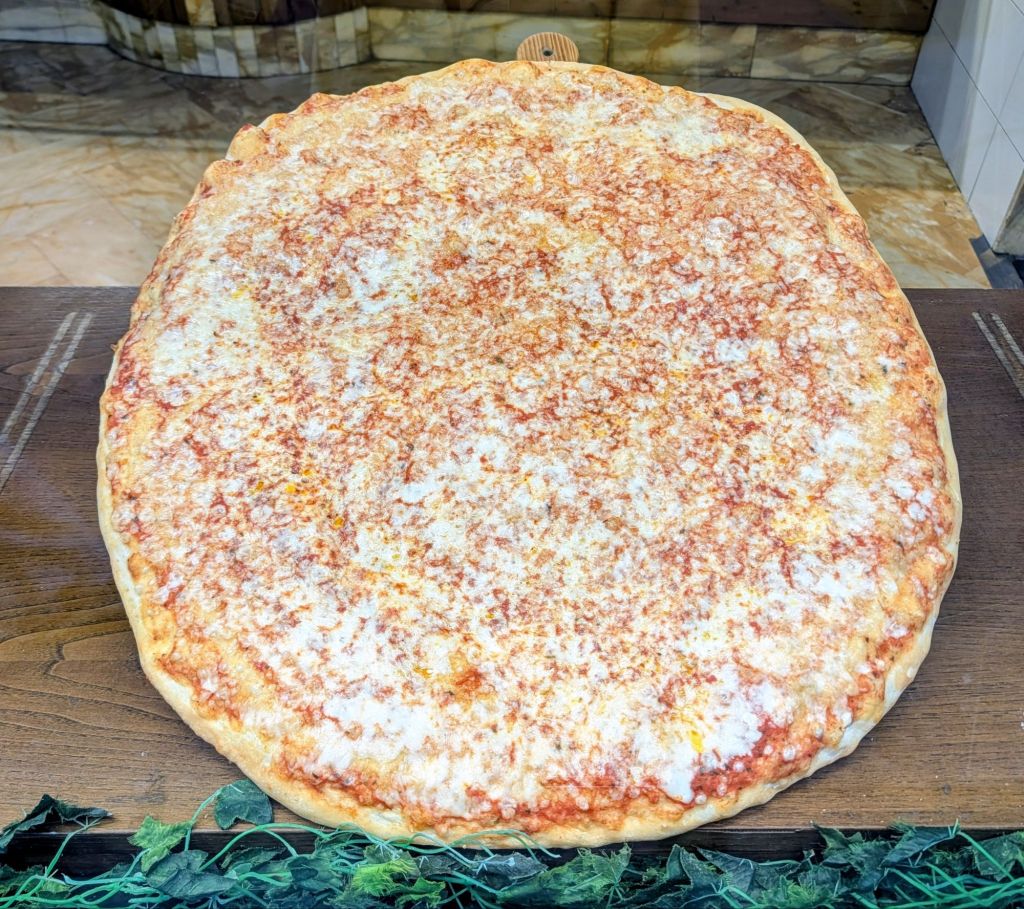
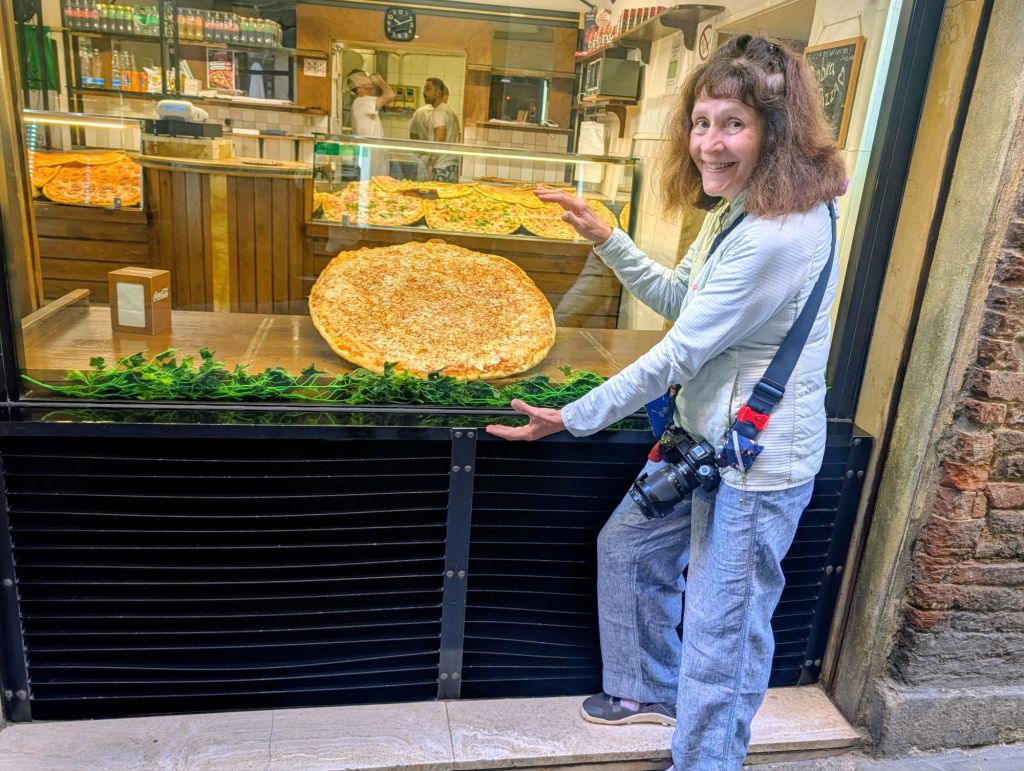
There are some seriously big pizzas here
When the moon hits your eye like a big pizza pie… that’s amore!
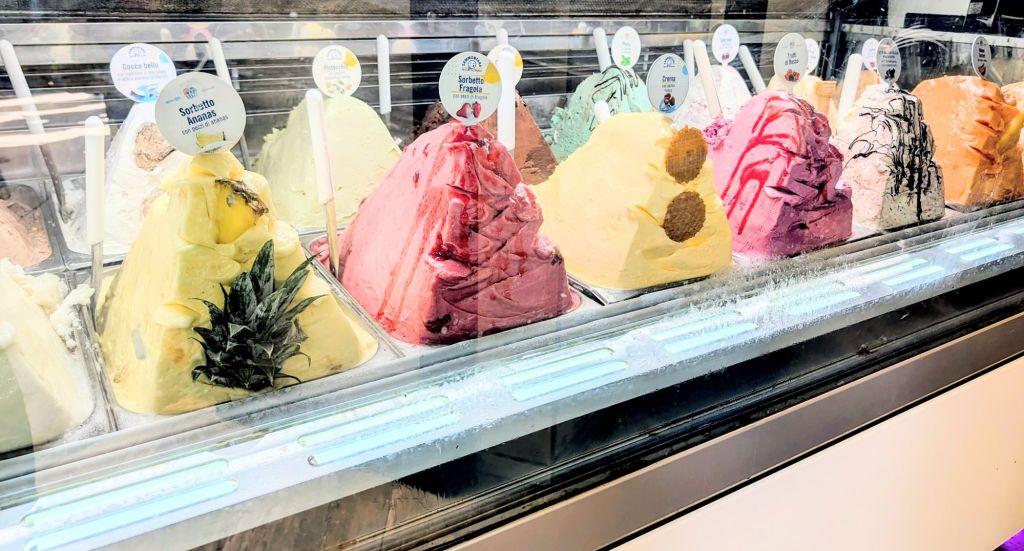
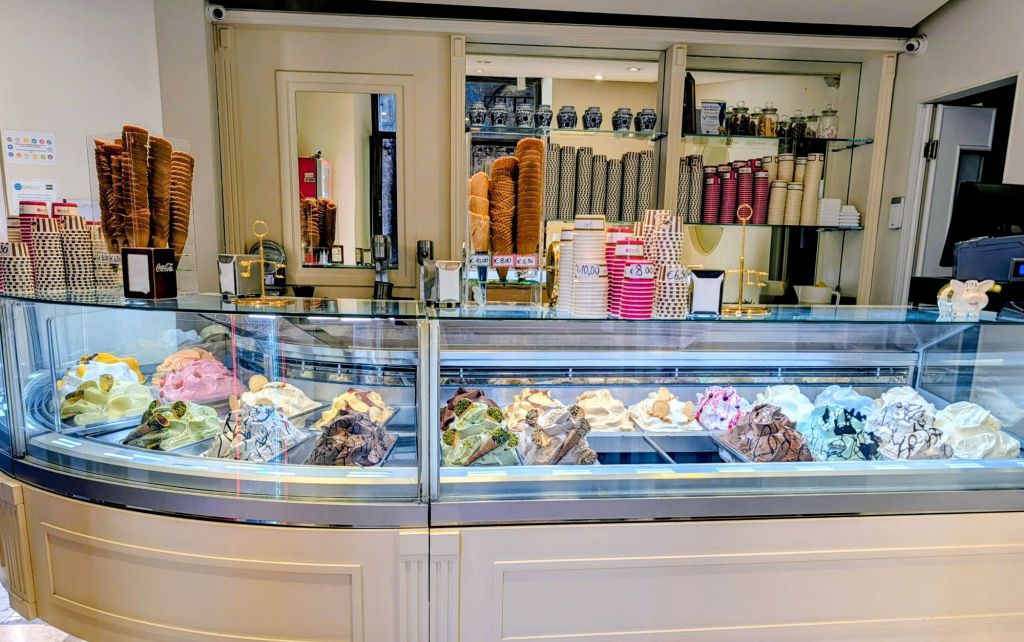
Along with big pizzas are mountains upon mountains of glorious gelato.
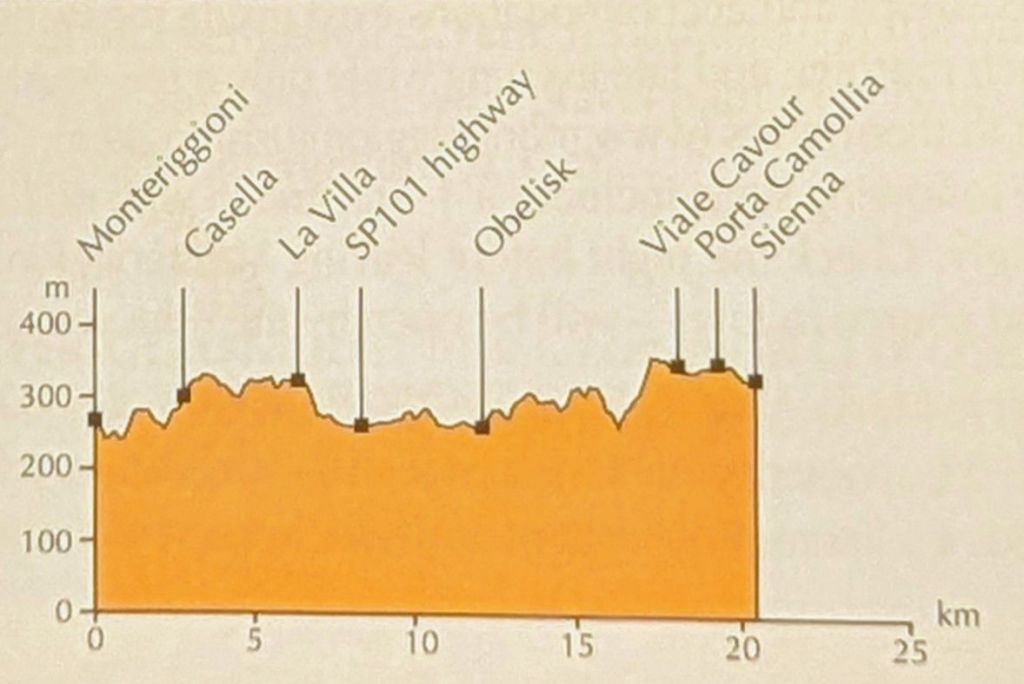
14.1 Miles; 7 Hours on the trail (Cumulative: 96.2 Miles; 47.6 Hours on the trail)
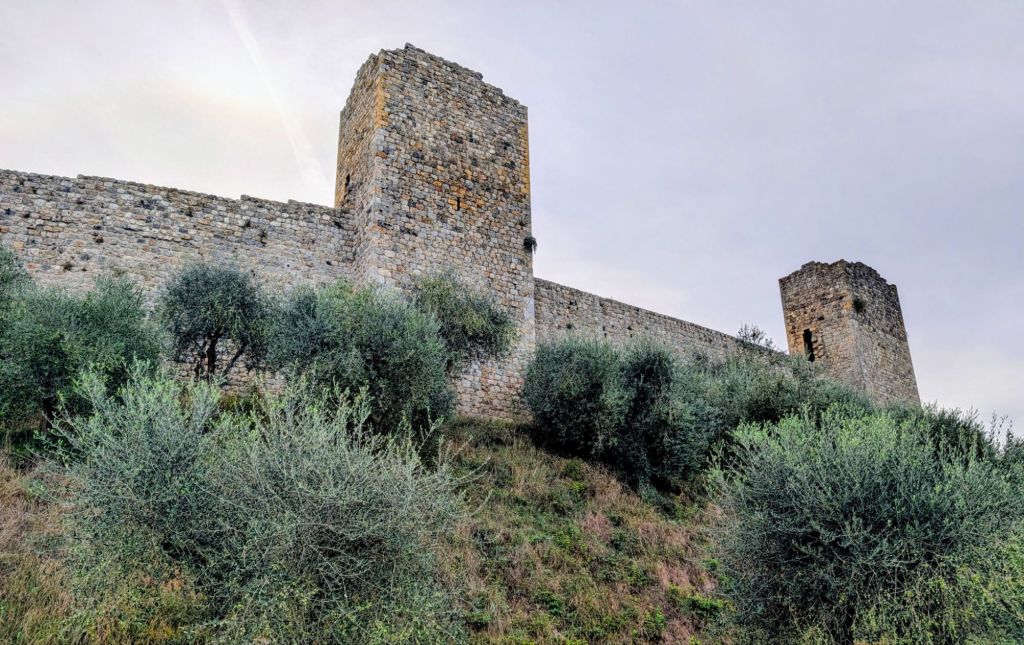
Monteriggioni is located in Siena province.
Its 570 meter (1,870 feet) perimeter is an almost perfect circular shape; but, not by design. Its shape was created by following the terrain’s natural contours.
The town was built by the Sienese between 1213- 1219 for purely defensive purposes. It dominates the territory from a strategic hilltop position overlooking the roads allowing it to control the area.
The intact city wall has 14 towers & 2 gates: Porta Romea facing Rome & Porta Fiorentina facing Florence.
Porta Romea (Rome Gate)Porta Fiorentina (Florence Gate)
The city walls are 10 meters high.
Rome Gate & City Walls Florence Gate & City Walls
The village structure as seen today can essentially be considered the original one because the only modifications done were in the 16th Century when towers were adapted to support new firearms & an earth layer was added to the external walls’ base as well as in 1921 when 3 of the 14 towers were lowered to wall level height.
Leaving Monteriggioni
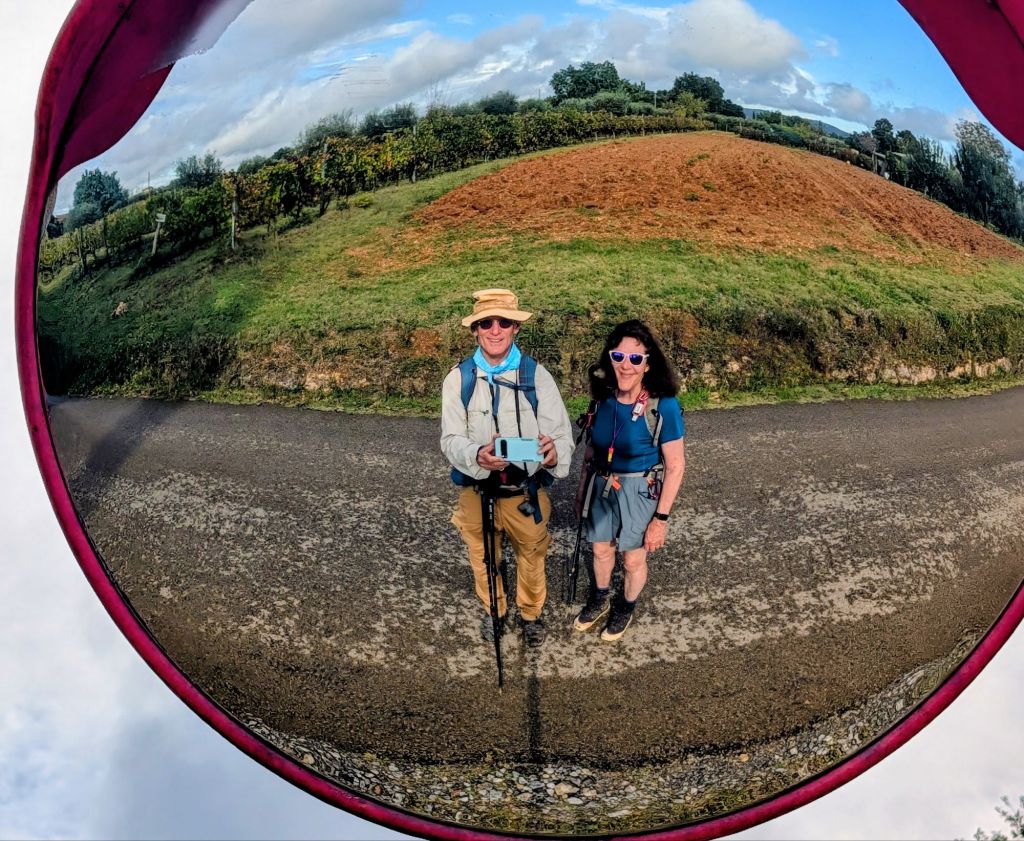
After visiting Monteriggioni, we had another beautiful walk through Tuscan hills passing through olive groves, vineyards, forests, & pastures.
We didn’t walk through any towns, only scattered small villages, houses, & farms.
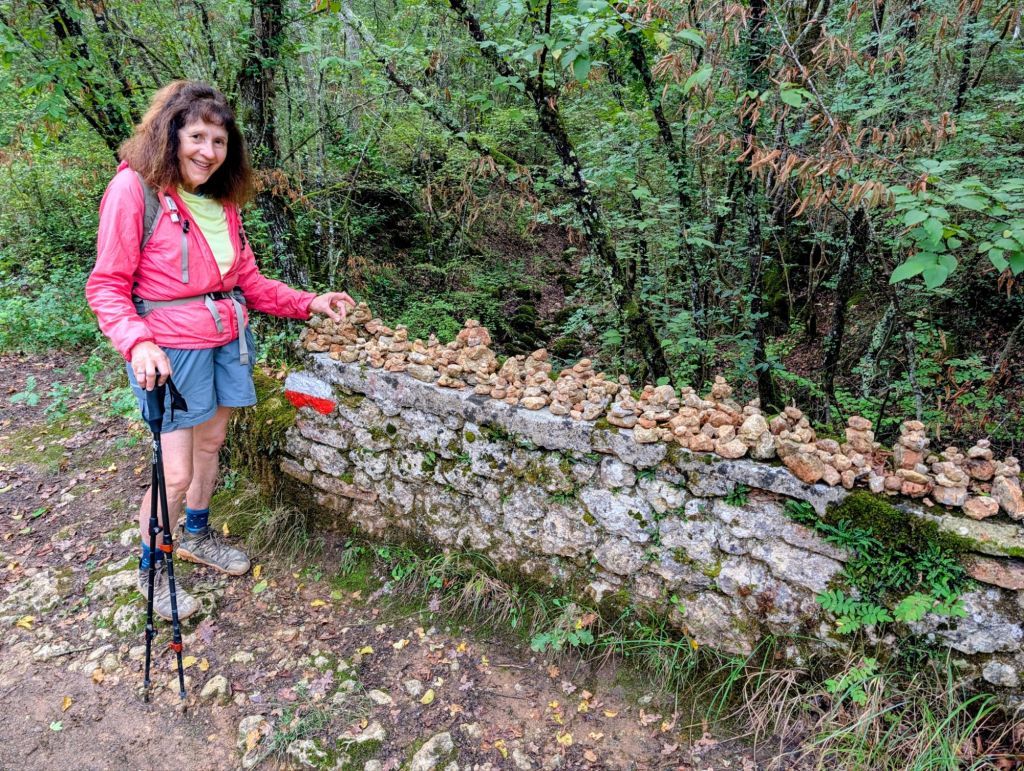
Gina adding to rock cairns on Pont Rosso which is a bridge dating from the Middle Ages
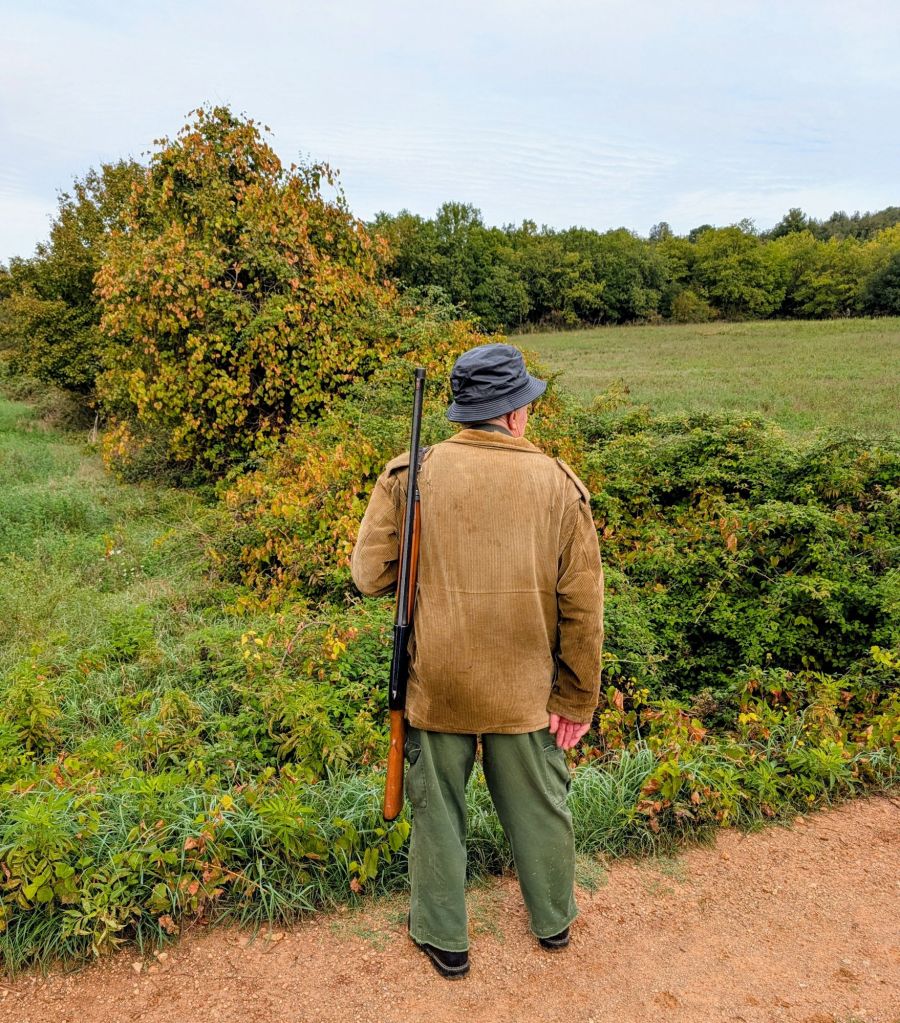
Since today is Saturday, bird hunters were in some fields with their dogs hunting pheasants.
Bird HunterSaw Castella della Chiacciola which dates to the 15th Century
There is so much oregano along the route, it smells like something is cooking.
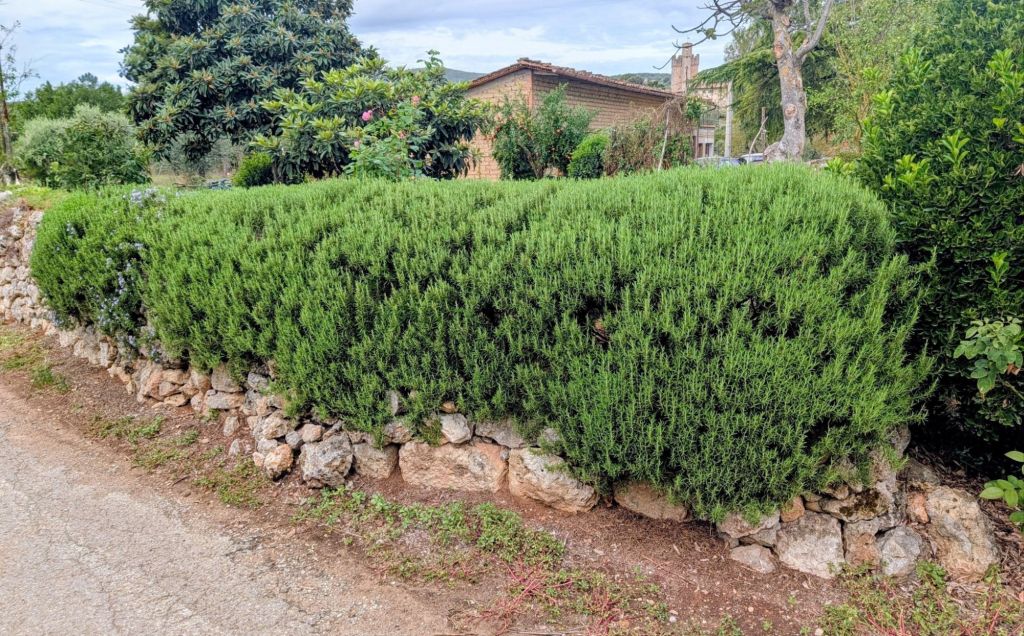
Wall of Rosemary
We stopped at this funky rest area.
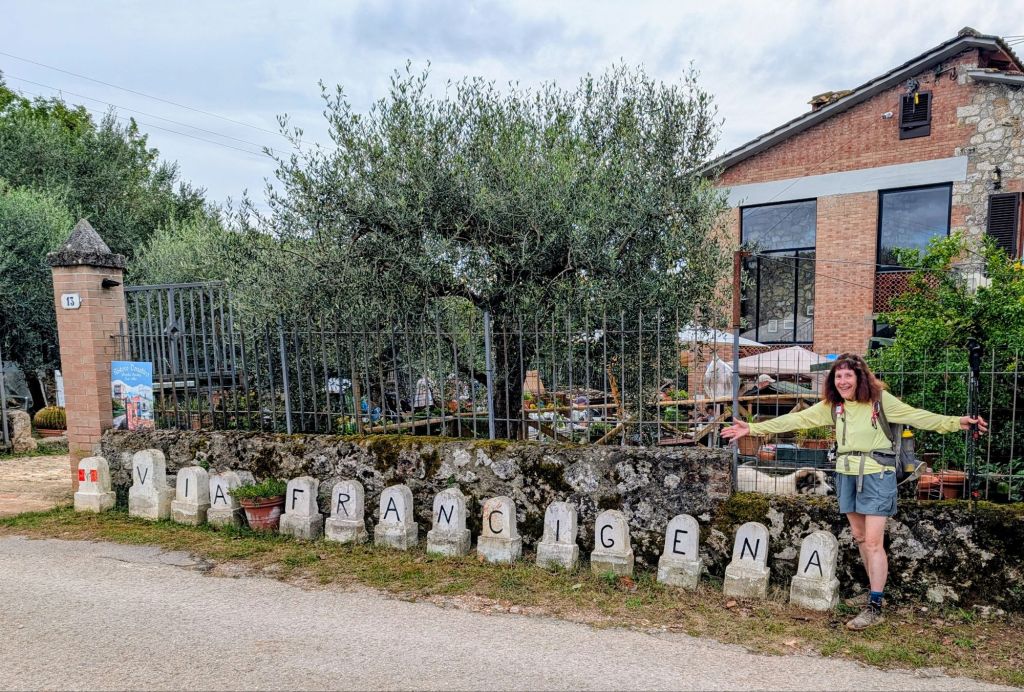
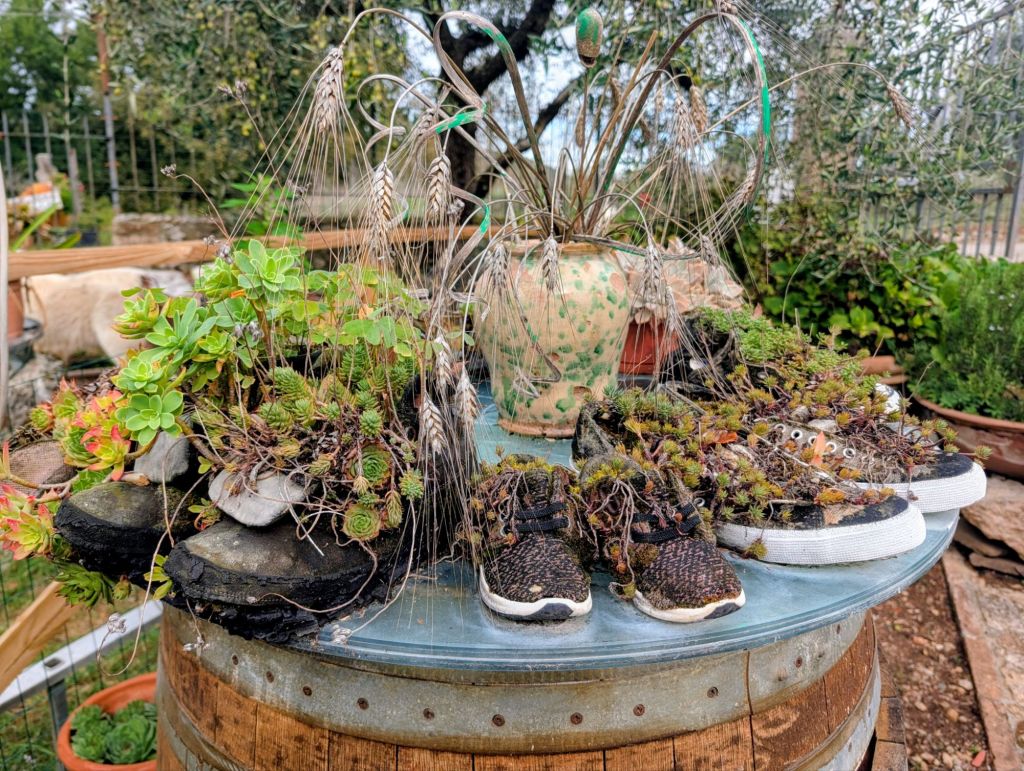
I’d like to buy a vowelOne way to repurpose old hiking shoesEven backpacks need a breakPilgrim Crossing
We entered Siena at the Antiporto Camollìa which was a gate built in 1270 to provide additional protection at the city’s northern entrance.
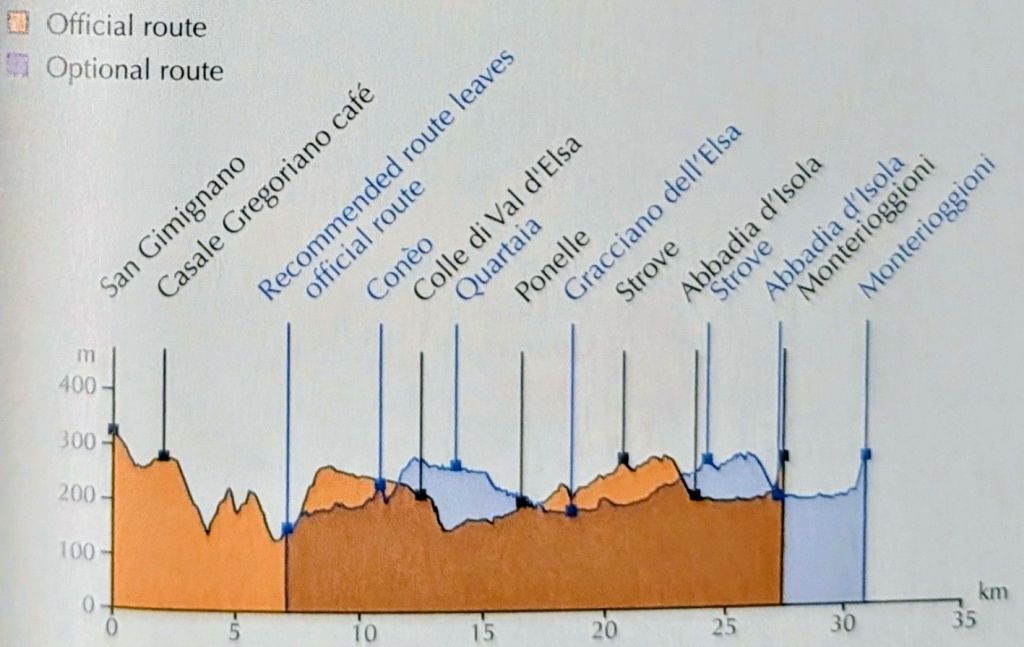
19.3 Miles; 9.5 Hours on the trail (Cumulative: 82.1 Miles; 40.6 Hours on the trail)
Today was a long walk through beautiful fields, forests, olive groves, open spaces, & vineyards in Tuscany’s Val d’Elsa area
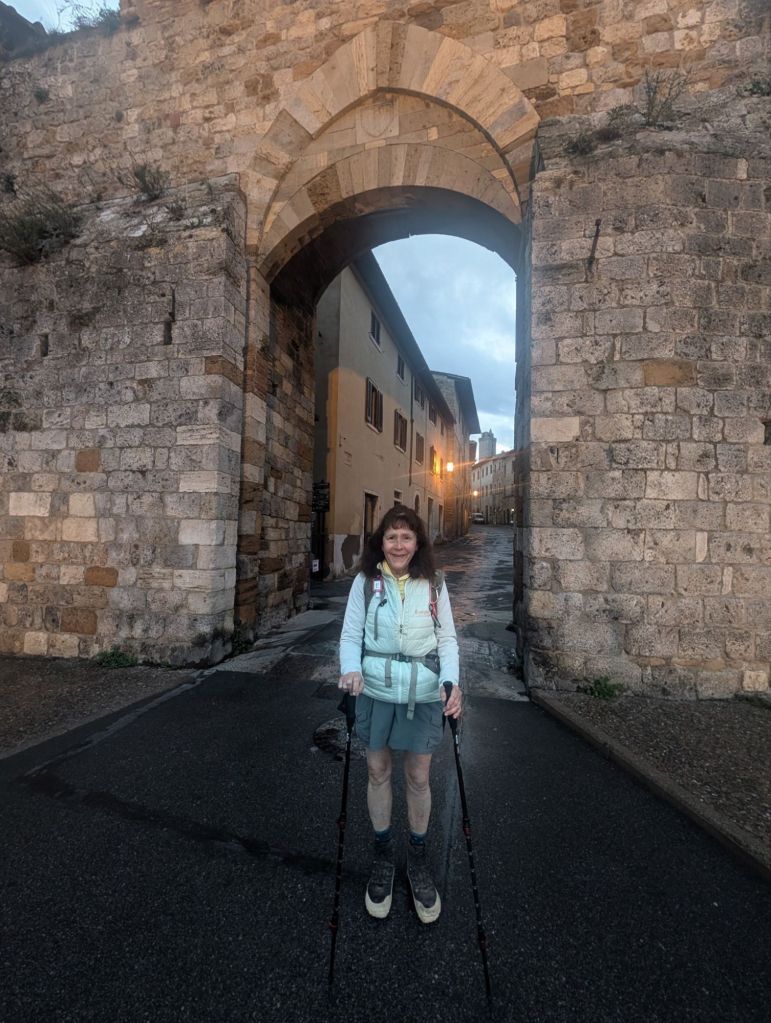
Because we had a long hike today, we left before sunrise which allowed us to walk through San Gimignano one last time; but, this time with no crowds.
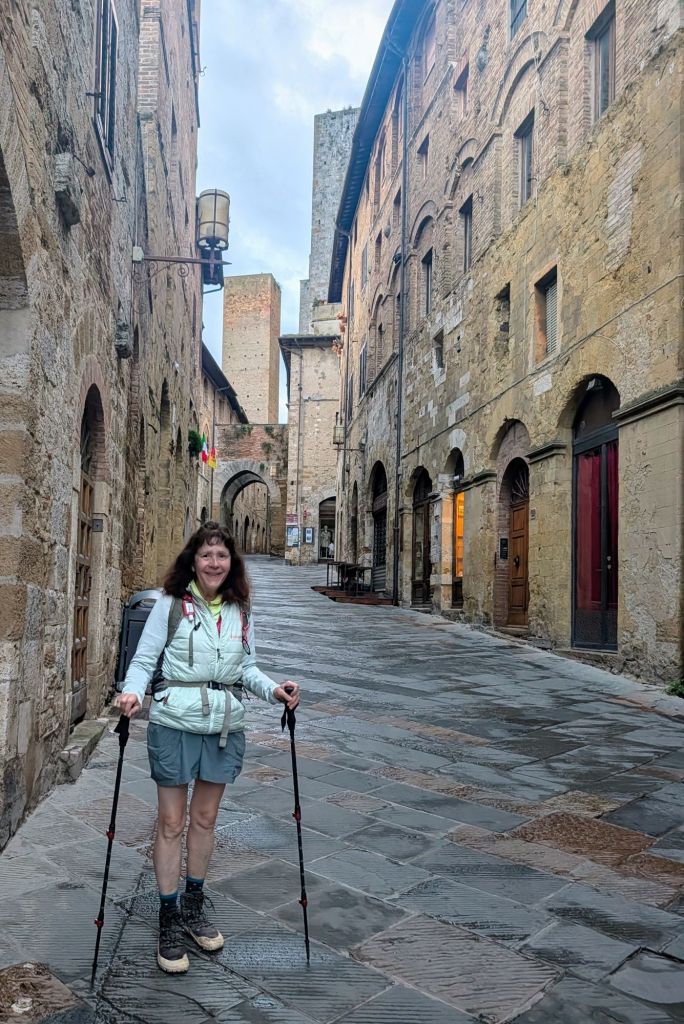
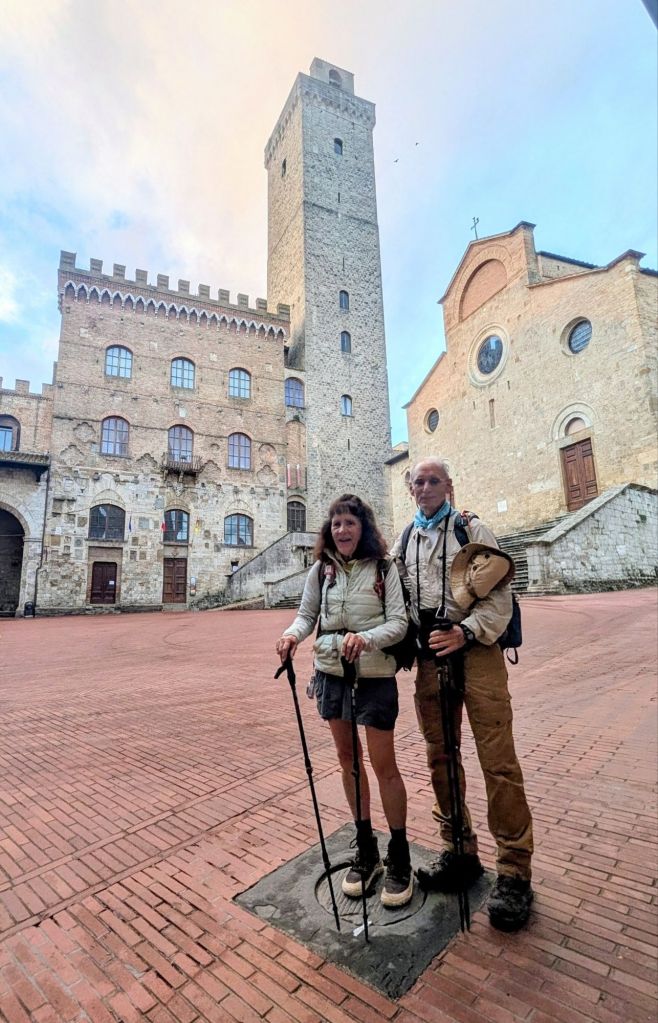
Porta San Mateo is the city’s northern gate & was built in 1262Via San Mateo leading into the town centerPiazza del Duomo & Torre Grossa (The Big Tower)
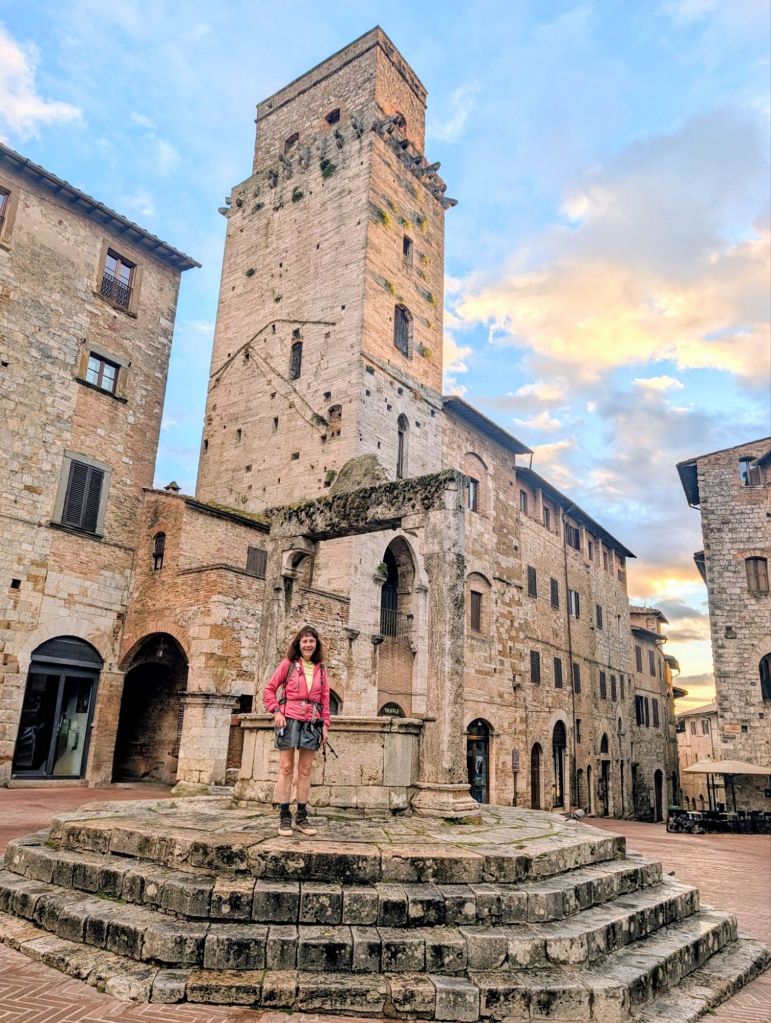
Piazza della Cisterna is San Gimignano’s second main square. It is named after the cistern which was constructed at this spot in 1287. The well dates from 1346 & was the town’s main water source.
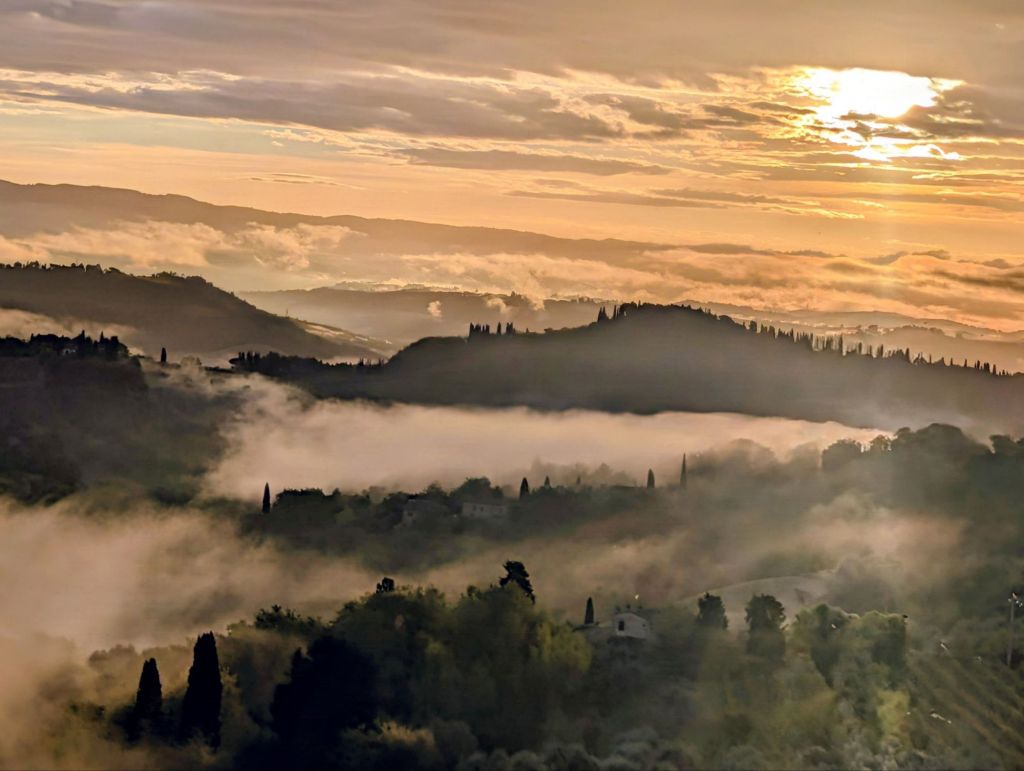
Our early departure also allowed us to enjoy another gorgeous Tuscan sunrise.
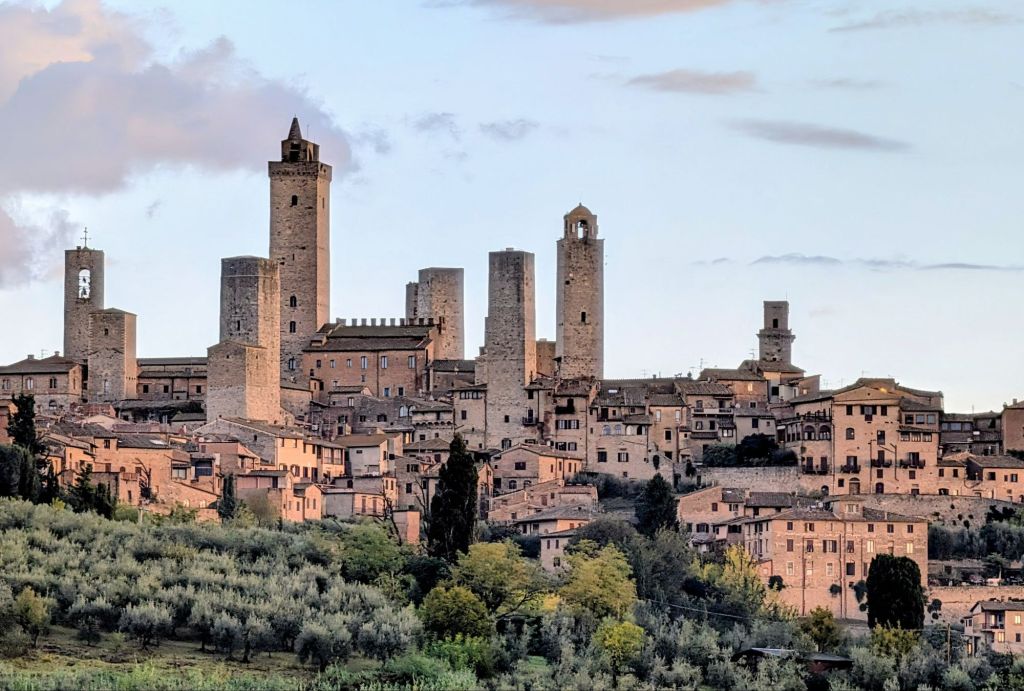
Leaving San Gimignano allowed us to view the city from a different vantage point.
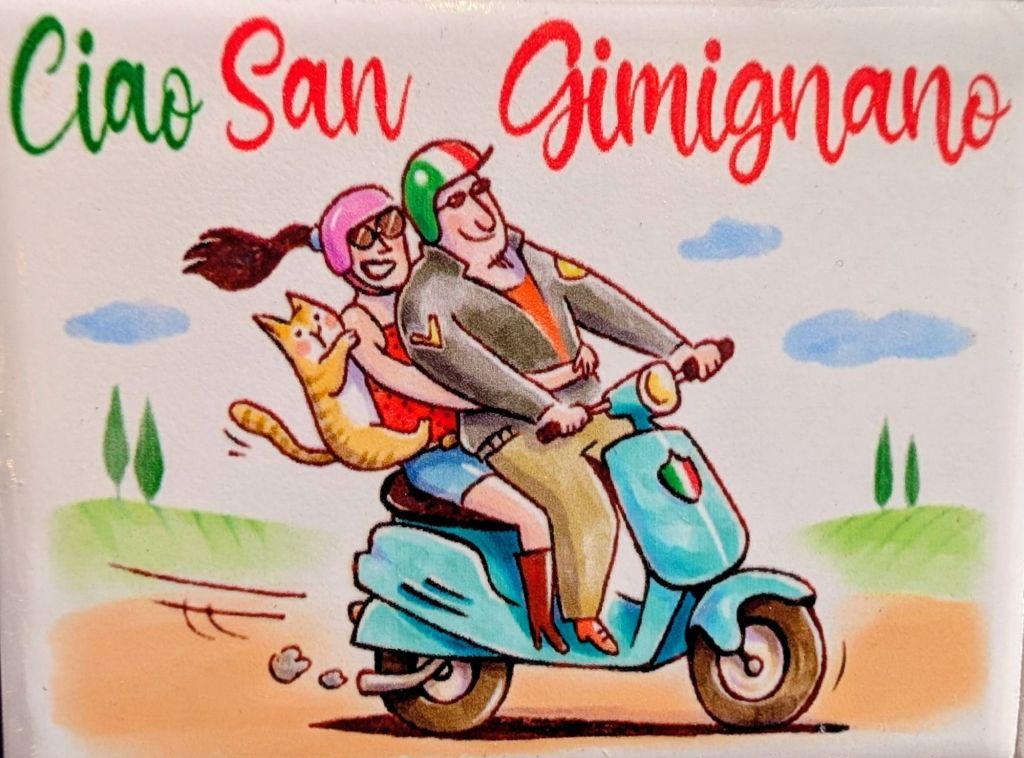
Ciao San Gimignano!
Here are some trail images:
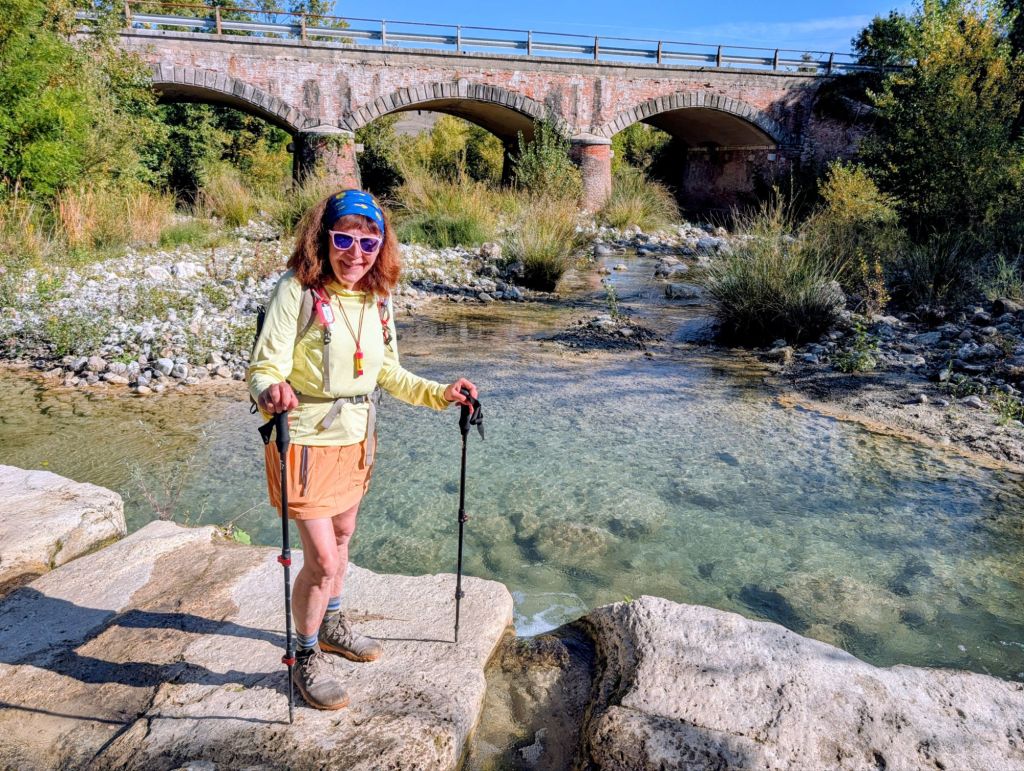
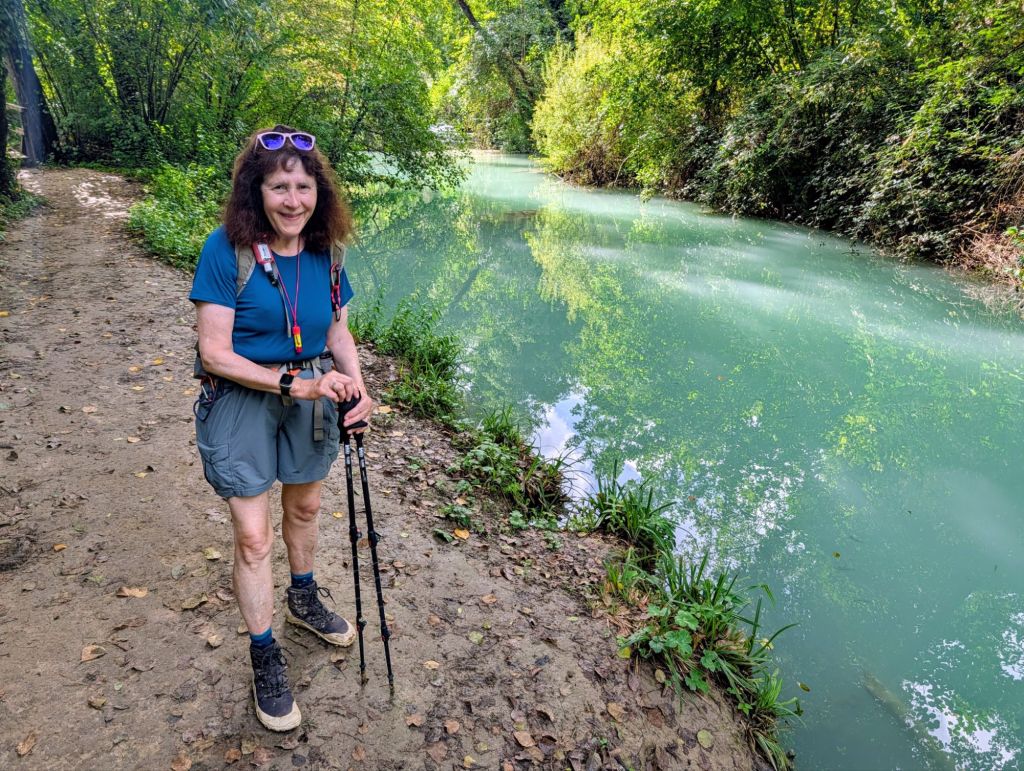
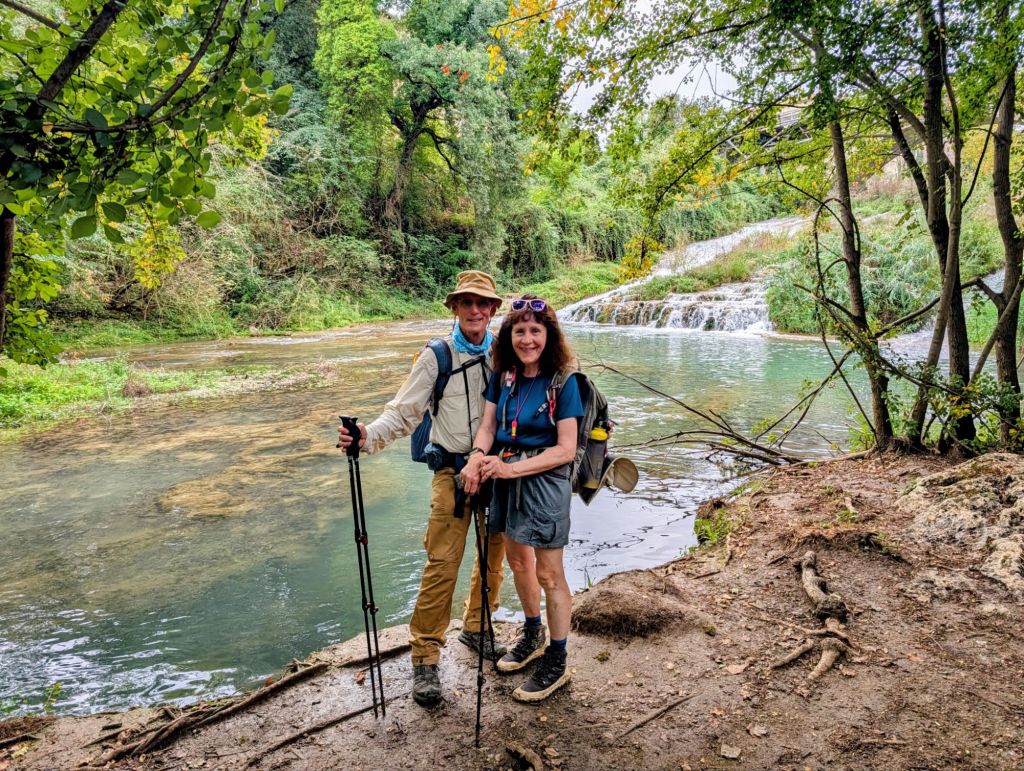
We walked through the historic town Colle di Val d’Esla whose Elsa River Trail has a series of small, tumbling, turquoise cascades along its shallow course.
Colle di Val d’Esla is known as “The Crystal City” because it produces 15% of the world’s finest lead crystal glassware.
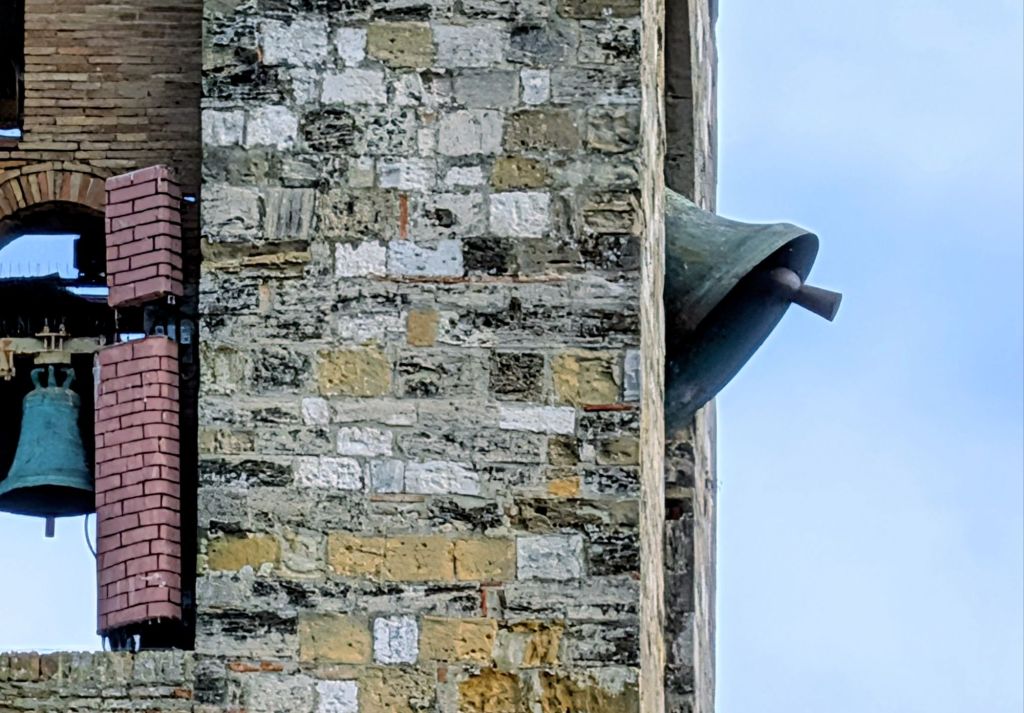
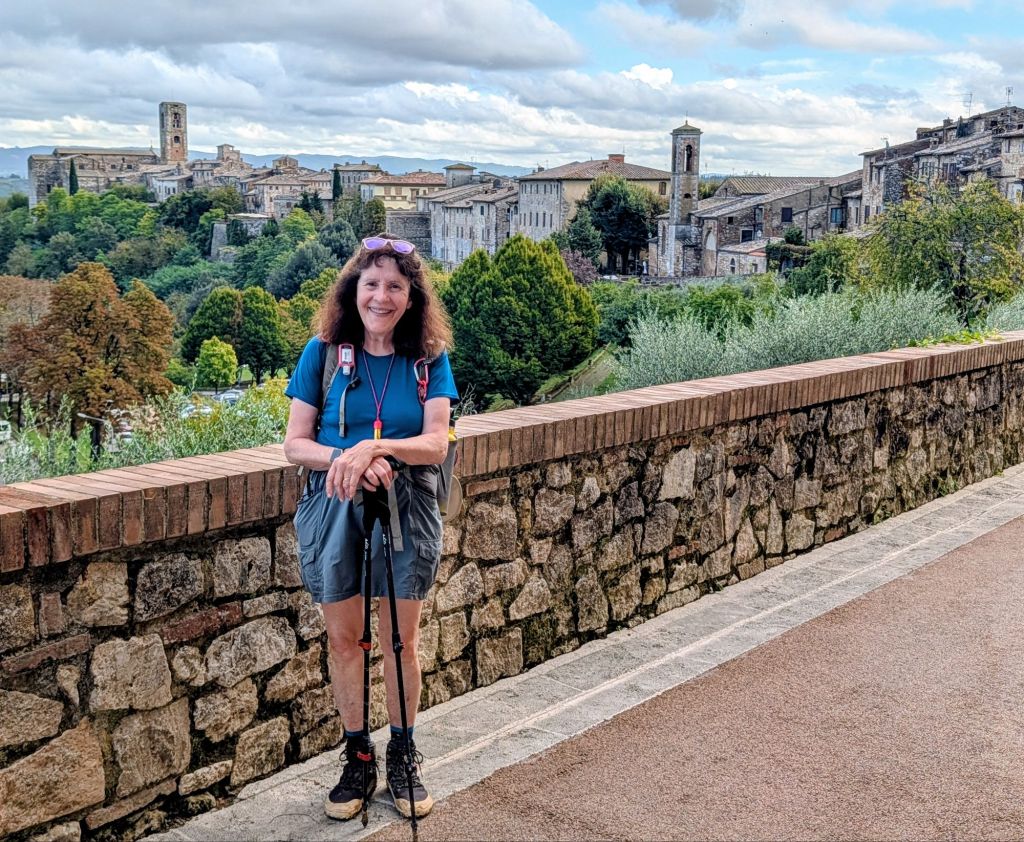
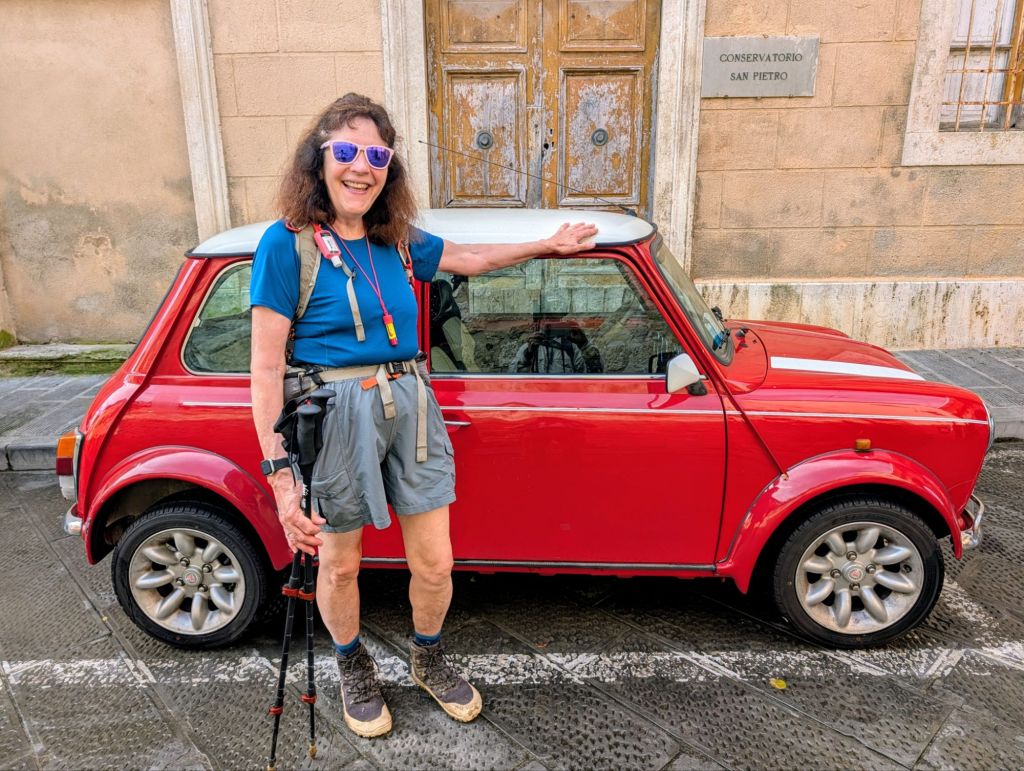
Porta Nova built in 1479We arrived at 12 Noon & the bells were ringingCity ViewGina has a Mini; but, wants an Original Mini just like this one
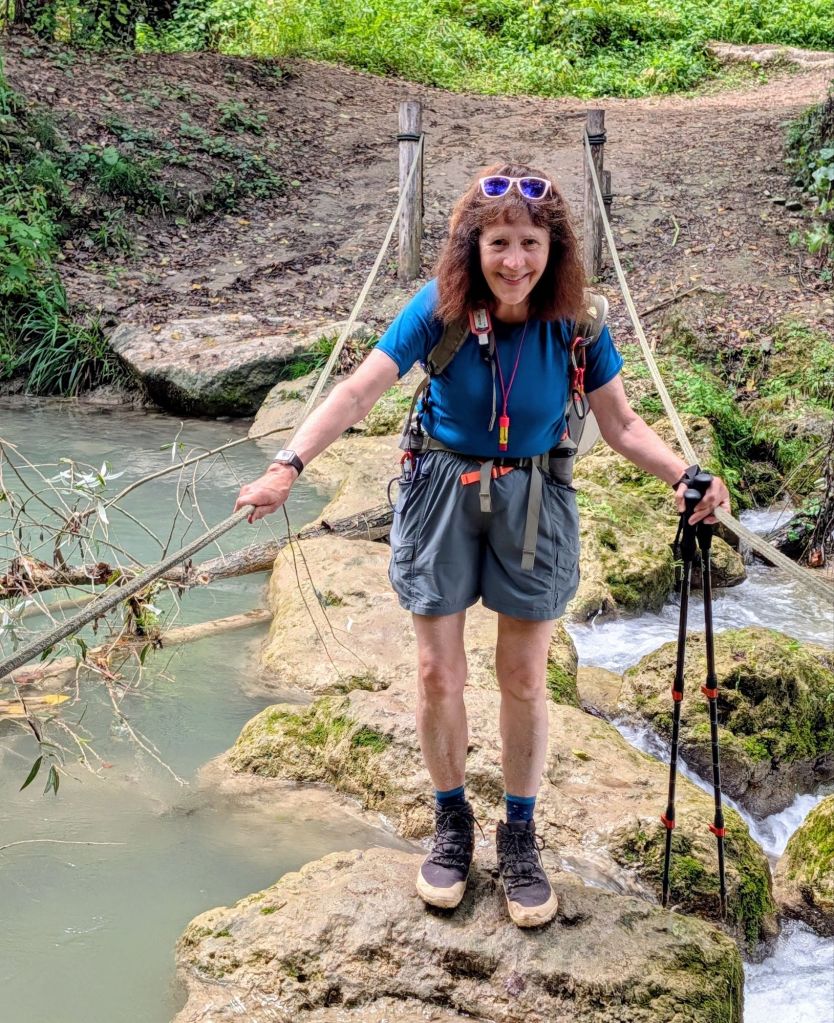
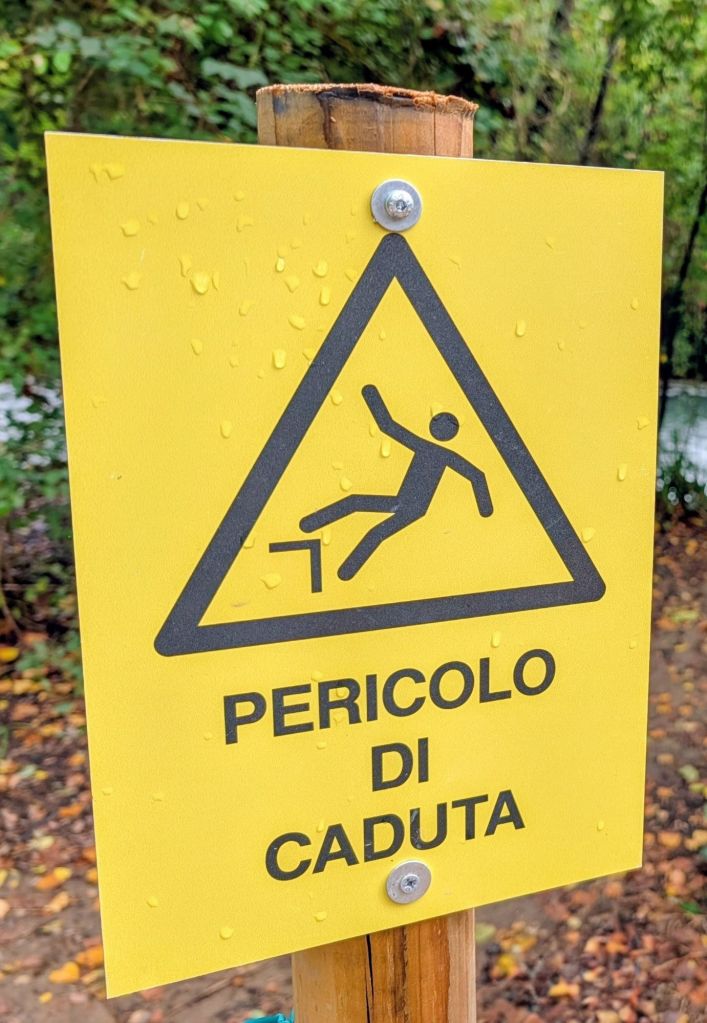
Ropes are in place along the Elsa River at the several, slippery, stepping stone crossings to help walkers.
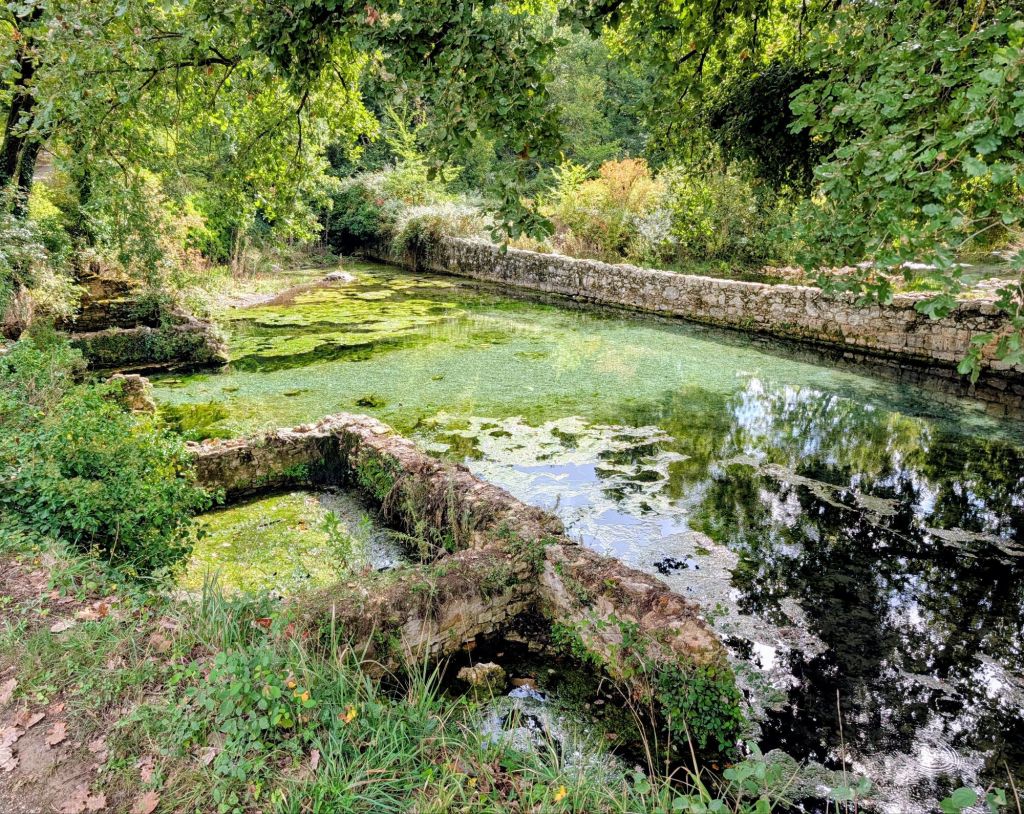
Old Roman Thermal Bath near Ponelle
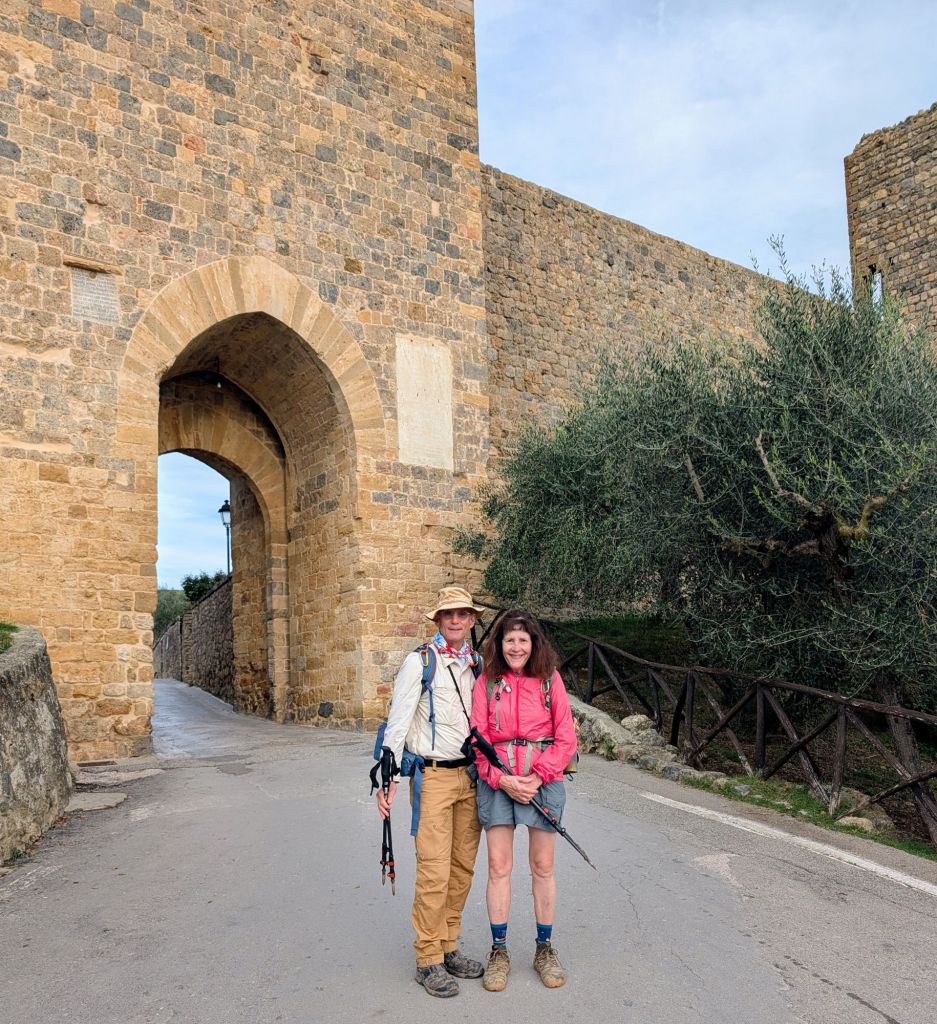
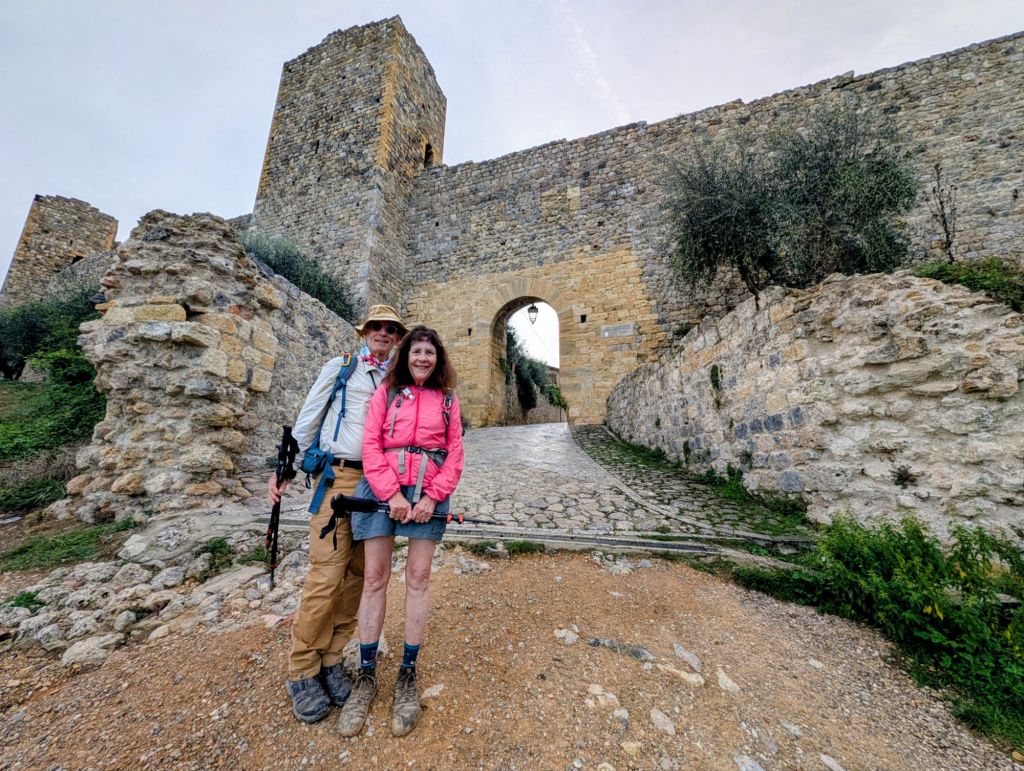
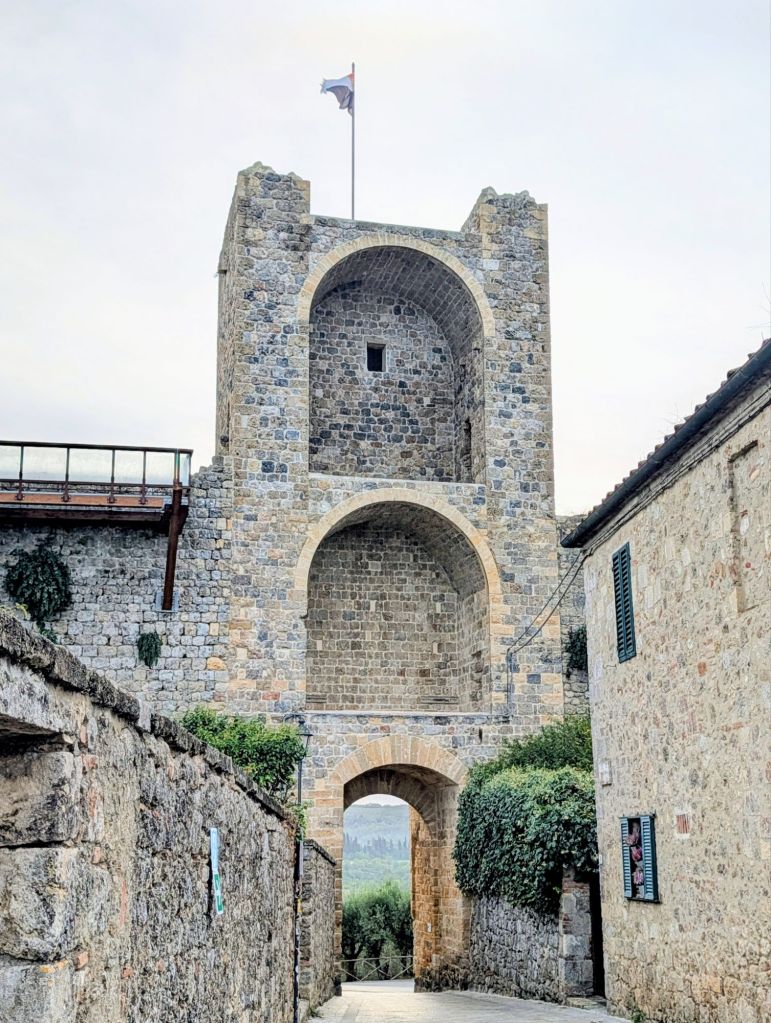
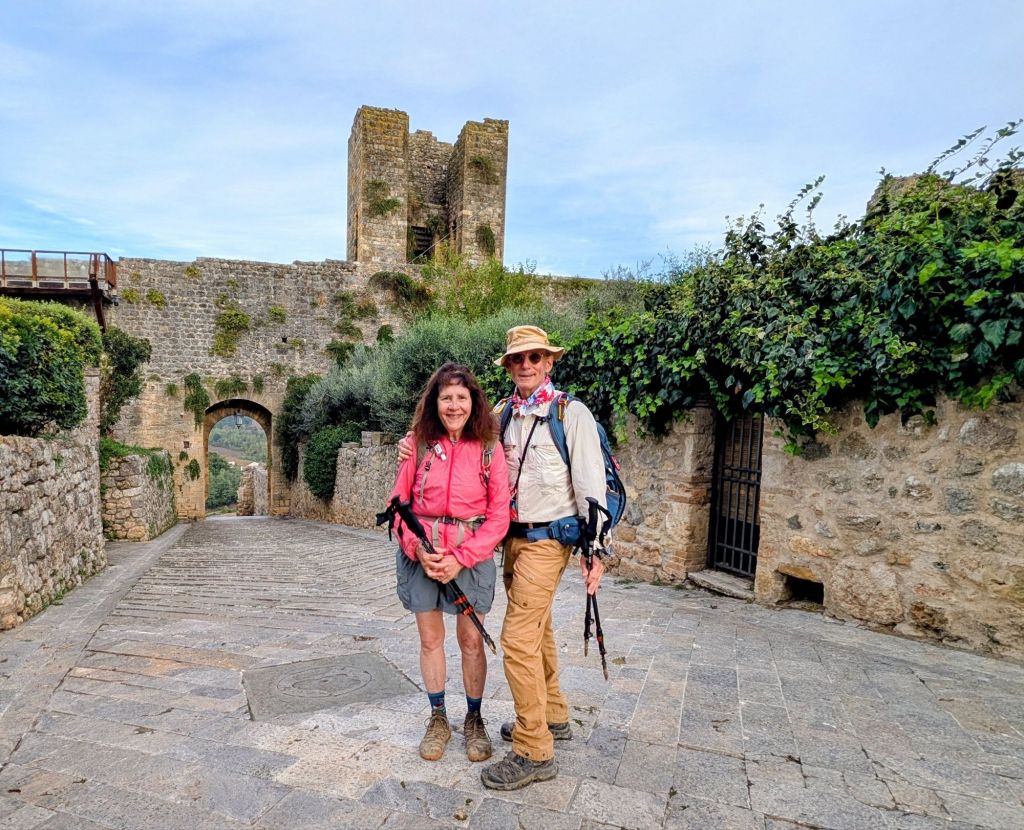
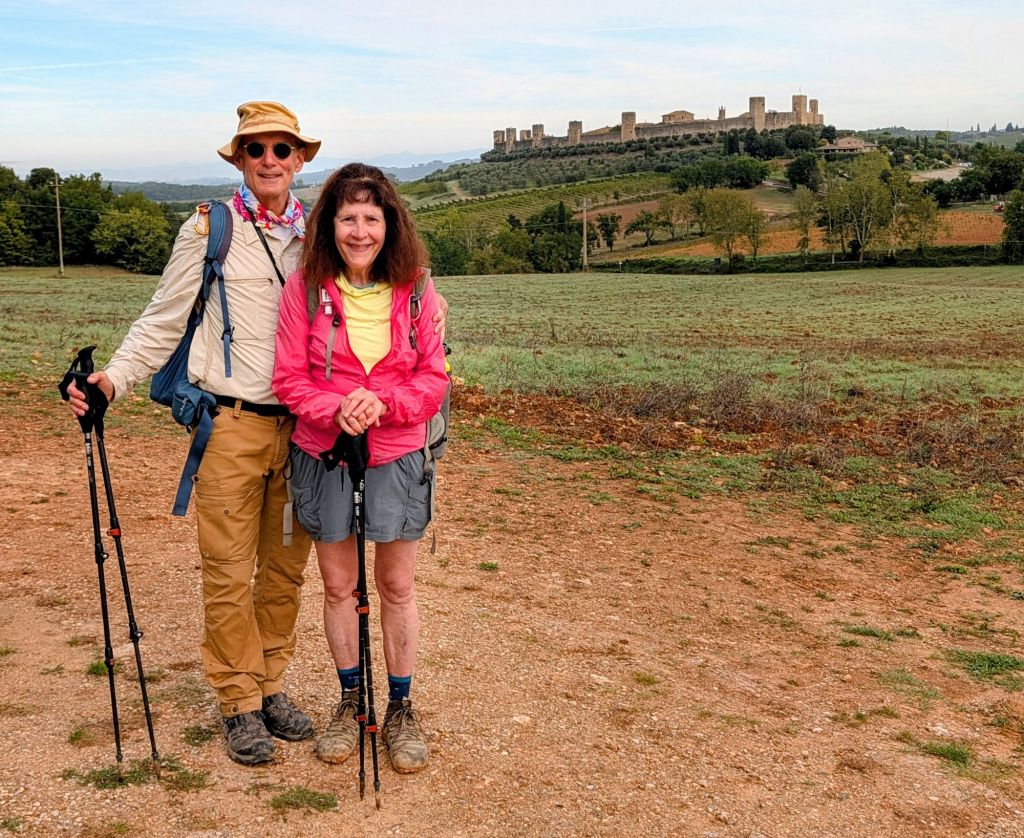
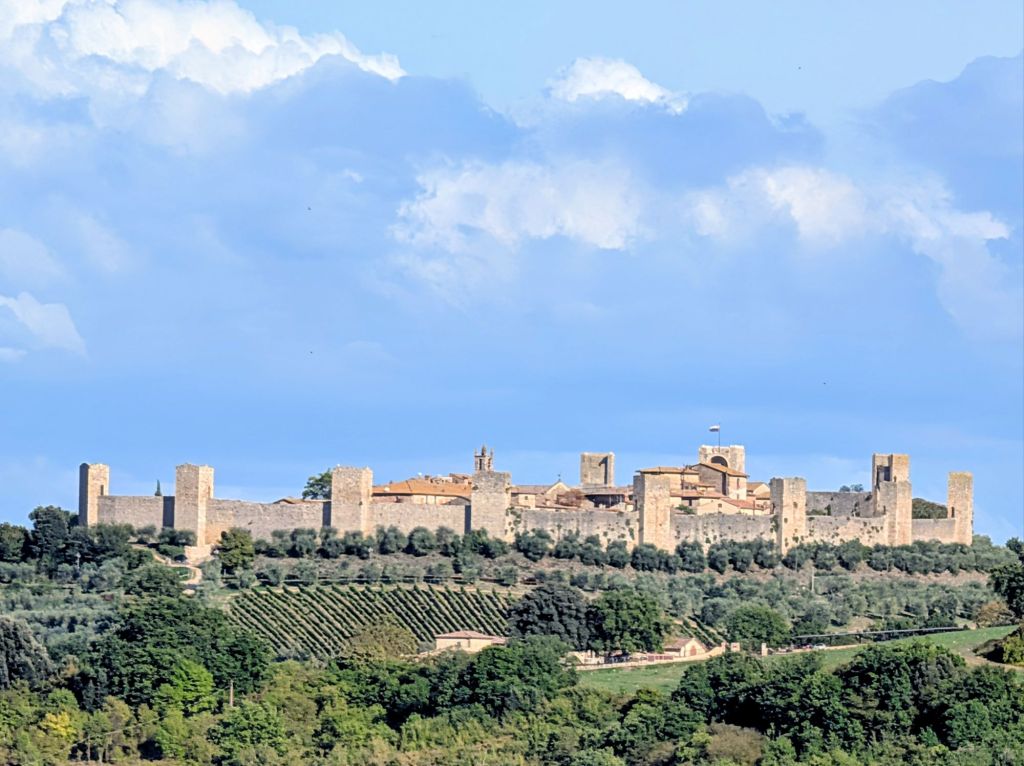
Monteriggioni rates among the most picturesque places on the Via Francigena. It is a perfectly preserved medieval fortress town perched alone atop a hill covered in vineyards & olive trees.