Rochester to Aylesford
Day 10 – Distance walked 13 miles
We enjoyed a nice day on the route. Only 4 more days to go!
To leave Rochester, we back tracked along the Medvey River & we soon reached a new trail meandering over fields & through woods.
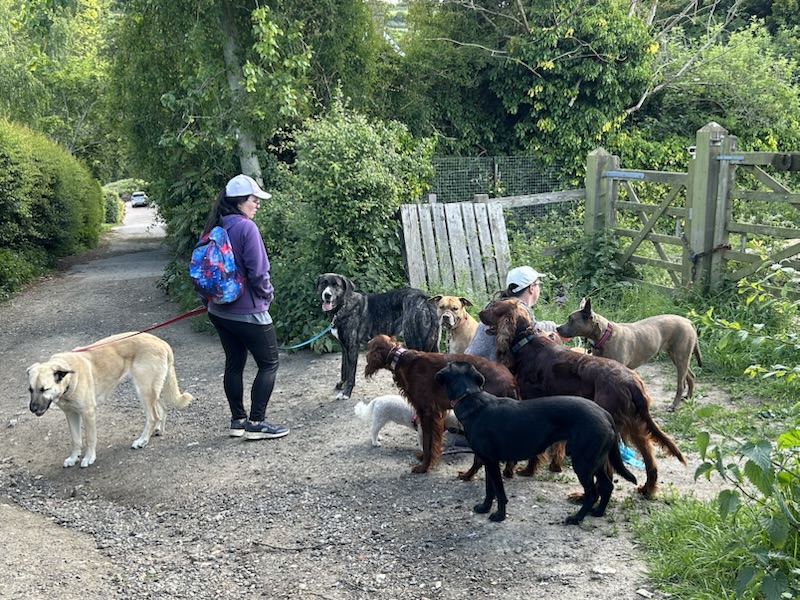
Along the way we saw two women walking 10 dogs!! I am constantly amazed at how well mannered all the dogs have been on this journey. Not one of these dogs was barking, pulling on its leash, or was a least bit concerned as we walked past.
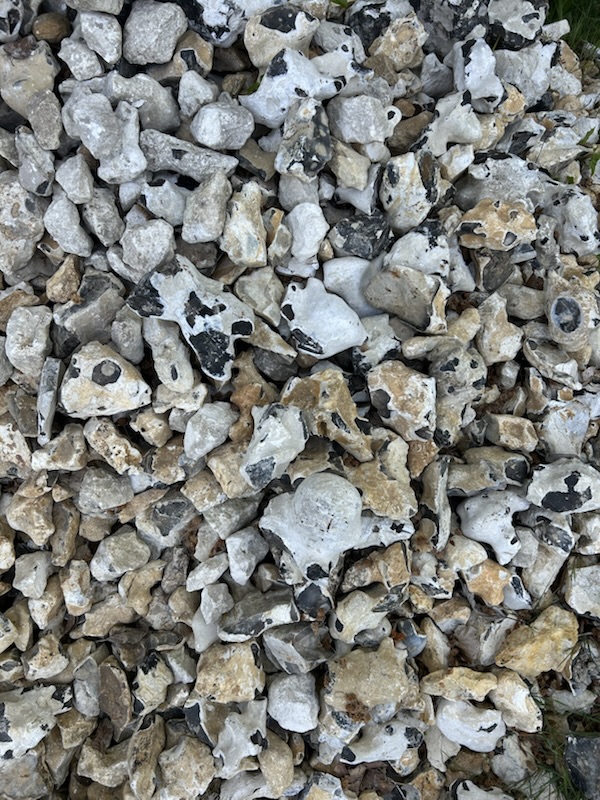
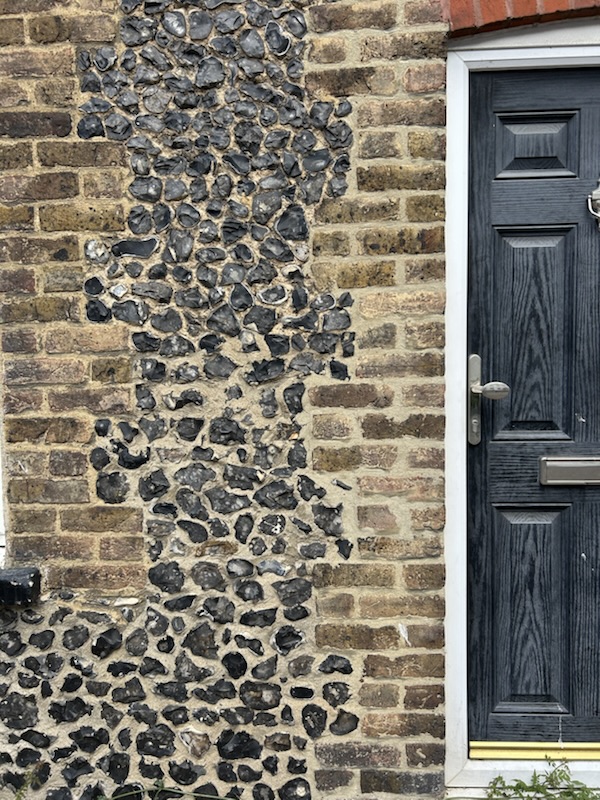
I took a picture of a rock pile made from flint. We have seen flint rocks in the fields since leaving Winchester. That makes sense because the terrain is dominated by chalk cliffs & flint is formed within these cliffs, then those modules get washed out into the fields. Locals use flint in building structures & for paving.
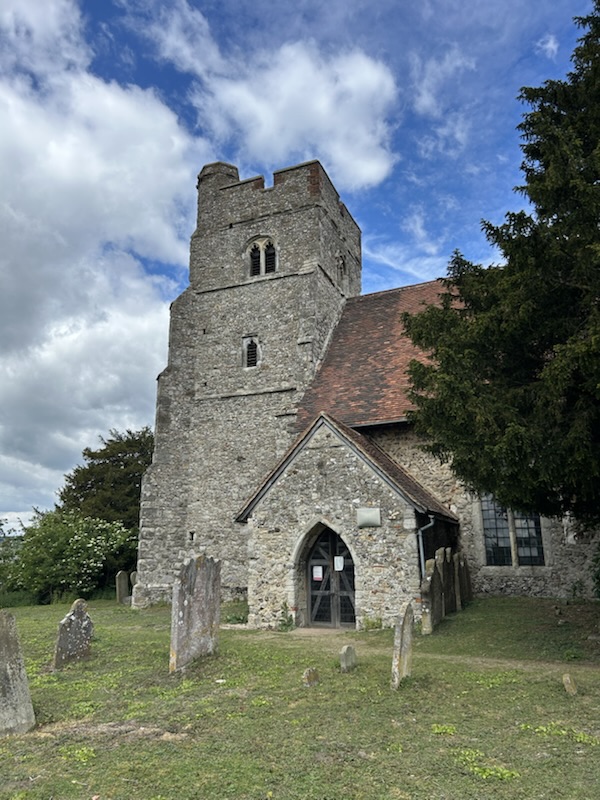
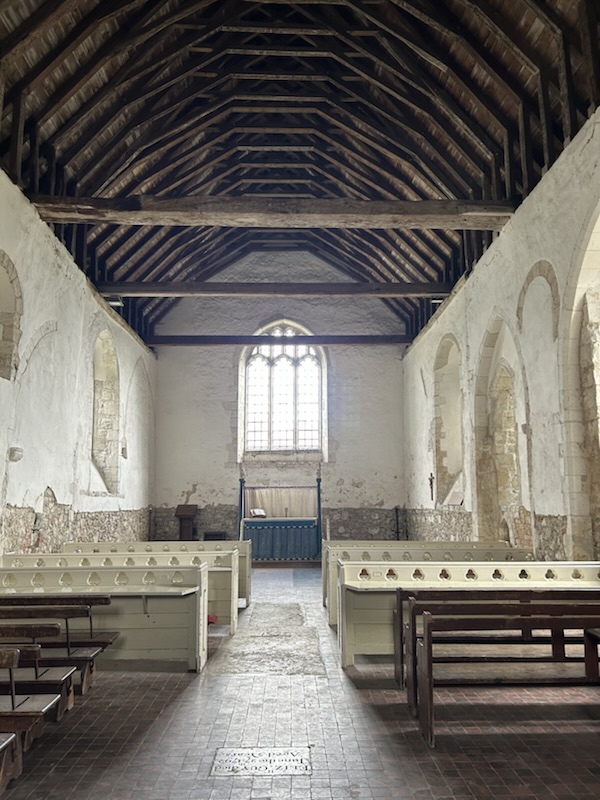
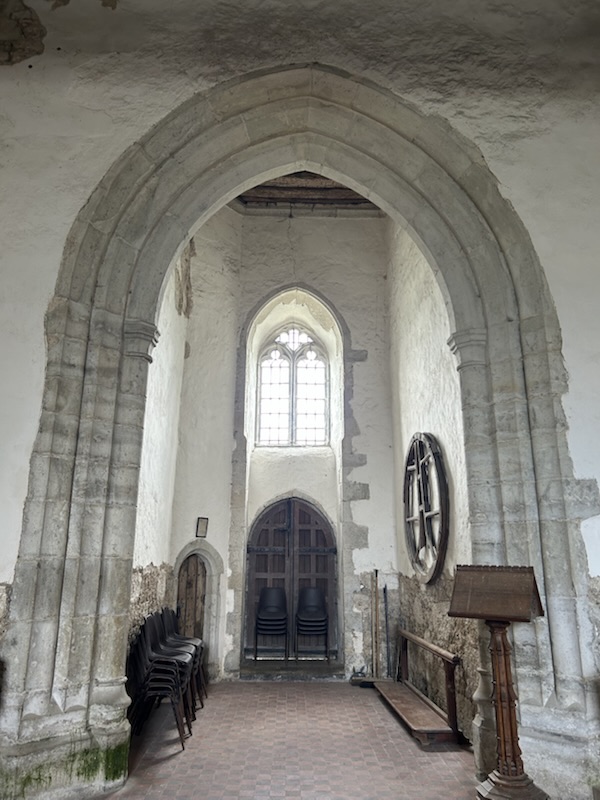
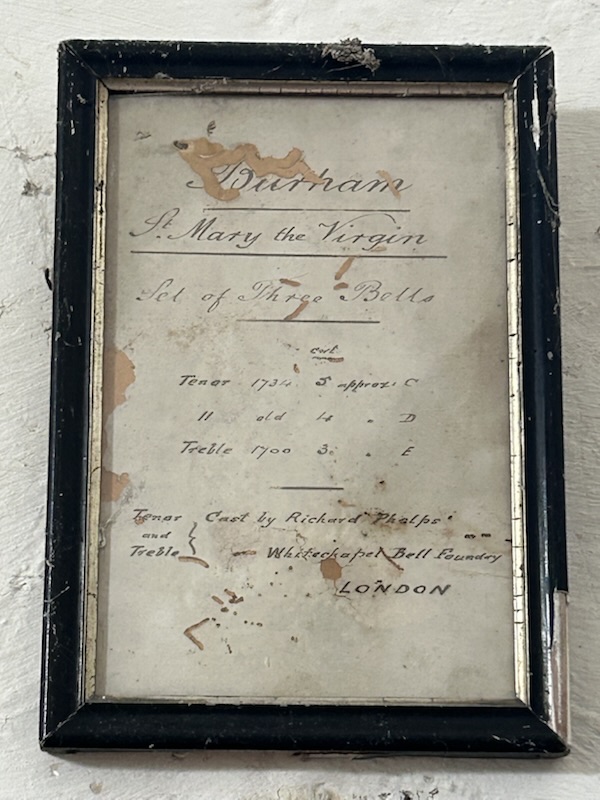
Our first stop was at an old lonely church standing in the country all by itself called St. Mary’s near Burbank. A message on the door said the church is close to 1,000 years old.
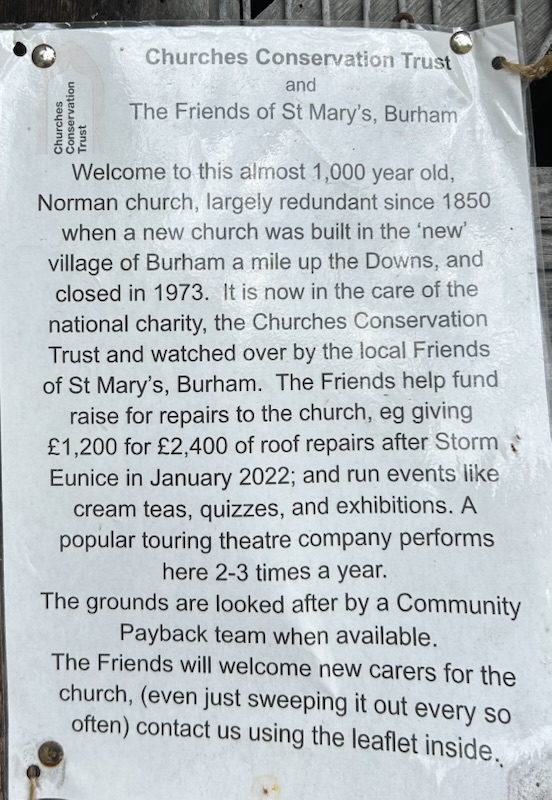
Upon entering this church, I quickly realized what happens to these old churches when they no longer have a congregation & a vicar.
Thankfully, England’s Churches Conservation Trust along with other people on the local community is trying to save this lovely old building.
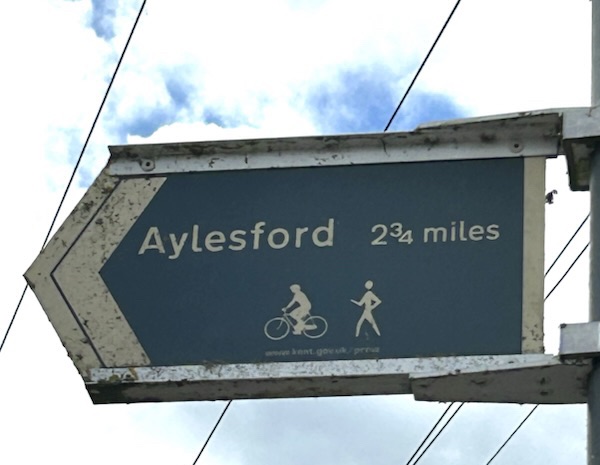
When you walk in other places in Europe such as in the Alps, there are often trail markers indicating the distance to the next location. This is the first such sign we have seen on this pilgrimage.
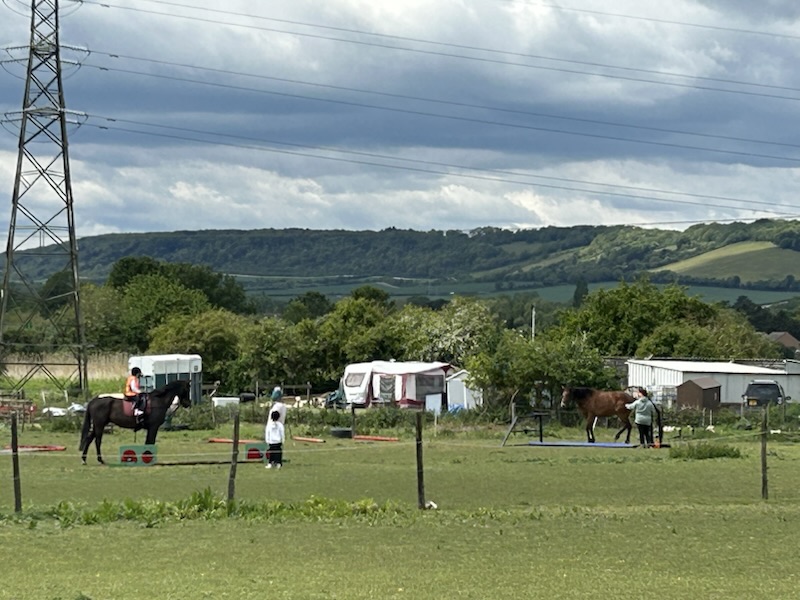
Since it was Saturday, we saw horses being trained at more than one place along the trail.
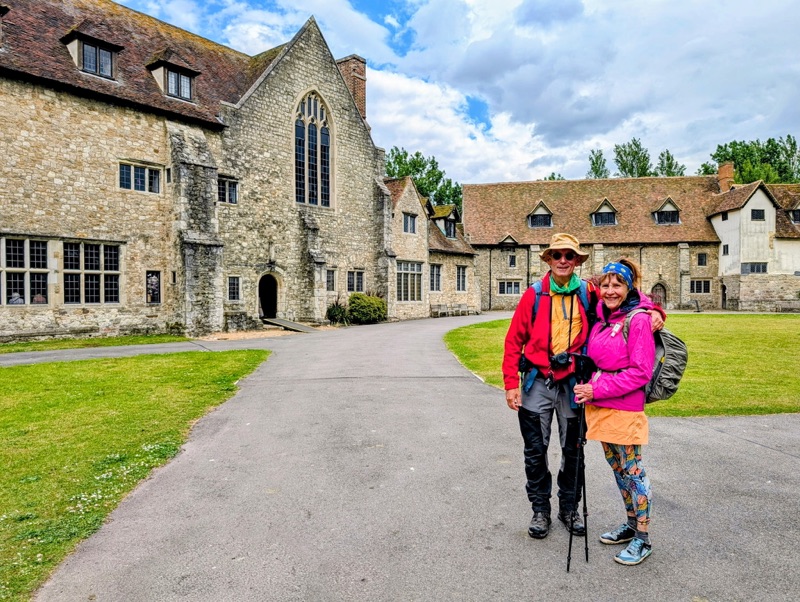
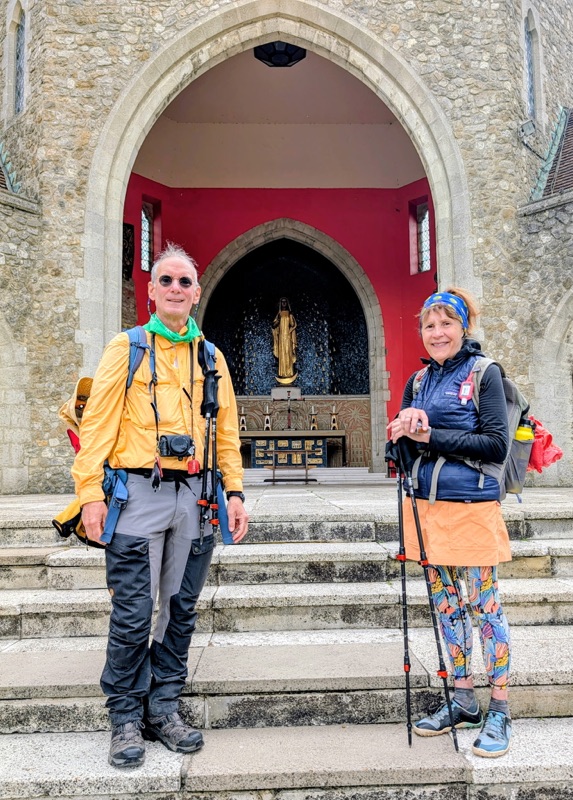
The main stop on our walk today was the Aylesford Priory known locally as The Friars.
We enjoyed walking these grounds which are free & open to the public.
Aylesford Priory was founded in 1248 by Saint Simon Stock from the Carmelite order making it the oldest Carmelite priory in England. A priory is a monastery run by a religious leader known as a “prior”. It functions like an abbey, but, is smaller in scale & falls under another larger monastery’s control.
The Friars’ members came from Mount Carmel in the Holy Land which is how their order gained its name (Mount Carmel is now located in northern Israel). Crusader Richard de Grey sponsored them to travel to England & gave them a land parcel along the Medvey River on his manor in Aylesford to establish their monastery.
After Henry VIII split from the Catholic Church in 1538, he forcibly evicted the Carmelites & confiscated their property with no compensation. Over the next four centuries, the priory’s buildings were repurposed & used as opulent homes for various royals & wealthy people.
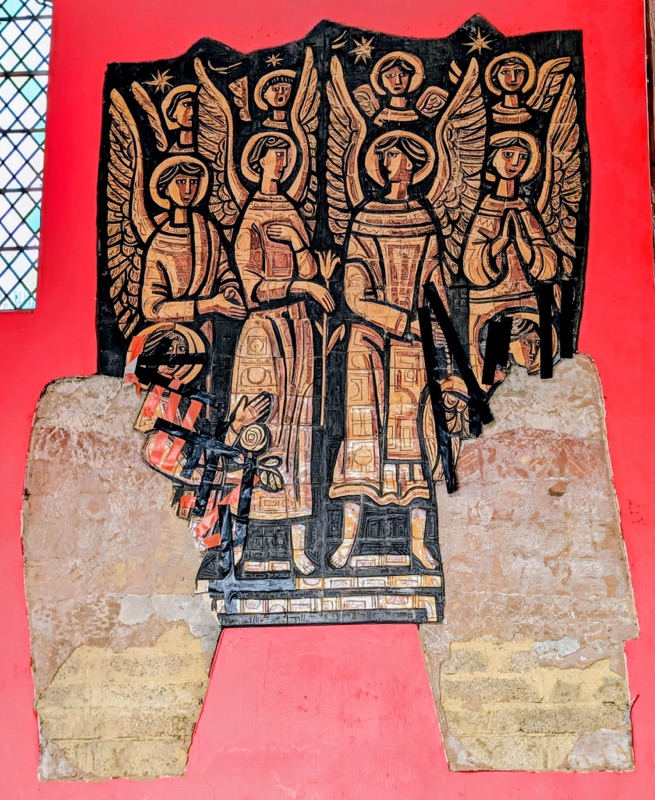
After being run down for many years & ravaged by a fire in 1930, the property was eventually offered for sale & in 1949, the Carmelites bought it. They immediately began restoring it as a place of worship reinstating many medieval features.
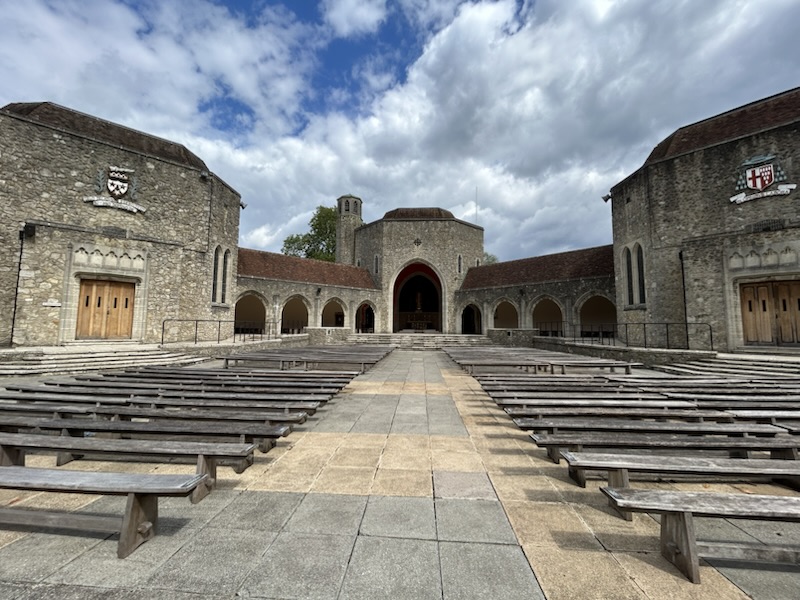
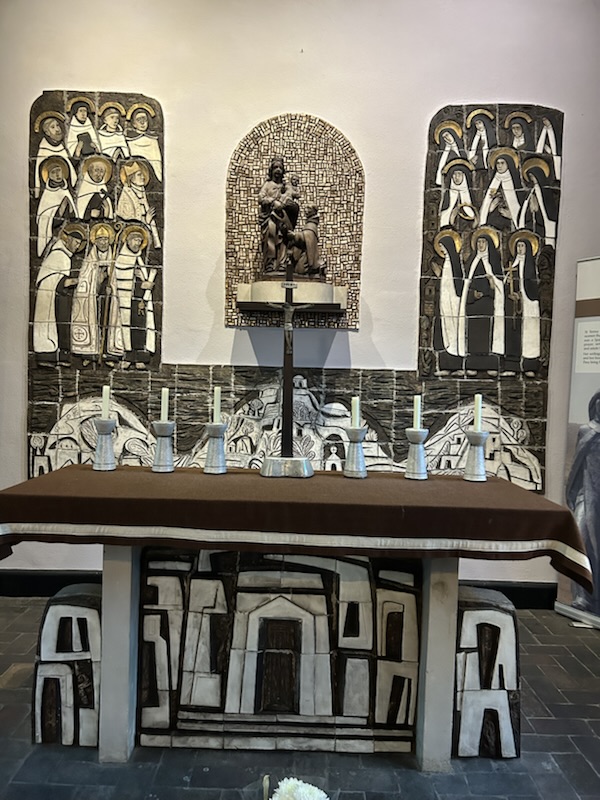
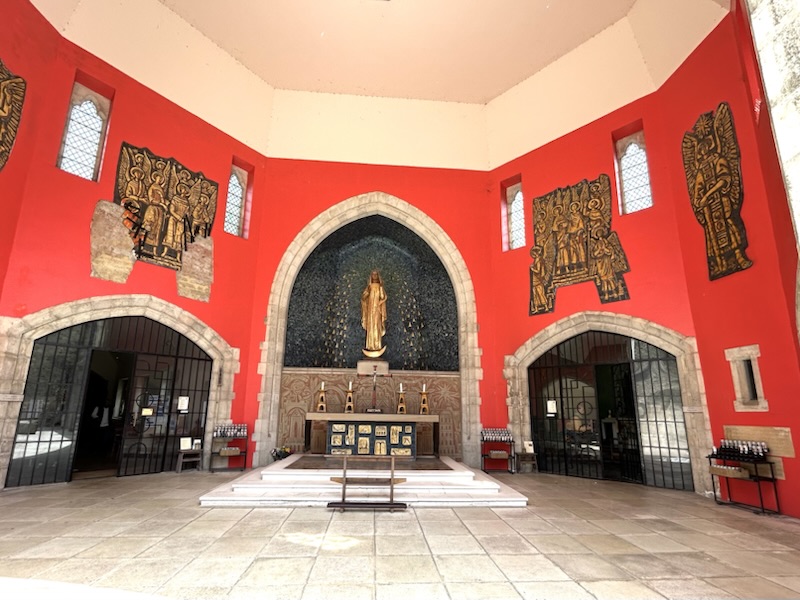
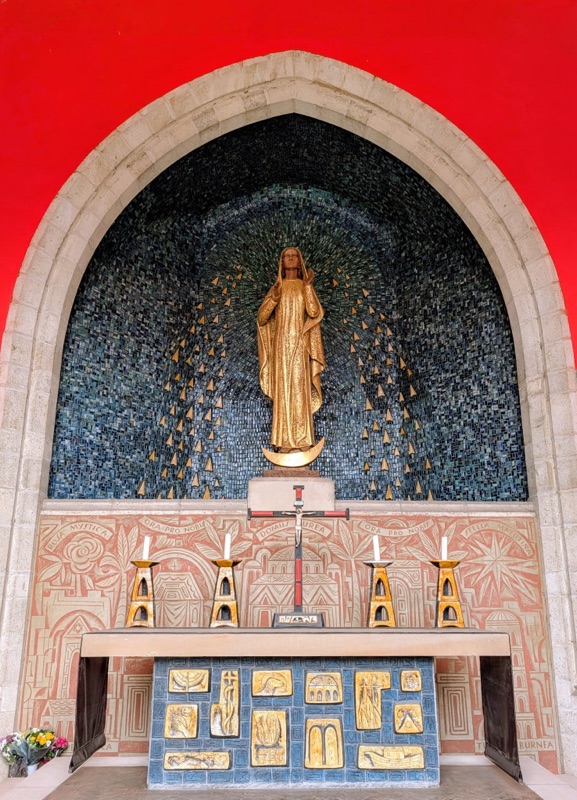
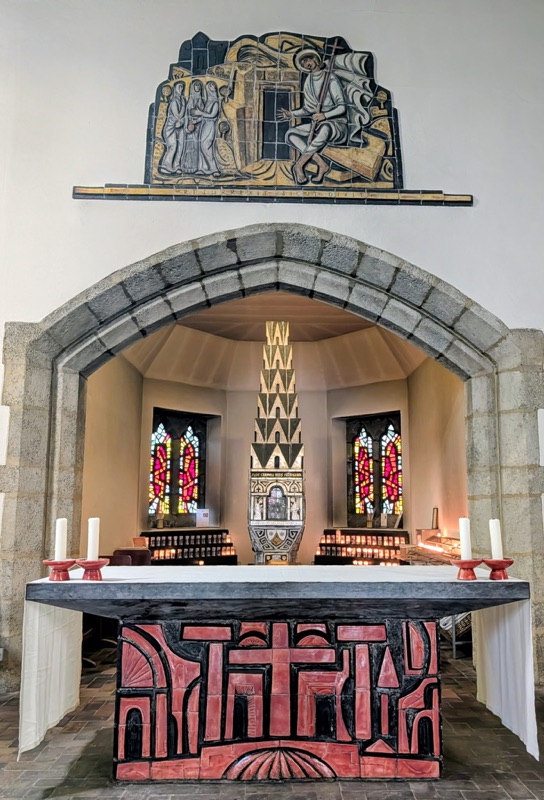
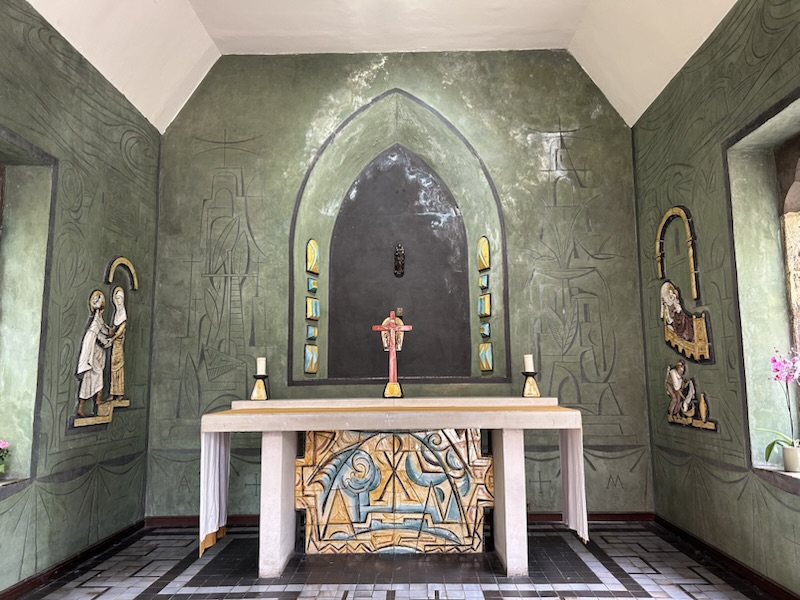
The modern shrine chapel contains the skull relic from the priory’s founder Saint Simon Stock. Its other chapel is dedicated to Saint Anne who was Mary’s mother & Jesus’ grandmother. The open shrine which is based on the original design began construction in 1958 & the mosaics were added between 1966 & 1986.
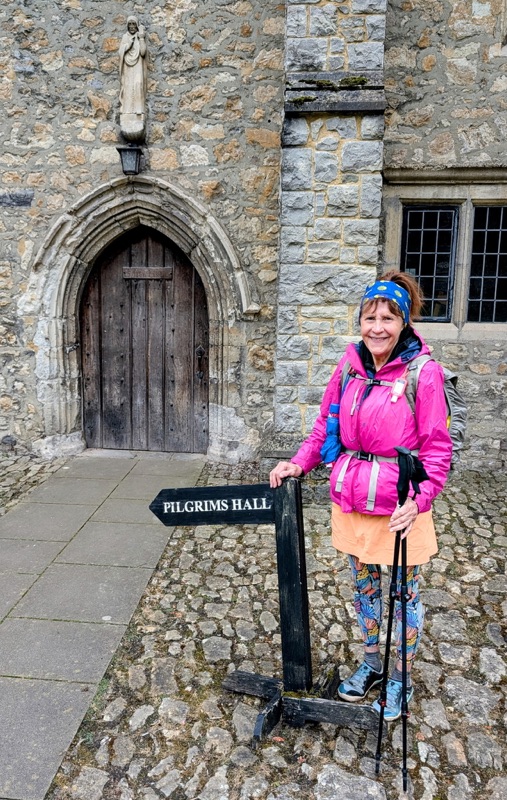
In 1280, the Pilgrims Hall was built making it the oldest building at The Friars. This structure made the priory a welcome stop for pilgrims on their journey to Canterbury who would gather around an open fire to stay warm & enjoy hot food in Pilgrims Hall. Over its door is a Thomas Becket statue.
Many pilgrims & tourists choose to stay here for the night & live like a monk. In case you are interested, the priory has 80 rooms available at varying prices & comfort levels.
The priory is still active with Carmelite fathers.
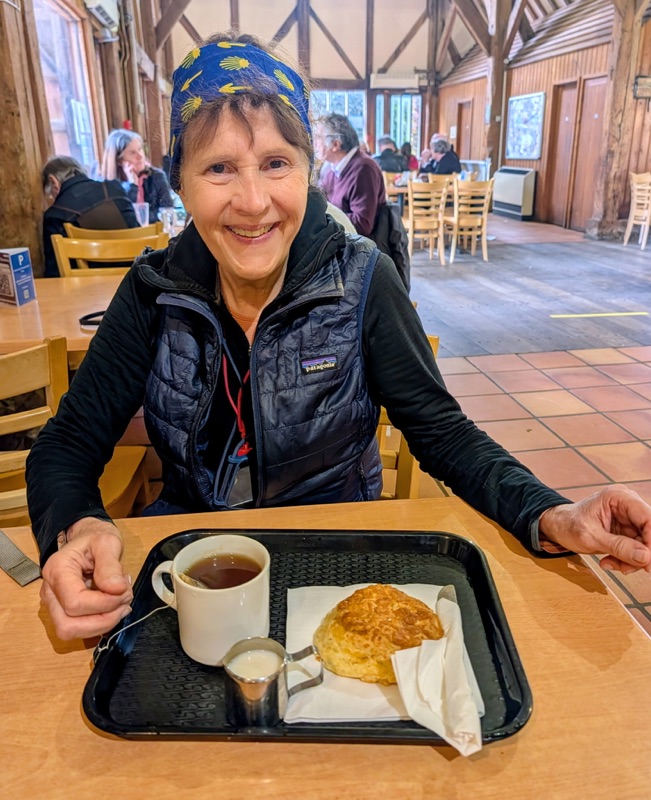
After leaving The Friars, we walked through the quaint village of Aylesford.
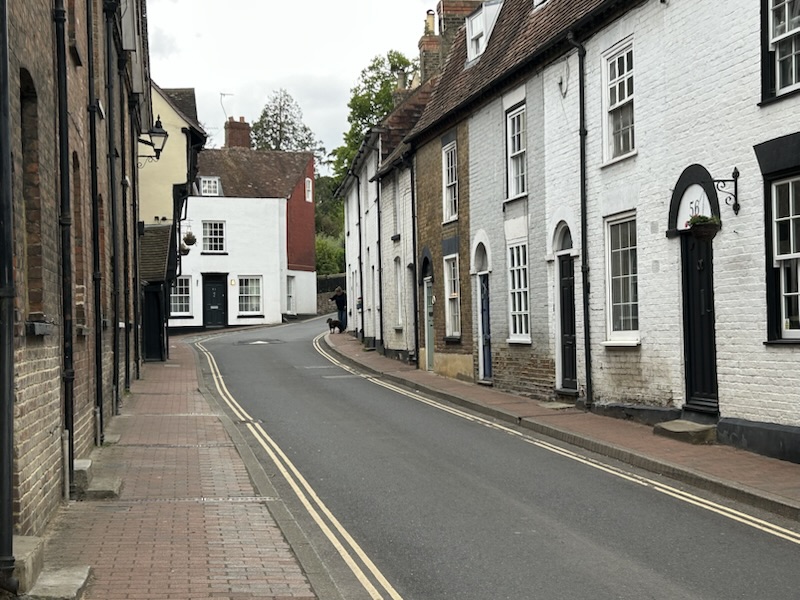
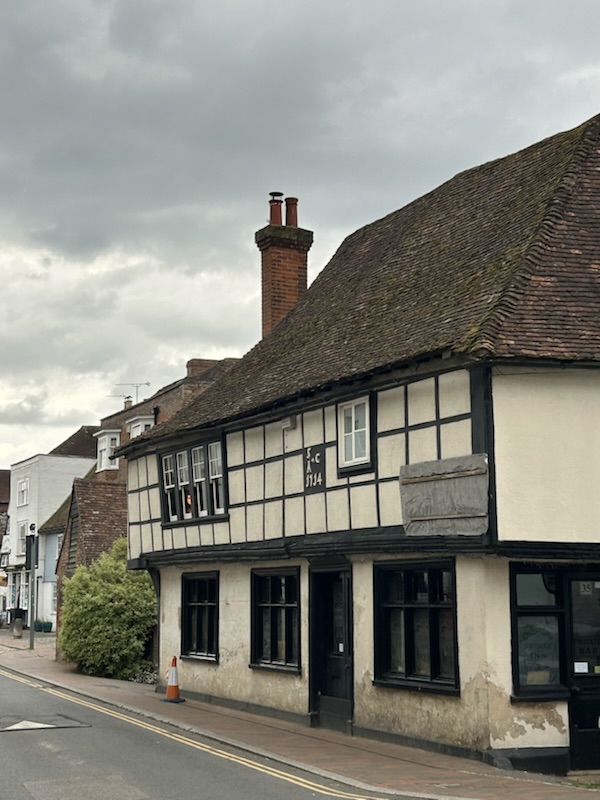
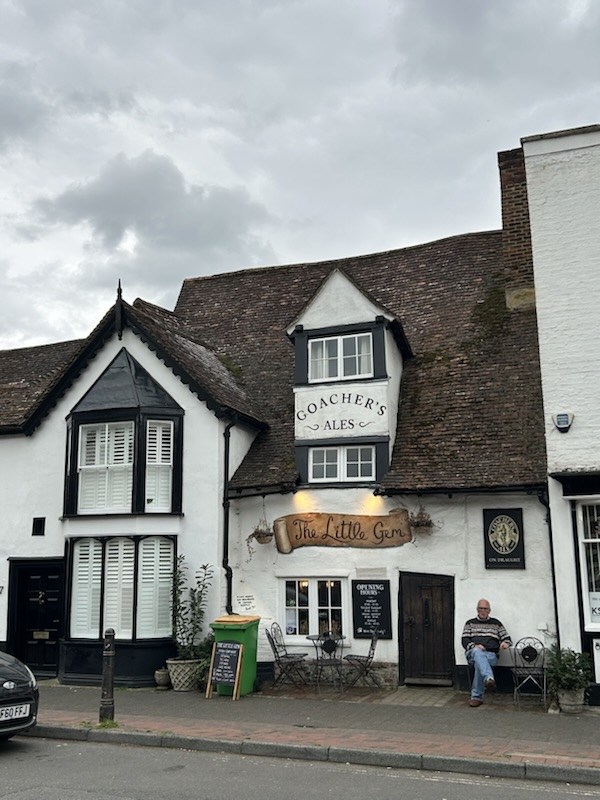
Ayslesford has a 14th Century bridge that is still used.
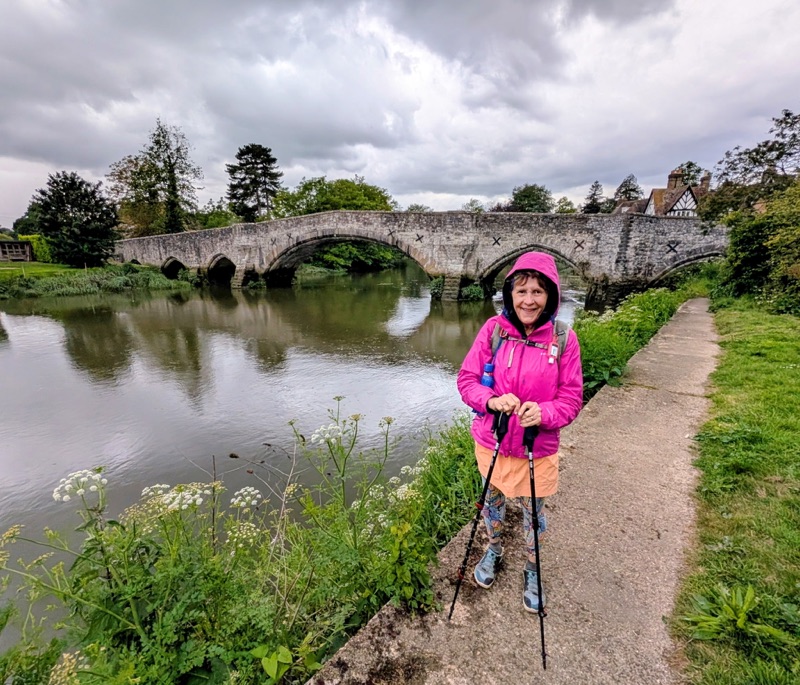
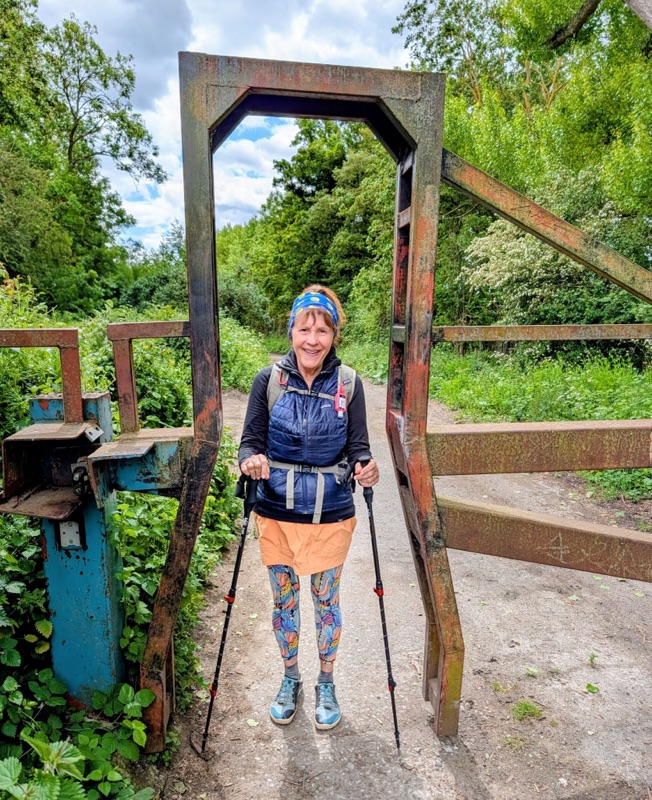
Our hotel was a mile away from Aylesford. The path we chose to take was actually closed; but, that didn’t deter us. We went around the locked gate & kept going. 🤣 Se negotiated several trail blocks & all was good until I needed to go under a low rail in the fence.
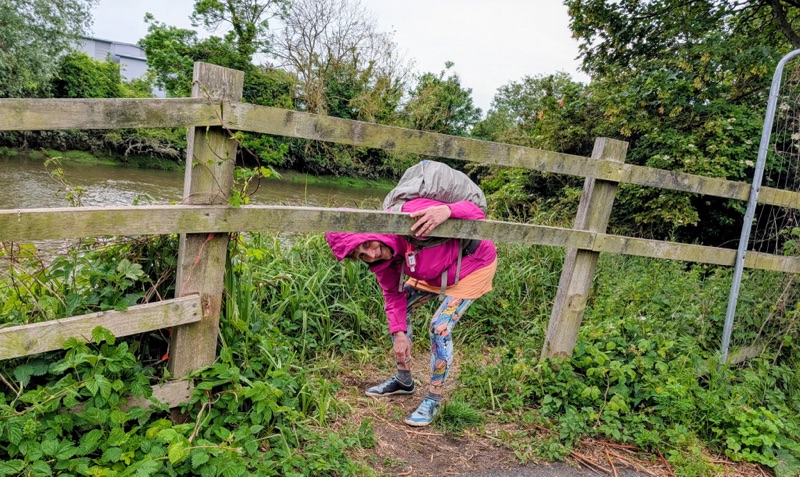
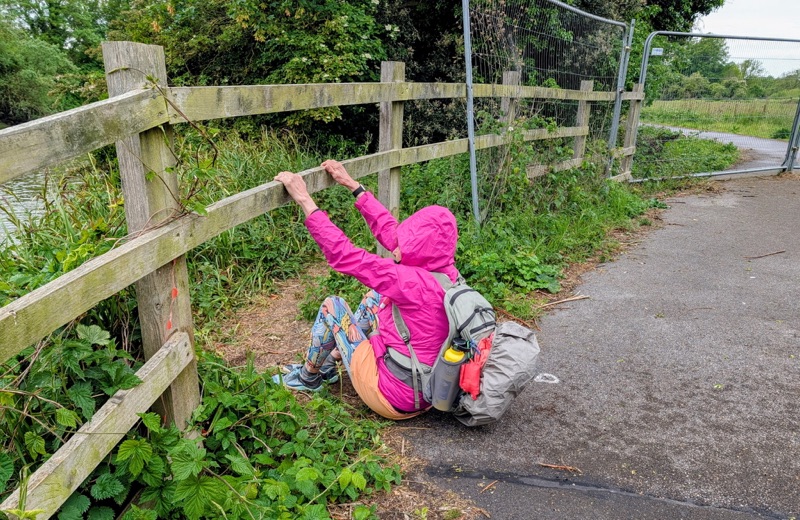
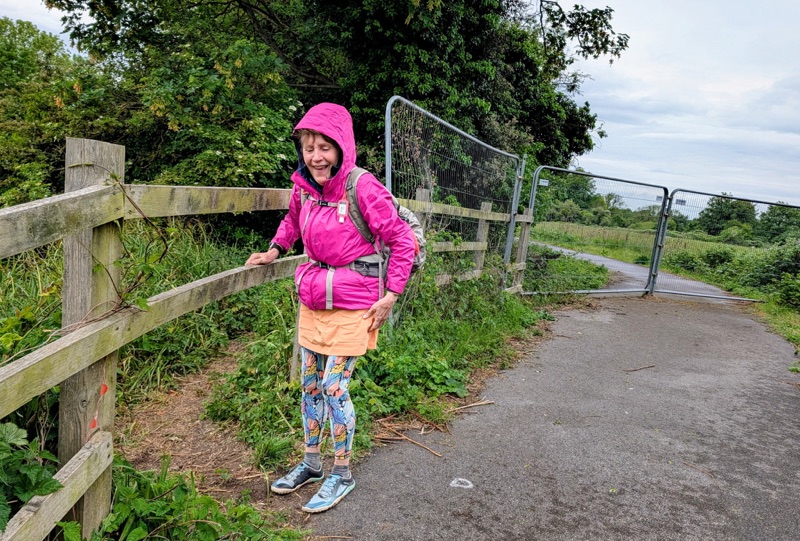
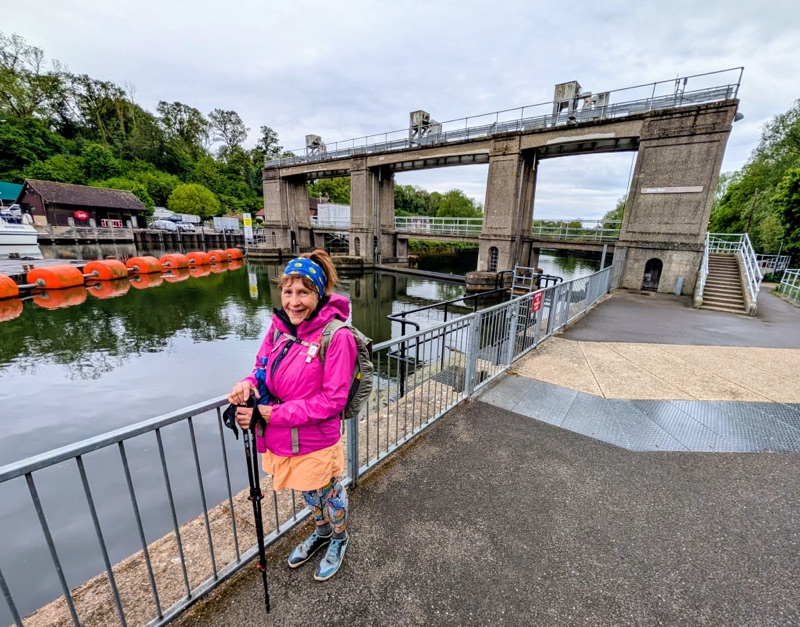
Last stop before the hotel was passing the Allington Lock. On the other side of this lock, even this far inland, the Medvey River is still subject to the ocean’s tide