Vigo to Rochester
Day 10 – Distance walked 12.5 miles
Lovely day for a walk through forests bordering fields. Best of all… no rain!
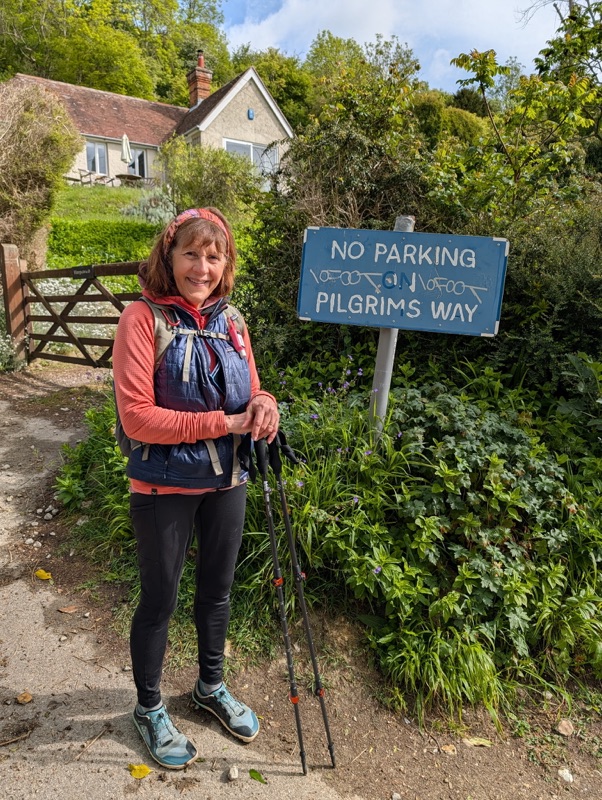

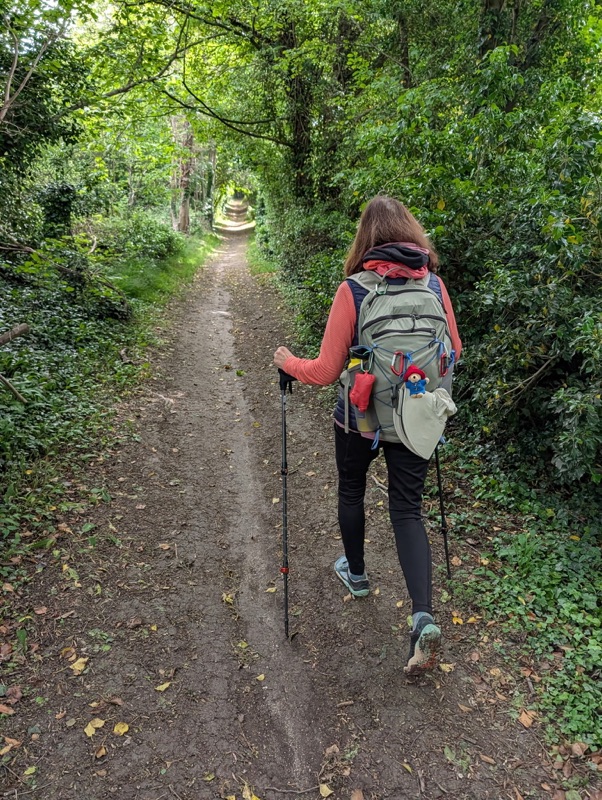
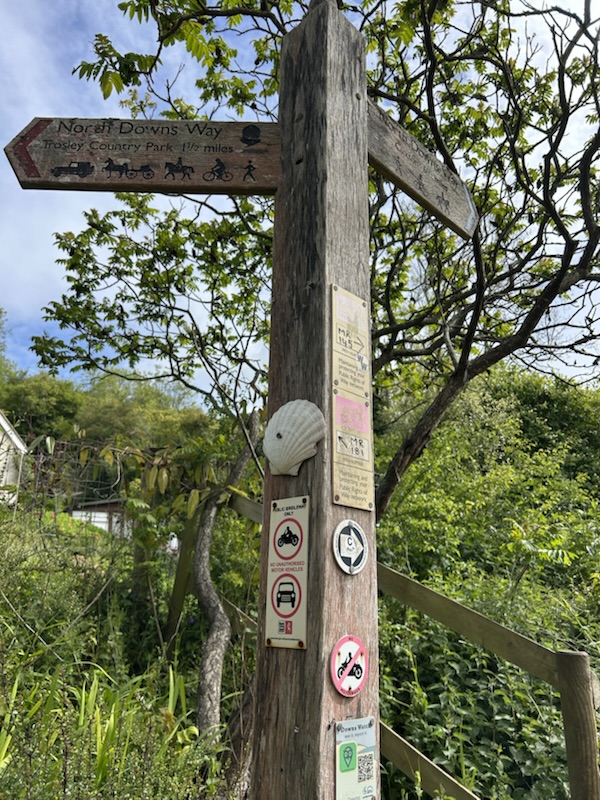


Part of the route sometimes takes us on very narrow country lanes. When vehicles approach, we stop & hug the sides to give them enough clearance so they don’t hit us. When two vehicles meet going in opposite directions on these small lanes, it’s a bit of give & take to give themselves enough room to pass.

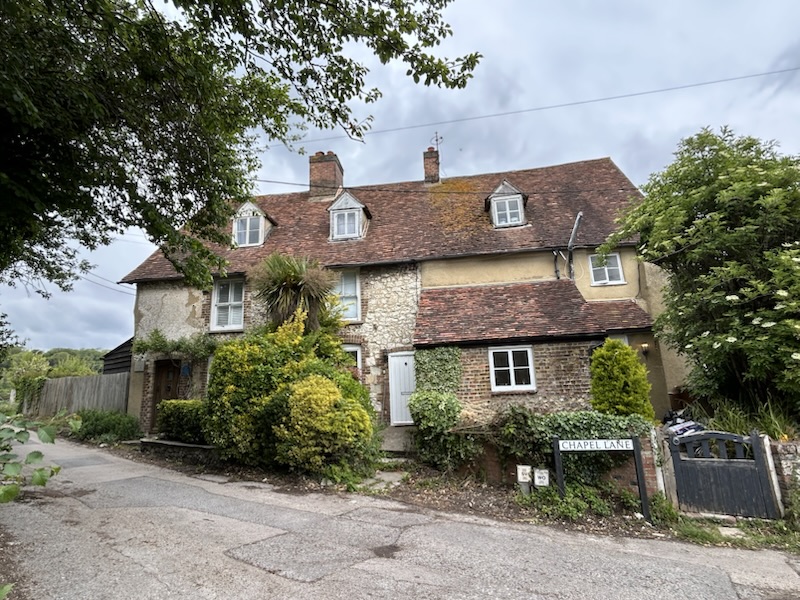
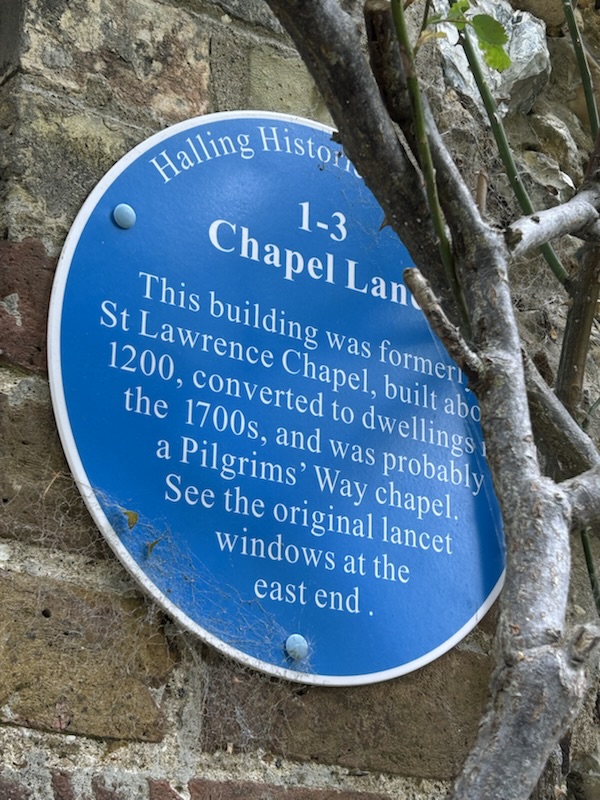
Our first historic stop was the former 12th Century St. Lawrence Chapel in Upper Halling which was a pilgrim’s church turned into three homes in the 19th Century.
In Halling, we went to the St John the Baptist Church. However, it was closed which prevented us from seeing some 12th Century wall murals.
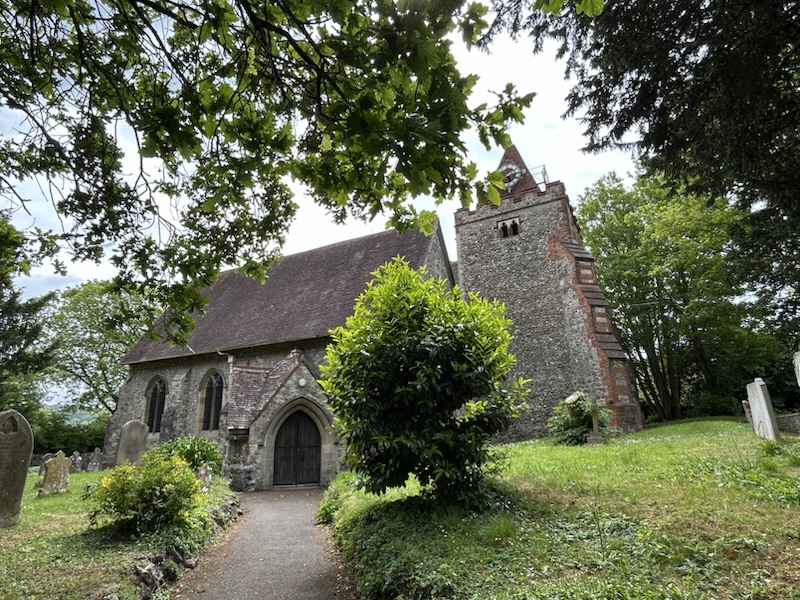
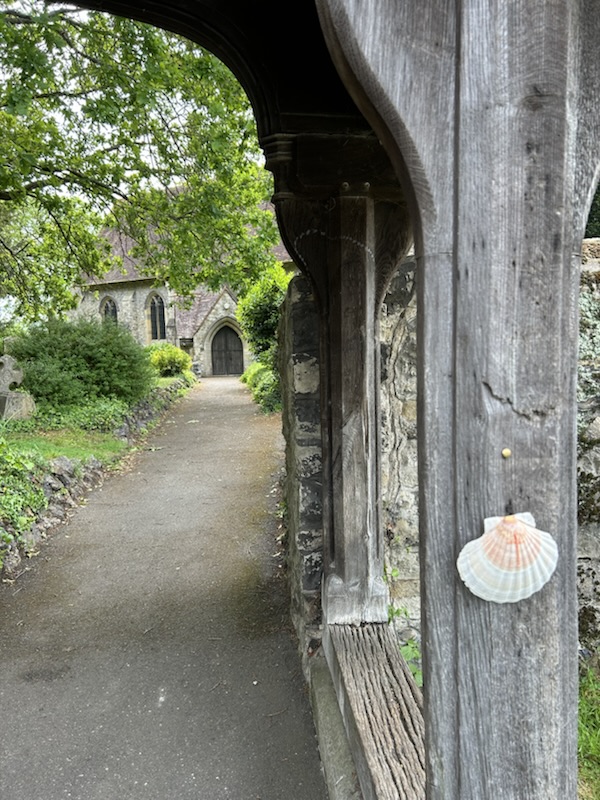
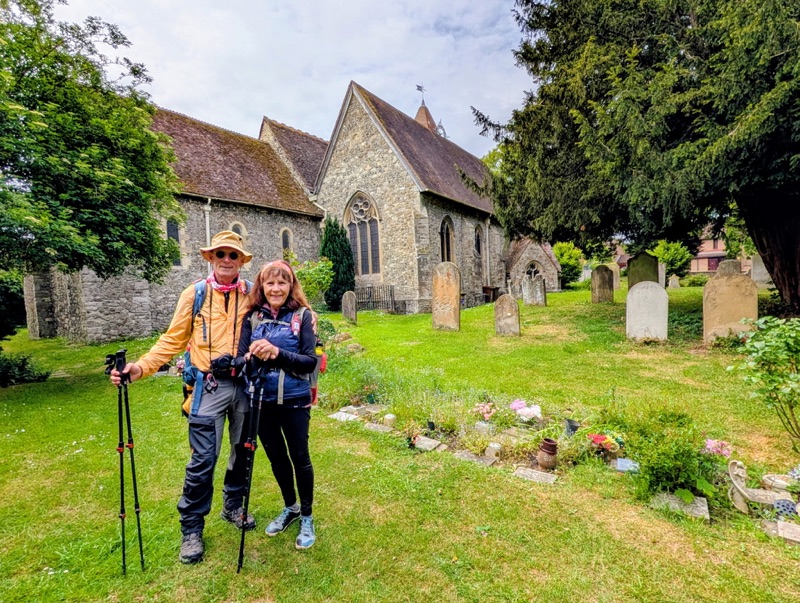
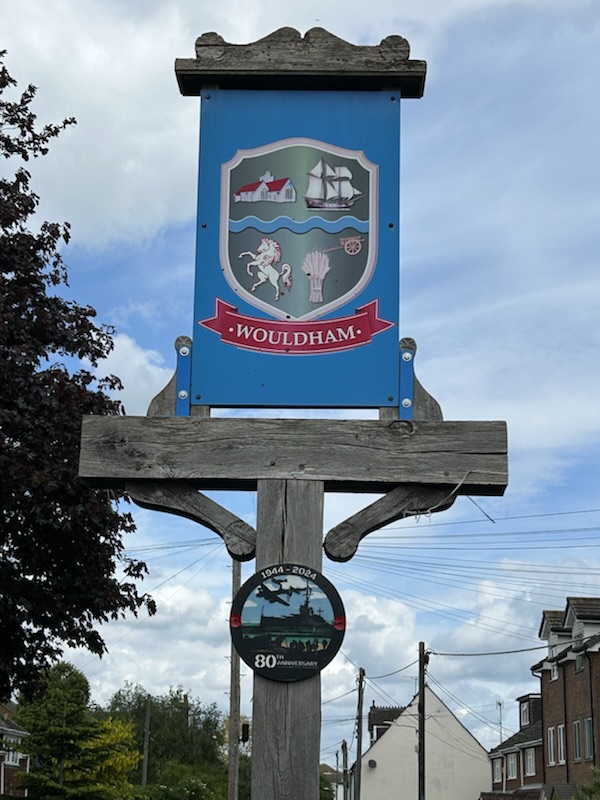
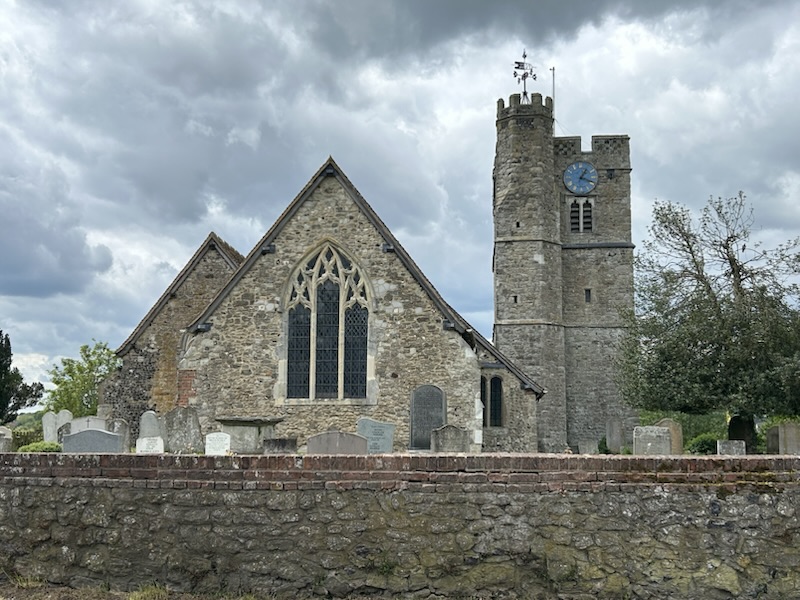
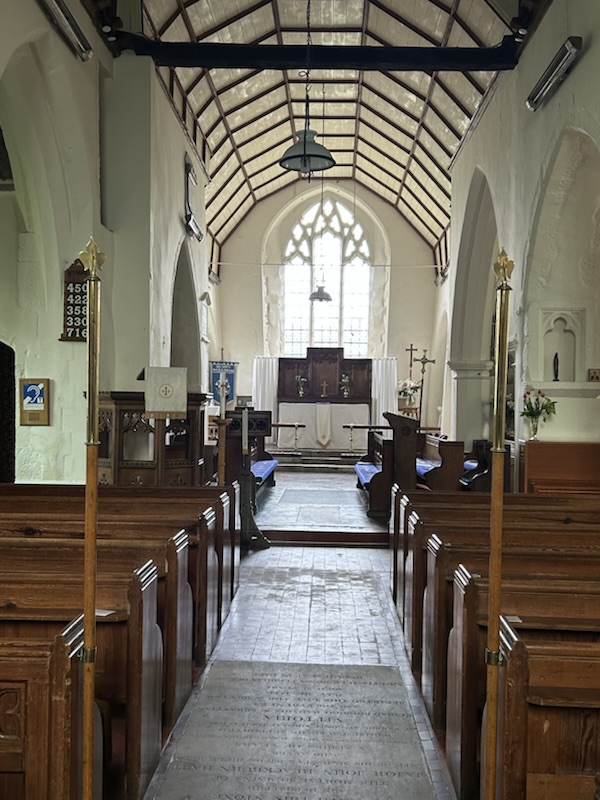
A few miles later we walked into Wouldham to visit the All Saints Church. When we arrived it was closed, so we decided to have a short break on a bench by the door. As luck would have it, before long, a woman arrived with a key to open the church because she was to there to allow a teen school group to see the church.
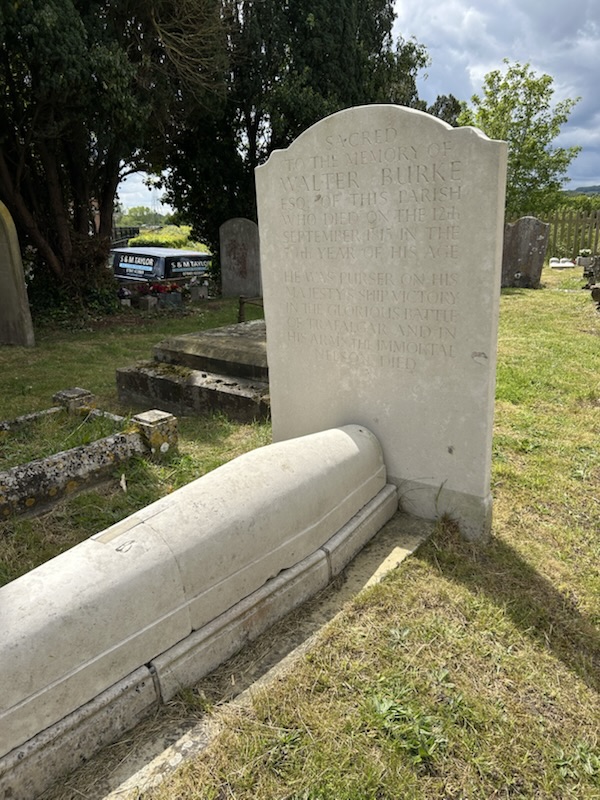
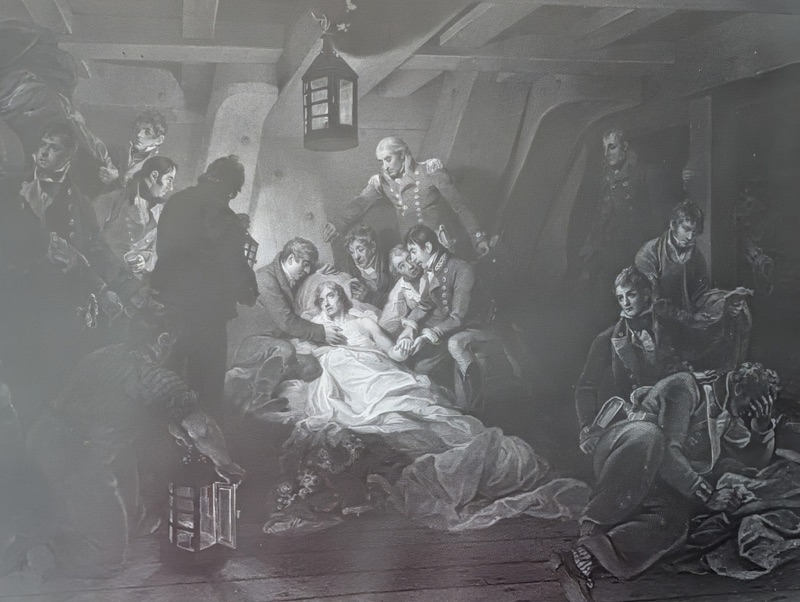
The tombstone above is for Walter Blake from Wouldham who was the purser on Lord Nelson’s flagship HMS Victory at the historically momentous Battle of Trafalgar on 21 October 1805. Blake held Nelson in his arms as Nelson died from his battle wounds. The church displays a copy of the famous “The Death of Nelson” painting in which local son Blake is shown holding Nelson,
England still celebrates Nelson’s victory every 21 October on Trafalgar Day. The All Saints Church in Wouldham is among the few places in England given special permission by the Royal Navy to fly its battle ensign from its tower on that date.
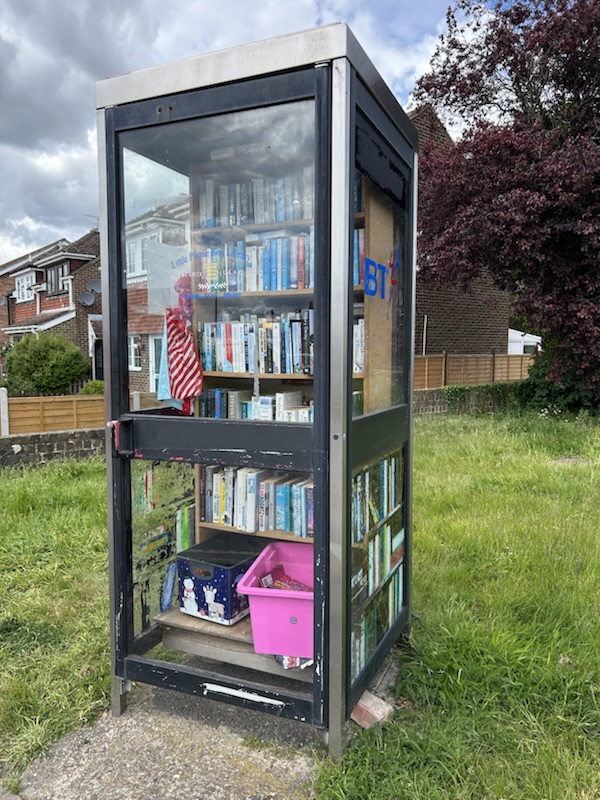
Here is a cute telephone booth in Wouldham turned into a small library.

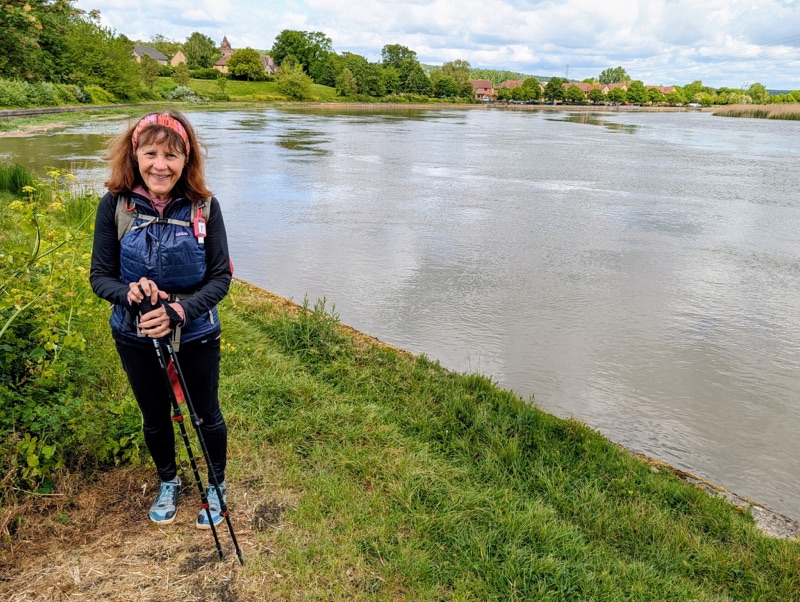
After Wouldham, we had a nice walk up to Rochester along the marshland & shoreline along the Medway River.



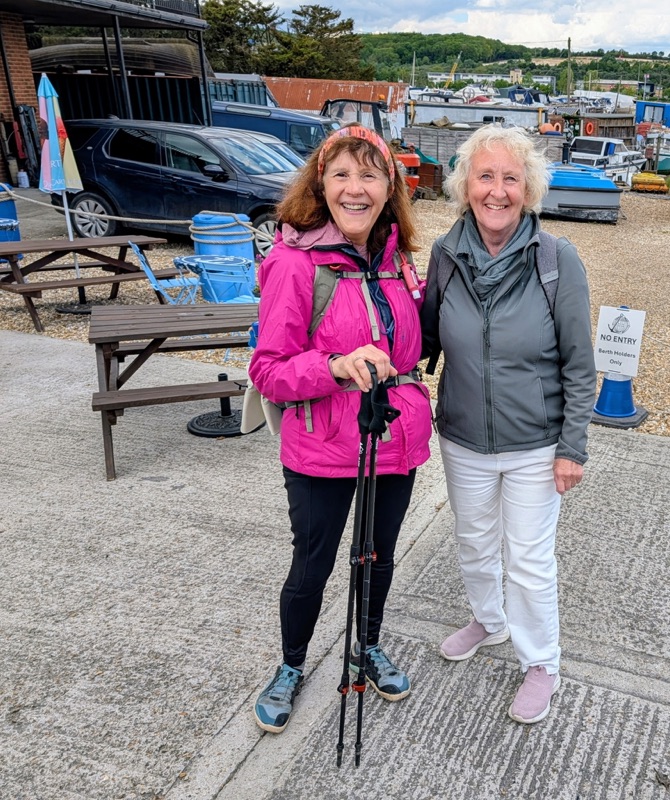
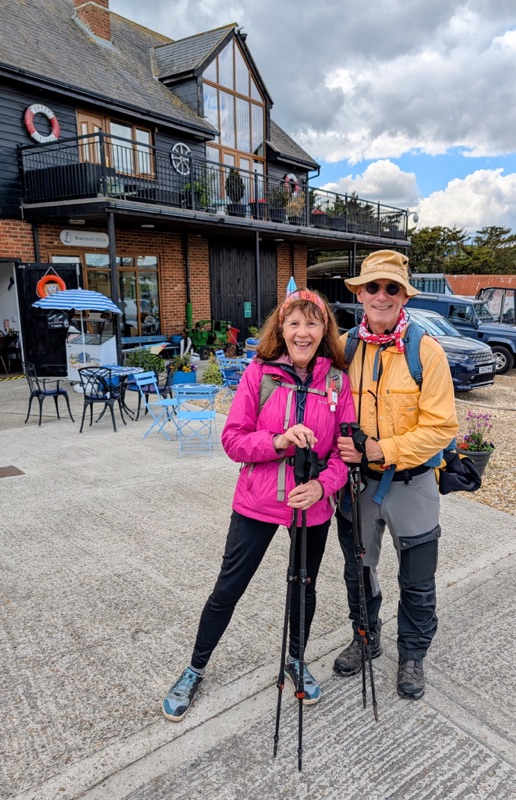
Upon reaching Rochester, a nice woman encouraged us to take a break at a little coffee shop next to the river. Of course, I had tea.

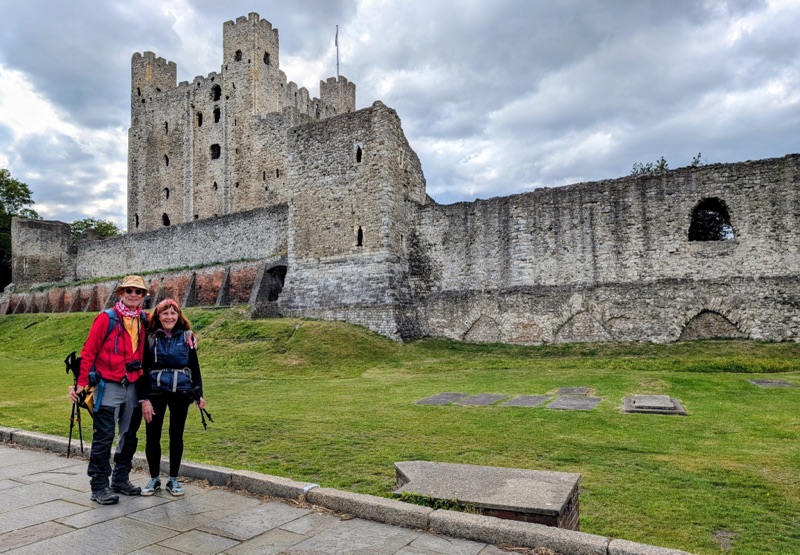
The two main attractions in Rochester are the castle & the cathedral.
Built around 1127, Rochester Castle not only has the tallest keep (tower) in Great Britain at 113 feet high; but also, in all of Europe.
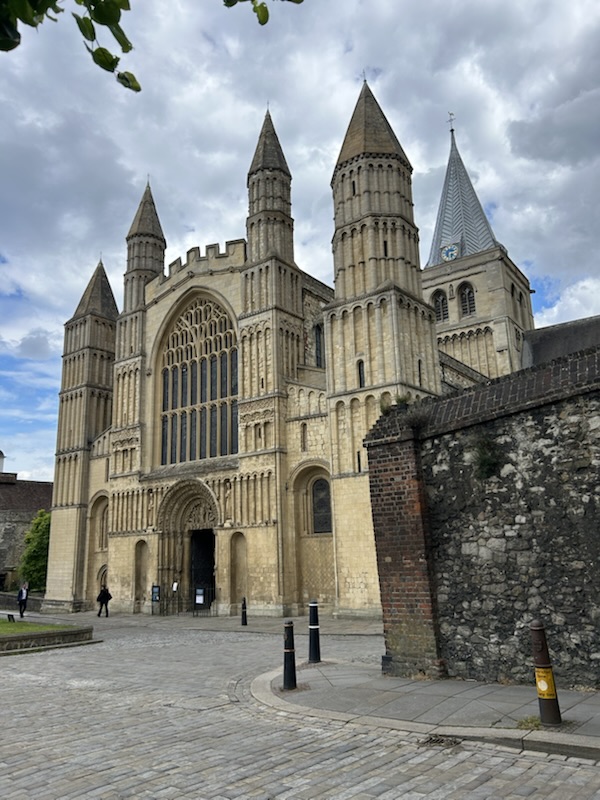
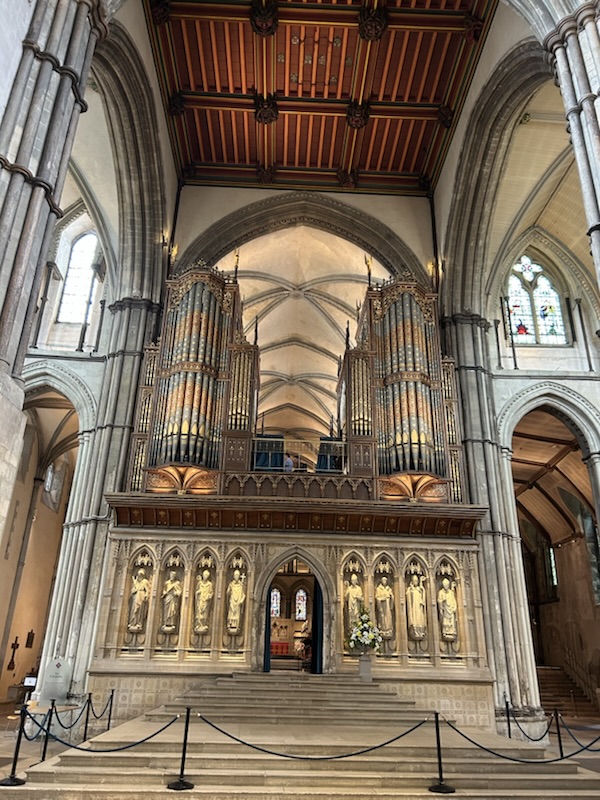
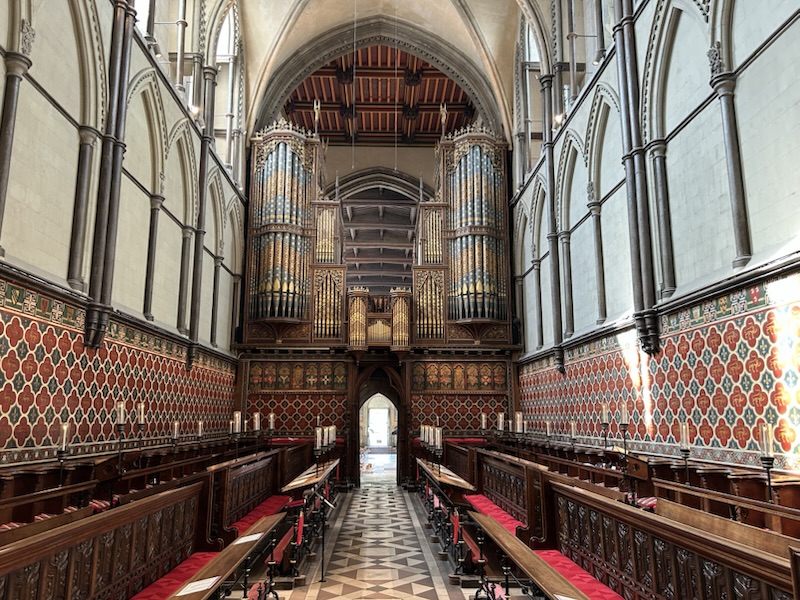
Founded in 604AD, Rochester Cathedral is the 2nd oldest church in England (Saint Martin’s Church in Canterbury is England’s oldest church dating back prior to 597 AD when Saint Augustine arrived in England from Rome). The present building dates back to 1083. It is very impressive!
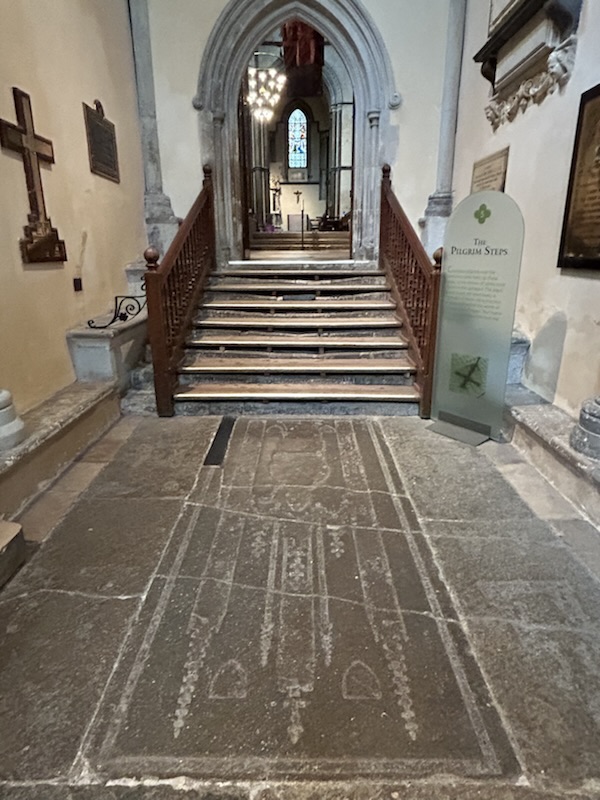
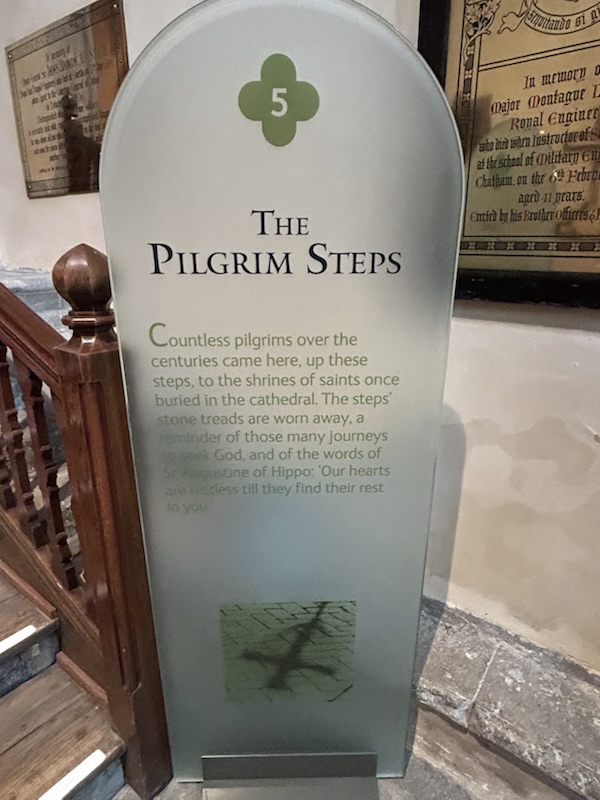
It has stone steps worn away over the centuries by pilgrims that they are now covered by wood to prevent further wear while allowing visitors too see where the penitent passed on their knees to show respect at the shrine of Saint William of Rochester like Jim is doing.
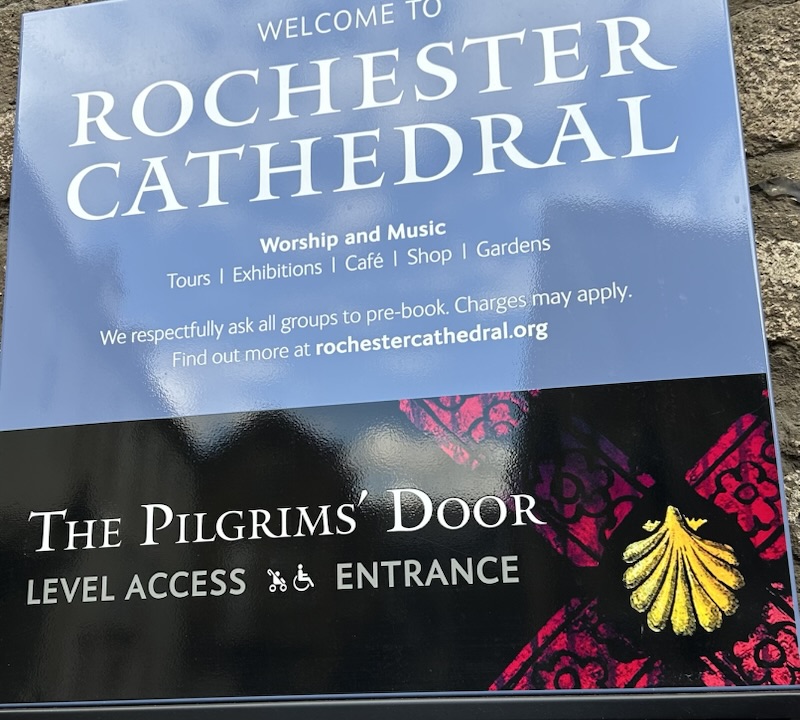
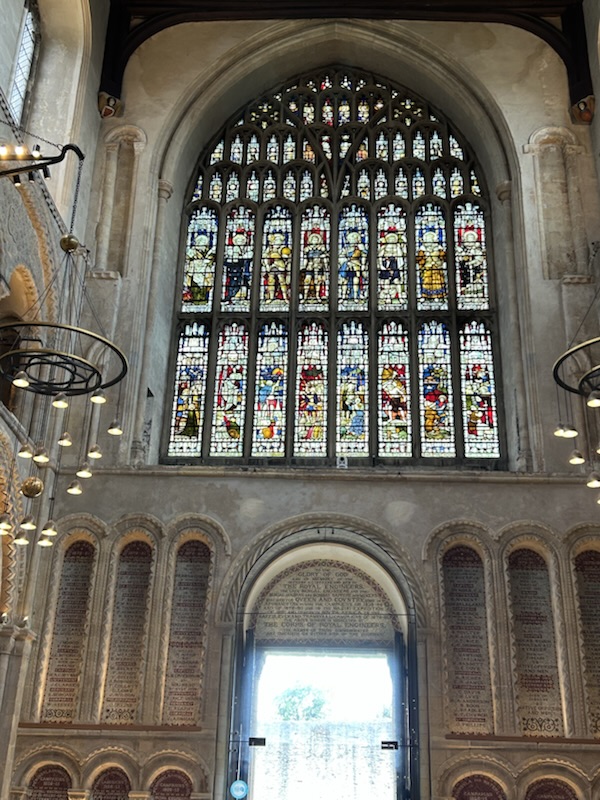

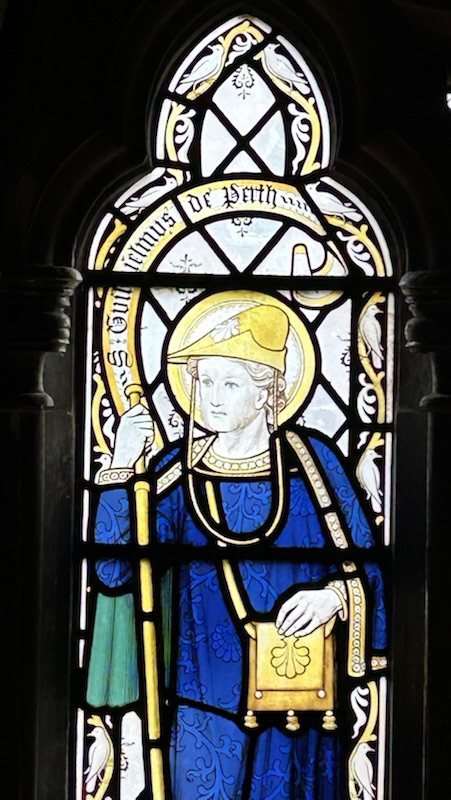
The cathedral has a stained glass window dedicated to William of Perth (Scotland) who became Saint William of Rochester. He is depicted holding a shell because the shell is the symbol for pilgrims & he was killed on a pilgrimage to Canterbury.
William was a devout man who went to mass everyday. He was also a baker & would give every tenth loaf he baked to the hungry. He adopted an abandoned child & taught him his trade. Years later while on a pilgrimage together, his adopted son robbed & killed him. Monks from Rochester discovered his body, carried it to the cathedral, & buried it there.
Upon being canonized, Saint William of Rochester became the patron saint of adopted children,
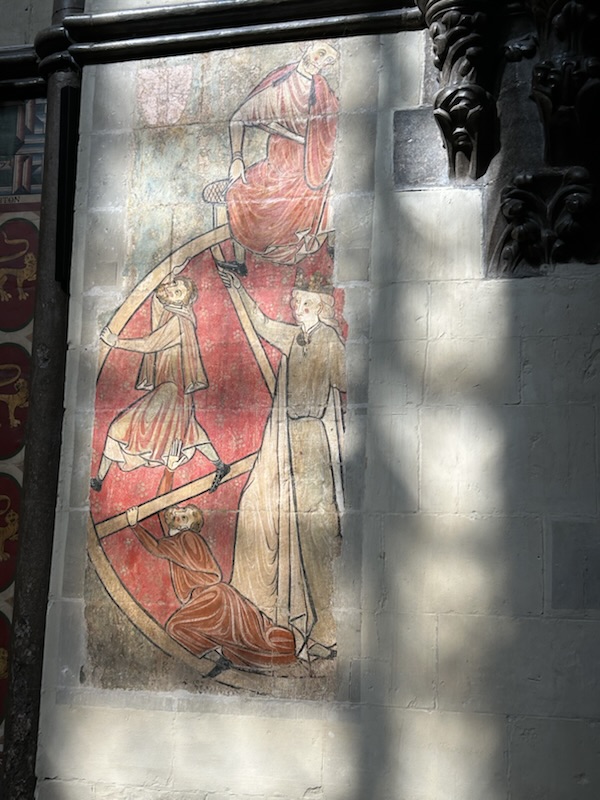
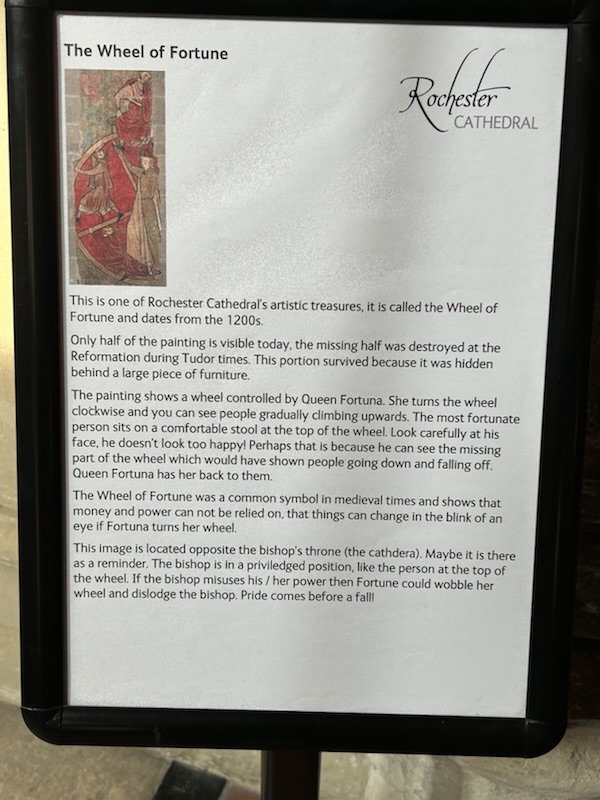
The cathedral’s Wheel of Fortune painting inspired Geoffrey Chaucer to include “The Monks Tale” in his “ Canterbury Tales” written in 1397. The monk’s story about the fickleness of fortune is said to be based on this painting which now only partially survives.
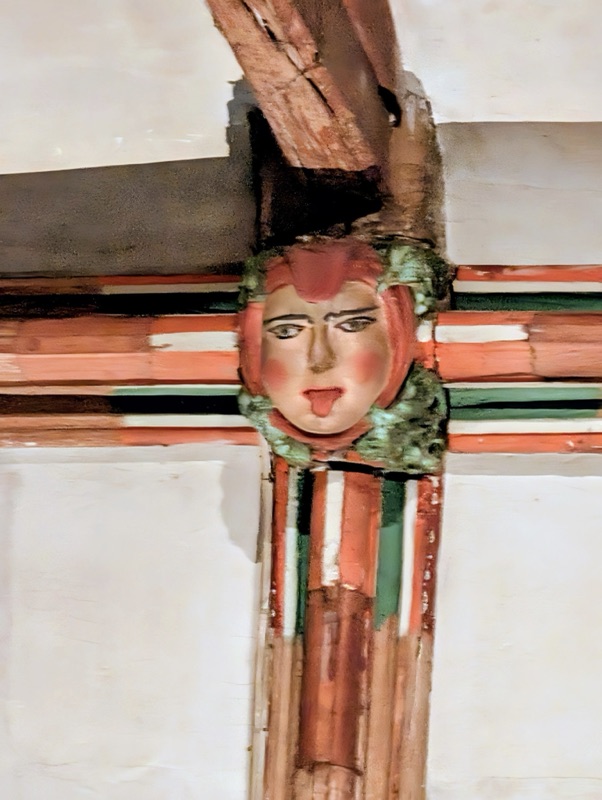
Here is an Interesting story about the wooden ceiling sculpture pictured below.
A docent in the cathedral pointed out this oddity to us or else we never would have seen it & our guide book doesn’t mention it. He said that for some unknown reason such as perhaps the artist wanted to make fun of how the church treated women, he painted this sign of disrespect high on a wooden ceiling girder. The artist was able to get away with it because for centuries the church was only lit by daylight & candles & this high ceiling section was hard to see. Additionally, the soot from the burning candles eventually covered it & it was not discovered until the soot was cleaned some years ago.
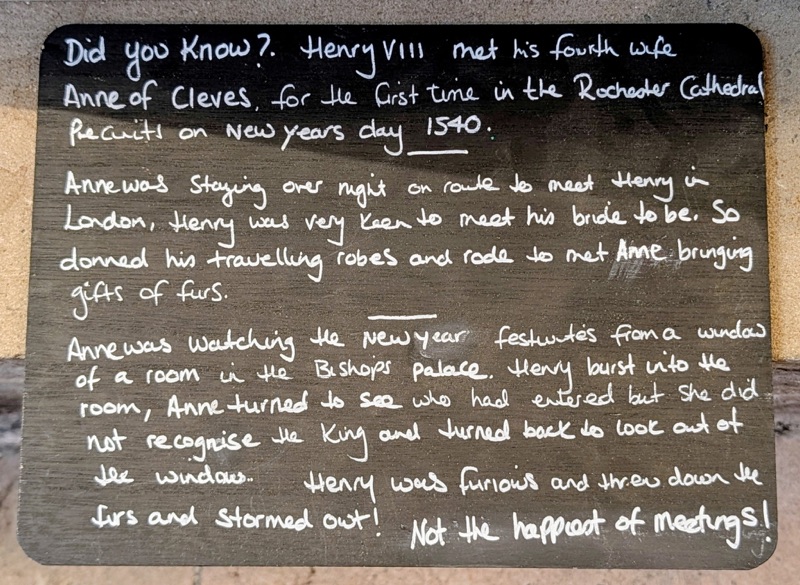
Here is an Interesting story about Henry VIII meeting his 4th wife Anne of Cleaves (Germany) for the very first time in Rochester. Henry sought to marry Anne to secure an alliance with German Protestants against the Catholics in France. Since Henry had never seen Anne let alone met her, Henry commissioned a painting of her. Finding her appearance attractive, he agreed to marry her. Henry was way ahead of his time as he kind of like was swiping right on a dating app.
They did not make a love connection & their marriage was quickly annulled. it basically only lasted 6 months from 6 January 1540 to 12 July 1540.
Anne was given a generous settlement & she & Henry remained on friendly terms.
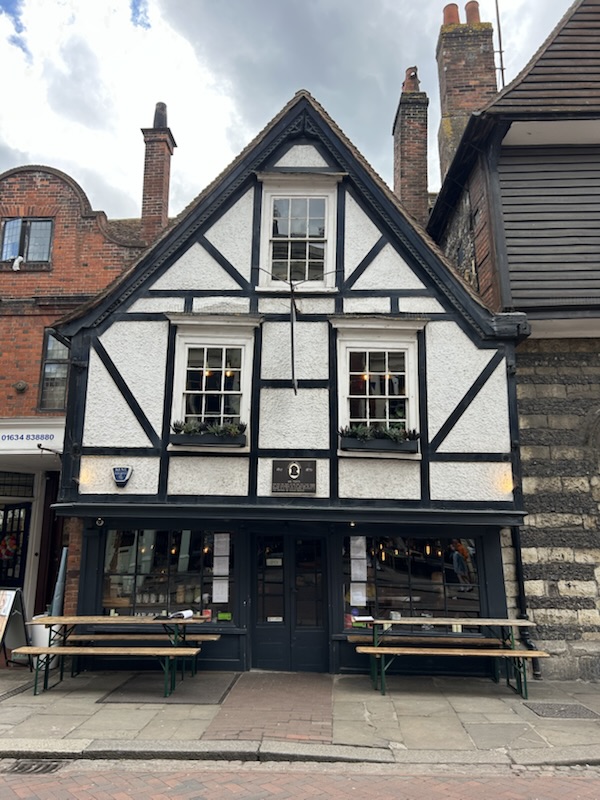
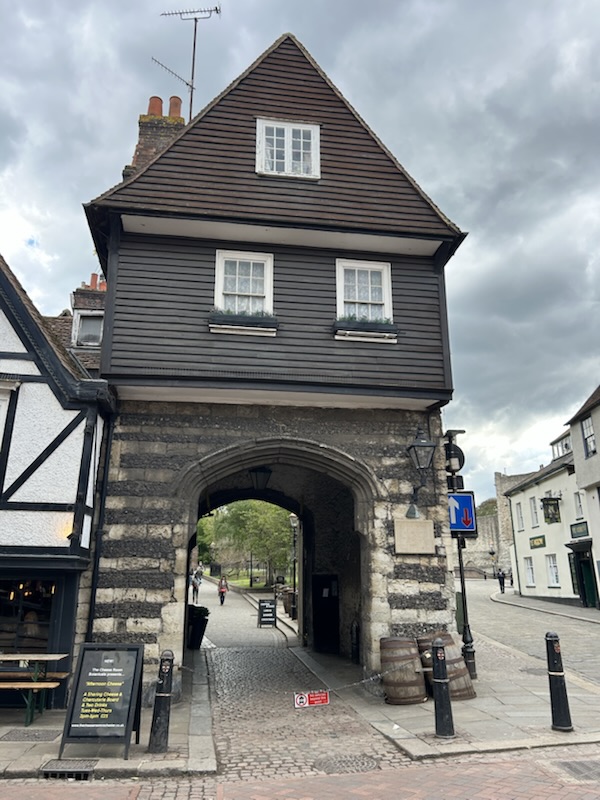
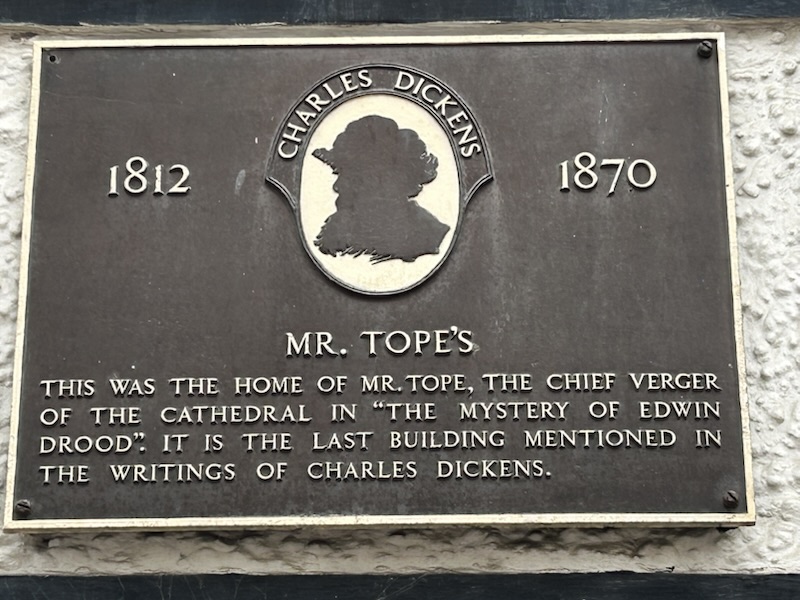
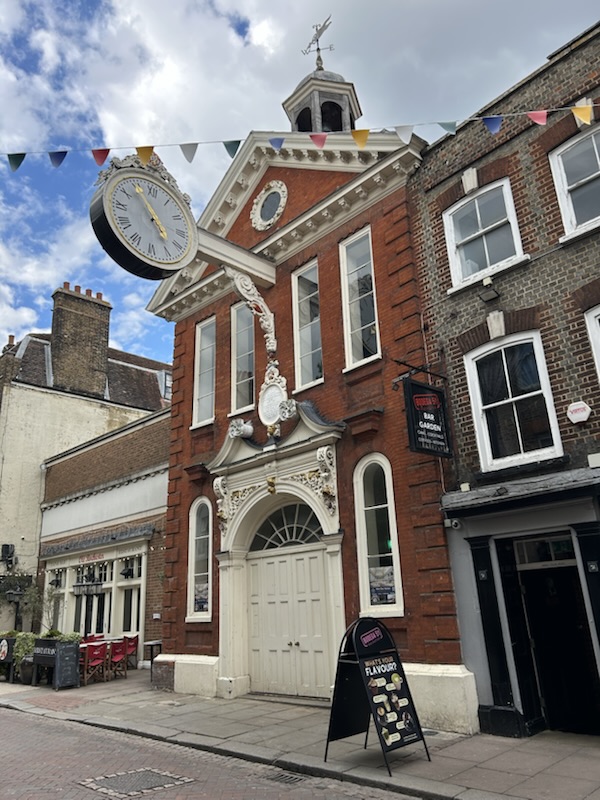
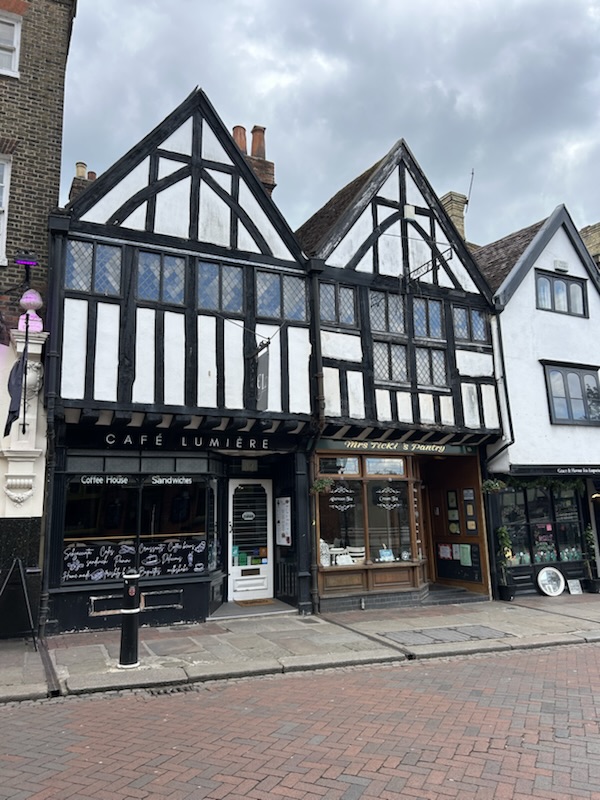
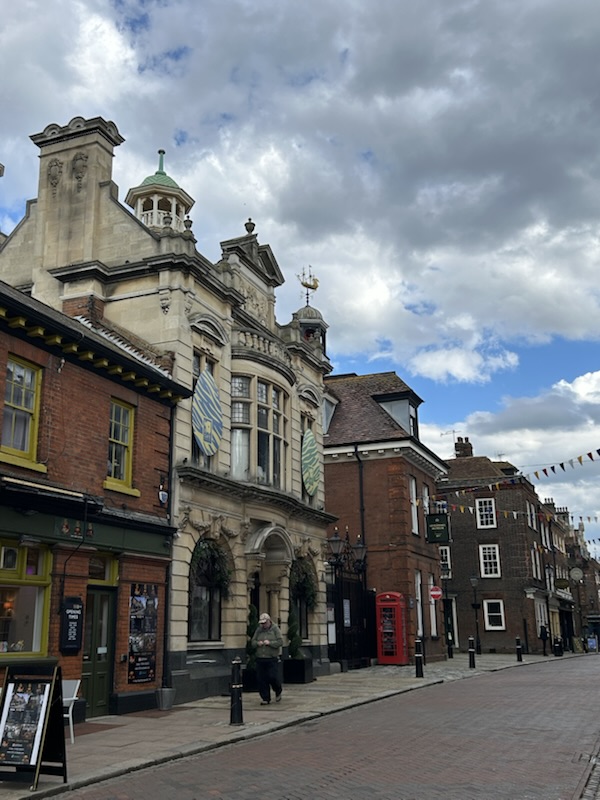
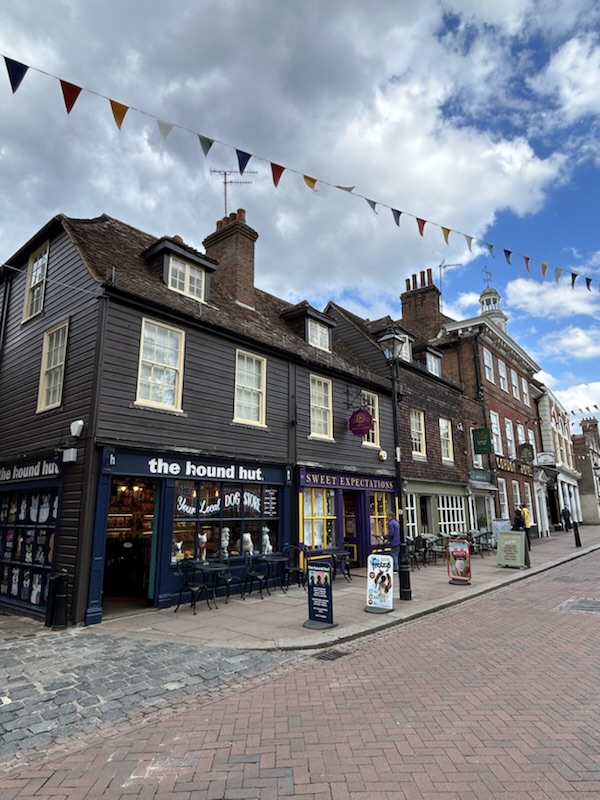
Charles Dickens lived close to Rochester & used it as a location in some of his books. Rochester’s High Street really does look like a place straight from his books.