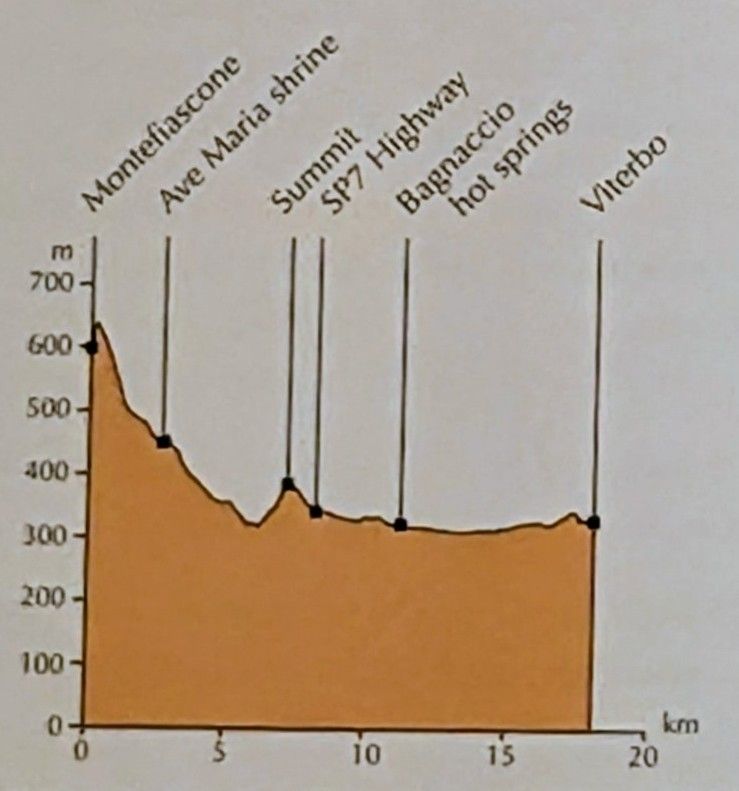
Montefiascone to Viterbo
12.5 Miles; 6 Hours on the trail (Cumulative: 199.8 Miles; 105.2 Hours on the trail)
Montefiascone is first mentioned in documents in 853 AD although the Etruscans first settled the region at least a millennium earlier & then the Romans occupied the area.
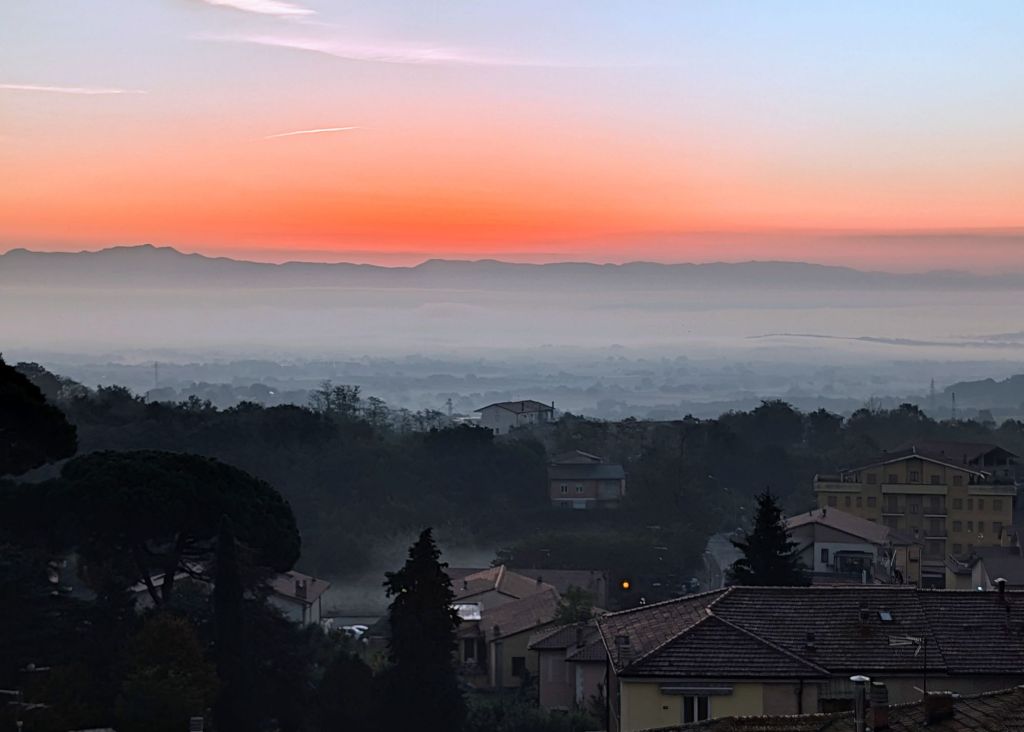
Its commanding position on the highest point near Lake Bolsena & being located on the Via Francigena close to Rome made Montefiascone an important stronghold for the papacy who built the Rocca dei Papi (The Pope’s Castle).
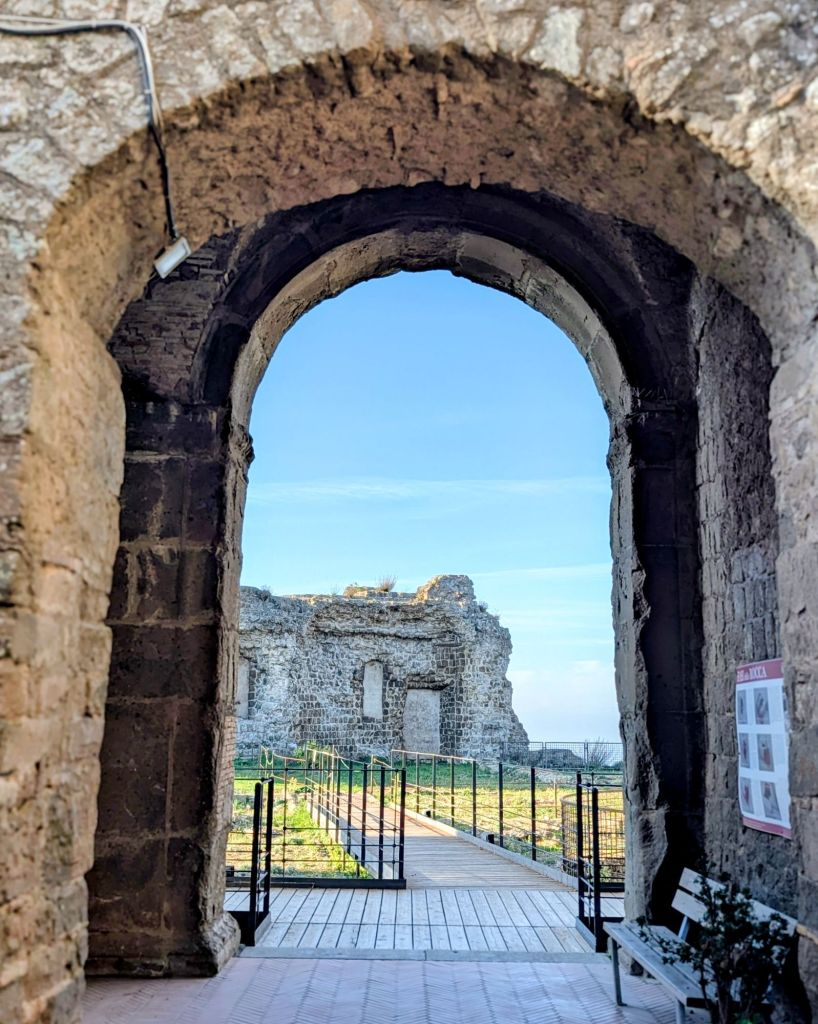
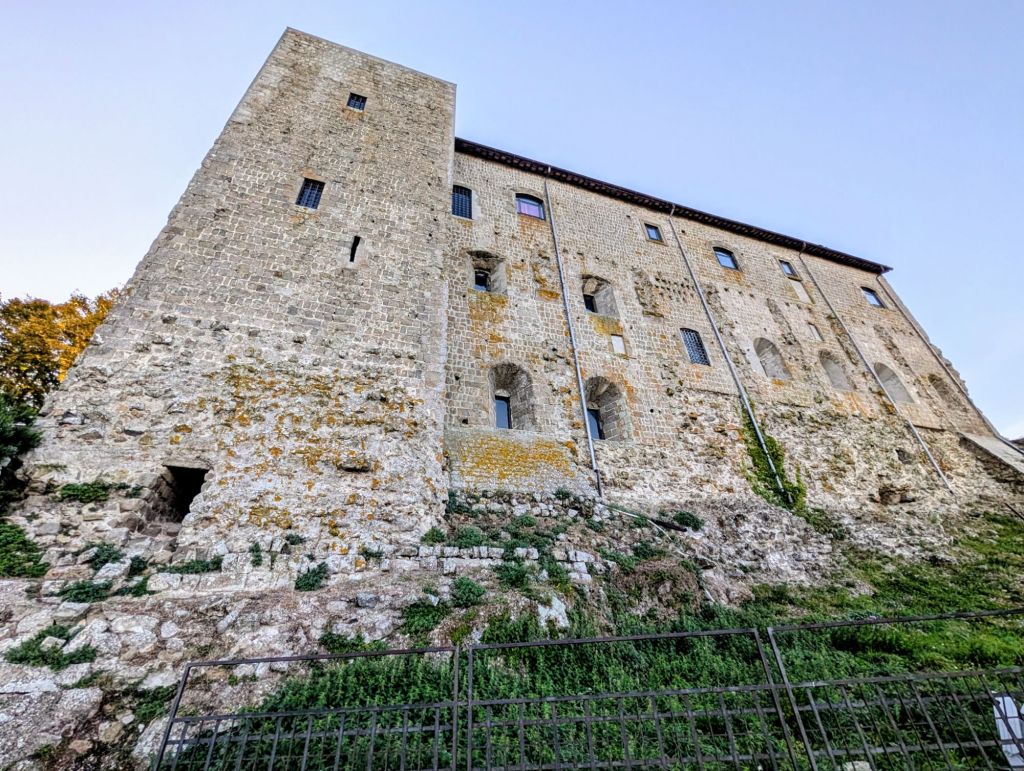
Montefiascone reached its zenith in the 13th & 14th Centuries as the residence for Popes & papal legates.
Its decline was accelerated by a plague in 1657 & a massive earthquake in 1697.
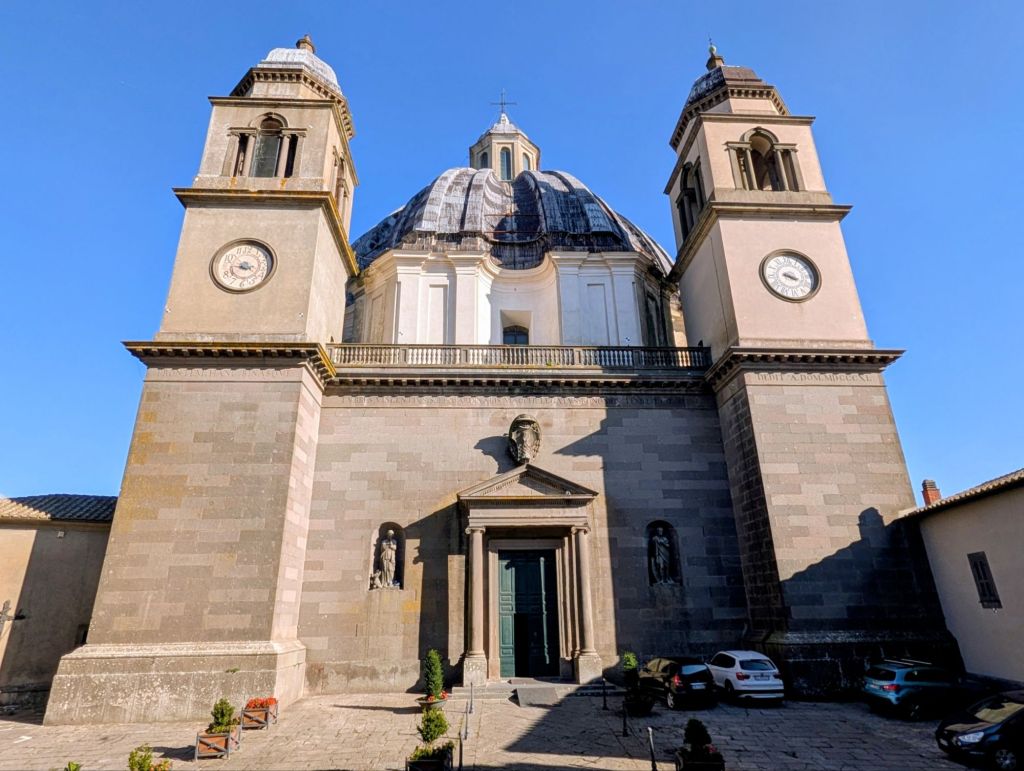
The Basilica Cathedral of Santa Margarita has one of the largest domes in Italy. It can be seen for many miles around in all directions.
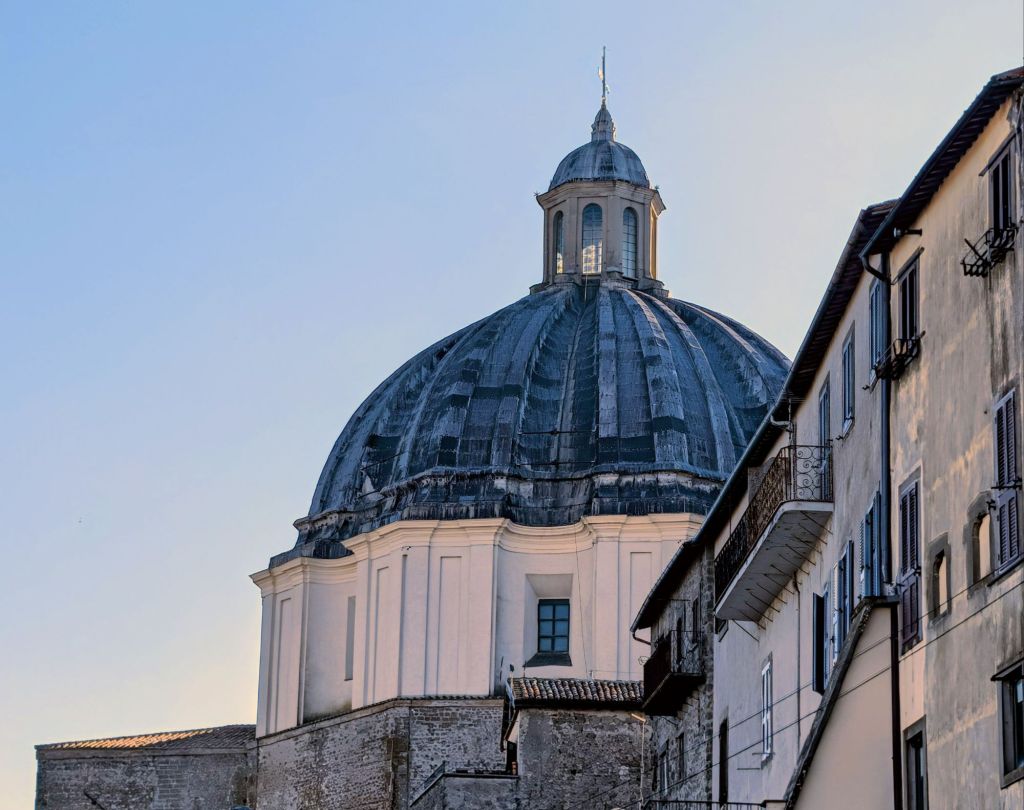
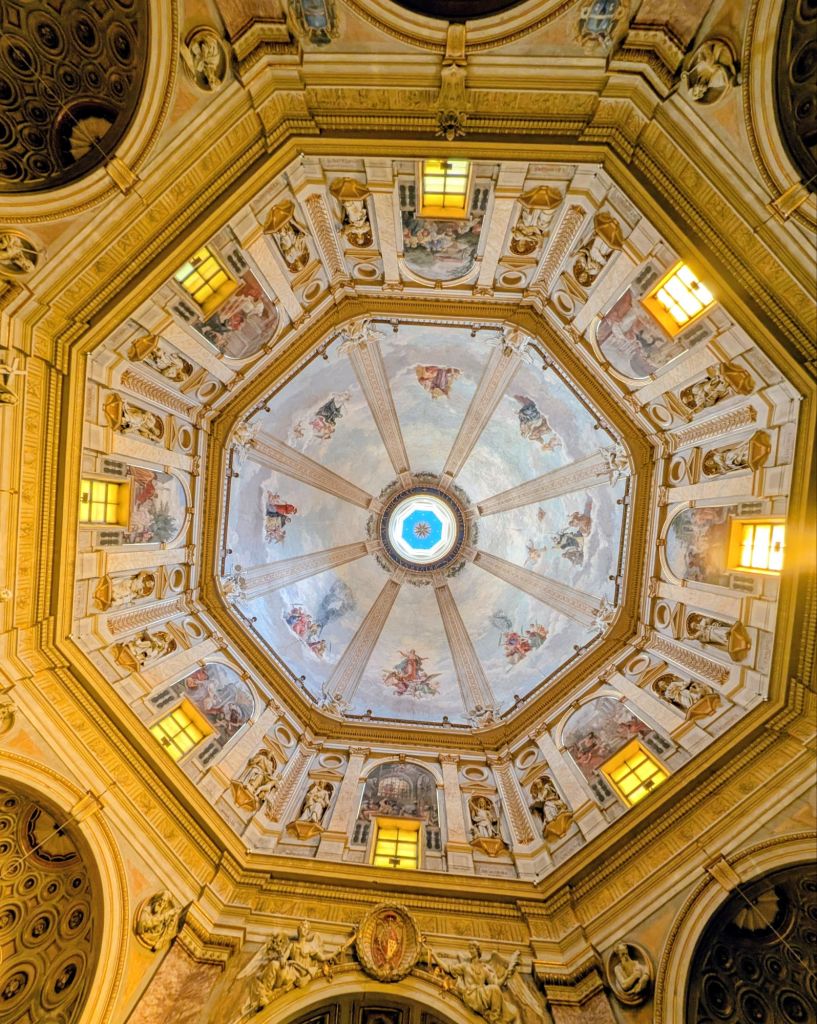
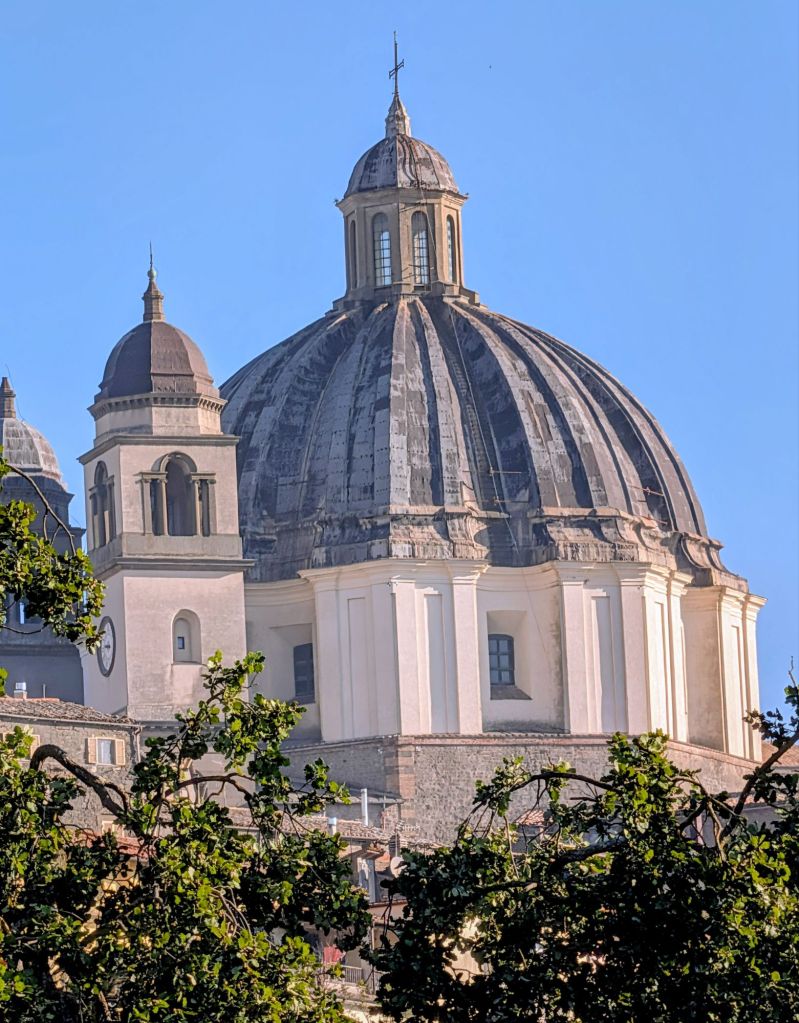
This cathedral houses the remains from the 4th Century martyr Margarita of Antioch who is among the saints Joan of Arc mentioned in her visions.
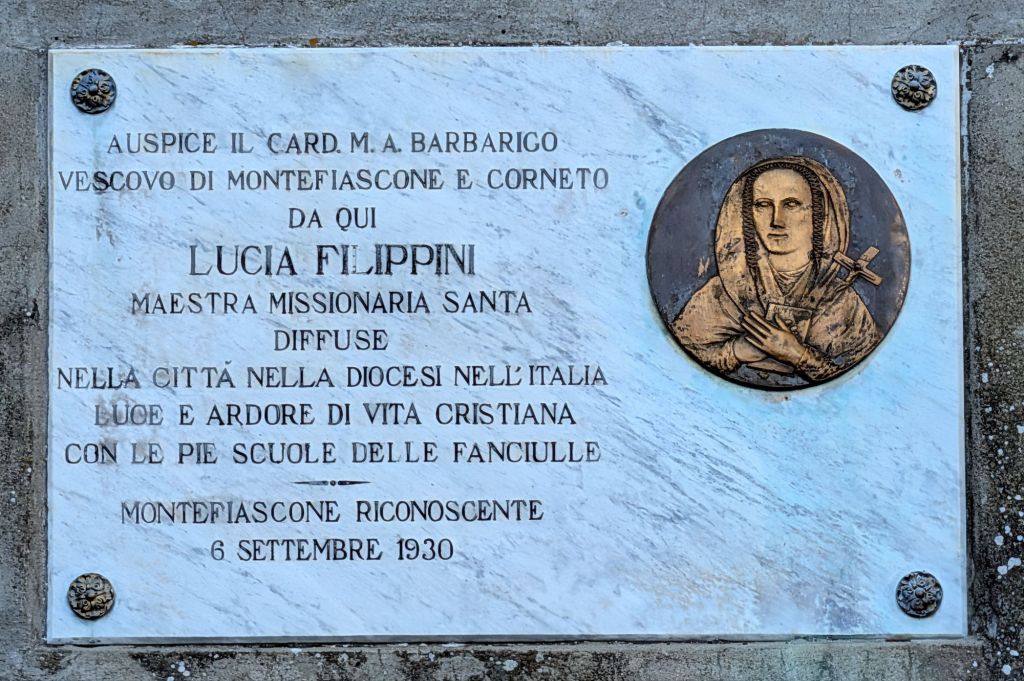
It also holds the relics from Santa Lucia Filippini who was an educator who established 52 ea. schools for girls in the 17th & 18th Centuries.
The Torre del Pellegrino (Pilgrim’s Tower) is located on the highest point in Montefiascone inside the Rocca dei Papi.
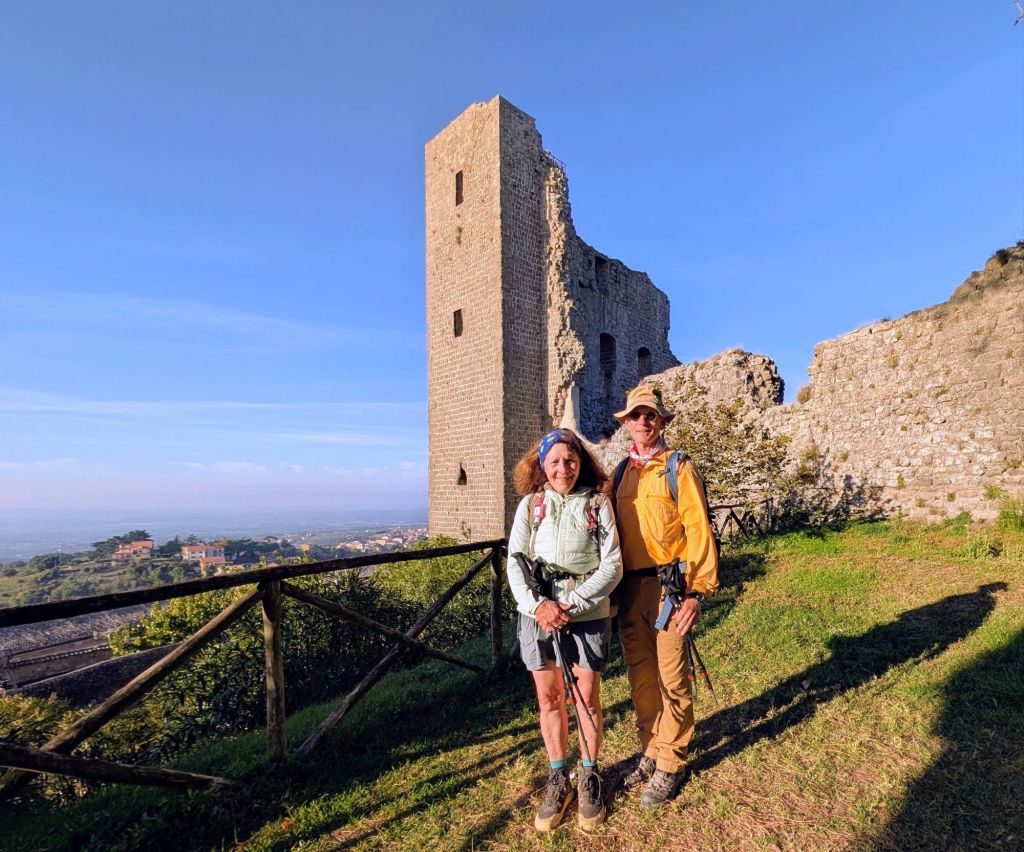
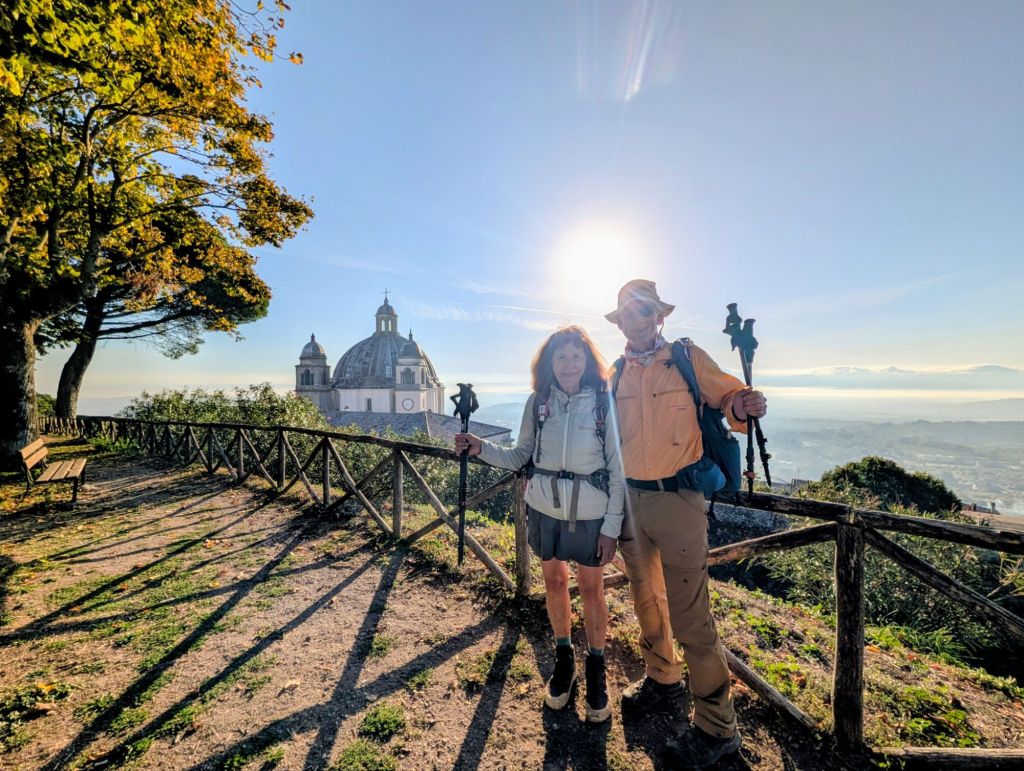
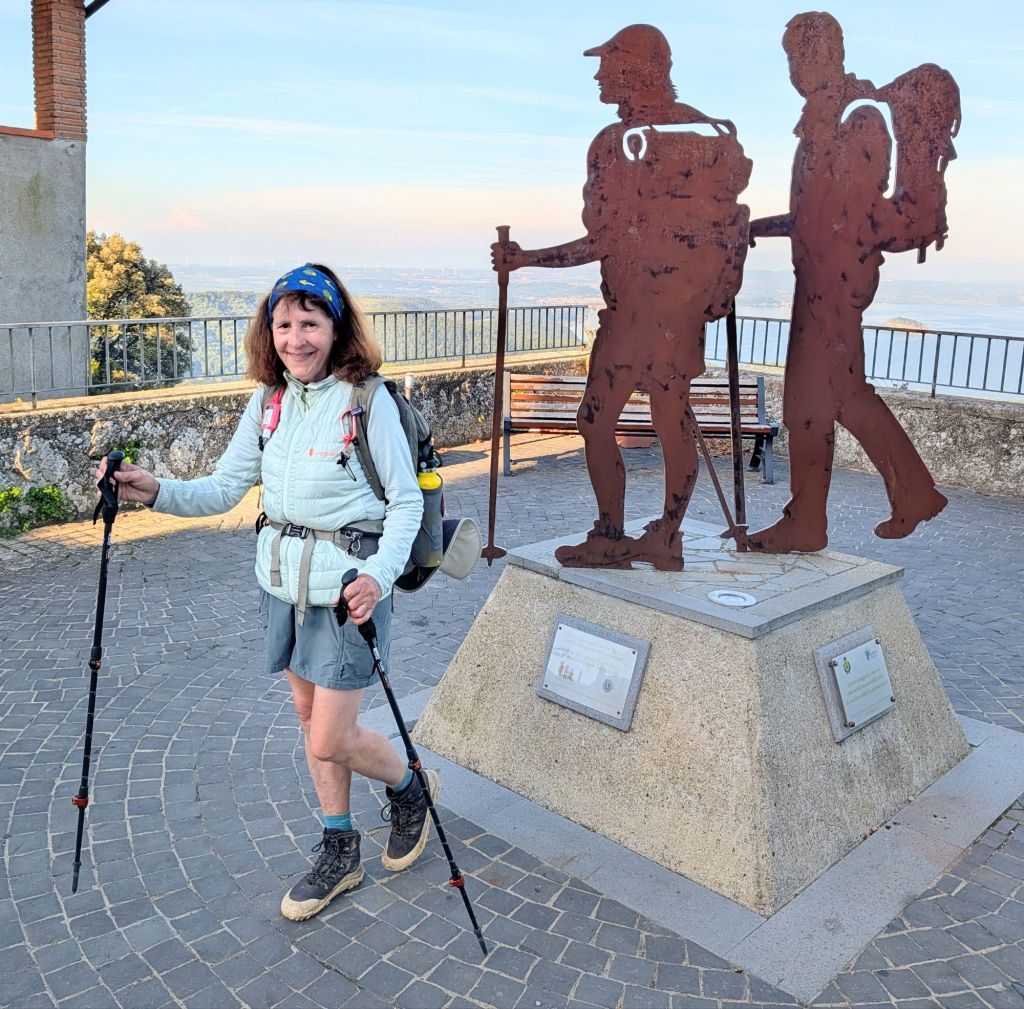
Sights in Montefiascone
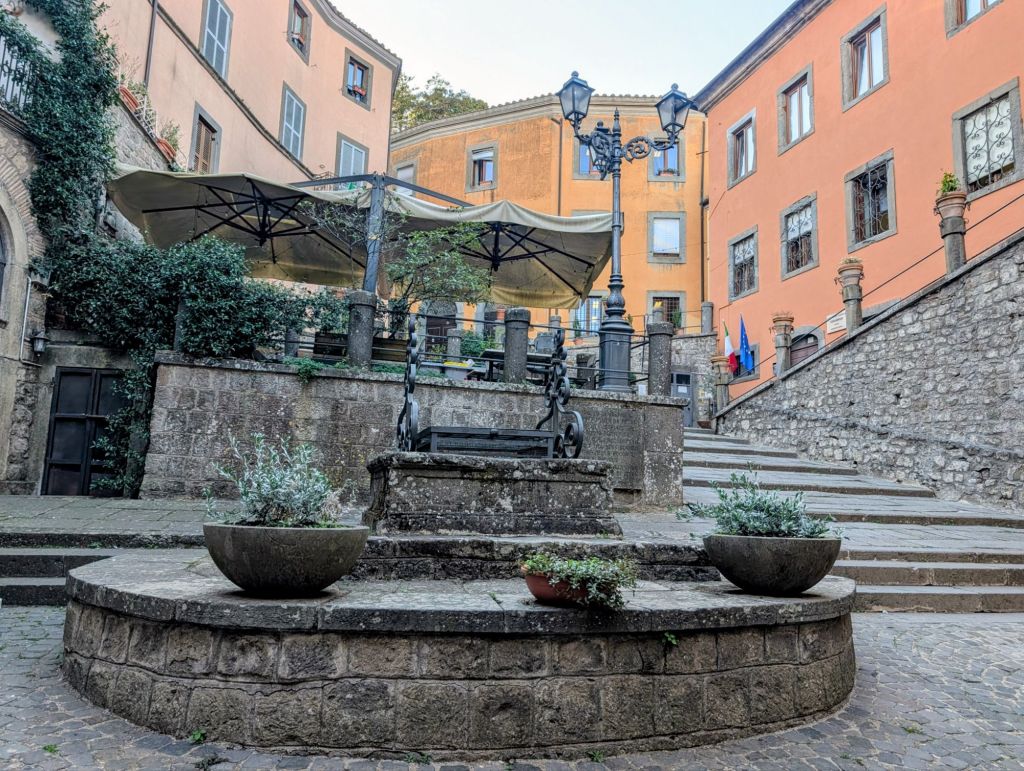
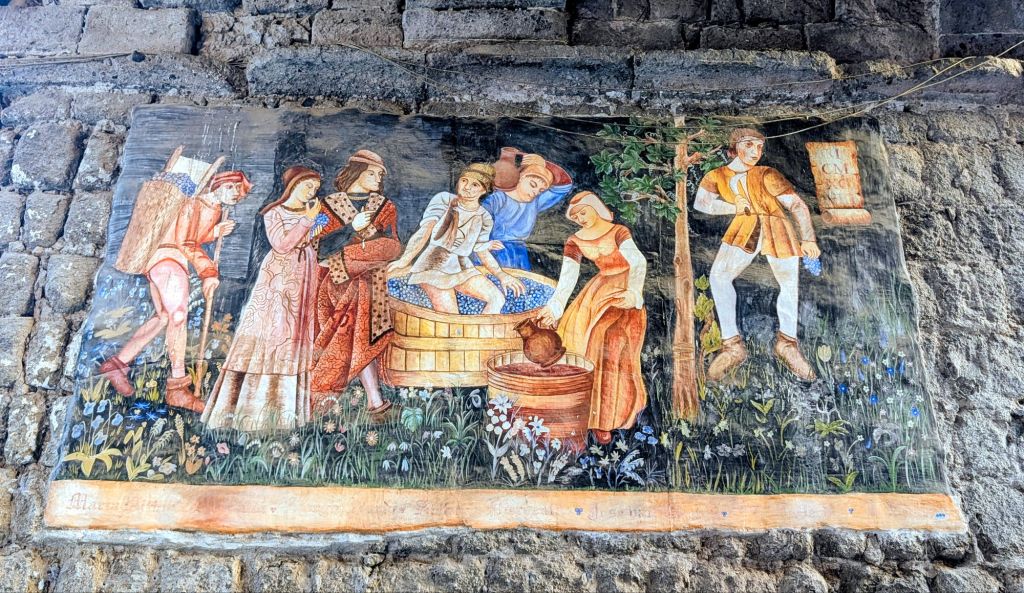
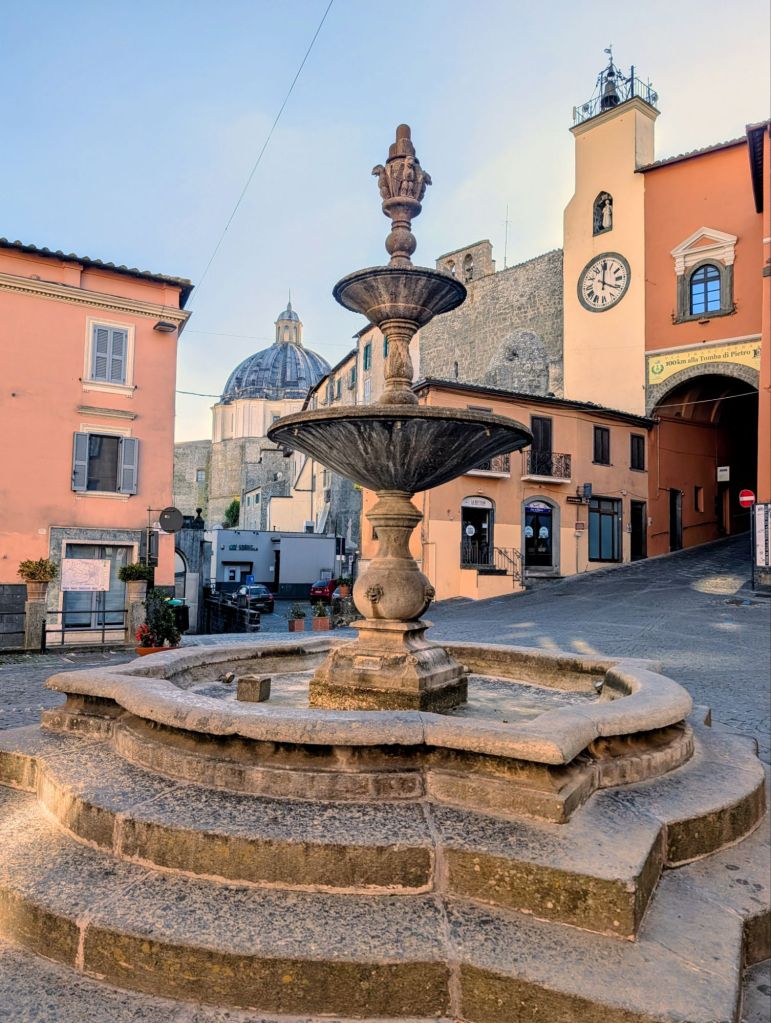
Even in Italy, they are getting ready for Halloween


In small towns & villages in Italy, death notice boards, known as funeral posters (Manifesti Funebri), are still used to announce a death publicly & share details about the funeral.
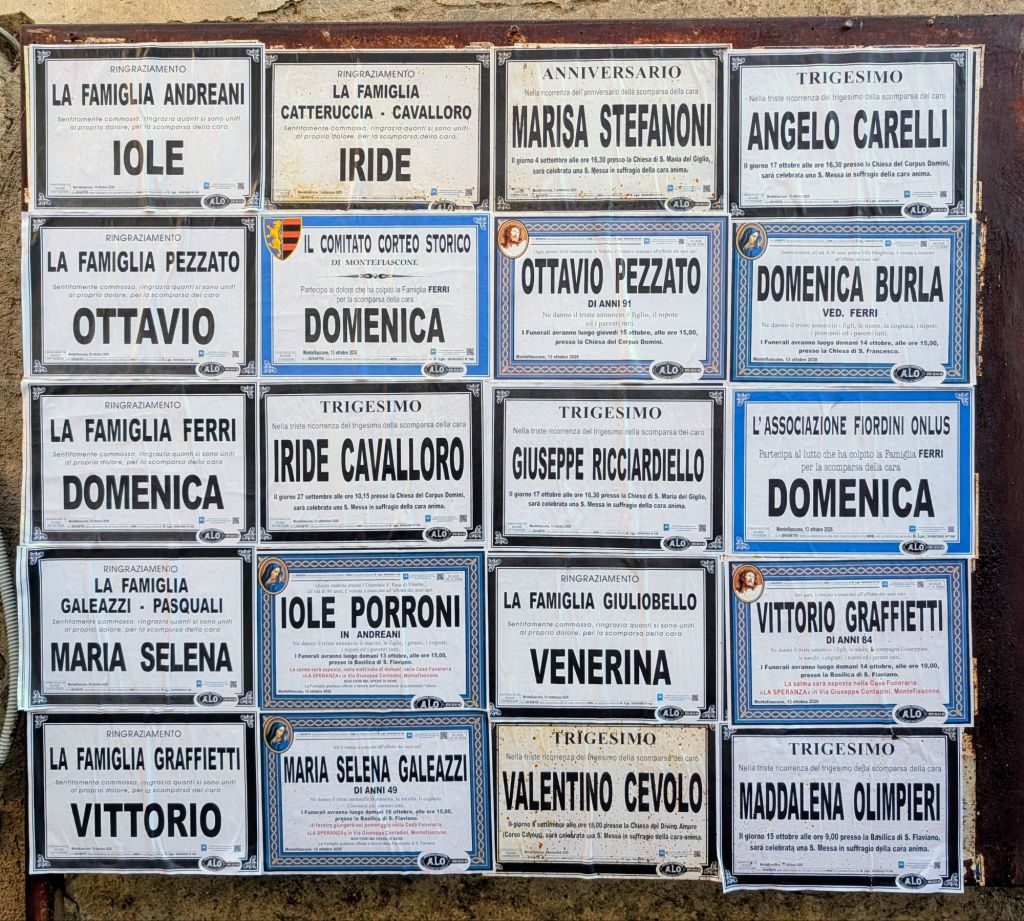
The notices are also used to give info on annual memorials or commemorations for loved ones who have passed.
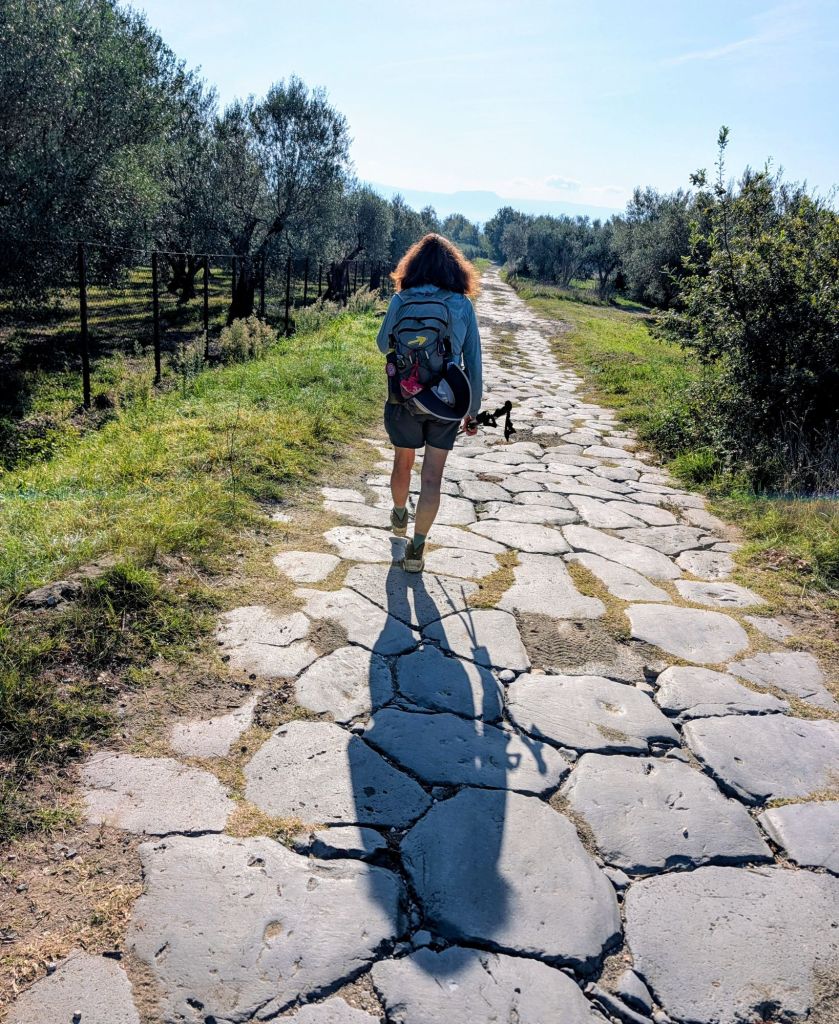
Just south outside Montefiascone is one of the longest, best-preserved stretches on the 280 KM long Roman road called the Via Cassia.
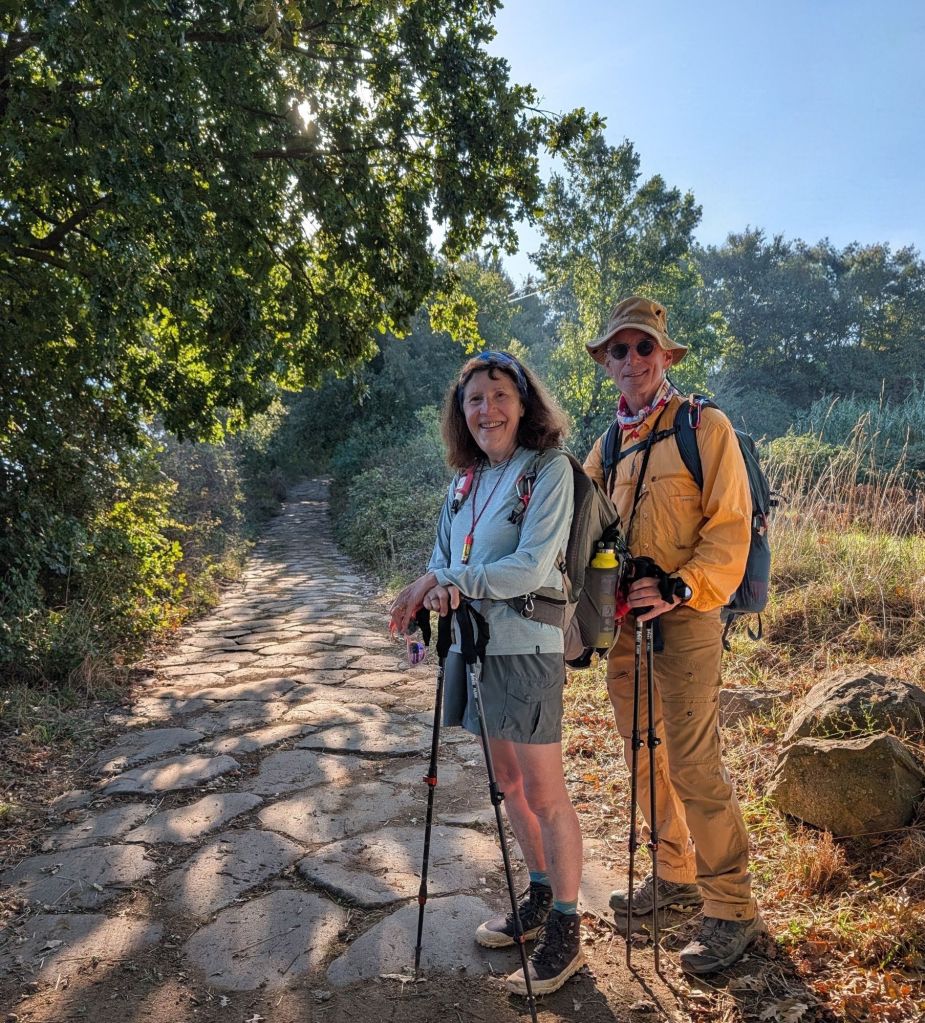
Named for Cassius Longinus who was an important Roman official, the Via Cassia was built by the Romans in the 2nd Century BC to link Rome with Florence.
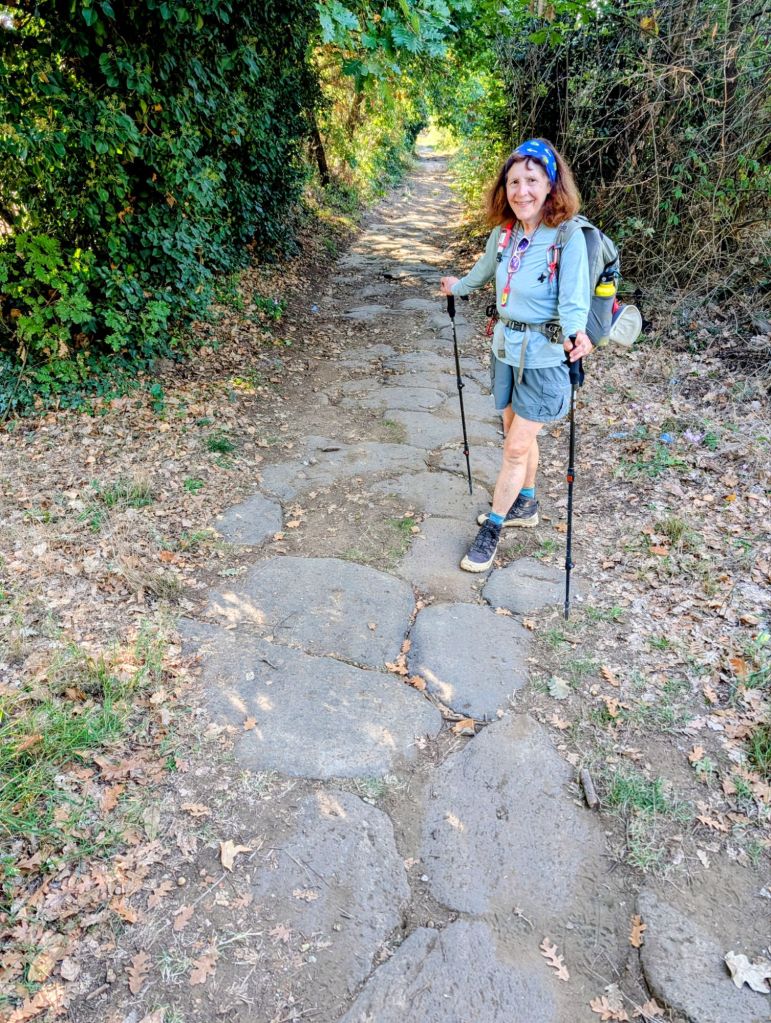
Sigeric, the Archbishop of Canterbury, traveled this road in 990 AD establishing it on the Via Francigena.
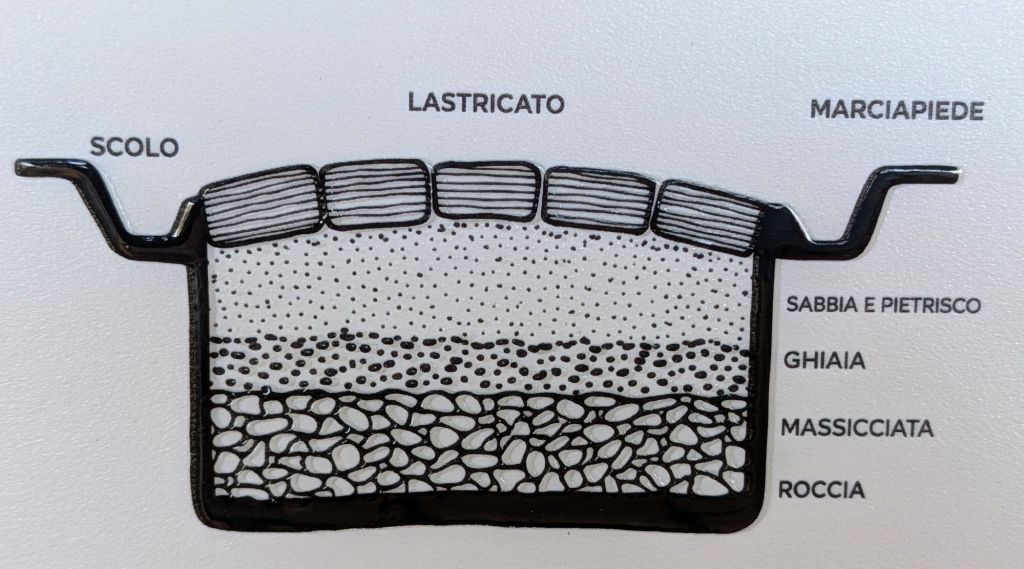
Documents recorded it was built to the Roman Empire’s uniform road width of 13 Roman feet (3.9 m; 1 Roman foot= 29.6 centimeters).
Its engineering & construction techniques resulted in many stretches of this Roman road still being used today by pedestrians & motor vehicles.
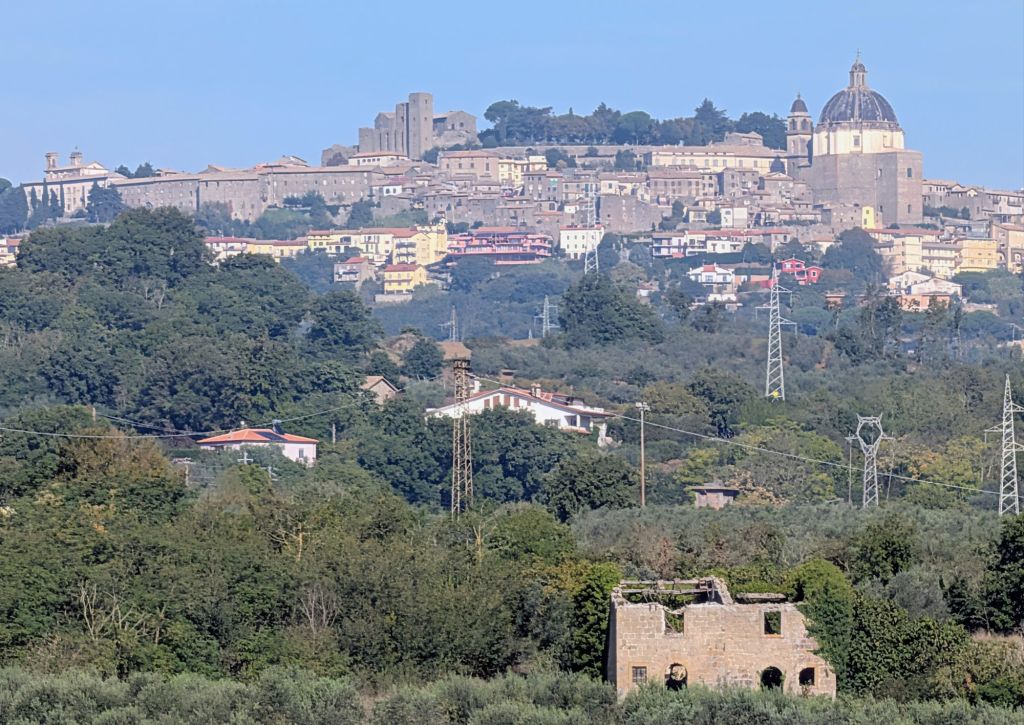
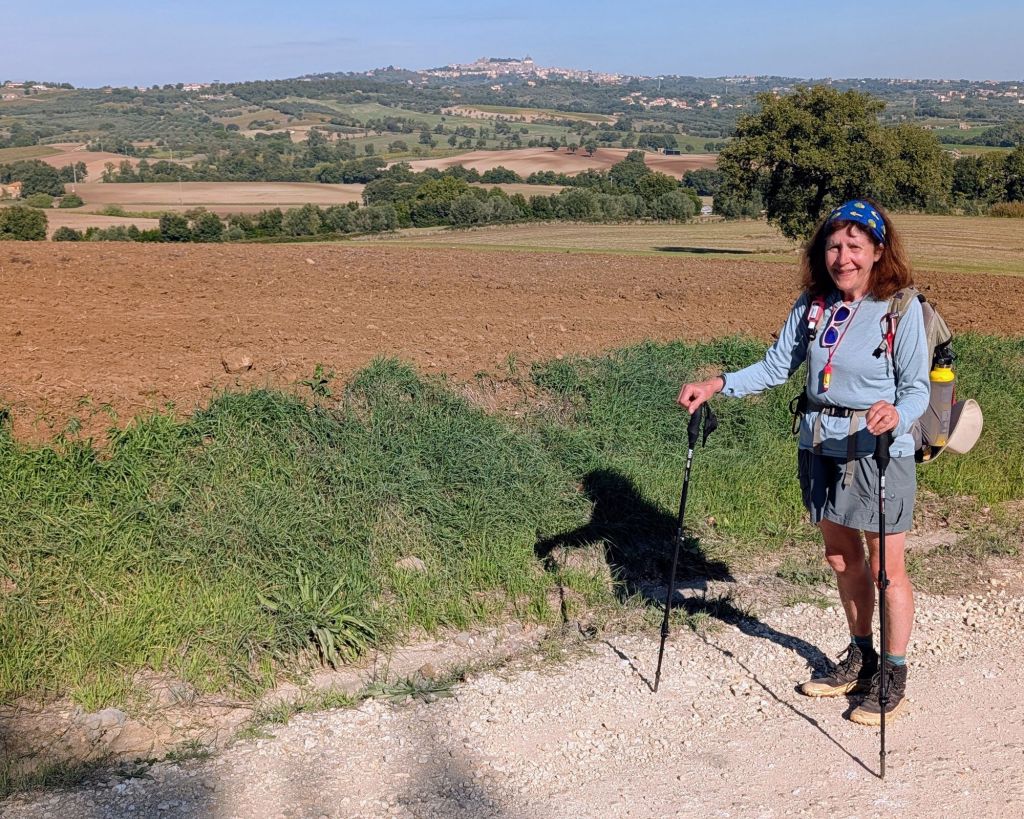
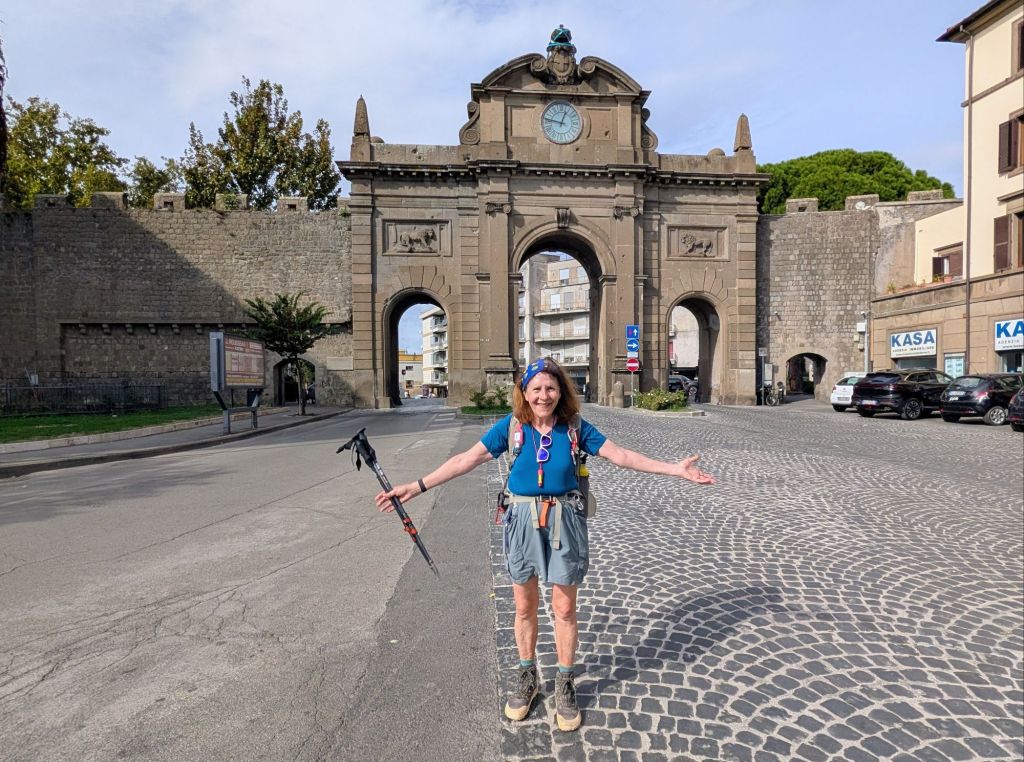
Entering Viterbo