
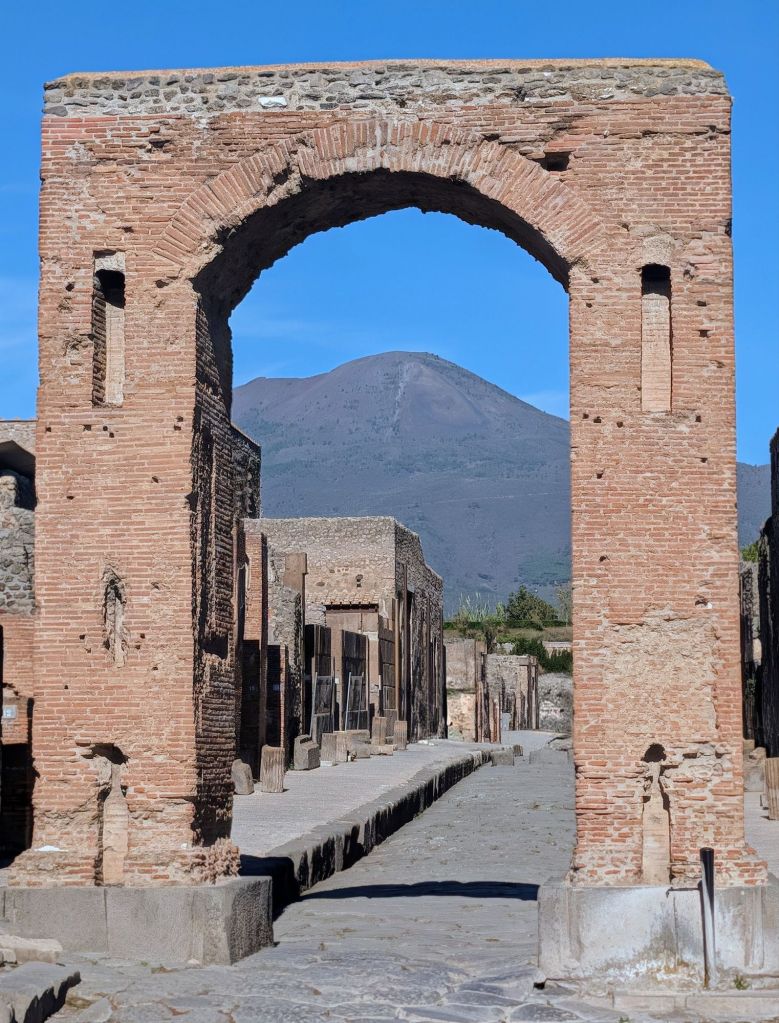
The beginning of the end for Pompeii was 24 August 79 AD.
Ironically, that was the day after the Roman holiday Volcanalia which was dedicated to the God of Fire.
At 1PM, nearby Mount Vesuvius roared to life violently shooting a column of super-heated gas, rock, & ash 21 miles up into the air for 18 straight hours.
Scientists estimate the eruption produced 100,000 times more than the thermal energy from the two atomic bombs dropped on Hiroshima & Nagasaki in WWII.
The choking ash rained down on the cities in the surrounding countryside, filling courtyards, blocking doors, & collapsing roofs.
By nightfall, there were earthquakes, a tsunami in the Bay of Naples, & towns buried by volcanic ash.
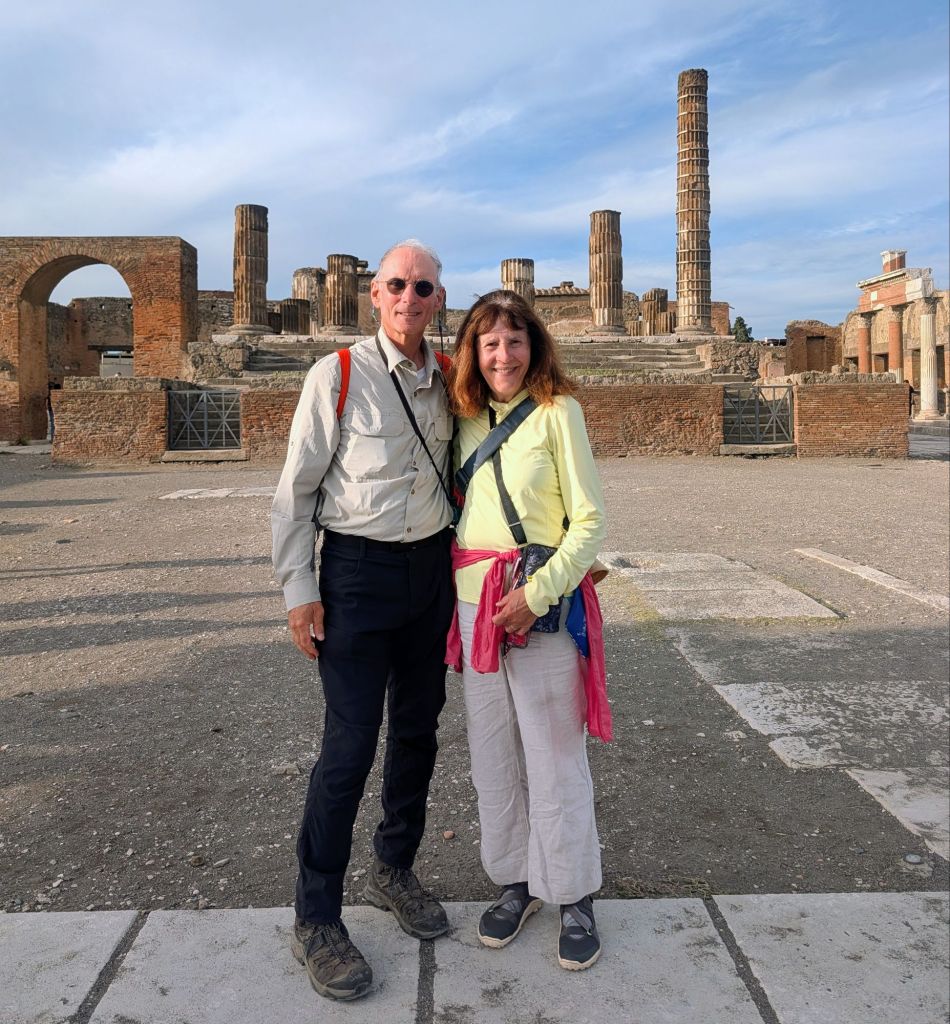
Pliny the Younger, who had witnessed all of this from nearby Misenum, wrote, “…broad flames shone out but several places from Mount Vesuvius, which in the darkness of night contributed to render still brighter and clearer.”
Many besought aid from the gods; but, still more imagined there were no gods left & that the universe was plunged into eternal darkness for evermore.”
He wrote this about that night:
“broad flames shone out but several places from Mount Vesuvius, which in the darkness of night contributed to render it still brighter and clearer.”
The next morning, the volcano’s cone collapsed triggering an avalanche sending mud & ash (pyroclastic flow) traveling 100 MPH that destroyed everything in its path & buried Pompeii which was just a little over five miles away from the volcano.
Pompeii & its smaller neighboring village Herculaneum disappeared.
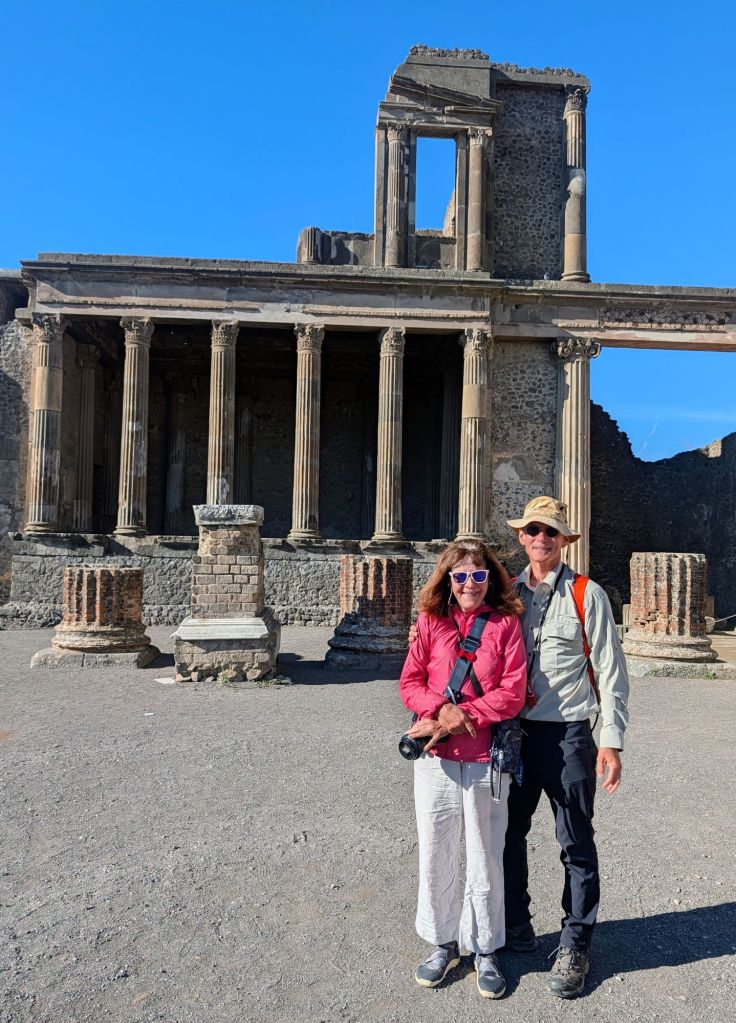
Pompeii & Herculaneum were only discovered by accident when King Charles III of Bourbon was constructing his palace in 1738.
Miraculously, the two cities were nearly perfectly preserved under calcified ash layers.
About 75% of Pompeii’s 165 acres have been excavated & some 1,150 bodies have been discovered out of the estimated 2,000 thought to have died in the disaster.
This means that the vast majority of the city’s 20,000 citizen’s fled at the volcanic activity’s first signs.
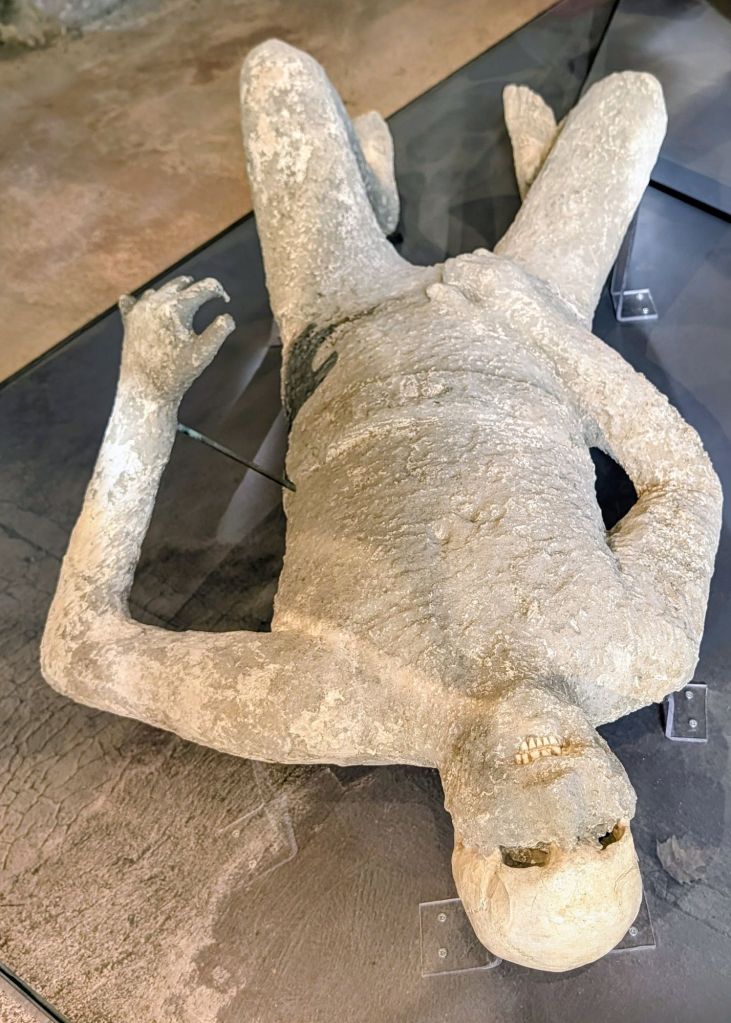
Those who stayed died & were buried in the volcanic debris, then their bodies decomposed leaving a void in the strata.
Archeologists inserted plaster into the voids producing exact replicas of their bodies & positions in which they died.
Most plaster casts of the men, women, children, & animals buried in Pompeii were primarily made in the mid 1800s.
Pompeii was located on the Bay of Naples & had palatial villas, public thermal baths, shops, & brothels sporting notoriously explicit frescoes.
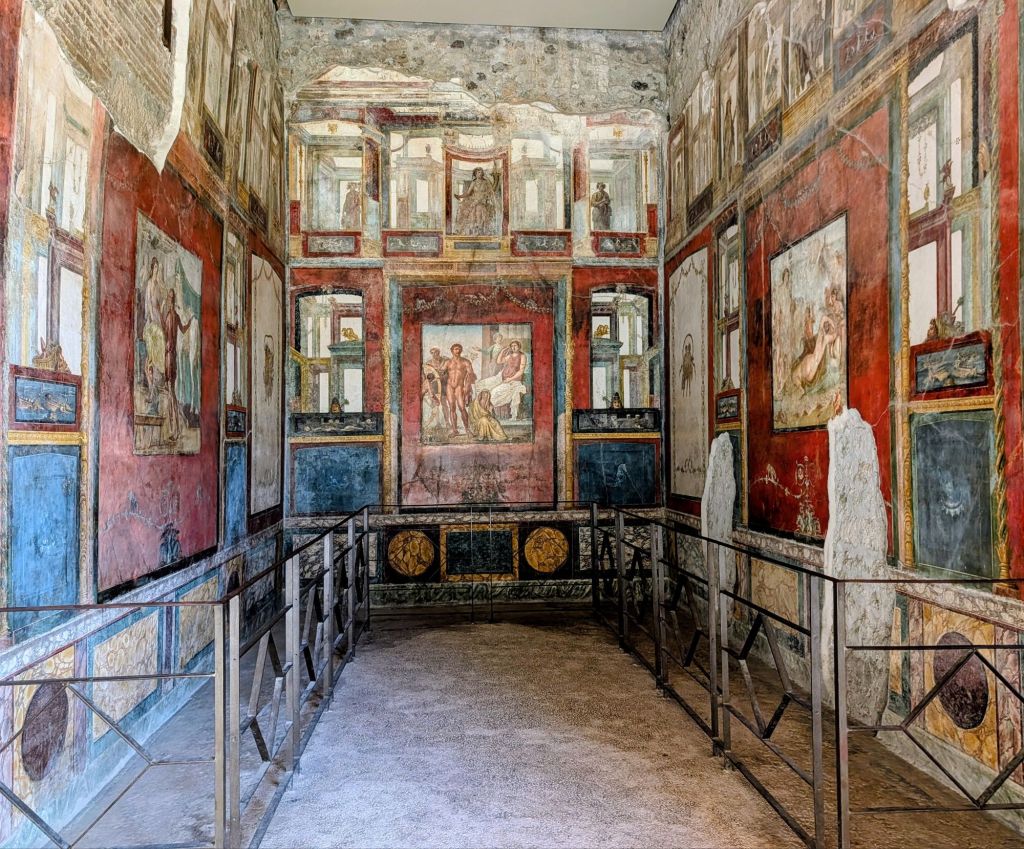
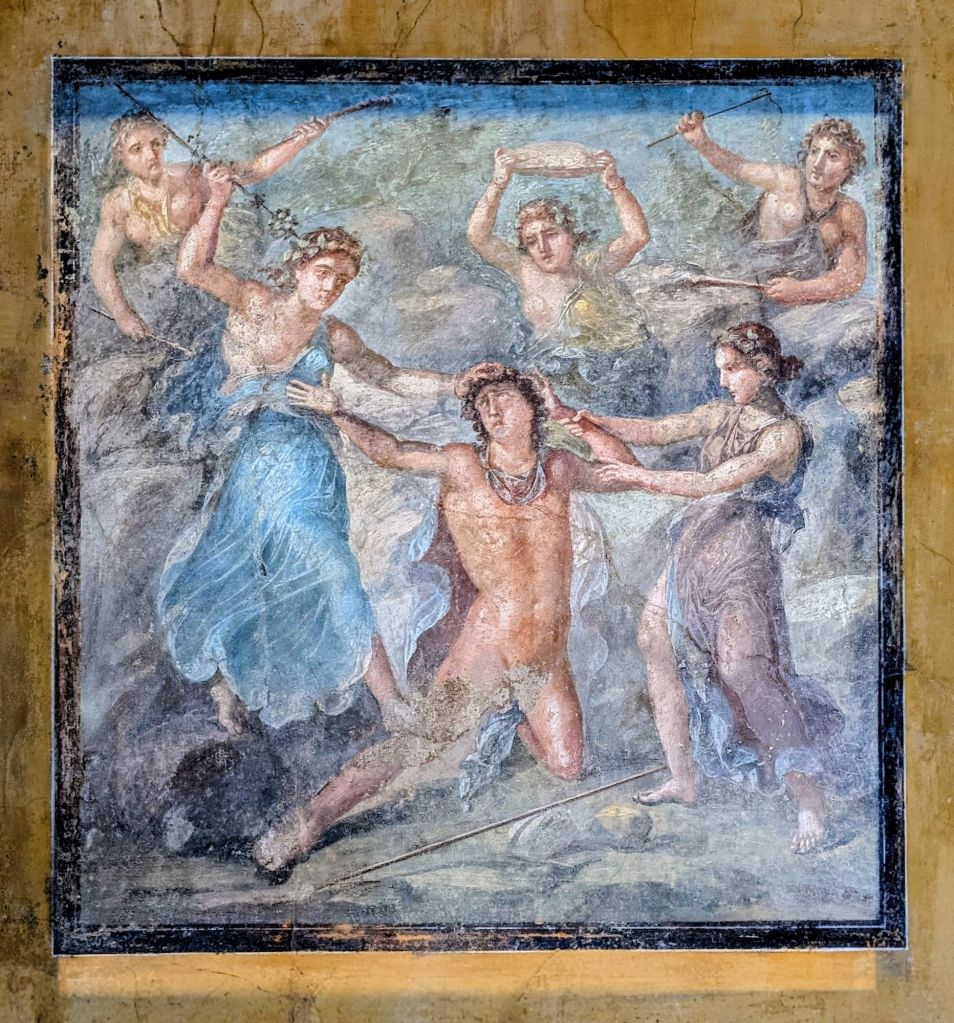
House of the Vettii
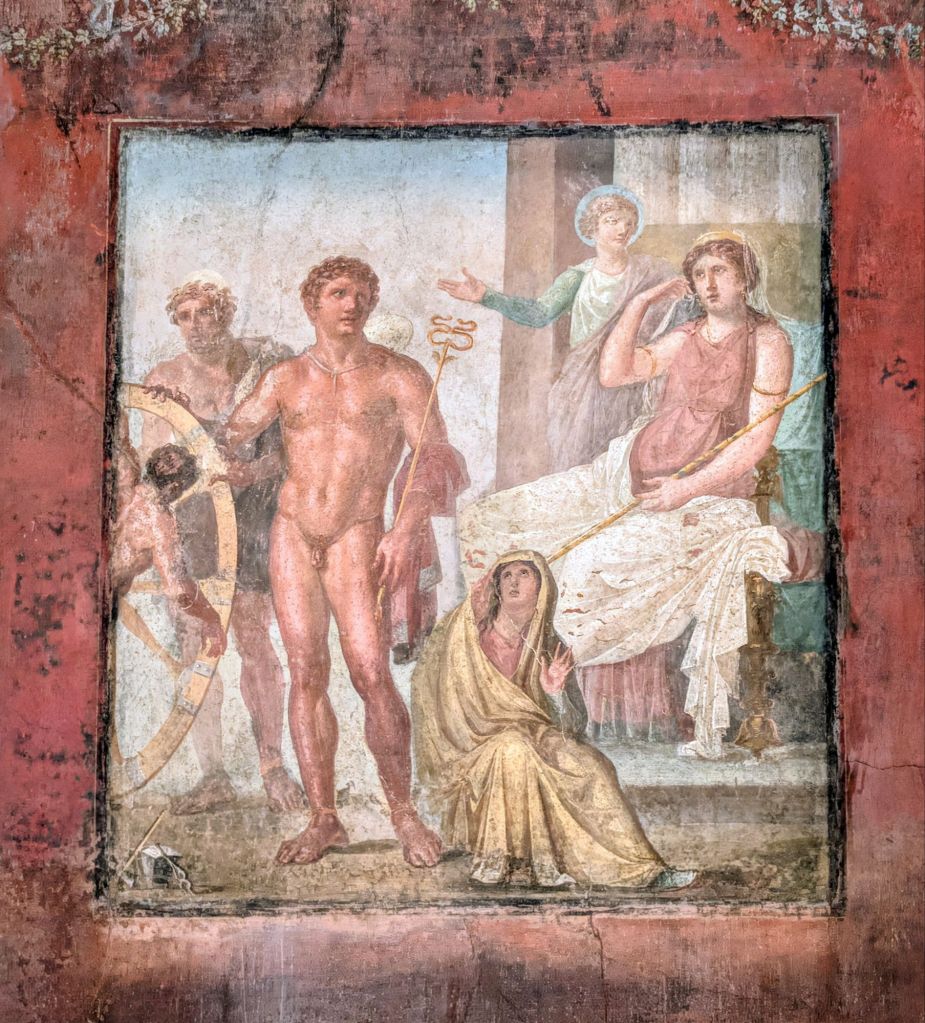
It shows the moment the Lapinth King Ixion is being punished for betraying Zeus.
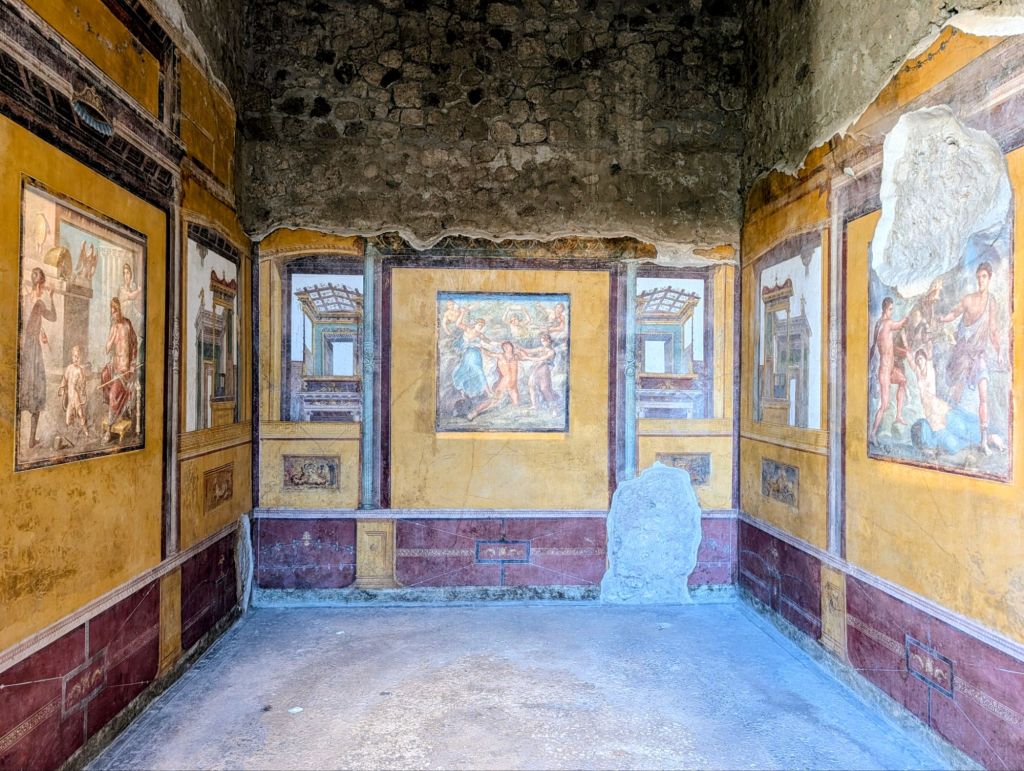
The House of the Vettii is among the most lavishly decorated Roman houses preserved in Pompeii.
Brothers Aulus Vettius Restitutus & Aulus Vettius Conviva were previous slaves who became free men & went on to become wealthy merchants.
They commissioned fresco decorations for their luxurious home from one of the leading artists so that their home would be not only a comfortable residence; but also, be an example of how successful freedmen could use architecture, art, & material wealth to display their status in Roman society.
The house’s lavish decoration immediately announces its owners’ wealth.
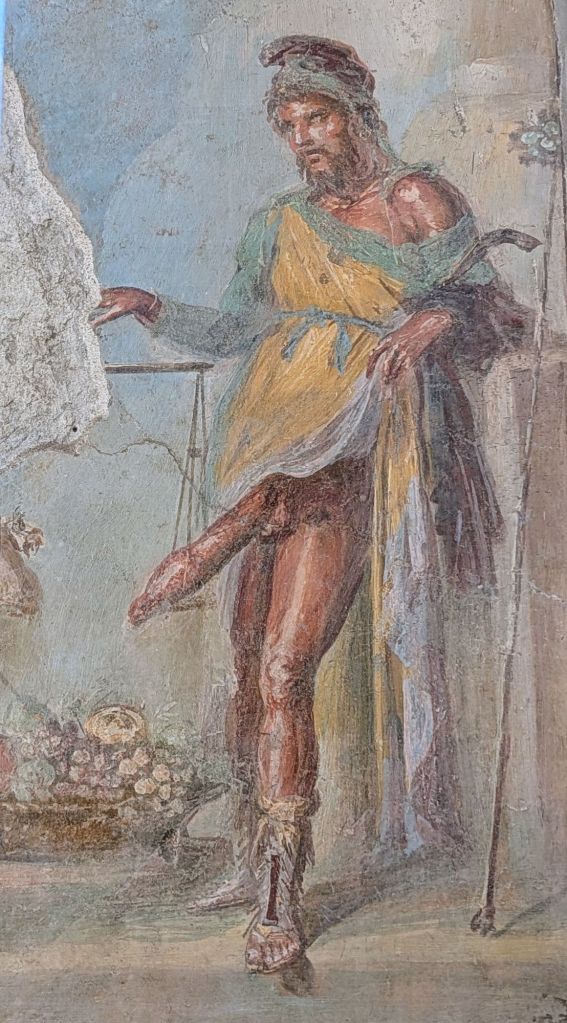
Just inside the house’s entrance is a famous fresco showing Priapus who was the god associated with fertility & prosperity depicted with an exaggerated phallus balanced on a scale with a money bag.
This image likely served as a symbol for prosperity & continued good fortune.
On a lighter note, sometimes Priapus images also acted as amusements for invited guests.
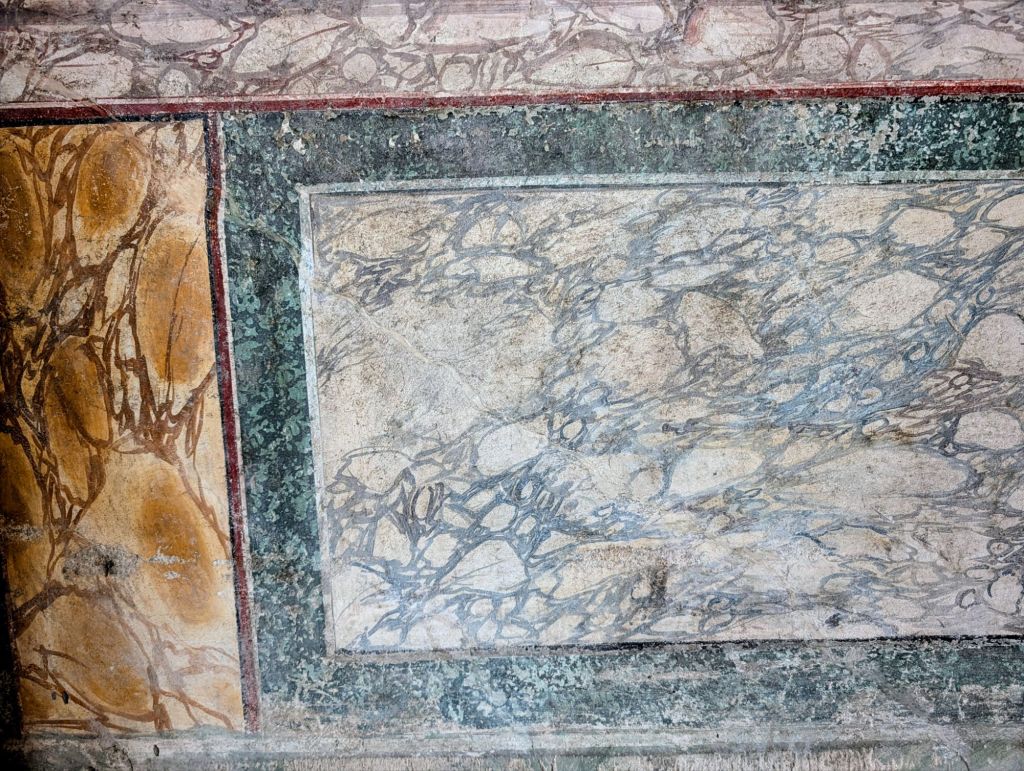
On the Icipn Room, at the bottom of one wall, there is faux colored marble.
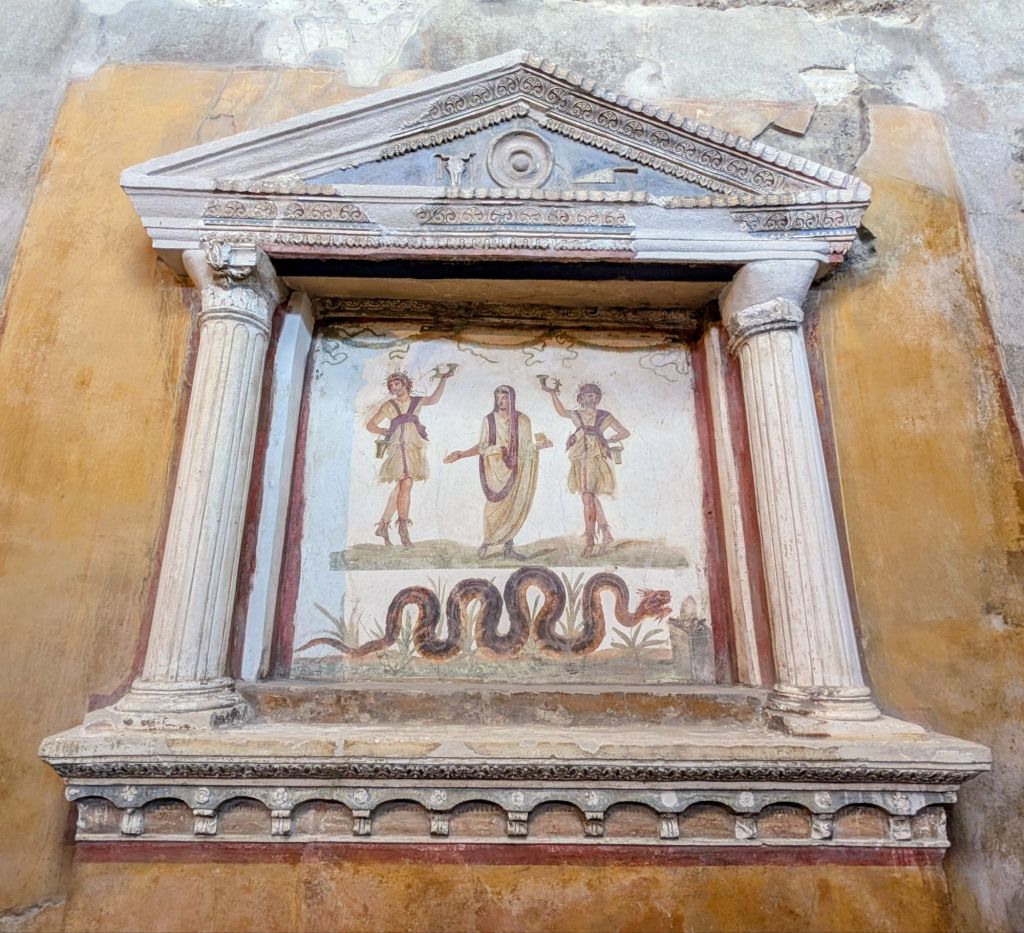
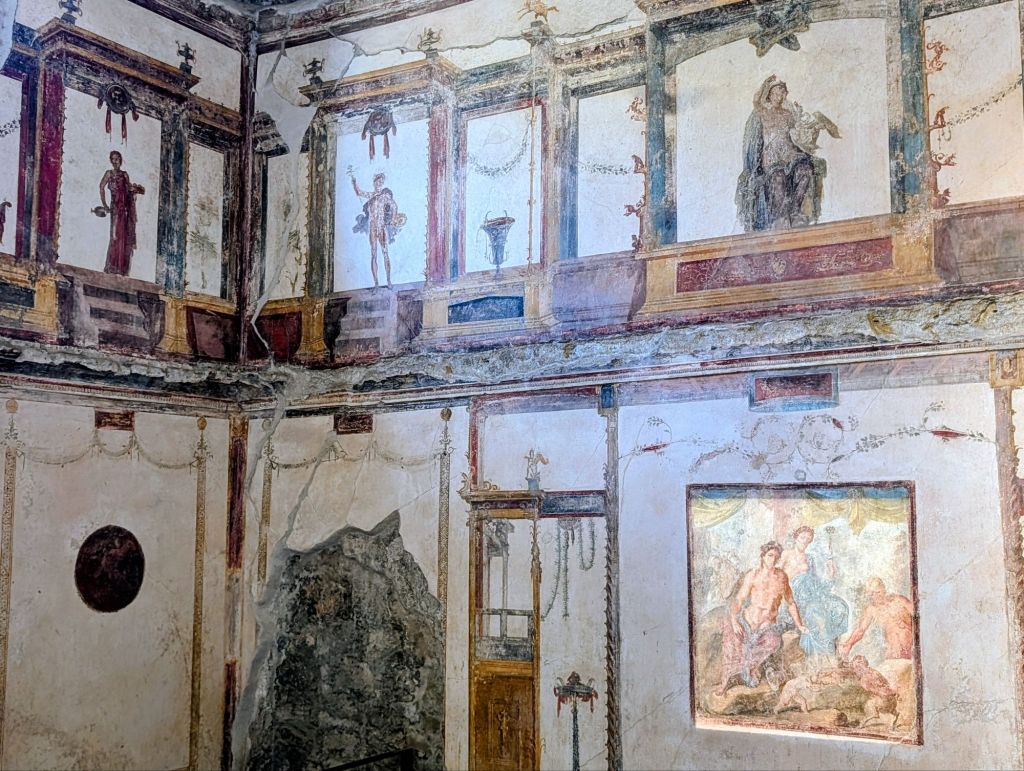
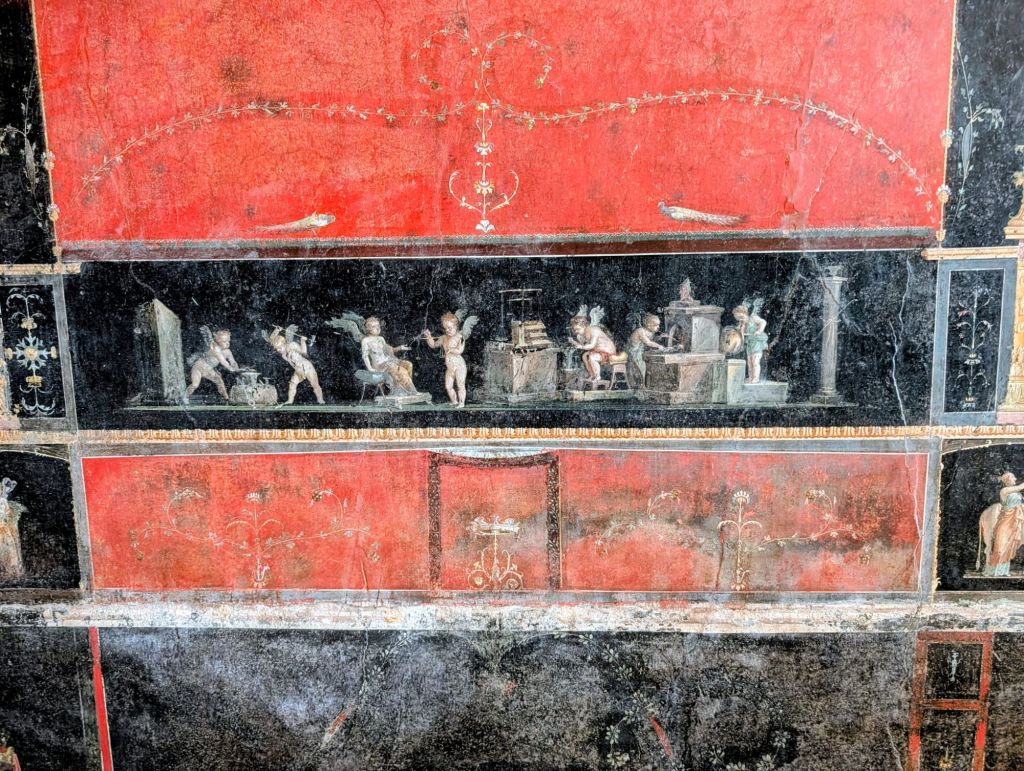
The dining room was also lavishly decorated with red & black.
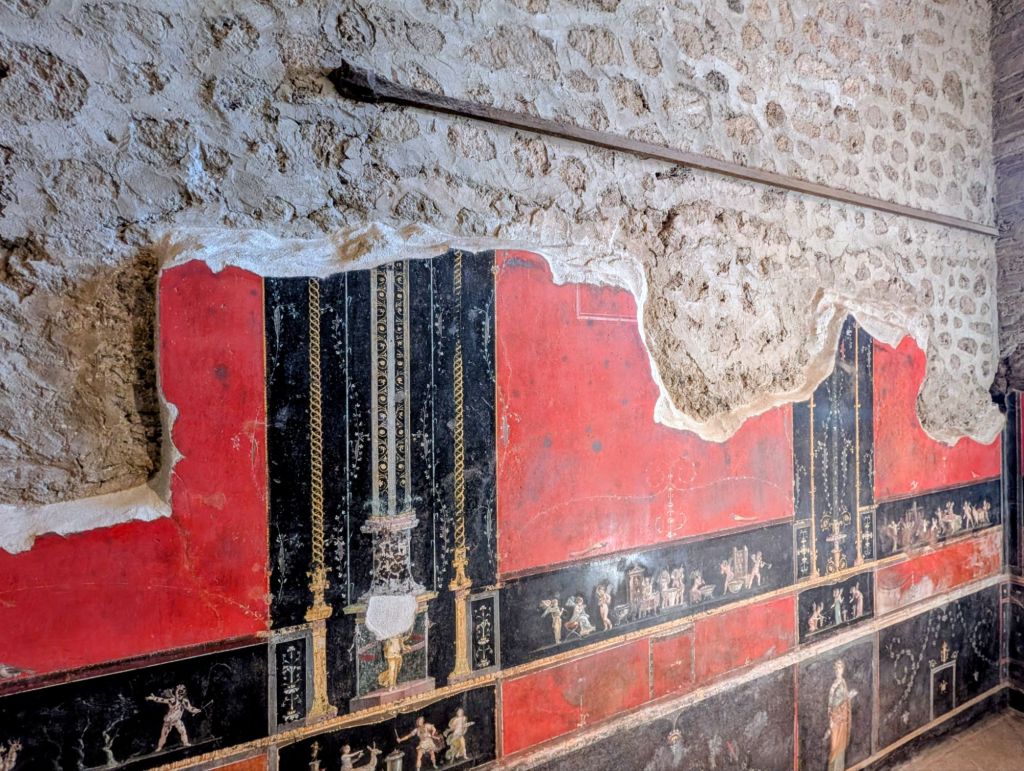
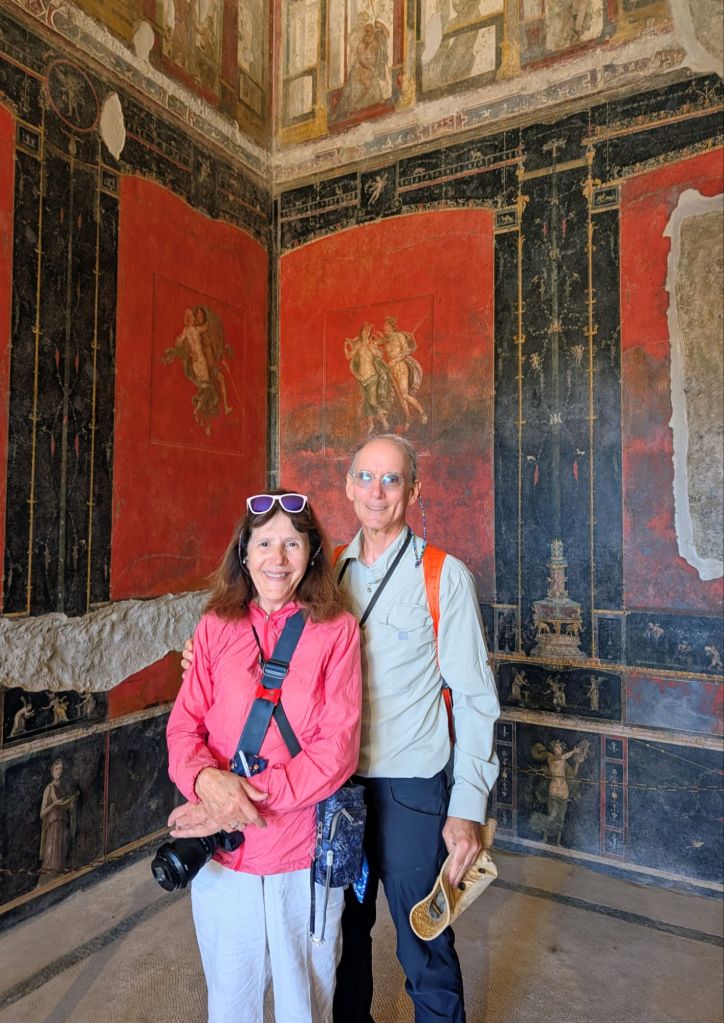
Pompeian Red was a color that only became known when Pompeii began being excavated in the 18th Century.
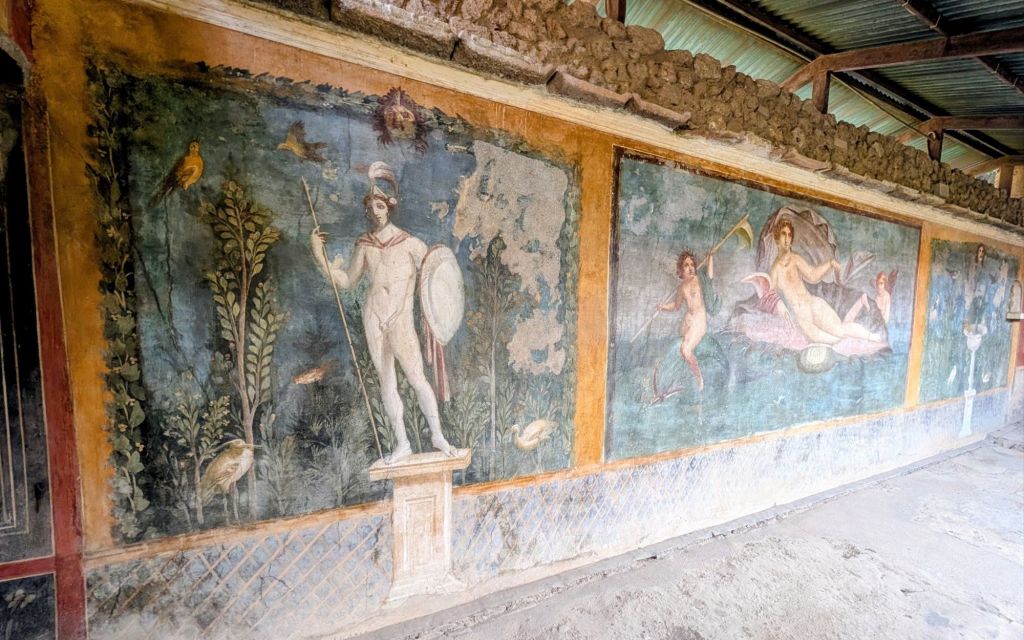
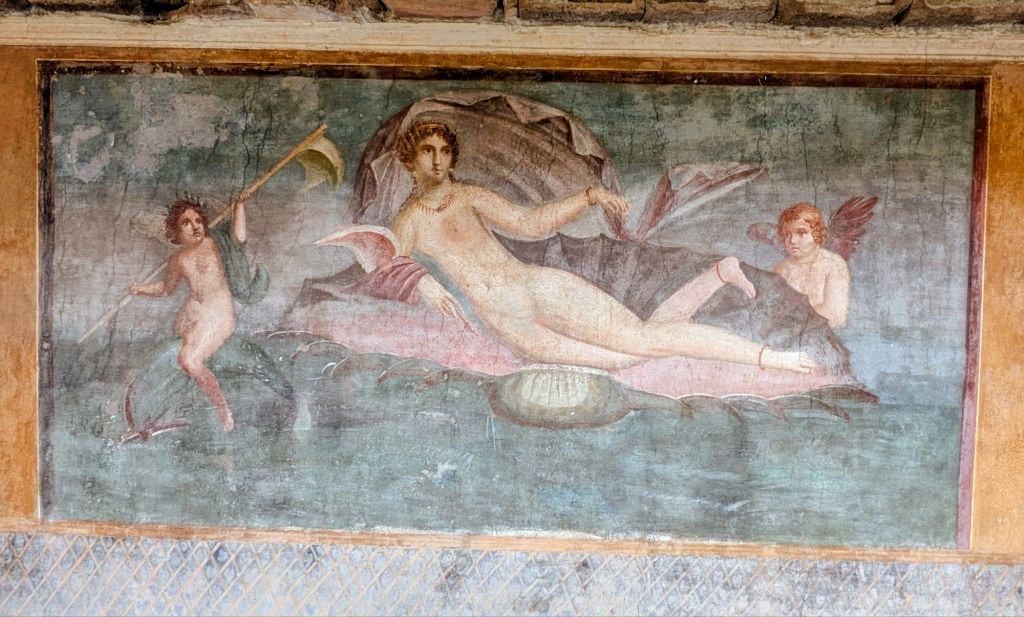
The House of Venus in the Shell (Casa di Venere in Conchiglia)
This famous home features a large, well-preserved fresco showing Venus emerging from the sea in a shell.
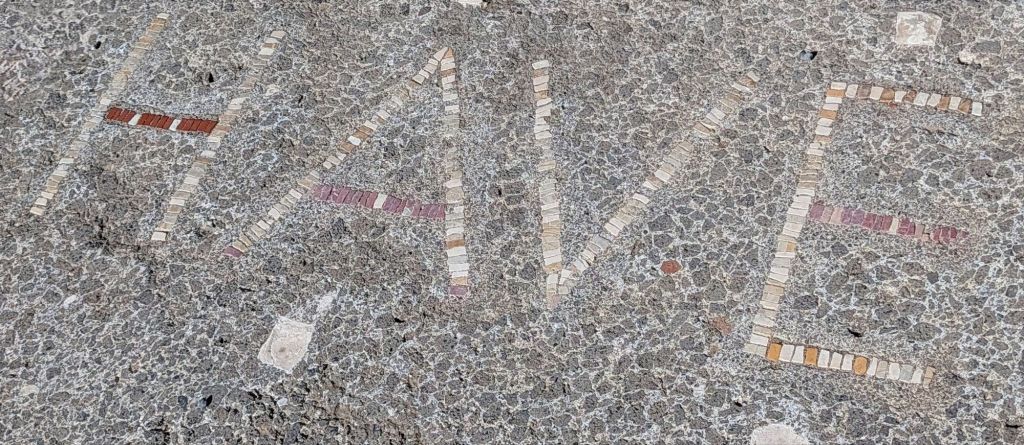
Some Roman homes had “Have” spelled out in front of their homes.
This word is an ancient greeting that means “hello,” “welcome,” or “farewell” (derived from the Latin verb avēre, meaning ‘to be well” or “to hail”).
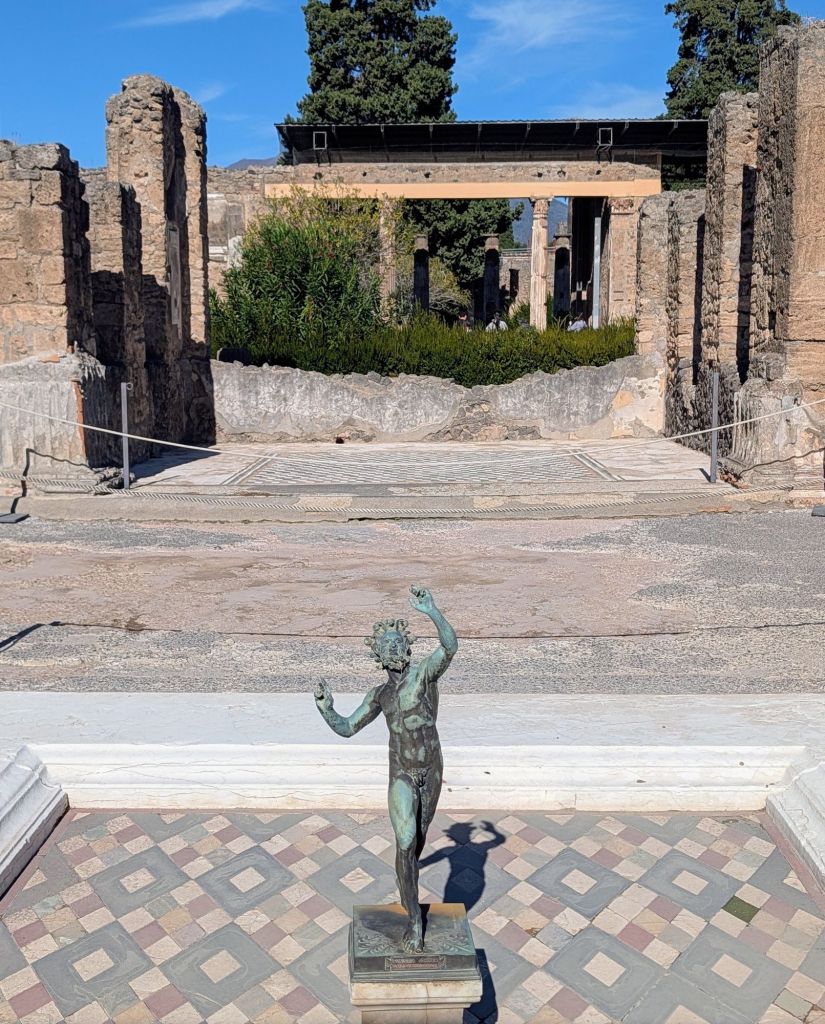
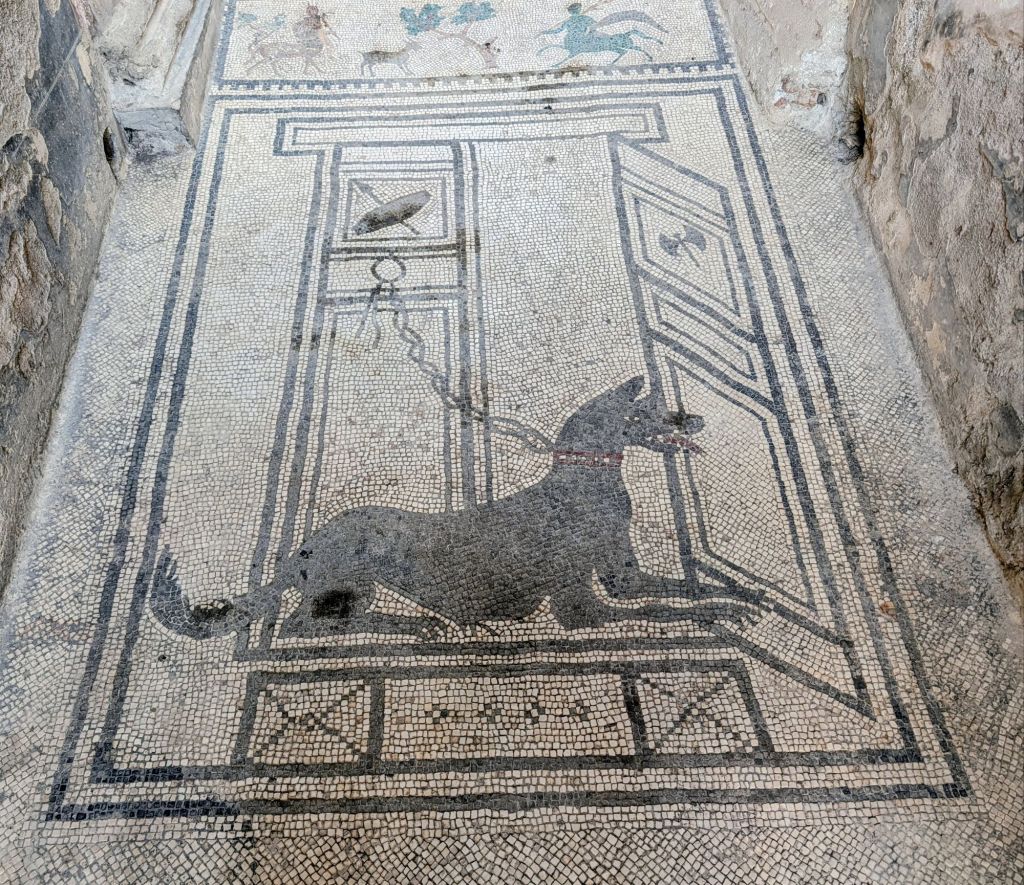
Roman homes also had “Beware of Dog” mosaics in their entry way to ward away thieves.
Roman Baths
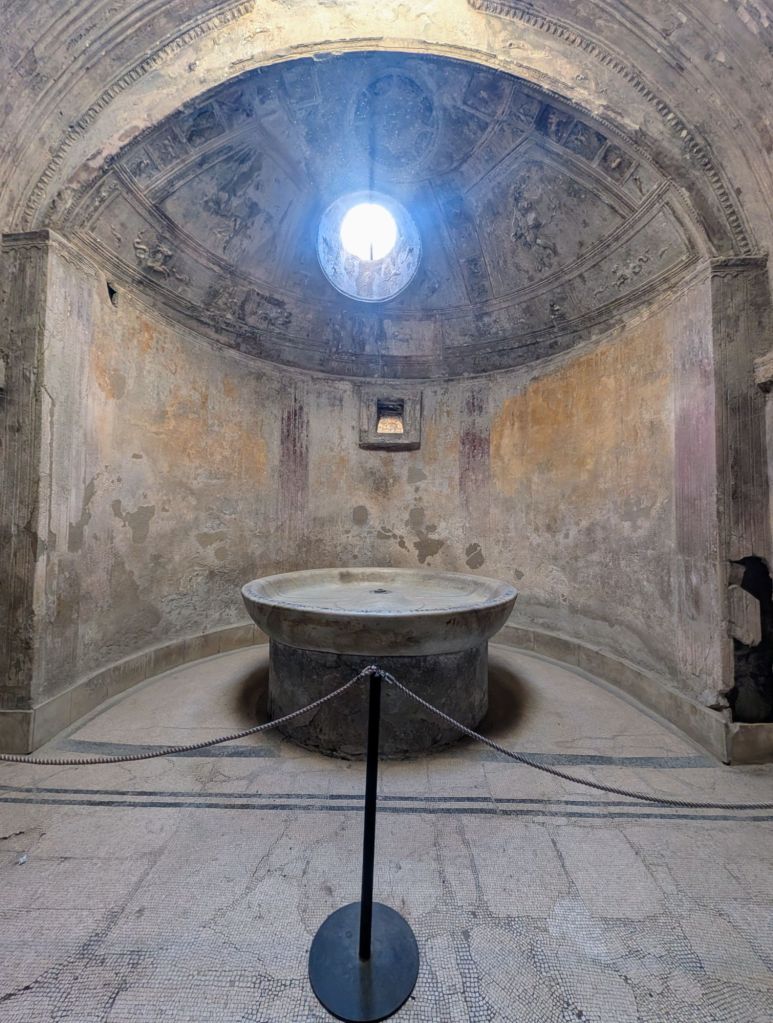
Public baths were essential in everyday life in Pompeii. Baths were not simply places for washing; but, they were important social spaces where people could meet, exercise, relax, & conduct business.
A typical Roman bath complex included a sequence of rooms maintained at different temperatures.
Visitors could pass through a changing room before entering the frigidarium for cold bathing, then the tepidarium for a warmer environment, & the caldarium for hot baths.
Furnaces heated air that circulated beneath raised floors and, in more developed installations, through cavities within the walls.
This system known as the hypocaust allowed rooms & pools to be heated efficiently.
The bath complex had separate facilities for men & women and were elaborately decorated.
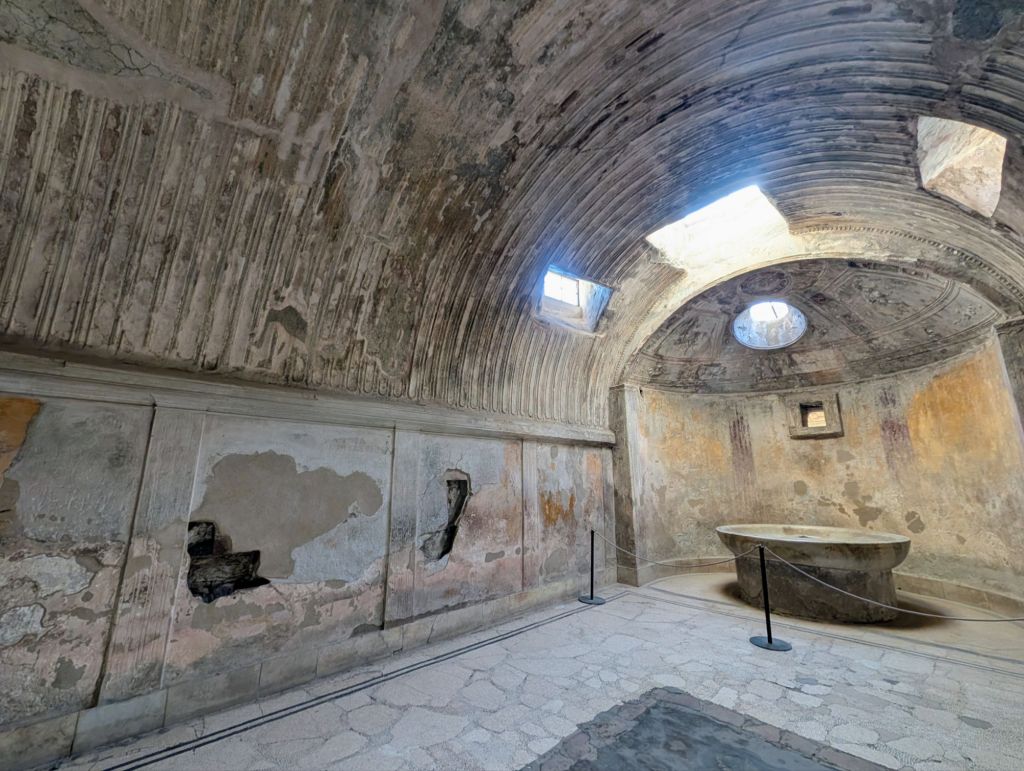
The Forum Baths were constructed soon after Pompeii became a Roman colony in 80 BC & had separate sections for men & women.
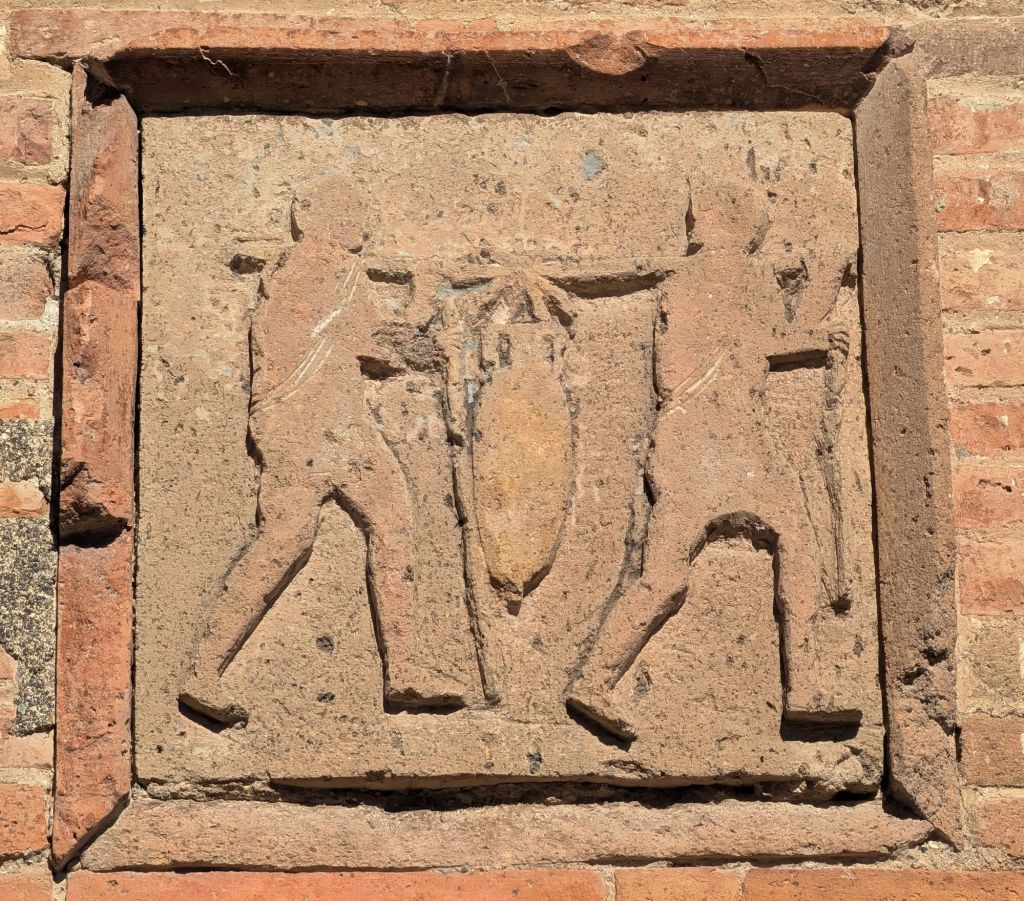
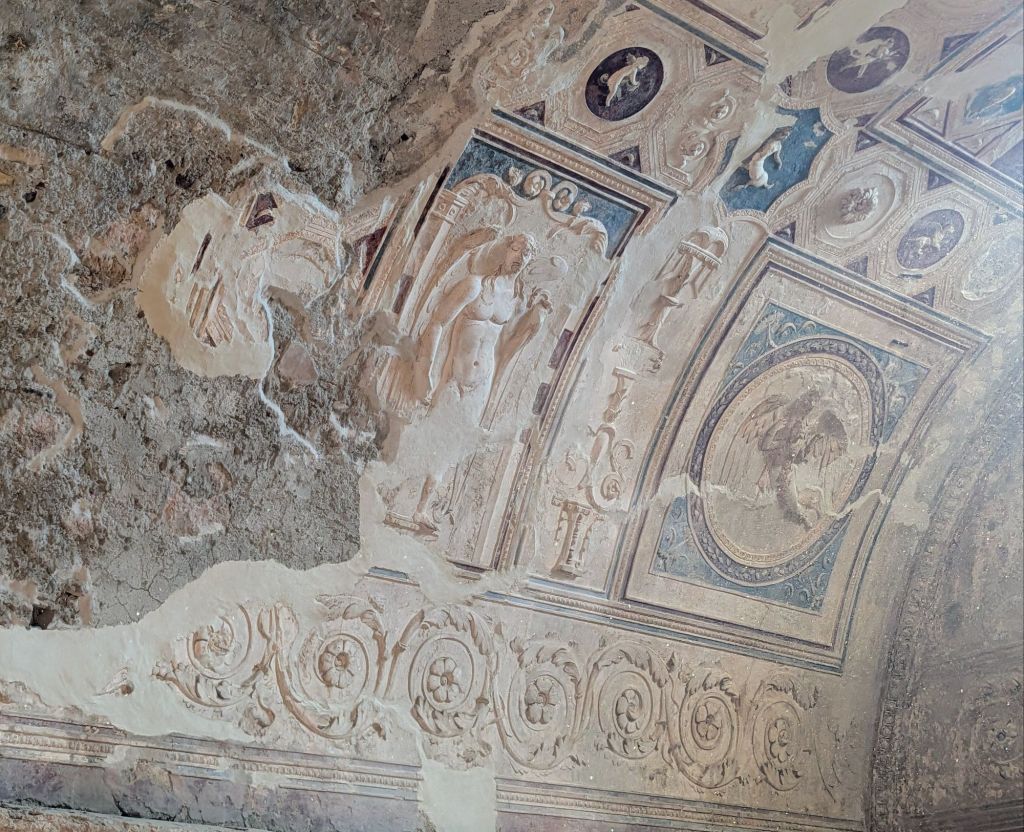
Its niches for clothing were framed by terracotta telamons (colossal male figures used as columns) & the vaulted surfaces carried elaborate stucco decoration.
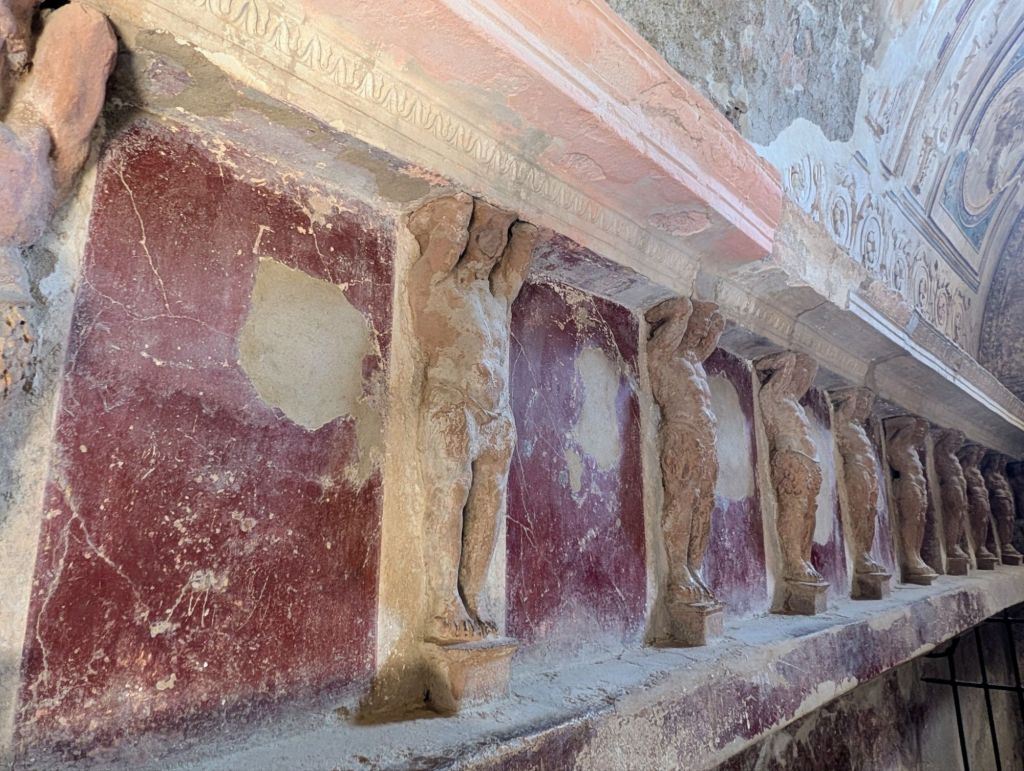
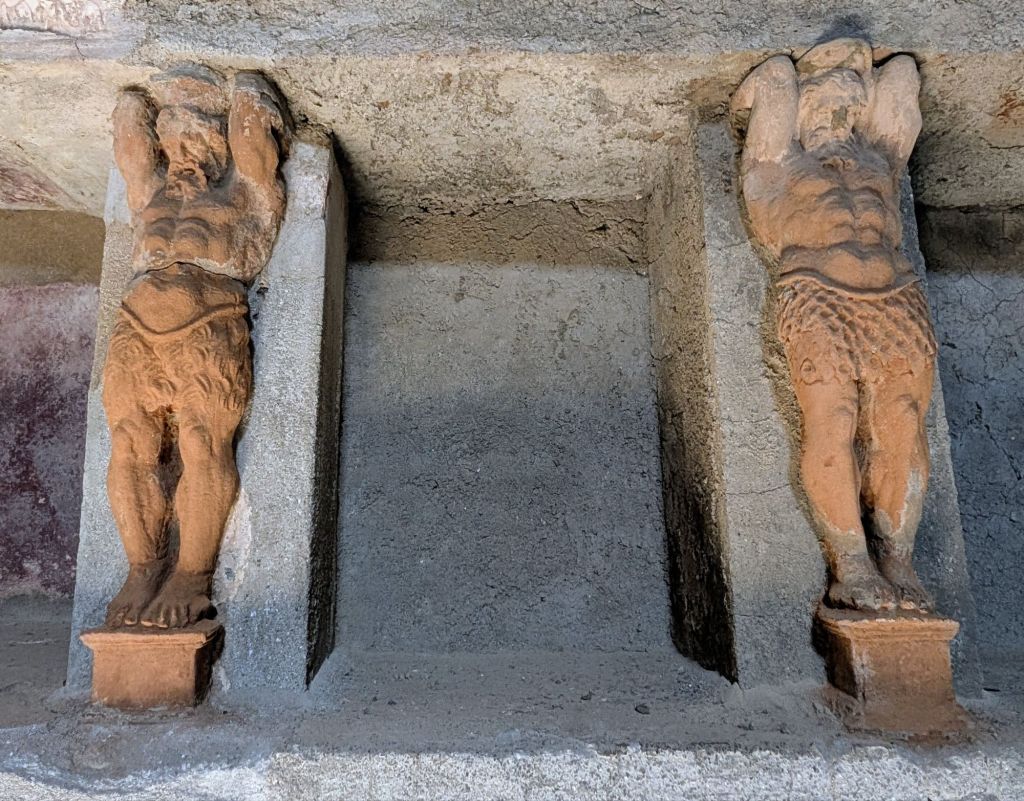
The vaulted ceilings were highly decorated & also ribbed to allow condensation to run down to the floor instead of cold water dripping onto bathers’ heads disturbing their session.
Political Ads
Political elections were held annually in Pompeii.
Electoral signs were written in prominent places such as along main roads, influential citizens’ homes, & campaign HQ.
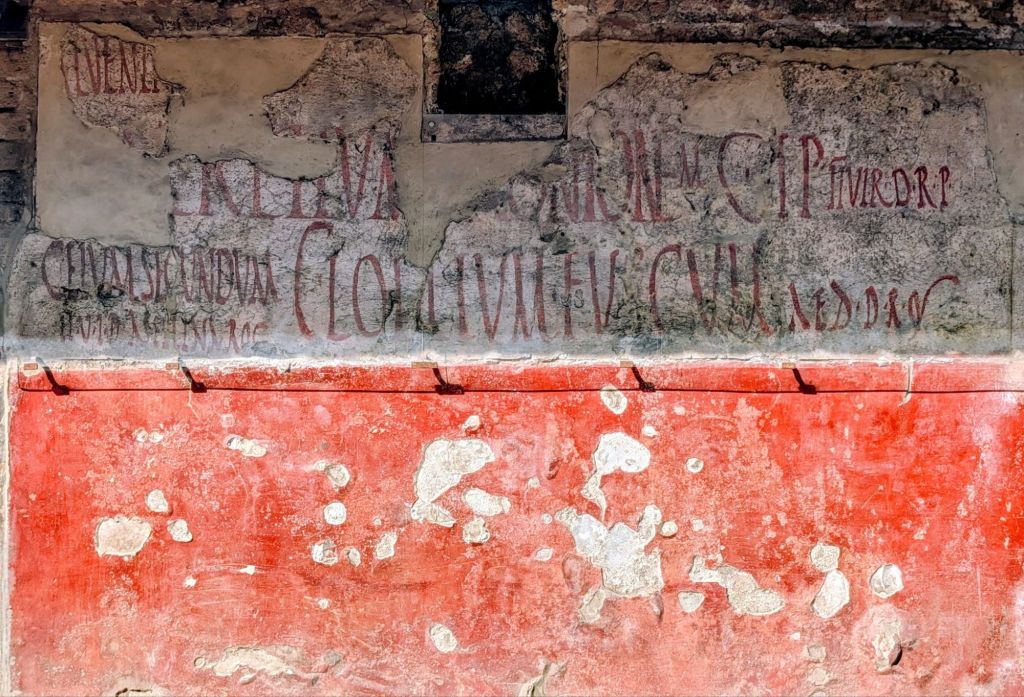
The Duoviro was an official two-man board who were elected to handle specific administrative, judicial, or religious duties to ensure that power was shared equally rather than held by a single individual.
Thermopolia of Pompeii
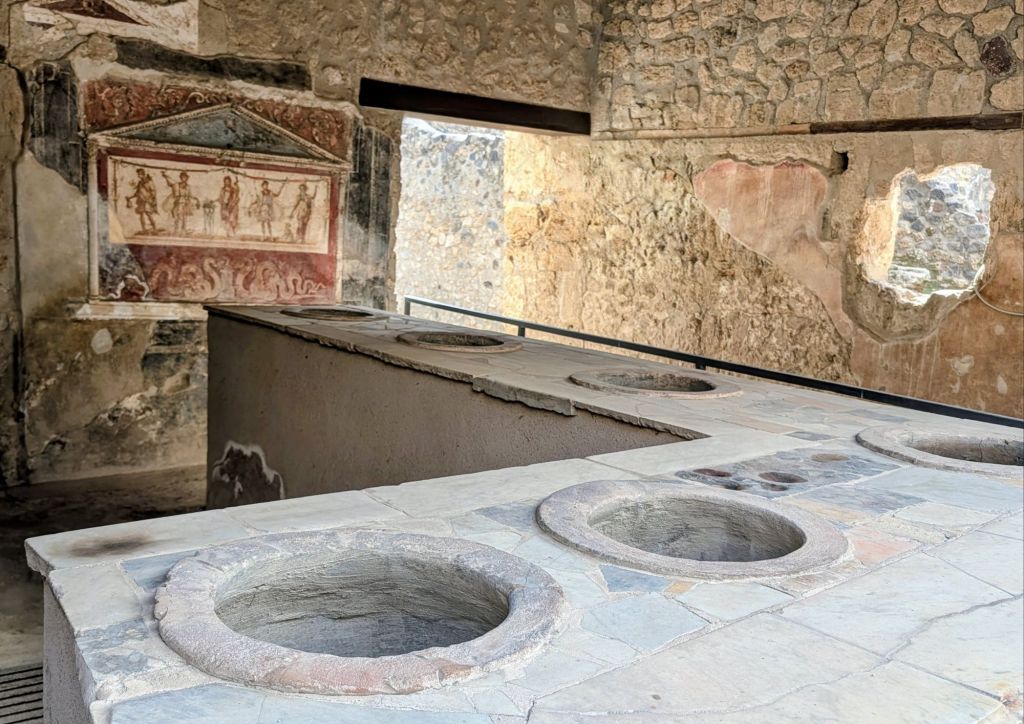
Thermopolium literally translates as a “hot drinks counter” which meany they were a Roman Empire snack bar.
Before disaster struck, Pompeii had around 150 different thermopolia which were bar-like restaurants where people could grab a quick meal.
The remnants from roughly 80 ea. thermopolia are scattered throughout the site.
There were so many thermopolia in the city that most residents didn’t cook for themselves & going out to eat was the predominant food activity for the poor, or anyone who could not afford their own private kitchen.
Only 40% of lower-class homes & 66% of middle-class ones in the Vesuvian area had a hearth with which to cook meaning the average working-class citizens relied on these establishments for sustenance.
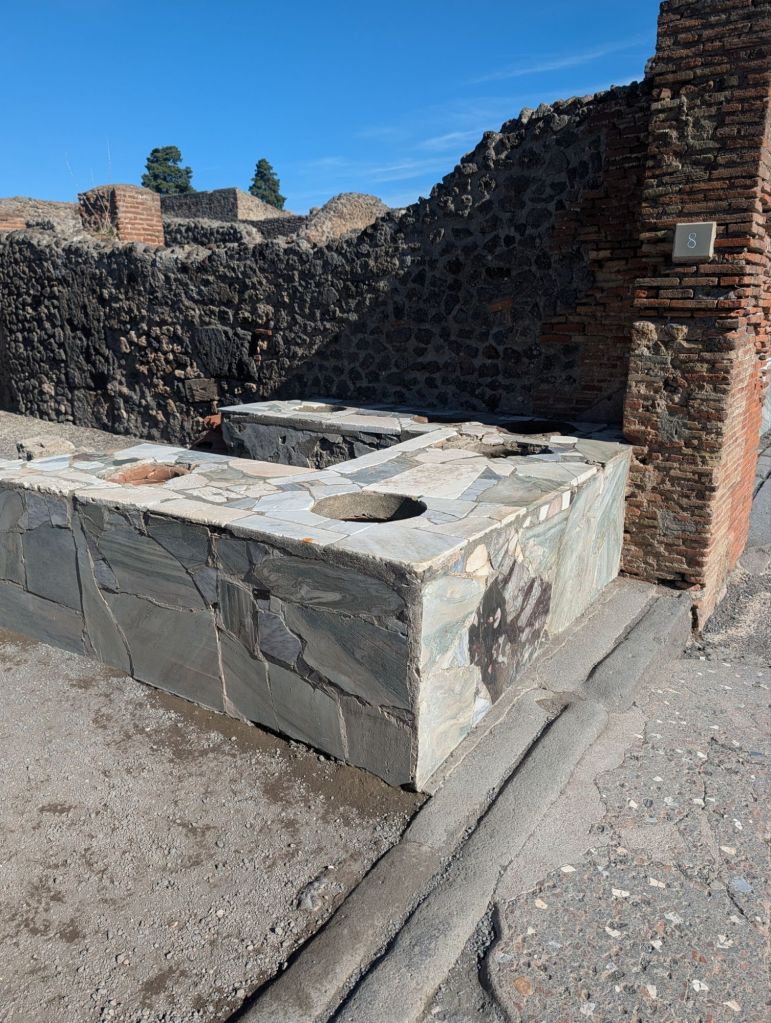
This groove was created for the thermodorium owner to close the sliding door to the shop.
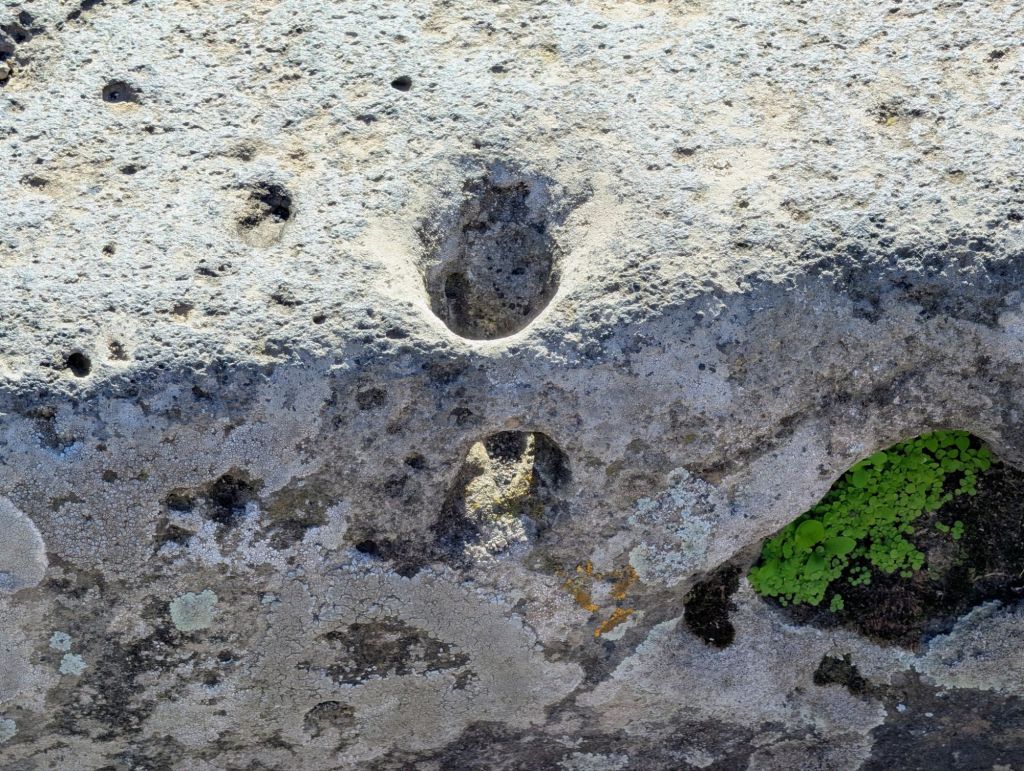
Thermopolia show how ordinary people would have fueled up on simple meals of breads, cheeses, vegetables, & wine.
The Pompeii Brothels
The ancient Lupanar (brothel) in Pompeii still stands with its walls still adorned with erotic images.
The frescos depict graphically sexual scenes some with more artistry than others.
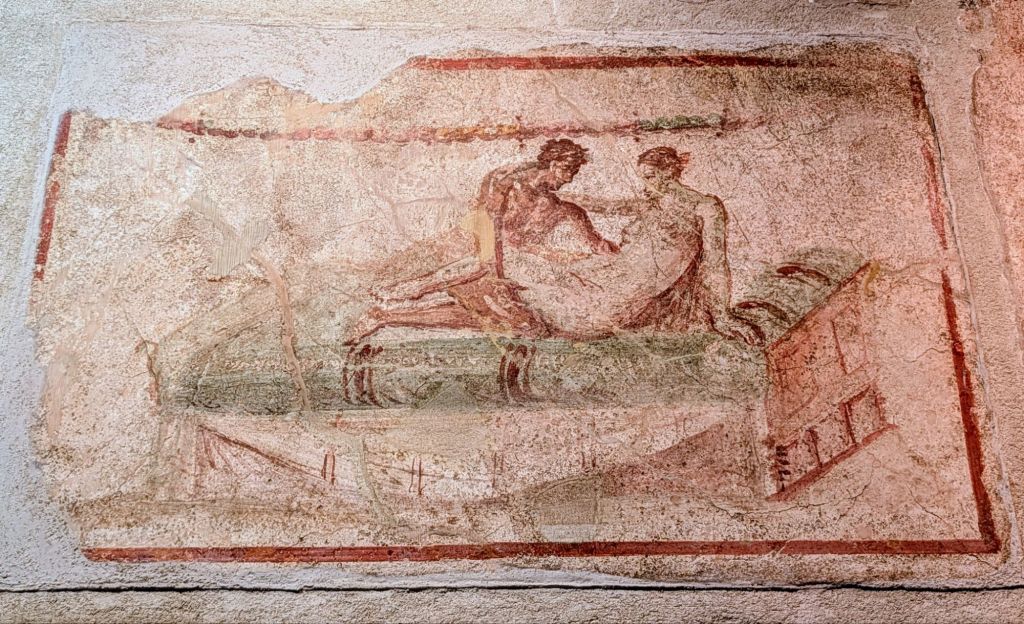
The Lupanar got its name because prostitutes would howl like a wolf to be heard to advertise their availability.
The Latin word for wolf is “Lupus” which is masculine. A she-wolf is a “Lupa”, so the “Lupanar” is where the she-wolves were.
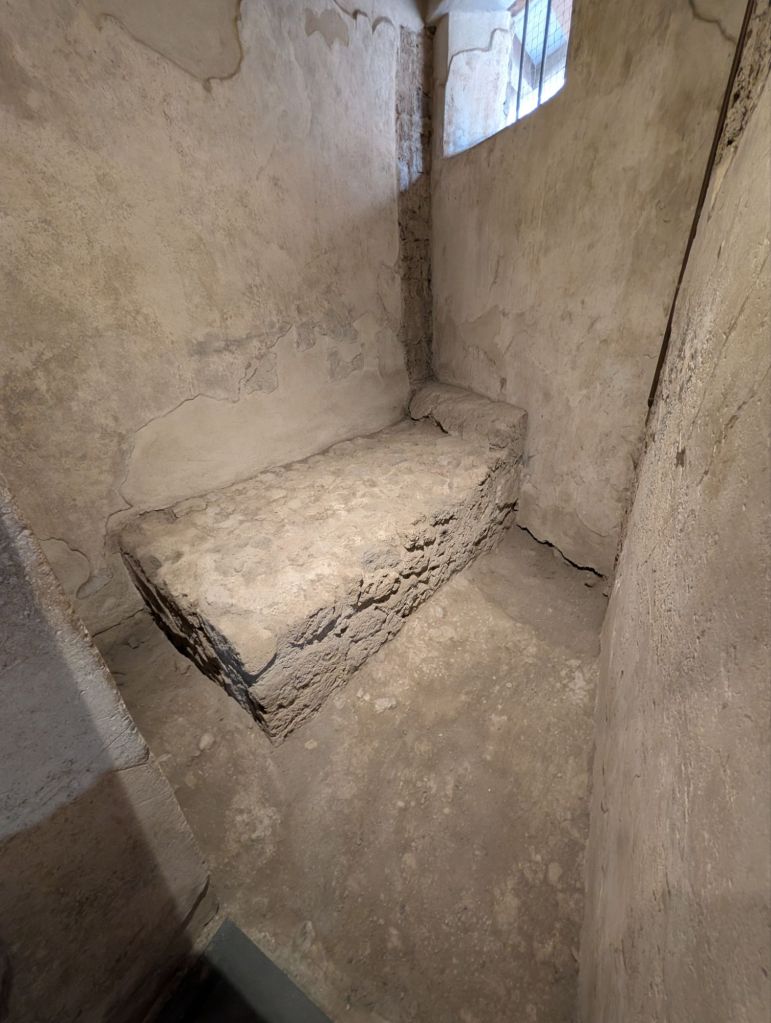
Although most erotic art was taken from Pompeii & placed in private collections or in the extraordinary collection known as the Gabinetto Segreto (Secret Cabinet) in Naples, the frescos in the Lupanar still adorn the walls above stone beds where Pompeii’s prostitutes Pompeii plied their trade.
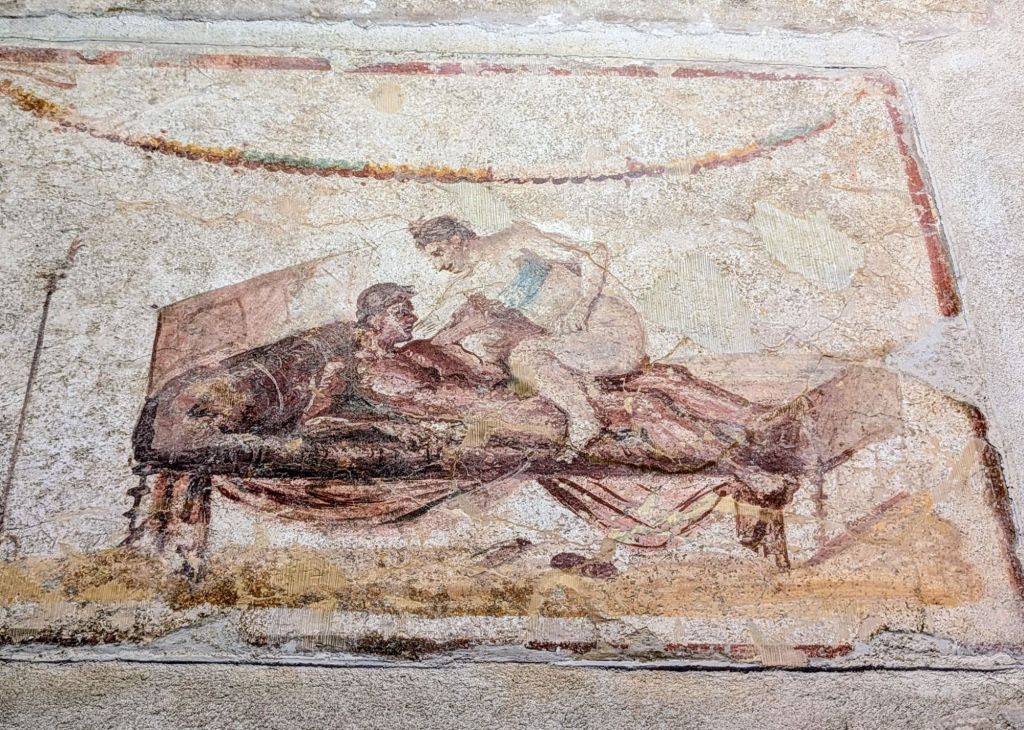
It is unclear whether the images were intended to act specifically as a sort of sexual menu enumerating the pleasures available, or if they were merely thematically appropriate decorations.
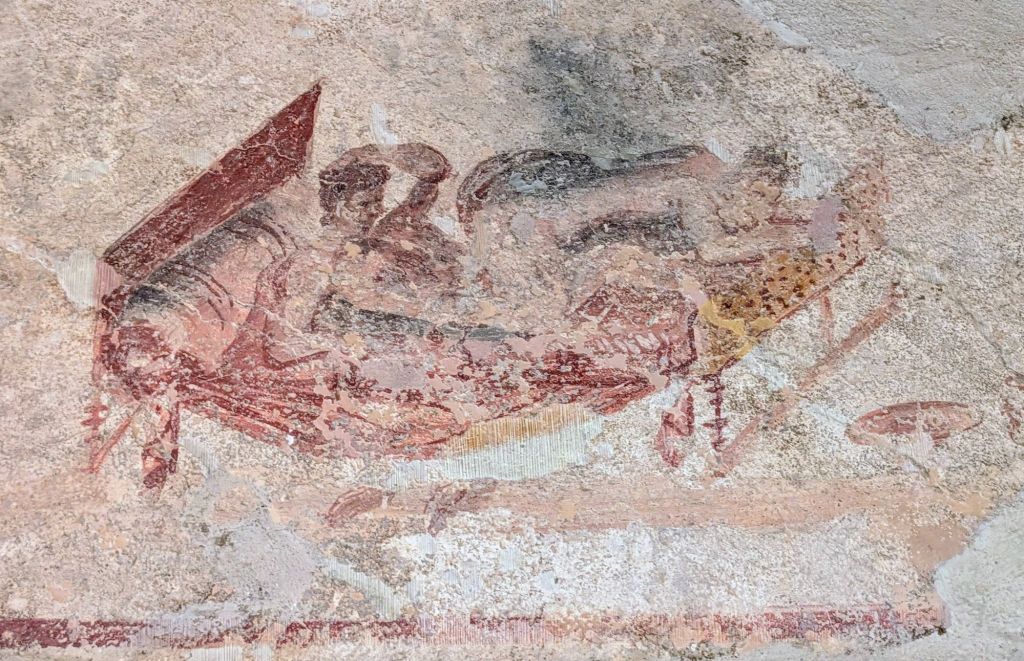
The frescos depict graphically sexual scenes some with more artistry than others.
This is a small room with a stone bed to serve customers.
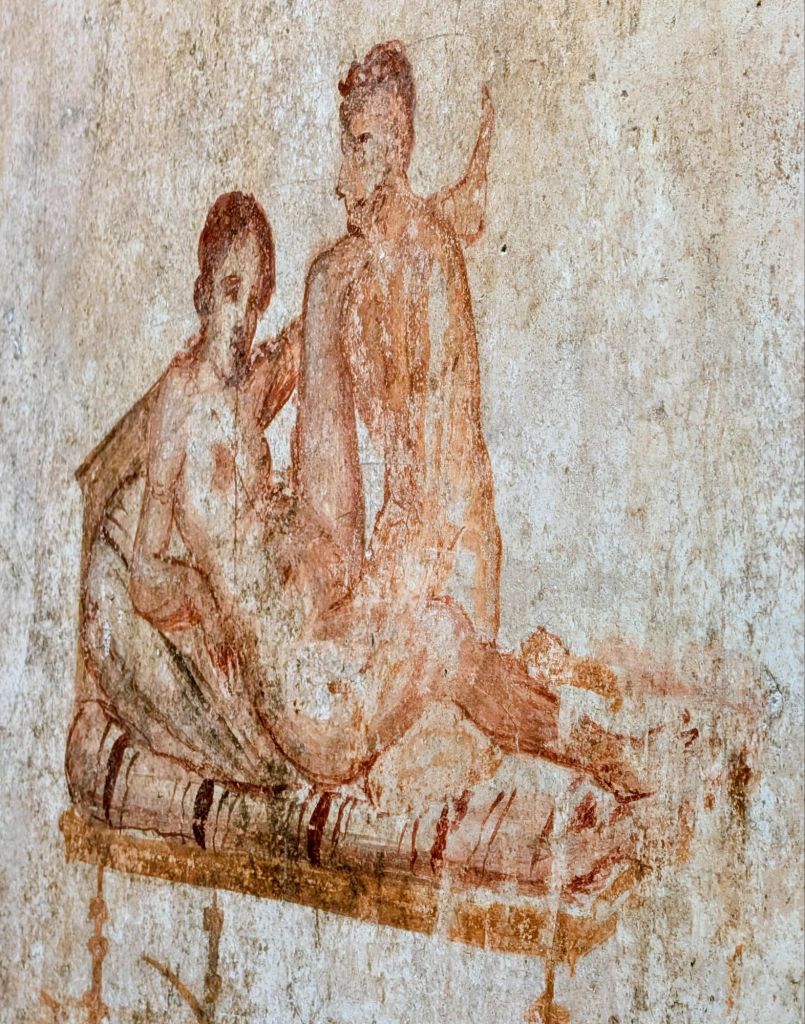
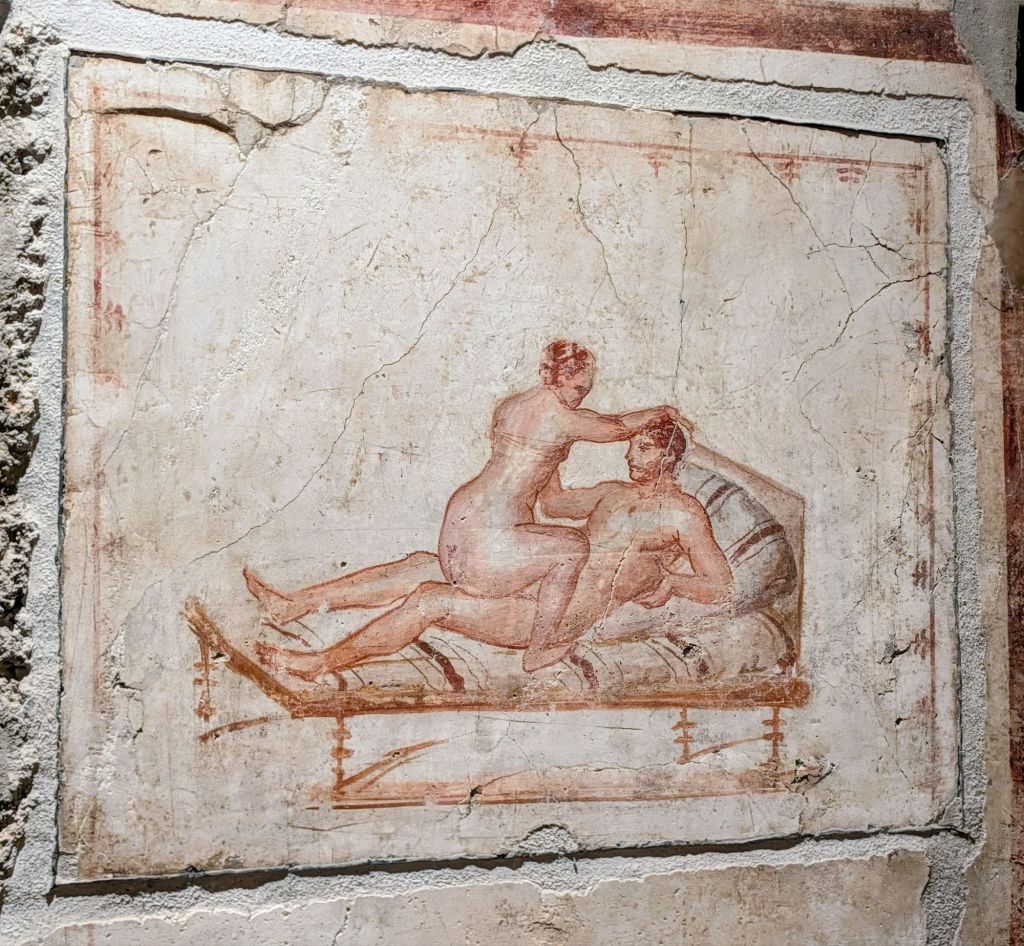
Other erotic art at Pompeii remains intact at the House of the Vettii & other locales.
Here are some graphic images from the House of the Vettii
Pompeii’s Stone Phalluses
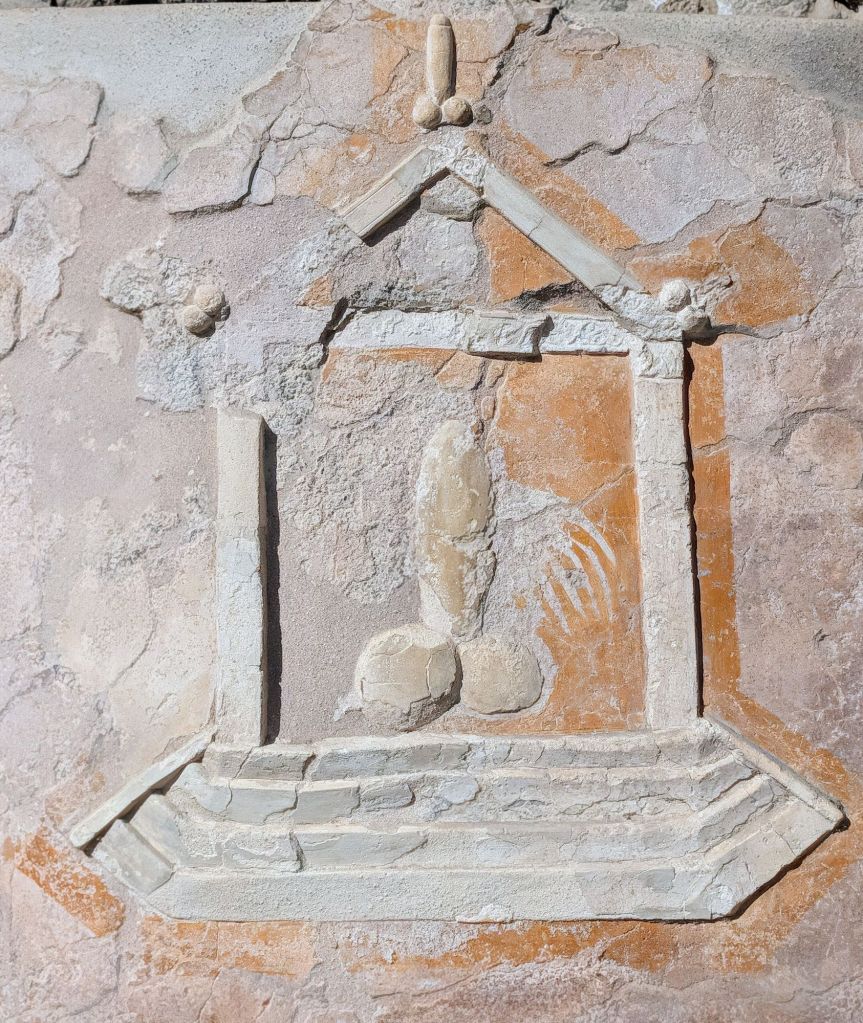
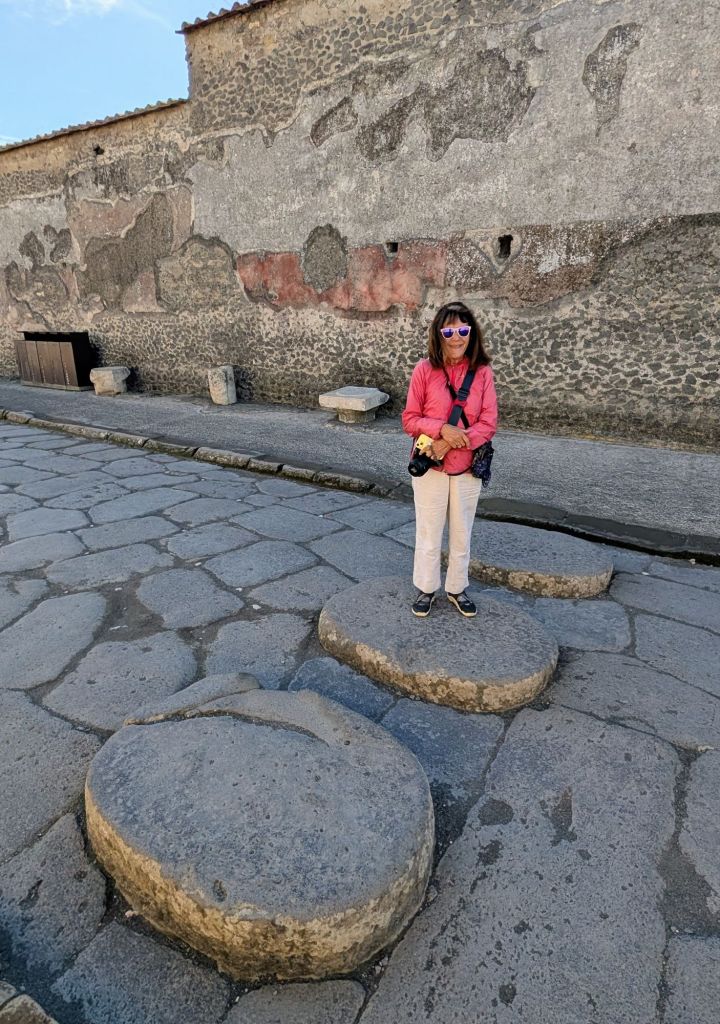
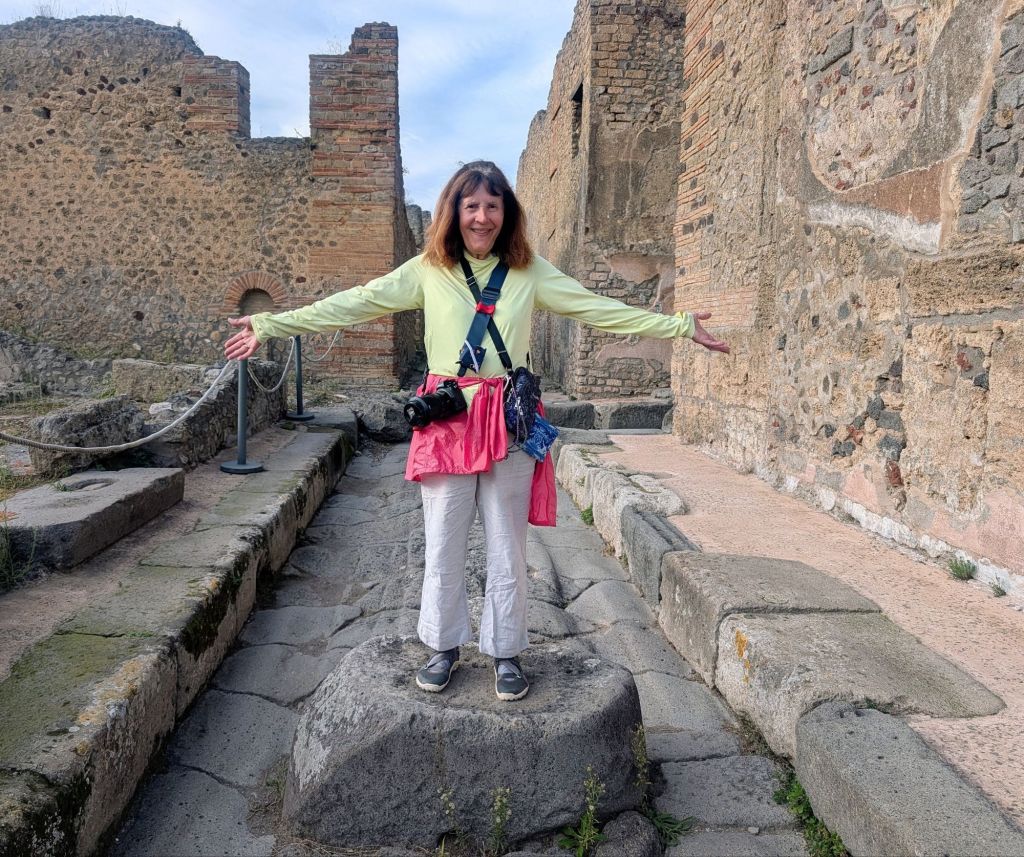
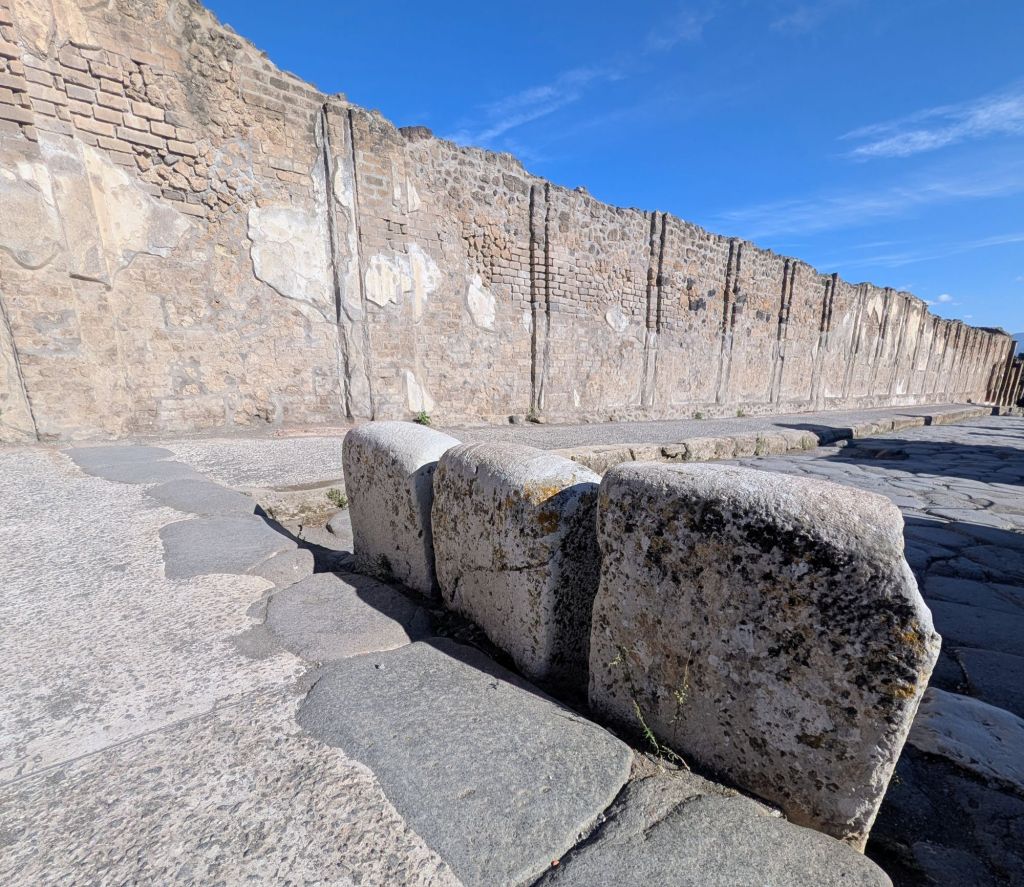
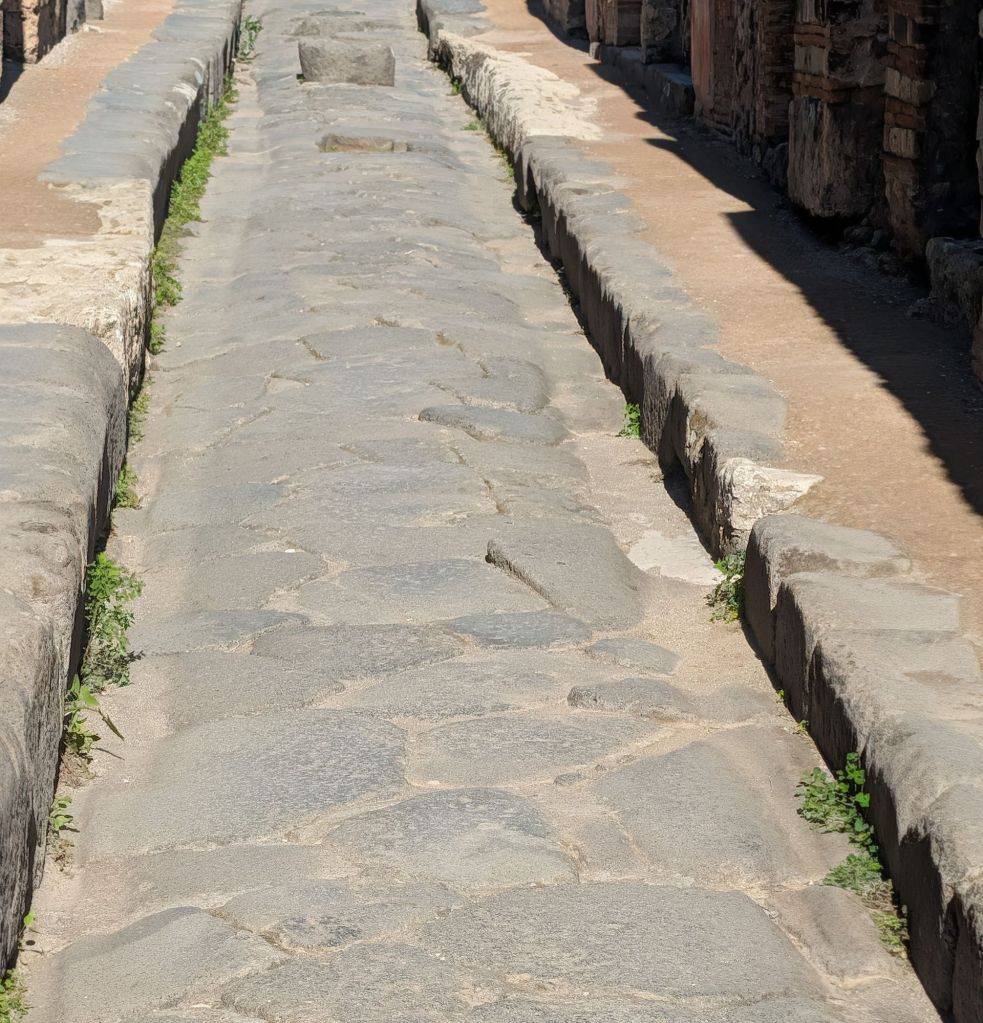
Streets, vendor stalls, & pedestrian zones are found all over Pompeii just like in a modern city.
However, unlike modern cities, Pompeii’s walls are peppered with stone penises.
Phalluses are everywhere within the city: hiding on the roads, adorning the walls, & even hanging above doorways and bread ovens.
Tour guides often tell visitors that Pompeii’s stone penises are among the earliest known advertising.
According to their stories, the phalluses serve as arrows & if you follow the arrows, you’ll wind up at one of the city’s many brothels.
Although tourists eager to learn about the city’s seedy history gobble up this story, that version about Pompeii’s phalluses is most likely false.
According to many scholars, the phalluses were symbols, not advertisements for sex.
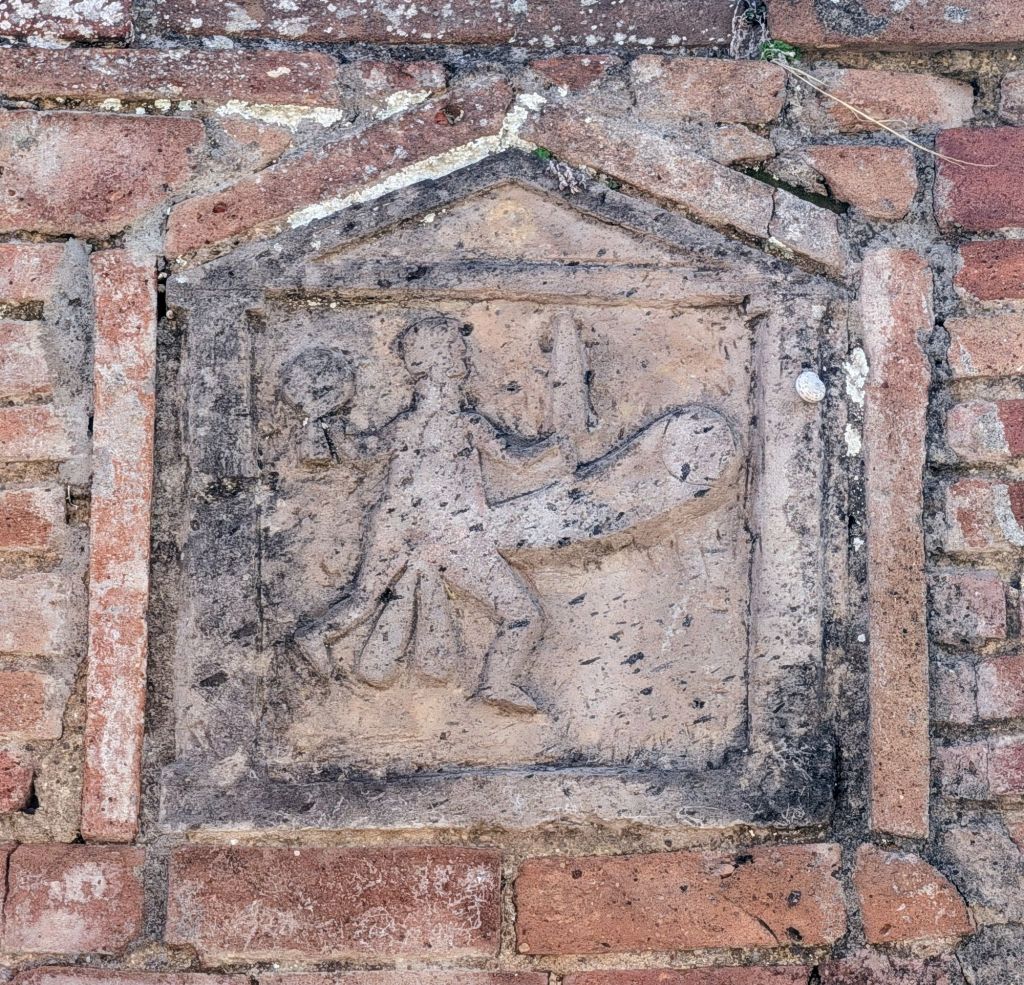
Some theories maintain that the penises were actually good luck signs or symbols meant to ward off the ‘Evil Eye’ which is why penises are often found outside homes- not just brothels.
Some historians propose that the phalluses simply reflect a masculine society with a penchant for erotic art.

