
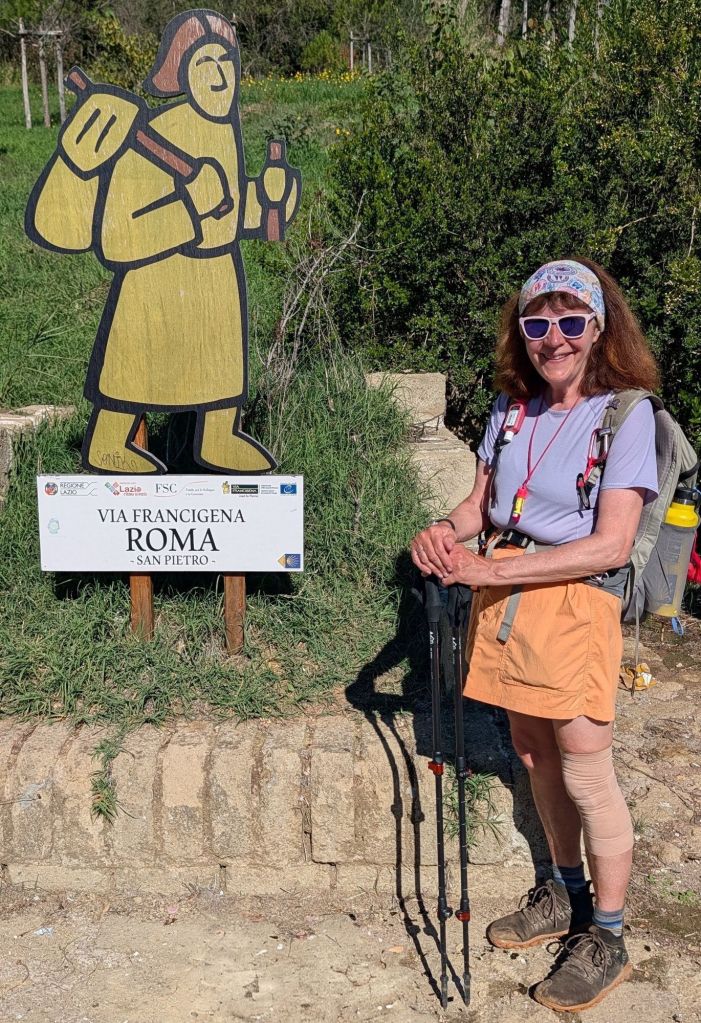
11.5 Miles; 5.15 Hours on the trail (Cumulative & Final Totals: 283.1 Miles; 137.5 Hours on the trail)
Today was our last hike from the suburbs into Rome’s center at St. Peter’s Square in Vatican City.
We started walking on the sidewalks along the city streets.
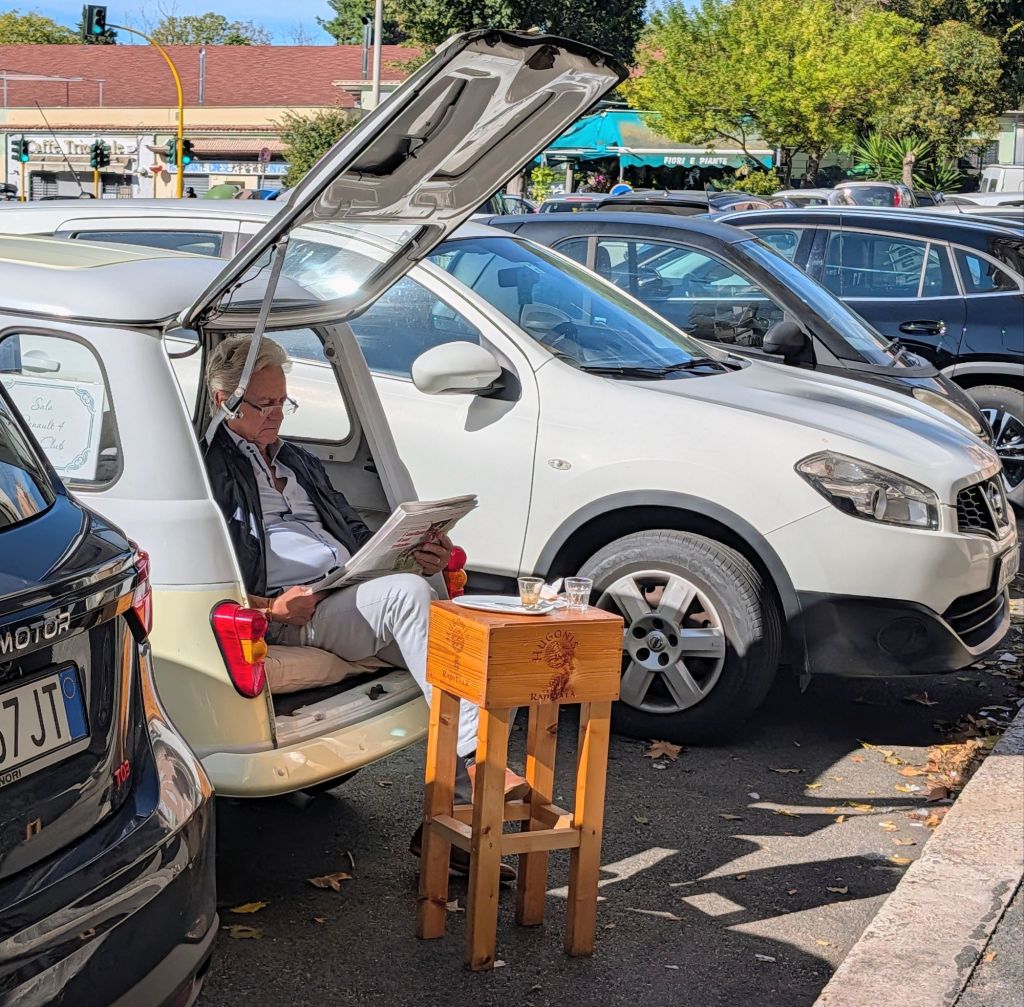
We saw this gentleman enjoying the sweet life
sitting in his old car, drinking coffee while reading the newspaper, & using the table from a nearby bar for his own purpose.
Leaving the streets, we walked through a beautiful nature reserve where we saw several dog walkers.
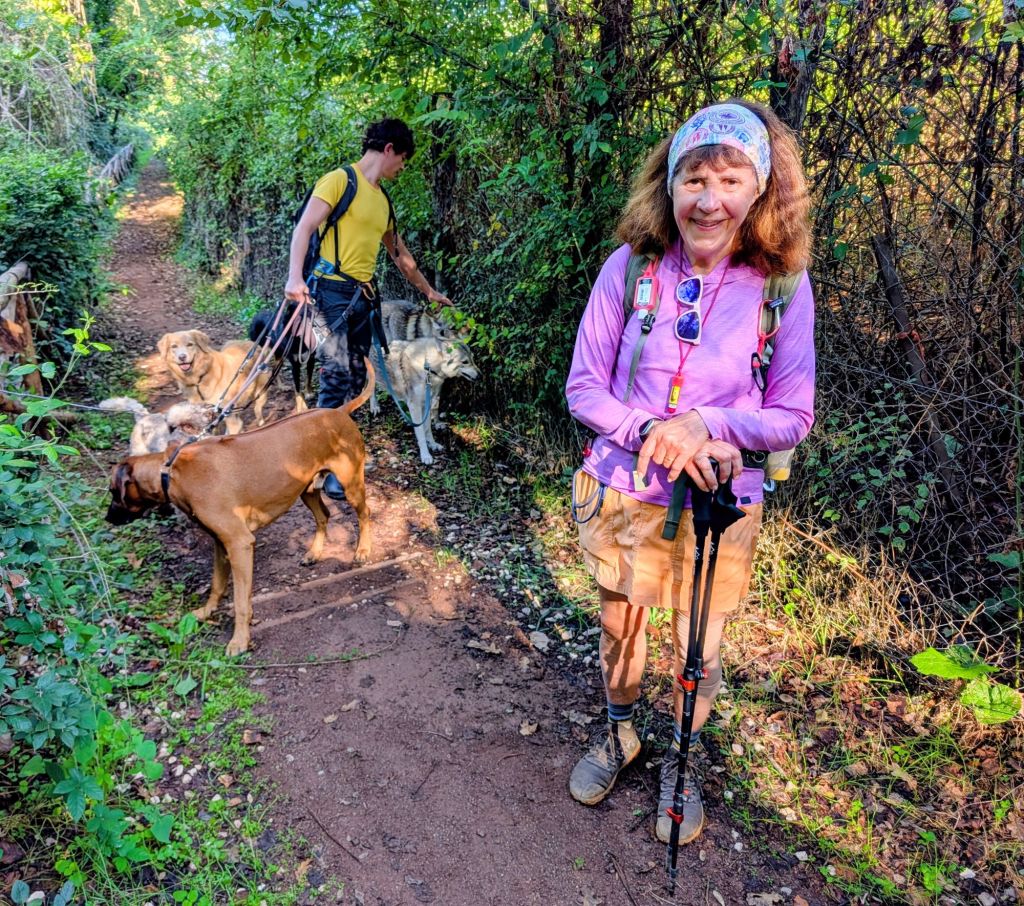
Then, we walked out of the nature reserve back onto the city sidewalks.
Along the way, we saw our trail buddies Francois & Sybil from Belgium.
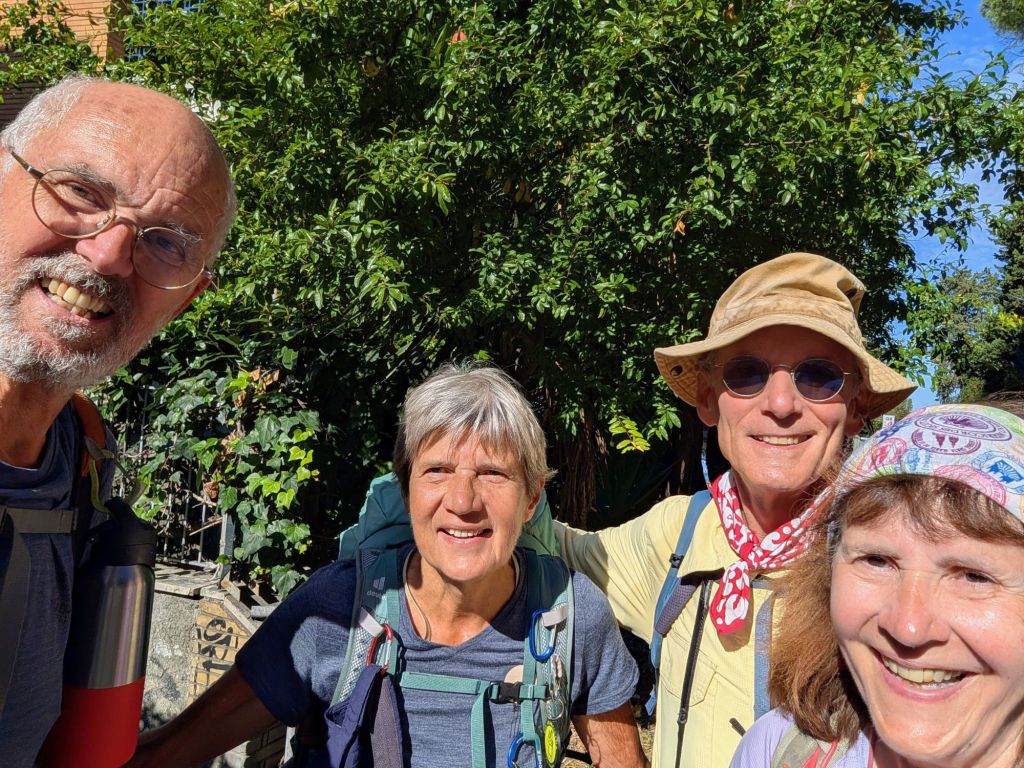
They started at the French border with Switzerland carrying all their gear.
They are both 73 years old.
They are meeting their children & grandchildren in Rome.
We left the streets to climb Mons Gaudii or Monte della Gioia ( Mountain of Joy) which is a huge city park.
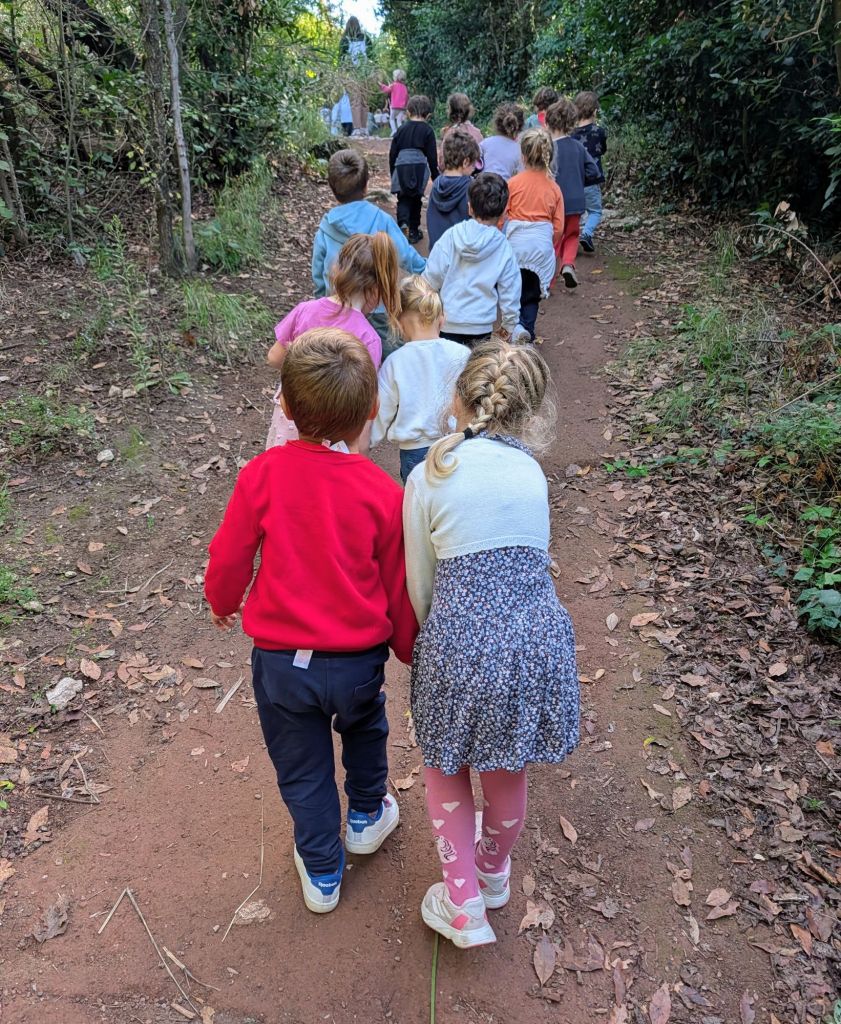
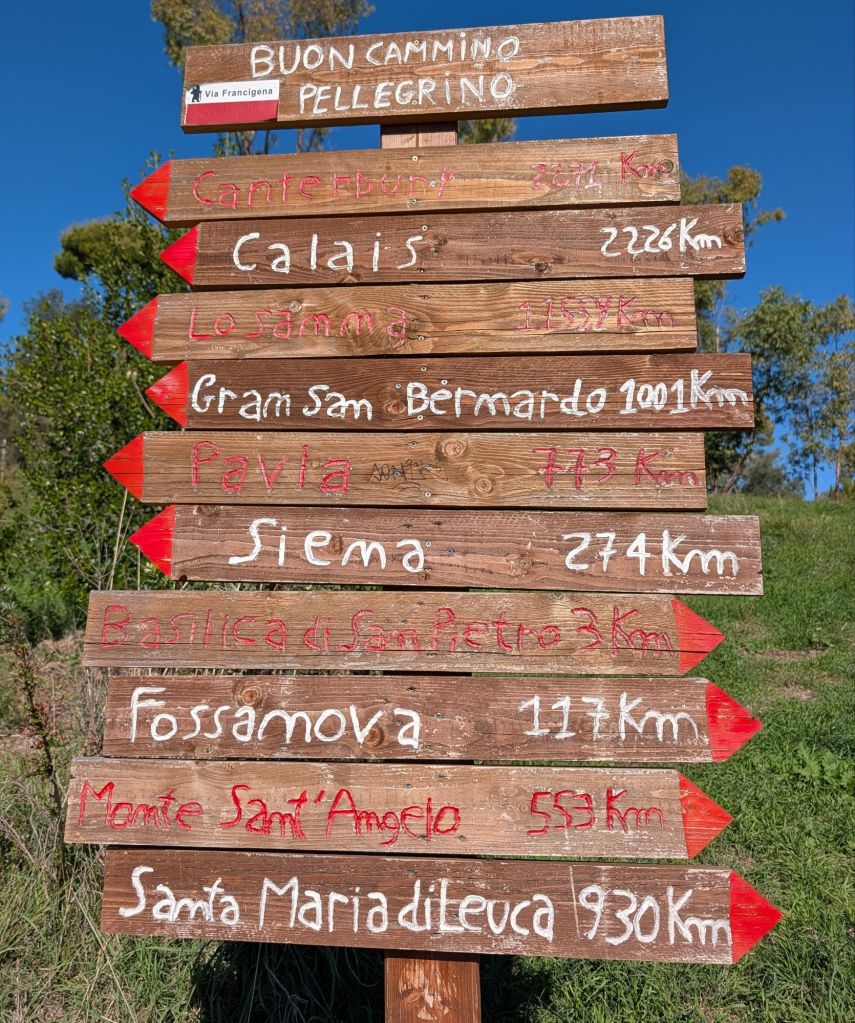
Monte della Gioia is a small mountain from which there are amazing views.
Also, it is the place from where for the first time, pilgrims on the Via Francigena can see the spectacular dome on San Pietro’s Basilica (St Peter’s Church) in the Vatican.
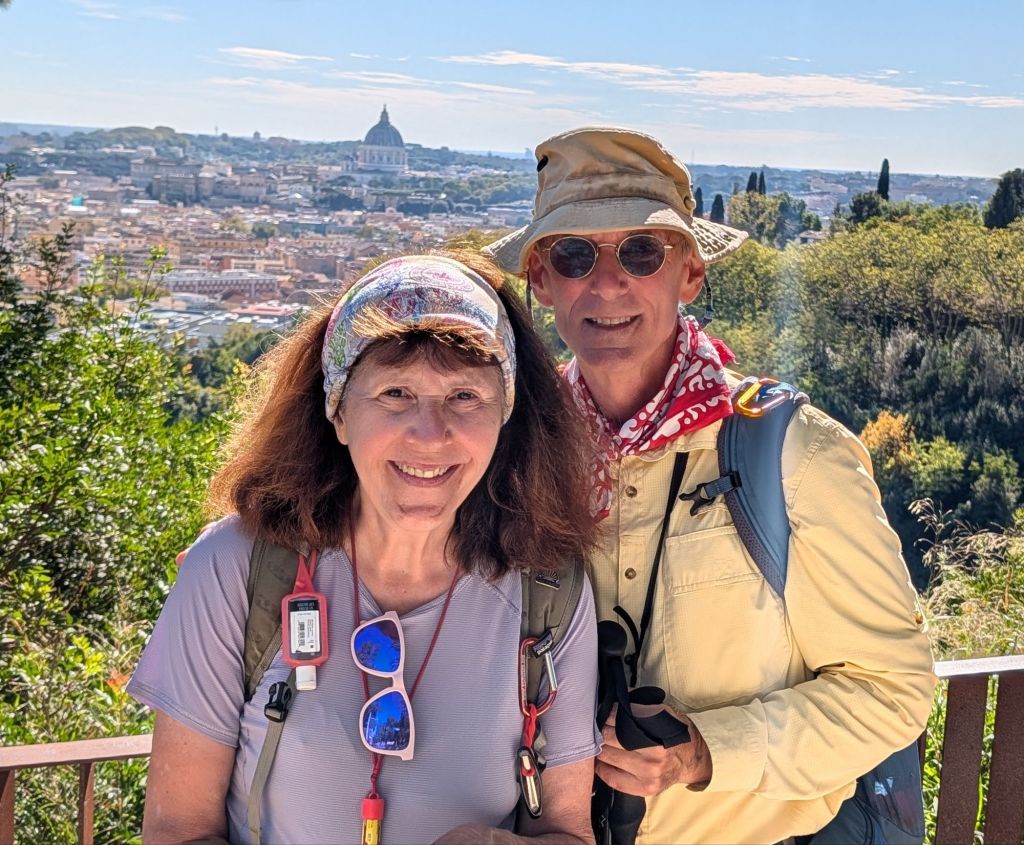
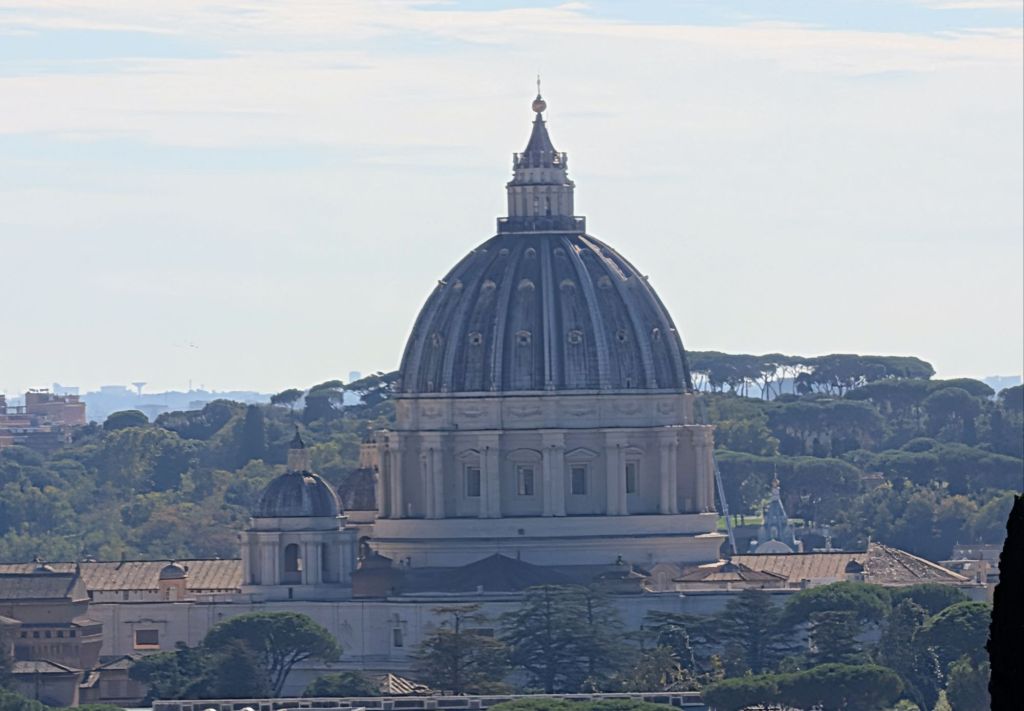
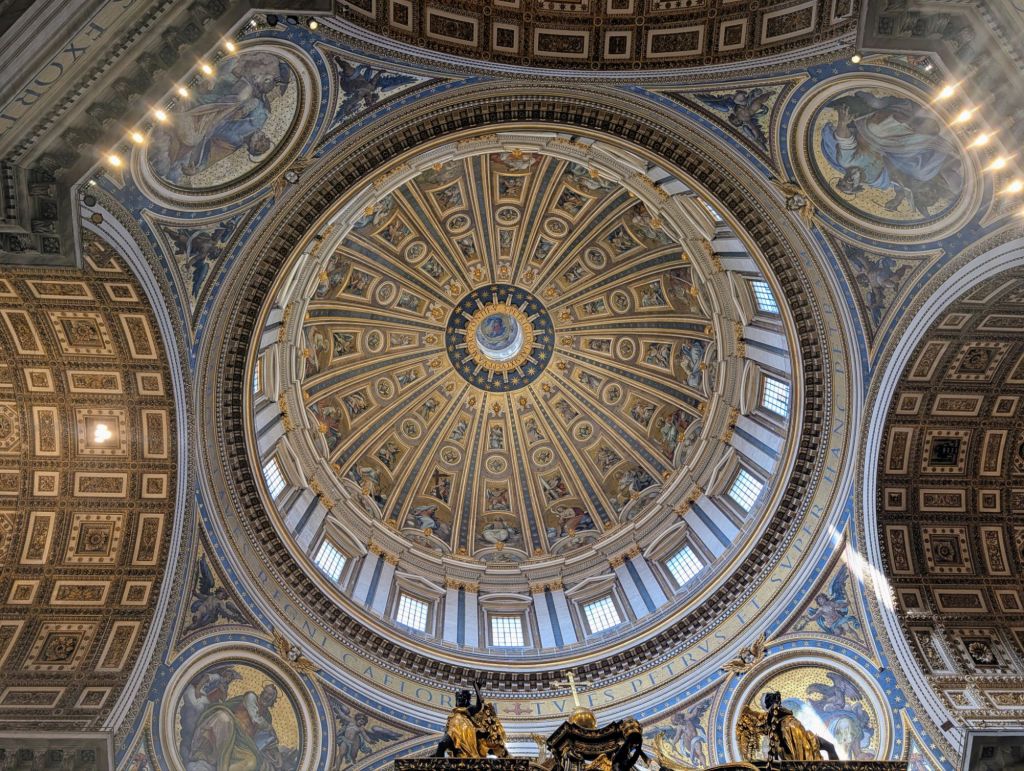
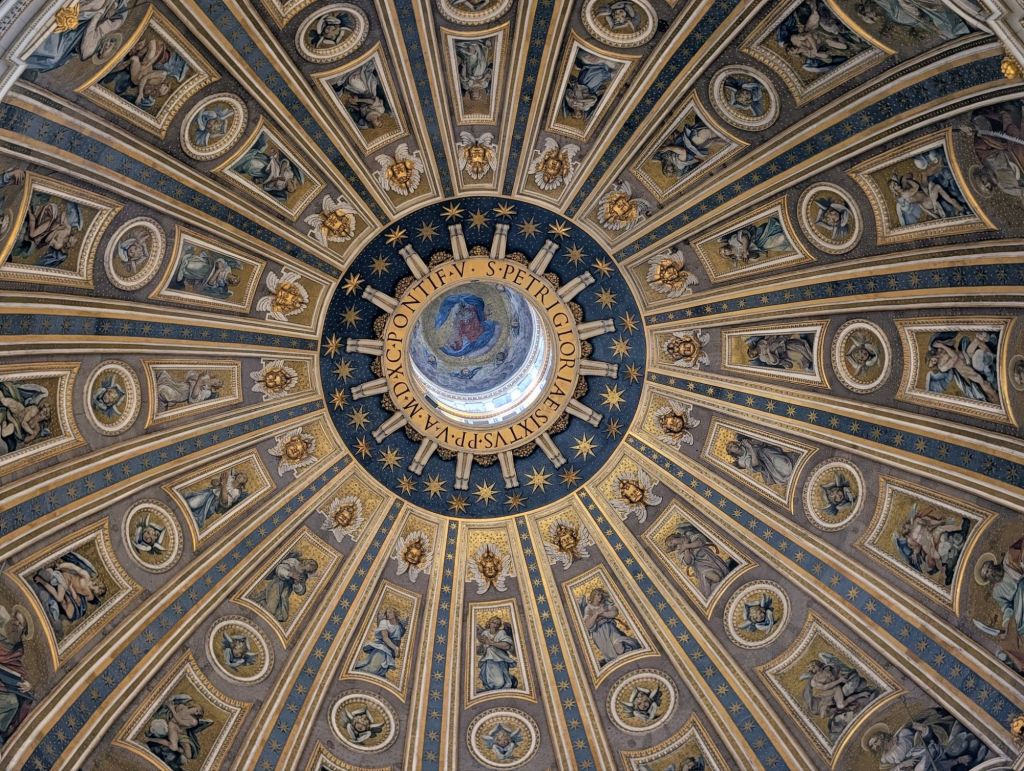
The dome on Saint Peter’s Basilica in Vatican City is the world’s tallest dome approximately 136.6 meters (448 feet) in height.
It was designed by Michelangelo & completed in 1588-89.
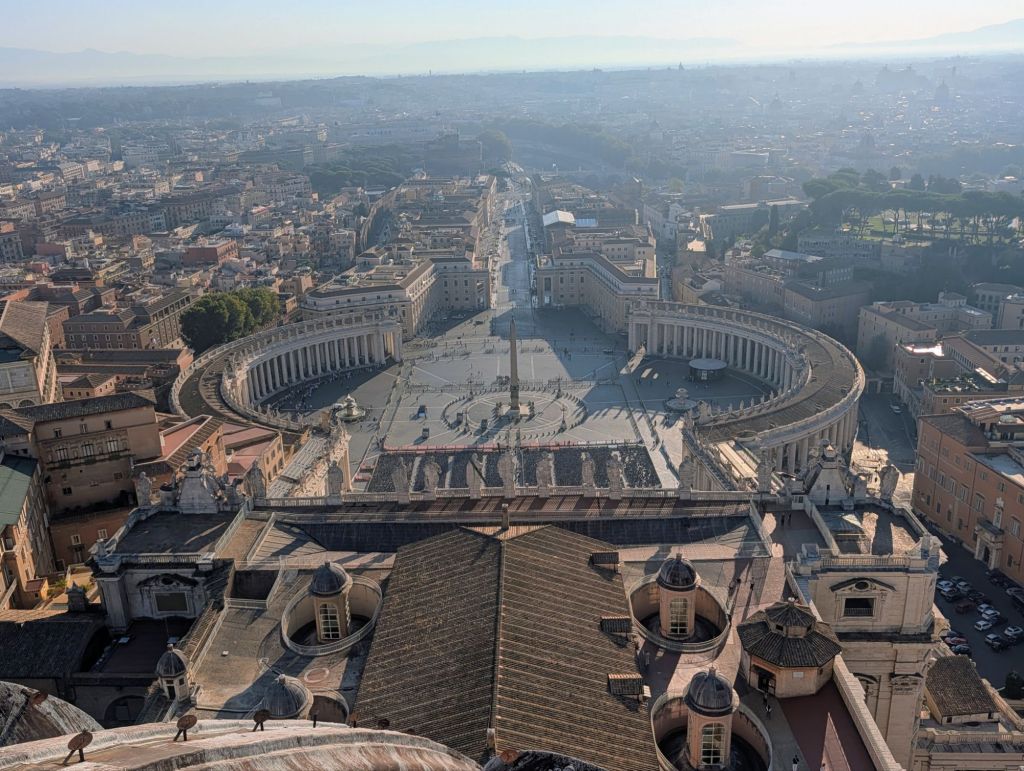
This mountain is called the Mountain of Joy because pilgrims would cry out in exultation seeing the church for the first time & knowing they were taking their last steps to complete their pilgrimage.
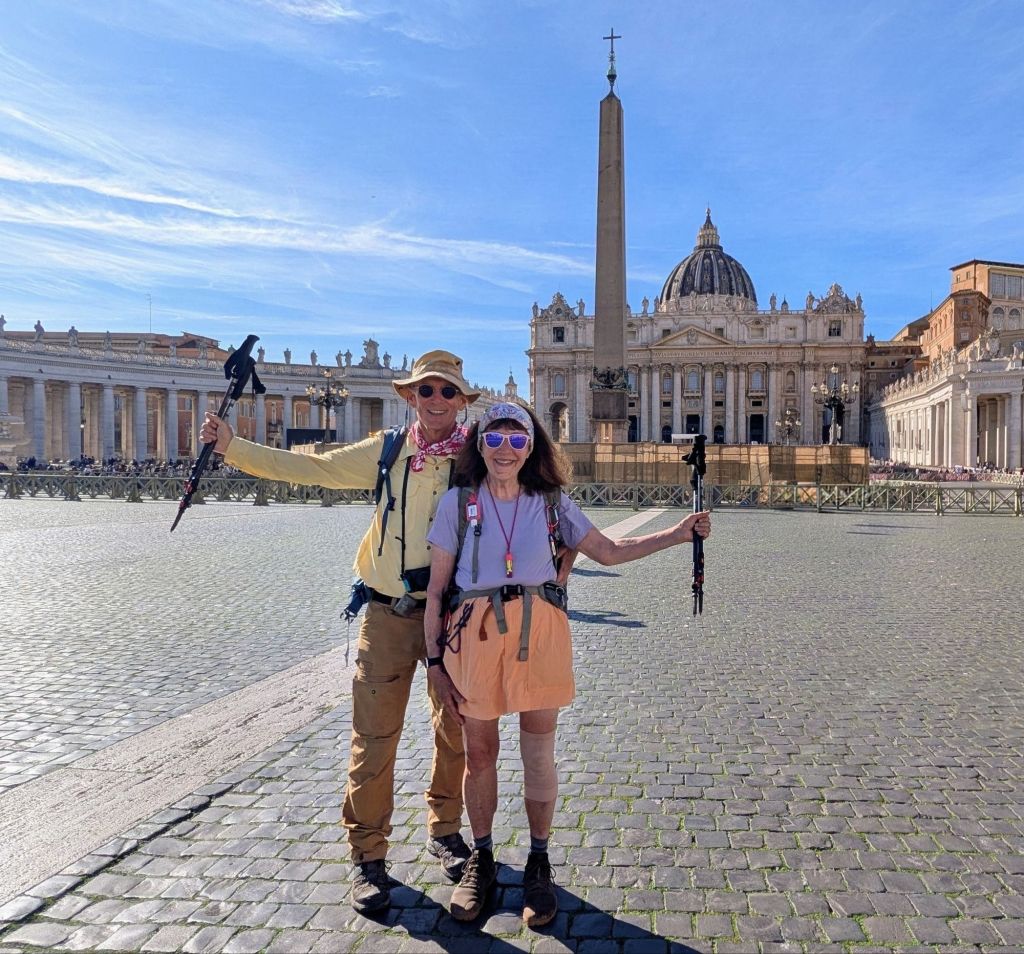
After arriving & getting our pilgrim stamp at Saint Peter’s Square, we got the privilege to jump the line to enter Saint Peter’s Basilica.
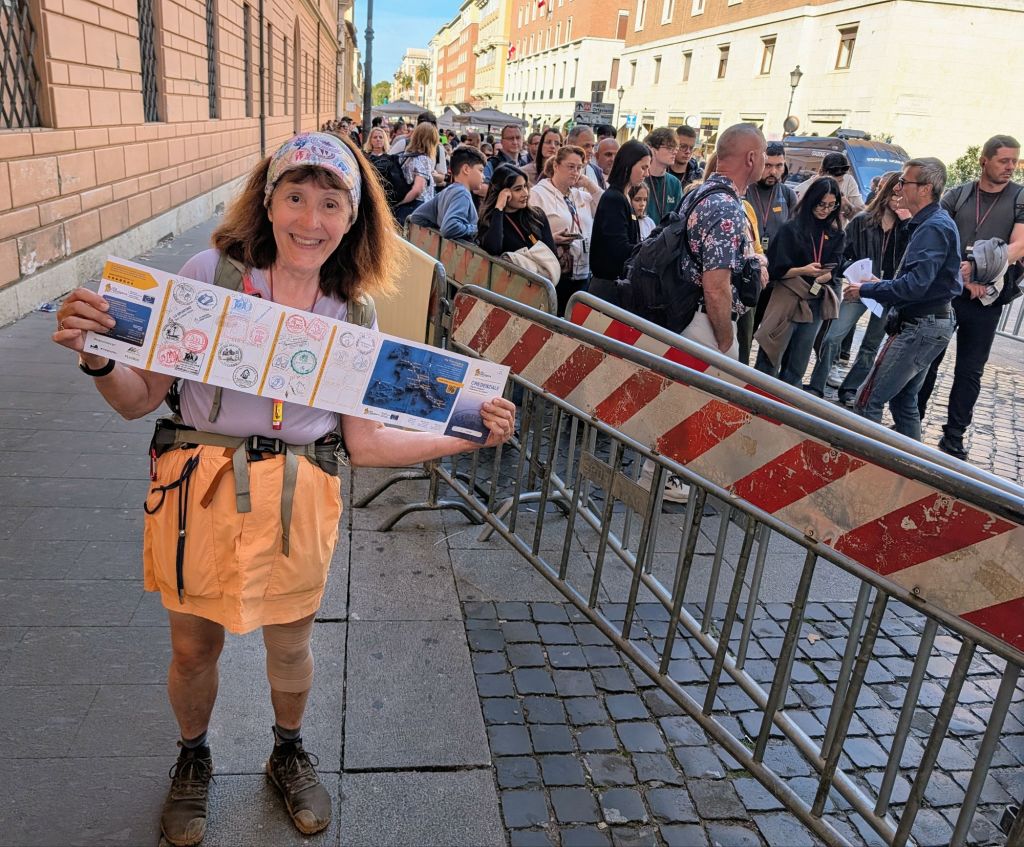
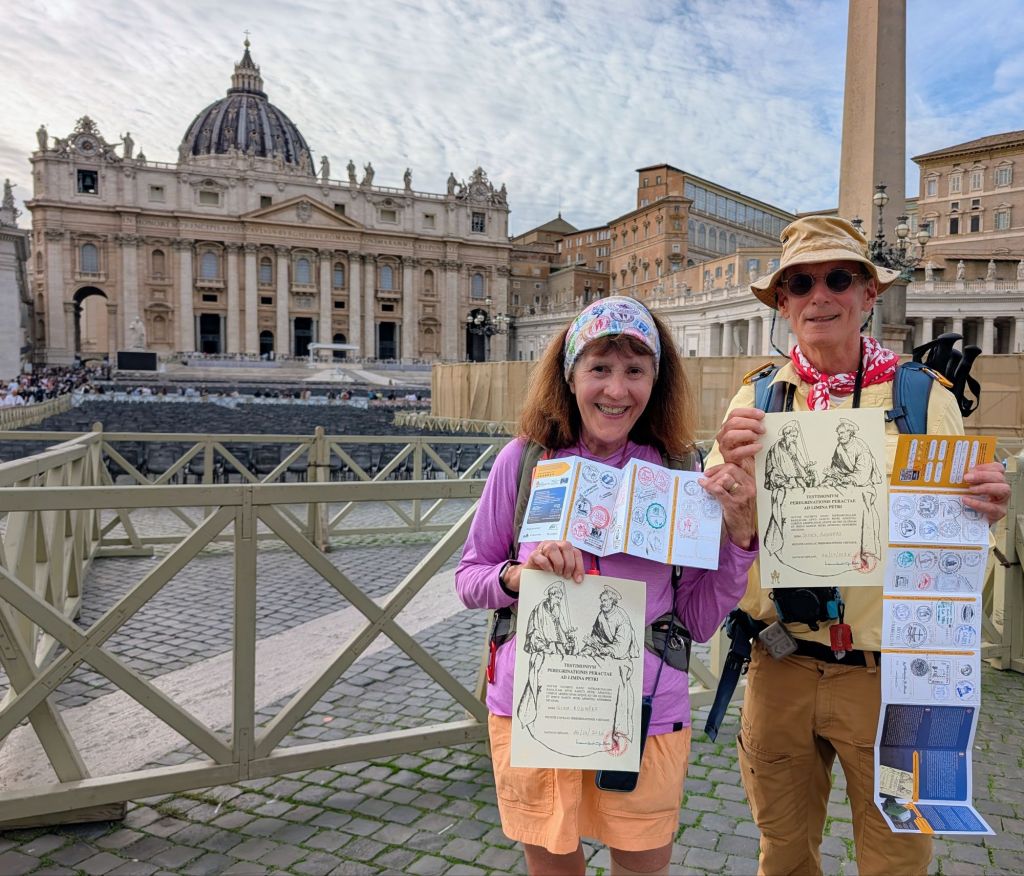
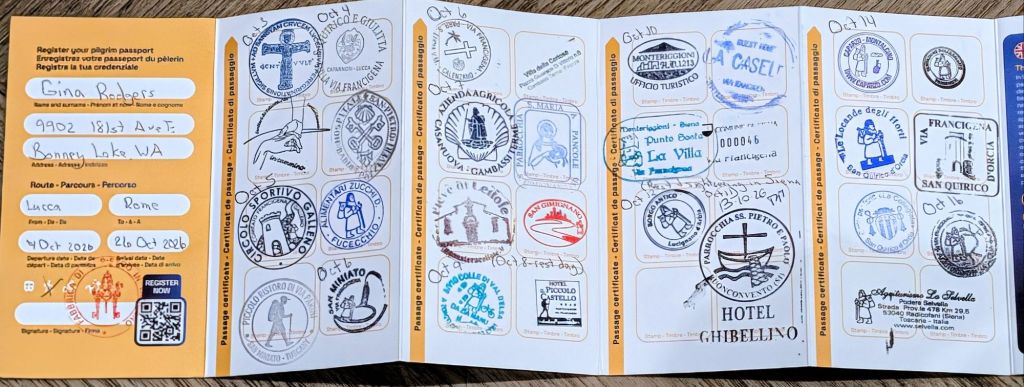
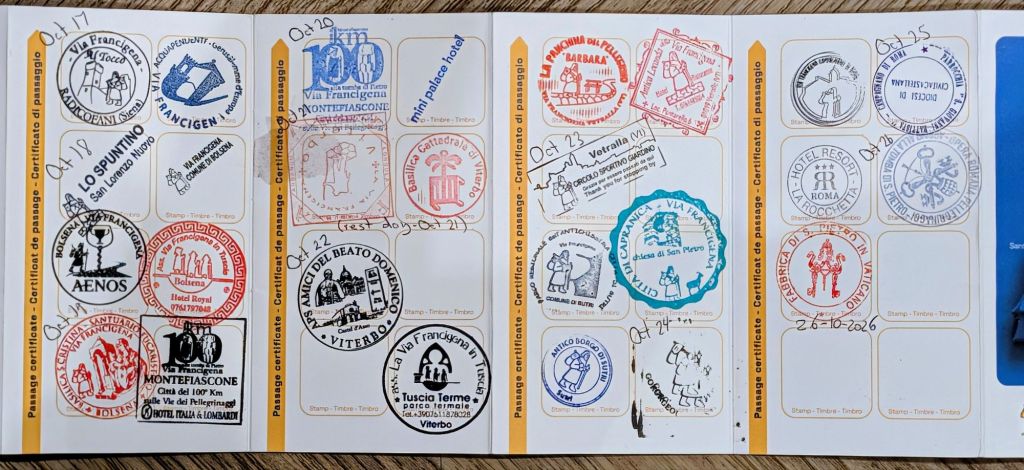
In the basilica, we showed our required Pilgrim’s Passport & received the final red stamp in it as well as a Testimonium for completing the Via Francigena coming to Rome.
Jesus gave his apostle Simon who was a humble fisherman from Galilee a new name: Peter which comes from the Greek “Petros” which iterally means “rock” because Peter was the rock upon the Christian church was built.
Peter was martyred during Emperor Nero’s reign around 67 or 68 AD during the first organised Christian persecution.
According to tradition, Peter was crucified upside down because he deemed himself unworthy to die in the same manner as Christ.
He was crucified in the Circus of Nero which was on the exact ground where the Basilica & St. Peter’s Square stand today.
After his death, Peter was buried in a nearby cemetery on the Vatican hill. His grave was simple and humble & for over two centuries, the Christian community marked it with only a modest shrine.
The original Saint Peter’s Basilica which was a structure with dimensions comparable to the current one was erected around 320 AD by the Roman Emperor Constantine who was Rome’s first Christian ruler.
It stood directly on top of Peter’s grave.
That early church was gradually demolished starting in 1506 when Pope Julius II commissioned the magnificent new building that exists today.
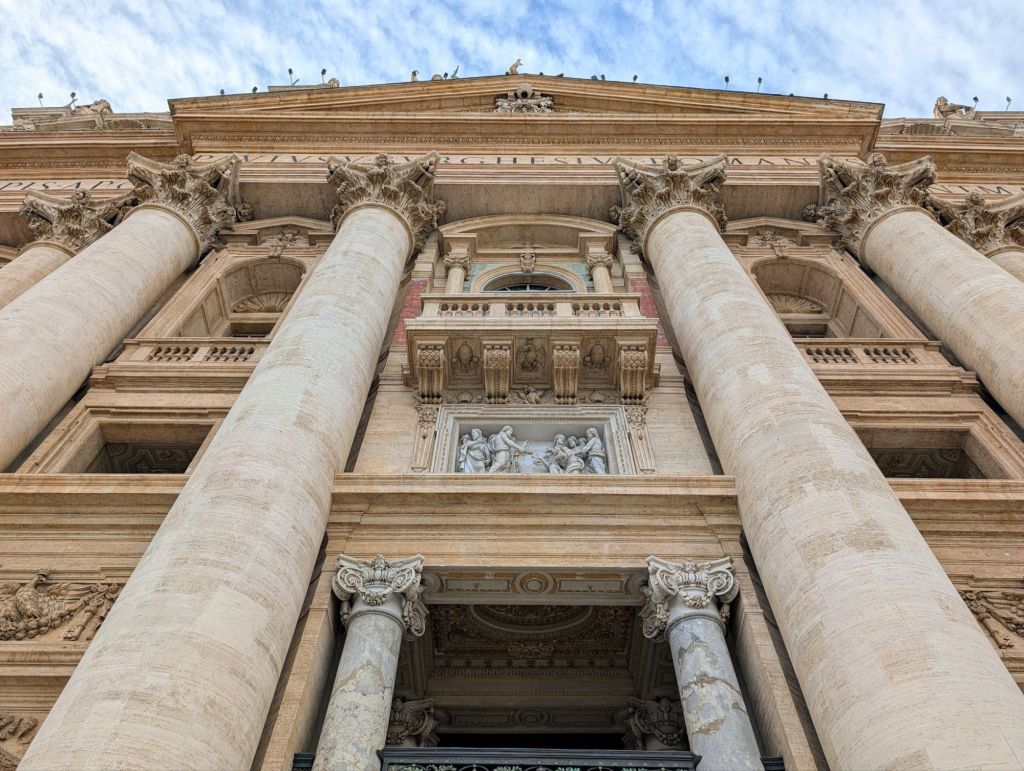
The imposing 17th Century facade conveys the Basilica’s exceptional size as it is the world’s largest church by interior area & volume.
The facade is 115 meters long & 45 meters high with 3 levels topped by 13 colossal statues.
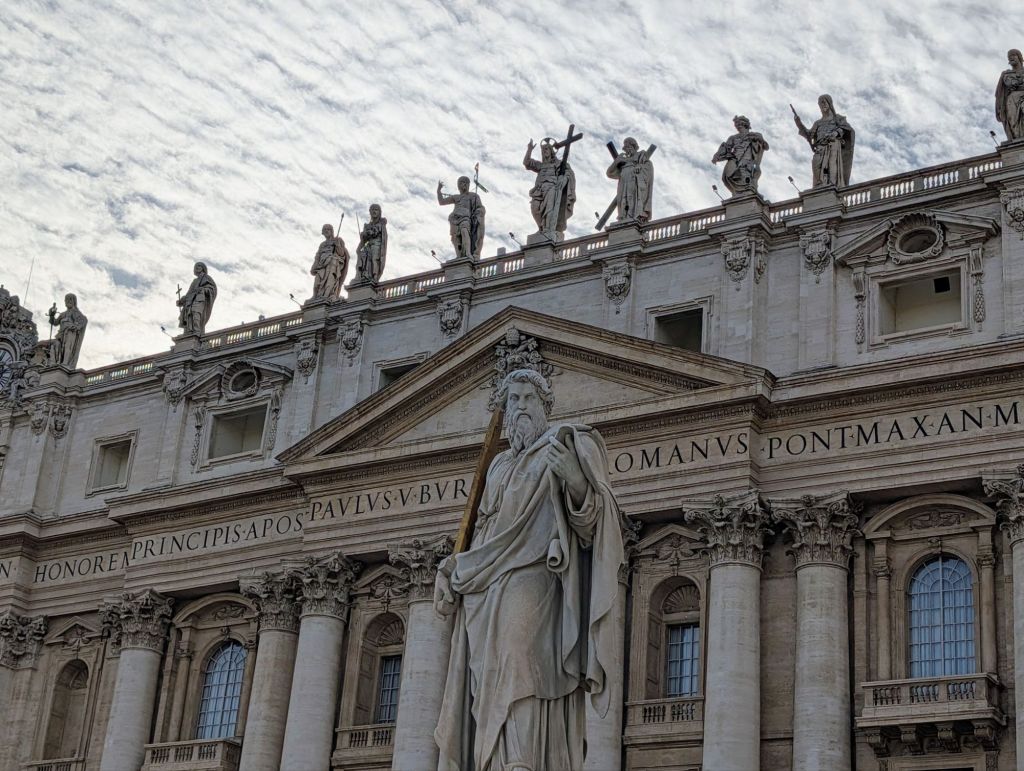
Peter is missing from the roof because he stands as a monumental statue on the left at the base of the stairs at ground level in St. Peter’s Square across from Saint Paul.
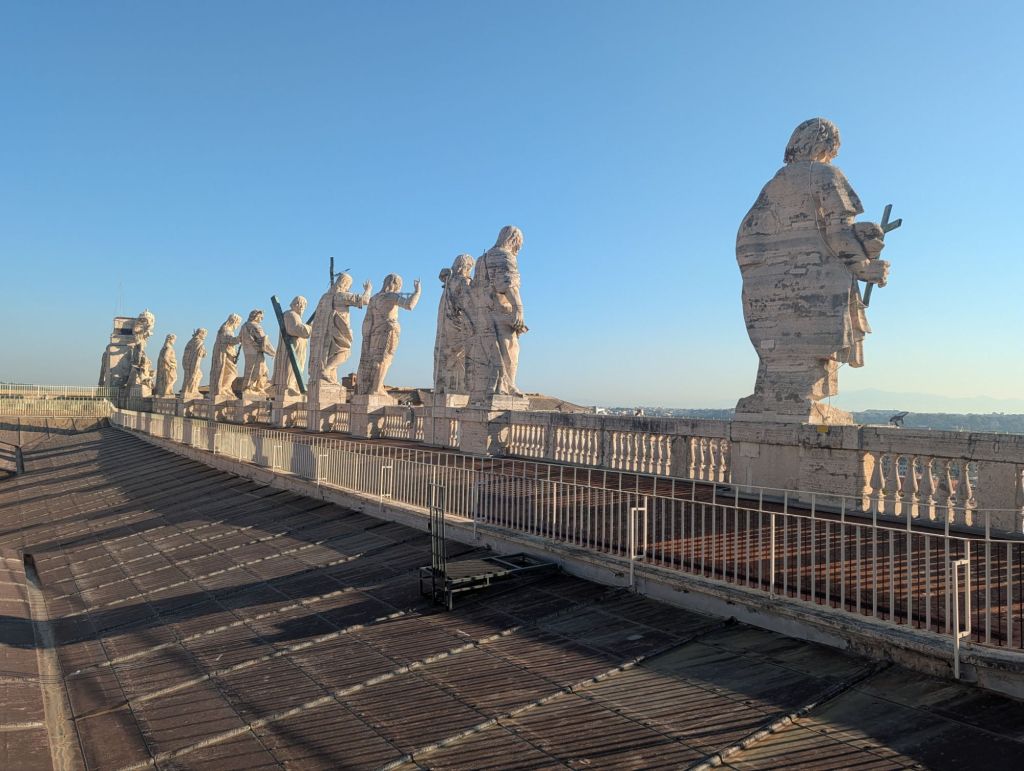
The Loggia delle Benedizioni is the center balcony from which the Pope blesses believers on the most solemn occasions & where each newly elected pontiff is announced.
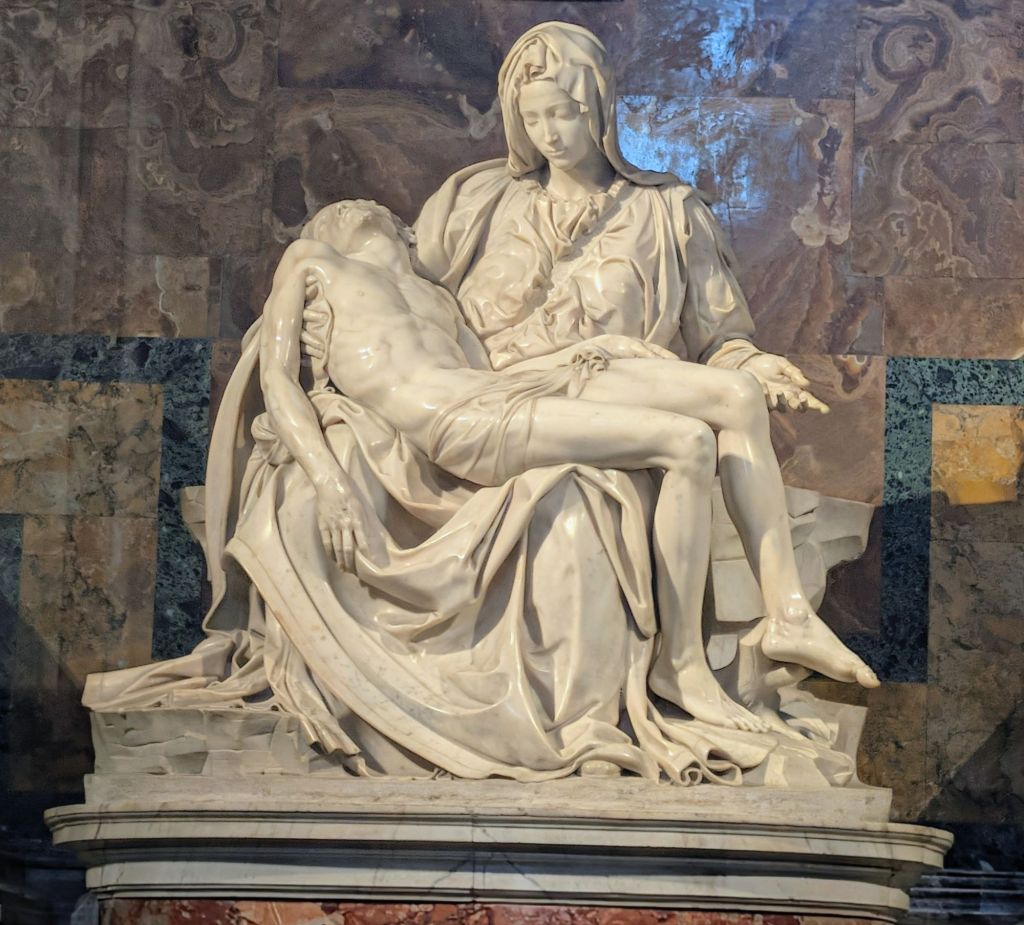
The Basilica contains one of Michelangelo’s most famous masterpieces: La Pieta (1498-1499).
He made it from marble when he was 23 years old with great technical perfection showing the emotional impact at the moment when Jesus was taken down from the cross & given to his mother Mary.
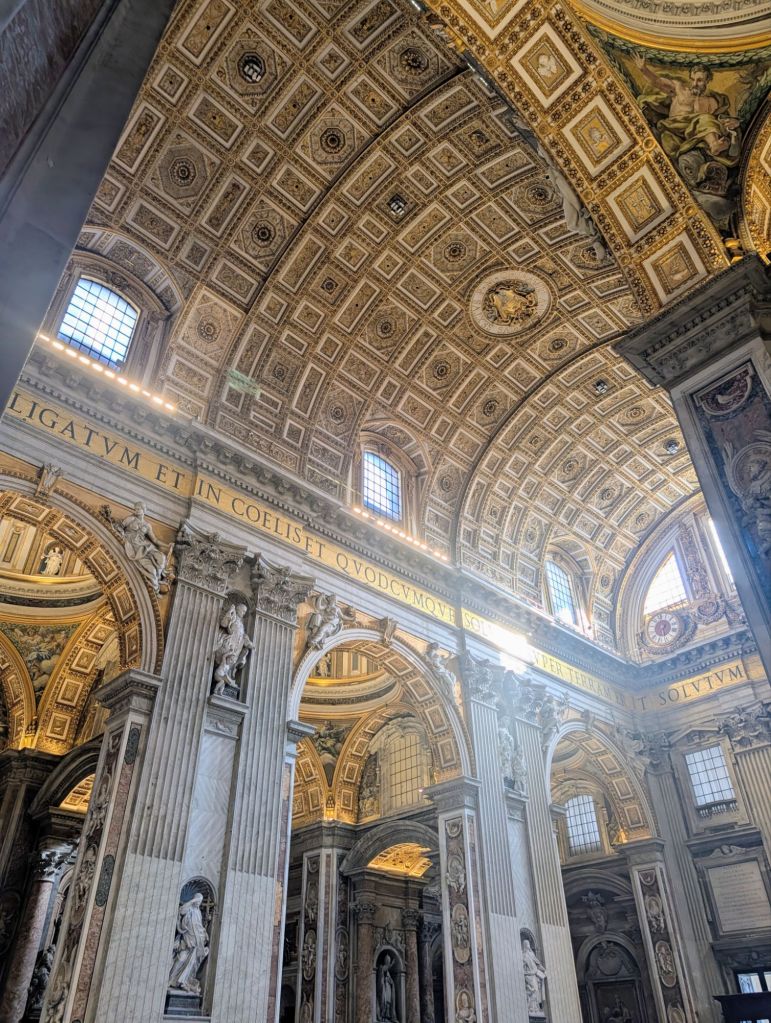
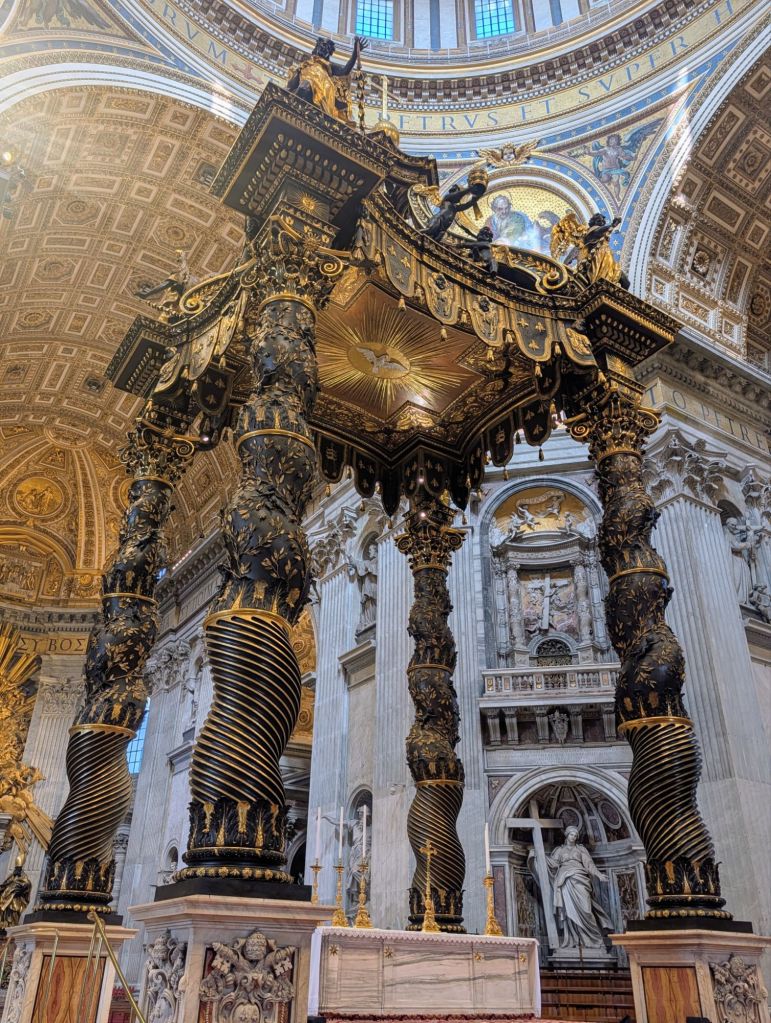
Here are some images from the Basilica’s interior:
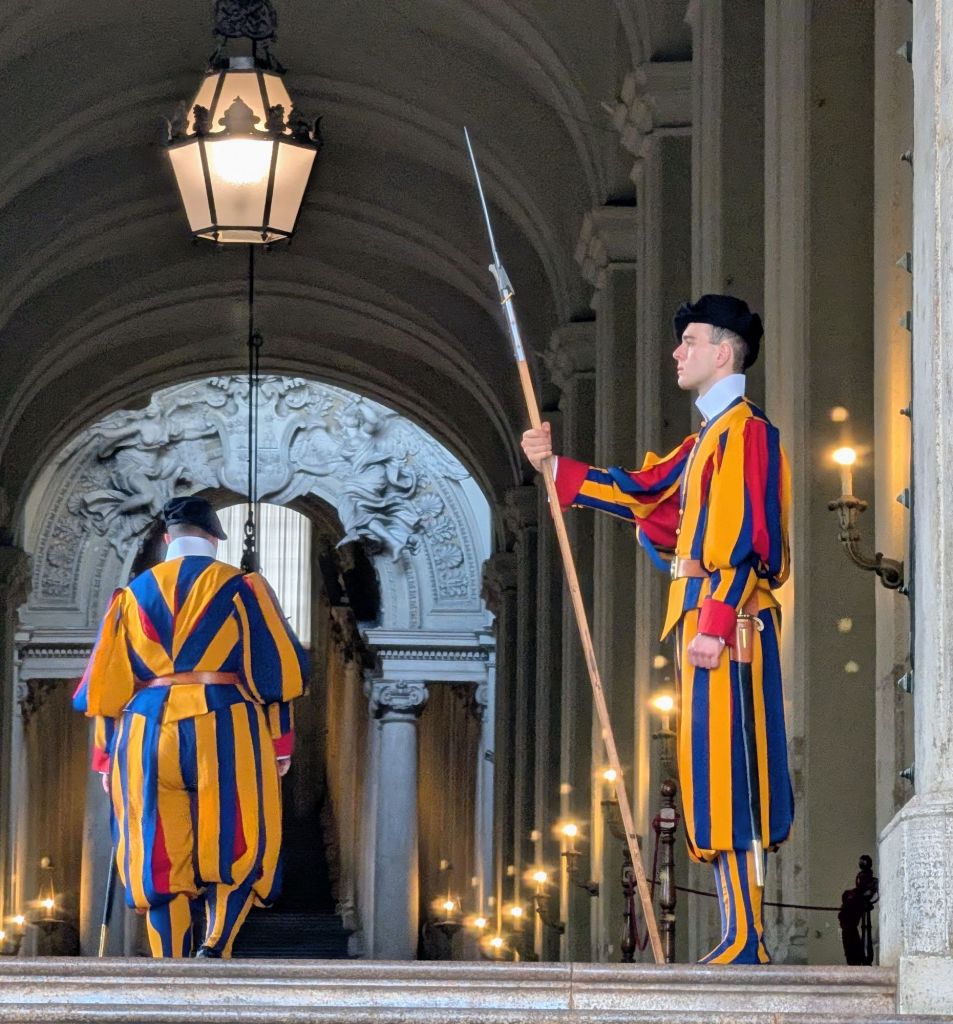
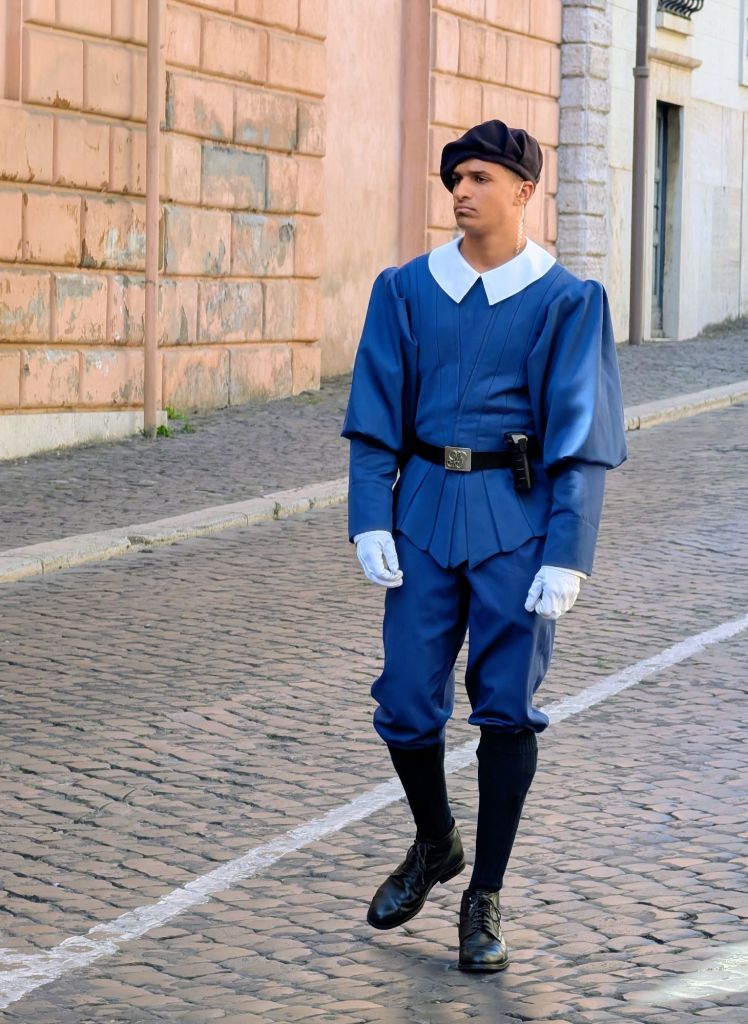
The Pontifical Swiss Guard is the official armed force & protective security unit of Vatican City & the Pope, established on 22 January 1506 by Pope Julius II.
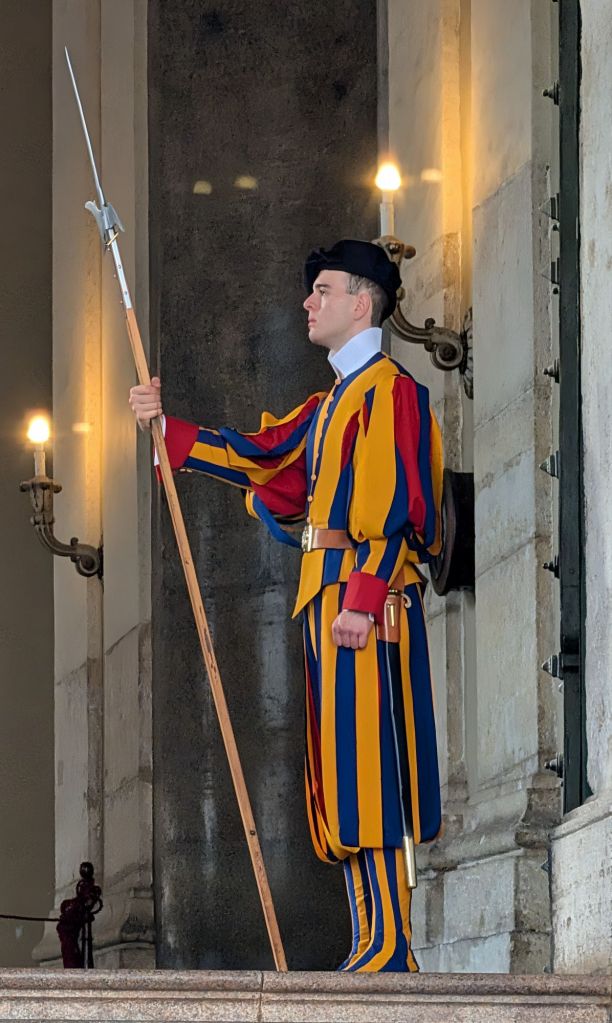
Their Renaissance- style clothing weighs 8 lbs & may be the heaviest & most complicated uniform in use by any standing army today.
A single full dress uniform requires 154 separate pieces & takes nearly 32 hours along with 3 fittings to complete.
The Swiss Guard is among the oldest military units in continuous operation & is sometimes called “the world’s smallest army”.
As of 2024, there were 135 members.
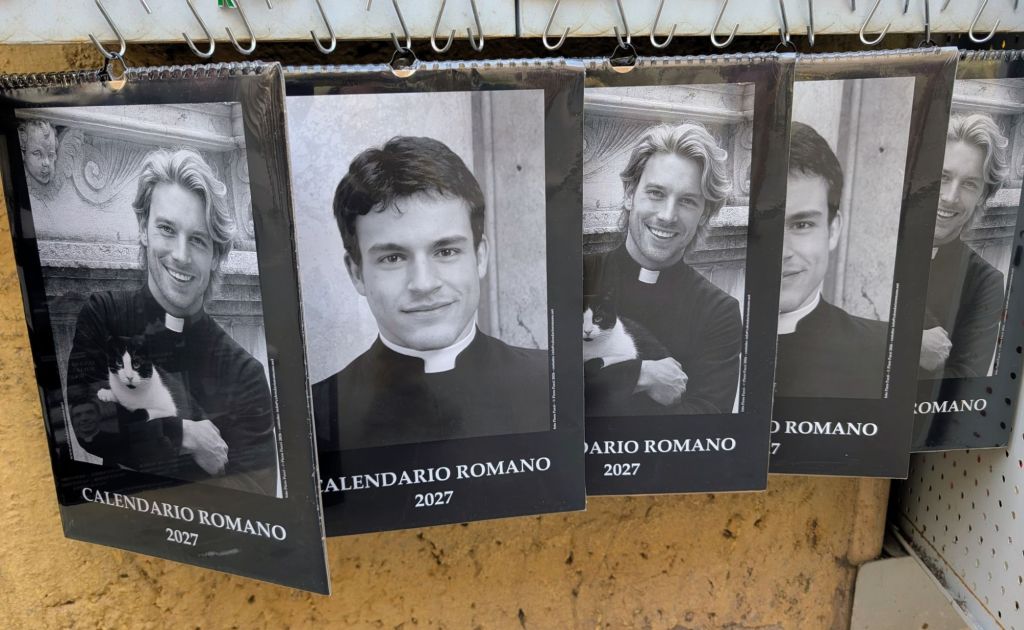
When tourists see this calendar, they assume they are looking at actual “hot” Roman Catholic priests.
They are not.
The Calendario Romano was invented in the early 1990s as a way to give tourists practical info about Rome alongside images showing its most recognisable symbolic figures which includes priests.
This calendar has been on sale for more than thirty years now & shows no sign of being a fad.
Tourists buy it in the tens of thousands annually drawn by religious iconography mixed with their fantasy.

