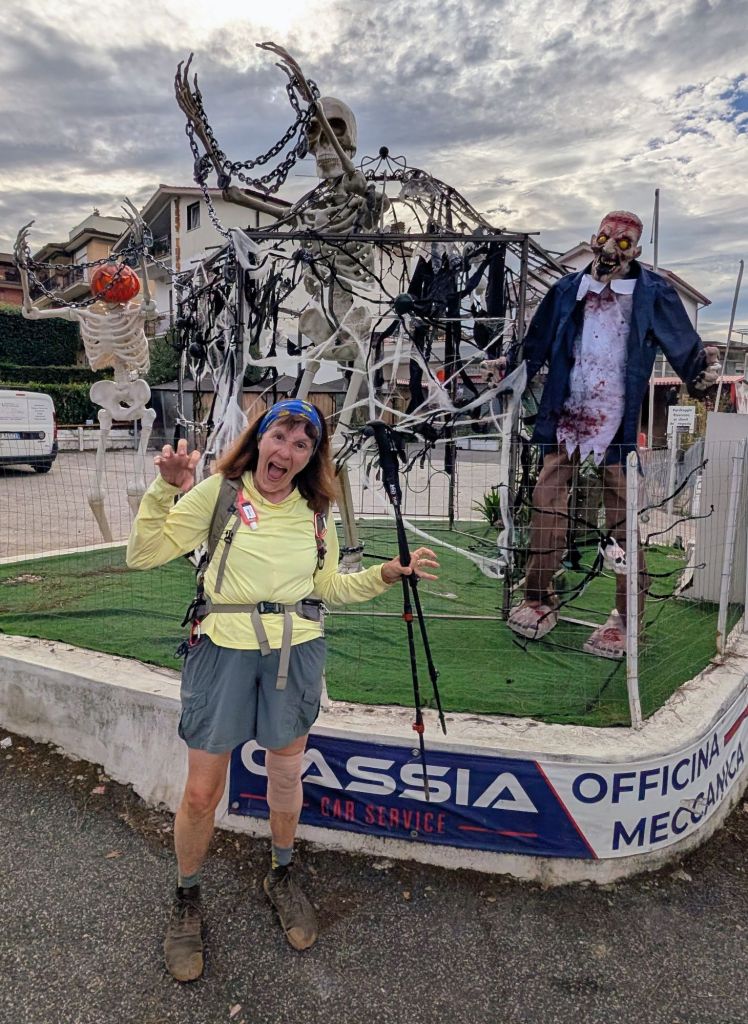
Campagnano di Roma to La Storta
16 Miles; 7.5 Hours on the trail (Cumulative: 271.6 Miles; 132.4 Hours on the trail)
We made it to Rome’s suburbs today from where tomorrow we will walk to our trek’s end in St. Peter’s Square at the Vatican.
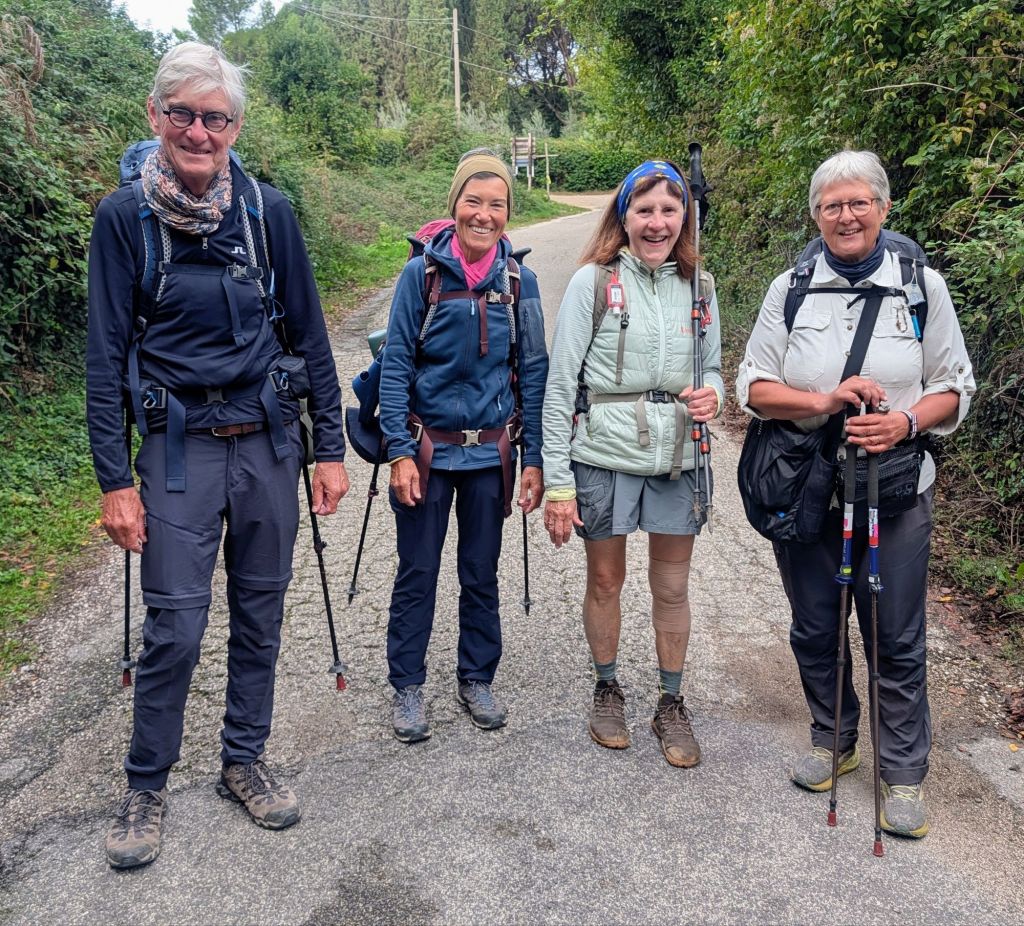
Jacques & Kathleen (on the left) hiked 627 miles from the Swiss border with Italy on the way to Rome. From Rome, they plan to continue hiking another 180 KM to Assisi.
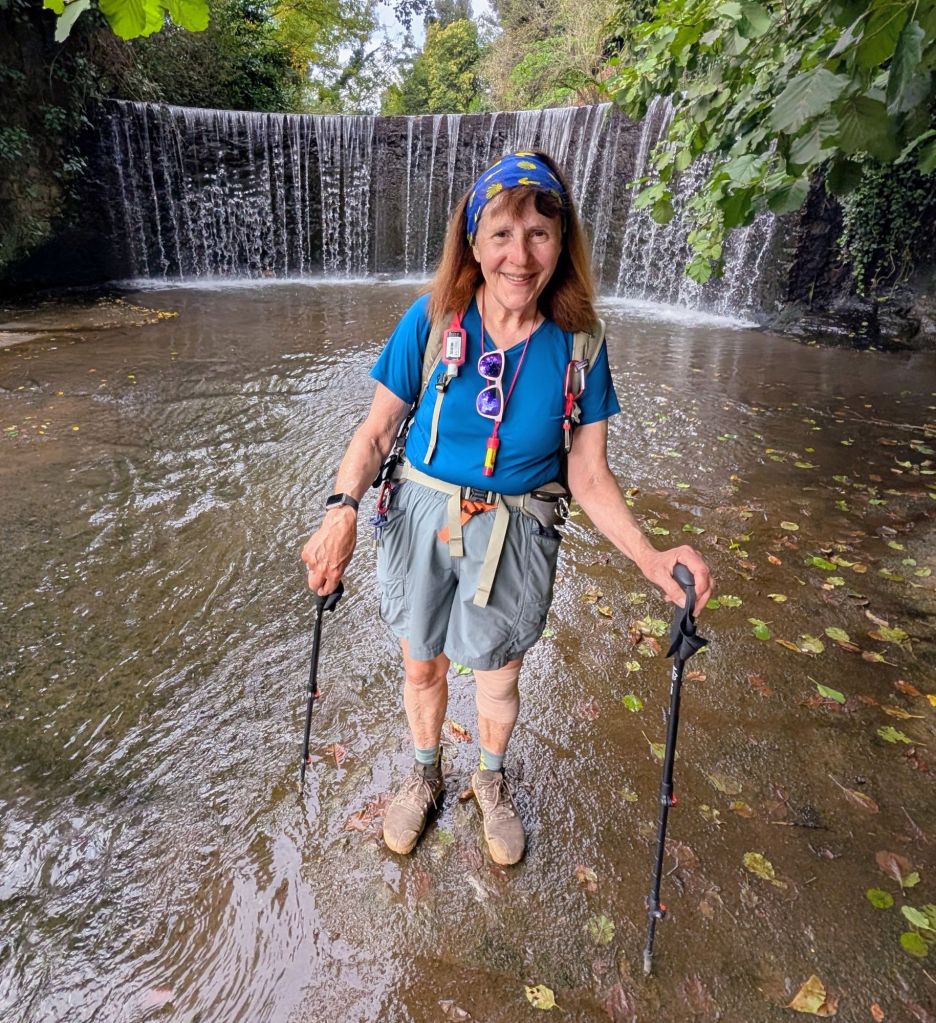
Carole (far right) started her hike to Rome on the French border with Switzerland. She will cover almost 750 miles before finishing her hike.
We feel like real trail rookies compared to them.
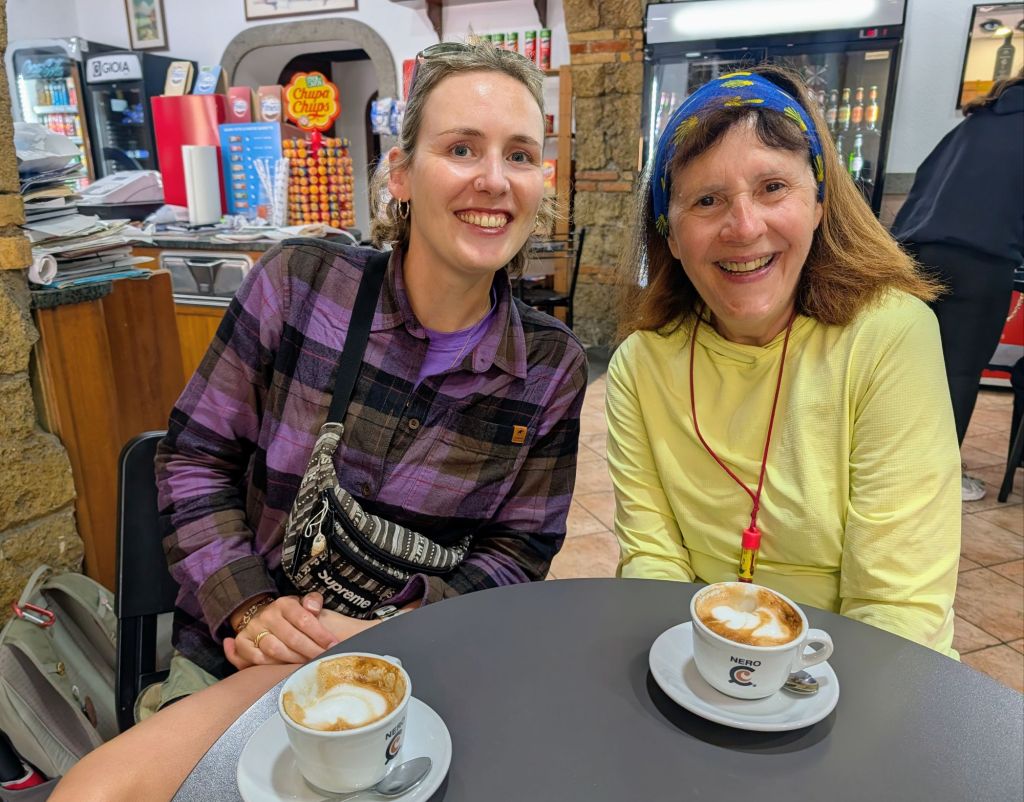
We walked through Formello which is a walled town that dates from the Middle Ages.
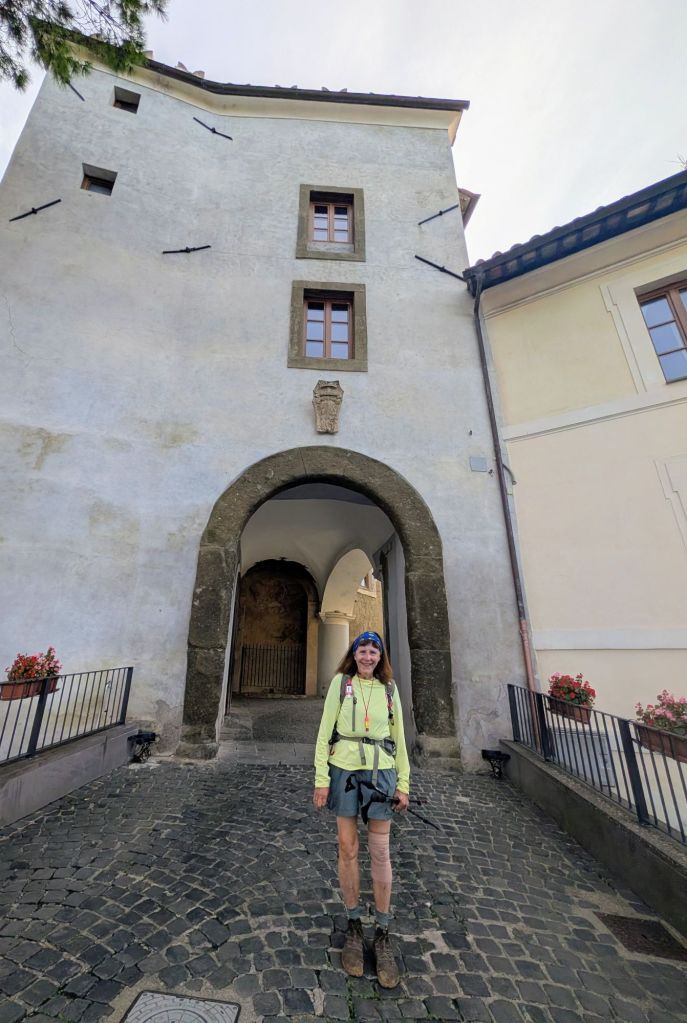
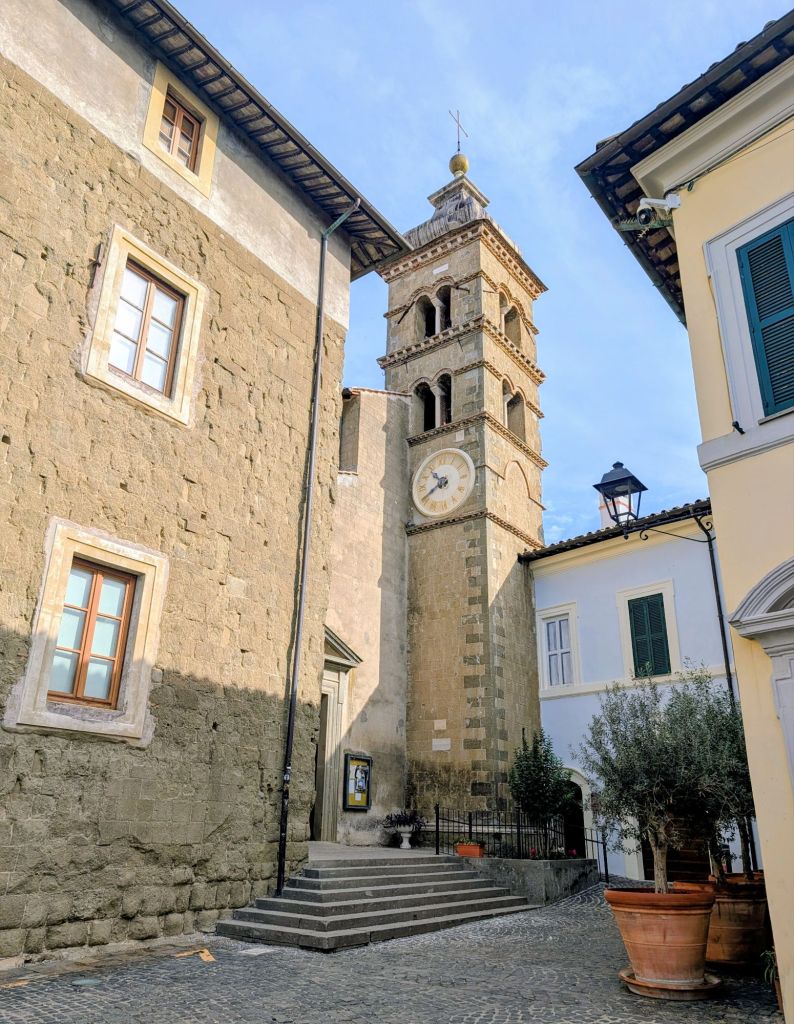
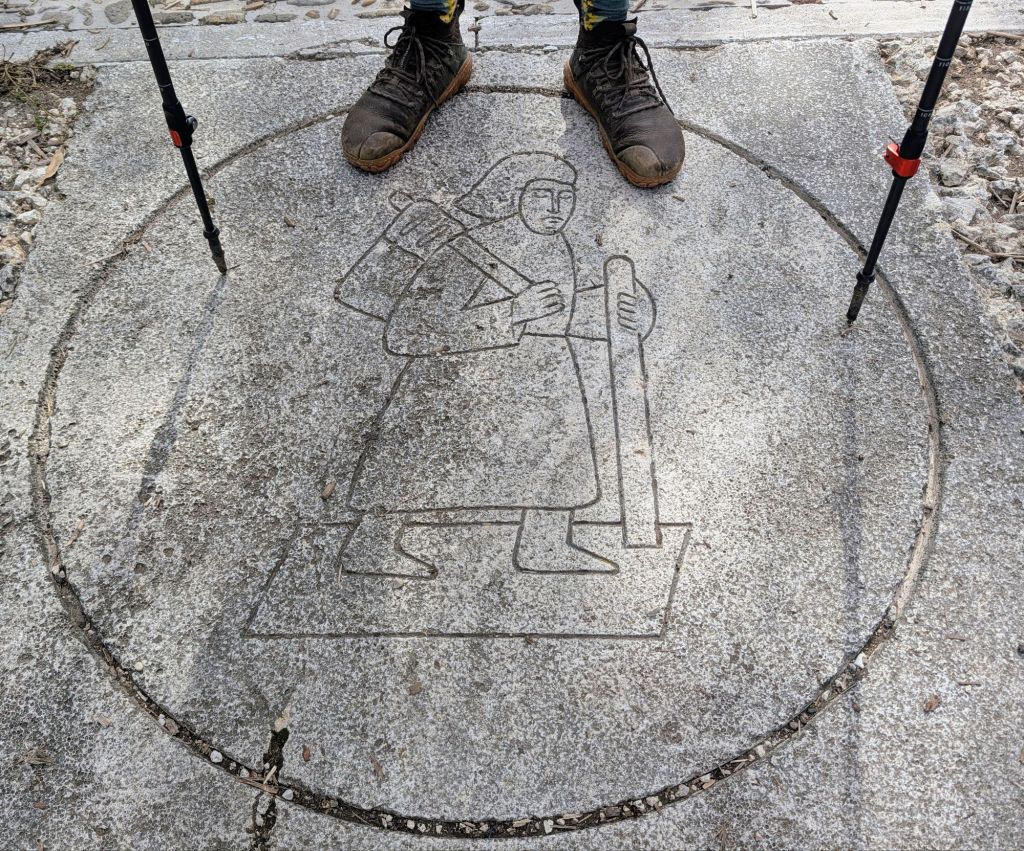
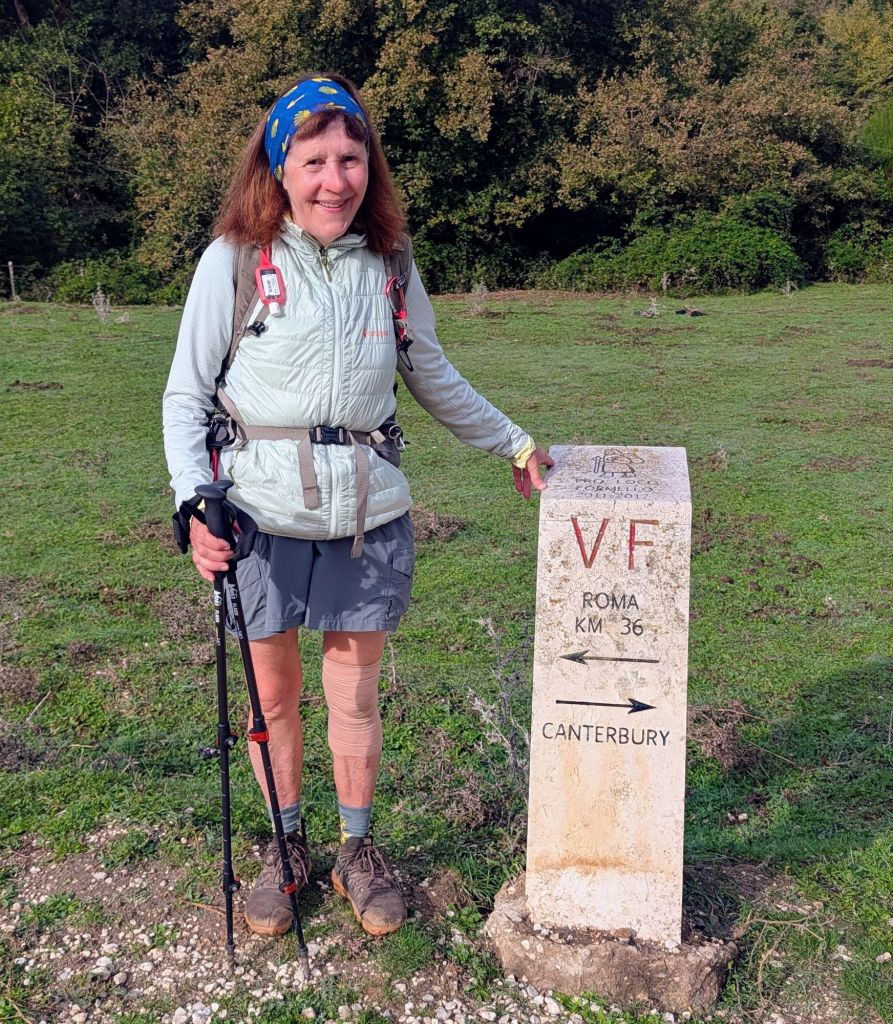
We saw a few KM milestone markers on our hike today.
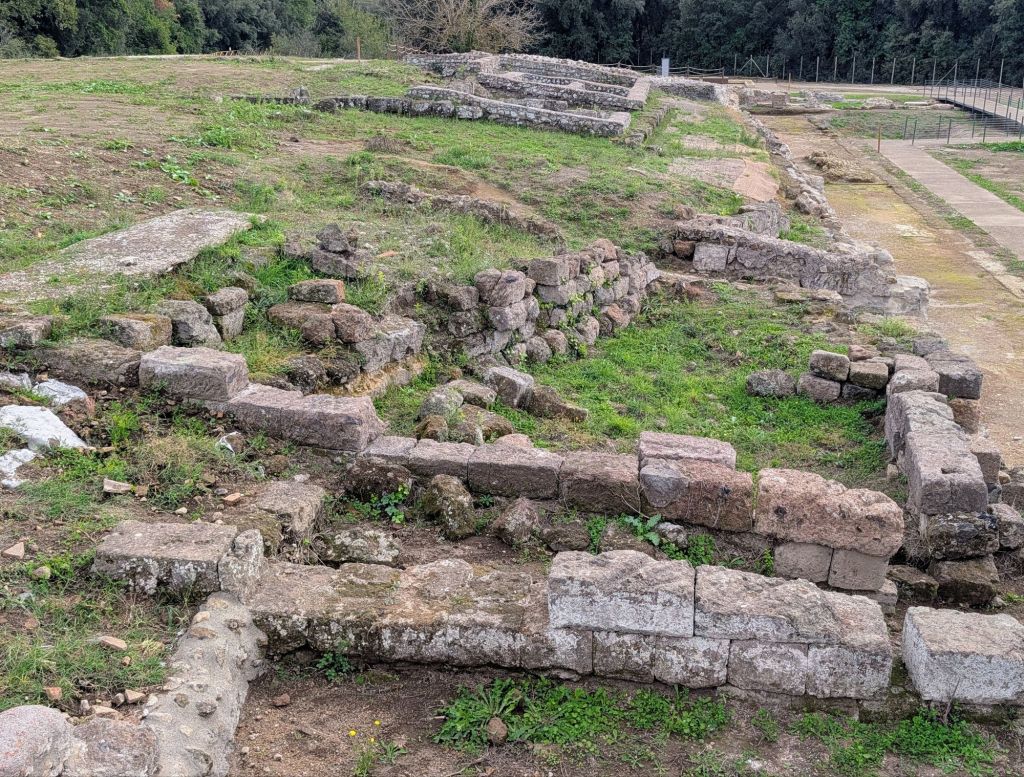
The great Etruscan city-state Veii was the biggest power on the Tiber River for centuries.
After a decade long war, Veii was wiped out by the Romans in 396 BC.
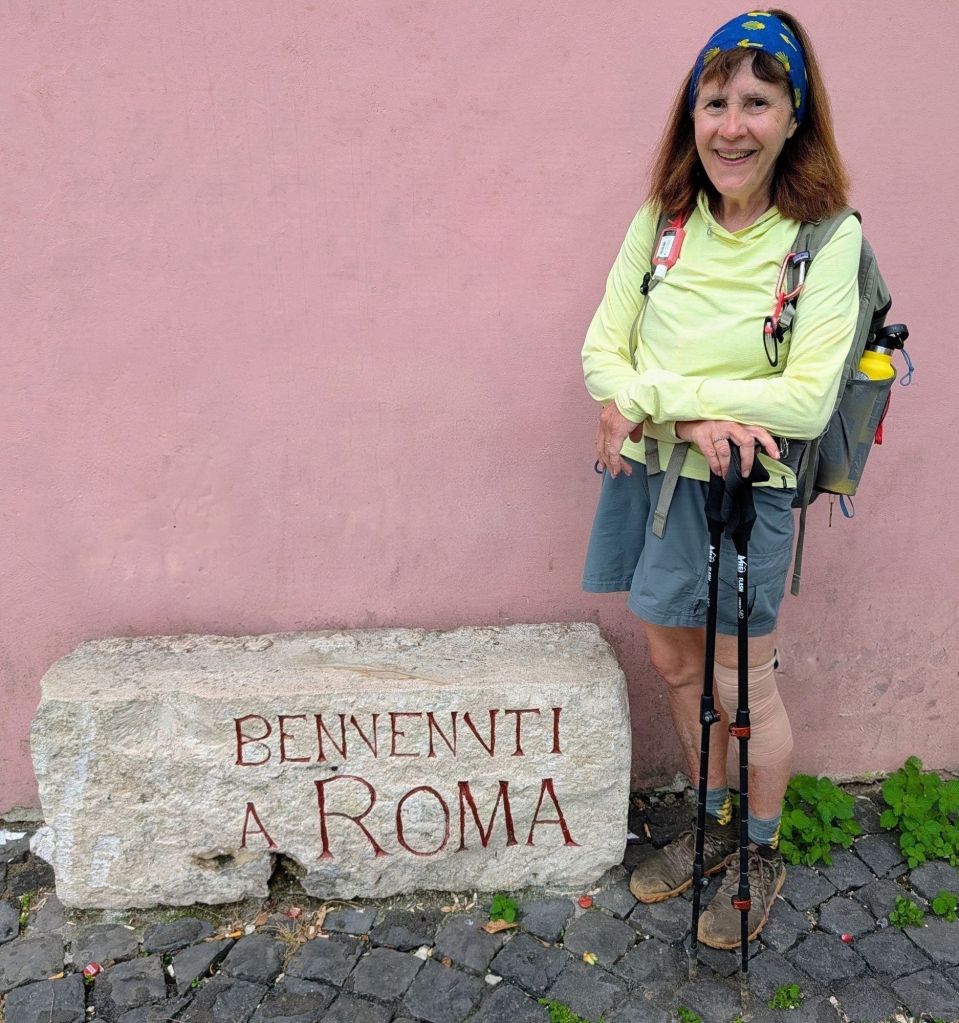
La Storta was founded during the Roman Empire as a post station for changing horses & as rest stop for travelers & postmen.
It was located at a strategic confluence point for various roads connecting Rome to the north.
This town was mentioned around the year 1000 by Abbot Sigeric accounting his pilgrimage to Rome via the Via Francigena to accept his title as Archbishop of Canterbury.
Sigeric wrote that the town existed & grew around the horse post station at the 9th mile on the Via Cassia & was his first stop outside Rome.
The stop was referred to as San Giovanni in Nono (Latin: Sanctus Ioannes in Nono), since the way station was constructed next to a church dedicated to Saint John & positioned at the nine mile marker from where the Via Cassia starts.
Perhaps because the Via Cassia curves & divides here, the town much later took the name “La Storta”.
The name “La Storta” is derived from the Italian word “storta” meaning “twisted” or “curved”.
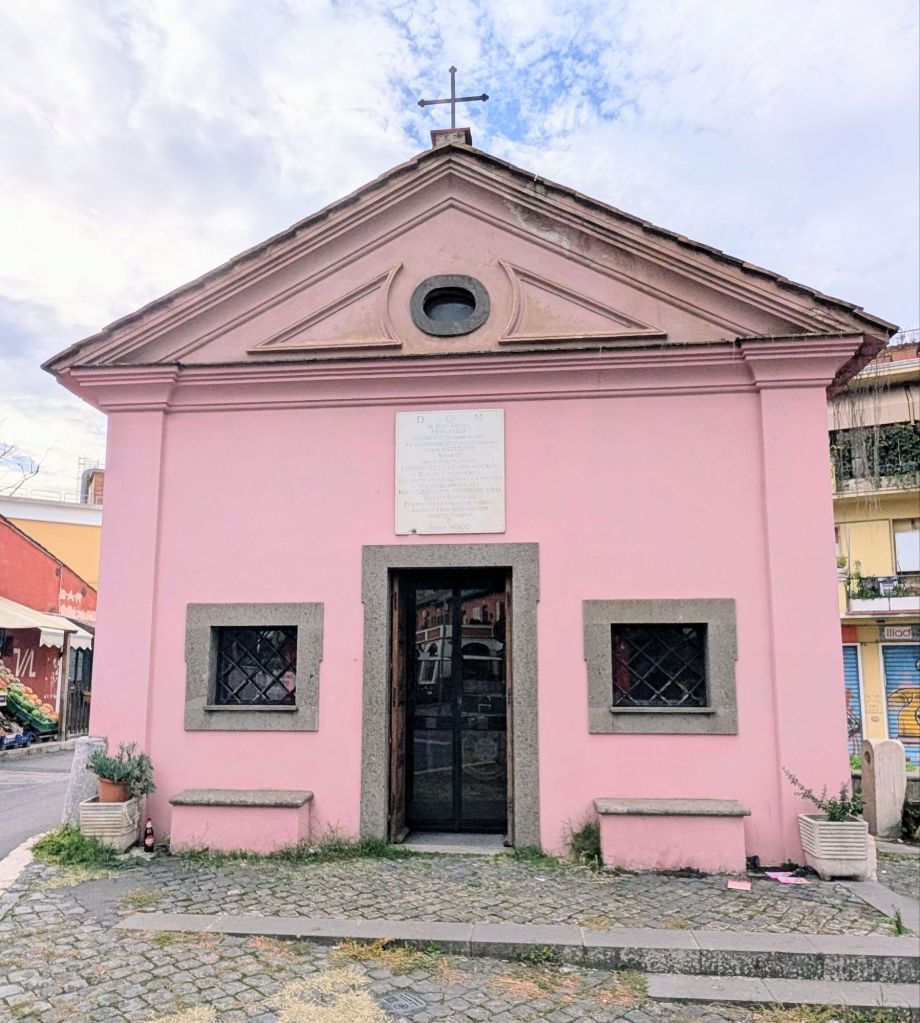
The La Storta Vision is the most important event in La Storta’s history.
Saint Ignatius of Loyola had a spiritual vision of Christ & God here which was the pivotal founding moment in Jesuit religious history.
The Society of Jesus, also known as the Jesuit Order or the Jesuits, is a religious order of clerics regular of pontifical right in the Catholic Church.
The Jesuits were founded in 1540 by Ignatius of Loyola along with six companions with Pope Paul III’s approval.
Born into a noble family in 1491, Ignatius of Loyola was wounded in the Battle of Pamplona in 1521 after which he read numerous religious texts that prompted him to make a pilgrimage to the Holy Land.
He preached Christianity there; but, he only stayed in the Holy Land for a short time.
In November 1537, Ignatius was traveling the Via Cassia towards Rome accompanied by Peter Faber & Diego Laynez.
The two men accompanying him met at the University of Paris & supported him in his idea to start the Jesuit order.
Before reaching Rome, the trio paused at a small church in La Storta to pray.
It was here that lgnatius is reported to have received a vision of God the Father & Christ holding the cross.
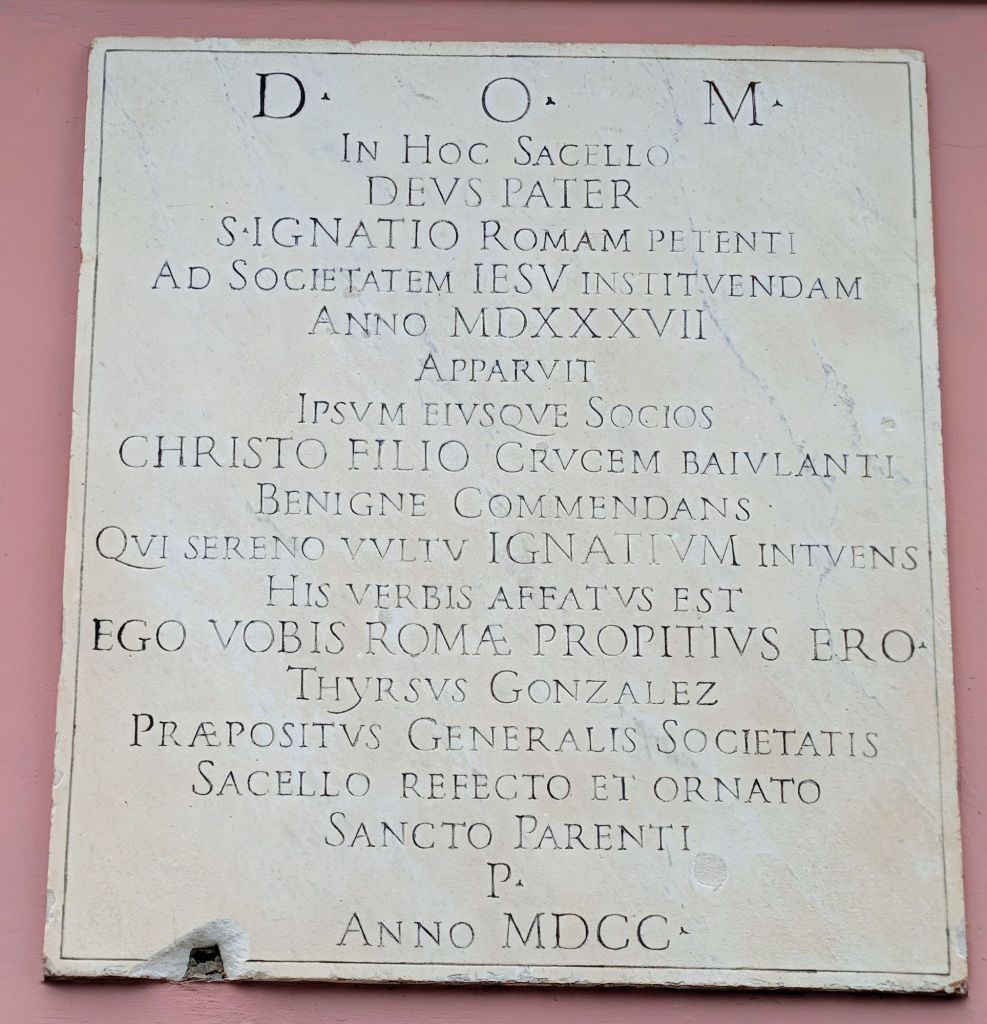
Ignatius later said that the Father had “given him … to be henceforward consecrated wholly to His service,” & Christ spoke the words “Ego tibi Romae propitius ero” which means “I will be favorable to you in Rome”.
That sentence’s meaning was not immediately clear to Ignatius who thought it could mean that the three might be martyred at Rome; but, instead Pope Paul III gave him a very friendly reception.
What the words really meant was that the Pope would grant him permission to start the Society of Jesus (Jesuits) who were instrumental in bringing the Christian religion to the New World.
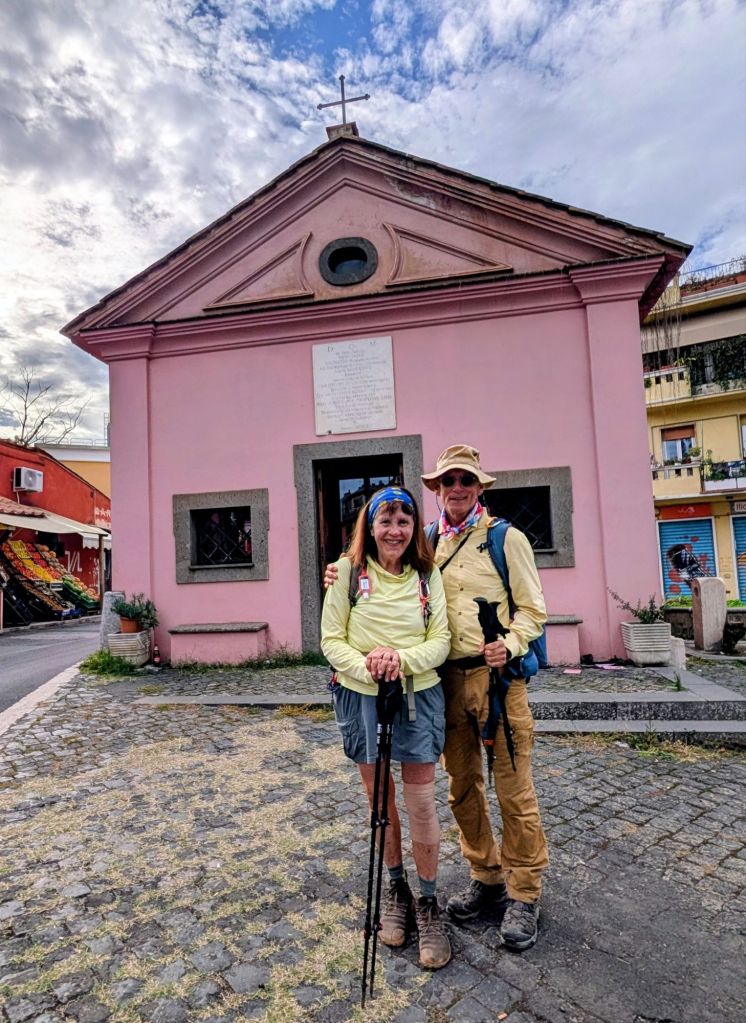
The location where the Spirit appeared to Ignatius appeared is memorialized today with a small chapel dedicated to Saint Ignatius in the Piazza della Visione (“Square of the Vision”).
The vision site was a pilgrimage destination from the early days in the Society of Jesus; but, the chapel’s current form was achieved in 1700 when it was restored & decorated.
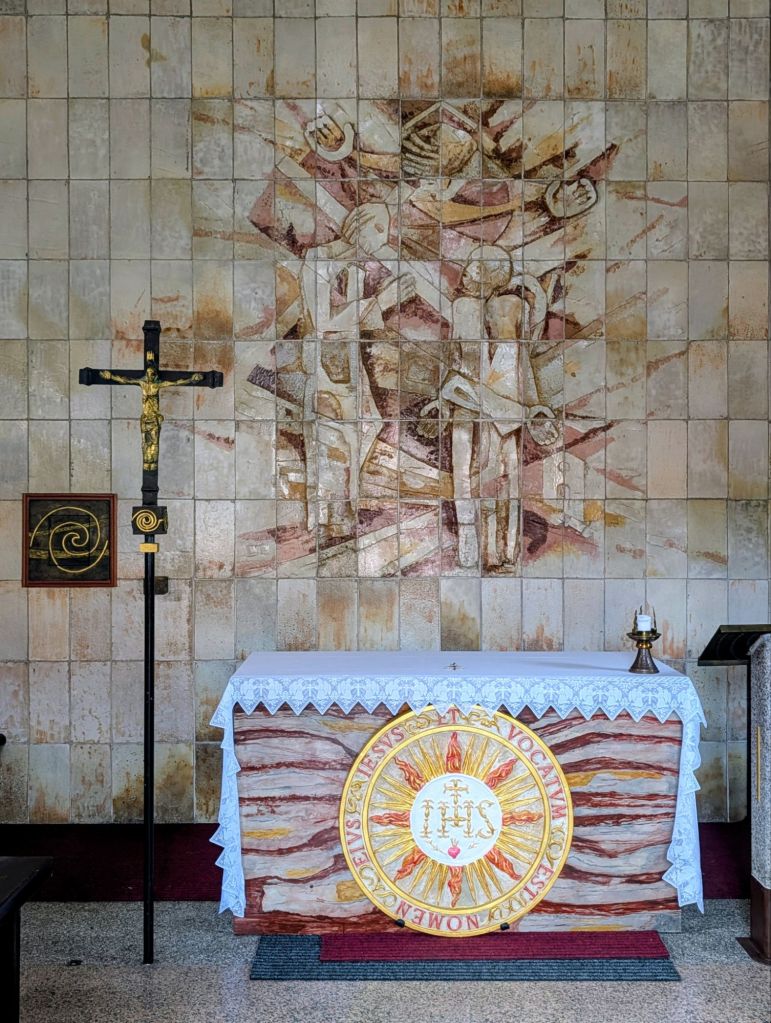
La Storta celebrates the vision with its own feast day, the Feast of the Vision of Saint Ignatius.
This feast day is not an ancient tradition; it was only celebrated for the first time in 2011.
The feast is celebrated on the second Sunday in November & is marked by processions, bands, & a reenactment of the vision.
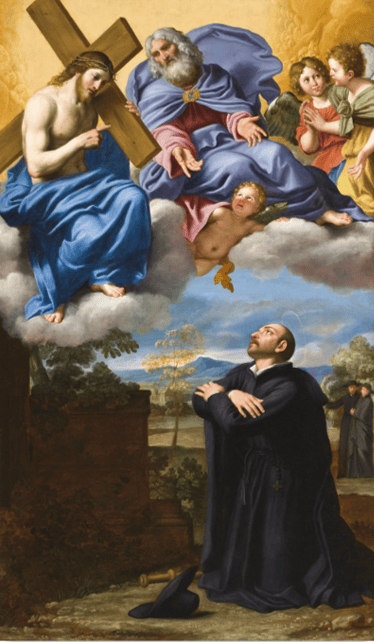
by Domenichino circa 1622
Oil on canvas
Los Angeles County Museum of Art (LACMA)
In this famous painting,
God & Jesus accompanied by angels who support the clouds on which they rest appear to Ignatius.
The two men Peter Faber & Diego Laynez who accompanied Ignatius are shown in the painting’s right rear background.
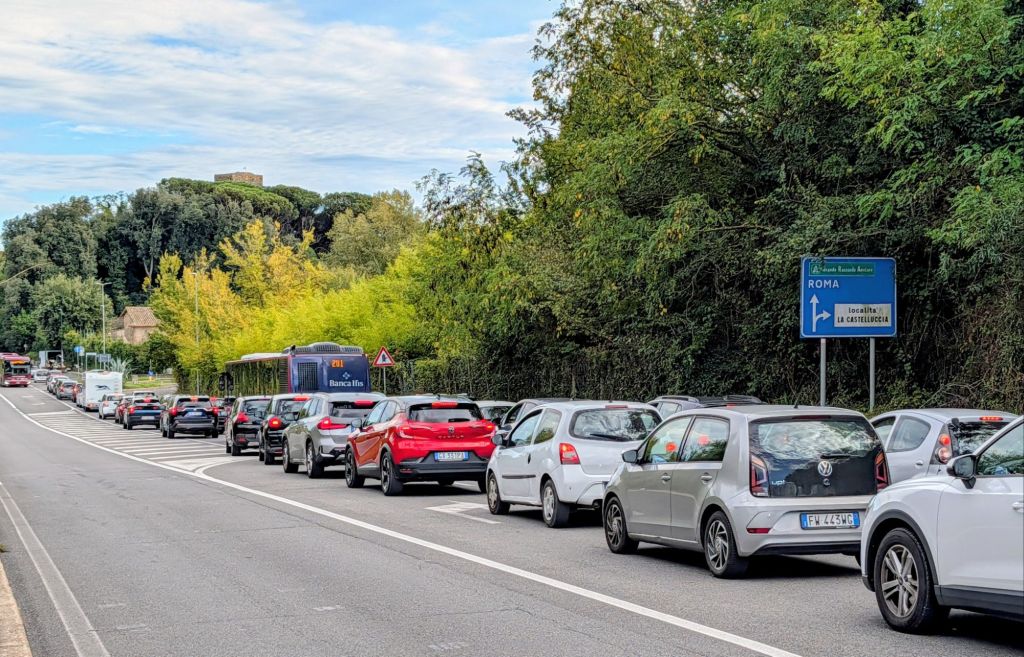
Here is the weekend traffic heading back into Rome.
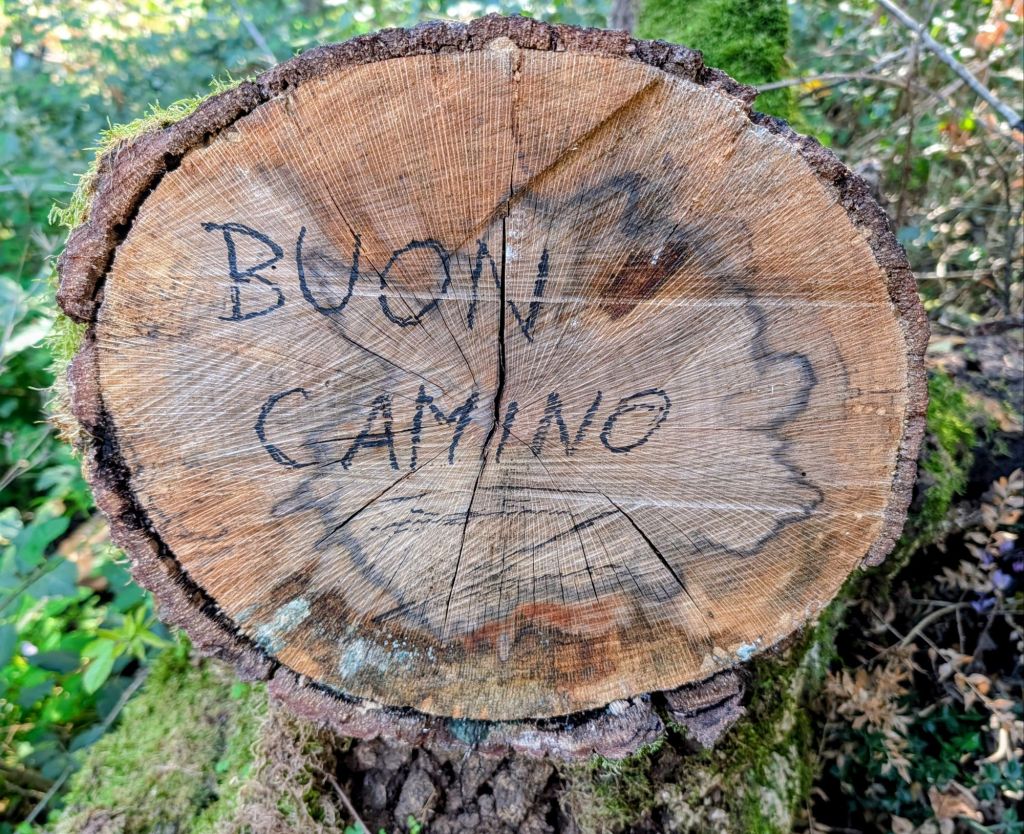
Here are some images from today’s trail: