
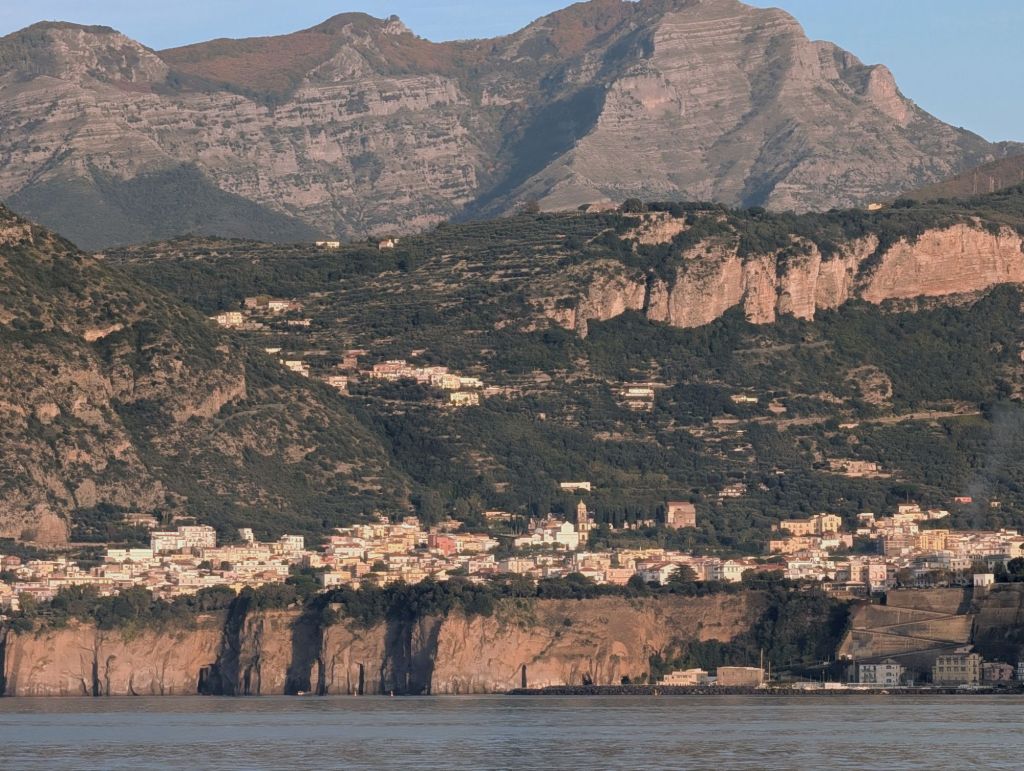
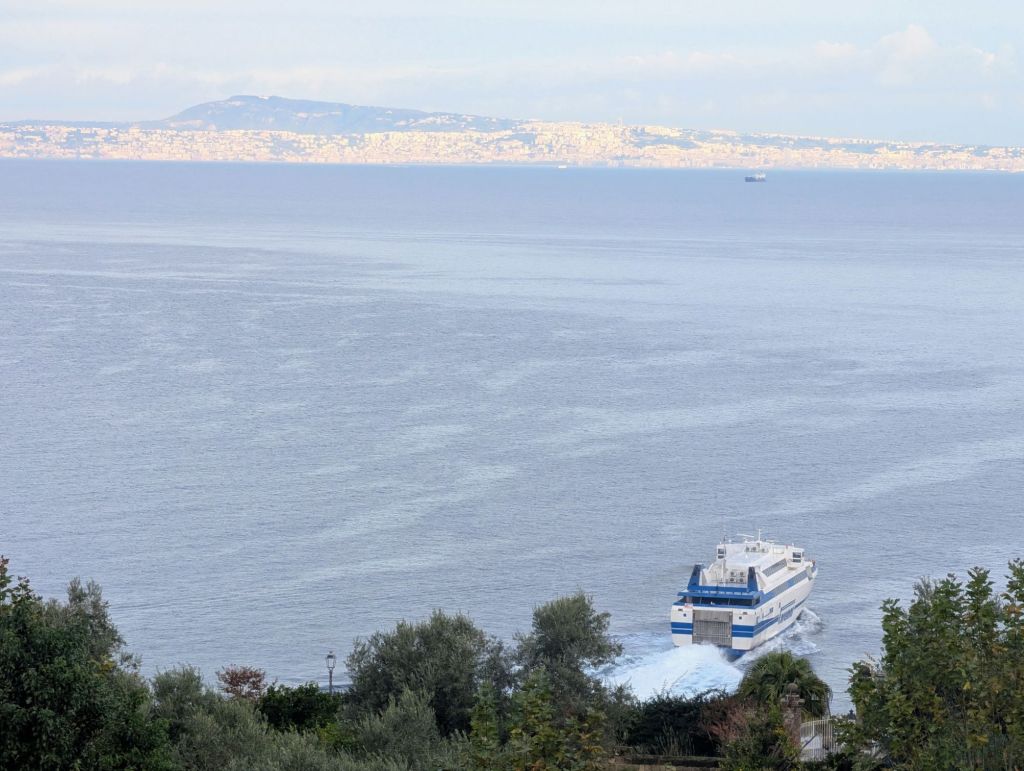
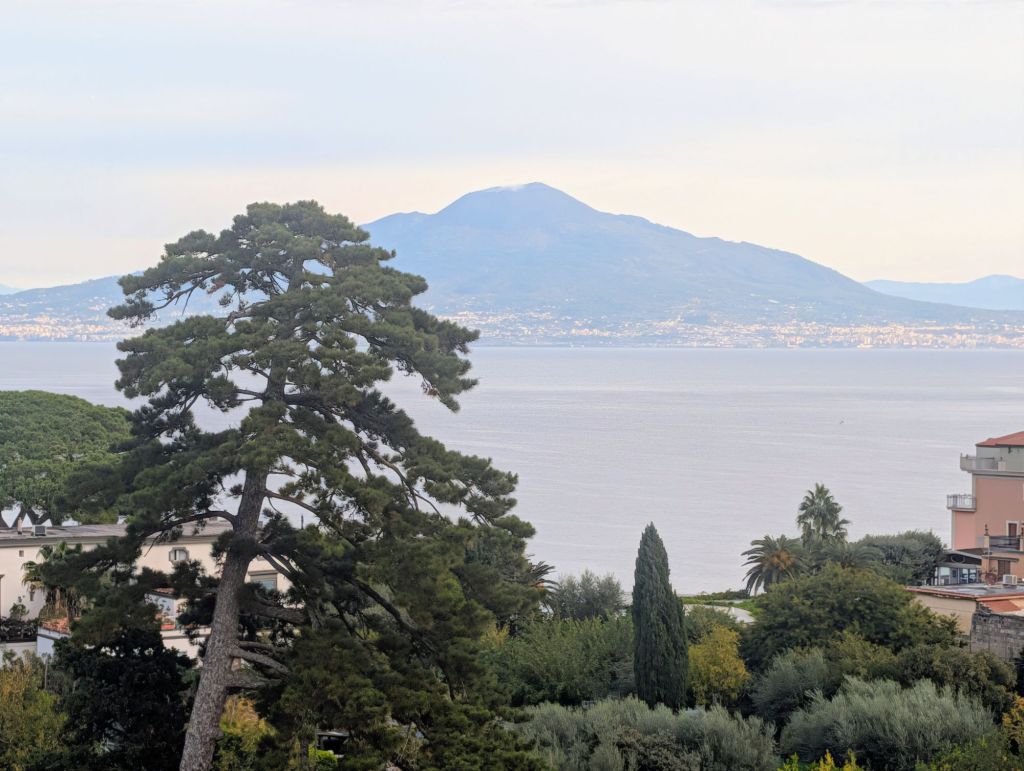
Sorrento is world renowned for its dramatic cliffside location with sweeping views over the Bay of Naples & out to Mount Vesuvius & as well as being known as the premier gateway to the Amalfi Coast & Capri.
The Roman name for Sorrento was Surrentum & it has been inhabited since the 8th Century BC.
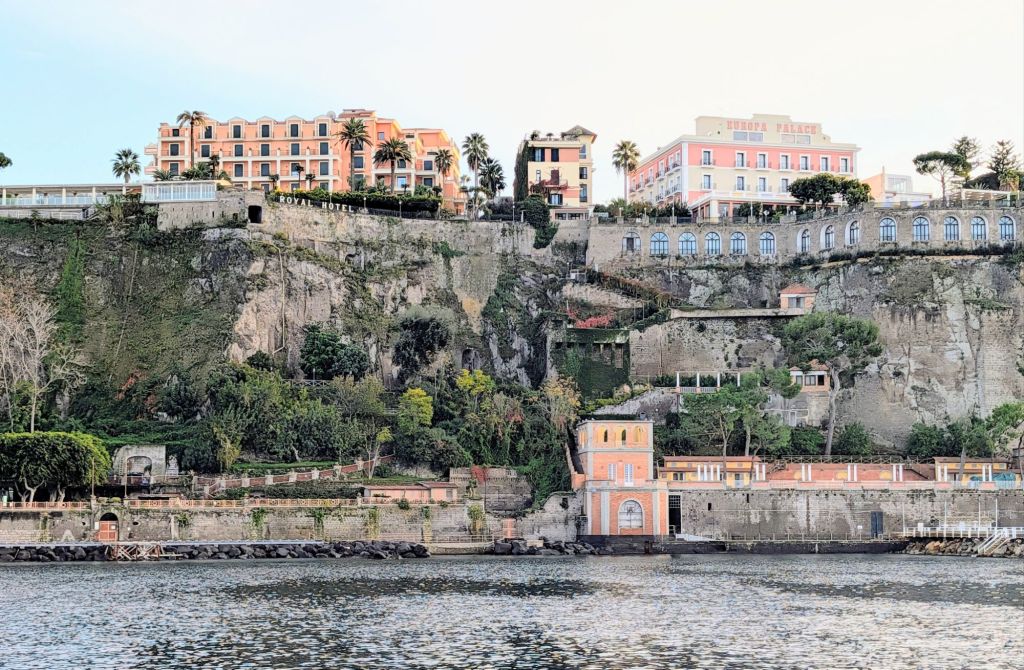
The name Surrentum is linked to the Greek word “sirreo” which means to flow together referring to streams meeting near the coast as well as possibly to the mythological realm for the Sirens who were said in Greek legend to lure sailors to their deaths along these very shores.
The most important temples in the city were dedicated to Athena & to the Sirens.
The temple to the Sirens here was the only one in all the Ancient Greek world.
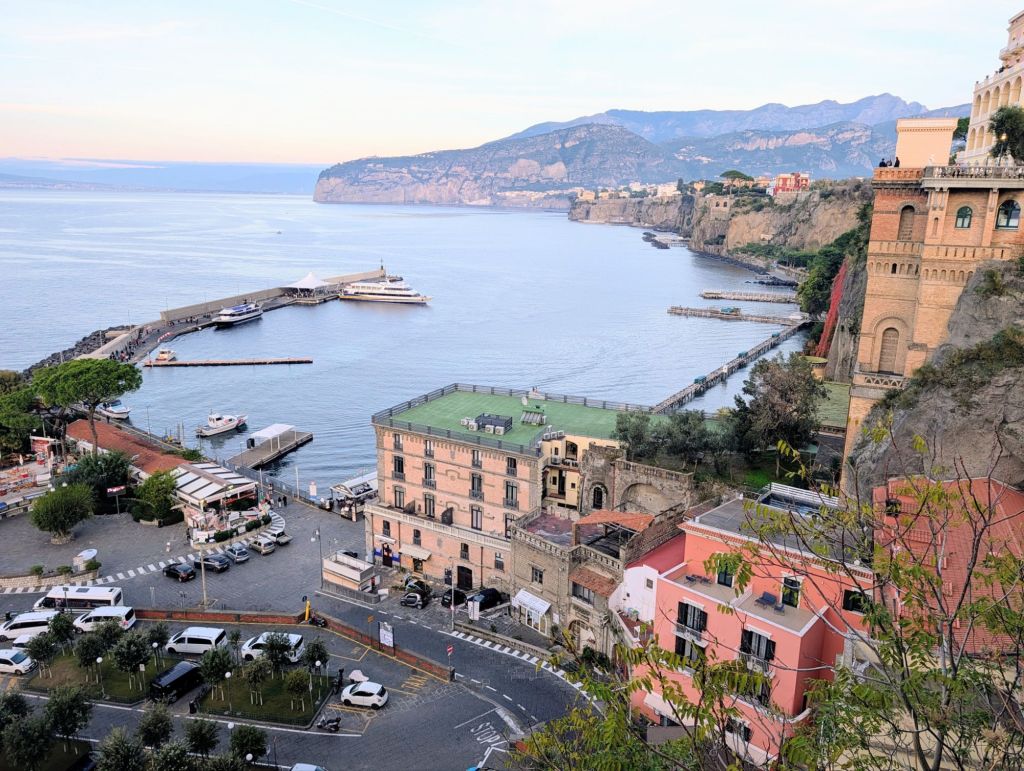
Sitting atop high cliffs overlooking the Mediterranean Sea, Sorrento has been a tourist destination since the Roman Empire.
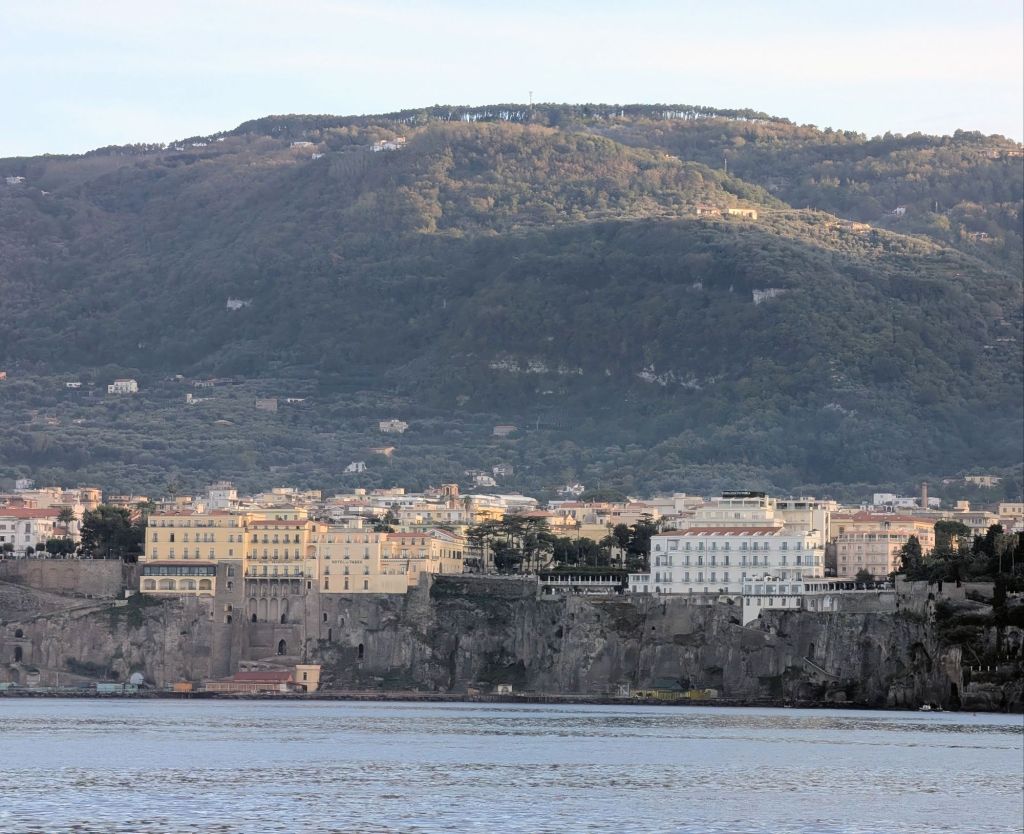
The views from Sorrento are still among the best on the peninsula & in the past, the cliffs were used as lookout points to spot enemy ships.
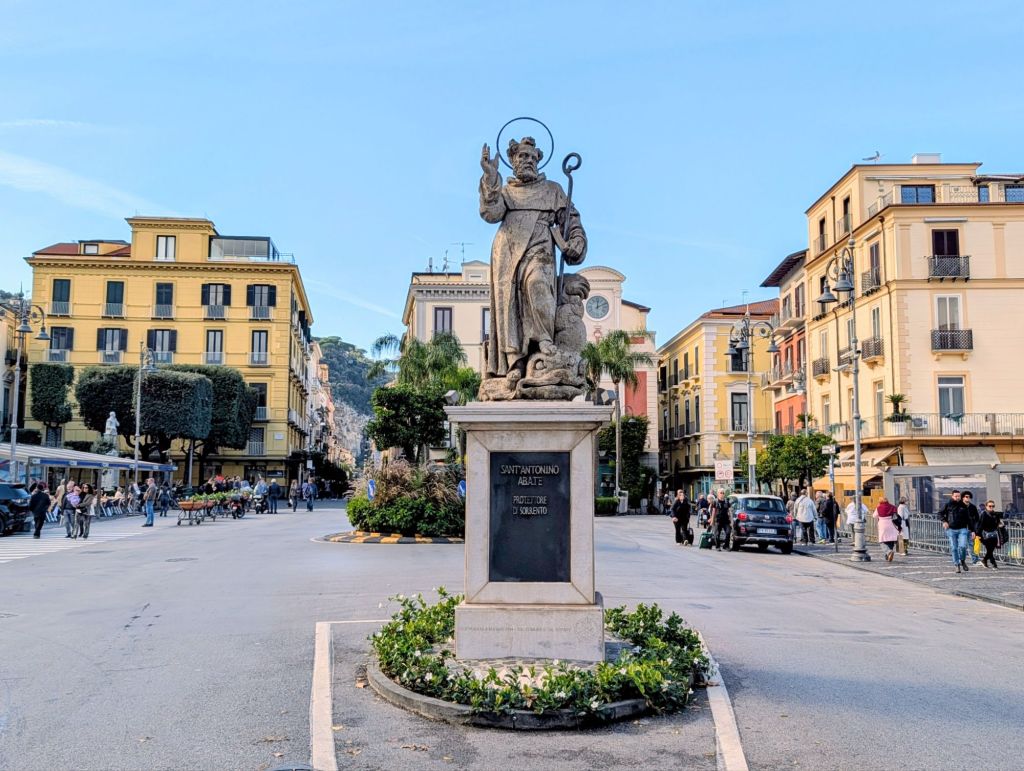
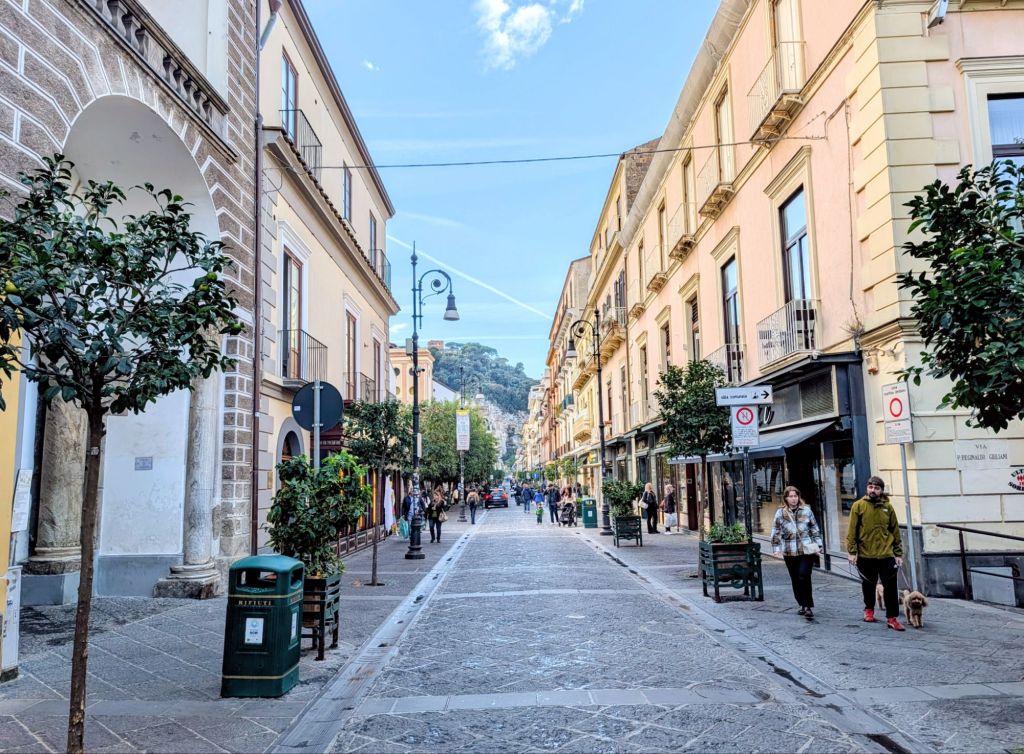
Piazza Tasso is the main square in the town center which is boarded with restaurants & shops.
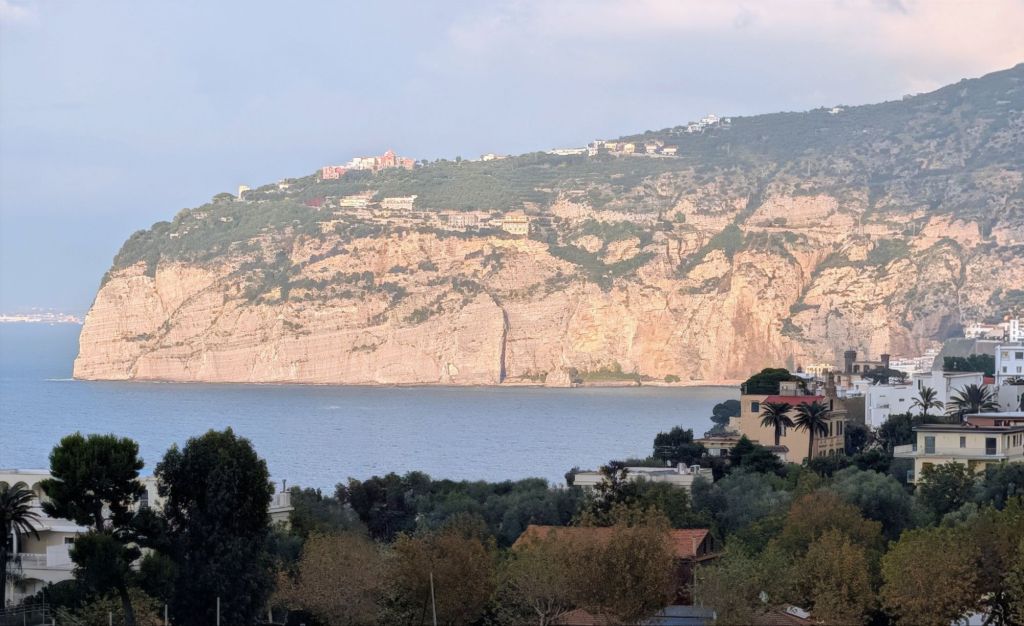
Naples is known for its pizza, Rome is known for its pasta, & Sorrento is known for its lemons.
There are so many lemon orchards in the city that the streets are literally citrus scented.
The Agrimunato is a public lemon & orange grove in the downtown area.
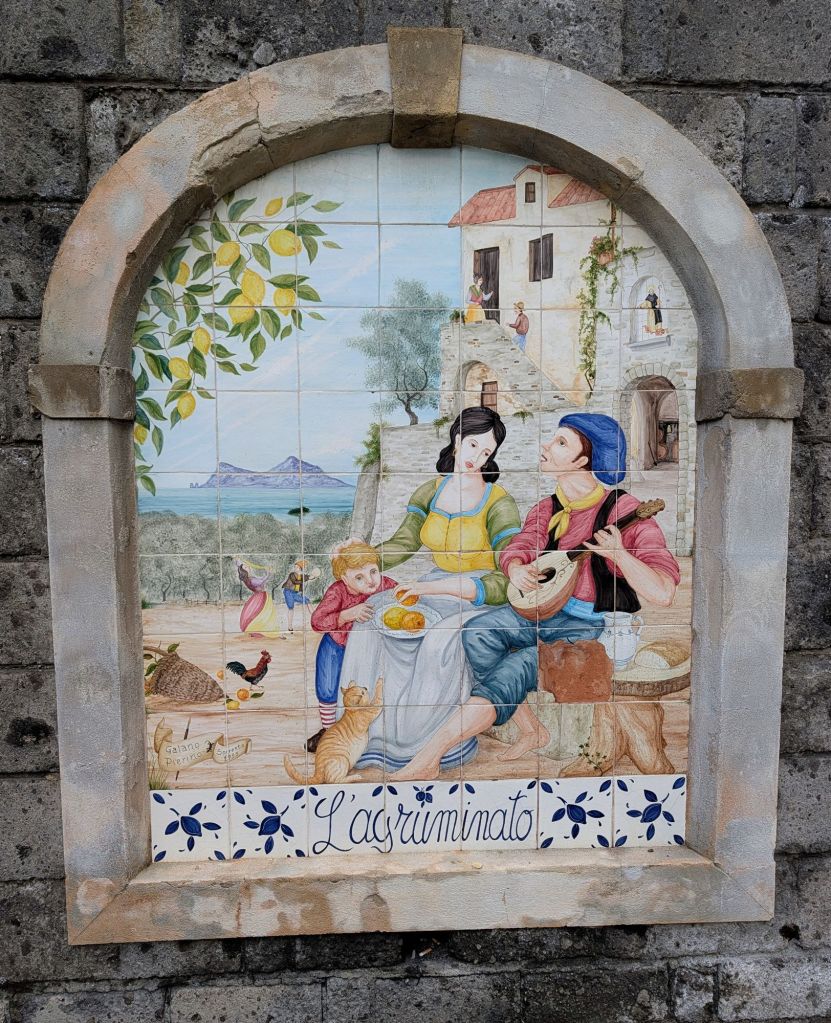
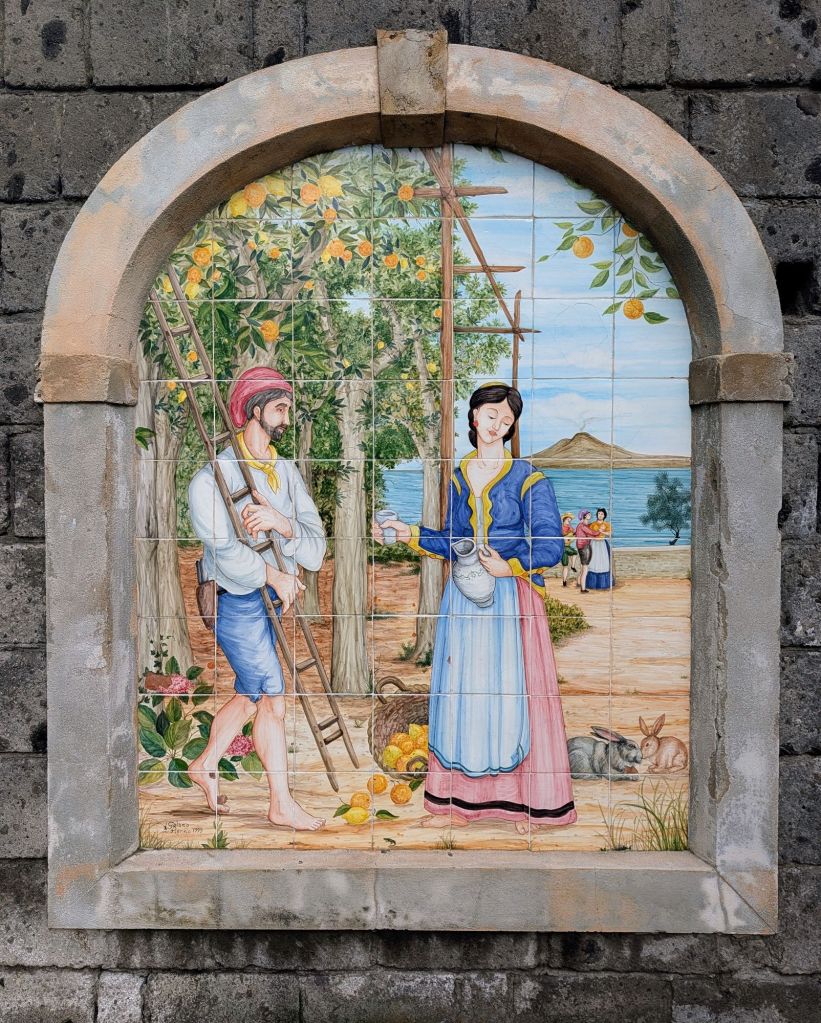
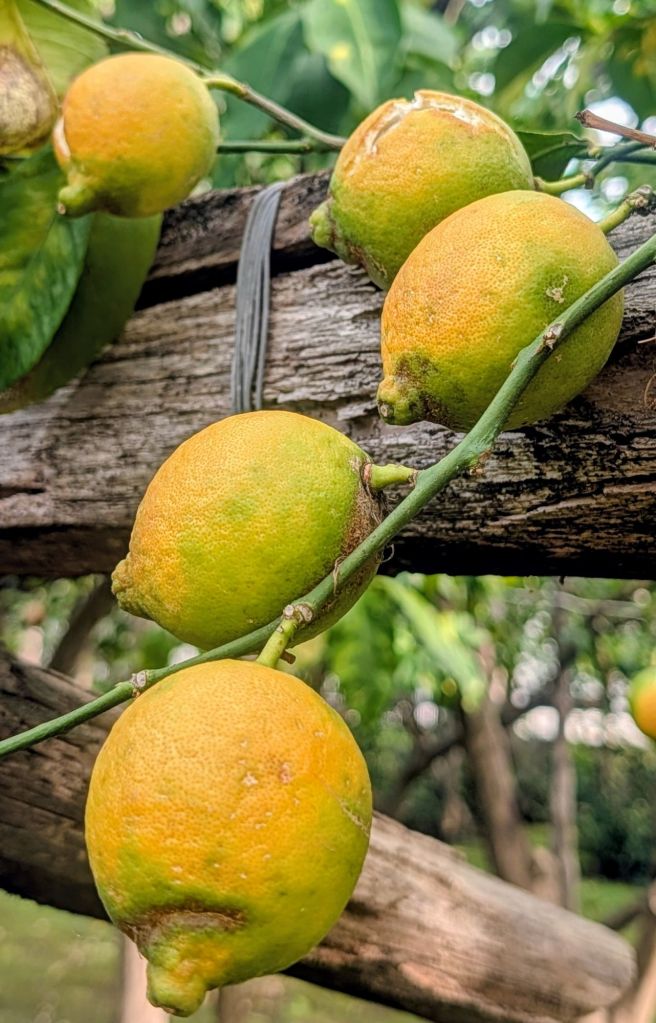
The lemon was transplanted & acclimatized in the Campania region during the 1st Century AD & more precisely, planted in the Sorrento area starting in 1500 AD.
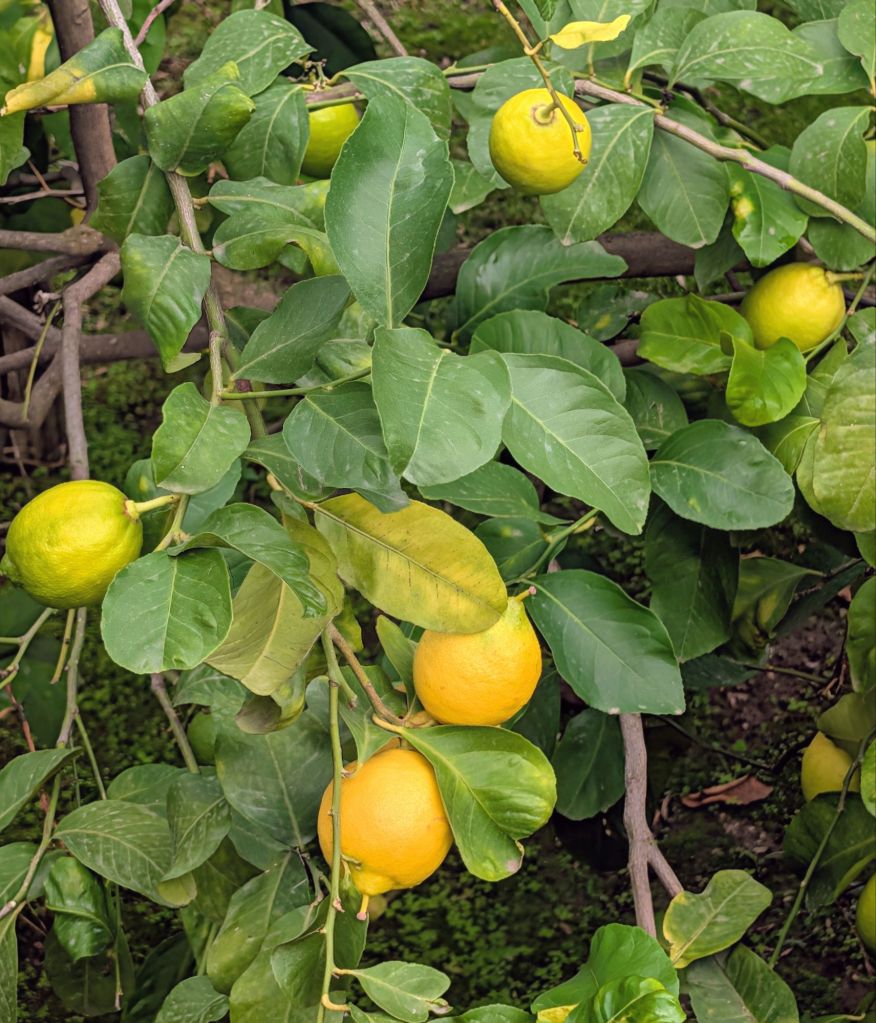
Since then, lemons produced in Sorrento have been prized for their intense flavor & healthy properties.
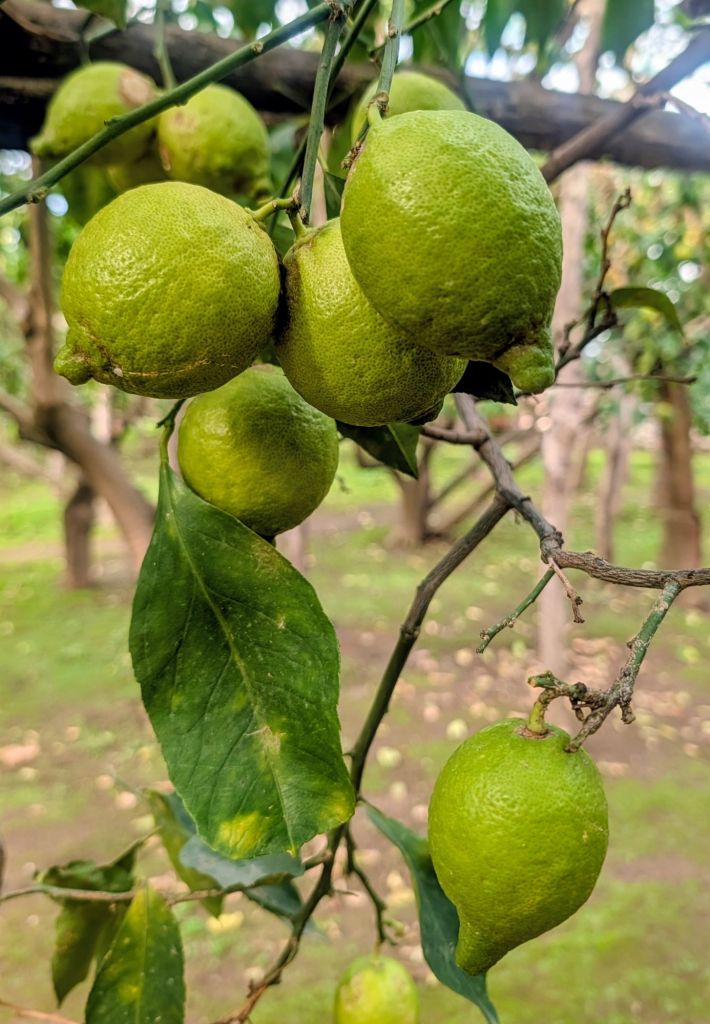
Peak lemon harvesting season is March through July; but, they grow here year round.
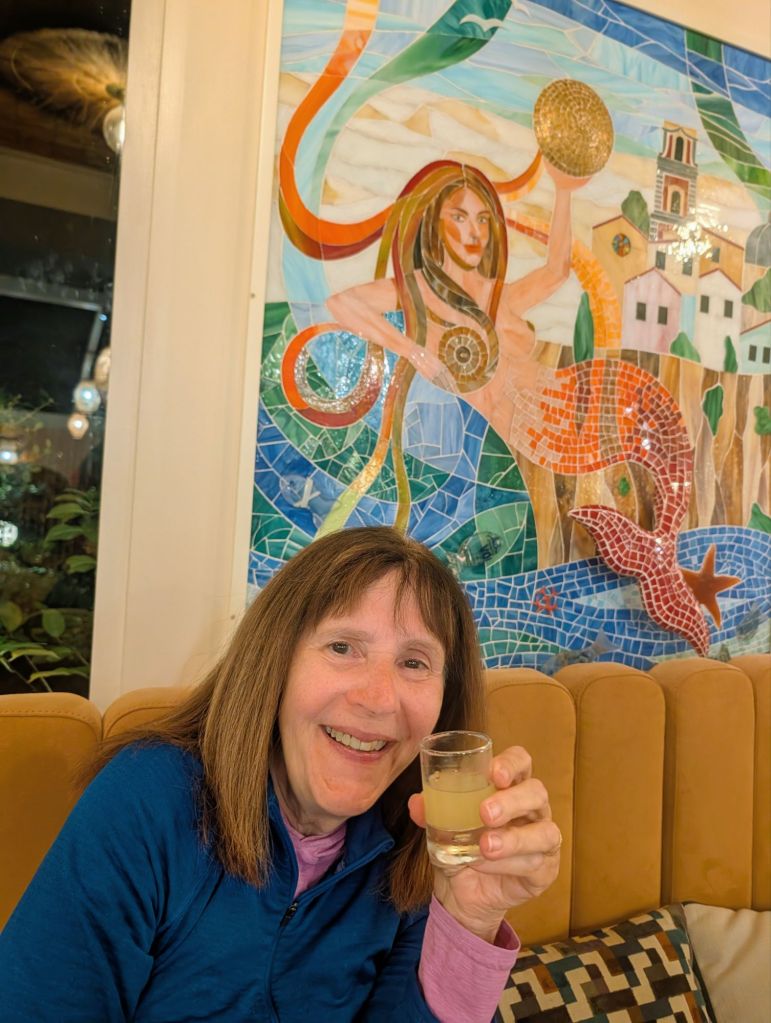
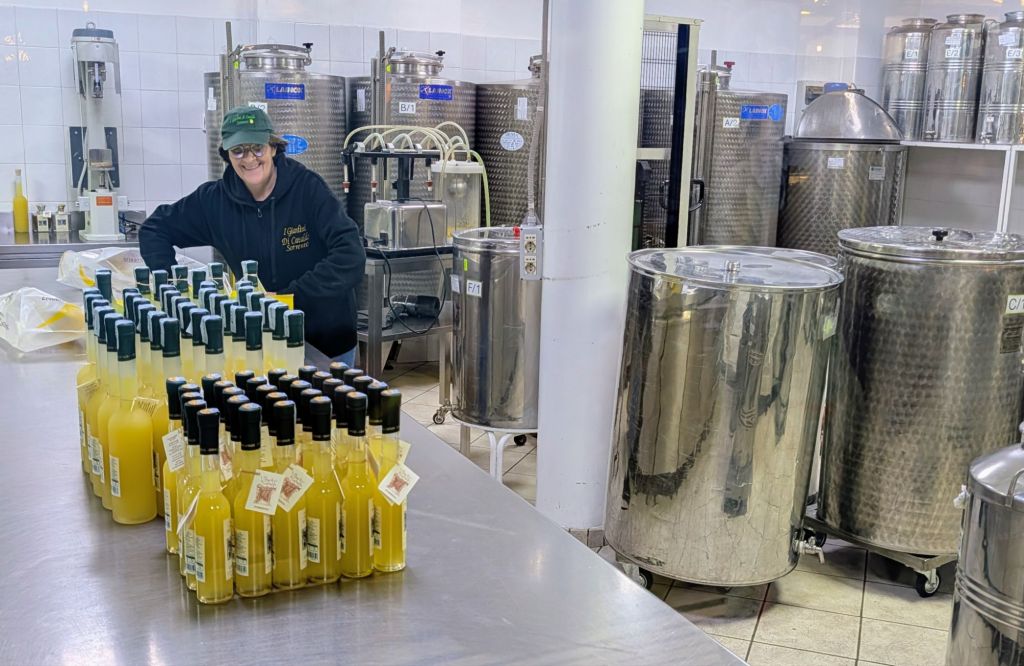
Limoncello which is an Italian lemon liqueur) is sold in almost every store & definitely served in every restaurant.
The Sorrento Pergolato is a canopy structure made from the ever present chestnut tree.
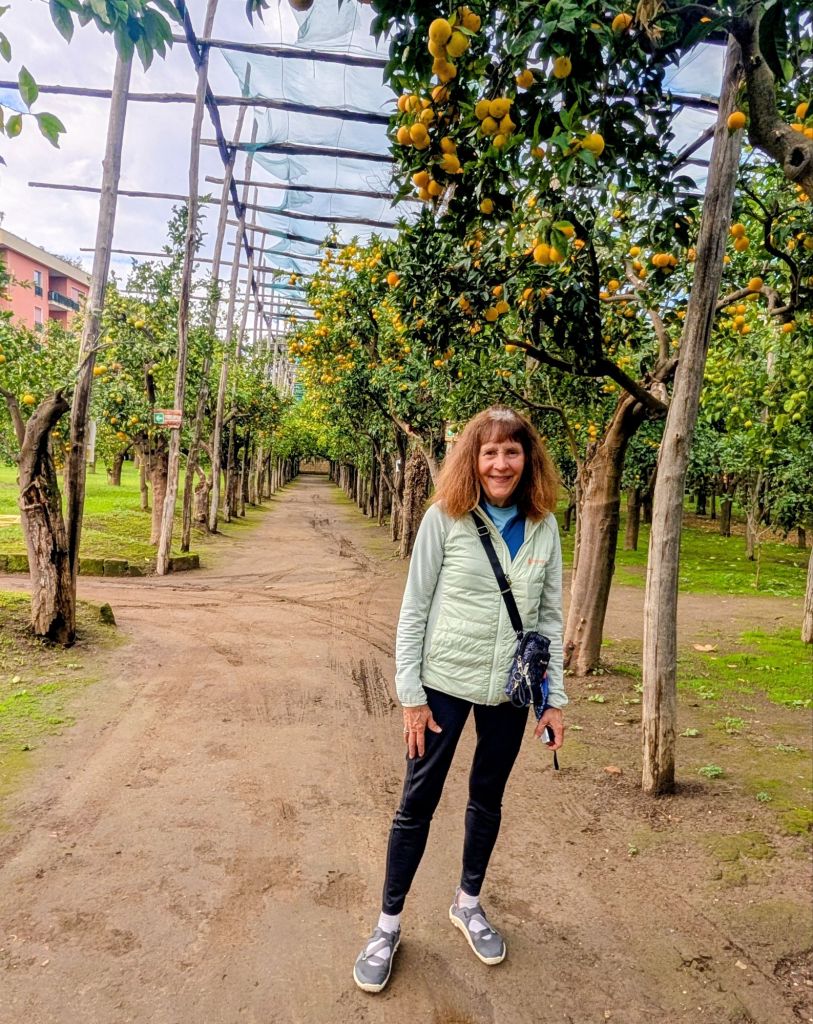
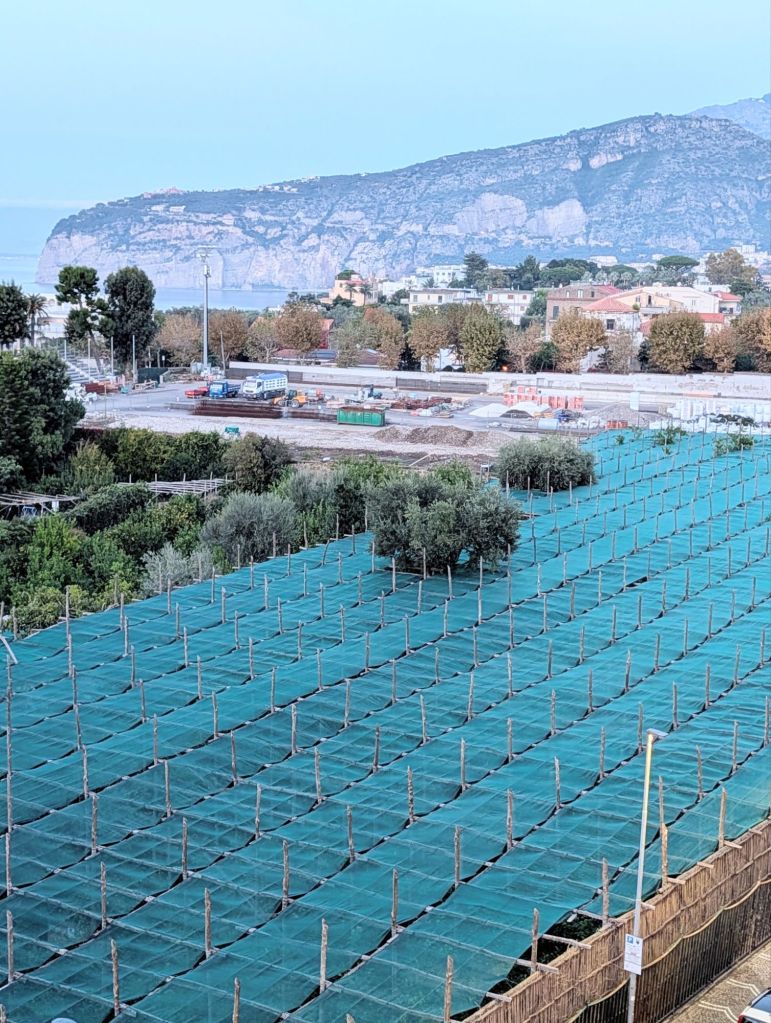
These trellis systems support the trees, protect them from high winds, & hold up netting called “pagliarelle” used to allow in sunlight for photosynthesis while protecting the trees from cold weather.
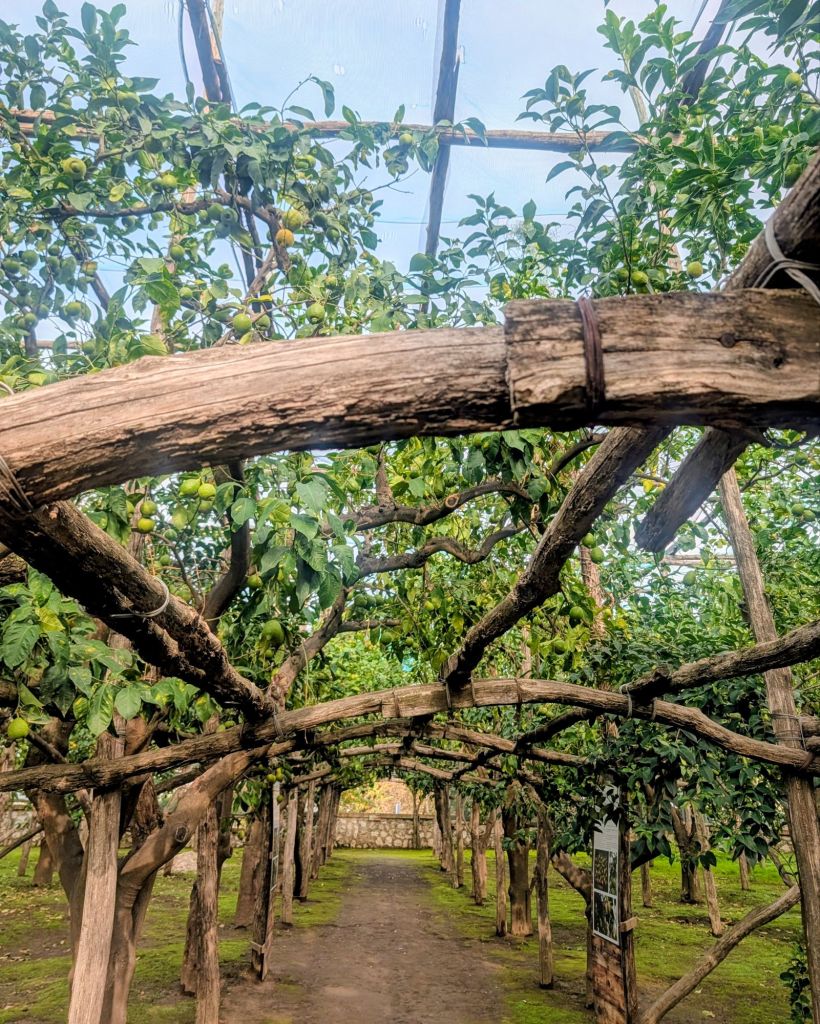
Originally, the overhead netting was made from finely woven mats.
Interdonato Lemon
In 1860, Colonel Giovanni Interdonato retired from a tumultuous military & political career to this area.everything seemed to be over.
His activity became that of a rather boring landowner; however, he had a profound passion for growing citrus fruit.
He cross bred a citron & the ariddaru which is a local lemon.
The result was a medium-large lemon, very similar to a citron with a delicate, slightly acidic flavor & very fine-grained peel which is unusual for lemons.
Since it’s peel is delicious, sweet, & not bitter, it is referred to as a lemon you can eat like an apple.
For this reason, it is called “frutto fino” (fine fruit).
However, this lemon named for its inventor is harvested in September as an “early season” crop, so we did not see any growing or sold in the store.
The Sorrento Blonde Orange
In 1877, the German philosopher Frederick Nietsche wrote this about visiting Sorrento:
“In Sorrento there are walks among the orange groves so well covered that one always feels sheltered from the wind as it blows impetuously outside in the world.”
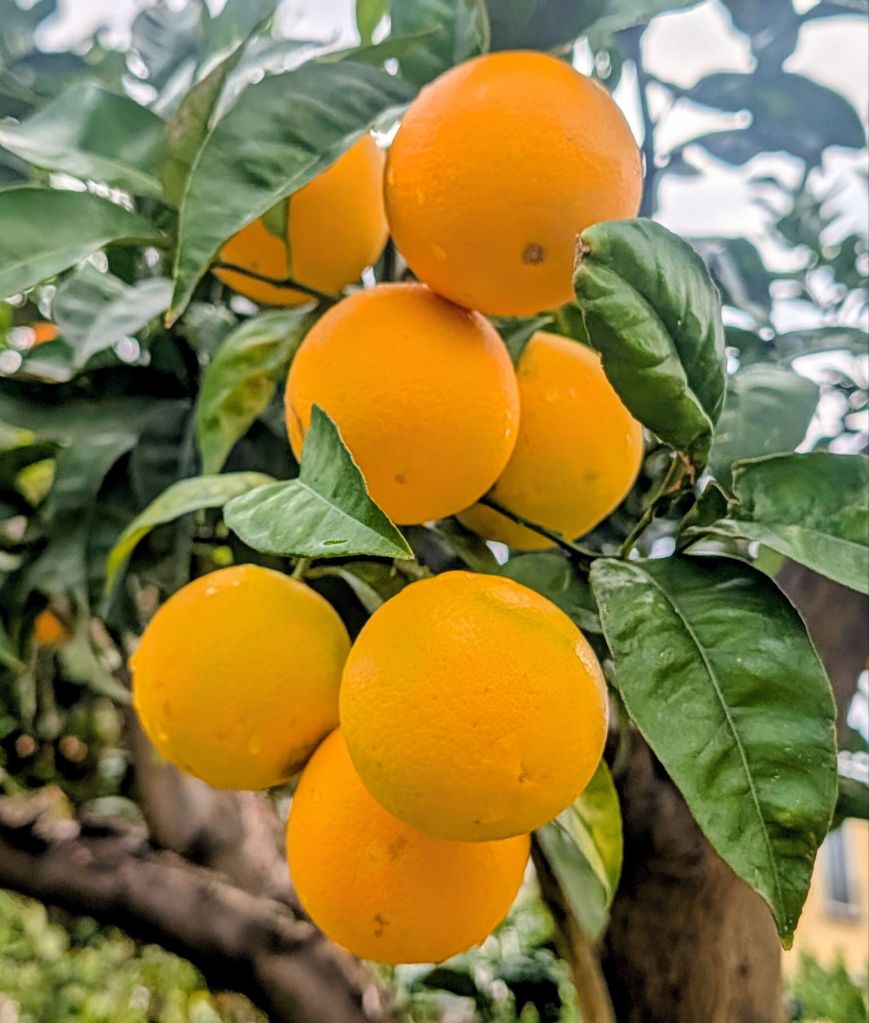
The Sorrento Blonde Orange was cultivated here two centuries before lemons were introduced to the region.
These oranges are not as famous as Sorrento’s lemons; however, they share some of the same properties.
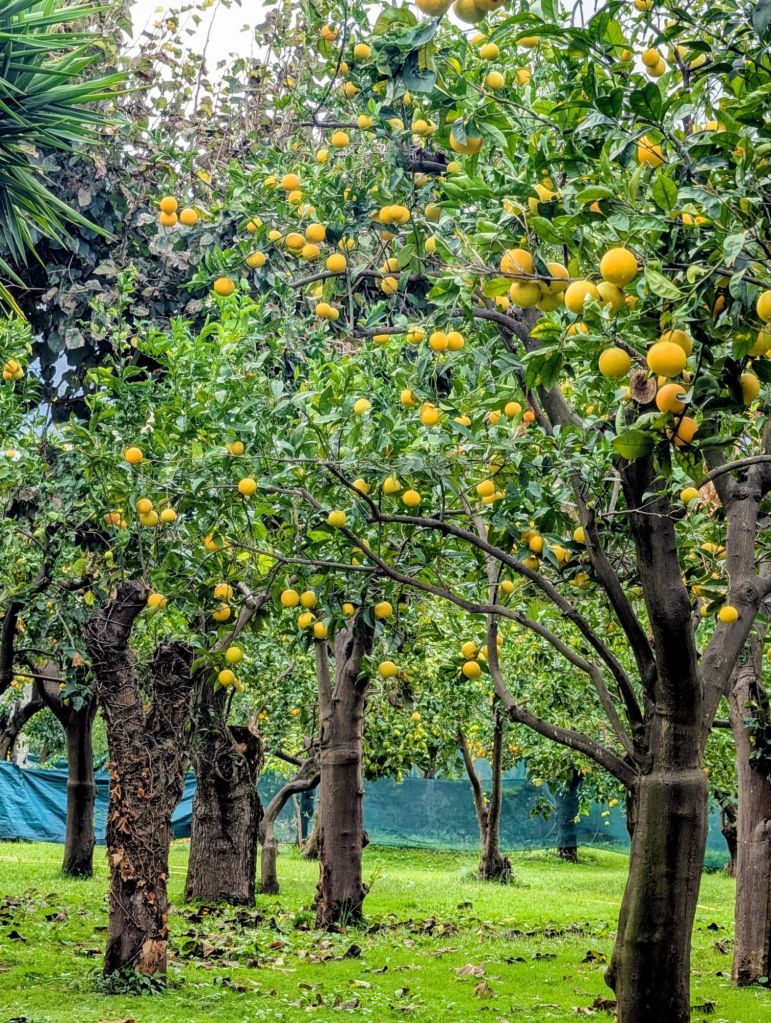
They have thick, aromatic peels & have a sweet, slightly sour, juicy taste.
Valle dei Mulini (Valley of the Mills)
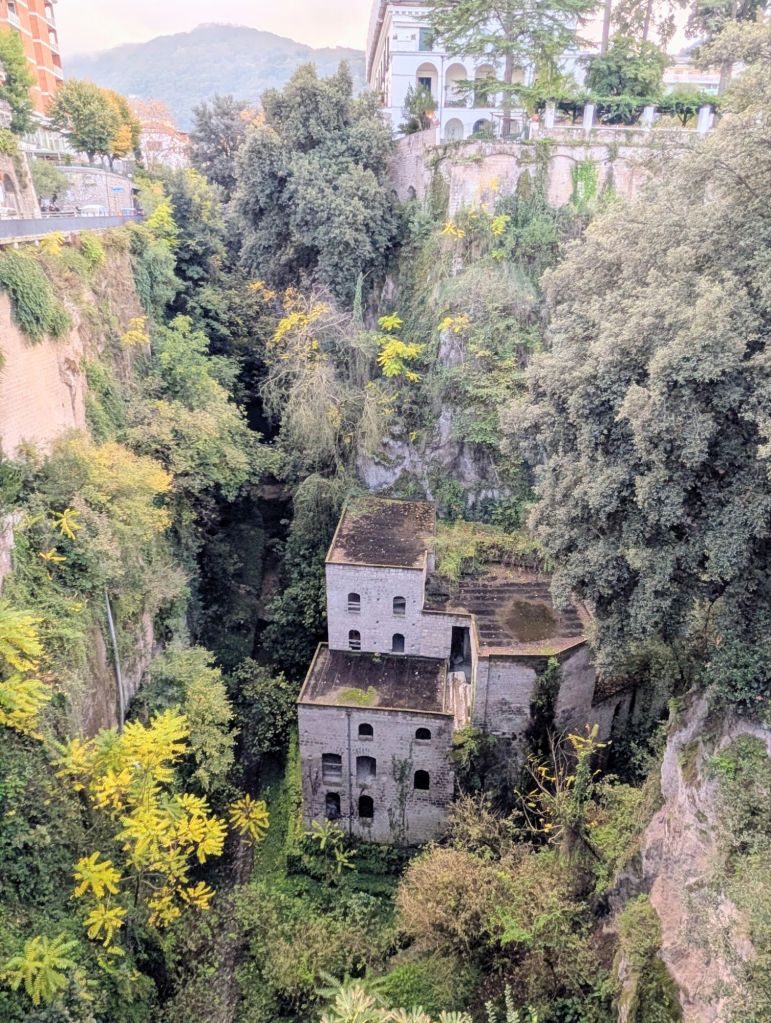
A crevasse filled with abandoned buildings is not much to look at; but, its history & geology are interesting.
The ruins from 13th Century flour mills as well as modern flour mills sit in a deep tufa valley.
The valley was formed by waters flowing into the tufa plain about 37,000 years ago following the eruption from the nearby volcano Campi Flegrei.
The flour mills used the constantly flowing stream at the valley’s bottom to ground wheat to provide flour for people in the area.
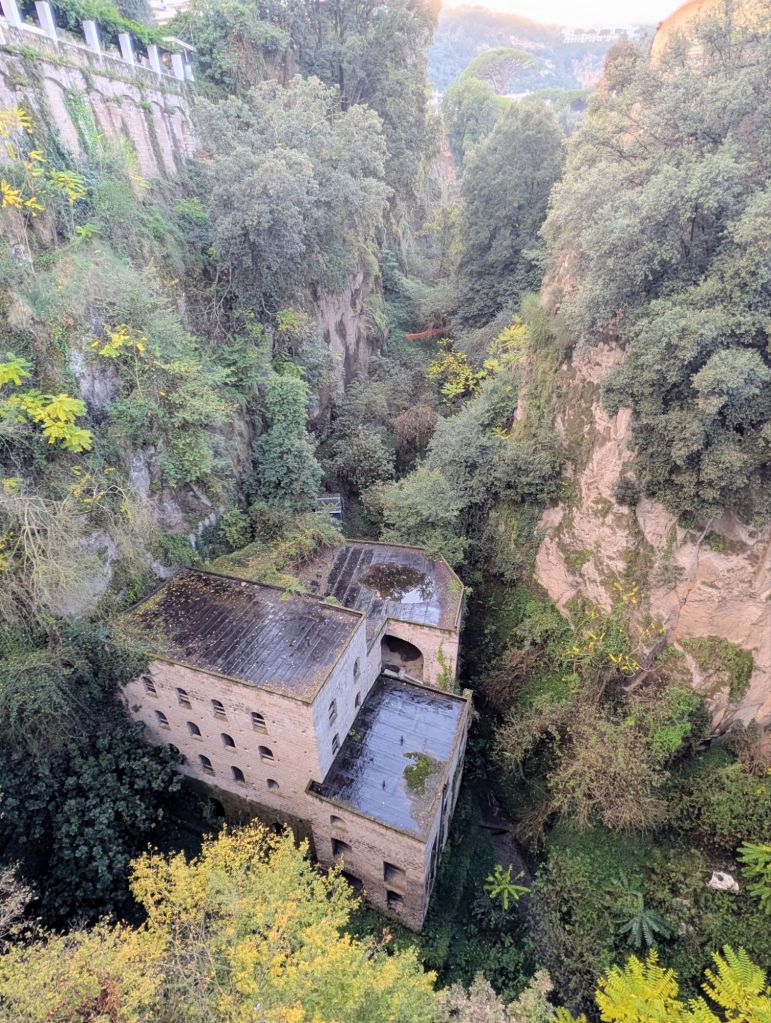
After flour milling was shifted to nearby pasta mills, this sunken industrial area became obsolete & the buildings were closed & abandoned in the 1940s.
The buildings have since been slowly taken over by the aggressive greenery that thrives in the humid crevasse.

