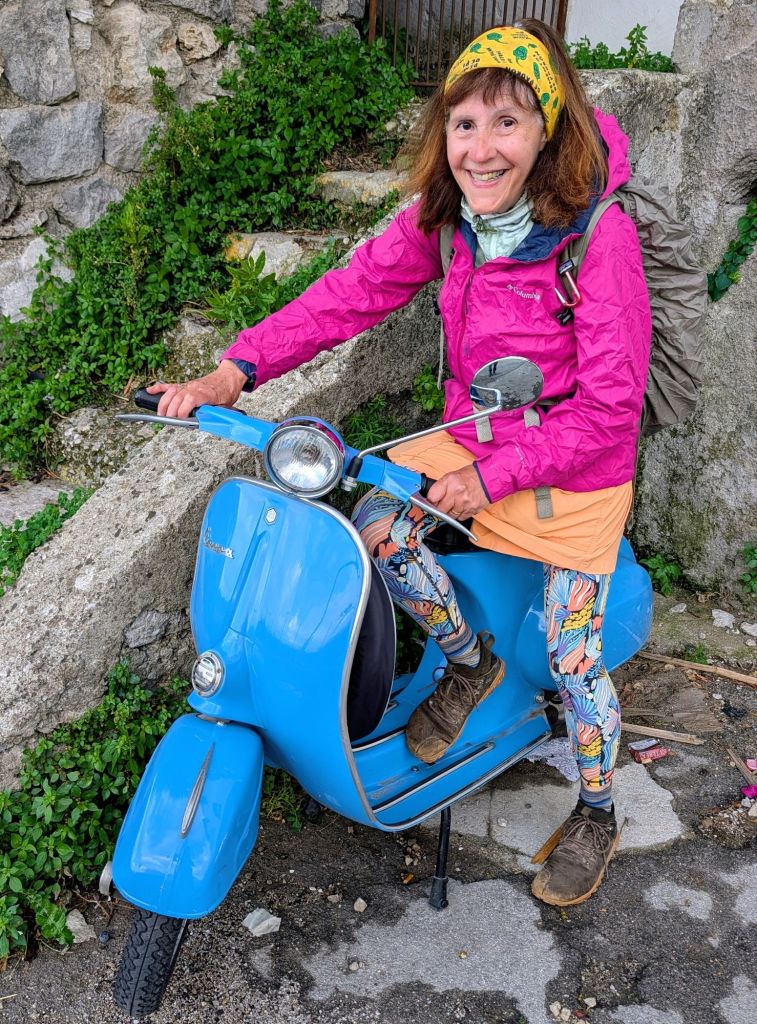
To reach Amalfi, we took a train from Naples to Salerno, then a ferry at sunset from Salerno to Amalfi.
Here are some Amalfi Coast images from our ferry ride:
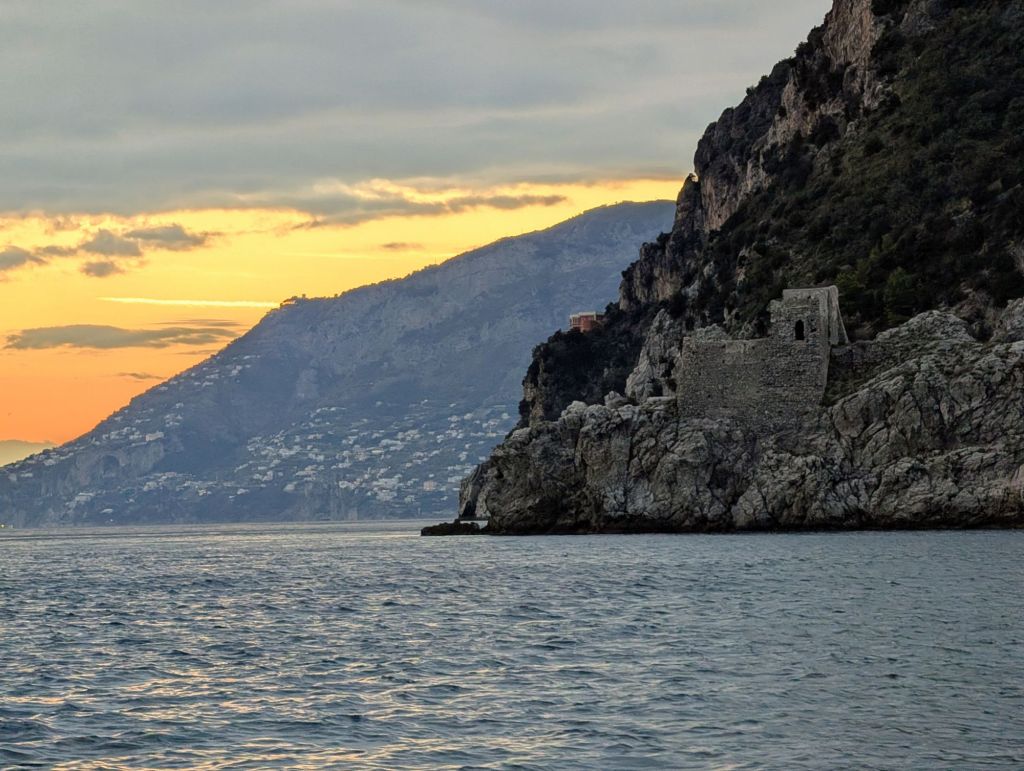
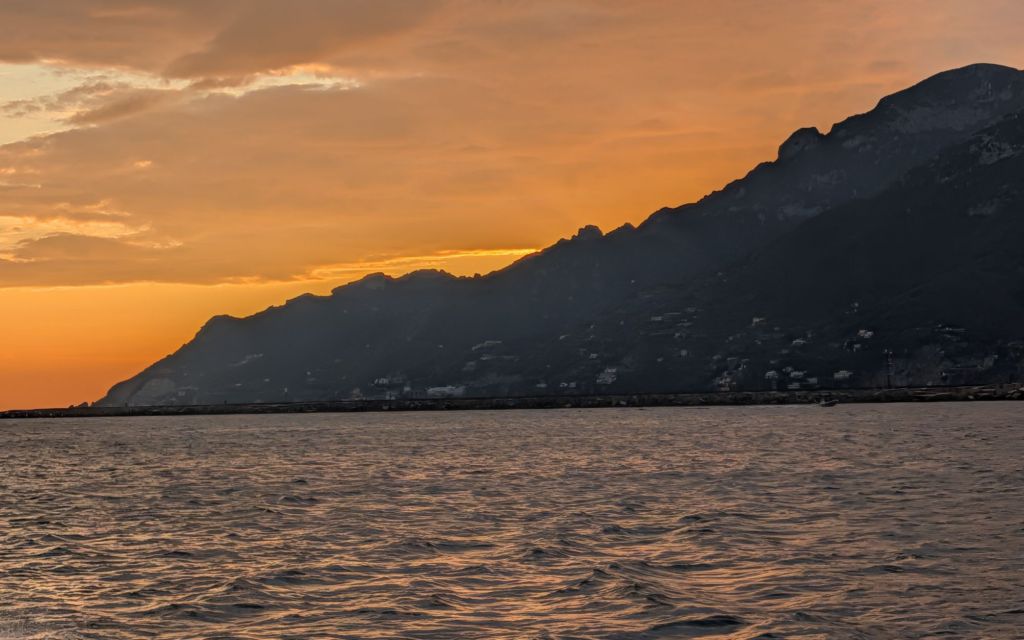
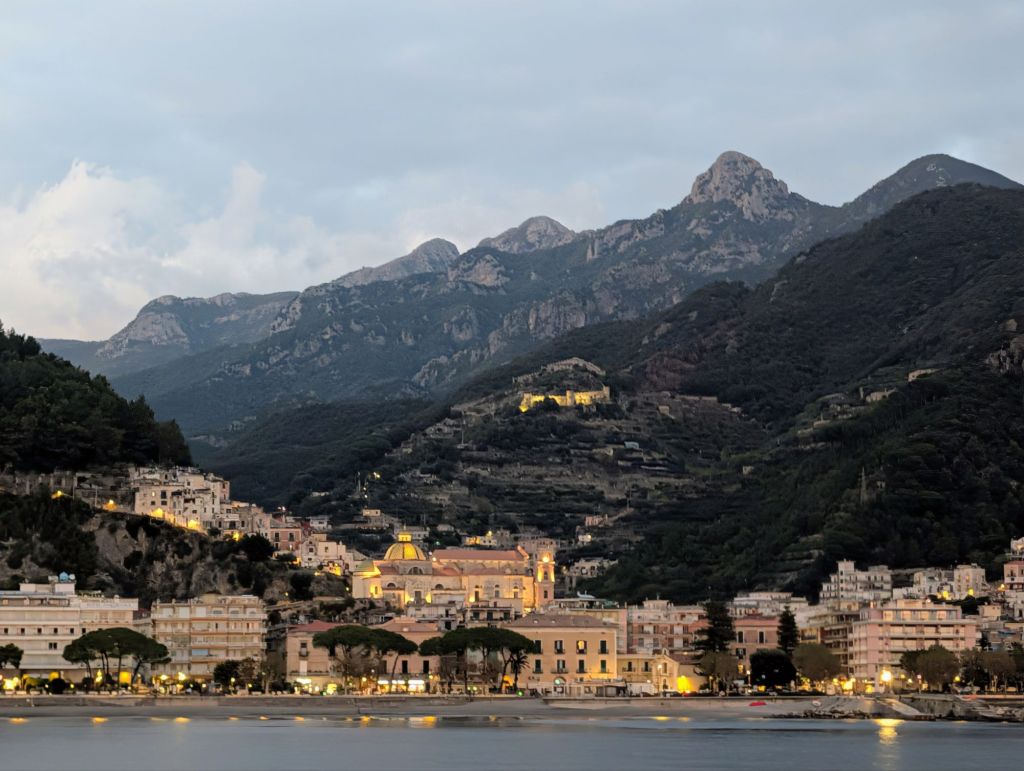
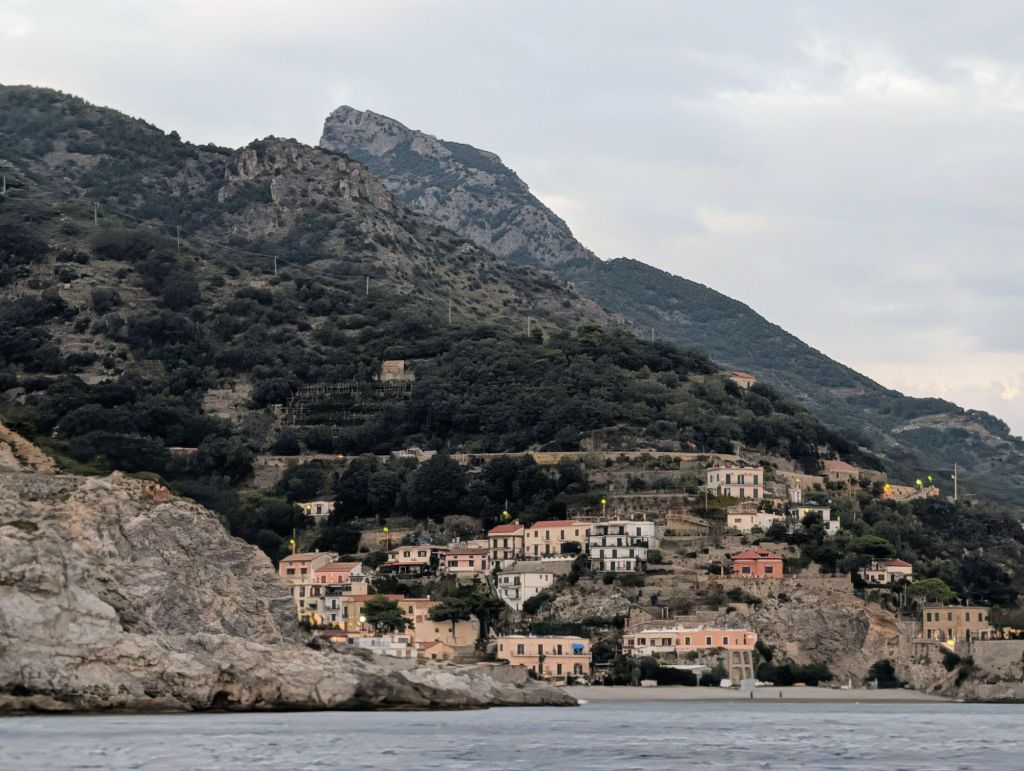
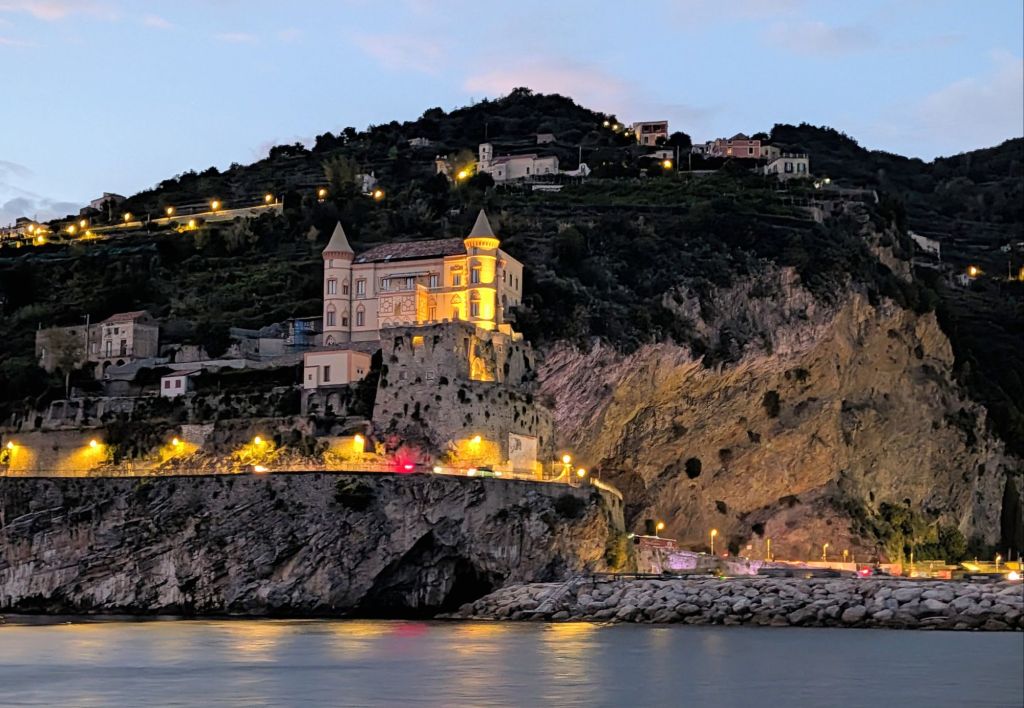
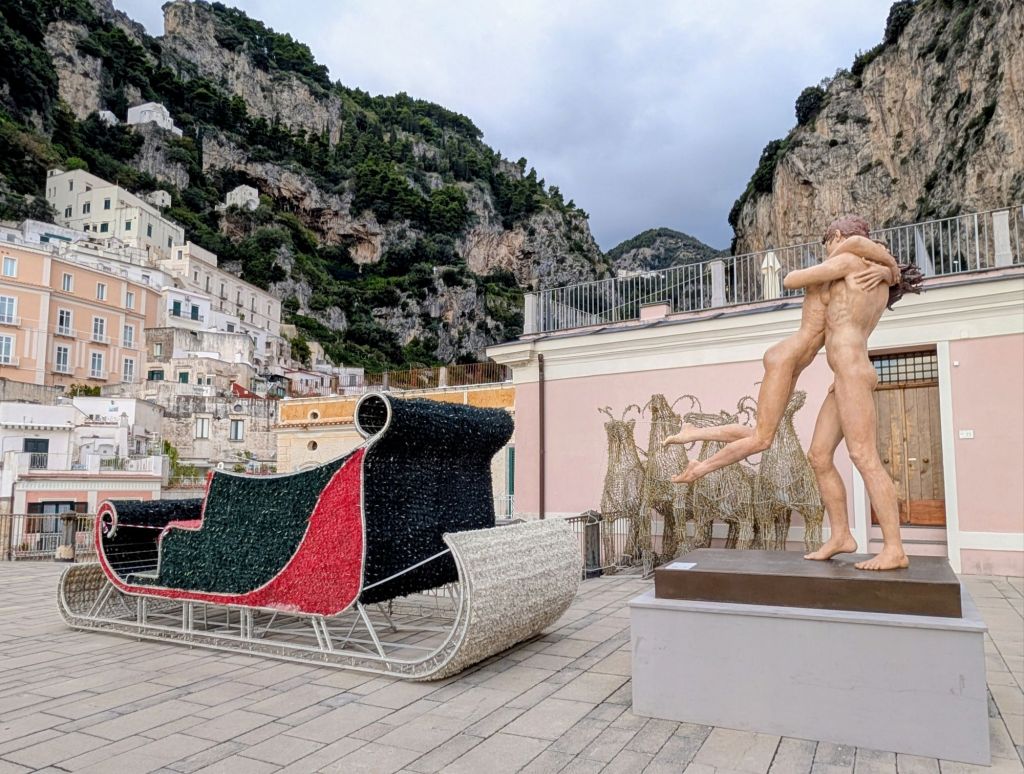
According to legend, Amalfi’s founding is linked to a short, passionate, & mythological love between the demigod Hercules & the beautiful water nymph Amalfi.
His true love’s sudden death at a young age prompted the heartbroken Hercules to look for the most breathtaking place worthy to bury her & honor her memory.
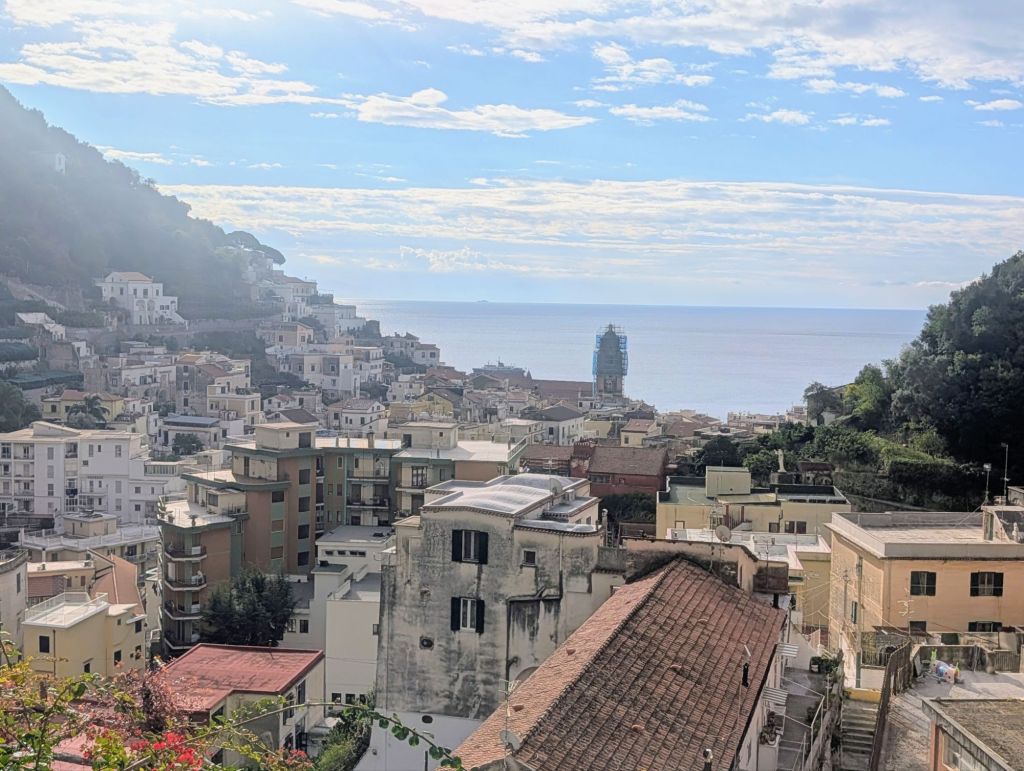
Hercules founded & built the coastal town right over her final resting place & named it Amalfi after her.
Also, according to the legend, Hercules defeated a never-sleeping, hundred-headed dragon guarding the mythical Garden of the Hesperides from which he stole fragrant lemon trees & planted them across the rugged landscape in her honor which gave rise to the region’s famous sweet Amalfi lemons.
In reality, the town’s name likely derives from ancient Roman roots such as the family Amalphia or the nearby Melphes River with the settlement first documented historically around 533 AD under Byzantine rule.
Amalfi is the oldest maritime republic in Italy & was a medieval power.
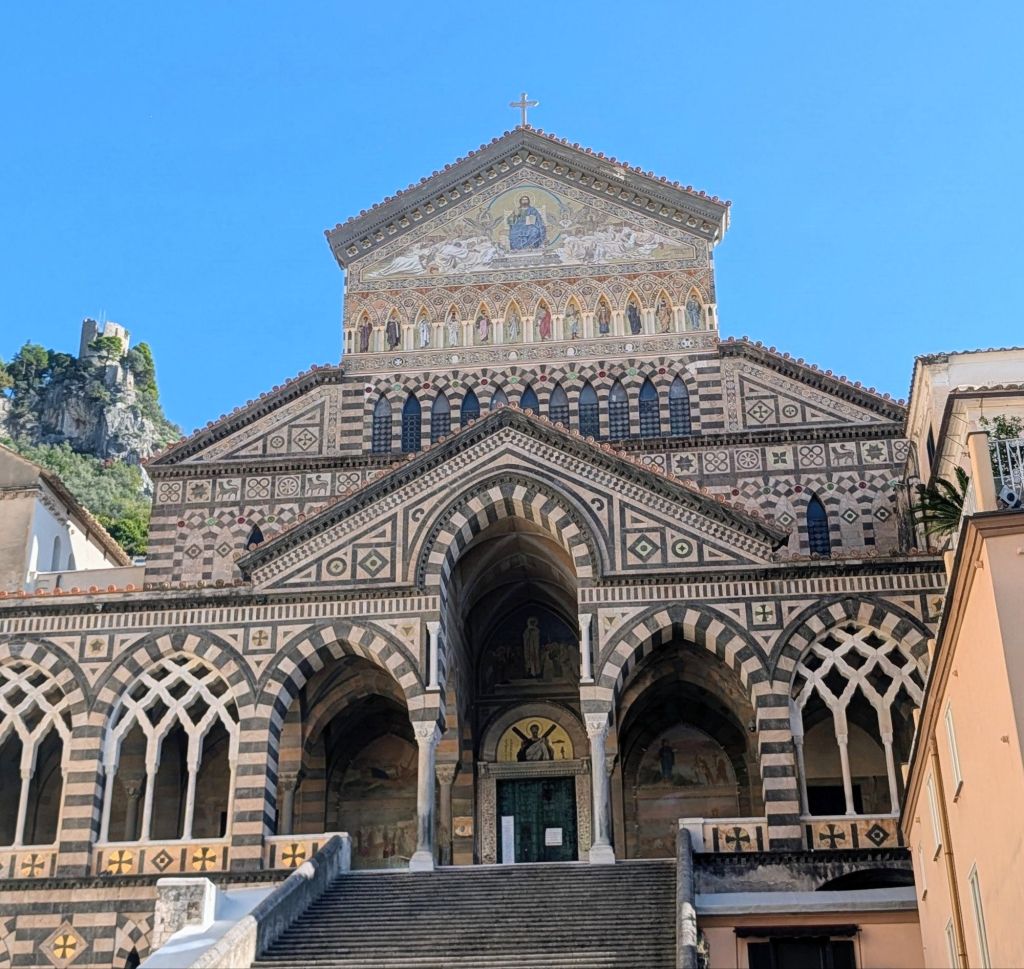
Amalfi’s townscape is clustered, little white houses and buildings, narrow alleyways, & shady porticoes, dominated by the large cathedral with its brightly colored tiles typical in the region.
With its black & white striped exterior & arched windows,
the 13th Century Cathedral of St. Andrew (Duomo di Sant’Andrea) is the town’s main square’s focal point.
Villa Cimbrone
We hiked from Amalfi up to Villa Cimbrone which was basically all uphill because Amalfi is on the coastline & Villa Cimbrone is situated about 1,900 feet straight up from the sea.
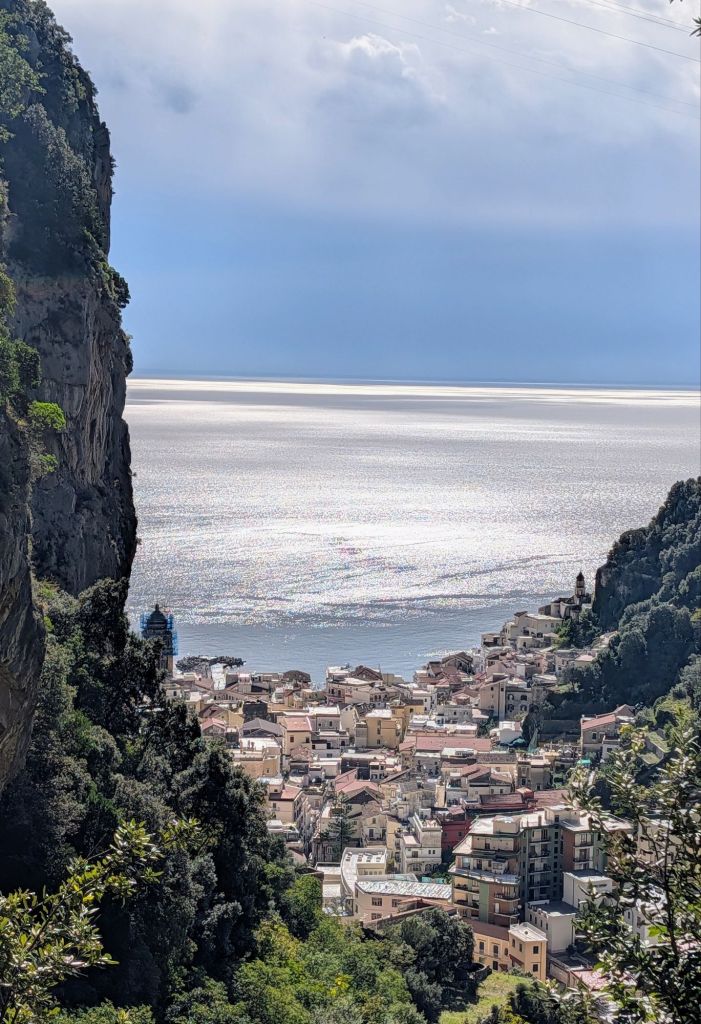
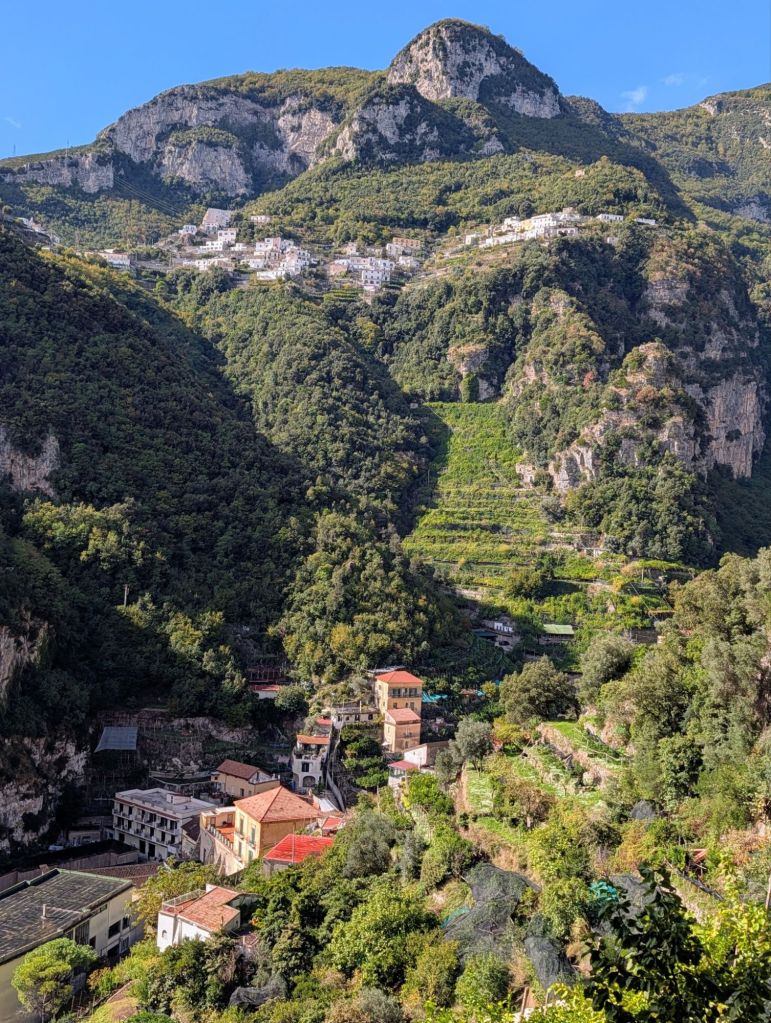
However, the climb from Amalfi was not just straight up; but, rather up, then down, back up, then down a little more, then straight up.
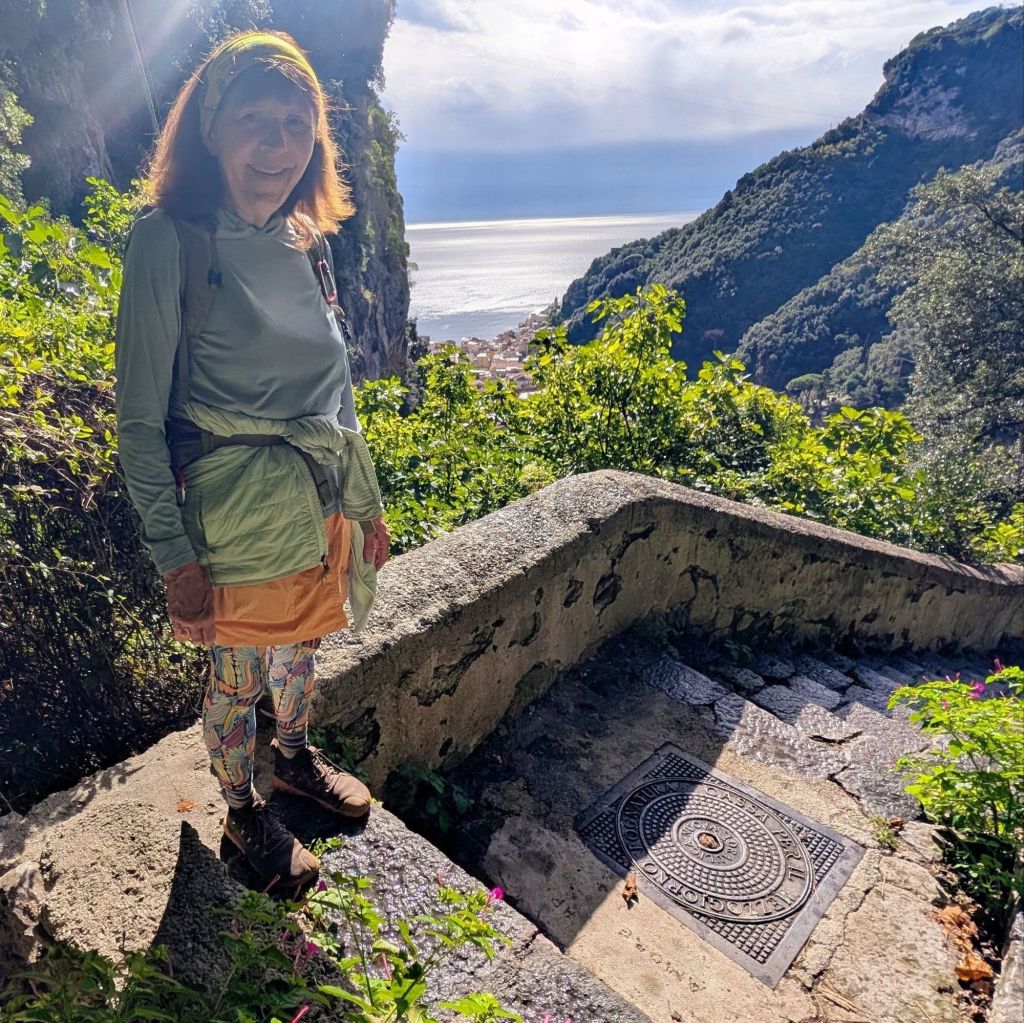
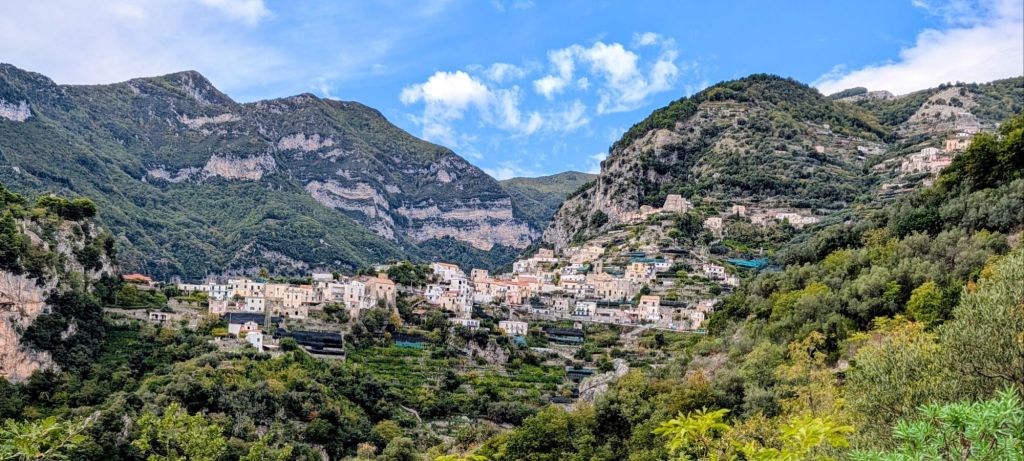
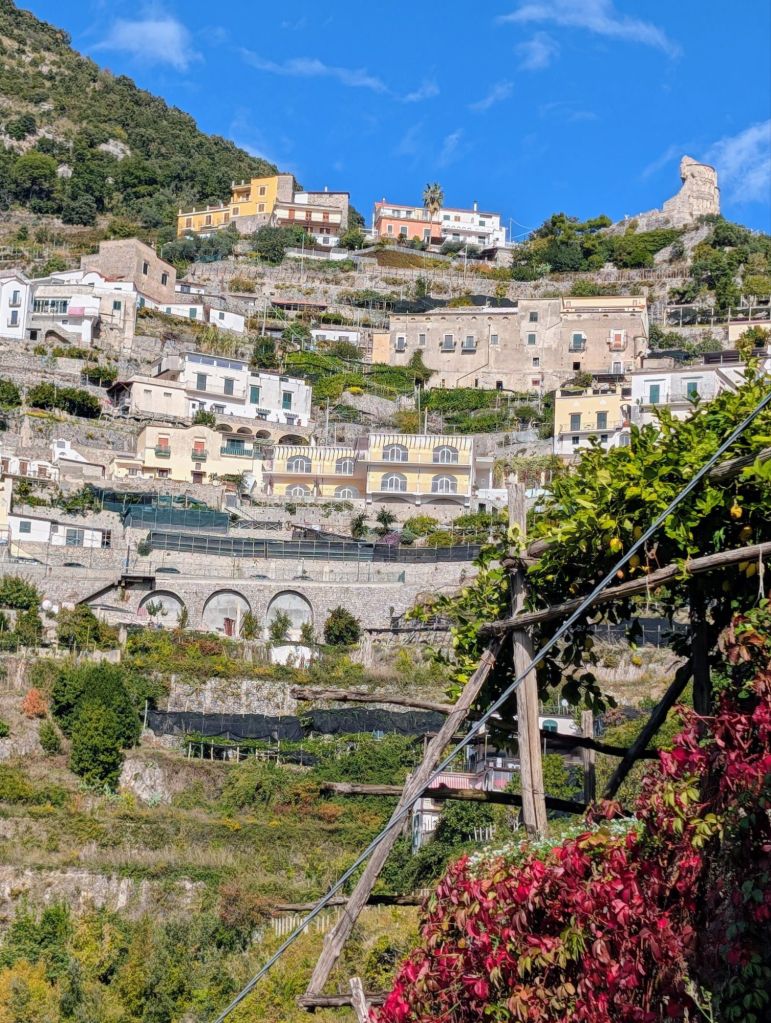
The walk was on thousands of steps made with uneven heights & surfaces which added to the difficulty.
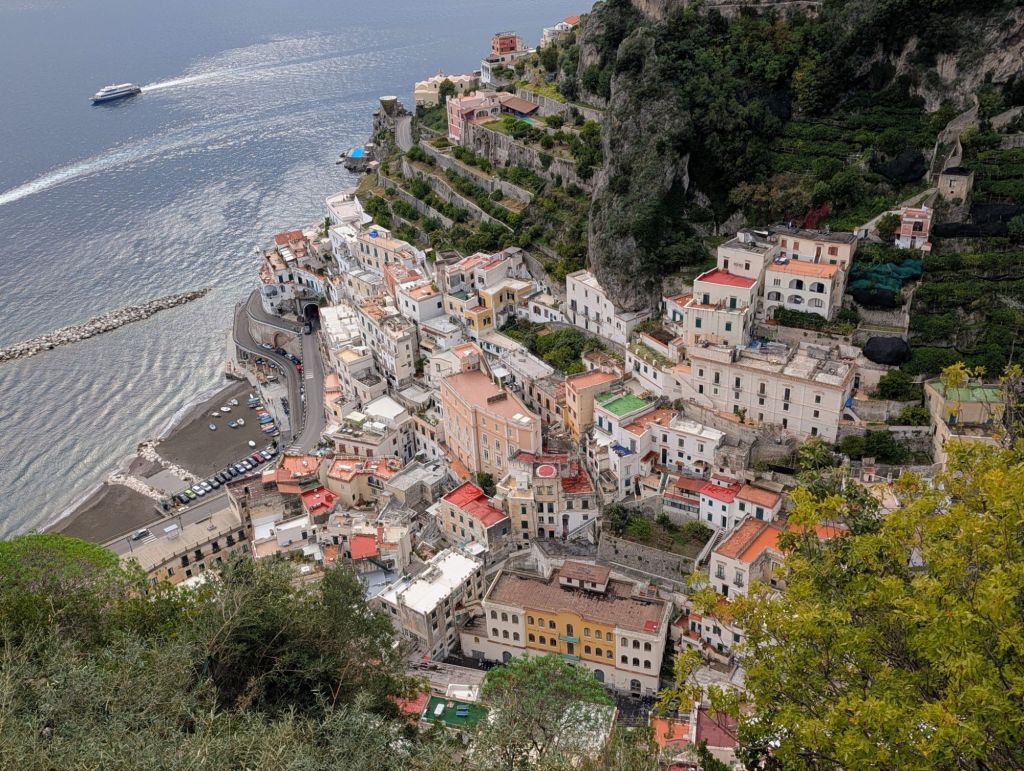
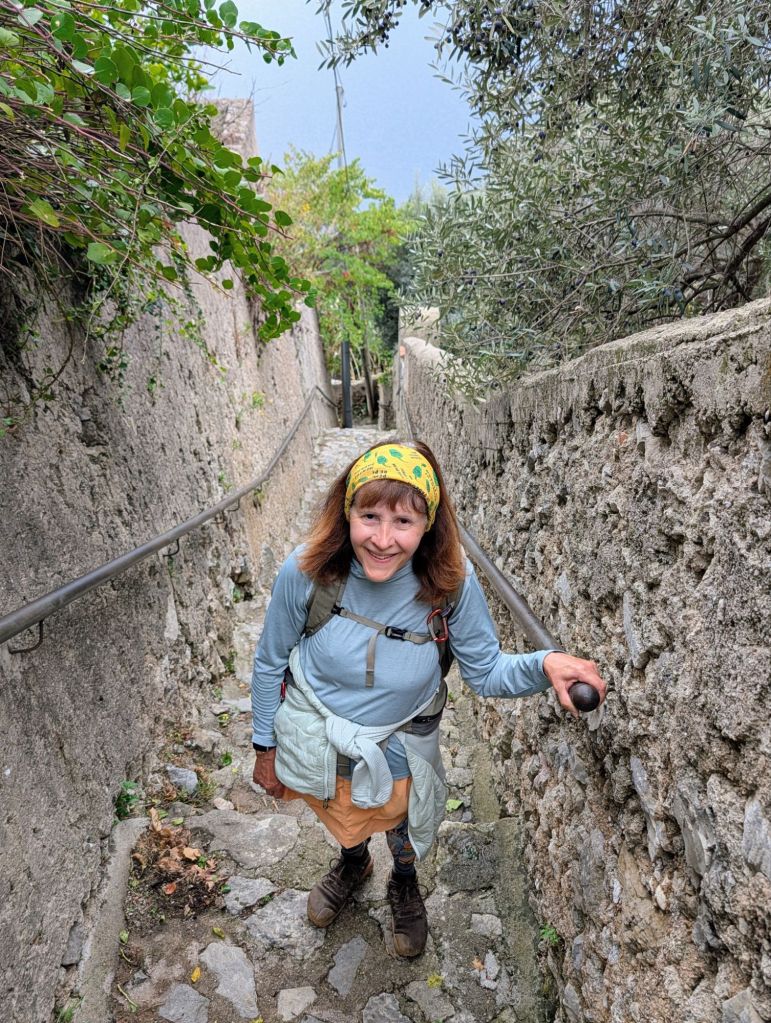
Almost there- Gina on the staircase high above the sea
Villa Cimbrone is an historic estate on Italy’s southern coast located in Ravello.
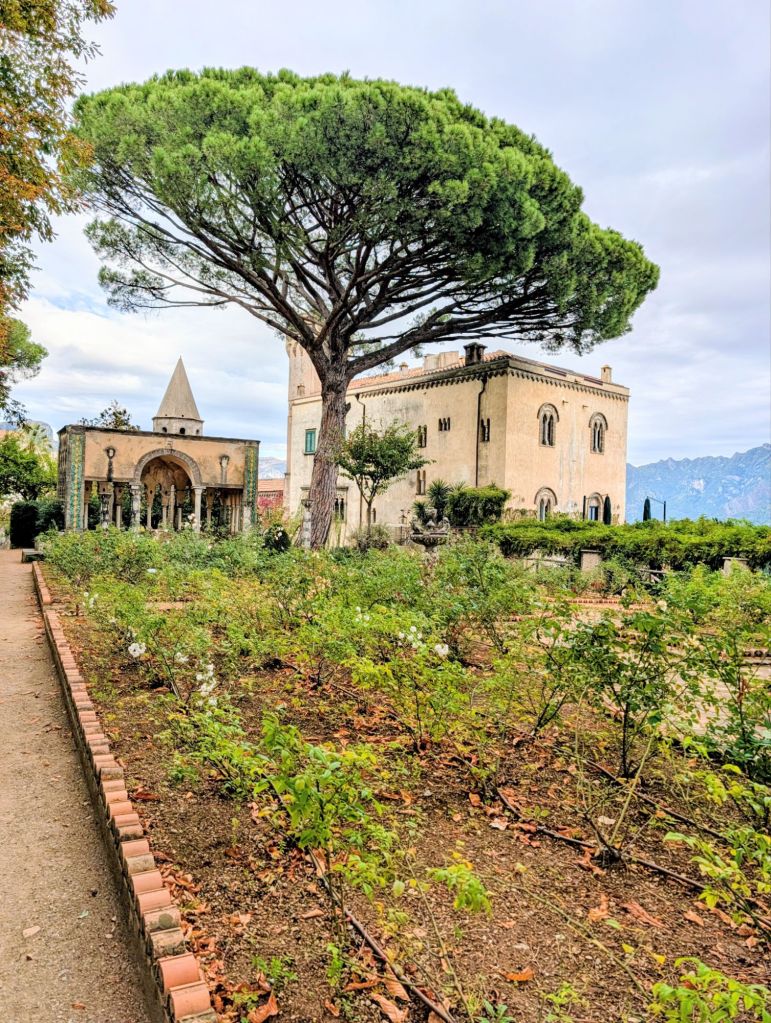
Its crowning jewel is its terraced balconies which are covered in elegant, manicured gardens perched at cliff’s edge above the ocean offering stunning views described as “closer to the sky than the seashore.”
The views are breathtaking from its legendary Terrace of Infinity which showcases Roman-style statue busts overlooking the rugged Amalfi Coast.
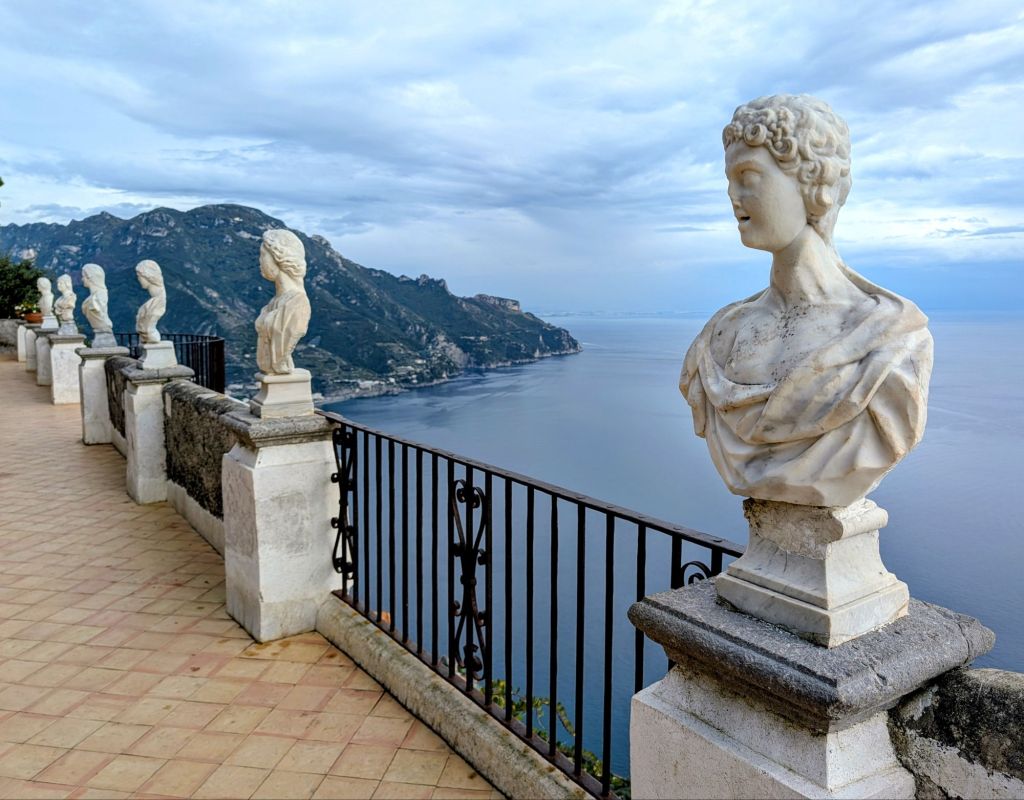
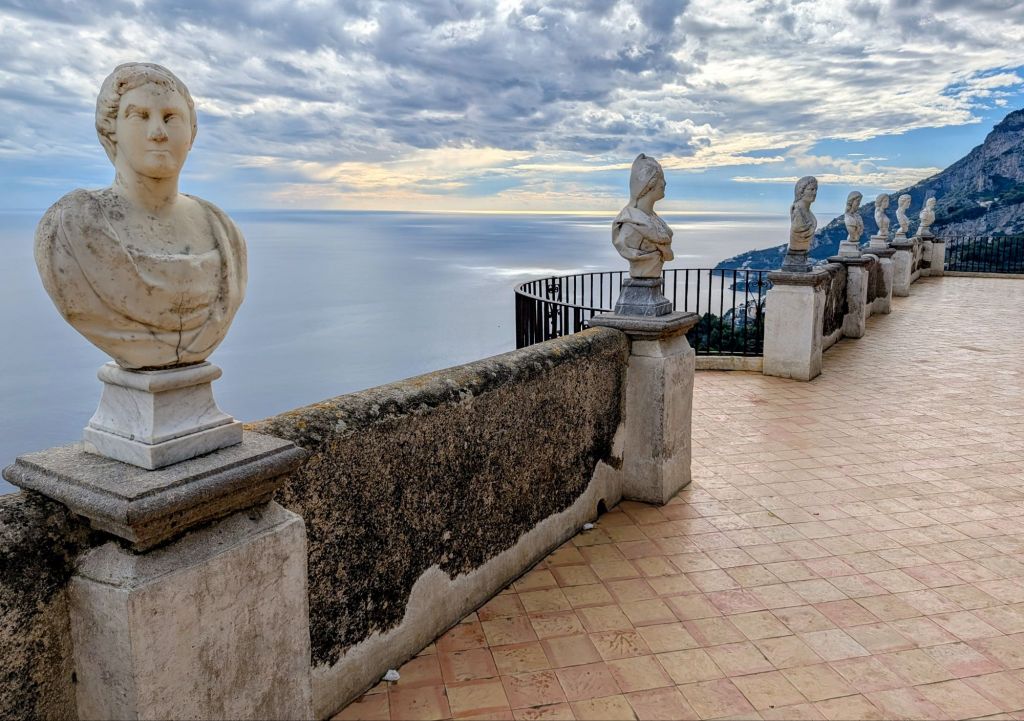
The Terrace of Infinity is widely considered to be the finest coastal viewpoint in the world.
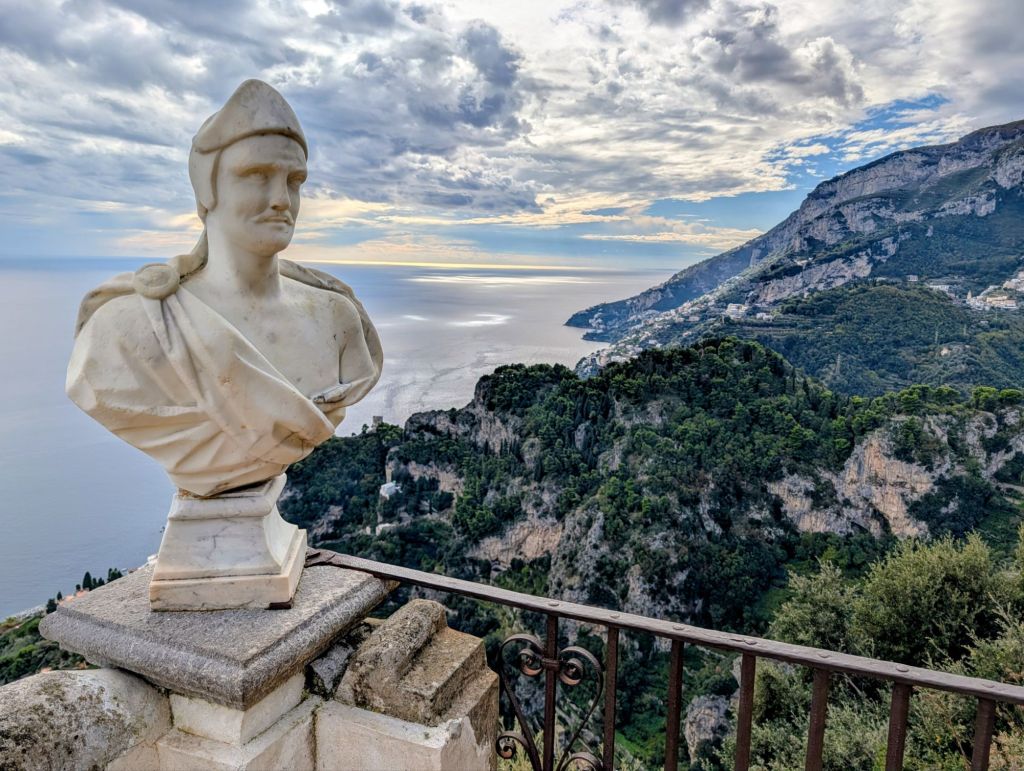
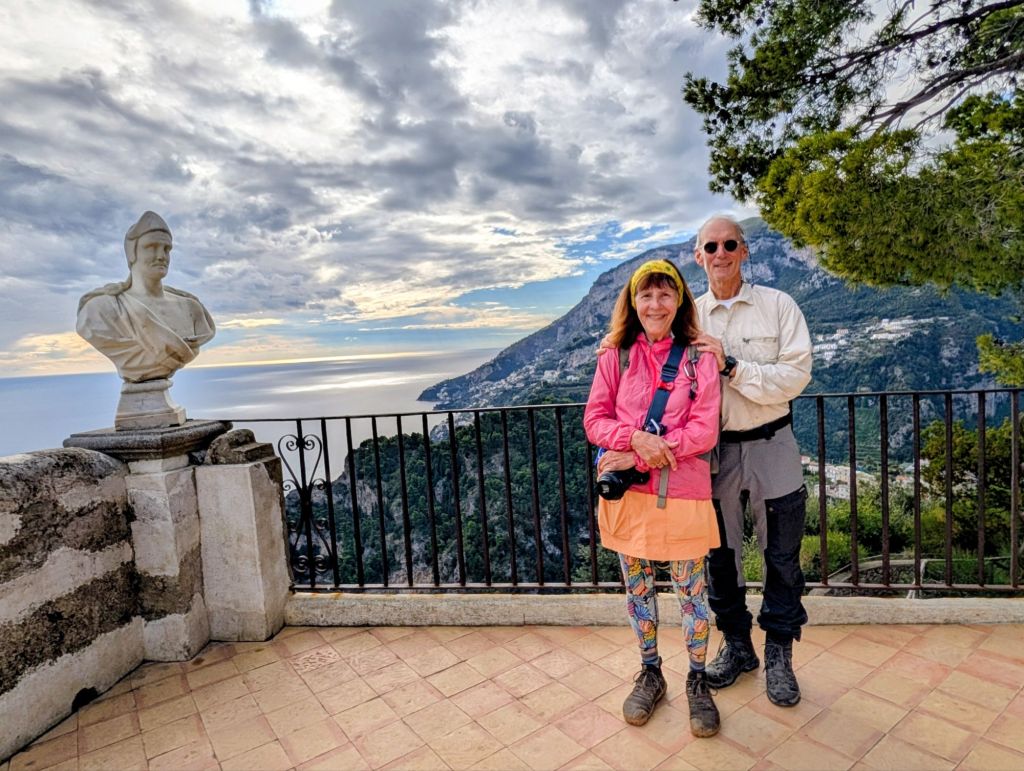
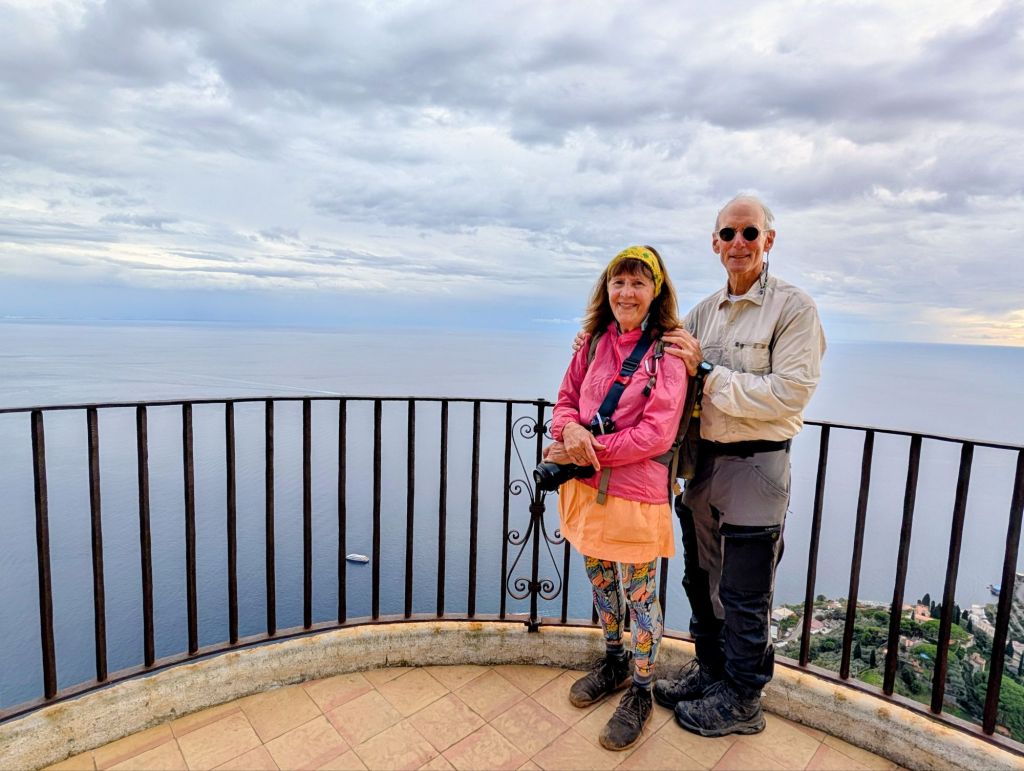
And now, having been, there I agree.
In 1938, during a famous romantic getaway with conductor Leopold Stokowski, the world famous movie star Greta Garbo stayed at Villa Cimbrone for nearly a month to hide from the press.
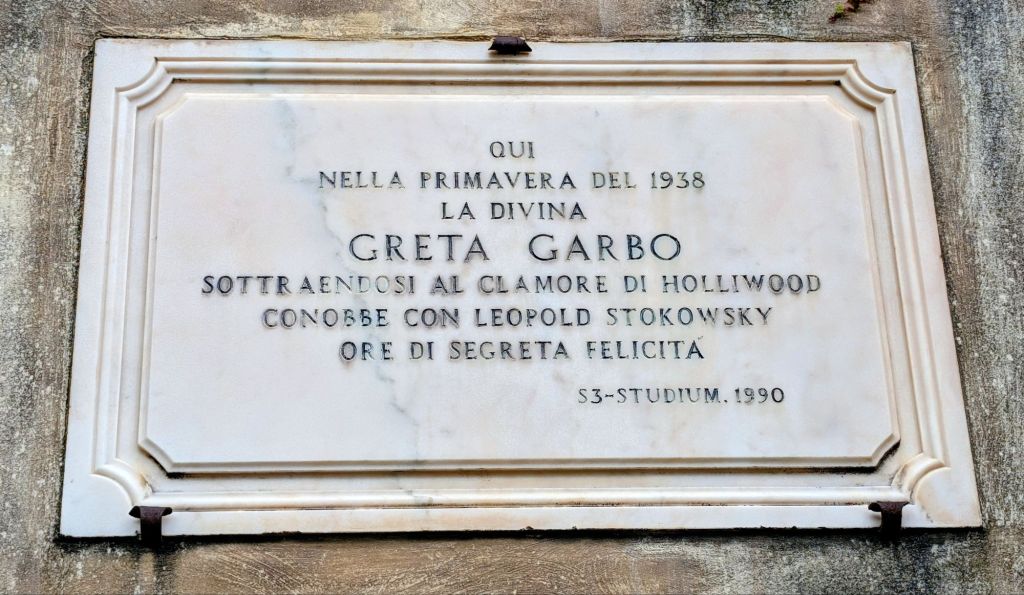
in the Spring of 1938
the divine
GRETA GARBO
avoiding Hollywood glamour
stayed with Leopold Stokowski
for hours of secret happiness
Amid intense media speculation about a secret wedding between them, Garbo held a press conference in the Villa’s library to deny the rumors during which she famously stated: “I only want to be let alone.”
Atrani & M.C. Escher
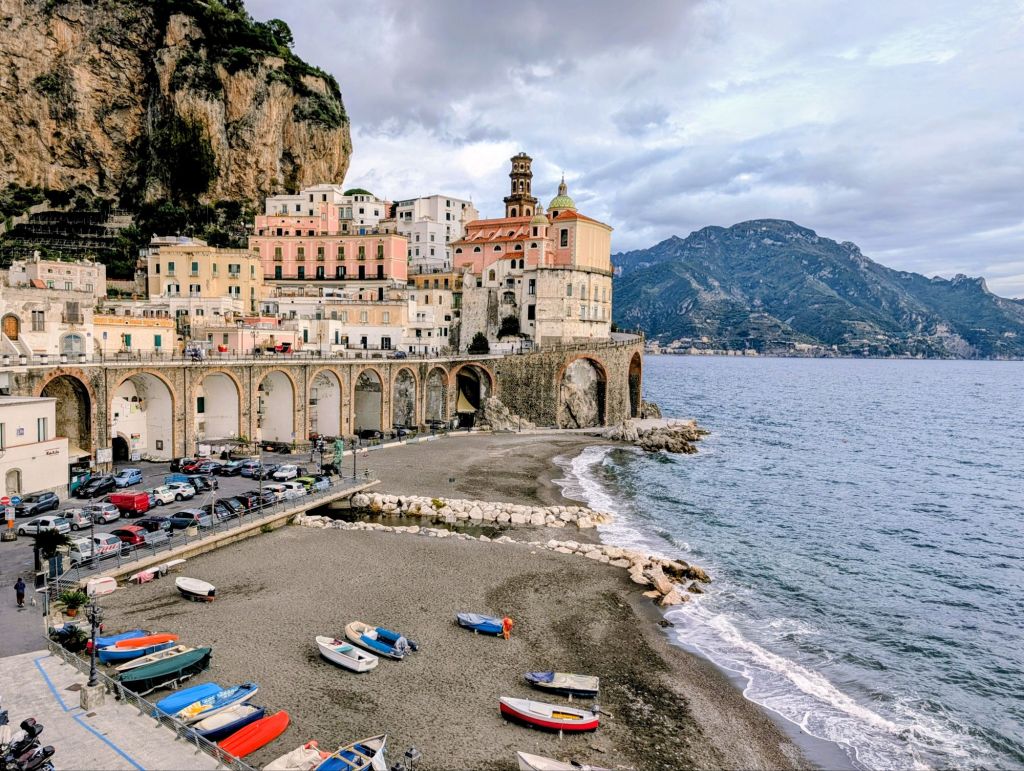
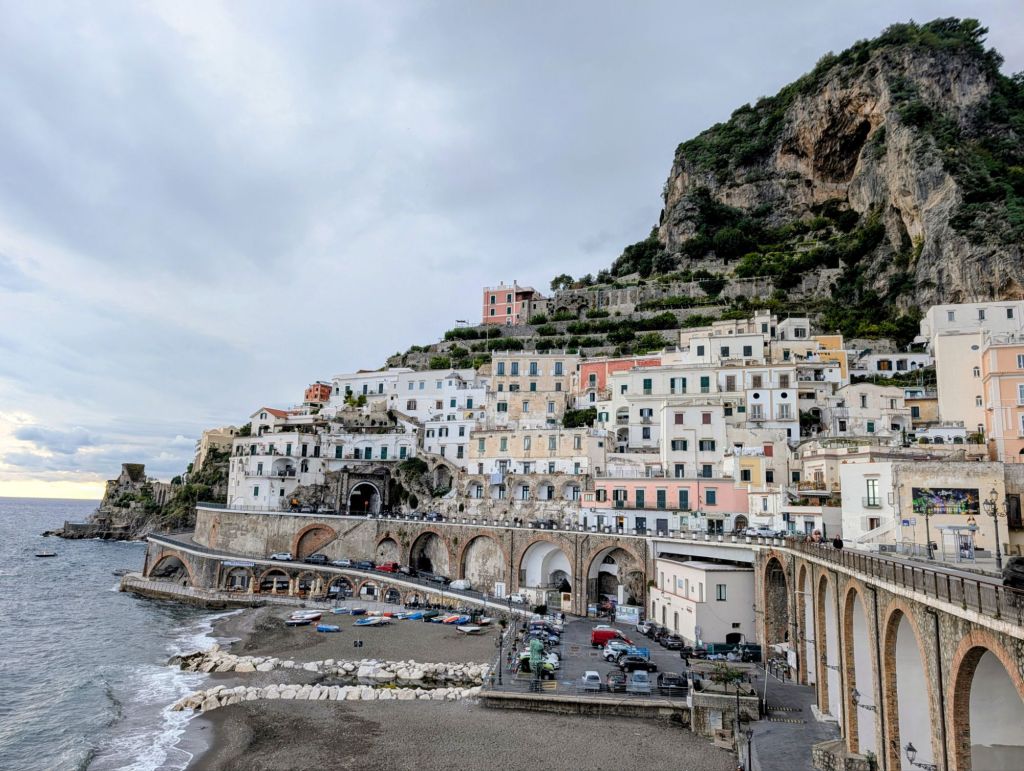
On our walk which was all downhill from Villa Cimbrone back to Amalfi, we passed through Atrani.
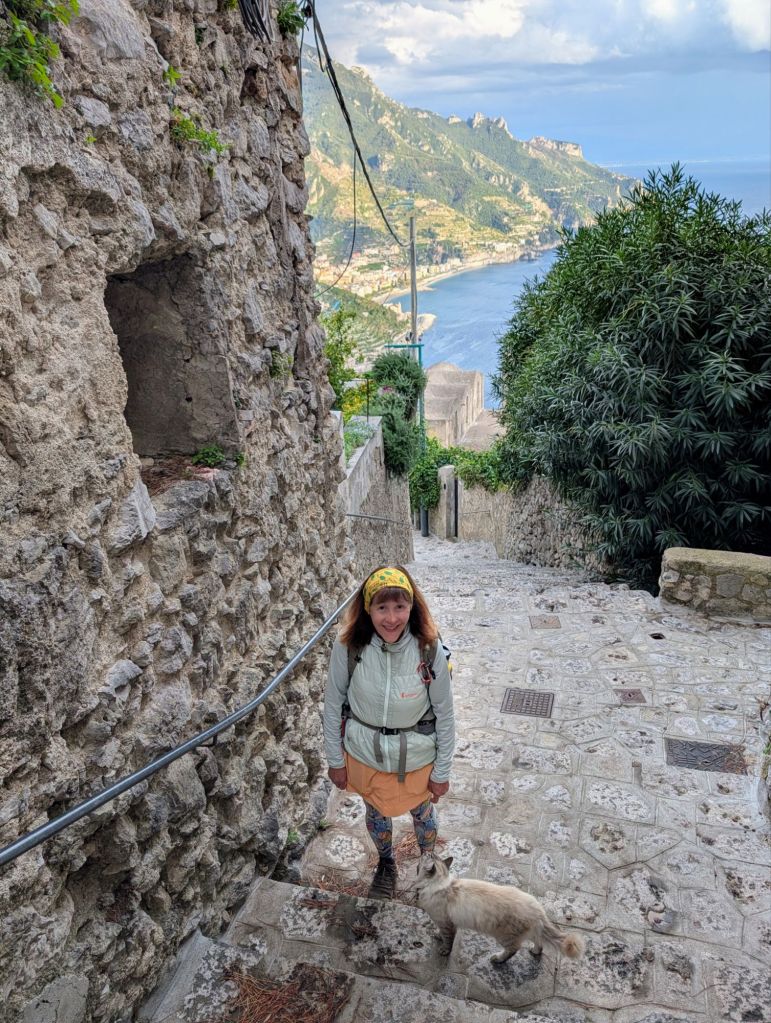
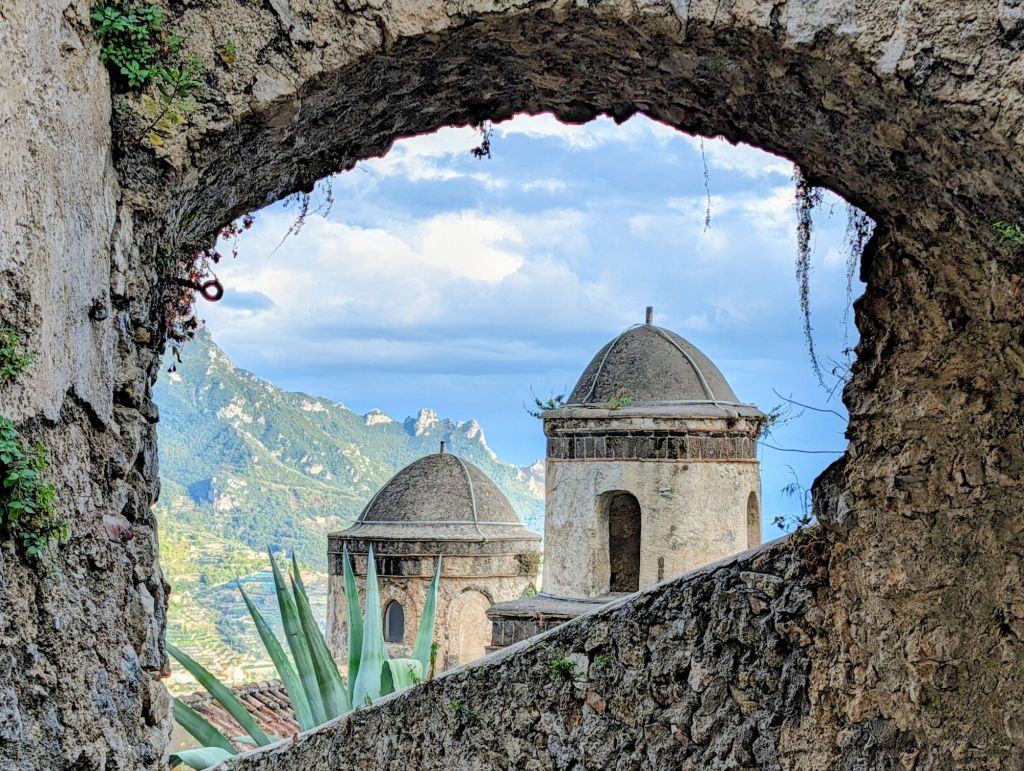
Italy’s Amalfi Coast with its cliff-perched houses & harrowing roads has mesmerized many visitors because it doesn’t just look Escher-esque, it actually inspired the mind bending Dutch artist.
Specifically, the Amalfi village Atrani became a lifelong fascination for the 20th Century Dutch artist & illustrator M.C. Escher who repeatedly revisited it in his works.
Atrani resembles a fantasy castle as a 17th Century church bell tower rises to the sky while a series of tall arches spring from the sea to support a couple hairpin turns on a cliff-hugging coastal road.
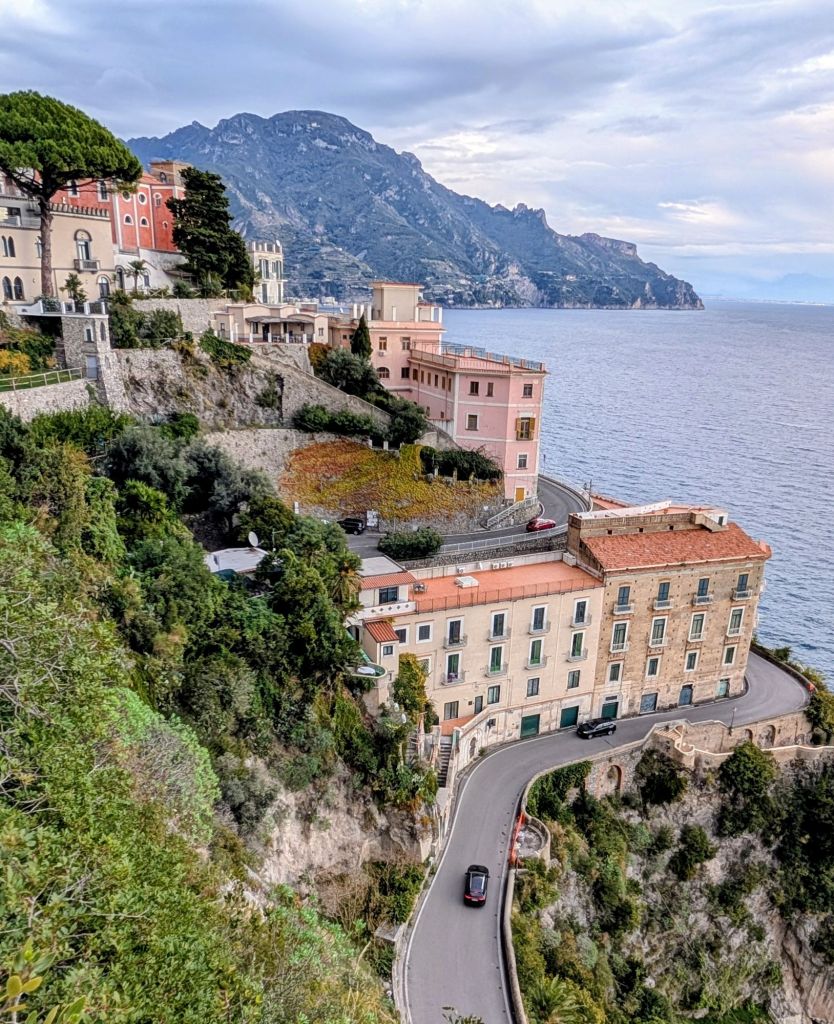
Walking or driving in these disorienting lanes is like stepping into one of Escher’s “impossible spaces,” where water seems to flow uphill & infinite staircases zigzag back onto themselves.
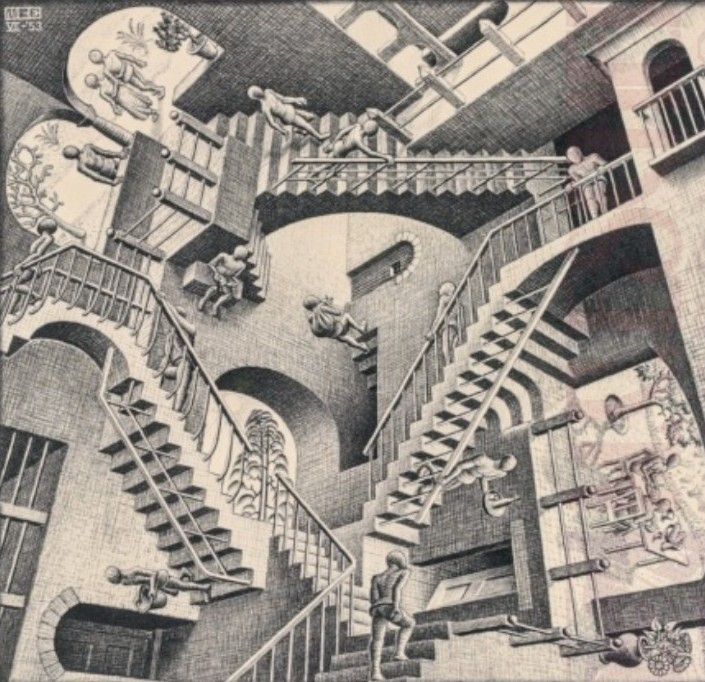
Escher drew lifelong inspiration from Atrani & as one exhibit showing his works noted: “his most striking use of the town is the place it occupies in his metamorphoses.”
Escher made a series of three panoramic woodcut prints created between 1937 & 1969 in which seemingly unrelated subjects were joined into one continuous image by the gradual variation in repeated patterns.
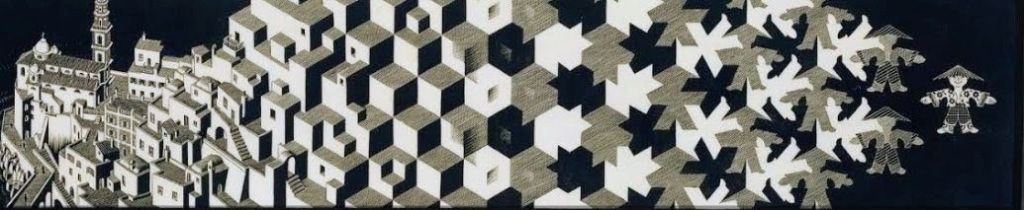
In Metamorphosis I (1937), Escher started with a straightforward image of Atrani’s church blending into a stylized depiction of its cliffside houses, and then into further geometrical & whimsical motifs.
Amalfi Sweets
Upon returning to Amalfi from our vertical hike, we treated ourselves to some local desserts.
Gina had Delizia al Limone (Lemon Delight) & I had
Sfogliatella Santa Rosa.
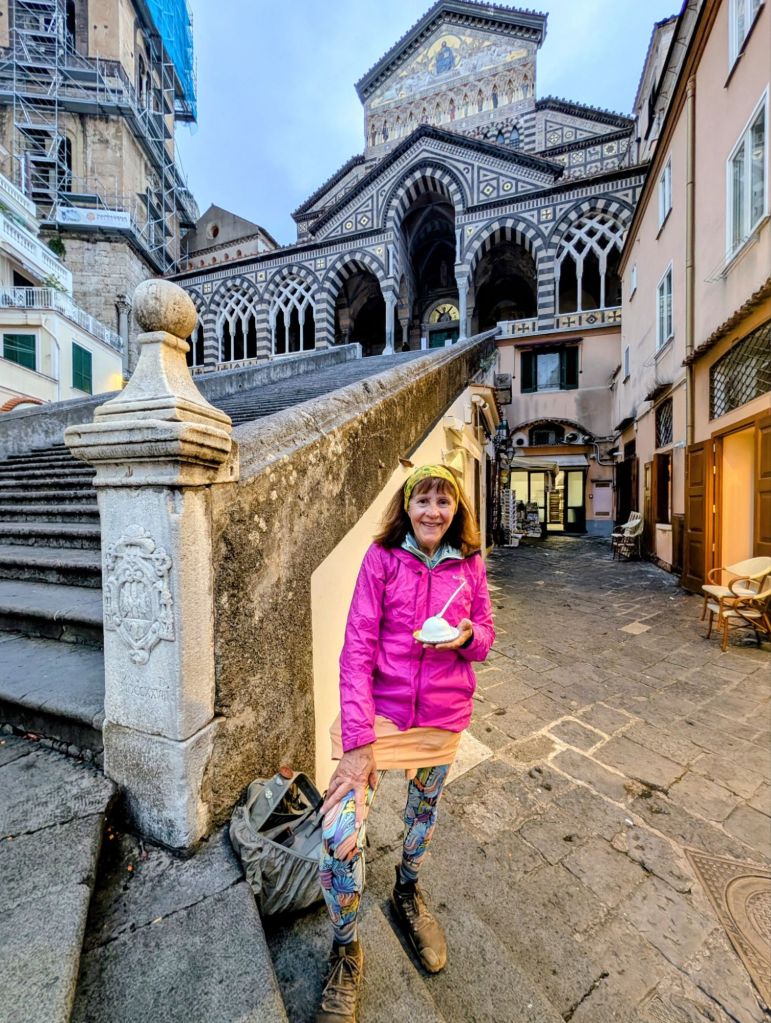
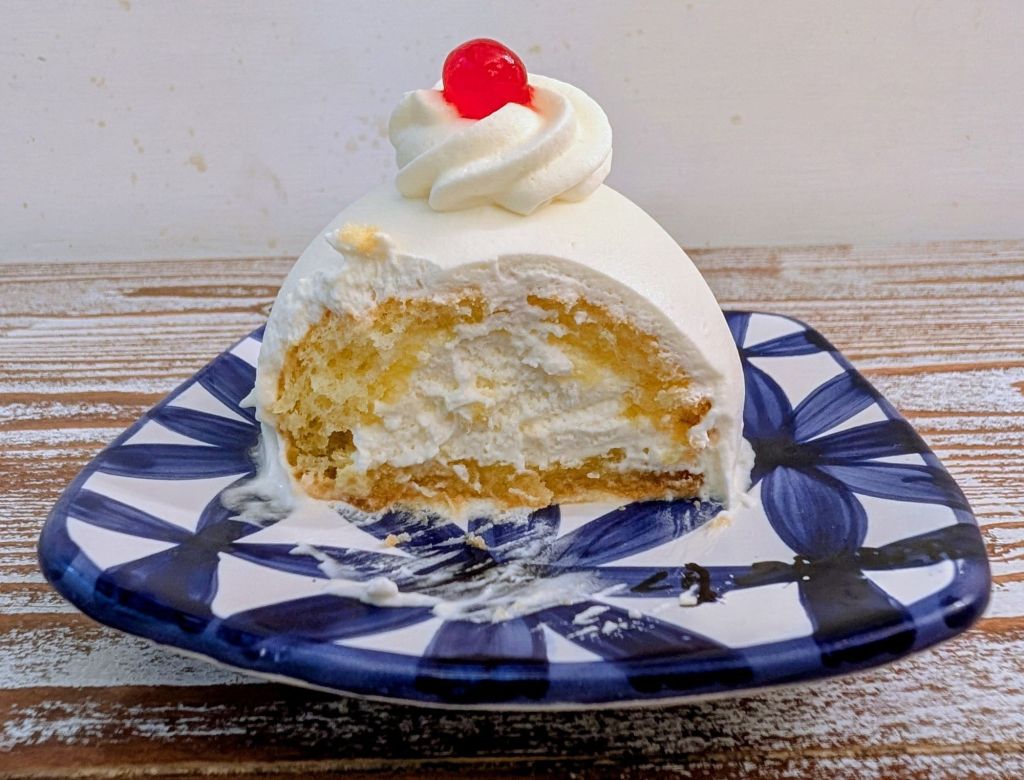
Delizia al Limone (Lemon Delight) is an iconic dome-shaped pastry that was created in this area in 1978 which features Amalfi lemons’ bright, aromatic flavor.
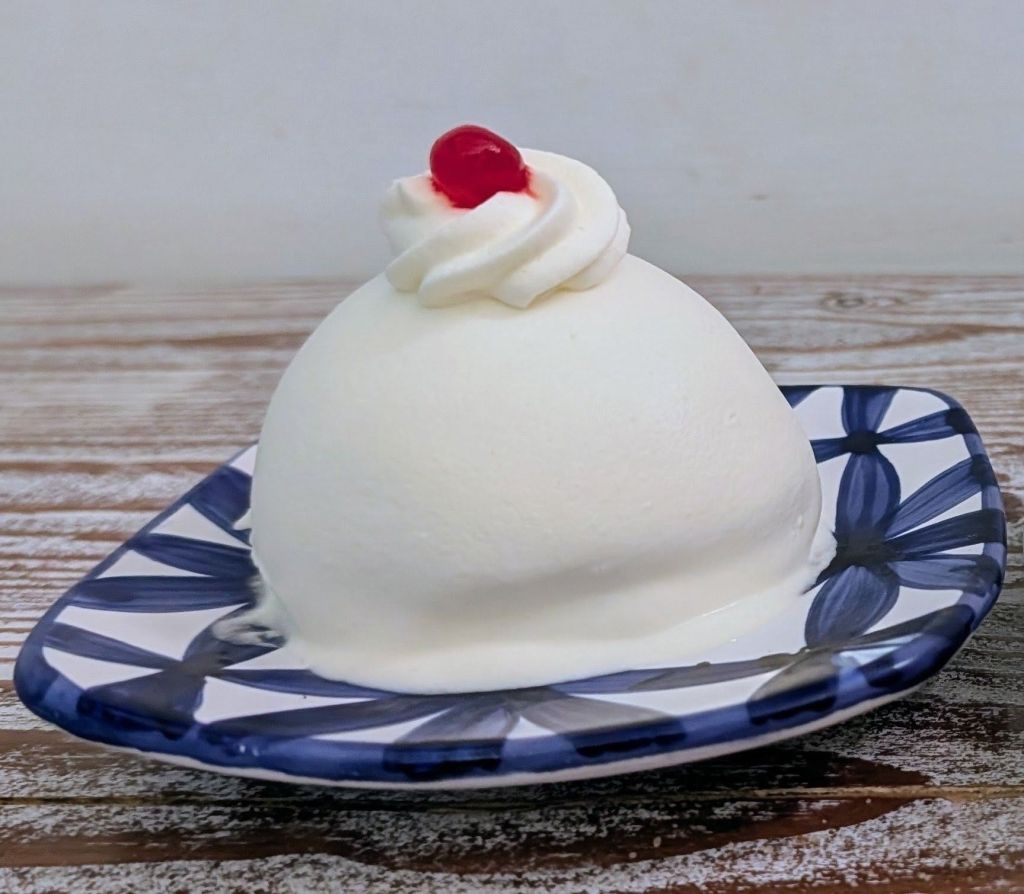
It is sponge cake soaked in a fragrant syrup infused with water, sugar, lemon peel, & local Limoncello liqueur that is filled with a rich mixture of lemon pastry cream, concentrated lemon curd, & whipped cream that is coated on the outside by a smooth lemon cream glaze garnished with whipped cream rosettes & fresh lemon zest.
A sfogliatella which means “small, thin leaf or layer” in Italian is a shell-shaped, sweet Italian pastry native to the Campania region in which the Amalfi Coast is situated.
This pastry is famous for its contrast between a crisp outer shell & a rich, spiced ricotta-and-semolina filling.
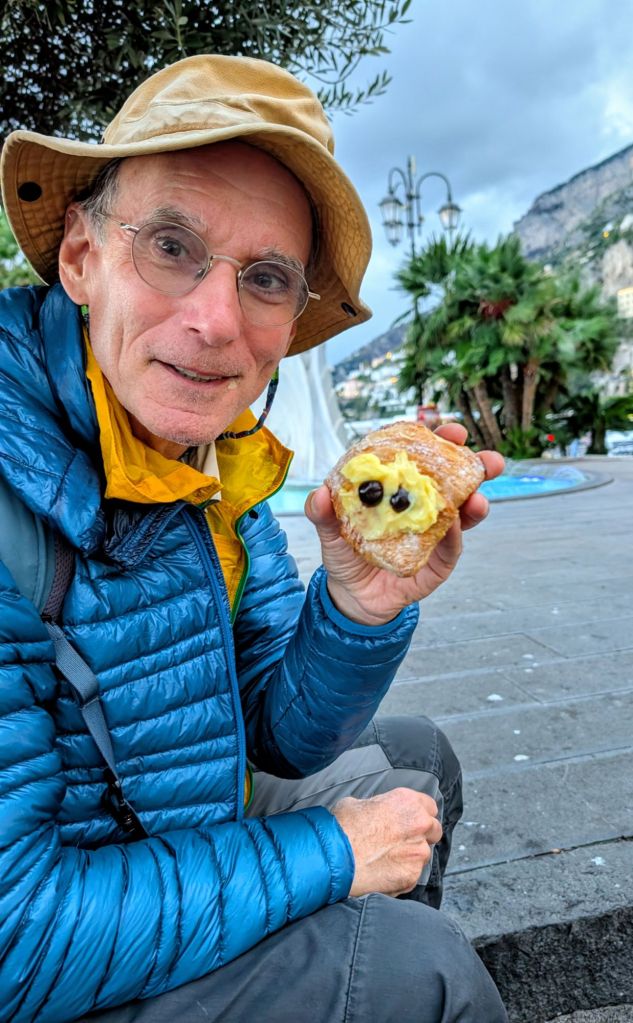
This pastry originated in the 17th Century at the Monastero di Santa Rosa (The Santa Rosa Monastery) in Conca dei Marini near the Amalfi, so it was originally named the “Santarosa”.
It was created by nuns using leftover semolina, dried fruit, sugar, & lard.
Sfogliatella Santa Rosa is the larger, original Amalfi version in the region topped with a dollop of cream & a black cherry.
Both were heavenly!
Amalfi Paper Museum (Museo della Carta)
Amalfi had a very long history making handmade paper in an old watermill from the 12th Century to the 20th Century.
Believe it or not, Amalfi paper actually began its life as scraps of cloth!
And, just as the Romans did, urine was collected from public toilets to bleach colors from collected rags turning them white which were then reduced to a pulp, strained, then pressed into paper.
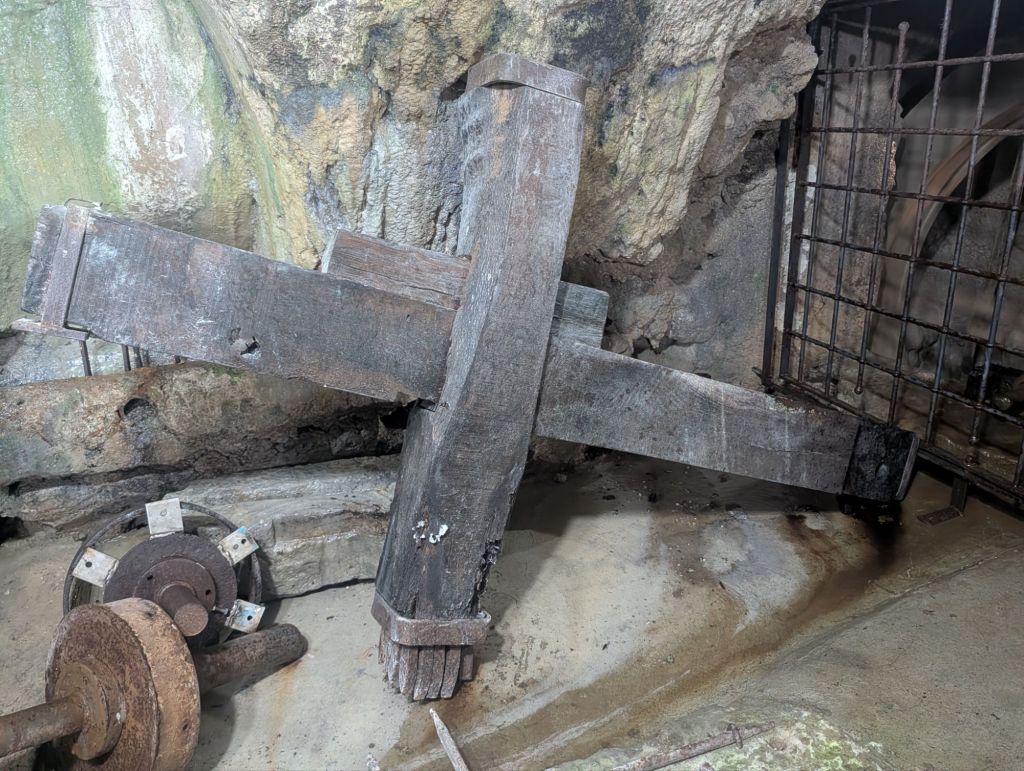
In medieval times, Amalfi was a paper-making hub using innovative techniques to create paper when the only alternative was vellum (parchment) or papyrus.
The Gutenberg Press invented around 1450 transformed book production & sparked the European printing revolution which drove high demand for paper.
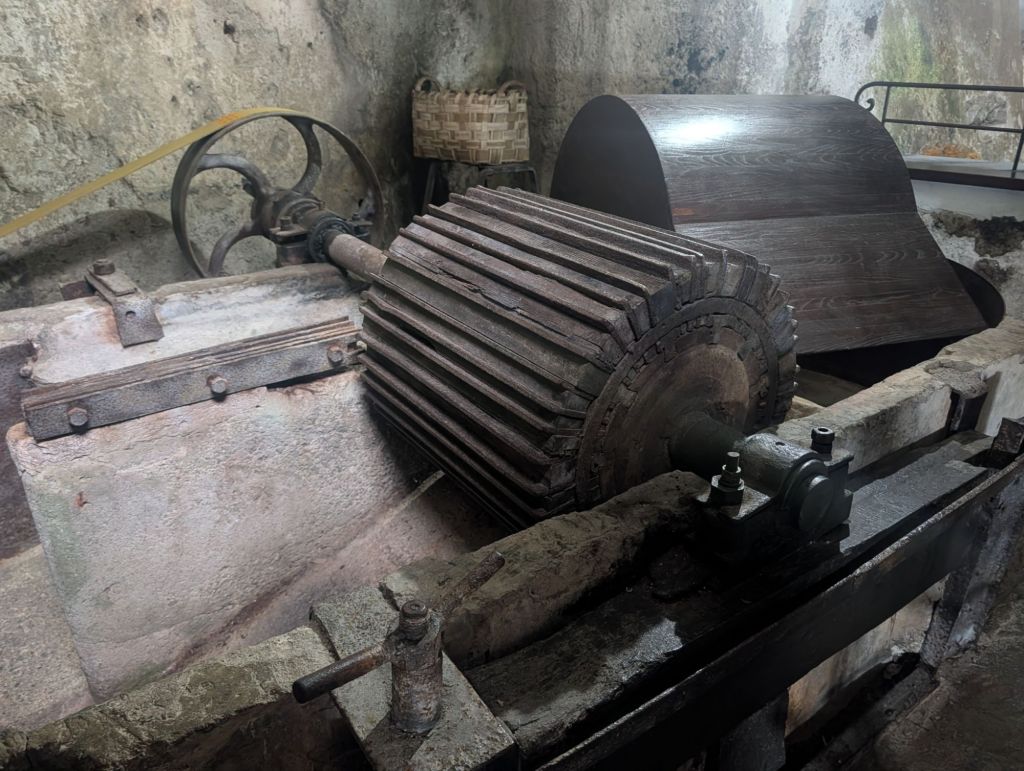
However, due to supply chain issues, foreign competition, & problems with flooding through the years, the paper industry declined, & most paper mills in the area shut down.
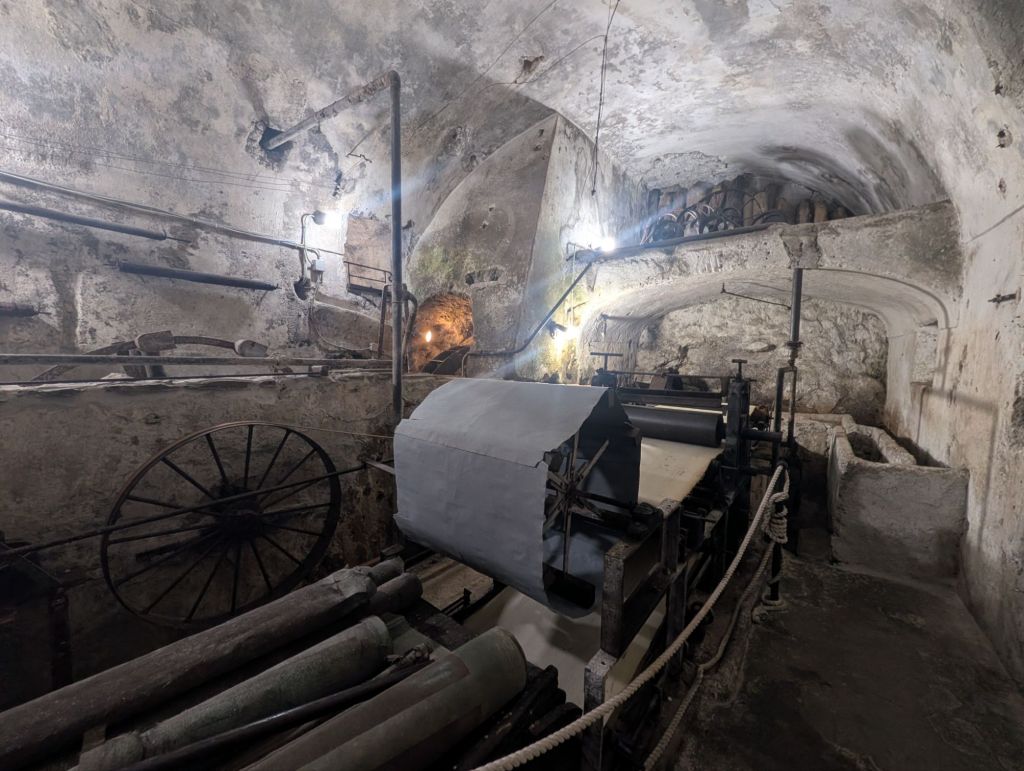
Amalfi’s paper mill finally shut down in 1969; but; its grounds are maintained as a museum showing how paper was once made.
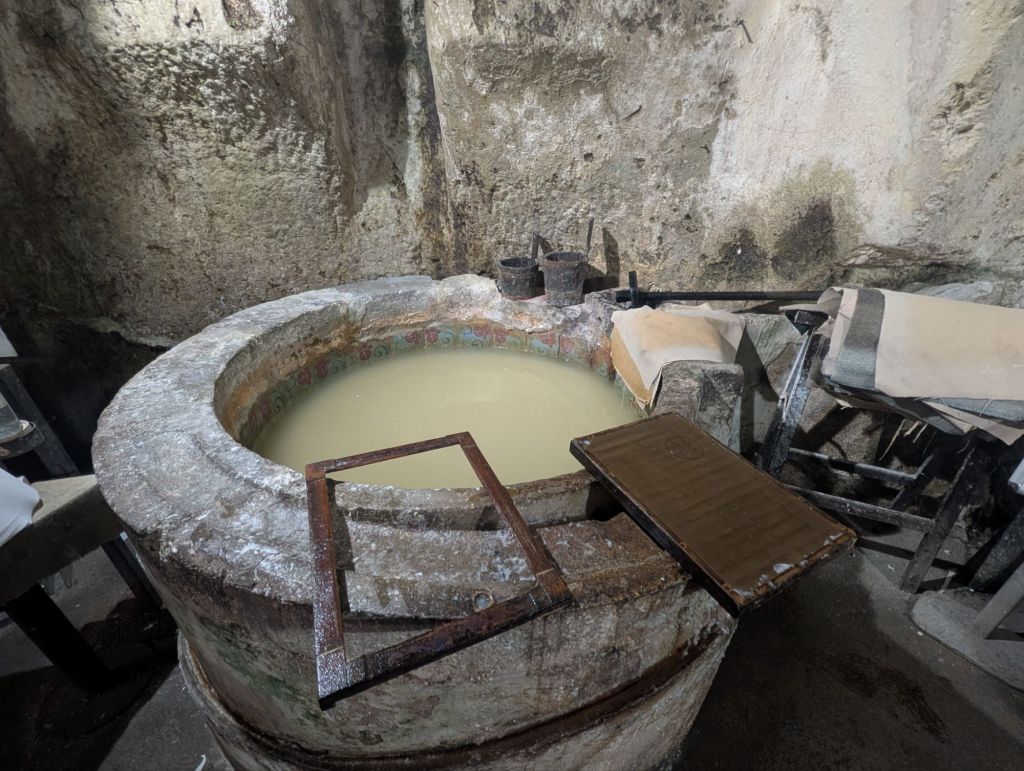
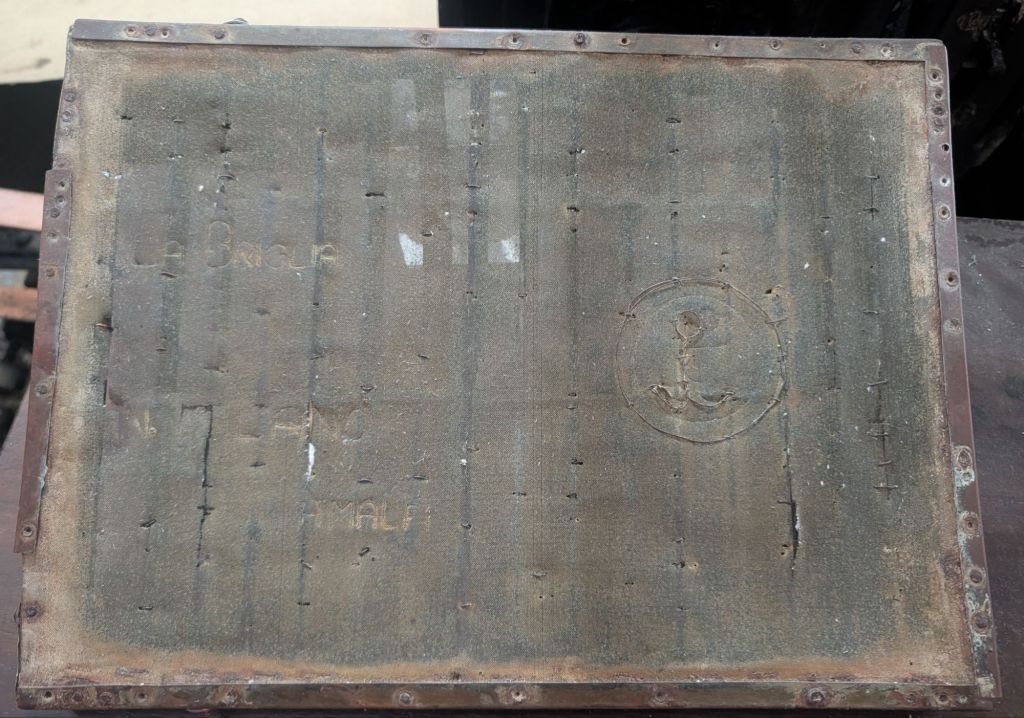
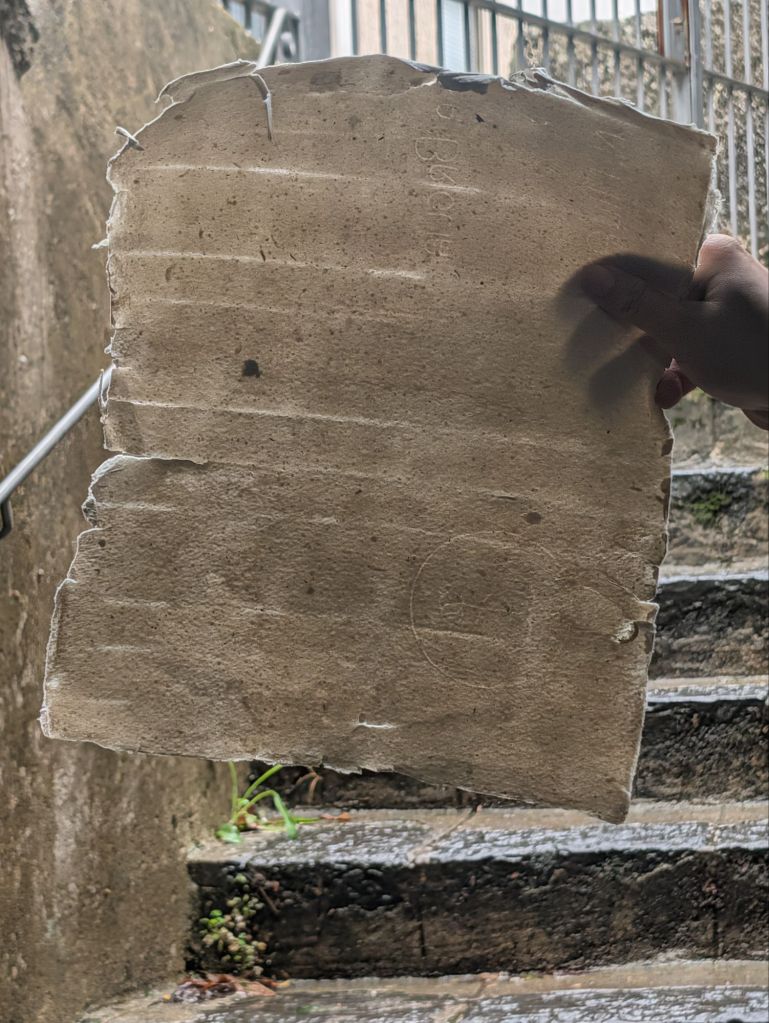
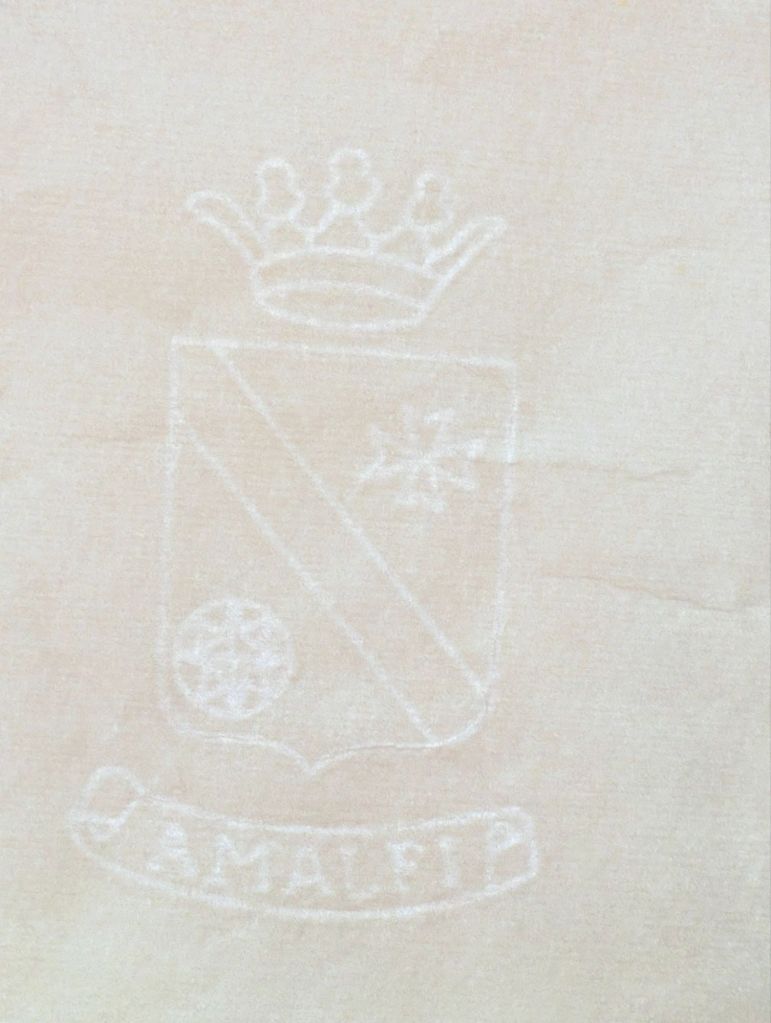
Note the circular water mark on the mid-right side. It was made with intertwined metallic threads in the frame’s lattice.
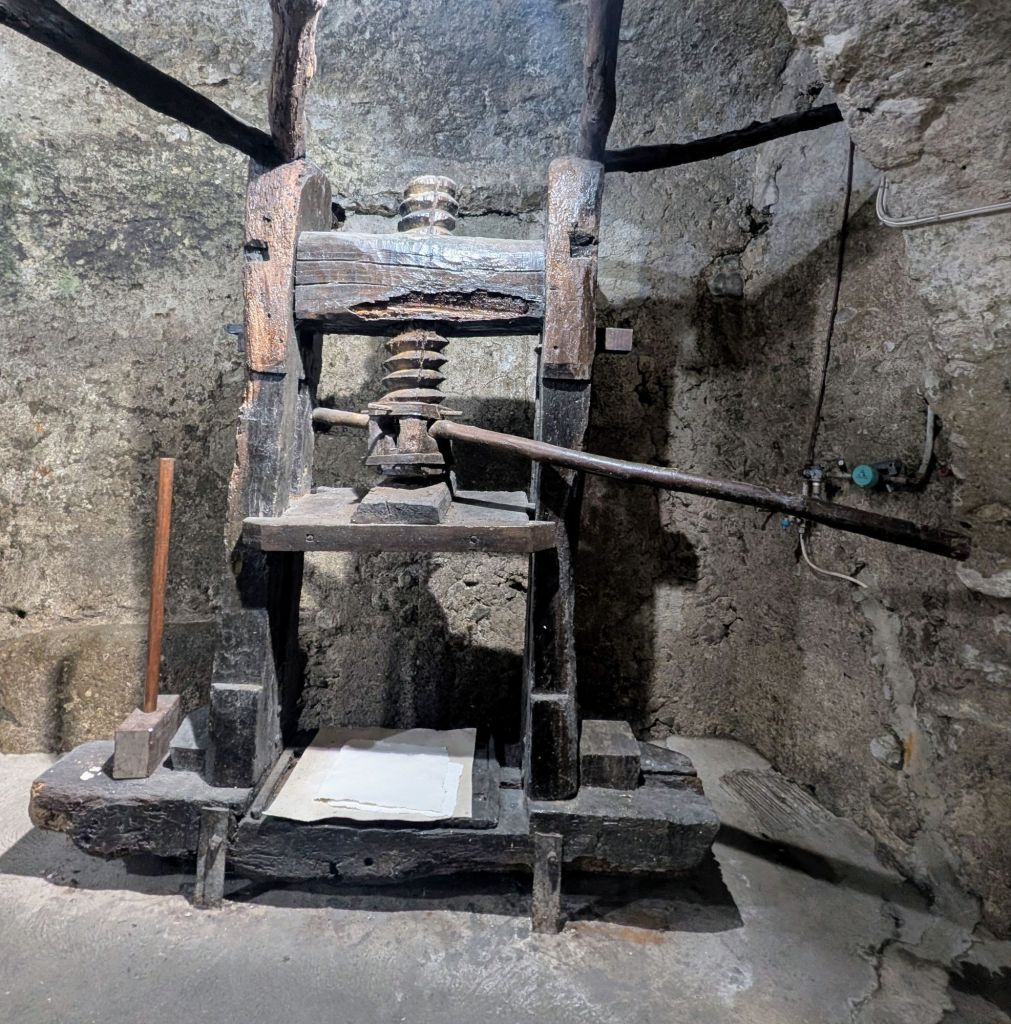
The museum shows how machinery developed over the centuries to make paper & they are activated to show how they operated.
The machines harnessed the power from the Canneto River to keep them running & when entering the museum, you can still hear the sound from the rushing river coming from below the building.
Then, they were moved to a separate, well- ventilated upper floor rooms with many windows & holes in the masonry to dry slowly & evenly.
Here are some other Amalfi images: