
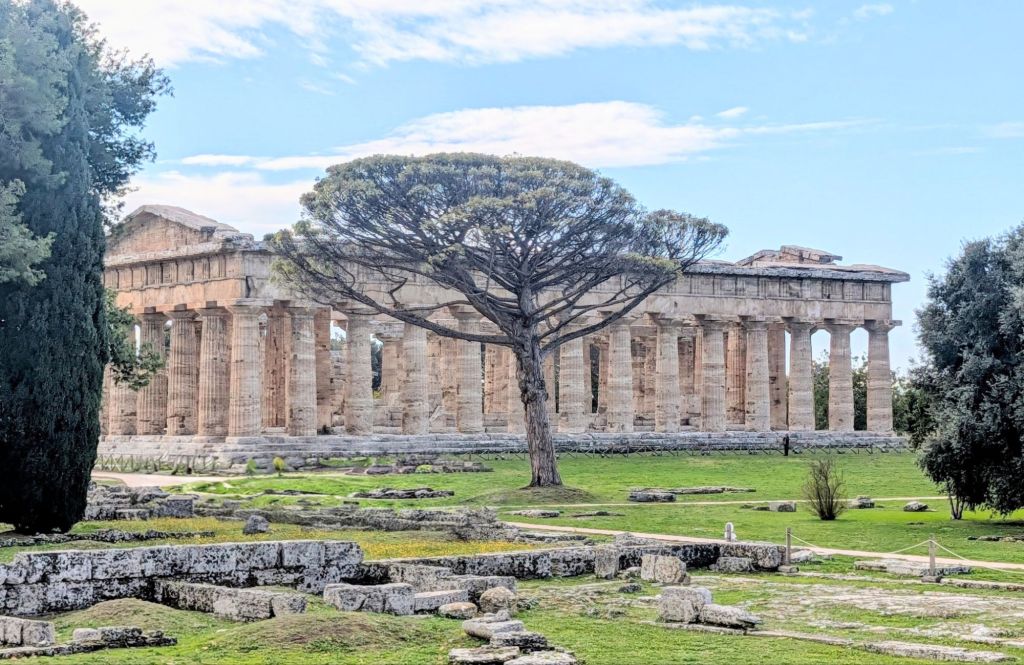
Paestum was known to the Greeks as Poseidonia because they dedicated the city to the Greek God of the Seas Poseidon.
It was founded by people
from the Greek colony Sybaris in Calabria, Italy, during the 7th Century BC.
It was later conquered by the Lucanians who renamed it Paistom.
In 273 BC, the Romans took the city & renamed it Paestum.
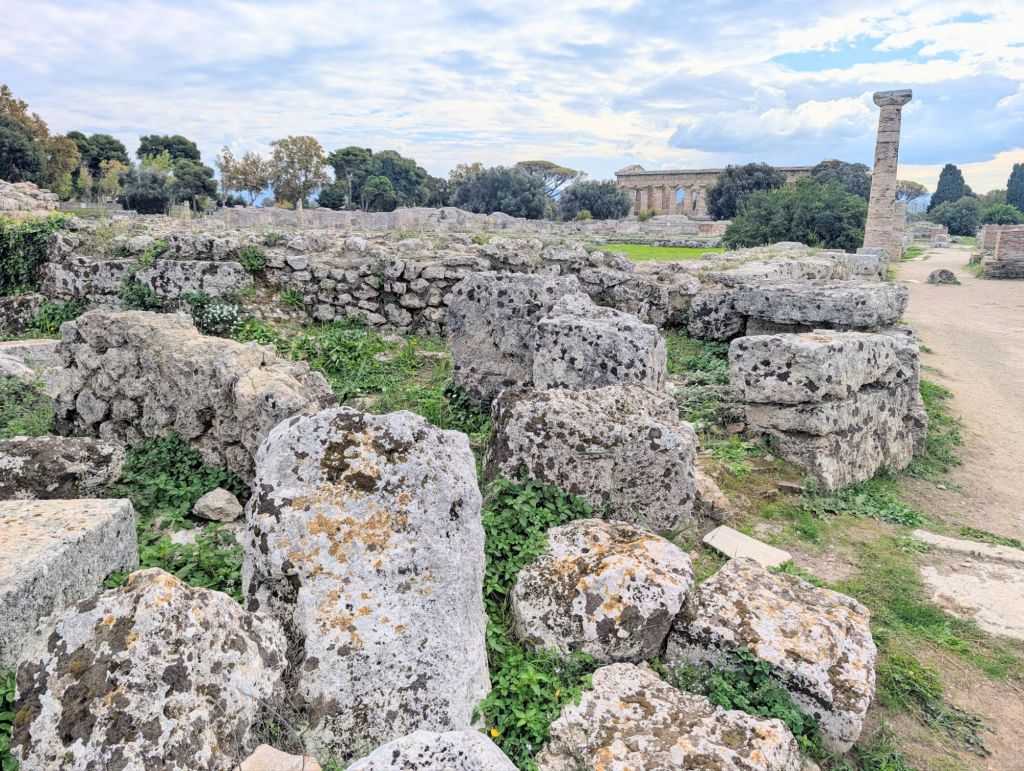
The city was subsequently abandoned during the Middle Ages due to spreading marshlands bringing malaria as well as from constant pillaging from coastal raids.
The ruins were then overgrown & hidden until being rediscovered in the mid-18th Century.
Paestum is best known for its three Doric temples: The Temple of Hera II, the Temple of Hera (Basilica) & the Temple of Athena.
Although they appear in their original stone color, at one time, these temples & all their architectural elements such as statues, carvings, gutters, & water spouts were covered in plaster to make it look like they were made from white marble & then painted in bright colors.
Also, they were all built without using any mortar.
The Temple of Hera II
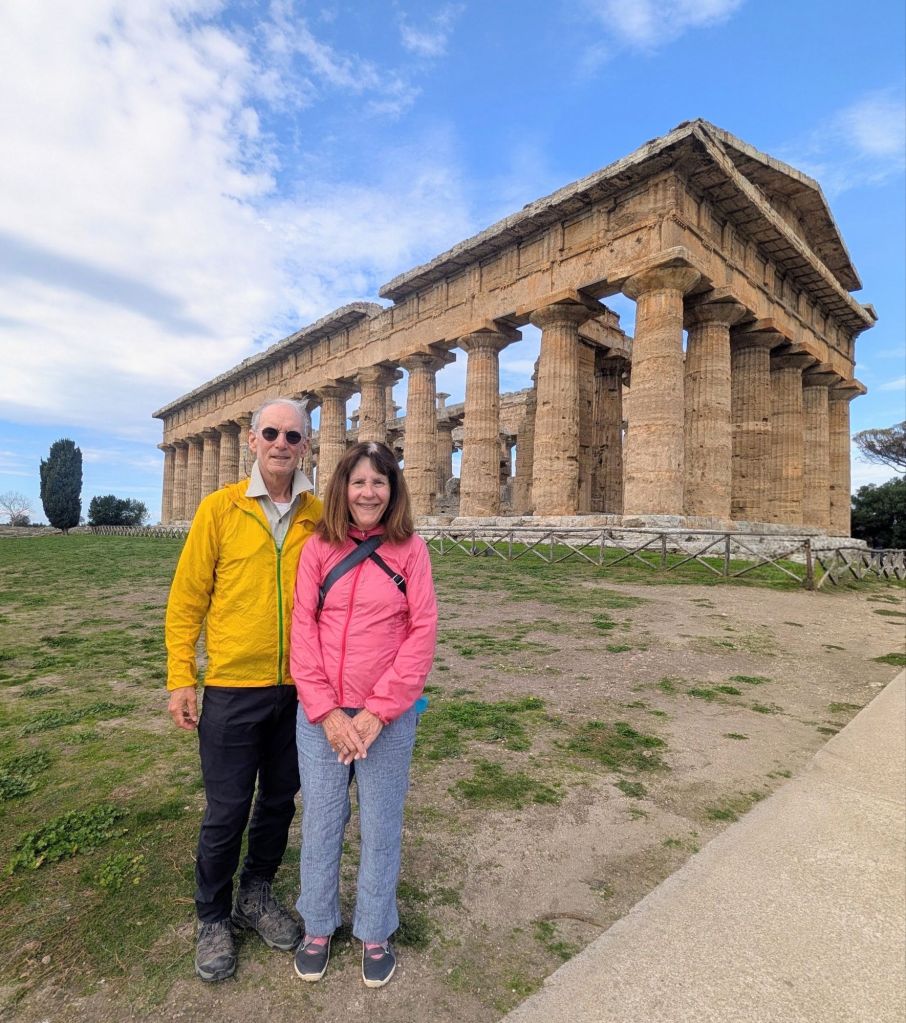
The Temple of Hera II was originally known as the Temple of Poseidon.
However, continued archeological research determined it was a temple built to honor Hera who was the wife of Zeus who was the king of the Greek gods.
Hera was venerated as a protector of both women & men being associated with marriage, motherhood, & young warriors.
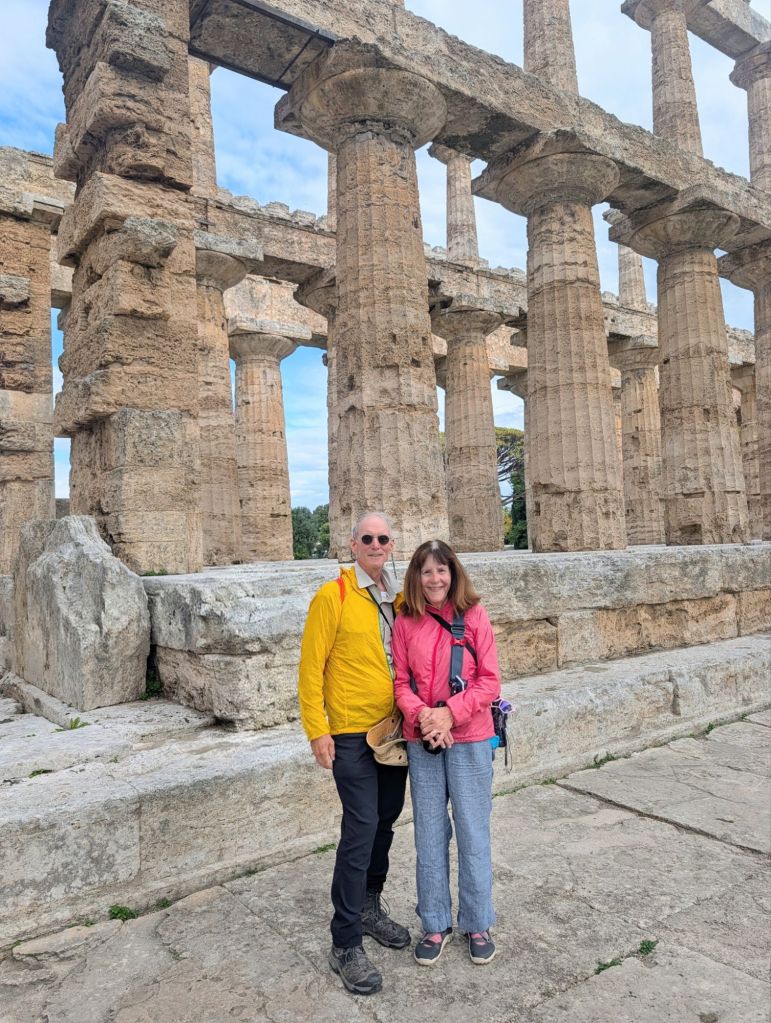
This temple rates among the world’s best preserved Ancient Greek temples & still stands magnificently over the grassy expanse that used to be ancient Poseidonia.
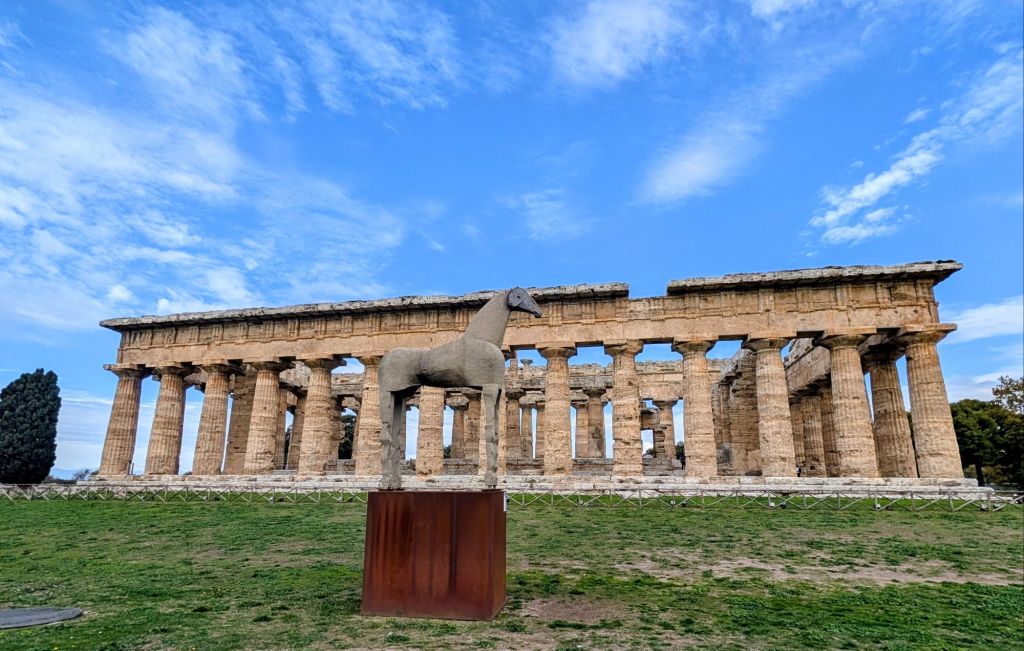
Made from the local golden- colored rock travertine which is a very porous limestone, the Temple of Hera II was completed in 460 BC.
It towers above the ancient city’s ruins with its double order of Doric columns that would have supported a wooden roof.
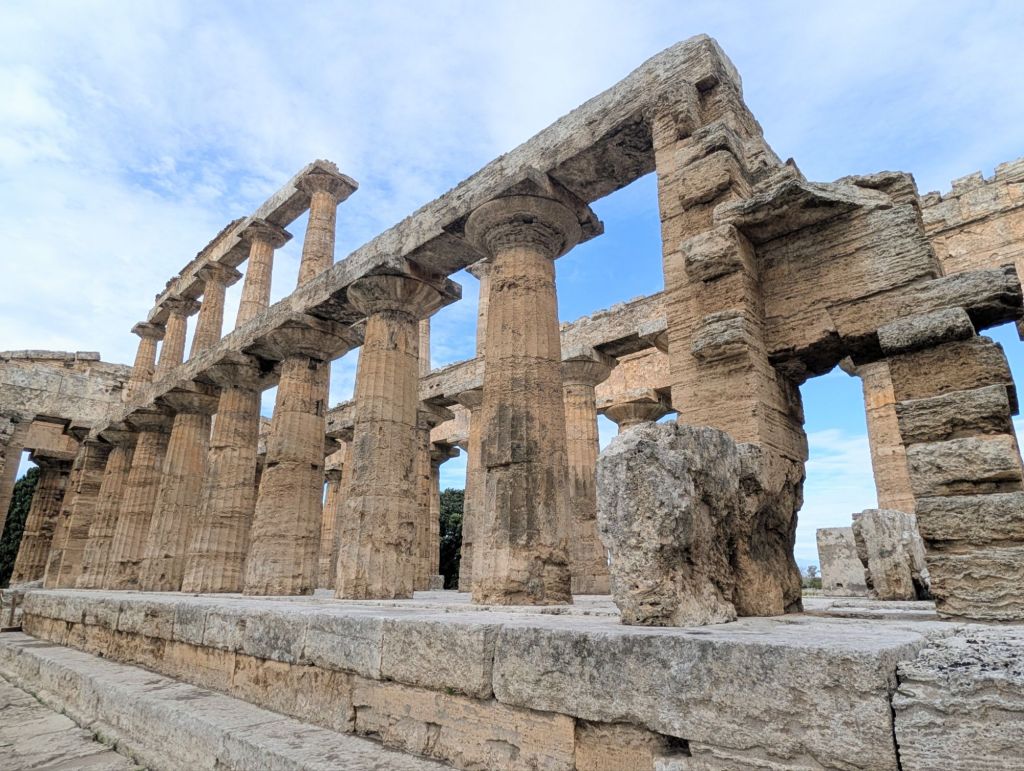
Archaeologists consider it an unparalleled example showing Doric architecture with its 6 x 14 array of columns & built in sections stacked atop each other.
The temple stands on a large base with a central cell whose walls have been lost probably since the Middle Ages when materials from the temple were likely taken to build other things.
The temple also has two naves marked by rows of columns which give this imposing construction a harmonic & unexpectedly delicate appearance.
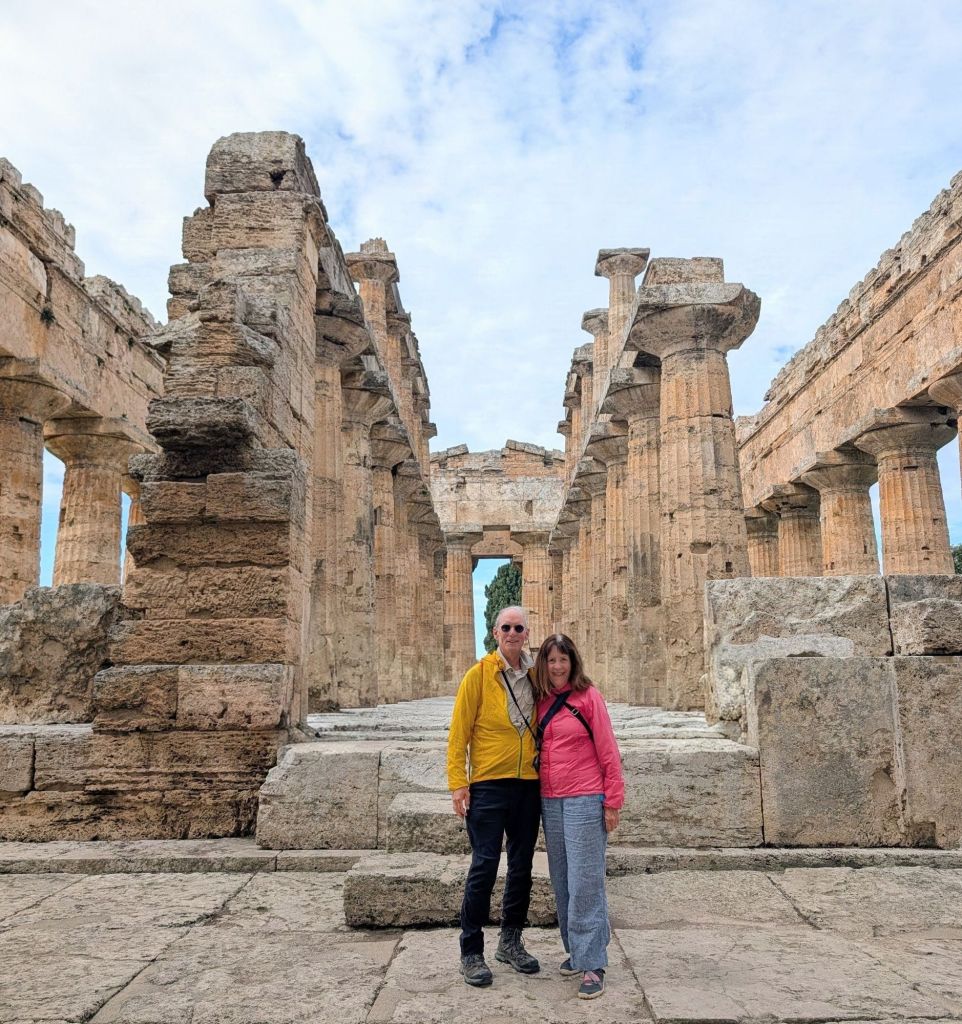
The double order of columns is unique as it is the only temple in the western Greek world with such a design.
The Temple of Hera (Basilica)
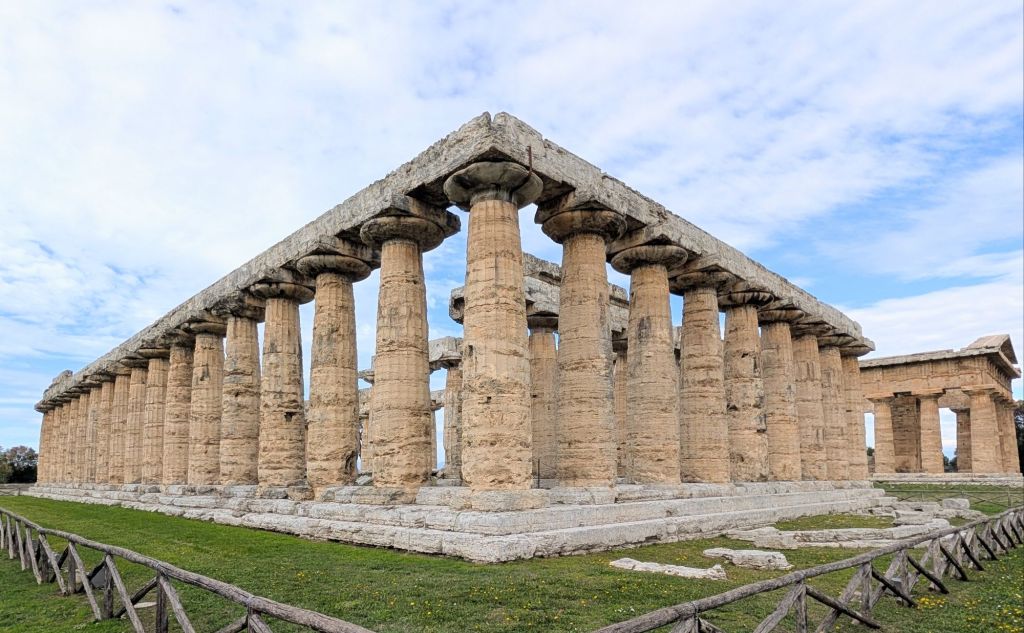
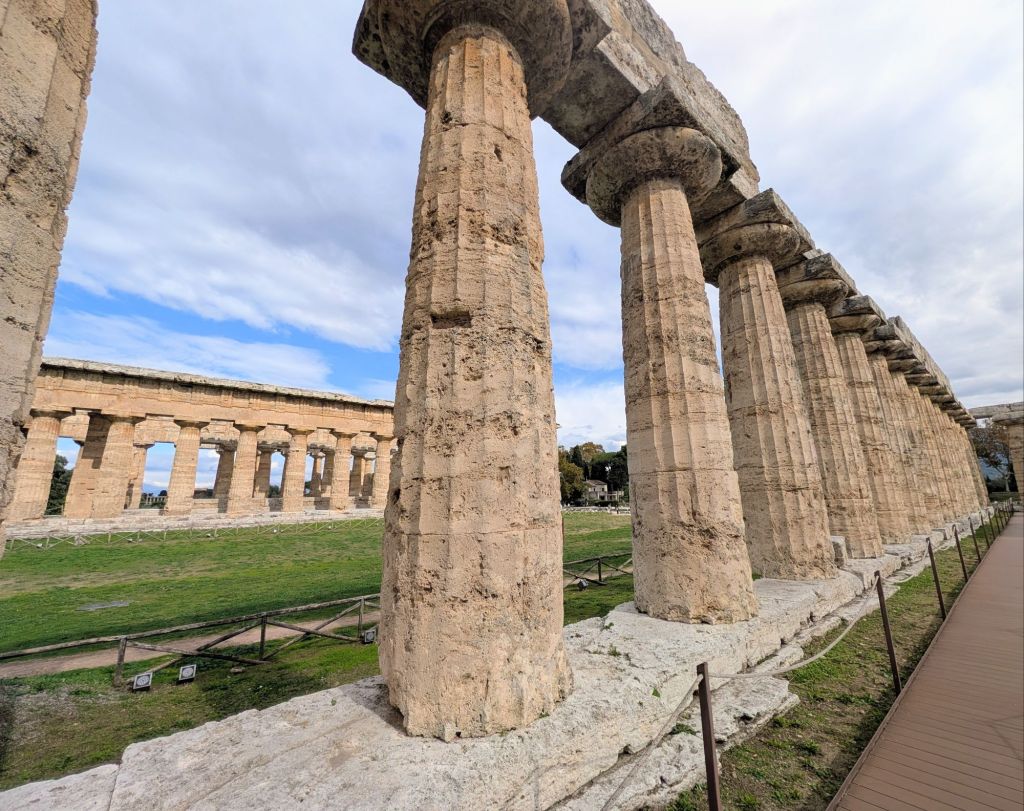
Right next to the Temple of Hera II is the original Temple of Hera also known as the “Basilica” due to a misidentification by 18th Century scholars who mistook it for a civic building.
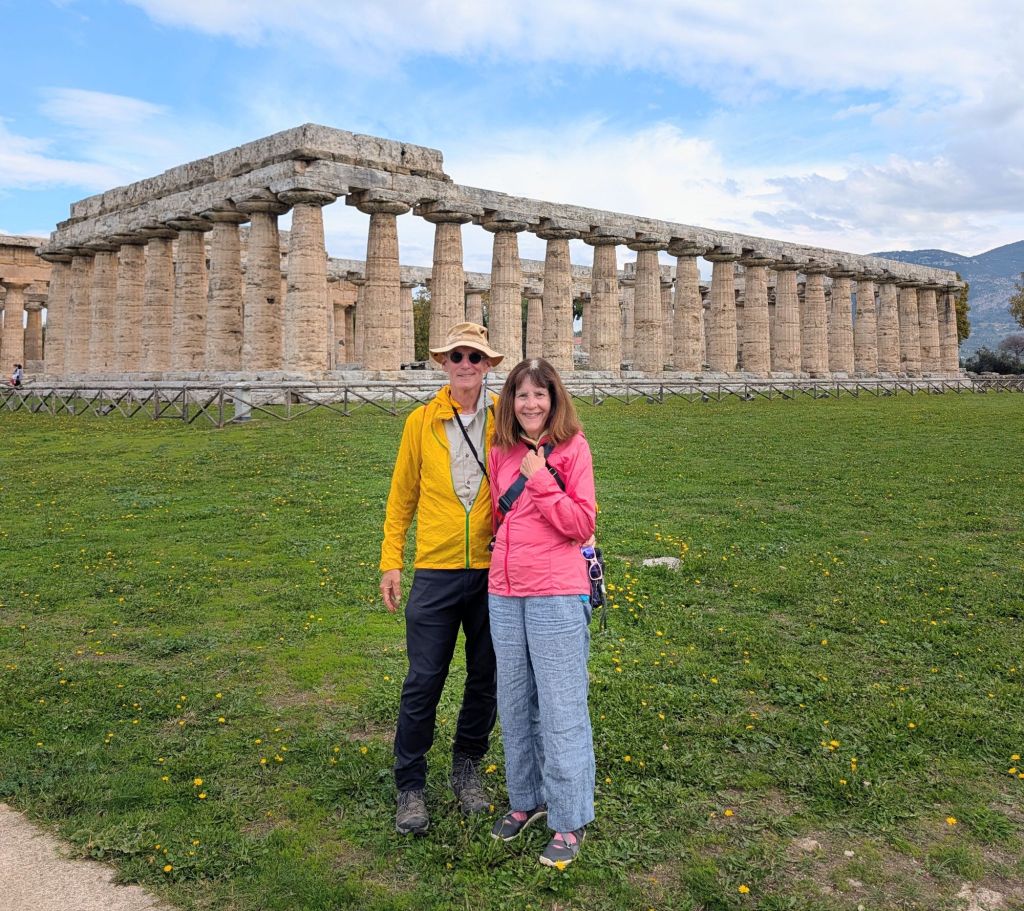
It is not only the oldest stone temple in Poseidonia, it is also the oldest stone temple in Italy.
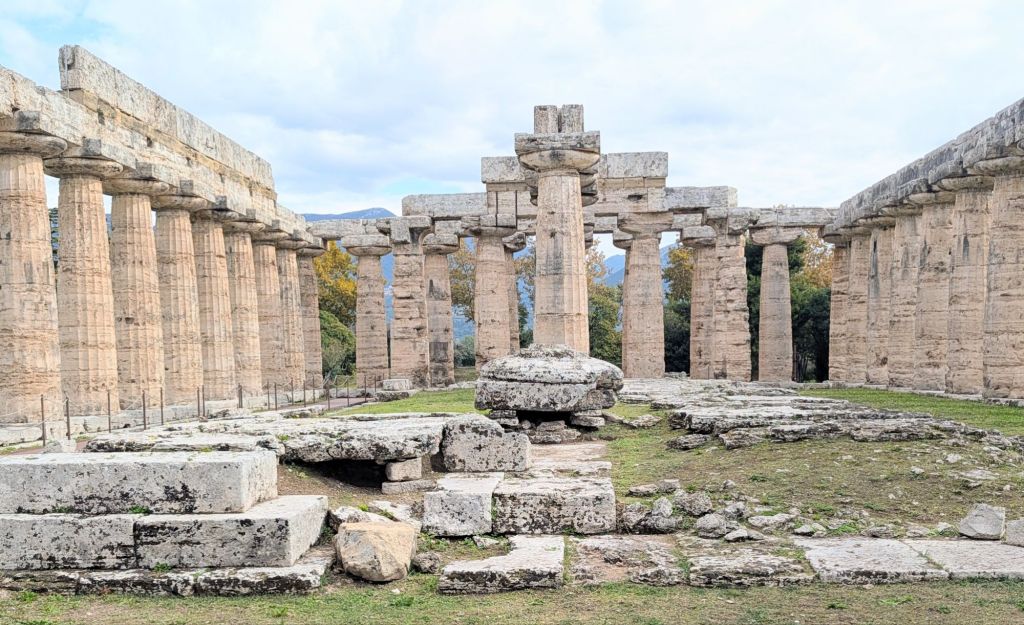
It features 9 ea. Doric columns along the short sides & 18 ea. along the long sides.
The Temple of Athena
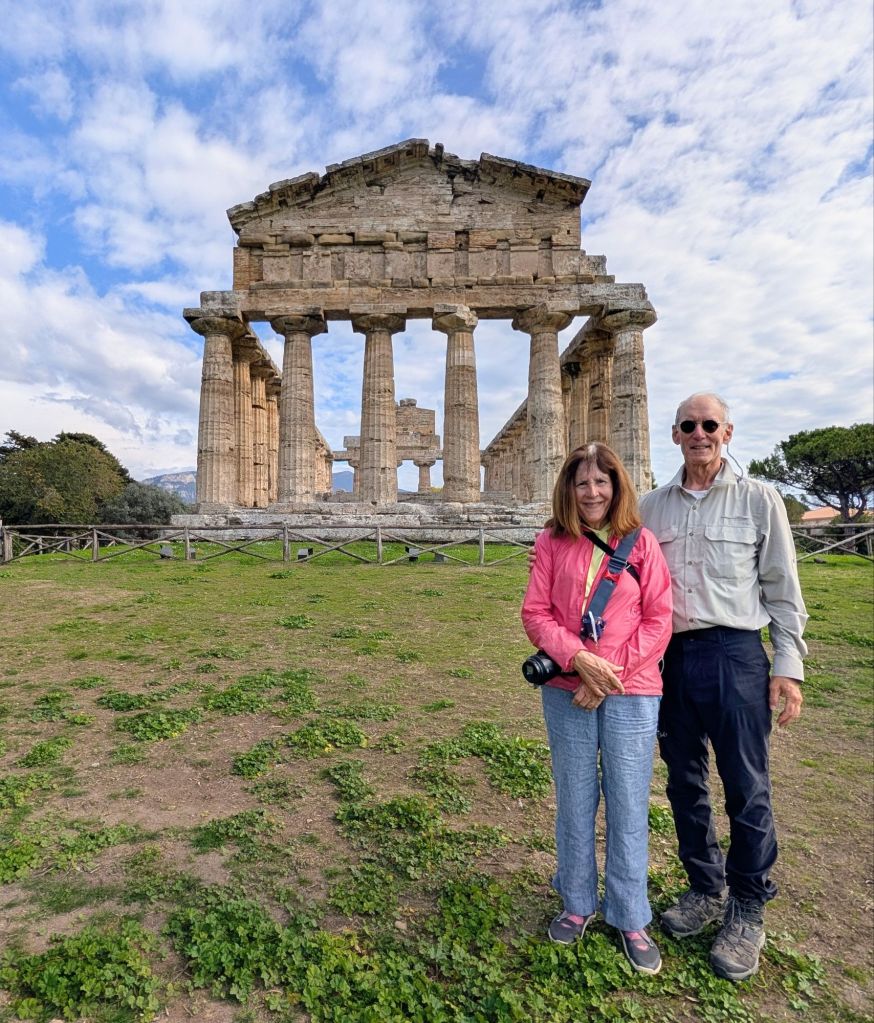
Poseidonia’s citizens built the Temple of Athena around 500 BC on a small artificial hill designed to resemble an acropolis.
It is on the opposite end of the city from the Temple of Hera.
The monument stands on a base with three steps and features 6 ea. Doric columns along the short sides & 13 ea. along the long sides.
Paestum’s on-site museum features relics recovered in the ancient city including sarcophagi that instead of being decorated on the outside are decorated on the inside which we had not previously seen anywhere else.
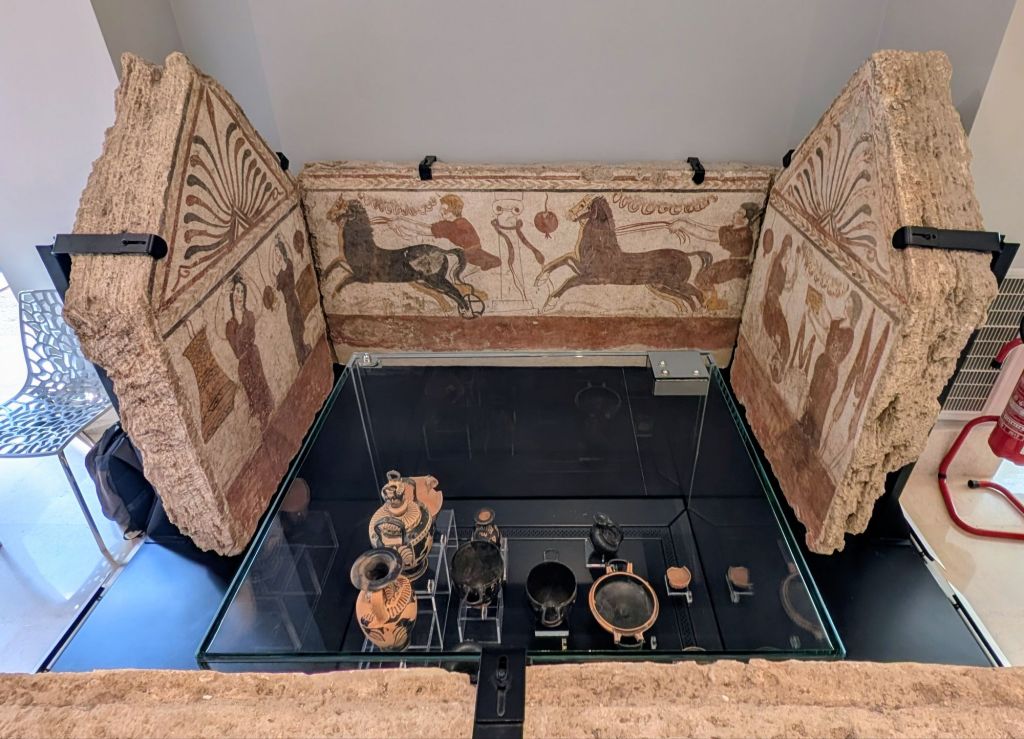
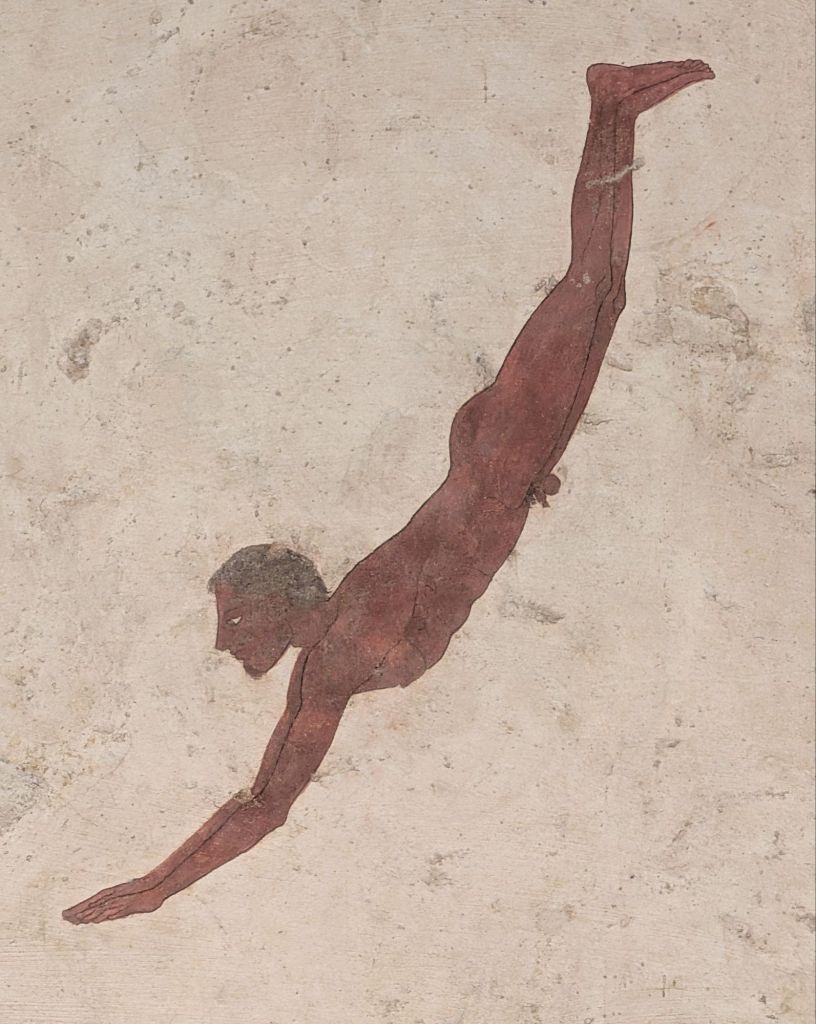
The most famous of the museum’s numerous frescoes is from the 5th Century BC Tomba del Tuffatore (Tomb of the Diver).
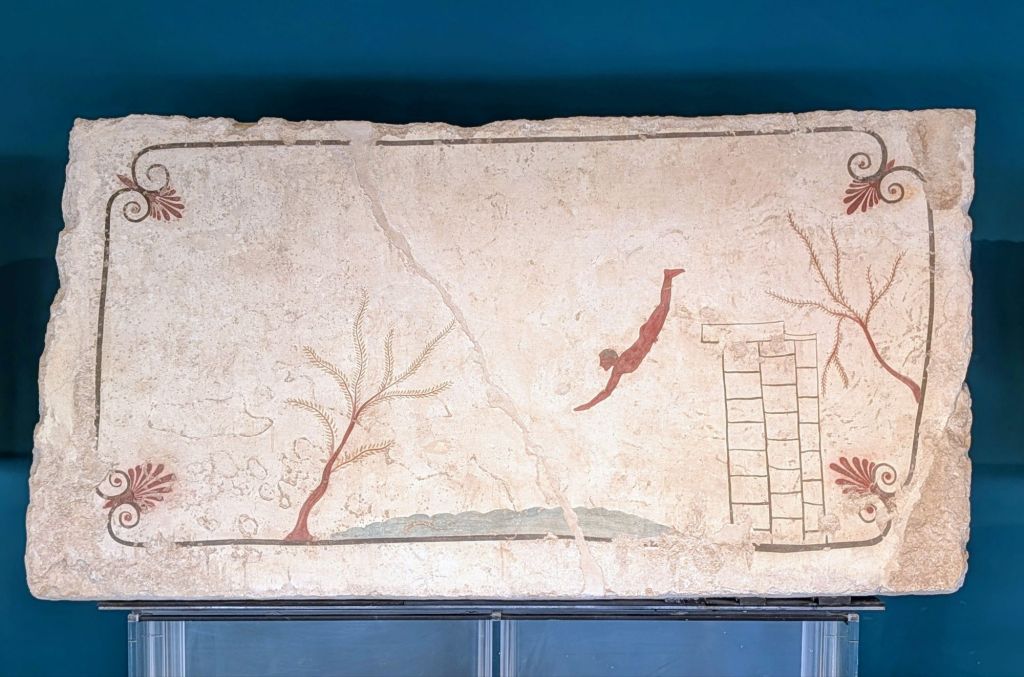
This fresco is thought to represent the passage from life to death by depicting a diver in mid-air.
During his trip to Italy, the German writer Goethe visited Paestum & dedicated an evocative & emotional passage to it that we related to which read:
“At last, uncertain whether we were walking on rocks or rubble, we could recognize some oblong, squarish boulders, which we had already noticed from a distance, as surviving temples and memories of a once magnificent city.”

