
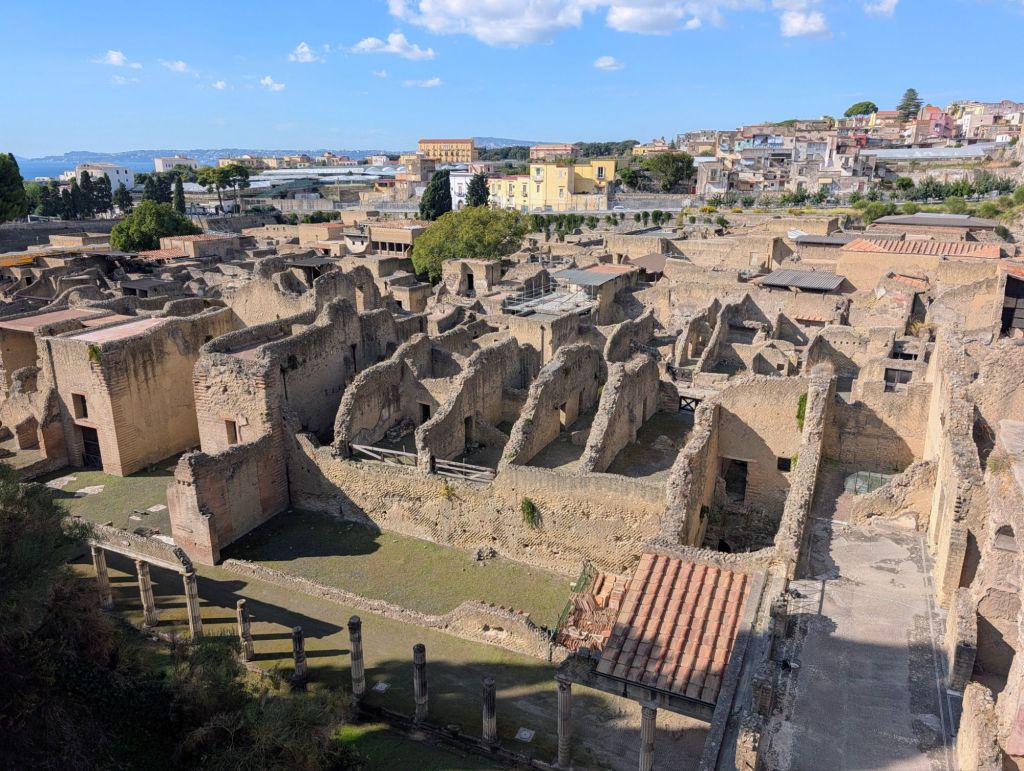
According to legend, Herculaneum was founded by the Geek demigod Hercules when he passed through Italy from his home in Spain to secure the Herd of Geryones during his 10th Labor.
Some legends claim Hercules fought flaming giants in the area which possibly incorporated the eruptions of Mount Vesuvius into mythology.
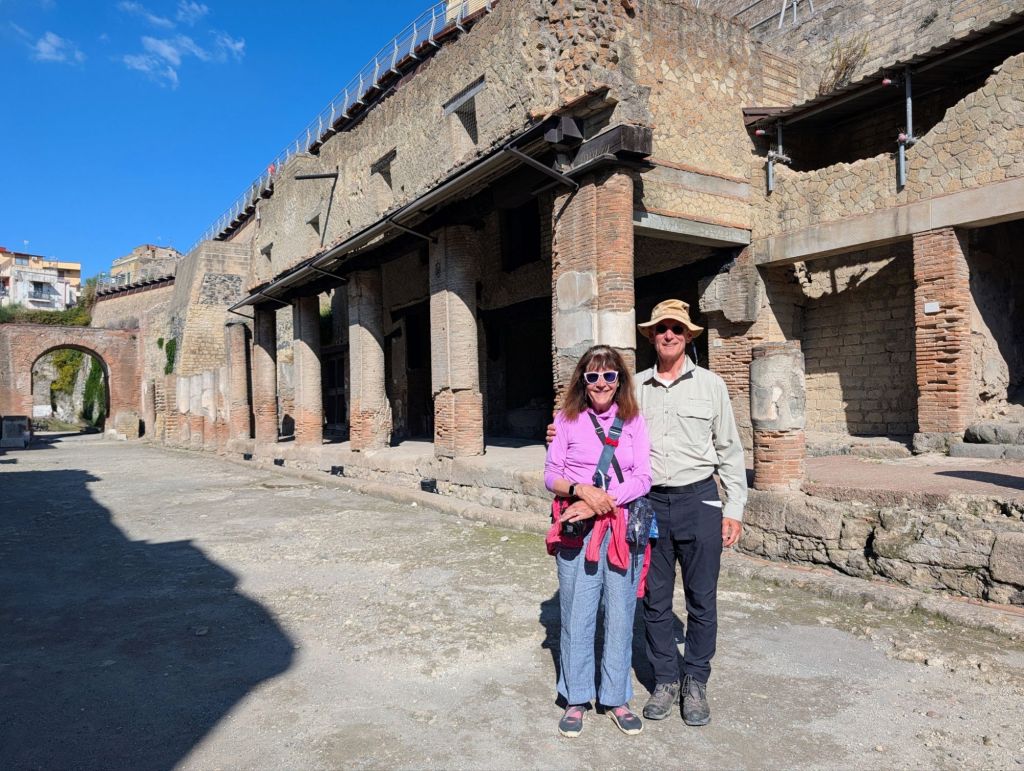
For three days in August 79 AD, death rained down on the Roman towns surrounding Mount Vesuvius as the volcano’s epic eruption laid waste to everything in its path.
Buried a few days after Pompeii, the small but wealthy village Herculaneum on the volcano’s north side opposite Pompeii had more time to panic & evacuate than its more famous neighboring city.
Having only a small harbour, Herculaneum’s main advantages were its excellent climate & its seaside position. It grew into a holiday resort & luxurious retreat for wealthy landowners who built & bought estates here.
The pyroclastic flow of volcanic gas which contained no oxygen travelled at over 100 MPH & hit the town at a temperature of 650 degrees F.
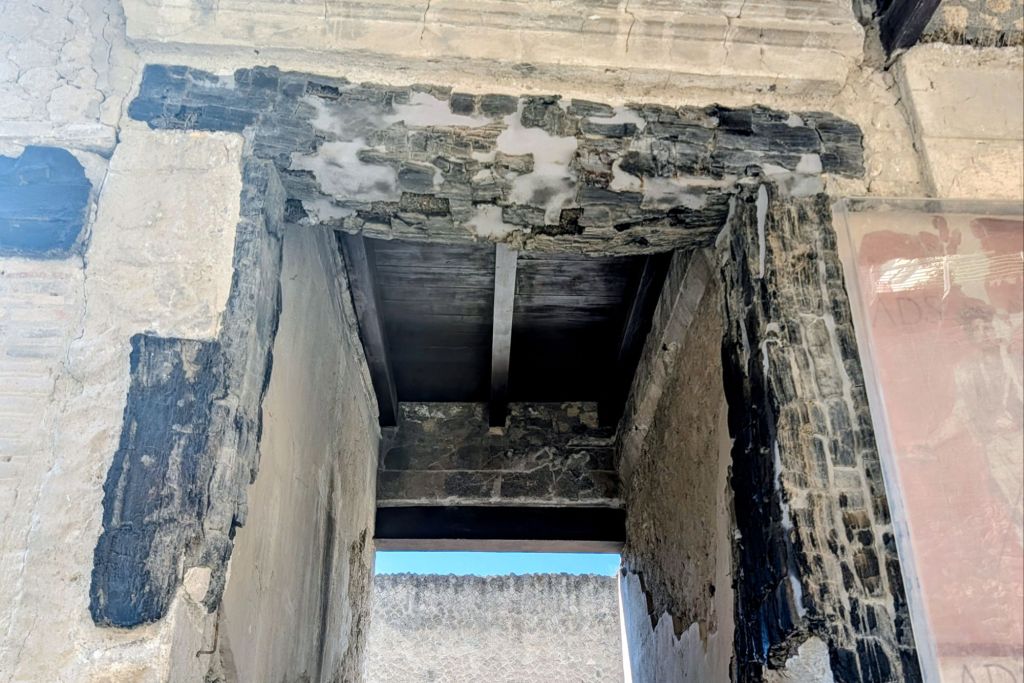
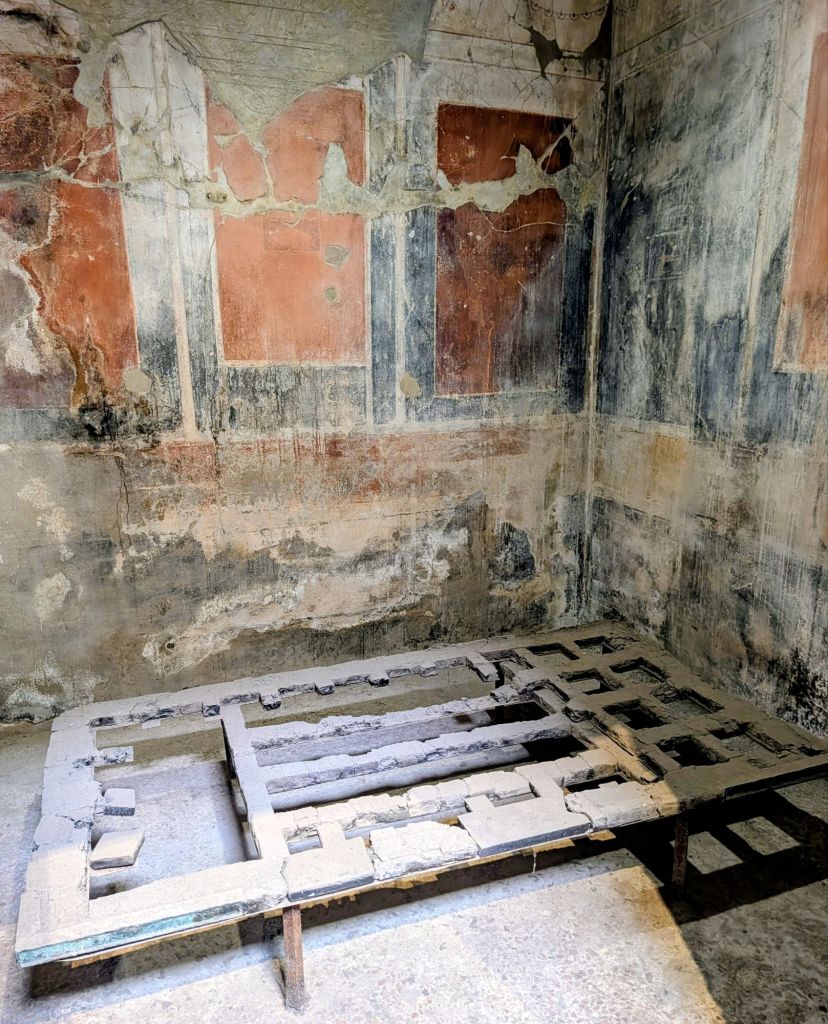
The thermal shock from the gas instantly killed those who had not escaped. The gas heat instantly carbonized organic materials including wood, paper, bread, beds, & boats which kept them remarkably preserved.
While Pompeii was covered by a 9 meter layer of porous pumice, Herculaneum’s location saw it buried deep under a 20-25 meter deep pyroclastic flow.
It took 3 days to destroy Pompeii while Herculaneum was destroyed in roughly 2 hours.
As a result, not only more durable items like statues, shops, sewers, baths, & a theatre were preserved; but also, wooden furniture, textiles, foodstuffs, books, & human waste were also preserved.
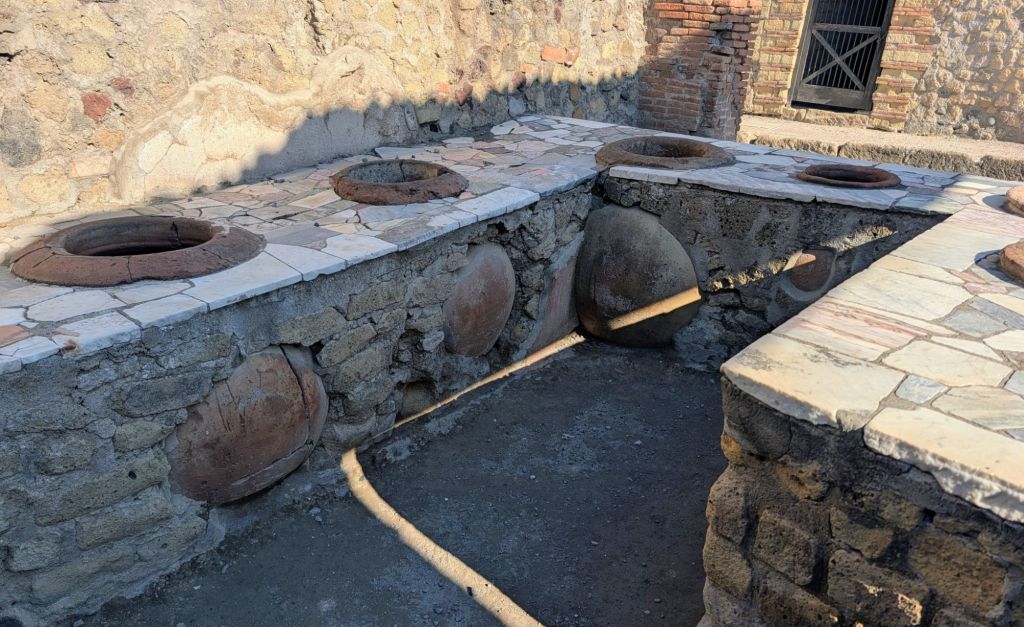
The city’s ruins were first discovered by accident in 1709 when a well was being dug.
The city was started to be uncovered in 1738 with excavations along with active research still continuing today.
The ruins are best known for the extraordinary beauty of some of its preserved mosaics & frescoes.
There is even evidence showing an ancient interior design remodel.
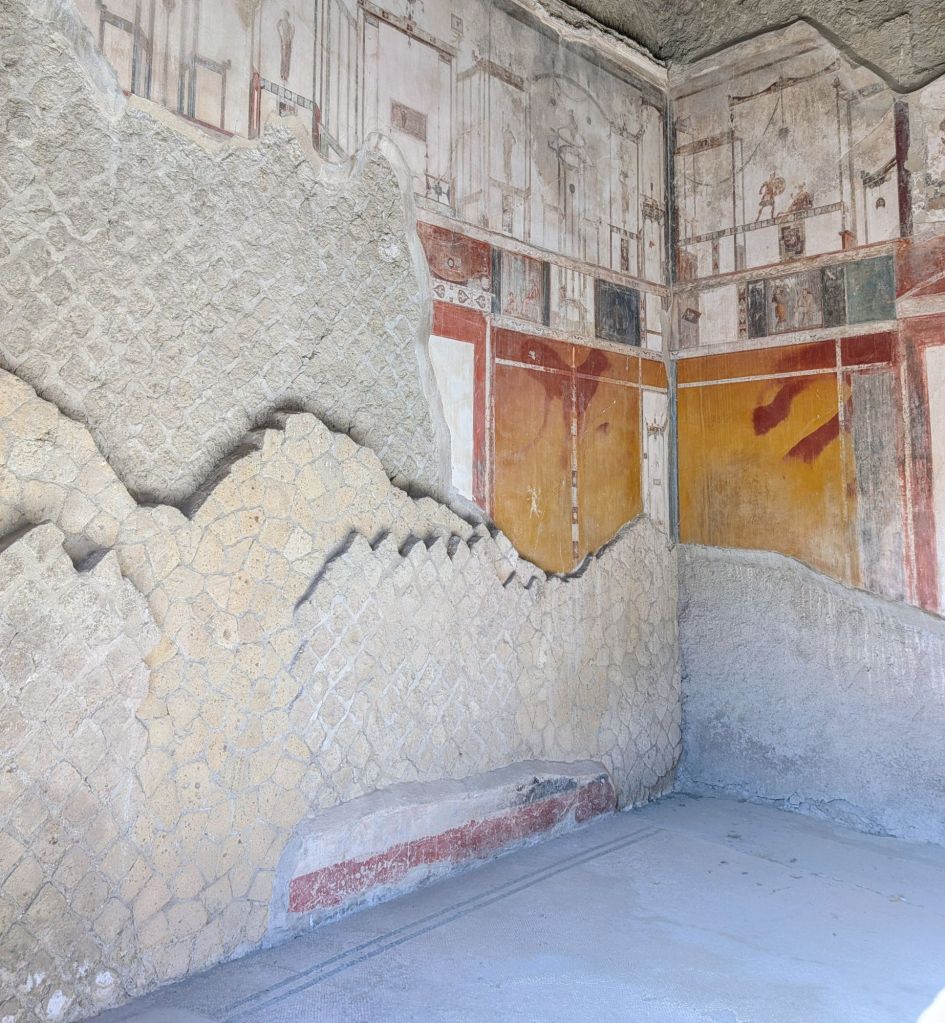
Hall of the Augustals
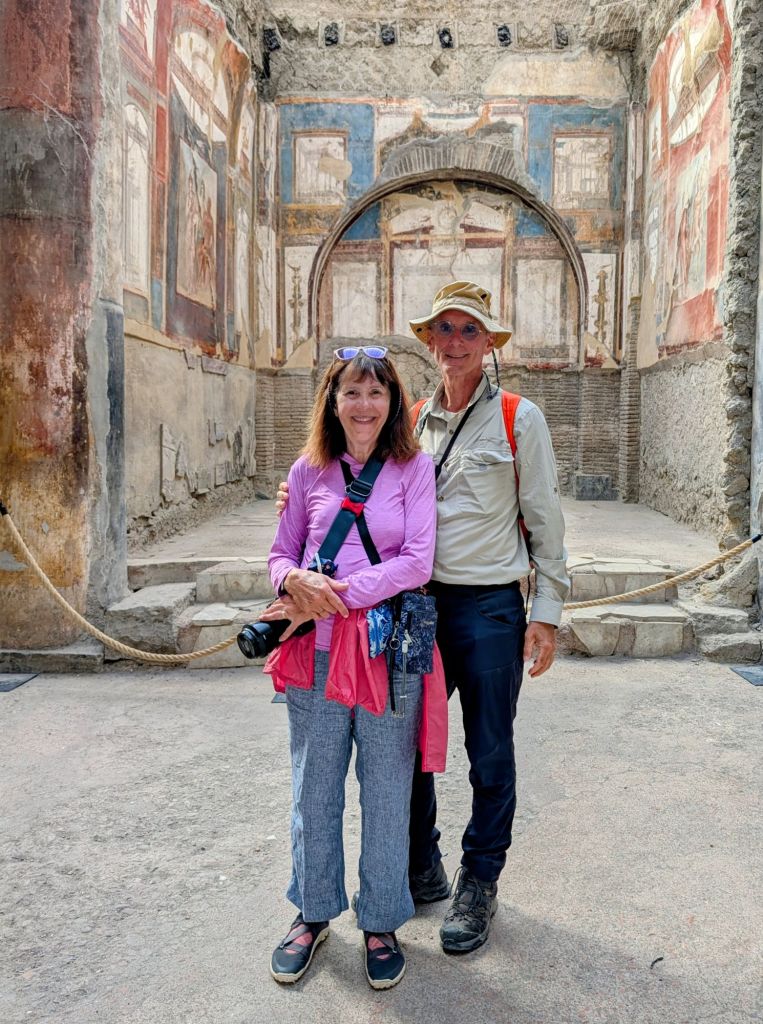
This structure was the center for the College of the Augustales who were free men devoted to the cult of the Emperor Augustus.
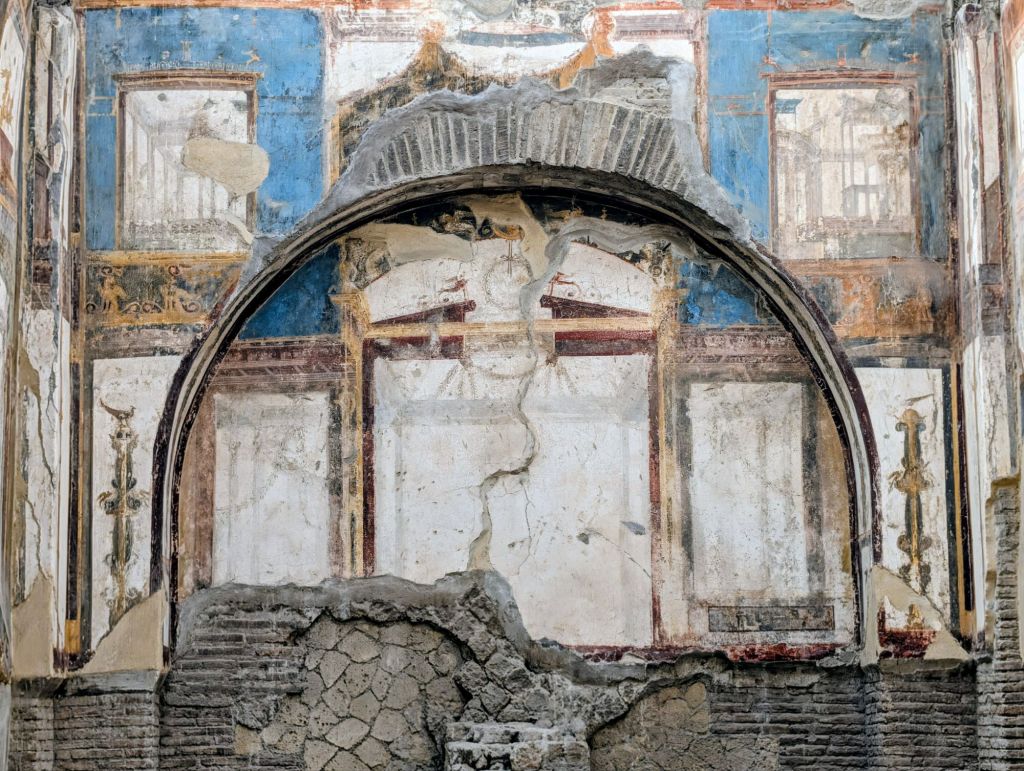
On the left wall, Hercules is depicted entering Mount Olympus accompanied by Jupiter, Juno, & Minerva.
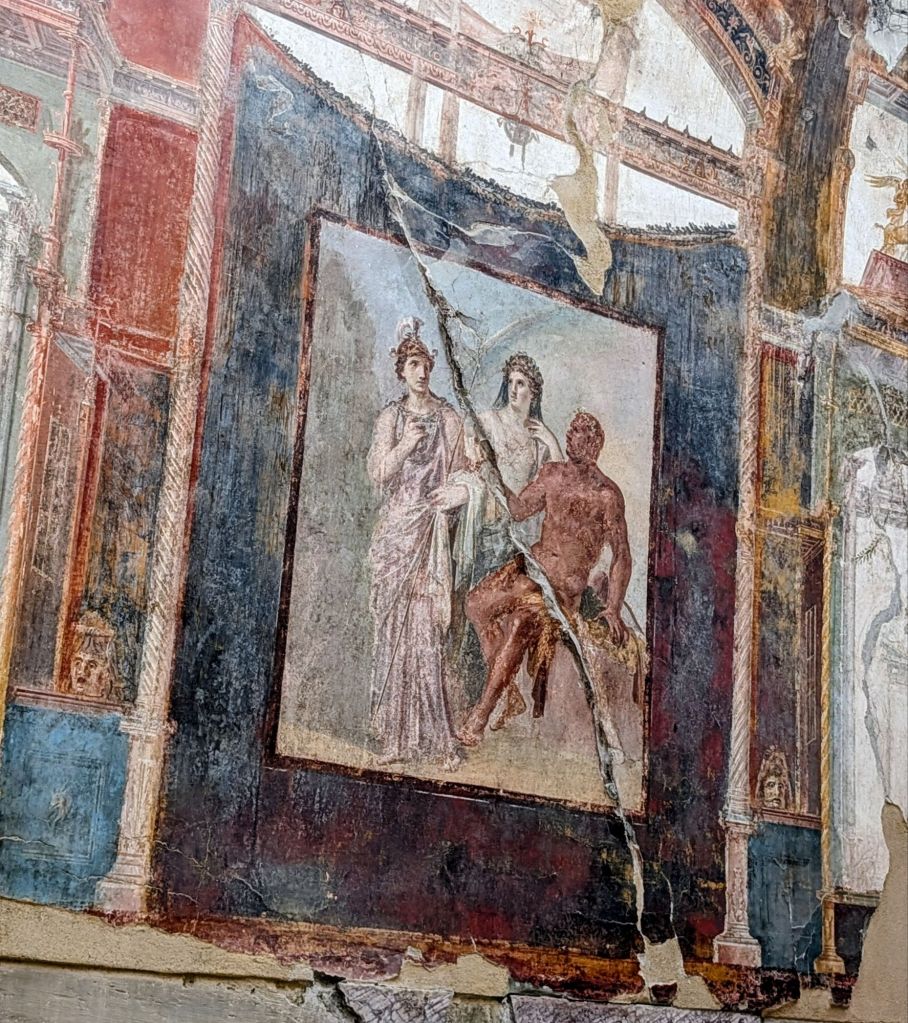
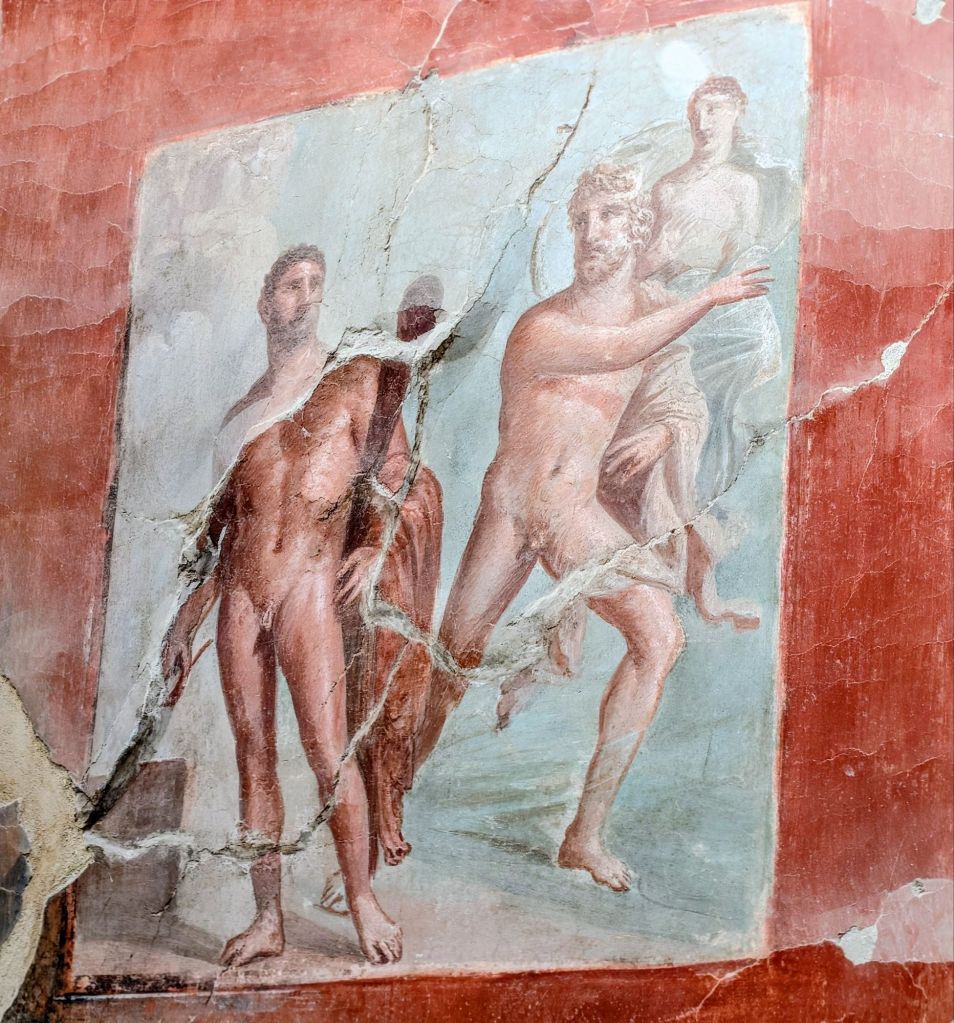
The fresco on the left wall depicts Hercules wrestling Achelous.
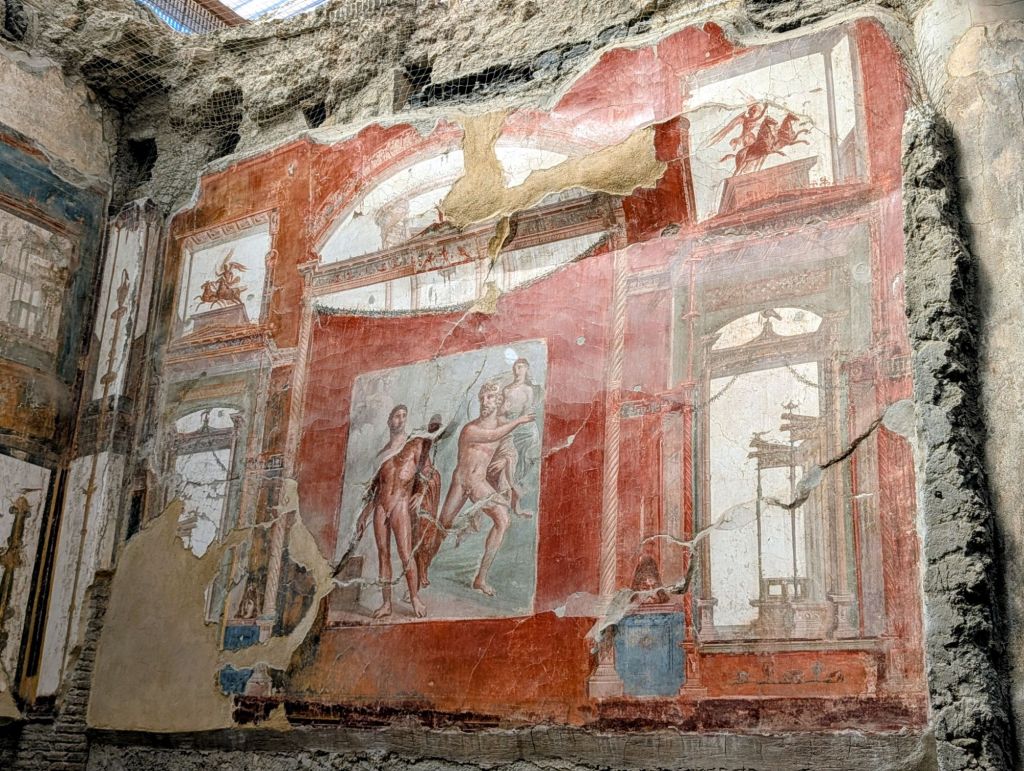
This house still has original framing.
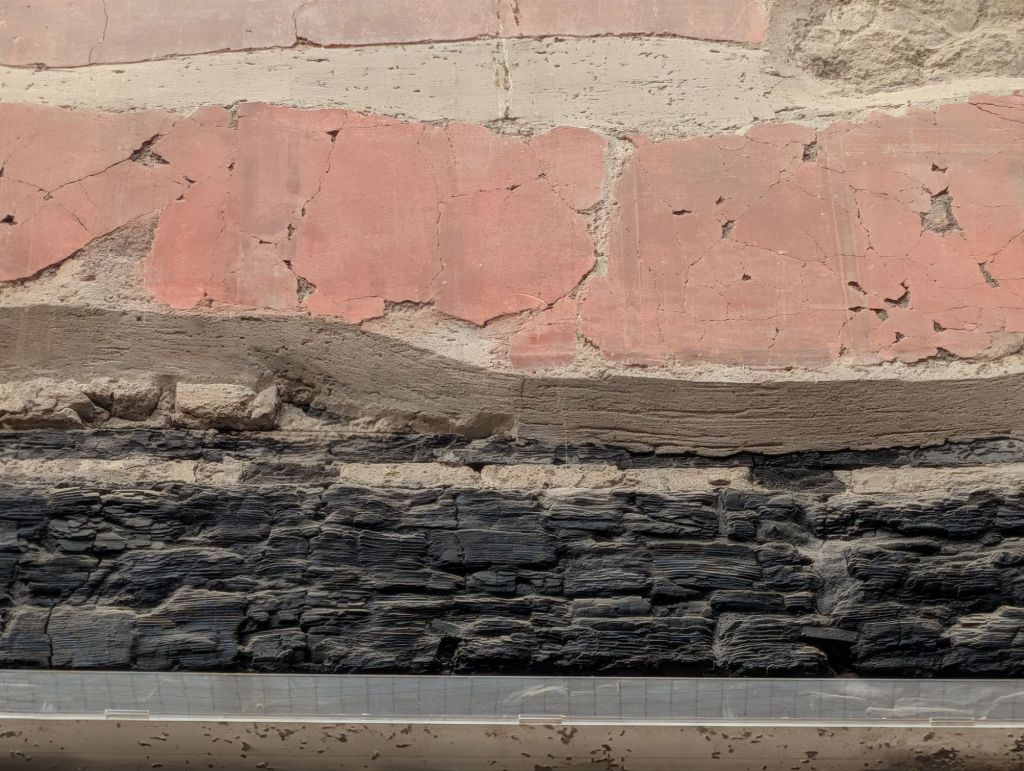
The skeleton of this building’s custodian was found in his quarters laying on his bed.
One house still has an original wooden bed frame in a side room.
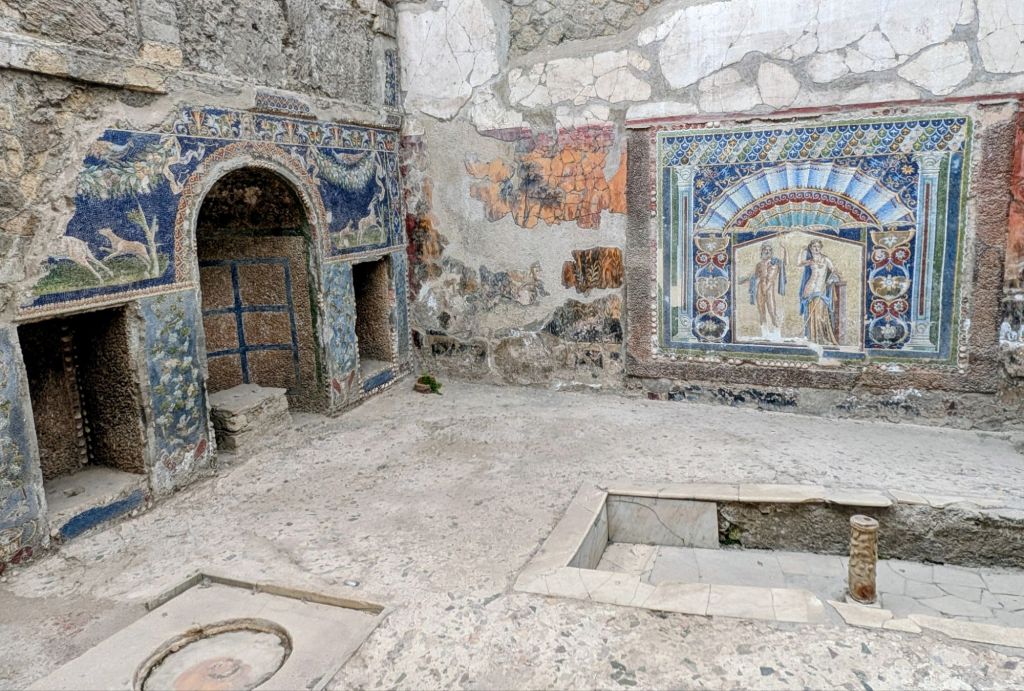
The House of Neptune & Aphrodite (Casa di Nettuno e Anfitrite)
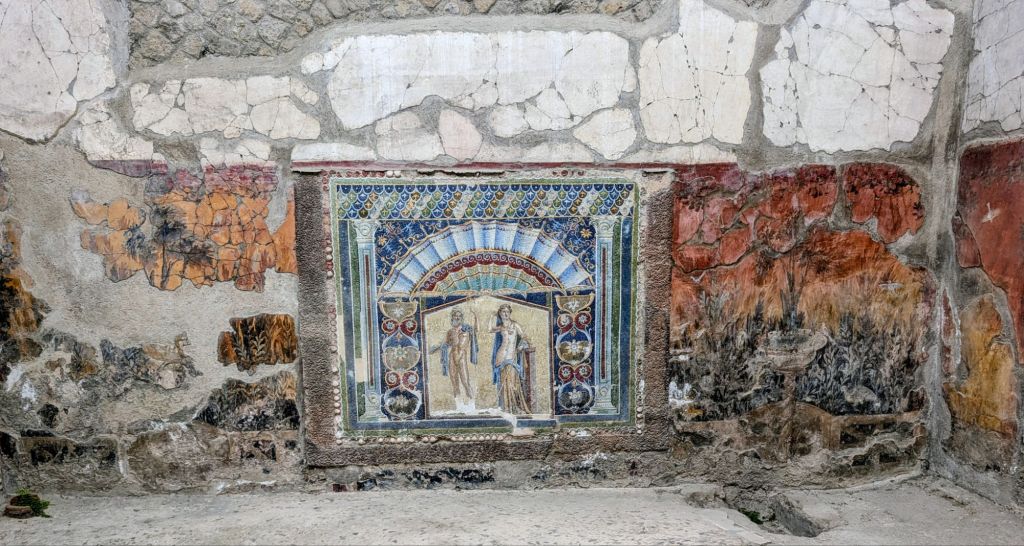
This house is among the best-preserved & most famous upper middle class homes in the city.
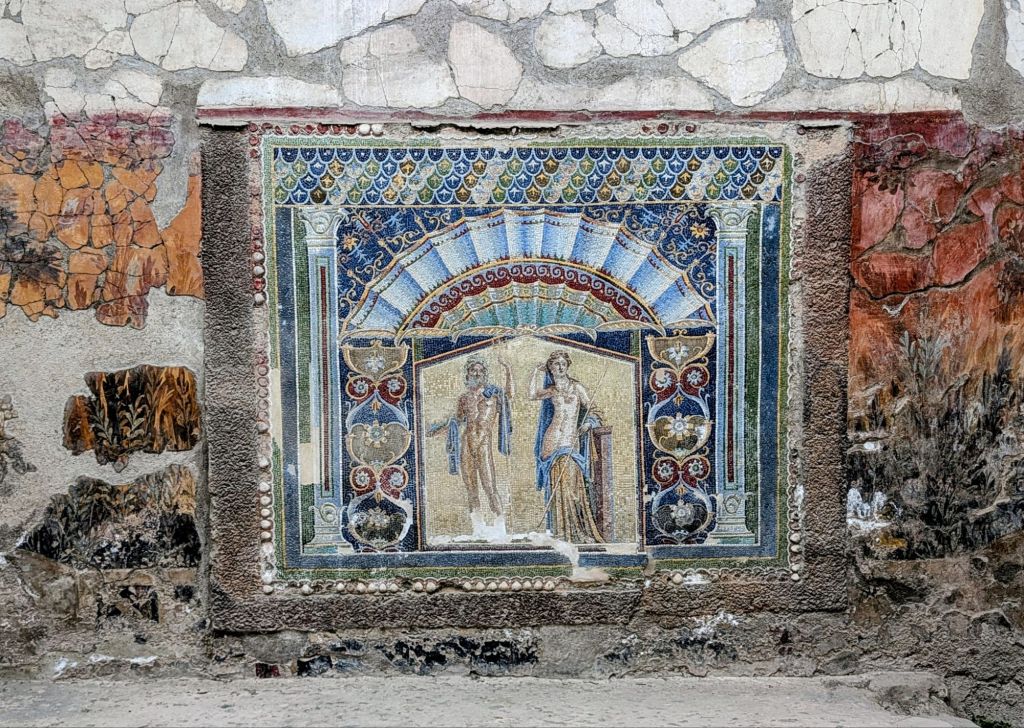
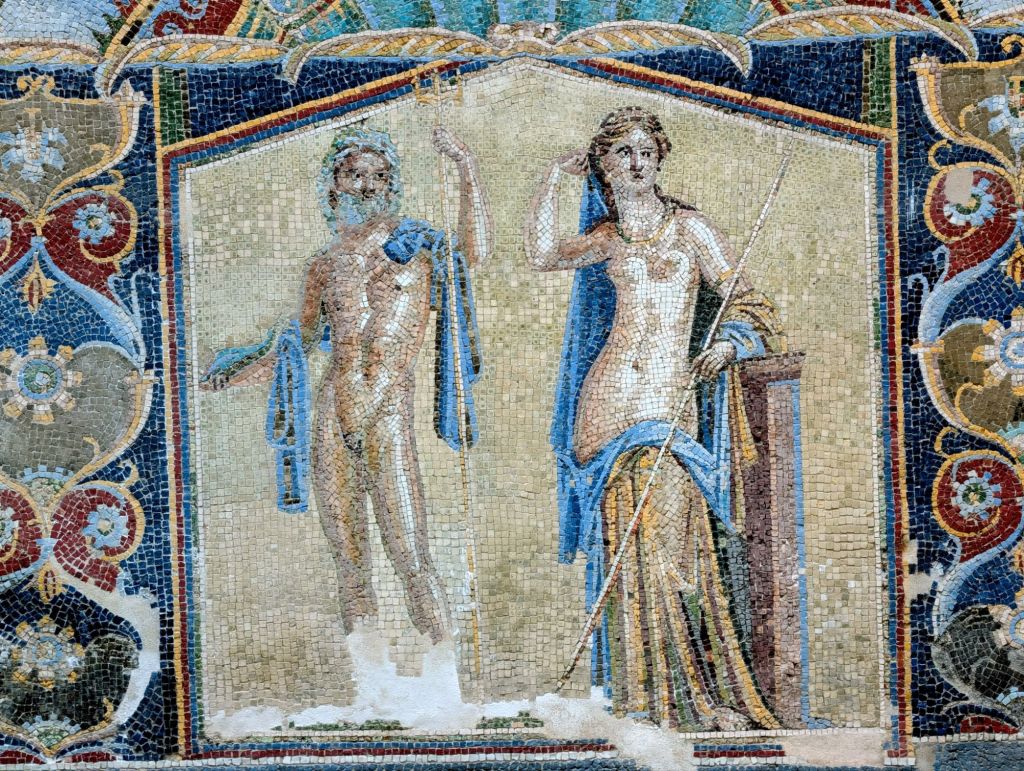
The house’s highlight is its open-air summer dining room which has a brilliant, well-preserved, glass-paste wall mosaic depicting the ocean god Neptune & his wife Amphitrite framed by hunting & floral scenes.
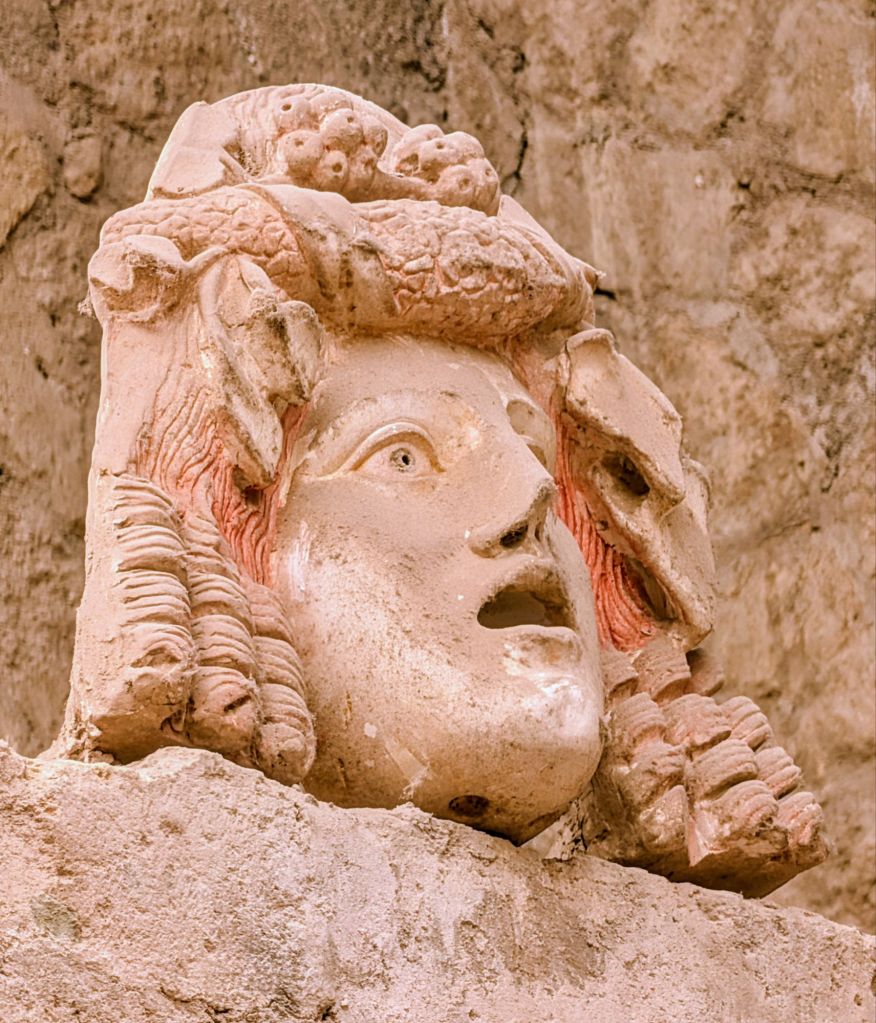
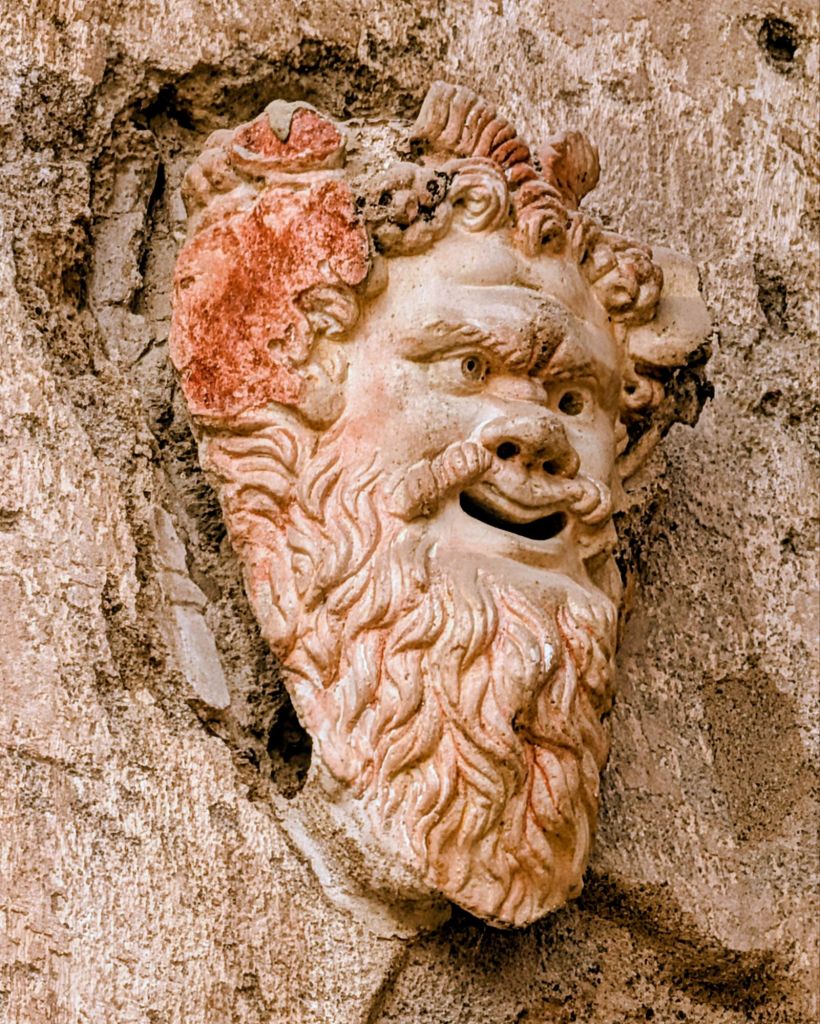
On an adjacent wall in the same room, the nymphaeum which is a sanctuary to the water nymphs has marble theater masks above it.
The House of the Samnites
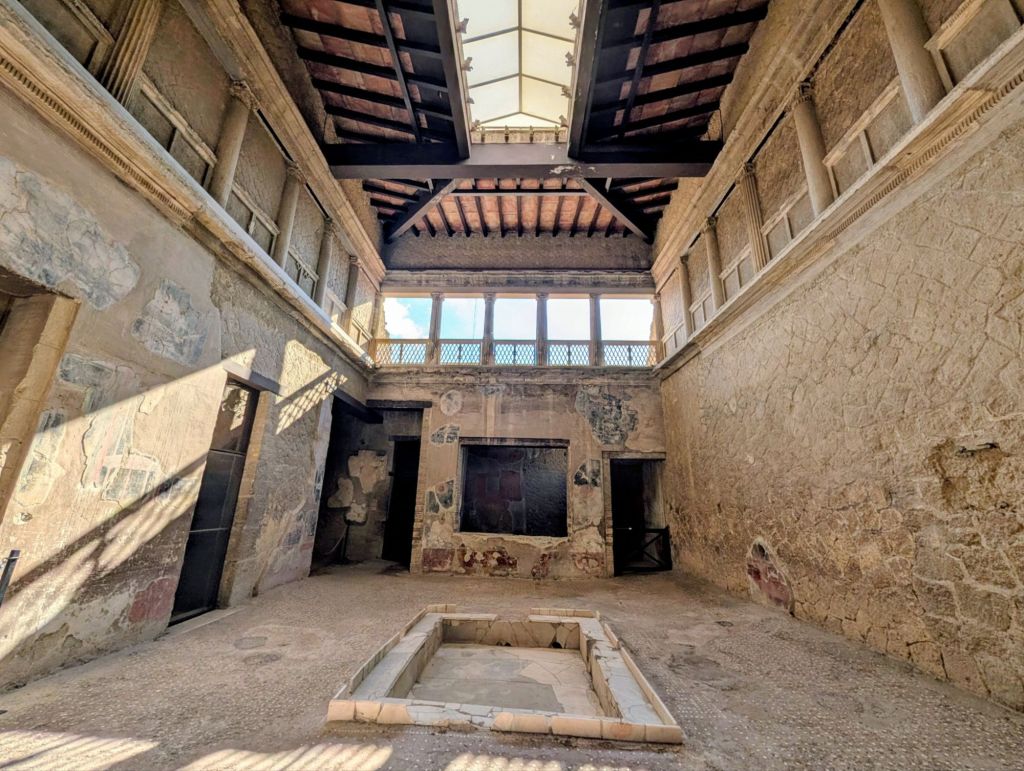
Among the oldest houses in the city, the House of the Samnites was built in the 2nd Century BC & is famous for its beautiful Greek-style atrium with a faux loggia upstairs with three sides lined in Ionic columns with the fourth side open.
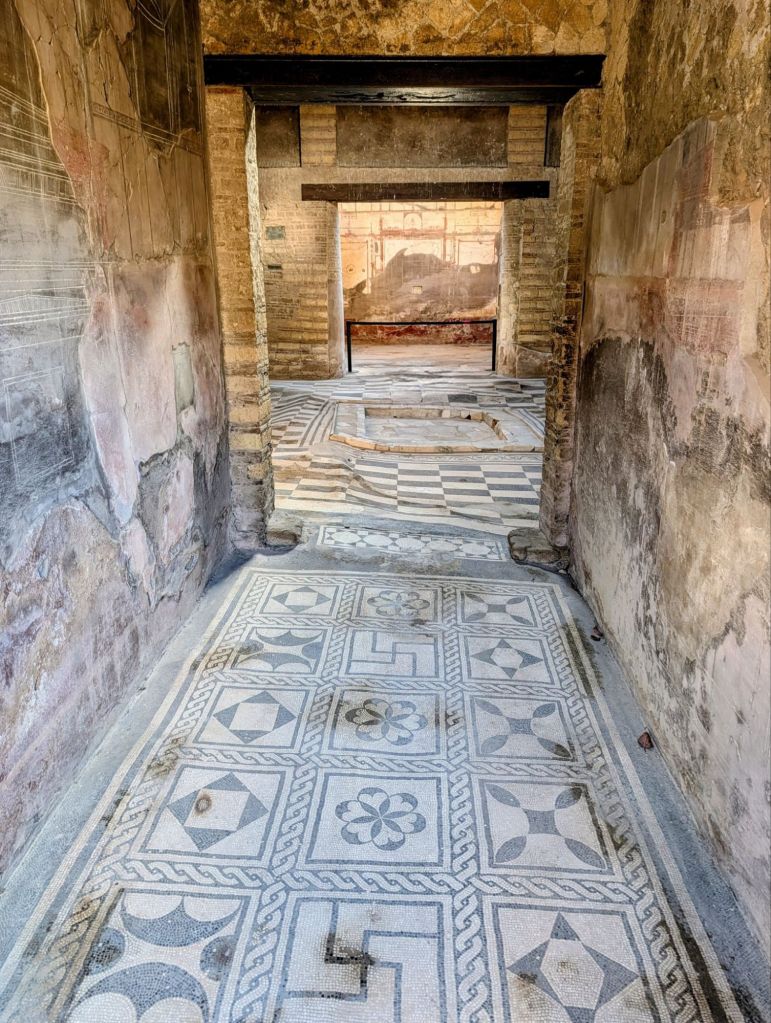
The House of the Mosaic Atrium
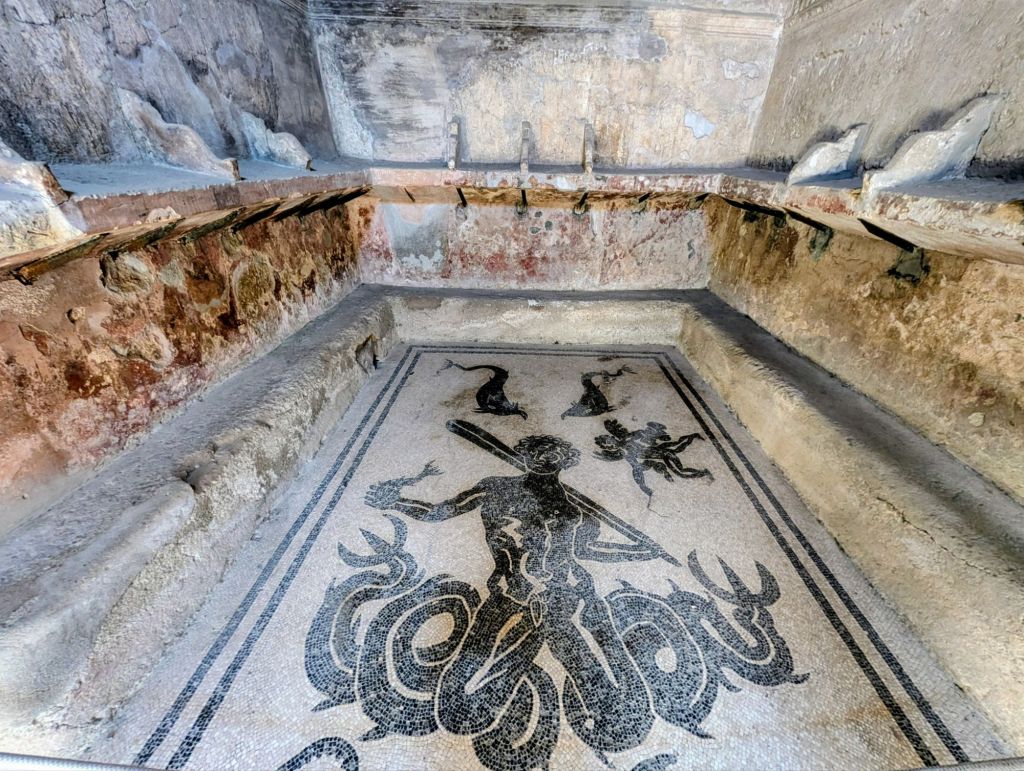
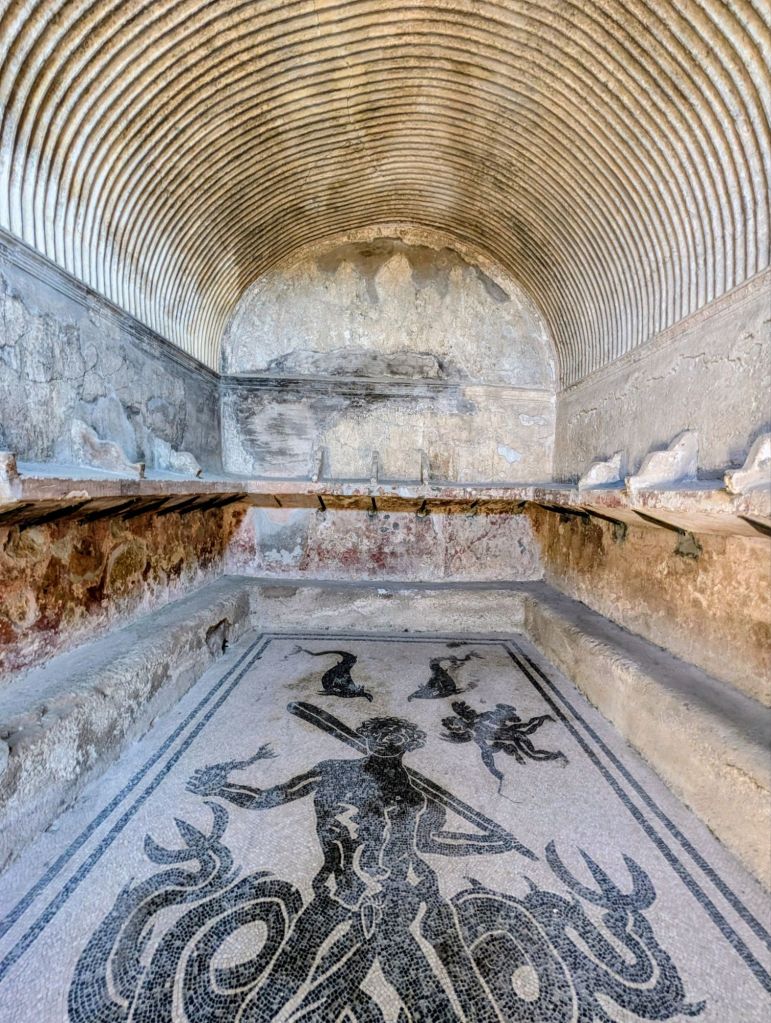
Roman Bath
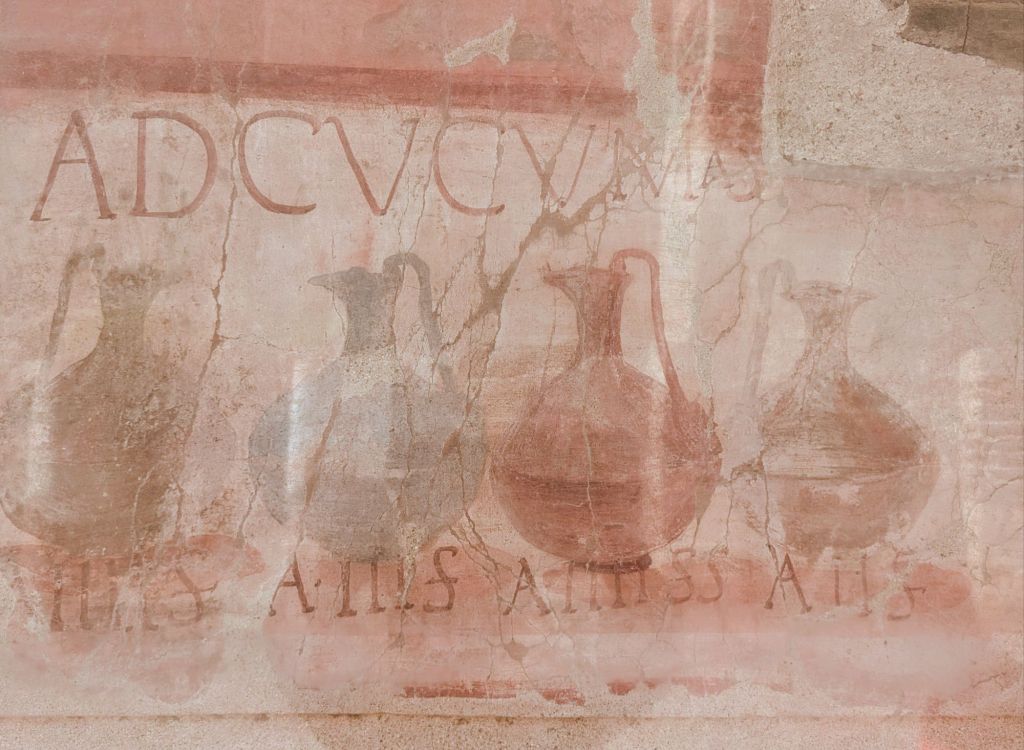
The Tavern selling Wine (Bottega ad Cuccumas)
On this tavern’s outside wall is their price list graphically showing wine prices by the container size.
The Fornici
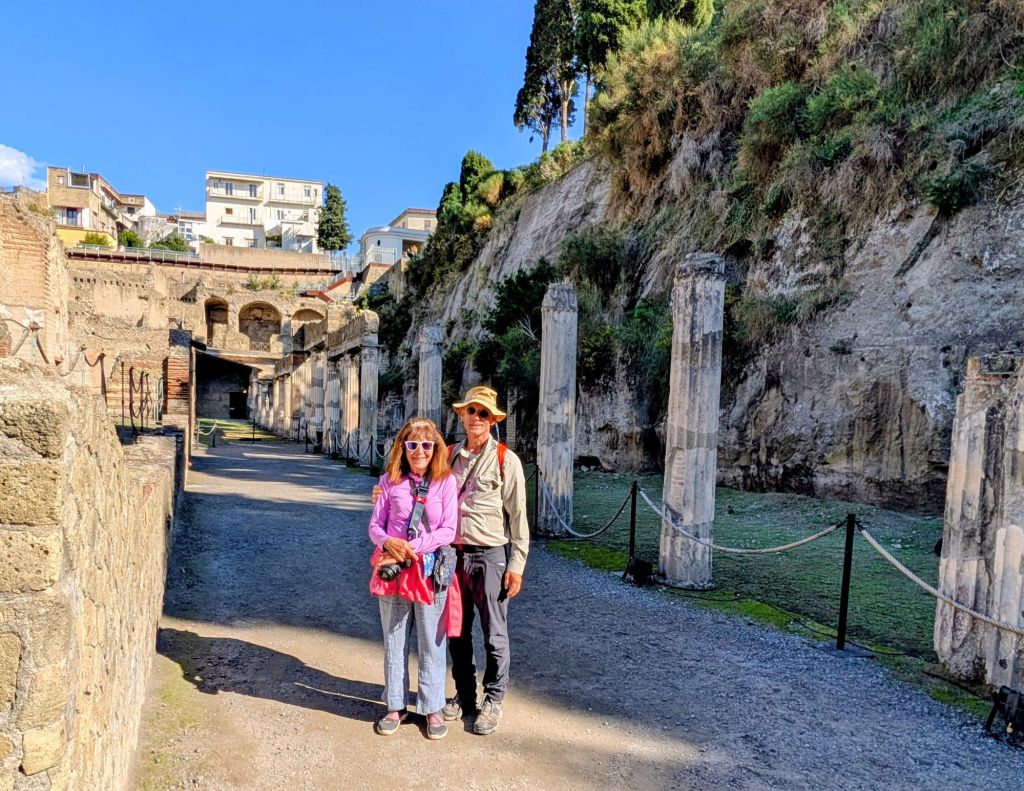
The fornici were the port warehouses which were also used to shelter boats located along the beach.
In 1980, over 300 human skeletons were unearthed here.
It is the largest skeleton collection from anywhere in the ancient world.
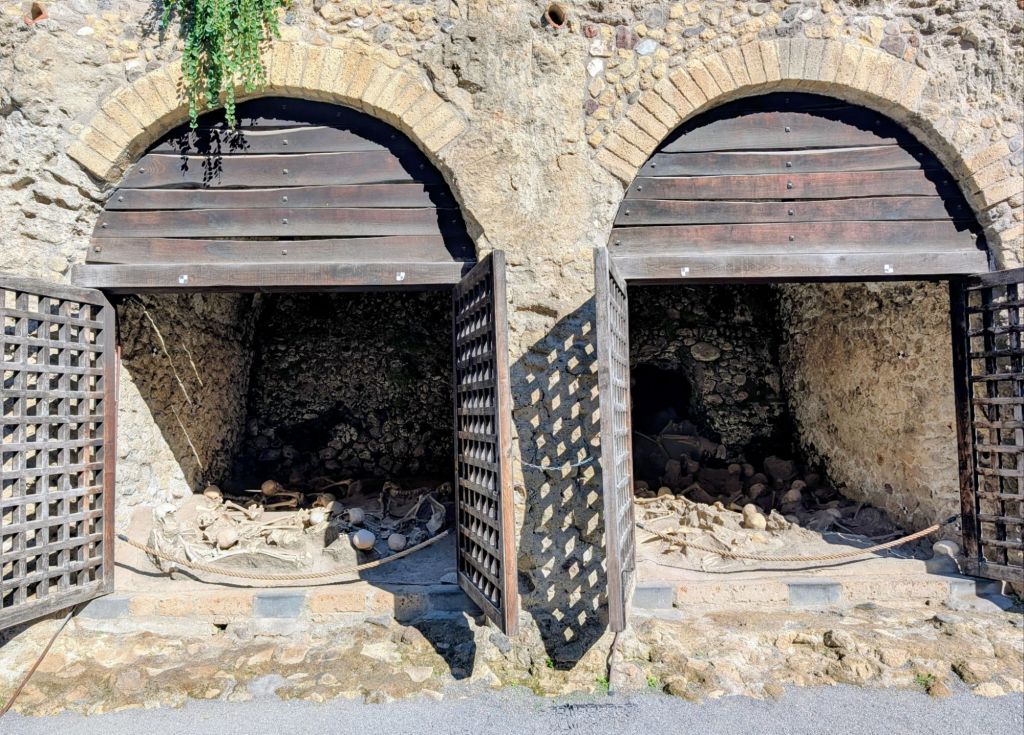
They are the remains from residents who attempted to flee the eruption by hiding in the seaside warehouse & were killed by the volcano’s scorching toxic smoke & ash.
Most skeletons showed signs of hard labor at some point in their lives.
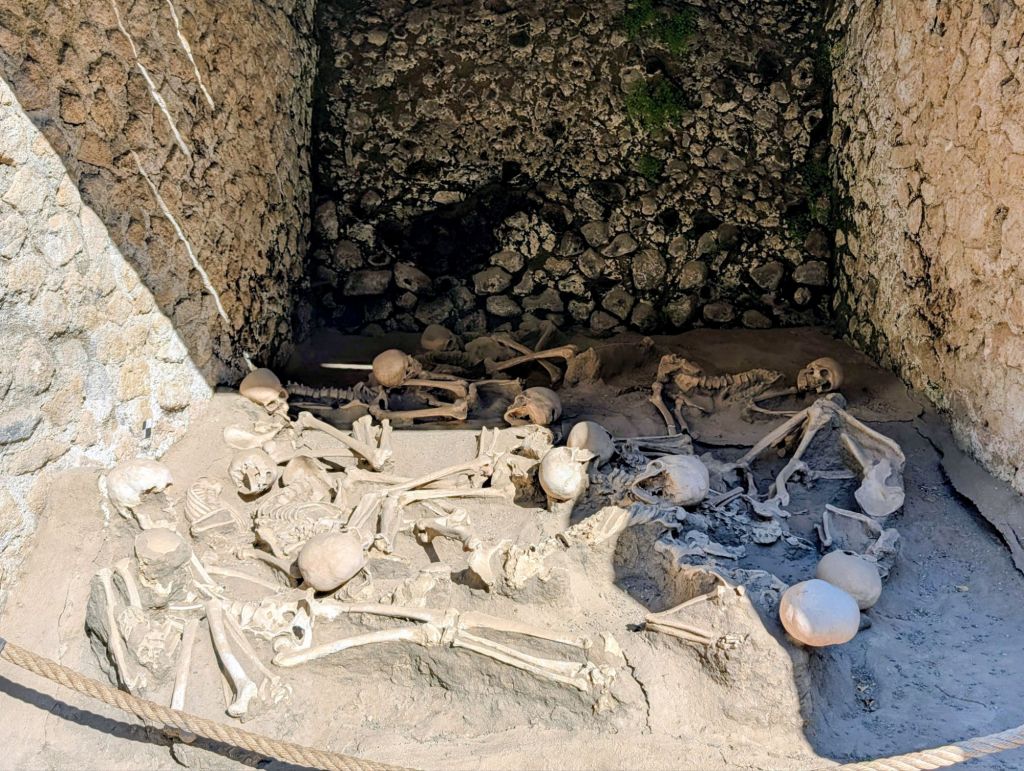
Researchers have determined that at least 80% of the uncovered skeletons had been a slave at some time in their life.
Along with their remains, personal objects such as jewelry & coins were found as the victims thought they could use them after escaping.
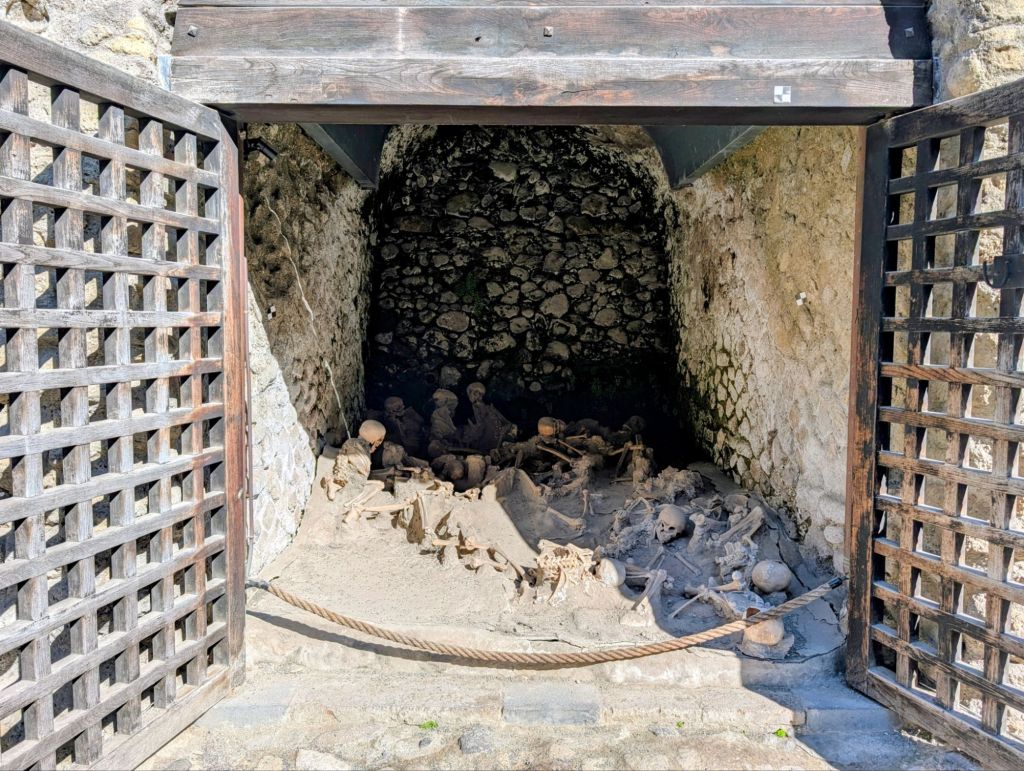
Additionally, a soldier with his belt, two swords, chisel, & coin purse was found.
Also, a 9 meter long Roman boat with skeletons of its rowers was found.
Like at Pompeii, the most outstanding relics from Herculaneum were moved to be displayed in the National Archeological Museum in Naples.

