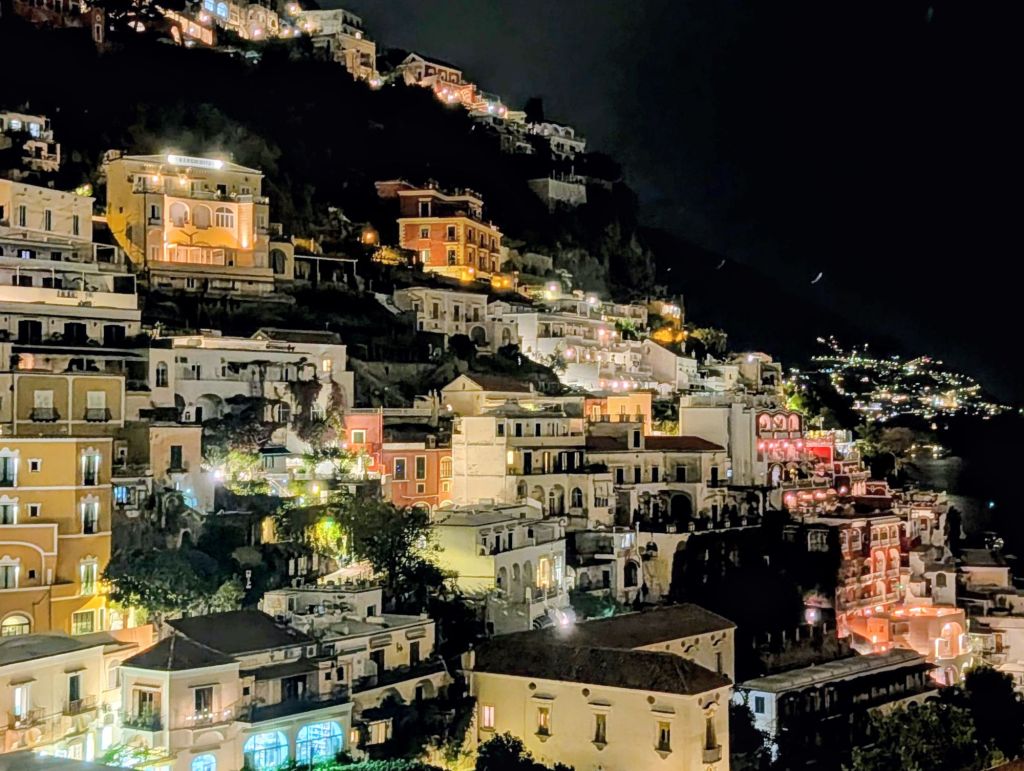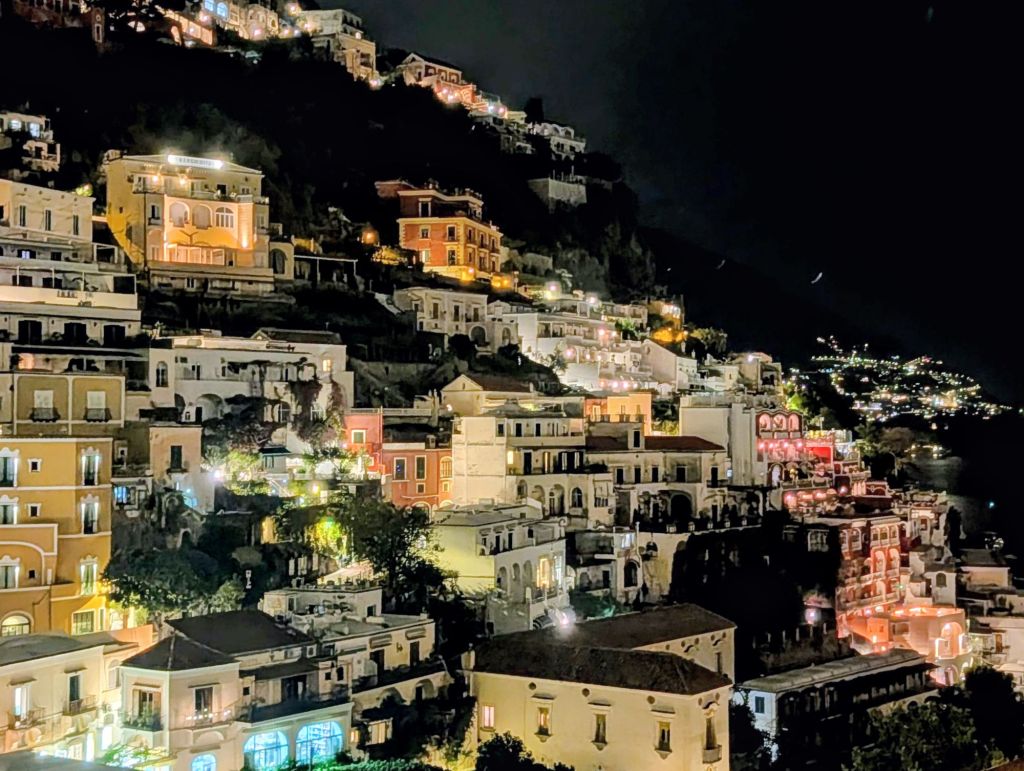
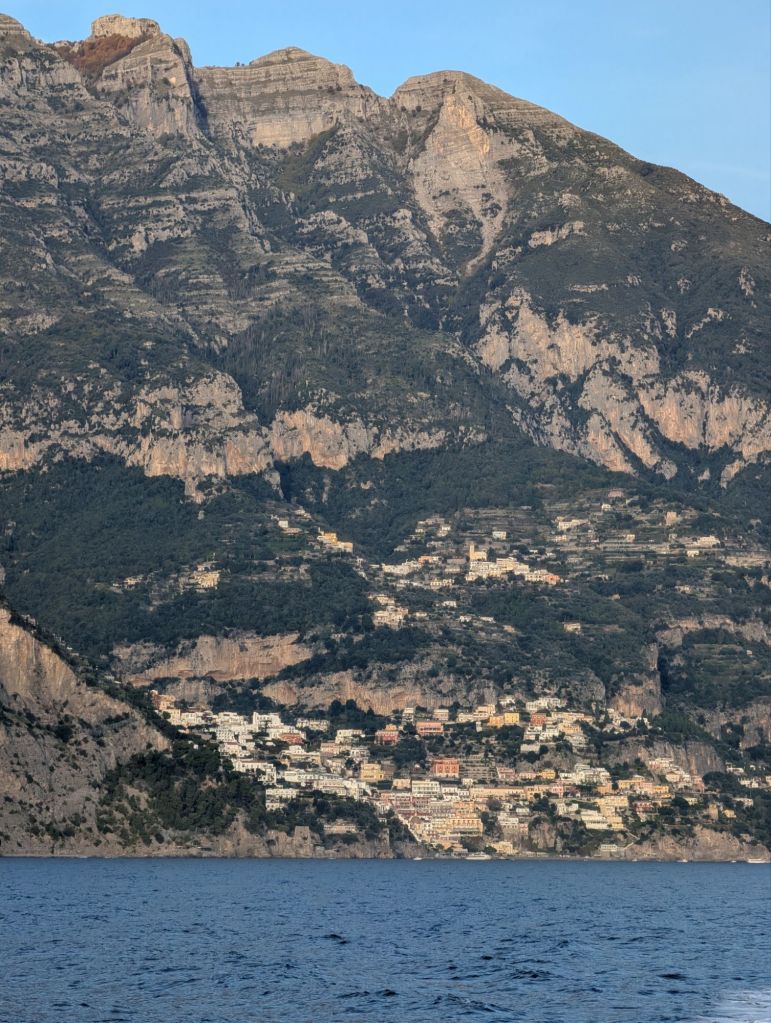
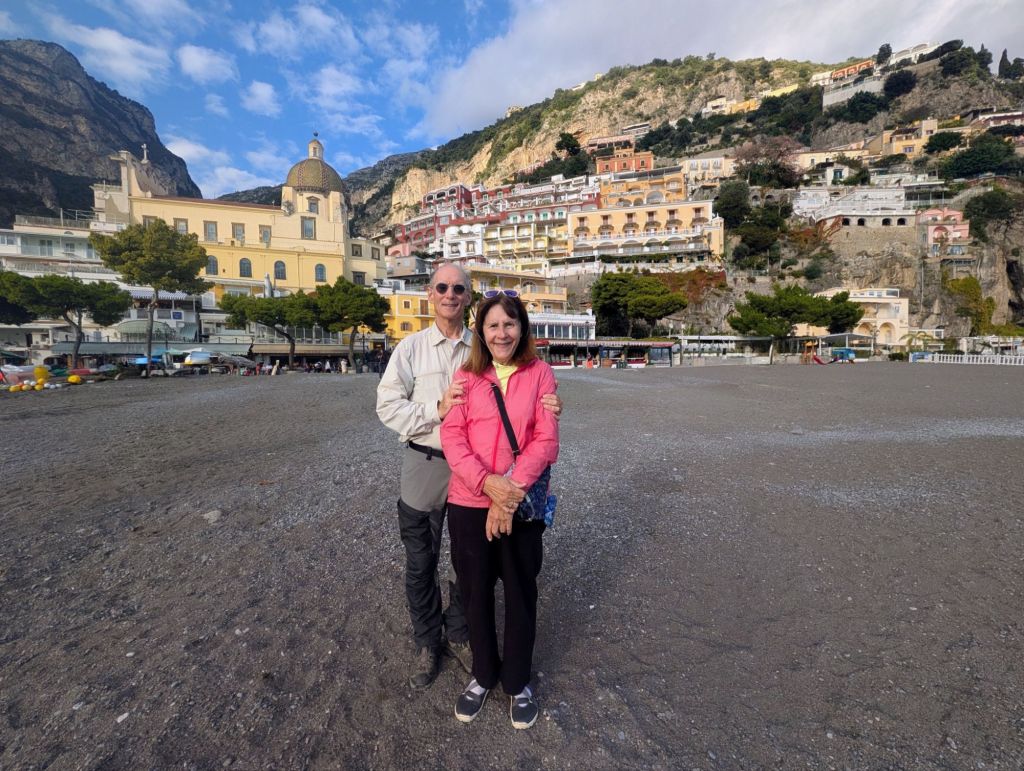
Positano has been described as “the only place in the world conceived on a vertical rather than a horizontal axis” due to the architectural skill & inventiveness of its people who were not intimidated by the area’s steep contours & decided to settle here anyway.
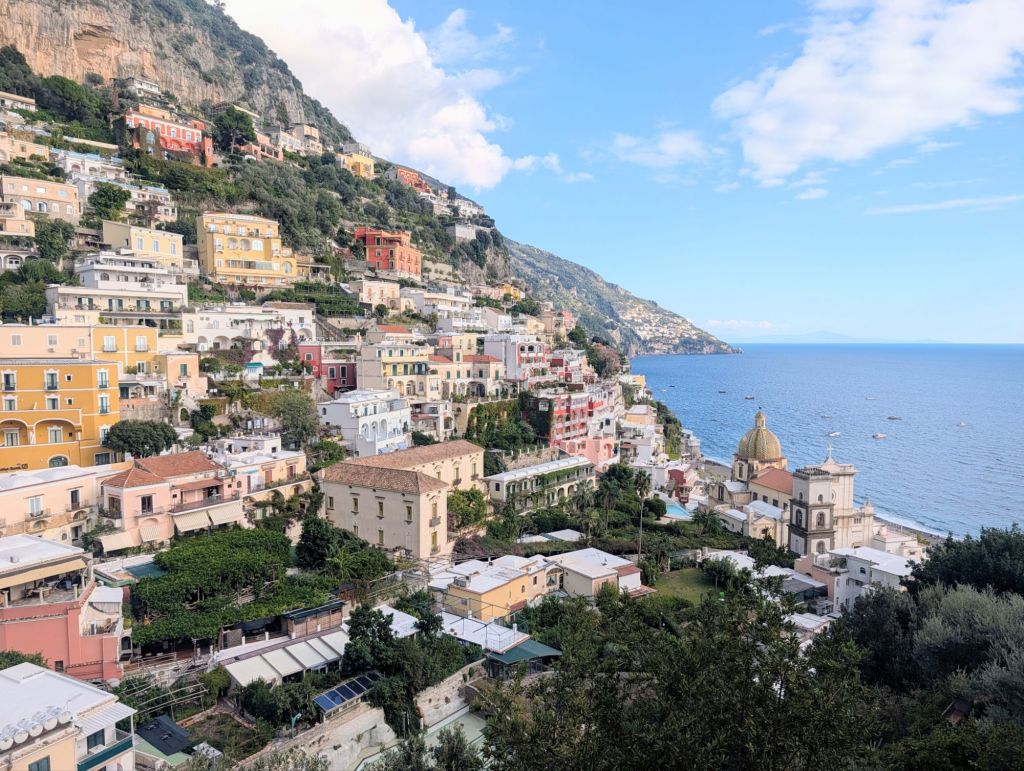
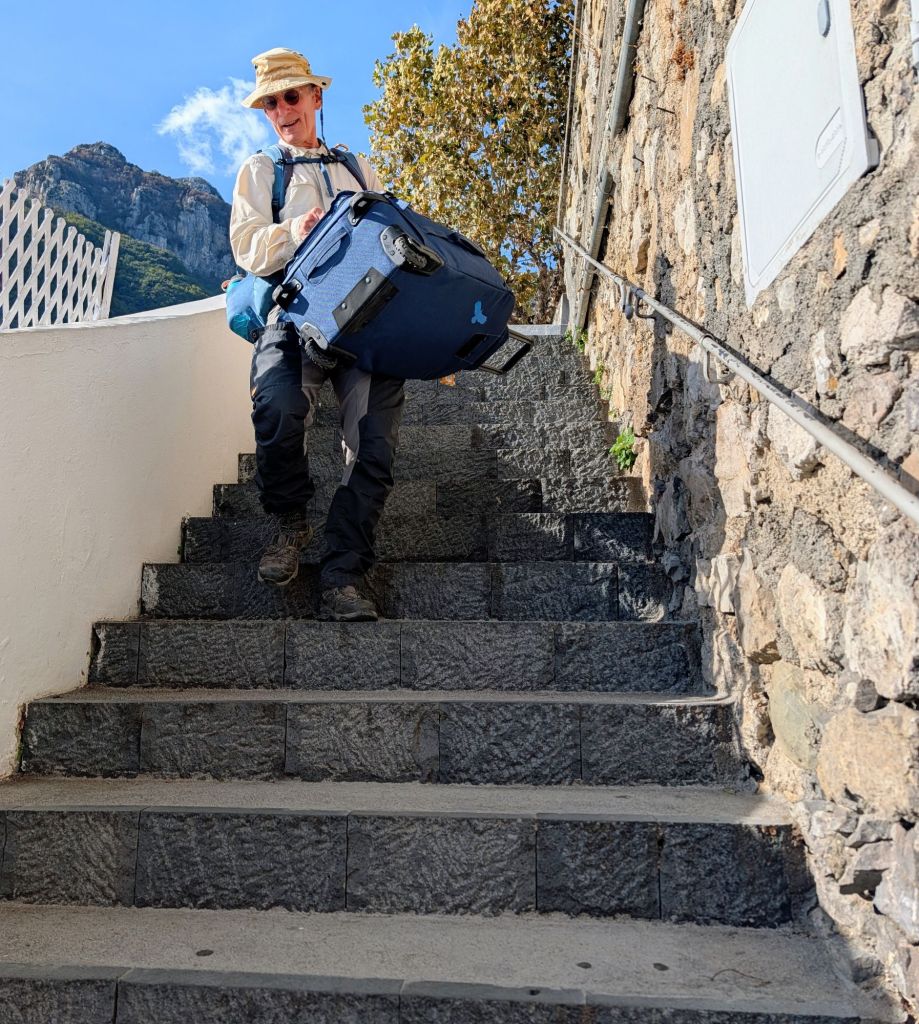
Positano is basically a vertical city where stairs replace streets.
In a May 1953 essay for Harper’s Bazaar magazine, titled “Positano Bites Deep”, John Steinbeck wrote:
“Positano bites deep. It is a dream place that isn’t quite real when you are there and becomes beckoningly real after you have gone.”
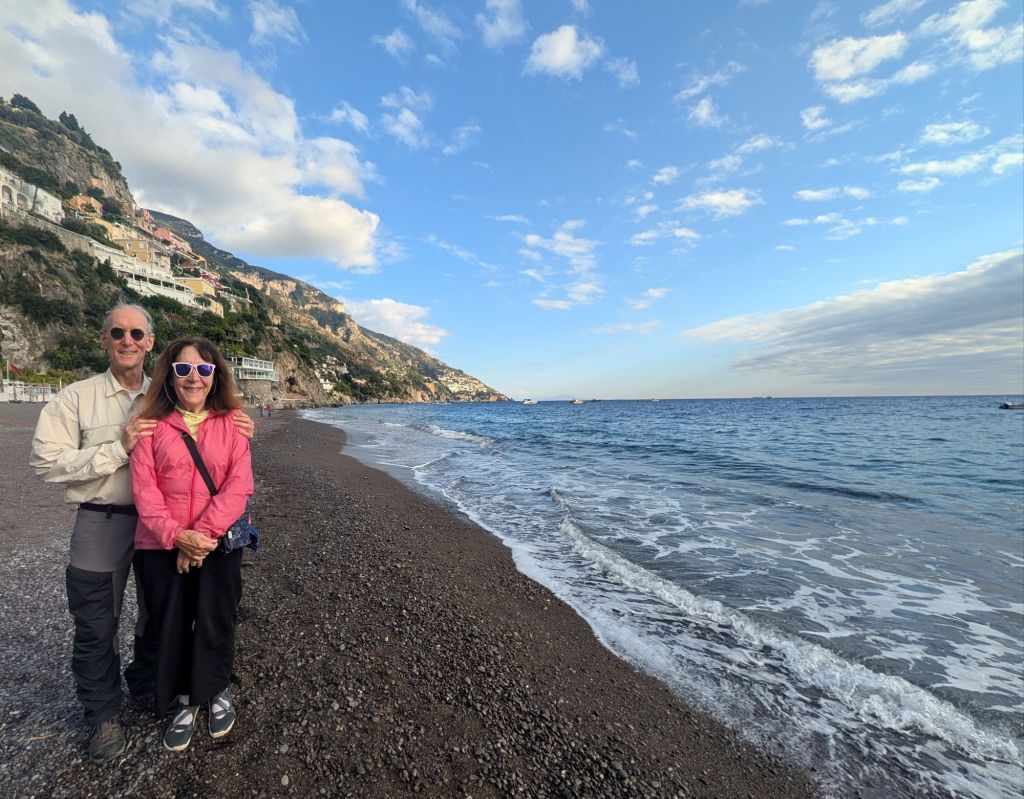
By the end of our stay here, I understood exactly what Steineck meant.
This land was beloved by Poseidon who was the Greek god of the sea & according to legend, he killed a local citizen to mark his love for the sea nymph Pasitea.
In the 1st Century BC, wealthy Romans built villas here close to the beach.
One Roman villa’s ruins are now located under the Church of Santa Maria Assunta in the local archeological Museum.
Positano is believed to have been founded in the 9th Century around a Benedictine abbey.
Then, the city expanded when inhabitants from Paestum who were terrified by the Saracen raids relocated to the Amalfi Coast.
Church of Santa Maria Assunta
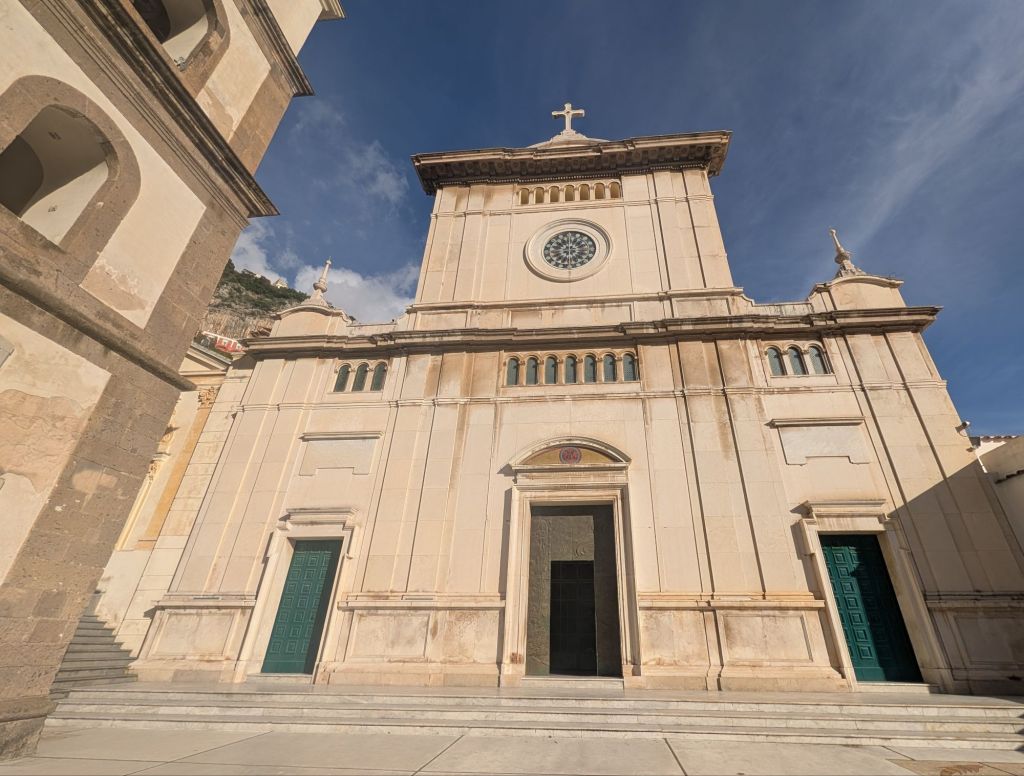
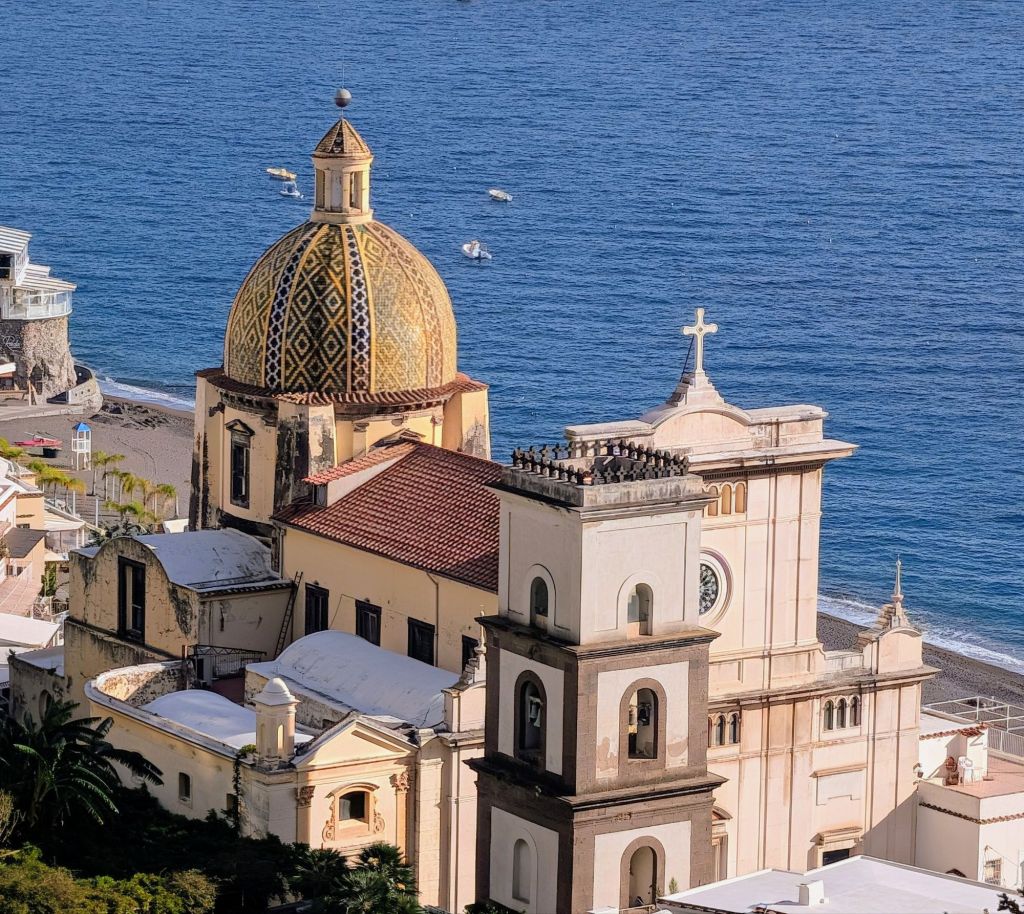
Positano’s centerpiece is the Church of Santa Maria Assunta with its beautiful Moorish tiled dome.
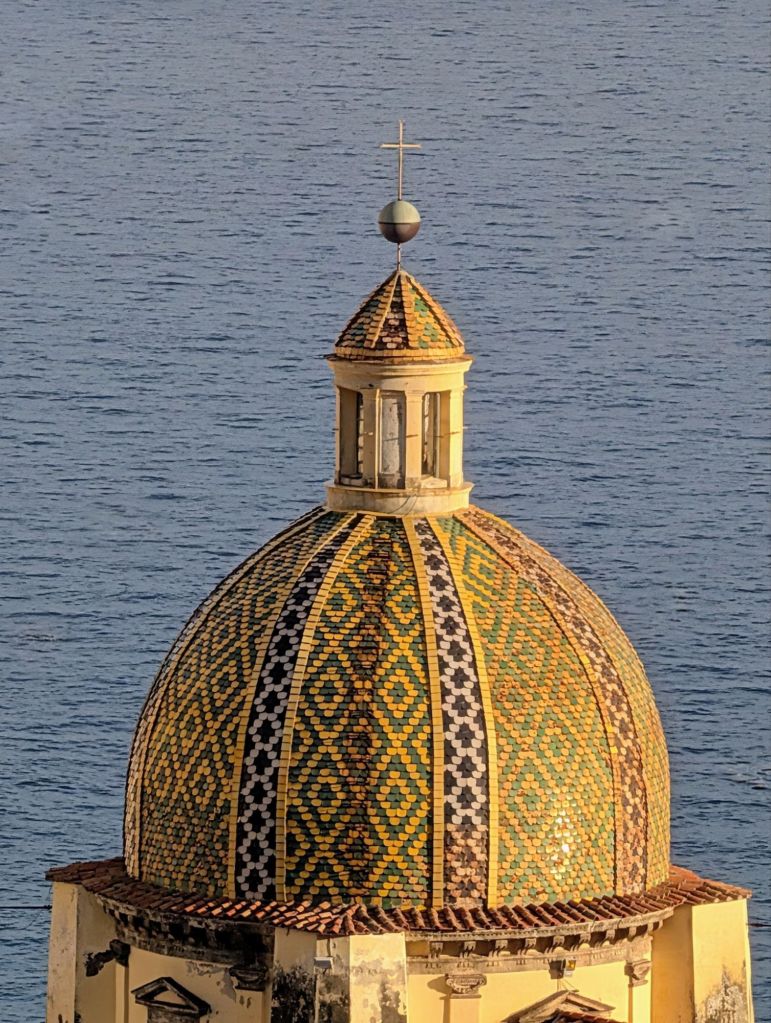
This big church is the main landmark when getting around in Positano.
On its altar are Byzantine treasures including a life-size 12th Century icon which is known as the Black Madonna (La Madonna Nera) because the Virgin Mary & infant Jesus are both depicted with dark skin.
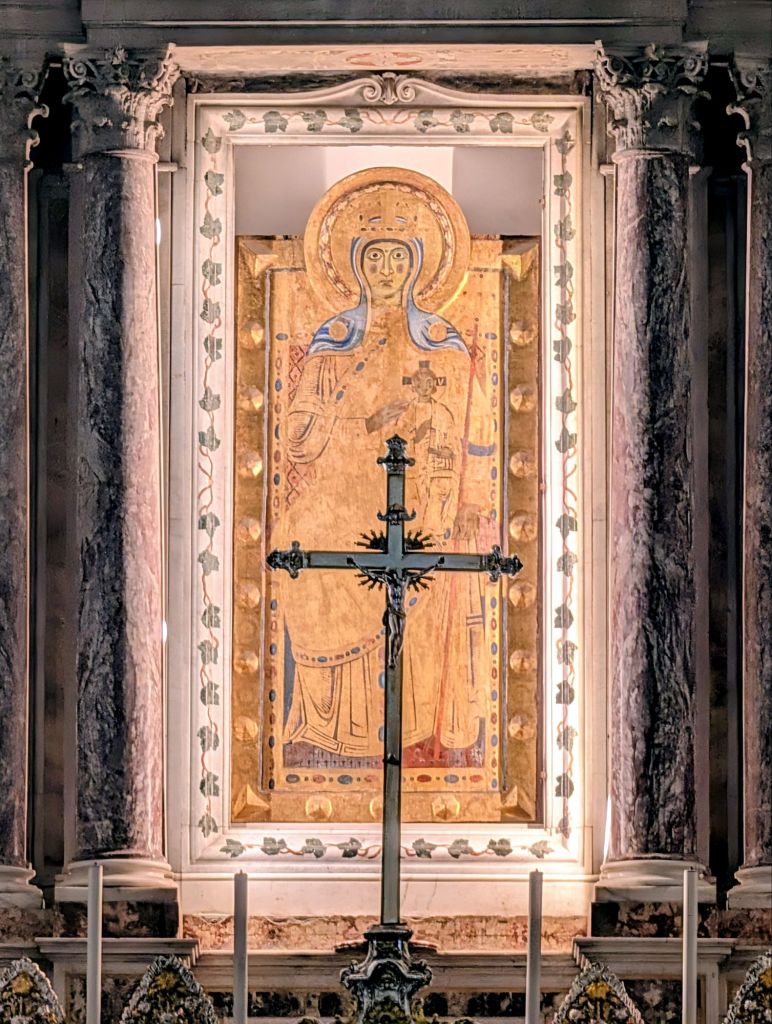
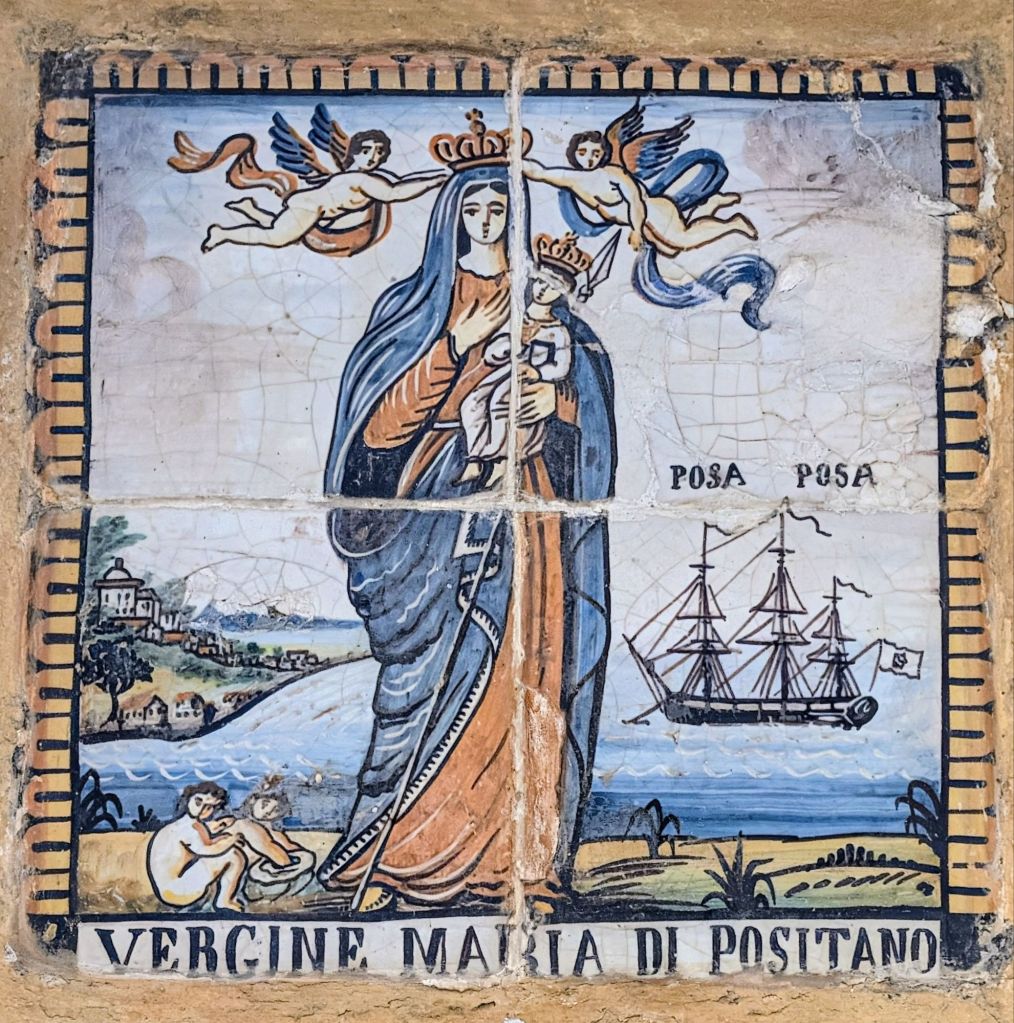
Legend has it that sailors on an Arabic ship were carrying a panel which they stole from Byzantium that depicted the Madonna.
They got caught in a sudden storm & heard a mysterious voice calling “Posa, posa” to them which means “Set me down”.
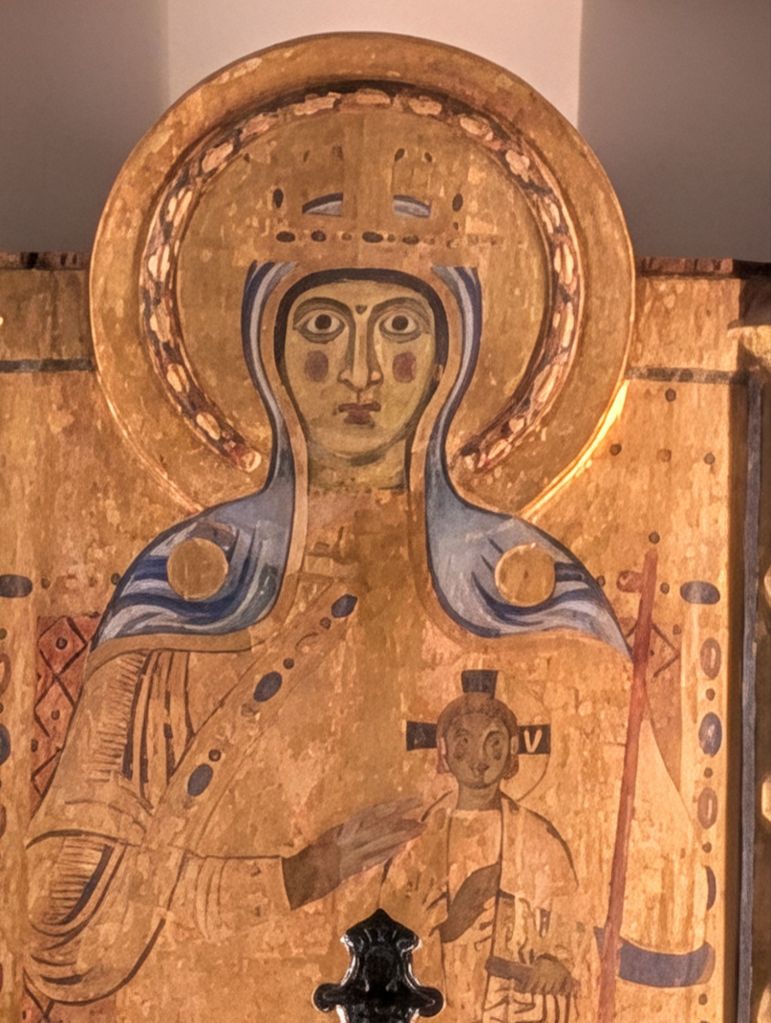
Maybe they heard the mythical local Sirens calling?
In any case, the Arabic sailors rushed to leave the Madonna on the first small beach they found & ever since then, that place they found has been known as Positano.
Sirens of the Li Galli
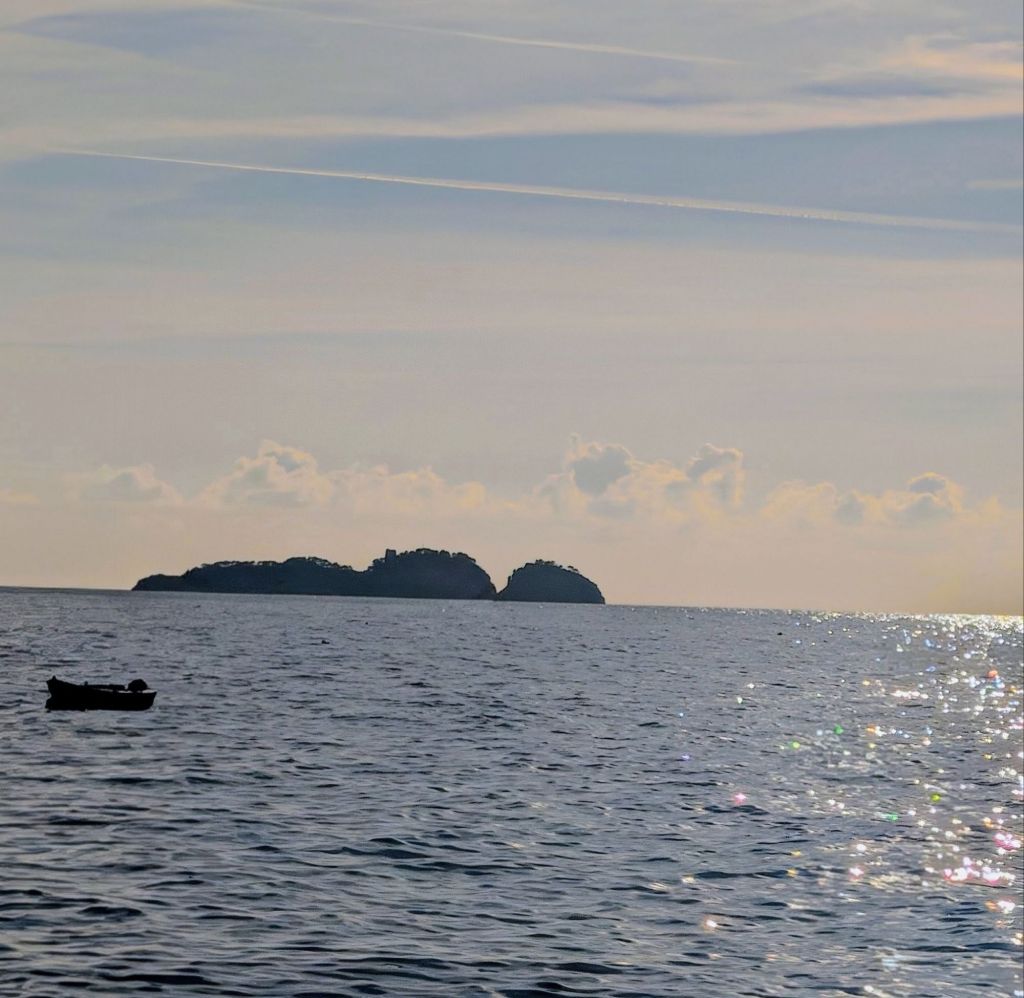
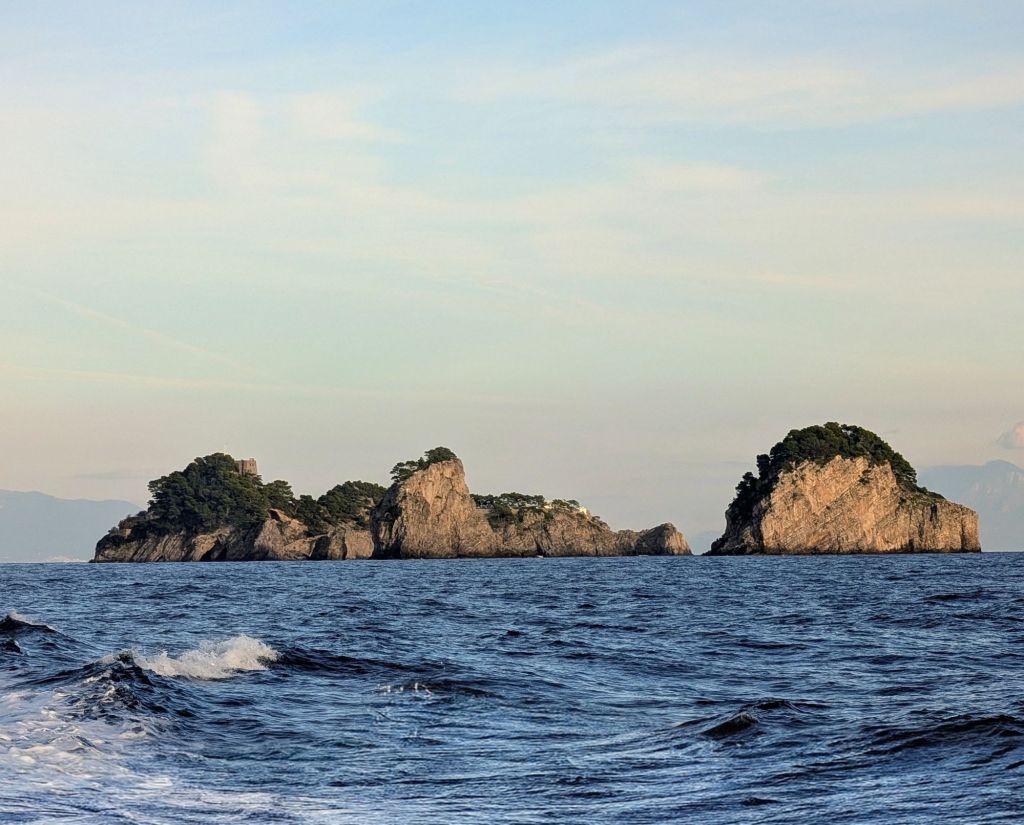
Li Galli is a small three island archipelago just offshore from Positano that isll ok considered the place where mermaids dwelt.
These fantastic creatures are far from the fairy tale half-woman & half-fish mermaid image to which we are accustomed today.
Instead, they are represented in Greek iconography with a half woman & half bird body similar to a rooster from which the archipelago’s name Li Galli (The Roosters) is derived.
They were sea nymphs whose body’s upper part was a woman’s torso & their body’s lower part was a sea bird.
They also had wings attached to their shoulders & were endowed with such wonderful voices that their sweet songs are said to have lured mariners to destruction.
The 1st Century BC Greek geographer Strabos mentioned these islands as the mermaids HQ & called them the Sirenai.
The Sirens were sea nymphs, with the upper part of the body that of a maiden & their lower part that of a sea-bird with wings attached to their shoulders.
They were endowed with such wonderful voices that their sweet songs are said to have lured mariners to their deaths
According to legend, the only humans who managed to survive these creatures were Ulysses along with his crew & Jason and the Argonauts.
The Homeric myth says that this archipelago was the home to Ligia, Leucosia, & Partenope who were the three Sirens who would seduce sailors with their singing luring them to their deaths.
Upon hearing the Sirens, sailors lost control over their ships & crashed them on the rocks leaving the Sirens’ islands surrounded by wrecked ships, rotting remains & decaying bones.
Before reaching their waters, the enchantress Circe who was Ulysses lover warned Ulysses about the Sirens & told him how to survive them.
Ulysses ordered his crewmen to plug their ears tightly with beeswax so they could not hear their deadly song.
However, wanting to hear & experience the forbidden song of wisdom and obtain knowledge that no living mortal had heard & survived, Ulysses had his men tie him with ropes tightly to the ship’s main mast.
Ulysses instructed his crew to ignore any frantic orders or pleas to be set free until they sailed completely past the danger.
The Sirens’ song flattered Ulysses about his many deeds during the Trojan War & promised him deep knowledge about the world.
Hearing the Sirens’ song, Ulysses struggled against his bonds to join them & begged his crew to release him; but, his loyal crew obeyed his previous orders & pulled his ropes tighter.
They did not untie Ulysses until they were safely away from the Sirens’ islands.
Prior to Ulysses & his crew returning home from the Trojan War, Jason & the Argonauts encountered the Sirens.
Warned in advance about the Sirens by the centaur Chiron, Jason relied on the legendary musician Orpheus to join his crew on the Argo.
It is said that when they encountered the Sirens, Orpheus played his lyre & sang with such divine power & beauty that he drowned out their deadly voices saving his fellow Argonauts from sailing to their deaths.
The Pistrice
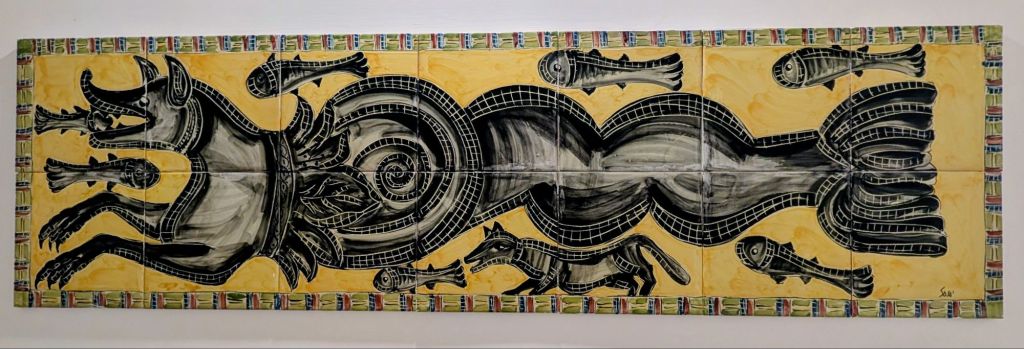
In Positano, the Pistrice (pronounced “pas-Tree-chay”) is a mythical half-dog, half-fish creature.
A Pistrice is shown in a medieval stone bas relief alongside a fish & a fox that is embedded into the wall above the bell tower doorway at the Chiesa Madre di Positano (Church of Santa Maria Assunta).
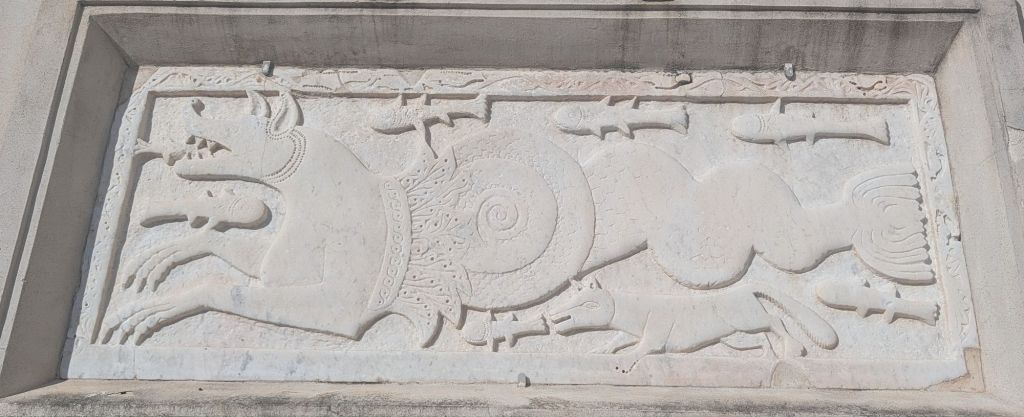
In classical & medieval mythology, the Pistrice is a sea monster representing a bridge between the land & the sea by combining mythical terrestrial & marine traits.
We tried a Lemon Granita which is made using the region’s famous local Sfusato Amalfitano lemons.
Lemon Granita is basically a frozen slushy placed inside a hollowed-out whole lemon rind which is also frozen.
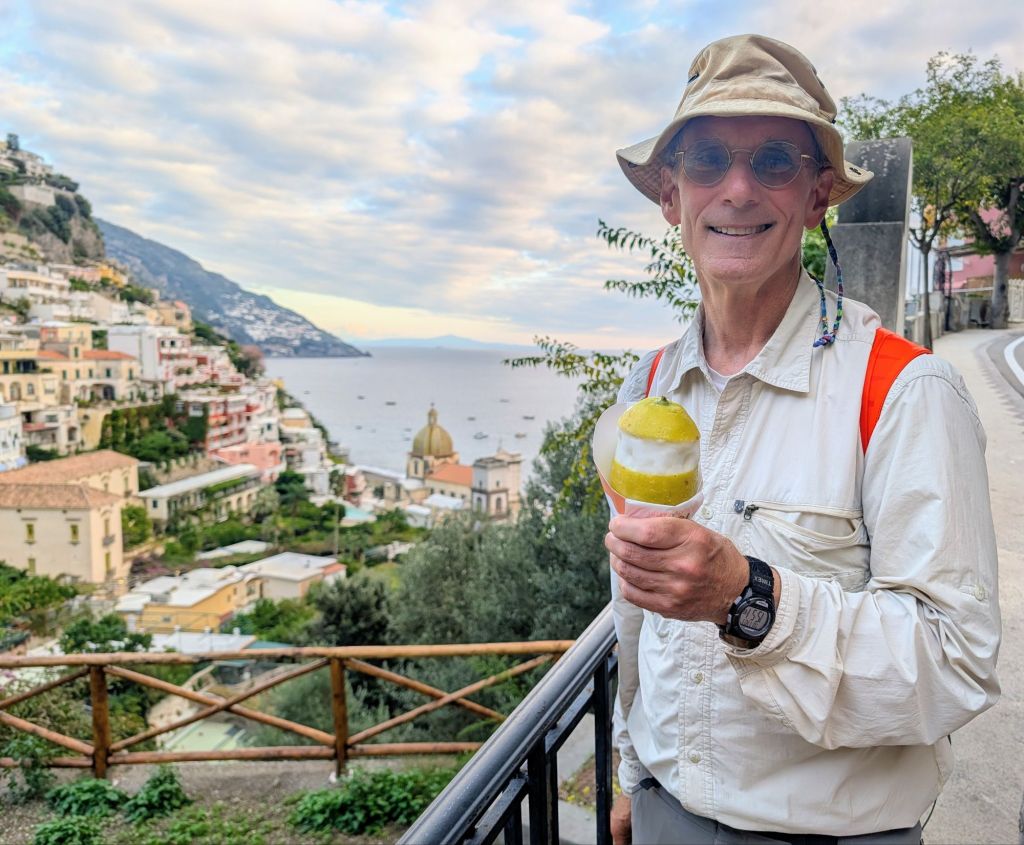
Some versions are made with alcohol.
We also sampled a local gelato called “Positano” which was made from lemons, oranges, & mandarins.
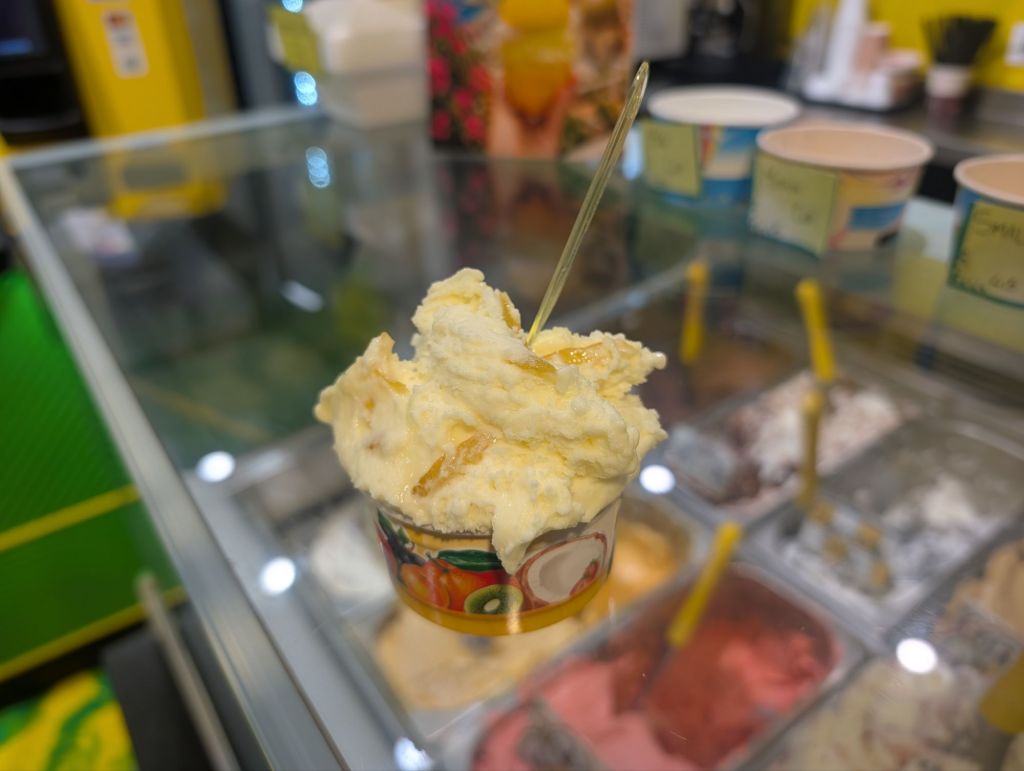
Both were very refreshing!
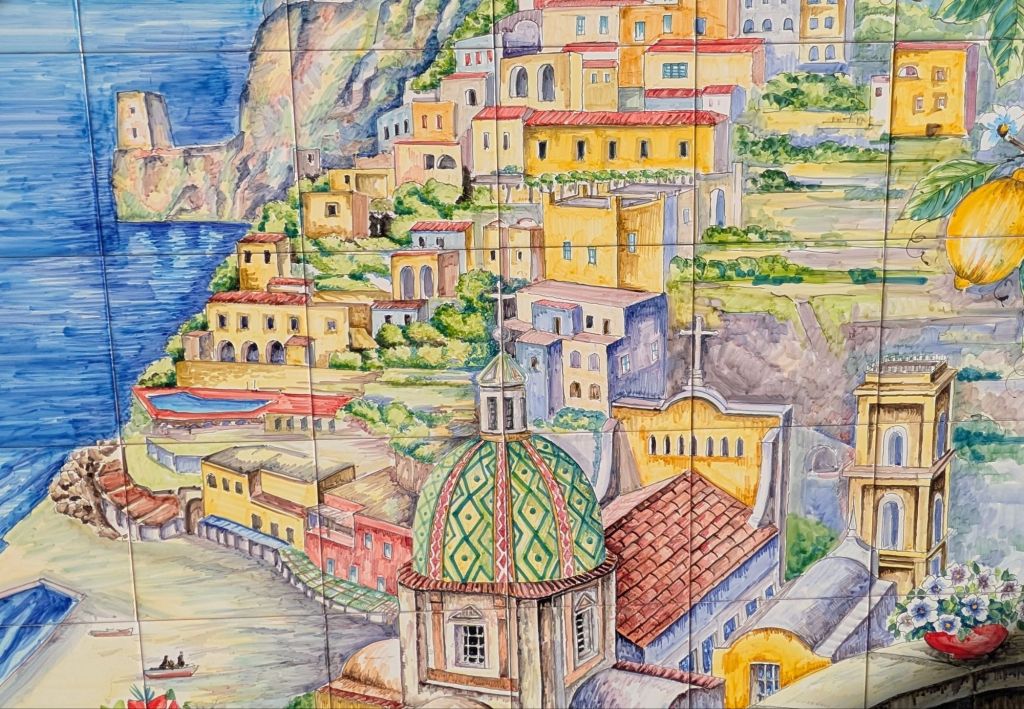
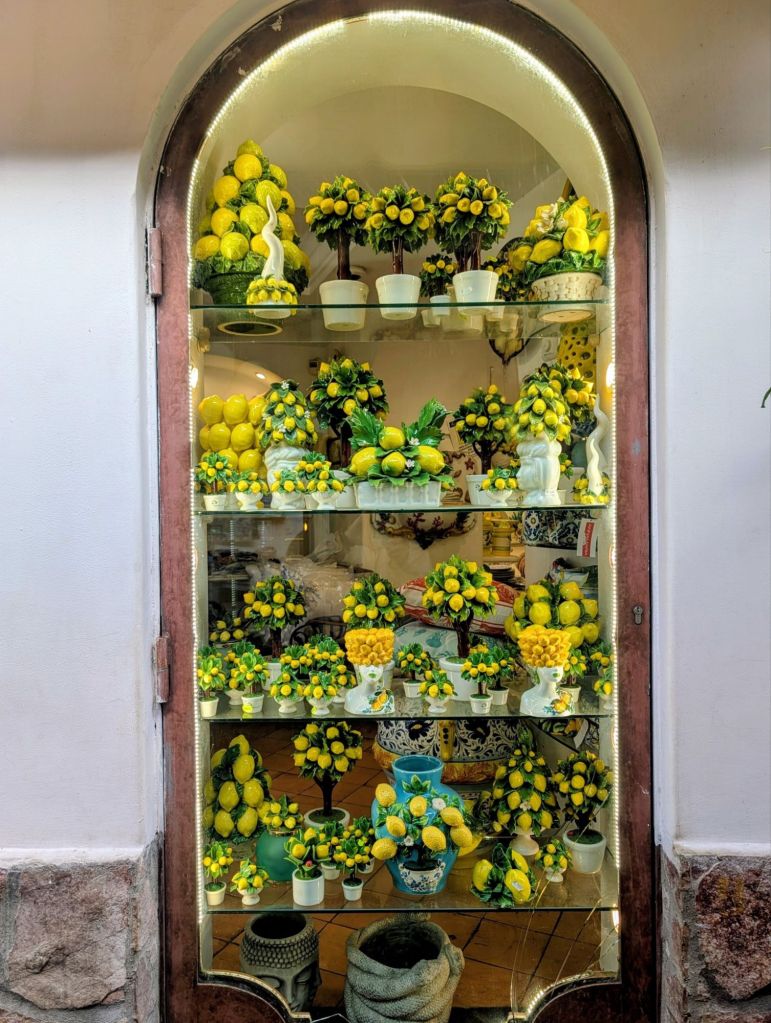
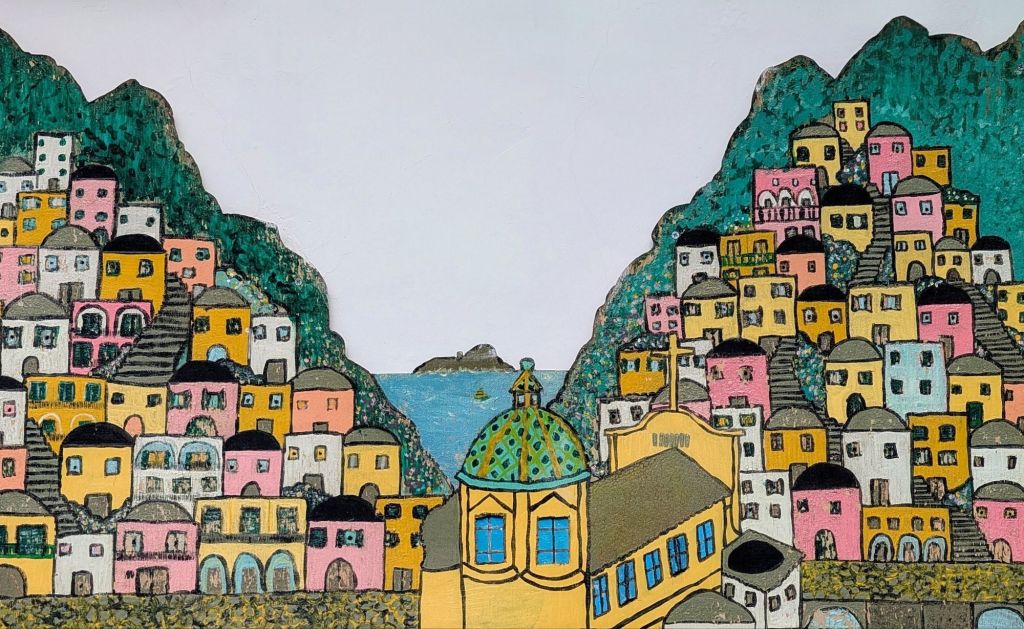
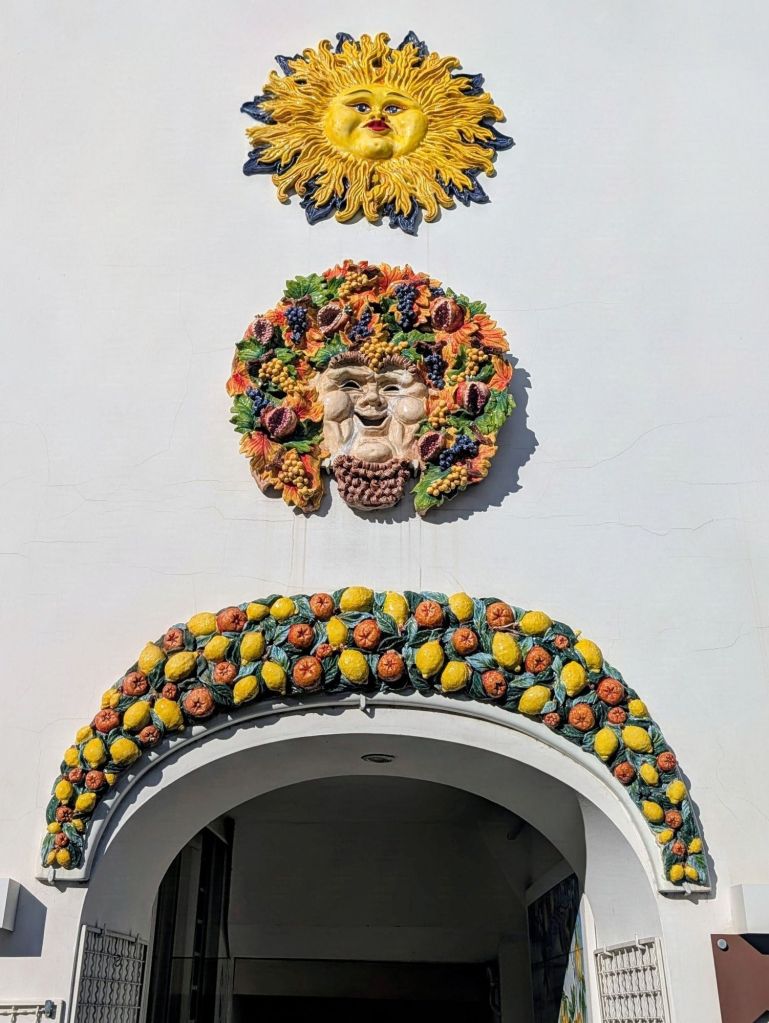
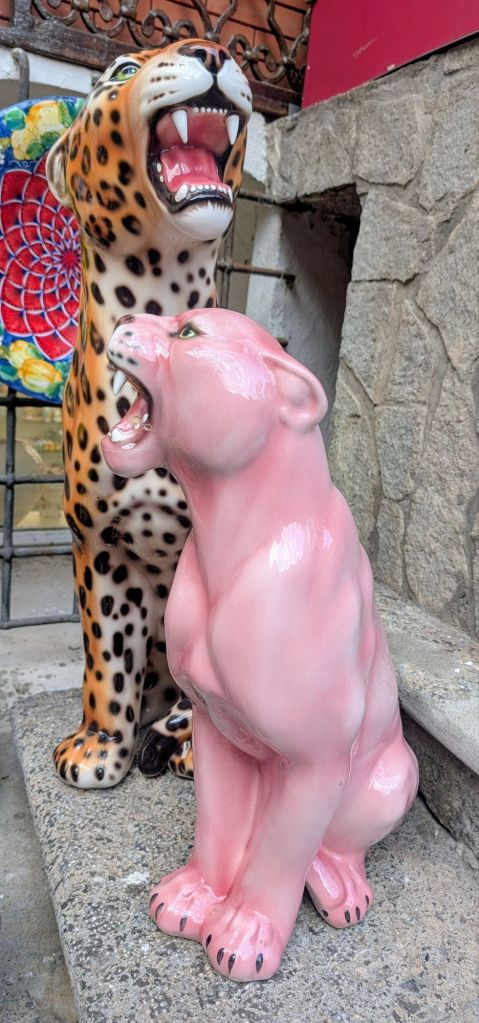
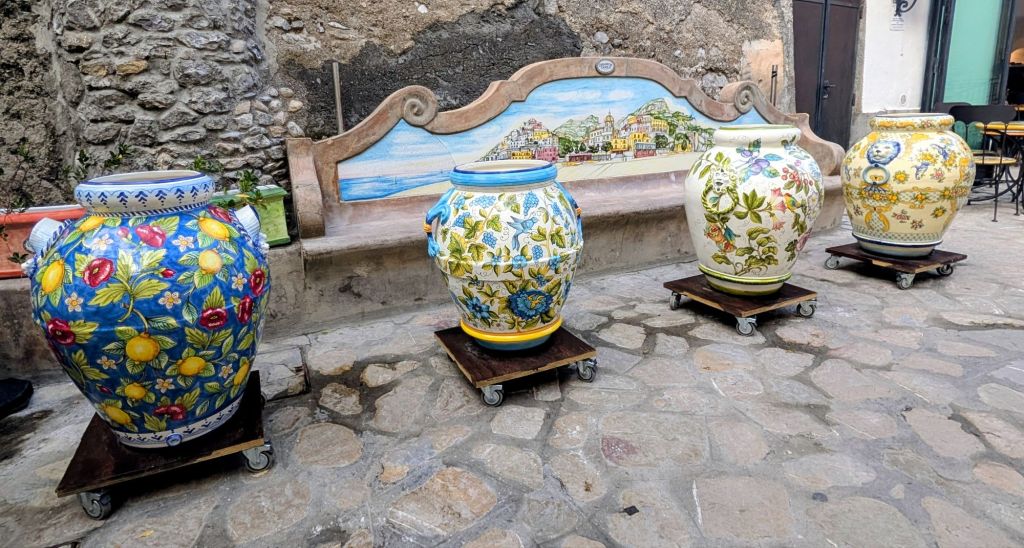
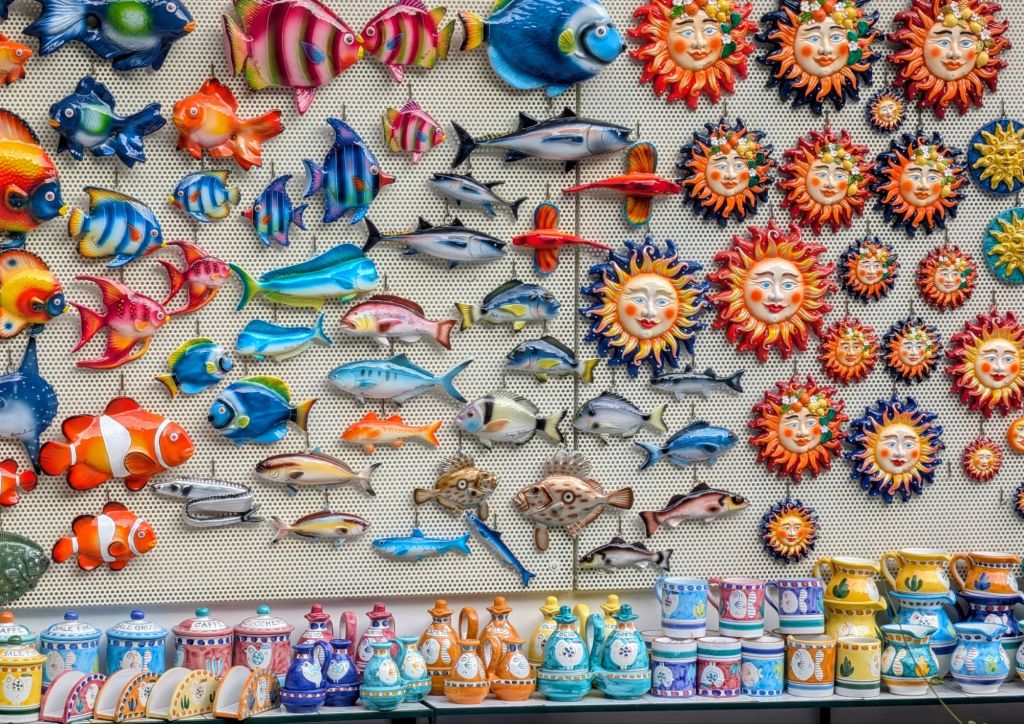
Positano is also known for its ceramics.
Here are some images showing various ceramics in Positano:
Positano is beautiful in the evening too: