Via Francigena- Day 5

Scheduled Rest Day

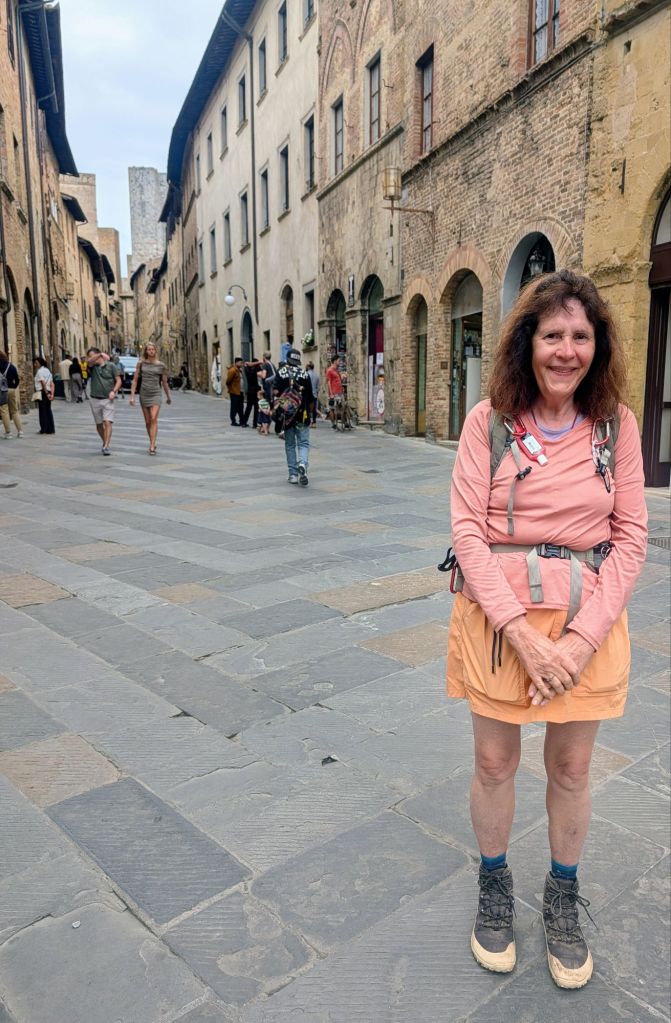
Today was a planned rest day during our hike; but, we still walked 4 miles in & around San Gimignano.

Today’s highlight was gelato…lots of gelato!
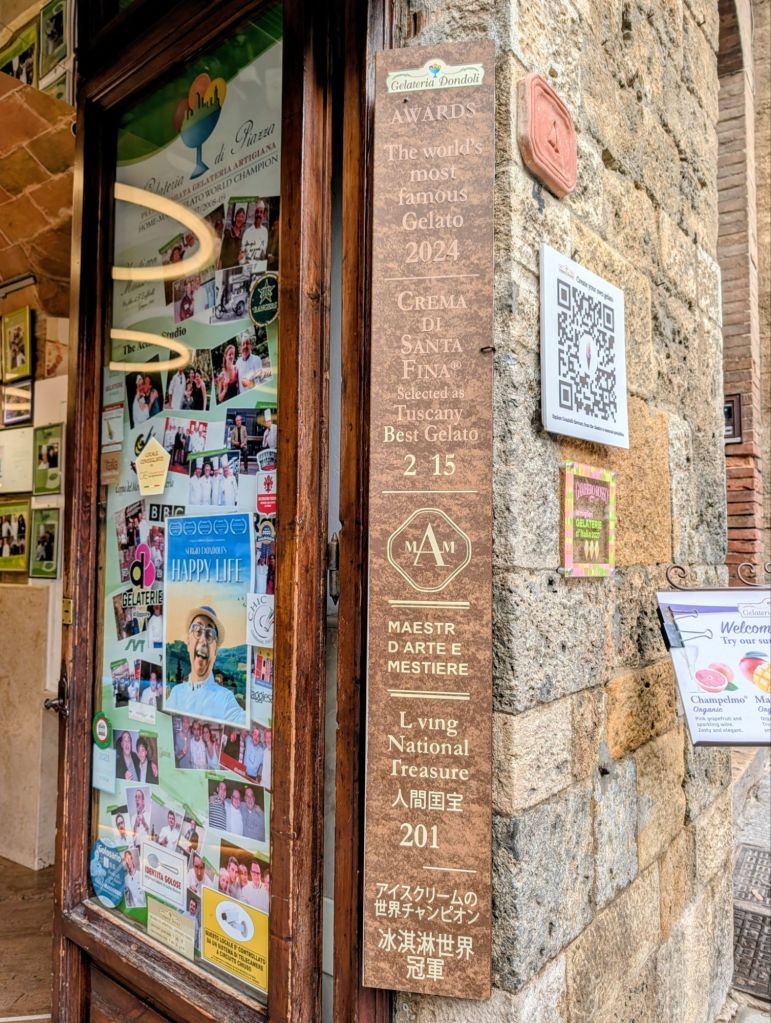
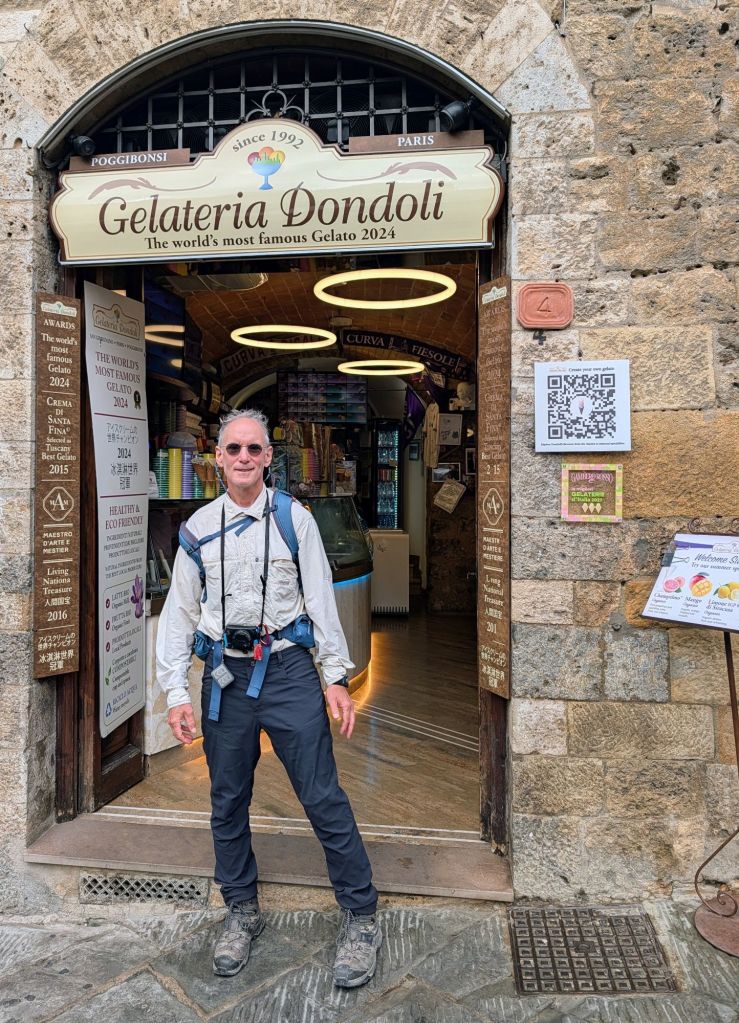
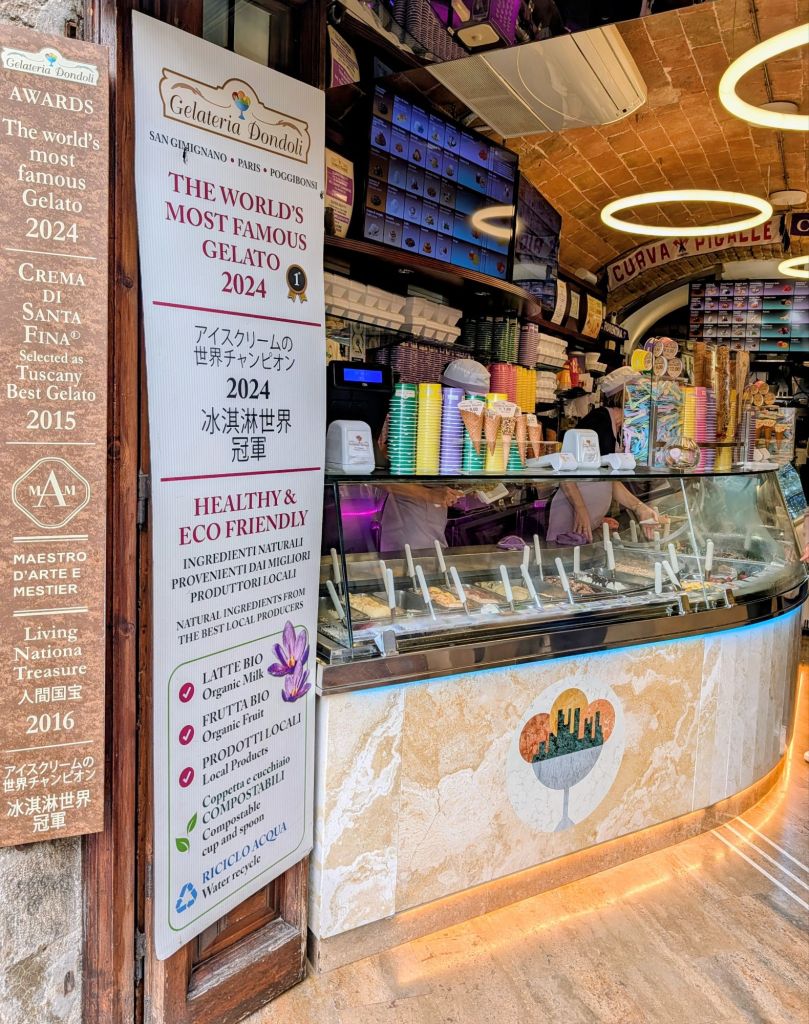
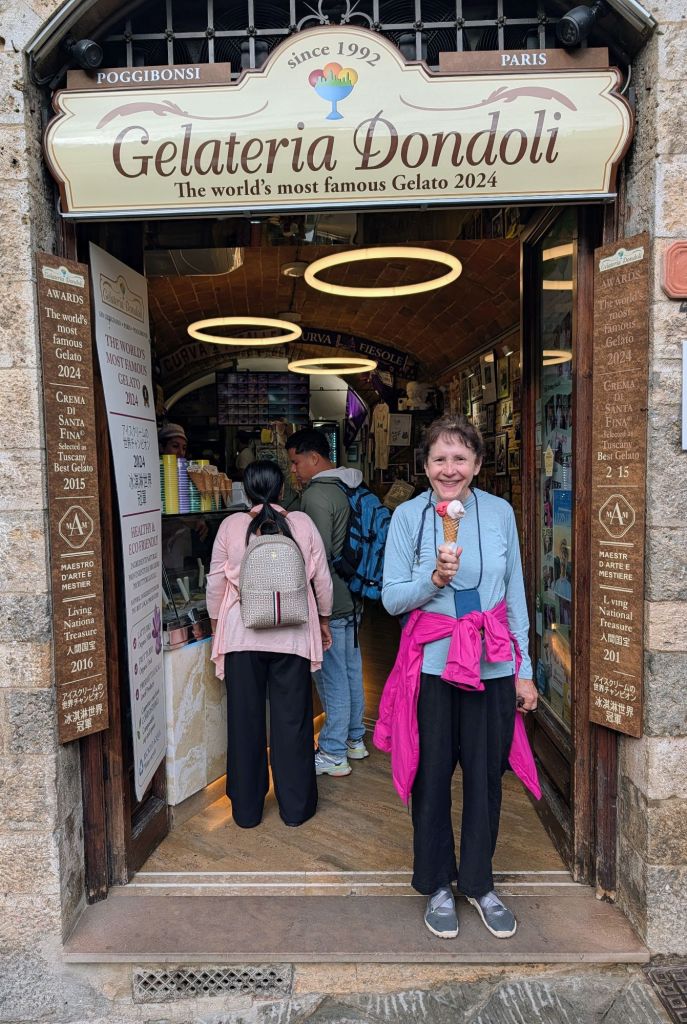
We visited Gelateria Dondoli which is known as the world’s best gelateria.
Gelato originated 2,500 years ago in Ancient Rome when Romans would gather snow & ice in the mountains & mix it with fruit or other flavorings to make a sweet dessert.
This, the word “gelato” comes from the Latin word “gelatus” which means “frozen”.

During the Middle Ages, Arab traders introduced “sharabat” (sherbet) to Sicily.
This cultural exchange brought new techniques for preserving ice with different flavors & creating frozen drinks which was a precursor to gelato.

The real turning point for creating gelato as we know it came in the 16th Century during the Renaissance in Florence with the Medici family.


Catherine de Medici, future wife of King Henry II of France, worked with Florentine Bernardo Bountalenti to create a creamy dessert for a Medici family celebration.
in 1565 they created a frozen dessert with milk, honey, egg yolk, & wine which is considered to be the first gelato.


After Catherine married Henry II bringing gelato with her to France, gelato mania started.

Gelato has more milk than ice cream & uses lower quantities of fat than ice cream. Because gelato has less air in the base, it is denser & packed with more flavor than ice cream.      

Master gelato maker Sergio Dondoli’s gelato won the World Cup prize.
He participated in the Gelato World Cup on the Italian team, which won the 2006/07 and 2008/09 competitions.
Who knew there was a World Cup competition for gelato!?
Located in San Gimignano’s Piazza della Cisterna, this small shop is very easy to find… just look for the perpetually long line.
Here was what the line looked like when we arrived in town at 1PM yesterday.
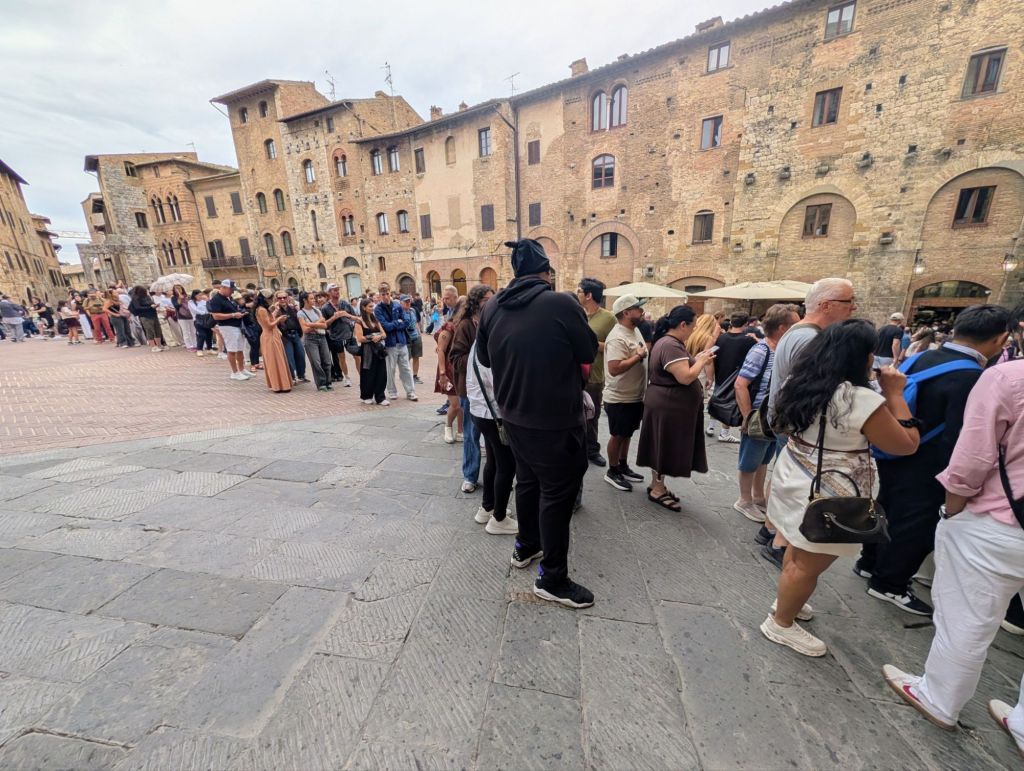
Needless to say, we didn’t wait in line; but, we returned early today when it opened at 9AM before the hordes from all the tour buses from Florence & Sienna arrived.

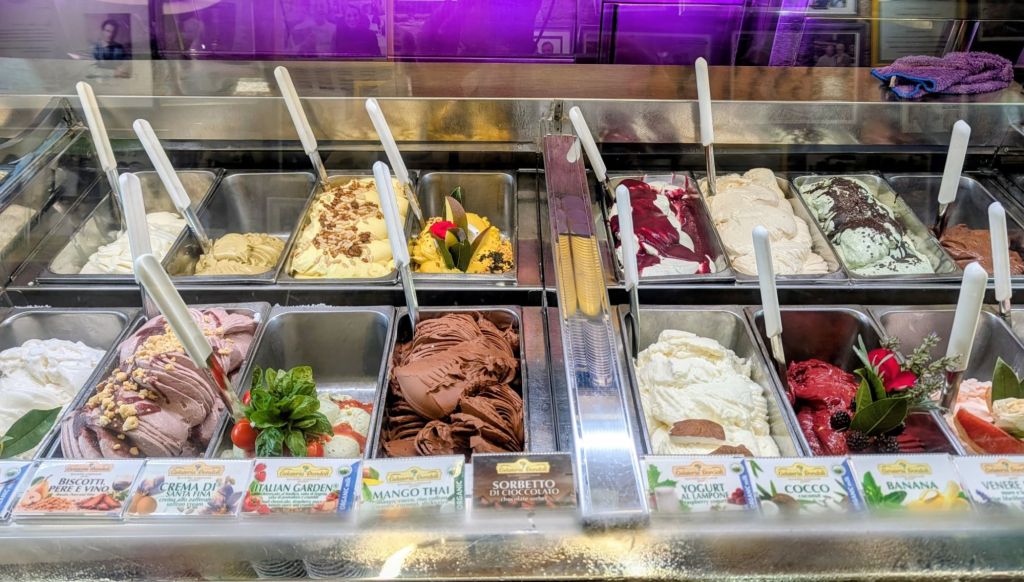
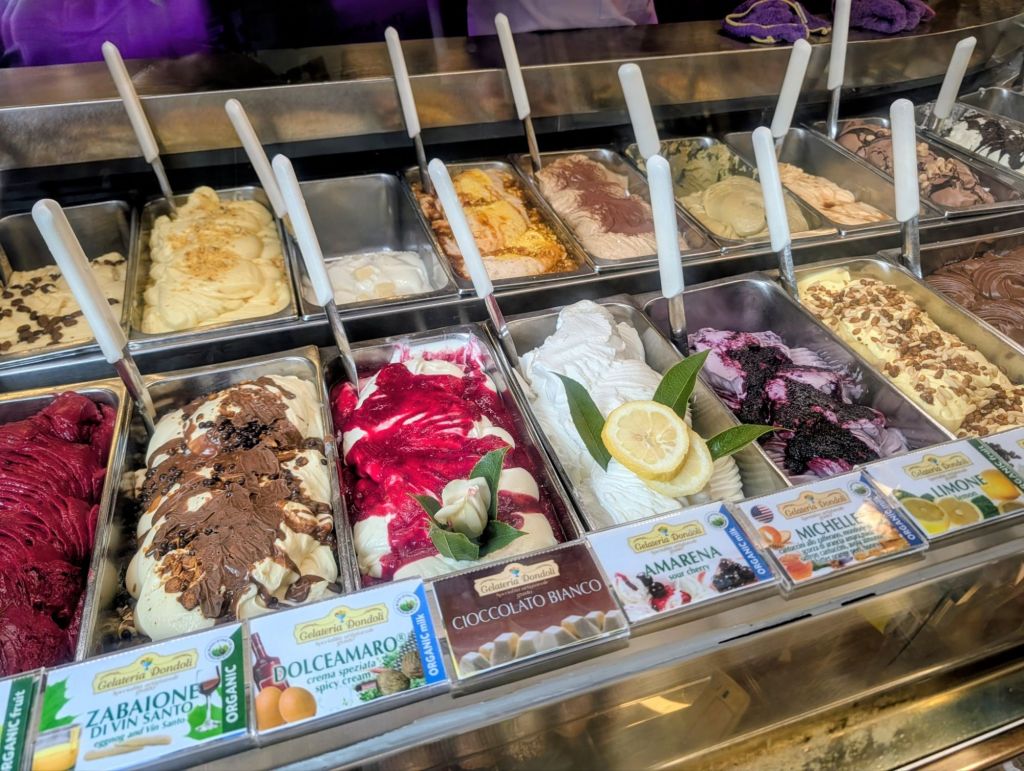
With so many tempting creations at this gelateria, we did some research to pick the award winning flavors before trying others.

Here are the top Signature & Award Winning flavors which we can attest lived up to their status:

Amedi Chua- it was awarded the Oscar in London as the best chocolate in the world for five years.
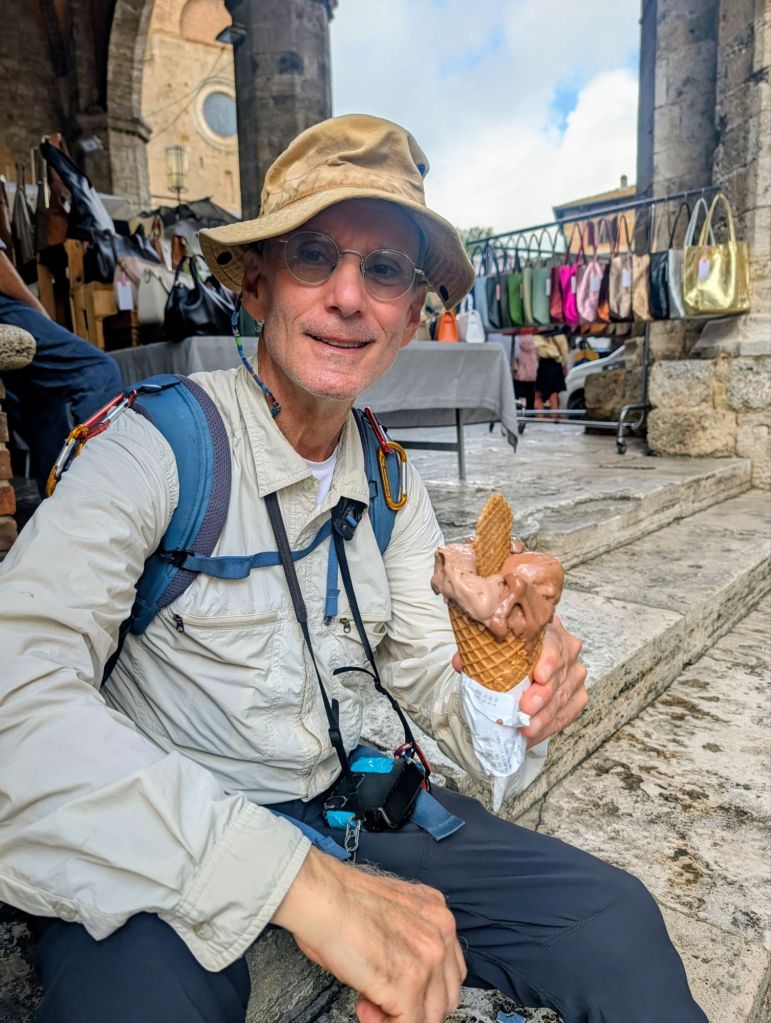
Having tasted it, I would give it an Oscar too!

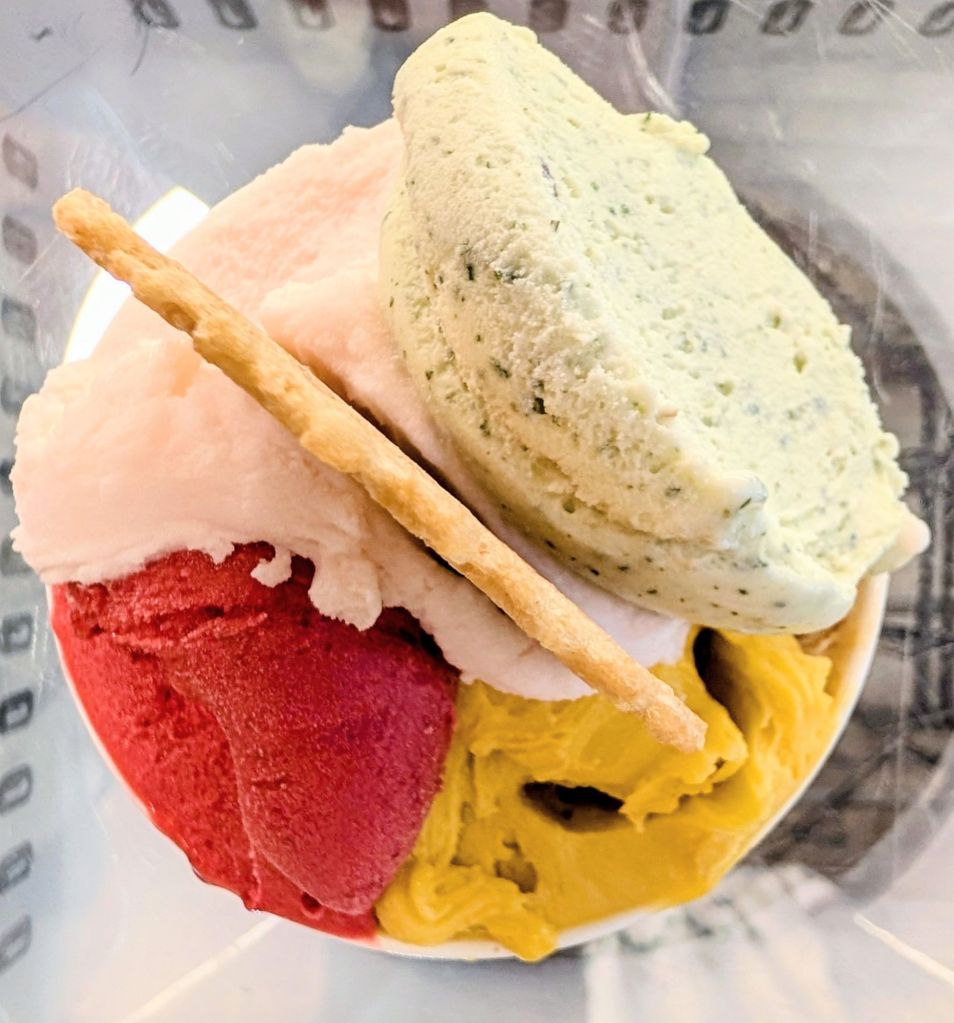
Champelmo: a refreshing, tangy sorbet made with pink grapefruit & sparkling Vernaccia wine.
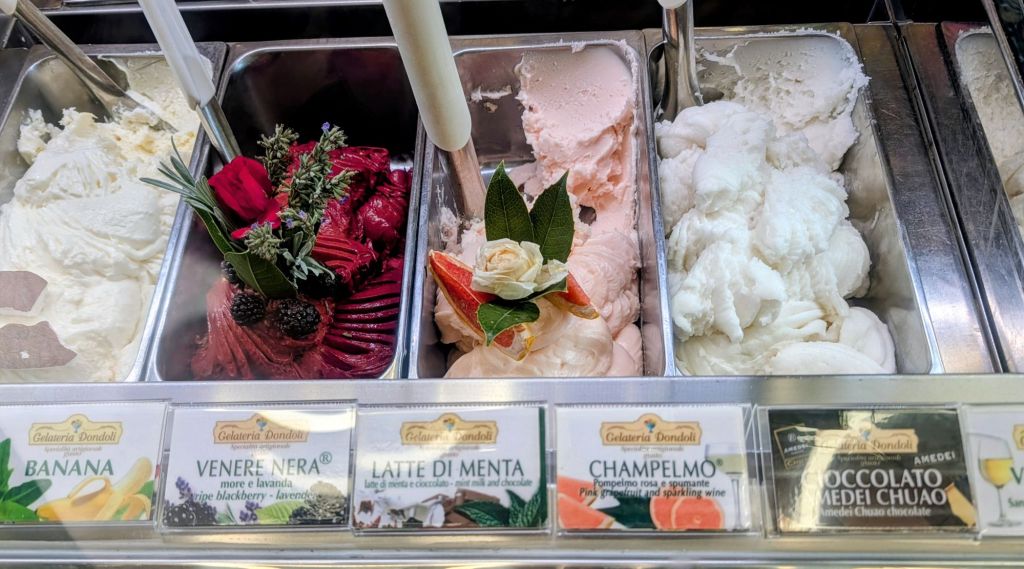

Crema di Santa Fina: a rich cream infused with local organic saffron & pine nuts.
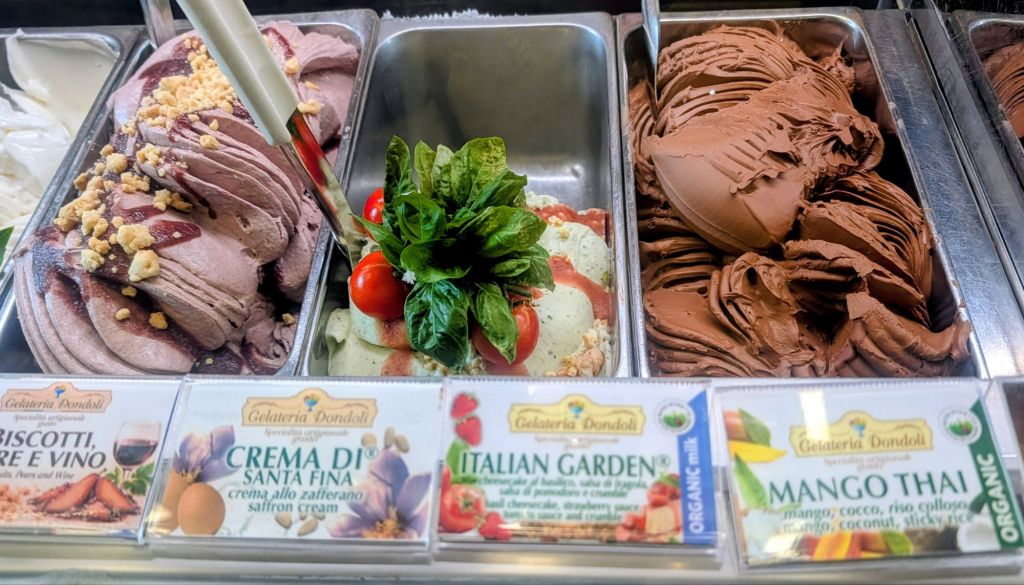

Dolceamaro: A sophisticated blend featuring blackberry & lavender honey.
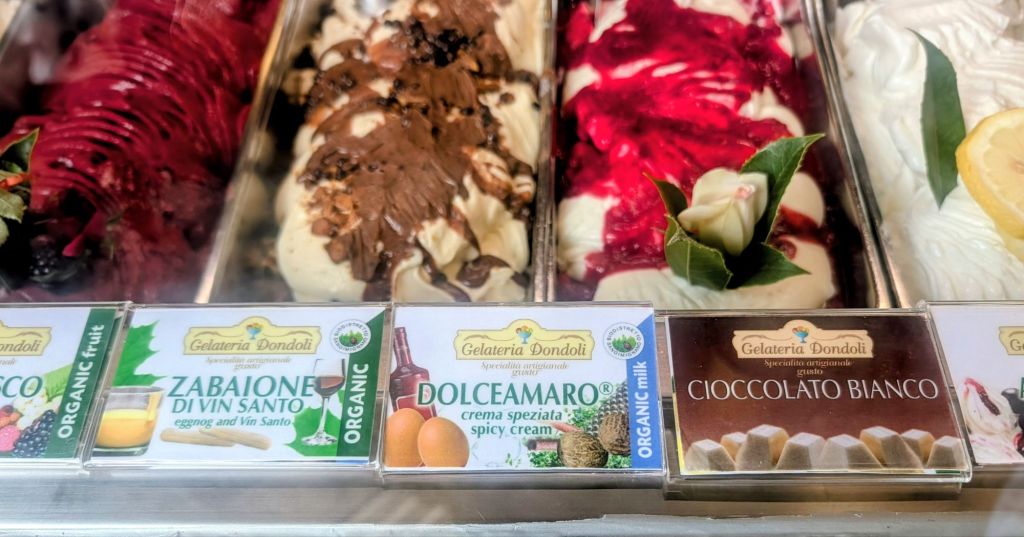

Michelle: A unique combination of almonds, orange zest, honey, & saffron (Named after Michelle Obama).
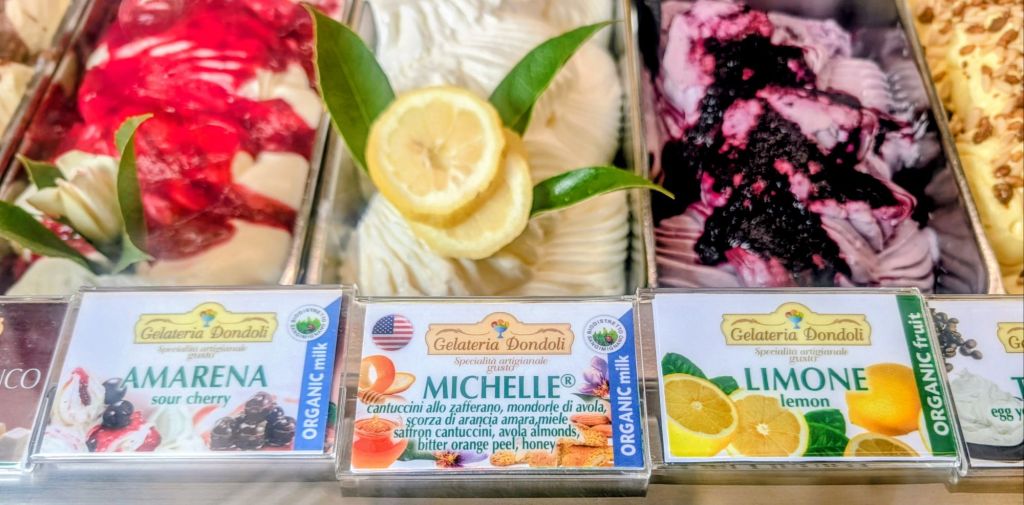

Rosemary Baby: Vibrant mix of fresh raspberries & aromatic rosemary.

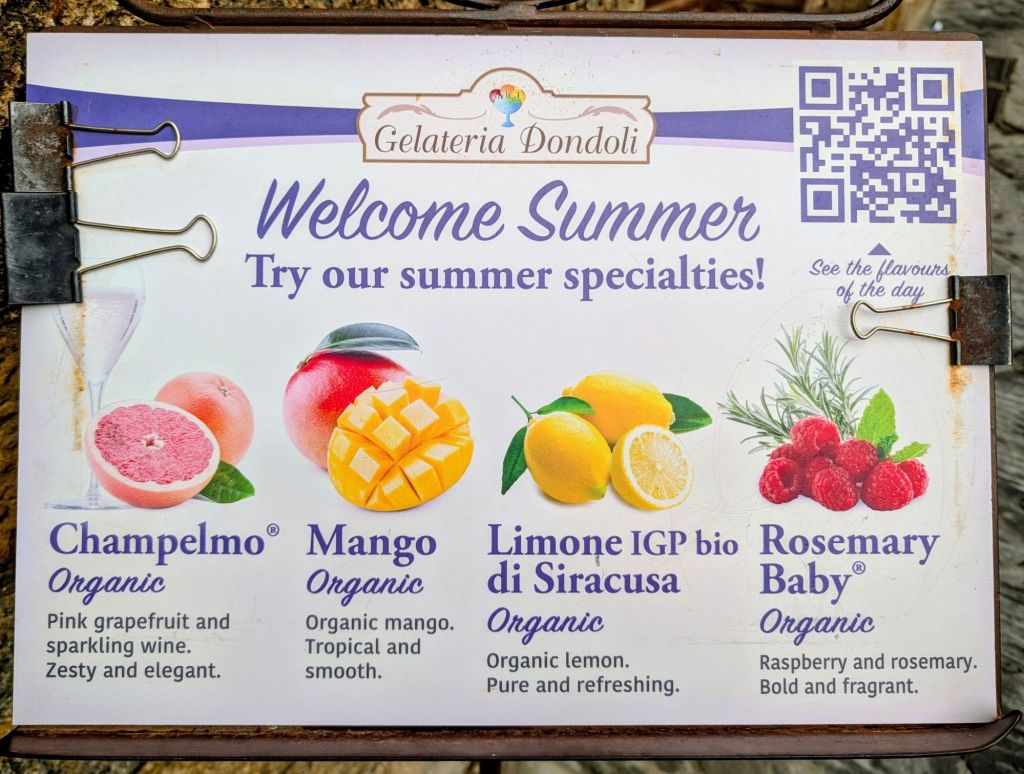
Besides Champelmo & Rosemary Baby, I also tried the Limone di Siracusa & Mango featured on their sign as their Summer Specialties flavors.

We went there several times & between us tried about half their flavors.
Gina’s favorite flavor is Michelle followed by Rosemary Baby.
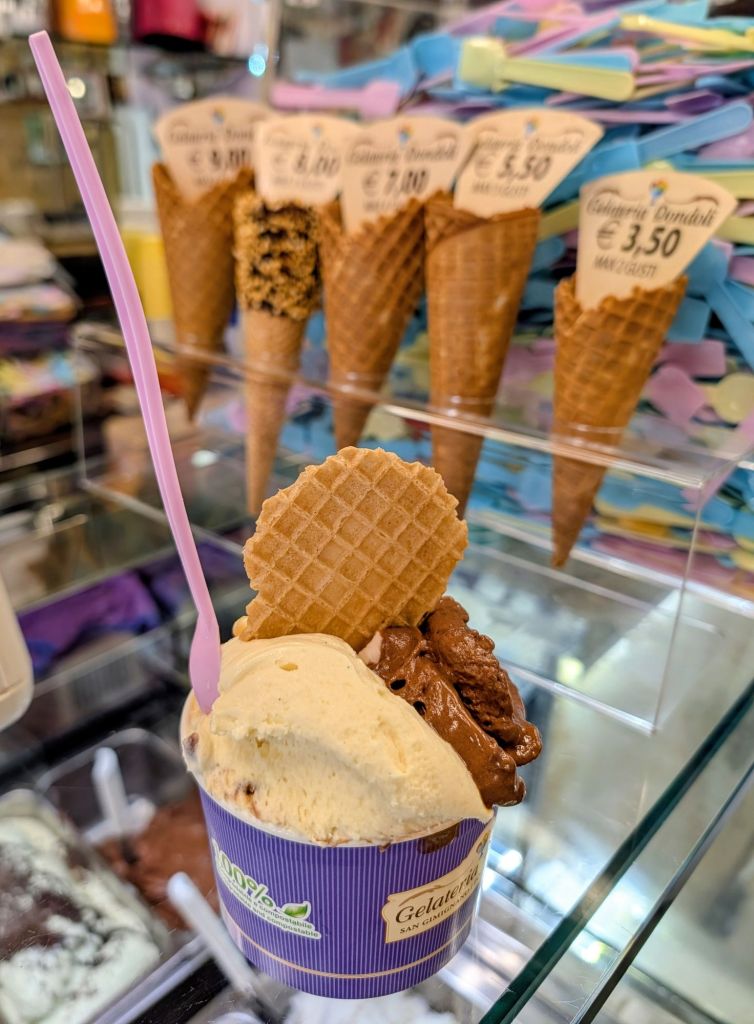
Because I am a chocolate freak, my favorite flavor is Amedi Chua chocolate followed by Champelmo.
If you can’t make it here to taste this delicious gelato, then, if you are ever in Paris, you can visit its location in Paris in the Galleria Continua.

Along with multiple visits to the gelateria, we went up in
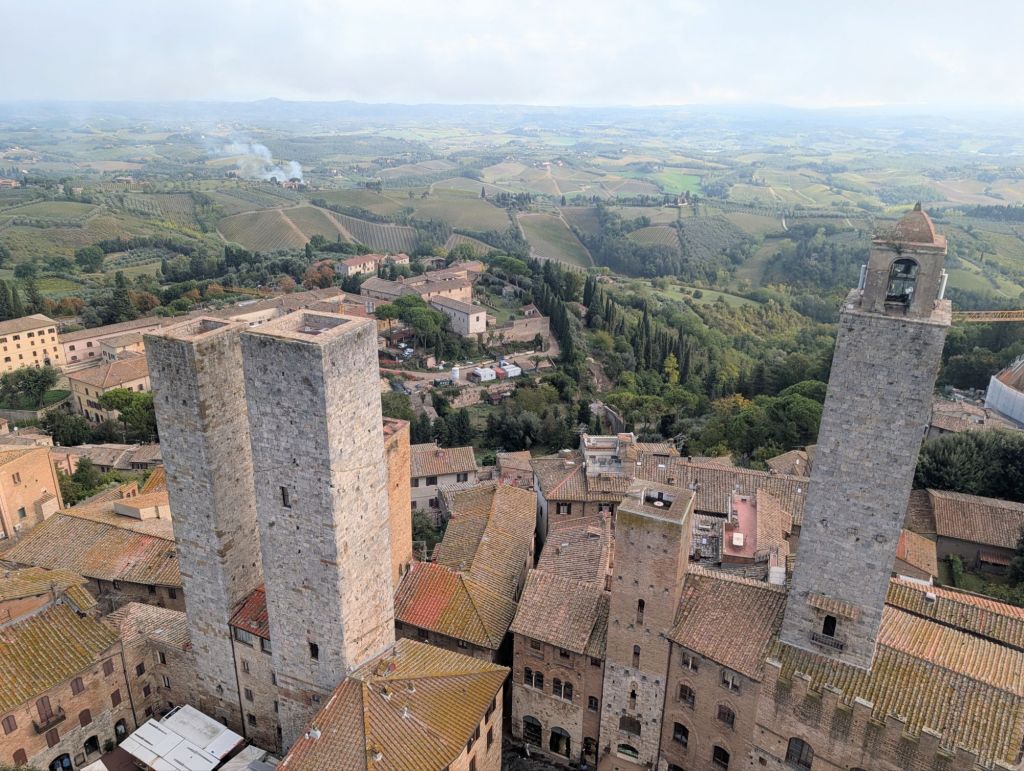
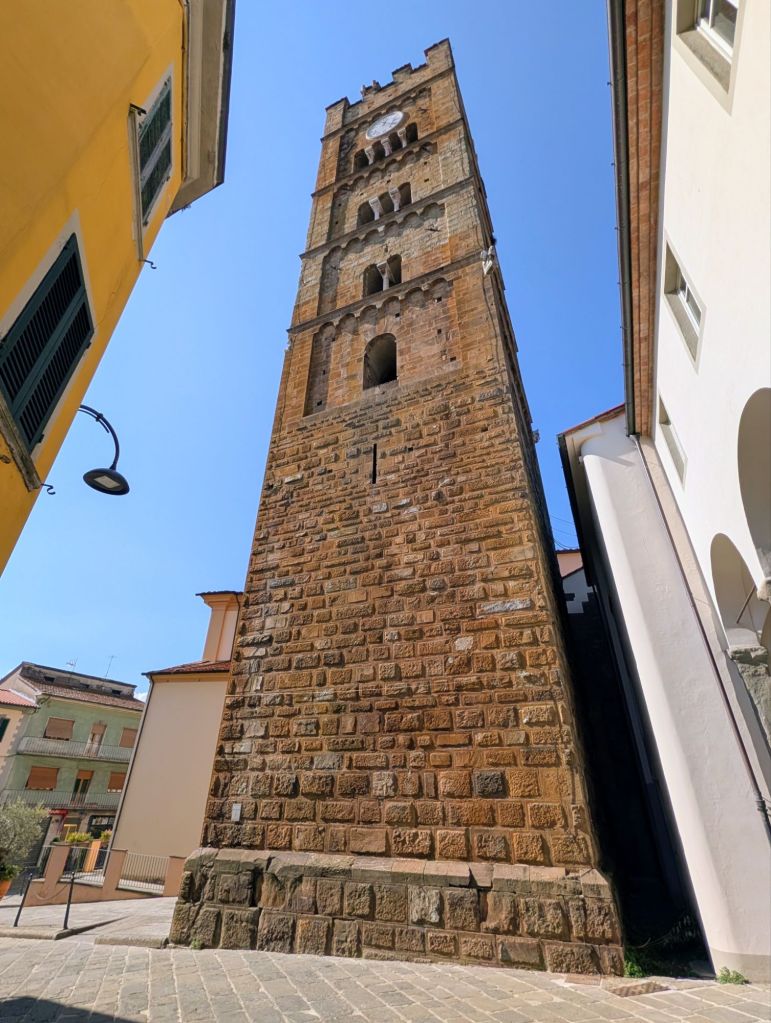
the Torre Grossa which is the tallest tower in San Gimignano (hence its name the “Big Tower”).
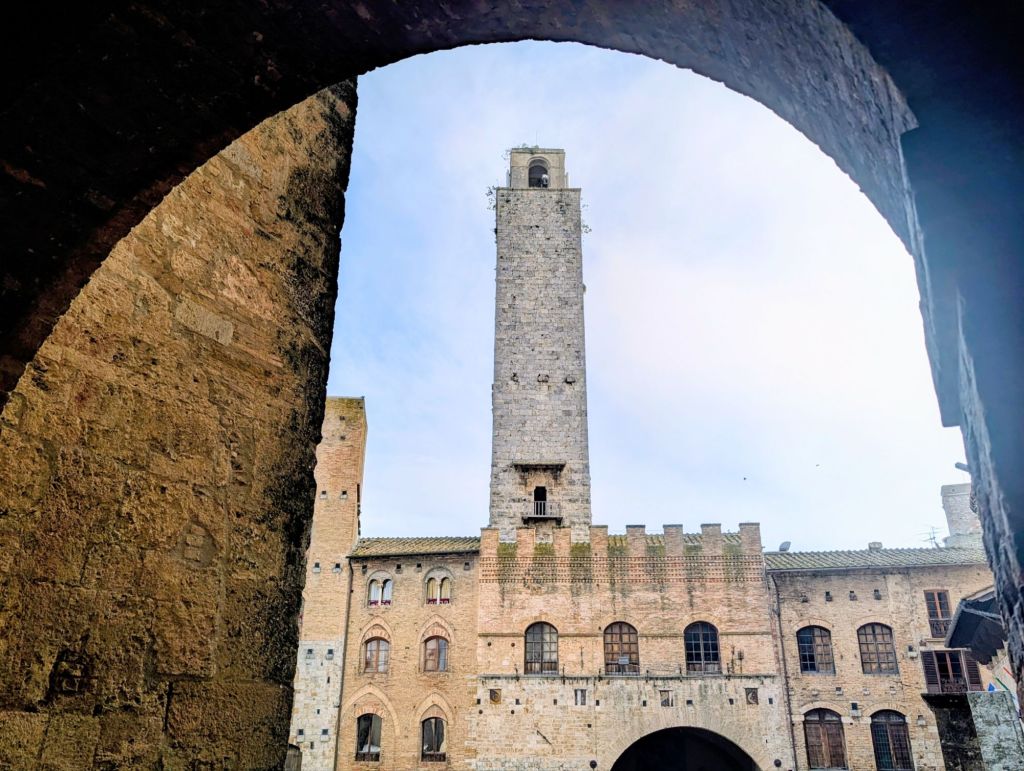

Its construction started on 21 August 1300  & it was finished in 1311.
It is 177 feet (54 metres) high.
The tower’s walls are two meters thick and made of stone carved in regular bricks.
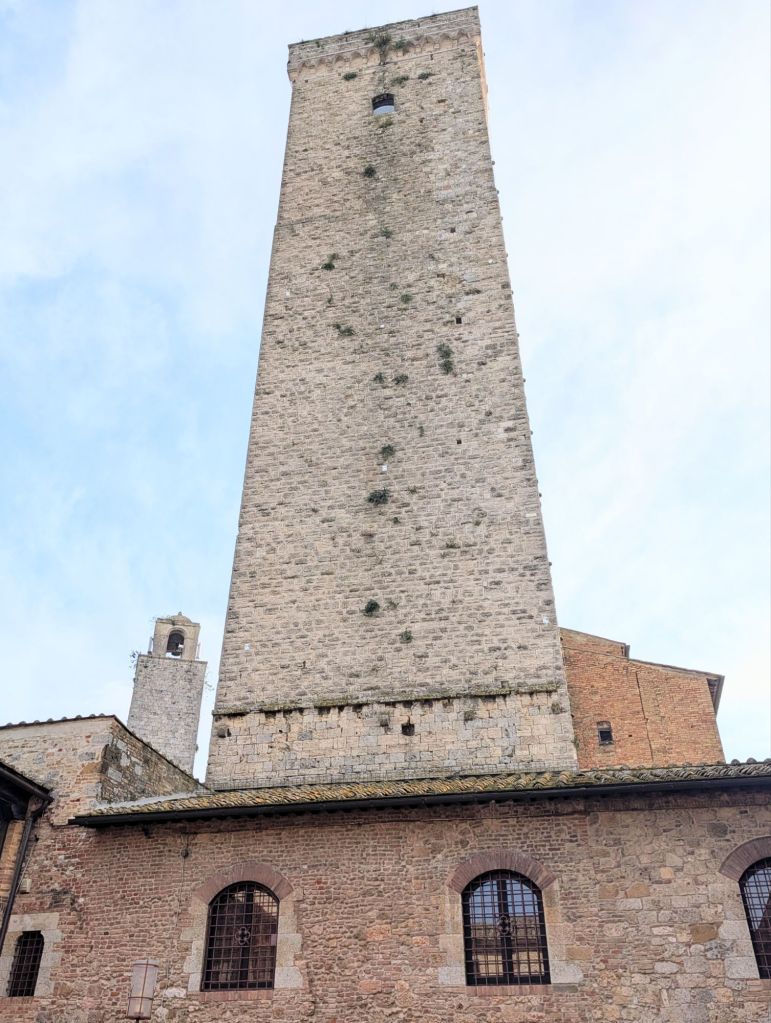

City authorities wanted to enrich San Gimignano with a tower that would become the city’s symbol as well as be functional. The tower fulfilled a military objective serving as an observation point & a civil use as a bell tower.

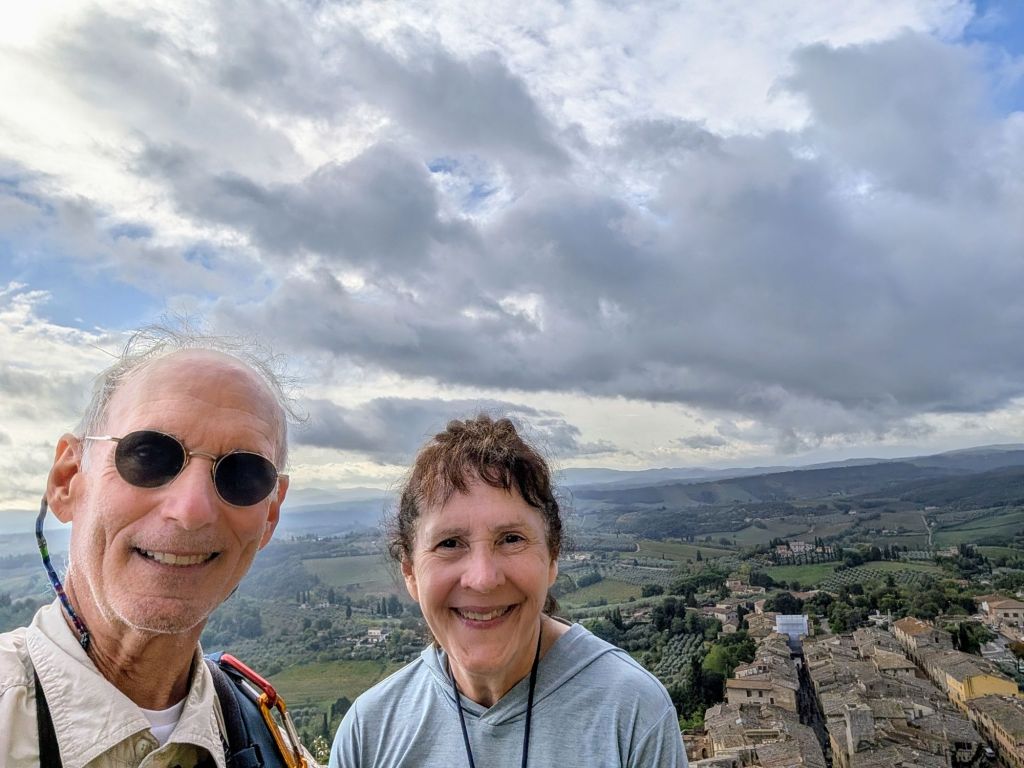
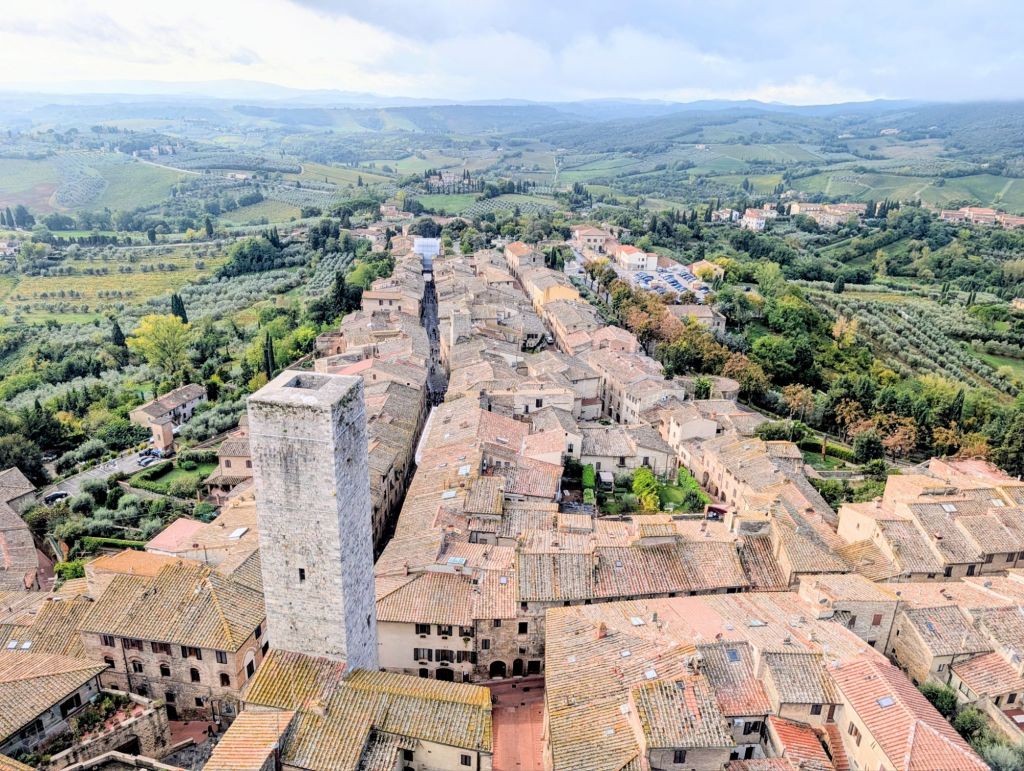
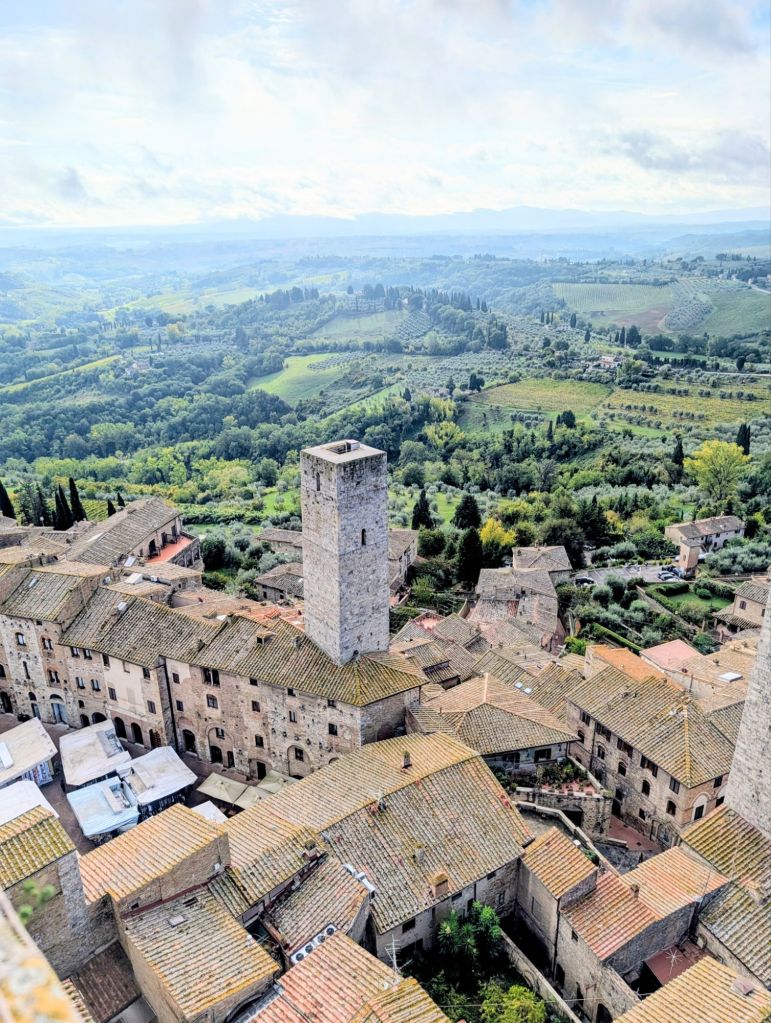
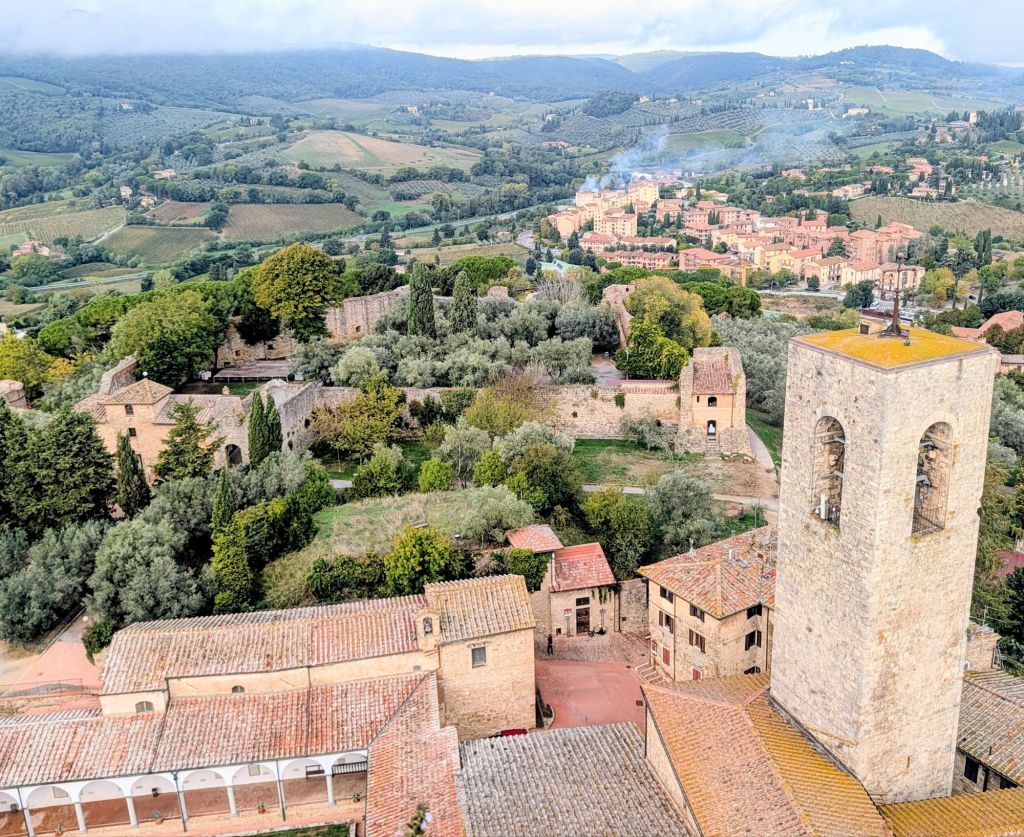
After climbing the tower’s 218 steps, we got a bird’s eye view over the city along with panoramic views of the beautiful Tuscan countryside.
After a nice break, we hit the trail again tomorrow.
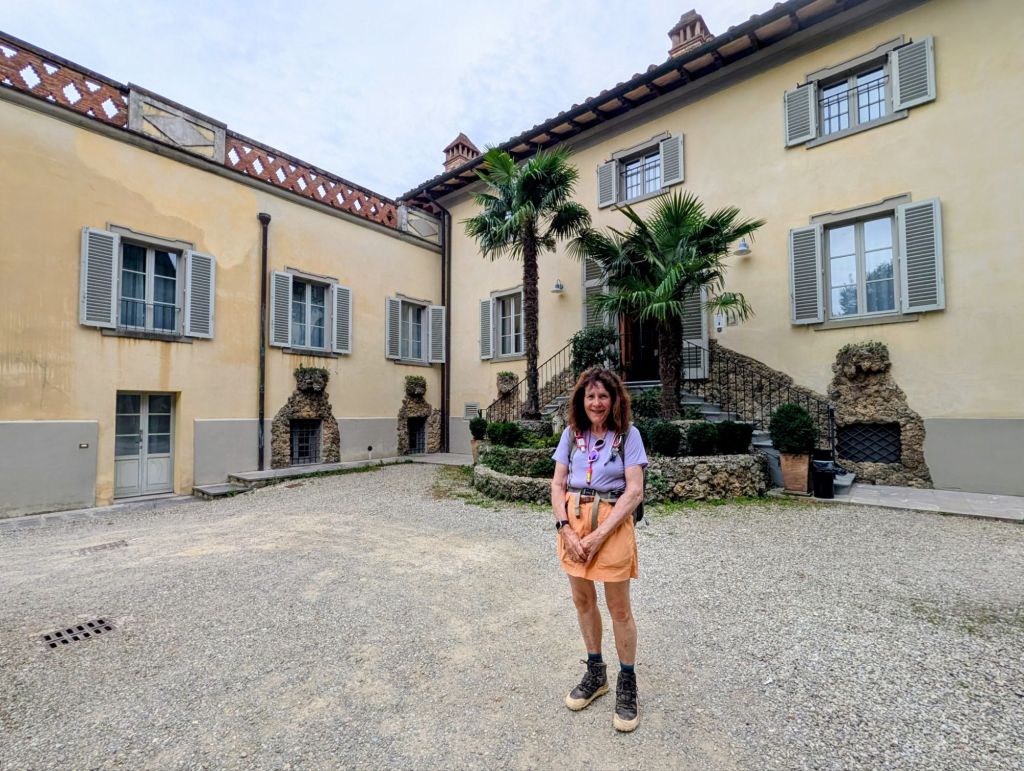
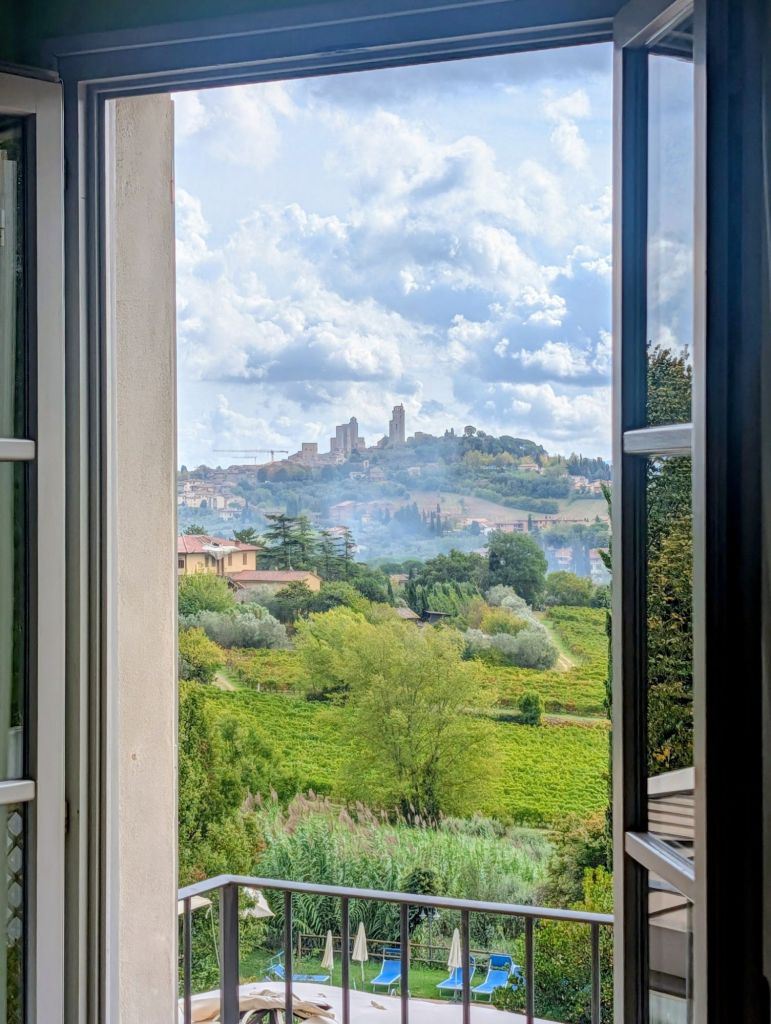
Hotel Villa Ducci
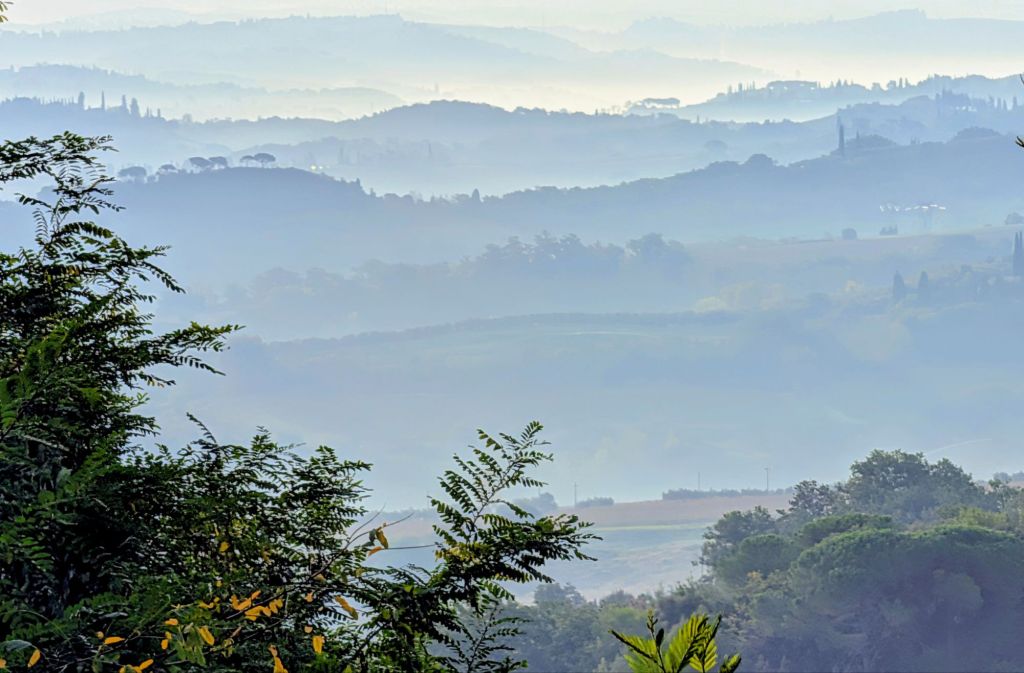
View from our room

Via Francigena- Day 4

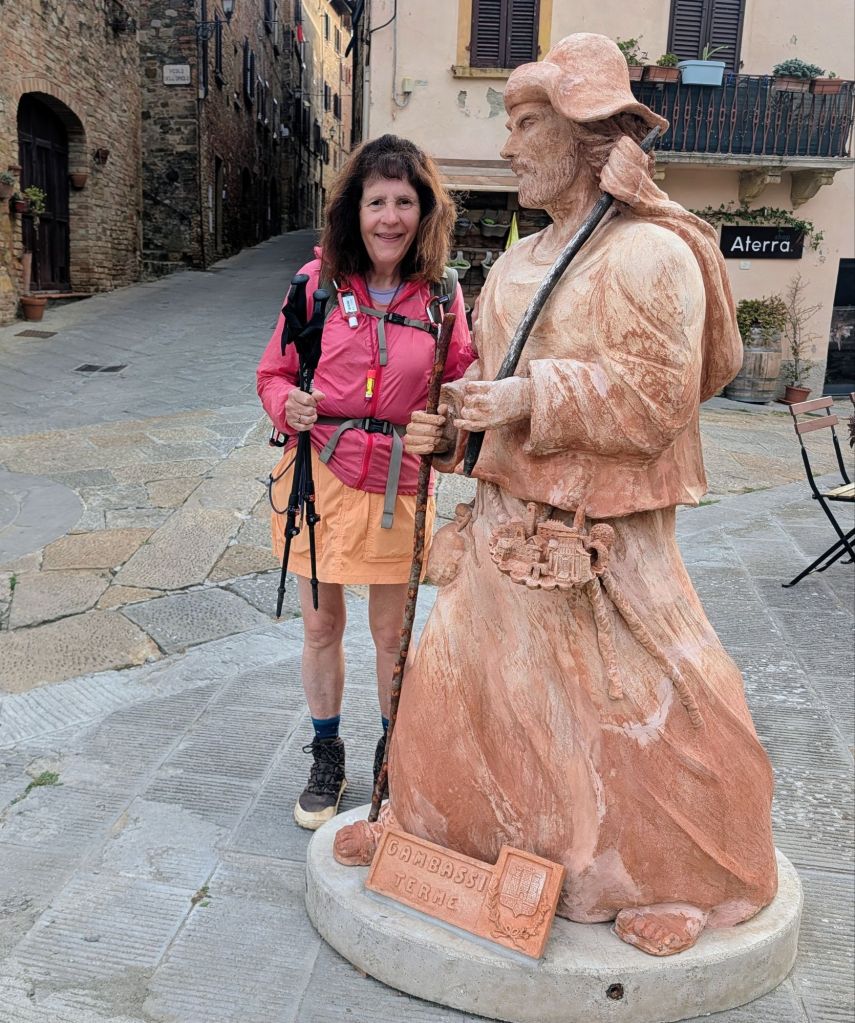
Gambassi Terme to San Gimignano

13 Miles; 6.5 Hours on the trail.                                      (Cumulative: 58.8 Miles hiked; 29.1 Hours on the trail)
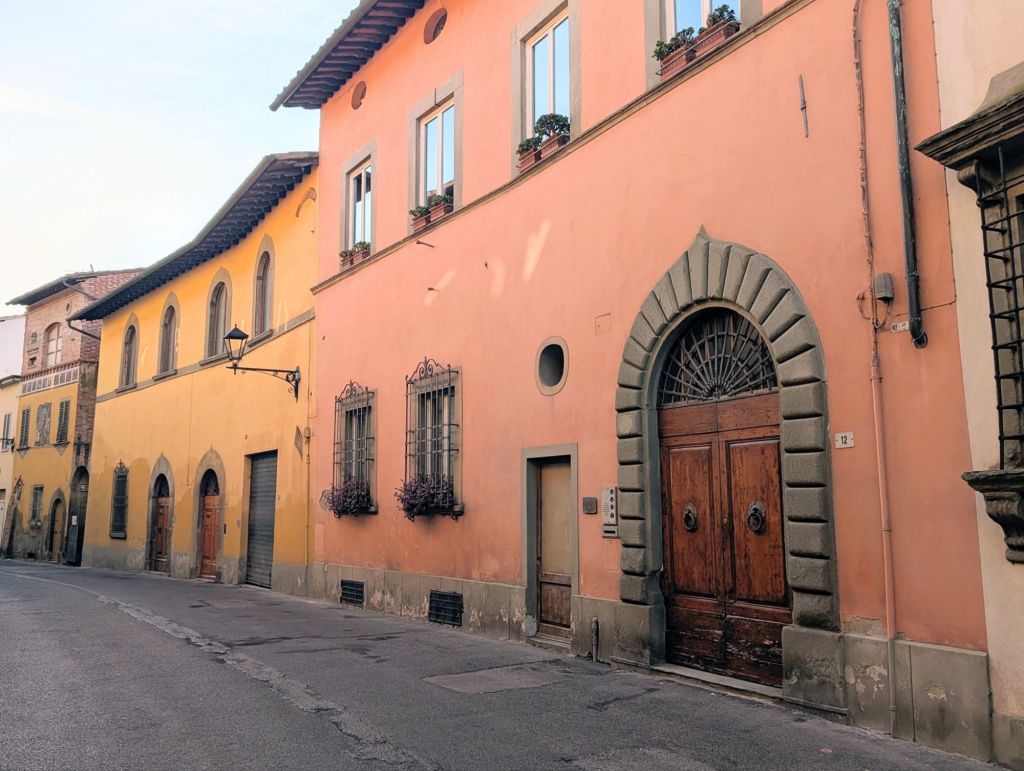
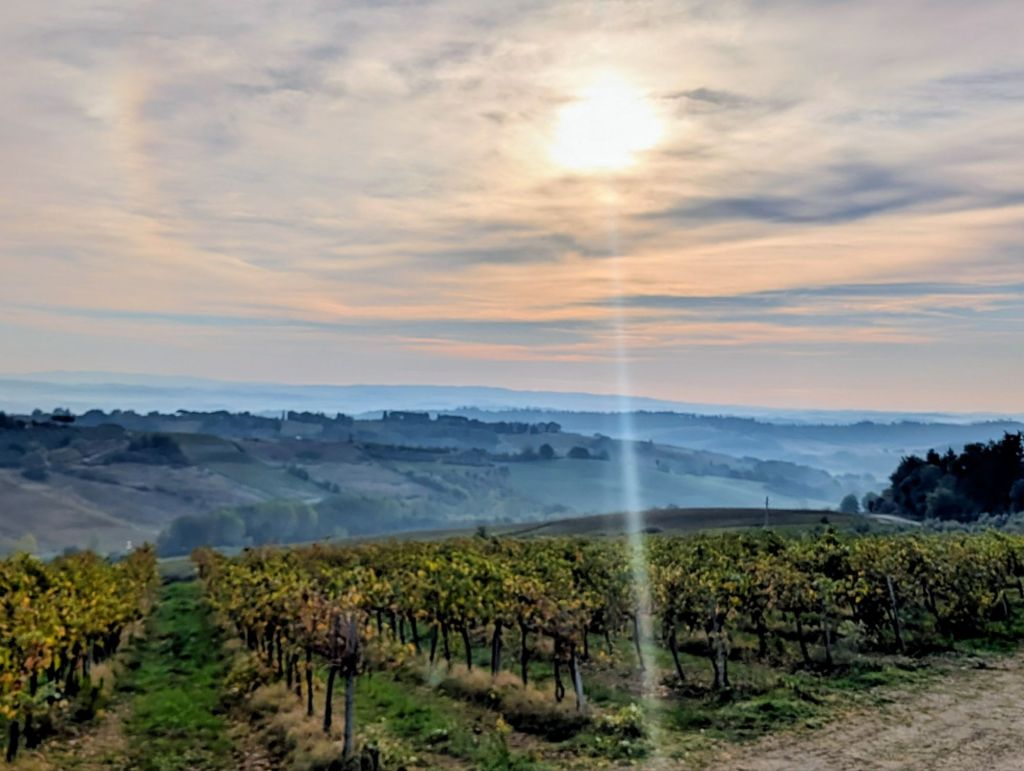
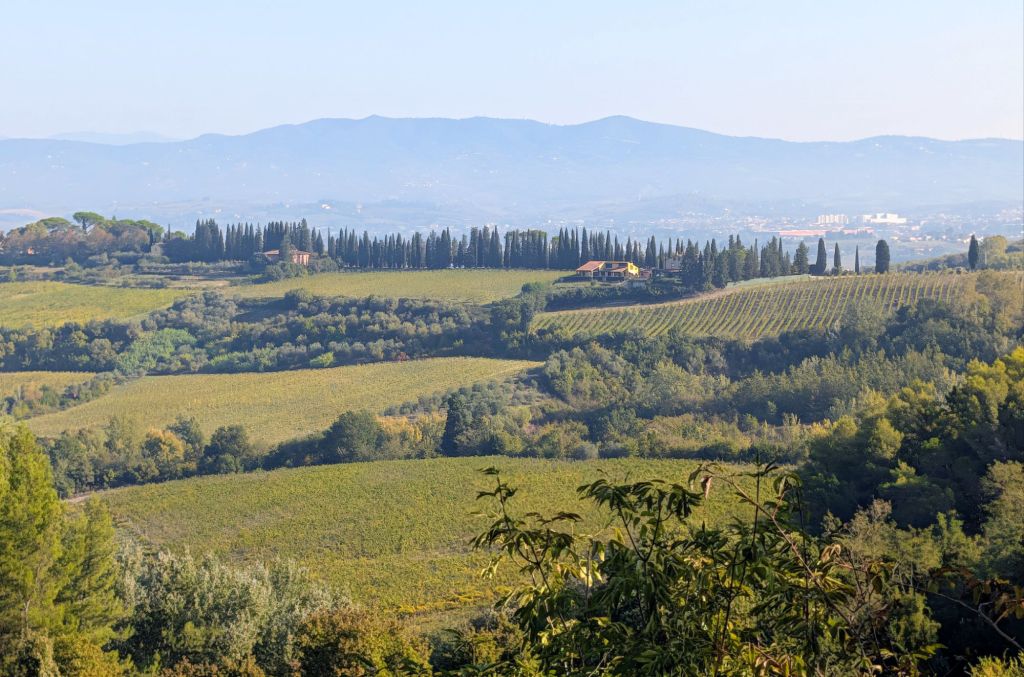
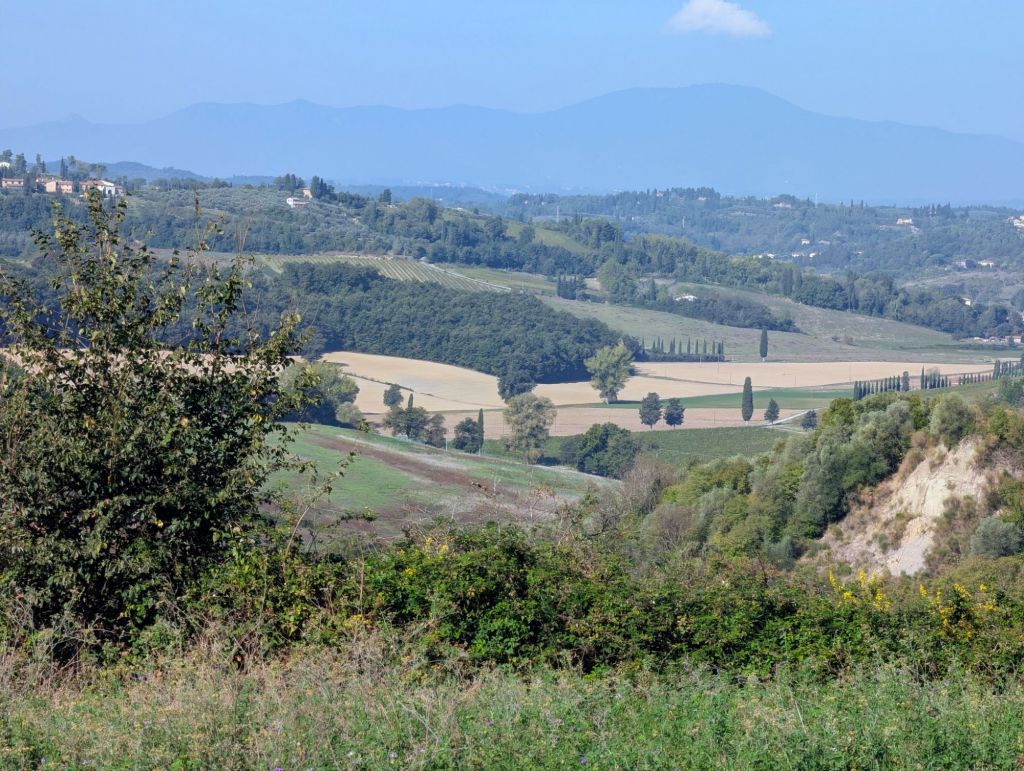
Today’s terrain was up & down; but, mostly up. However, we hiked through  the world famous Chianti vineyards to reach San Gimignano with its medieval towers which made the effort worthwhile.

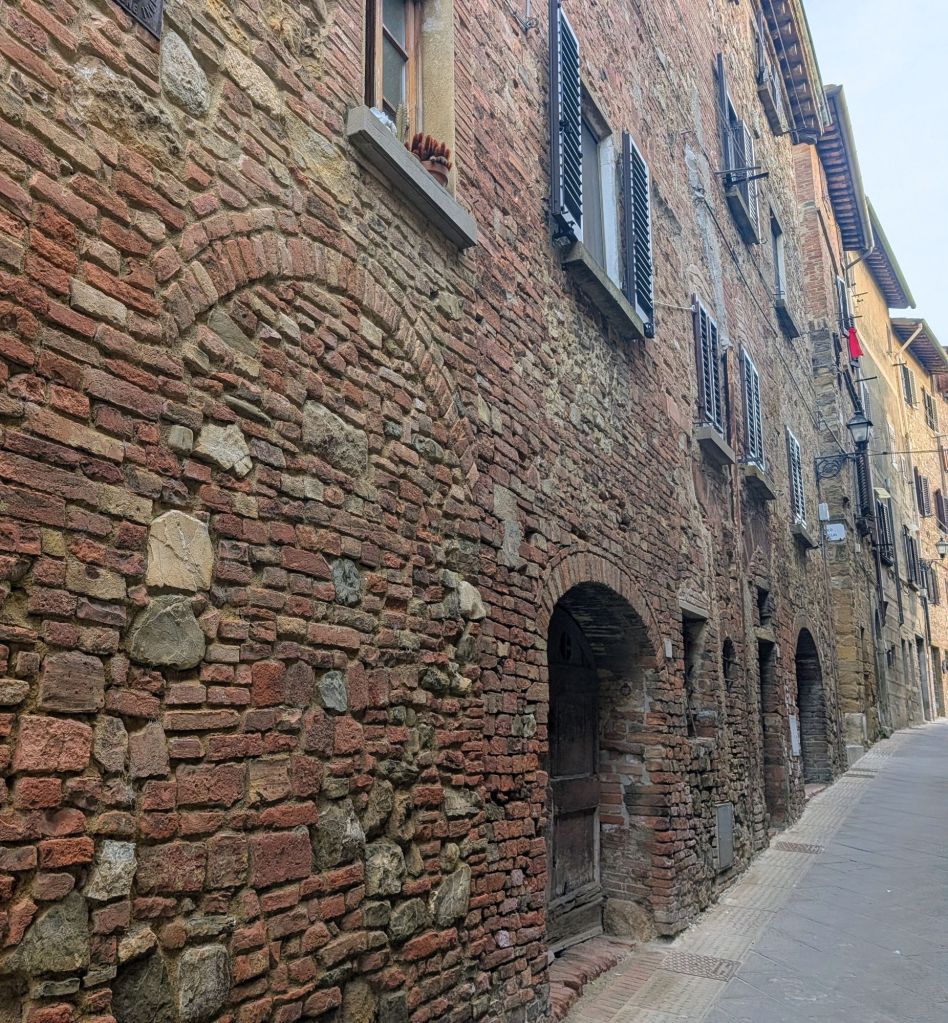
Scenes from leaving Gambassi Terme

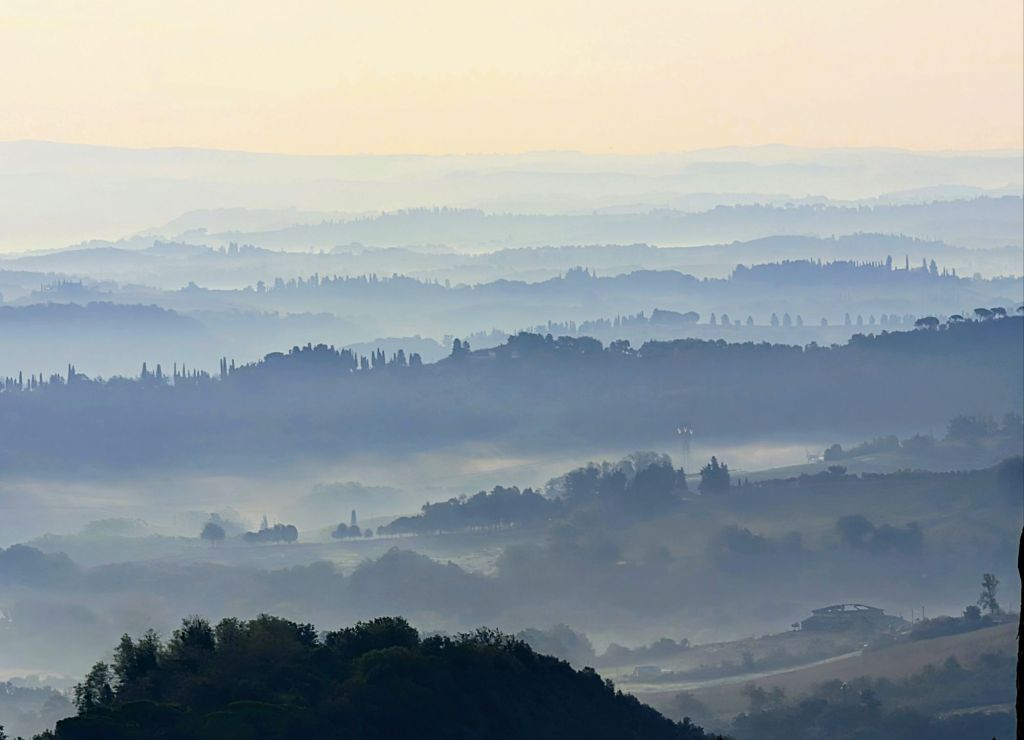
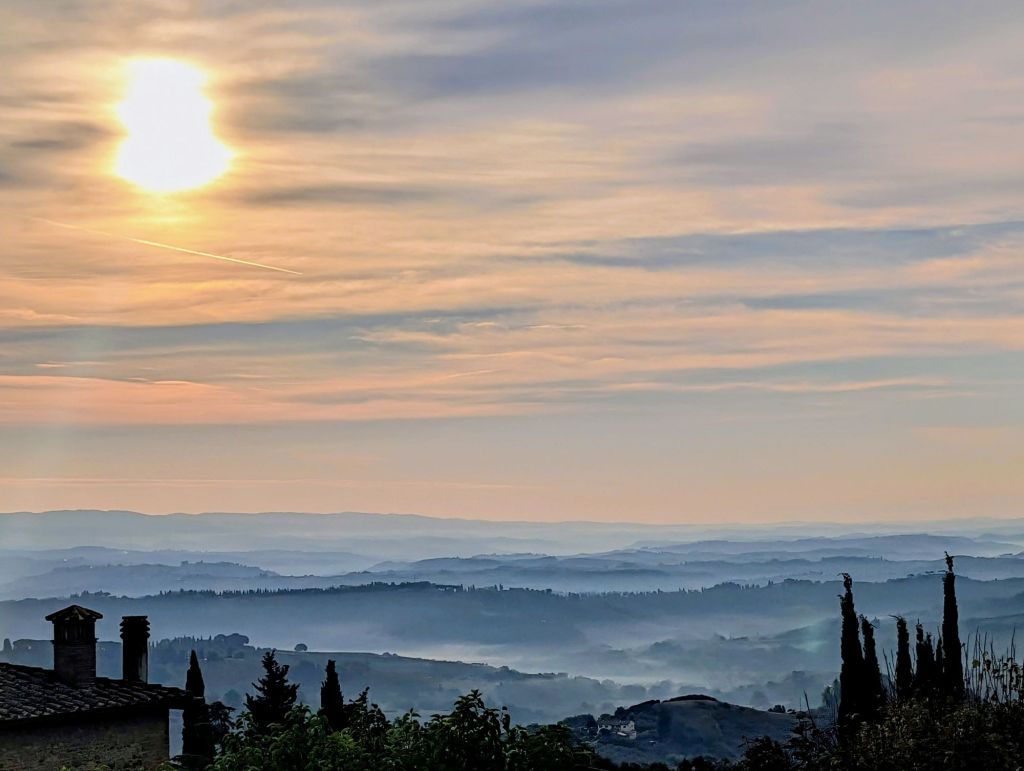
We started walking shortly after the Tuscan sunrise.

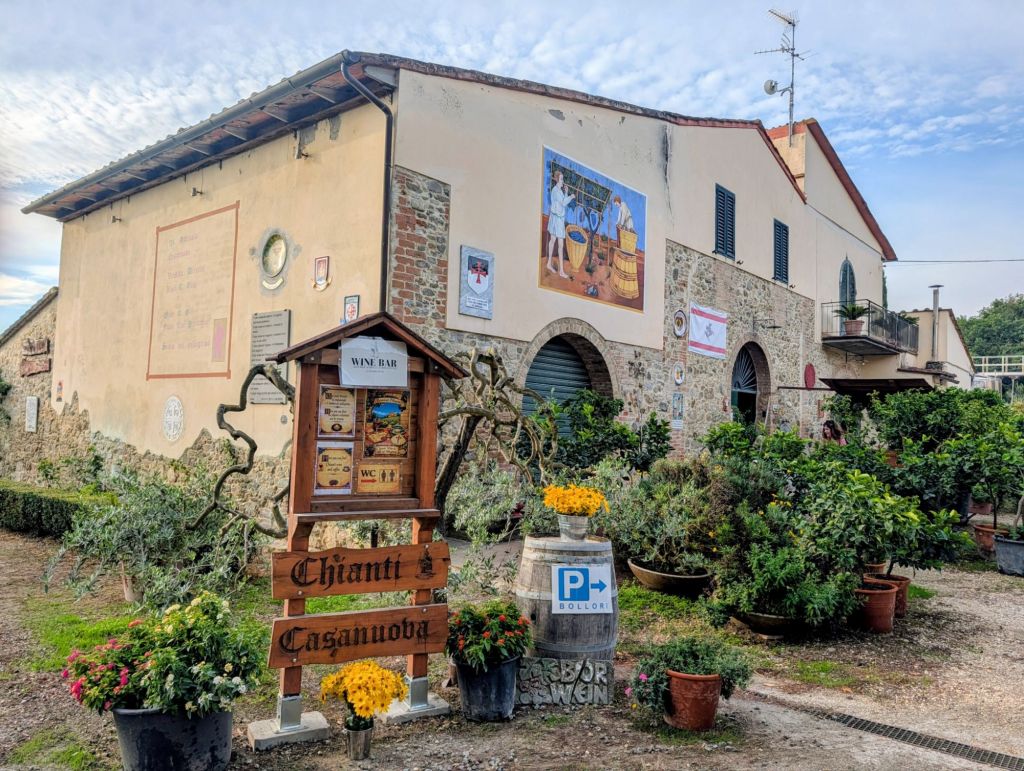
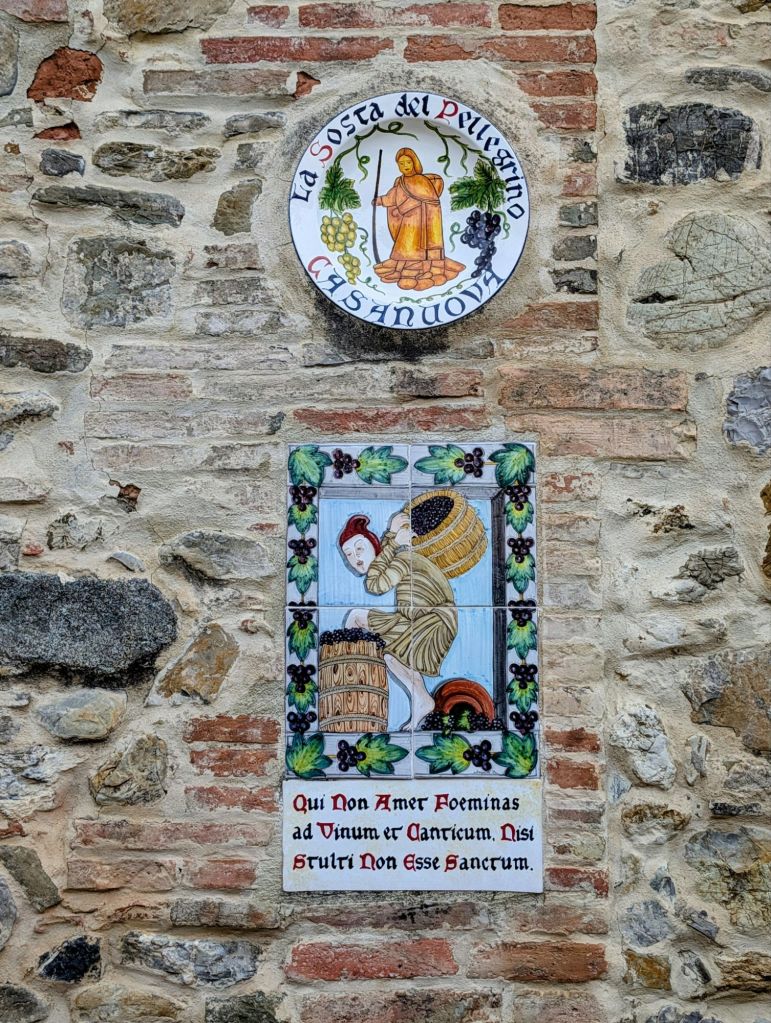
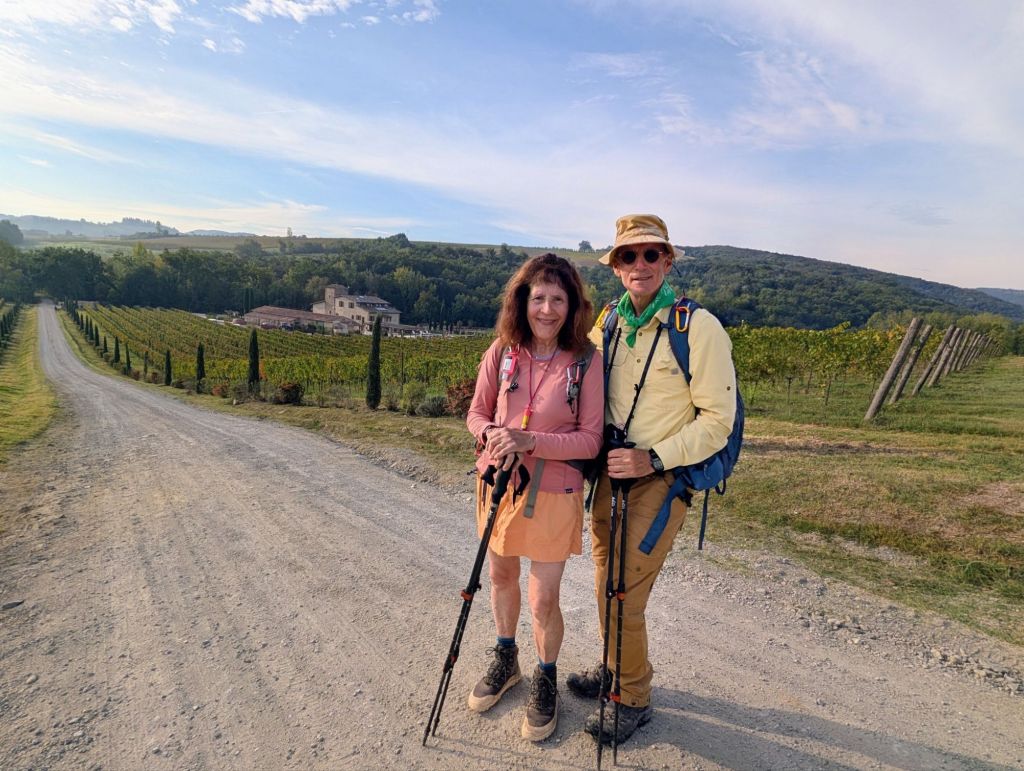
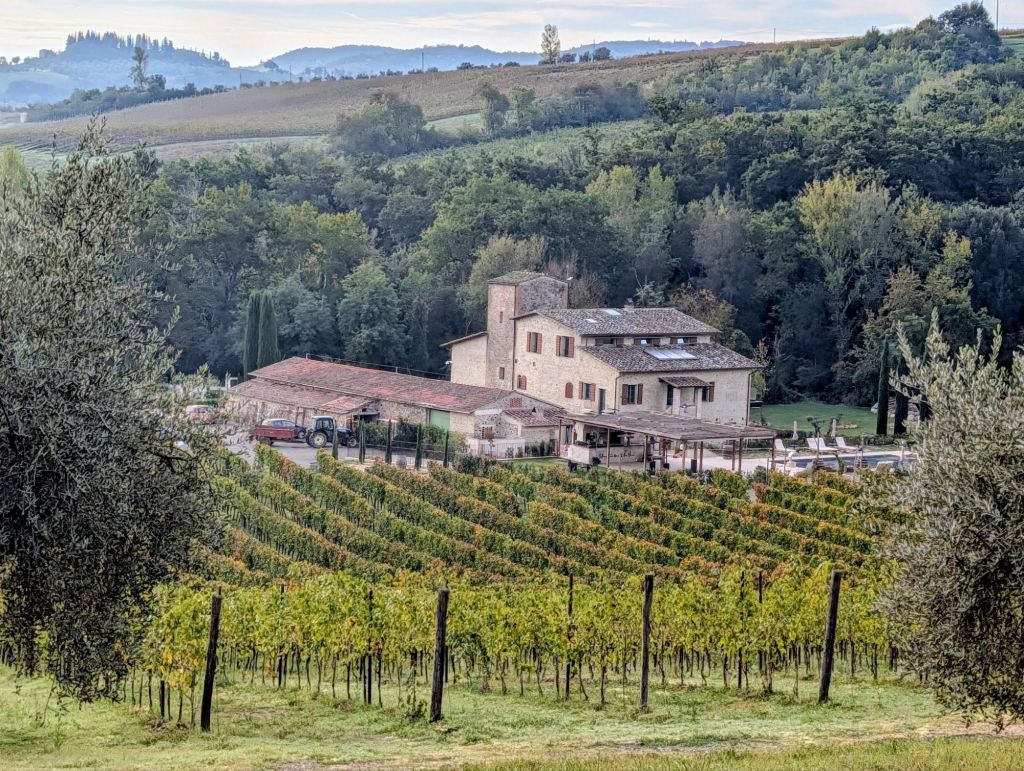
Shortly outside Gambassi Terme, we stopped at a winery continuously owned by the Casanova family since 1506.

Not too long down the trail we saw another winery

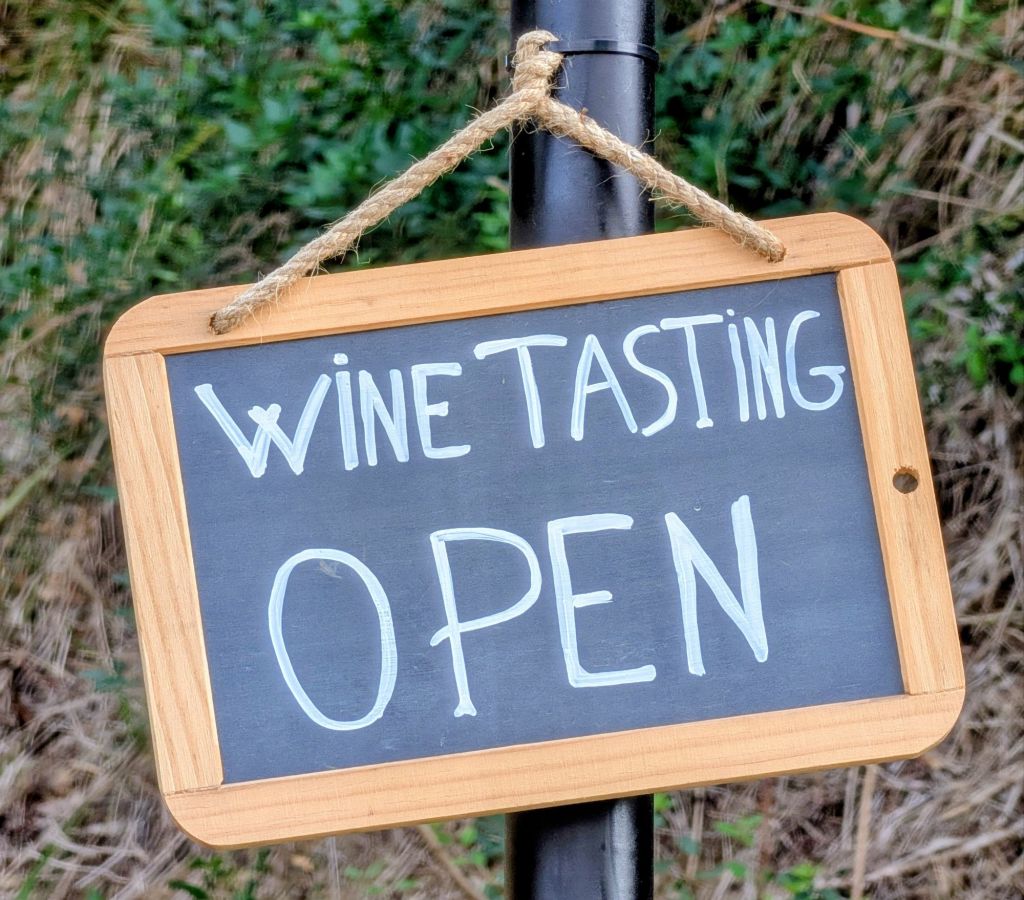
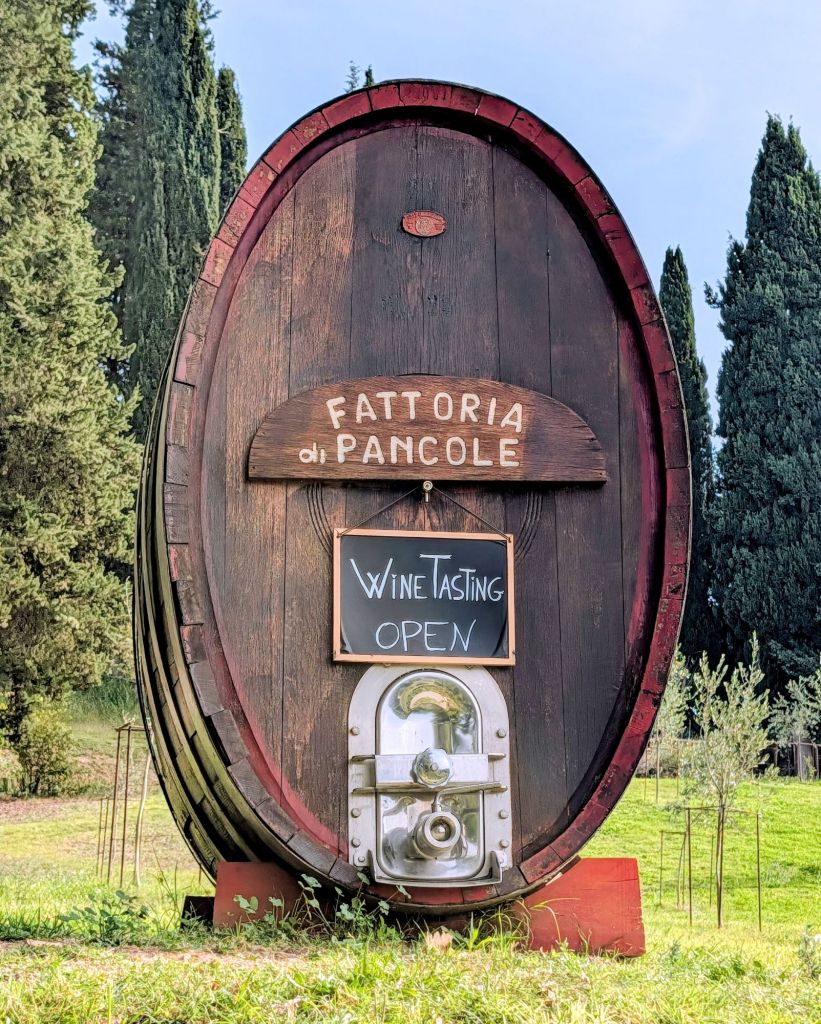
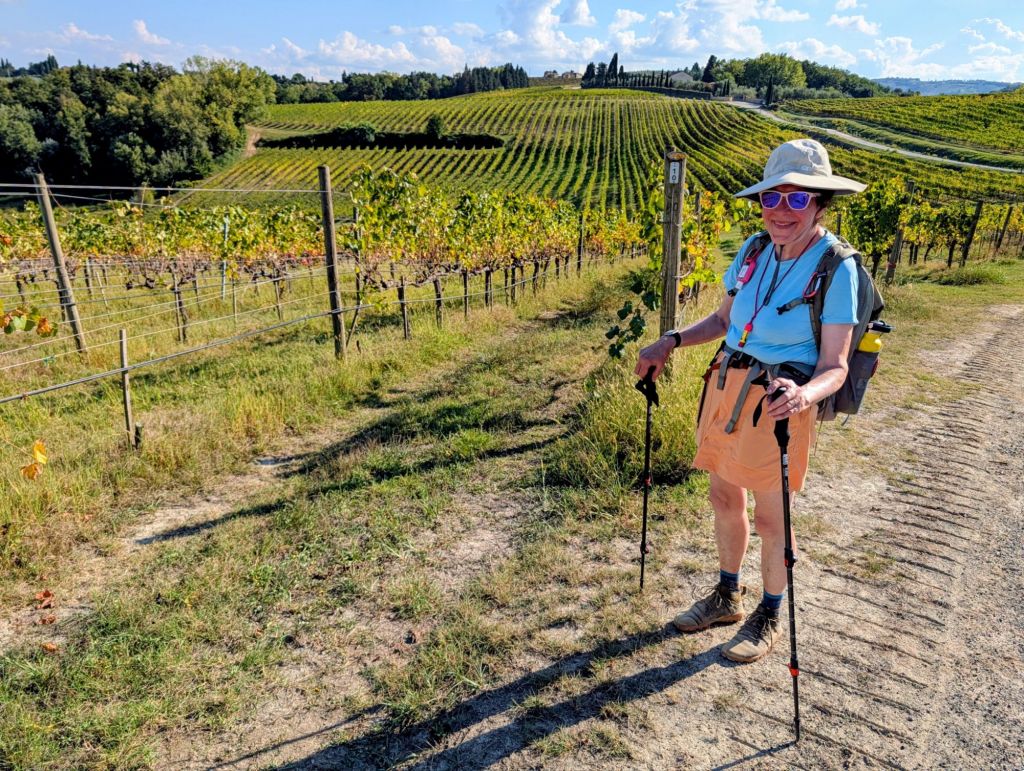
We continued walking through vineyards & saw several wineries offering free wine testing samples.

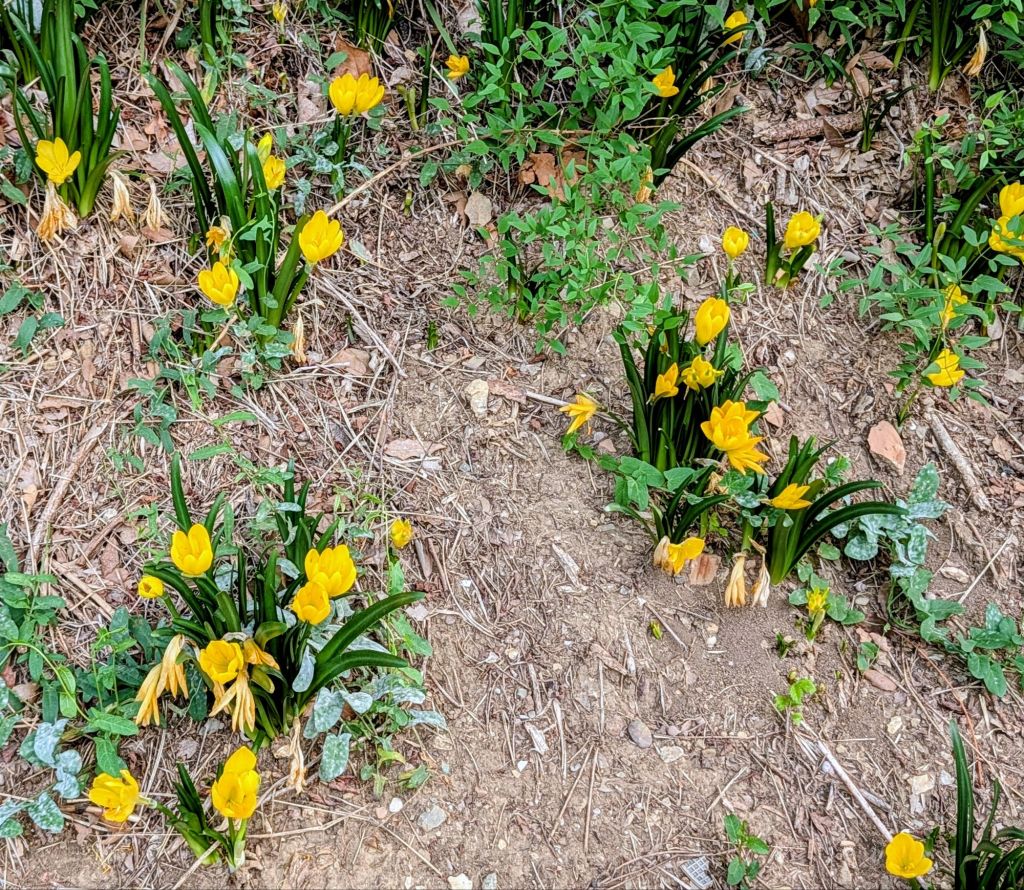
We saw these Winter Daffodil or Yellow Autumn Crocus along the trail.

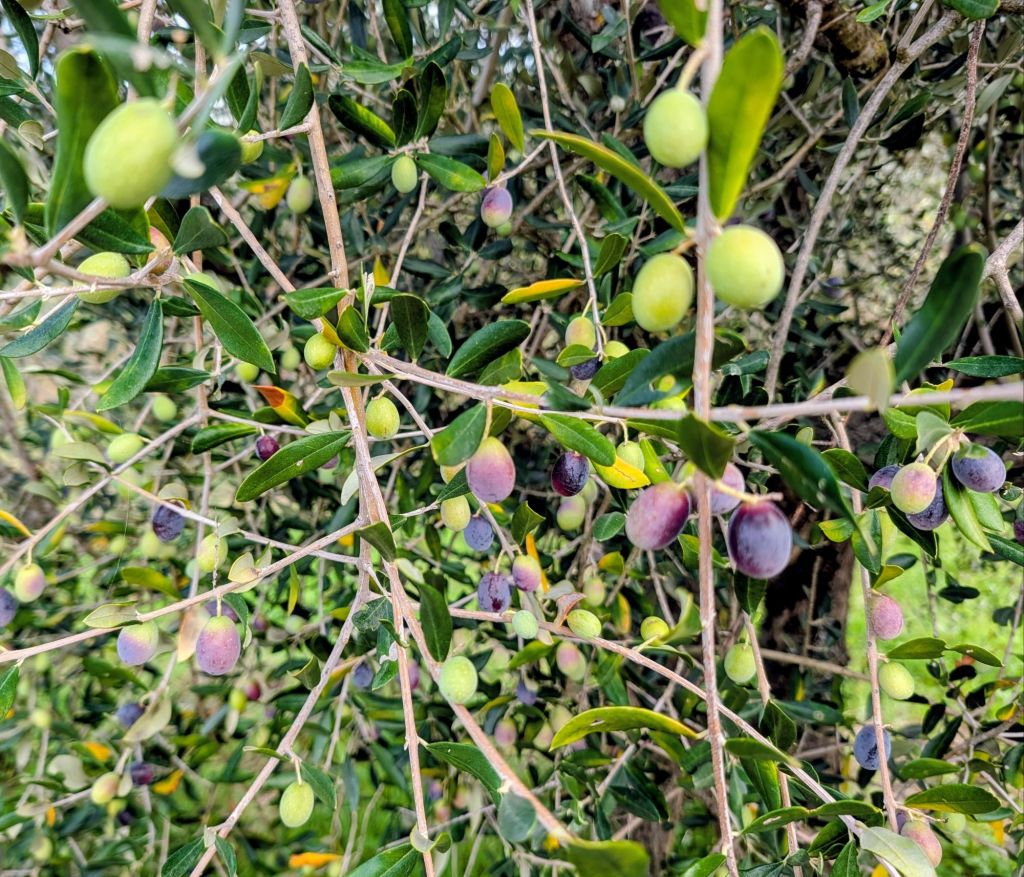
We also walked through many olive trees & could see them ripening before harvesting in late November & early December.

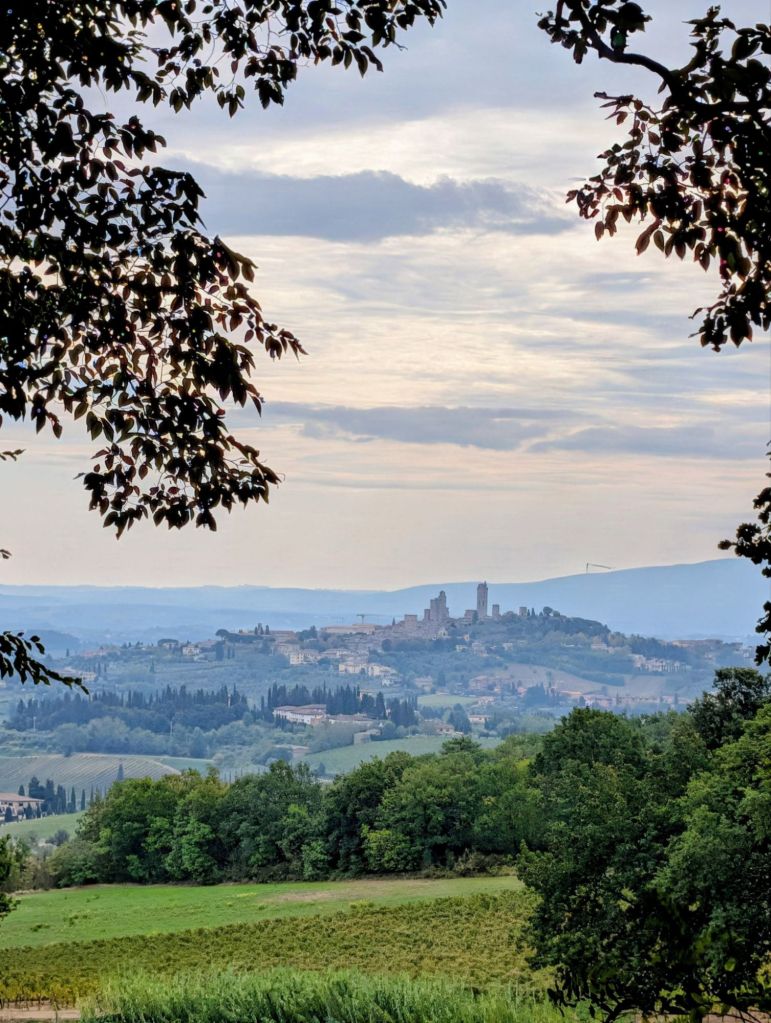
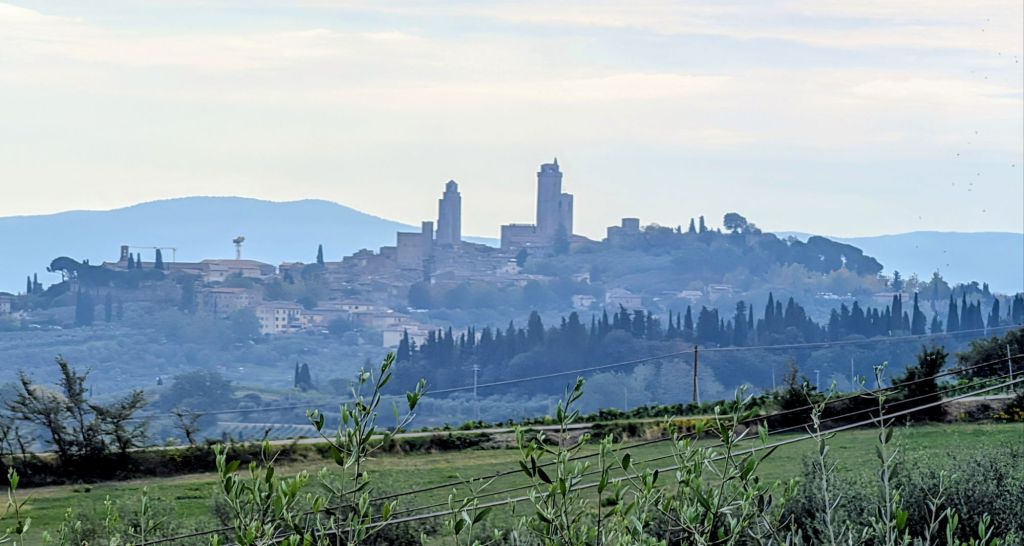
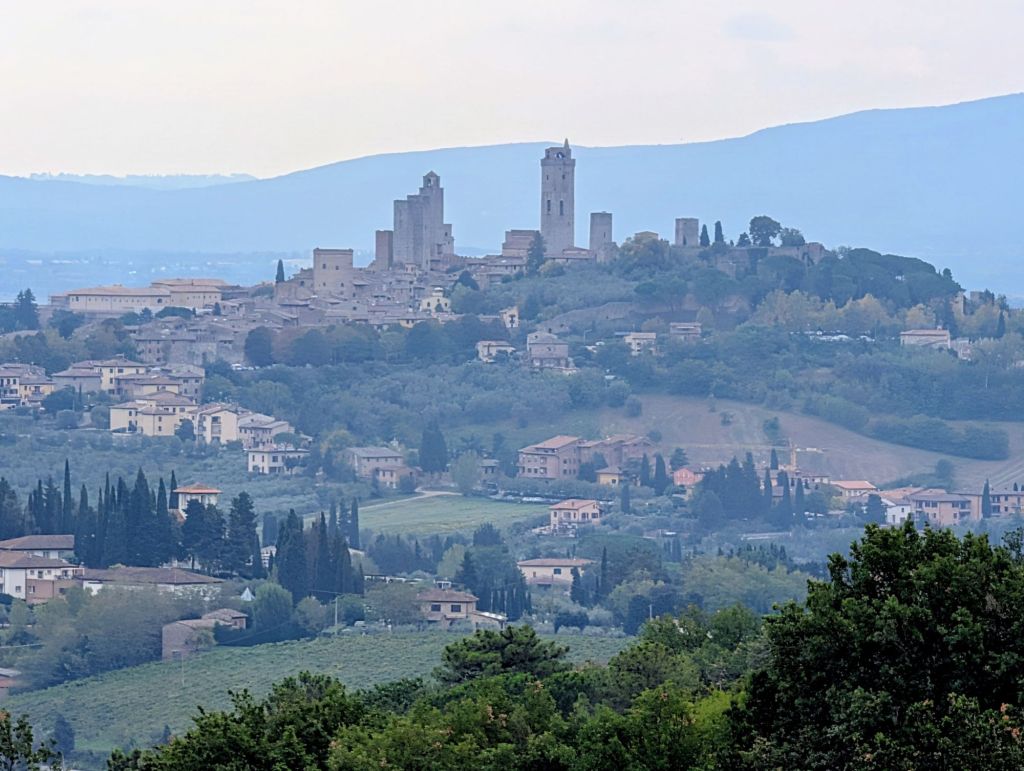
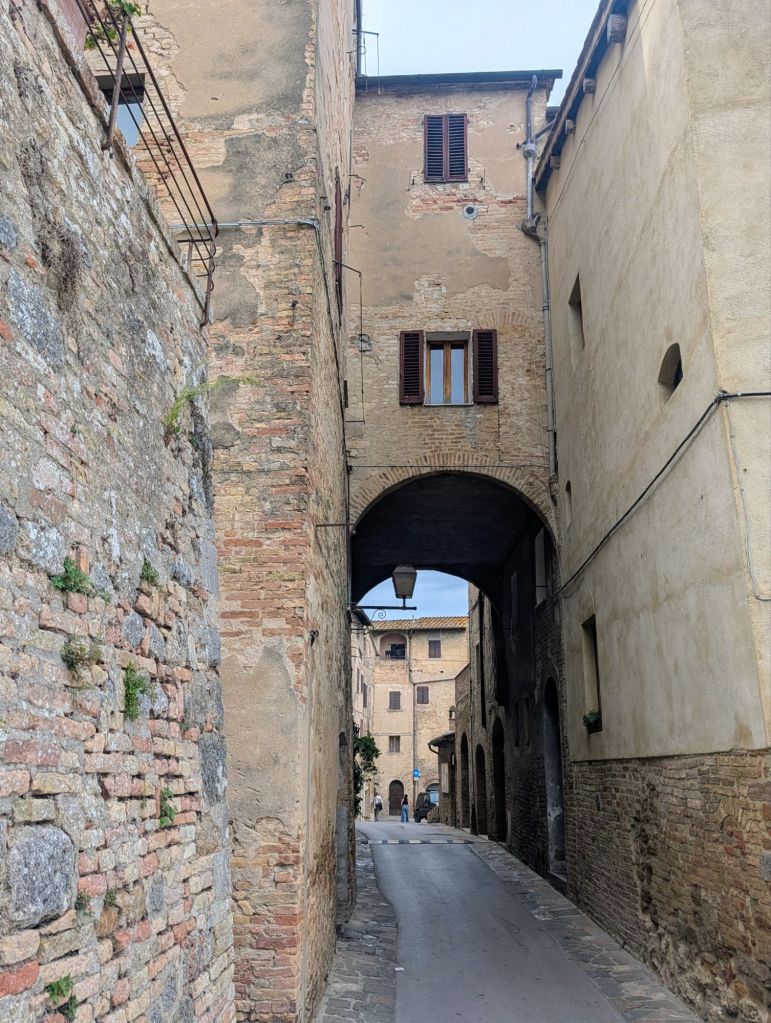
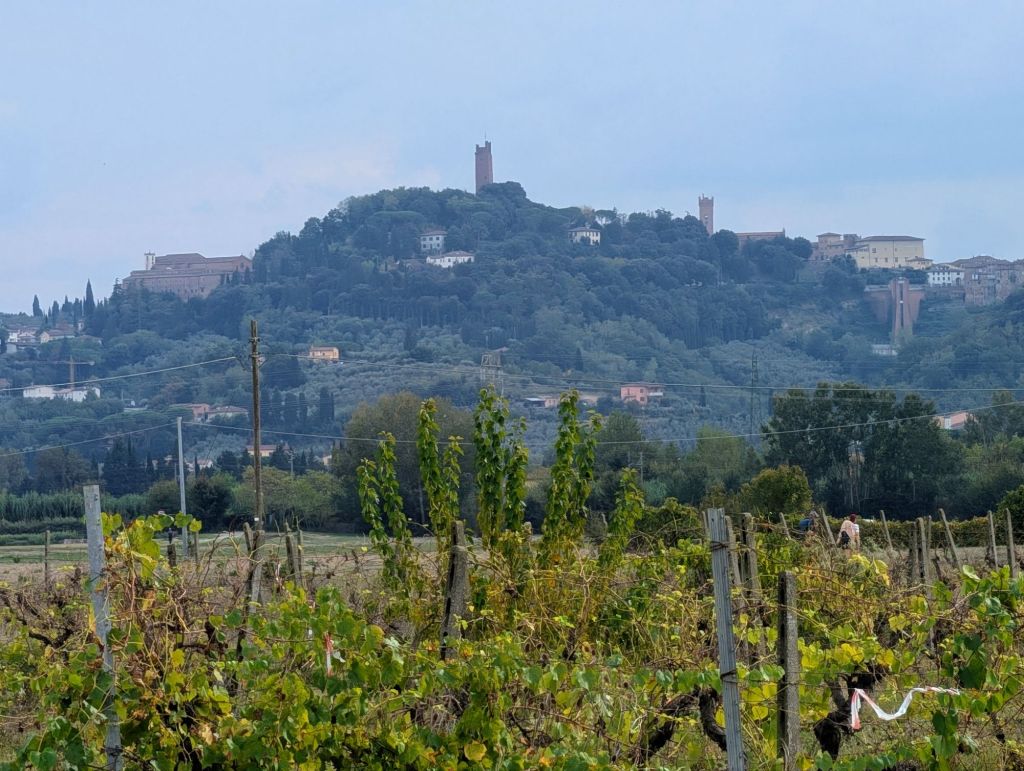
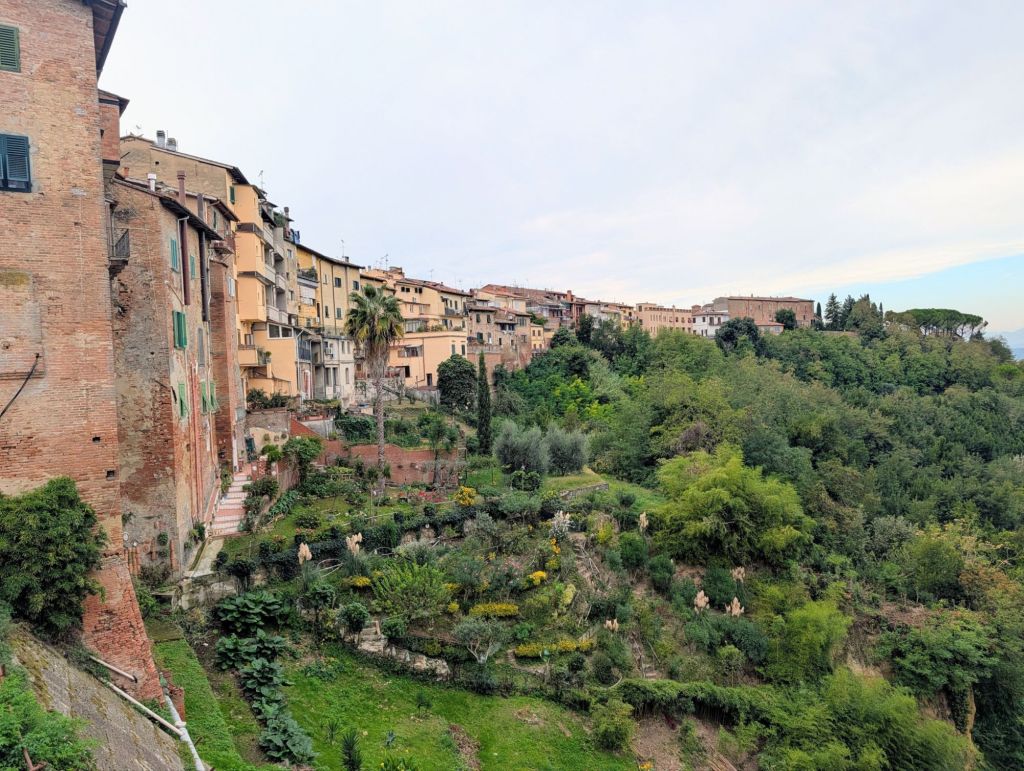
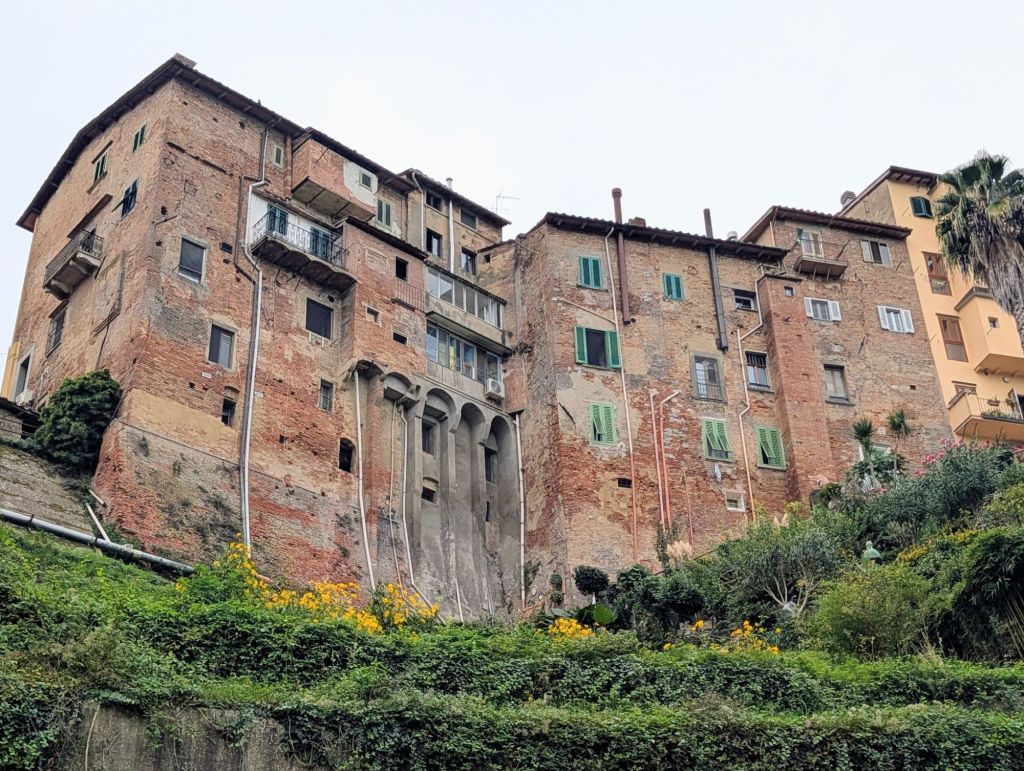
San Gimignano is the epitome of a Tuscan medieval hill town whose towers can be seen for miles in every direction.

Located about 25 miles from both Florence & Siena, it’s the region’s glamour girl as it is visually striking & perfectly preserved.

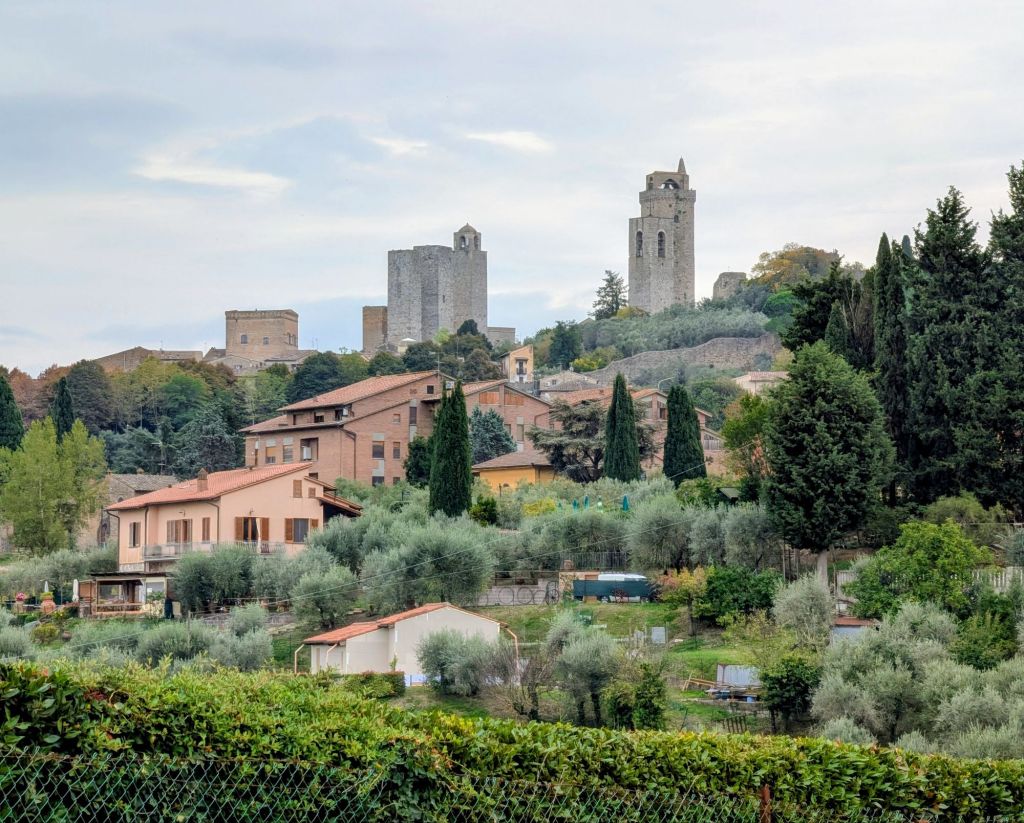
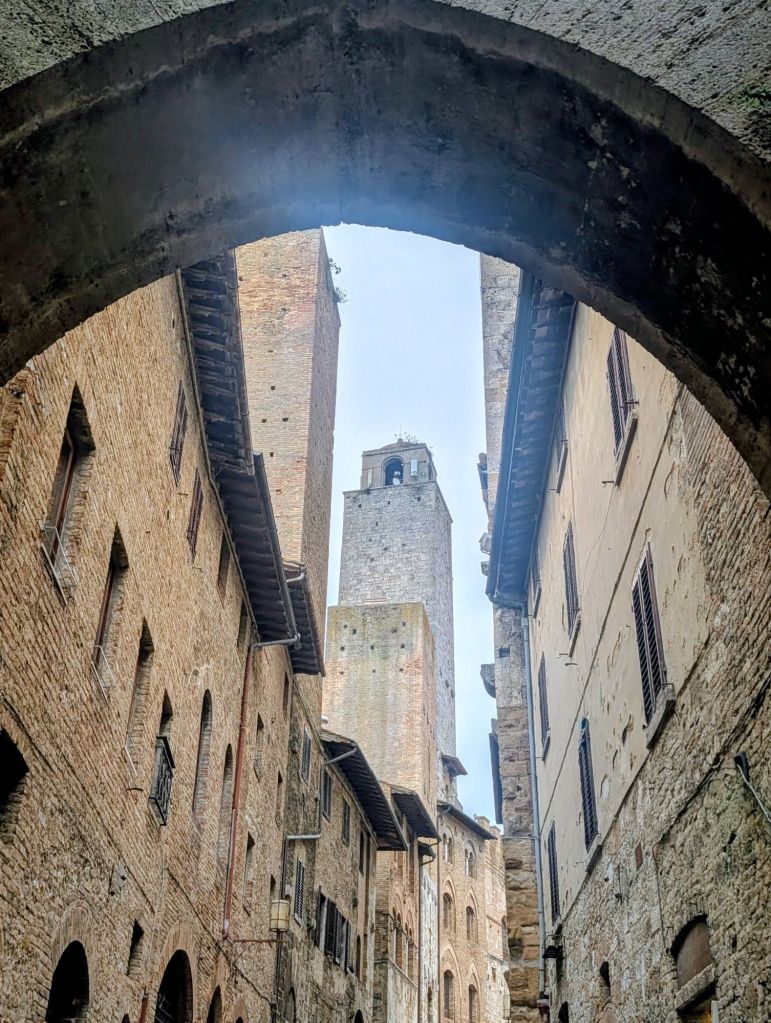
Here are various views as we approached the town

San Gimignano is named after St. Geminianus.                 However, its roots are traced back to the 3rd Century BC.                                        Records first mention it in the 1st Century BC when a Roman nobleman named Silvio fled Rome & built a castle here.  

The town bore his name until 450 AD  when its name was changed to San Gimignano to honor Bishop Geminianus who intervened to spare the town from destruction by Attila the Hun’s armies.

In the Middle Ages, the town became an important stopping point along the Via Francigena & is listed by Archbishop Sigeric in his travel diary.    

The town flourished until 1348, when the black plague killed half its population which led to its decline in economic & political importance.

During the height of its power, competing families built tower houses of increasingly greater heights.       

Towards the end of the Medieval period, there were 72 tower houses with some up to 70 meters tall.


Today, only 14 magnificent towers remain standing creating the unmistakable skyline that defines San Gimignano.

Although a unique sight today, pointy skylines were the norm in Tuscany in the Middle Ages when feuding noble families like the Capulets & the Montagues from “Romeo & Juliet” fame ran the hill towns.

Each family had its own private army that would periodically battle things out under the protection from its respective family towers.

While some towers were built as a refuge against attackers, others were empty, chimney-like structures built only to boost noble egos.

In the 14th Century, like other hill towns, San Gimignano fell under Florence’s control.

The Florentines usually asserted their power over the local nobles by ordering them to lop off their towers.

But, for some unknown reason, some of San Gimignano’s original skyline was allowed to remain intact.

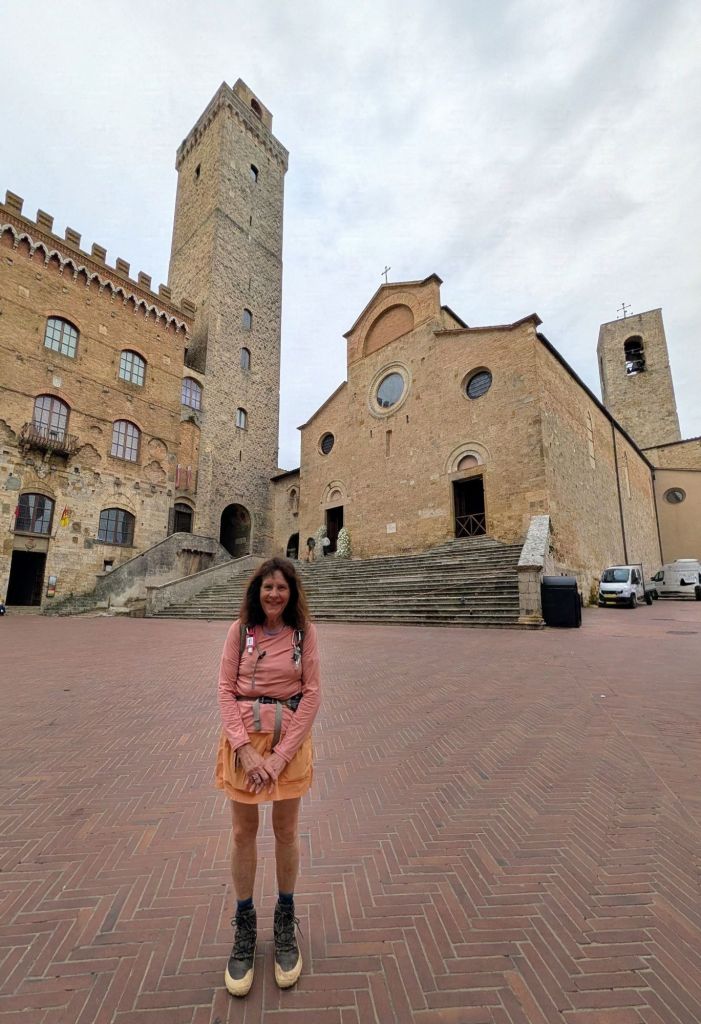
Torre Grossa is the highest tower in the city at 177 feet tall.

The Devil’s Tower has a curious legend: the owner who  returned from a trip noticed with great surprise that the tower was taller than he had left it which was an occurrence immediately attributed to the Devil’s intervention.

The Torre Rognosa, the Town Hall tower, is the oldest tower & was for centuries the tallest tower in town.

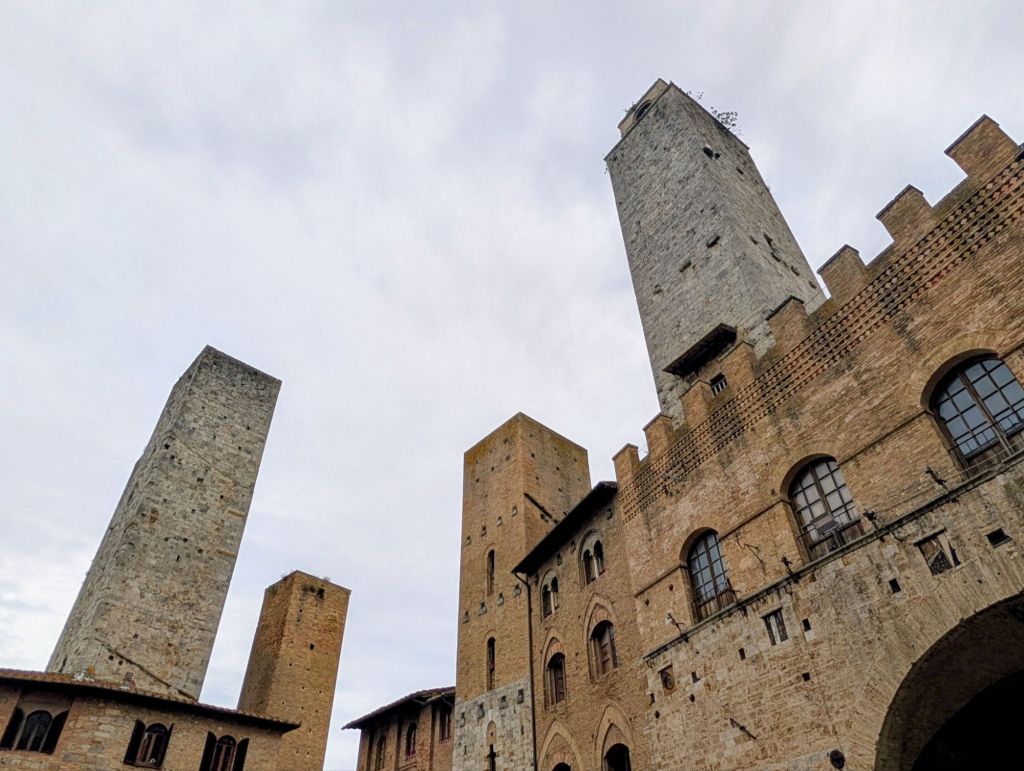
Nearby the Town Hall tower is a pair of towers that have stood side by side for more than 700 years.

These twins are empty shells built by the Salvucci family simply to show off.

At the time they were built, no one was allowed to build a vanity tower higher than the old City Hall Tower which was  170 feet tall.

So, the Salvuccis built two 130 feet high towers totaling 260 feet of stony ego trip

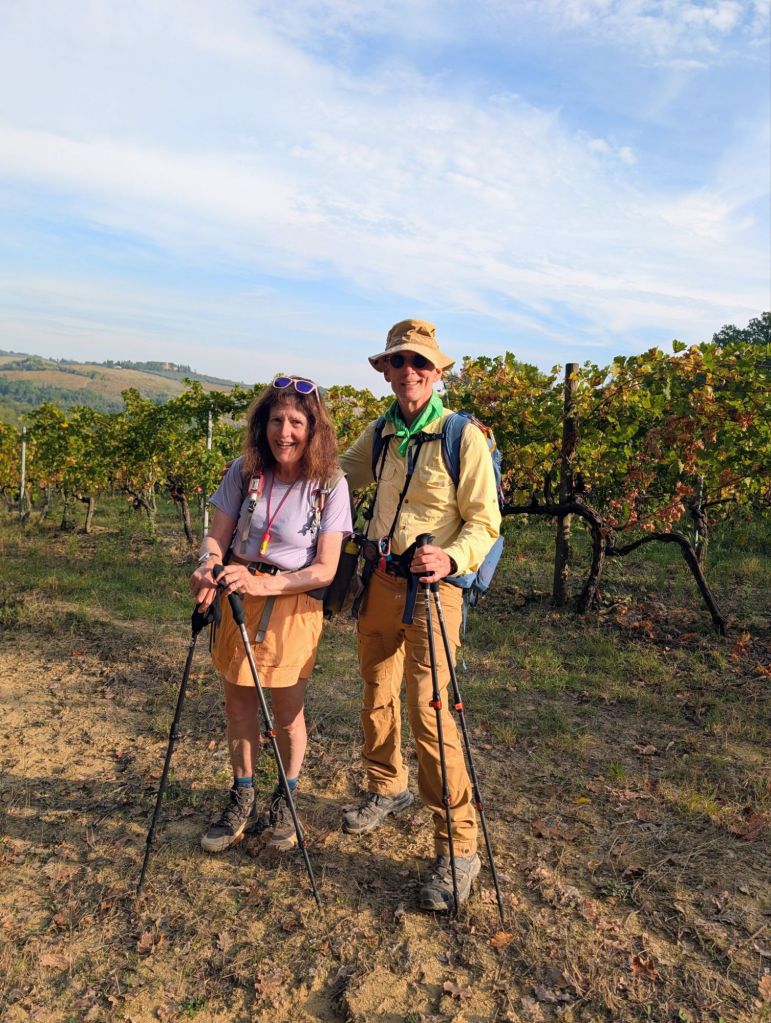
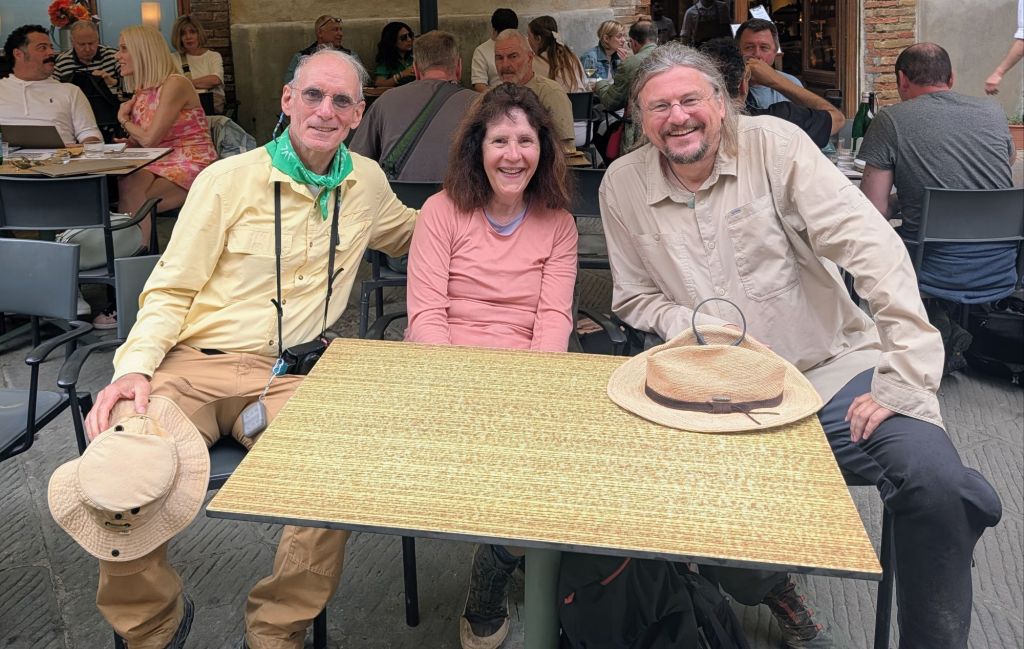
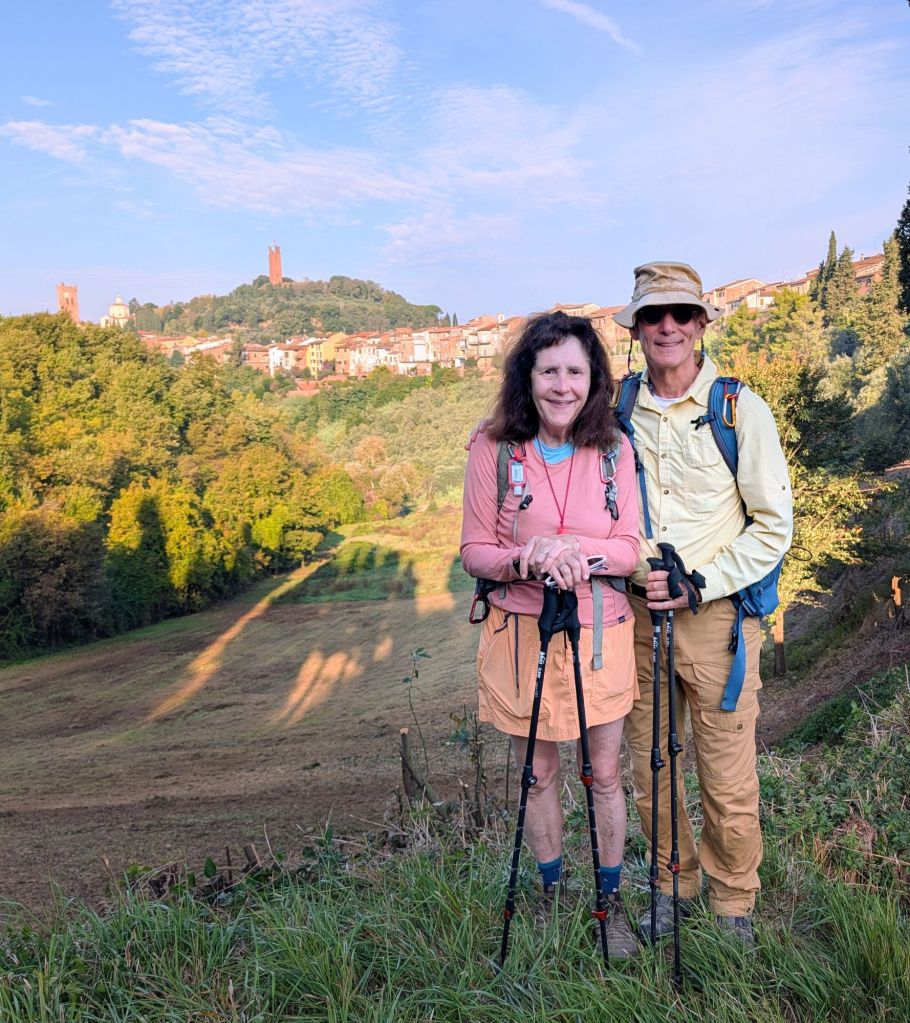
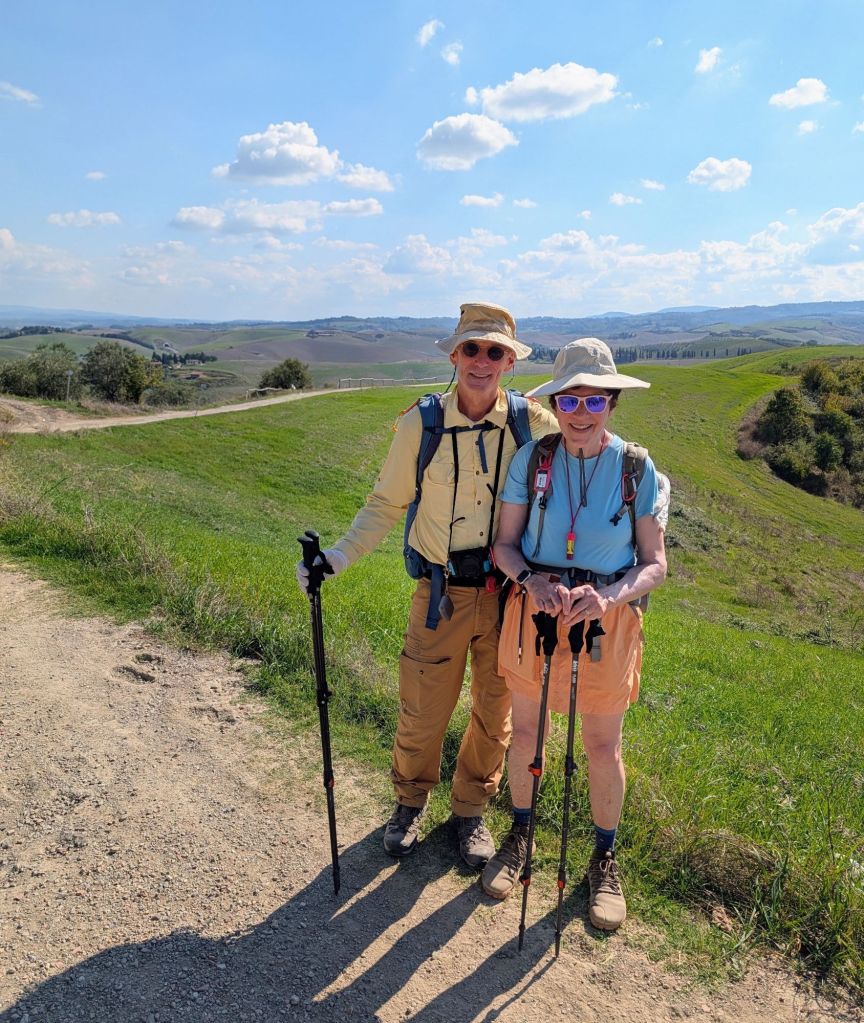
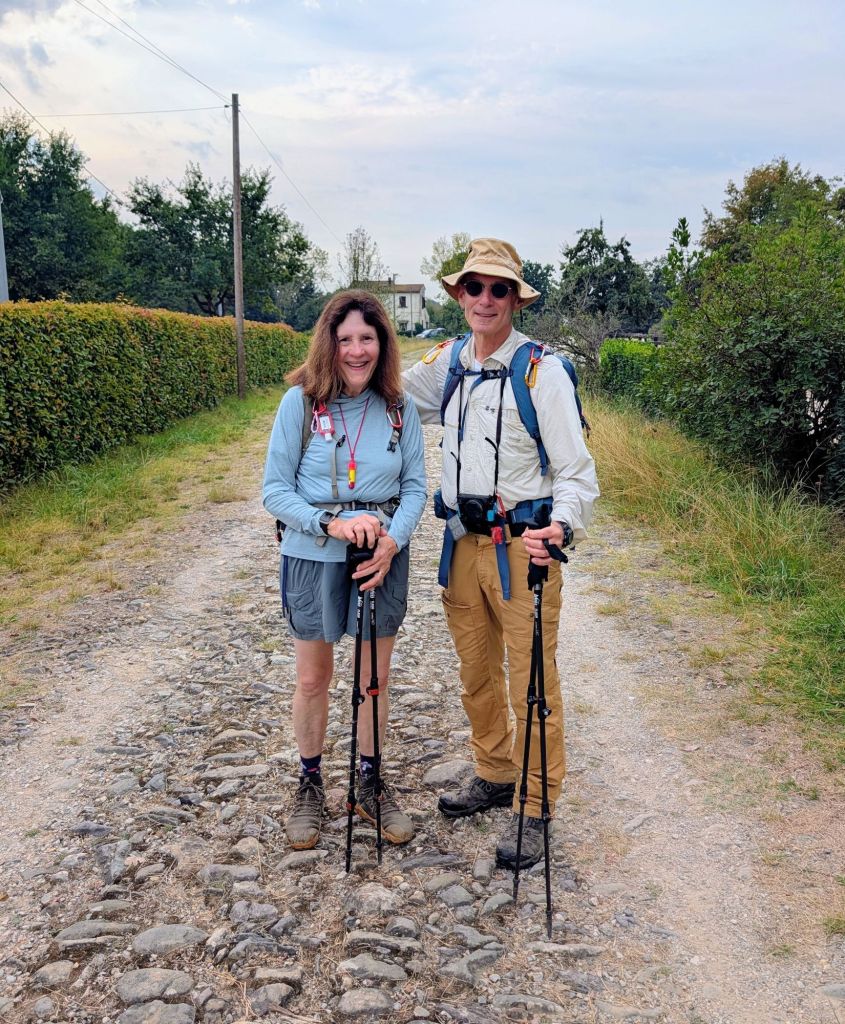
Here we are with our new trail friend Stefan from Hannover, Germany, celebrating having a nice day on the trail.

Via Francigena- Day 3

San Miniato to Gambassi Terme

16.5 Miles; 8.6 Hours on the trail.                                    (Cumulative: 45.8 Miles hiked;  22.6 Hours on the trail)

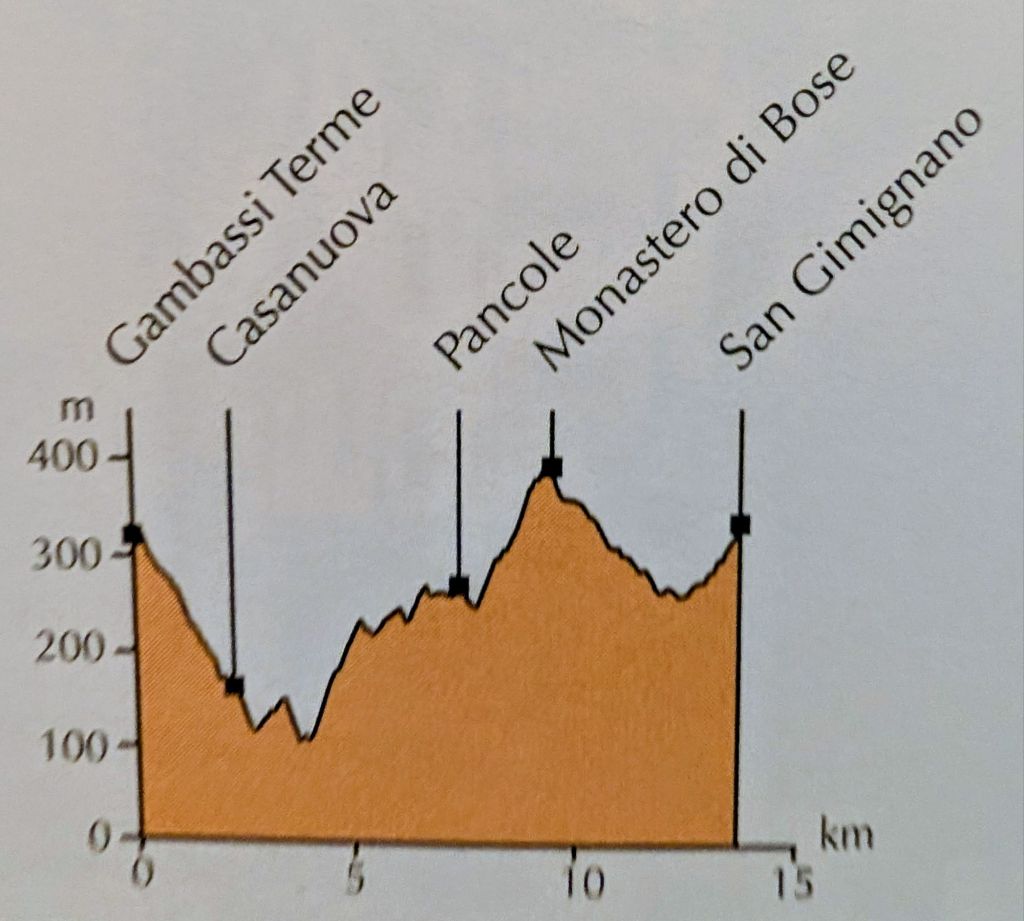
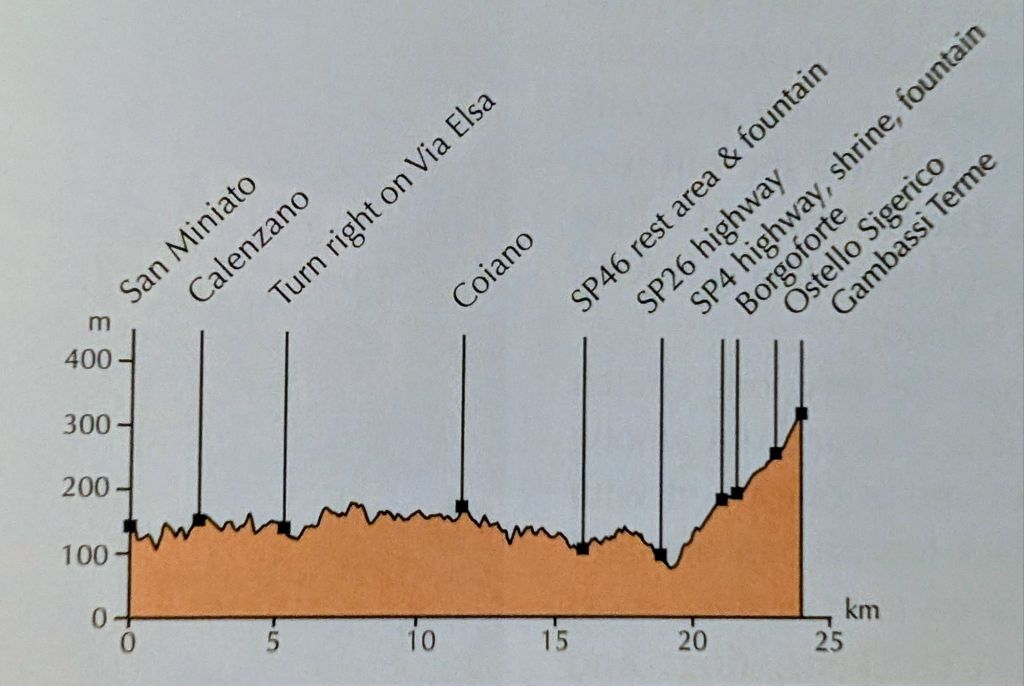
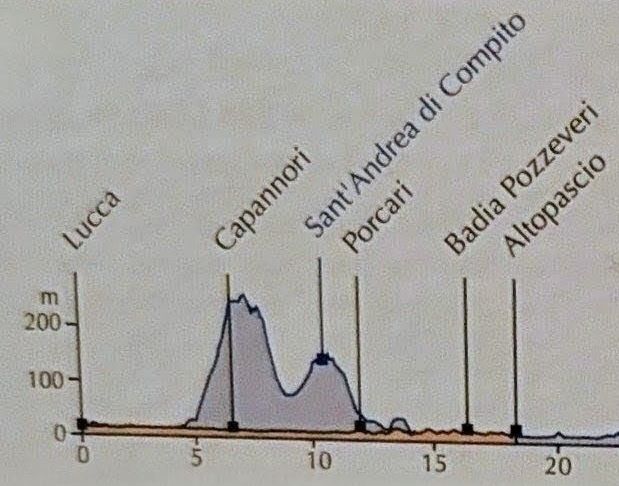
Today’s walk to Gambassi Terme was much more challenging than yesterday’s because the terrain was hilly & somewhat mountainous, so there was a lot of up & down on the route as you can see in the route profile & the weather was hotter.

Upon leaving San Miniato, we saw more of the city.

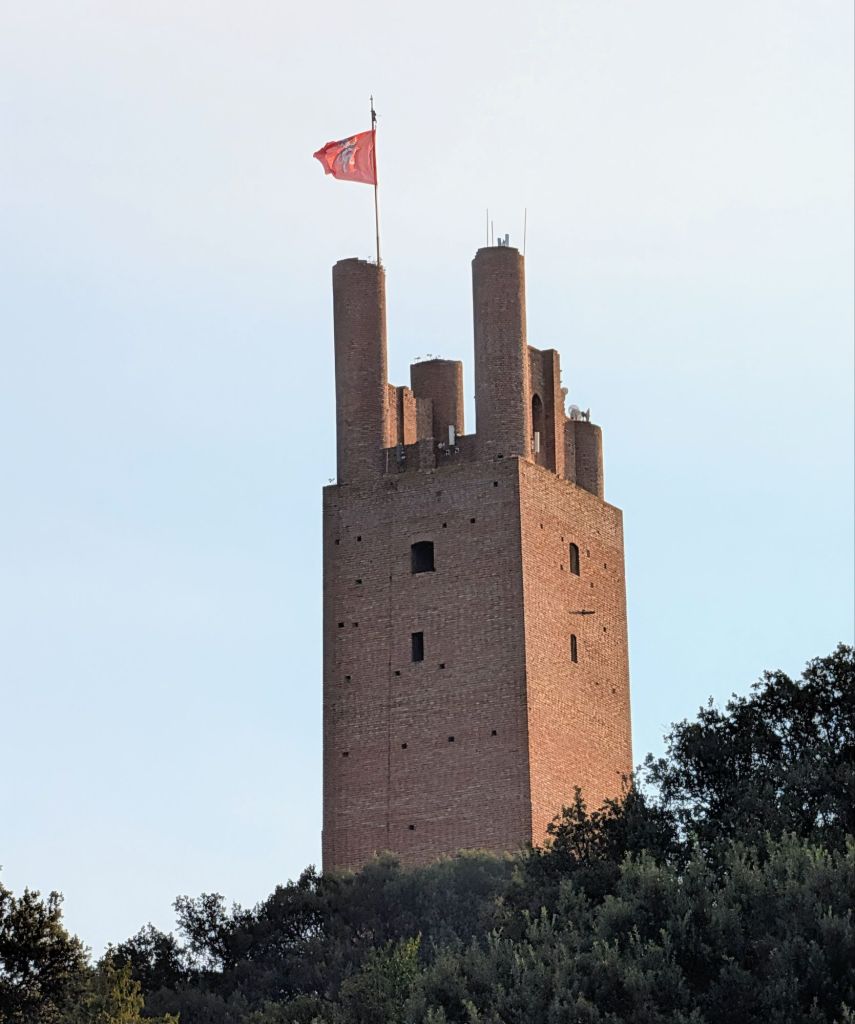
San Miniato Tower

In 1218, Frederick II of Swabia made San Miniato a tax collection point for central Italy.

To protect his money, between 1217 – 1221, he built the San Miniato tower which completed the Rocca (Fortress) di Federico II defenses & serves as the town’s symbol.

The tower was destroyed during World War II; but, it was meticulously rebuilt in 1956.

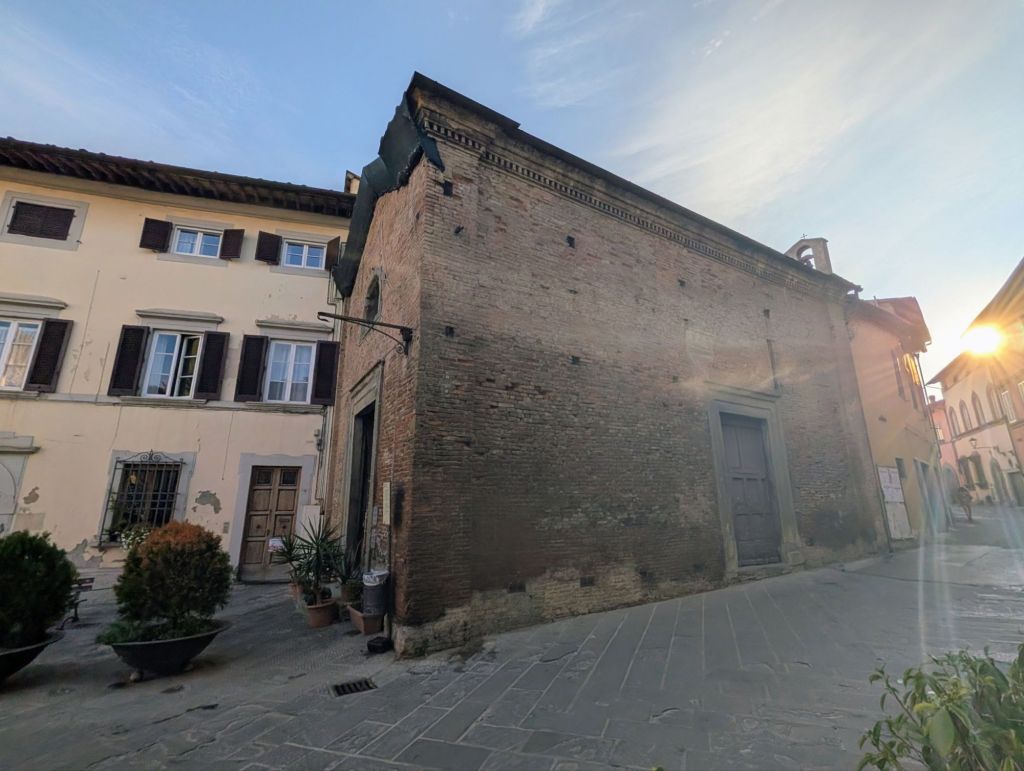
Oratory of Saints Sebastian and Rocco

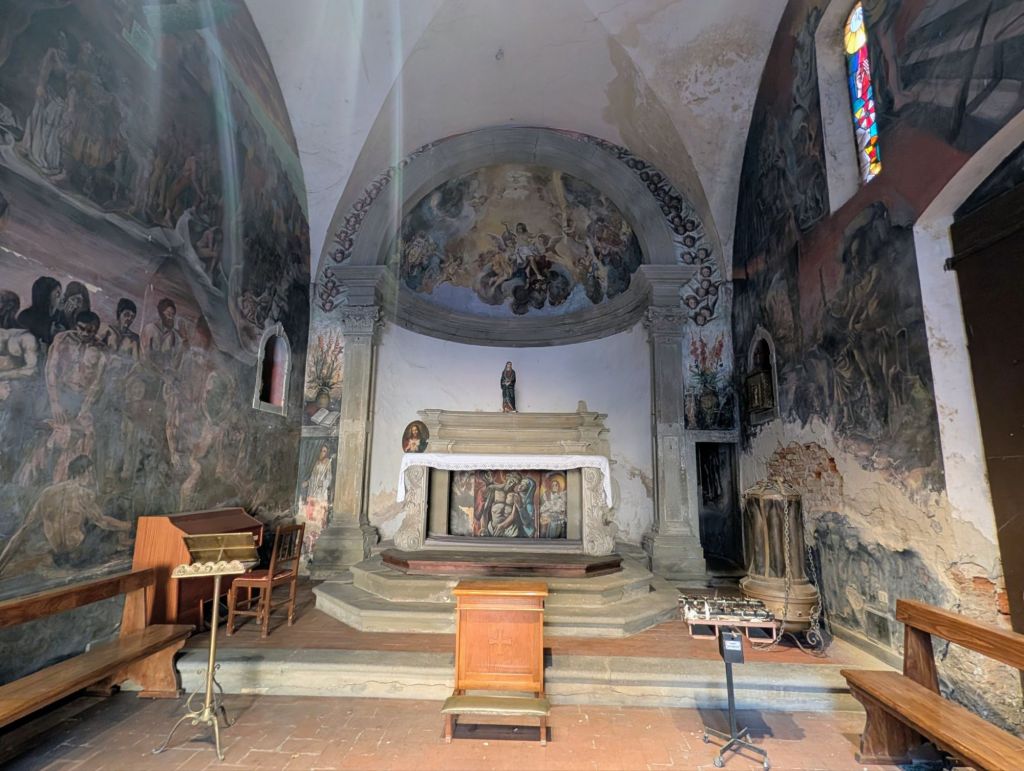
The Oratorio dei Santi Sebastiano e Rocco in San Miniato is a small, terracotta-clad church.               It was built in 1524 during a plague epidemic & dedicated to Saint Sebastian who is the patron saint against the plague. In 1718, a relic from Saint Rocca (the patron saint of pilgrims) was added to the church

Paintings detached from the oratory depicting angels with symbols of the Passion are preserved in the bishop’s seminary, so the interior decoration was redone by various contemporary artists from San Miniato.

New Interior
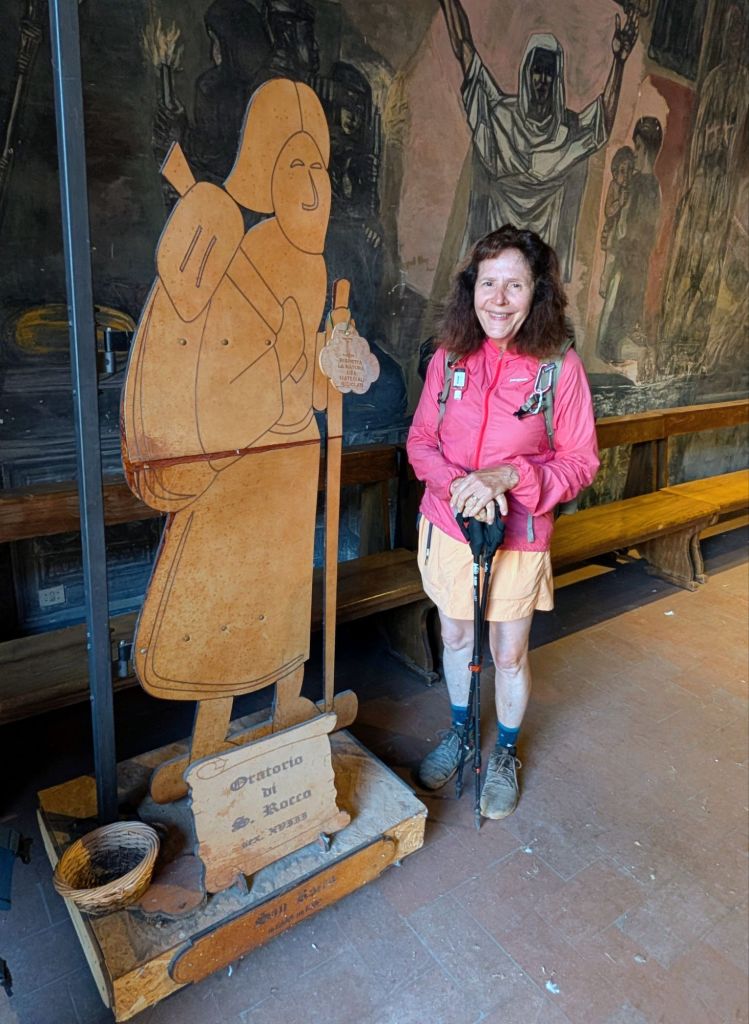
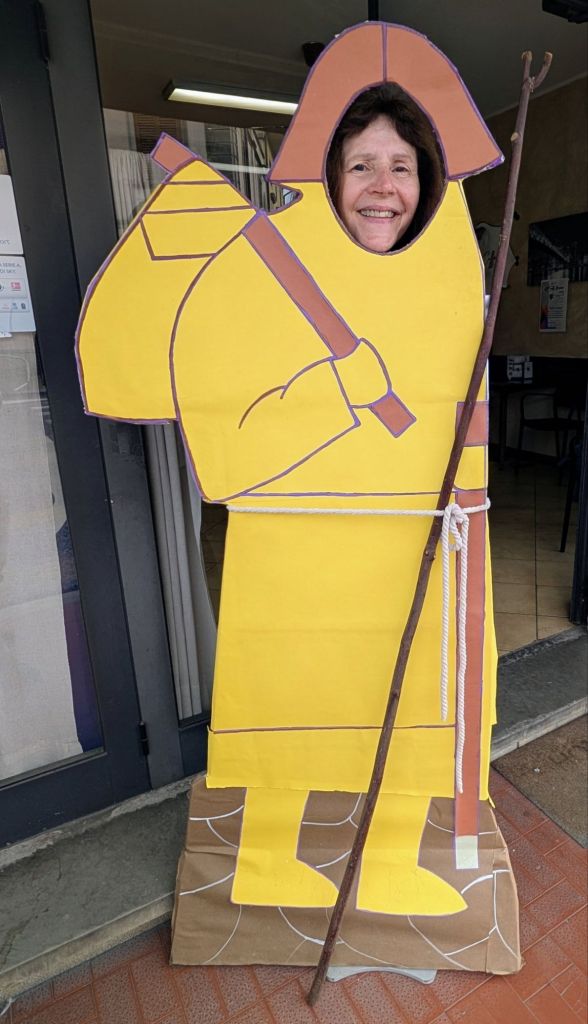
Gina with a pilgrim display inside the oratory

Other morning scenes in San Miniato

Leaving San Miniato

Along the way we saw some   beautiful Tuscany landscape

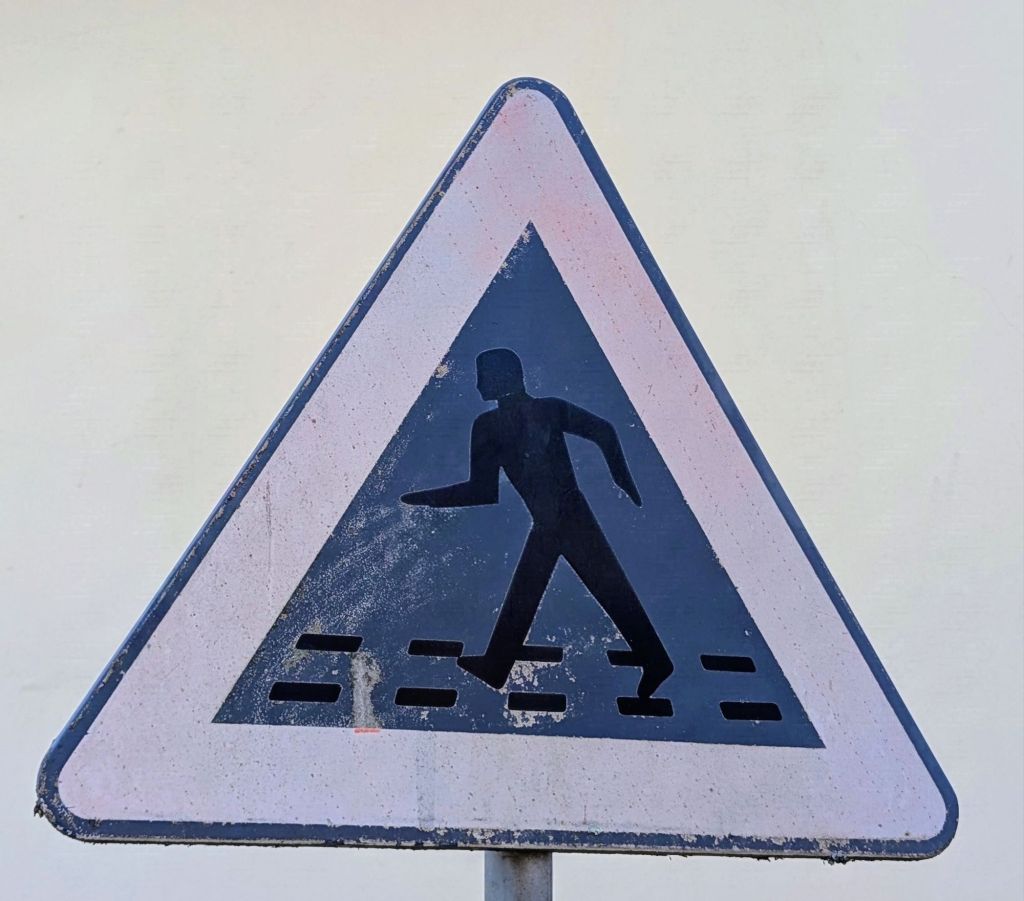
We also saw this “Walk like an Egyptian” pedestrian crossing sign
The Parish Church of Saints Peter & Paul in Coiano

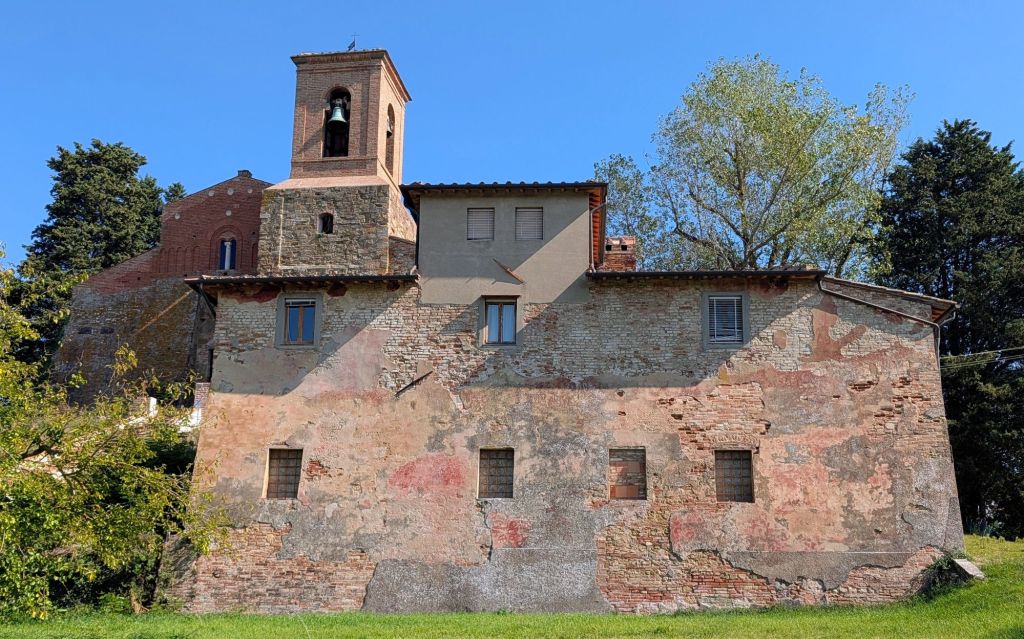
We followed in the Archbishop of Canterbury Sigeric’s footsteps to the Parish Church of Saints Peter & Paul in Coiano.                                          As early as 990 AD, he mentioned stopping at this parish.                                     Parts of the current church date from the 12th Century.

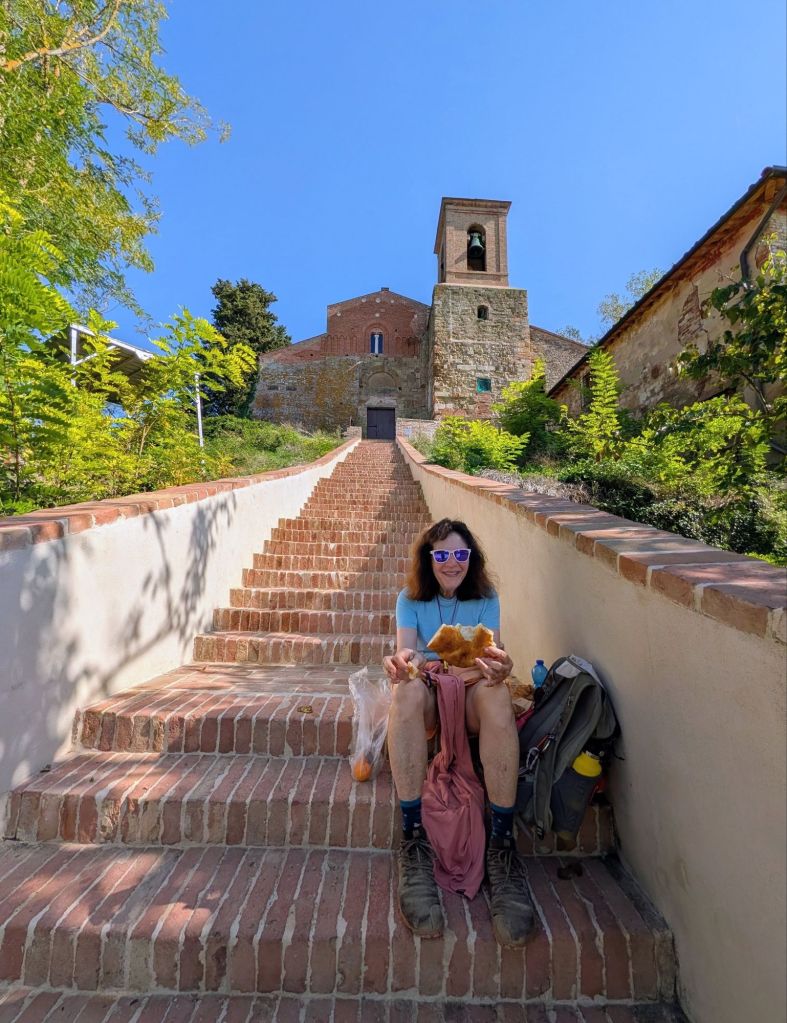
It was lunch time when we arrived at this church, so we sat in the shade on its steep stone steps to eat.

Lunch in Coiano

In the afternoon, we saw wide open spaces, olive trees, & vineyards

Wide Open Spaces
Olive Trees
Vineyards

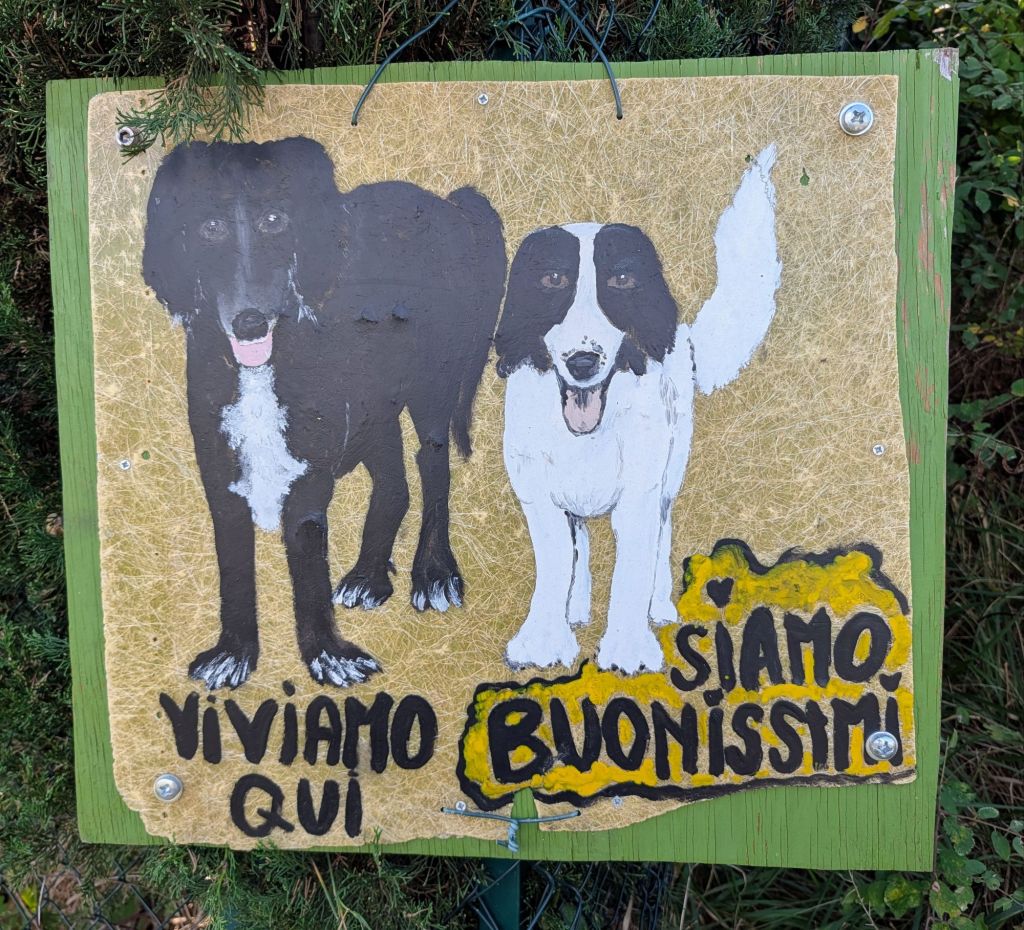
We also saw this sign at a house

    We Live Here                                 We are Very Good

The Parish Church of Santa Maria Assunta in Chianni is among the most important places of worship in the area.

This church is mentioned in Sigeric’s diary as a stop on his return journey from Rome to England.

The origins of this parish church come from 11th Century documents that  confirm a cloister existed here as well as a primitive church was constructed on the site.

The church as we see it today dates back to around 1200.

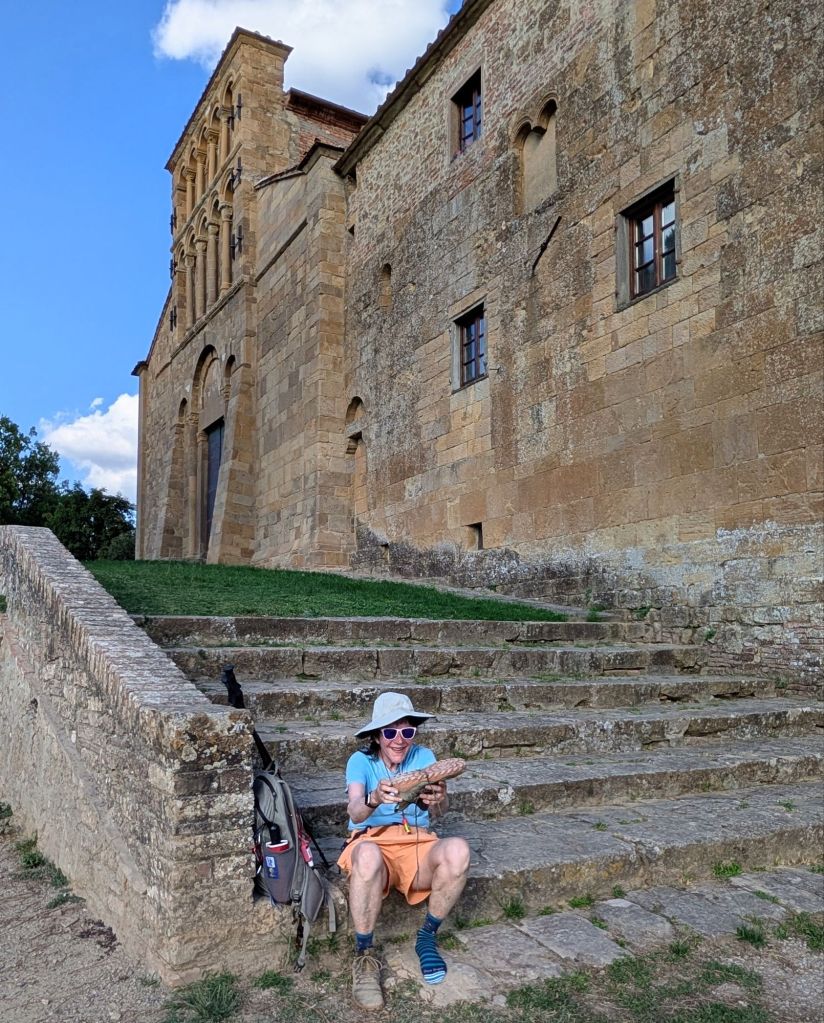
Gina got a rock in her shoe & used the church steps to sit down to remove it.

Out, Out, Darn Rock

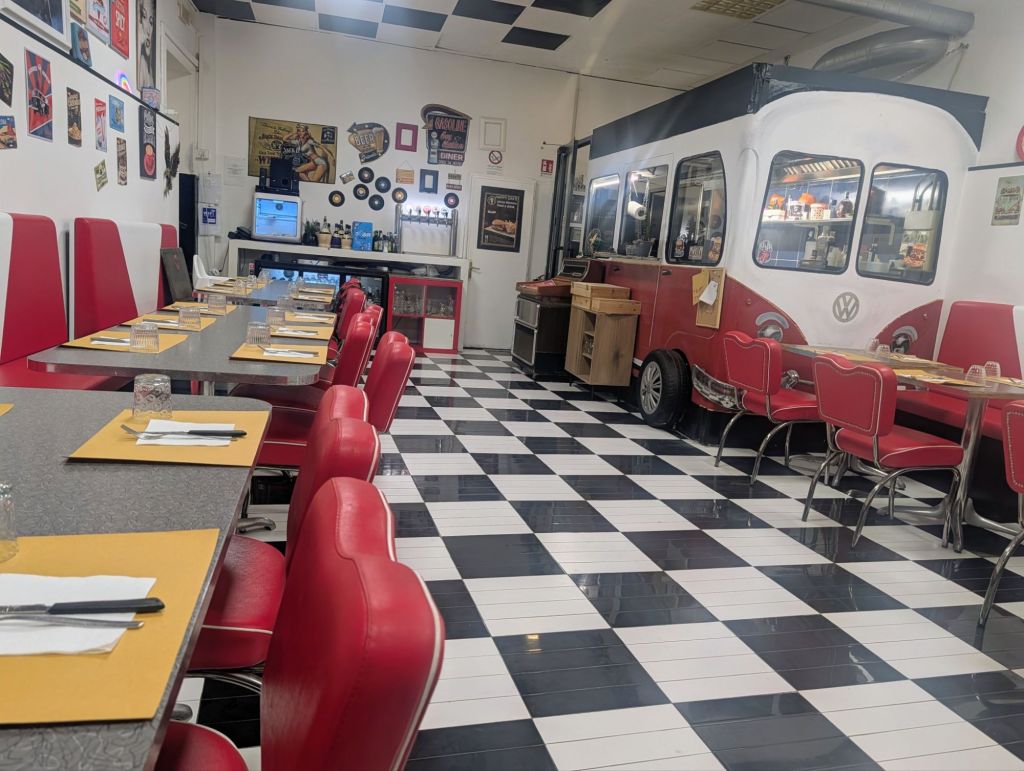
For dinner, we had a calzone & a pizza at the Happy Days restaurant which has a lot of retro stuff from America.

Only thing missing was “The Fonz”

Via Francigena- Day 2

Altopascio to San Miniato

17.5 Miles hiked; 8.5 Hours on the trail.                       (Cumulative: 29.3 Miles hiked; 14 Hours on the trail)

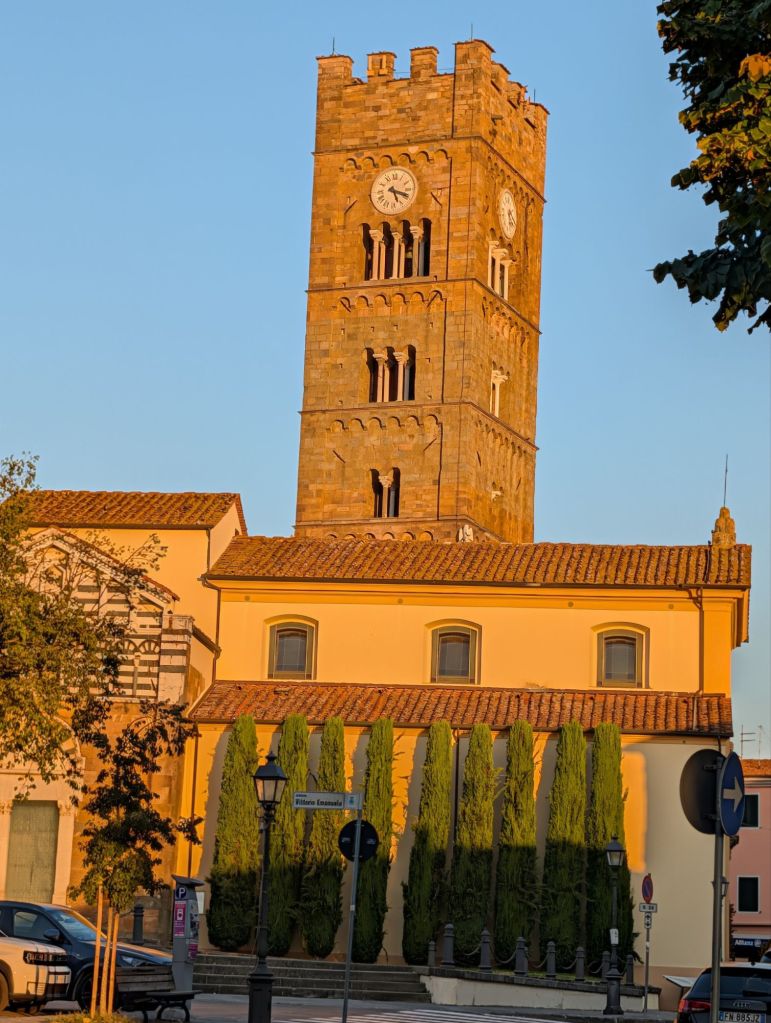
Located next to the church, Altopascio’s impressive belltower from Romanesque origin completed in 1280 still retains its medieval semblance to a fortress.

Altopascio Belltower

Still ringing in the tower is the 14th Century bell named “La Smarrita” which means “The Lost One” because it was rung at sunset for its sound to direct pilgrims to safety inside the town’s city walls before it was dark.                                              That tradition continues as La Smarrita is still rung every night before dark.

Today the trail began to enter into Tuscany’s heart.

Early in the walk at Galleno,  we walked on the original paving stones from the ancient Via Francigena.

Old Via Francigena road
Gina posing as a pilgrim

Saw this memorial along the trail

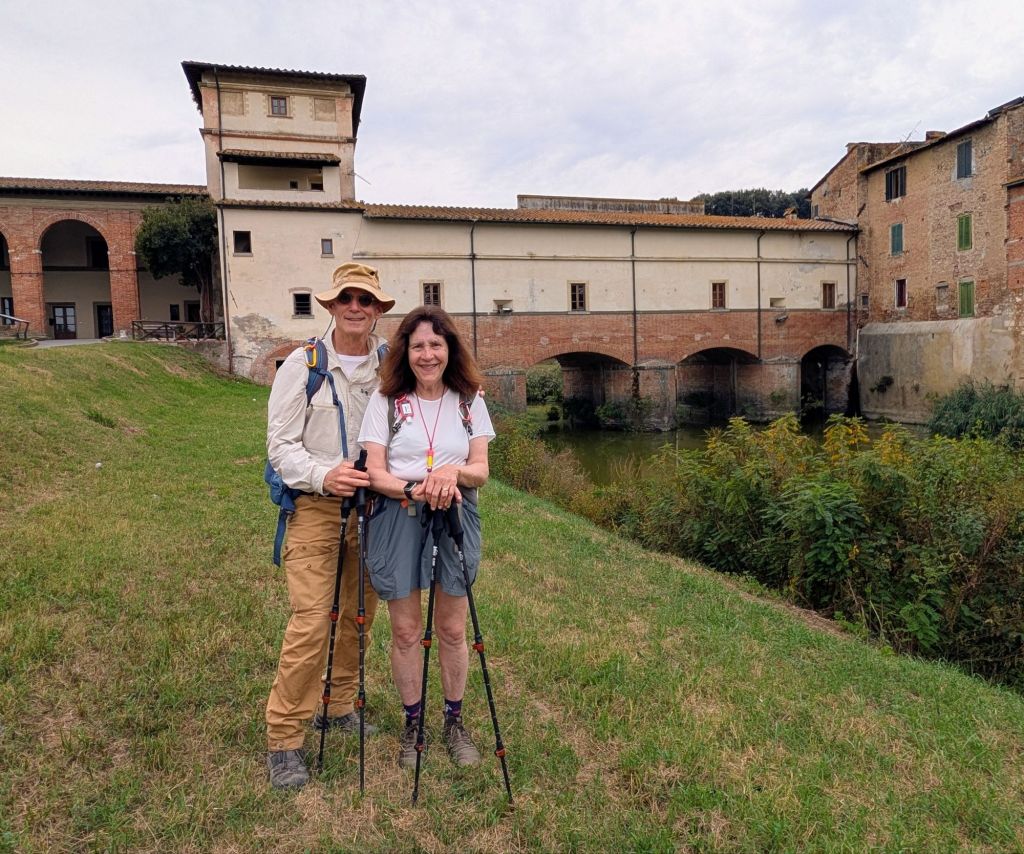
At Ponte a Cappiano there is a  fortified 16th Century Medici bridge over the canal.

Fortified 17th Century Bridge  still used by vehicles & pedestrians

The bridge that stands over the Usciana River today in Cappiano is the monumental bridge that was built in the mid -16th Century.                          One of the two towers on the Medici bridge may have originally belonged to the fortified 13th Century bridge at Cappiano that Leonardo drew on his famous map of the Arno Valley RL 12685 which is now in the Windsor Castle collection.

From this bridge, the trail followed the levee along the Usciana Canal before going through some ancient marshes.

Gina walking on the levee

The trail climbed to the old town center in Fucecchio.

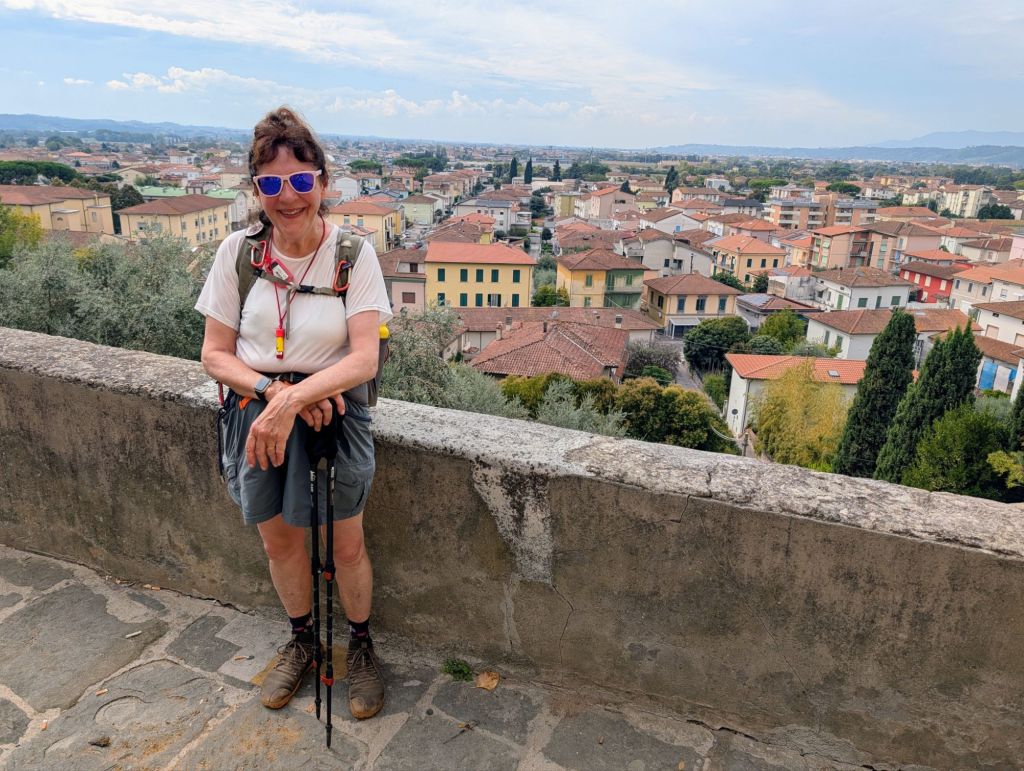
View from Fucecchio

Fucecchio was founded around the 10th Century.                         It is equidistant from some major cities (Lucca, Pisa, & Florence) & is the intersection for important roads such as the Via Franciscana & waterways.

Fucecchio street

Outside San Miniato we came across this volunteer aid station for pilgrims.

Volunteer Aid Station

San Miniato is perched on a hill located a short distance from the River Arno & halfway between Florence & Pisa, both of whom fought over it for centuries.

San Miniato in the distance

San Miniato is among the stops marked by Sigeric on his return journey from Canterbury, so it became one of the Via Francigena’s historic stages.

Saw this art work on a wall on the way into San Miniato.

San Miniato on the hill
Notice the long drop plumbing

On to Gambassi Terme tomorrow!

Via Francigena- Day 1

Lucca to Altopascio

11.8 miles; 5.5 hours on the trail

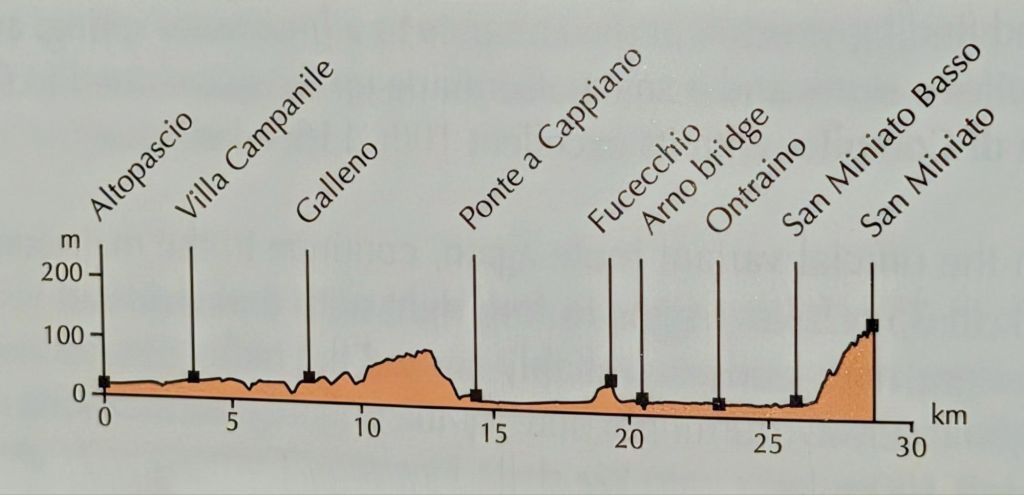
Today’s Route in KMs & Elevation Profile


Via Francigena History:

The Via Francigena which means “The Road to France,” was the main communication route between Rome & the imperial court at Aachen during the High Middle Ages.

Its importance as a pilgrimage & trade route outlived the Carolingians & around the year 1000, the Via Francigena was without a question, the preferred route for German emperors, pilgrims, & merchants seeking their riches and/or personal benefits in Italy.

It was also used by the Crusaders who traveled beyond Rome to embark for the Holy Land.

The first to travel the route to Rome from Northern Europe was an English monk named Sigeric who was the Archbishop of Canterbury in distant Britain.

In the year 990, Sigeric crossed the English Channel  determined to receive the Pope’s blessing in Rome.

After many miles & hardships, he reached the Holy City using the ancient roads built in centuries prior by the Romans.

Perhaps concerned for future pilgrims’ well-being, Sigeric wrote a book called the  “Itinerarium” which detailed the stages & resting places (mansio) along the Via Francigena.

Between the 9th – 19th Centuries, no other road connected the powerful Papal States with the Alps’ western passes.

Both the Enlightenment & industrial progress spread along the Via Francigena until the railway finally eclipsed its importance.

The fact that Sigeric considered a “pilgrims guide” useful meant that many people were venturing to Rome to receive the Pope’s blessings.

Sigeric’s Itinerarium still marks pilgrims’ route through Italy as they discover villages, towns, & cities that other travelers trod more than a thousand years ago.

Our Camino Francigena started in Lucca.

In the Middle Ages, Lucca was a prosperous city known for producing fine silk.

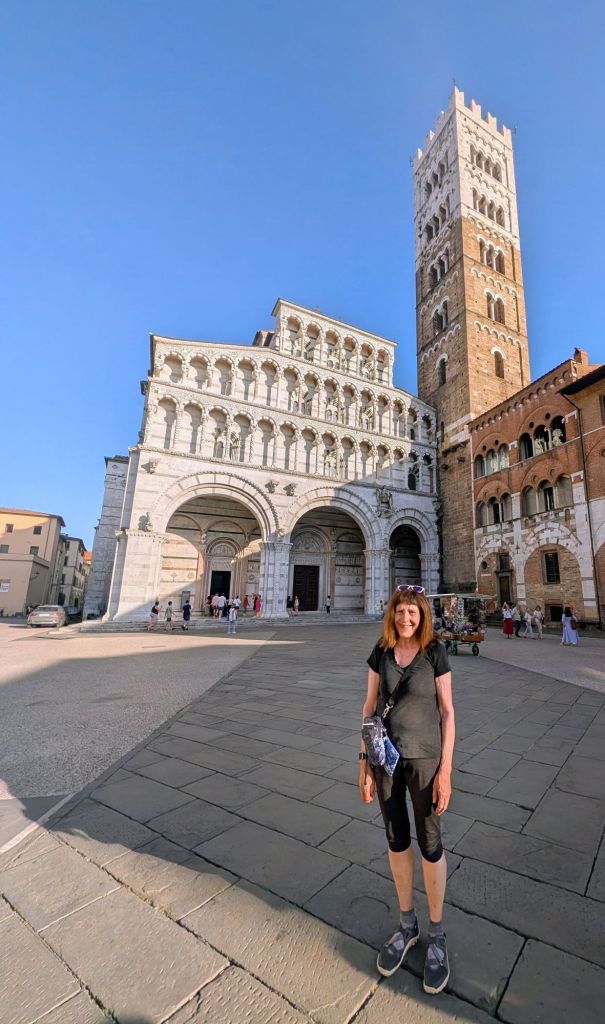
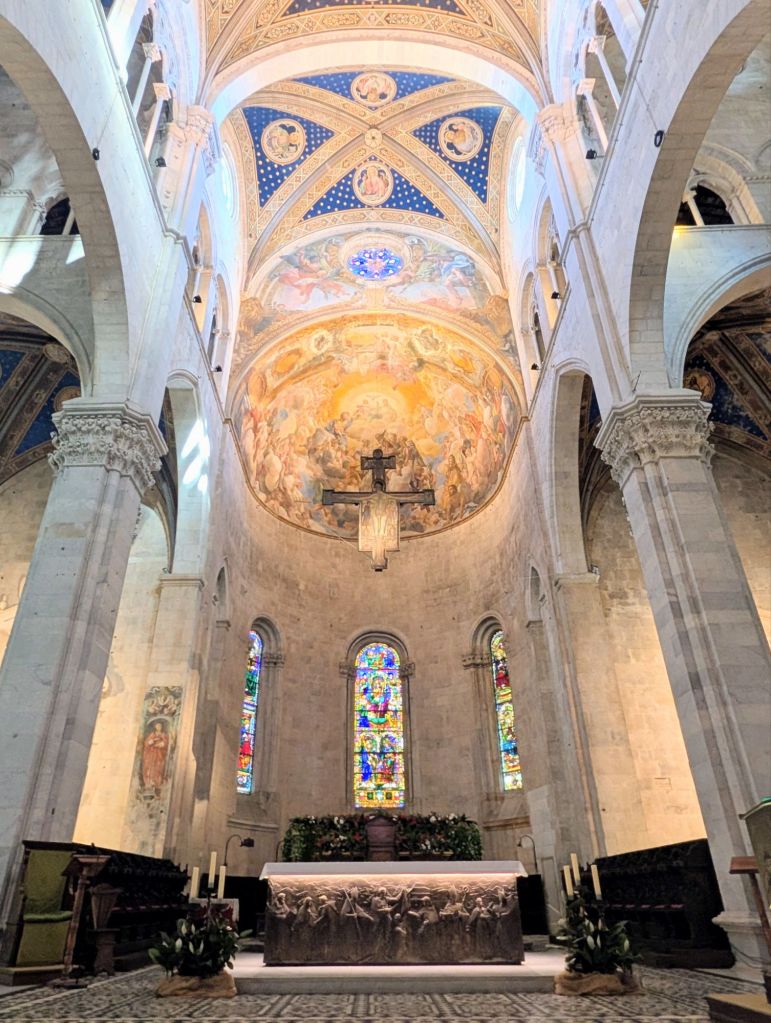
Lucca has always attracted pilgrims from all over Europe who came to venerate the relic of “The Holy Face” which is the famous wooden crucifix kept in the Cathedral of San Martino.

Cathedral of San Martino & its Belltower

The Volto Santo (Holy Face) is a wooden crucifix said to be carved by Nicodemus shortly after Christ’s resurrection.

As the legend goes, Nicodemus, who was an early Christian,  carved Christ’s body; but, fell asleep before carving his face.

When he awoke, the face was miraculously completed.

The Relic of the “Holy Face”

Due to religious persecution, the crucifix was then hidden for some 700 years after which time it was discovered, loaded onto an unmanned ship, set out to sea, & eventually landed on Italy’s coast.

After this miraculous cross survived its journey from the Holy Land to Italy unscathed, its legend continues linking the cross’ arrival in Lucca via a journey from the port in Luni following a track in a cart pulled by oxen… without a coachman.

So widespread was the cross’s fame throughout Medieval Europe that it was even mentioned by Dante in his epic poem “Inferno”.

Scientists confirmed that the carving is original & estimated that it arrived in Lucca in 782 AD making it the oldest known wooden relic in Europe still intact.

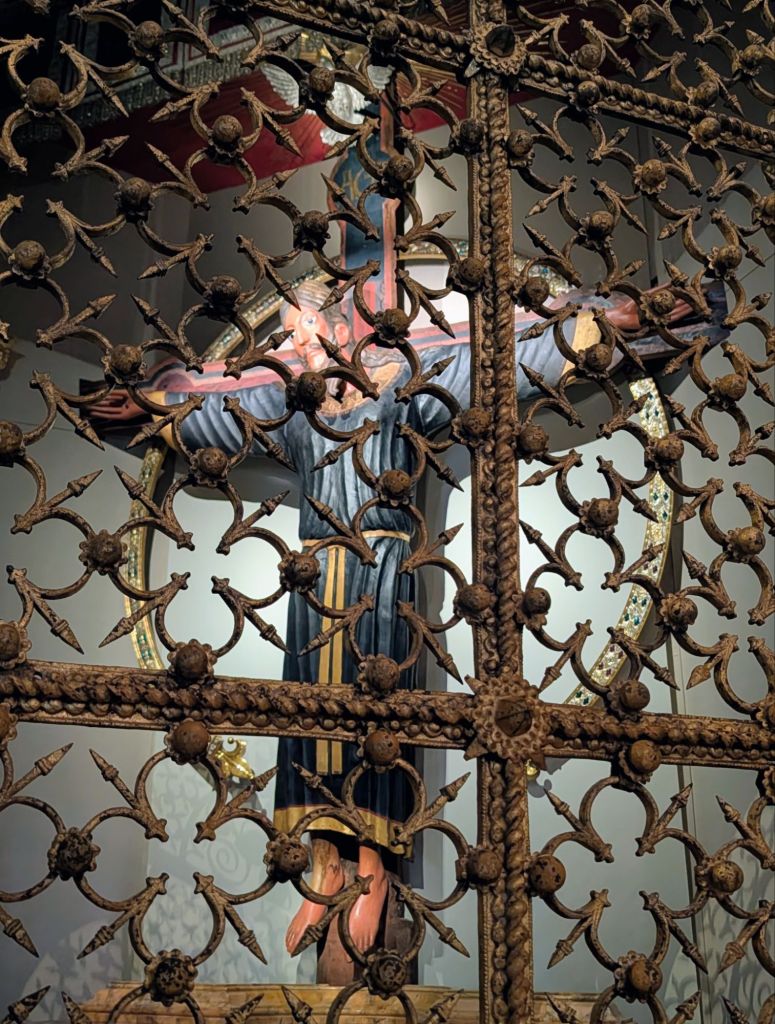
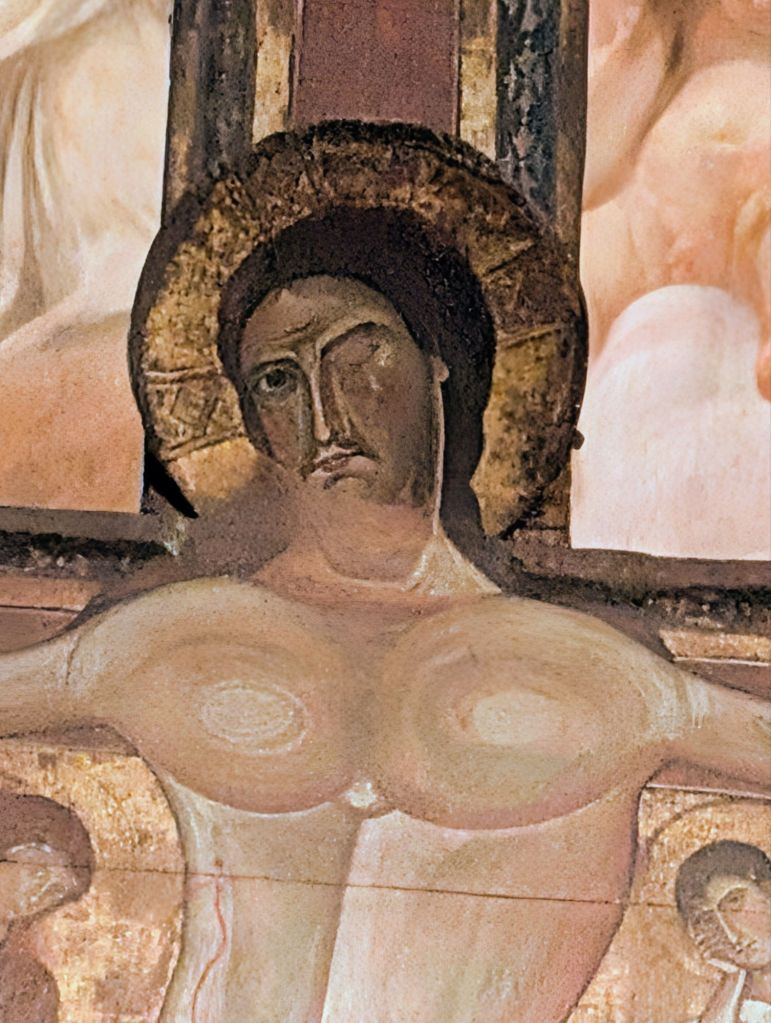
The Cathedral of San Martino also has another unique item- “The Cross of the Swollen Eye”

This cross was made by an anonymous artist from Lucca in the first half of the 13th Century.                                Legend has it that the wound was caused by a dice player who got angry because he lost. He was so mad that he picked up a stone & hurled it at the crucifix. The eye that it struck miraculously began to bleed.

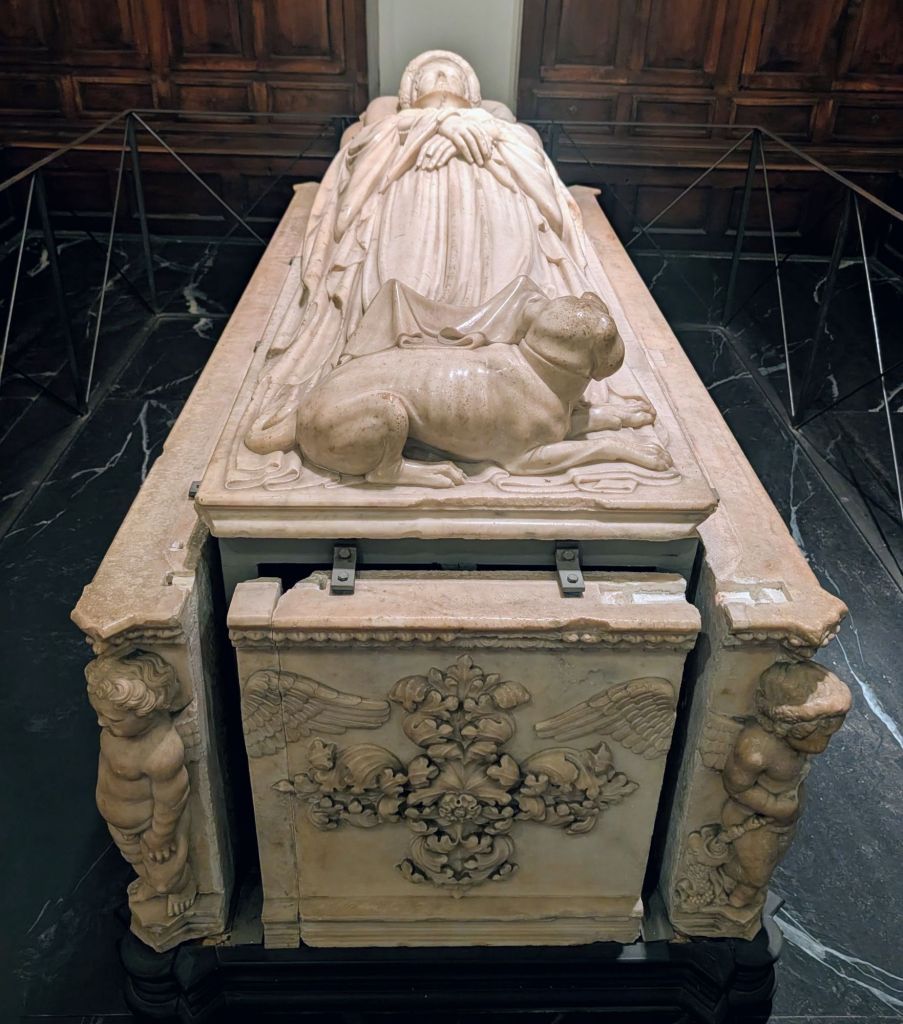
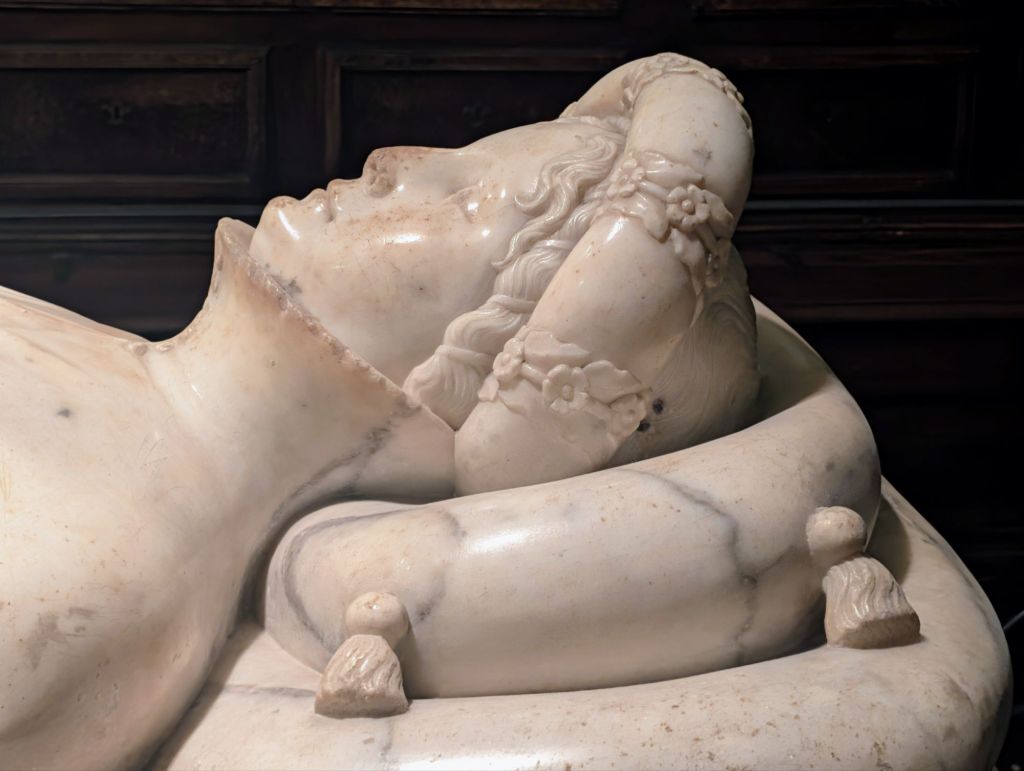
Also inside this church is a funeral monument to Ilaria del Carretto which is considered to rate among the most delicate examples of Italian Renaissance sculpture.


Saint Zita was born in Lucca in 1218 & is among the most famous saints born in Tuscany. 

Pope Pius XII proclaimed her the patroness of maids.         Later she became the Patroness of Lucca & also of housewives and bakers.

From humble origins, Zita worked as a maid for the Fatinelli family in their Palazzo Fatinelli located beside the Basilica di San Frediano.

To go to church, she used the side entrance & it was here that one day in the square, she came across a poor beggar man at the mercy of the cold.

Moved by compassion, she ran into the palace to get a cloak to give to the freezing man.

She took the cloak without telling her employers.

So she would not get punished, the next day an angel waited for Zita at that same door with a new cloak to put back in its place.

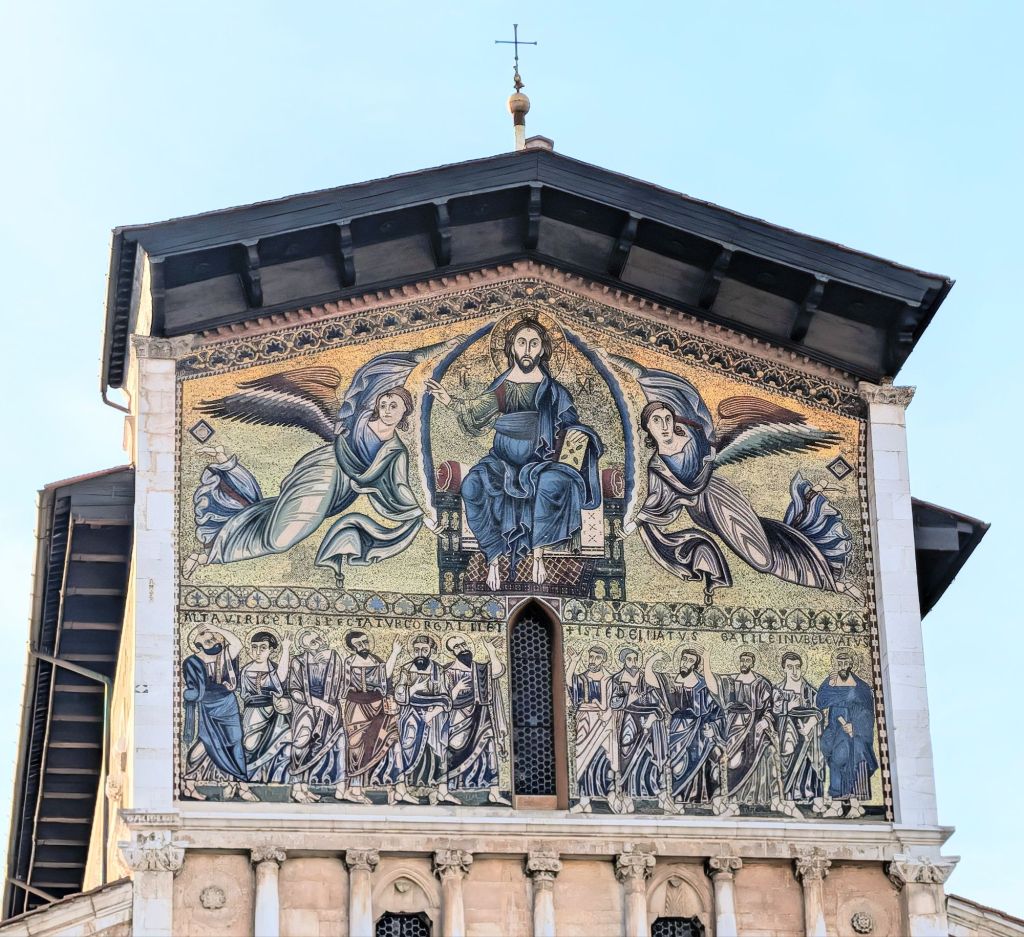
This is how the Porta dell’Angelo (“Angel’s Door”) came to be.

The miracle is portrayed on  the Basilica di San Frediano.

Saint Zita & The Angel’s Door

Lucca also has much mystery in its history.

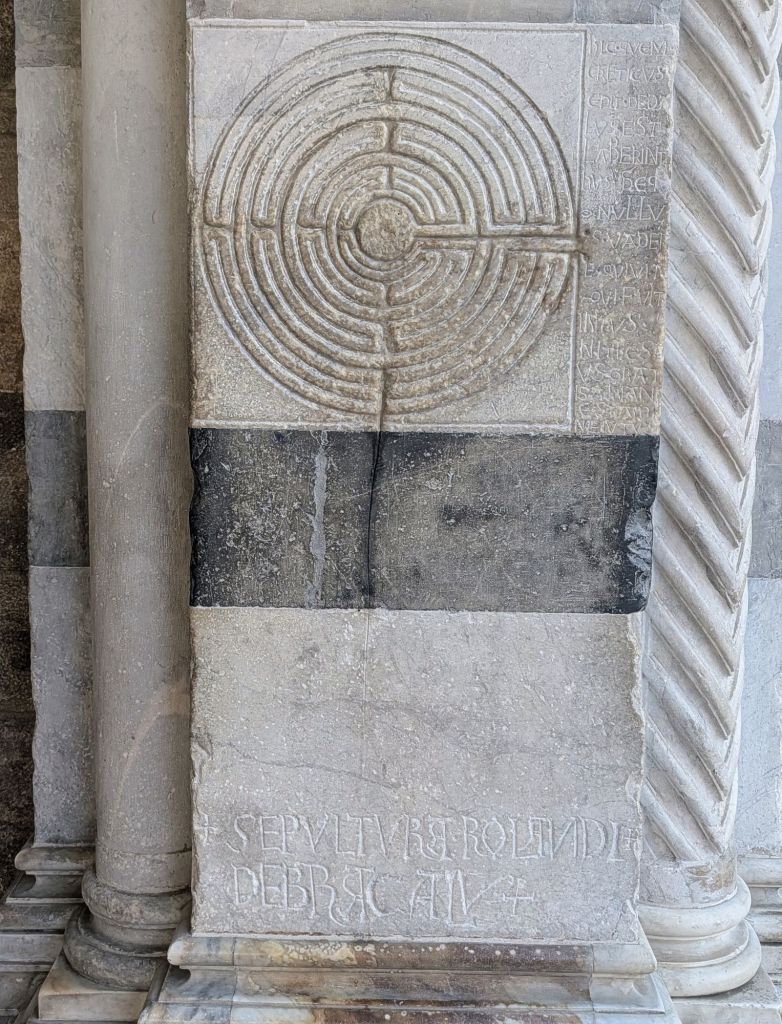
On the Cathedral of San Martino’s entrance portico’s right pillar, there is a small labyrinth carved on a column.

Mysterious Labyrinth with Inscription


This figure which is among the most enigmatic in Italy is accompanied by a Latin inscription which evokes the Greek myth of Theseus and Ariadne  which translated reads: “This is the labyrinth built by Cretan Daedalus from which no one who entered could go out except Theseus aided by Ariadne’s thread”.

As to its meaning, no one still knows what is a satisfactory answer to explain this enigmatic carving & its accompanying inscription.

Perhaps it is a warning addressed to pilgrims as they rested here before traveling along the Via Francigena

Lucca is also a city filled with elegant & majestic buildings.

One is the Palazzo Bernardini which was built in the early 1500s for the family by the same name.

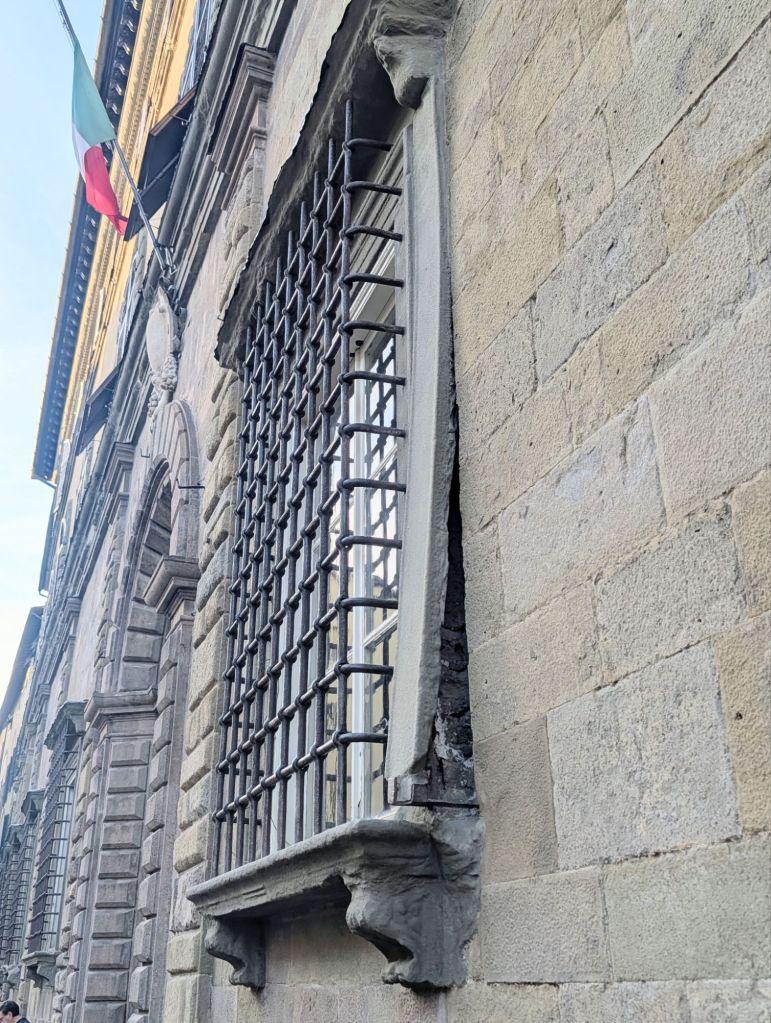
Looking at its facade, you can easily notice an unusual detail: a stone that has an anomalous curve compared to the building’s flat wall surface.

Legend has it that during the palace’s construction, the Devil convinced the Bernardini family to demolish a building on which a sacred image was depicted.

When workers began to build the window jamb to the entrance door’s right side, the Devil decided to leave his mark commemorating that he  desecrated the sacred image, so the stone has remained hopelessly curved.

The Devil’s Stone


At the exact spot where the sacred image was located, the stone became curved & it has remained curved despite numerous attempts to straighten it through the centuries, so it is called “The Devil’s Stone”.

In 1805, Napoleon created The Principality of Lucca and Piombino & he gave it to his sister Elisa Bonaparte who became its princess.

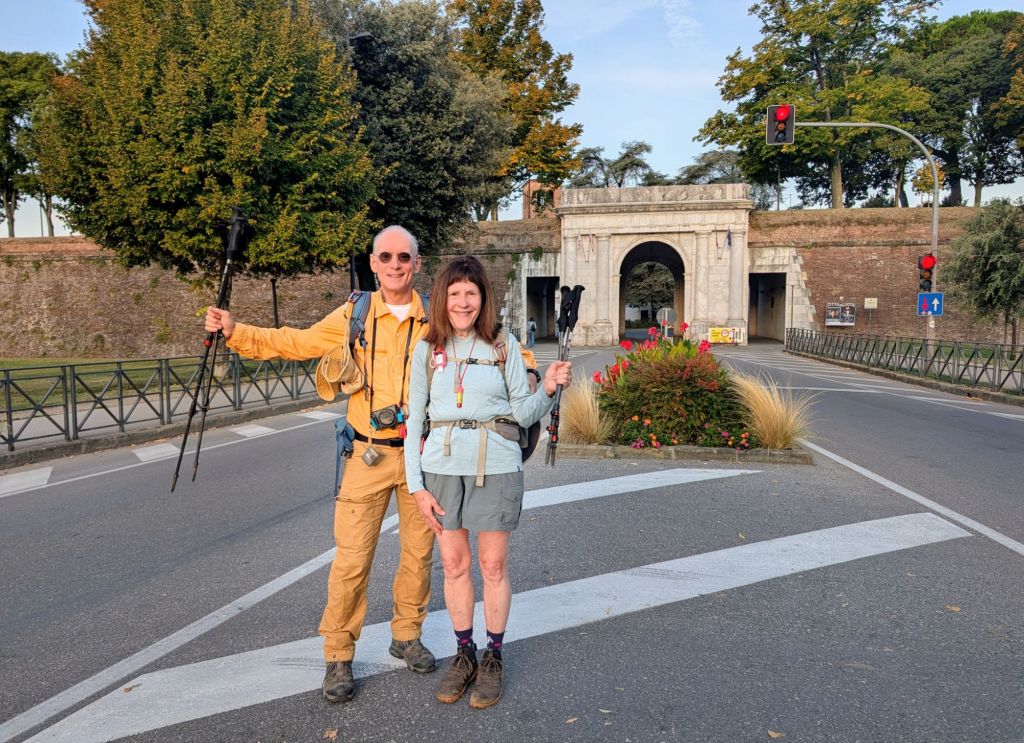
We started today’s hike at Lucca’s Porta Elisa heading East.

Elisa Gate leading out of Lucca’s city wall

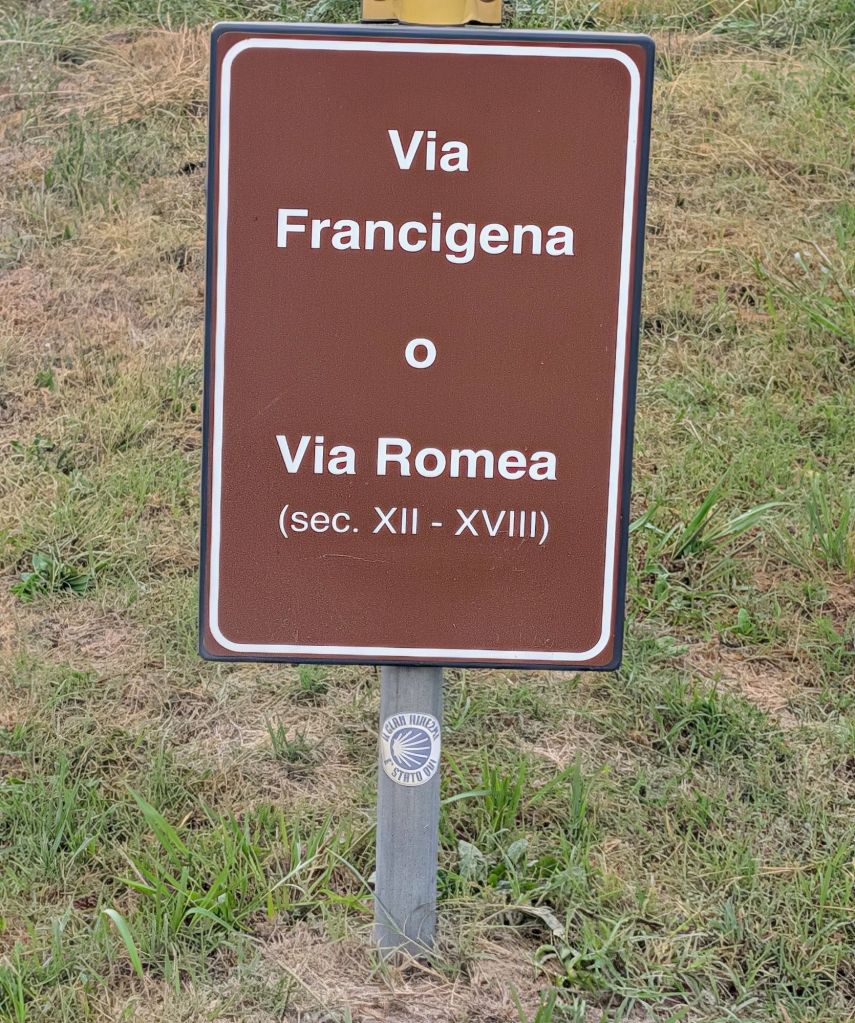
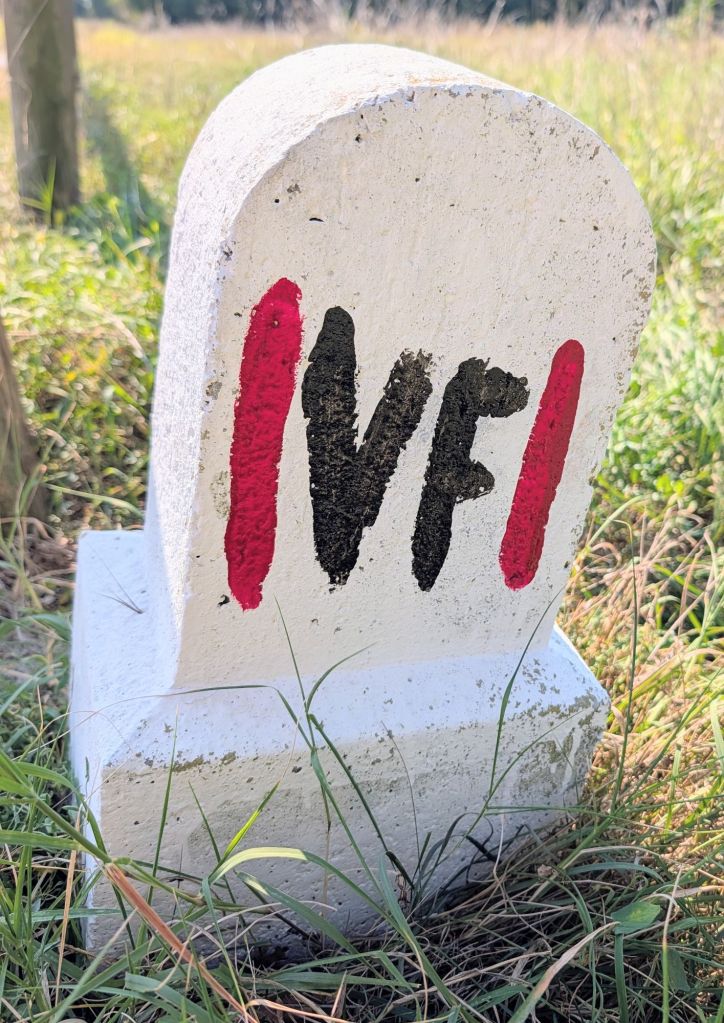
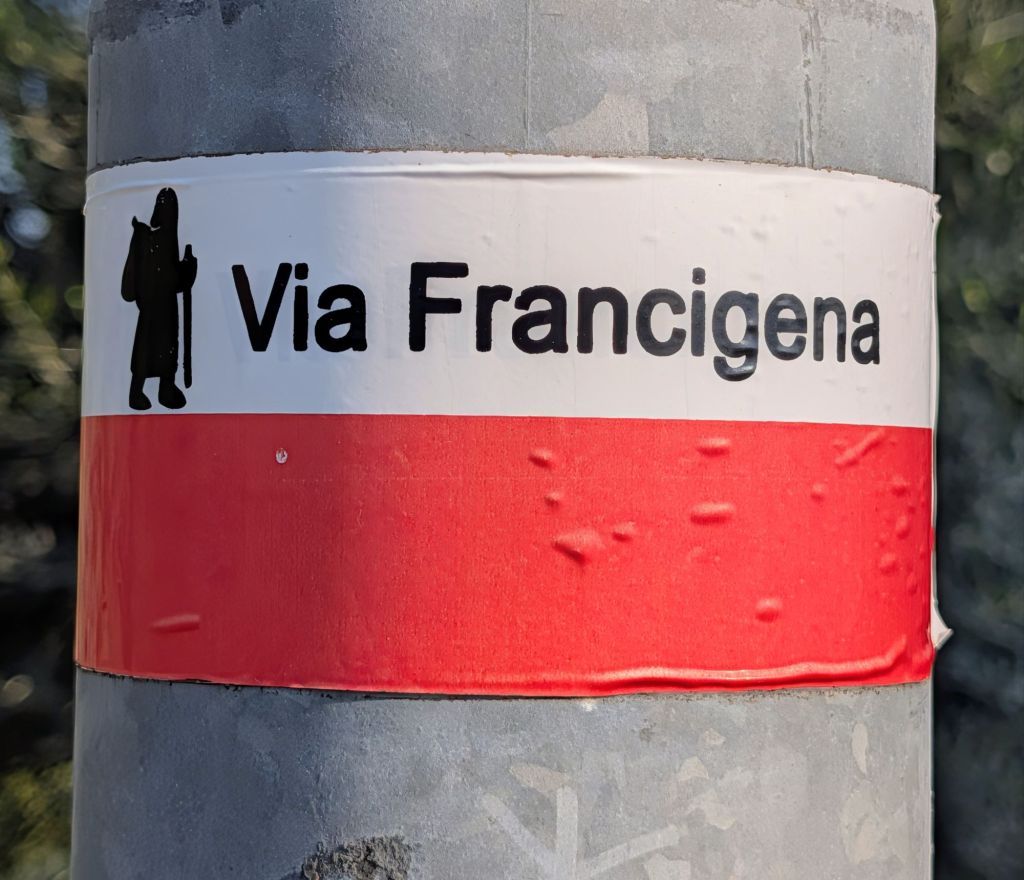
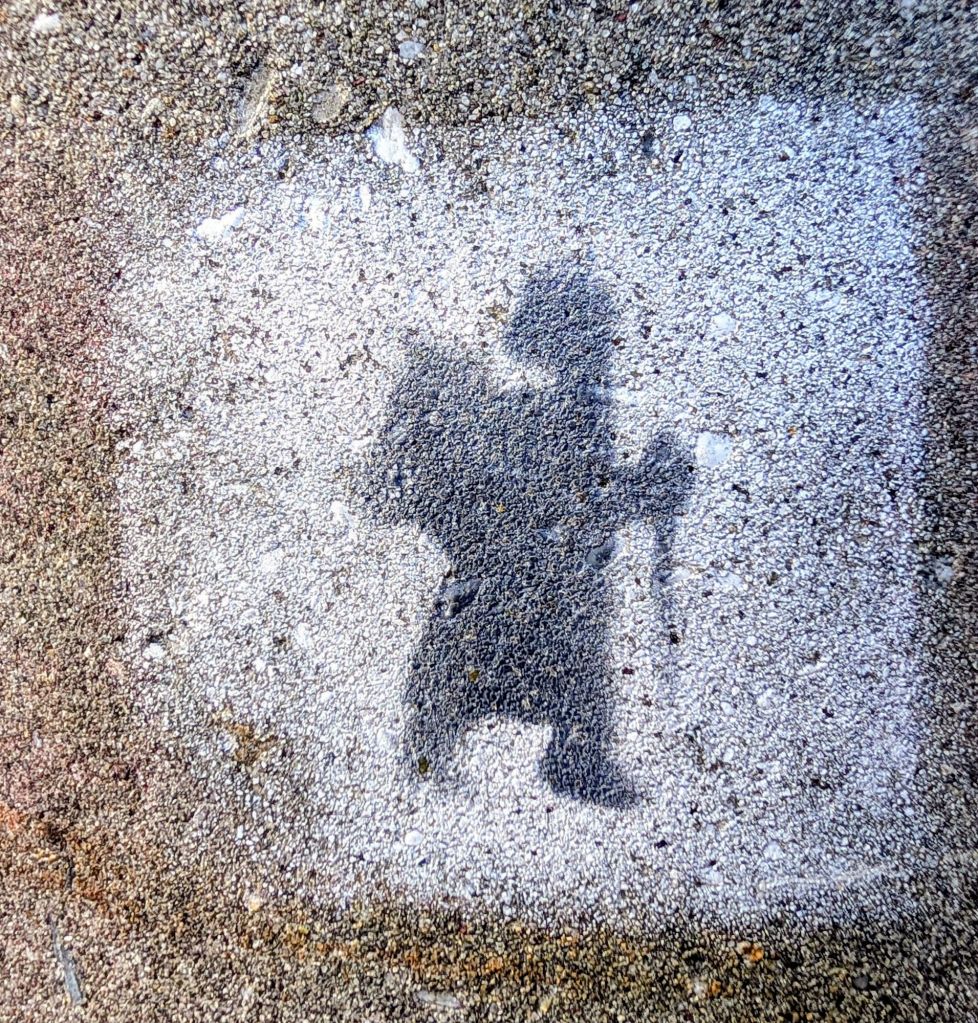
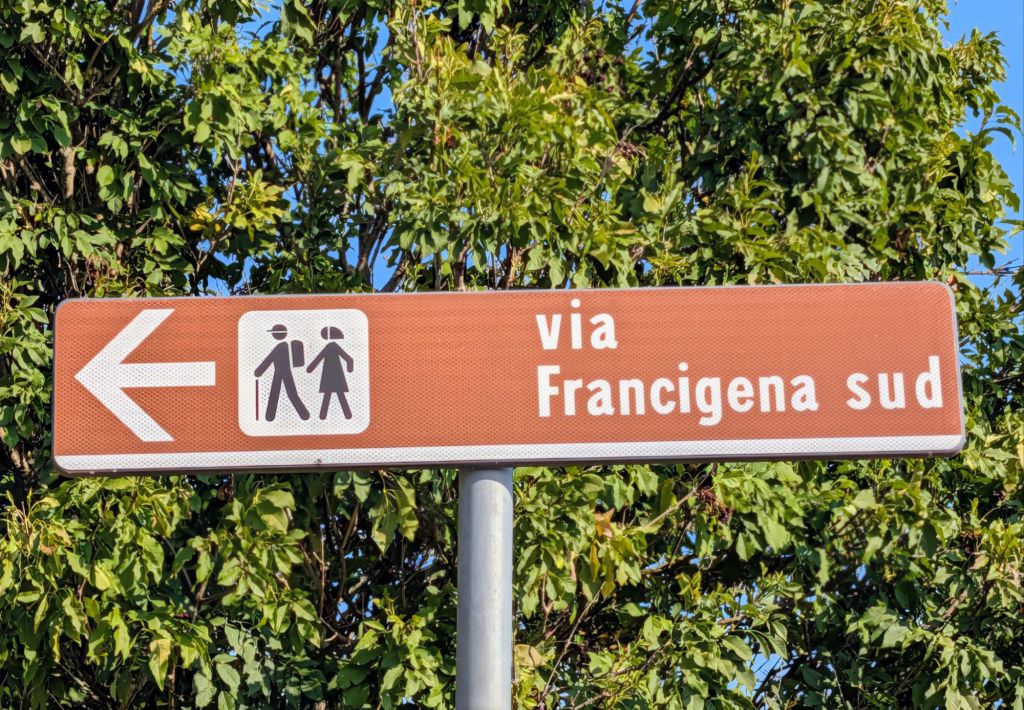
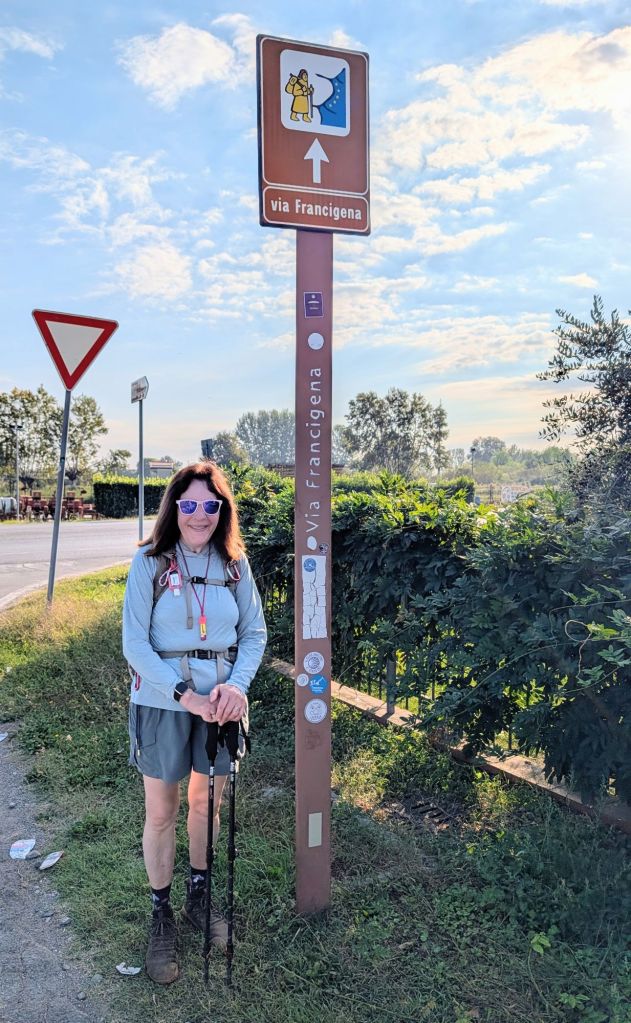
The trail is marked in various ways: but, sometimes it is not too well marked, so have to pay attention to stay on course.

Various trail markers using signs, stickers on poles, way markers, & icons


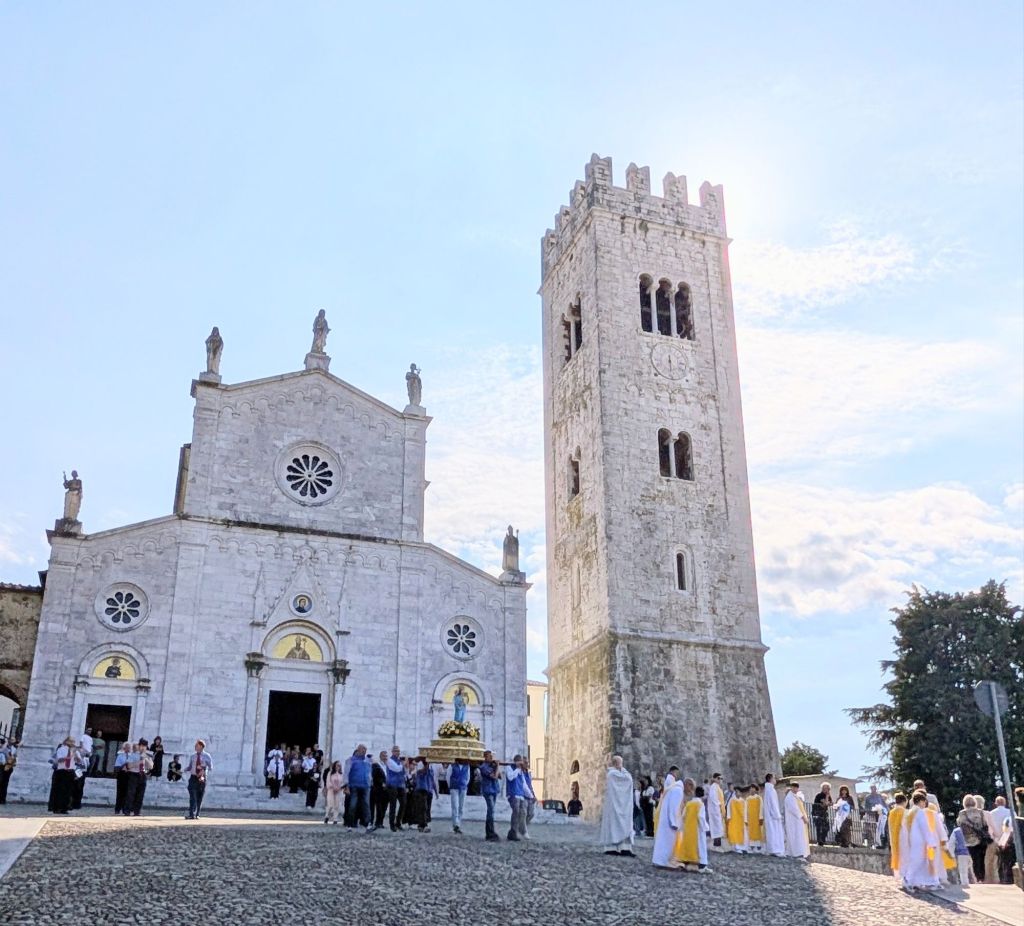
Porcari has the Church of San Giusto.

The building dates back to before the 12th Century when it was developed to become the church.

In 1745, it was almost completely reconstructed.

The church’s façade with its fresh-faced white-marble appearance with pops of yellow above the doorways is slightly younger in age.

It is an example showing the revival in 12th Century Gothic architecture seen at that time.

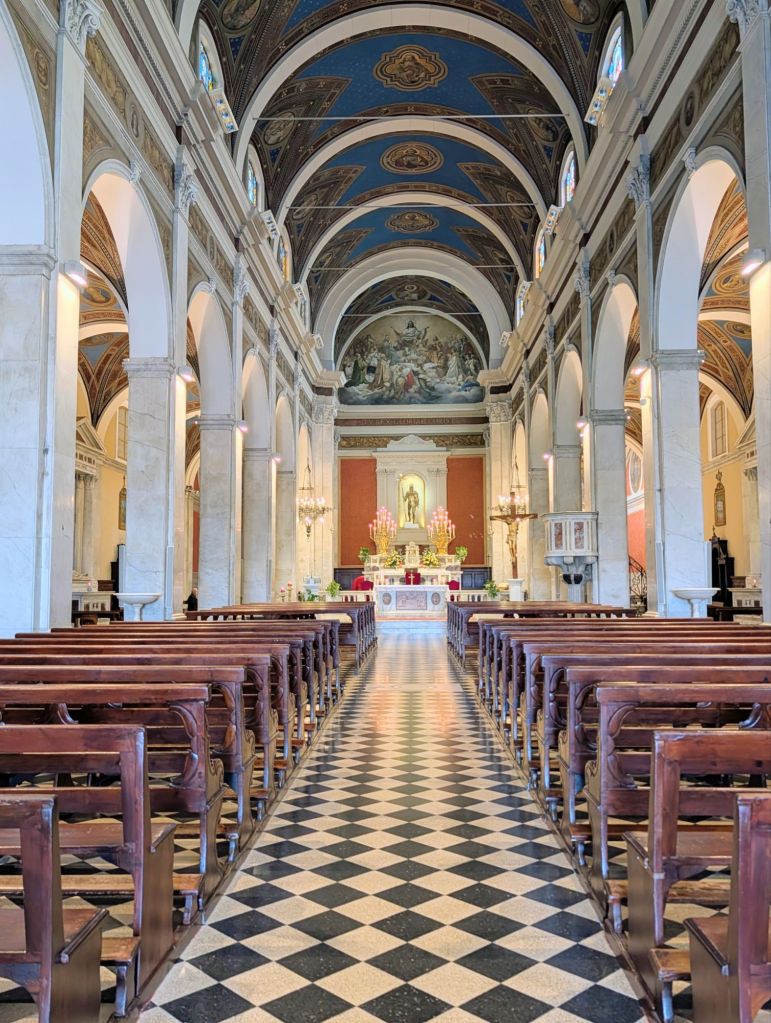
Inside the church there is a gorgeous ceiling, frescoes, & the three naves.

Equally striking is the bell tower which rises high above the church.

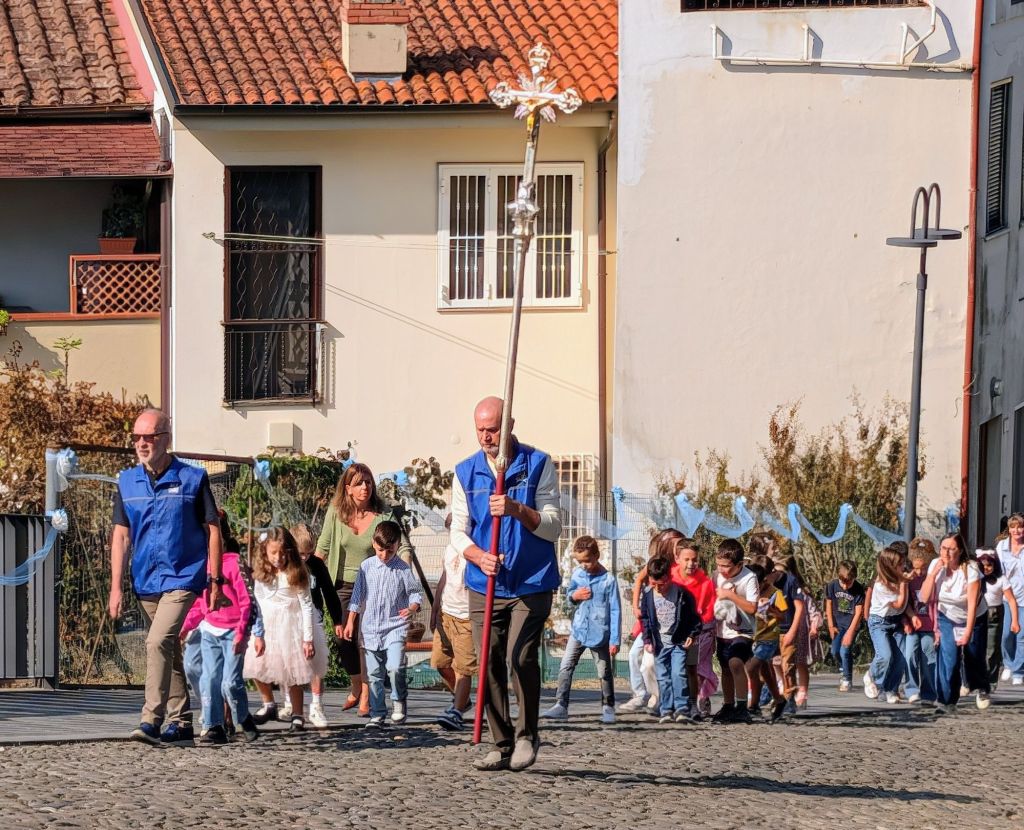
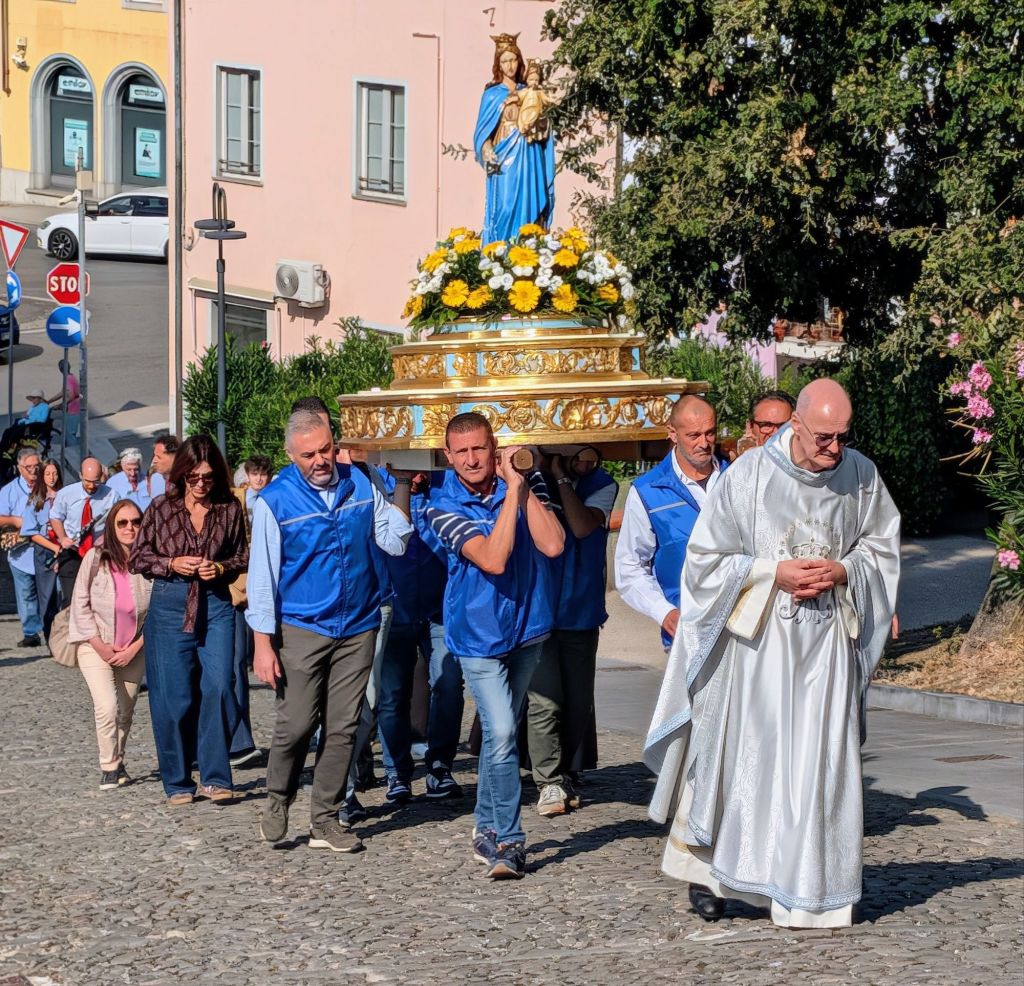
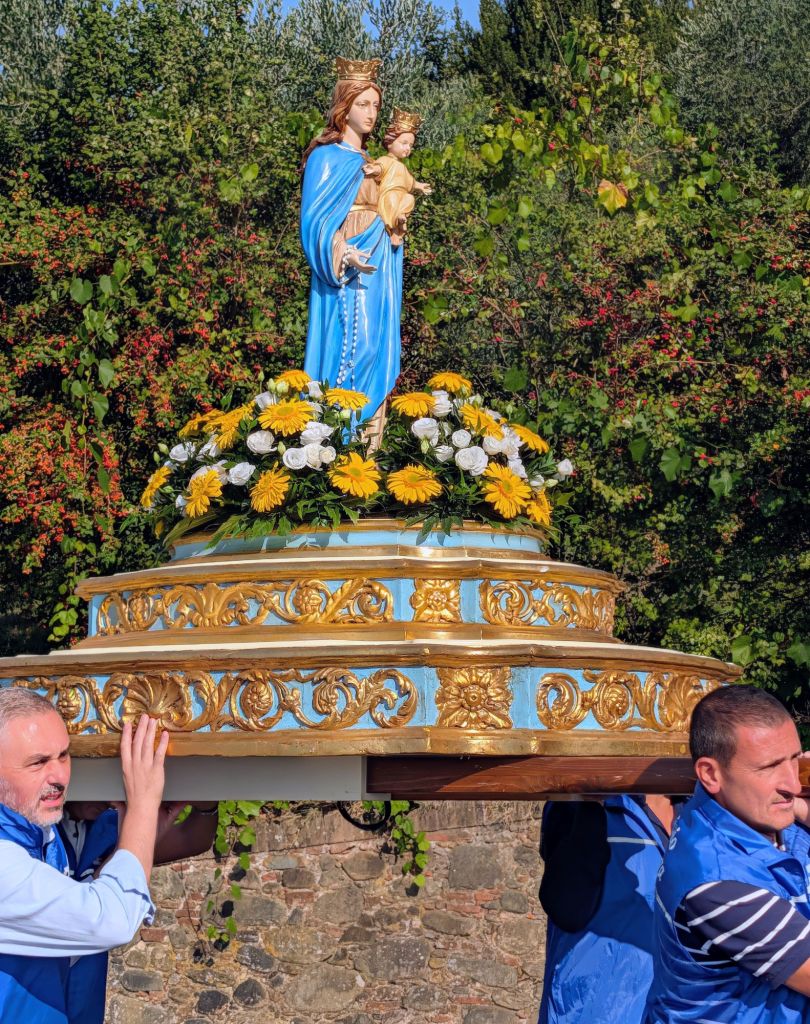
We arrived here just in time at 11:30AM to see the priest with his congregation parade the church’s main symbol accompanied by a band with all the bells loudly ringing in the tower.

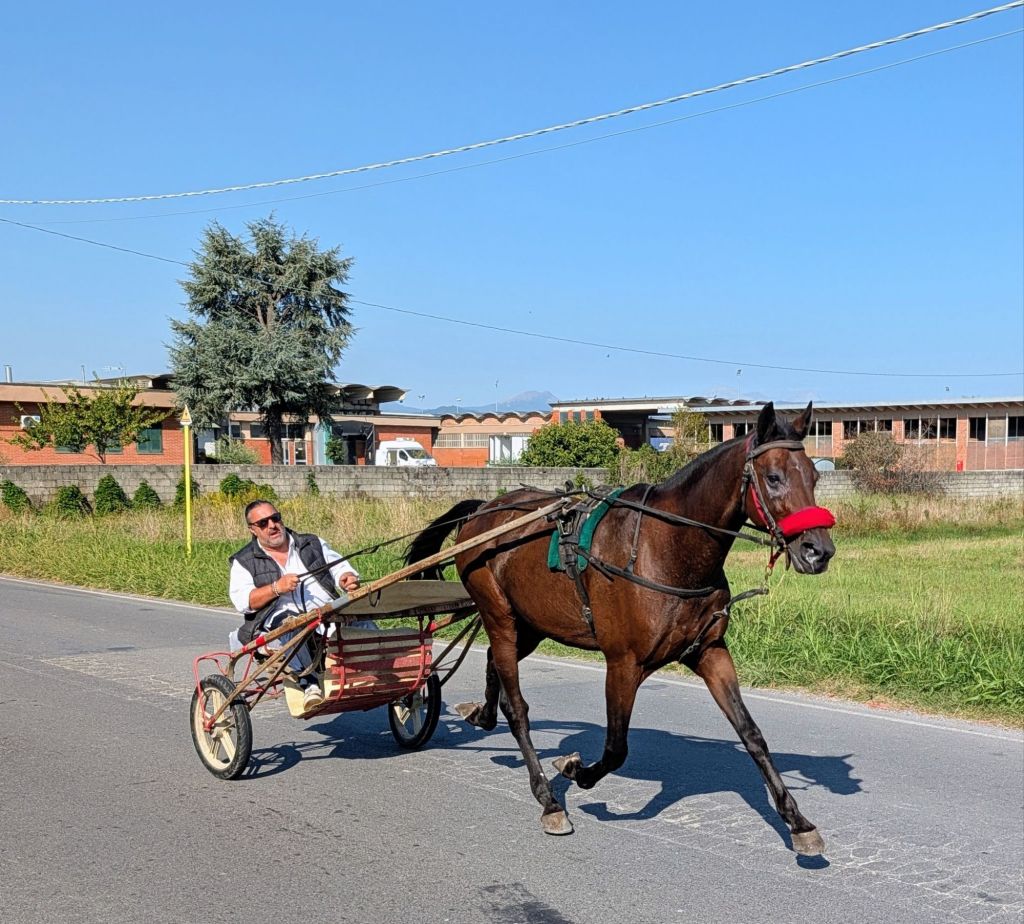
Moving on, we heard a loud clicking noise fast approaching us from behind & were surprised to see this conveyance.

A Trotter pulling a two-wheeled sulky

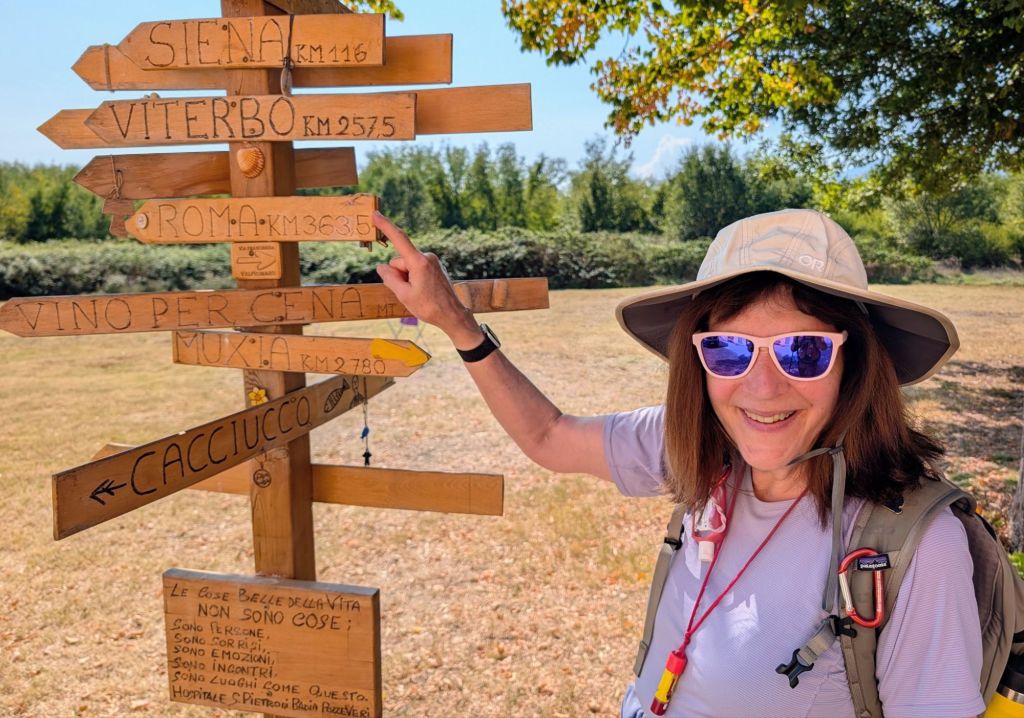
Only 363.5 kilometers to Rome!