San Miniato to Gambassi Terme
16.5 Miles; 8.6 Hours on the trail. (Cumulative: 45.8 Miles hiked; 22.6 Hours on the trail)
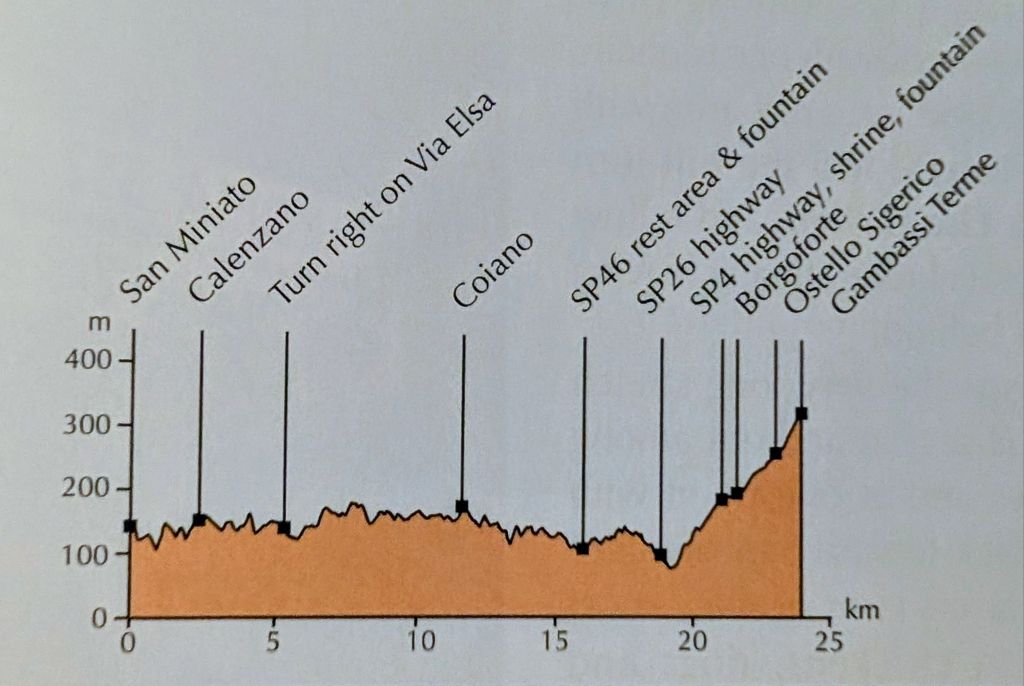
Today’s walk to Gambassi Terme was much more challenging than yesterday’s because the terrain was hilly & somewhat mountainous, so there was a lot of up & down on the route as you can see in the route profile & the weather was hotter.
Upon leaving San Miniato, we saw more of the city.
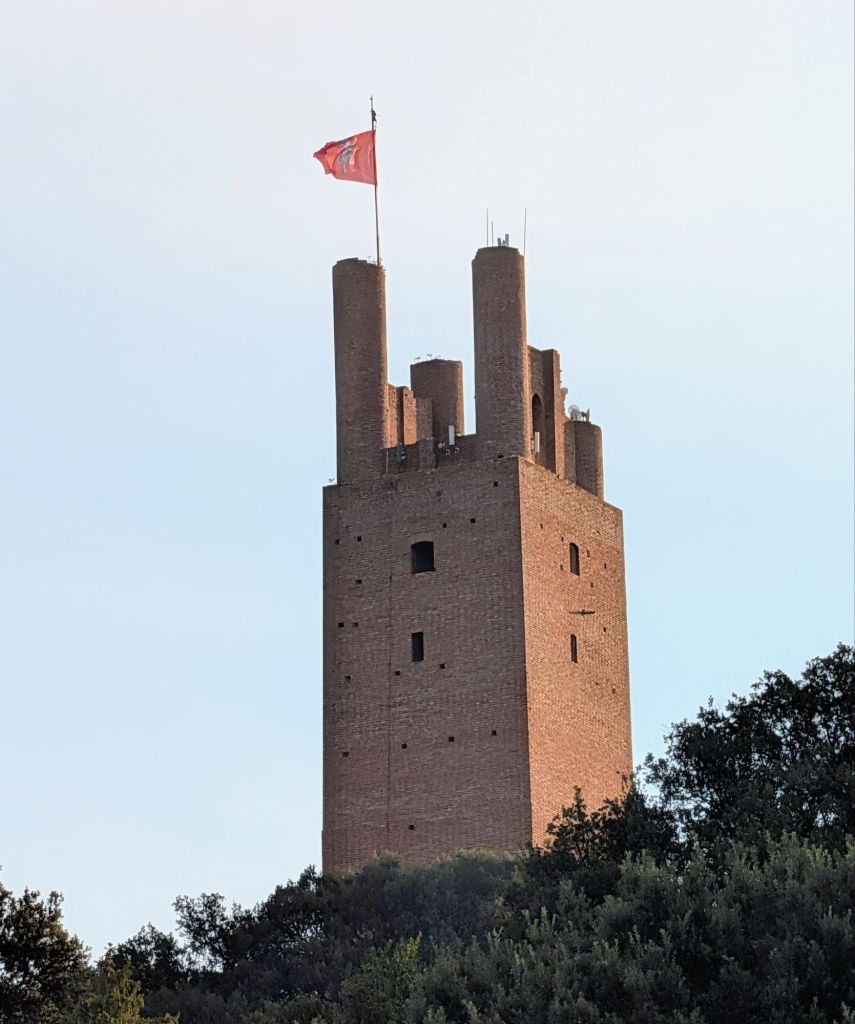
In 1218, Frederick II of Swabia made San Miniato a tax collection point for central Italy.
To protect his money, between 1217 – 1221, he built the San Miniato tower which completed the Rocca (Fortress) di Federico II defenses & serves as the town’s symbol.
The tower was destroyed during World War II; but, it was meticulously rebuilt in 1956.
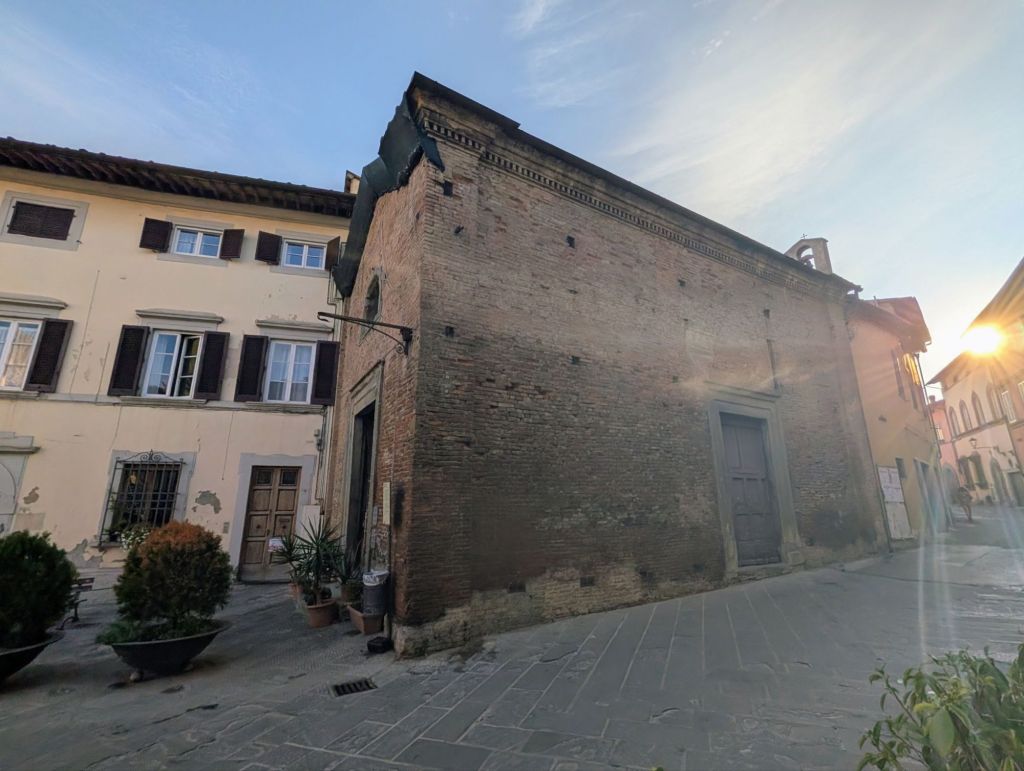
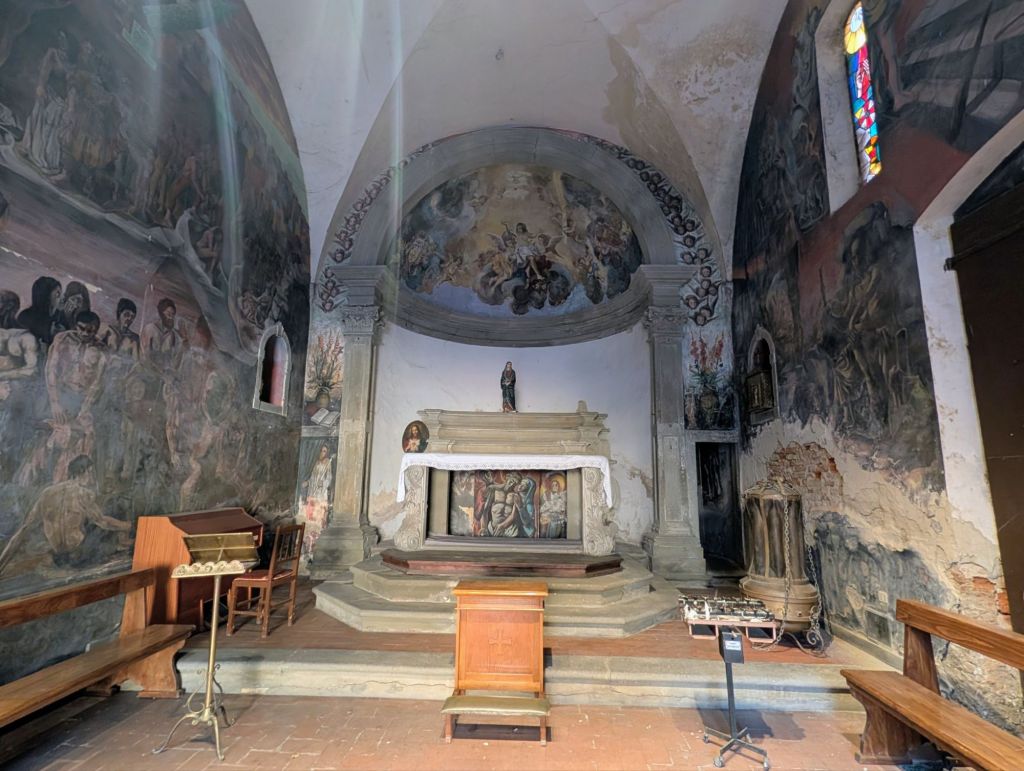
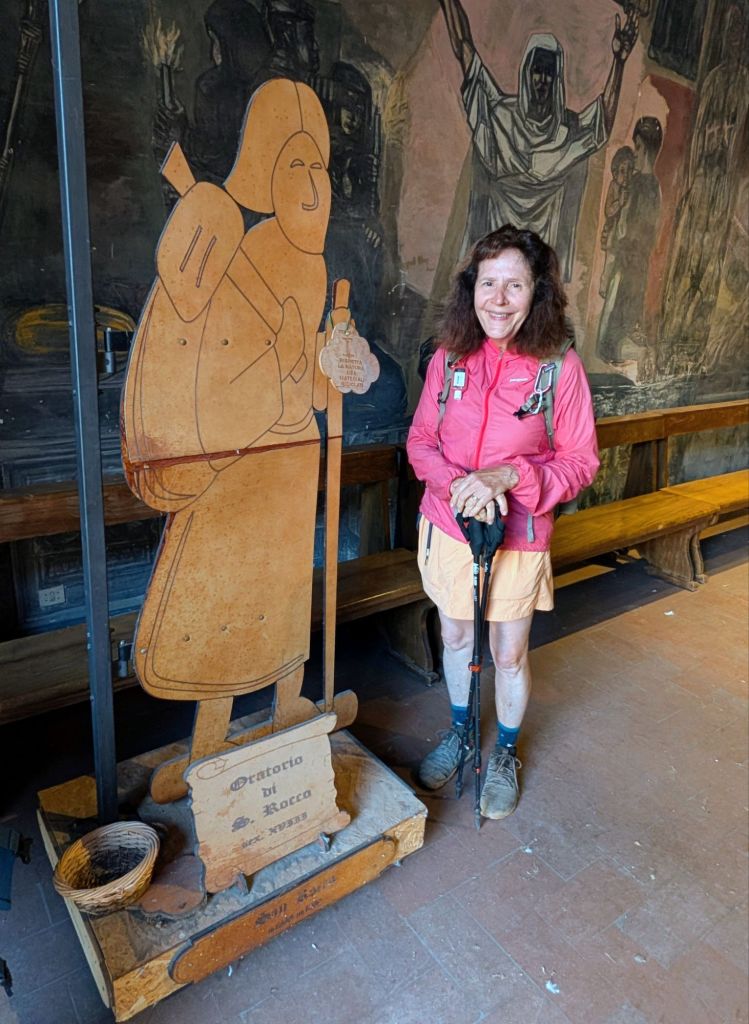
The Oratorio dei Santi Sebastiano e Rocco in San Miniato is a small, terracotta-clad church. It was built in 1524 during a plague epidemic & dedicated to Saint Sebastian who is the patron saint against the plague. In 1718, a relic from Saint Rocca (the patron saint of pilgrims) was added to the church
Paintings detached from the oratory depicting angels with symbols of the Passion are preserved in the bishop’s seminary, so the interior decoration was redone by various contemporary artists from San Miniato.
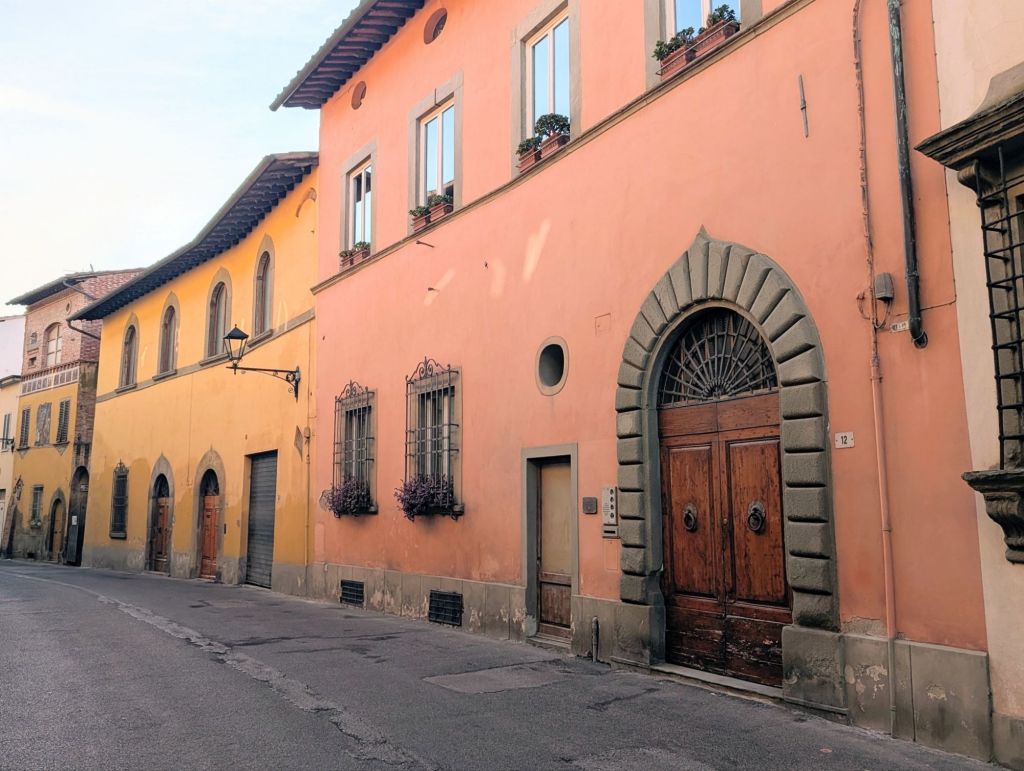
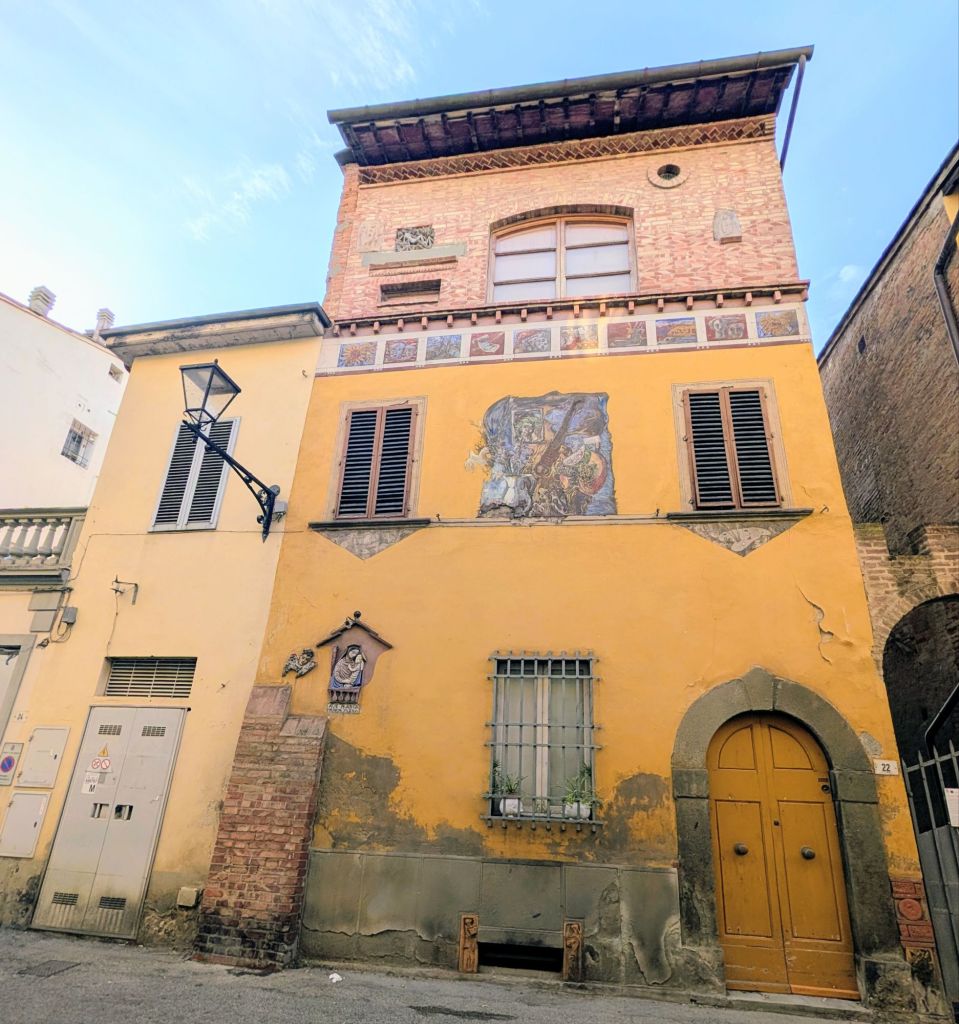
Other morning scenes in San Miniato
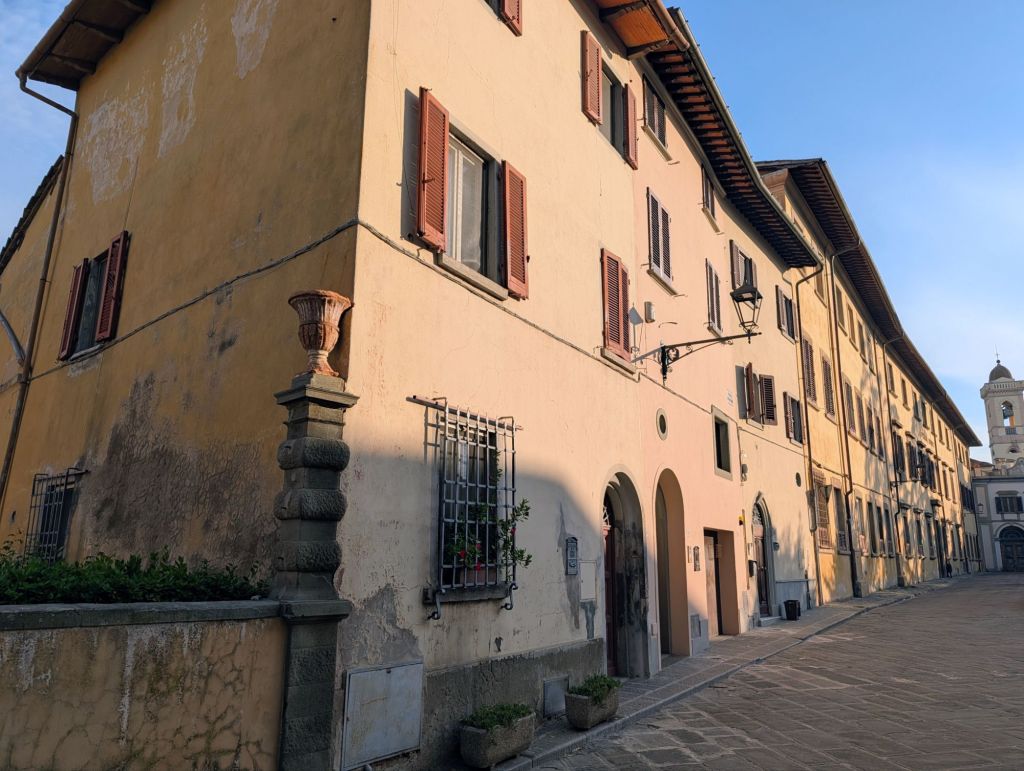
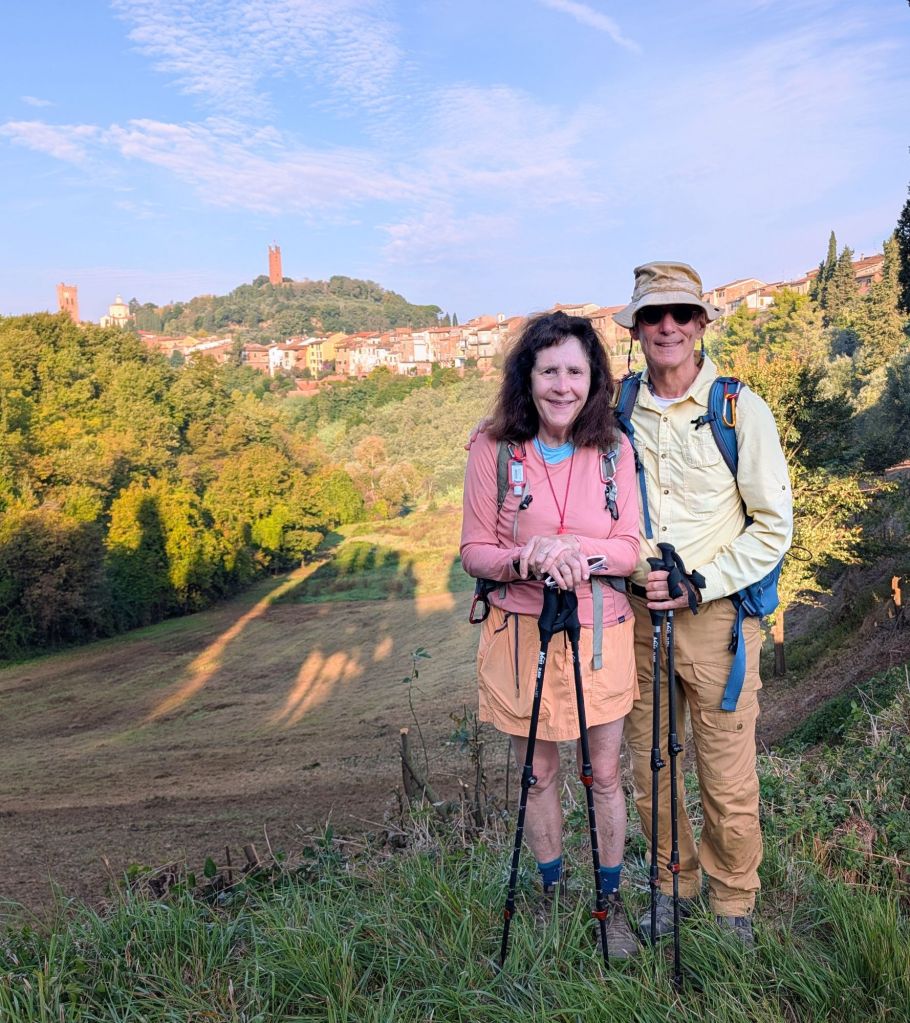
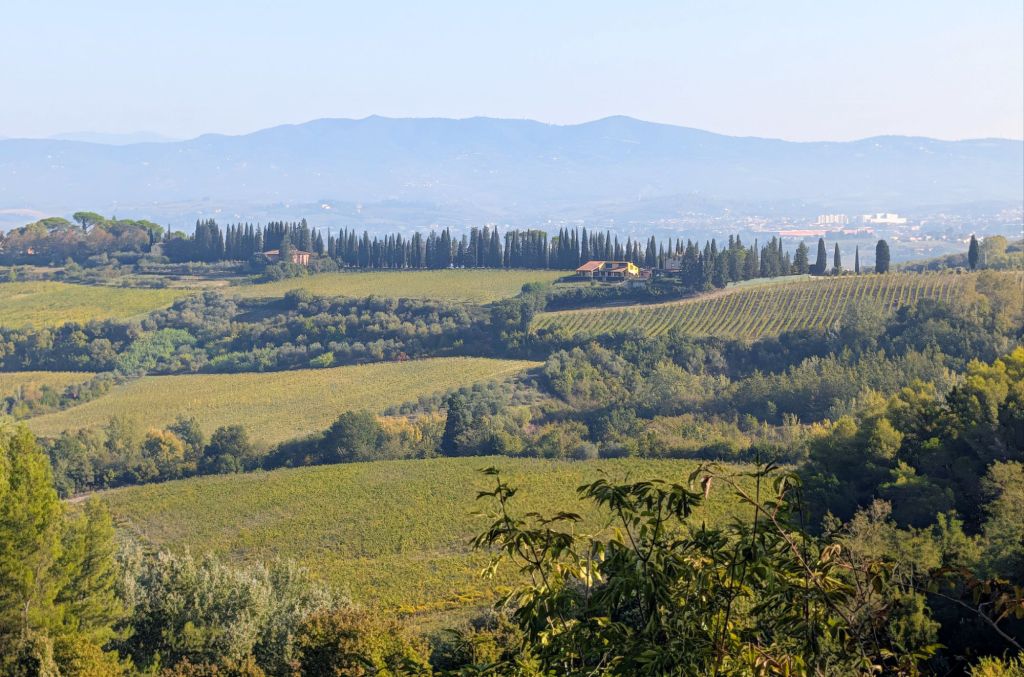
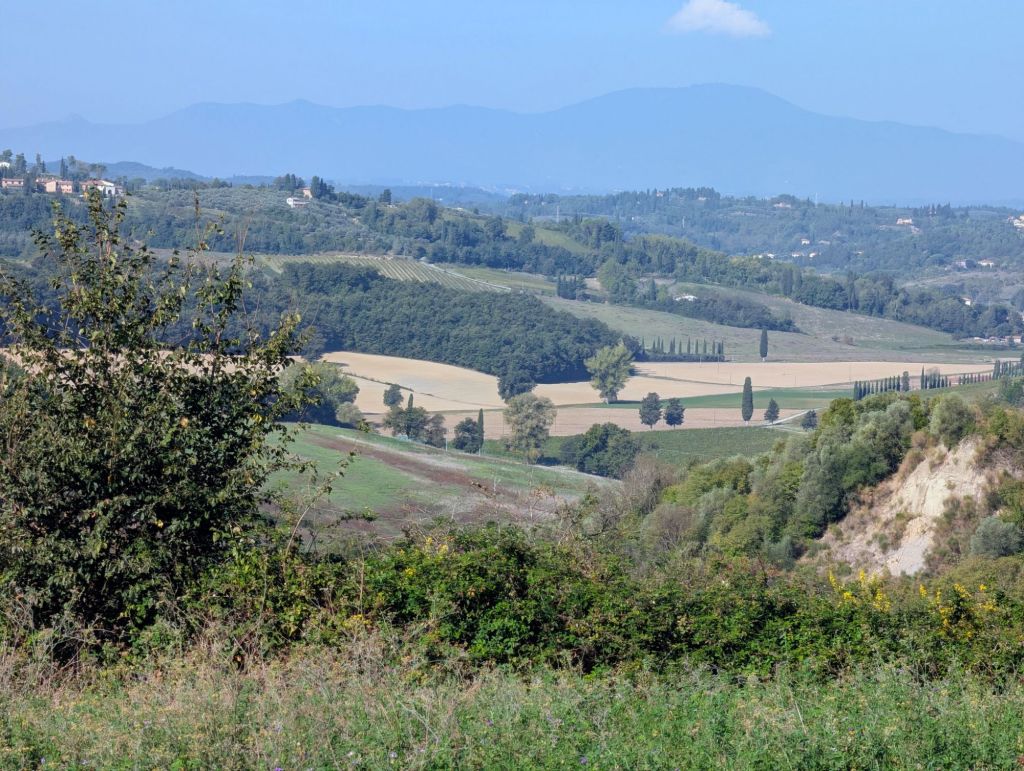
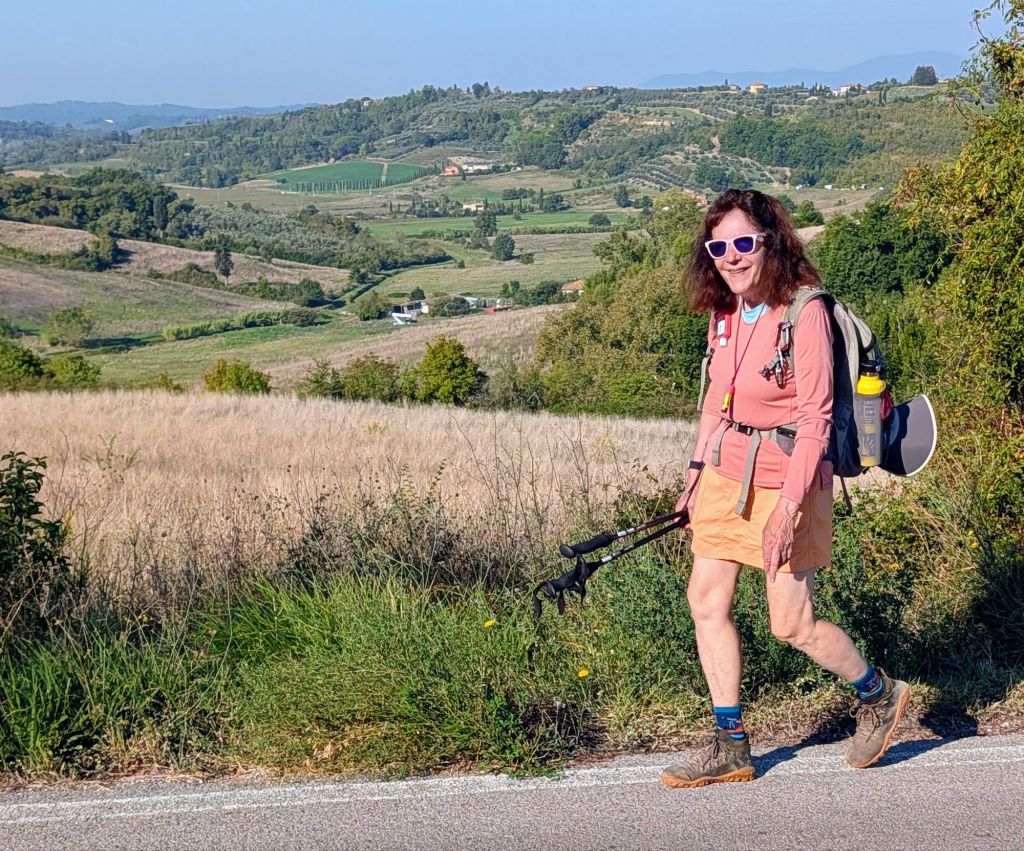
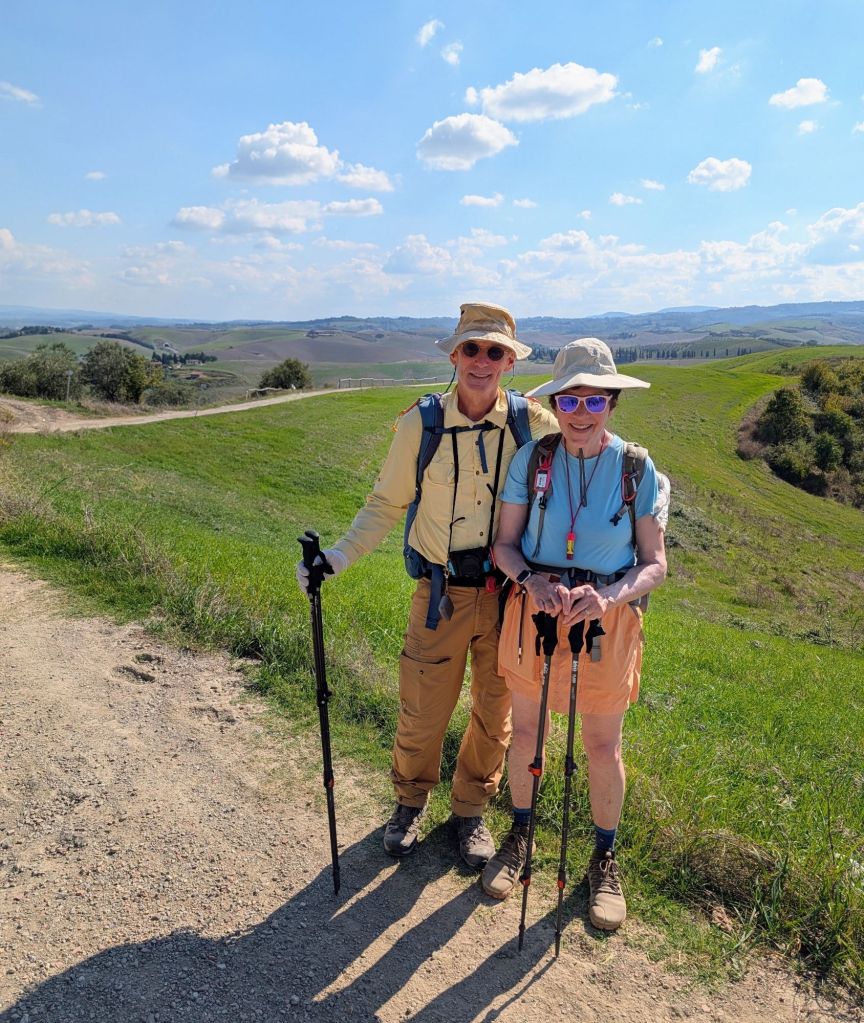
Along the way we saw some beautiful Tuscany landscape
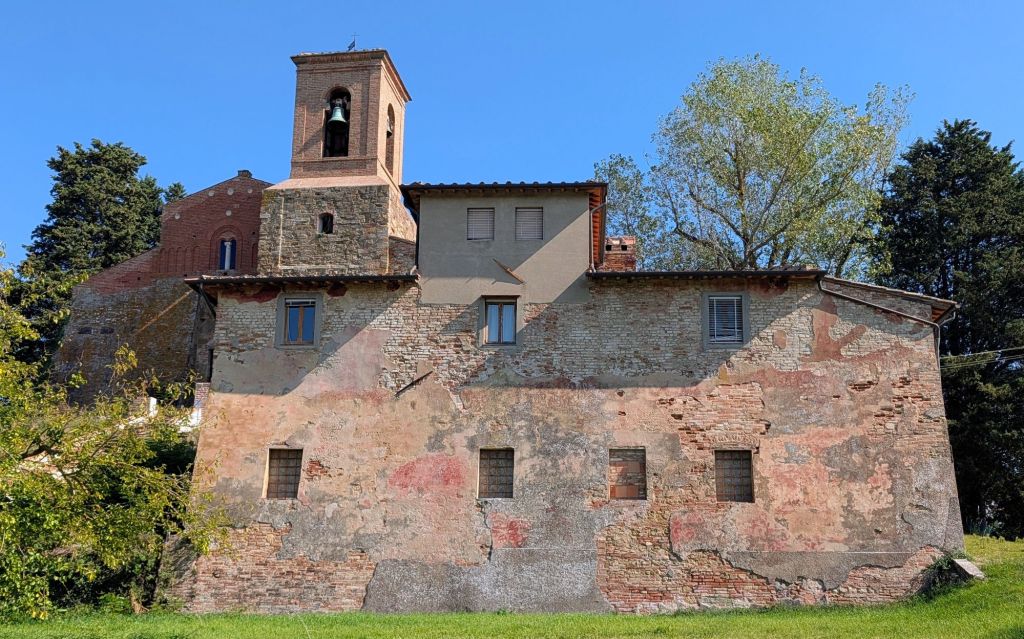
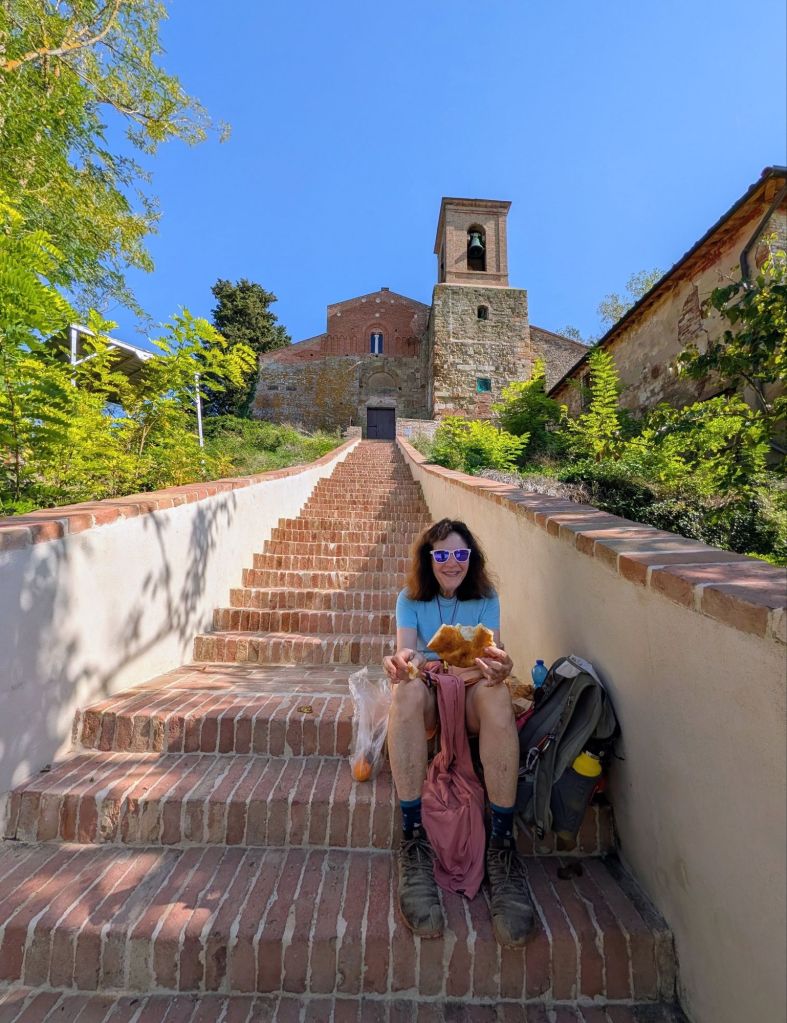
We followed in the Archbishop of Canterbury Sigeric’s footsteps to the Parish Church of Saints Peter & Paul in Coiano. As early as 990 AD, he mentioned stopping at this parish. Parts of the current church date from the 12th Century.
It was lunch time when we arrived at this church, so we sat in the shade on its steep stone steps to eat.
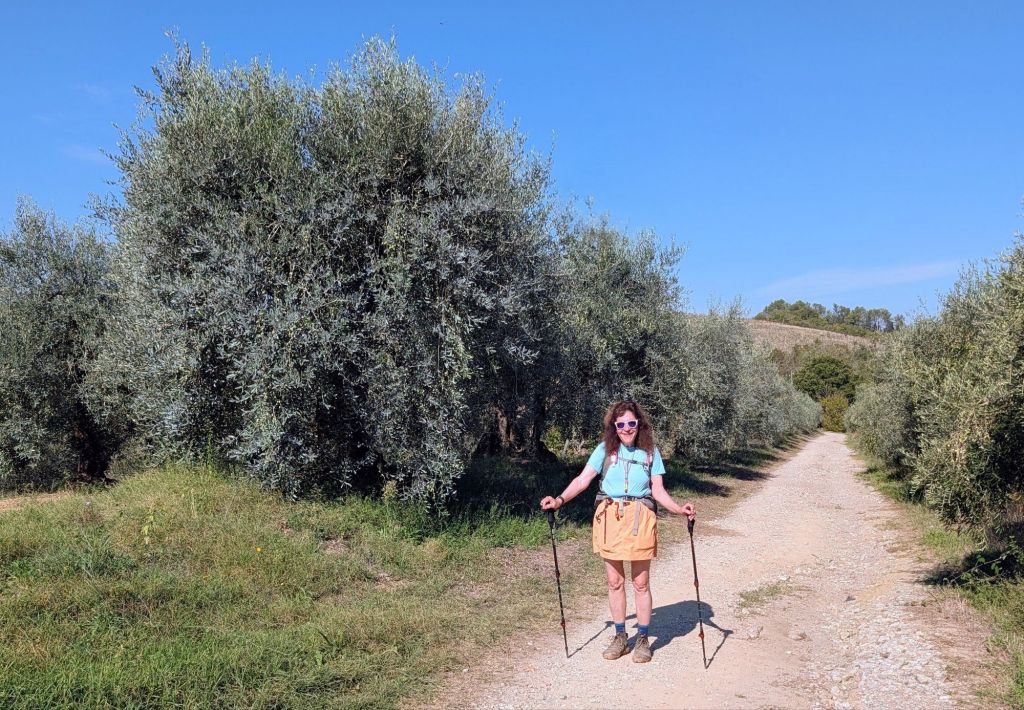
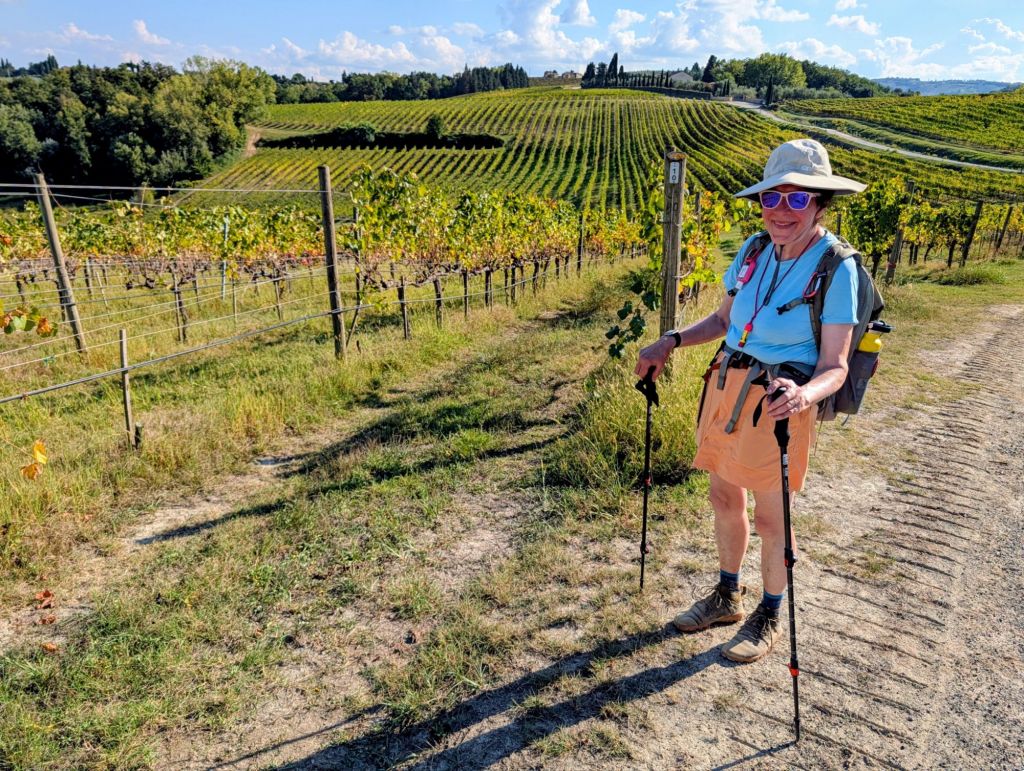
In the afternoon, we saw wide open spaces, olive trees, & vineyards
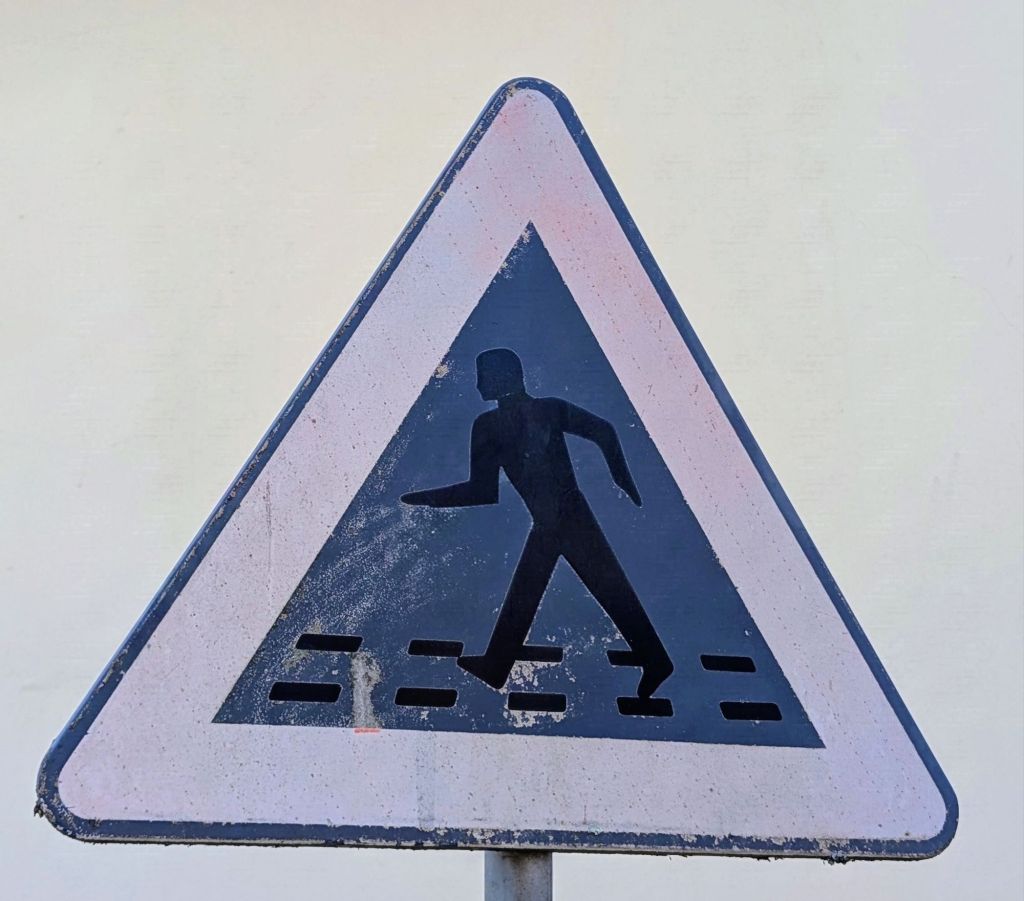
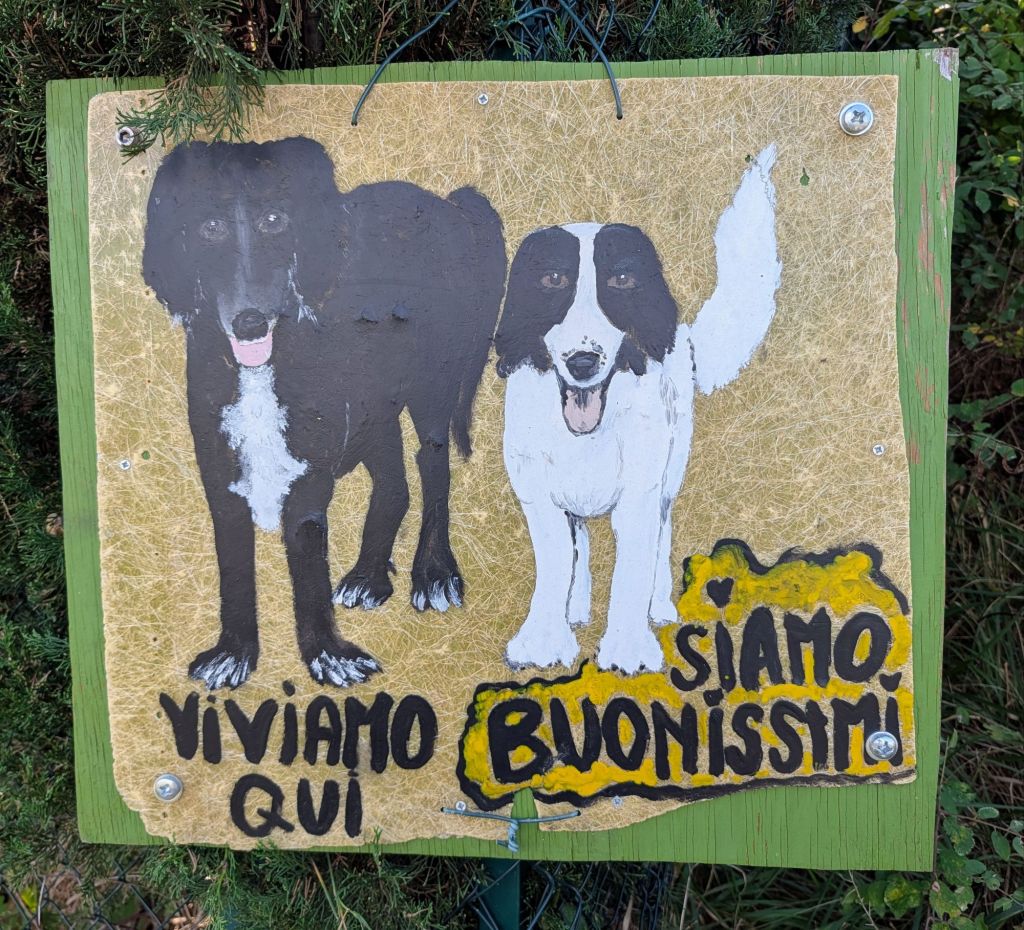
We also saw this sign at a house
The Parish Church of Santa Maria Assunta in Chianni is among the most important places of worship in the area.
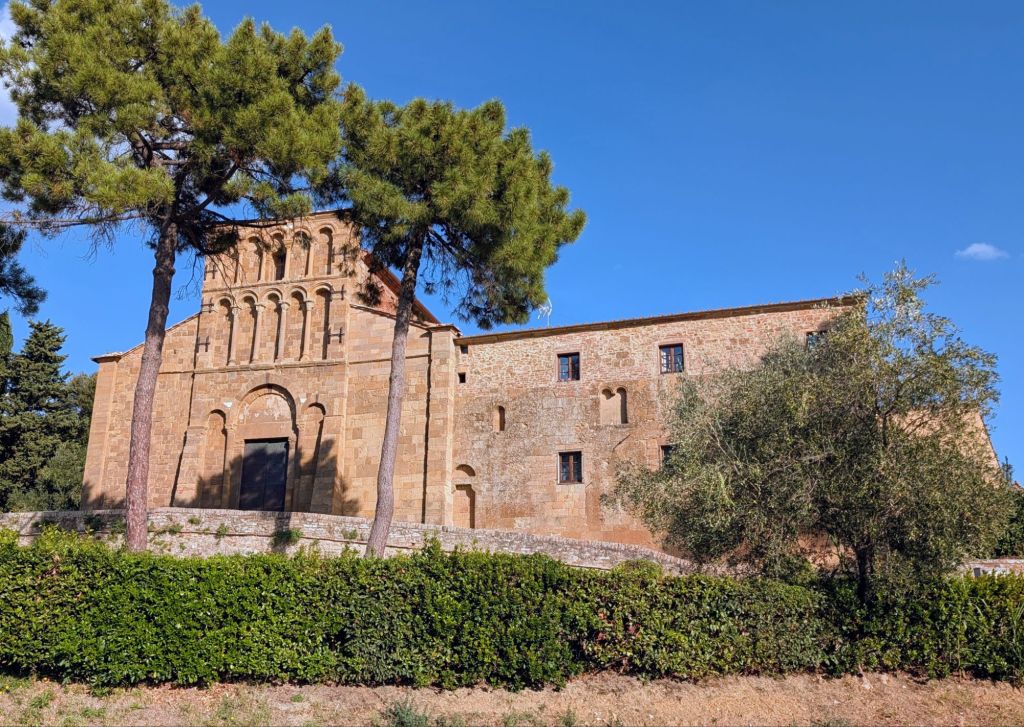
This church is mentioned in Sigeric’s diary as a stop on his return journey from Rome to England.
The origins of this parish church come from 11th Century documents that confirm a cloister existed here as well as a primitive church was constructed on the site.
The church as we see it today dates back to around 1200.
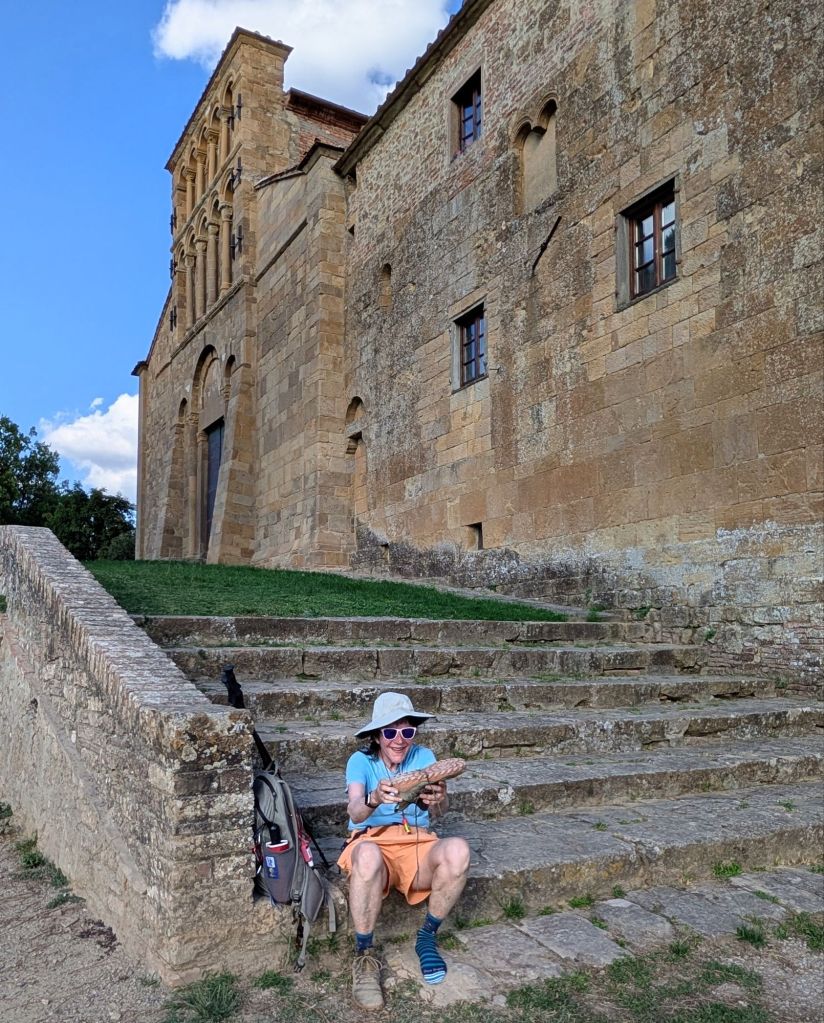
Gina got a rock in her shoe & used the church steps to sit down to remove it.
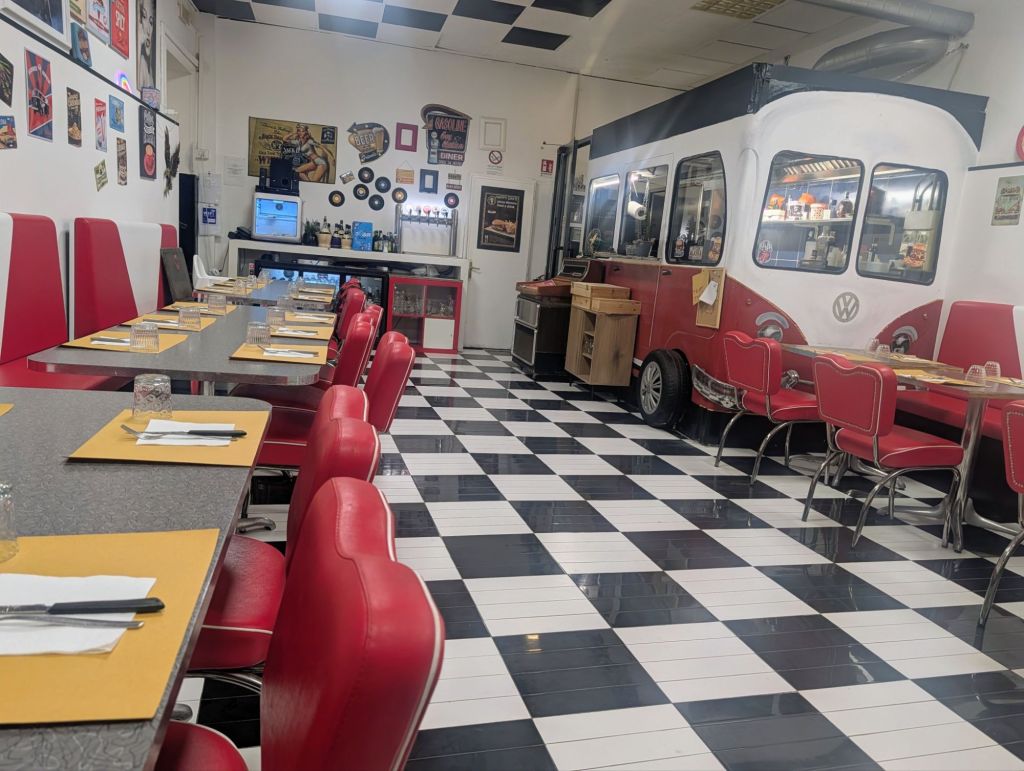
For dinner, we had a calzone & a pizza at the Happy Days restaurant which has a lot of retro stuff from America.