Lucca to Altopascio
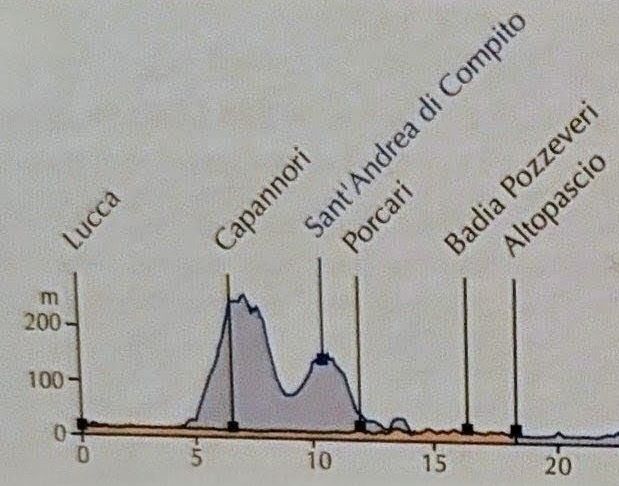
11.8 miles; 5.5 hours on the trail
Via Francigena History:
The Via Francigena which means “The Road to France,” was the main communication route between Rome & the imperial court at Aachen during the High Middle Ages.
Its importance as a pilgrimage & trade route outlived the Carolingians & around the year 1000, the Via Francigena was without a question, the preferred route for German emperors, pilgrims, & merchants seeking their riches and/or personal benefits in Italy.
It was also used by the Crusaders who traveled beyond Rome to embark for the Holy Land.
The first to travel the route to Rome from Northern Europe was an English monk named Sigeric who was the Archbishop of Canterbury in distant Britain.
In the year 990, Sigeric crossed the English Channel determined to receive the Pope’s blessing in Rome.
After many miles & hardships, he reached the Holy City using the ancient roads built in centuries prior by the Romans.
Perhaps concerned for future pilgrims’ well-being, Sigeric wrote a book called the “Itinerarium” which detailed the stages & resting places (mansio) along the Via Francigena.
Between the 9th – 19th Centuries, no other road connected the powerful Papal States with the Alps’ western passes.
Both the Enlightenment & industrial progress spread along the Via Francigena until the railway finally eclipsed its importance.
The fact that Sigeric considered a “pilgrims guide” useful meant that many people were venturing to Rome to receive the Pope’s blessings.
Sigeric’s Itinerarium still marks pilgrims’ route through Italy as they discover villages, towns, & cities that other travelers trod more than a thousand years ago.
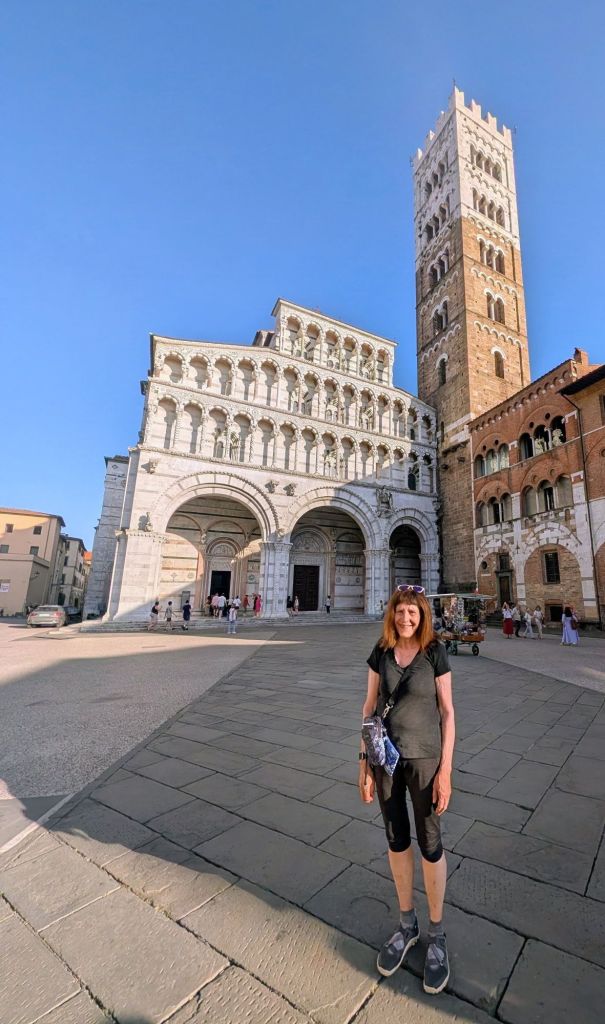
Our Camino Francigena started in Lucca.
In the Middle Ages, Lucca was a prosperous city known for producing fine silk.
Lucca has always attracted pilgrims from all over Europe who came to venerate the relic of “The Holy Face” which is the famous wooden crucifix kept in the Cathedral of San Martino.
The Volto Santo (Holy Face) is a wooden crucifix said to be carved by Nicodemus shortly after Christ’s resurrection.
As the legend goes, Nicodemus, who was an early Christian, carved Christ’s body; but, fell asleep before carving his face.
When he awoke, the face was miraculously completed.
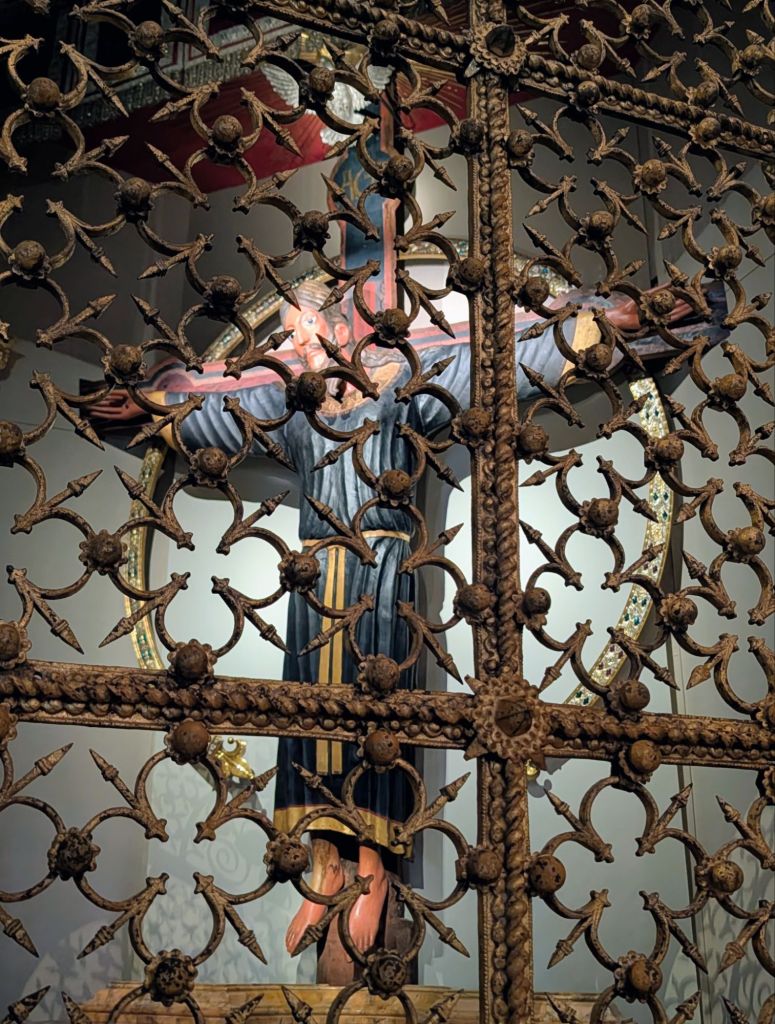
Due to religious persecution, the crucifix was then hidden for some 700 years after which time it was discovered, loaded onto an unmanned ship, set out to sea, & eventually landed on Italy’s coast.
After this miraculous cross survived its journey from the Holy Land to Italy unscathed, its legend continues linking the cross’ arrival in Lucca via a journey from the port in Luni following a track in a cart pulled by oxen… without a coachman.
So widespread was the cross’s fame throughout Medieval Europe that it was even mentioned by Dante in his epic poem “Inferno”.
Scientists confirmed that the carving is original & estimated that it arrived in Lucca in 782 AD making it the oldest known wooden relic in Europe still intact.
The Cathedral of San Martino also has another unique item- “The Cross of the Swollen Eye”
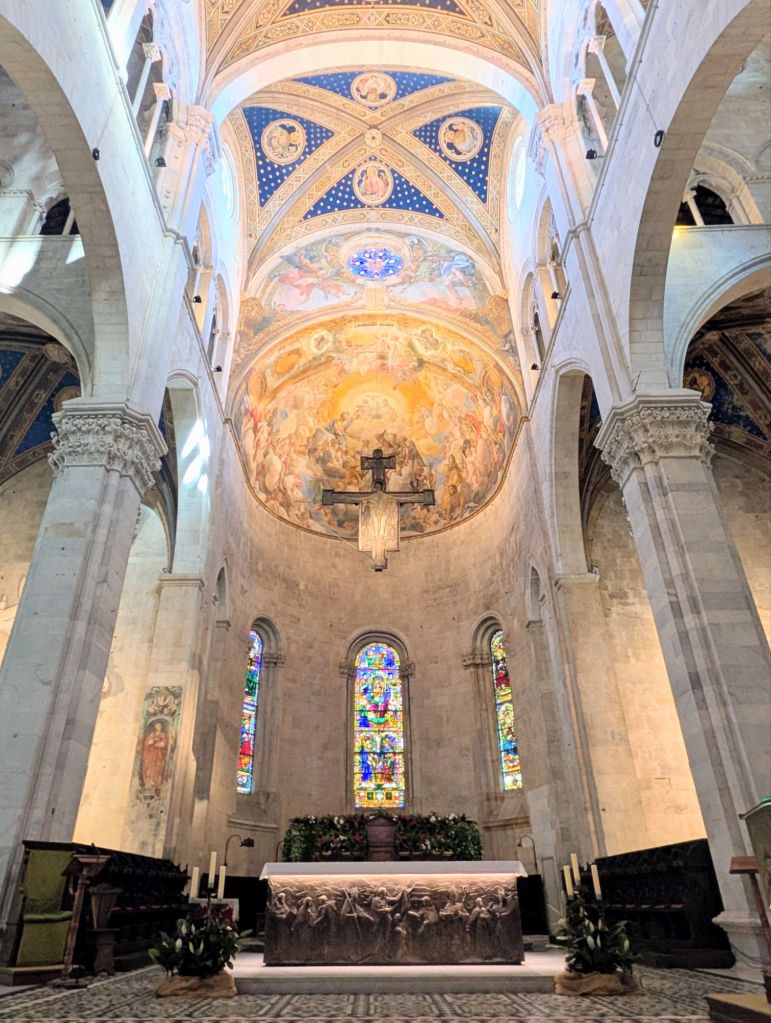
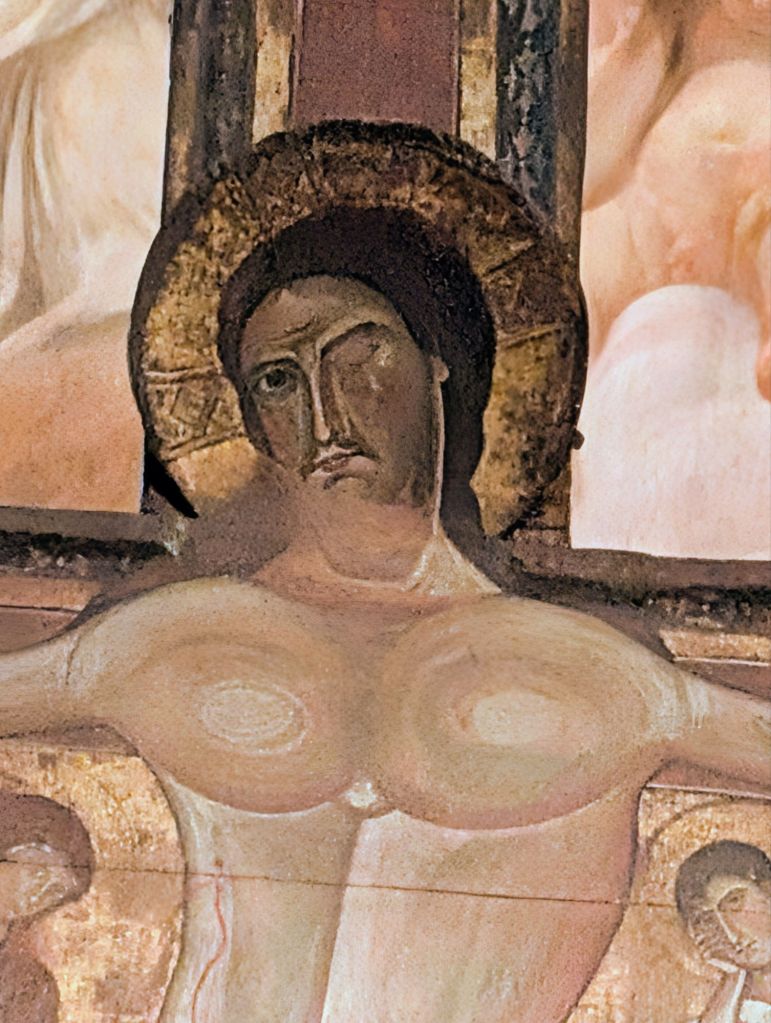
This cross was made by an anonymous artist from Lucca in the first half of the 13th Century. Legend has it that the wound was caused by a dice player who got angry because he lost. He was so mad that he picked up a stone & hurled it at the crucifix. The eye that it struck miraculously began to bleed.
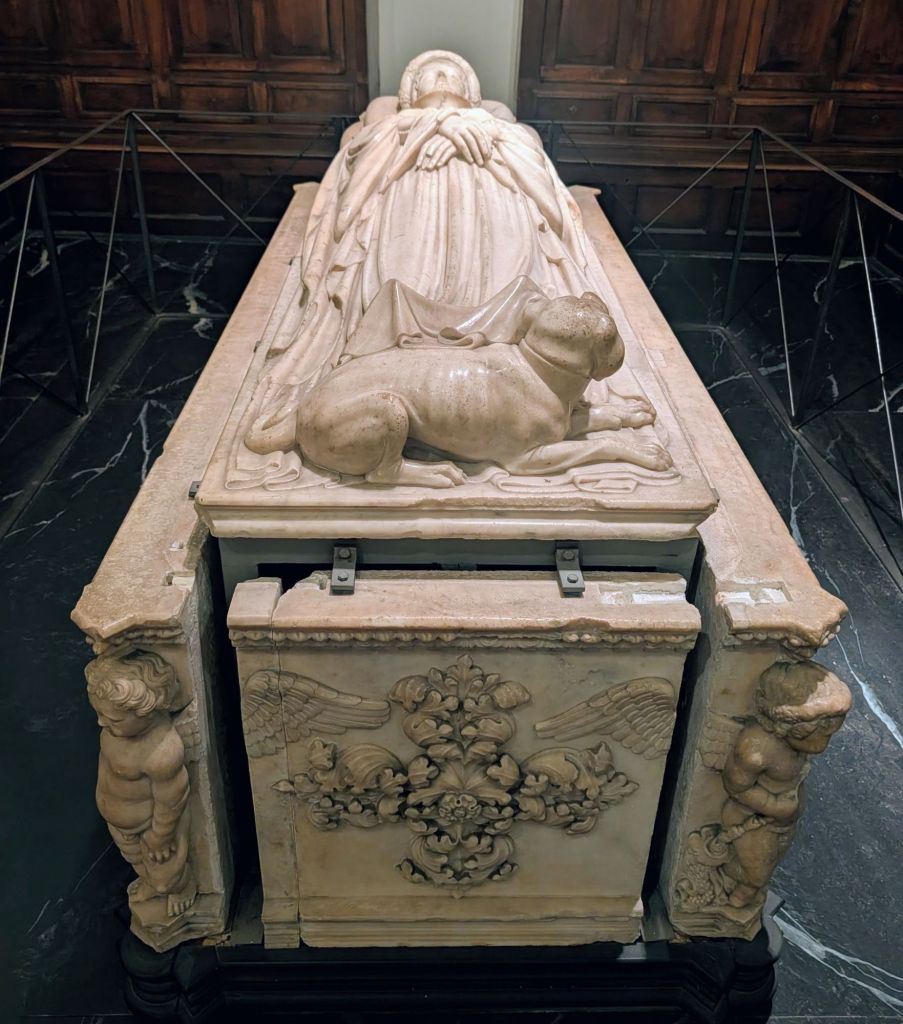
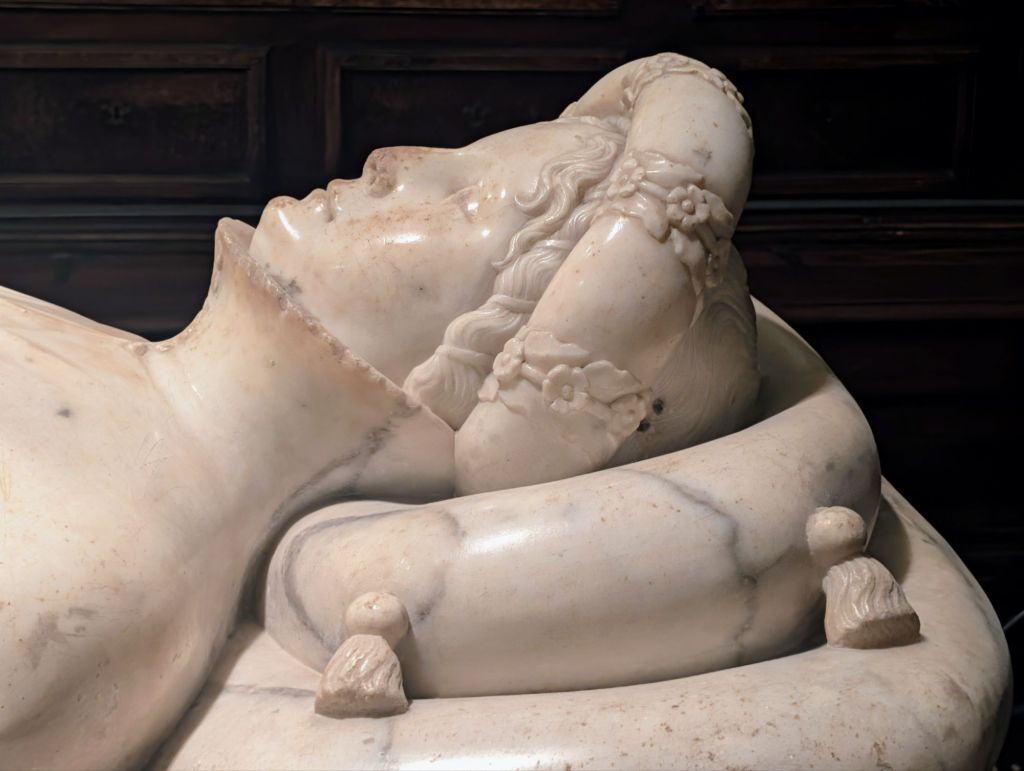
Also inside this church is a funeral monument to Ilaria del Carretto which is considered to rate among the most delicate examples of Italian Renaissance sculpture.
Saint Zita was born in Lucca in 1218 & is among the most famous saints born in Tuscany.
Pope Pius XII proclaimed her the patroness of maids. Later she became the Patroness of Lucca & also of housewives and bakers.
From humble origins, Zita worked as a maid for the Fatinelli family in their Palazzo Fatinelli located beside the Basilica di San Frediano.
To go to church, she used the side entrance & it was here that one day in the square, she came across a poor beggar man at the mercy of the cold.
Moved by compassion, she ran into the palace to get a cloak to give to the freezing man.
She took the cloak without telling her employers.
So she would not get punished, the next day an angel waited for Zita at that same door with a new cloak to put back in its place.
This is how the Porta dell’Angelo (“Angel’s Door”) came to be.
The miracle is portrayed on the Basilica di San Frediano.
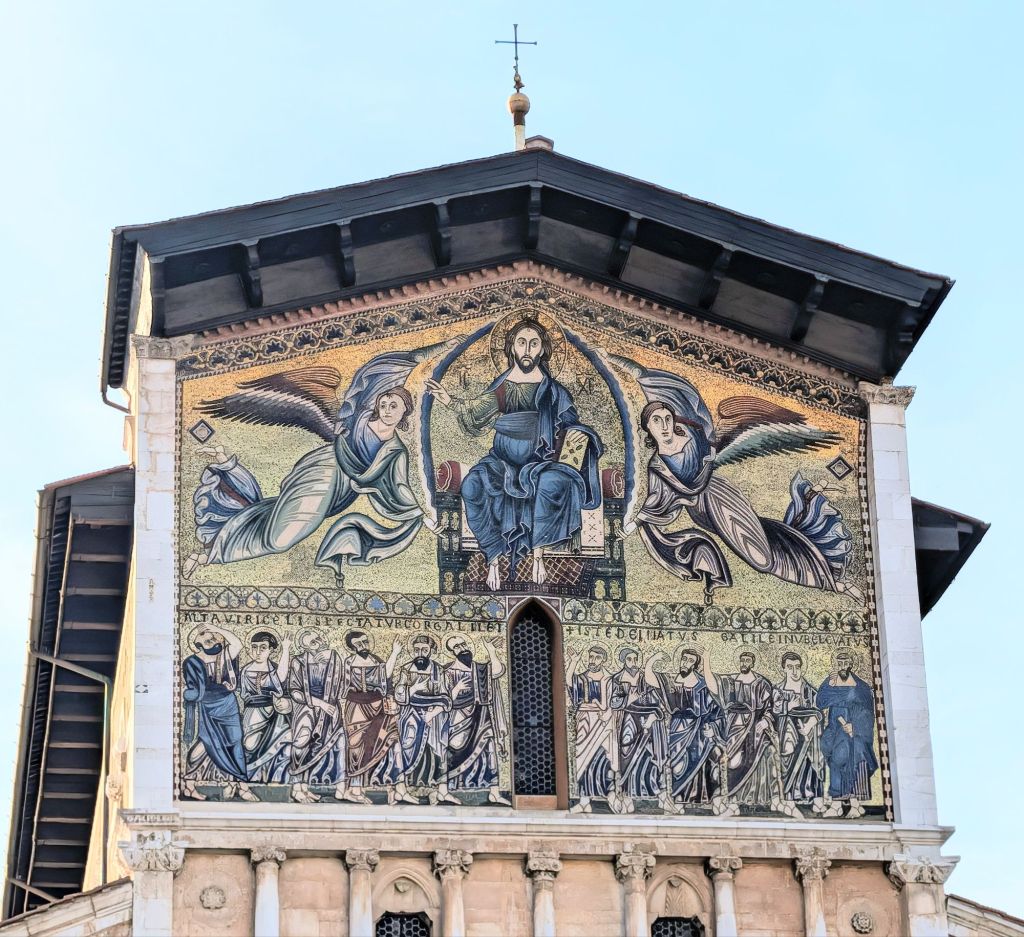
Lucca also has much mystery in its history.
On the Cathedral of San Martino’s entrance portico’s right pillar, there is a small labyrinth carved on a column.
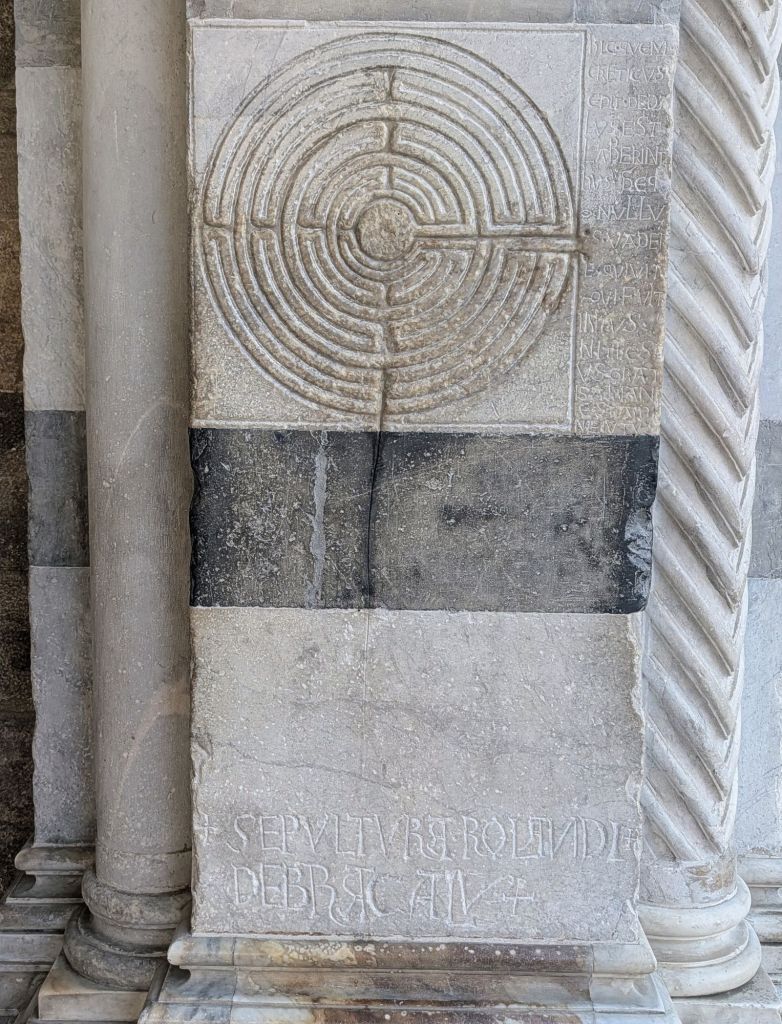
This figure which is among the most enigmatic in Italy is accompanied by a Latin inscription which evokes the Greek myth of Theseus and Ariadne which translated reads: “This is the labyrinth built by Cretan Daedalus from which no one who entered could go out except Theseus aided by Ariadne’s thread”.
As to its meaning, no one still knows what is a satisfactory answer to explain this enigmatic carving & its accompanying inscription.
Perhaps it is a warning addressed to pilgrims as they rested here before traveling along the Via Francigena
Lucca is also a city filled with elegant & majestic buildings.
One is the Palazzo Bernardini which was built in the early 1500s for the family by the same name.
Looking at its facade, you can easily notice an unusual detail: a stone that has an anomalous curve compared to the building’s flat wall surface.
Legend has it that during the palace’s construction, the Devil convinced the Bernardini family to demolish a building on which a sacred image was depicted.
When workers began to build the window jamb to the entrance door’s right side, the Devil decided to leave his mark commemorating that he desecrated the sacred image, so the stone has remained hopelessly curved.
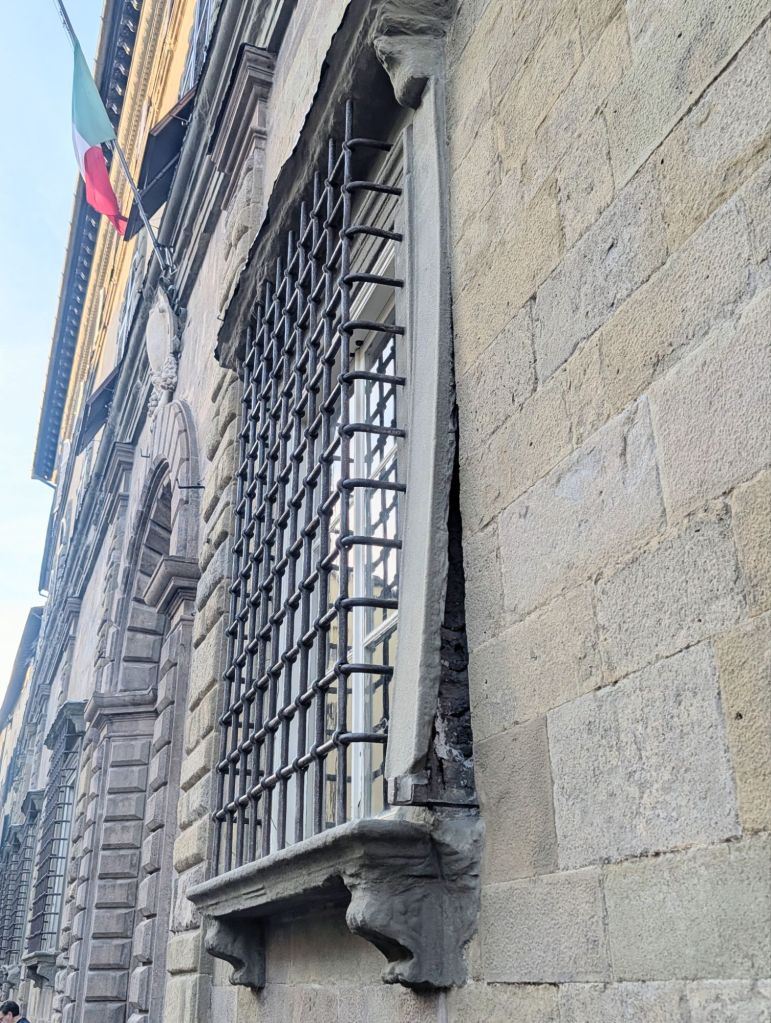
At the exact spot where the sacred image was located, the stone became curved & it has remained curved despite numerous attempts to straighten it through the centuries, so it is called “The Devil’s Stone”.
In 1805, Napoleon created The Principality of Lucca and Piombino & he gave it to his sister Elisa Bonaparte who became its princess.
We started today’s hike at Lucca’s Porta Elisa heading East.
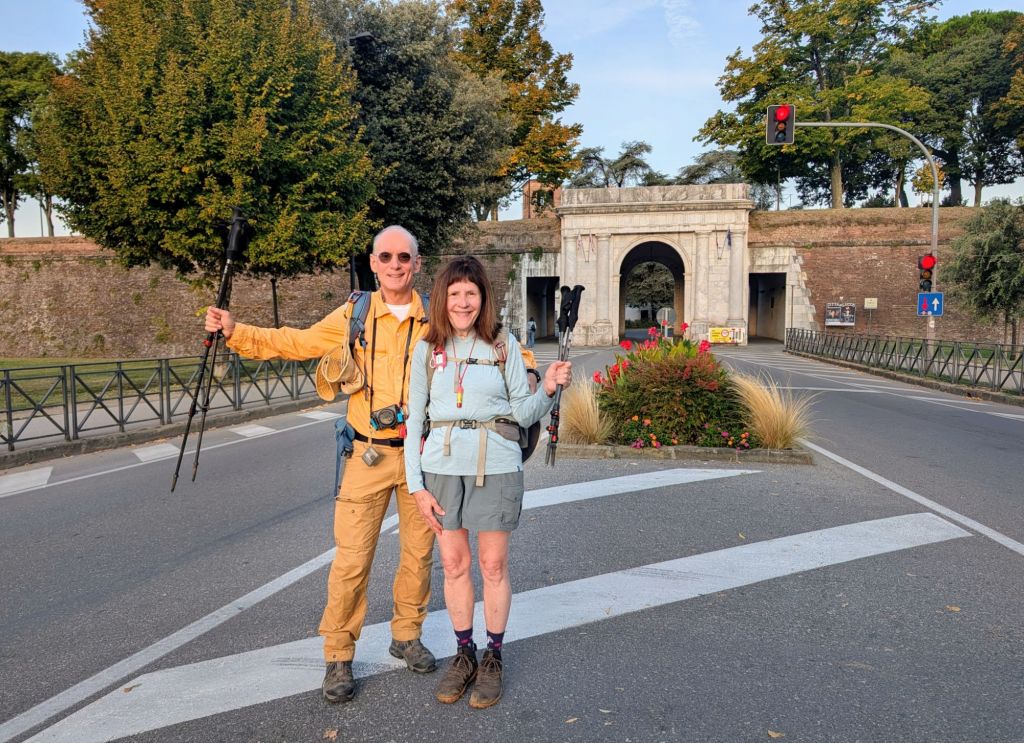
The trail is marked in various ways: but, sometimes it is not too well marked, so have to pay attention to stay on course.
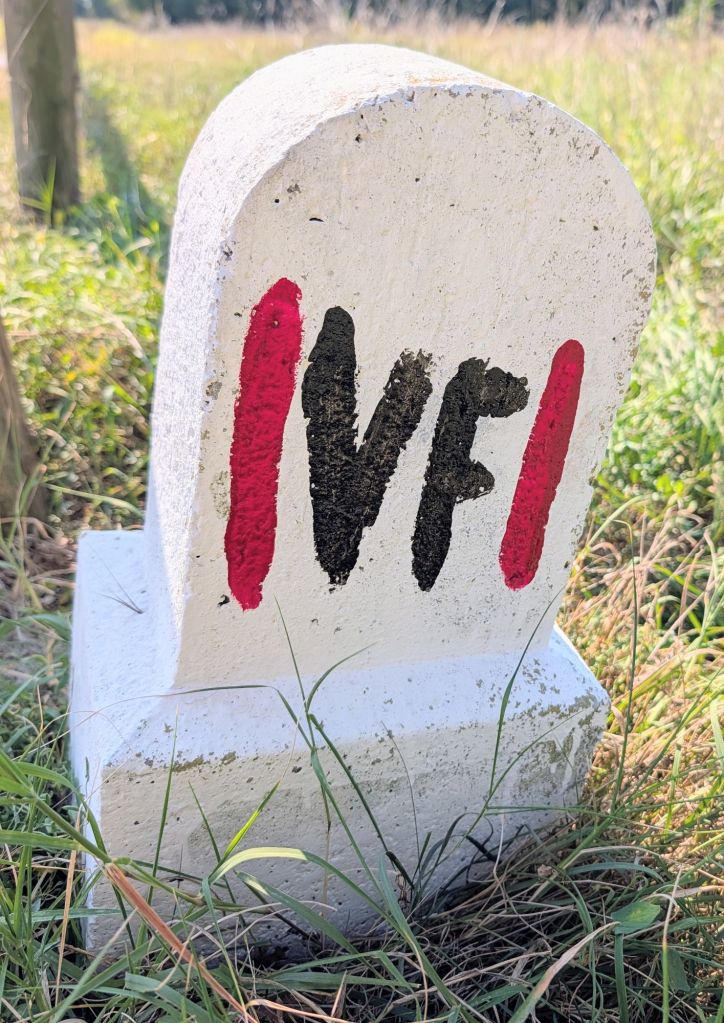
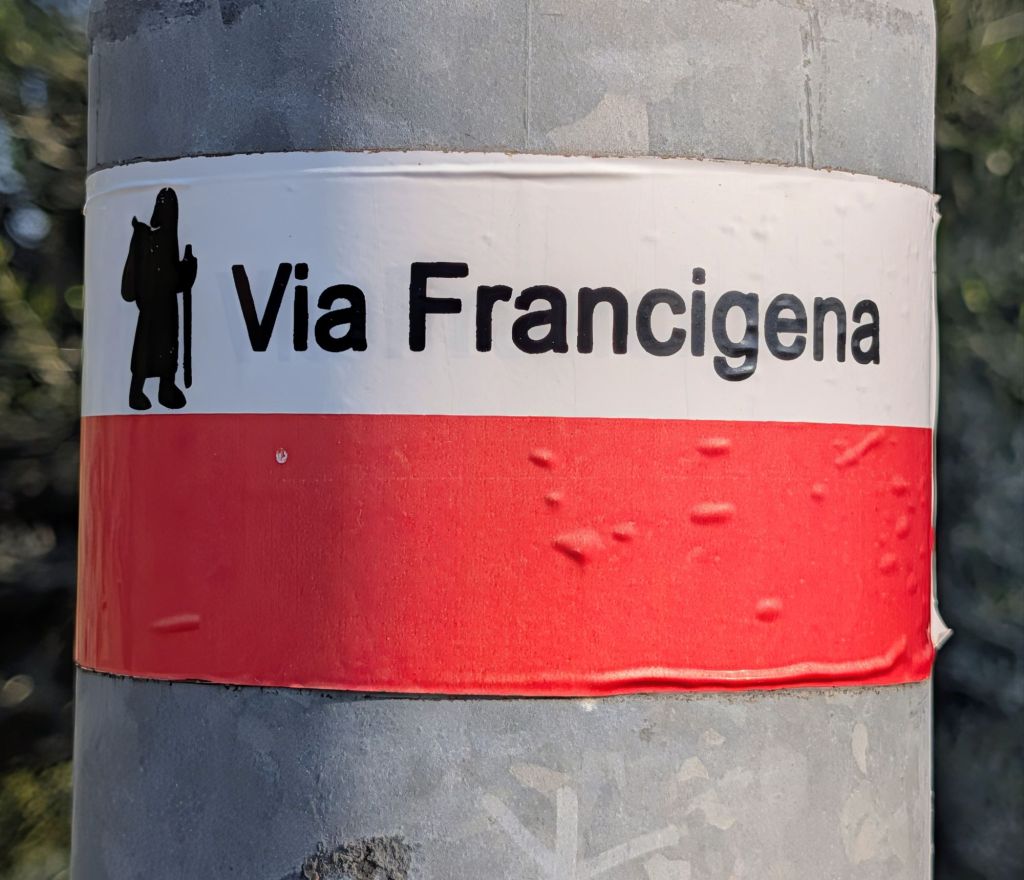
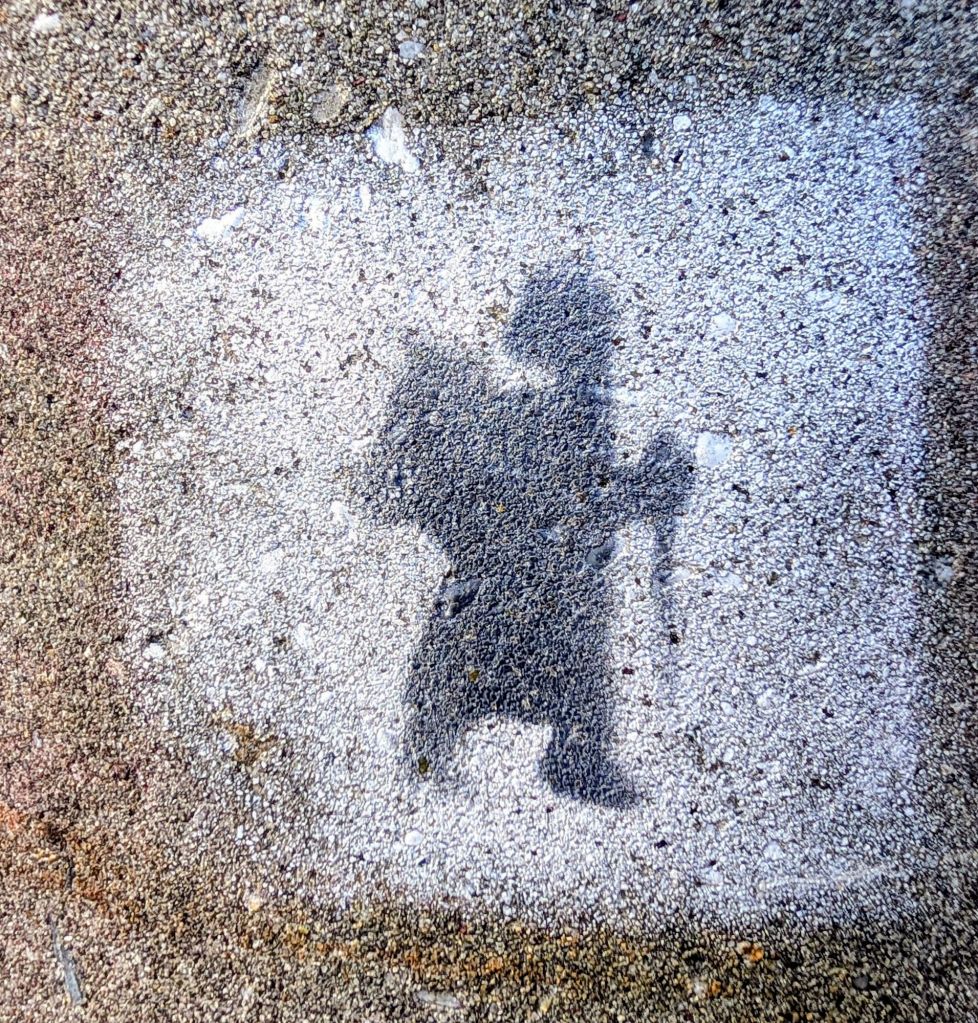
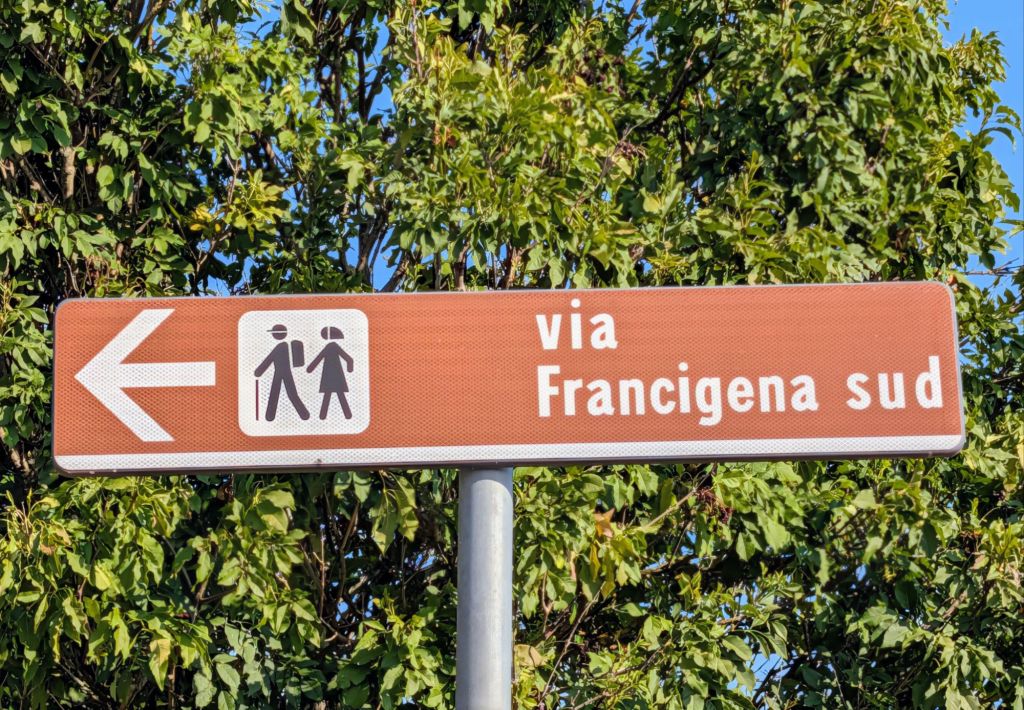
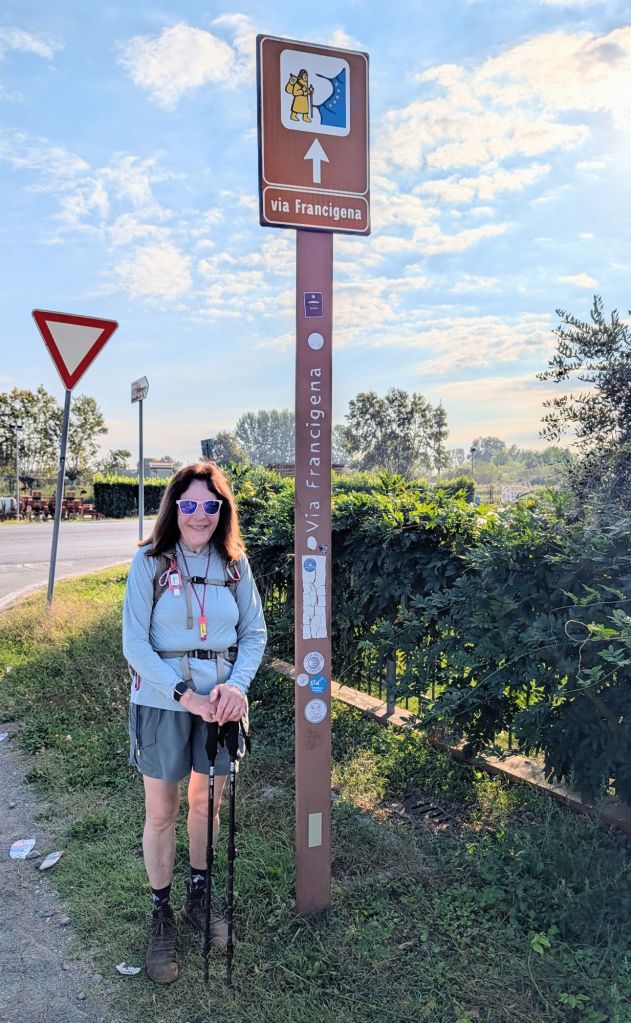
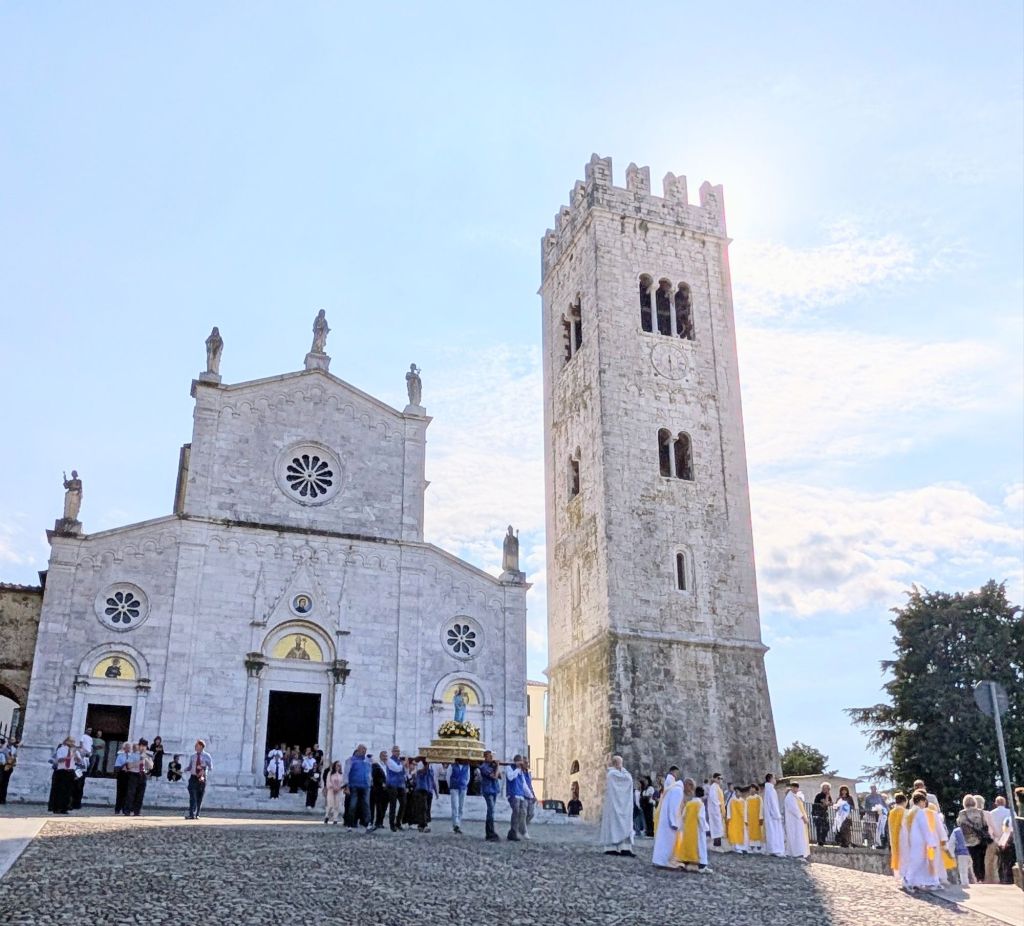
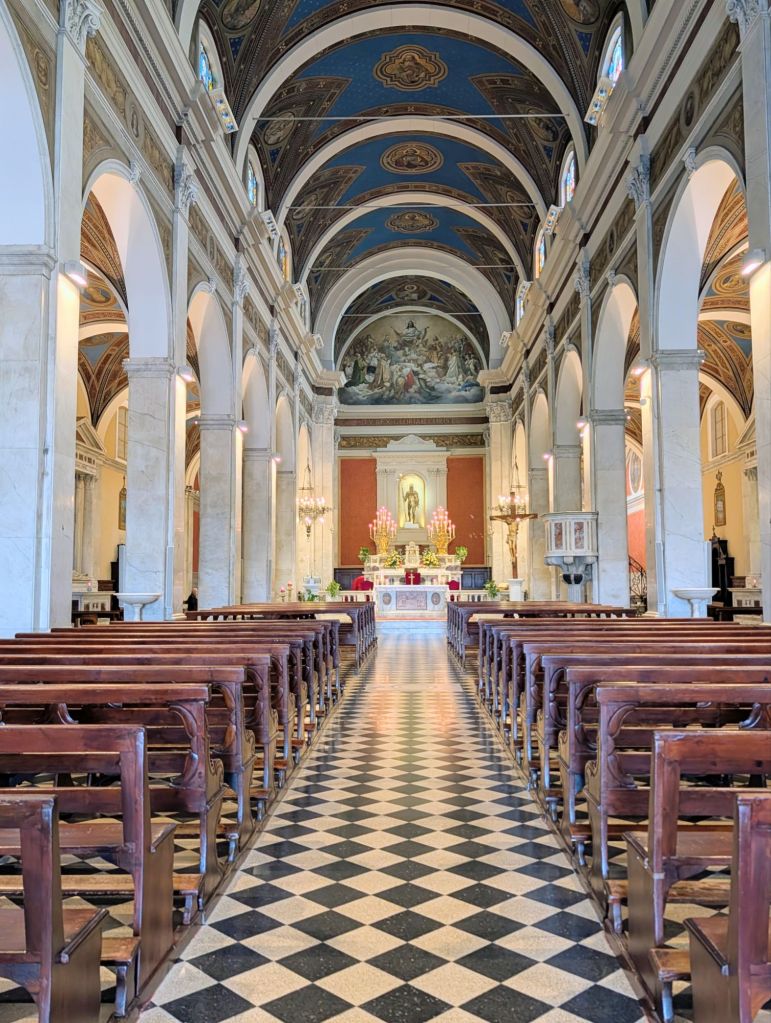
Porcari has the Church of San Giusto.
The building dates back to before the 12th Century when it was developed to become the church.
In 1745, it was almost completely reconstructed.
The church’s façade with its fresh-faced white-marble appearance with pops of yellow above the doorways is slightly younger in age.
It is an example showing the revival in 12th Century Gothic architecture seen at that time.
Inside the church there is a gorgeous ceiling, frescoes, & the three naves.
Equally striking is the bell tower which rises high above the church.
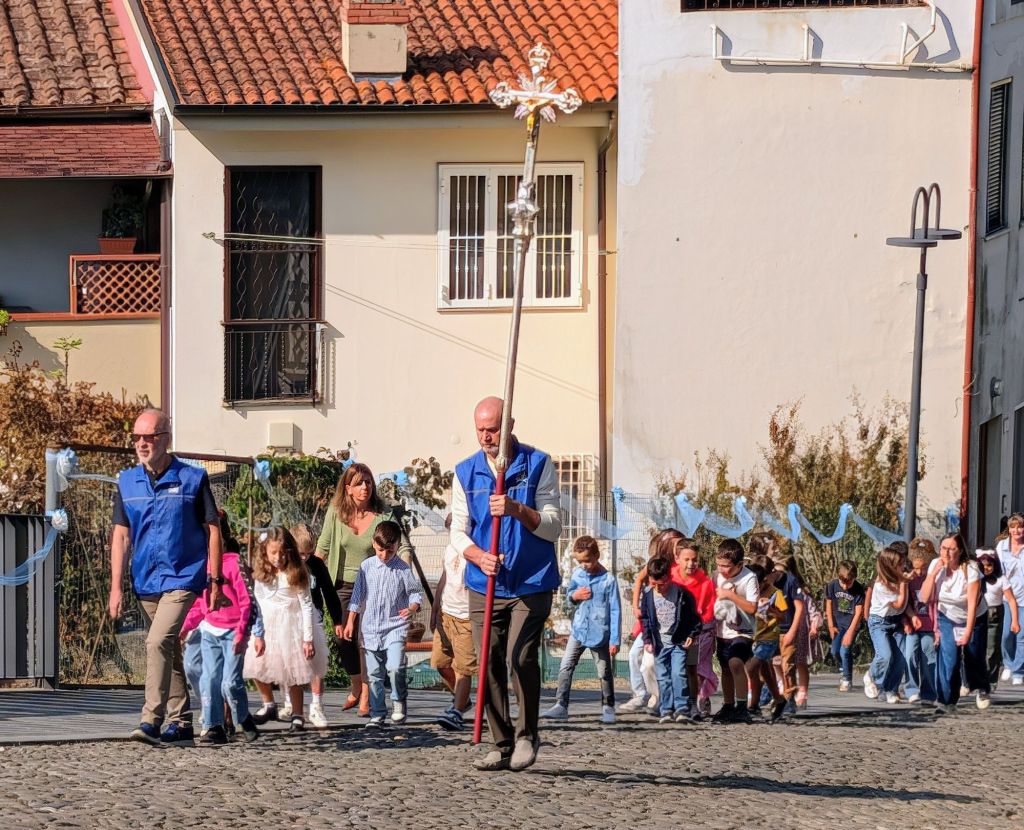
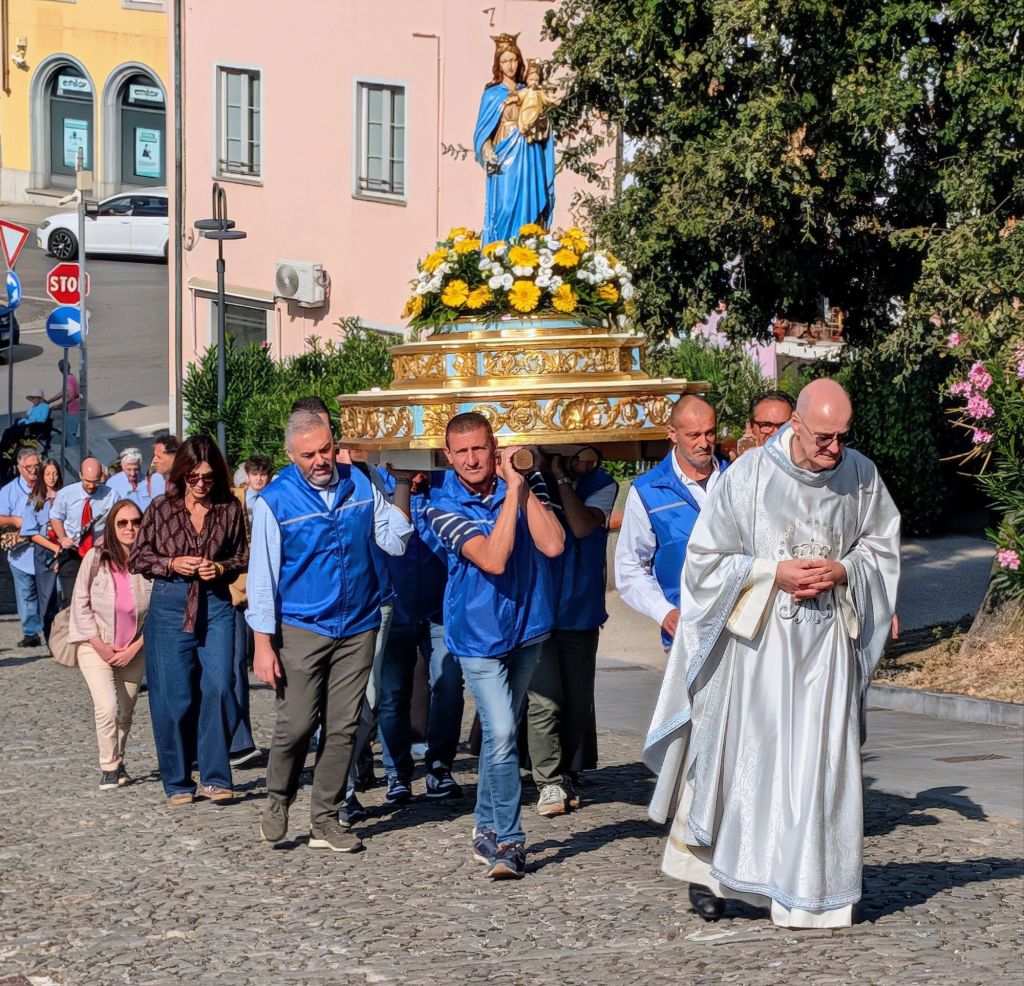
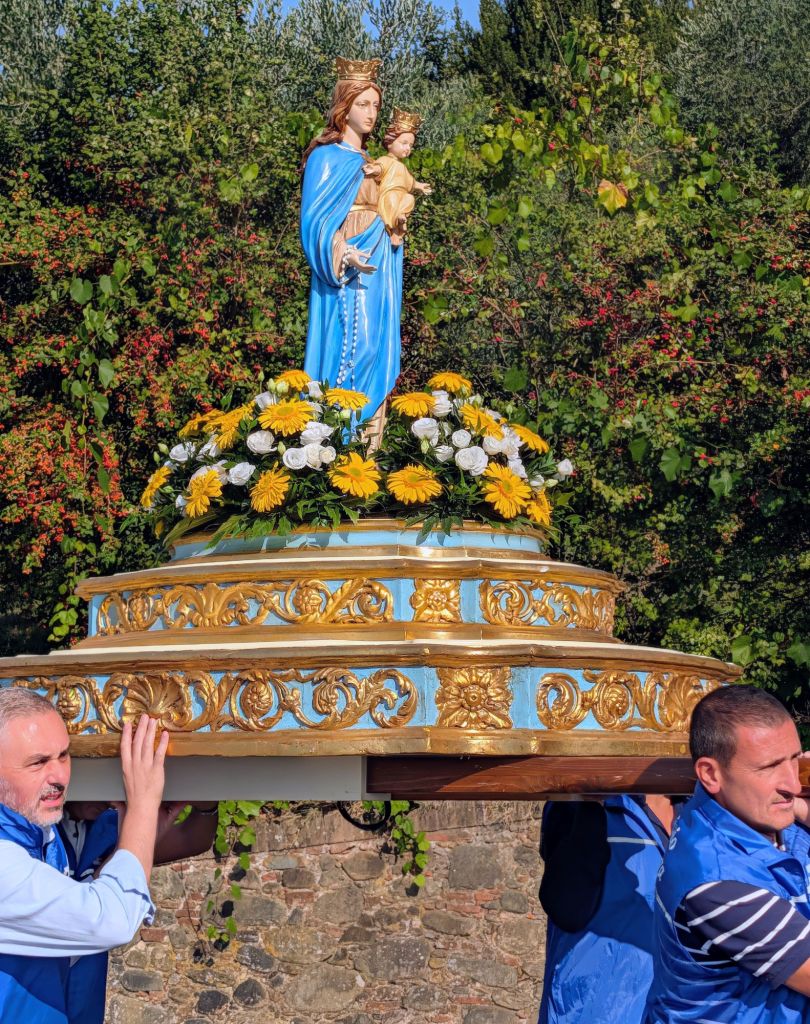
We arrived here just in time at 11:30AM to see the priest with his congregation parade the church’s main symbol accompanied by a band with all the bells loudly ringing in the tower.
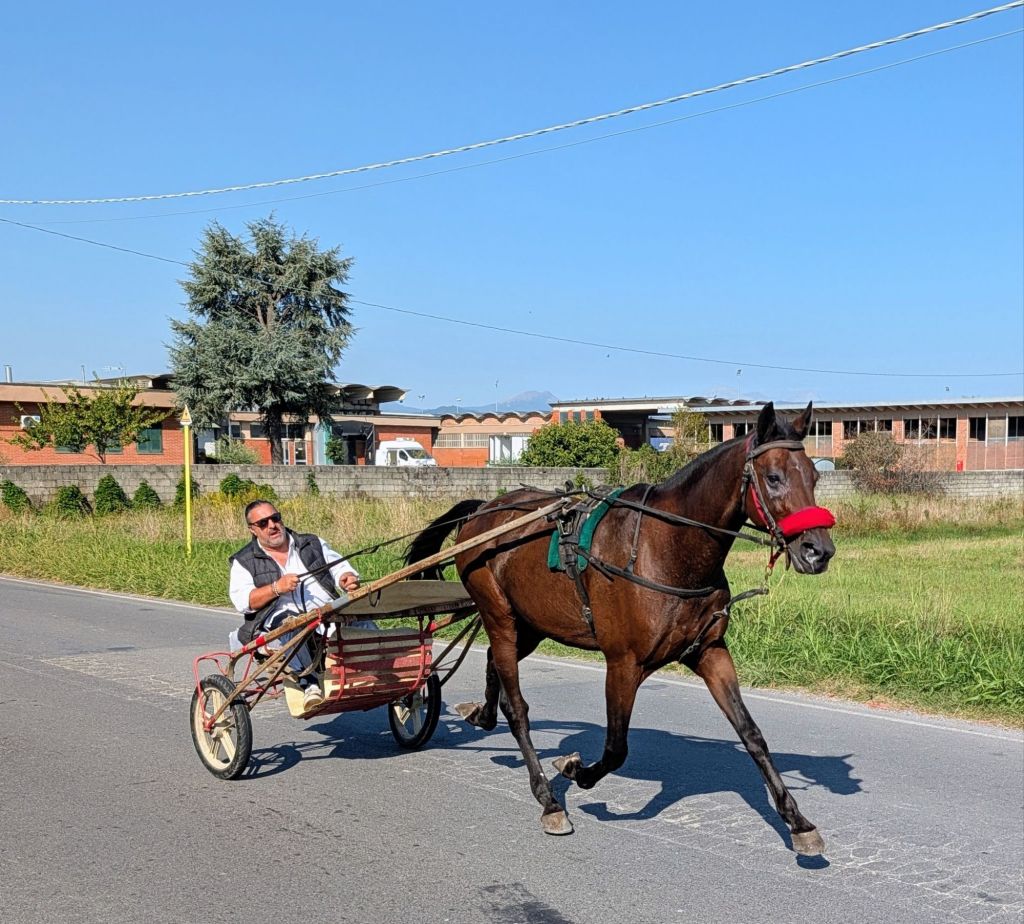
Moving on, we heard a loud clicking noise fast approaching us from behind & were surprised to see this conveyance.
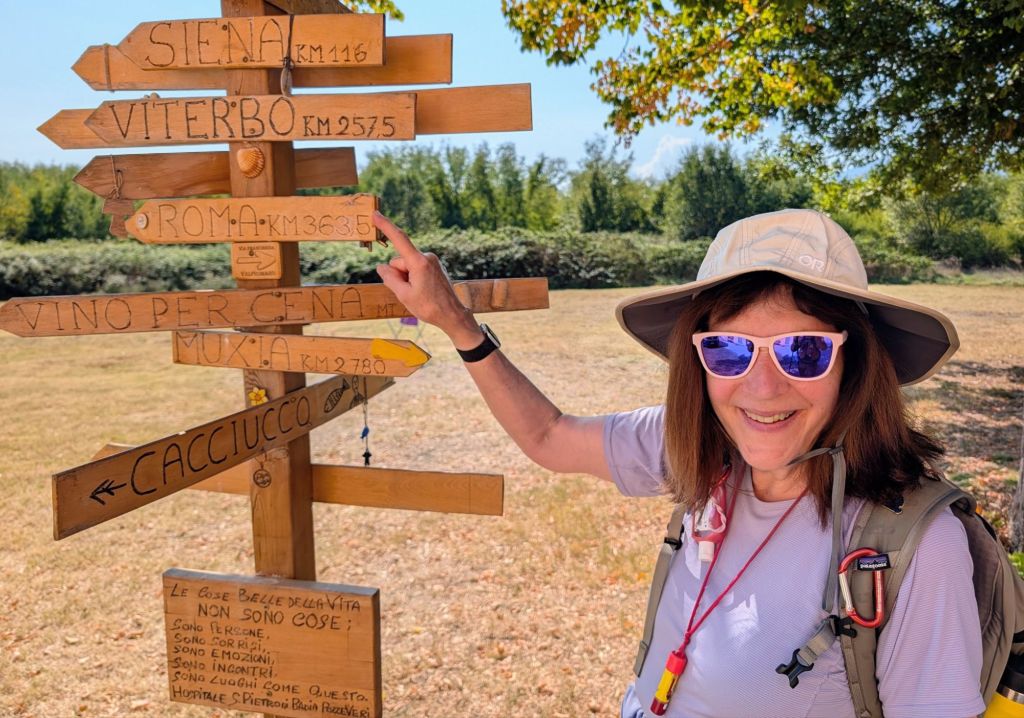
Only 363.5 kilometers to Rome!