Berlin- A City with Many Faces & Memories

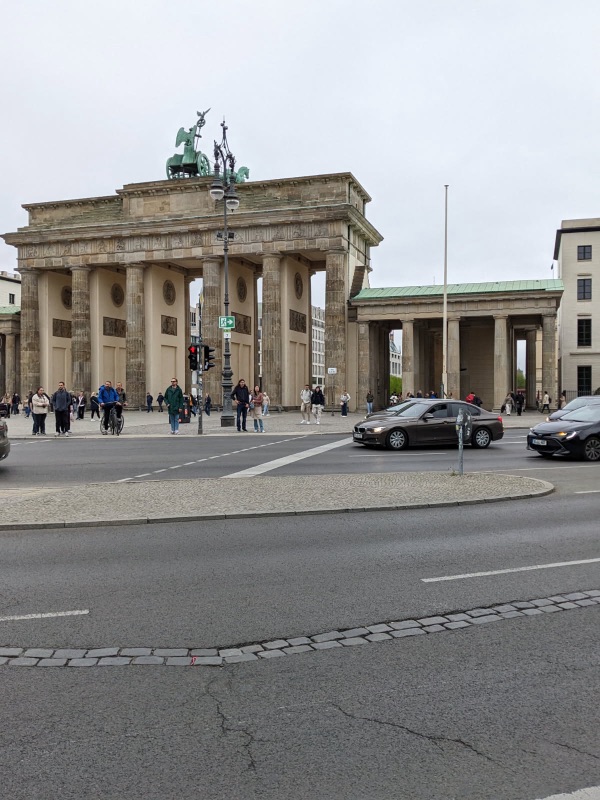
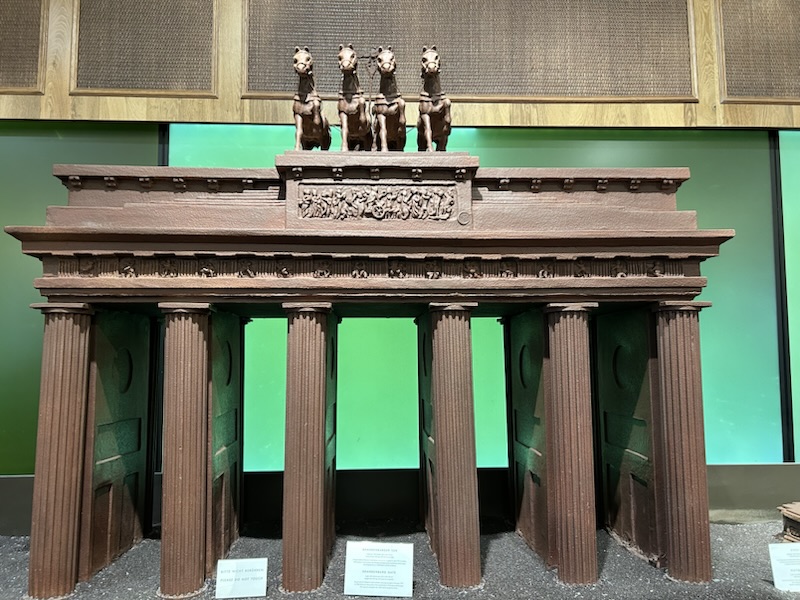
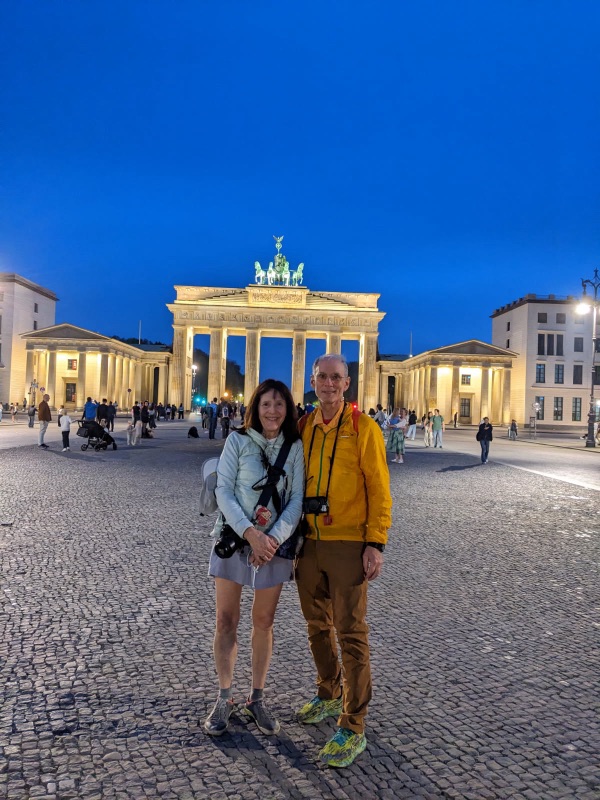
First night back in Berlin at the historic Brandenburg Gate

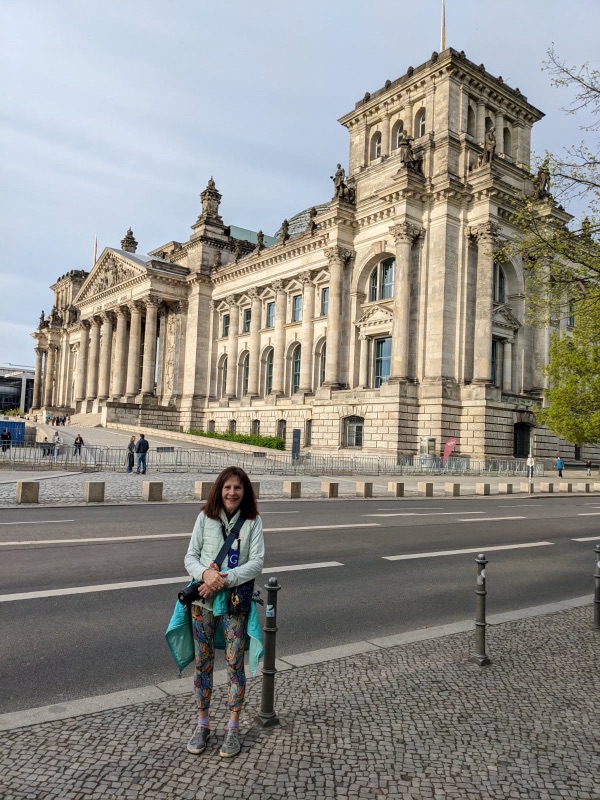
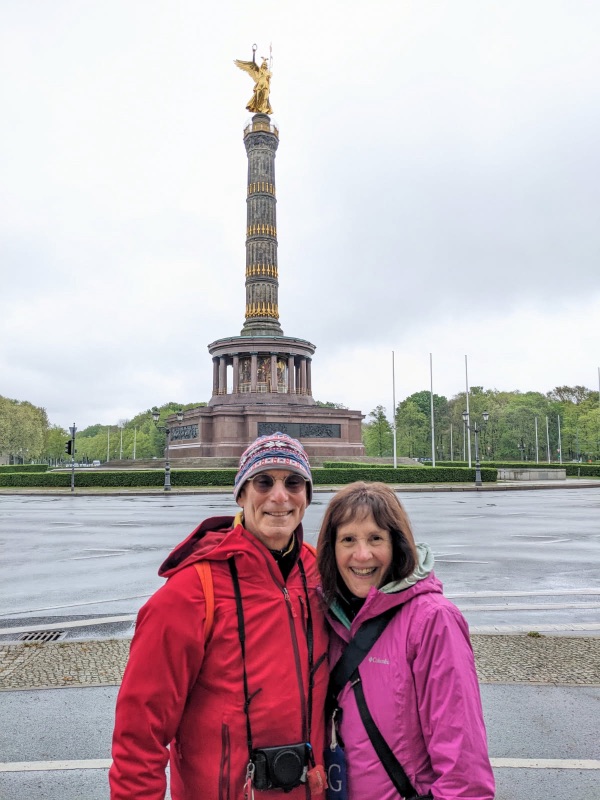
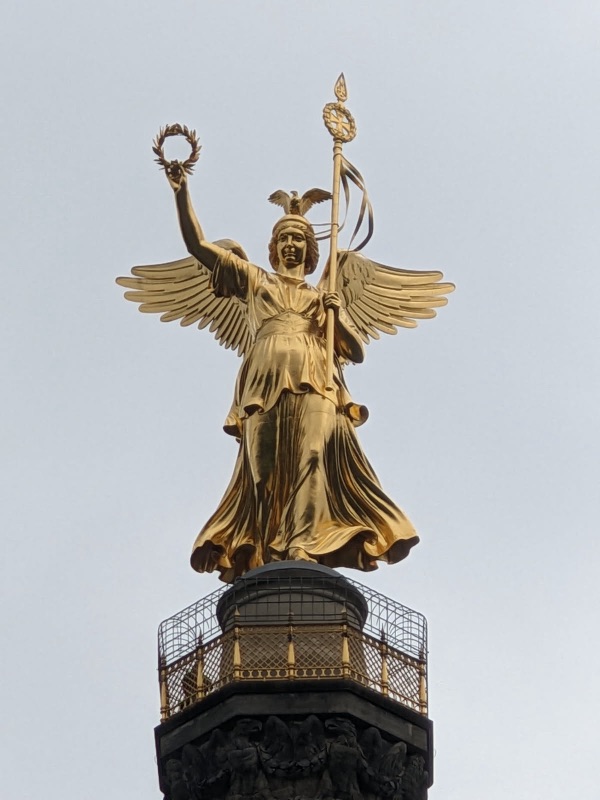
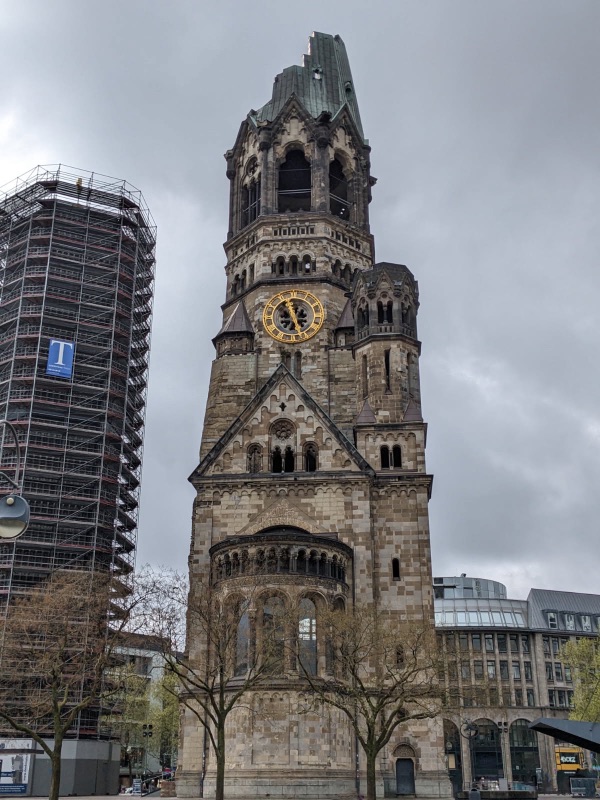
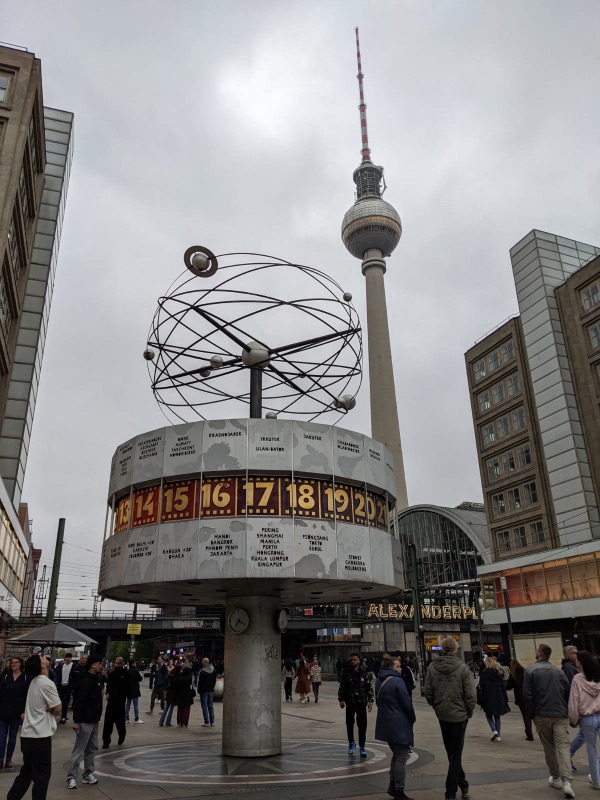
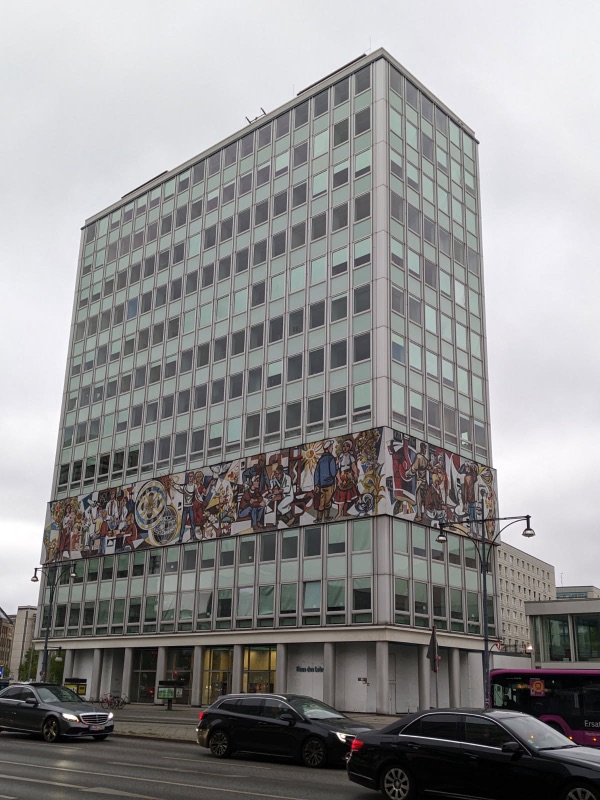
Berlin is a fascinating & beautiful city that has changed greatly as its history unfolded. It seems that every step here is filled with history that has many twists & turns.

But, Berlin is so much more than its history. It has the most opera houses in the world, over 180 museums, the most visited zoo in Europe (it is among the few zoos with a panda bear), & the world’s largest outdoor art gallery that is free to see.

For myself, Berlin is special for many reasons. I moved here in 1982 to teach US military children whose parents were stationed in West Berlin.

In 1983, I also met my future husband here.

We lived here until 1986 which was almost right before the Berlin Wall came tumbling down on 9 November 1989.

So, returning to Berlin is always like revisiting our younger selves which is always joyful.

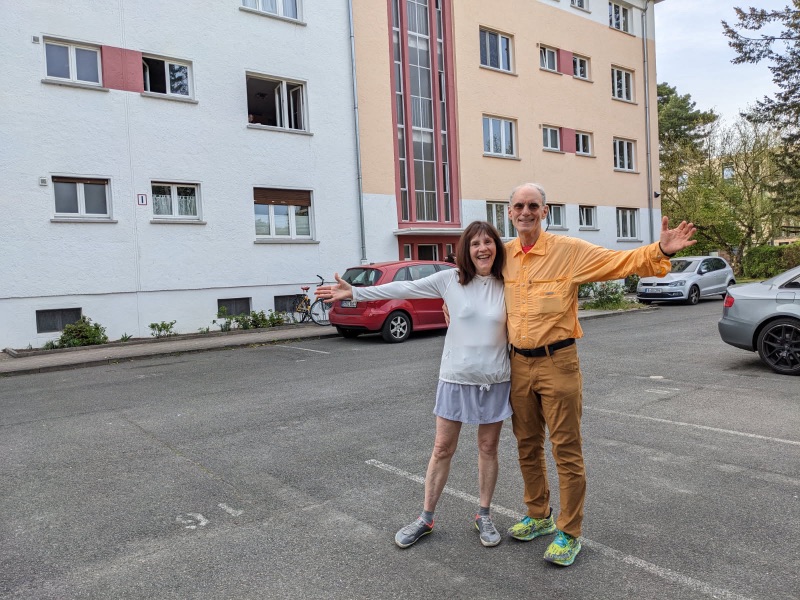
On our first day we went to the housing area where we lived & met 42 years ago. We checked out the many changes in the area. The Allied Museum is now located in the old American library & movie theater.
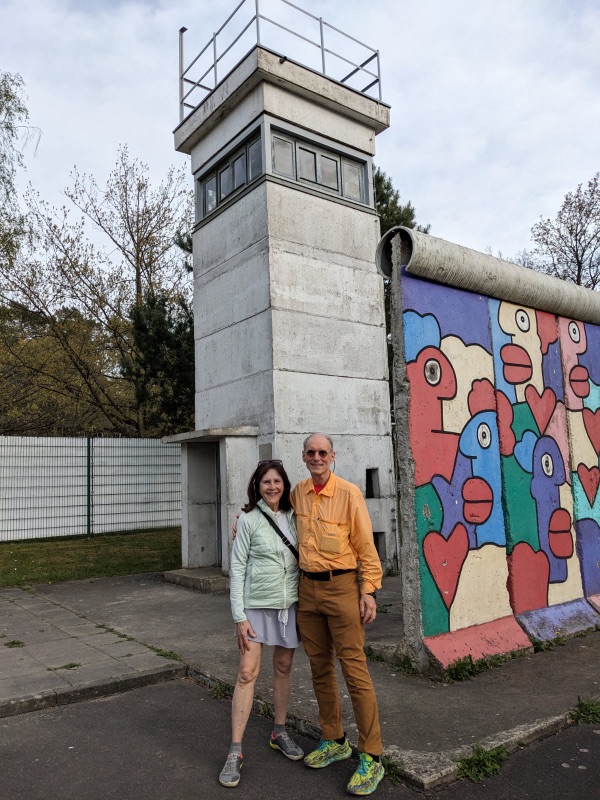
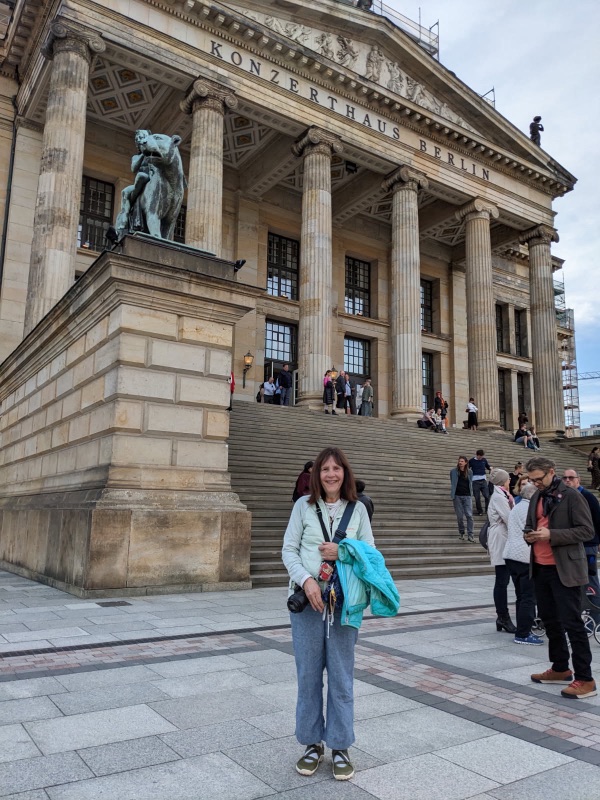
We were in Berlin only for a few days, so we didn’t have time to revisit all the places we loved back in the 1980s; but, we had time to see a few.

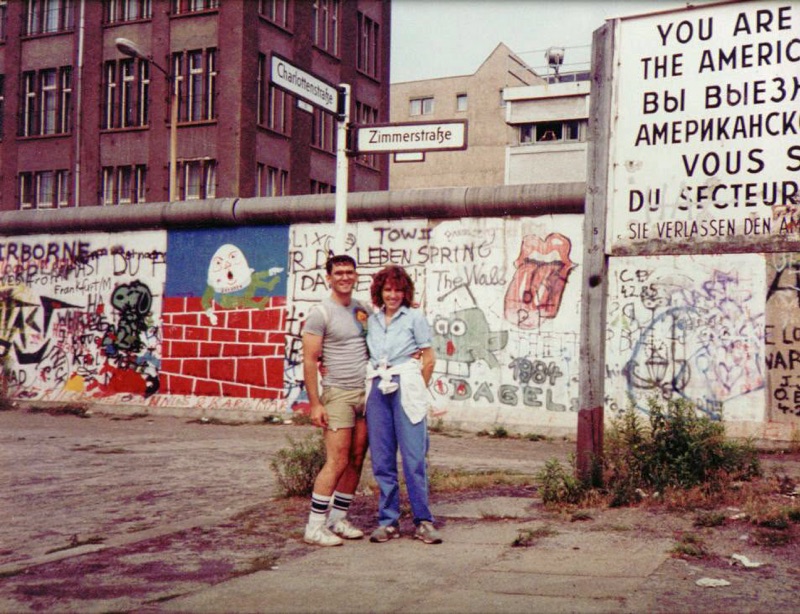
In Summer 1985, we took a picture at the wall near Checkpoint Charlie which separated East & West Berlin & my how things have changed.
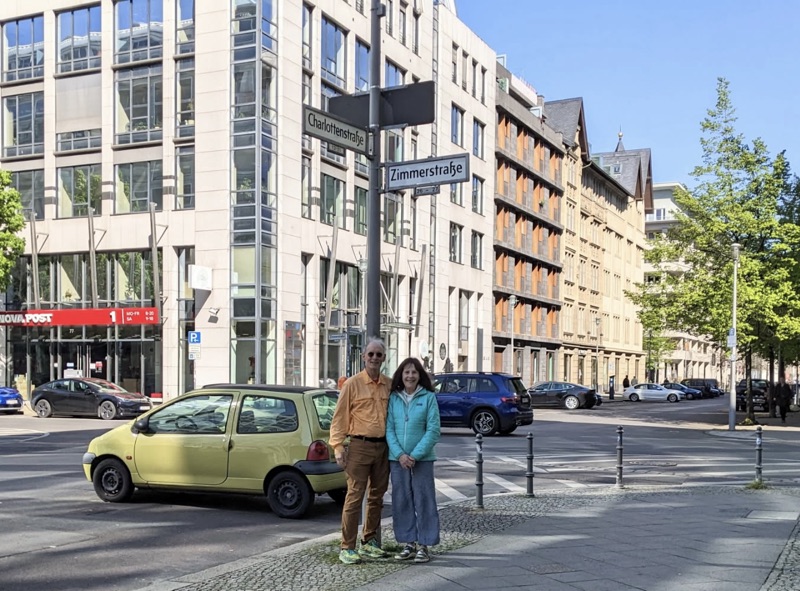
Some places never grow old no matter how often you have seen them in the past.
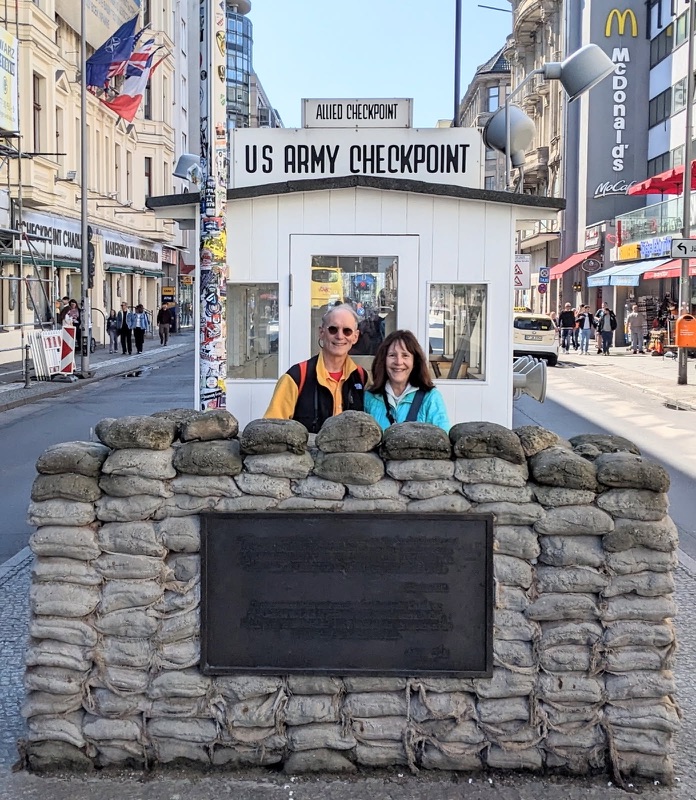
The Wall was a big part in Berlin’s history from 1961 to 1989. When we lived in Berlin, we never dreamed it would come down, let alone only a few years after we left.

When I first started driving in Berlin, the older teachers at my school always joked about never having to worry about getting lost, saying you will eventually run into the Wall & have to turn around. 🤣

It was true that for us in West Berlin that we were totally surrounded by the Wall. We were allowed to leave at anytime; but, needed a special pass called “Flag Orders” because they had an American flag on them. They were also written in English, French, & Russian which were the languages of the occupying powers- America, Britain, France, & Russia. Flag Orders were necessary to leave & return to West Berlin by car or train.
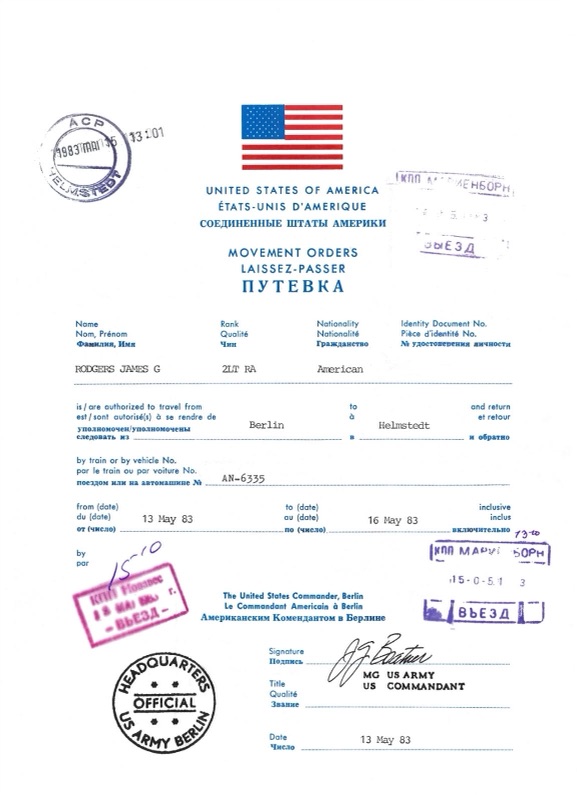
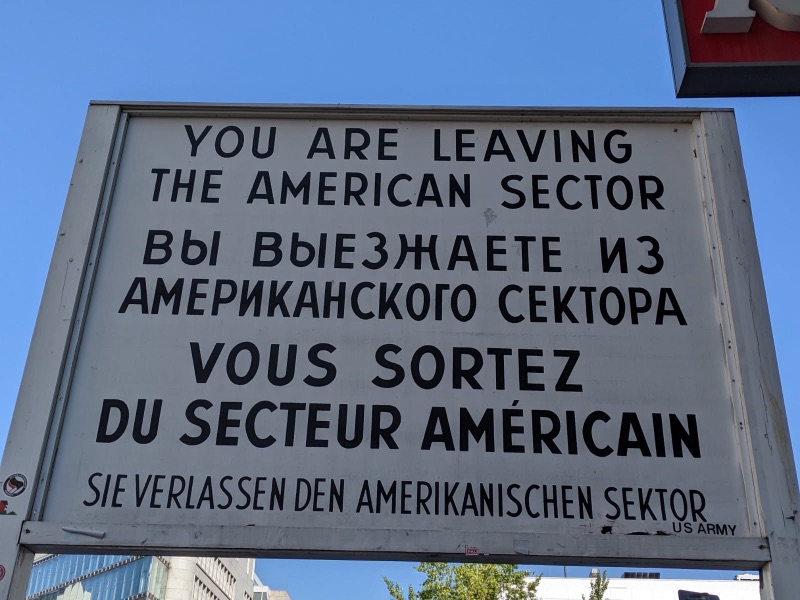
Flag Orders- Note the Russian stamps to get through Checkpoint Alpha which was on the border between East & West Germany & through Checkpoint Bravo which was the entry point into West Berlin from East Germany

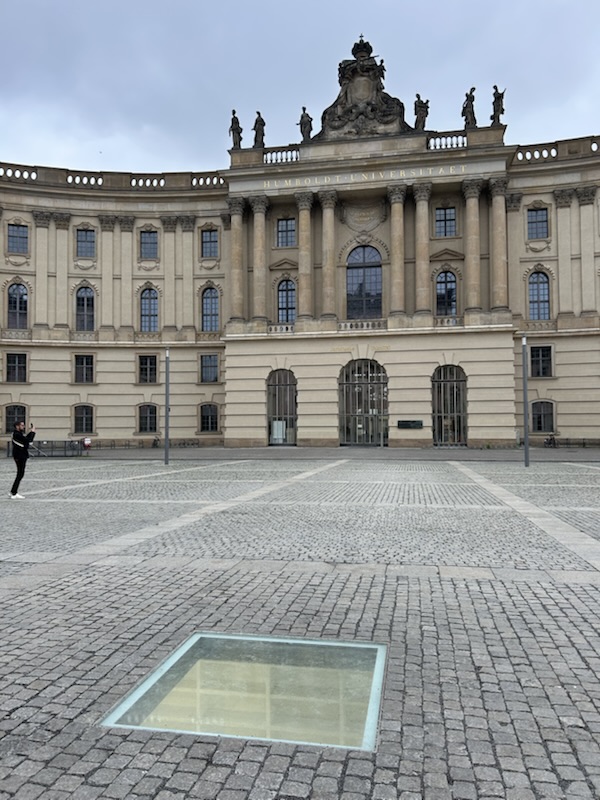
The Jewish Holocaust Memorial is located in what we formerly called “No Man’s Land” or the “Death Strip.” This was a wide open space in the East adjacent to the Wall. It is also the area in which Hitler’s Bunker where he committed suicide was located.
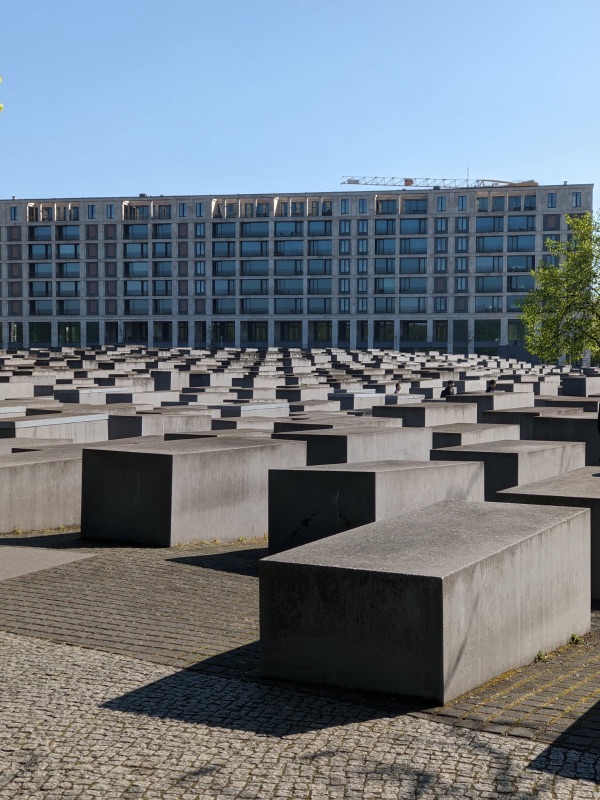
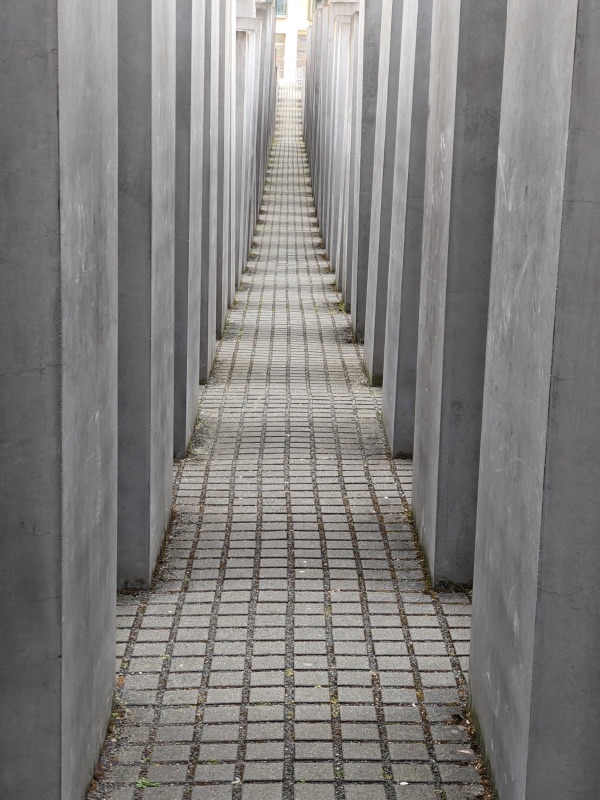
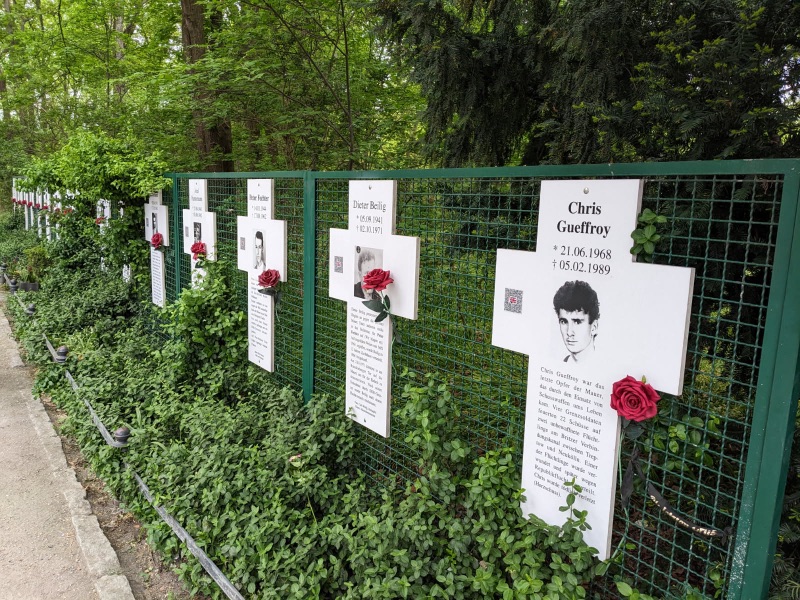
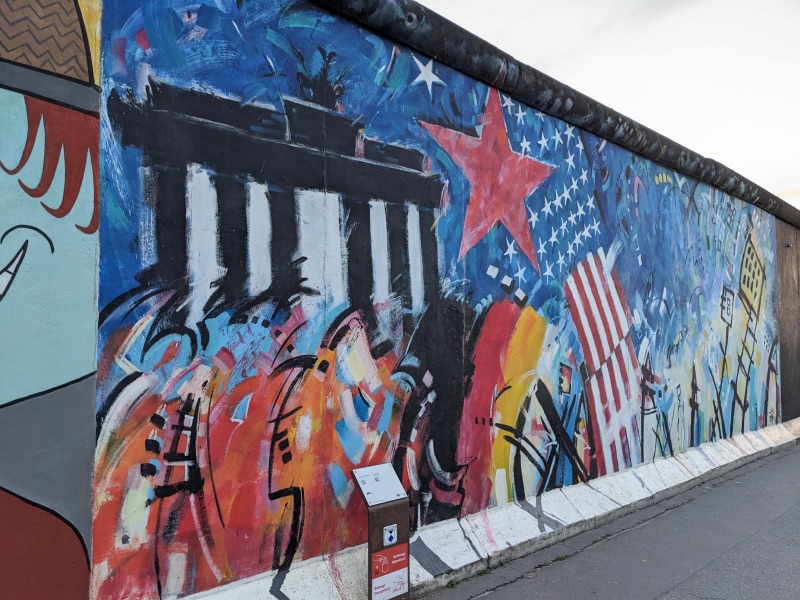
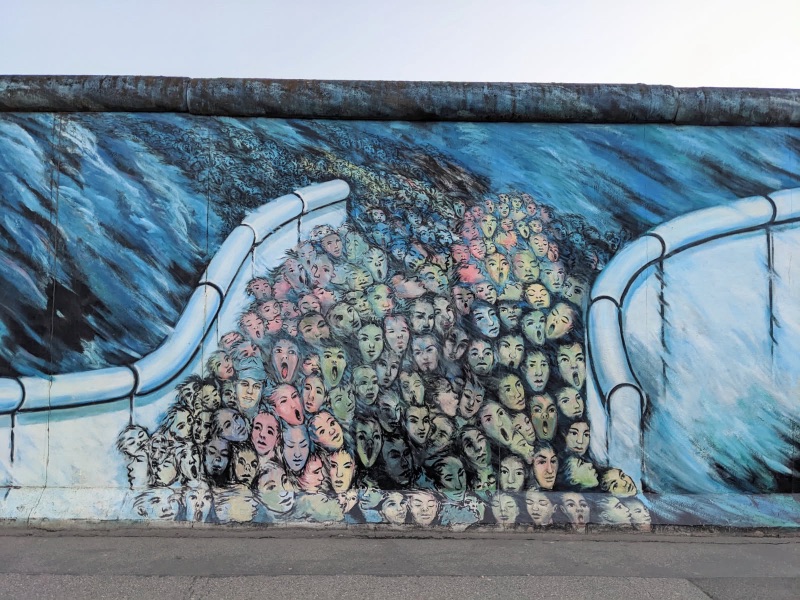
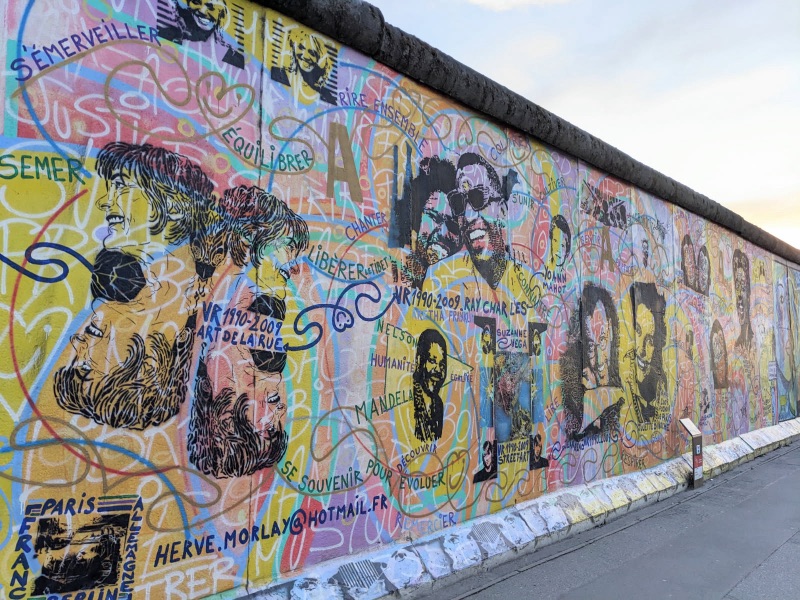
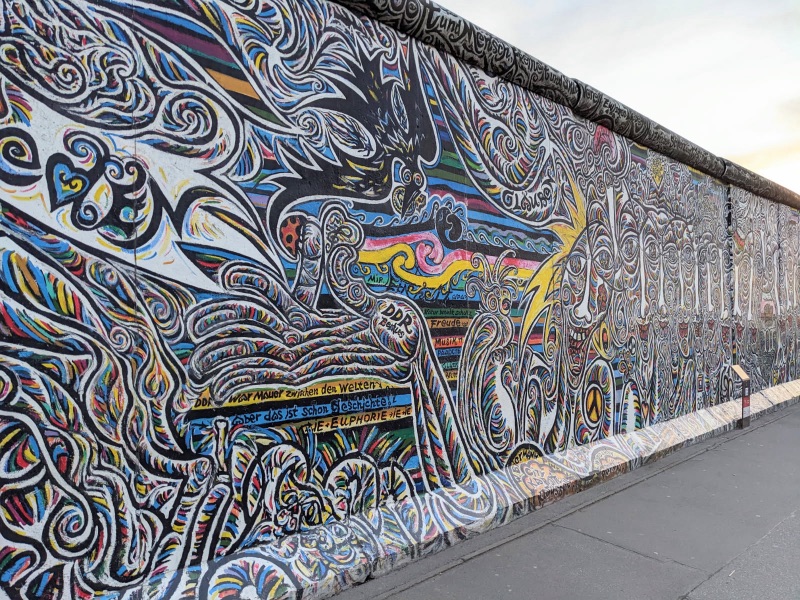
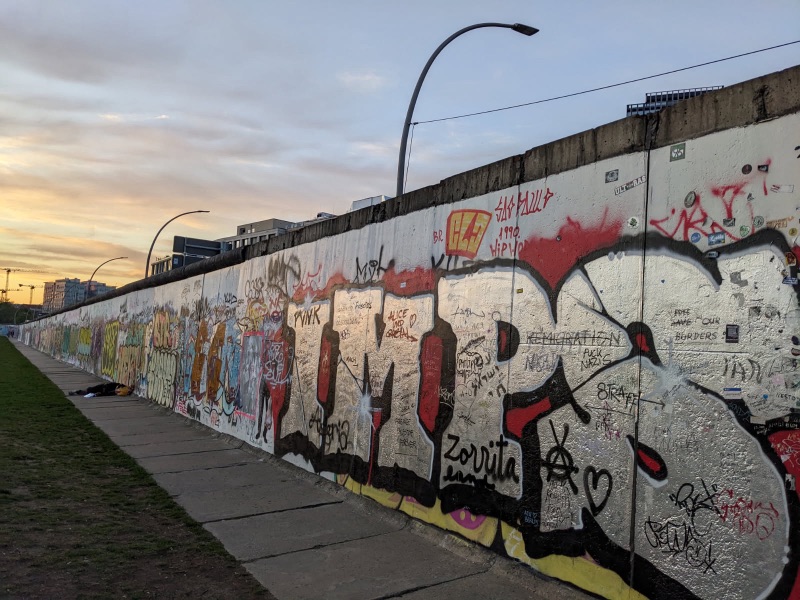
Although individual Wall segments are displayed throughout the city, Wall sections still exist in only two places- Bernauer Strasse & Muhlenstrasse
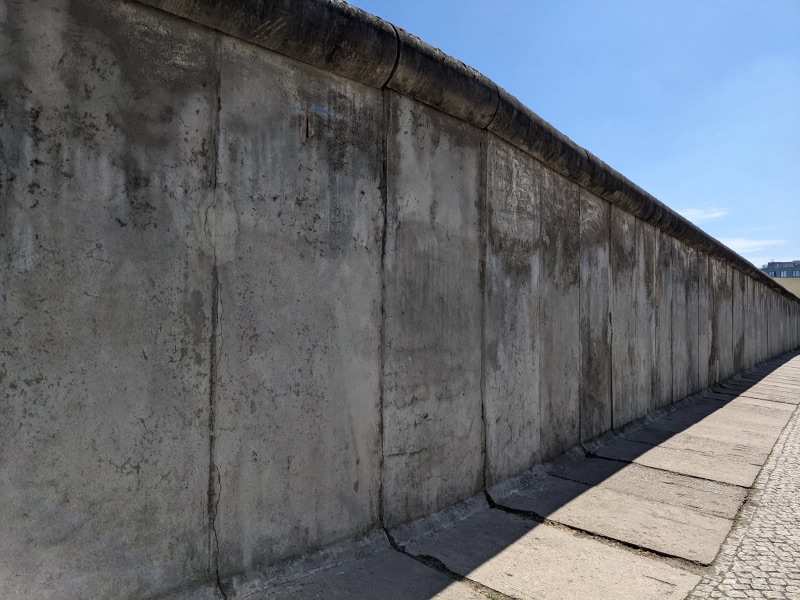
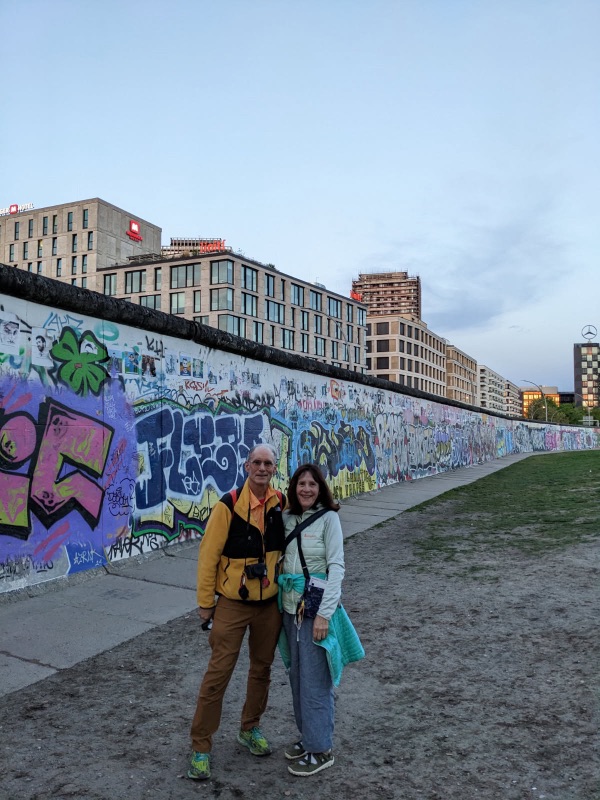
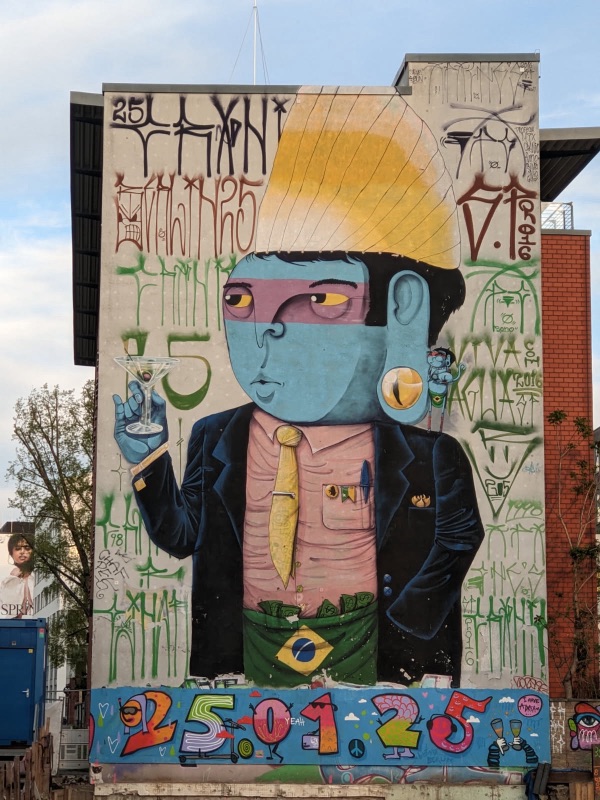
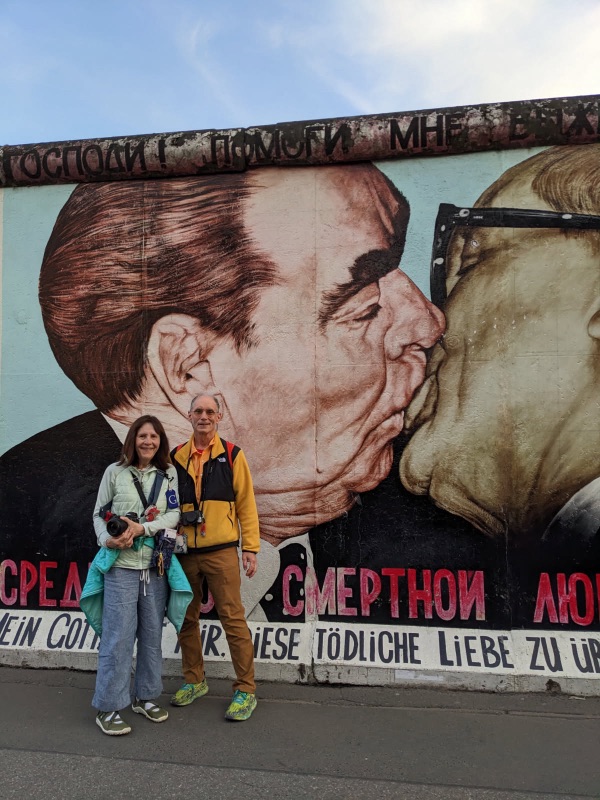
The large section at Muhlenstrasse along the Spree River was opened to artist & is calked called The East Side Gallery. 118 artists from 21 countries were invited to paint on the Wall’s plain, unpainted side after it opened. It is now the world’s longest open air art gallery & is a protected memorial.
As Americans associated with the US military, we had special license plates on our cars so we were not allowed to be searched by the East Germans when entering or exiting East Berlin.

Also, American soldiers were required to be in uniform when going to East Berlin.

However, returning to the former East Berlin area now has no such requirements.

When entering East Berlin, you were required to give the American authorities at Checkpoint Charlie the time when you planned to return to the West. Since I didn’t want to get lost, I never ventured too far off the main streets & possibly missing my return time which meant a search party would have been dispatched to find me.

However, with no such restrictions or concerns on this trip, we went to many places we had never previously gone.
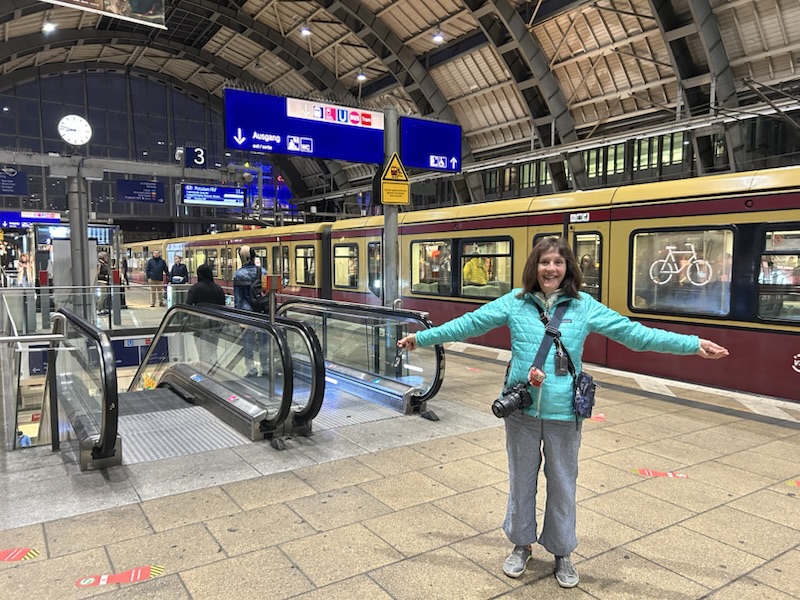
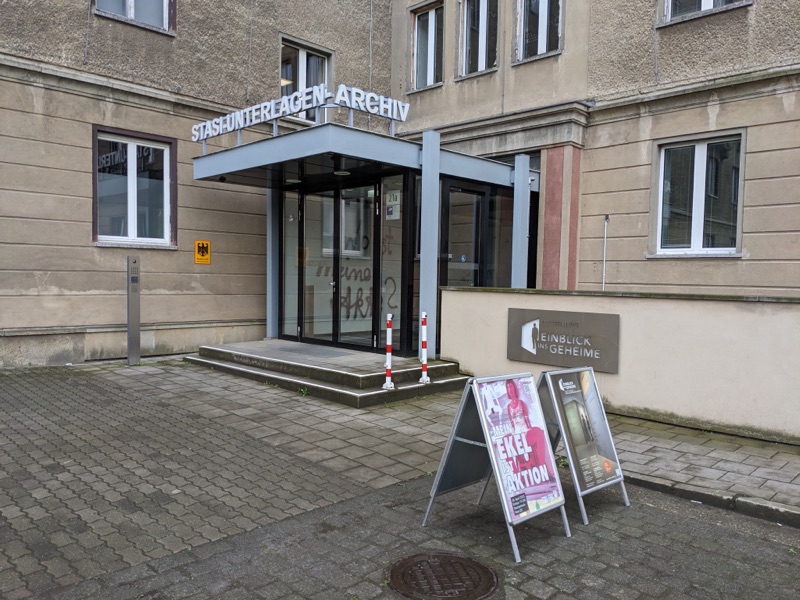
At the Stasi archives we applied to see if they even had a file on us. ⁉️🤨

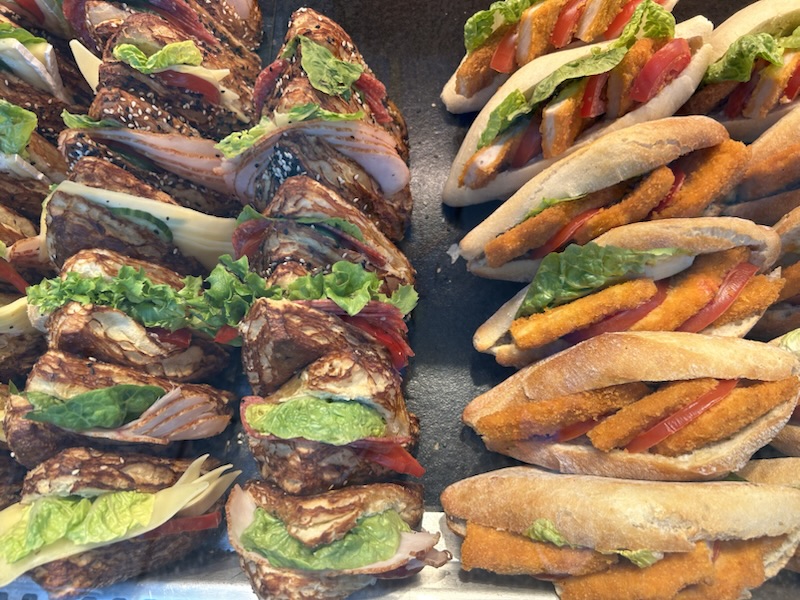
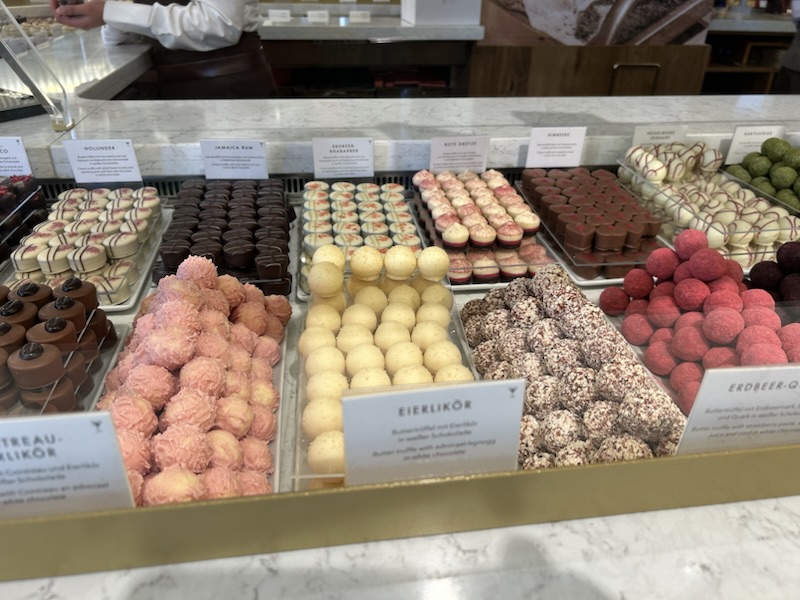
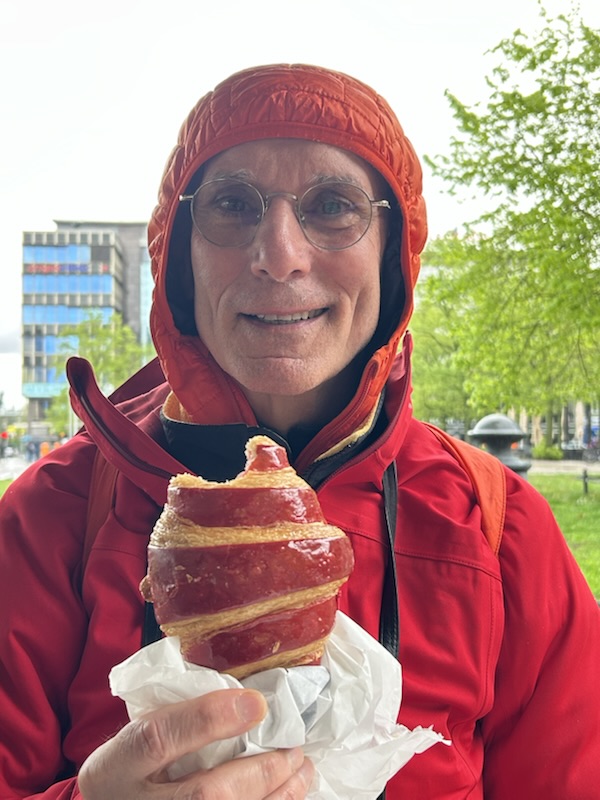
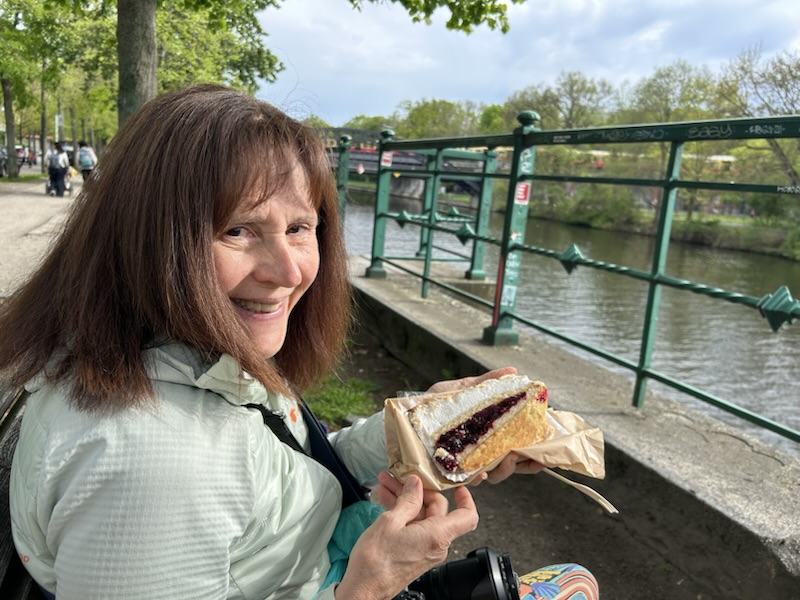
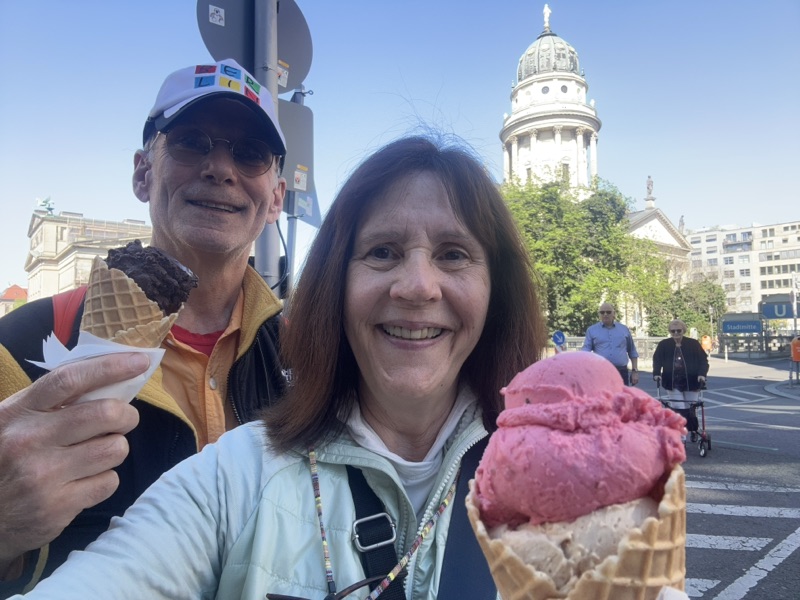
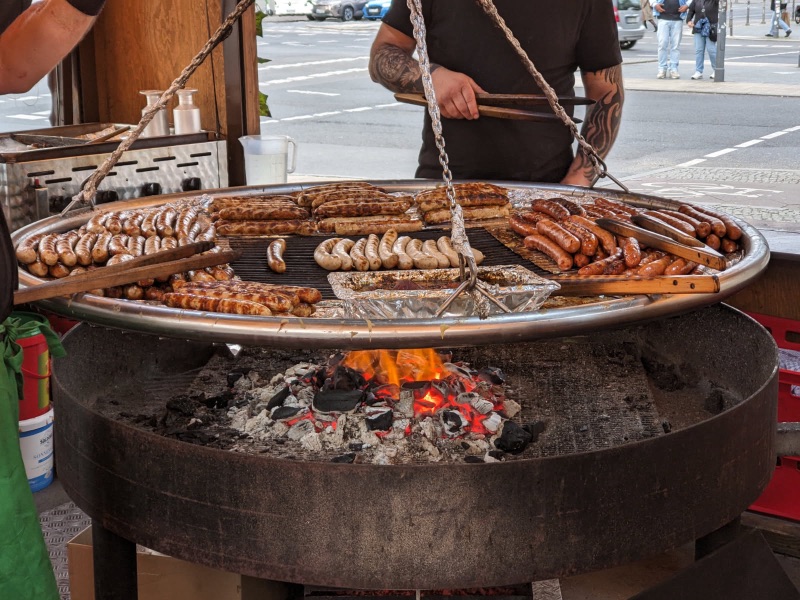
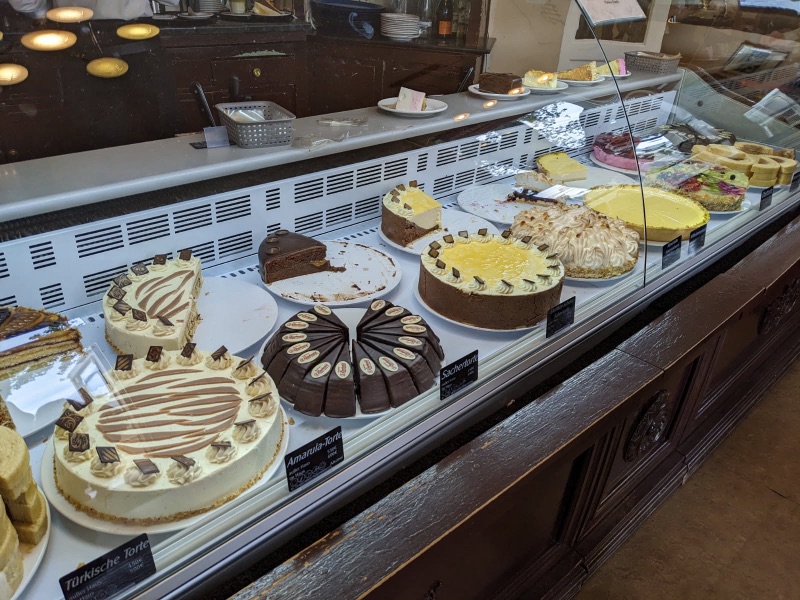
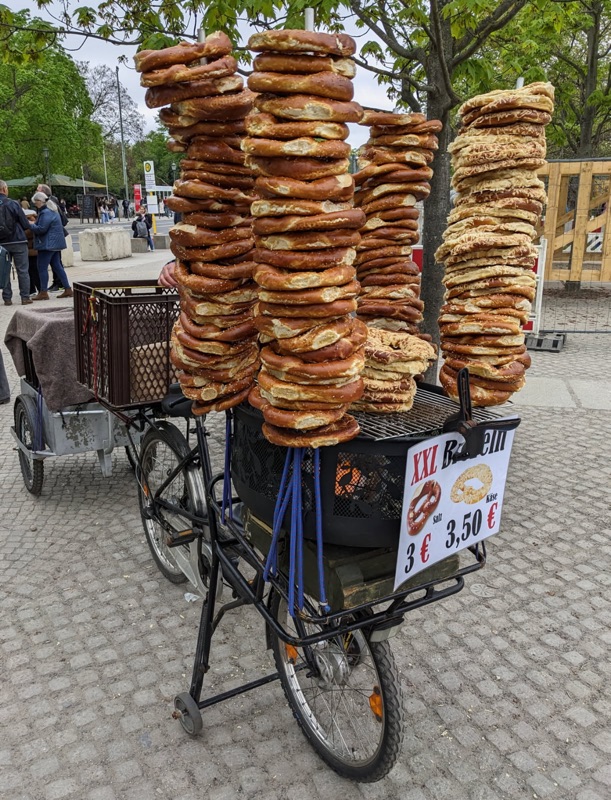
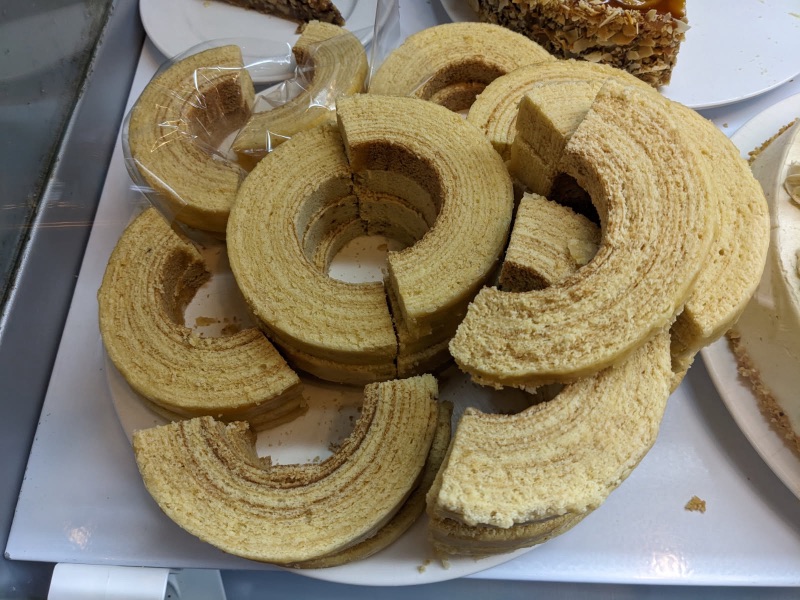
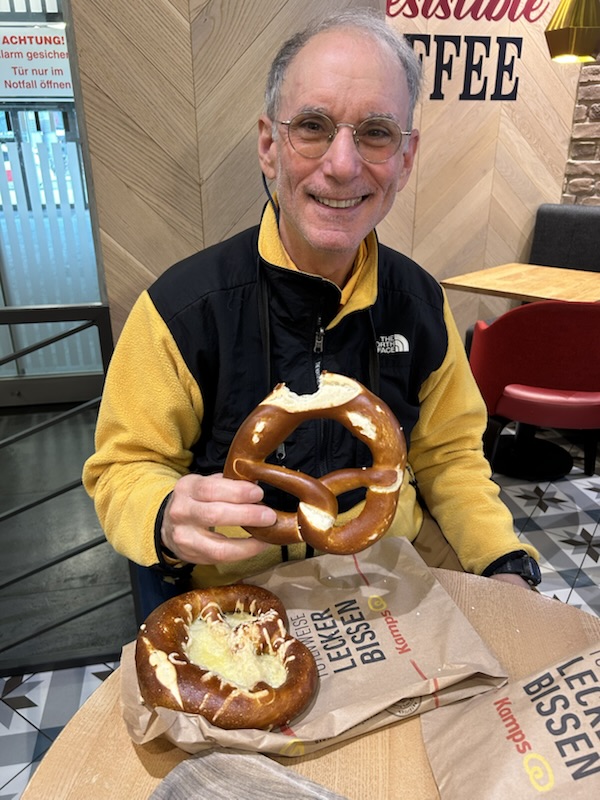
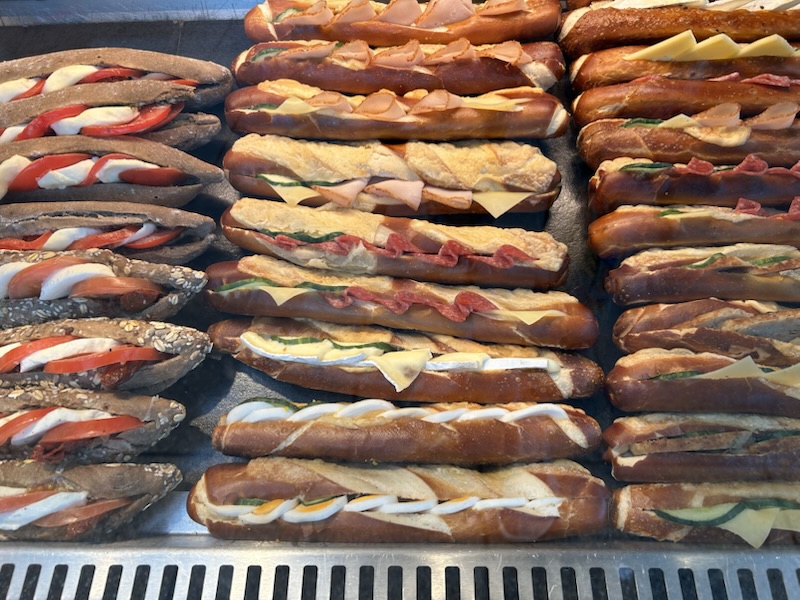
Of course, one of my favorite things about Germany is the BREAD! And then some desserts as well. I like their desserts because most are only slightly sweet.
For the 28 years that the Wall existed, West Germany gave its citizens incentives to live in Berlin such as lower taxes, financial subsidies for having children, & relief from its mandatory military service requirement.

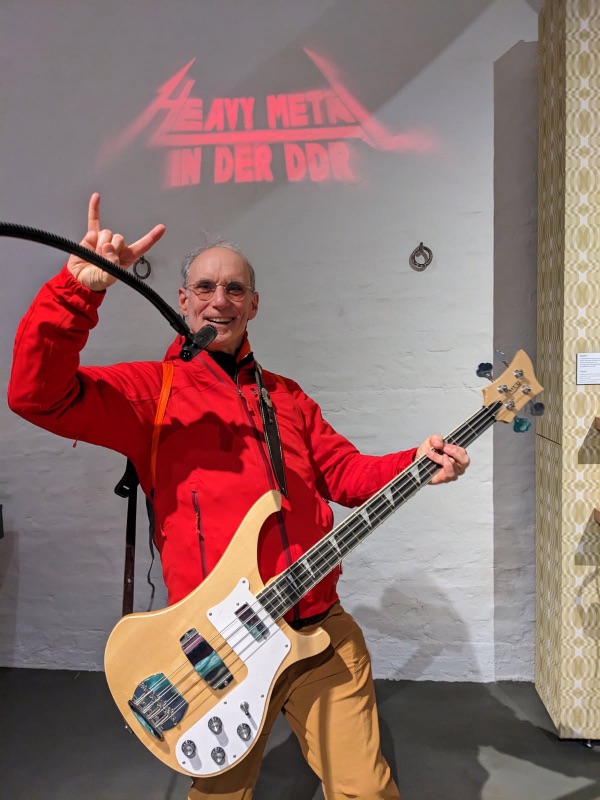
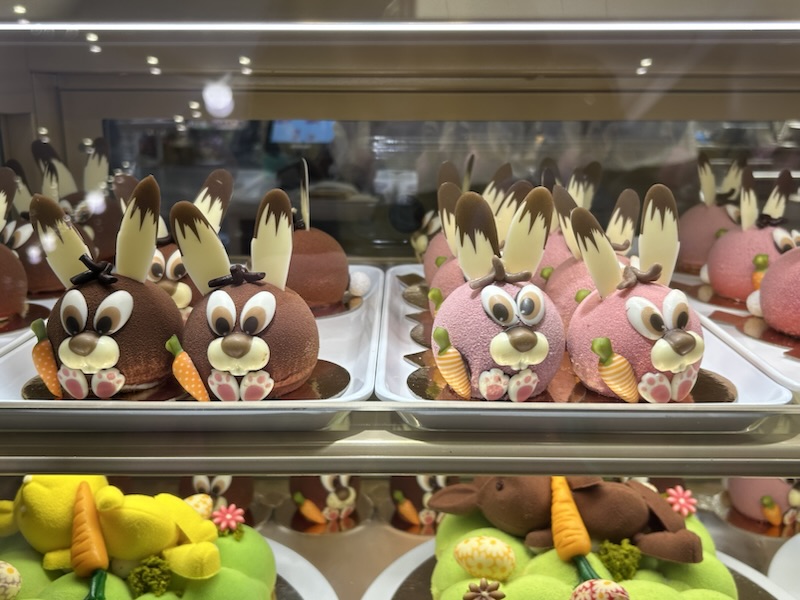
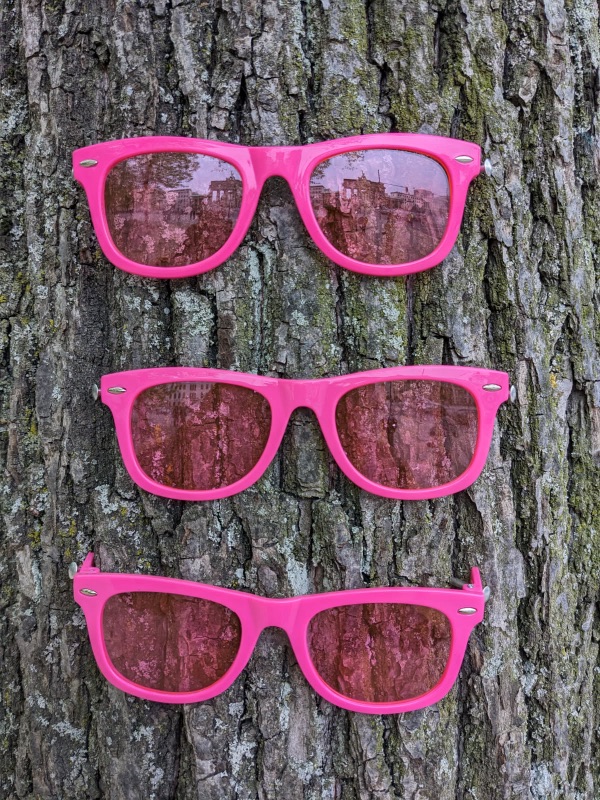
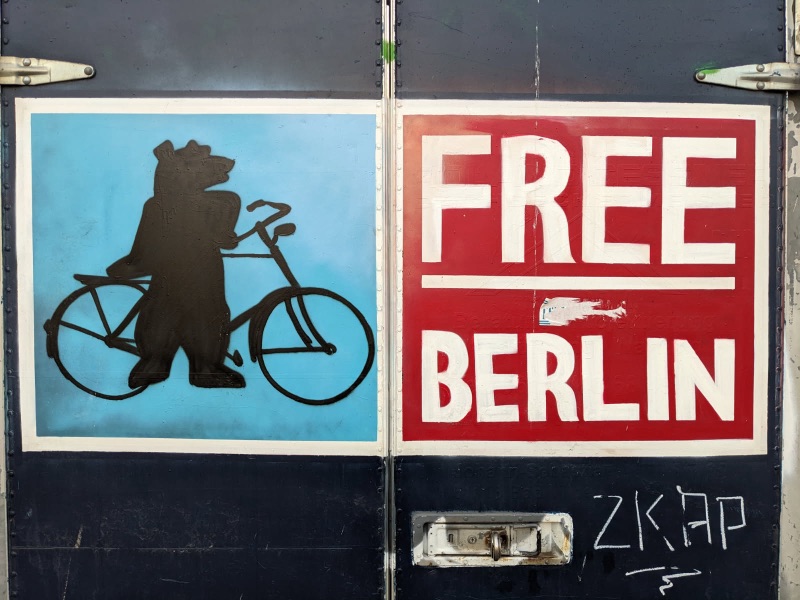
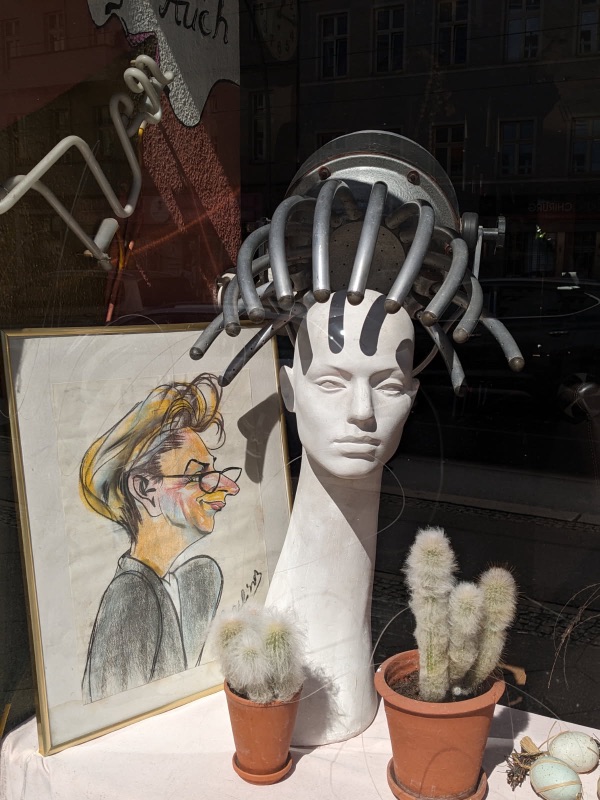
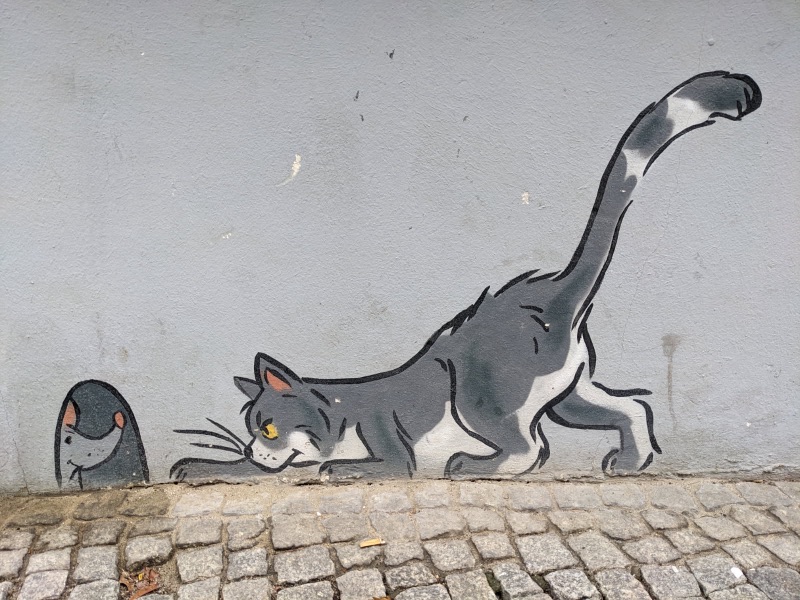
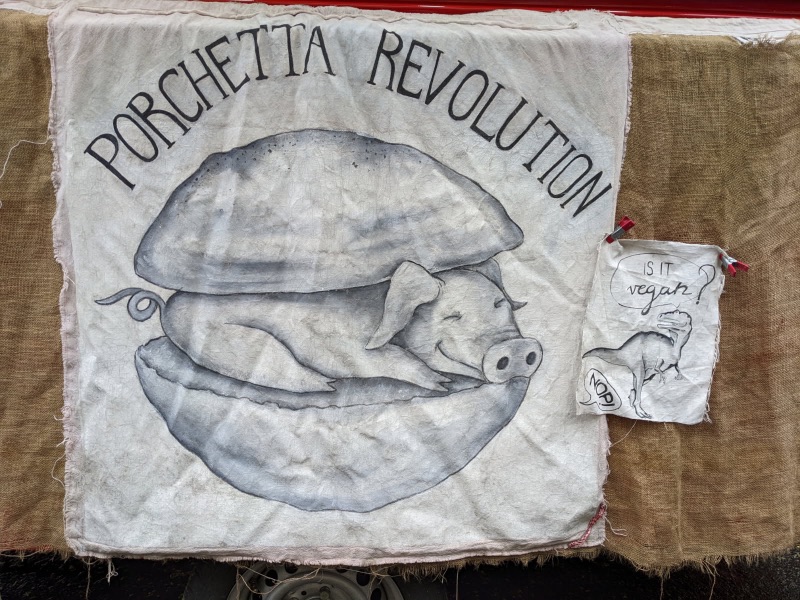
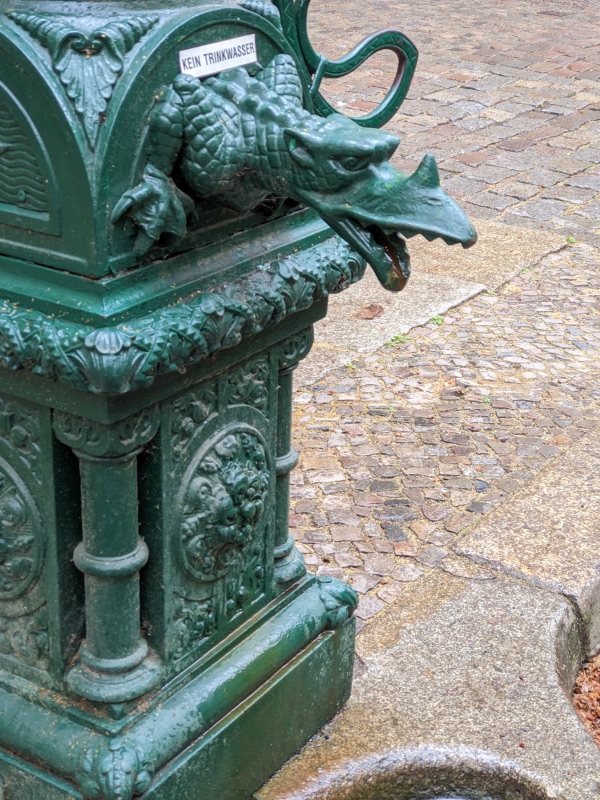
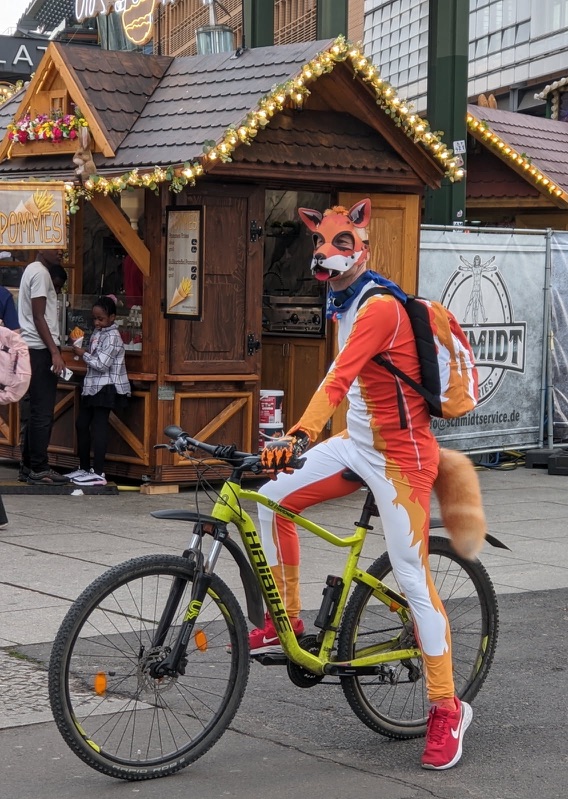
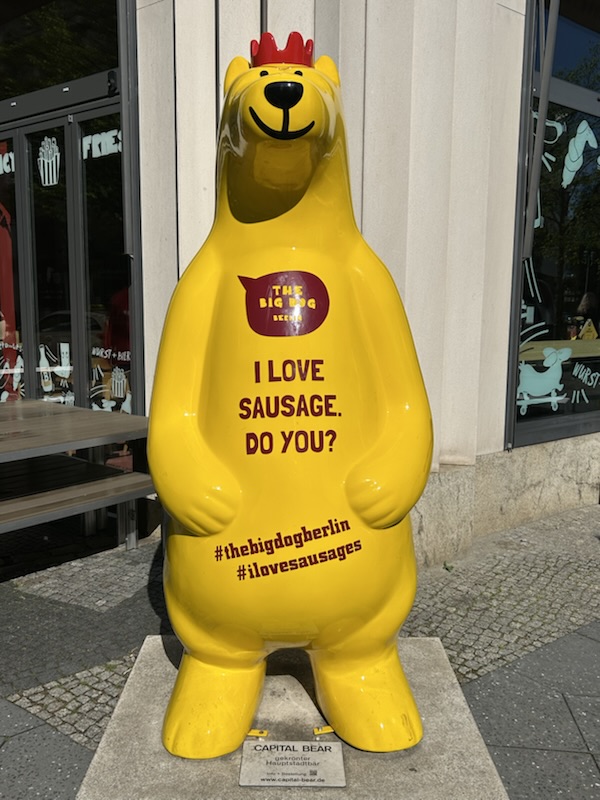
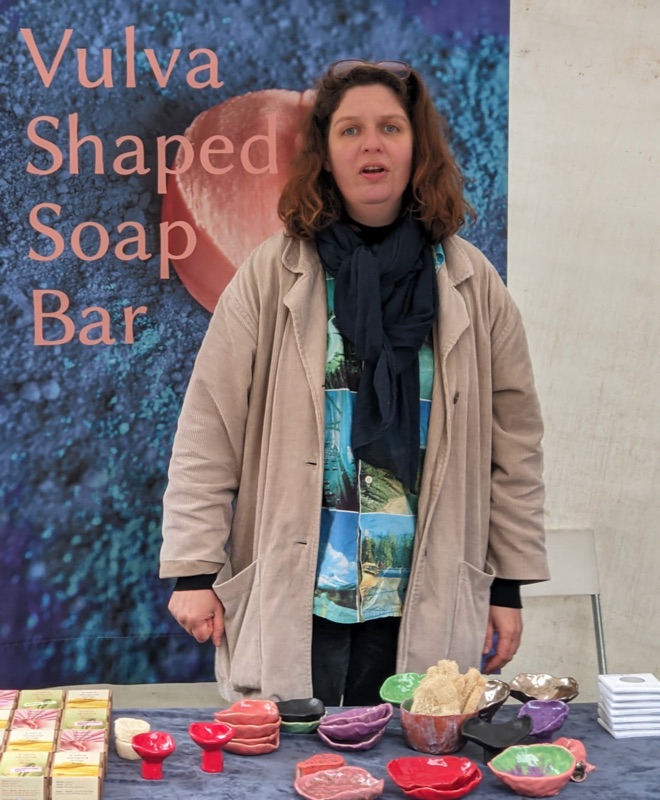
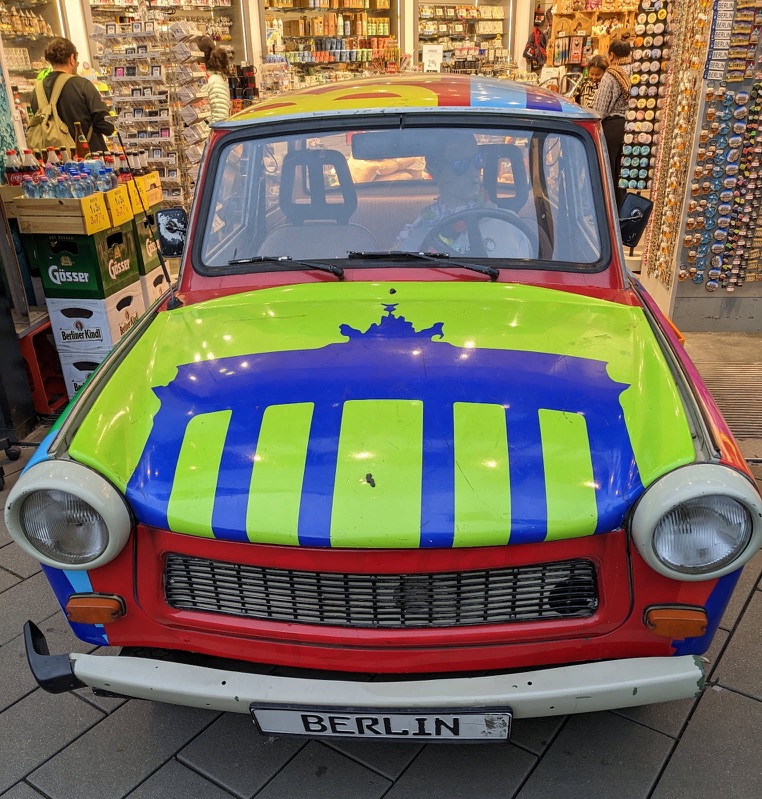
Those policies helped create & encourage Berliners to be unique & a bit quirky. These photos show just a touch of that whimsy. People who look at the world through different eyes are always welcomed here. Hmmm, maybe that’s why I love Berlin so much. 🥰
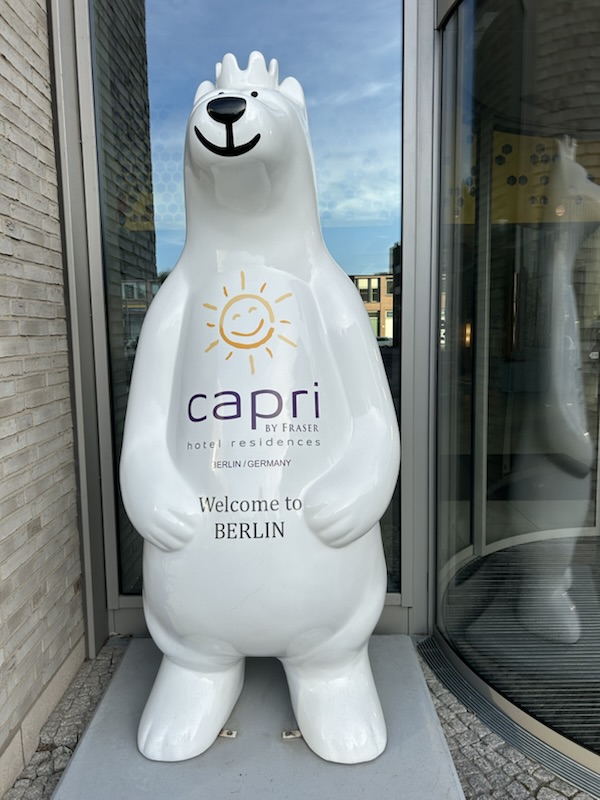
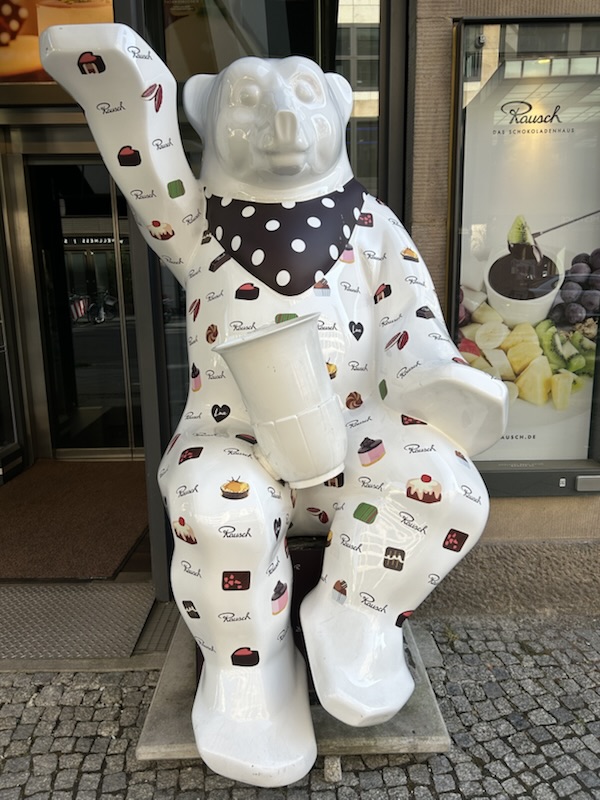
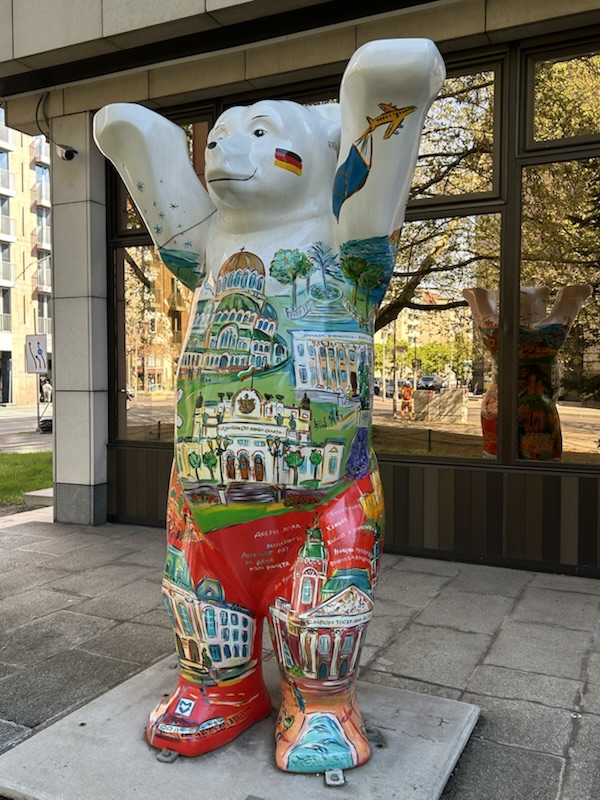
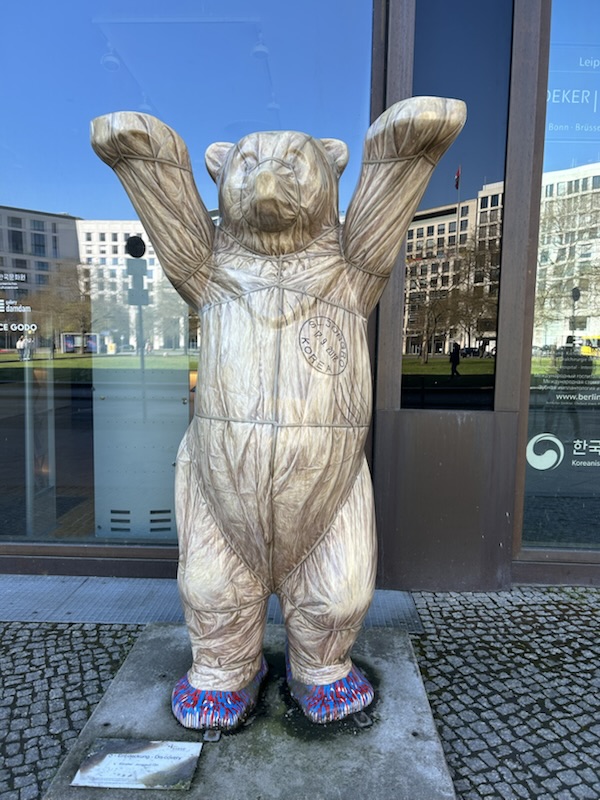
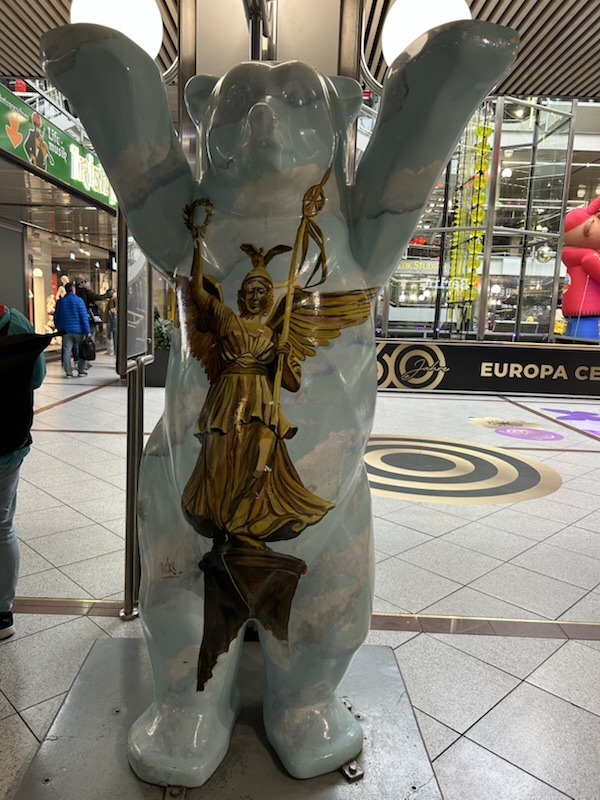
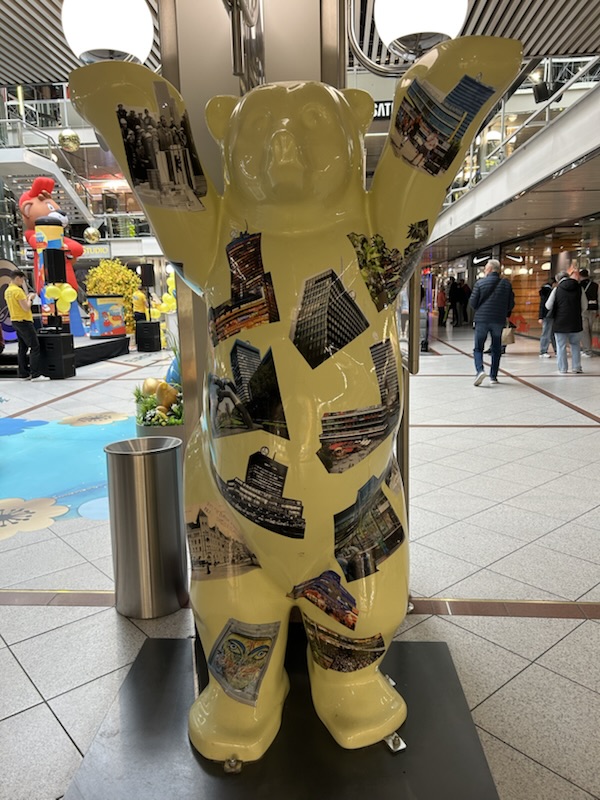
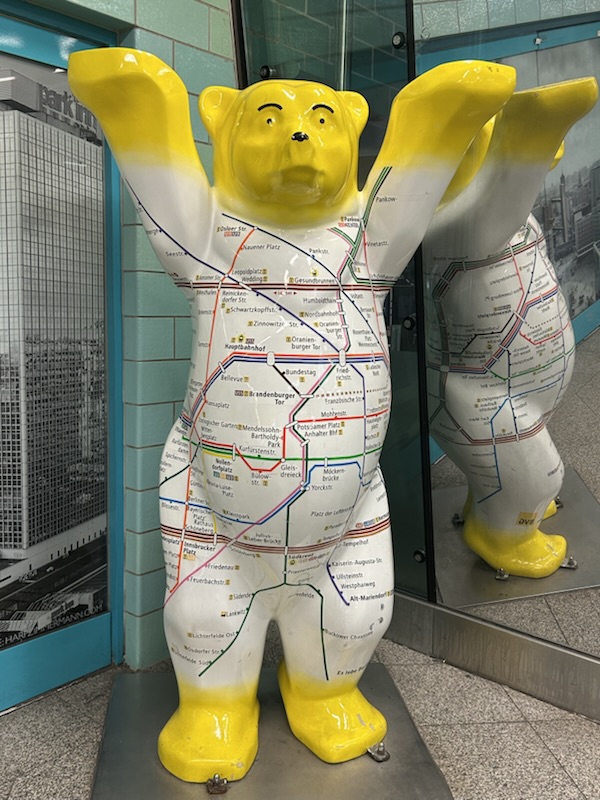
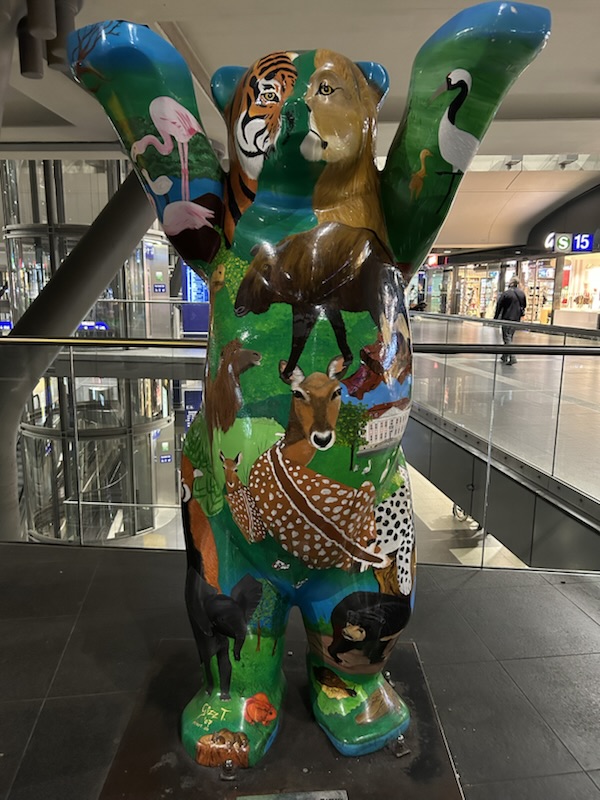
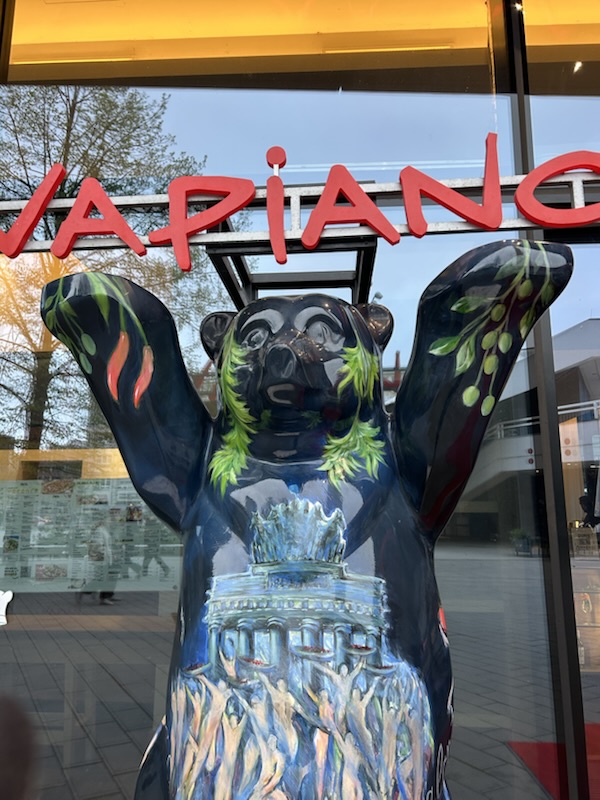
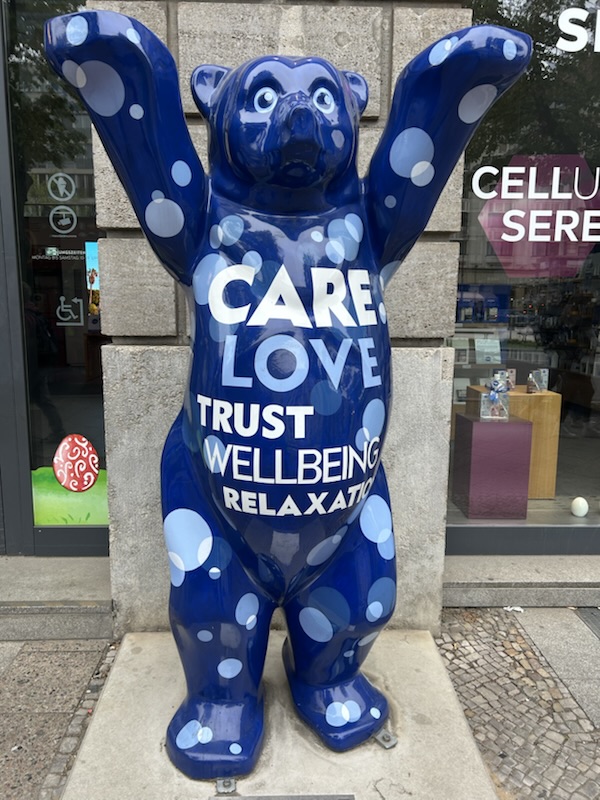
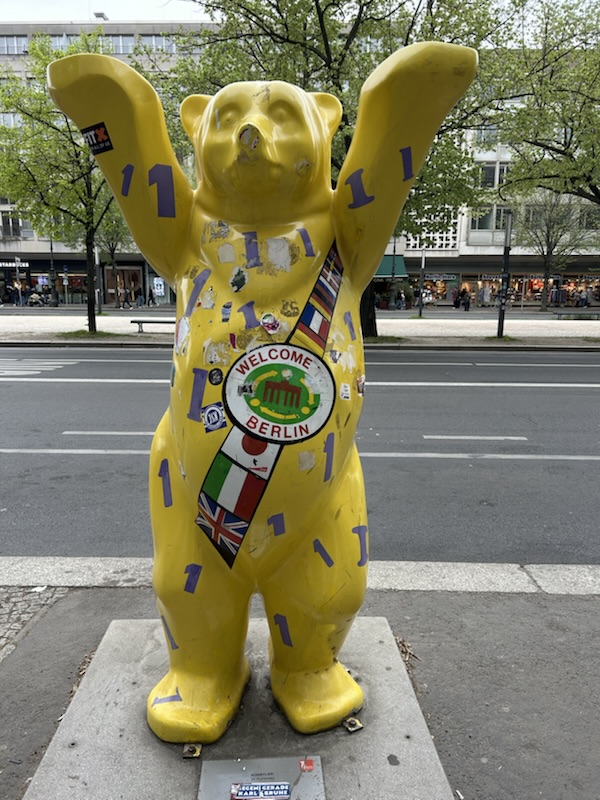
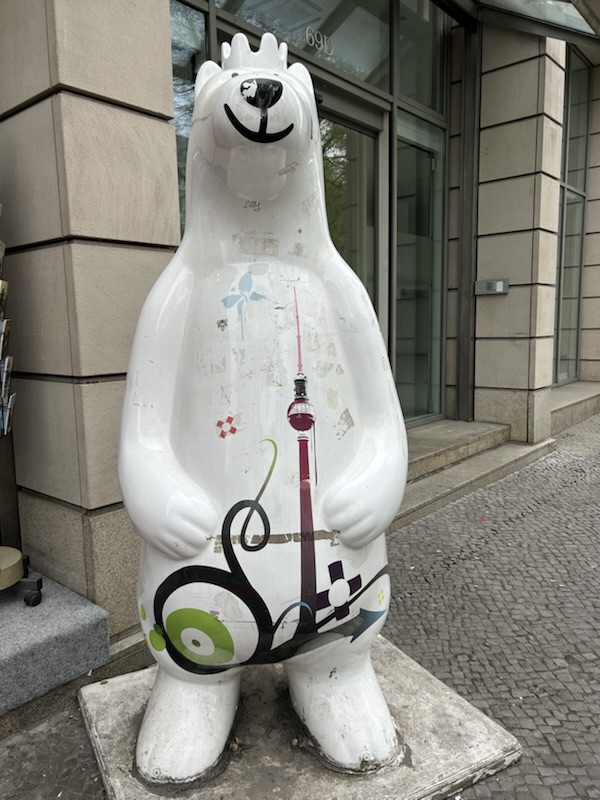
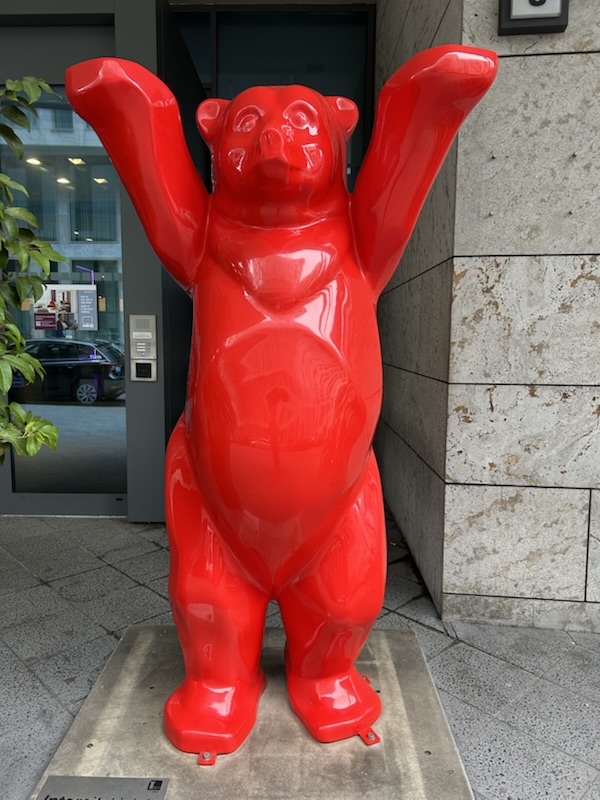
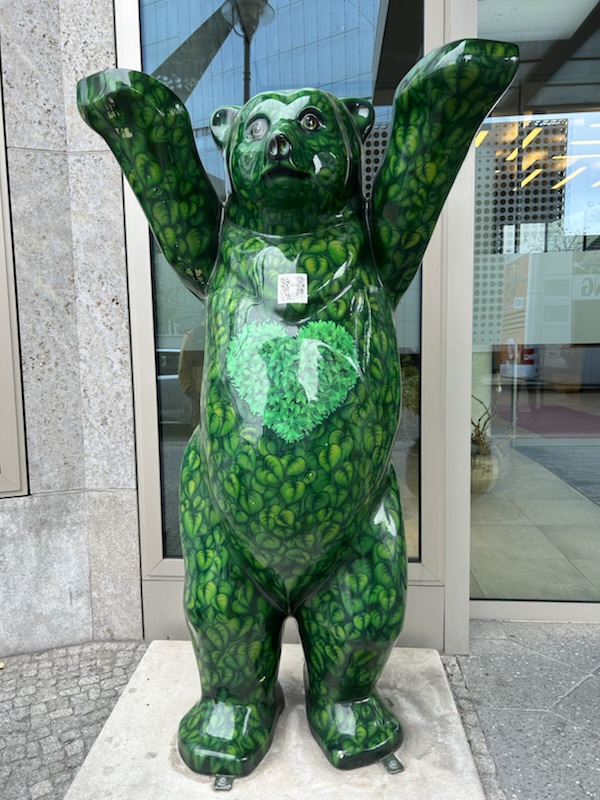
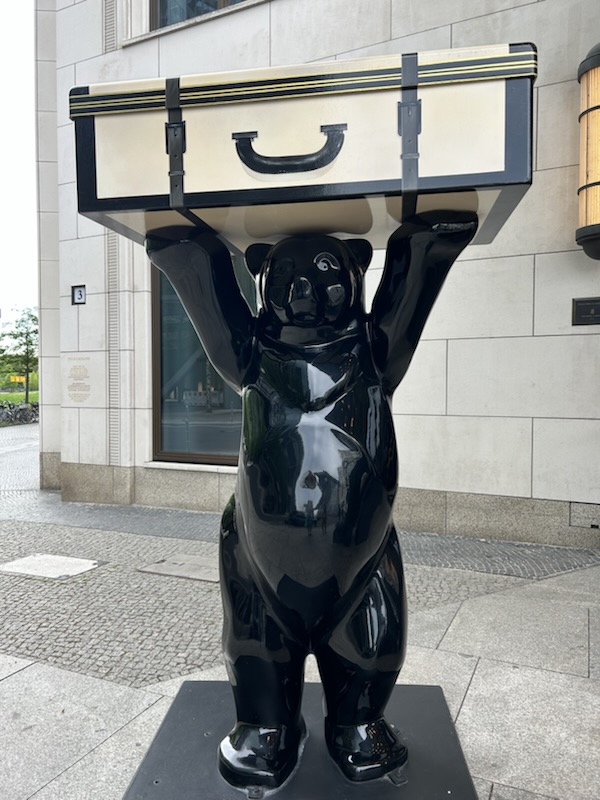
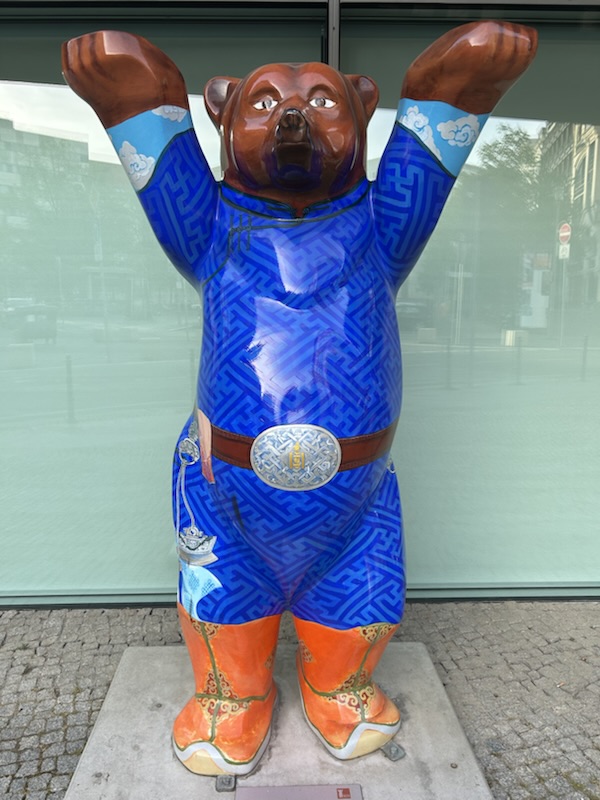
Finally, and last but not least, Berlin’s city symbol is the Bear. You see Bear statues all over the city. Here are a few that are displayed. Pick your favorite.
My Top 10 Reasons to ❤️ Japan

One

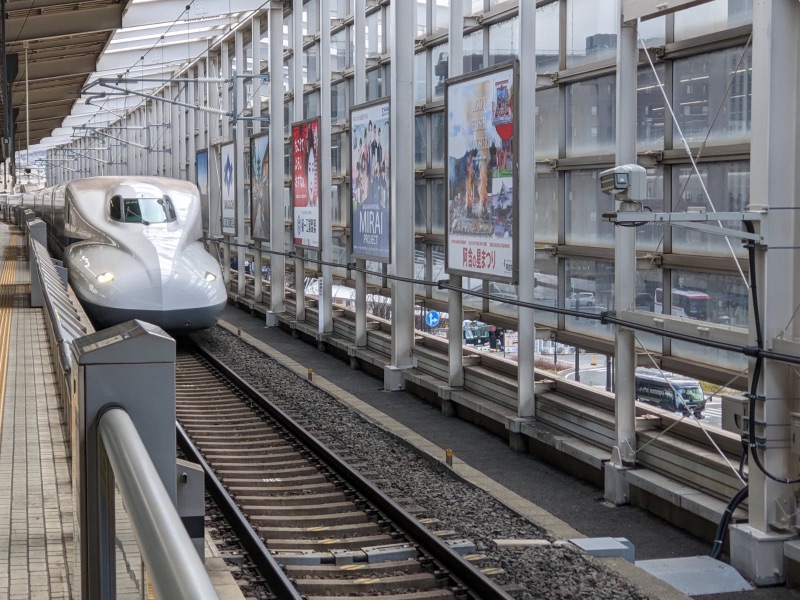
The Shinkansen or “bullet train.”

Very fast, smooth, & almost always on time.

Two

Super CLEAN!

Just try to find trash on the ground.

This in itself is amazing; but, even more astounding is there are hardly any public trash cans in sight.

Paper towels are very hard to come by in their public bathrooms.

One day my husband saw a child drop a package of the gummy bears on the ground & then pick them all up.

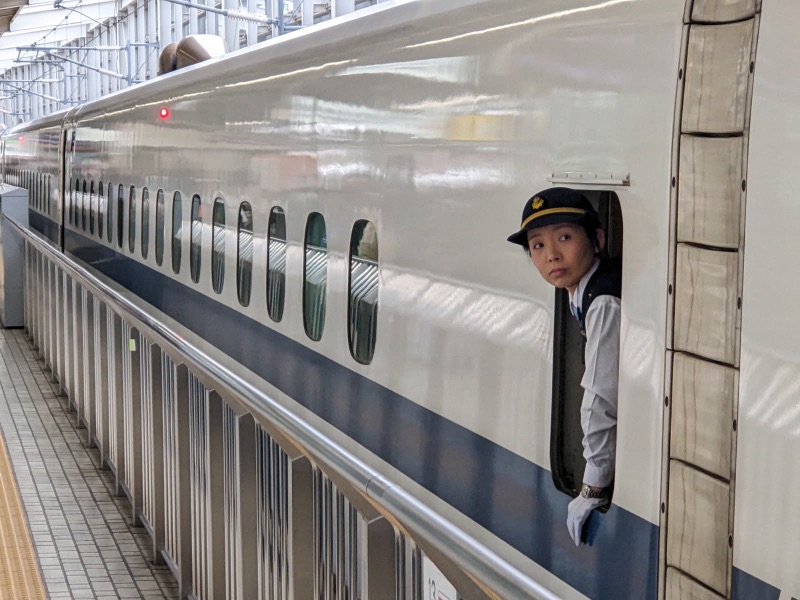
I saw someone drop a small piece of paper on the ground by accident as they exited the train. In less than 30 seconds, a train conductor picked it up.

Even the garbage trucks are spotless.

Three

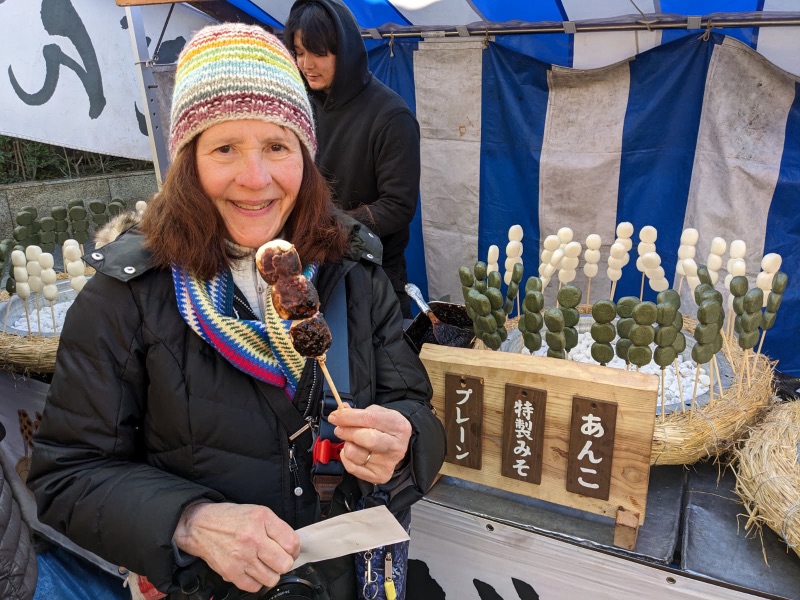
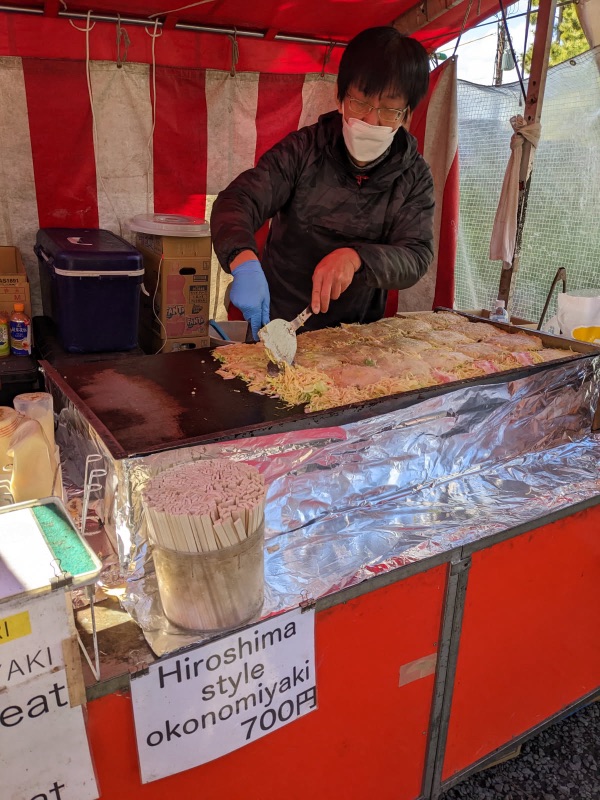
The food.

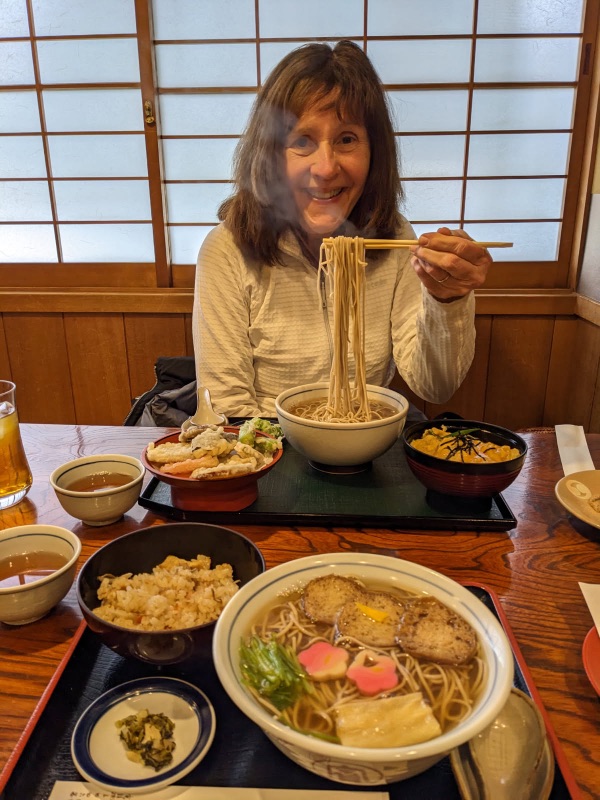
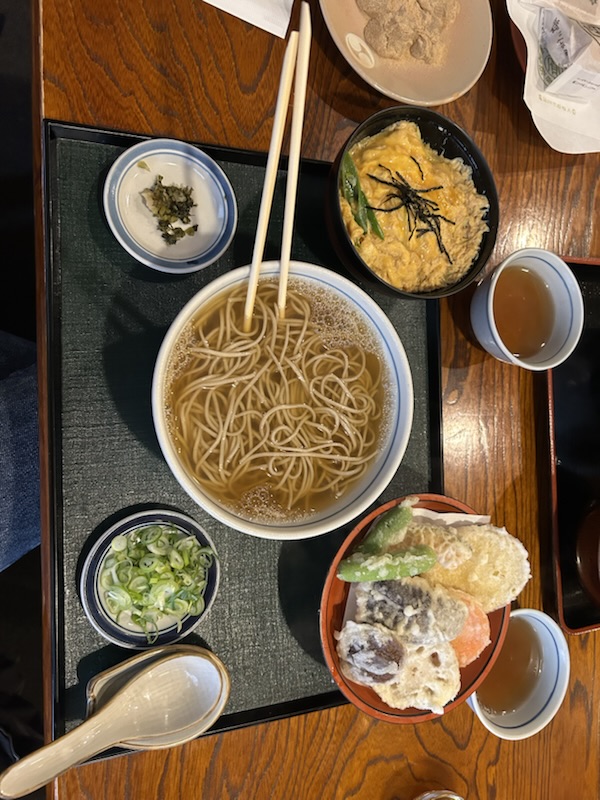
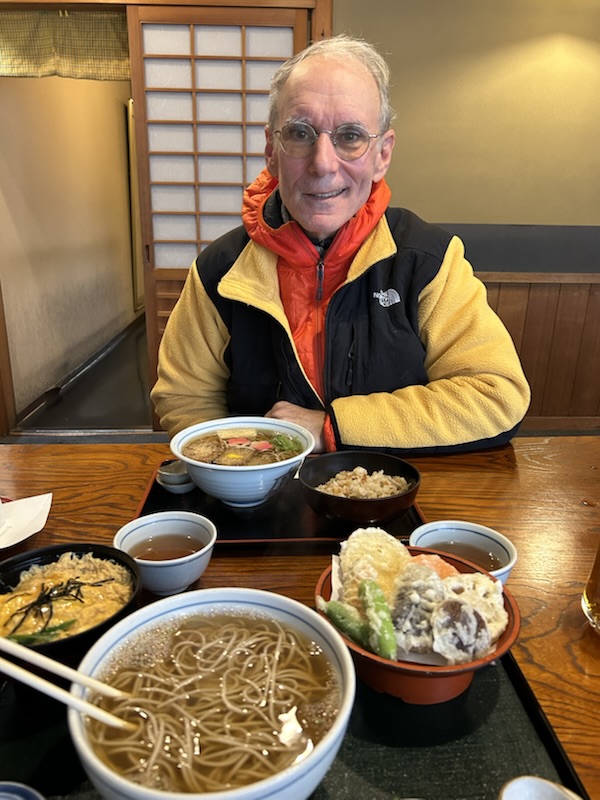
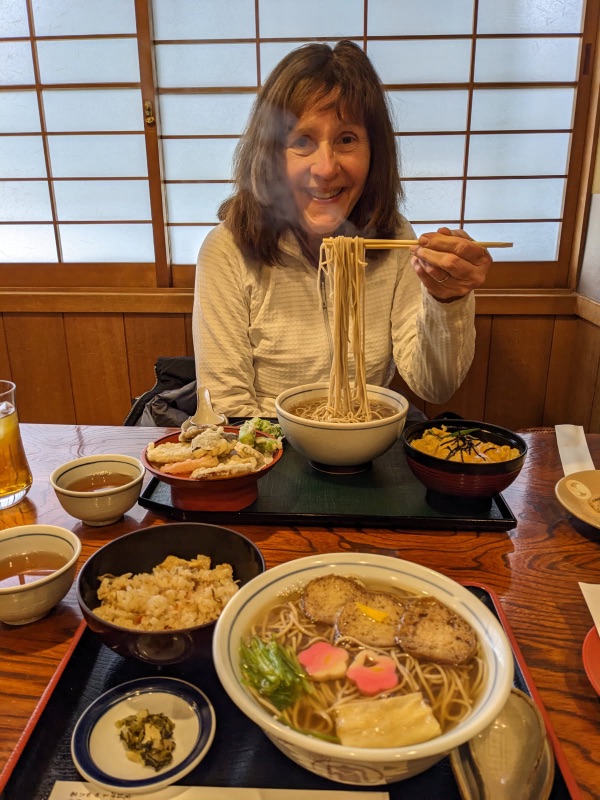
I’m vegetarian; but, I always found something good to eat.

Especially at the noodle shops. Yea for ramen, soba and udon noodles. Lo

Four

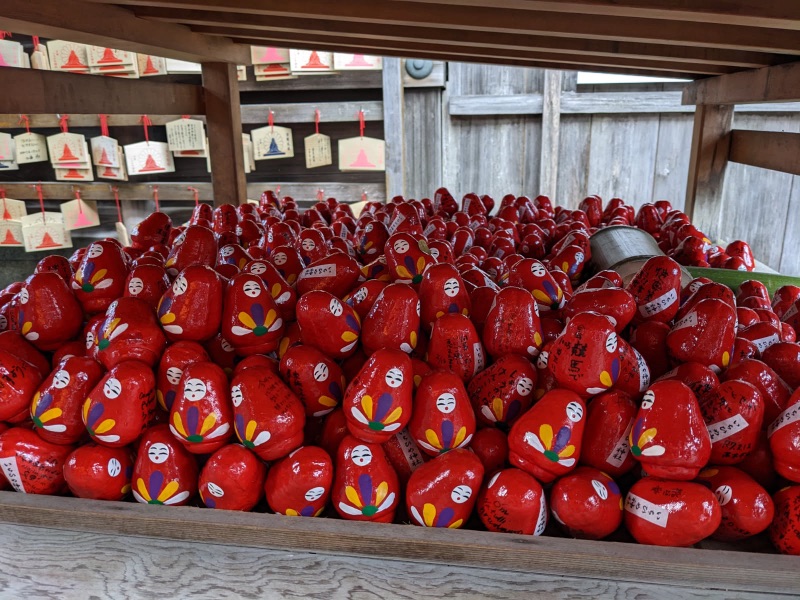
The Japanese desire to hold on to their long-standing customs & traditions.

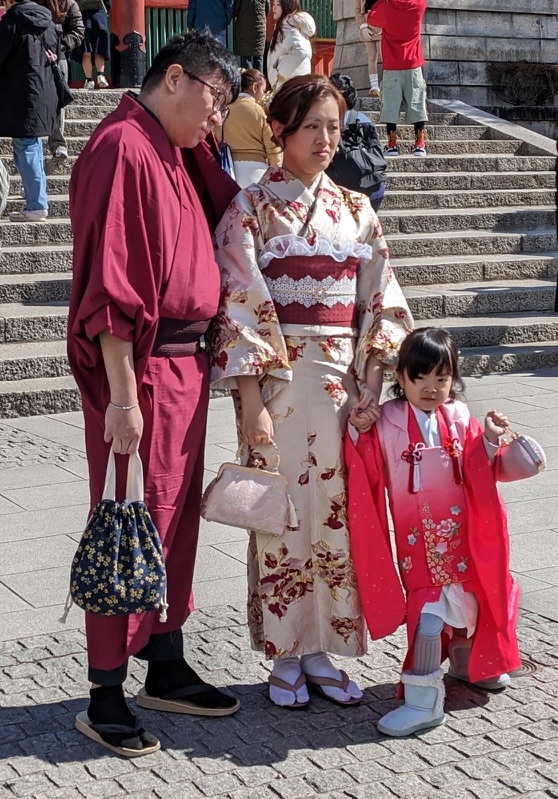
Being an American, only Native Americans have traditional clothes.

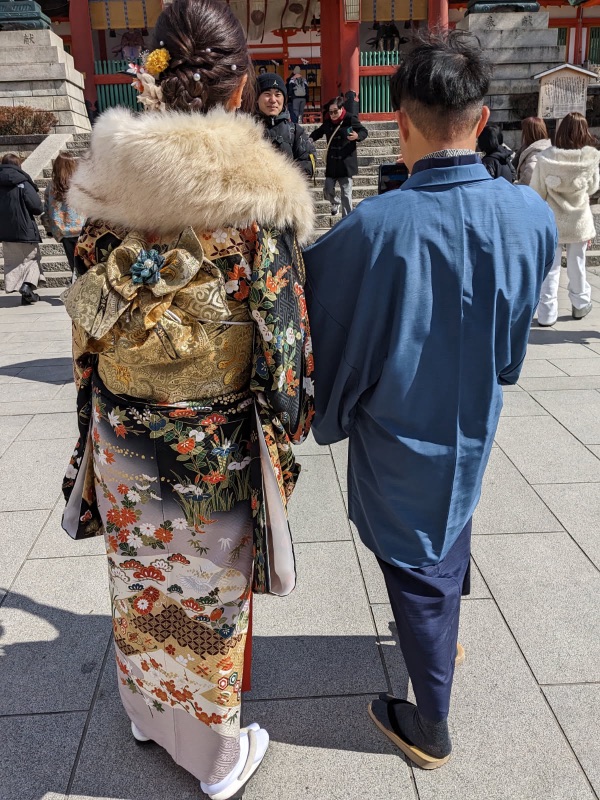
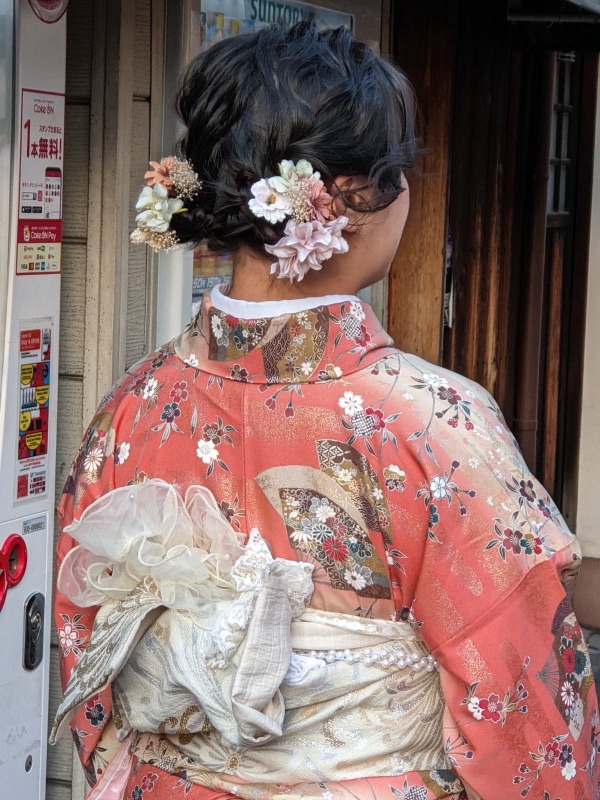
But in Japan, people still love to dress in their traditional clothes.

The Japanese still bow out of politeness to show respect & to say thank you.

And, those lovely Onsens with hot mineral water that are still regularly used for public bathing & relaxation. Some are 1,000s of years old.

Five

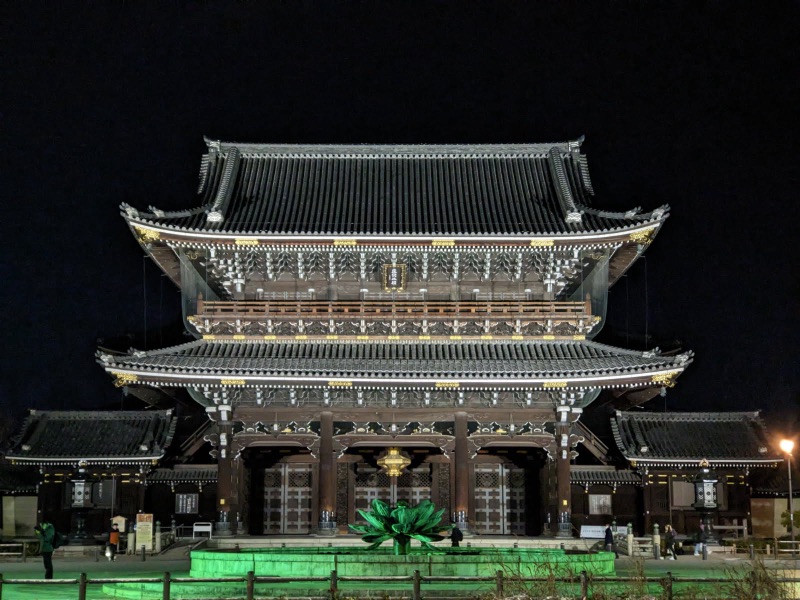
So many lovely shrines & temples.

It’s impossible to go very far without seeing these lovely structures & enjoying learning about the traditions that come with them.

Six

Extreme kindness.

Even in a subway or train station where it is very crowded, nobody pushes or shoves.

One night at dinner, the small restaurant was very busy, so it took them over 20 minutes to take our order.

They constantly & profusely apologized for their delay.

Seven

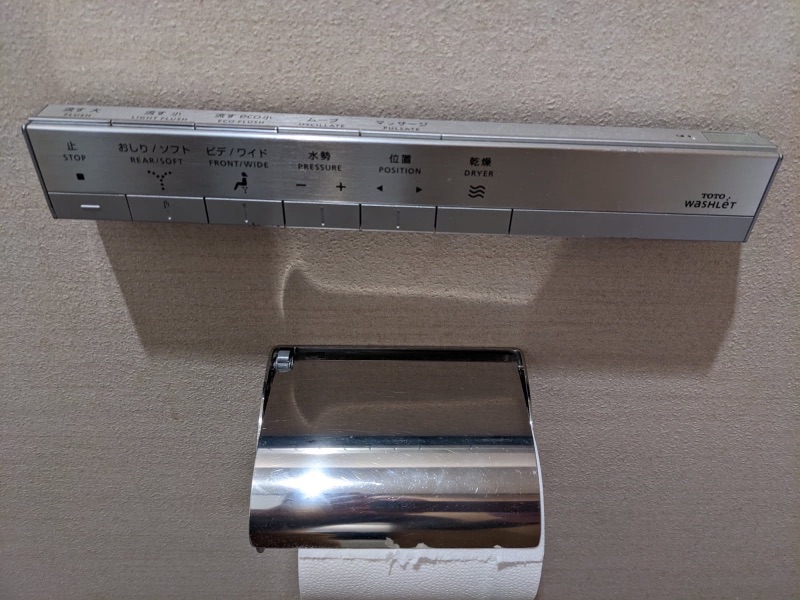
Don’t laugh, but the toilets!

Even the public toilets come with a bidet & warm seats.

My bum has never been happier. 🤣

The nicer toilets have dryers & motion sensors to raise the lid & flush automatically.

I used a toilet inside a museum that played soothing running water sounds when you sat down. 🤨

Eight

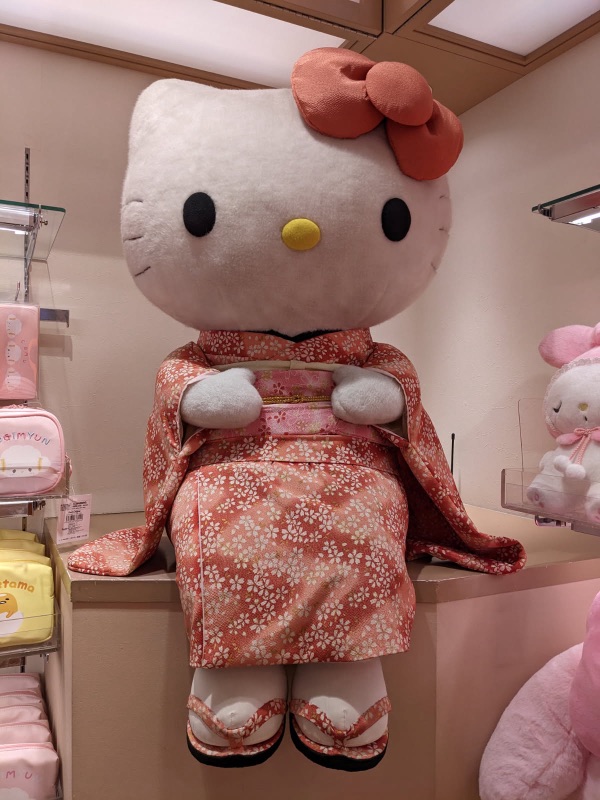
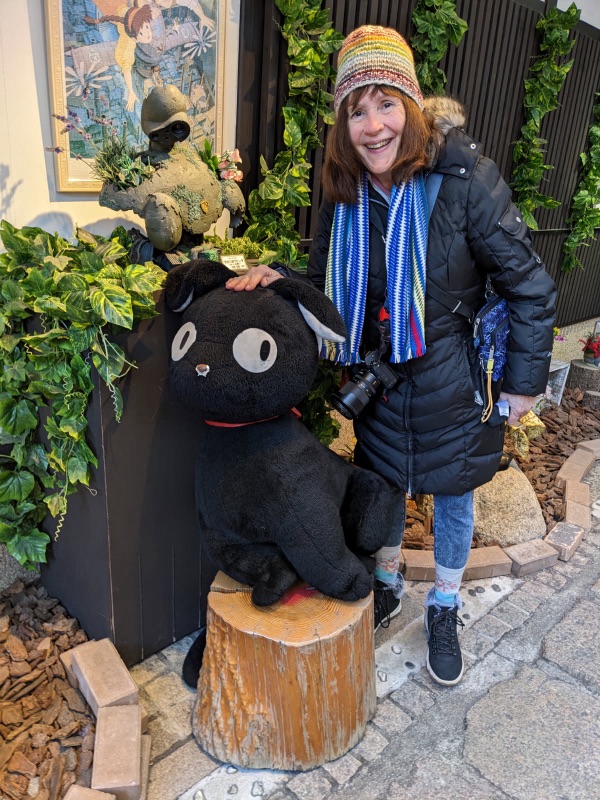
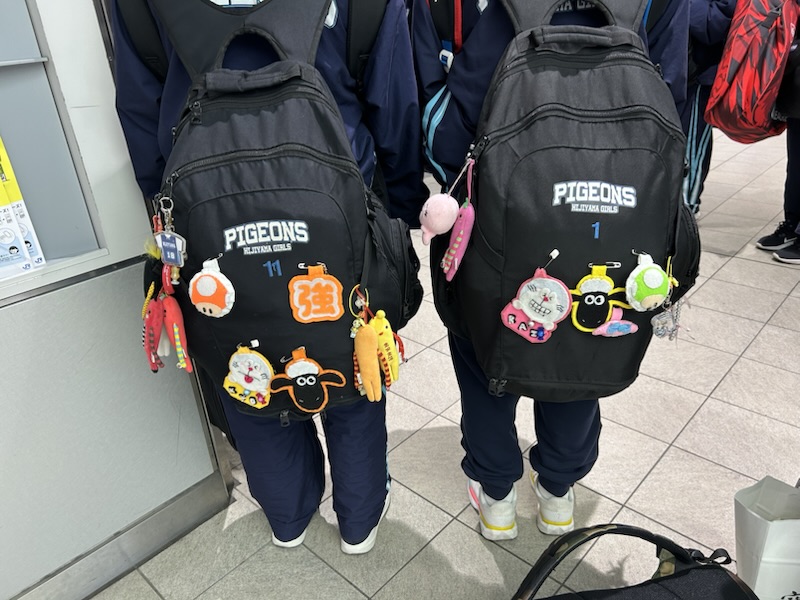
Cuteness is important. 😌

Nine

Everything is small.

The cars are so small I almost felt like I could pick them up.

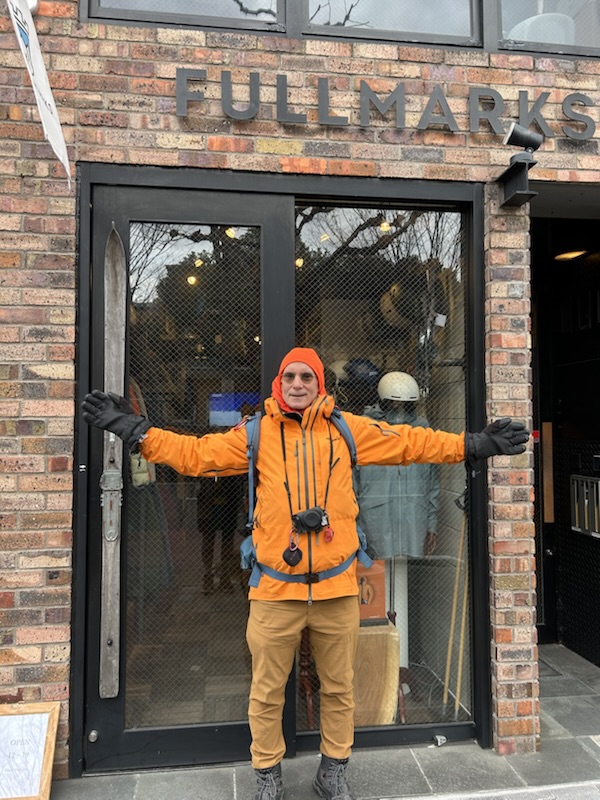
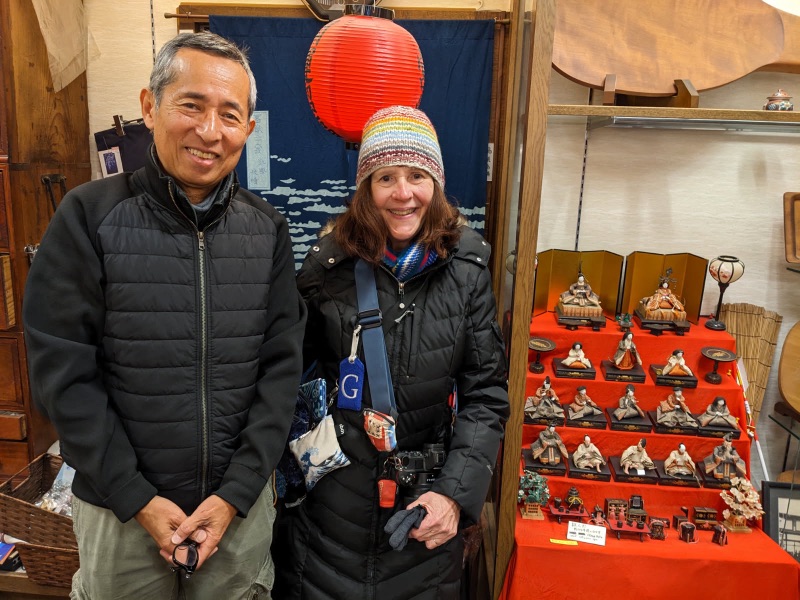
Check out this tiny store which sells high end outdoor apparel.

Ten

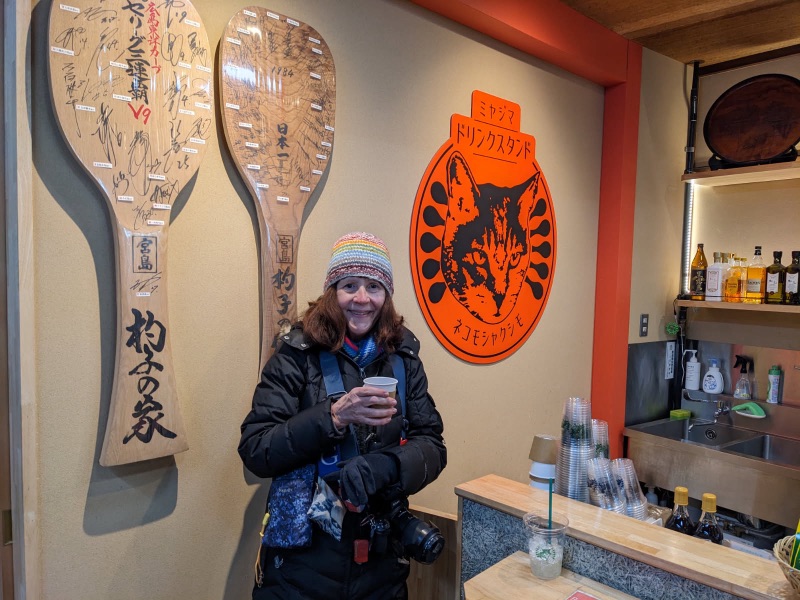
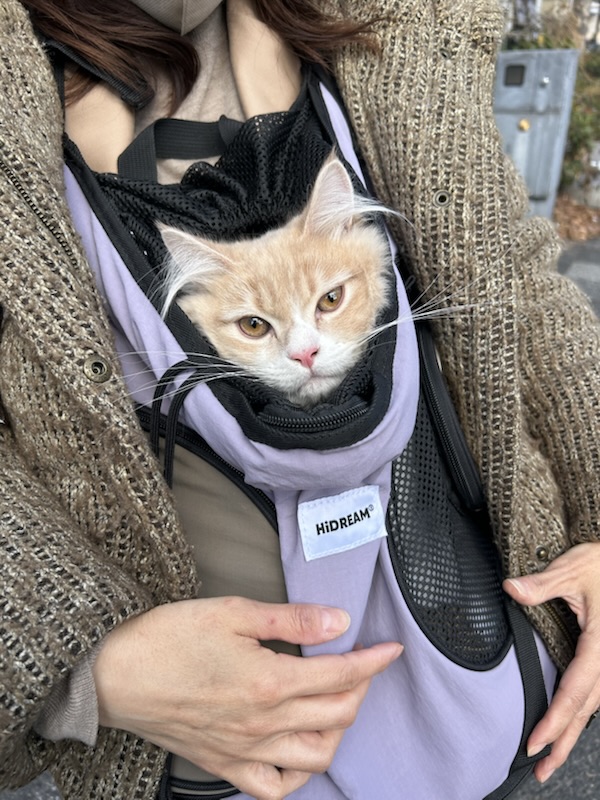
Last; but not least & perhaps my most important reason- the Japanese LOVE cats! 😻🐈

Hiroshima & the Itsukushima Shrine

Hiroshima

When you hear “Hiroshima”, you often think about the first Atomic Bomb used in war. One reason why I wanted to come here is to learn more about that event.

Before coming , I read To Hell And Back- The Last Train from Hiroshima by Charles Pellegrino.

This marvelous book written in easy narrative form tells the stories about some people who suffered & survived not only the extreme flash, heat, fire tornadoes, invisible radiation, & radiation falling in “Black Rain” in the 1st atomic blast in Hiroshima; but also, the 2nd & much more powerful atomic blast at Nagasaki.

The book also covers the physics & science in making atomic weapons as well as US & Japanese military & government actions & decisions leading up to the bombings & their aftermath. It provides very detailed accounts of both US air missions which dropped the bombs which were not sure of things & were very risky undertakings.

This book enabled me able to experience fully this monumental & consequential event & place during my visit.

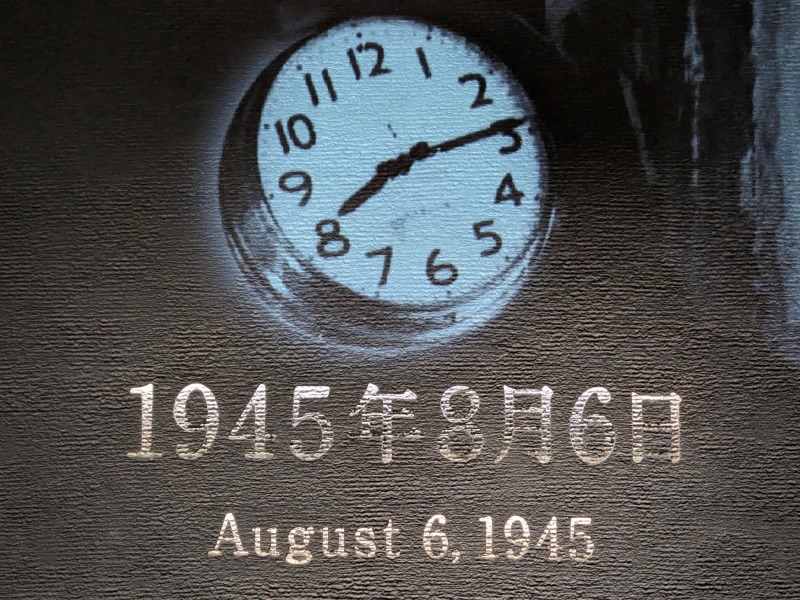
The city turned the area where the most severe damage occurred under the “Hypocenter” into a Peace Park. The “Little Boy” atomic bomb was dropped from the “Enola Gay” B-29 Superfortress & detonated 600 meters above Hiroshima at 8:15 AM on 6 August 1945. Right under where it exploded is known as the Hypocenter.


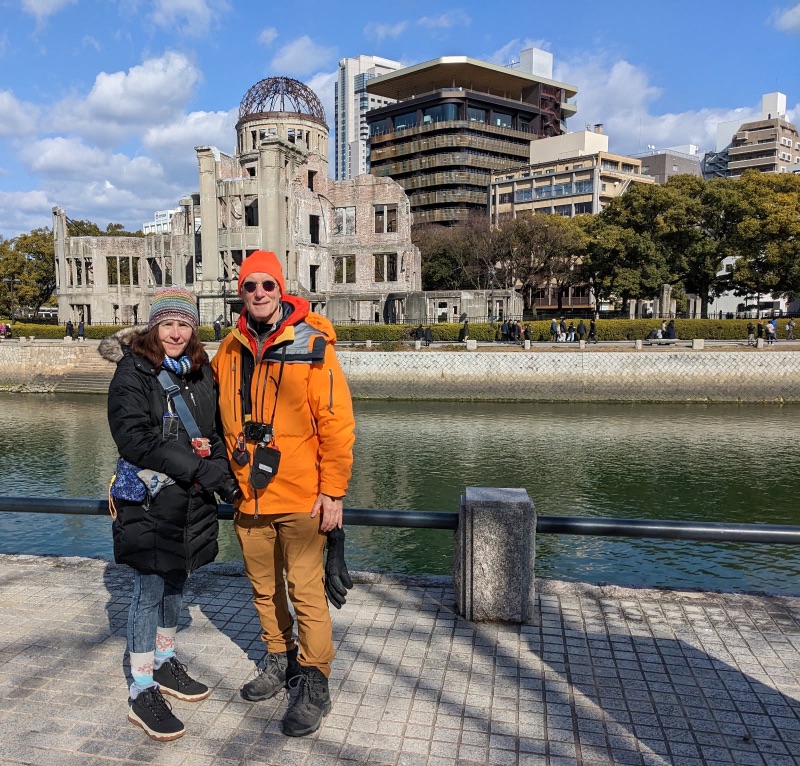
The Hiroshima Prefectural Industrial Promotional Hall (Hiroshima-ken Sangyo Shoreikan) building was mostly destroyed; but, a section remained standing making it the building closest to the atomic bomb’s hypocenter that remained at least partially standing.
It has been preserved as a stark reminder to the atomic bomb’s awful power.

This remnant is now called the “A-Bomb Dome”.


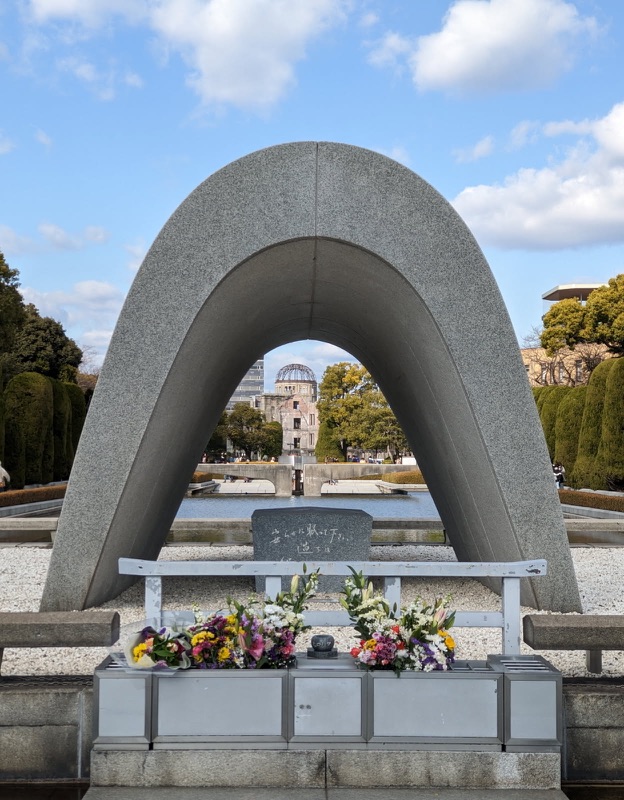
Between the Museum and the A-Bomb Dome is the Cenotaph for the A-Bomb Victims. The Cenotaph is an arched tomb for those who died due to the bomb, either from
the initial blast or radiation exposure. Below the arch is a stone chest storing holding a register with the names of people who perished due to the atomic bomb.

There are 220,000 names on it.

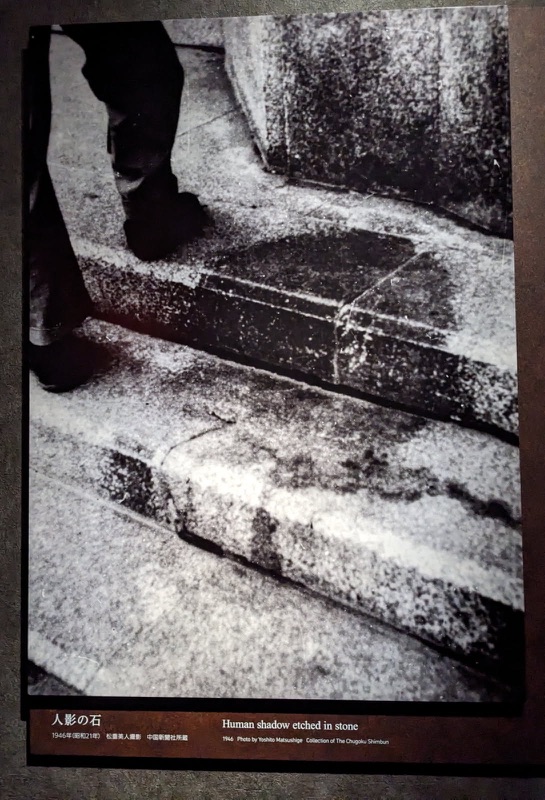
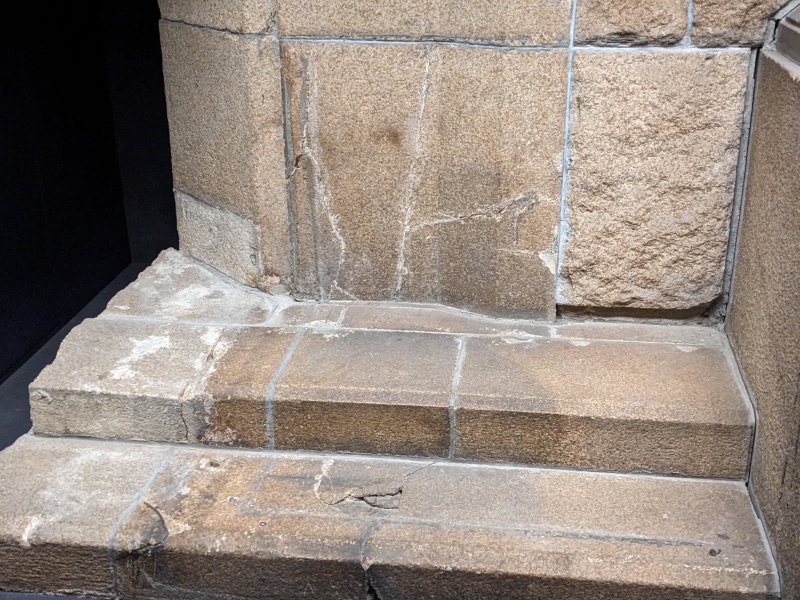
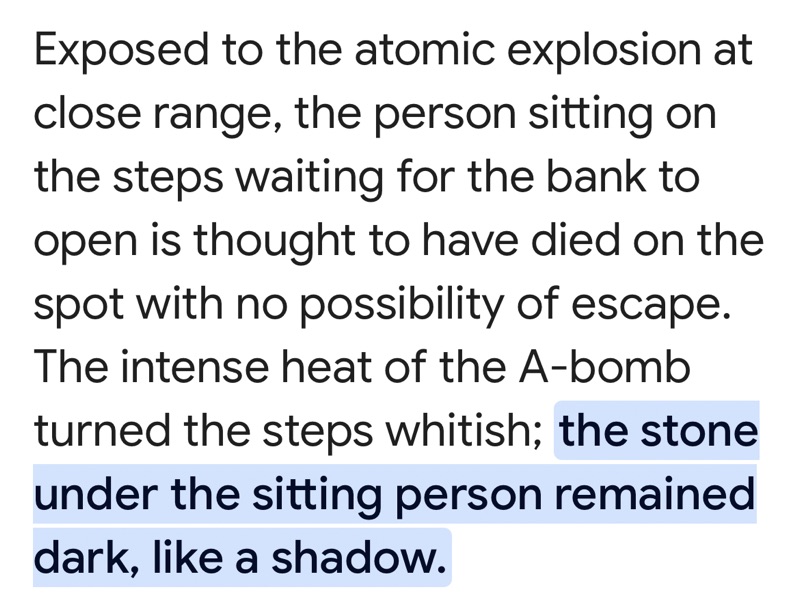
The Hiroshima Peace Memorial Museum contains many images & artifacts discussed in the book.

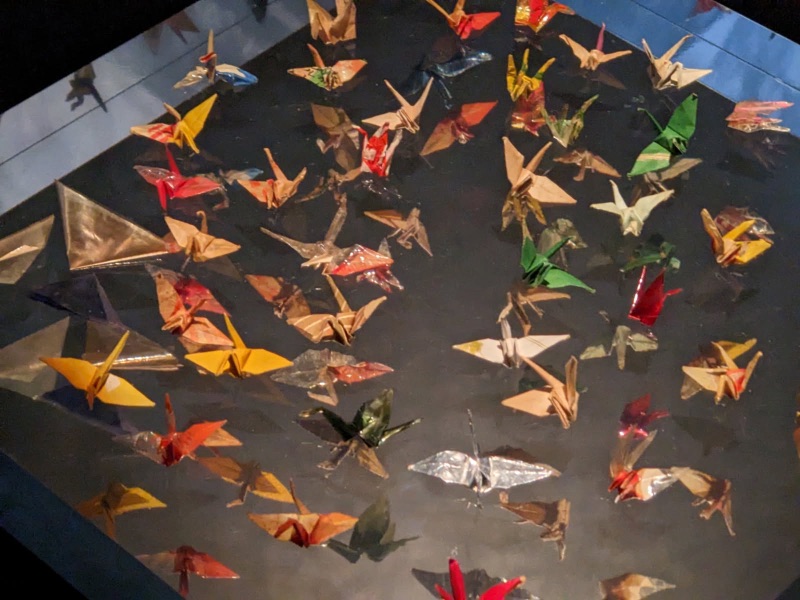
Some of the more than 1,000 cranes Sadako Sazaki folded

The museum has an exhibit about Sadako Sazaki.

Despite being exposed to nuclear radiation as a young girl, she seemed fine. However, like many A-bomb survivors, years later as a teenager, she developed Leukemia.

Her father told Sadako about a Japanese legend that the crane lives for a 1,000 years & it is said that if you fold a 1,000 cranes & put your heart into each one, then they will help you with your wish for wellness.

While in the hospital, Sadako folded more than 1,000 cranes. The museum has some displayed which are about the size of an American quarter. She even folded some cranes from paper that were the size of a single grain of rice.

Unfortunately, Sadako’s wish to get well did not come true; but, her doctors said she lived far longer than expected.

The Hiroshima Peace Park & its museum are both worth visiting. They served as reminders not only to war’s brutality & a testimony not to use nuclear weapons; but also, to the human spirit’s resilience to overcome adversity & ability to show kindness & compassion.

Itsukushima Shrine

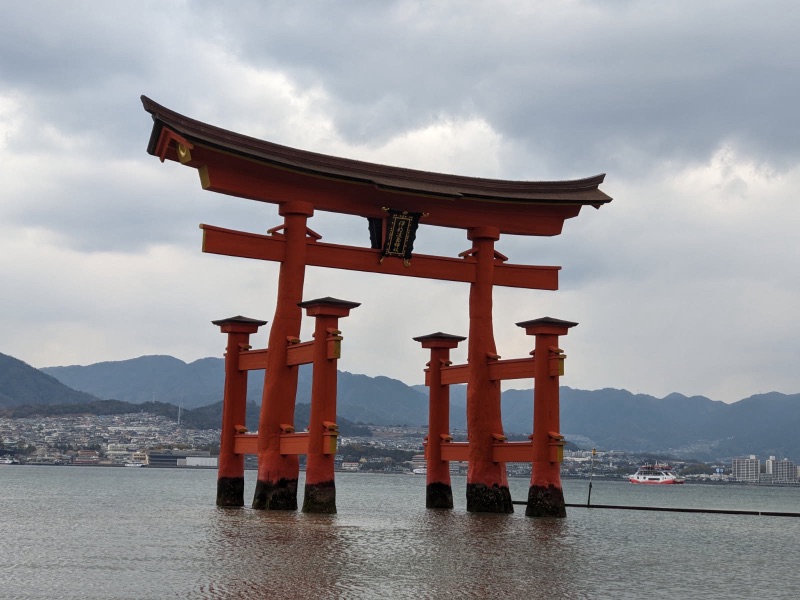
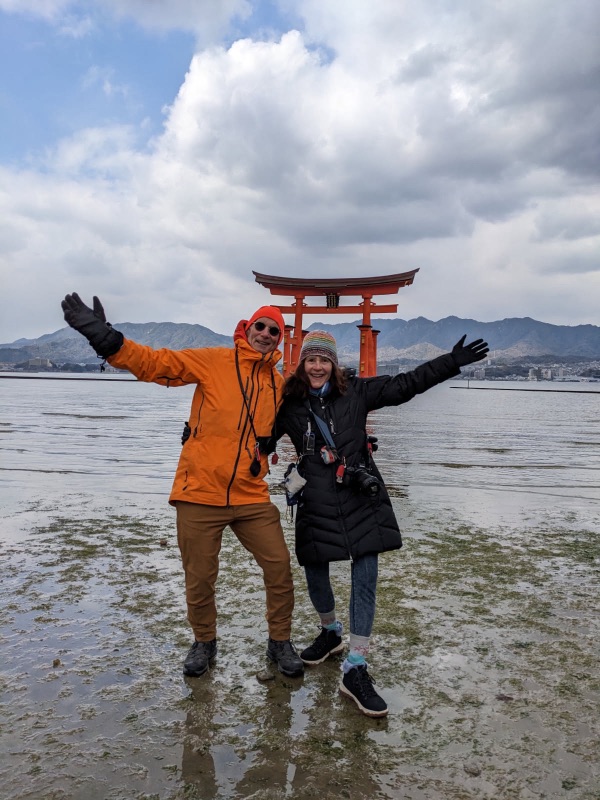
Among Japan’s most iconic structures & images is the Itsukushima Shrine with its remarkable Torii Gate.

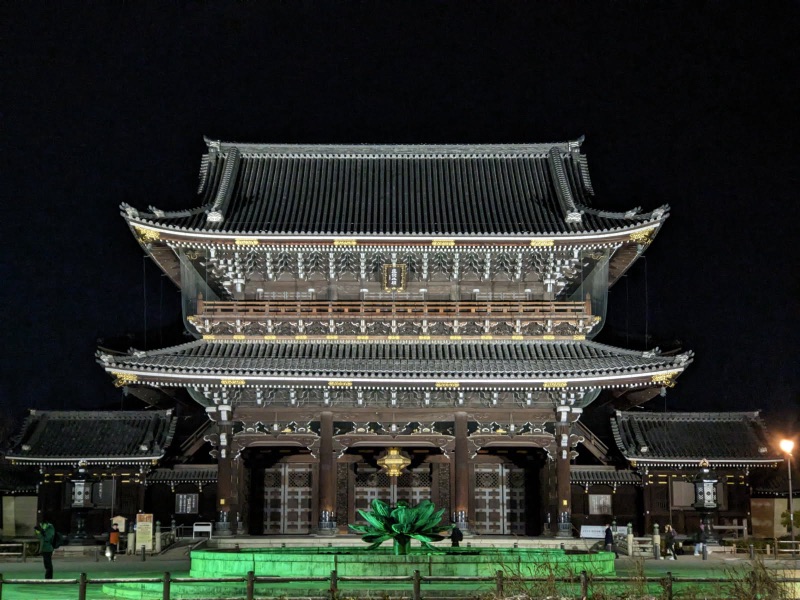
This shrine & its torii gate originally built in 593 are not only a Japanese national treasure; but also, a UNESCO World Heritage site.

Itsukushima Shrine is a Shinto shrine located on Miyajima which is an island in Hiroshima Prefecture

The Shrine which is dedicated to the three daughters of the Shinto deity of Seas & Storms is built on piers over the Seto Sea because the island was originally thought to have been too sacred for commoners to tread.

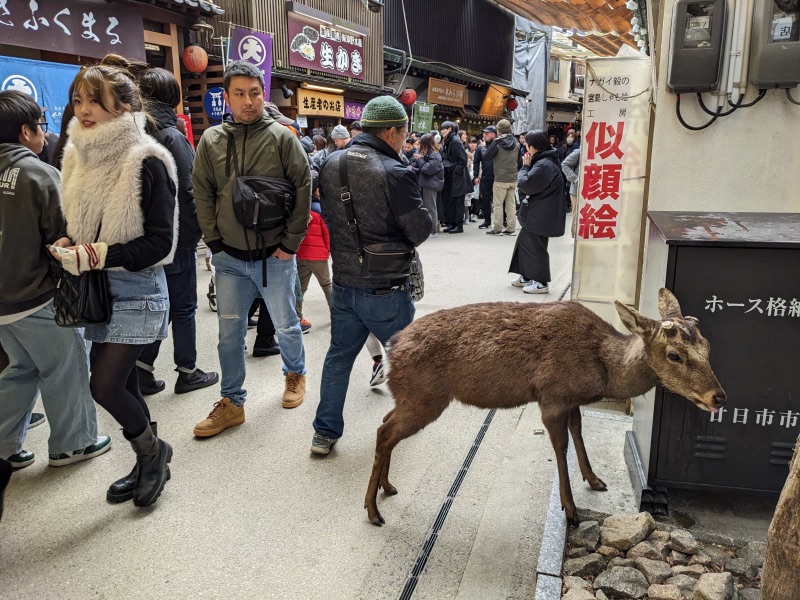
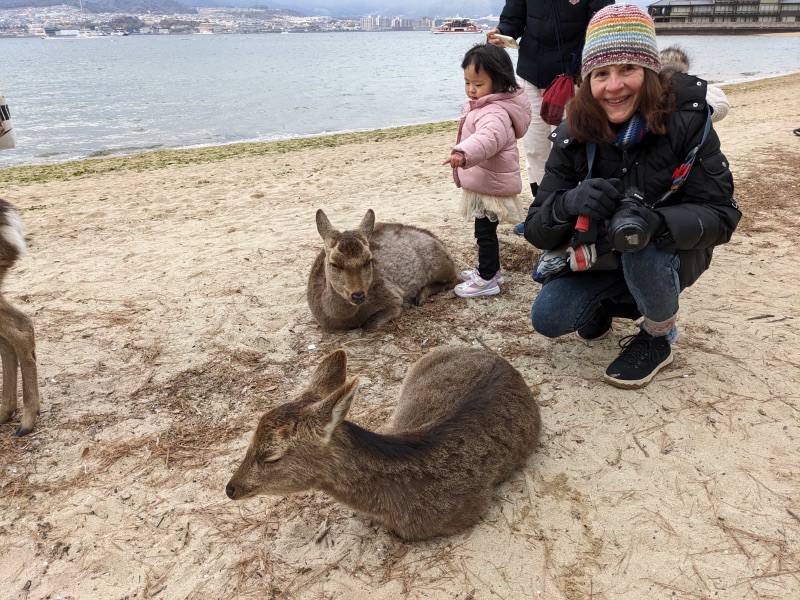
Miyajima Island also contains many shops along with wild deer who roam freely looking for food from tourists. The main food attraction was the popular Hiroshima oysters.

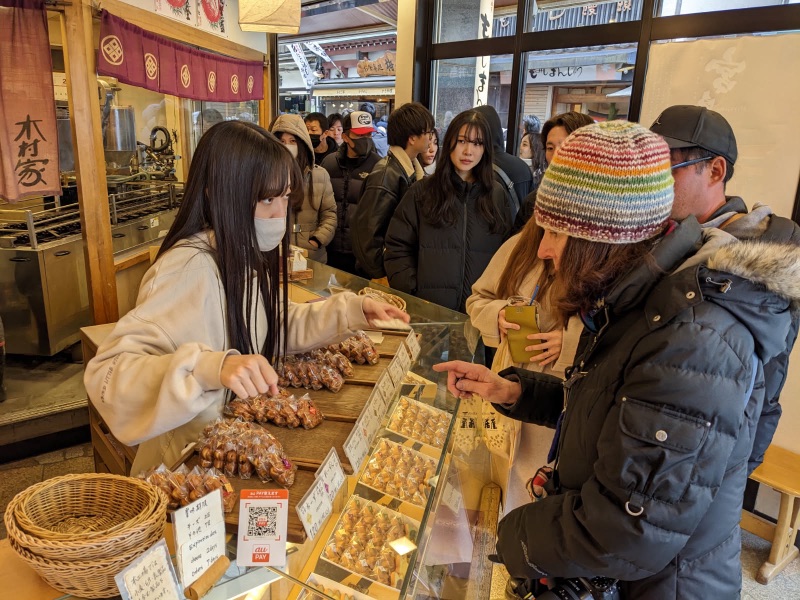
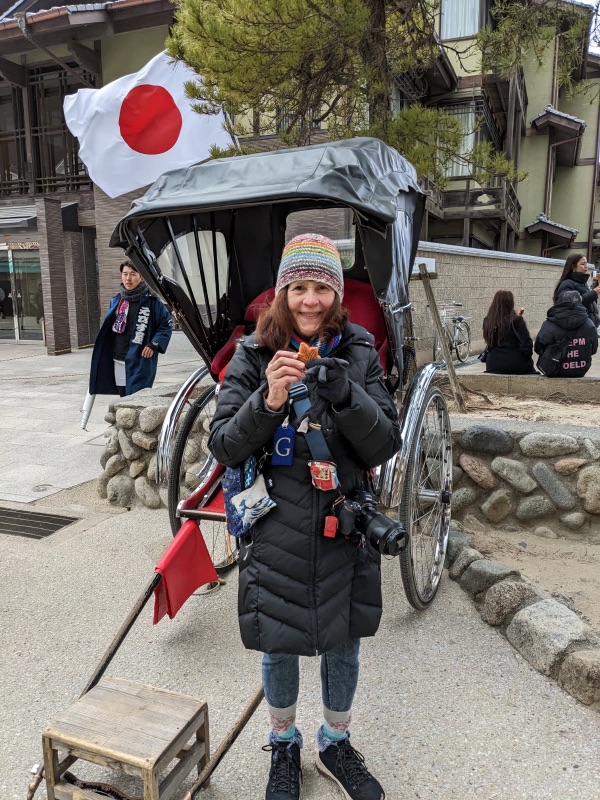
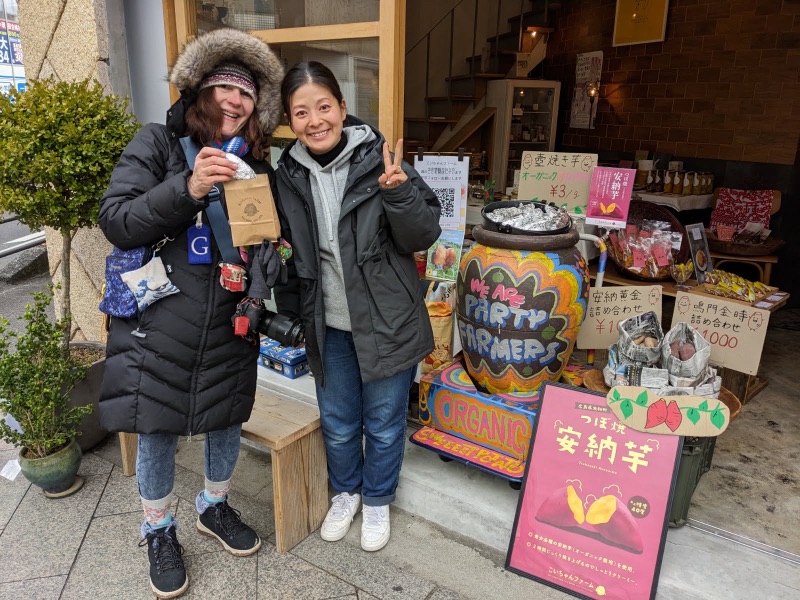
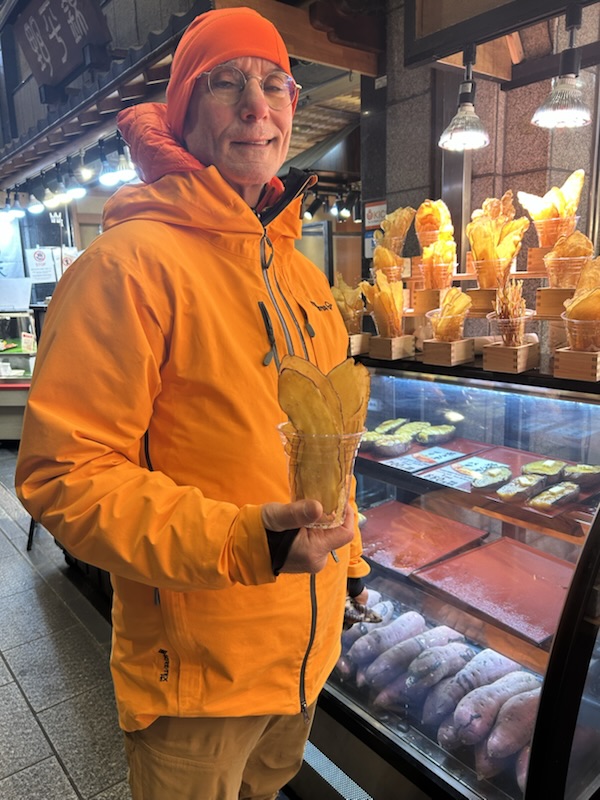
Had fun trying the local sweet potato
Sayonara Japan!
We have had a lovely visit.
Thank you for your hospitality & kindness.

Kyoto, Japan

Kyoto was Japan’s capital for almost 1,000 years and as such, it is totally engrossed in Japanese culture, religion, & beauty.

I recently read that Zen Buddhism did not start in Japan; but, most likely, the Japanese would have created it on their own.

If you lived in Kyoto for a full year & visited 5 temples & shrines every day, you couldn’t see them all.

This was my 3rd visit to Kyoto. The first was in Summer 2004 followed by another in Spring 2005.

Some things have changed in 20 years; but, Kyoto allows a visitor to remember things exactly as they were before with the only difference being the people you see.

However, I did note a couple differences. Kyoto now has numerous Starbucks. One is even located on the Ninenzaka which is the historical road leading to the Kiyomizu-dera Temple in Gion. The other change is that ATMs are ubiquitous which is now true throughout Japan.

On this visit, we chose to return to a few favorite places; but also, to embrace some new ones.

First Time Visits

Fushimi Inari-taisha Shrine

(The 10,000 Torii Gate Shrine)

It’s hard not to love this unique shrine. The numerous visitors, both foreign & domestic, attests to this statement.

We got up early to be there by 8:00 AM; but, many other people had the same idea, so there were many people already there by that time.

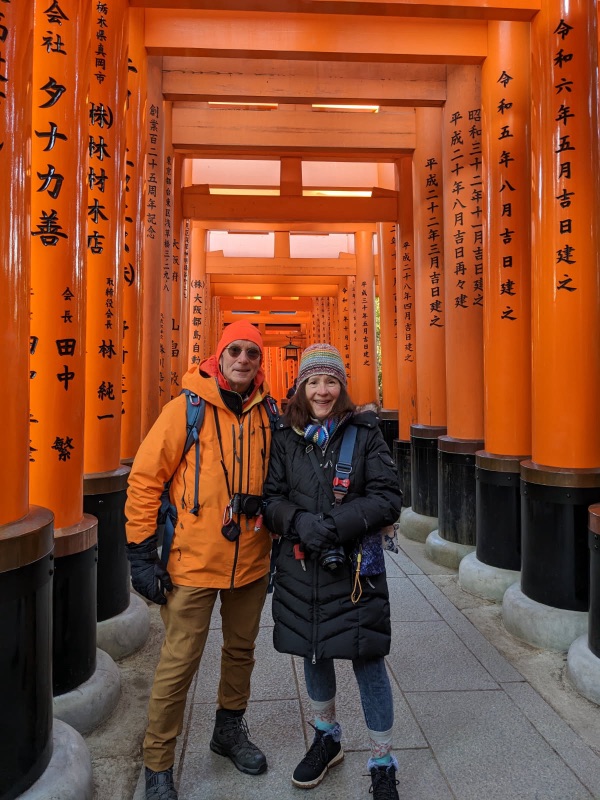
Fushimi Inari Shrine is famous for its countless torii gates which are offerings by worshippers that cover the hiking trails on wooded Mount Inari.

Torii gates line a winding path for over 2.5 miles up & down Mount Inari.

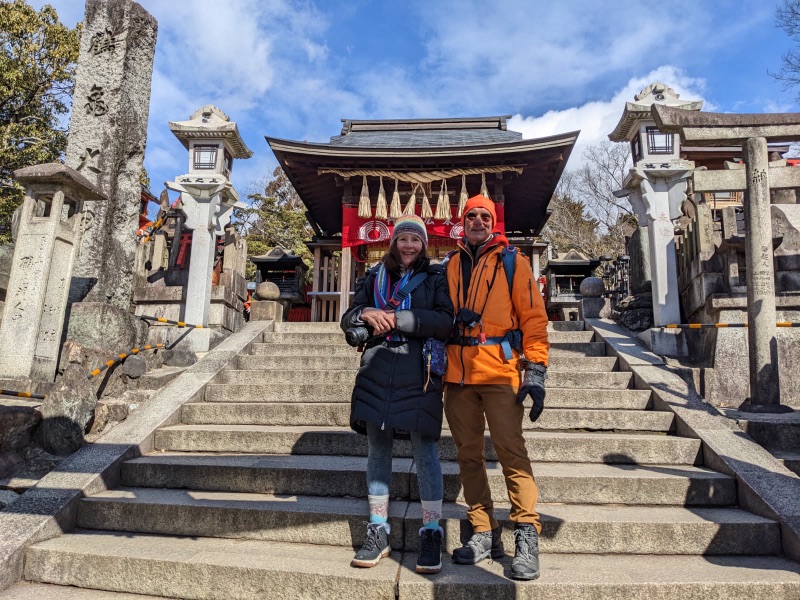
We reached the top after a 2 hour hike which included many stops to take pictures & visit small shrines along the path.

Kamiji Kakimoto

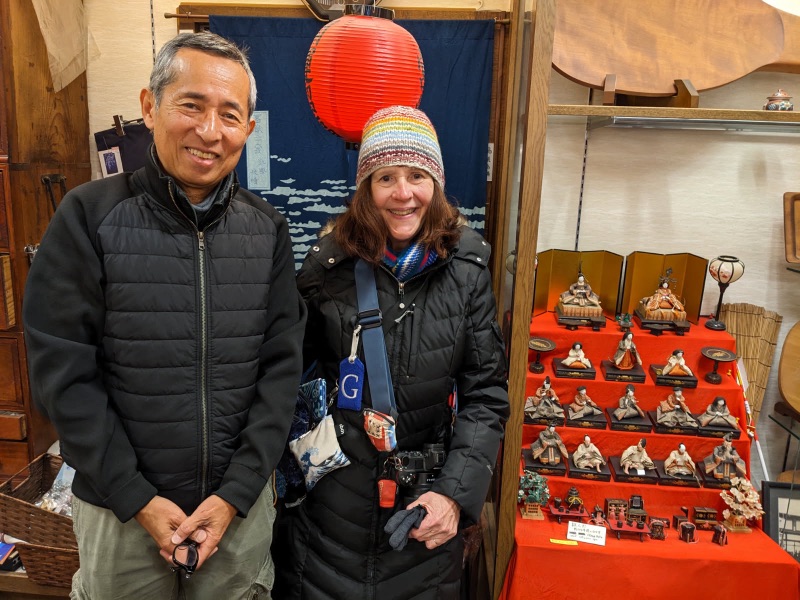
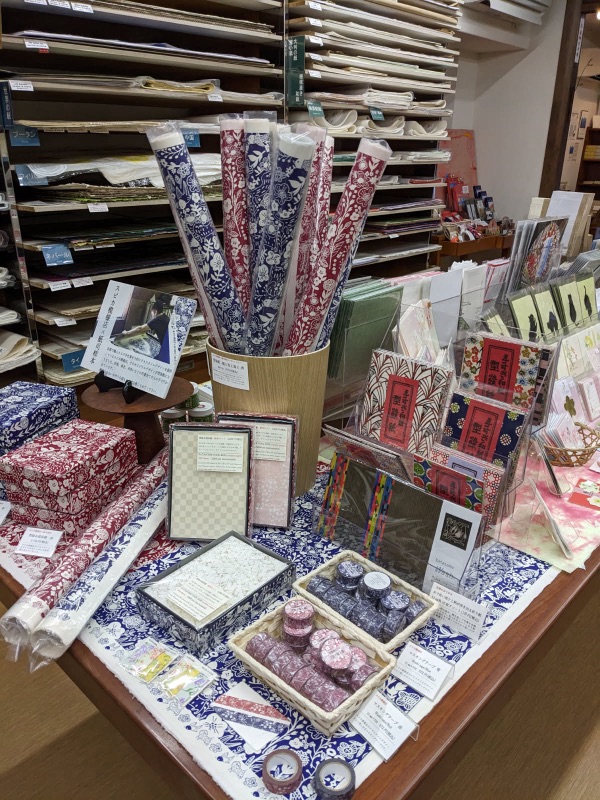
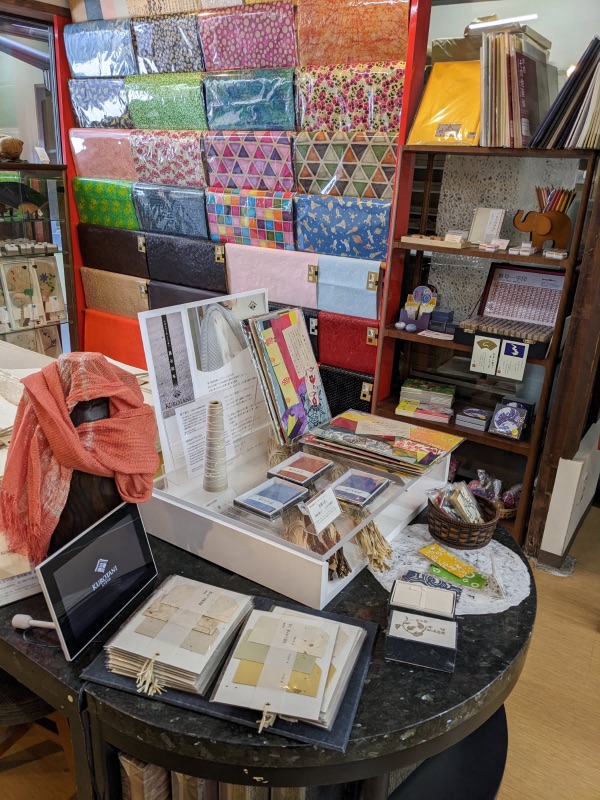
Japan is well known for their high quality paper & stationery stores. This store called Kamiji Kakimoto dates back to 1716!

I absolutely loved this small store & its very kind shopkeepers. My luggage contains proof that I liked what I found there.

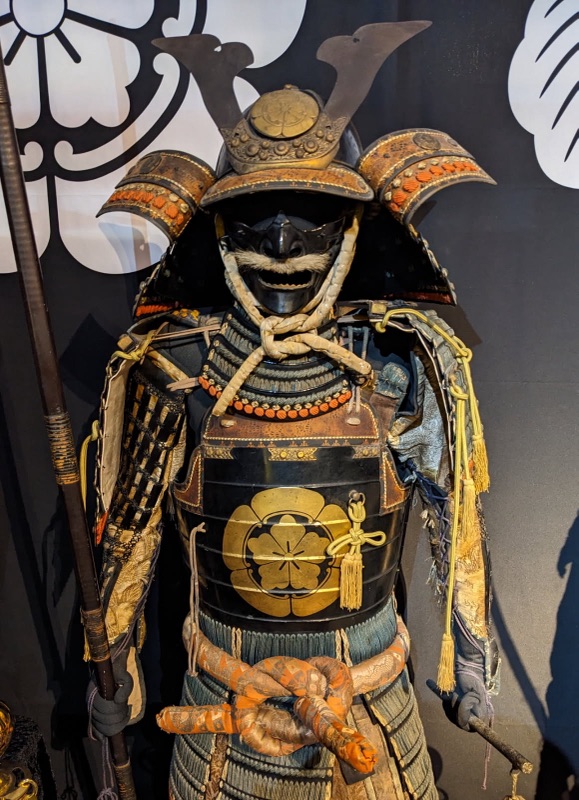
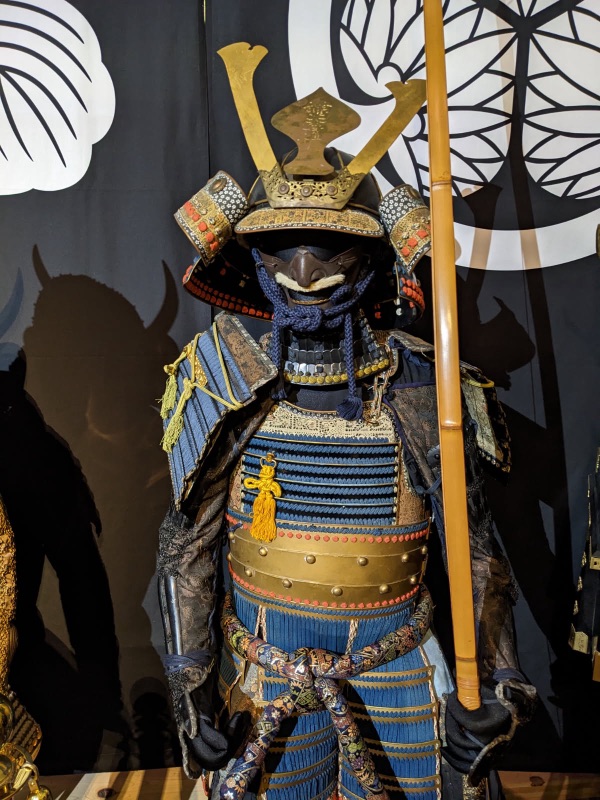
Samurai & Ninja Museum

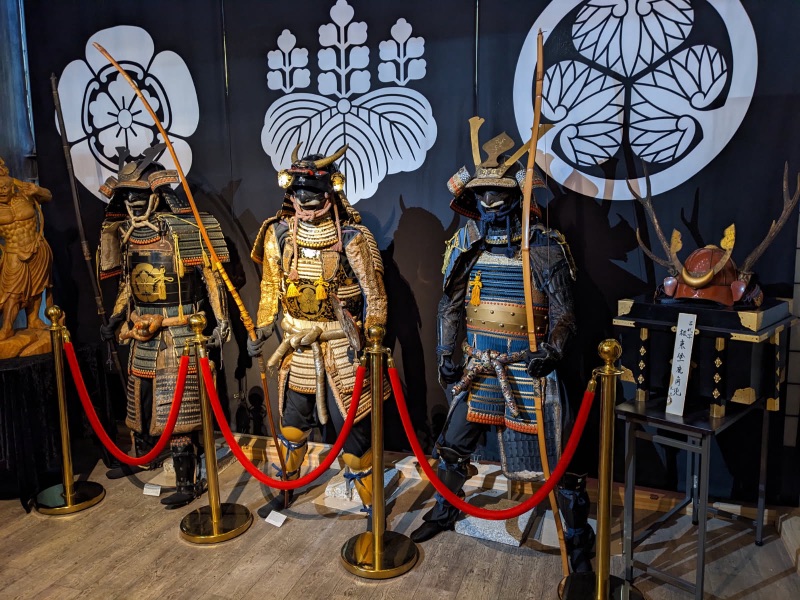
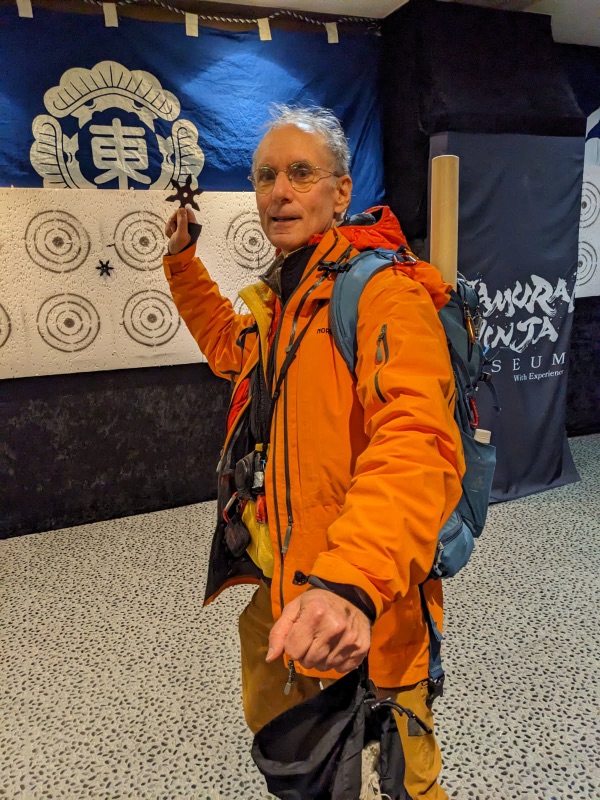
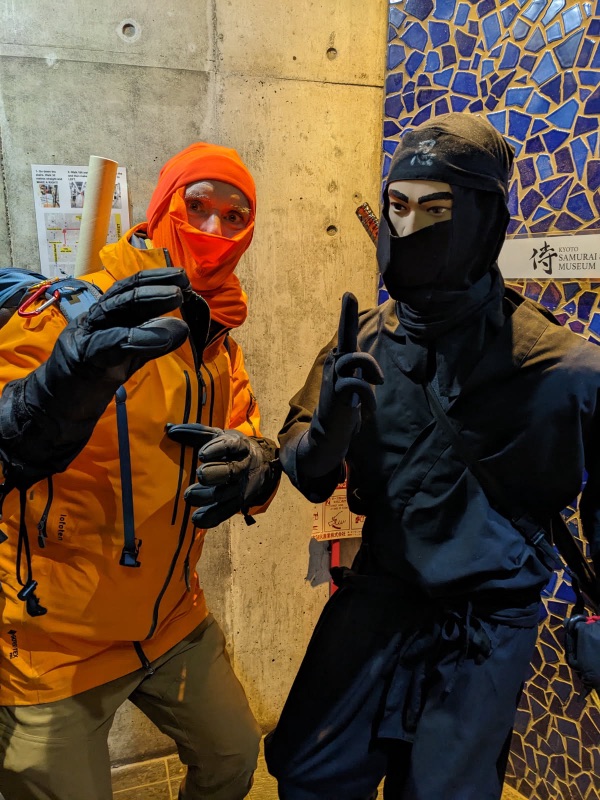
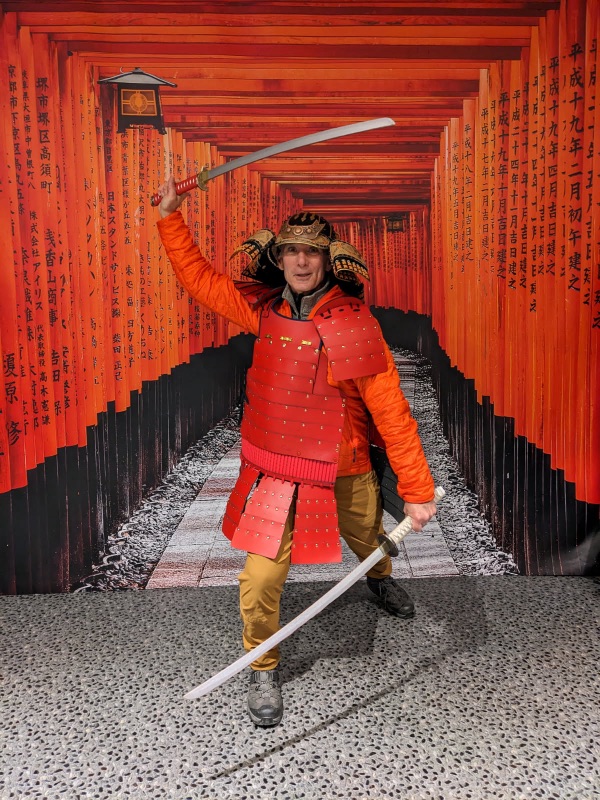
A very informative small museum. Fun for both little & big boys. 🤣😂

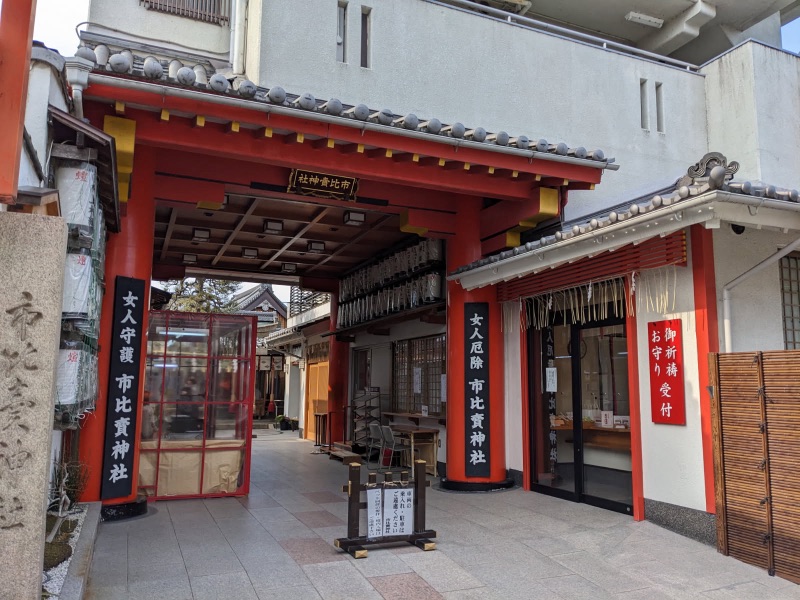
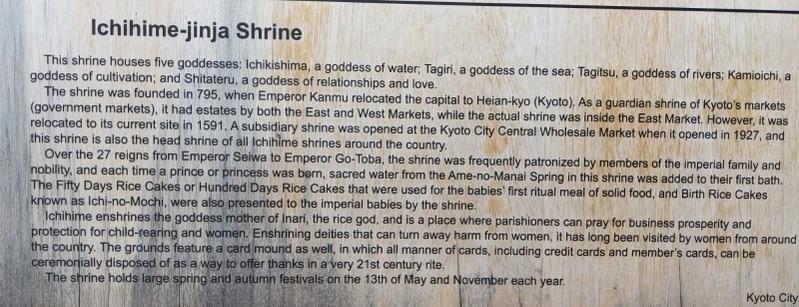
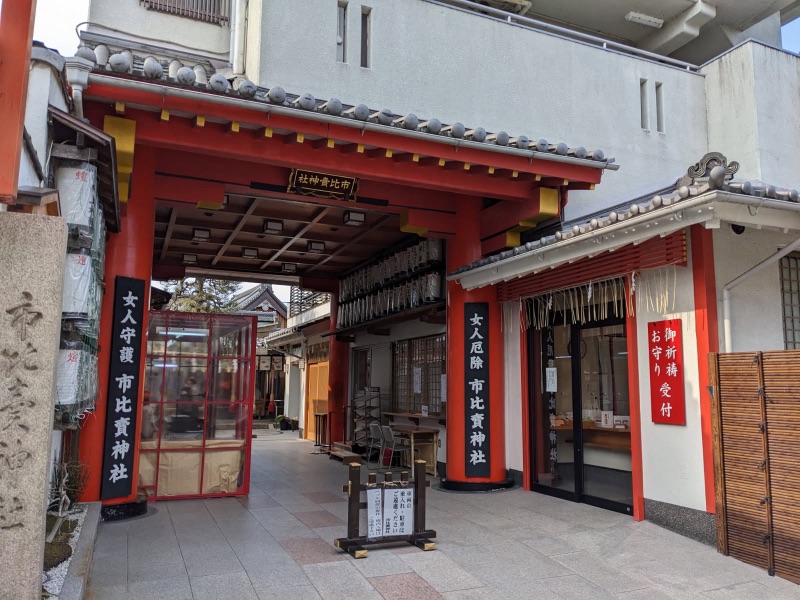
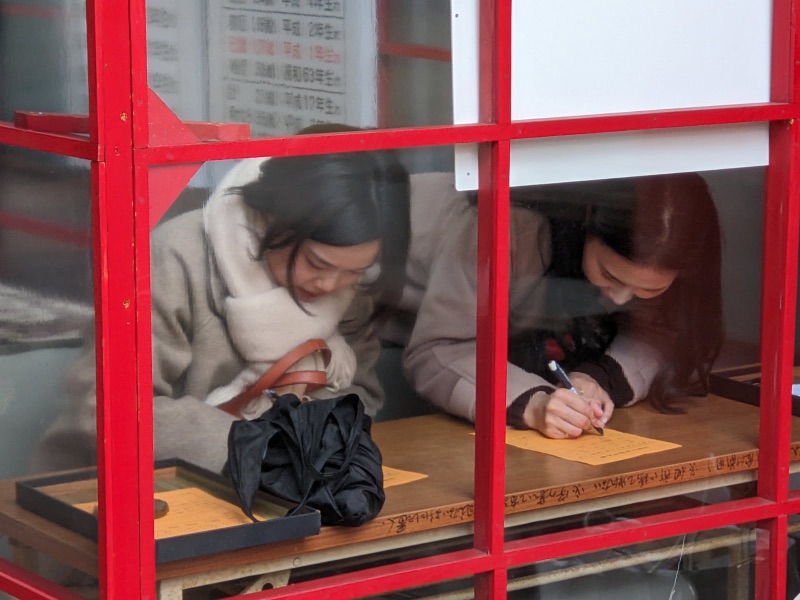
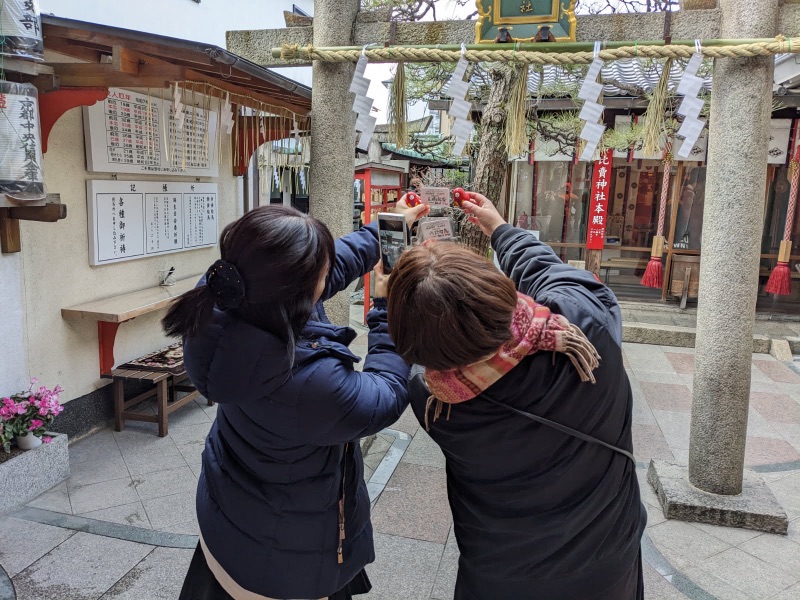
Ichihime-ninja Shrine

(Women’s Shrine)

This small shrine is popular among women. Many women come here praying for protection, blessings for having healthy babies, & for good luck in raising children.

Honke Owariya

The Honke Owariya restaurant is popular with both locals & tourists. It is a small place only open 4 hours daily, so there is always a line to get in; but, it is definitely worth the wait.

Honke Owariya started in 1465 as a confectionary store making & selling soba (buckwheat) rice cakes. It has remained a family- owned business for 14 generations.

By the mid-Edo period (around 1700), Honke Owariya had become both a confectionery shop & was among the city’s main soba noodle suppliers. It also secured the great honor to provide soba to the Imperial household which secured its culinary reputation,

Yes, some soba noodles from their shop are accompanying me home. 🥰

Always Worth Another Visit

Rokuon-ji Temple

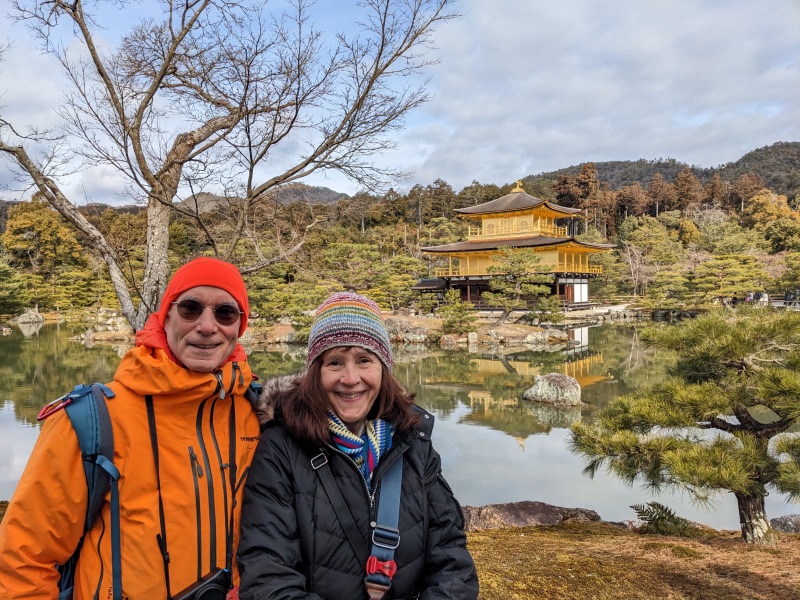
Temple of the Golden Pavilion

About a century after Marco Polo’s travels to the Far East during the Muromachi period, shōgun Ashikaga Yoshimitsu purchased & renovated Kitayama-den which was a vast villa located in Kyoto’s northern sector.

He used the villa for official meetings with Chinese traders & also constructed a quiet garden with a gilded reliquary hall, or shariden, which was completed in 1398.

 After Yoshimitsu’s death, in accordance with his will, the villa was converted into a Zen Buddhist temple complex.

Ryōan-ji

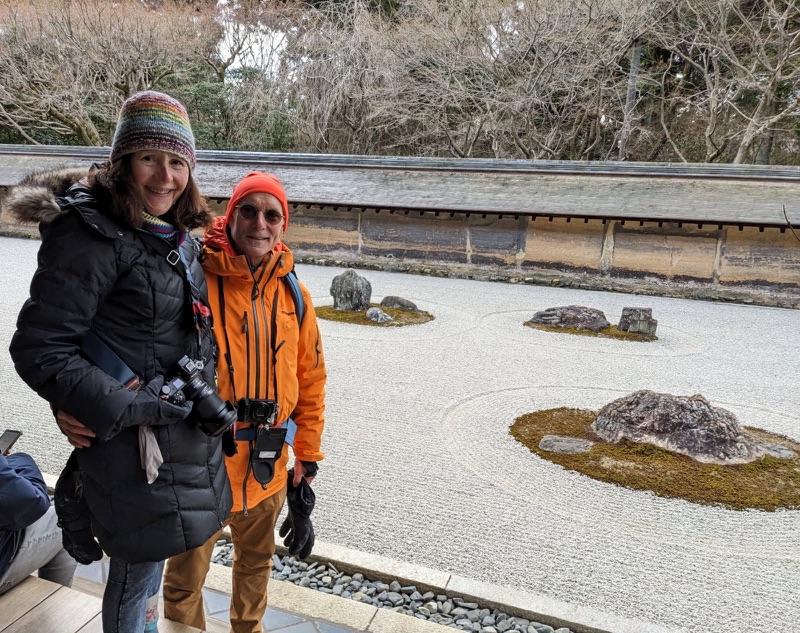
The meditative rock garden tradition is prevalent in Japanese culture; but, very few have survived as long & in such perfect condition as the Zen garden at Ryoan-ji.

Constructed around 1500 either by professional gardeners or monks, the meditative scene contains 15 small boulders resting in white gravel bed which is raked into perfect lines each day by the current temple monks.

Nishiki Market

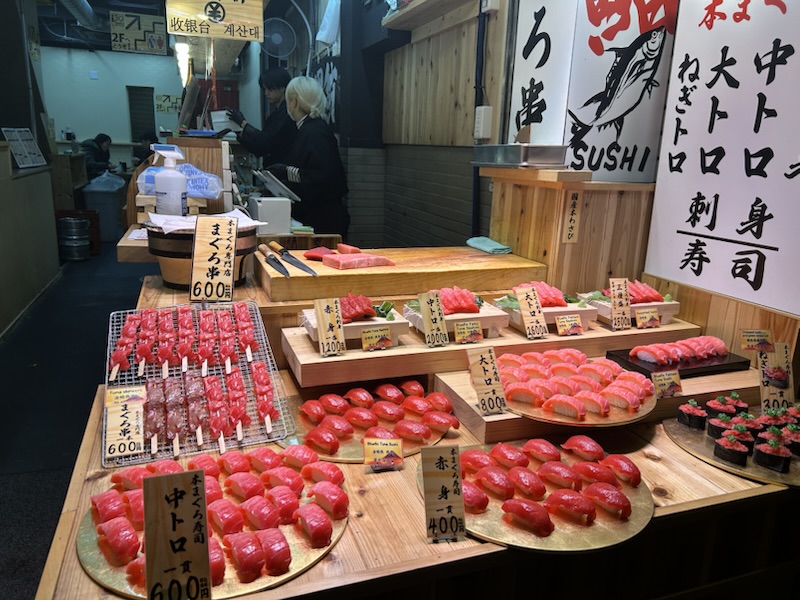
Nishiki Market well merits its nickname as “Kyoto’s Kitchen.” 

It first opened in 1310 as a fish market & has expanded over the centuries to become the best spot for seafood, produce, & local street food in the city.

Gion District

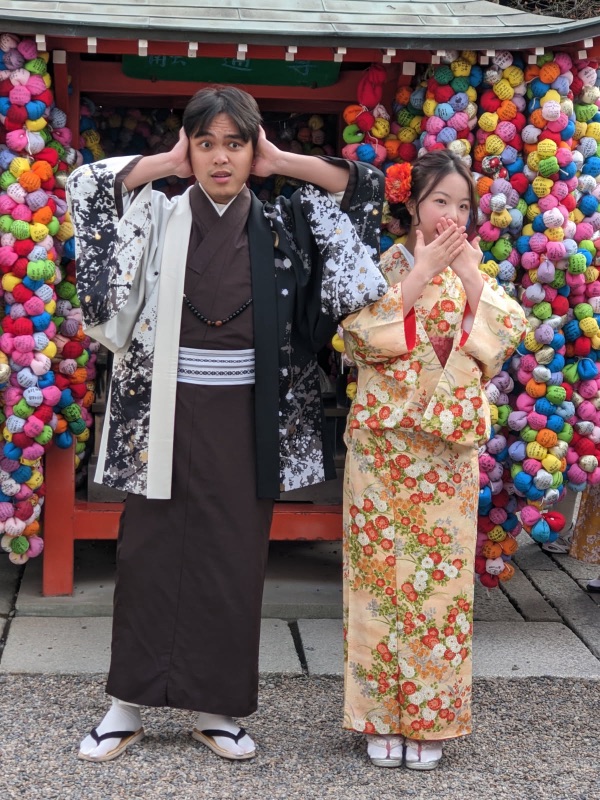
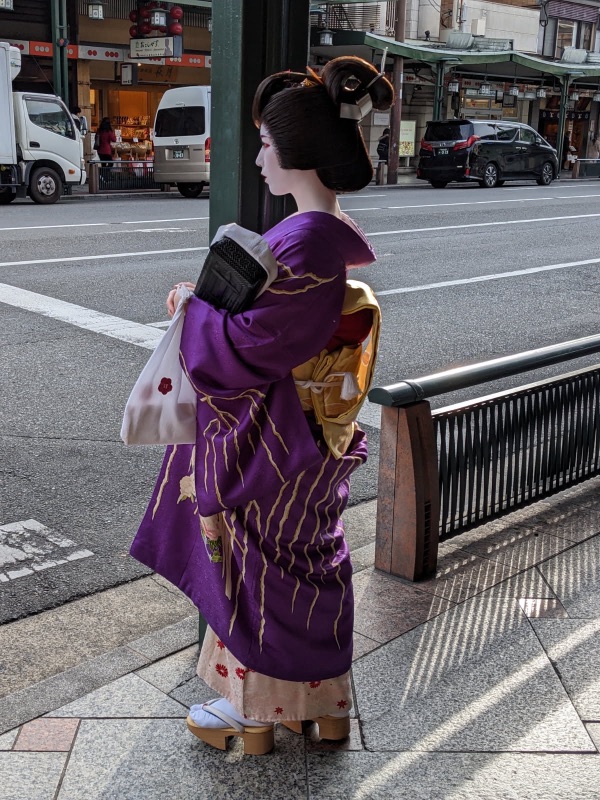
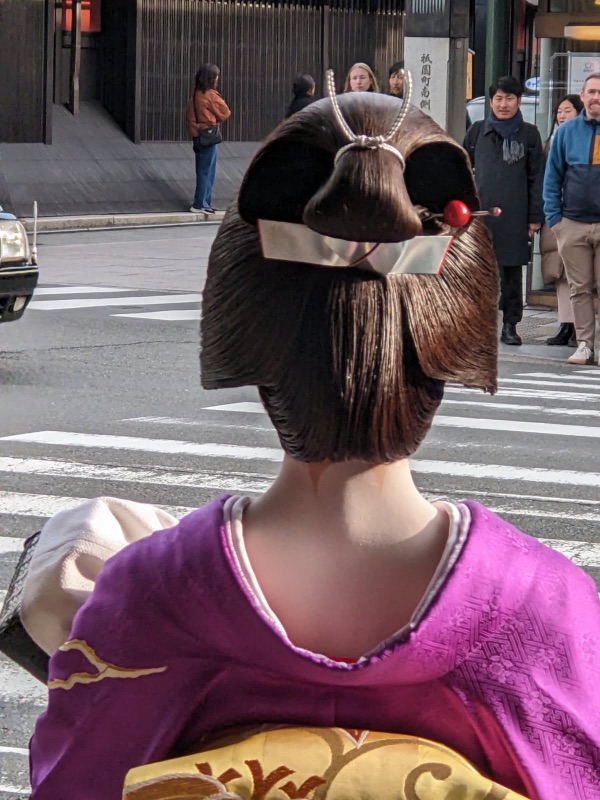
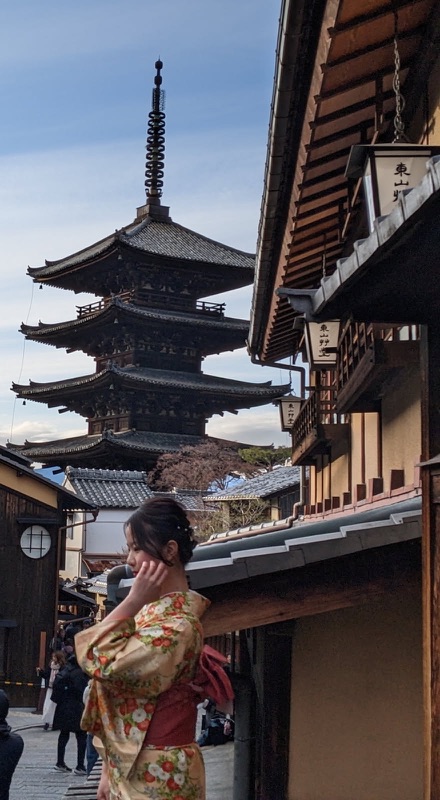
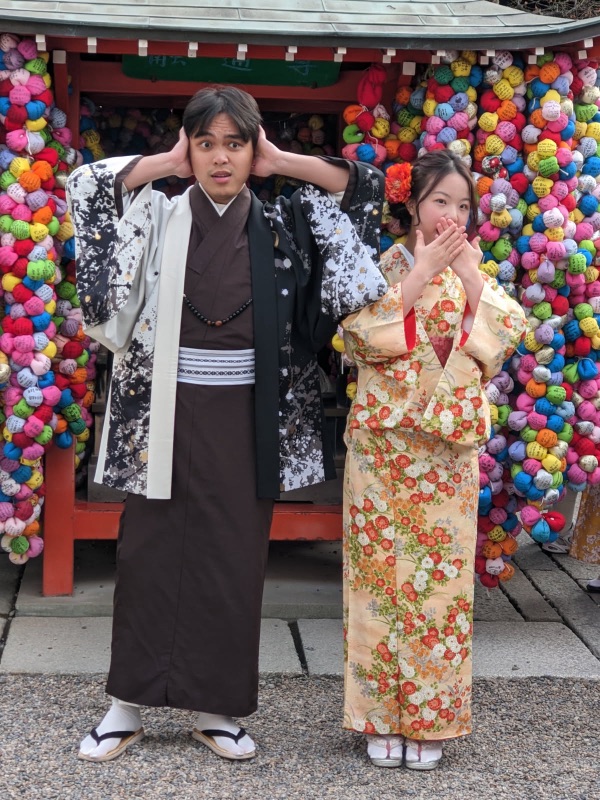
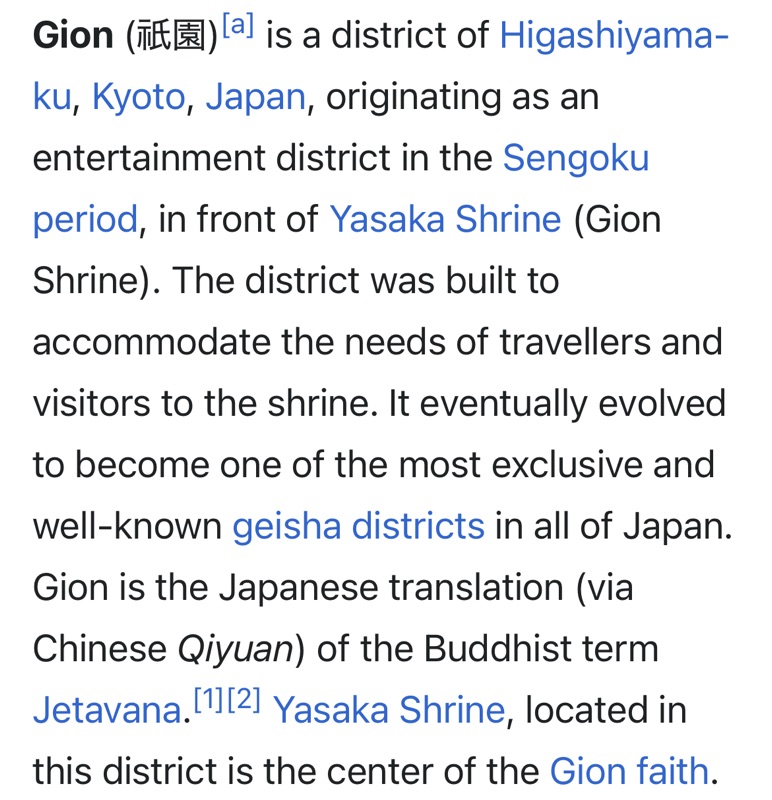
Gion is the best place to see a Geisha. You can also see many Japanese dressed in traditional clothes in this very quaint area. These sightings along with temples & old wooden buildings built in traditional Japanese style makes Gion very popular.

This visit was my third trip to Kyoto & I certainly hope it won’t be my last. There are many other temples, shrines, museums, & restaurants to visit. Also, I need to return in Autumn so I can say I experienced all four seasons in this wonderful city.

Nagano & Snow Monkeys

We enjoyed a Nagano day tour & then went up to the mountains to see the snow monkeys in Jigokudani Monkey Park.

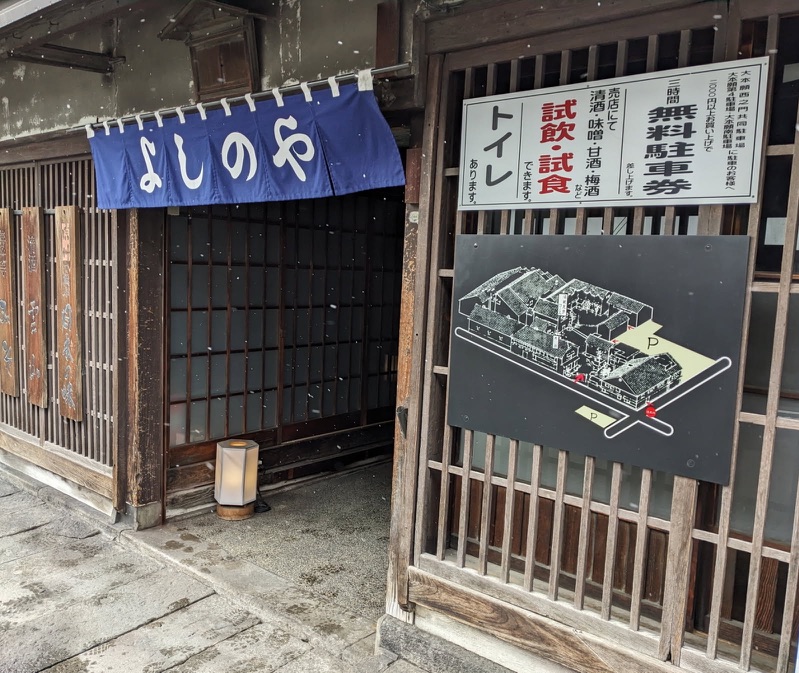
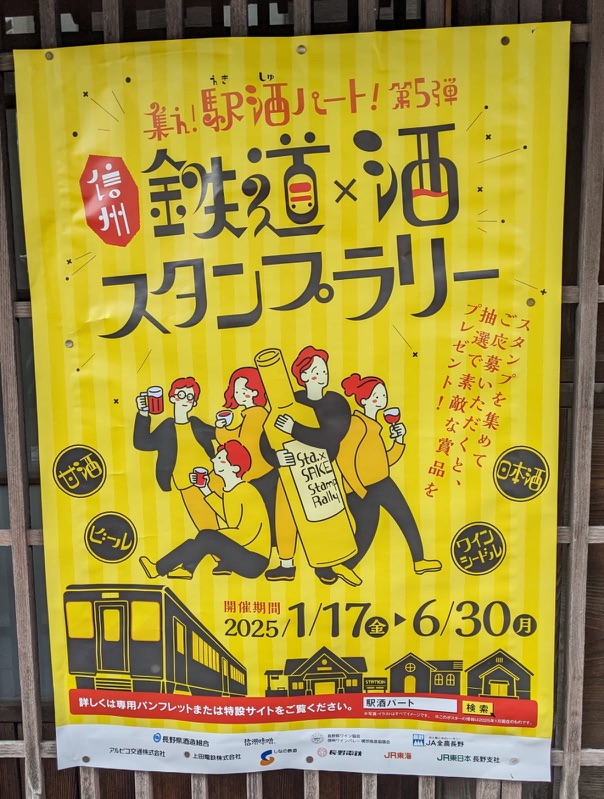
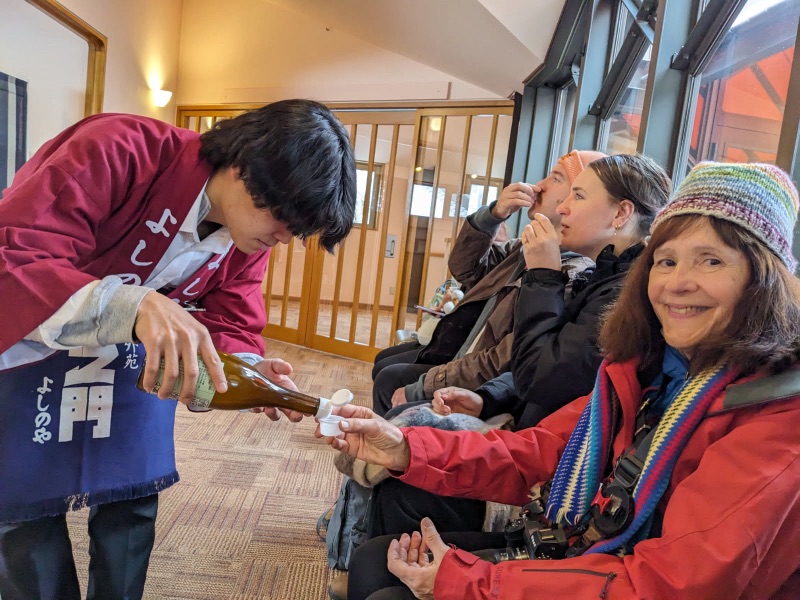
The first stop was at Nishomon Yodhinoya for sake tasting. There we sampled different kinds of rice wine & learned how different qualities were created based on how much of the rice husk was milled off to create the sake. We also enjoyed drinking Amazake which means “Sweet Sake”. It can also be made as an alcoholic drink. The Japanese have been making it since the 3rd Century & it is mentioned in “The Chronicles of Japan” which is Japan’s second oldest book.

Amazake is a sweet, creamy, non-alcoholic drink made from rice which is typically a summer drink; but, Japanese families drink it at dawn on New Year’s Day to ring in the New Year.

We learned the word “sake” actually means all alcoholic drinks in Japan including beer. Rice wine is actually called Nihon-shu.

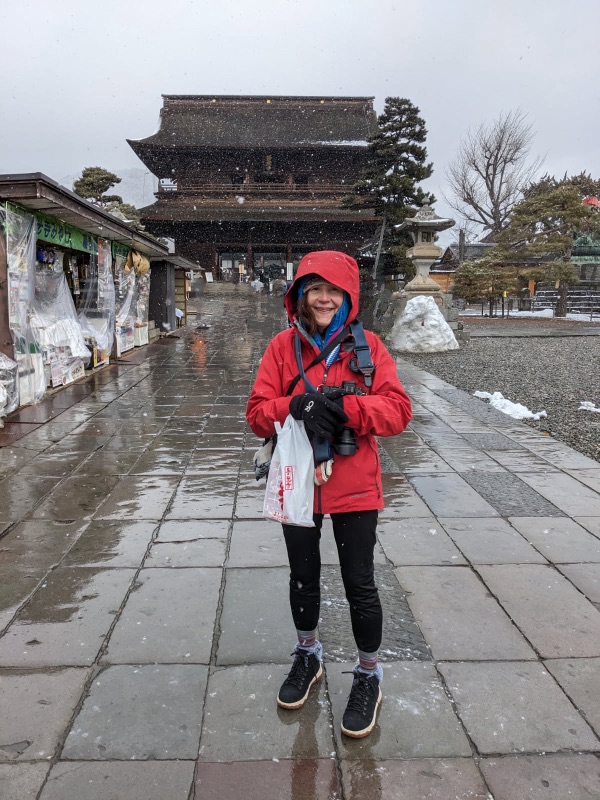
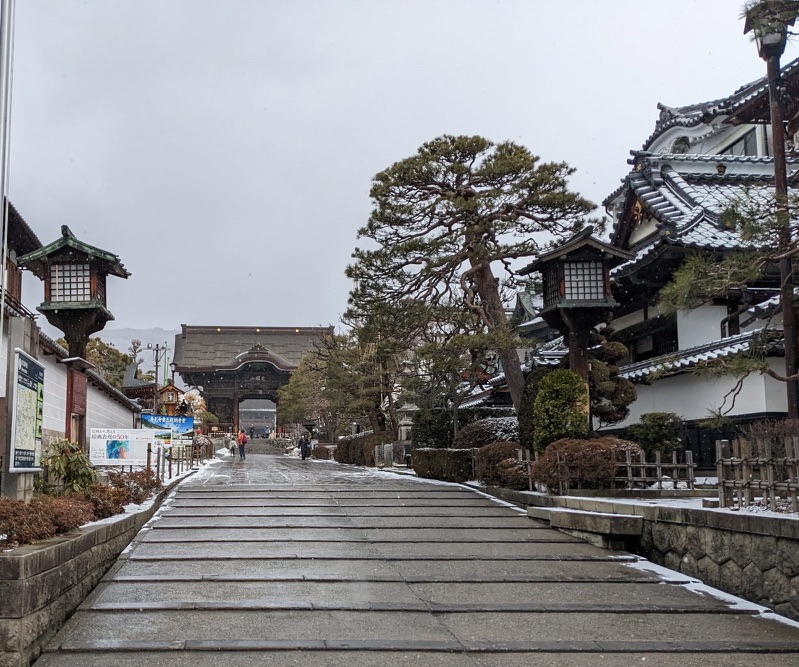
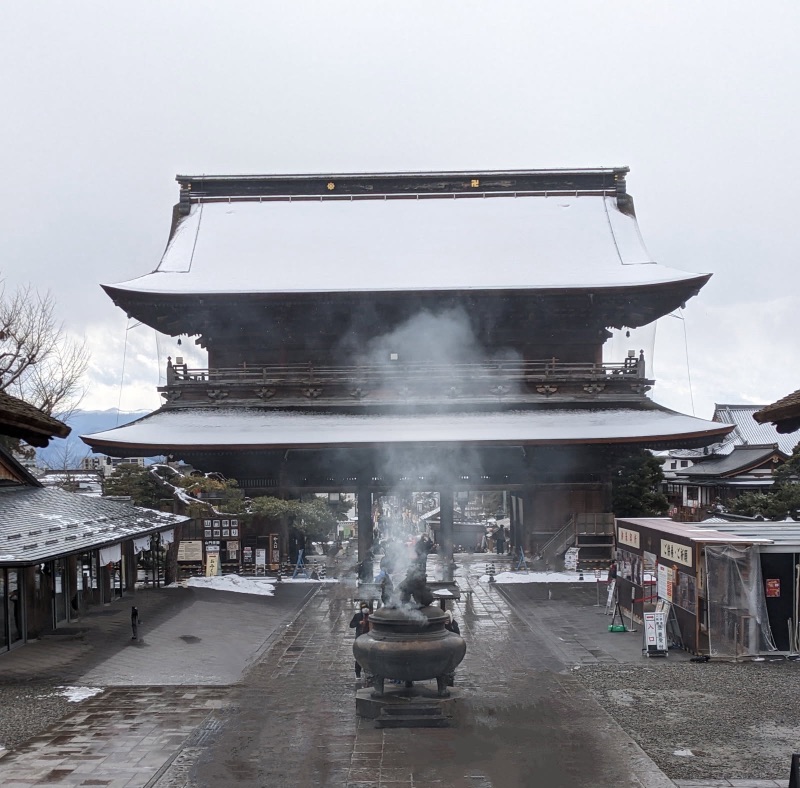
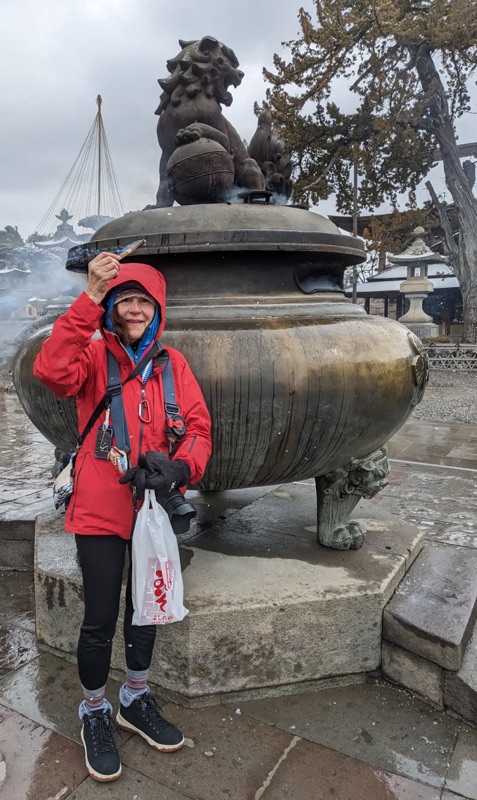
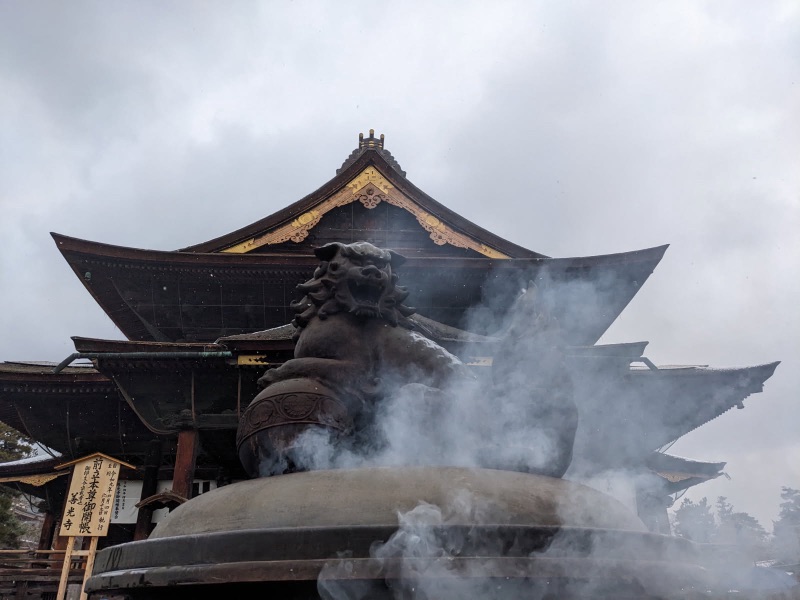
When we left the sake shop it started snowing. We enjoyed the winter ambiance while visiting the Zenkoji Temple which is a very important Buddhist temple in Japan.

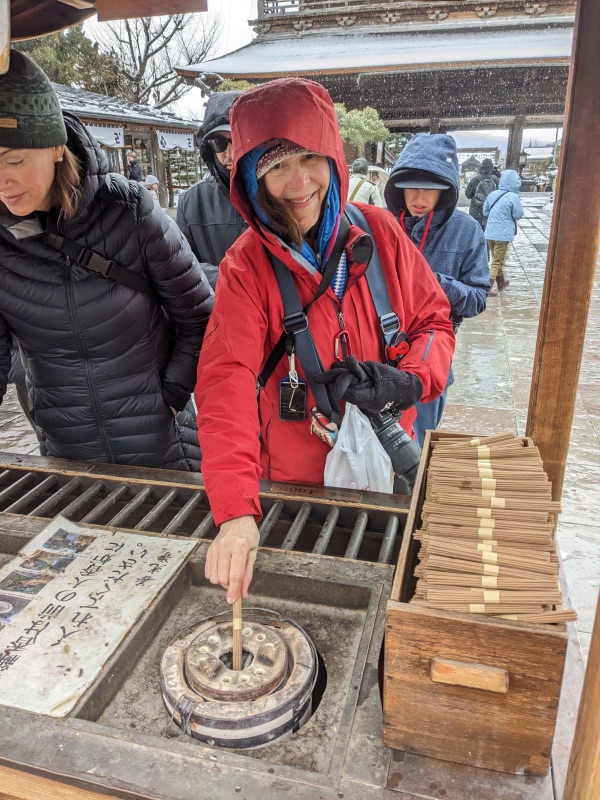
Ritual Offering Made Before Entering the Temple

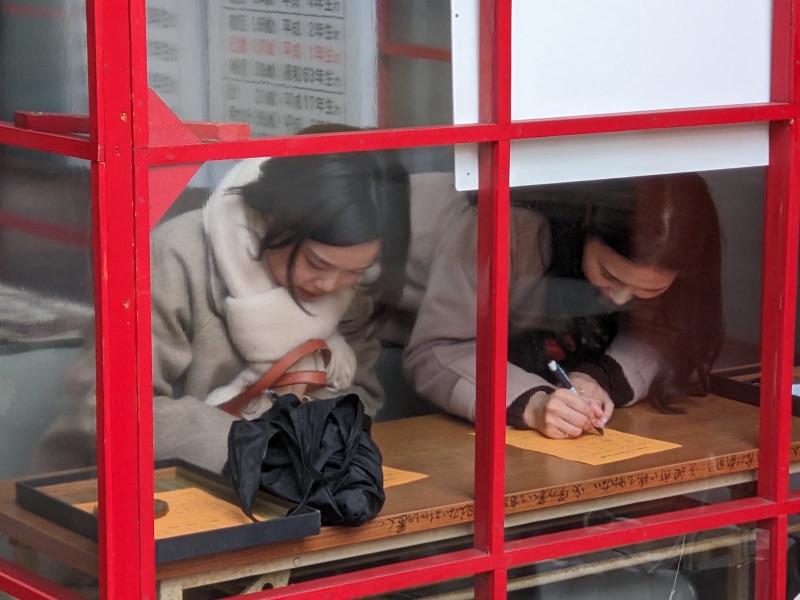
Pictures are not allowed inside the temple; but, it was a large area to visit & inside you can buy small charms for wishing things such as “good luck, good health, & good fortune.” There are even charms for “good luck on exams.”

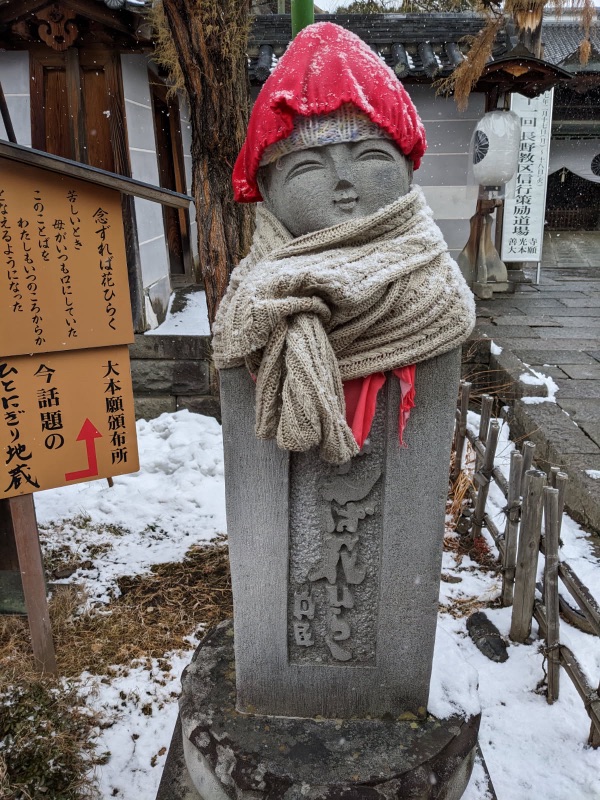
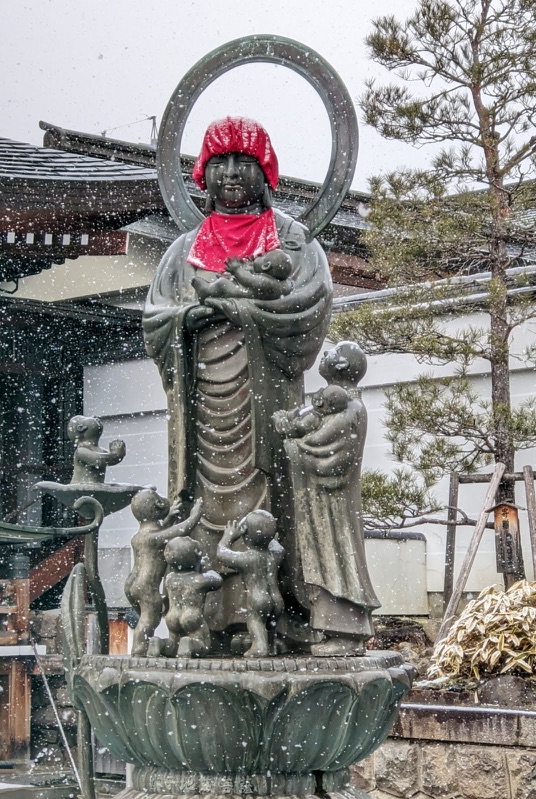
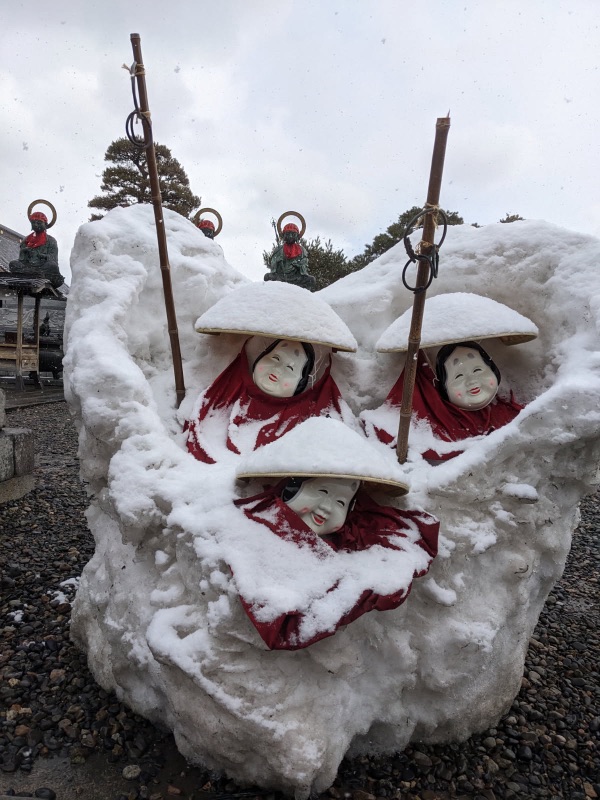
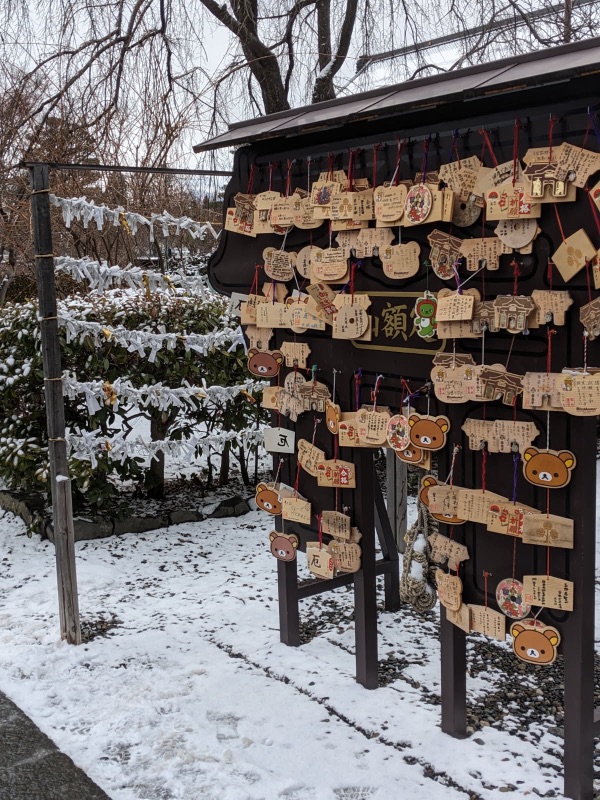
Here are a few sights near the temple.

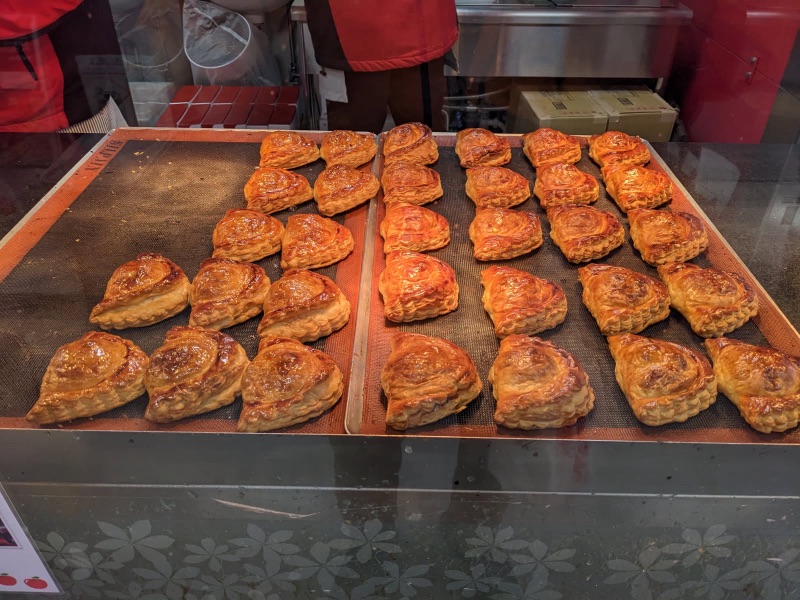
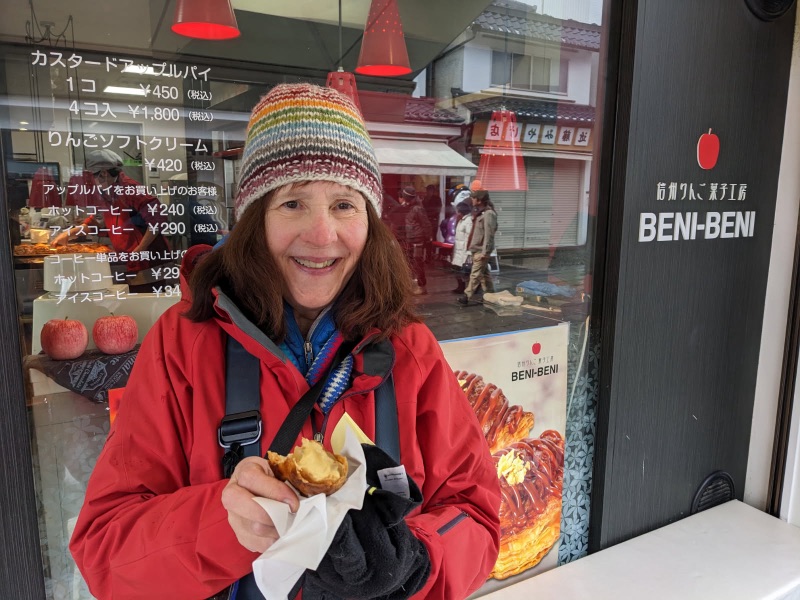
Nagano is known for 2 things- people living the longest here in Japan & its apples. We were told they grow over 40 apple varieties in Nagano.

While waiting for the tour to continue, I enjoyed an apple custard hot pie. It was delish!

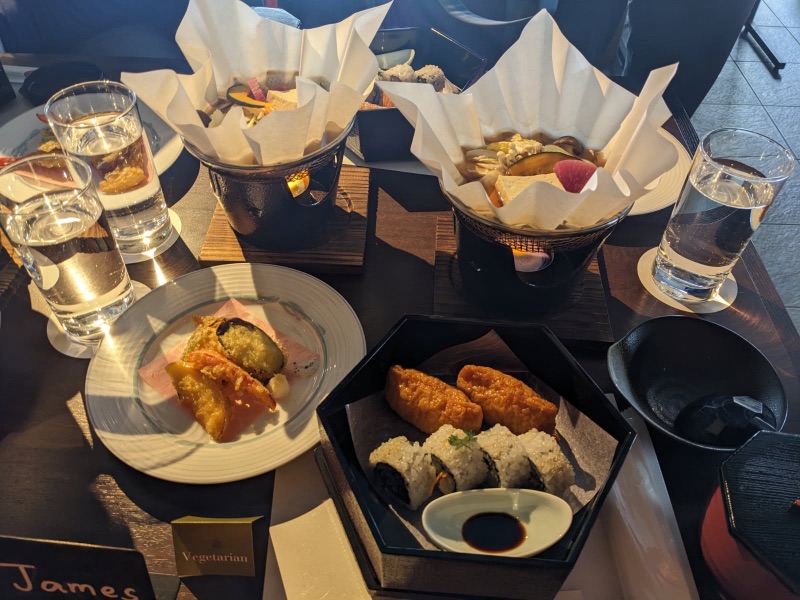
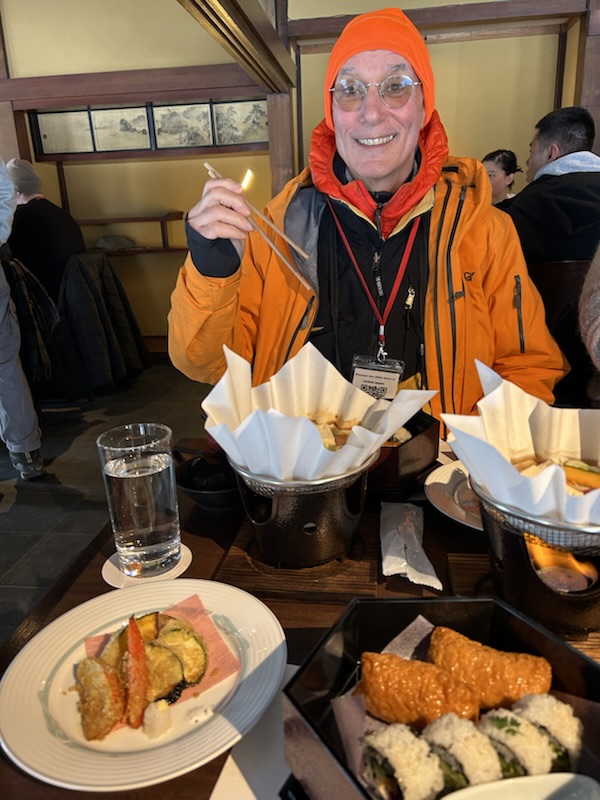
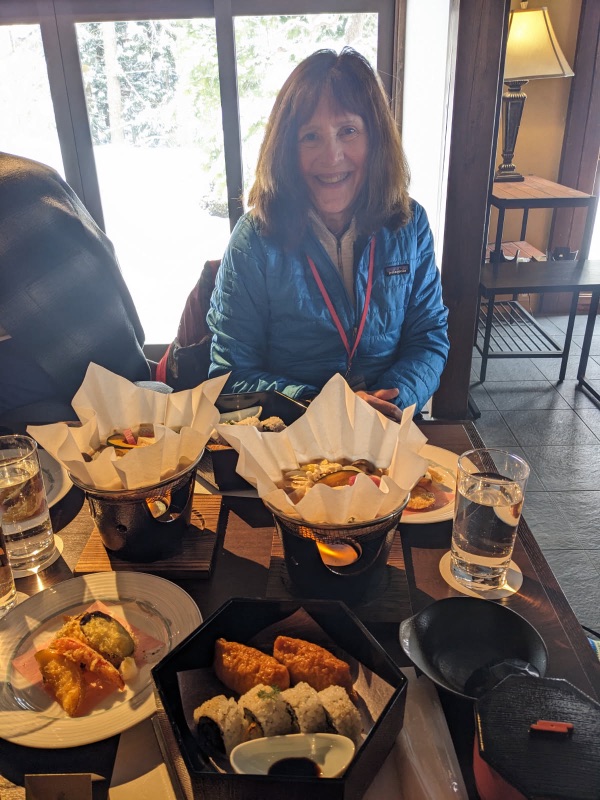
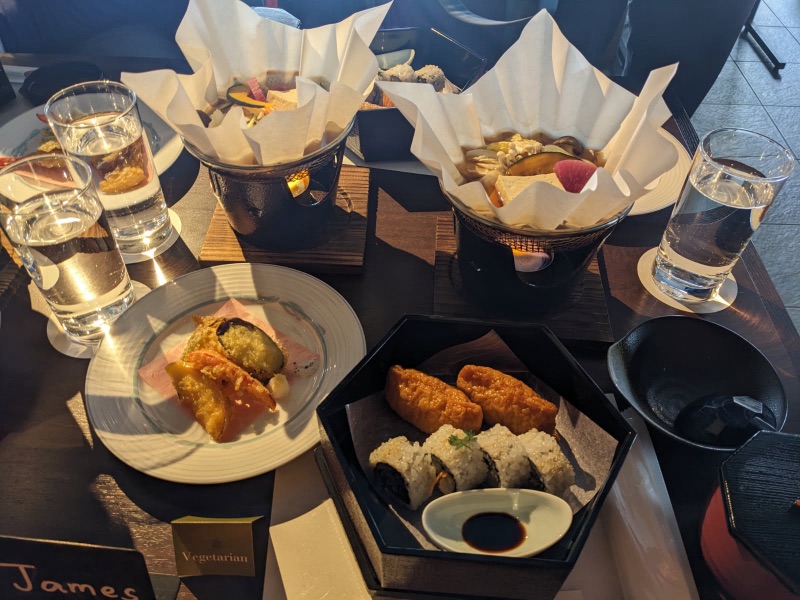
We then had an hour drive to the Jigokudani Monkey Park. But, first we had a wonderful Japanese lunch with a traditional hot pot to cook your food at the table along with some veggie sushi & veggie tempura.

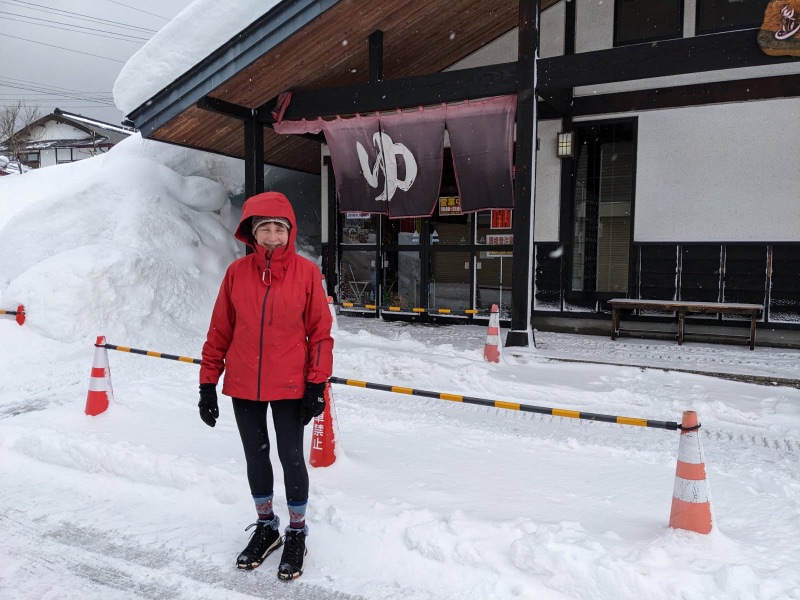
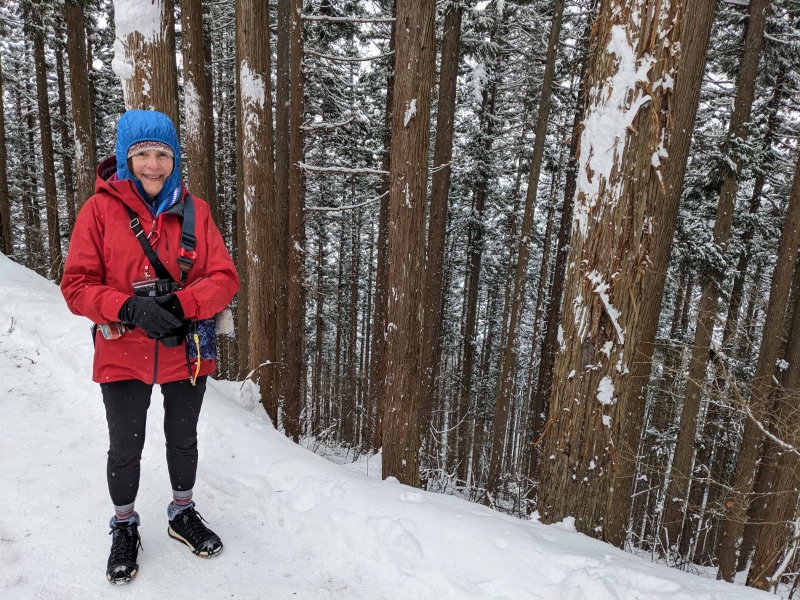
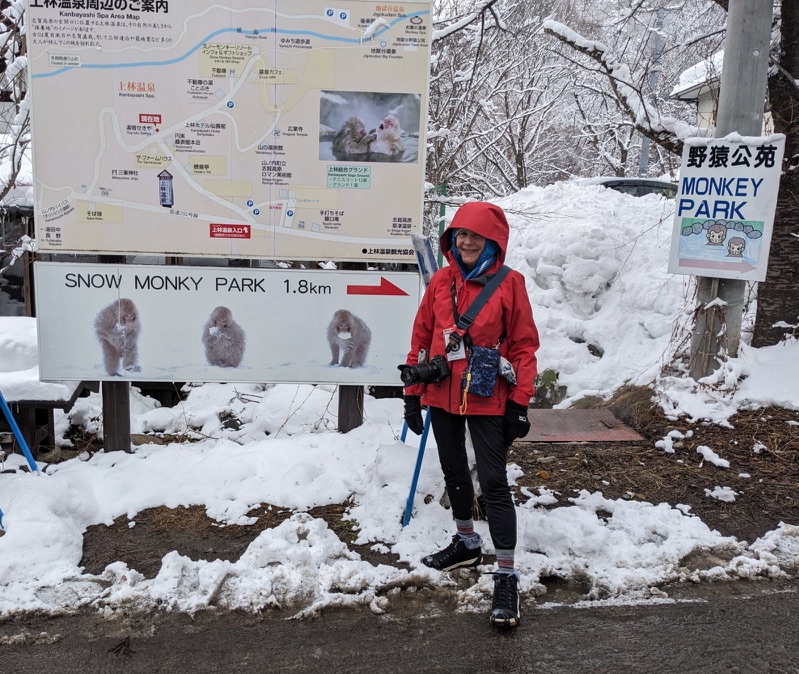
After lunch, we had a 1.25 mile walk through the forest to reach the Snow Monkey Park. Thankfully, I had clip-on crampon spikes for my shoes because the path was covered in snow & ice.

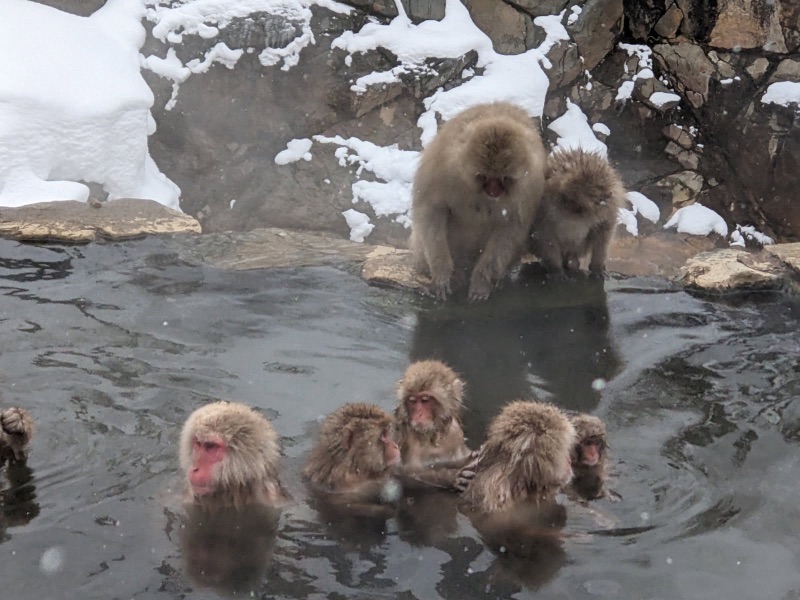
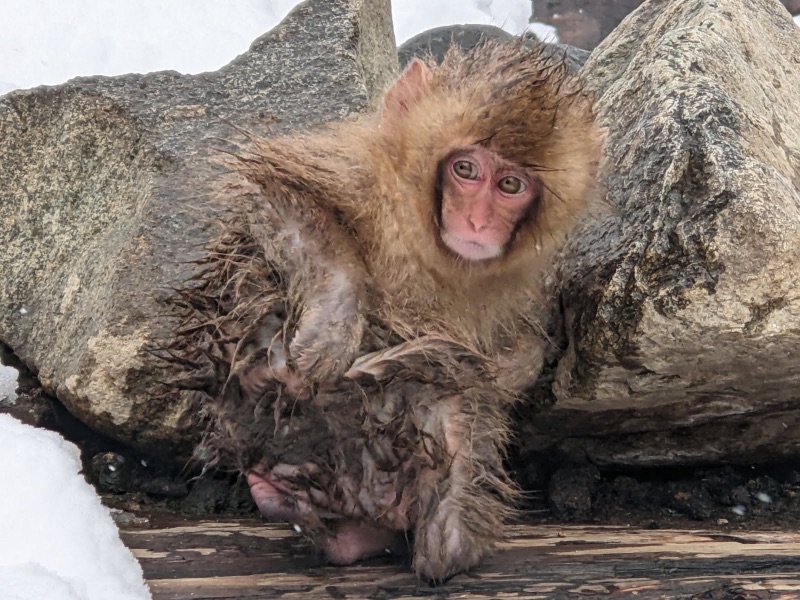
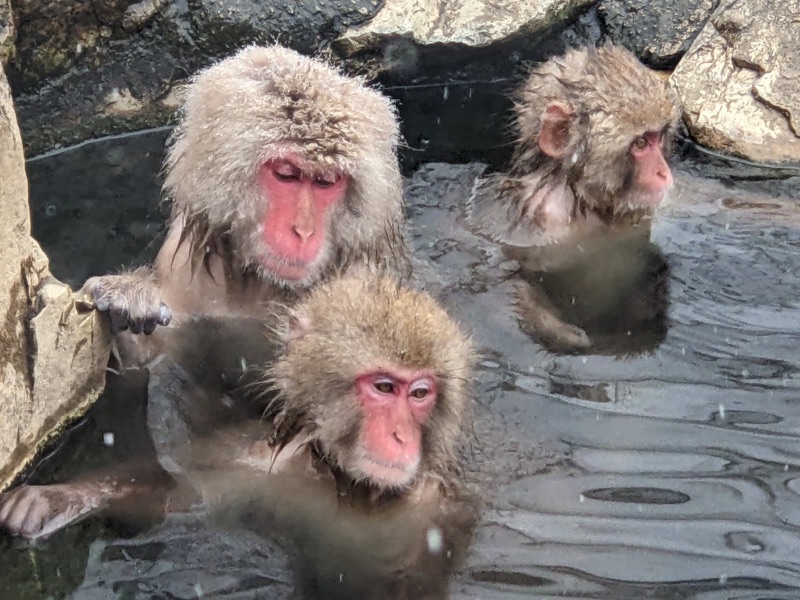
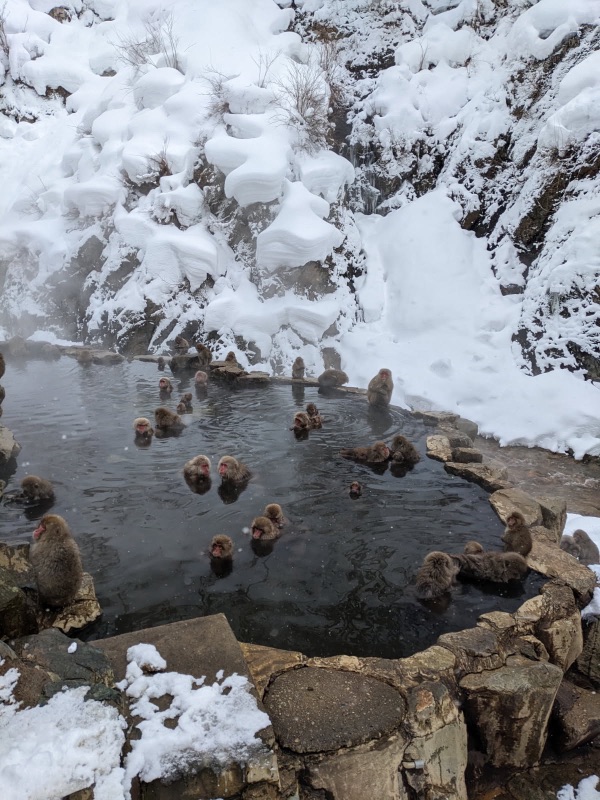
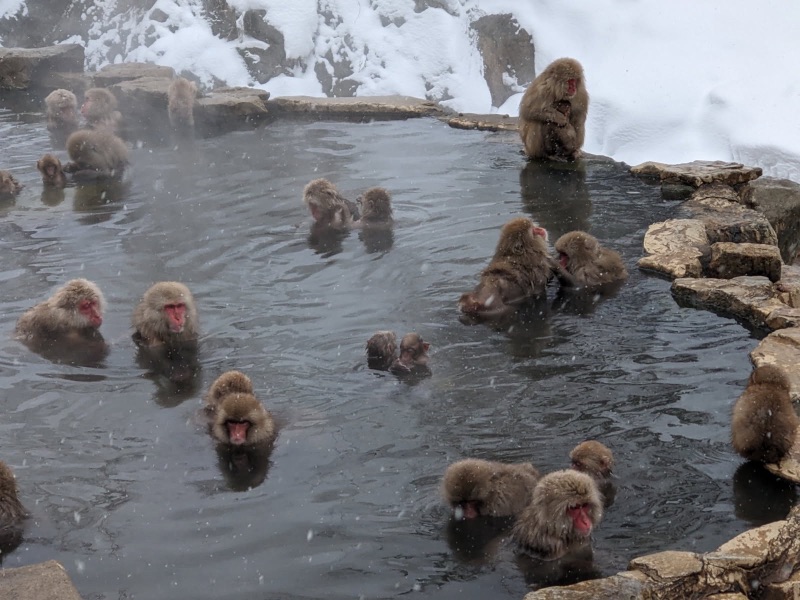
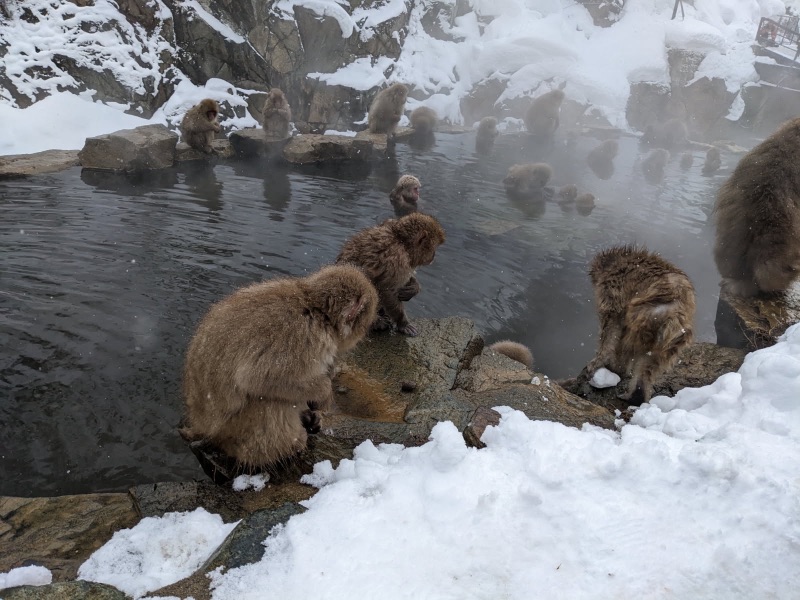
The monkey troop has the only monkeys in the world known to bathe in hot springs. This troop has over 150 monkeys. The troop size is large because other than raptors who may occasionally take babies, they have no natural predators on the ground & they are protected in the park.

Japanese macaques (snow monkeys) have the northernmost range of the world’s primates.

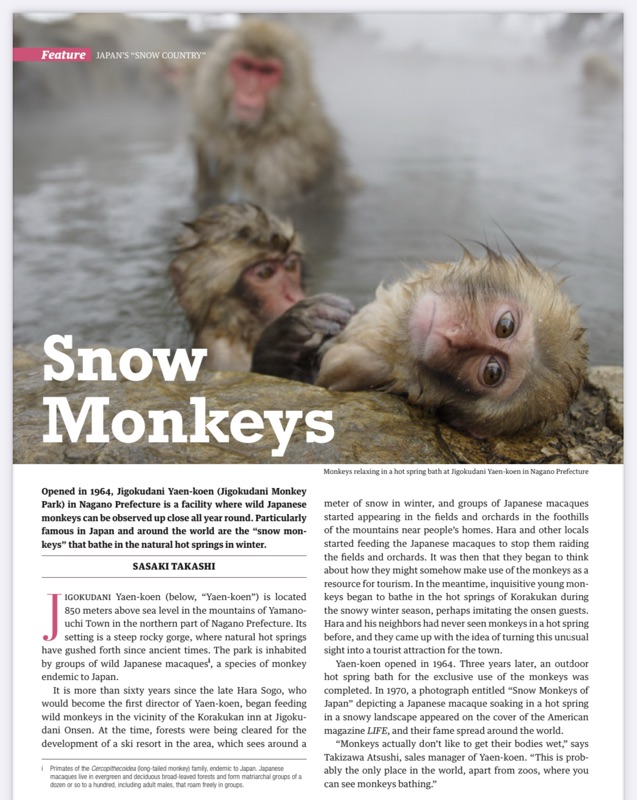
Snow Monkey Park was created in 1964 so the Japanese macaques could have a refuge within what was already their natural habitat. The naturally curious monkeys observed humans using the outside onsen hot spring at a nearby guesthouse during winter. The monkeys thought this was a great idea & jumped in the pool. However, the guesthouse owner was not too keen on monkeys fouling his clean onsen.

To keep the monkeys out of the onsen, a special hot bath was created for them inside the park.

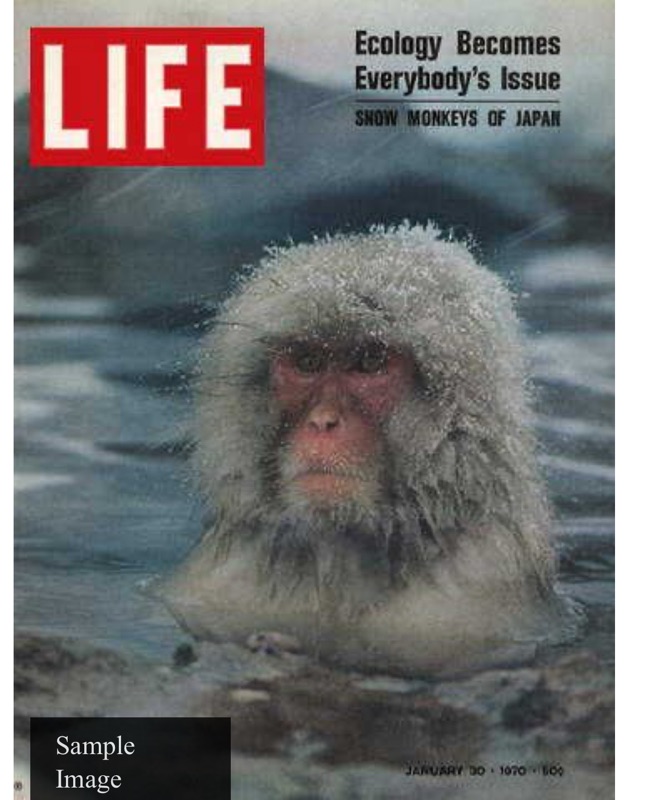
In 1970, Life magazine featured the Snow Monkeys on its cover creating a world wild fascination about them & catapulted their onsen into a tourist destination overnight.

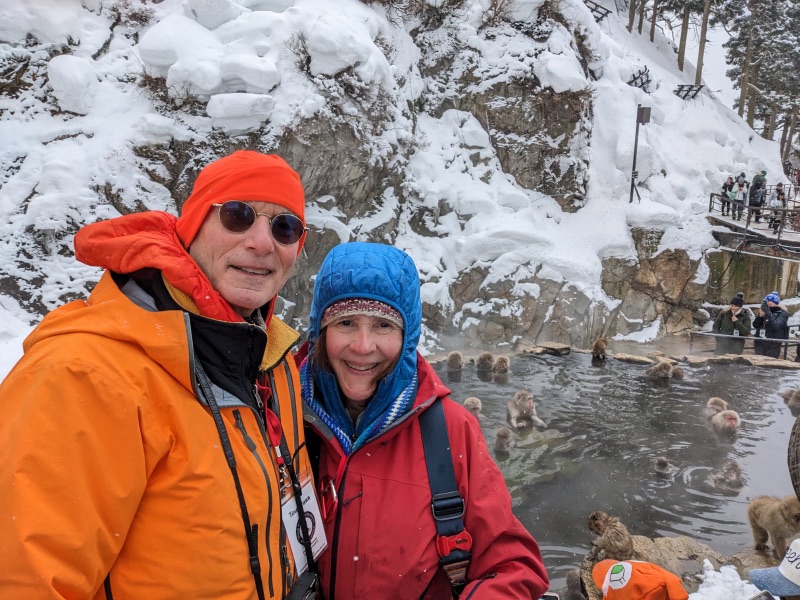
Finally arrived after a 30 minute walk.

On the day we went it was very cold so many monkeys were in their special onsen. Our guide said we were lucky to see so many young ones.

Since getting into hot baths is not a natural behavior for monkeys & they only started doing it in the 1960s by copying humans, this is the textbook definition for “Monkey See… Monkey Do.”

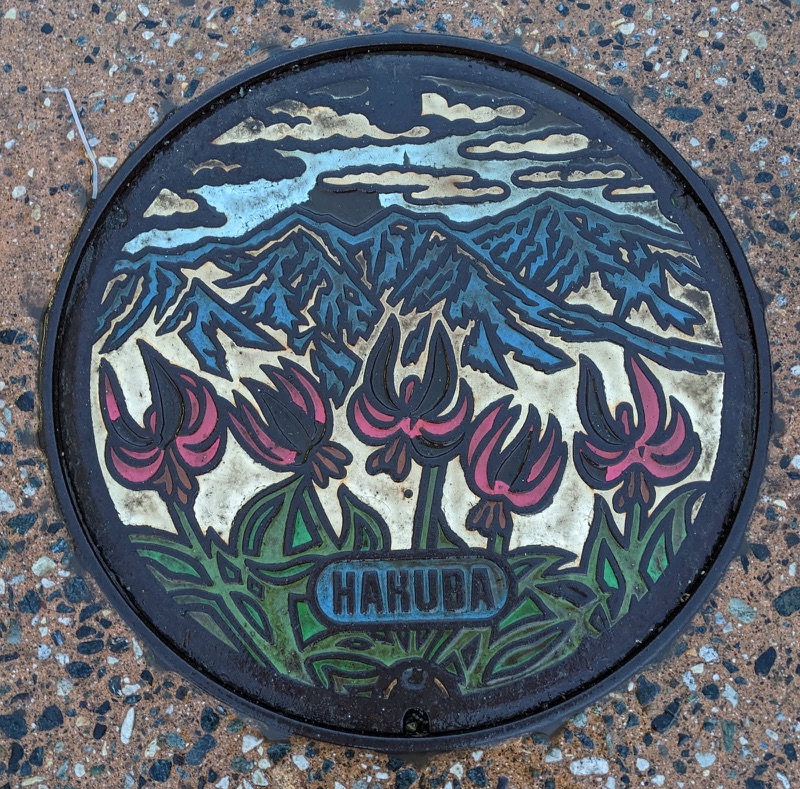
Skiing at Hakuba, Japan

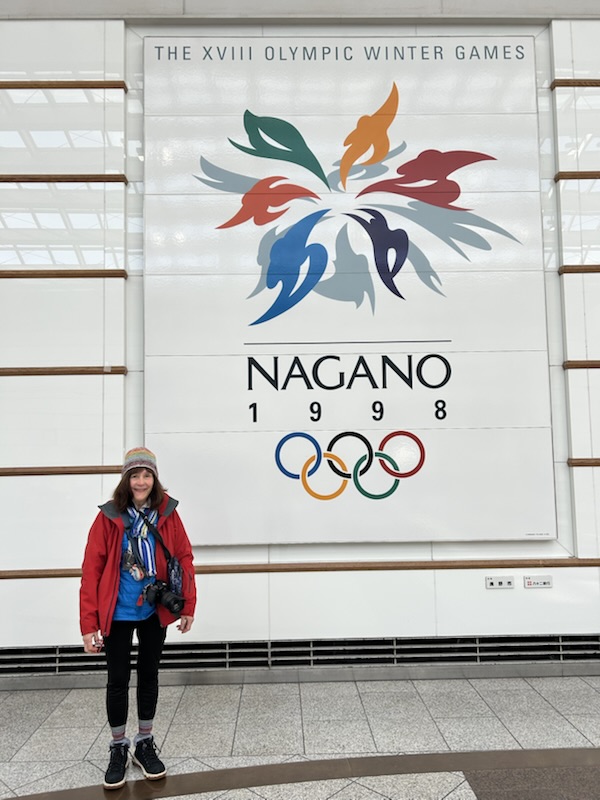
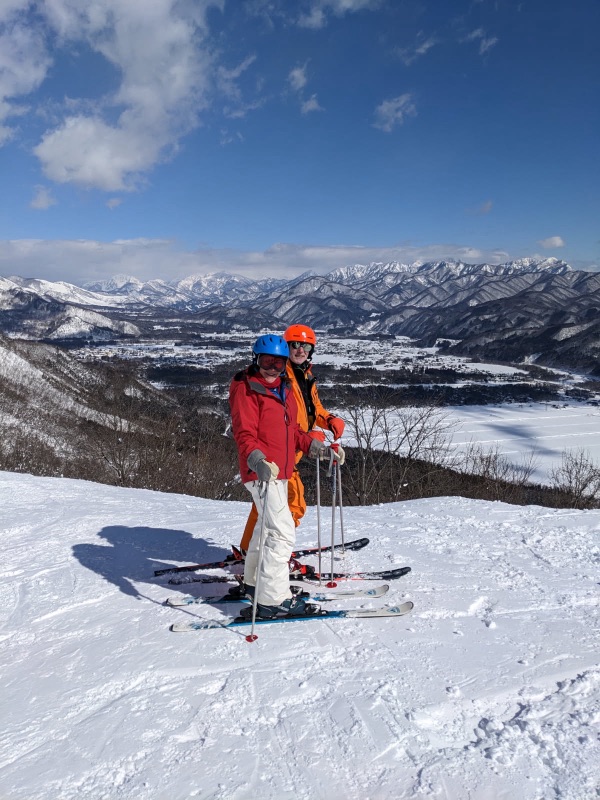
After talking about it for many years, we finally decided it was time to go skiiing in Japan. There are many ski resorts in Japan; but, we chose the place where the 1998 Winter Olympics were held.

The Alpine skiing events took place about a 1 hour drive from Nagano in the Hakuba Valley.

When planning a ski trip, you always hope for good snow on the slopes; but, you also dream of being in a winter wonderland.

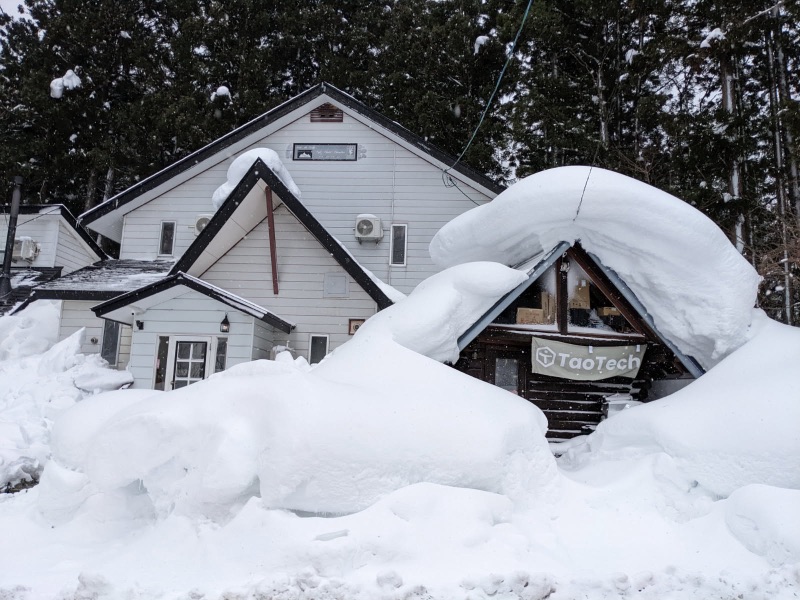
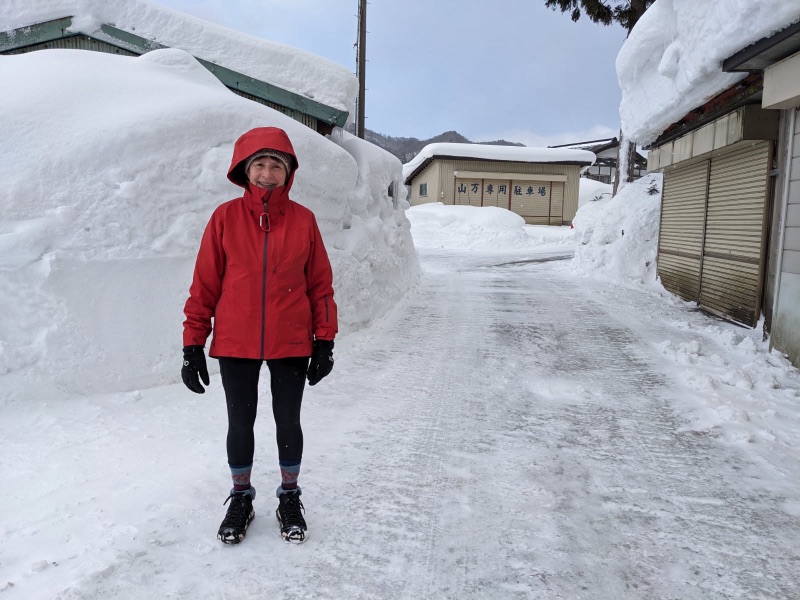
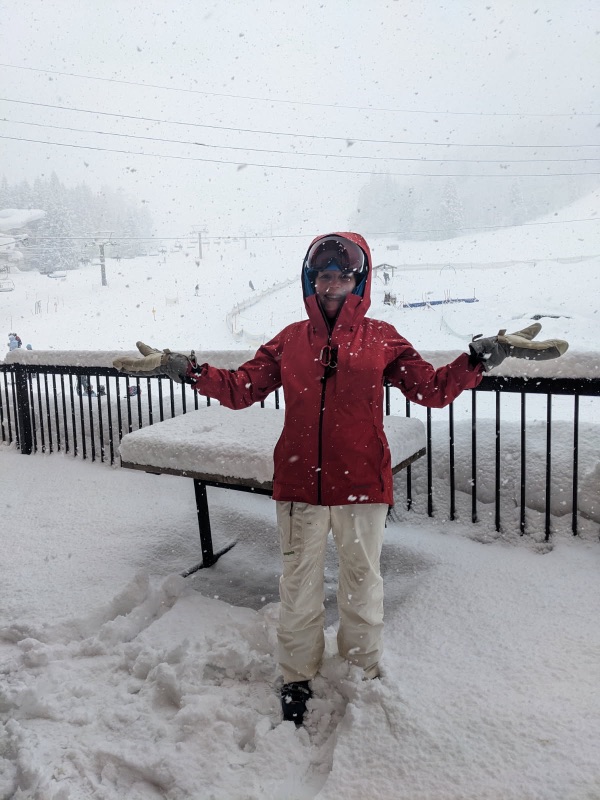
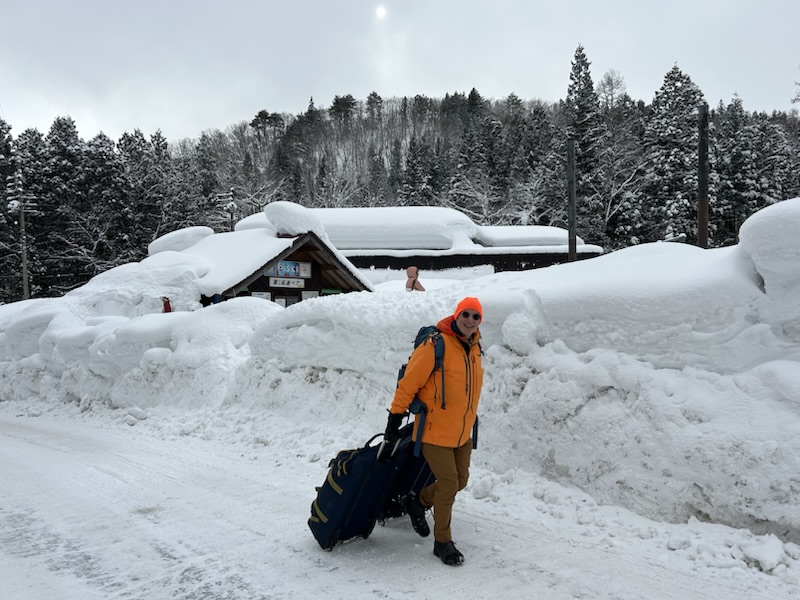
This year both came true as the locals told us this is the most snow they have had in years & it is three times the norm.

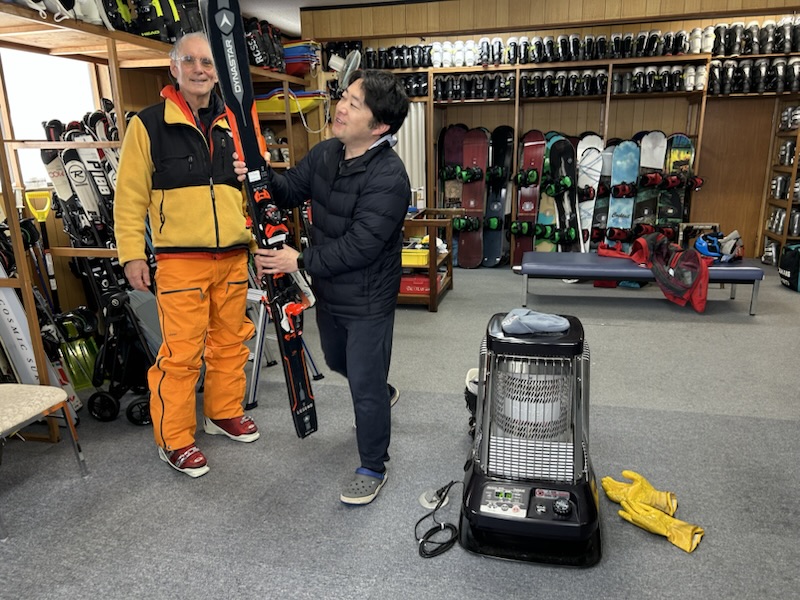
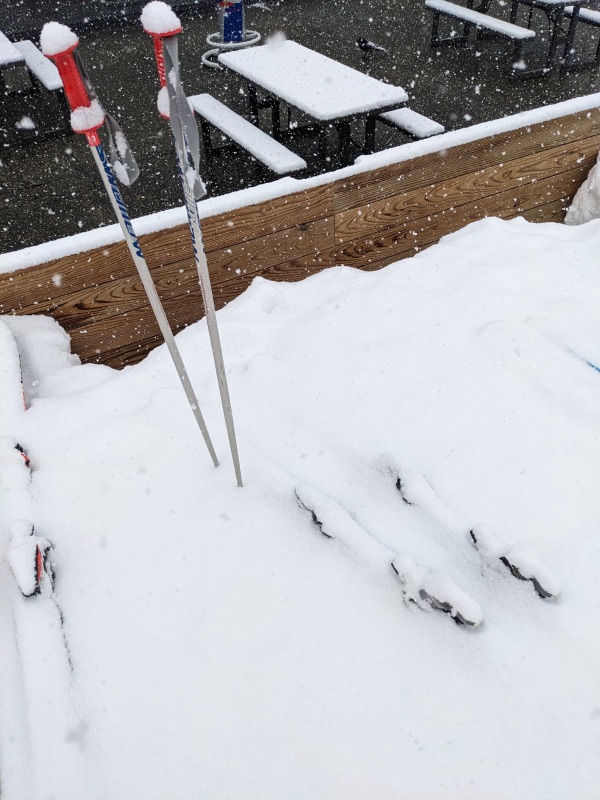
Not wanting to lug skis through Japan’s busy train & bus terminals, we chose to rent our skies & poles which we got at a tiny shop near our hotel.

The Hakuba Valley has many resorts in varied sizes which are separated only by short distances from each other. With your ski pass, you have the option to ski at 6 different resorts. Each resort is connected by a free shuttle bus.

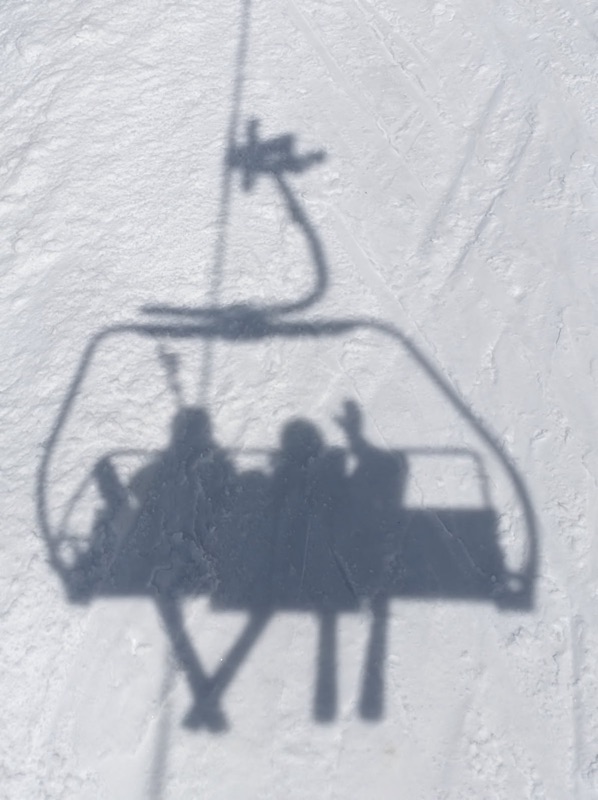
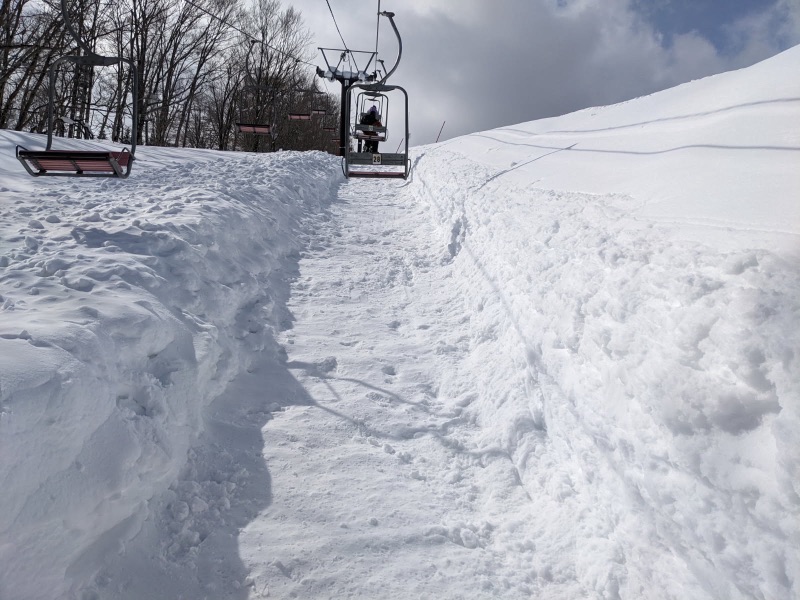
There was so much snow that sometimes our skies almost touched the snow while we were riding on the chair lifts. Many chair lifts had to be dug out from the snow to operate.
In the 5 days we skied, we were lucky to have 3 days with sunny blue skies.

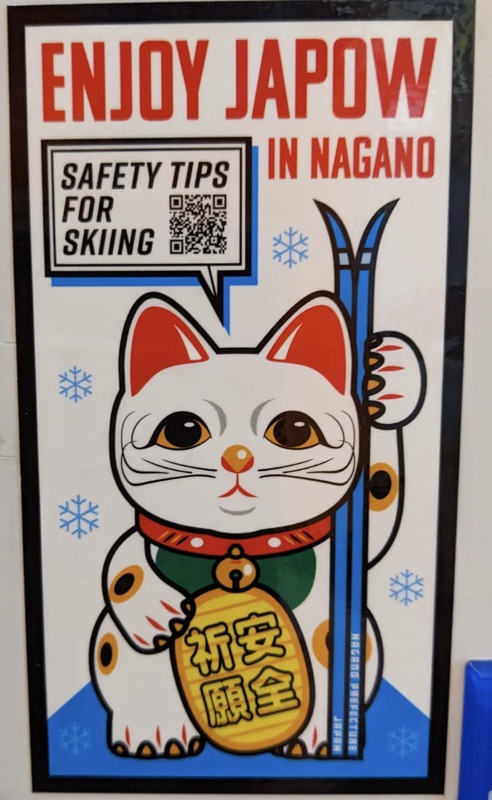
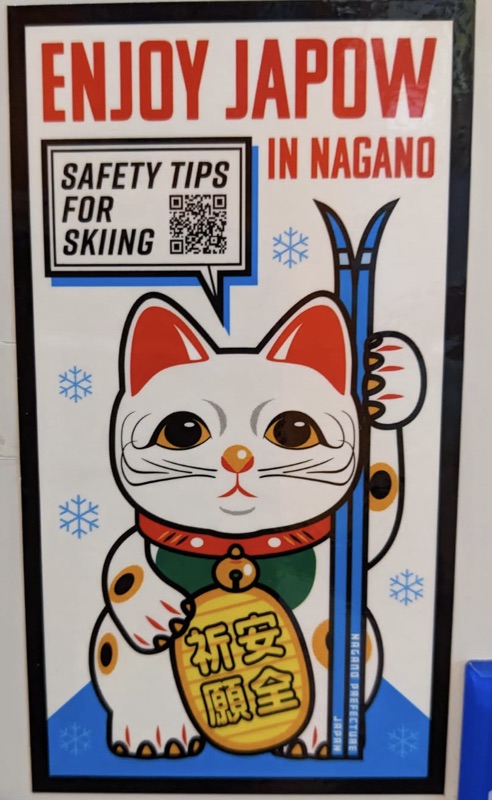
Many skiers come to Japan to experience the light fluffy snow called Japow (Japan Powder).

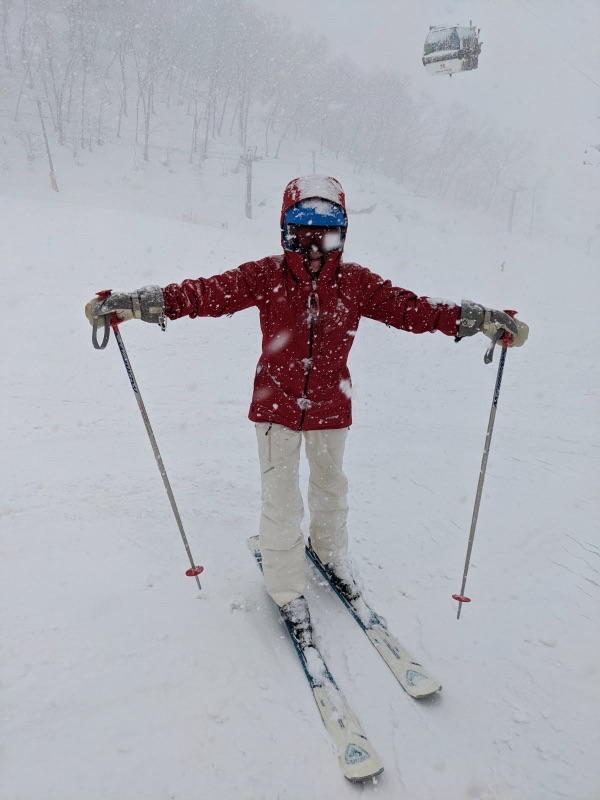
On our last ski day we got to experience this magical condition when it snowed almost a foot in a few hours.

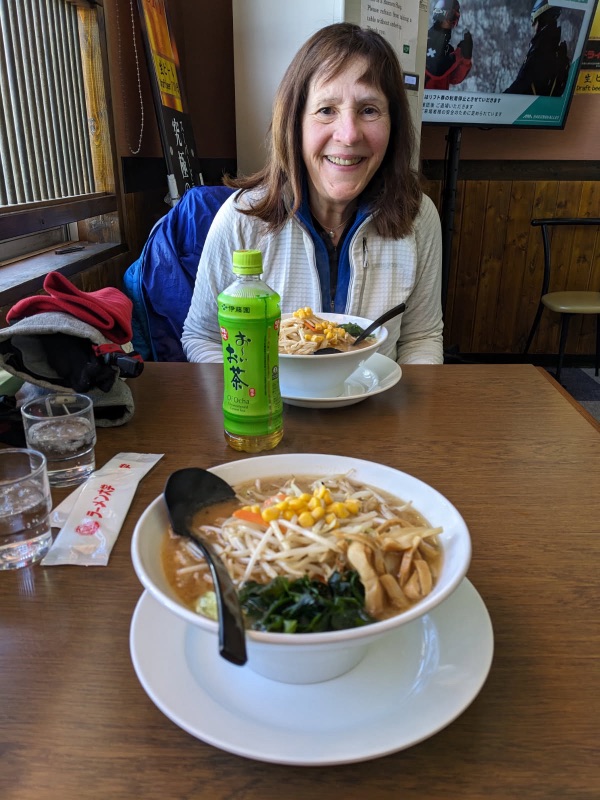
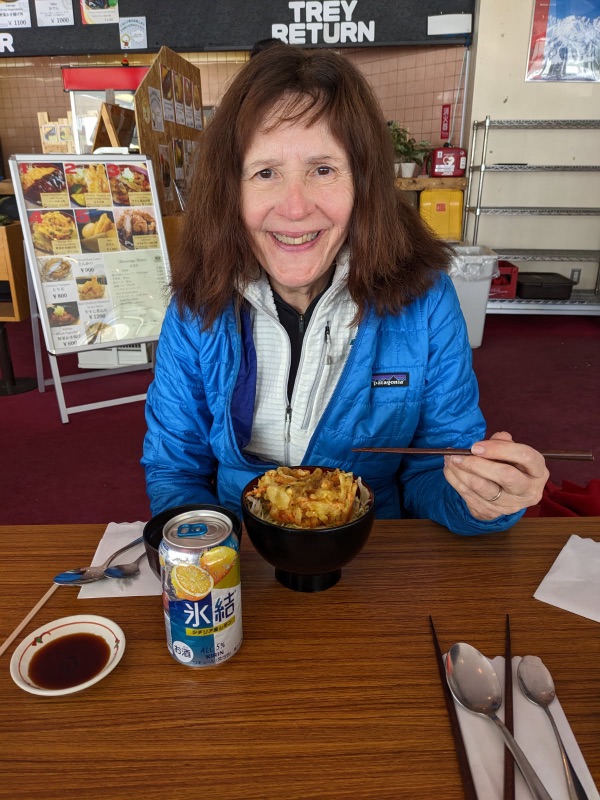
Japanese food always provided a warm & tasty lunch break

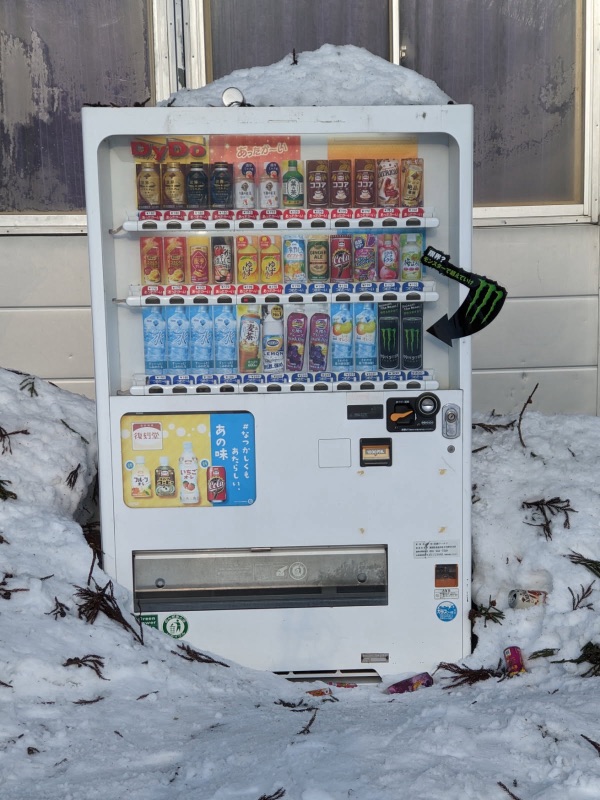
If you need something to drink, you could opt to use one of the many vending machines which found both inside & outside.
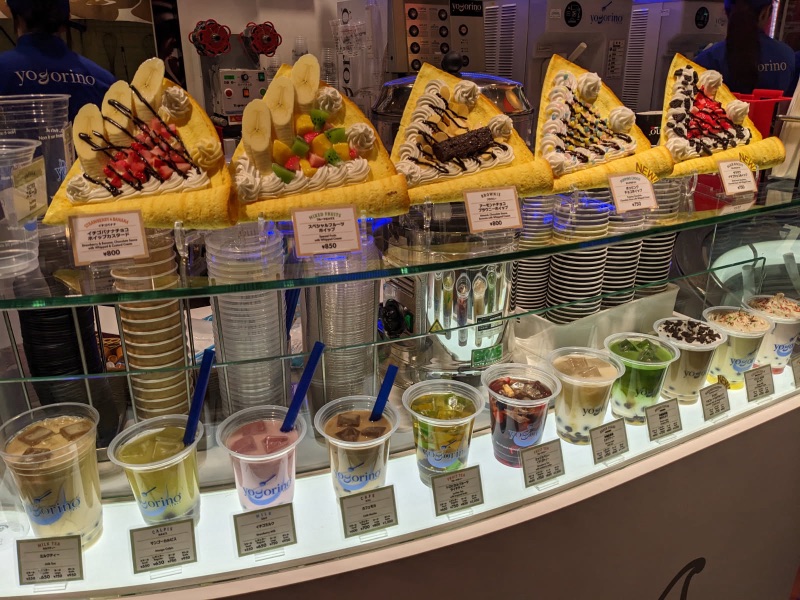
One ski lodge temped skiers with yummy desserts of ice cream or crepes.
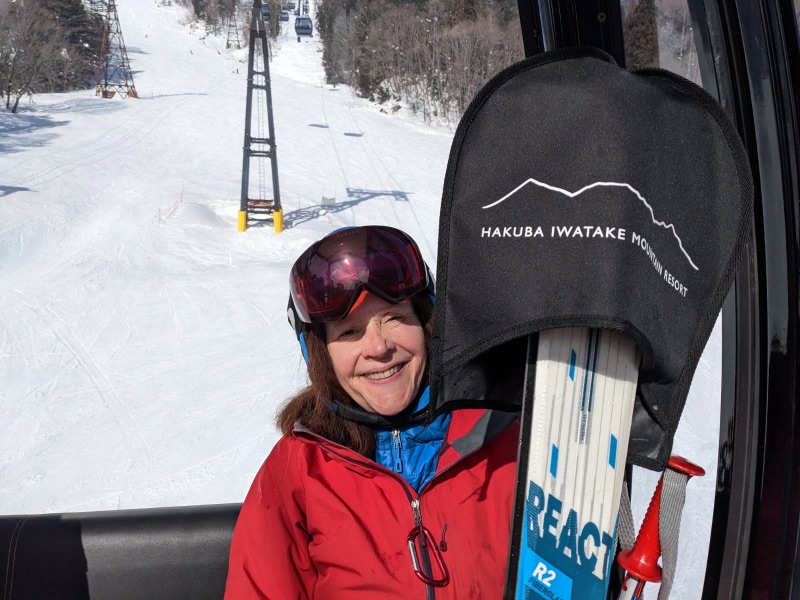
Some resorts had gondolas to reach the top.

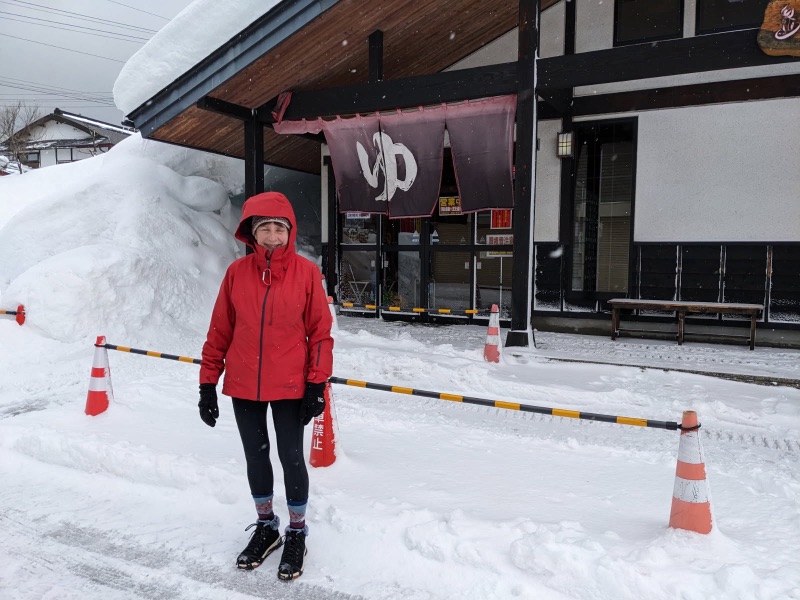
My greatest apres-ski pleasure was going to an Onsen (public bath) which was only a 10 minute walk from our hotel. For only $5, I could relax in hot mineral water for as long as I wanted. Maybe this is why the average person lives to be 85 in this area.😌

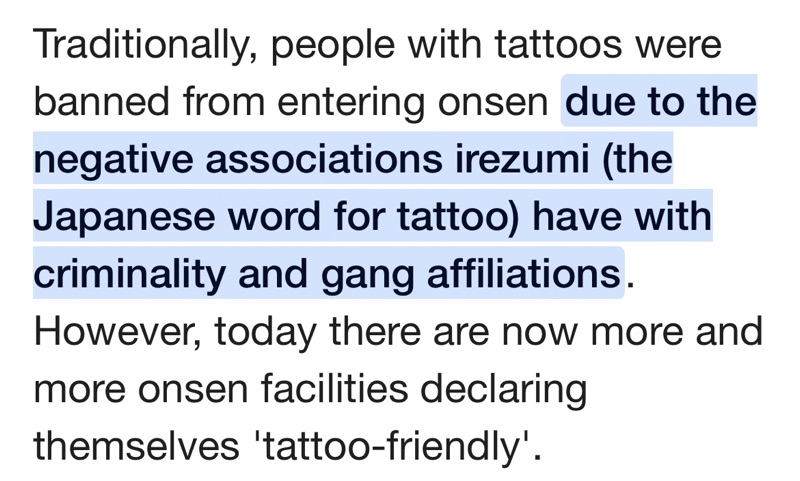
The Onsen I enjoyed did not allow tattoos & had signs in many locations stating this policy. Maybe because they knew besides keeping away criminals & young people, the policy would also would keep away many foreigners.

Time to see more of Japan.

Ranthambore & Final Thoughts on India

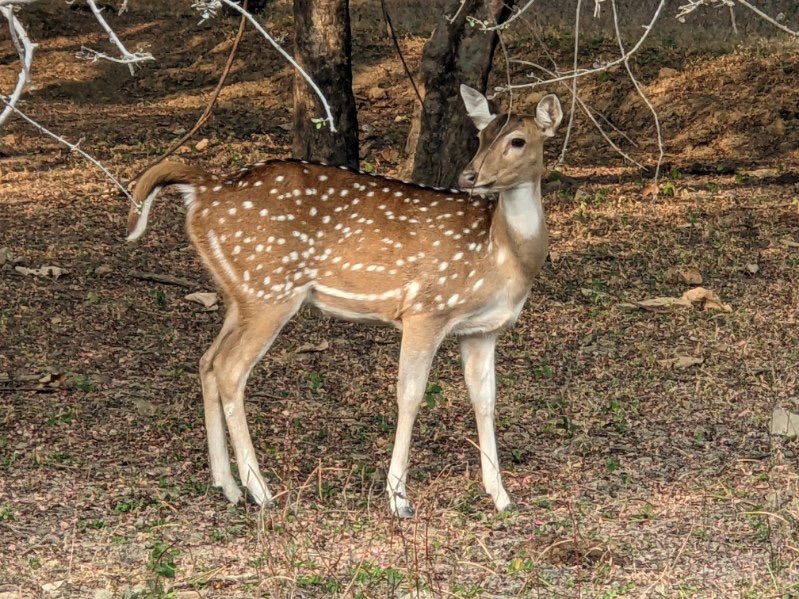
Our trip has now taken us to Ranthambore National Park which known for tigers. We were told that if you see a tiger picture taken in India, it is probably from this park. At one time, it was the royal hunting grounds for the Jaipur maharajas. It is located next to Sawai Madhopur in Rajasthan.

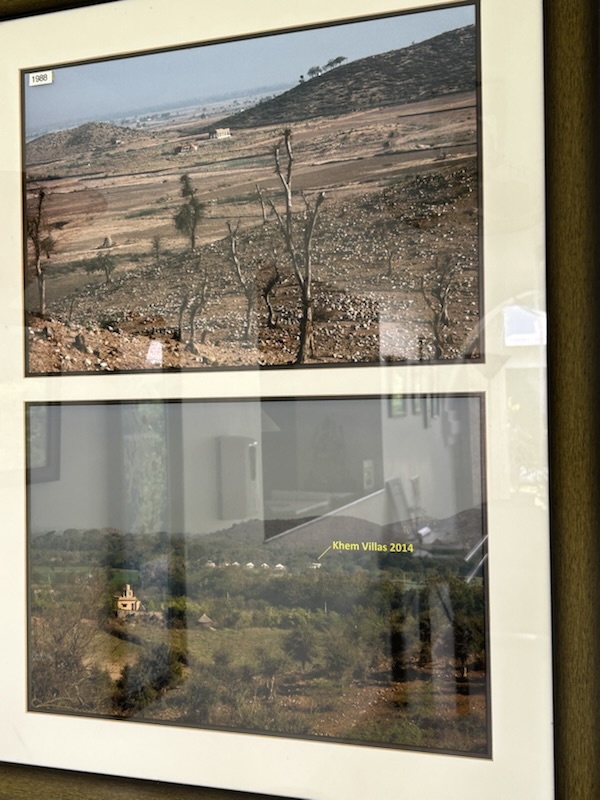
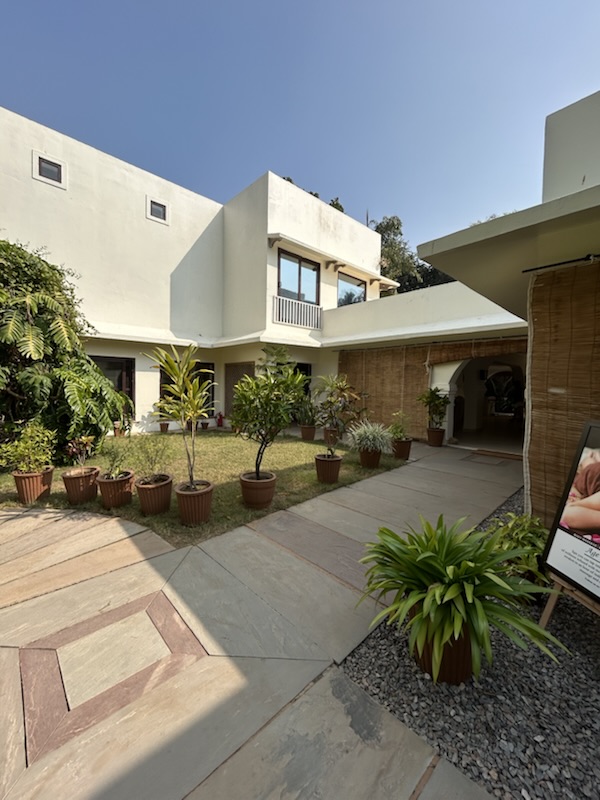
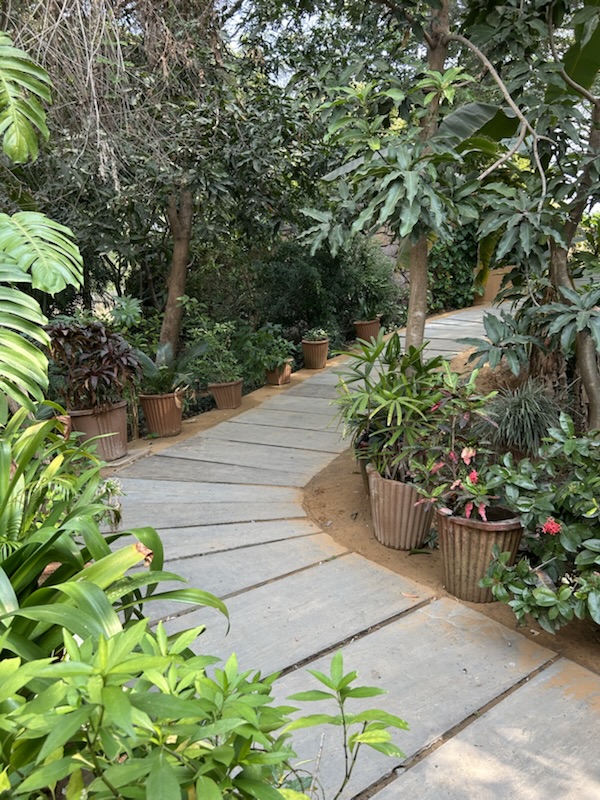
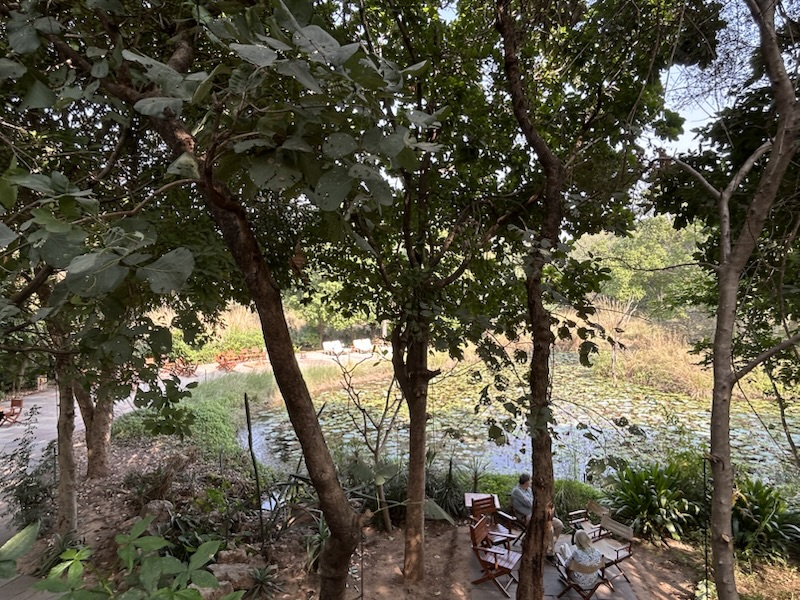
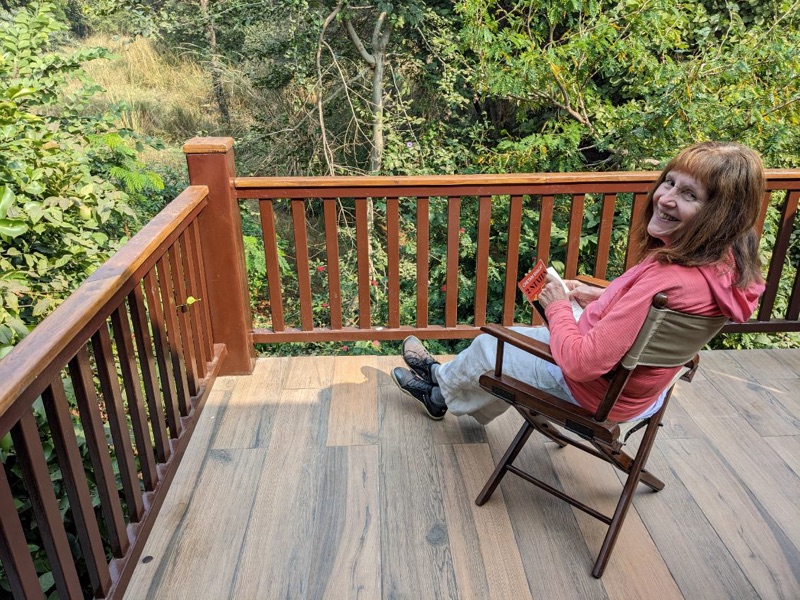
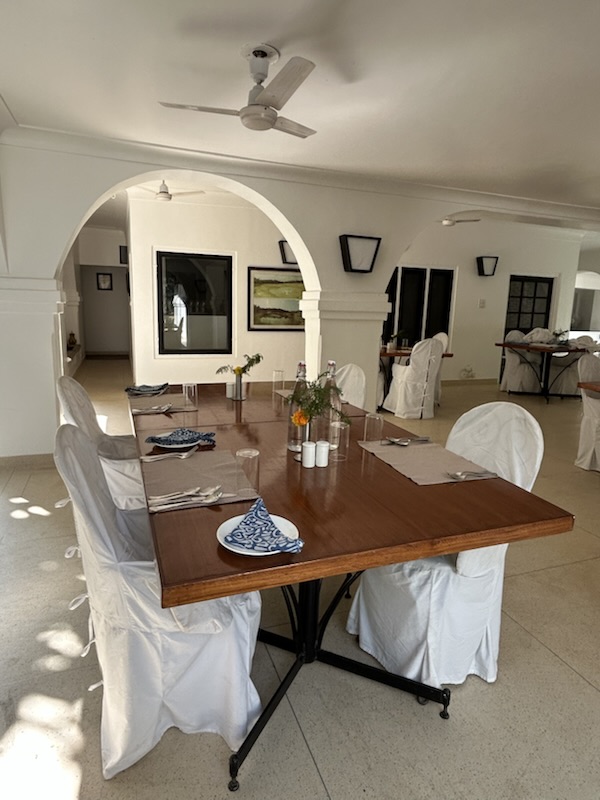
On our first afternoon, we arrived at our hotel Khem Villas. Unlike our other hotels, this is an eco lodge with only 12 rooms that was started by the son of the man who started Ranthambhore National Park.

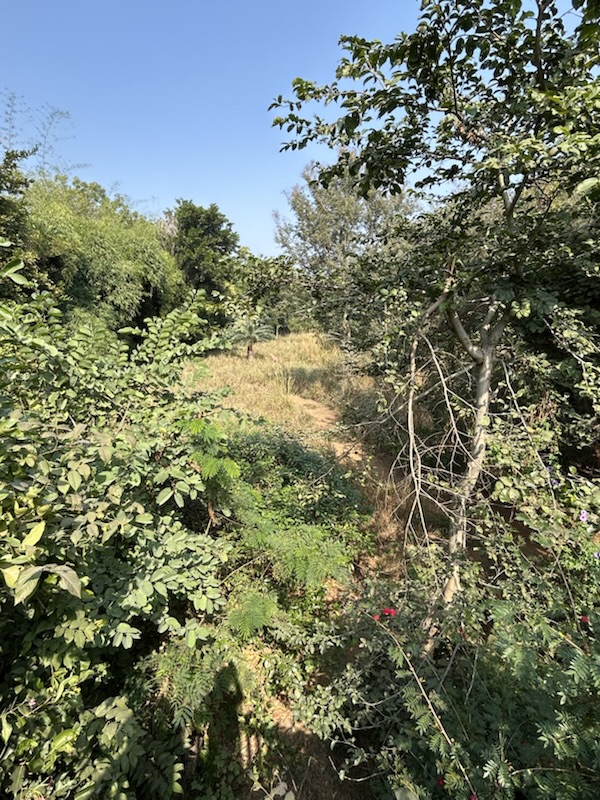
Picture showing Khem Villas before land restoration & after restoration

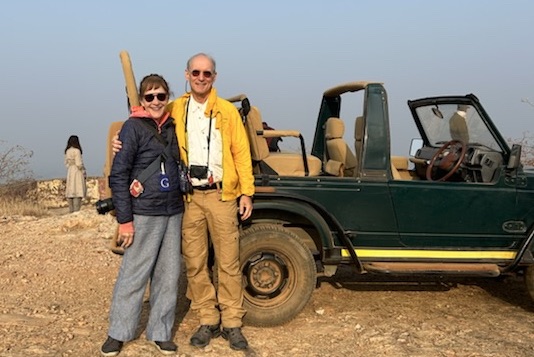
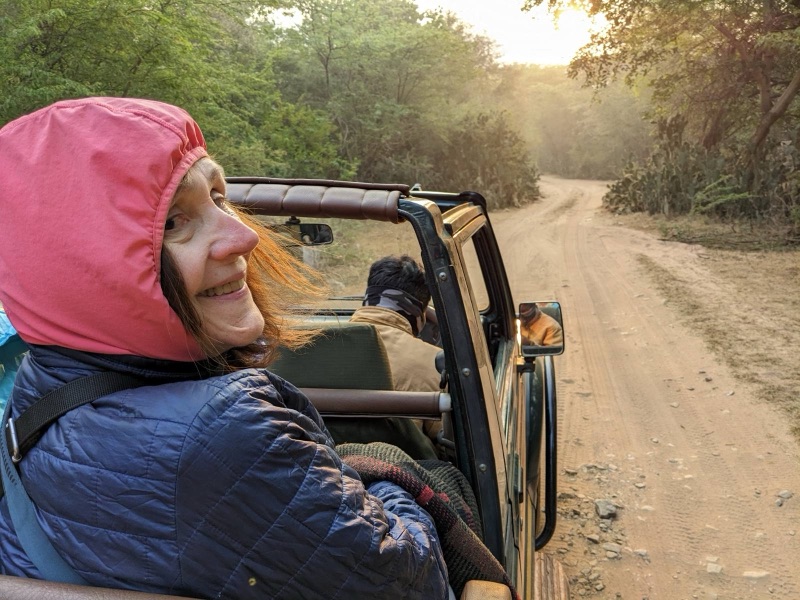
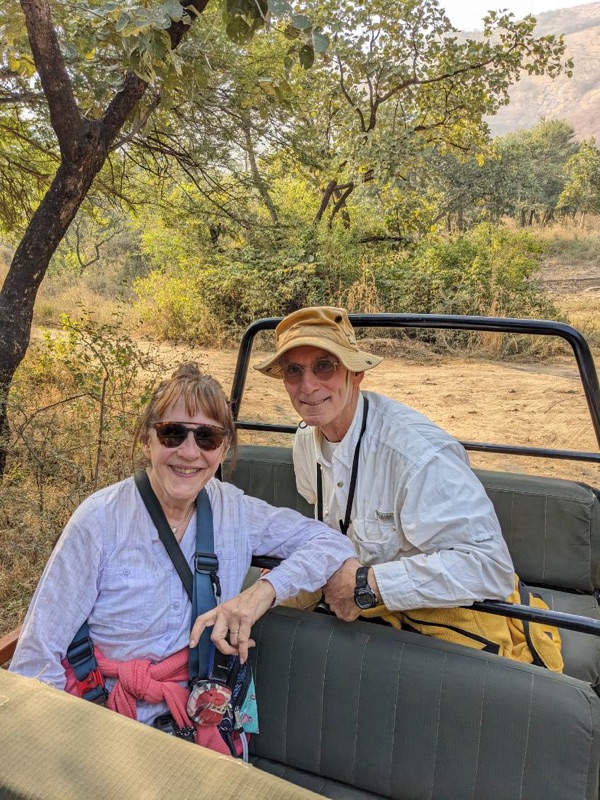
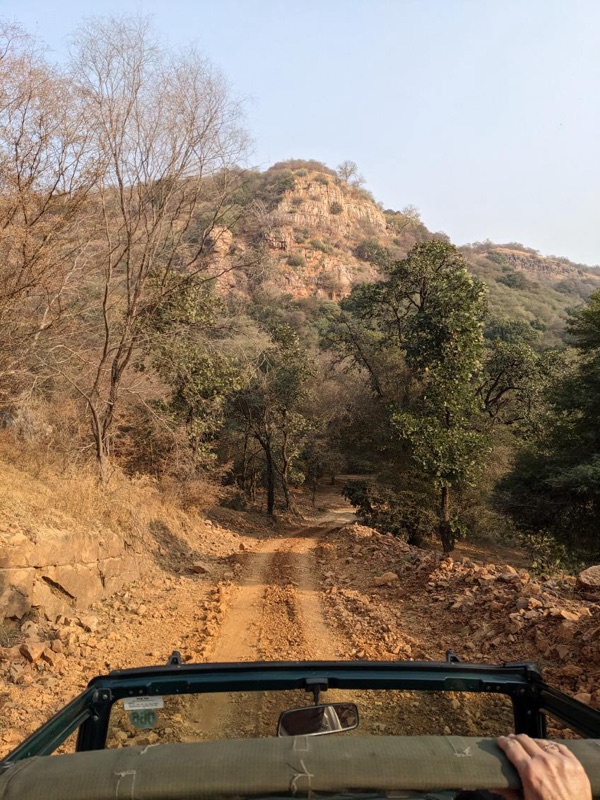
The next day we started our game drives into the national park. The only disadvantage to our hotel is the 30 minute drive to catch the arranged jeep for the wildlife safari drive.

Mornings in late November are often cold. I am finally using that warm jacket in my suitcase.

We had 3-4 hour drives in the morning & again in the afternoon.

Afternoons are much warmer.

The park is divided into 10 ea. different zones. The park service assigns the zone you see each day. We visited zones 10, 7, 8 & 6 (in that order.)

Each zone starts at a different gate into the park & has its own territory through which your assigned driver & guide take you.

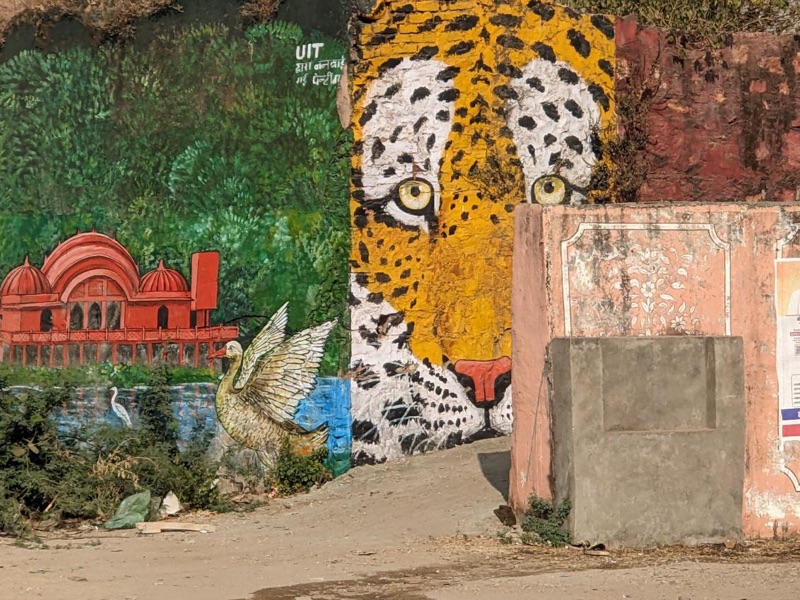
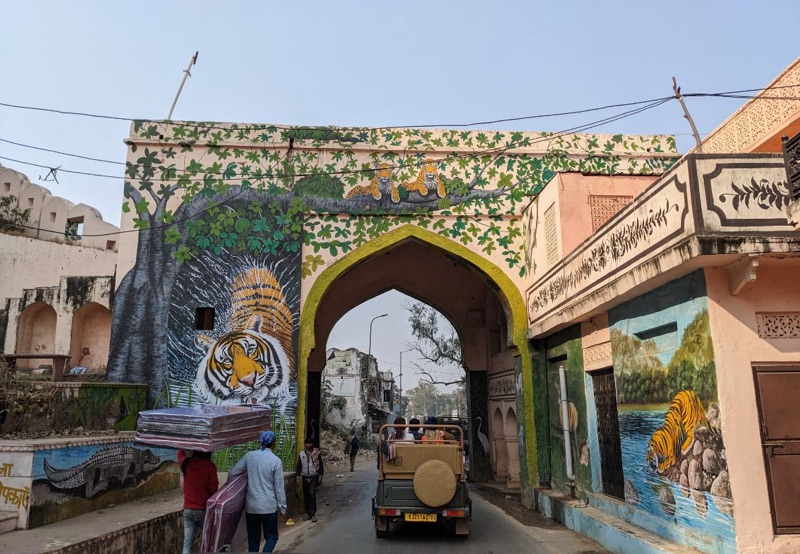
Sometimes we drove through the town of Sawai Madhopur. Walls are decorated with tigers & the people are always interesting to watch in their daily life.

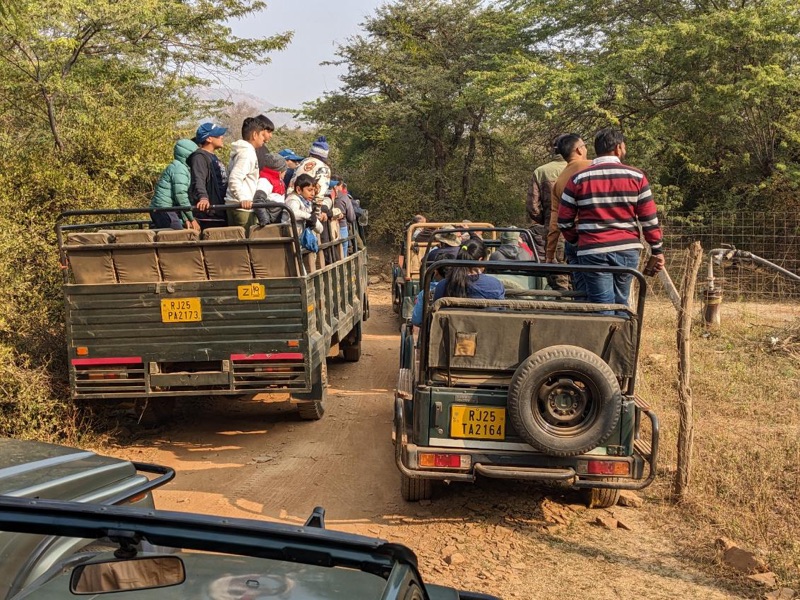
Once in the park, you share the trail with other tourist vehicles all hoping to see a tiger.

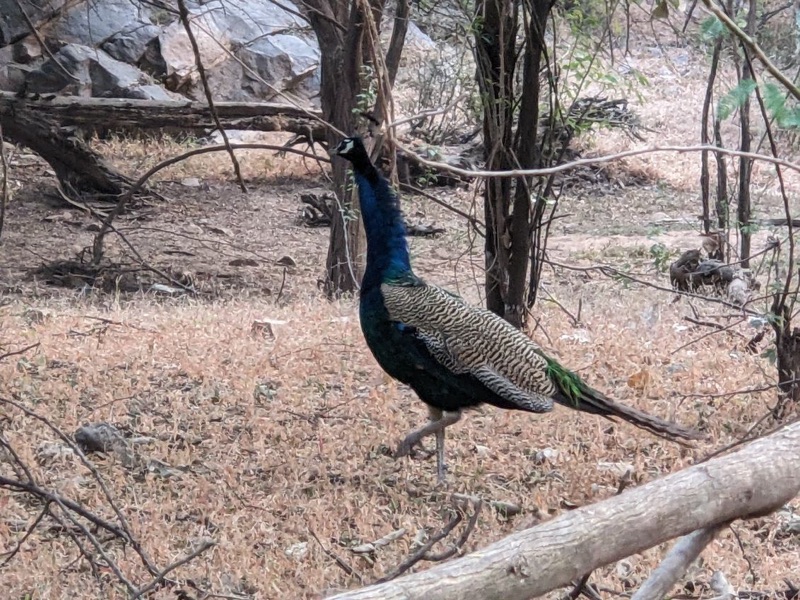
Seeing big cats is not easy in any national park regardless if you are in the Americas, Africa, or India. Just like going to Yellowstone National Park in America, you are more likely to see antelopes & birds.

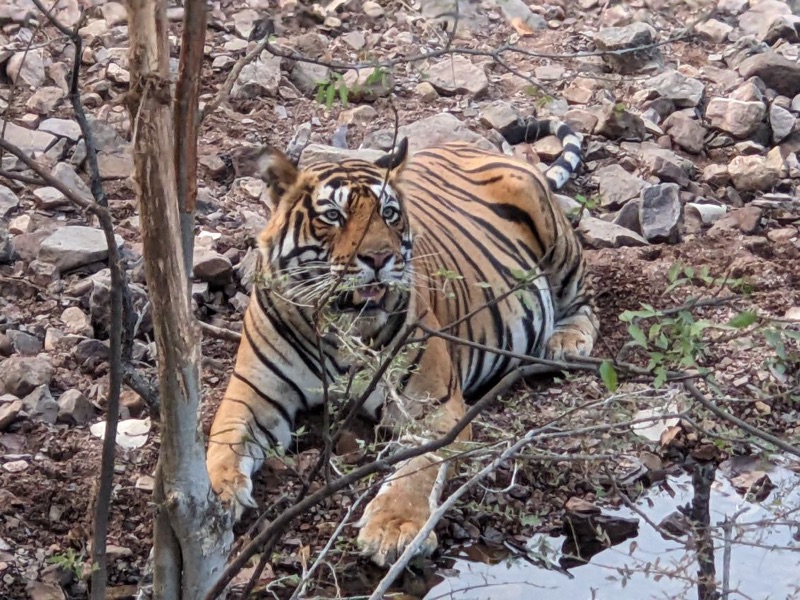
We spotted tigers on 3 out of 4 game drives; but only once was a tiger close enough to get a good picture. The other times it was too far away. One time it was laying down sleeping about 50 meters away & the other time it was walking through the woods about 80 meters away with the dense bushes & trees causing the tiger to disappear & reappear in our line of sight.

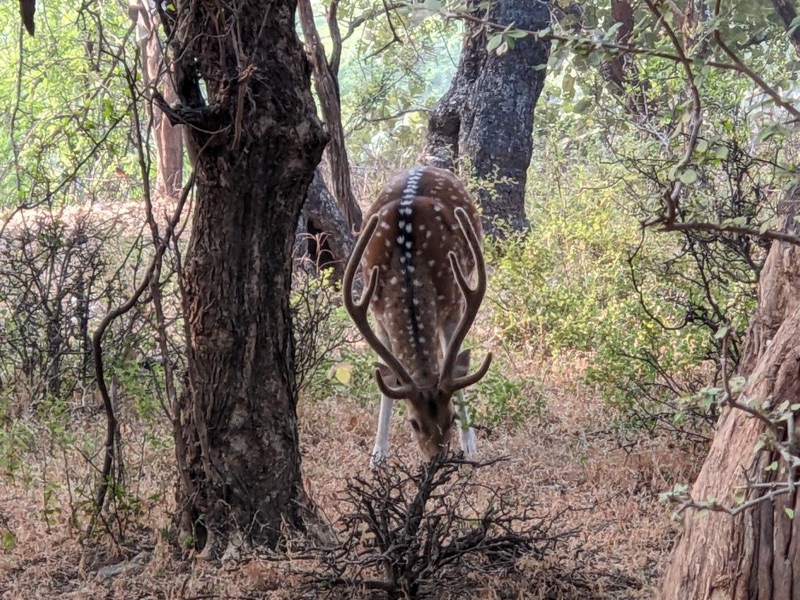
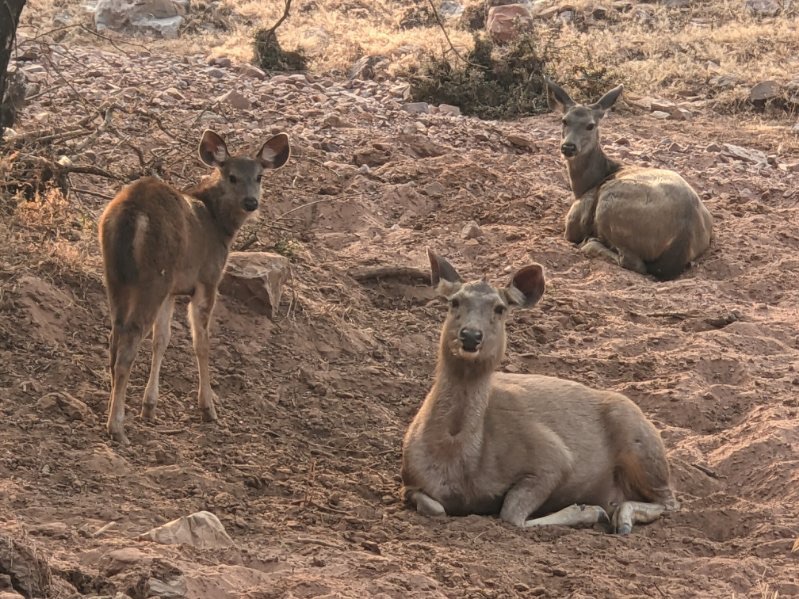
To find the tigers in the late afternoon, the guides listen for the sambar deer to make a loud barking sound they use to warn each other that a tiger was spotted. Each time we were heard this warning call, we saw a tiger.

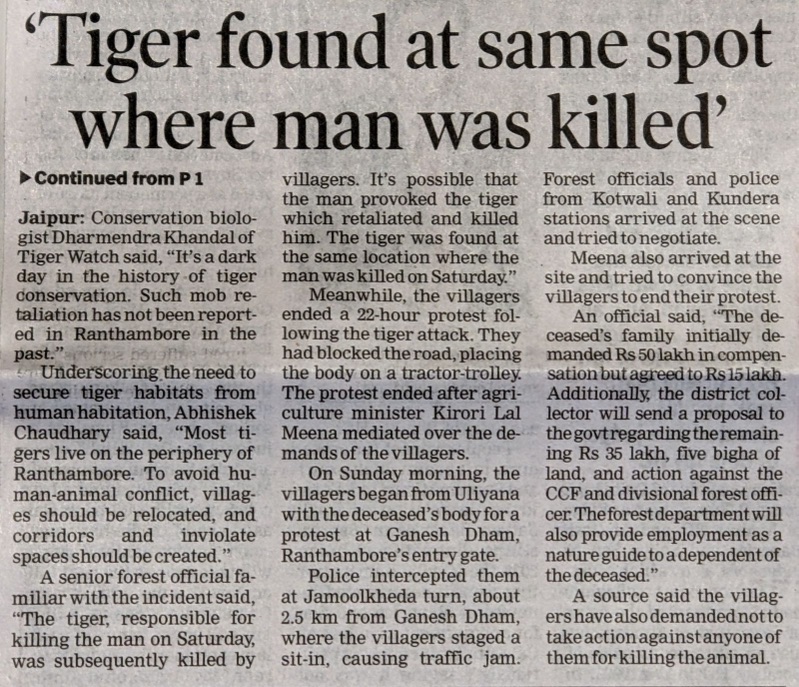
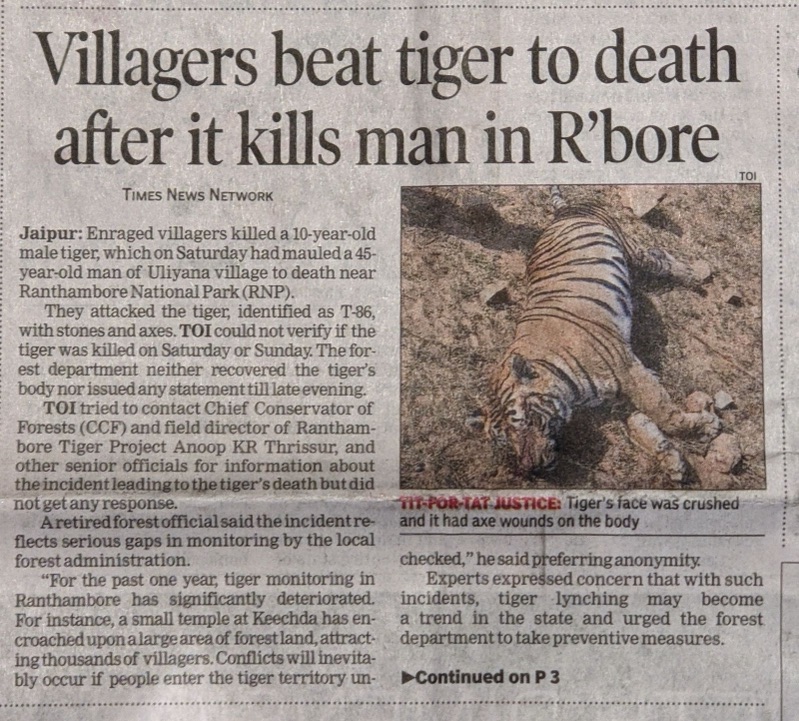
A few weeks ago, these articles were in the Times of India newspaper paper about tigers in Rathambore.

Last Posting for this Trip

Tomorrow we start our journey home. We drive back to Jaipur in the morning with an afternoon flight to Delhi before flying home. So this will be the final posting for India.

India always surpasses my expectations. It never disappoints. It is among the most colorful countries both literally & figuratively. It is one of the few places left where things have not become Westernized. Women still wear saris out of choice & traditional Indian food is still the main diet.

Mixed in with dirt & grime, you hear music playing from temples & can smell the incense burning in them. The people are extremely kind & warm. I have no idea how many times we were asked to pose in pictures. Some people even asked us into their homes.

Here is a quote I recently read that sums up my own thinking about India:

“Nothing is tucked under the carpet. The well-to-do and the poor are living side by side. It’s all in the open, and you can’t run away from it.” Artist Veena Bhargava

Some things need to be improved in India such as a better education for all, especially for girls. Trash is still a huge unsightly & unhealthy problem. But, if you can accept that this is India, it is impossible not to love the country. I’m sure we will come back here.

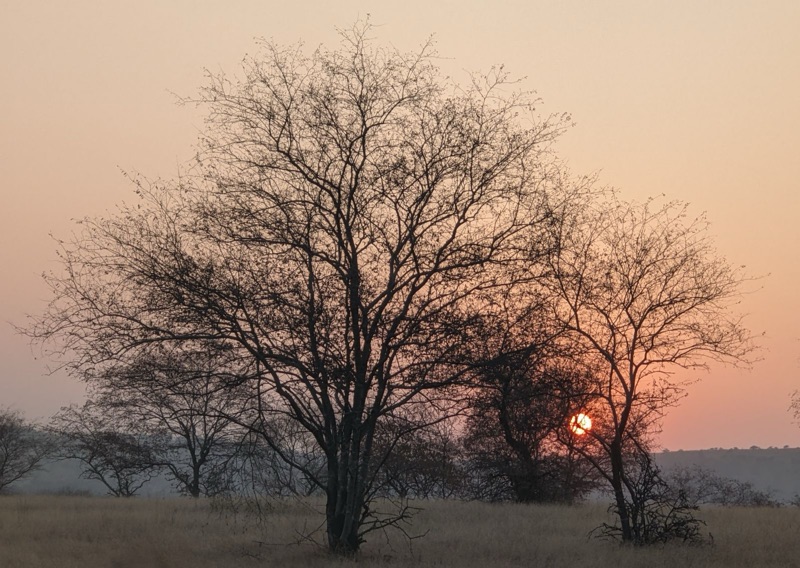
Tiger Country Sunset

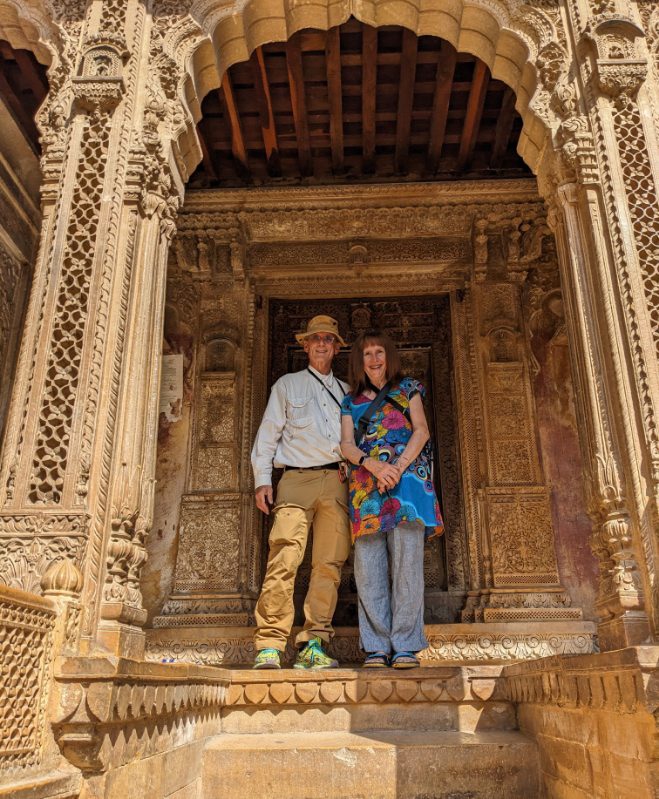
Jaisalmer- The Golden City

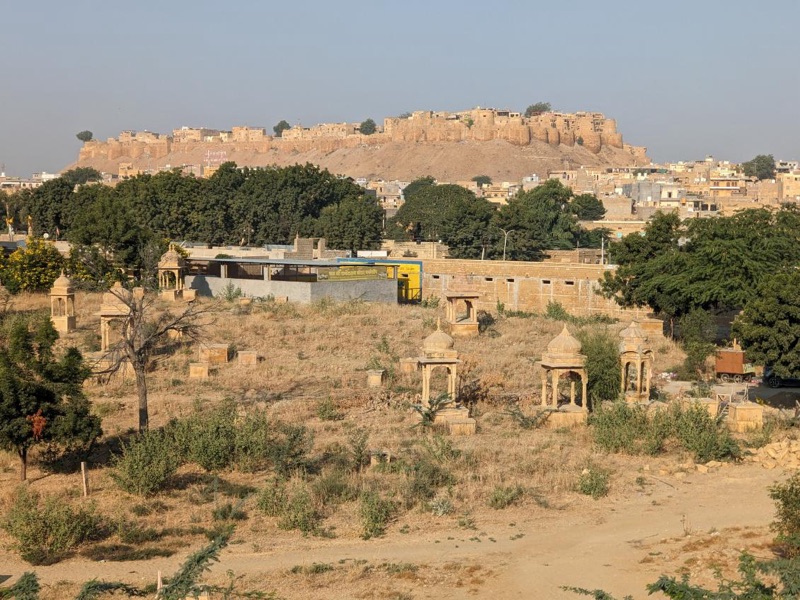
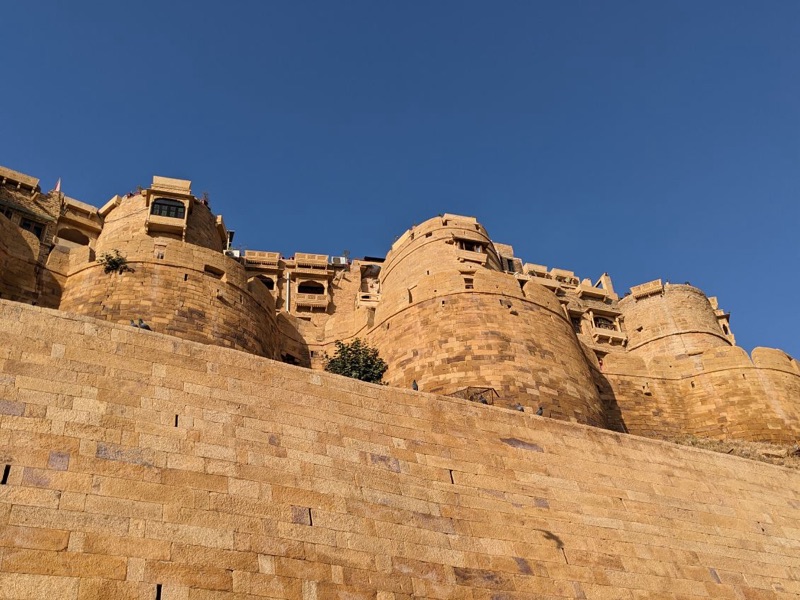
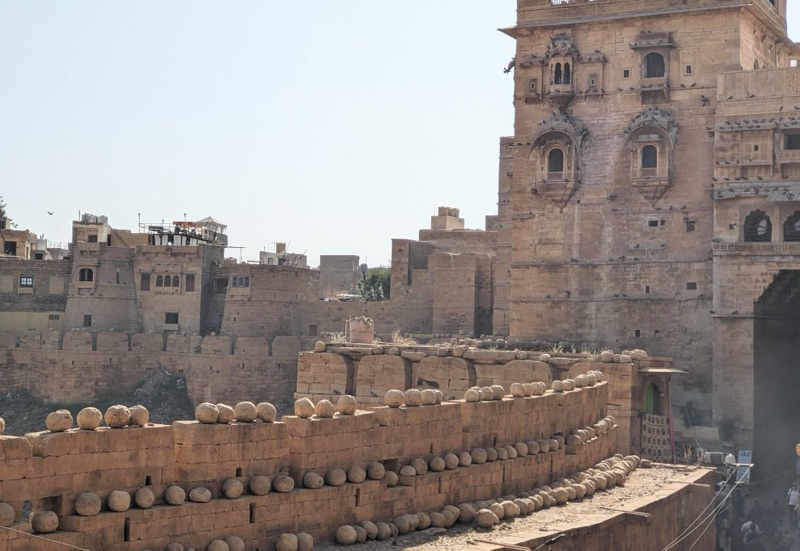
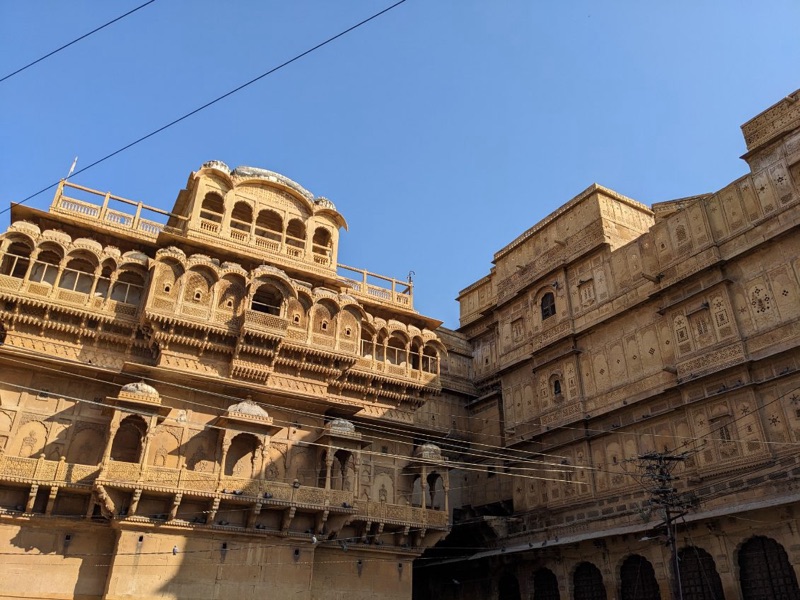
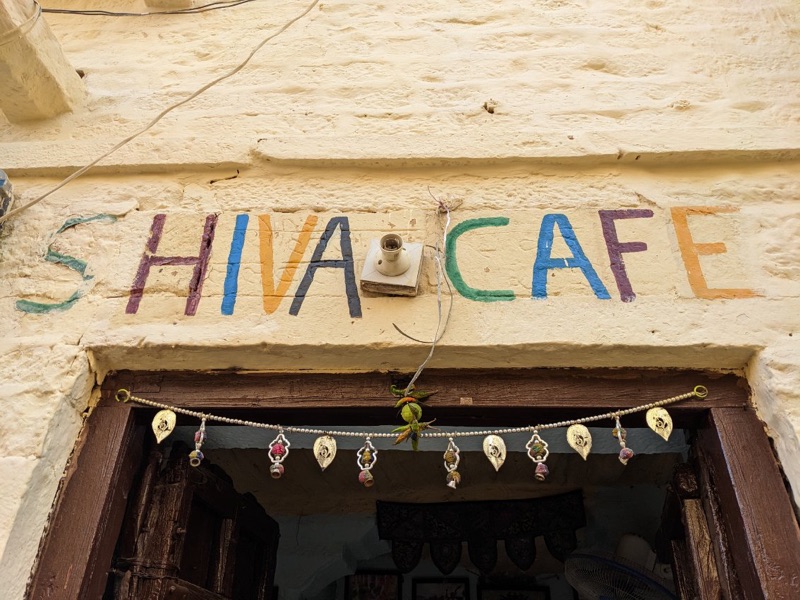
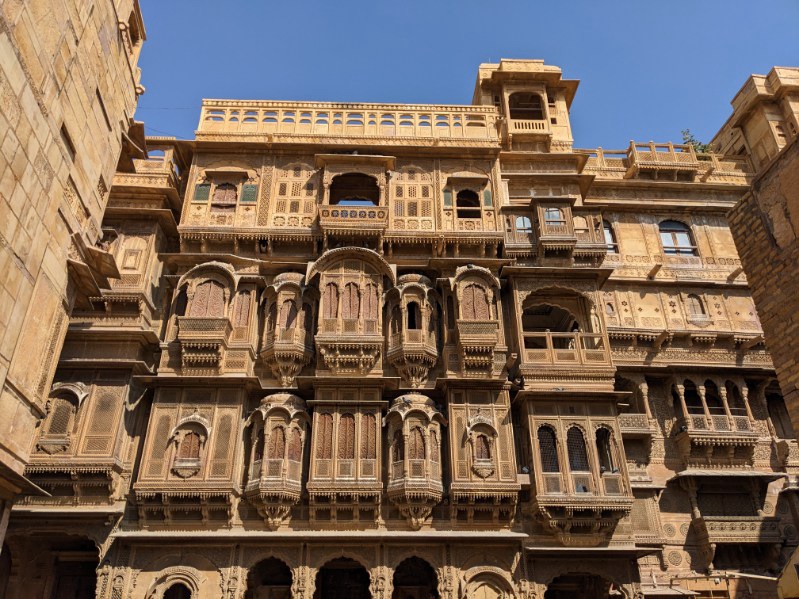
Jaisalmer is located In Rajasthan’s western region bordering the Thar Desert. In the early morning & early evening sunlight, the honey colored sandstone buildings appear to be made from gold which is why it is known as the Golden City.

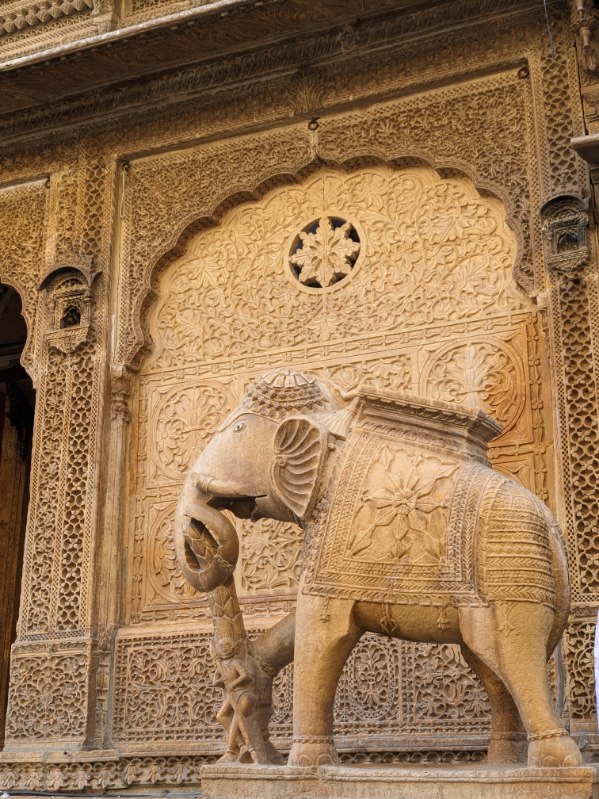
This city is on many lists of places you must visit before you die for good reason. It was once a key stop along the southern Silk Route. The city taxed all exporters traveling into the city. For this reason, money was raised providing Jaisalmer with a spectacular fort & amazing intricately carved mansions all made from local sandstone.

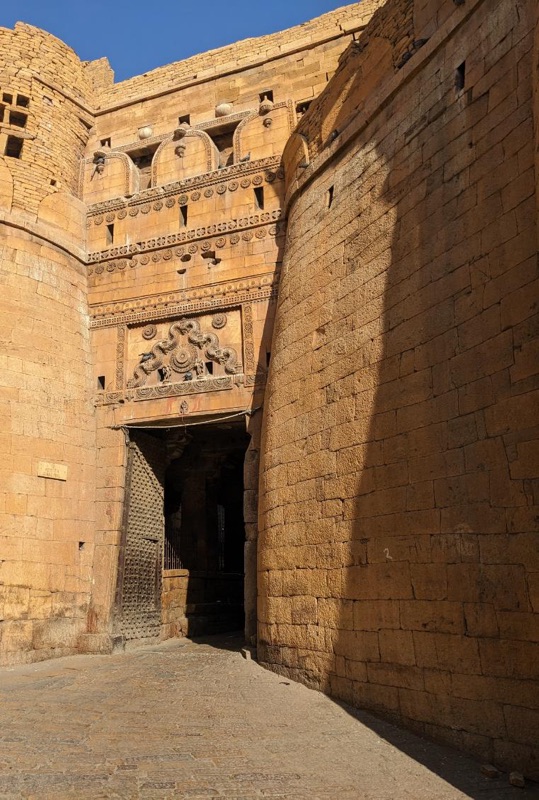
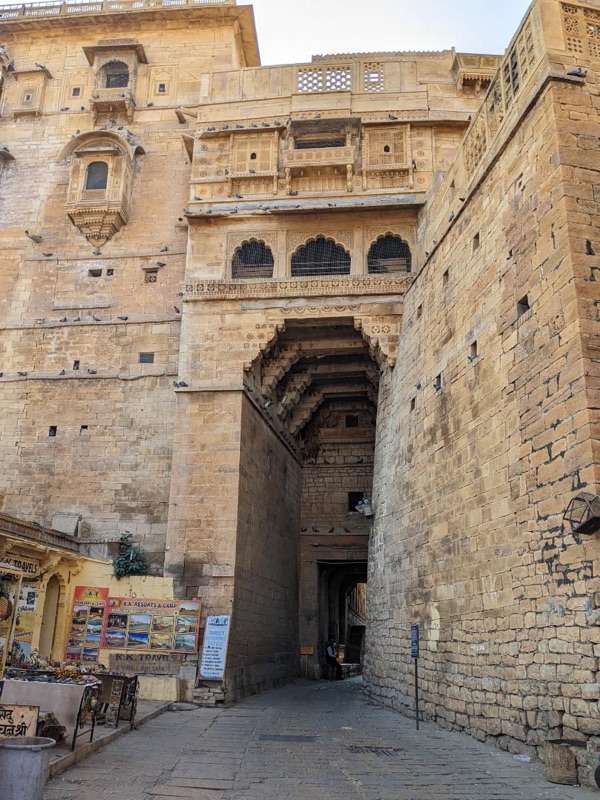
Unlike forts we have visited in other parts of Rajasthan & all over the world, Jaisalmer Fort is a “living” fort with 4,000 inhabitants along with their homes, businesses, & temples inside the walls.

The massive sandstone fort dominates the city below. It is easy to imagine what it must have looked like when camel caravans carrying gold, silver, gems, silk, tea, & spices came through the city in the 16th through the 18th Centuries.

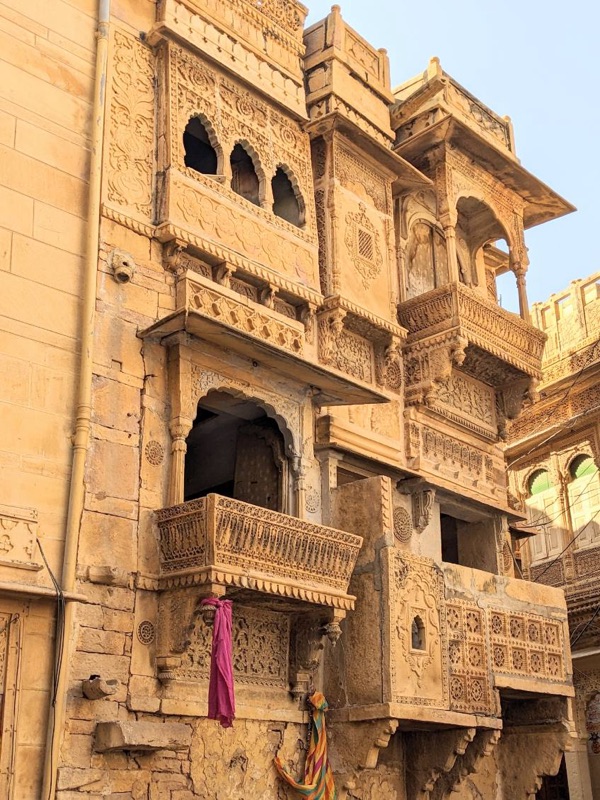
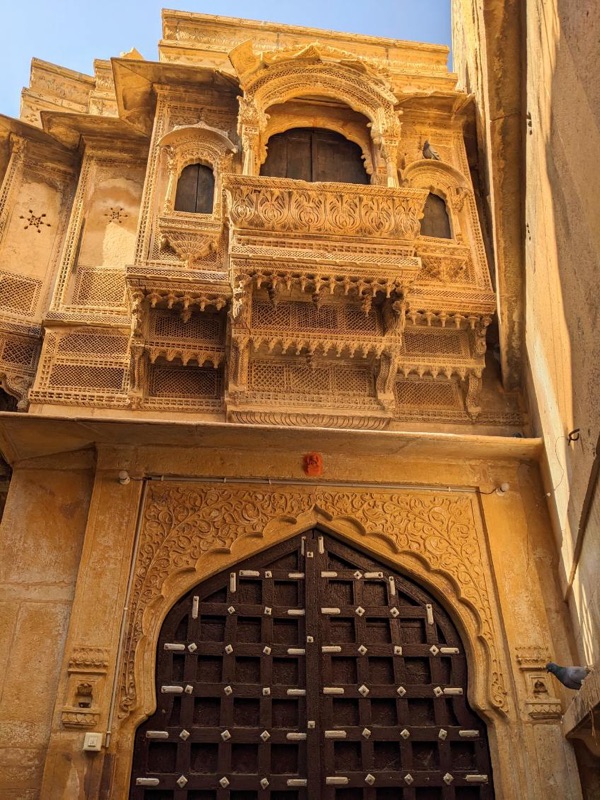
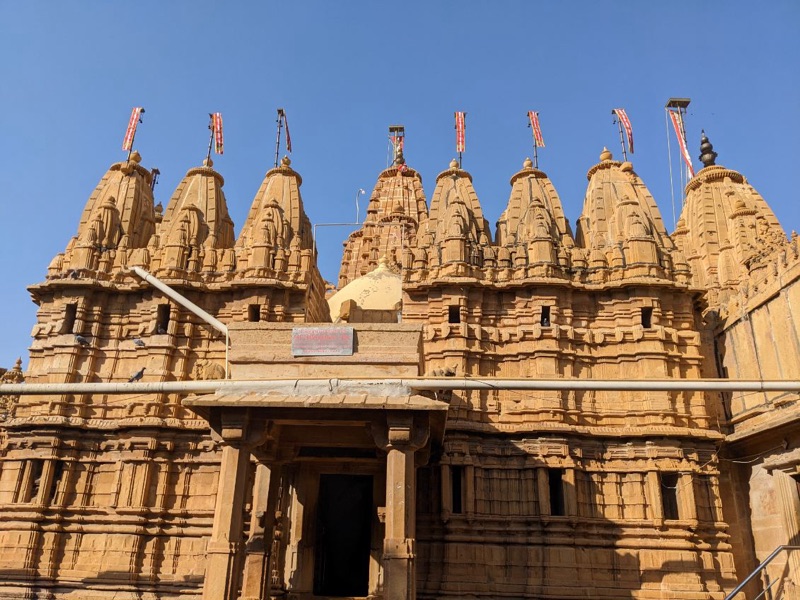
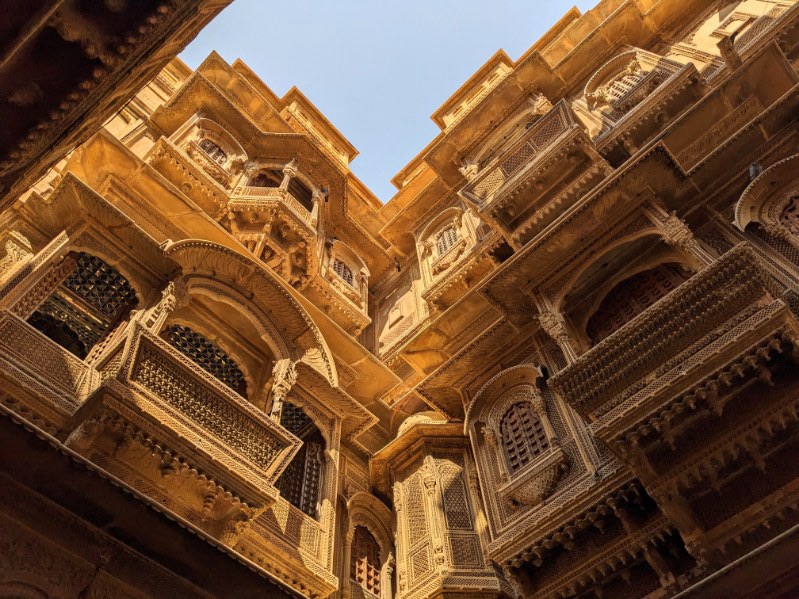
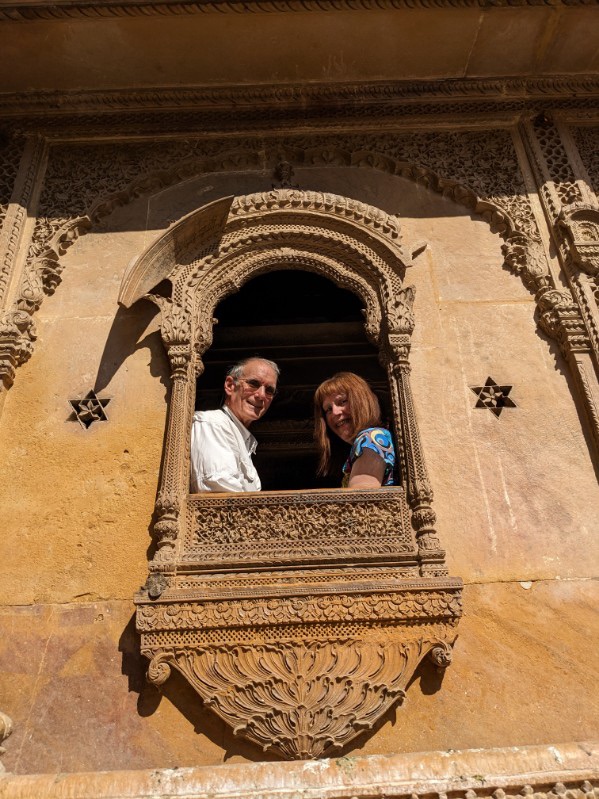
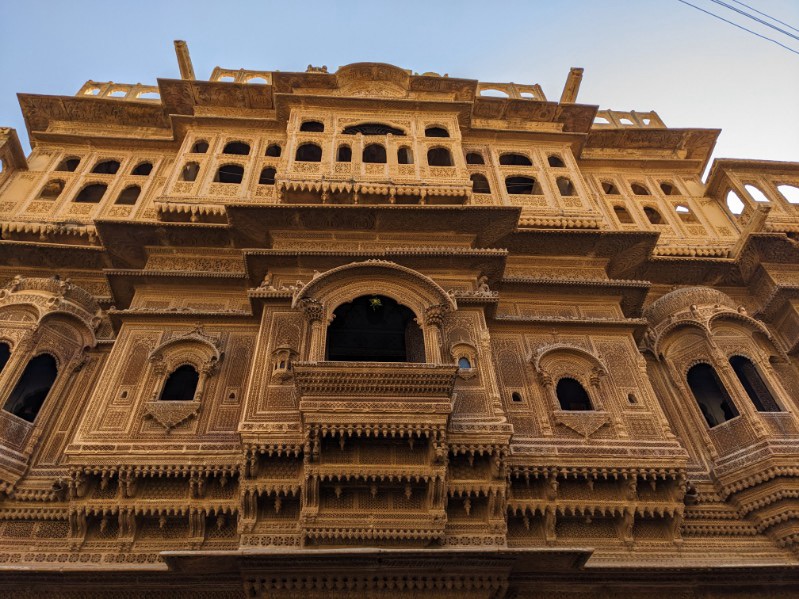
Today the fort has many tea houses, old homes converted into hotels & Jain Temples. Many homes have beautifully carved windows & balconies.

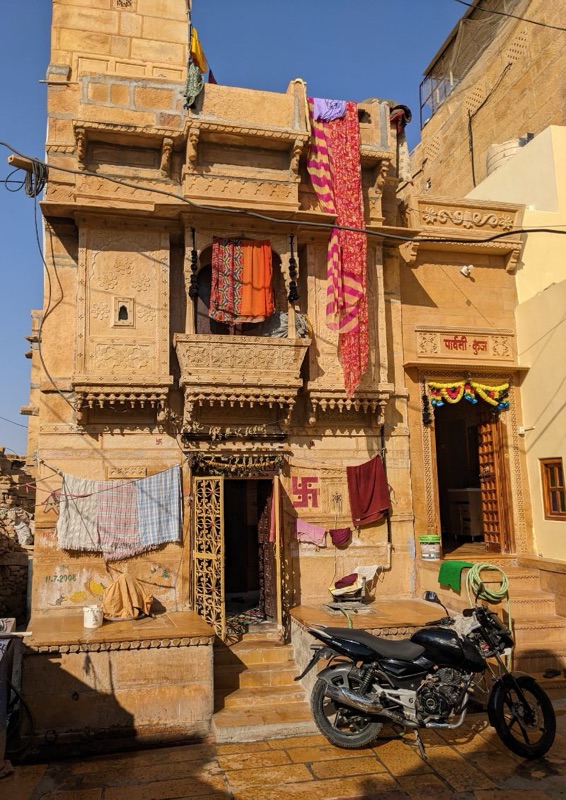
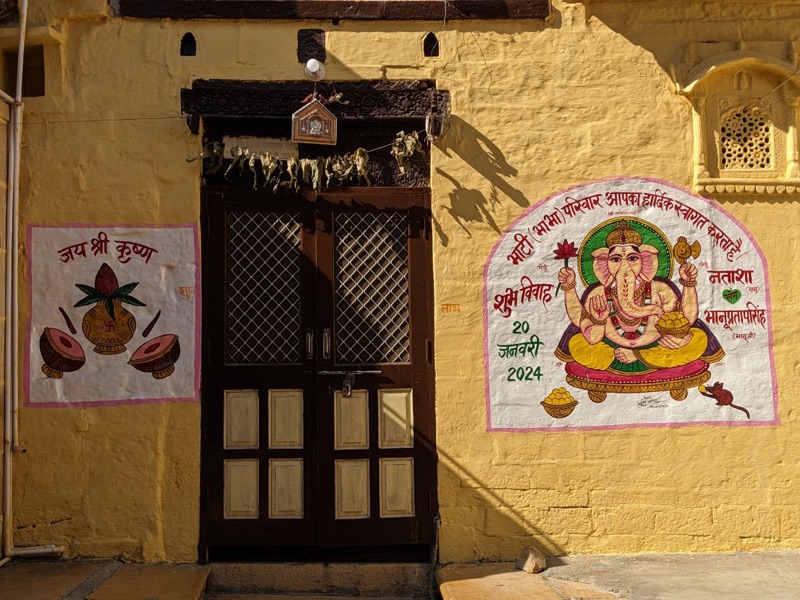
Many homes in the city have a lime & chillies strung over their doorway as a good luck symbol.

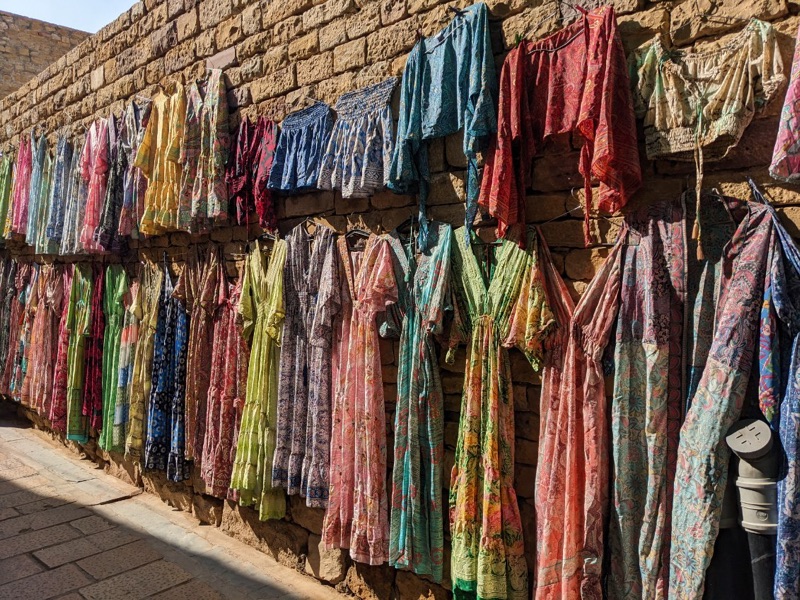
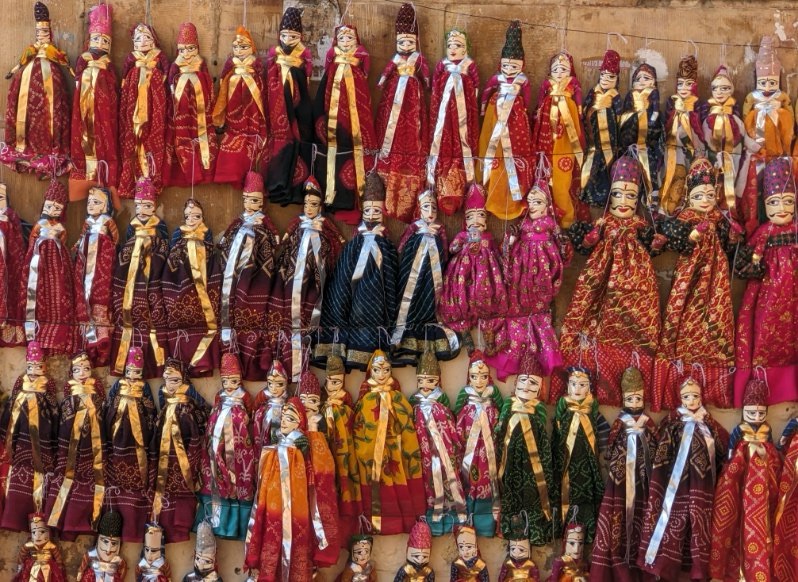
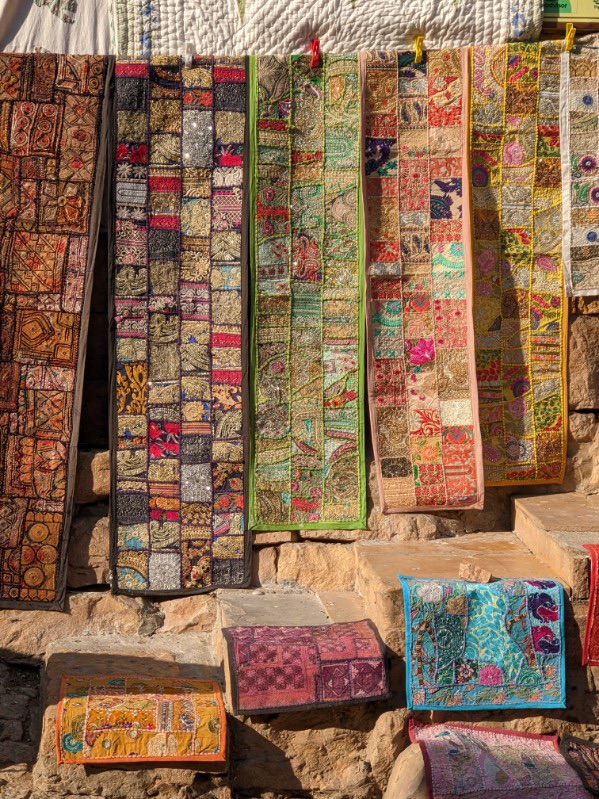
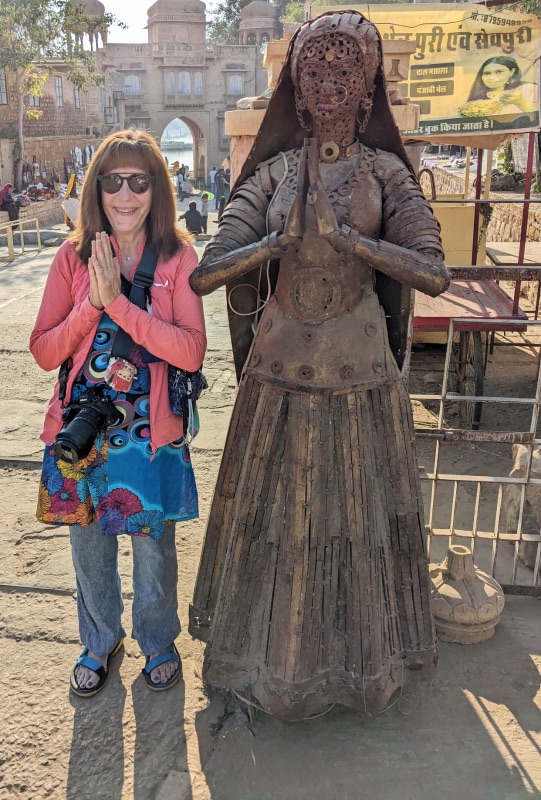
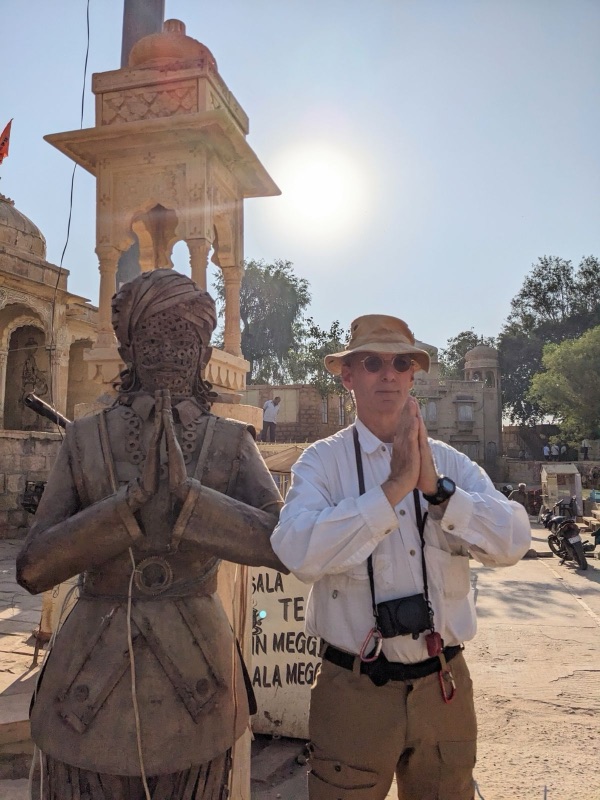
The fort has many shops selling various trinkets . Plus, many hawkers simply drape the walls with clothing & textiles to display their wares.

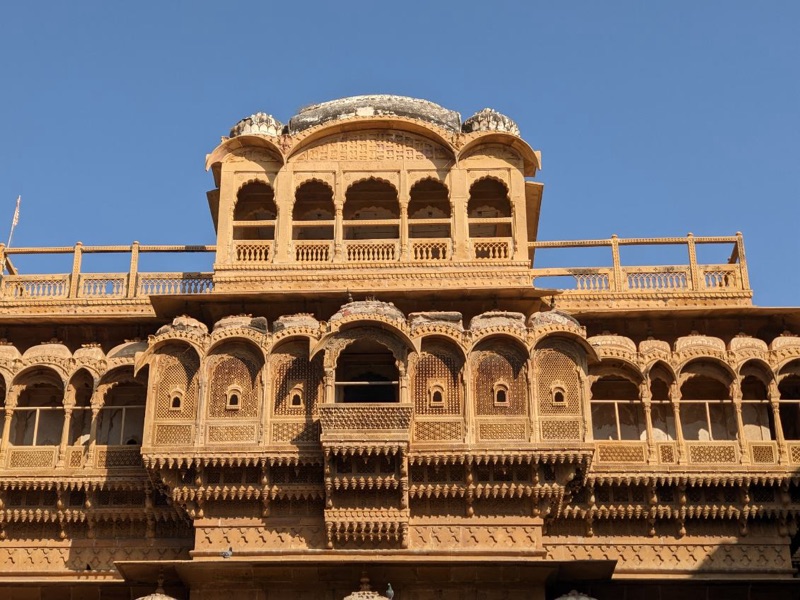
Outside the fort we walked through narrow streets to view beautifully carved homes called Havelis. The word “Haveli” means “Big Winds” because of all the windows & openings in them which provided much needed ventilation & air flow in the hot summers. These luxurious mansions were built by the richest citizens who profited the most from the Silk Road.

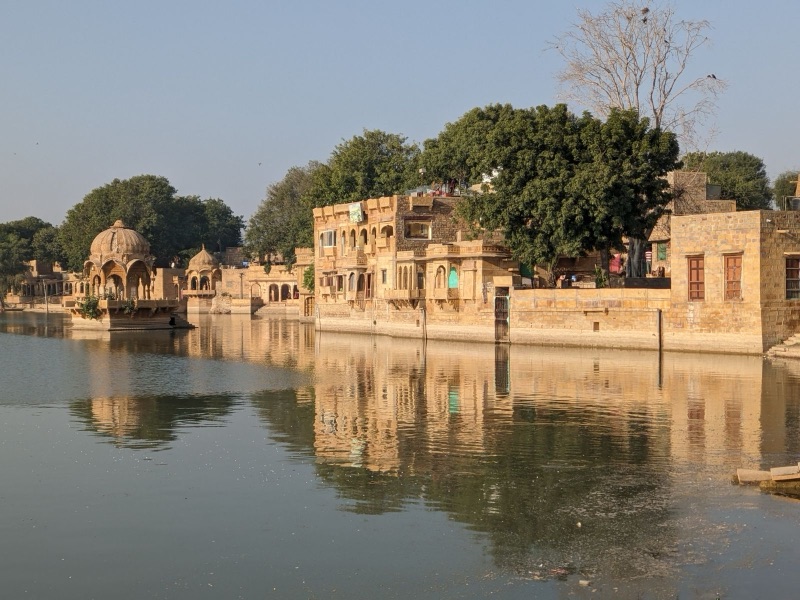
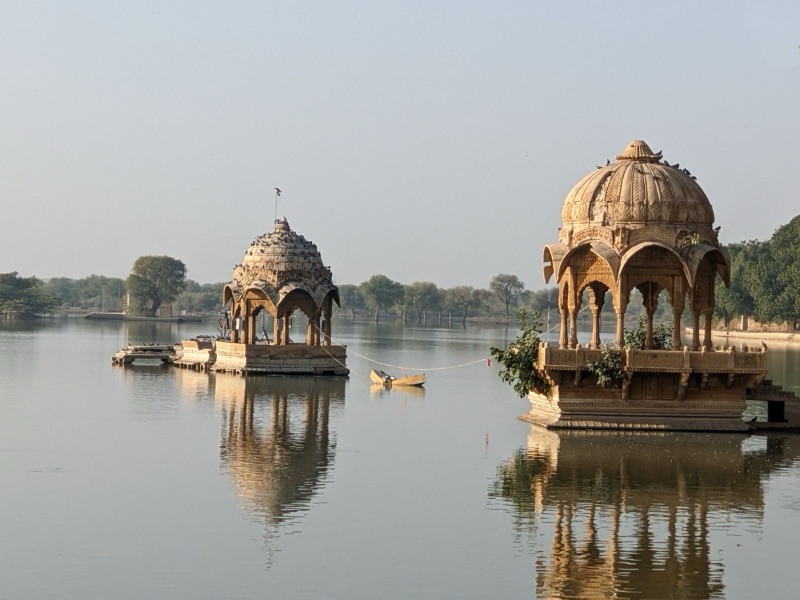
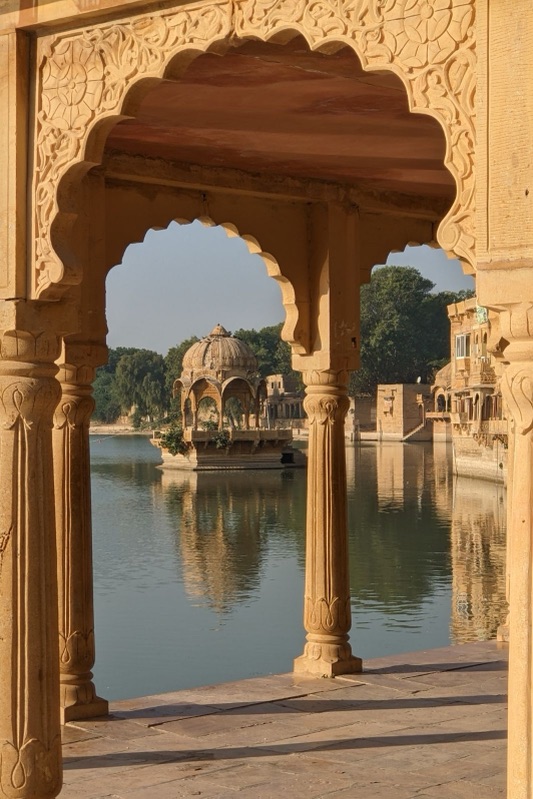
In the city we visited Gadhisar Lake. It is a beautiful man-made lake that once provided water for the locals to wash in & drink; but, now it is a recreation spot.

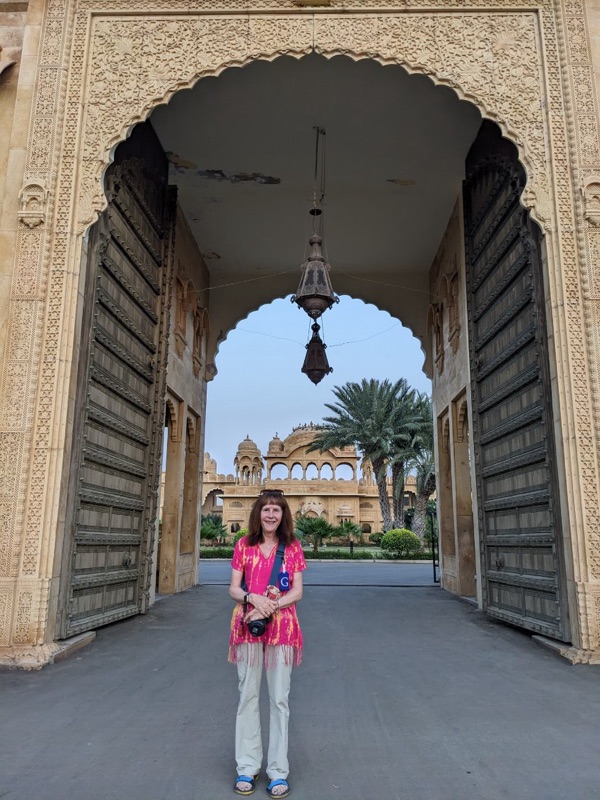
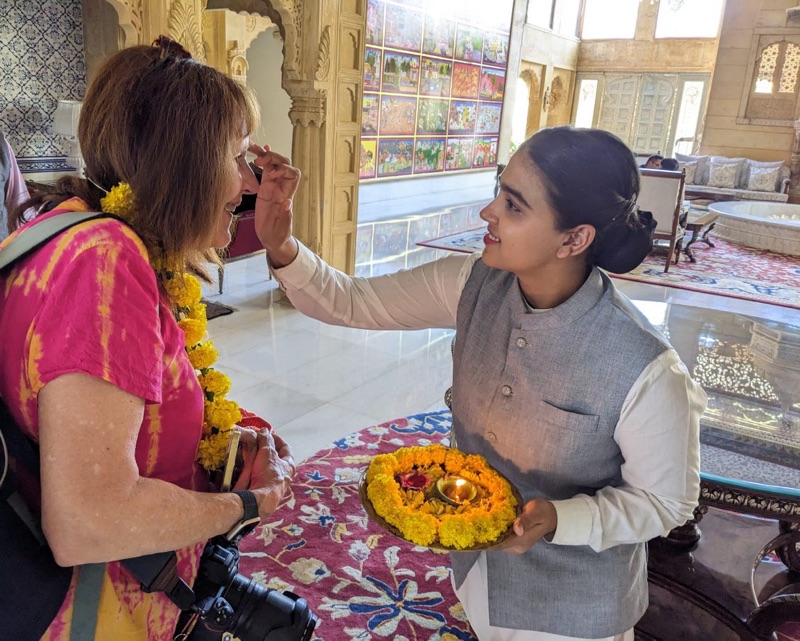
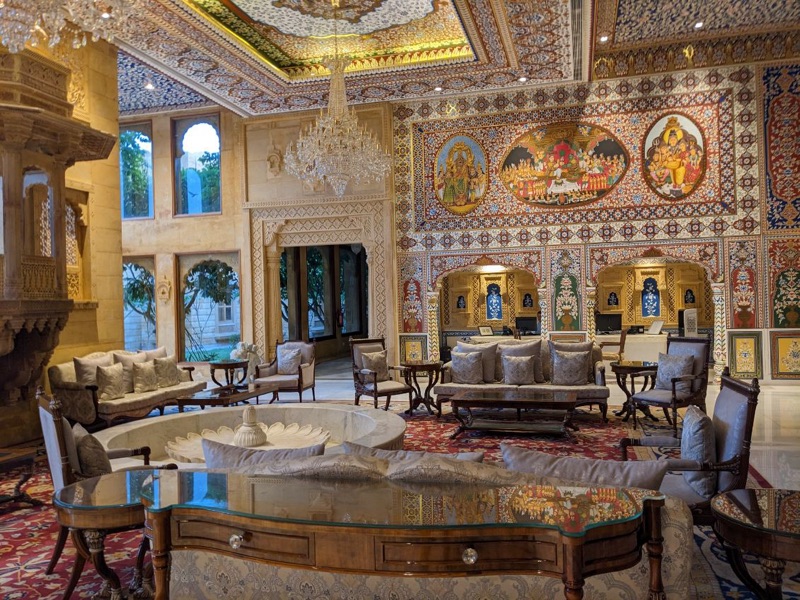
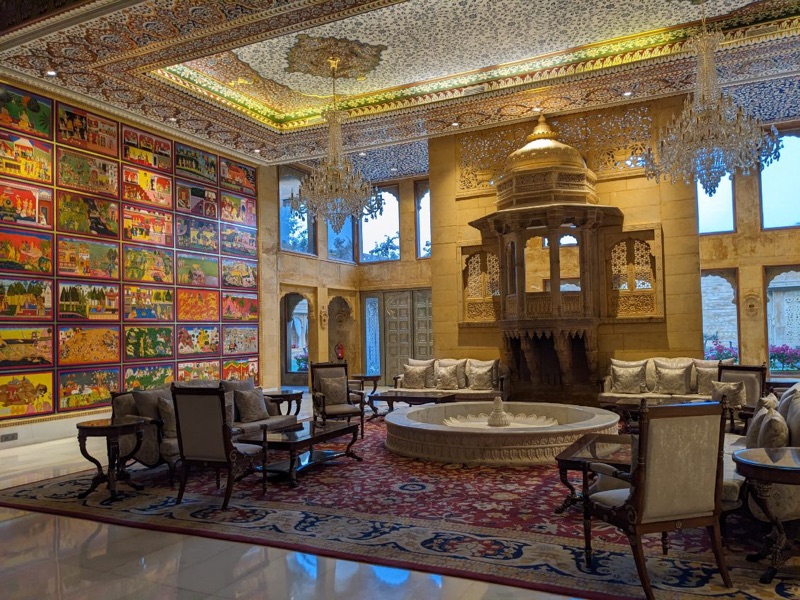
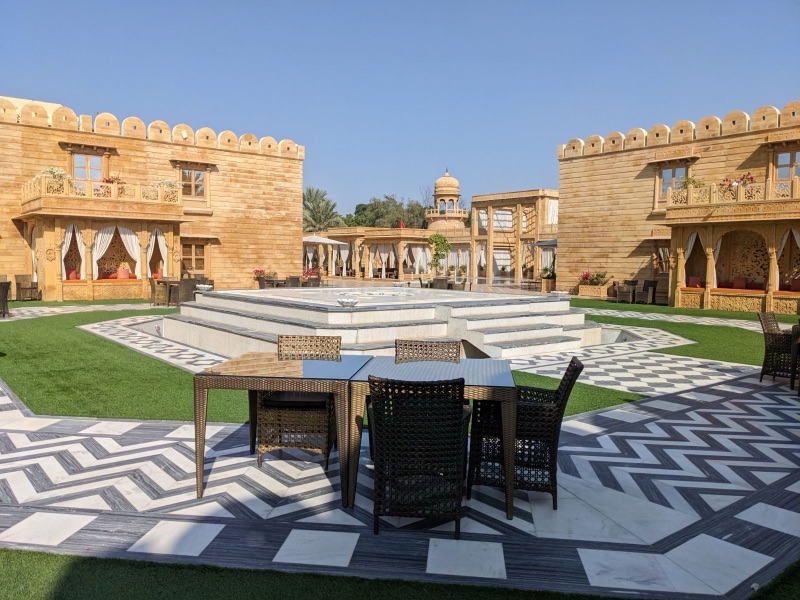
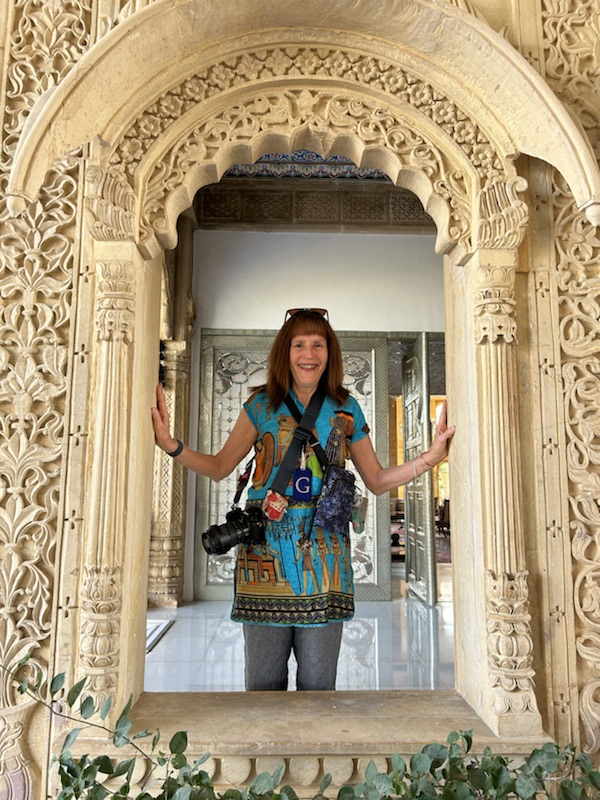
When we were not touring Jaisalmer, we enjoyed our exquisite hotel that was built in the style of a fort.

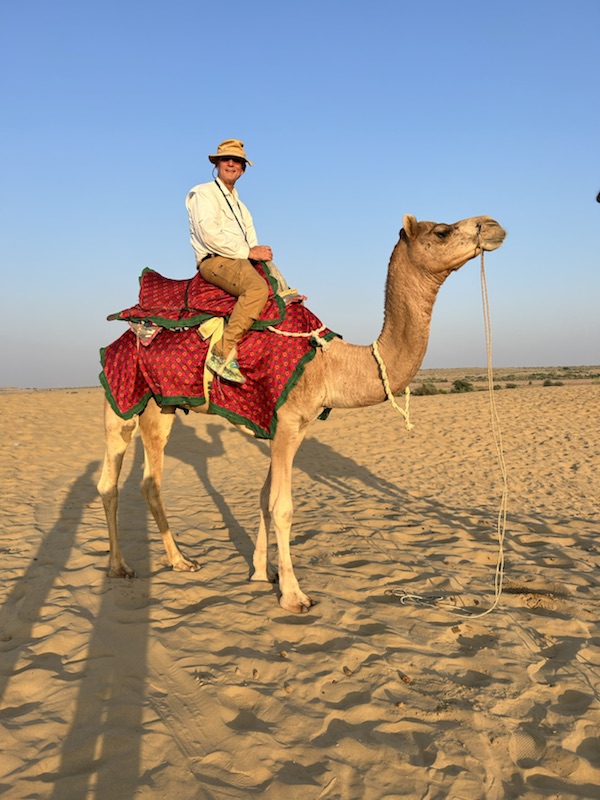
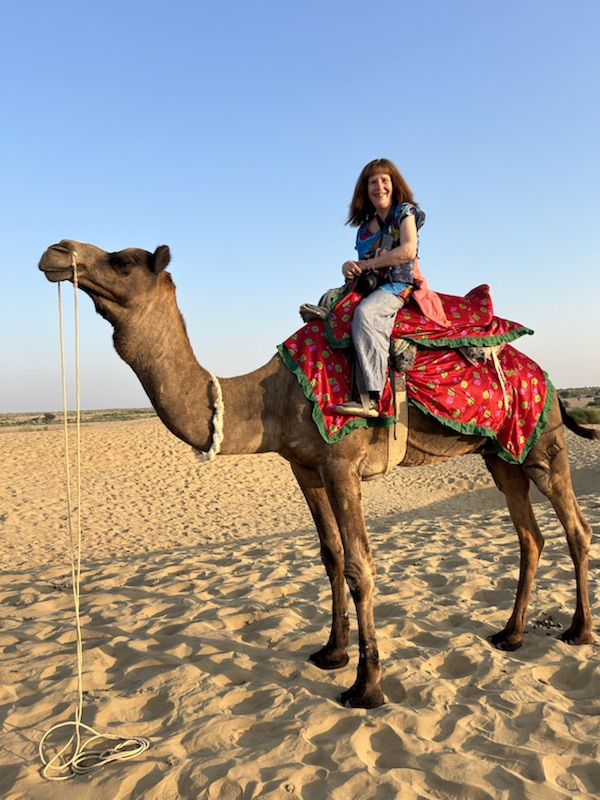
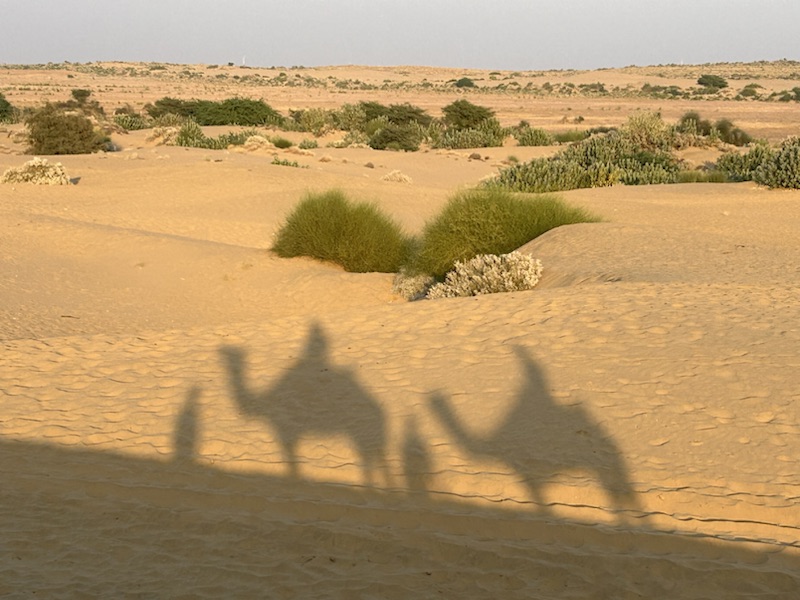
At sunset, we enjoyed a camel ride in the Thar Desert which is the world’s 10th largest desert.

Back to Jodhpur

After a 5 hour drive, we returned to Jodhpur for one last afternoon.

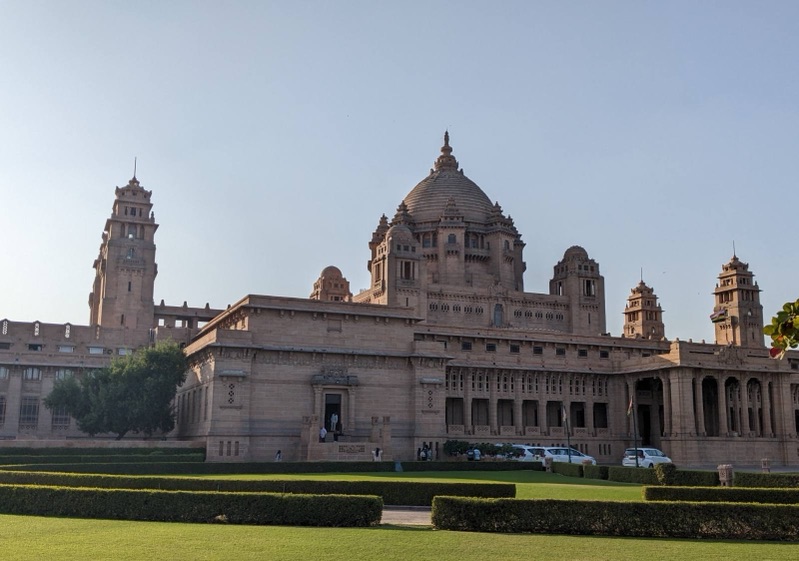
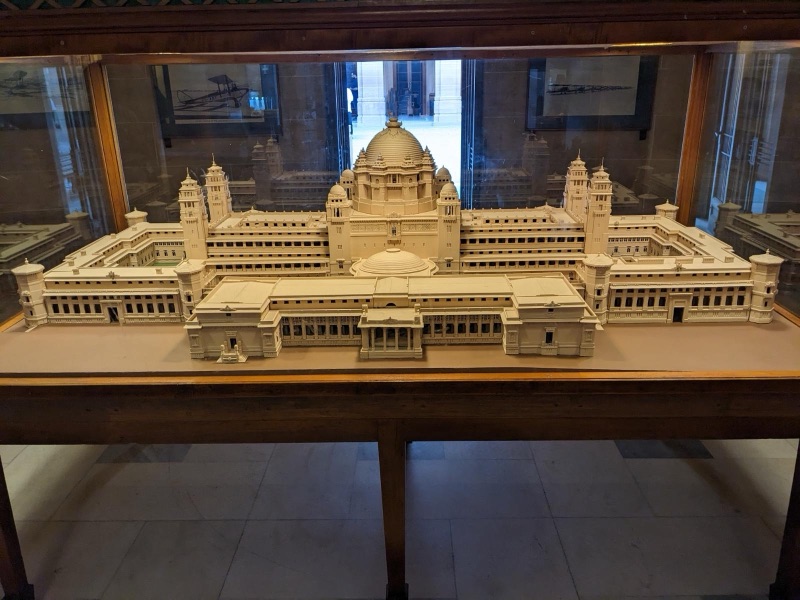
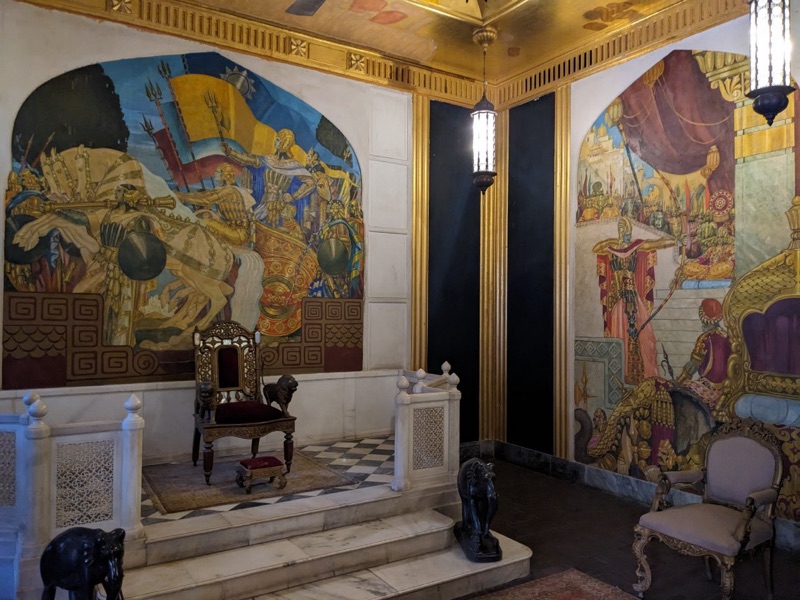
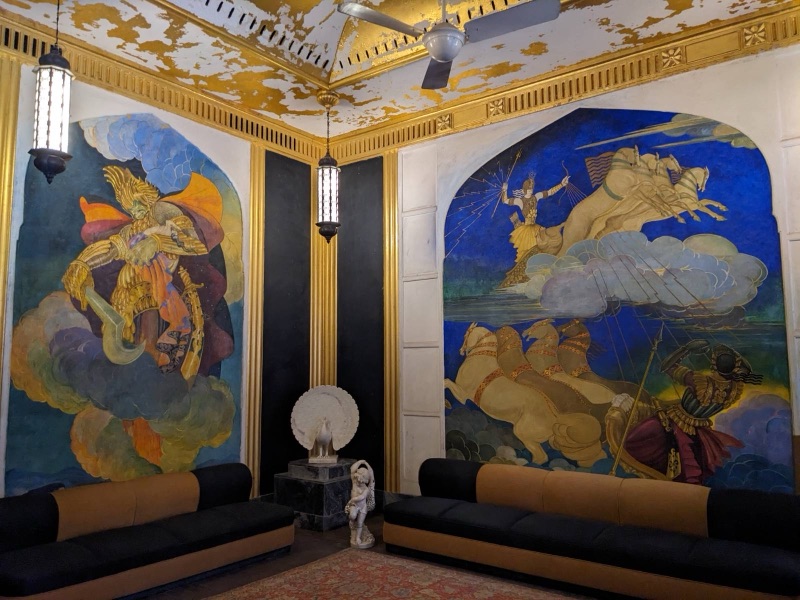
Our guide took us to the Umaid Bhagwan Palace where the current Jodhpur Maharaja lives with his family. This large structure was started in 1929 & completed in 1943. Along with the traditional Hindustan architecture, it has a small Art Deco design influence which was all the rage back then. It has 346 rooms & was the last major palace constructed in India before its independence in 1947. Today it is still home to the Jodhpur royal family; but, part of it is an exclusive hotel & a museum.

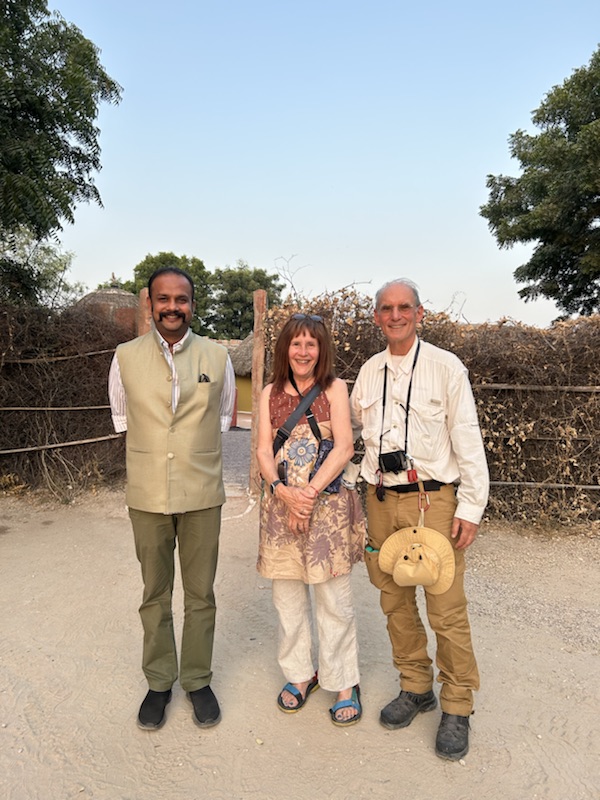
We were extremely lucky to have a wonderful guide in Jodhpur. We learned that he loved the show “Friends”, & we enjoyed sharing favorite moments together from the show. And, today we wished him a “Happy Friendsgiving”.

I learned that he was also a fan of my favorite photographer, Steve McCurry. One of his cousins had been Steve’s guide here in Jodhpur.

On the night that we stopped at the Hindu Temple, he told me he hoped I now had a Steve McCurry shot. 🤞I’ll know once I get home and look closely through my images.

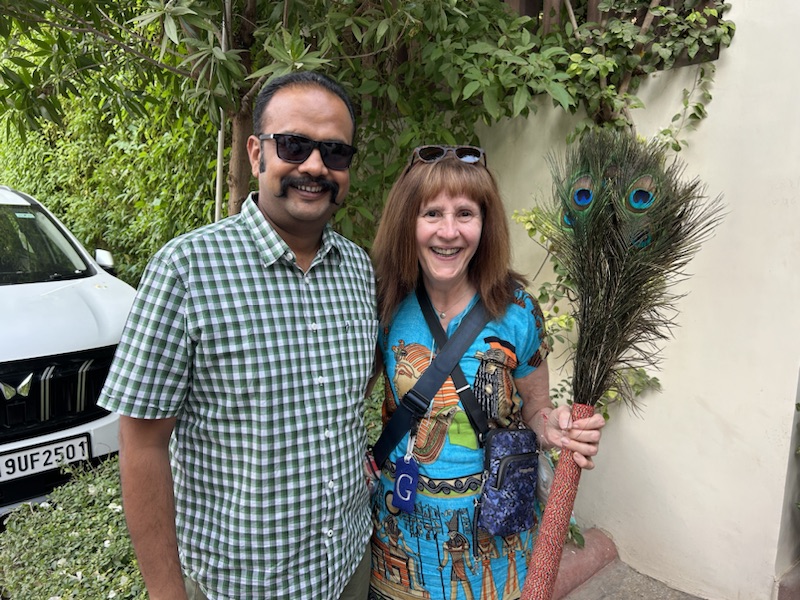
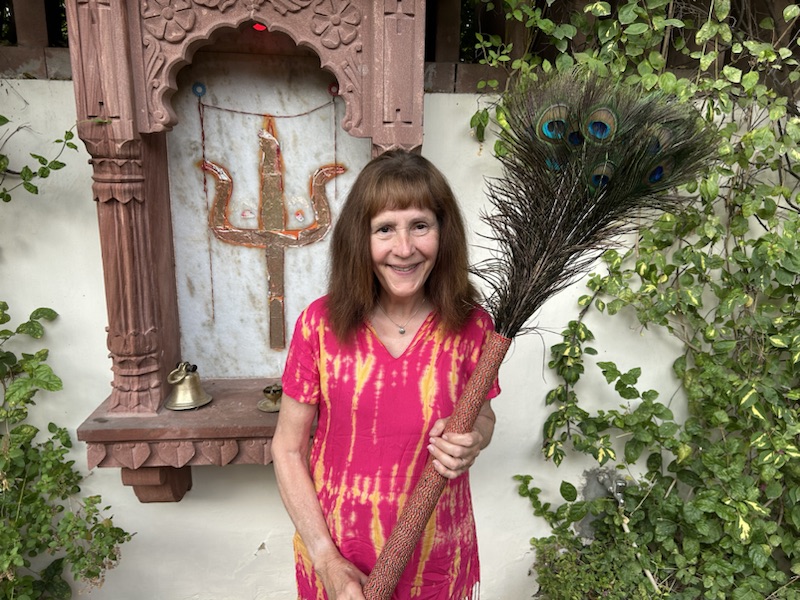
I wish I could have taken the peacock feather healing stick gift home; but, our guide checked with a friend who worked for India Airlines & they said per national law, peacock feathers are not allowed to leave India.

Peacock feathers are considered to bring good luck & health, so I am glad it will remain in India with a loving family & put to good use.

Jodhpur’s Small Village Experiences

After a short lunch break, we boarded the back of a jeep & headed to Jodhpur’s outskirts.

Our experiences out there were by far the most unique on the trip.

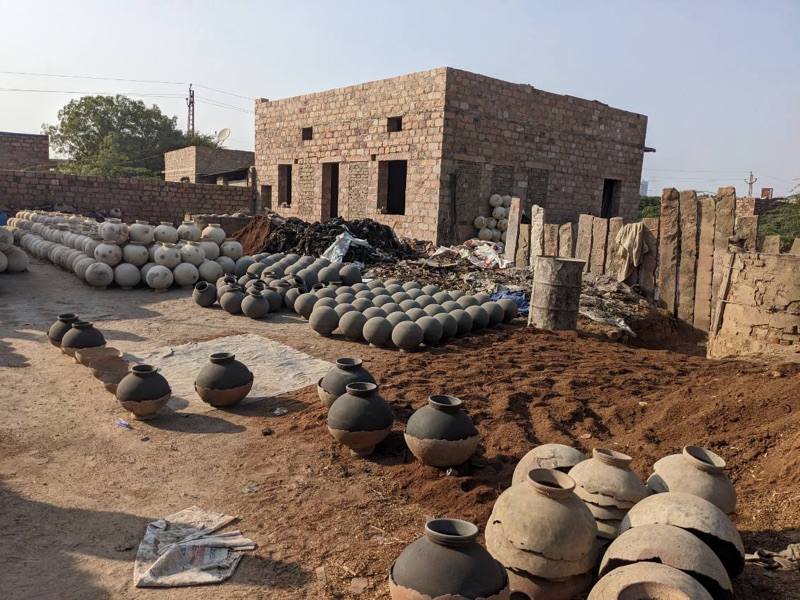
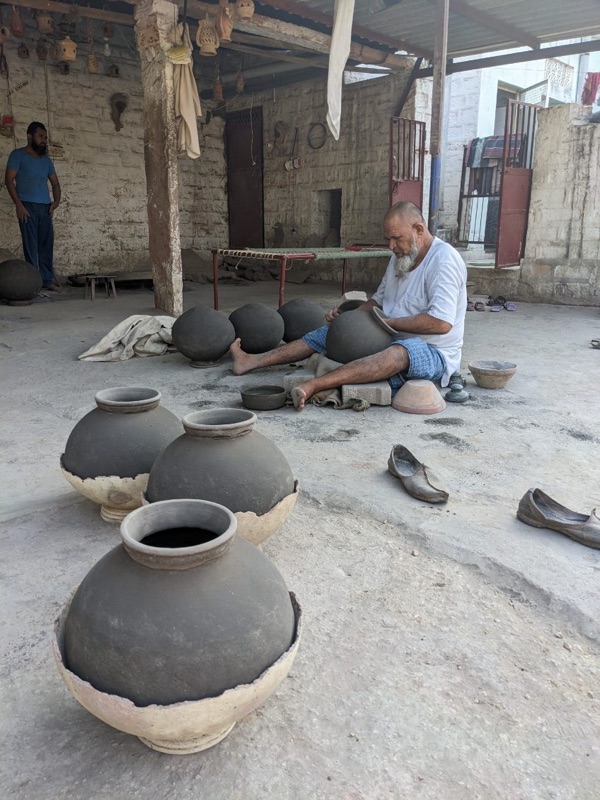
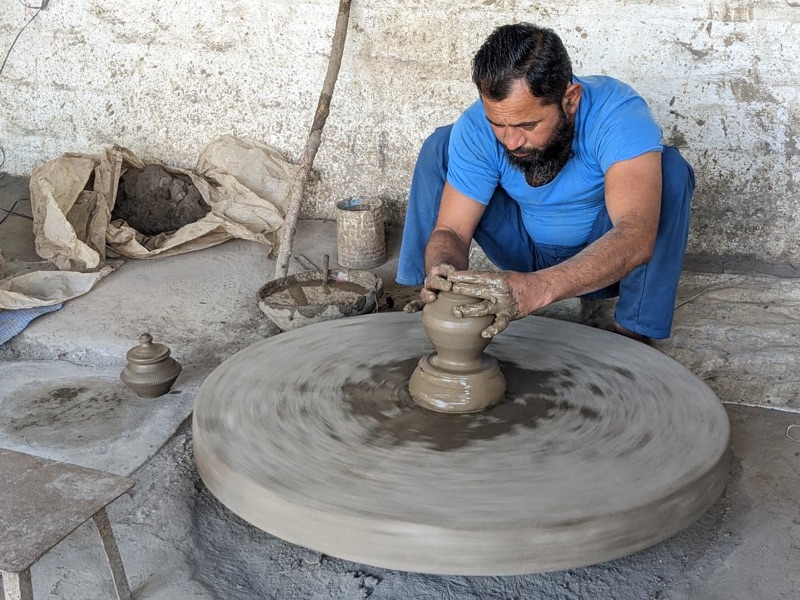
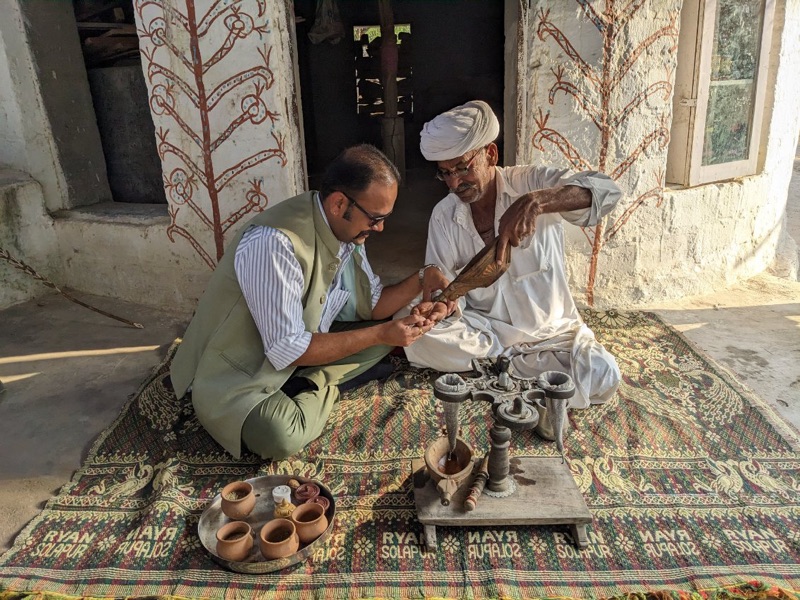
After a 20-30 minute ride, we reached a pottery maker’s home. We watched two potters at work- a father & his son.

The father was busy pounding jars still warm from the kiln to round them into shape so they can be used to hold water.

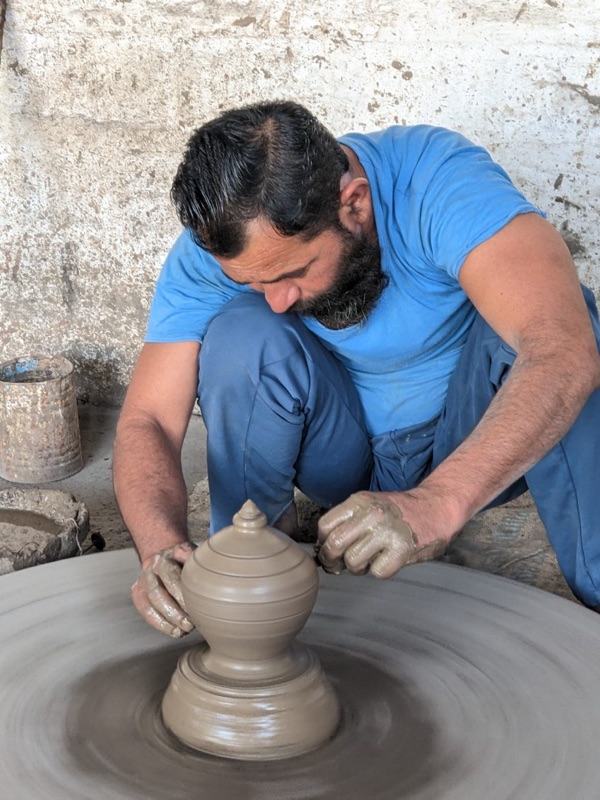
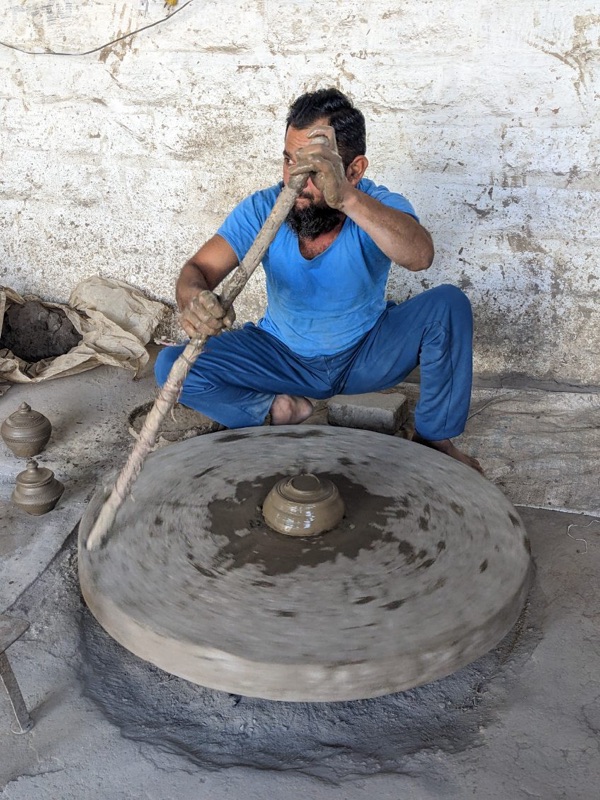
The son then demonstrated how he first kneaded the wet clay with ash before molding it into pots using an unusual potters’ wheel. The pottery wheel is like a top that he got up to a very fast speed by using a stick to turn it. This ingenious wheel spun for a long time! He made three objects & decorated them on the wheel before it stopped spinning.

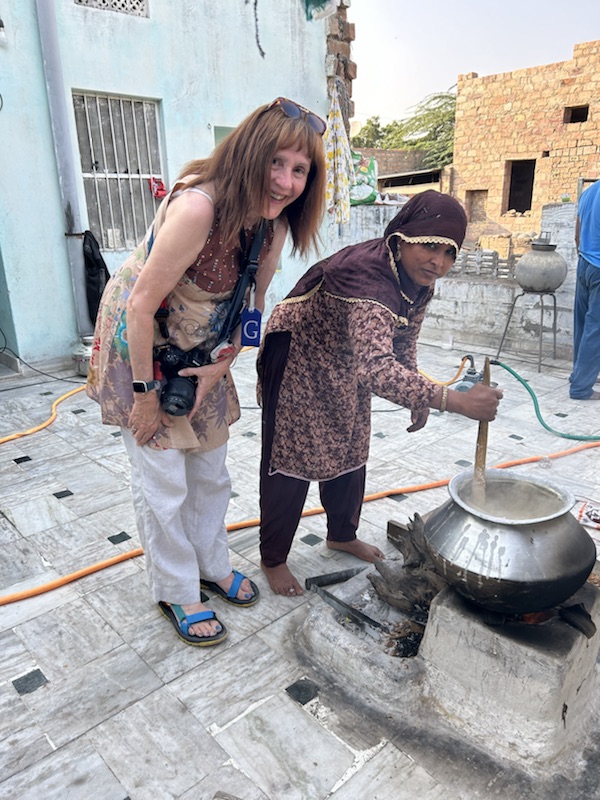
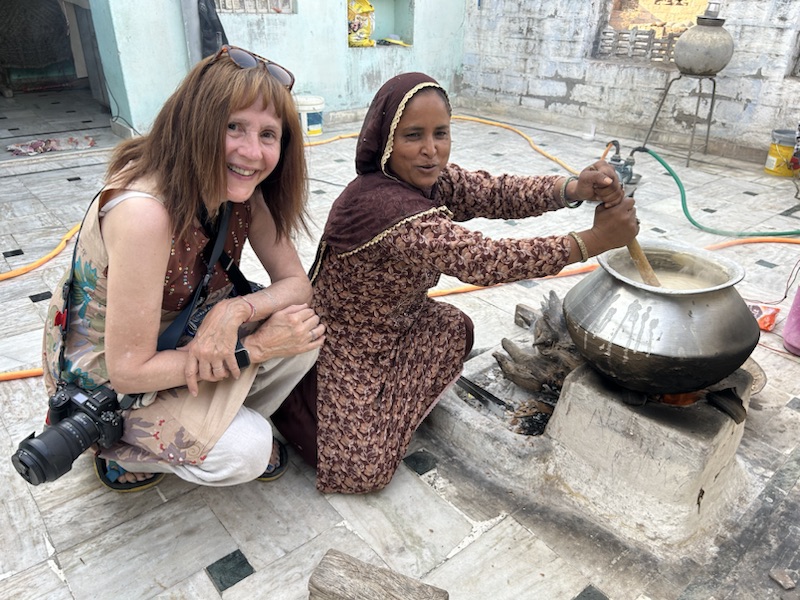
The mother was busy stiring a pot of dough that would later be made into poppadom.

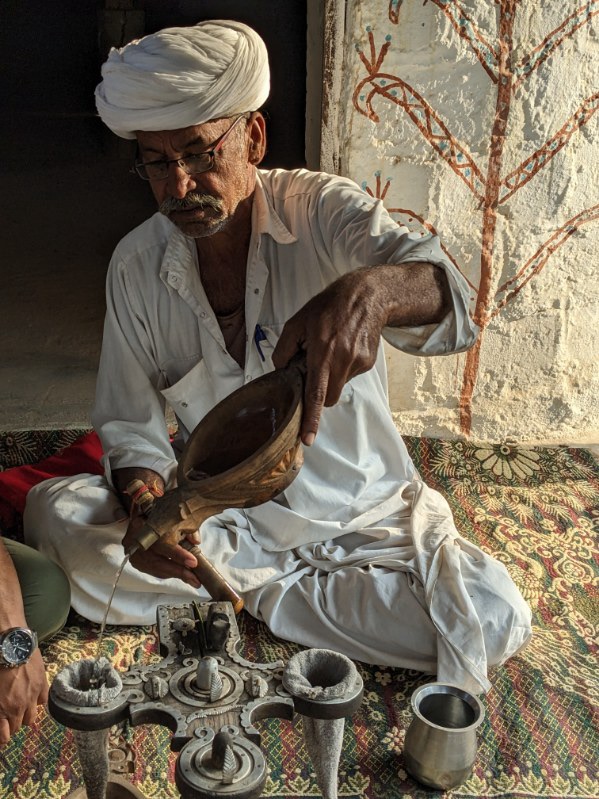
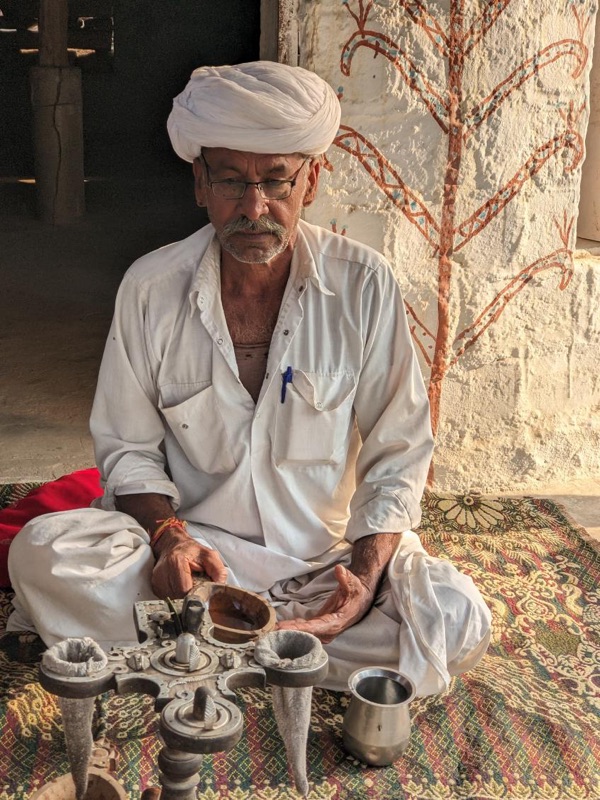
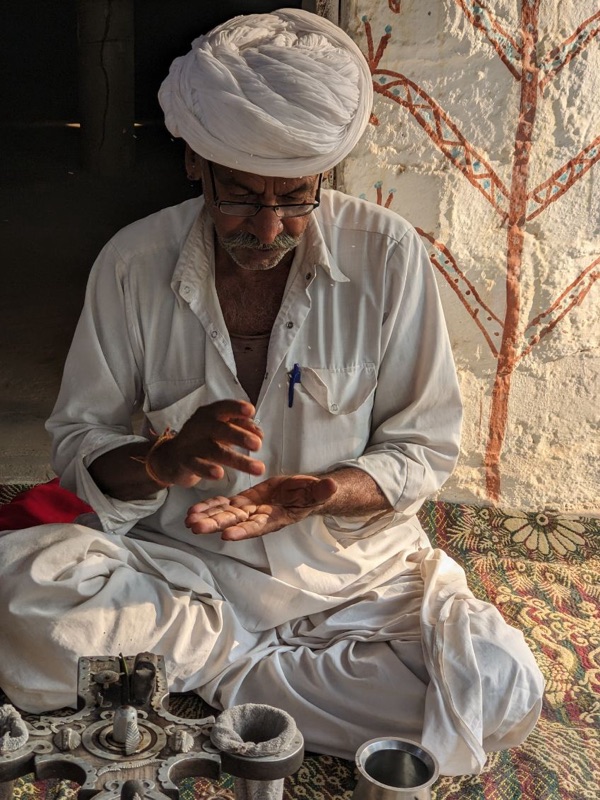
Our next stop was a Bishnoi farmer’s home. The Bishnois date back to the 15th Century & are members of the Jain religious group. Jains are vegans & will not eat any vegetables grown in the soil including carrots, onions, garlic, etc. They do this so as not to kill any insects while harvesting such crops. Some Jains wear masks; not to stop diseases, but so they don’t accidentally inhale a bug & kill it. They are very loyal to preserving the environment & protecting all animals. Our guide told us the Bisnois will even fight to the death to save a tree.

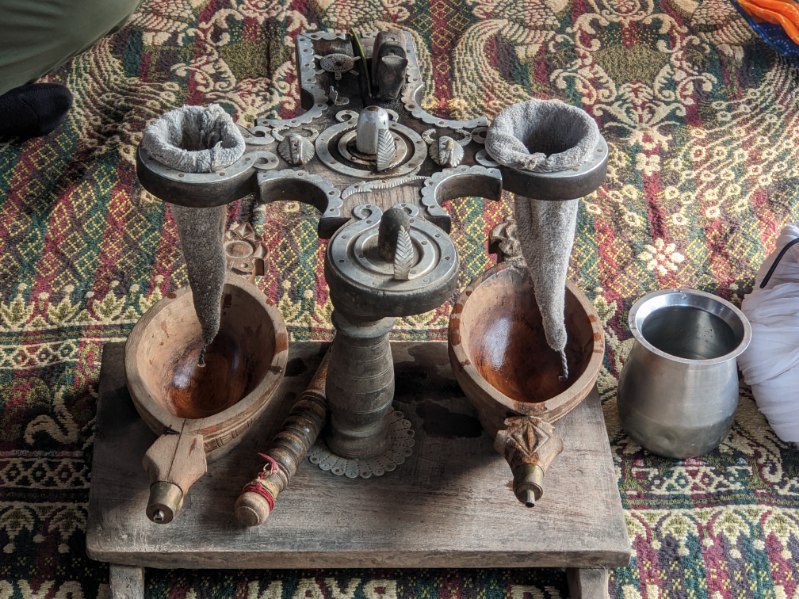
They also have a history of mixing small opium amounts with water to drink to enable strength & endurance to work in the fields. While visiting this farm family, the father demonstrated how they administer opium in a ceremony.

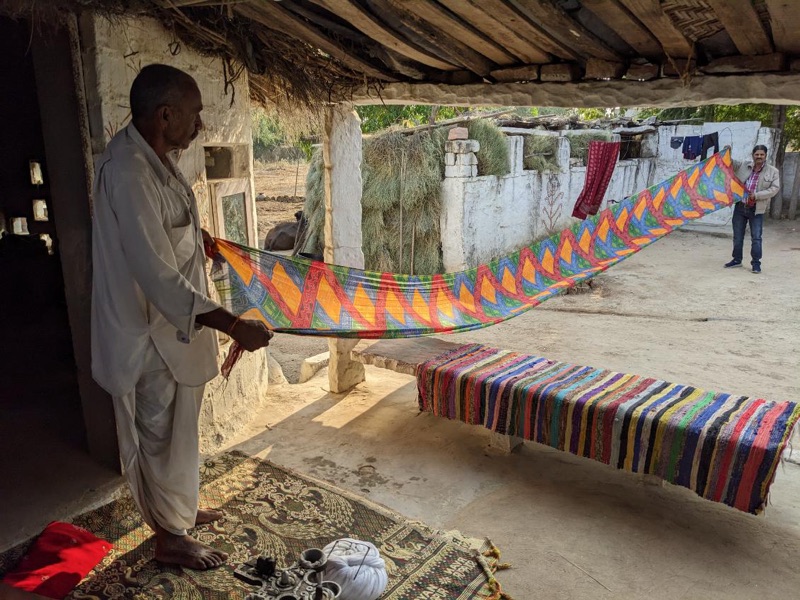
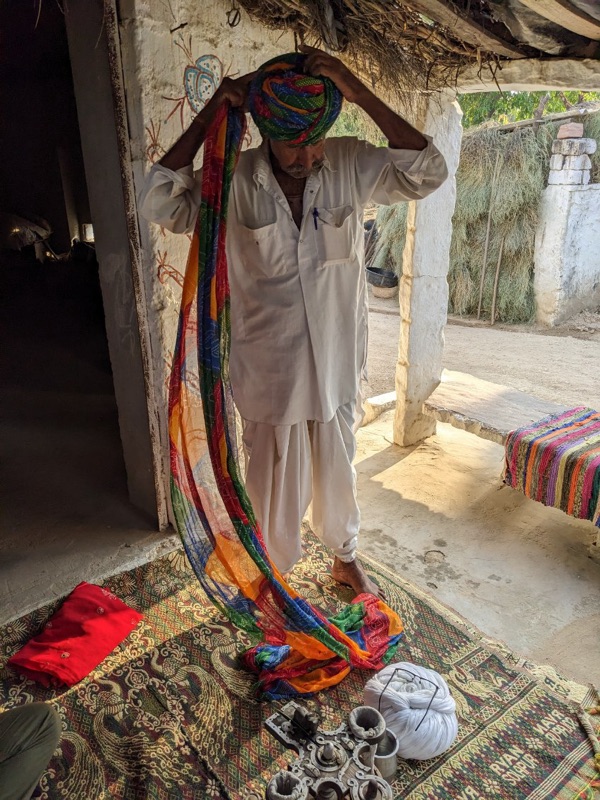
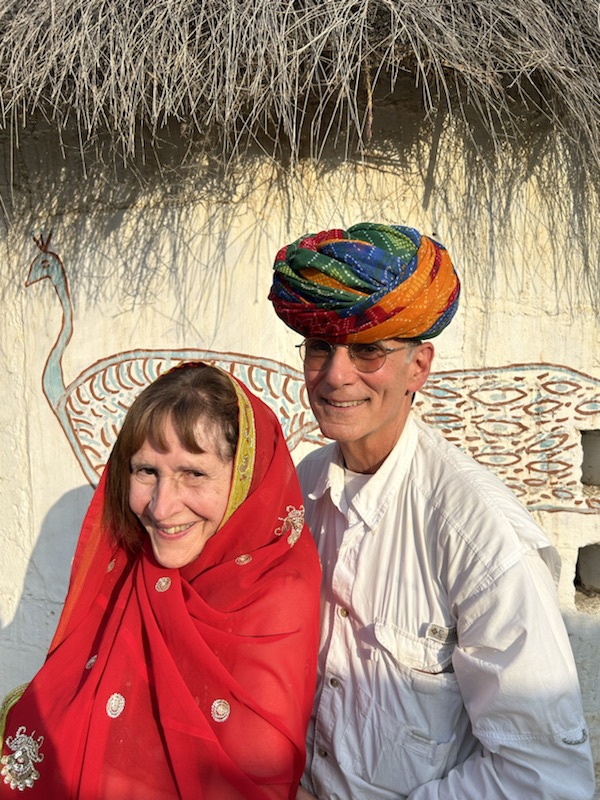
The man also demonstrated how to tie a turban which is formed from a 9 meter long piece of fabric.

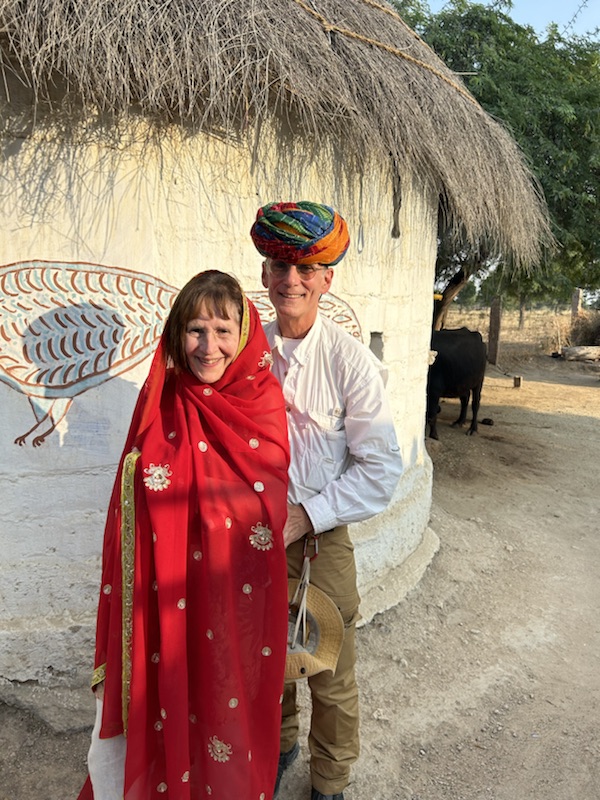
He then dressed us up like the locals.

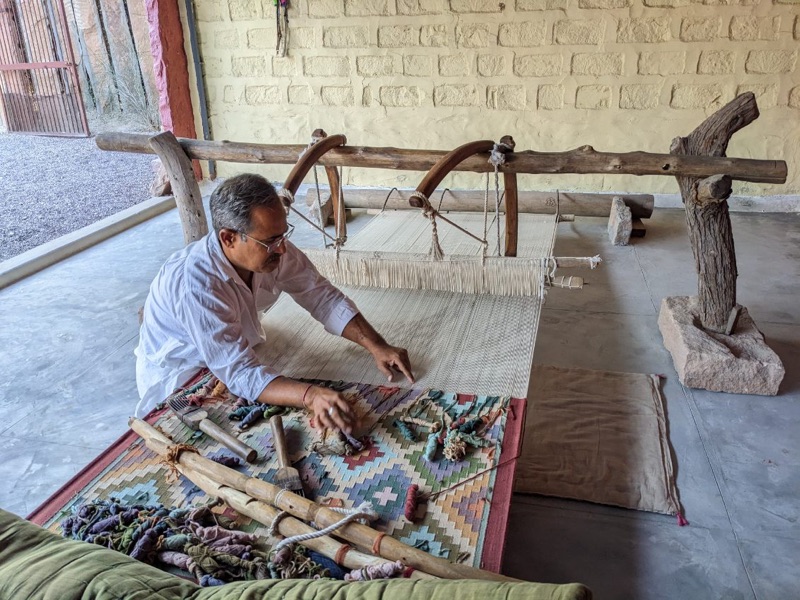
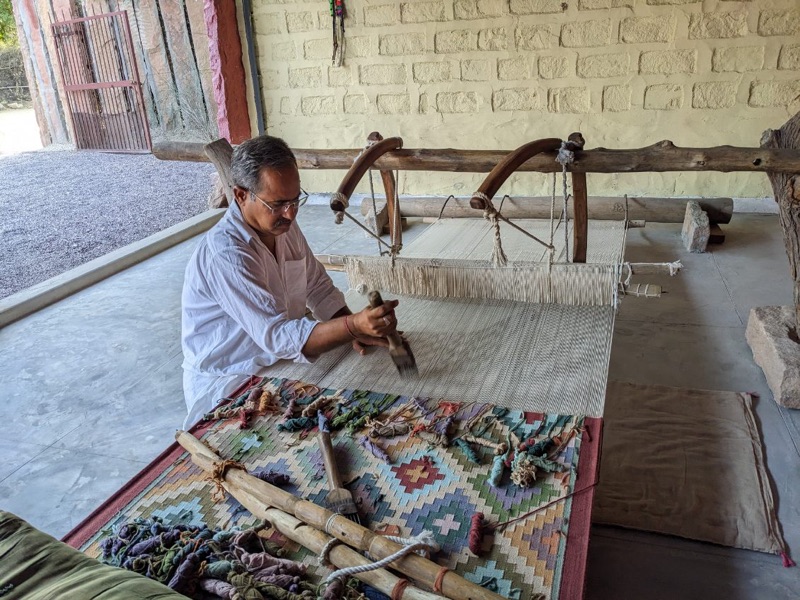
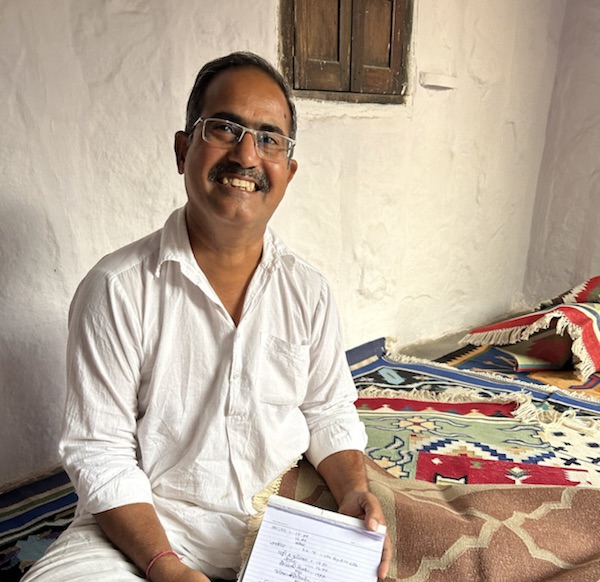
From there, we visited a family who makes hand woven dhurrie rugs. Usually two weavers work together- one on each side of the loom. One rug can take 2 weeks to two months to make depending on its size, pattern, & number of thread colors.

We we were happy to support this small family craftsman by placing a rug order for our home.

I’ve loved dhurrie rugs for years. Sadly, ours was ruined a few years ago, so I am very happy to get a custom made replacement. 😊

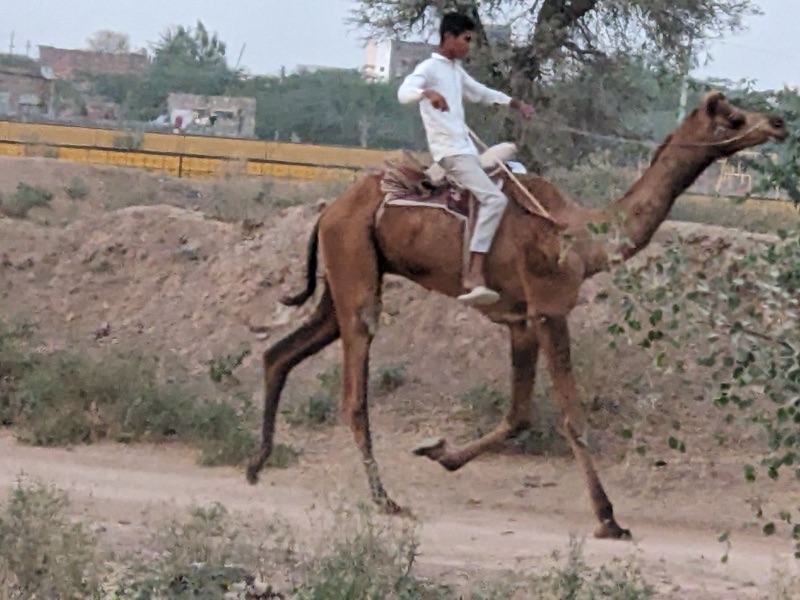
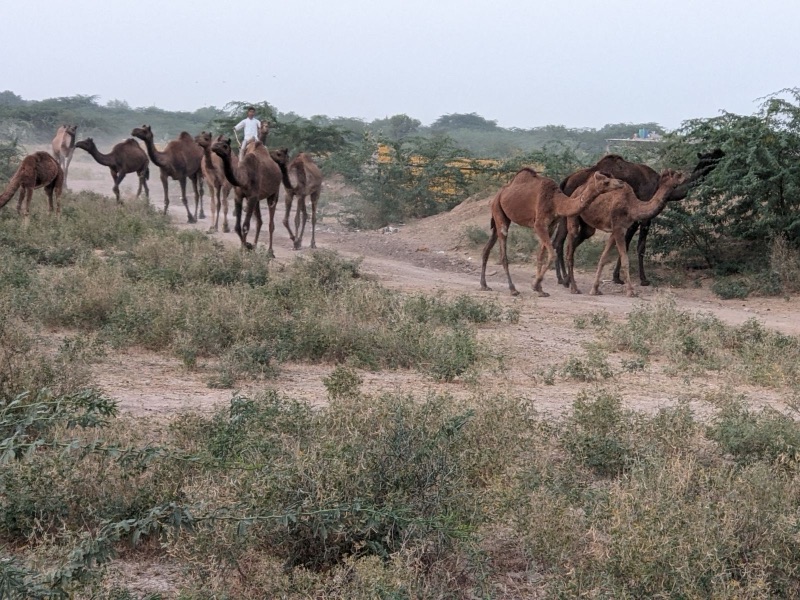
Along the way, we saw a young man on a camel herding his camels.

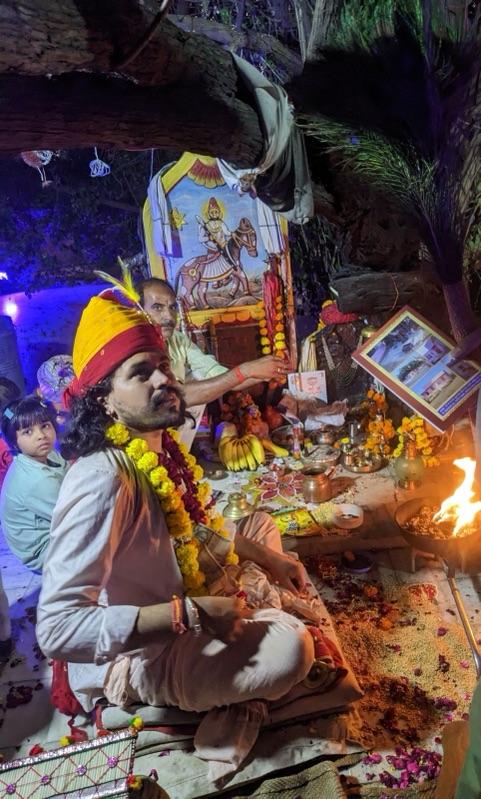
Our last stop was unplanned. On our way back to Jodhpur, we saw a group of 30-40 people gathered at a small outdoor temple under a large banyan tree. I asked our guide if we could make a quick stop to take a few pictures.

The women were all seated on the ground outside while the men were grouped close to the priest under the tree. Once I removed my shoes & approached the women, they motioned for me to come closer.

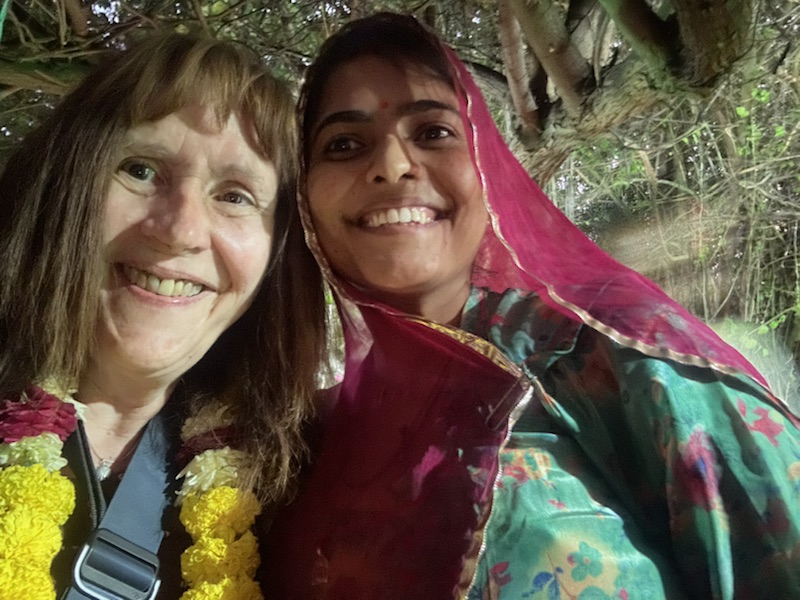
The priest then saw me & asked for me to come and take their pictures. I was very surprised by how happy they were to have me join them. My husband was also welcomed & asked to join.

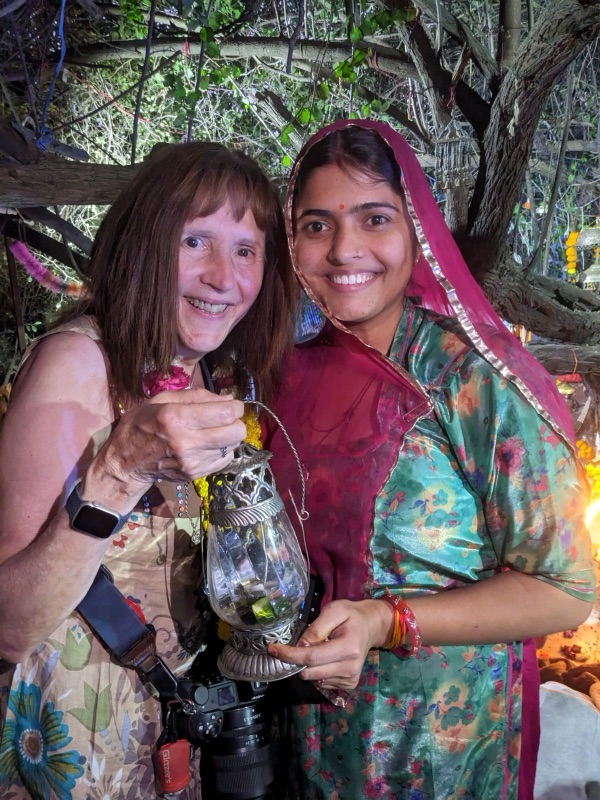
Before leaving we were given a box of sweet soft candy, a lantern, marigold flower garlands, & the priest’s healing stick made from peacock feathers. We both felt very humbled & blessed by the experience.

These are the kind of experiences you never forget. Connecting with others around the world is always special & very rewarding.

This young woman spoke good English & was very kind
We both took selfies to remember the moment

Our guide had a short conversation with the priest. He told us this group meets twice a month according to the moon’s phases. This group was meeting to commemorate a local Bisnoi hero from hundreds of years ago who was killed defending cows from being slaughtered by invaders. It is said although his head was cut off, his body continued fighting to protect the cows. The priest is known in the area for healing various sicknesses. There was also a man there around 80 years old who had the ability to speak with the dead.

Their only request was for us to leave a US $1 bill as a donation. No more was needed.

My peacock healing stick. Due to India export restrictions regarding peacock feathers, it is still questionable if I will be able to bring it home.

Jodhpur- The City With Two Names

On our second day, we enjoyed more than a full day sightseeing in Jodhpur.

Our guide informed us that this ancient walled city has two nicknames. One is the “Sun City” because of the sunny weather it enjoys all year long, even during the rainy monsoon season.

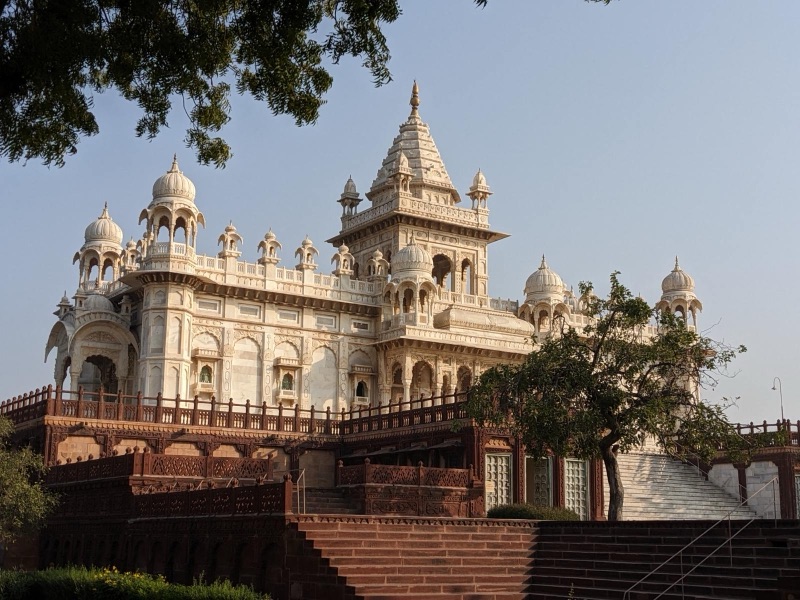
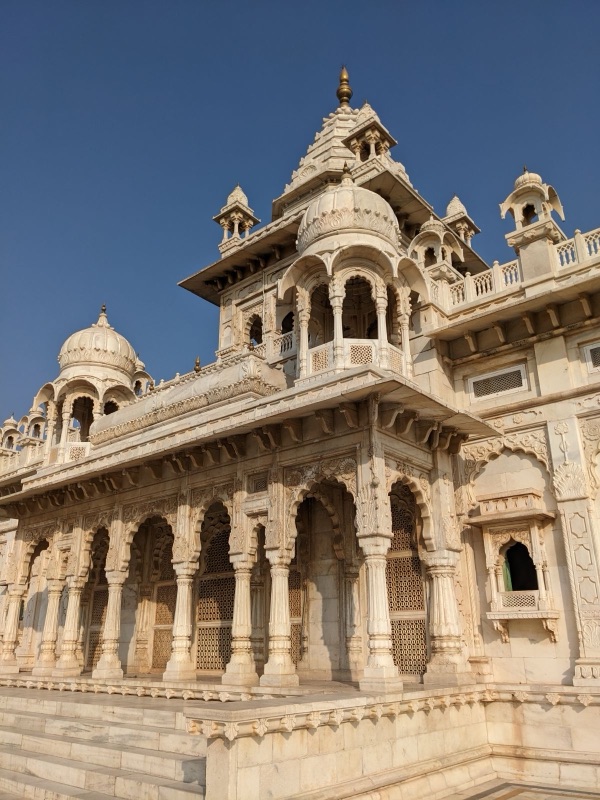
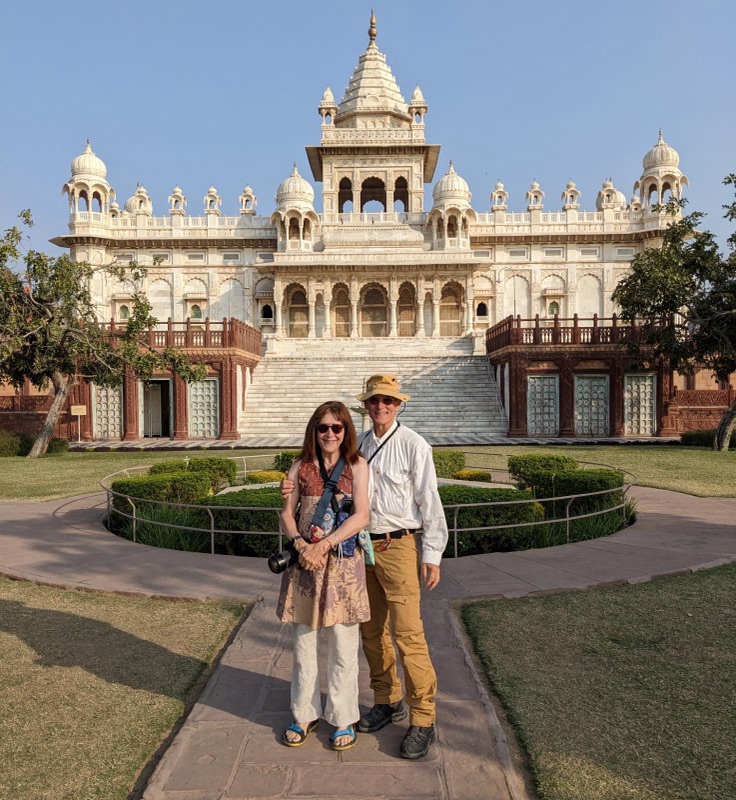
We began our day at Jaswant Thada. This marble building that looks like a palace with intricate carvings is actually a beautiful cenotaph. It is the location for the Jodhpur’s royal family funeral pyres.

Inside the memorial temple you can view pictures showing all 30 of Jodhpur’s rulers along with a memorial to a peacock that flew into a funeral pyre.

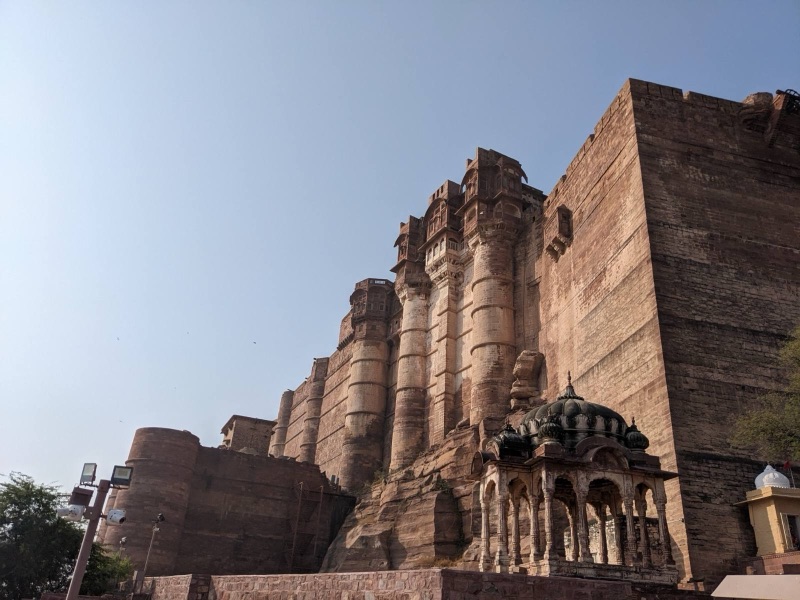
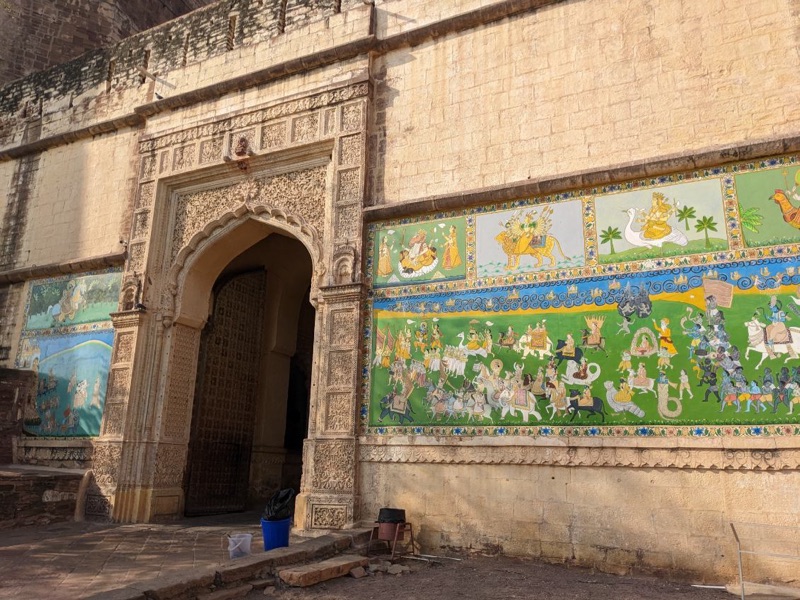
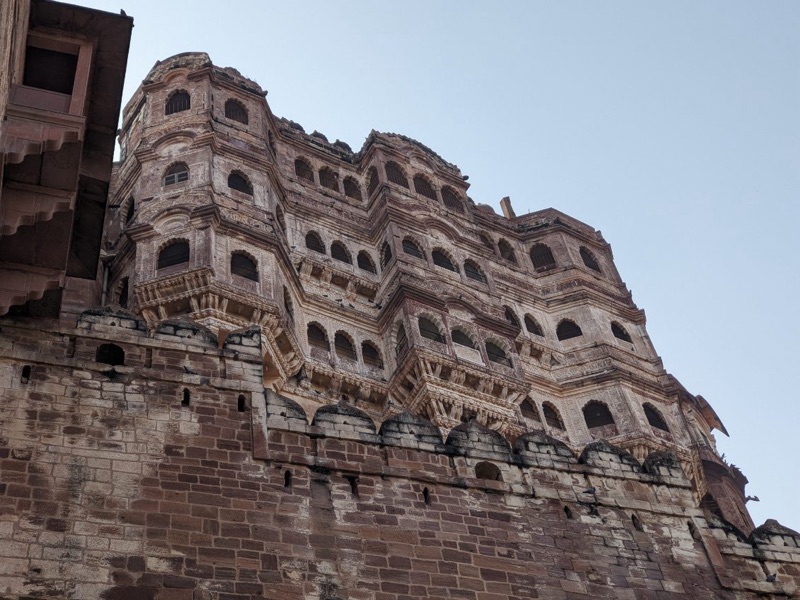
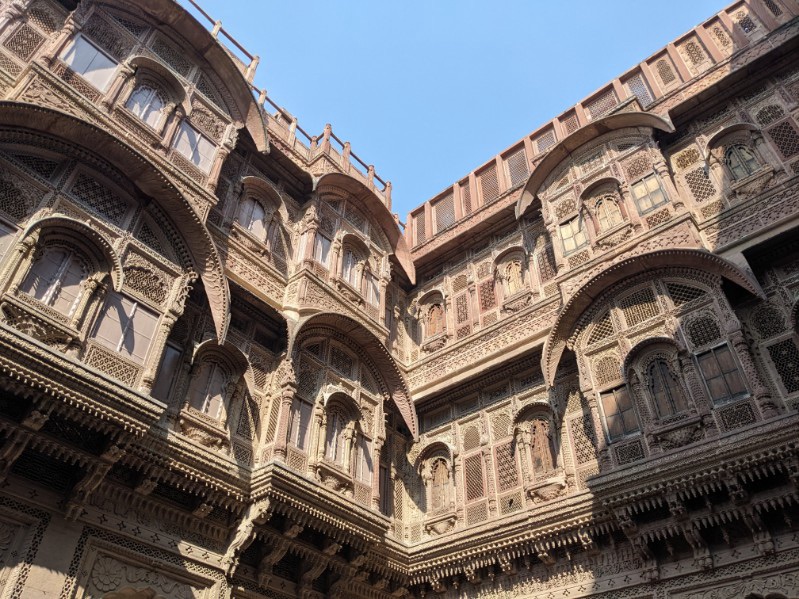
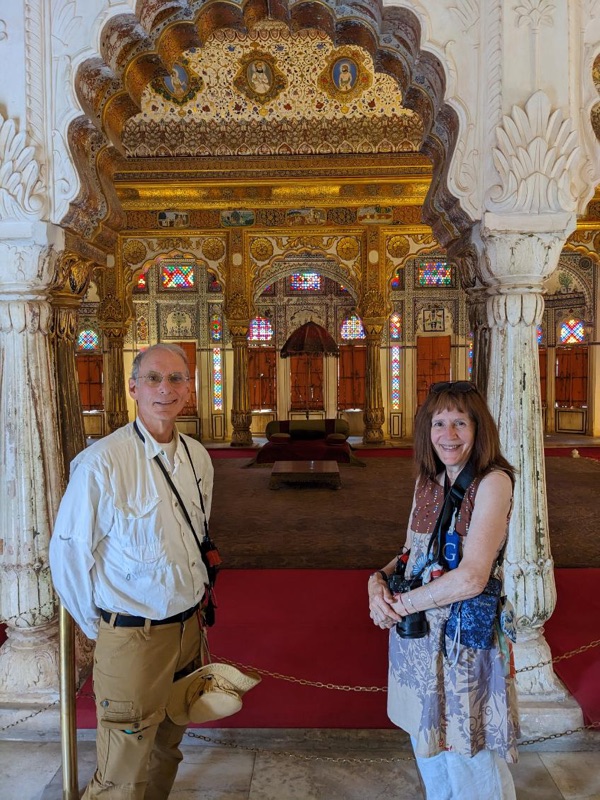
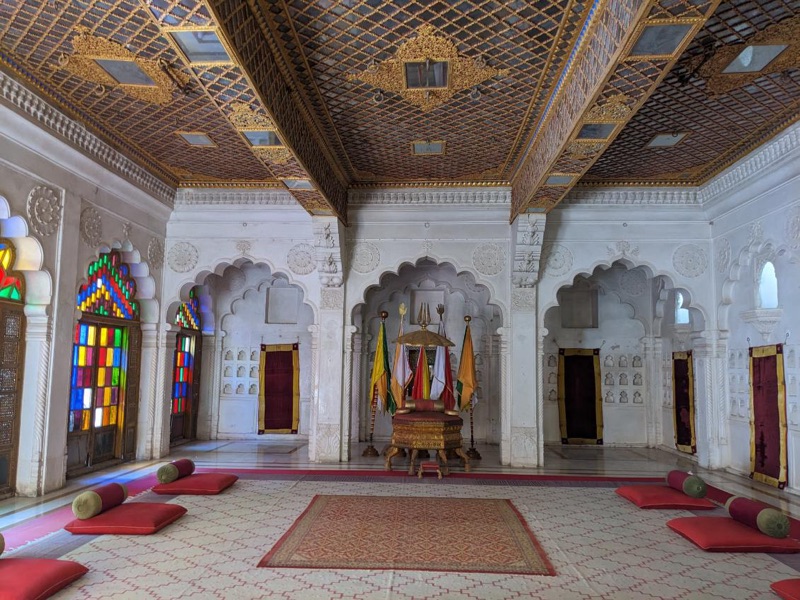
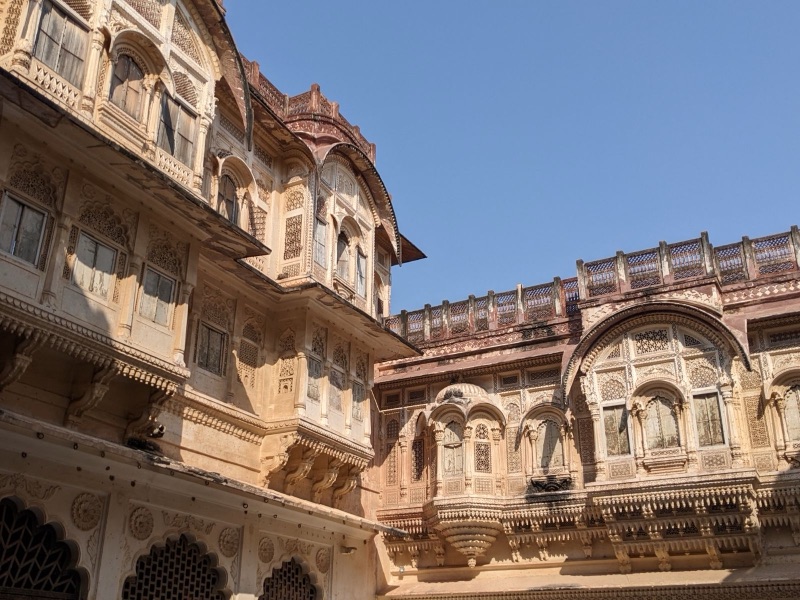
Without a doubt the Meherangarh Fort is a very impressive site. This huge fort started in 1460 with its last construction being in 1920 towers 400 feet above the city.
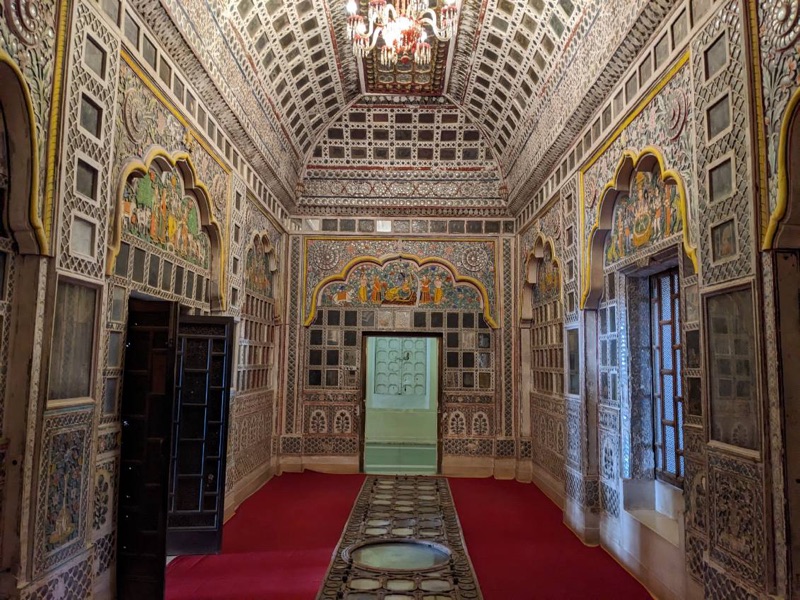
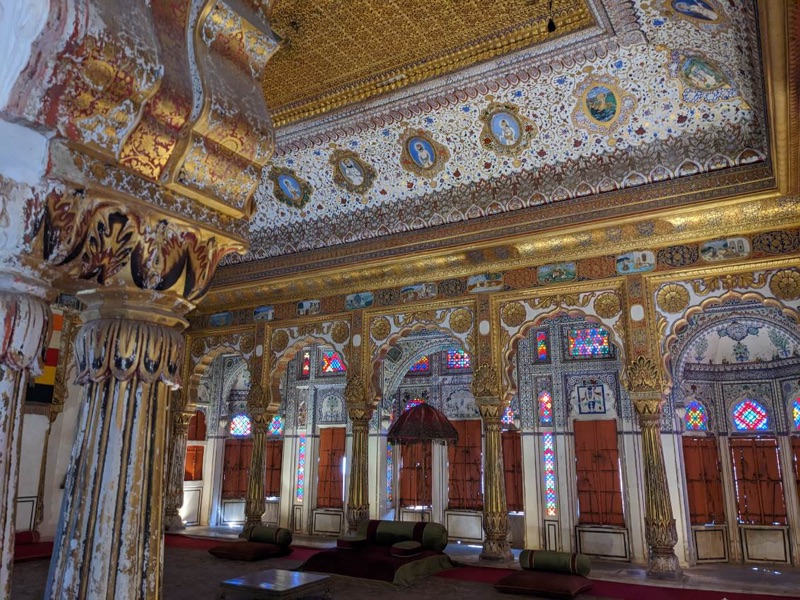
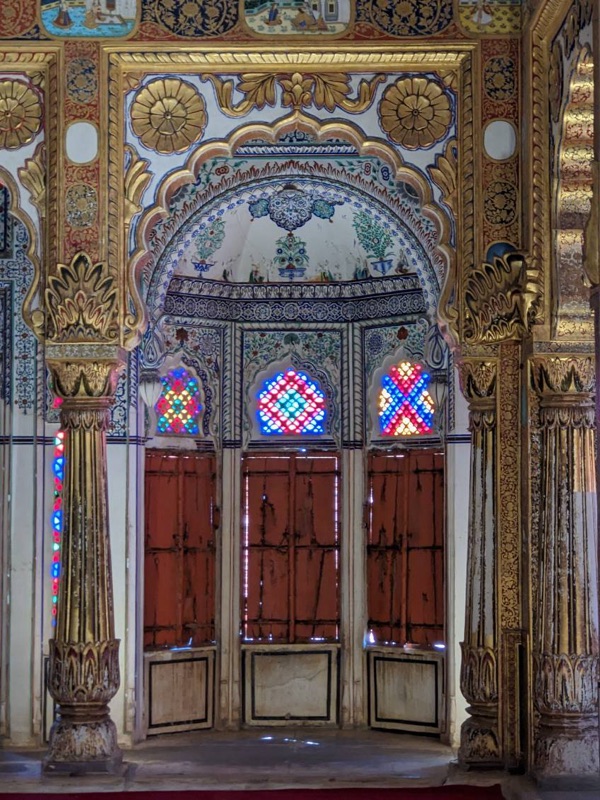
The Rathore royal family operates the fort allowing visitors to view many opulent rooms. These rooms were once used by the former maharajas.

Like Udaipur, Jodhpur was the location for a Hollywood blockbuster movie. In the Batman movie “The Dark Knight Rises”, Christian Bale as Bruce Wayne climbs to freedom from a prison pit located outside this fort to save Gotham City,
Fast forward to 2:30 minutes

However, Hollywood loves to trick us. There is no prison pit by the fort- there is only a circular area ringed with a low stone wall from which Bale emerged. 🤣😂
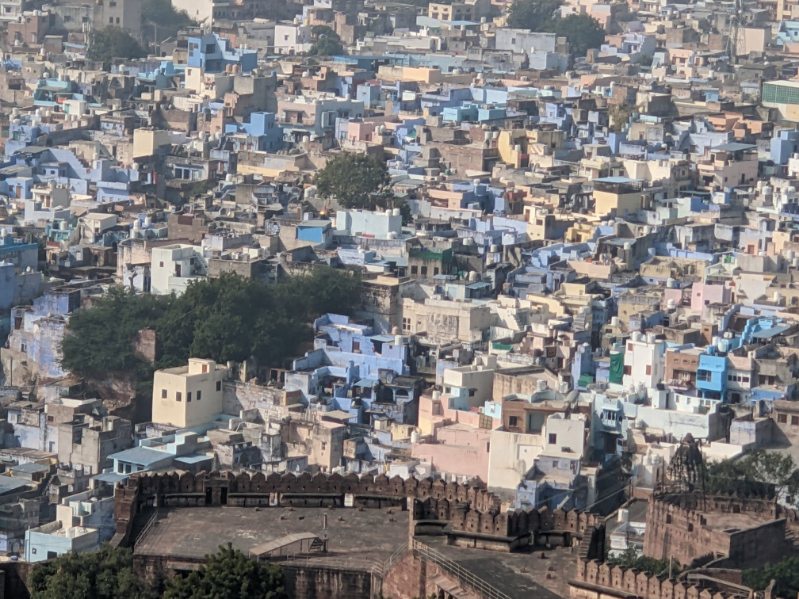
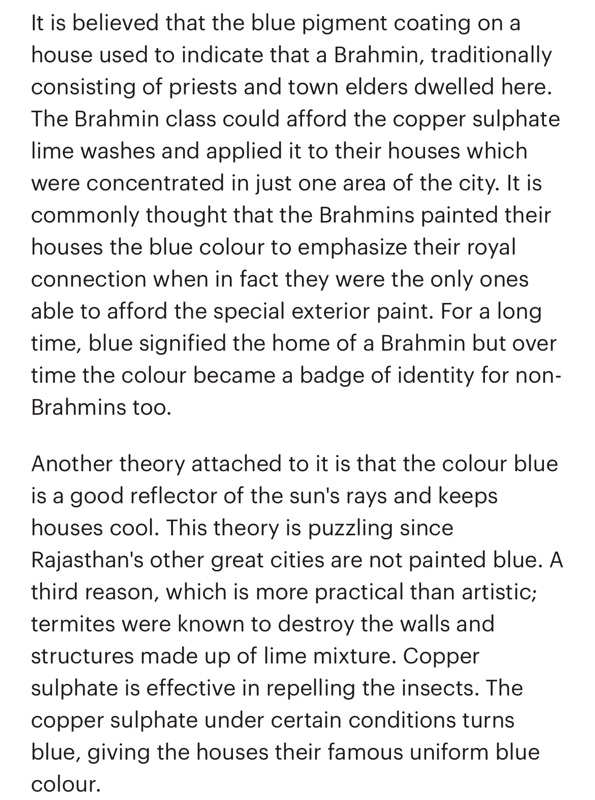
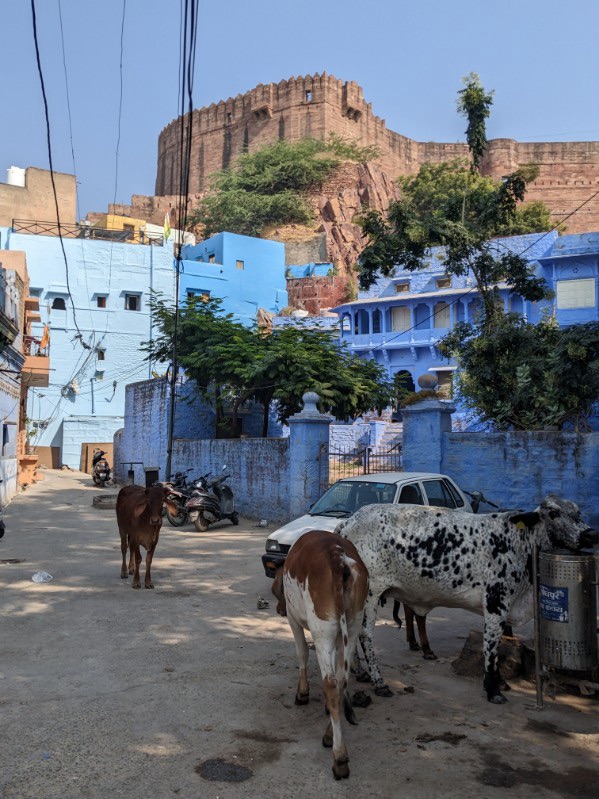
As we walked out a different gate, we entered Jodhpur’s “Blue City” district. The “Blue City” is Jodhpur’s other & more well known nickname.

There are many ideas on why these homes were painted blue. For me, it just provides a beautiful place to take pictures. Today home owners can continue to paint their homes blue or another color

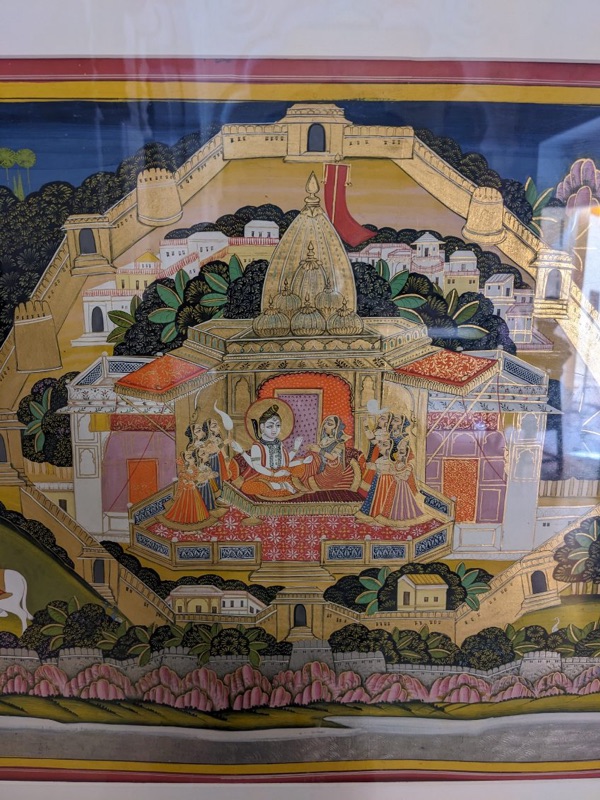
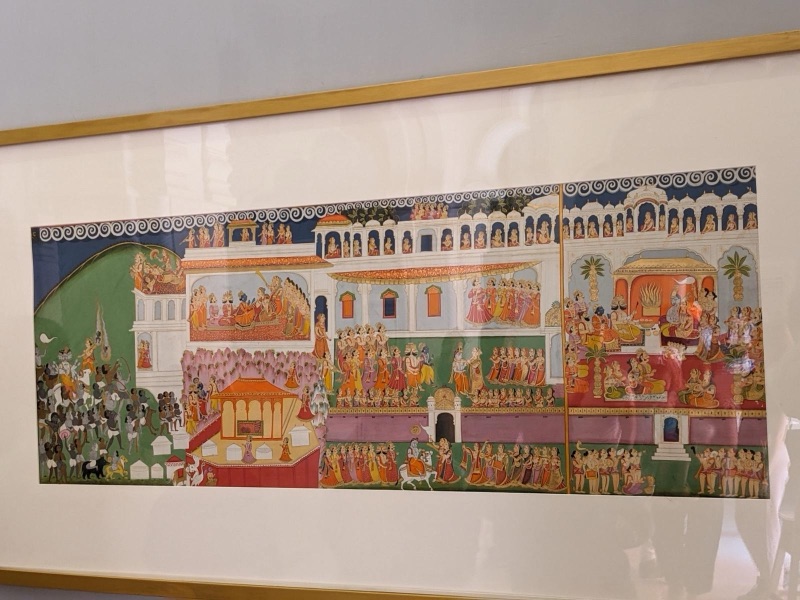
Inside the fort we saw many intricate miniature art paintings on display.

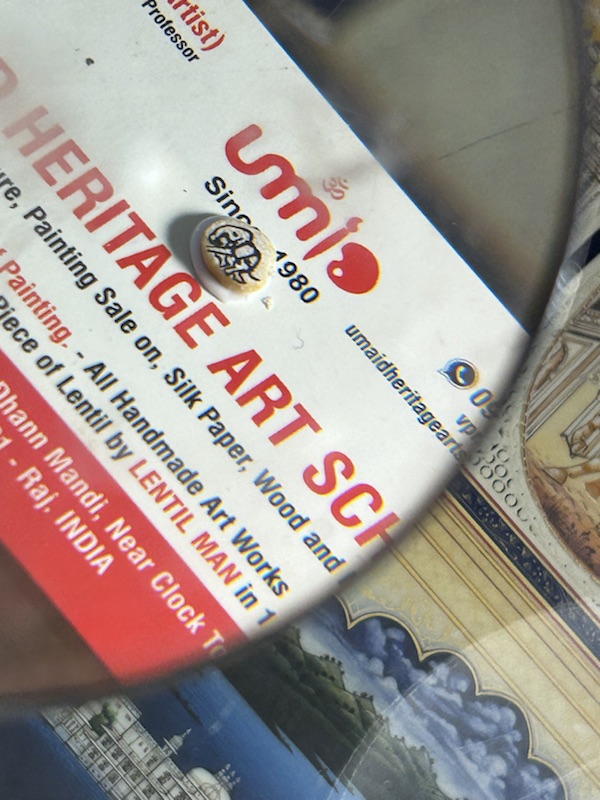
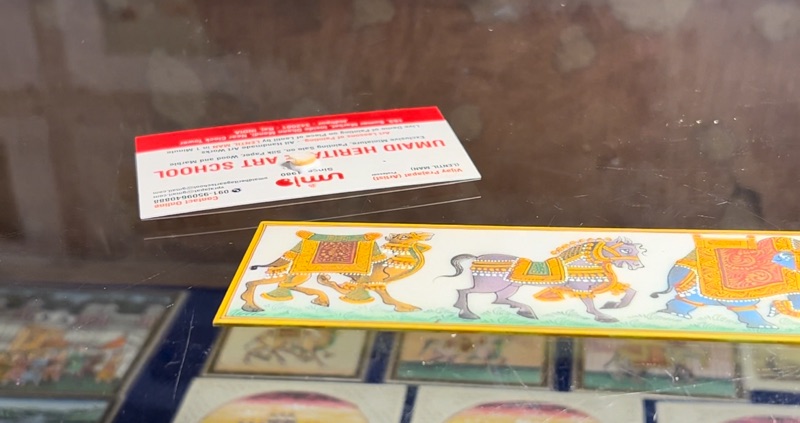
In the old city, we met the “Lentil Man”. He not only paints using the ancient art method used to make the above paintings displayed in the fort; but also, he is so skilled & talented, he can paint an elephant on a single lentil using that technique. He also teaches students this ancient art form which requires using a single hair from a squirrel’s tail to paint. He gladly demonstrates his expertise to tourists.

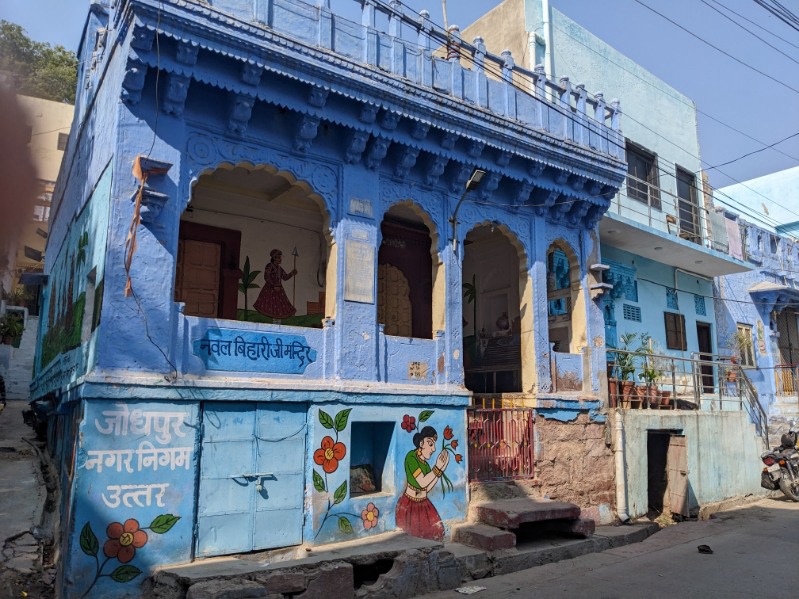
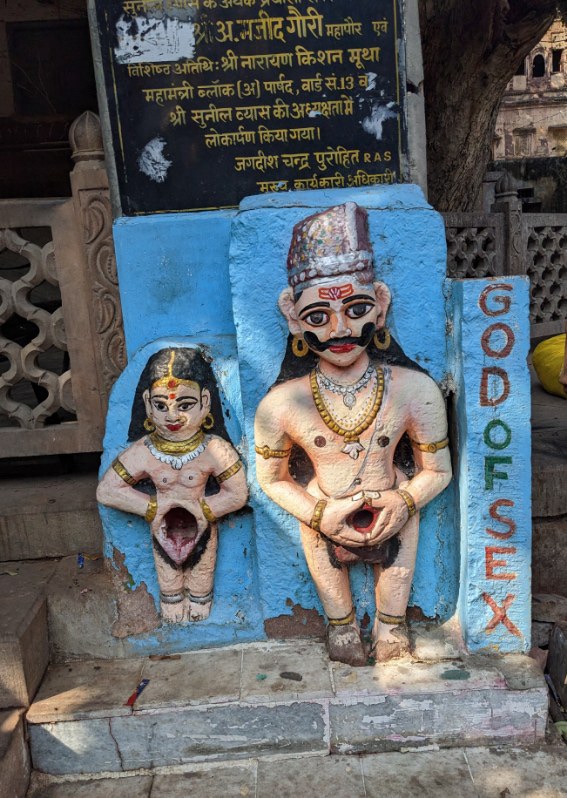
We also saw this interesting shrine in the Blue City. Couples wishing to have children come here to make offers to the fertility god to help them become parents.