The Maasai of Kenya

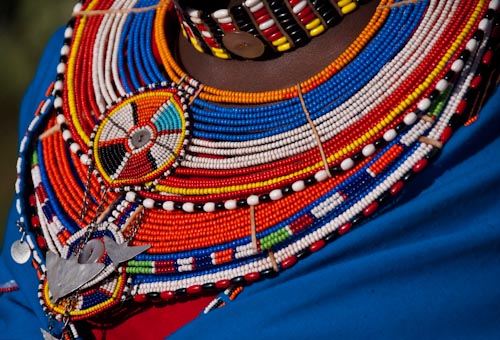
Maasai beaded necklace.

There are many great countries in Africa to experience the wildlife up close.  In the past 20 years safaris have become big business for Africa’s tourism. In Maasai Mara alone the number of lodges has tripled.  Each country is wonderful in its own way providing its own unique adventure. Given the choice though, I’ll always choose Kenya. Why? The Maasai.
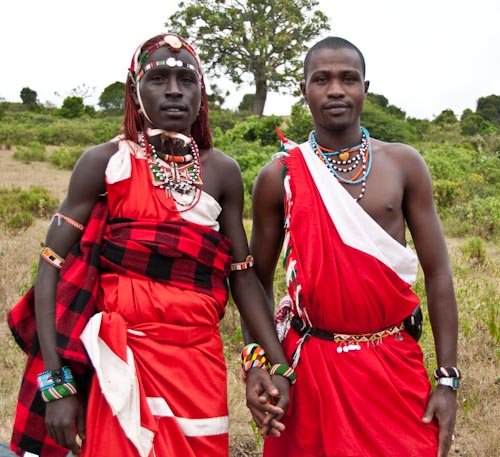
My first trip to Kenya was Christmas of 1984. There were many things from this trip I’ll never forget. It was unbelievable to see a wild elephant or giraffe close enough to hear the sound of their feet pounding the ground or the crunch of leaves in their mouth. But it was the Maasai that caught my attention like non other. I found them to be the most fascinating people I had ever met. As our van crossed the African plains the Maasai stood out as bright as a red cardinal in a forest.  The Maasai wear bright red shawls over their shoulders and around their waists as a Scotsman might wear a kilt.  With long slender legs the men appear as if they are walking on stilts. They tread lightly and with caution to not disturb nearby wildlife.  Both men and women move with the grace of a gazelle, but with the confidence of a Wall Street Banker.  They adorn their bodies with intricate beaded bracelets, rings, necklaces and headgear. At this time it was also customary for the Maasai to pierce and stretch their ear lobes. Sometimes we saw a film canister in their ear lobes, but usually the ears were beautified with colorful bead work.
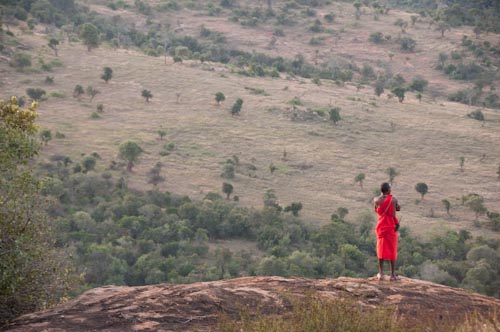
One of our guides trying to spot rhinos in the area. Taken from our 2010 trip.

In 1984 we were told we could not photograph them because it would rob them of their soul. But with some heavy cash, the soul could easily be bought. Everyone in our tour group agreed to hand over the necessary amount to enter a Maasai village with a camera in hand.
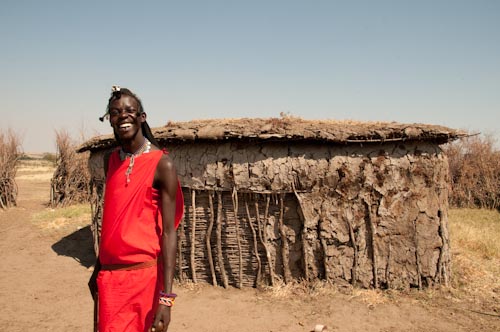
A traditional Maasai village. Taken in 2010 near Maasai Mara.

In the shadows of Mount Kilimanjaro we entered the Maasai village. It was made up of several small adobe huts  from a mixture of soil, cow dung and water. The huts were positioned in a tight circle with a small open area in the middle. A Maasai village may consists of several women married to the same man. Each wife is responsible for making her own hut to house herself and her children. The village is usually surrounded by dead branches from an Acacia tree. This is because an Acacia tree has 2 inch long thorns to prevent giraffes from eating all the leaves. Each night the family’s livestock is brought into the village. The thorny tree branches provide a natural fence for nightly protection from predatory animals.

Upon entering the village I was surprised by the extreme poverty and malnutrition. Even though the Maasai have a healthy diet of milk, grains, and blood from their animals, this was the year of the Great Drought. If you are old enough you may remember the terrible famine in Ethiopia in 1984 that sparked the Live Aid Concert and the hit song, “We Are the World.” You could see the sadness and lack of hope in their eyes. Many of the children were covered in flys and too weak to brush them away. It broke my heart to see this sad situation knowing that I could do little other than offer money to provided food for their animals and themselves.

Another piece of this problem was also created by colonization in the early 20th century. The following information comes from the Kitumusote website.

 In 1911, Maasai lands in Kenya were reduced by 60 percent when the British evicted them to make room for settler ranches, subsequently confining them to present-day Kajiado and Narok districts. Maasai lands were further enclosed to allow for the creation of game parks, including Amboseli, Nairobi, and Masai Mara in Kenya and the Serengeti/Ngorongoro Conservation Area in Tanzania. Ndagala states that were the colonial and post-colonial eviction of the pastoralists from some of their best grazing lands were rationalized to protect the wildlife. The transfer of these lands has served to enclose many pastoral and semi agricultural groups onto parcels of lands that are unsuitable for either semi-nomadic pastoralism or agriculture at a sustainable level.

Upon returning home from Kenya in 1984 everyone asked what animals we saw, but my mind remained with the Maasai. What must life be like for these people? How different their life was from mine. Before they were only pictures in a National Geographic magazine, now their lives were real.

In 1998 my husband and I finally had a chance to return to Africa. The main objective was to climb Mount Kilimanjaro in Tanzania. After the climb we took a 5 day safari trip through the main game parks in Tanzania. I was surprised to see the change in the Maasai. During our absence Tanzanite had grown in popularity providing  a few lucky Maasai who live in the foothills of Mount Kilimanjaro a new income outside their livestock. It was amusing to actually see Maasai driving Mercedes on the dusty roads around Arusha.  However, this luxury is offered to only a few.  Most Maasai at this time were still living in poverty conditions in Tanzania and Kenya.
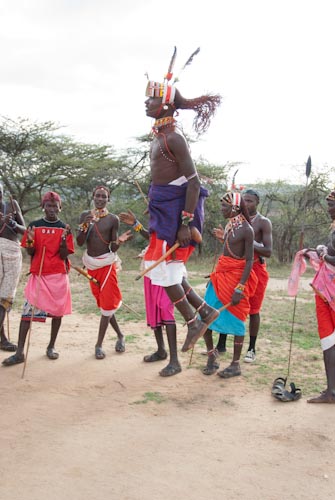
The traditional Maasai Jumping Contest and dance.

Then in 2010 I was reunited with the Maasai in Kenya. My husband and I chose to do a five day Maasai cultural tour in the Laikipia District close to Mount Kenya  with a company called NICE (Nature and Inter-Cultural Expeditions) Safaris.  We were able to participate in Maasai cultural dances such as the men’s jumping contests and camped in a traditional Maasai village. Our time involved daily hikes along with game drives to the  Lewa Conservancy and nights at the incredible Il Ngwesi lodge. This is the only lodge in Kenya run 100% by Maasai. To prove the quality of the lodge, both Prince William and Kate Middleton have signatures in their guest book. We were lucky enough to get Prince William’s room where the bed was rolled out onto the deck so we could sleep under the stars.
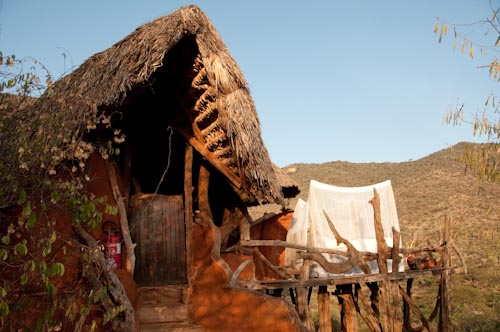
The Maasai luxury lodge Il Ngwesi. Prince William’s room with the bed rolled out on the deck.

Even though the Maasai continue to hold on to many of  their traditional ways, they have been forced to adapt to the modern world. Most now own mobile phones. They understand the need for an education for their children. Many of the young men plan to only have one wife with only a few children, unlike their grandfathers with ten wives. The Maasai no longer pierce and elongate their ear lobes for health reasons. The young people want homes that provide running water and electricity.  Unfortunately, to achieve this they need to find work and finding employment is difficult for most Maasai. The current unemployment rate is at 40%. One thing I relished about the 2010 trip was knowing that every tourist dollar we spent went to support the local Maasai.

For this reason, I chose to return to Kenya again this last summer in 2013. On my prior trip we had been introduced to the Twala Women’s Center located an hour north of Nanyuki.  The women at the center had established a center to help them become empowered. Traditionally Maasai women could not own any livestock or land and had little say in their future. Many were married to older men by the time they were 14.  Today, the Maasai women are starting co-ops where they sell their beaded jewelery to tourists, raise livestock and grow vegetables for profit. A few like the Twala Women’s Center and Ol Gaboli Community Lodge provide accommodations for tourists._KEN0190
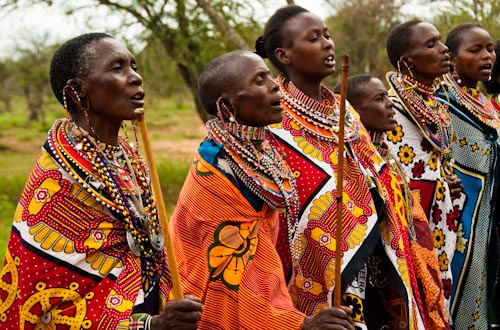
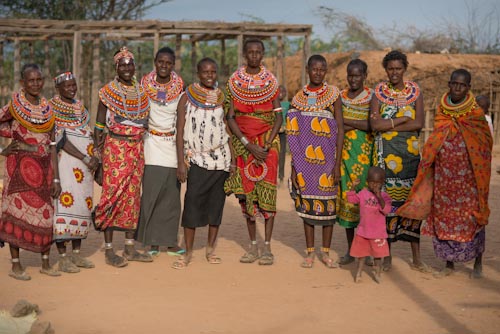
The Umoja Women’s Group

Along with the Twala Women’s Center my trip included a few nights stay at the Umoja Women’s Group in the Samburu District. The Samburu people are similar to the Maasai, yet have their own language and culture. The Umoja Women’s Group provides a safe place for abused Samburu women to live. The Umoja women are also fighting to stop the  custom of female genital mutilation. To raise money to support themselves, they sell beaded jewelery to tourists and provide simple accommodations for tourists along the banks of the Uaso Ngiro River.

On my last night at the Twala Women’s Center it was cool with the threat of rain heavy in the air. Many of the women in the nearby villages came by to join me around the warm fire to sing songs.  The Maasai traditionally sing in harmony with one lead singer picking the title.  The rest of the women then respond with one unanimous call in acknowledgment. On this night they sang a song thanking me and asking me to invite others.
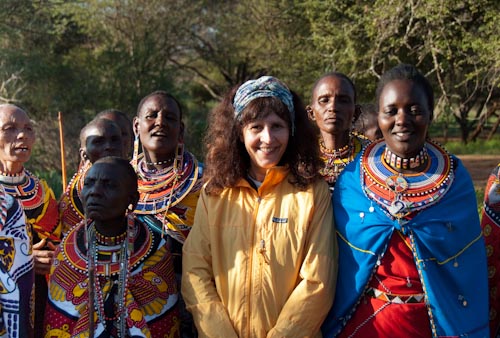
Should you ever have the opportunity to travel to Kenya I encourage you to fit in time to stay in a Maasai village or a Maasai women’s center. Fortunately most are located near prime game parks. This past August the New York Times had an article about staying at the Maji Moto Maasai Cultural Center.  My tour operator at NICE Safaris helped to arrange this trip and accompanied the writer Michael Benanav on his journey. Read his article, Through the Eyes of the Maasai at the NY Times website.

To learn more about my past two trips I welcome you to view my images of the Maasai in Kenya: http://ginalrodgers.com/images/maasai/index.html

Recommended Reading about the Maasai today:

My Maasai Life: From Suburbia to Savannah by Robin Wiszowaty

Facing the Lion: Growing Up Maasai on the African Sabannah by  Joseph Lemasolai Lekuton

Travel Company

NICE (Nature and Inter-Cultural Expeditions) Safaris

NICE Safaris Contact: Mali Ole Kaunga Johnson – olekaunga@yahoo.com

Travel Tips: 

  • If bringing cash, make sure to have only American bills printed after 2000. Paper money that is torn or has handwritten scribbles can also be turned away. I hear America has a new $100 bill, I suggest using that instead of bills printed before 2013.
  • You will need small bills of the Kenya shilling to buy items and tip your guides, make sure to do this before leaving Nairobi. There are few banks outside the capital and few places take credit cards. You can not rely on your lodge to change your money and most prefer to not use a credit card for small purchases.
  • Bring along some good hiking shoes and long pants. The African bush is full of thorns.
  • If staying at one of the women’s centers you will need a good flashlight.
  • Bring an electrical plug adapter for the vehicle. This can be a lifesaver for charging camera batteries. Electricity is hard to come by in the African bush.
  • Bring your British plug adapter for charging at your hotel and lodges. 

Eyes on Syria

Syria continues to be a hot topic as the civil war continues to intensify. Over the past three years as stories about this crisis continued to be covered by news reports, my thoughts always ran back to the people I met in 2010.  This started in October of 2011 when the Syrian military began bombing Homs. With each report I thought about my driver. Even though he lived in Damascus, most of his family still lived in Homs. Then in July of 2012 the Syrian army began bombing the ancient city of Aleppo. I worried about what must have happened to all the shop owners  I met inside the souk when I read that it had been destroyed by bombs. Now as the war moves into Damascus I remember the friendly street vendors and the warm welcomed hugs from women at the Umayyad Mosque.

In 2010 very few tourist were putting Syria on their places to visit. A few European tourist were enjoying cheap flights into Damascus for a long weekend of shopping in the bazaar, but few came to see the 6 Syrian UNESCO sites. When people think of tourism in the Middle East, they think about Egypt, Jordan and Israel, but not Syria. At that time it really was the best kept secret in the Middle East.

When I planned my trip I had friends ask how I could be brave enough to journey to Syria without knowing anyone who had gone before. My reply was simple, I knew about Arab hospitality. Ahmad Azban, author of Dianwan Baladna, Arab Culture from the Arab Perspective puts it this way, “To the Arabs, extending good hospitality is more than just an admirable thing to do–it is a matter of honor and also a sacred duty.” With this knowledge I talked a close friend into coming along.  We both think of it as one of those lucky decisions that one makes not knowing how precisions it will be one day.

Everywhere we went we were given a warm welcome from both the women and men. Not once did we receive an angry slur or a feeling that we were not welcomed. In fact, it was often difficult to find the opportunity to end a conversation. To help you understand the Syria I experienced in 2010 I have added images of the people I met and the story that went with each. 

The People of Syria: Our Driver

This very kind man was our driver for 12 days. He always made sure we were safe by telling us areas to avoid.  His little girl called him everyday on the phone. We quickly learned the ring tone of her calls.Restaurant Owner in Aleppo

The city of Aleppo is one of the most fascinating places I have ever visited. Before the war is was one of the last walled cities in the Middle East with a medieval souk. Deliveries were still done by donkey. One morning after taking pictures I was returning to my hotel for breakfast. While passing through the ancient souk I stopped to  take a picture of this man preparing for his daily customers. He ran a small restaurant that seated no more than 10 people.  With the click of the shutter he looked up surprised to see a Western woman standing beside him. He then insisted that I sit down. Not speaking a single word of English, he pulled out a stool and motioned for me to sit. How could I refuse?Father and his two sons

Once seated, he directed one of his sons to make me some tea. The aroma was wonderful with the smell of  cinnamon boiling in the water. Using my phrase book and the little English his sons spoke, we had a very lovely time together having tea and watching the local shops open for the day. 

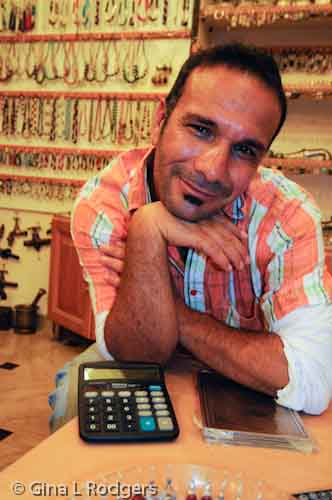
You can’t seem to avoid them, there is always a”used car salesman or snake charmer” on every street corner, or in this case, every souk. This man tried his very best to charm us into buying something in his store for an outragous price. He even tried a marriage proposal to get us to buy.

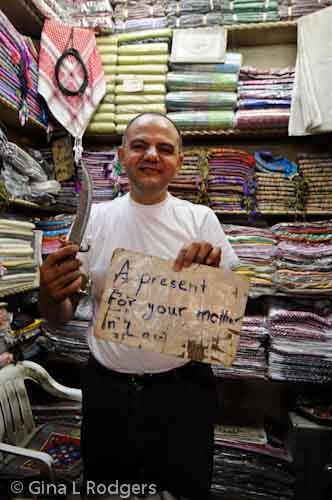
Then if charm doesn’t work, give humor a try as the this man did with his sign. Shopping in Syria was always fun.

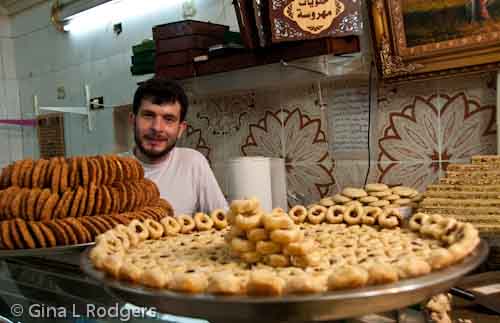
T. E. Lawrence (Lawrence of Arabia), Agatha Christie and Charles Lindbergh once roamed the streets of  Aleppo for good reason. The Eastern extension of the Orient Express used to end in Aleppo making it a popular city for both traders and opulent travelers. This explains why Agatha Christie wrote the first chapter of her book Murder on the Orient Express while staying at the Baron Hotel in Aleppo.  I’m sure one of the delights they enjoyed was the delicious Aleppo cuisine; a mixture of Turkish, Jewish and Armenian food. If you have a sweet tooth, there are many tasty pastry shops to satisfy your appetite.

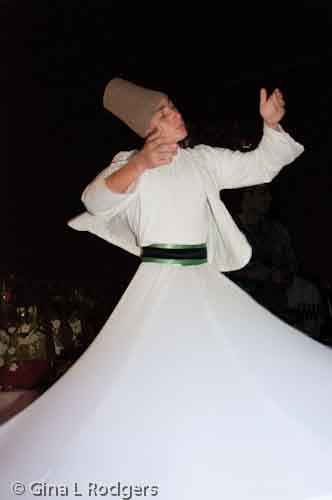
But I will never forget the evening meal we had in the Al-Jdeida section of Aleppo. Up on a rooftop overlooking the Saahat-al-Hatab square we watched the evening turn into night while we enjoyed cherry kebabs, Muhamarra dip and the whirling dervish dancers.

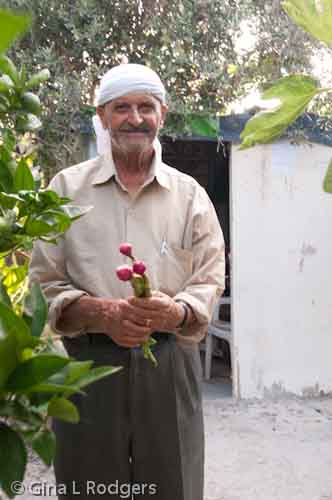
One day after touring the Marquab Castle we stopped for a bite to eat at a lovely outdoor restaurant with grapevines shading us from the hot summer sun.  While there one of the locals came over to say hello to our driver. He was immediately smitten with my friend. Once we finished with our lunch he insisted that we visit his garden where he pulled up some radishes to give us. My friend also got a lovely bouquet of flowers from his garden. We both wonder what his wife thought of this? 

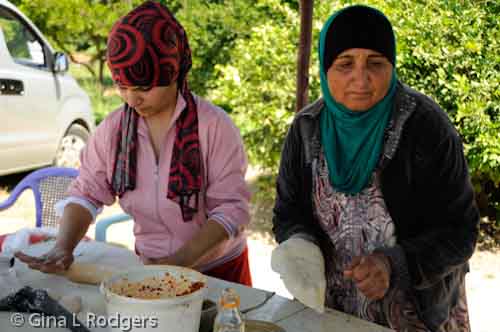
Near Saladin’s Castle, known for battles during the crusades, we decided to enjoy a roadside stop for our lunch. This mother and daughter were busy making various Syrian meat and vegetable pies.

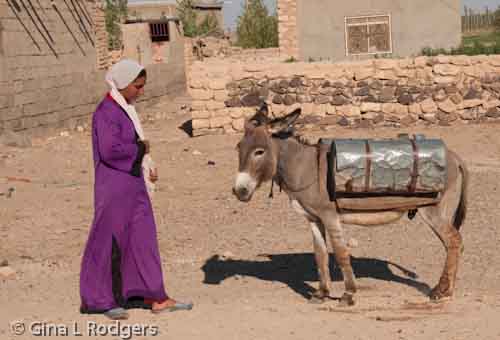
Near the ancient ruins of Rasafa we met delightful people who still use donkeys as their main means for transporting daily water supplies. 

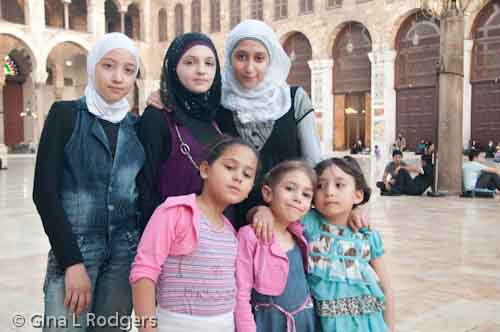
We visited Syria in the middle of the summer. A little crazy, but the only time I could fit the trip into my schedule. I found the desert to be tolerable since there was usually a gentle breeze or the shade of a tree to rest under, but neither of these were available in the large city of Damascus. We found the coolest place to go was the Umayyad Mosque. We went there on more than one occasion. Sometimes to just sit in the shaded arched arcade and watch the children play in the courtyard. This incredible structure dates back 3000 years to the 9th century BC serving as a place of worship for many. In the beginning it was a worship place for the god Hadad, the Romans then turned it into a temple to the god Jupiter, but later made it a church when Constantine embraced Christianity. There have even been claims that the head of John the Baptist rests in a casket inside the mosque. When Muslims entered Damascus in 636 AD they allowed Christians to continue to worship on the western side while they worshipped on the eastern side. This arrangement lasted for 70 years.  On our visits we were always embraced by the women and children curious to know who we were.

The old city of Damascus is full of tiny side streets. Parts of the old city are Christian while other areas are Muslim. Up and down the street you can find shops of all kinds selling paintings, copper pots as shiny as a new penny,  or even a shoe cobbler. I couldn’t resist buying three pairs of handmade leather sandals from this man. Because of the intense heat in Damascus my face was covered with many small red bumps. He was deeply worried about me and asked if he could put some olive oil on my skin to help. 

One morning we arose early to check out the streets of Damascus before it became too hot and noisy with braying donkeys and honking vehicles.  While wandering up and down small streets we saw this man inside his home busy at work. He was making candy to sell to the local vendors in the souk. With two big smiles on our faces and a few hand motions we were invited inside. Little conversation took place, but sometimes words are not needed. I still have the small bag of candy he gave me in my freezer. Some keepsakes are too precious to ever eat. 

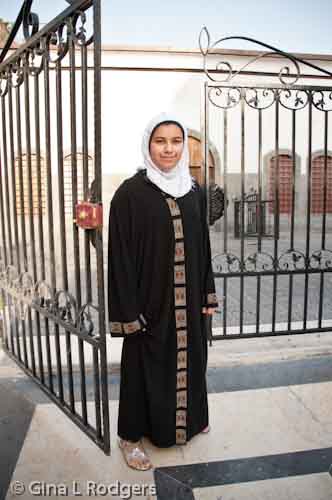
On one of our visits to the Umayyad Mosque we met this sweet young woman as she was entering through the gate. She was shy but allowed us to snap a few pictures of her. We later saw her again with her parents near the Roman arch in Damascus. We smiled and waved, then she approached me. She took off the necklace from around her neck and gave it to me. I was too touched to know what to say. Thankfully I was wearing the endless knot charm that I had bought in Ethiopia and offered it to her. To this day I wear her necklace and wonder what her life is like today. This happens when you travel, you meet wonderful people for brief moments, yet you connect in the most human way possible.

I cherish the time I spent in Syria and the people I met. They blessed me with their hospitality and kindness. Today I wish each of them peace and a quick end to the suffering of their homeland.

To see more images from my 2010 trip to Syria: http://ginalrodgers.com/images/syria/index.html

Can’t Agree More

In the last week I have read two articles in the New York Times that caught my attention. The first was called, “Traveling Without Seeing.” This article talks about the attachment we have for the electronic devices we bring along on our travels. The author, Frank Bruni, spoke about our need to download movies, games and music in preparation for a trip. Then once we are safely tucked away in our hotel room we choose to cocoon ourselves in our room instead of adventuring out into the unknown.  When we do this, we miss opportunities to interact with others and learn about the world.

I often travel alone, and believe me, it is tempting to stay in the hotel, but then I say to myself, “What am I missing out there?” So I close my laptop or iPad, grab my camera and take off to see the sights.

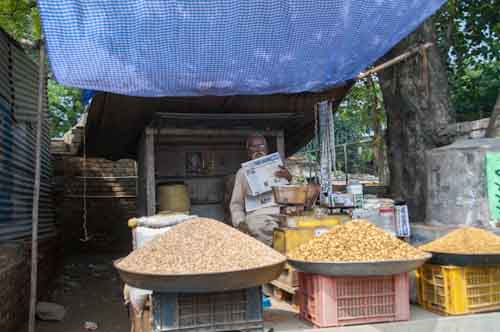
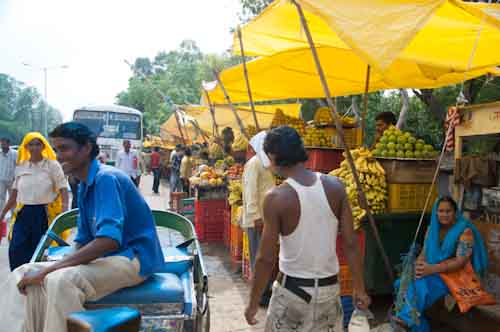
This attitude has provided me with a wealth of rewarding experiences. Even eating alone in a small foreign restaurant can be adventurous.   I use to think  that eating alone would be lonely, but you wouldn’t believe how many people will start a conversation with someone who is by themself. On one occasion in Greece the waiter came over to practice his English. I learned he was from Syria and had been working in Greece for more than a year. I told him I had plans to go to Syria in the near future. He then offered tips on places I should not miss. An hour later a plate of watermelon and a small glass of ouzo came to my table free of charge. How’s that for having a friendly conversation with a stranger.  On a recent trip to  New Delhi I found myself alone in my hotel room on my last day in India. My bags were packed, I had snack food to eat, and enough entertainment options on my iPad to last for a few hours, but I didn’t come to India to stare at a small screen. Instead I spent a few hours strolling the streets taking pictures along the way. The sights I saw on the street were much better than any movie I had downloaded on my iPad.

I recommend reading Frank Bruni’s article for more insight into this topic: New York Times, Traveling without Seeing

The streets of India outside my hotel room. 

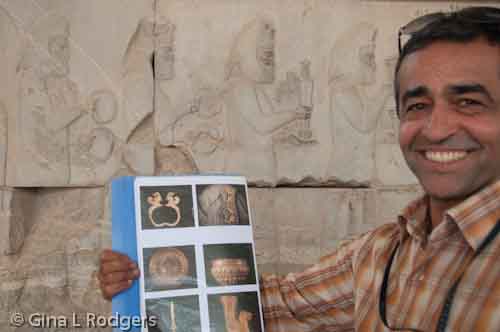
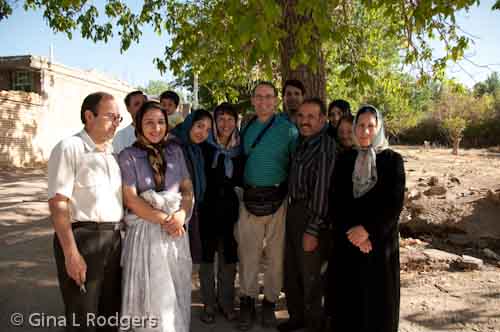
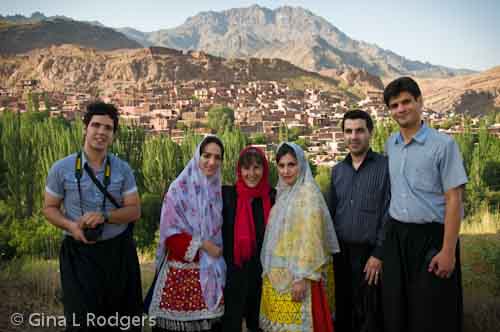
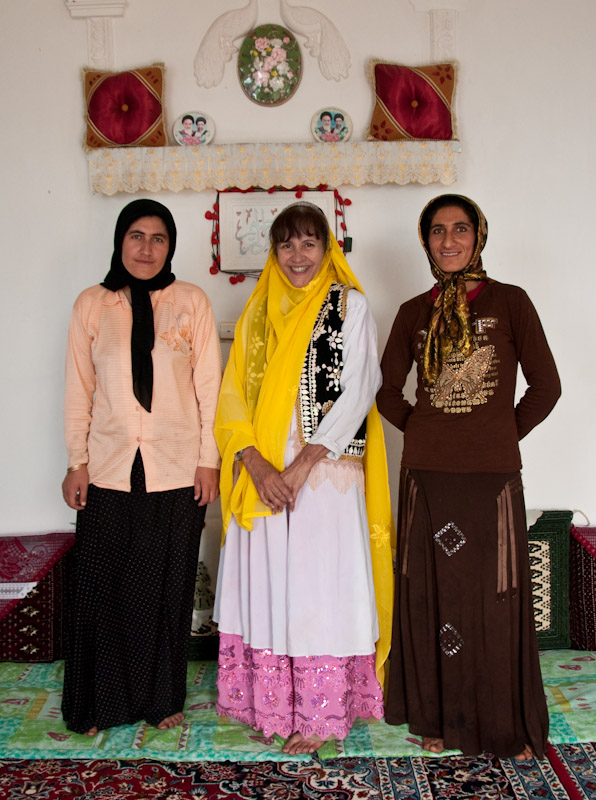
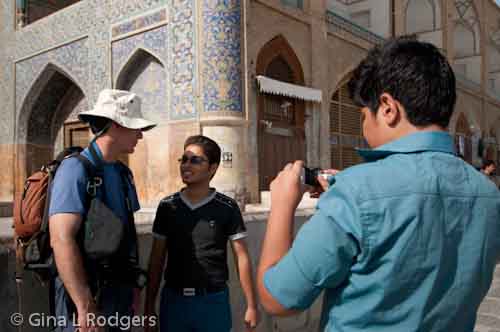
The second article called, “Tour Iran? Operators Hope So,”  spoke about traveling to Iran. Only a few weeks after the contested election in 2009, I traveled to Iran with my husband. Even though most of the protests had stopped once we arrived, a few were still continuing in Tehran.  I was fearful of how we would be treated at this turbulent time, but it turned out to be one of our most memorable vacations.  While there my husband and I toured Shiraz, Yazd, Esfahan, and the ancient site of  Persepolis. Everywhere we went, we were treated like treasured guests.  I can’t begin to guess how many times my husband was asked to pose for a picture. I made friendships that I still have today. For this reason, I highly recommend reading the New York Times article about traveling to Iran. Even though the US State Dept. still doesn’t recommend traveling to Iran, I must kindly disagree.

Take the time to read this short article about traveling to Iran: New York Times, Tour Iran? Operators Hope So

Here are 2 links to my images from Iran: http://ginalrodgers.com/images/iran/index.html  and http://ginalrodgers.com/images/persiandesigns/index.html

Just a few of the wonderful  and gracious Persians we met in Iran. 

Enjoying watermelon with our woman guide and tour operator.

Enjoying watermelon with our woman guide and tour operator Cyrus Etemadi.

Our very knowledgeable    guide for most of the trip.

Our very knowledgeable guide for most of the trip.

One of the families we met and stayed in their home. When you said "cheese" for a picture they giggled and giggled.

One of the families we met and stayed in their home. When you said “cheese” for a picture they giggled and giggled.

Another family I met near Abyaneh. The women were dressed in native dress for a family celebration.

Another family I met near Abyaneh. The women were dressed in native dress for a family celebration.

I was able to spend 3 days with this family who lived in the Zagros Mountains. One day the sisters dressed me in their traditional clothes.

I was able to spend 3 days with this family who lived in the Zagros Mountains. One day the sisters dressed me in their traditional clothes.

One of the many pictures my husband was asked to pose for.

One of the many pictures my husband was asked to pose for.

For more information about Iran contact Cyrus Etemadi. He operates the tour company used by Asian Pacific Adventures.

Starting Something New

For the past eight years I have worked diligently trying to perfect my skills as a photographer. Step by step my skills increased and now photography is almost instinctual. Once that happened I found myself wanting a new challenge. With the help of a new SLR camera that takes stills along with video, I decided to give video a try. As I did with photography, I enrolled in classes and began to read what I could on the topic. I have a long ways to go before I will satisfy myself on my ability, but at least I have taken the leap. The most difficult decision is to shoot video or stills at any given moment. Then comes the editing, but at least it is more fun to edit a video than 3,000 still shots.

It was tempting to not share any of my videos until I felt they were of high quality, but then, I would have missed out on showing my growth.  So here is my first attempt.  It’s a 4 and half minutes video about Madagascar. It is interesting how it shows a place in a whole different light from still images. Check them out and see how you feel. Will you like video or stills better?

Madagascar video link: https://vimeo.com/72945357

Here is the link to my still images from the same trip:  http://ginalrodgers.com/ginalrodgerswebsite/images/madagascar/index.htm

Few Expectations but High Rewards in Madagascar

Once in a while, you just pack your bags and go on a whim that it will be a great trip. It’s a bit like going to the movie theater knowing little more than the title of the movie. The advantage to this strategy, is that you have few expectations; therefore, few disappointments.  The disadvantage, you will miss out on something great or not be fully prepared. But hey, this was Africa, there is only so much planning and preparing that you can do once the proper clothes are packed and all valuable camera & electronic equipment is secured in the carry-on bag.   I am happy to report, another African country has proven its worthiness as a great travel destination.

We were greeted at the airport by our courteous driver-guide who would be with us for most of the next 17 days. Madagascar is the fourth largest island in the world and the best way to see it is with a 4WD vehicle. Our itinerary included visiting the four national parks, Andasibe, Ranomafana, Isalo, and Kirindy with a few relaxing days on the white sandy beaches of Morondava and Ifaty.

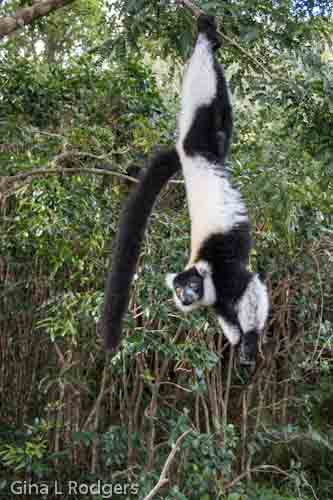
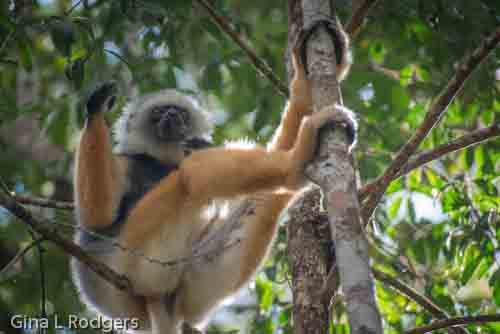
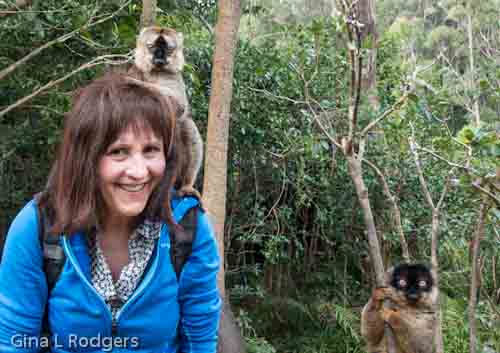
For me,  the acme of the trip was seeing the lemurs. From my first sighting I could not get enough of their cleaver antics and big marble size eyes. The ancient authors Virgil & Ovid mentioned the Festival of Lemuria during which “ghosts” referred to as “lemures” were exorcised. As an analogy to these ghosts from Roman mythology, the name “Lemur” was given to the entire species due to their nocturnal habits & noiseless movement at night, reflective eyes, and ghostly cries. Scientists believe there are over  80 lemur species, new species are still being discovered by primatologist.  [Check out this NG video of a new discovery.] Lemurs vary in size, the smallest being the mouse lemur and the largest being the Indri which looks like a very large black and white teddy bear. The Indri are considered to be sacred with folktales adding to their enchantment. One story told to us by our guide was about  a boy who went into the forest to collect honey, was stung by bees, and fell from a tree.  An Indri caught him and carried him to safety. From what I have learned about animals, I tend to believe this is true and not a myth.  To see the Indri you need to visit Andasibe National Park. Once there you will hear their haunting, yet beautiful whale cry. [Watch this video to see the Indri and hear their cry.] Each national park we visited had lemurs to observe. When visiting a national park we were always accompanied by a park guide, this is very important since they know how to find the lemurs and sometimes carry bananas that the lemurs love. Our park guides also provided night walks at Andasibe and Ranomafana and were excellent chameleon spotters during the day and night. If seeing a lemur is on your “must see and do” list, then Madagascar is the only place where you can see them in the wild. [Read here to learn why.]

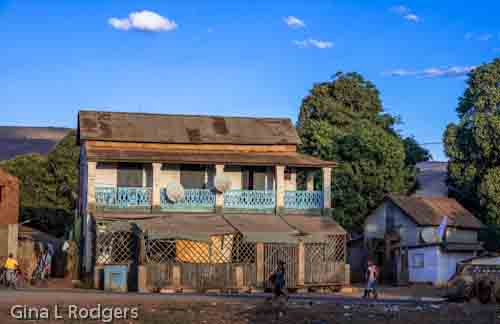
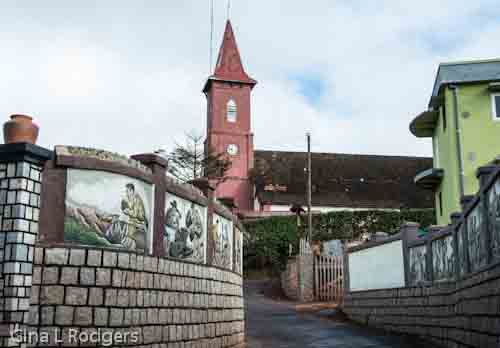
At one time almost every inch of the African continent was a European colony. Madagascar was a french colony from 1890-1960. Today French is still widely spoken by the educated Malagasy.  French food, including the bread, is widely served. You can also see the French influence in the housing architecture. In the highlands you will see many brick houses containing columns and west-facing verandas. Train stations and churches look as though they were taken from a French countryside.

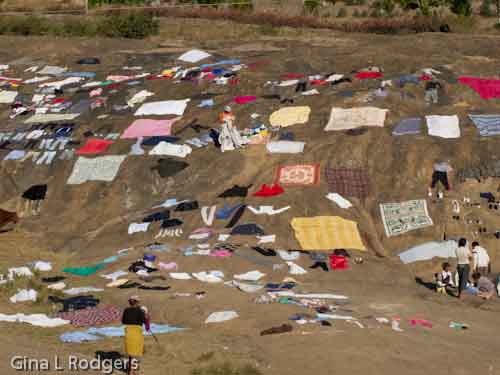
Traveling around the country it felt like a large melting-pot of cultures. Indeed this is true because today’s population  is a mixture of Austronesian (origins from Borneo), North Indian, Arab, Somali and Bantu settlers. I enjoyed looking at the various hair styles and clothing worn by the women in the regions we visited.  The most interesting tradition practiced all over the country was the ritual of washing laundry by a river then stringing it among the rocks and plants to dry. Our guide told us that many believe that washing clothes by the river washes away their sins.

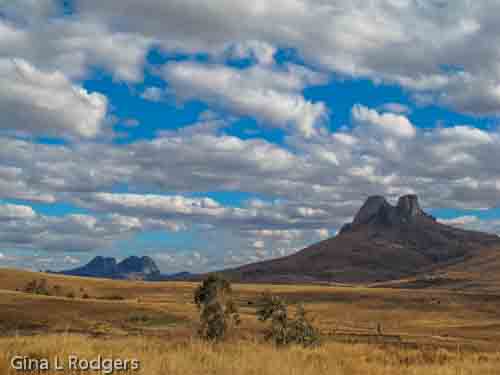
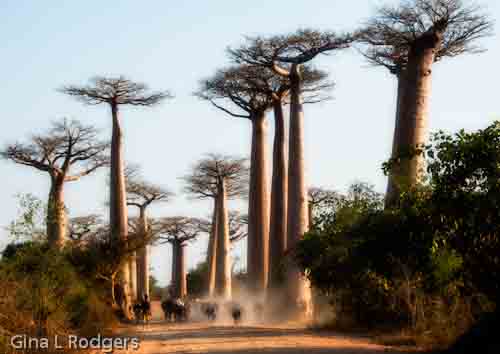
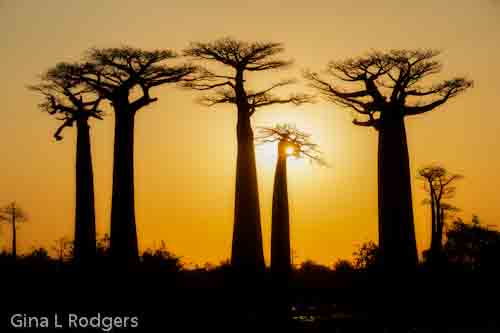
Madagascar has an incredible diverse landscape. Each travel day I enjoyed watching the terrain change from cultivated fields, to dense rainforest, and into a sandy desert. In the highlands many of the hills are terraced like those in southeast Asia to support the number one grown crop, rice. The south contains large grassy plateaus with the occasional granite domes to complete a Georgia O’Keeffe setting. For most tourist, the Avenue of the Baobabs near Morondave is an incredible sight in the morning and evening. Then when you need a little relaxation, there are long white sandy beaches with lovely bungalows next to the Mozambique Strait.

Madagascar is still off the beaten path for most travelers, but well worth the trouble. Because we missed seeing the lemurs do a dance, we just might have to go again. To see what I mean check out the following video, then I think you will agree, Madagacar is a ‘Must See’ destination. [Dancing lemurs video.]

To see images from my trip to Madagascar, visit my photography website: http://ginalrodgers.com/ginalrodgerswebsite/images/madagascar/index.html

Travel Tips:

  • For photographing lemurs, a small island at Andasibe was ideal for photographing and feeding the Brown and Ruffed Lemurs. The best opportunity for photographing the Ring-tailed lemur was at the Anja Reserve and a camp ground in Isalo National Park.  Remember to always focus first on the eyes and make sure you are using a fast shutter speed. I believe they move too quickly to use a tripod.
  • If you don’t speak French, a French phrase book or a French translation app will come in handy.
  • Make sure to bring along your favorite hiking shoes. The national parks can be wet and dusty.
  • For charging your electronics, bring along your plug adapters used in France and most of Europe. [Madagascar plug outlets.]
  • Madagascar is a very poor country. Our guide highly recommend not carrying our good cameras when we left our hotel in the capital, Antananarivo. A cheap disposal camera that you can buy in any grocery store is one way to take pictures worry free. (We never had a problem in the rest of the country.)
  • I’m a vegetarian, and never had any trouble finding food to eat. Pizzerias are in abundance in Antananarivo and Antsirabe. Sometimes hotels have a set menu. If I told them I was a vegetarian they were happy to substitute the meat on the menu.
  • We did not drink water from the tap, but always felt that the food was safe in the restaurants. Try and buy your bottle water from the small shops on the street. They are half the price of those sold at the hotel.
  • Many hotels provide free wi-fi.
  • On our last day in the country, I decide I must have one of those unique Madagascar folding wooden chairs. No problem, our driver took us to the craft market in Antananarivo. Everything from vanilla to wooden chairs could be found in this open market. Don’t forget to barter, I was able to get most items that we bought at one-third of the original asking price.
  • Do you like gems, over 50% of the world’s sapphires come from Madagascar.  Ask your guide for the best place to buy. I bought my gems from Chez Joseph in Antsirabe.

Our tour operator:

Jenman Tours – I would highly recommend this company. We had an excellent driver-guide. He spoke very good English, always kept us safe, and was able to answer all of our questions. He kept his Toyota Land Cruiser in perfect condition for the entire trip.  The company also arranged very comfortable and nice accommodations.

Ruffed lemur in Andasibe National Park

Ruffed lemur in Andasibe National Park

Bamboo lemur Bamboo lemur
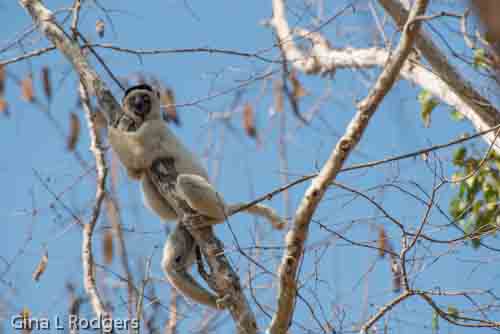
Verreaux’s Sifaka in Kirindy National Park

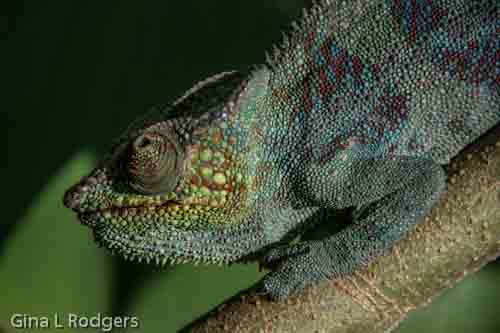
Chameleon

Chameleon

Typical styled home in Madagascar containing columns and west-facing verandas.

Georgia O’Keeffe setting

Church in Ambositra

Church in Ambositra

Avenue of the Baobobs

Avenue of the Baobobs

Sunset at Avenue of the Baobabs

Sunset at Avenue of the Baobabs

Drying clothes near the river.

Drying clothes near the river.

The author with the lemurs in Andasibe National Park

The author with the lemurs in Andasibe National Park

One Amazing Place to Stay – Giraffe Manor

Maybe you are sitting at the doctor’s office one day leafing through a travel magazines when you see an article about a really incredible place to stay. Or, maybe the next time you are on the treadmill at the gym you see this unbelievable destination on the travel channel. However it happens, you make plans to visit this one amazing special place. After all that planning and saving money you get there only to find it wasn’t exactly what you expected.

Thankfully none of this is true for Giraffe Manor! It is ever bit as idealistic in person as it is on TV or in an article. Yes, it is expensive, but I felt it was worth every penny I paid. I have dreamed of going for over 10 years, happy to say, dreams do come true. From the moment I stepped out of the dusty Land Cruiser I had been traveling in for the past 12 days, I felt like royalty. I was greeted by Tony as my bags were whisked away and shown around the manor and the grounds.  I was given a quick run down on the proper way to greet the giraffes, which would arrive for their evening feeding around 5:00 in the afternoon. Tony quickly realized that I might just be a little hungry since I had traveled by car from Nanyuki that morning. He quickly ordered a nice green salad to be made on my behalf.

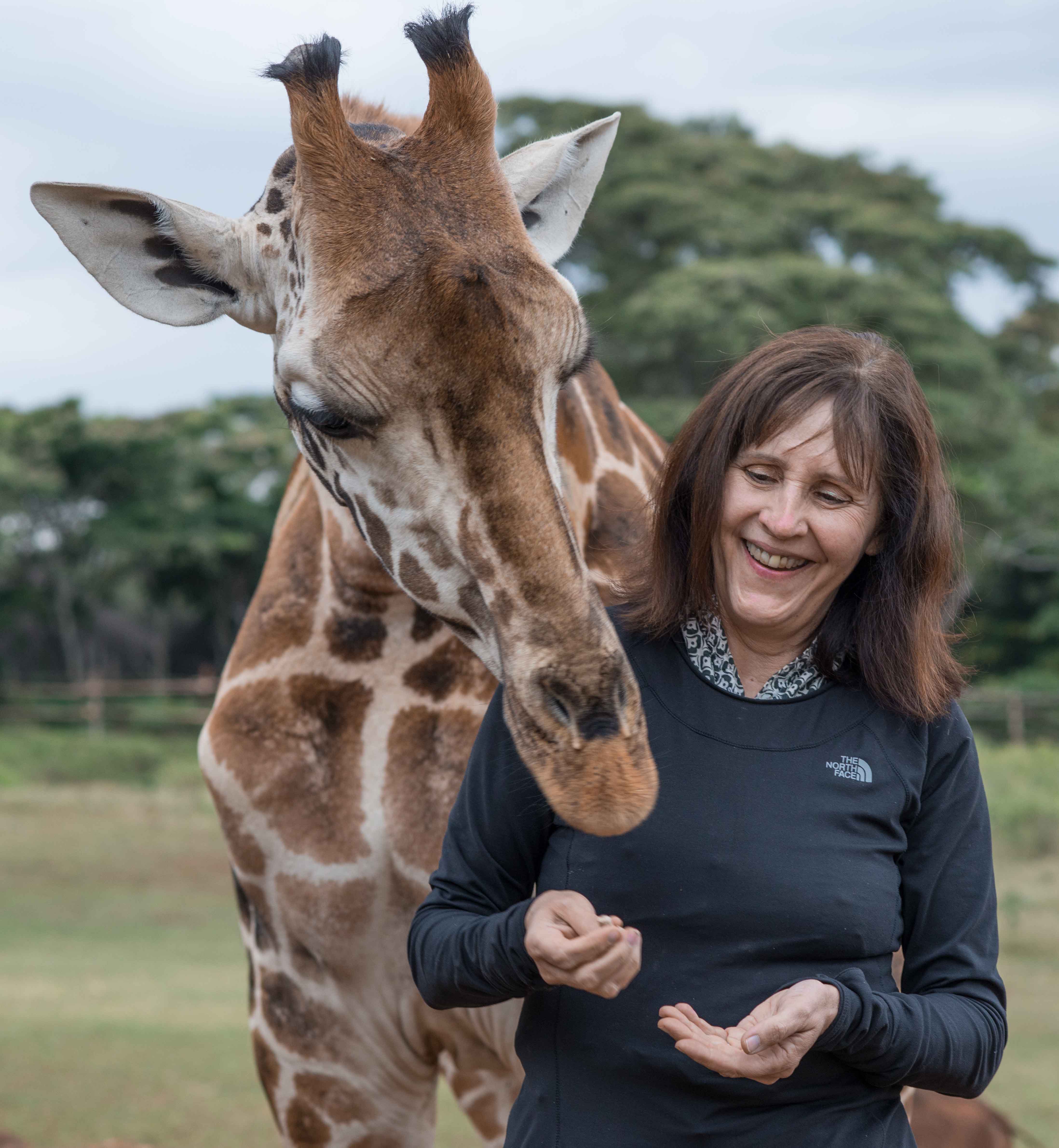
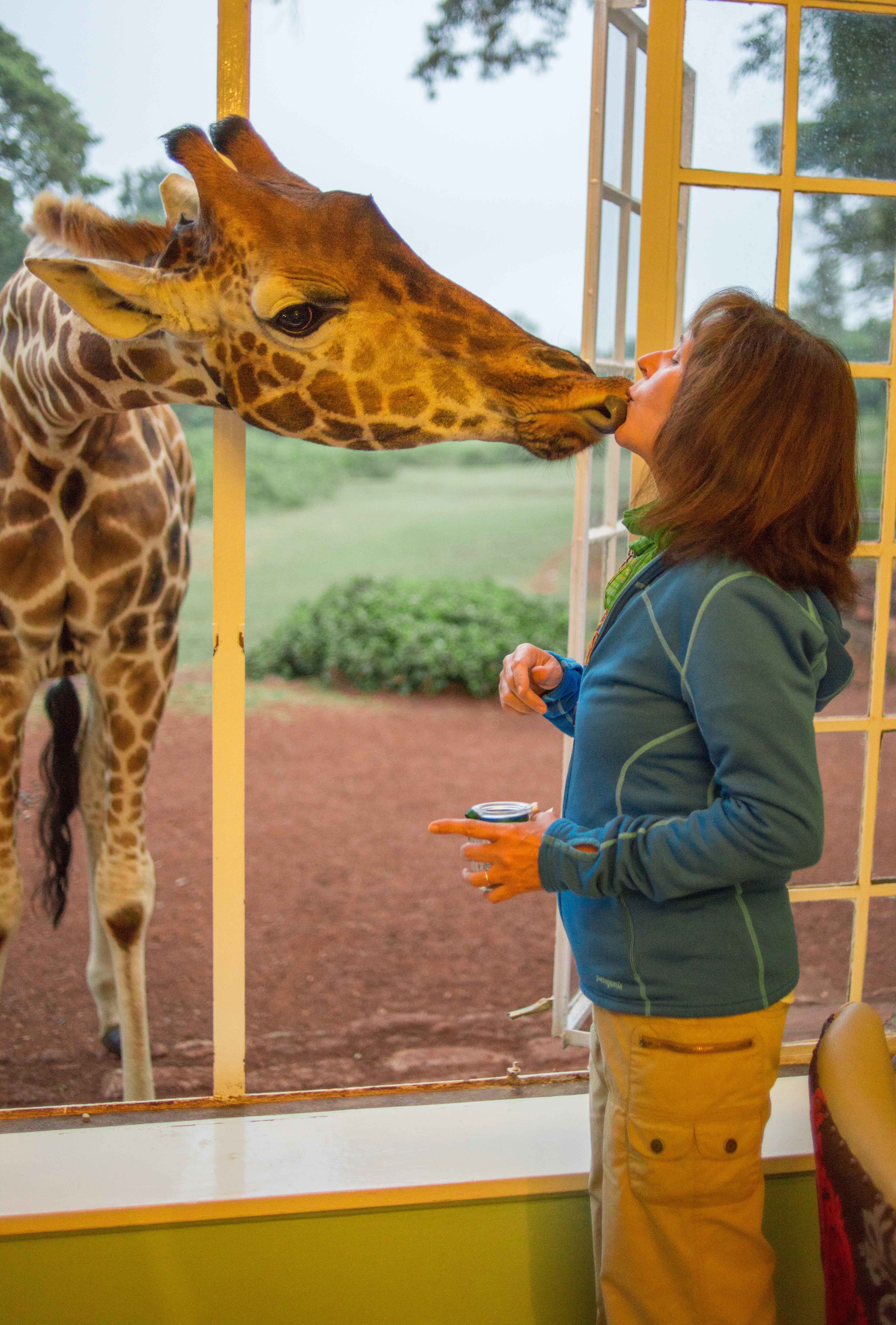
After taking a shower I joined the others on the front lawn to relax and enjoy watching the giraffes a short distance away. Within moments I was offered afternoon tea or a glass of wine, along with delicious carrot and chocolate cake. Then as if they had a time clock, the giraffes moved toward us ready for some tasty treats right on schedule. All the giraffes were incredibly gentle that I fed, and I didn’t mind getting the giraffe kiss more than once. I believe my first kiss came from Edd, followed by Lynn.  In case you are wondering, this is done by placing a pellet in your mouth and sticking out your neck just a bit. Even though I was on my own, the staff quickly took my camera and began snapping pictures.

As the sun began to fade into the horizon, the giraffes moved off into the forest for the evening. That evening we were served a delicious 3 course meal around a large mahogany table. It was fun to be able to share past and future African travels with the other guests. The chef was able to easily adjust the menu to accompany my vegetarian diet. (Gluten free and vegan diets are also provided upon request.)

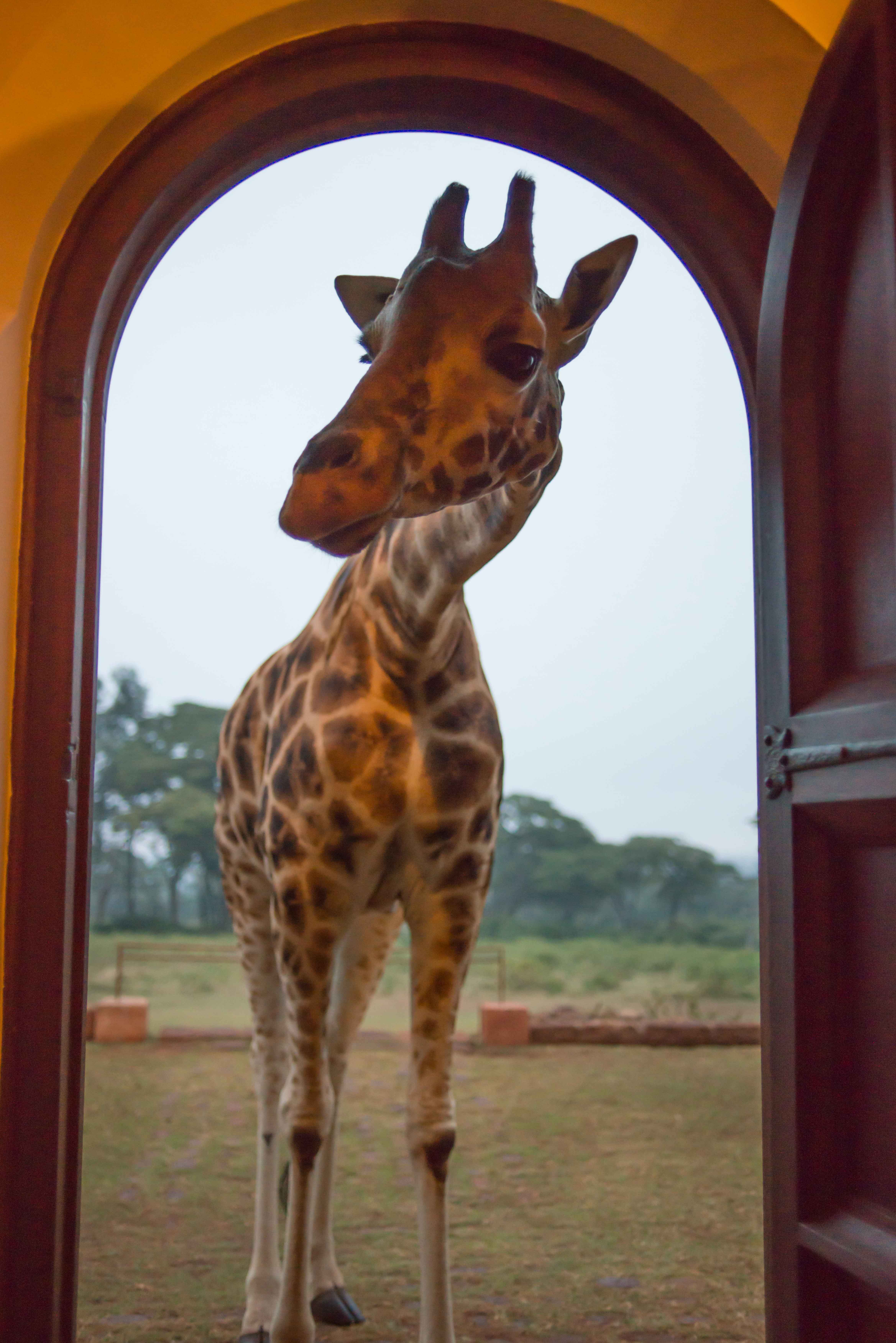
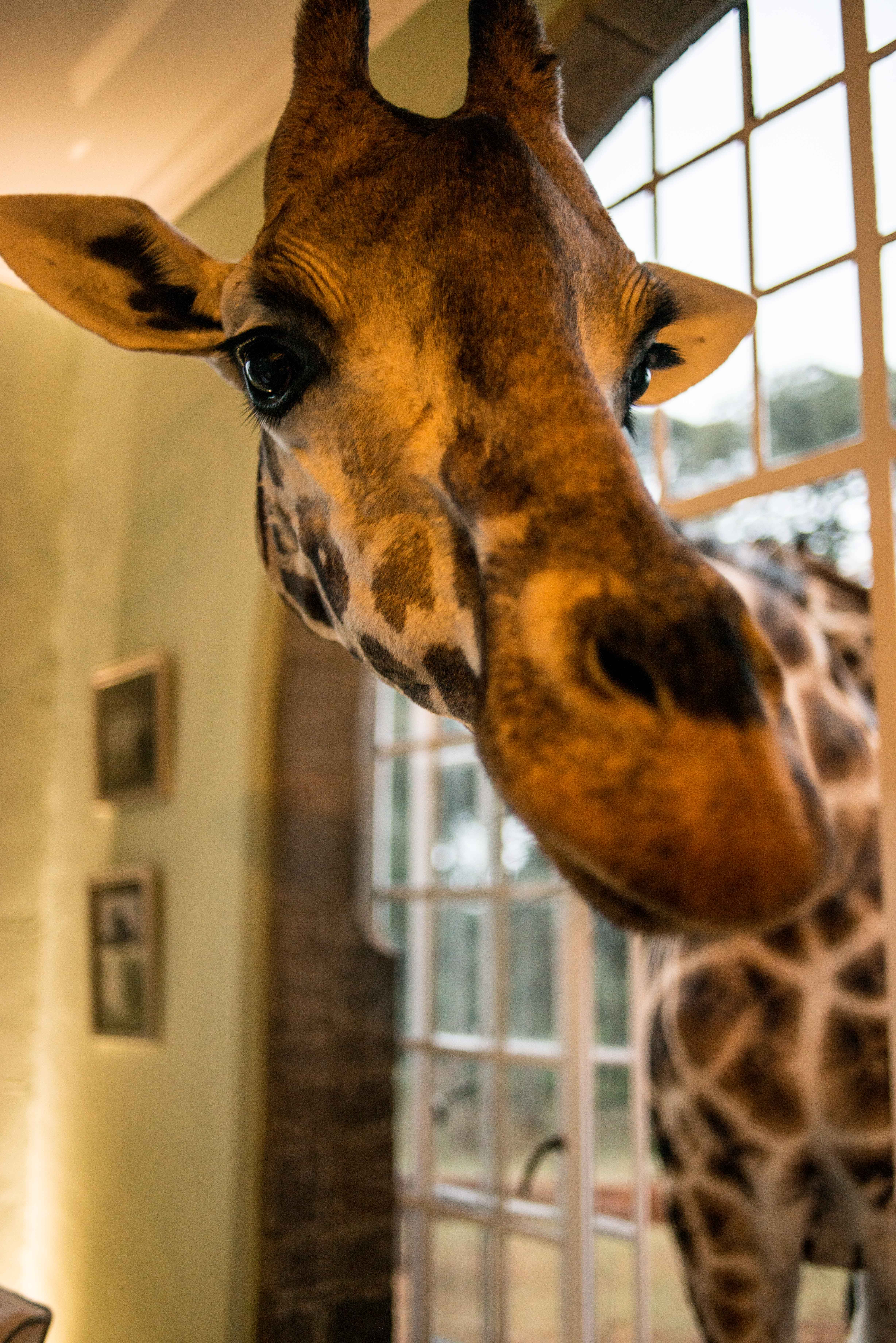
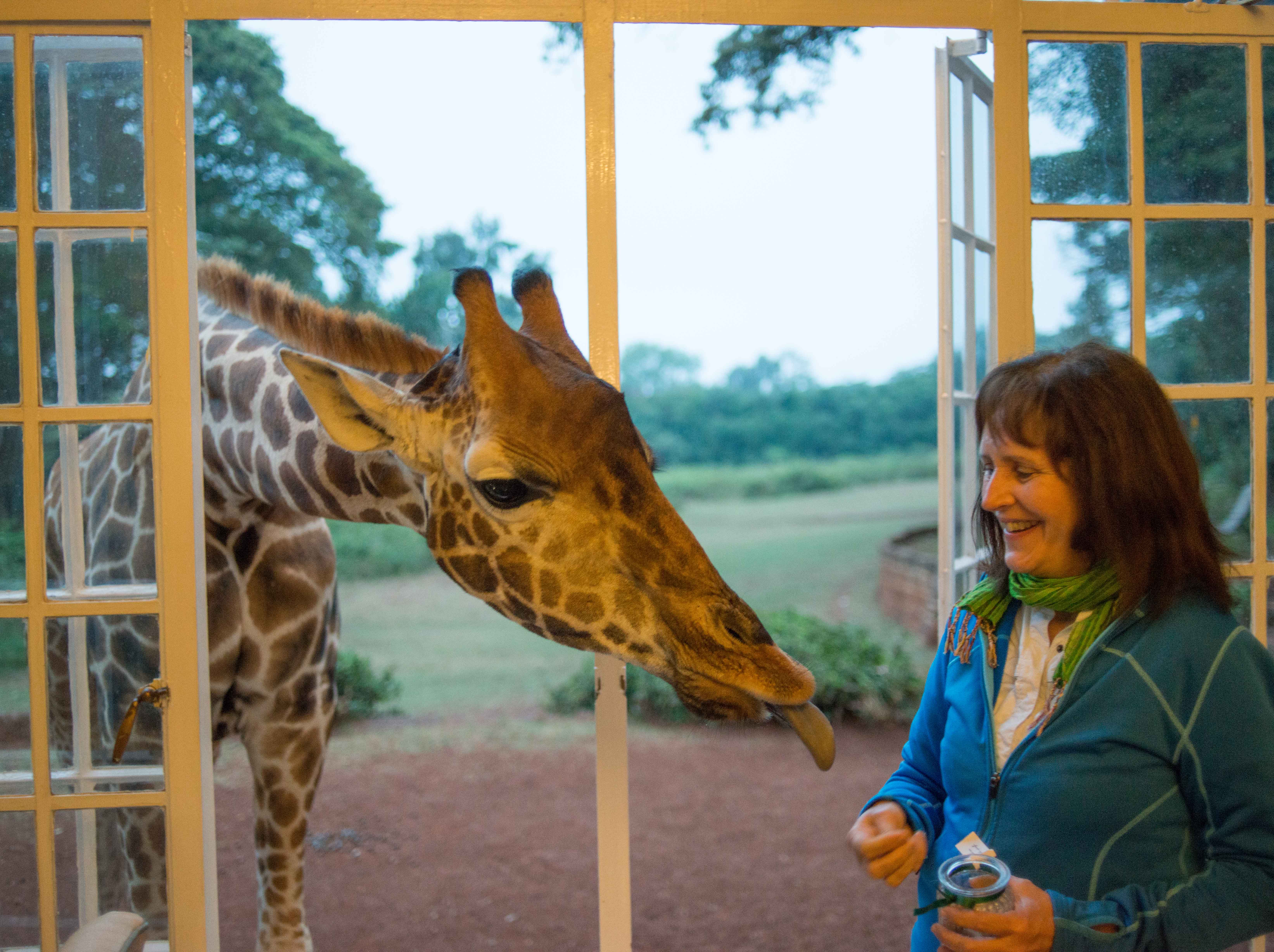
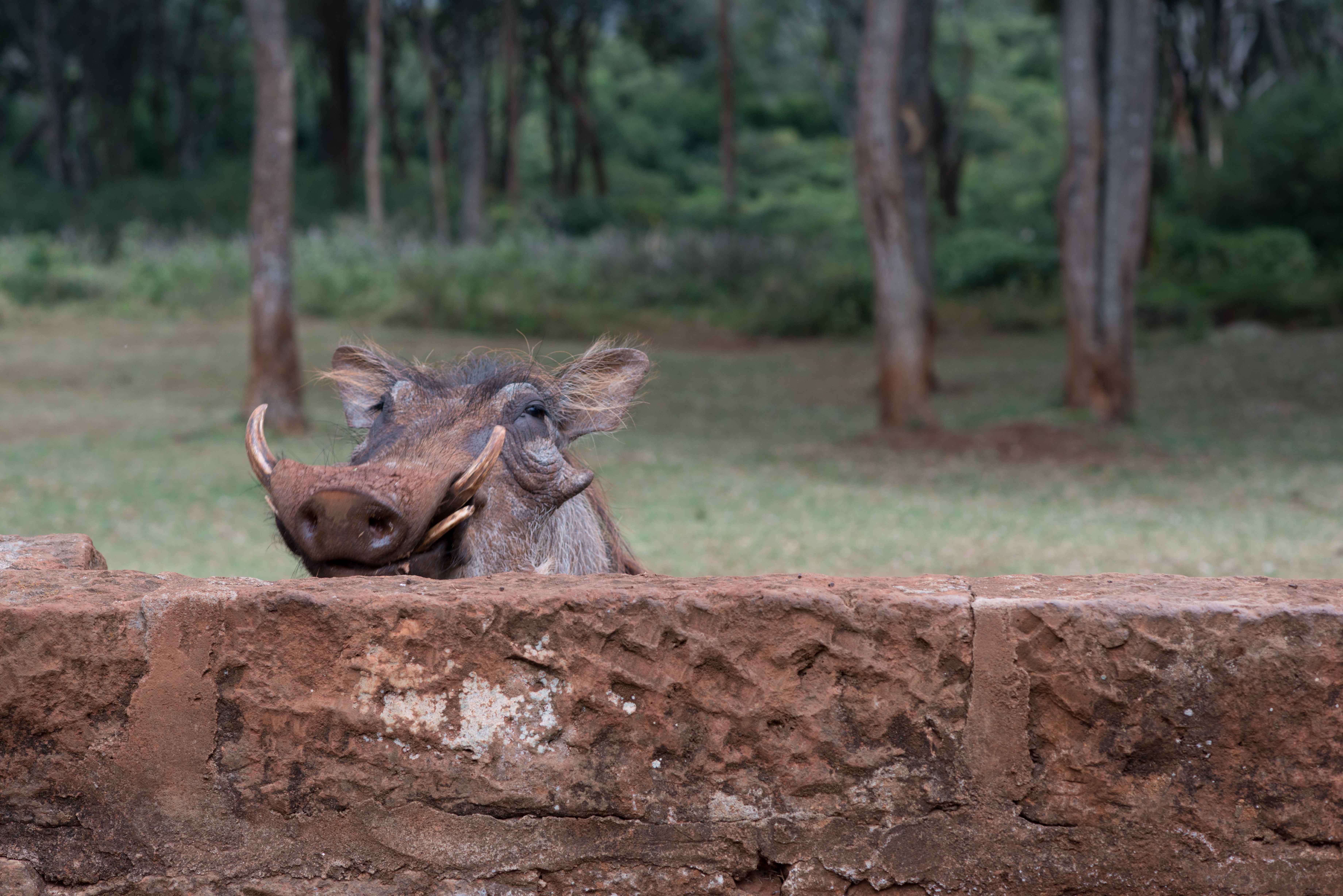
Now the big show is in the morning for breakfast.  The staff is happy to wake you up at 6:30 to make sure you don’t miss a single minute of it.  A bit like Christmas morning on safari. As soon as I was dressed and downstairs at 6:45 the giraffes were approaching. My favorite image is with the front door of the manor open and a giraffe sticking its head in the door ready for a treat. Most of the feeding goes on in the breakfast room.  A breakfast I won’t soon forget, just incredible to have 3 to 4 giraffe heads sticking their necks in the windows. Frankly, it is hard to decide, do I eat, take pictures or feed the giraffes.  Oh, I almost forgot, the grounds are also home to some wart hogs who like to eat every giraffe pellet that falls to the ground like a pet dog picking up the straps under the table. They are right there to enjoy your breakfast meal as well.

I will be honest, Giraffe Manor is not cheap and it is not easy to get a booking. But, if you love giraffes, it is worth it. The staff goes the extra mile to make sure you have a pleasant stay and my room was adorable with every need pacified. The stay included 3 meals, laundry, and afternoon tea.  A portion of the cost goes to run the Giraffe Center and protect the Rothschild giraffe which is endangered because of the lost of its habitat. The staff at Giraffe Manor will also drive you to Karen Blinxen’s house  or the Elephant Orphanage at no extra cost.  If you arrive early enough, the staff will walk you over to the Giraffe Center which is less than 5 minutes away. There you will be given lectures about the giraffes in Kenya and a naturalist walk to learn about the native plants used by the Maasai.

Keep in mind, the website often shows the manor to be completely booked, but don’t give up hope. I was able to get into the manor on a cancellation. The best method for booking a room is to use email: giraffe@giraffemanor.com You can also use the their website: http://www.tamimiea.com/ Still no luck, you can always enjoy afternoon tea at Giraffe Manor after visiting the Giraffe Center, also known as the African Fund for Endangered Wildlife started by Jock and Betty Leslie-Melville in 1979.

My first giraffe feeding.

My first giraffe feeding.

This giraffe was just walking up to the door as I came down the stairs for breakfast.

This giraffe was just walking up to the door as I came down the stairs for breakfast.

Giraffe ready for a treat in the Breakfast Room

Giraffe ready for a treat in the Breakfast Room

Even though my husband could not accompany me on this trip, I still got a good morning kiss.

Feeding a giraffe at breakfast.

Giraffe Kiss

Even though my husband could not accompany me on this trip, I still got a good morning kiss.

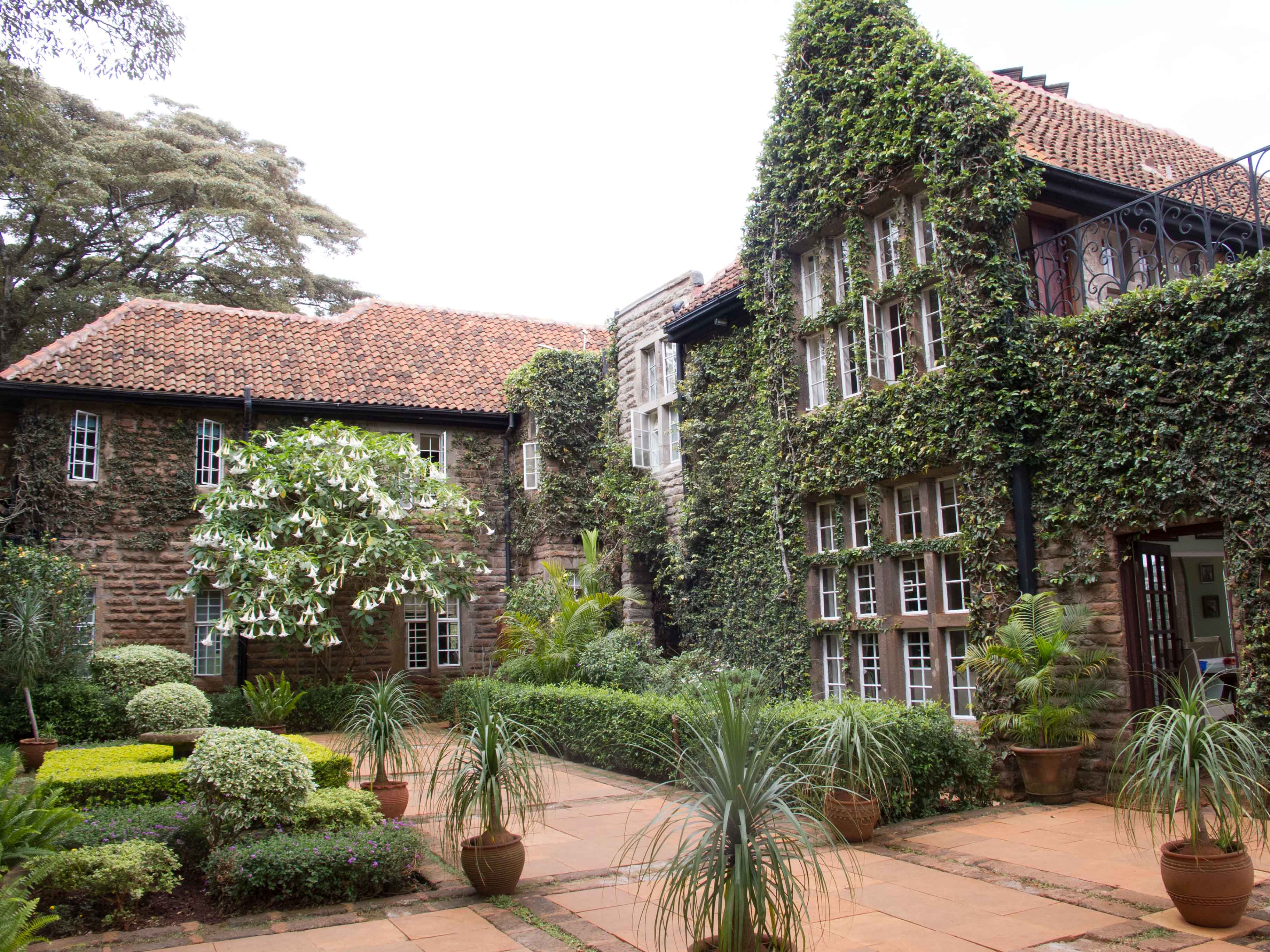
Beautiful grounds for enjoying when you aren't feeding the giraffes.

Beautiful grounds for enjoying when you aren’t feeding the giraffes.

Any food for me?

Any food for me?