Rest Day in Siena
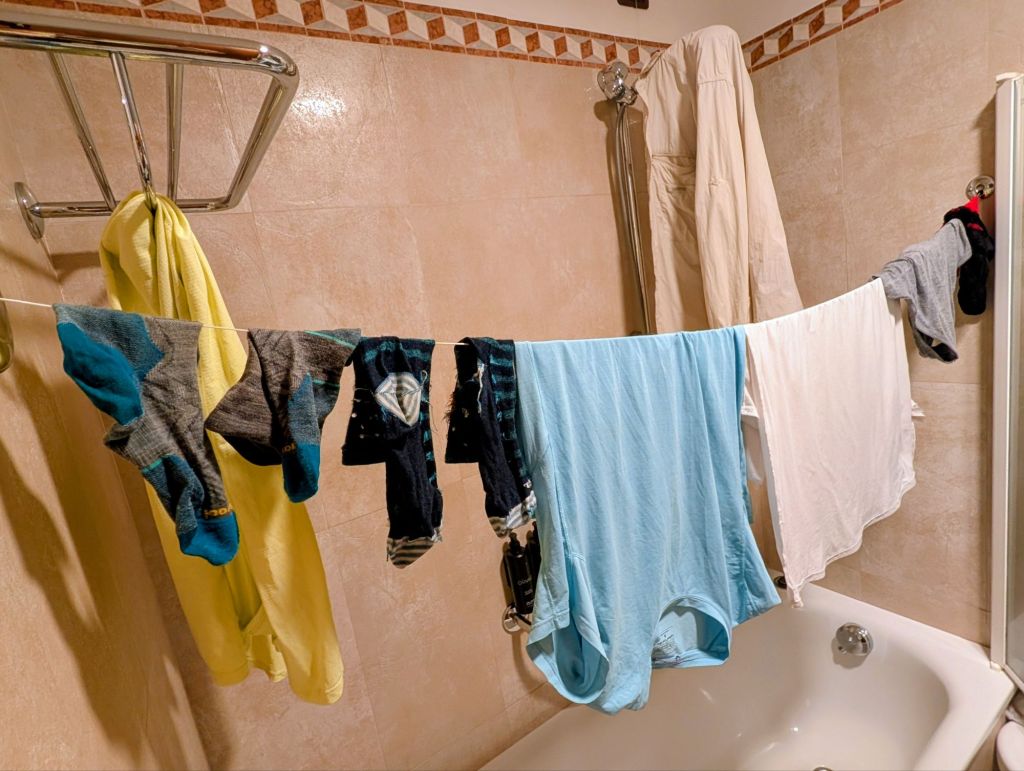
Today is a rest day during our Via Francigena hike which means sightseeing & doing laundry.
Siena is a UNESCO World Heritage Site & ranks among the most visited places in Italy.
Siena is known for its numerous monuments & Gothic architecture.
It rivals Florence in historical significance & architectural beauty.
According to legend, Siena was founded by the sons of Rome’s co-founder Remus: Senius & Aschius.
They fled Rome after their father Remus was killed by his brother Romulus.
When they left, they stole the Capitoline Wolf statue showing Romulus & Remus suckling a wolf.
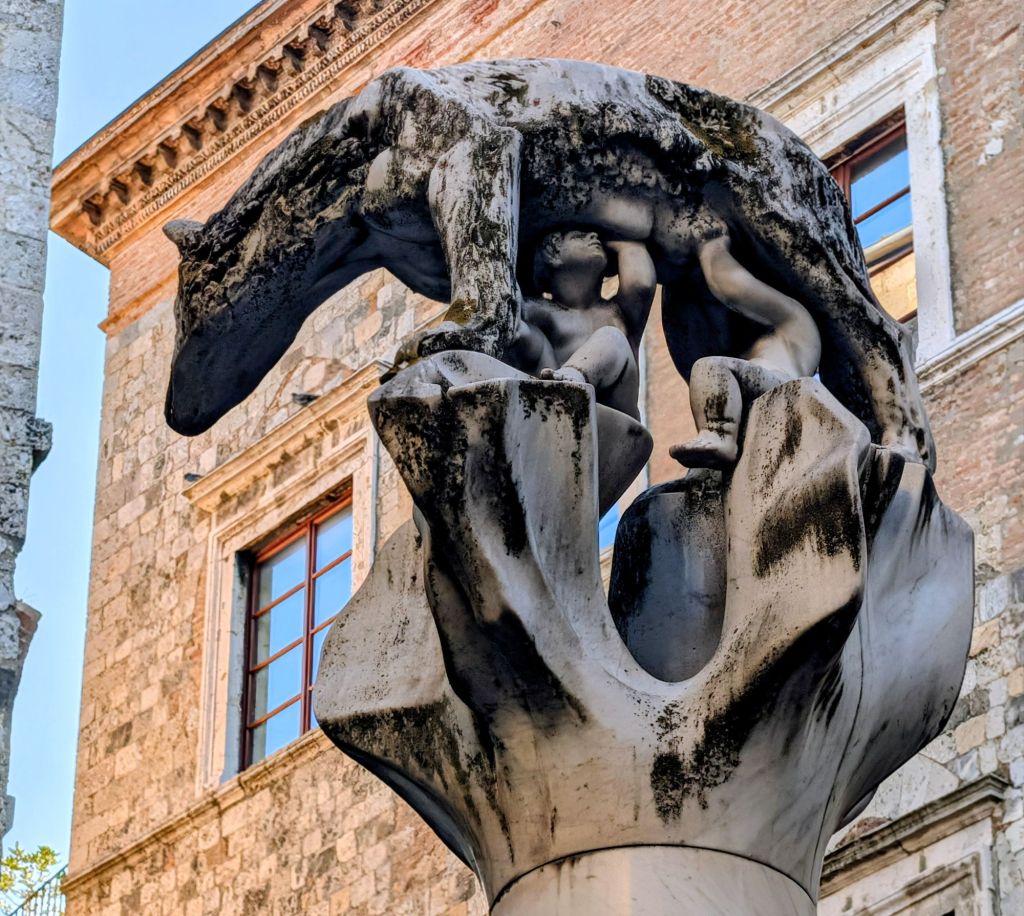
Furthermore, they rode black & white horses which gives Siena’s coat of arms its striking colors.
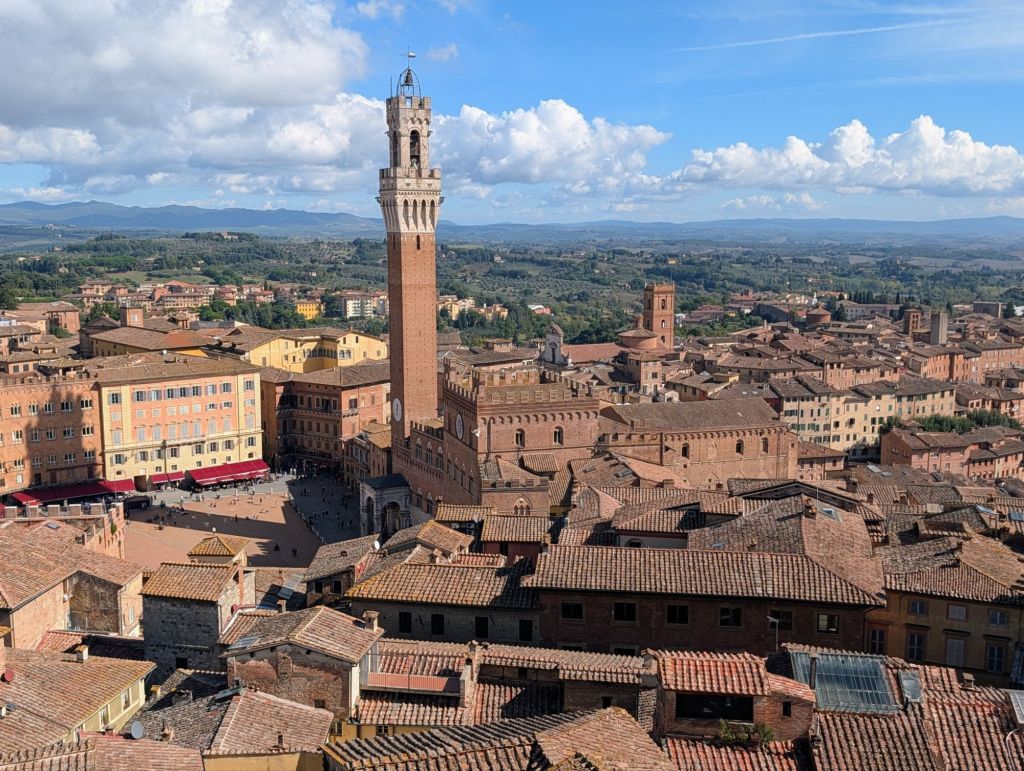
The shell-shaped Piazza del Campo ranks among Europe’s greatest medieval squares & hosts the famous Palio horse race twice annually.
The square’s unique design & surrounding Gothic buildings create an unforgettable setting.
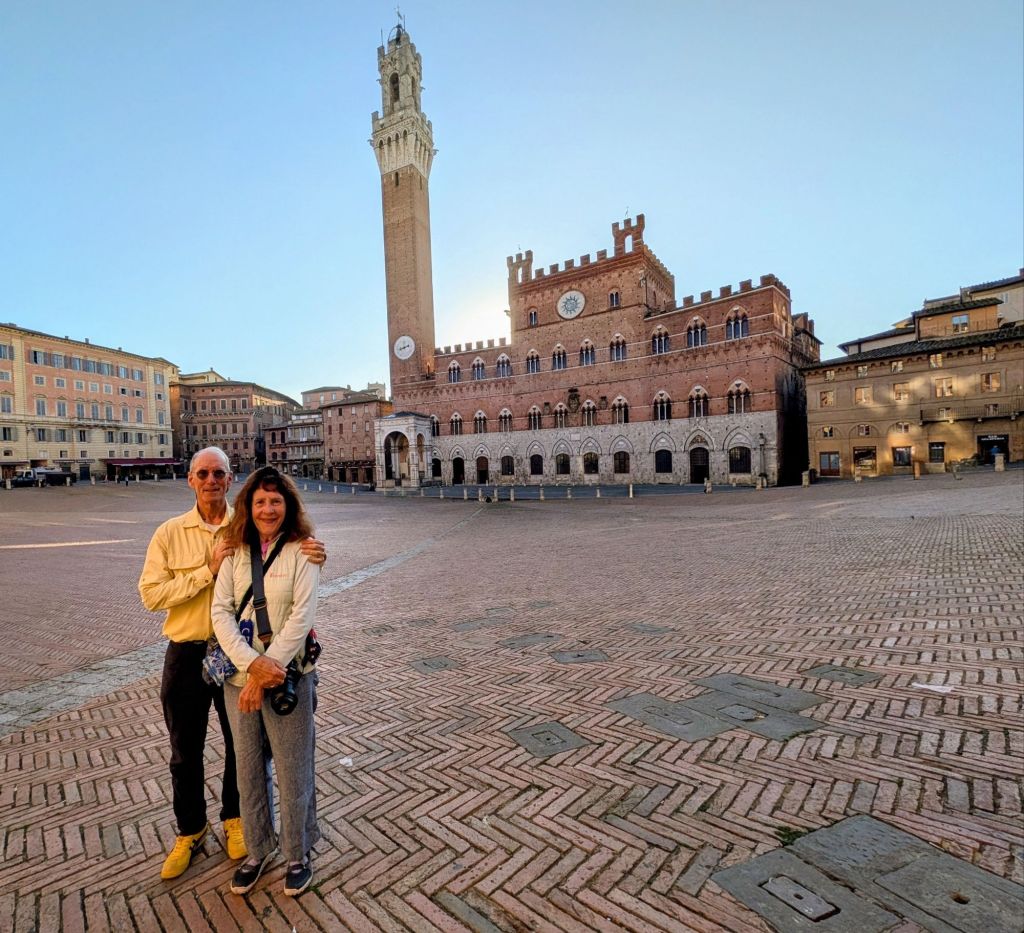
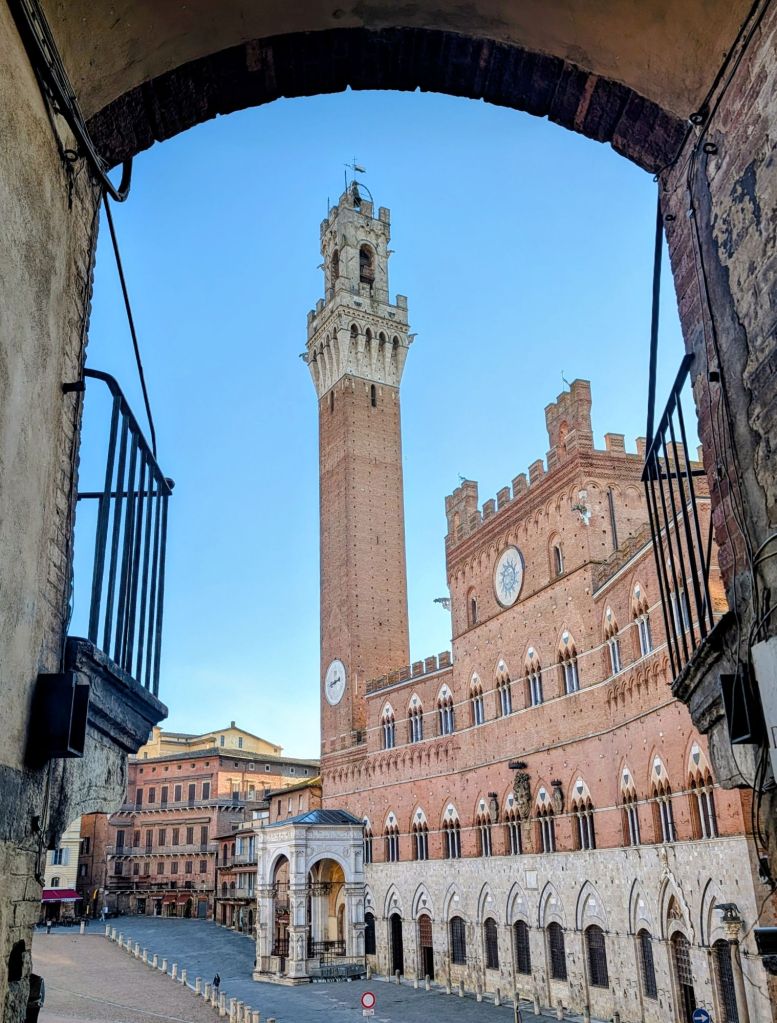
The Torre del Mangia which was constructed from 1338- 1348 rises 289 feet high above the square.
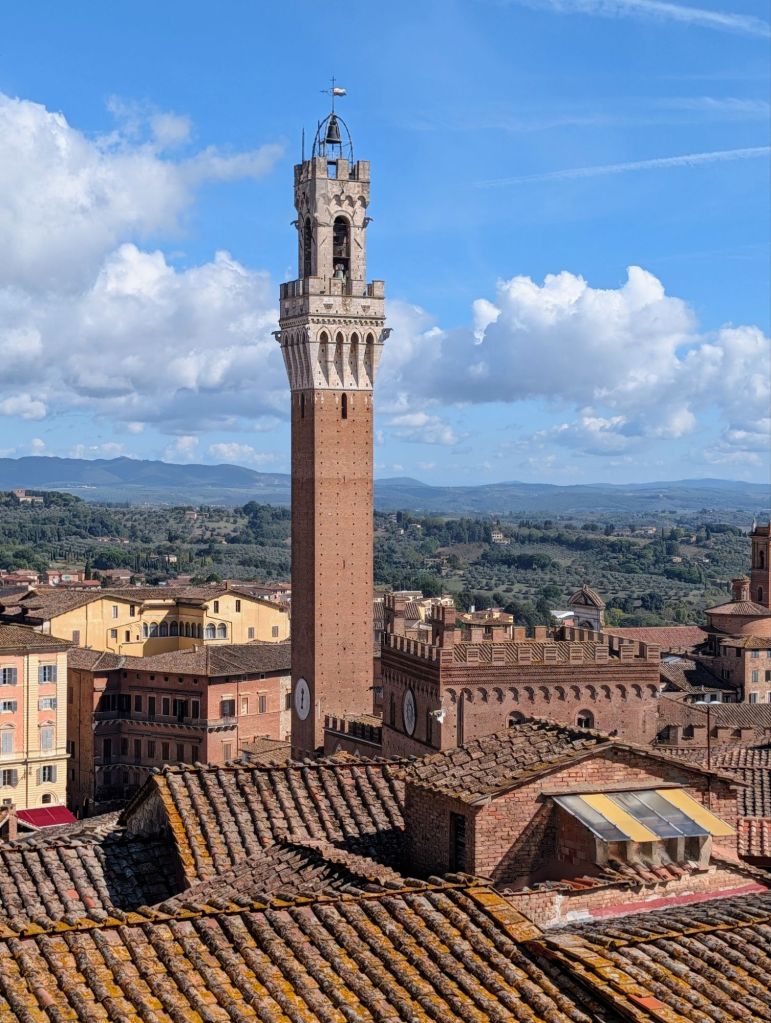
The Sienese people have always attached nicknames as well as epithets to people or things. Among the first bell-ringers assigned to strike the bells on the hour was Giovanni di Balduccio who was known for his gambling vices. His wasteful habit earned him the nickname “Mangiaguadagni” (Earnings Eater”) or simply “Mangia”, so the tower got its name from his nickname.
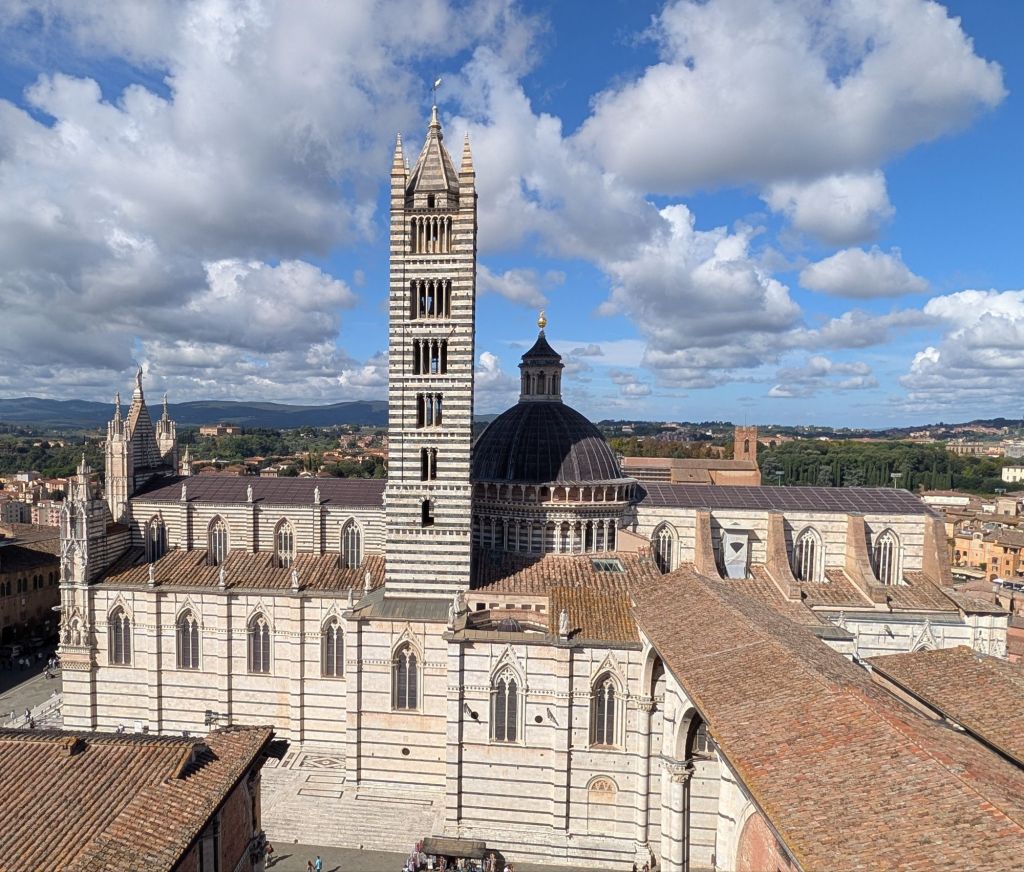
A main Siena sight is the incredible black & white striped Duomo (Siena Cathedral) from the 12th Century.
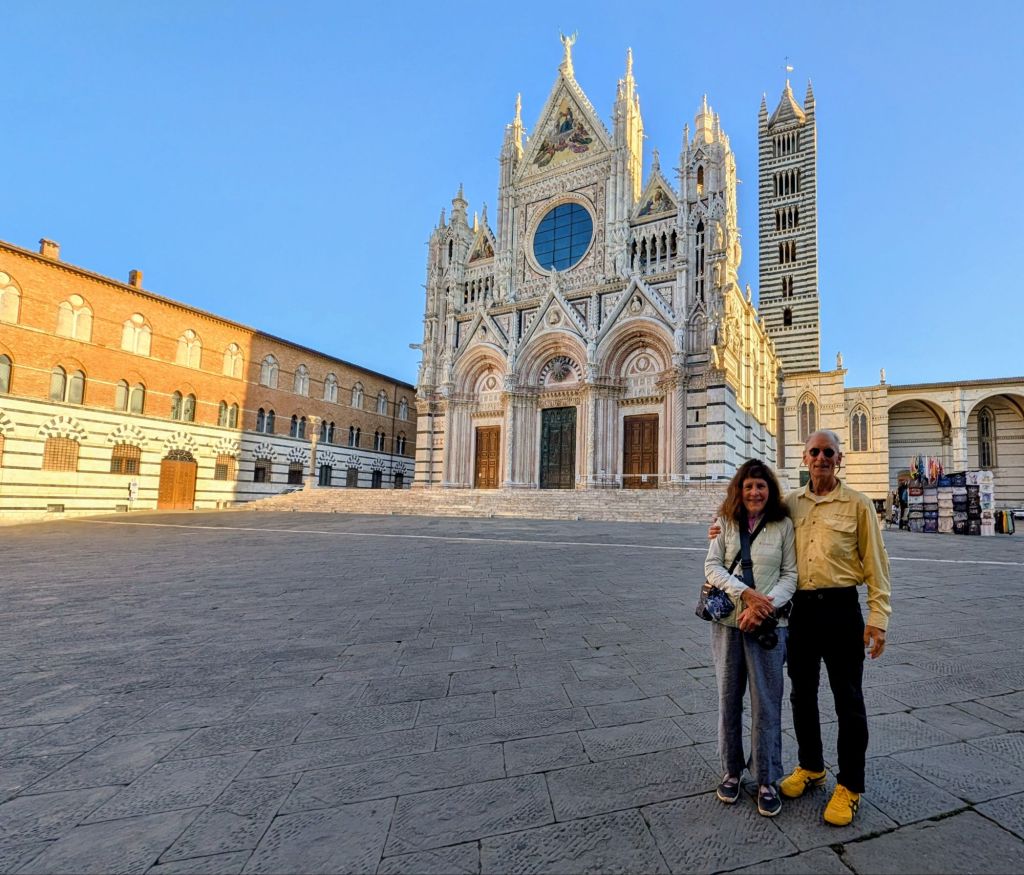
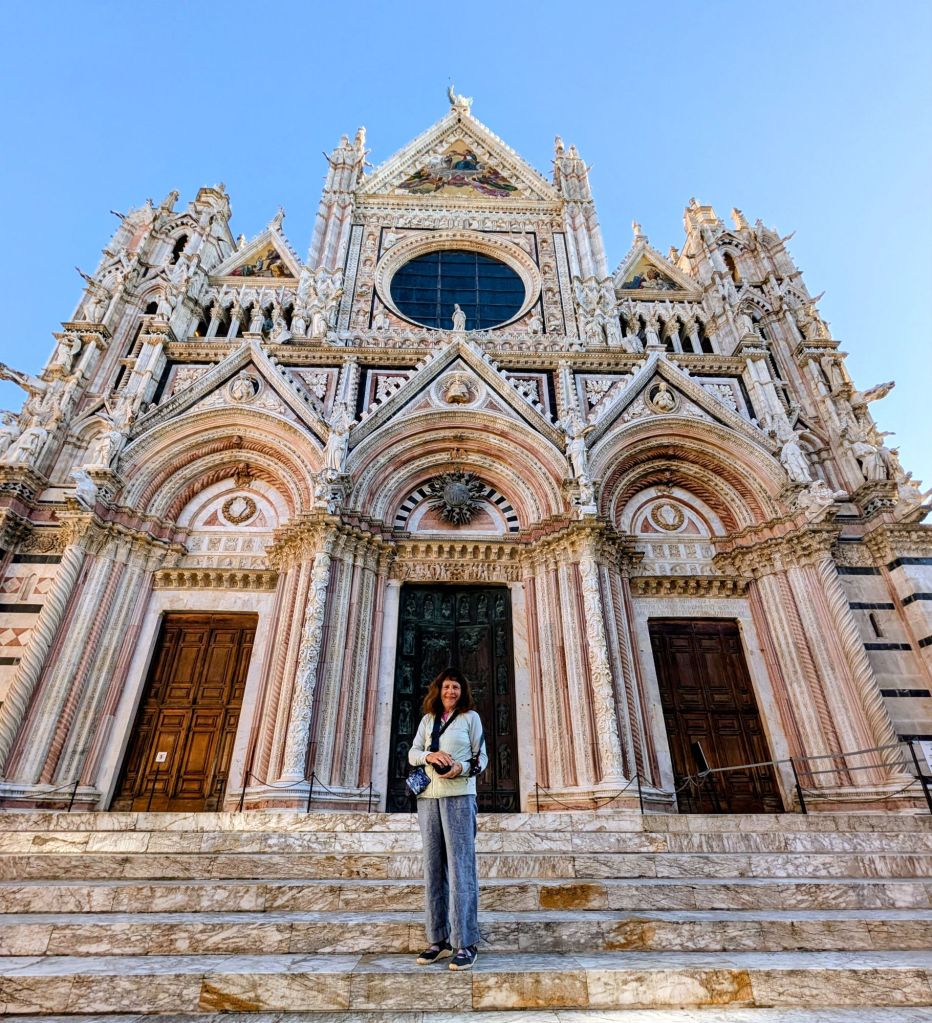
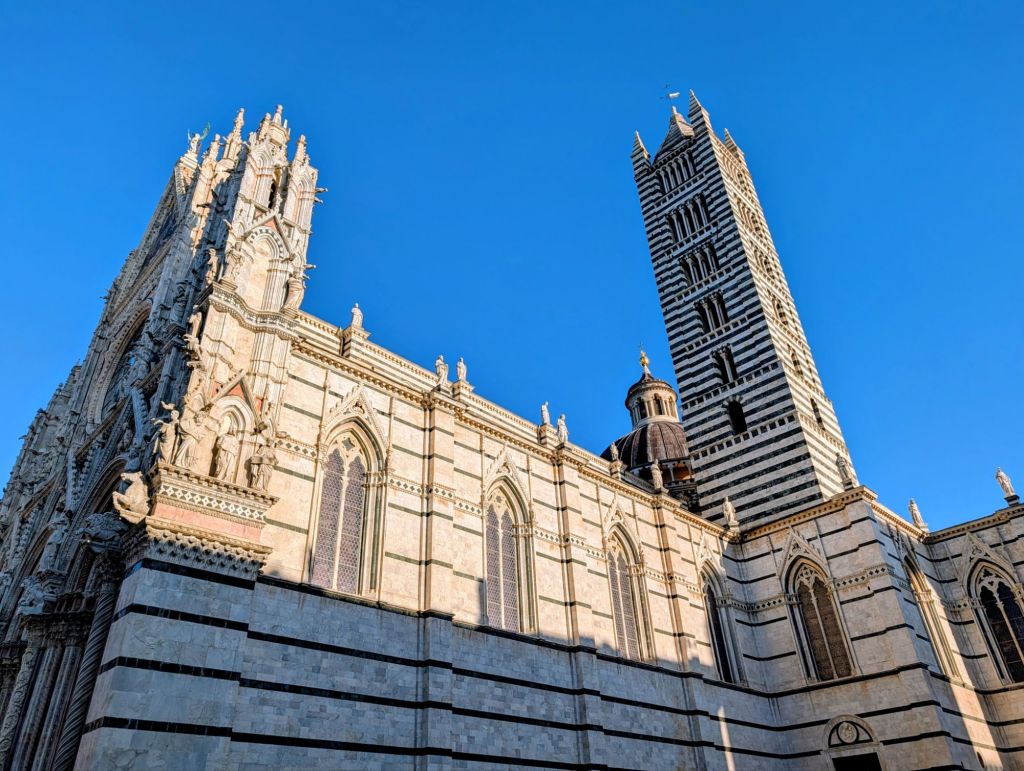
The cathedral is an Italian Gothic architecture masterpiece with its distinctive striped marble exterior.
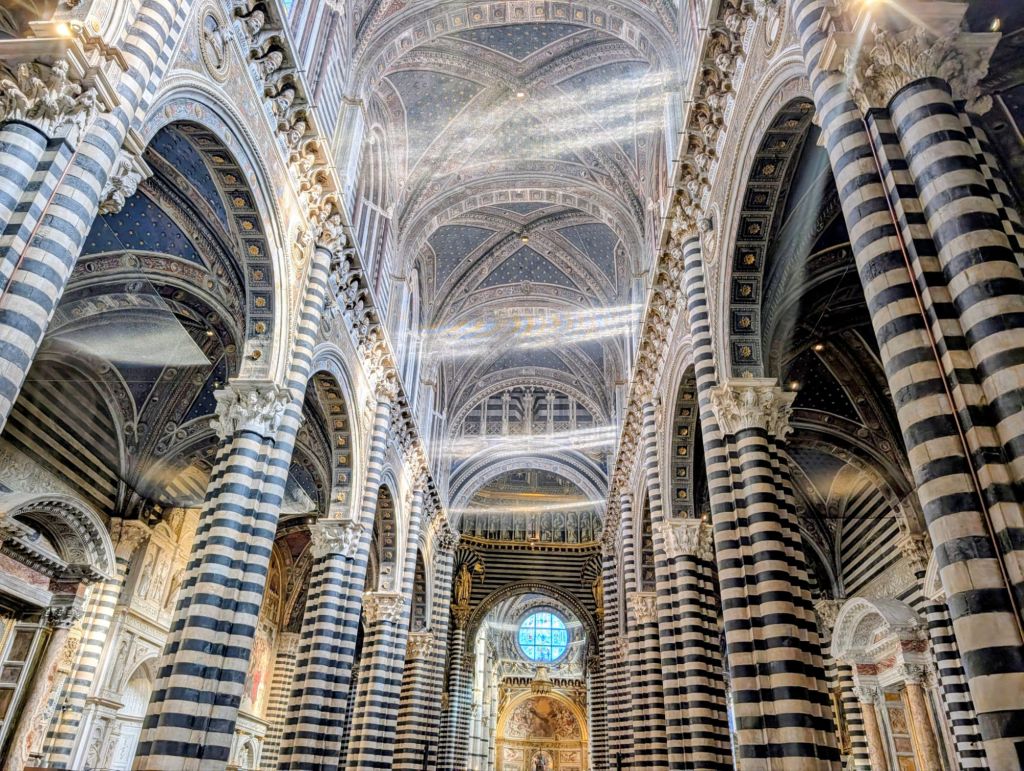
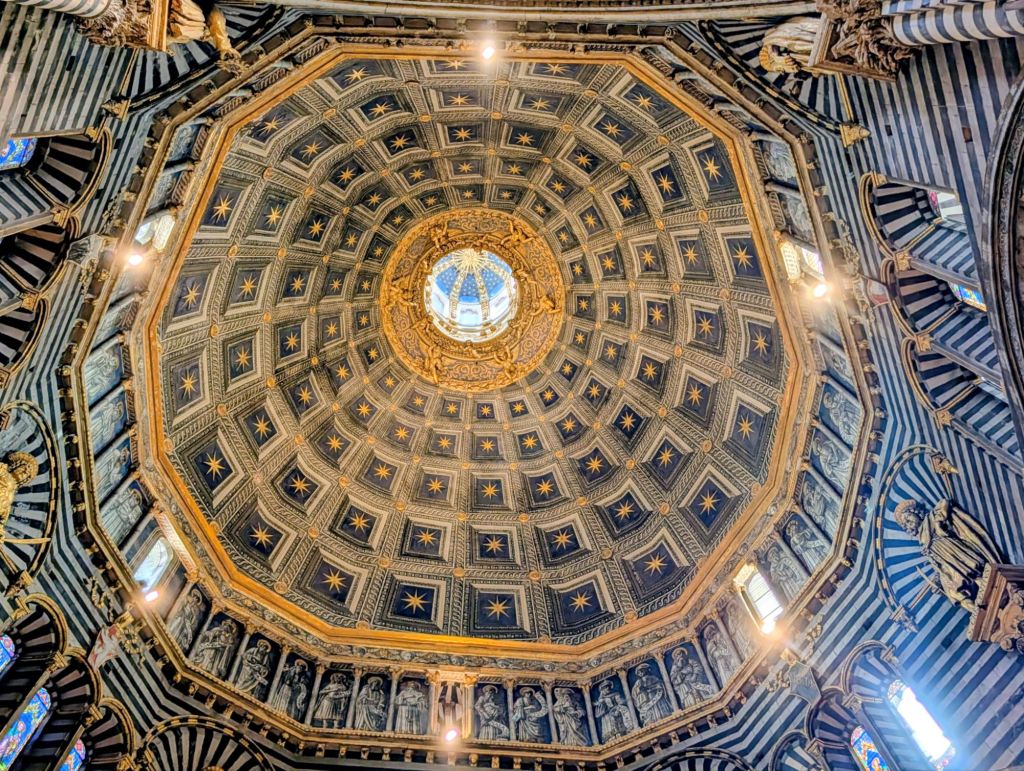
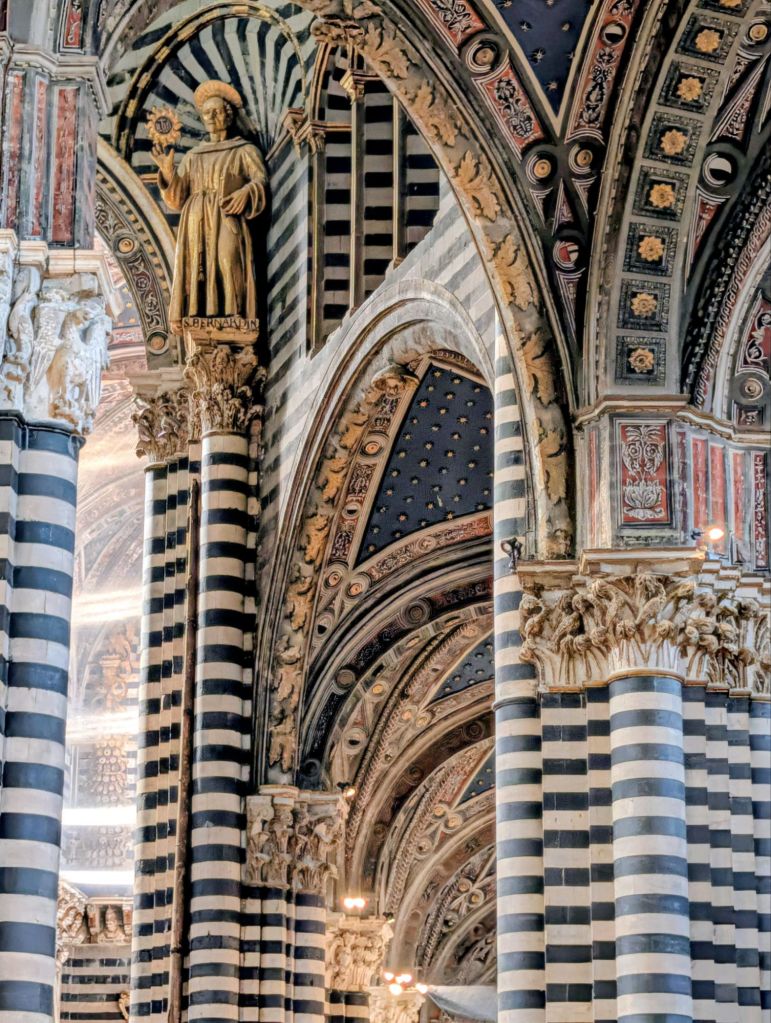
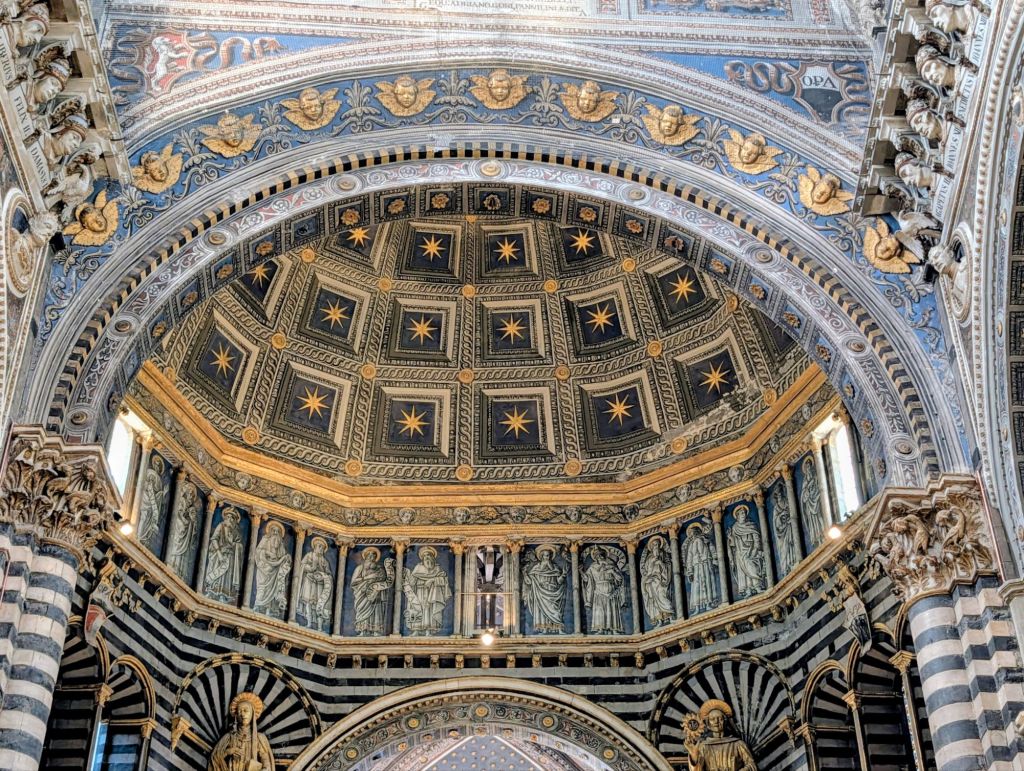
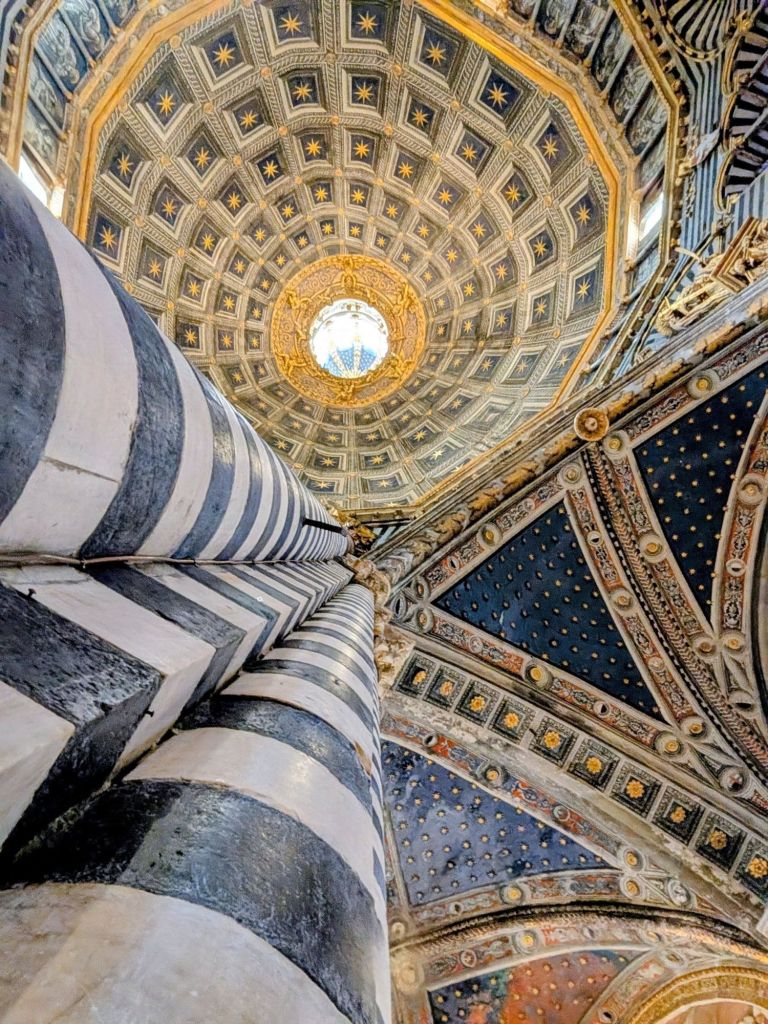
The intricate details & stunning interior took more than 50 years to complete making it one of Italy’s most impressive churches.
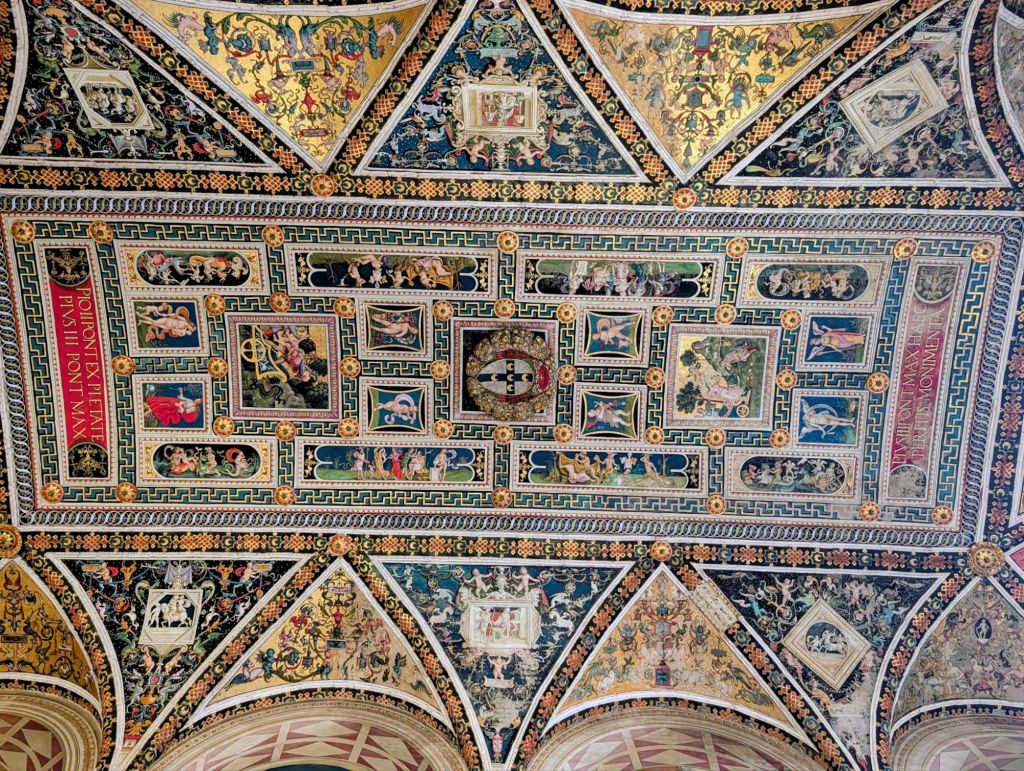
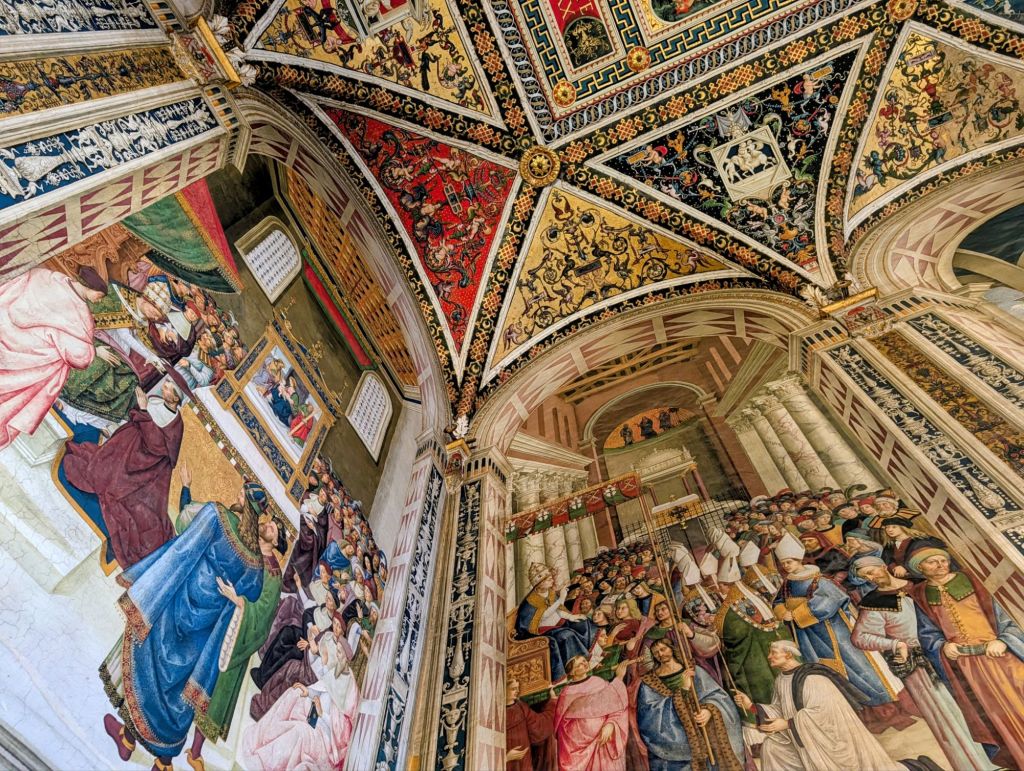
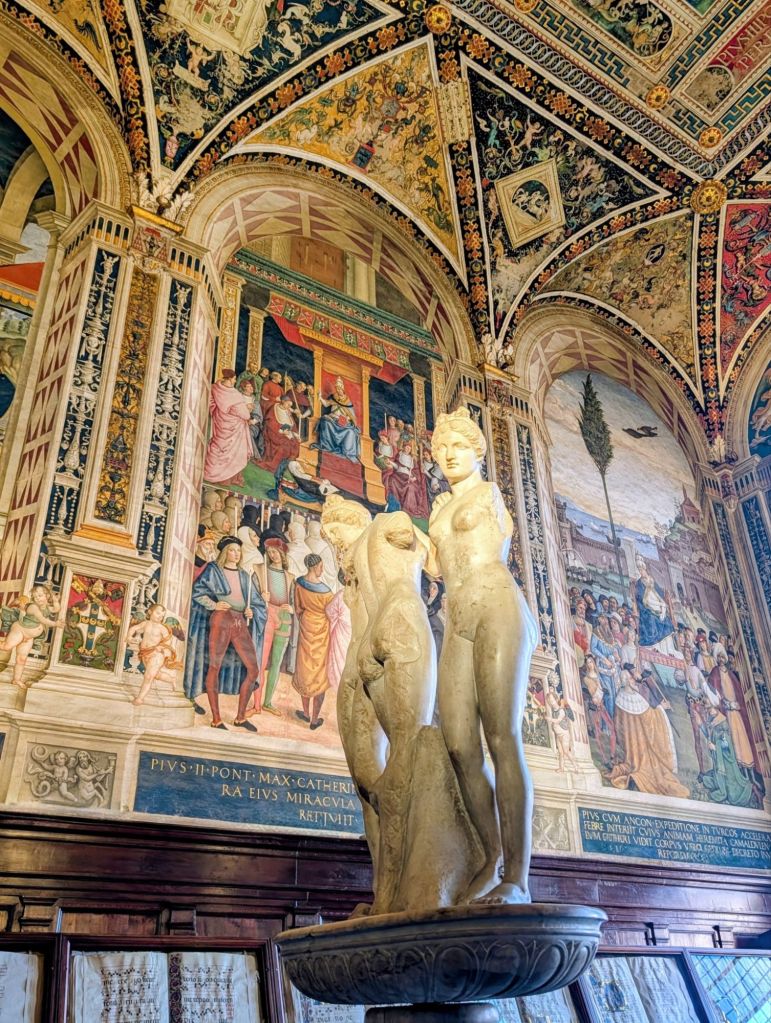
Inside a cathedral nave is the majestic Piccolomini Library which is named for the wealthy family who financed its construction. The library holds preciously bounded manuscripts & is known for its soaring, vibrant frescoes & intricate ceiling.
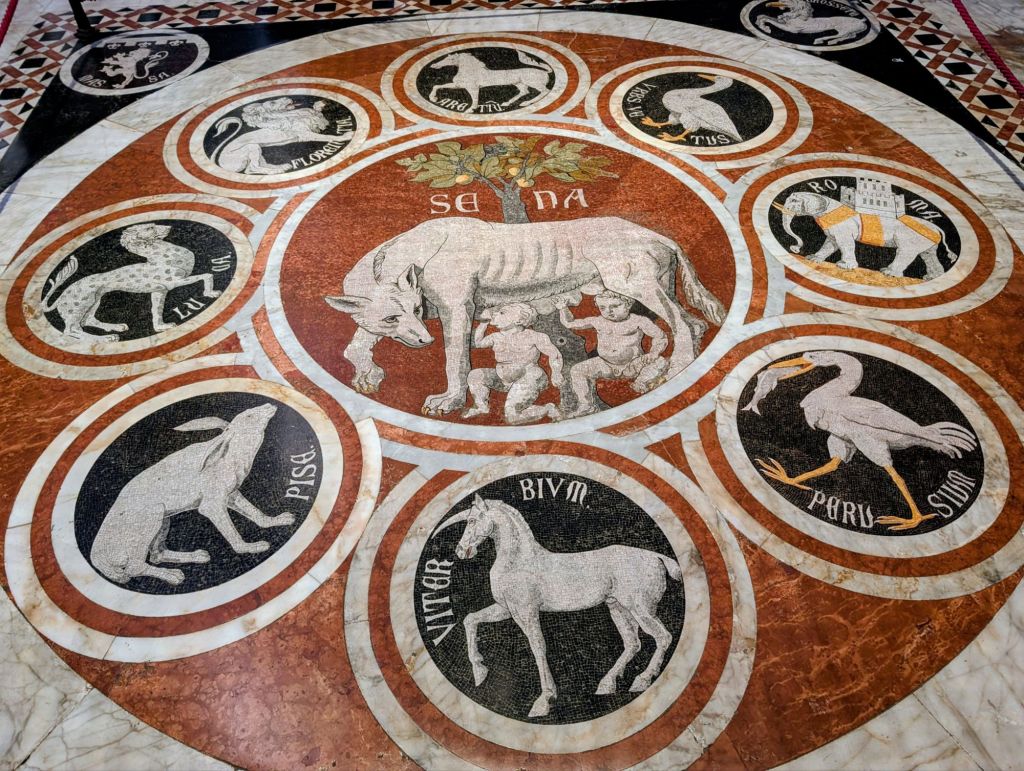
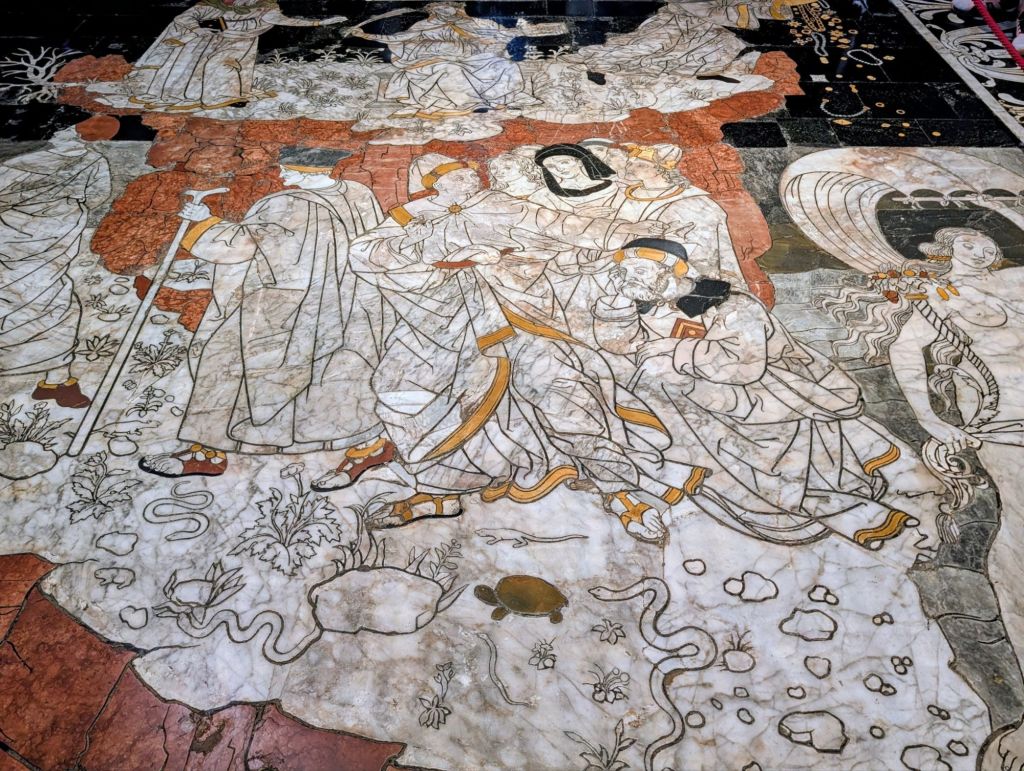
The Duomo’s floor has incredibly beautiful marble intarsia pictures.
Intarsia is a decorative inlay technique used in which different colored or different material pieces fit together like a mosaic or jigsaw puzzle.
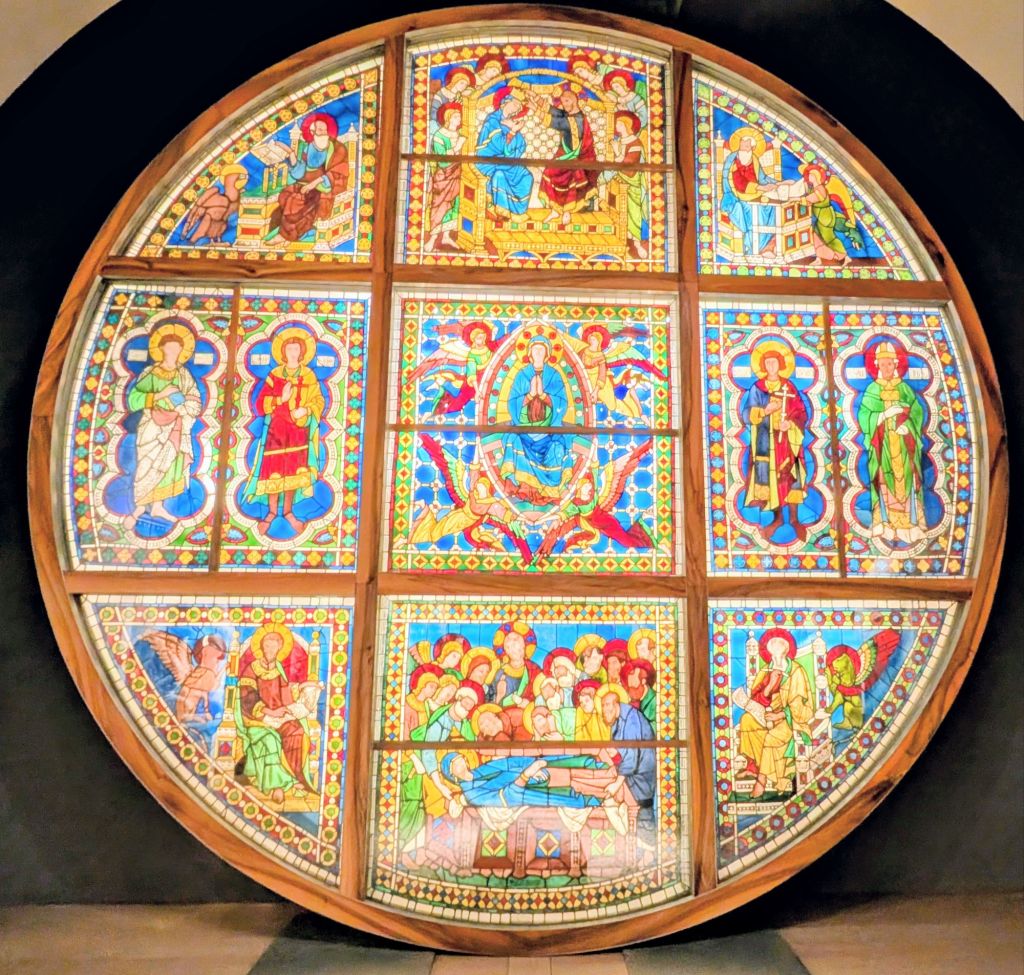
In the cathedral museum, we saw the original oculus that was installed in the Duomo in 1248. In 1943 during WWII, it was removed to keep it safe. Its diameter is six meters & its surface area is thirty square meters which depicts the Burial, Assumption, & Coronation of the Virgin Mary.
In 1339, Siena was at its height in power & influence. City authorities decided that the already constructed cathedral that is admired today should be lengthened & enlarged beyond measure to create a building with epically colossal proportions.
Work began & continued for over 18 years; but, not without setbacks. The project was ambitious & also extremely complex. Work was interrupted & restarted several times due to collapses.
However, the Black Plague decimated Siena’s population & effectively marked the project’s end as well as Siena’s decline.
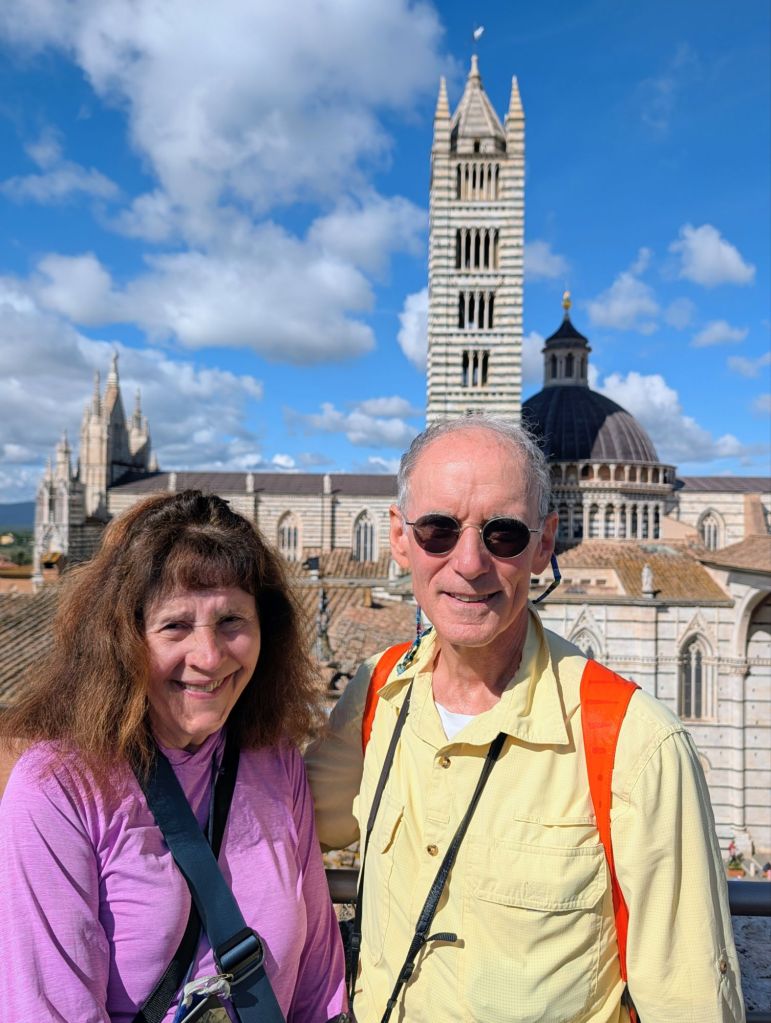
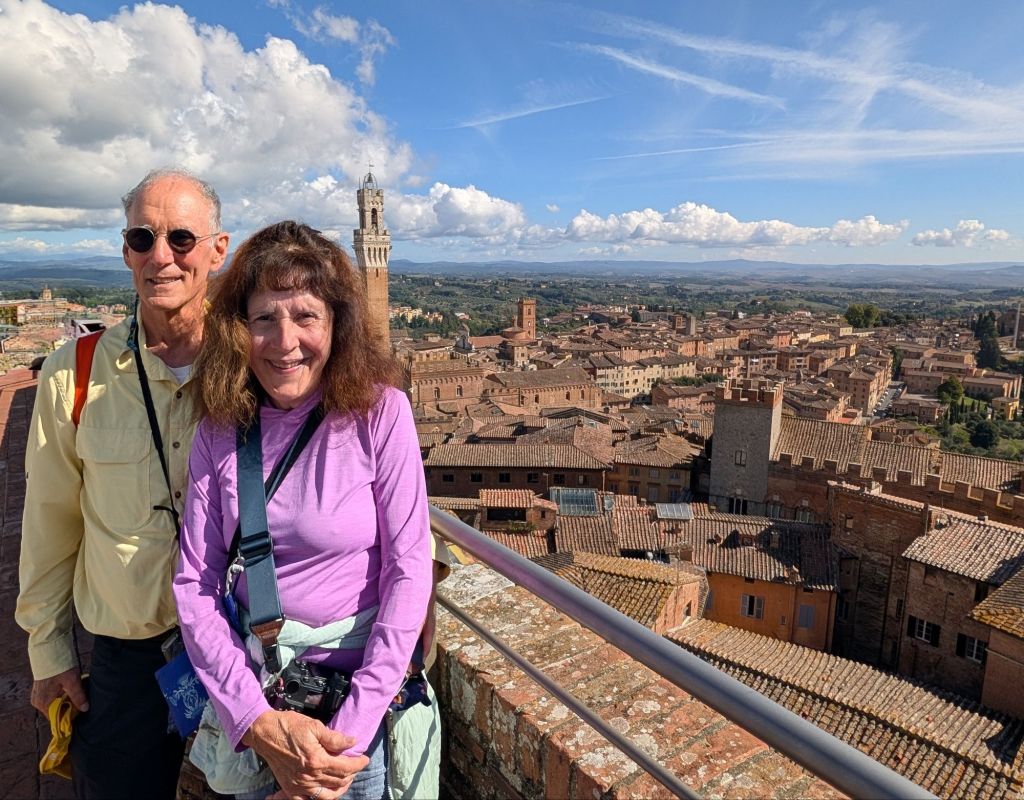
We climbed the remnant known as Il Facciatone (“Big Face”) which is what was supposed to be an even larger version of the Duomo to get nice views over Siena.
There is a famous horse race here called the Palio di Siena which is a historic medieval tradition held twice a year in the central square Piazza del Campo.
It is held on 2 July (Palio di Provenzano to honor the Madonna of Provenzano) & 16 August (Palio dell’Assunta to honor the Virgin Mary’s Assumption).
During these races, the Piazza del Campo is covered with a packed layer of dirt & clay.
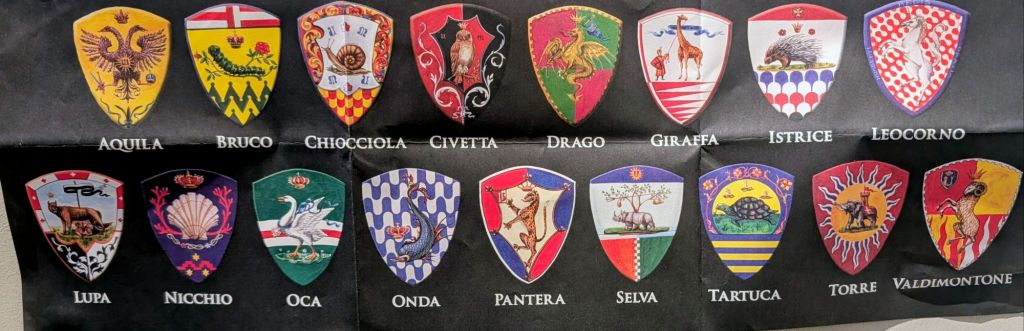
Siena has 17 historic neighborhood districts (contrade) with 10 competing in each race (7 returning districts plus 3 chosen by lottery).
Jockeys ride bareback for 3 frantic laps around the square, lasting roughly 90 seconds.
A horse can win even if its jockey falls off as long as the horse is still wearing its contrada’s colors when it crosses the finish line.
First prize is a painted silk banner called the Drappellone or Cencio dedicated to the Virgin Mary.
A horse can win even if its jockey falls off as long as the horse is still wearing its contrada’s colors when it crosses the finish line.
The Palio is held over four days.
The first day is for assigning horses to each district.
The second day allows the district to choose their jockey.
The third day is when the big race is run.
The fourth day everybody celebrates the race & the winner.
Every district performs a different ceremony for its horse & joins the big parade in historical costumes.
This is a link to a BBC video showing the Palio (Highlight & Click on it to view)
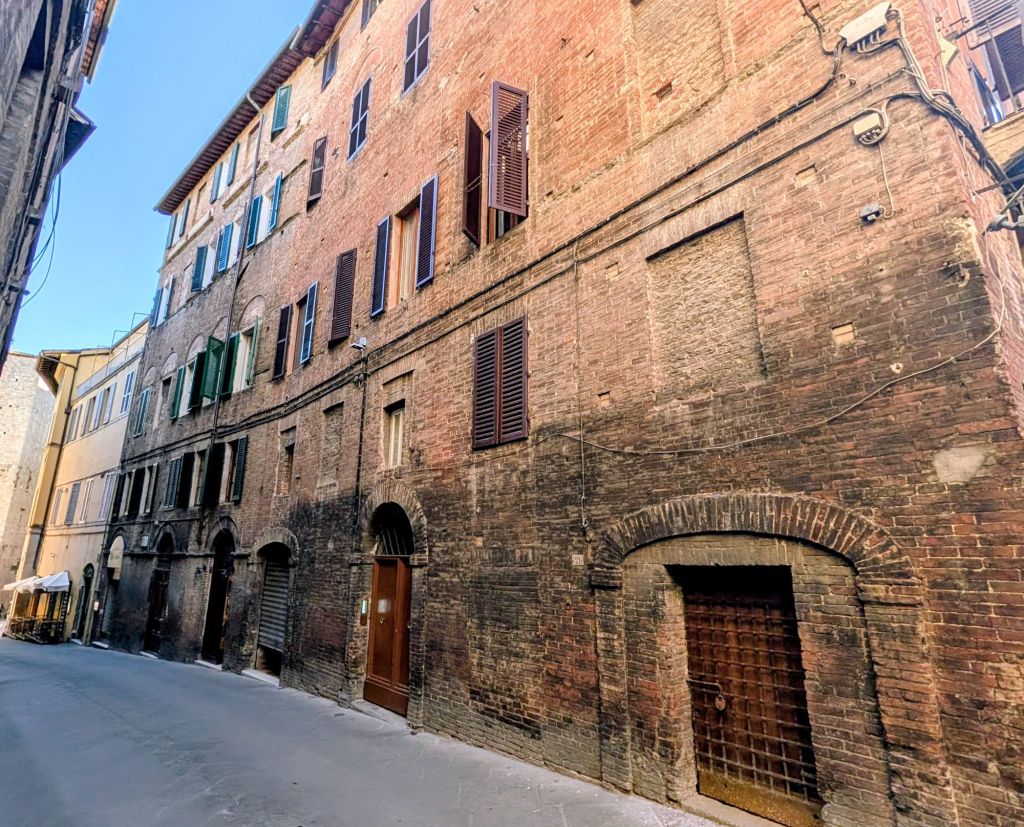
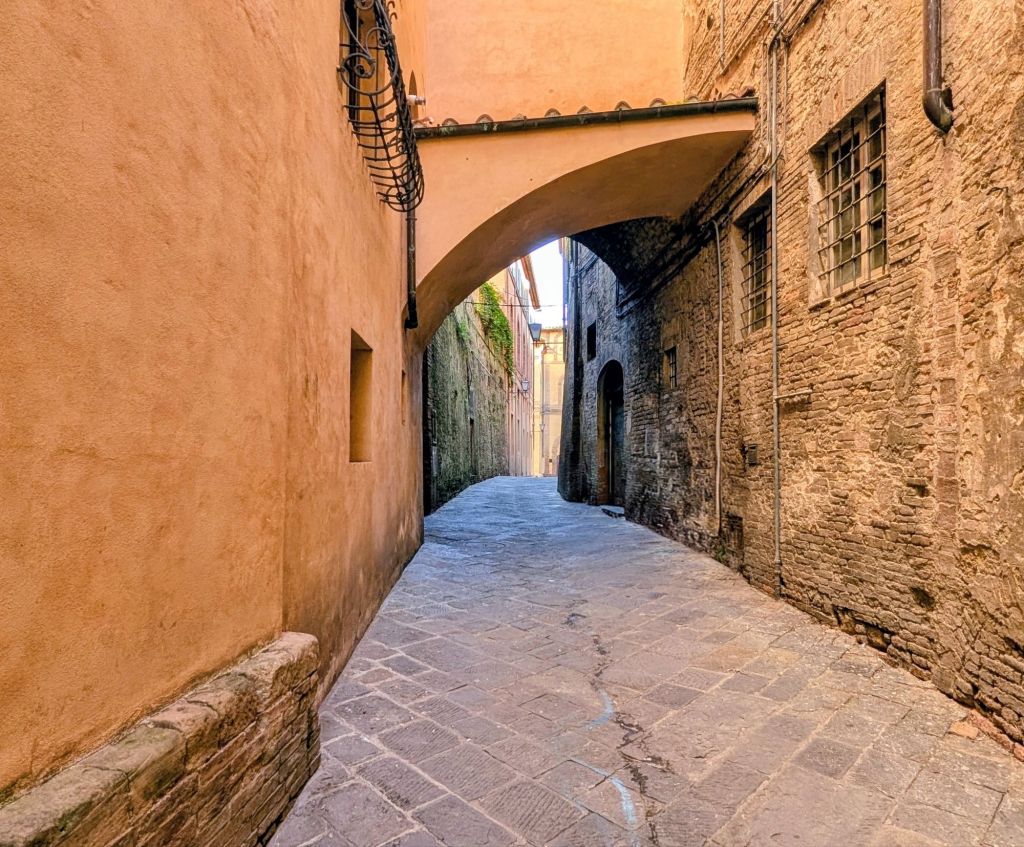
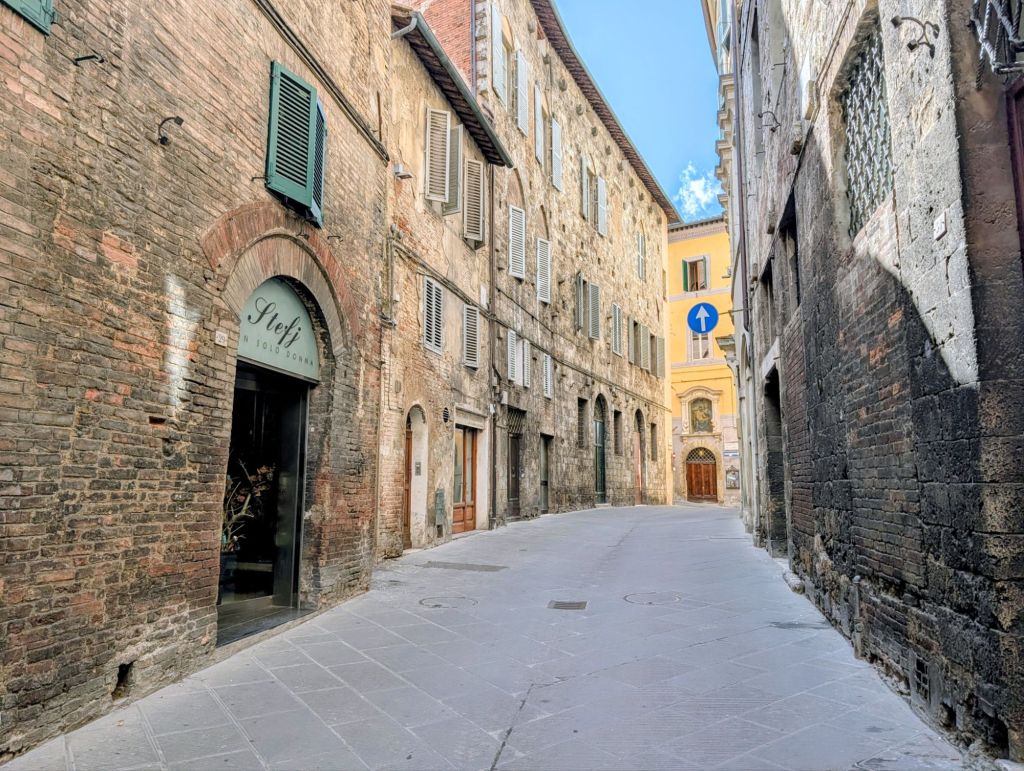
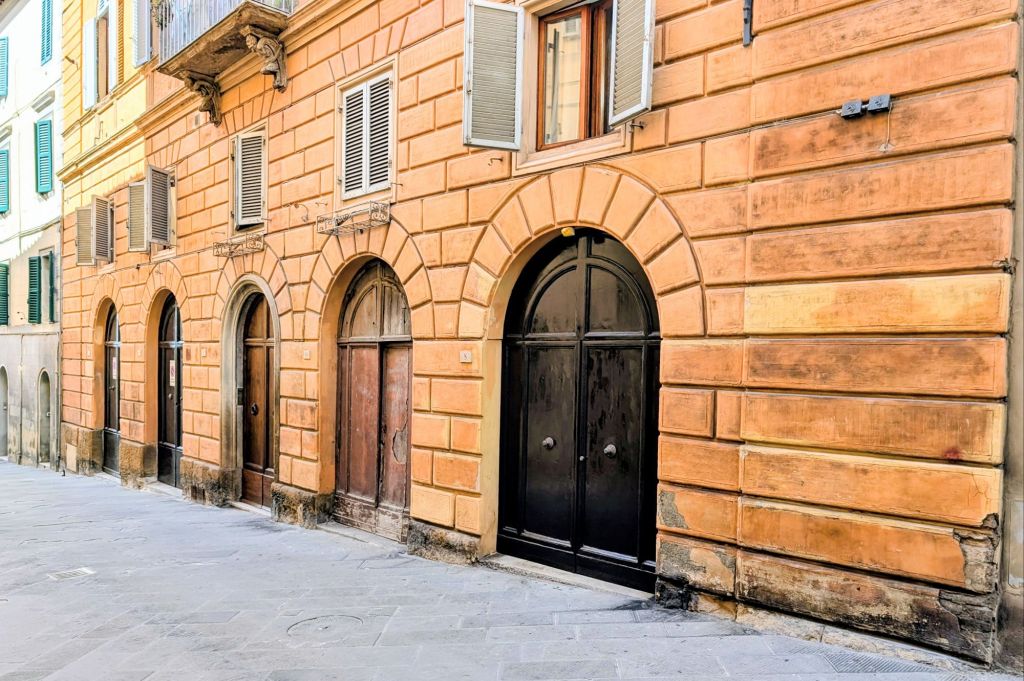
Here are some Siena street scenes:
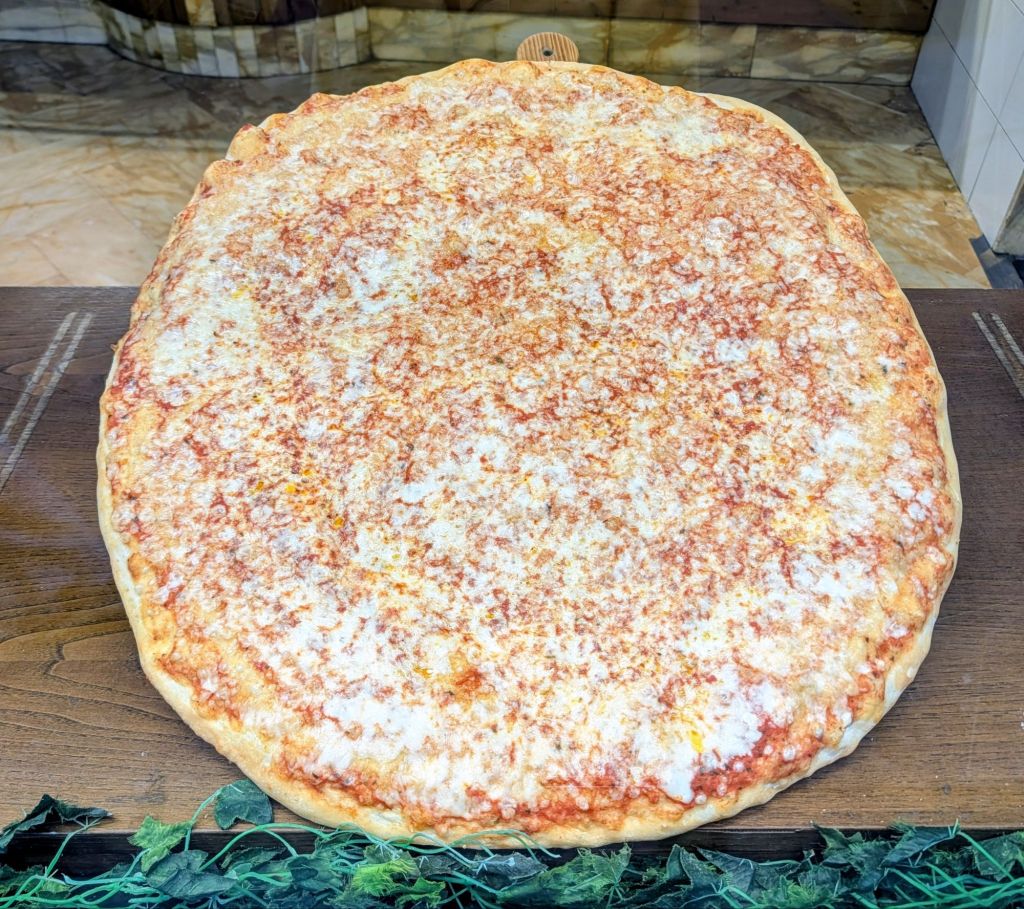
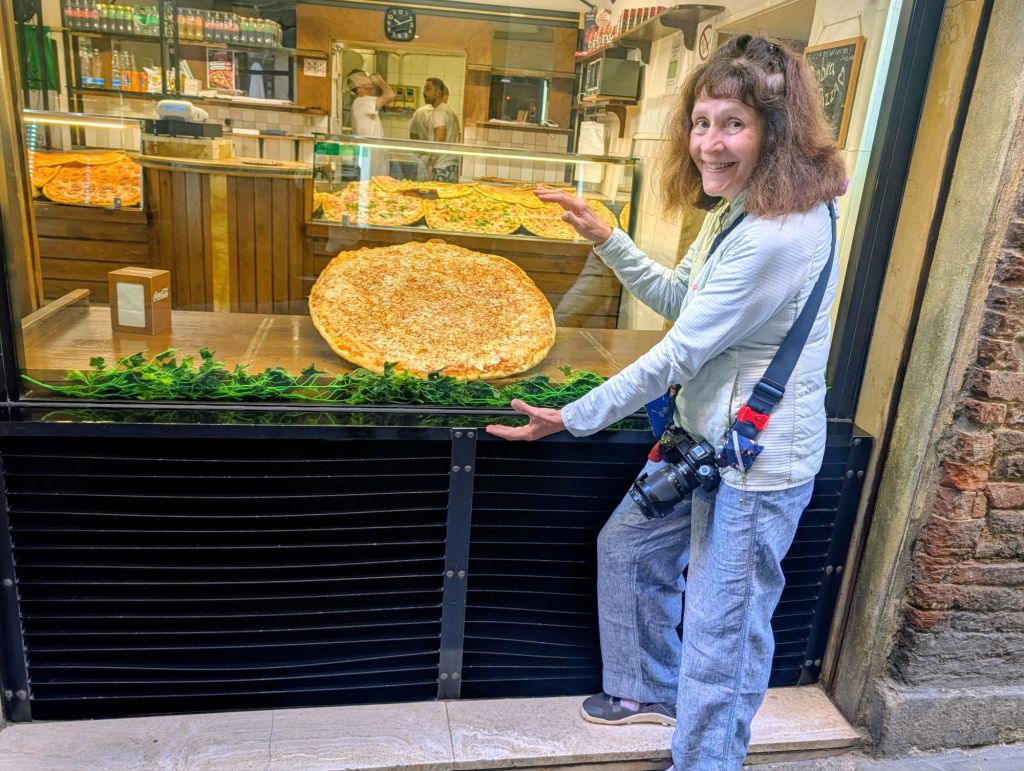
There are some seriously big pizzas here
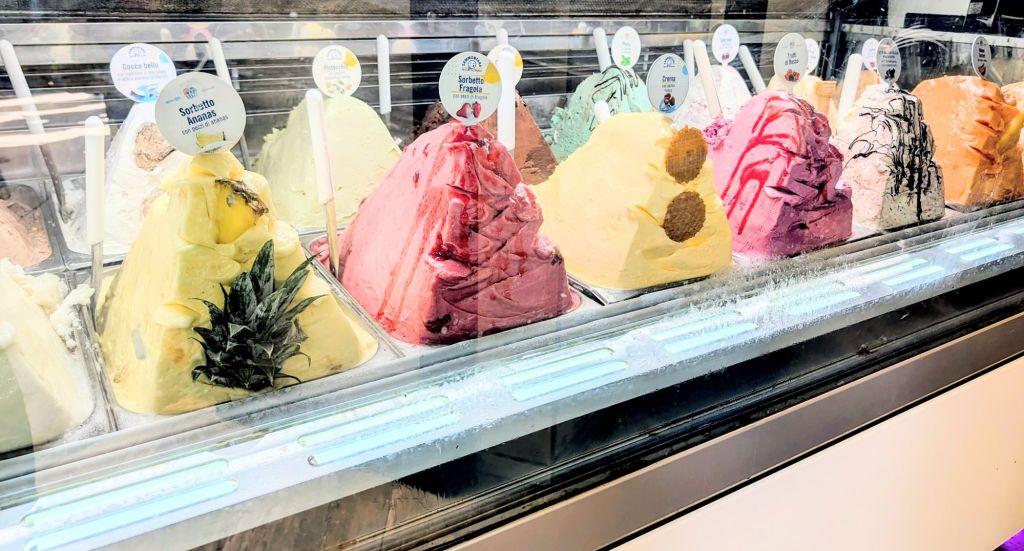
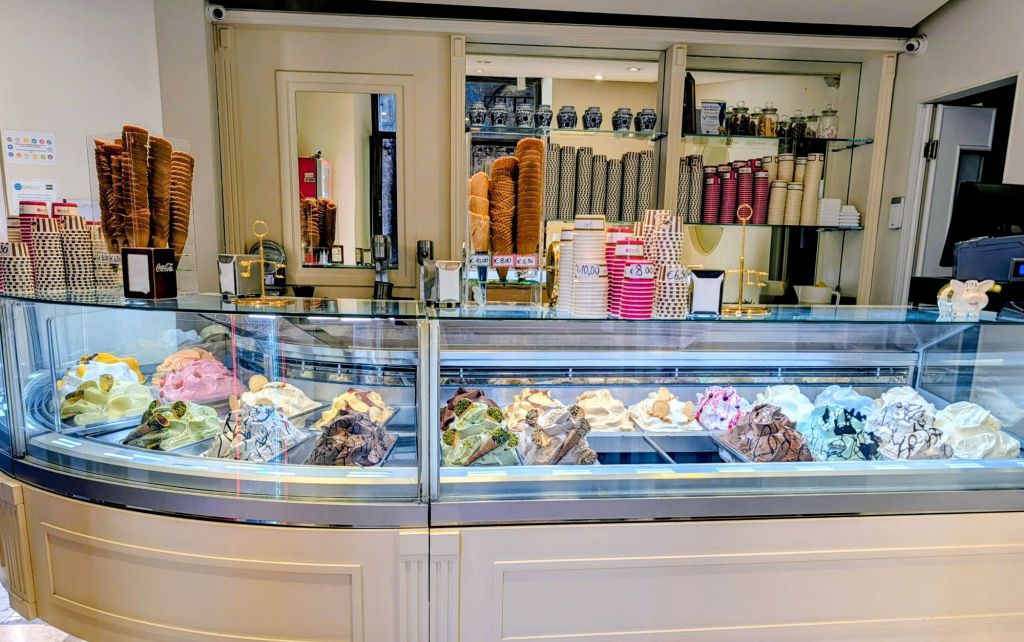
Along with big pizzas are mountains upon mountains of glorious gelato.