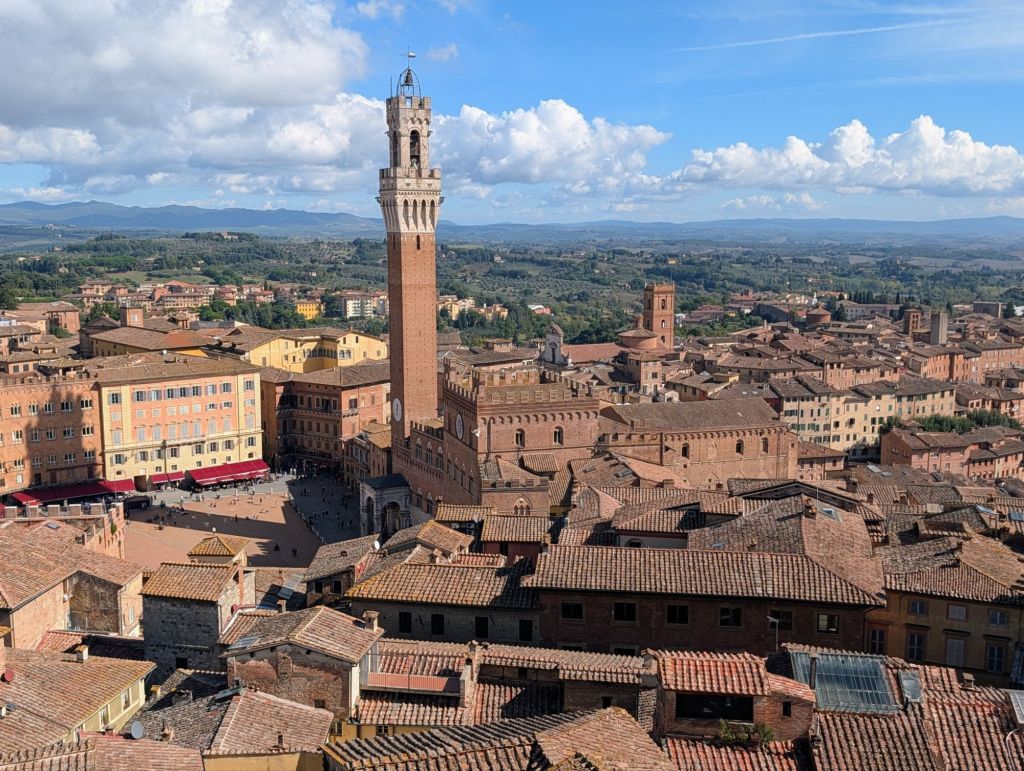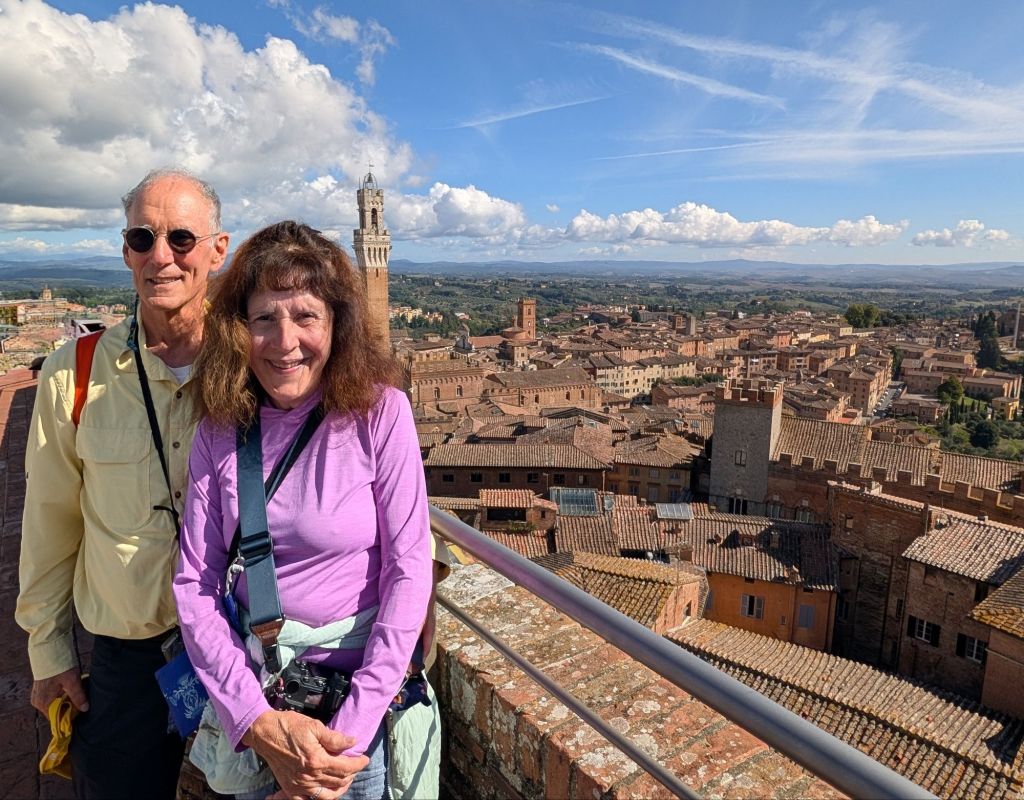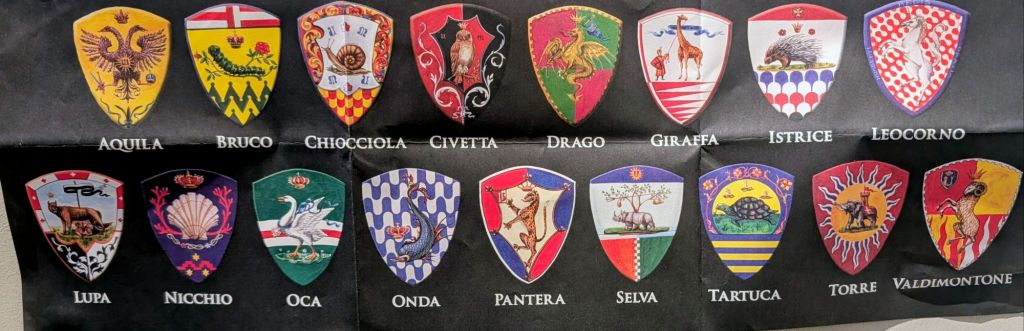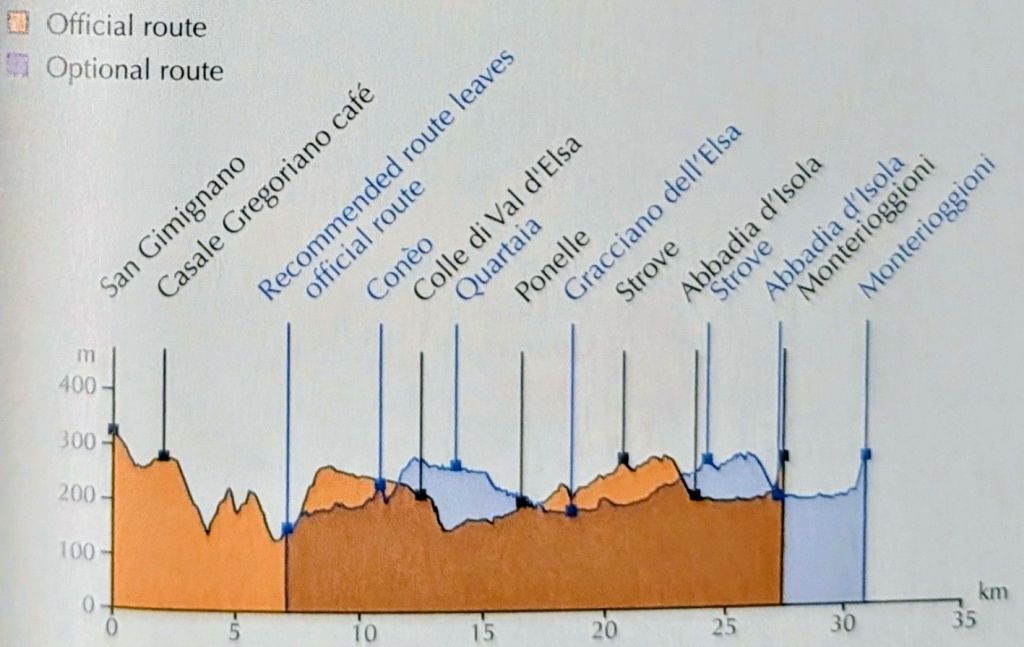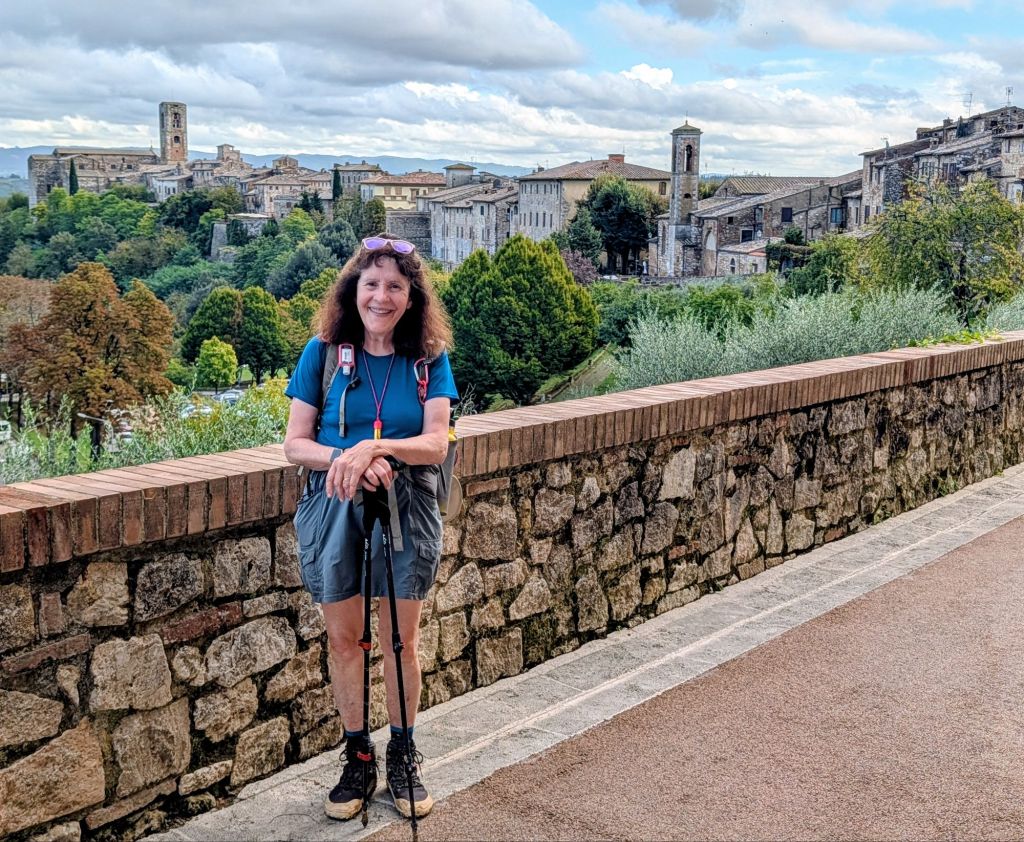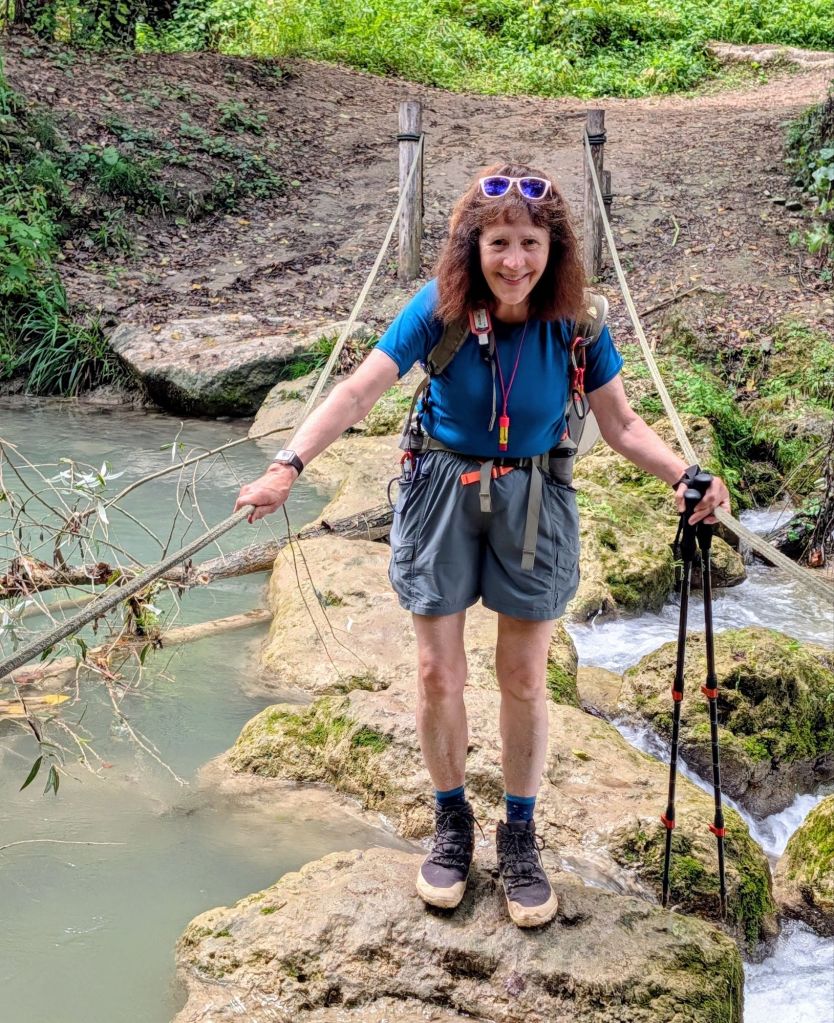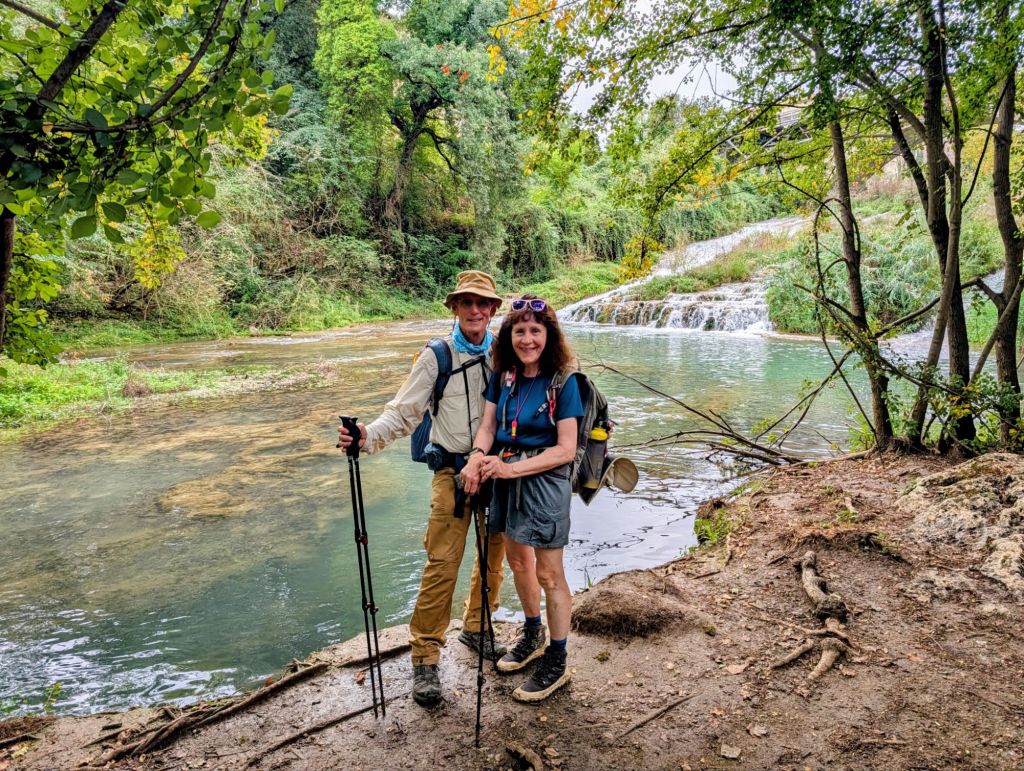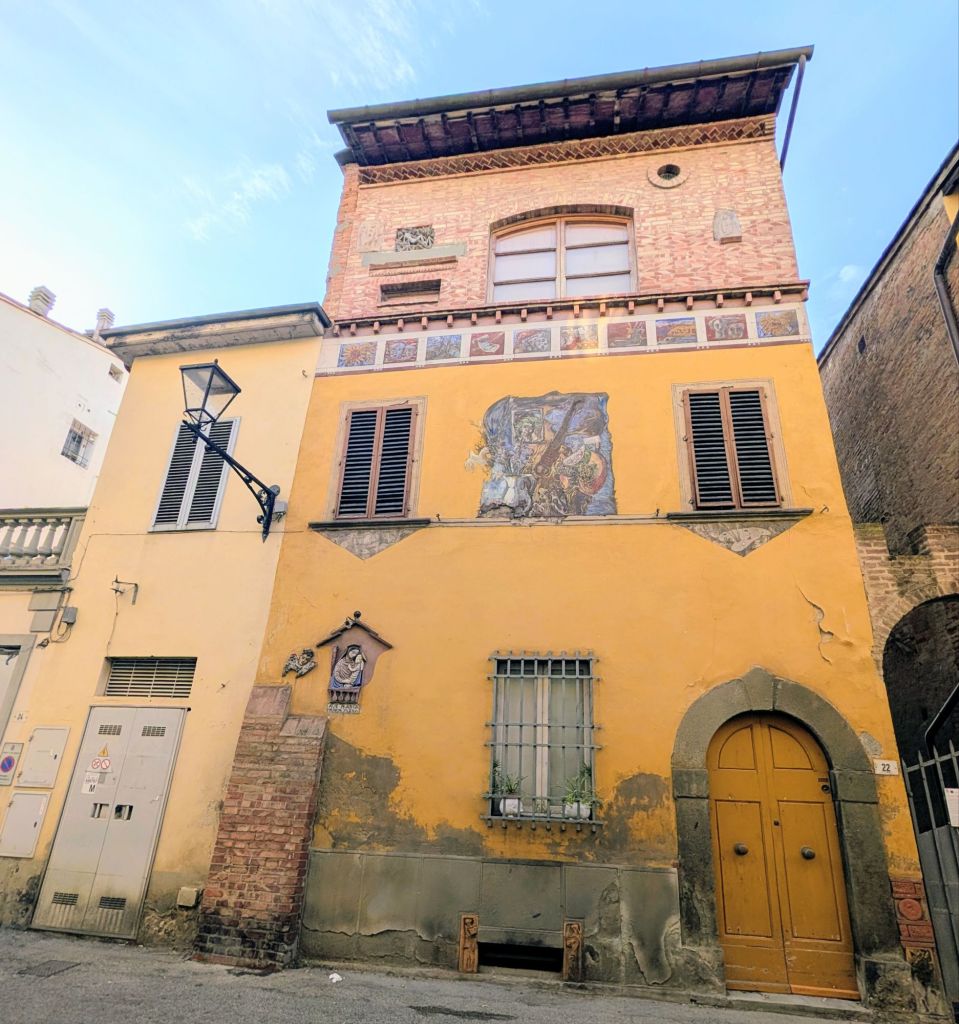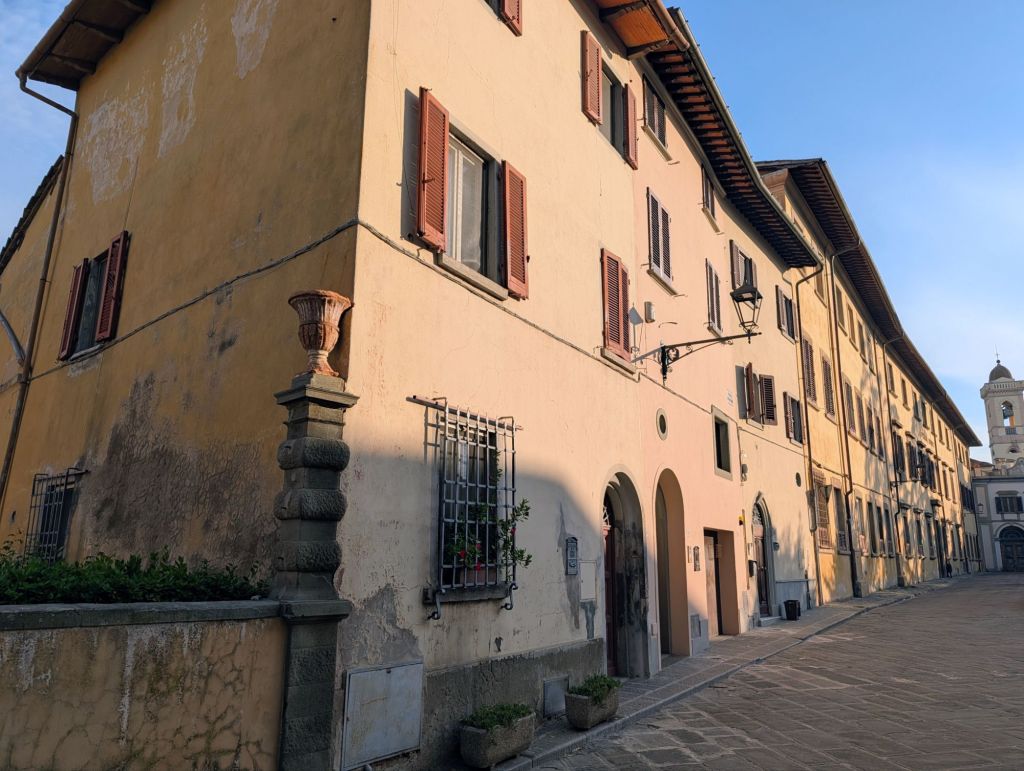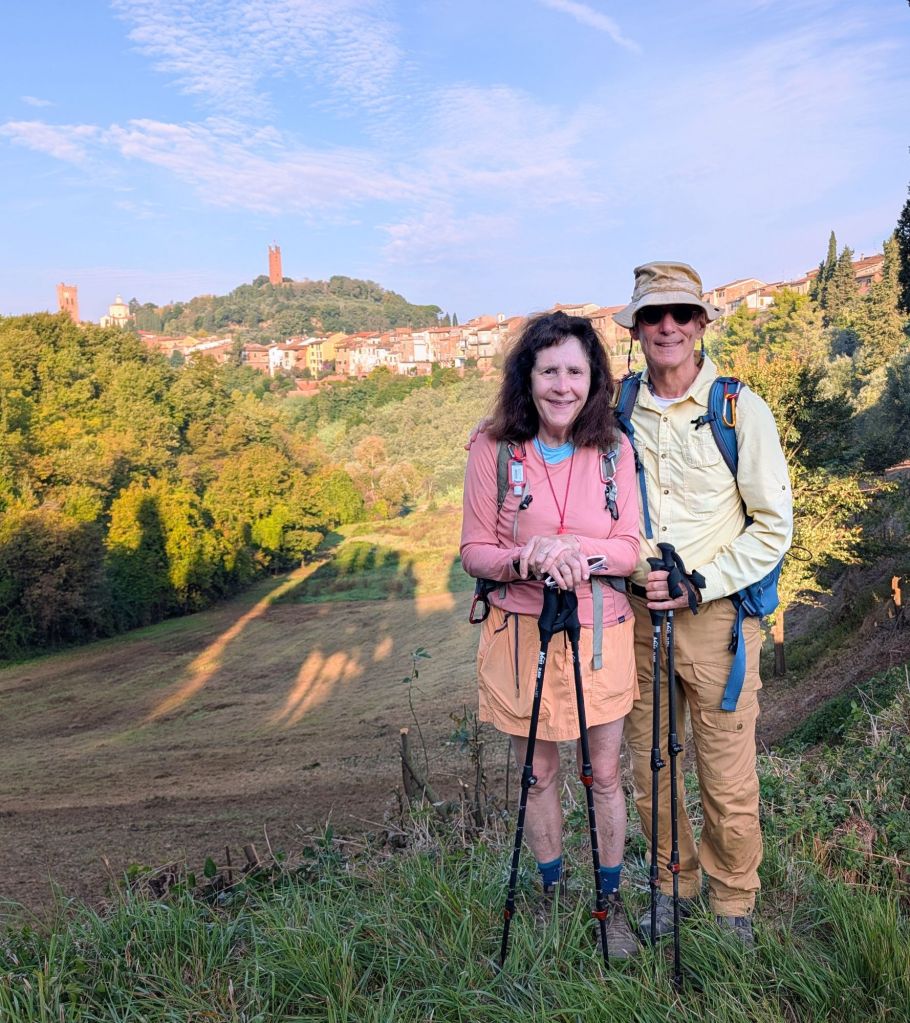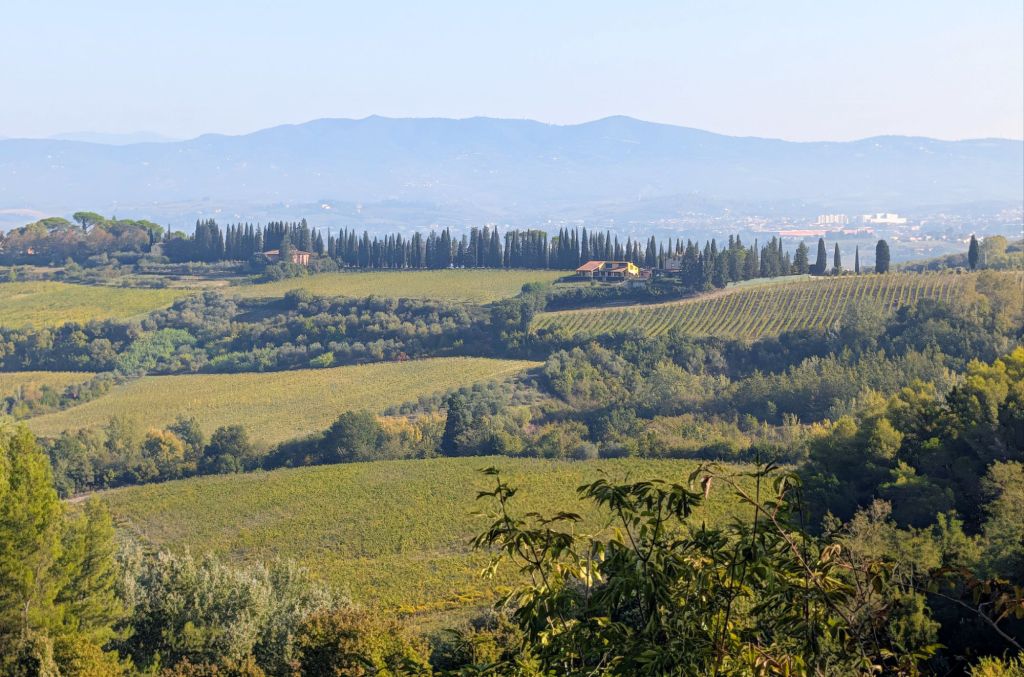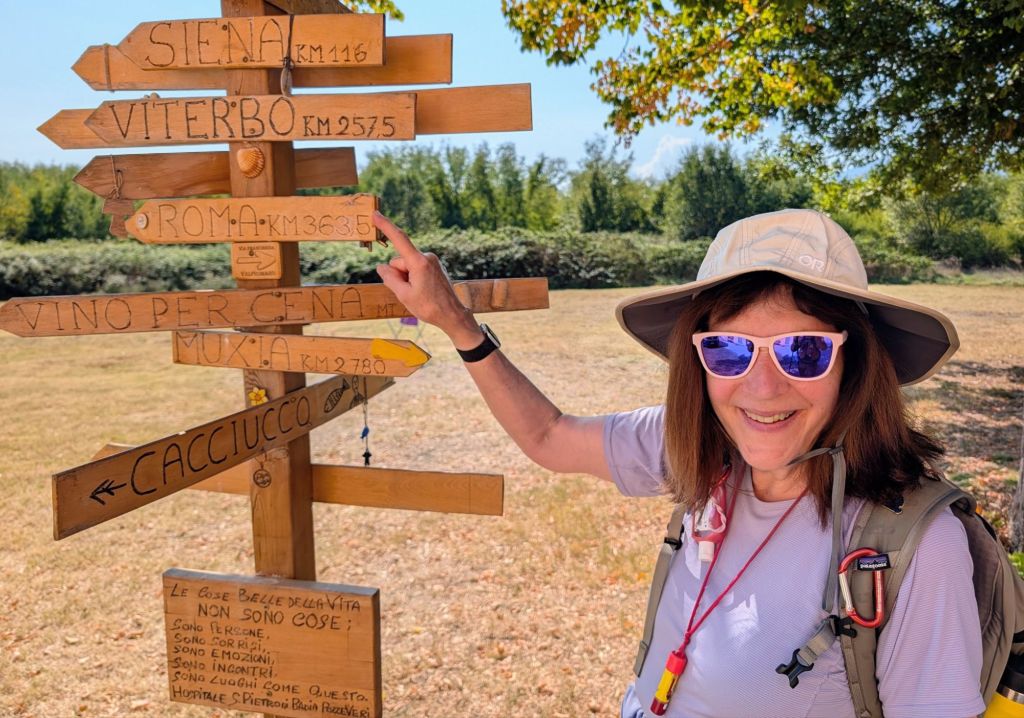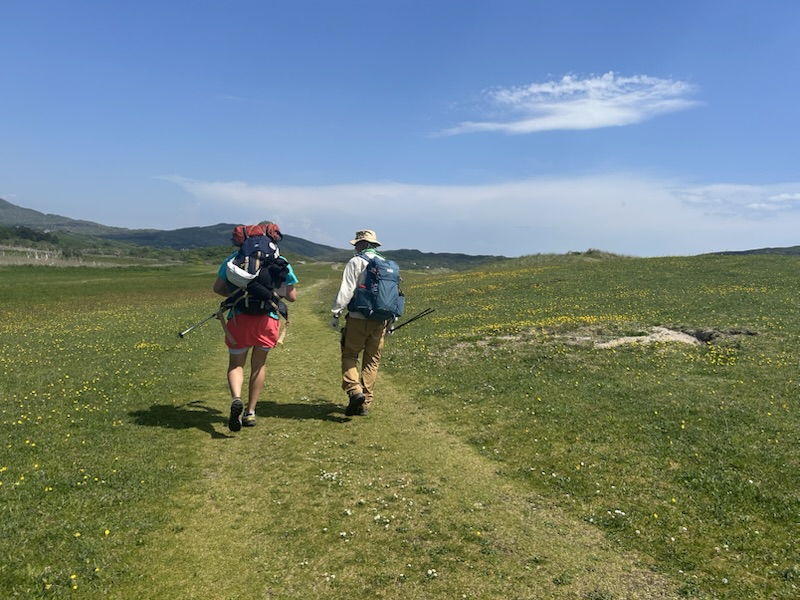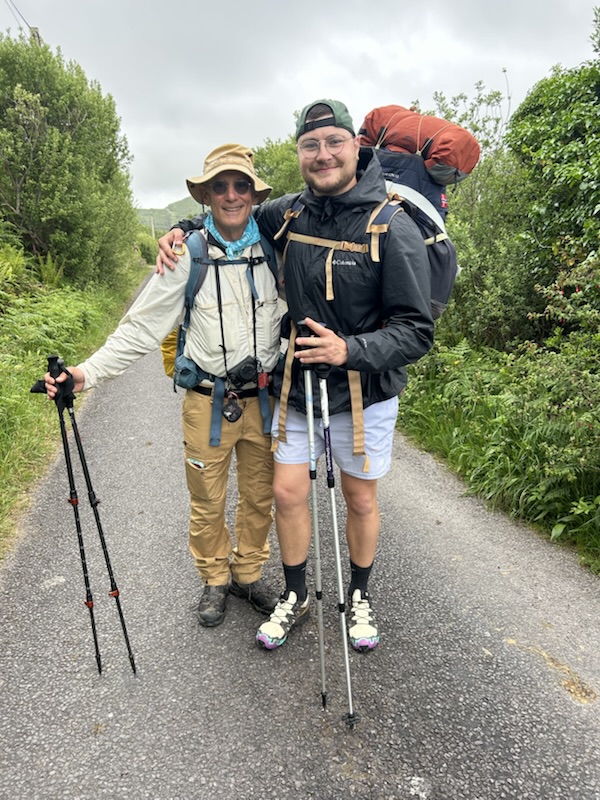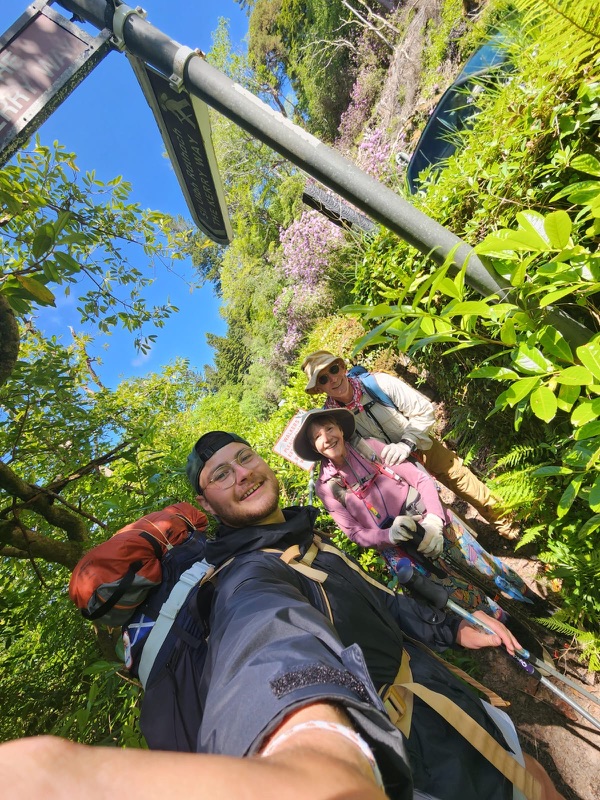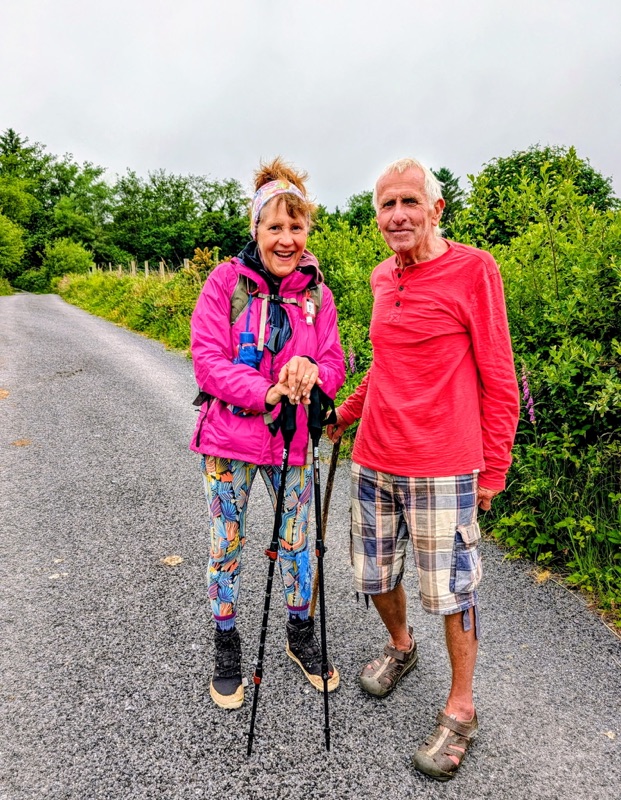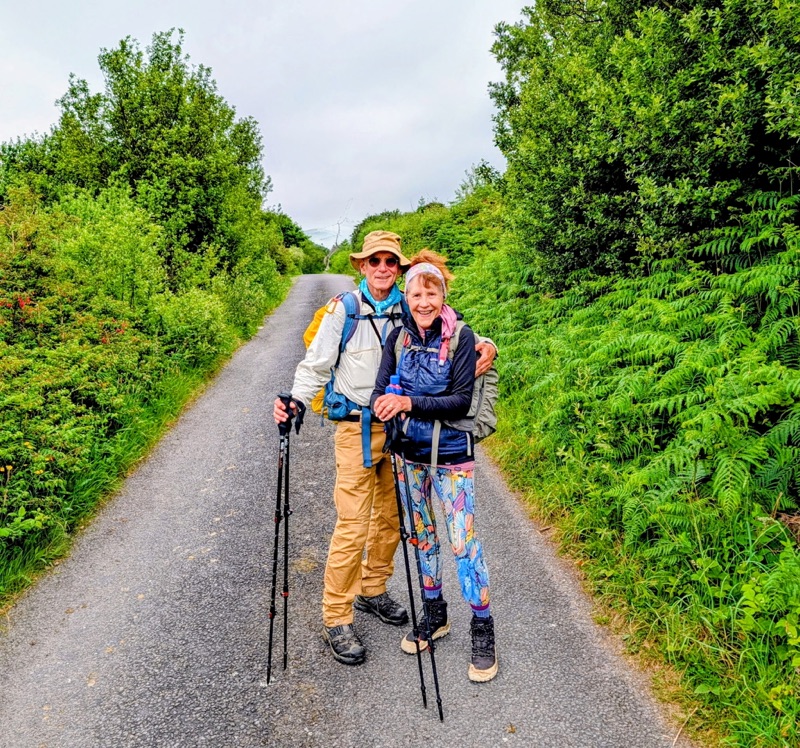
England’s Pilgrims Way

Reigate to Tatsfield (near Oxted)

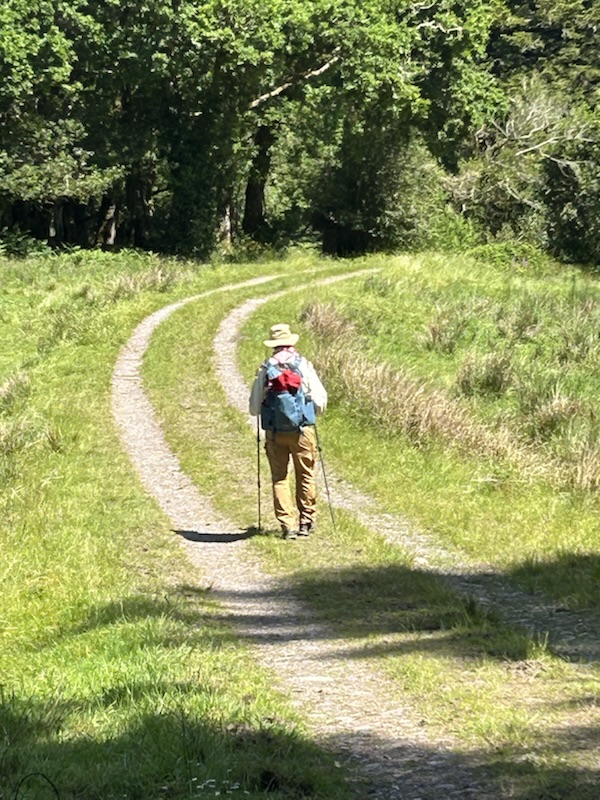
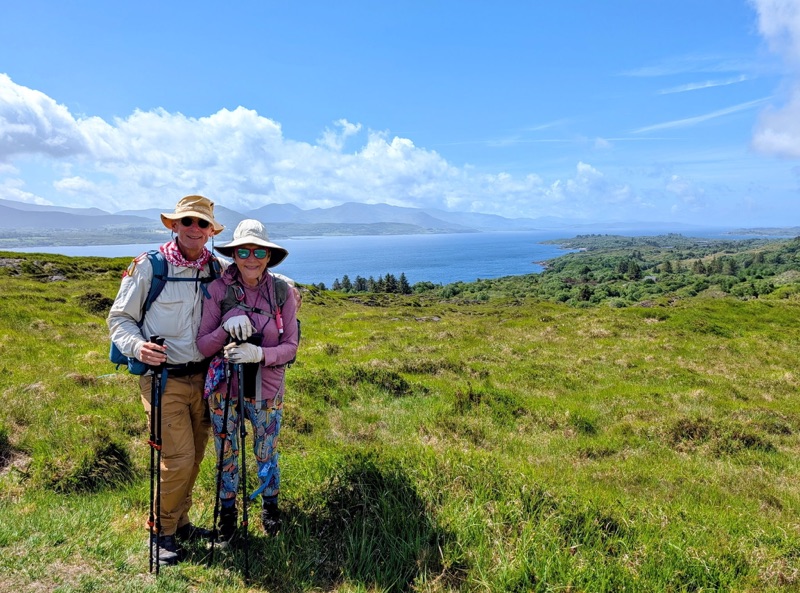
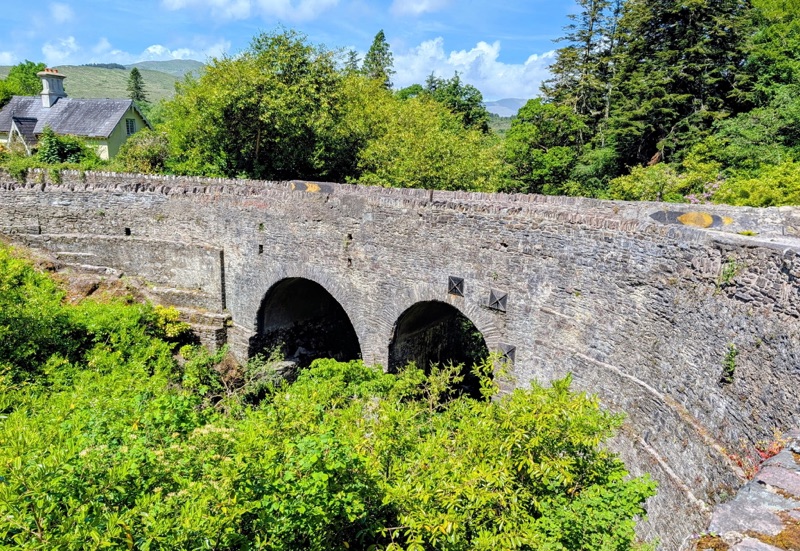
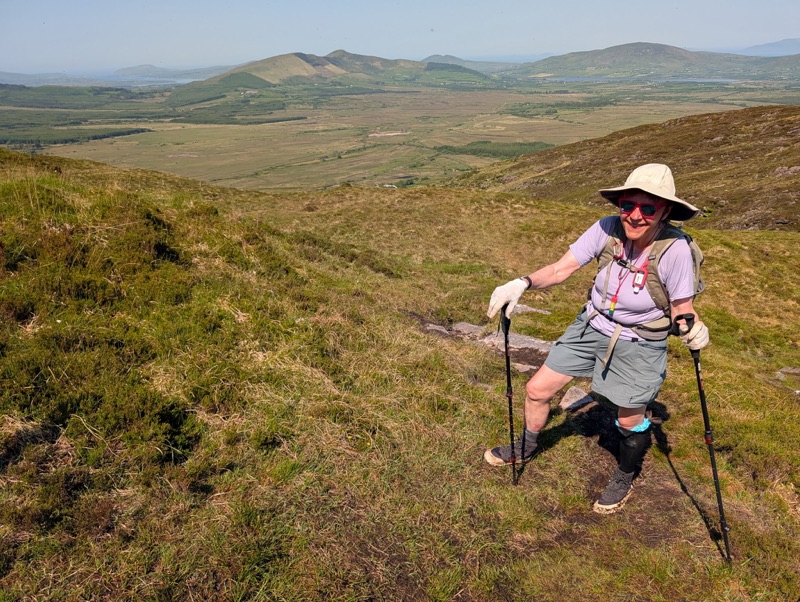
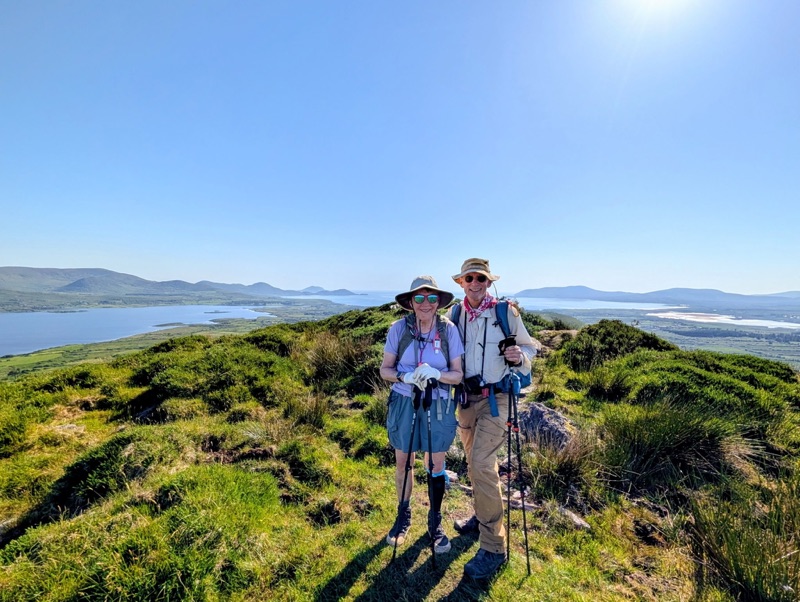
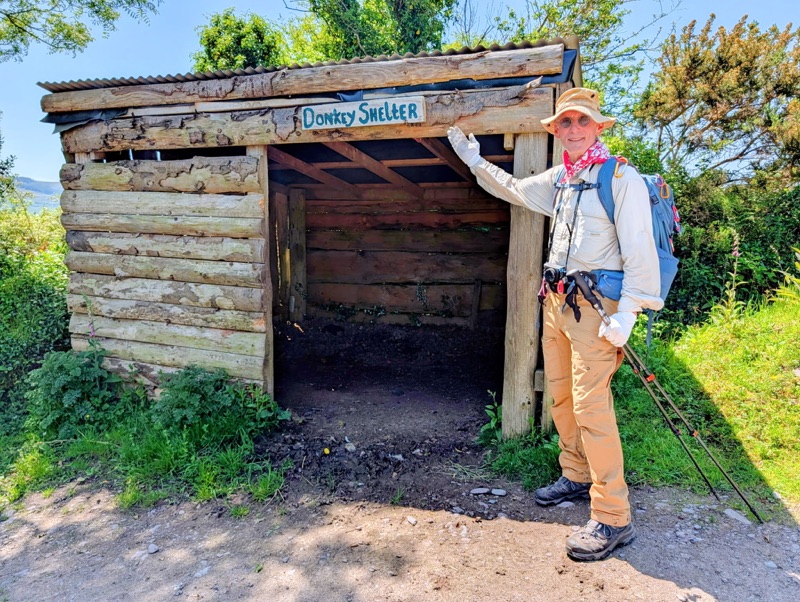
Day 7 – Walked 19 miles. Yikes, that was a long way!

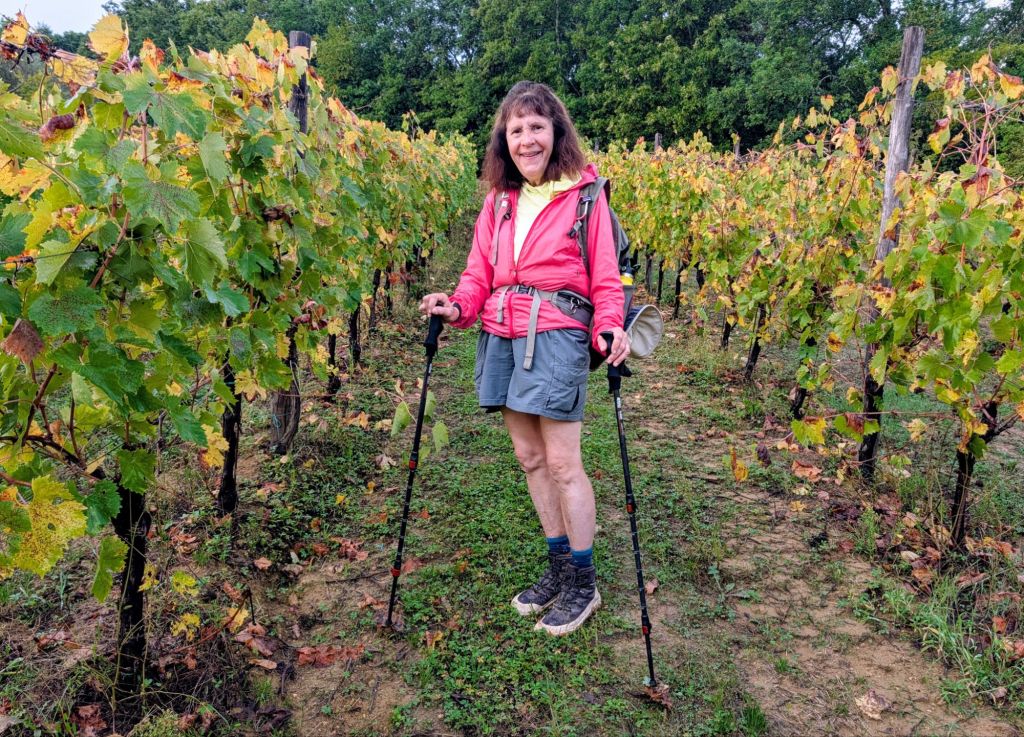
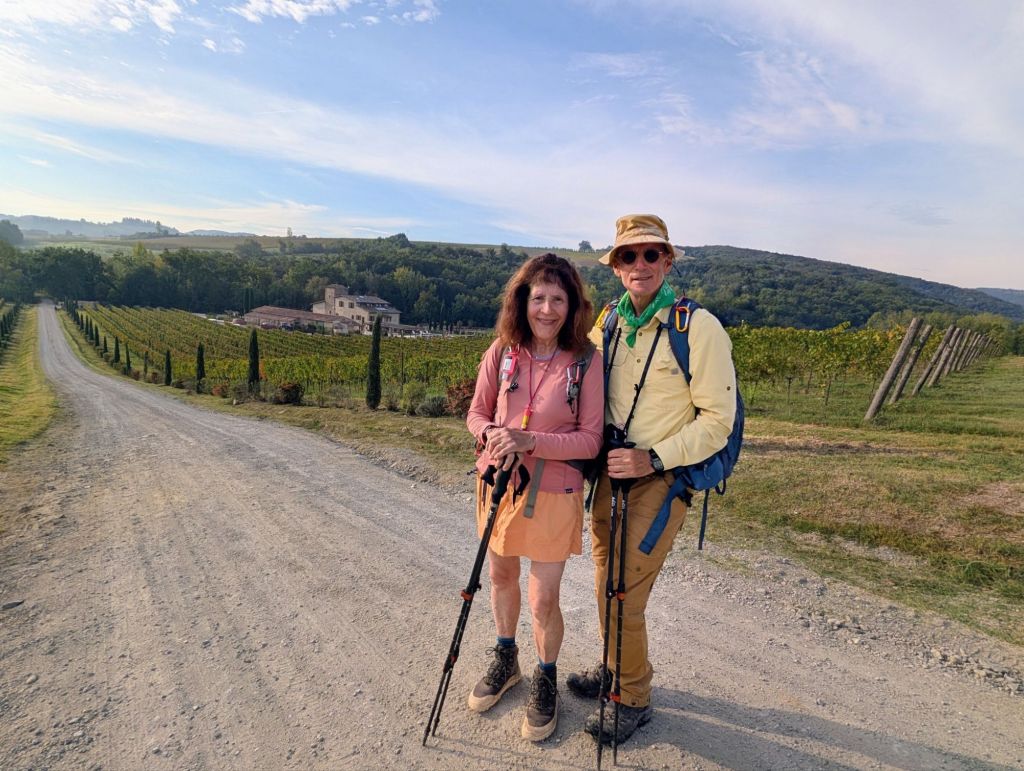
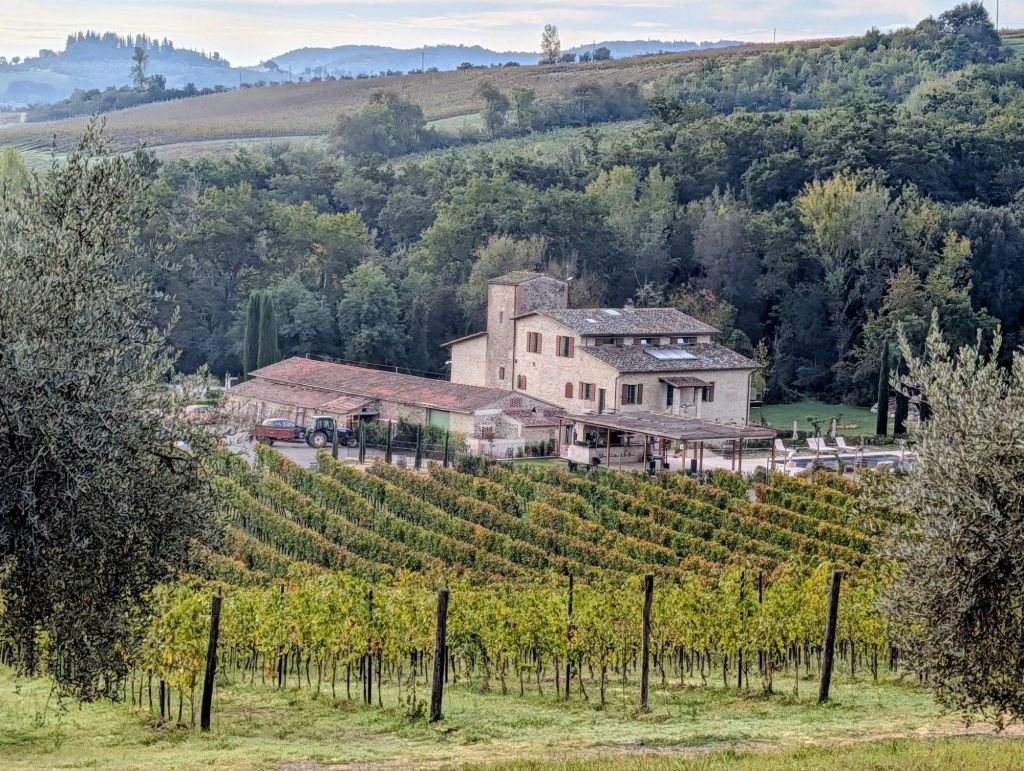
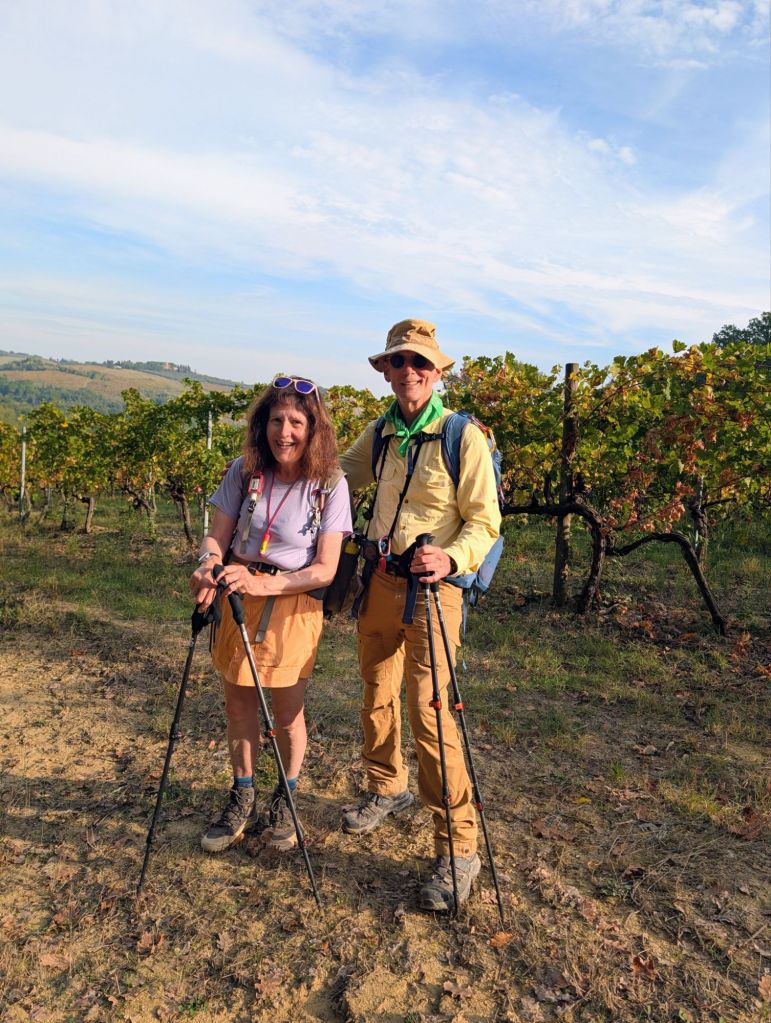
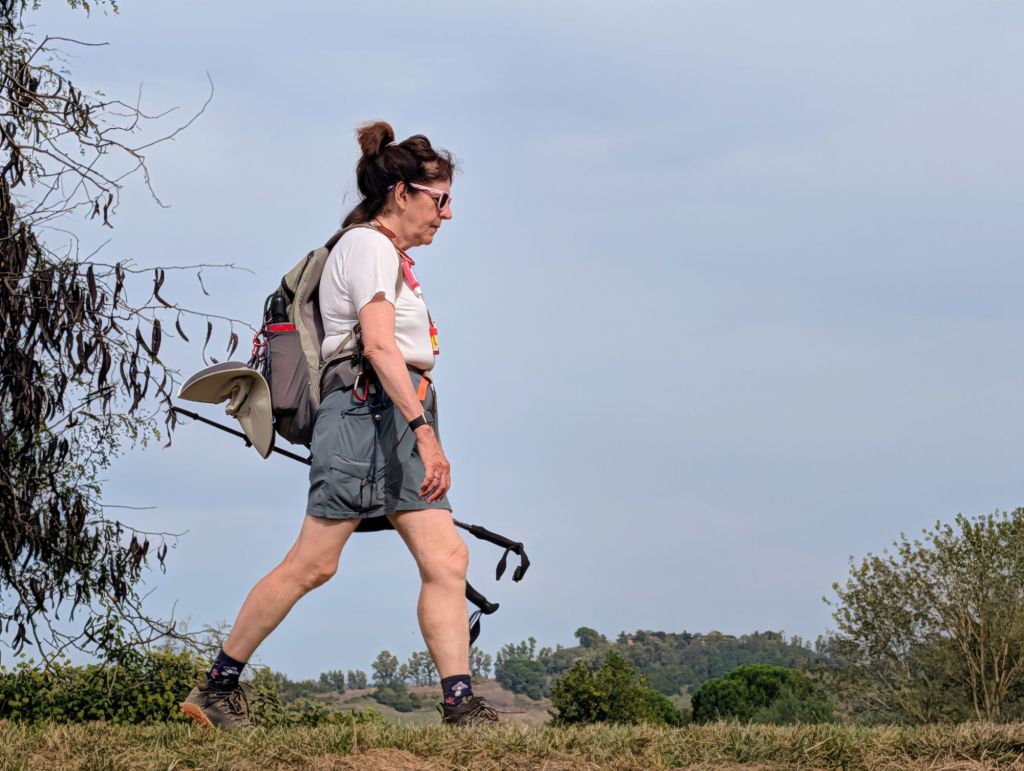
Enjoyable day with near perfect weather. No rain & it was never very warm. Once again, followed signs for the North Downs Way trail.

We shared the path with riders & their horses again.

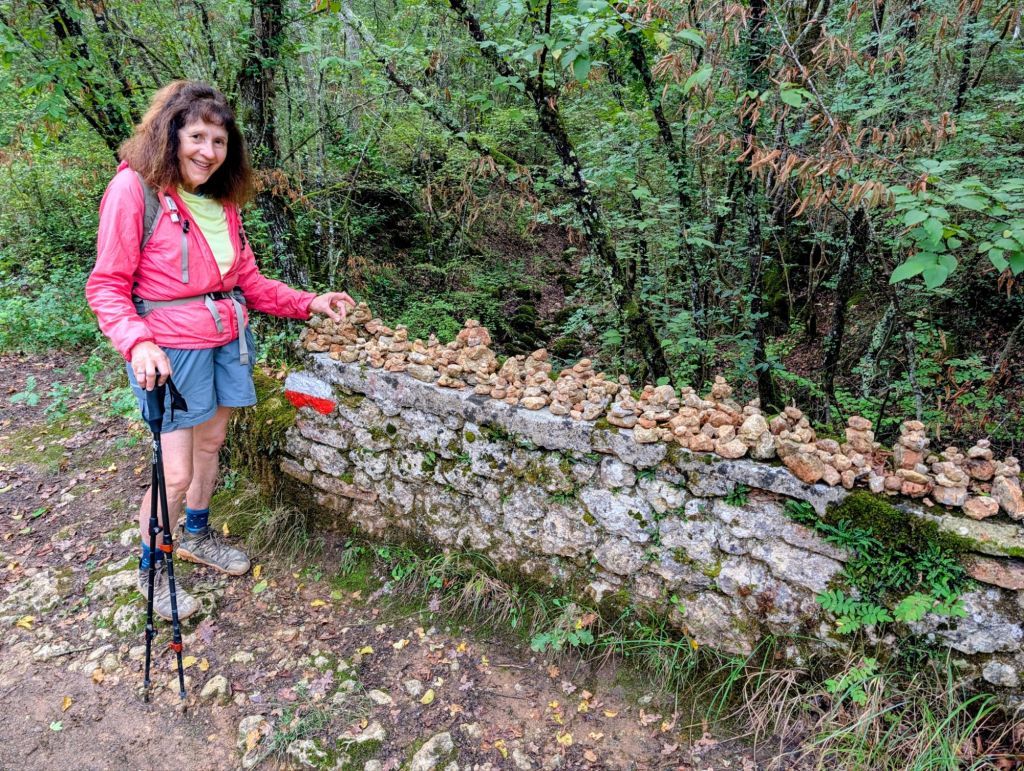
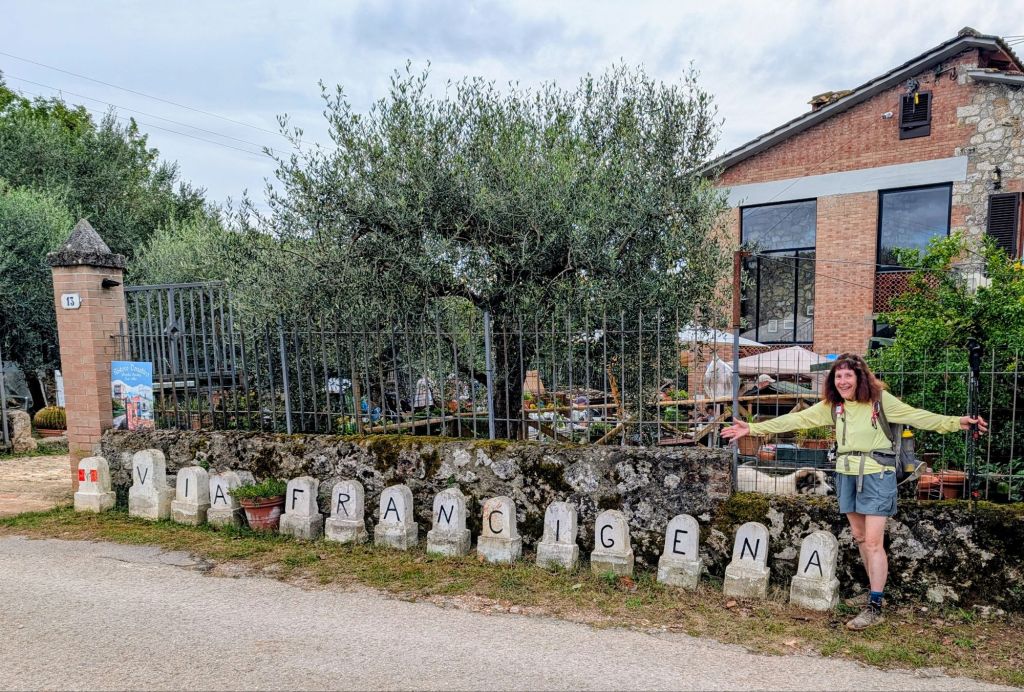
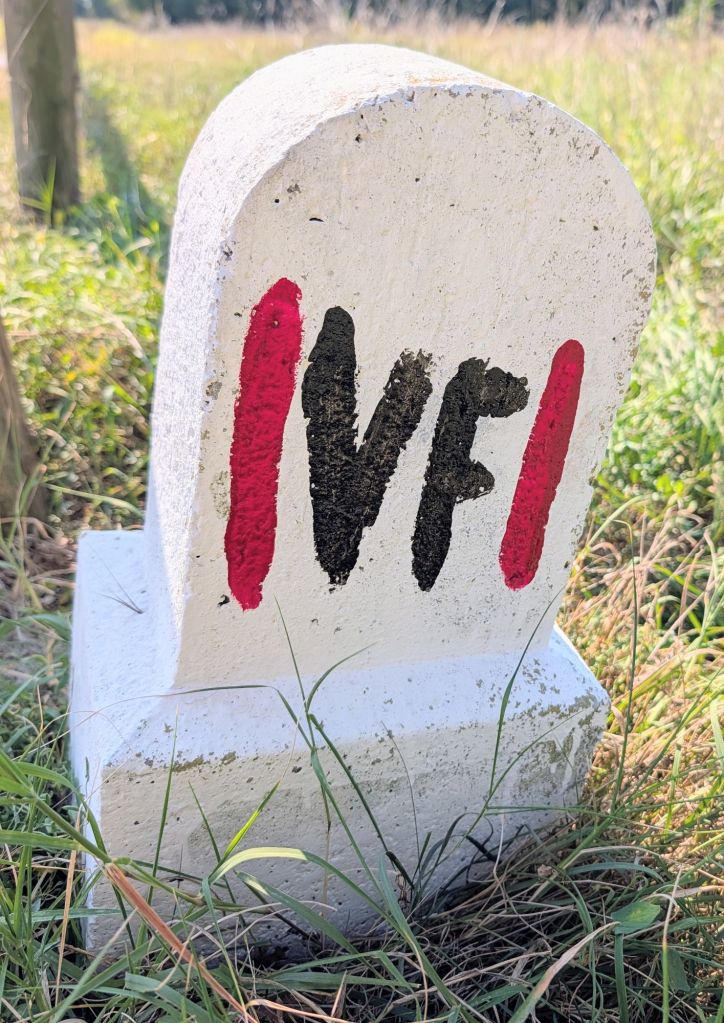
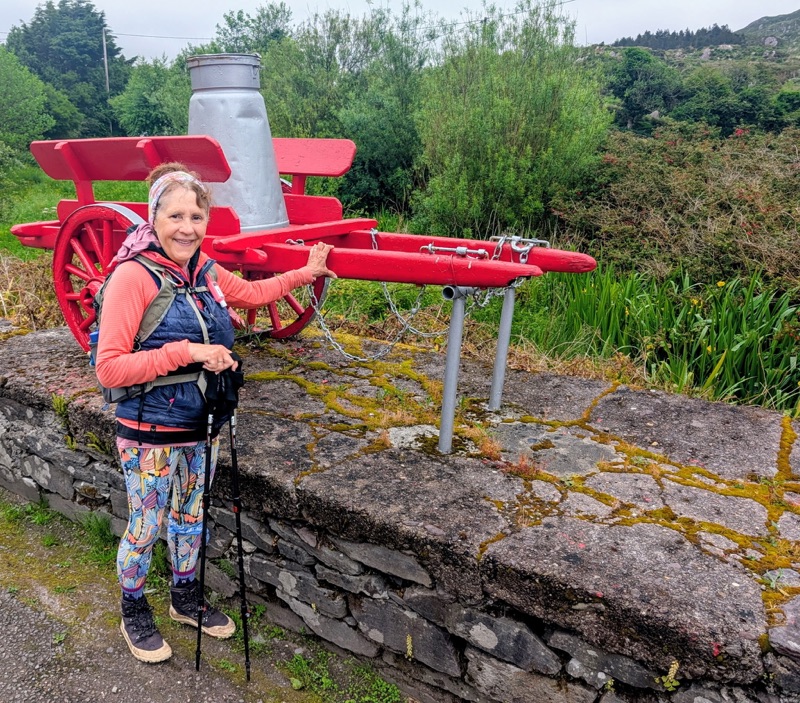
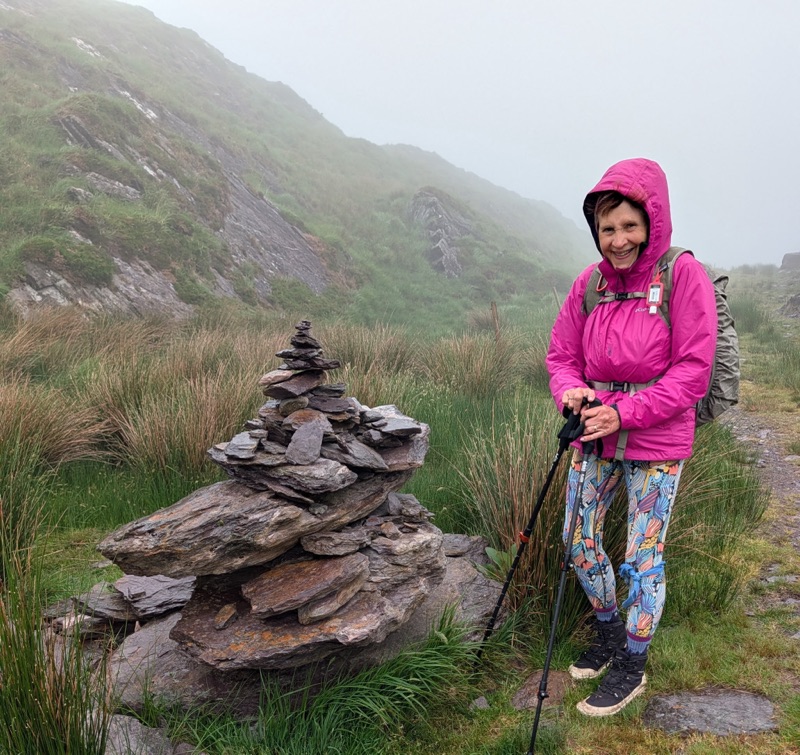
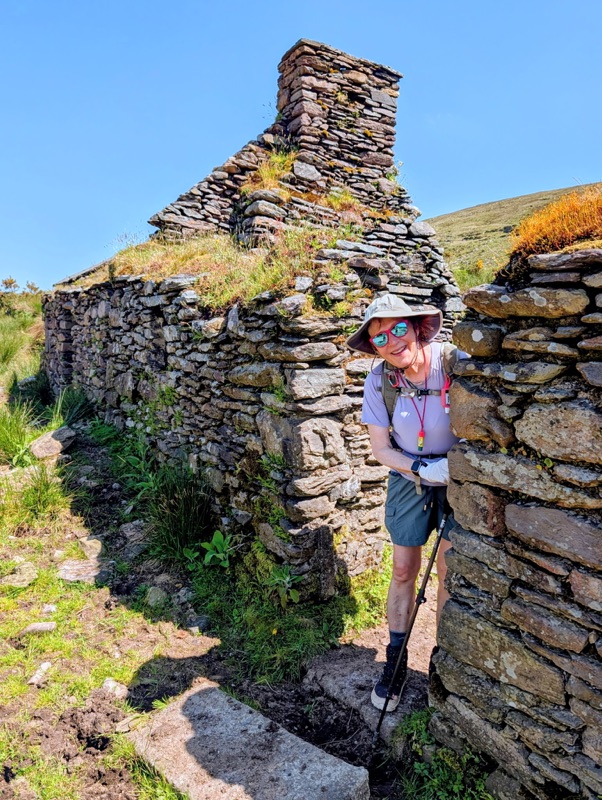
Came across these Millennium Stones on our way to Merstham.

We are only able to walk exactly on some sections from the original Pilgrims Way from Medieval times. At times, we see signs saying we are on the old road where pilgrims passed for centuries,

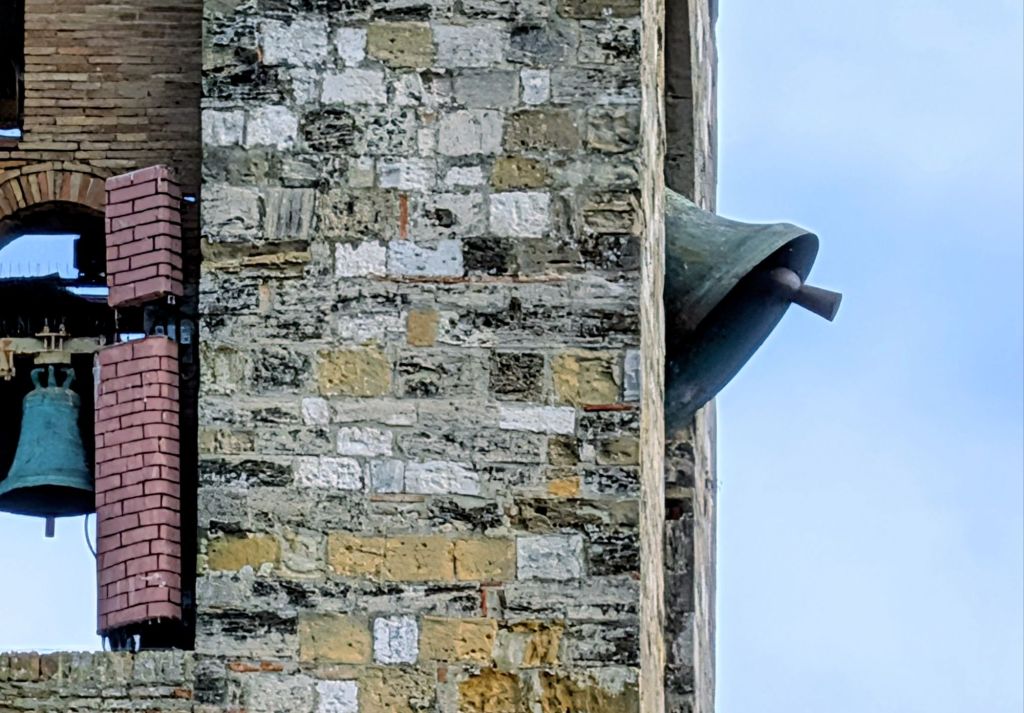
Today, We visited two very old churches today dating back to pre-Norman Times. The first was St. Katharine’s Church which has existed for 1,400 years & still has the original baptismal font in it.

The church vicar & priests had just finished their daily meeting & welcomed us heartily. A Priest is an ordained minister who can perform sacraments while a Vicar is specifically a priest in the Church of England (Anglican Church) responsible for a parish. So, all Vicars are priests; but, not all priests are Vicars.

At the door, one priest told us the church’s history. He said it is believed that Roman ruins are under the church, so the church has ruled out any new construction or renovations requiring digging because dealing with antiquities requires too many reviews & approvals by multiple agencies. As we entered, he pointed out St Katherine over the door.

After stamping our pilgrim passport, we were greeted by the Vicar who was a woman. She was so happy we were visiting the church & kept apologizing for her appearance since she had recently gone for a swim in the nearby lake. (Brrrr)

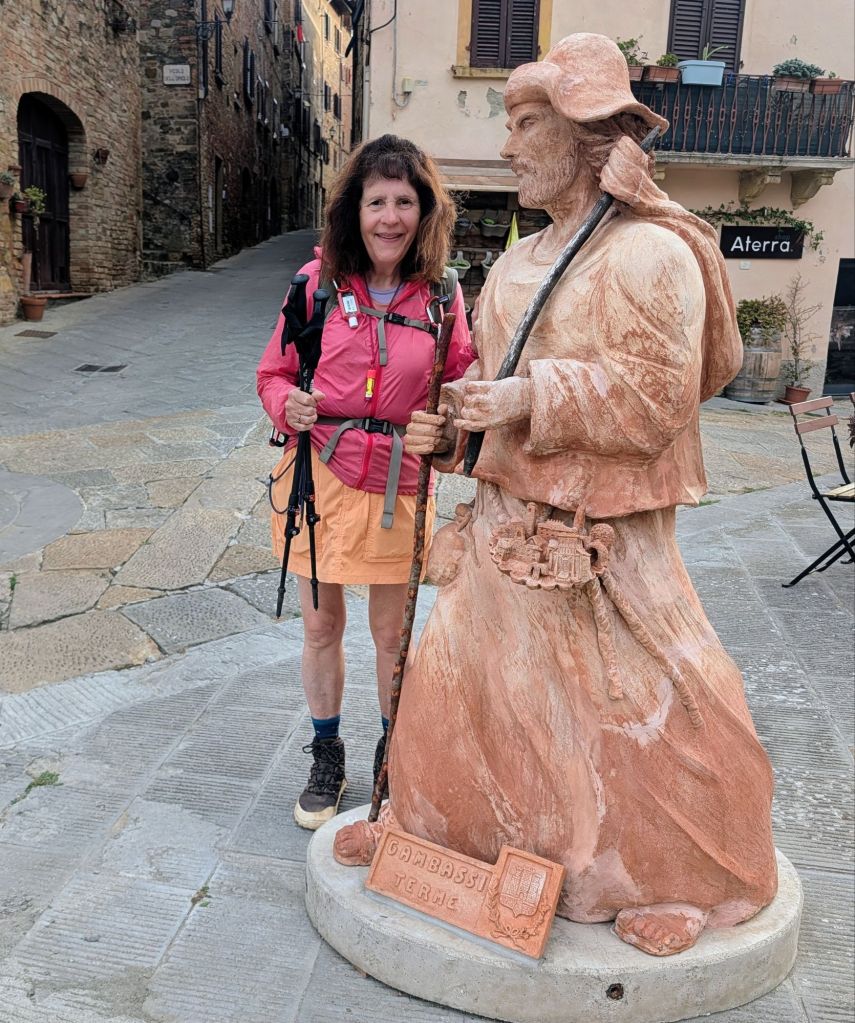
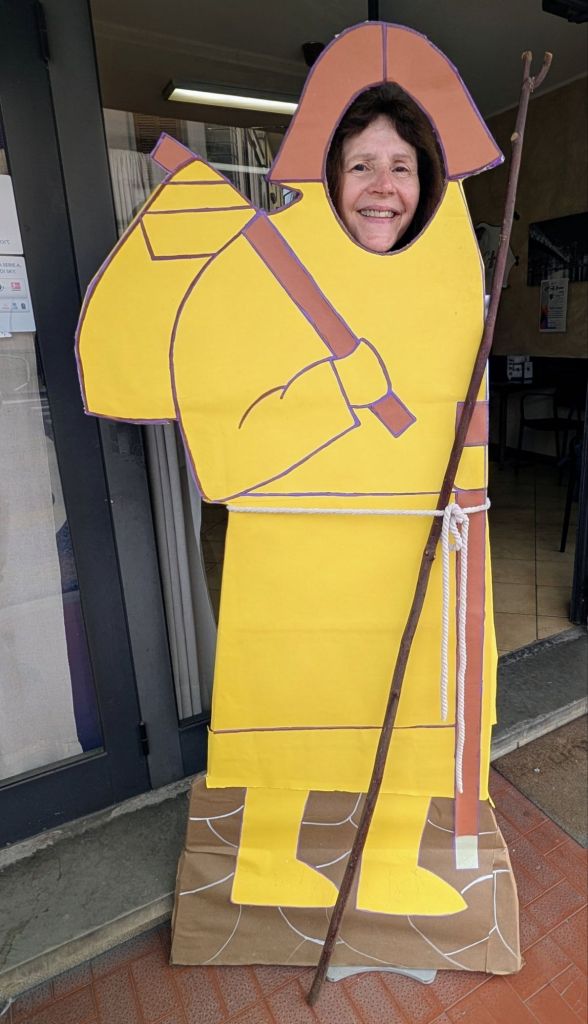
She offered us a prayer for a safe journey & allowed us to get a picture with her.

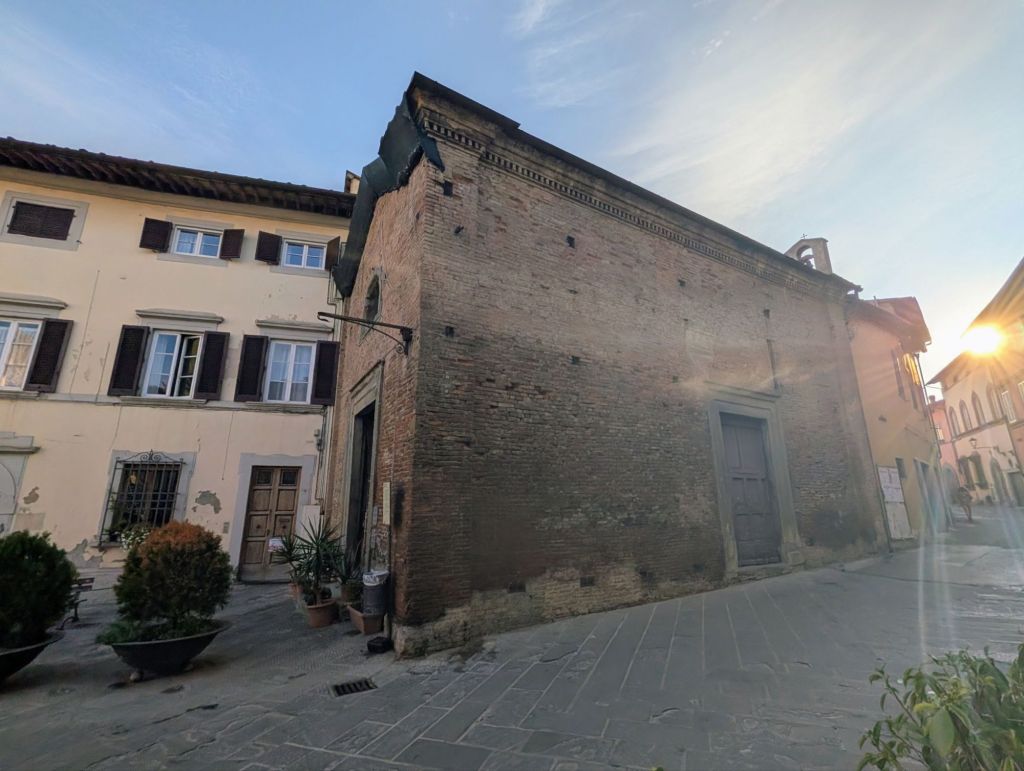
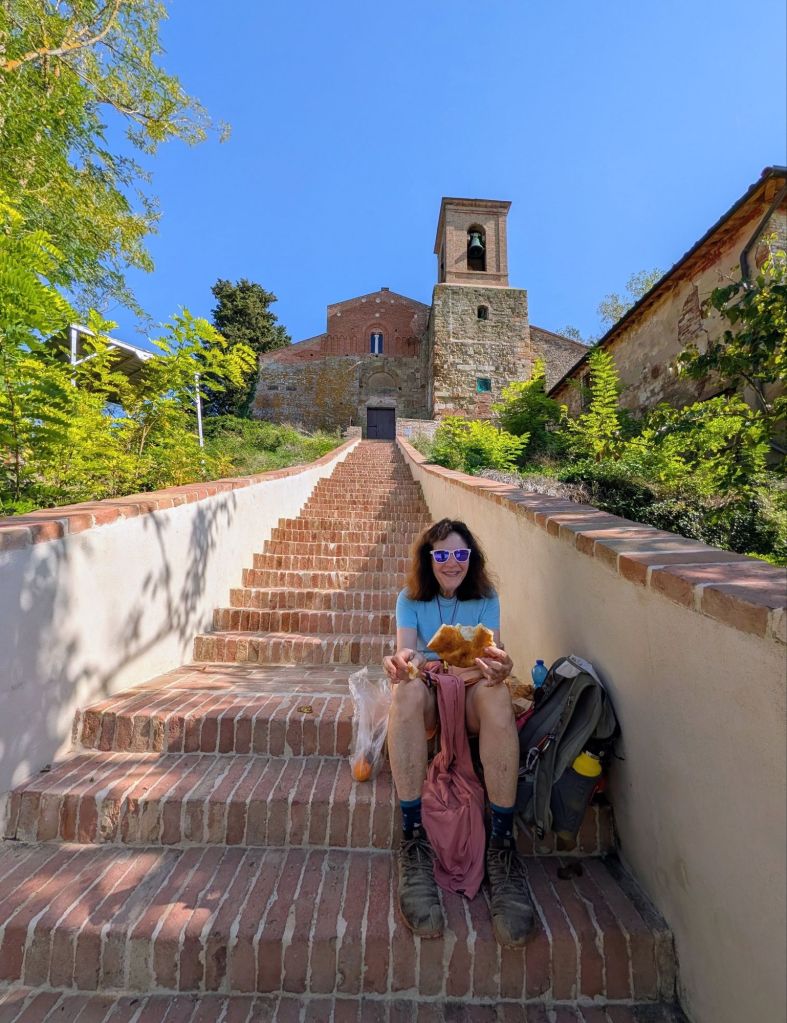
The next place a few miles down the road in Chaldon was the Church of St. Peter & St. Paul. To see this church we knew we would add 2 extra miles to our journey; but, we felt the extra distance would be worth it to see its famous wall painting.

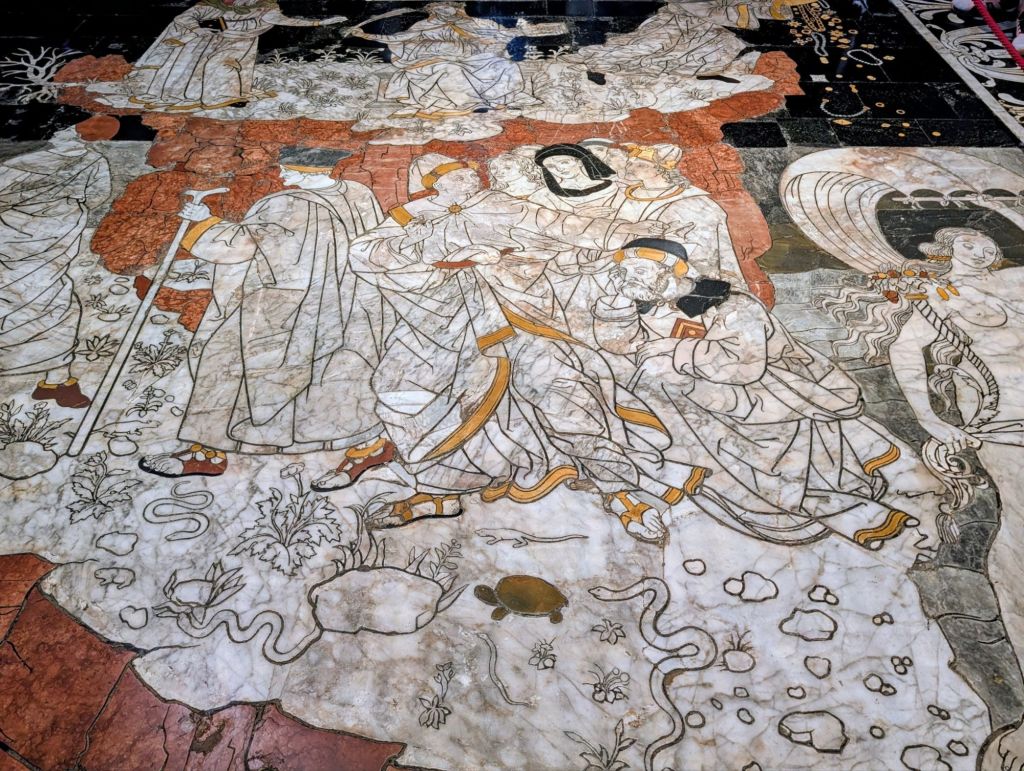
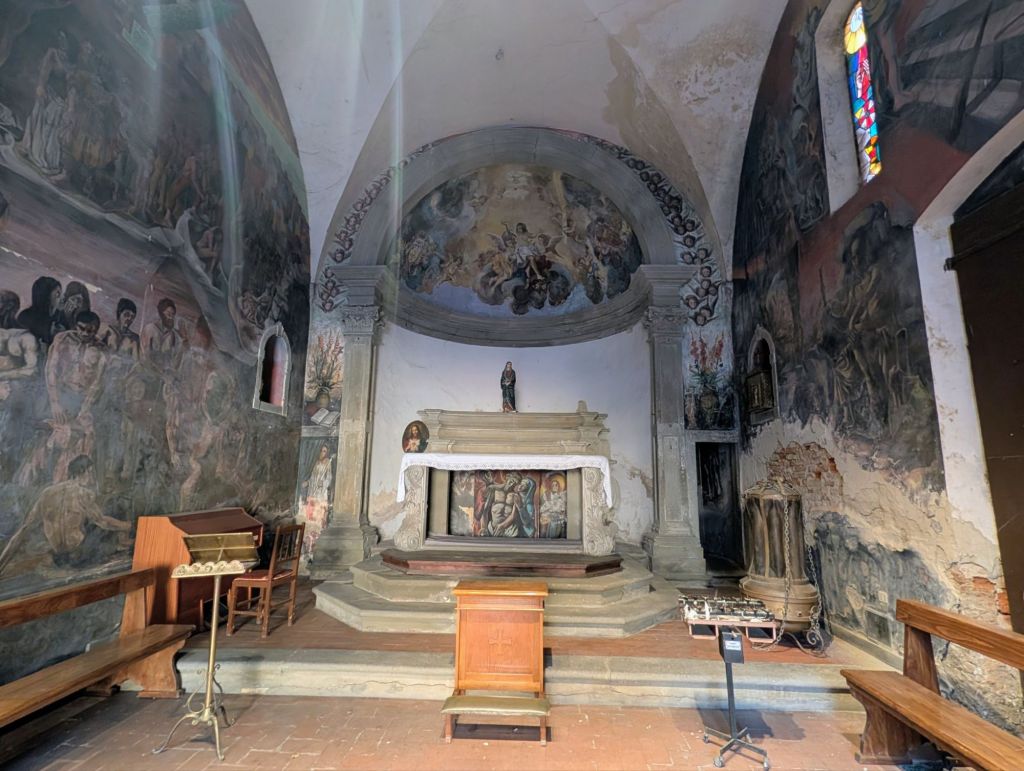
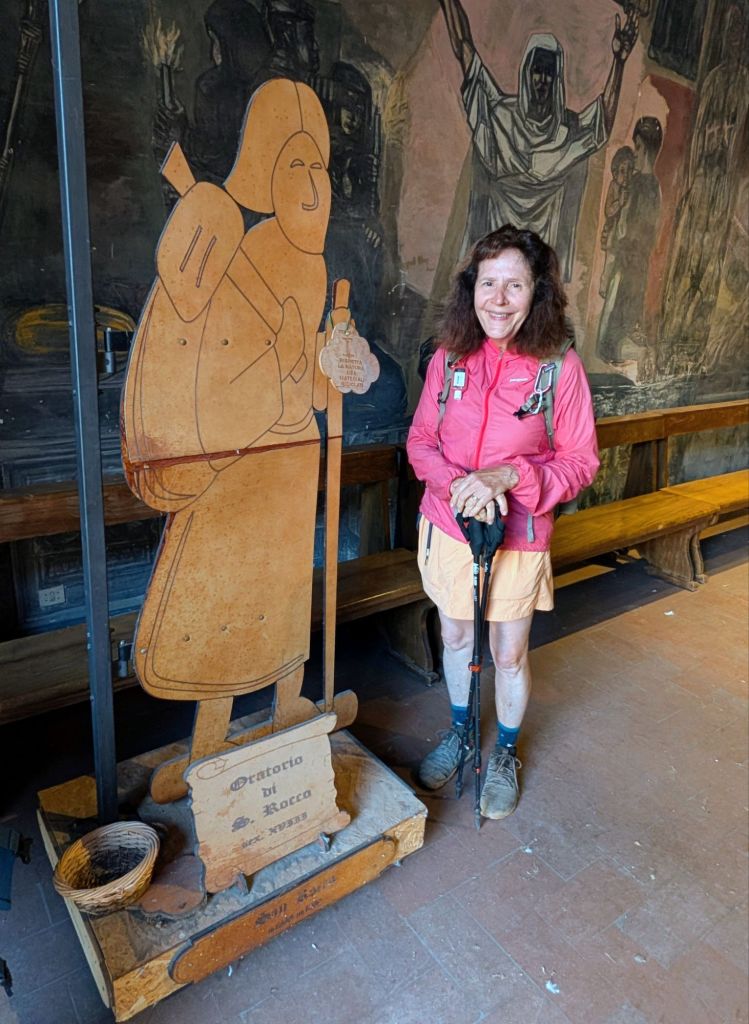
This church is from Saxon origin & is recorded in a 727 AD charter. The present church was started in the late 10th or early 11th century before the Norman conquest in 1066. The vividly colored wall painting is known as the “Doom Mural” because it shows the biblical Day of Judgment. It depicts the “Purgatory Ladder”, the “Tree of Knowledge” along with scenes showing heaven & hell, including the devil, other demons, & tortures for committing various sins. This painting in dark red & yellow ocher was done around 1070 making it the oldest intact wall painting in England. I I also included an index explaining the mural’s scenes

I also included a photo showing a “T” inscribed in this church’s pillar centuries ago representing Thomas Becket for whom this pilgrim trail honors.

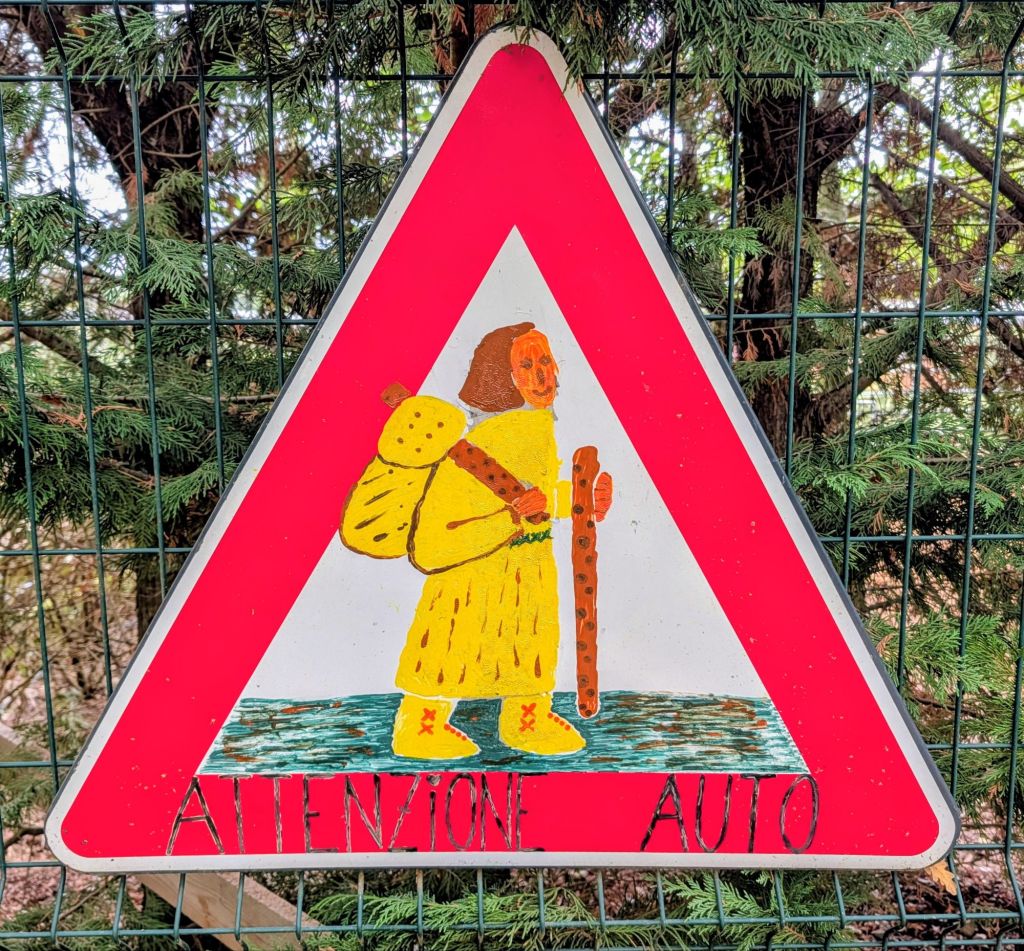
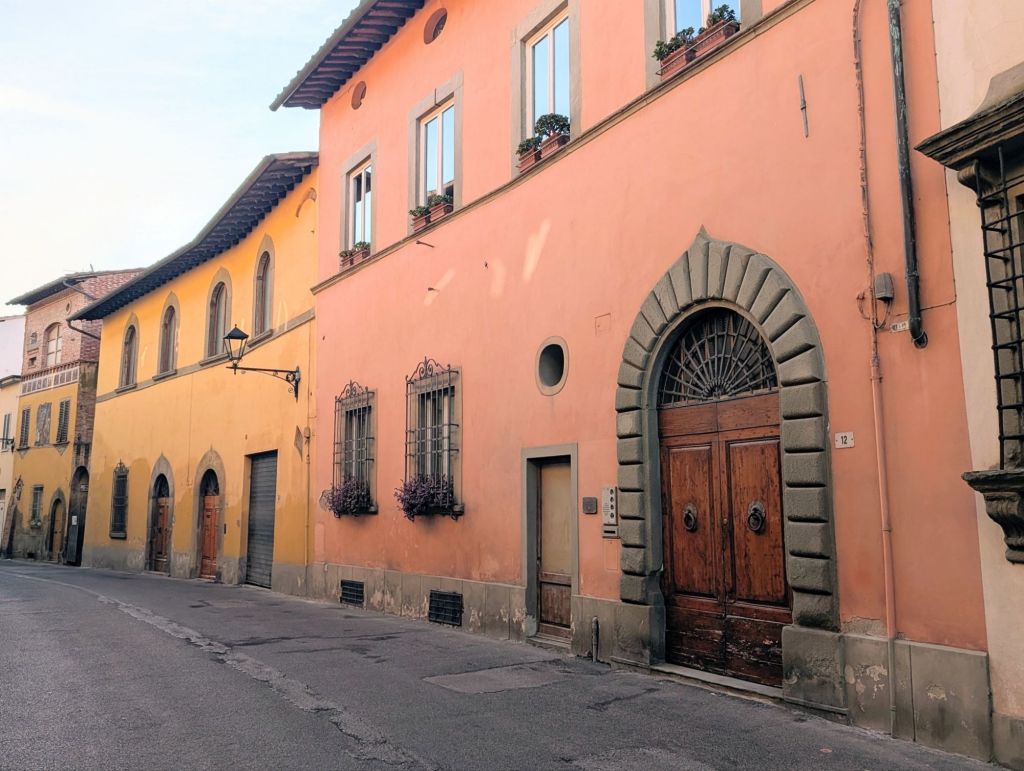
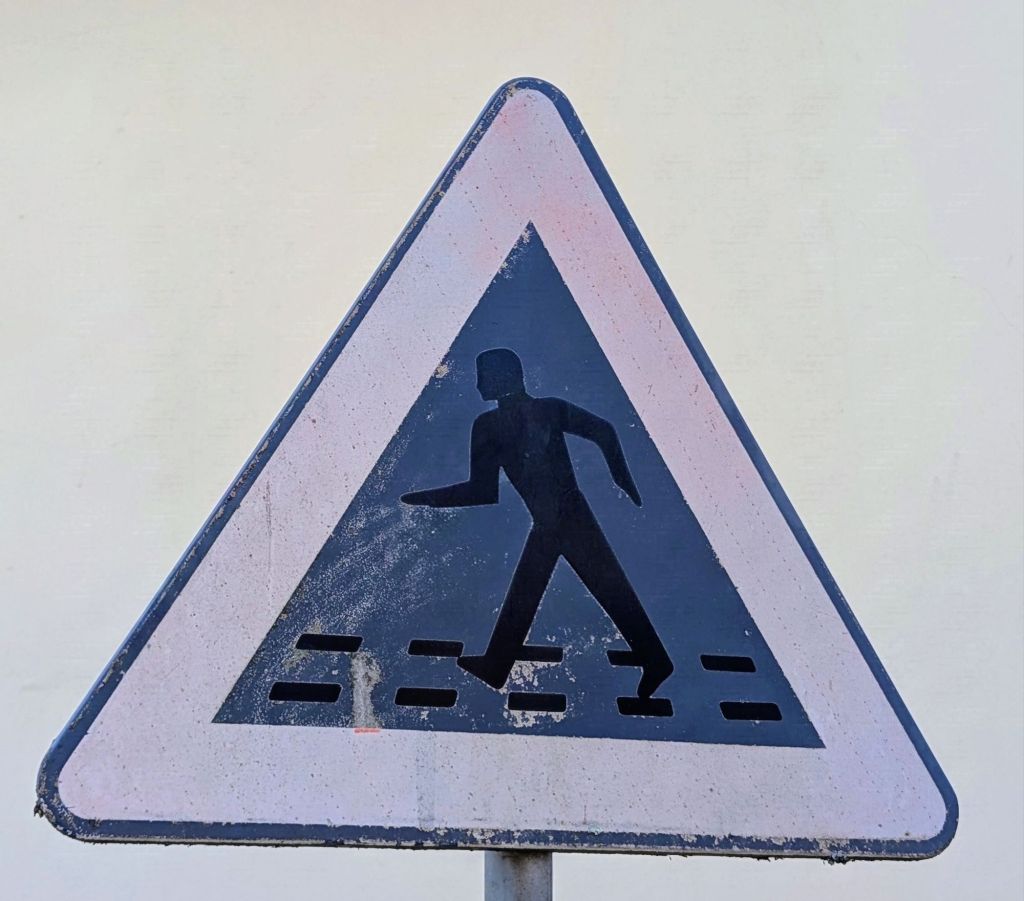
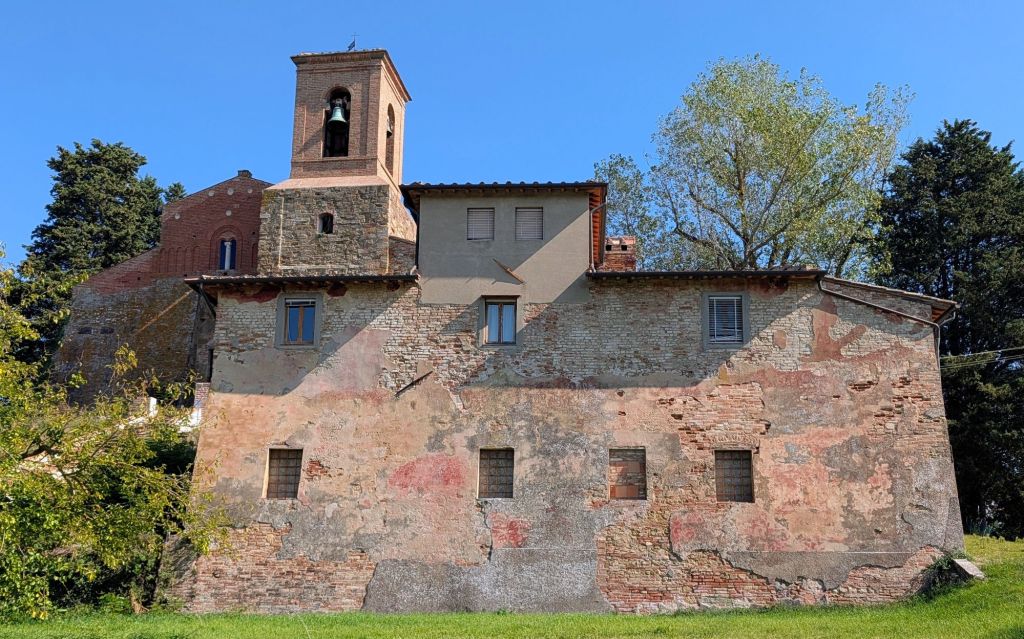
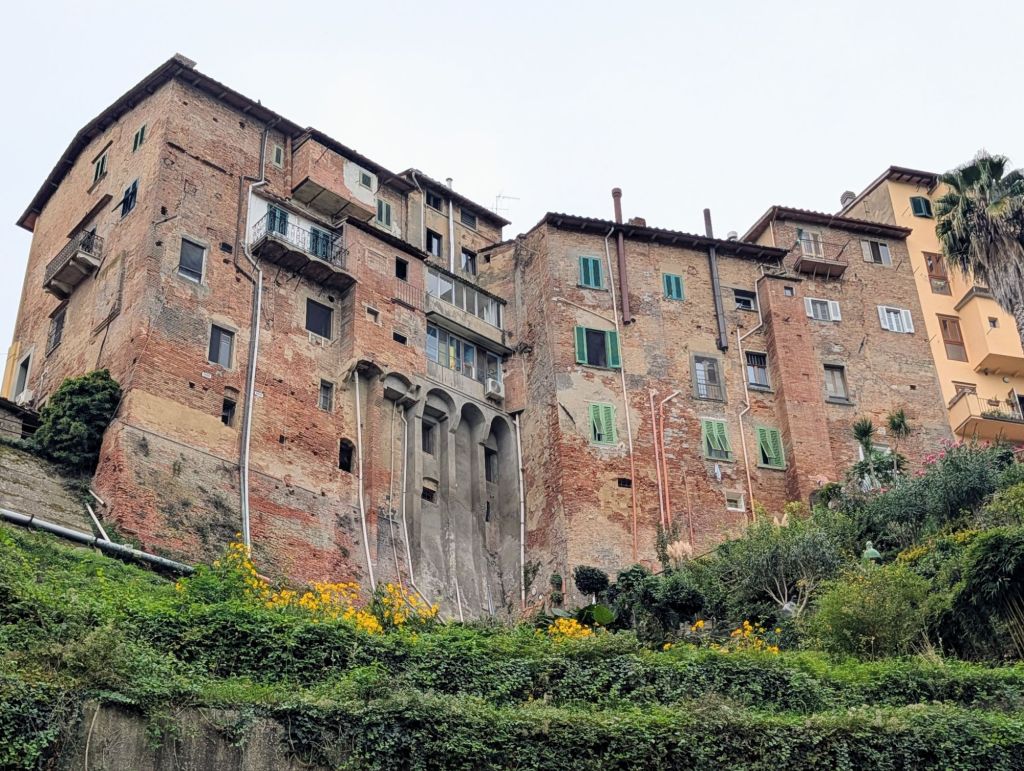
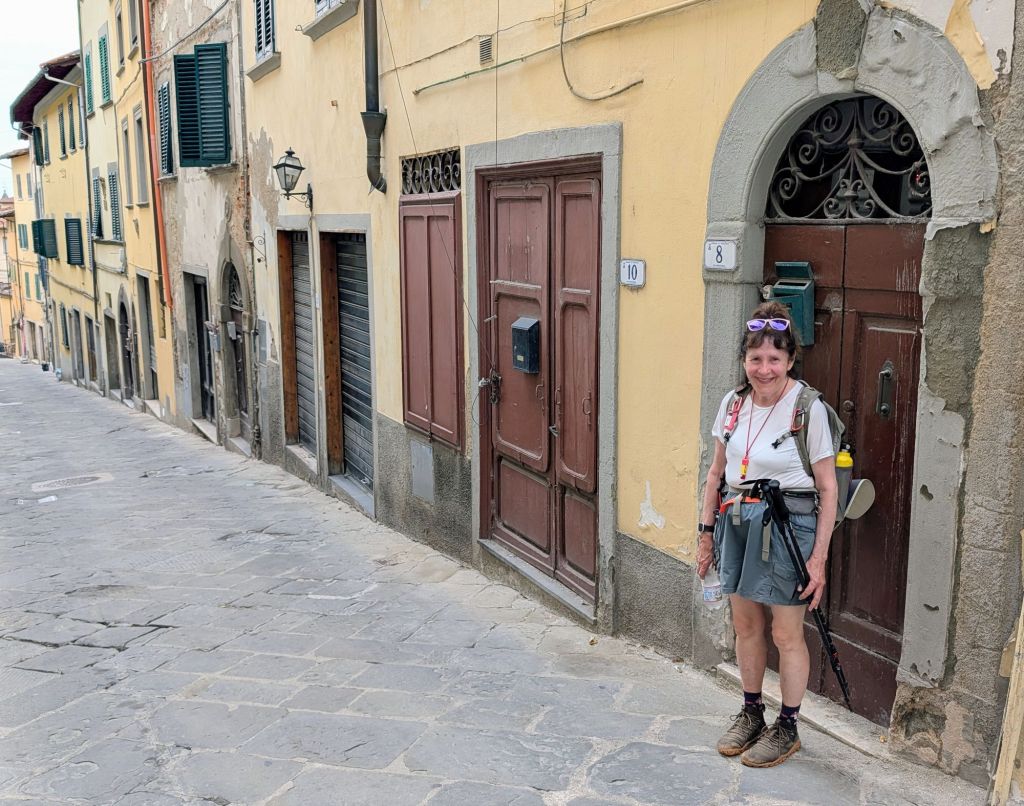
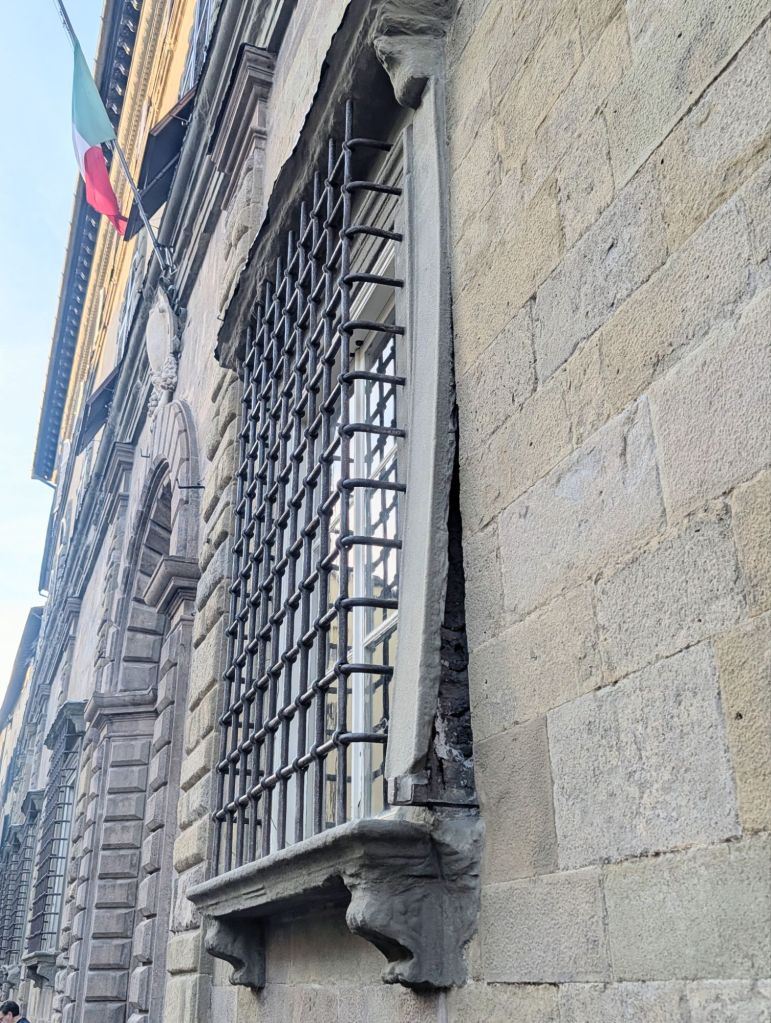
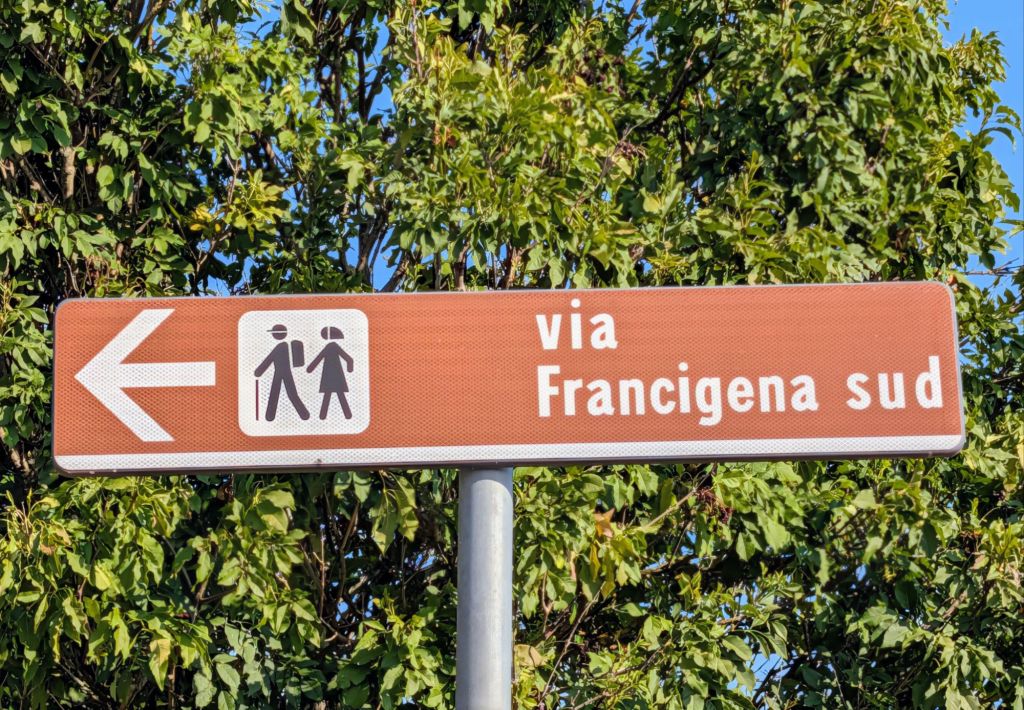
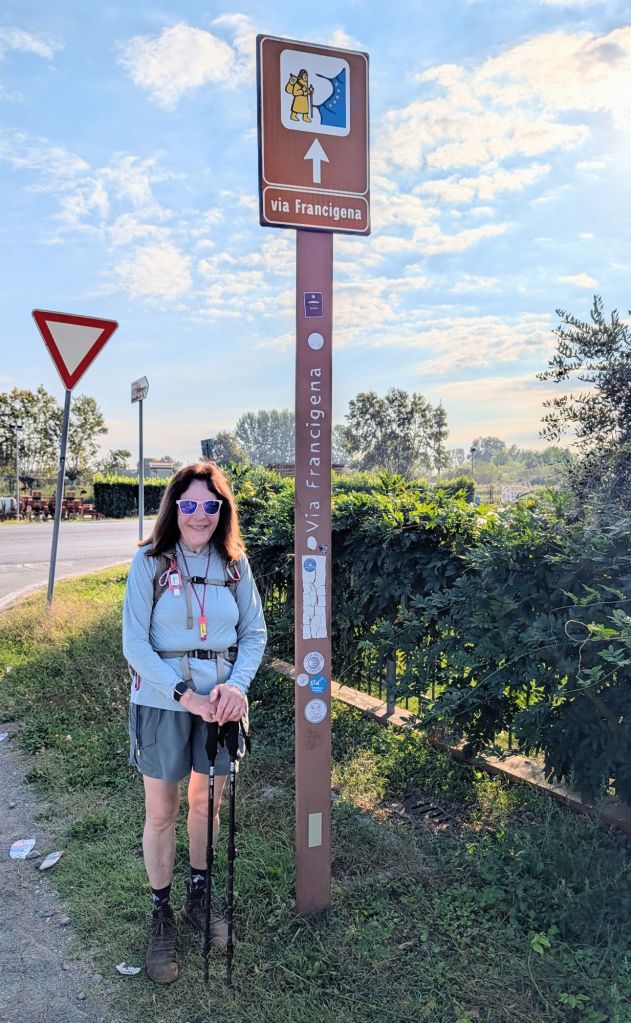
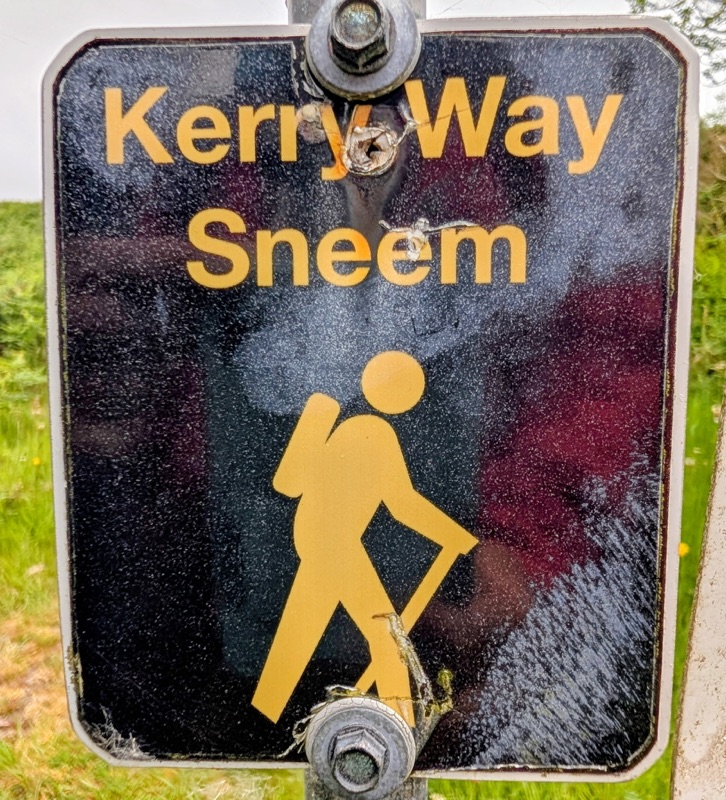
Back on the trail, we saw one of the very few Pilgrim Way signs, a glimpse of downtown London in the distance & a historic stone house.

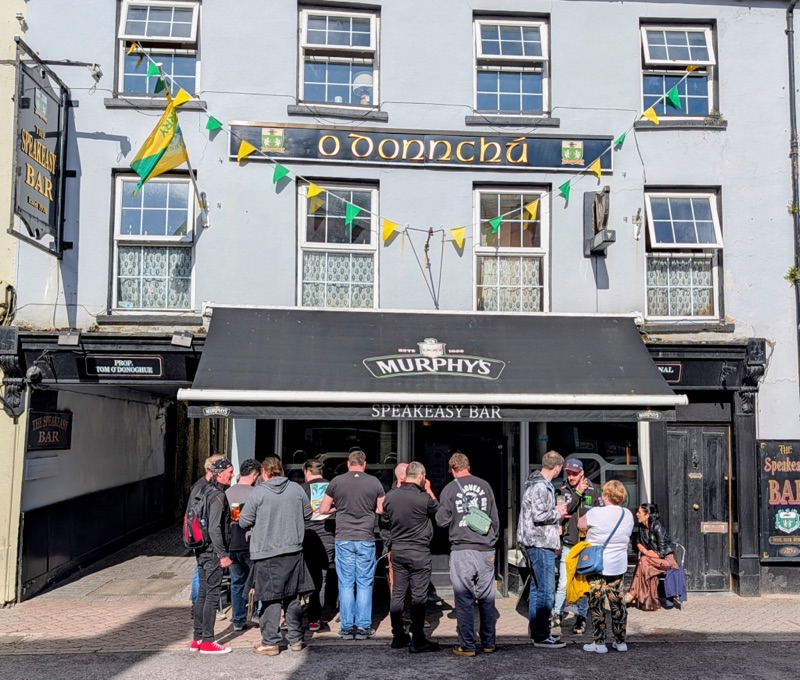
We also stopped at small pub called The Harrow which has some WWII history.

This 400 year old pub was the headquarters for the British Home Guard during World War II. When it was thought the ridge on which it was located may be used to defend against a possible Nazi invasion, fighting positions were built just in case. There is a map on wall showing the local defense plan. At 718 feet in altitude, it is also the highest pub along the Pilgrim Way near the trail’s highest point at 787 feet.

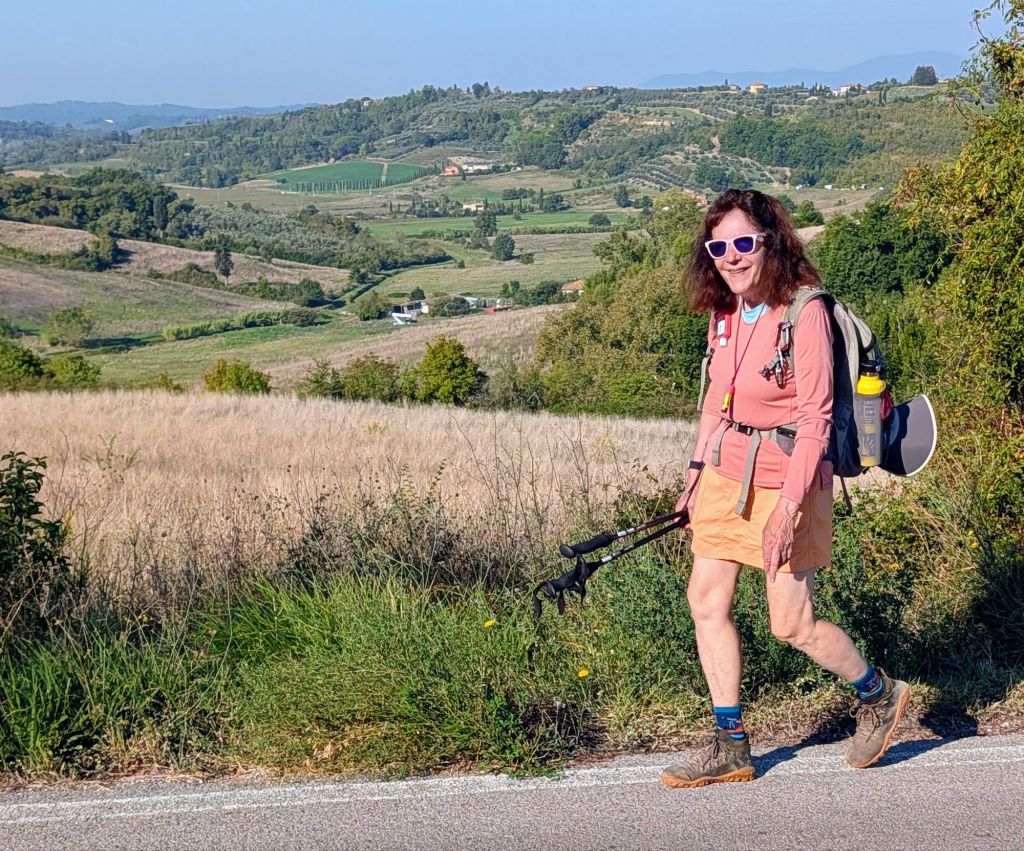
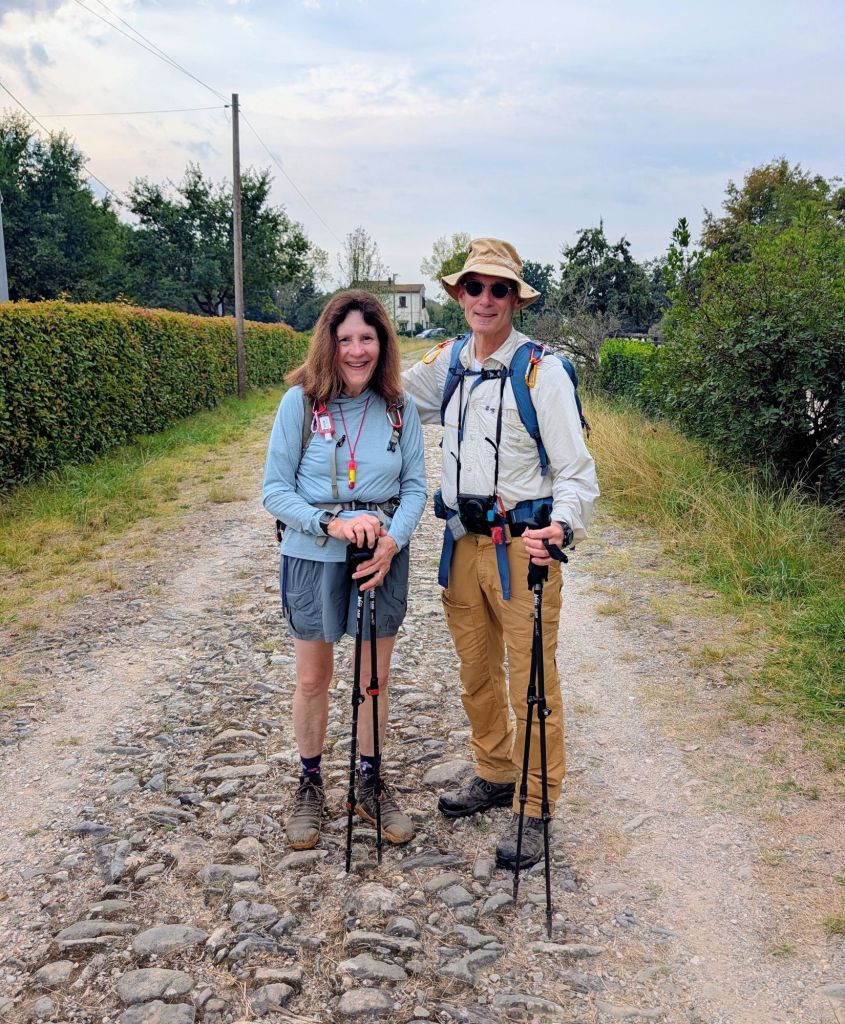
Compared to walking the Camino de Santiago where you meet a different pilgrim almost every hour, on this path we have basically met no pilgrims. However, today we met a family of 3 doing a small section on the route walking in the opposite direction. We enjoyed swapping stories & giving each other tips.

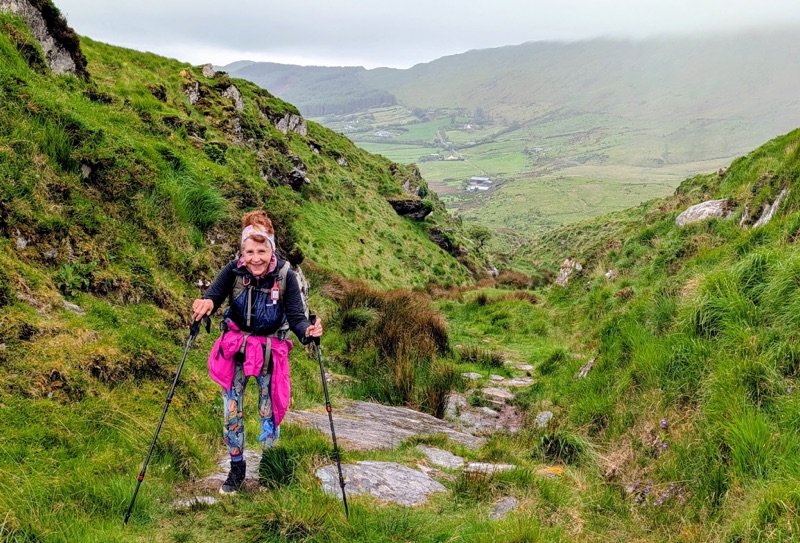
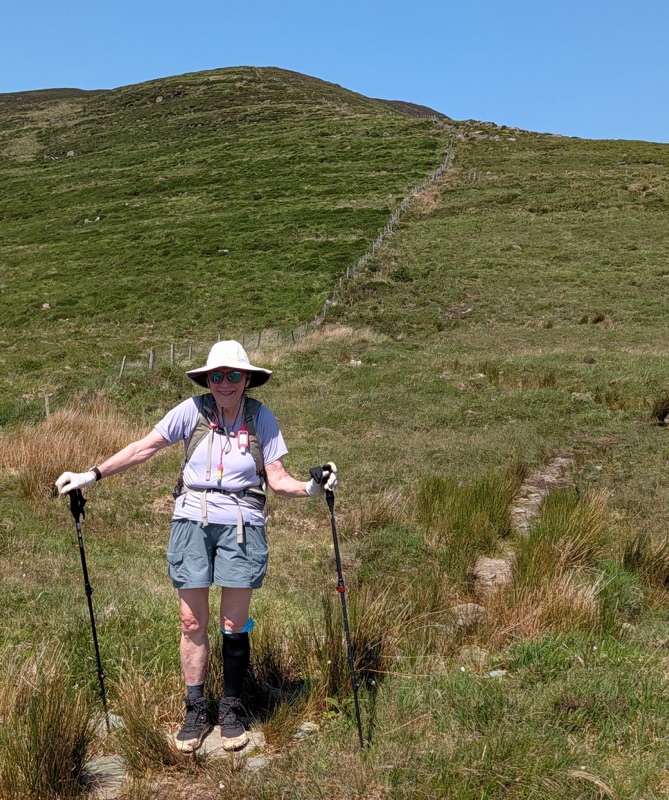
Our path took us up long hills,

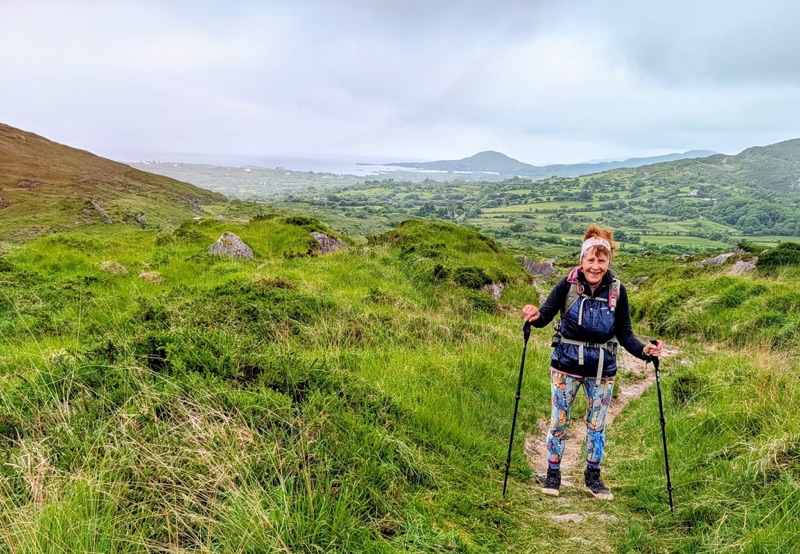
Back down again

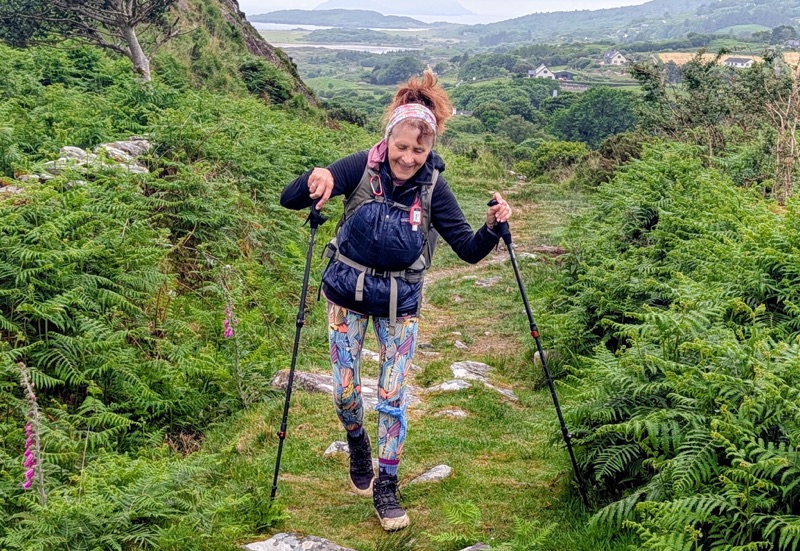
and across the motorway more than once.

Very late in the day, we were forced off the trail due to it being closed by private residences across whose land it normally passed which caused major backtracking & a huge detour.

The last mile was was a struggle for me; but, we finally arrived after 11 hours on the trail to our lodging which was a Days Inn. (Yes, the same as in the States.)

Happy to say we are more than half way now. Seven more days to go!

England’s Pilgrims Way

West Humble to Reigate

Day 6 – 11.2 miles walking

Today’s highlights were stepping stones, a few up & downs on steep hills, & a church.

Not long after leaving our hotel, we crossed these strategically placed Stepping Stones on the River Mole.

After this river crossing, we had a long climb up to the view point on Box Hill. It is a nice place to rest & enjoy the view. The view from here was believed to have been enjoyed by Jane Austen.

From there we took a detour off the path to Betchworth to visit another old Norman church called Saint Michael’s. It has another claim to fame by being the church for Wedding #1 in the movie “Four Weddings & a Funeral.”

In case you don’t remember, this is the wedding at which Hugh Grant’s character is the best man & at the altar he realizes he forgot the wedding rings during his great haste to get to the wedding on time after having over slept.

His buddy at the church bails him out by handing him a gaudy colorful plastic ring for the bride & a heavy metal skeleton head ring for the groom that he scrounged from the wedding goers.

That movie came out in 1994 & the docent at the church said there was a big party at the church two years ago to celebrate its 30th anniversary.

Even though it is well off the pilgrim trail, a nice woman at the church found a stamp for us to use in our trail passport books.

Homes near the church can also be seen in the movie.

It started to rain a little, so our lunch stop was at a convenient little bus stop in Betchworth.

Over the next few hours we did our best to stay dry as we climbed once again into the chalk hills & made our way along the wooded trail.

Not a lot to share from this trail segment; but, it is hard to beat a nice walk in England.

England’s Pilgrims Way

Guildford to West Humble

Day 5 – Official distance 13.5 miles; We walked 16 miles.

Not long after we started today, we met some women who told us that our hotel The Angel in Guildford was haunted!

In 1973, Roger Moore who played James Bond in the movies spent a few nights at the hotel. He said he was awoken each night at 2 AM by a spectral Victorian chambermaid cleaning his room.

There have also been sightings of military men appearing in the mirror, shadows pacing along the walls, & hearing loud noises in rooms in which nobody was staying.

A soldierly figure appearing in a foreign uniform has been sighted in the bedrooms & in the cellar. During one appearance, this spirit lingered long enough for a guest to sketch it.

Alas, we seemed to have been ignored by all the ethereal spirits.

Today was much colder than yesterday. , I didn’t remove any layers & even added a rain jacket during the last few hours on the trail when it rained. Given the choice, I will take cooler temps over warmer ones for hiking.

Once we left Guilford, our walk took us through the lovely Chantry Woods. Its name originates from 1486 when the Guildford mayor bought the forest & gave it as an endowment for a “Chantry” which is gift or trust to the church.

After climbing Saint Martha’s Hill, we were rewarded by seeing another old Norman church which dates from 1190. We met a woman there preparing the church for Sunday services.

Even though the church suffered a tower & roof collapse, worship continued in the church’s usable part with weekly services never having stopped in almost 1,000 years,

The next highlight was the lovely town Shere which has been used as a location in many movies. The popular rom-com movies “The Holiday” & “Bridget Jones: The Edge of Reason” were filmed here. It is indeed very quaint & quintessentially British.

Reading books is very popular here.

We enjoyed several hours walking through the woods before reaching our hotel in West Humble.

England’s Pilgrims Way From Alton to Farnham

Day 3- Distance officially listed as 11 miles; We walked 15 miles yet again in 7.5 hours today

Beginning to see a trend now- Take the official mileage & add 3+ miles. 🤣

We keep stay on the trail using three different ways. First, we use the official Pilgrim’s Way book that has generic directions like, “walk through the field to the kissing gate and turn left at the White House.” Secondly, we rely on the arrows posted on the footpath posts for direction. Third & the most reliable navigation method is the All Trails app that has the Pilgrims Trail. But, even using this app we still sometimes miss a turn & have to backtrack.

However, today we stayed exactly on the trail & still walked an extra 4 miles over the listed distance!

Regardless, we still enjoy the countryside & the various historical sites along the way.

This was the first day we had to use our umbrellas due to light rain.

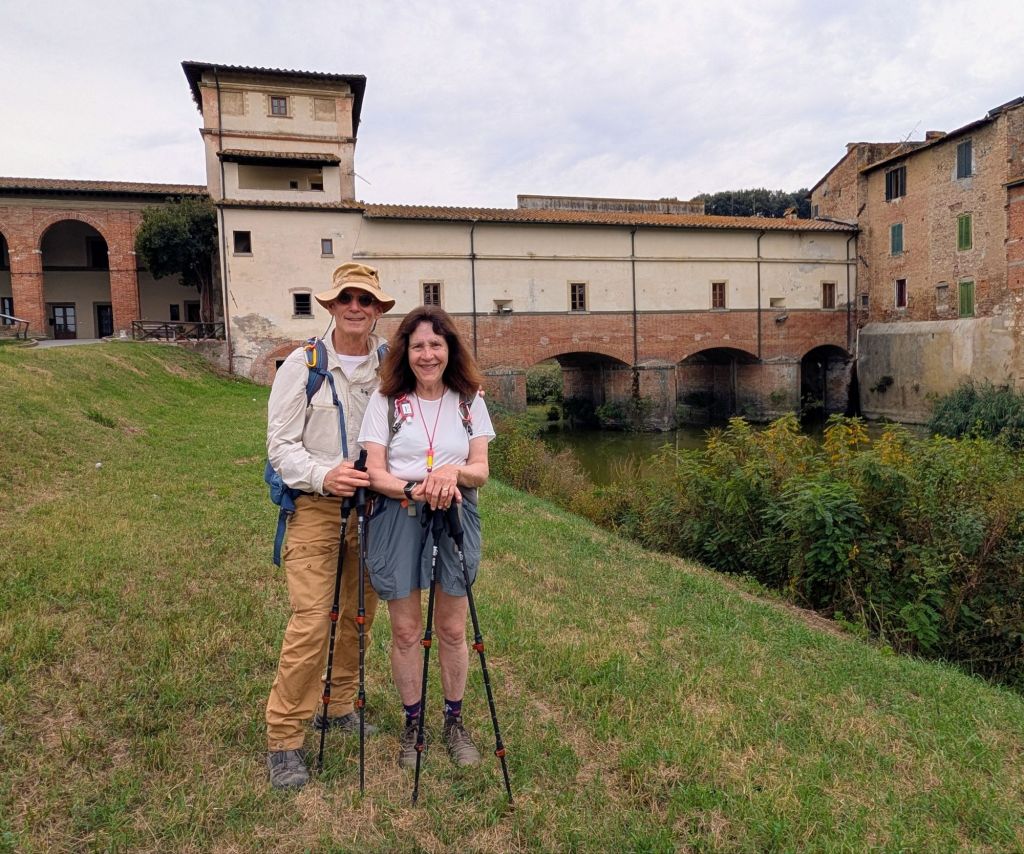
Before leaving Farnham we passed this historic building.

Today’s highlights were old churches.

Church #1- Holy Rood in Holybourne

The church wasn’t open when we arrived, so we enjoyed a short rest outside sheltering from the rain in a rather unique spot.

Holybourne gets its name from the Old English “ Haligburna” meaning “Sacred Stream”. The church’s foundation & entry archway date from the Normans in the 12th Century.

Church #2 – Church of the Assumption of the Blessed Virgin Mary in Upper Froyle

This church was owned by the nuns from St. Mary’s Abbey in Winchester & it is highly likely that its name stems from them. The present church dates from the 14th Century although there was certainly a church located here before this one.

Still raining.

Fields are often lined by hedge rows, small bushes, & sometimes a small narrow forest.

Church #3 – Church of Saint Mary the Virgin in Bentley

Bentley’s history can be traced back to the Romans in the 1st Century AD. This church was founded in 1175 by the Normans.

The rain finally stopped and we enjoyed lunch in front of Lord Baden Powell’s house at Pax Hill. He started the Boy Scouts in 1907. After he died, his wife Olave gave the house to the Girl Guides who are known as the Girl Scouts in America. It is now a rest home.

Much of the route took us through barley or wheat fields. We also saw young men exercising horses along with more unique homes.

Farnham is a nice college town. It has a castle that is now closed for repair & was known for hosting Queen Elizabeth I.

Church #4 – St. Andrew’s in Farnham

A church has stood in Farnham since the 7th Century & one was mentioned in the Domesday Book in 1086 in which William the Conqueror ordered a survey to be done accounting for his kingdom.

A long day; but, delightful the entire way.

England’s Pilgrim’s Way: Alresford to Alton

Day 2 – Officially listed as 12 miles; We walked 15.3 miles ( Hotel was a mile from the trail, major construction in Alresford forced a long detour to get back on the trail, & we lost the unmarked trail a couple times forcing us to backtrack).

We started our day with a proper English Breakfast minus the sausage.

When leaving Alresford, I saw these two people. This was Polling Day & they were the voting officials at the door.

This area is also known for its old railway called the Watercress Line which still uses steam locomotives. The line gained its name when it was used to transport watercress grown in this area to markets in London. This train # 35005 is an SR Merchant Navy Class “Canadian Pacific” engine built in 1941. Despite regularly being able to travel at over 100 MPH which was very fast for a train back then, only 30 of these engines were built. We heard its classic steam train whistle blowing in the distance announcing its presence before we were fortunate to see it pass by us.

“ I hear the train a- comin’, it’s rolling ‘round the bend…”

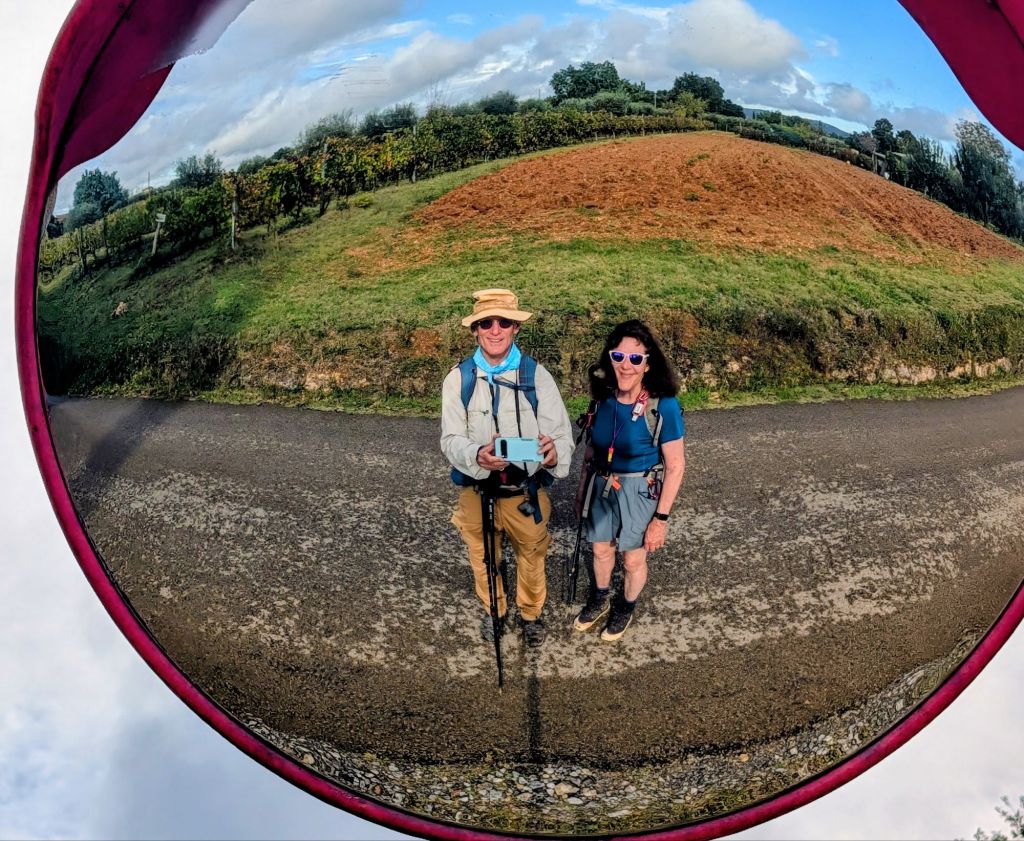
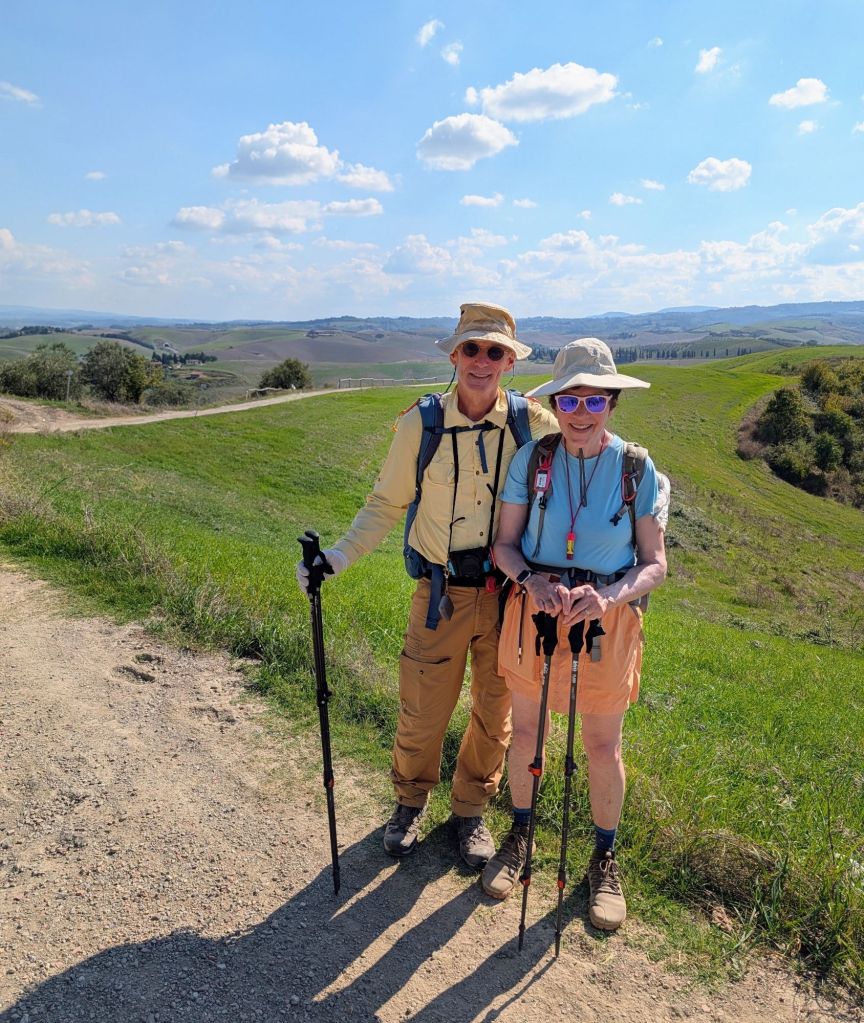
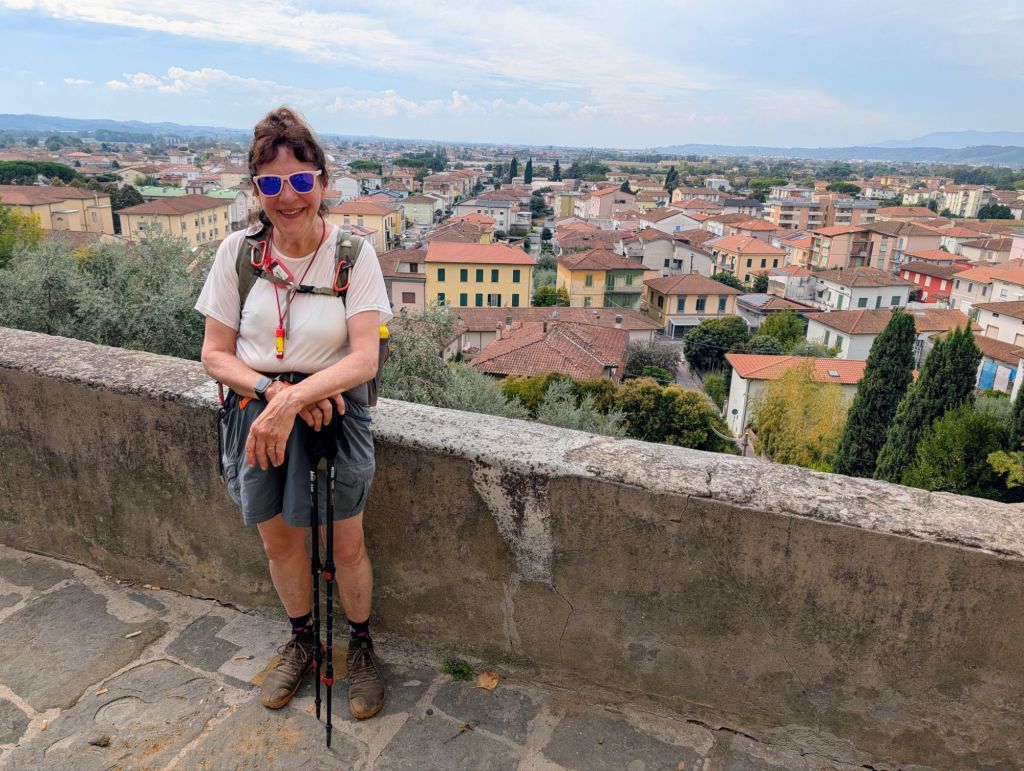
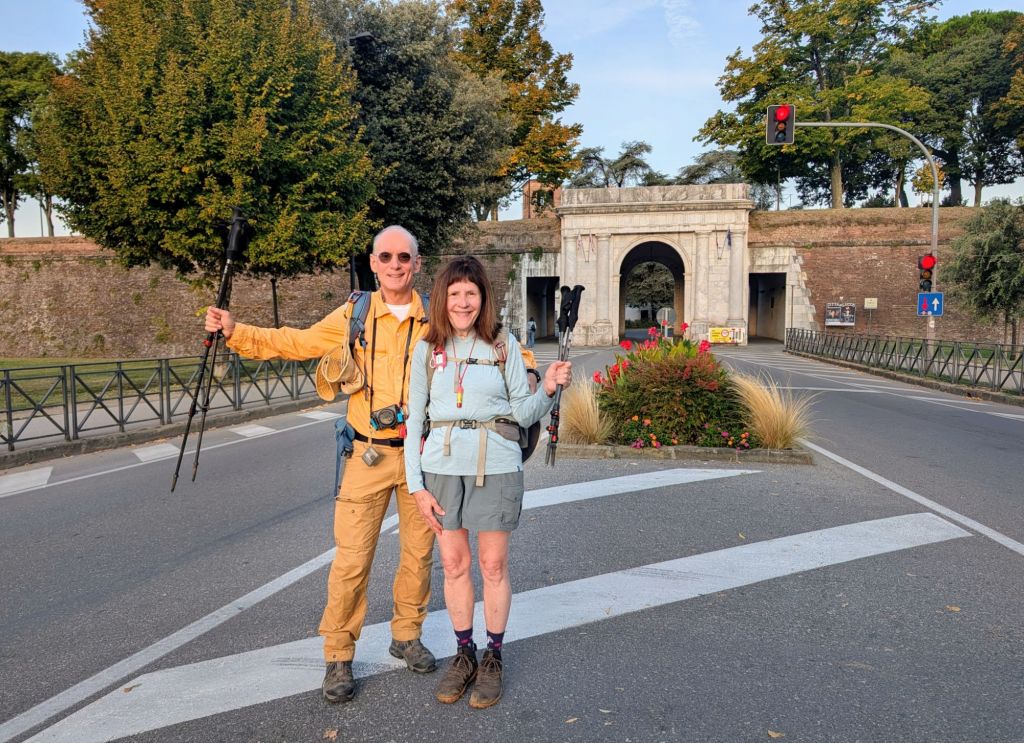
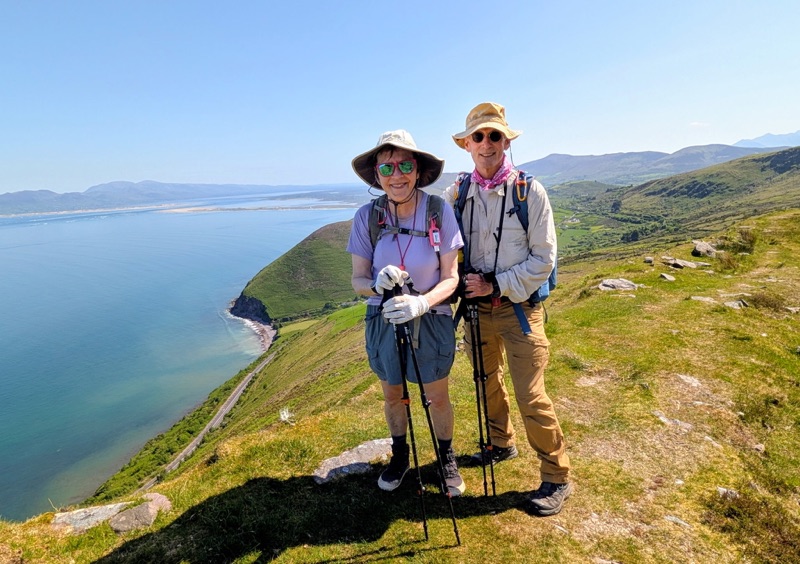
Unlike the Camino in Spain, we almost never meet other pilgrims here; but, occasionally we do meet other walkers who are happy to snap a picture for us. Even though England has thousands of miles of public footpaths & walking is extremely popular among locals, we have met very few people so far on our trek.

Today’s route took us through pastures & woods, by more thatched roofed homes, & through fields with spring lambs.

We enjoyed a quick lunch in a field with some sheep.

Final push into Chawton.

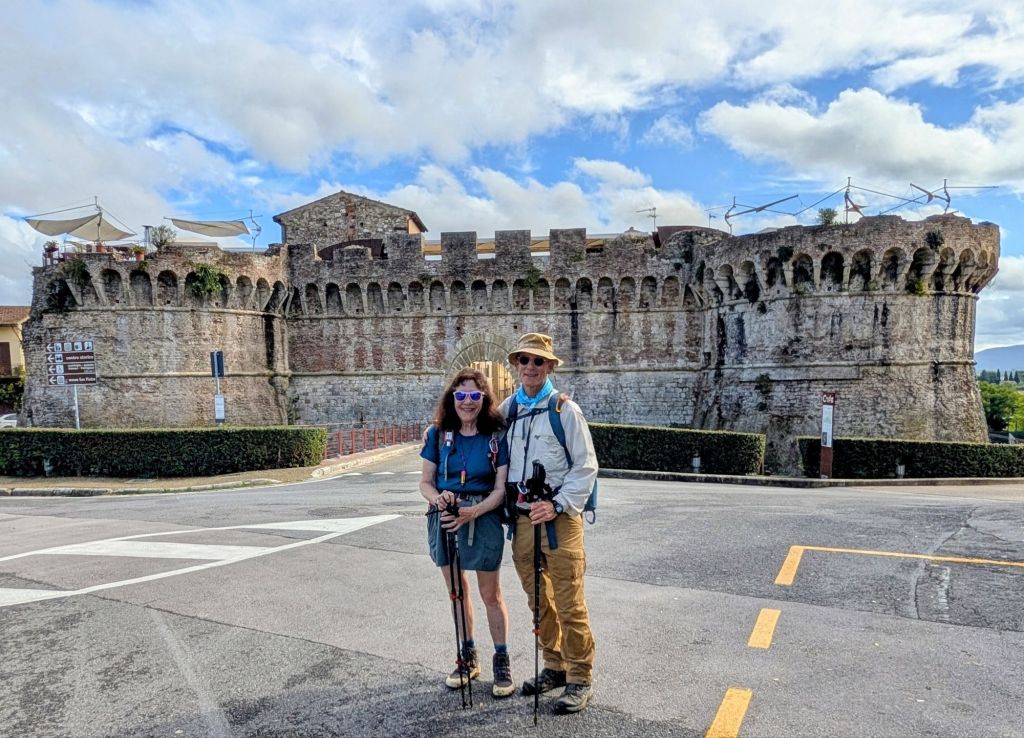
After over 6 hours & 14 miles, we reached Jane Austin’s home in Chawton which is only a mile from Alton where we stay tonight.

The Greyfriar pub is right across the street from her home.

Before walking our last mile to our hotel in Alton, I enjoyed a proper cup of afternoon tea in a china teacup. 🥰

This tea house across the street from Jane Austen’s home right next to the Greyfriar is called “Cassandra’s Cup” after Jane’s sister Cassandra. In 1804, Cassandra Austen became the first person known to mention “afternoon tea” in writing.

Hiking England’s Pilgrim’s Way from Winchester to Canterbury

Follow the red line for the Pilgrim’s Way from Winchester to Canterbury

Day 1 – Officially listed as 9 miles; We walked 13.3

This is now our third Pilgrimage Trail walk. We hiked the Camino Santiago de Compostela in Spain, the Camino Portugués in Portugal & Spain, & now our first pilgrim trail in England. However, this our 3rd long distance hike in England.

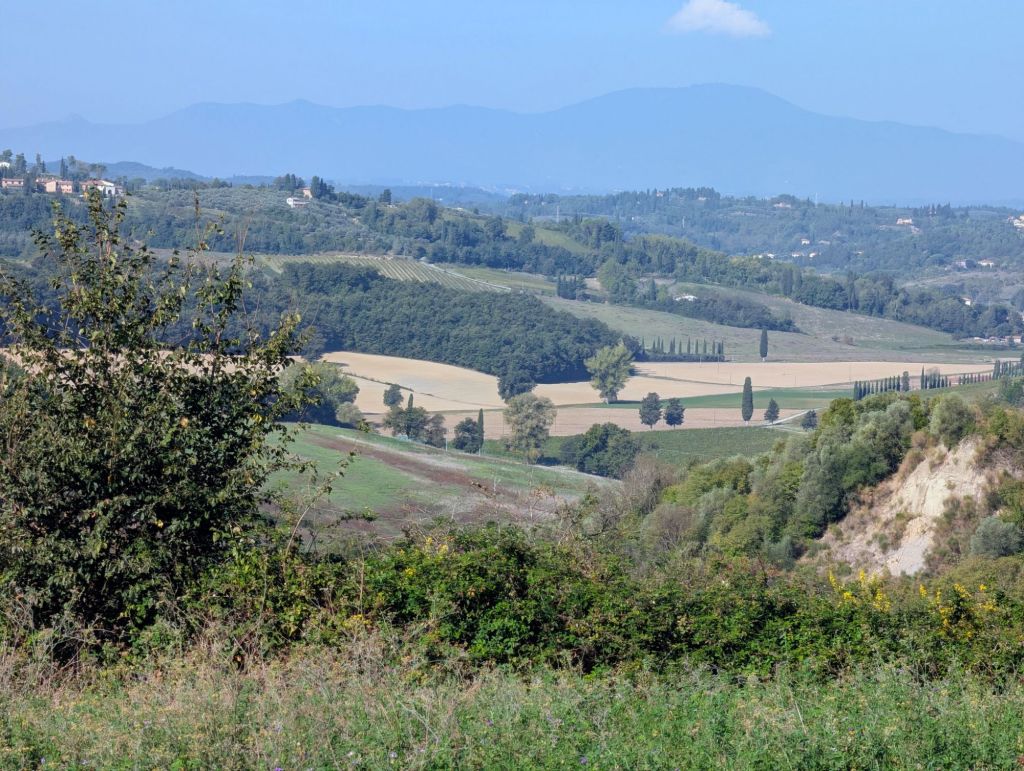
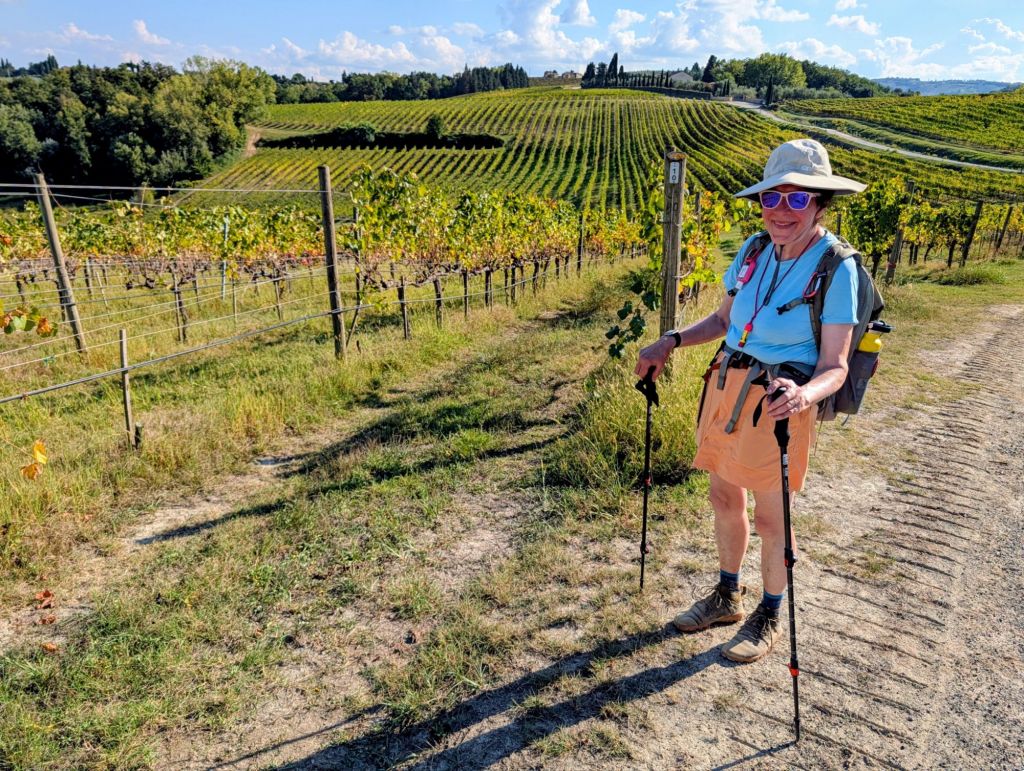
It’s hard not to love the English countryside in May. The temperatures are mild, wildflowers dot the hillsides, & lush green forests are brimming with green leaves.

Like our St James walks in Spain & Portugal, you buy a Pilgrim Passport at the beginning & slowly collect stamps at various places along the way to the finish.

Stamping our Pilgrim Passports

Today we started at the Winchester Cathedral which at 558 feet long is the longest medieval cathedral not only in England; but also in the world.

The cathedral also contains the writer Jane Austin’s grave. She was initially interred with no honors; but, later a brass plaque & some stained glass were installed to honor her.

You can also see Saint Swithun’s grave in the cathedral. He died in 863 & a century after his death, he was chosen to be this place’s patron saint making him the first minister in Winchester.

In the early 1900s, huge cracks, started to appear in Winchester Cathedral as it started sinking & moving, so it was dangerously close to collapsing completely. Early efforts to reinforce its waterlogged foundations failed until deep sea diver William Walker descended into the flooded ground wearing a primitive 200 pound diving suit to level the area.

He started by removing the peat soil & then laid cement bags to plug the rising water. Bodies which had floated from graves, made the water toxic in which he worked.

William Walker worked underwater every day for 6 to 7 hours a day for six years from 1905 until 1911.

 Walker single-handedly laid more than 25,000 concrete bags, 115,000 concrete blocks, & 900,000 bricks to support the cathedral. There is a small statue portraying him in the rear of the cathedral honoring him as “ the man who saved the cathedral with his own hands” as well as a local pub commemorating his memory.

Not far from the church the pilgrim trail takes you past the Hyde Abbey ruins. Alfred the Great who united England refounded the royal city Winchester around 880. This Abbey was completed in 903. Today all that remains from the Abbey is the gatehouse that commanded the entrance between the large Abbey’s inner & outer precincts. Alfred the Great was buried here, but his remains as well as other famous ancient Anglo-Saxons are now apparently lost to the ages. At one time Hyde Abbey even owned the tavern where the old English book “The Canterbury Tales” was said to begin.

Today we passed two old churches where we collected stamps for our passports.

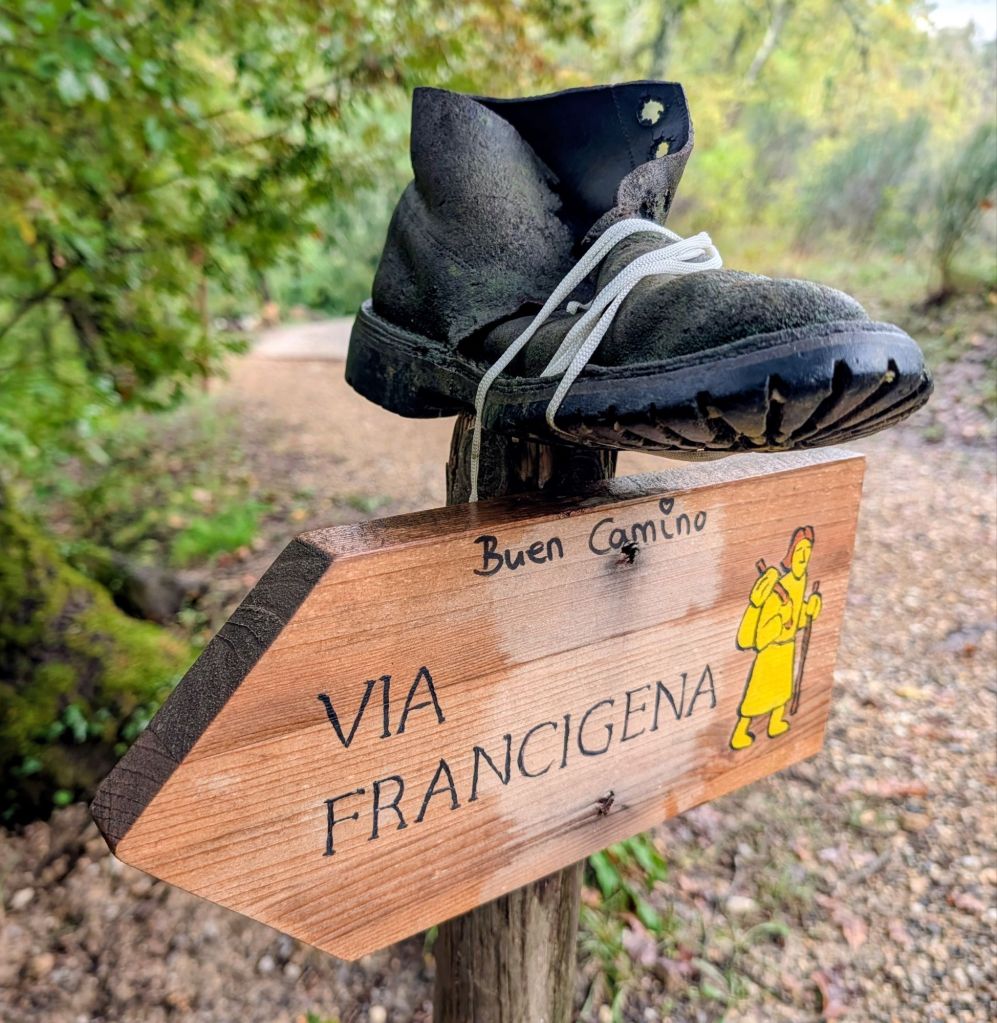
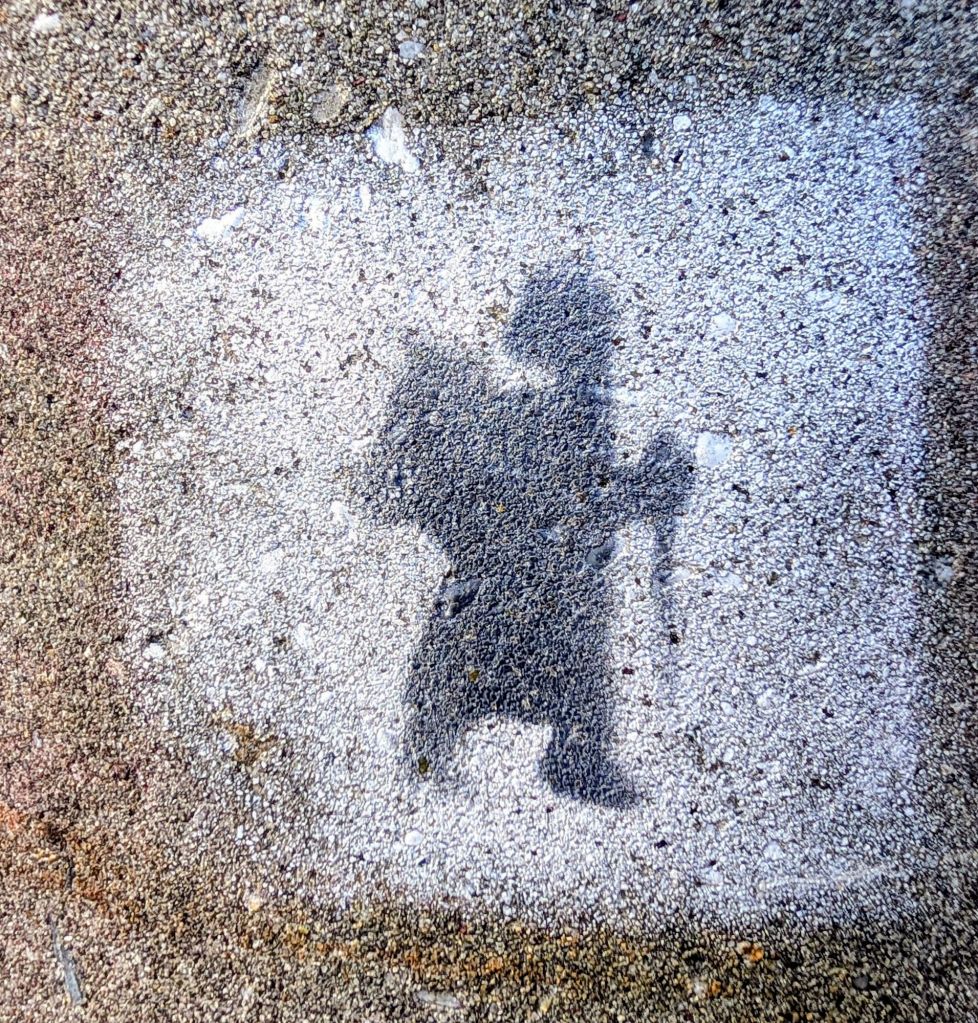
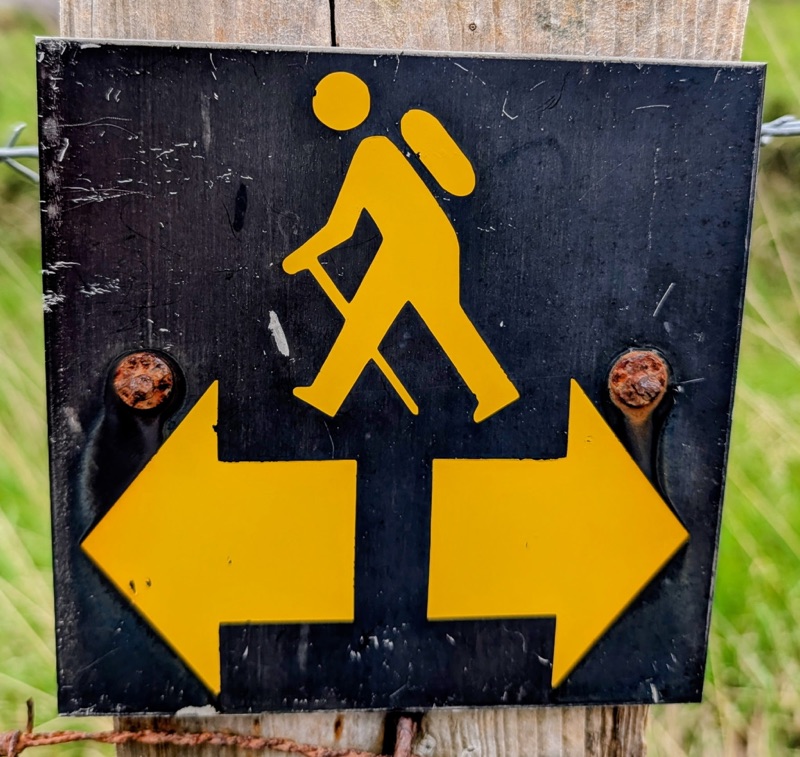
The path here isn’t marked as well as the Camino in Spain, but from time to time we do see emblems letting us know we are going in the right direction.

It was a beautiful day to walk & we enjoyed meeting the local cows along with walking past many thatched roof homes & old cottages. Classic English countryside!

We arrived in Alresford around 5:00pm. I was a little sore & tired, but it was a great day to begin our latest pilgrimage.

Canary Islands

The Canary Islands are in a way like Spain’s Hawaii. Like the Hawaiian Islands , these islands were formed by volcanic eruptions in a tropical location off Morocco’s coast. However, unlike Hawaii, it does not rain much here, so these islands are much drier, almost like desert islands.

The Canaries have become the favorite destination for many Europeans looking for a sunny location in the winter.

We enjoyed visiting three of the eight different islands.

Tenerife

Our first stop was the largest island called Tenerife.

On our first day we drove up the national park where you can view the volcano El Teide which at 12, 198 feet high is Spain’s tallest mountain. It’s an amazing place to visit. Even though the last eruption was in 1909, hardly any vegetation has returned to the landscape & you can easily see past lava flows.

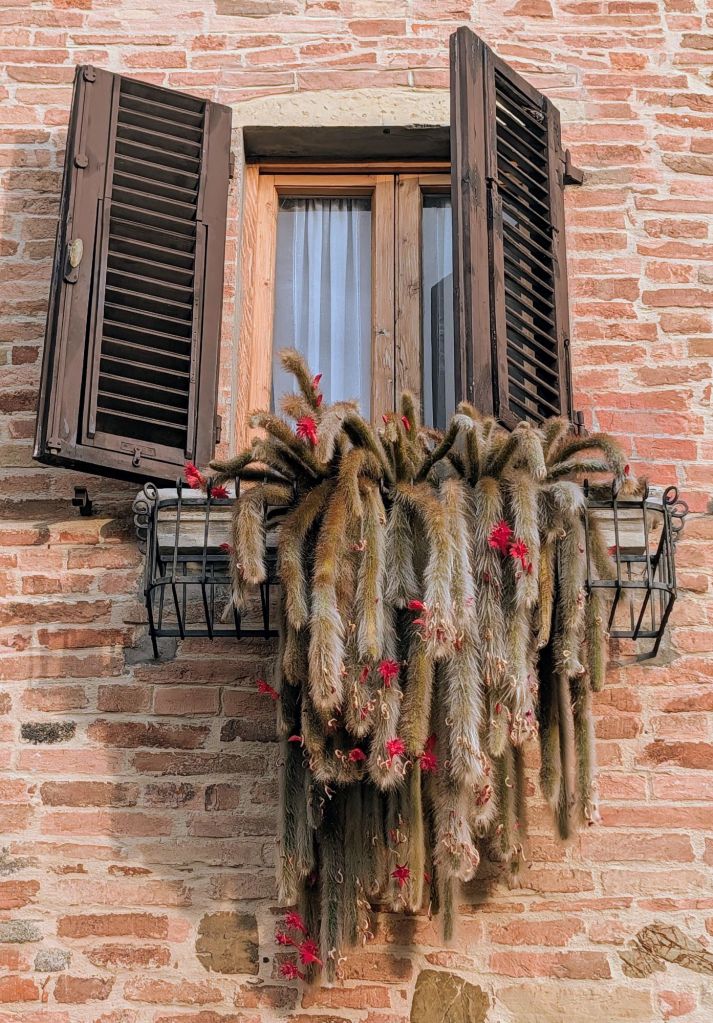
We also enjoyed walking on the cobblestones in three of the oldest towns on the island. A common architecture style in the Canaries are wooden balconies outside the homes.

All over the Canary Islands you see banana trees.

The Canary Islands provide Europe with most of their fresh bananas. Most are grown on Tenerife; but, every island we visited had plots of land dedicated to this crop.

Tenerife has 2 very unique plants. One you only see in the volcanic region in the high altitude near Mount Teide.

We were only able to see remnants of the Tower of Jewels which has bright red flowers when it blooms.

Tower of Jewels

The other unique plant is called The Dragon Tree. To me, they look like a different version of the Joshua Tree. Although a tree, it is actually in the asparagus family.

It is called a Dragon Tree because its canopy has branches resembling a multi-headed dragon, its gnarled roots resemble dragons’ feet, & its sap hardens into red blobs resembling a dragon’s blood. It is the only tree in the world whose sap turns red when it dries.

The Draco Milenario (Millennial Dragon Tree) in Icod de los Vinos on Tenerife

This oldest Dragon Tree is well protected inside a botanical park & is estimated to be over 1,000 years old.

The Draco Milenario is over 60 feet high & 66 feet in circumference

A few other pictures from Tenerife.

La Palma

This island is far less developed than Tenerife & is much easier to get around. It has the most active volcano activity in the Canary Islands. The Cumbre Vieja volcanic ridge last erupted in 2021 for 85 days near the town of Santa Cruz.

We drove up to the Caldera de Taburiente which is inside the national park named for it. This is a huge volcanic crater that has many paths you can walk around it. The day we were there, the crater was covered in clouds, but you could still feel its enormity.

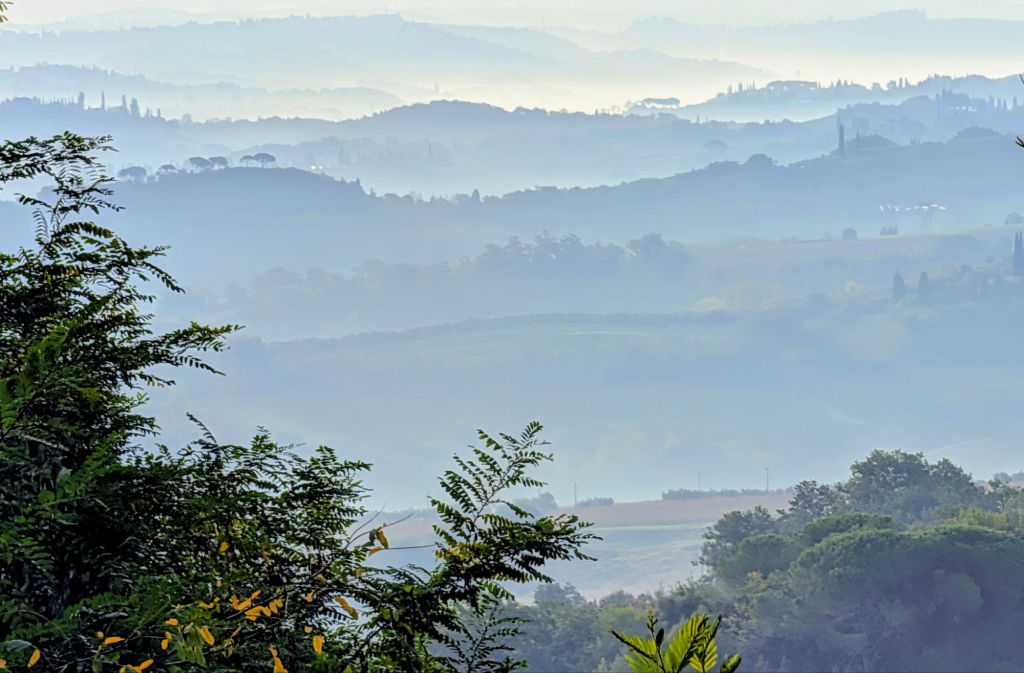
View we would have seen on a clear day.

La Palma is also a destination for amateur star gazers & professional astronomers. Close to the crater rim, you can see many telescopes at the Roque de los Muchachos Observatory including the world’s largest telescope. You also see giant mirrors in the area.

La Palma’s main city is Santa Cruz. It has a replica of Columbus’ flagship the Santa Maria. Columbus used Santa Cruz a port for three of his voyages to the New World. It was his last stop after leaving Spain before heading across the Atlantic.

For several centuries, the Canary Islands remained a major hub for ships traveling to the New World. At one time, Santa Cruz was Europe’s 3rd busiest port behind only Antwerp, Belgium, & Seville, Spain.

Santa Cruz is a lovely place to spend a few hours.

La Palma is known for its black beaches

Gran Canaria

We arrived into Gran Canaria with a mixture of clouds, rain, & sunshine that stayed with us the three days we were here.

We stayed close to the port in La Palma & had a beautiful view of the cruise ships. During the night they would leave & we would awaken to new ones docked in the port.

On our first full day we drove to the southern part of the island which was sunny & warm. The Dunas de Maspalomas is the location where most tourists seemed to go for sunbathing.

Another area we toured was was more inland & reminded me a lot of America’s Southwest.

The second day we explored the island’s north side which was cooler, more mountainous, & had very narrow windy roads.

We enjoyed a stop in Tejeda. It is known for its yummy almond pastries at Dulcería Nublo.
After Tejeda, we drove to Firgas which is famous for its fizzy mineral water, it is called the “Village of Water.”

Firgas has the Paseo de Canarias which is a promenade with lovely tiles & displays that celebrate each Canary Island along with every municipality on Gran Canaria.
Our last stop was at banana plantation to learn about different banana varieties & how they are grown in the Canary Islands.

The main banana grown here is the Cavendish variety. It is smaller in size so banana plants produce more of them on their bunches making them more profitable per plant.

I wanted to visit the Canary Islands for two reasons.

First, I had heard from various European friends how much they liked the Canary Islands.

Second, one of my maternal ancestors came from these islands. Maria Josepha Leal Goraz was born in 1724 on the island Fuerteventura. As a young girl, she immigrated to the New World to New Spain (now in Louisiana). It’s always fun to learn a little more about your family history & roots.

Spain has once again given us a lovely experience. Wish I could say my Spanish has improved; oh well, you can’t have everything. 😂🤣

Andalusia

Andalusia is Spain’s southern region. The Moors controlled this area for almost 700 years from the 8th Century until almost the end of the 15th Century. Their presence left behind many castles built with Arabic architecture & features.

Two years ago, we visited Seville & Cordoba by train. This time we rented a car so we could explore all Andalusia including cities & small villages.

Almería

Almería is the driest place in Europe & has its only true desert climate. They get lots of sunshine & little rain (only about 8 inches annual precipitation).

For many miles all around Almería’s outskirts spread over 100,000 acres you will see greenhouses; this sprawl is nicknamed “The Sea of Plastic.” In the winter, Almería provides most of Europe’s fresh fruits & vegetables.

 Almería has been occupied throughout history ranging from the Romans to the Muslims (who built their largest Alcazaba (fortress) in Spain here as well as other iconic city landmarks) to the Catholics who built the Cathedral that still stands today.

Málaga

Málaga is a beautiful city with marble streets, beautiful architecture, & wonderful culture.

It’s so lovely that 5 large cruise ships were docked in the harbor when we arrived.

Several large yachts also in the harbor

We enjoyed visiting the Picasso Museum. It’s fitting to have a museum for Picasso here because this is where he was born & lived as a child. The museum is in his old nursery school.

The museum displays art from many phases in his career including paintings, sculptures, pottery, sketches, & prints. I’ve been reading the book, “My Life With Pacasso,” by Francoise Gilot. I was happy to see some pieces exhibited that she mentions in the book.

As a vegetarian it is often difficult to find veggie tapas; but, in Malaga we found a restaurant with many yummy choices. It was fun to to enjoy this Spanish cuisine custom.

Like most large cities along the coastline in Andalusia, it has a large Moorish Alcazaba fort & palace which were adjacent to some Roman ruins.

I enjoyed the Flamingo Show in Granada so much that I wanted to see another show that featured both male & female dancers.

Señor & Señora out on the town

Once again, the tap dancing & movements were amazing!

Ronda

This is a small inland city away from the Mediterranean Sea situated on a mountain top overlooking a deep gorge. Its history dates back to the Romans.

The city is known for two reasons. First, it is the home to modern bullfighting & has the world’s oldest bullring. To see a bullfight here, you must come the first week in September which is when their one & only performance is.

The second notable thing about Ronda is its spectacular Puente Nuevo Bridge.

It took 2 attempts to build the bridge. The first bridge collapsed in 1741 killing 50 people. After 34 years of construction, in 1793, the Puente Nuevo (New Bridge) as it was & still is called was completed.

Its eventual span was 216 feet & its height is an impressive 322 feet above the canyon floor.

It is supported by thick vertical supports rising up from, and in places, attached to the narrow canyon walls. 

We also enjoyed driving around the mountains near Ronda to visit some classical “Spanish white towns” & one which is no longer white.

The blue village Júzcar is now nicknamed “Smurfville”

Before leaving Ronda, we enjoyed a few other Spanish favorites.

Cádiz

We only had one evening to explore this old town; but, we enjoyed what we saw.

Located on a peninsula surrounded by the Atlantic Ocean, Cadiz offers a unique blend of history, culture, & beautiful beaches.

Founded by the Phoenicians, it is believed to be the oldest continually inhabited settlement in Europe.

Often when you walk through a town in Spain in the afternoon during siesta, it is so quiet you could whisper to someone across the street and hear them. But, come 6:00pm, it’s like all the doors open & everyone comes out on the streets.

In Cadiz, we enjoyed watching families walking together, people singing along the waterfront, & friends meeting in small restaurants to enjoy a small dessert or drinks together.

On our drive back to Madrid, my husband tracked down the grave of “The Man Who Never Was” located in Huelva outside Seville.

If you are interested in knowing more about this true WWII espionage event, there is a very good 2021 Netflix movie titled “Operation Mincemeat” which stars many leading British actors.

Final thoughts on Spain.

I love finding things that are unique to a country & something I would never see in America. Here are a few.

The Rock of Gibraltar

Gibraltar in the distance from miles away

I’ve heard the term “The Rock of Gibraltar” most of my life referring to something or someone being strong & dependable. However, until you see Gibraltar, you don’t realize how impressive it is & appropriate that saying is.

It is spectacularly huge & stands out on its peninsula making everything else around it seem small & insignificant.

The other unique thing about this place is it has been a British possession since 1713 despite many failed attempts by Spain to retake it. Spain’s many failures can be directly attributed to the great efforts Britain made to continue holding it.

To enter Gibraltar, you only need your passport to walk across its border with Spain.

In all my travels, this is the first & only place I’ve ever had to cross an active airport runway to enter a country.

In the middle of the runway
View from above on The Rock showing passport control & the driveway/walkway across the tarmac

As soon as you cross the border, you realize you are on land that belongs to Britain.

Gibraltar has one long shopping street where most shops are run by Spanish workers; but, English is the spoken language. You can pay in Euros, but you get change in British Pounds.

Interesting fact, John Lennon & Yoko Ono got married in Gibraltar on 20 March 1969 which is mentioned in the Beatles song “The Ballad of John & Yoko”- “Peter Brown called to say, “You can make it okay”, you can get married in Gibraltar near Spain…”

Many tourists take the cable car to the “Top of the Rock” like we did. Once there, you can easily see all the reclaimed land on the Western side used to accommodate most of Gibraltar’s residents which numbers around 38,000.

The views from the top are very nice. You can look out over the Mediterranean Sea & see Morocco in Africa as well as get a view all along the Spanish coastline & down to lower Gibraltar.

A second interesting fact about Gibraltar is that it is the only place in Europe where wild monkeys live.

Centuries ago, the Moors brought Barbary Macaques with them to Spain from Algiers & Morocco.
It is believed there are now 240 ea. Barbary Macaques on Gibraltar.
These monkeys are very bold & will jump on your back looking for food in your backpack. I made sure to keep my distance; but, they were fun to watch.

The British government ensures the monkeys are well fed & given good care. This maintenance may only be due to the local superstition that goes “If the apes leave the Rock, then the British will too”. During WWII, Winston Churchill did not want to risk losing strategic Gibraltar, so when the monkey population started dwindling, he personally ordered British troops to North Africa to bring back more monkeys to the Rock.

Another attraction are the tunnels built during the Great Siege of 1779-83 & even more dug during during WWII. There are over 34 miles of tunnels inside the Rock.

It was fun seeing Gibraltar & touring a place that felt like a British island in Spain.

On the runway leaving Gibraltar

Mediterranean sunset from our hotel.

Granada- The Jewel of Spain

The Alhambra

If you get the chance, then come to Granada, Spain! Here the Spanish & Arabic worlds overlap beautifully in the Sierra Nevada mountains.

The highlight of any visit to Granada is visiting the Alhambra that towers over the small city.

The Alhambra was initially only a fortress known as an Alcazaba (Arabic for “Citadel”); but, Muhammed I Ibn Al-Ahmar who founded the Nasrid Empire in 1238 added the royal residence. Eventually, Granada ended up being the last Muslim strong hold in Spain.

On 2 January 1492, Queen Isabella & King Ferdinand vanquished the last Muslim sultan & took control over Granada & the Alhambra. They were living in the Alhambra palace when they granted Columbus the funding for his historic voyage on which he discovered the New World.

The palace is a blend of Christian & Muslim influences. The architecture & gardens reminded us of our visits to Iran & India.

We had a lovely hotel in the old town.

Palacio de Santa Inés Hotel built in the early 1500s located in Granada’s historic Albayzin district which is a UNESCO World Heritage Site

The city has a nice mixture of places to eat with Spanish & Arabic cuisine.

Shop with Arabic candy such as Turkish Delight

In Granada’s Sacramonte neighborhood, the Flamenco dance originated over 500 years ago.

We went to the Zincalé flamenco show which has been hosted by the Cordoba family for generations in a traditional cave home.

In this show only the women danced. The men sang & played the guitar. Their rhythmic tap dancing would have put Michael Jackson’s dancing to shame.

Overlooking Granada’s white washed houses from the Alcazaba fortress in the Alhambra