We enjoyed hiking the Camino de Santiago so much in Autumn 2023 that we decided to return & try a new route.
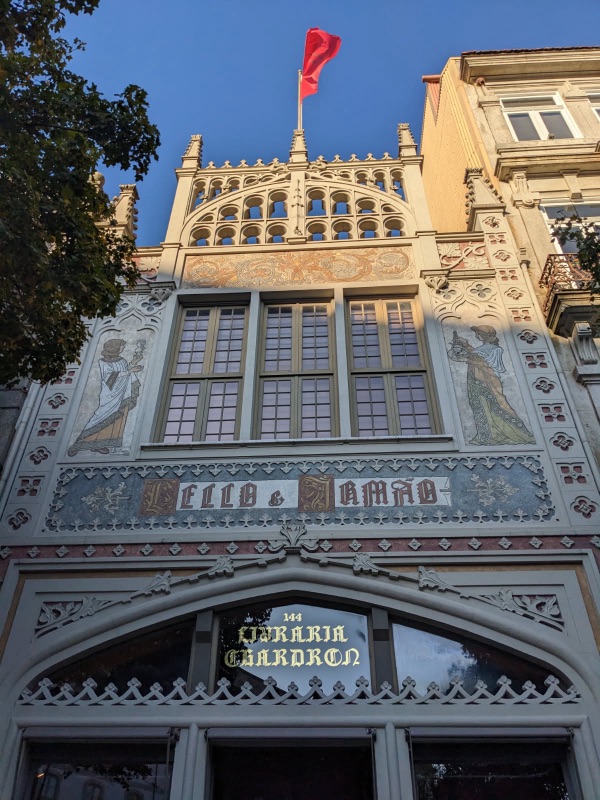
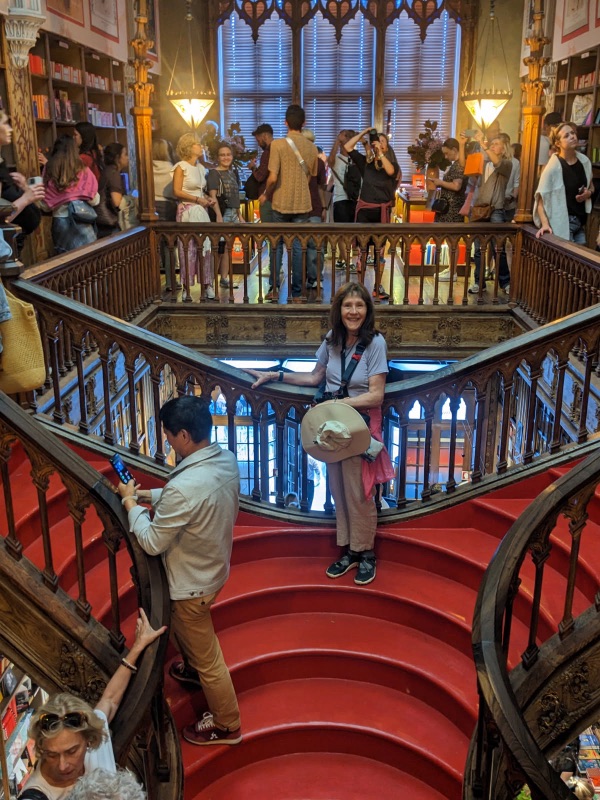
This time we started in Porto, Portugal. Porto is Portugal’s second largest city & is where Port wine originated. We arrived from Lisbon by train. After picking up our Camino passport at the Porto Cathedral, we visited what is claimed to be the most beautiful bookstore in the world.
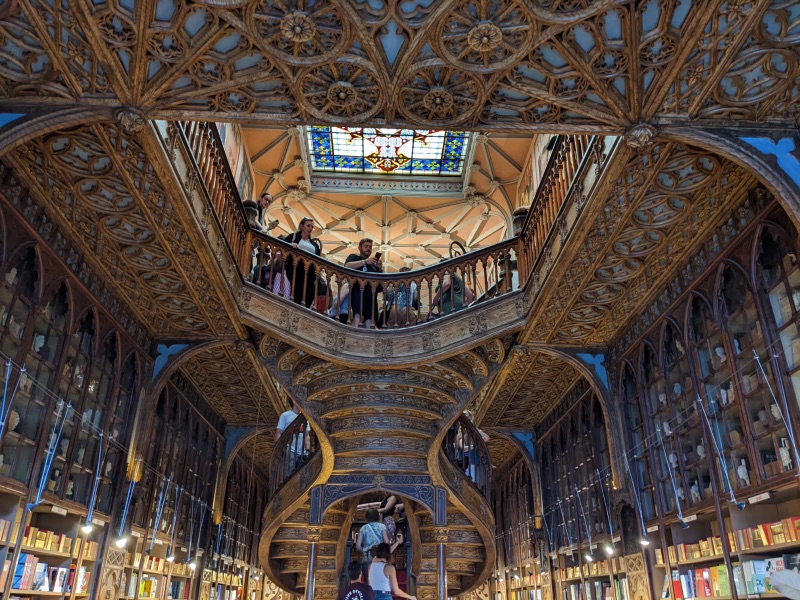
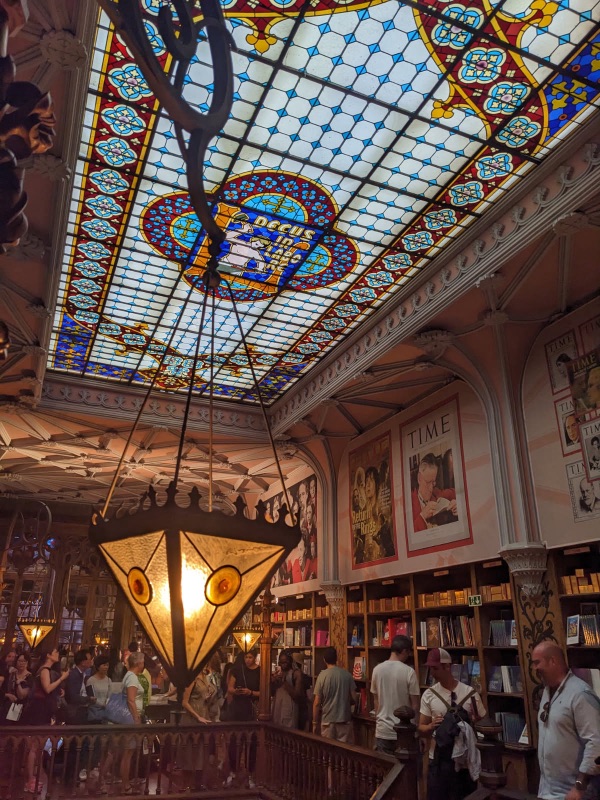
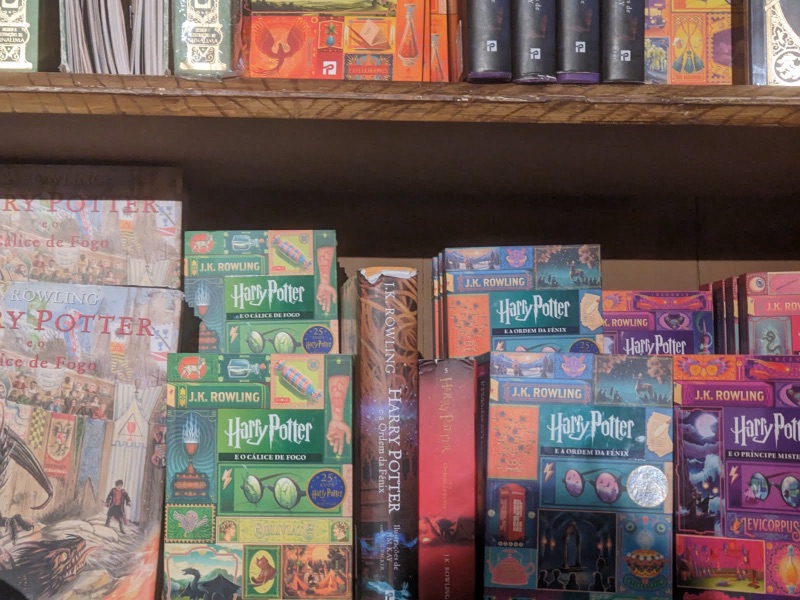
It’s called Livraria Lello. It’s so popular that you have to get tickets in advance to be admitted. Once inside, you realize why many people believe the author J.K. Rowling who wrote the Harry Potter series was inspired by this bookstore to create the library at Hogwarts. She denies she did; but, she did live in Porto when she was writing her first Harry Potter book.
It is very small store & it is decorated beautifully with a very unique staircase.
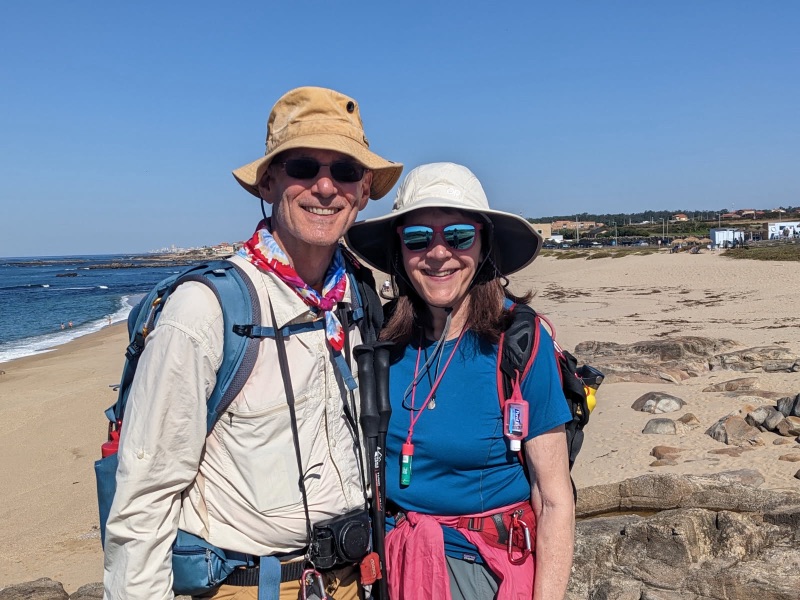
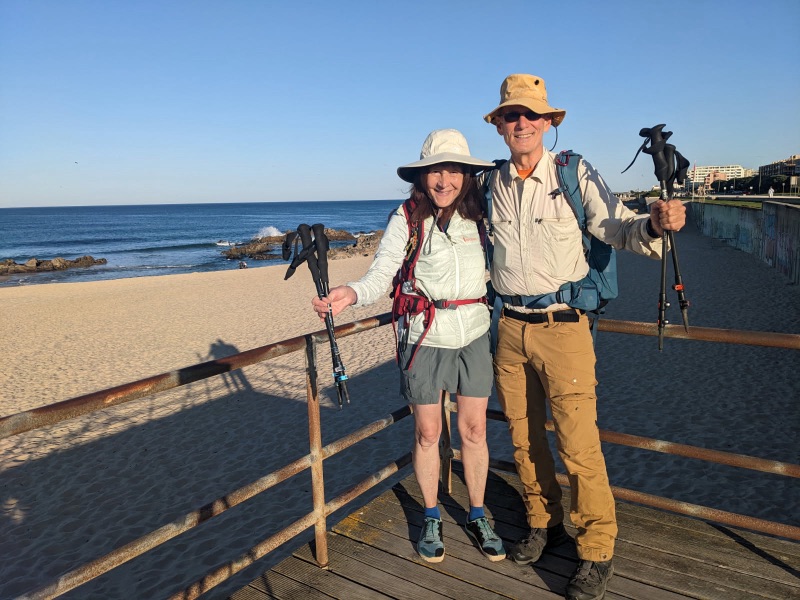
Today we started our 260 km walk to Santiago. Before we left I thought our first day was going to be 13 miles; I then learned it would be 15 miles; but, it was actually 17 miles! So glad I didn’t know that before we left. 😜
After taking a metro ride to the coast we crossed a bridge & started the walk that took 8 hours to complete.
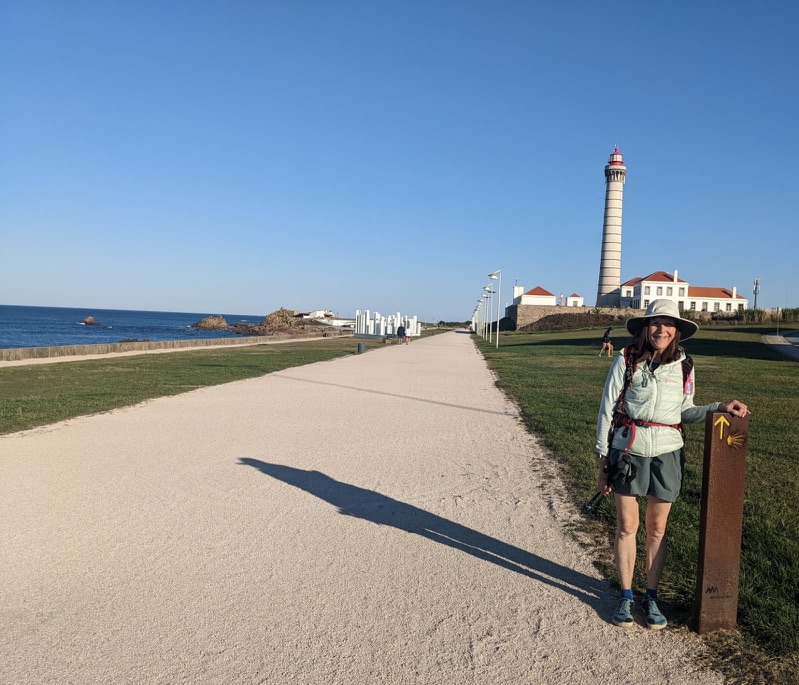
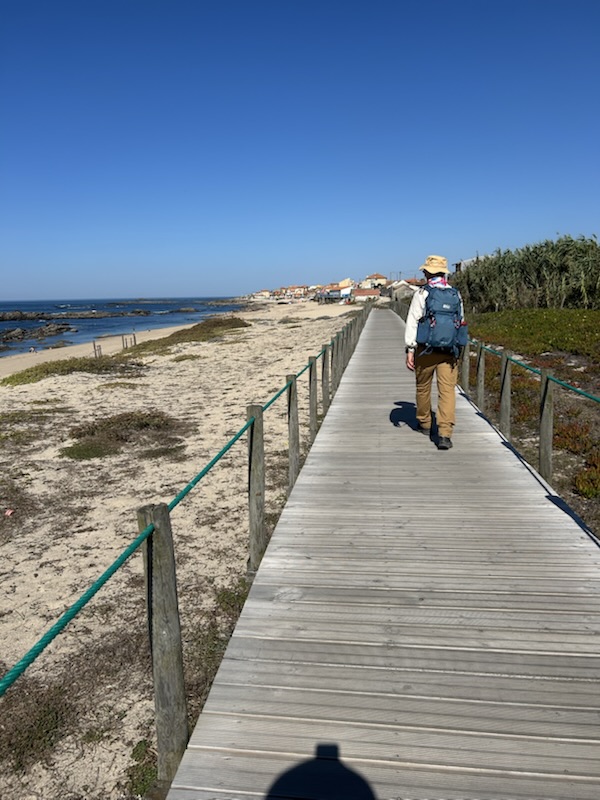
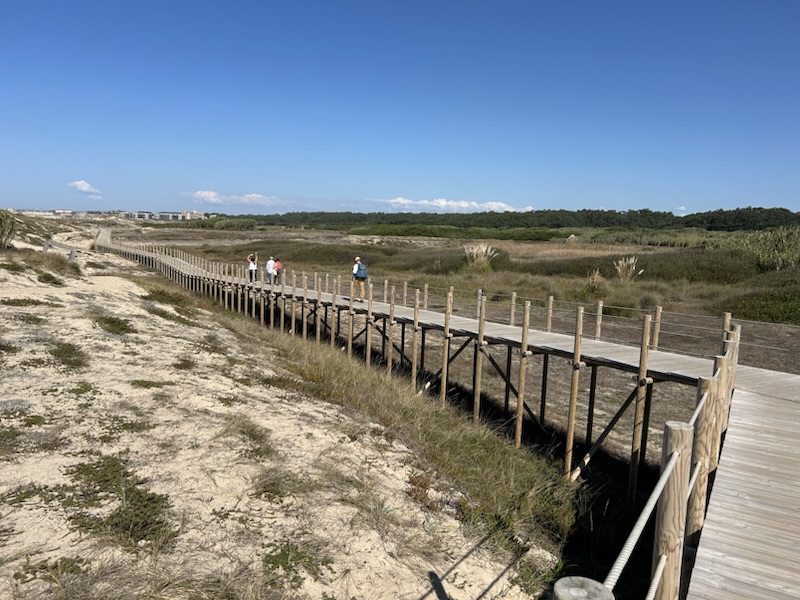
On most of the route we enjoyed beautiful views right along the Atlantic Ocean. Remarkably, most of the trail was on a wooden boardwalk. What a luxury for the locals to have such a marvelous walkway.
Here are a few sights we saw along the way.
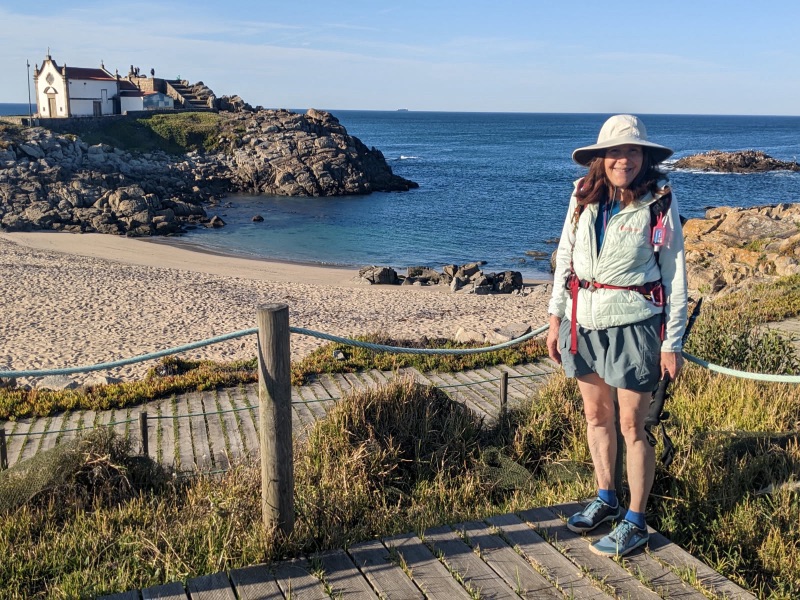
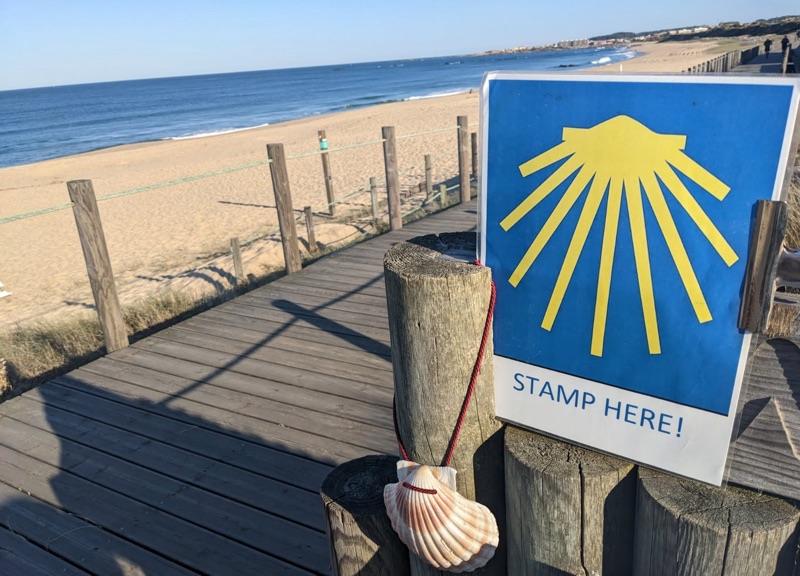
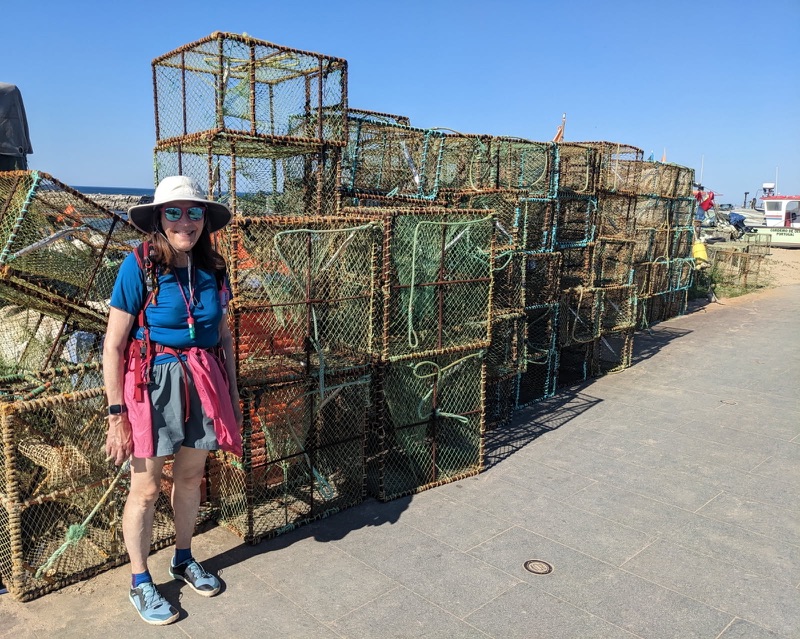
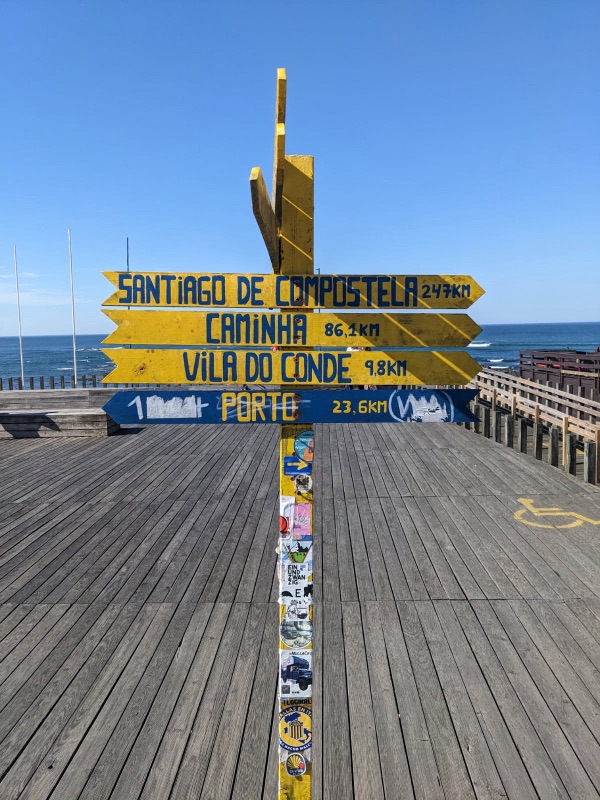
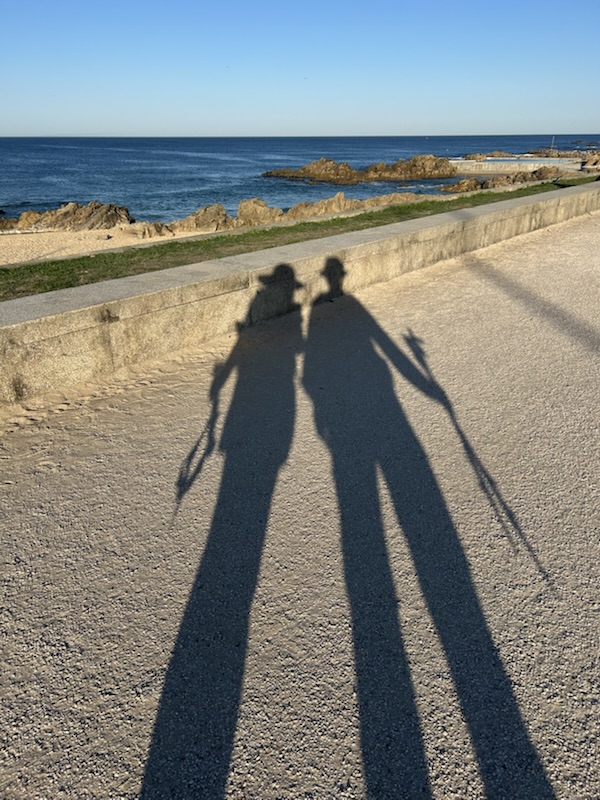
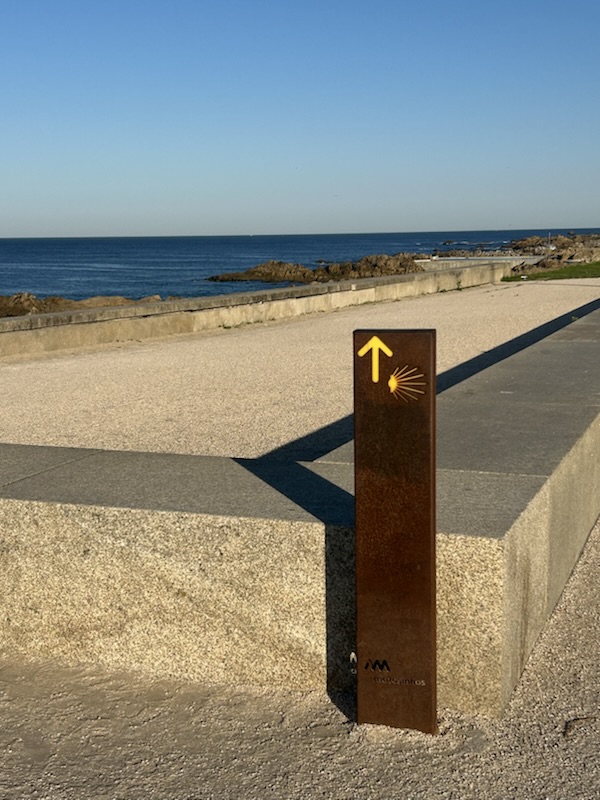
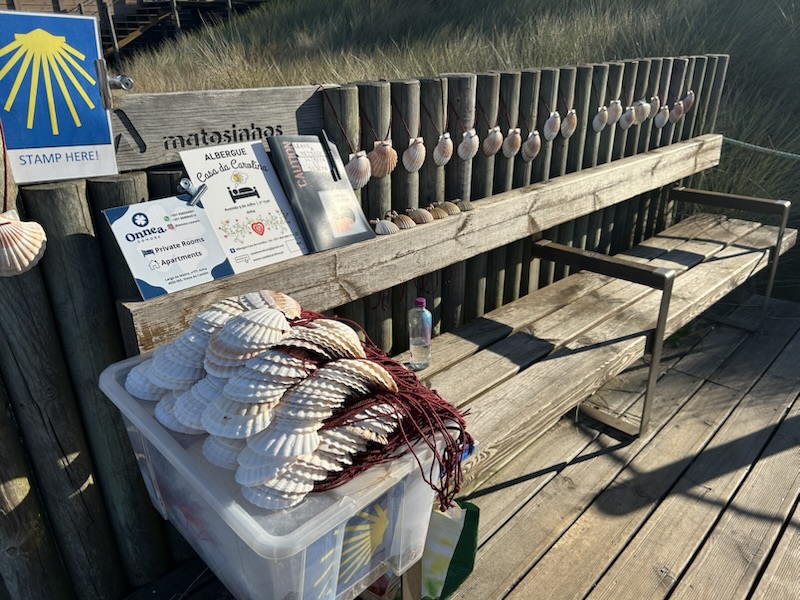
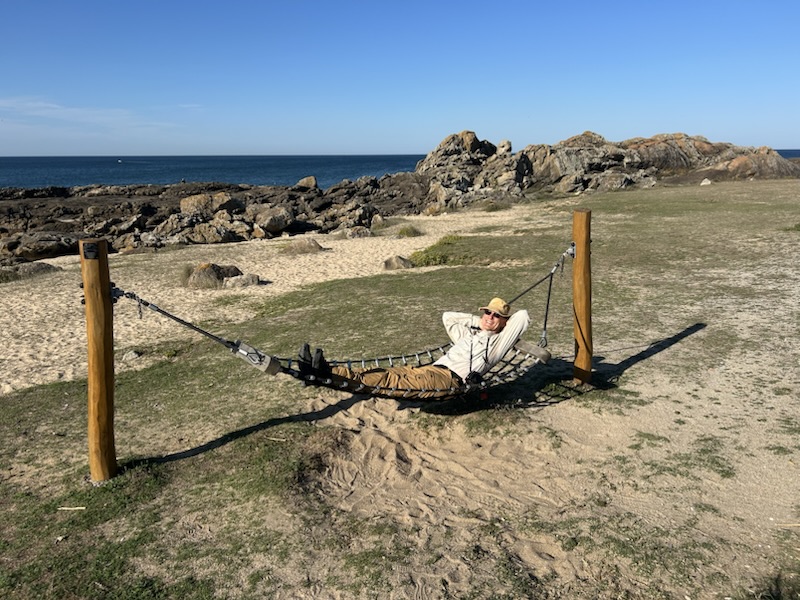
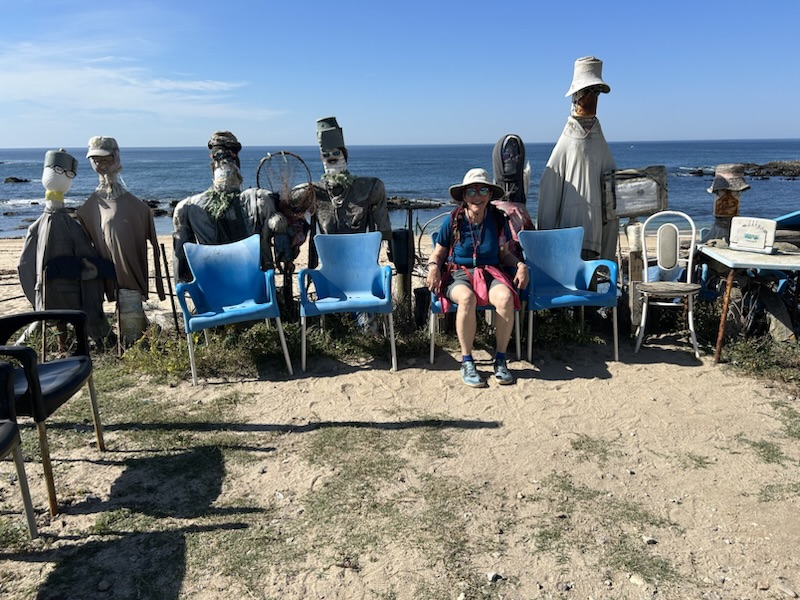
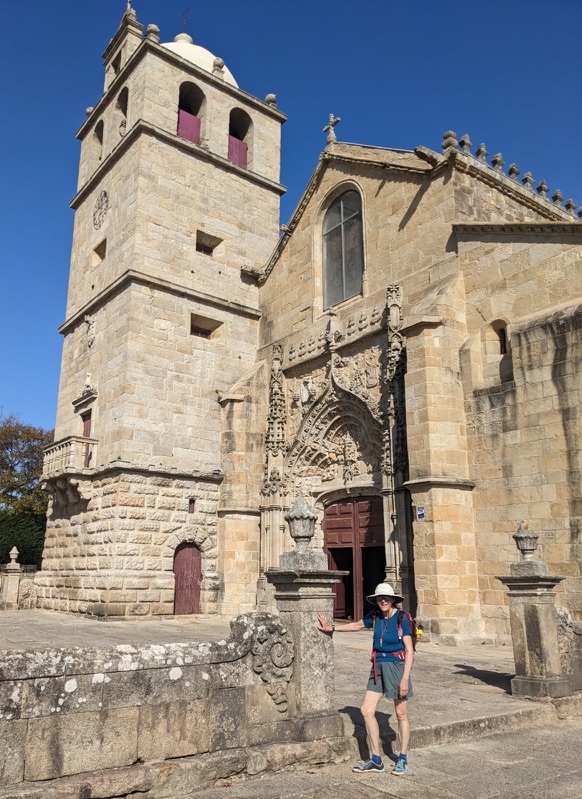
Getting started in MatosinhosNoa Nova Lighthouse- Portugal’s 2nd tallest lighthouse- 46 meters highBeautiful views all morning longPlace to get a stamp in your pilgrim passport bookLobster trapsOnly 247 km to goLong morning shadowsYellow arrows always show the wayStopped & bought a shell for my pack. The shell is the pilgrim’s traditional symbol & is worn by many people on their way to Santiago. The first shells worn by pilgrims came from this beach in Matosinhos.Relaxing??? I think not. On the Camino boardwalkJust like on the last Camino, always fun things to see on the wayHouse with humorous mosaics & tilesLong boardwalk through the sand dunesIgreja Matriz in Vila do Conde was built in 1518.
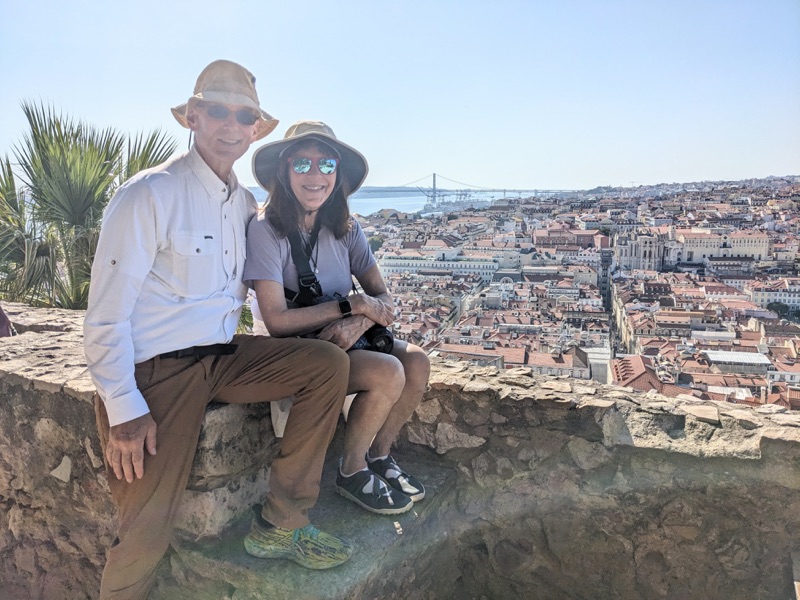
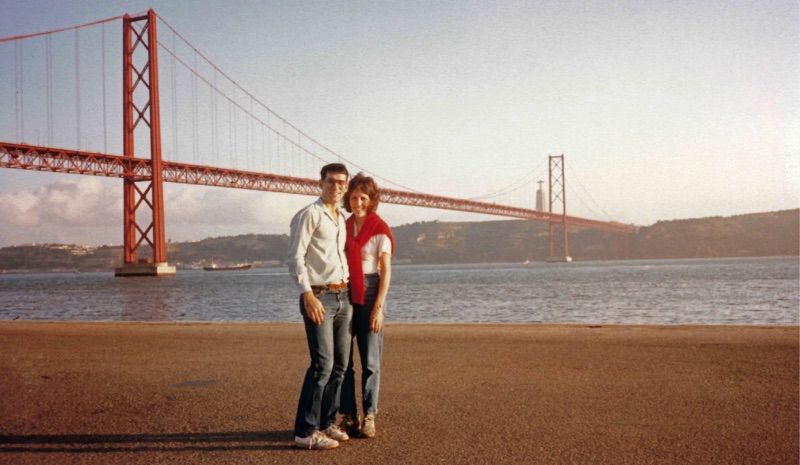
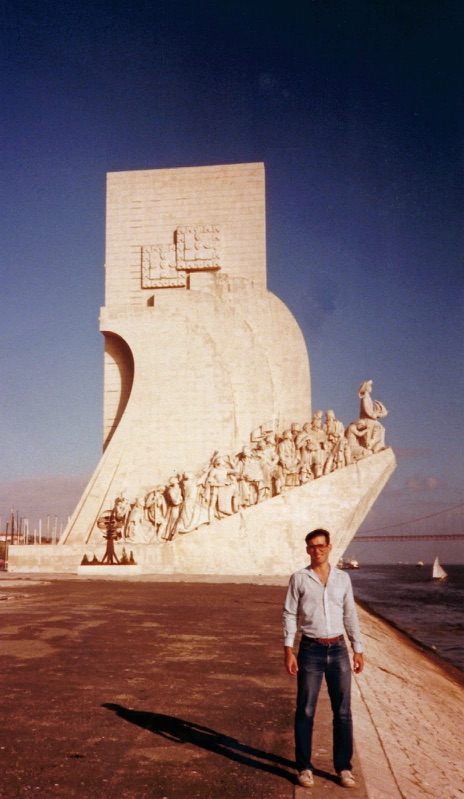
After 40 years, we finally made it back to Lisbon. We first came here over Thanksgiving 1985 when we were living in Germany.
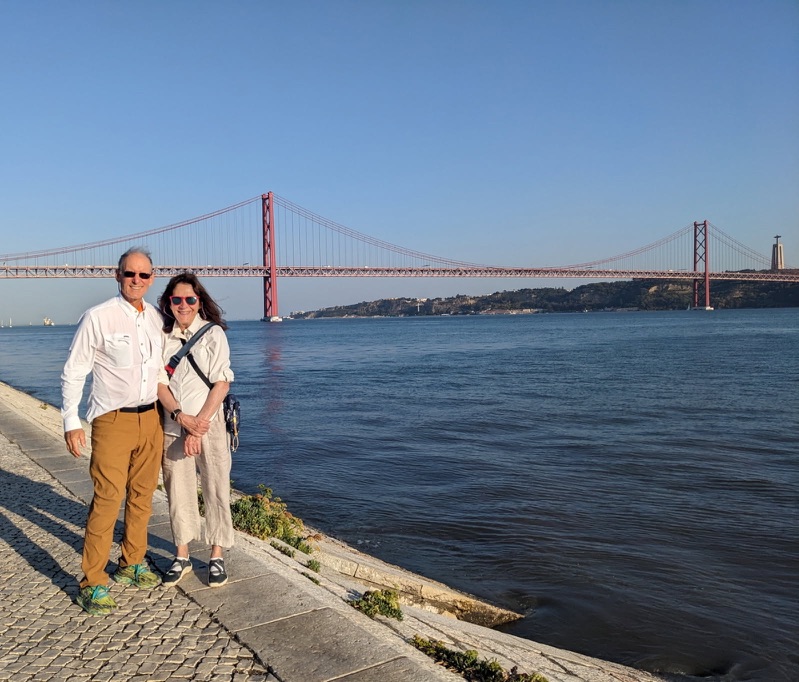
When we returned home, we told our friends we went to San Francisco. To fool them we showed them the following picture with us standing by what looks like the Golden Gate Bridge.
But, then admitted to going to Lisbon which we enjoyed.
We returned visited a few places from that time; but, we also saw many new places here.
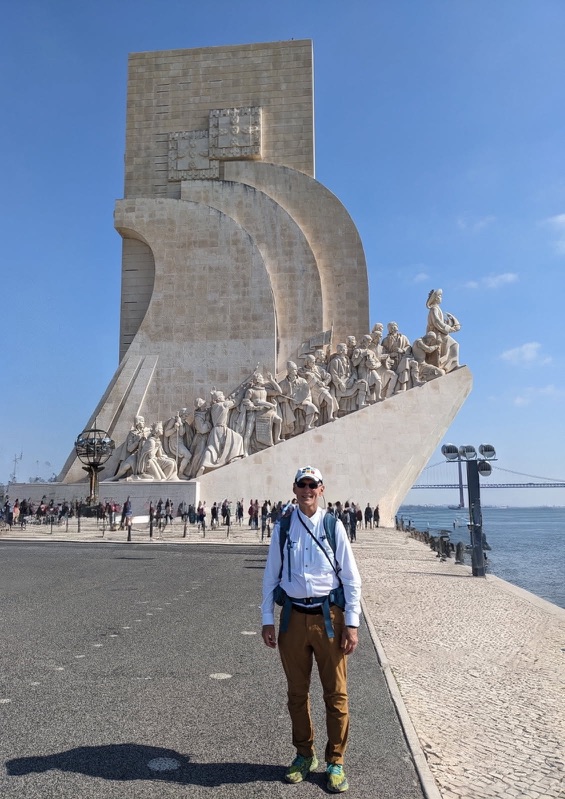
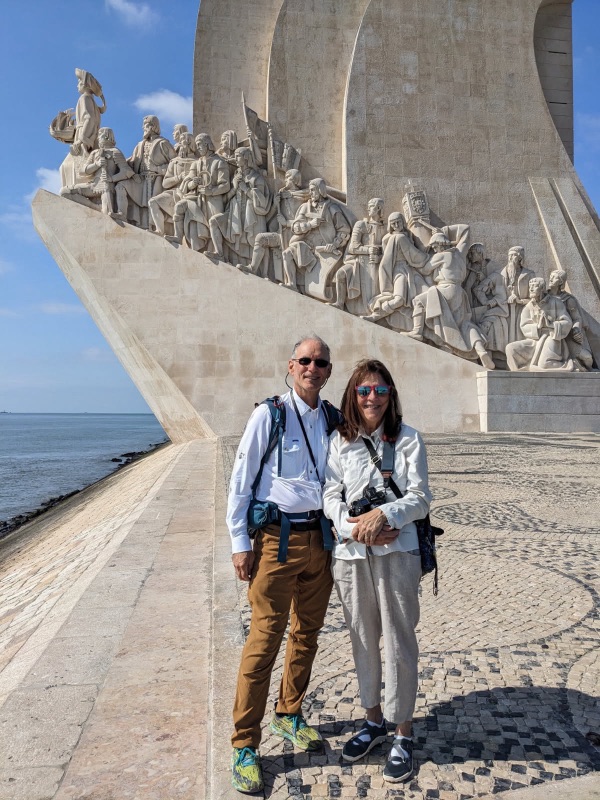
Then & Now.
The Monument to the Discoveries honors Prince Henry the Navigator & other explorers who brought Portugal great power & riches centuries ago.
With help from the Internet, I think we are better travelers than we were in the 1980s because it is much easier to research places to visit.
We also enjoy the Netflix show “Somebody Feed Phil” & get tips on places to eat all over the world.
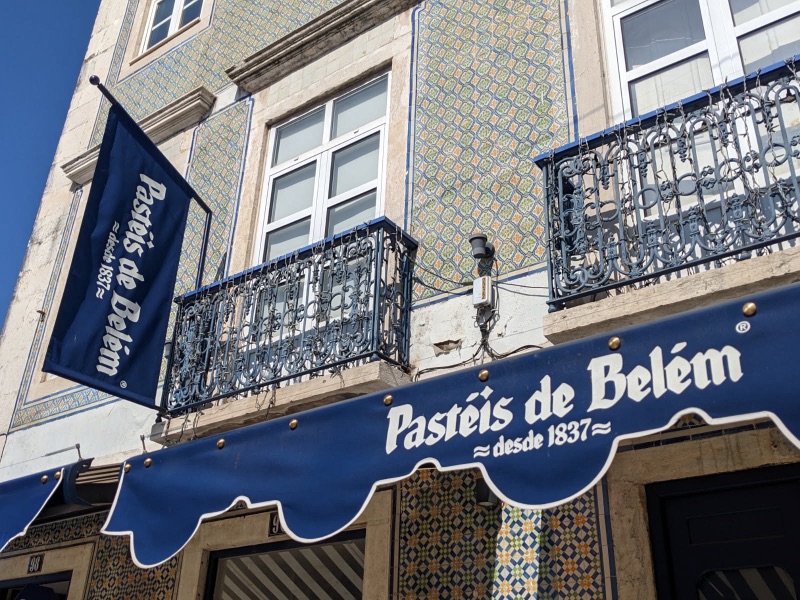
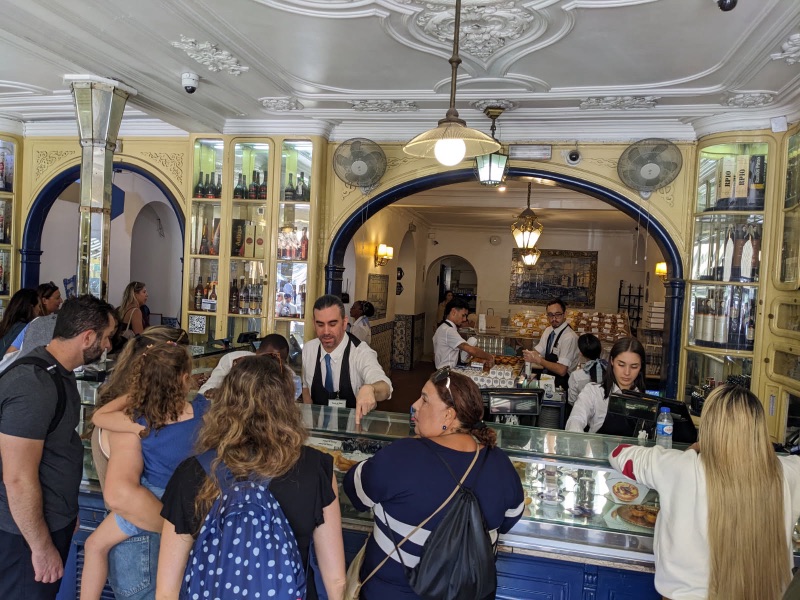
One place we learned about from the show is the Pastes de Belem. This is where Lisbon’s famous custard tarts were first created.
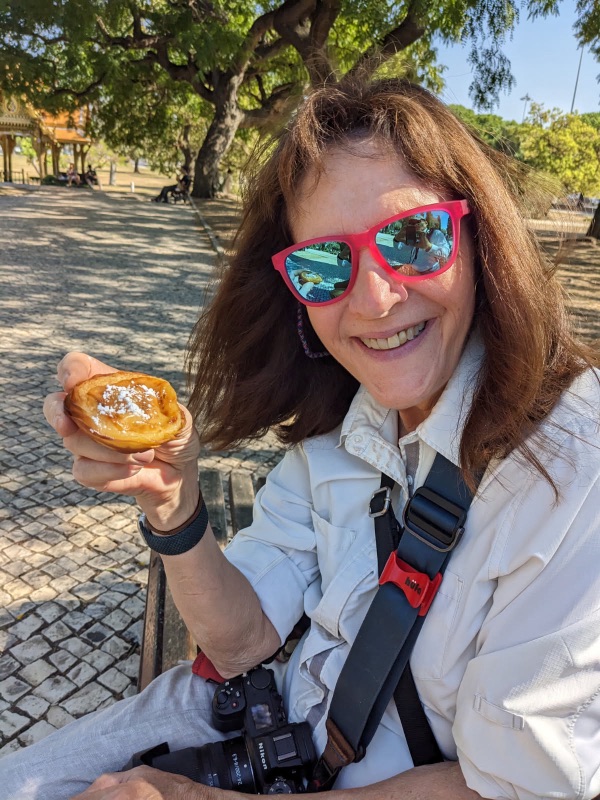
You can find this pastry in any bakery or pastry shop in Portugal; but, from our culinary experience, they make the best.
Legend has it that the sweet which consists of pastry cups filled with an egg & cream custard was probably first baked at the neighboring Jerónimos Monastery.
When Portugal’s monasteries were closed in 1834, a former monk-slash-baker moved his shop to a sugar refinery a few doors down and in 1837, the confection known today from Portugal to Hong Kong was born.
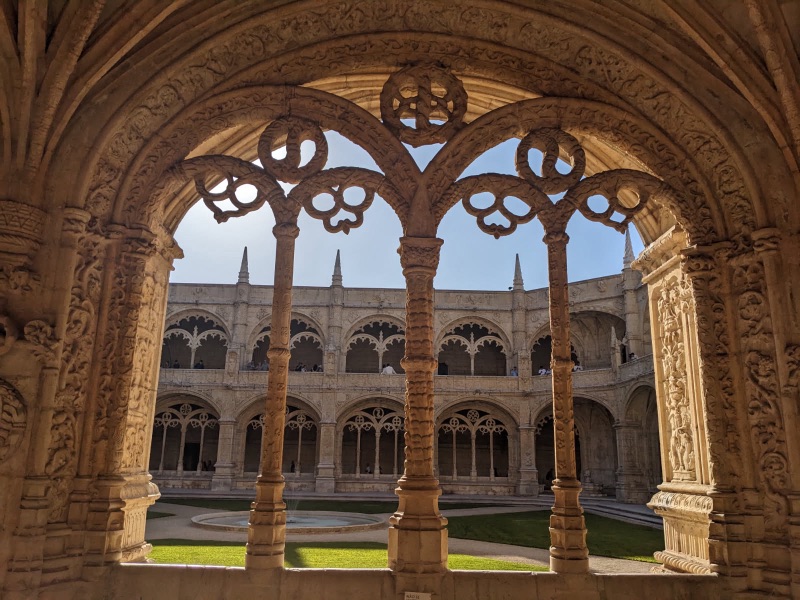
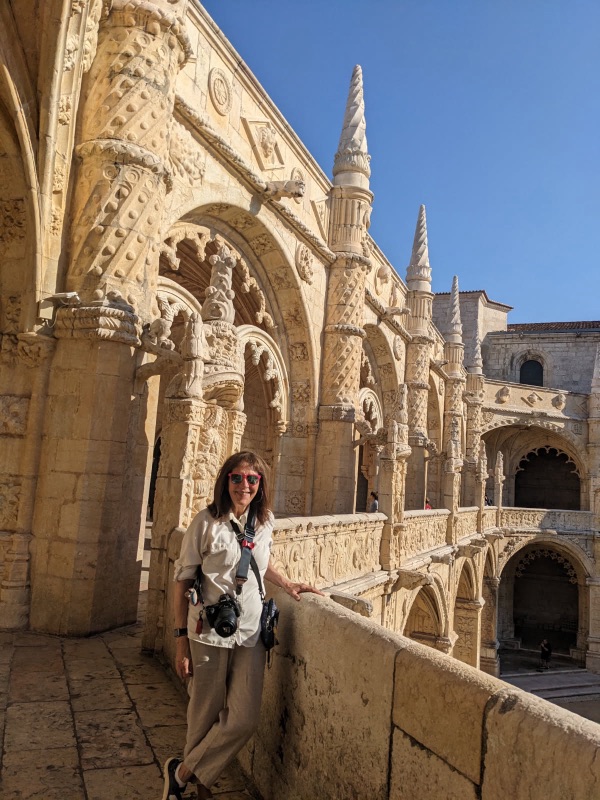
After getting stuffed with these delights, we enjoyed touring the Jerónimos Monastery.
In the 14th Century, the small Lisbon chapel, Santa Maria de Belém, was presided over by monks of the military-religious Order of Christ.
Originally built by Prince Henry the Navigator, the monks’ duty was to assist Portuguese sailors & ships leaving port for long journeys.
Seamen & crew would spend their last night in Portugal within the church, often praying for safe travel and confessing their sins to the monks in case they did not return to land.
The most famous Portuguese sailor was the great explorer Vasco de Gama. He was the first European to reach the Far East by sea around Africa’s Cape of Good Hope who credited his night of prayer in the church with his success.
Upon de Gama’s triumphant return with new found riches, King Manuel I began constructing a new monastery on the location to showcase the glorious wealth that the Age of Exploration brought to the Portuguese empire.
Today 100s of people stand in line to see the magnificently carved cloisters.
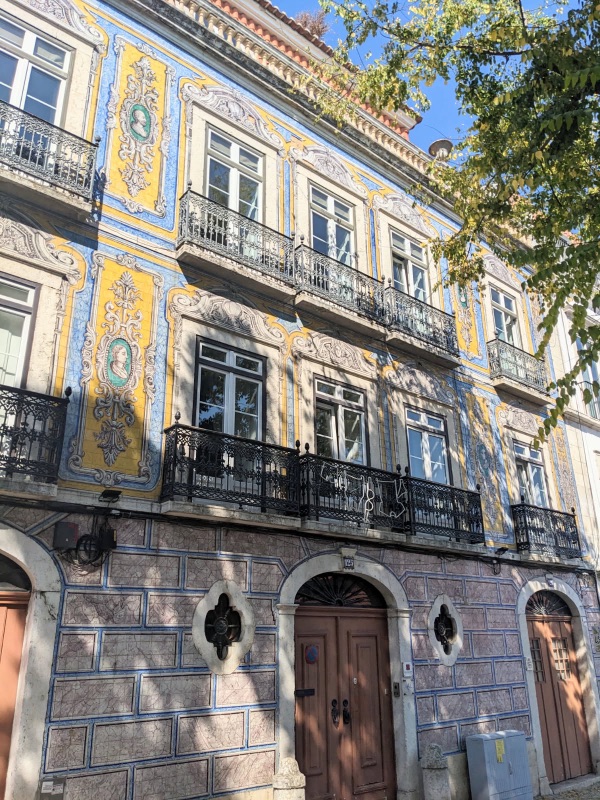
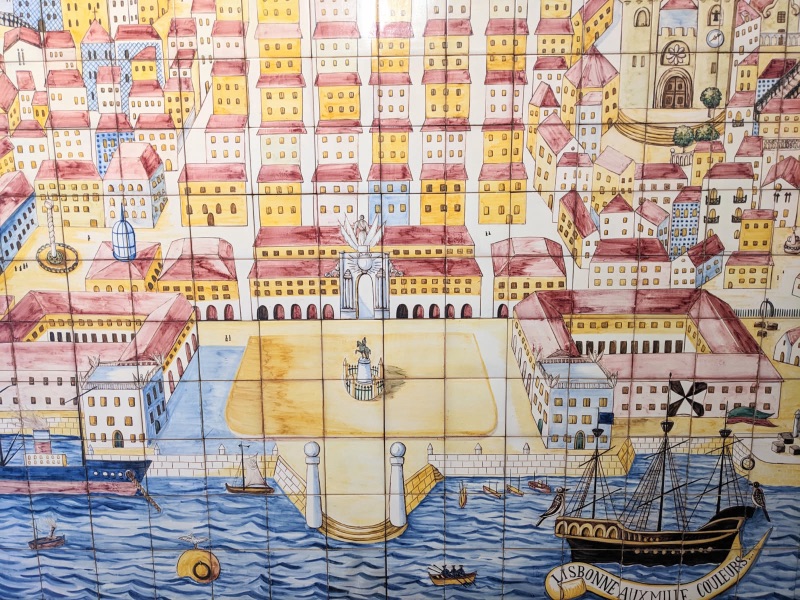
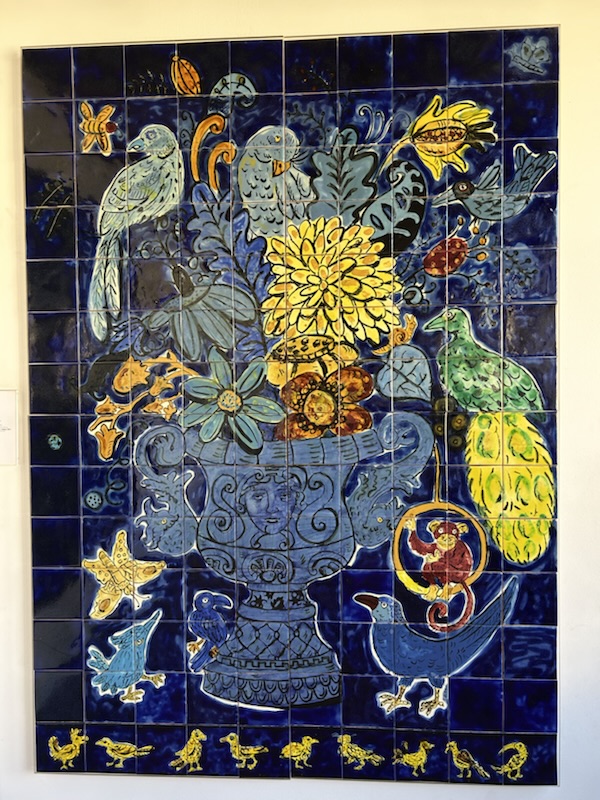
The main thing I remember from our 1985 visit were the beautifully tiled buildings. All over the old city you will see homes, subway stops, churches, & buildings covered in decorative tiles.
The technique to make tiles & to decorate with them was brought to Portugal by the Moors.
The Portuguese word for tile “azulejo” comes from the Arabic word الزليج (al-zellij), which means “polished stones” used for mosaics.
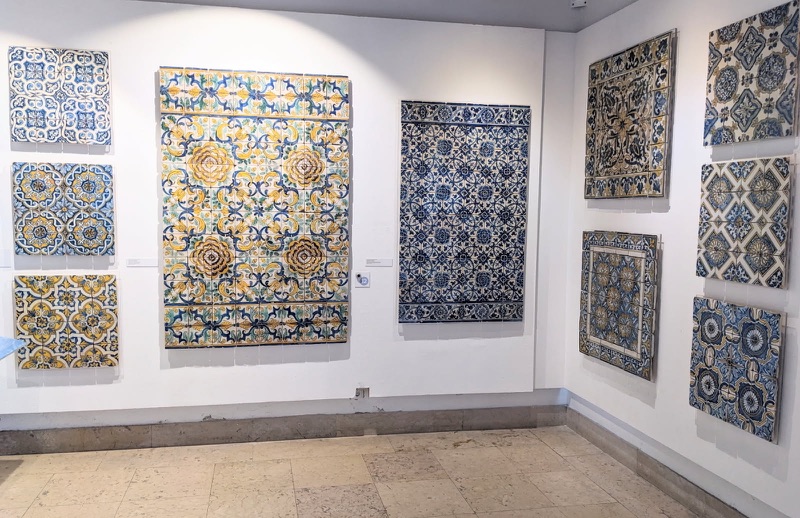
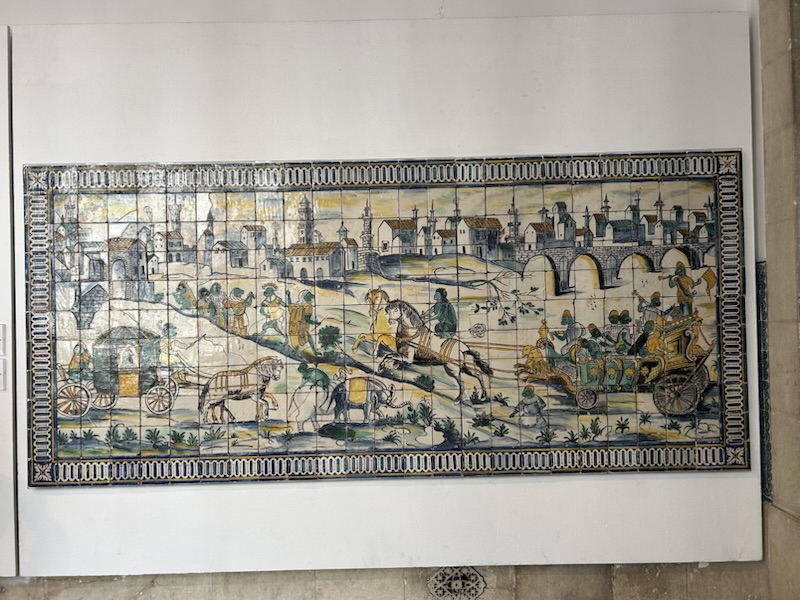
On our second day, we enjoyed visiting the Museu Nacional do Azulejo (National Tile Museum).
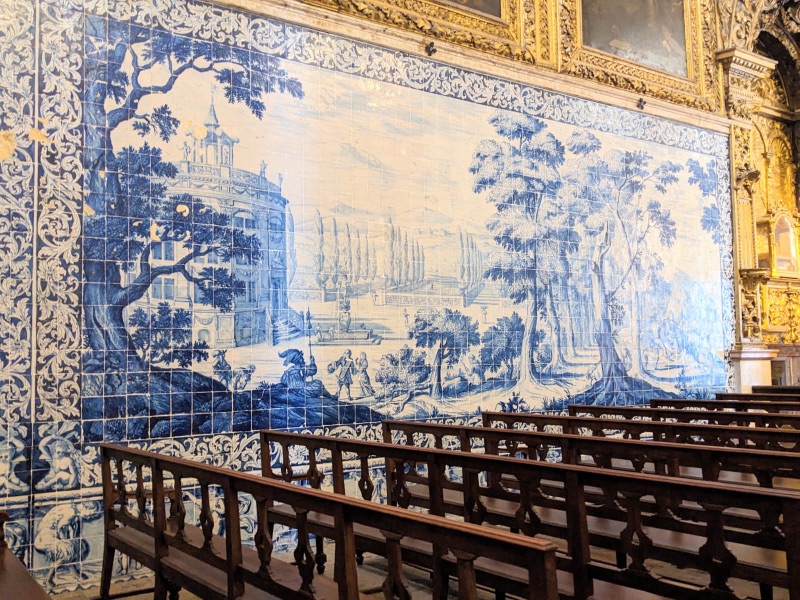
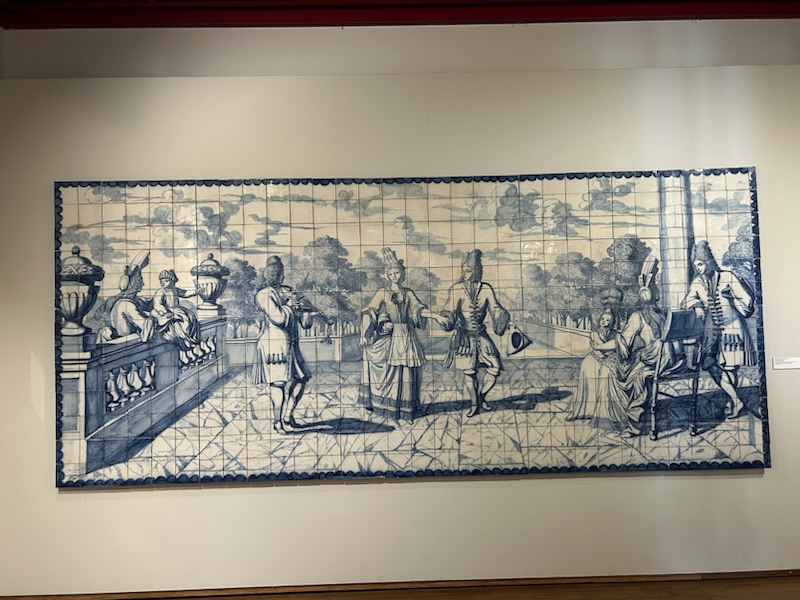
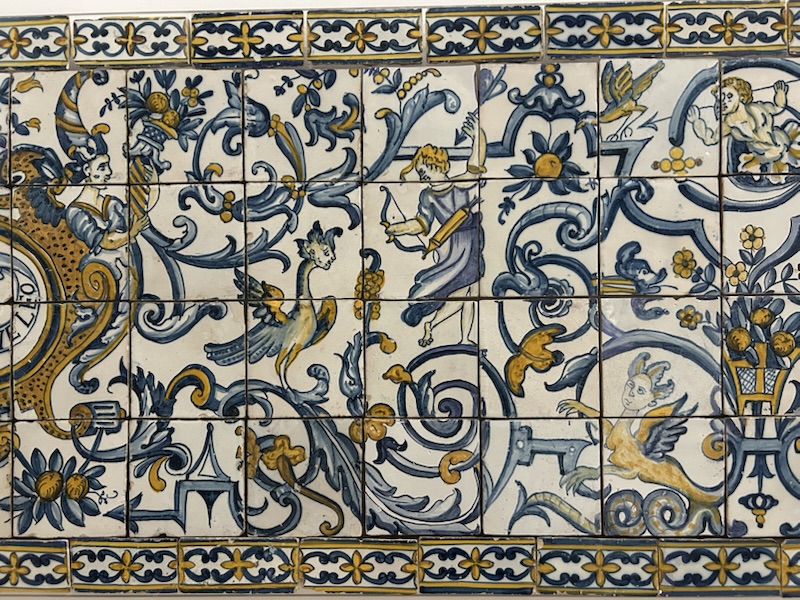
The entire building was filled with amazing murals made from painted tiles.
Tiled Chapel Wall The Dance LessonThe Chicken Wedding – notice in the bottom left corner which shows a chicken in a carriage which appears heading for a wedding. There are also monkeys in the tiles driving coaches, riding horses, being musicians, or simply traveling. This tile mural is considered both a remarkable artistic creation as well as a social commentary making fun of certain groups in 17th Century Portugal.
If we ever have the chance to return to Lisbon, we hope to do a tile painting class which are done in several different workshops in the city.
We feel like there are many places we missed & could easily enjoy more days in this lovely capital.
Other fun stops & sights in Lisbon.
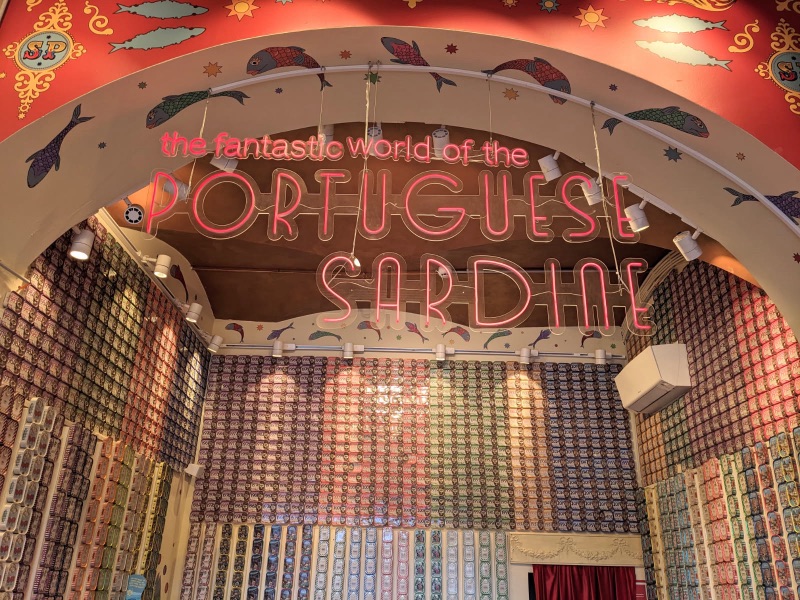
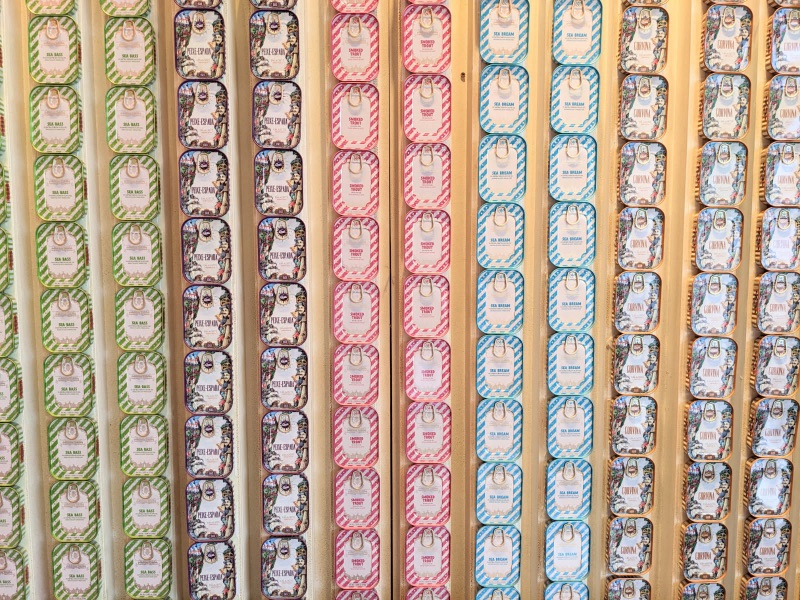
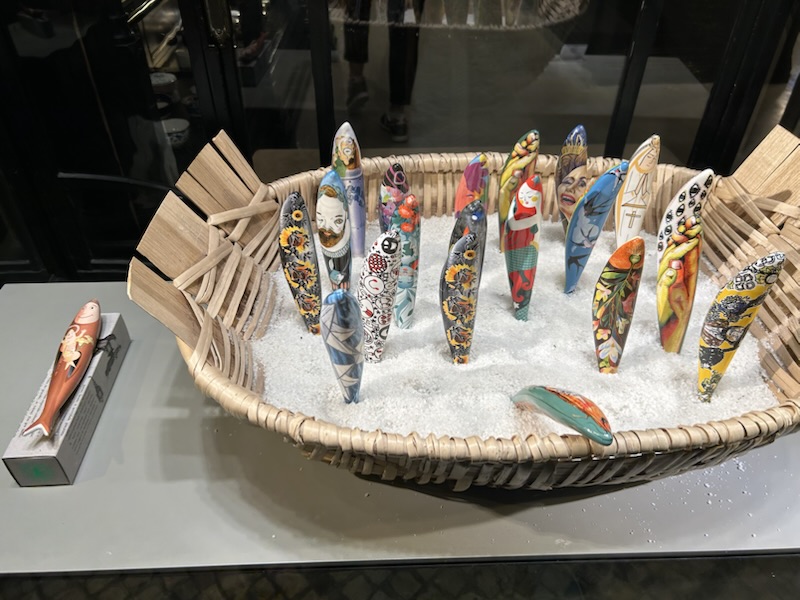
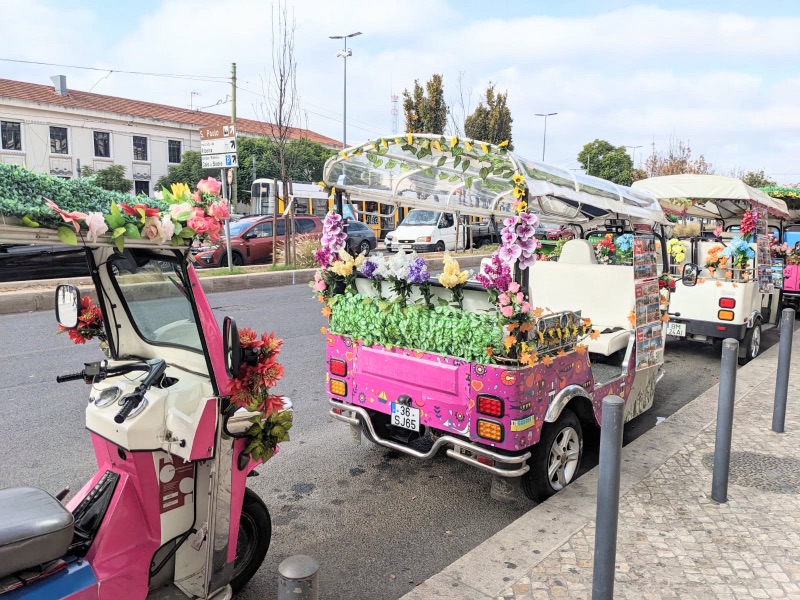
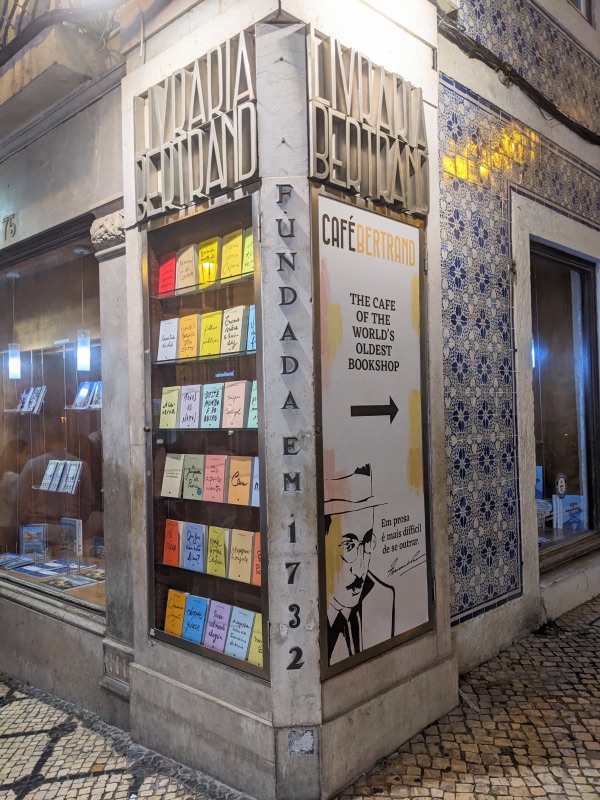
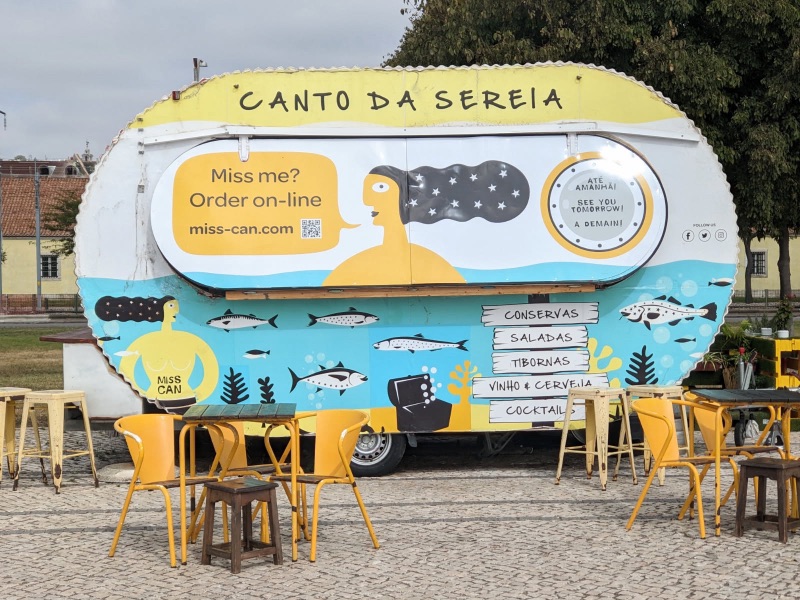
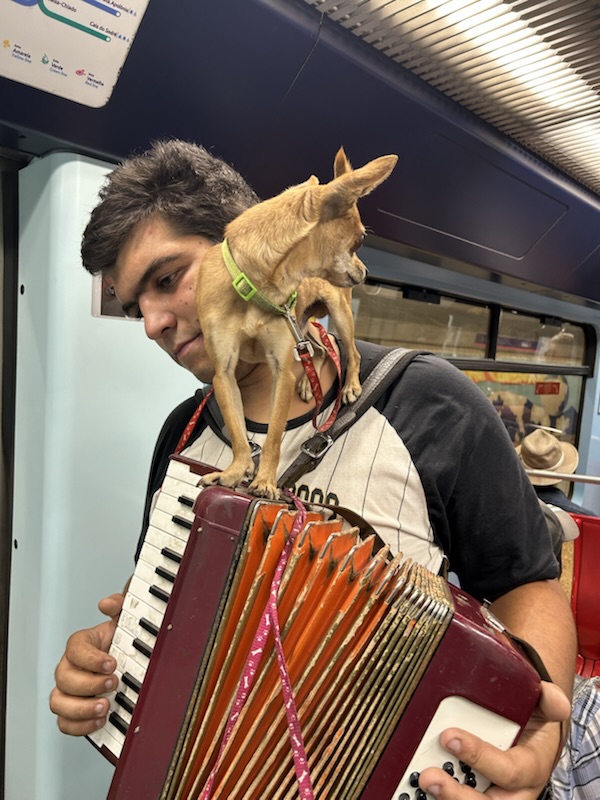
The Fantastic World of the Portuguese Sardine- Sardines in a can store. Sardines are almost like a national symbol in Portugal. Tour trucksLivraria Bertrand- Oldest bookstore in the world opened in 1732Cute food truckMetro entertainers
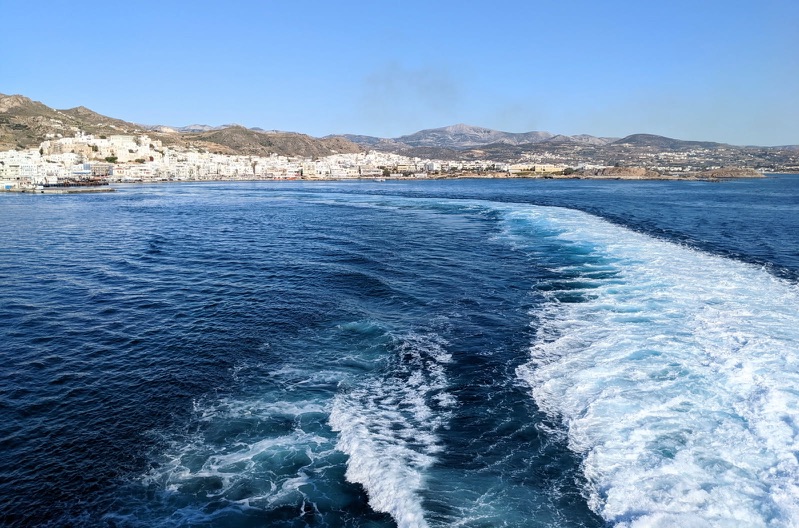
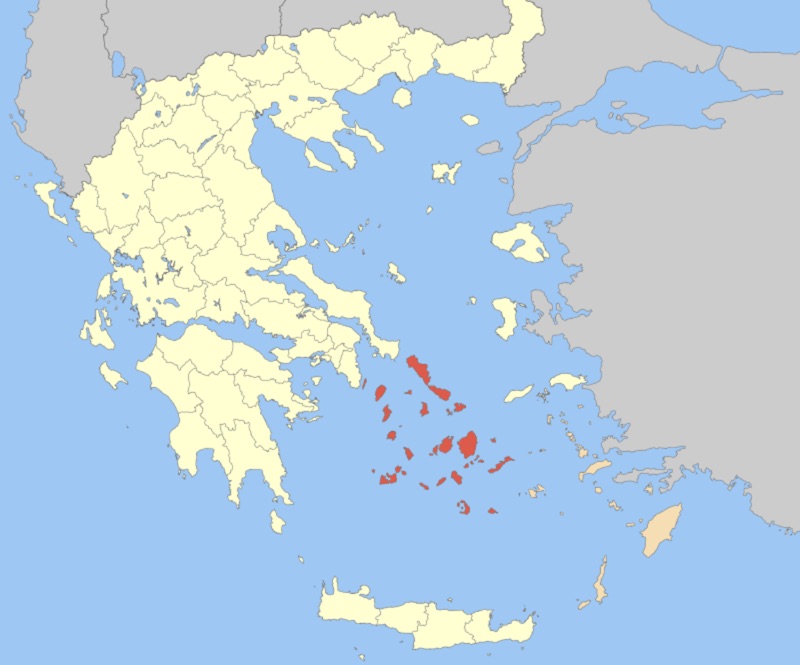
You could easily take all summer just to tour the Cyclades Islands by hopping from one island to the next on the ferries.
Waiting for the large aft doors on the ferry to open to disembark
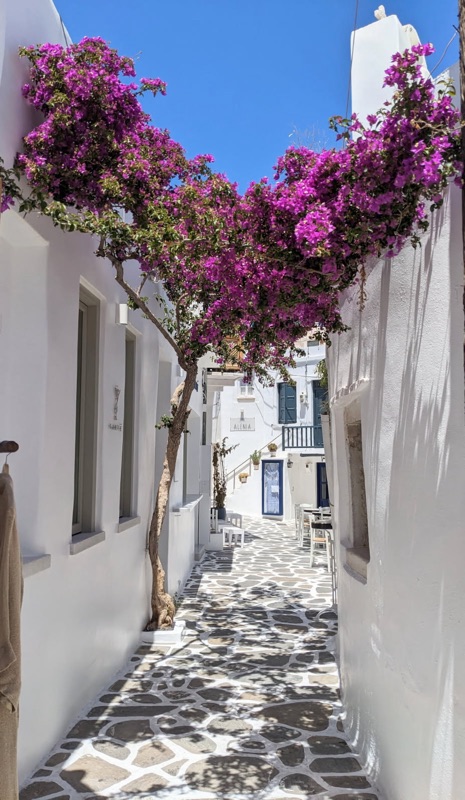
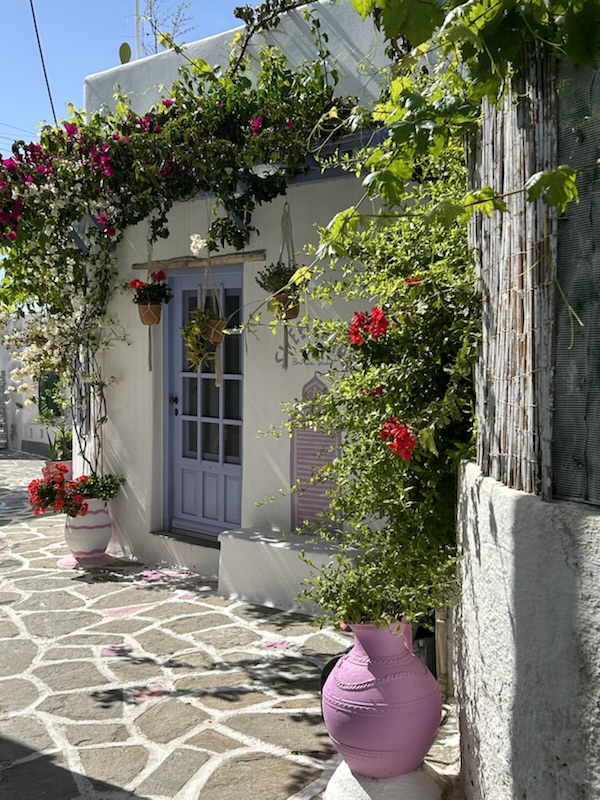
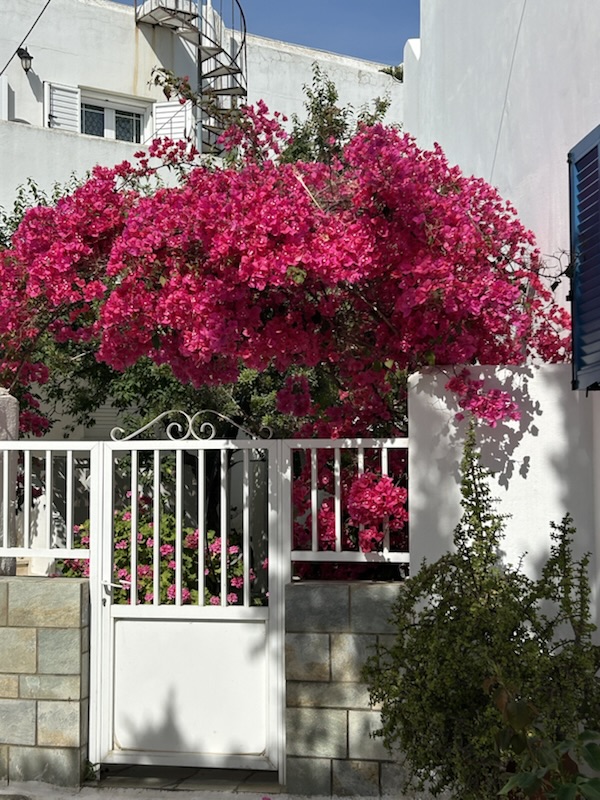
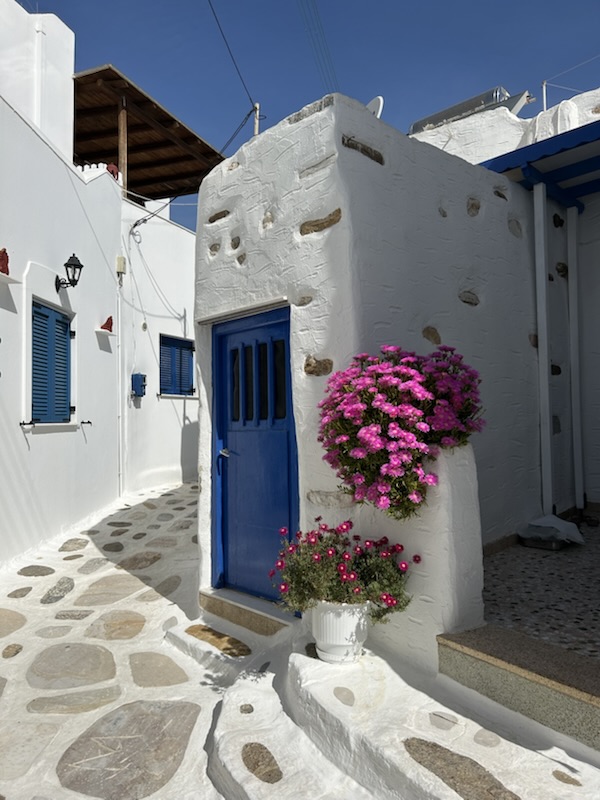
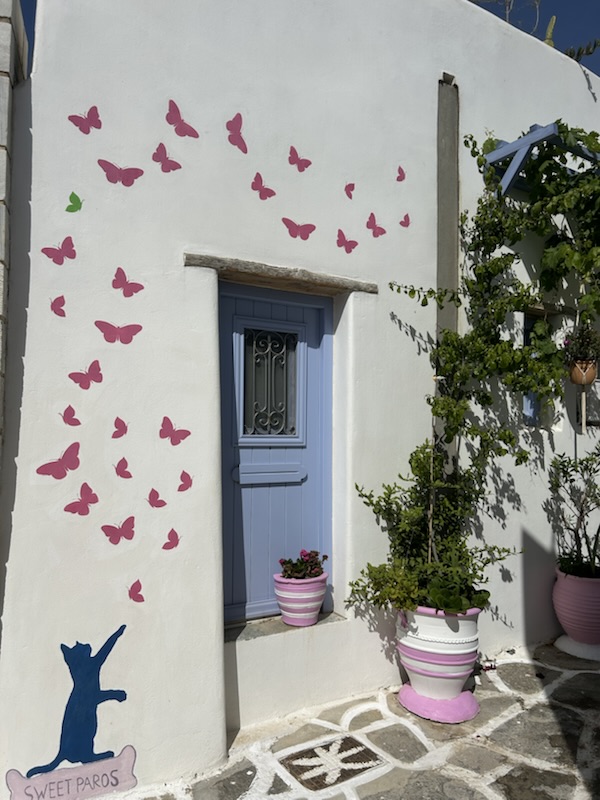
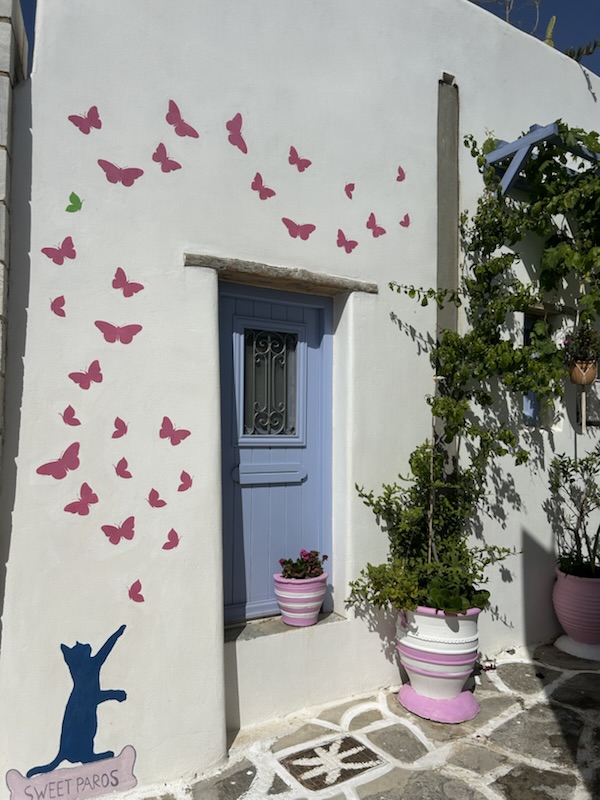
Each island is charming in its own ways even though they all have the ubiquitous white buildings with blue framed windows & doors. Another icon on the islands is the paving stones outlined in white accented by intense fuchsia, crimson, or purple bougainvillea bushes. It feels like a summer dream come to life.
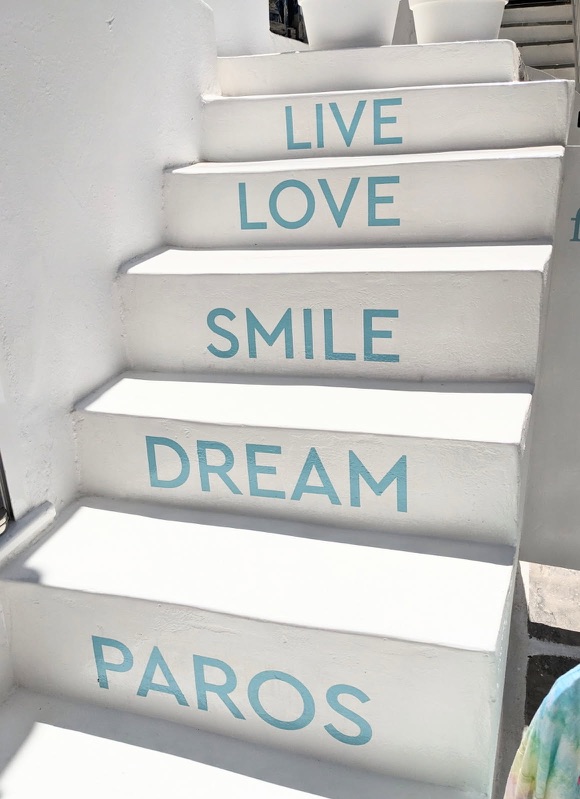
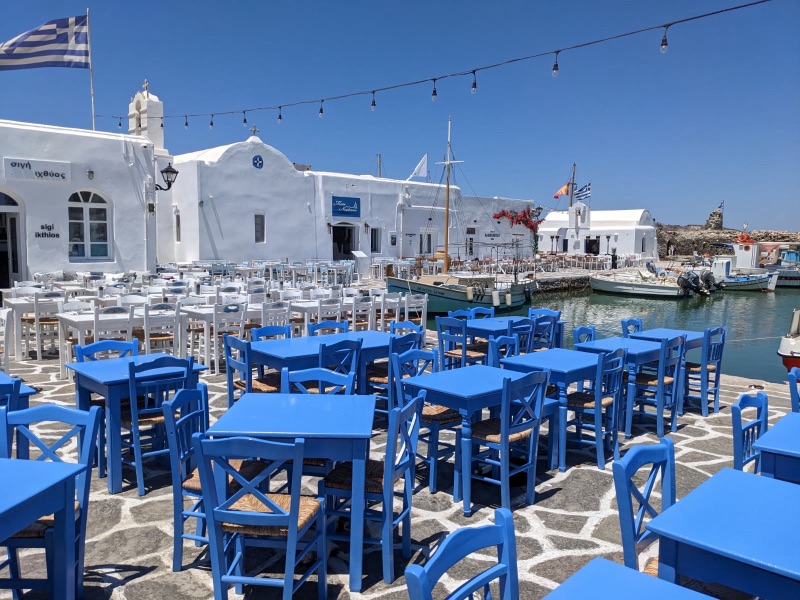
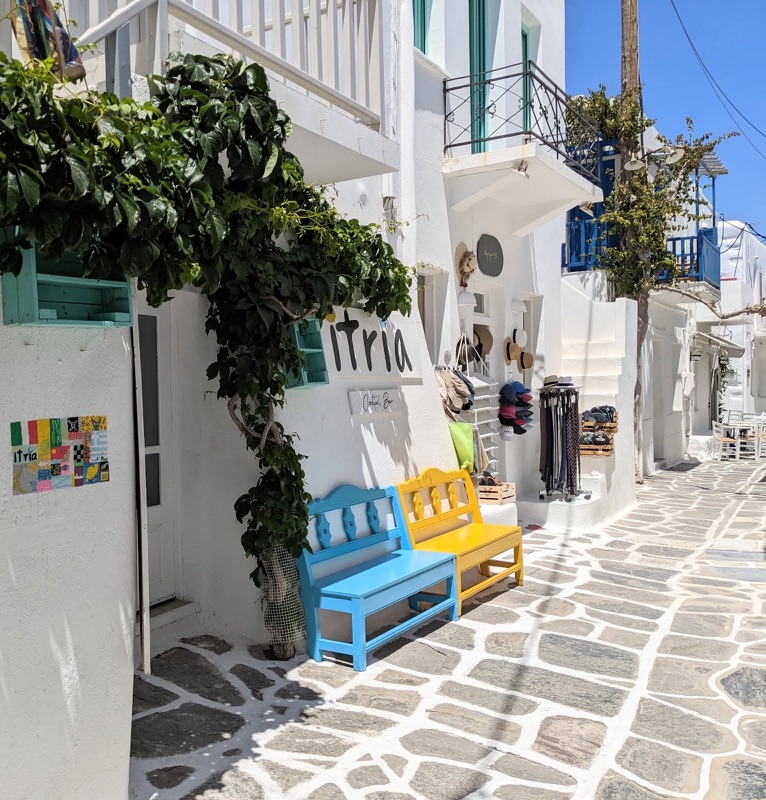
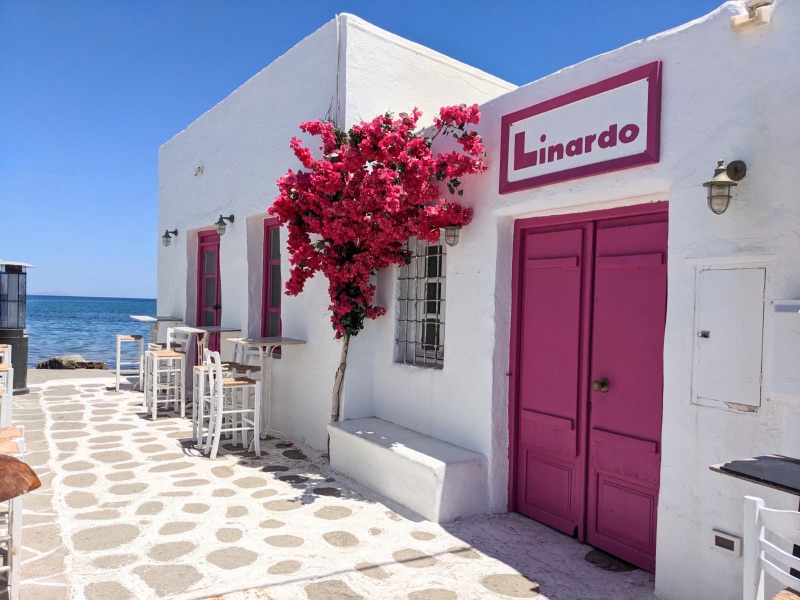
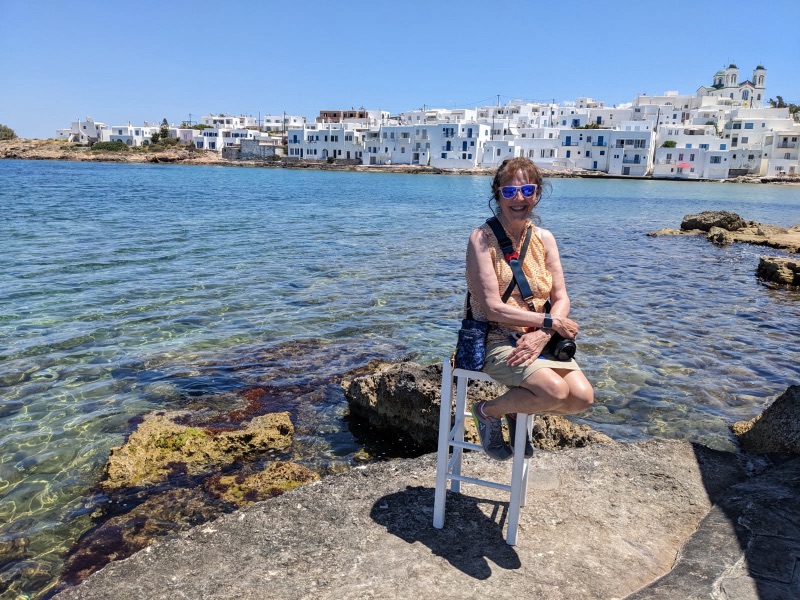
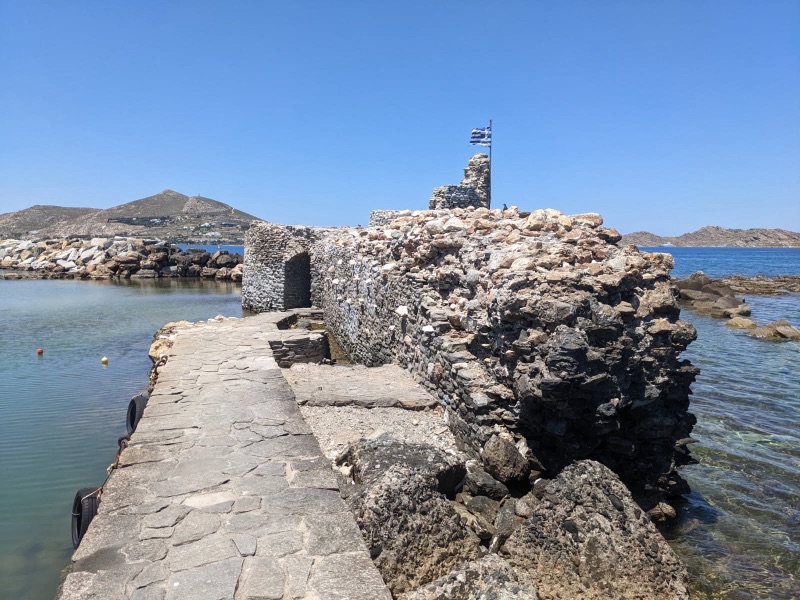
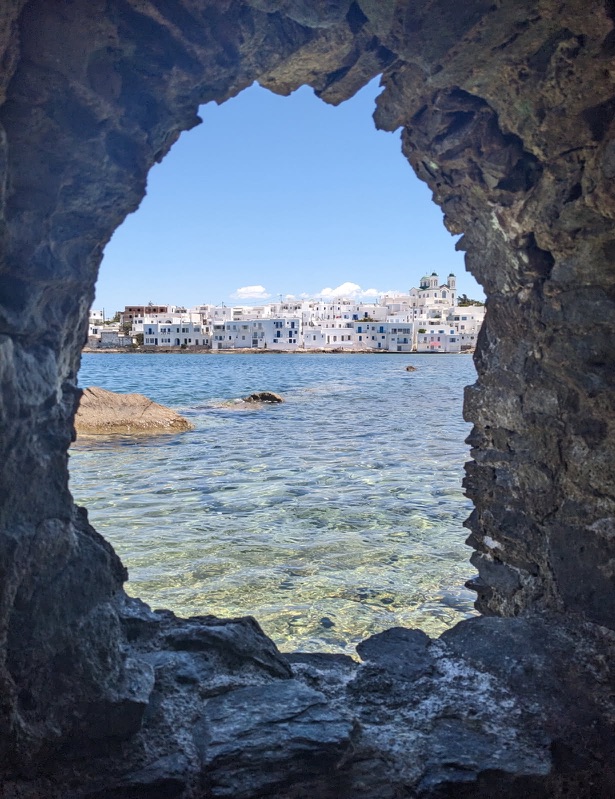
On Paros the most charming small town we visited was Naoussa. In many ways, it reminded me of Mykonos, so it’s easy to see why Paros is becoming more popular.
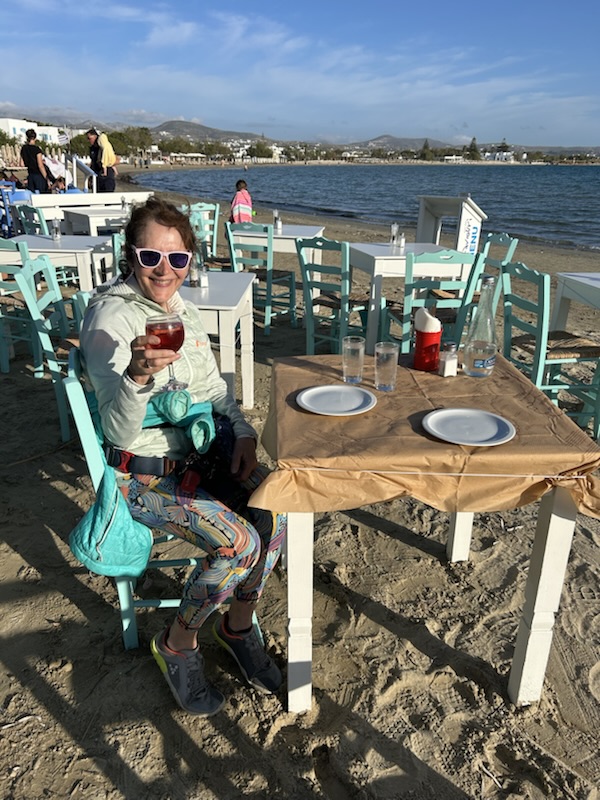
Tables awaiting the large summer crowdsMany tiny shops to exploreColorful NaoussaBest seat on shoreOld Venetian FortHarbor view
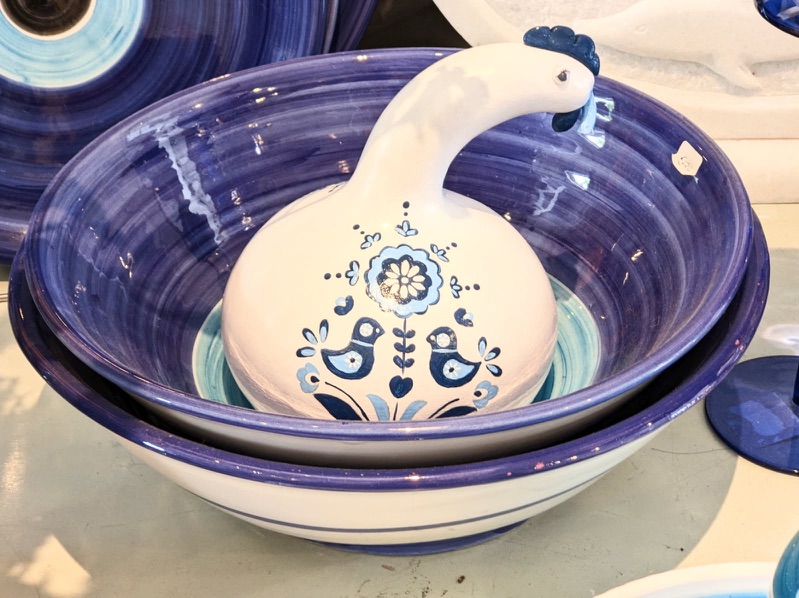
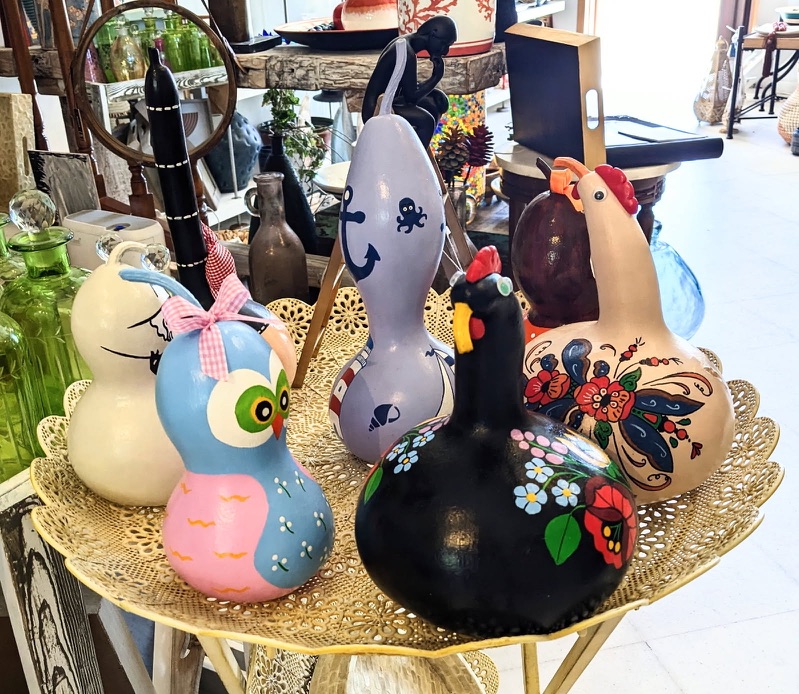
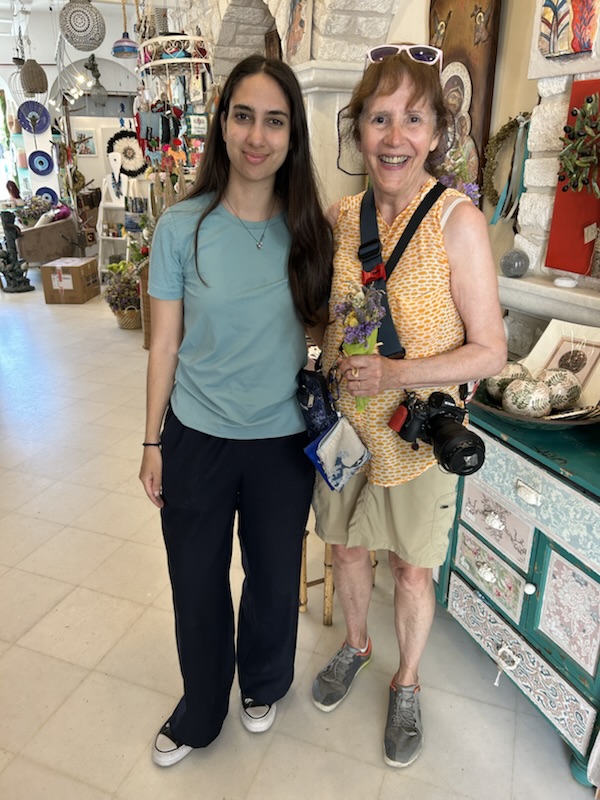
I happend upon one shop that catered to local artists by providing them a perfect place to sell their work. One of the shop’s proprietors was very kind & offered me a small bouquet of local wildflowers while I browsed the shop. I couldn’t resist buying s painted gourd which resembles a chicken.
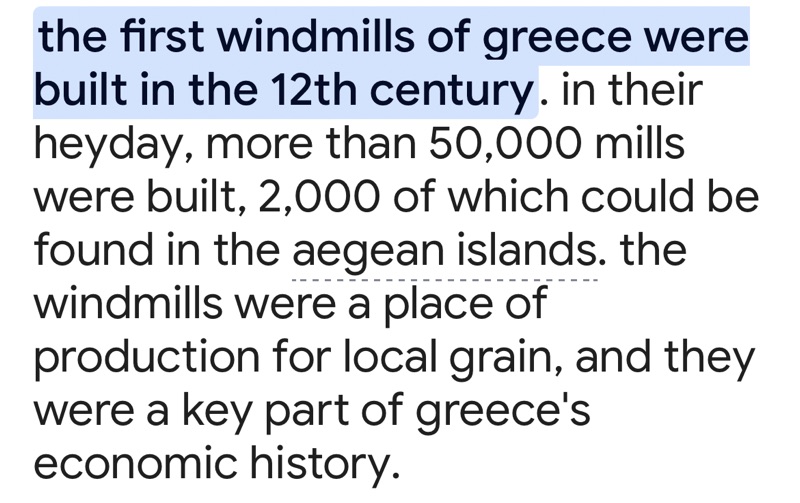
Like many islands across Greece, Paros has another icon…windmills. Here is a little history about them:
Some windmills have been renovated to cater to tourists. The most famous ones are located in Mykonos; but, Paros has a few nice ones as well.
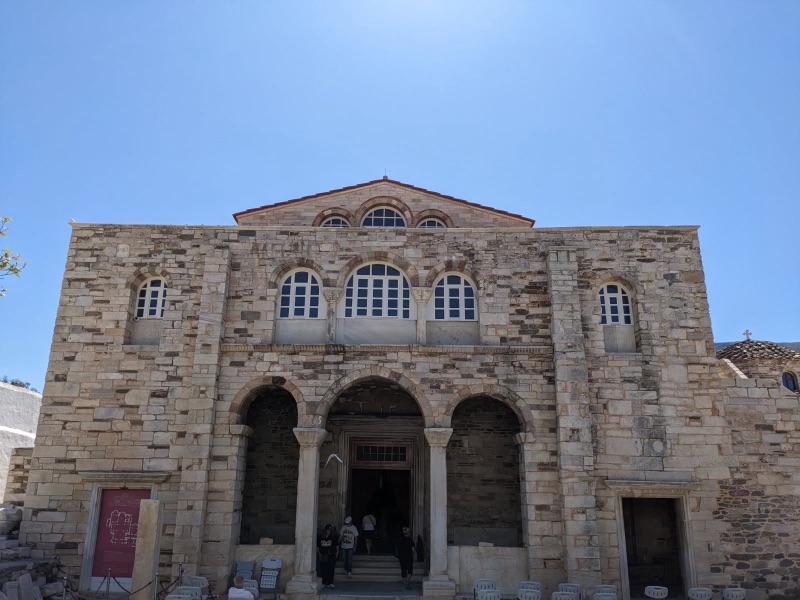
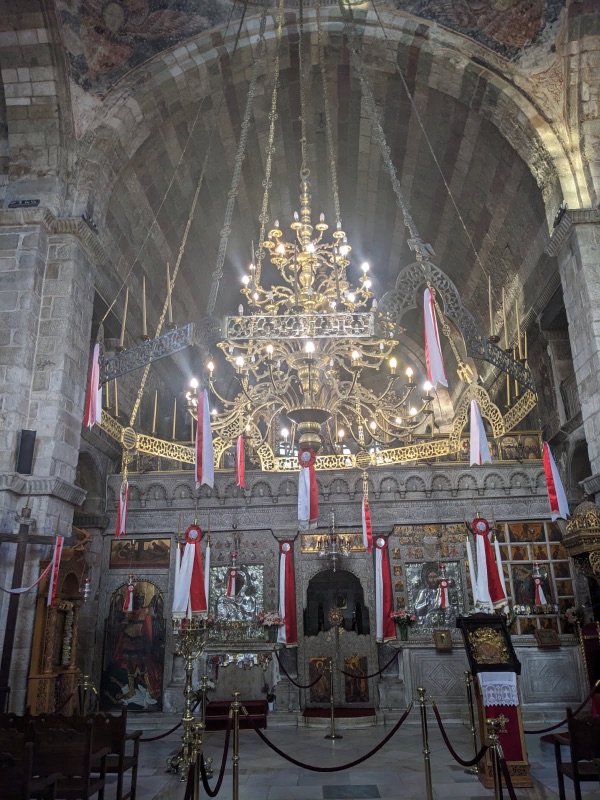
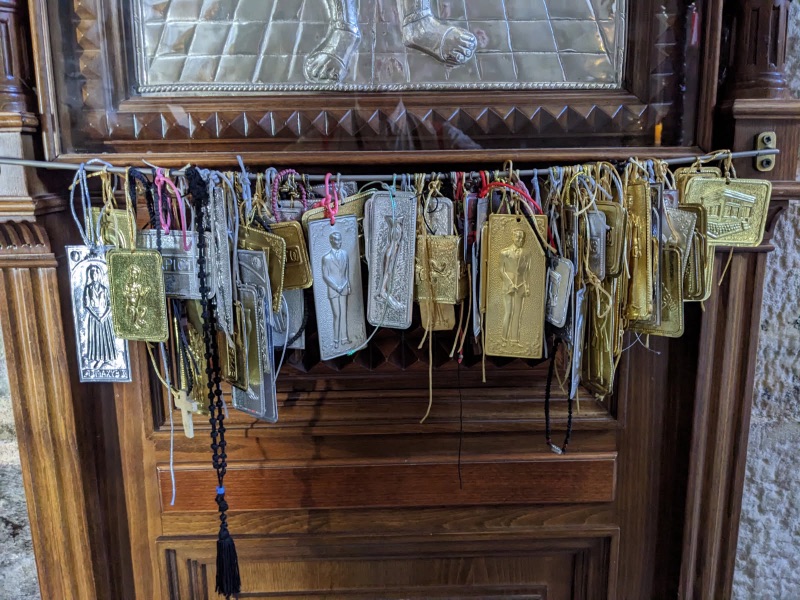
While on Paros, we stayed in Parikia. Near the ferry boat dock, we visited an amazing Byzantine church called the Panagia Ekatontapiliani or the “Church with a 100 Doors”.
It was built in 326 AD before Constantine the Great proclaimed Christianity as the the Roman Empire’s official religion ranking it among the oldest churches in Greece.
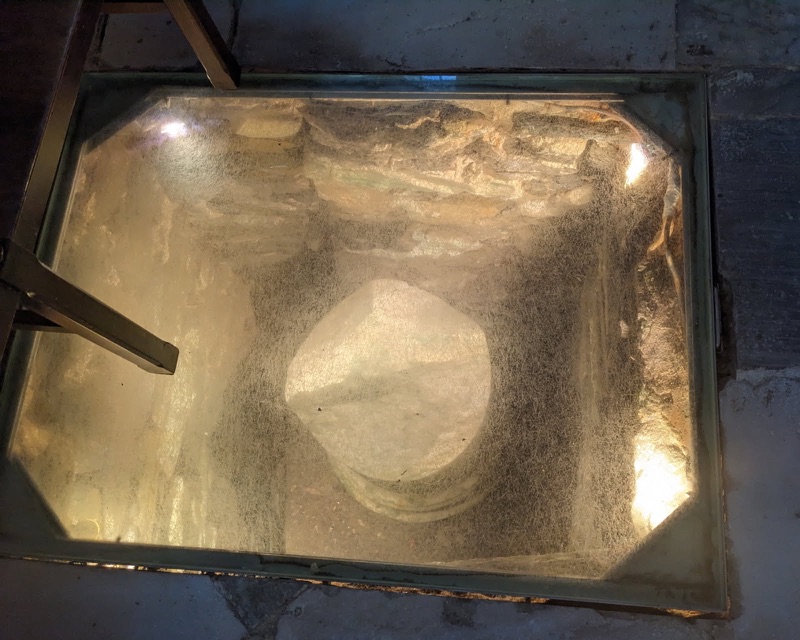
Cutaway in the floor showing pedestal from ancient temple upon which this church was built
Here is a brief summary about why this church is renowned:
According to legend, the original church was either constructed by Saint Helene herself or Saint Constantine, the first Emperor of Constantinople, after the oblation of his mother.
During her journey to the Holy Land to search for the True Cross upon which Christ was crucified, a storm brought Saint Helene to Paros, where she promised the Virgin to build a church if her quest was successful. According to one story version, her quest was successful, so Saint Helene returned to Paros & built this impressive church. Another legend version claims the church was built by her son Constantine the Great after her death & it was dedicated to the Assumption of the Virgin.
The name Ekatontapiliani means the Church with the Hundred Doors. According to tradition, the church has 99 doors & a secret door will open when the church of Hagia Sofia in Constantinople becomes Orthodox again.
Unlike many visitors to the Greek islands, we don’t come for the beaches; but, rather, to enjoy the culture & history.
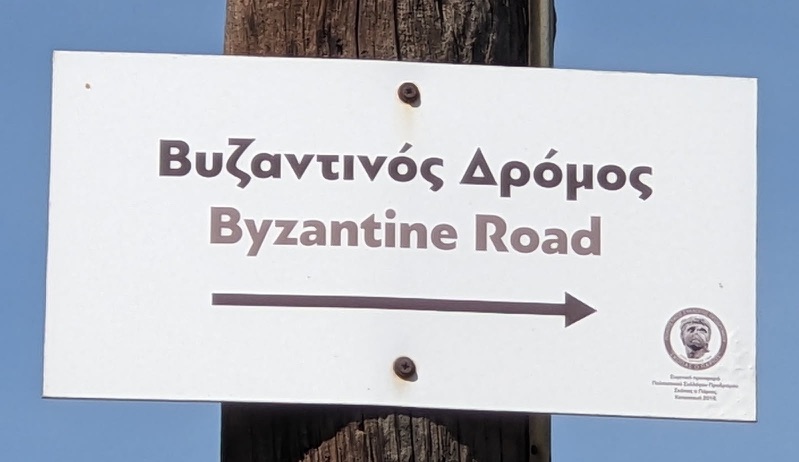
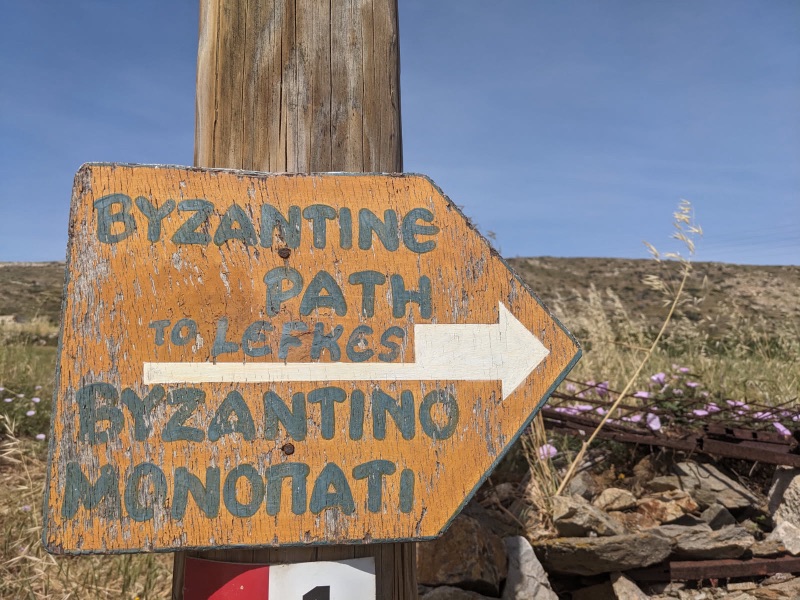
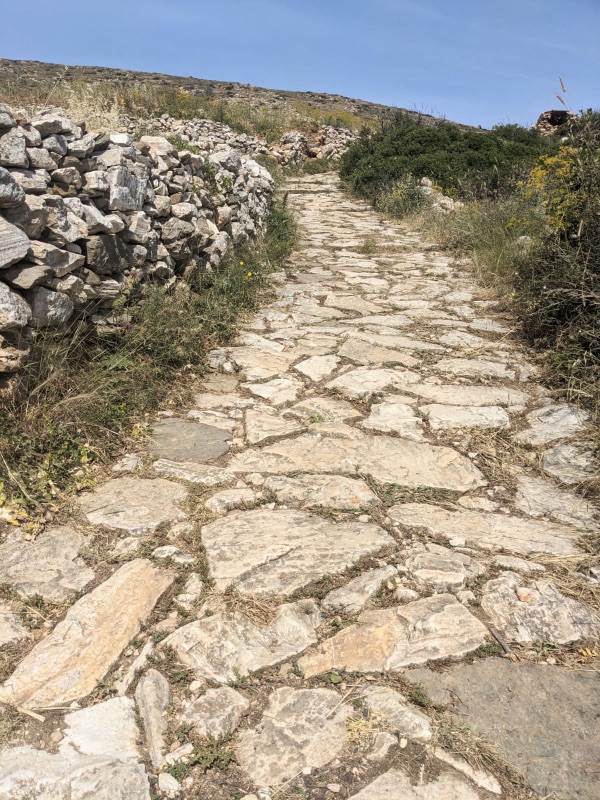
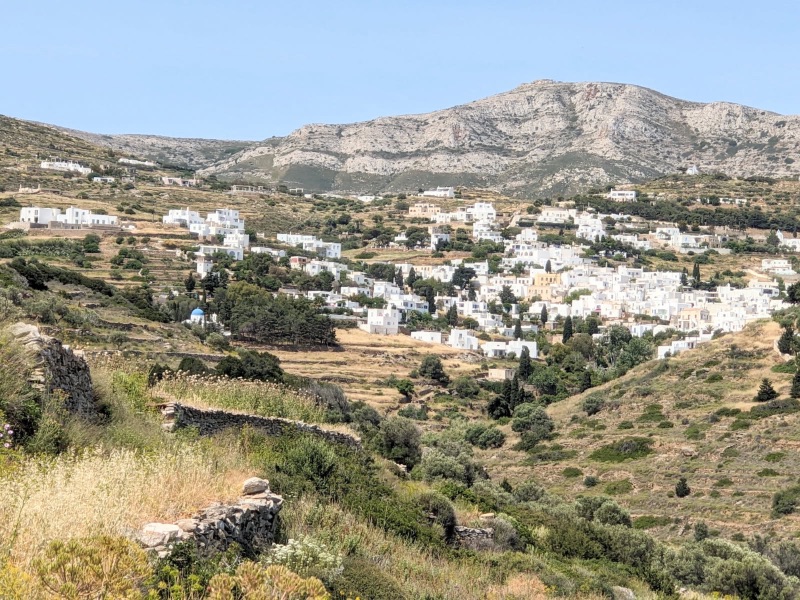
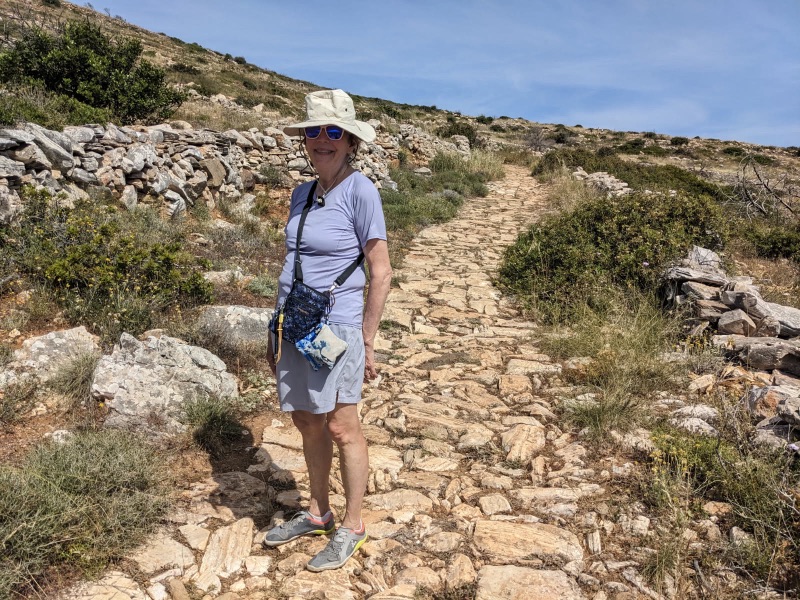
One day we walked the Byzantine Road which was made from marble over 1,000 years ago. First, we drove to Prodromos from where we walked the old road to & from the attractive hilltop town Levkes. It was about 2.25 miles & took us a leisurely hour and a half to walk it each way. Due to the ravages of time, the road is no longer paved the entire way with marble.
To find the starting point, we enjoyed strolling through beautiful small Prodromos.
The walk is a a great way to enjoy the Greek countryside on a sunny; but, not too hot day.
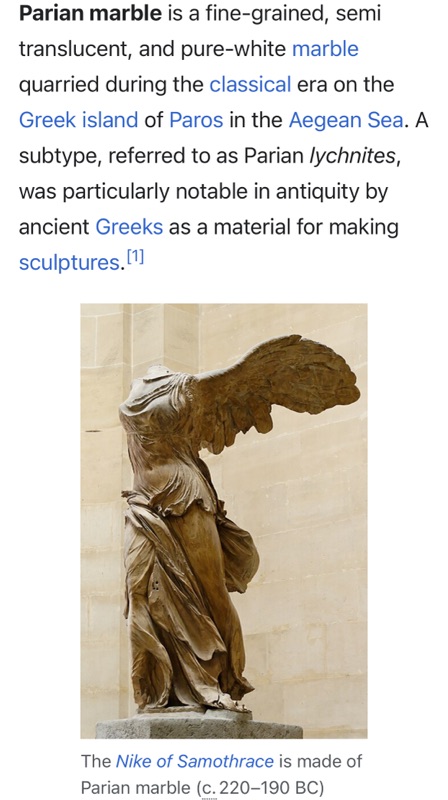
The marble from Paros is very famous & is known as Parian marble.
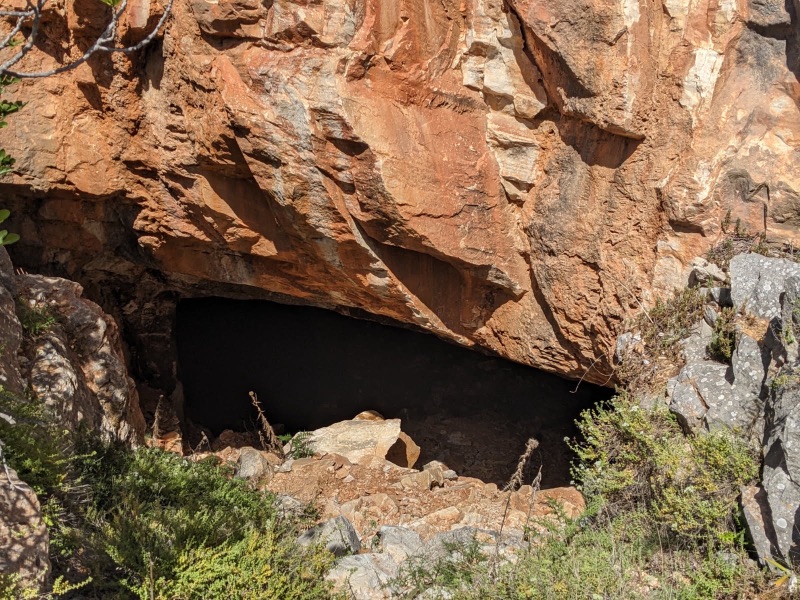
We were kind of able to visit the ancient quarries from where this marble was extracted. I say “kind of” because most of it is closed to visitors due to the inherent danger from being in caves which have been mined since the 5th Century BC.
Mining stopped in the 7th Century & resumed for a short time in the 19th Century before stopping for good at this location.
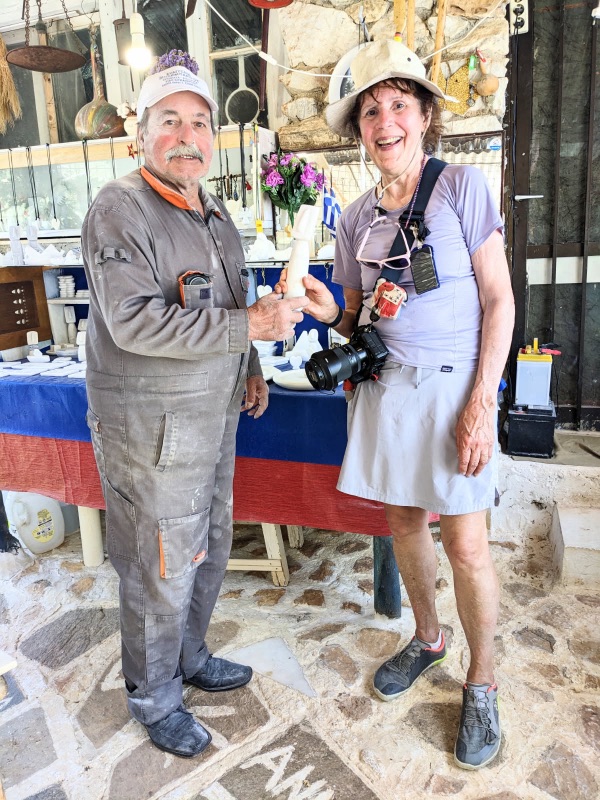
I stopped by a local artist’s shop next to the ancient quarry & bought a few small pieces he had carved from this marble. When you hold it up to the light, it is transparent.
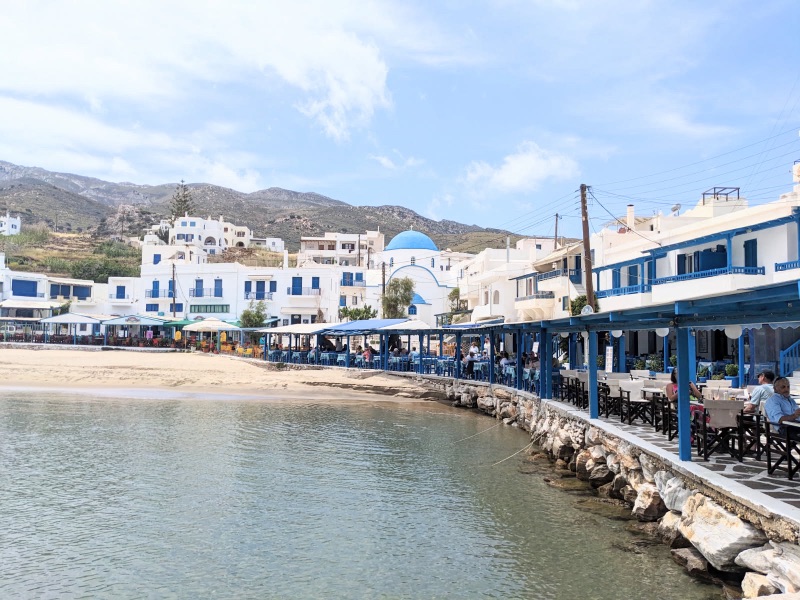
On our last day we took a very short ferry ride to Antiparos for a quick walk around the port town Chora. It’s another lovely typical little island town.
Some years ago, this quiet island known for its laidback vibe caught the eye of Tom Hanks & Rita Wilson. It is reported they have owned a small vacation home here since the early 2000’s.
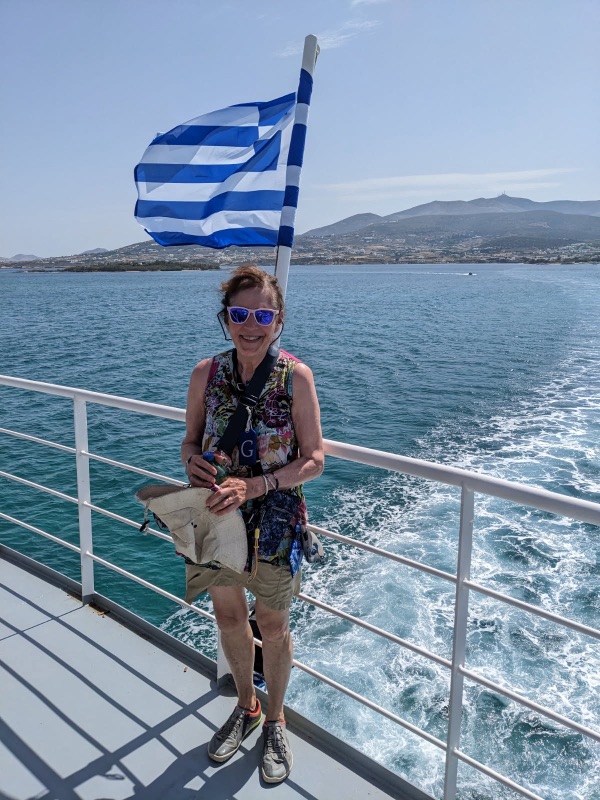
On the ferry to Antiparos
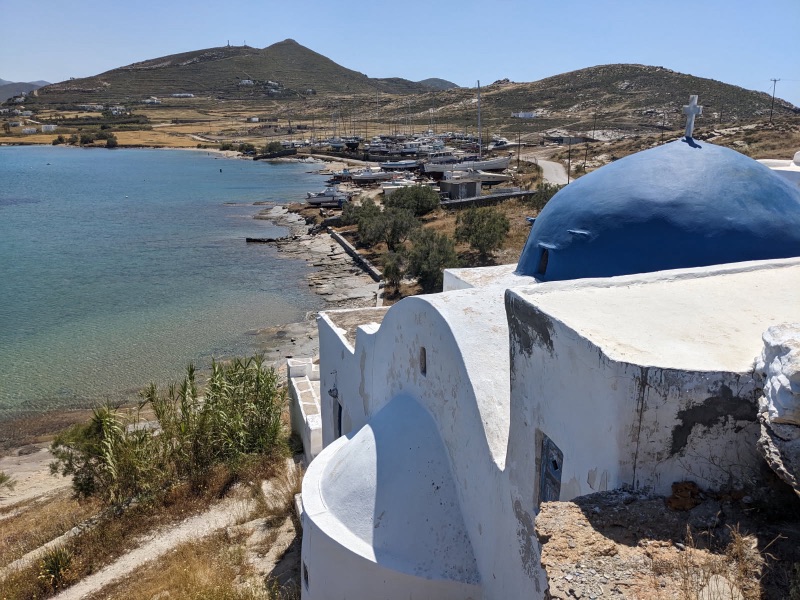
On drives around Paros, we also saw these lovely scenes.
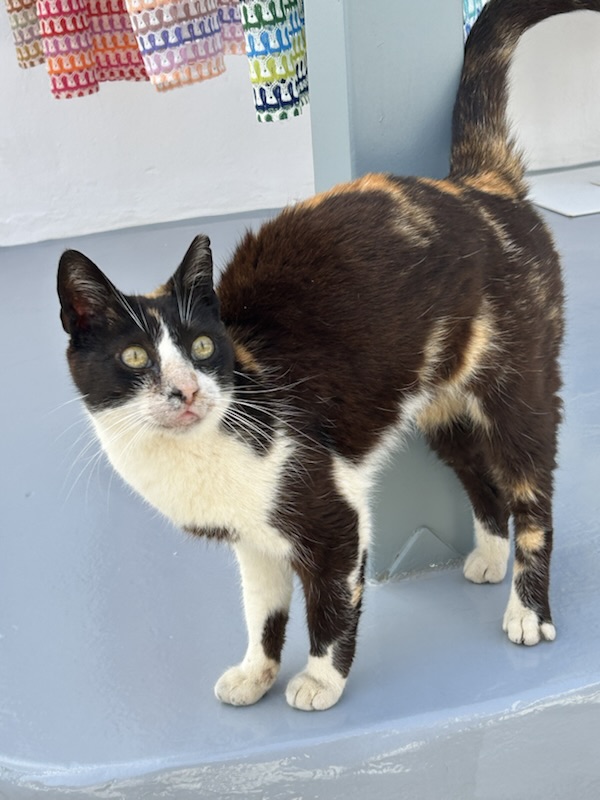
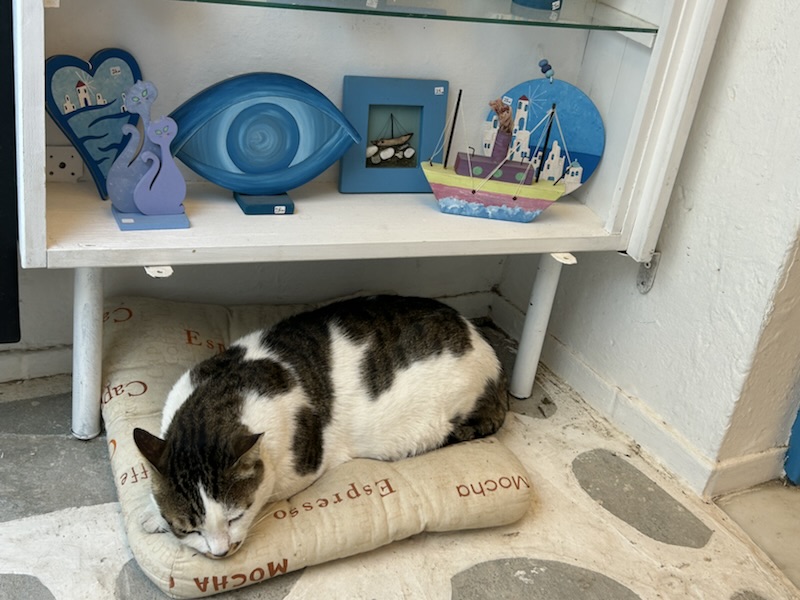
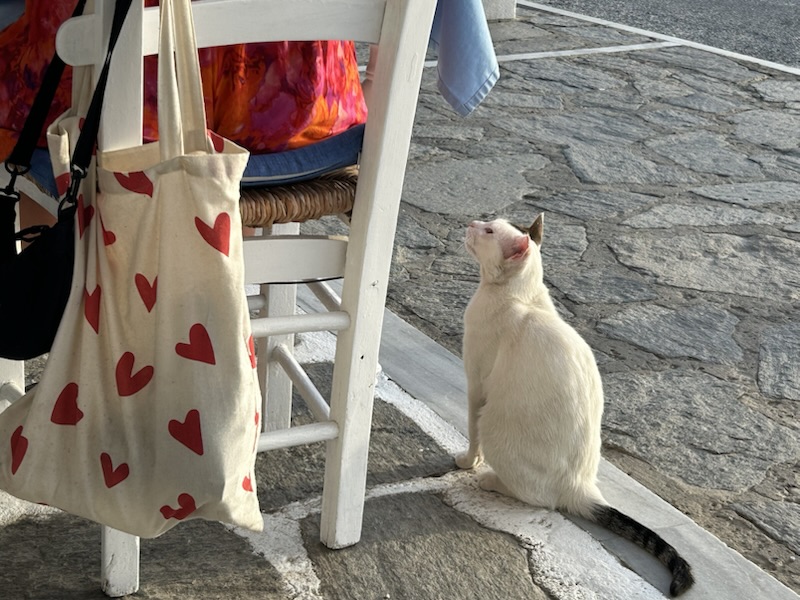
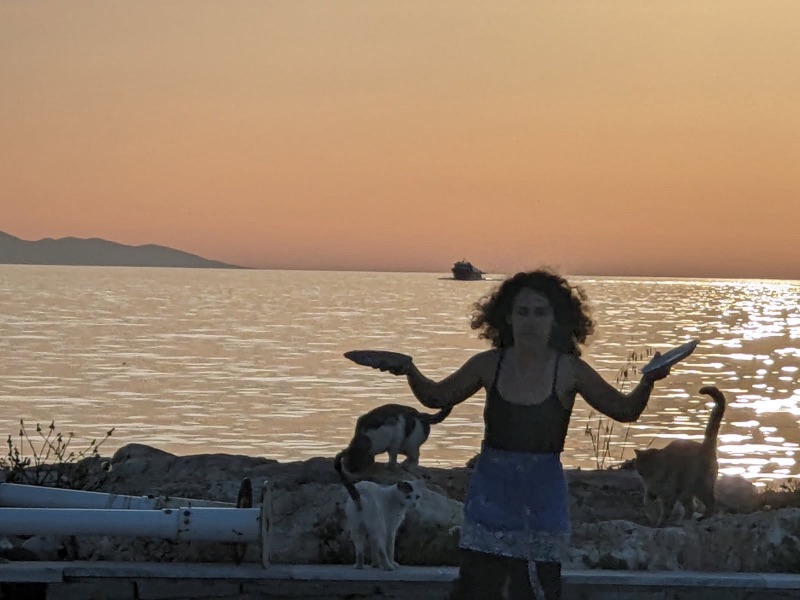
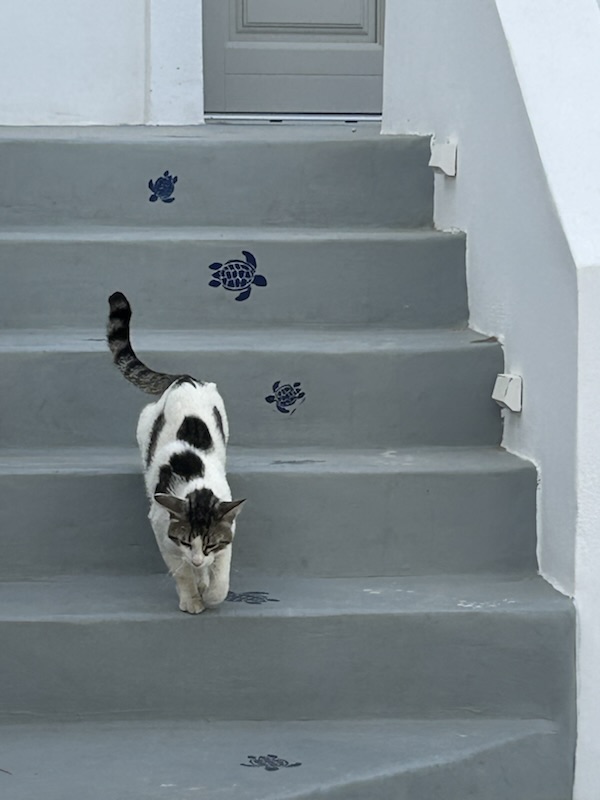
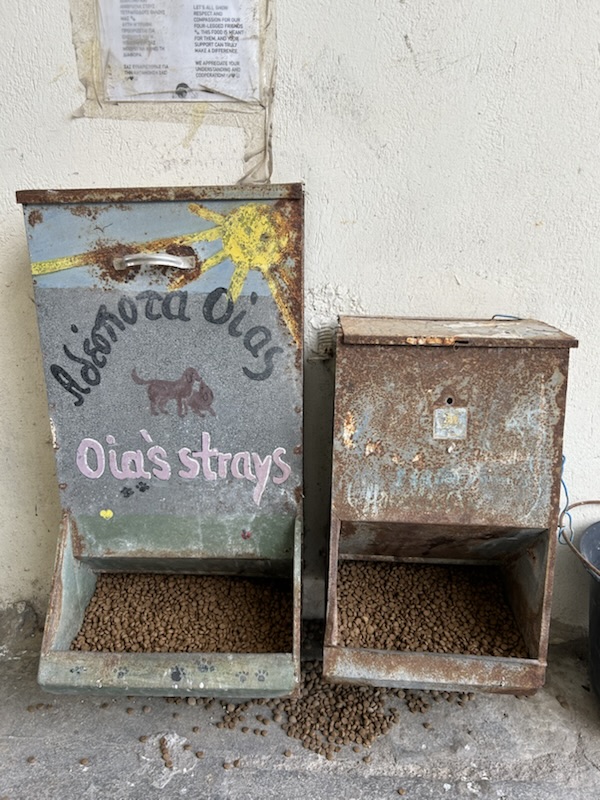
If you love or even just like cats, then you will be happy in Greece. There are many, many kitties here. They are just part & parcel of what makes Greece be Greece.
Sunset Cat Feeding in Perikia
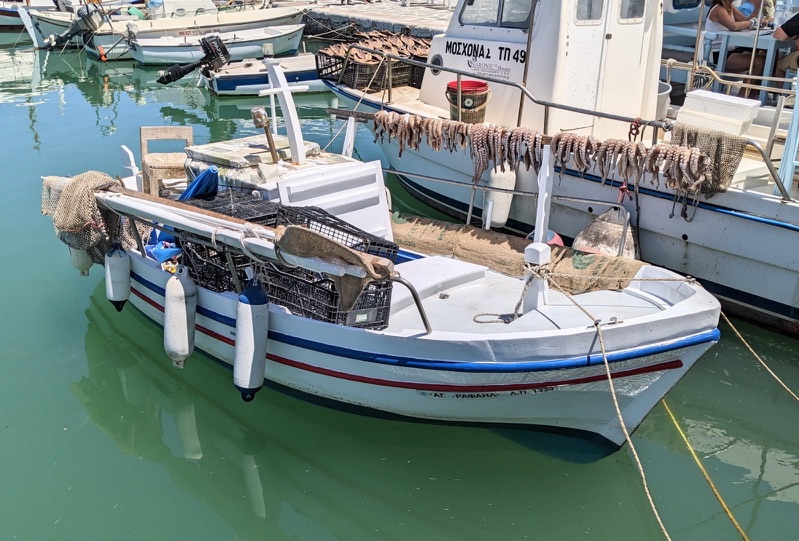
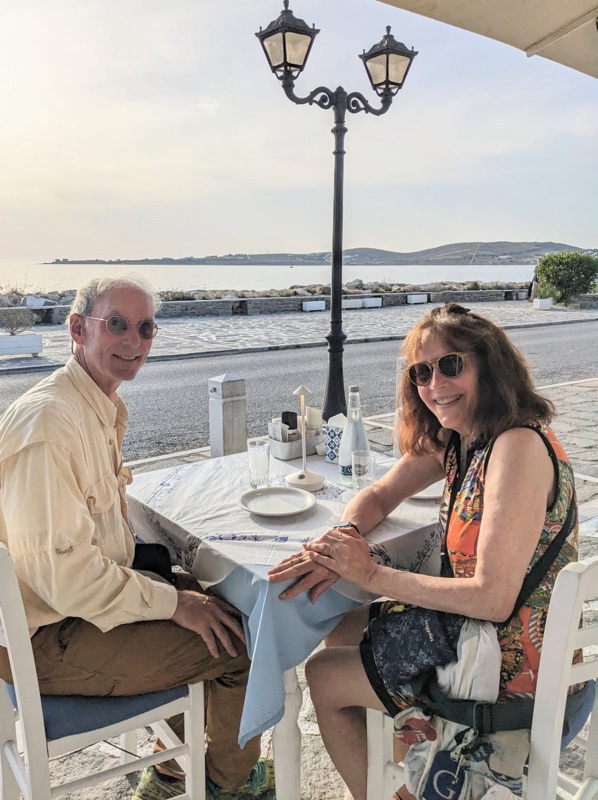
Almost every small Greek fishing village comes with two elements. First is the docks for the fishing boats. The second is restaurants lining the harbor. Each restaurant has almost the exact same menu with typical Greek dishes & of course, they offer seafood. So, you basically just pick the restaurant with the seating you prefer.
Another lovely vacation in the Greek Islands ends with a beautiful sunset.
When touring the Cyclades, you can stay on the tourist route that follows the cruise ships along with big crowds that come with them, or take off to an island where the cruise ships don’t go.
We chose the latter option & went to Naxos. Unlike Santorini which gets over 3 million visitors each year, Naxos gets around 600,000 a year. Naxos is also a large island so it can easily handle visitors which enables you to relax far away from maddening crowds.
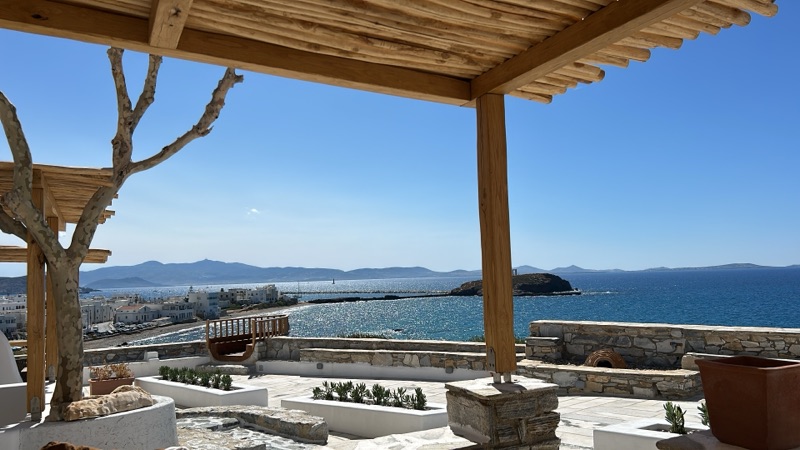
View from our patio
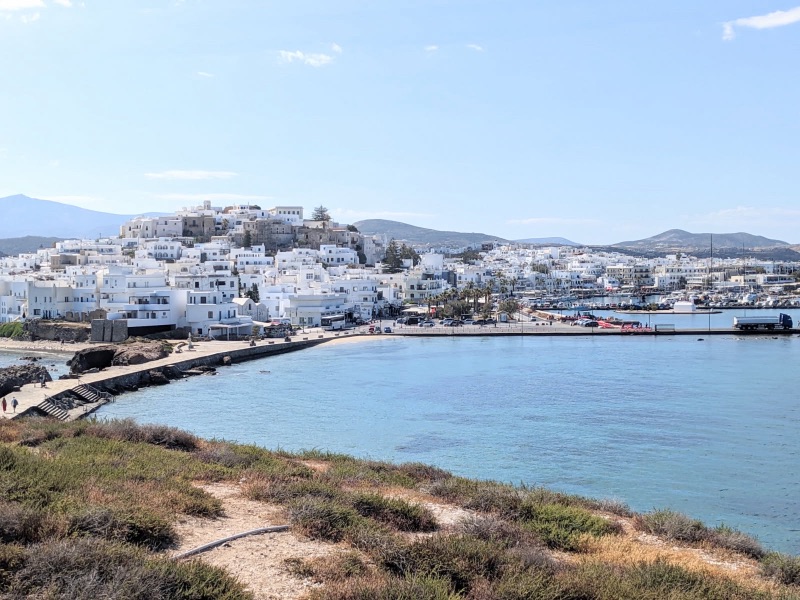
About a half mile from our hotel was charming Naxos Town which is perfect for strolling around in the old town for shopping & dining.
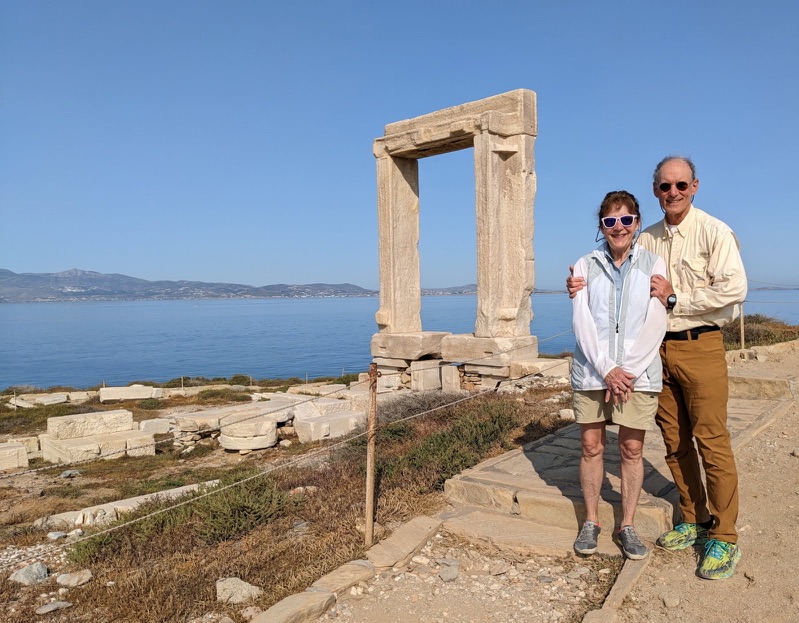
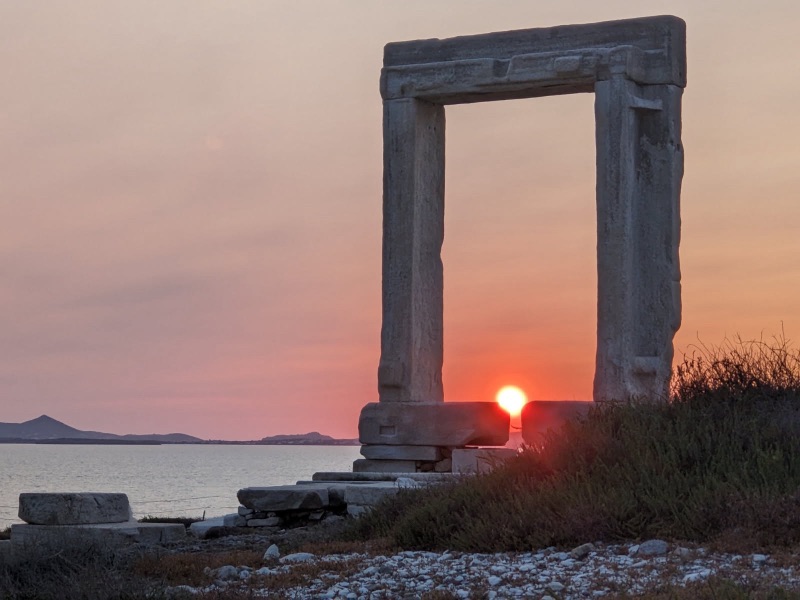
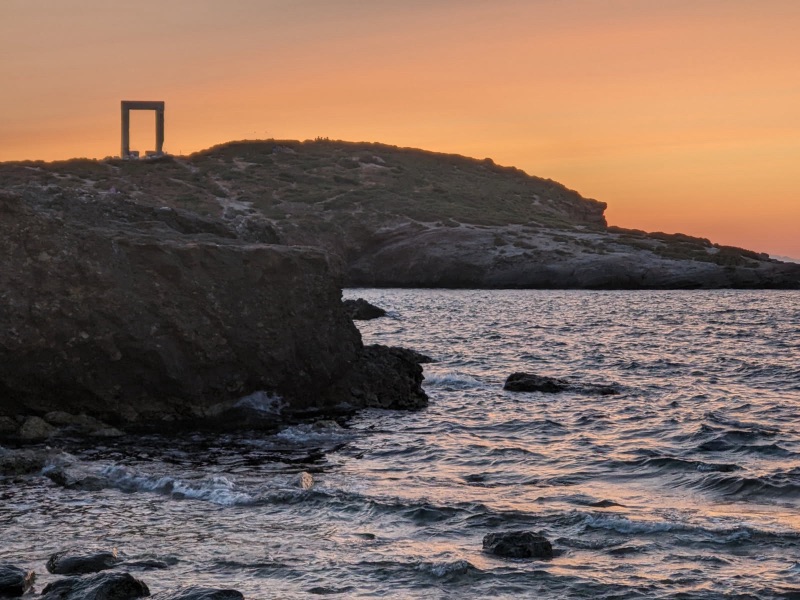
Near the town you can walk up a short hill called Palatia to see Naxos’ most famous landmark- The Portara.
The Portara is the only remnant from the never- finished Temple of Apollo which was started in 530 BC.
It is the door into the temple & was made from marble quarried on the island.
To see the island at our own pace we rented a car & drove to see the sights.
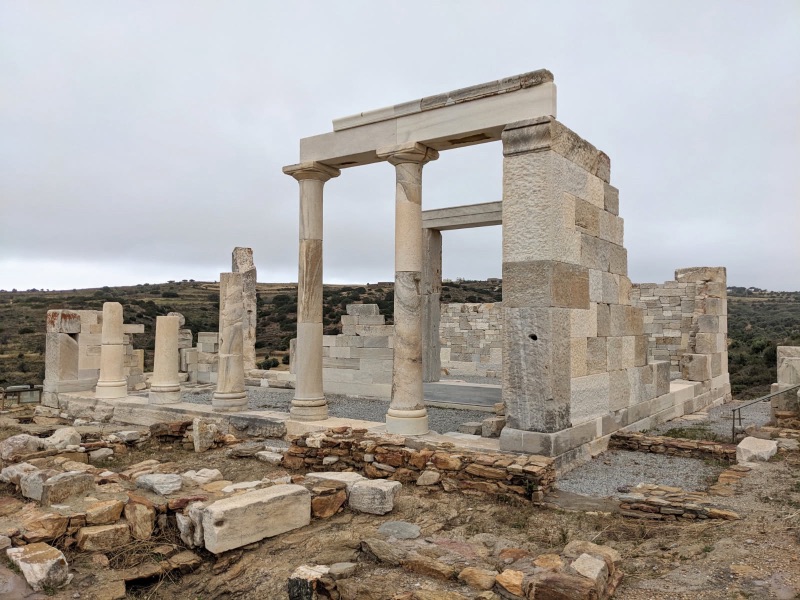
Temple of Demeter This temple dedicated to the Goddess of Agriculture Demeter dates from to the 6th Century BC. It was only rediscovered in 1949. Naxos was the first place marble was used in Greece & this temple is the first structure in history built entirely from marble.
Its location is easy to understand because it is situated in a very fertile valley where many crops were & still are grown.
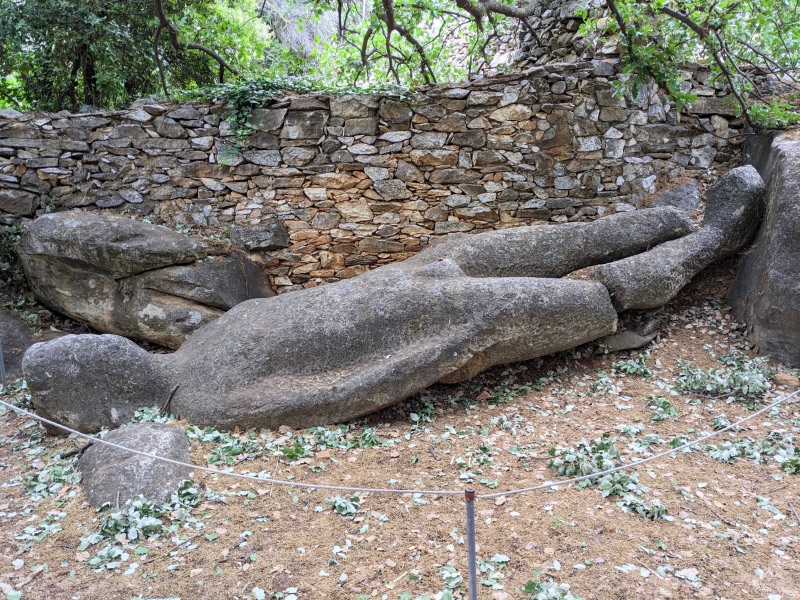
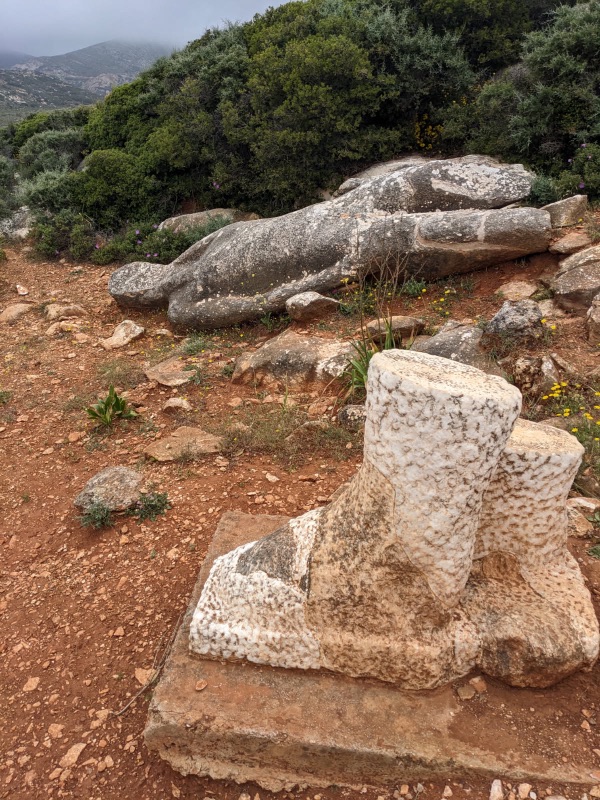
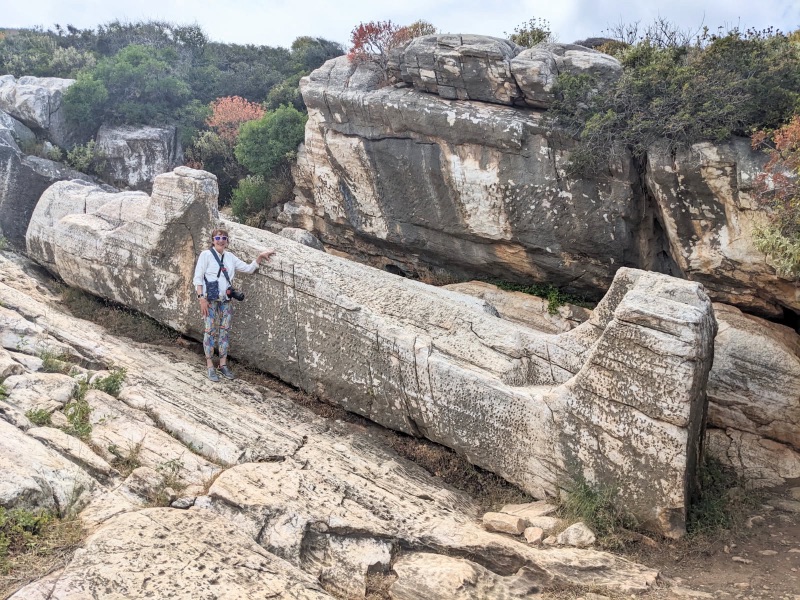
In ancient times Naxos was known for its marble which is still quarried & used worldwide. Kouroi which are are very large human-like statues made from marble are found in several places on the island.
Melanes Kouros Statue- Danaged in transit & left where it broke- note the break in the right leg Flerio Kori- Dating from 570 BC, this statue was damaged while being made & was left in place near the ancient quarry. A Kori is a female figure & Kori is the Greek word for “daughter”.Apollonas Kouros This statue representing the God of Wine Dionysos is 10 meters long weighing 80 tons & was started in the 7th Century BC. It is not damaged; but, it is thought that it was left in place in the marble quarry simply because it was just too heavy to move.
Apollonas is a lovely seaside village where the unfinished Kouros depicting Dionysos is located,
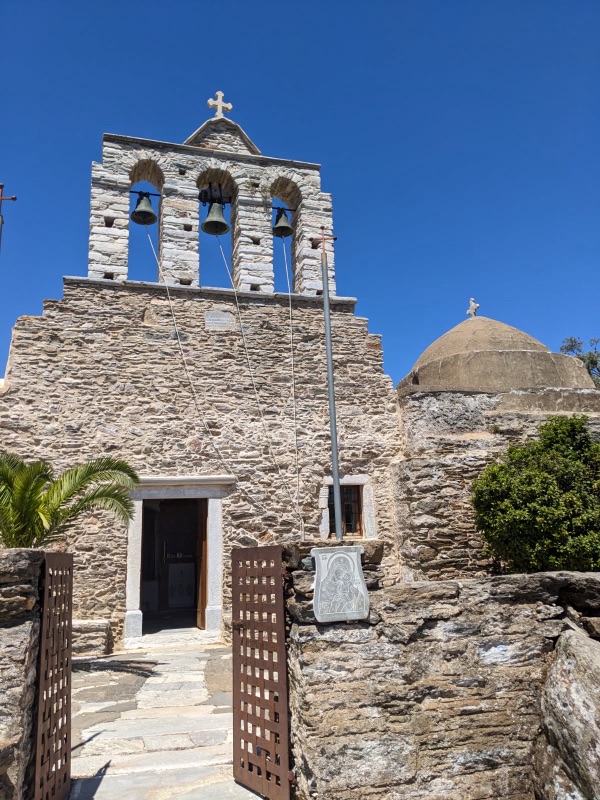
This Greek church named Panagia Drossiani dating from the 6th Century is not only the oldest church on Naxos; but also, in the Balkans.
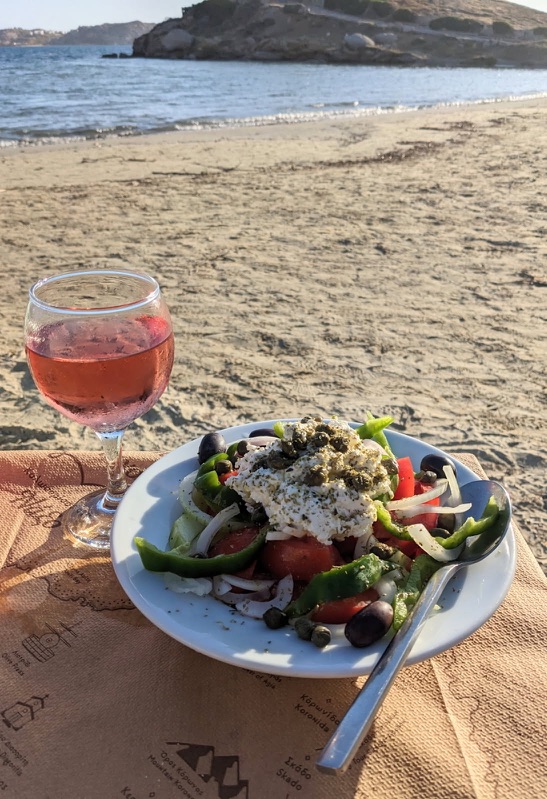
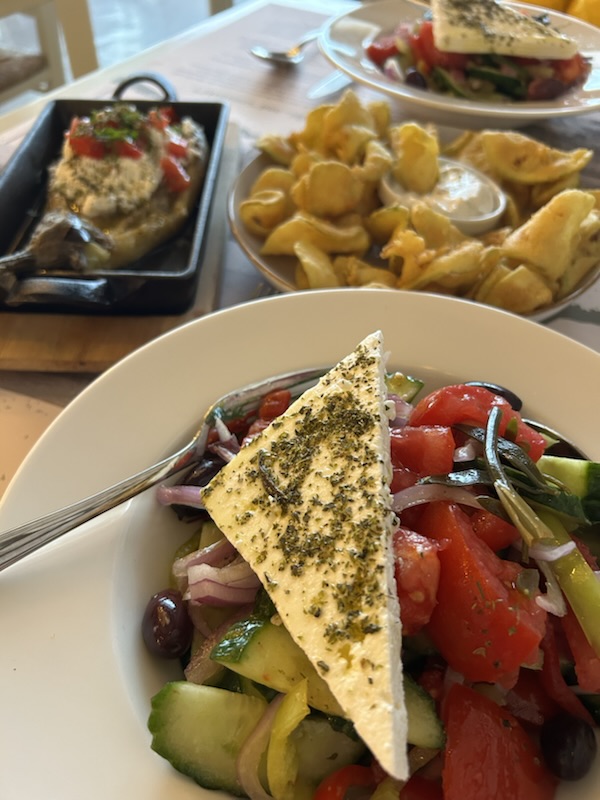
Naxos is known for its special foods & drinks. Instead of Feta cheese being added to the traditional Greek Salad, here they use a softer version called Naxos Cheese.
We also enjoyed their delicious potatoes that are softer in texture, but many people come to Naxos for the wine.
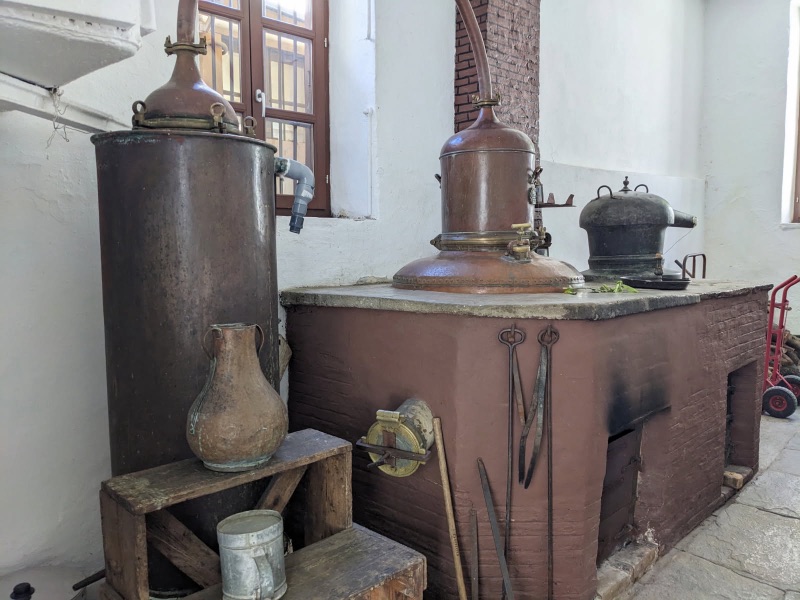
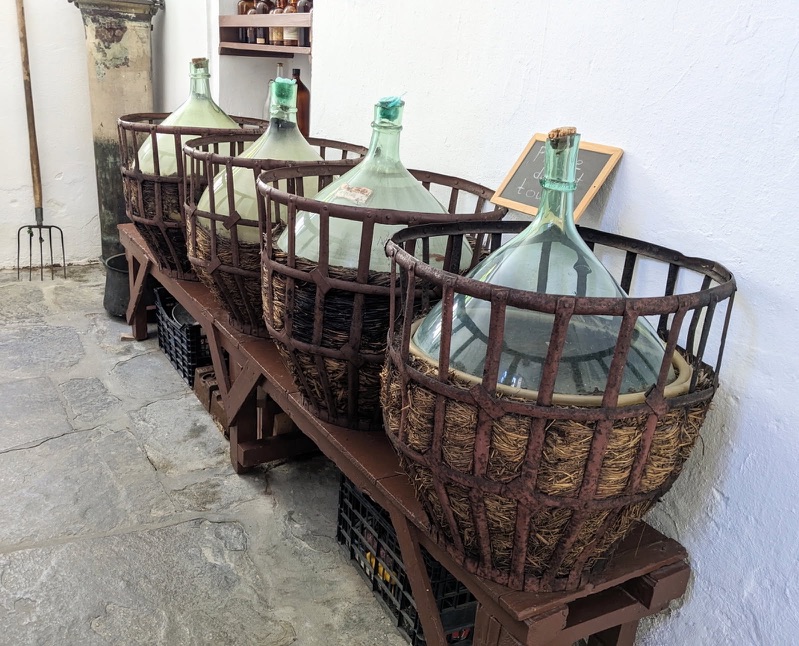
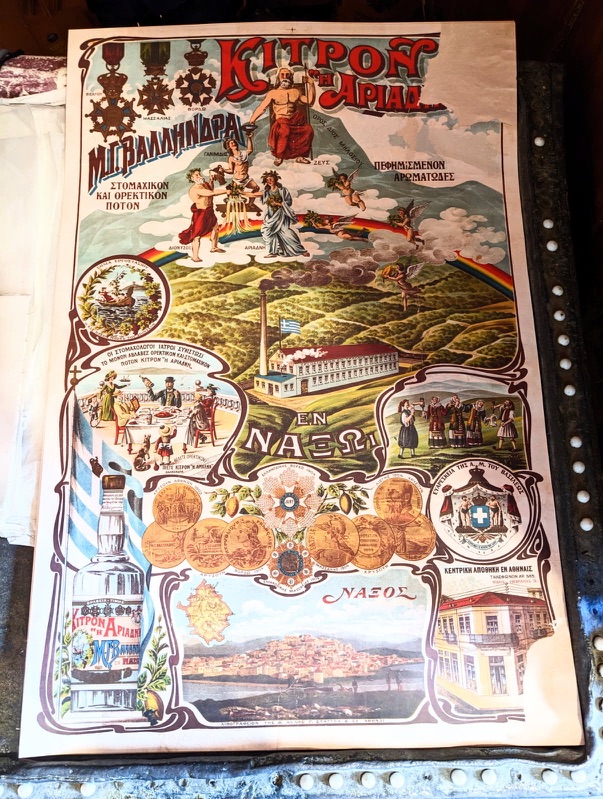
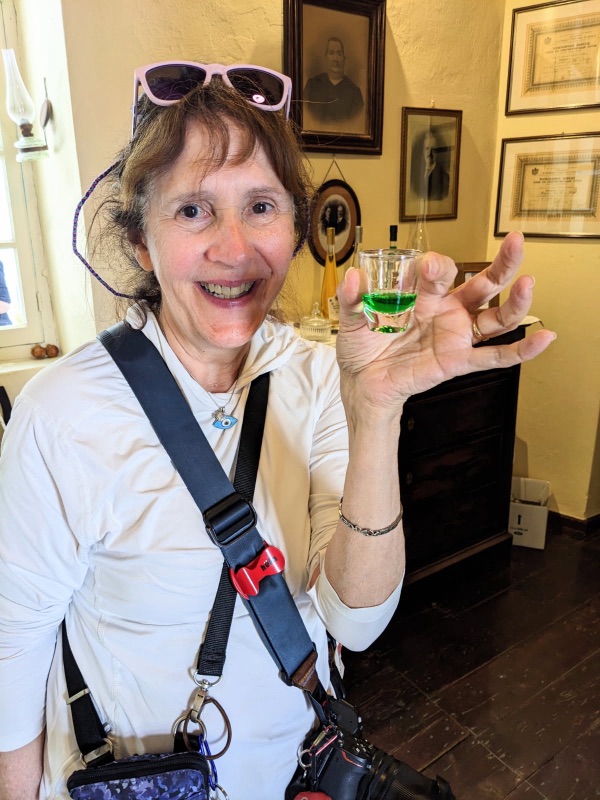
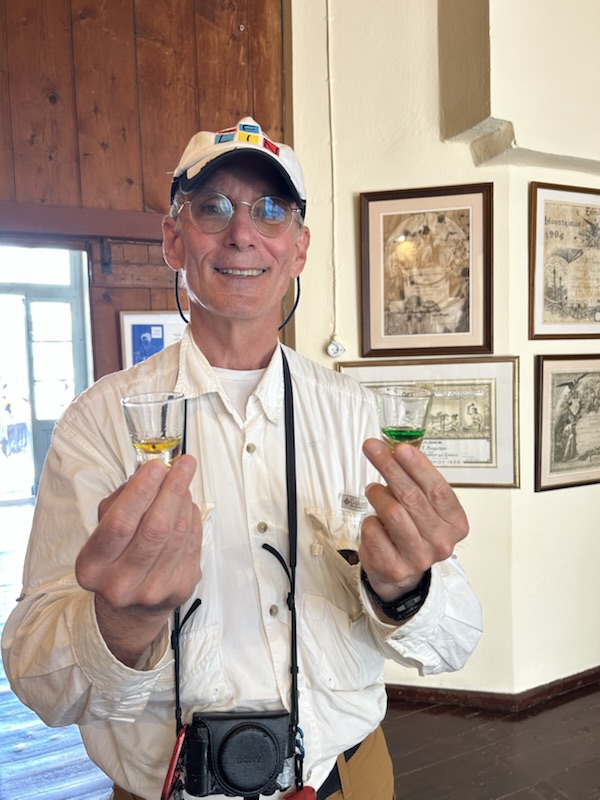
But, if you need something a little stronger, Naxos has its own special liquor called Kitron.
We enjoyed visiting the Vallindras Distillery in Chalki. This distillery has been owned & operated by the Vallindras family for five generations since 1896.
We spent a few lovely hours in Apeiranthos. This extremely quaint, unique village is made from marble- walls, window frames, steps, & walkways are all marble. As a testament to marble’s durability, some structures date from the 12th Century
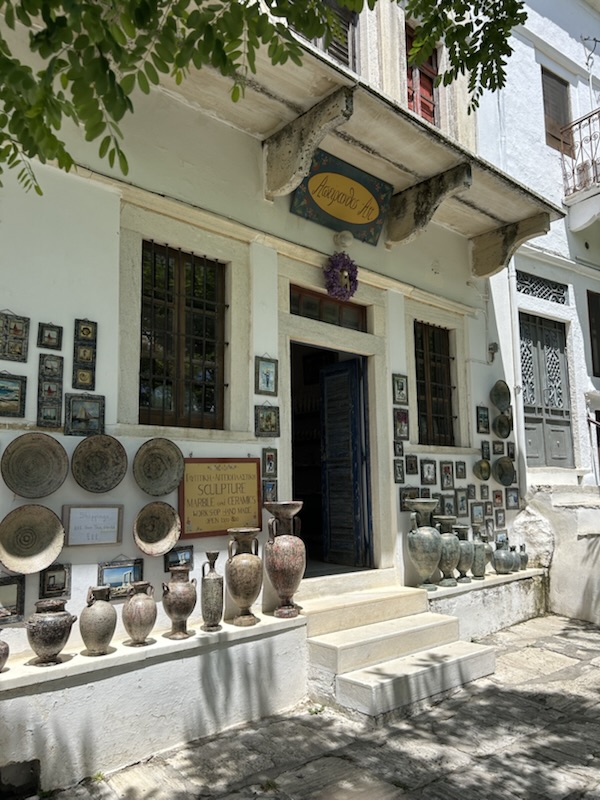
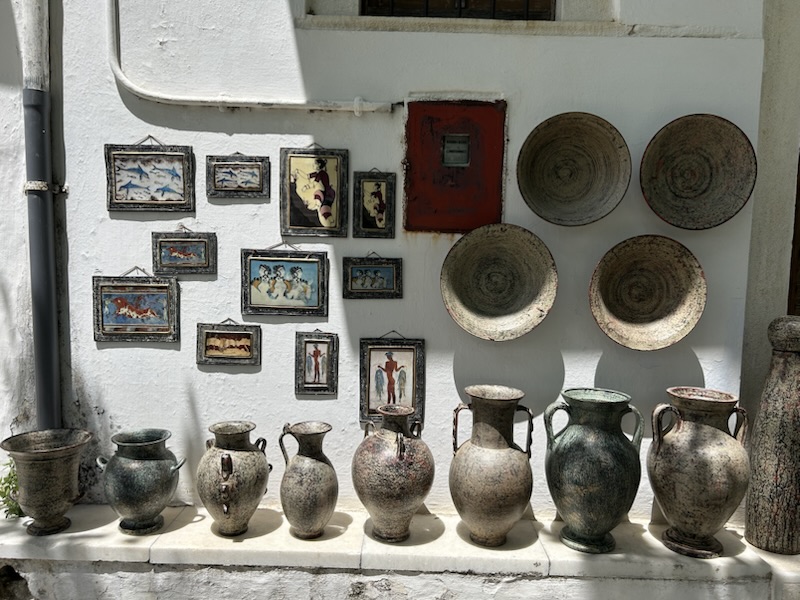
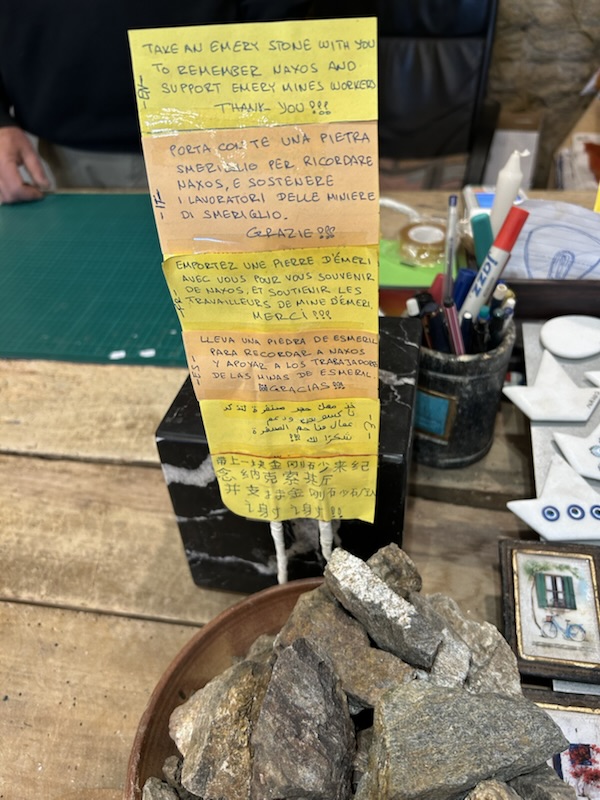
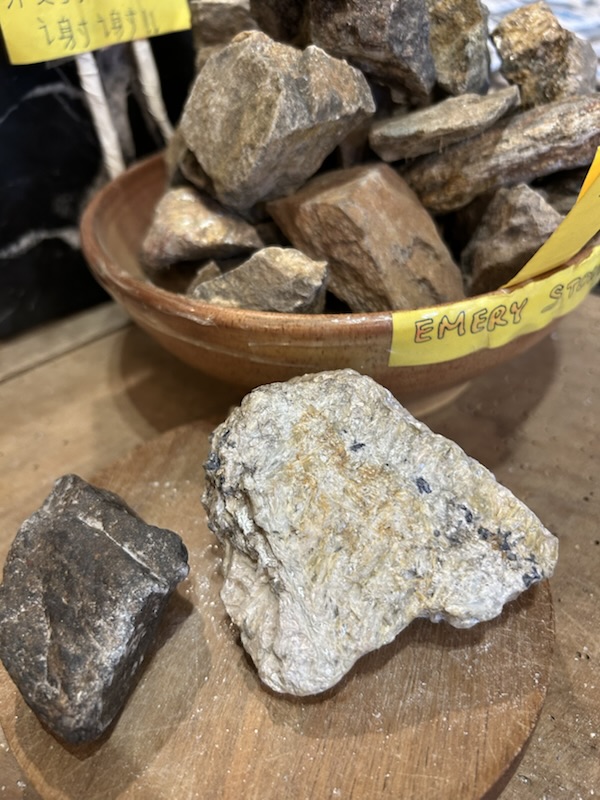
We came across a lovely store with very unique pottery, It looks like metal, but is actually clay with a mica glaze finish.
Donations to support the Emery minersThe dark stone is Emery & the light stone is Mica. The hard Emery is rubbed on the soft Mica to produce silt used to glaze the pottery.
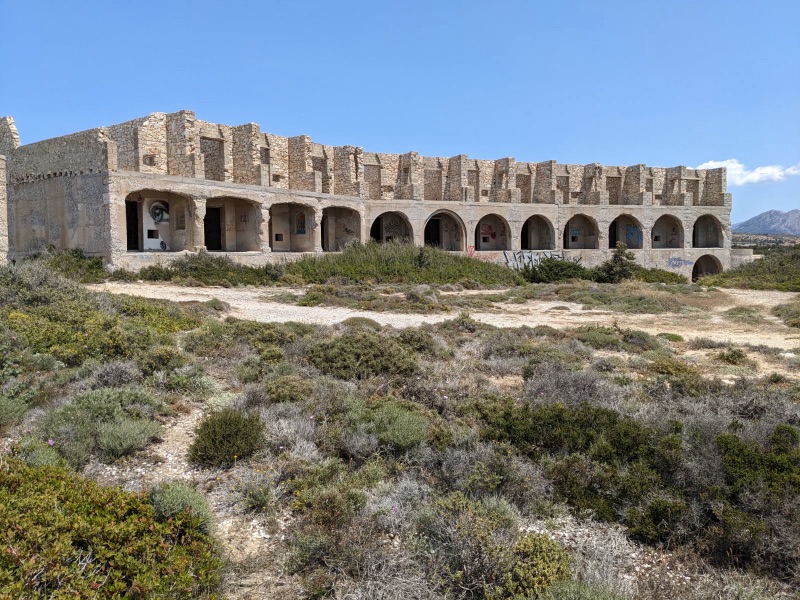
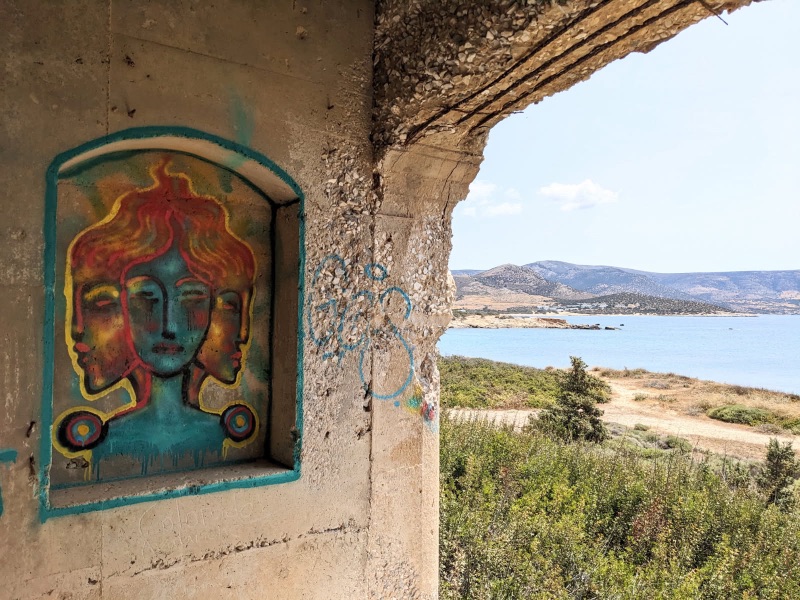
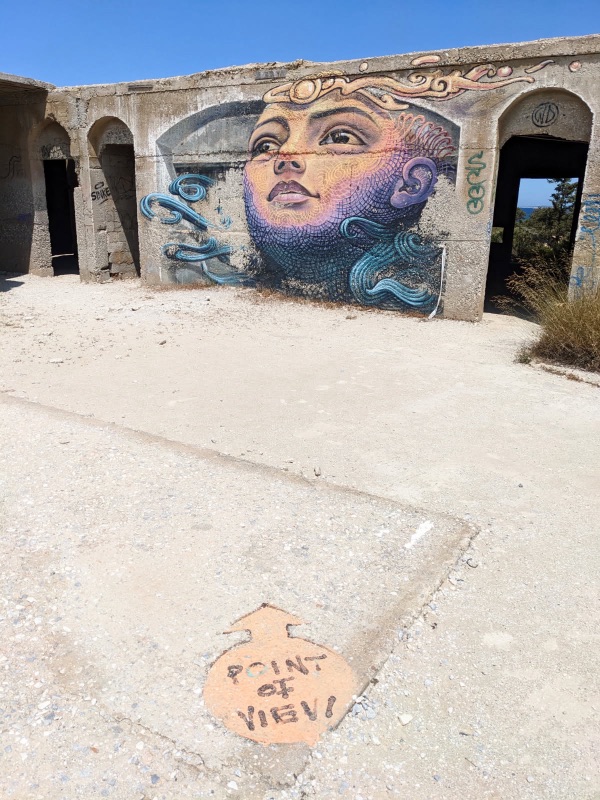
On Naxos’ southern end at Alyko Beach is a huge hotel complex that was started in the 1960s, abandoned in the 1970s during the military dictatorship, & never finished.
It became a draw for street artists from all over the world to tag. Some pieces are quite good whereas many others are not. The place is also covered in graffiti. It’s too bad the hotel didn’t work because it is located near very nice beaches. While there, I kept thinking the ruins would make a perfect location for a movie thriller.
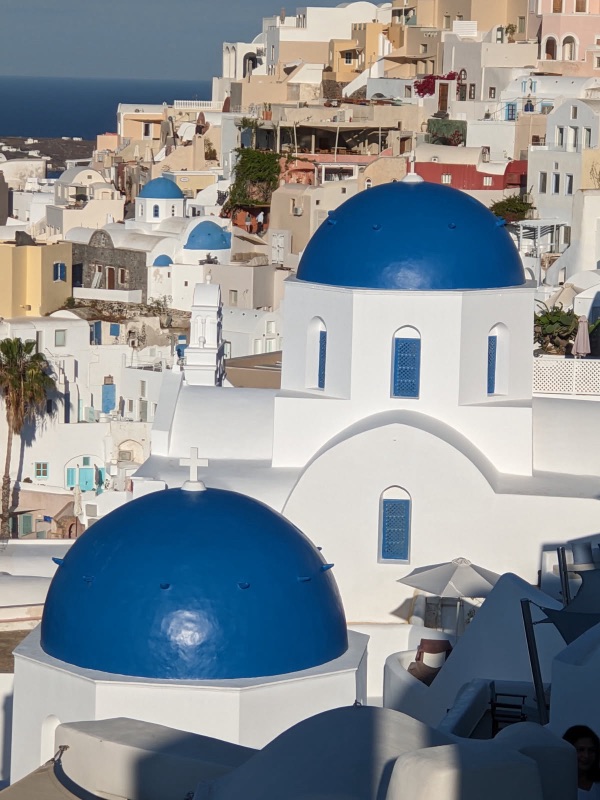
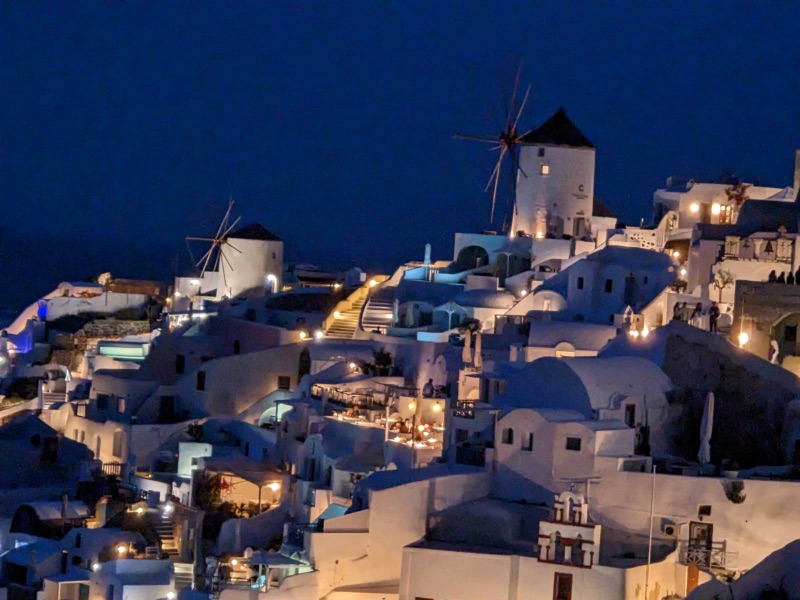
If asked to describe a typical Greek island, many people would say white buildings on a treeless, rocky hillside with blue domed churches. This description is apt for the Cyclades Isles. These charming islands which seem tailor- made for a movie set are why so many tourists come here.
From the 33 inhibited islands in the Cyclades, Santorini (Thera or Thira to the Greeks) is definitely the queen. Over 3 million annual visitors come to see & experience one of the most picturesque locations on Earth. Why not? The pristine white villages seem to pop out against the dark volcanic soil & deep blue Aegean Sea which makes a perfect holiday setting.
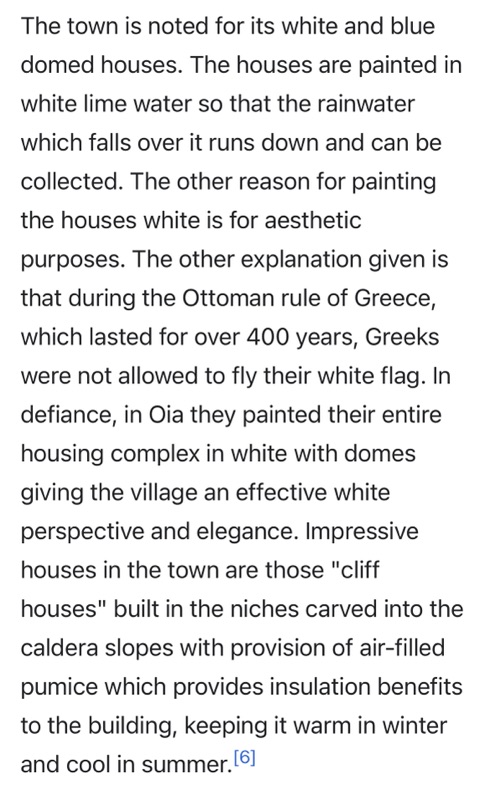
With help from the highly supportive tourism industry, each building is newly whitewashed each spring. Here is the history behind this iconic Cyclades appearance:
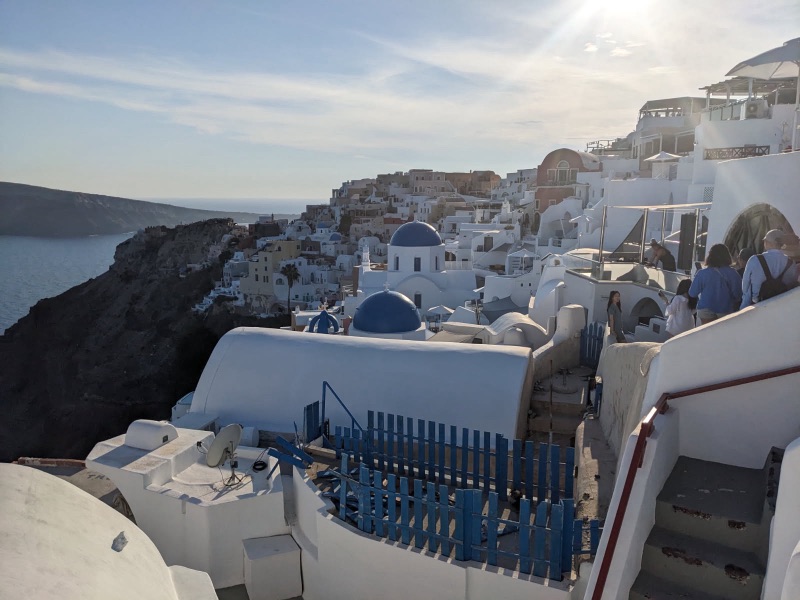
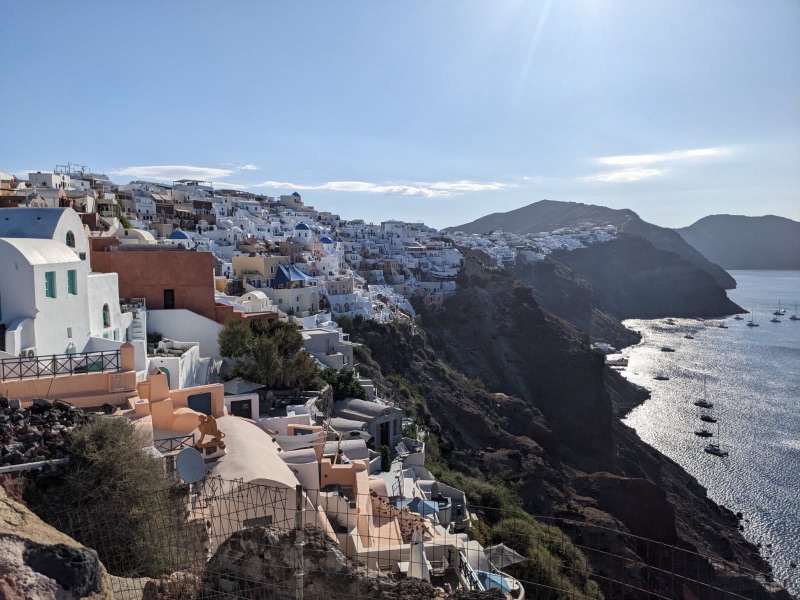
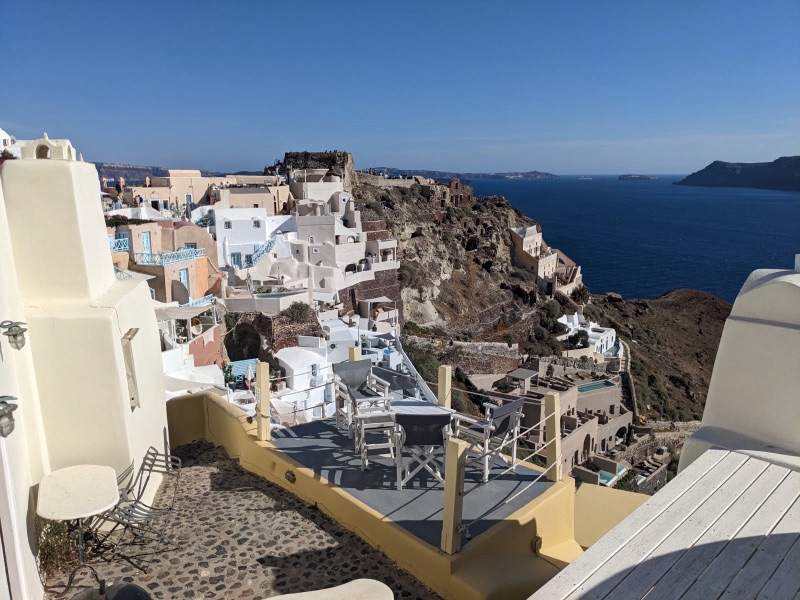
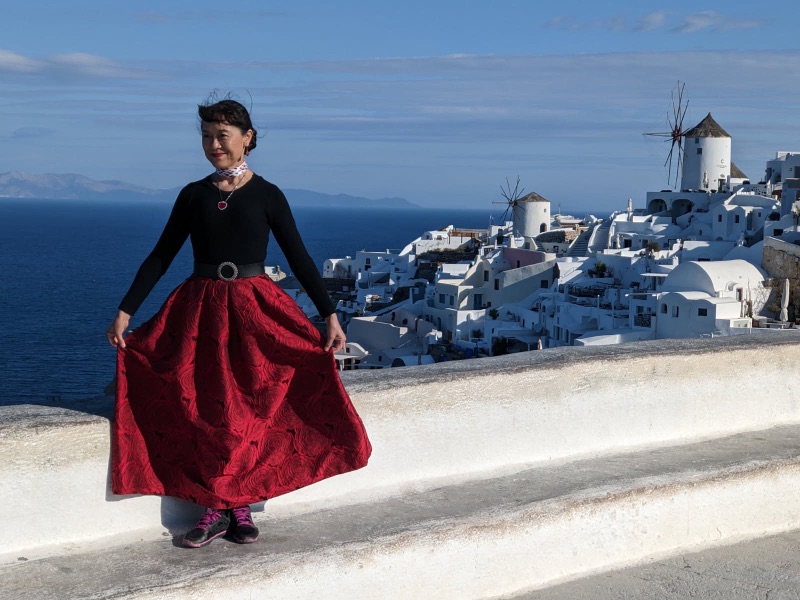
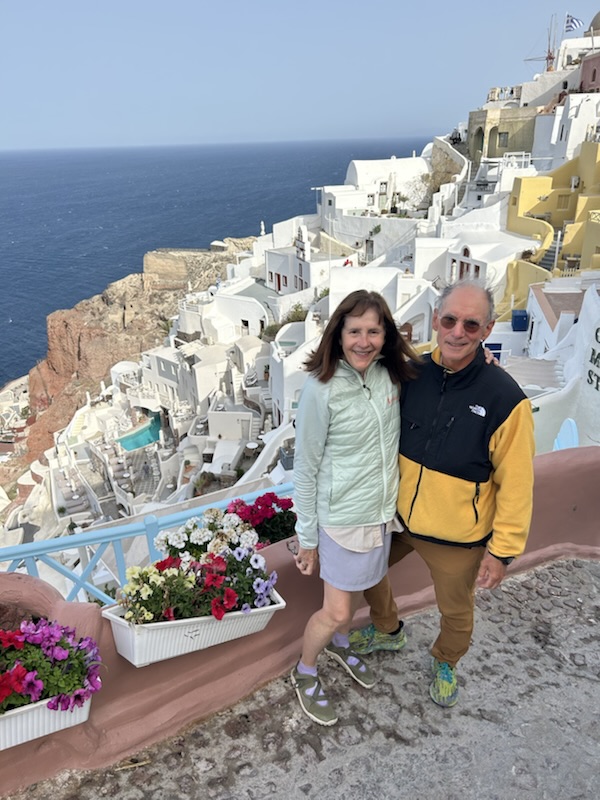
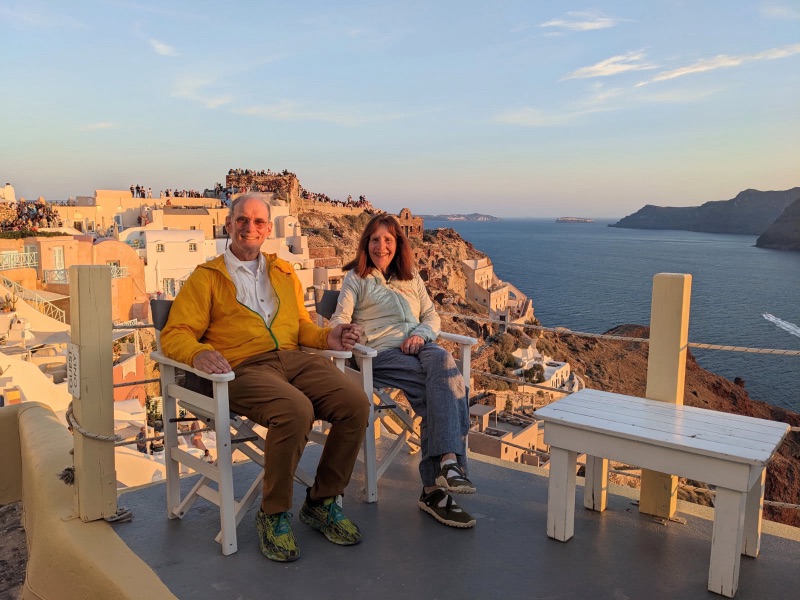
Most visitors make their way to the island’s westernmost town called Oia (pronounced EE-ah) This is probably the most photographed place in Greece. However, to visit it, you need to be prepared to climb up & down many steps because the houses are built into the vertical mountain side, one on top of the other. Even with the vertical challenge, Oia is well worth the trouble. Every direction you face & every turn you make just begs to have a picture taken to capture every spectacular view.
Remember when we use to say, “This a Kodak Moment”? Well, here a few from Santorini.
For many, being in Oia at sunset is the ideal photo opportunity with its “golden light”.
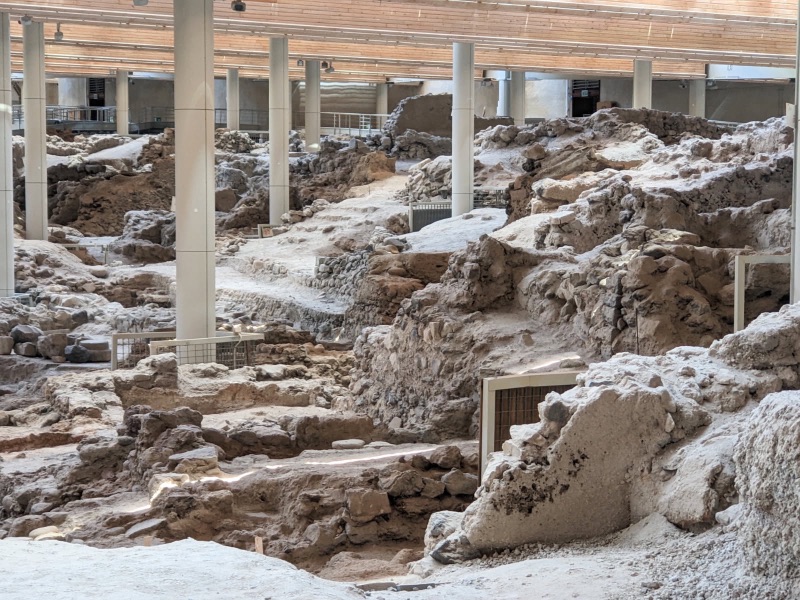
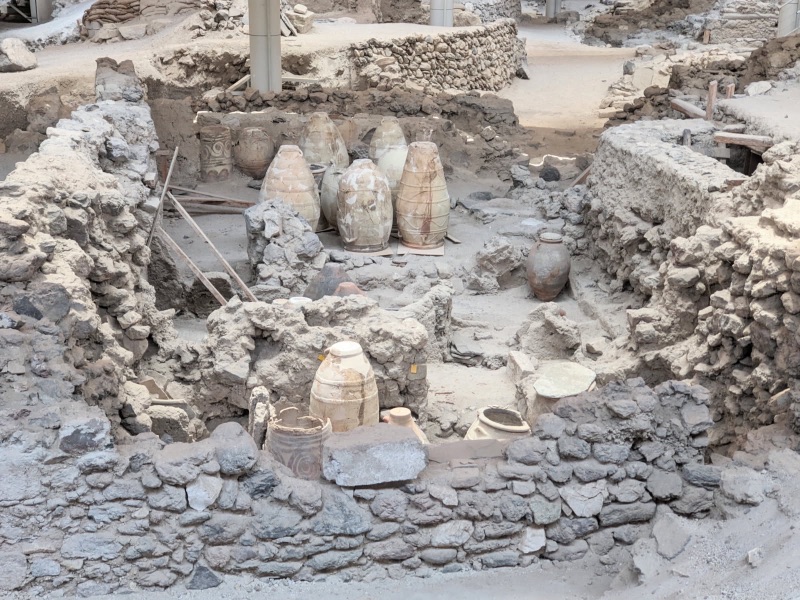
Santorini is also famous for its volcanic eruption which around 1700 BC & covered the ancient city Akrotiri with ash, much like Pompeii in Italy was. No human remains or valuable jewelry have been found at Akrotiri which means the inhabitants must have known their city was doomed & left before the cataclysm.
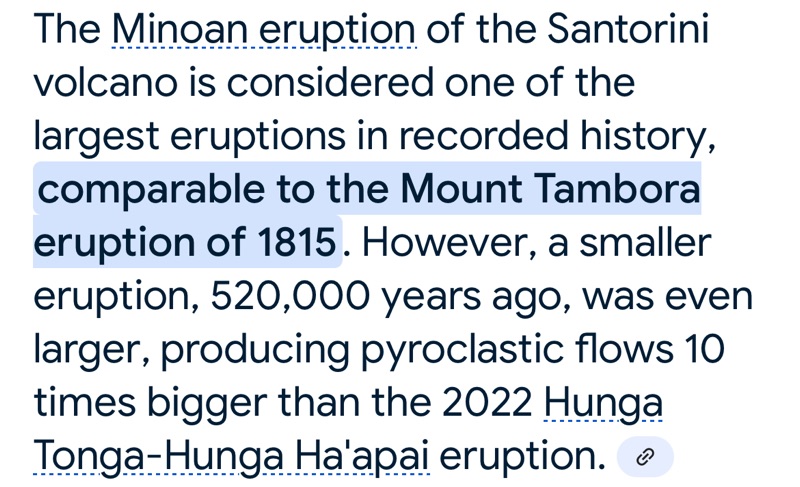
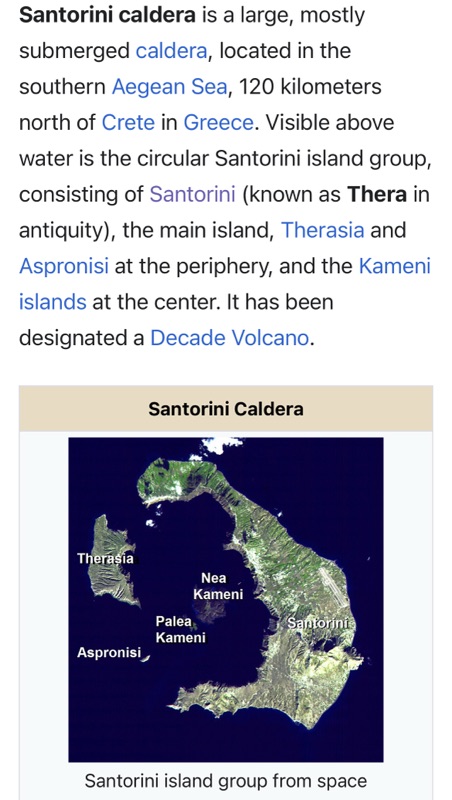
The gigantic eruption had a devastating impact on the Minoan civilization in Crete which is 60 miles away. Here is some information about this explosion:
The last lava flow at Santorini was in 1950; but, significant seismic activity occurred this year which means another volcanic eruption could still occur… sooner than later.
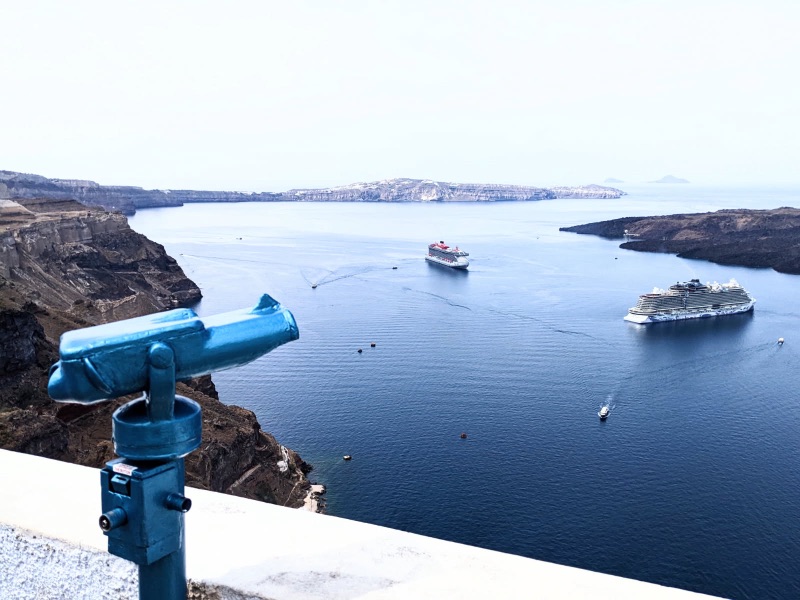
Santorini is the remnants left after the explosion.
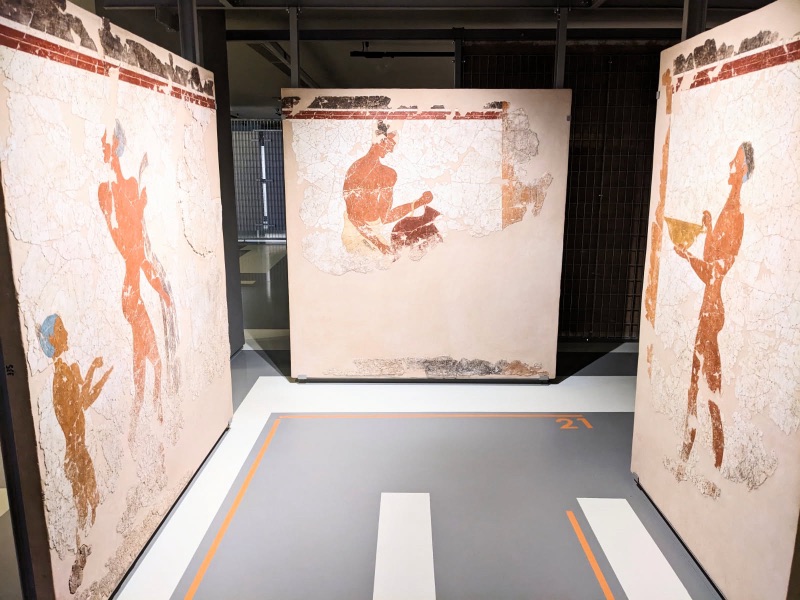
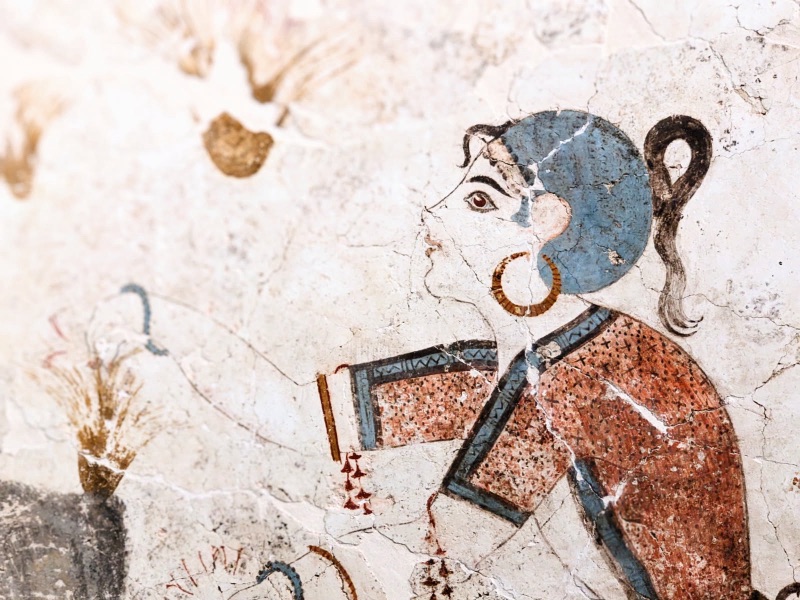
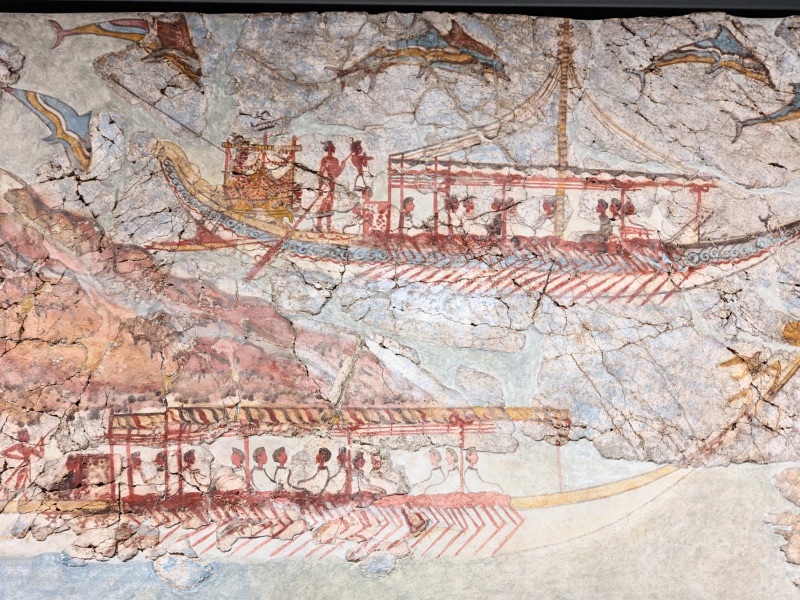
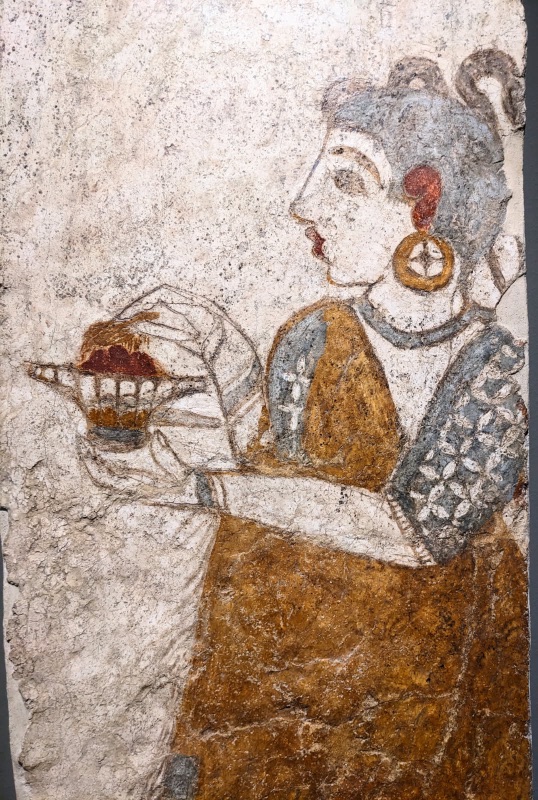
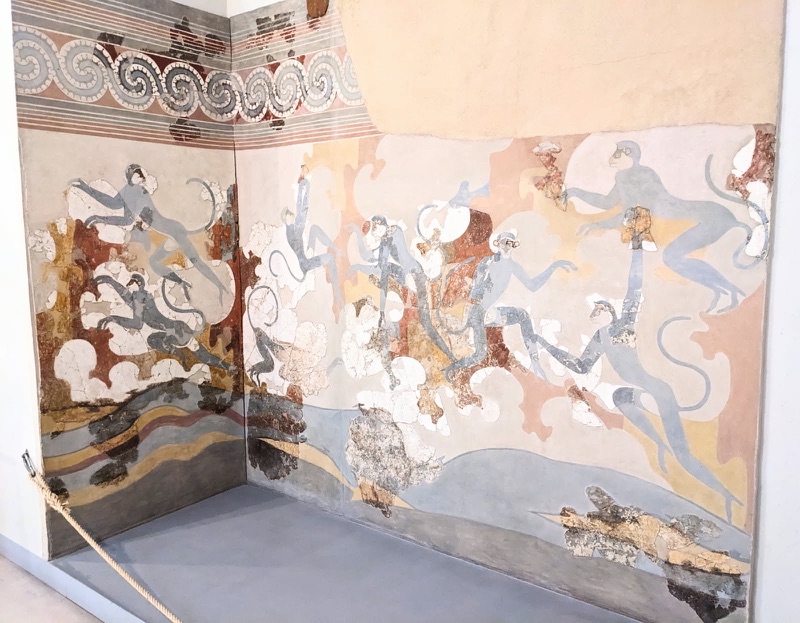
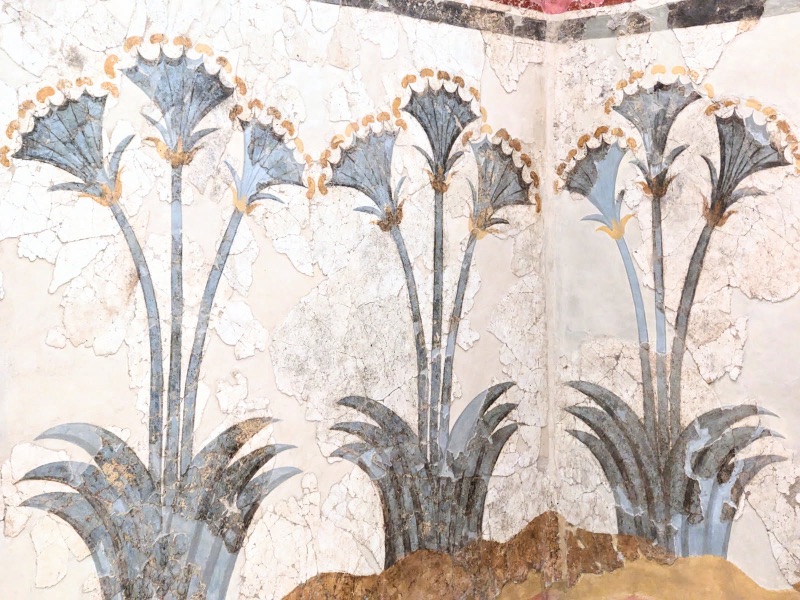
On this trip, we visited the ruins at Akrotiri & the Museum of Prehistoric Thera museum which contains many artifacts & wall frescos found at the site.
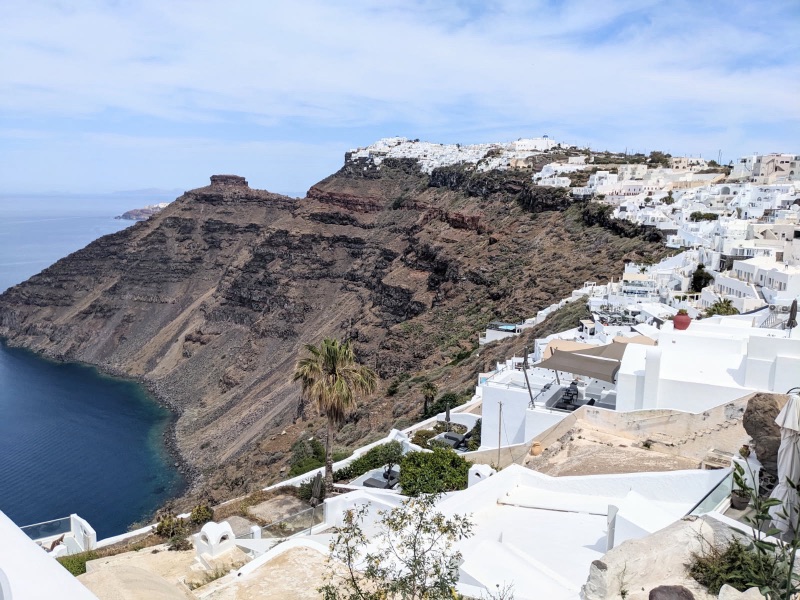
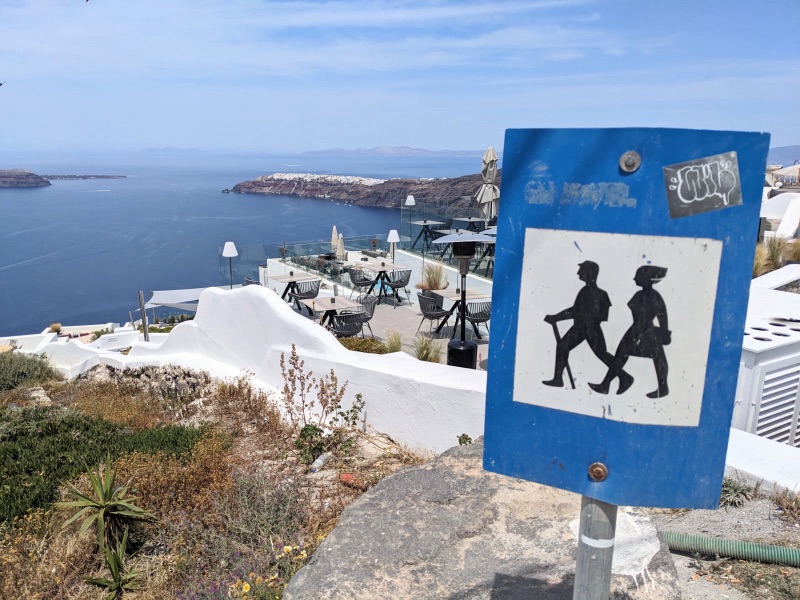
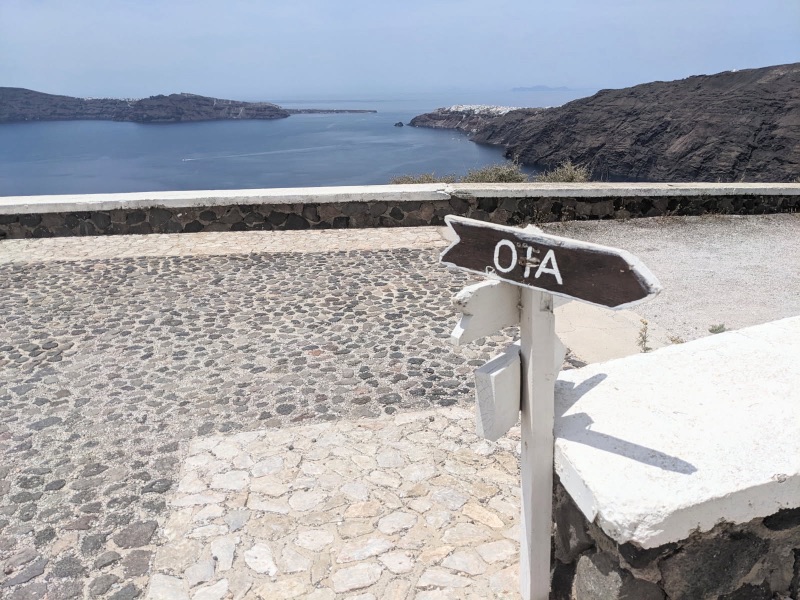
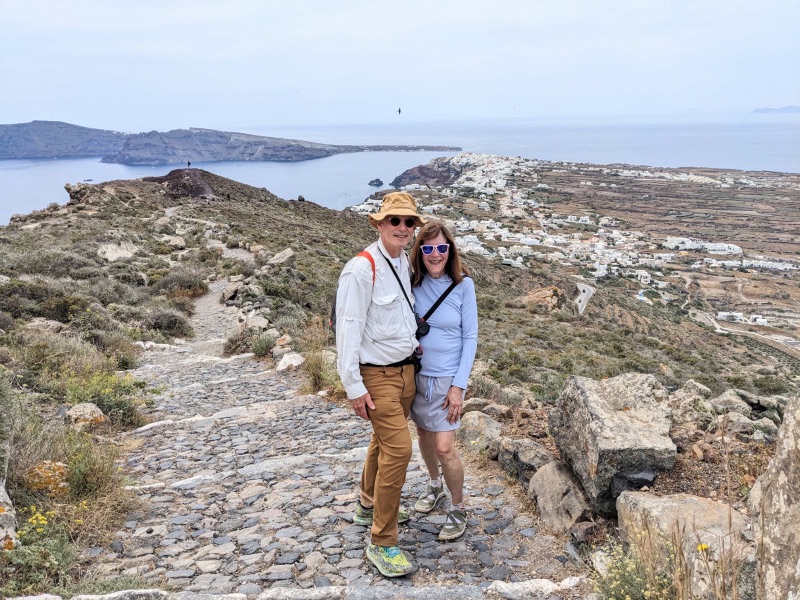
Being on Santorini is always a joy, even though it is a popular stop for large cruise ships. Multiple cruise ships stop at the same time bringing their passengers ashore which causes huge crowds. To escape all this hubbub, on all our previous visits to Santorini & including this one, we enjoy making the 8 mile hike from Fira to Oia.
Here are some images taken on our hike:
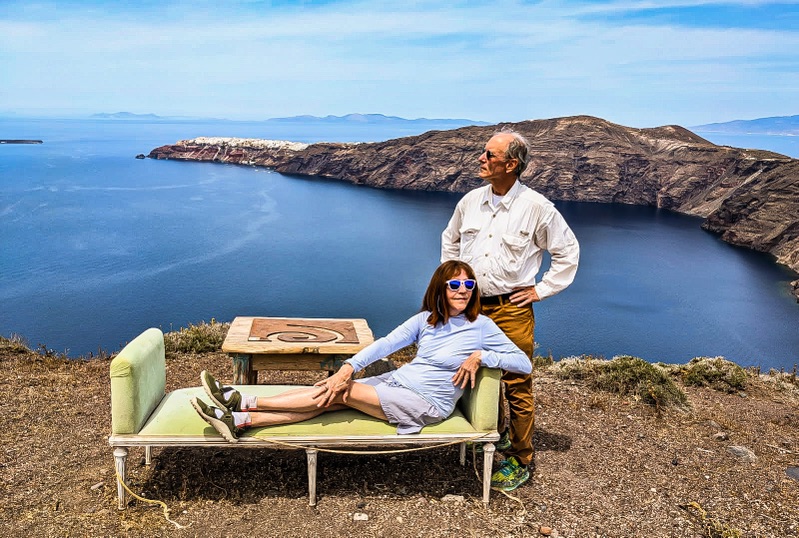
We saw this old green lounge chair randomly sitting on the caldera & couldn’t resist doing an Anne Leibovitz pose. Only thing missing are cocktail glasses on the table. 😂
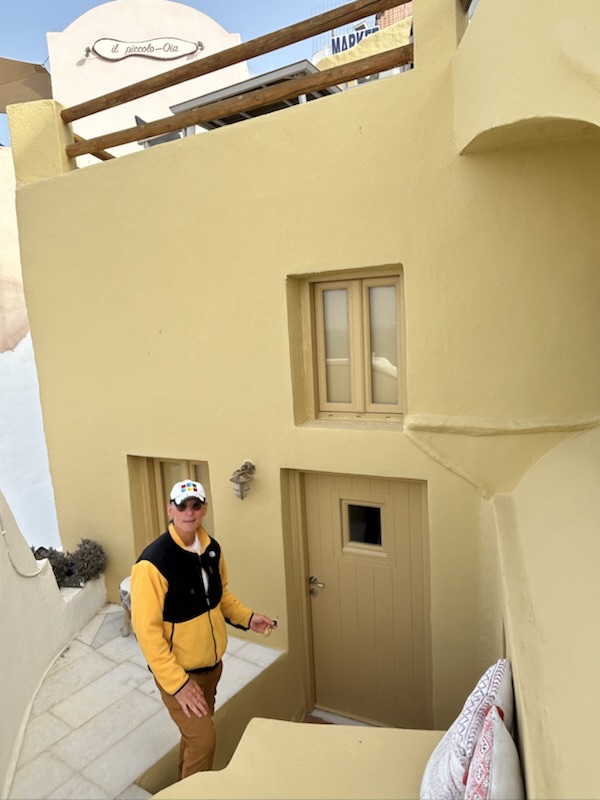
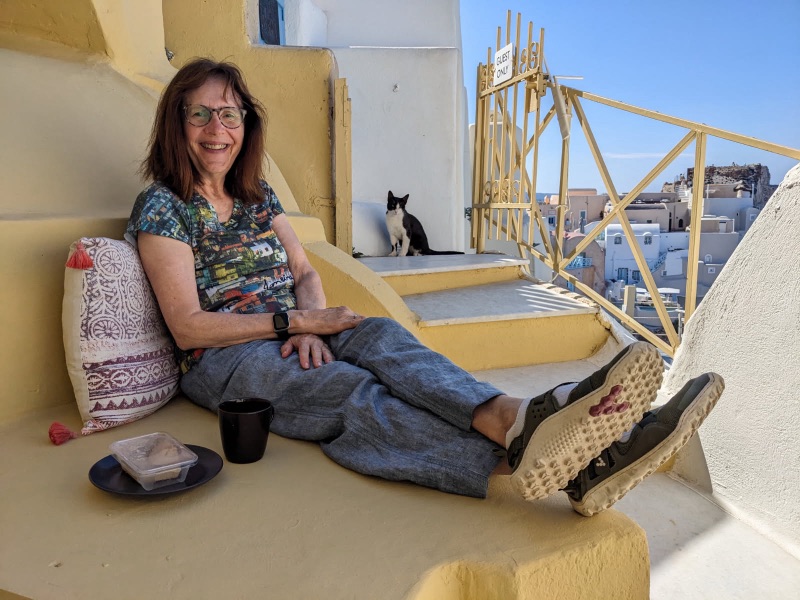
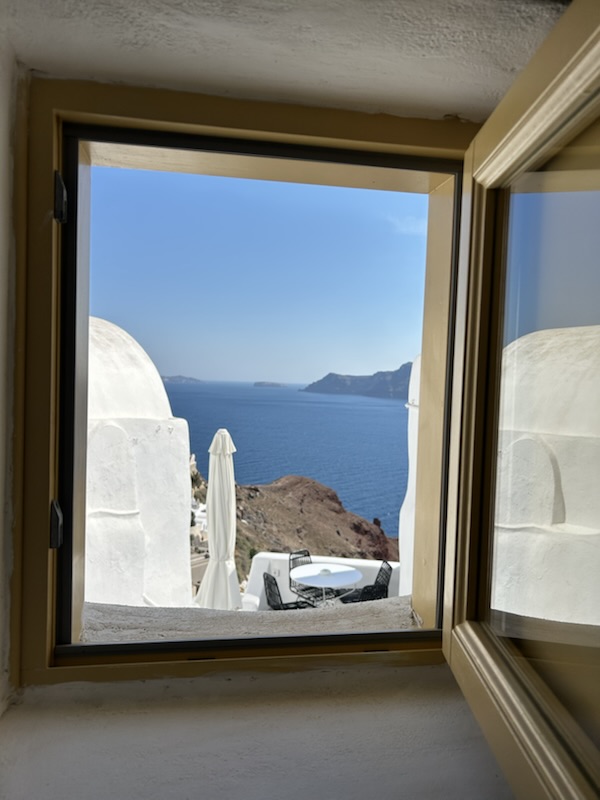
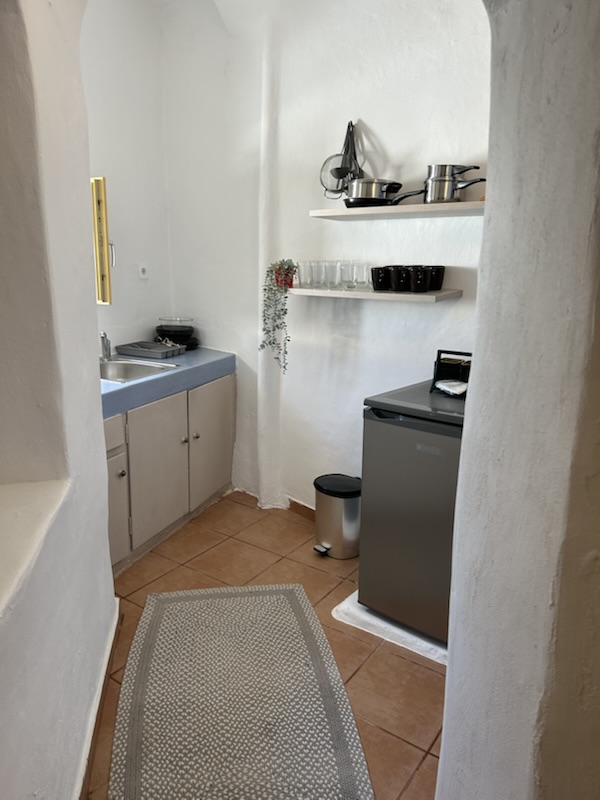
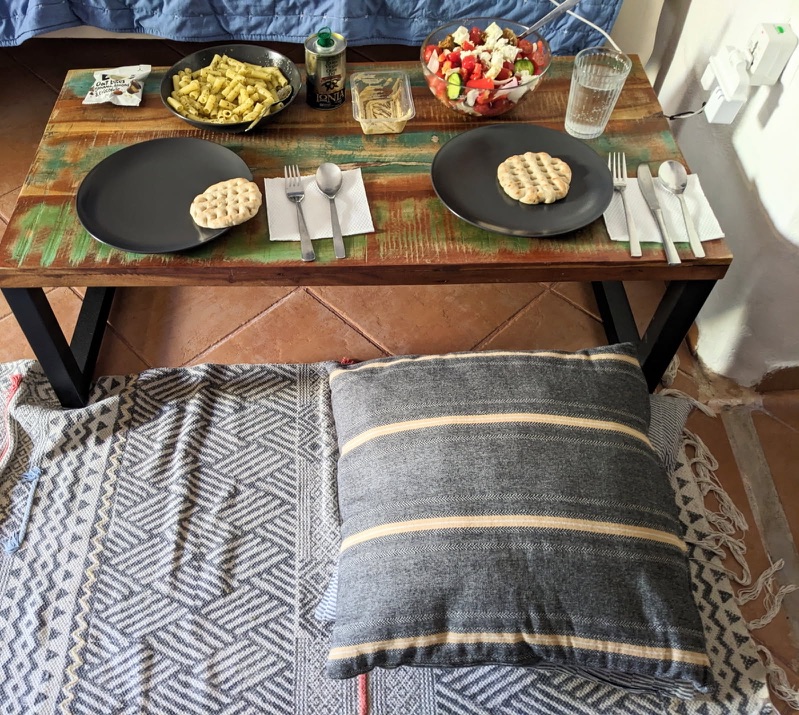
We stayed in Oia again; but, instead of staying in an old windmill, this time we stayed in a “cave house” which is dug into into the mountainside. Since it came with a small kitchen, we enjoyed making our own meals which was a nice change.
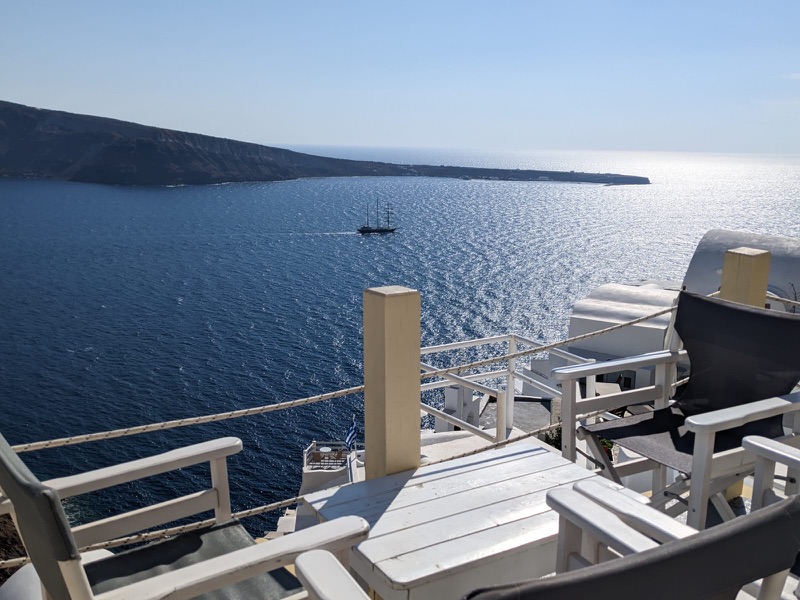
Cave House DoorEnjoying breakfast with one of the localsKitchen Window ViewKitchen View from our deckOur typical homemade meal
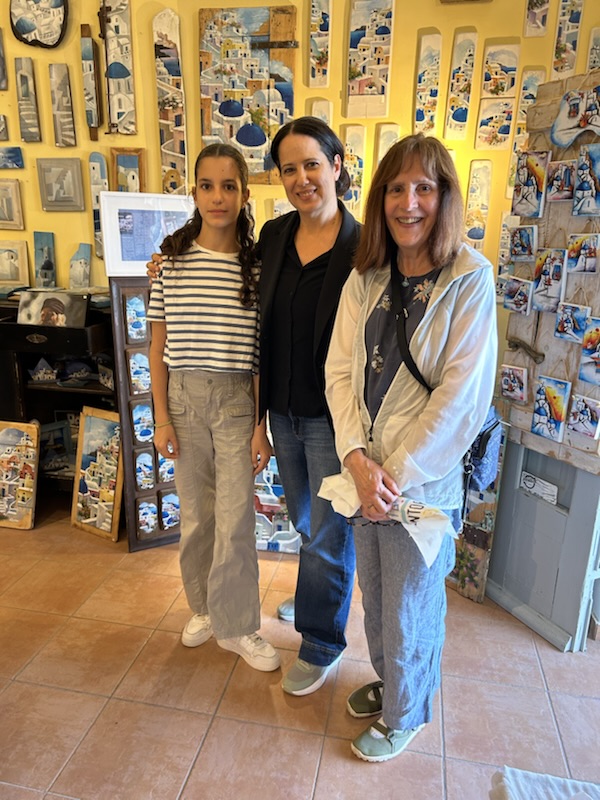
On our very first visit here, we met a young artist who painted Santorini scenes on old wooden wine barrels & doors. We were happy to see that after many years, she is still here & we purchased more art from her to display at home.
With the artist & her daughter
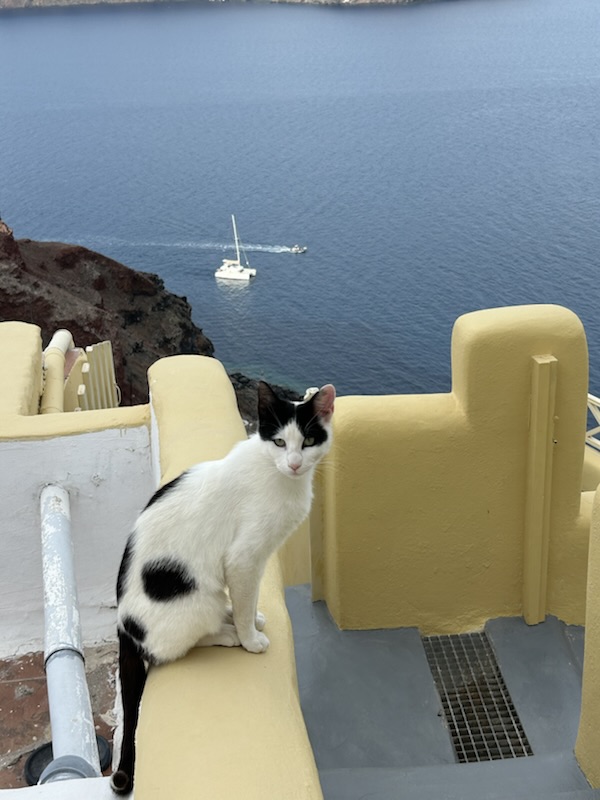
Cats are everywhere in Greece & add to the ambiance.
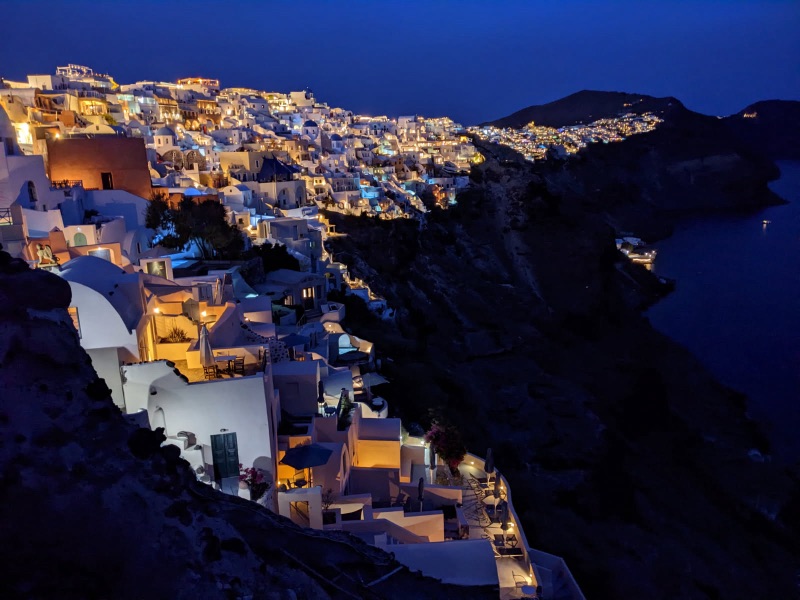
On our last night we enjoyed the evening lights.
For me, Santorini is one of the few places that not only lives up to my expectations; but also, always exceeds them. Despite the humongous cruise ships that bring large tour groups, it is still exquisitely lovely. 🥰
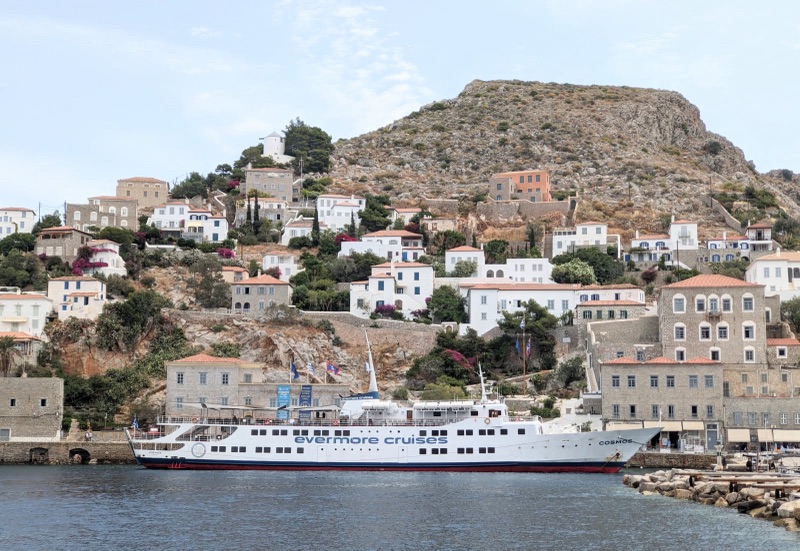
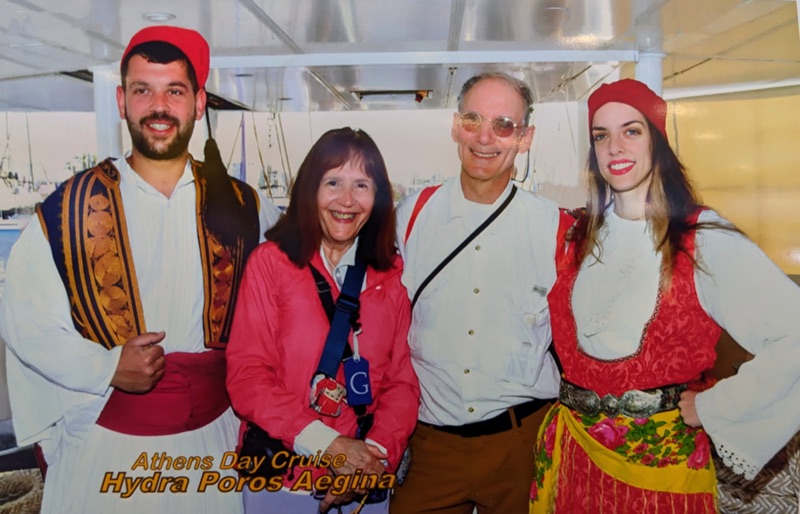
If you are in Greece & only have limited time & you want to visit the islands, then you can take a one day cruise that goes to 3 islands- Hydra, Poros, & Aegina- in the Saronic Gulf. Since it is only a one day cruise, time is limited on each island which you can choose to see on your own, or take a tour to experience it.
We took this cruise on our first trip to Greece in 1985. It was nice to revisit each place.
Hydra
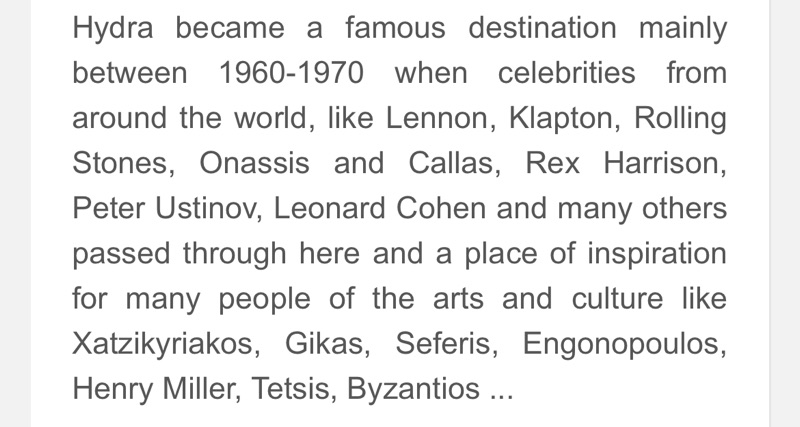
Hydra is known as one of the most beautiful Greek Islands where starting in the 1950s, various movies have been filmed. This exposure led to many celebrities living here.
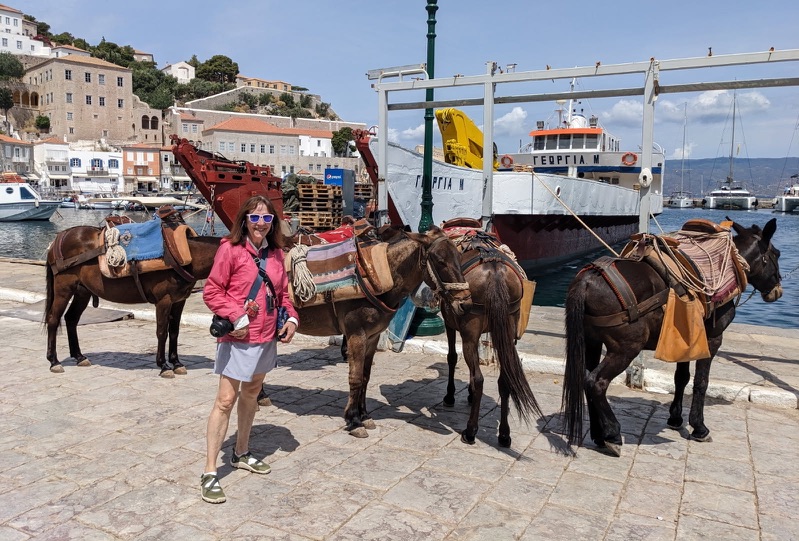
Today, the island is more for day tourists & those looking for a quiet place to go on holiday since no cars are allowed there.
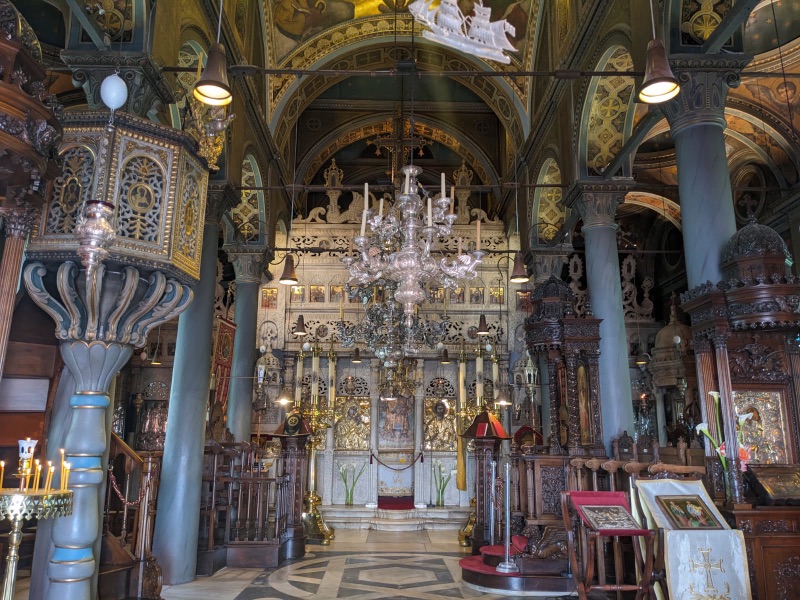
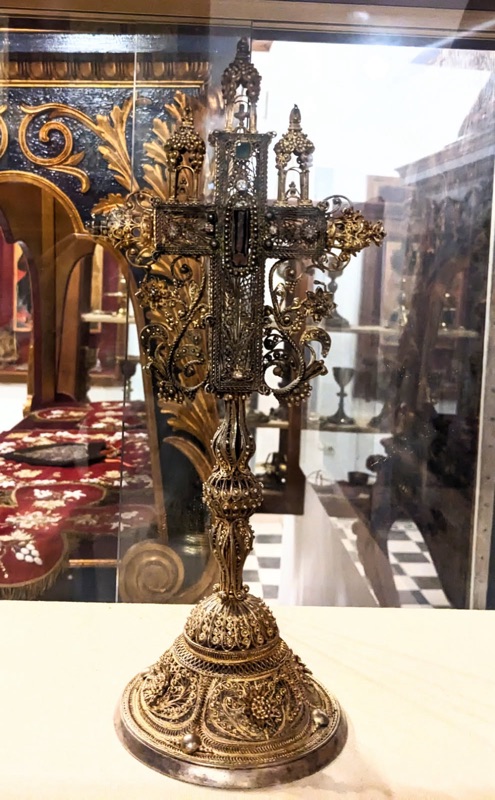
With no cars allowed, these horses & mules are among the only transportation on HydraHoly Cathedral of the Assumption of the Virgin built in 1623- Chandeliers were taken from Versailles during the French Revolution & are still lit only by candlesChurch museum has a cross with a fragment said to have been taken from the “True Cross” upon which Jesus was crucified. The True Cross was said to have been found by Constantine the Great’s mother Helena in Jerusalem in 320 AD,
Poros
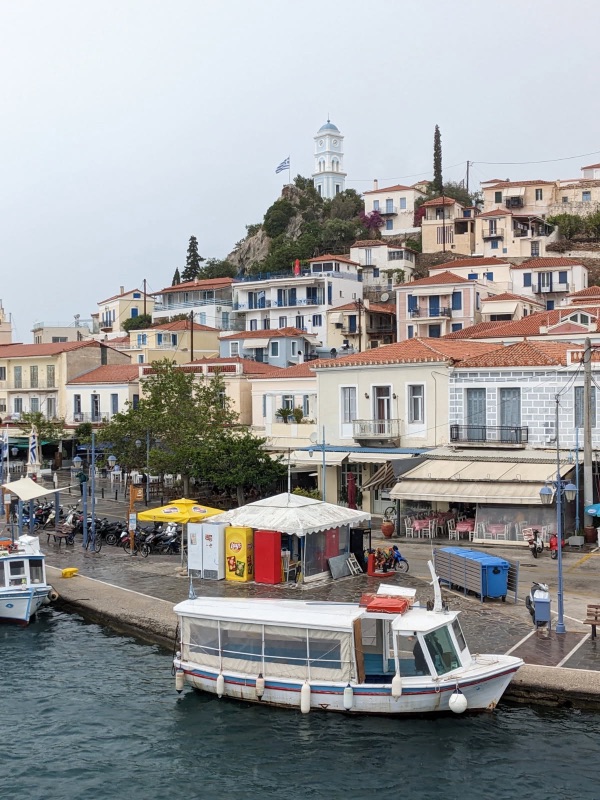
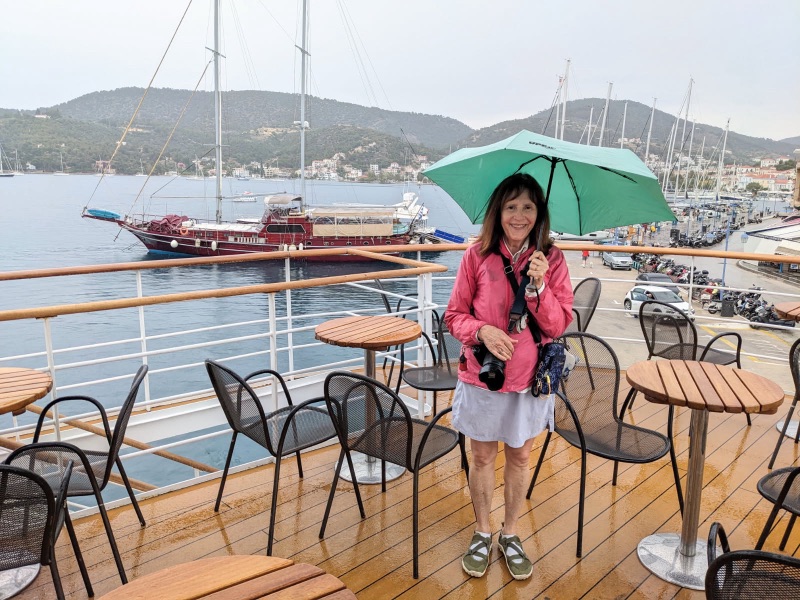
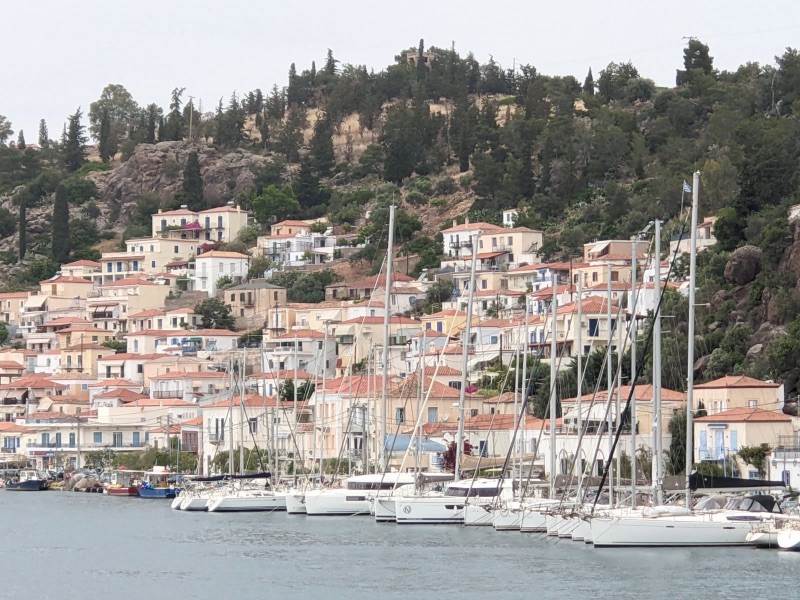
Our next stop was Poros where something unusual happened… IT RAINED. We rarely experience precipitation in Greece. However, Poros is a small island with not too much to see, so the rain did not put a damper on missing too much.
The Clock Tower in Poros Town Rainy PorosPoros Town harbor
Aegina
Aegina is the biggest island on the cruise. According to myth, Zeus fell in love with Aegina who was a daughter of the River God Asopos. Zeus took her to this island which was named after her.
Aegina has been inhabited since 3000 BC.
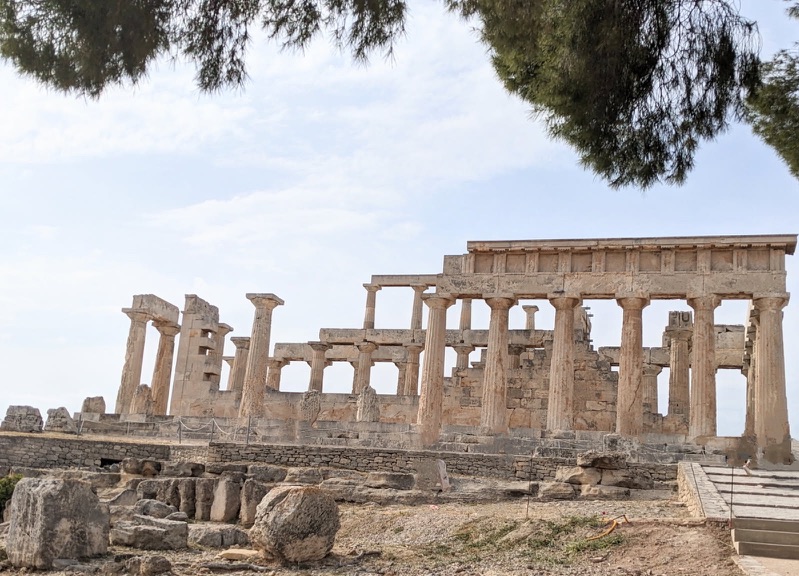
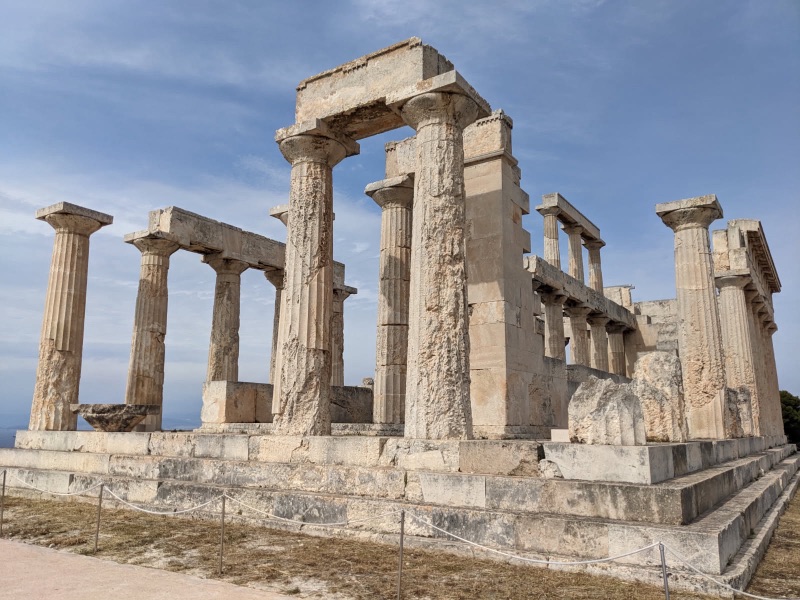
We took a tour to see the Temple of Aphaia which was built in 480 BC & is called “The First Parthenon” It is dedicated to Aphaia who was the goddess of fertility & agriculture. This is the only temple ever dedicated to her.
This temple along with the Parthenon on the Acropolis in Athens & the Temple of Poseidon in Sounion geographically form an isosceles triangle which has two equal length sides. On clear days, each temple can be seen from each other which is interpreted as a possible feature for defensiveignaling.
25 ea. columns from the original 32 ea. columns have been restored.The external columns incline slightly inward & the columns located at corners are slightly thicker than the rest. These design features were used decades later to build the Parthenon. The temple’s pediments were decorated with marble statues depicting Aeginean warriors fighting in the Trojan War. They are now displayed in Munich, Germany.
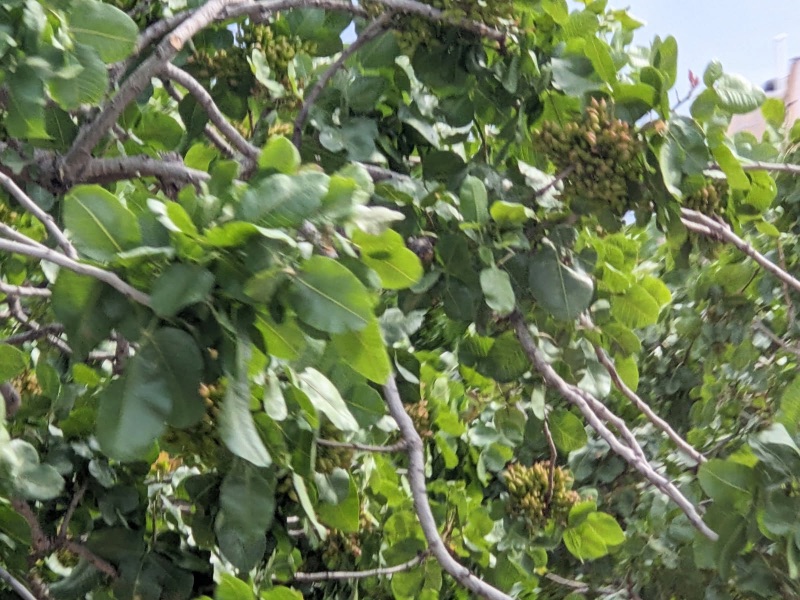
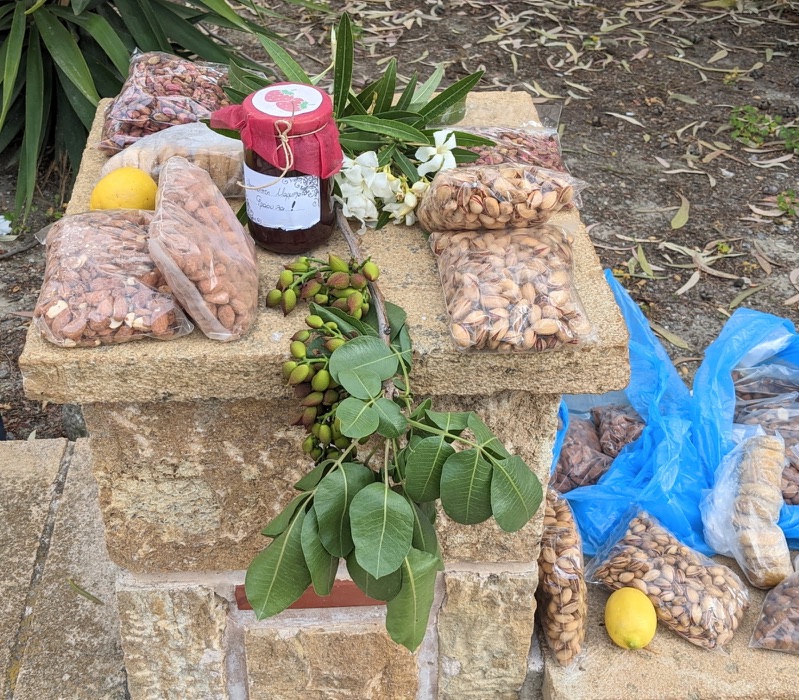
Aegina is also known for its pistachio trees. Pistachio cultivation started in Greece on Aegina in 1860. We had a chance to buy some roasted pistachios from this man. He also gave us some unripe pistachios to try. The shells have not yet hardened so they are soft & still have a “nutty” texture; but, they tasted like a sour grape.
Pistachio TreesNote the green, unripened pistachios on the branch Friendly Neighborhood Pistachio Vendor
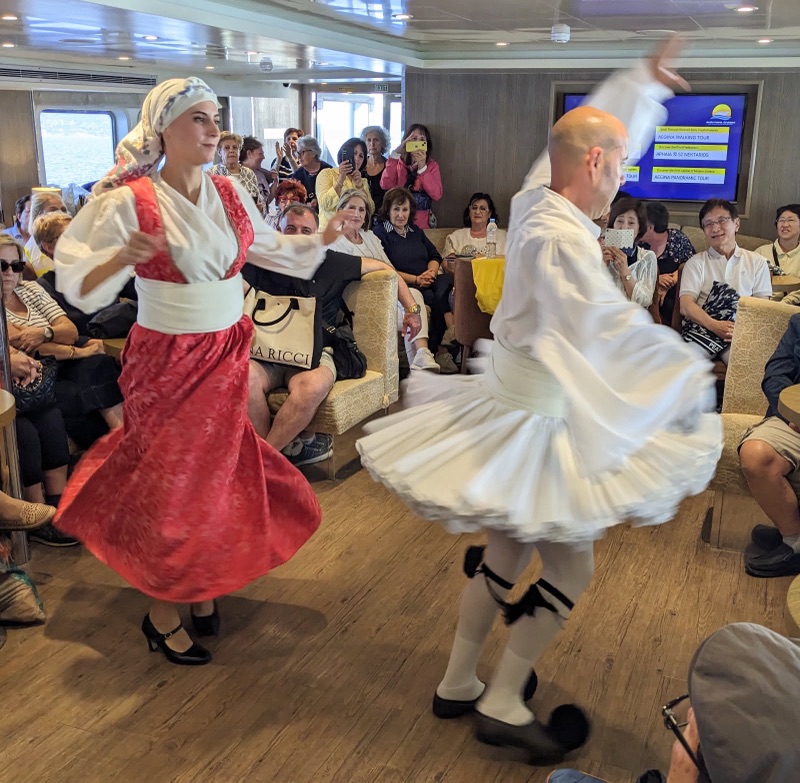
We were entertained by Greek music and dancing during our last hour on the ship.
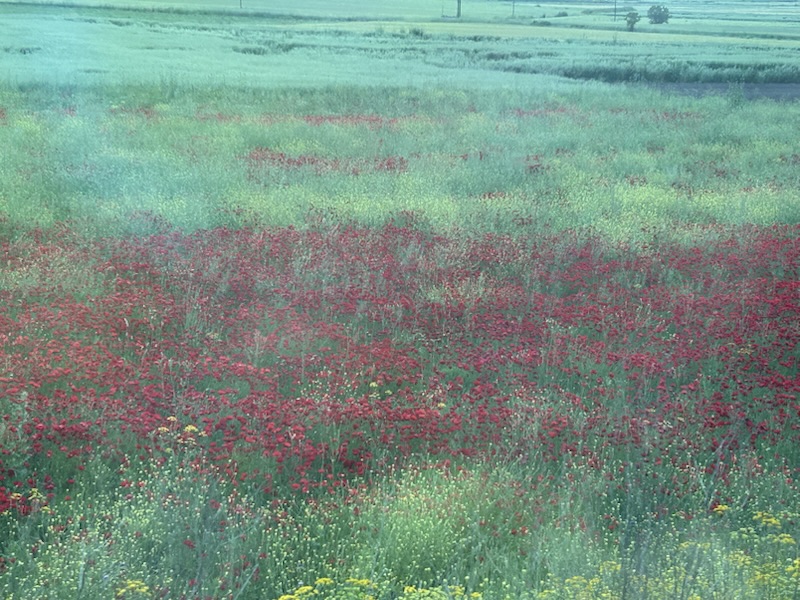
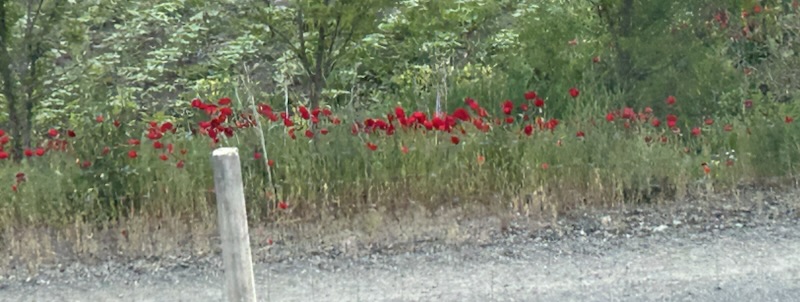
Wild red poppy flowers were in full bloom in the fields from Sofia to AthensNext to the road
Our adventure by rail from Berlin to Athens is almost complete.
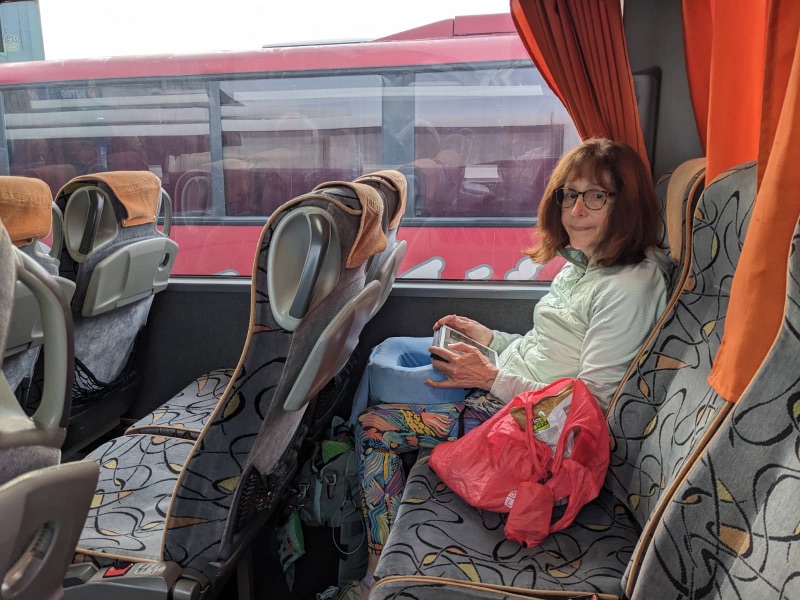
The only part on our journey that we could not do by train was from Sofia, Bulgaria to Thessaloniki, Greece.
So, we boarded a bus, rode a few hours to reach Greece, then spent two days in Thessaloniki.
We have visited Thessaloniki before; but, this time, we enjoyed visiting with one of my husband’s college friends who now lives there.
We also went to the archaeological museum which we had not previously seen.
Thessaloniki was founded in 315 BC by Cassander who named the city after his wife who was Alexander the Great’s half-sister.
Here are a few Thessaloniki highlights we enjoyed.
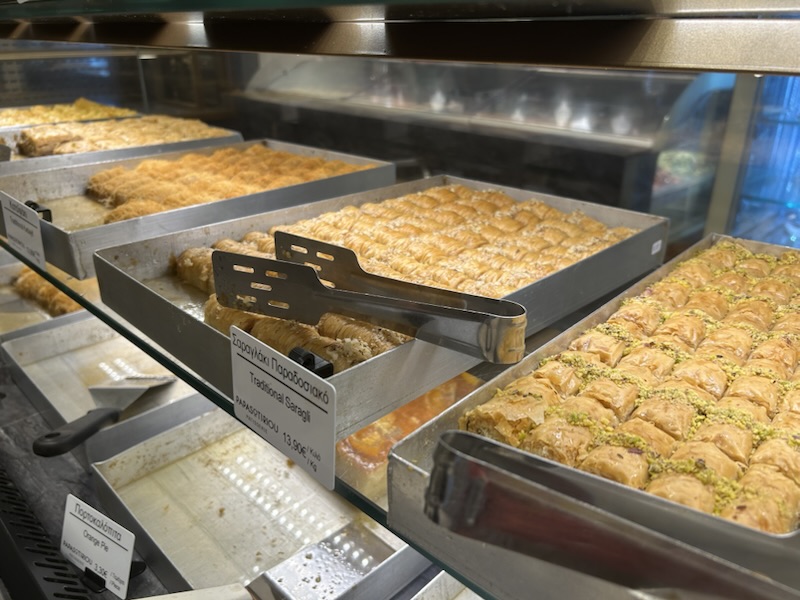
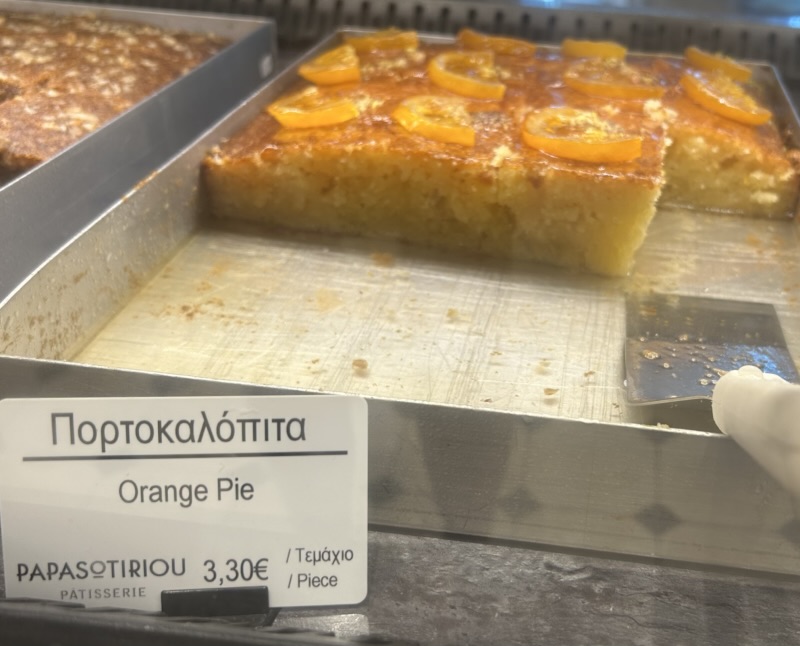
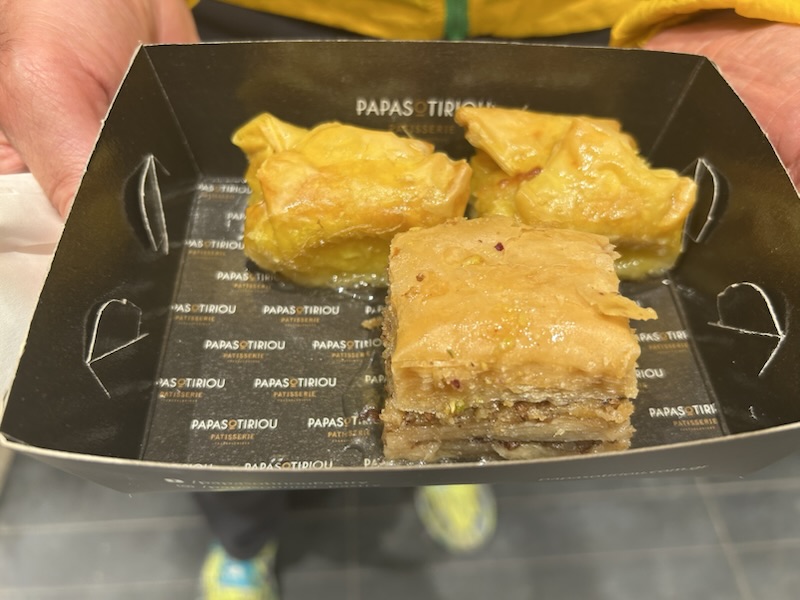
Thessaloniki is famous for its deserts. Famous Greek American chef Diane Kochilas has this to say about Thessaloniki sweets:
“Cosmopolitan Thessaloniki is also known admirably by its locals as “the sweet mother”, thanks to its longstanding pastry tradition. Almost everywhere you turn, there is a shop selling desserts in every shape & size. Some of Greece’s leading pastry dynasties hail from Thessaloniki. “
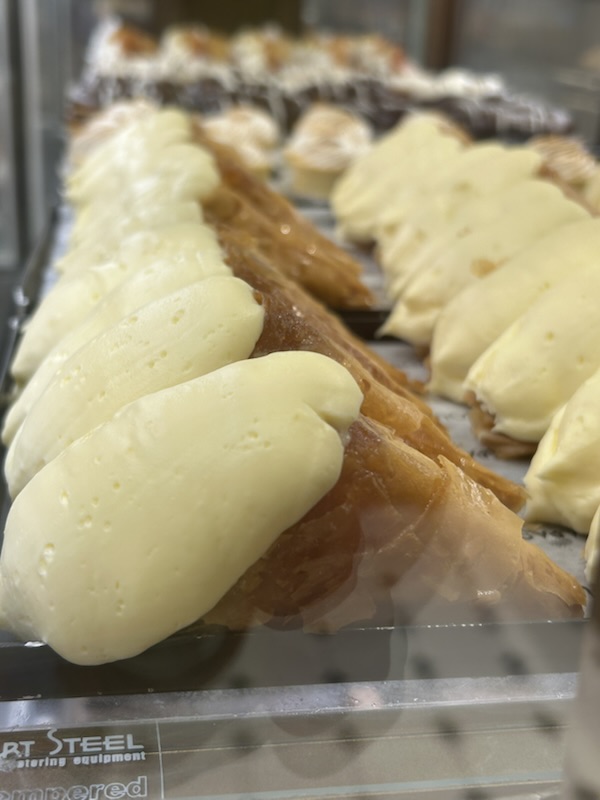
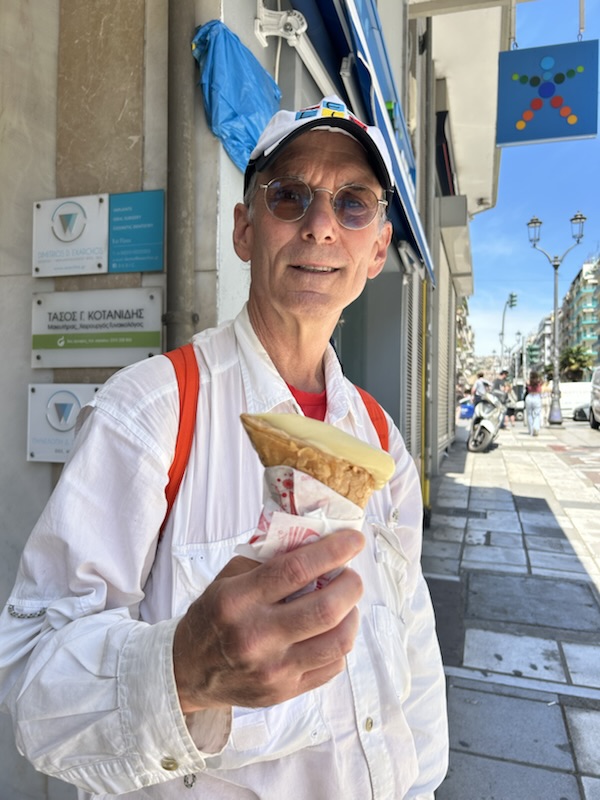
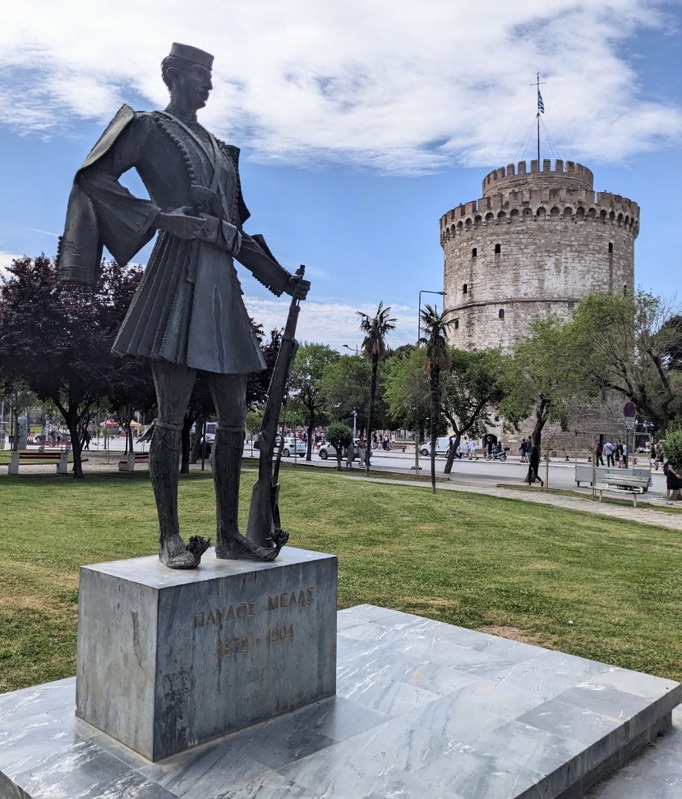
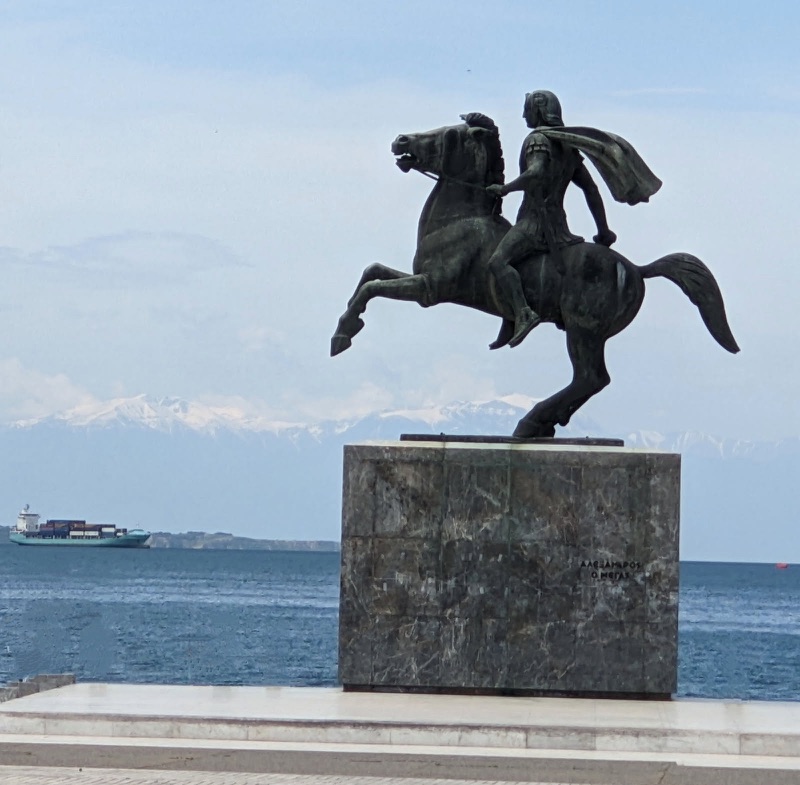
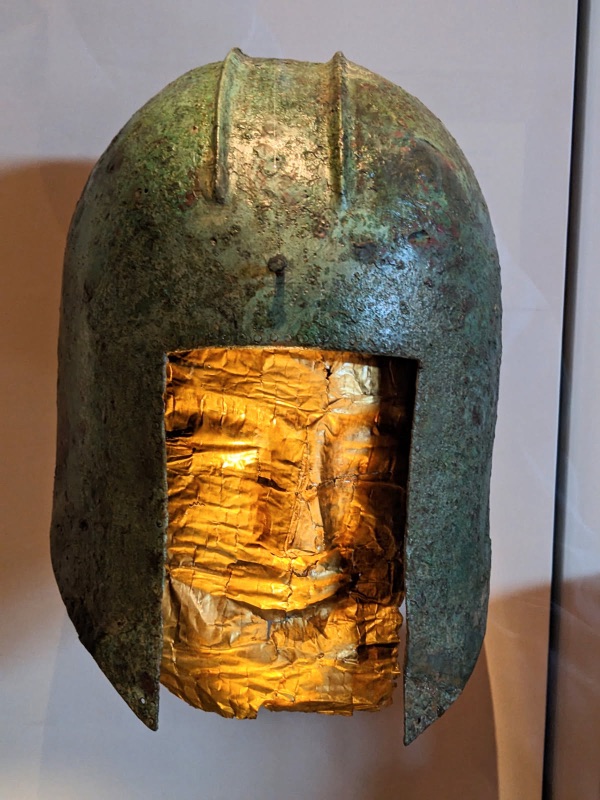
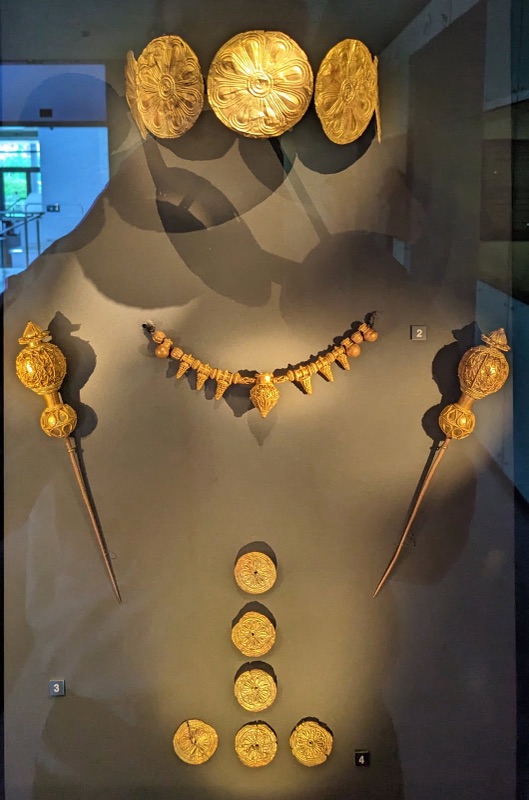
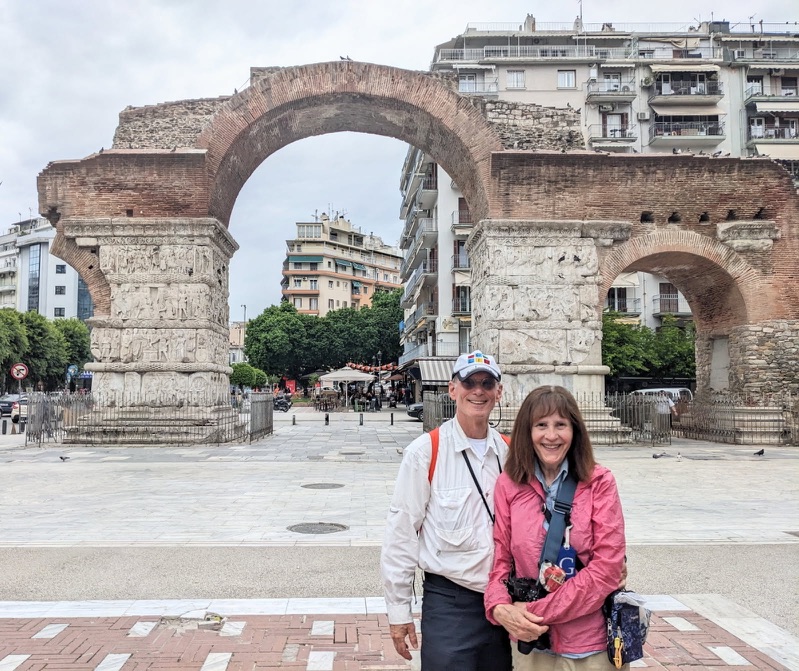
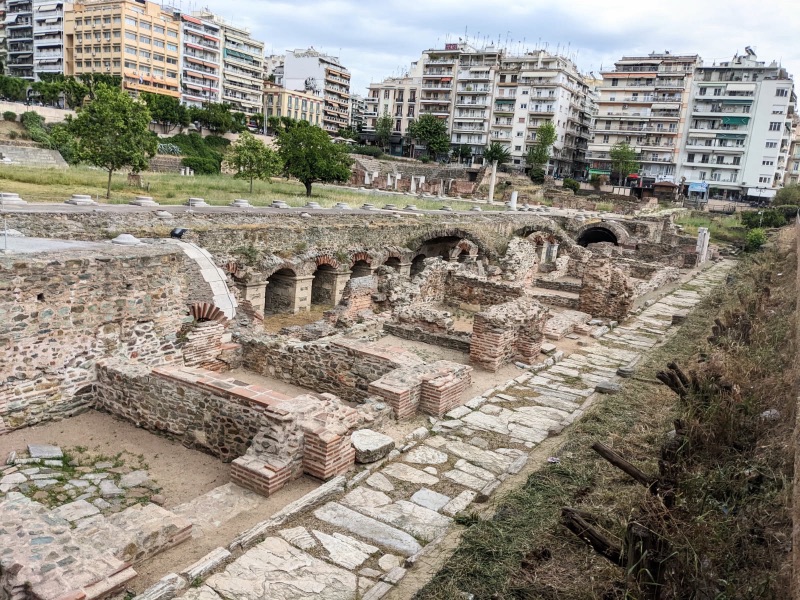
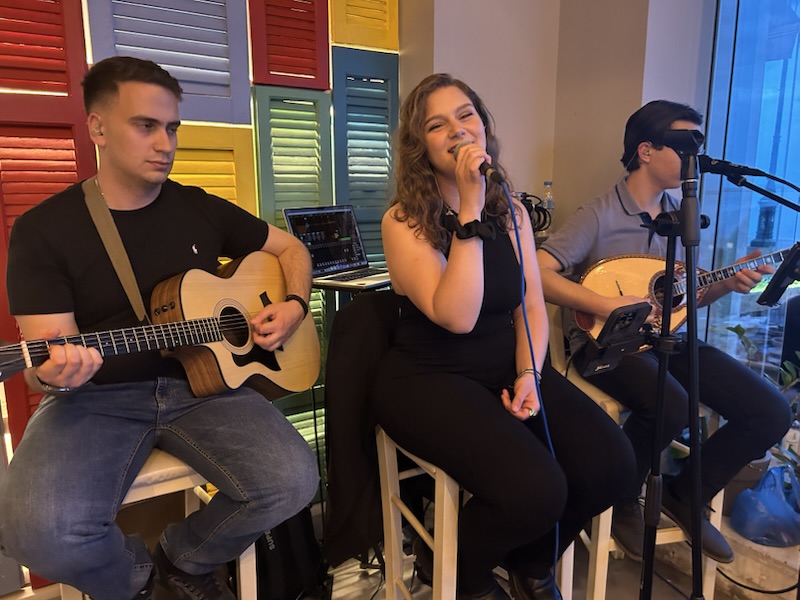
Trigono Panoramatos- The Elenidis Bakery located in Thessaloniki’s Panorama district invented this sweet. It is crisp filo dough shaped in a triangle (Trigono in Greek) with a pocket which is filled with a rich custard or cream.White Tower- Built by the Byzantines in the 12th Century; Used by the Ottomans as a prisonAlexander the Great statue overlooking the Thermaic Gulf in the Aegean Sea. At 17 meters high, it is the tallest statue in Greece.Gold death mask & warrior helmet at the Archeological Museum Women’s jewelry & brooches at Archeological MuseumThe Triumphal Arch of Caesar GaleriusRoman forum ruinsGreat to be back in Greece with its delicious food. 😋Greek entertainers at our restaurant
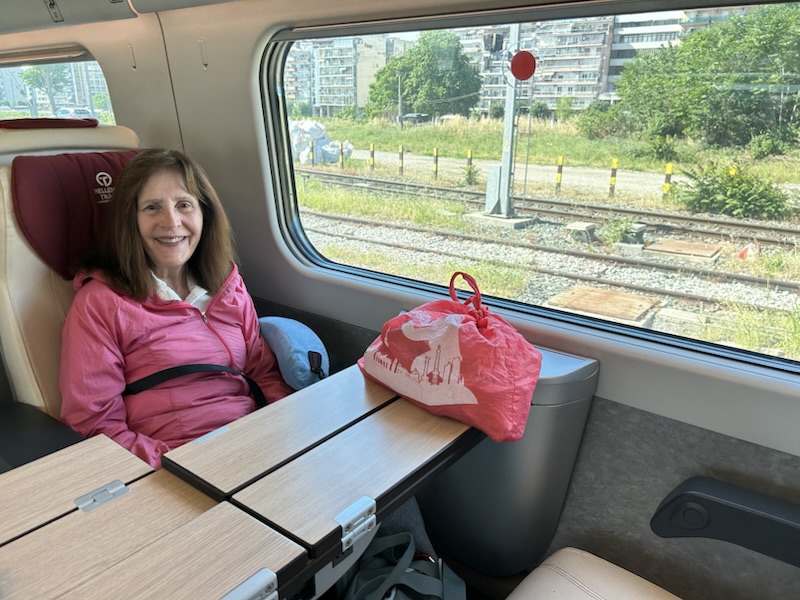
Then, it was back on the train headed for Athens. Traveling by train throughout most of Europe is very easy & not too expensive. The trains in the former East Bloc countries are a big step down in comfort; but, they get you there & are close to their schedule, when they are running.
The pluses to train travel vs. air travel is more leg room, no security checks, ability to board only a few minutes before departure, no bag weight or size restrictions, or extra fees. What’s not to like about all that! 😊
This is our 10th trip to Greece; but, the first time in May. It is nice to have cooler temperatures in the 70s with beautiful green hills. Plus, the added bonuses are smaller crowds & no fires that often accompany Greece’s summers.
Athens has over 60 museums & many historical locations to explore. We are never at a loss to find things to do as well enjoy revisiting favorite spots around town
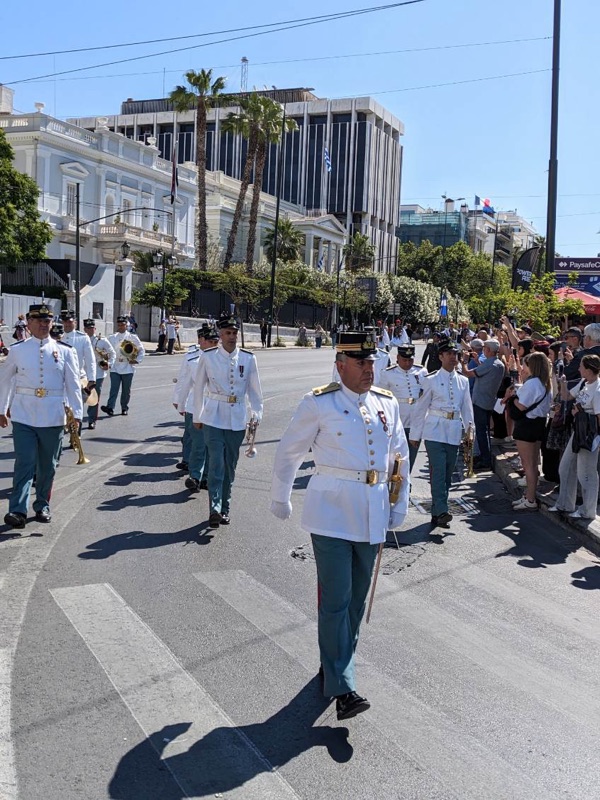
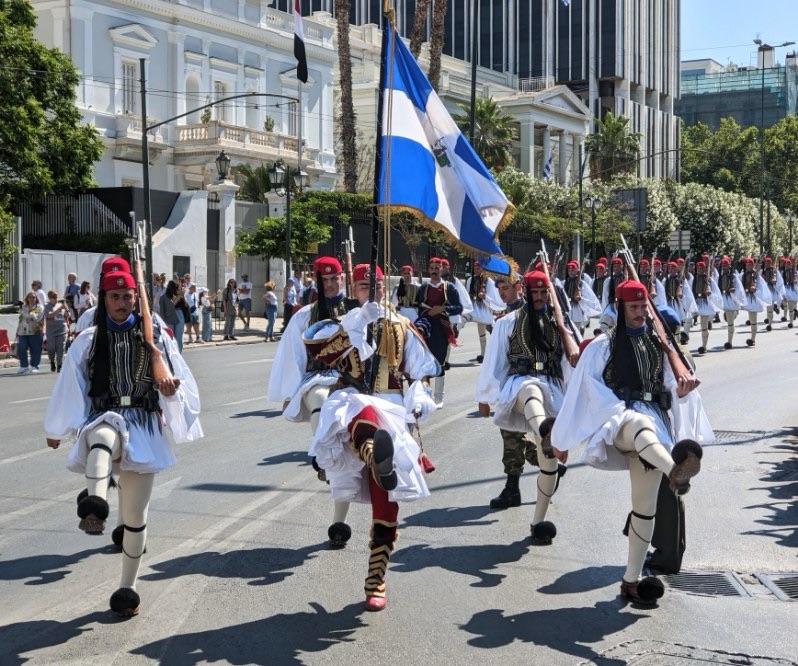
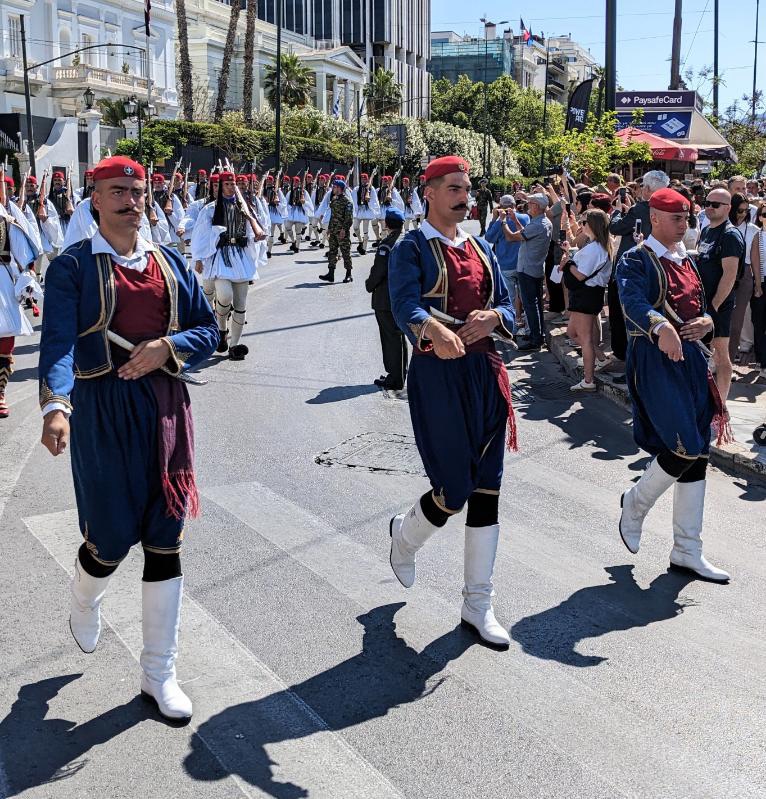
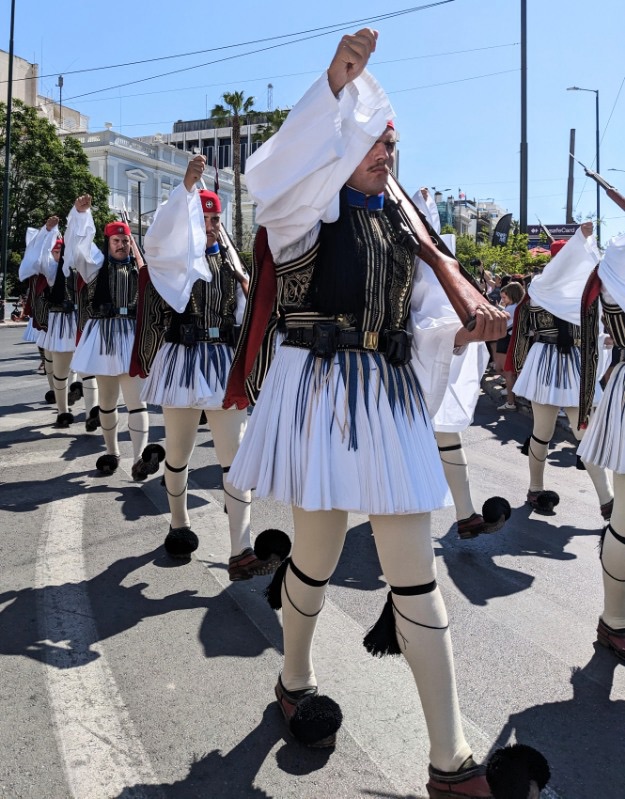
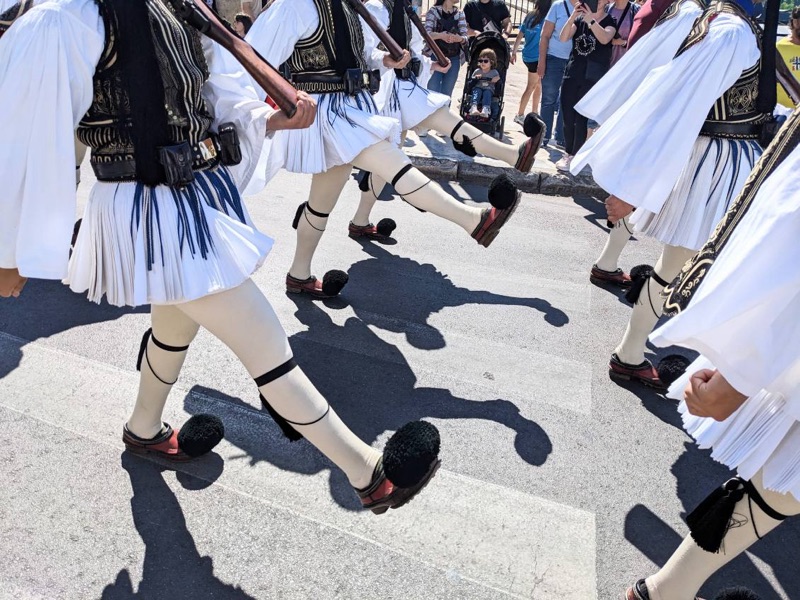
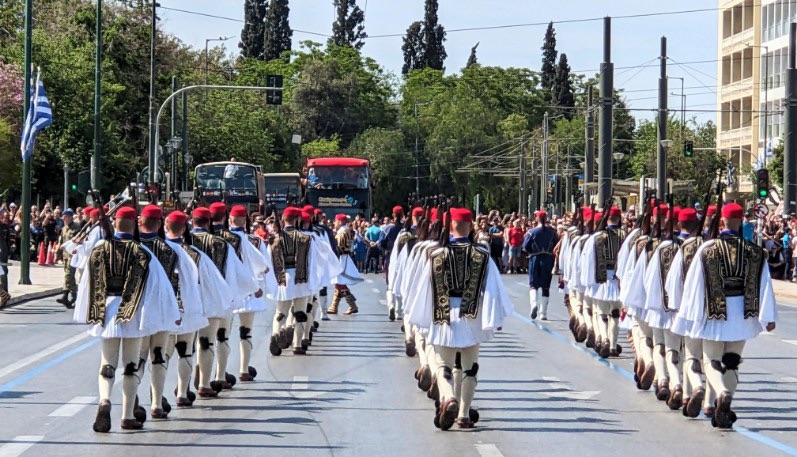
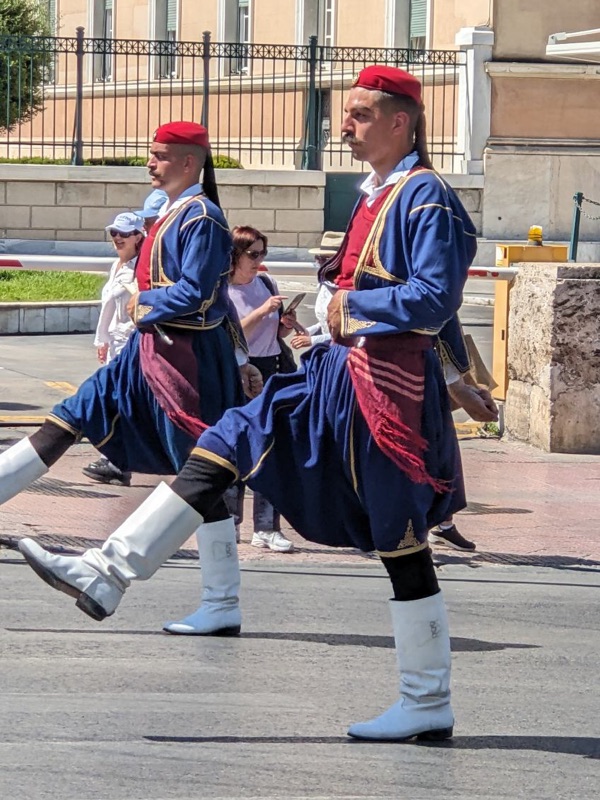
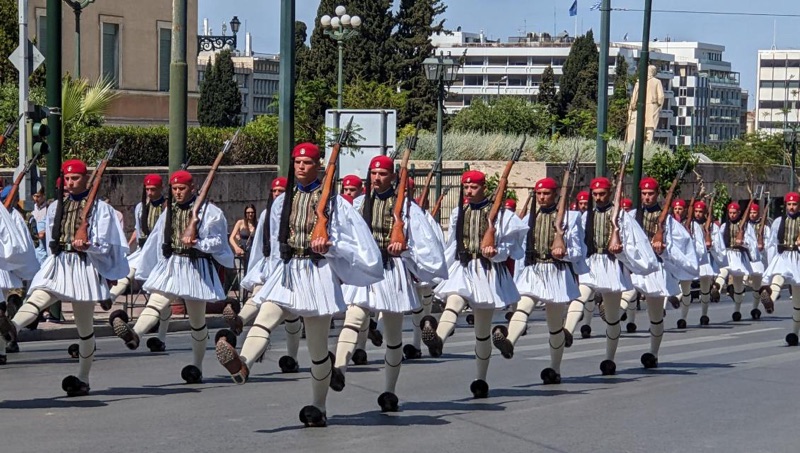
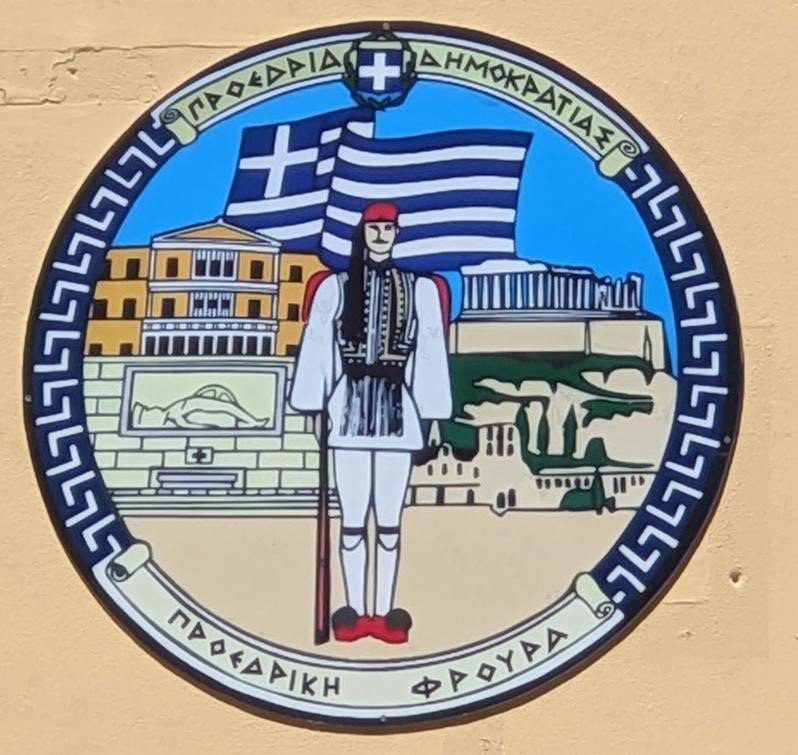
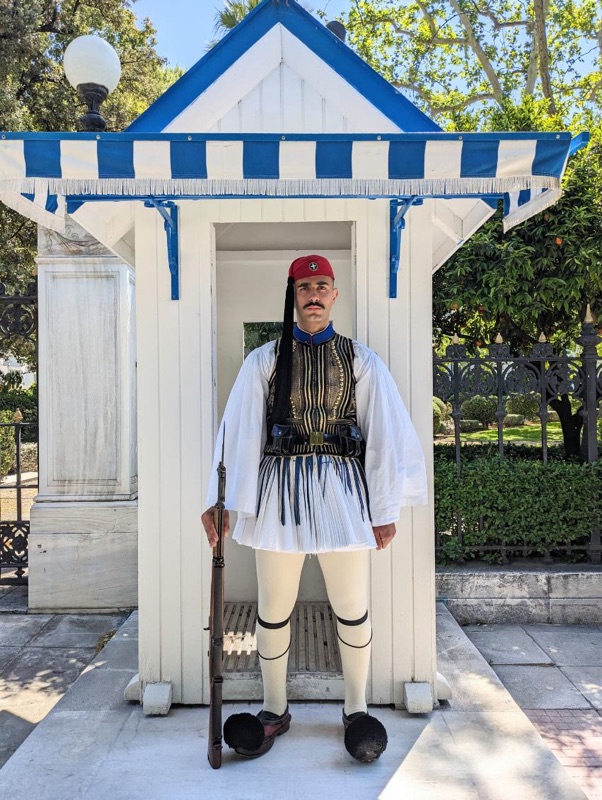
One favorite spot is the Changing of the Guard ceremony at Greece’s Tomb of the Unknown Soldier at the Greek Parliament building at Syntagma Square. Guard changes occur several times a day; but the main ceremony occurs Sundays at 11:00 AM with the evzones in their formal dress uniforms accompanied by a band.
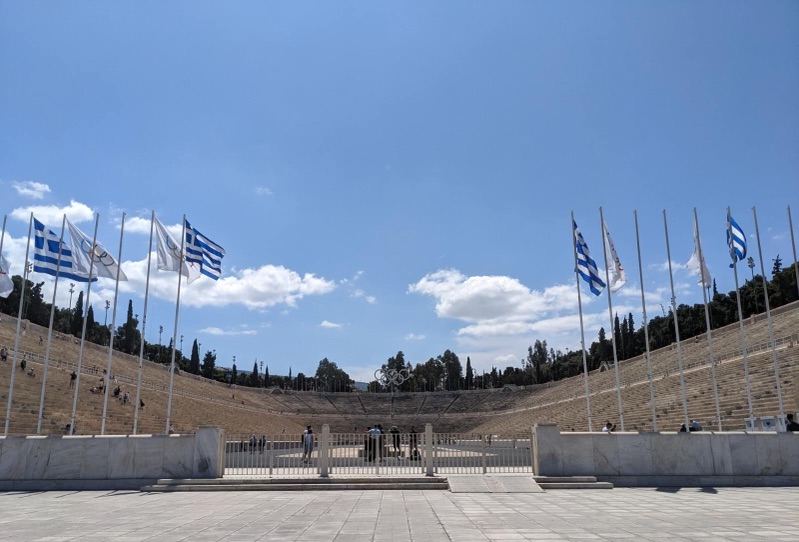
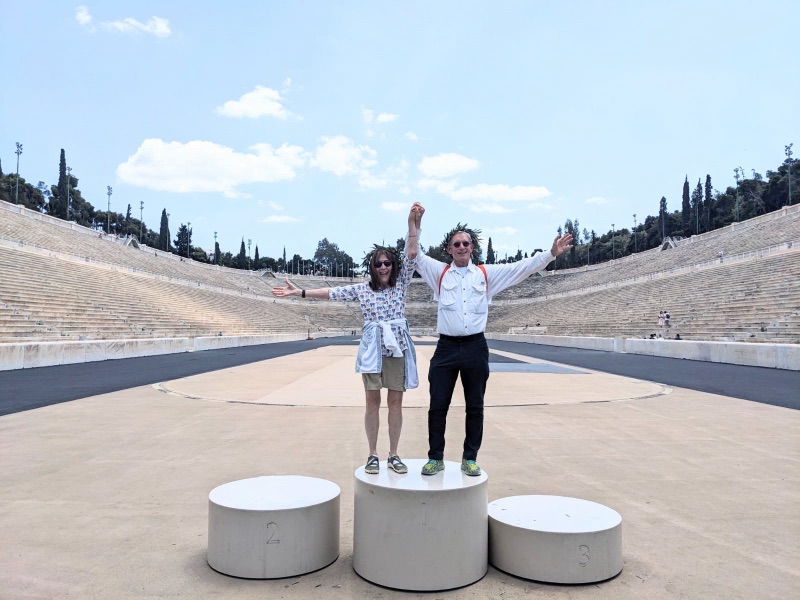
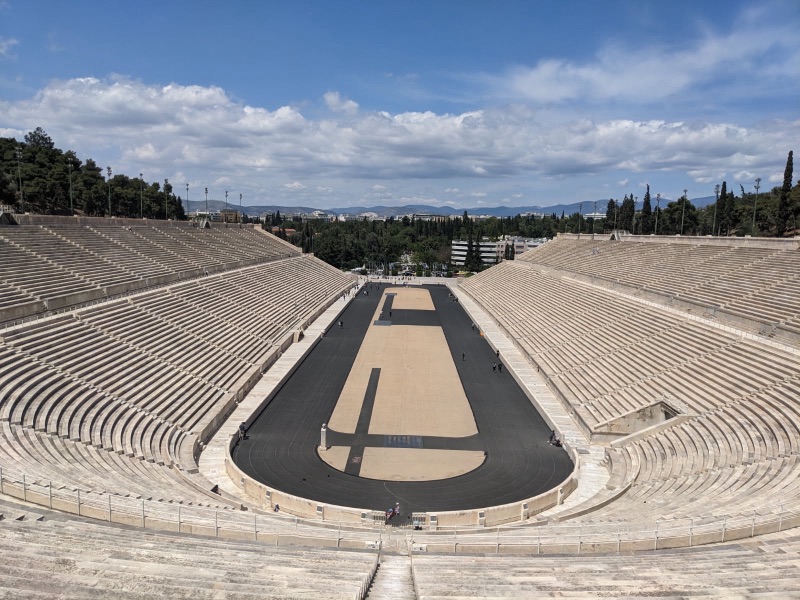
We toured the Panatheniac Stadium for the first time.
It was originally built in 330 BC. The Romans expanded it to seat 50,000 & refurbished it entirely out of marble. It was used until the 4th Century, then was basically abandoned. It was excavated & renewed in the late 19th Century & hosted the first modern Olympics in 1896. After the Olympic flame is relayed from Olympia, it is transferred to the host country in this stadium.
It is still the only stadium in the world built entirely from marble.
The track is 185 meters long. In ancient times, this length was a measurement known as a “stade”. All tracks throughout the Hellenic world were the same length. So, the venue for games became known as the “stadium”.
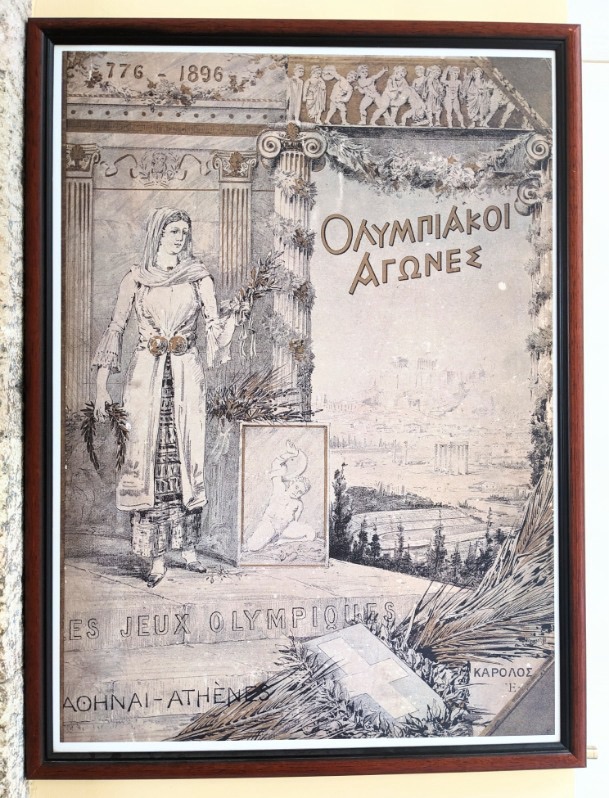
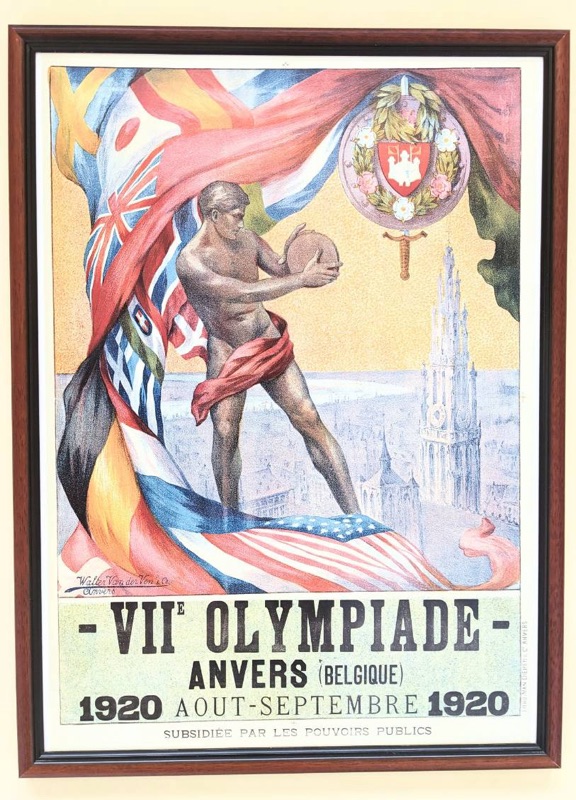
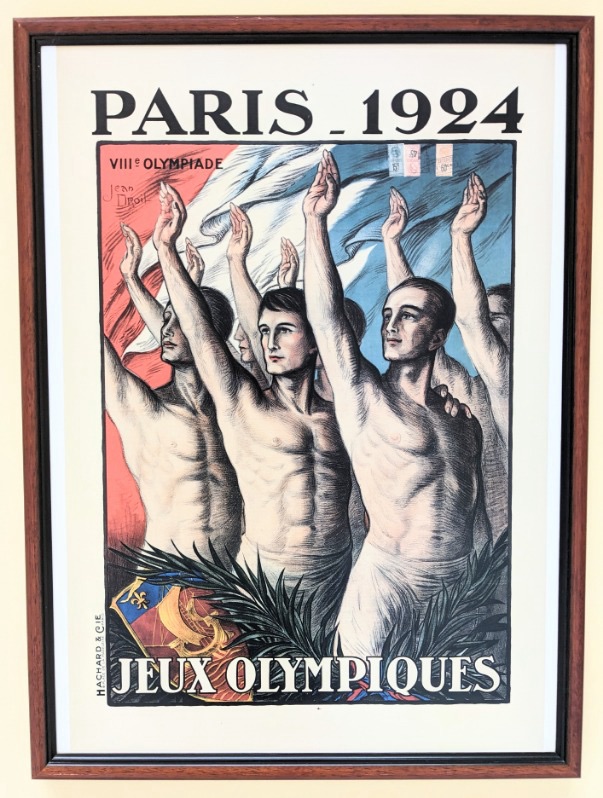
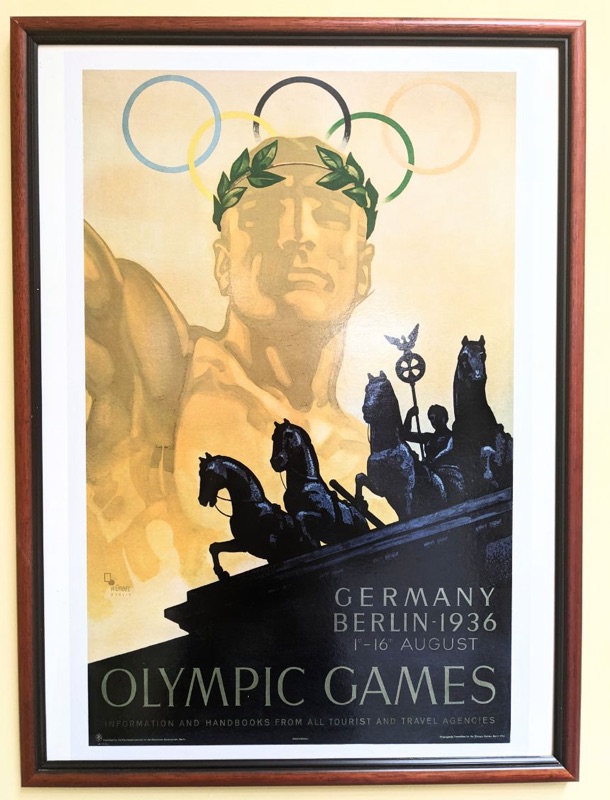
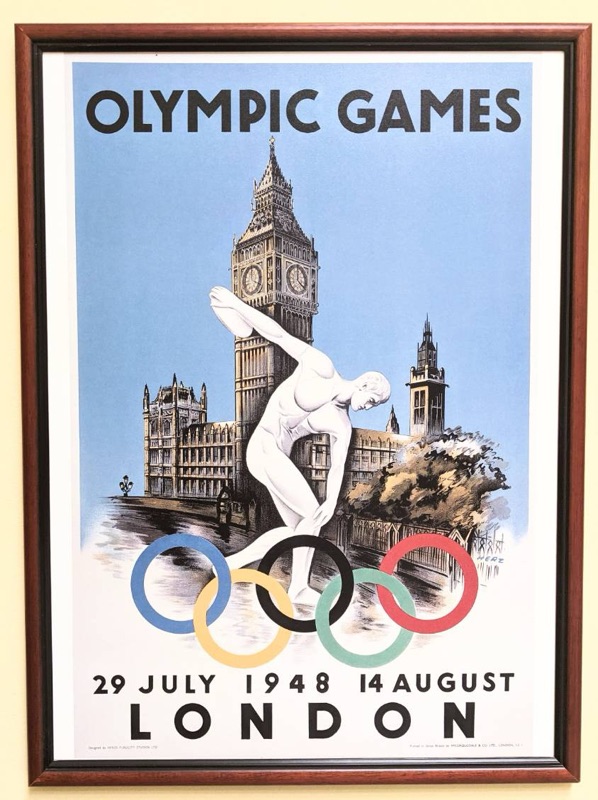
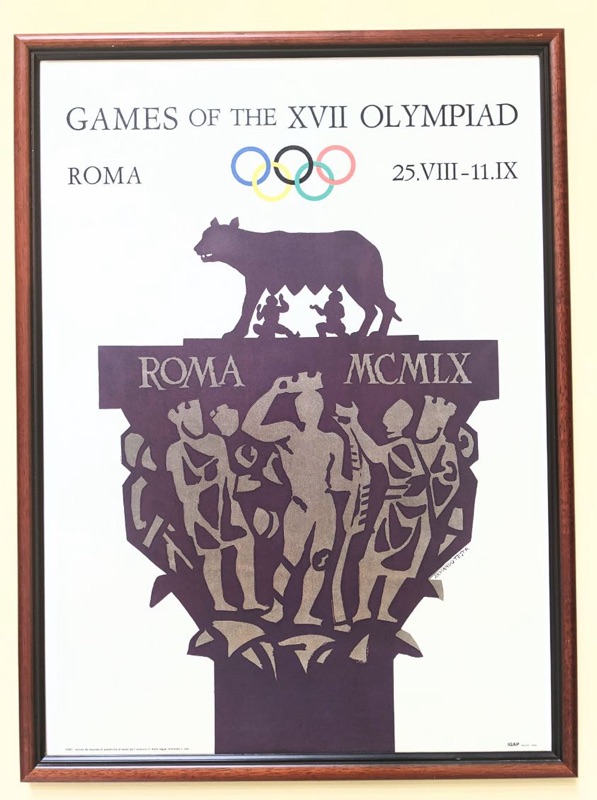
The stadium also has a museum featuring posters from all the Summer Olympics. Here are a few:
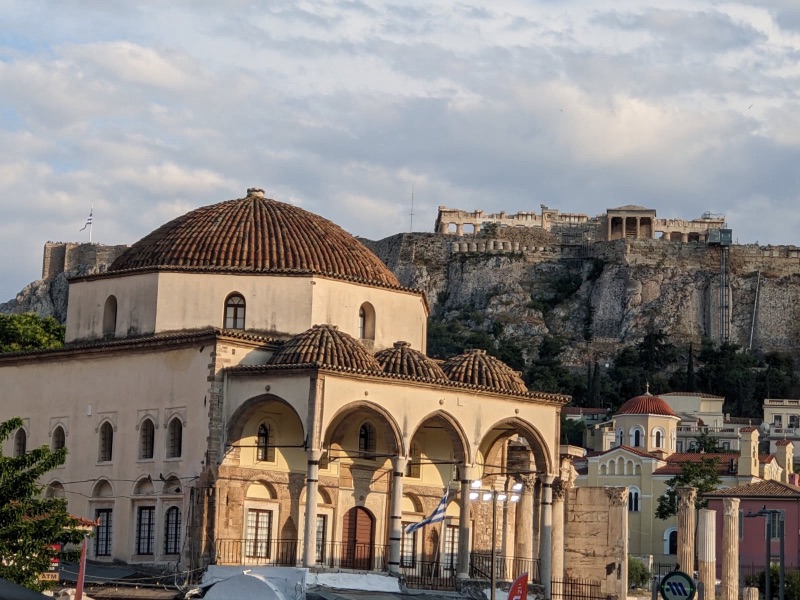
1896- Athens 1920- Antwerp1924- Paris1936- Berlin1948- London1960- RomeMonastiraki Square under the Parthenon on the Acropolis
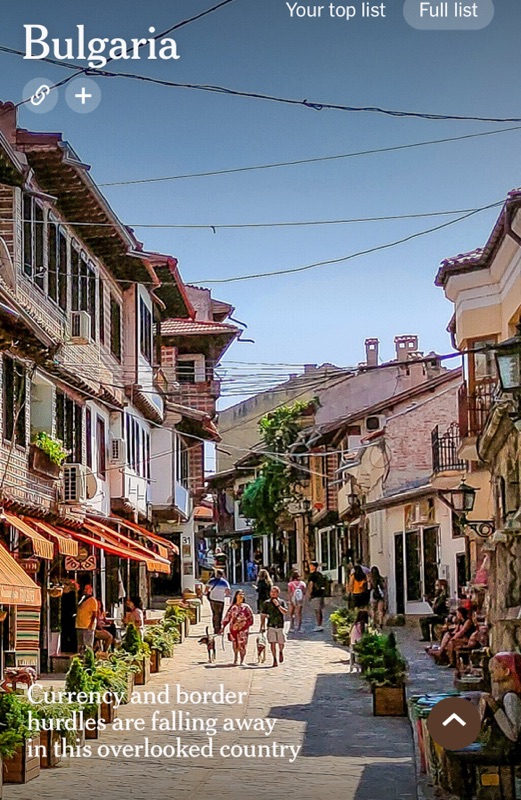
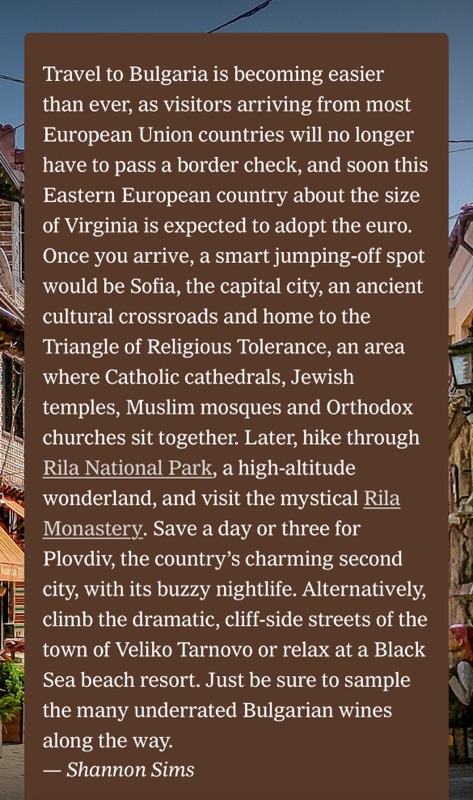
Every January, the New York Times publishes a list showing places they recommend visiting in the new year. It’s always fun to see what locations made the list, how many places I have already visited, & dream about going to places listed I had never thought about visiting.
This year the list had 52 places & to my pleasant surprise, Bulgaria was listed. By the time the list came out, we had already started planning traveling by train from Berlin to Athens & added Bulgaria to our places to stop along the way.
Bulgaria- NY Times Travel Pick #50
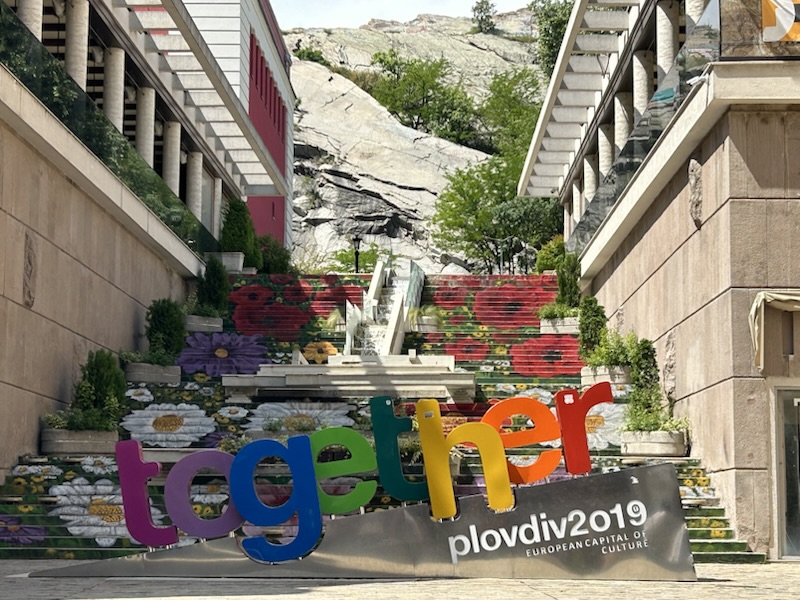
The NY Times article mentioned visiting Plovdiv which we decided to add to our itinerary.
In case you want to check out the article, here is the link.
For a day trip to Plovdiv from Sofia, we were recommended to take the bus which is more reliable than the train & only takes 2 hours which is faster than the train.
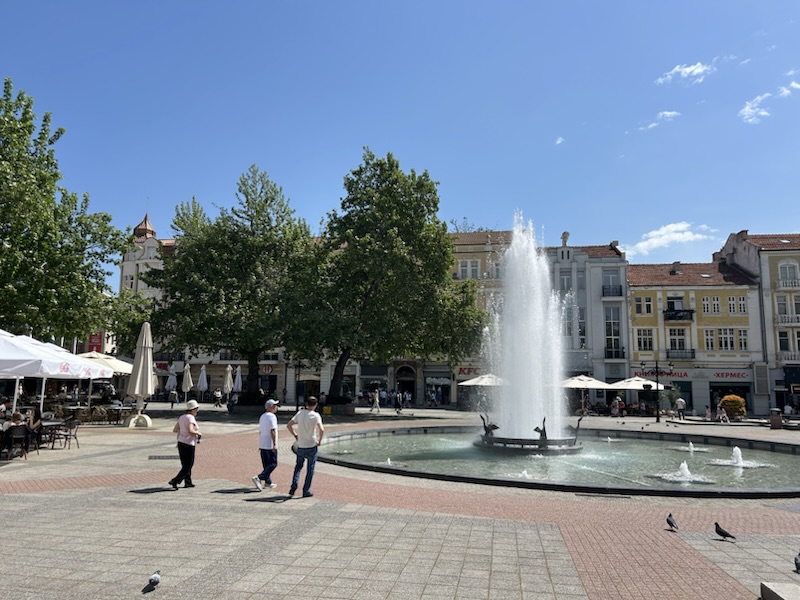
We boarded our bus at 9:00 AM & reached Plovdiv around 11:00 AM. From the bus station, we enjoyed a pleasant walk to the Old City Center.
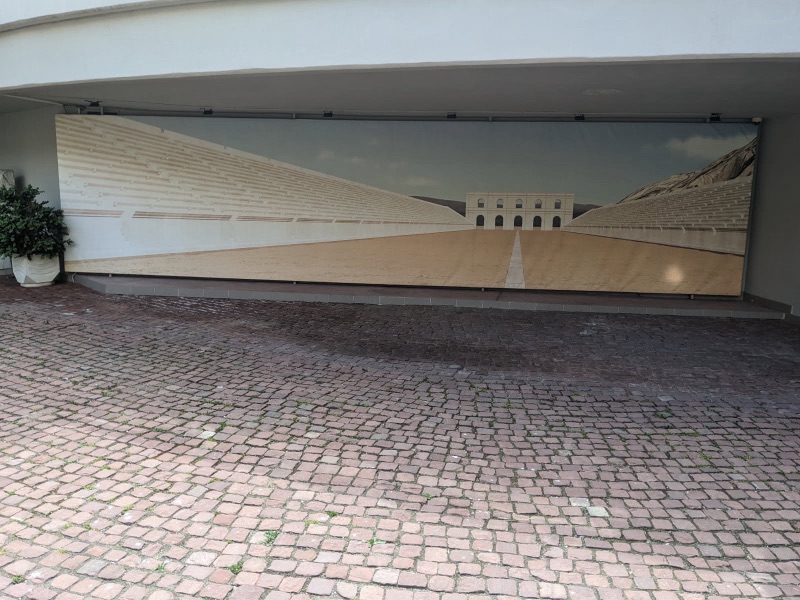
Plovdiv has many Roman ruins. The main ones are the amphitheater & the stadium (hippodrome). Most of the current town is built over the stadium which was about 300 meters long m, 80 meters wide, & could seat 30,000 people.
Hippodrome Seating Rendition showing the Hippodrome
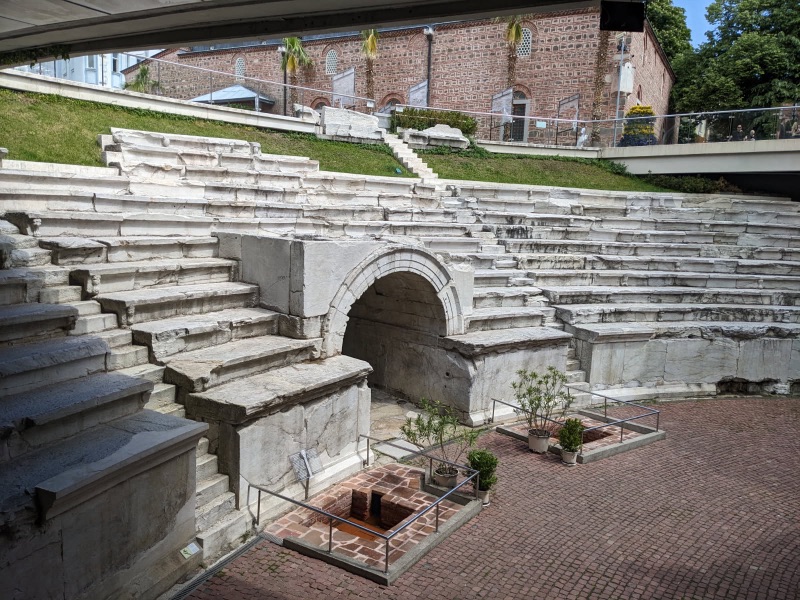
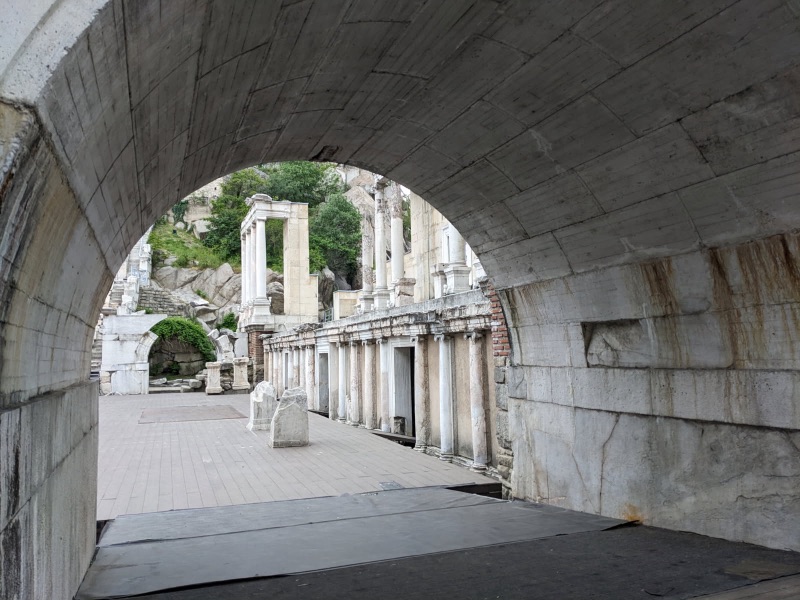
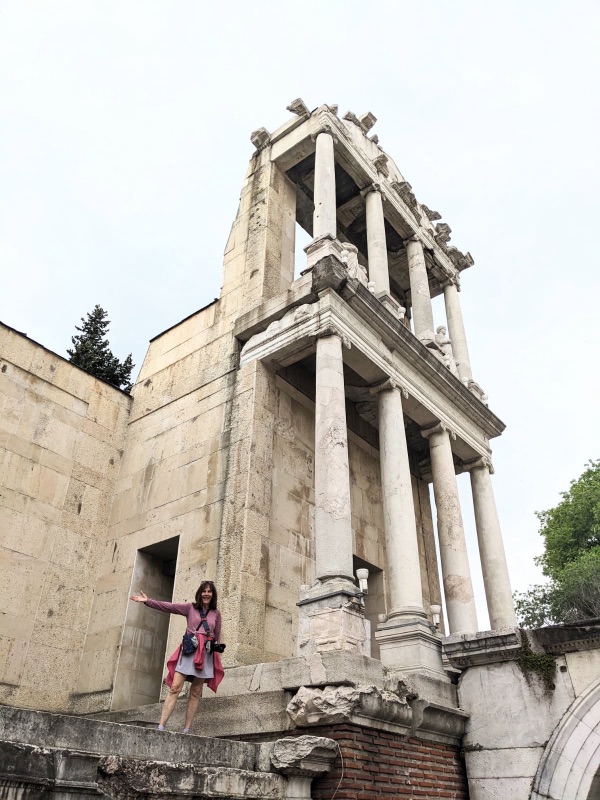
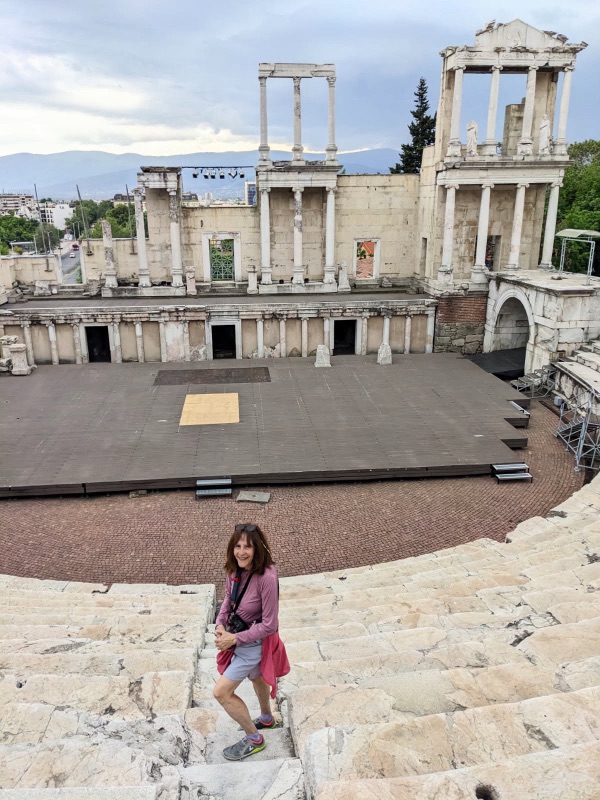
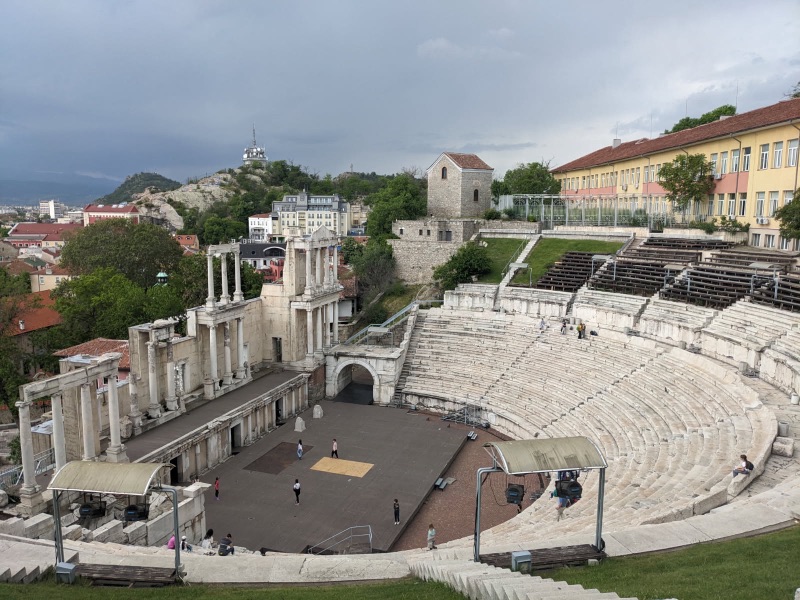
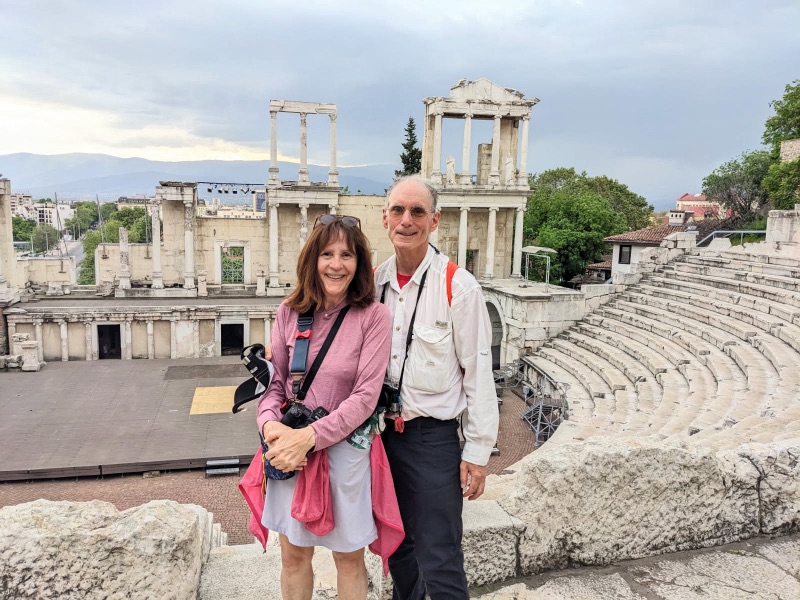
The ancient Roman amphitheater is still open & a grand place to visit. It can seat 7,000 people & is still used for performances. It reminded us of a similar amphitheater in Taormina on the island Sicily in Italy.
While at the amphitheater, we saw a thunderstorm approaching which quickly cleared out most visitors including all the school children. This exodus gave us the opportunity to enjoy the place almost to ourselves before the rain started.
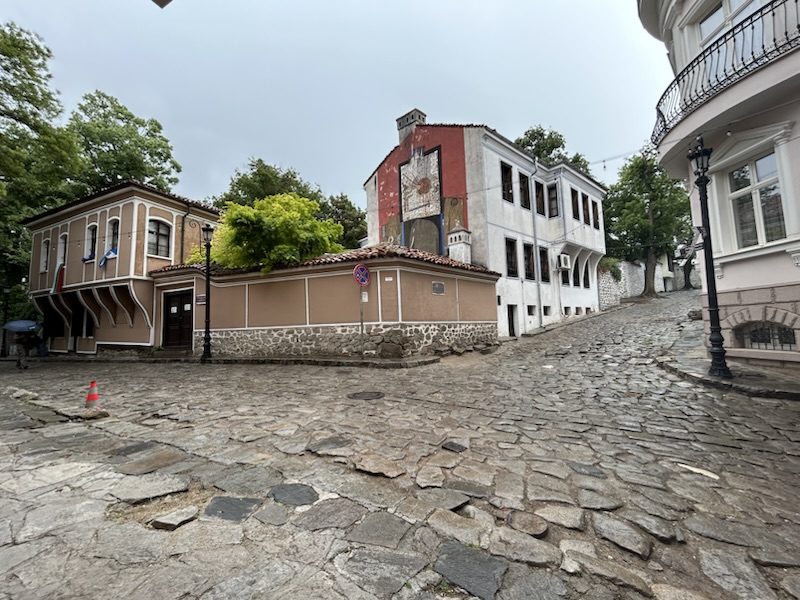
The amphitheater is located in Plovdiv’s beautiful Old Town which has colorful homes & rough cobblestone roads. Because it rained, we didn’t explore the entire area; but, we found a cute shop where we bought some hand-painted, colored, wooden eggs.
Historic house in Old Town
We ducked inside a small restaurant for a nice lunch waiting for the rain to stop before strolling back to the bus station to return to Sofia.
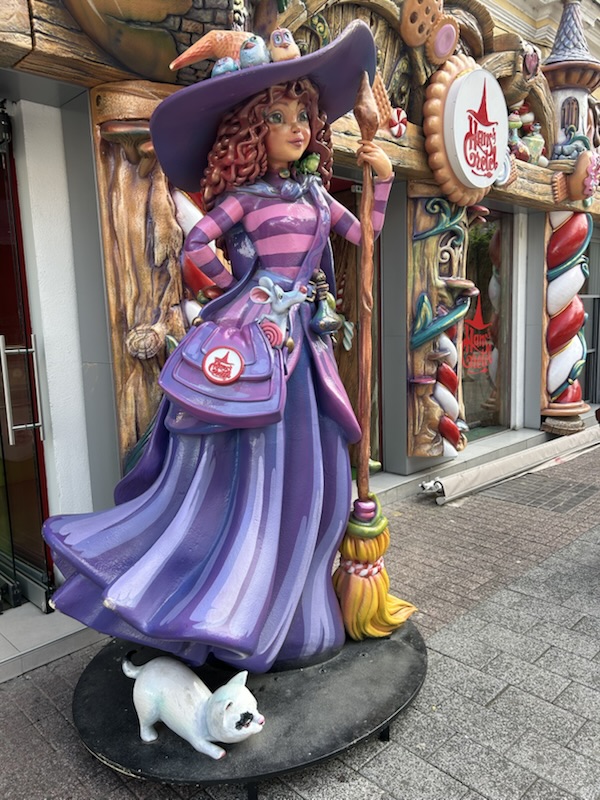
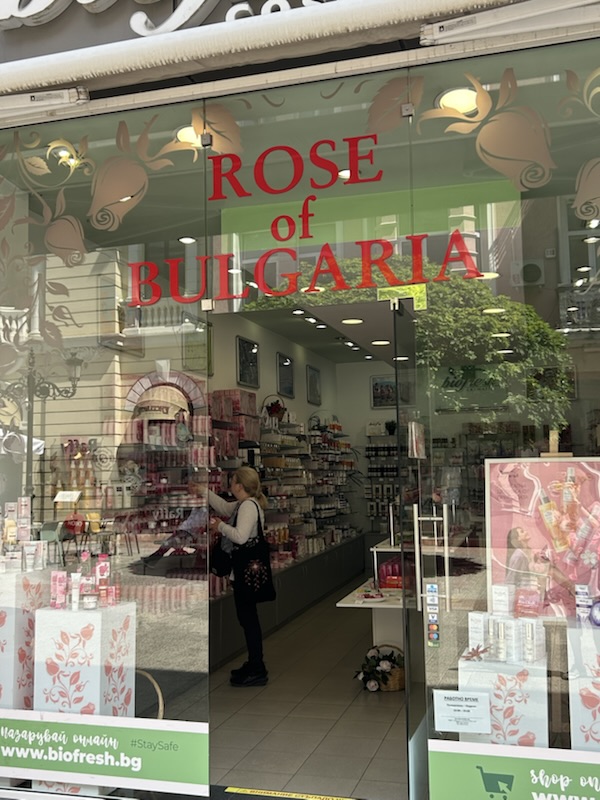
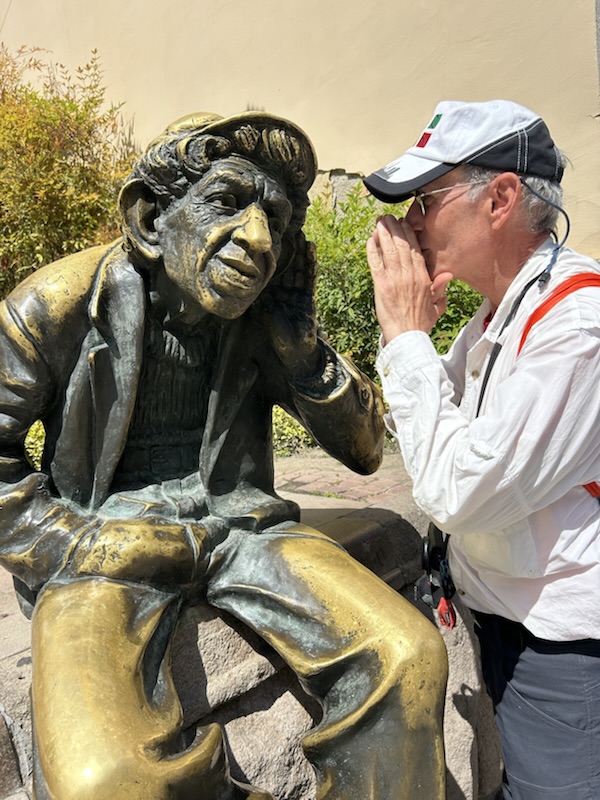
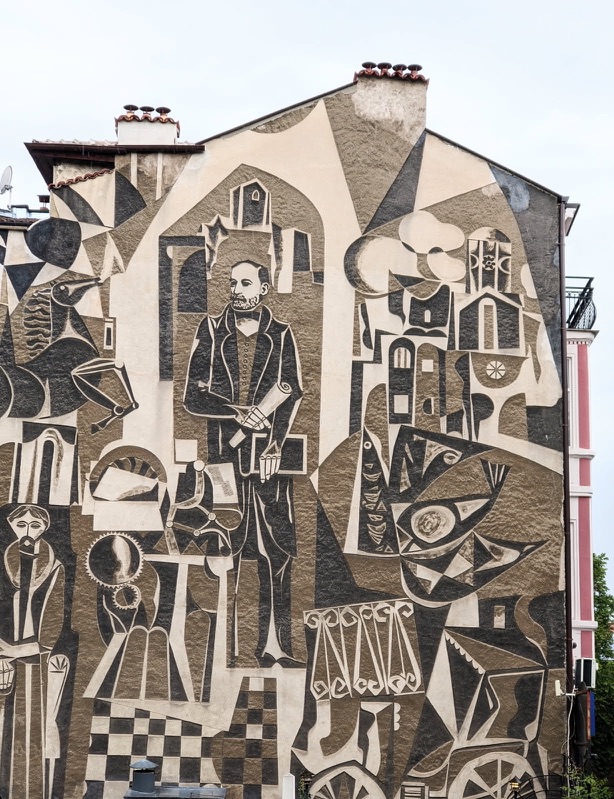
Ice cream shopRose products are very popular in BulgariaPlovdiv has many life-size statuesLocal display Wall Mural in Old TownInteresting little open- air, corner shop
Like many former East Bloc countries, Bulgaria is still trying to find its footing under democracy & capitalism; but, it seems to be moving in the right direction. I can see why The NY Times recommended this country to its readers.
After Romania, we took an 8 hour train trip from Bucharest to Sofia, Bulgaria.
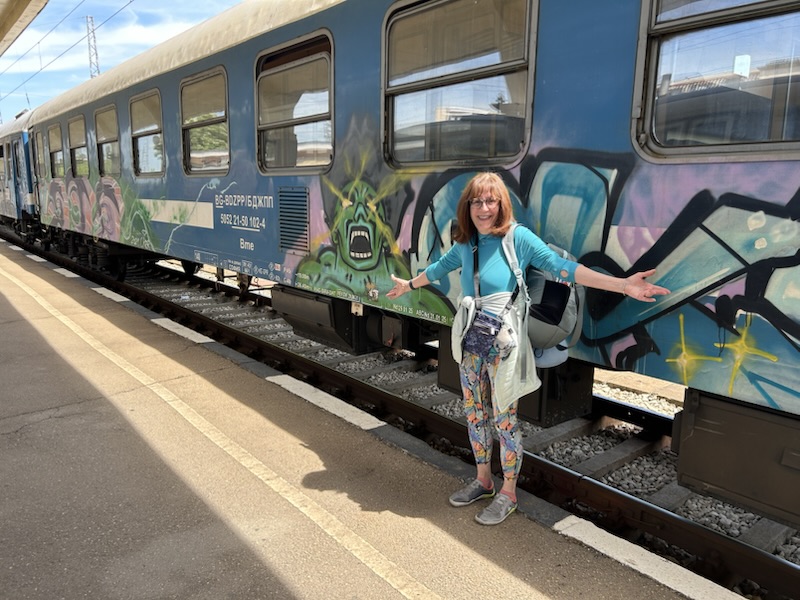
All Bulgarian trains are covered in graffiti, not the best conditions, but they get you there
There are many reasons to travel, but one is the opportunity to meet people from different countries.
Our train car was the old fashion kind with compartments that sat 6 people- 3 in each row facing each other. Our seats placed us with two young Norwegian men who were on holiday traveling through the Balkans. We enjoyed passing the hours swapping travel stories & learning about each other’s cultures.
Sofía
Bulgaria’s capital is Sofia. It is named after the very old church in the city that dates back to Roman times. Many churches were named Sophia like the famous Hagia Sophia in Istanbul.
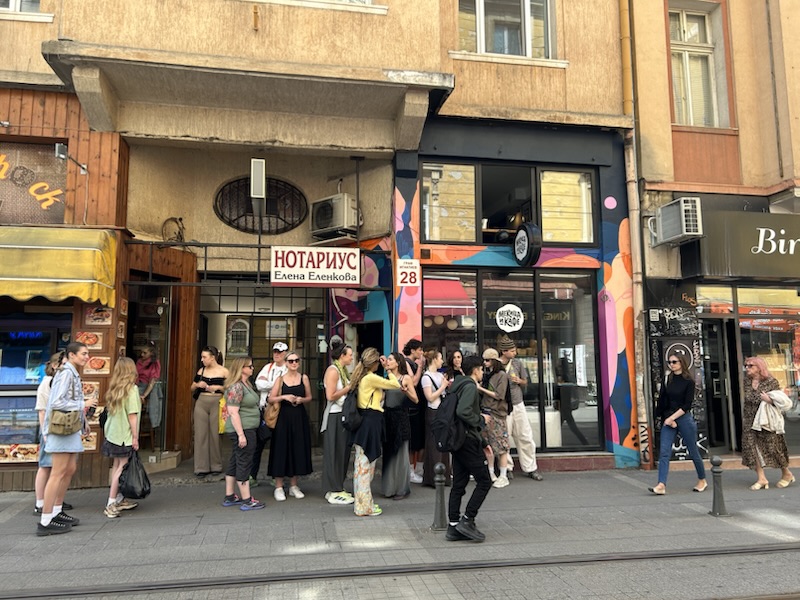
We felt the best way to see this small capital city was to take a couple free walking tours where you tip the guide $5-10 for a 2 hour tour.
Our first was called the Free Sofia Tour. Here are a few places we saw along the way. https://freesofiatour.com/
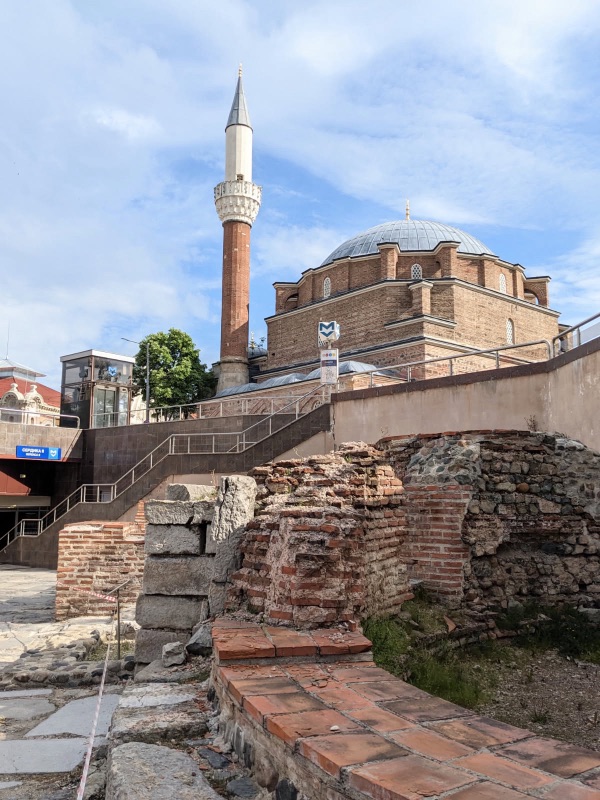
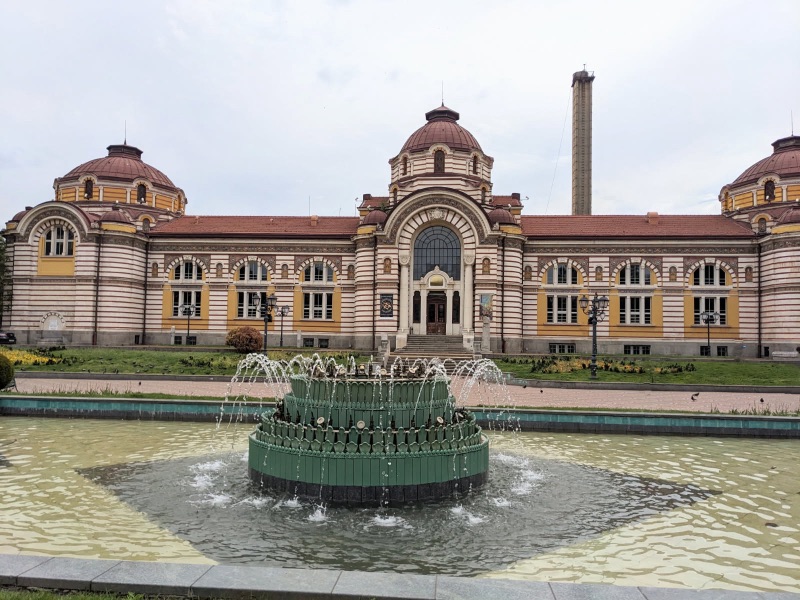
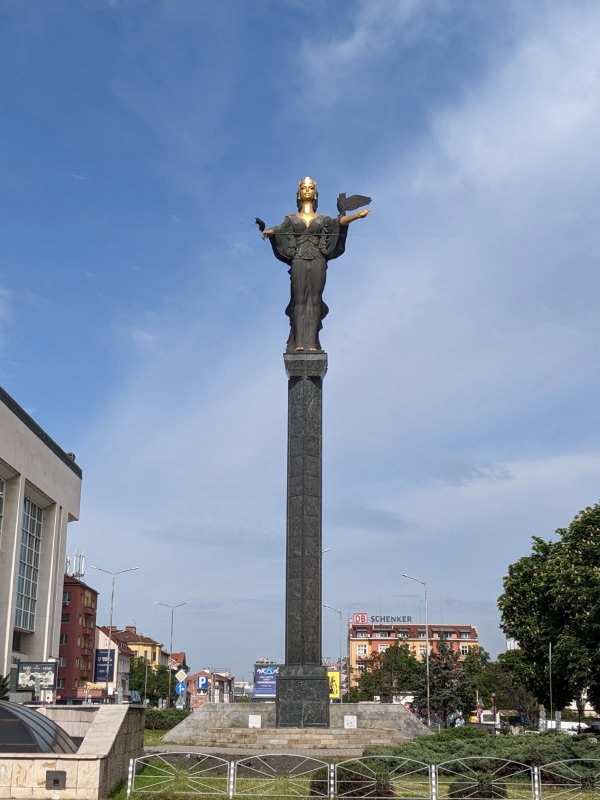
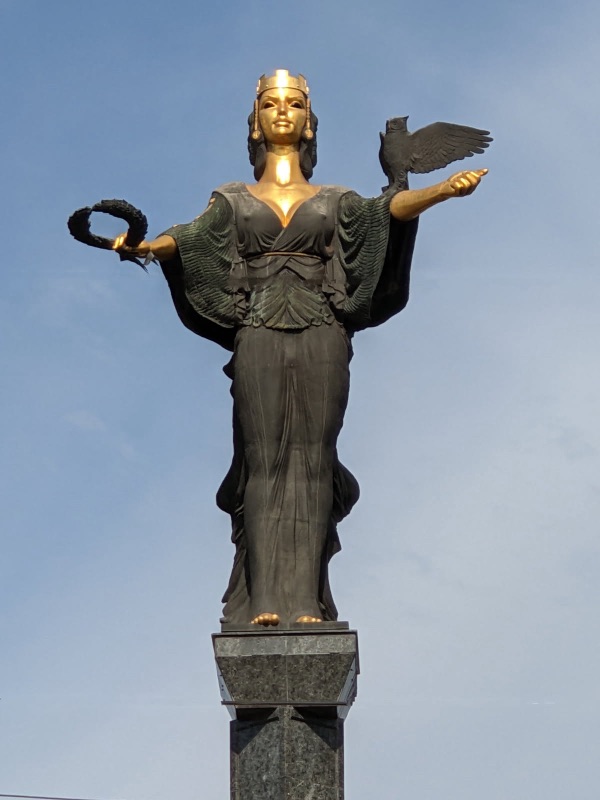
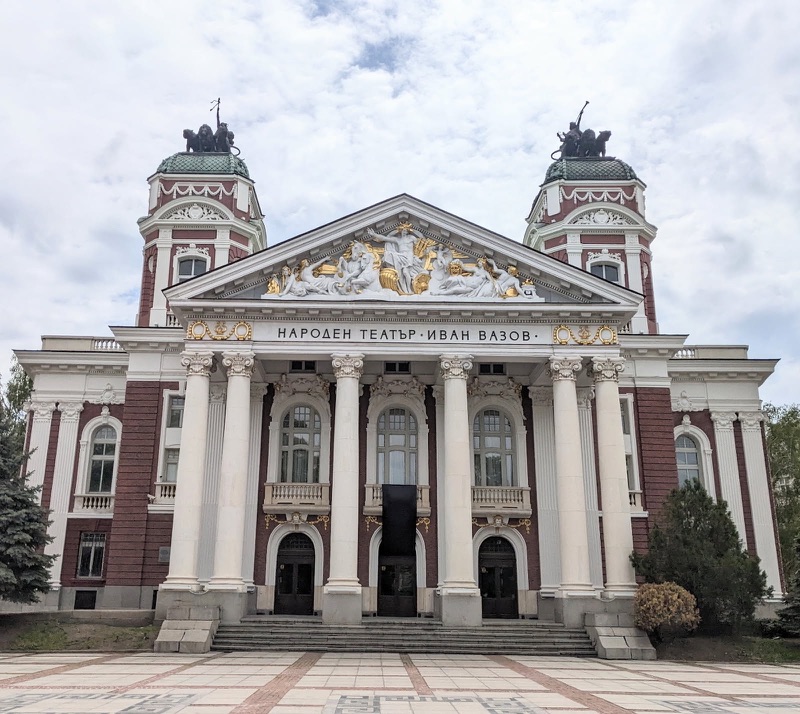
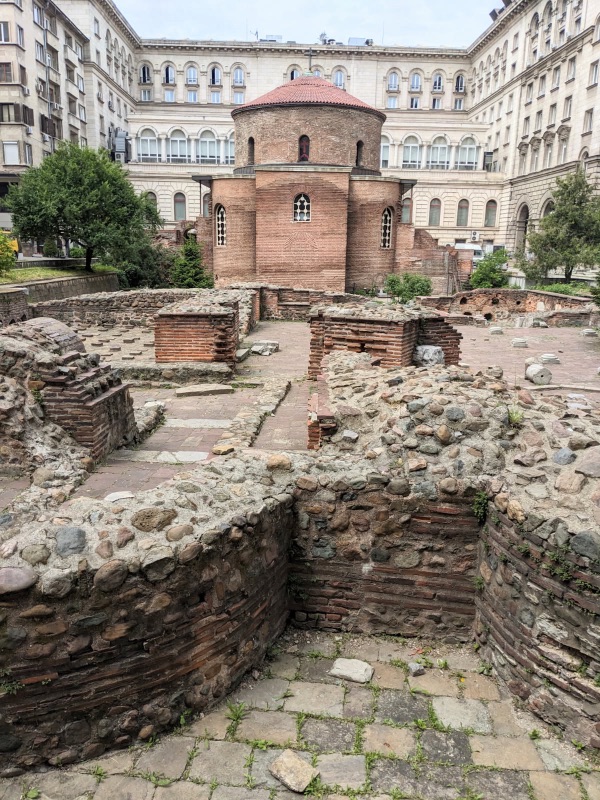
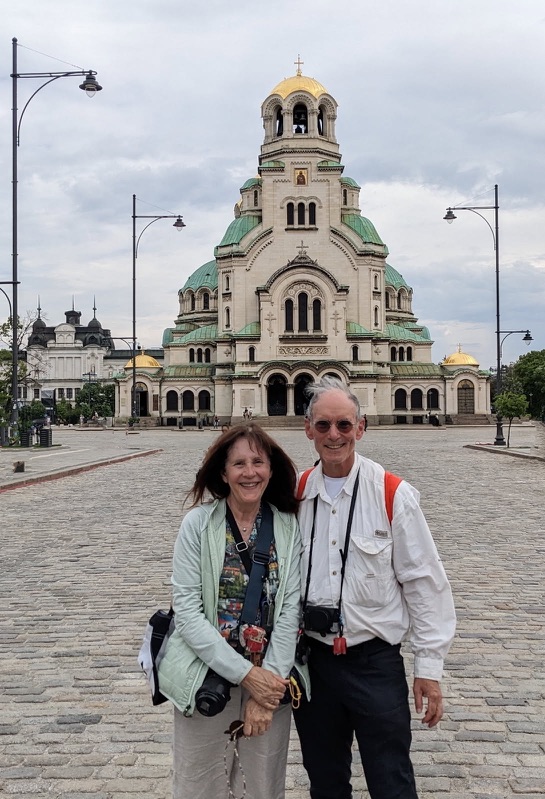
Serdica- old Roman ruinsRoman ruins & Banta Bashi mosqueOld Central Baths is now a museumTesting the natural thermal water- it is warm & has a sulfur taste Lenin’s statue was once displayed here to honor Communism Now the Sofia Monument replaces Lenin National Theater St. George Rotunda Church- Oldest structure in Sofia dating to 4th Century Roman timesSt Alexander Nevsky Cathedral
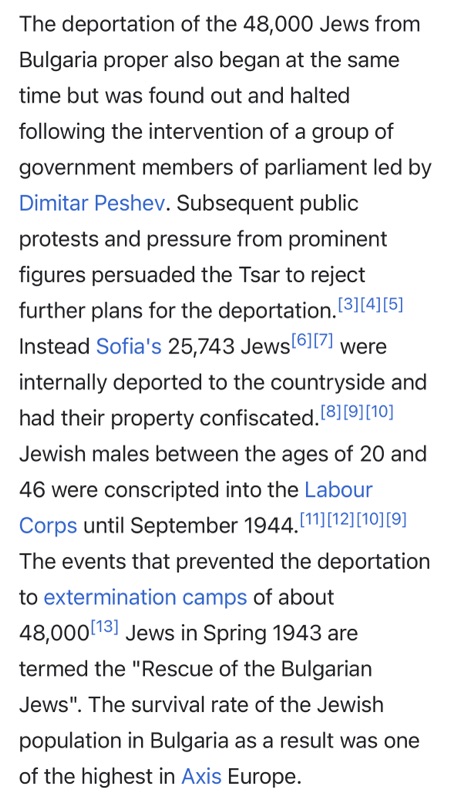
The two most interesting things we learned was first, the Bulgarian people figured out how to protect most of its Jewish population from being sent to concentration camps during WWII.
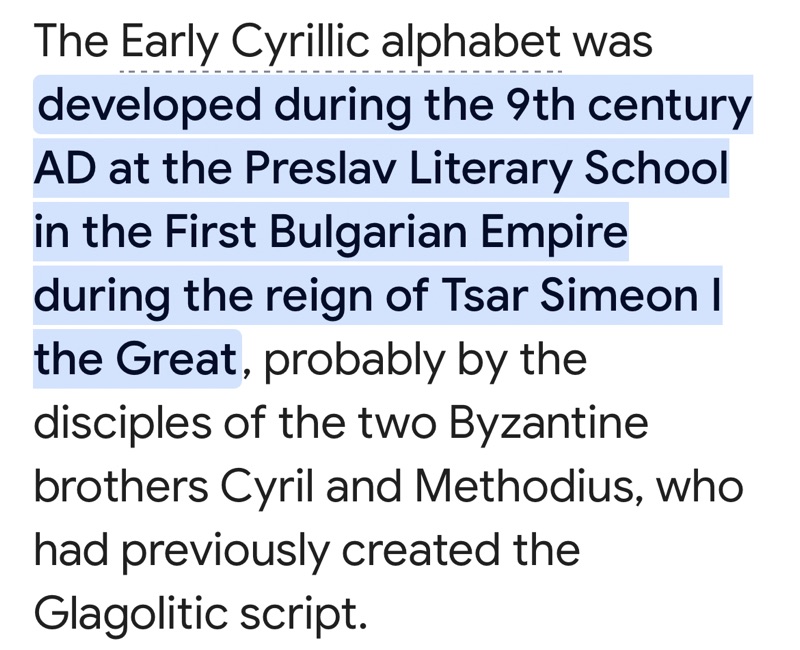
The second interesting fact is that the Cyrillic alphabet now used in 14 countries was developed in Bulgaria.
T-shirts with the original Bulgarian alphabet in Glagolitic Script which was too complicated & the current Cyrillic alphabet upon which it is based
The second walking tour was a free tasting tour called “Balkan Bites” during which we tried Bulgarian food & learned a little about local food customs. https://www.balkanbites.bg/
Here are the highlights from this tour.
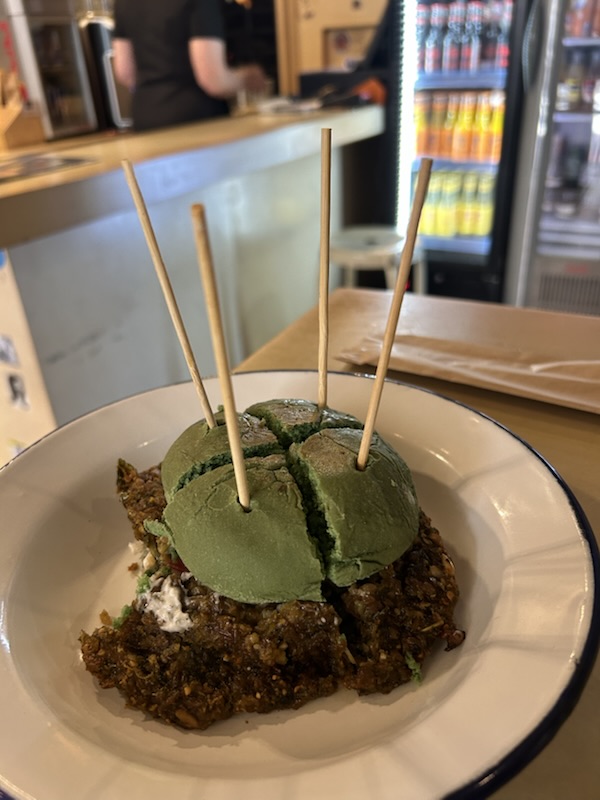
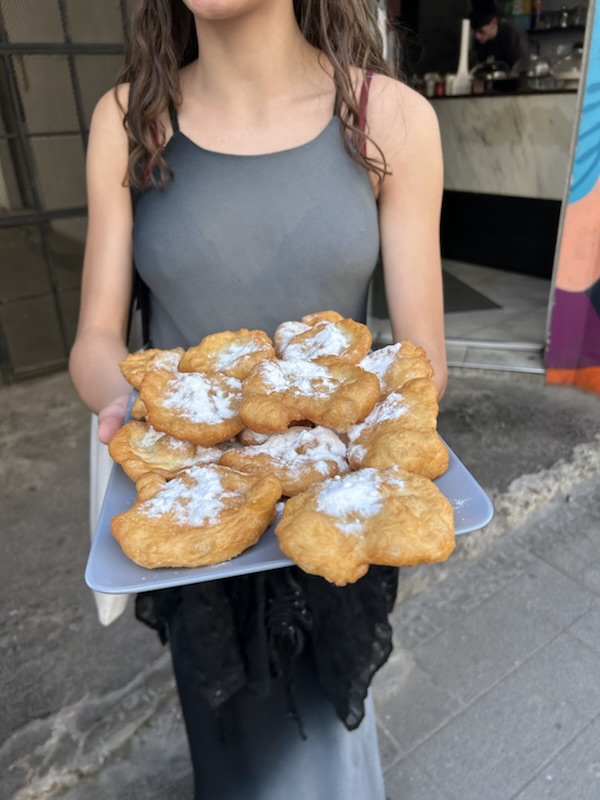
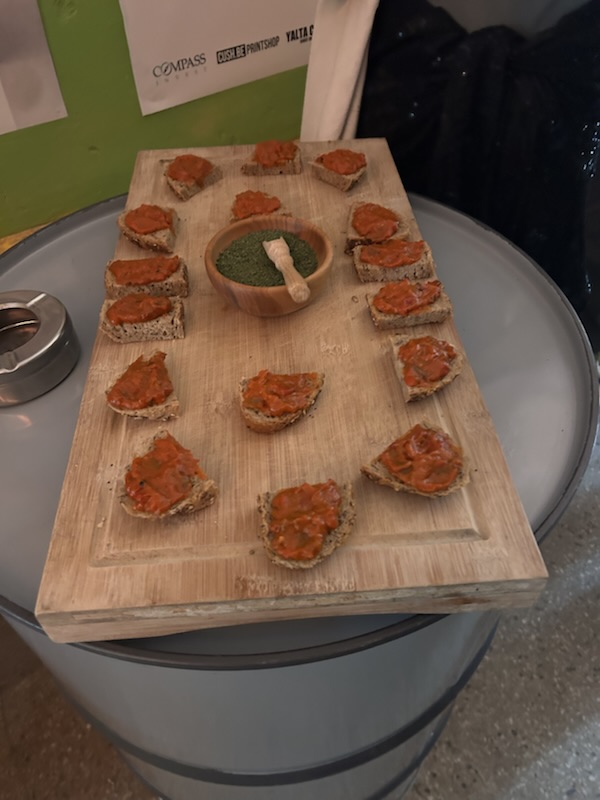
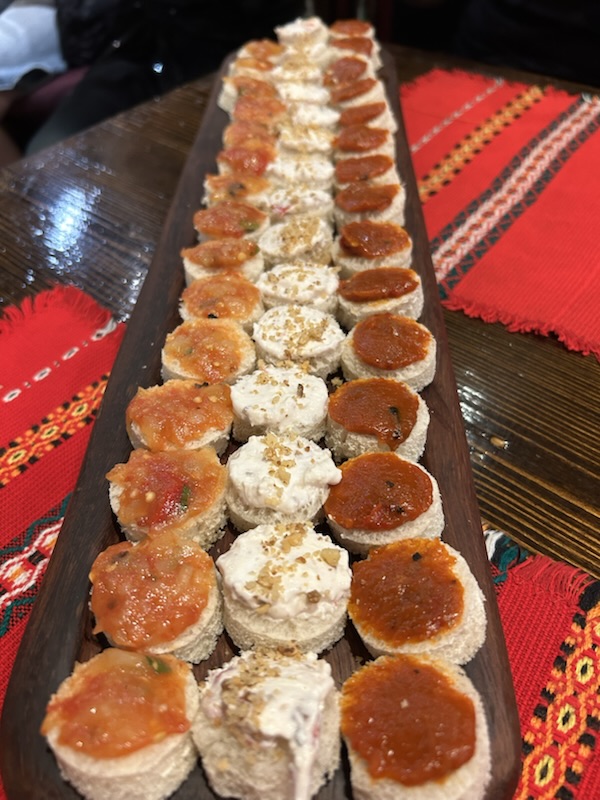
Veggie burger for us at a hip place for young people Mekitsa- Fried dough with powdered sugarBrown bread with a spicy Bulgarian topping called Lyutenitsa which is made from peppers, tomatoes, eggplant, garlic, & walnutsTraditional Bulgarian appetizers Owner of a very small shop on our tourSamardala- Hungarian plant used to make a green salty spice that is used instead of salt
Like all East Bloc countries, Bulgaria was under a Communist regime for close to 45 years.
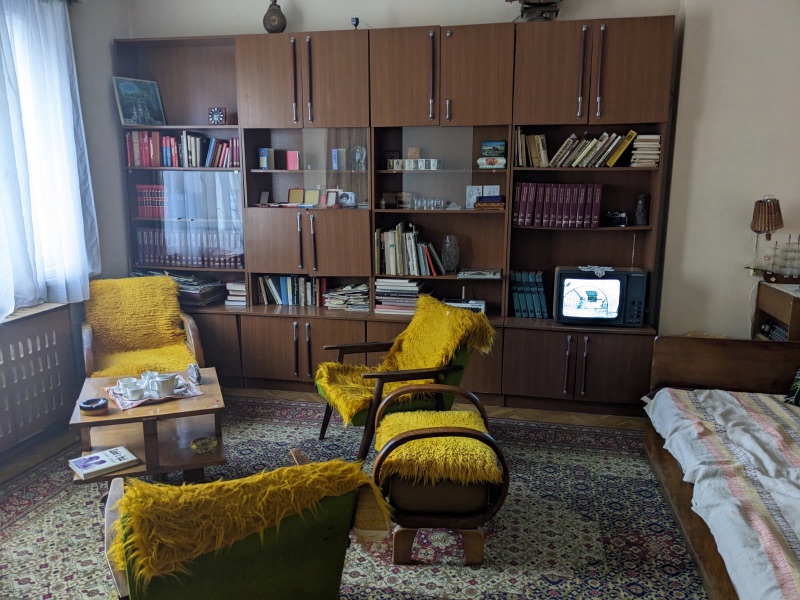
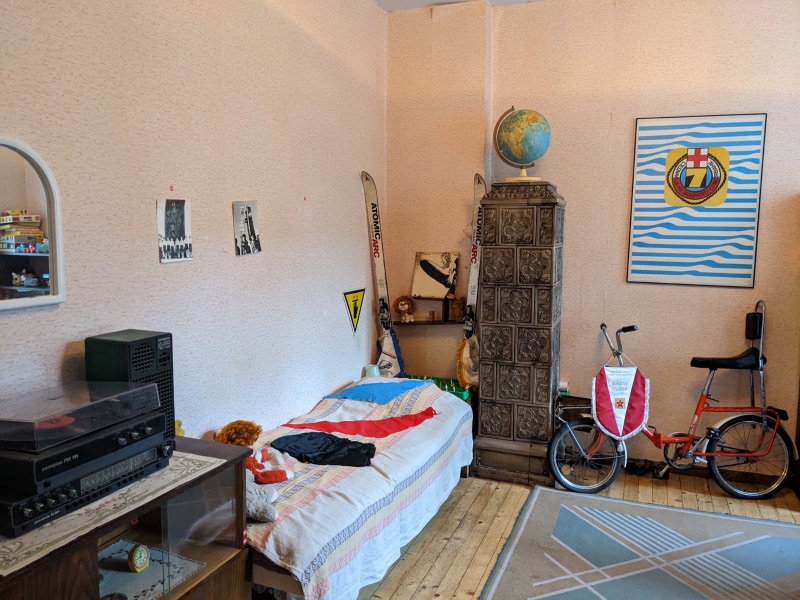
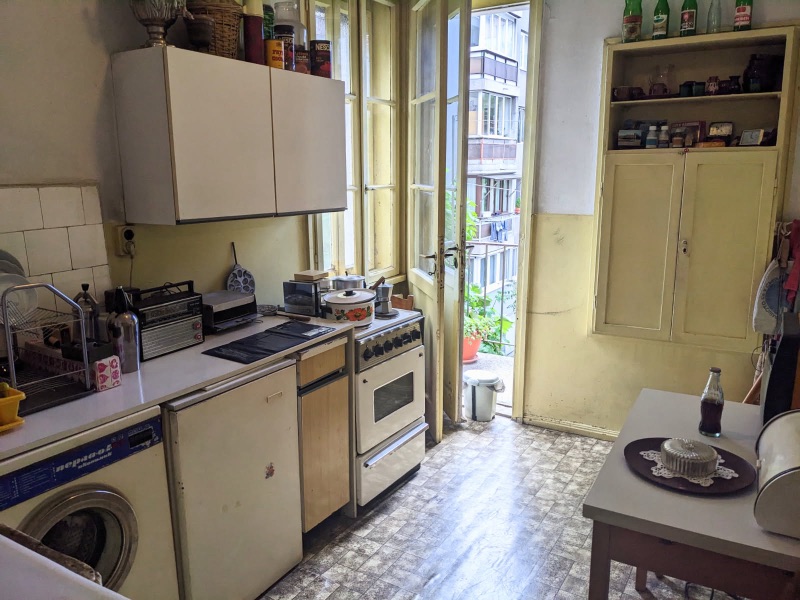
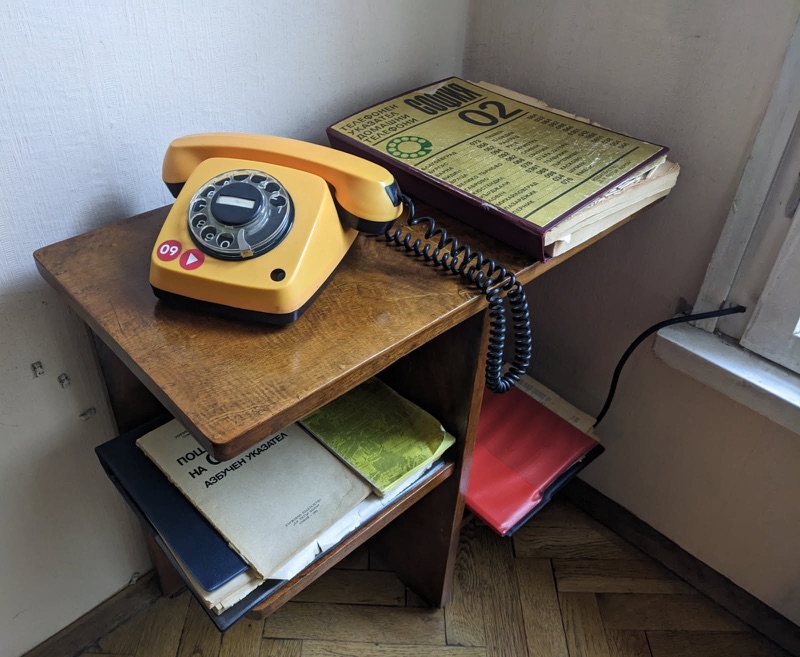
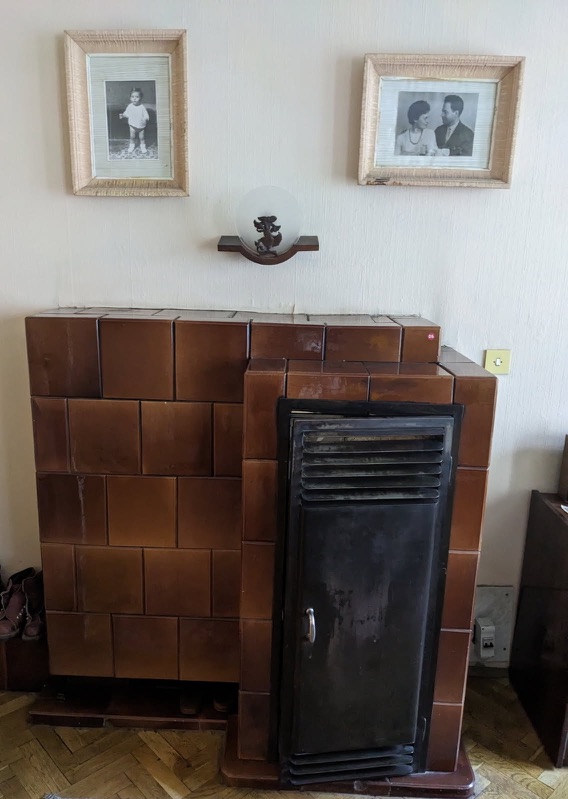
We were able to do a self-guided listening tour through an apartment called “The Red Flat” that hadn’t been changed since 1989 when Communism ended in Bulgaria.
This flat was for a fortunate family because the father was allowed to work abroad. But, it still only had one bedroom, one living room, a dining room, a kitchen & very small bathroom in only a few hundred square feet in size.
Both my husband & I feel like the Communist countries were kind of always stuck in time in the 1960s which is when the Berlin Wall went up along with the Iron Curtain closing the borders where the East Bloc countries touched Western Europe. From that time on, very little interaction with the West was allowed & everything you could buy was controlled by the Communist government including dress styles.
See what you think about a typical Communist home from the 1980s in these pictures.
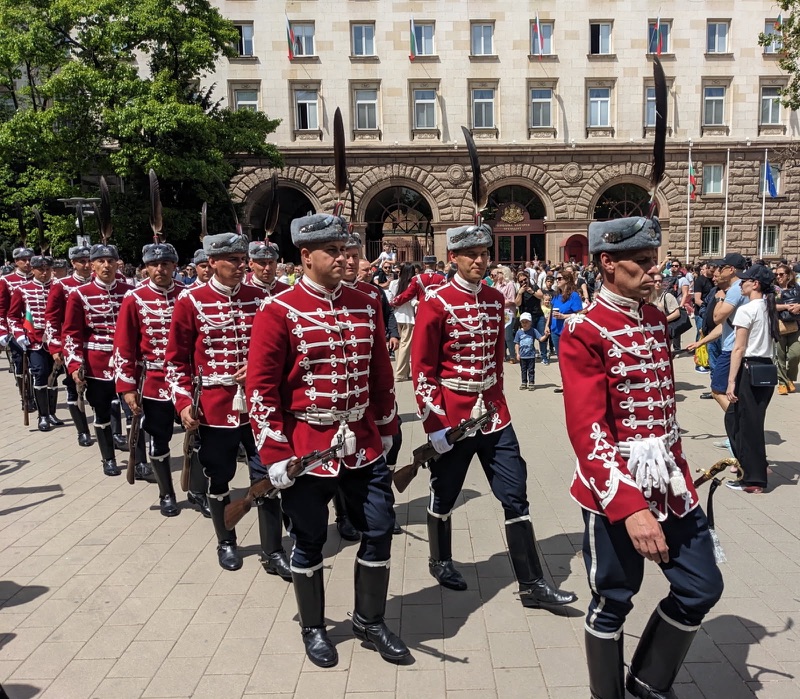
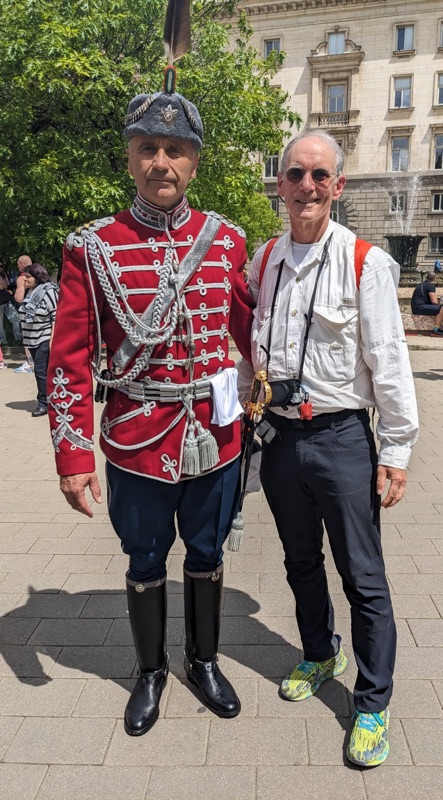
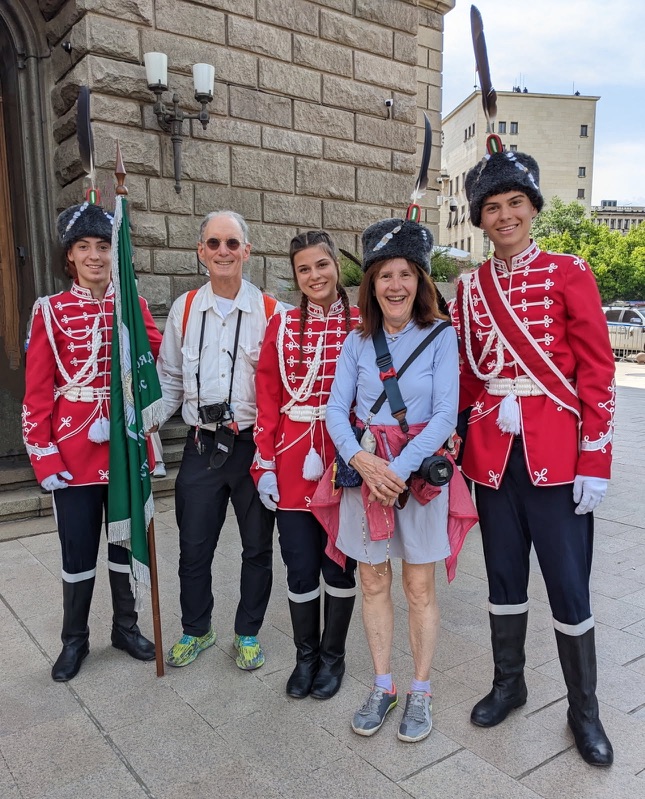
A national holiday occurred while we were here called “St. George’s Day.” This is not only a religious celebration commemorating Saint George who slew the dragon; but also, it is Bulgaria’s Armed Forces Day celebrating its military.
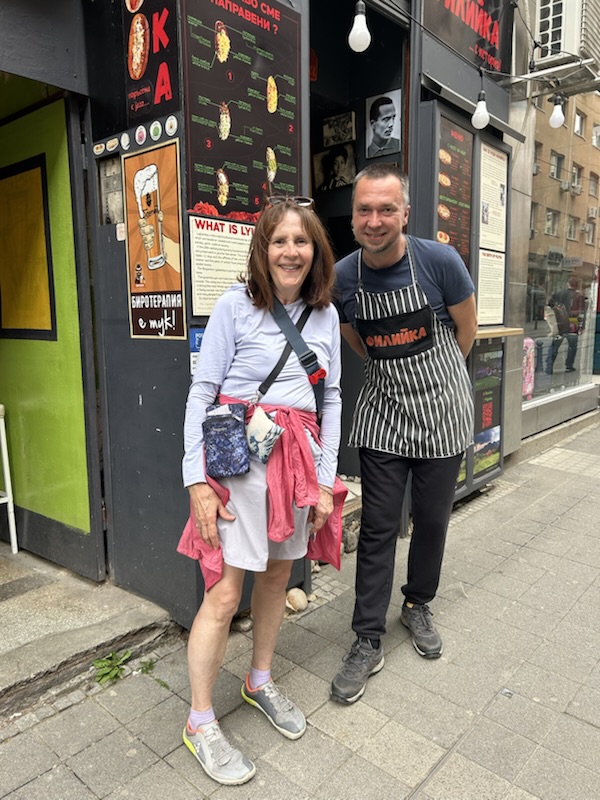
We didn’t see any of the formal military parade; but, I enjoyed having my picture taken with a few young people dressed in the traditional guards’ uniform & we also saw a few military guards near the Presidential residence.
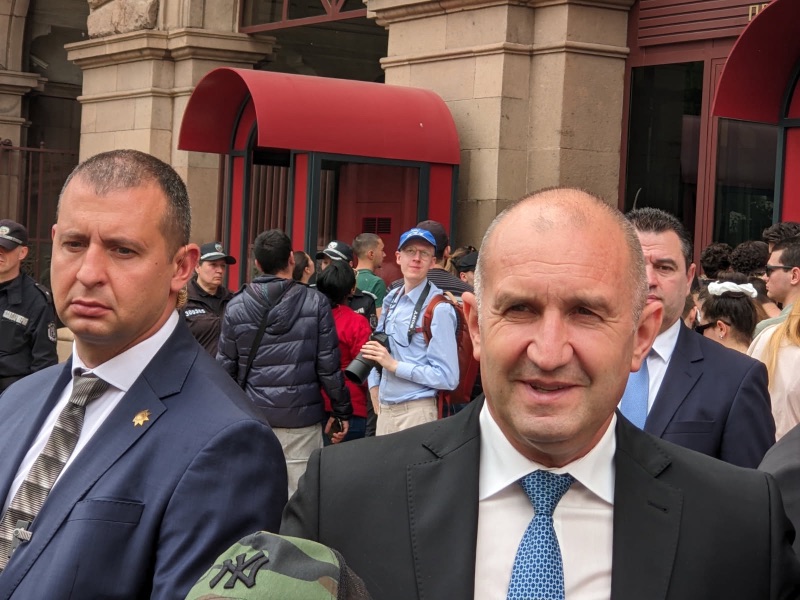
My husband also spotted Bulgaria’s President Ruman Radev . Even with tight security, he was able to get close enough to take a good photo of him.
Ruman Radev on the right – Security Detail on the left & behind him
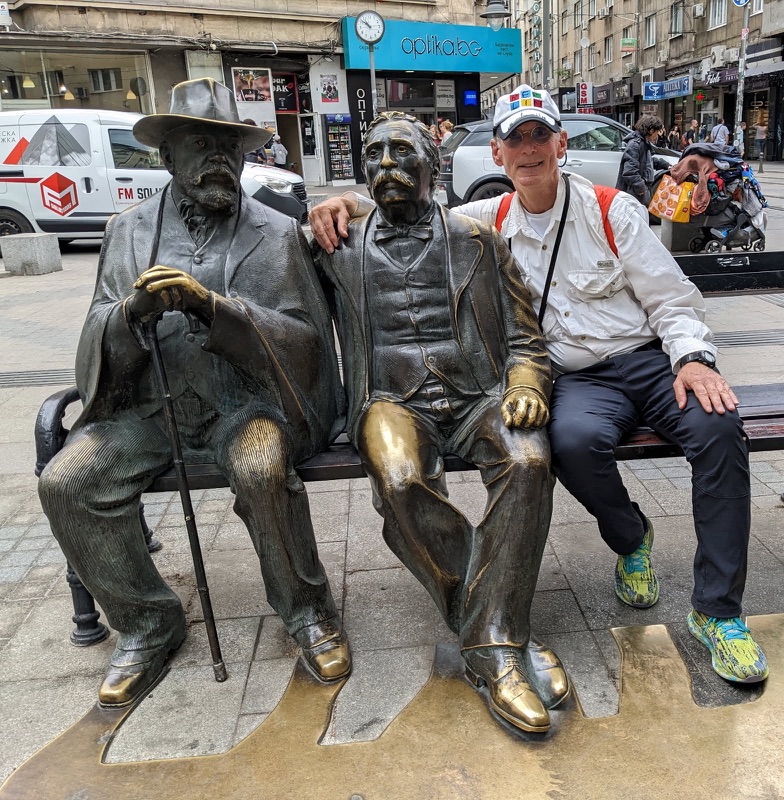
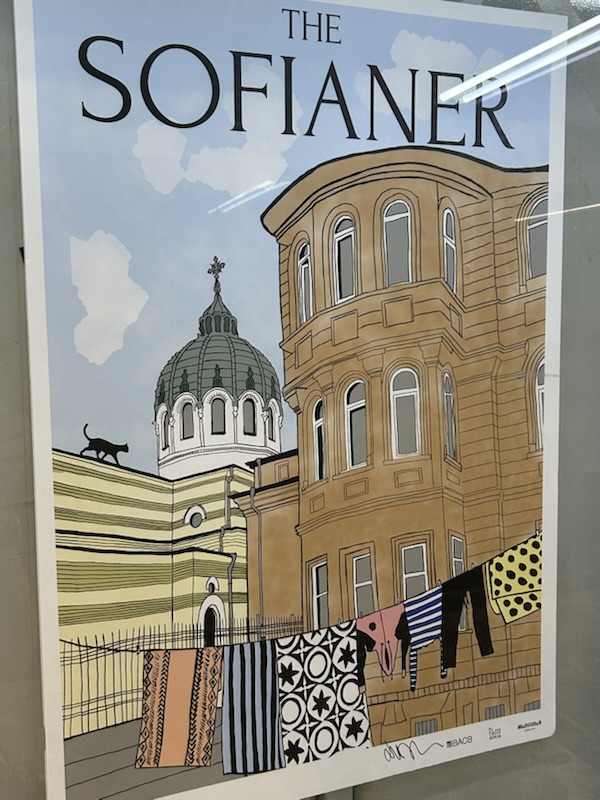
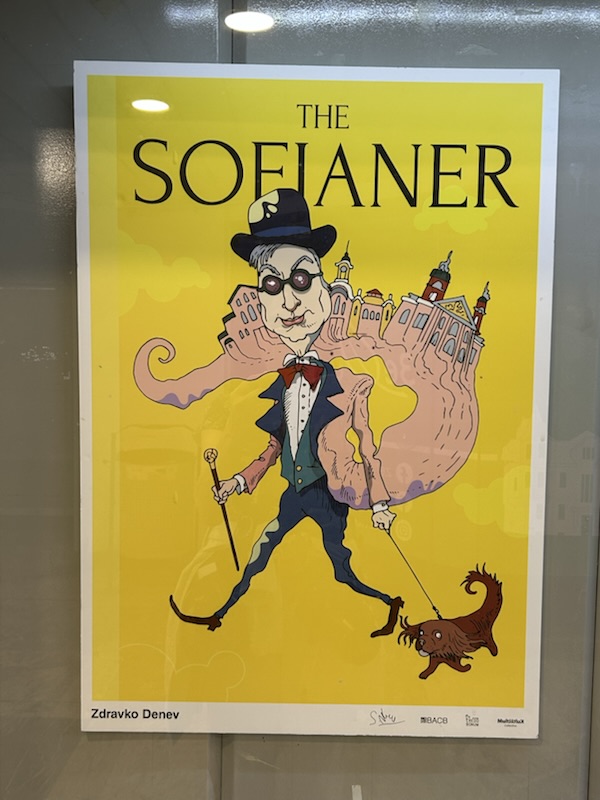
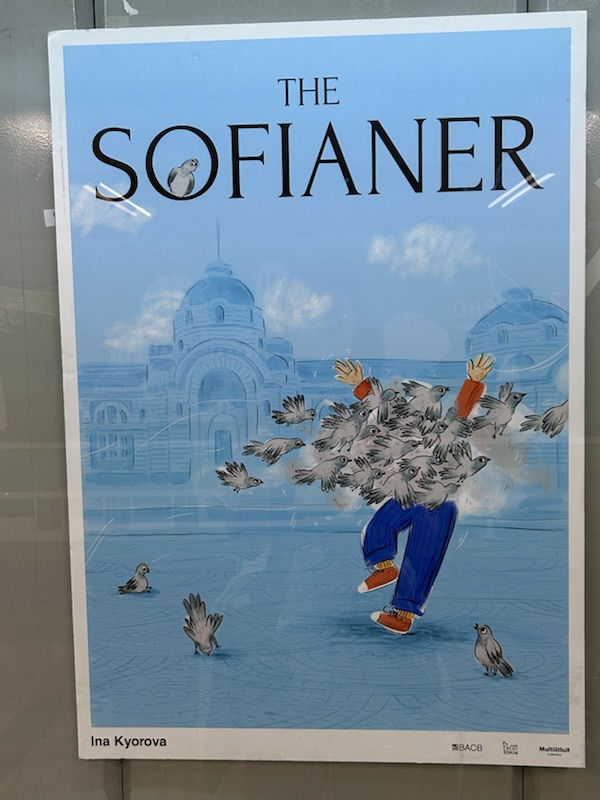
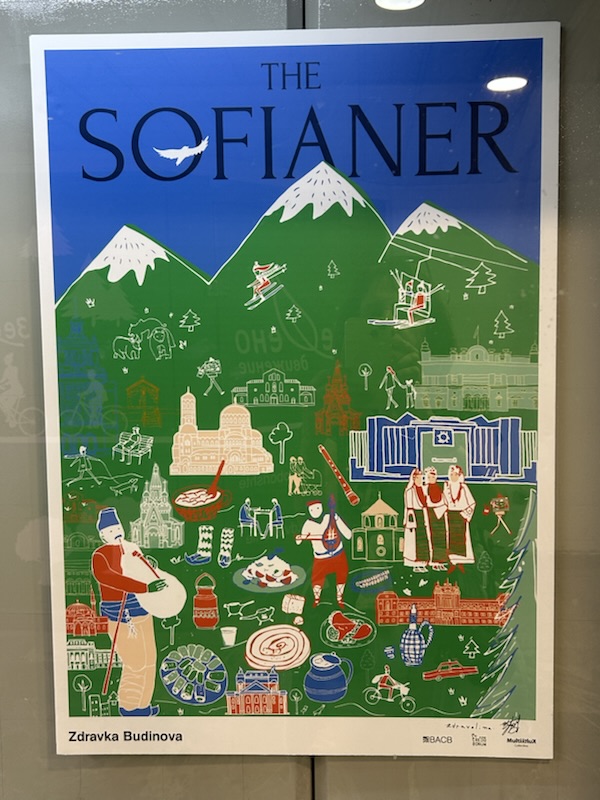
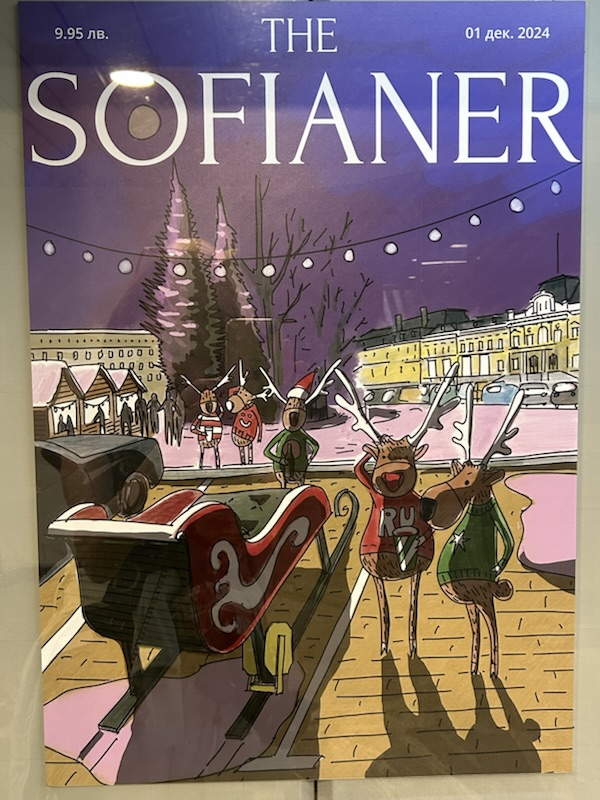
A few more fun pictures around Sofia & cool art that looks like covers from my the New Yorker magazine.
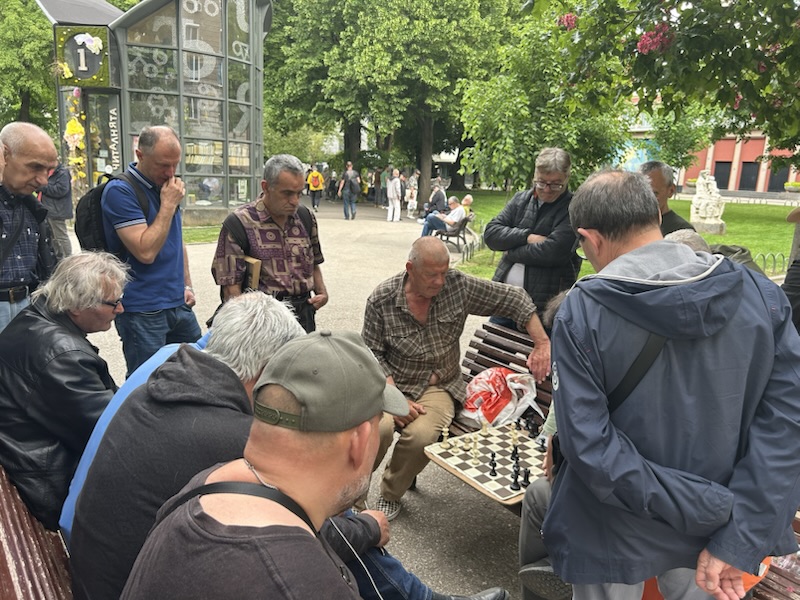
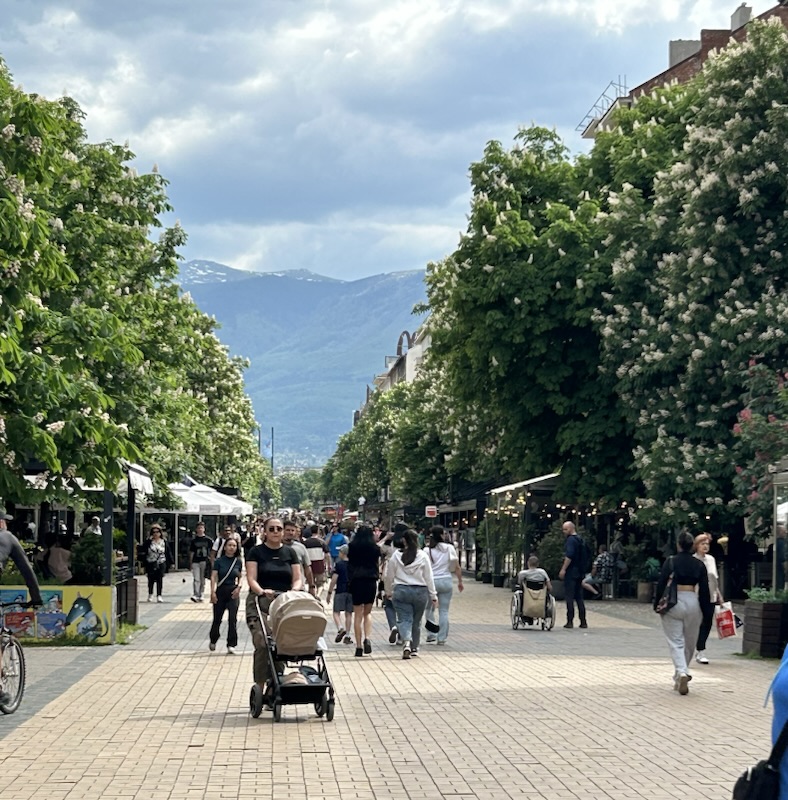
Men playing chess in the parkVitosha Boulevard- busy shopping street lined with blooming chestnut trees with mountains in the distance
Sofía is a large city; but, we spent all our time in & around the old town which was a lovely area to spend two days seeing.
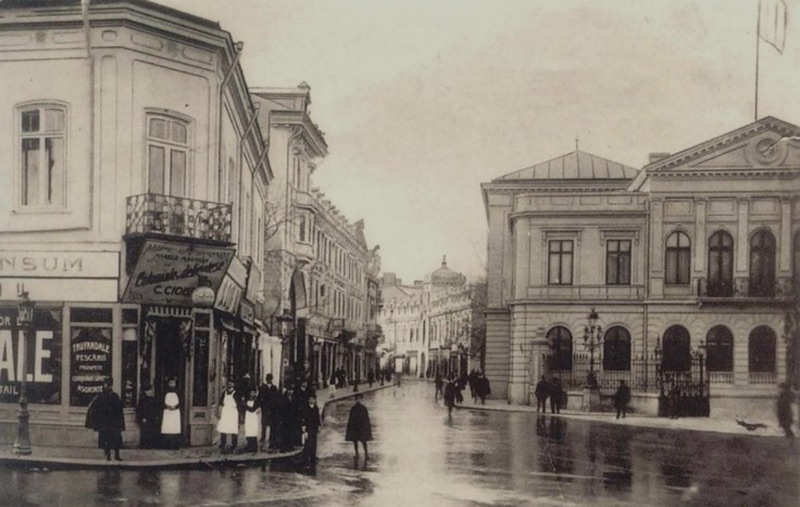
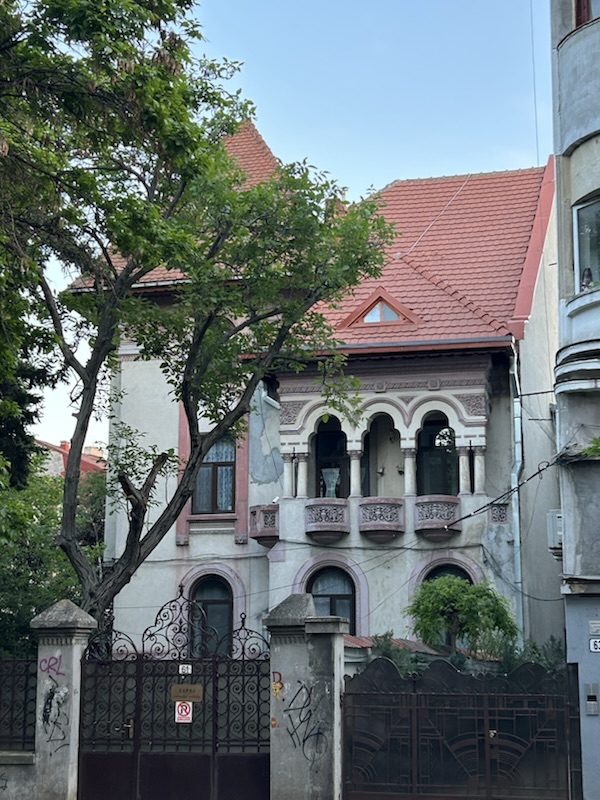
When we arrived in Bucharest in the evening, all we saw on the way to our hotel were old, gray, square, Soviet-style buildings. Even the train station looked old & needing repair. But, the next day when we started touring the city, “Little Paris” began emerging.
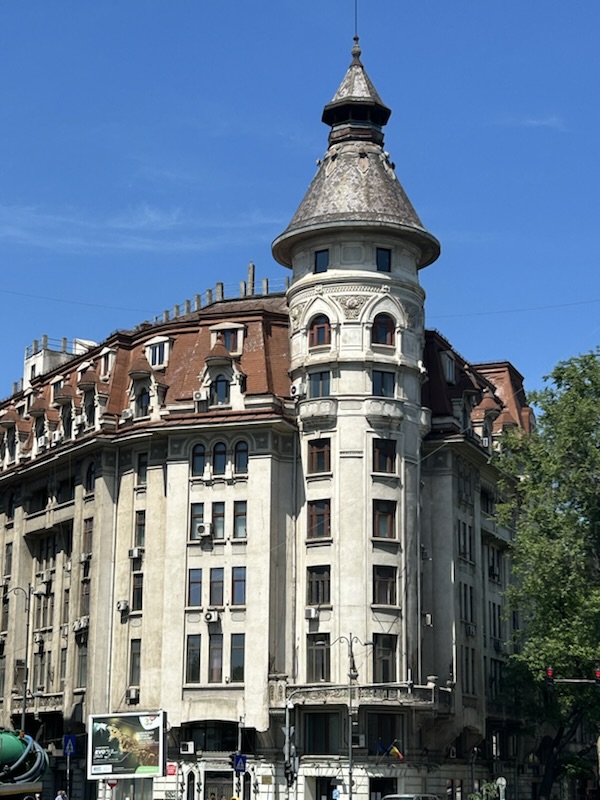
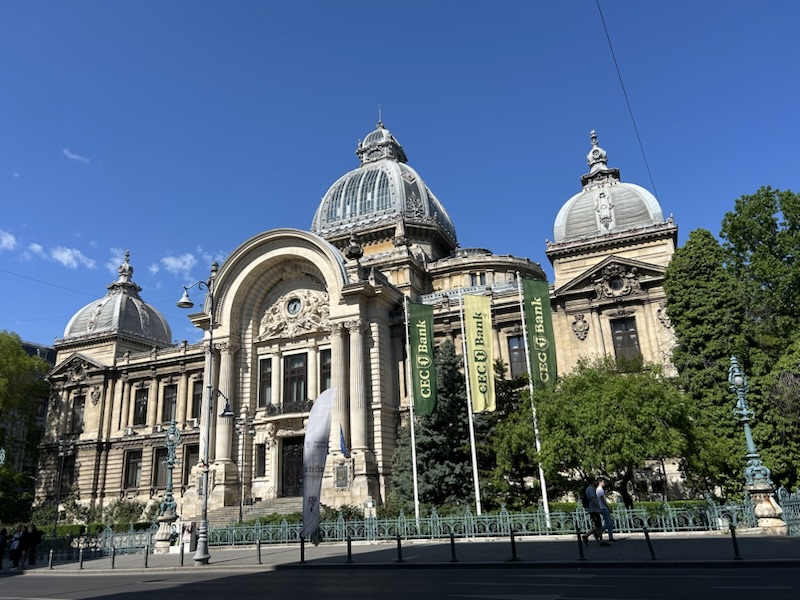
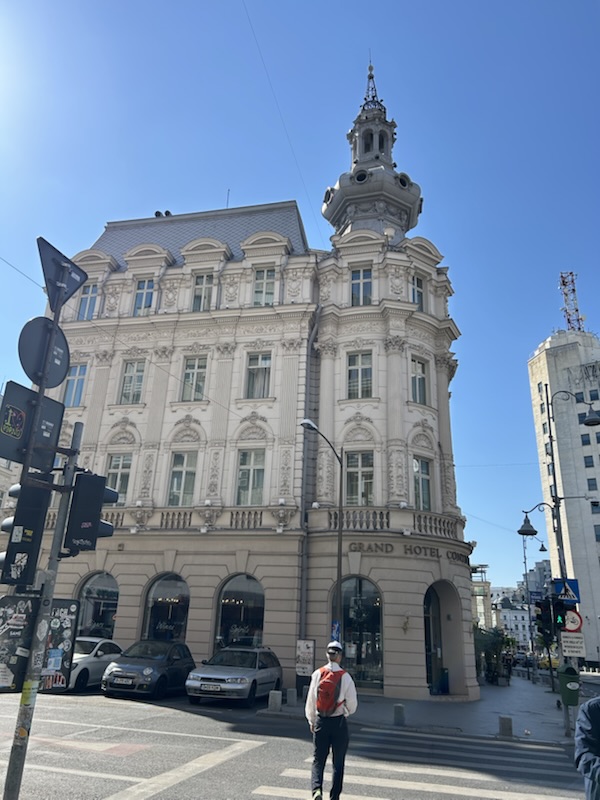
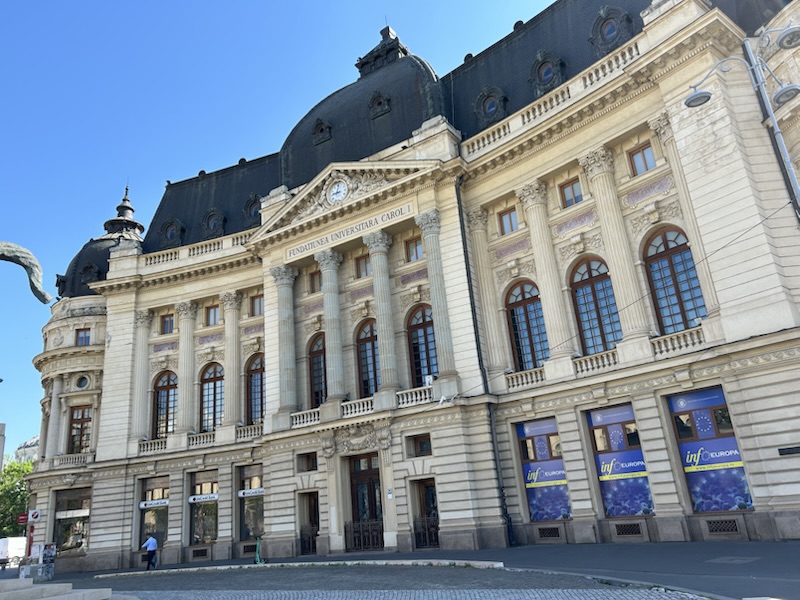
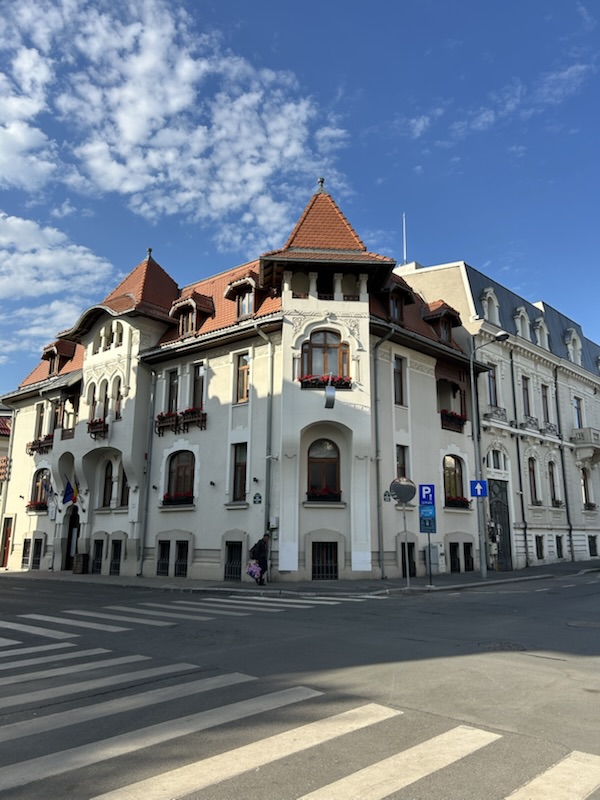
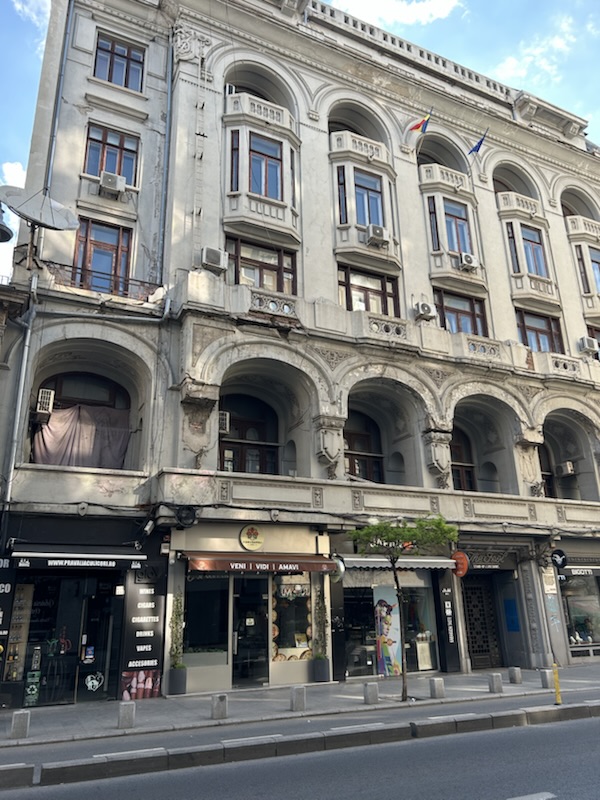
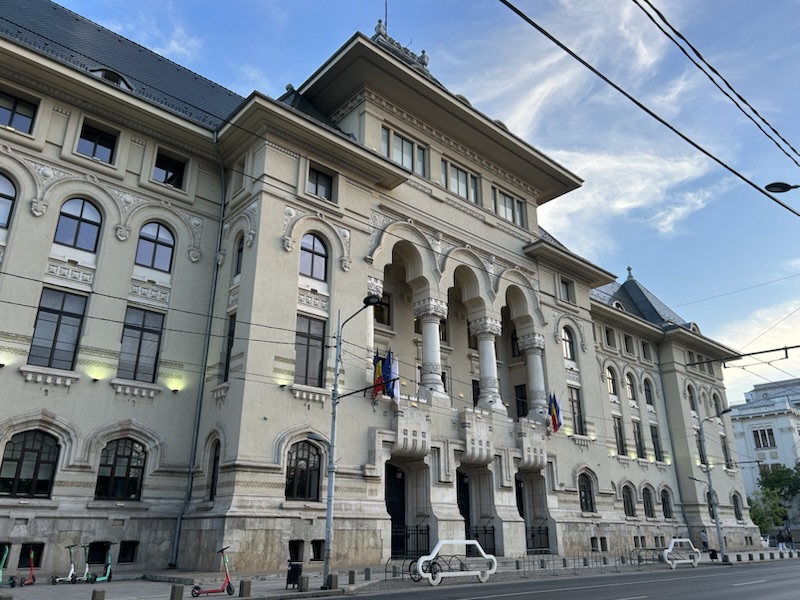
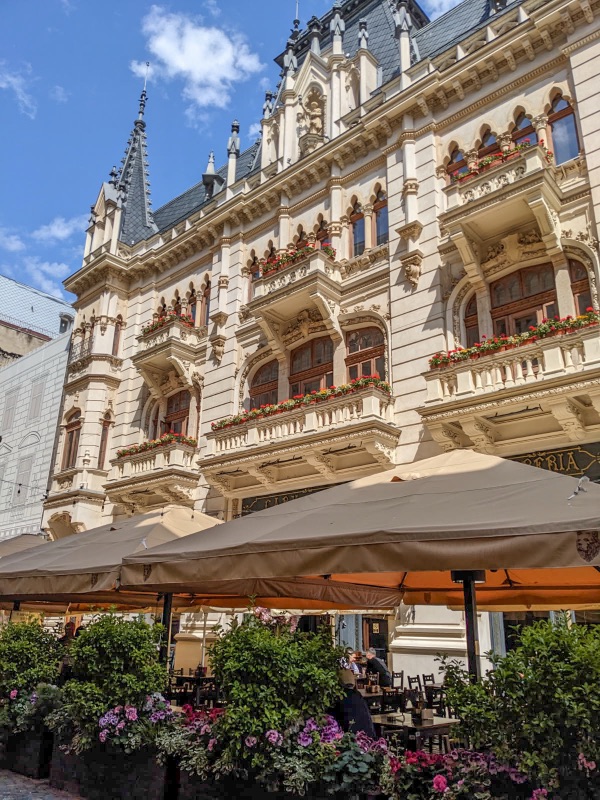
As you get closer to Old Town, beautiful, old, baroque buildings seem to be everywhere. Most of these gems were built at the end of the 19th century up until WWI. With a little imagination you can see women in their fancy dresses with stylish hats & men in suits with bowler hats walking in the streets much like in Paris at the end of the 19th century.
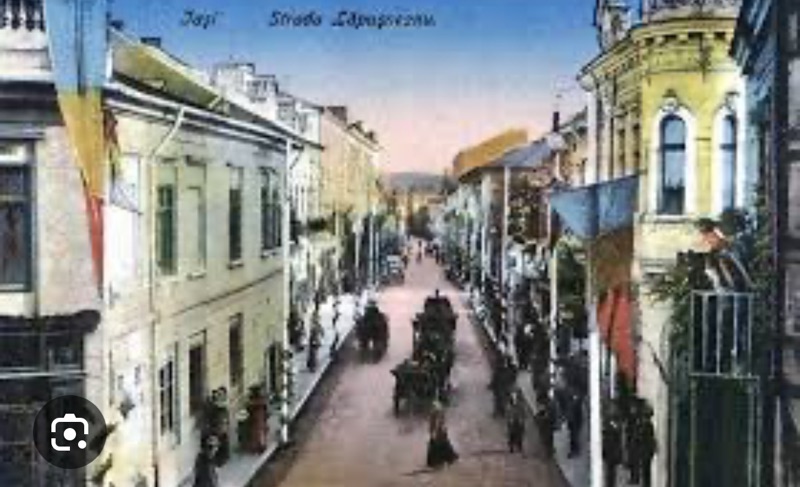
Images showing Bucharest in 1890Buildings today in Bucharest- some in better condition than others
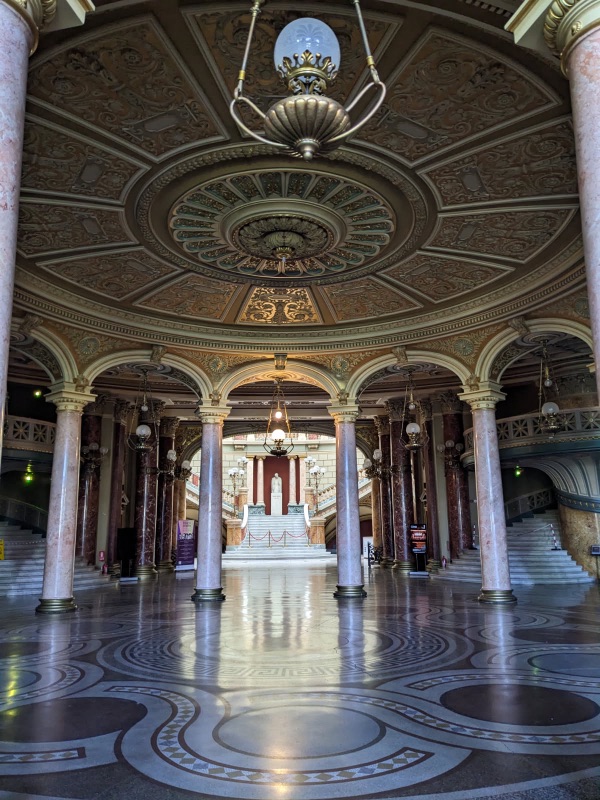
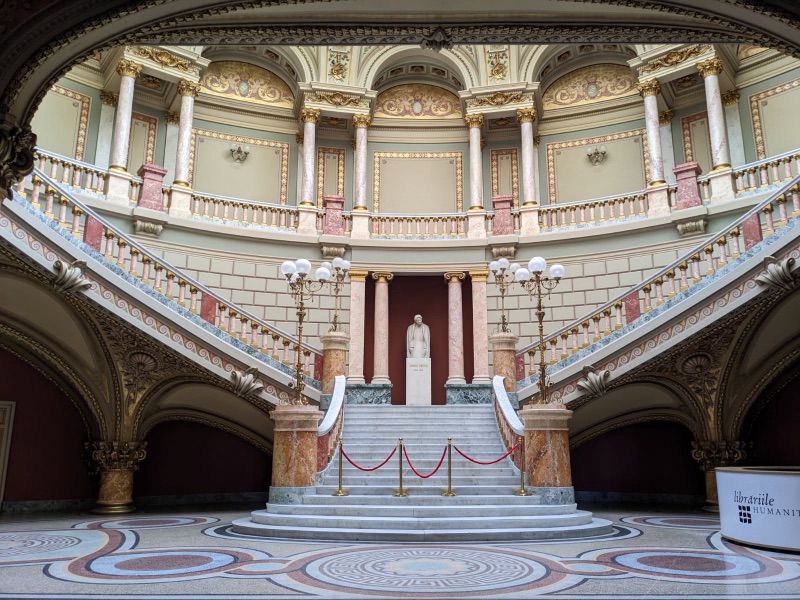
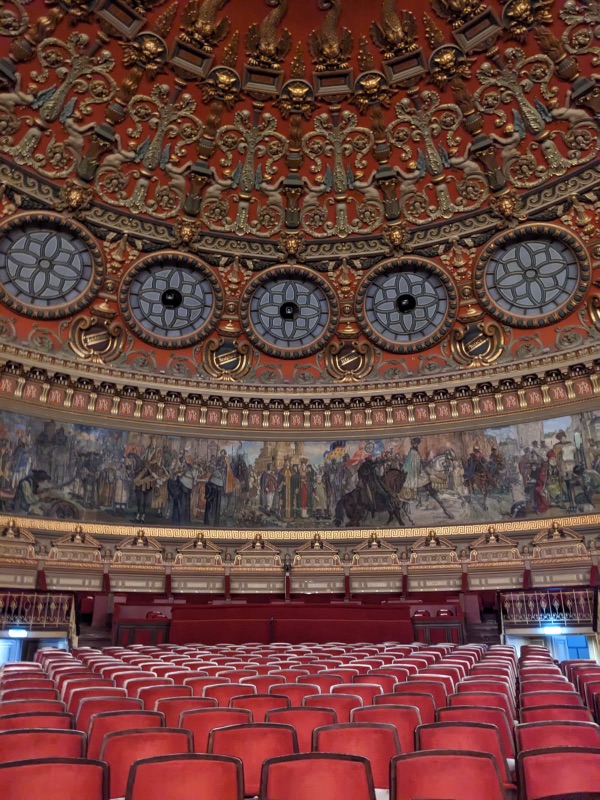
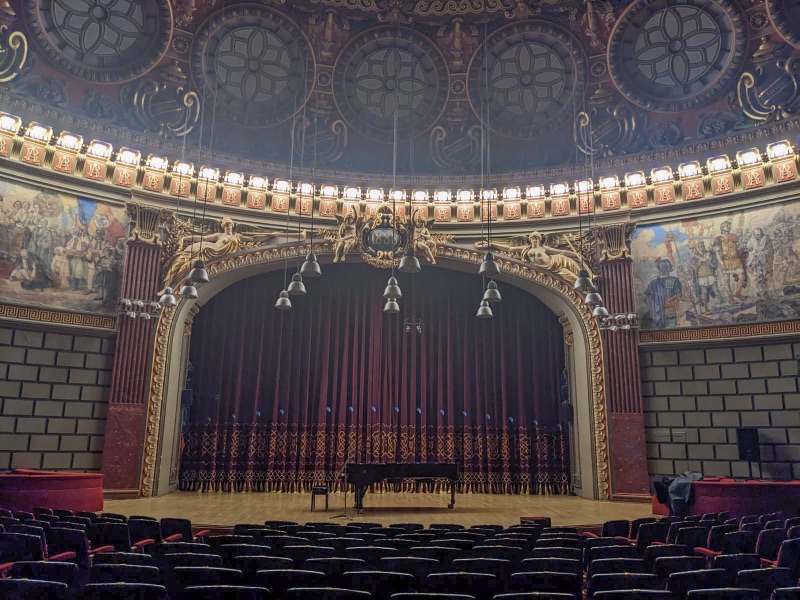
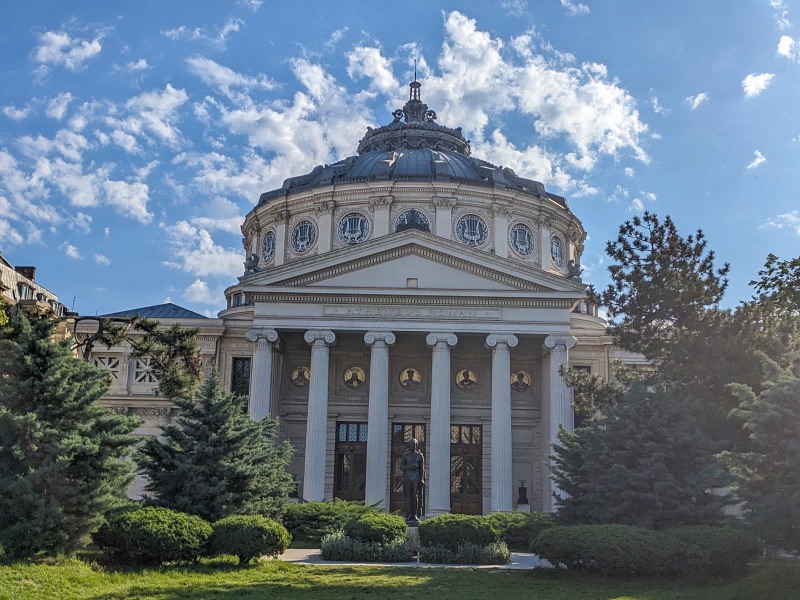
One highlight was visiting the Roman Athenaeum which is grand concert hall. It is built in the Neo-Classical style & was finished in 1889.
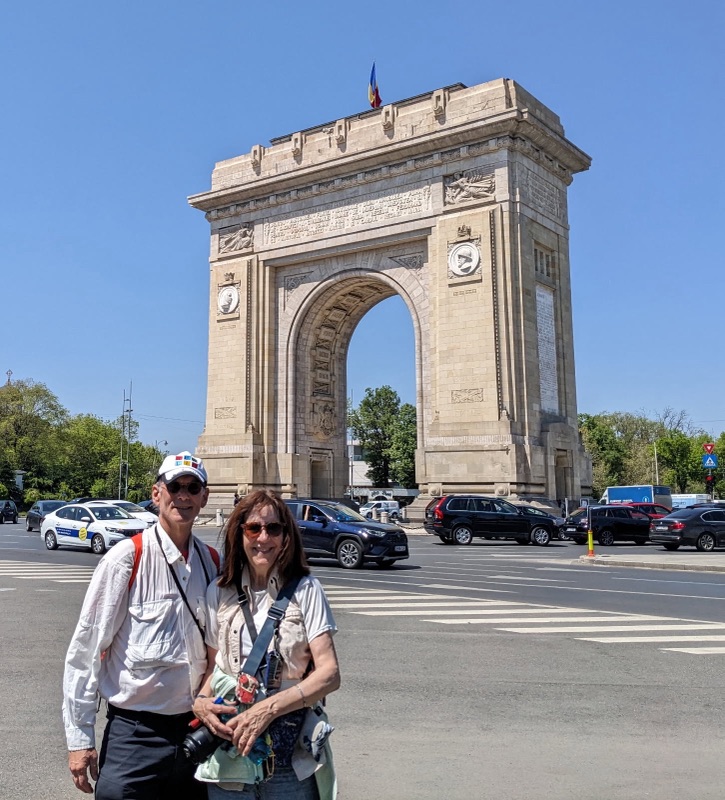
The most iconic structure fitting with the “Little Paris” theme is the monument that looks almost identical to the Arc of Triumph in Paris.
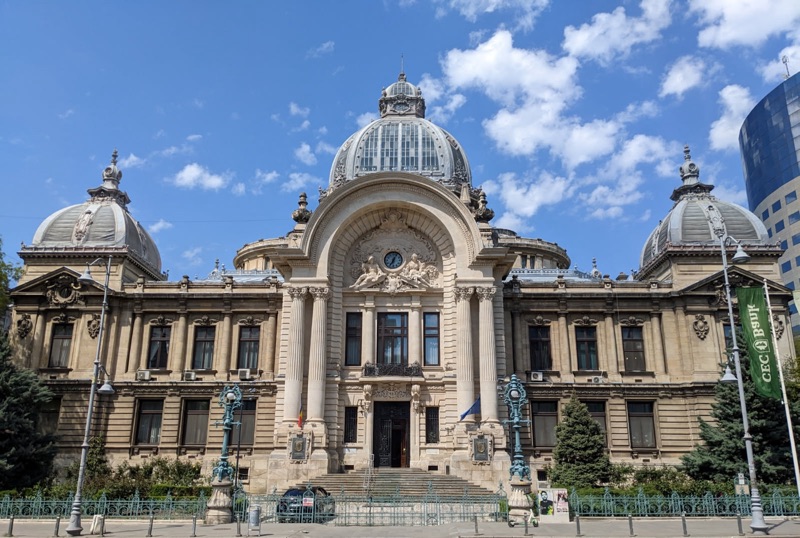
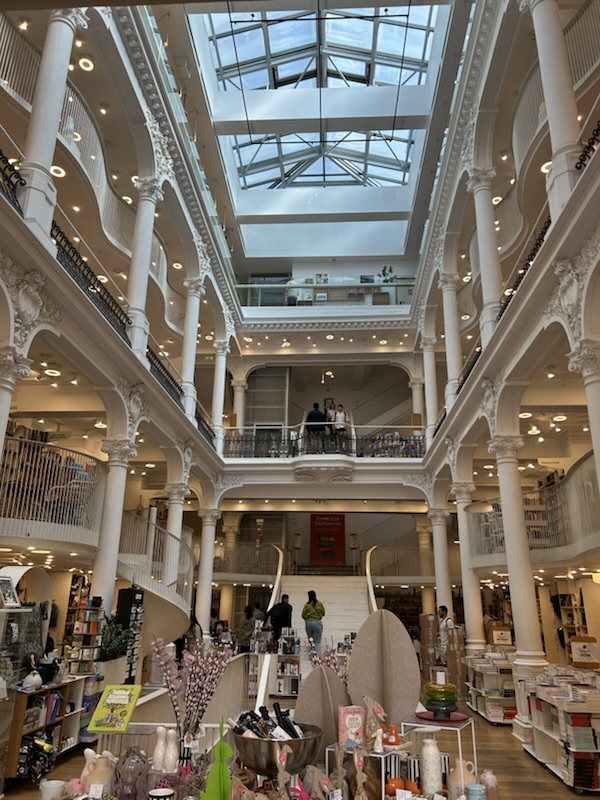
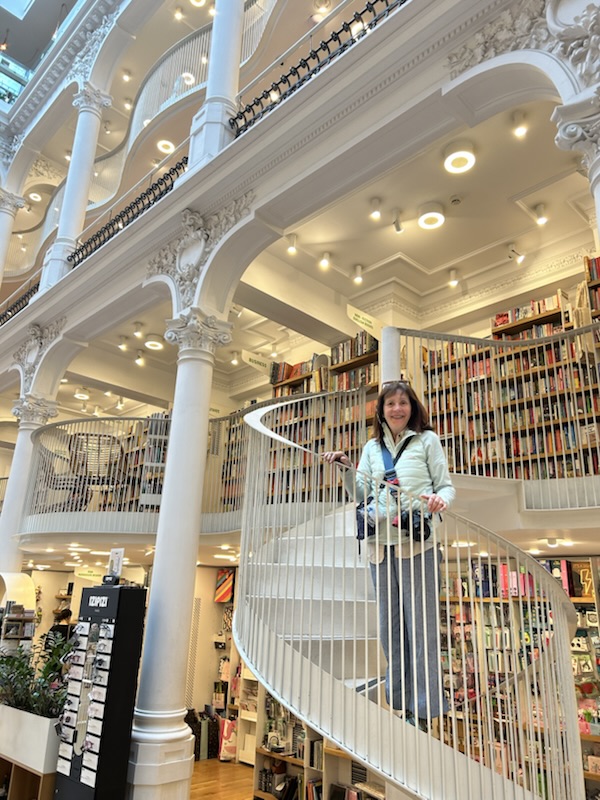
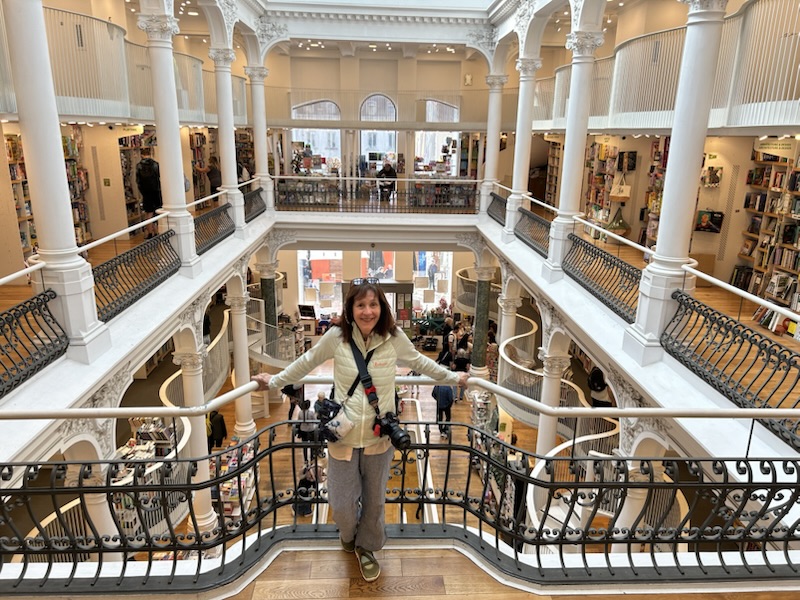
In Old Town, we visited the Cărturești Carousel which is considered among the world’s most beautiful bookstores
It was built in 1903 by a family of wealthy Greek bankers & they used it as their bank headquarters.
In the 1950s, the building was confiscated by the Communist regime & used as a general store ending up being forgotten over the years.
After legal battles lasting many years, in 2007, the building was returned to the original owners & fully restored.
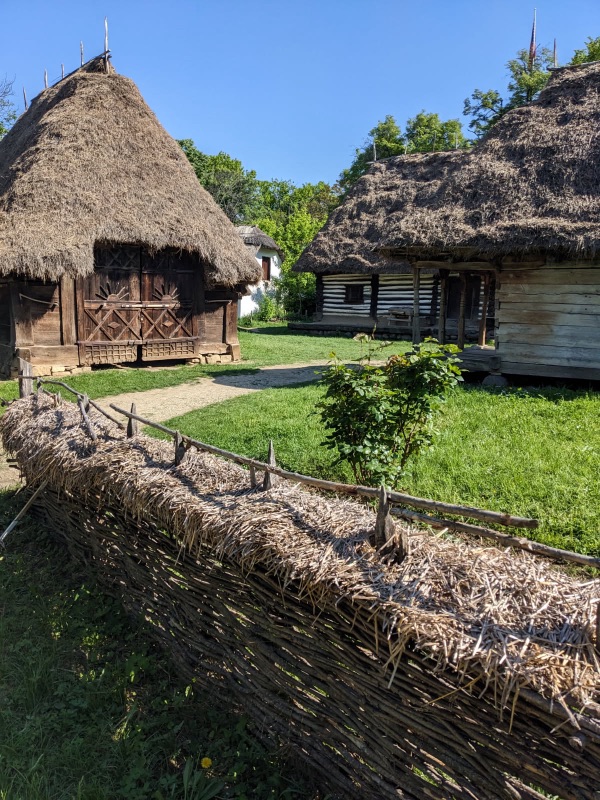
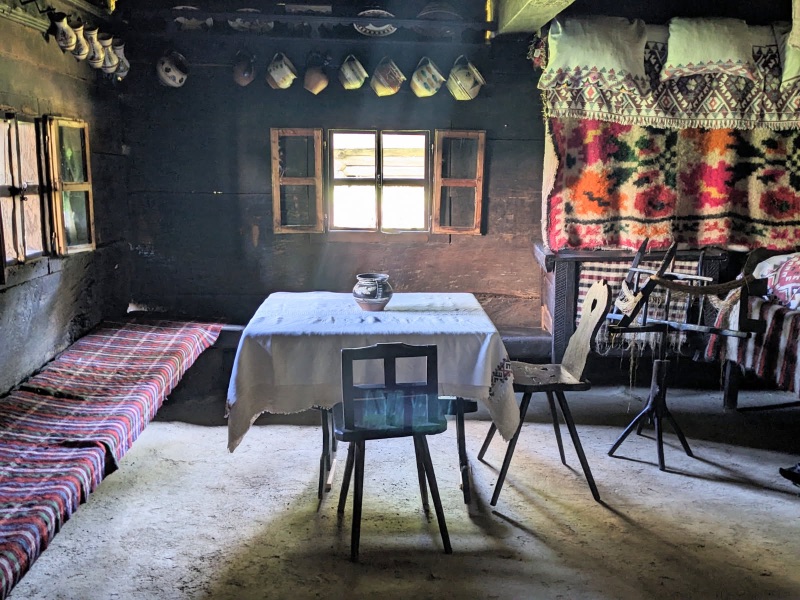
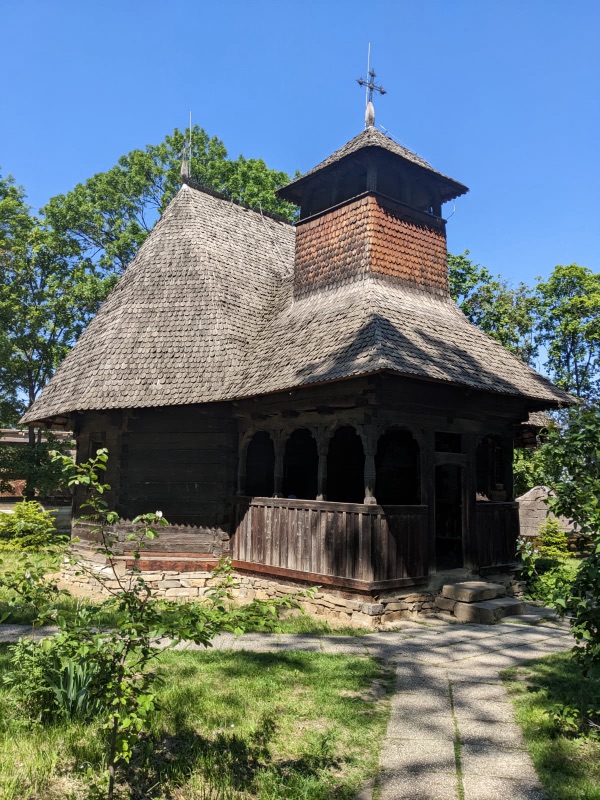
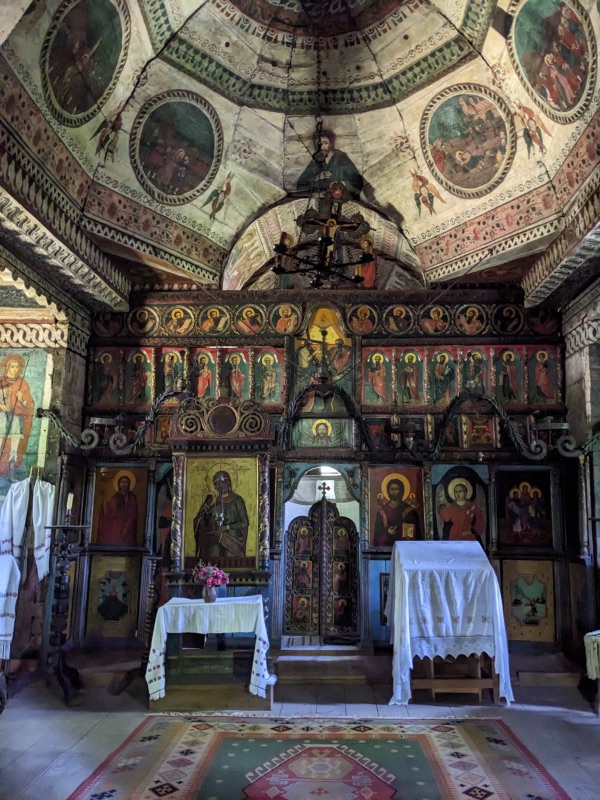
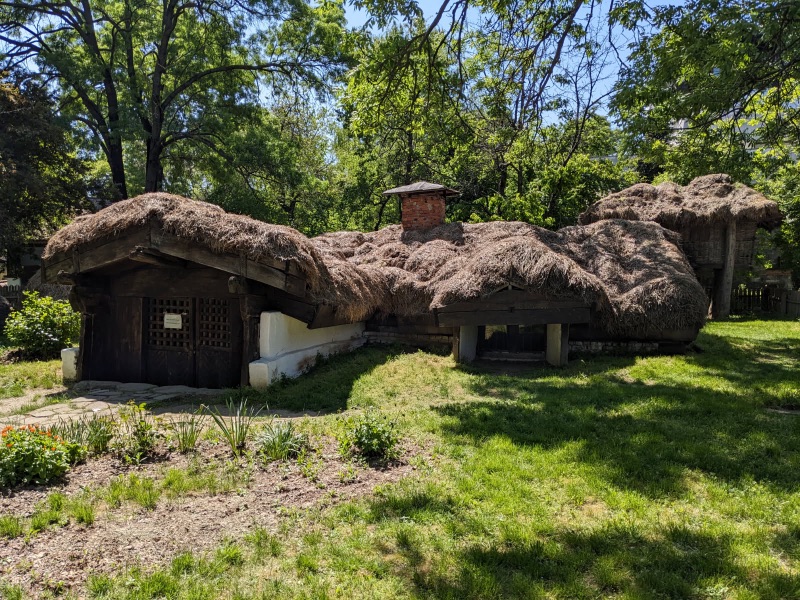
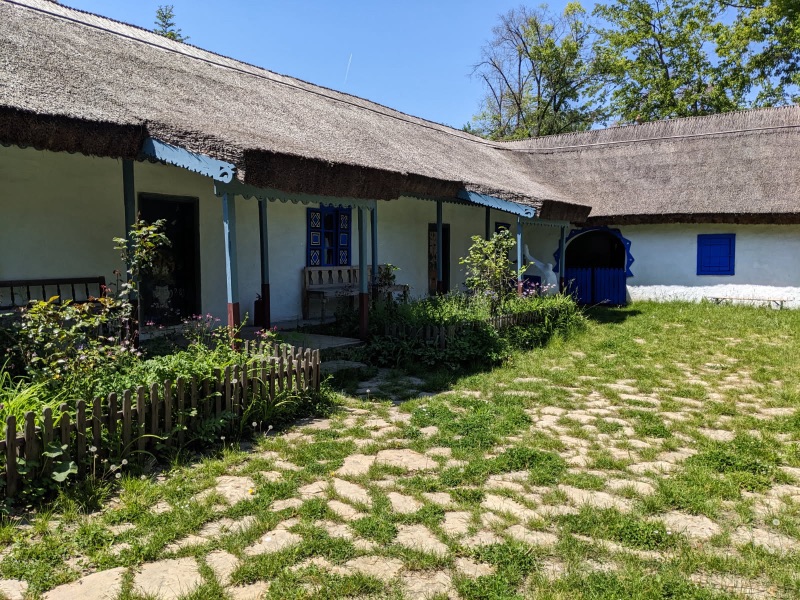
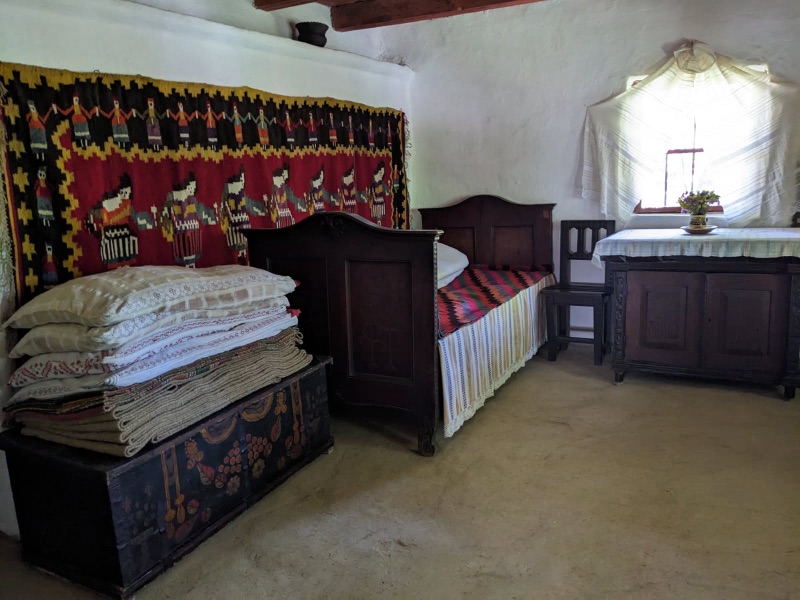
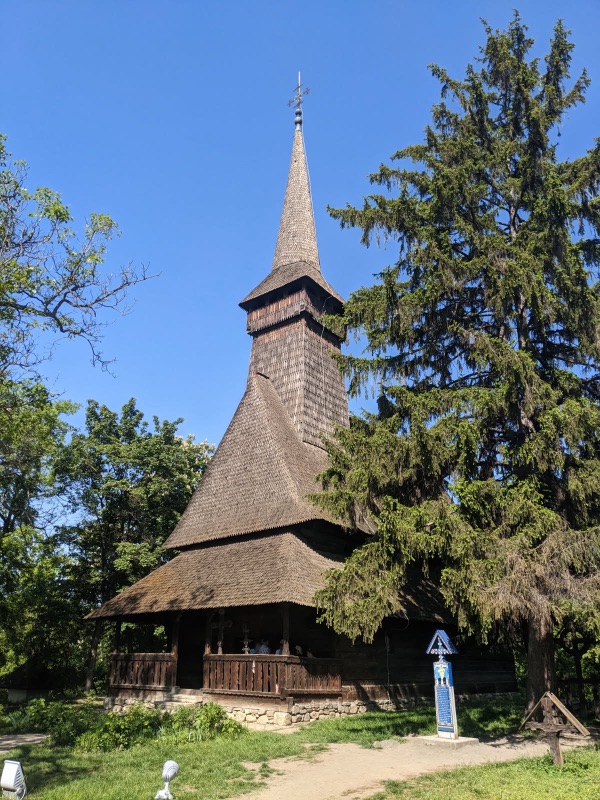
Bucharest has a very nice Village Museum where old homes & churches from around the country have been moved & displayed to show how life was once lived by people in Romania’s different regions.
Sunken house used not only to stay cool in the summer & warm in the winter; but also, to camouflage against enemies.
Nicolae Ceausescu was Romania’s communist dictator from 1967 until revolutionaries captured & executed him on 25 December 1989. His Communist government was considered to be the most repressive in the Eastern Bloc countries.
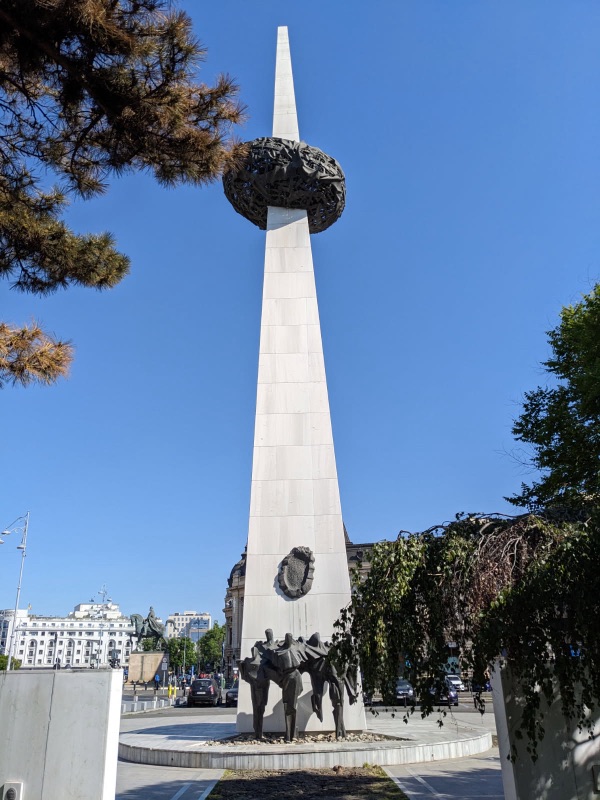
Revolution Square Today
Where Ceausescu gave his last speech on 21 December 1989. The crowd became angry just 8 minutes into his speech. He & his wife barely escaped, only to be captured & executed a few days laterMemorial to those who were killed died by Security Forces in the square on 21 December 1989
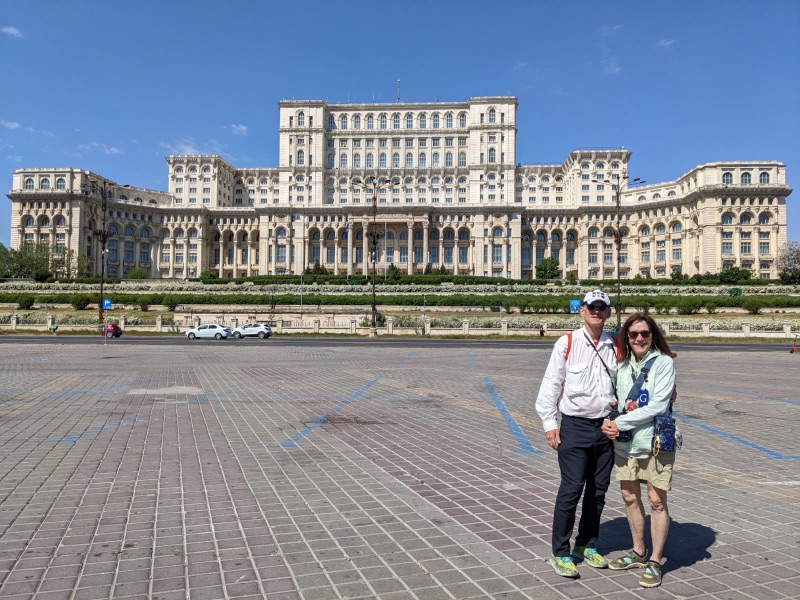
Ceausescu was a highly paranoid man with only a 4th grade education. He began building the Palace of the Parliament in June 1980 after forcing 40,000 people to relocate.
The structure was only 70% complete when Ceausescu was killed. For 9 straight years its construction consumed one third of Romania’s national budget & almost bankrupted the country. Without a doubt, this massive spending to erect a building to satisfy his vanity along with his abusive government lead to Ceausescu’s demise.
After his death, the Romanian people had the choices to destroy the building, sell it, or finish it. Funny note: the only 2 possible buyers were Rupert Murdoch & Donald Trump who who wanted turn it into a hotel & casino.
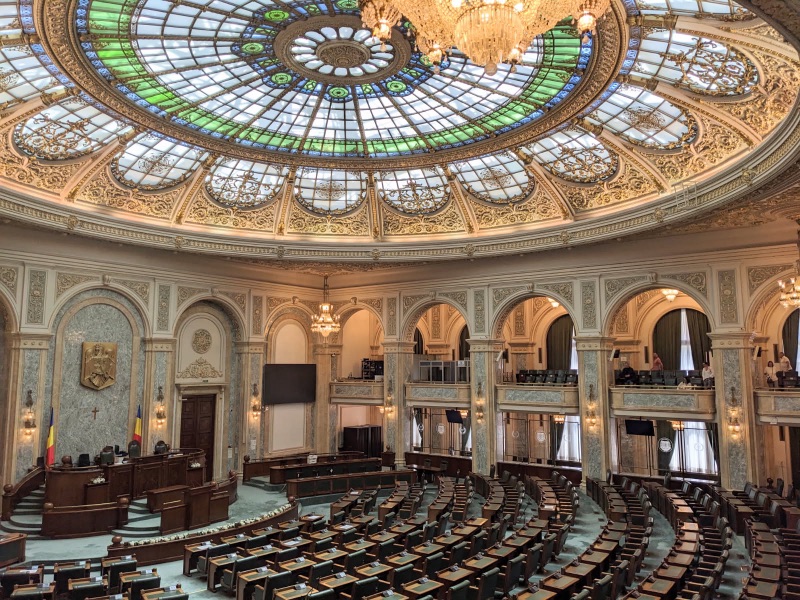
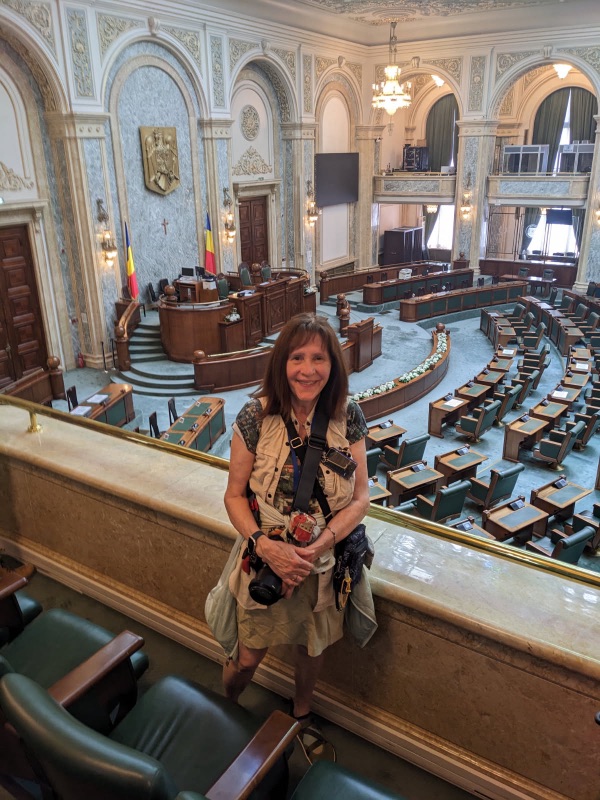
Since it was cheaper to finish it rather than to tear it down, the Romanians chose to complete what they could & use it as Romania’s Parliament. Smart choice. However, there are still many areas such as the indoor swimming pool that will never be completed.
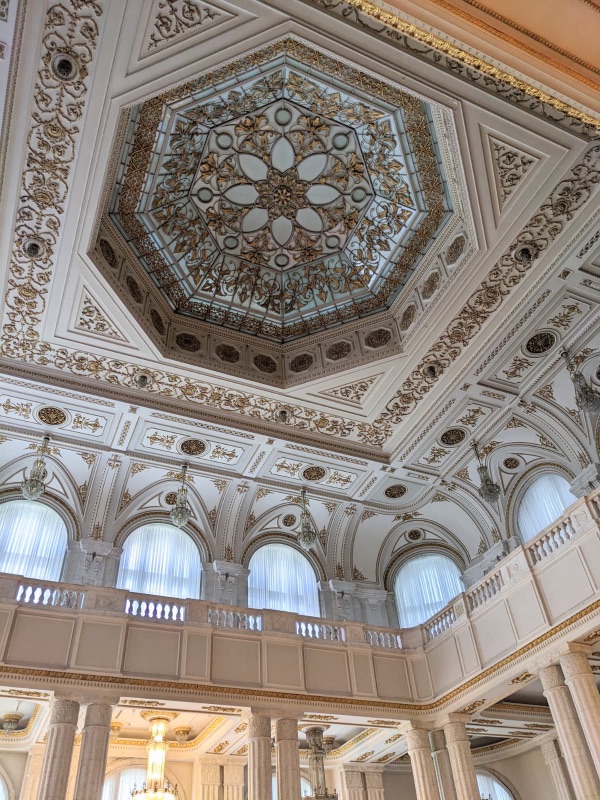
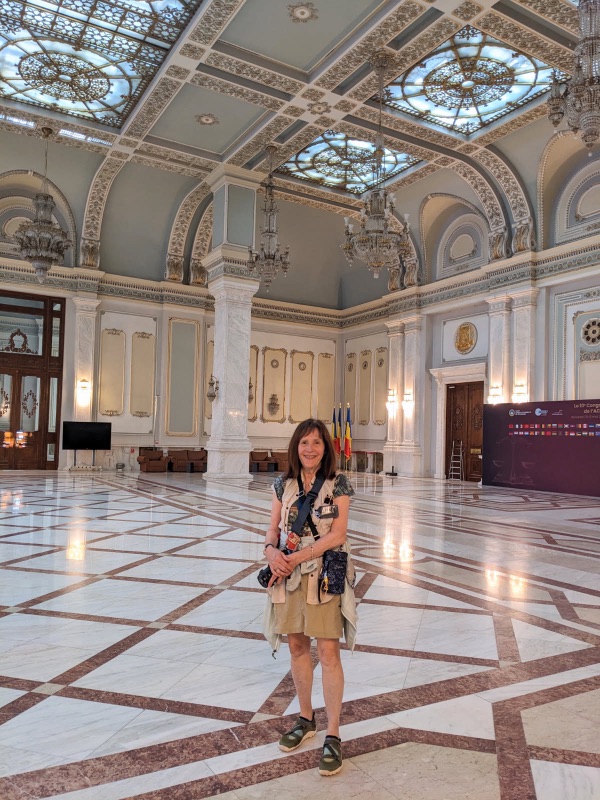
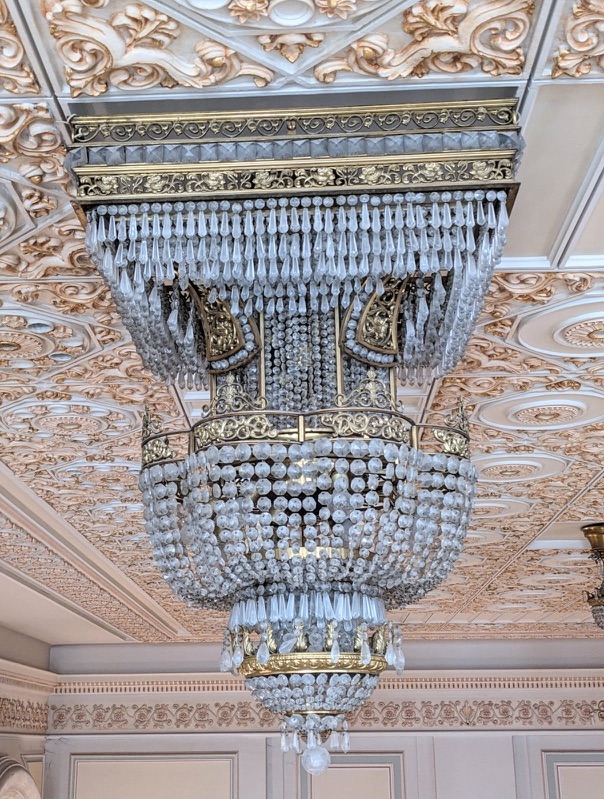
Today, it is the world’s 3rd largest building & at 4.1 million pounds, it is the heaviest building because it is completely made from marble. It’s so heavy that it sinks half a centimeter a year. It was much more impressive than I was expecting.
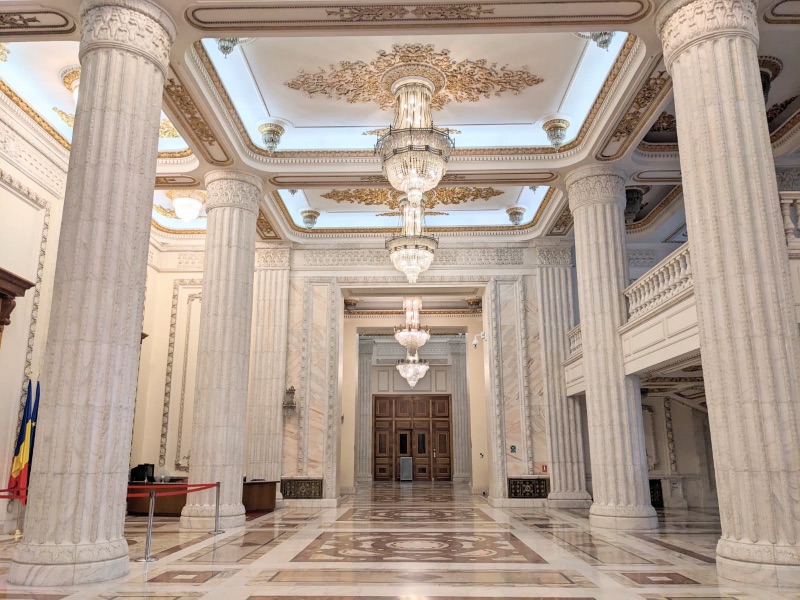
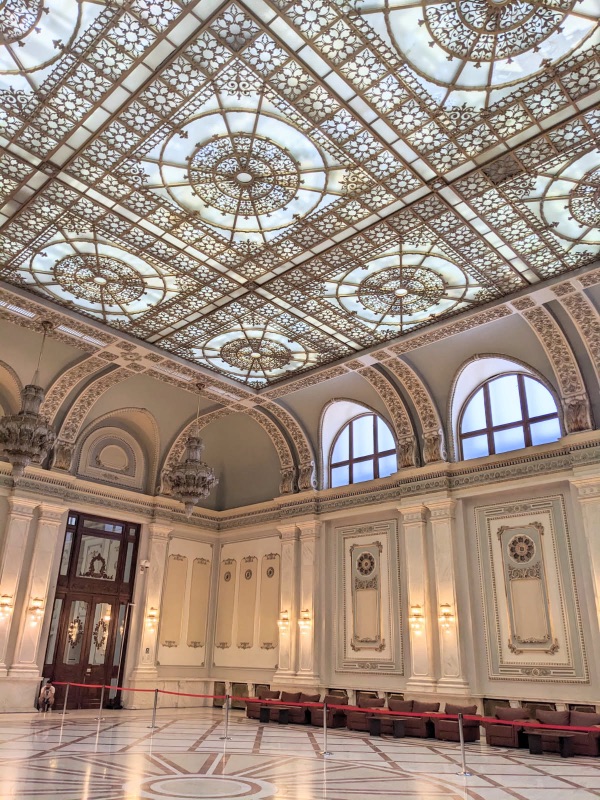
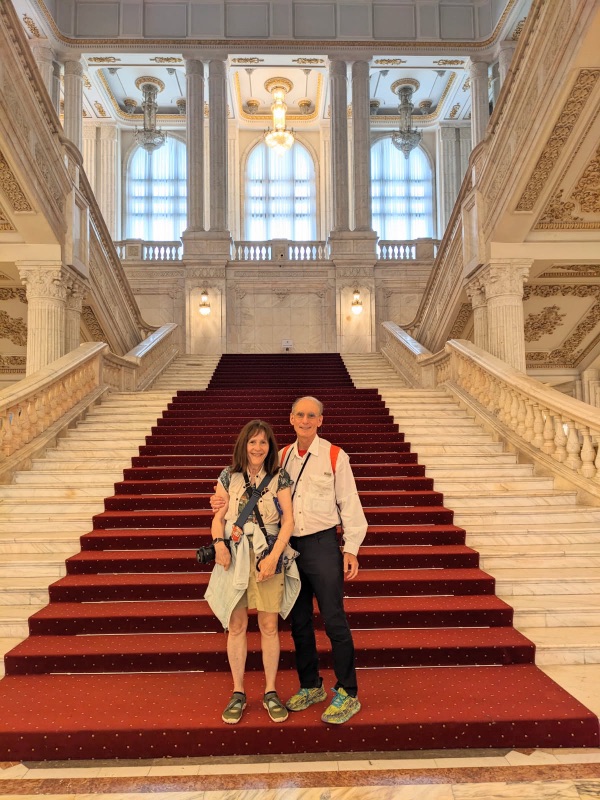
Palace of the Parliament by the numbers. 10 floors above ground; 9 floors underground including 2 ea. Nuclear Bunkers with 10 meter thick walls. More than 3,000 ea. rooms including: 30 ea. Ballrooms; 4 ea. Restaurants; 2ea. Libraries; 2 ea. Underground Parking Lots with enough spaces for 200,000 cars; 1ea. Enormous Concert Hall ; & 1 ea. unfinished Indoor Swimming Pool It has more than 15,000 chandeliers. Nobody knows exactly how many chandeliers are in the building- they stopped counting at 15,000.These marble steps were built, torn down, & rebuilt twice. The first time Ceausescu said they were too tall, the second time he said they were too short. The third time was the charm.
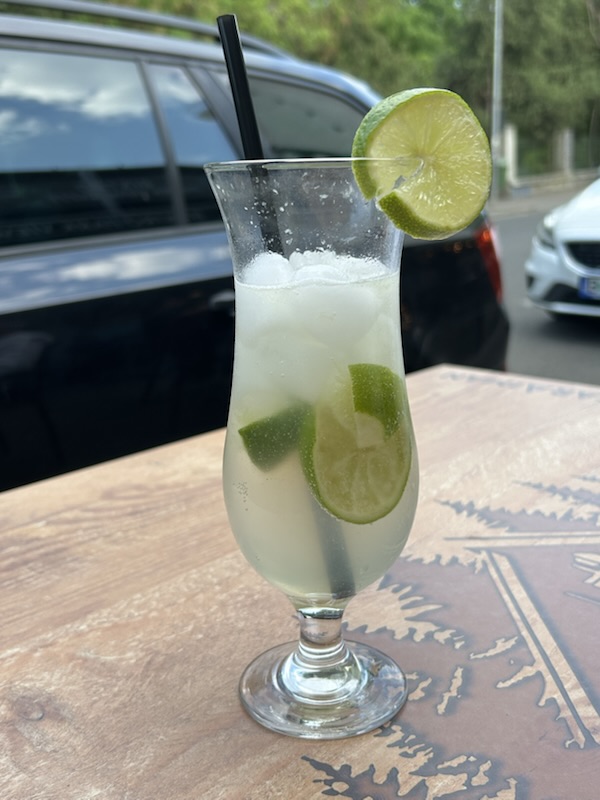
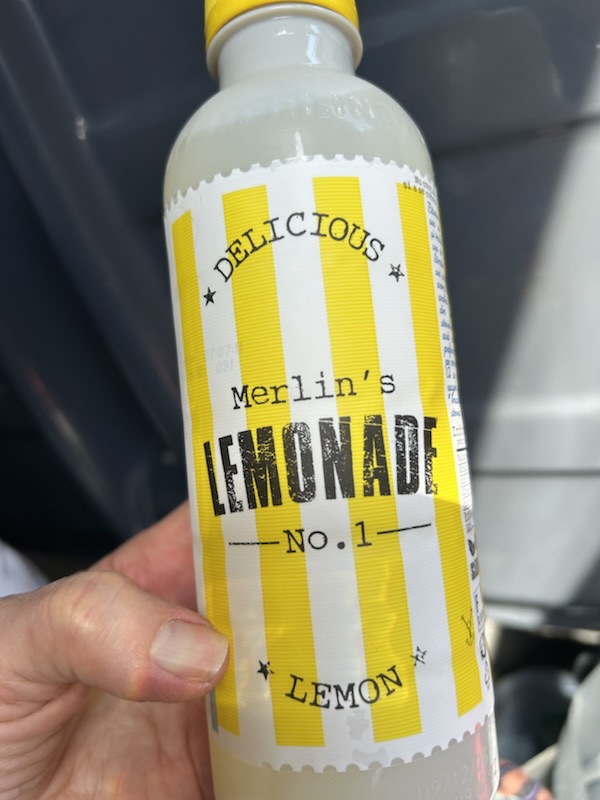
Every country has something that I fall in love with. In Romania, it is the lemonade. Every restaurant & even small convenience stores sell a wide variety of lemonade drinks. The most common varieties are mint, strawberry, & plain. I also saw mango & lavender flavors. All are made with fresh ingredients.
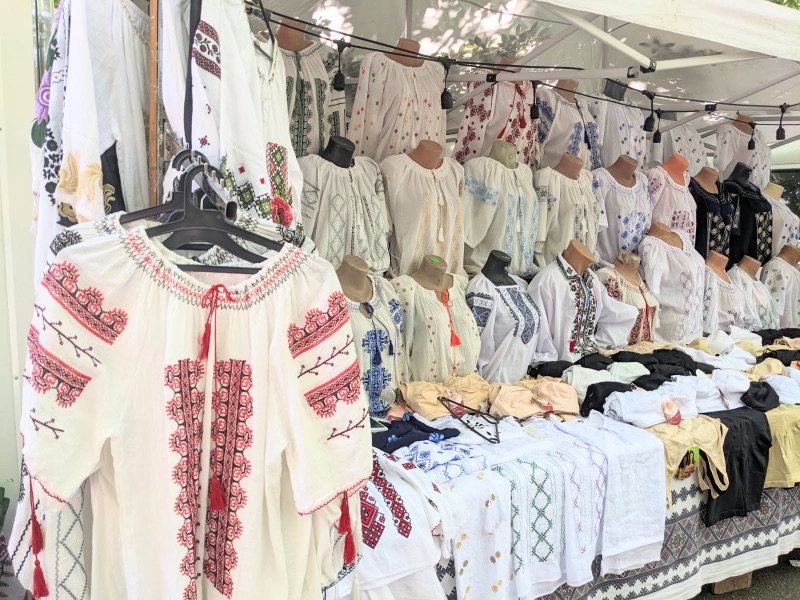
I have always had a weakness for anything with embroidery or looks like it has hand stitching. Maybe this is because when I was a teenager, I embroidered my own clothes, Regardless the reason, a few of these lovely peasant blouses are going home in my suitcase.
One day while sitting in the park enjoying the lovely weather I thought about how different Romania would be today had it not been for two world wars & being placed under communism for almost 45 years.
When you compare Bucharest to places like Vienna which greatly benefited from the American Marshall Plan to rebuild war-torn Europe, you can easily see how events can drastically change a country’s future.























 The Wanderers