The Cyclades Islands – Part 2 – Naxos

When touring the Cyclades, you can stay on the tourist route that follows the cruise ships along with big crowds that come with them, or take off to an island where the cruise ships don’t go.

We chose the latter option & went to Naxos. Unlike Santorini which gets over 3 million visitors each year, Naxos gets around 600,000 a year. Naxos is also a large island so it can easily handle visitors which enables you to relax far away from maddening crowds.
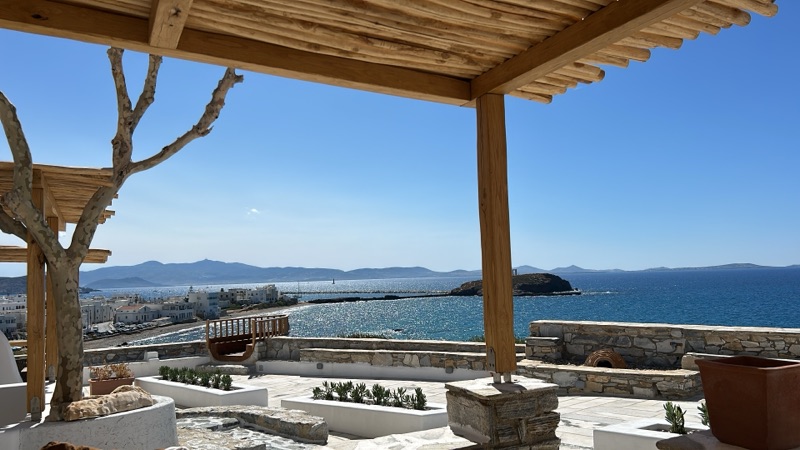
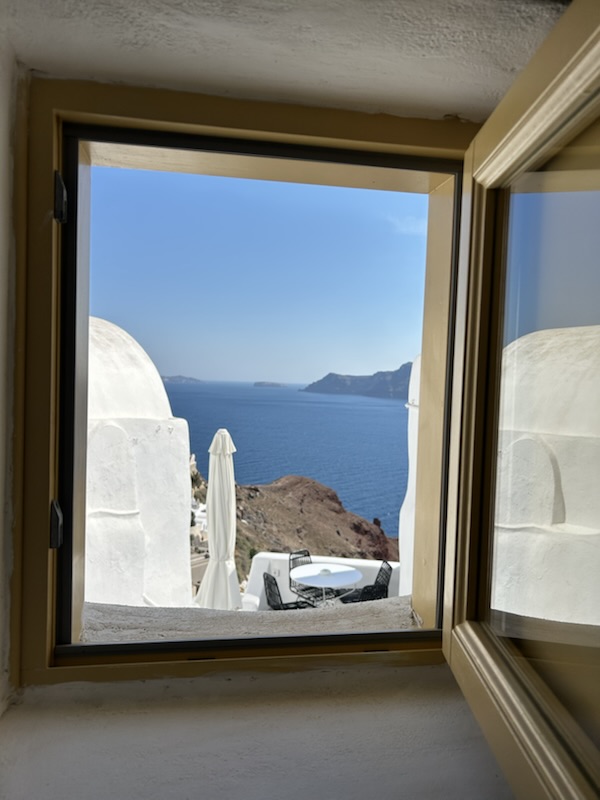
View from our patio

About a half mile from our hotel was charming Naxos Town which is perfect for strolling around in the old town for shopping & dining.
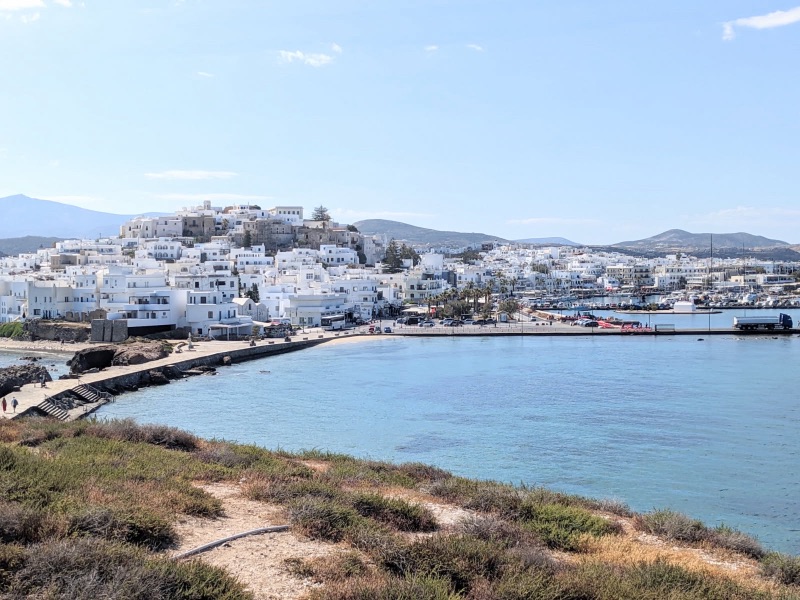
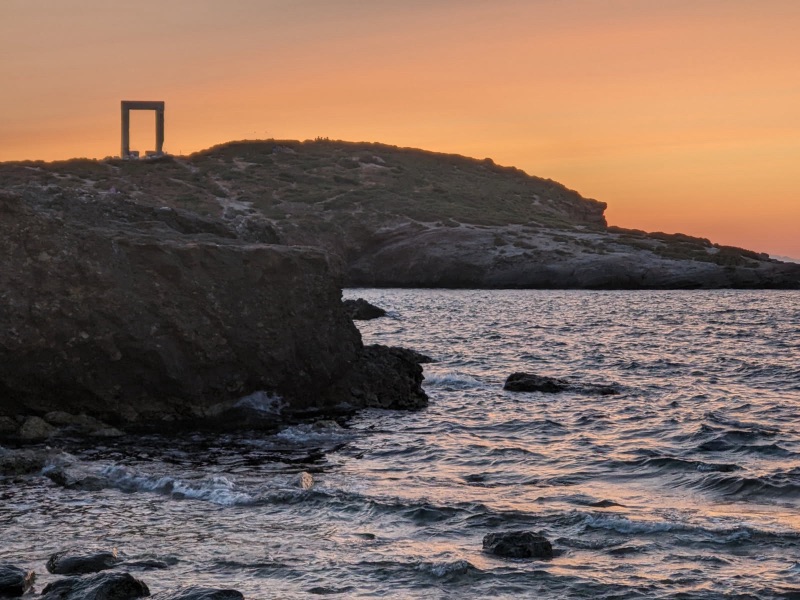
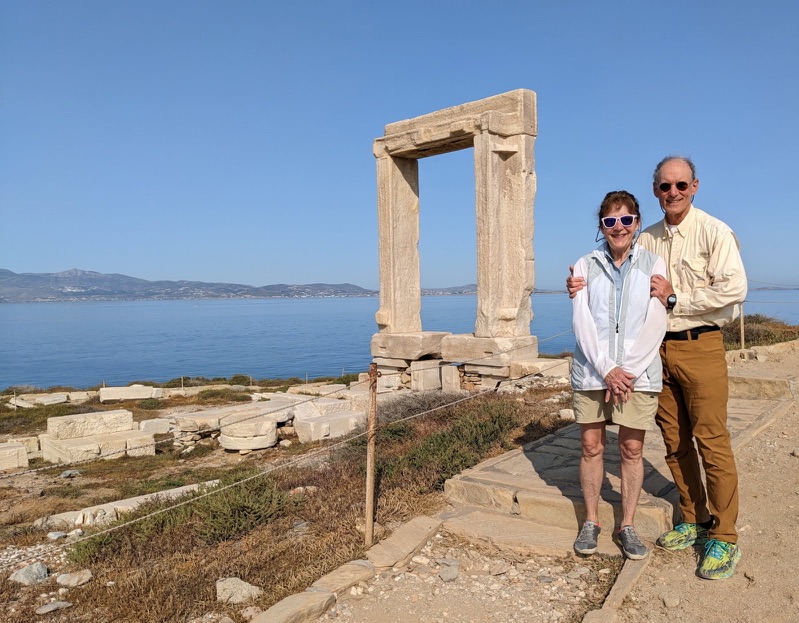
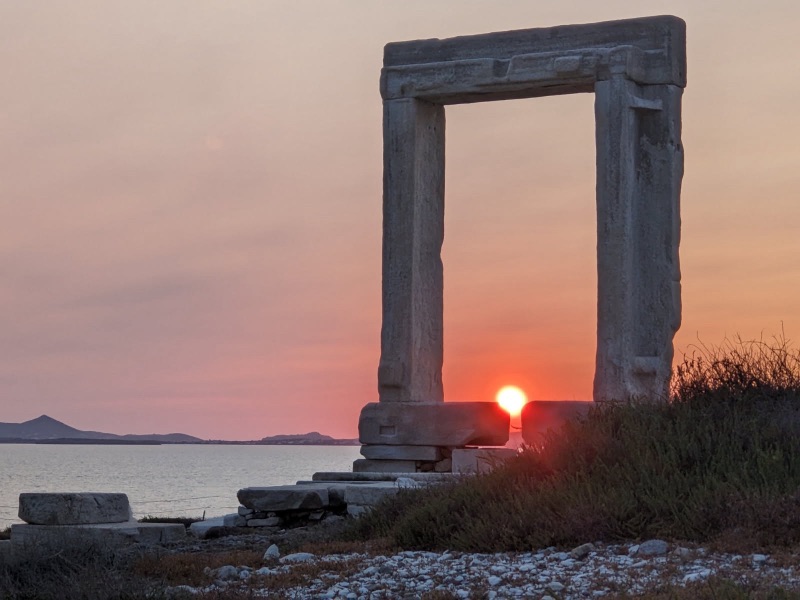
Near the town you can walk up a short hill called Palatia to see Naxos’ most famous landmark- The Portara.

The Portara is the only remnant from the never- finished Temple of Apollo which was started in 530 BC.

It is the door into the temple & was made from marble quarried on the island.
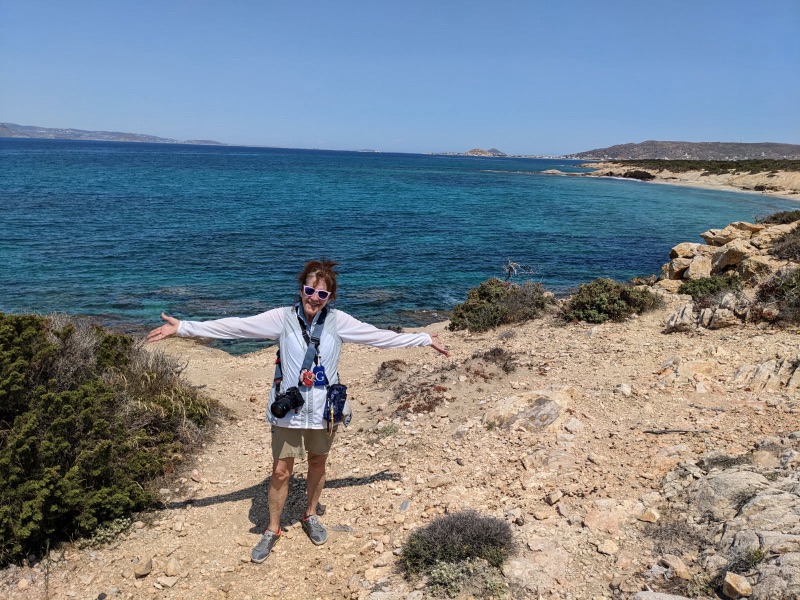
To see the island at our own pace we rented a car & drove to see the sights.
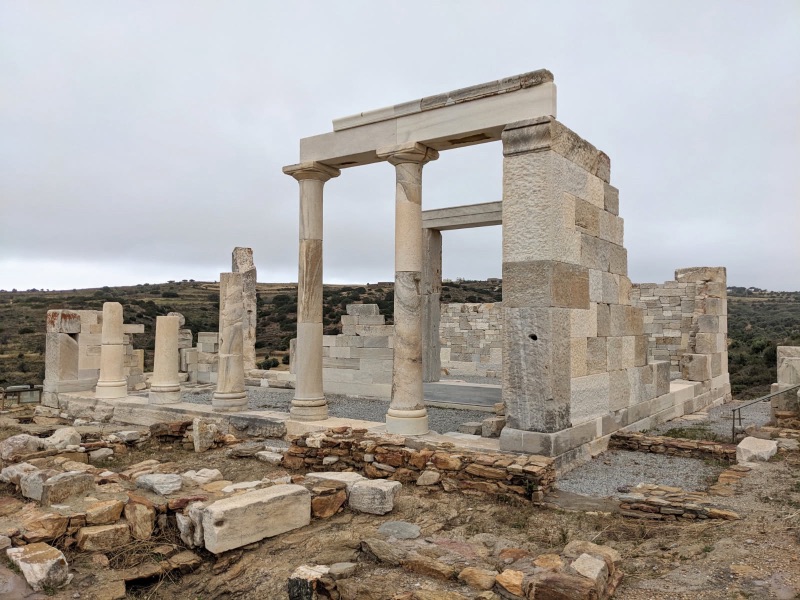
Temple of Demeter
This temple dedicated to the Goddess of Agriculture Demeter dates from to the 6th Century BC. It was only rediscovered in 1949. Naxos was the first place marble was used in Greece & this temple is the first structure in history built entirely from marble.

Its location is easy to understand because it is situated in a very fertile valley where many crops were & still are grown.

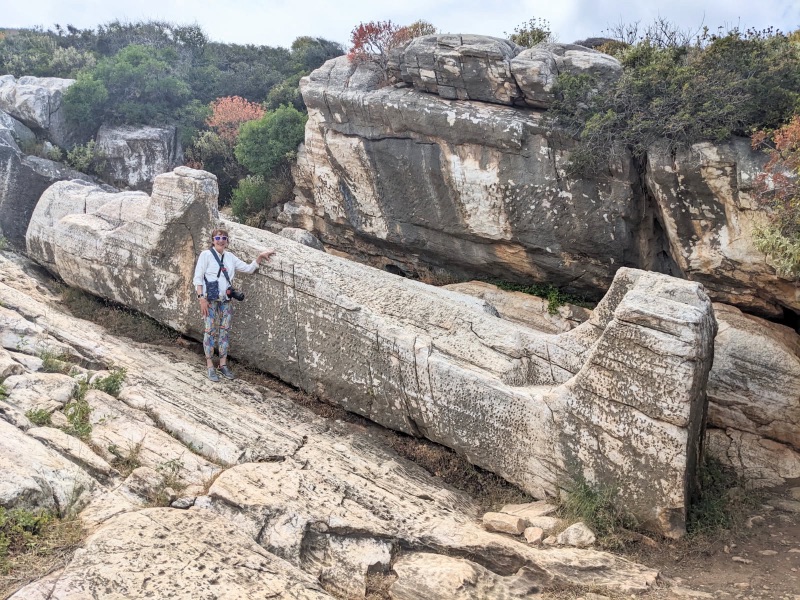
In ancient times Naxos was known for its marble which is still quarried & used worldwide. Kouroi which are are very large human-like statues made from marble are found in several places on the island.
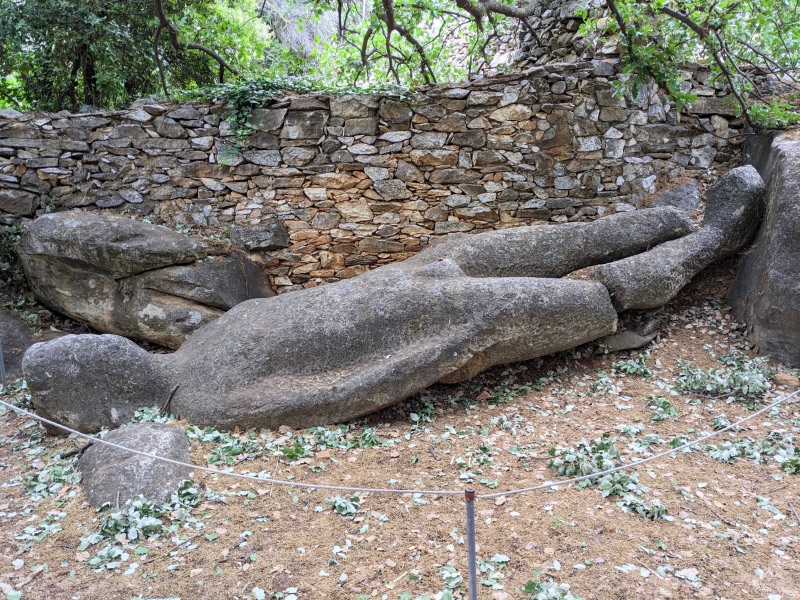
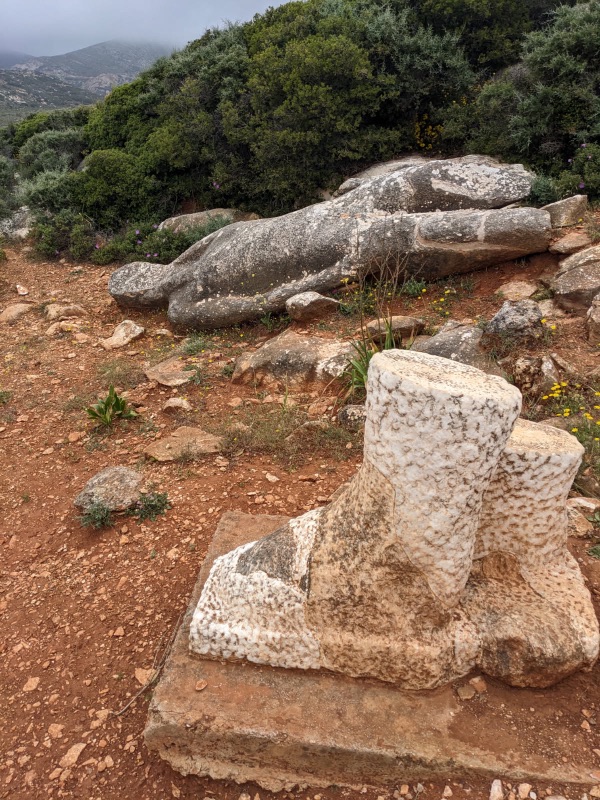
Apollonas is a lovely seaside village where the unfinished Kouros depicting Dionysos is located,
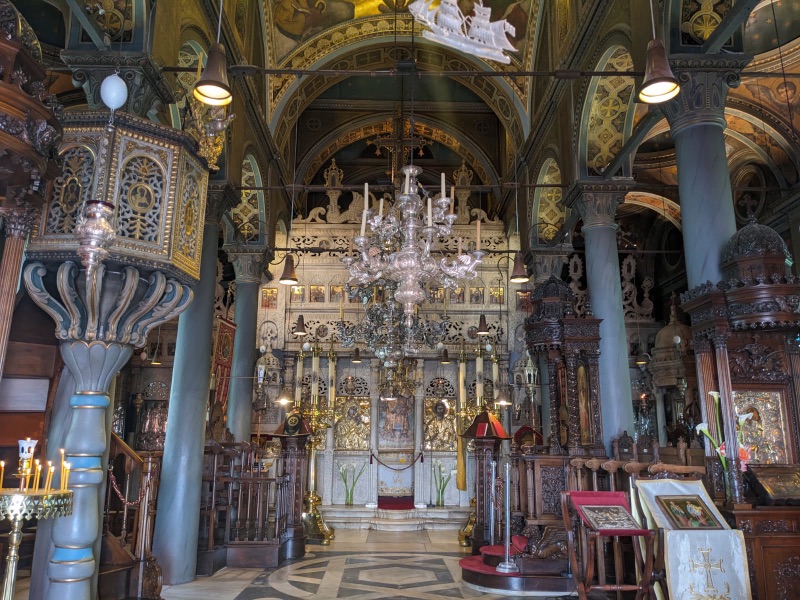
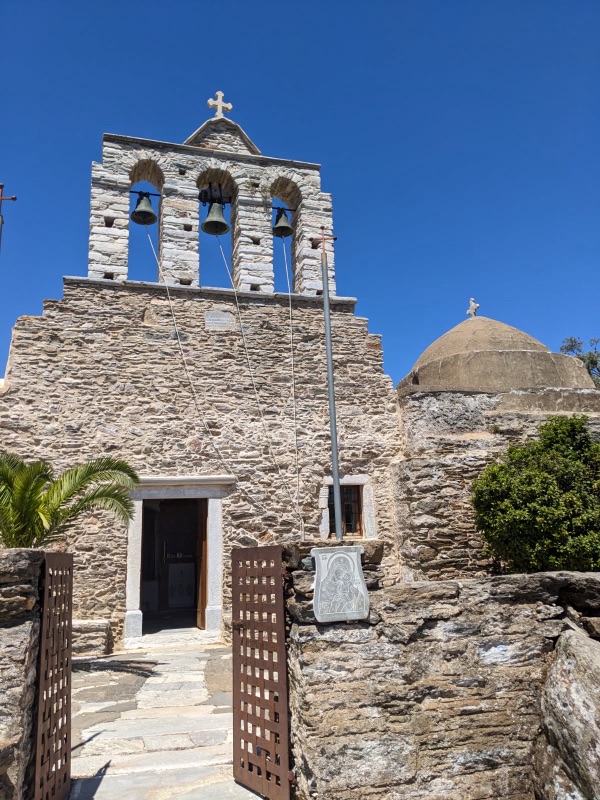
This Greek church named Panagia Drossiani dating from the 6th Century is not only the oldest church on Naxos; but also, in the Balkans.
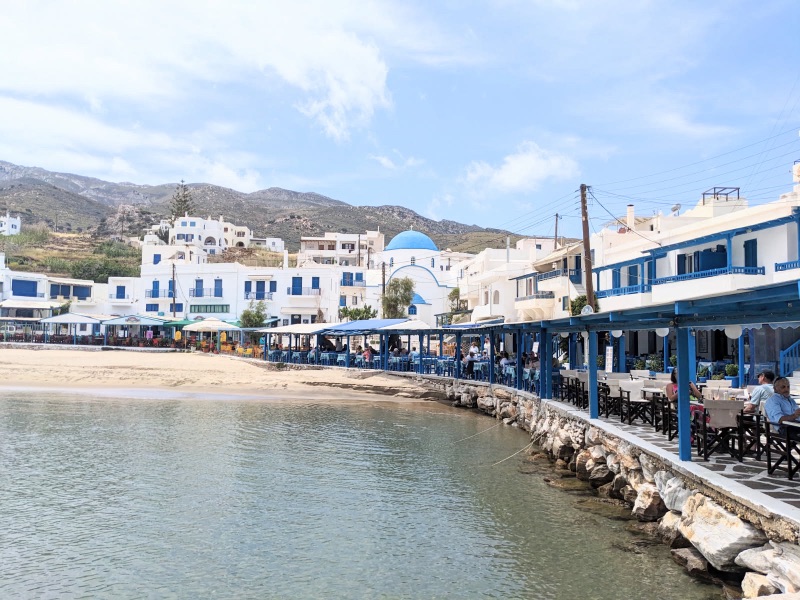
Naxos is known for its special foods & drinks. Instead of Feta cheese being added to the traditional Greek Salad, here they use a softer version called Naxos Cheese.
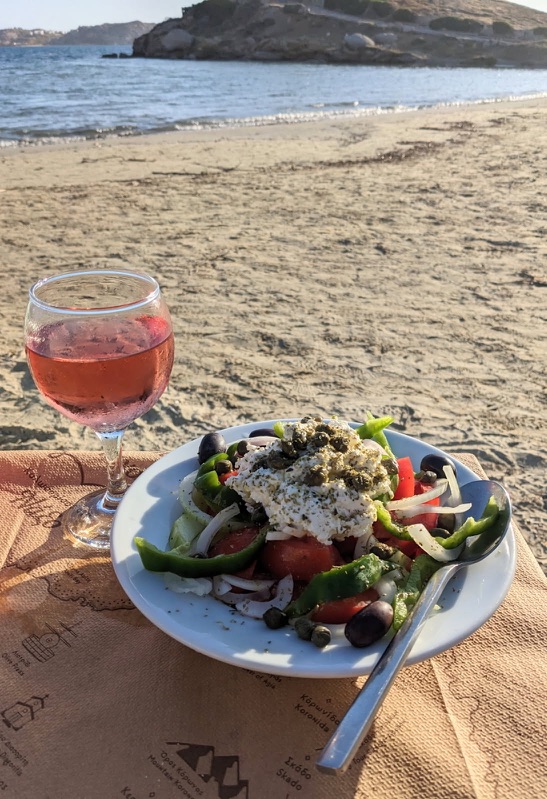
We also enjoyed their delicious potatoes that are softer in texture, but many people come to Naxos for the wine.
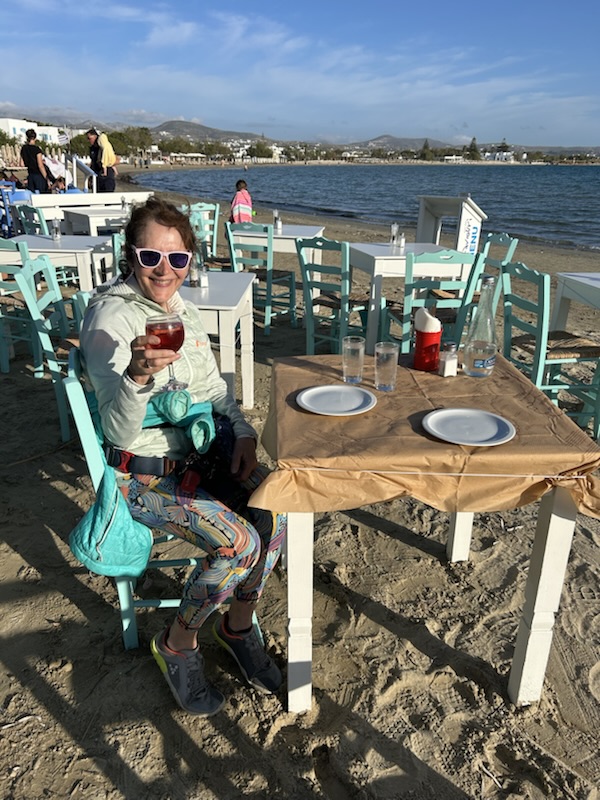
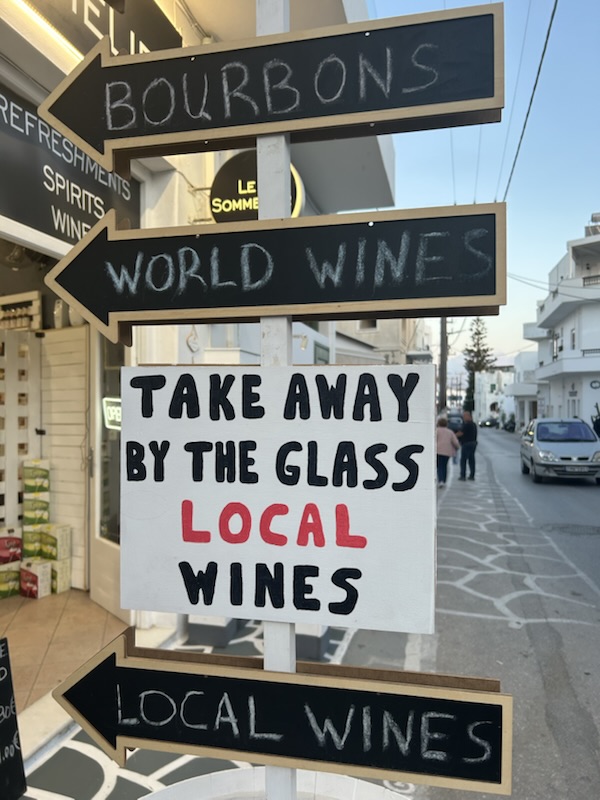
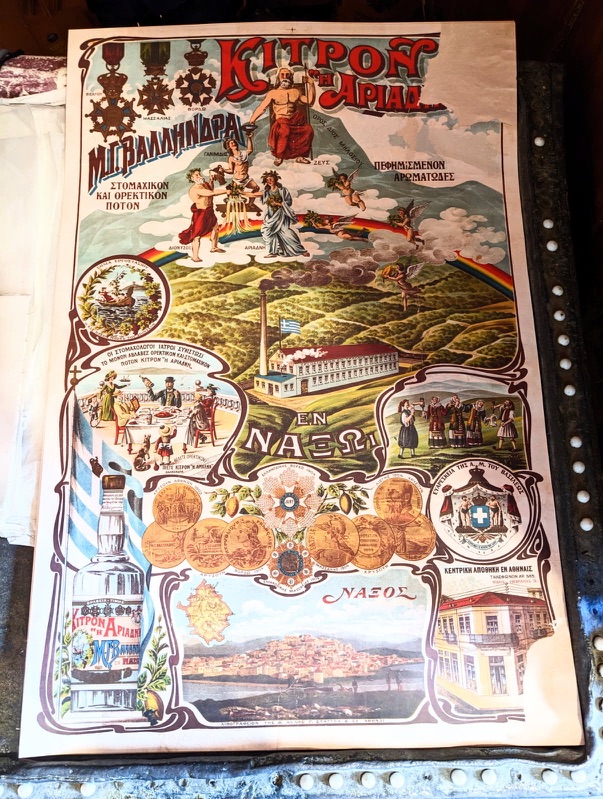
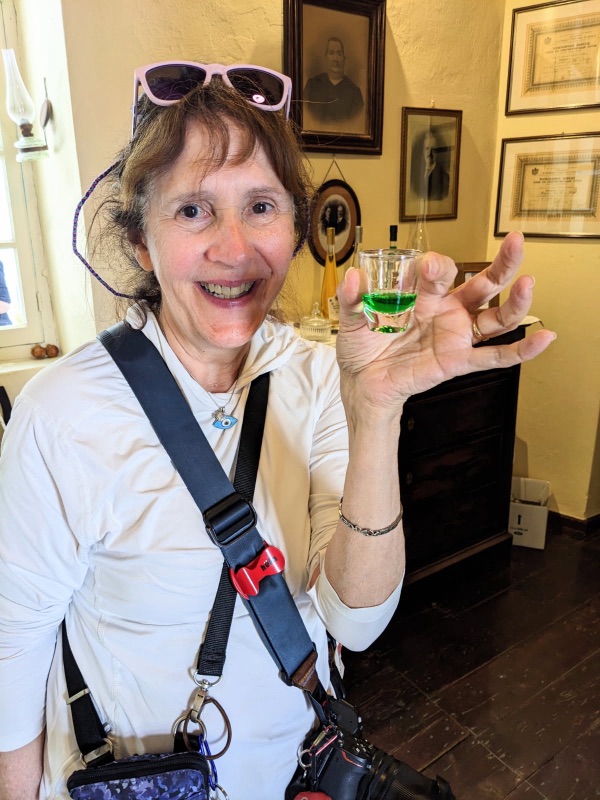
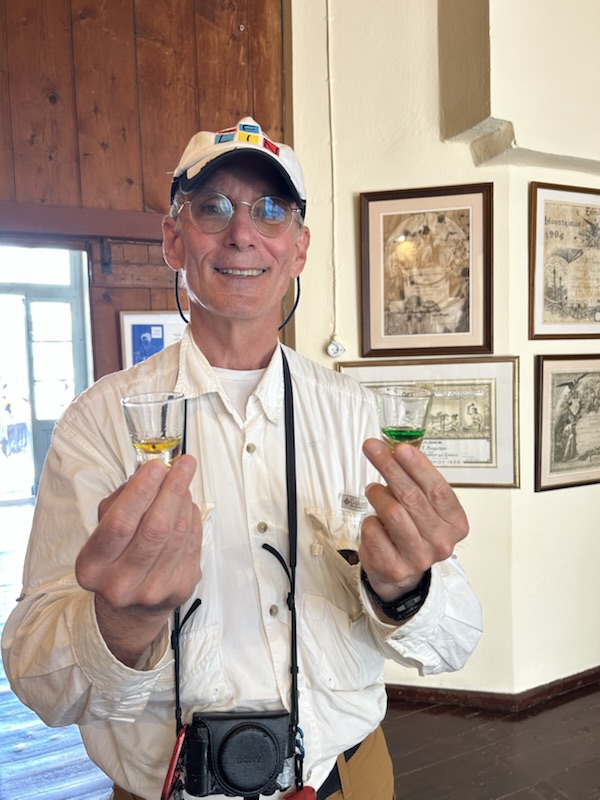
But, if you need something a little stronger, Naxos has its own special liquor called Kitron.
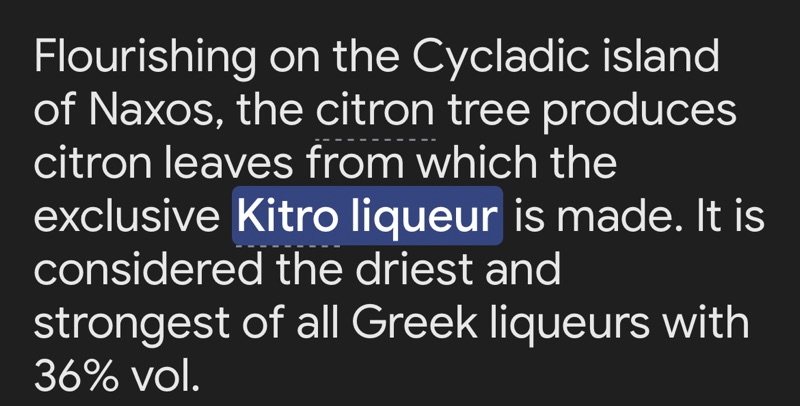
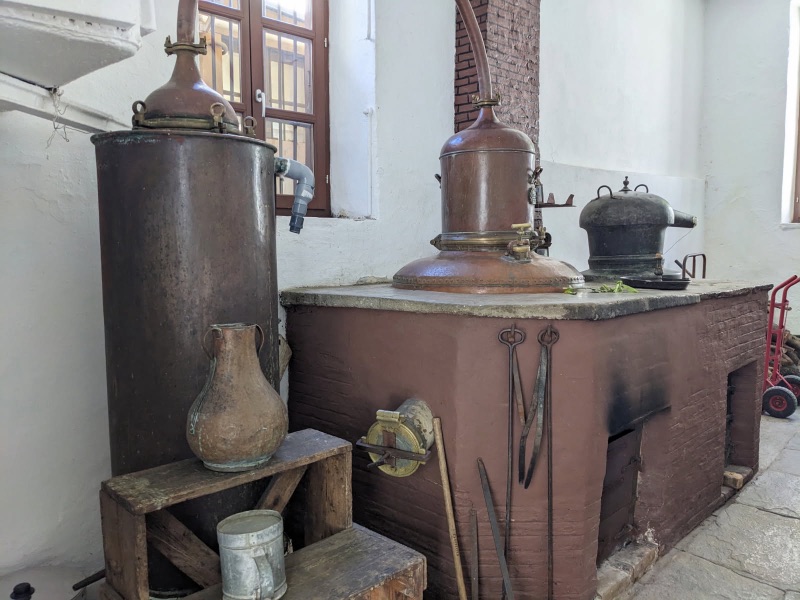
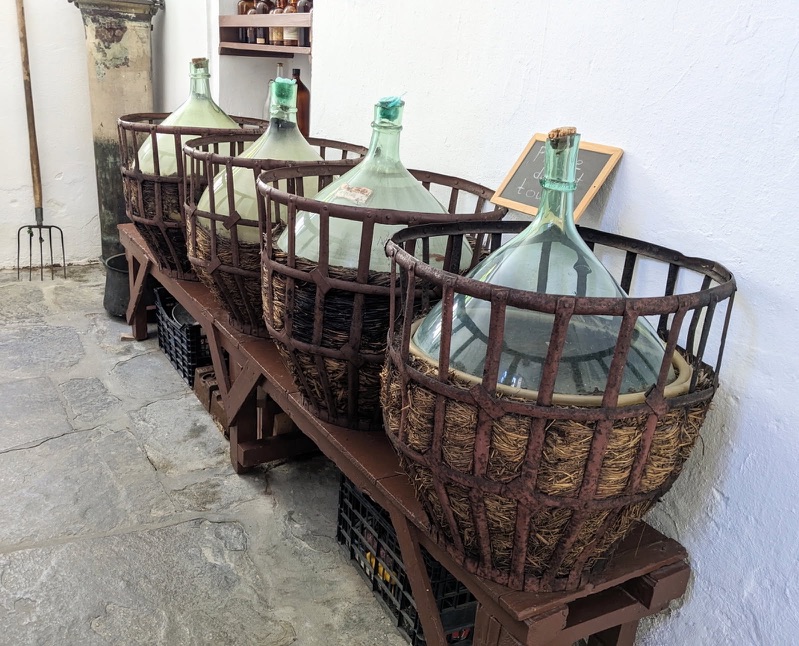
We enjoyed visiting the Vallindras Distillery in Chalki. This distillery has been owned & operated by the Vallindras family for five generations since 1896.
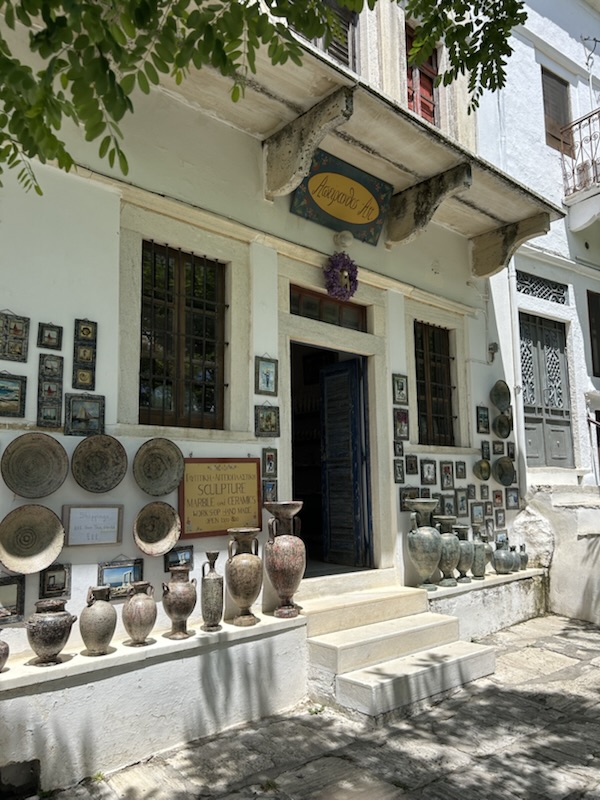
We spent a few lovely hours in Apeiranthos. This extremely quaint, unique village is made from marble- walls, window frames, steps, & walkways are all marble. As a testament to marble’s durability, some structures date from the 12th Century

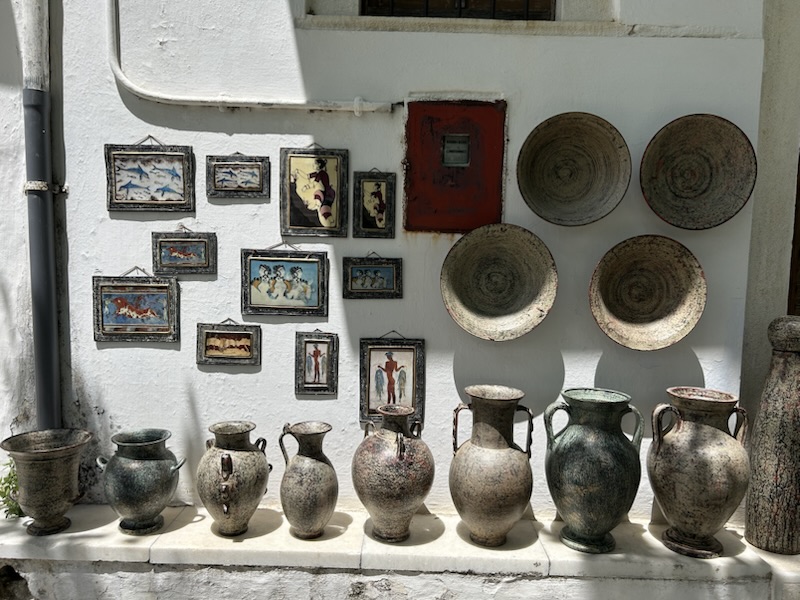
We came across a lovely store with very unique pottery, It looks like metal, but is actually clay with a mica glaze finish.
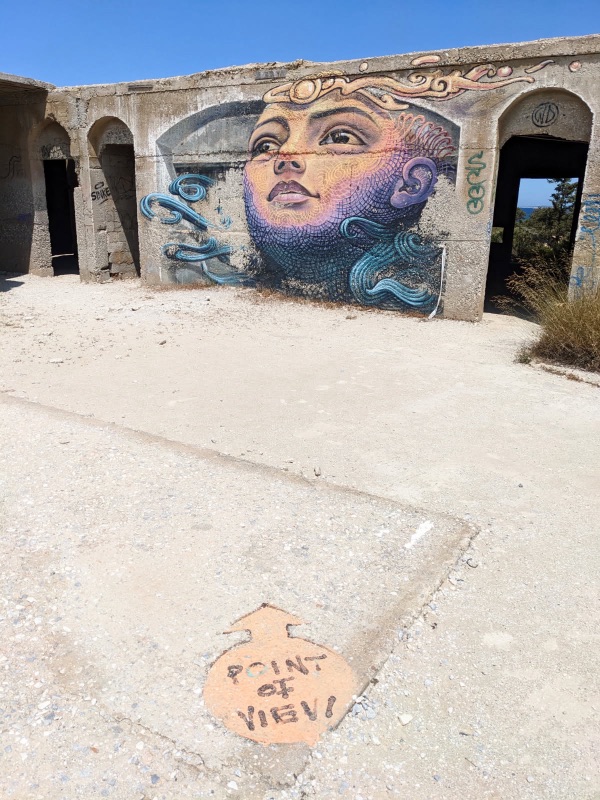
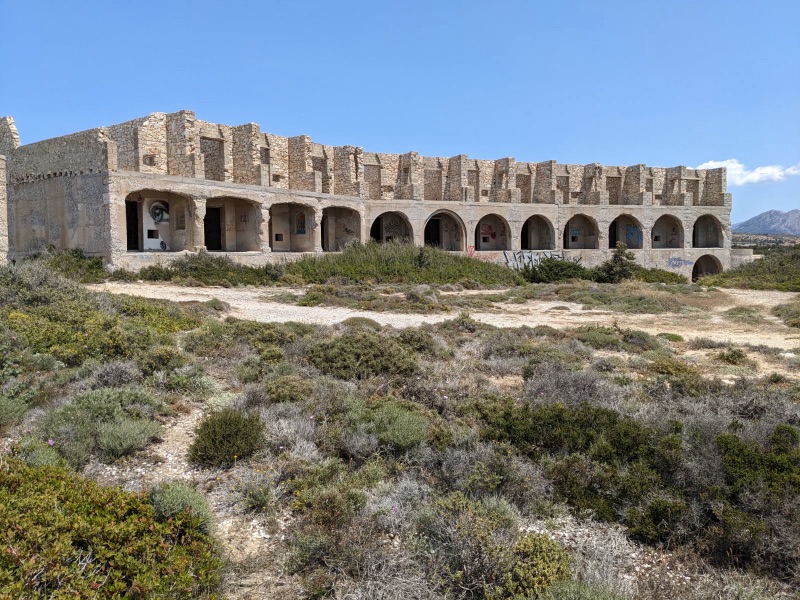
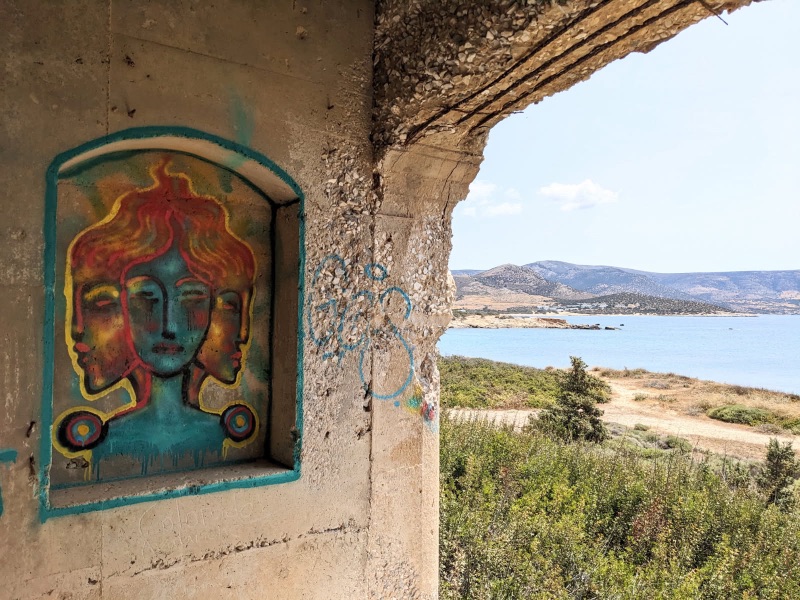
On Naxos’ southern end at Alyko Beach is a huge hotel complex that was started in the 1960s, abandoned in the 1970s during the military dictatorship, & never finished.

It became a draw for street artists from all over the world to tag. Some pieces are quite good whereas many others are not. The place is also covered in graffiti. It’s too bad the hotel didn’t work because it is located near very nice beaches. While there, I kept thinking the ruins would make a perfect location for a movie thriller.
Lovely sunset.
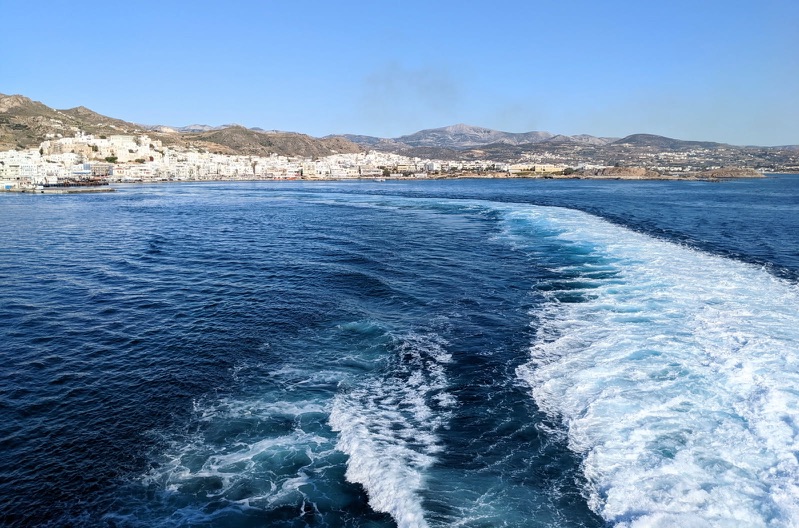
Taking the ferry to the next island.

The Cyclades Island- Part 1 – Unforgettable Santorini

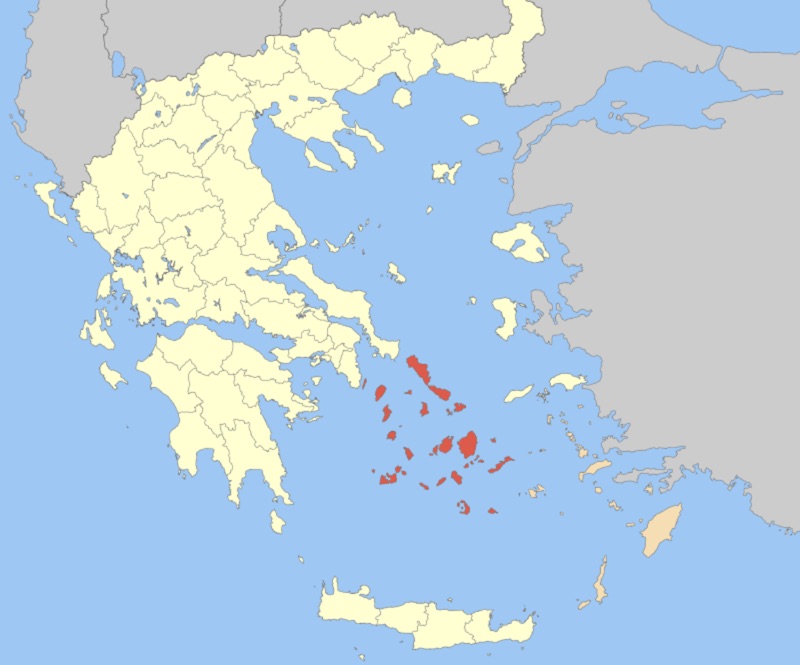
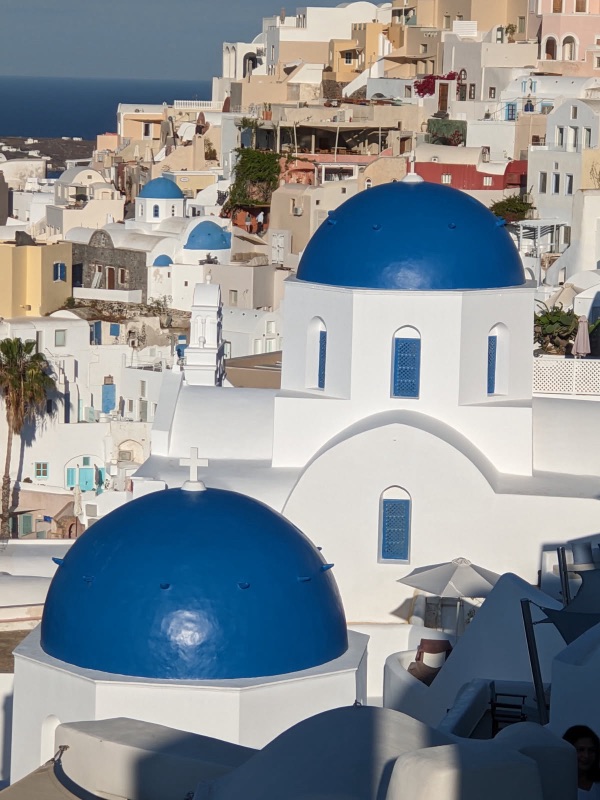
If asked to describe a typical Greek island, many people would say white buildings on a treeless, rocky hillside with blue domed churches. This description is apt for the Cyclades Isles. These charming islands which seem tailor- made for a movie set are why so many tourists come here.

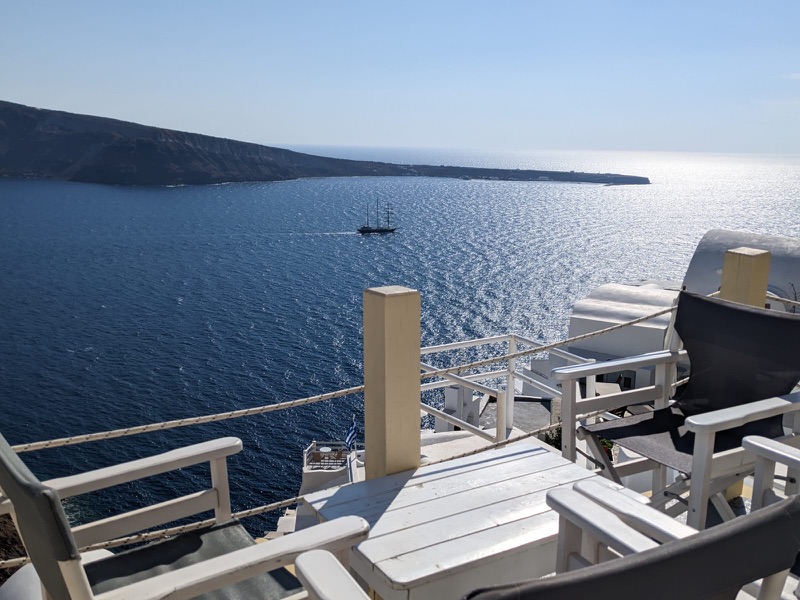
From the 33 inhibited islands in the Cyclades, Santorini (Thera or Thira to the Greeks) is definitely the queen. Over 3 million annual visitors come to see & experience one of the most picturesque locations on Earth. Why not? The pristine white villages seem to pop out against the dark volcanic soil & deep blue Aegean Sea which makes a perfect holiday setting.

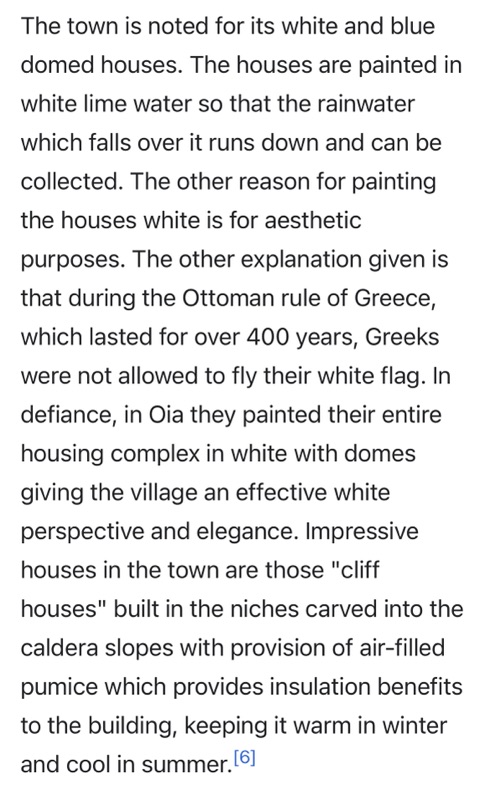
With help from the highly supportive tourism industry, each building is newly whitewashed each spring. Here is the history behind this iconic Cyclades appearance:

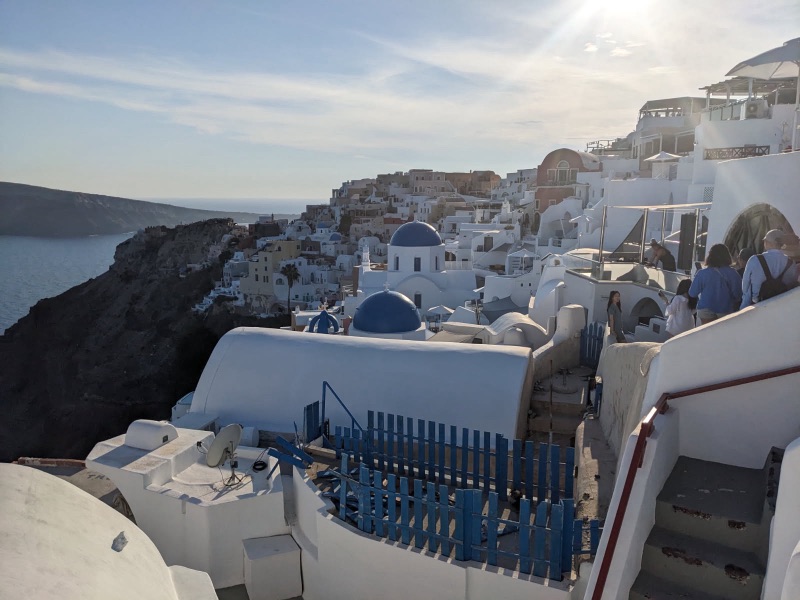
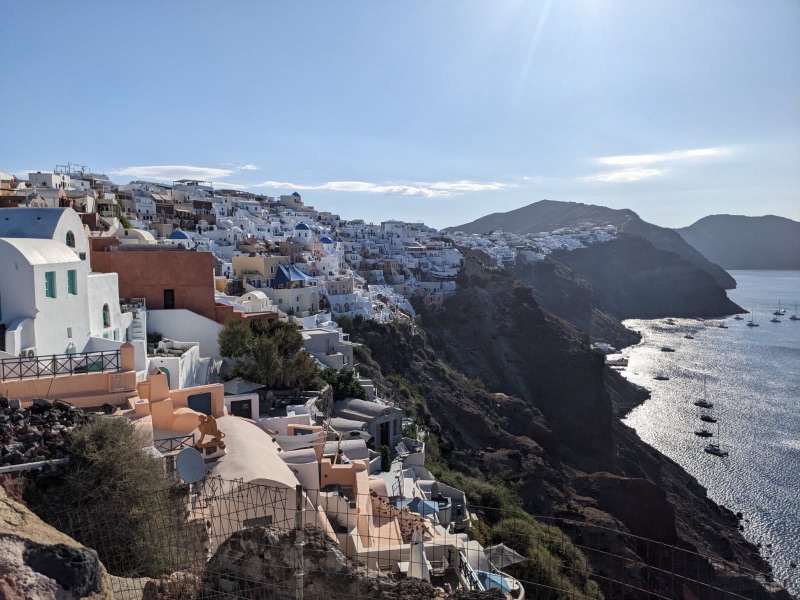
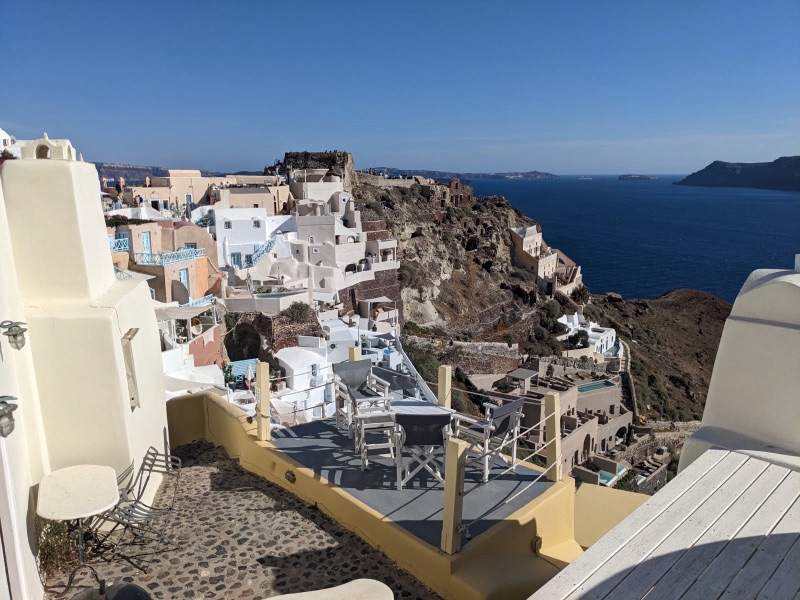
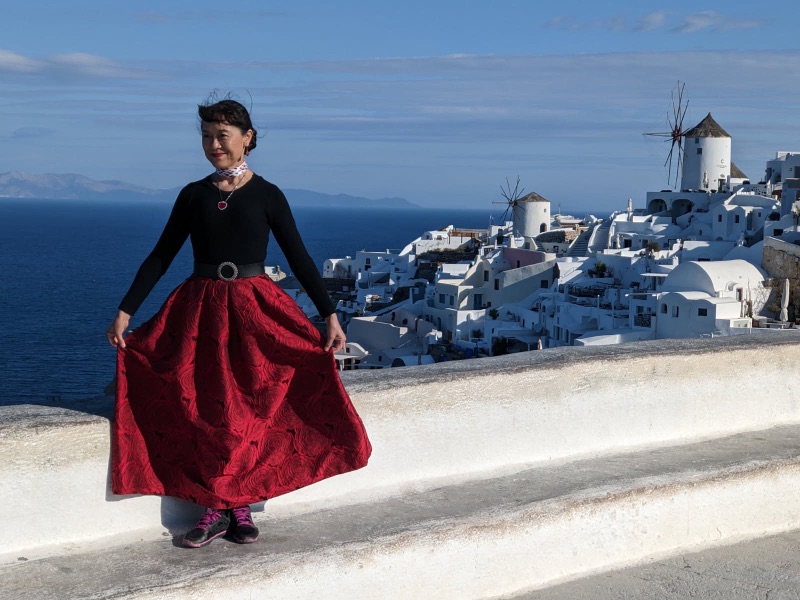
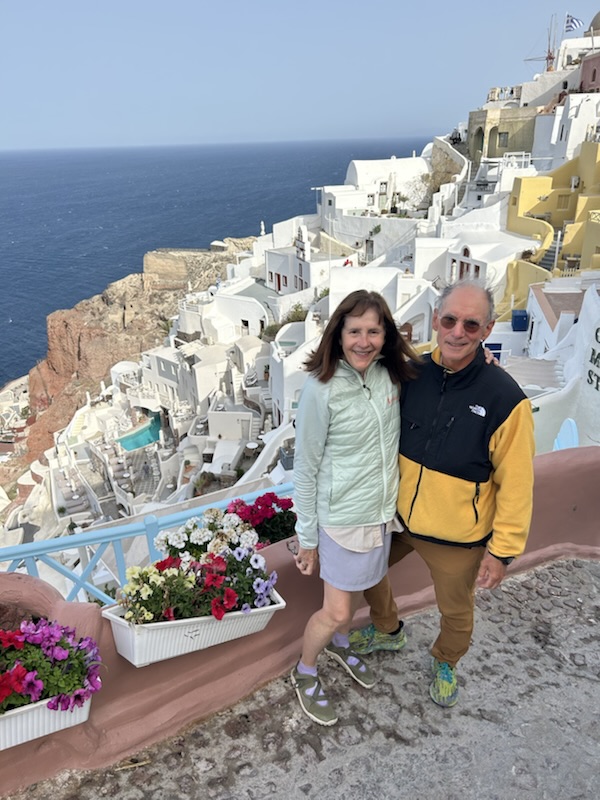
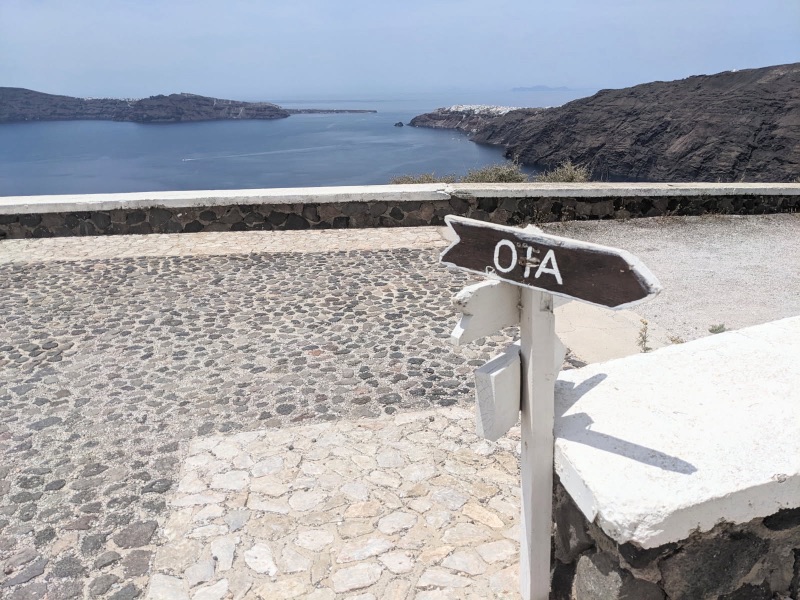
Most visitors make their way to the island’s westernmost town called Oia (pronounced EE-ah) This is probably the most photographed place in Greece. However, to visit it, you need to be prepared to climb up & down many steps because the houses are built into the vertical mountain side, one on top of the other. Even with the vertical challenge, Oia is well worth the trouble. Every direction you face & every turn you make just begs to have a picture taken to capture every spectacular view.

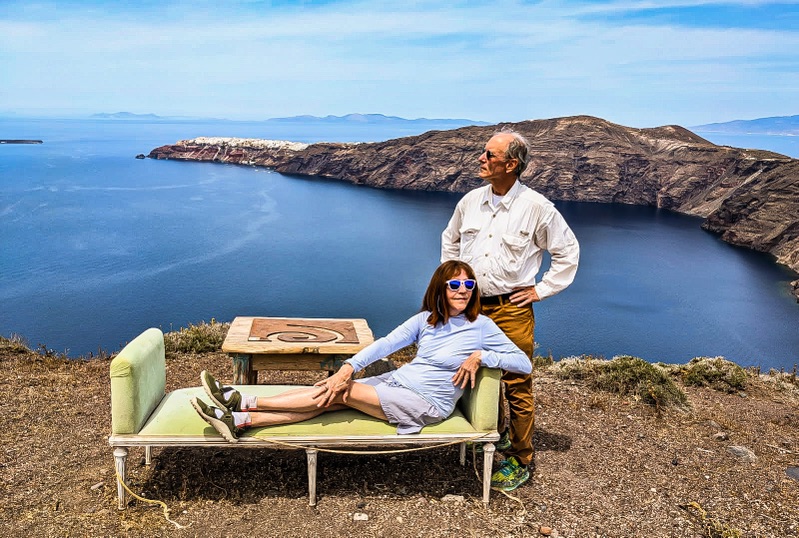
Remember when we use to say, “This a Kodak Moment”? Well, here a few from Santorini.

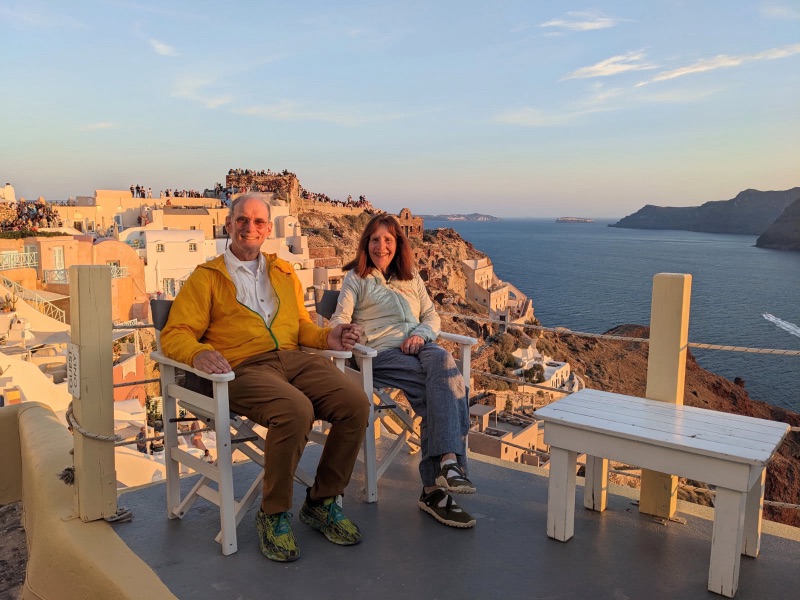
For many, being in Oia at sunset is the ideal photo opportunity with its “golden light”.

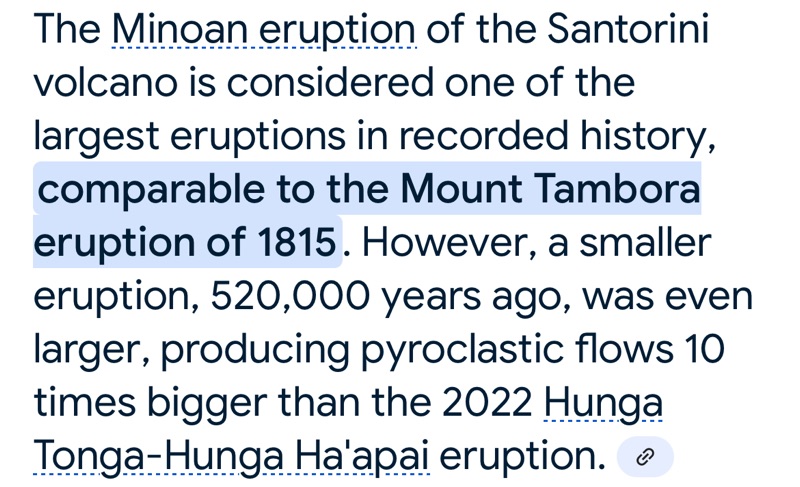
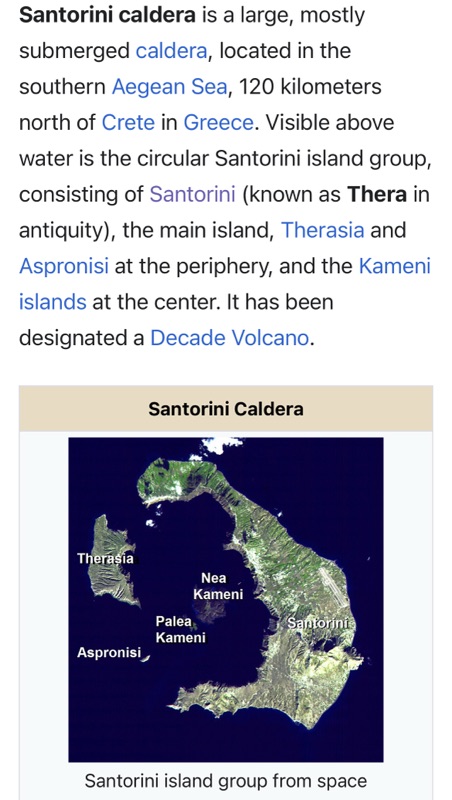
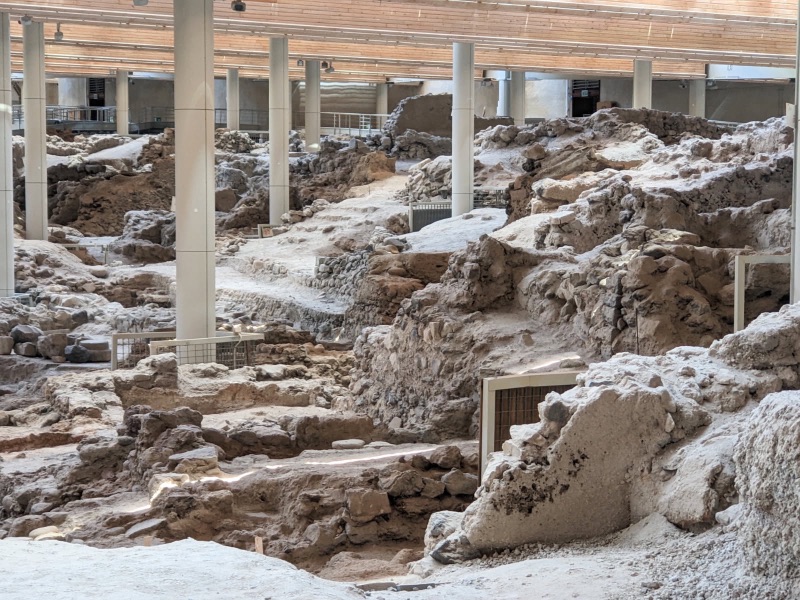
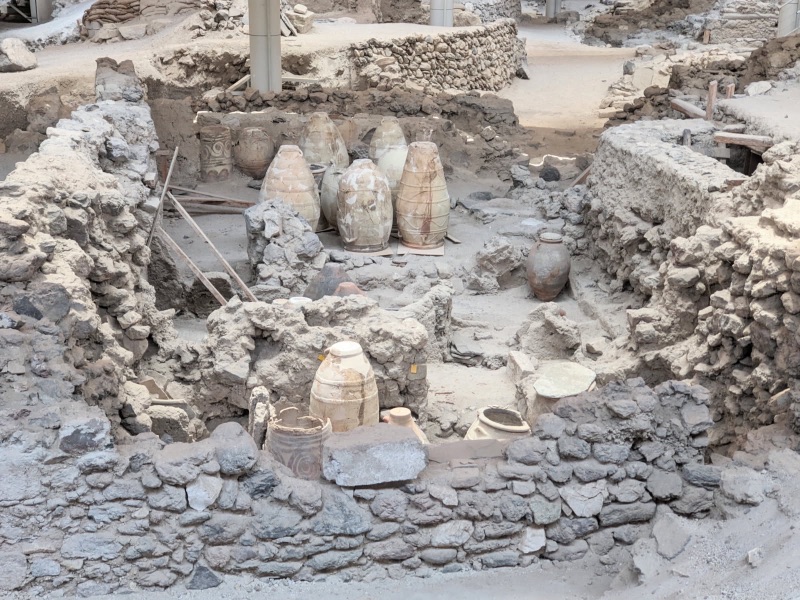
Santorini is also famous for its volcanic eruption which around 1700 BC & covered the ancient city Akrotiri with ash, much like Pompeii in Italy was. No human remains or valuable jewelry have been found at Akrotiri which means the inhabitants must have known their city was doomed & left before the cataclysm.

The gigantic eruption had a devastating impact on the Minoan civilization in Crete which is 60 miles away. Here is some information about this explosion:

The last lava flow at Santorini was in 1950; but, significant seismic activity occurred this year which means another volcanic eruption could still occur… sooner than later.

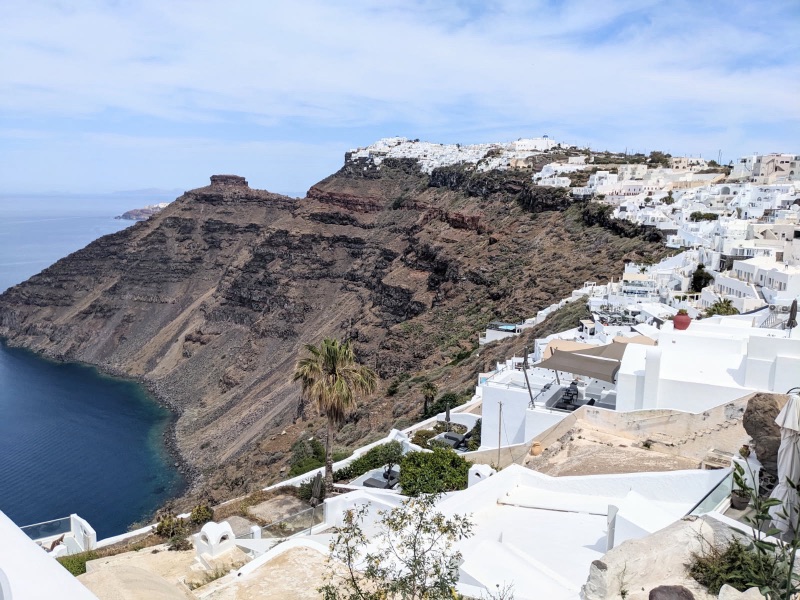
Santorini is the remnants left after the explosion.

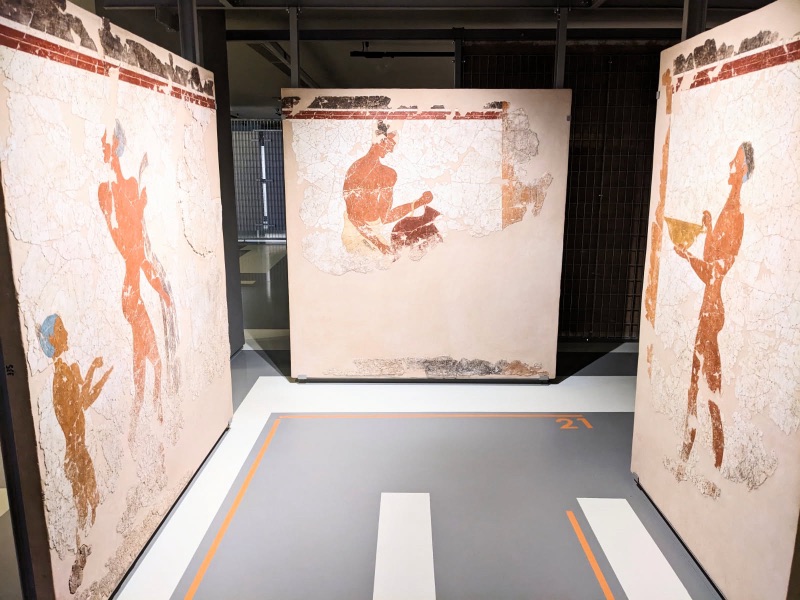
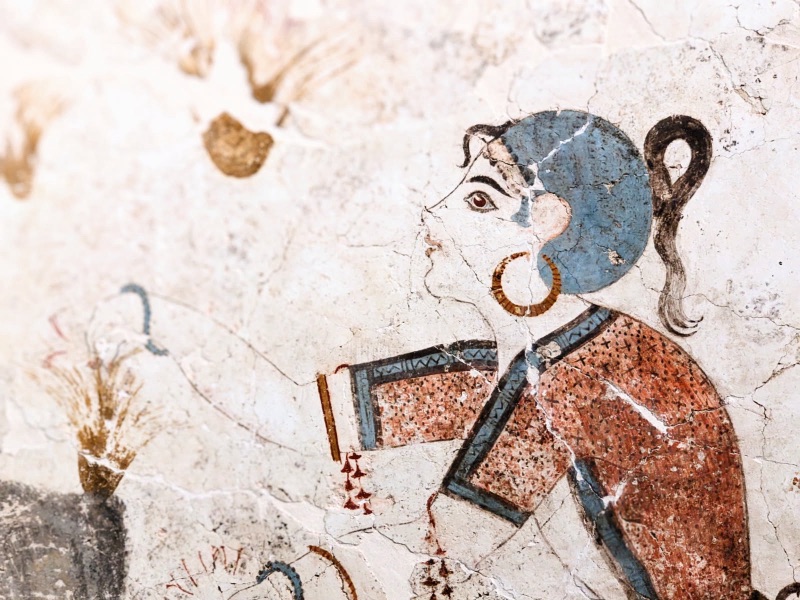
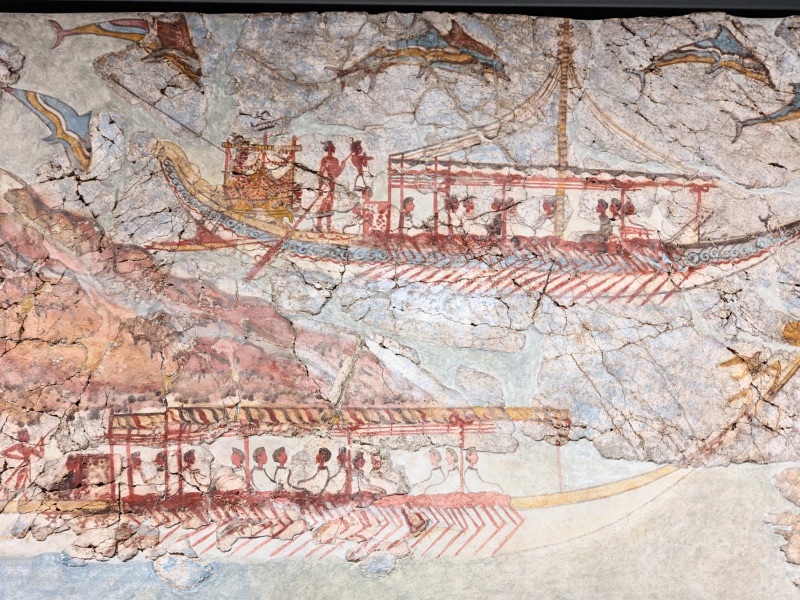
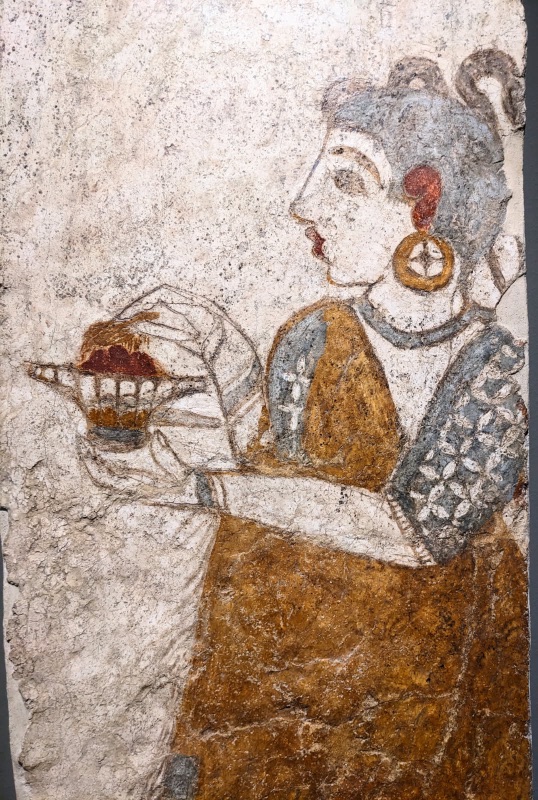
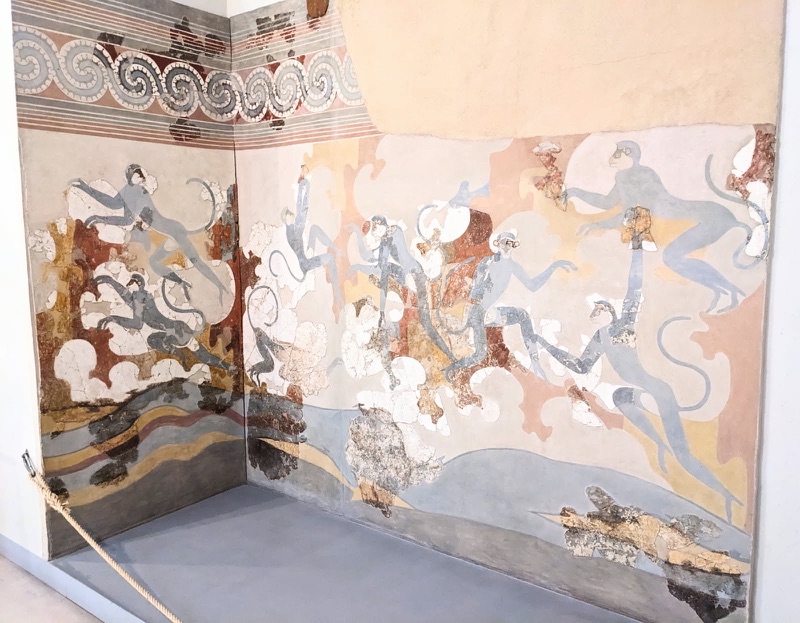
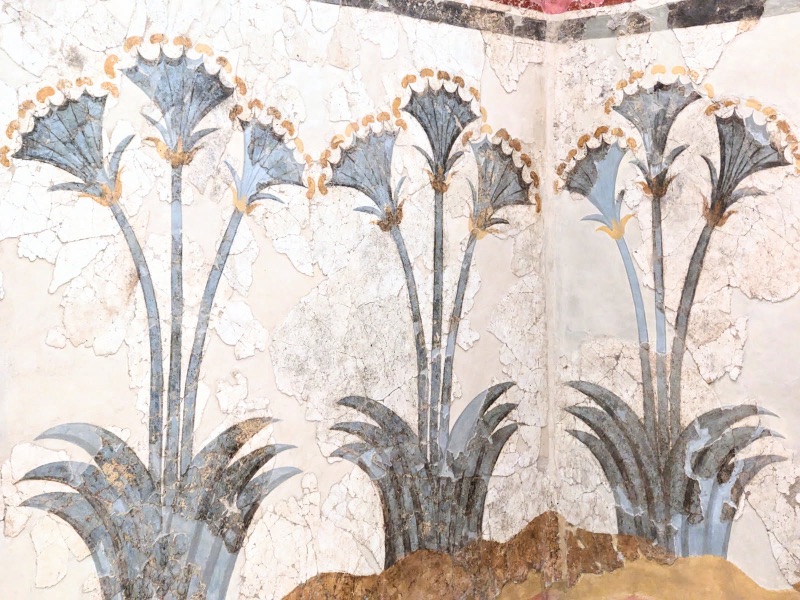
On this trip, we visited the ruins at Akrotiri & the Museum of Prehistoric Thera museum which contains many artifacts & wall frescos found at the site.

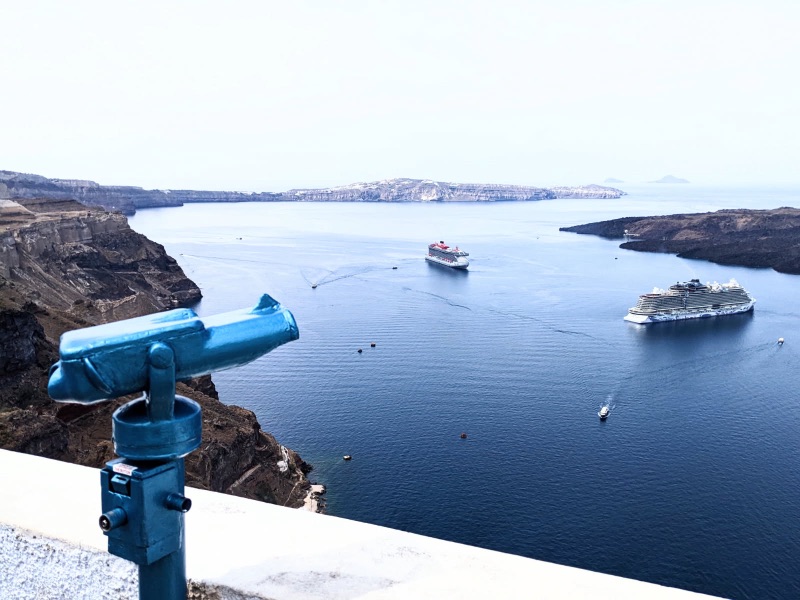
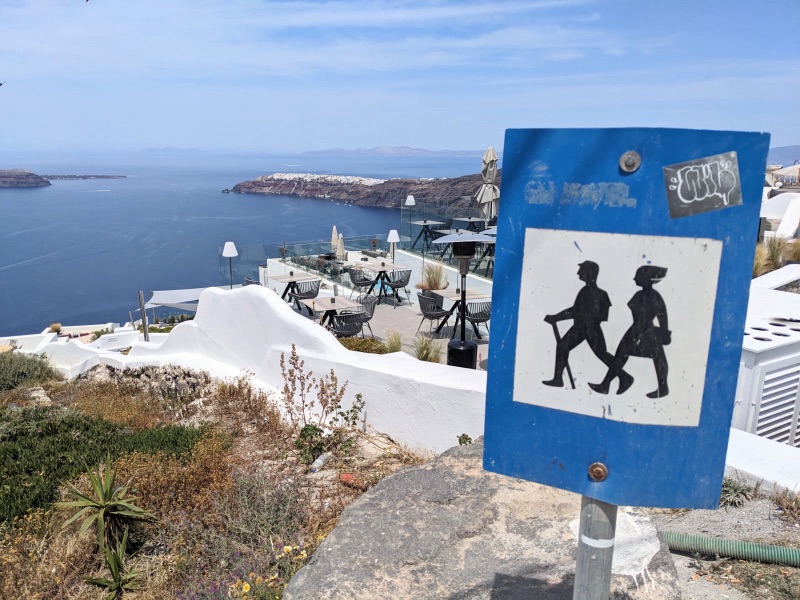
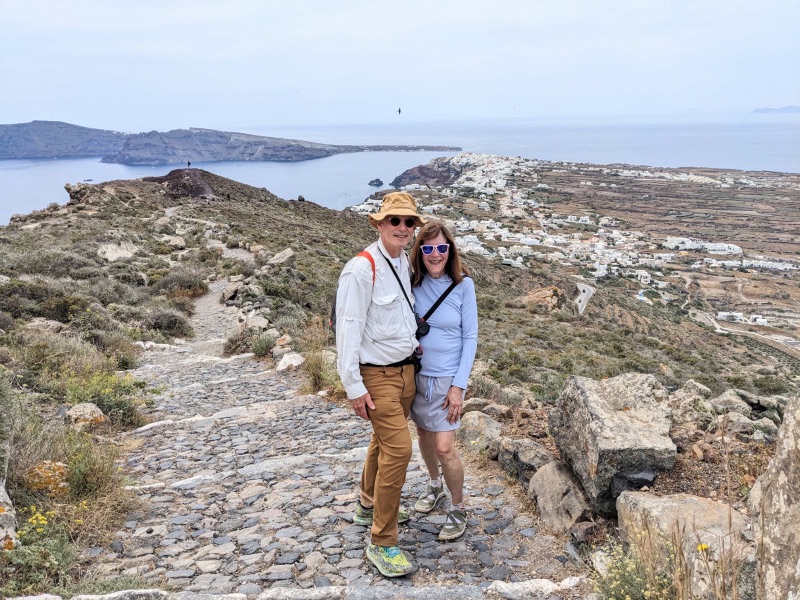
Being on Santorini is always a joy, even though it is a popular stop for large cruise ships. Multiple cruise ships stop at the same time bringing their passengers ashore which causes huge crowds. To escape all this hubbub, on all our previous visits to Santorini & including this one, we enjoy making the 8 mile hike from Fira to Oia.

Here are some images taken on our hike:

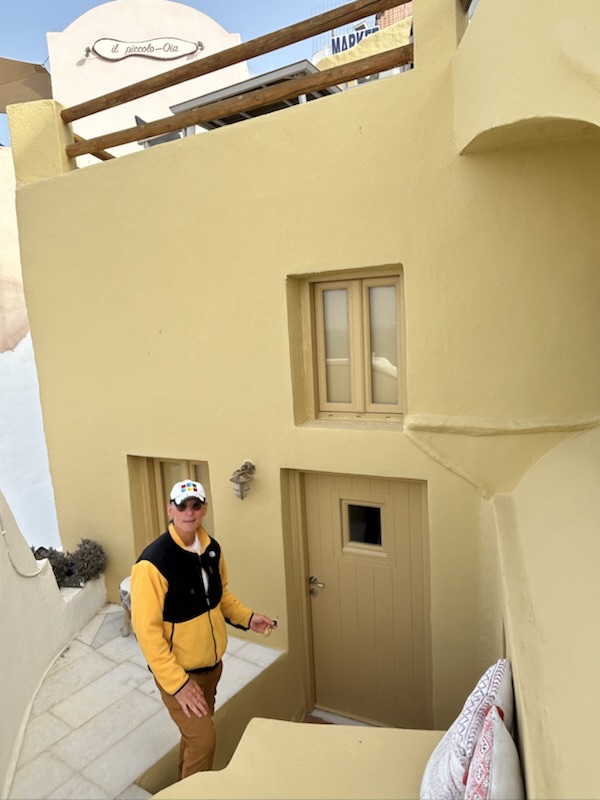
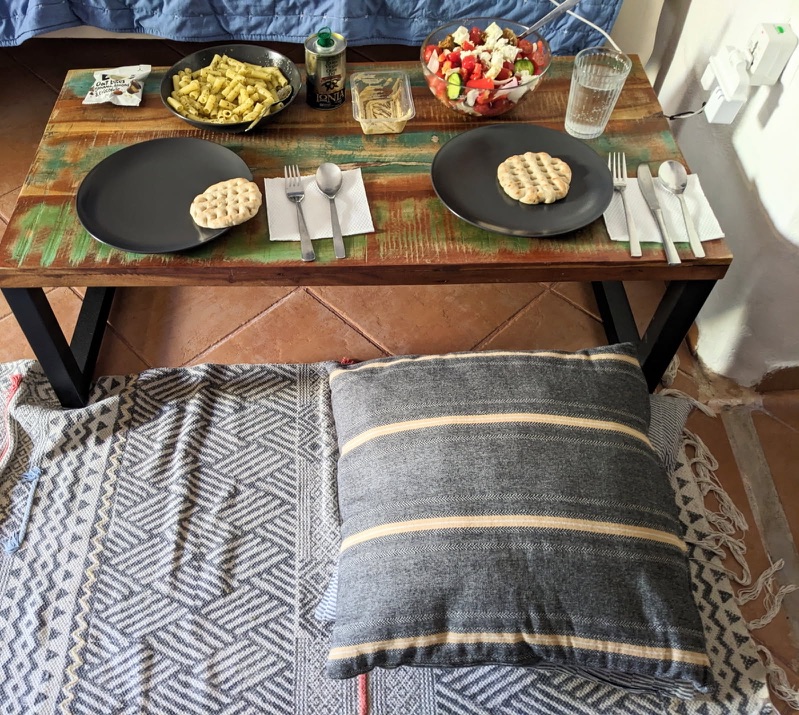
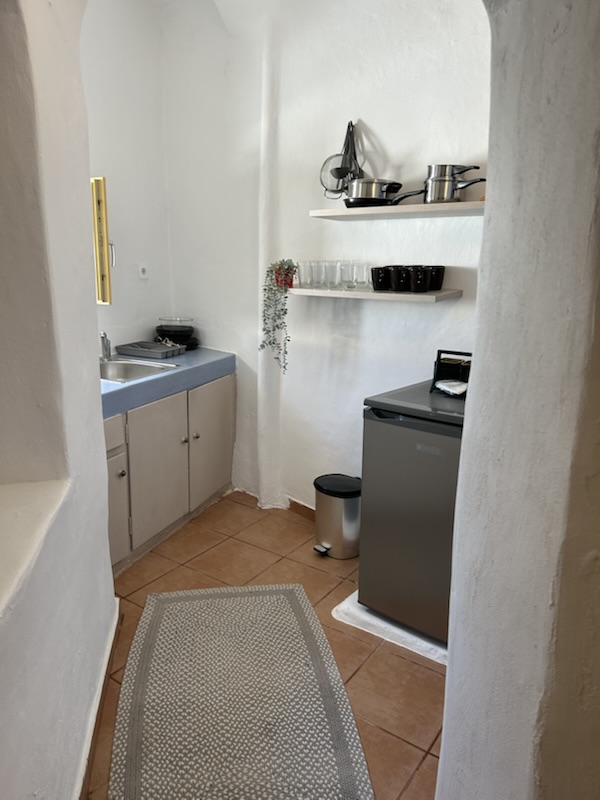
We stayed in Oia again; but, instead of staying in an old windmill, this time we stayed in a “cave house” which is dug into into the mountainside. Since it came with a small kitchen, we enjoyed making our own meals which was a nice change.

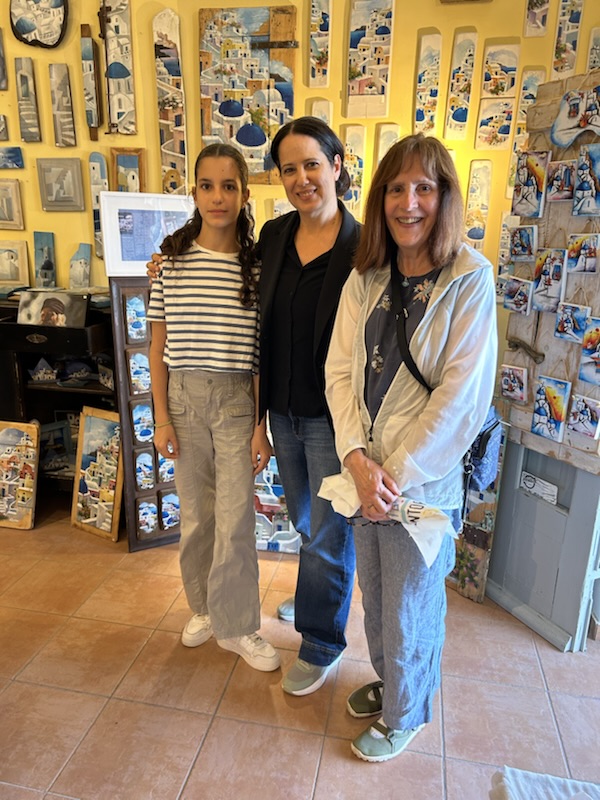
On our very first visit here, we met a young artist who painted Santorini scenes on old wooden wine barrels & doors. We were happy to see that after many years, she is still here & we purchased more art from her to display at home.

With the artist & her daughter

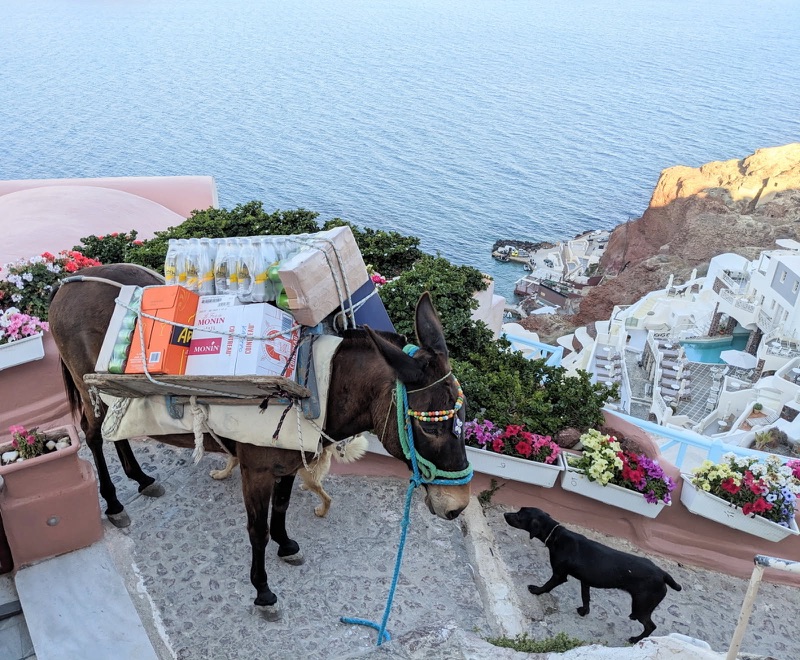
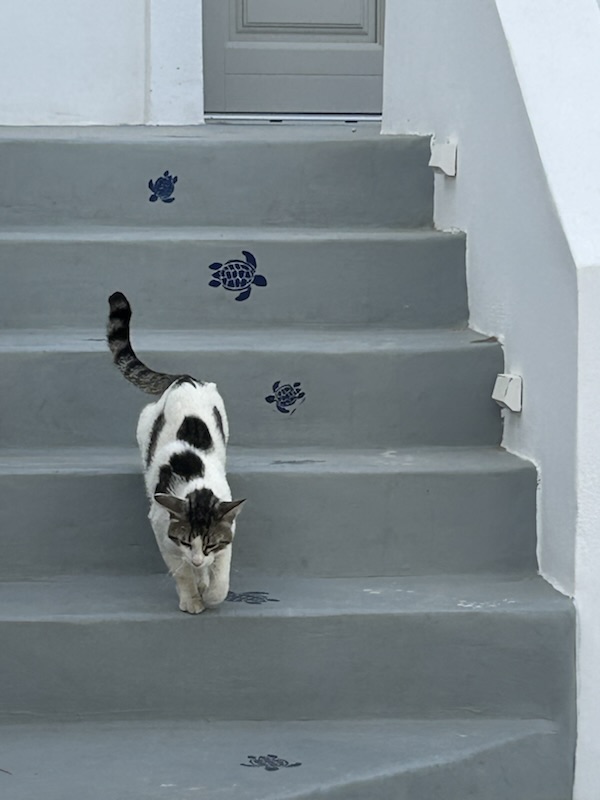
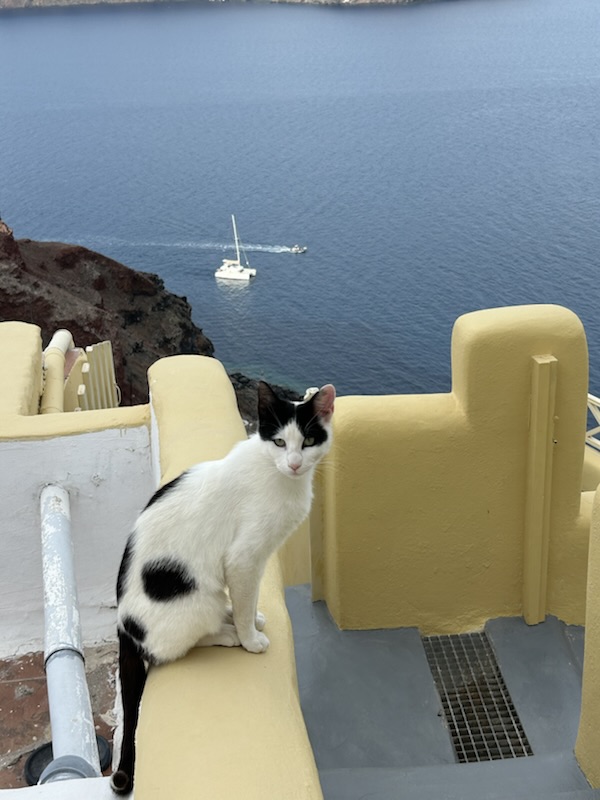
Cats are everywhere in Greece & add to the ambiance.

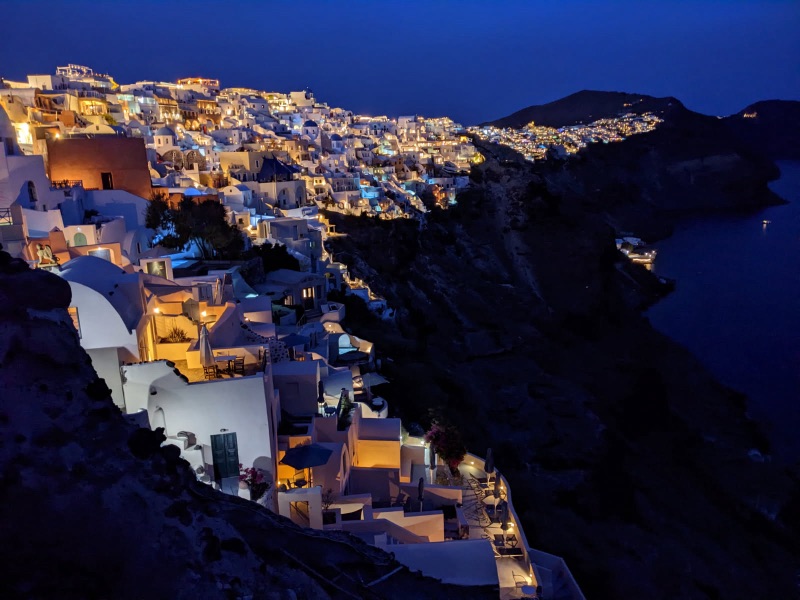
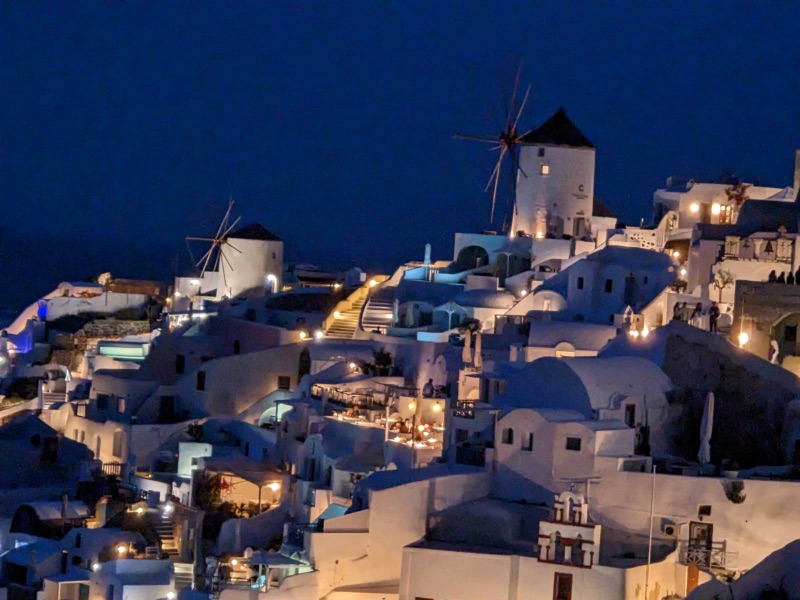
On our last night we enjoyed the evening lights.

For me, Santorini is one of the few places that not only lives up to my expectations; but also, always exceeds them. Despite the humongous cruise ships that bring large tour groups, it is still exquisitely lovely. 🥰

3 Greek Islands in 1 Day-Hydra, Poros, & Aegina

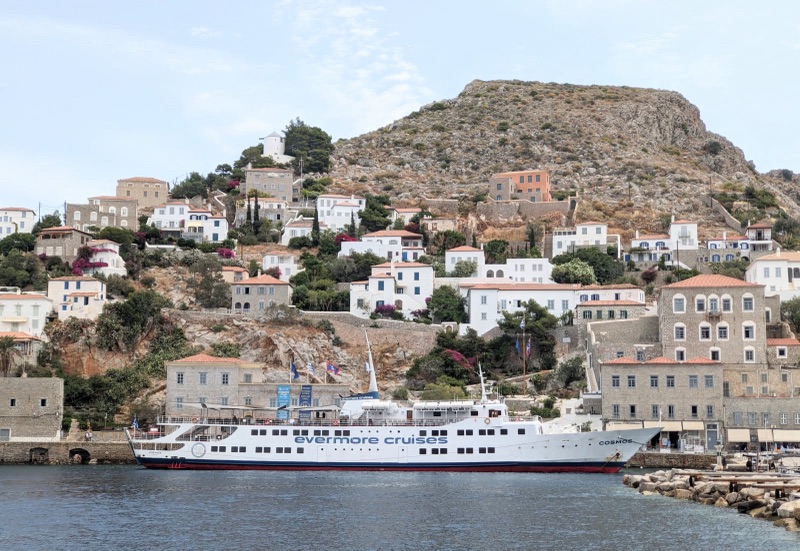
Our cruise ship in Hydra
Entering the ship

If you are in Greece & only have limited time & you want to visit the islands, then you can take a one day cruise that goes to 3 islands- Hydra, Poros, & Aegina- in the Saronic Gulf. Since it is only a one day cruise, time is limited on each island which you can choose to see on your own, or take a tour to experience it.

We took this cruise on our first trip to Greece in 1985. It was nice to revisit each place.

Hydra

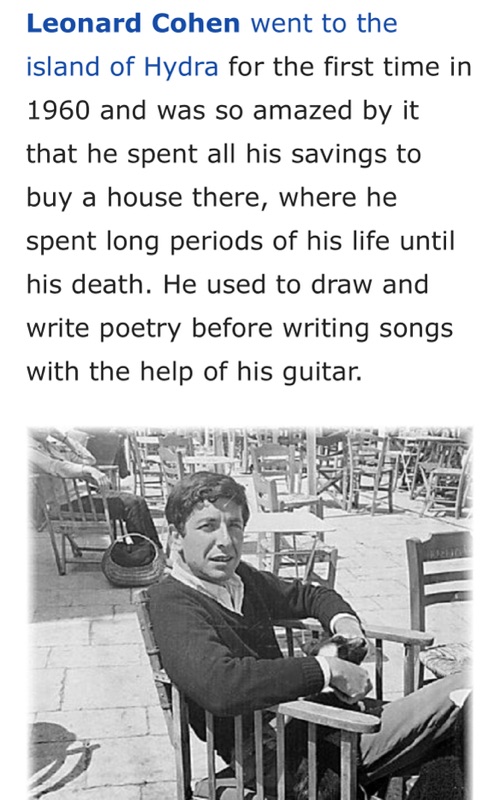
Hydra is known as one of the most beautiful Greek Islands where starting in the 1950s, various movies have been filmed. This exposure led to many celebrities living here.

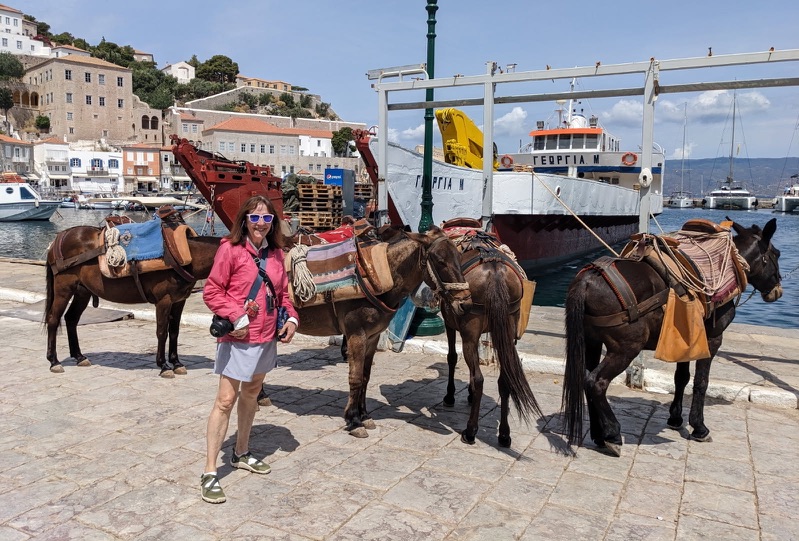
Today, the island is more for day tourists & those looking for a quiet place to go on holiday since no cars are allowed there.

With no cars allowed, these horses & mules are among the only transportation on Hydra

Poros

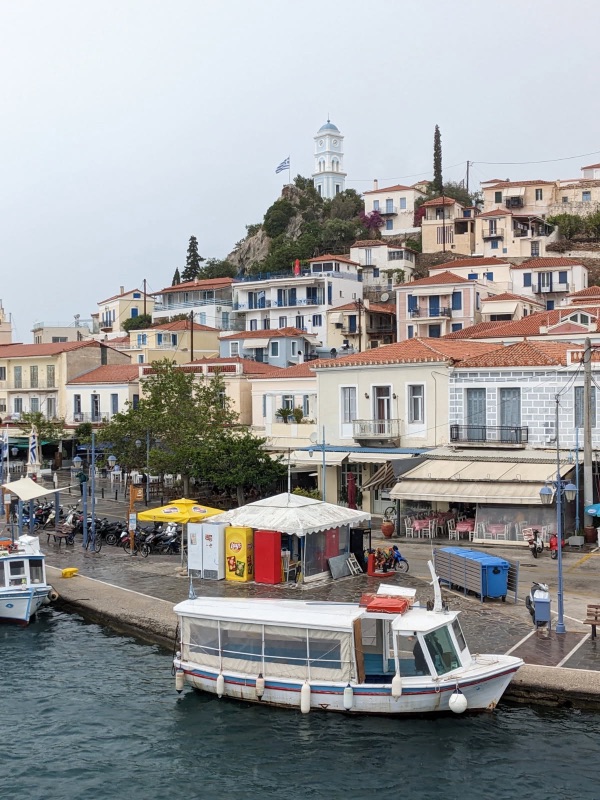
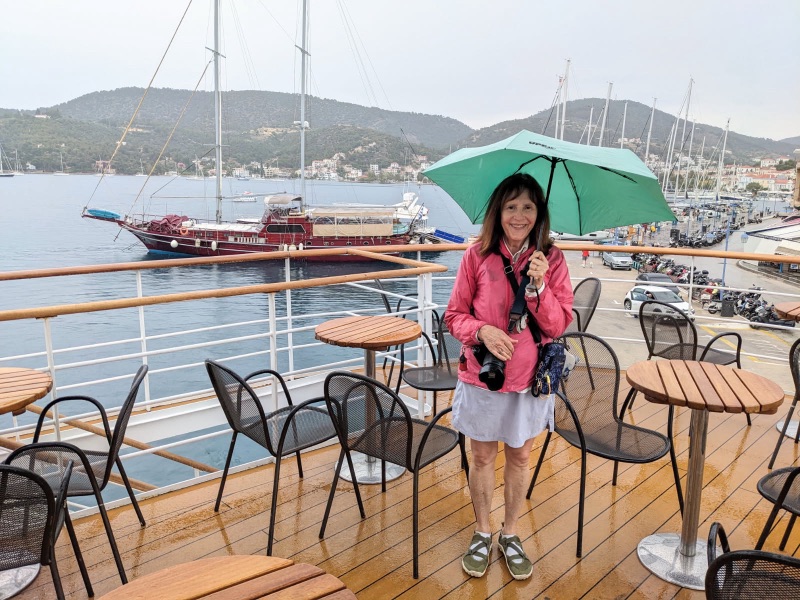
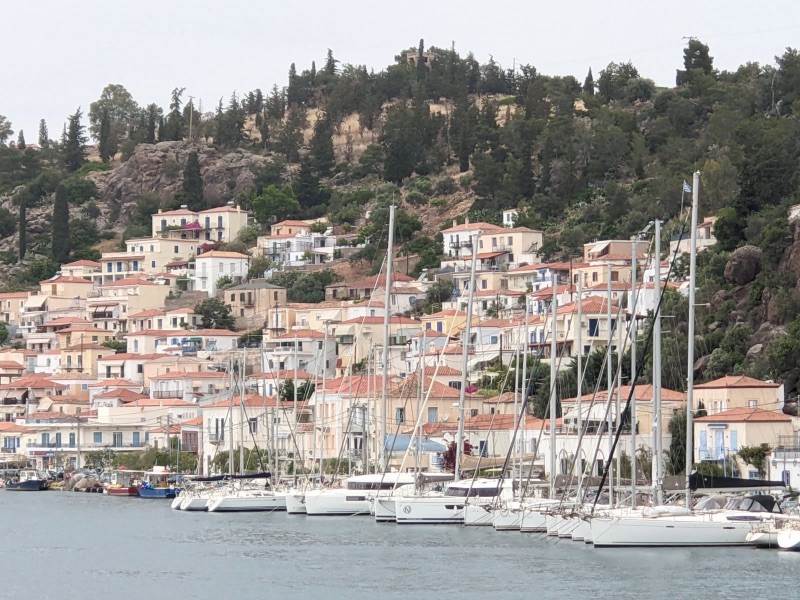
Our next stop was Poros where something unusual happened… IT RAINED. We rarely experience precipitation in Greece. However, Poros is a small island with not too much to see, so the rain did not put a damper on missing too much.

Poros Town harbor

Aegina

Aegina is the biggest island on the cruise. According to myth, Zeus fell in love with Aegina who was a daughter of the River God Asopos. Zeus took her to this island which was named after her.

Aegina has been inhabited since 3000 BC.

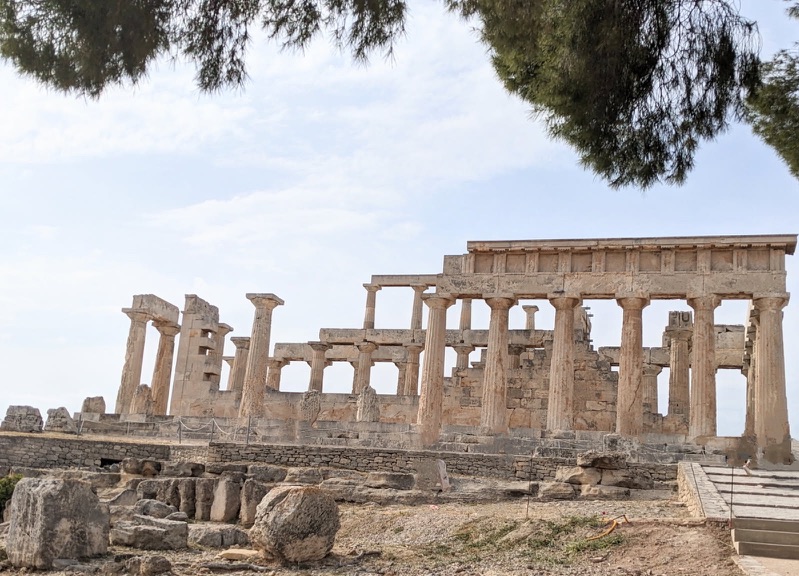
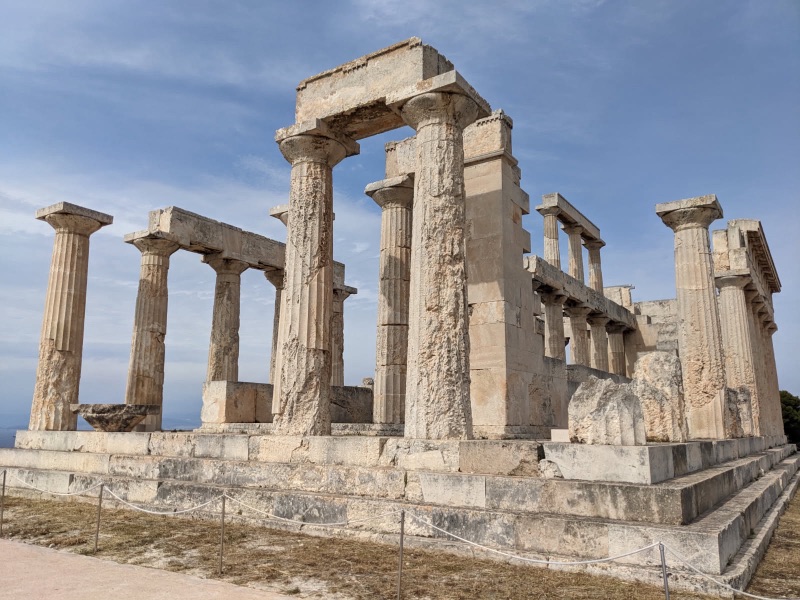
We took a tour to see the Temple of Aphaia which was built in 480 BC & is called “The First Parthenon” It is dedicated to Aphaia who was the goddess of fertility & agriculture. This is the only temple ever dedicated to her.

This temple along with the Parthenon on the Acropolis in Athens & the Temple of Poseidon in Sounion geographically form an isosceles triangle which has two equal length sides. On clear days, each temple can be seen from each other which is interpreted as a possible feature for defensiveignaling.

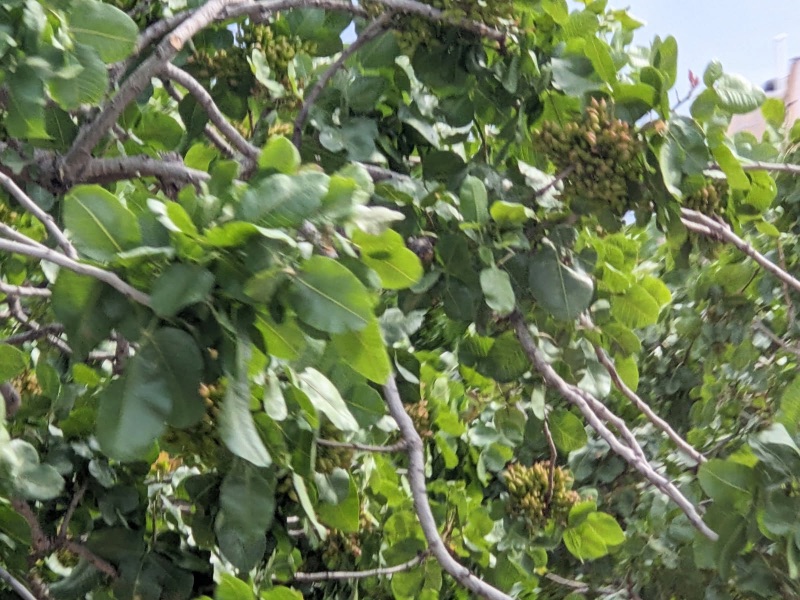
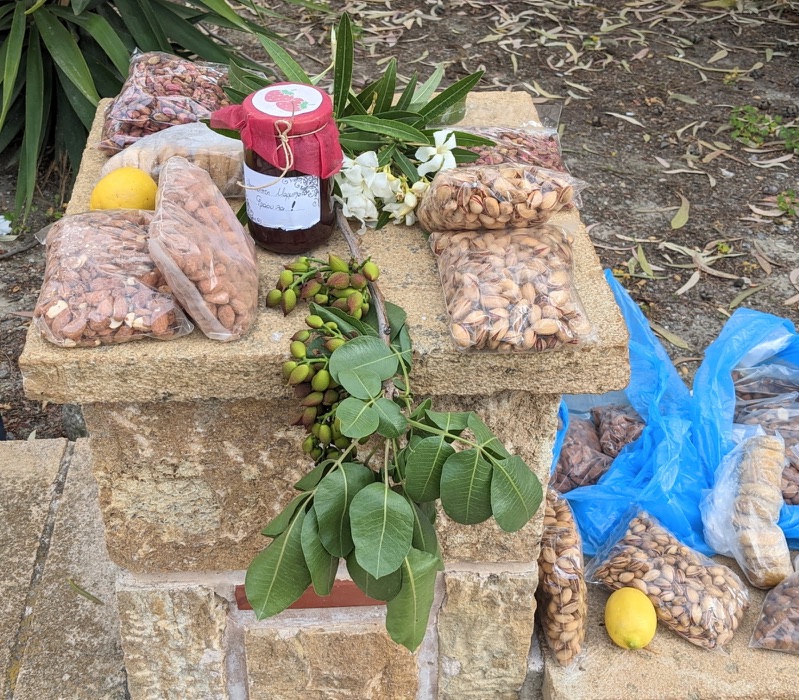
Aegina is also known for its pistachio trees. Pistachio cultivation started in Greece on Aegina in 1860. We had a chance to buy some roasted pistachios from this man. He also gave us some unripe pistachios to try. The shells have not yet hardened so they are soft & still have a “nutty” texture; but, they tasted like a sour grape.

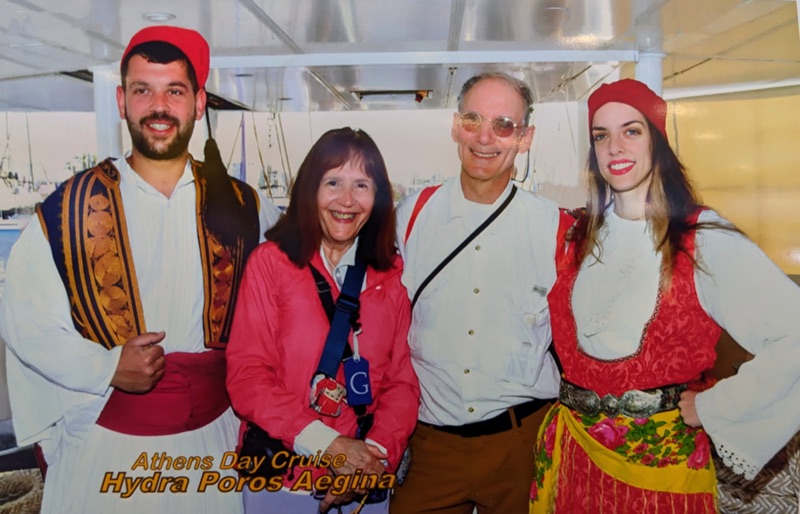
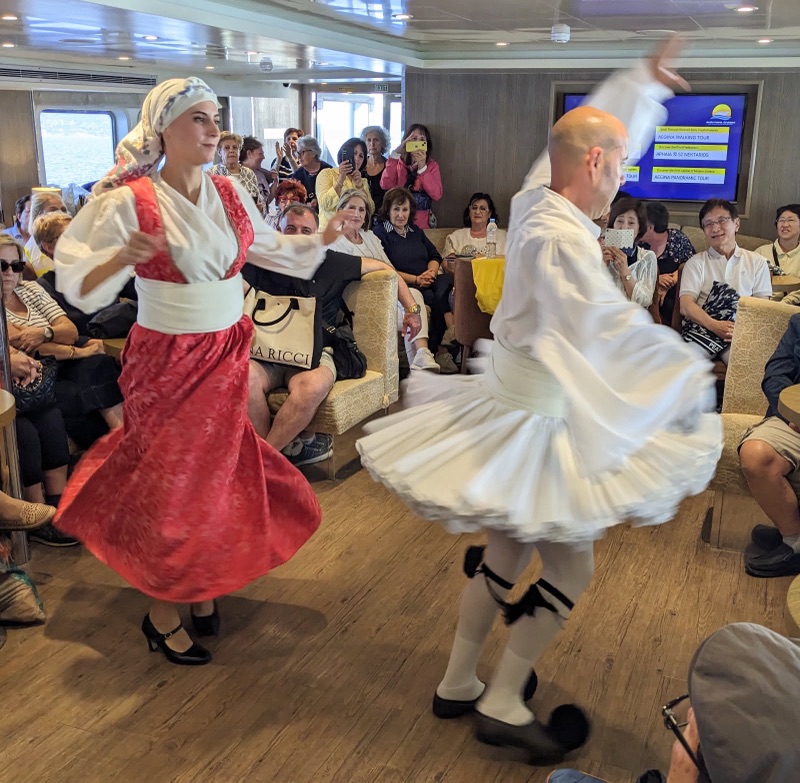
We were entertained by Greek music and dancing during our last hour on the ship.

Sofia, Bulgaria to Athens, Greece

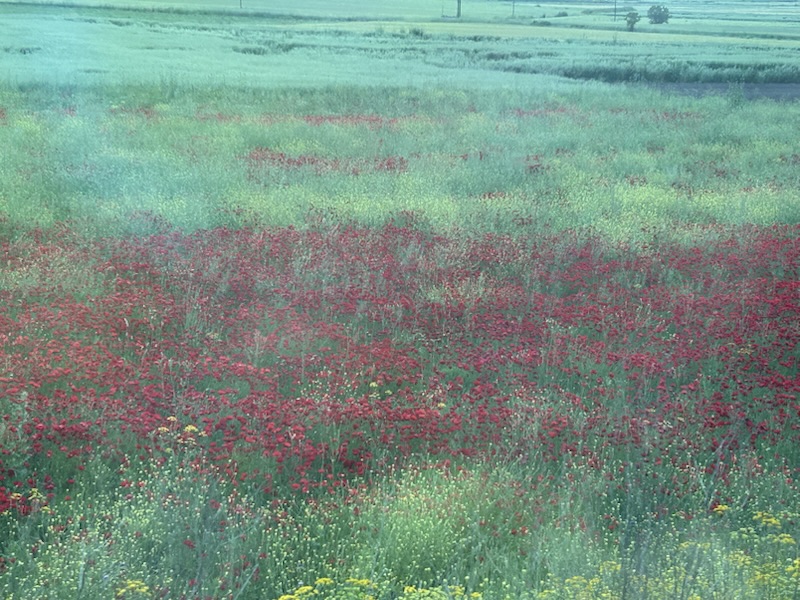
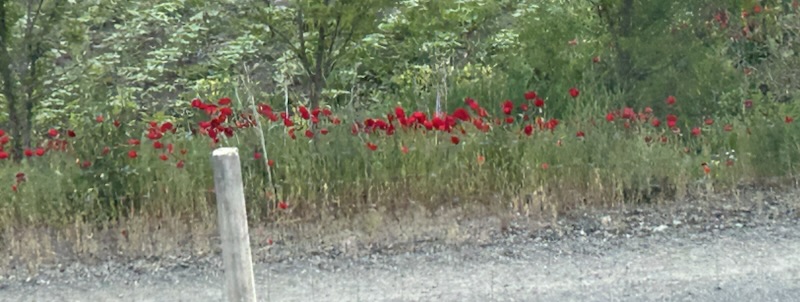
Wild red poppy flowers were in full bloom in the fields from Sofia to Athens
Next to the road

Our adventure by rail from Berlin to Athens is almost complete.

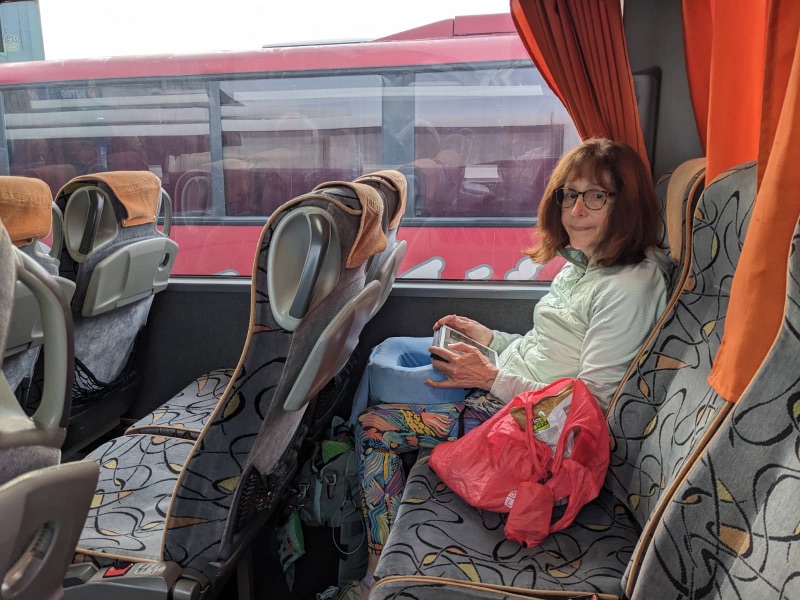
The only part on our journey that we could not do by train was from Sofia, Bulgaria to Thessaloniki, Greece.

So, we boarded a bus, rode a few hours to reach Greece, then spent two days in Thessaloniki.

We have visited Thessaloniki before; but, this time, we enjoyed visiting with one of my husband’s college friends who now lives there.

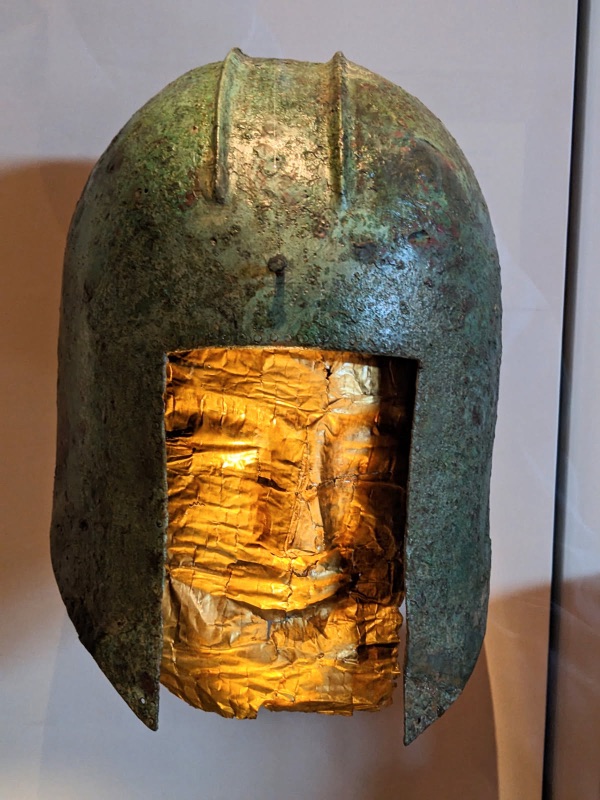
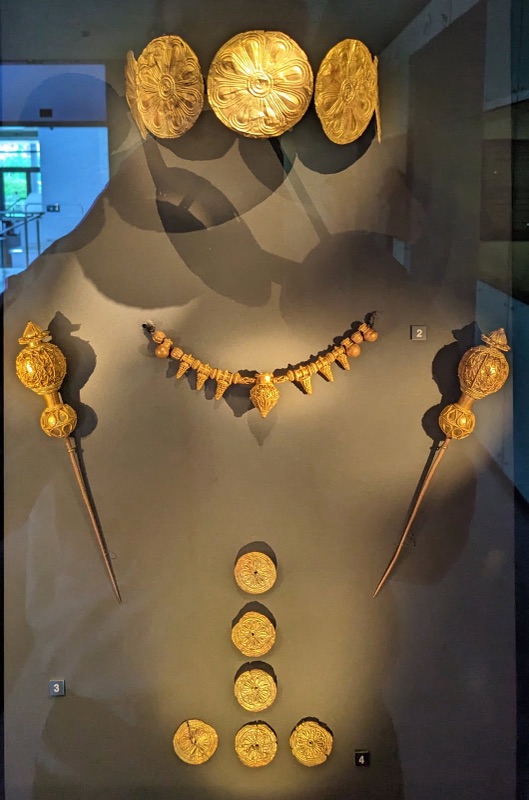
We also went to the archaeological museum which we had not previously seen.

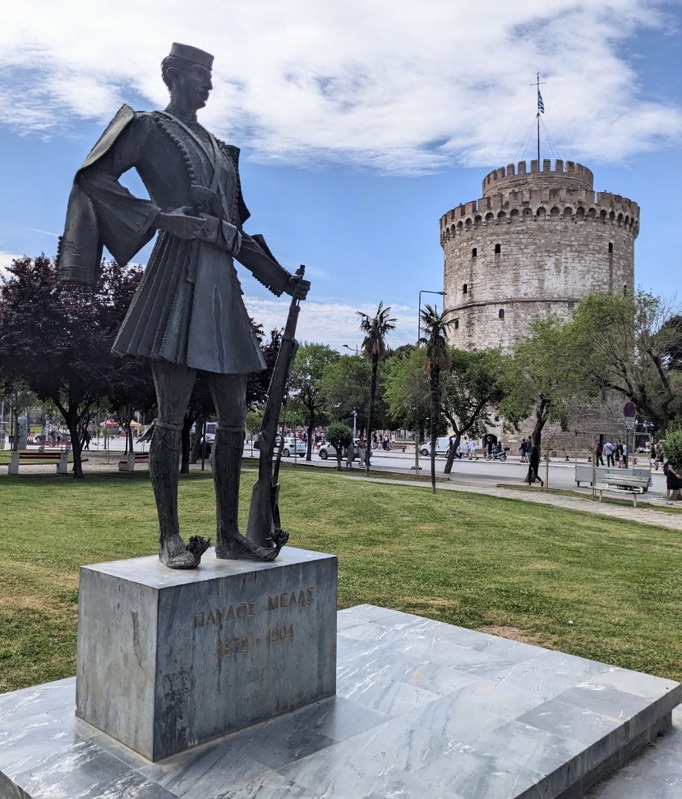
Thessaloniki was founded in 315 BC by Cassander who named the city after his wife who was Alexander the Great’s half-sister.

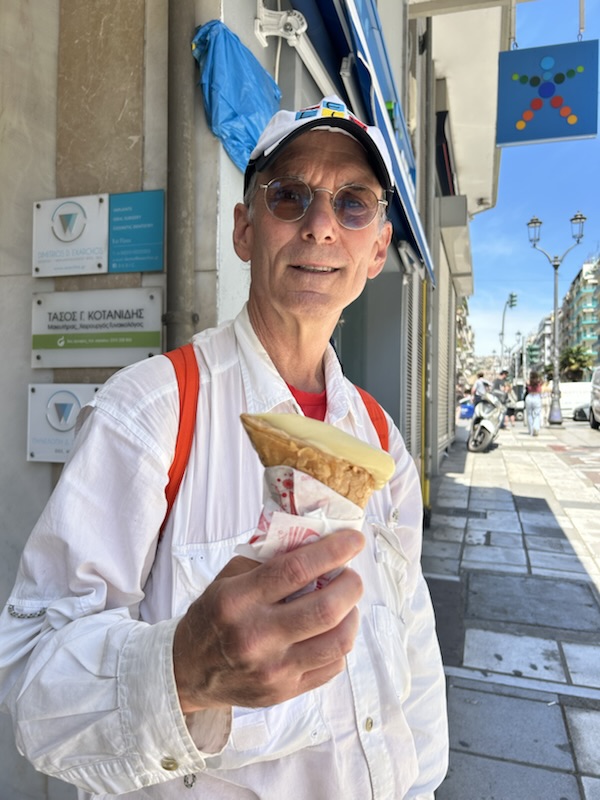
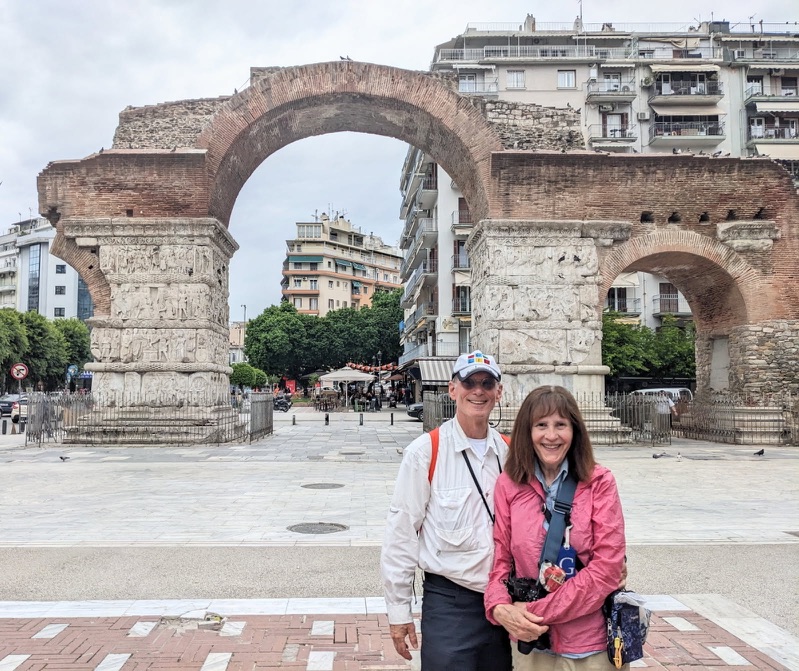
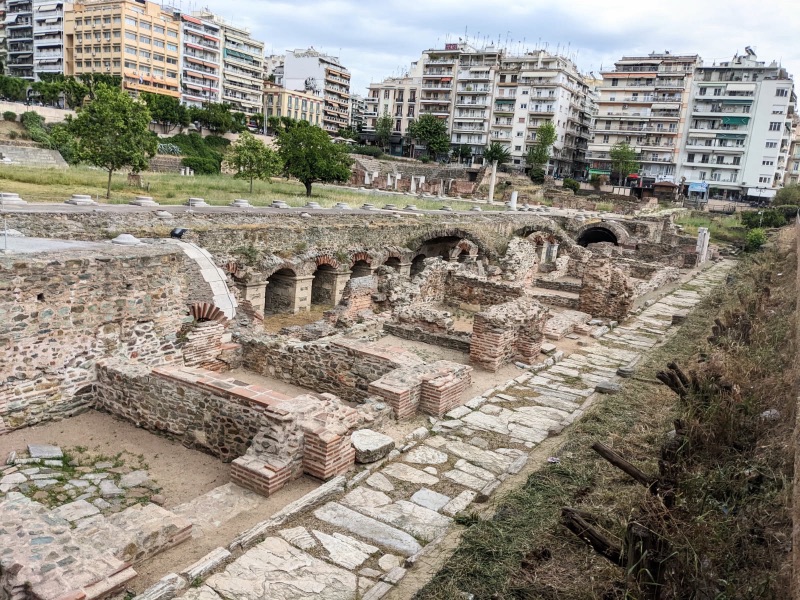
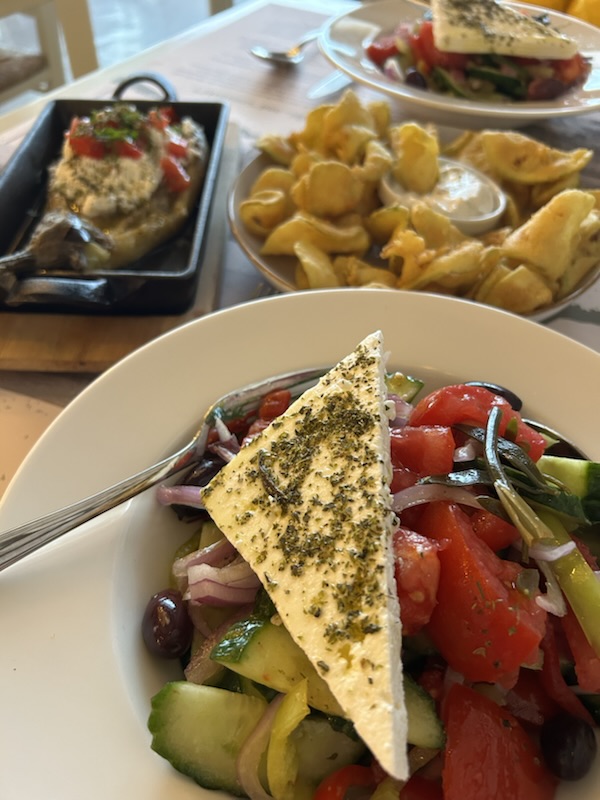
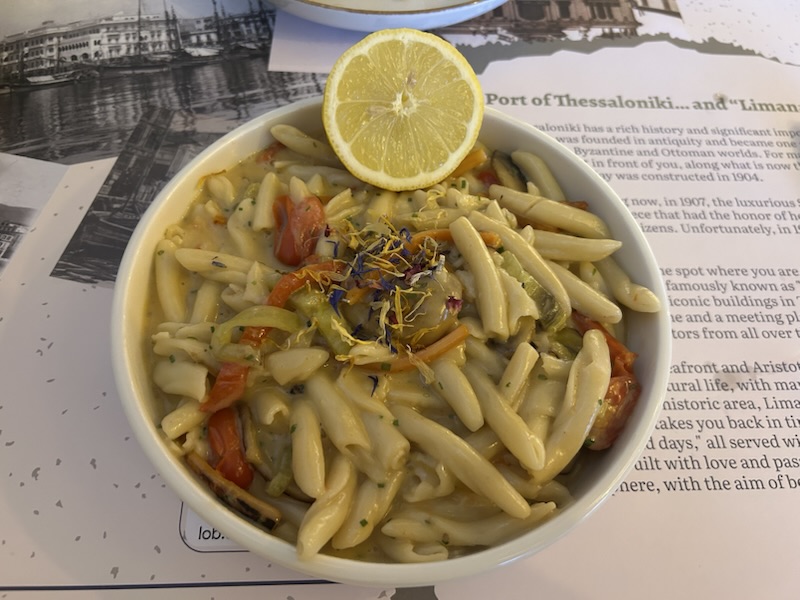
Here are a few Thessaloniki highlights we enjoyed.

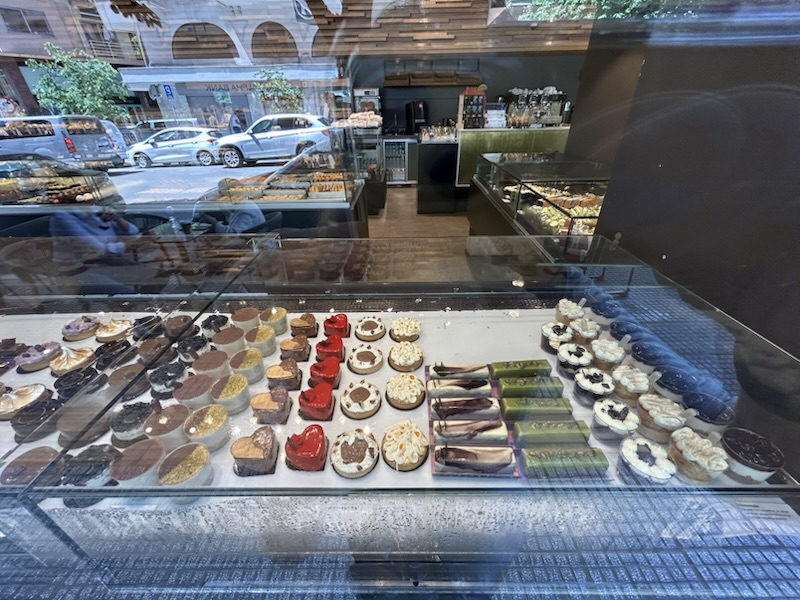
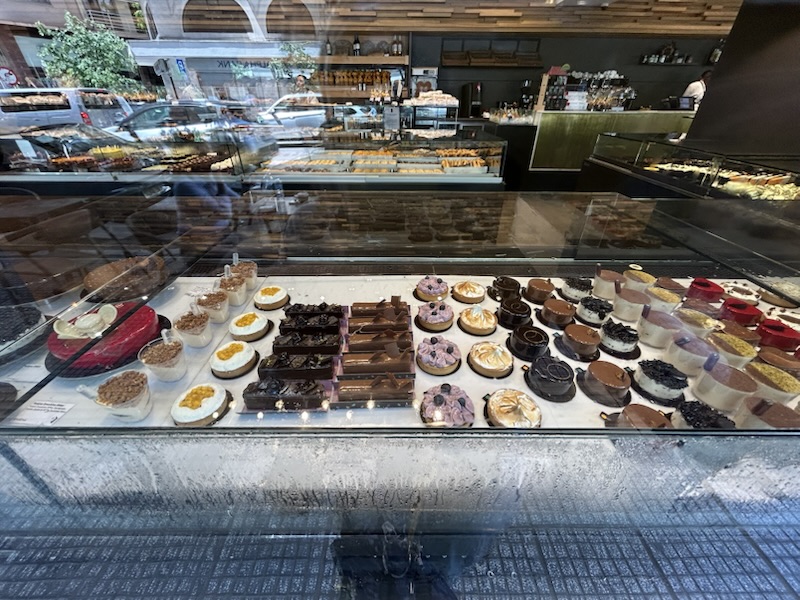
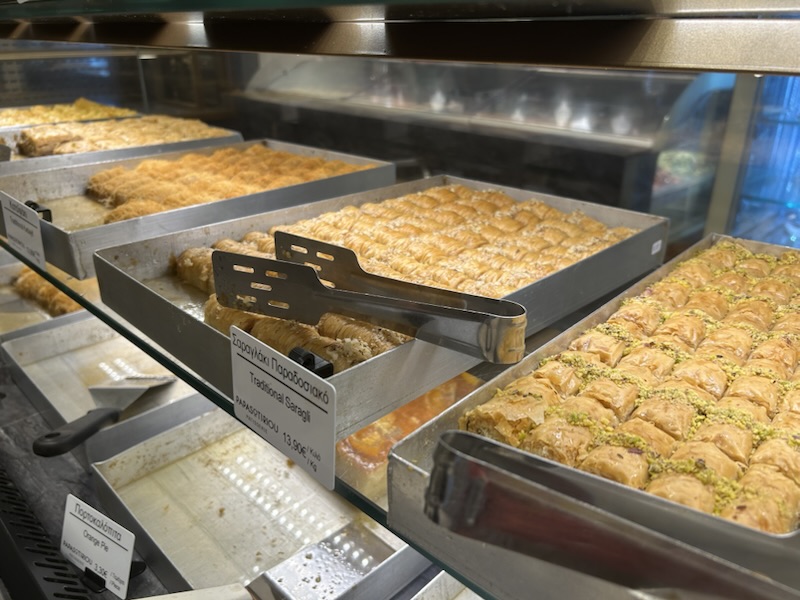
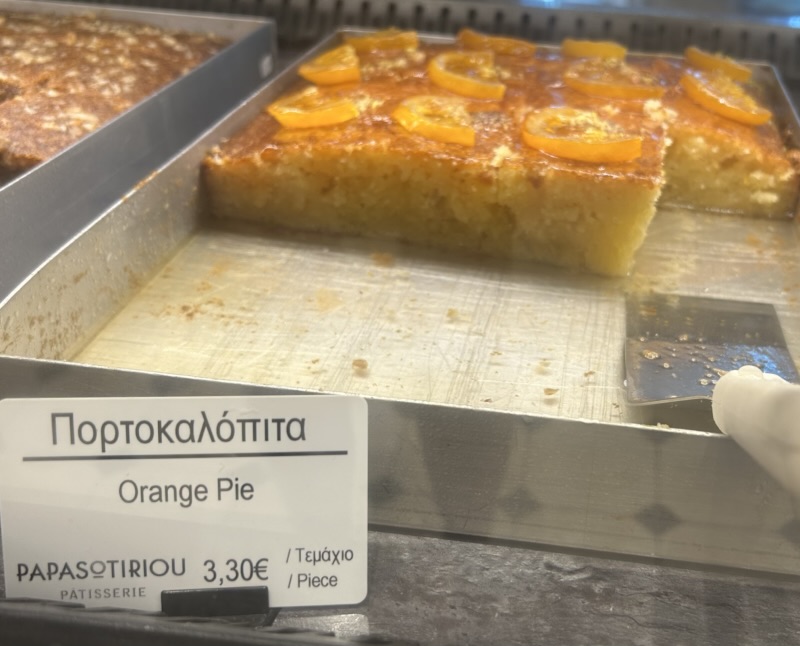
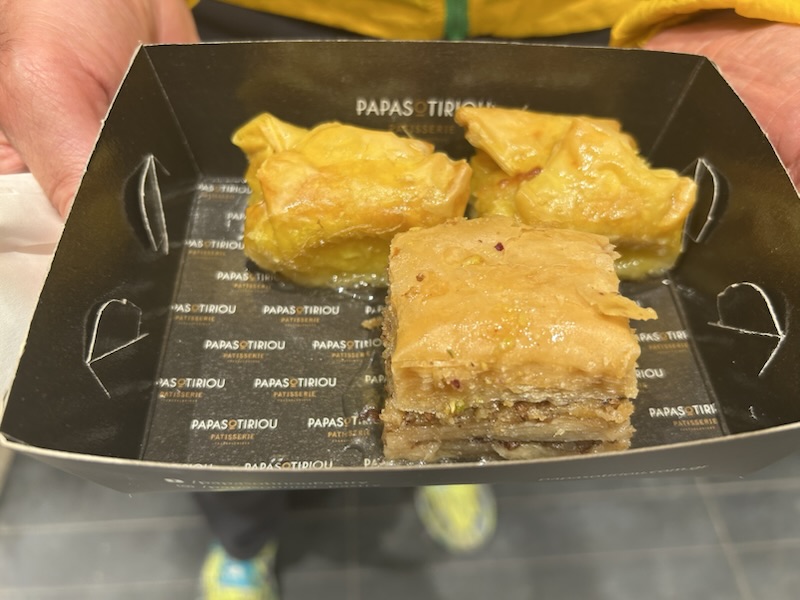
Thessaloniki is famous for its deserts. Famous Greek American chef Diane Kochilas has this to say about Thessaloniki sweets:

“Cosmopolitan Thessaloniki is also known admirably by its locals as “the sweet mother”, thanks to its longstanding pastry tradition. Almost everywhere you turn, there is a shop selling desserts in every shape & size. Some of Greece’s leading pastry dynasties hail from Thessaloniki. “

Greek entertainers at our restaurant

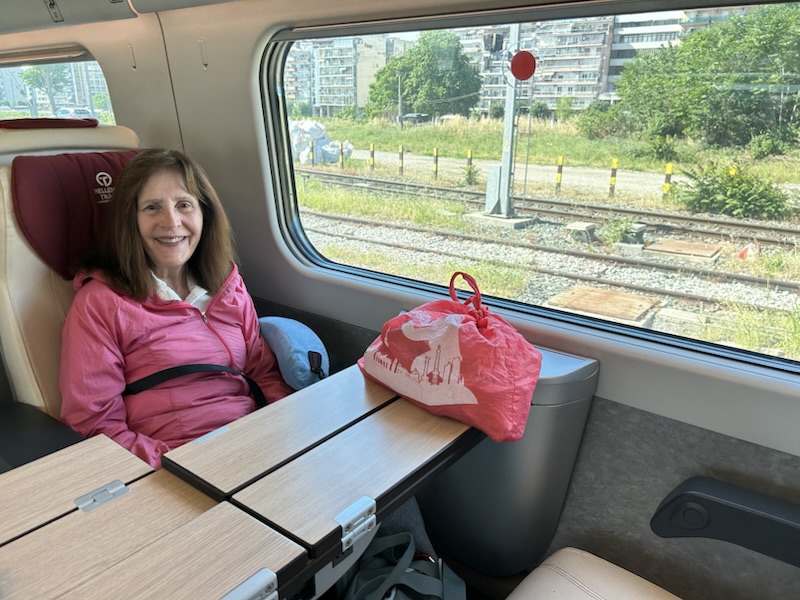
Then, it was back on the train headed for Athens. Traveling by train throughout most of Europe is very easy & not too expensive. The trains in the former East Bloc countries are a big step down in comfort; but, they get you there & are close to their schedule, when they are running.

The pluses to train travel vs. air travel is more leg room, no security checks, ability to board only a few minutes before departure, no bag weight or size restrictions, or extra fees. What’s not to like about all that! 😊

This is our 10th trip to Greece; but, the first time in May. It is nice to have cooler temperatures in the 70s with beautiful green hills. Plus, the added bonuses are smaller crowds & no fires that often accompany Greece’s summers.

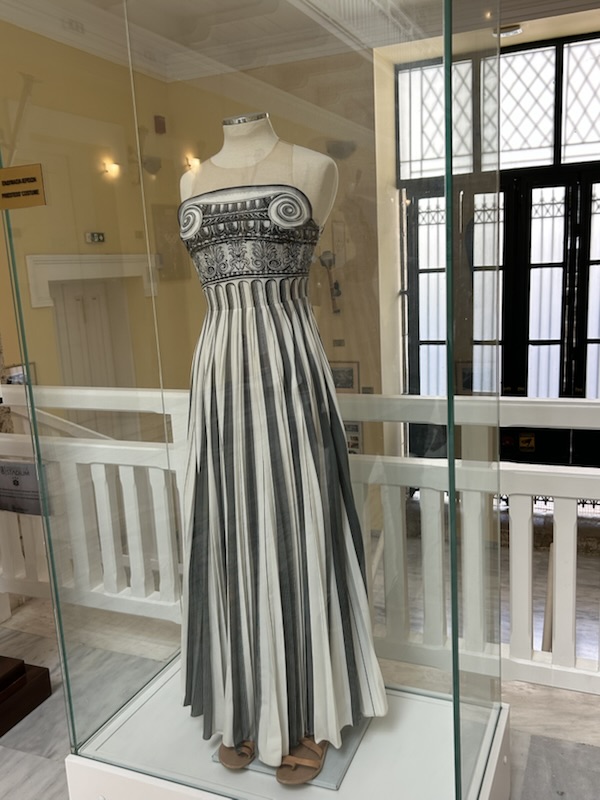
Athens has over 60 museums & many historical locations to explore. We are never at a loss to find things to do as well enjoy revisiting favorite spots around town

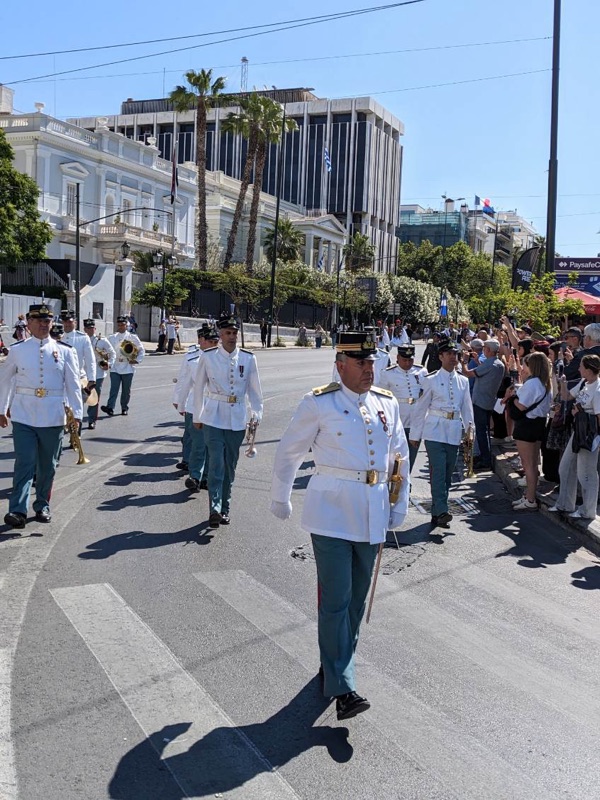
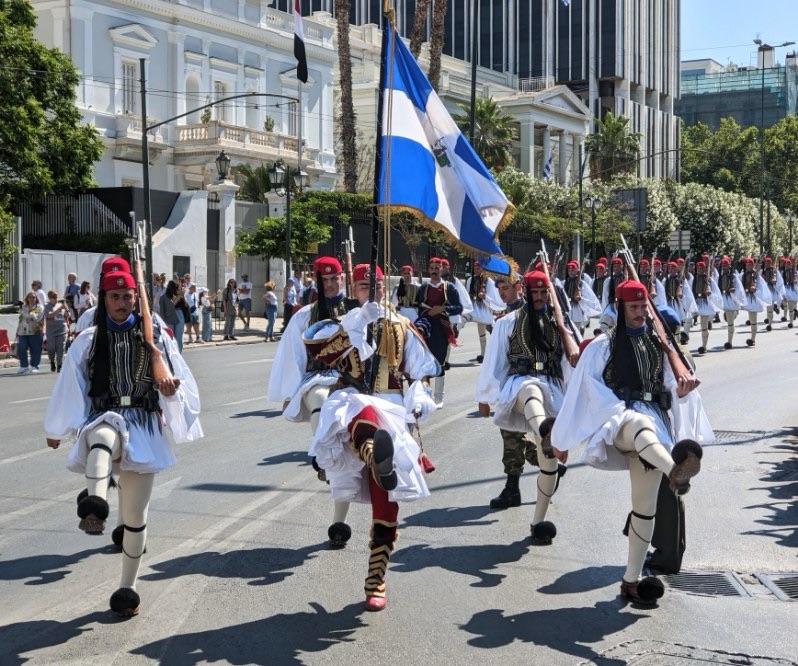
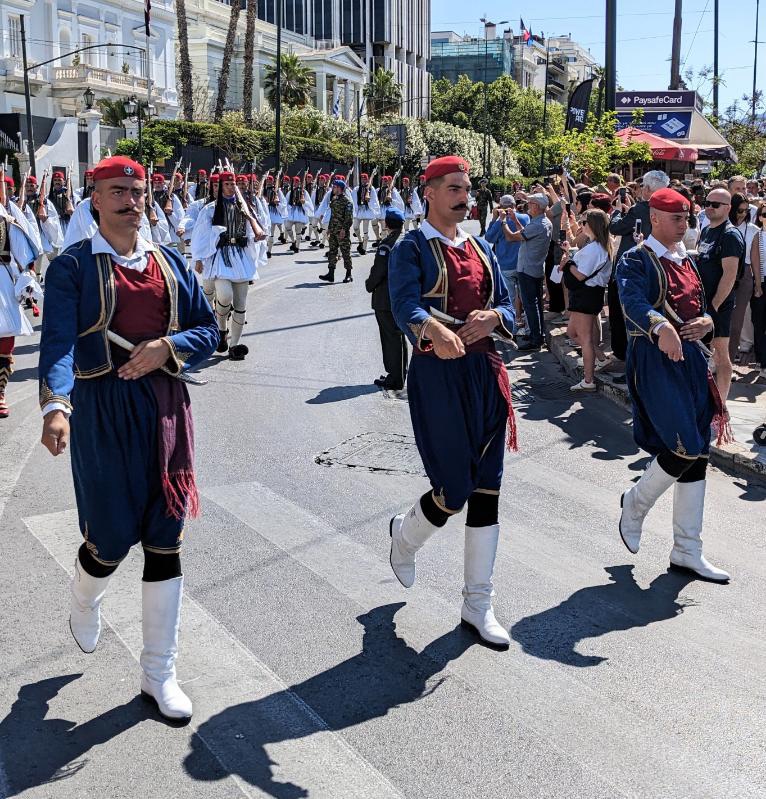
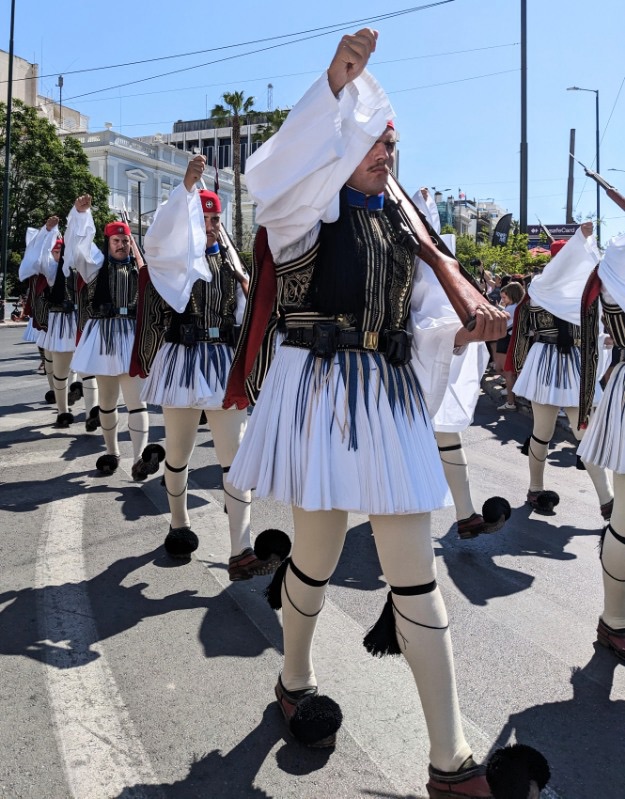
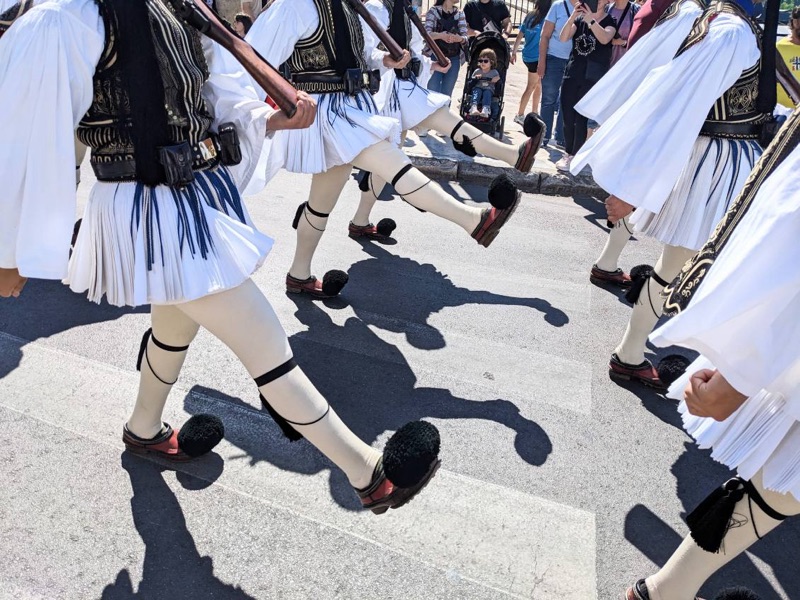
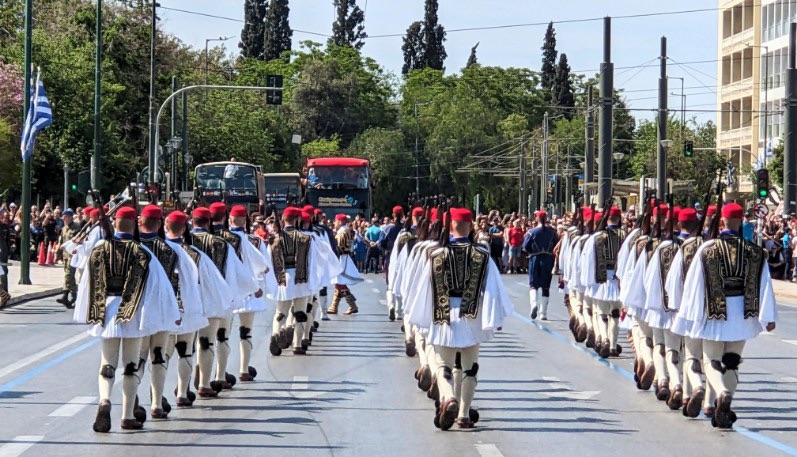
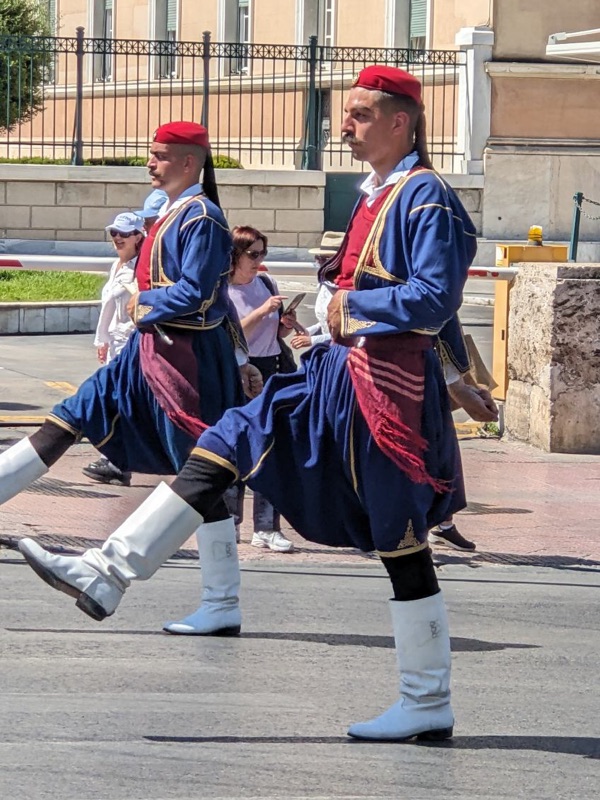
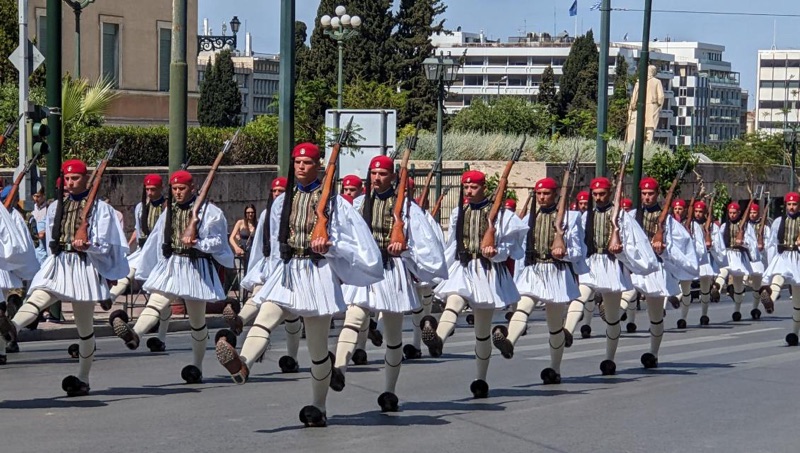
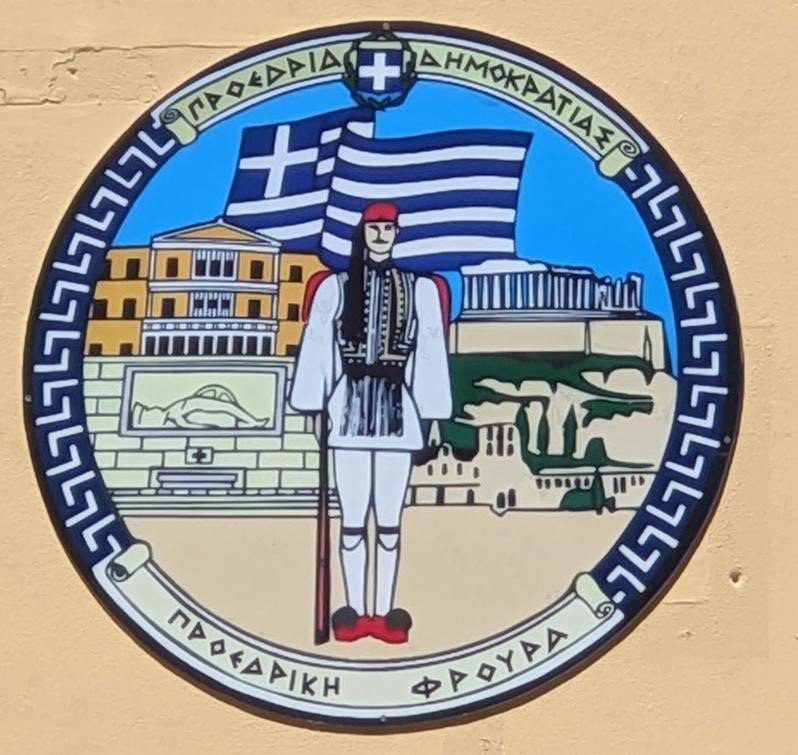
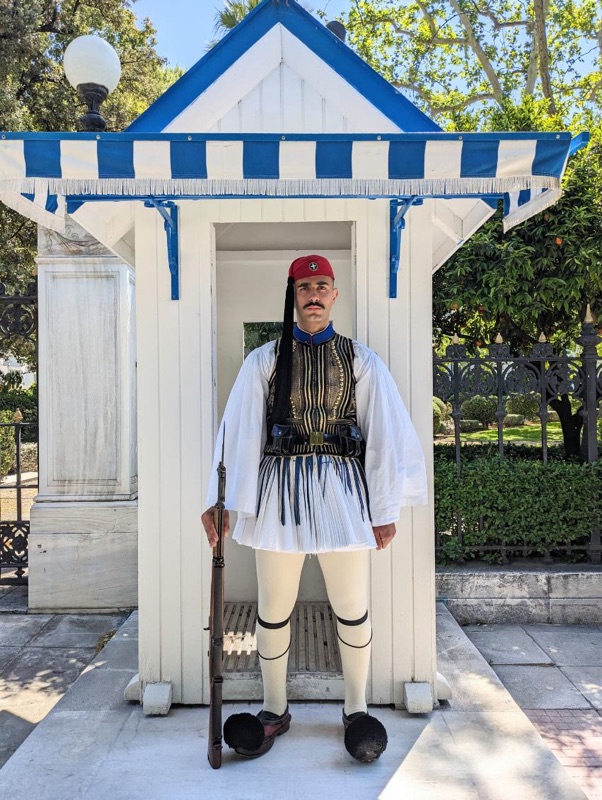
One favorite spot is the Changing of the Guard ceremony at Greece’s Tomb of the Unknown Soldier at the Greek Parliament building at Syntagma Square. Guard changes occur several times a day; but the main ceremony occurs Sundays at 11:00 AM with the evzones in their formal dress uniforms accompanied by a band.
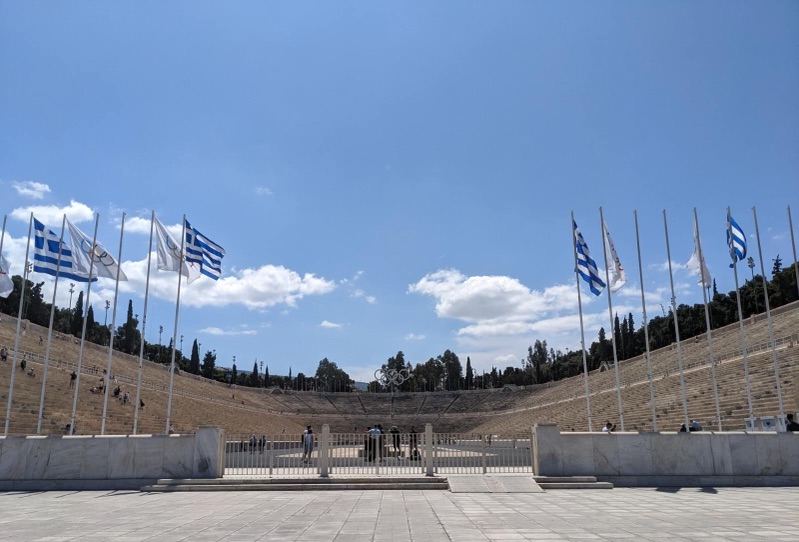
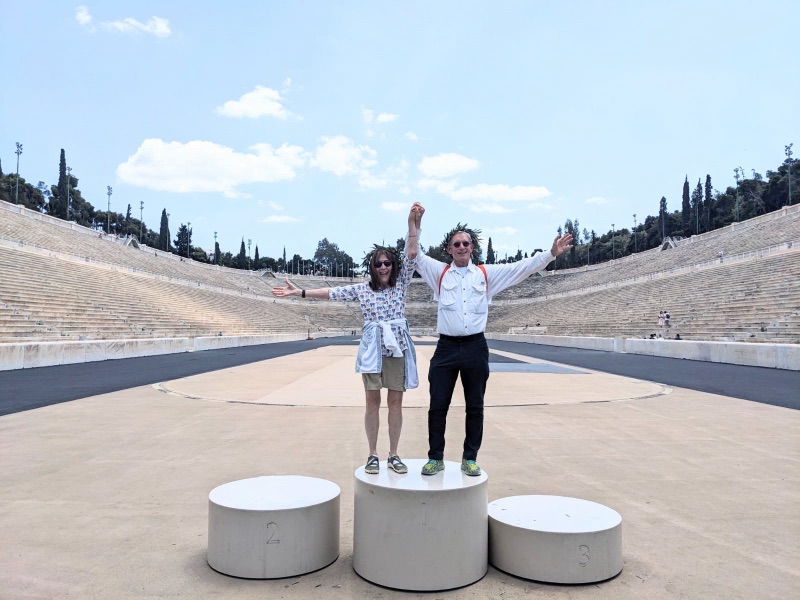
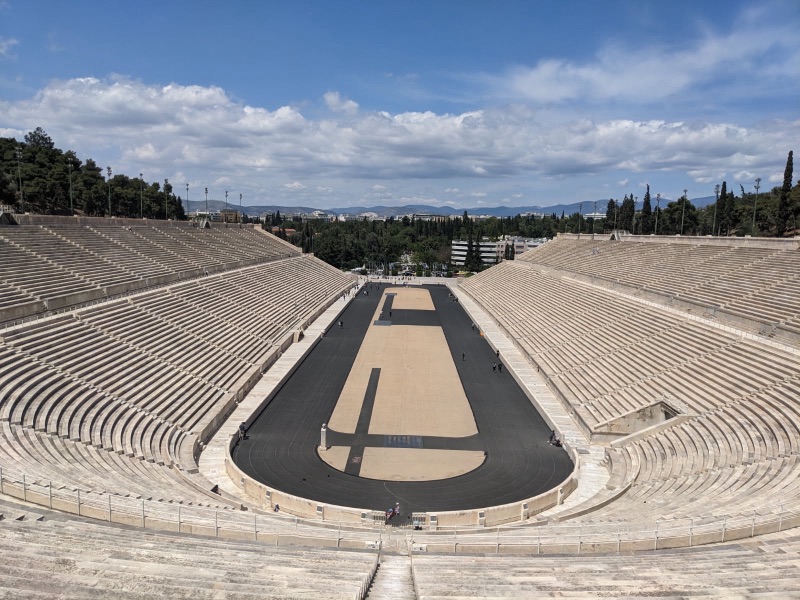
We toured the Panatheniac Stadium for the first time.

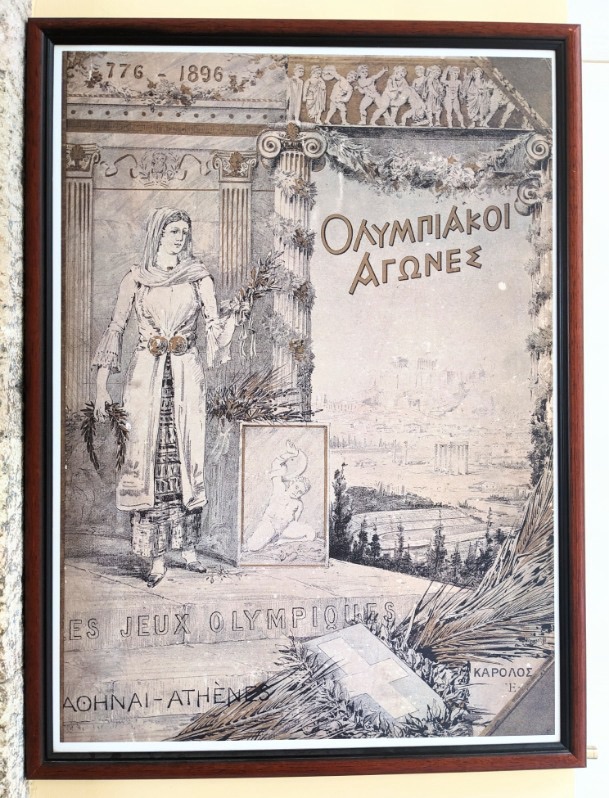
It was originally built in 330 BC. The Romans expanded it to seat 50,000 & refurbished it entirely out of marble. It was used until the 4th Century, then was basically abandoned. It was excavated & renewed in the late 19th Century & hosted the first modern Olympics in 1896. After the Olympic flame is relayed from Olympia, it is transferred to the host country in this stadium.

It is still the only stadium in the world built entirely from marble.

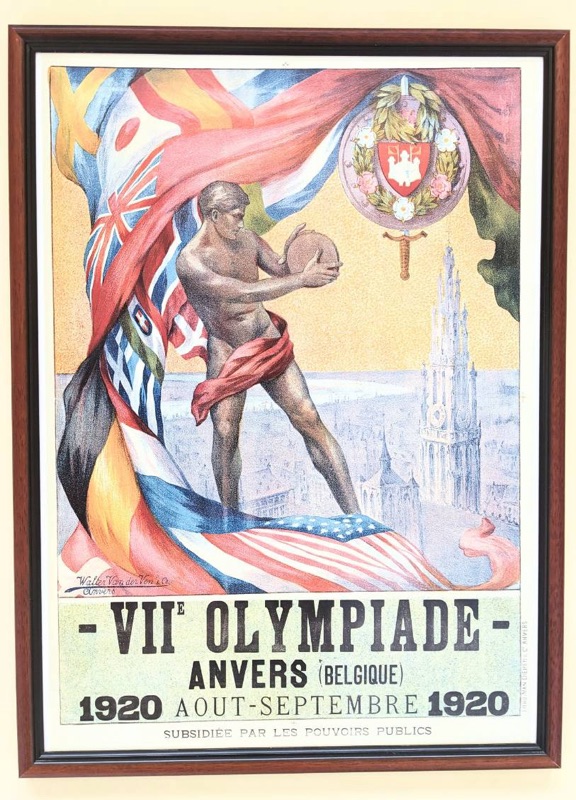
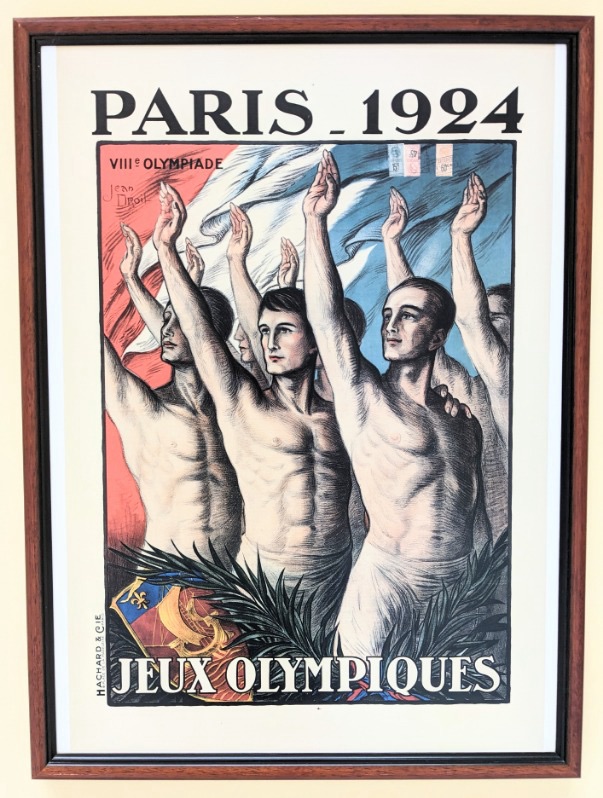
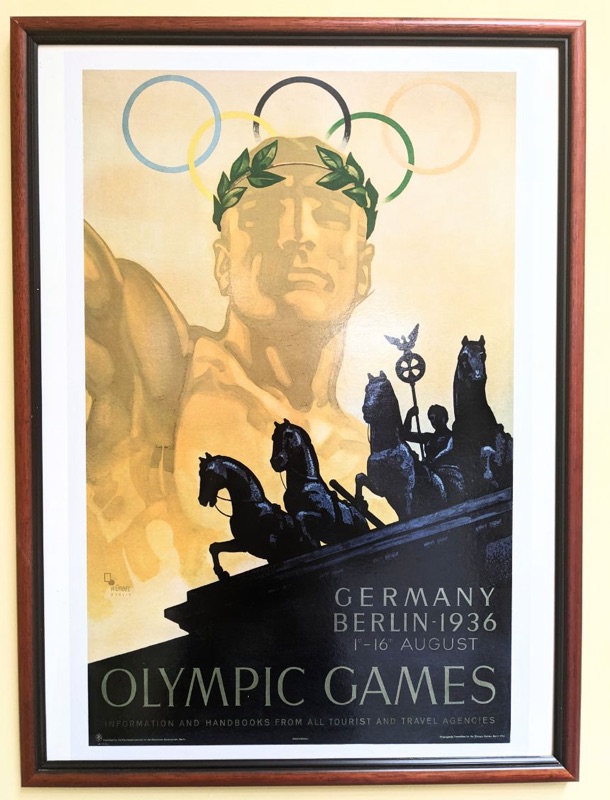
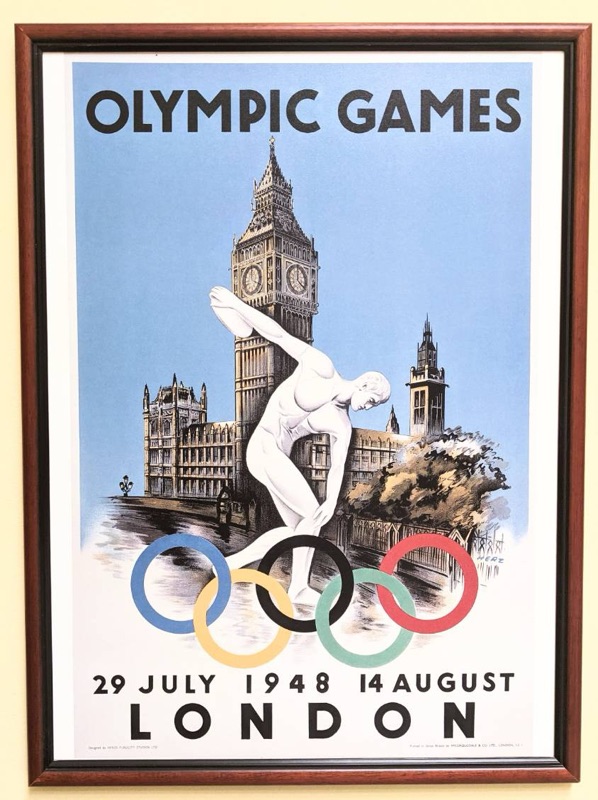
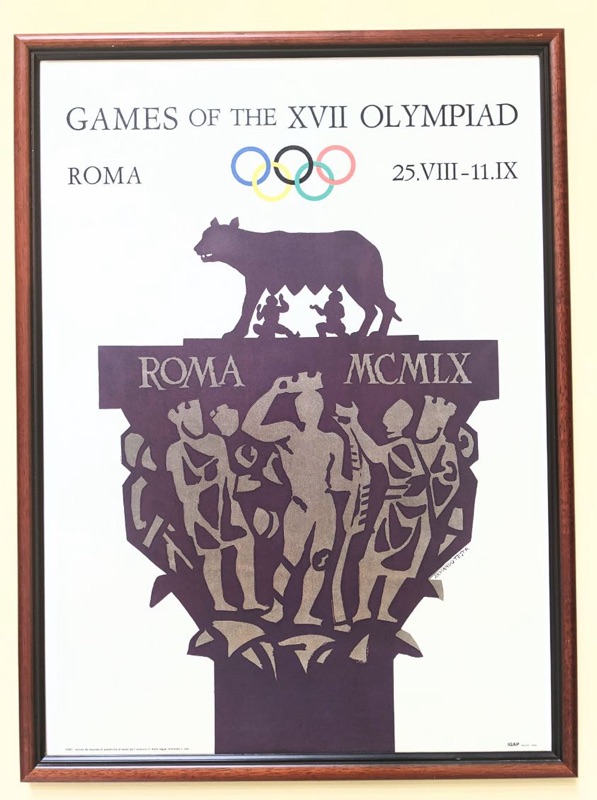
The stadium also has a museum featuring posters from all the Summer Olympics. Here are a few:

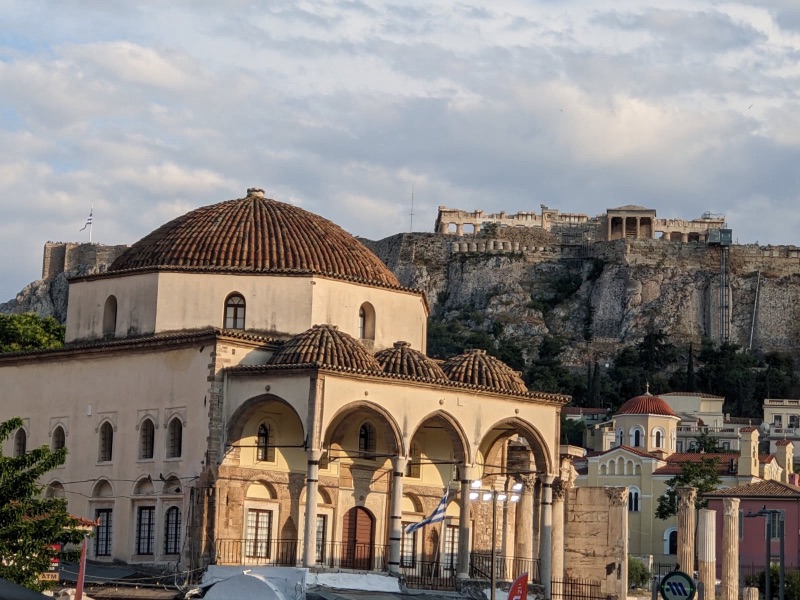
Monastiraki Square under the Parthenon on the Acropolis

Once again, another lovely time in Athens.

Let Me Entertain You, Kind Of

Ok, by now most of us who travel to popular destinations have come to expect and enjoy street entertainers. Their talents put a smile on our face, give us a reason to pause and provide a chance to take a fun selfie. Here are my highlights from this summer.

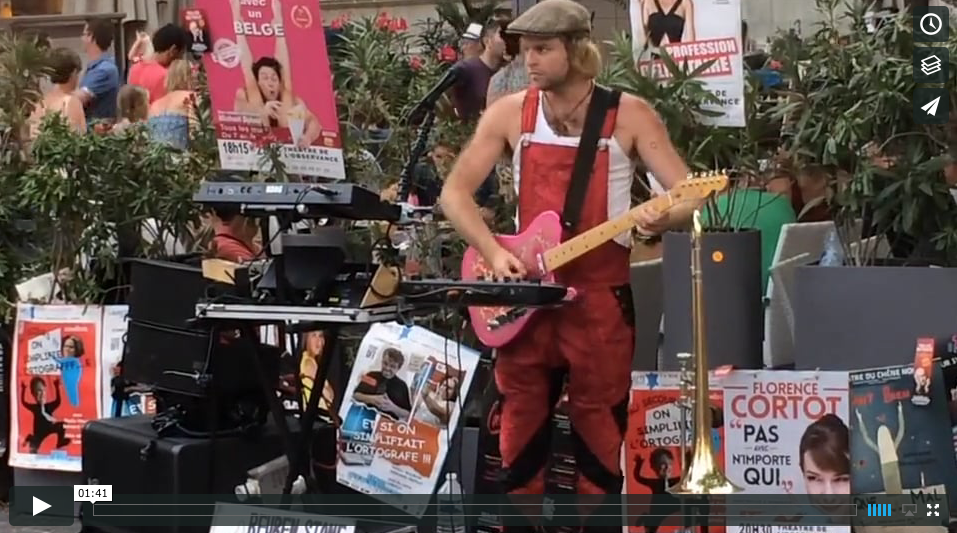
If you love street entertainers, then go to Avignon, France in July. During the Festival d’Avignon the city becomes a hotspot for performers. I’ll be honest, some are fantastic and some needed a little more preparation, but it is still great fun. Starting around noon the walled city looks like a giant costume party. The likes of Snow White and SpongeBob mingle among the tourists while dancers and musician groove to the music. Many are their to promote their local plays or movies, while others are entertainers passing the hat. Its a wonderful way to enjoy an ancient city. My Video: Avignon Street Entertainers

screen-shot-2016-11-24-at-5-24-07-pm

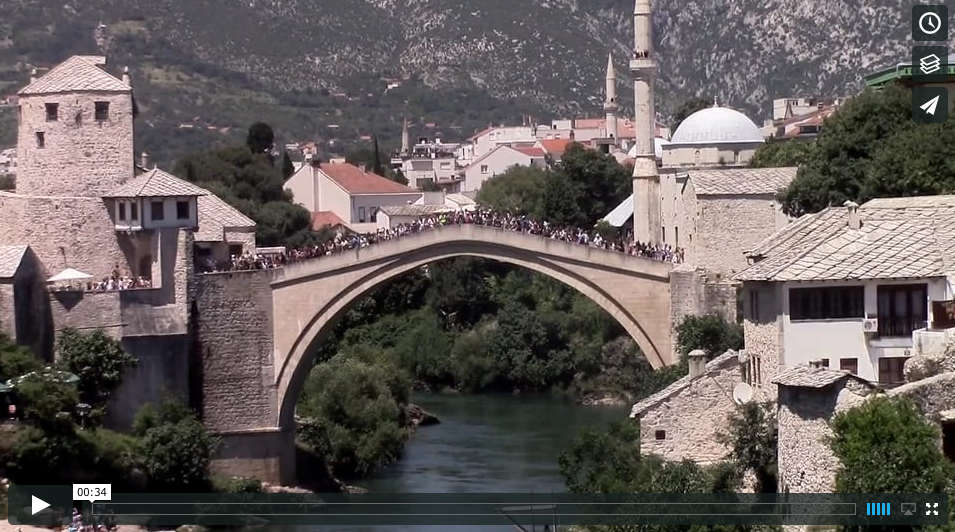
In Mostar, Bosnia-Herzegovina the talent was more physical than creative. Every summer day starting around 10 in the morning until sunset, you will find young men in their swimming trunks around the Stari Most bridge asking for money. Once they feel they have collected enough money, one of them will jump from the 25 meter (82ft.) bridge. (Keep in mind the Olympic high dive platform is only 10 meters high.) This beautiful old bridge was completed in 1566 during the Ottoman Empire. It was destroyed during the Bosnian War in 1993, but thankfully rebuilt with the original stones and finished in 2004. Young men have been jumping from this bridge for centuries and taking part in an annual competition at the end of July. My Video: Mostar Bridge Jumpers

screen-shot-2016-11-24-at-5-24-36-pm

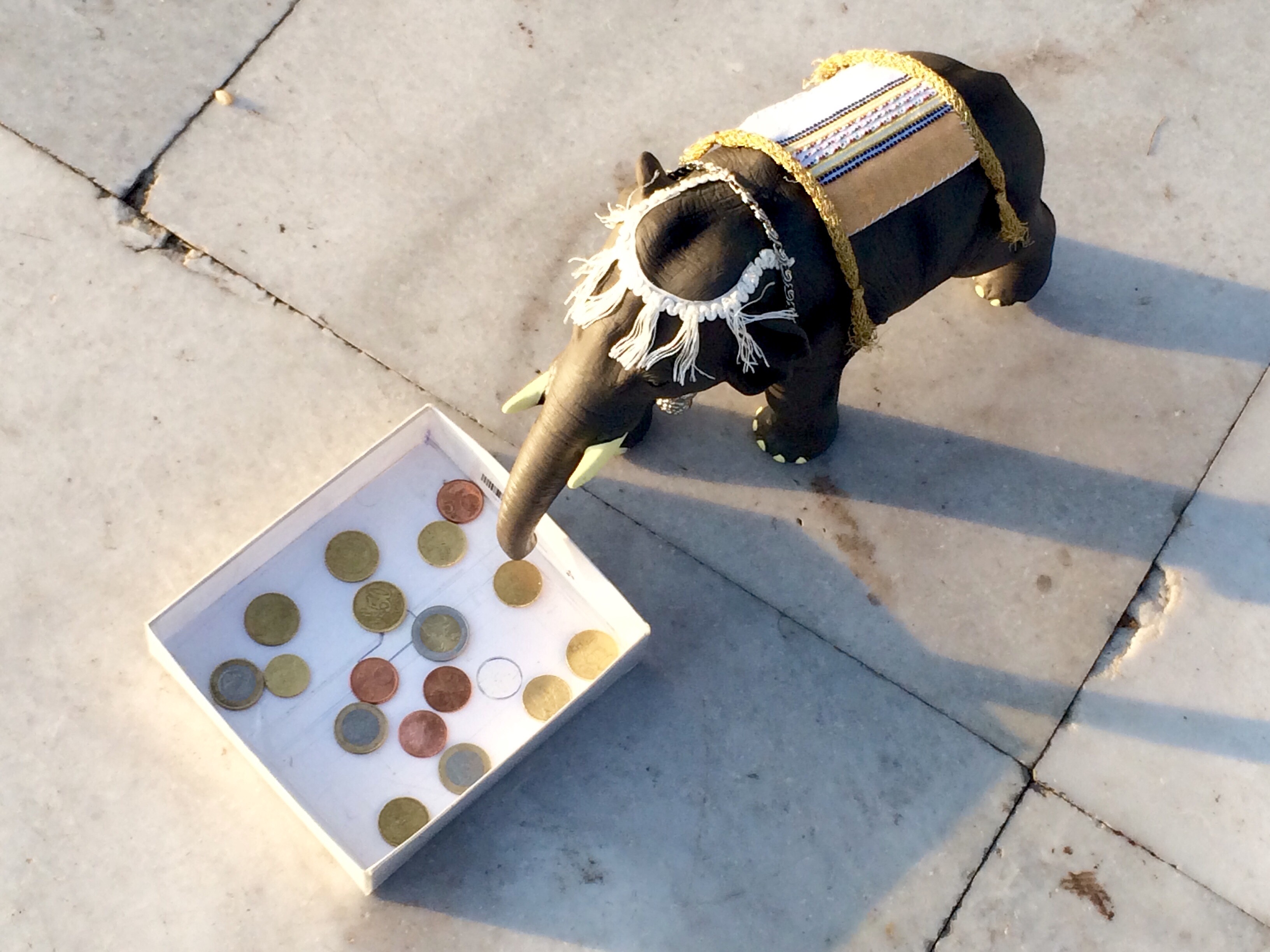
My #1 favorite street performer from this summer had no real talent other than just being itself. Along the waterfront in Thessaloniki, Greece I happened upon the a lone elephant. It stood quiet still not saying a word next to a small cardboard box. I looked around to find its owner, but to no avail. Not even a simple sign giving us a name. The elephant came dressed as though it was ready for a parade, but none was scheduled for the day. But it had the best talent of all, it caused me to stop and wonder.

img_0767

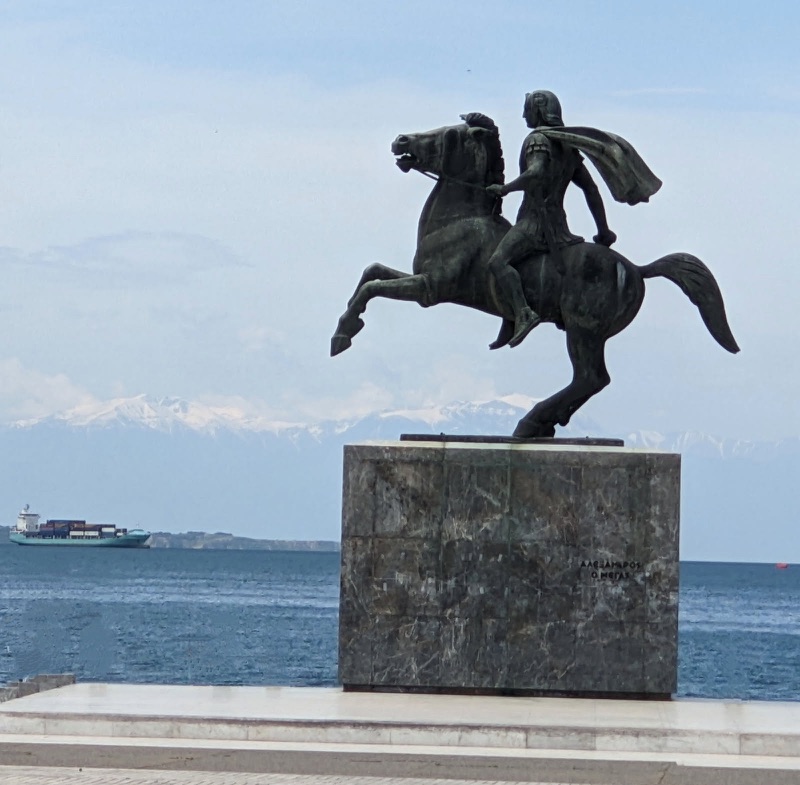
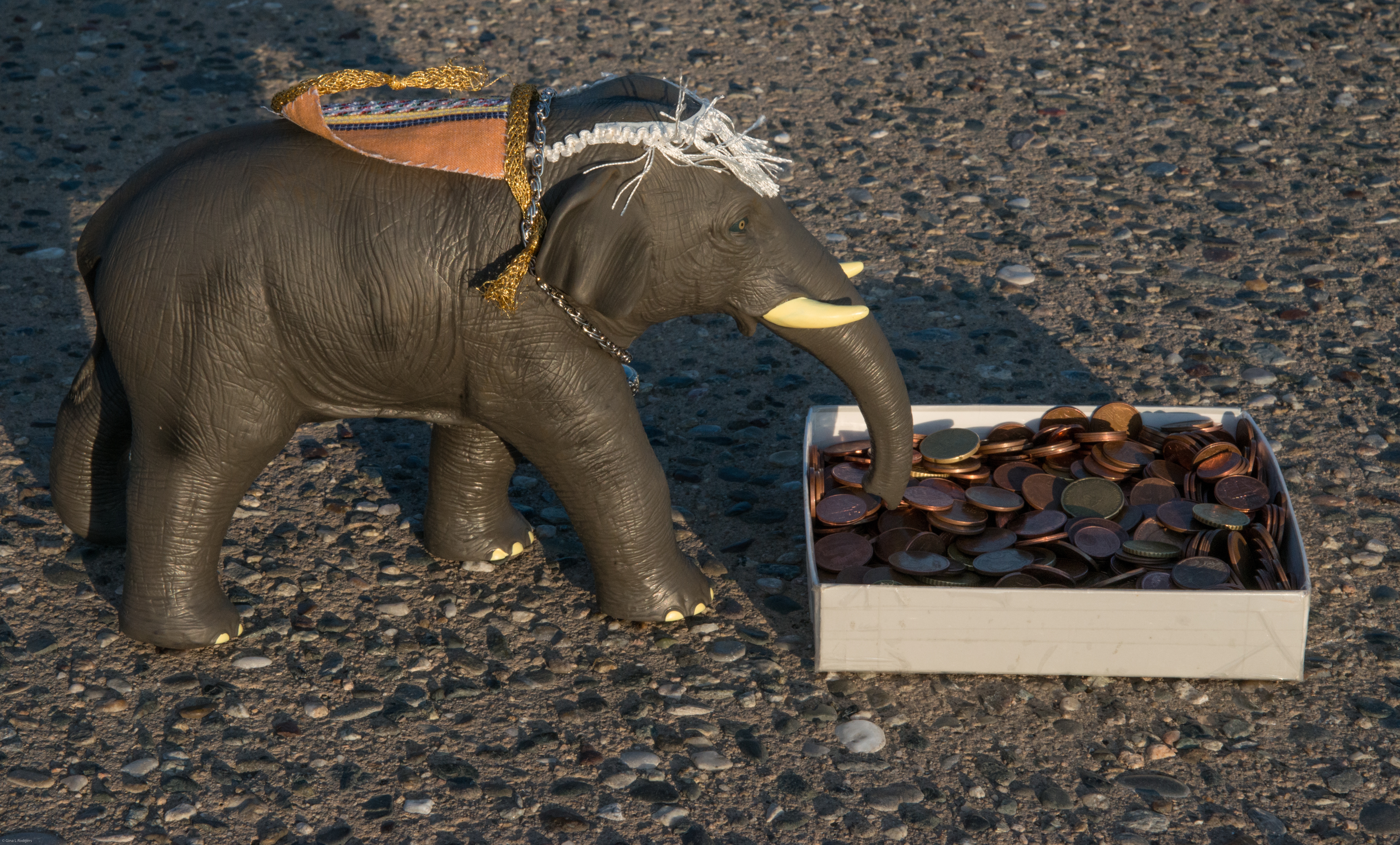
The next evening as the sun was setting I walked again next to the waterfront wondering if I would once again see the lone elephant. Just as I thought it was a one night occurrence, there was the elephant again. It had found a new spot closer to the statue of Alexander the Great. I must not have been the only person who thought this little elephant was very talented because its box was full of coins!

_GRE4456

Can’t Agree More

In the last week I have read two articles in the New York Times that caught my attention. The first was called, “Traveling Without Seeing.” This article talks about the attachment we have for the electronic devices we bring along on our travels. The author, Frank Bruni, spoke about our need to download movies, games and music in preparation for a trip. Then once we are safely tucked away in our hotel room we choose to cocoon ourselves in our room instead of adventuring out into the unknown.  When we do this, we miss opportunities to interact with others and learn about the world.

I often travel alone, and believe me, it is tempting to stay in the hotel, but then I say to myself, “What am I missing out there?” So I close my laptop or iPad, grab my camera and take off to see the sights.

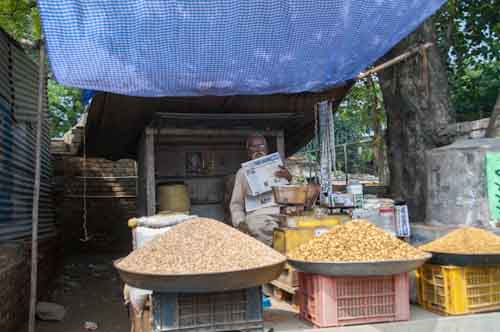
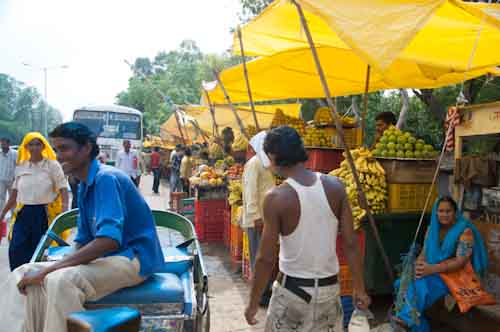
This attitude has provided me with a wealth of rewarding experiences. Even eating alone in a small foreign restaurant can be adventurous.   I use to think  that eating alone would be lonely, but you wouldn’t believe how many people will start a conversation with someone who is by themself. On one occasion in Greece the waiter came over to practice his English. I learned he was from Syria and had been working in Greece for more than a year. I told him I had plans to go to Syria in the near future. He then offered tips on places I should not miss. An hour later a plate of watermelon and a small glass of ouzo came to my table free of charge. How’s that for having a friendly conversation with a stranger.  On a recent trip to  New Delhi I found myself alone in my hotel room on my last day in India. My bags were packed, I had snack food to eat, and enough entertainment options on my iPad to last for a few hours, but I didn’t come to India to stare at a small screen. Instead I spent a few hours strolling the streets taking pictures along the way. The sights I saw on the street were much better than any movie I had downloaded on my iPad.

I recommend reading Frank Bruni’s article for more insight into this topic: New York Times, Traveling without Seeing

The streets of India outside my hotel room. 

The second article called, “Tour Iran? Operators Hope So,”  spoke about traveling to Iran. Only a few weeks after the contested election in 2009, I traveled to Iran with my husband. Even though most of the protests had stopped once we arrived, a few were still continuing in Tehran.  I was fearful of how we would be treated at this turbulent time, but it turned out to be one of our most memorable vacations.  While there my husband and I toured Shiraz, Yazd, Esfahan, and the ancient site of  Persepolis. Everywhere we went, we were treated like treasured guests.  I can’t begin to guess how many times my husband was asked to pose for a picture. I made friendships that I still have today. For this reason, I highly recommend reading the New York Times article about traveling to Iran. Even though the US State Dept. still doesn’t recommend traveling to Iran, I must kindly disagree.
Take the time to read this short article about traveling to Iran: New York Times, Tour Iran? Operators Hope So

Here are 2 links to my images from Iran: http://ginalrodgers.com/images/iran/index.html  and http://ginalrodgers.com/images/persiandesigns/index.html

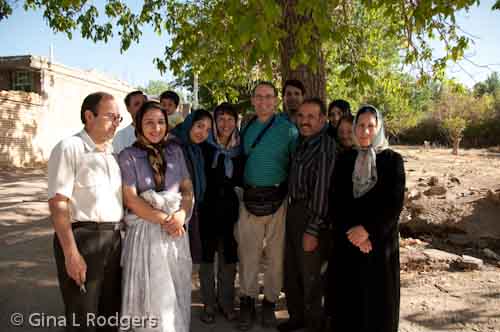
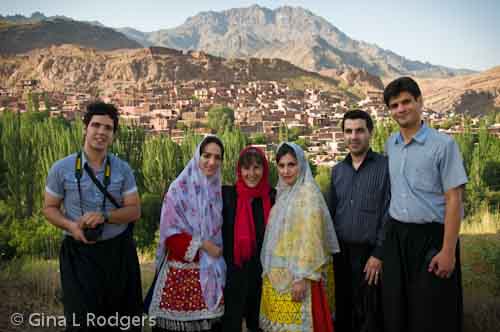
Just a few of the wonderful  and gracious Persians we met in Iran. 

Enjoying watermelon with our woman guide and tour operator.

Enjoying watermelon with our woman guide and tour operator Cyrus Etemadi.

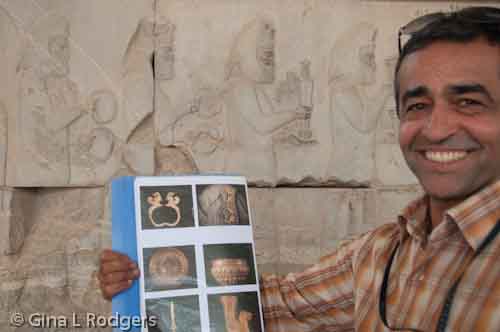
Our very knowledgeable    guide for most of the trip.

Our very knowledgeable guide for most of the trip.

One of the families we met and stayed in their home. When you said "cheese" for a picture they giggled and giggled.
One of the families we met and stayed in their home. When you said “cheese” for a picture they giggled and giggled.
Another family I met near Abyaneh. The women were dressed in native dress for a family celebration.
Another family I met near Abyaneh. The women were dressed in native dress for a family celebration.

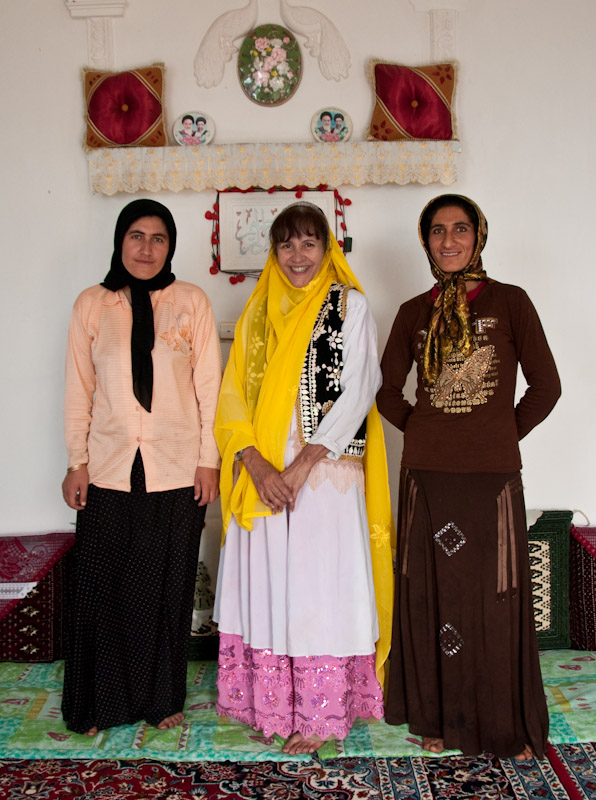
I was able to spend 3 days with this family who lived in the Zagros Mountains. One day the sisters dressed me in their traditional clothes.

I was able to spend 3 days with this family who lived in the Zagros Mountains. One day the sisters dressed me in their traditional clothes.

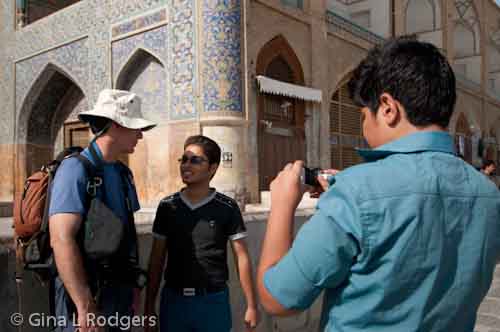
One of the many pictures my husband was asked to pose for.

One of the many pictures my husband was asked to pose for.

For more information about Iran contact Cyrus Etemadi. He operates the tour company used by Asian Pacific Adventures.