
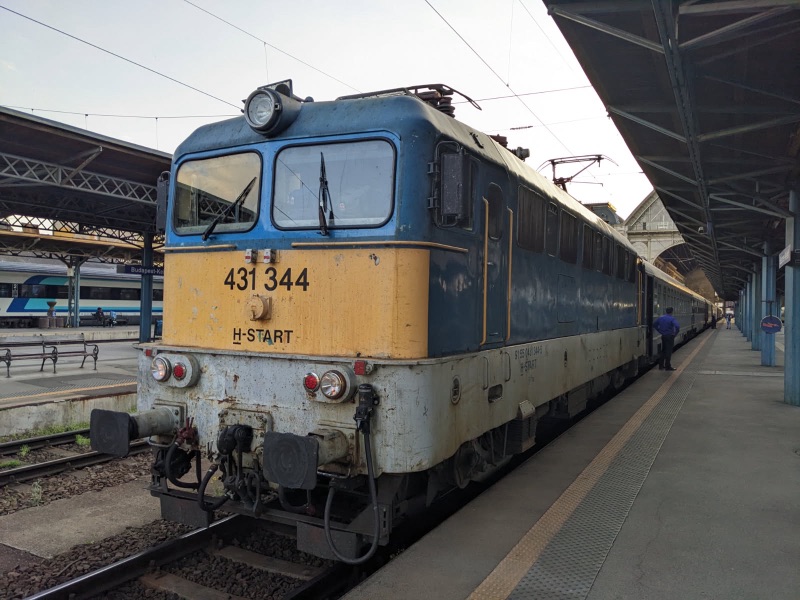
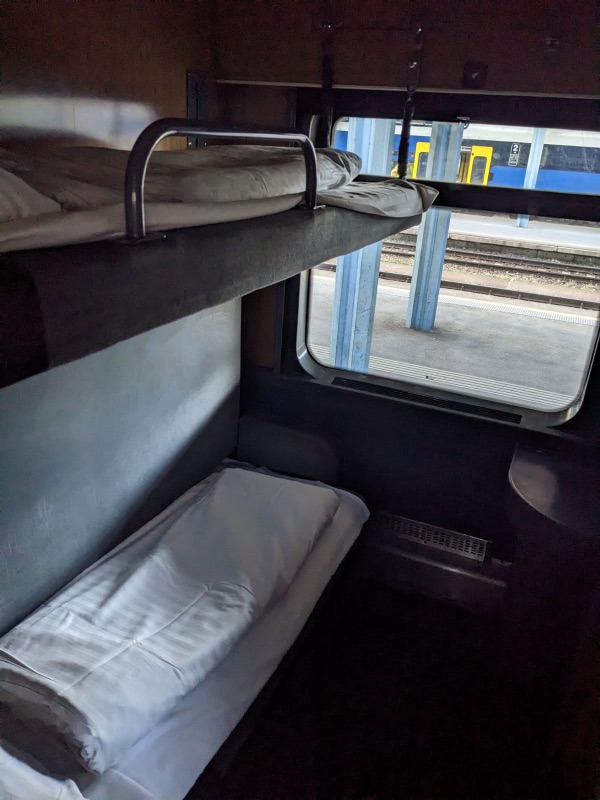
We left Budapest in the evening via overnight train in a sleeper car headed for Romania.
If you were playing “Family Feud” & the question was, “What do people say when you ask them what comes from Romania?” A good chance the #1 answer would be Dracula followed by the #2 answer Gypsy.
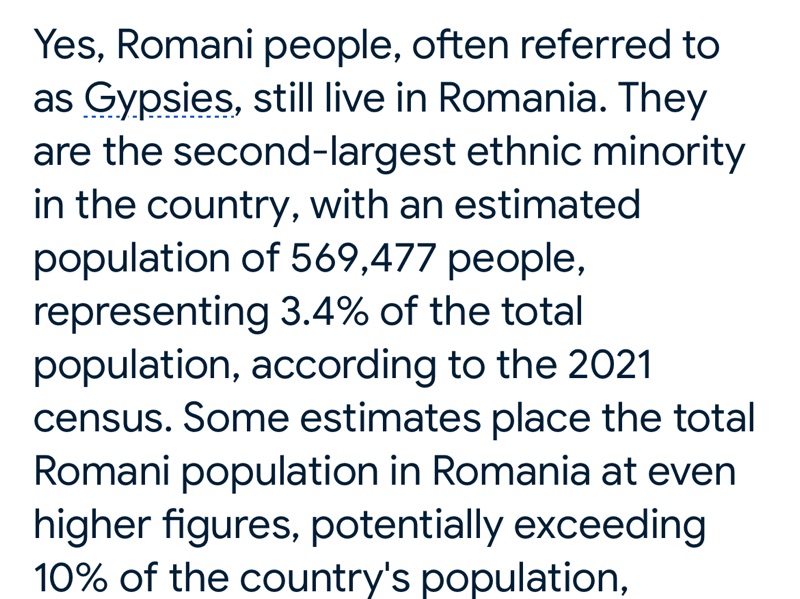
Regarding Gypsies, here is some info:
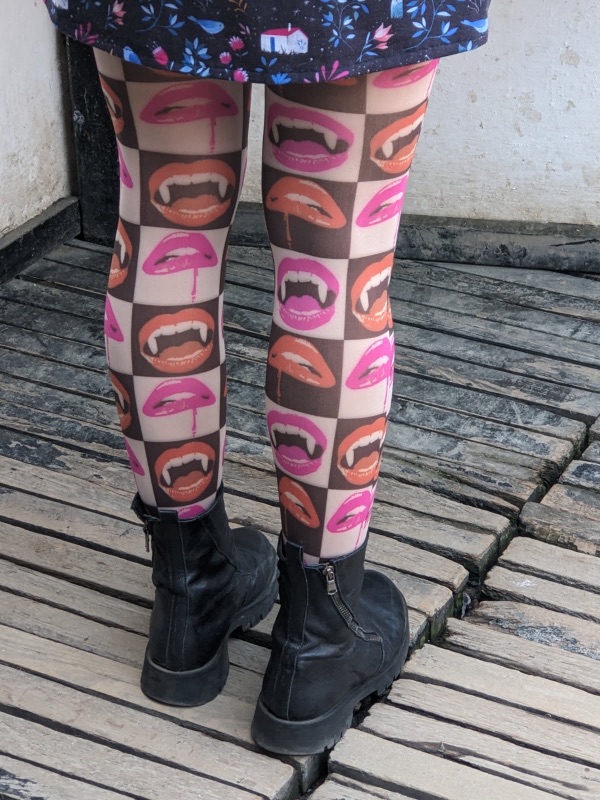
But, without a doubt, Dracula is Romania’s main draw. Dracula is almost like the country’s mascot. His picture & name are constantly used throughout Romania on posters, restaurants, & advertisements.
Never underestimate the power of a best selling, classic book followed by many popular movies. A UK visit is much the same now with Harry Potter.
Bram Stoker’s 1897 Gothic Horror novel “Dracula” takes place in Transylvania’s Carpathian Mountains. We learned that Transylvania means “through the forest” in Latin because the Roman Army passed through those mountains via forested passes.
Hard to believe; but, Bram Stoker never visited Romania. Rather, he used postcards to see what the area looked like & he did research on local folklore to shape both the main character & setting in his book. Just as Stoker wrote that garlic was used to repel vampires, our guide told us that locals still hang garlic around door frames to protect their homes against creatures of the night.
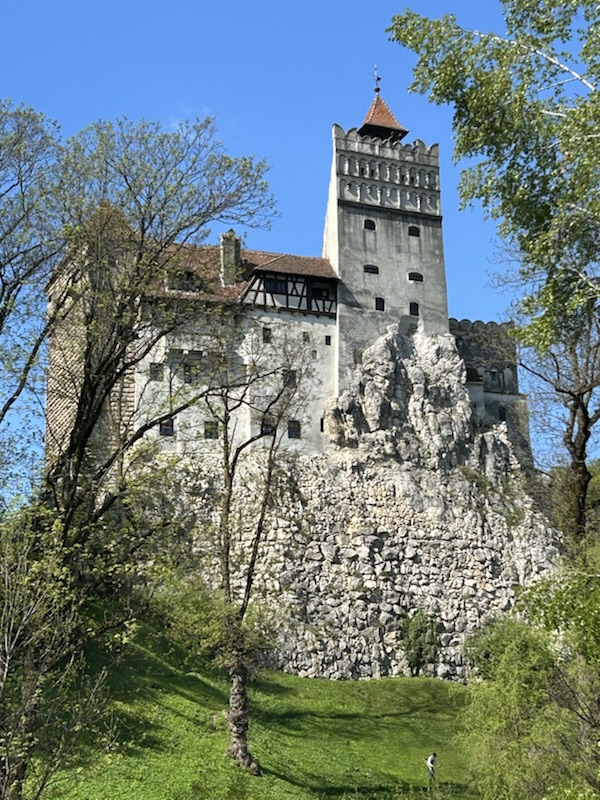
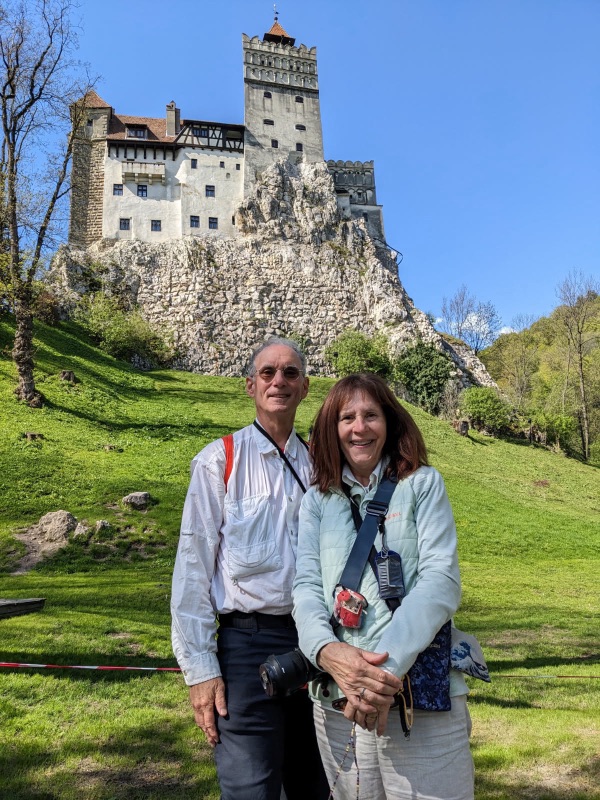
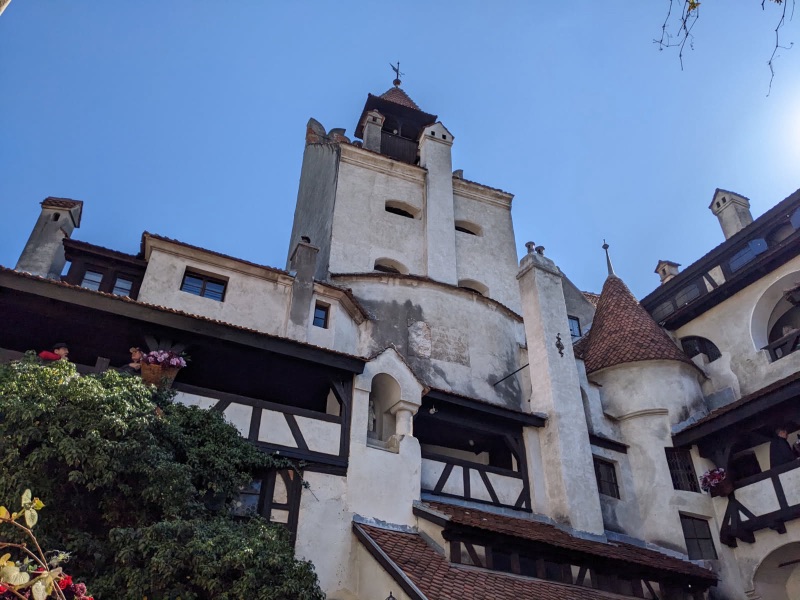
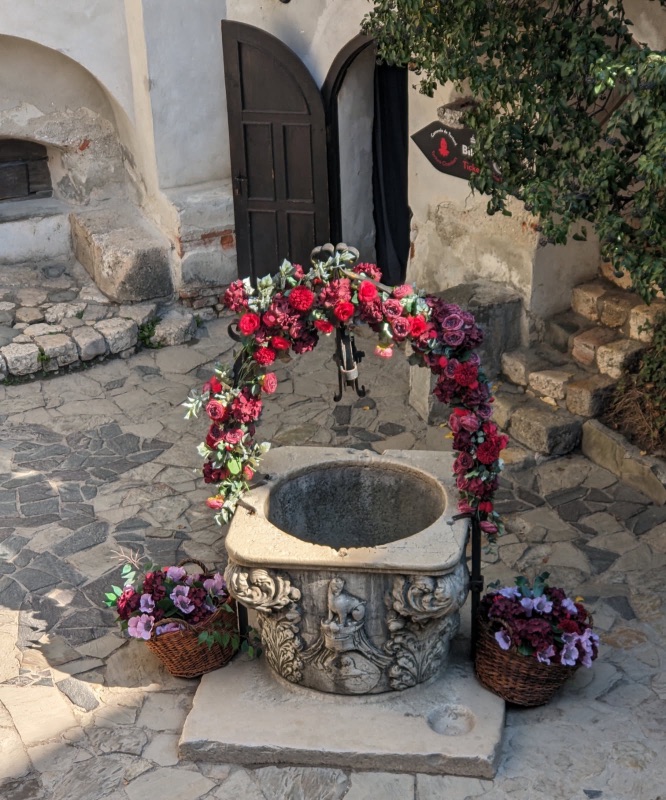
We visited Bran Castle which is a large castle perched high on a very steep hill not too far from Brasov. Based on Stoker’s vivid description of Dracula’s lair, it is now called Dracula’s Castle.
It is more than just a tourist trap, but a lovely castle to visit that was once the summer palace for Romania’s Queen Marie in the early 1900’s.
Vlad Tepes (Tepes means “the Impaler”) who partly inspired Dracula through his penchant to impale his enemies & was rumored to drink their blood never lived here.
However, since Bran Castle overlooked & defended a key pass through the Carpathian Mountains, he almost certainly stayed there.
Vlad’s father was Vlad Dracul (Vlad the Dragon). His given name was Vlad Dracula meaning “Vlad the Dragon’s Son”. In 18th Century Romania, “ Dracul” became the word for “Devil”, so Dracula means “Son of the Devil”.
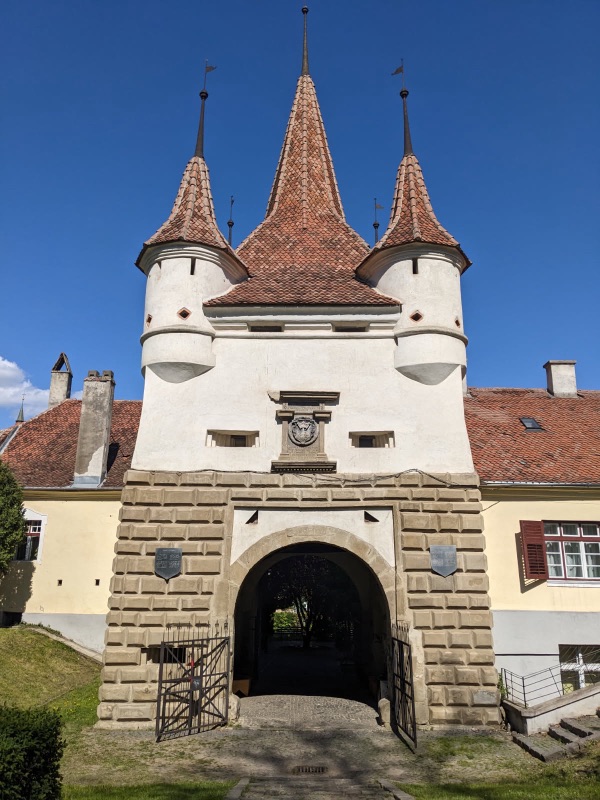
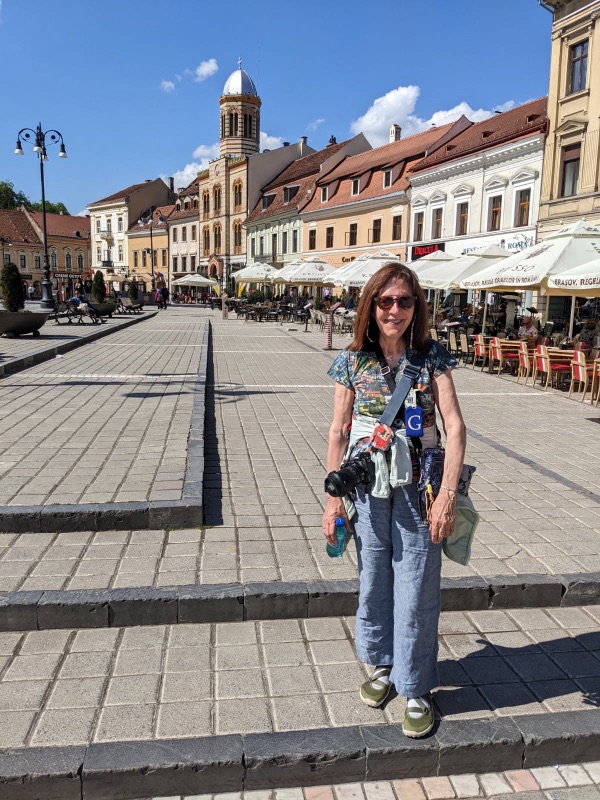
Brasov’s old city is very quaint with a city square & old church. It looks a lot like many small villages in Southern Germany because many Saxons from there immigrated to Romania.
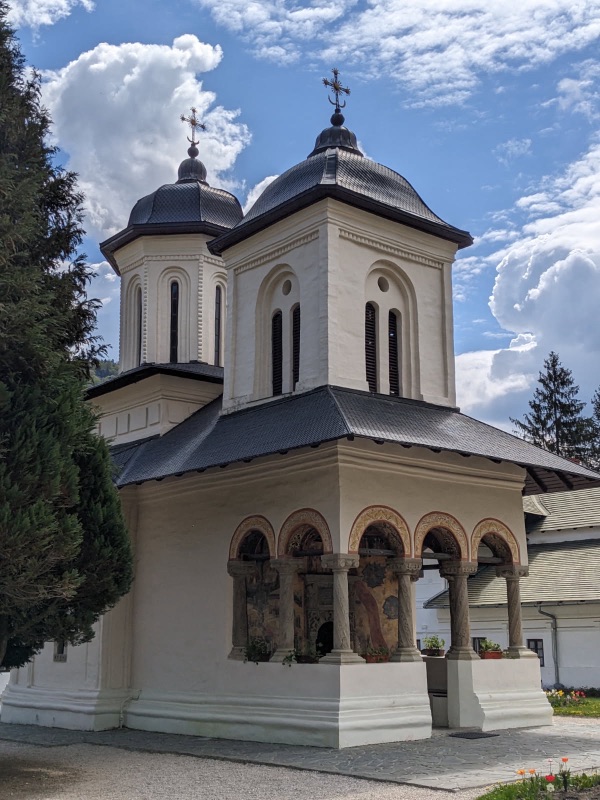
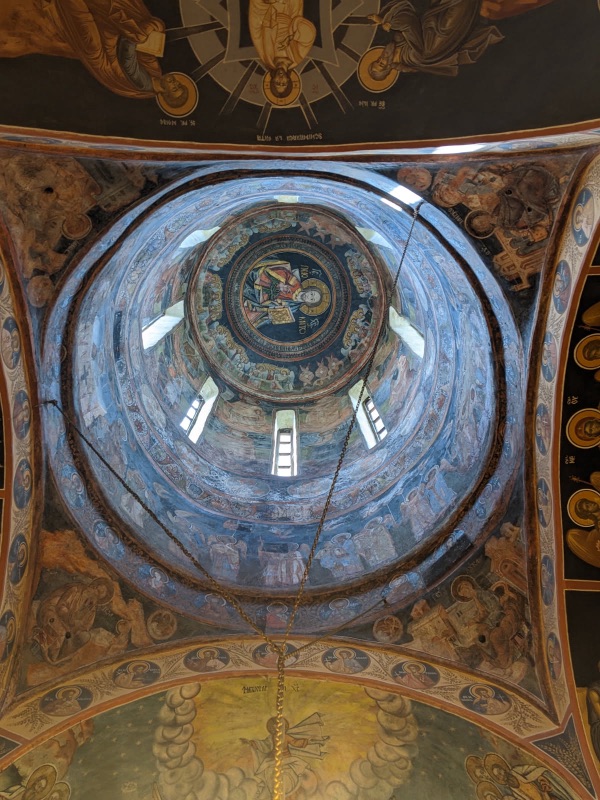
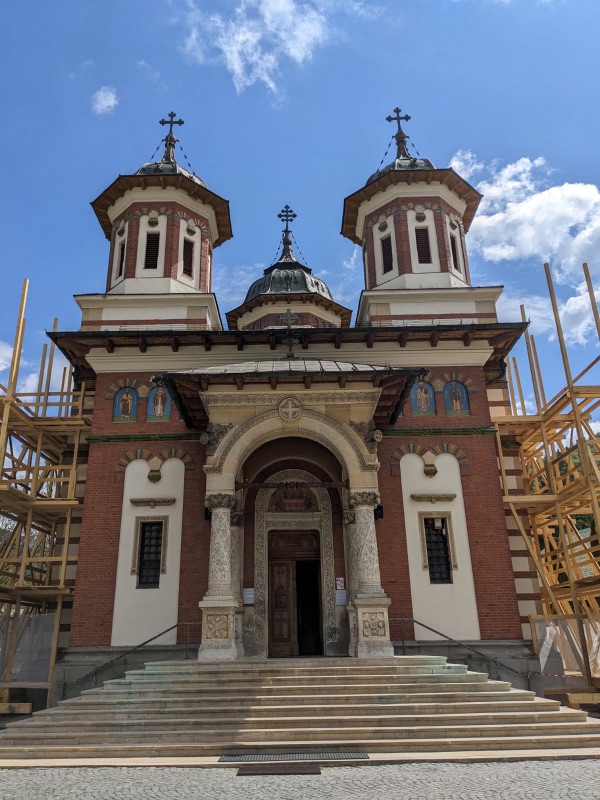
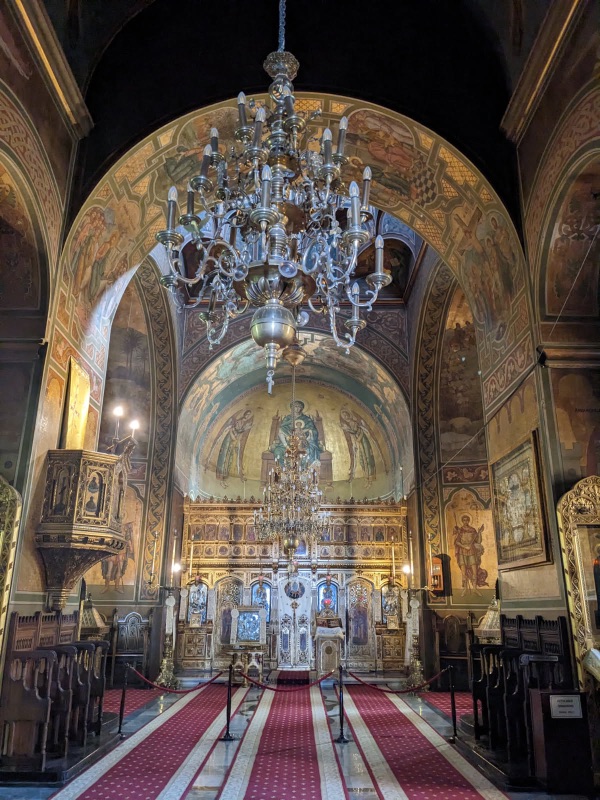
We visited the small Sinaia Monastery founded in 1695 where a few monks still live. The small Orthodox church has beautiful frescoes.

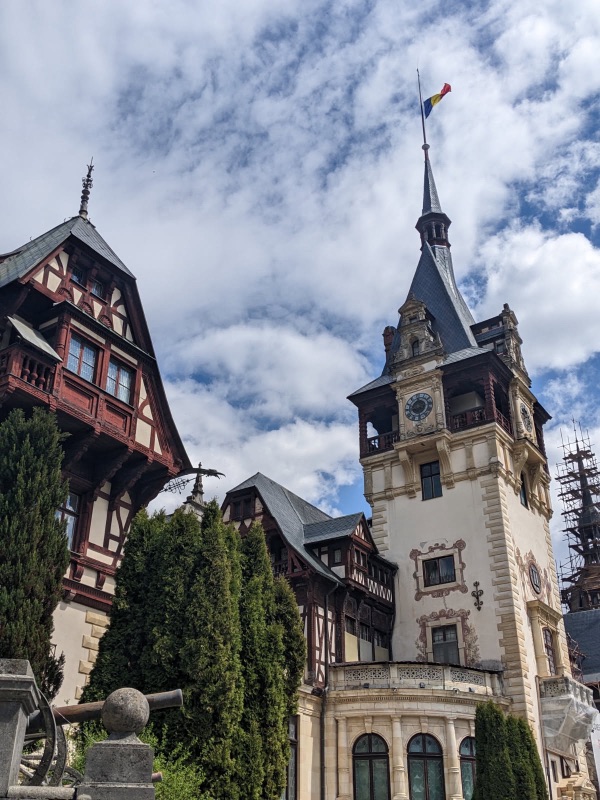
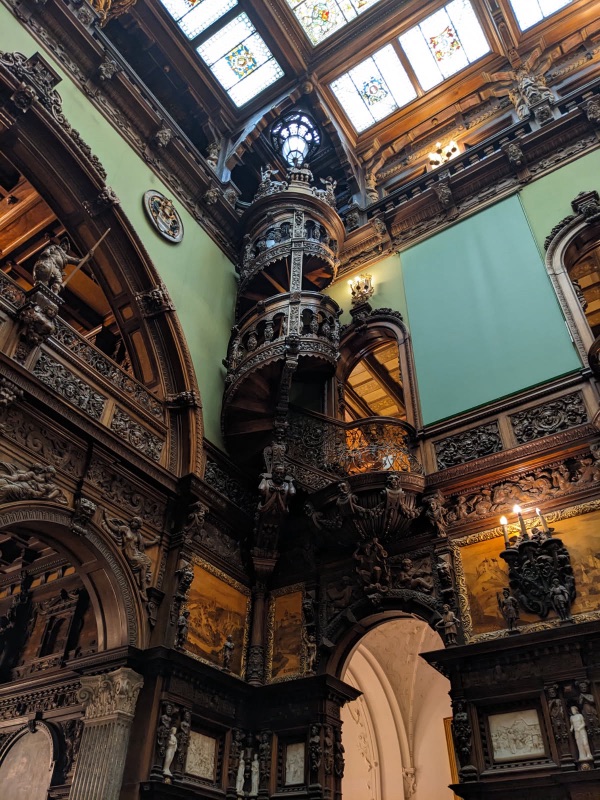
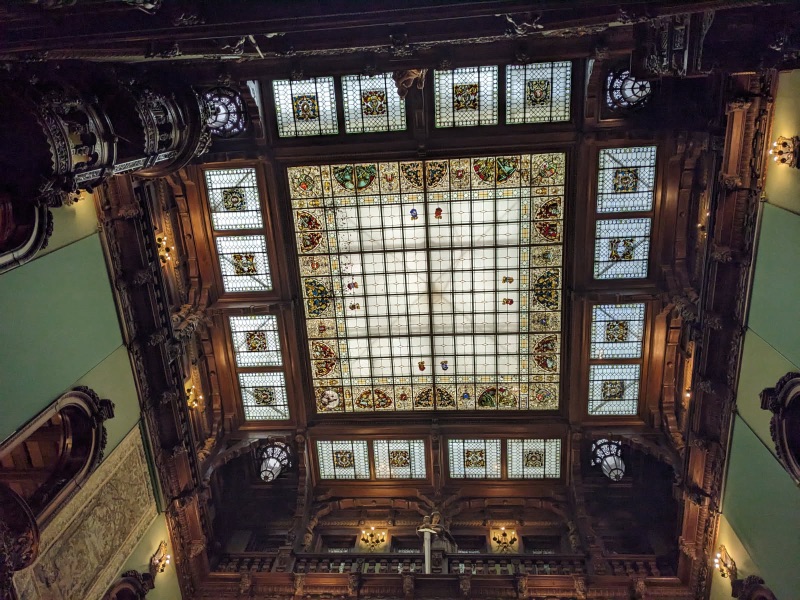
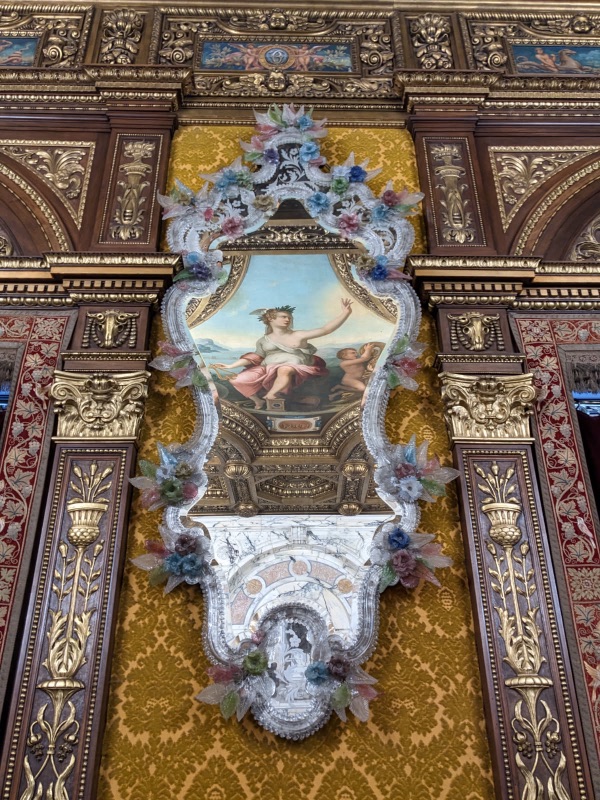
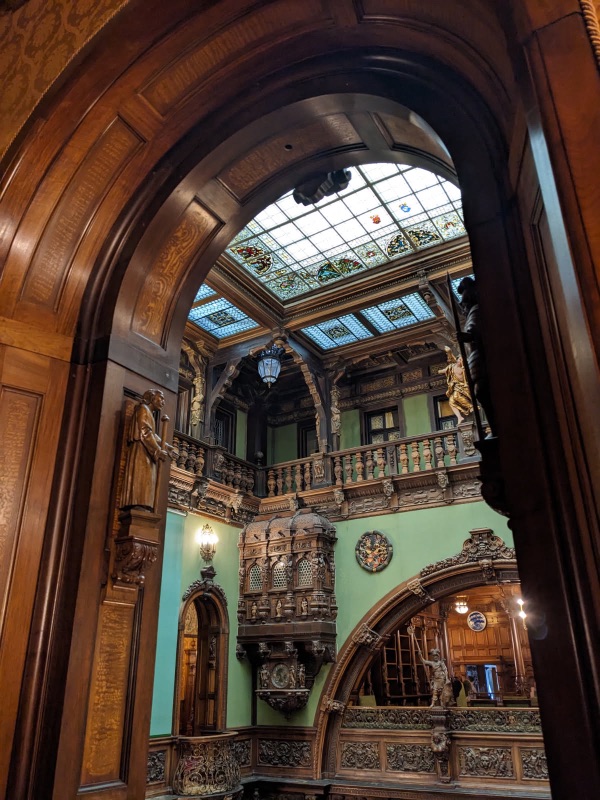
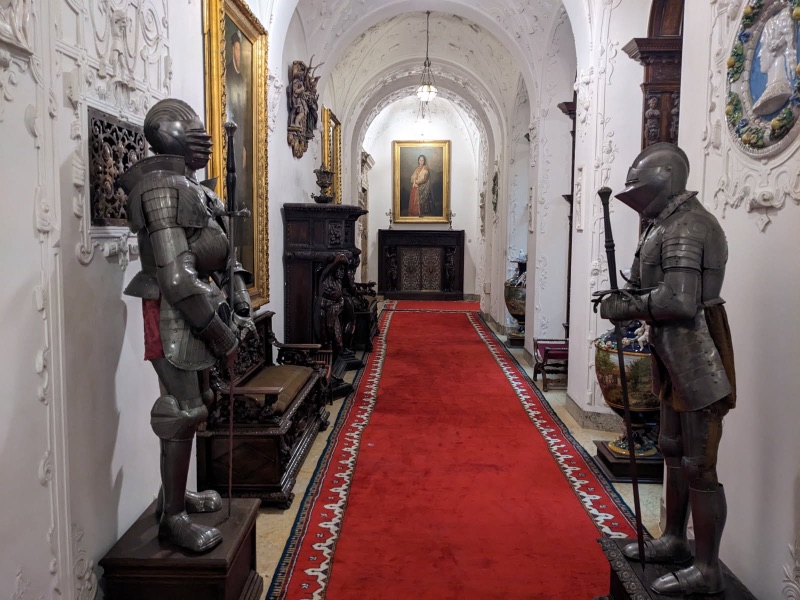
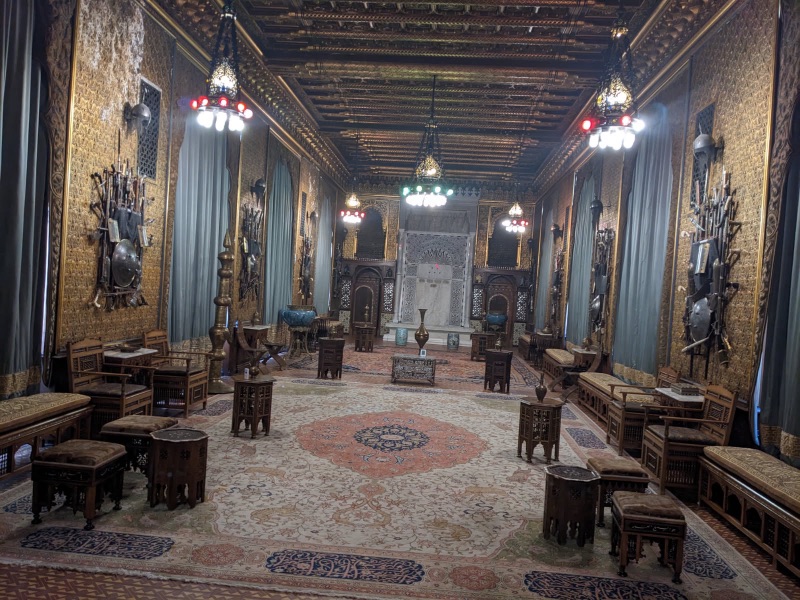
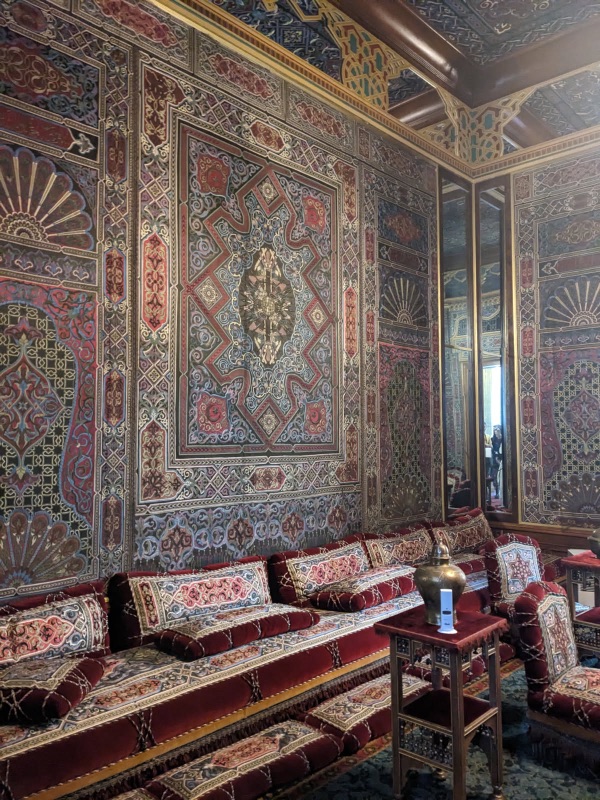
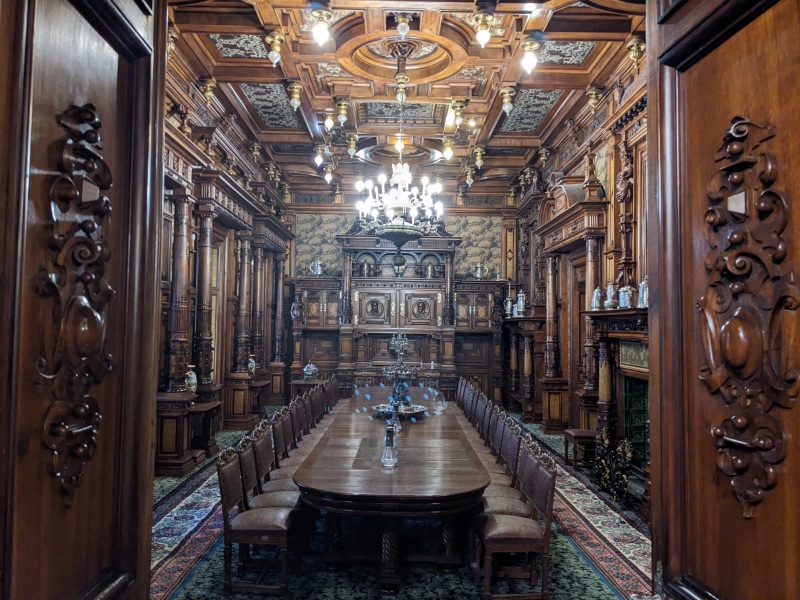
Our last Transylvania highlight was Peles Castle. It was built from 1873 till 1914 by Romania’s King Carol I. Its name comes from the nearby Peles Creek.
Unlike older palaces, this one was not retrofitted to incorporate modern conveniences; but, was designed & built to have electricity, plumbing, heating, telephones, elevators, central vacuum system, etc. to support 170 rooms & 30 bathrooms.
It is decorated more with wood than marble to provide warmth during the harsh Carpathian Mountains winter. Each & every room is wonderful to gaze upon. Artists from around the world were invited to decorate different portions in the home.
An interesting fact we learned from our guide was that the Orient Express would stop here on its way from Paris as its wealthy passengers were invited to dine at the castle before going on to Istanbul.
A visit to Transylvania & the Carpathian Mountains was well worth it. The region is also known for hiking trails in its mountains which we might explore one day. The area looks a bit like the Bavarian Alps. Except here, bears still wander the mountains & hikers must always be on alert. I even got a bear alert on my phone while we were in the mountains.
 The Wanderers