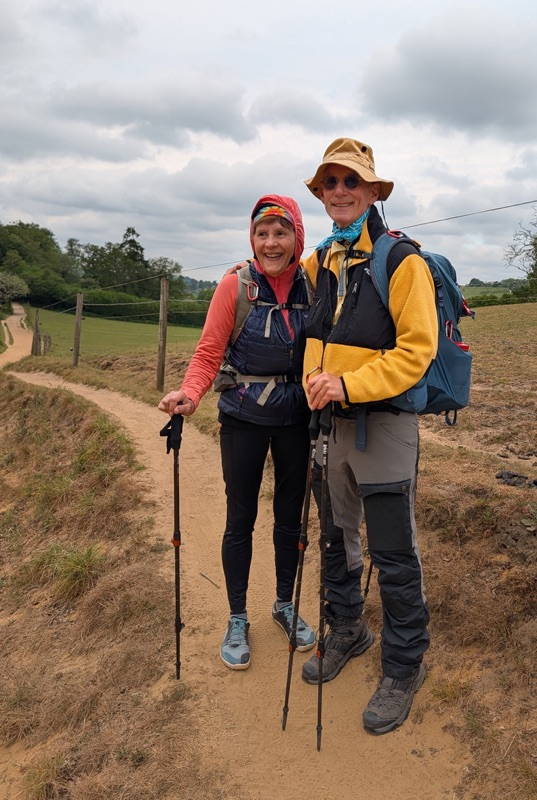
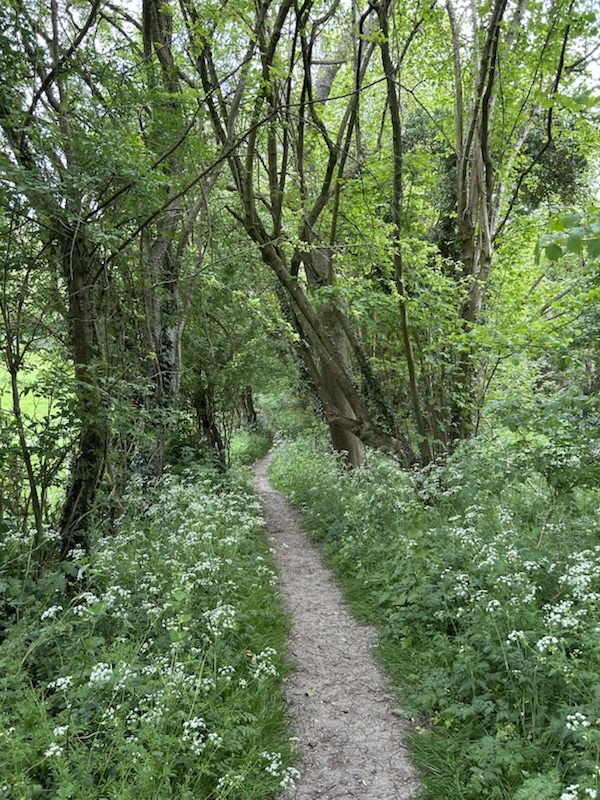
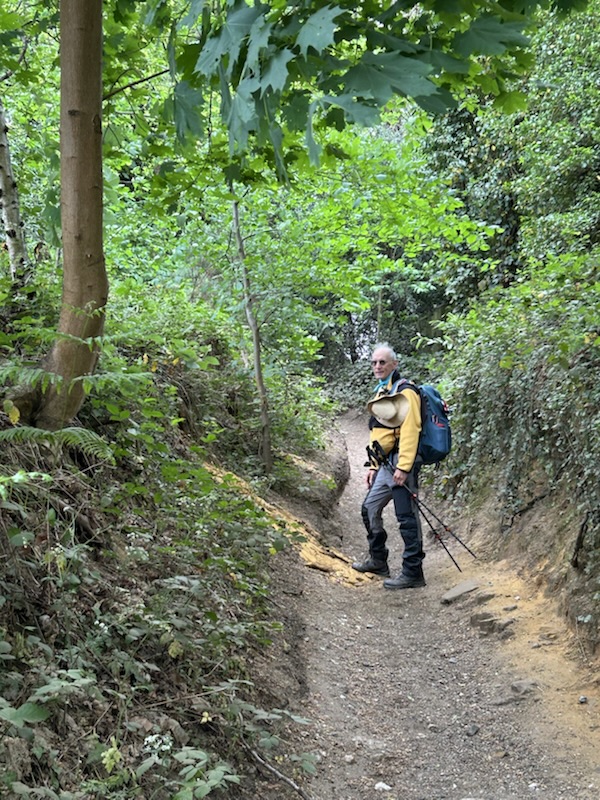
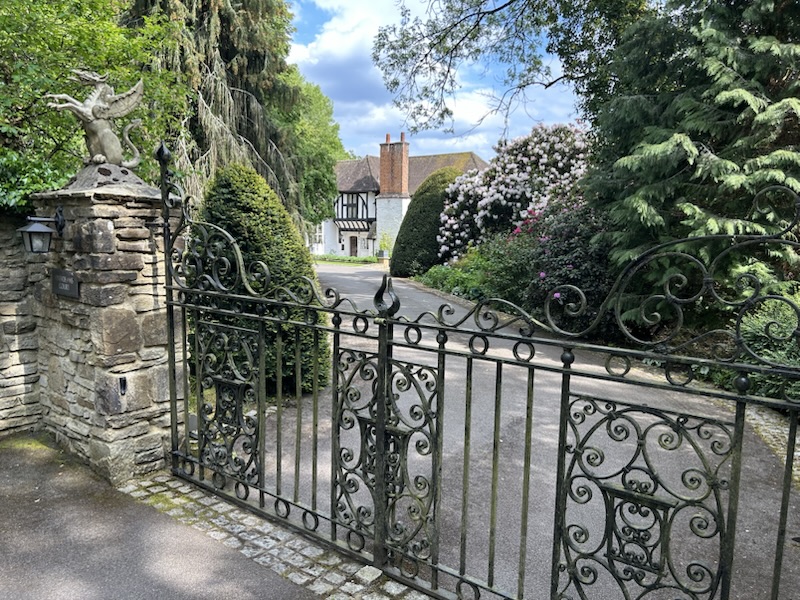
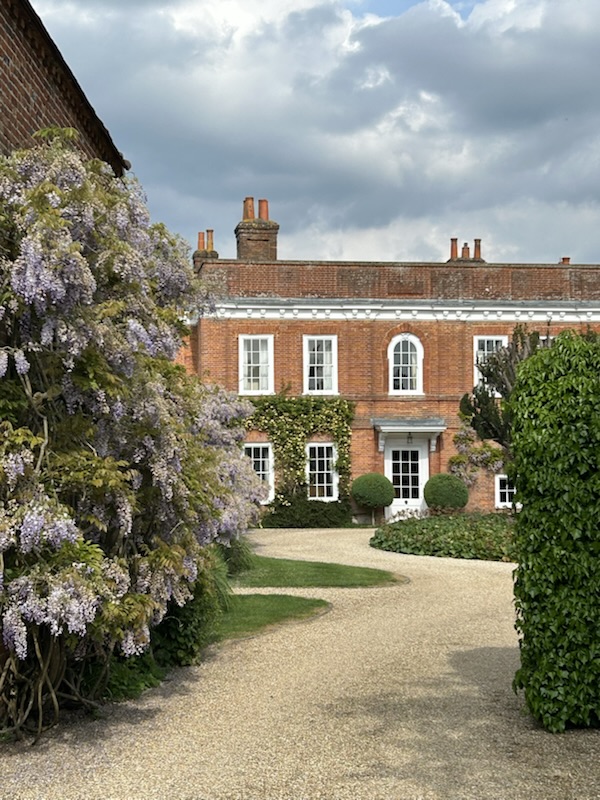
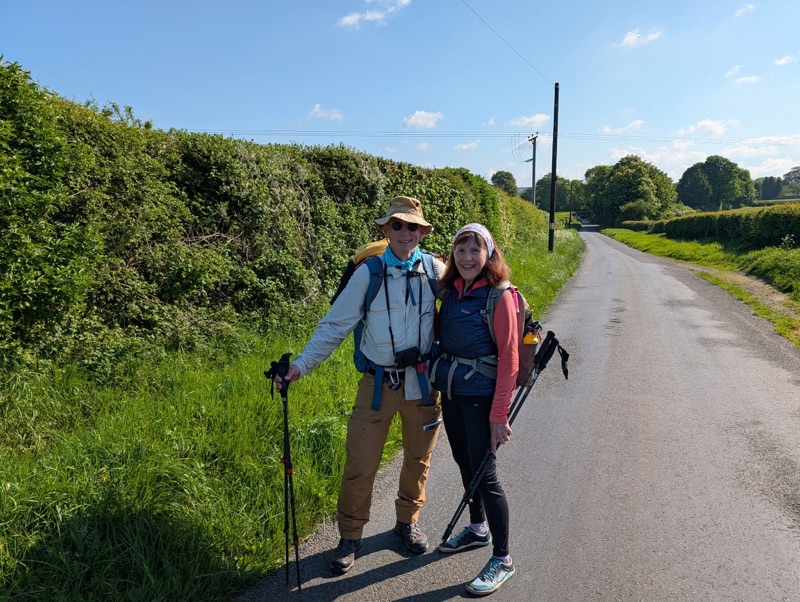
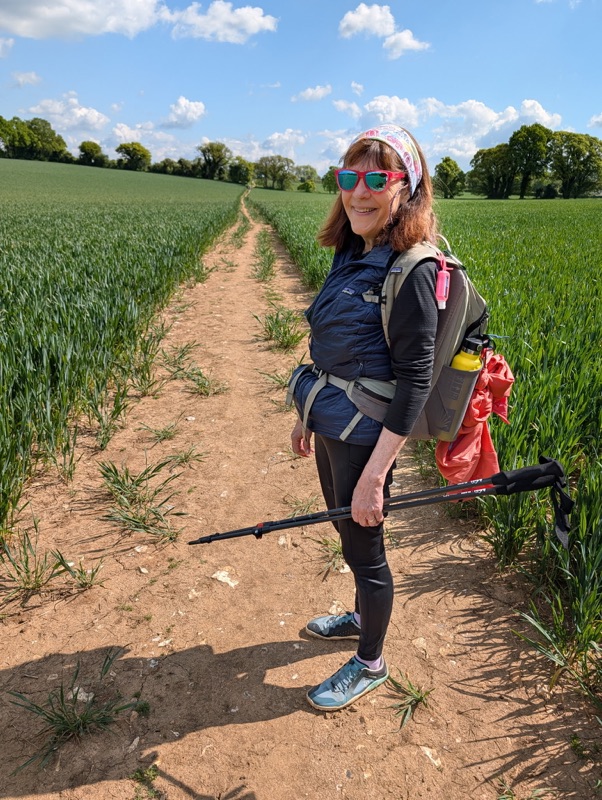
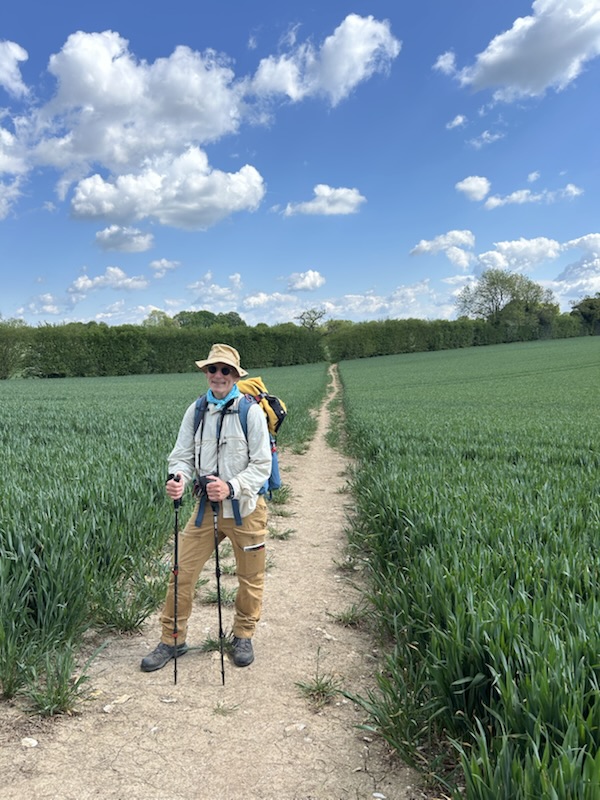
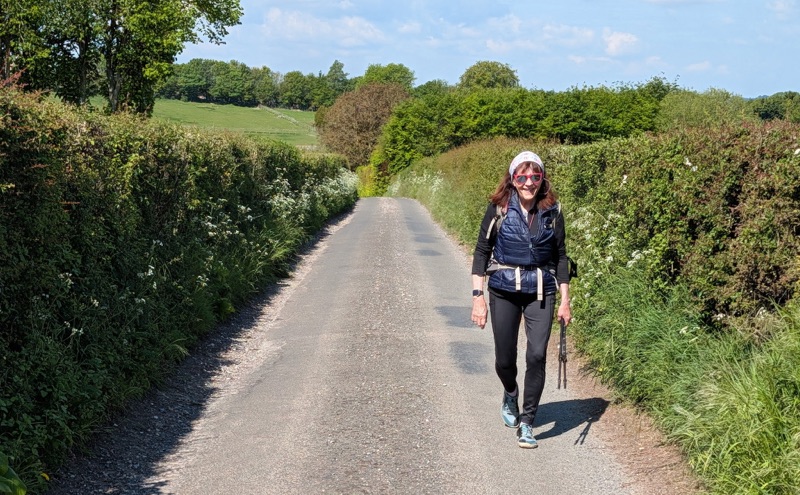
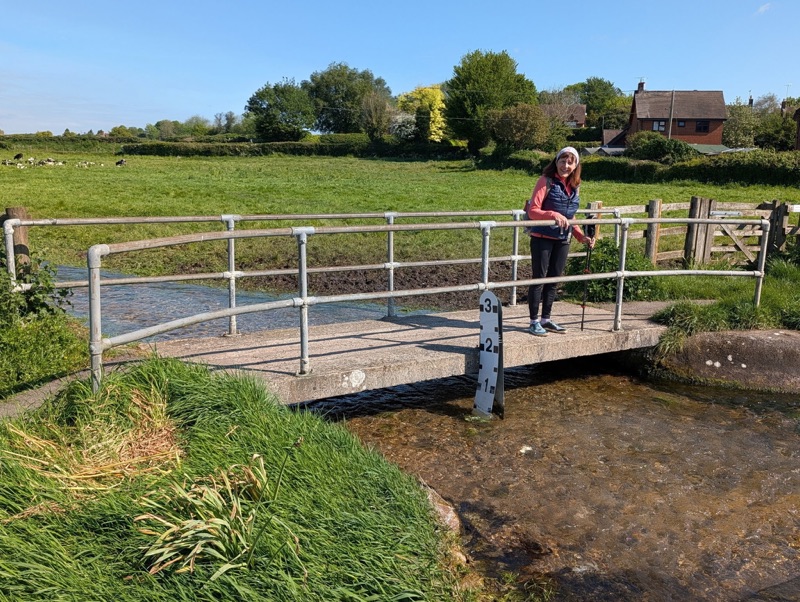
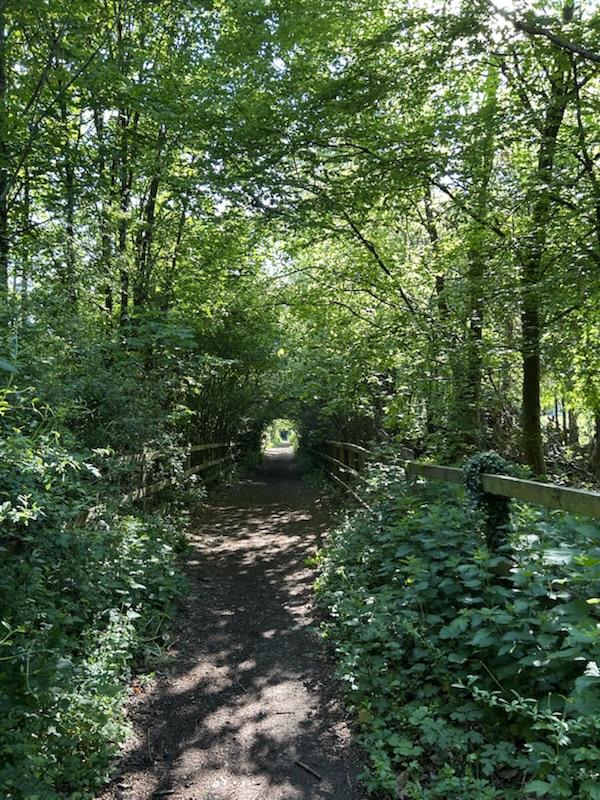
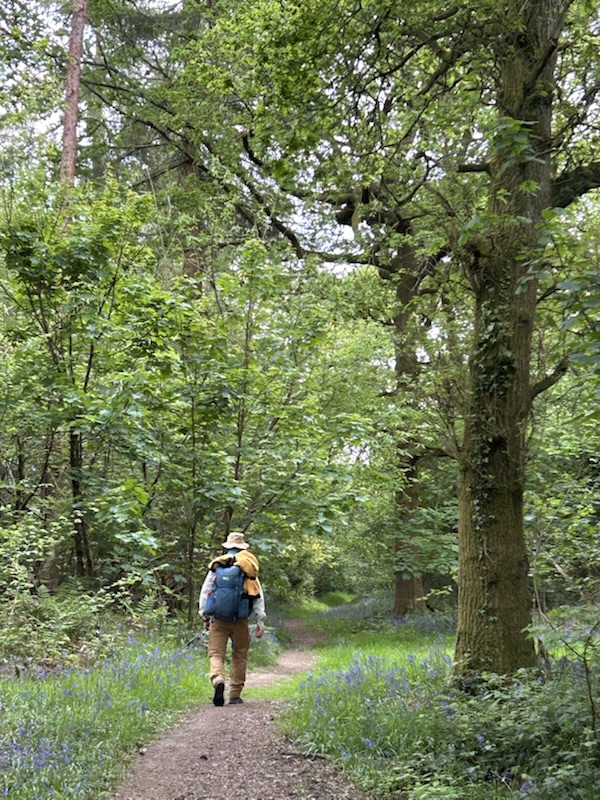
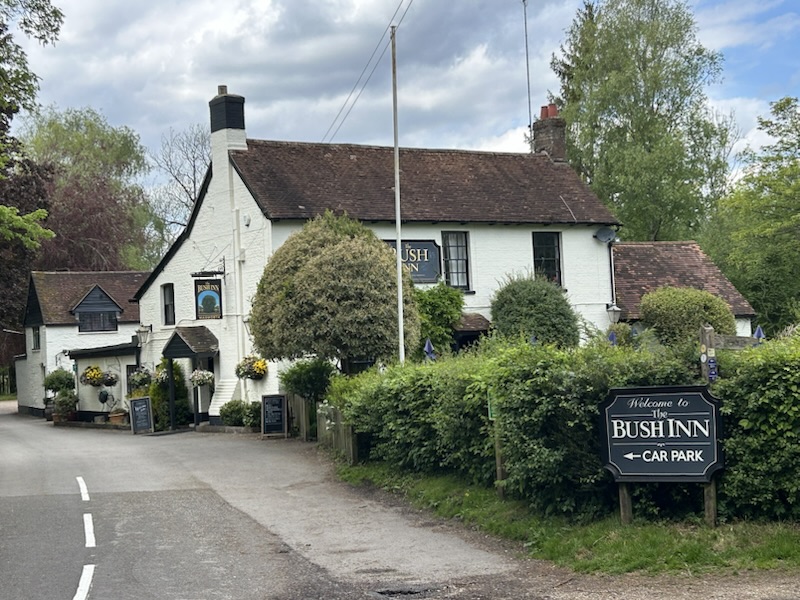
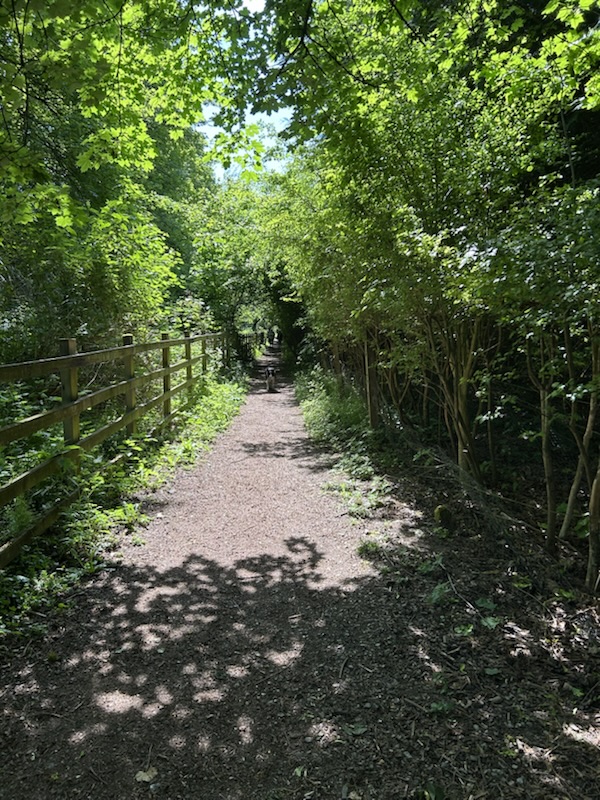
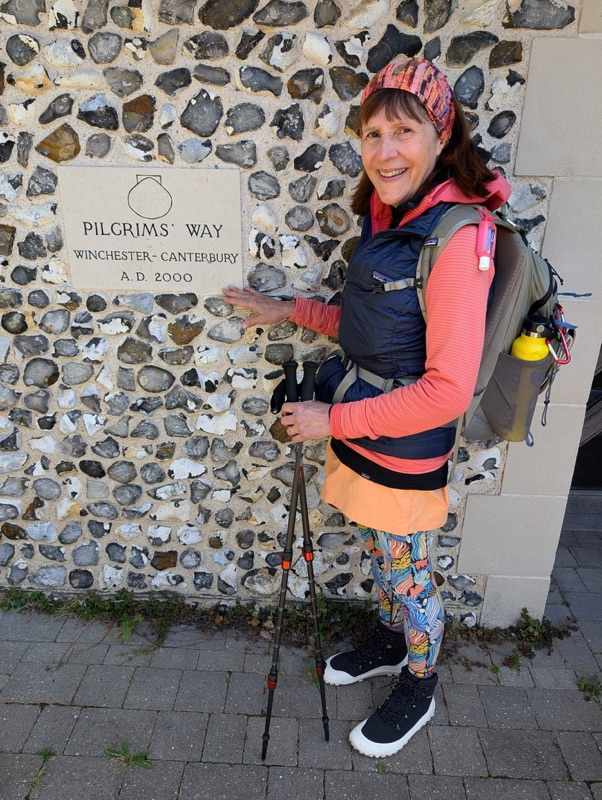
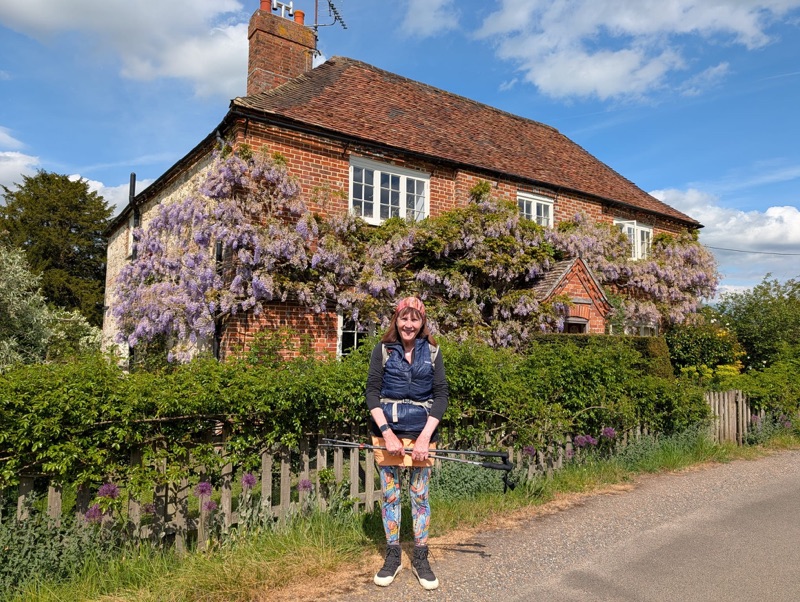
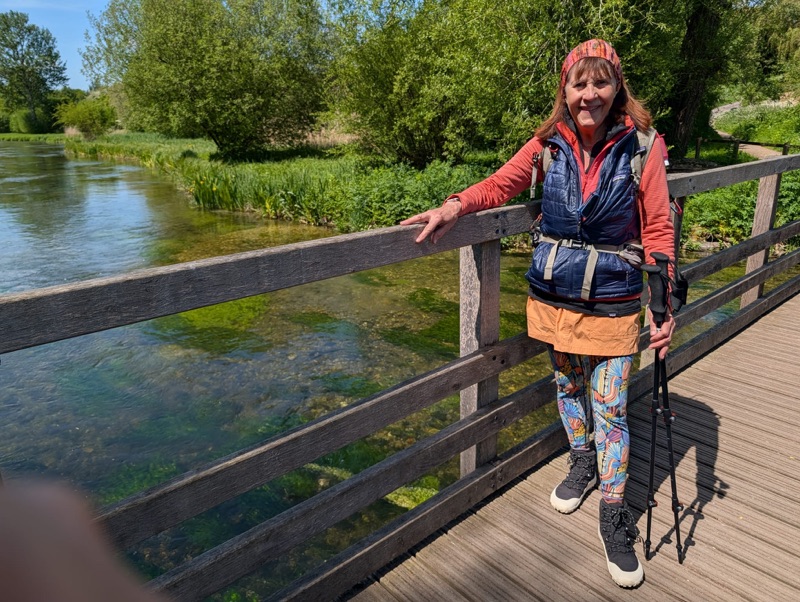
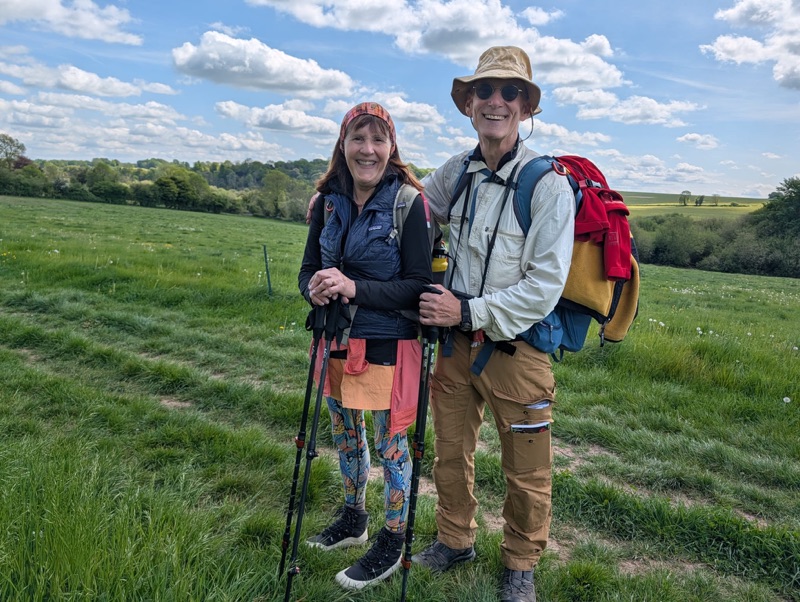
Day 5 – Official distance 13.5 miles; We walked 16 miles.
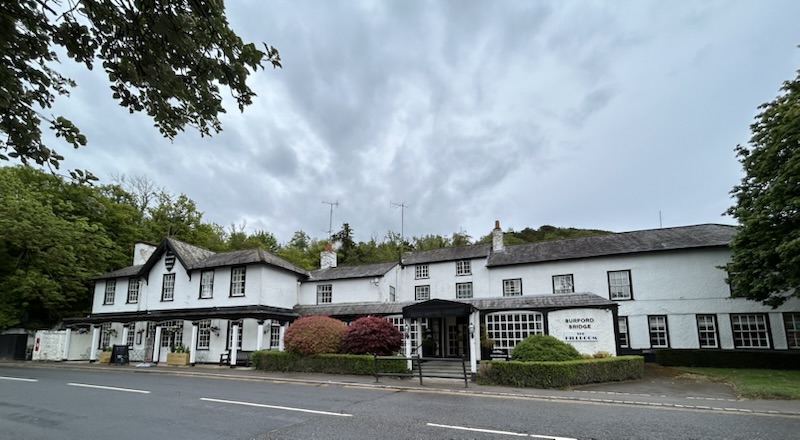
Not long after we started today, we met some women who told us that our hotel The Angel in Guildford was haunted!
In 1973, Roger Moore who played James Bond in the movies spent a few nights at the hotel. He said he was awoken each night at 2 AM by a spectral Victorian chambermaid cleaning his room.
There have also been sightings of military men appearing in the mirror, shadows pacing along the walls, & hearing loud noises in rooms in which nobody was staying.
A soldierly figure appearing in a foreign uniform has been sighted in the bedrooms & in the cellar. During one appearance, this spirit lingered long enough for a guest to sketch it.
Alas, we seemed to have been ignored by all the ethereal spirits.
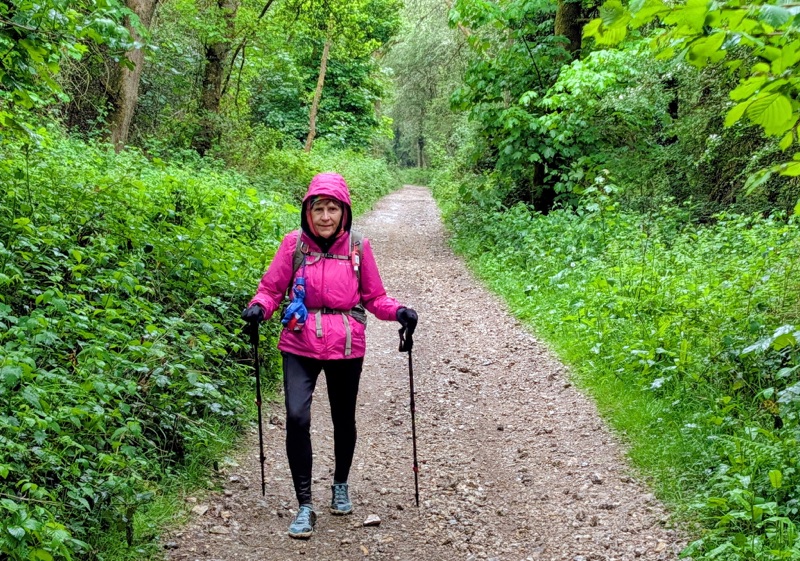
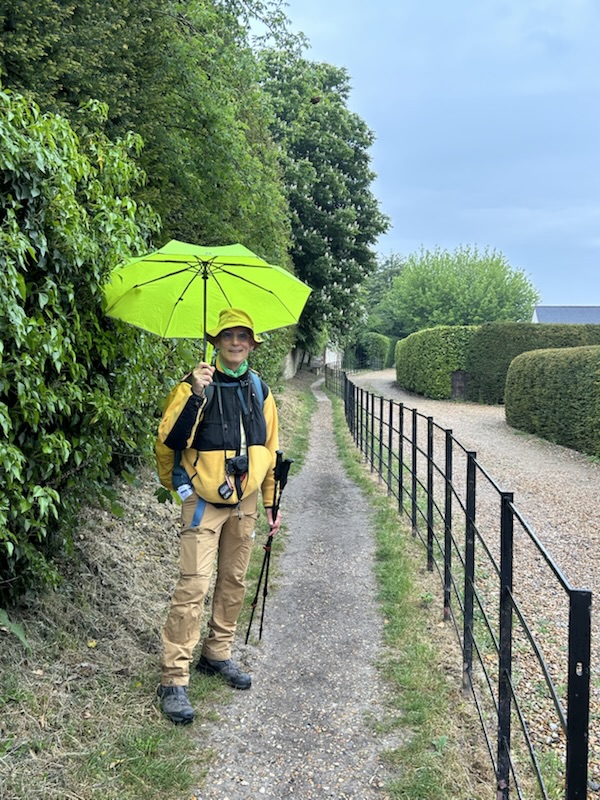
Today was much colder than yesterday. , I didn’t remove any layers & even added a rain jacket during the last few hours on the trail when it rained. Given the choice, I will take cooler temps over warmer ones for hiking.
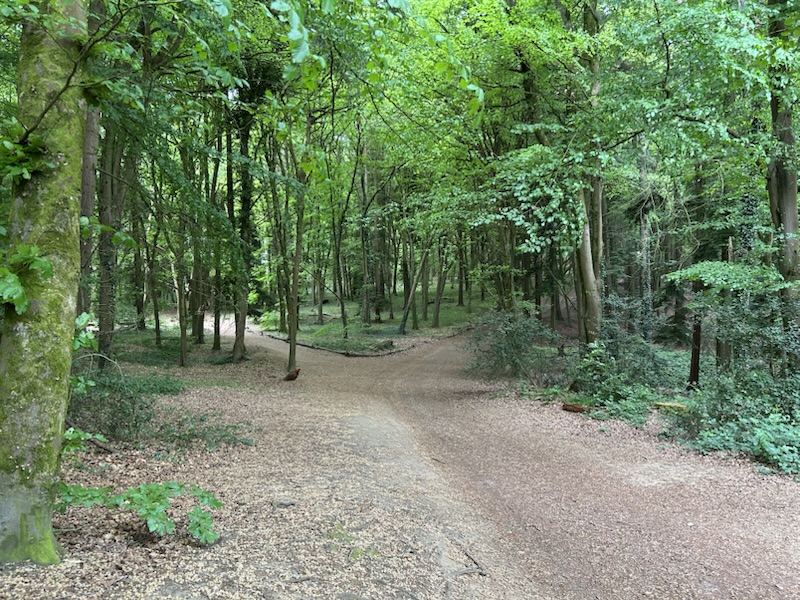
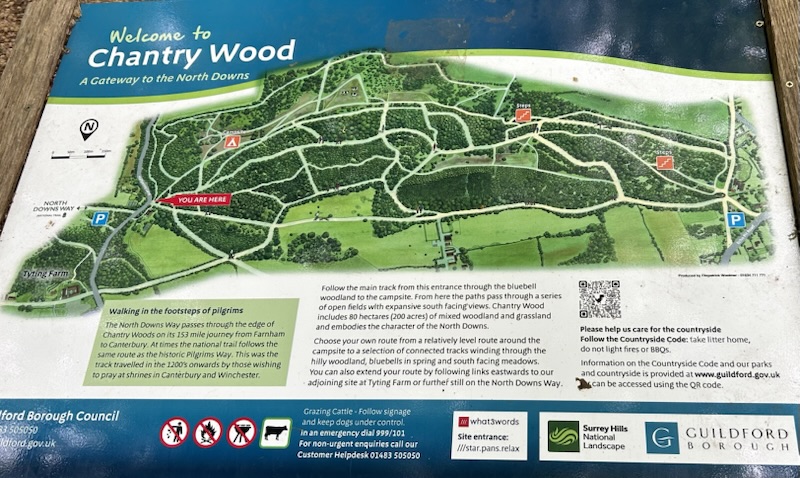
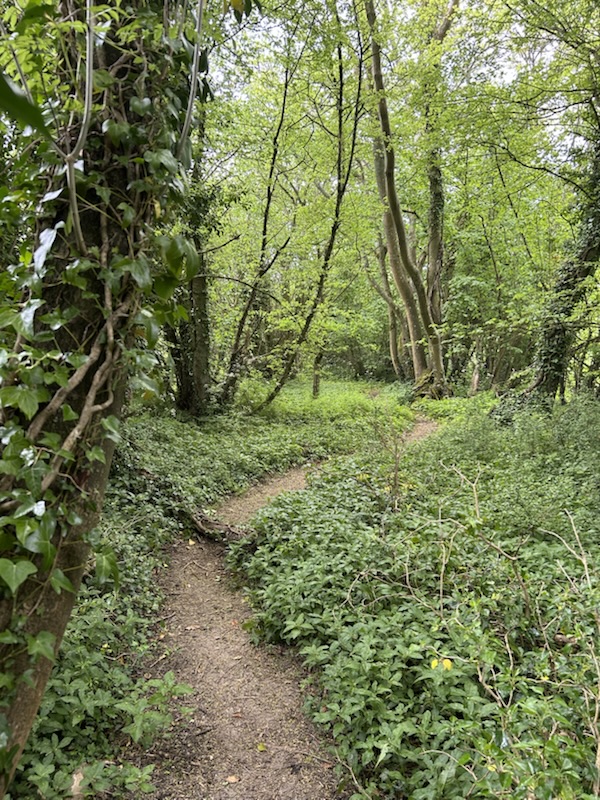
Once we left Guilford, our walk took us through the lovely Chantry Woods. Its name originates from 1486 when the Guildford mayor bought the forest & gave it as an endowment for a “Chantry” which is gift or trust to the church.
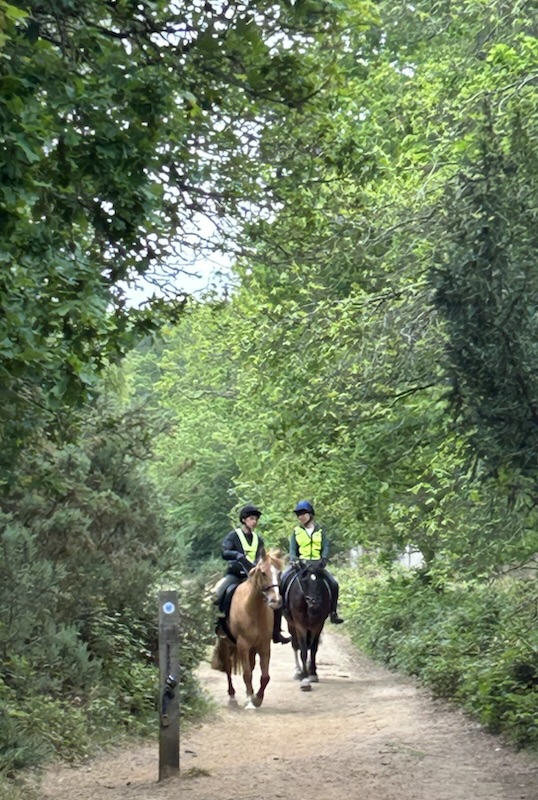
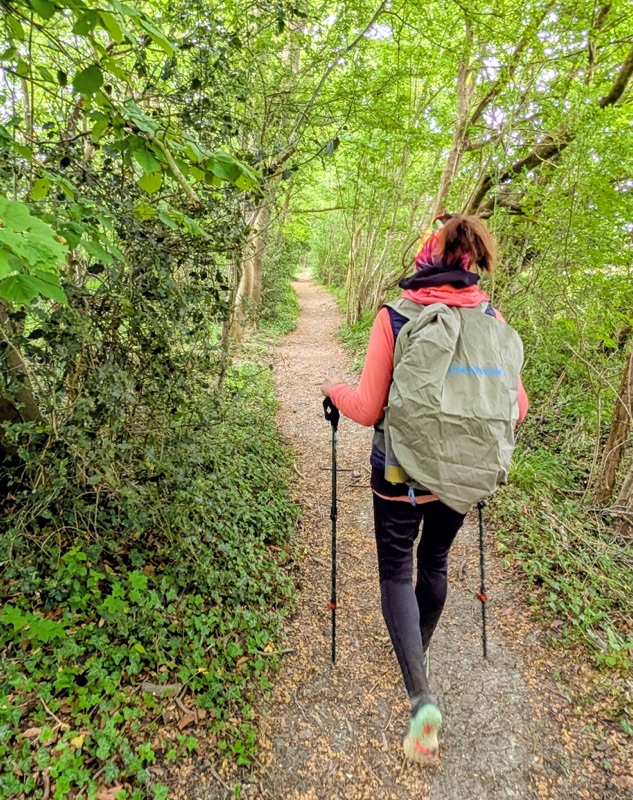
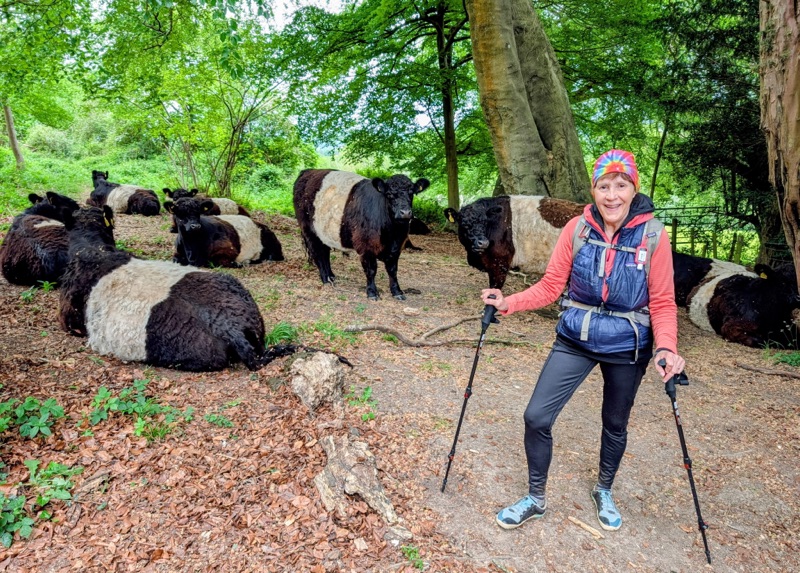
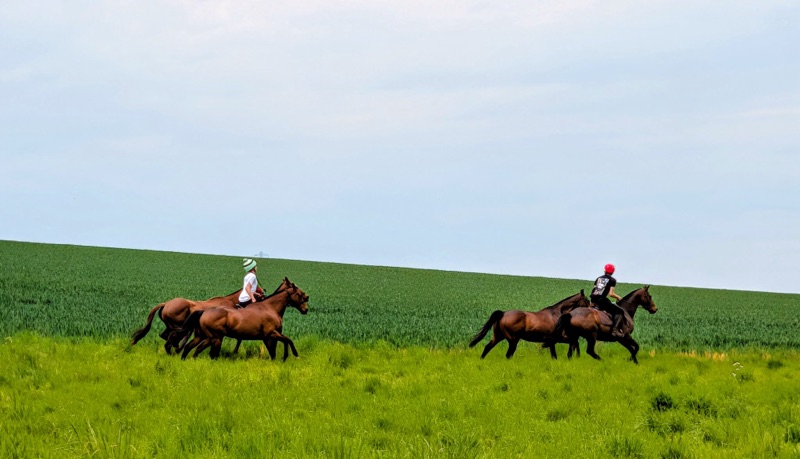
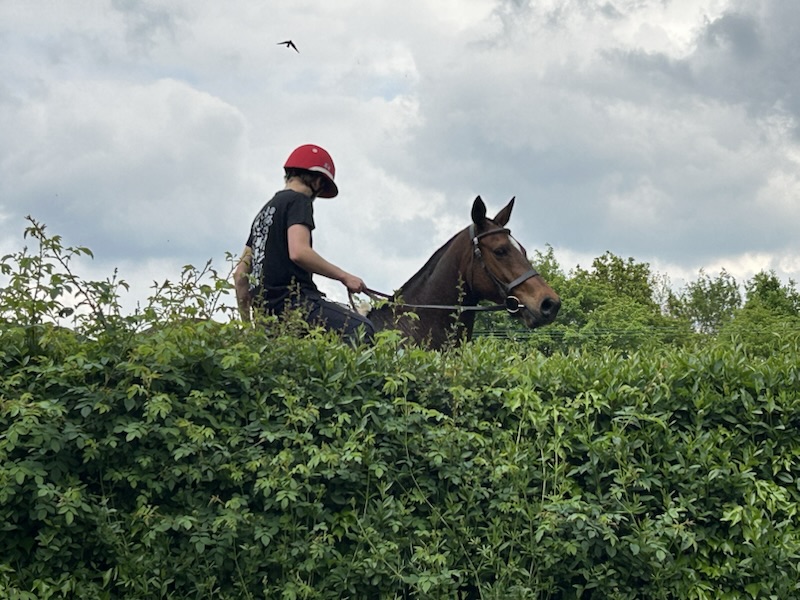
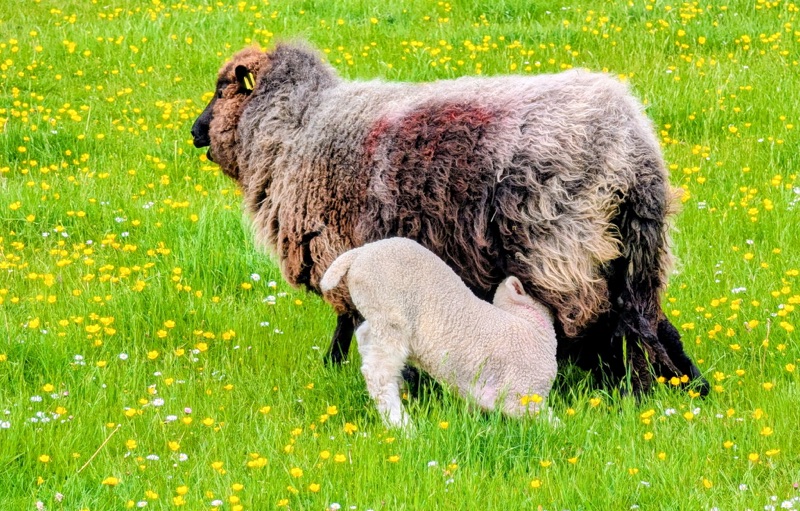
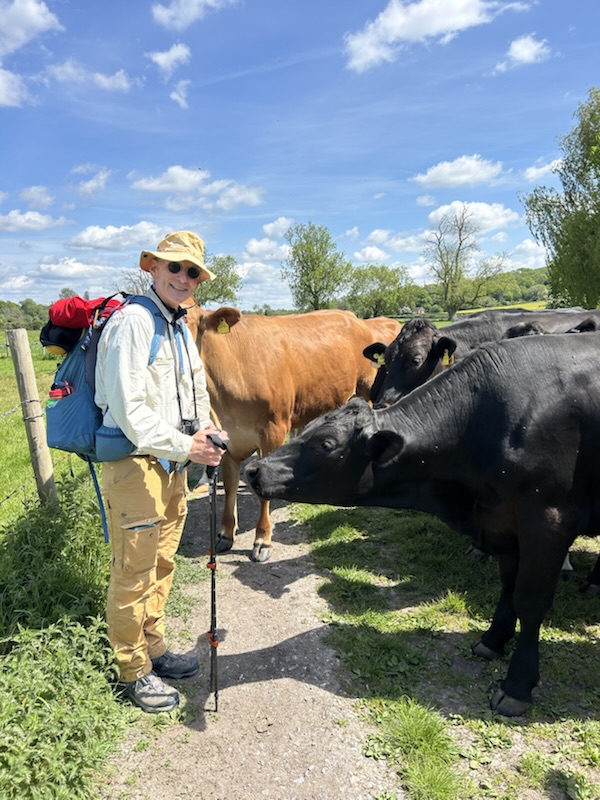
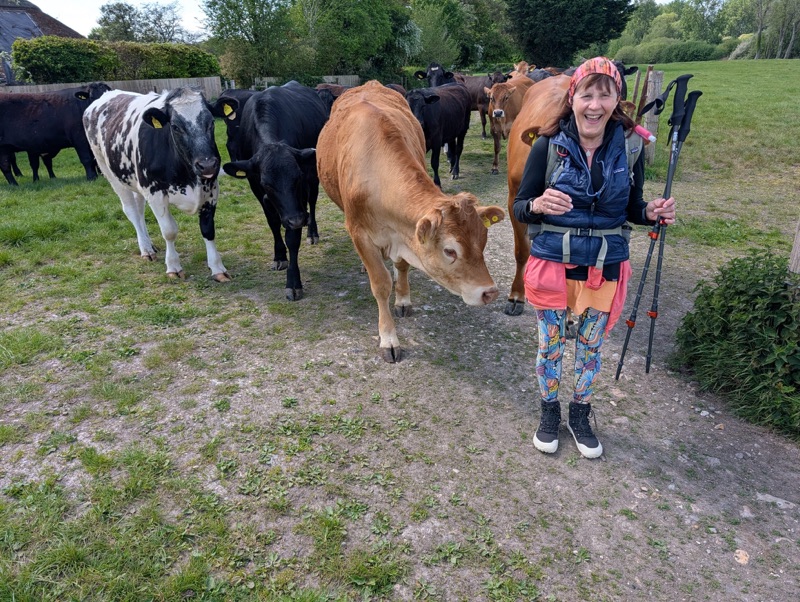
Needed to share the trail today with some 4 legged friends
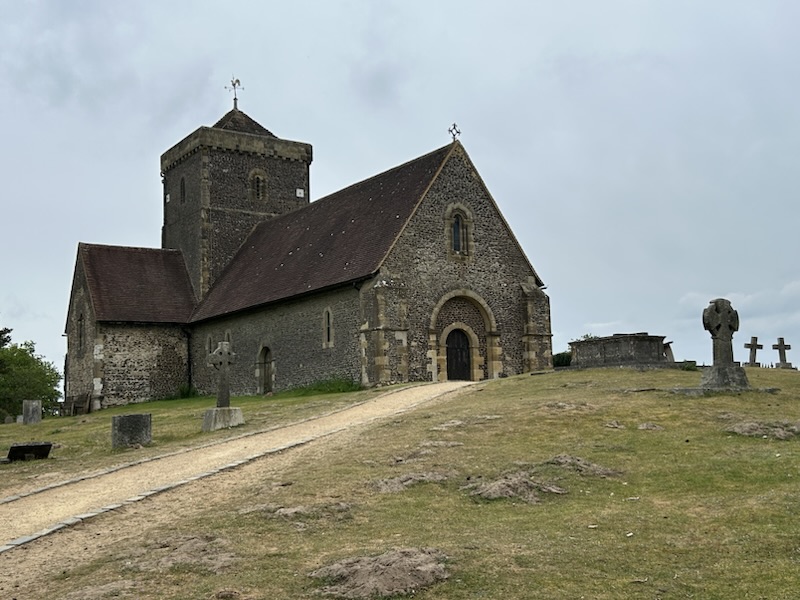
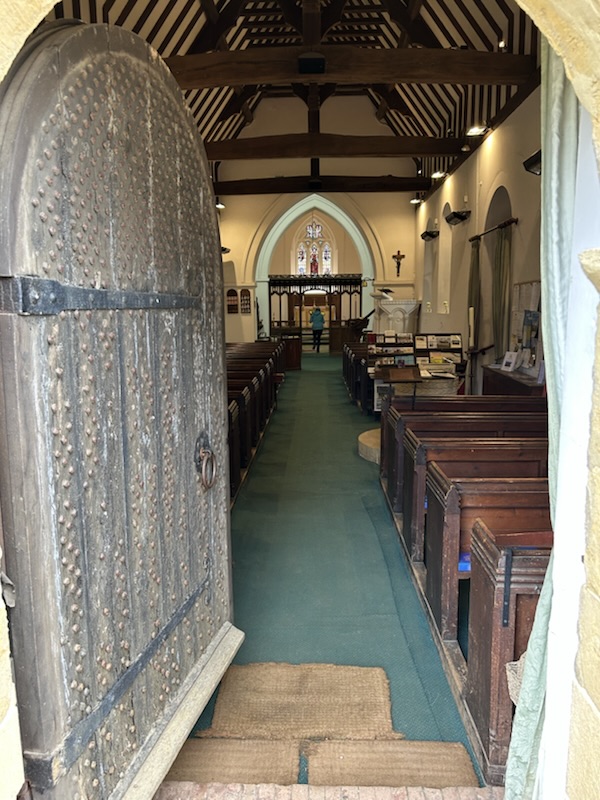
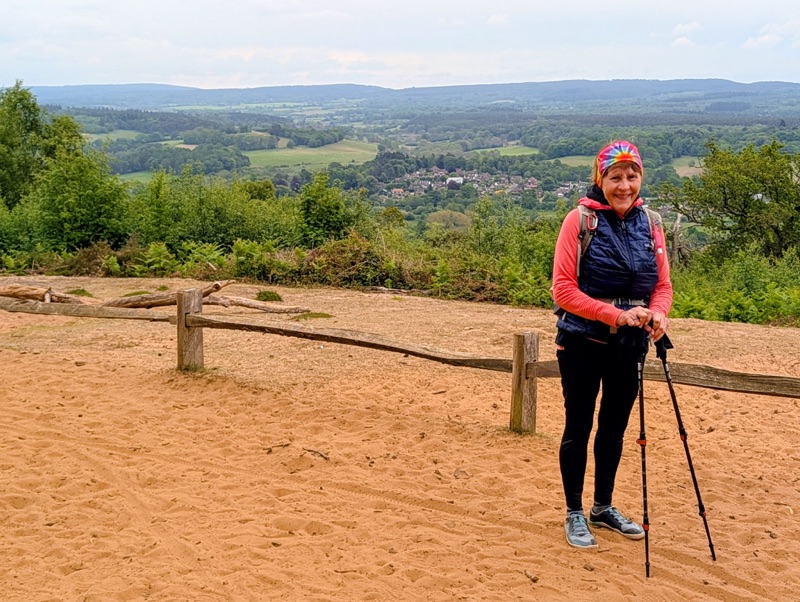
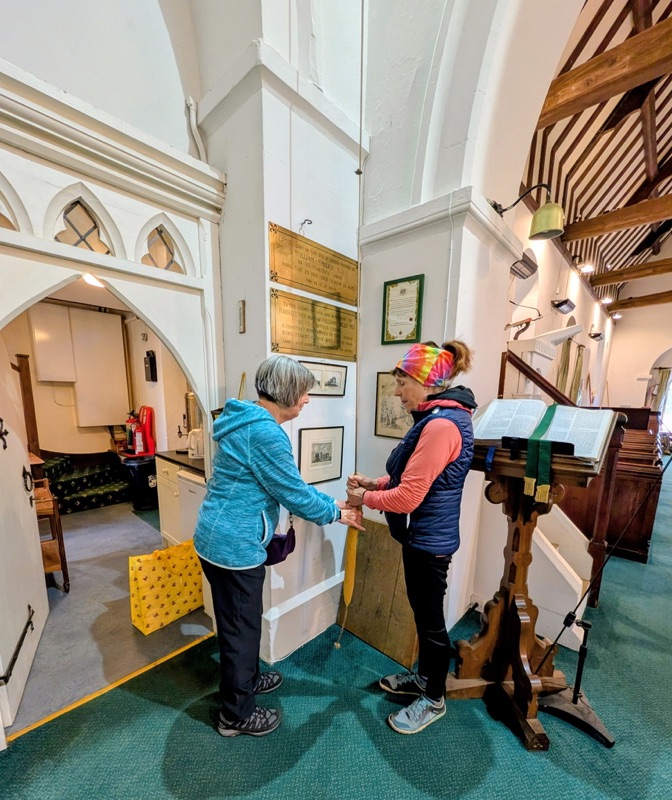
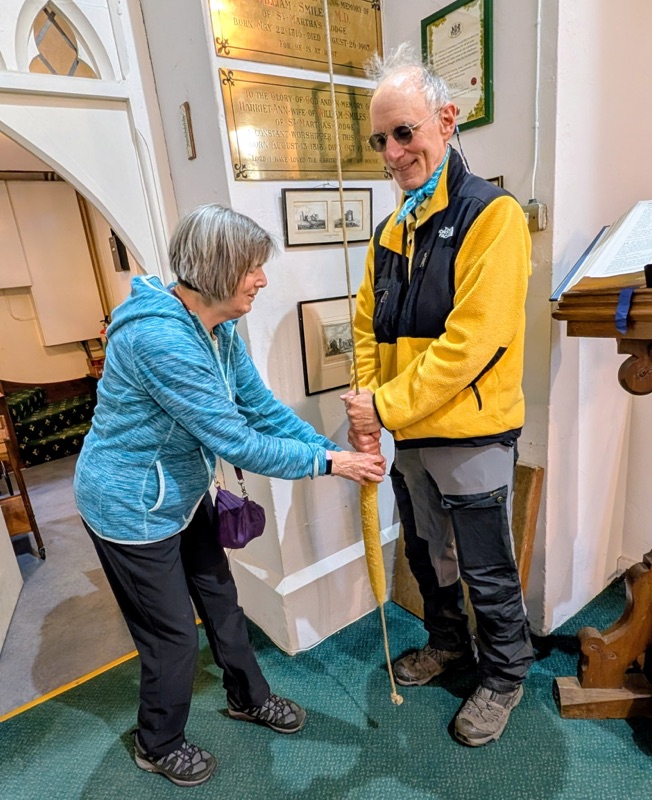
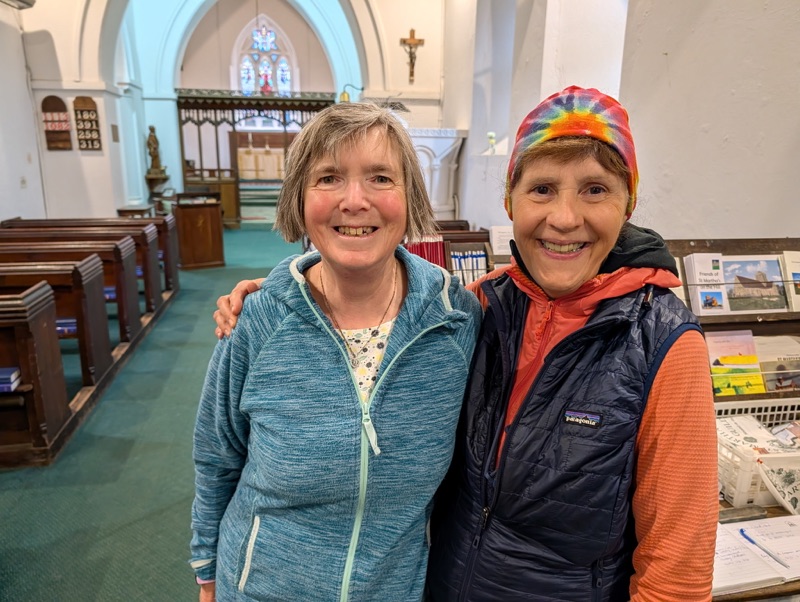
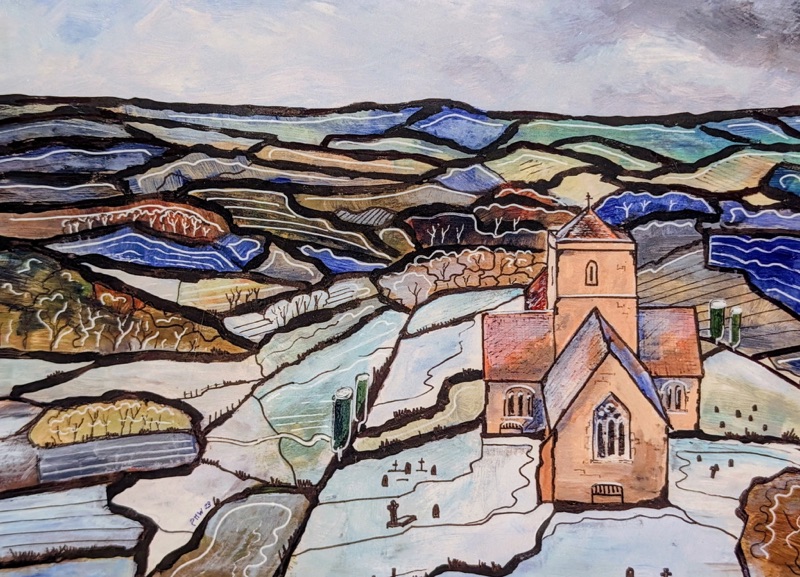
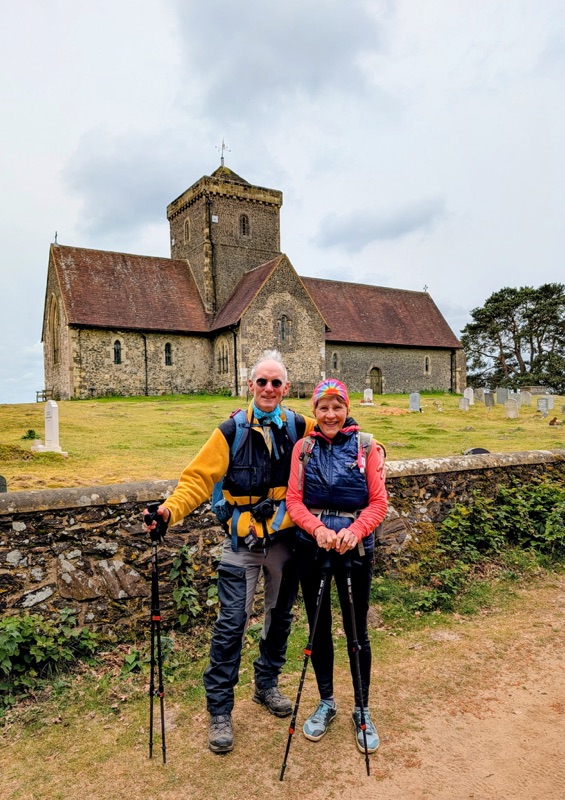
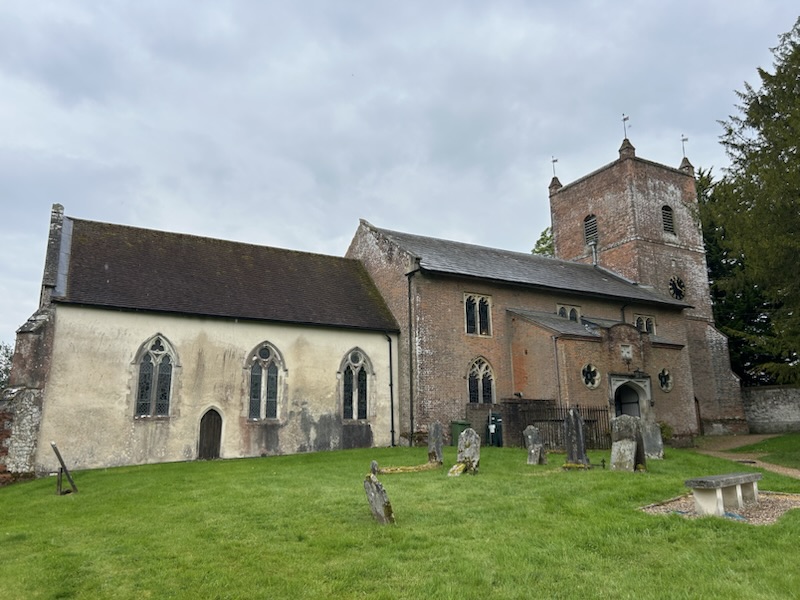
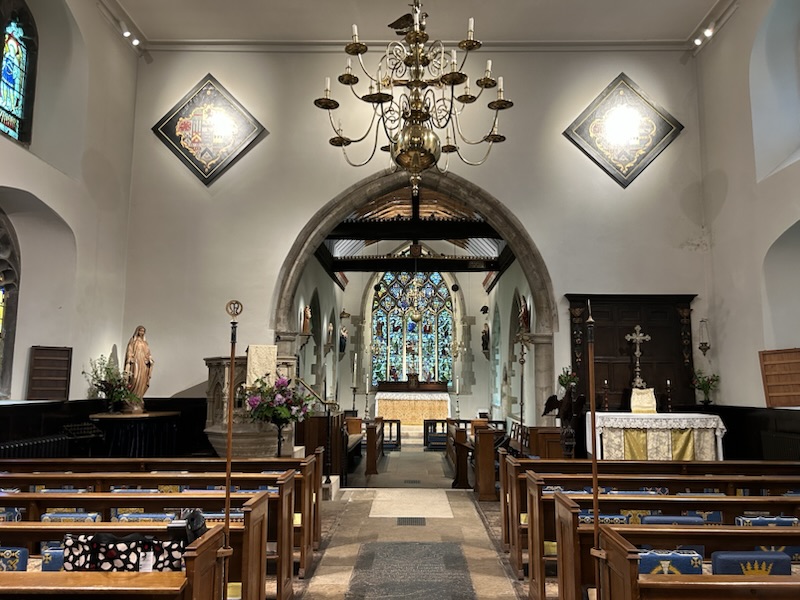
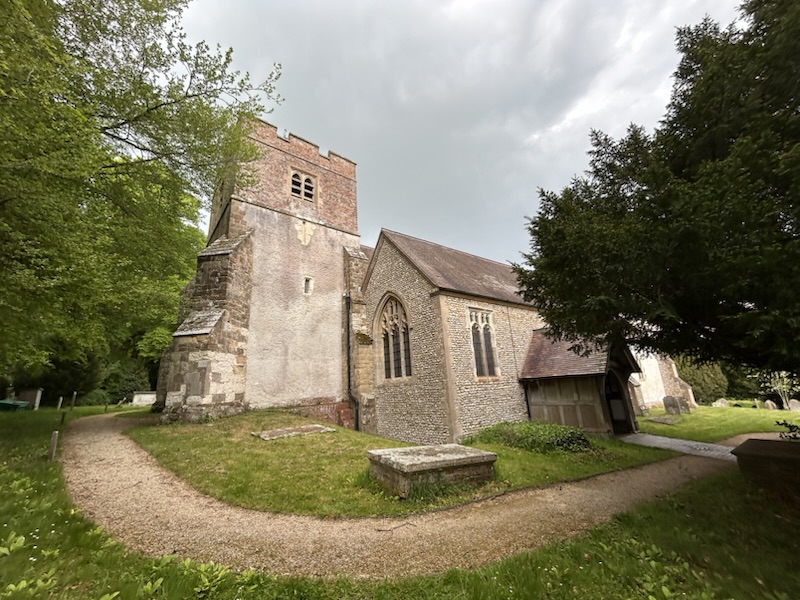
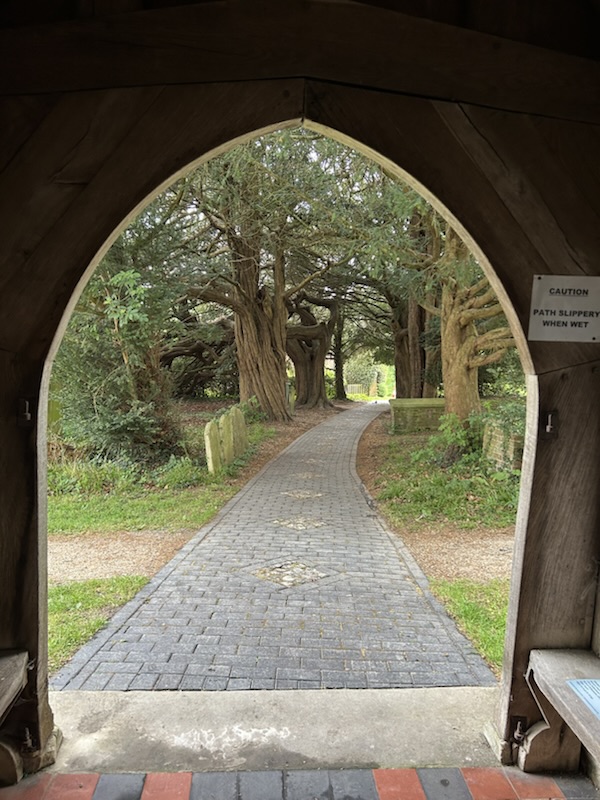
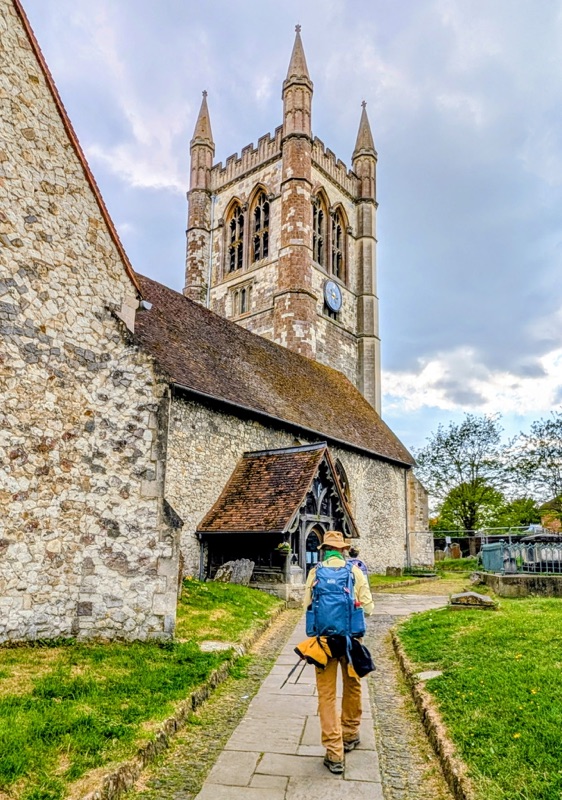
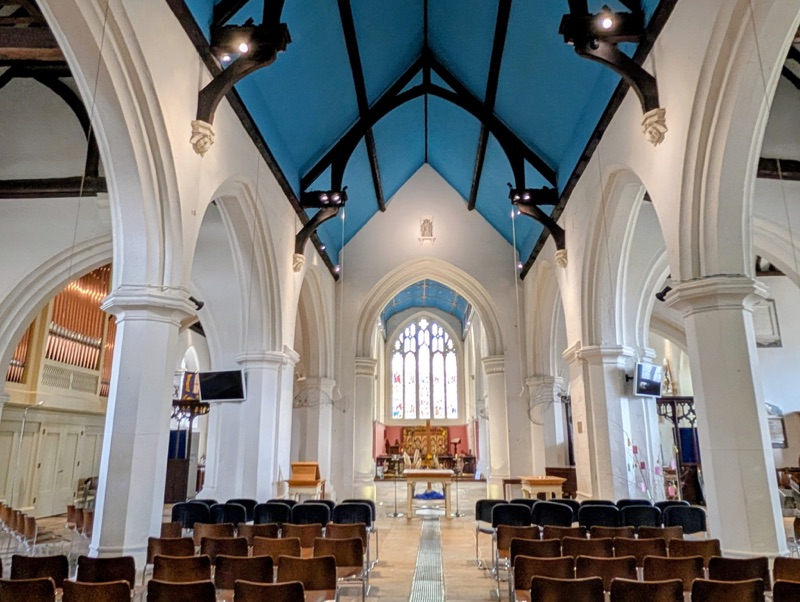
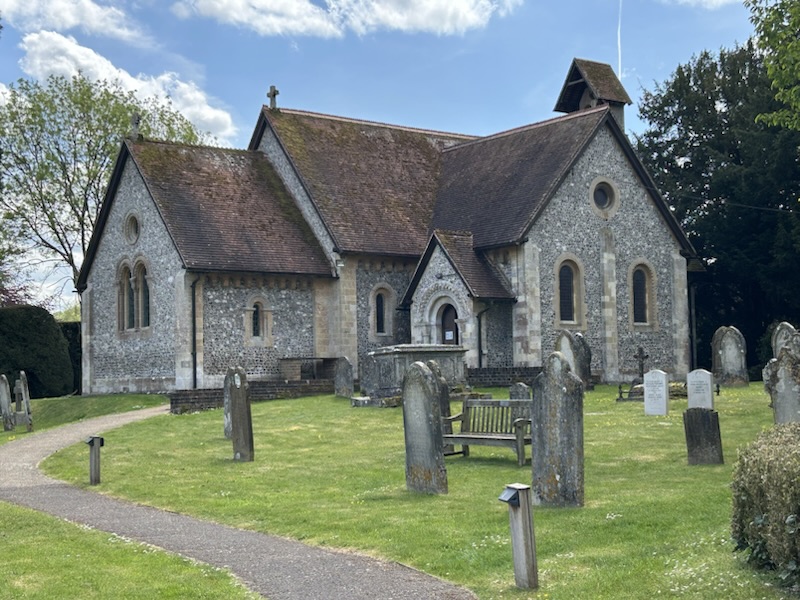
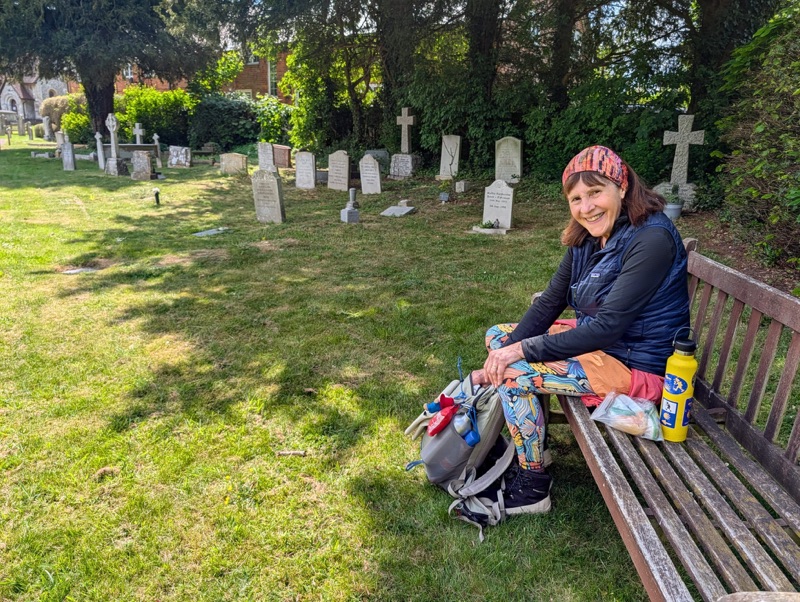
After climbing Saint Martha’s Hill, we were rewarded by seeing another old Norman church which dates from 1190. We met a woman there preparing the church for Sunday services.
Even though the church suffered a tower & roof collapse, worship continued in the church’s usable part with weekly services never having stopped in almost 1,000 years,
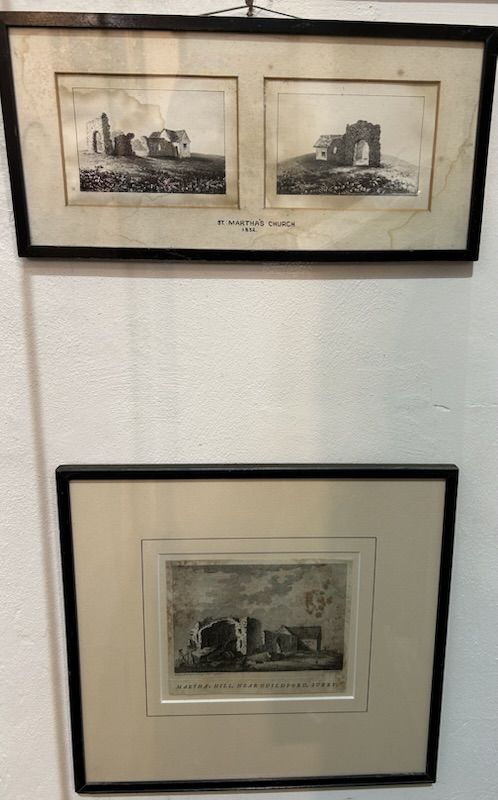
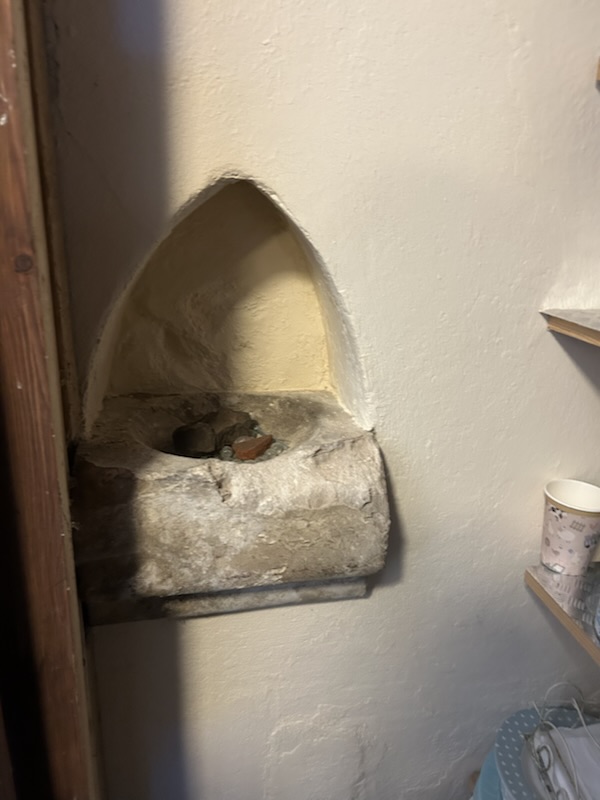
Images showing the church in semi- ruins before it was rebuilt Font left from the Norman church View from the topLearning to ring the bellThat’s not how you do it… this is more like itRuth was very kind to tell us about the church Tea towel
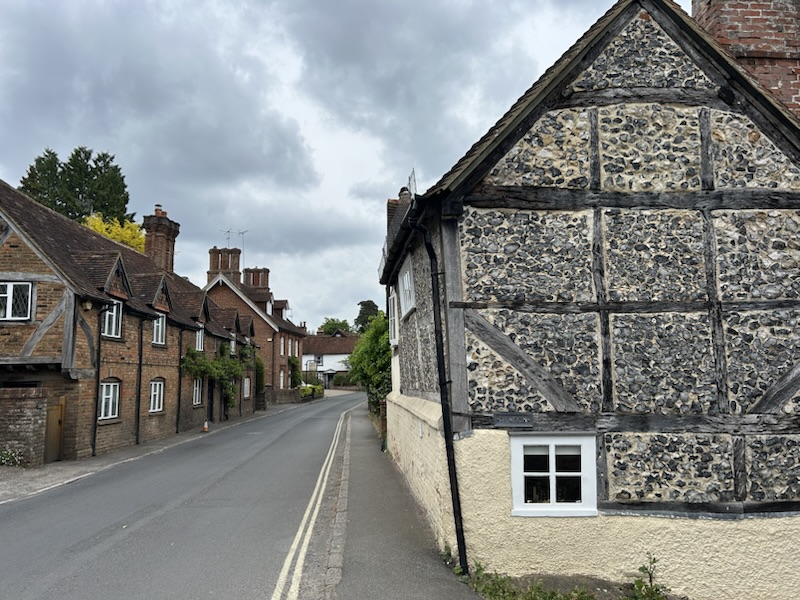
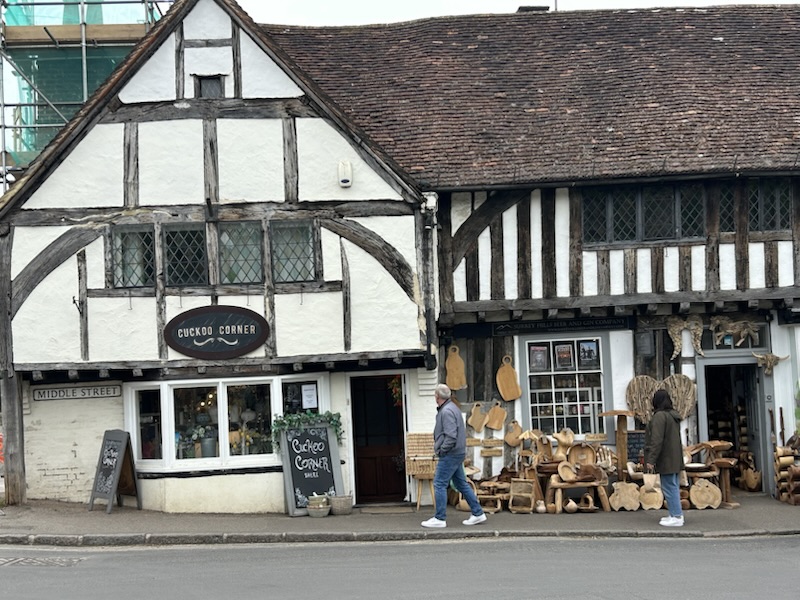
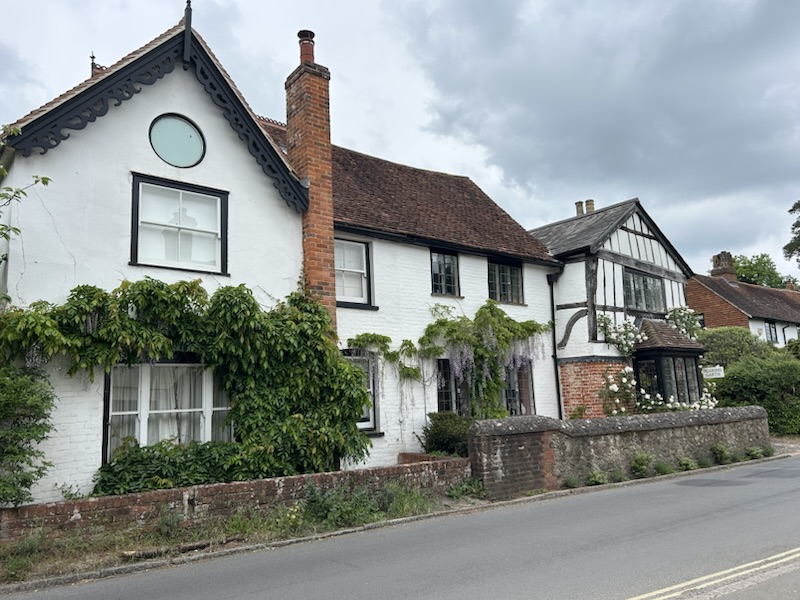
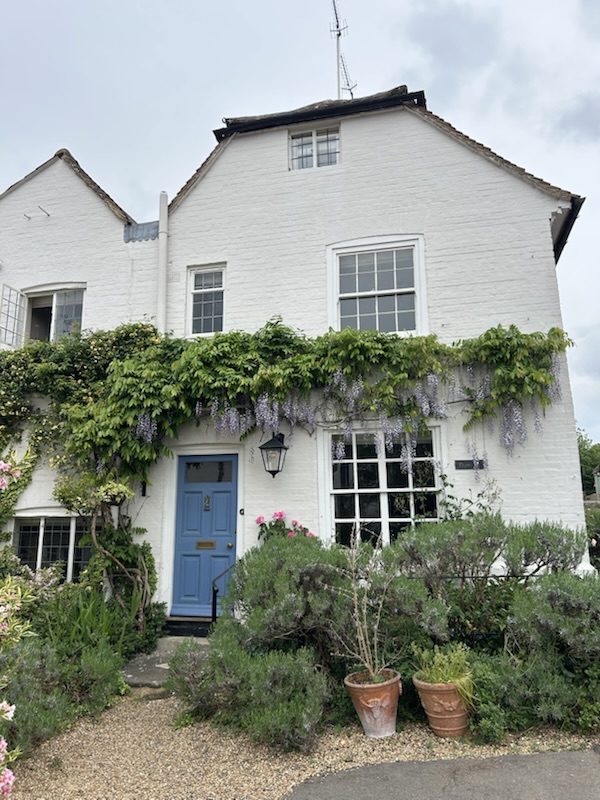
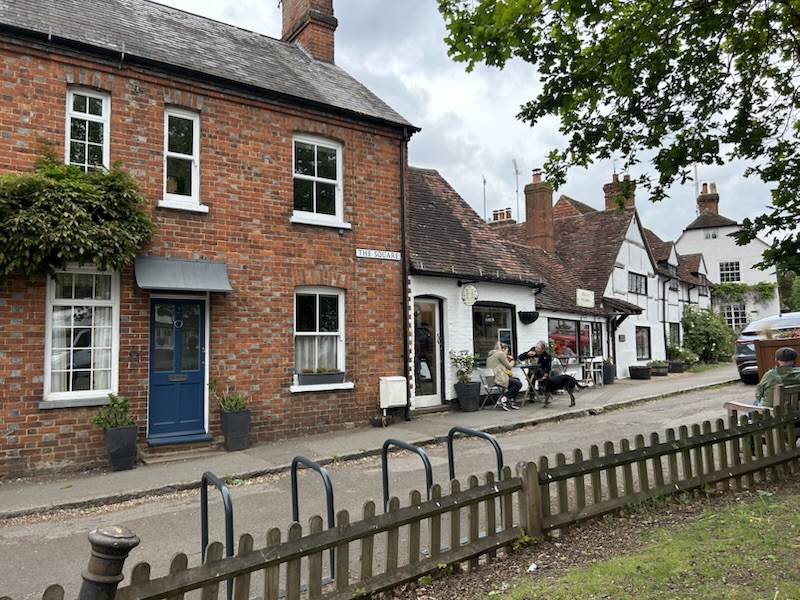
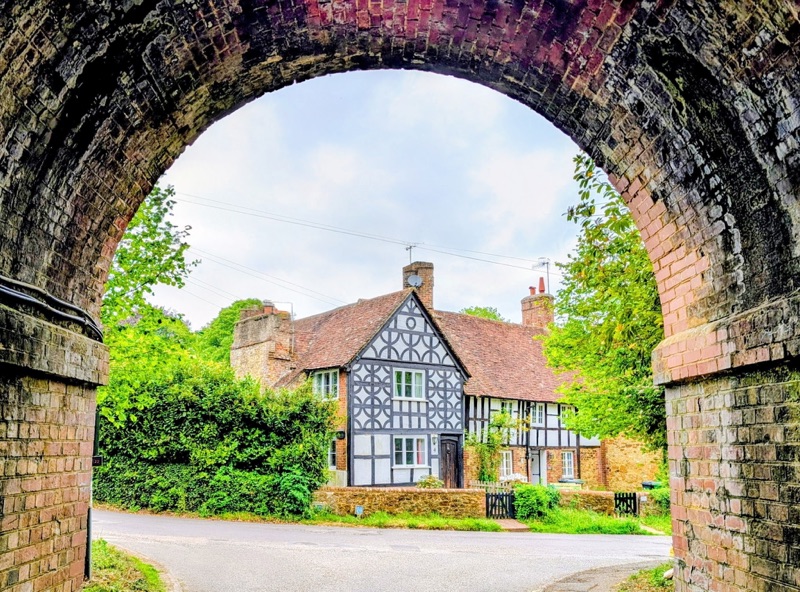
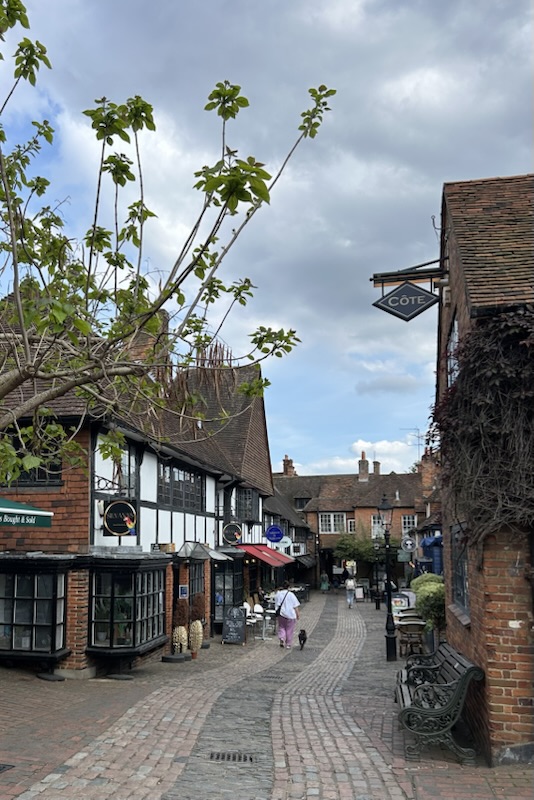
The next highlight was the lovely town Shere which has been used as a location in many movies. The popular rom-com movies “The Holiday” & “Bridget Jones: The Edge of Reason” were filmed here. It is indeed very quaint & quintessentially British.
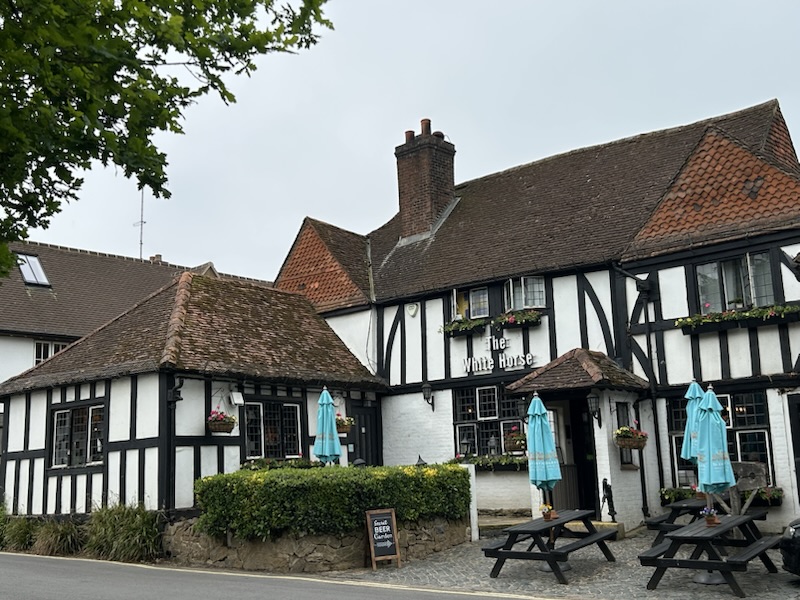
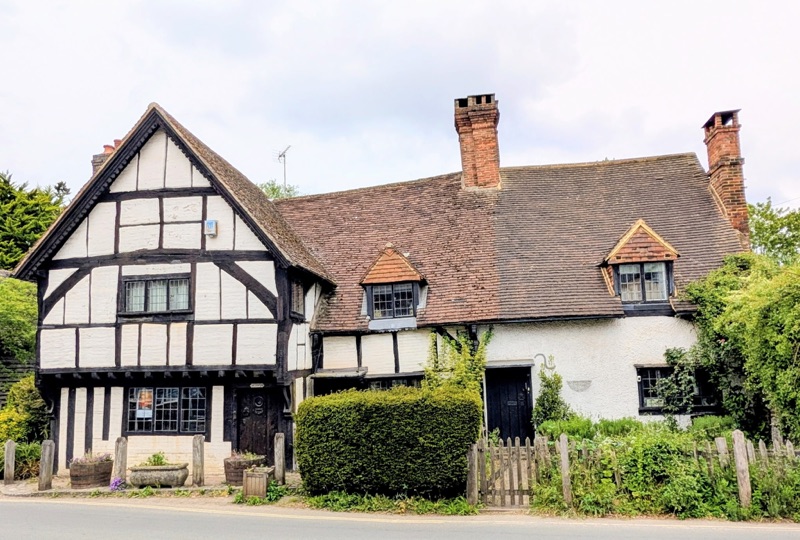
Downtown ShereWhite Horse Inn was built in 1425. Timbers from Lord Nelson’s flagship HMS Victory are believed to be used in the restaurant’s beams.
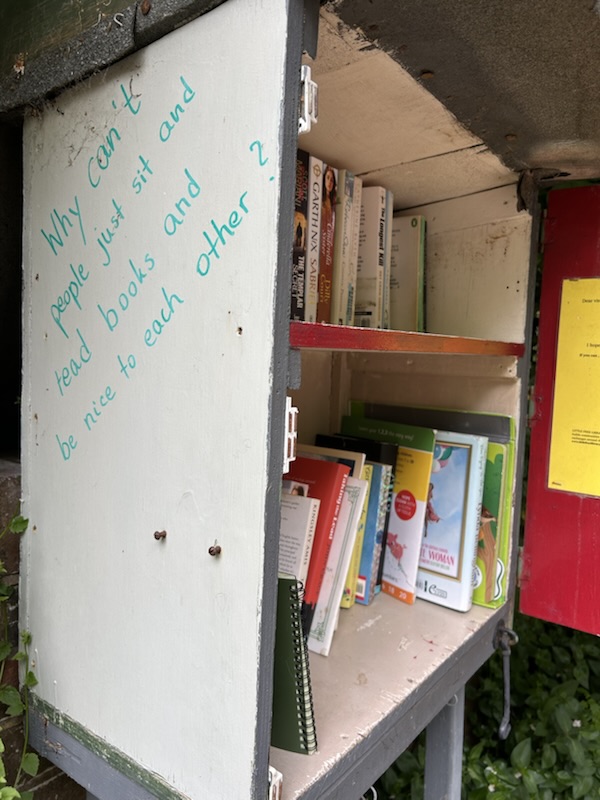
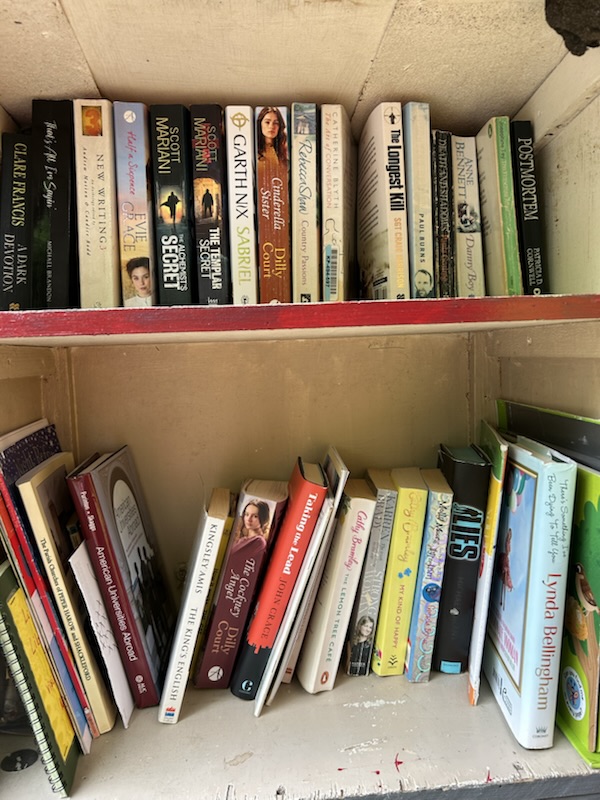
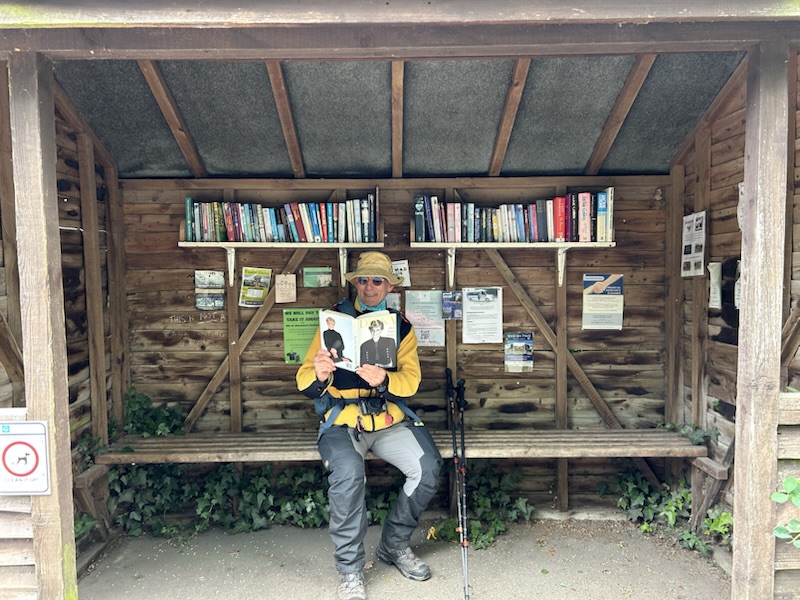
Reading books is very popular here.
Small library box with a clever aphorismCheck out the titlesBus Stop library
We enjoyed several hours walking through the woods before reaching our hotel in West Humble.
Day 3- Distance officially listed as 11 miles; We walked 15 miles yet again in 7.5 hours today
Beginning to see a trend now- Take the official mileage & add 3+ miles. 🤣
We keep stay on the trail using three different ways. First, we use the official Pilgrim’s Way book that has generic directions like, “walk through the field to the kissing gate and turn left at the White House.” Secondly, we rely on the arrows posted on the footpath posts for direction. Third & the most reliable navigation method is the All Trails app that has the Pilgrims Trail. But, even using this app we still sometimes miss a turn & have to backtrack.
However, today we stayed exactly on the trail & still walked an extra 4 miles over the listed distance!
Regardless, we still enjoy the countryside & the various historical sites along the way.
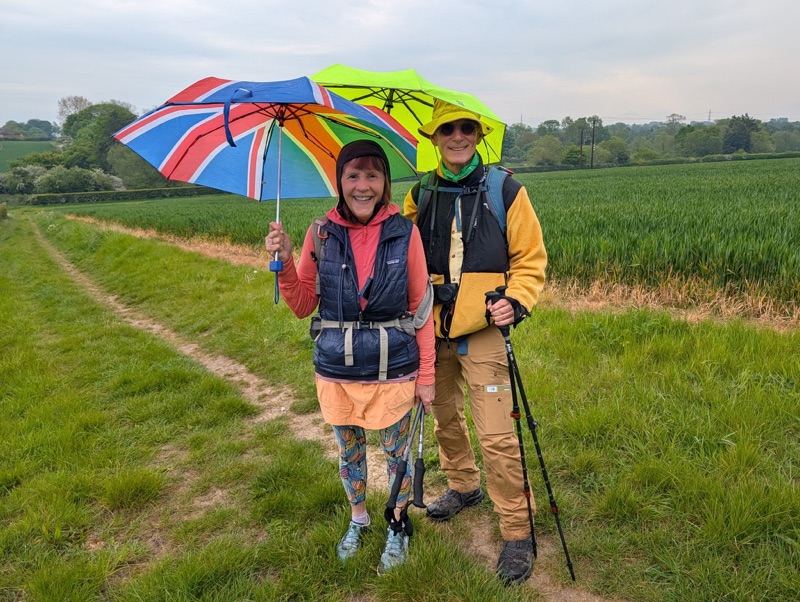
This was the first day we had to use our umbrellas due to light rain.
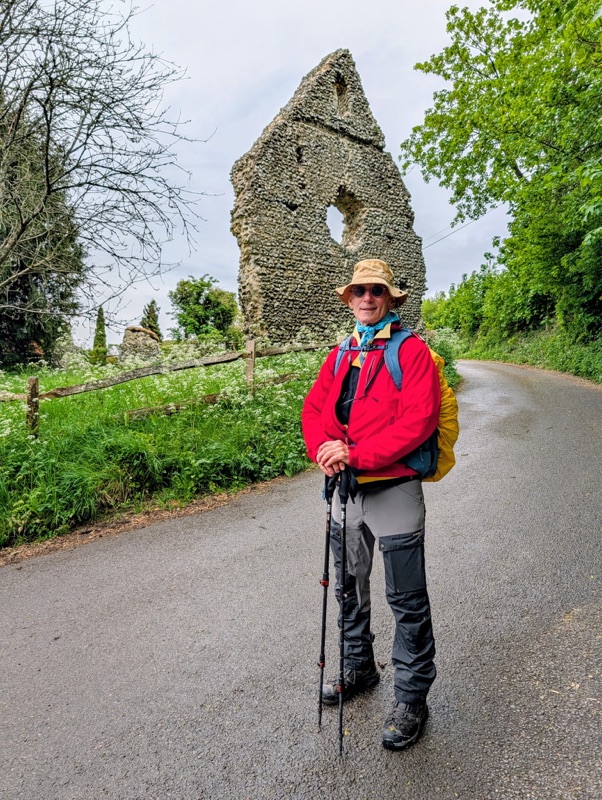
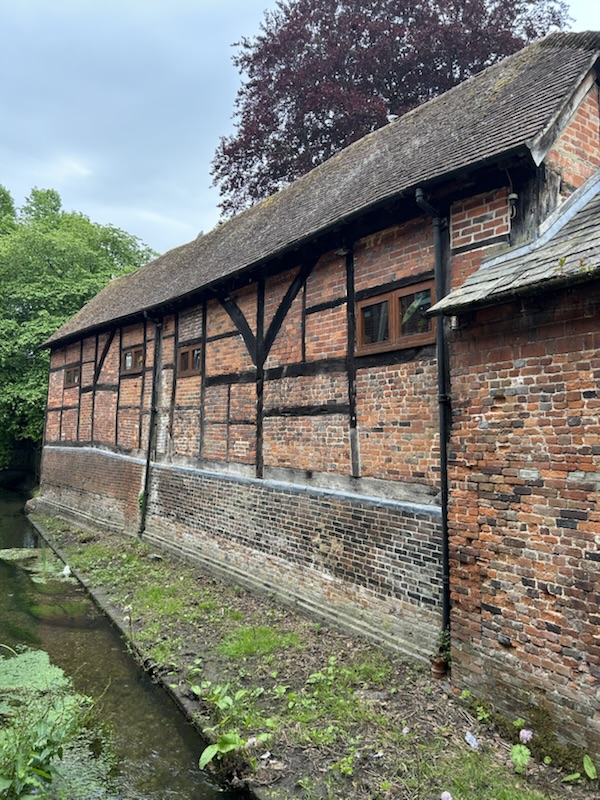
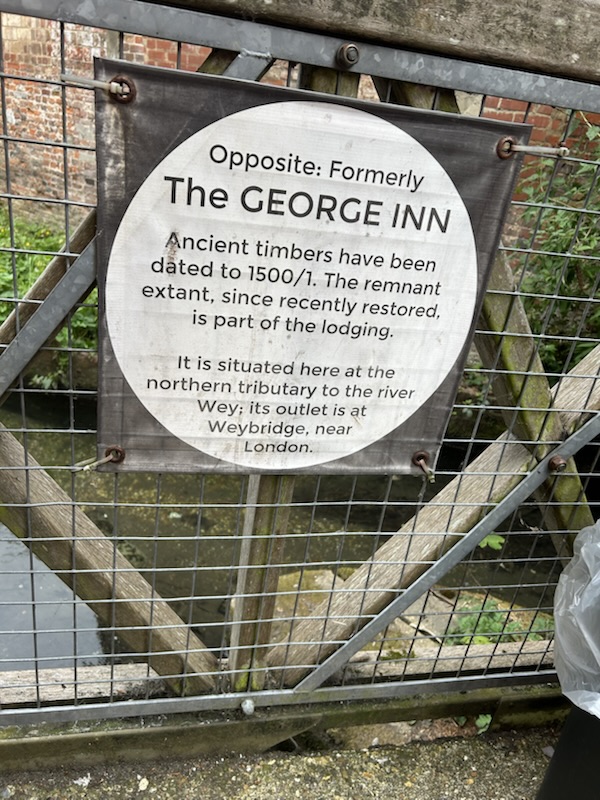
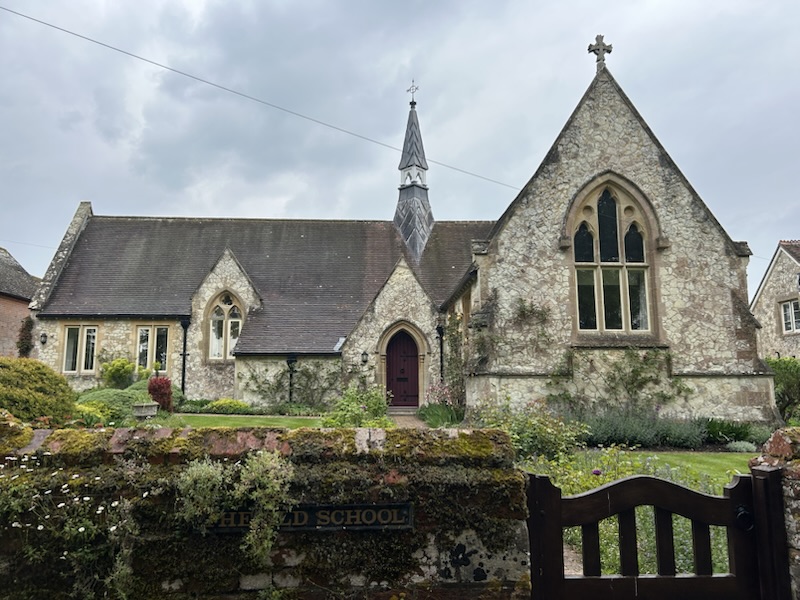
Before leaving Farnham we passed this historic building.
Today’s highlights were old churches.
Church #1- Holy Rood in Holybourne
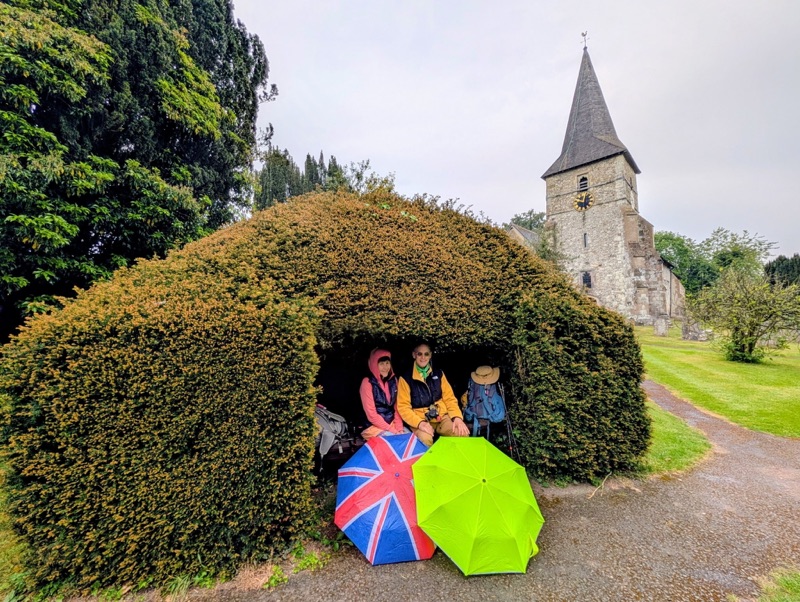
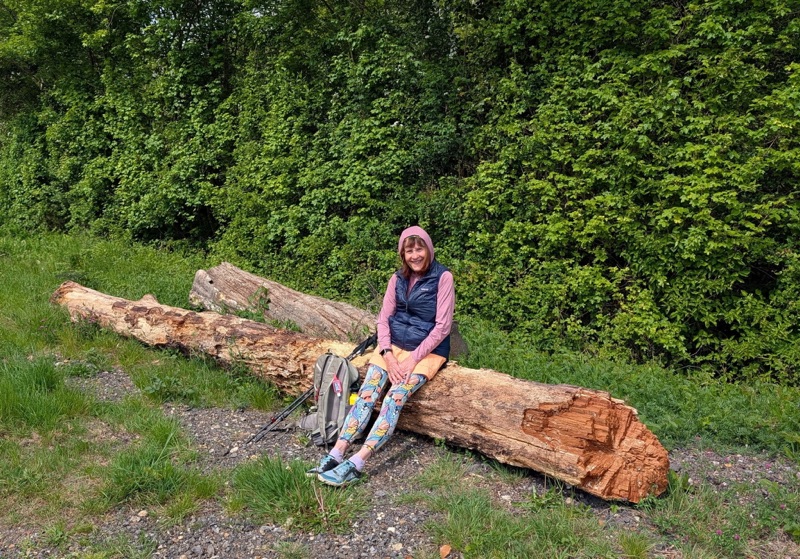
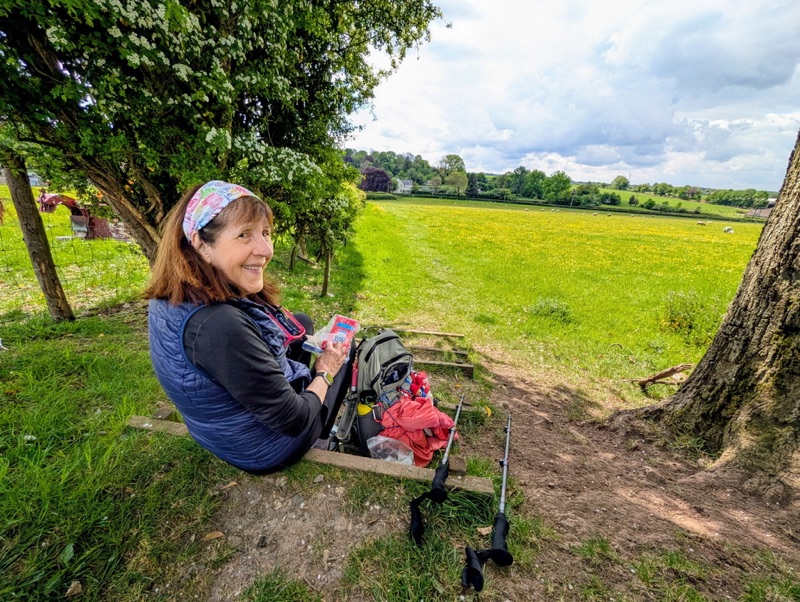
The church wasn’t open when we arrived, so we enjoyed a short rest outside sheltering from the rain in a rather unique spot.
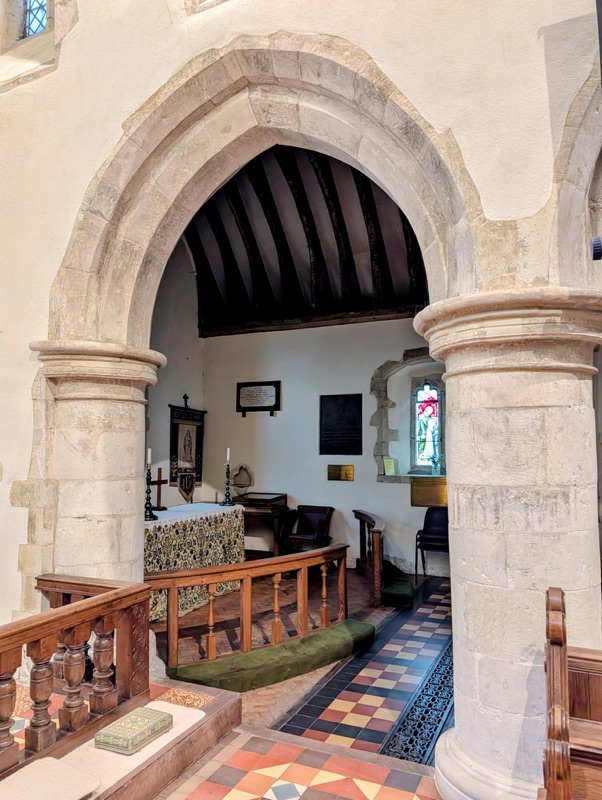
Holybourne gets its name from the Old English “ Haligburna” meaning “Sacred Stream”. The church’s foundation & entry archway date from the Normans in the 12th Century.
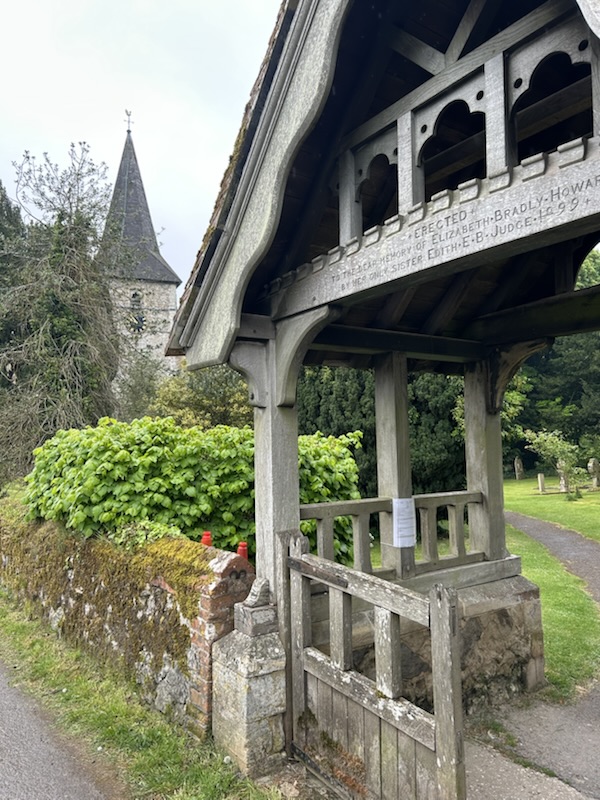
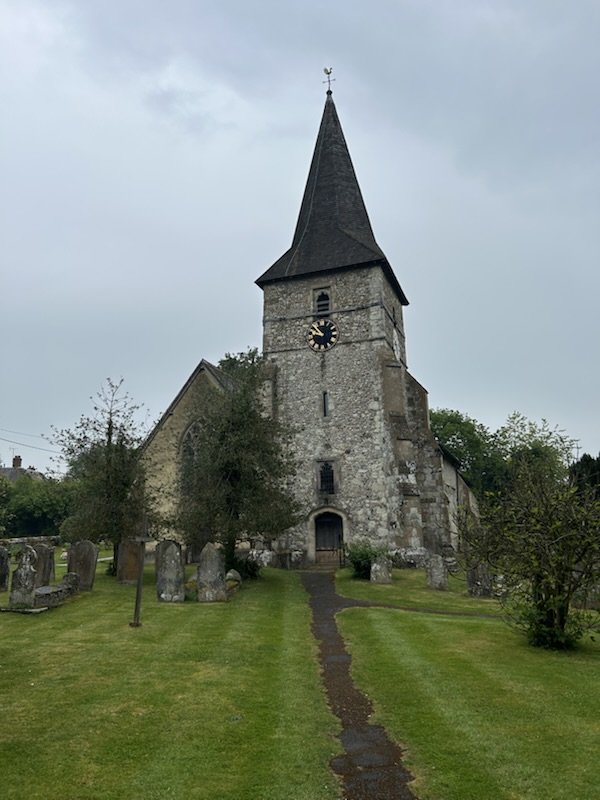
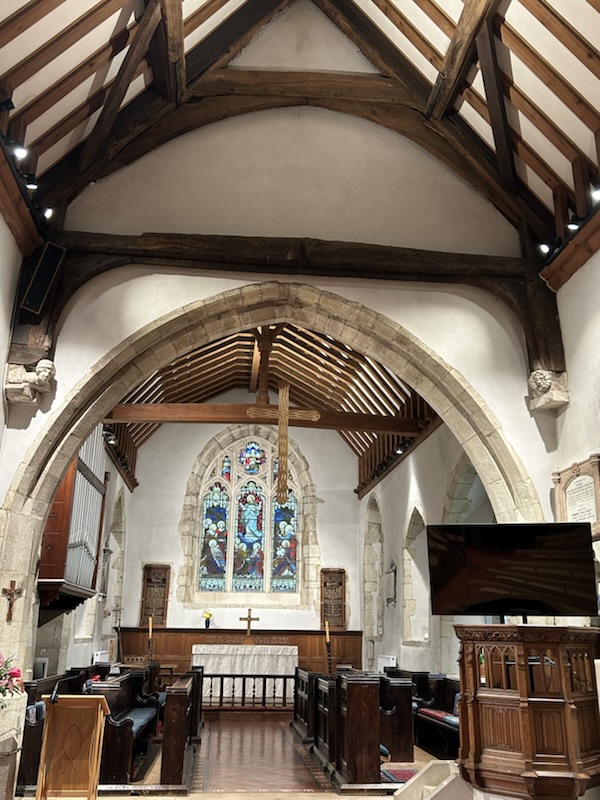
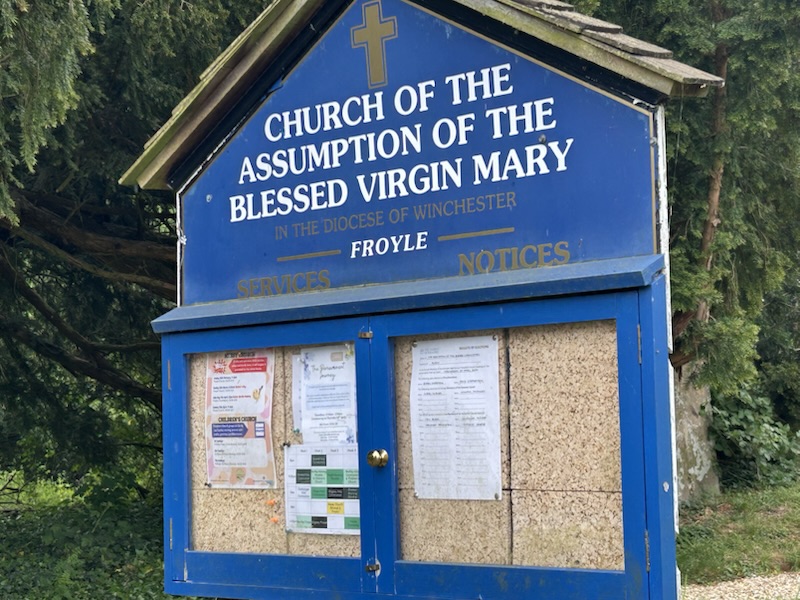
Church #2 – Church of the Assumption of the Blessed Virgin Mary in Upper Froyle
This church was owned by the nuns from St. Mary’s Abbey in Winchester & it is highly likely that its name stems from them. The present church dates from the 14th Century although there was certainly a church located here before this one.
Still raining.
Fields are often lined by hedge rows, small bushes, & sometimes a small narrow forest.
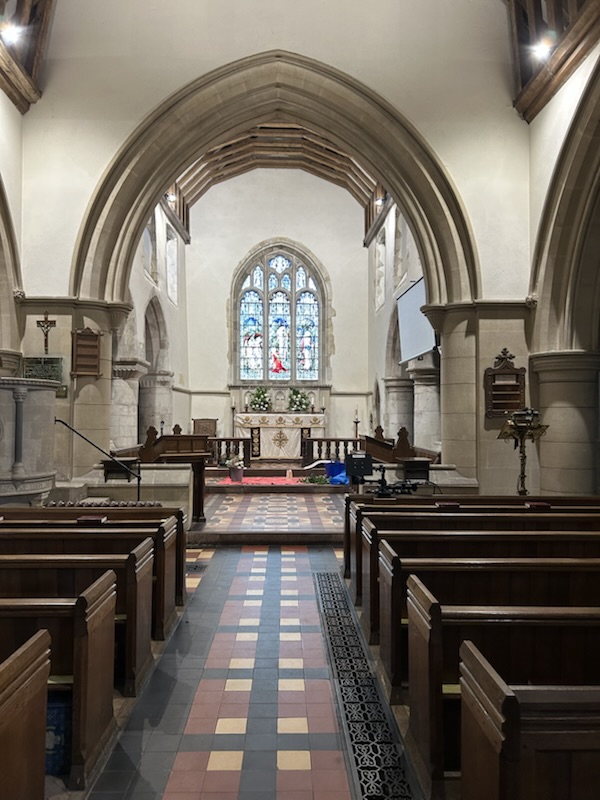
Church #3 – Church of Saint Mary the Virgin in Bentley
Bentley’s history can be traced back to the Romans in the 1st Century AD. This church was founded in 1175 by the Normans.
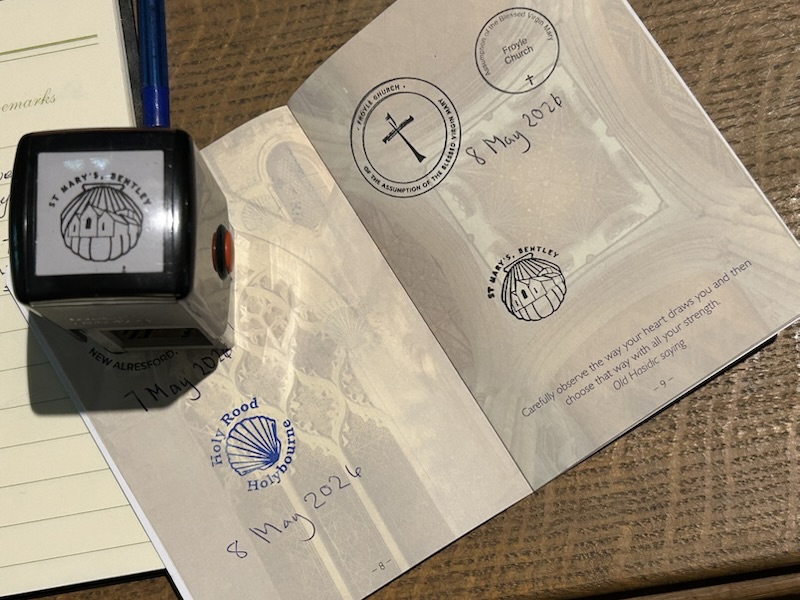
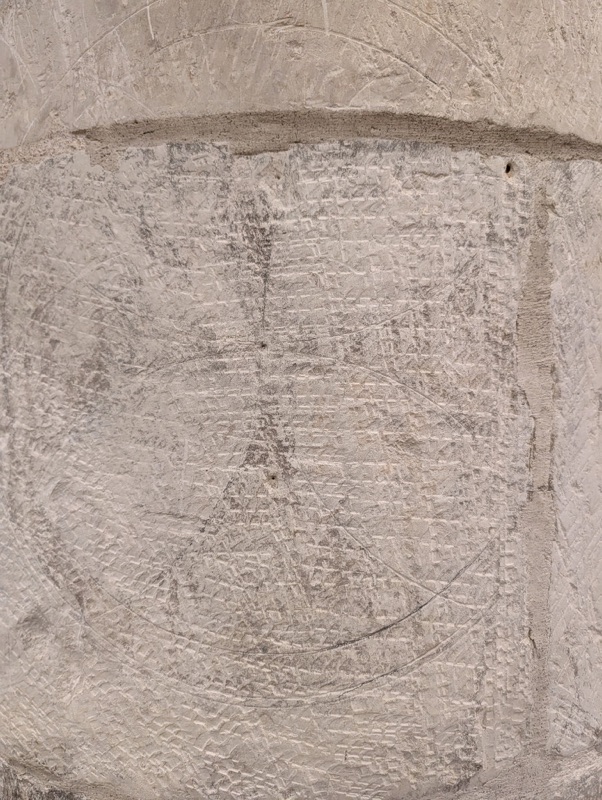
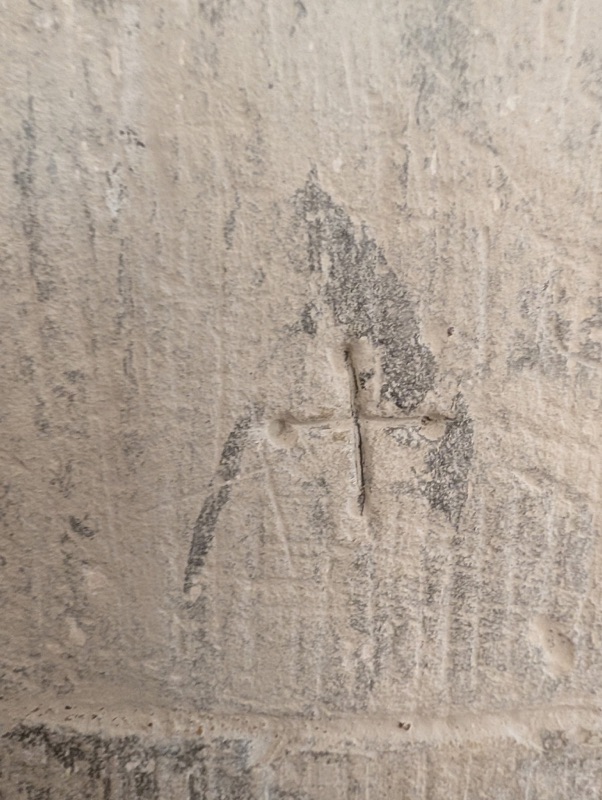
Yew trees estimated to be over 600 years oldCollecting many stamps todayConsecration Maltese Cross inscribed in pillar in the year 1400Blessing Symbol inscribed in pillar after the Black Plague in 1349
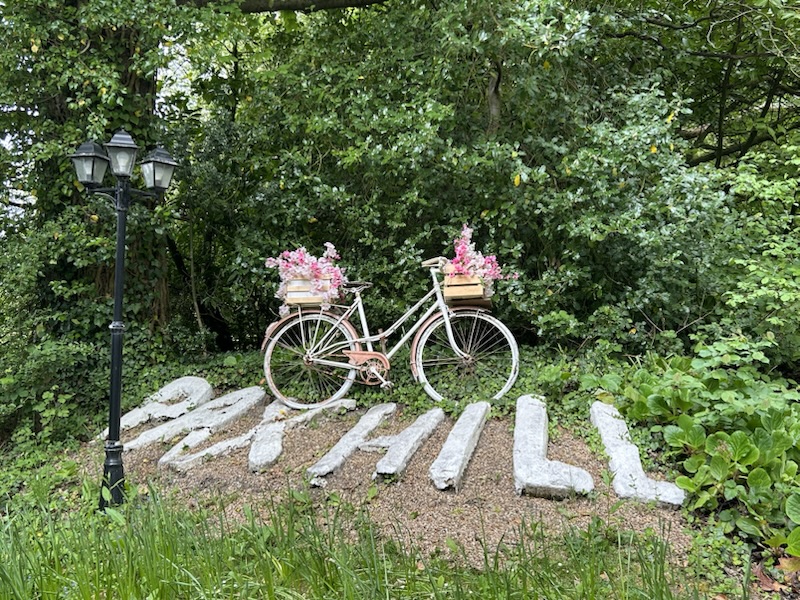
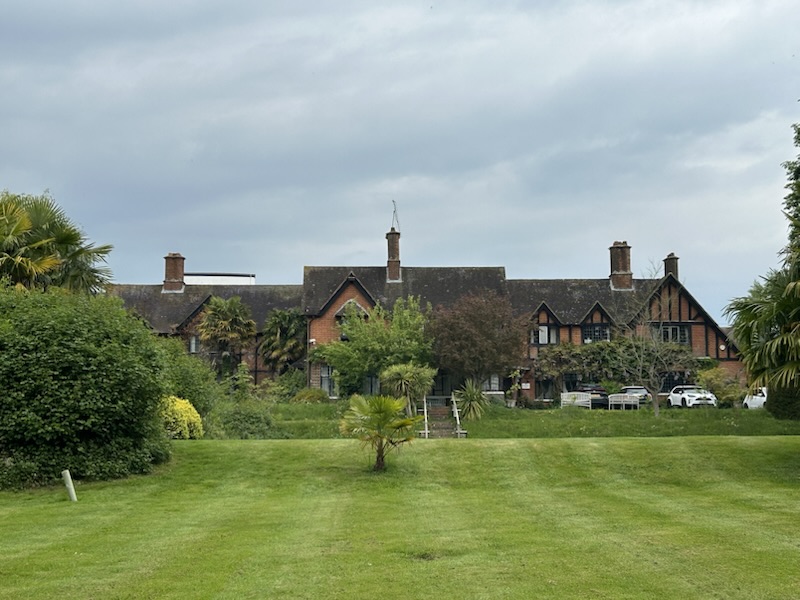
The rain finally stopped and we enjoyed lunch in front of Lord Baden Powell’s house at Pax Hill. He started the Boy Scouts in 1907. After he died, his wife Olave gave the house to the Girl Guides who are known as the Girl Scouts in America. It is now a rest home.
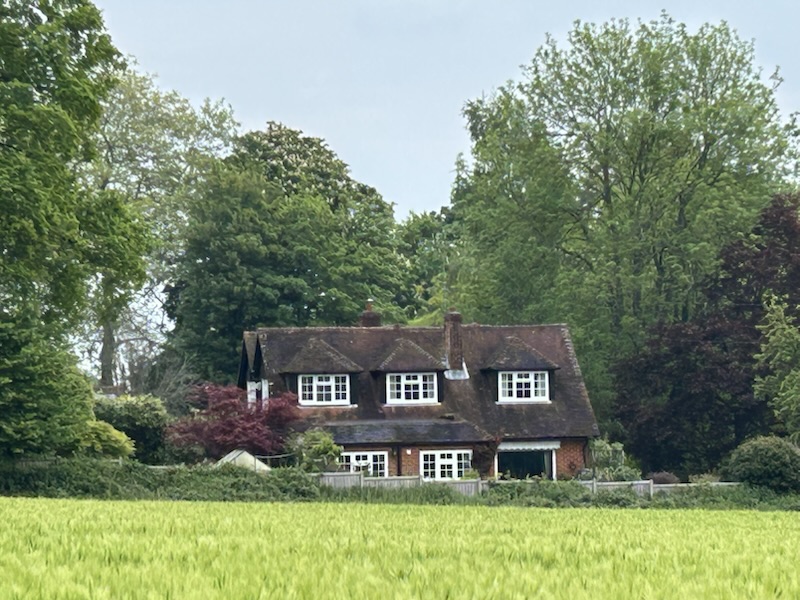
Much of the route took us through barley or wheat fields. We also saw young men exercising horses along with more unique homes.
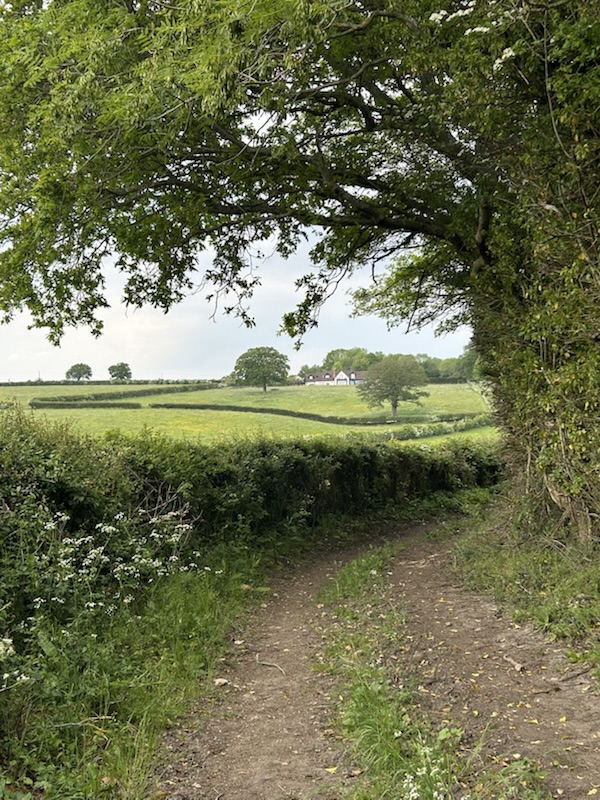
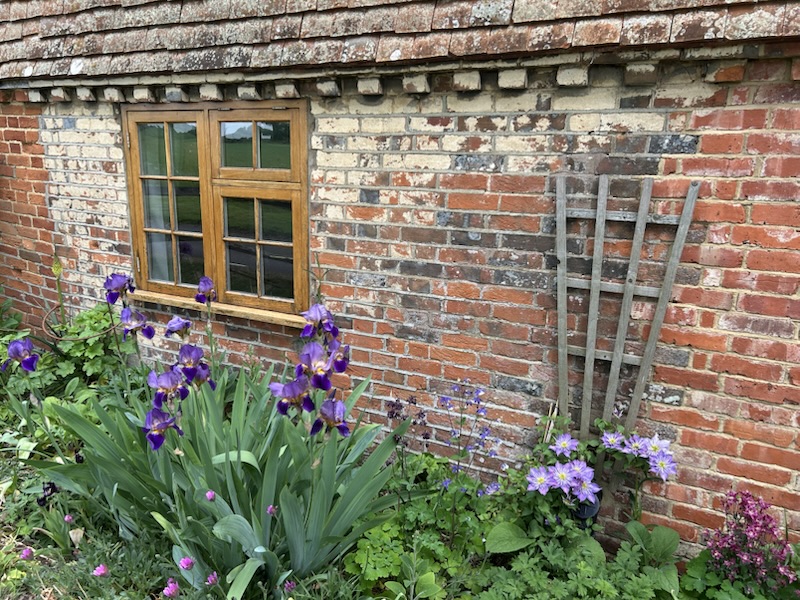
Resting logLovely farm homeThis is not a church.. it is someone’s home
Farnham is a nice college town. It has a castle that is now closed for repair & was known for hosting Queen Elizabeth I.
FarnhamApproaching Farnham
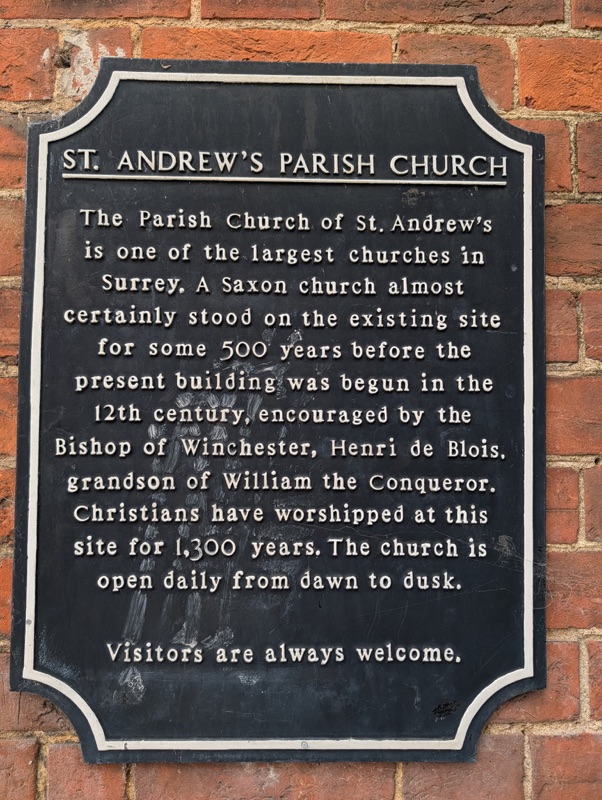
Church #4 – St. Andrew’s in Farnham
A church has stood in Farnham since the 7th Century & one was mentioned in the Domesday Book in 1086 in which William the Conqueror ordered a survey to be done accounting for his kingdom.
Day 2 – Officially listed as 12 miles; We walked 15.3 miles ( Hotel was a mile from the trail, major construction in Alresford forced a long detour to get back on the trail, & we lost the unmarked trail a couple times forcing us to backtrack).
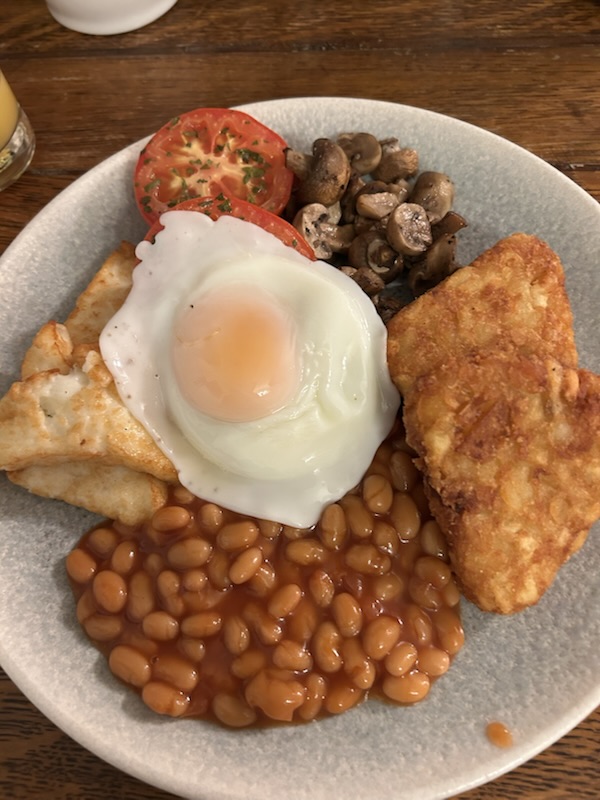
We started our day with a proper English Breakfast minus the sausage.
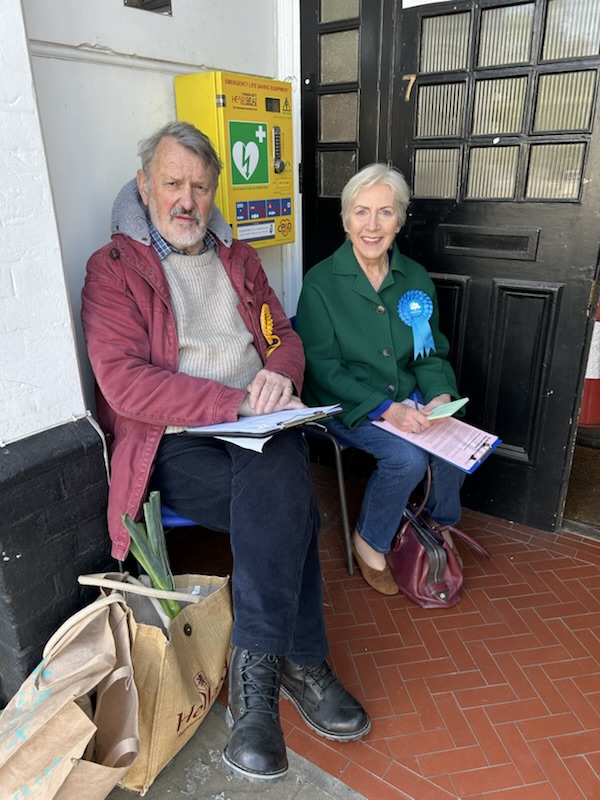
When leaving Alresford, I saw these two people. This was Polling Day & they were the voting officials at the door.
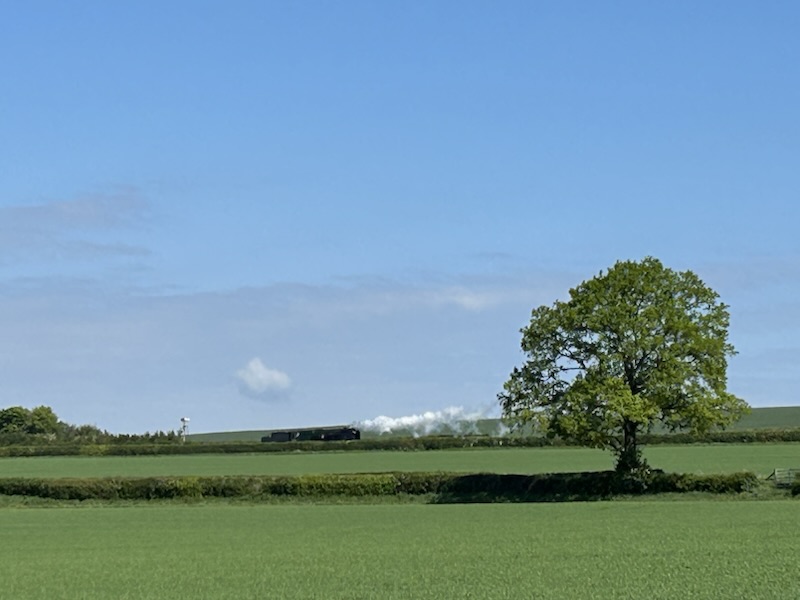
This area is also known for its old railway called the Watercress Line which still uses steam locomotives. The line gained its name when it was used to transport watercress grown in this area to markets in London. This train # 35005 is an SR Merchant Navy Class “Canadian Pacific” engine built in 1941. Despite regularly being able to travel at over 100 MPH which was very fast for a train back then, only 30 of these engines were built. We heard its classic steam train whistle blowing in the distance announcing its presence before we were fortunate to see it pass by us.
“ I hear the train a- comin’, it’s rolling ‘round the bend…”
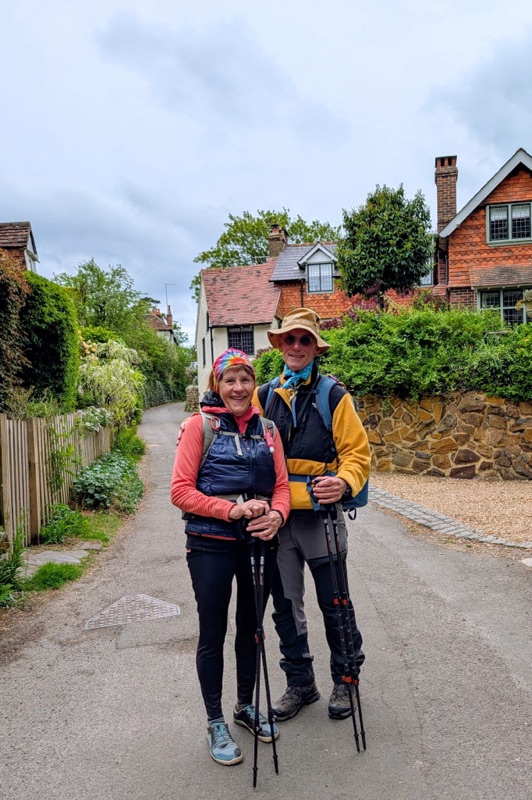
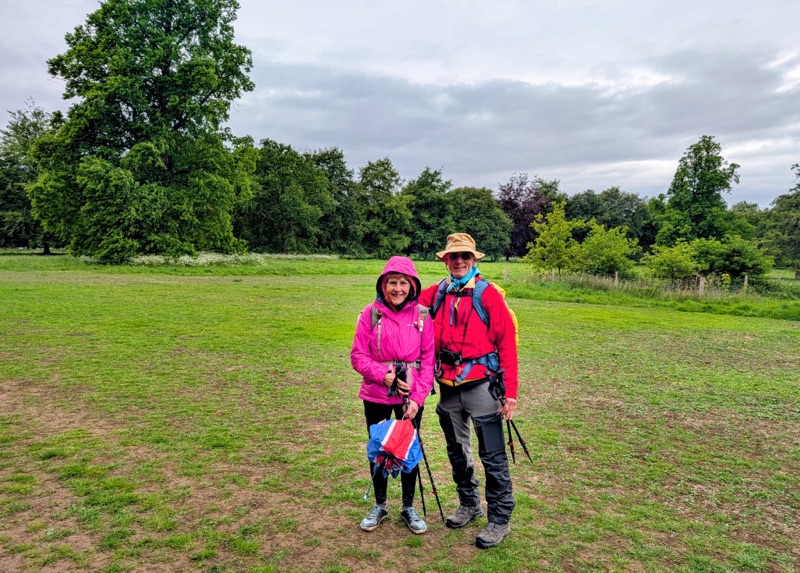
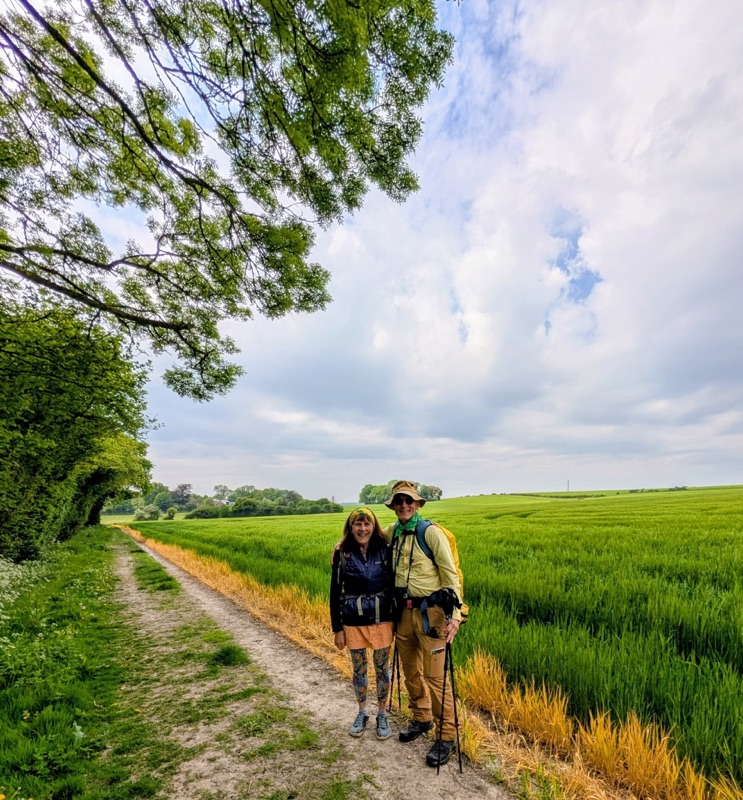
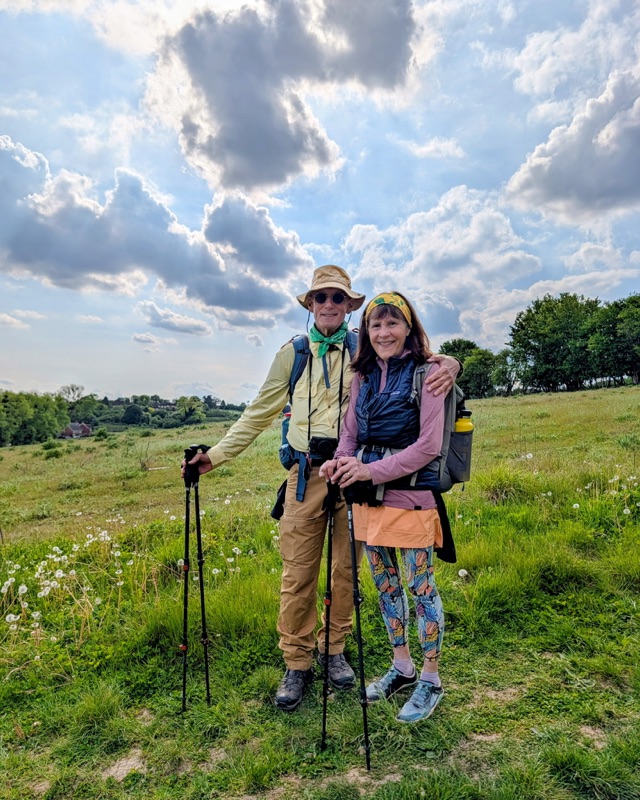
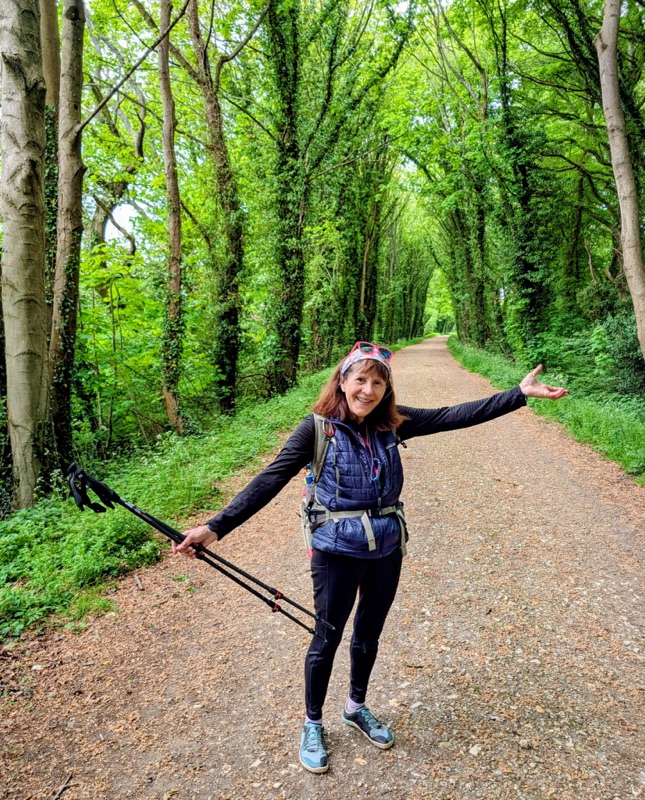
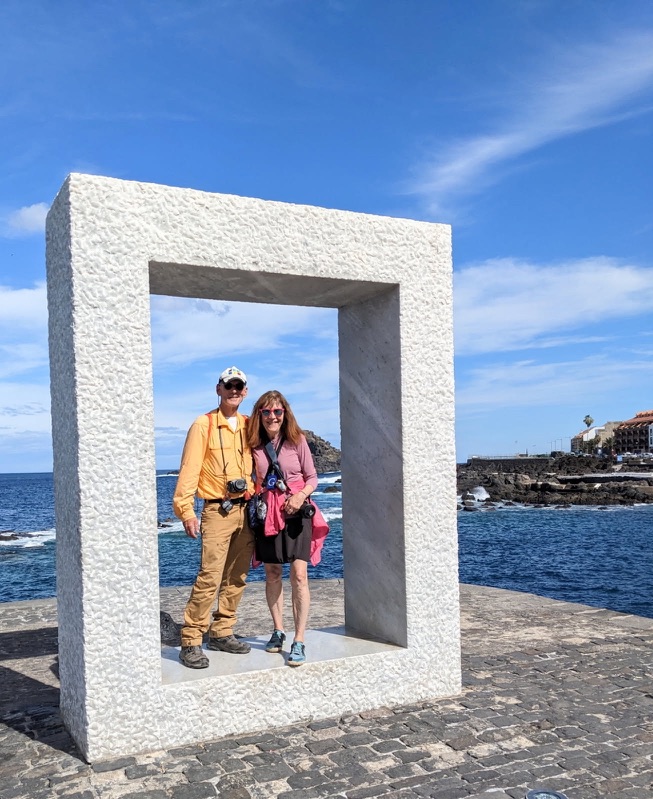
Unlike the Camino in Spain, we almost never meet other pilgrims here; but, occasionally we do meet other walkers who are happy to snap a picture for us. Even though England has thousands of miles of public footpaths & walking is extremely popular among locals, we have met very few people so far on our trek.
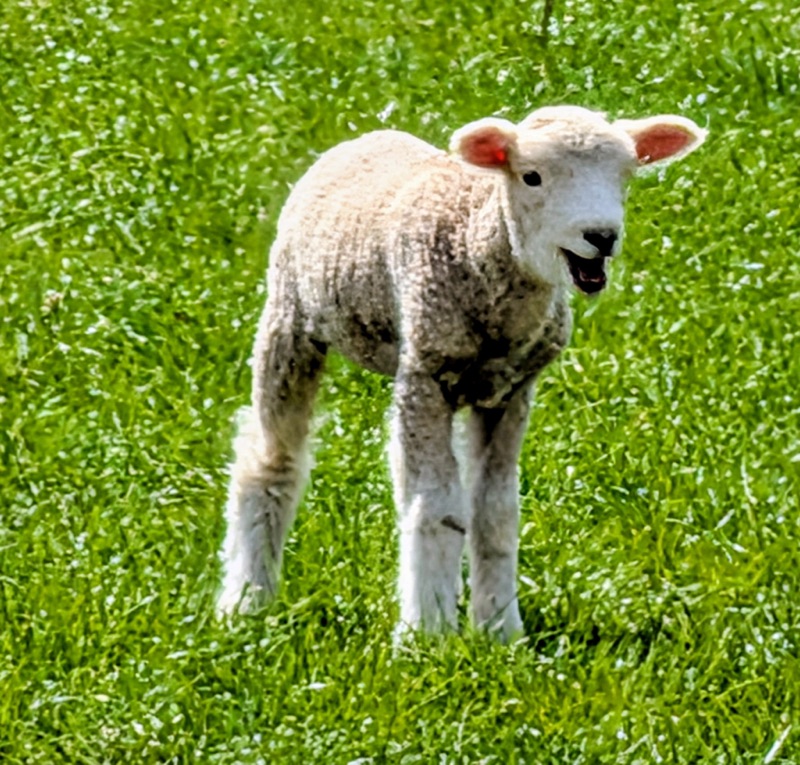
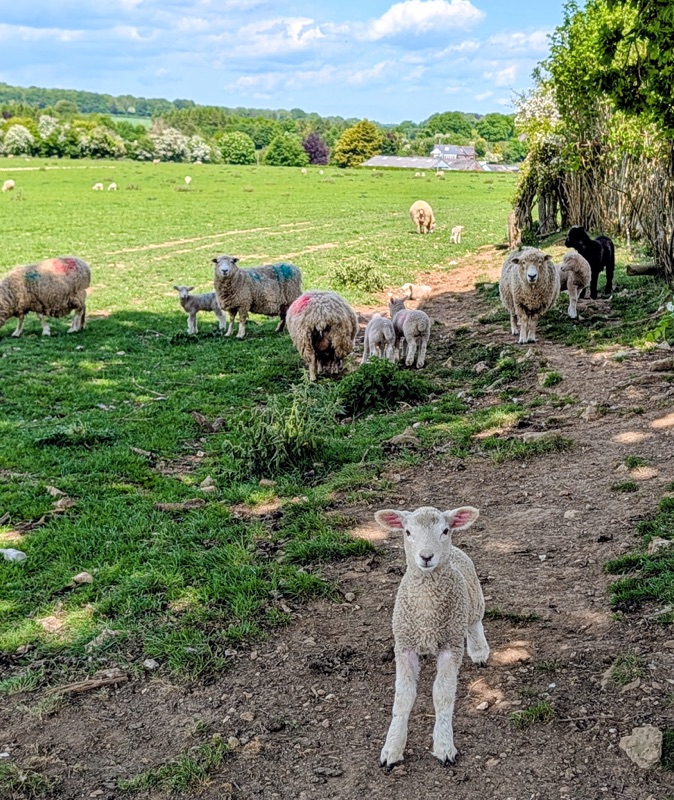
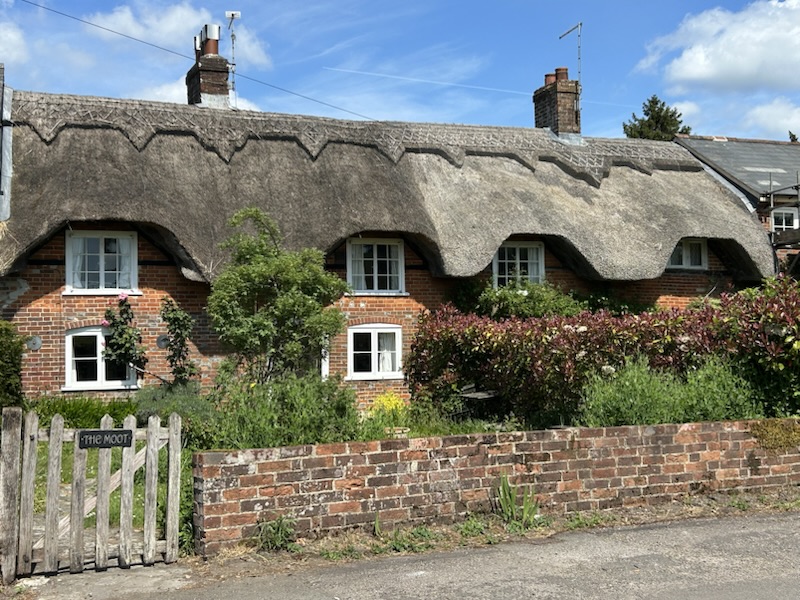
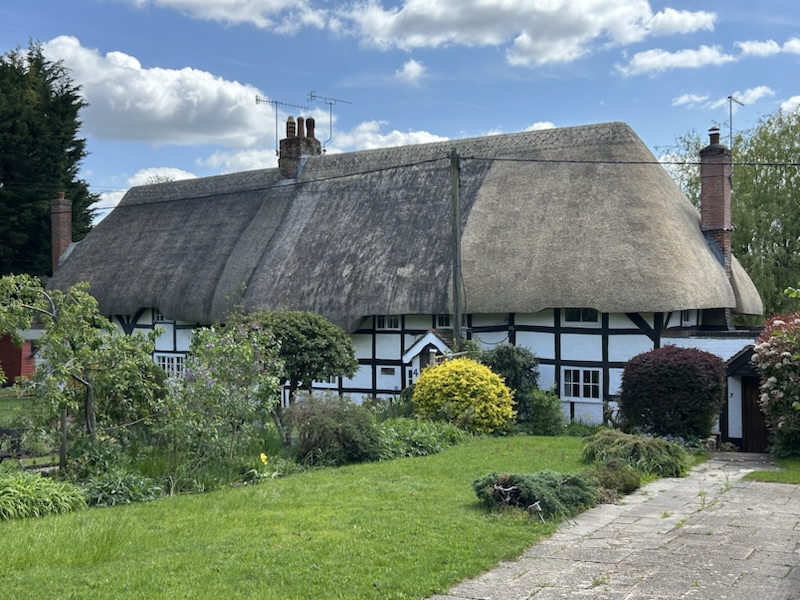
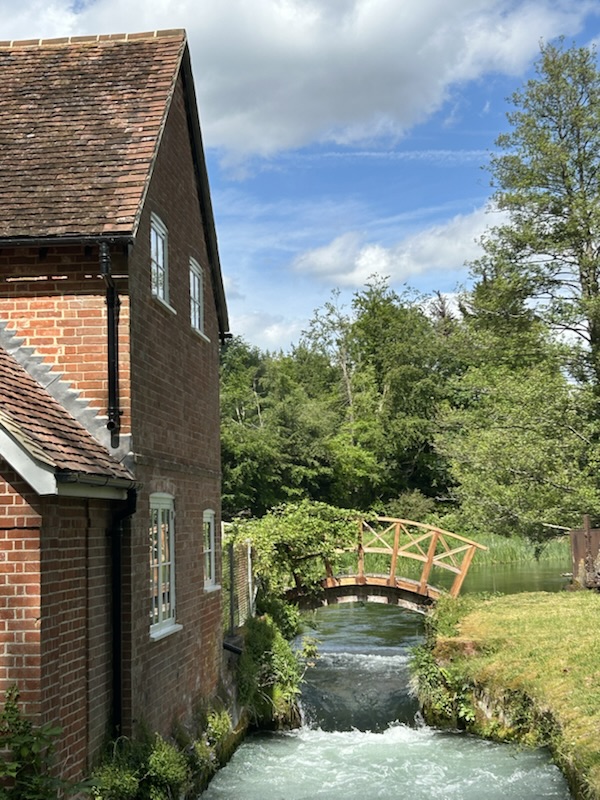
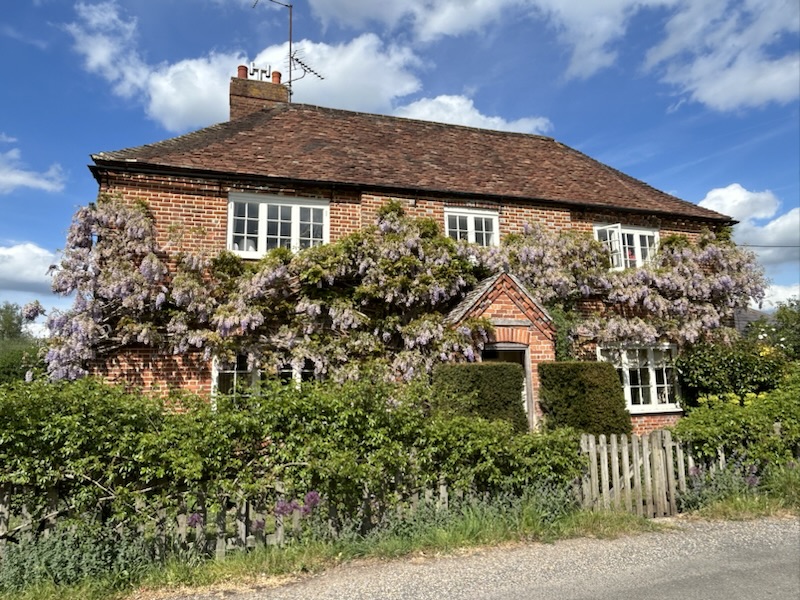
Today’s route took us through pastures & woods, by more thatched roofed homes, & through fields with spring lambs.
We enjoyed a quick lunch in a field with some sheep.
Final push into Chawton.
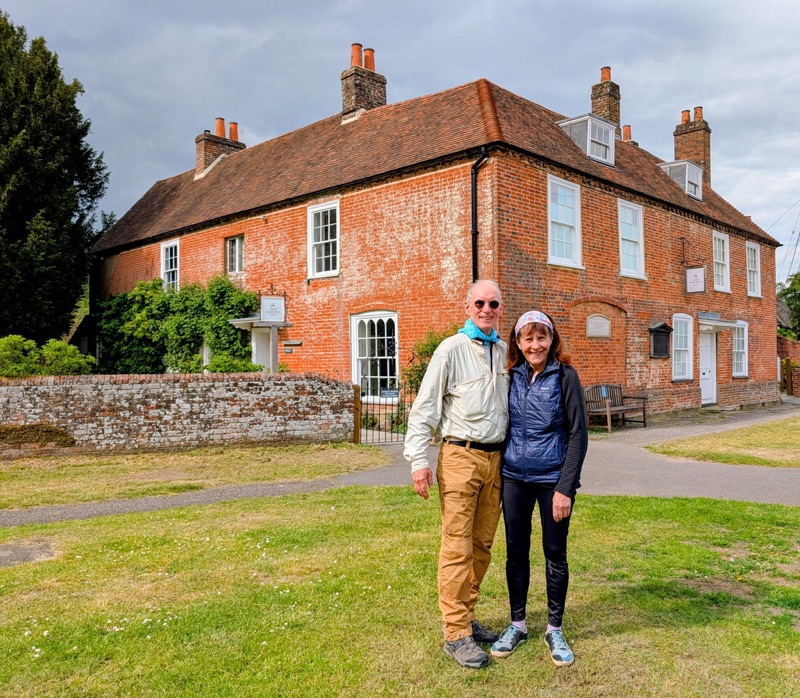
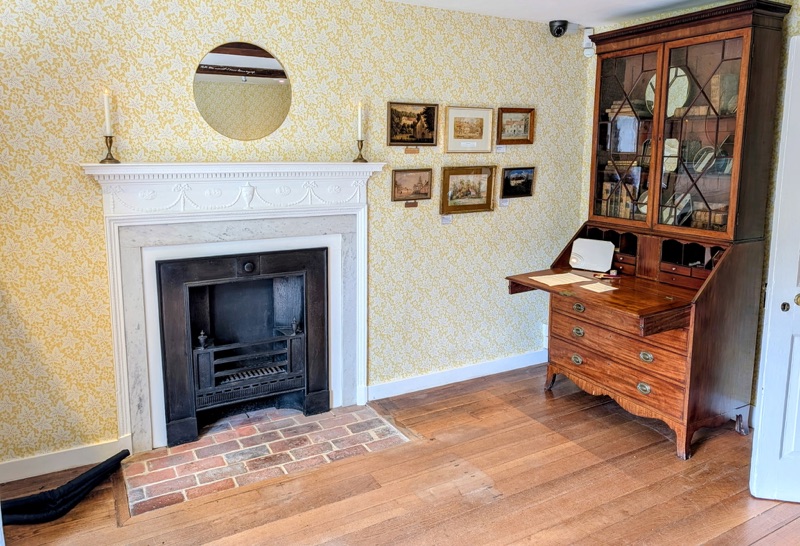
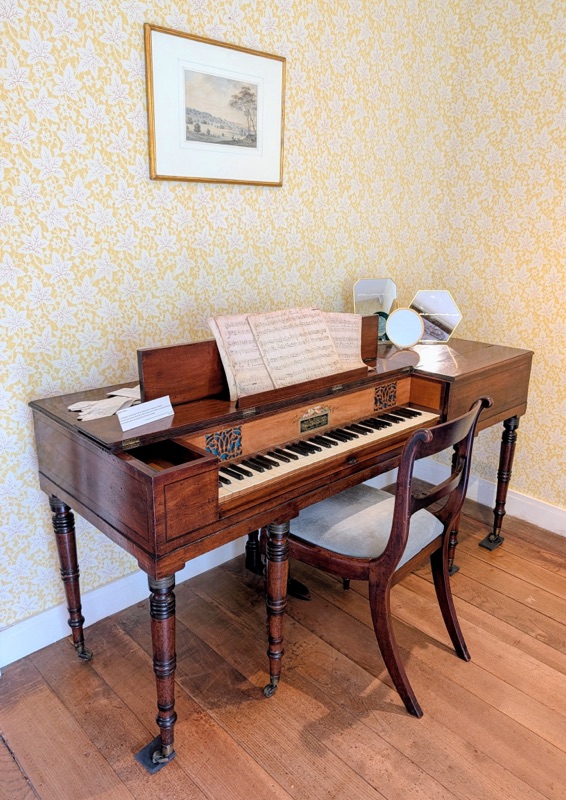
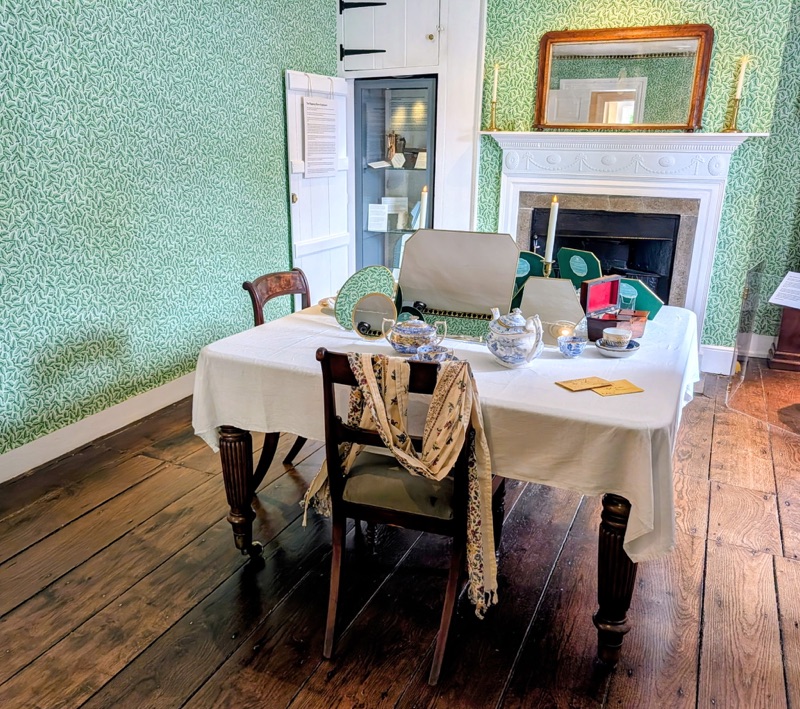
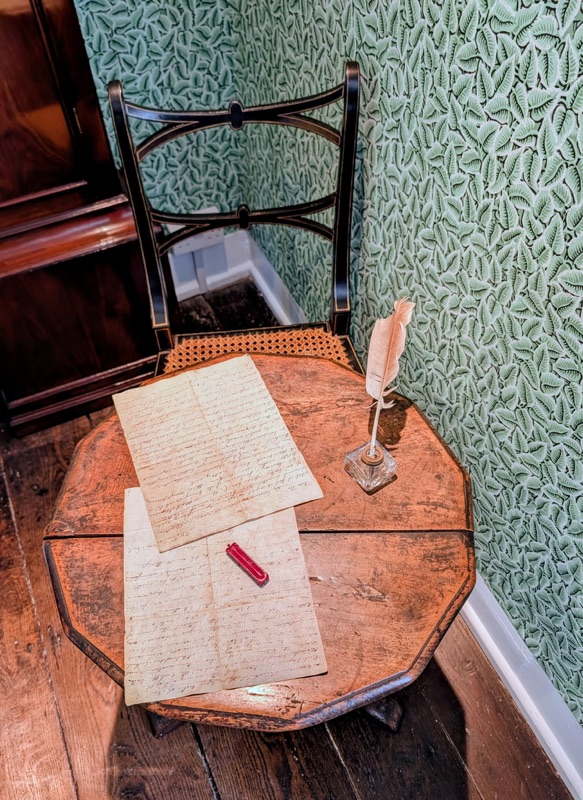
After over 6 hours & 14 miles, we reached Jane Austin’s home in Chawton which is only a mile from Alton where we stay tonight.
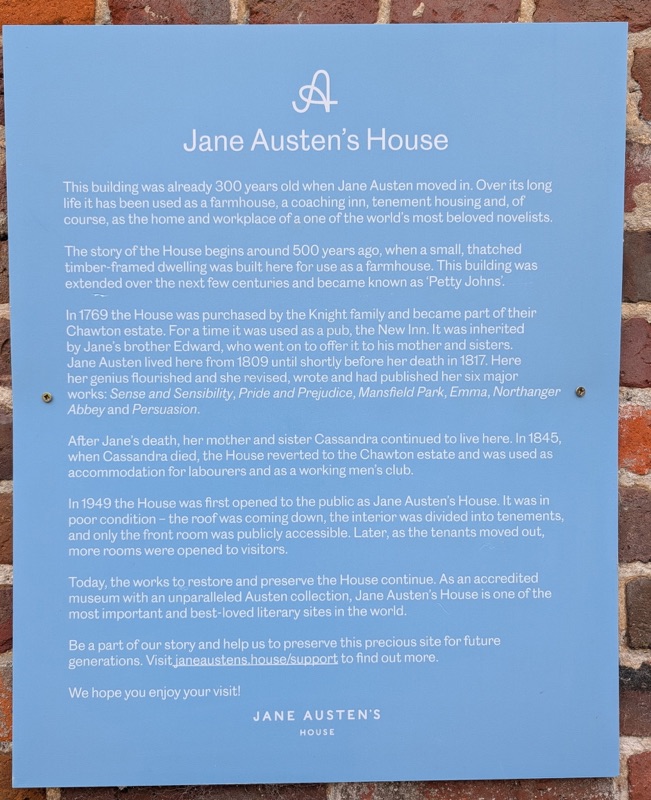
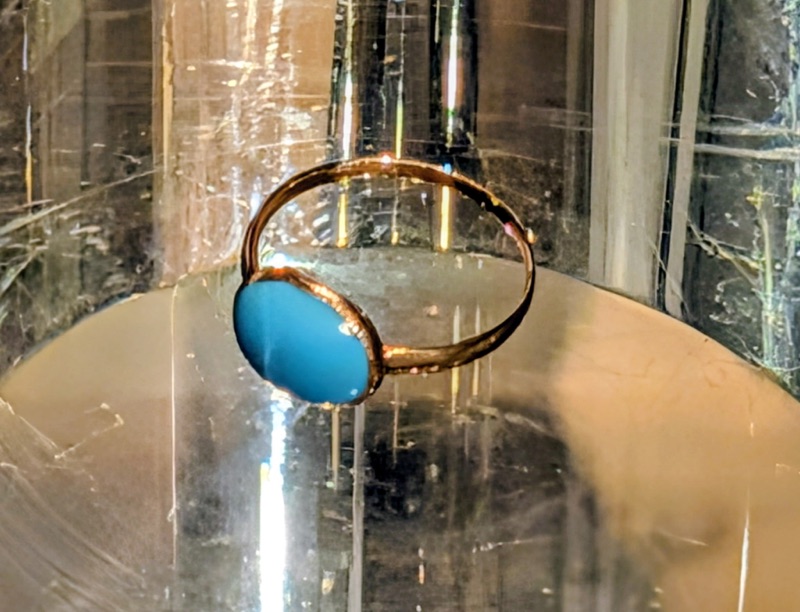
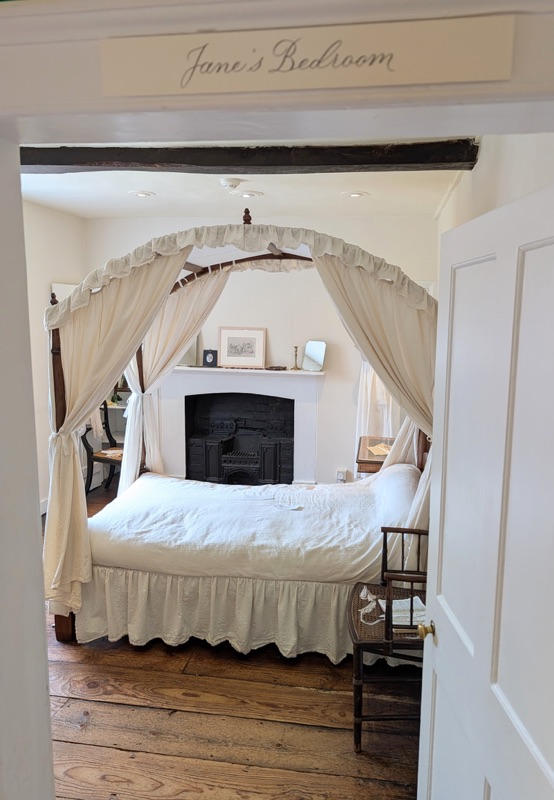
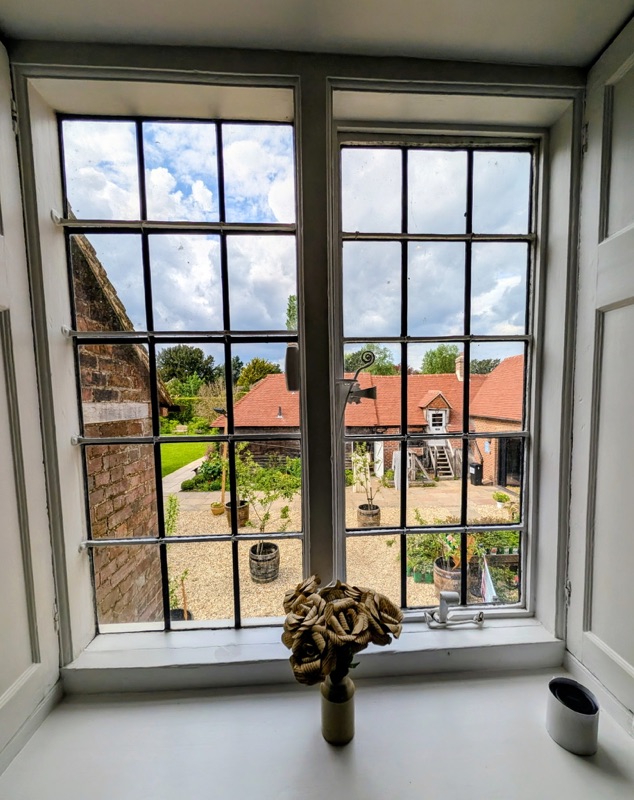
Front of Jane Austen’s homeInfo about her homeRoom where she read from her books to her familyWhere she played each morningHer Dining RoomHer tiny writing table which could be easily moved depending on which room had the most sunshine for best lightingHer Turquoise RingHer bedroomView from her bedroom into the garden & back of her house
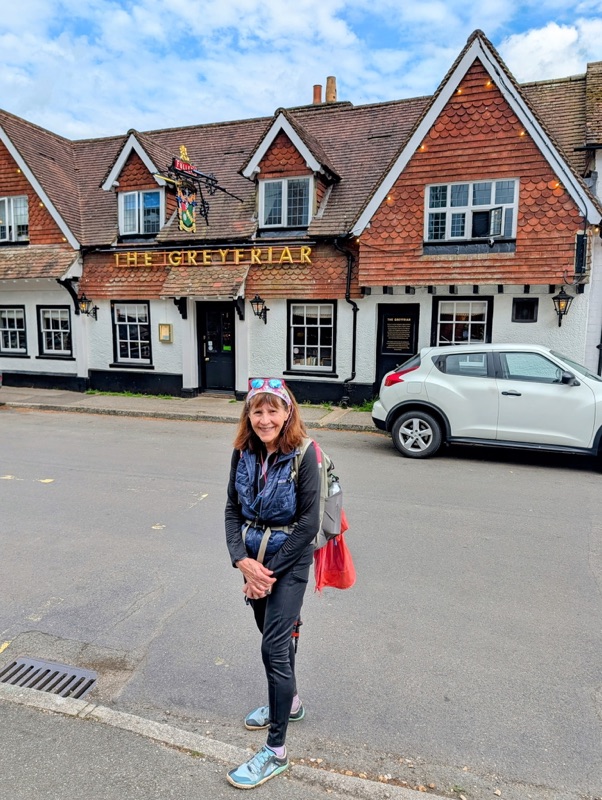
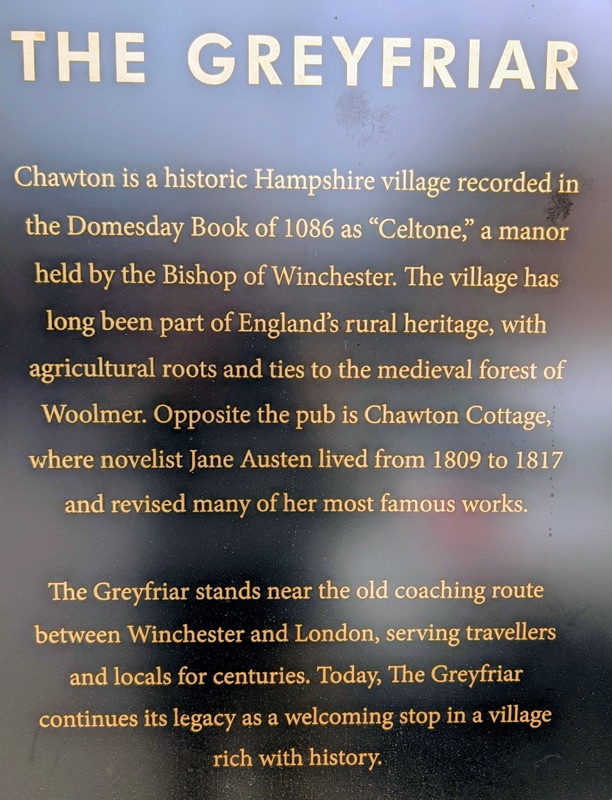
The Greyfriar pub is right across the street from her home.
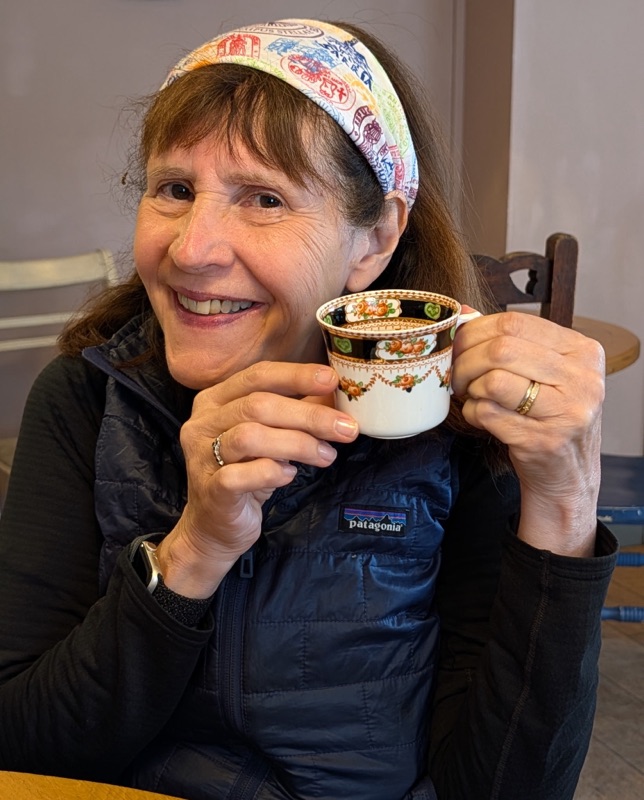
Before walking our last mile to our hotel in Alton, I enjoyed a proper cup of afternoon tea in a china teacup. 🥰
This tea house across the street from Jane Austen’s home right next to the Greyfriar is called “Cassandra’s Cup” after Jane’s sister Cassandra. In 1804, Cassandra Austen became the first person known to mention “afternoon tea” in writing.
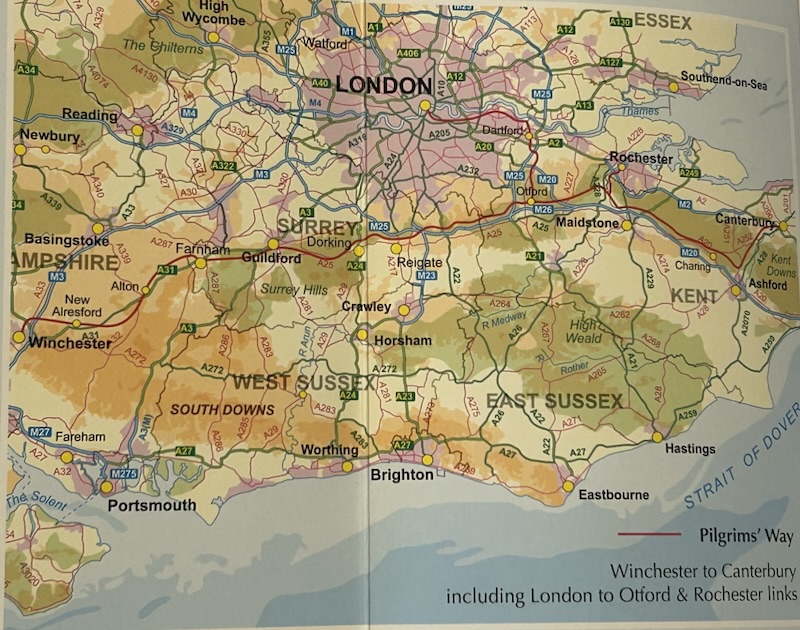
Follow the red line for the Pilgrim’s Way from Winchester to Canterbury
Day 1 – Officially listed as 9 miles; We walked 13.3
This is now our third Pilgrimage Trail walk. We hiked the Camino Santiago de Compostela in Spain, the Camino Portugués in Portugal & Spain, & now our first pilgrim trail in England. However, this our 3rd long distance hike in England.
It’s hard not to love the English countryside in May. The temperatures are mild, wildflowers dot the hillsides, & lush green forests are brimming with green leaves.
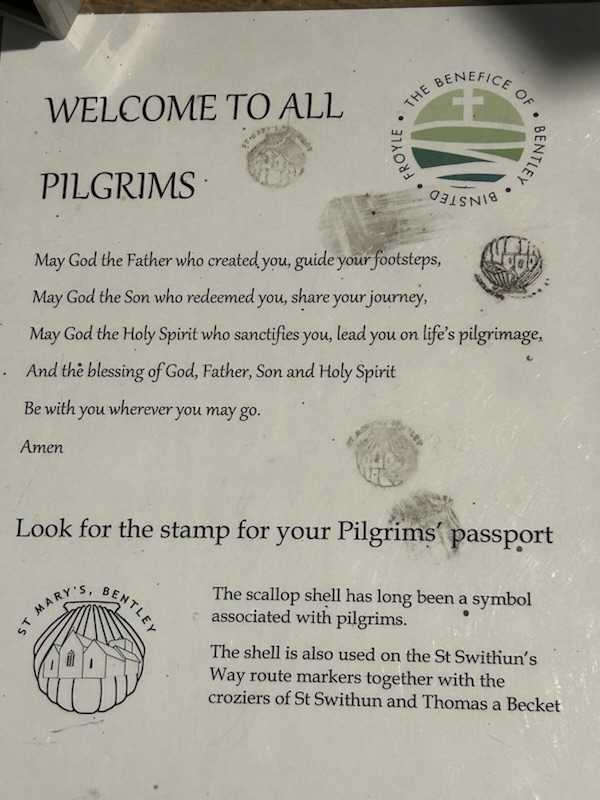
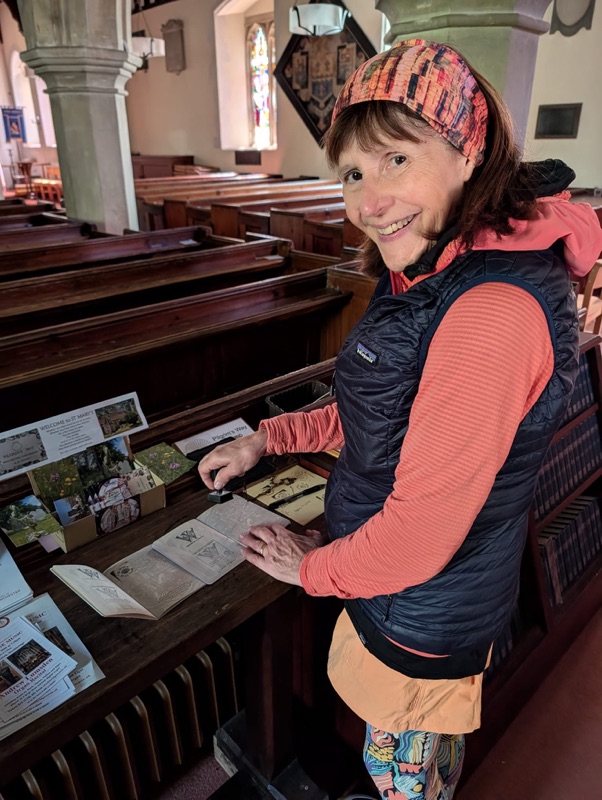
Like our St James walks in Spain & Portugal, you buy a Pilgrim Passport at the beginning & slowly collect stamps at various places along the way to the finish.
Stamping our Pilgrim Passports
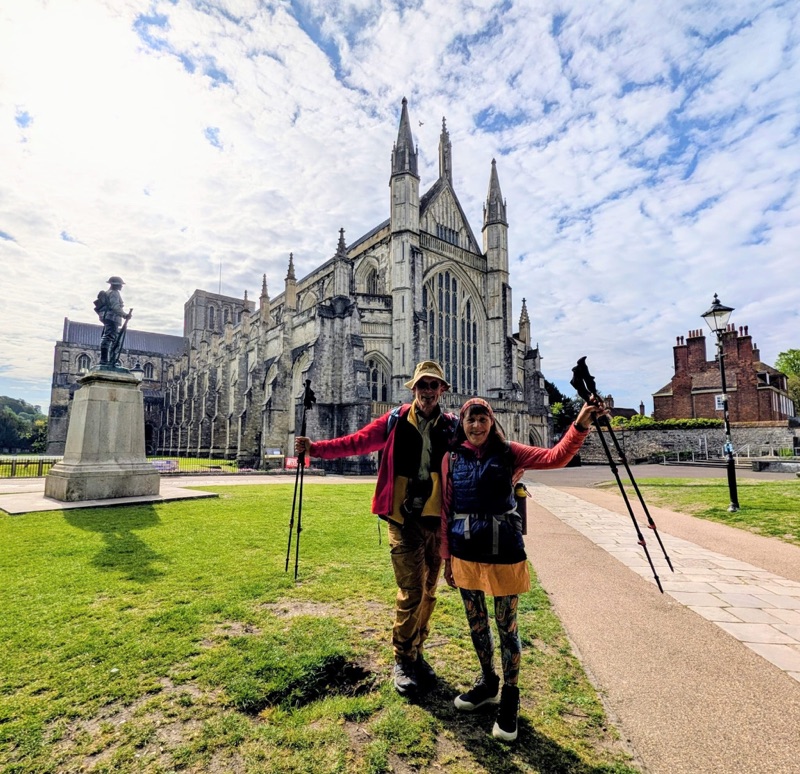
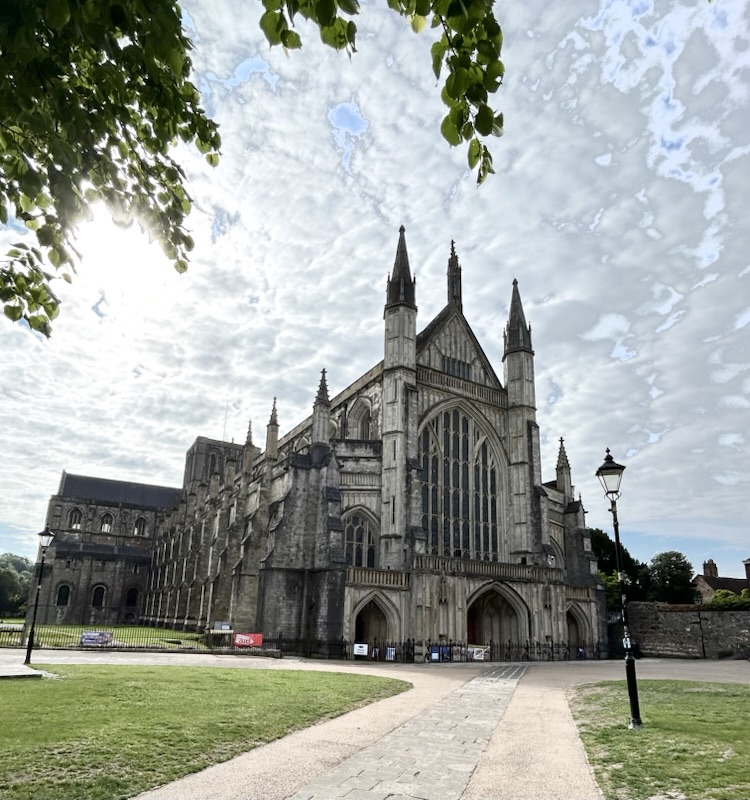
Today we started at the Winchester Cathedral which at 558 feet long is the longest medieval cathedral not only in England; but also in the world.
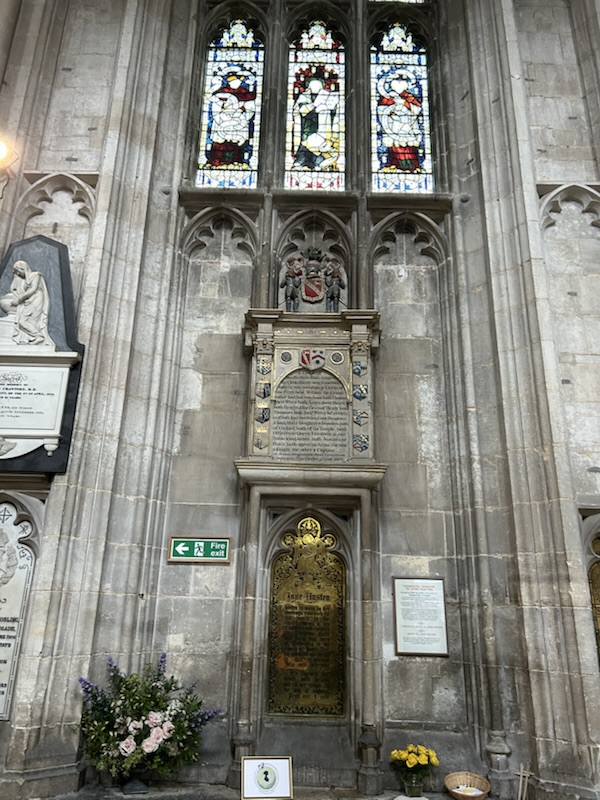
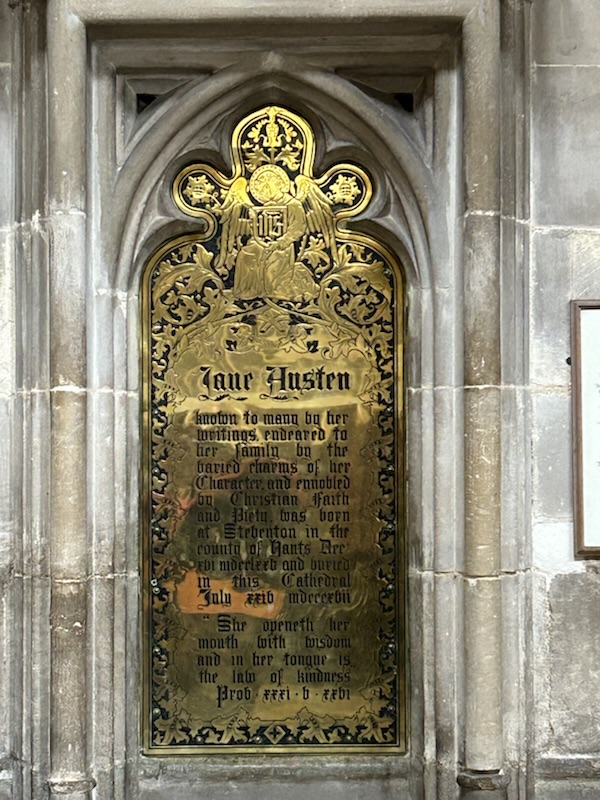
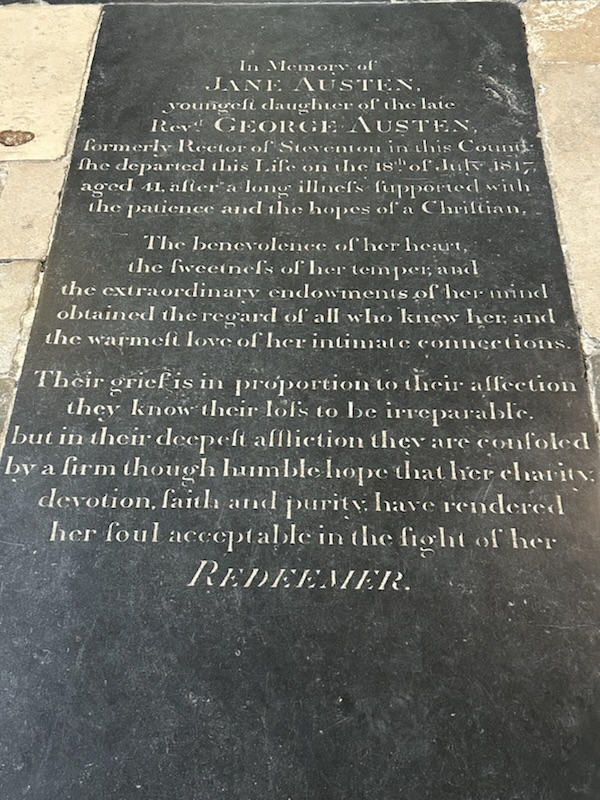
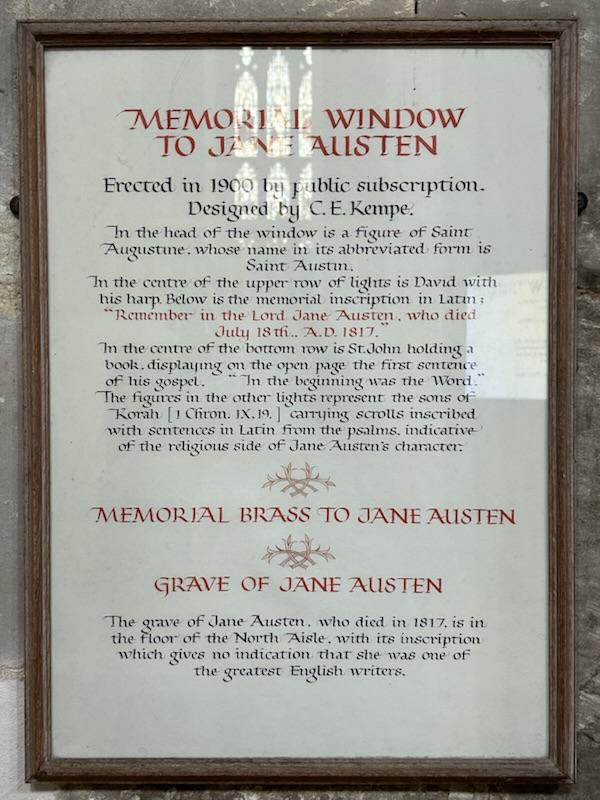
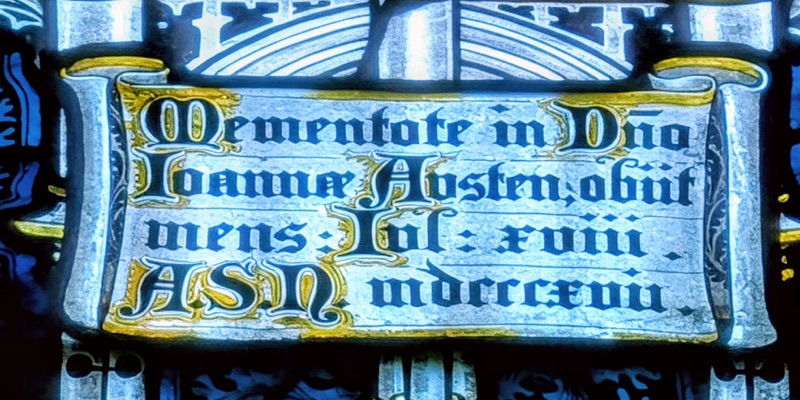
The cathedral also contains the writer Jane Austin’s grave. She was initially interred with no honors; but, later a brass plaque & some stained glass were installed to honor her.
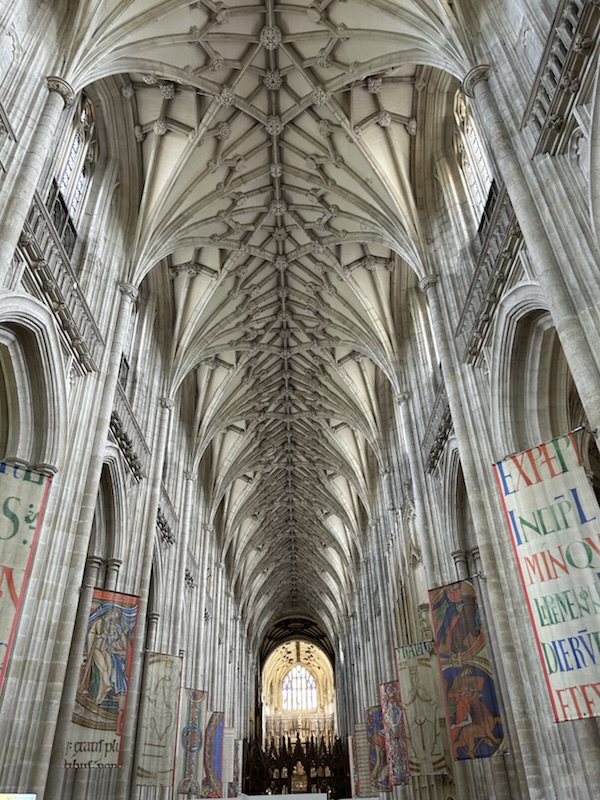
Canterbury Trail Start Point at the Winchester Cathedral Winchester CathedralThe Nave- it is among the widest Gothic naves in England & the longest nave of its kind in EuropeJane Austen sectionJane Austen plaqueJane Austen grave Jane Austen MemorialStained glass commemorating Jane Austen in Latin
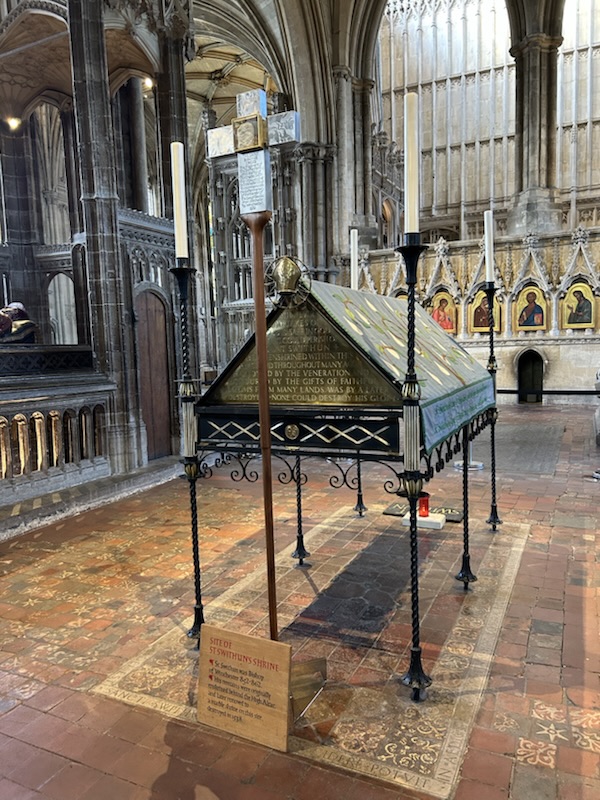
You can also see Saint Swithun’s grave in the cathedral. He died in 863 & a century after his death, he was chosen to be this place’s patron saint making him the first minister in Winchester.
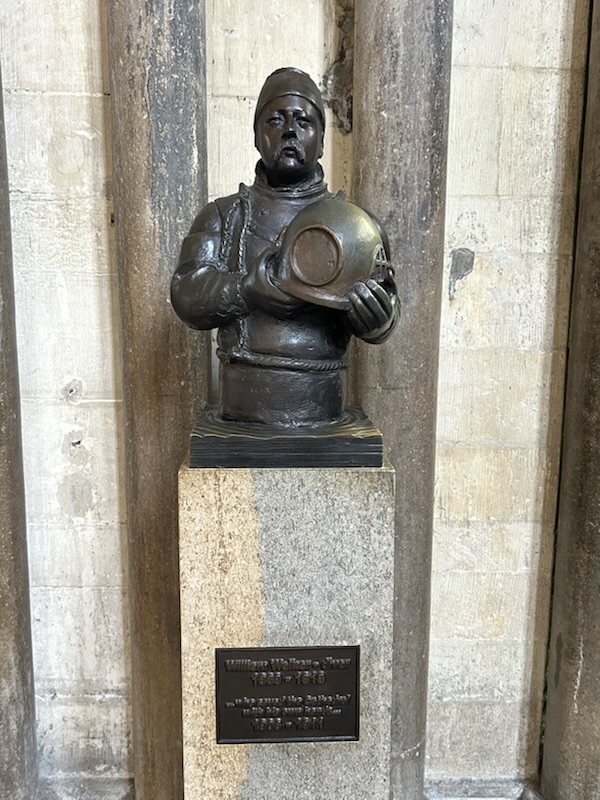
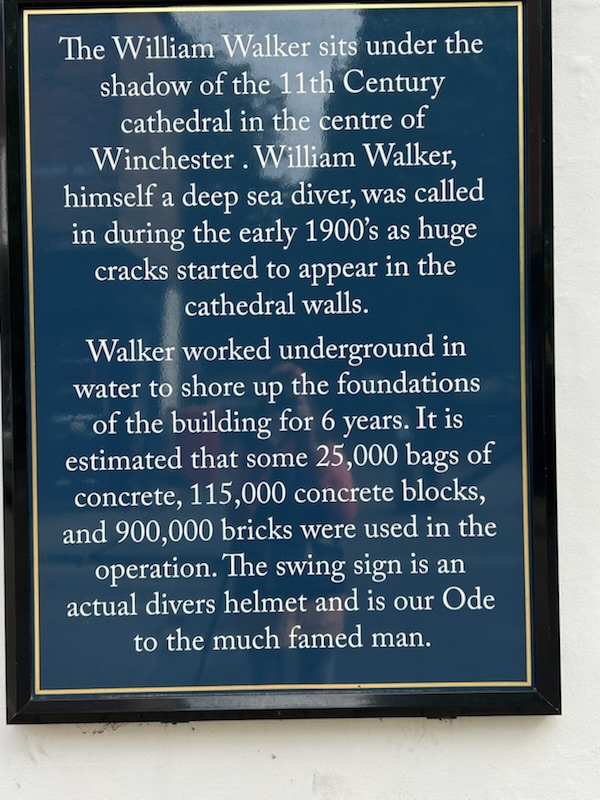
In the early 1900s, huge cracks, started to appear in Winchester Cathedral as it started sinking & moving, so it was dangerously close to collapsing completely. Early efforts to reinforce its waterlogged foundations failed until deep sea diver William Walker descended into the flooded ground wearing a primitive 200 pound diving suit to level the area.
He started by removing the peat soil & then laid cement bags to plug the rising water. Bodies which had floated from graves, made the water toxic in which he worked.
William Walker worked underwater every day for 6 to 7 hours a day for six years from 1905 until 1911.
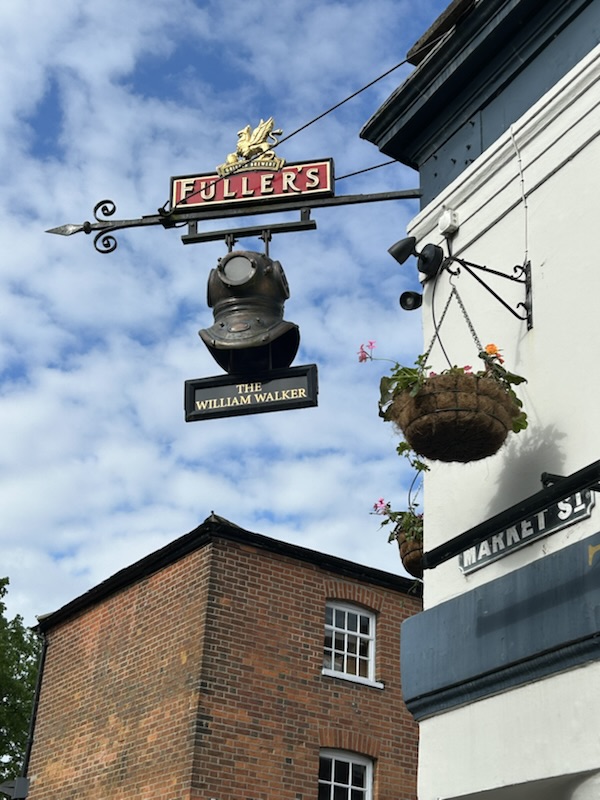
 Walker single-handedly laid more than 25,000 concrete bags, 115,000 concrete blocks, & 900,000 bricks to support the cathedral. There is a small statue portraying him in the rear of the cathedral honoring him as “ the man who saved the cathedral with his own hands” as well as a local pub commemorating his memory.
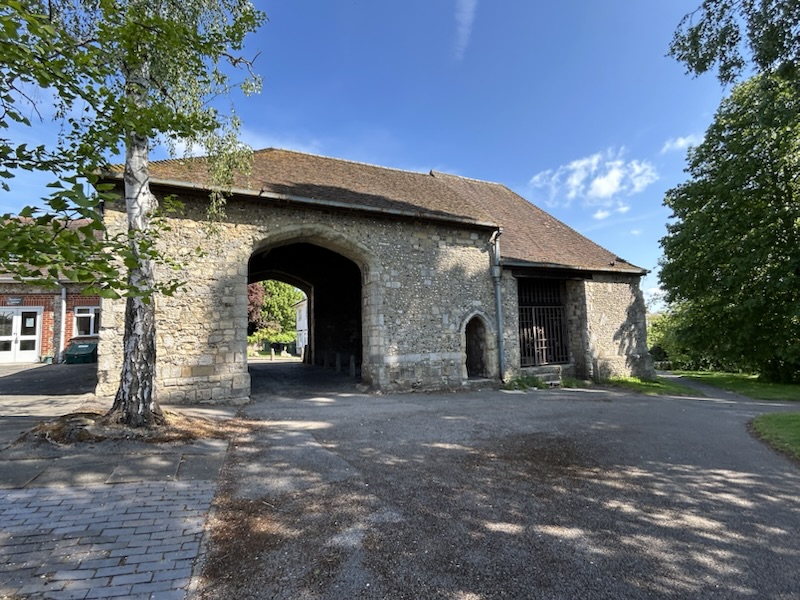
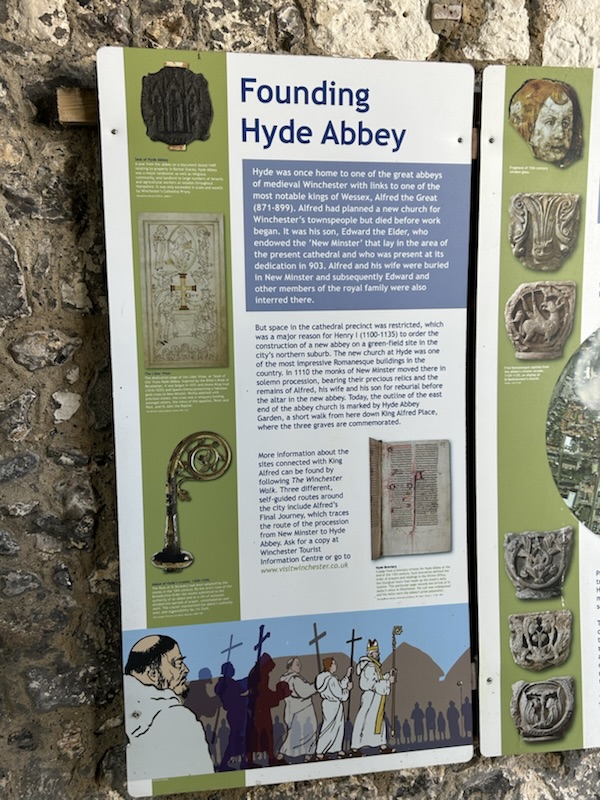
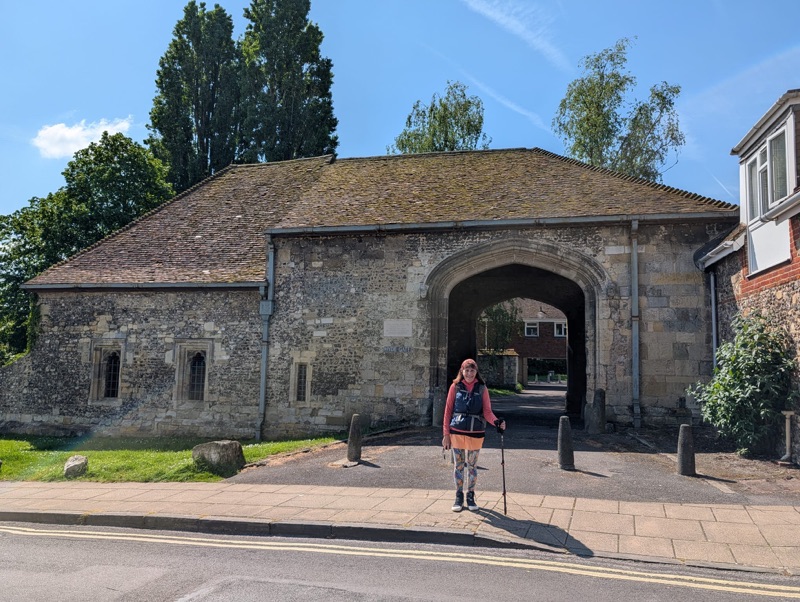
Not far from the church the pilgrim trail takes you past the Hyde Abbey ruins. Alfred the Great who united England refounded the royal city Winchester around 880. This Abbey was completed in 903. Today all that remains from the Abbey is the gatehouse that commanded the entrance between the large Abbey’s inner & outer precincts. Alfred the Great was buried here, but his remains as well as other famous ancient Anglo-Saxons are now apparently lost to the ages. At one time Hyde Abbey even owned the tavern where the old English book “The Canterbury Tales” was said to begin.
Hyde Abbey Gatehouse in Winchester
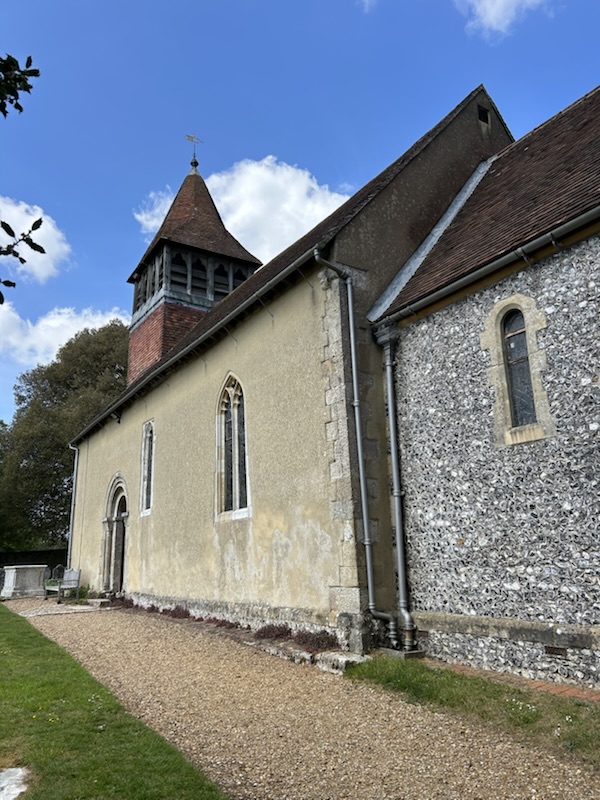
Today we passed two old churches where we collected stamps for our passports.
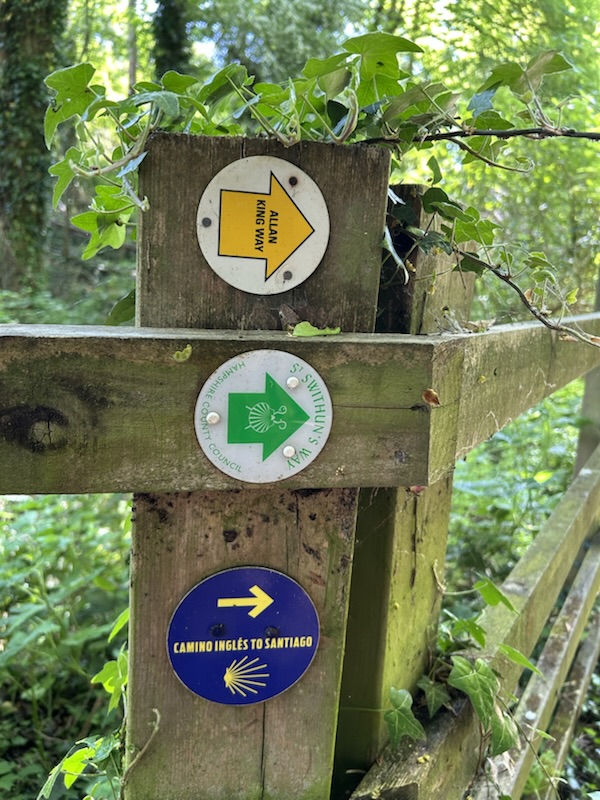
The path here isn’t marked as well as the Camino in Spain, but from time to time we do see emblems letting us know we are going in the right direction.
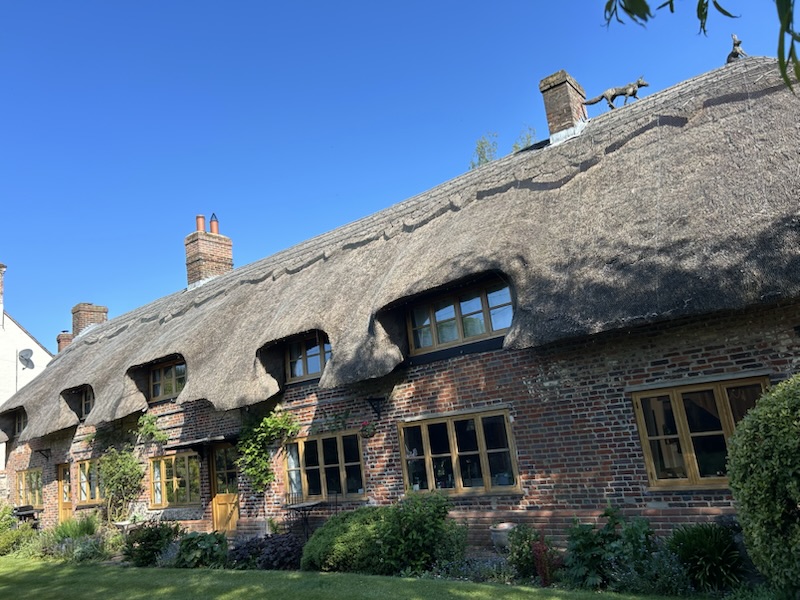
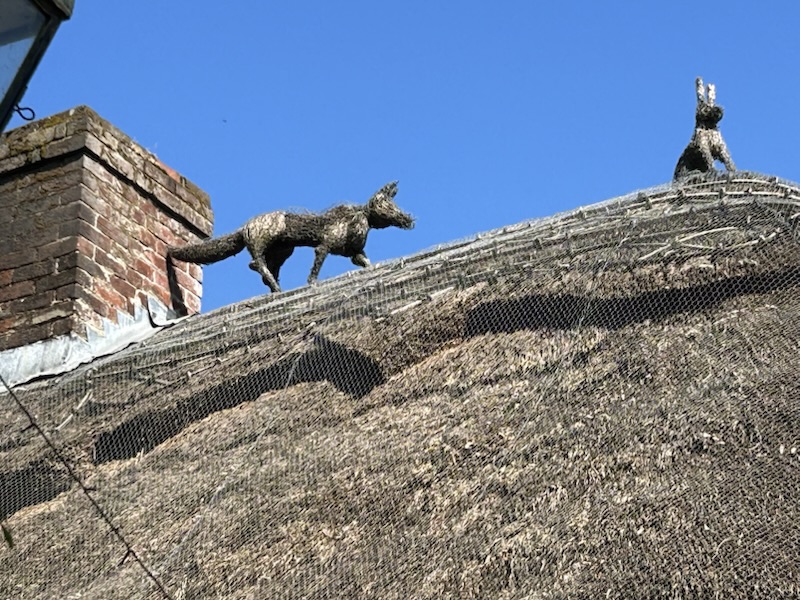
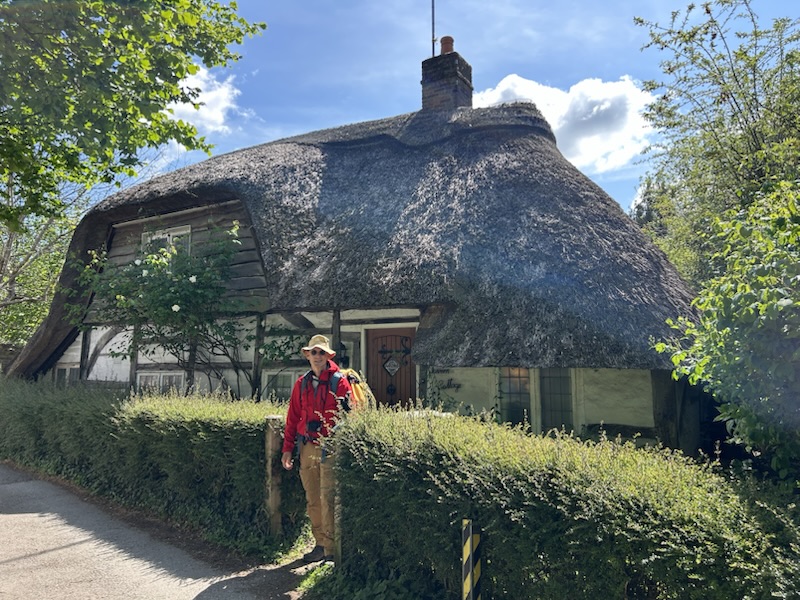
It was a beautiful day to walk & we enjoyed meeting the local cows along with walking past many thatched roof homes & old cottages. Classic English countryside!
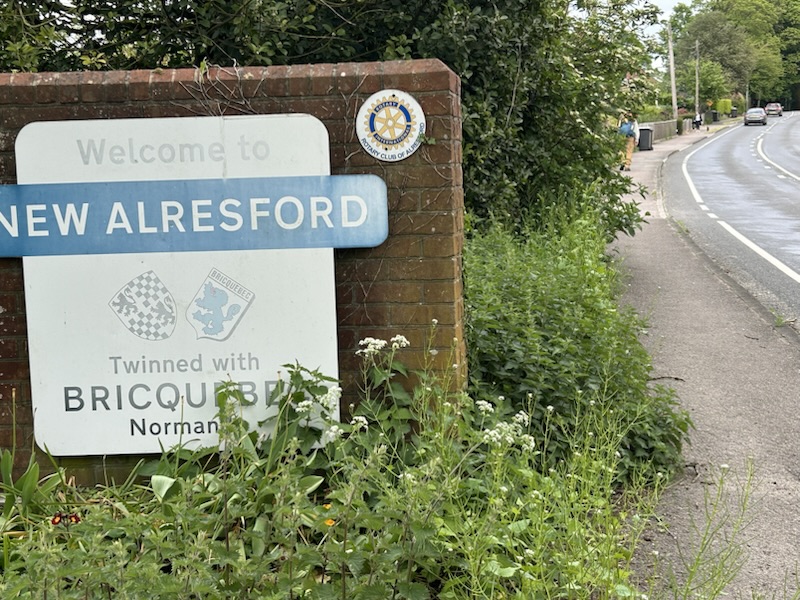
We arrived in Alresford around 5:00pm. I was a little sore & tired, but it was a great day to begin our latest pilgrimage.
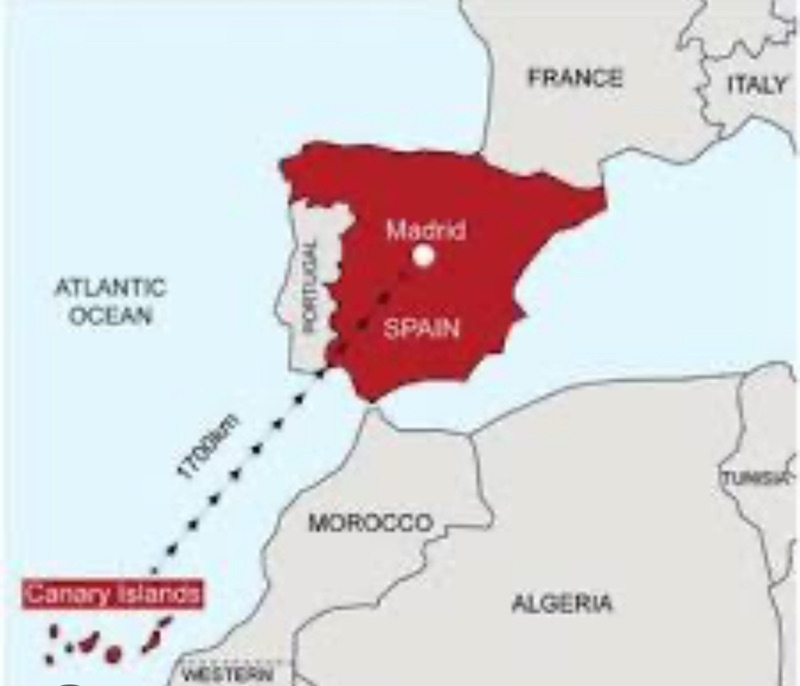
The Canary Islands are in a way like Spain’s Hawaii. Like the Hawaiian Islands , these islands were formed by volcanic eruptions in a tropical location off Morocco’s coast. However, unlike Hawaii, it does not rain much here, so these islands are much drier, almost like desert islands.
The Canaries have become the favorite destination for many Europeans looking for a sunny location in the winter.
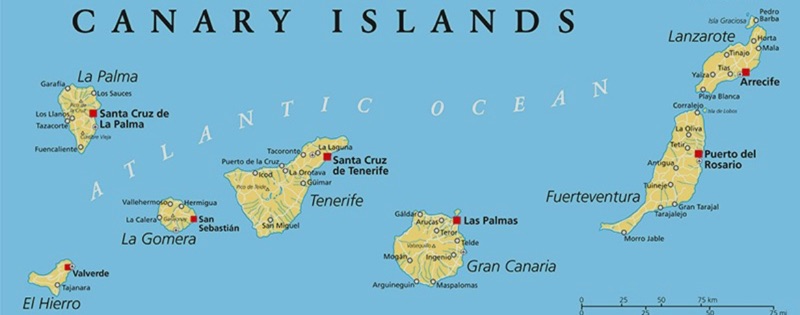
We enjoyed visiting three of the eight different islands.
Tenerife
Our first stop was the largest island called Tenerife.
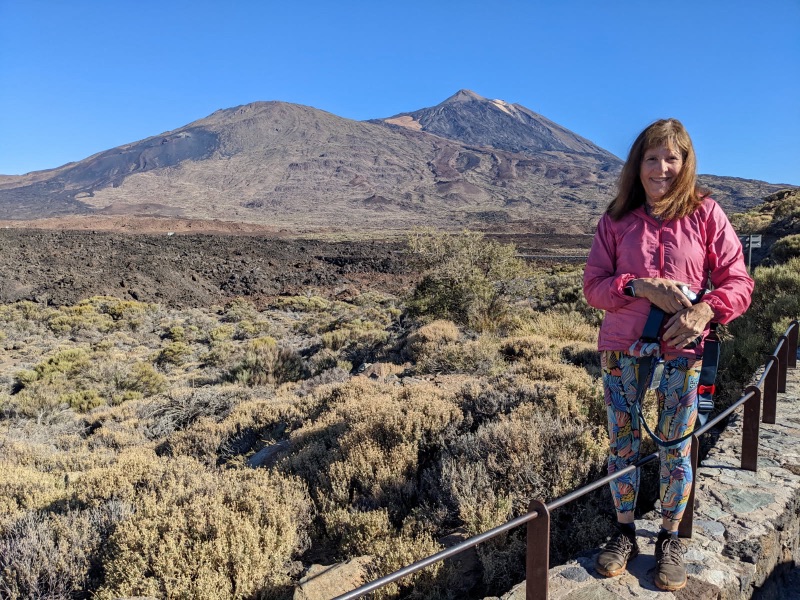
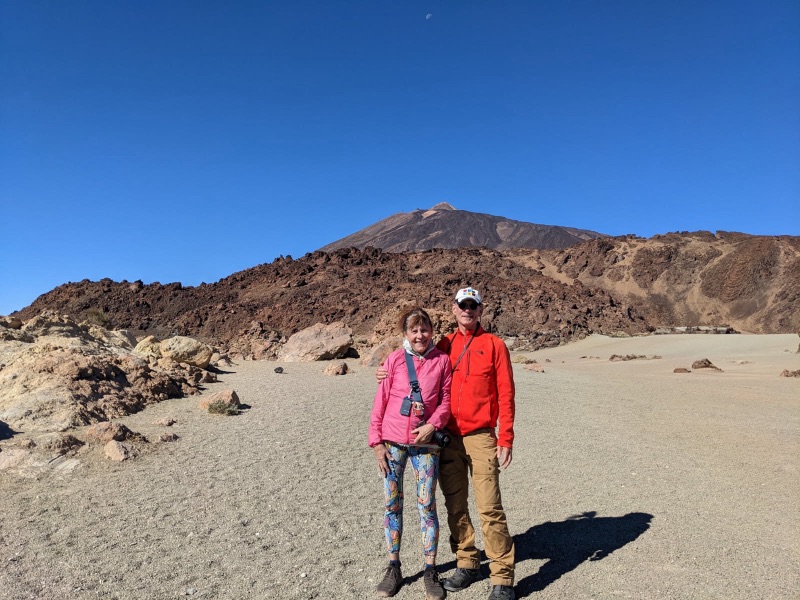
On our first day we drove up the national park where you can view the volcano El Teide which at 12, 198 feet high is Spain’s tallest mountain. It’s an amazing place to visit. Even though the last eruption was in 1909, hardly any vegetation has returned to the landscape & you can easily see past lava flows.
Look closely at dark patches showing the lava flowEl Teide in the background
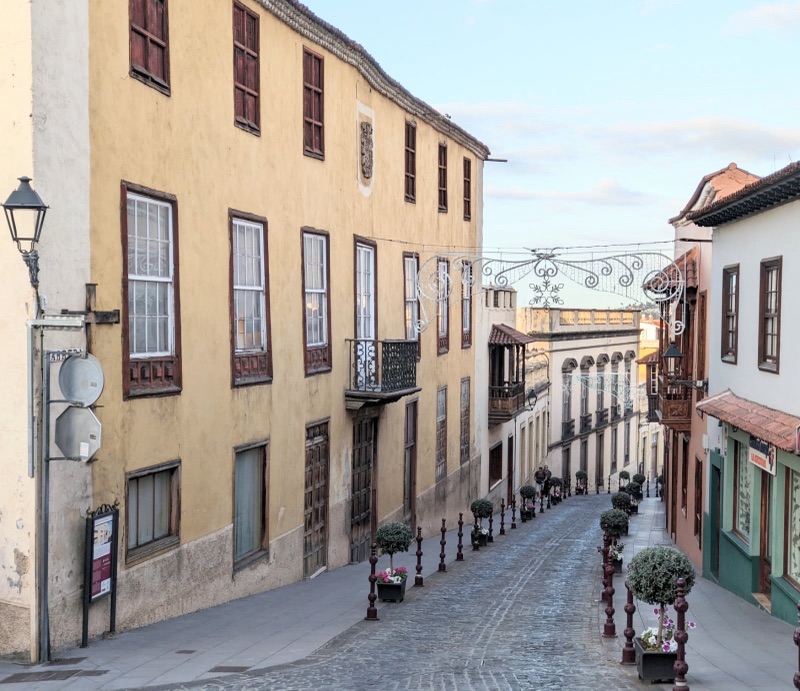
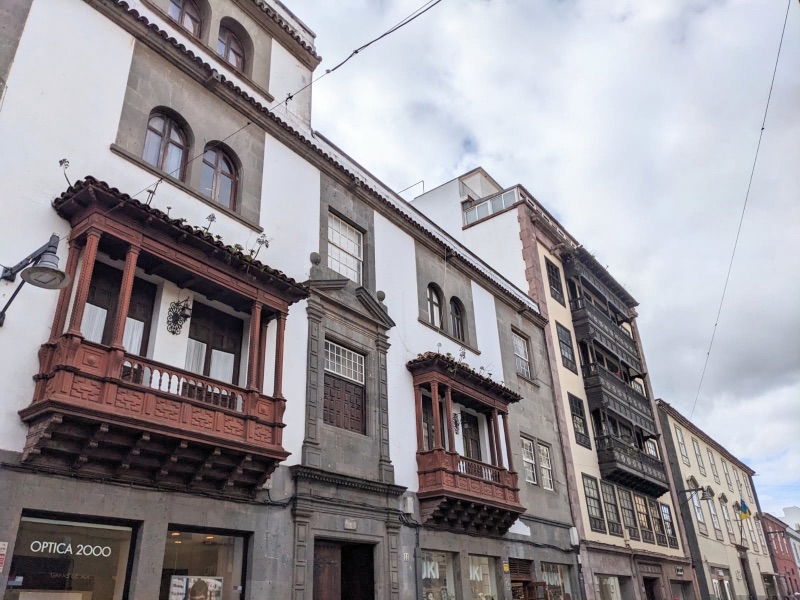
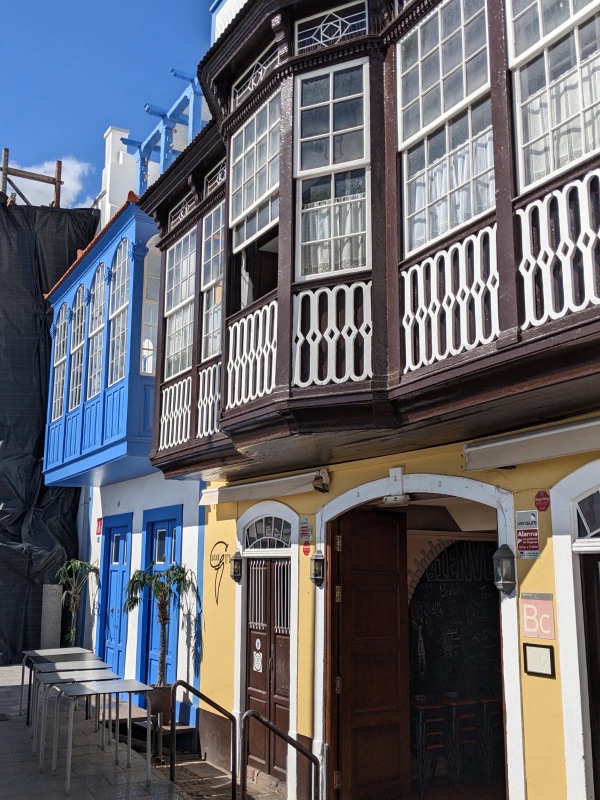
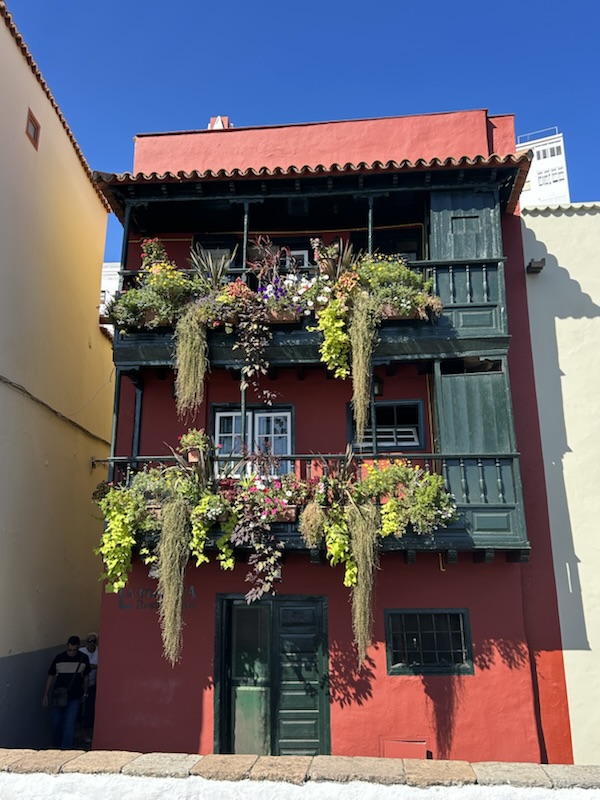
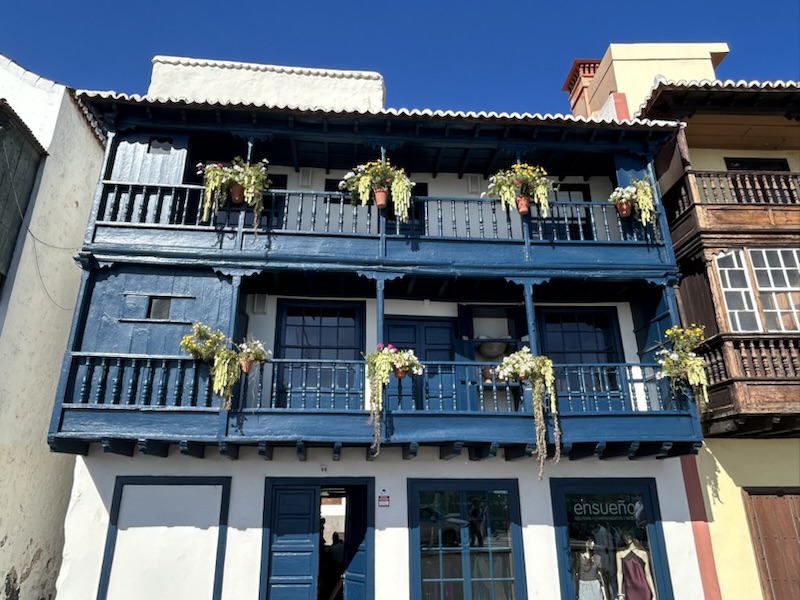
We also enjoyed walking on the cobblestones in three of the oldest towns on the island. A common architecture style in the Canaries are wooden balconies outside the homes.
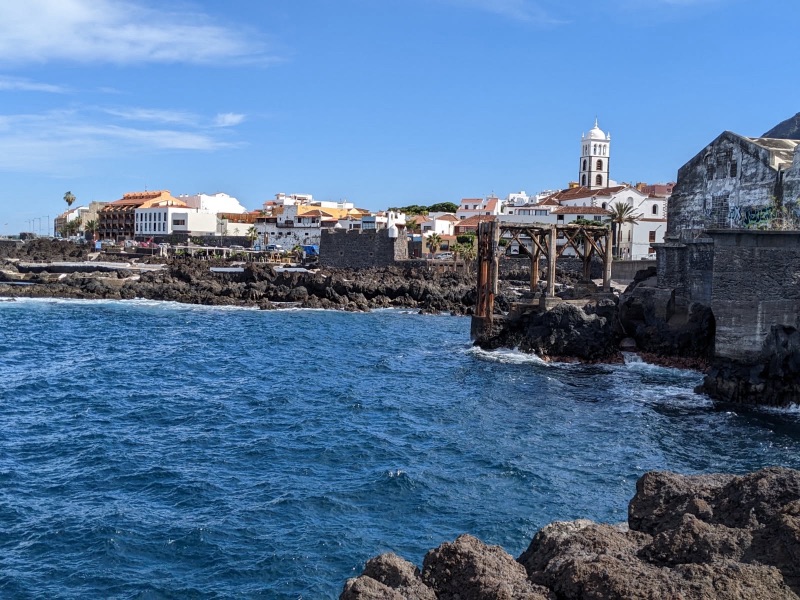
Oldest port on Tenerife until destroyed by a volcano eruption
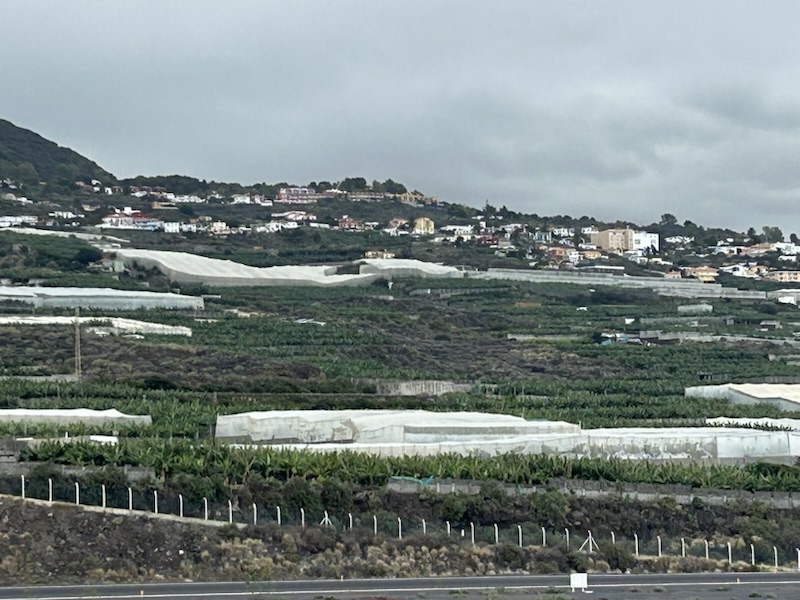
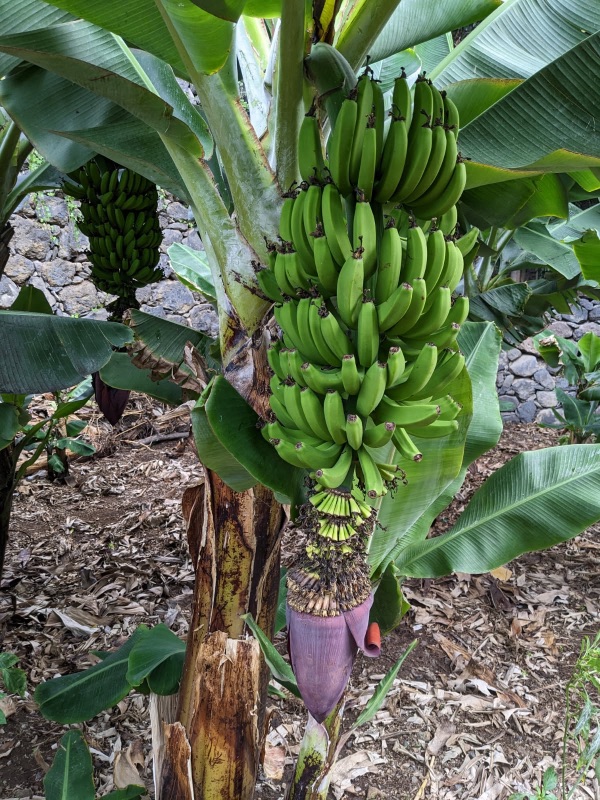
All over the Canary Islands you see banana trees.
The Canary Islands provide Europe with most of their fresh bananas. Most are grown on Tenerife; but, every island we visited had plots of land dedicated to this crop.
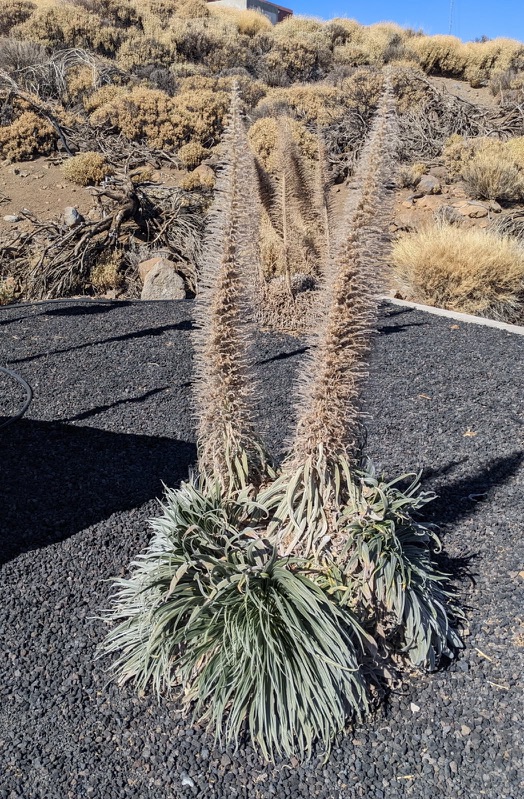
Tenerife has 2 very unique plants. One you only see in the volcanic region in the high altitude near Mount Teide.
We were only able to see remnants of the Tower of Jewels which has bright red flowers when it blooms.
Tower of Jewels
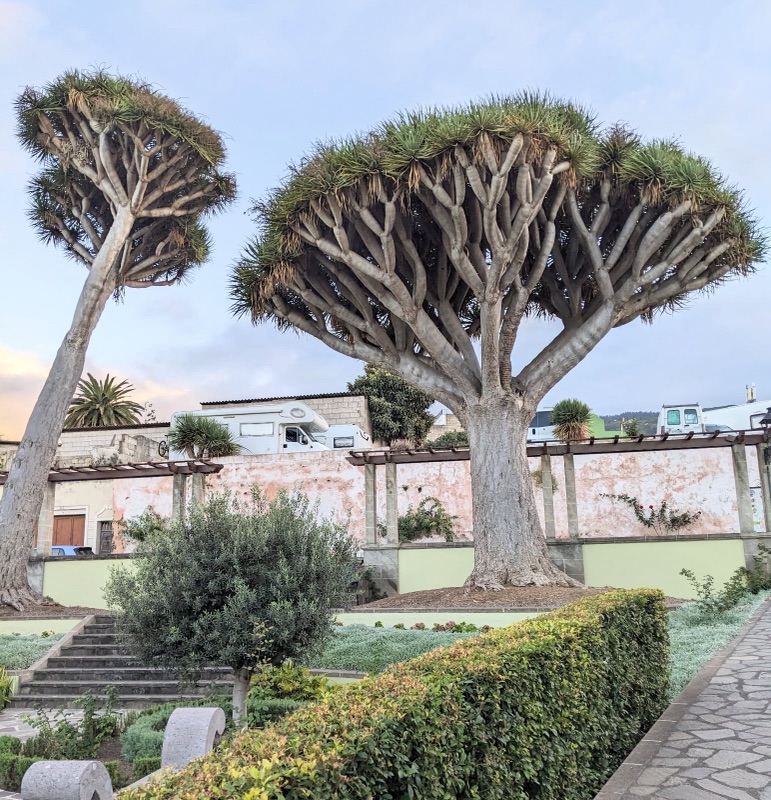
The other unique plant is called The Dragon Tree. To me, they look like a different version of the Joshua Tree. Although a tree, it is actually in the asparagus family.
It is called a Dragon Tree because its canopy has branches resembling a multi-headed dragon, its gnarled roots resemble dragons’ feet, & its sap hardens into red blobs resembling a dragon’s blood. It is the only tree in the world whose sap turns red when it dries.
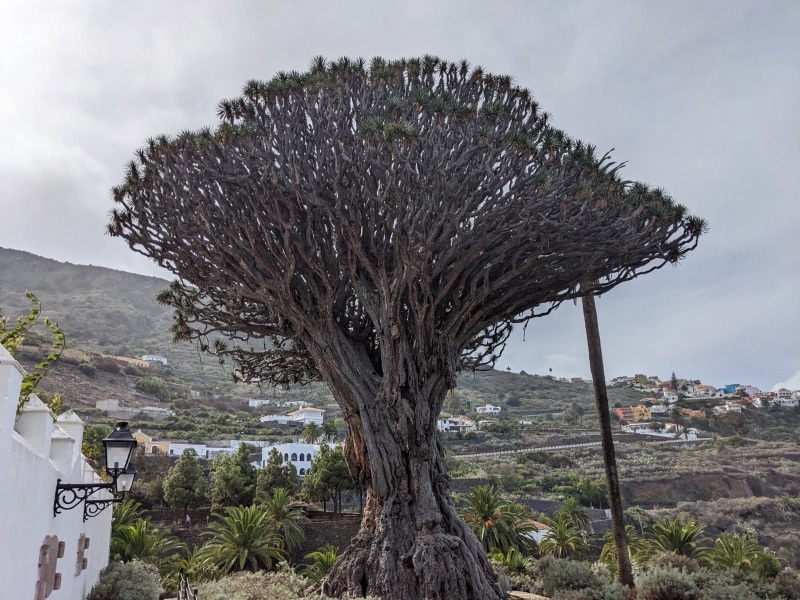
The Draco Milenario (Millennial Dragon Tree) in Icod de los Vinos on Tenerife
This oldest Dragon Tree is well protected inside a botanical park & is estimated to be over 1,000 years old.
The Draco Milenario is over 60 feet high & 66 feet in circumference
A few other pictures from Tenerife.
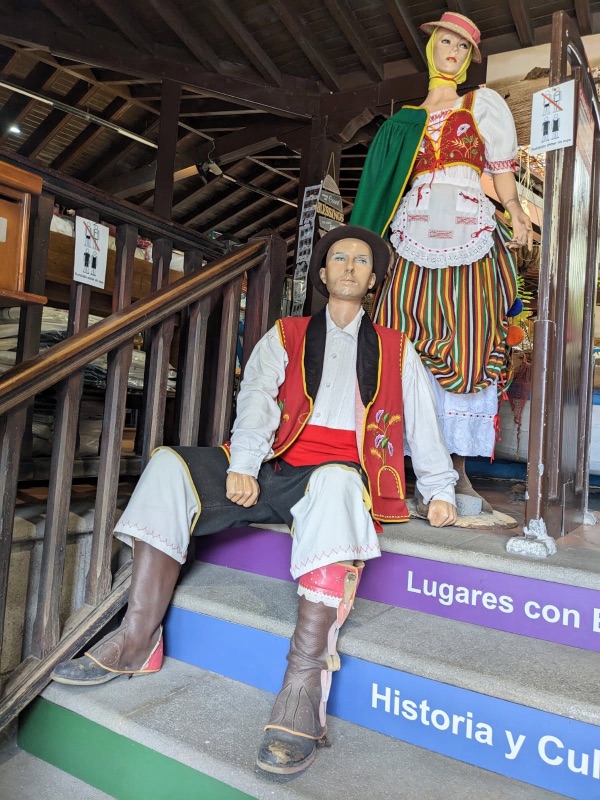
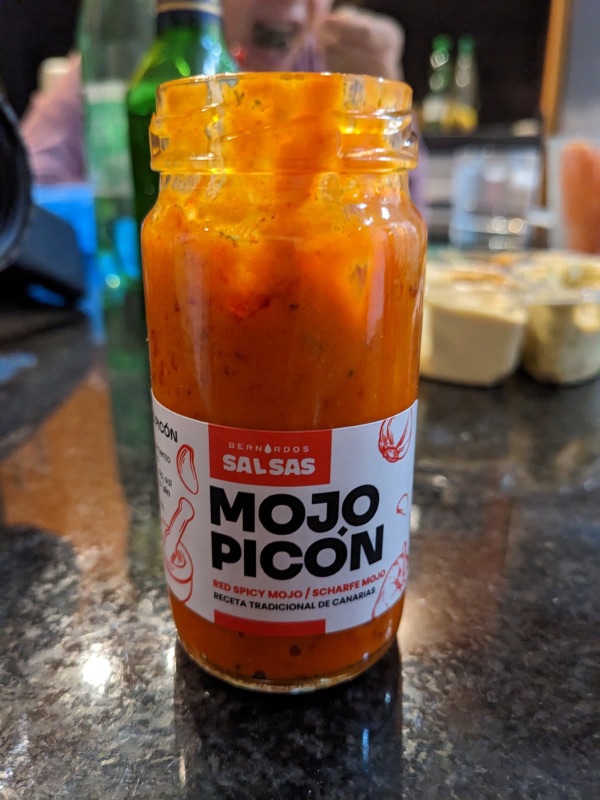
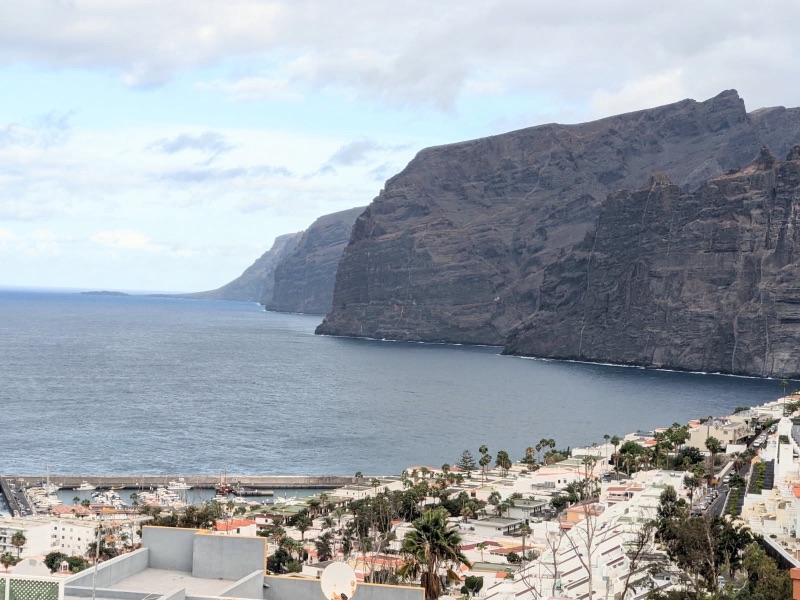
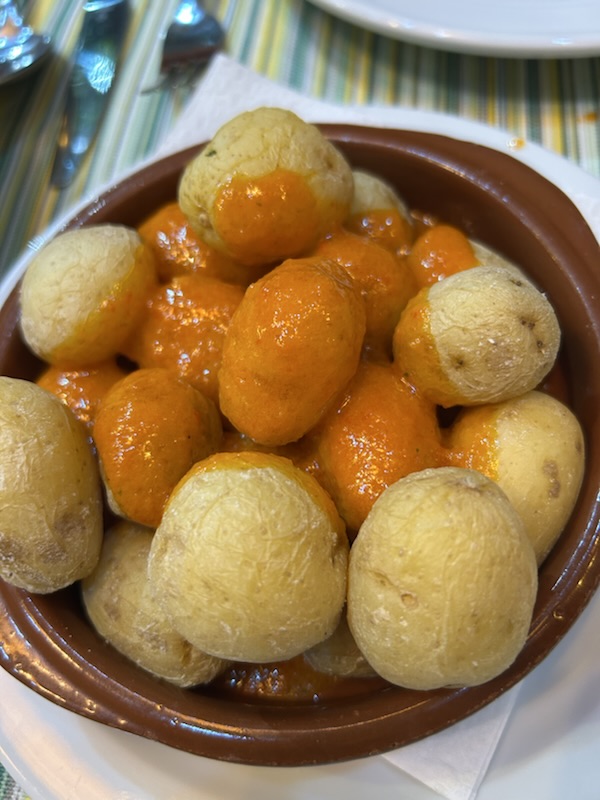
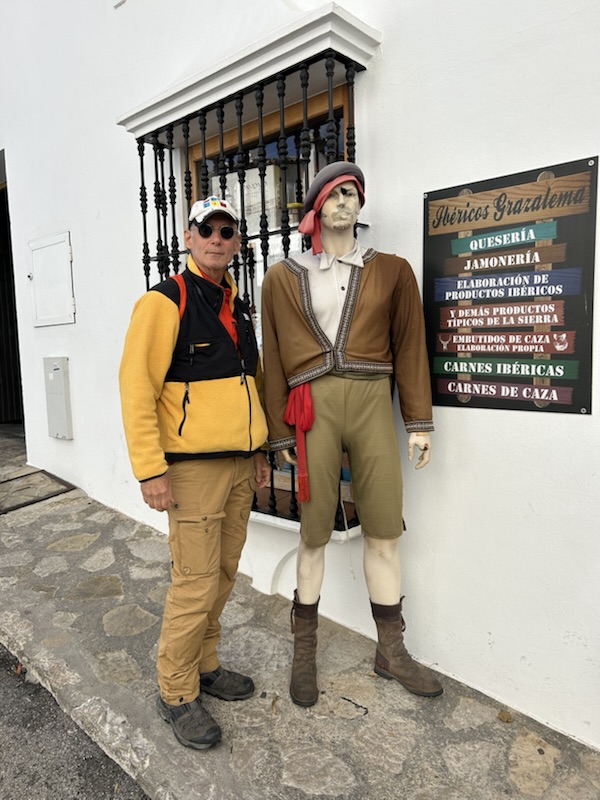
Traditional ClothingMojo Picon is a spicy sauce that originated in the Canary IslandsLos Gigantes- sheer cliffs rising 1,970 feet straight up from the Atlantic Ocean Winked potatoes with Mojo Picón is a popular Canary Island tapaGarachico
La Palma
This island is far less developed than Tenerife & is much easier to get around. It has the most active volcano activity in the Canary Islands. The Cumbre Vieja volcanic ridge last erupted in 2021 for 85 days near the town of Santa Cruz.
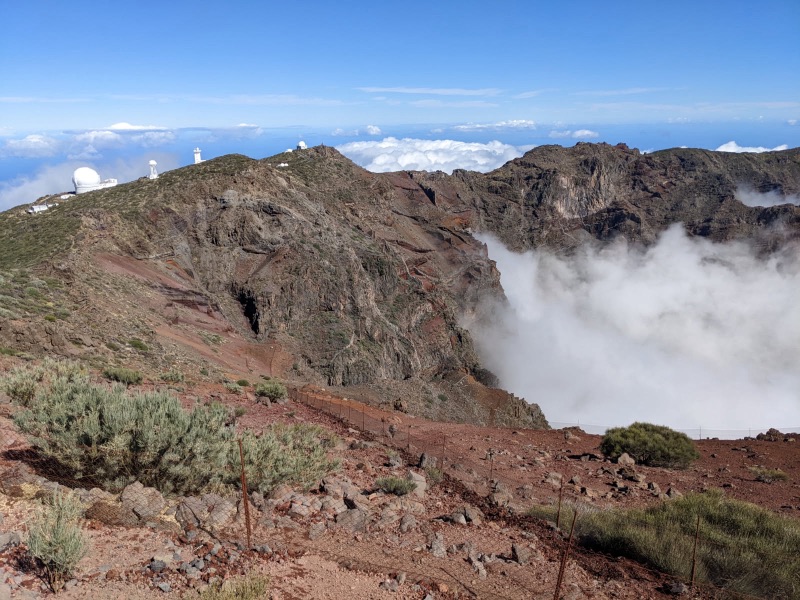
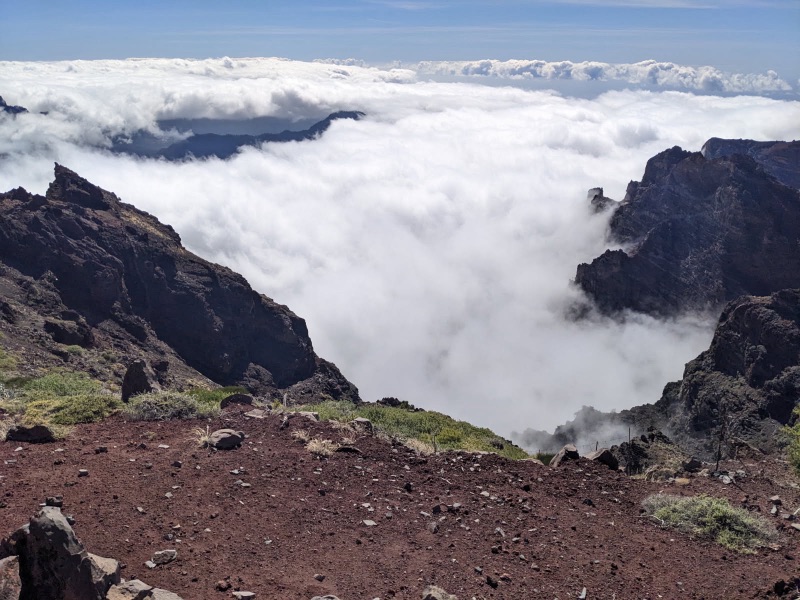
We drove up to the Caldera de Taburiente which is inside the national park named for it. This is a huge volcanic crater that has many paths you can walk around it. The day we were there, the crater was covered in clouds, but you could still feel its enormity.
View we would have seen on a clear day.
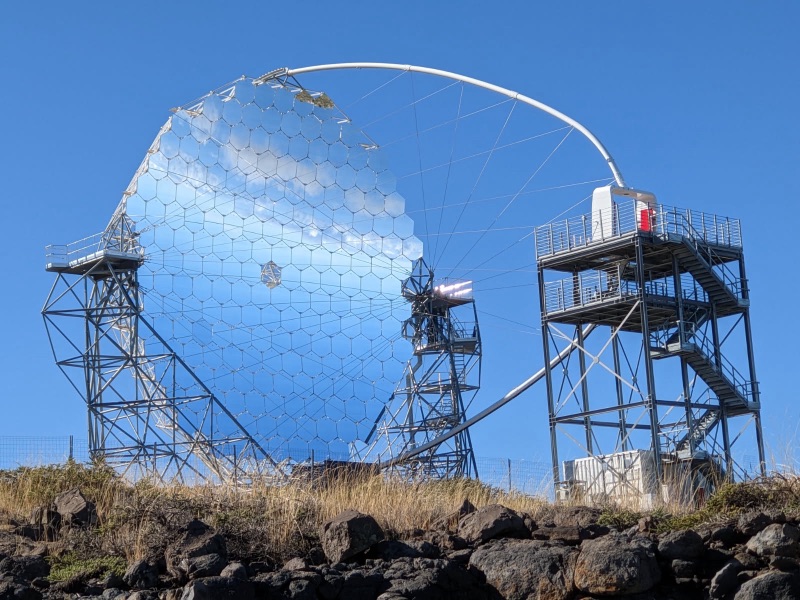
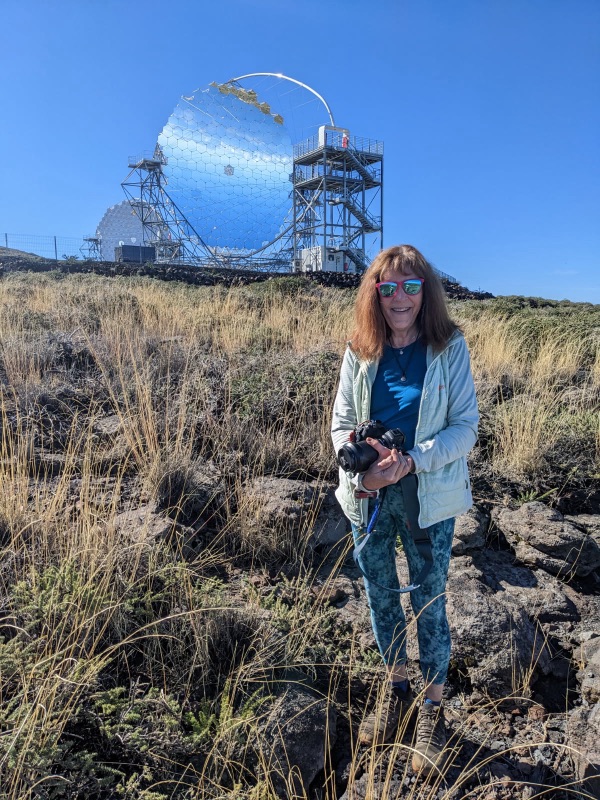
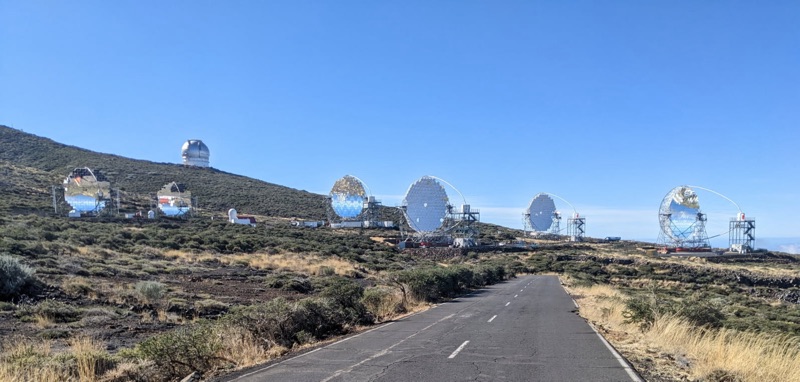
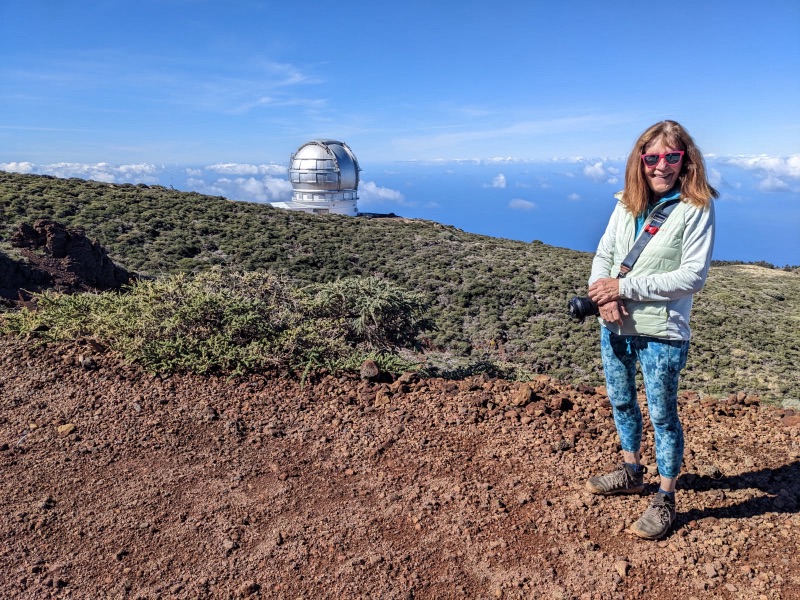
La Palma is also a destination for amateur star gazers & professional astronomers. Close to the crater rim, you can see many telescopes at the Roque de los Muchachos Observatory including the world’s largest telescope. You also see giant mirrors in the area.
10.4 meter (34.1 feet) diameter Grand Telescope Canarias is the world’s largest single aperture telescope which discovered the most densely populated galaxy structure
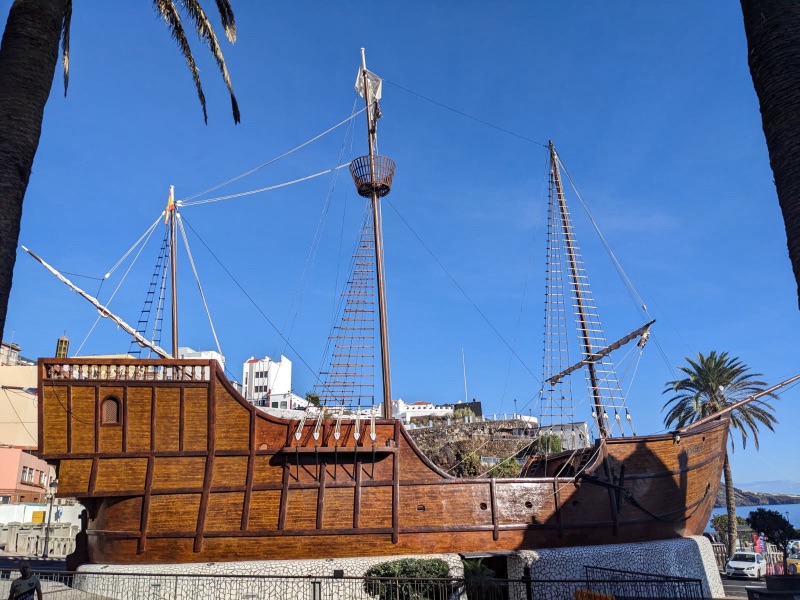
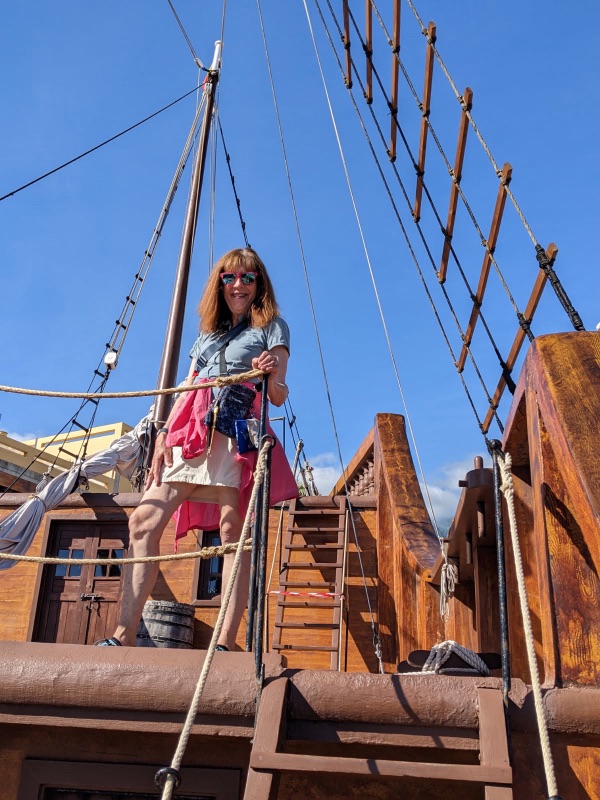
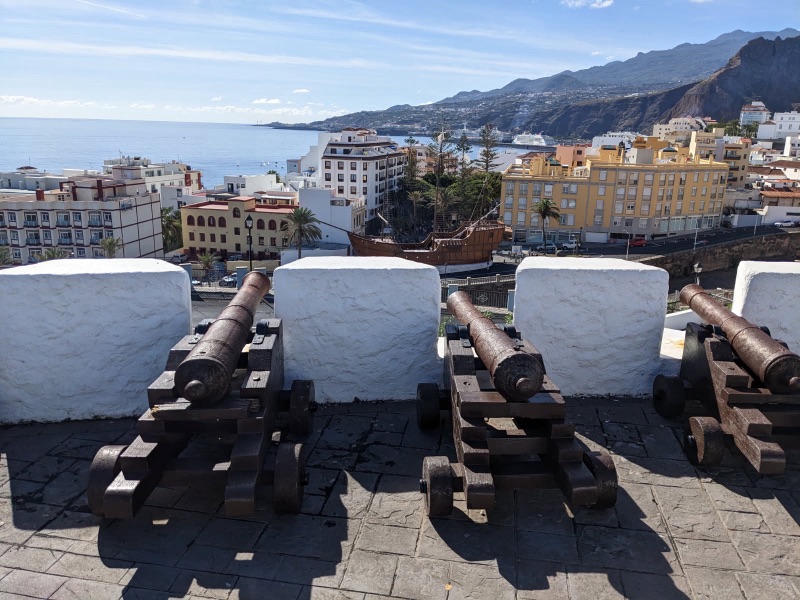
La Palma’s main city is Santa Cruz. It has a replica of Columbus’ flagship the Santa Maria. Columbus used Santa Cruz a port for three of his voyages to the New World. It was his last stop after leaving Spain before heading across the Atlantic.
For several centuries, the Canary Islands remained a major hub for ships traveling to the New World. At one time, Santa Cruz was Europe’s 3rd busiest port behind only Antwerp, Belgium, & Seville, Spain.
The Santa Maria replica also houses the Naval Museum of Santa Cruz
Santa Cruz is a lovely place to spend a few hours.
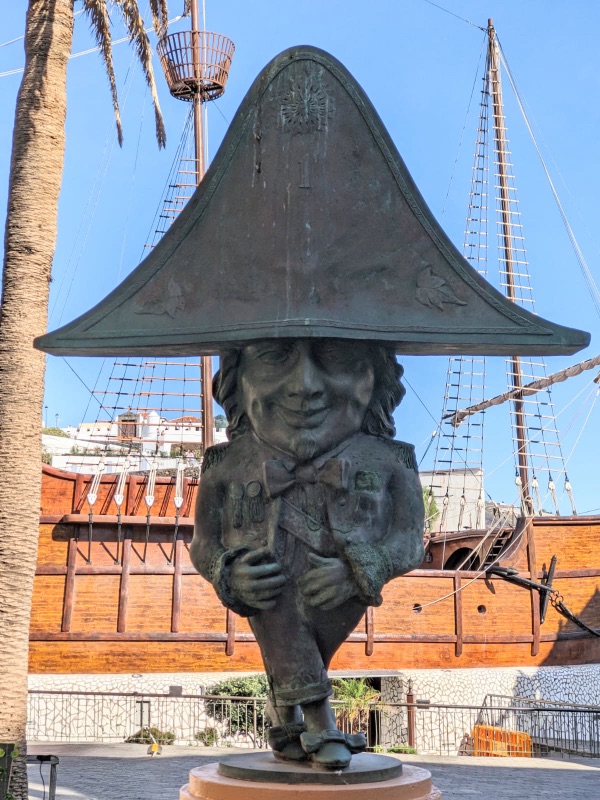
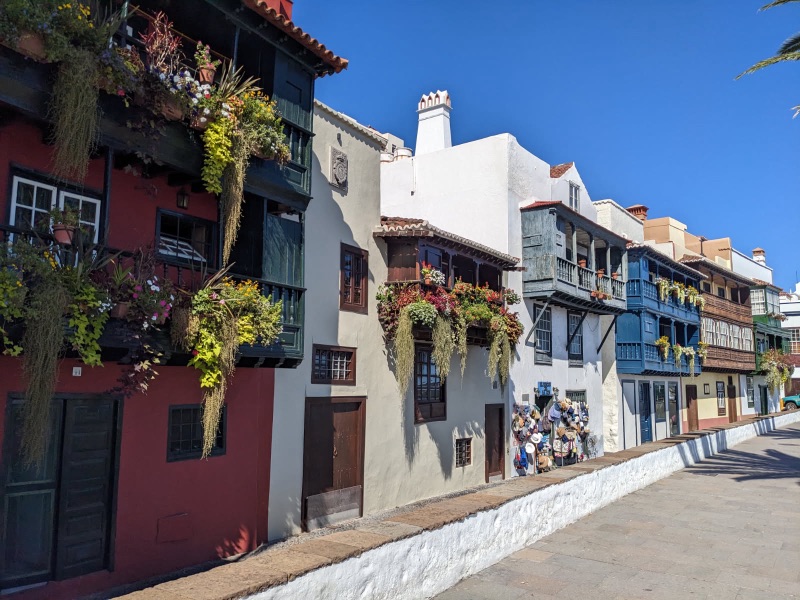
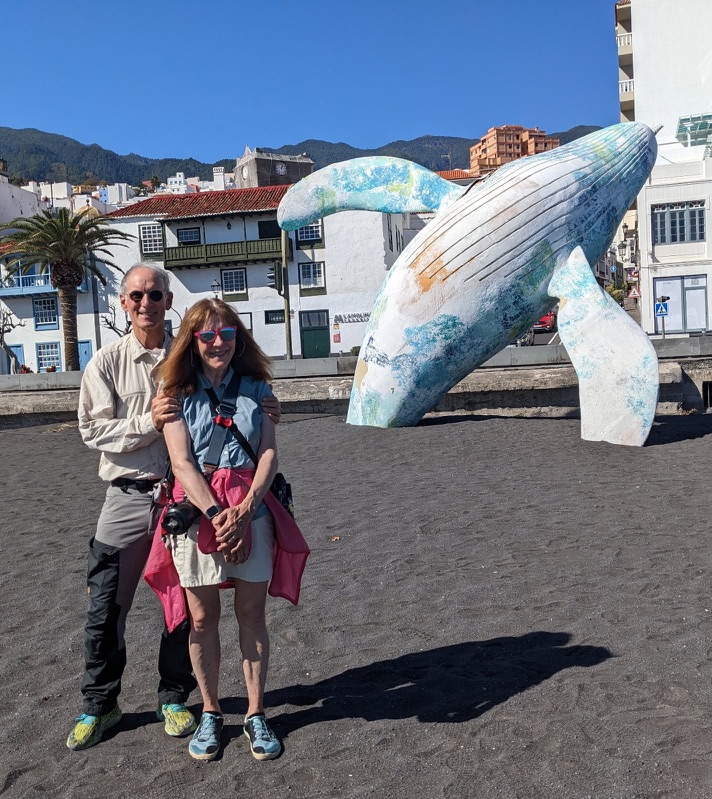
Monument to the Dwarf- An 18th Century lottery mascot wearing a Napoleon hat Colorful balconies on Avenida MarítimaLa Palma is known for its black beaches
Gran Canaria
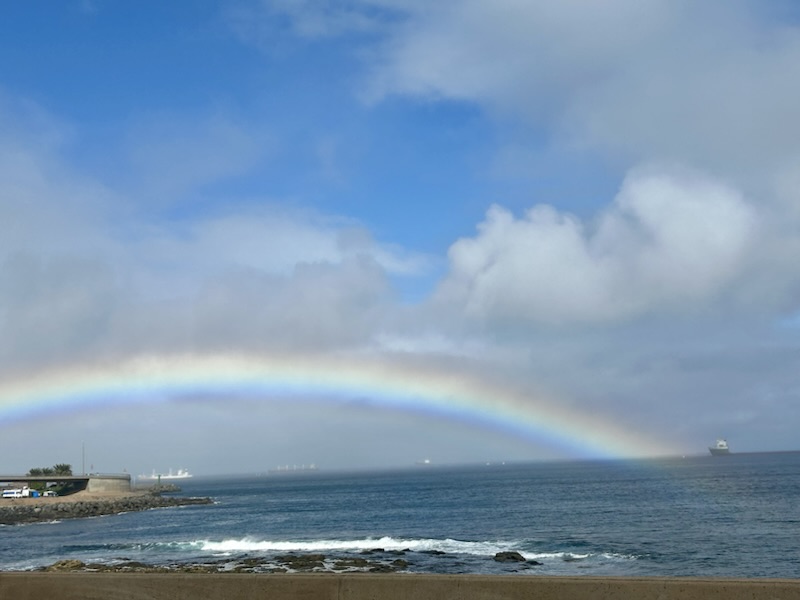
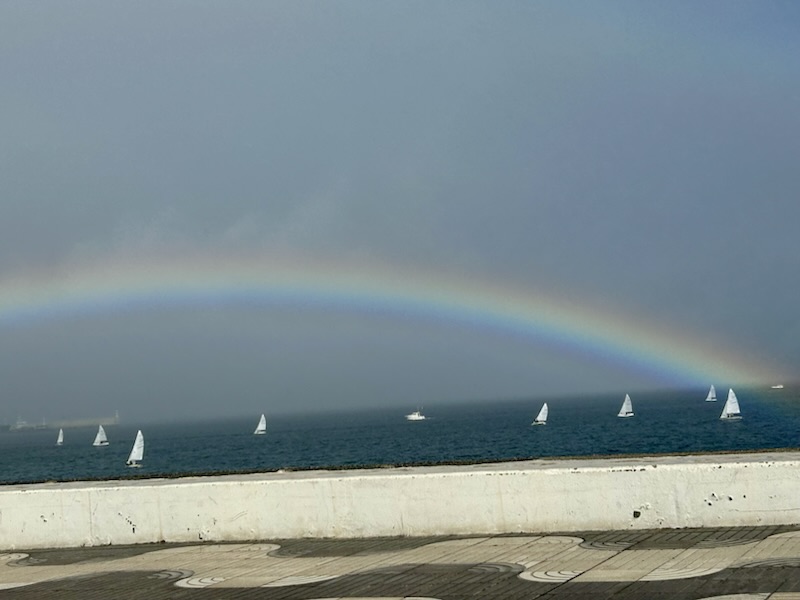
We arrived into Gran Canaria with a mixture of clouds, rain, & sunshine that stayed with us the three days we were here.
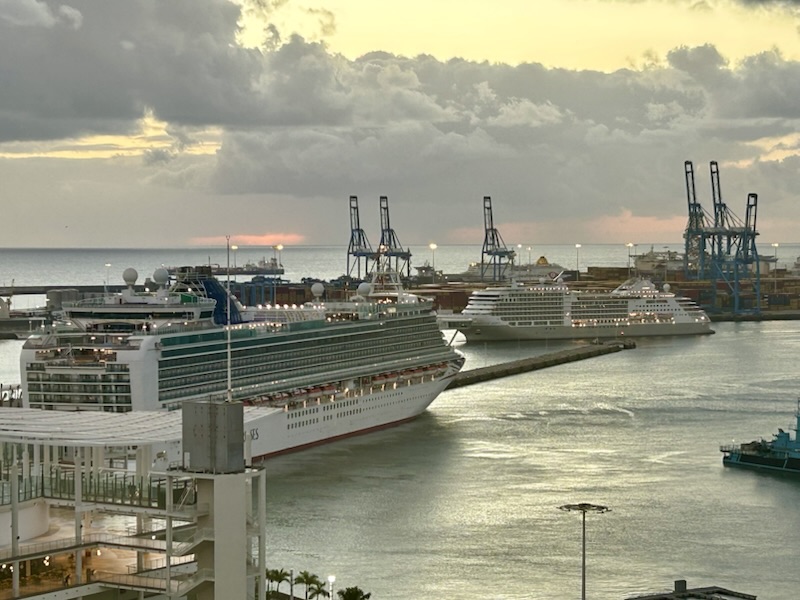
We stayed close to the port in La Palma & had a beautiful view of the cruise ships. During the night they would leave & we would awaken to new ones docked in the port.
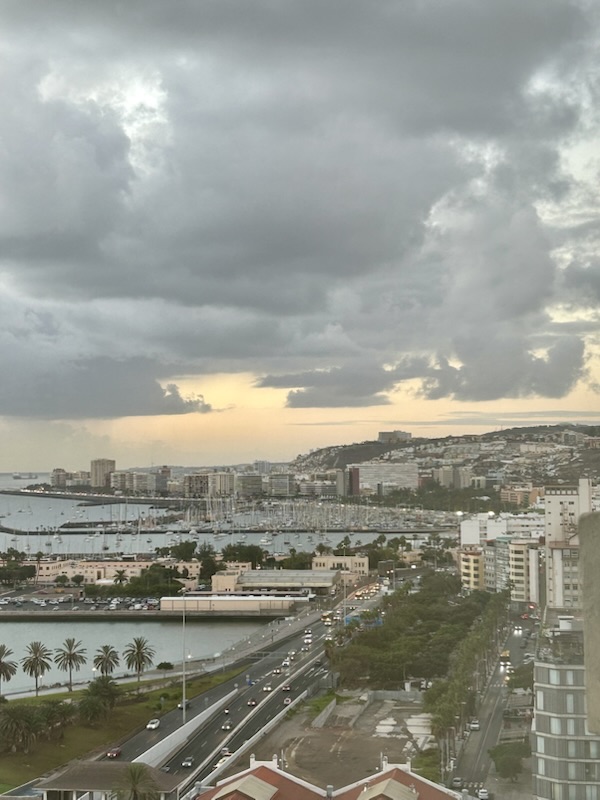
Views from our room
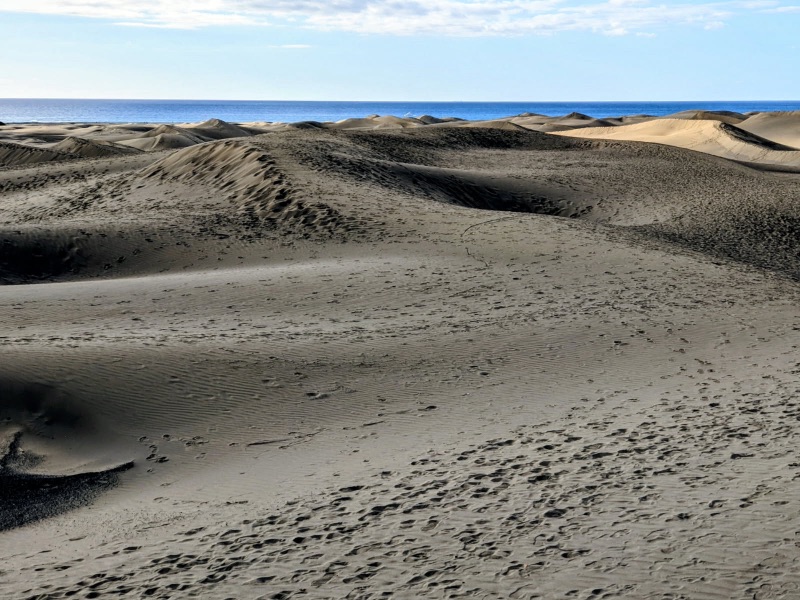
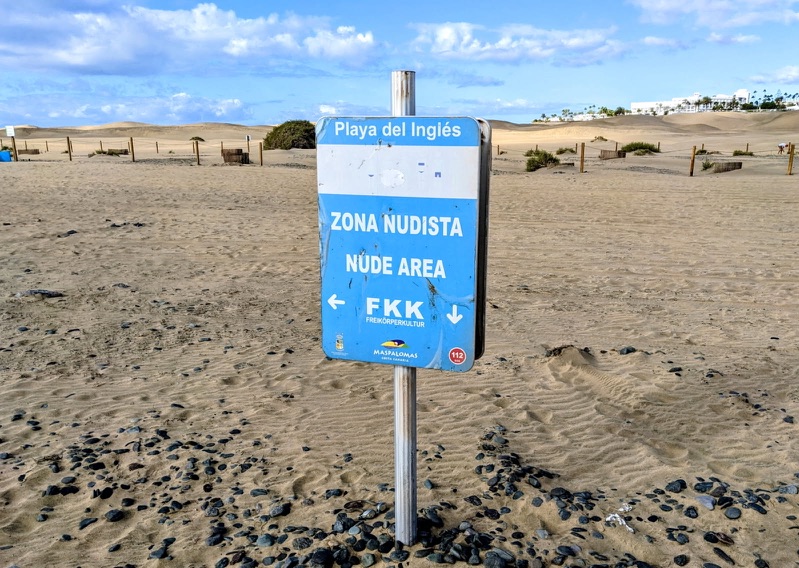
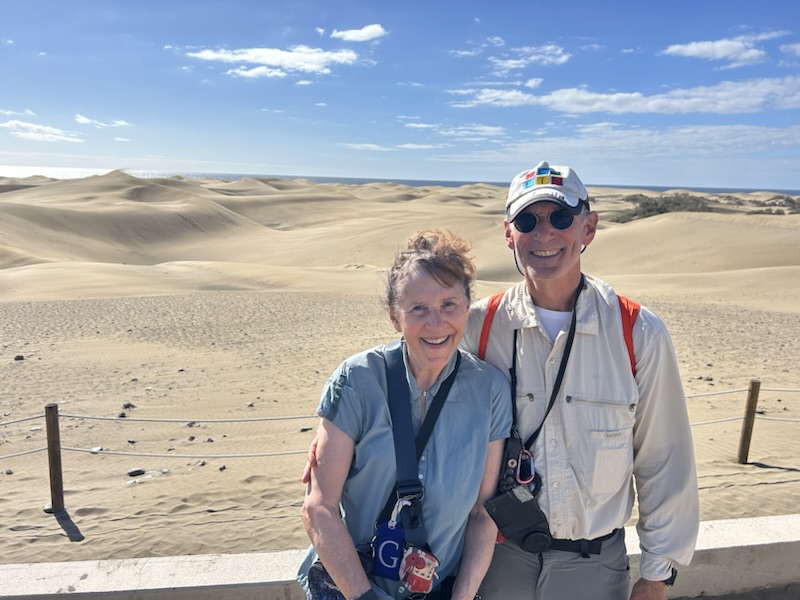
On our first full day we drove to the southern part of the island which was sunny & warm. The Dunas de Maspalomas is the location where most tourists seemed to go for sunbathing.
Sand dunes at Dunas de Maspalomas Yes! We saw a few naked people
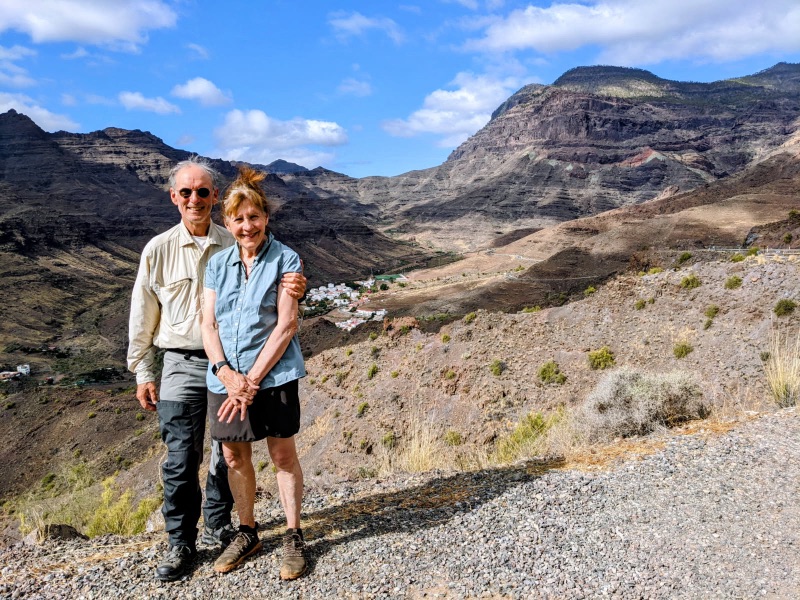
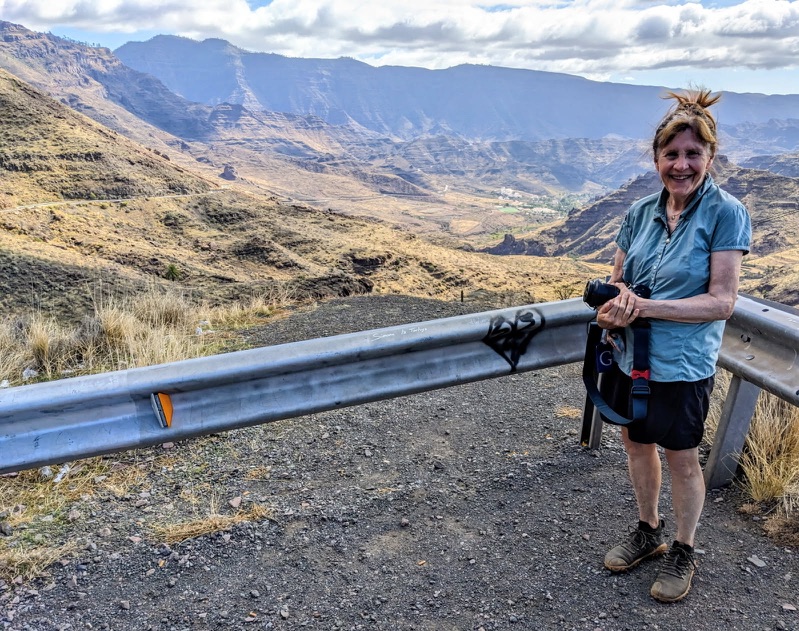
Another area we toured was was more inland & reminded me a lot of America’s Southwest.
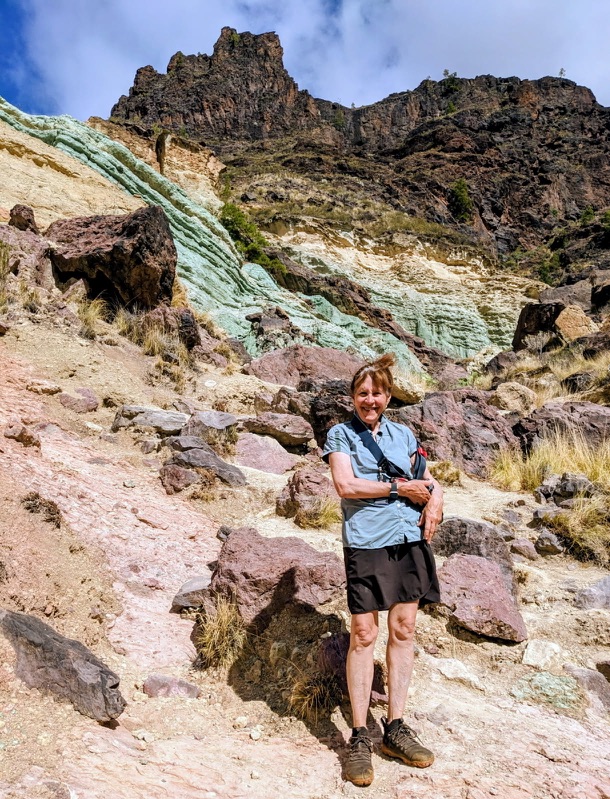
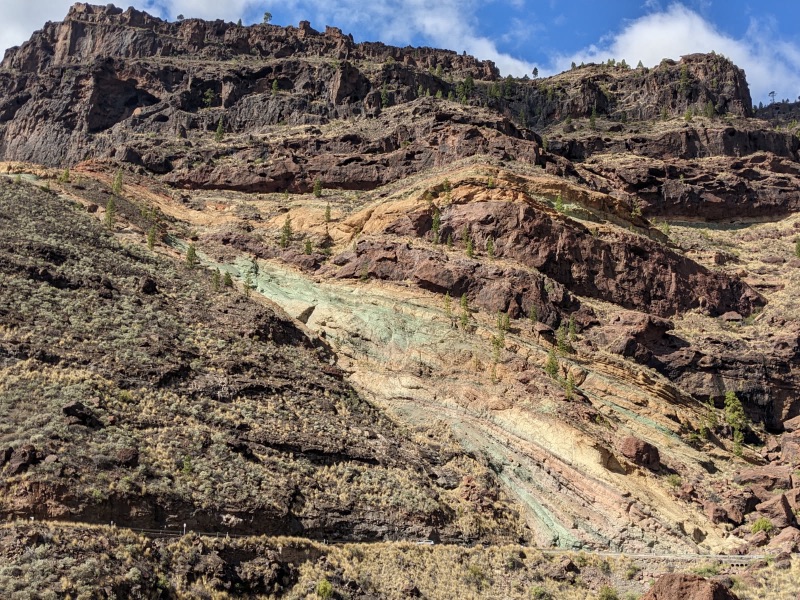
Colorful rocks Fuente de Los Azulejos- “The Fountain of Tiles” named because its colors resemble ceramic tiles
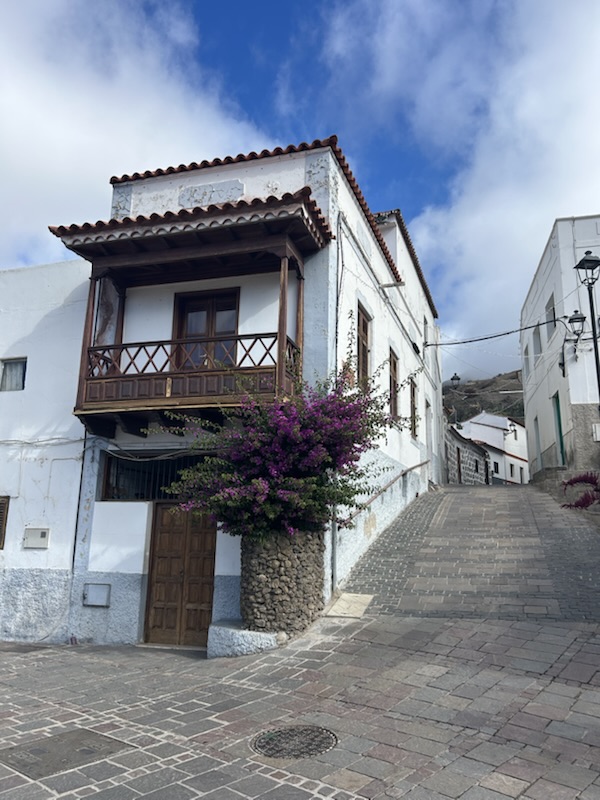
The second day we explored the island’s north side which was cooler, more mountainous, & had very narrow windy roads.
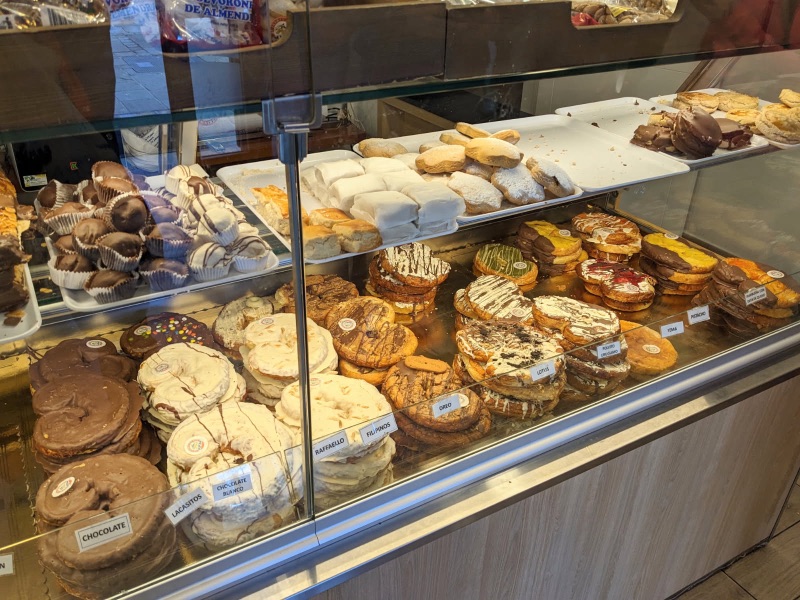
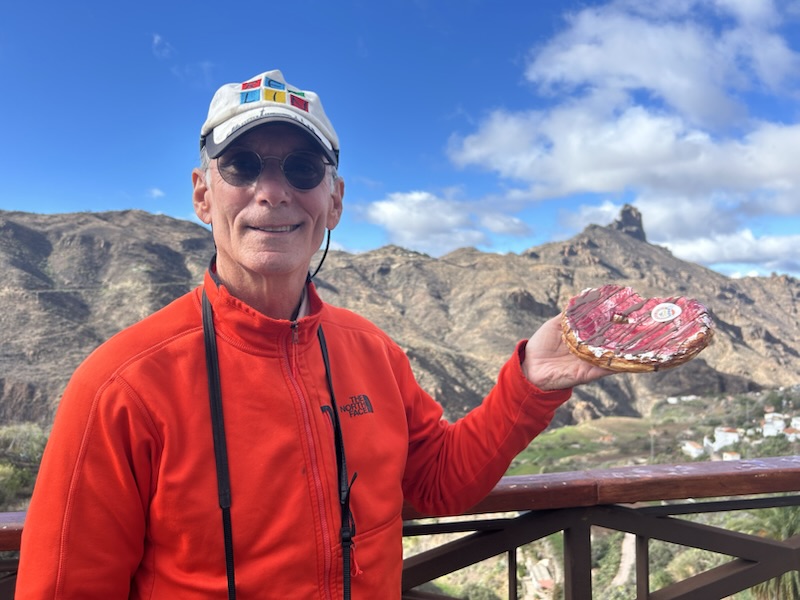
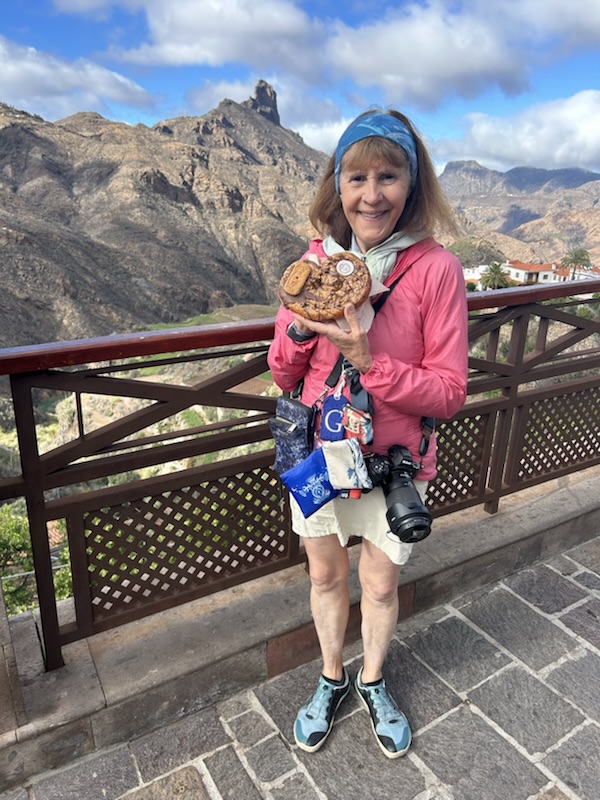
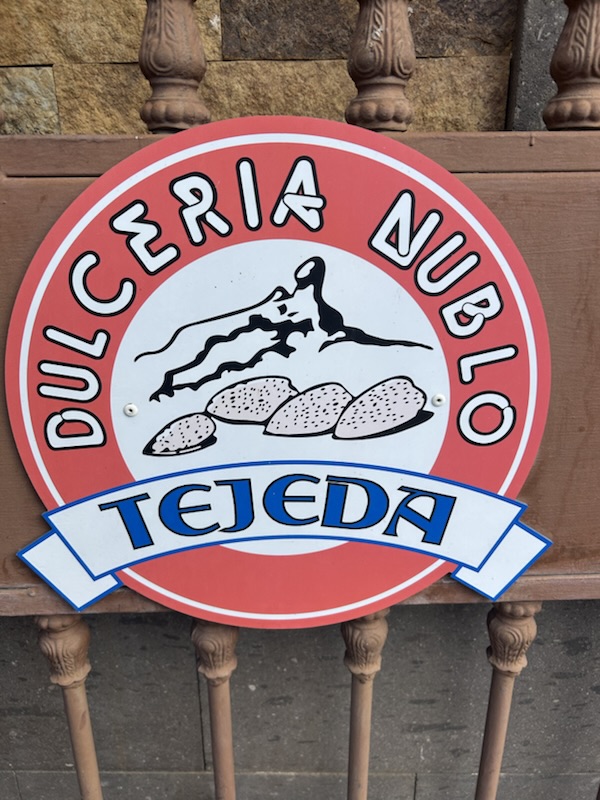
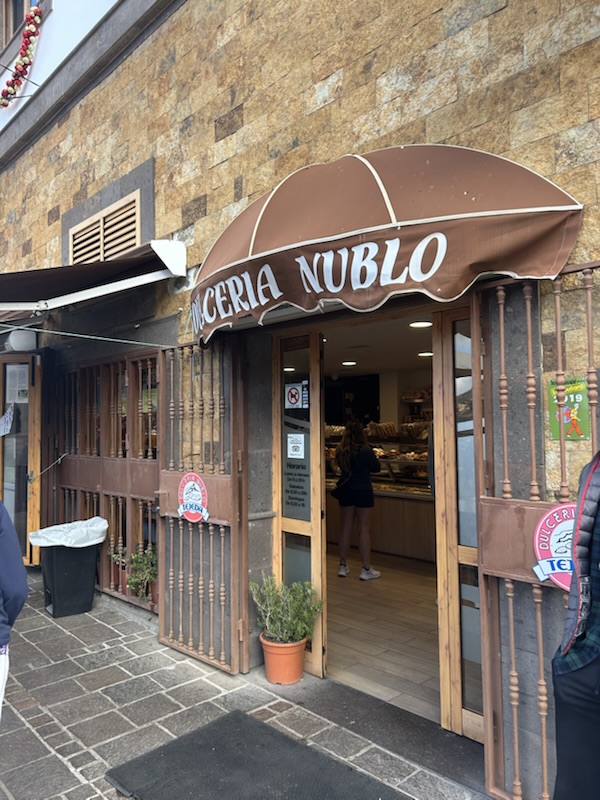
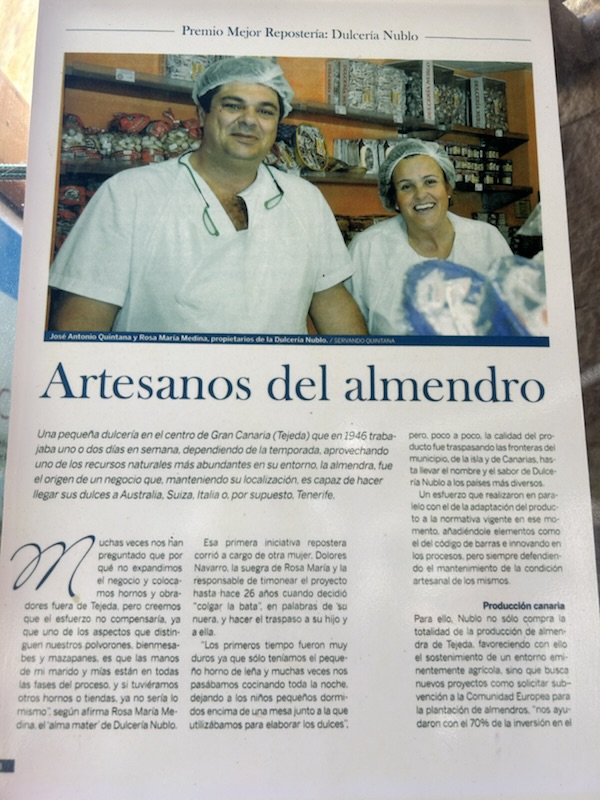
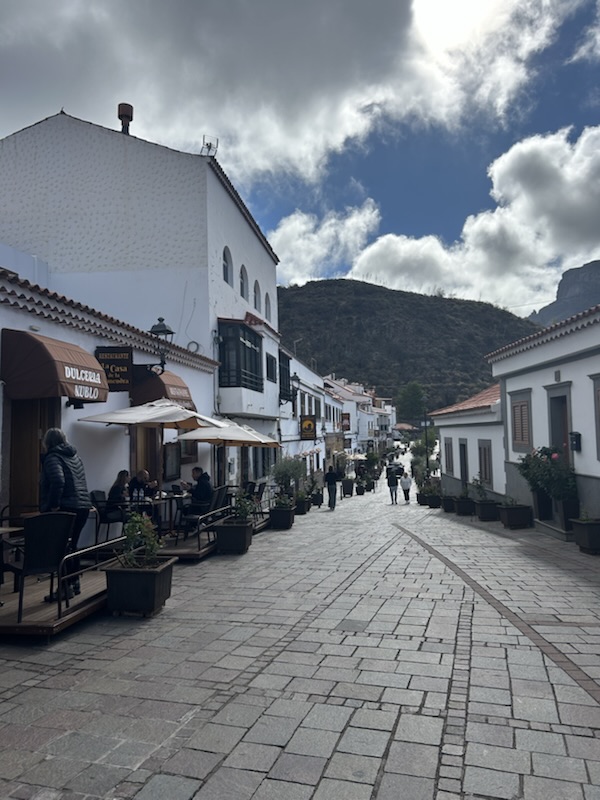
We enjoyed a stop in Tejeda. It is known for its yummy almond pastries at Dulcería Nublo.
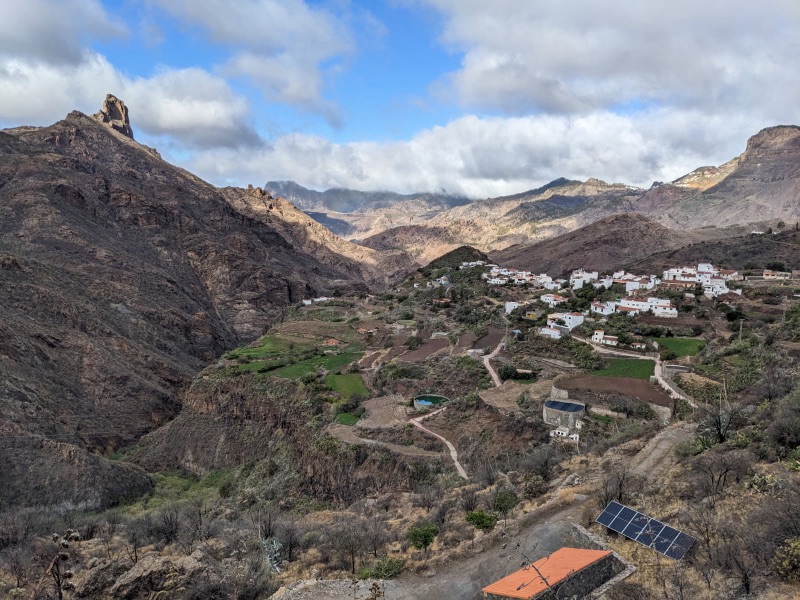
Roque Bentayga volcanic rock formation in the Tejeda caldera
After Tejeda, we drove to Firgas which is famous for its fizzy mineral water, it is called the “Village of Water.”
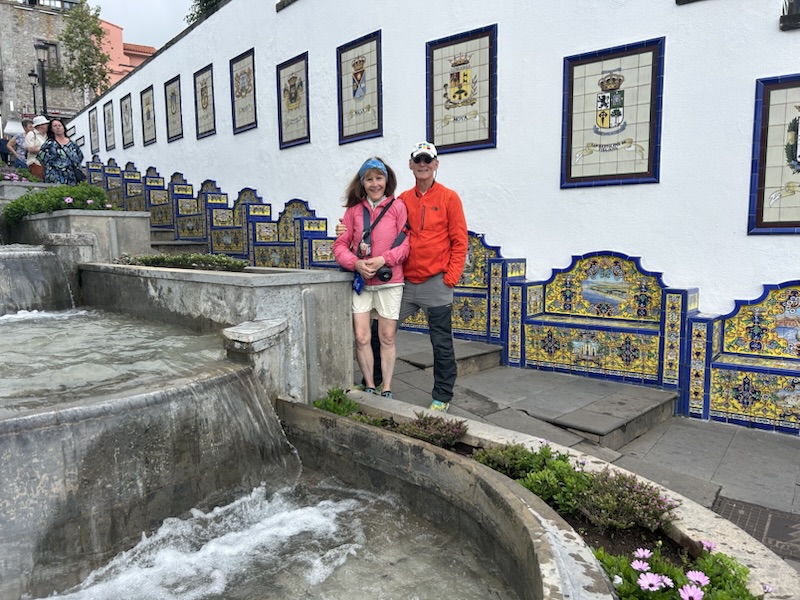
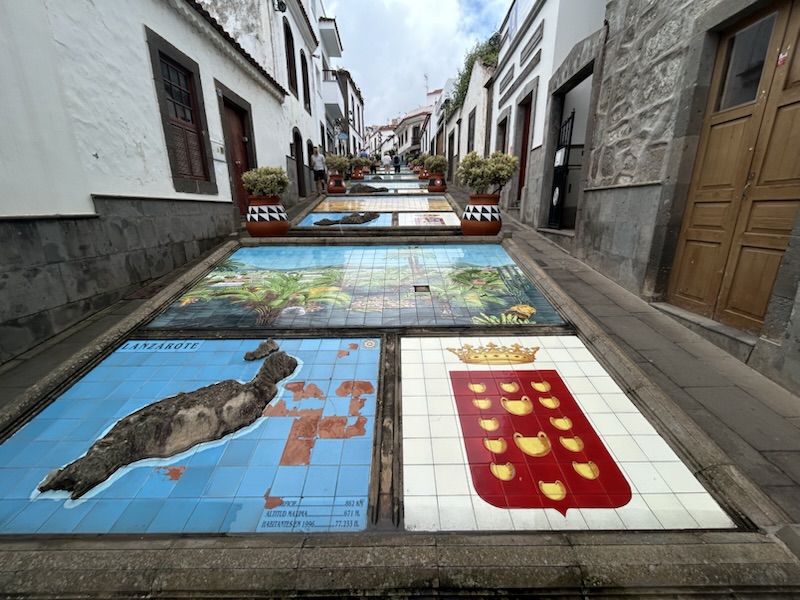
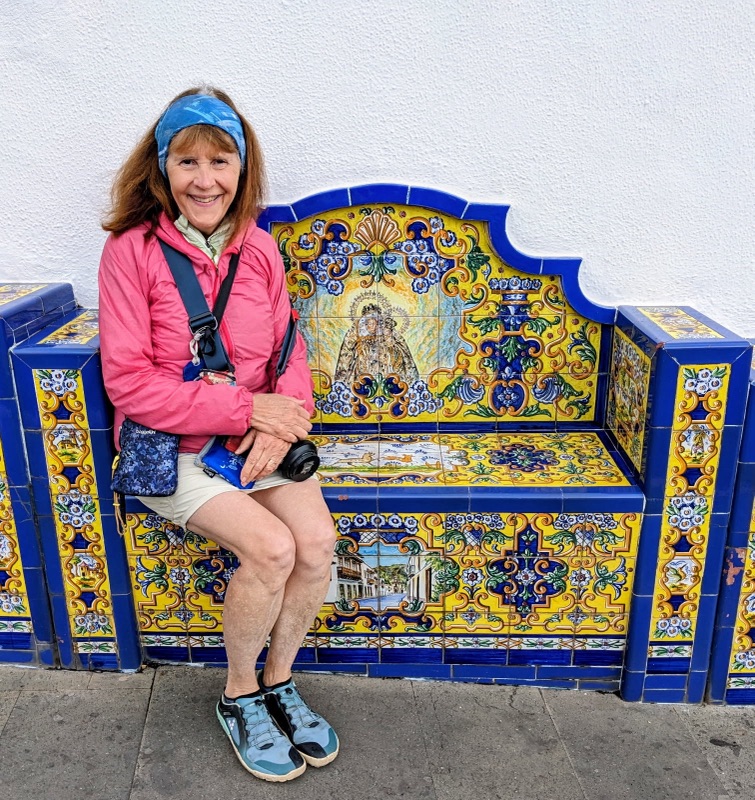
Firgas has the Paseo de Canarias which is a promenade with lovely tiles & displays that celebrate each Canary Island along with every municipality on Gran Canaria.
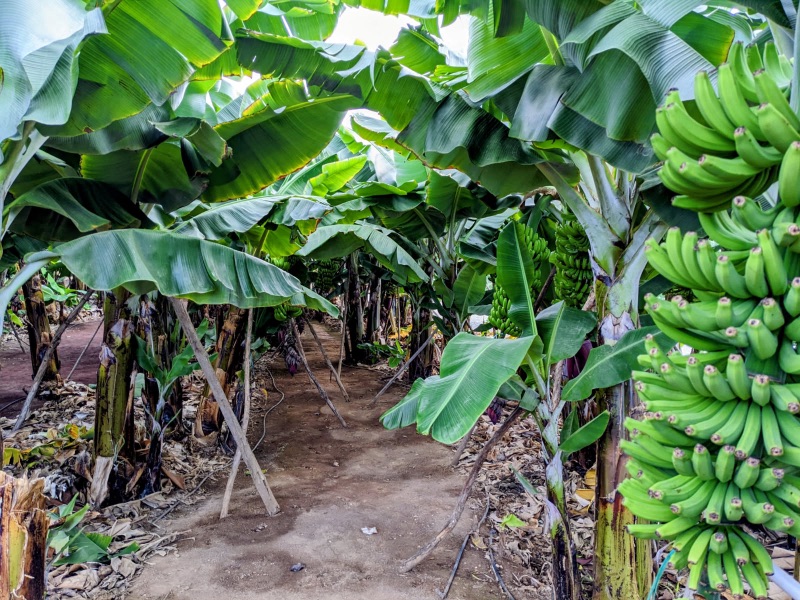
Our last stop was at banana plantation to learn about different banana varieties & how they are grown in the Canary Islands.
The main banana grown here is the Cavendish variety. It is smaller in size so banana plants produce more of them on their bunches making them more profitable per plant.
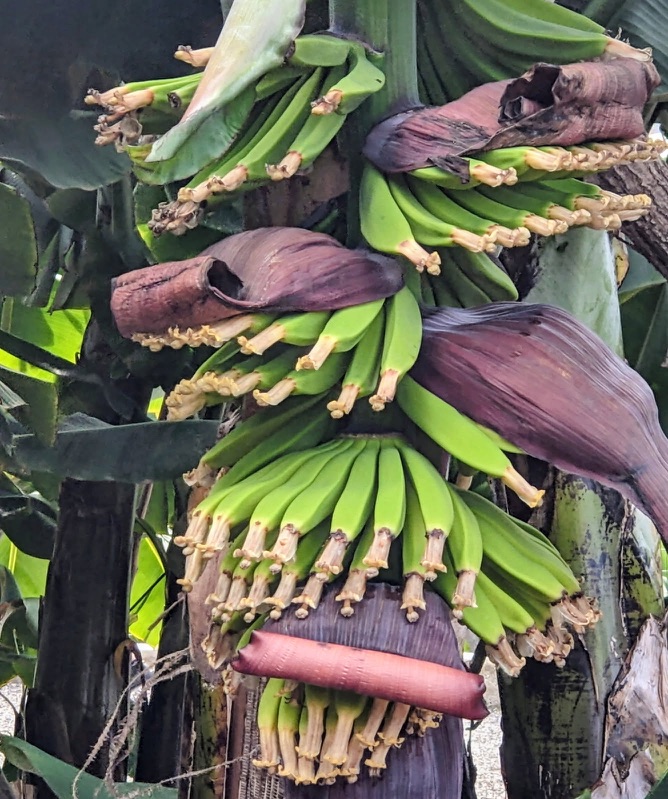
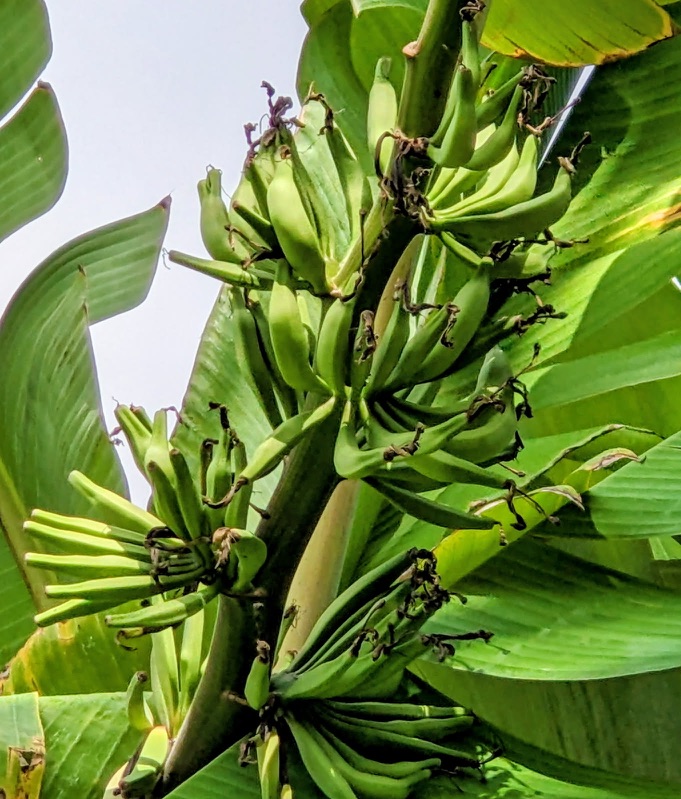
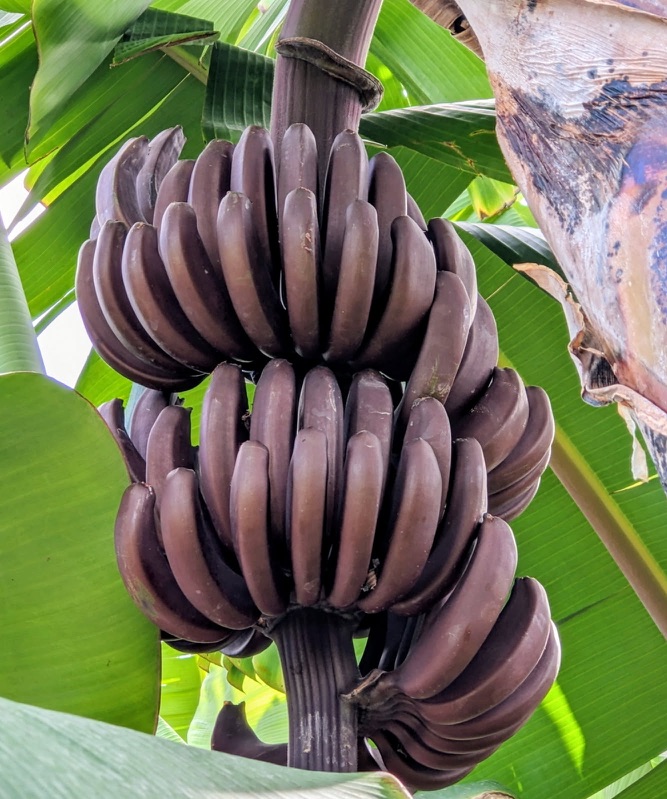
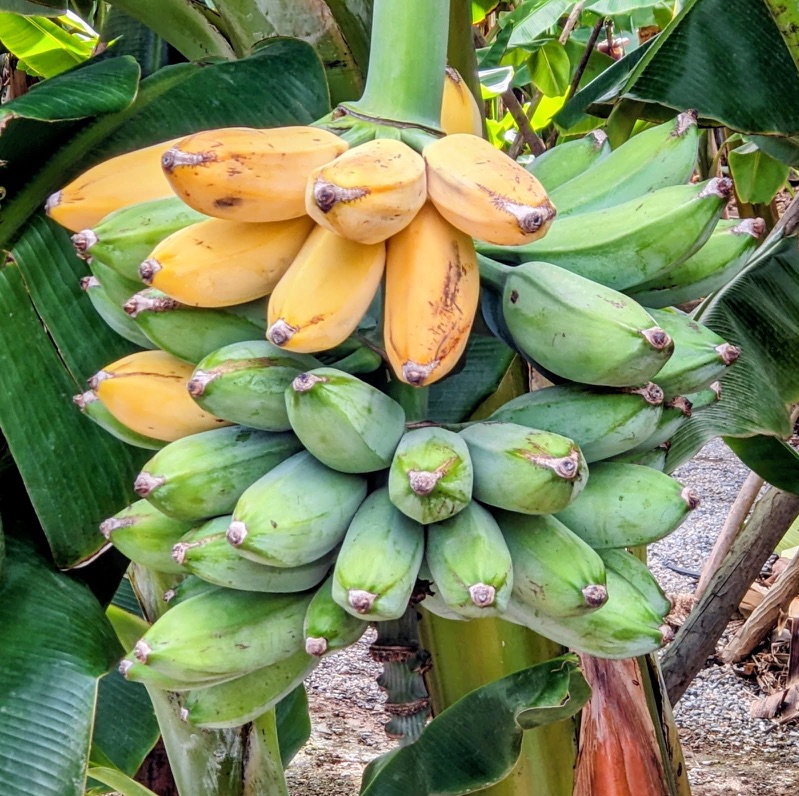
Banana plants only produce one bunch, then dieFlowering Bananas starting to ripenBananas grow all year long, so they are always in seasonRed Bananas which are said to taste like orangesTopocho which is a banana & plantain hybrid; It can be eaten either when it is green or yellowBanana wine, champagne, jam, & spicy sauce
I wanted to visit the Canary Islands for two reasons.
First, I had heard from various European friends how much they liked the Canary Islands.
Second, one of my maternal ancestors came from these islands. Maria Josepha Leal Goraz was born in 1724 on the island Fuerteventura. As a young girl, she immigrated to the New World to New Spain (now in Louisiana). It’s always fun to learn a little more about your family history & roots.
Spain has once again given us a lovely experience. Wish I could say my Spanish has improved; oh well, you can’t have everything. 😂🤣
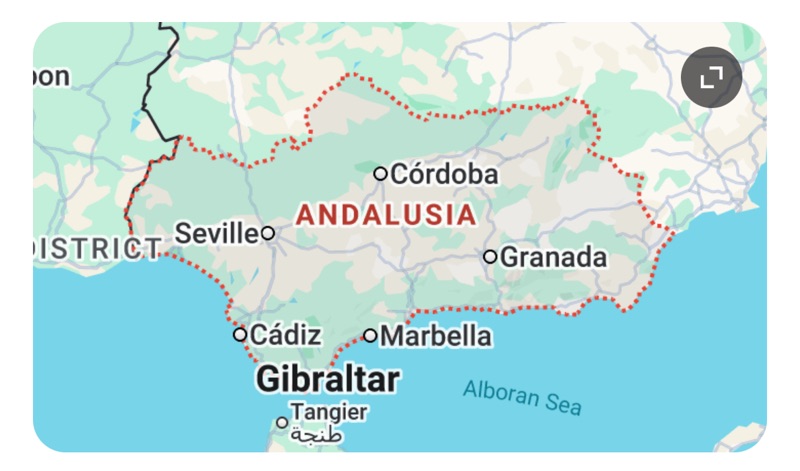
Andalusia is Spain’s southern region. The Moors controlled this area for almost 700 years from the 8th Century until almost the end of the 15th Century. Their presence left behind many castles built with Arabic architecture & features.
Two years ago, we visited Seville & Cordoba by train. This time we rented a car so we could explore all Andalusia including cities & small villages.
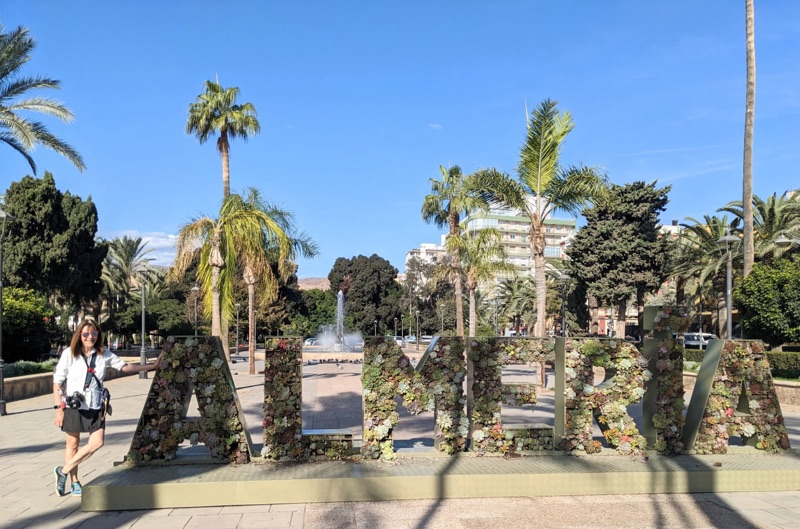
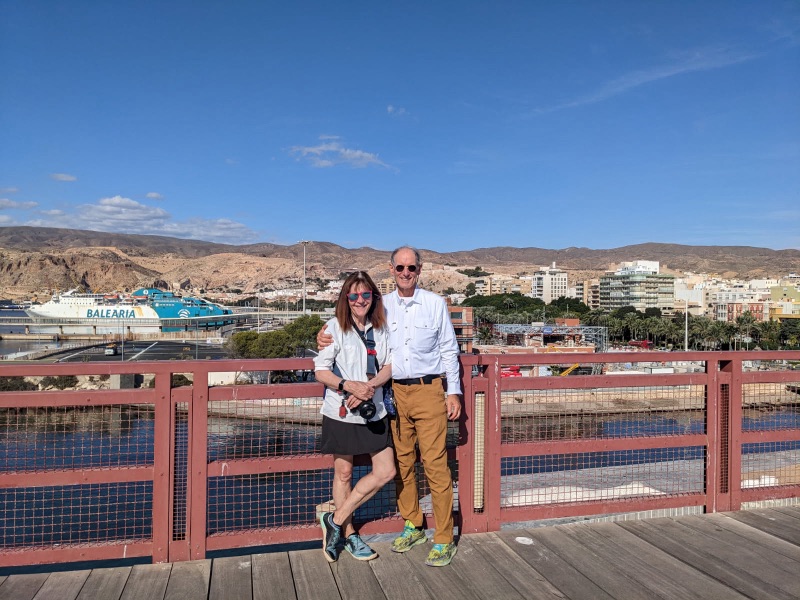
Almería
Almería is the driest place in Europe & has its only true desert climate. They get lots of sunshine & little rain (only about 8 inches annual precipitation).
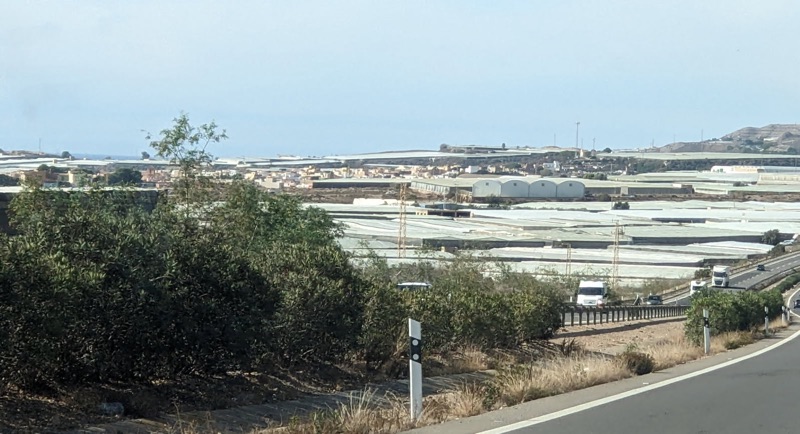
For many miles all around Almería’s outskirts spread over 100,000 acres you will see greenhouses; this sprawl is nicknamed “The Sea of Plastic.” In the winter, Almería provides most of Europe’s fresh fruits & vegetables.
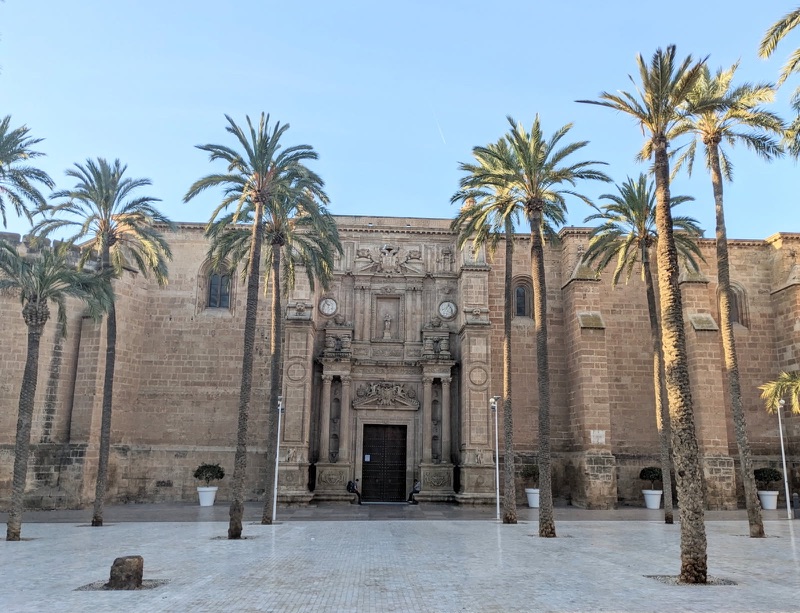
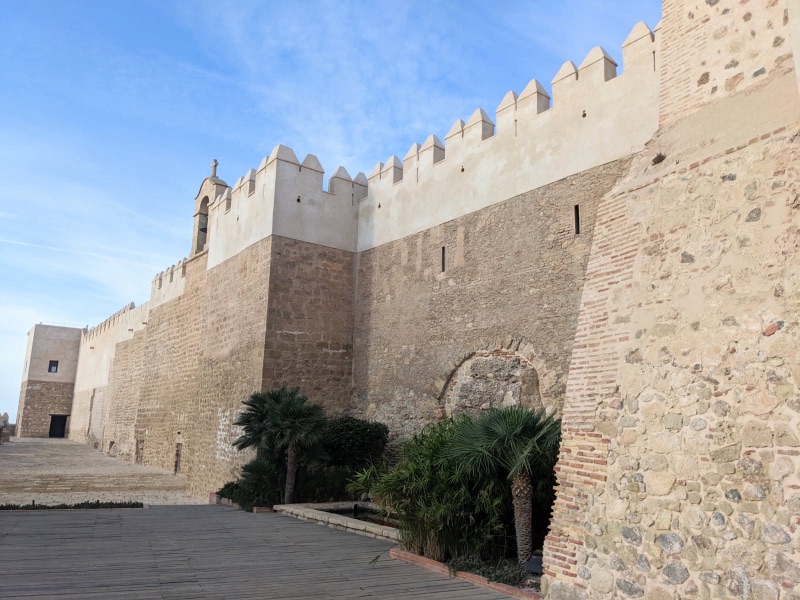
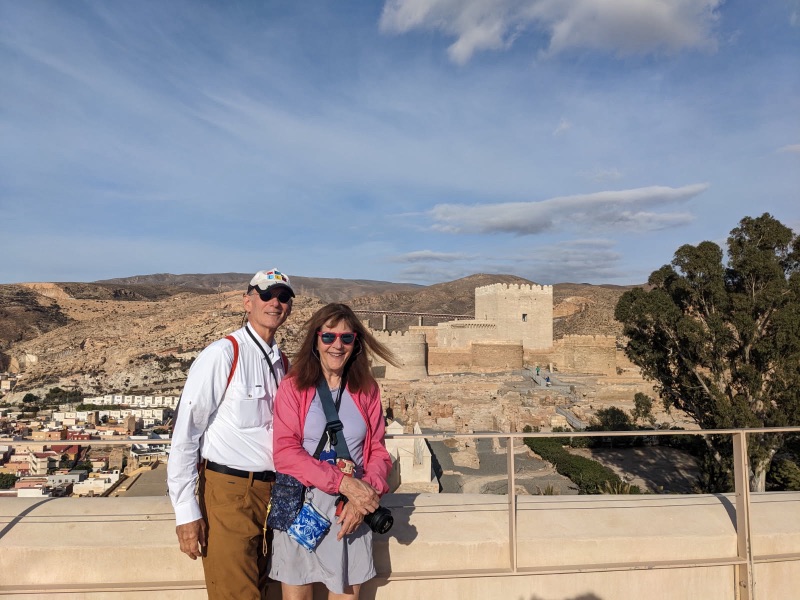
Almería has been occupied throughout history ranging from the Romans to the Muslims (who built their largest Alcazaba (fortress) in Spain here as well as other iconic city landmarks) to the Catholics who built the Cathedral that still stands today.
Cathedral Encarnacion de Almería- finished in 1562Alcazaba walls & parapet Alcazaba
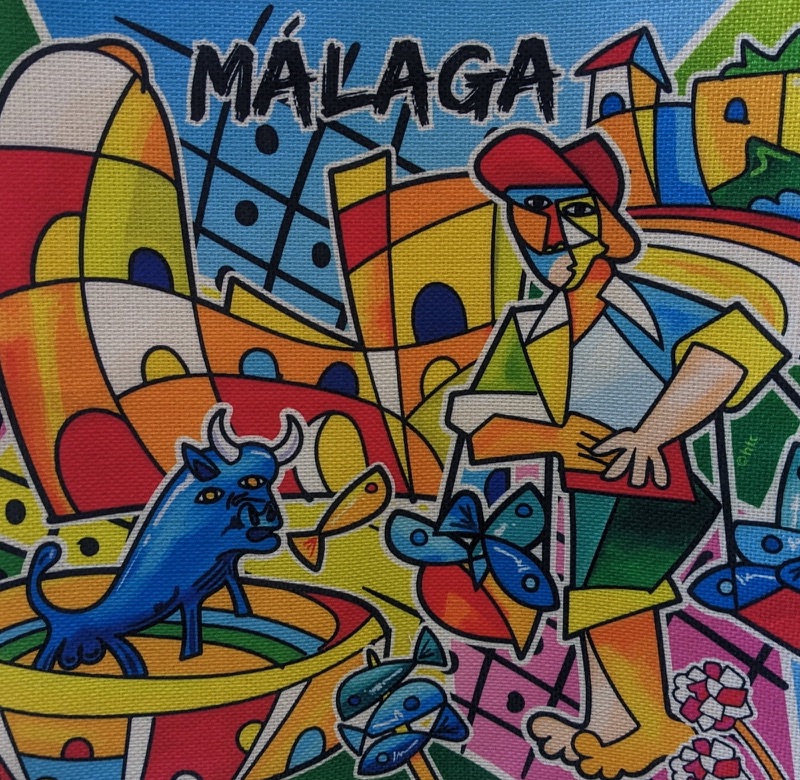
Málaga
Málaga is a beautiful city with marble streets, beautiful architecture, & wonderful culture.
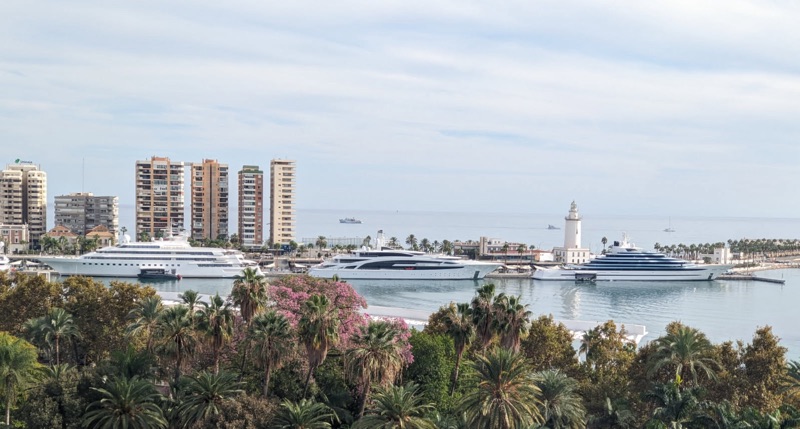
It’s so lovely that 5 large cruise ships were docked in the harbor when we arrived.
Several large yachts also in the harbor
We enjoyed visiting the Picasso Museum. It’s fitting to have a museum for Picasso here because this is where he was born & lived as a child. The museum is in his old nursery school.
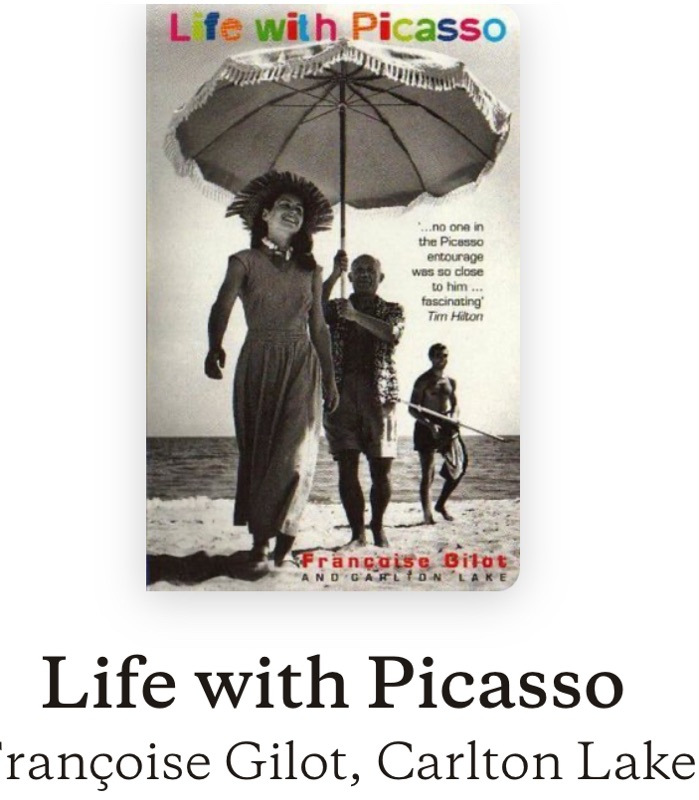
The museum displays art from many phases in his career including paintings, sculptures, pottery, sketches, & prints. I’ve been reading the book, “My Life With Pacasso,” by Francoise Gilot. I was happy to see some pieces exhibited that she mentions in the book.
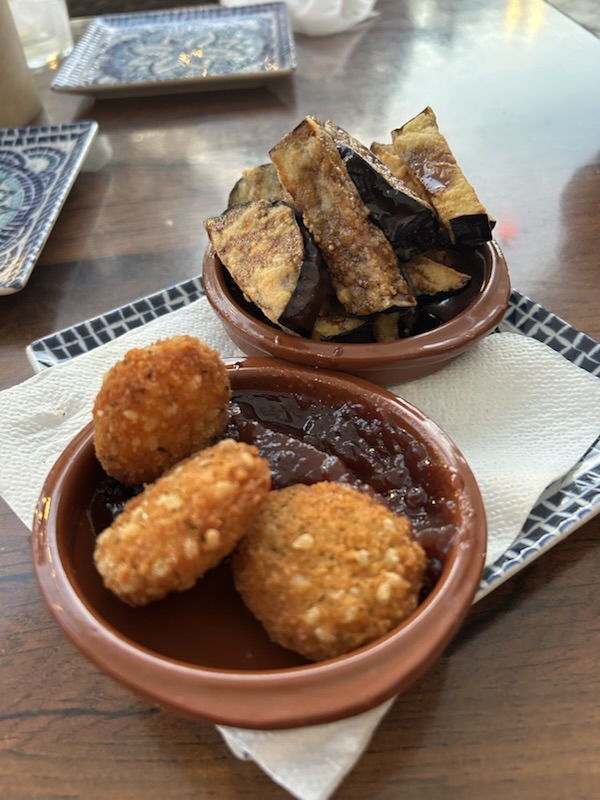
As a vegetarian it is often difficult to find veggie tapas; but, in Malaga we found a restaurant with many yummy choices. It was fun to to enjoy this Spanish cuisine custom.
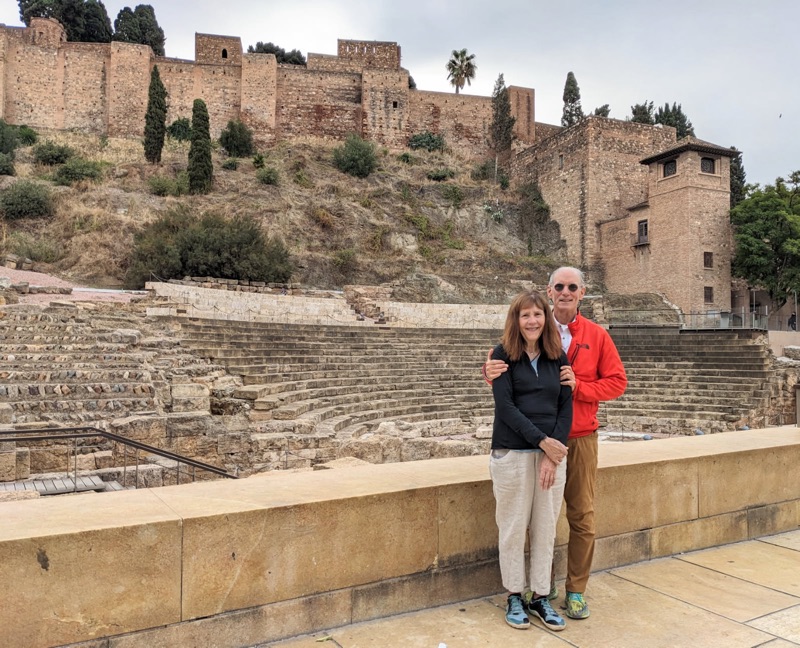
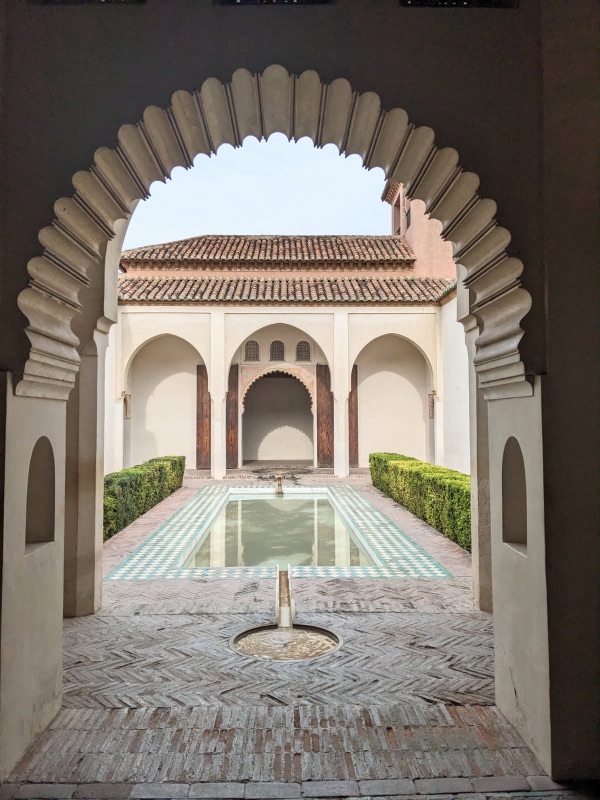
Like most large cities along the coastline in Andalusia, it has a large Moorish Alcazaba fort & palace which were adjacent to some Roman ruins.
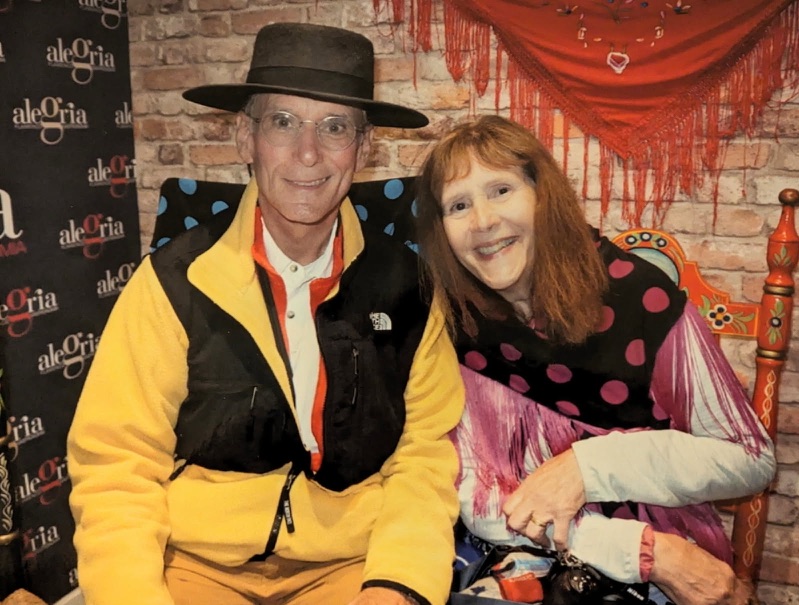
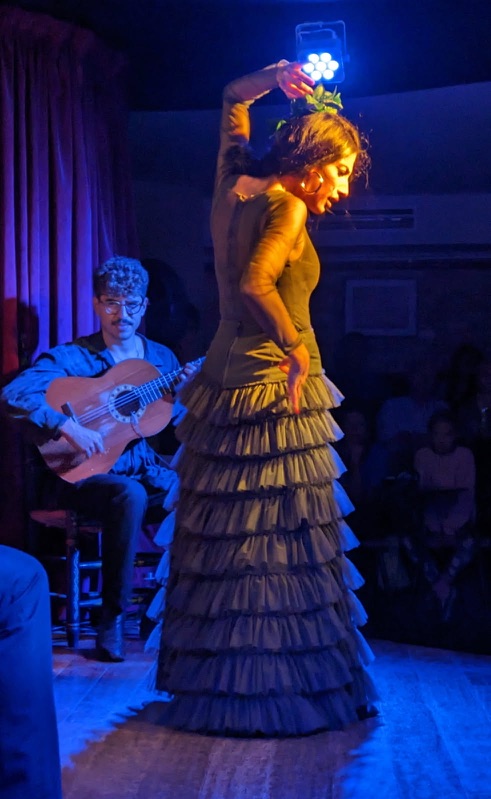
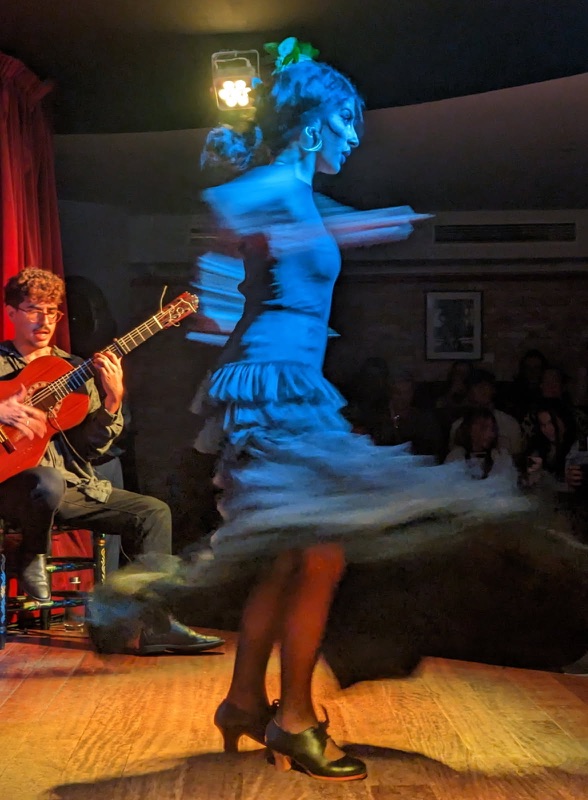
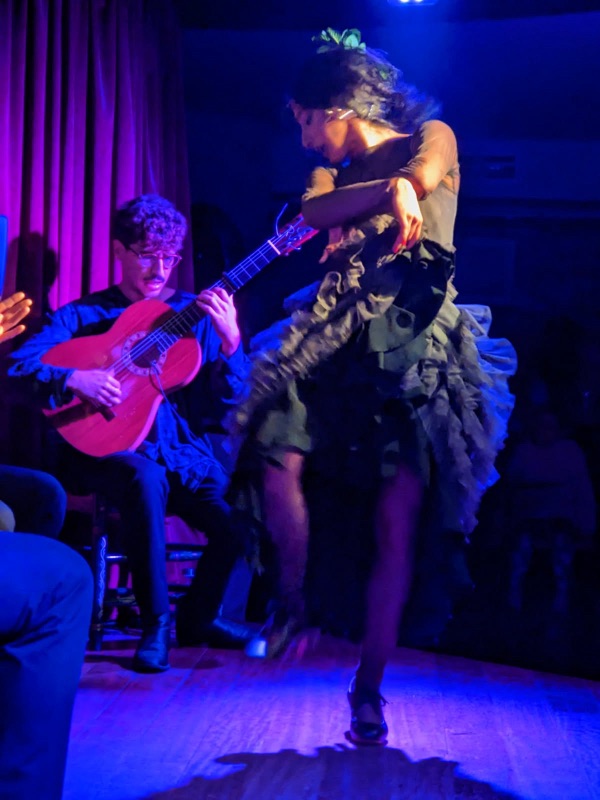
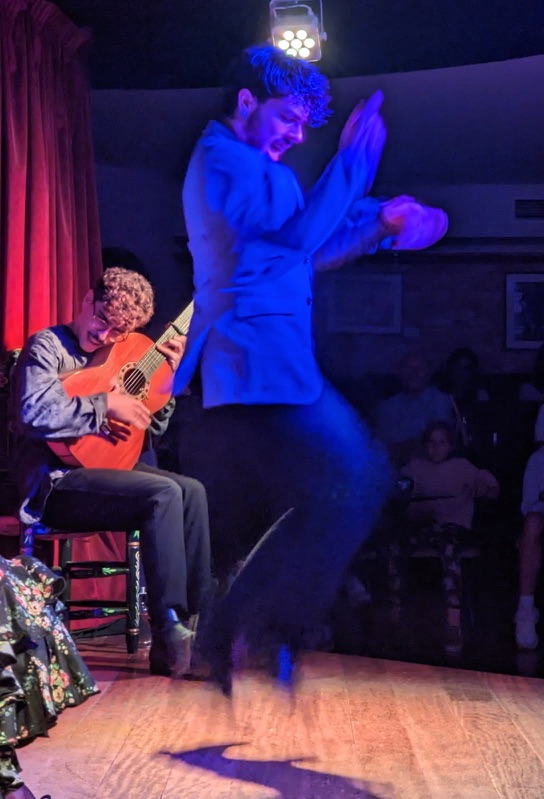
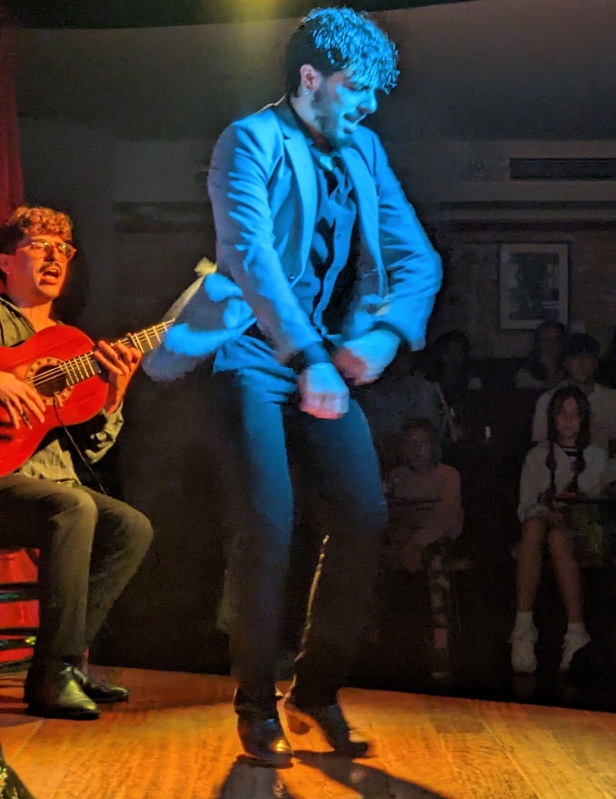
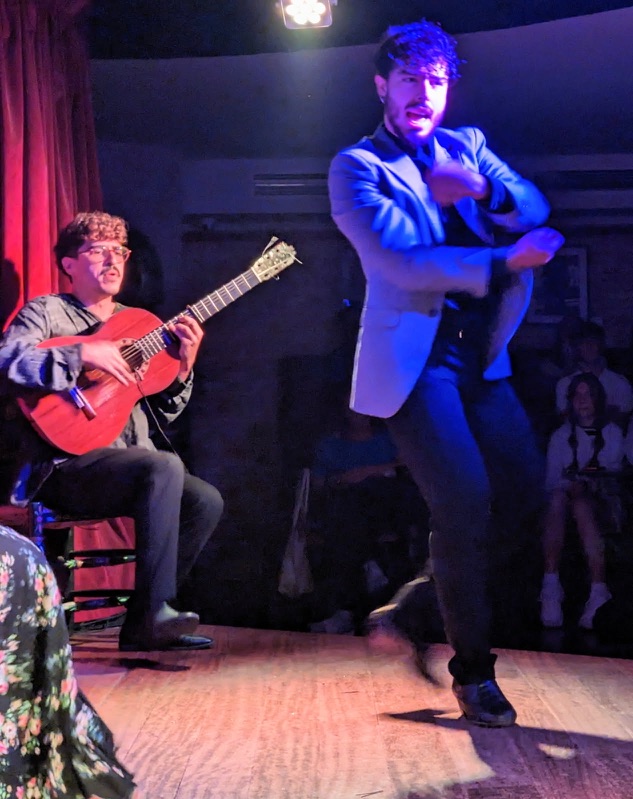
I enjoyed the Flamingo Show in Granada so much that I wanted to see another show that featured both male & female dancers.
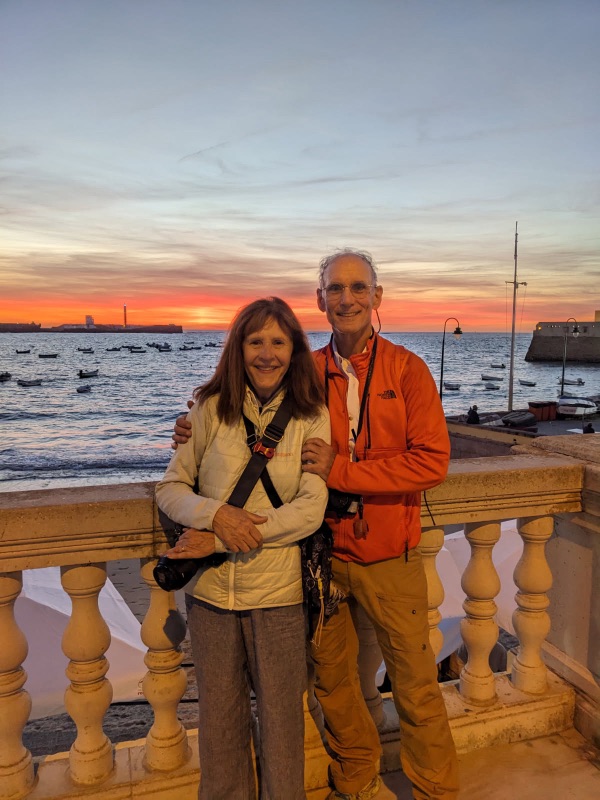
Señor & Señora out on the town
Once again, the tap dancing & movements were amazing!
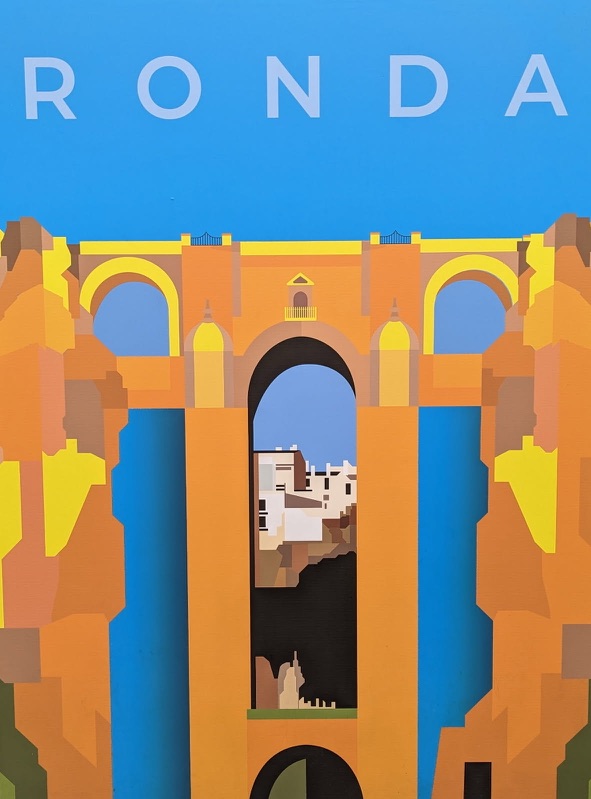
Ronda
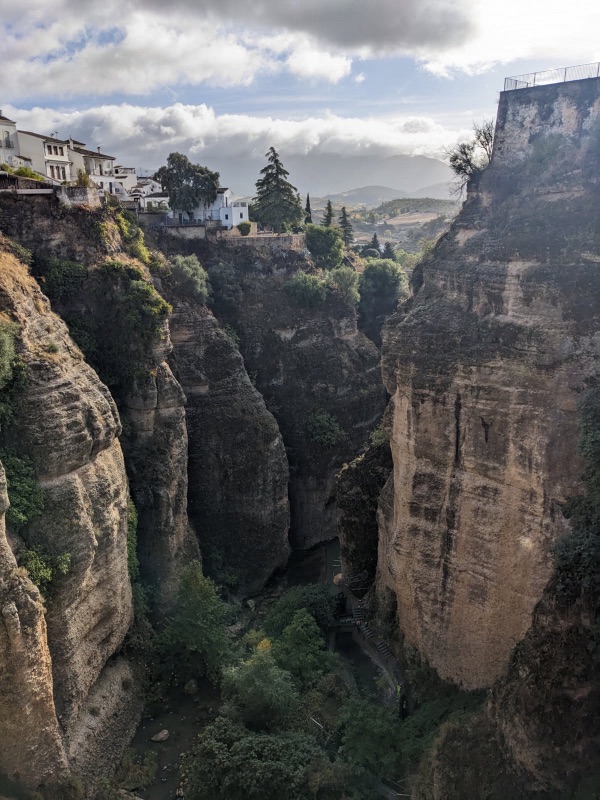
This is a small inland city away from the Mediterranean Sea situated on a mountain top overlooking a deep gorge. Its history dates back to the Romans.
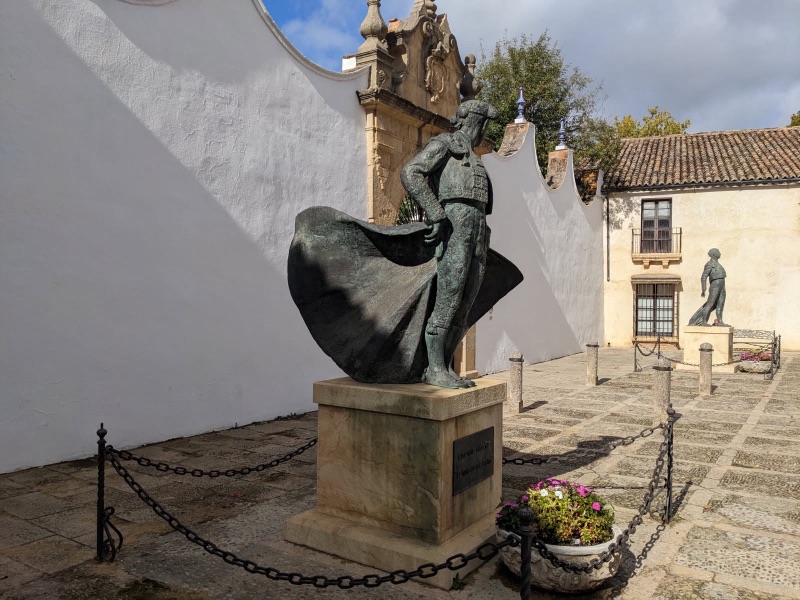
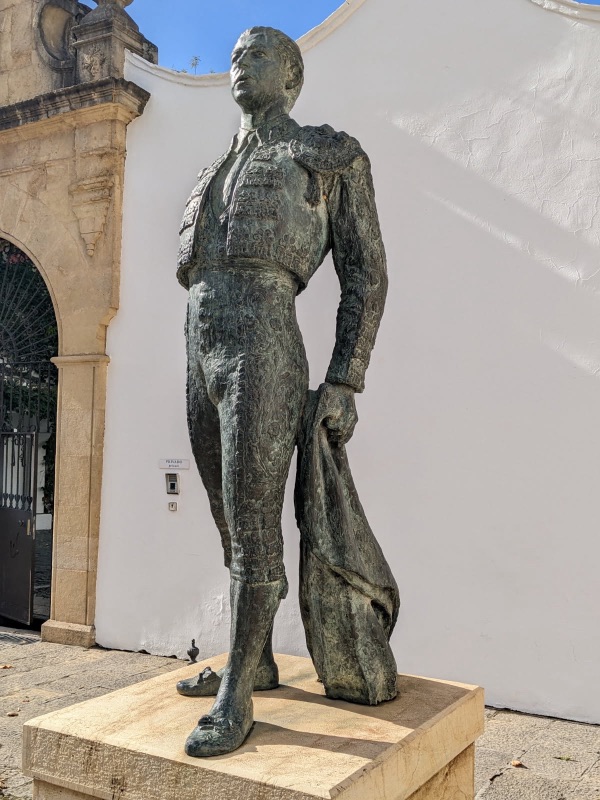
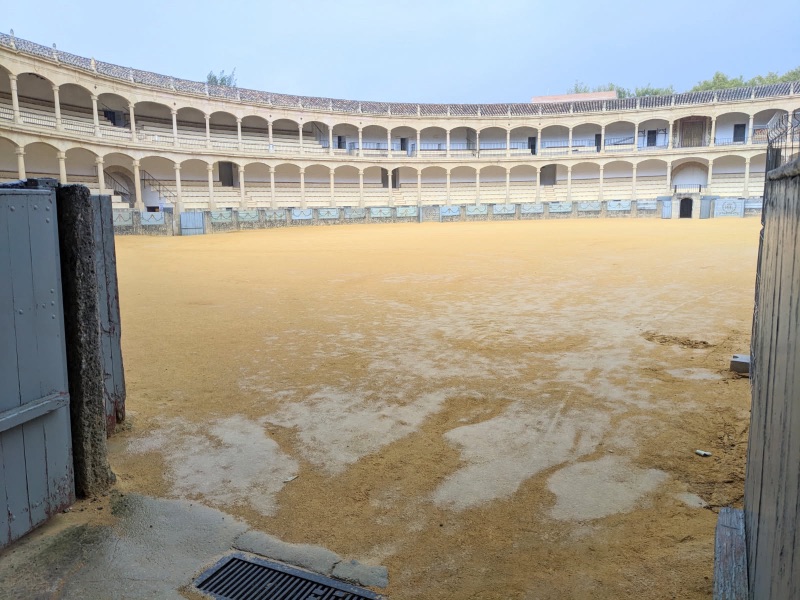
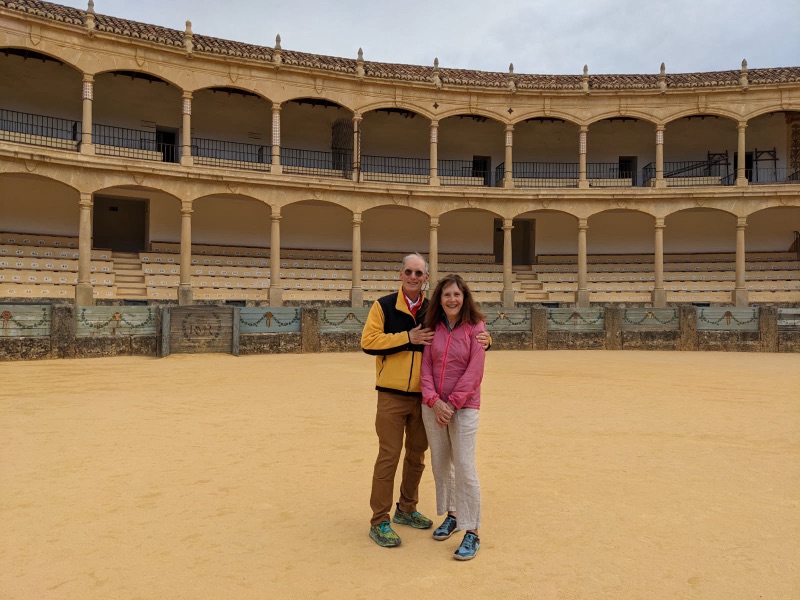
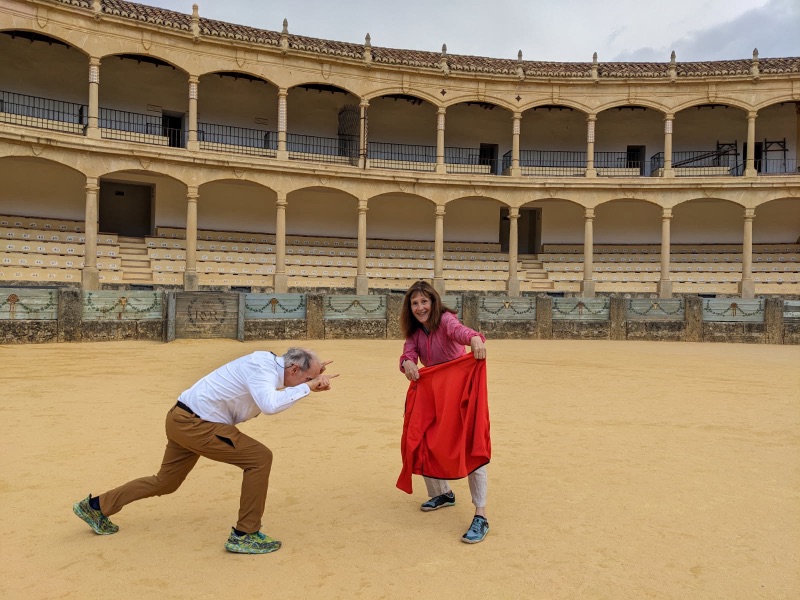
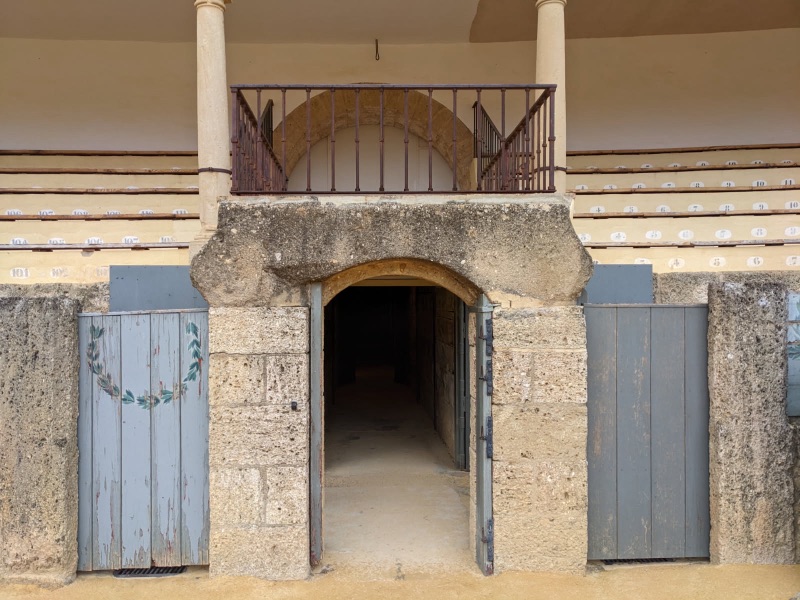
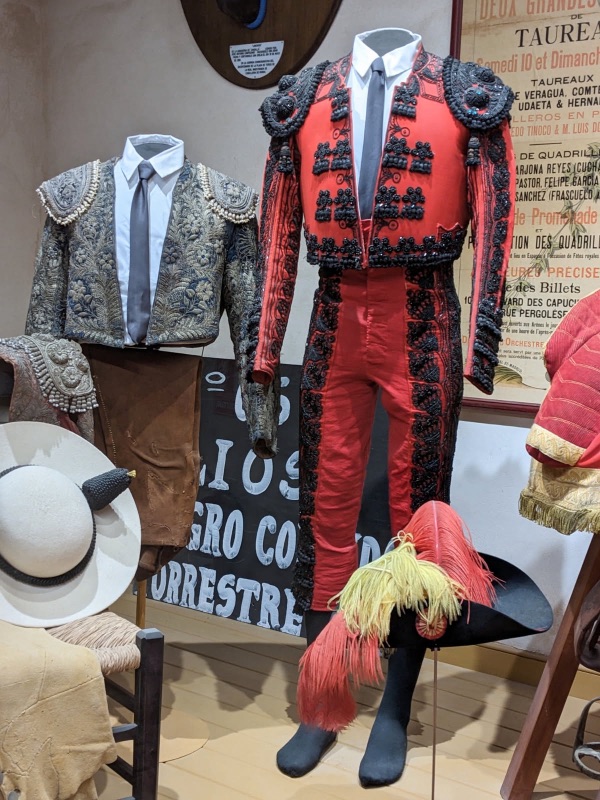
The city is known for two reasons. First, it is the home to modern bullfighting & has the world’s oldest bullring. To see a bullfight here, you must come the first week in September which is when their one & only performance is.
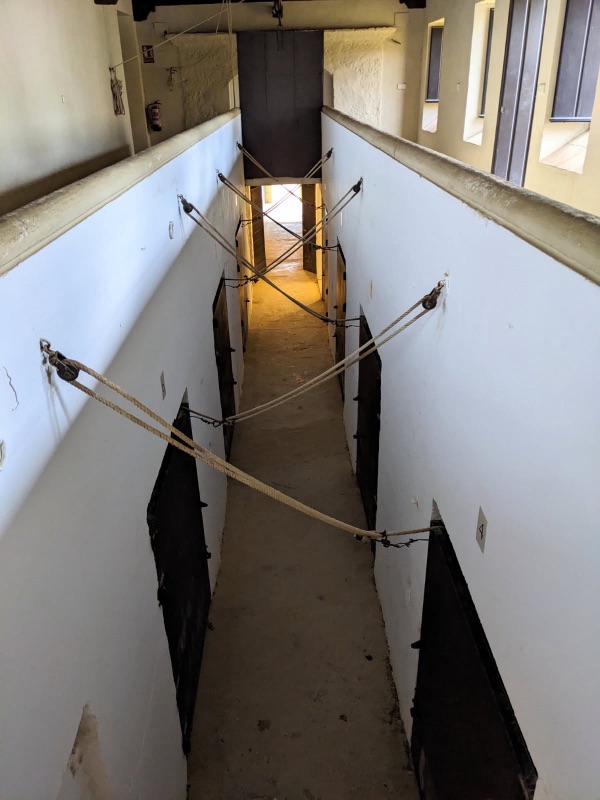
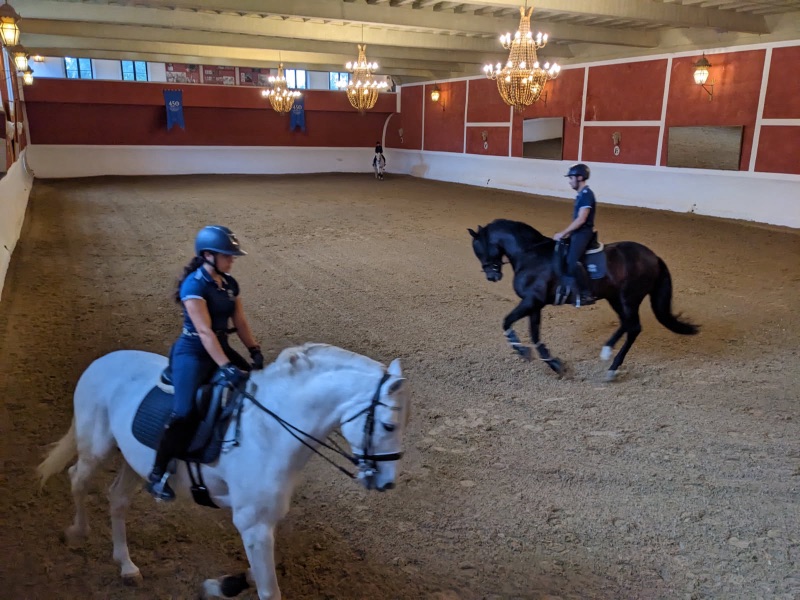
Main entrance Inside the bullringToro.. Toro The bullpen where bulls are kept- Notice the doors are opened by ropes to keep a safe distance Bullpen entrance into the stadium under the VIP seats Suits worn by famous matedorsRonda has the world’s 2nd oldest riding school (Vienna’s riding school is 2 years older)
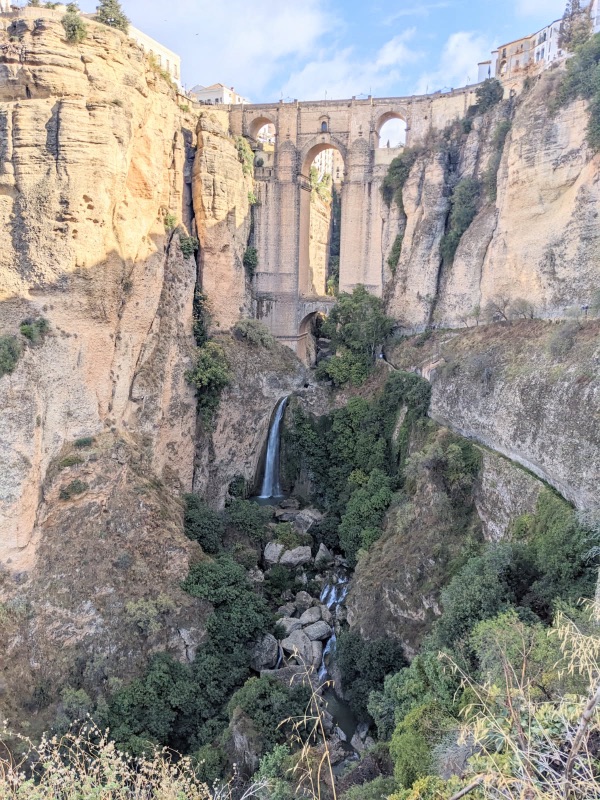
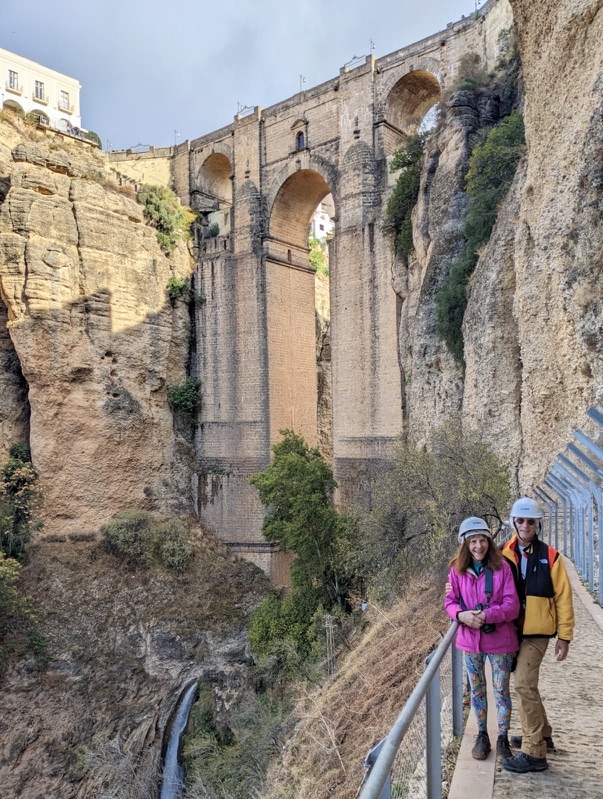
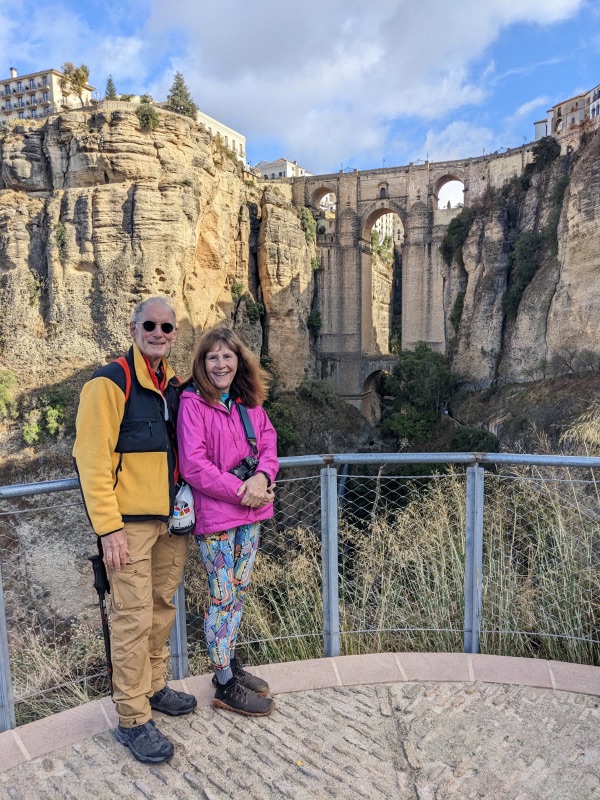
The second notable thing about Ronda is its spectacular Puente Nuevo Bridge.
It took 2 attempts to build the bridge. The first bridge collapsed in 1741 killing 50 people. After 34 years of construction, in 1793, the Puente Nuevo (New Bridge) as it was & still is called was completed.
Its eventual span was 216 feet & its height is an impressive 322 feet above the canyon floor.
It is supported by thick vertical supports rising up from, and in places, attached to the narrow canyon walls.
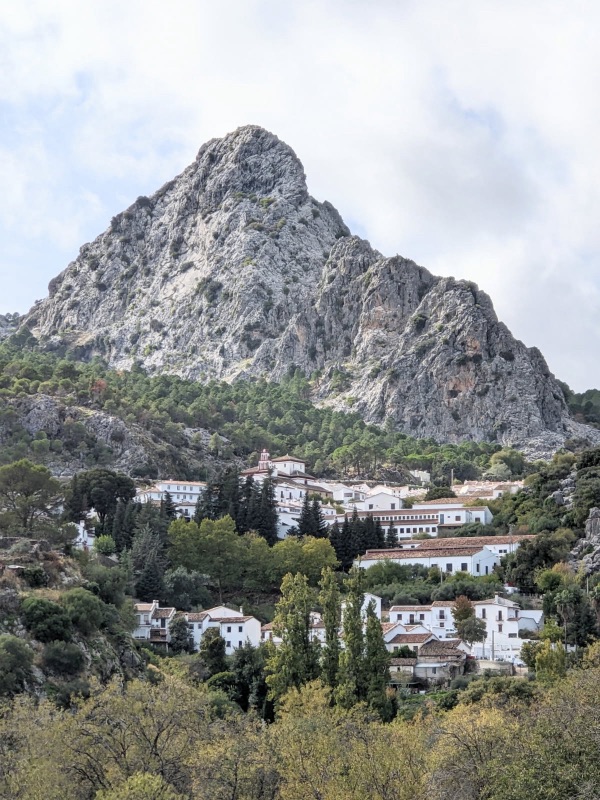
We also enjoyed driving around the mountains near Ronda to visit some classical “Spanish white towns” & one which is no longer white.
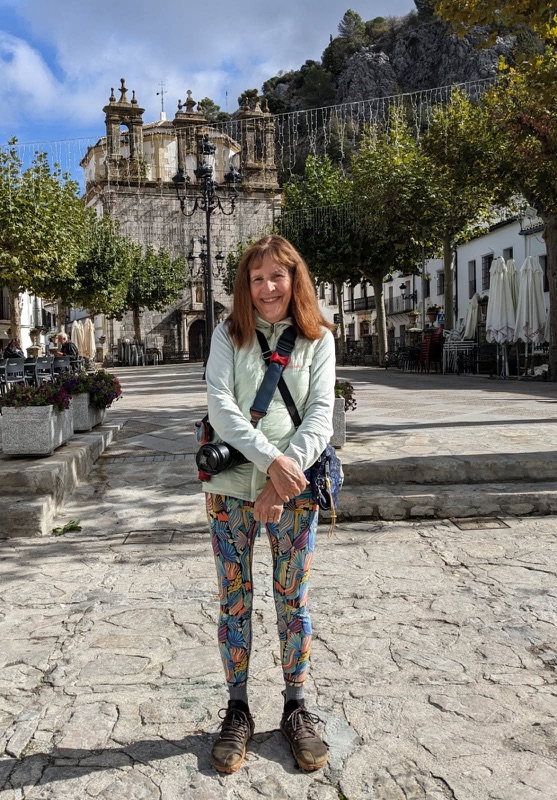
GrazalemaZahara de la Sierra
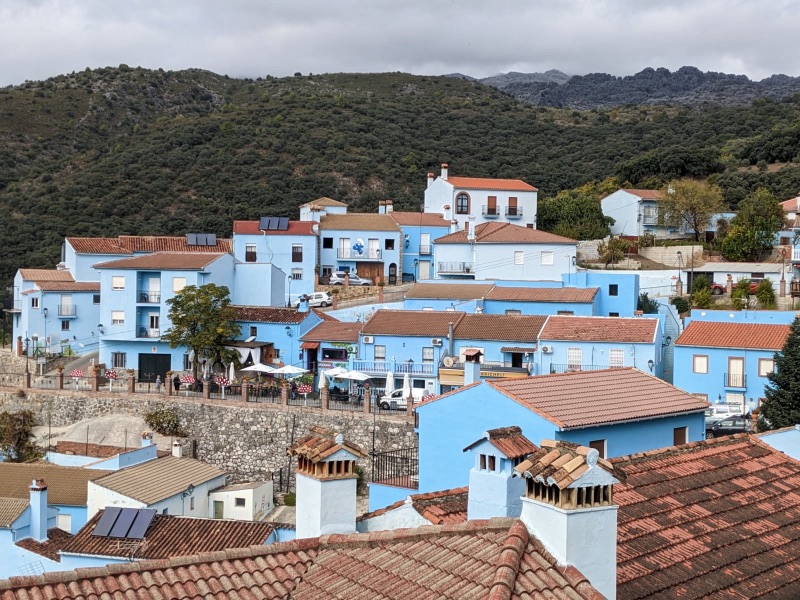
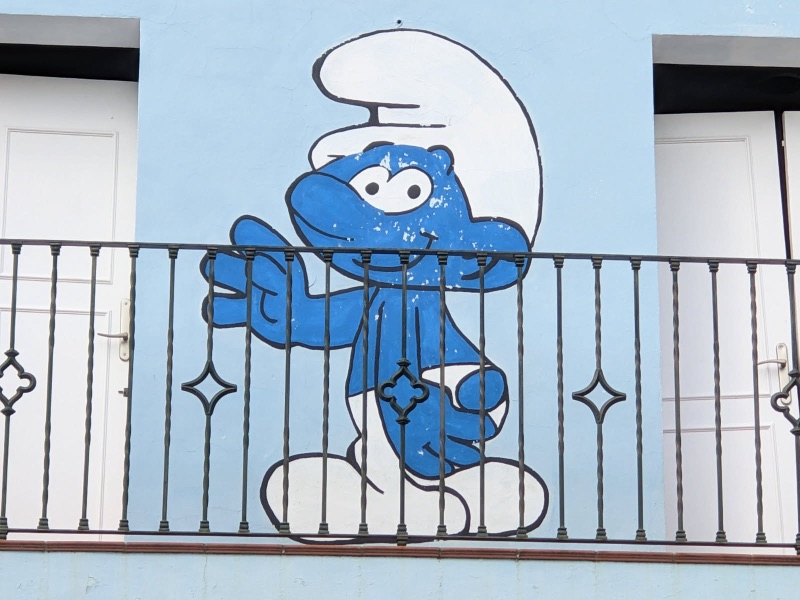
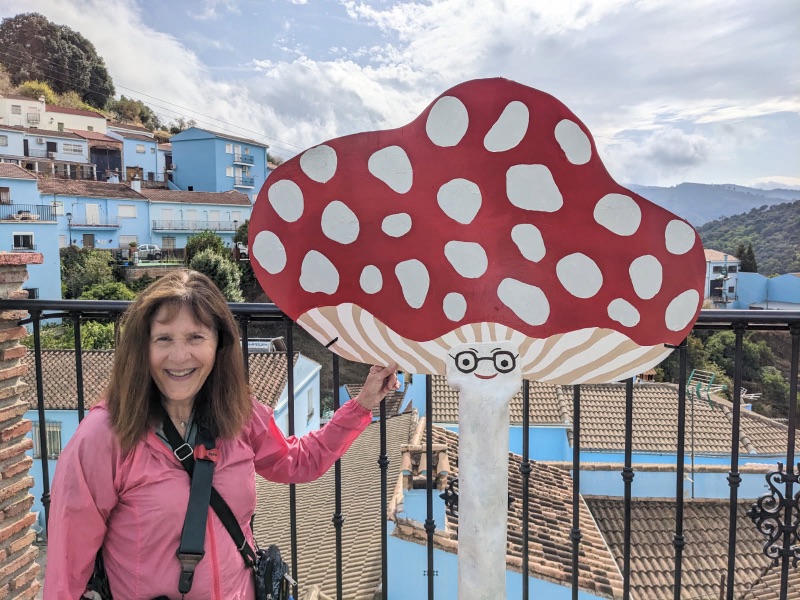
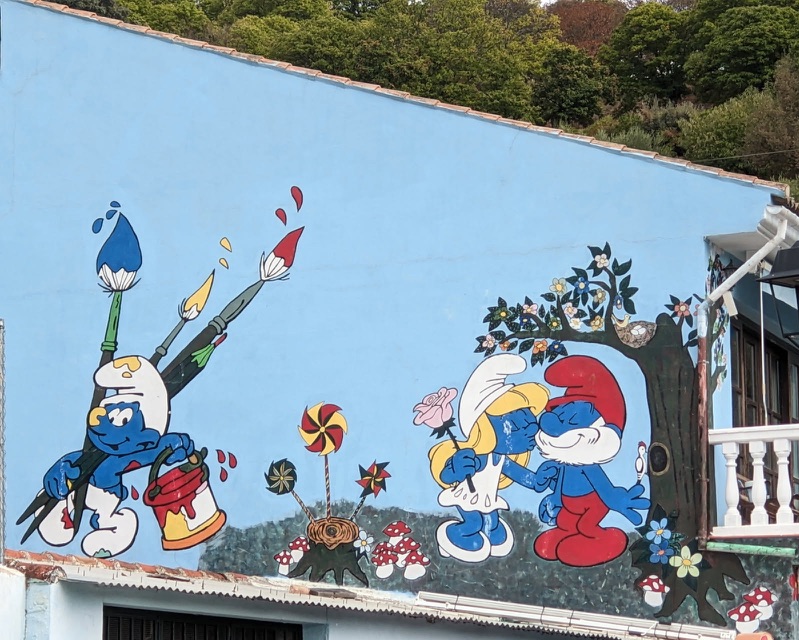
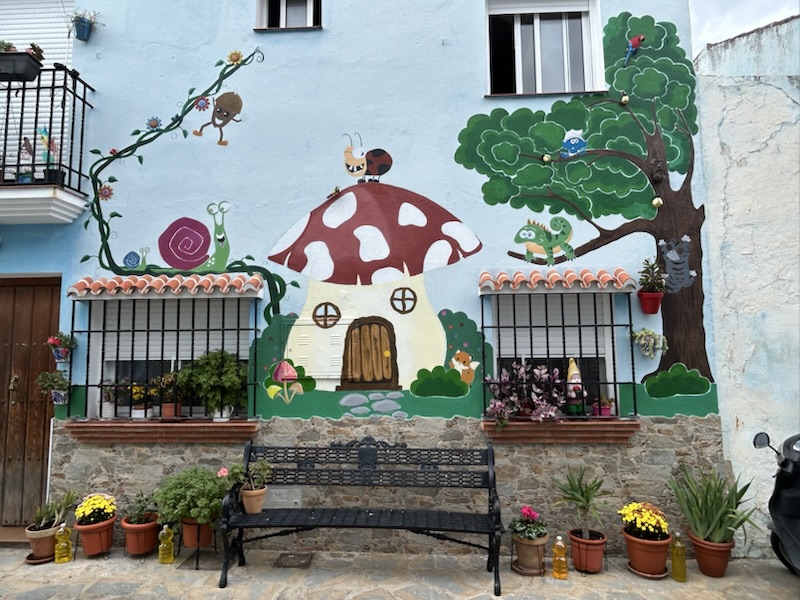
The blue village Júzcar is now nicknamed “Smurfville”
Before leaving Ronda, we enjoyed a few other Spanish favorites.
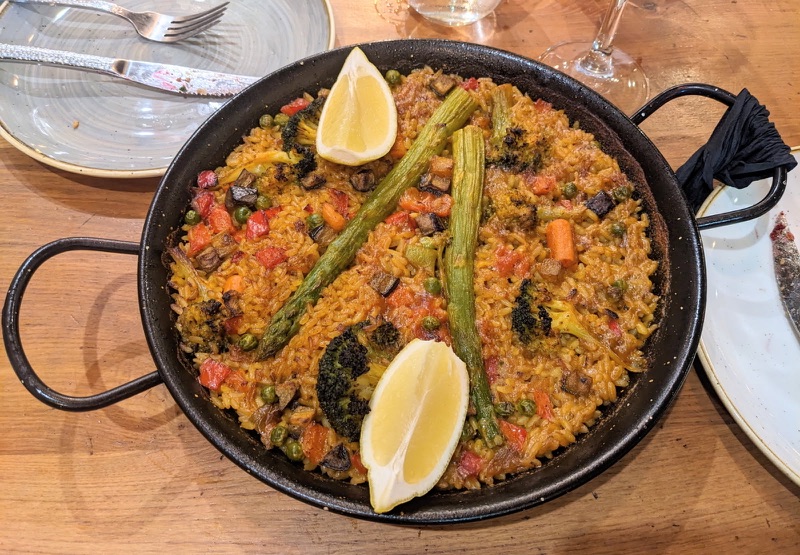
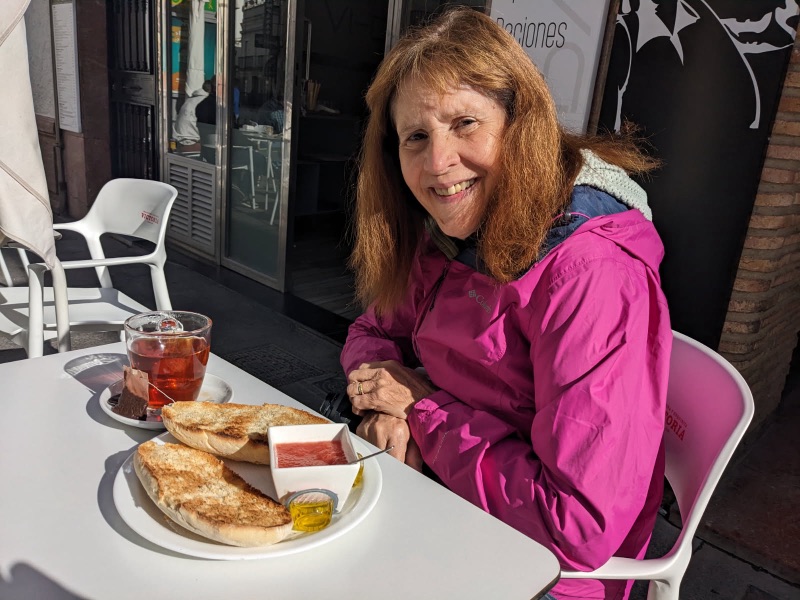
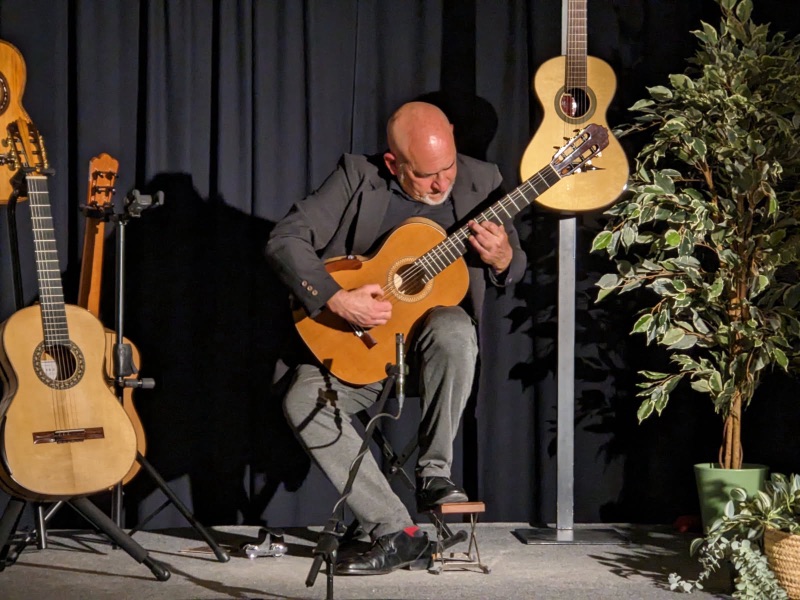
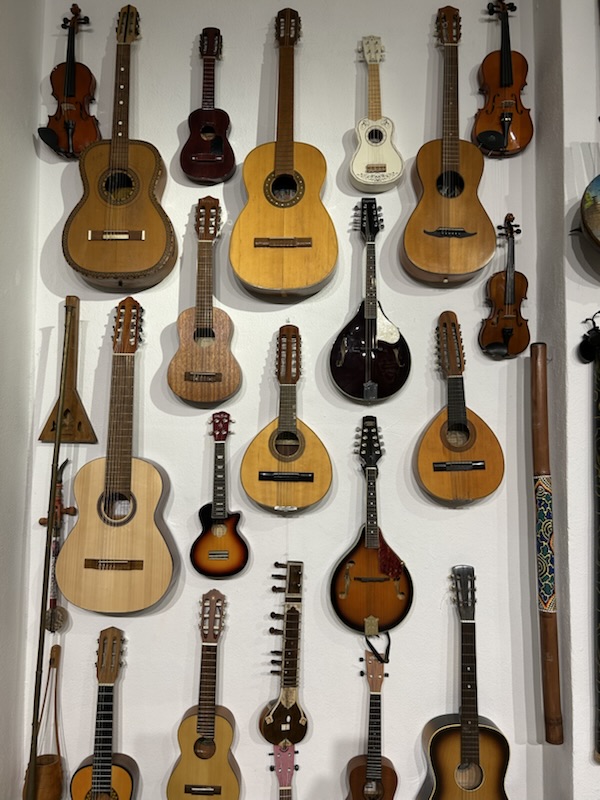
Paella Pan con tomate Spanish guitar concert by Paco SecoPaco Seco’s guitar wall
Cádiz
We only had one evening to explore this old town; but, we enjoyed what we saw.
Located on a peninsula surrounded by the Atlantic Ocean, Cadiz offers a unique blend of history, culture, & beautiful beaches.
Founded by the Phoenicians, it is believed to be the oldest continually inhabited settlement in Europe.
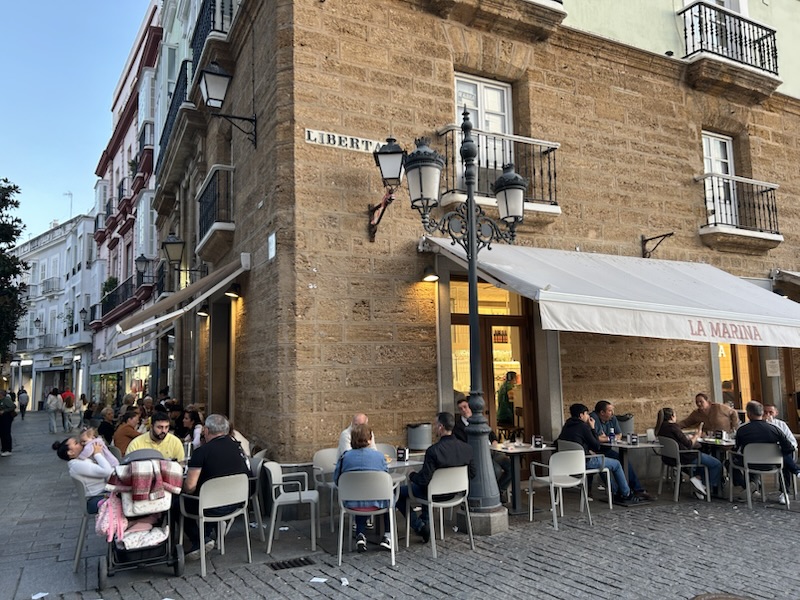
Often when you walk through a town in Spain in the afternoon during siesta, it is so quiet you could whisper to someone across the street and hear them. But, come 6:00pm, it’s like all the doors open & everyone comes out on the streets.
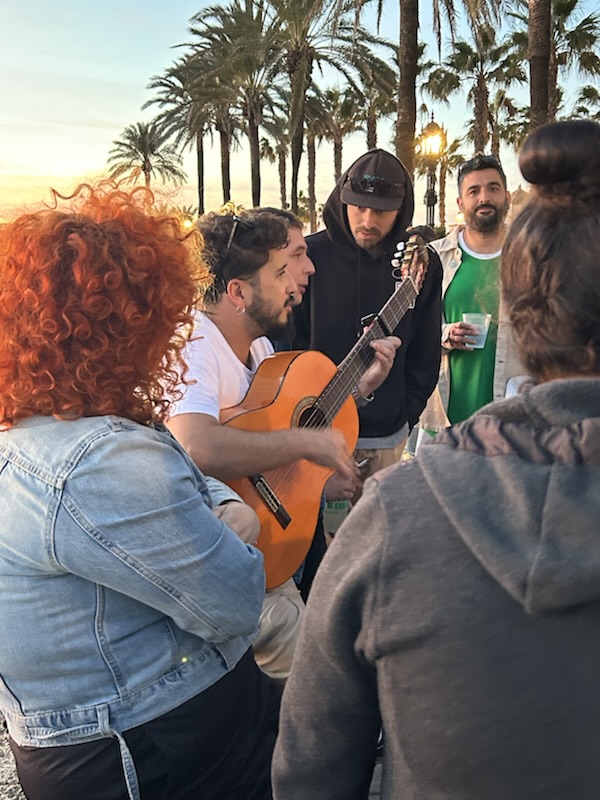
In Cadiz, we enjoyed watching families walking together, people singing along the waterfront, & friends meeting in small restaurants to enjoy a small dessert or drinks together.
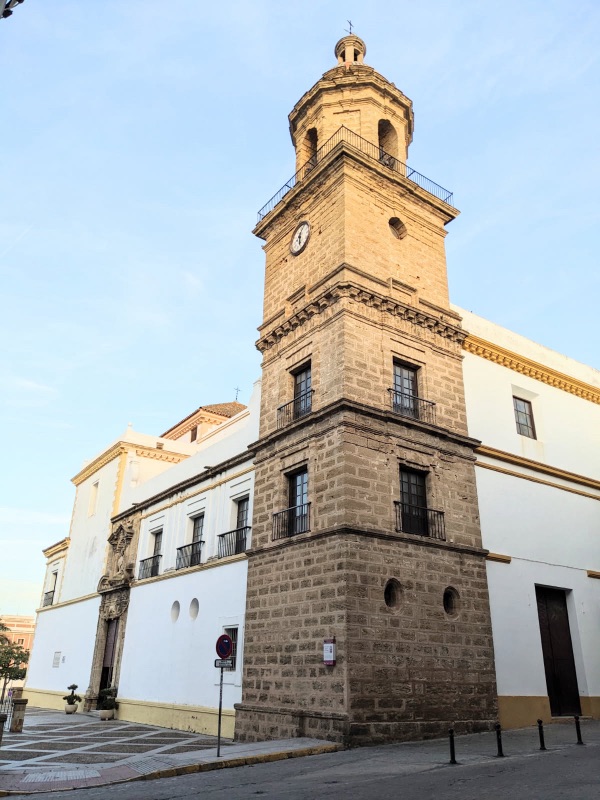
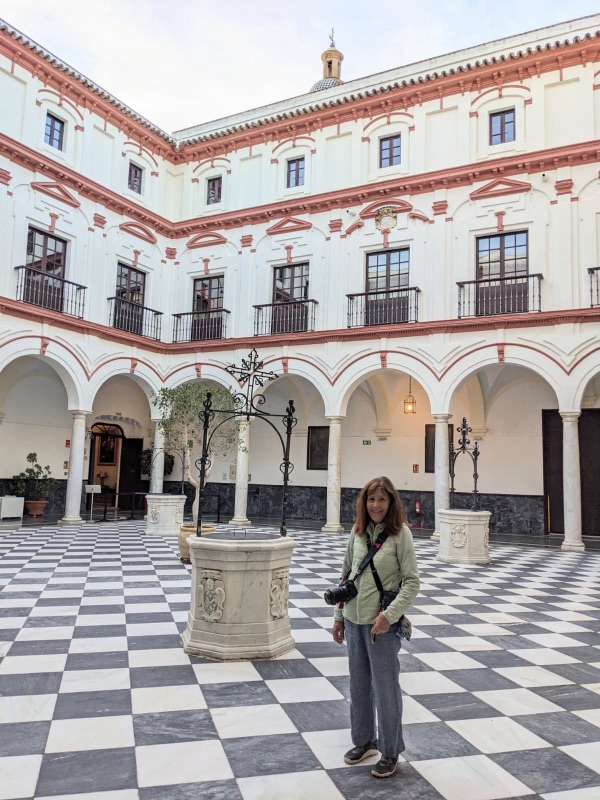
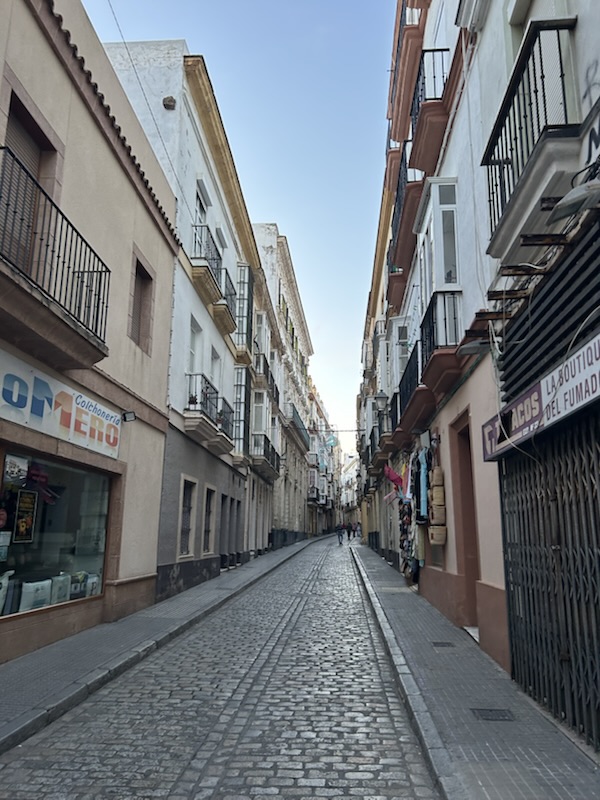
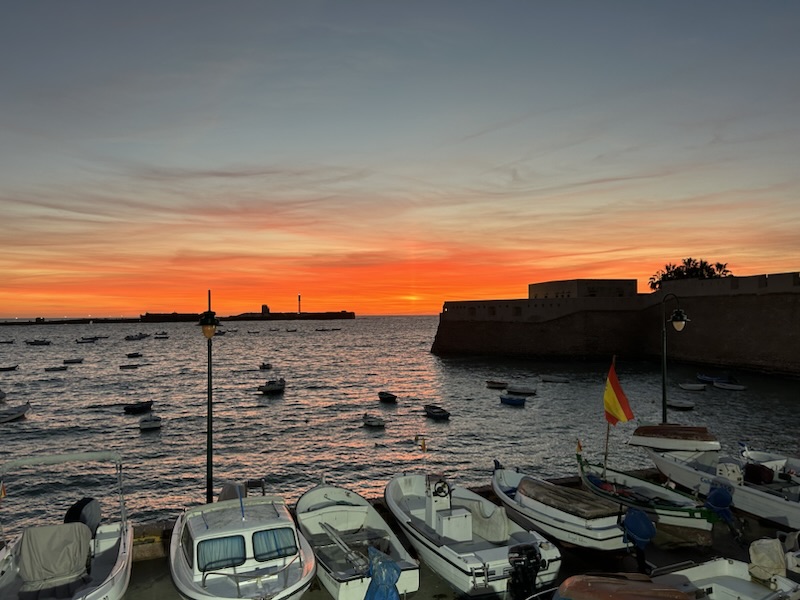
Our hotel was an old conventEnjoying churros with chocolate Narrow streetsFriends singing together Sunset by the old fort
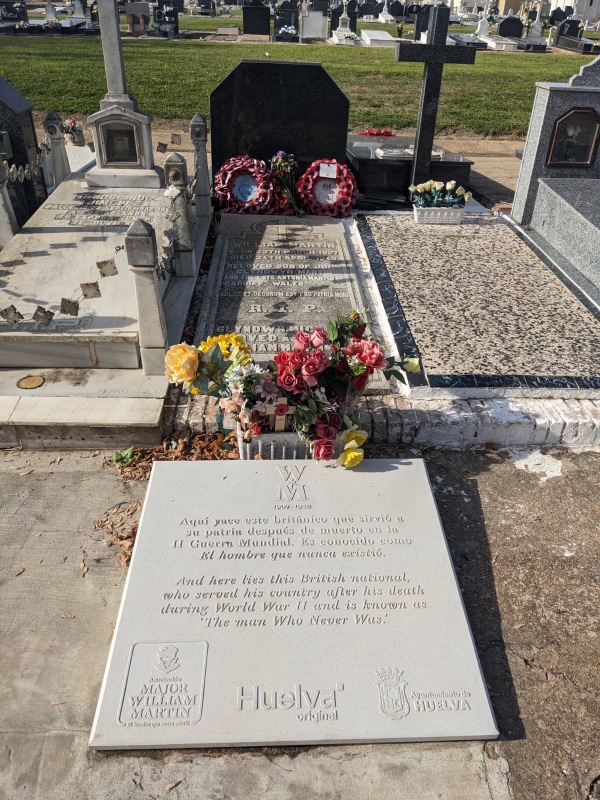
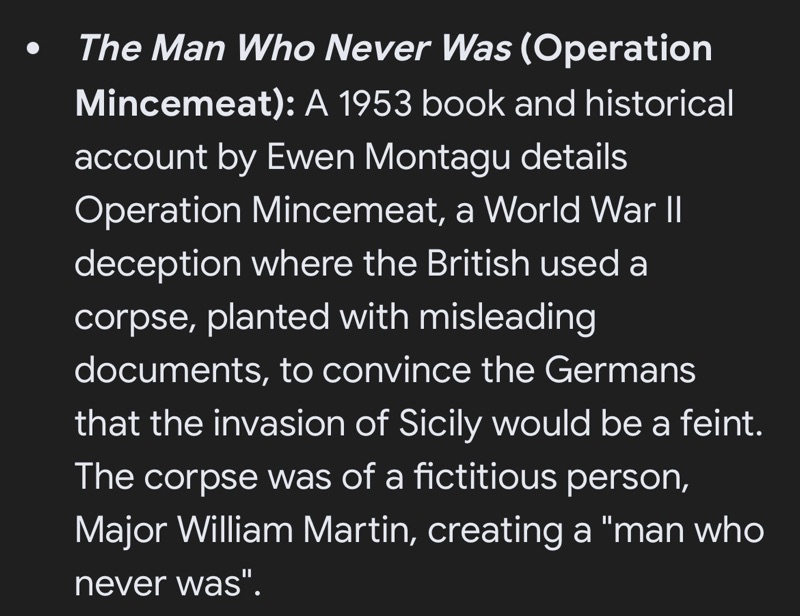
On our drive back to Madrid, my husband tracked down the grave of “The Man Who Never Was” located in Huelva outside Seville.
If you are interested in knowing more about this true WWII espionage event, there is a very good 2021 Netflix movie titled “Operation Mincemeat” which stars many leading British actors.
Final thoughts on Spain.
I love finding things that are unique to a country & something I would never see in America. Here are a few.
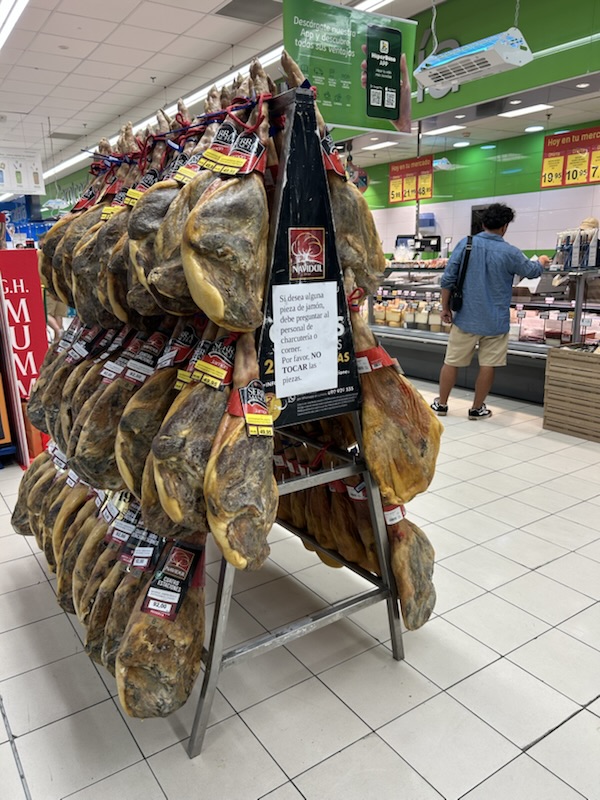
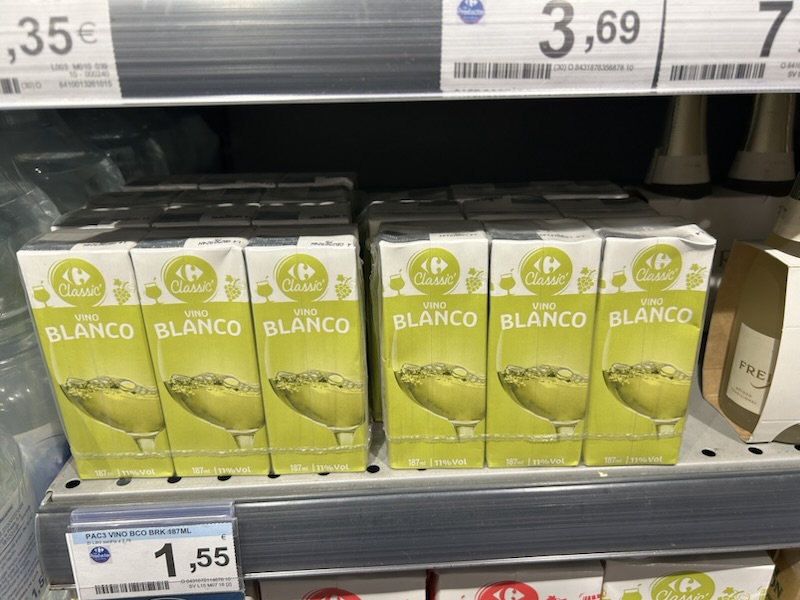
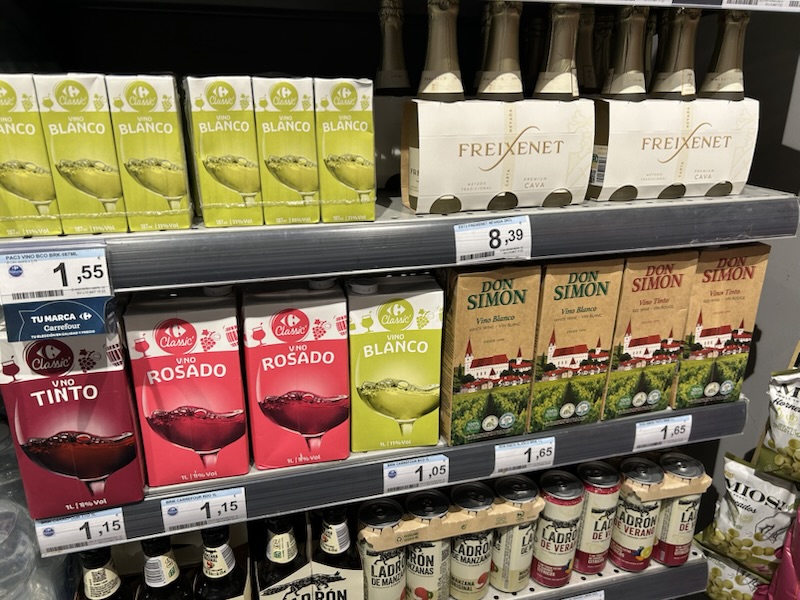
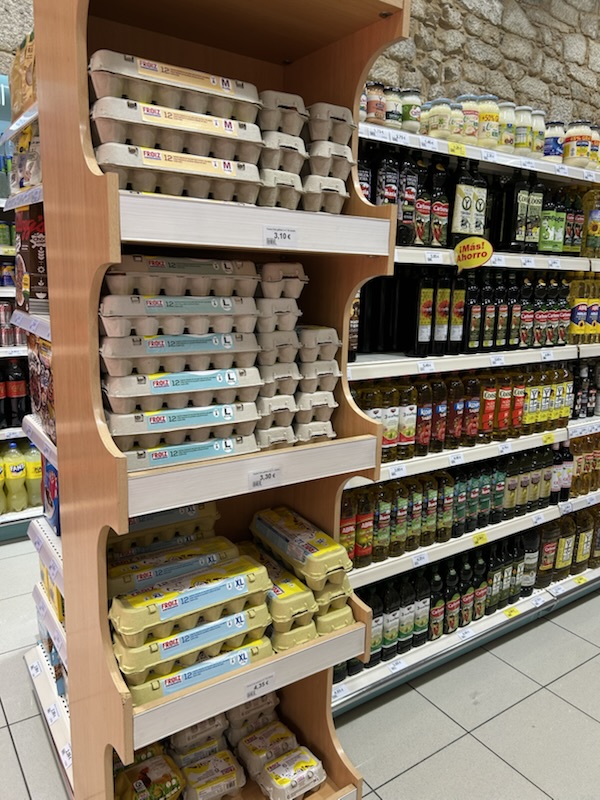
Lots of cured ham shanks- even in convenience storesSelf serve StarbucksWine in small juice size boxesWine in milk carton boxesEggs for sale are not refrigerated
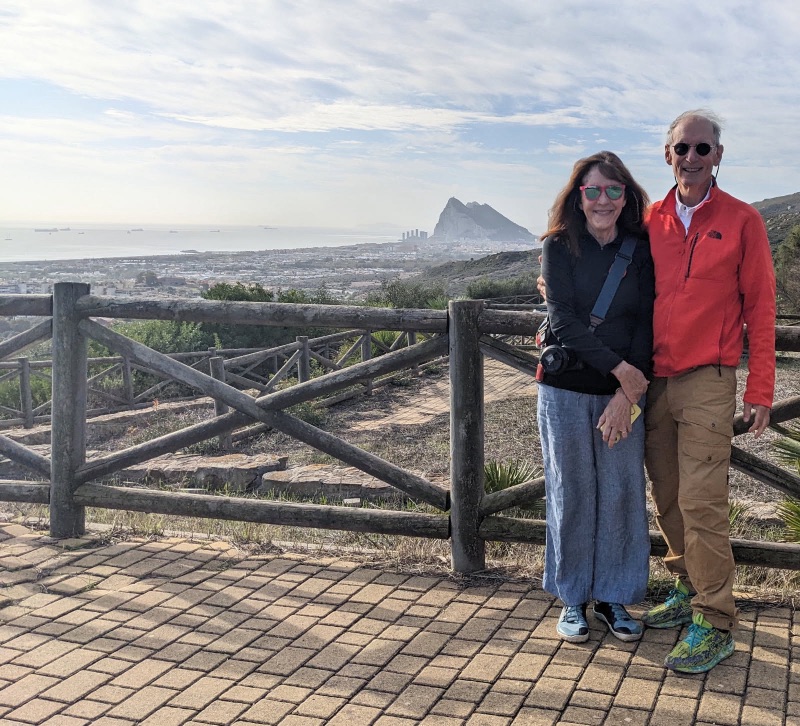
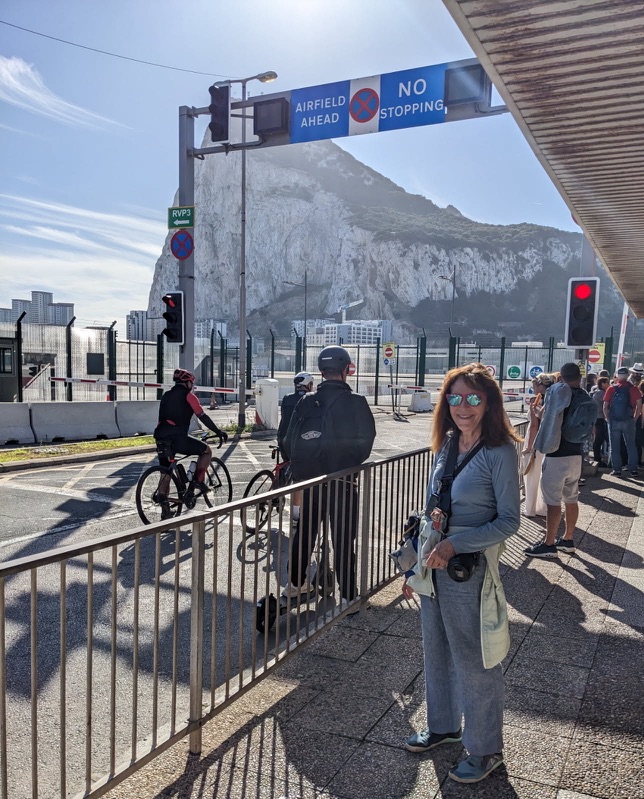
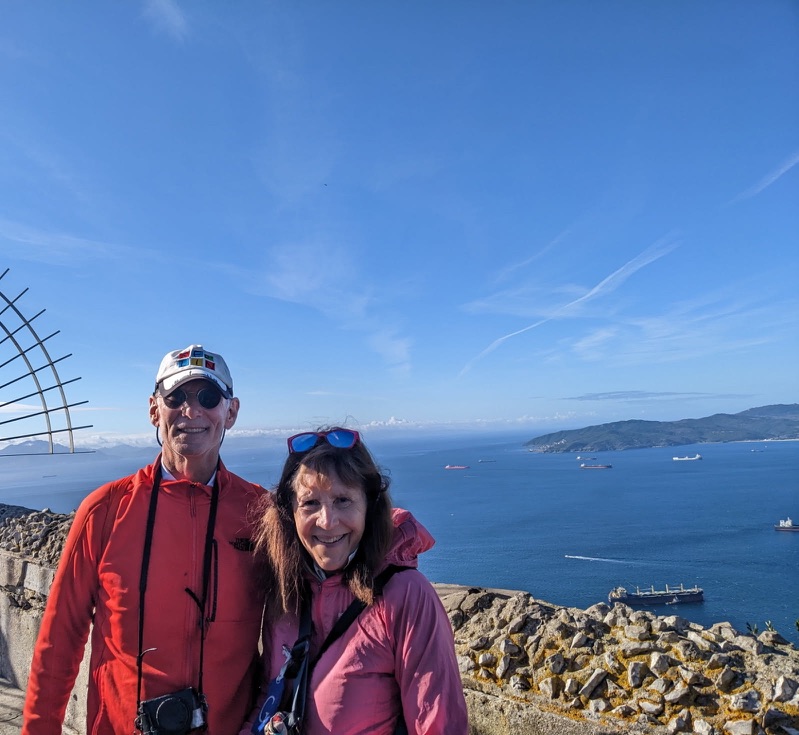
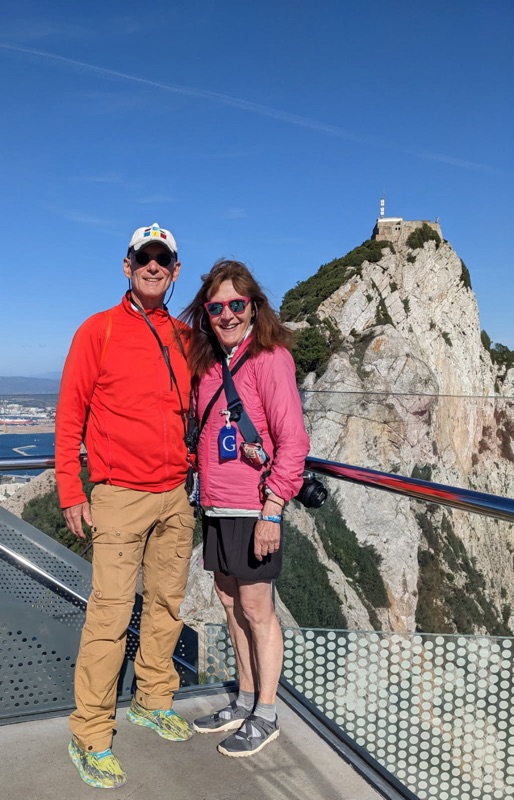
I’ve heard the term “The Rock of Gibraltar” most of my life referring to something or someone being strong & dependable. However, until you see Gibraltar, you don’t realize how impressive it is & appropriate that saying is.
It is spectacularly huge & stands out on its peninsula making everything else around it seem small & insignificant.
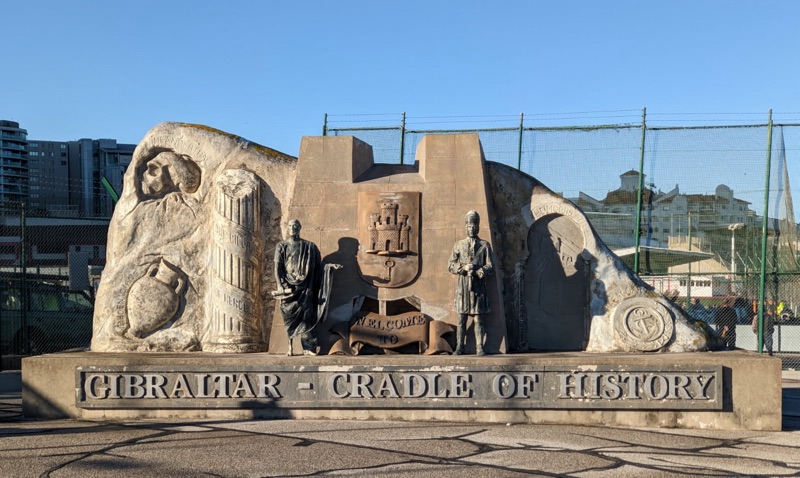
The other unique thing about this place is it has been a British possession since 1713 despite many failed attempts by Spain to retake it. Spain’s many failures can be directly attributed to the great efforts Britain made to continue holding it.
To enter Gibraltar, you only need your passport to walk across its border with Spain.
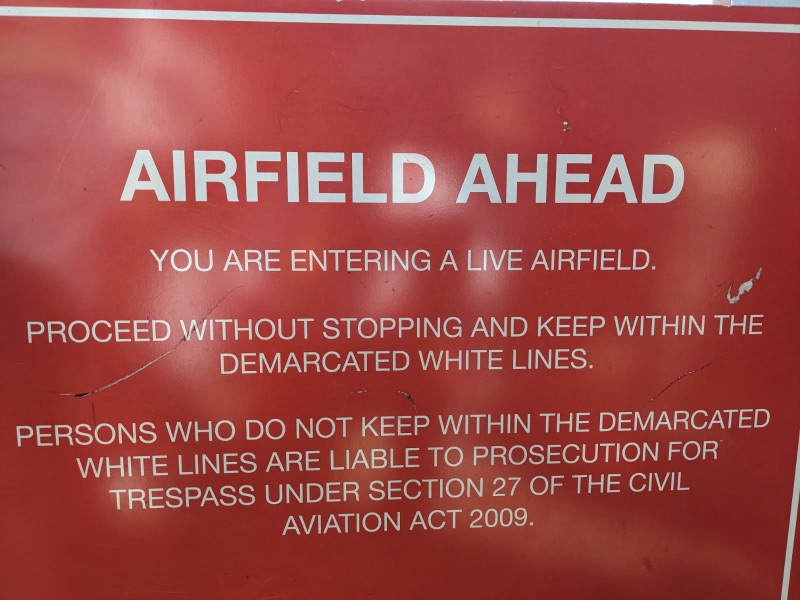
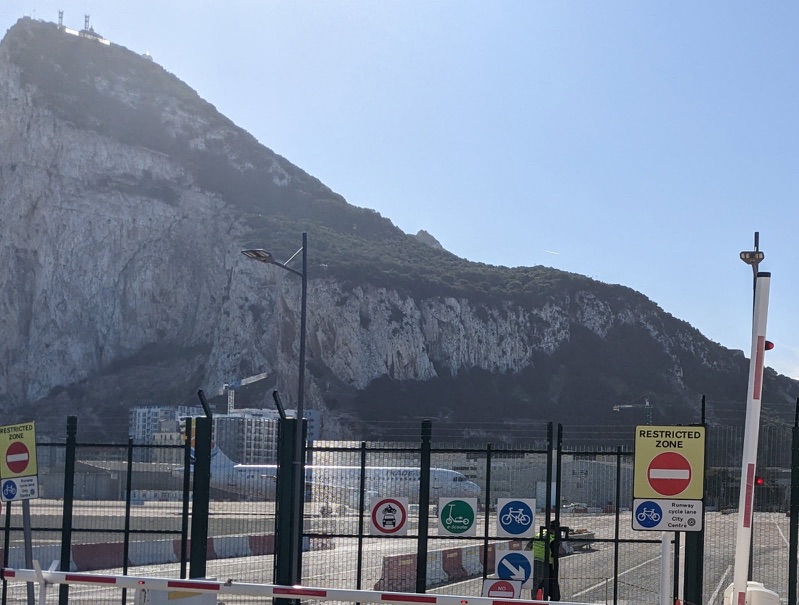
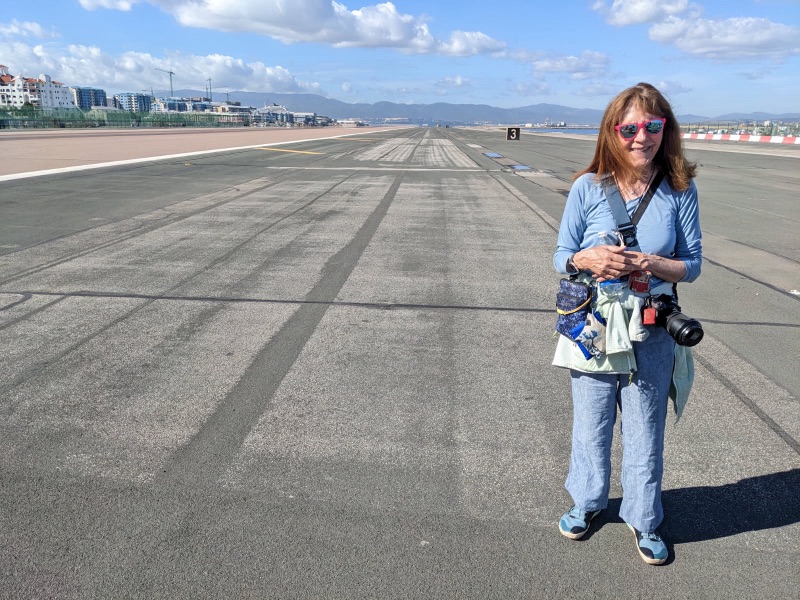
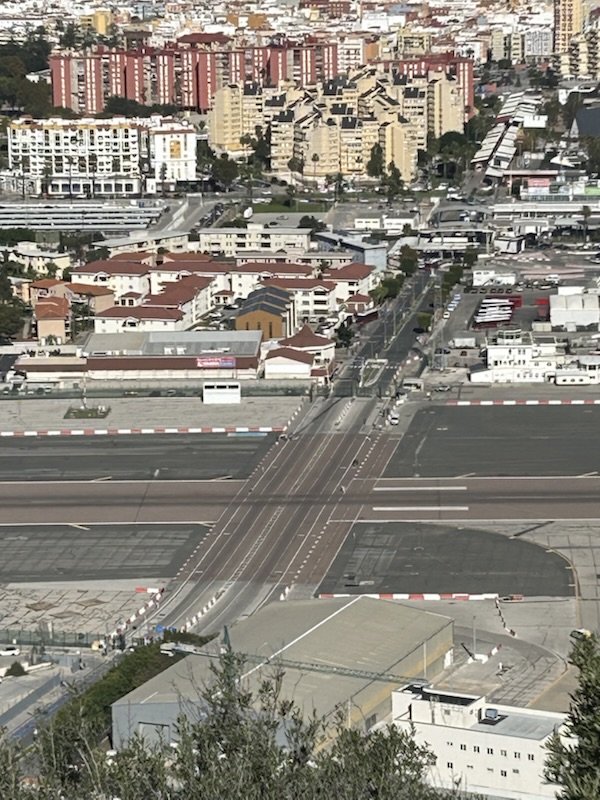
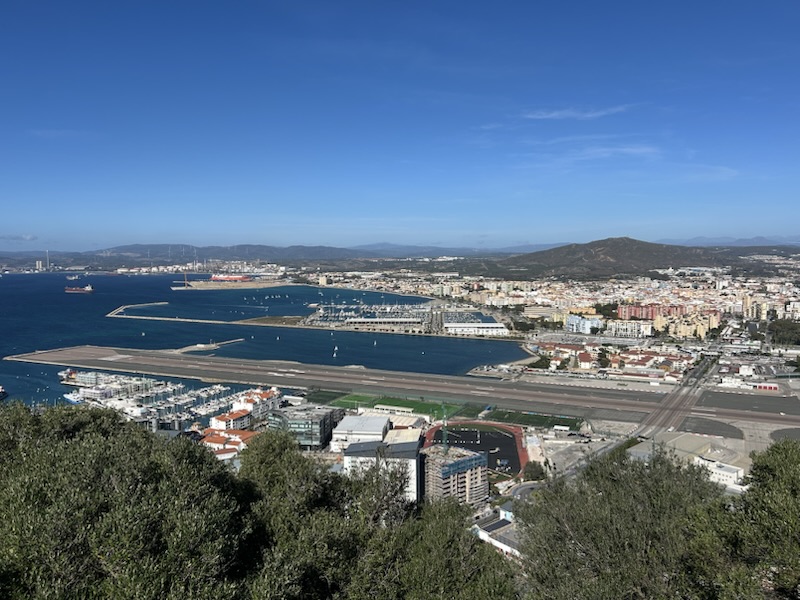
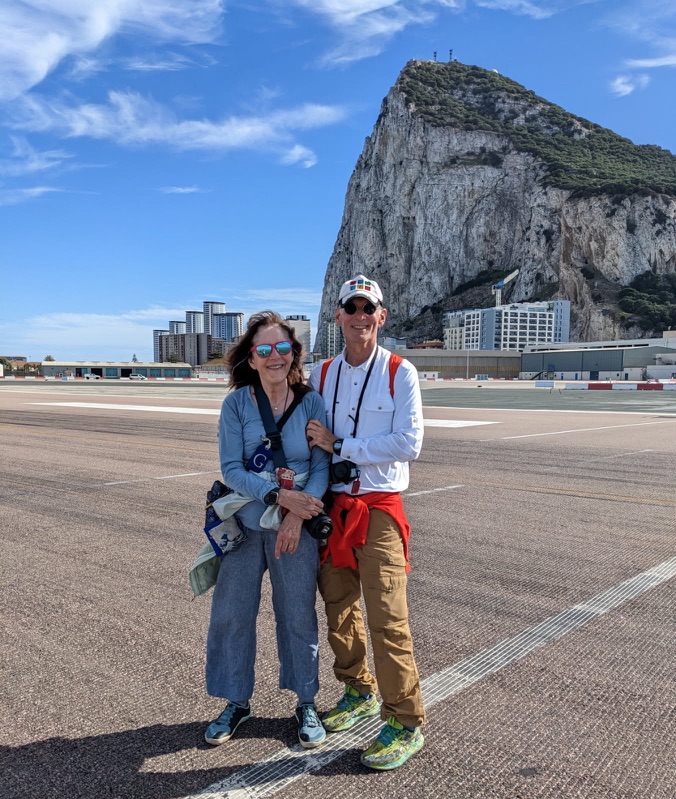
In all my travels, this is the first & only place I’ve ever had to cross an active airport runway to enter a country.
Before crossing the runway to get into town, we had to wait about 20 minutes for 2 comercial jets to take off. In the middle of the runwayView from above on The Rock showing passport control & the driveway/walkway across the tarmac
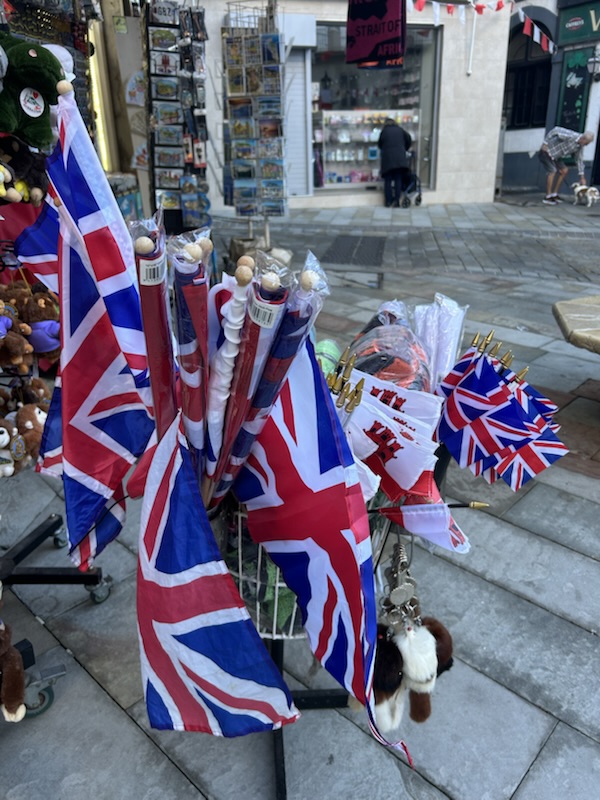
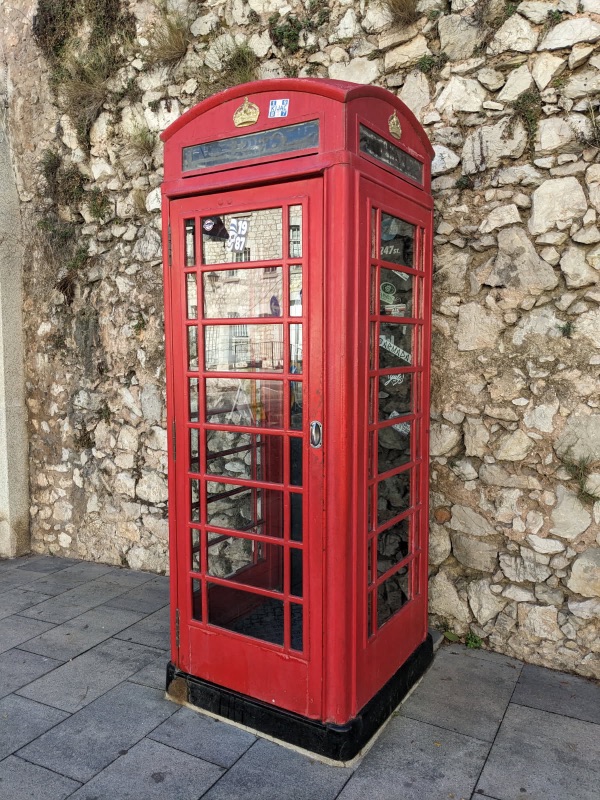
As soon as you cross the border, you realize you are on land that belongs to Britain.
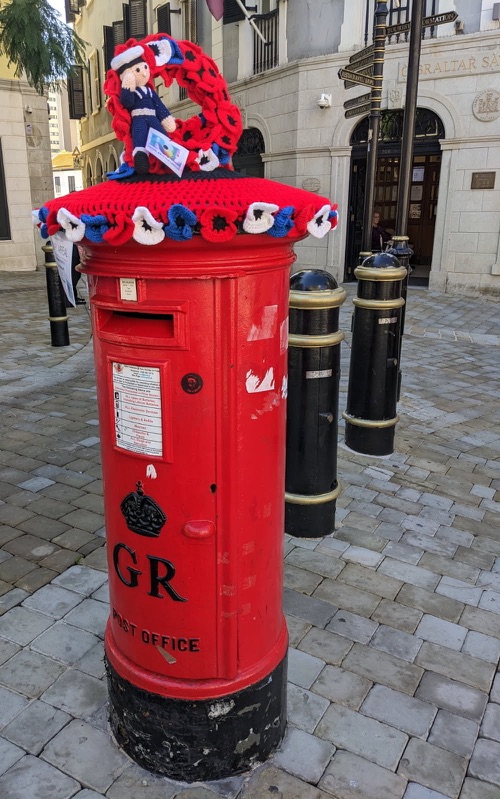
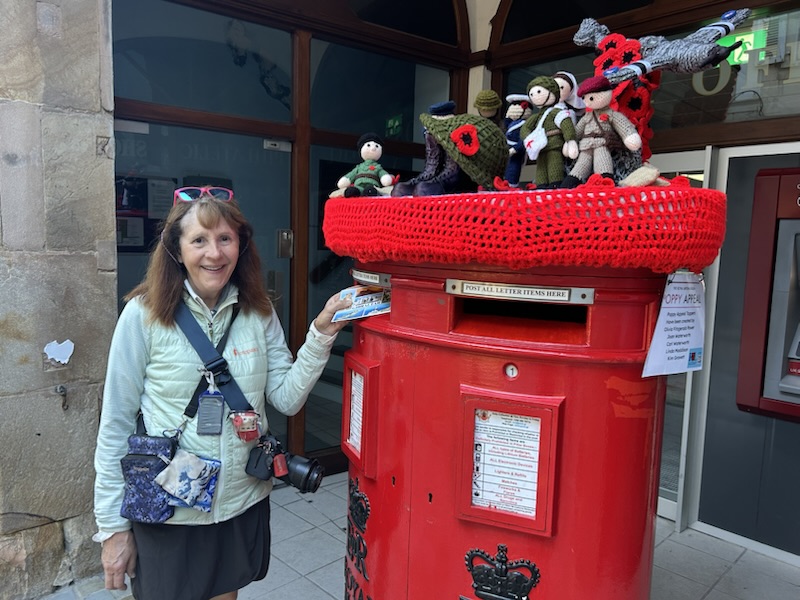
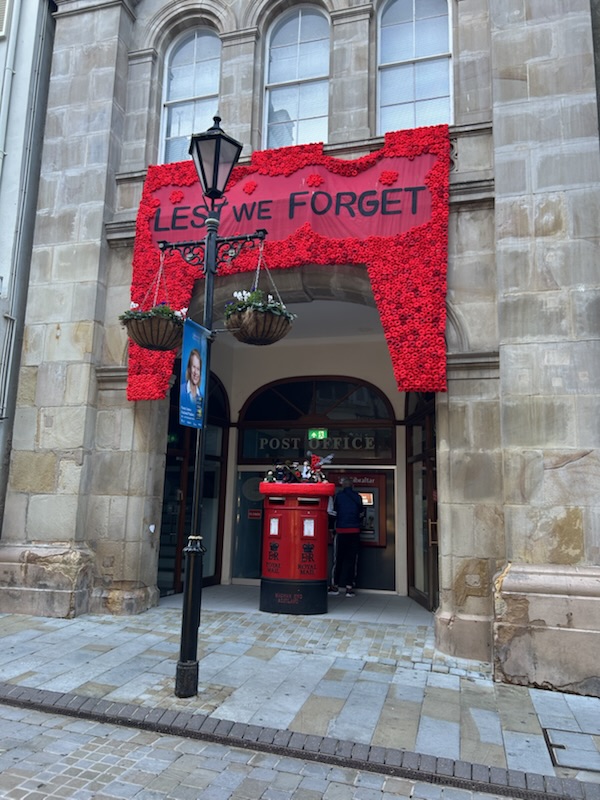
British getting ready for 11 November which call Remembrance Day to commemorate WWI ending (In America, it’s Veterans Day)
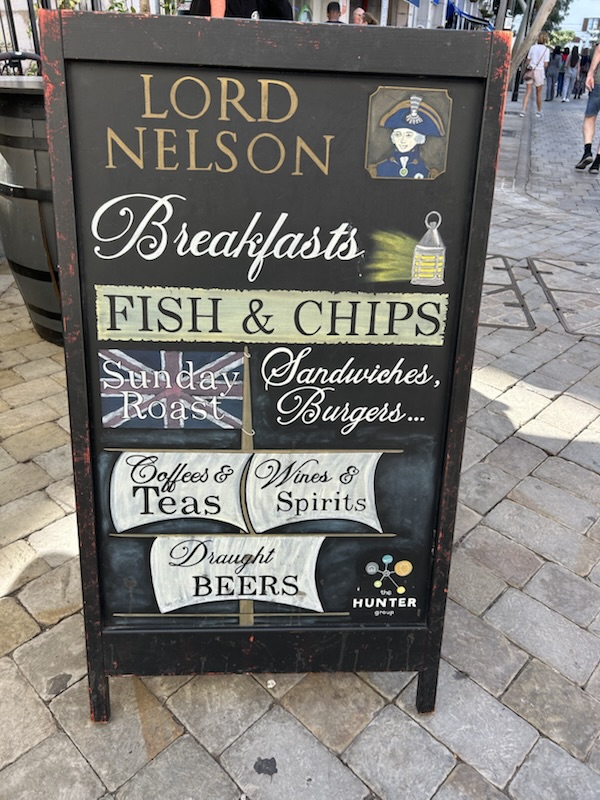
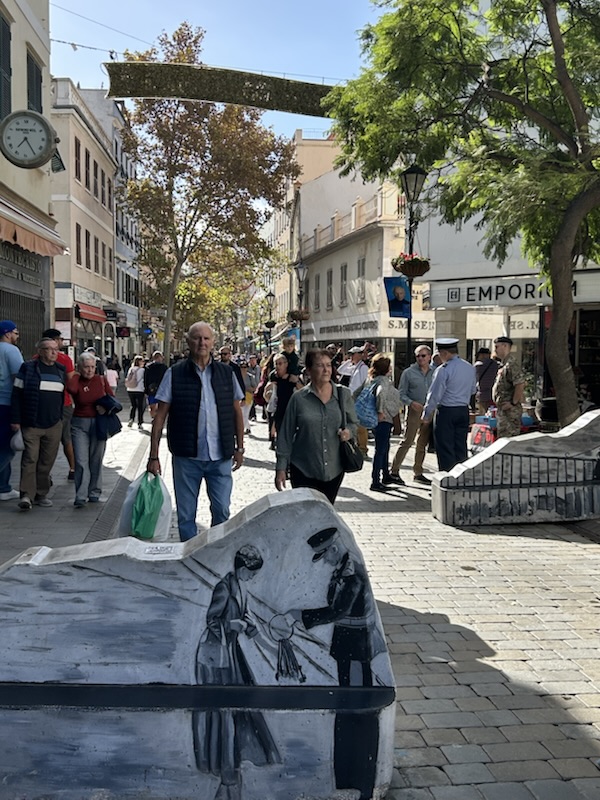
Gibraltar has one long shopping street where most shops are run by Spanish workers; but, English is the spoken language. You can pay in Euros, but you get change in British Pounds.
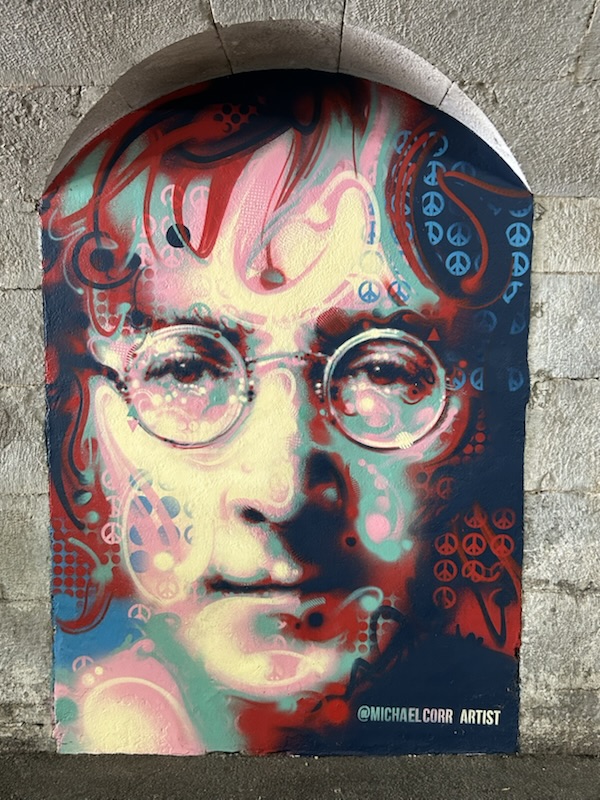
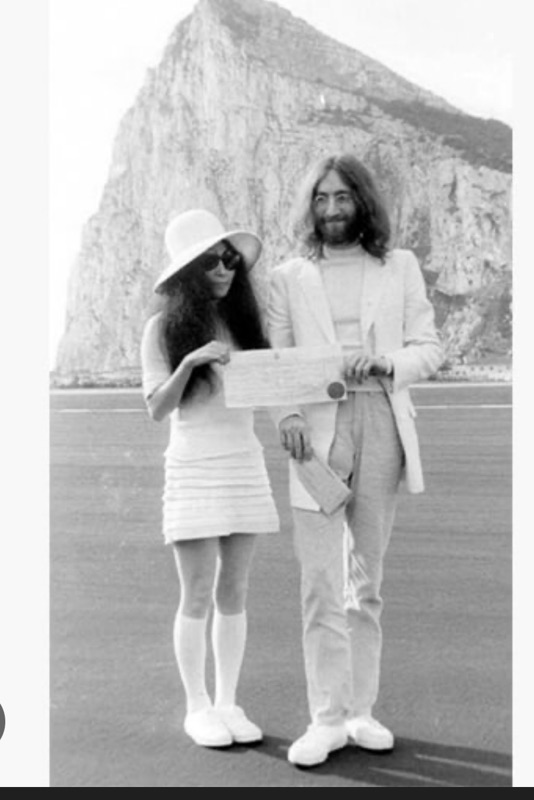
Interesting fact, John Lennon & Yoko Ono got married in Gibraltar on 20 March 1969 which is mentioned in the Beatles song “The Ballad of John & Yoko”- “Peter Brown called to say, “You can make it okay”, you can get married in Gibraltar near Spain…”
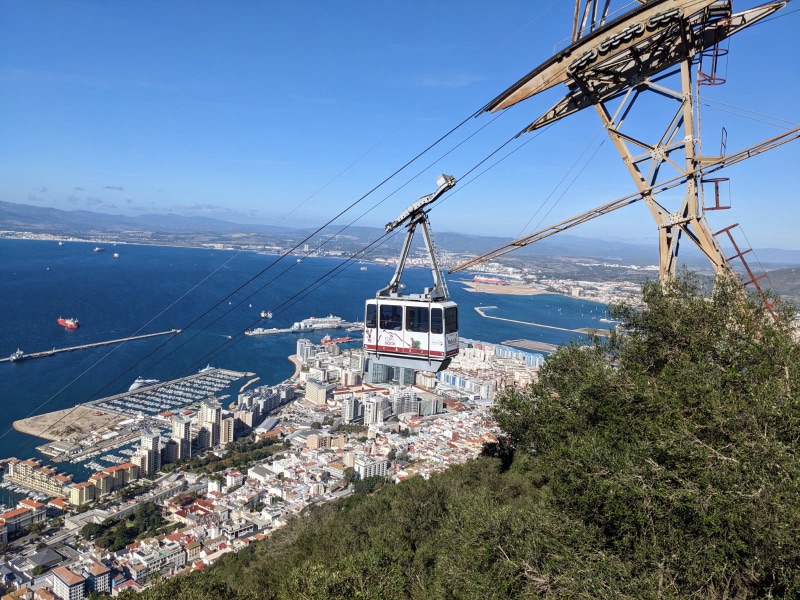
Many tourists take the cable car to the “Top of the Rock” like we did. Once there, you can easily see all the reclaimed land on the Western side used to accommodate most of Gibraltar’s residents which numbers around 38,000.
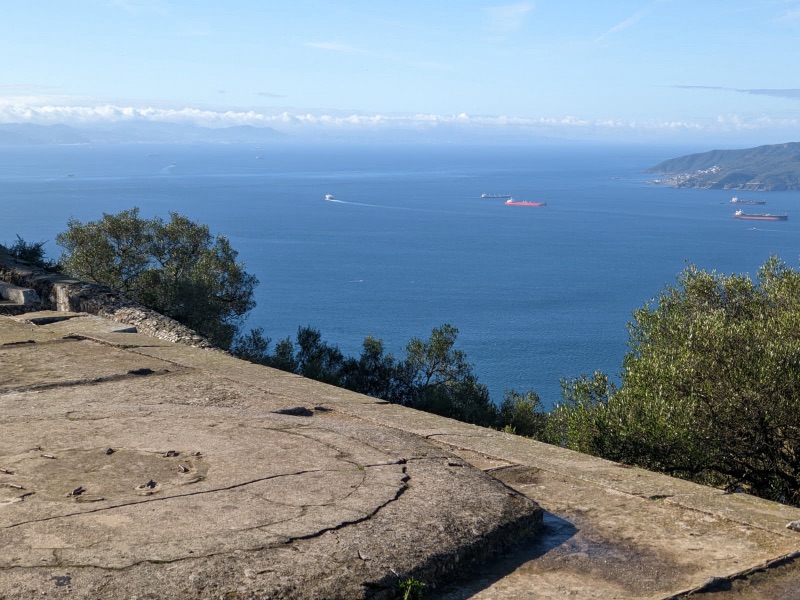
The views from the top are very nice. You can look out over the Mediterranean Sea & see Morocco in Africa as well as get a view all along the Spanish coastline & down to lower Gibraltar.
Africa to the south África & the Straits of Gibraltar in the distance
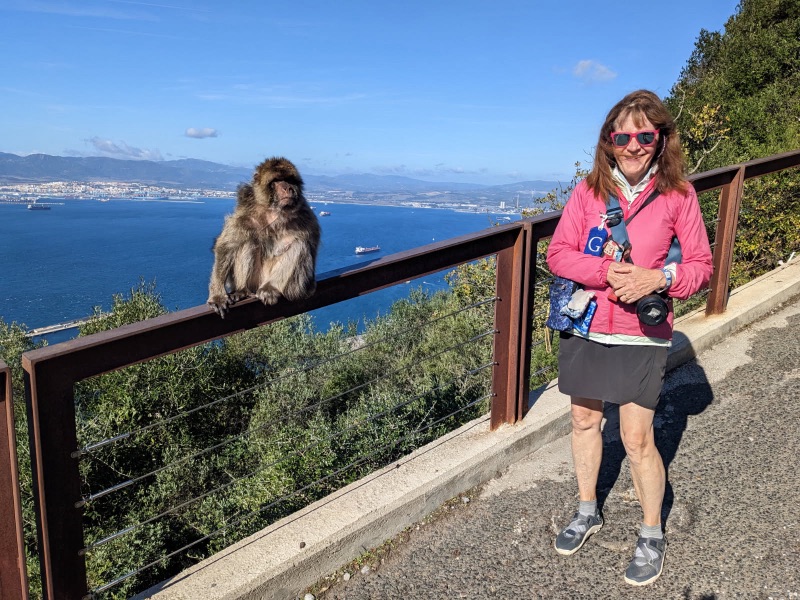
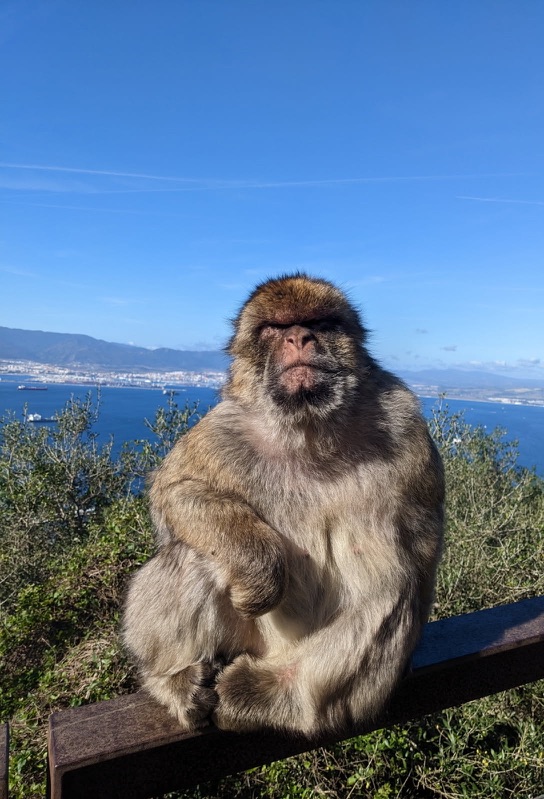
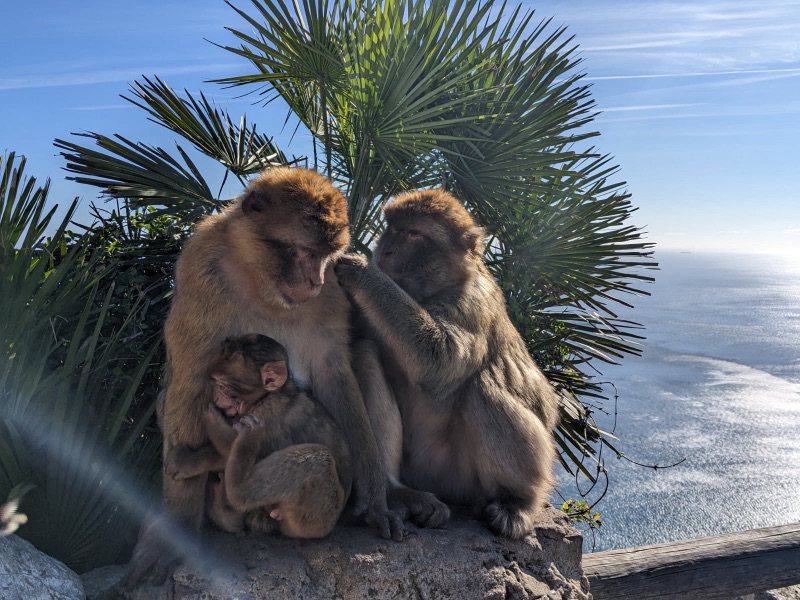
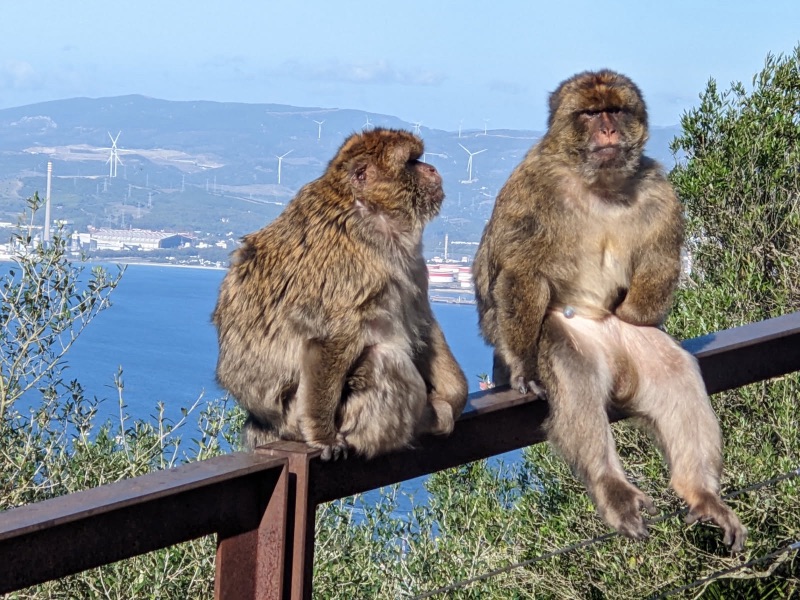
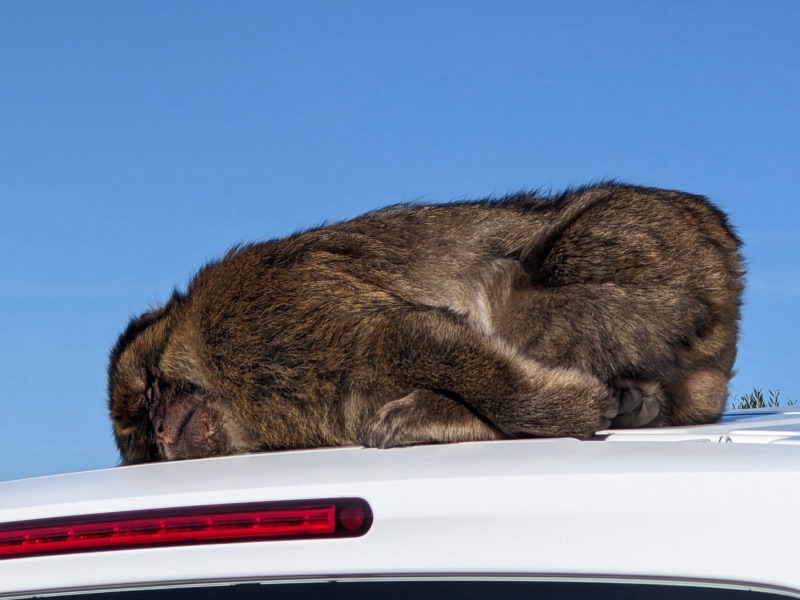
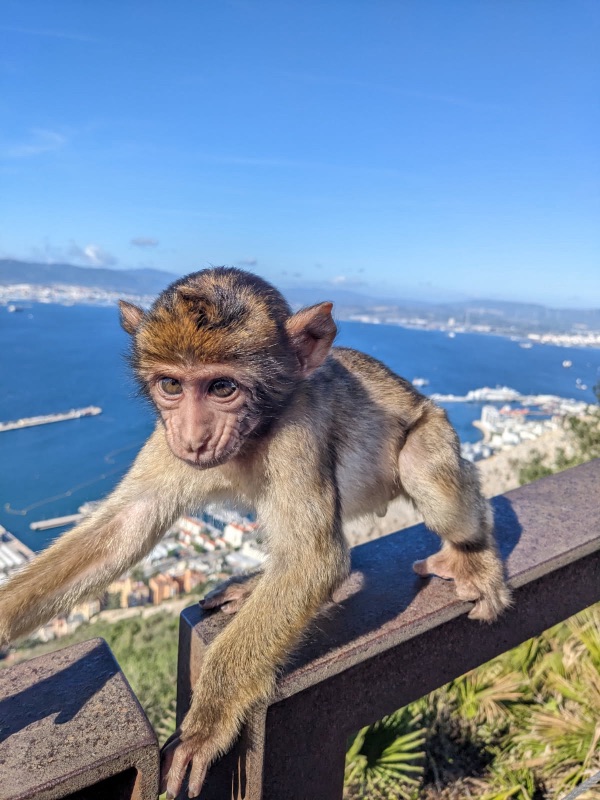
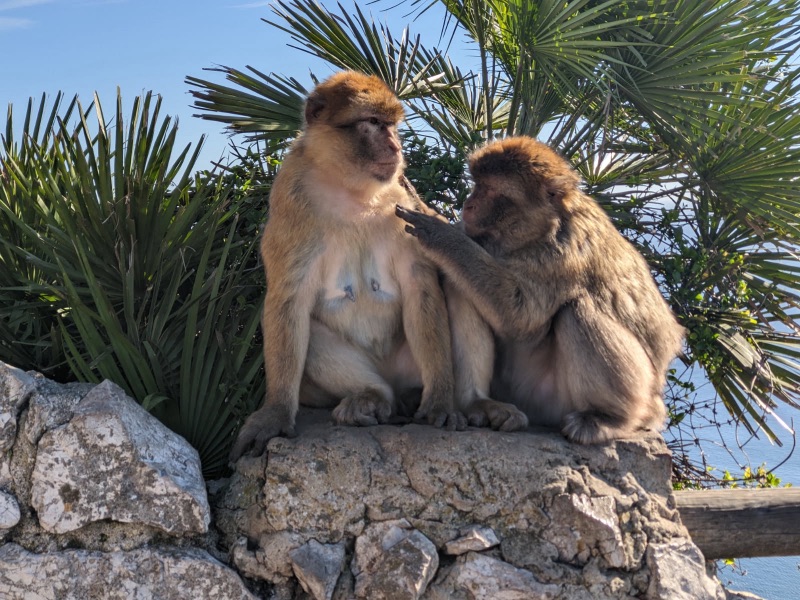
A second interesting fact about Gibraltar is that it is the only place in Europe where wild monkeys live.
Centuries ago, the Moors brought Barbary Macaques with them to Spain from Algiers & Morocco.
It is believed there are now 240 ea. Barbary Macaques on Gibraltar.
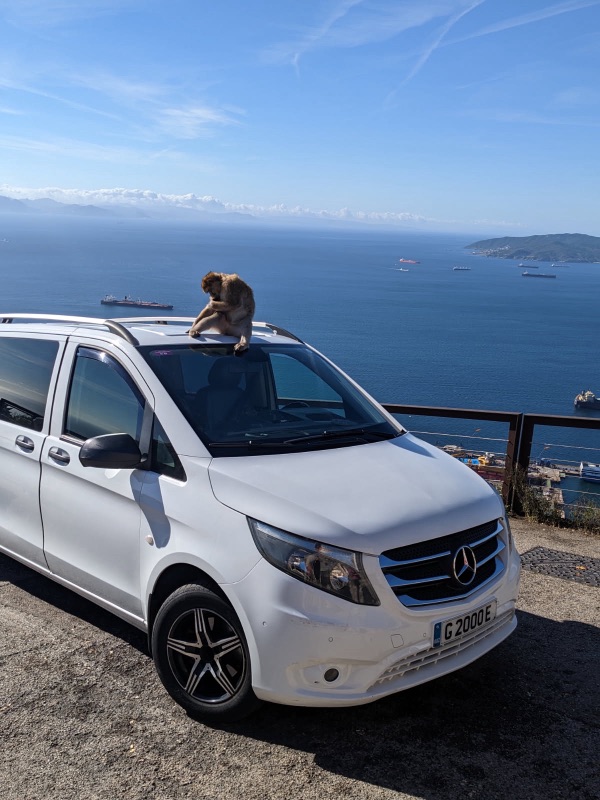
These monkeys are very bold & will jump on your back looking for food in your backpack. I made sure to keep my distance; but, they were fun to watch.
The British government ensures the monkeys are well fed & given good care. This maintenance may only be due to the local superstition that goes “If the apes leave the Rock, then the British will too”. During WWII, Winston Churchill did not want to risk losing strategic Gibraltar, so when the monkey population started dwindling, he personally ordered British troops to North Africa to bring back more monkeys to the Rock.
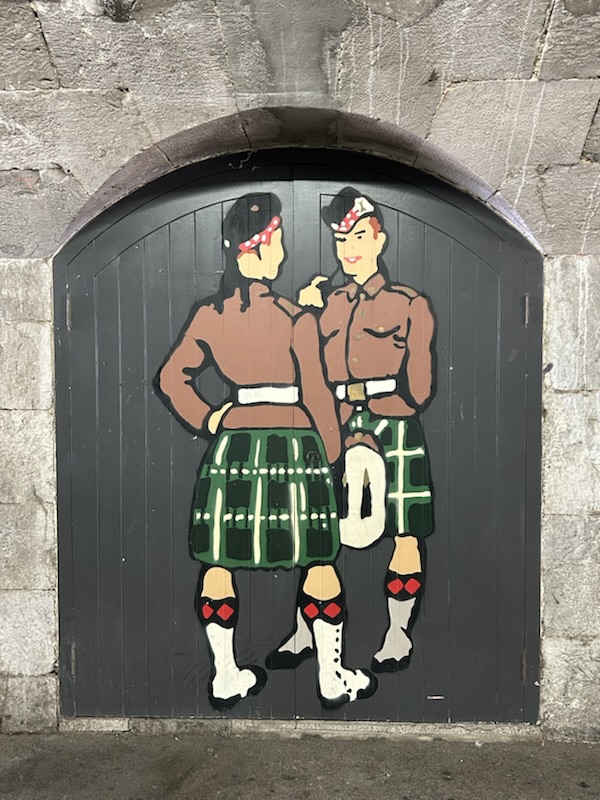
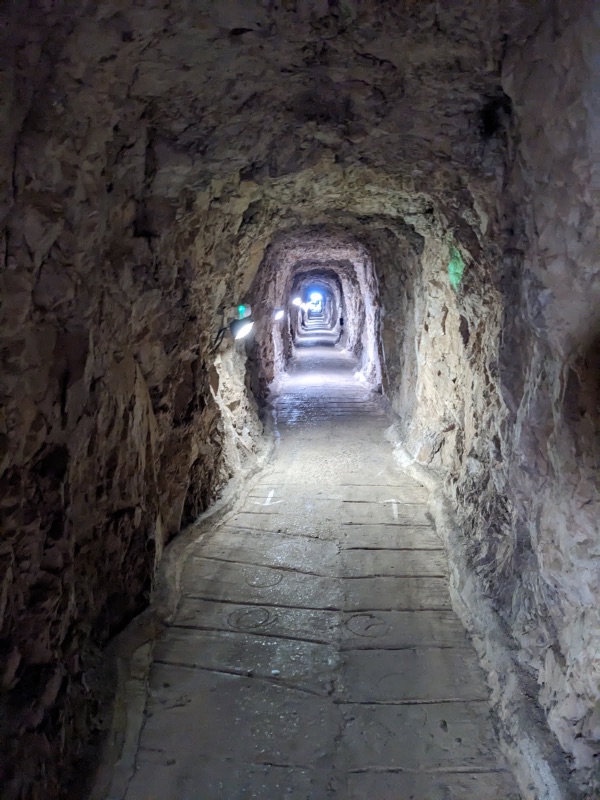
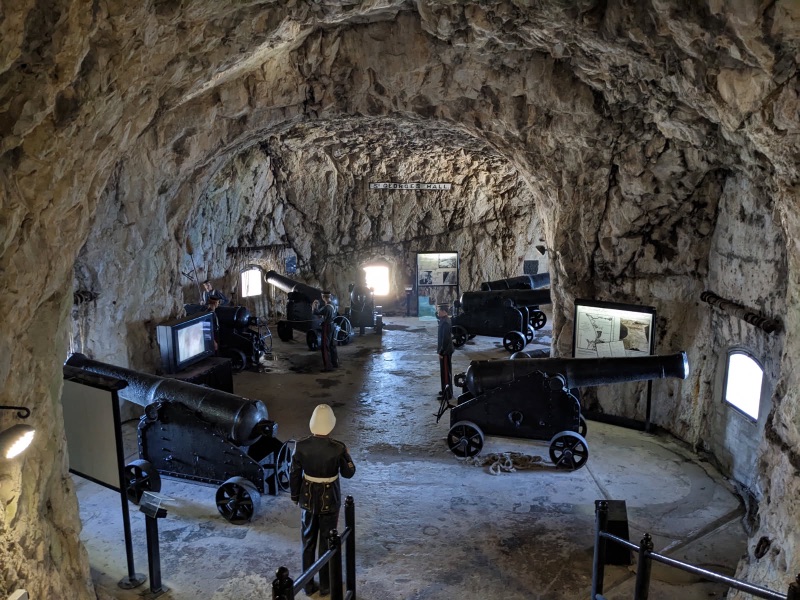
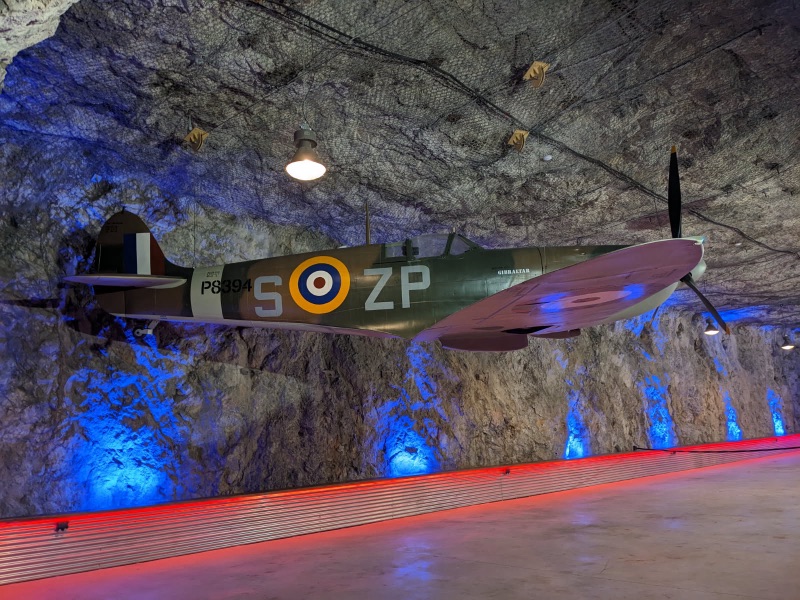
Another attraction are the tunnels built during the Great Siege of 1779-83 & even more dug during during WWII. There are over 34 miles of tunnels inside the Rock.
Supermarine Spitfire: Used for defending Malta & assembled in Gibraltar for WEIi Operation Torch (Allied invasion in North Africa)
It was fun seeing Gibraltar & touring a place that felt like a British island in Spain.
If you get the chance, then come to Granada, Spain! Here the Spanish & Arabic worlds overlap beautifully in the Sierra Nevada mountains.
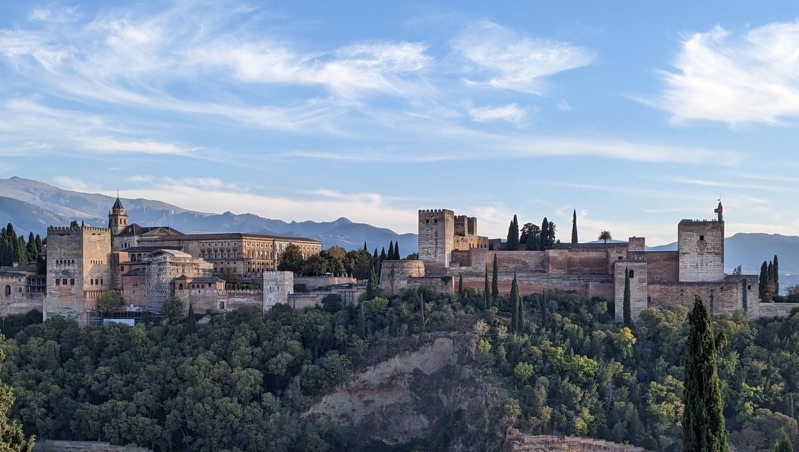
The highlight of any visit to Granada is visiting the Alhambra that towers over the small city.
The Alhambra was initially only a fortress known as an Alcazaba (Arabic for “Citadel”); but, Muhammed I Ibn Al-Ahmar who founded the Nasrid Empire in 1238 added the royal residence. Eventually, Granada ended up being the last Muslim strong hold in Spain.
On 2 January 1492, Queen Isabella & King Ferdinand vanquished the last Muslim sultan & took control over Granada & the Alhambra. They were living in the Alhambra palace when they granted Columbus the funding for his historic voyage on which he discovered the New World.
The palace is a blend of Christian & Muslim influences. The architecture & gardens reminded us of our visits to Iran & India.
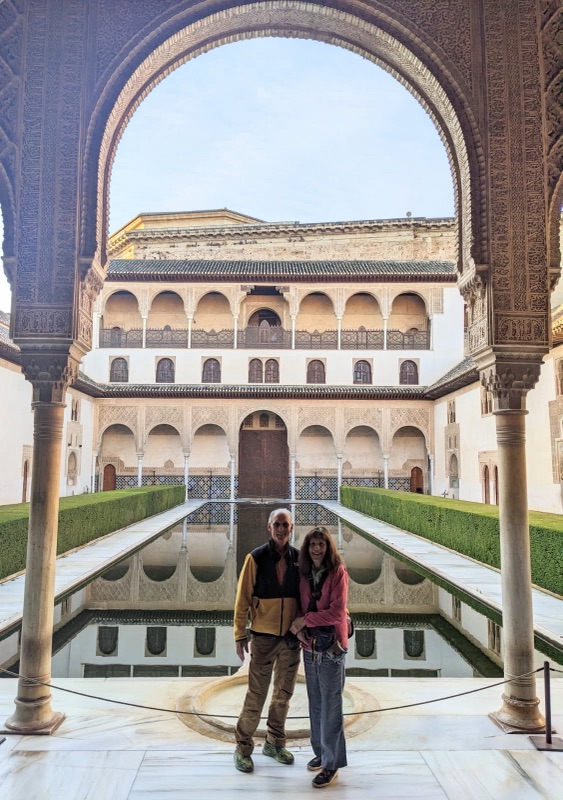
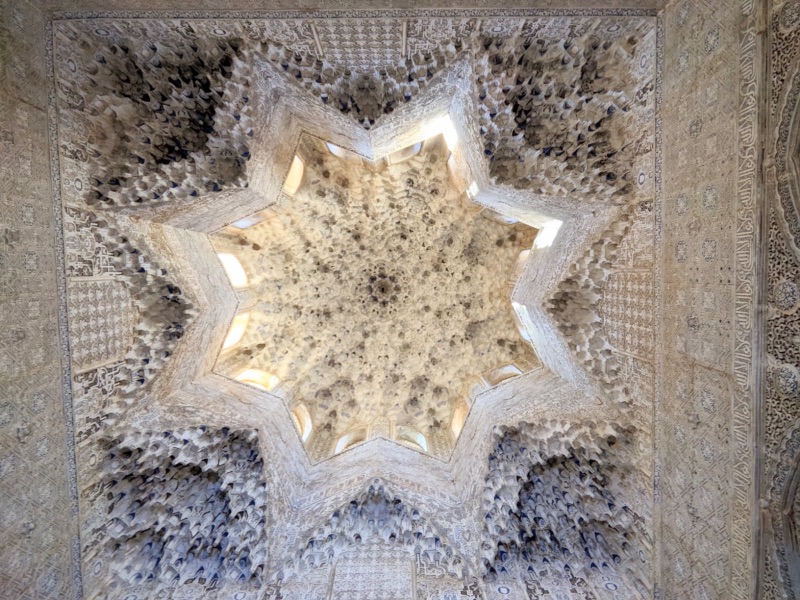
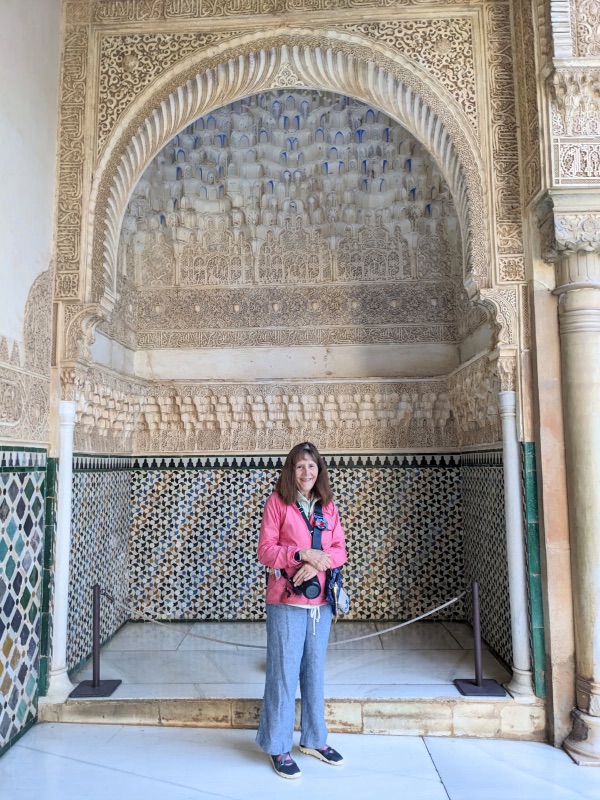
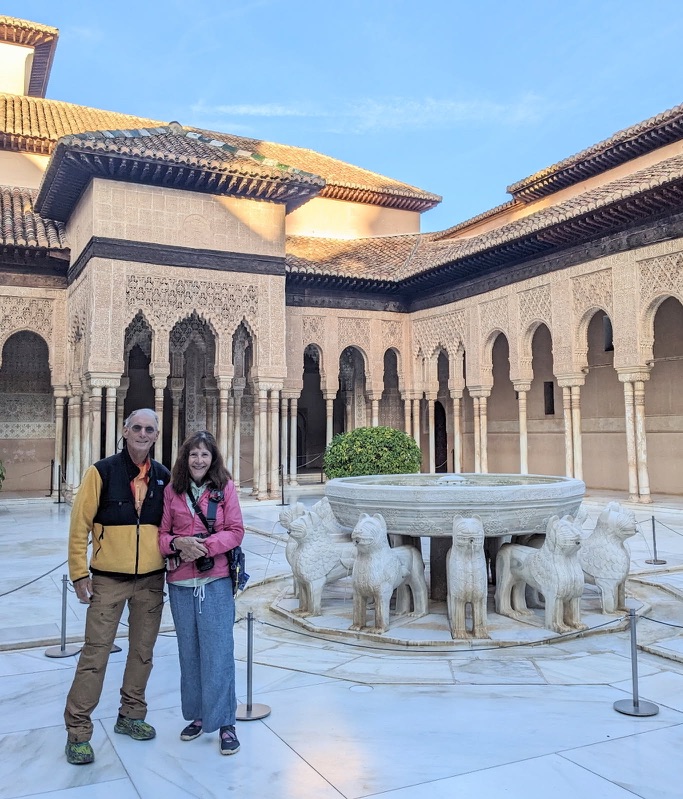
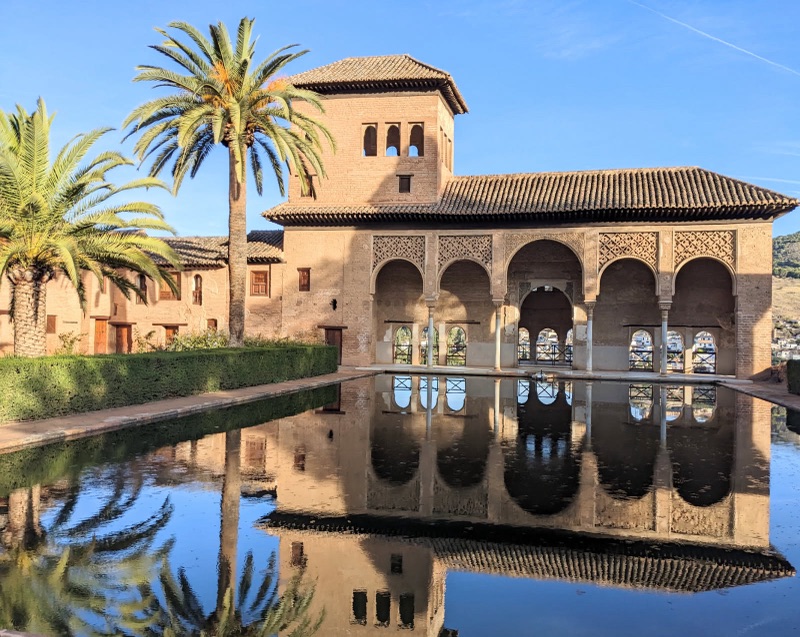
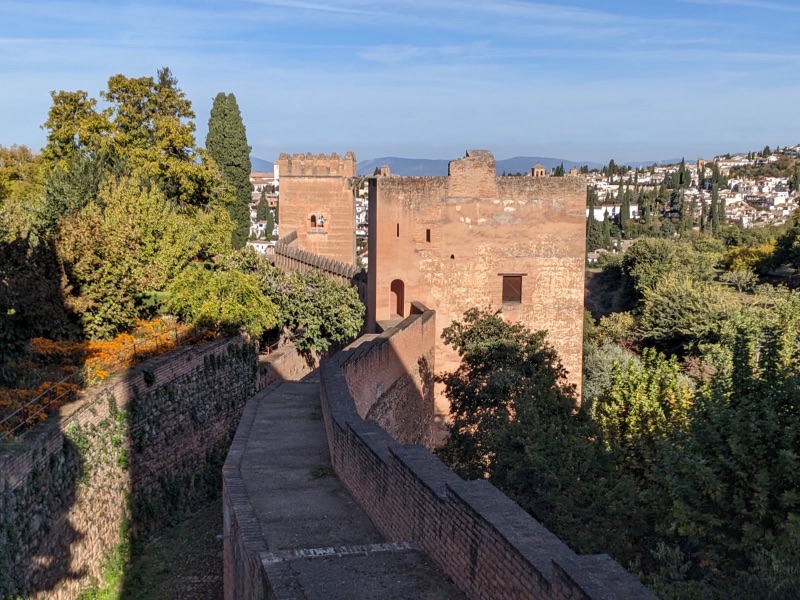
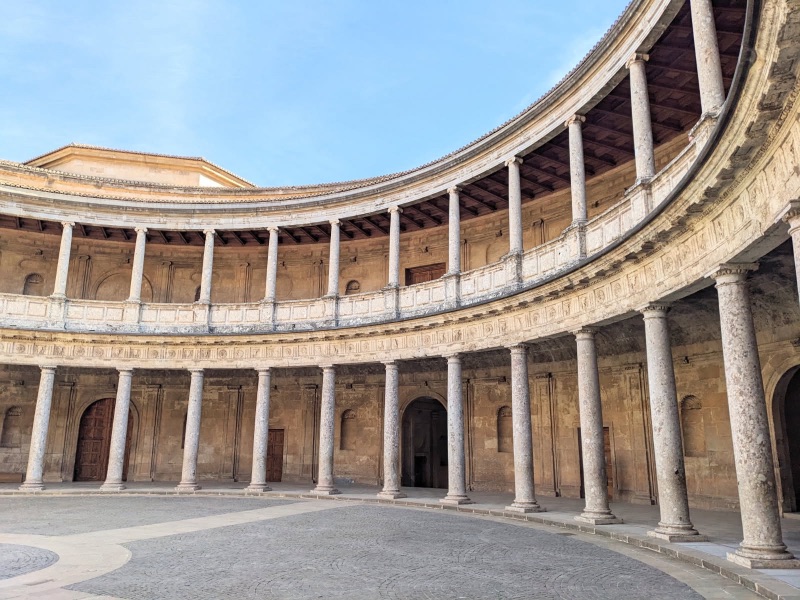
The Court of the Myrtles in the Comares PalaceCeiling in the Hall of the AbencerrajesInterior alcoveThe Palace of the Lions & its central fountain The Partial PalaceTowers & Wall in the Generalife GardenPalace of Charles V
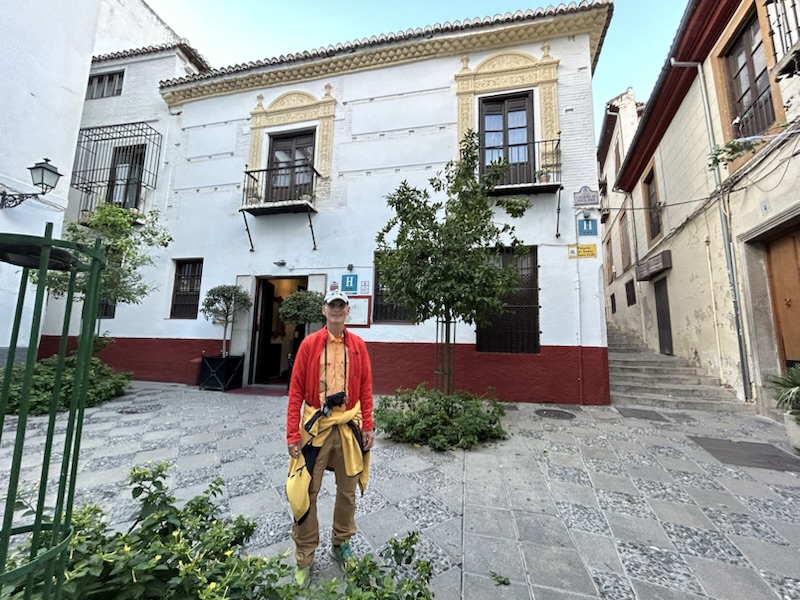
We had a lovely hotel in the old town.
Palacio de Santa Inés Hotel built in the early 1500s located in Granada’s historic Albayzin district which is a UNESCO World Heritage Site
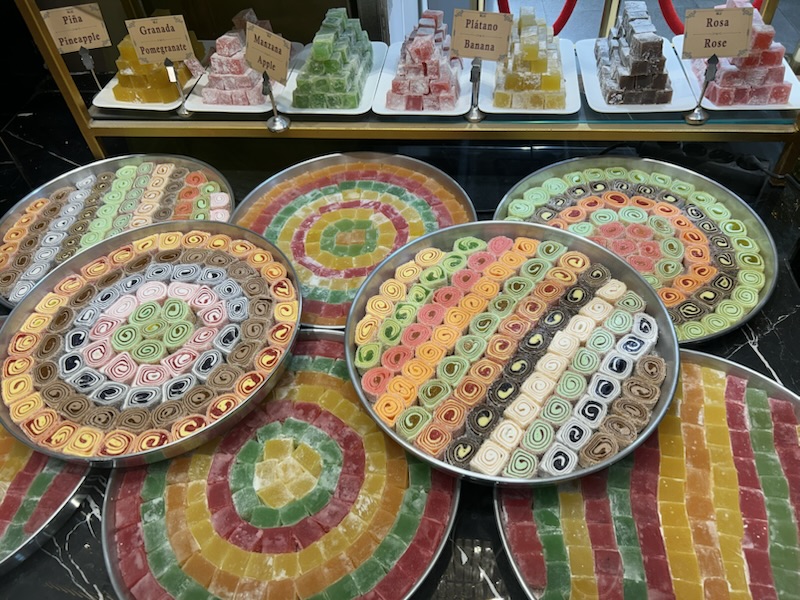
The city has a nice mixture of places to eat with Spanish & Arabic cuisine.
Shop with Arabic candy such as Turkish Delight
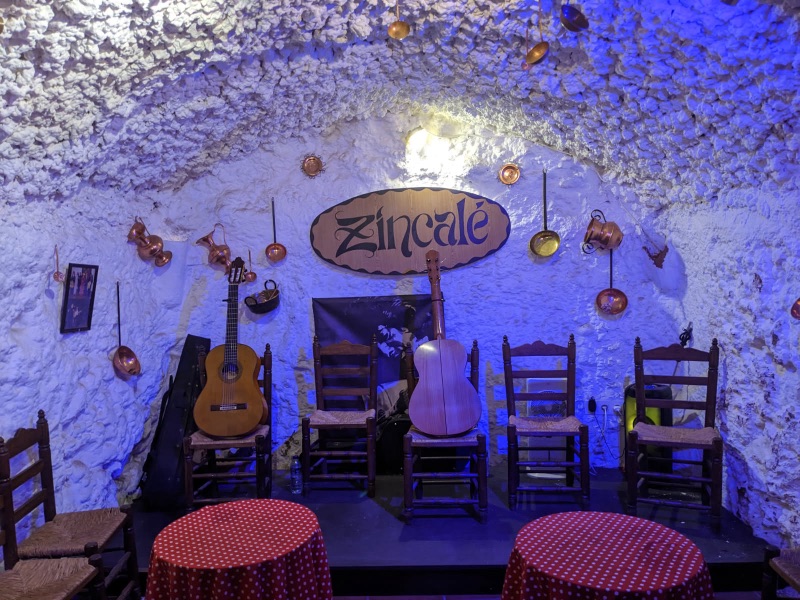
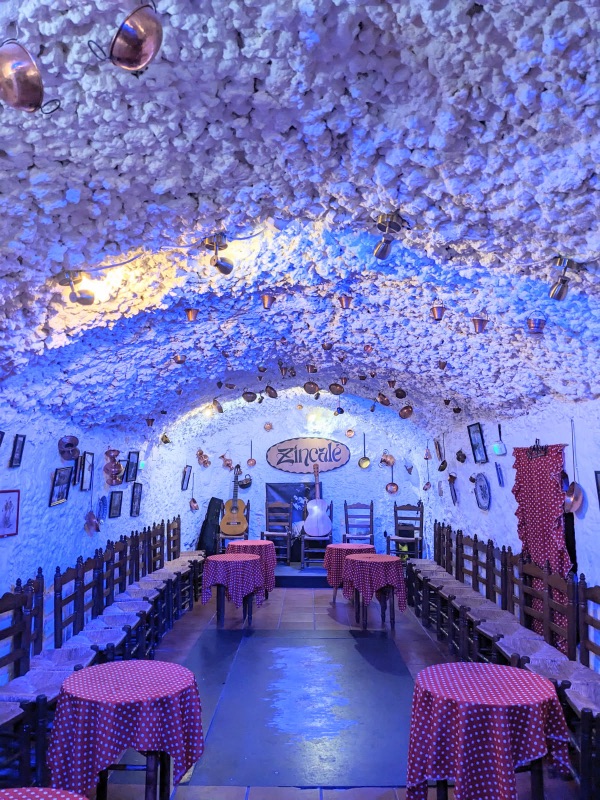
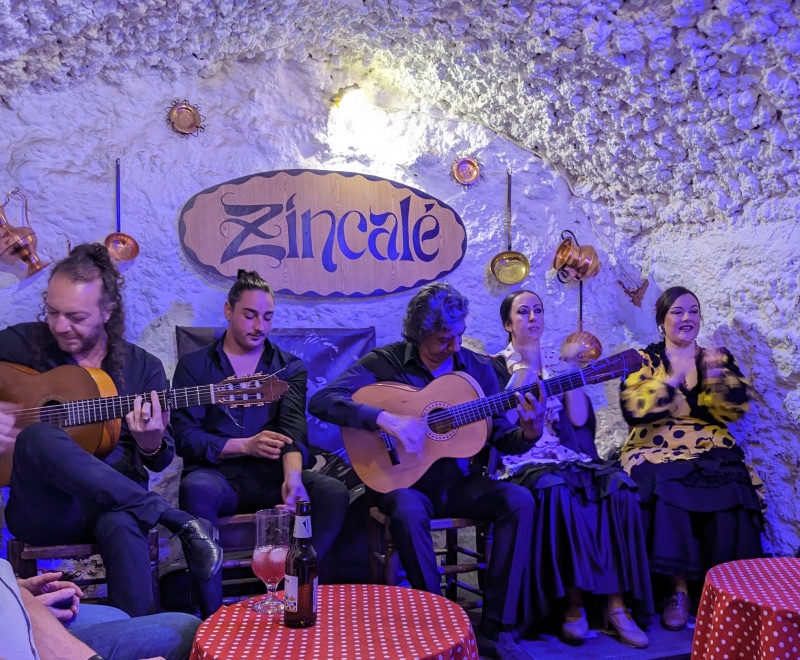
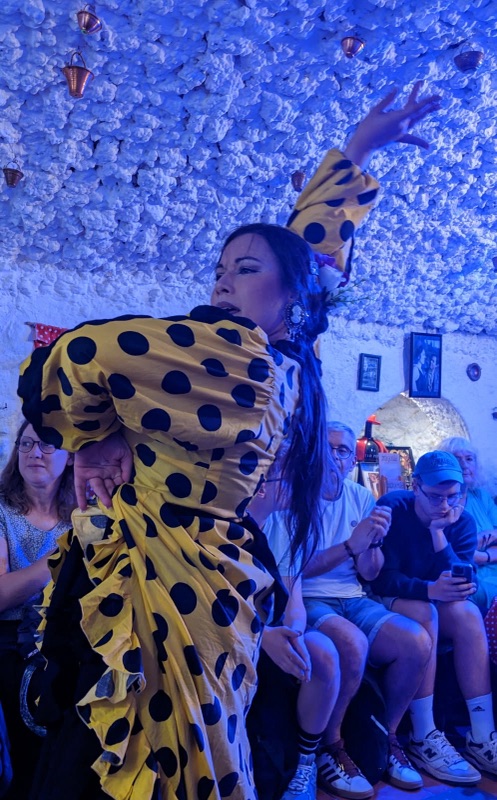
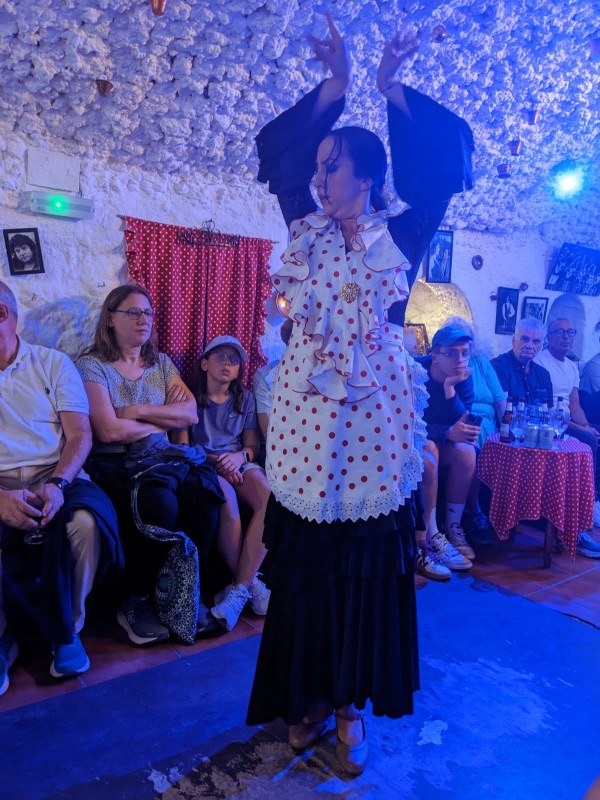
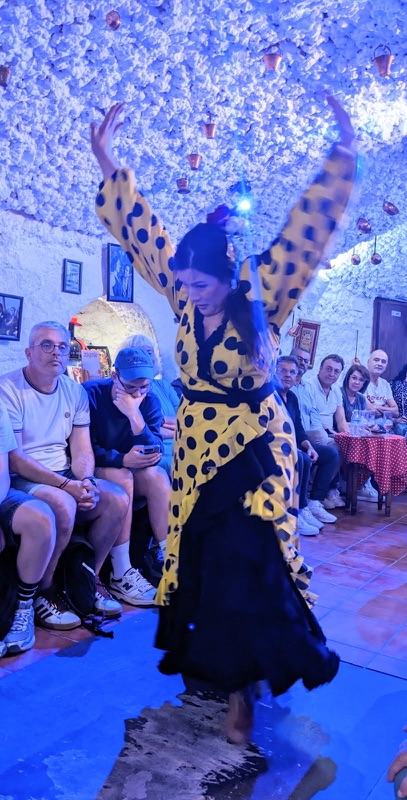
In Granada’s Sacramonte neighborhood, the Flamenco dance originated over 500 years ago.
We went to the Zincalé flamenco show which has been hosted by the Cordoba family for generations in a traditional cave home.
In this show only the women danced. The men sang & played the guitar. Their rhythmic tap dancing would have put Michael Jackson’s dancing to shame.
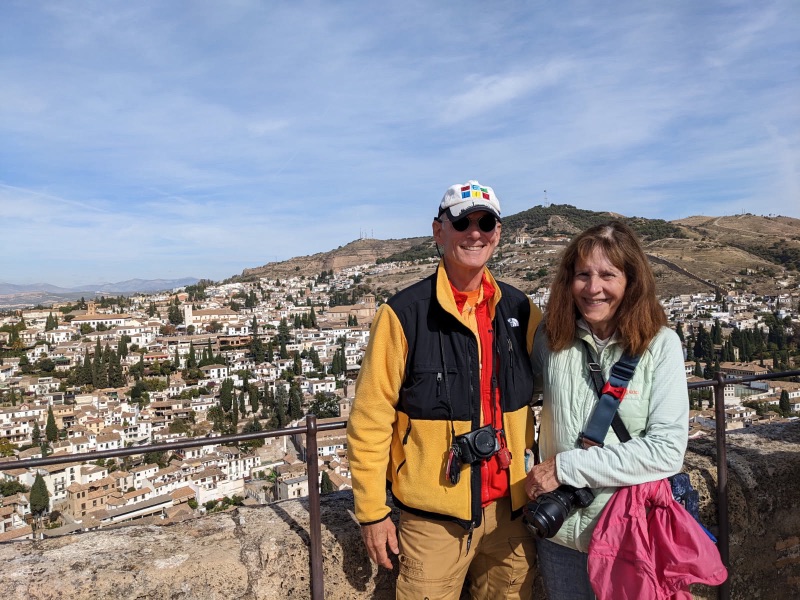
Overlooking Granada’s white washed houses from the Alcazaba fortress in the Alhambra
Nostalgia rules in Spain for Spaghetti Western & Clint Eastwood fans. Italian director Sergio Leone chose to make his movies in various locations in Spain which is why they are called “Spaghetti Westerns”.
When my husband & I were in northern Spain in 2023 walking the Camino Frances route, I commented how the terrain made me feel like I was in an old Western movie when he told me that many were made in Spain.
In fact, the iconic final scene from “The Good, the Bad, and the Ugly” movie was filmed only 40 miles south from where we walked in the Mirandilla Valley near Santo Domingo de Silos.
To refresh your memory, here is a link to the epic final showdown in the cemetery.
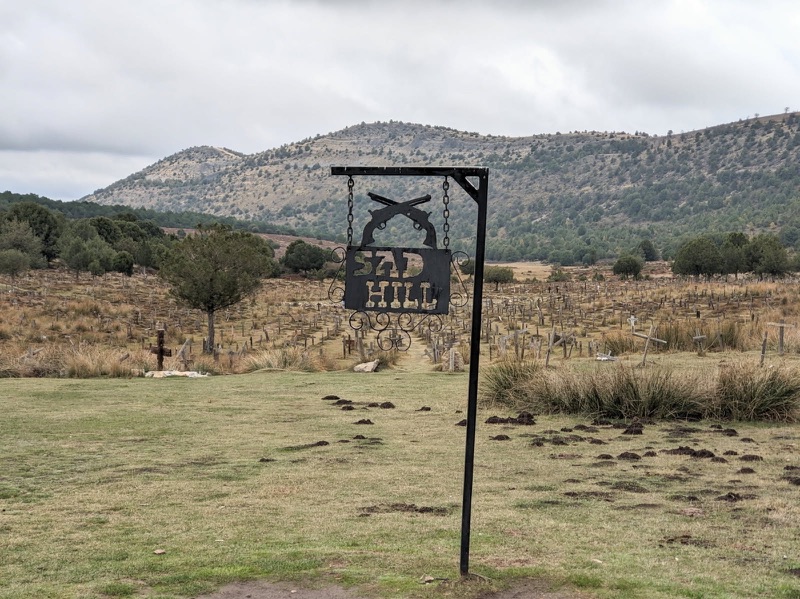
Sad Hill Cemetery is not a real graveyard – it was built entirely from scratch for “The Good, the Bad, & the Ugly” in 1966. After filming ended, it was abandoned for nearly 50 years.
Overgrown & forgotten, this iconic filming location was very nearly lost until a group of very dedicated movie fans set out to find it. They discovered the famous circular plaza buried inches below the ground.
For months, volunteers from around the world came to help with this labor of love & the iconic filming location was saved!
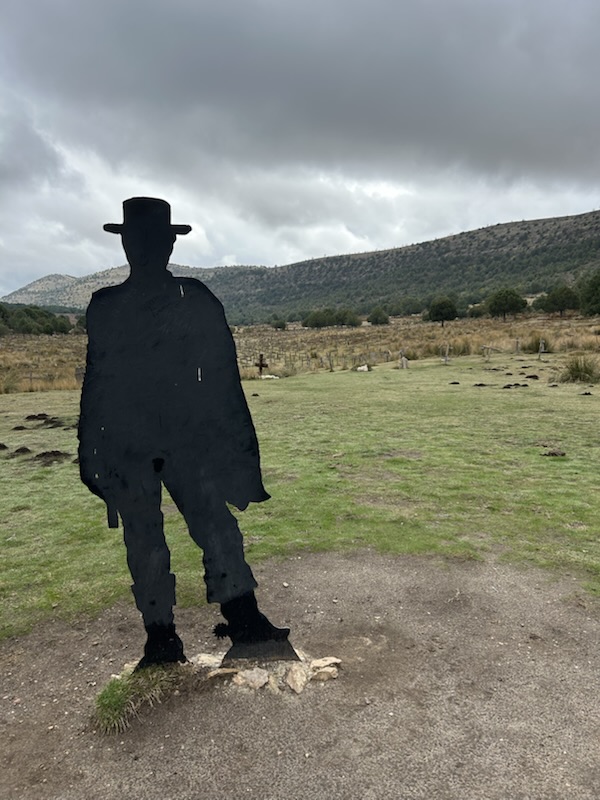
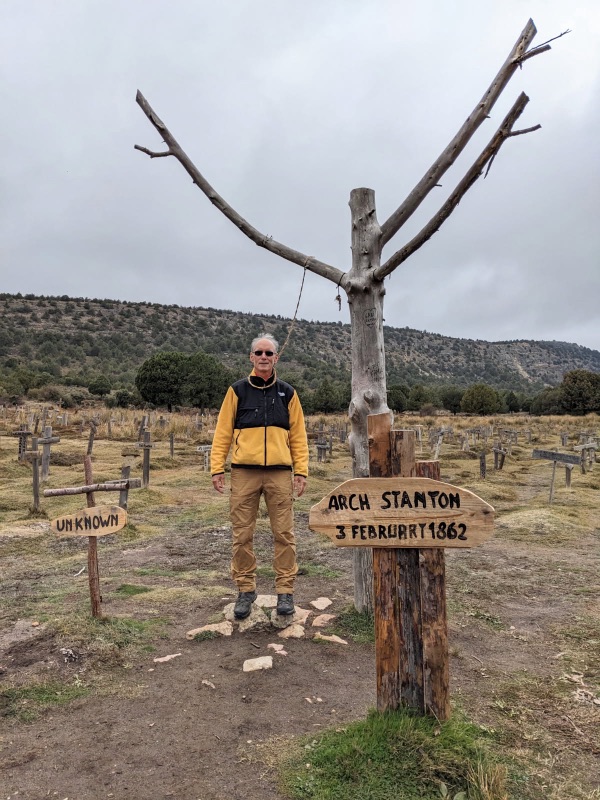
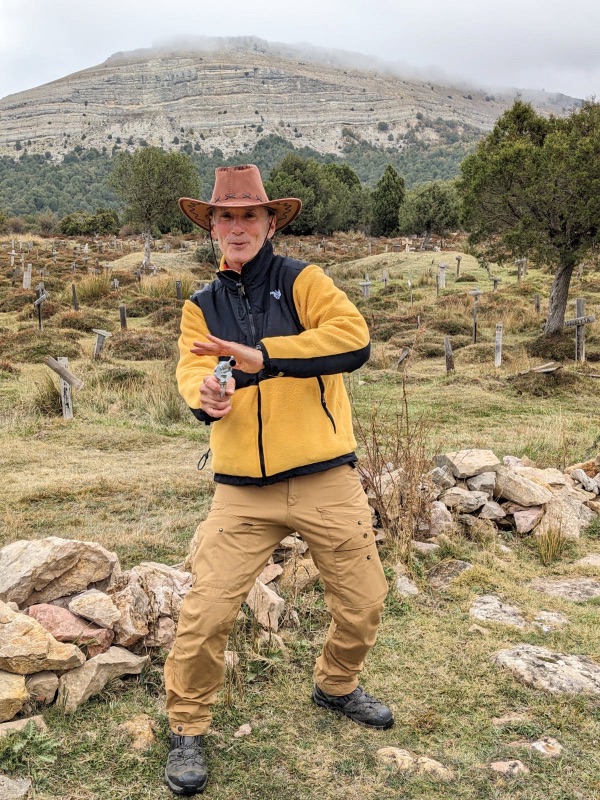
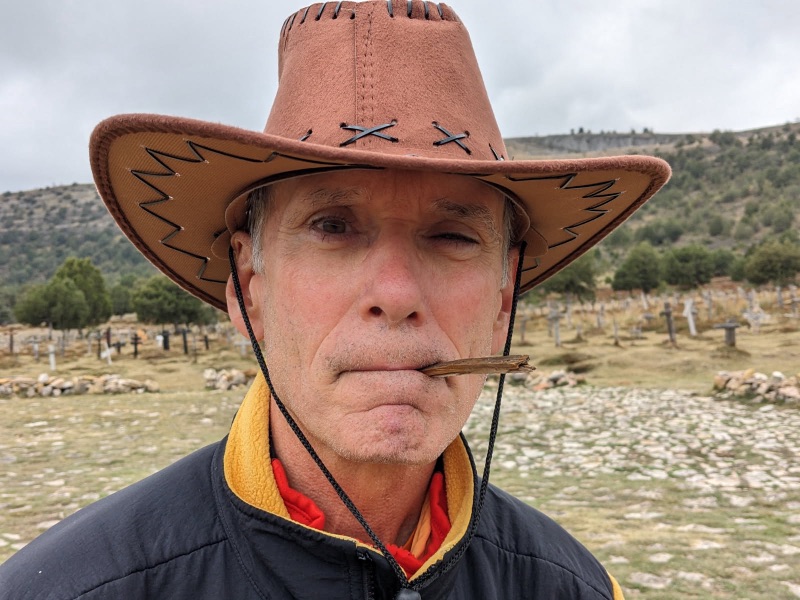
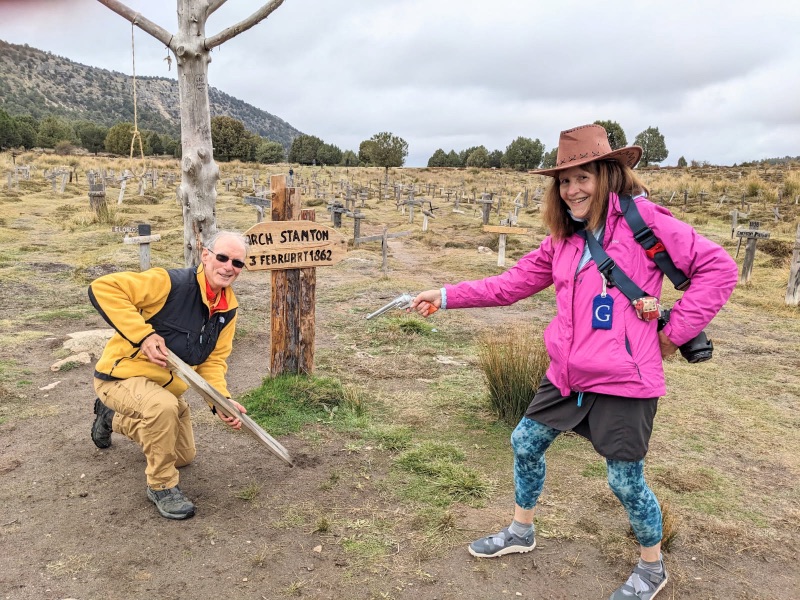
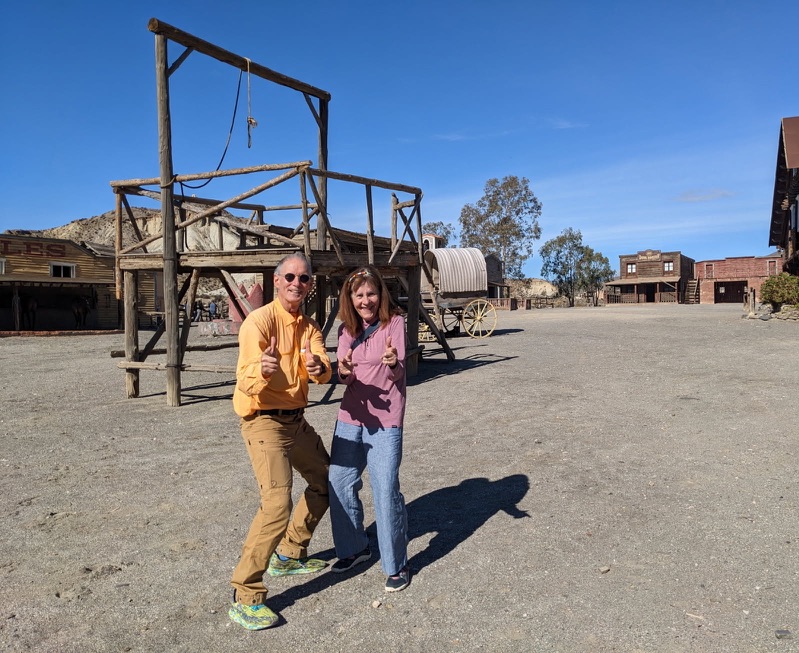
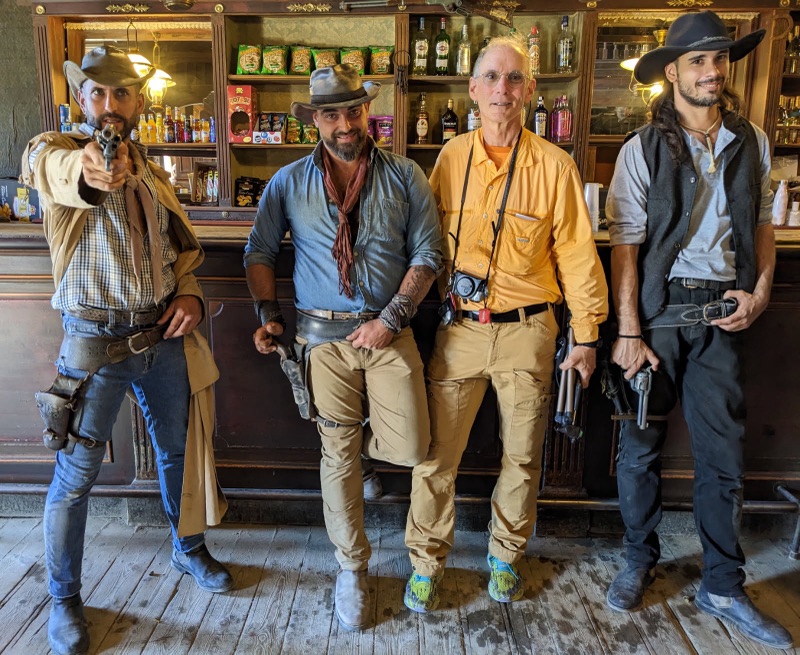
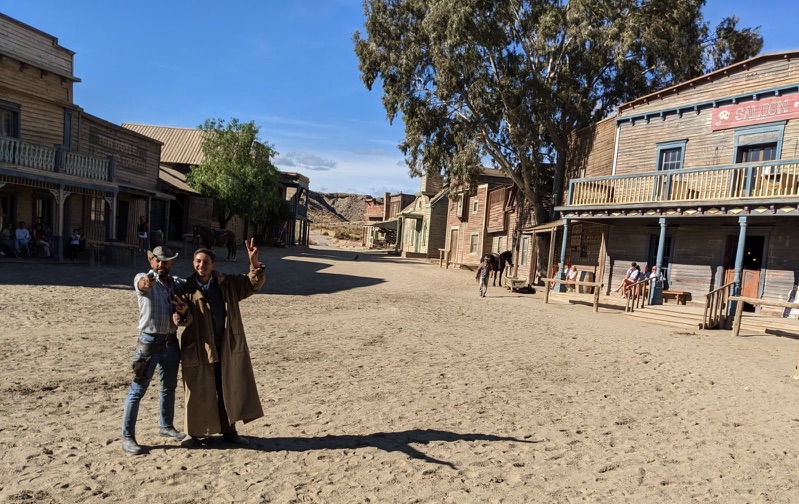
We enjoyed having fun with some borrowed props & walking around this restored movie set located south of Burgos, Spain.
$200,000 in gold is buried in the grave marked “Unknown” next to Arch Stanton“Every gun makes its own tune”“$200,000 is a lot of money. We’re gonna have to earn it.”“In this world there’s two kinds of people, my friend… those with loaded guns and those who dig. …You dig.” 😂🤣
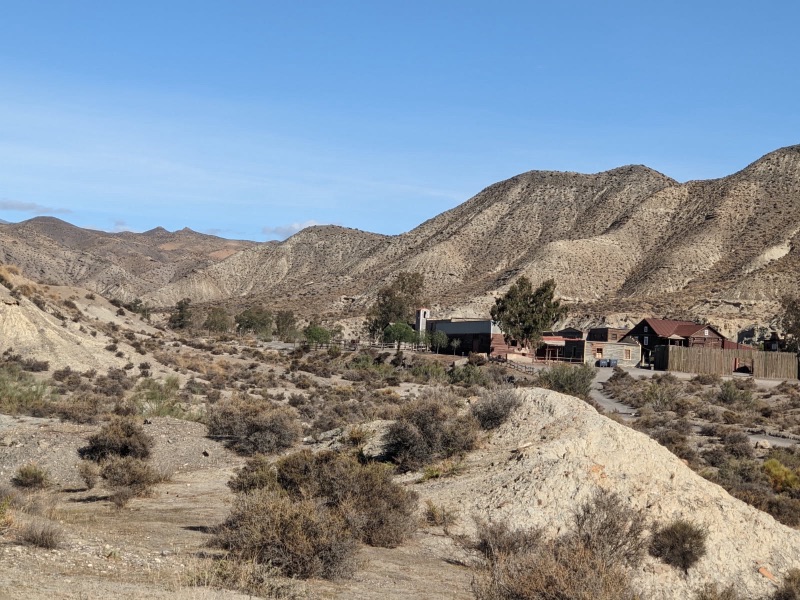
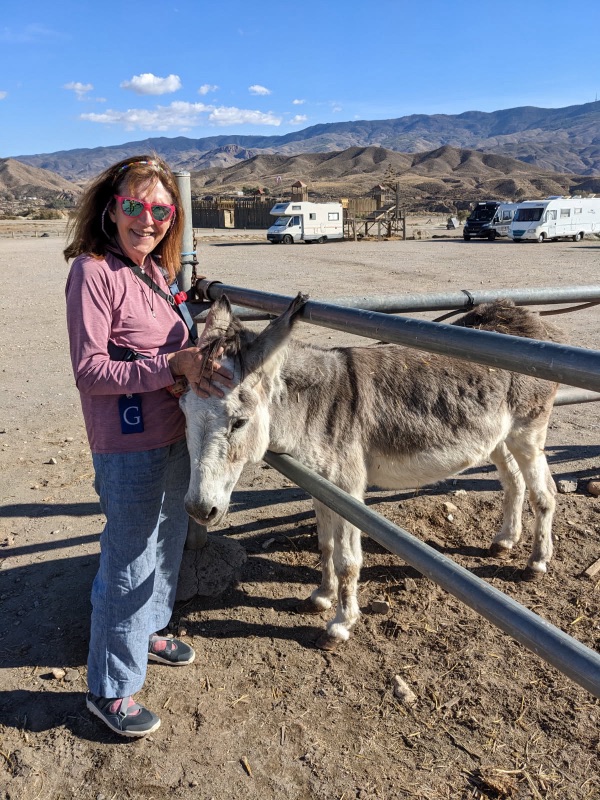
To see other iconic Spaghetti Western movie film locations, we went to the Tabernas Desert in southern Spain near Alméria. With only about 9 inches rain per year, this area looks like parts of Arizona & New Mexico.
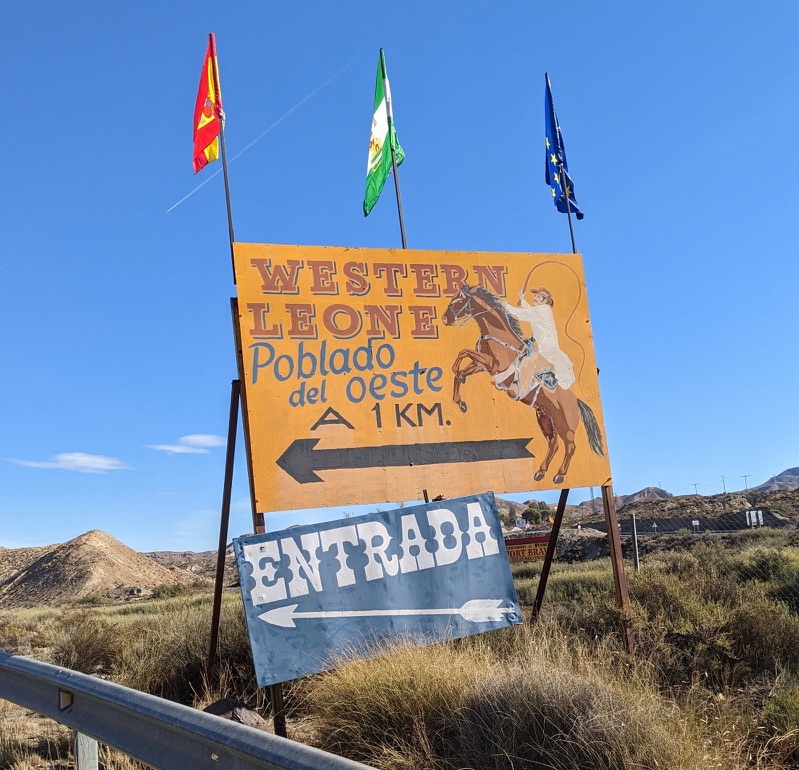
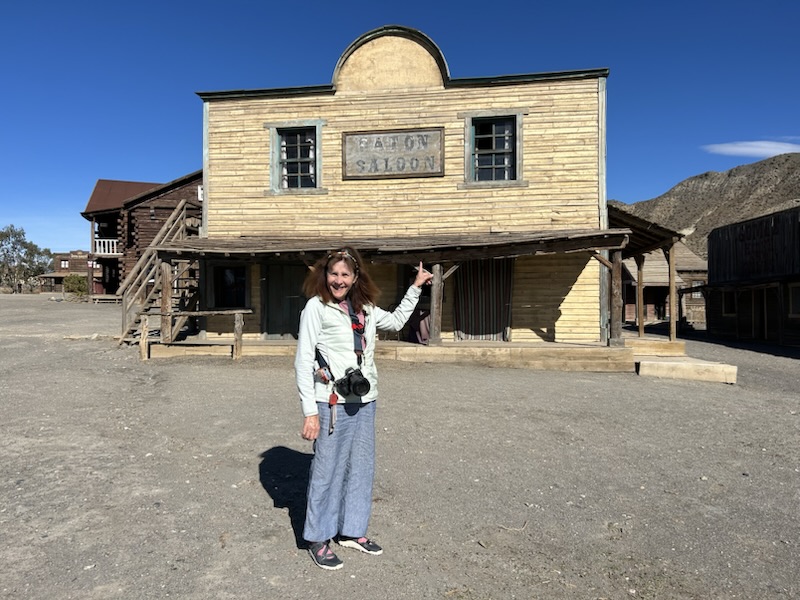
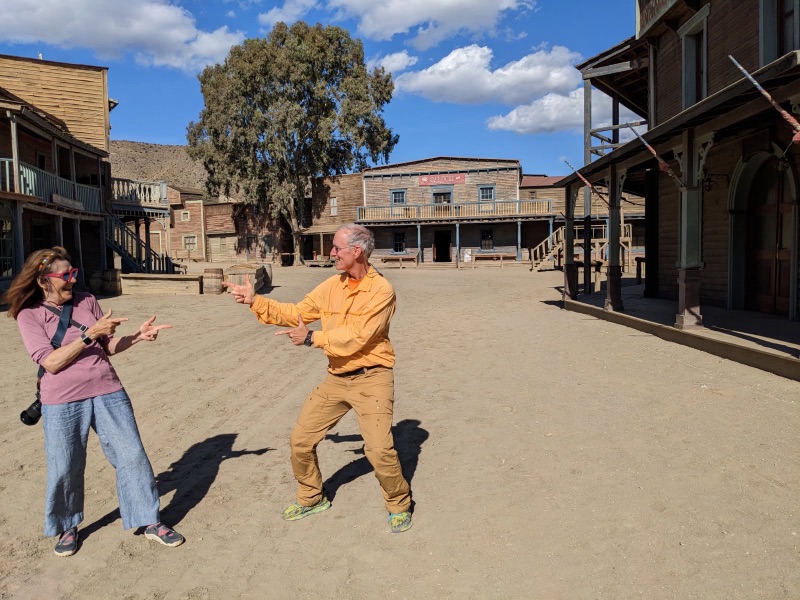
Our first stop was called Western Leone. It undoubtedly looks like an old Western movie town.
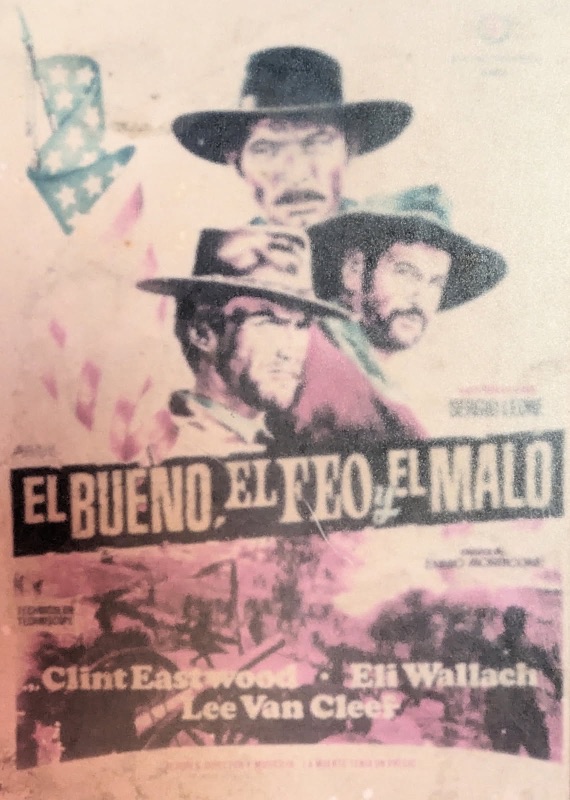
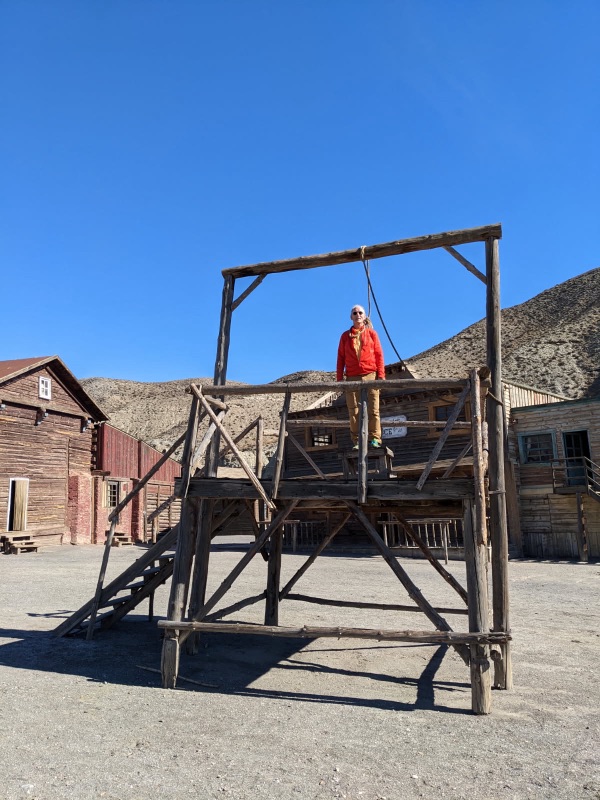
Original poster with “The Good, The Ugly, and the Bad” (The order in the title was switched for the English movie version)“You never had a rope around your neck. Well, I’m going to tell you something. When that rope starts to pull tight, you can feel the devil bite your ass.”
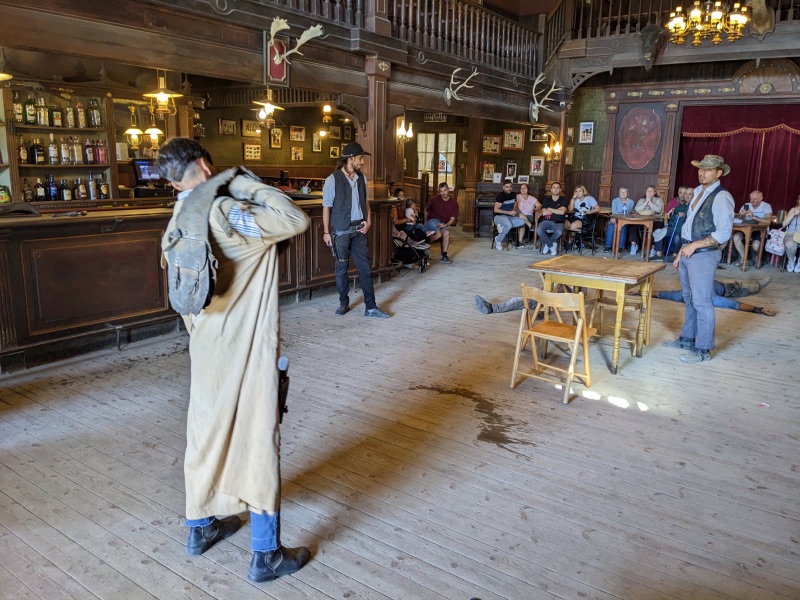
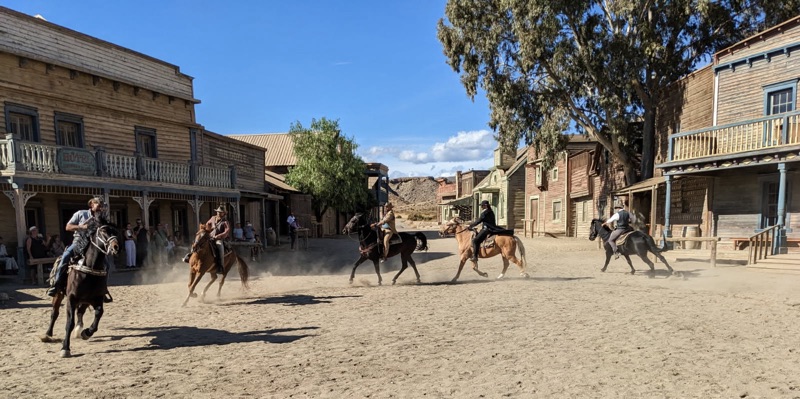
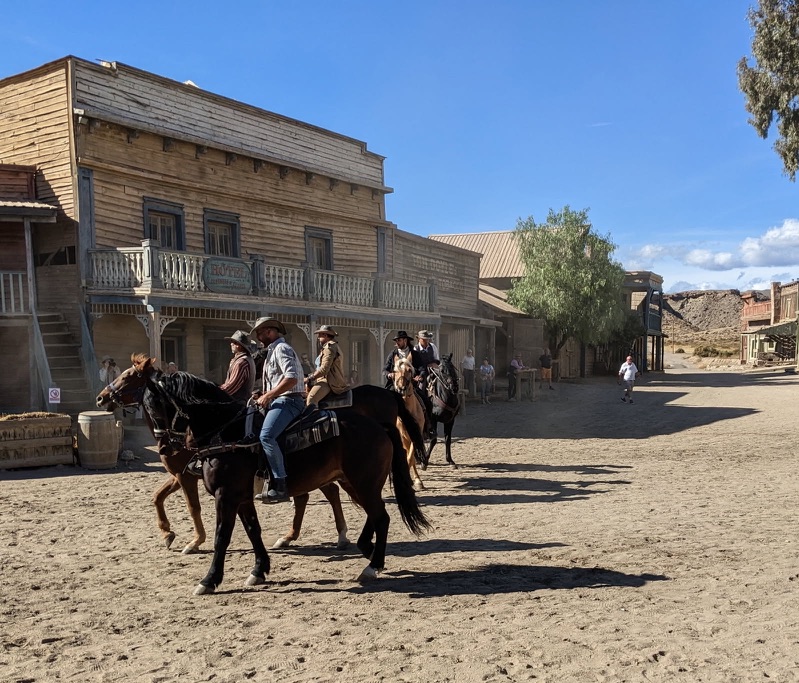
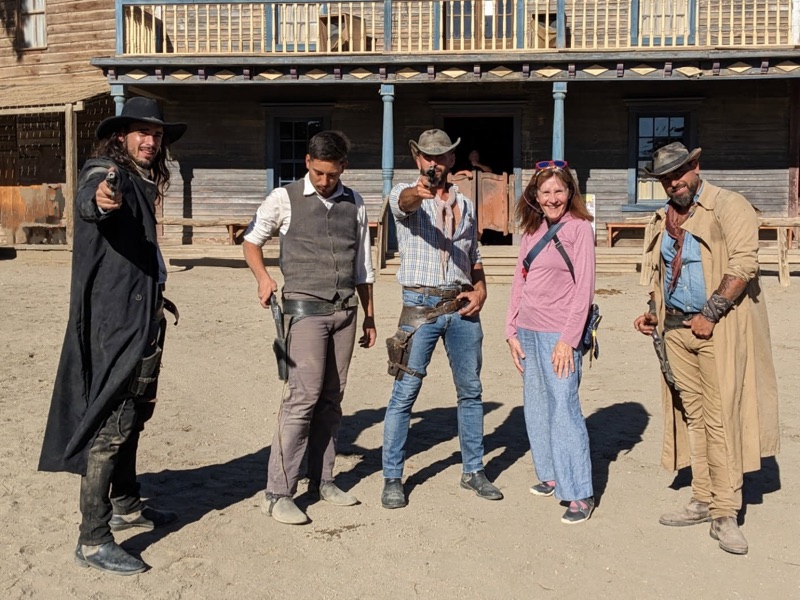
The second movie set that was only a few miles away is called Fort Bravo/ Texas Hollywood. Not only have many Western movies been filmed here; but also movies including Lawerence of Arabia & Indiana Jones & The Last Crusade.
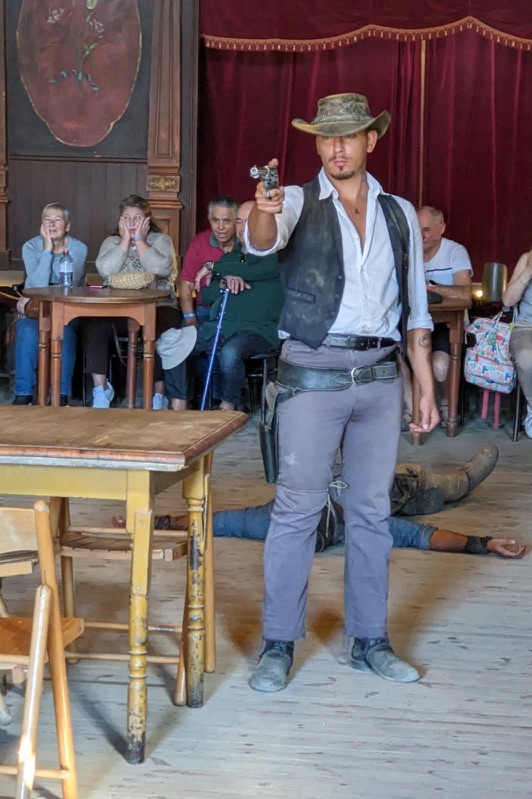
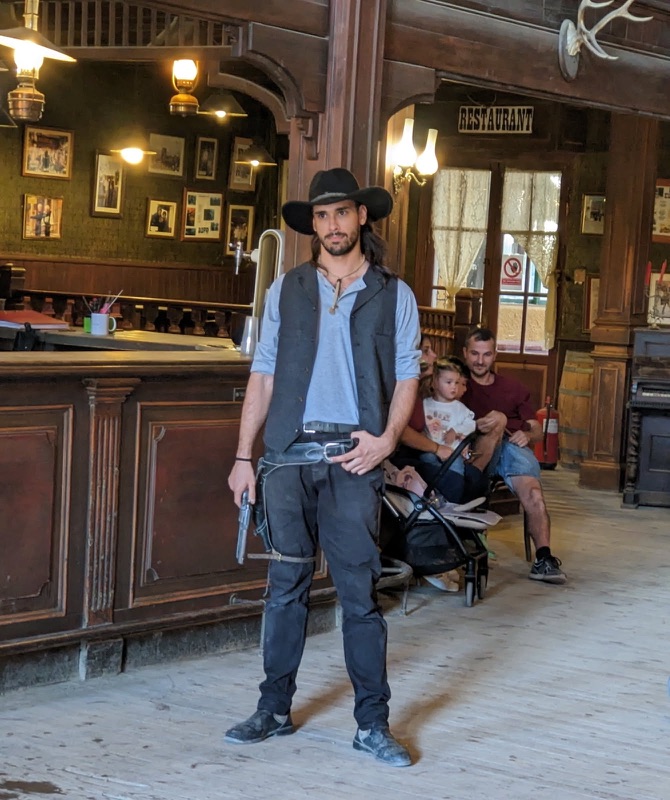
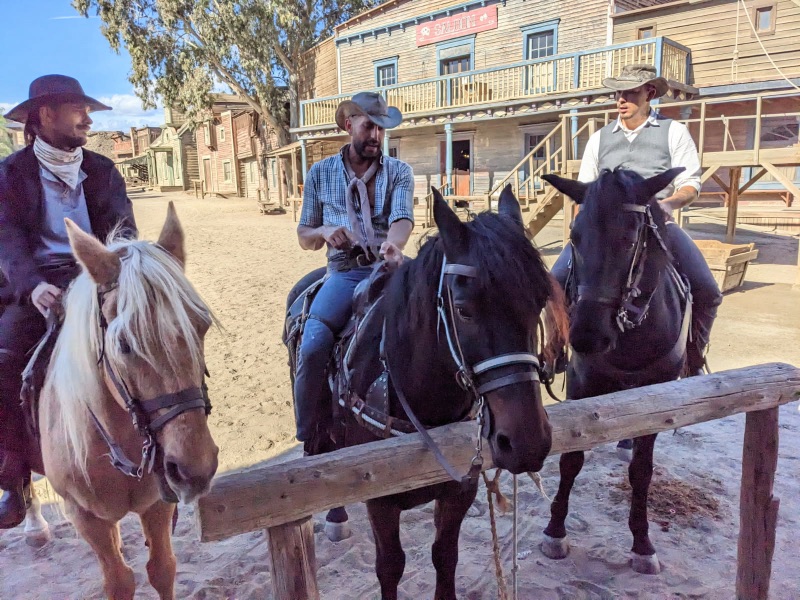
They also conduct live Western shows. The actors speak Spanish, but it isn’t too hard to follow the plot. Always some bad men up to no good & a sheriff to save the day.
Saloon fightSome bad hombres in this picture 🤣One bad mujer in this pictureThis town ain’t big enough for the both of us
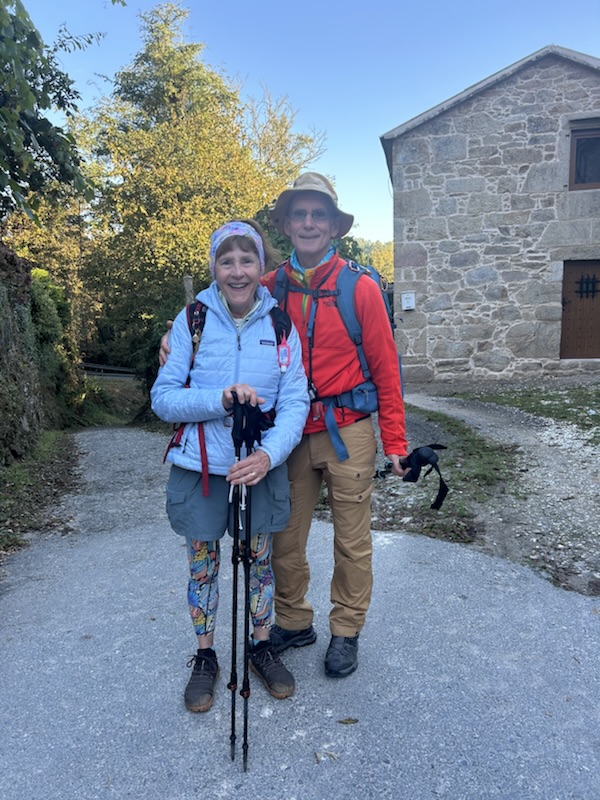
It felt so good to be on the final stretch to Santiago which was almost 9 miles because we took a longer route to avoid the crowds.
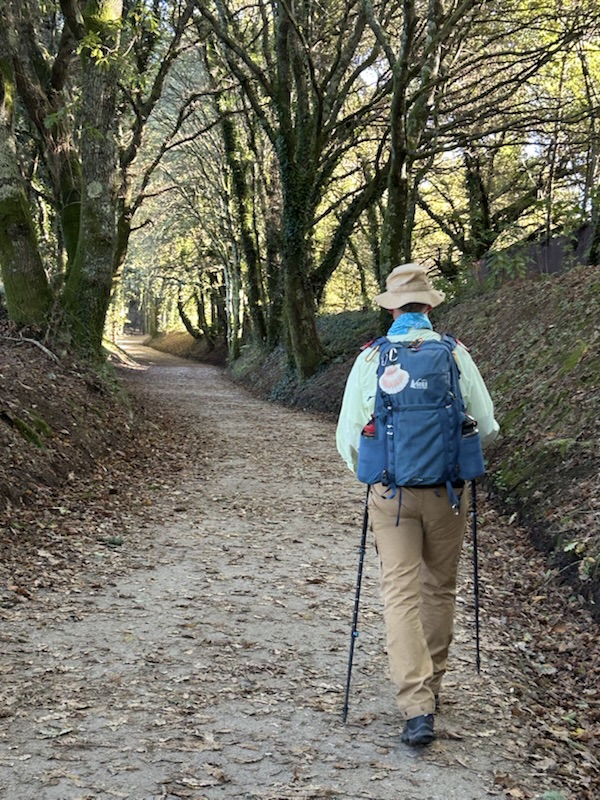
The trail started out on a rustic old path that pilgrims have traveled for centuries.
The best part was the fact that we had a beautifully sunny day to walk into Santiago.
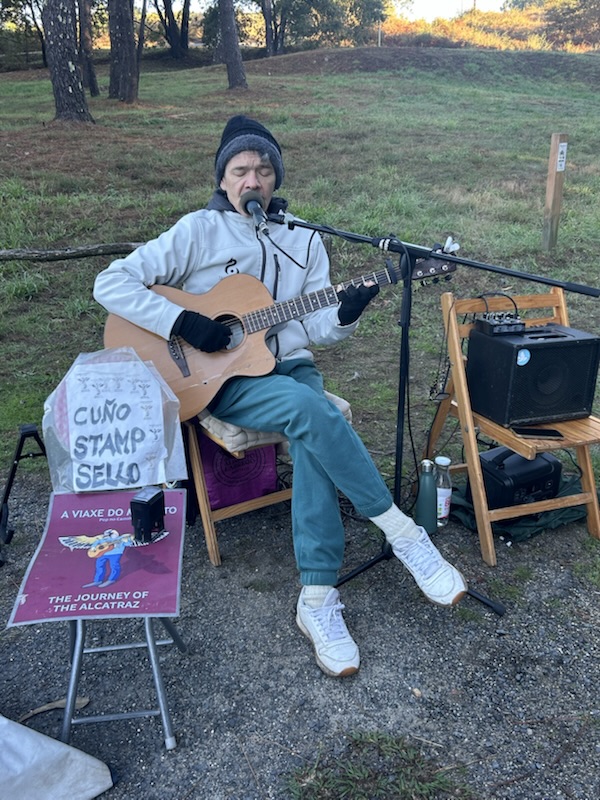
A short time into the walk we were serenaded by this artist.
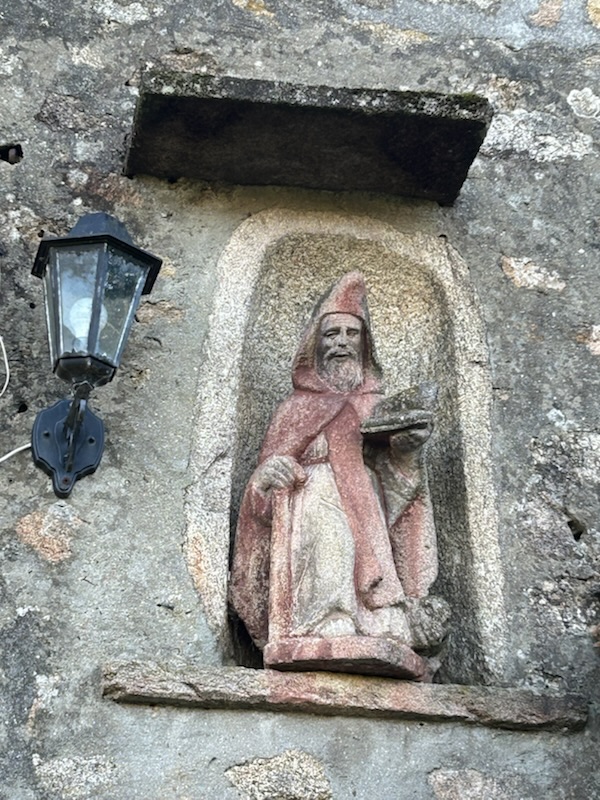
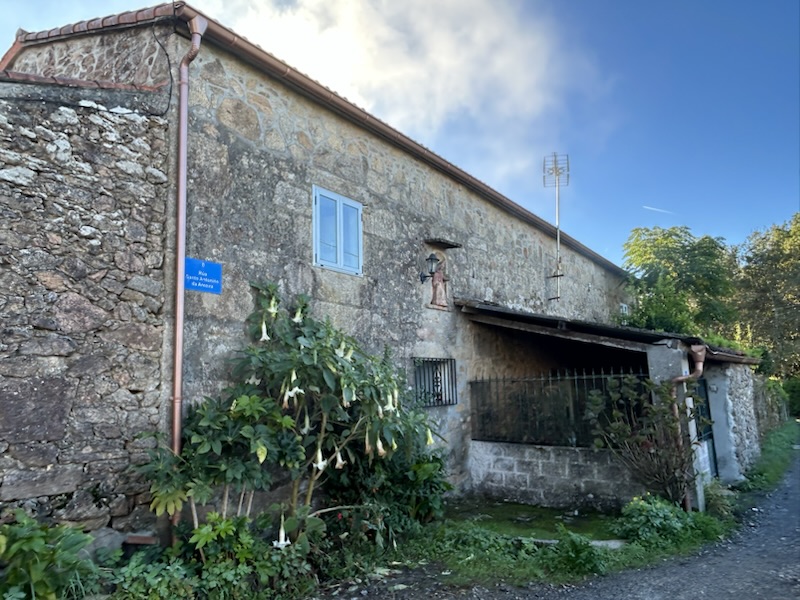
We passed the old Areeira Pilgrim’s Inn which welcomed pilgrims & muleteers starting in the 18th Century which is now an old farm house. On its wall is a statue showing San Antonio Abade who is the patron saint for animals. Notice the piglet at his feet. Until a few years ago, this statue was still being taken down to be used in processions during which the locals would offer alms to it to cure their sick animals.
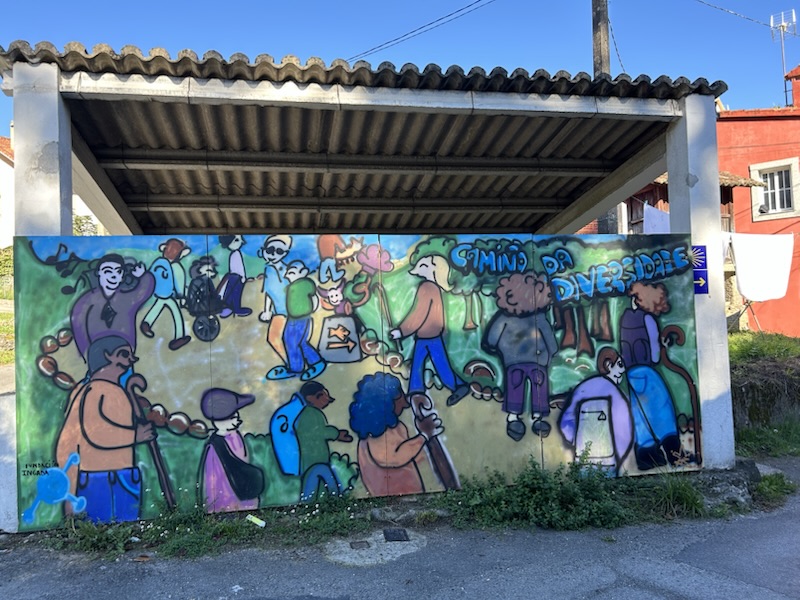
A few fun things we saw along the way.
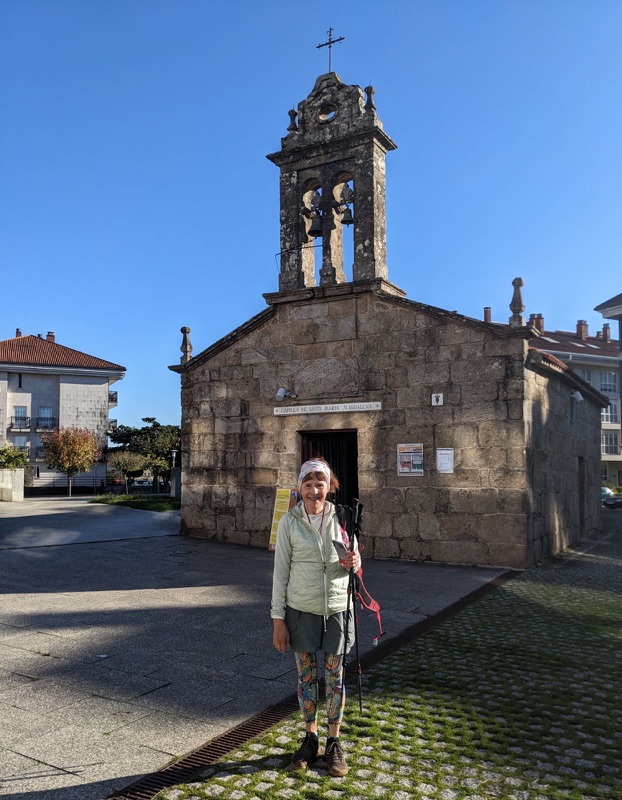
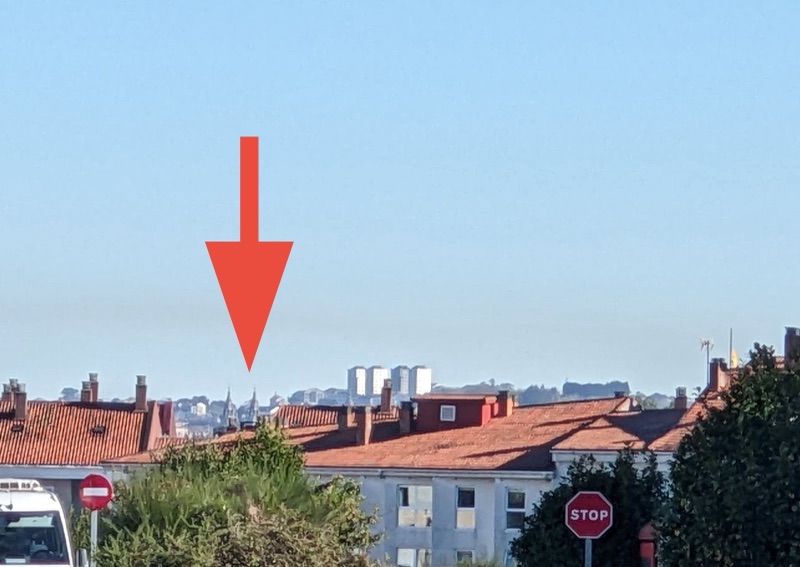
With a few miles to go, we reached the small Chapel of St. Mary Magdalena in Milladoiro which is located at the place where pilgrims on the Camino Portugués get their first glimpse of the Santiago cathedral’s twin spires in the distance.
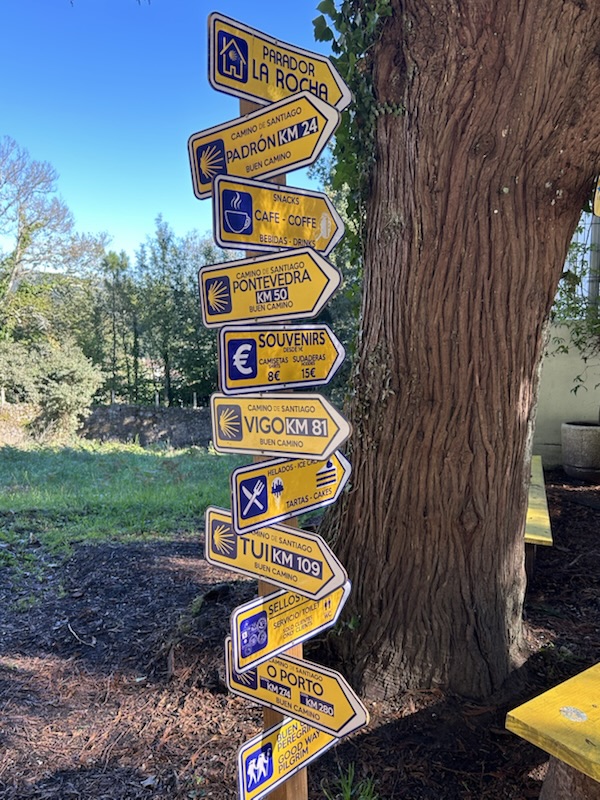
All along the route there are always mileposts, signs, & yellow arrows pointing the way to the cathedral; but, when you are in big cities, for some reason, the path is not well marked. Of all places, that same thing happened in Santiago which is why it is handy to have an app on your phone to use to stay on the Camino.
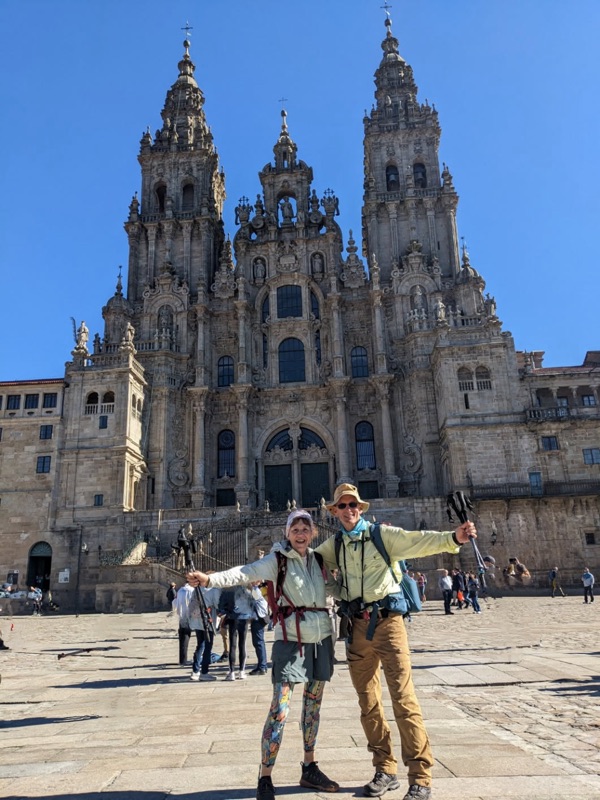
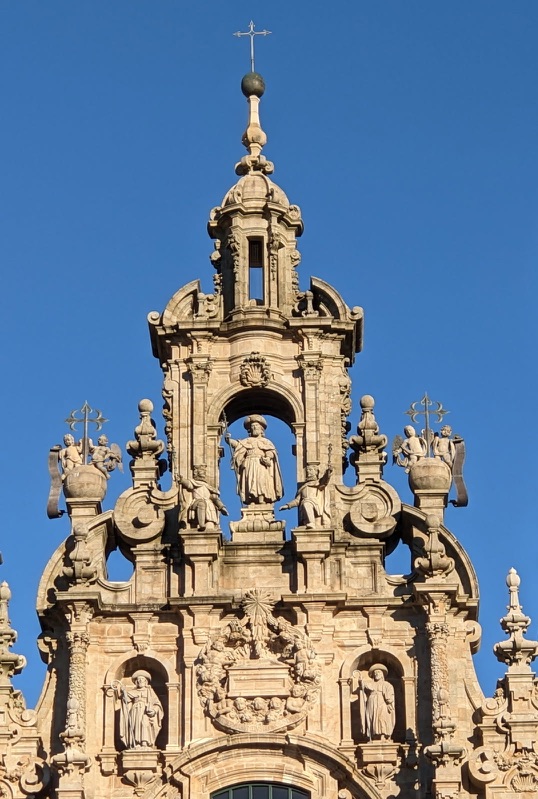
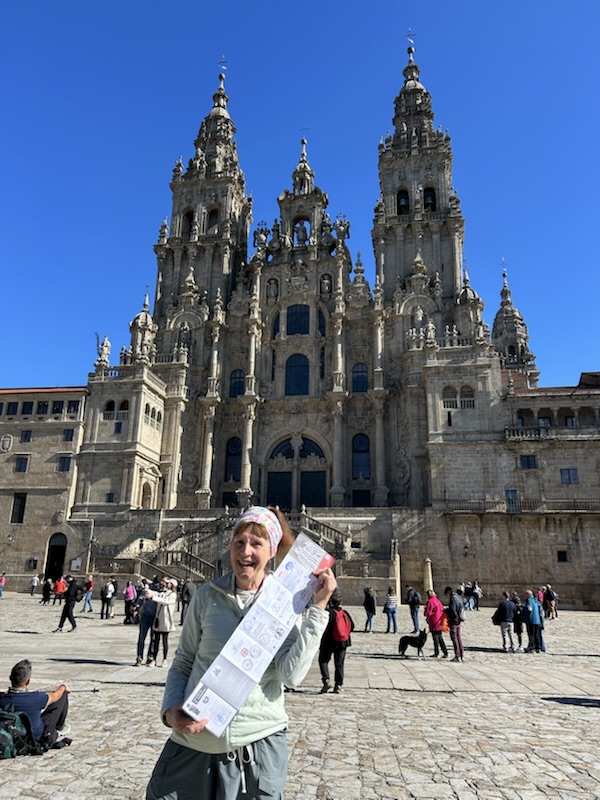
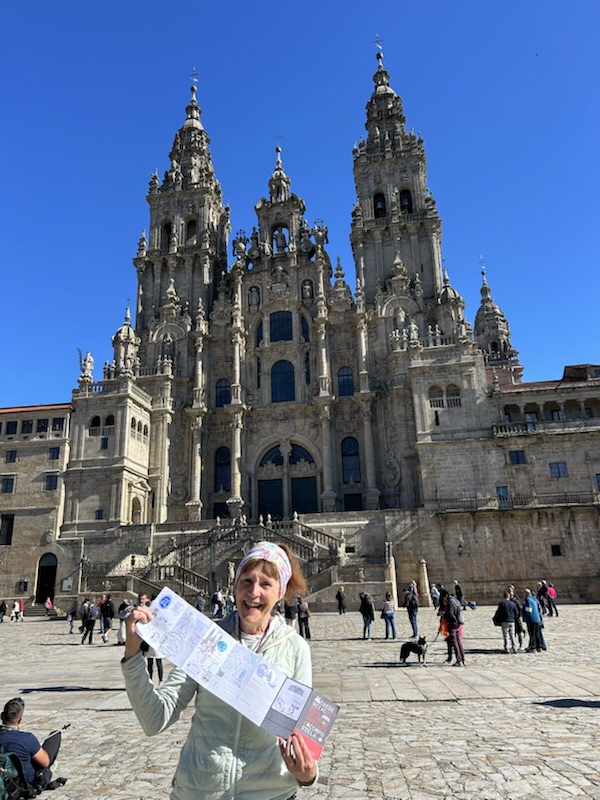
We finally arrived to the glorious Cathedral Santiago de Compostela! Always a great feeling & such a marvelous ending destination.
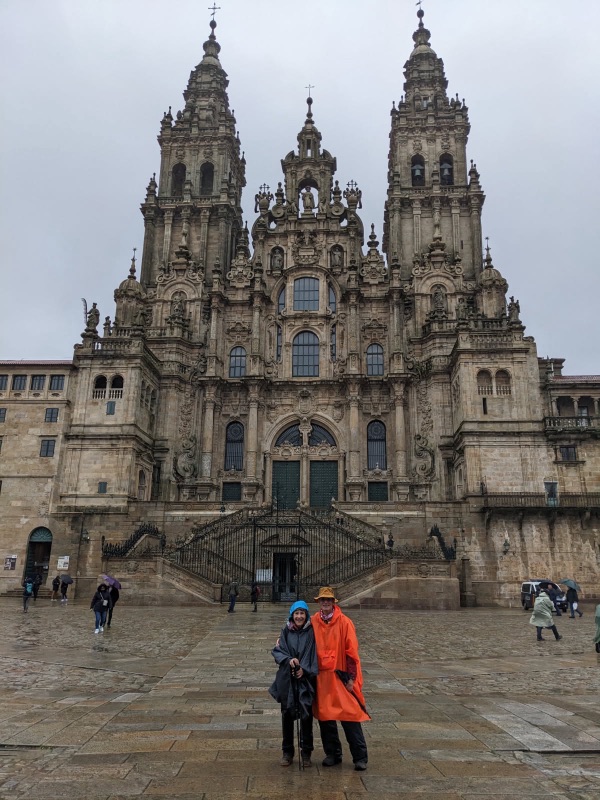
This arrival was markedly different from our arrival in 2023 when we hiked the Camino Frances.
Many pilgrim statues adorn the facade.
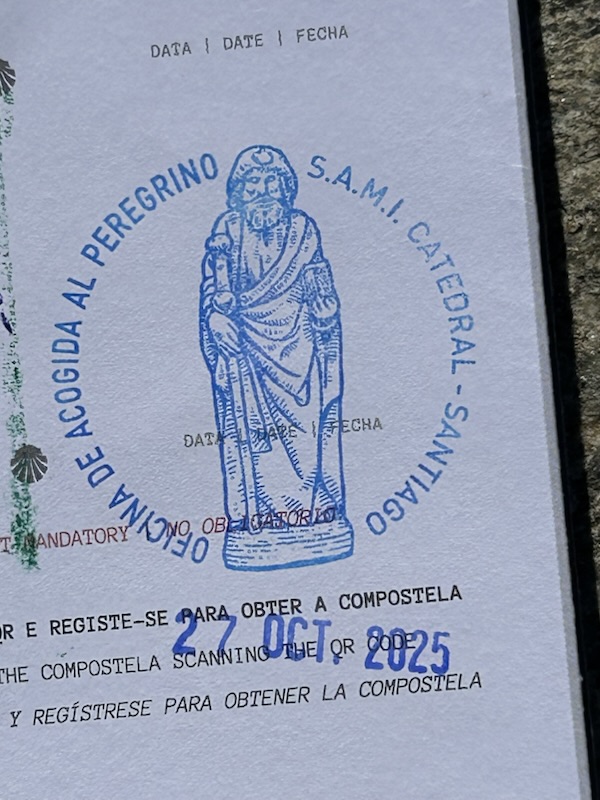
Upon arriving, the last step is to obtain the final stamp in your Pilgrim Passport to receive your certificate of completion. The administrators closely check the recorded stamps to ensure you walked the entire route before issuing the final stamp & completion certificate.
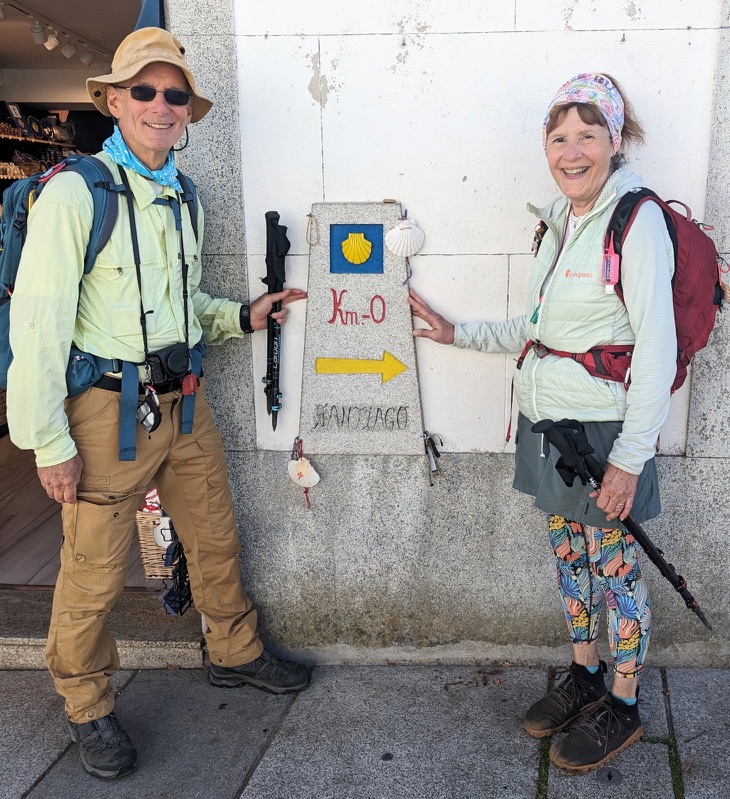
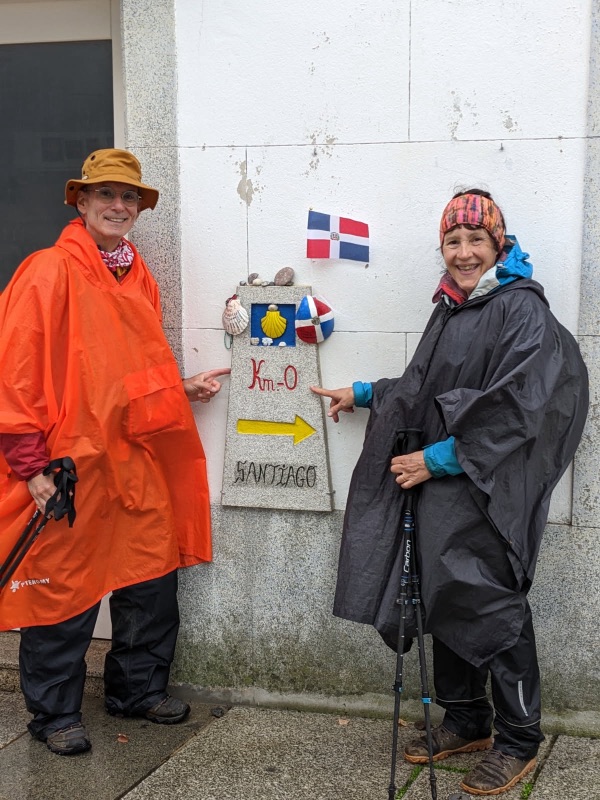
Outside the official Camino registration office is the final mileage maker.
20252023
I had so many stamps in my passport I ran out of room & was putting them in odd places! Both sides were fully covered. No doubt that I had walked the official 280 km.
We walked 178.5 miles in 16 days with 2 very rainy days on the route,
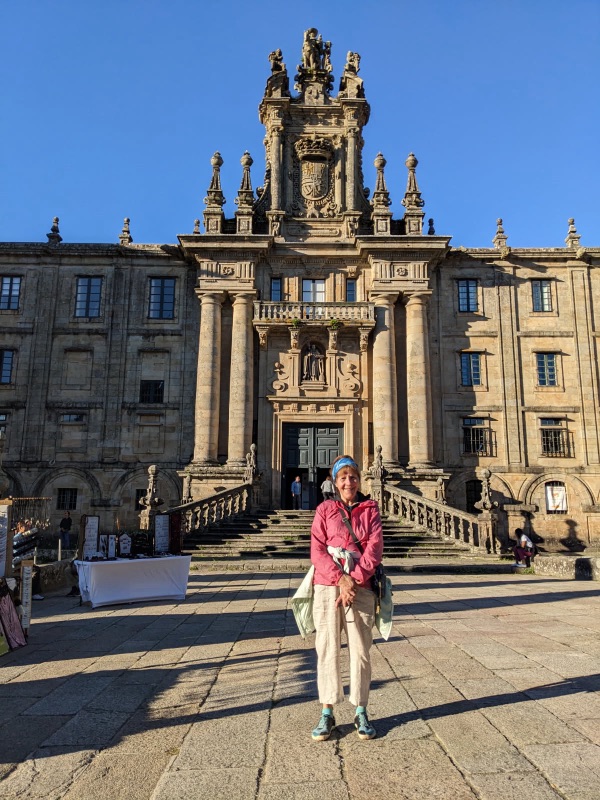
Our hotel for the evening was an old monastery called the Hospederia San Martin. Many pilgrims stay here after completing the Camino. It’s easy to tell the pilgrims by their clothes, backpacks, & looks of relief combined with jubilation.
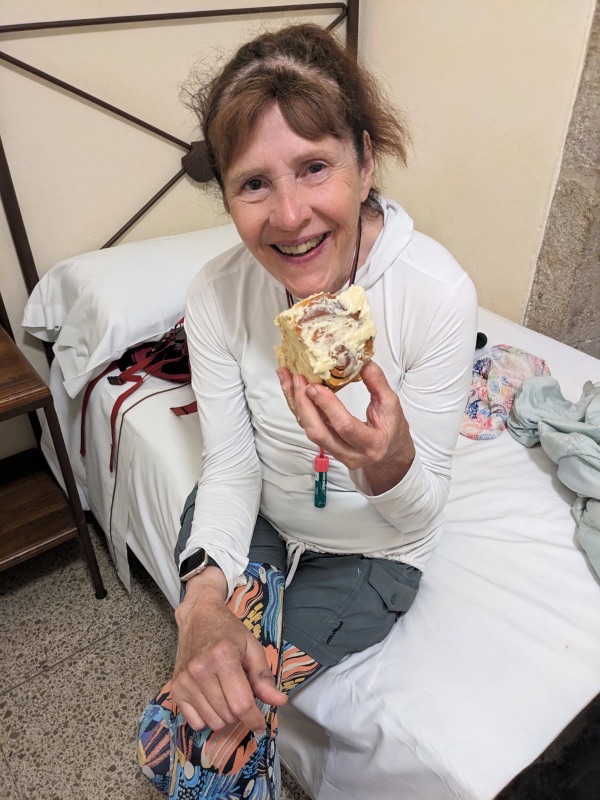
On our last stay in Santiago, I found an old grocery store that has been open since 1929 called Victoria. I went there again with their main attraction being their homemade cinnamon rolls. They are almost exactly like the ones I made when I was growing up. A well deserved treat indeed!
Old Santiago looks like a medieval city with stone streets & buildings. It is a fun place to wander around. Most buildings contain souvenir shops & restaurants.
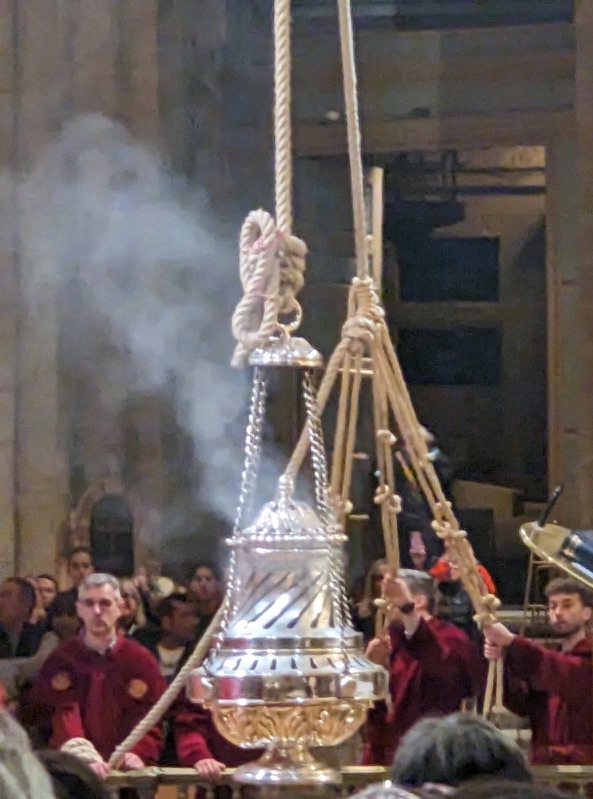
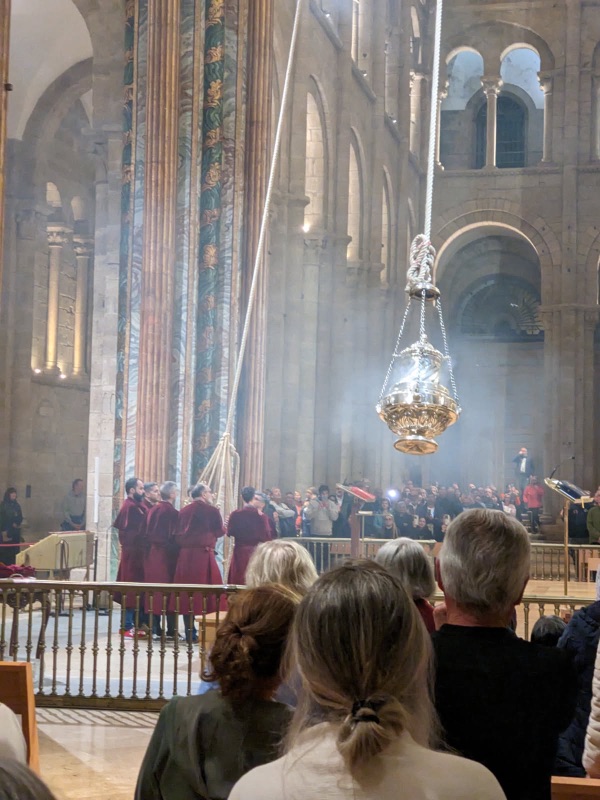
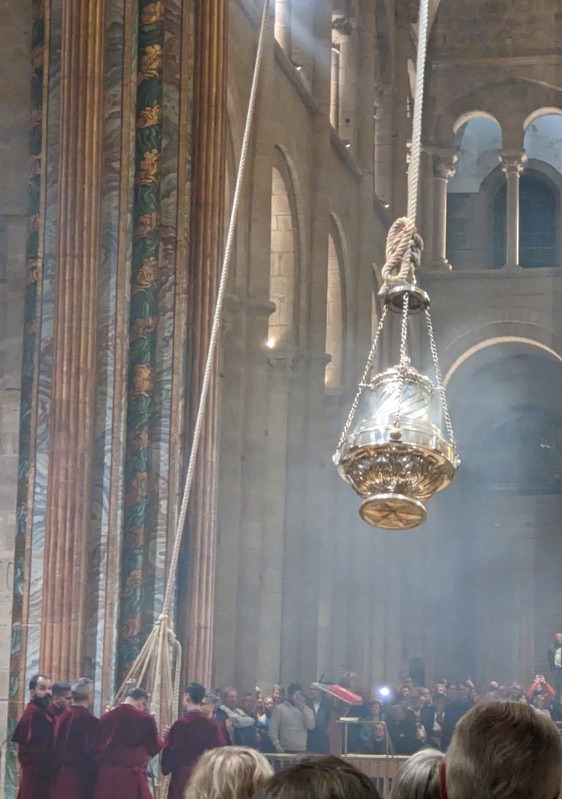
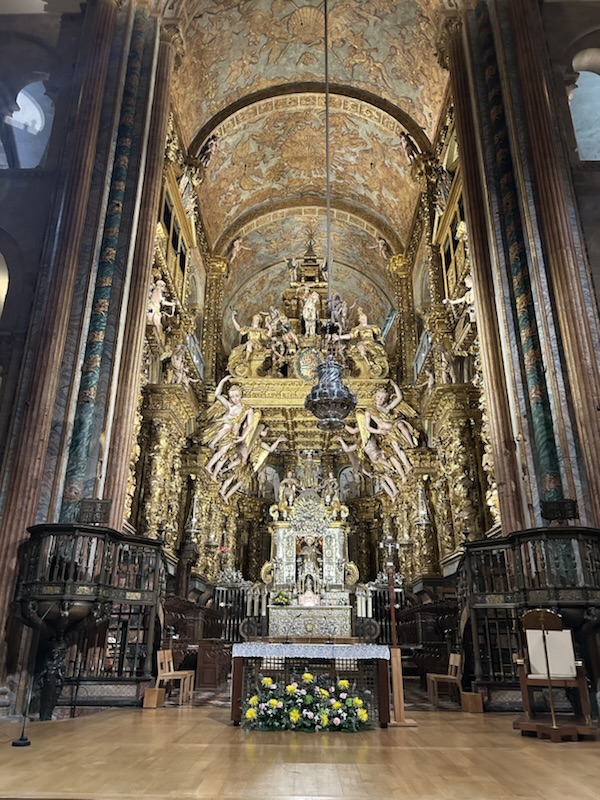
We were told that an American couple who we had seen off & on the trail since Pontevedra had paid to have the Botafumeiro swung at the evening mass in the cathedral. The Botafumeiro is a giant censer used for burning incense. Eight priests use ropes & a pulley system attached to the cathedral’s ceiling to swing the giant censer & fill the cathedral with perfumed smoke. Its name comes from the Galician words “botar fumeiro” meaning “to throw smoke”.
This rite is usually reserved for special Holy Days; but, anyone can pay to have it done at any mass.
The mass was a nice way to end our 2025 Camino Portugués adventure.