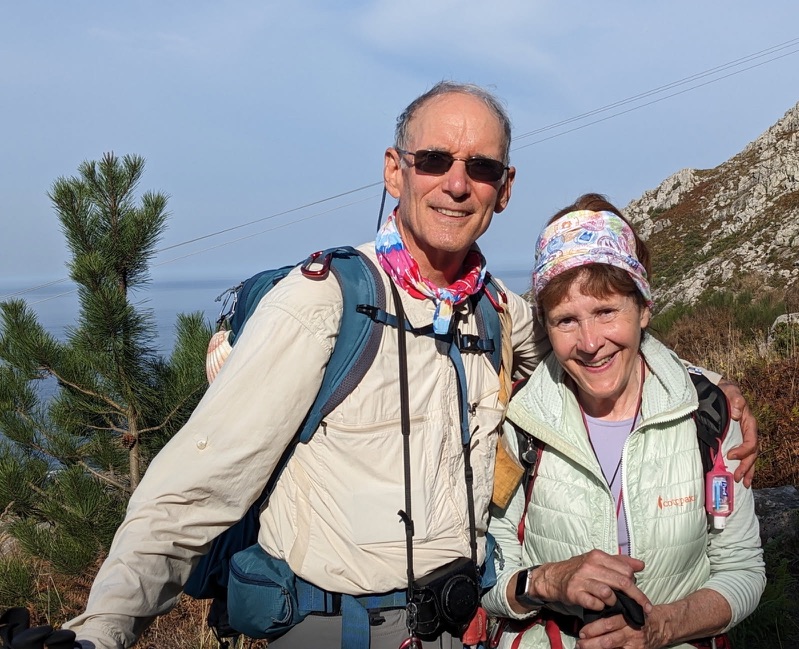
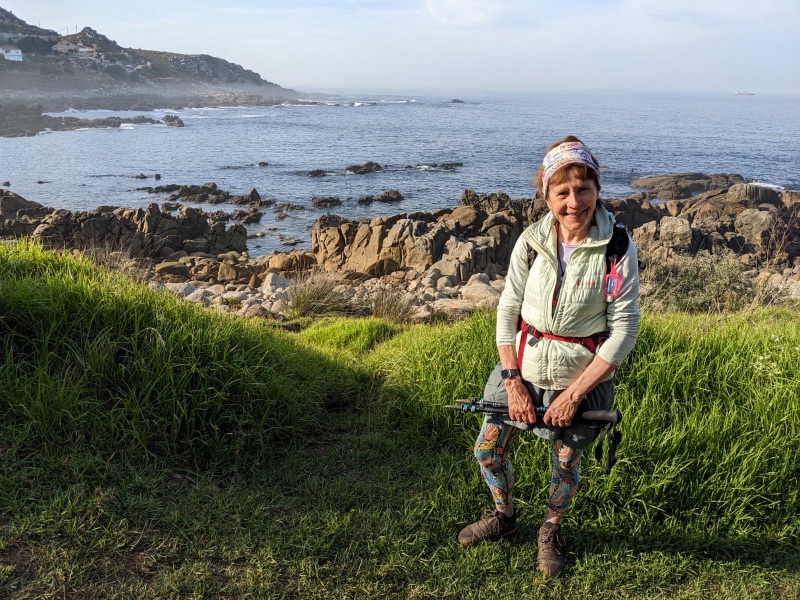
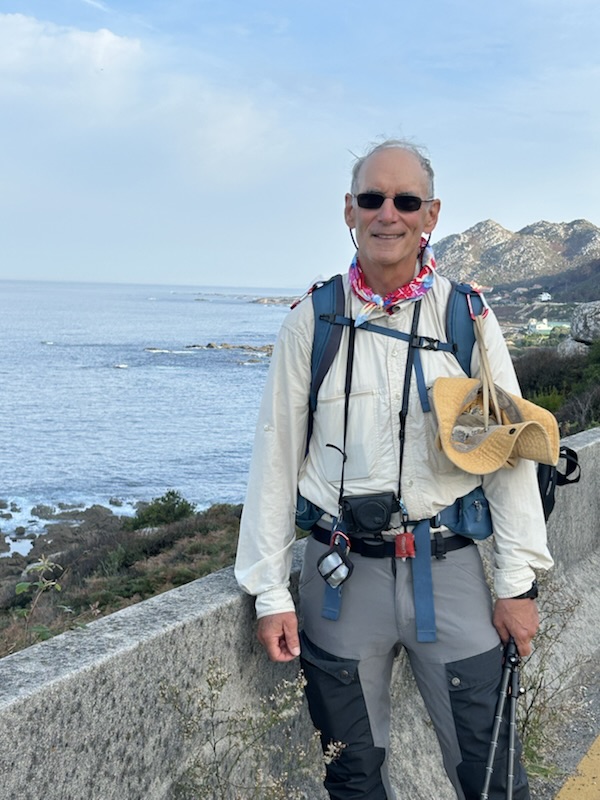
The forecast predicted cloudy all day; but, it was wrong & we enjoyed hiking over 10 miles in very nice weather.
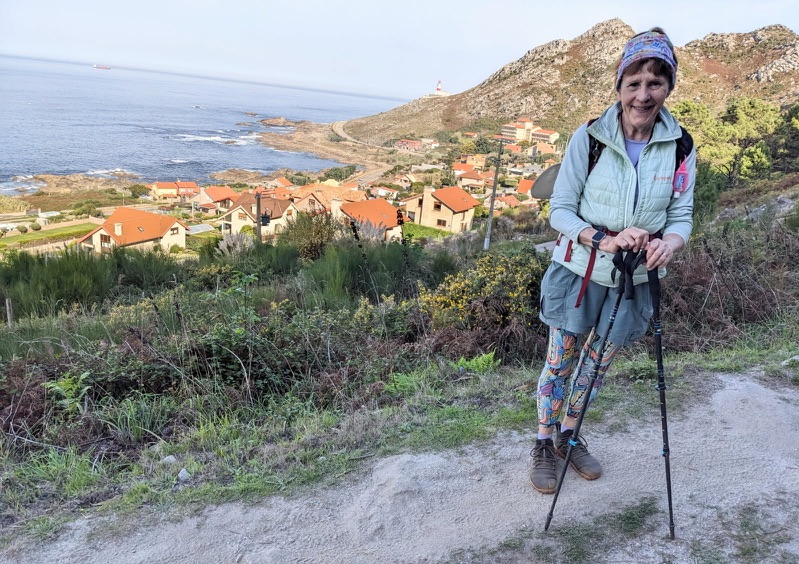
Most of the route kept us close enough to the shoreline to enjoy the salty sea air & beautiful vistas.
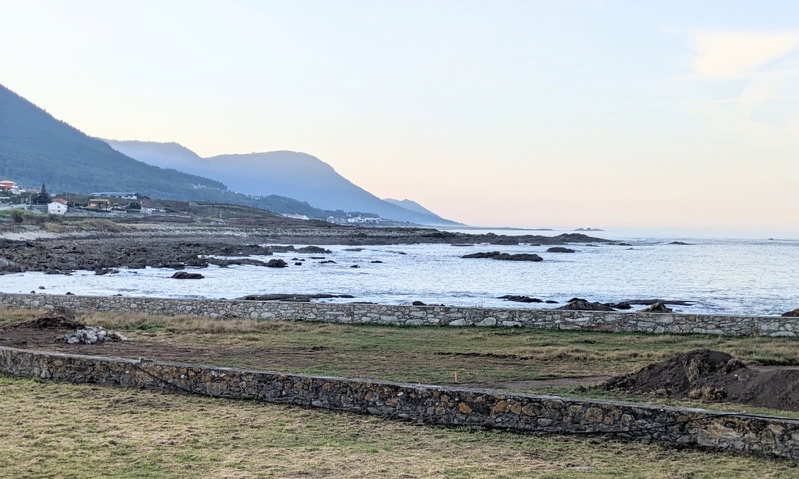
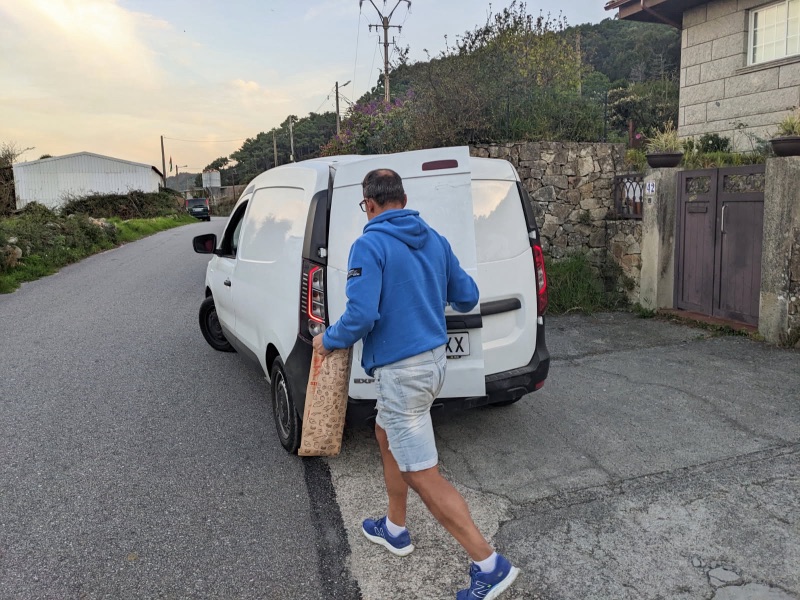
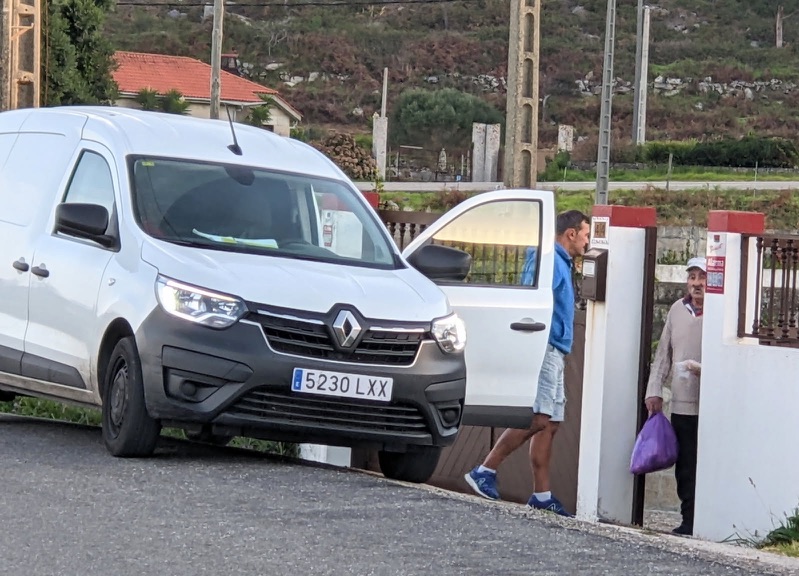
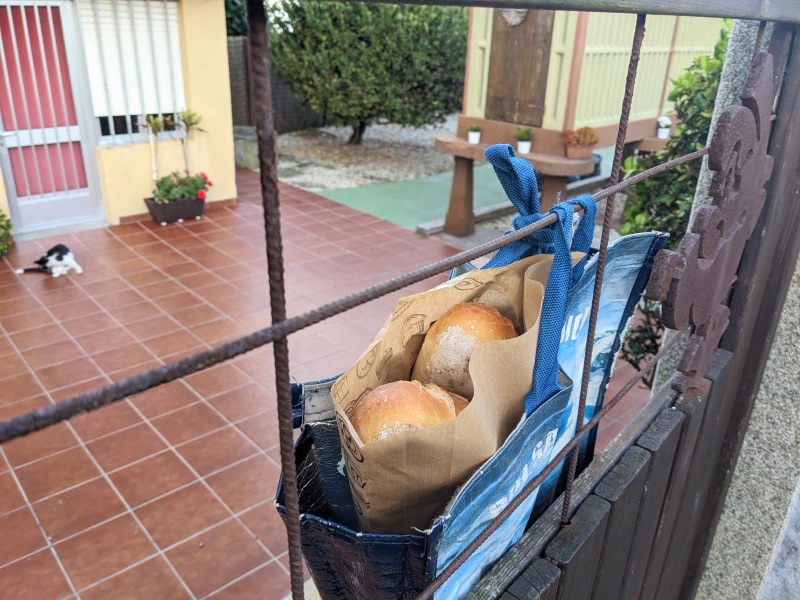
Early in the morning, we saw the bread man delivering fresh baked bread to homes.
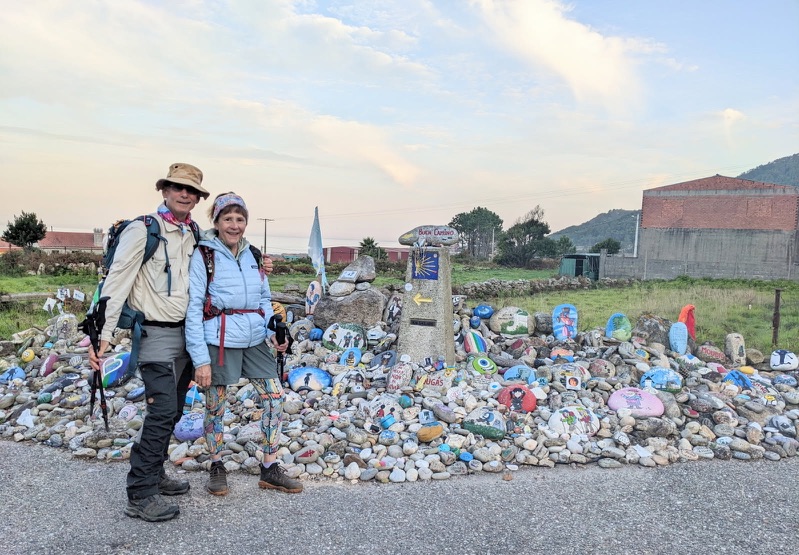
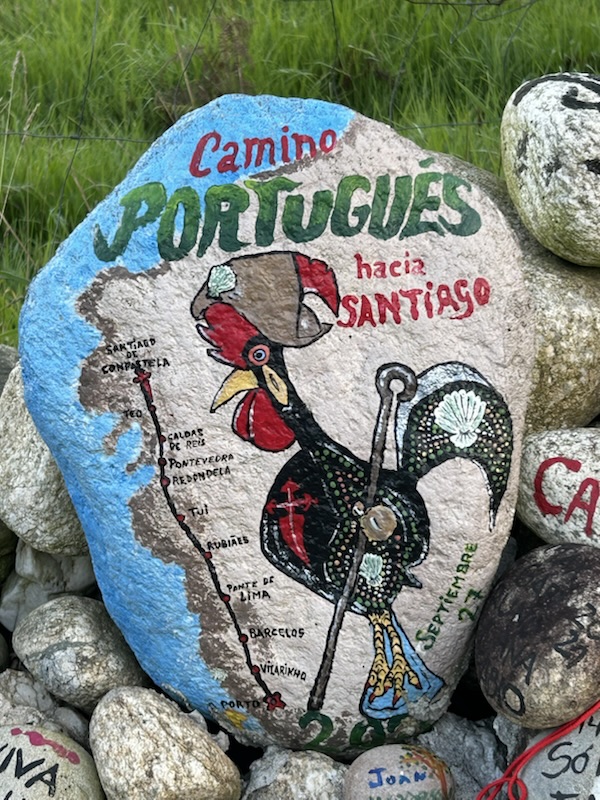
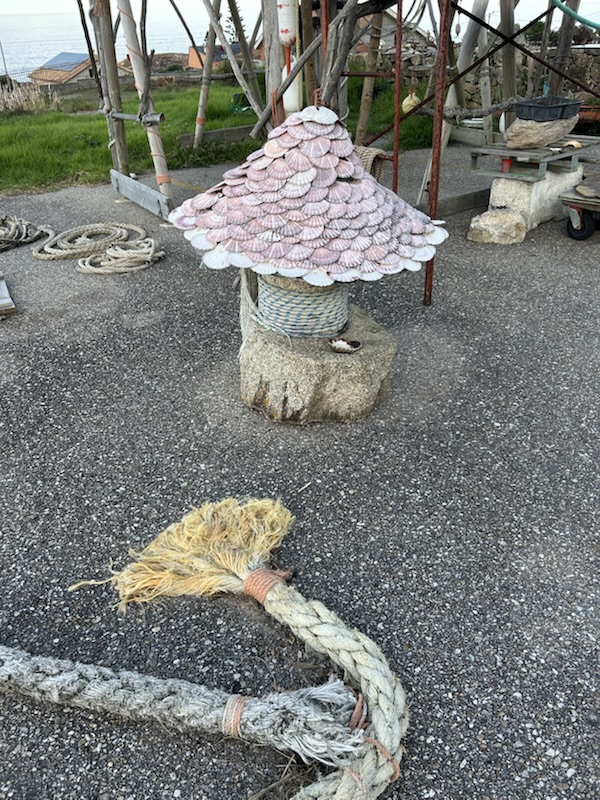
We passed this lovely rock collection. It has long been a tradition to carry a rock from home to leave on the Camino; but, many of these rocks were much too large for someone to carry with them. I’m guessing local artists added many of these rocks for pilgrims to enjoy on their journey. I’m certainly one of them. 😉
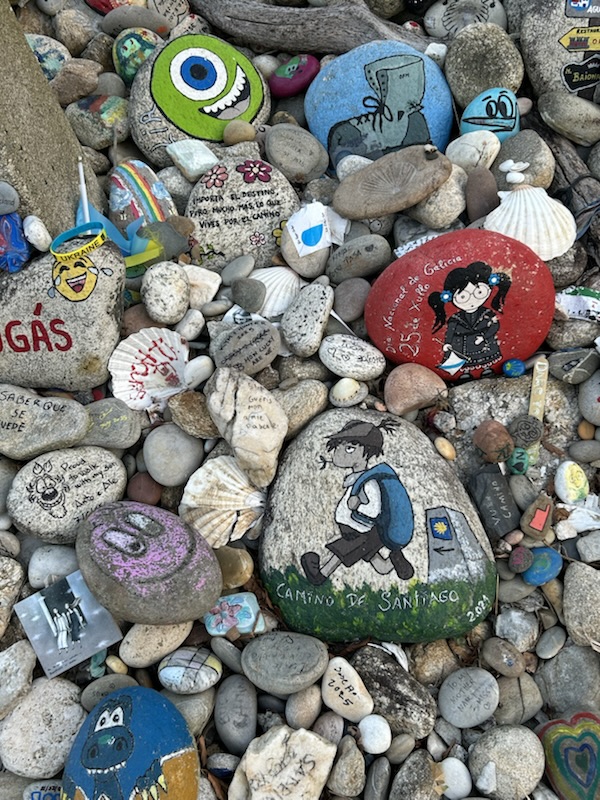
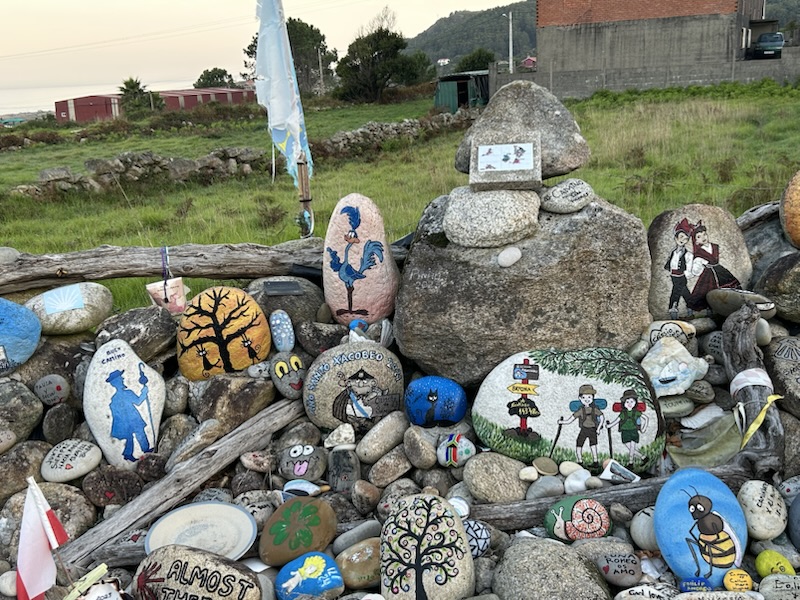
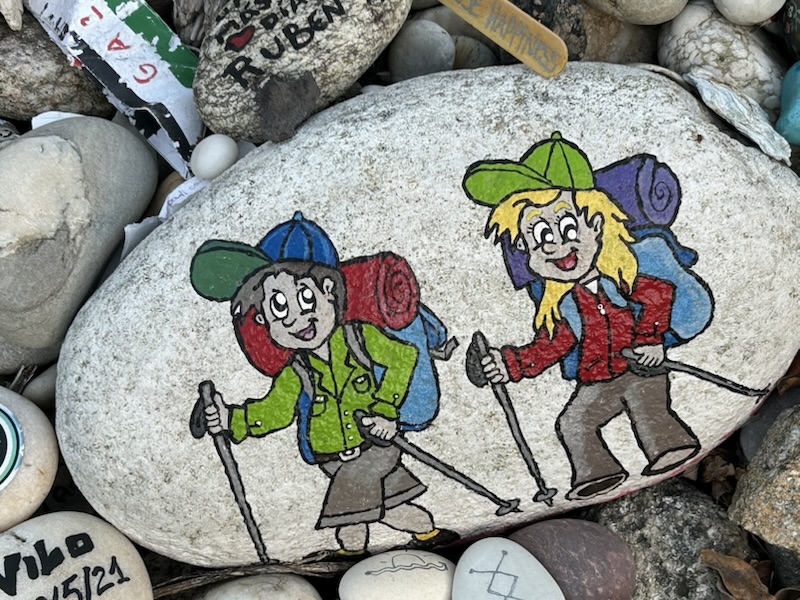
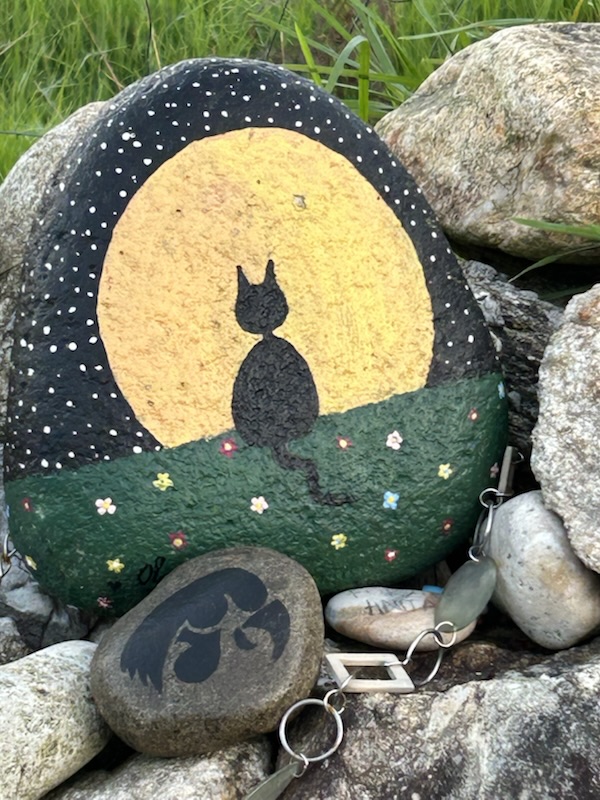
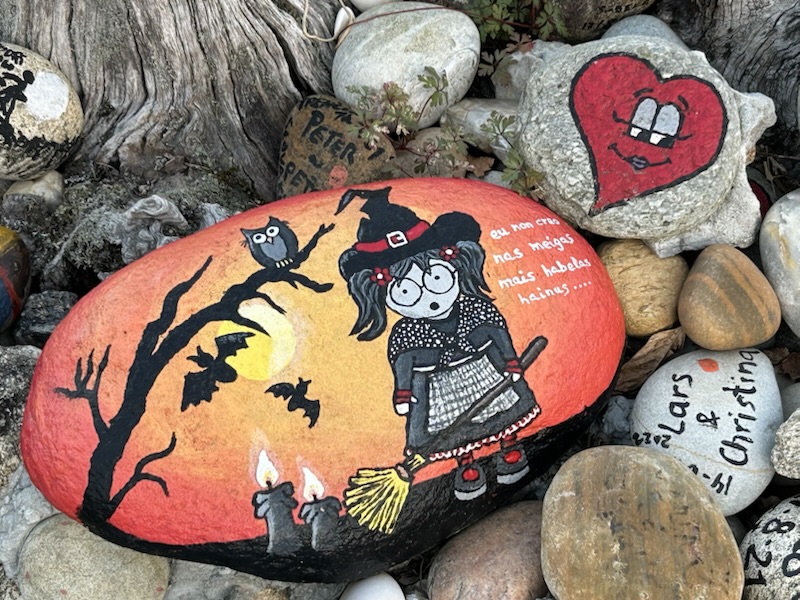
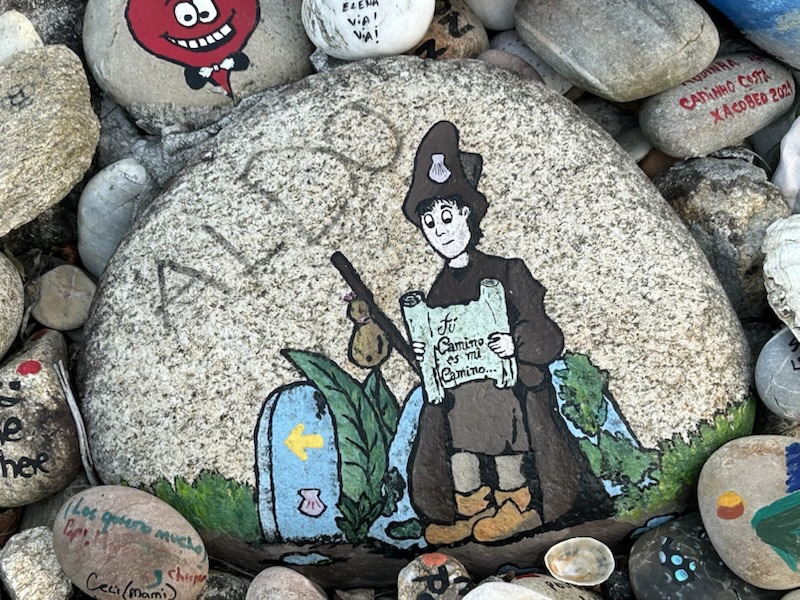
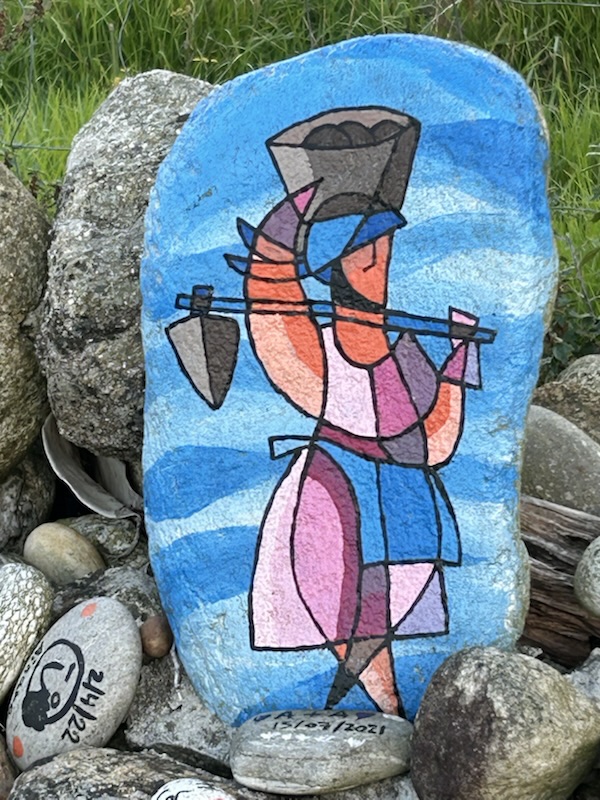
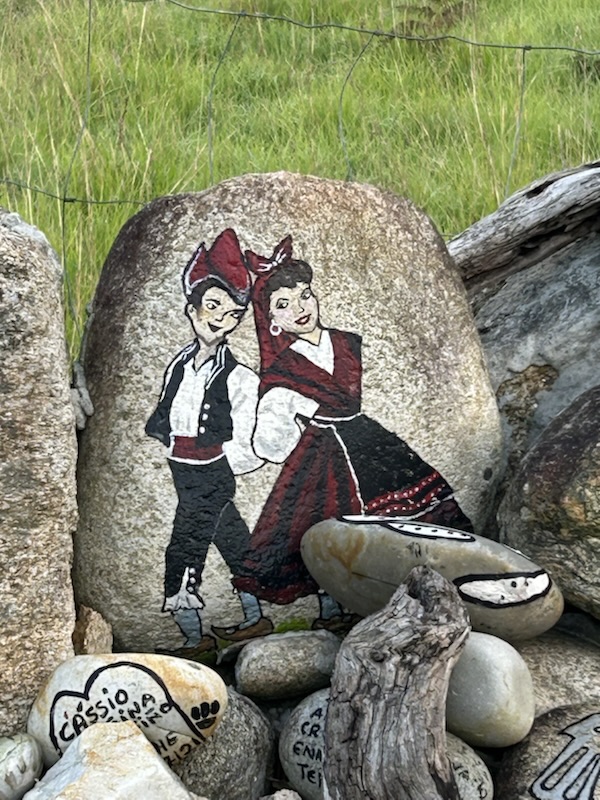
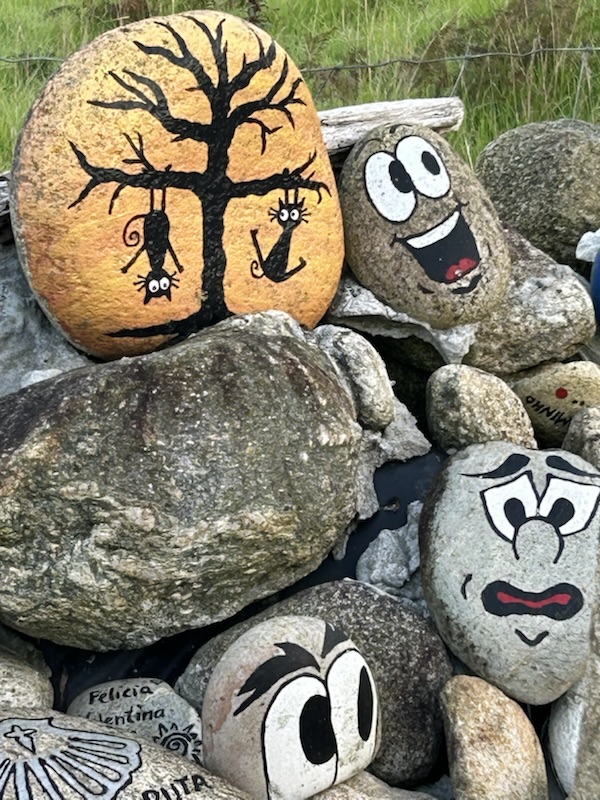
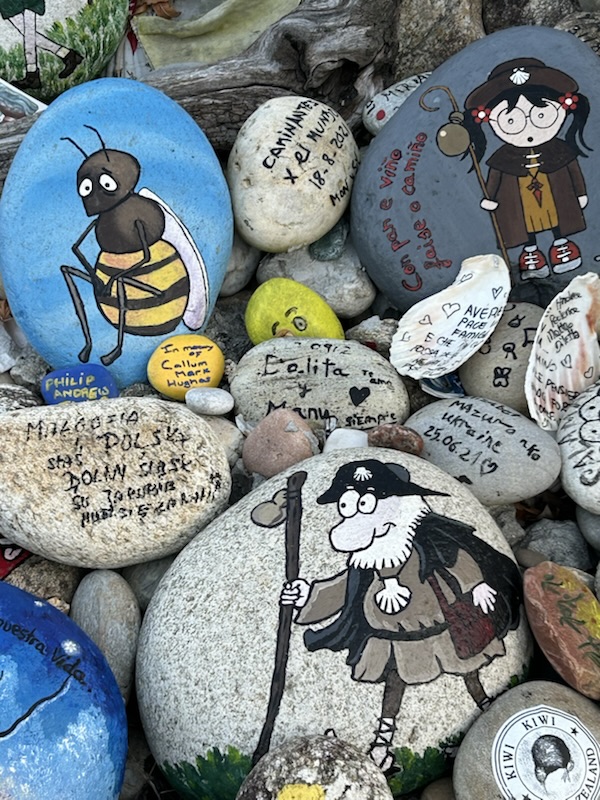
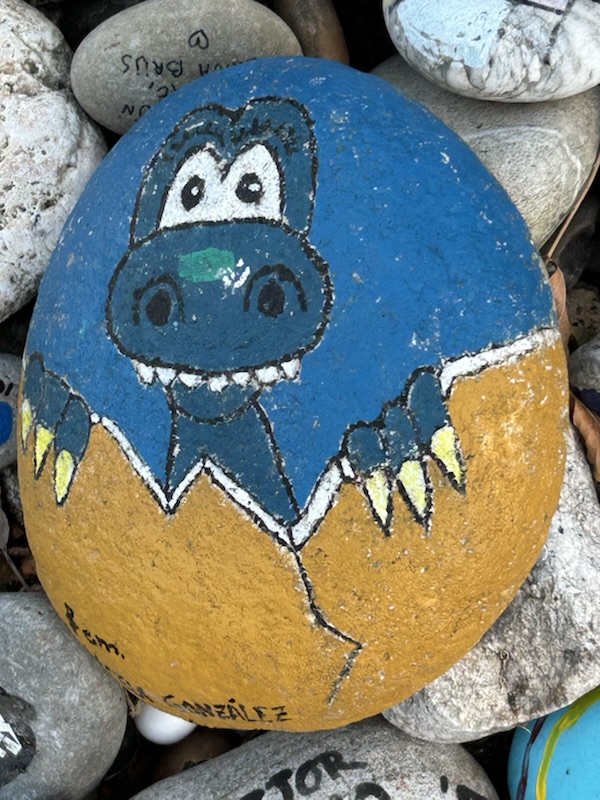
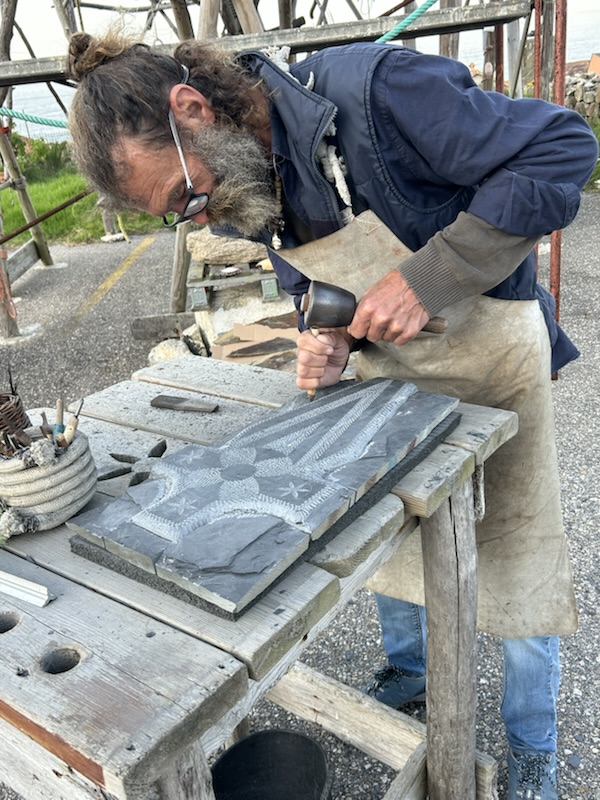
Other trail art we saw:
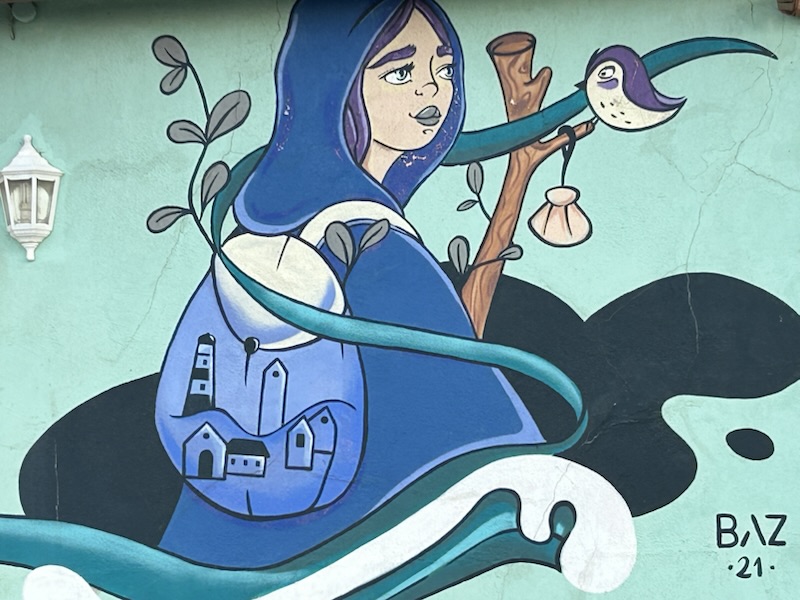
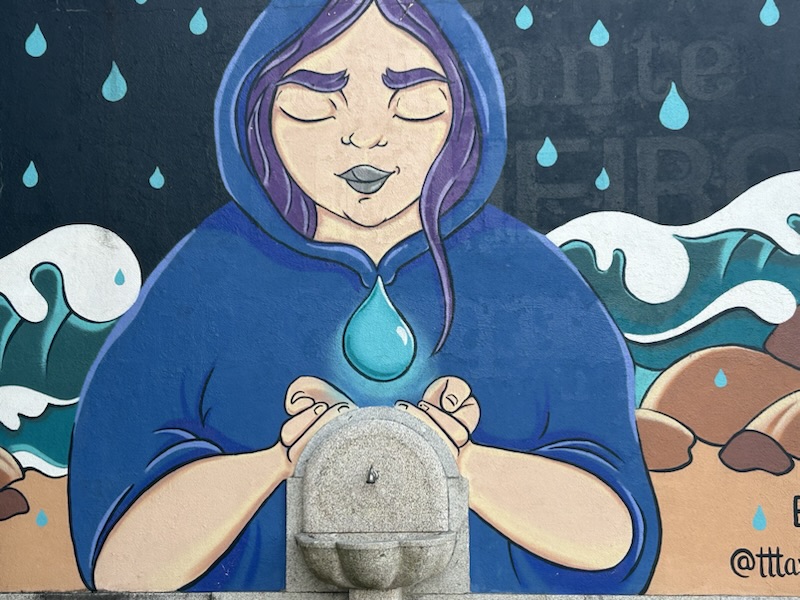
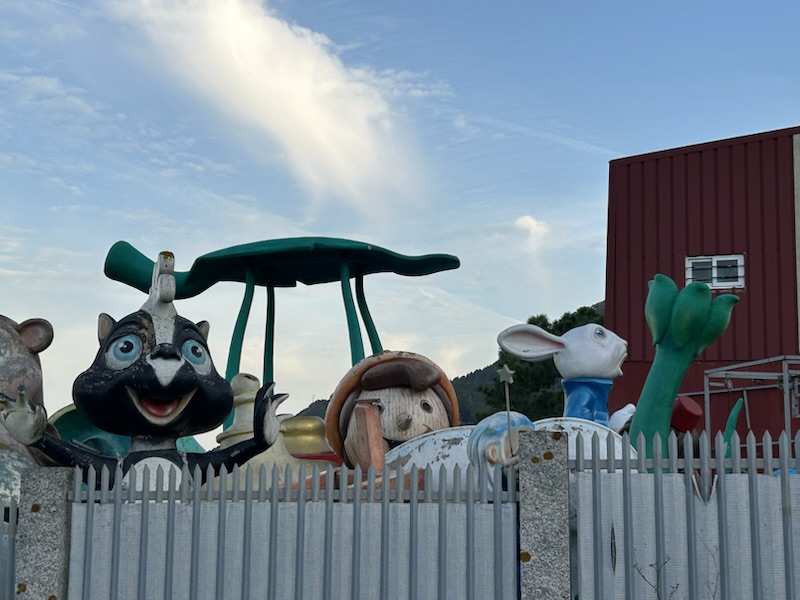
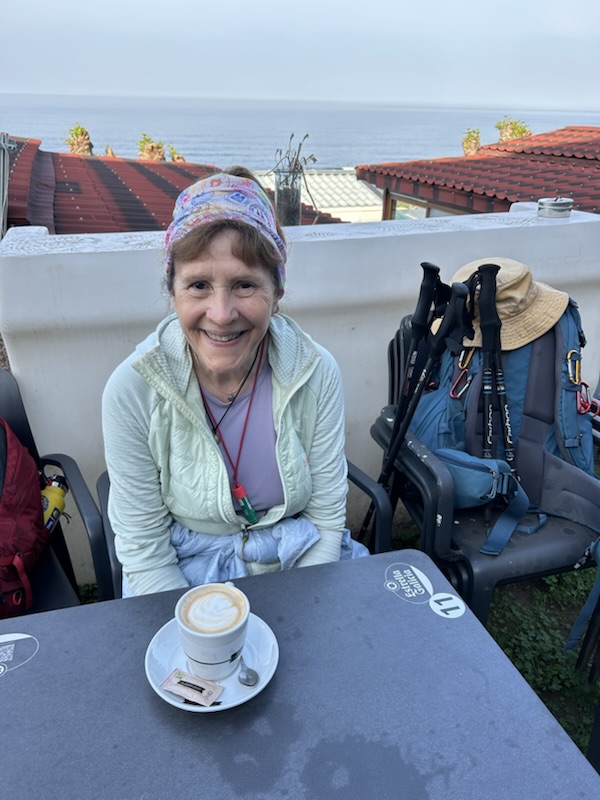
Time for my morning coffee at 10:30 AM. Many restaurants & small pubs are now closed for the season; but, thankfully a few remain open for October pilgrims.
One fun sighting was seeing a woman feeding her pet chickens.

To reach Baiona we had to climb two big hills. The first climb was through another eucalyptus forest.
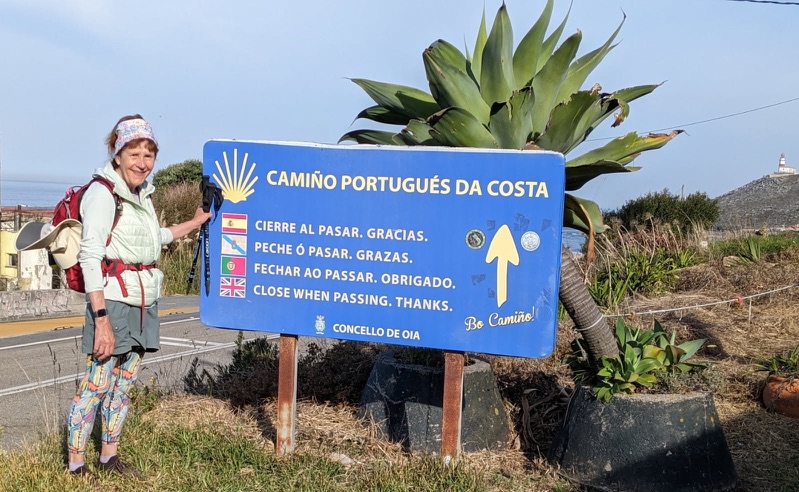
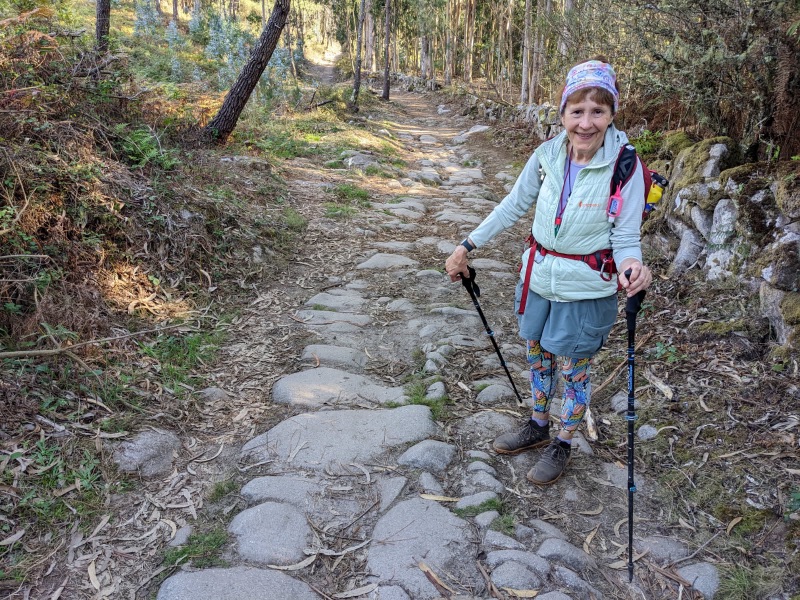
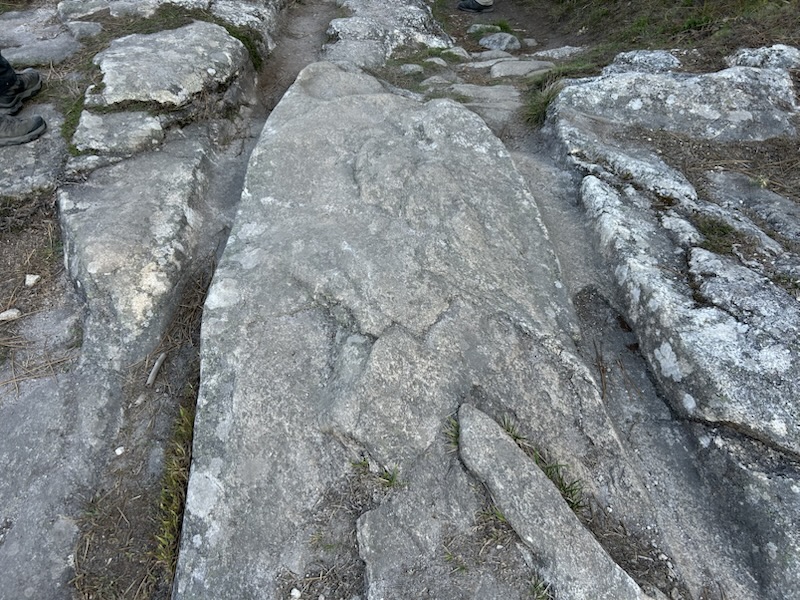
I joked on the last Camino & again this time that some paths look like old wagon trails. Today I found proof that I was correct.
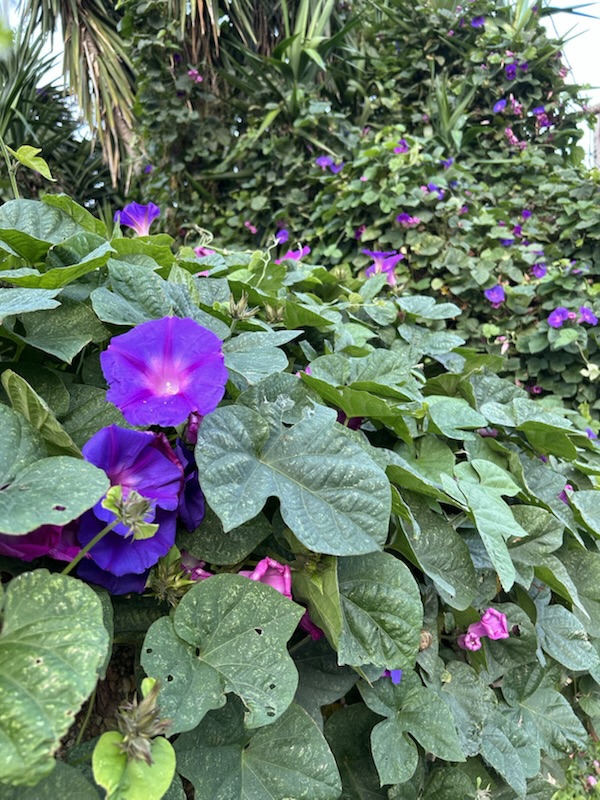
All along the trail we see these beautiful purple morning glory flowers covering walls & fences.
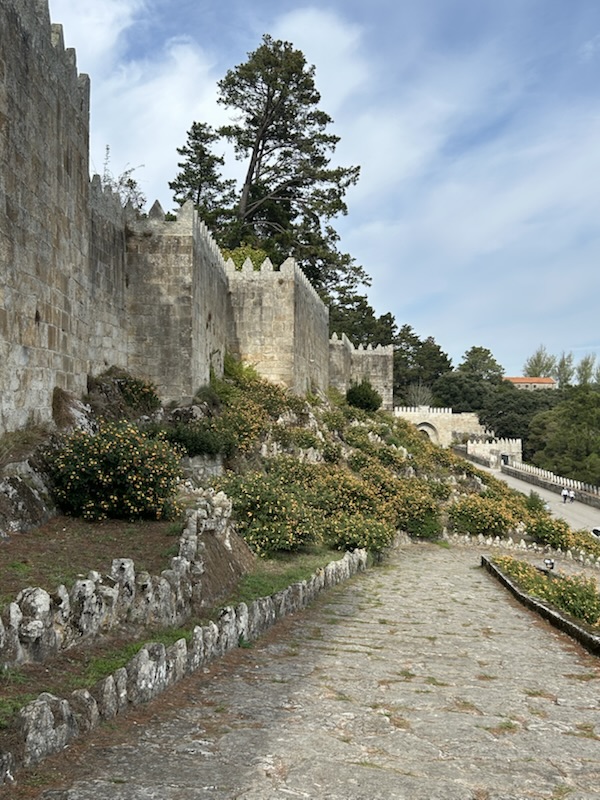
Once we got over the second big hill, we could see Baiona in the distance with its fort near the sea.
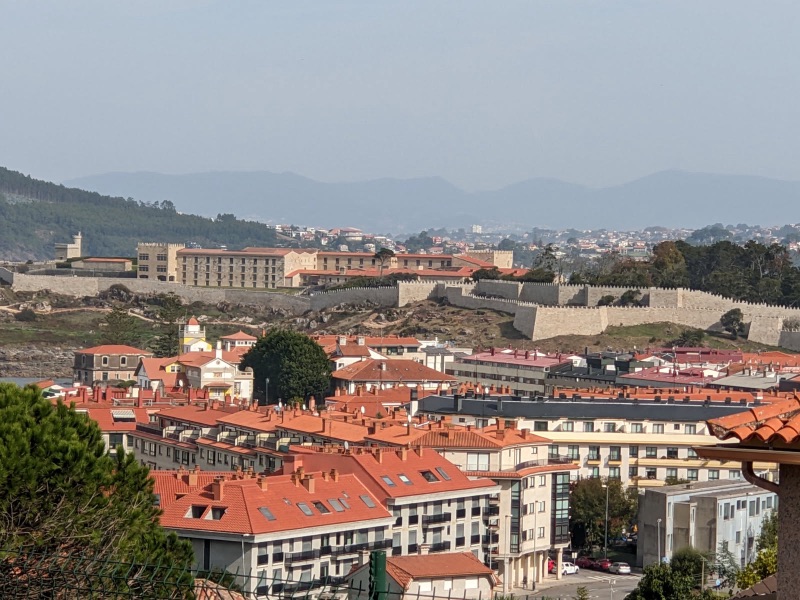
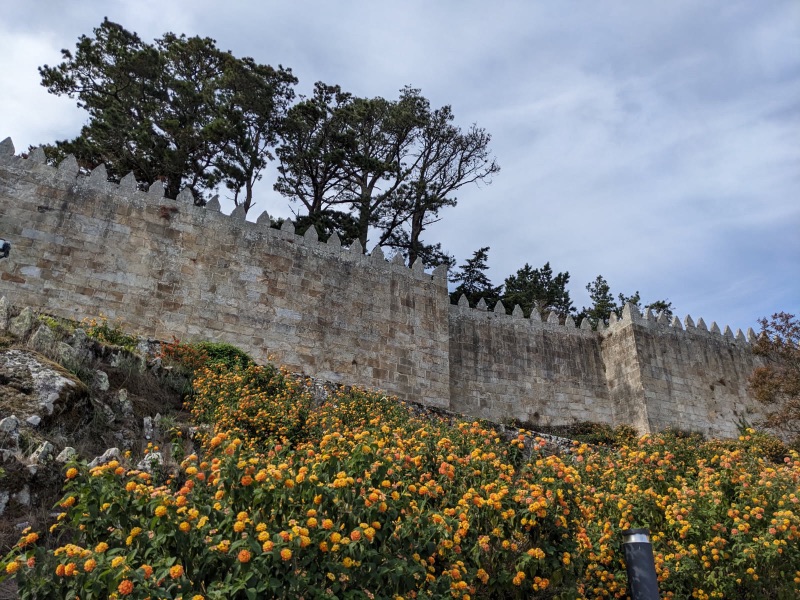
This fort’s walls are 3KM long. Inside its walls is now a luxury hotel.
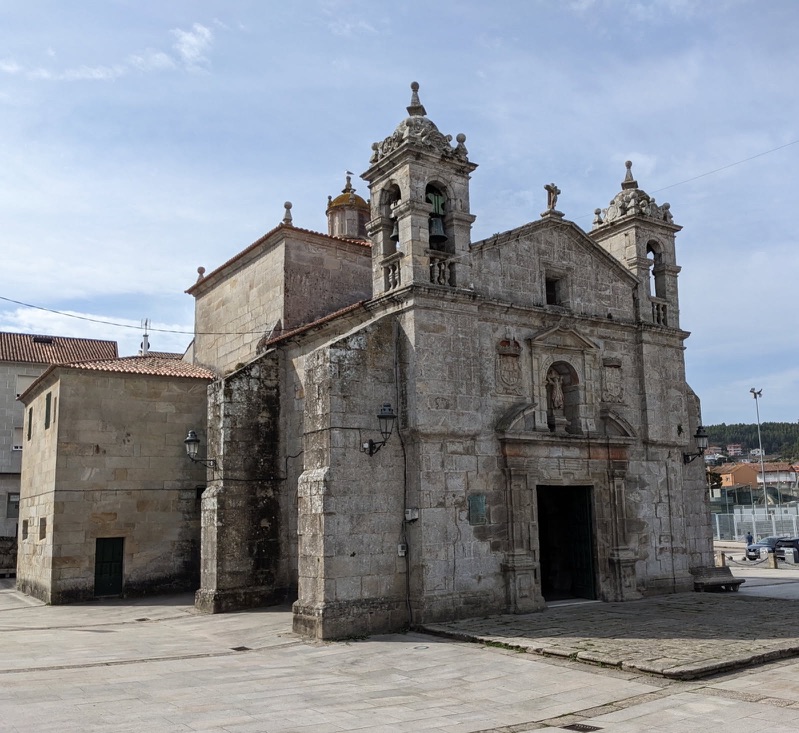
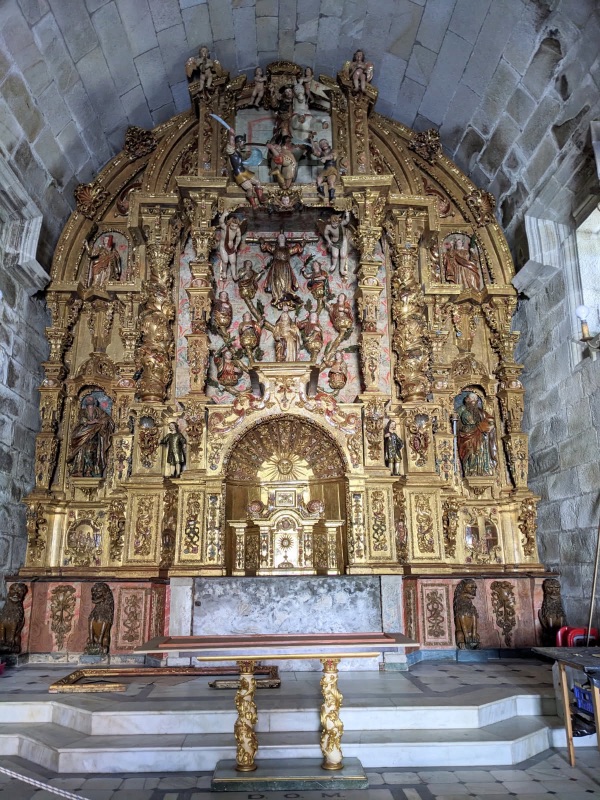
Coming into town we passed the Chapel of Saint Liberata. It was built in 1695 to honor the first woman in history who was crucified in 119 AD.
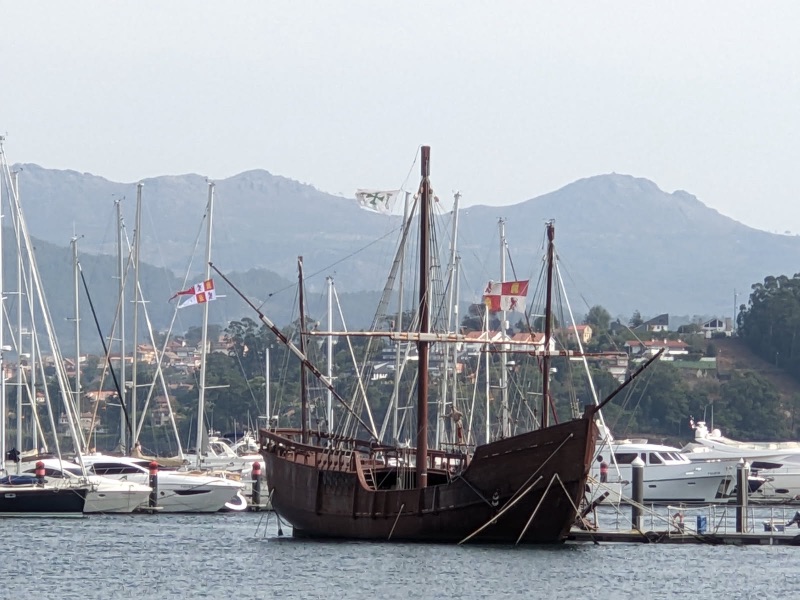
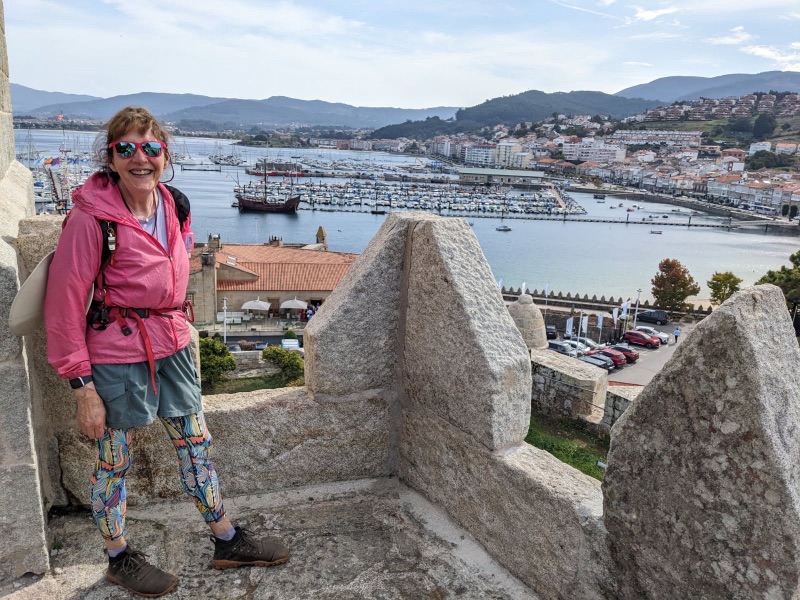
Baiona is famous for being the first place Europeans learned about the New World. On 1 March 1493, “La Pinta” captained by Martin Alonso landed in Baiona. Three days later, Columbus docked the “Santa Maria” in Lisbon, Portugal. There is a replica “La Pinta” in the water near the fort. You would be amazed at how small it is!
We also walked around the fort a little.
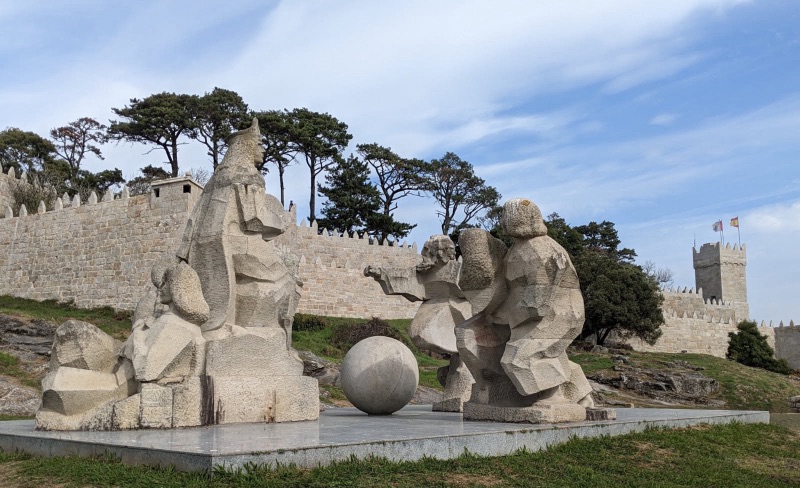
Outside the fort is the the Encounter of the Two Worlds monument. It is situated next to the place where the first Indigenous people from America were buried in Europe. Inside the monument there are pieces of land coming from all countries symbolizing unity.
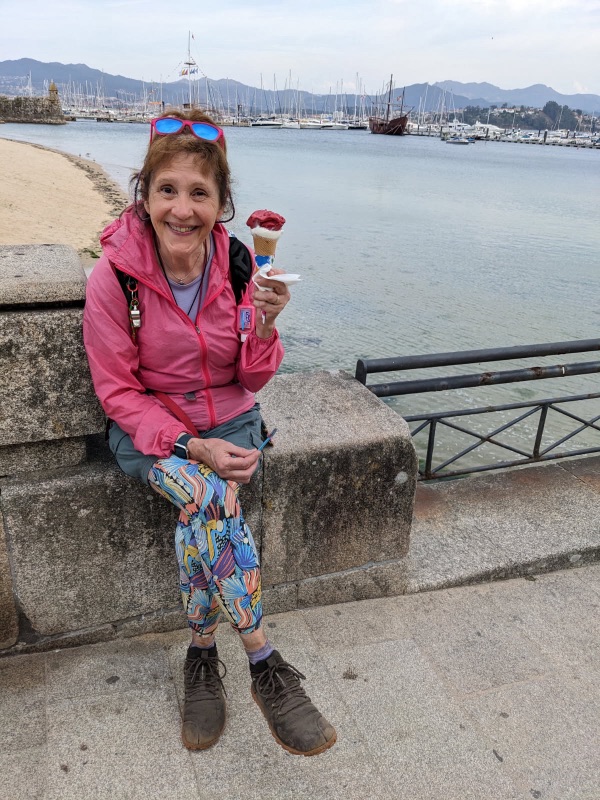
At the end of the day, there is always time for gelato.
 The Wanderers