After a week in Northern India, we are now in Southern India. The climate, food, & environment are totally different.
In the South, it is more tropical & humid. The nice change is that it is no longer dusty & many more people speak English. They are also extremely kind & friendly. We have been approached many times by adults telling us that their sons or daughters live & work in America. Even children come up to chat with us.
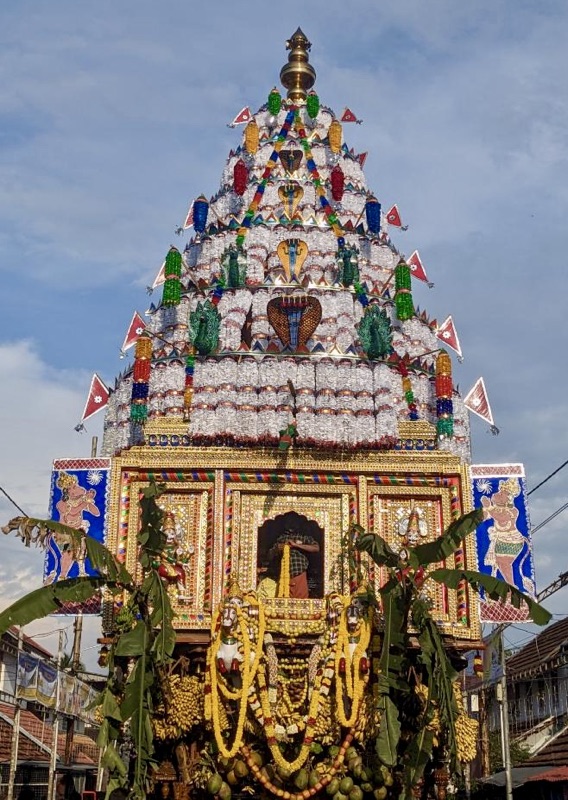
The main reason for coming to Kalapathy was to see Kalpathi Ratholsavam that involves a procession with huge chariots dedicated to Hindu gods & goddesses which spirited devotees celebrate. This religious event has been held for almost 700 years. However, it is not just a religious event; but, it is also a celebration of community, heritage, & devotion. The festival banishes any discrimination & all caste considerations & differences are put aside as people come to celebrate & pull these chariots which are considered rolling temples allowing people to see Hindu dieties & also for those dieties to see them.
The chariots which are made completely from wood are called “raths”. They are carefully decorated with flowers, fabrics, & finely carved designs. The chariots are the festival’s main focal point & preparing them starts weeks in advance.
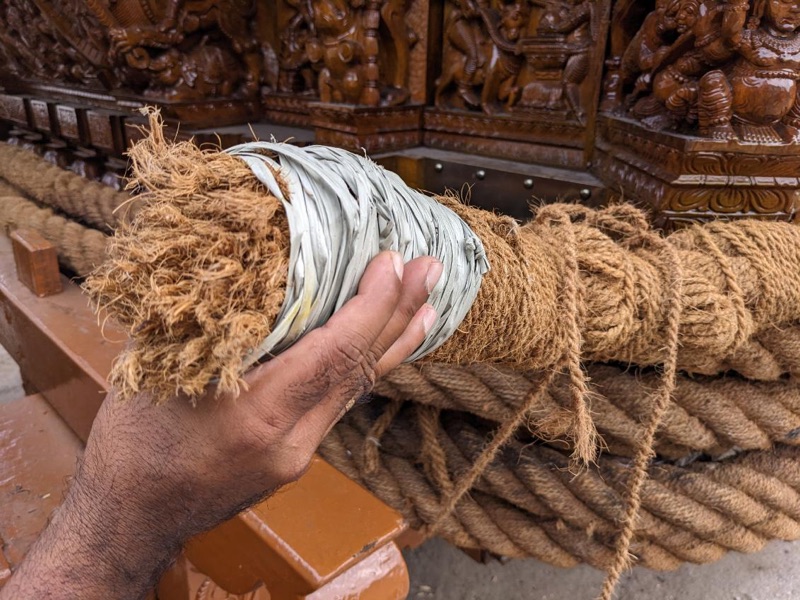
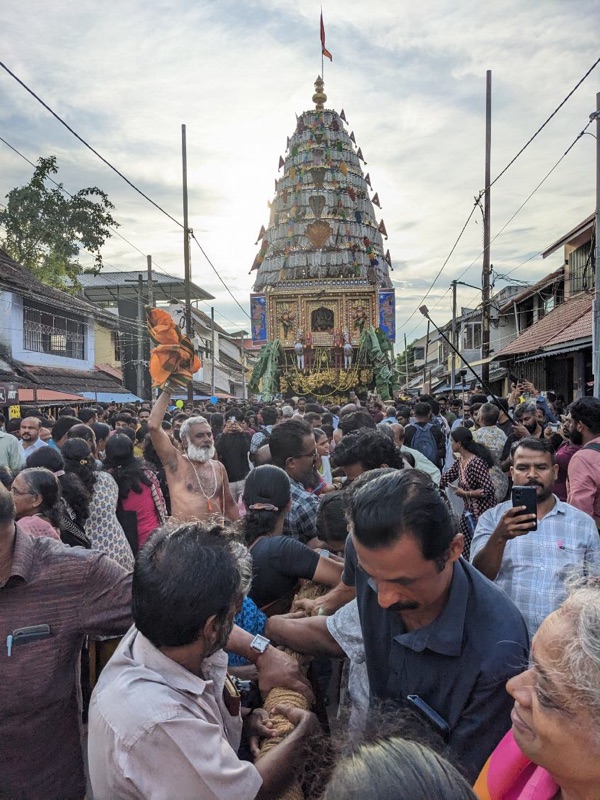
We arrived in time to enjoy the end of the celebration when the chariots that are 3-4 stories high have their decorations completed & are pulled through the city streets by Hindu worshippers using huge coarse ropes made from coconut husks.
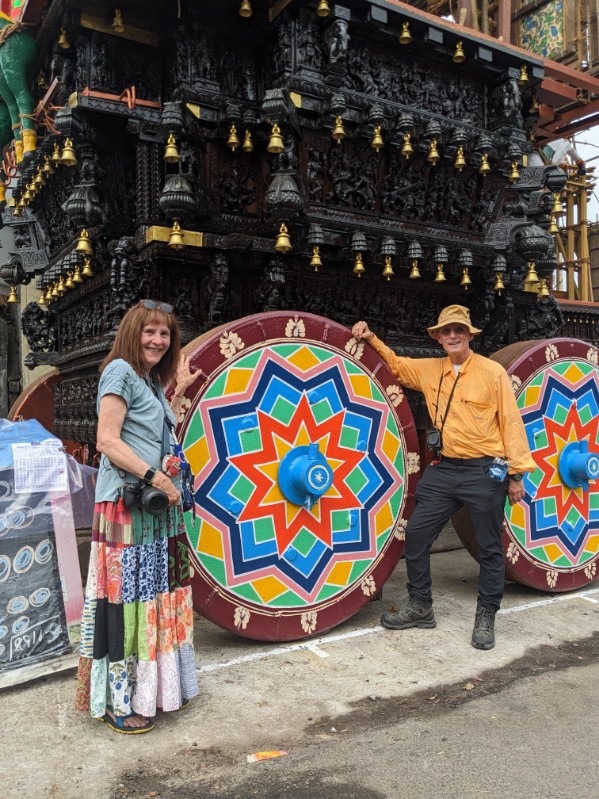
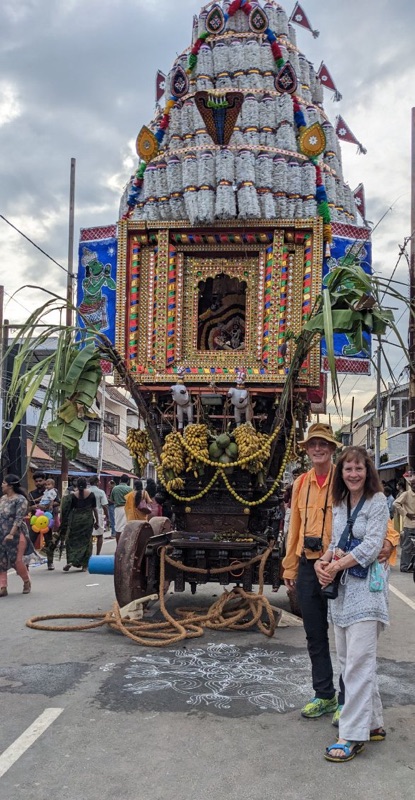
On our first day, we saw the chariots before they were decorated.
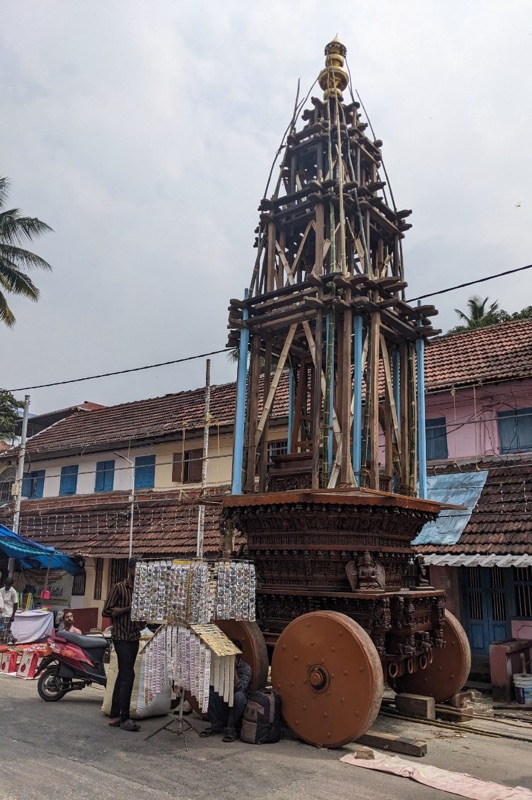
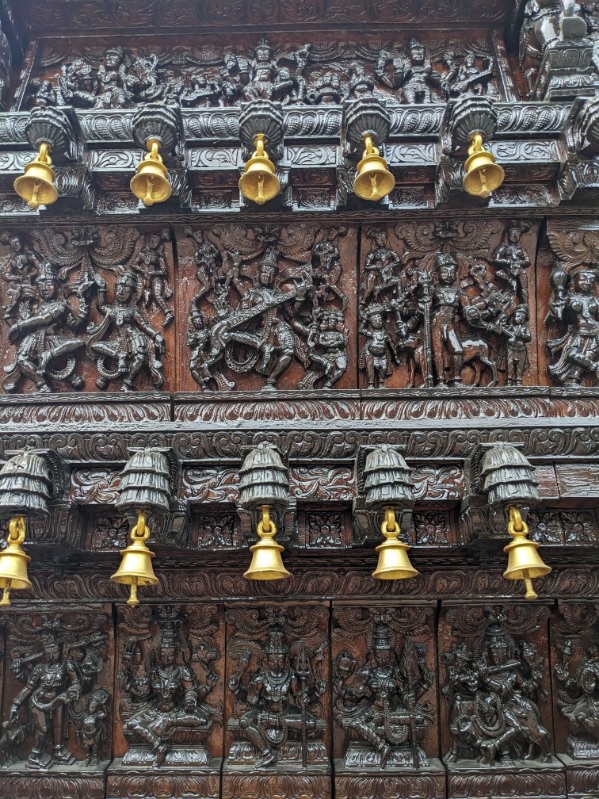
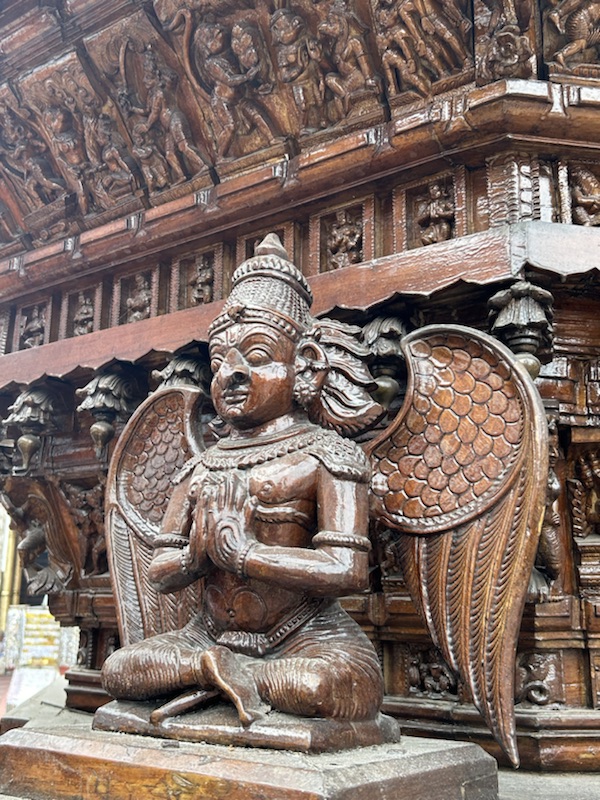
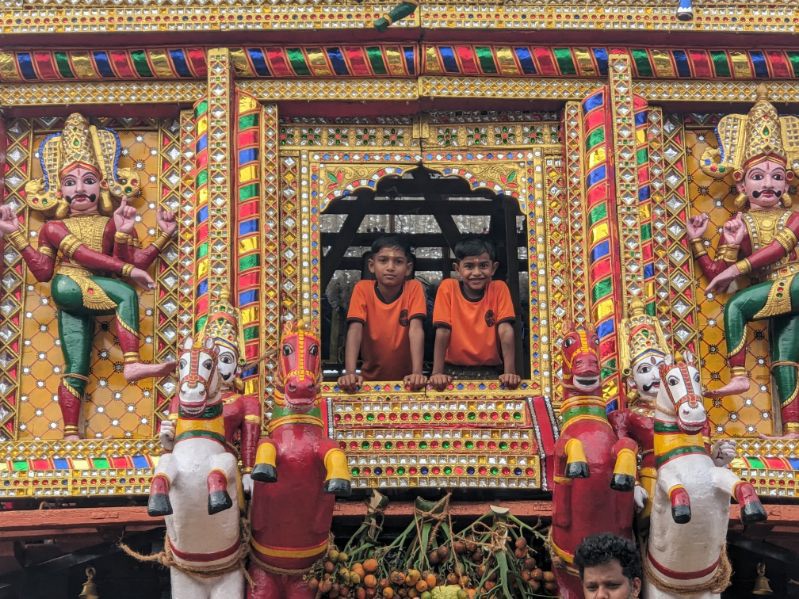
The bottom portion on each chariot is made from intricately hand carved wood that depicts important dieties & stories in Hinduism. Some chariots are 100s of years old while others are less than 50 years old.
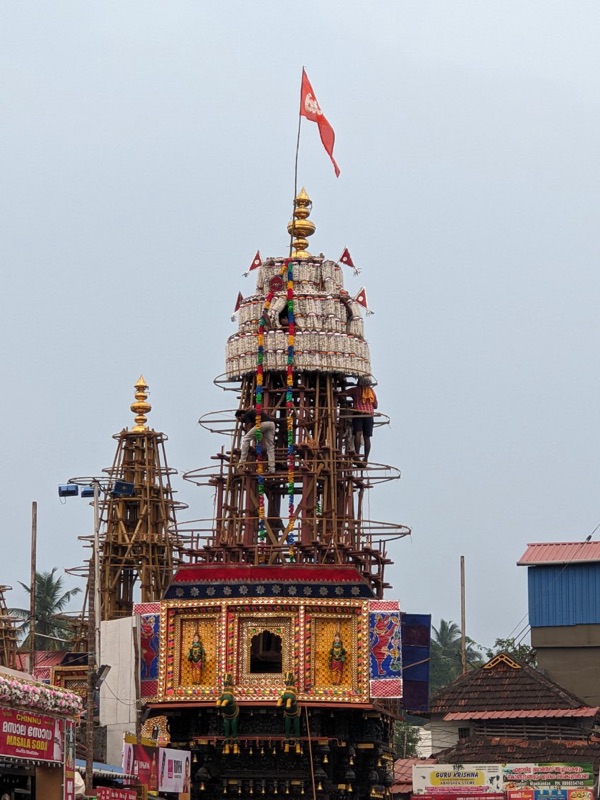
On the second day we began to see the chariots being decorated. The top part is first covered with very thin, white, plastic or paper flowers. Then, flags & ornaments such as cobras are added as decorations.
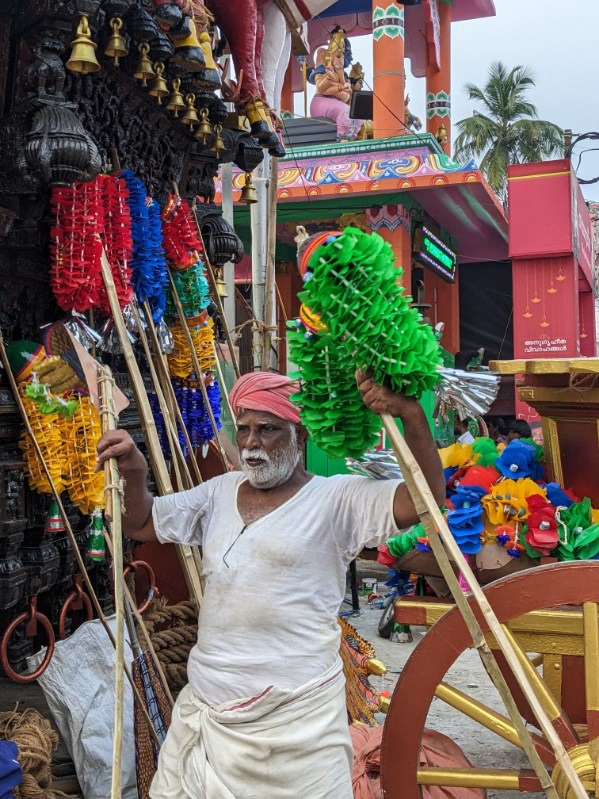

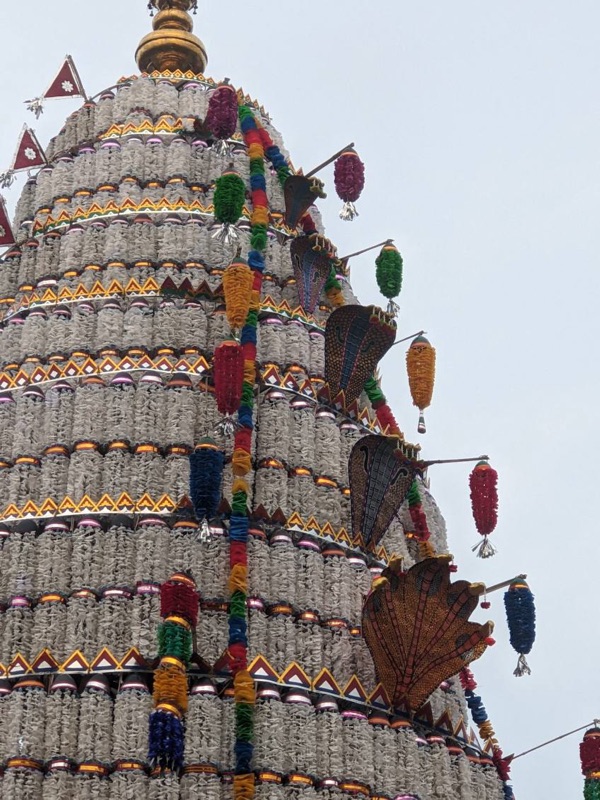
Lastly, people bring offerings such as bananas, limes, coconuts, & sugarcane which are attached at the bottom.

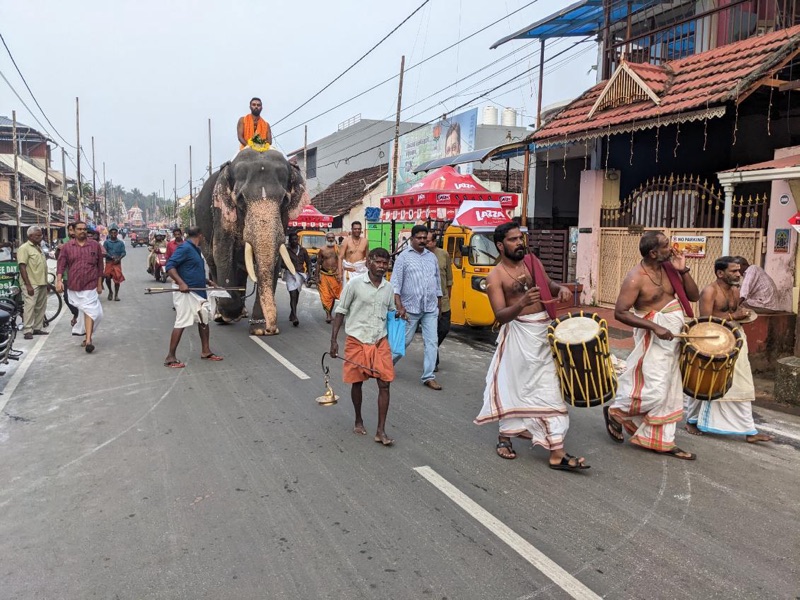
While we waited for the parade to begin, we enjoyed some chai tea with our guide & watched an elephant march down the street.
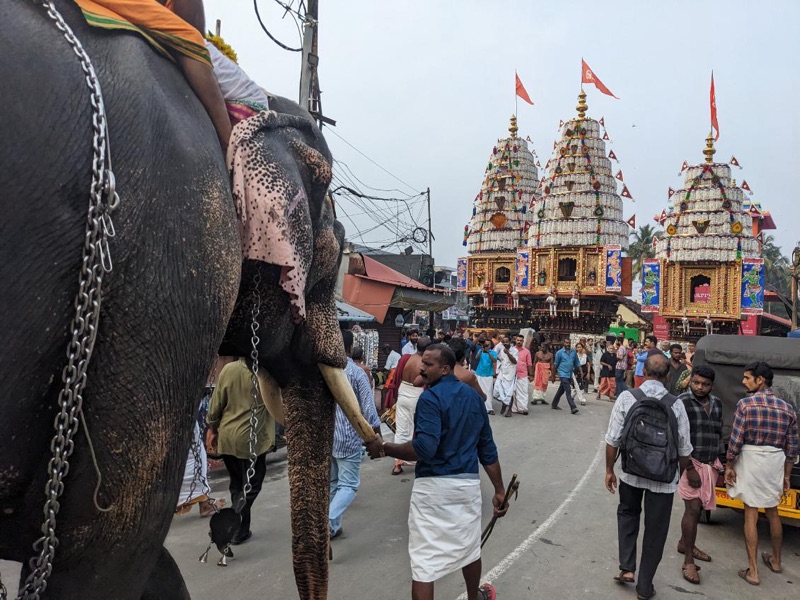
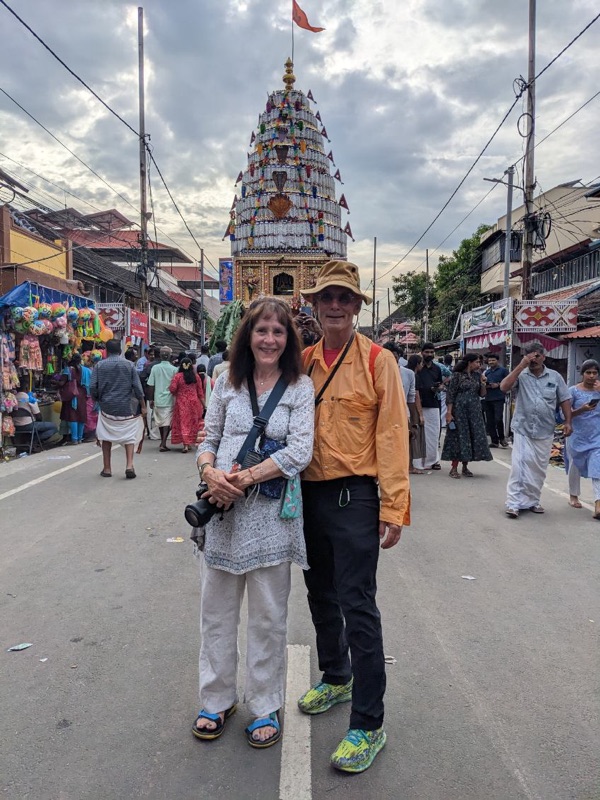
In the late afternoon, the chariot pulling began . On this festival day, three different sized chariots ( small, medium, & large) were pulled through the centuries old streets.
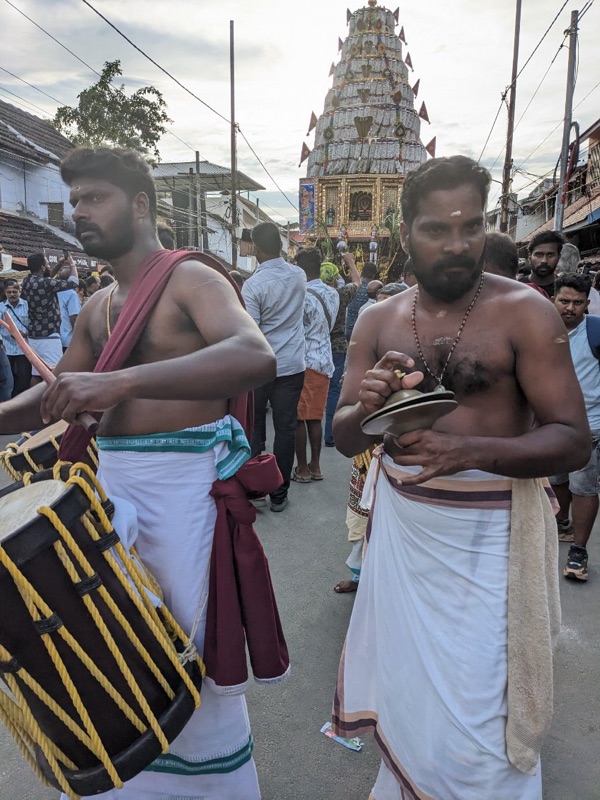
First, the drummers begin the parade.
Then, hundreds of men & women take hold of the large ropes & work together to pull the chariot. For the largest chariot, there may be a thousand people pulling it. Devotees pull the chariots to praise Lord Shiva, his consort Parvati, & Lord Ganapathy & to receive their blessings. Like entering a Hindu temple, you can only pull the chariots while barefooted & pulling a chariot is considered not only a privilege; but also, an auspicious act.
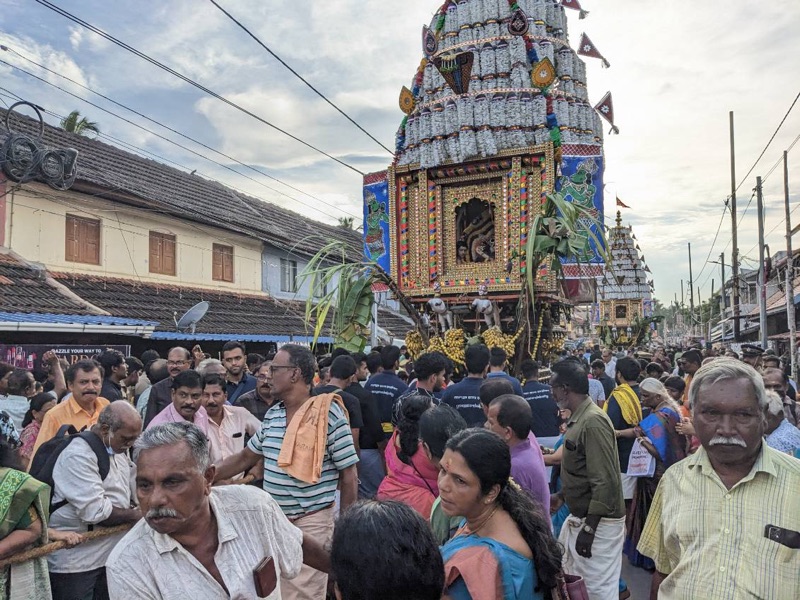
Children ride inside the chariot & wave to the crowd.
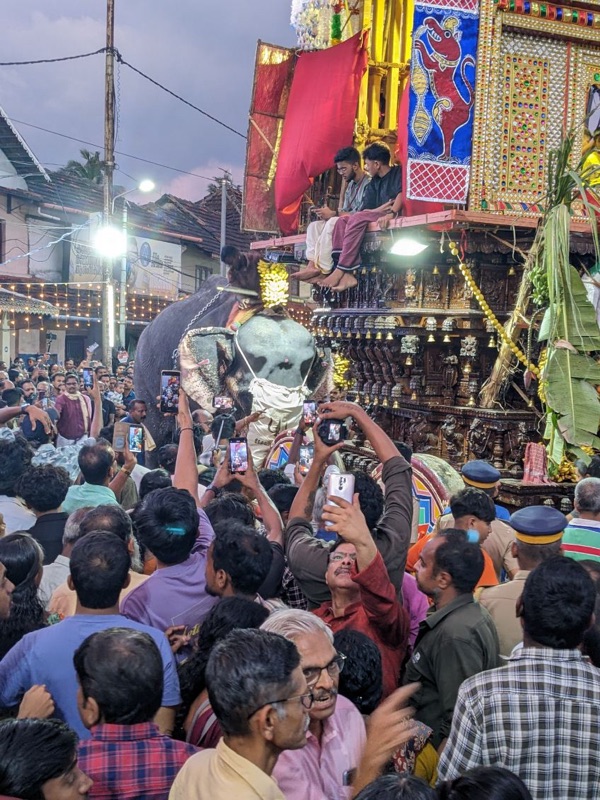
To help maneuver one large chariot around a corner through a turn on the street, an elephant wearing padding on its head was used to push it.

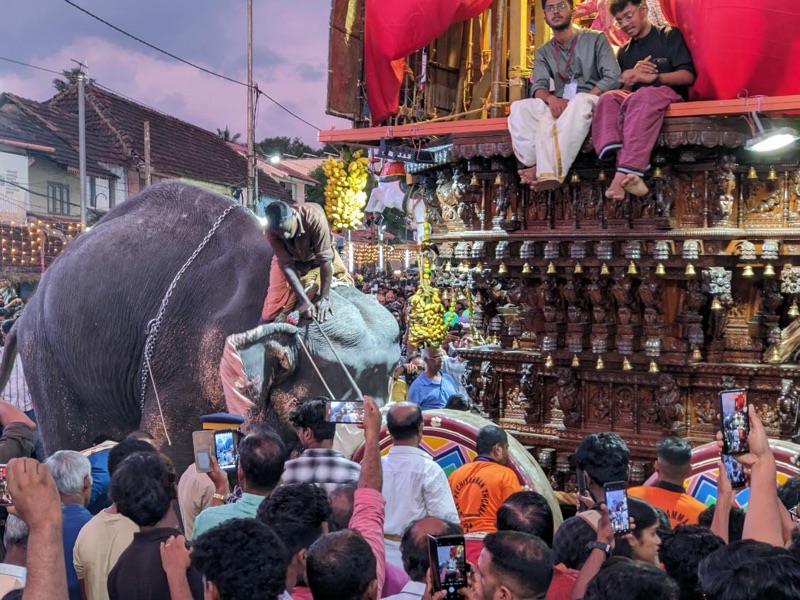
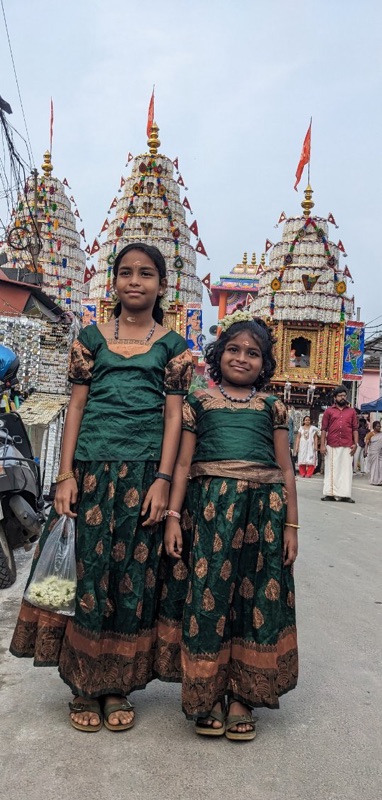
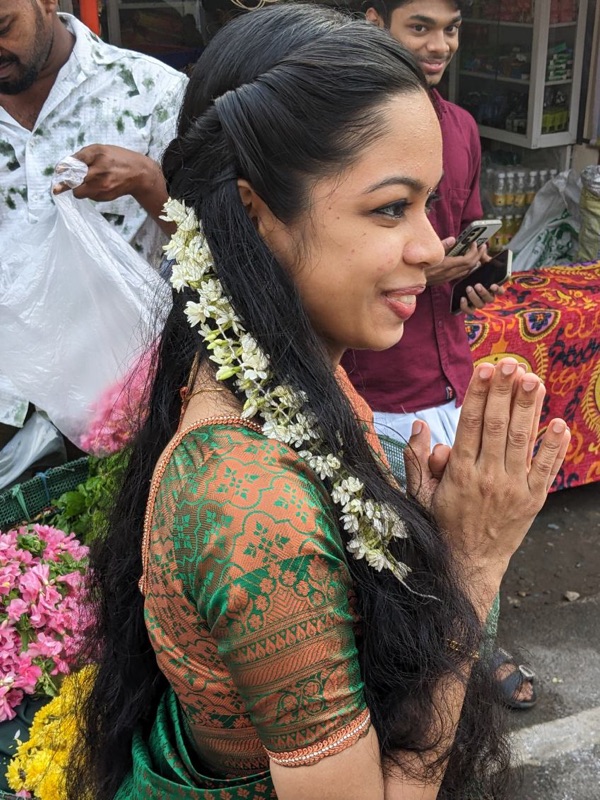
As you might expect, this festival attracts many Hindu devotees from all over the surrounding area in Kerala. Women often wear flowers in their hair & also wear beautiful silk sarees.
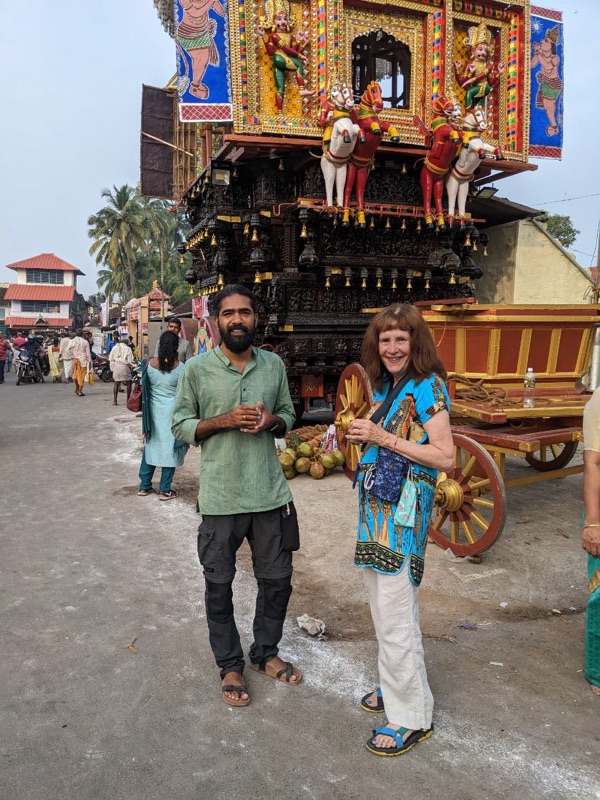
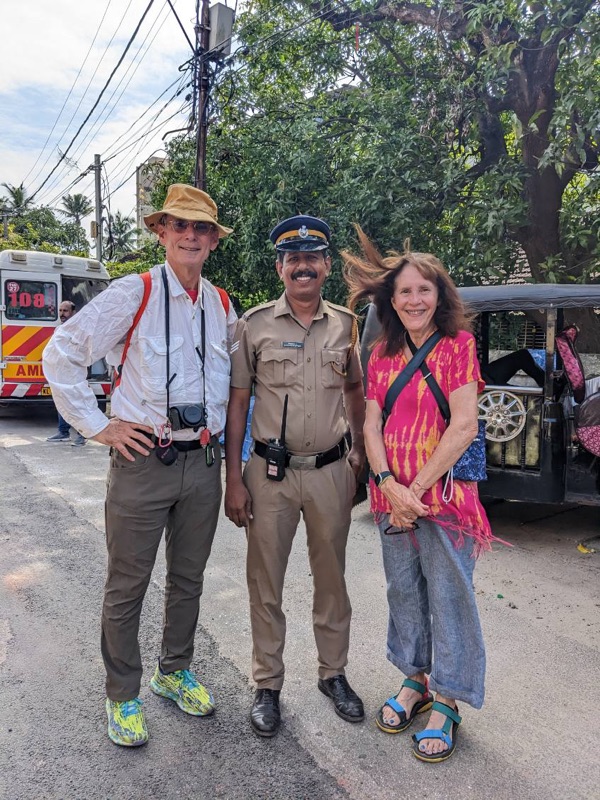
To our pleasant surprise, we were almost the only Westerners at the festival. We couldn’t even begin to guess how many times we were asked to pose for a selfie & the number of times people just took our picture. In fact, we even made the local news.
He shared the news clip below reporting on the festival in which you can see us.
 The Wanderers