
I’ve always wanted to visit Seville. My oldest known maternal grandfather to leave Europe was named Antonio Gil Caesar Flores. He was born in Seville in 1719 & went to the New World with his parents in 1725. He moved to the Tejas region in New Spain which is now part of western Louisiana in the United States.
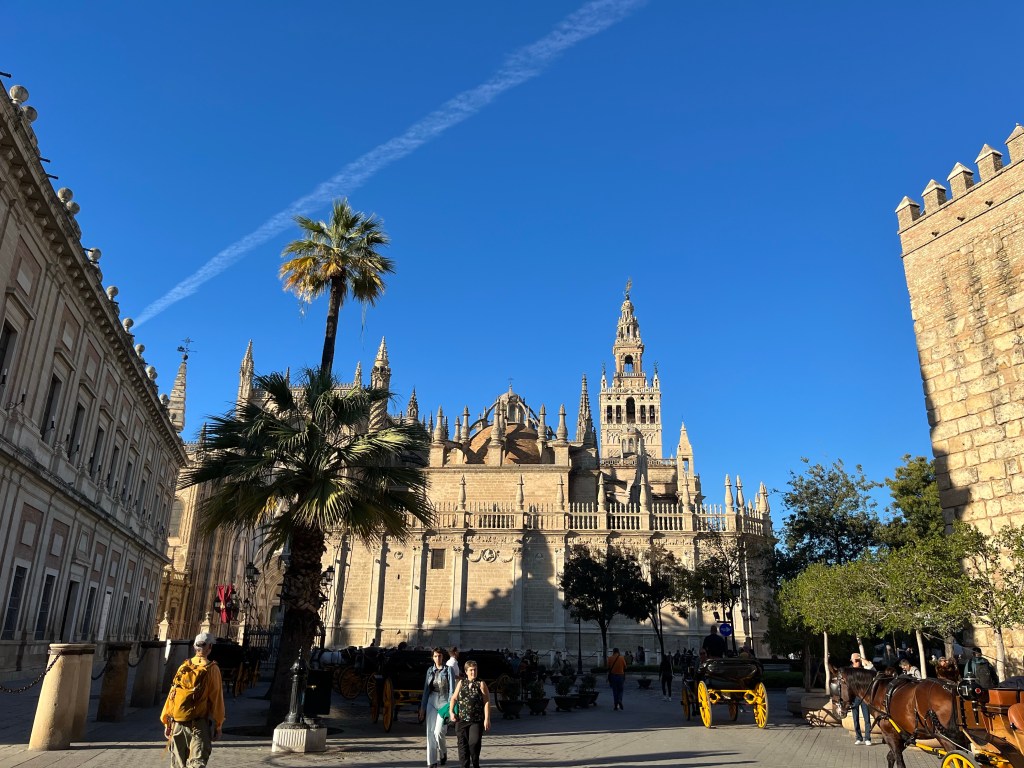
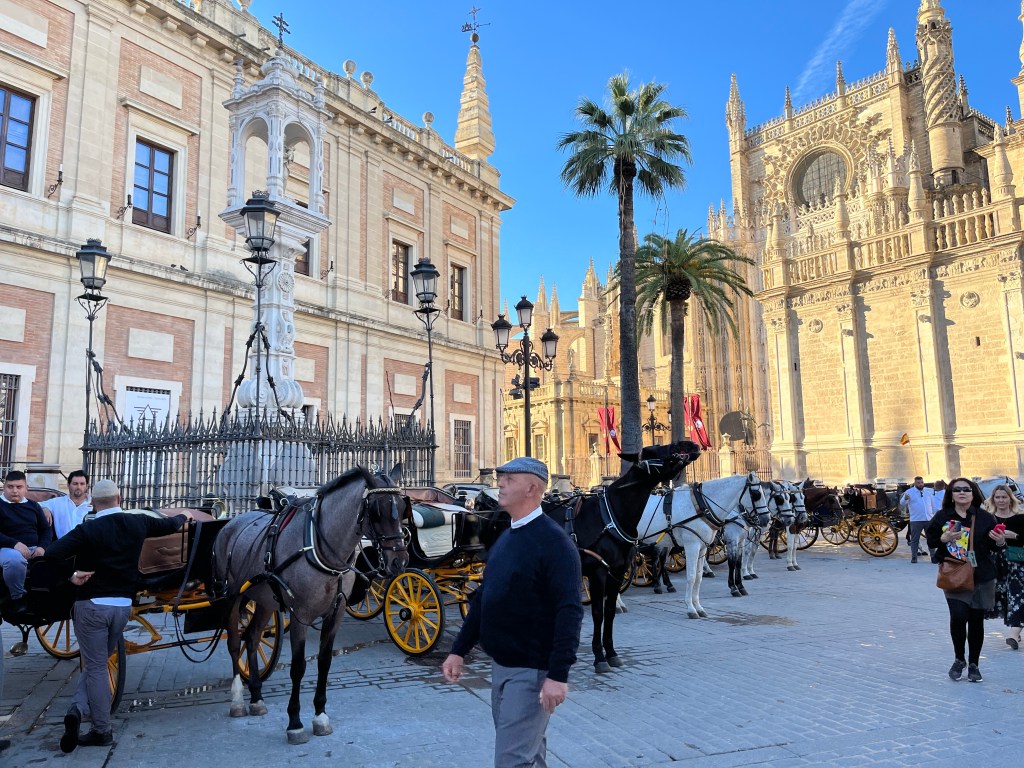
When I walked around the old city, it was very moving knowing some of these beautiful buildings were also there when he & his parents left to make a new future.
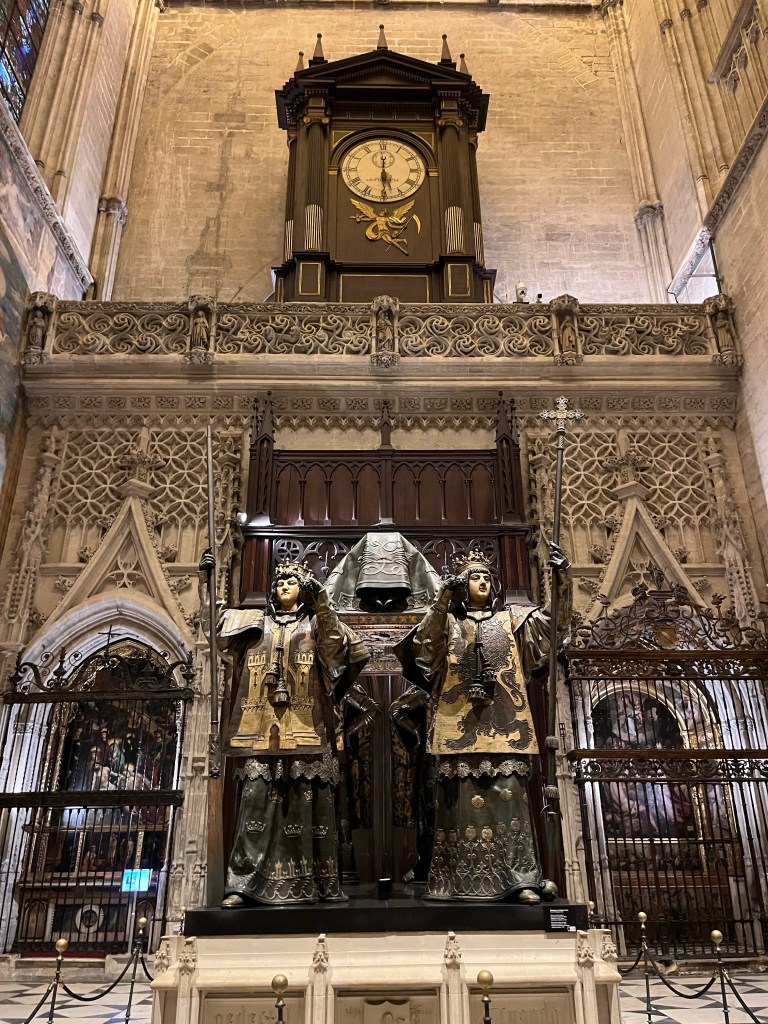
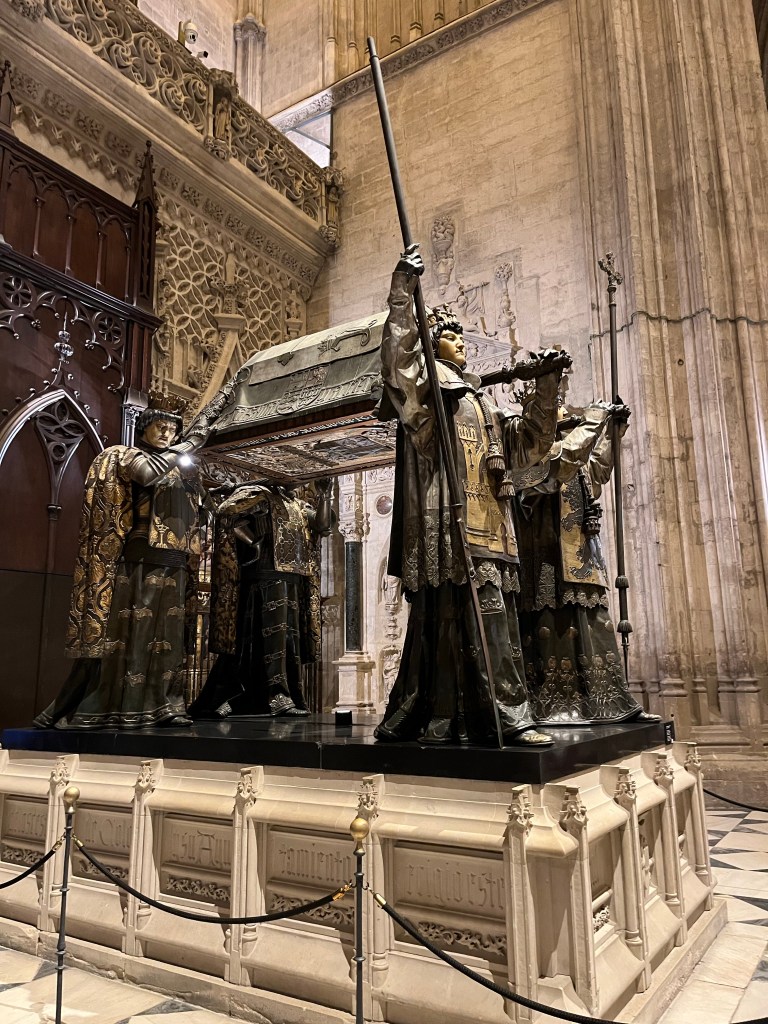
Christopher Columbus now rests here.
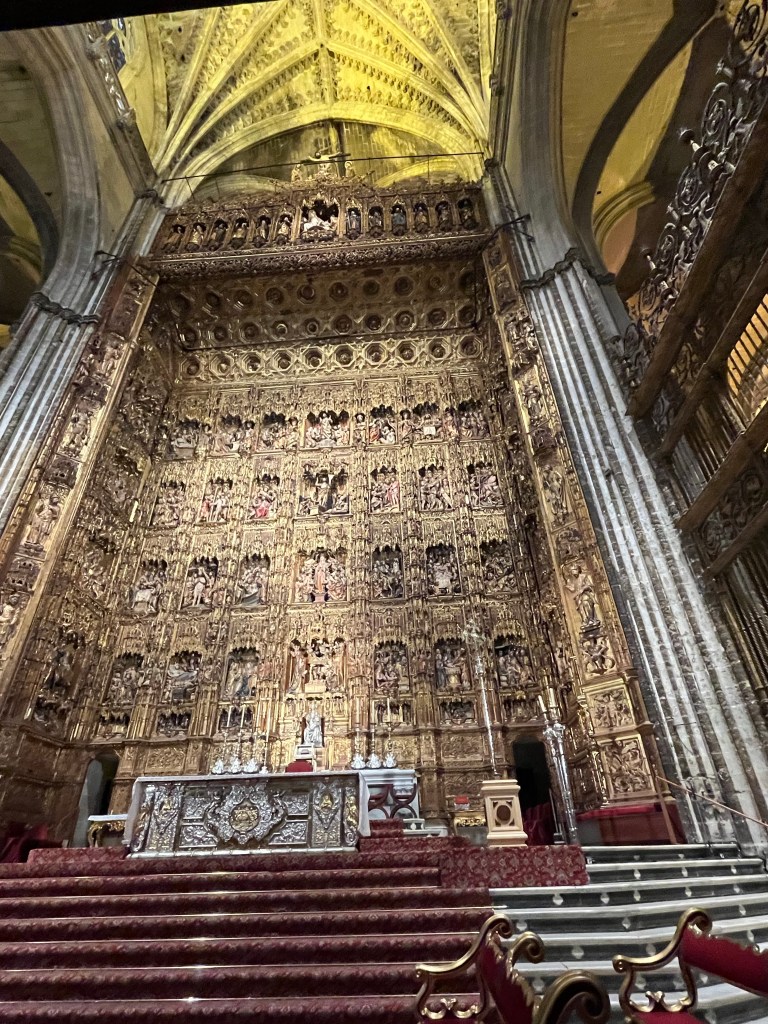
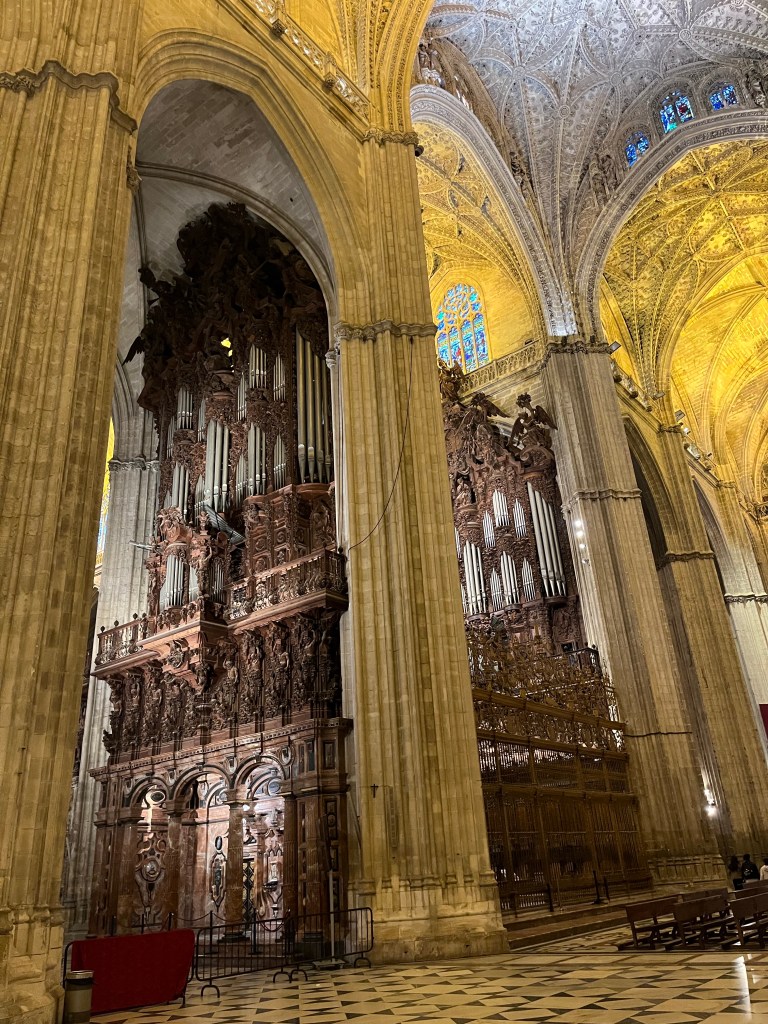
The cathedral’s altar & organ.
The Giralda or Bell Tower was once a minaret for the Great Mosque when Seville was under Muslim rule during the Almohad Dynasty. Once the Christians defeated the Muslims, both the mosque & minaret were transformed into a church & bell tower containing 24 bells.
It is actually taller than Big Ben in London.
At night & during the day when I heard the bells ring, I wondered if my ancestors heard the same pealing of the bells before they left for the New World.
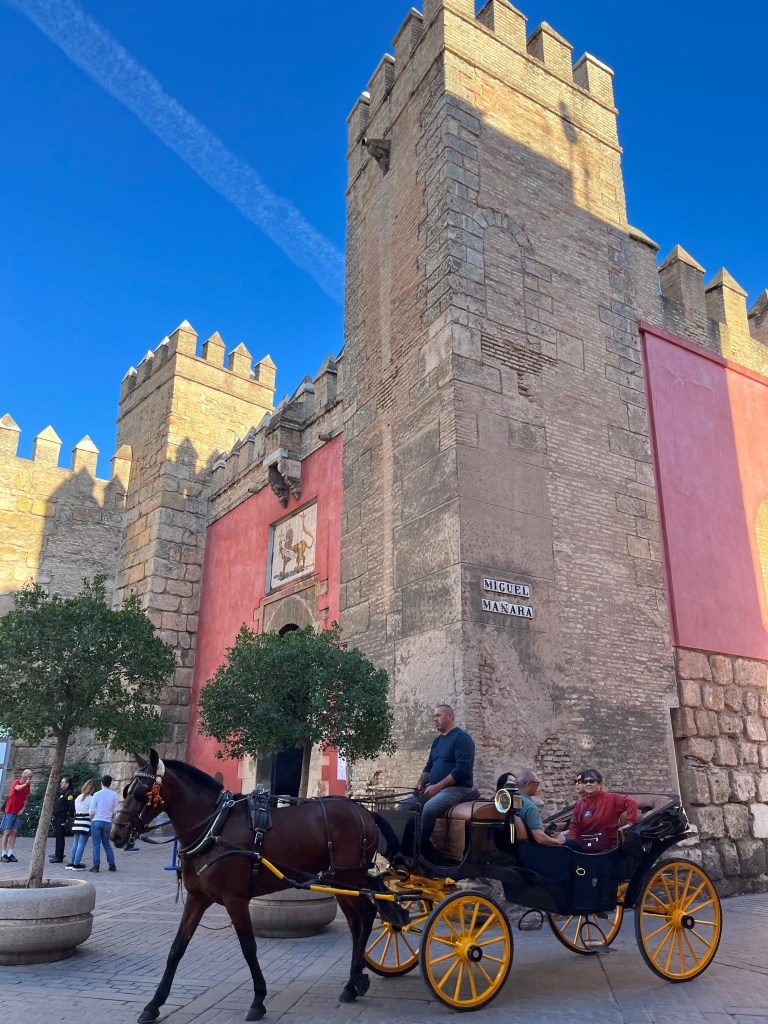
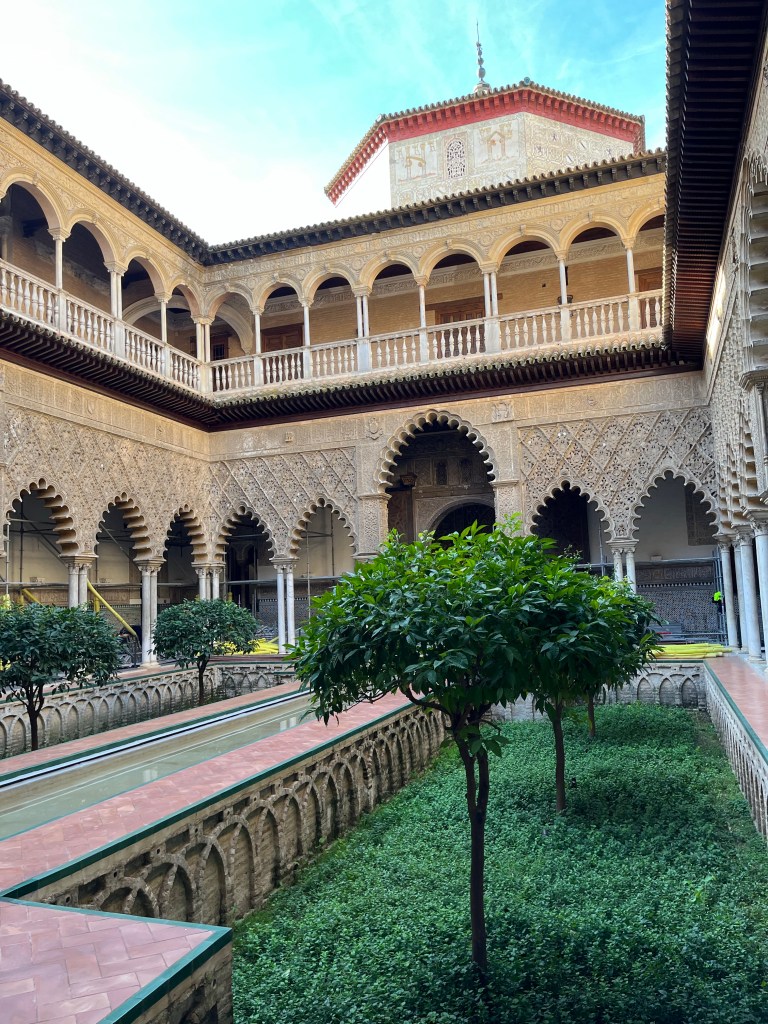
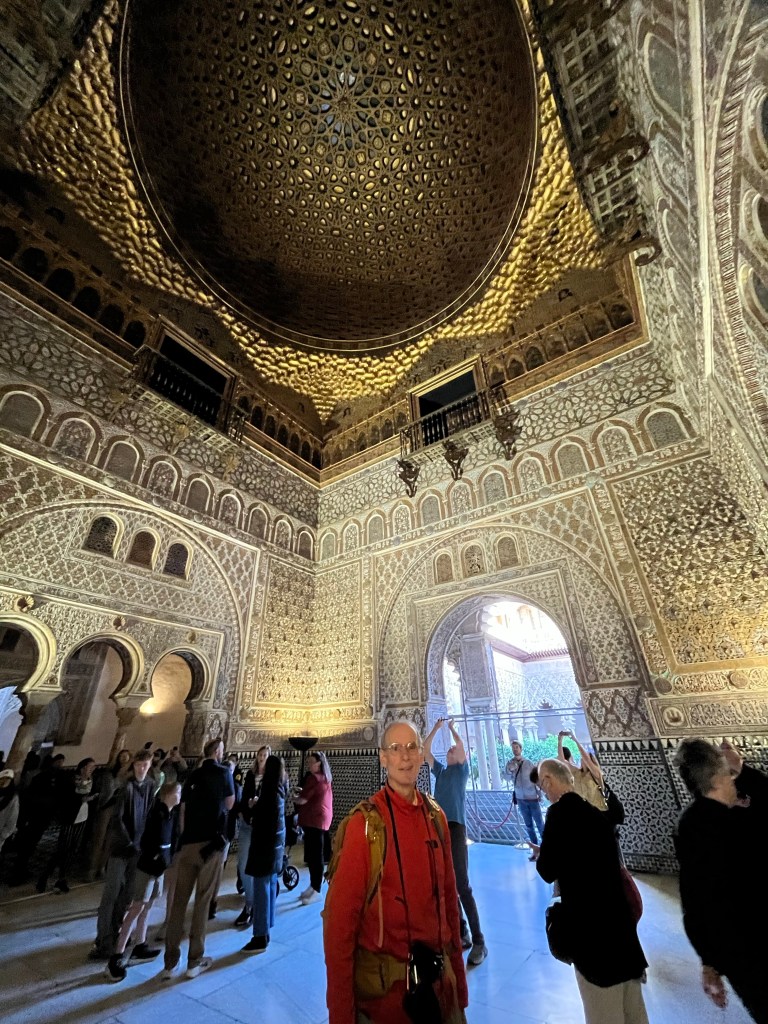
Another impressive old structure is the Alcazar Palace. Here is a brief history along with some images from it. Spain’s Royal family still lives in part of it when they are in Seville. It’s very beautiful & with its elegant & colorful geometric designs, it reminded me of historical homes in Isfahan, Iran.
We just so happened to be in Seville when the Latin Grammy’s were held. The night before the awards show, we saw fans lined up outside the swankiest hotel waiting for their favorite singer to appear.
The Christmas market outside the cathedral was selling items I had never seen before. All the shops were full of items not only to make a miniature nativity scene; but also, to construct the entire Bethlehem village. Much like an elaborate train set, no detail is missing. I wonder how much room these nativity scenes take up in Spanish homes at Christmas time.
Another Seville highlight was visiting the Plaza de Toros de la Real Maestranza where bullfights are still held in the spring & summer. Started in 1760, it is Spain’s oldest bullring & took 120 years to finish. This is also where modern bullfighting that we know today originated.
We also enjoyed a few of Seville’s special food treats. One was at the Convento de San Leandro where the nuns who are completely cloistered make a very unique cookie. Fortunately, a nice Spanish couple helped us obtain the cookies which are more akin to candy than a cookie.
First, I placed money on a lazy susan contraption, rang a bell to let the nuns know we were ordering, told the nun what we wanted, then spun around the lazy susan with our payment. A few moments later the lazy susan spun again & our cookies appeared. Never once did we see a nun’s face or even a hand.
Flamenco dancing is very popular in Seville. We didn’t make it to the Flamenco Museum or see a show; but, we saw stores selling the clothes. Fans are sold everywhere.
I’m very puzzled why Spain as well as all of Europe now has Black Friday sales? I thought that was strictly Kim an American thing. 🧐
Interesting buildings both old & new can be seen throughout the city. And, of course, Seville has some street performers.
Before leaving the city, we walked along the Guadalquivir River.
After the New World was discovered, Seville’s port became Spain’s economic center. Seville thrived in the 16th & 17th Centuries until Cadiz became Spain’s main port.
Even though Seville was past it’s hey day when my grandfather lived there, I’m sure it was still a vibrant city. Moving to the New World would have been a really big change for a young boy.
Seville is a wonderful old historical city. Even though Seville is known as being the hottest major city in Europe, I’m happy to see it is now a popular tourist locale. A perfect place to be in autumn or spring when the temperatures are pleasantly warm.
Many streets & squares are lined with orange trees and reminders from the past mix beautifully with the present here.
 The Wanderers